WO2010143719A1 - ホップエキスのアルカリ分解産物およびその用途 - Google Patents
ホップエキスのアルカリ分解産物およびその用途 Download PDFInfo
- Publication number
- WO2010143719A1 WO2010143719A1 PCT/JP2010/059970 JP2010059970W WO2010143719A1 WO 2010143719 A1 WO2010143719 A1 WO 2010143719A1 JP 2010059970 W JP2010059970 W JP 2010059970W WO 2010143719 A1 WO2010143719 A1 WO 2010143719A1
- Authority
- WO
- WIPO (PCT)
- Prior art keywords
- acid
- hop extract
- decomposition product
- alkaline
- product
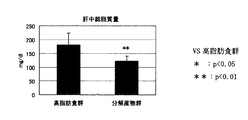
- Prior art date
- Legal status (The legal status is an assumption and is not a legal conclusion. Google has not performed a legal analysis and makes no representation as to the accuracy of the status listed.)
- Ceased
Links
Images










Classifications
-
- A—HUMAN NECESSITIES
- A61—MEDICAL OR VETERINARY SCIENCE; HYGIENE
- A61K—PREPARATIONS FOR MEDICAL, DENTAL OR TOILETRY PURPOSES
- A61K36/00—Medicinal preparations of undetermined constitution containing material from algae, lichens, fungi or plants, or derivatives thereof, e.g. traditional herbal medicines
- A61K36/18—Magnoliophyta (angiosperms)
- A61K36/185—Magnoliopsida (dicotyledons)
- A61K36/348—Cannabaceae
- A61K36/3486—Humulus
-
- A—HUMAN NECESSITIES
- A23—FOODS OR FOODSTUFFS; TREATMENT THEREOF, NOT COVERED BY OTHER CLASSES
- A23L—FOODS, FOODSTUFFS OR NON-ALCOHOLIC BEVERAGES, NOT OTHERWISE PROVIDED FOR; PREPARATION OR TREATMENT THEREOF
- A23L27/00—Spices; Flavouring agents or condiments; Artificial sweetening agents; Table salts; Dietetic salt substitutes; Preparation or treatment thereof
- A23L27/10—Natural spices, flavouring agents or condiments; Extracts thereof
-
- A—HUMAN NECESSITIES
- A23—FOODS OR FOODSTUFFS; TREATMENT THEREOF, NOT COVERED BY OTHER CLASSES
- A23L—FOODS, FOODSTUFFS OR NON-ALCOHOLIC BEVERAGES, NOT OTHERWISE PROVIDED FOR; PREPARATION OR TREATMENT THEREOF
- A23L33/00—Modifying nutritive qualities of foods; Dietetic products; Preparation or treatment thereof
- A23L33/10—Modifying nutritive qualities of foods; Dietetic products; Preparation or treatment thereof using additives
- A23L33/105—Plant extracts, their artificial duplicates or their derivatives
-
- A—HUMAN NECESSITIES
- A61—MEDICAL OR VETERINARY SCIENCE; HYGIENE
- A61K—PREPARATIONS FOR MEDICAL, DENTAL OR TOILETRY PURPOSES
- A61K31/00—Medicinal preparations containing organic active ingredients
- A61K31/12—Ketones
- A61K31/122—Ketones having the oxygen directly attached to a ring, e.g. quinones, vitamin K1, anthralin
-
- A—HUMAN NECESSITIES
- A61—MEDICAL OR VETERINARY SCIENCE; HYGIENE
- A61P—SPECIFIC THERAPEUTIC ACTIVITY OF CHEMICAL COMPOUNDS OR MEDICINAL PREPARATIONS
- A61P3/00—Drugs for disorders of the metabolism
- A61P3/04—Anorexiants; Antiobesity agents
-
- A—HUMAN NECESSITIES
- A23—FOODS OR FOODSTUFFS; TREATMENT THEREOF, NOT COVERED BY OTHER CLASSES
- A23V—INDEXING SCHEME RELATING TO FOODS, FOODSTUFFS OR NON-ALCOHOLIC BEVERAGES AND LACTIC OR PROPIONIC ACID BACTERIA USED IN FOODSTUFFS OR FOOD PREPARATION
- A23V2002/00—Food compositions, function of food ingredients or processes for food or foodstuffs
-
- C—CHEMISTRY; METALLURGY
- C12—BIOCHEMISTRY; BEER; SPIRITS; WINE; VINEGAR; MICROBIOLOGY; ENZYMOLOGY; MUTATION OR GENETIC ENGINEERING
- C12C—BEER; PREPARATION OF BEER BY FERMENTATION; PREPARATION OF MALT FOR MAKING BEER; PREPARATION OF HOPS FOR MAKING BEER
- C12C3/00—Treatment of hops
- C12C3/12—Isomerised products from hops
-
- Y—GENERAL TAGGING OF NEW TECHNOLOGICAL DEVELOPMENTS; GENERAL TAGGING OF CROSS-SECTIONAL TECHNOLOGIES SPANNING OVER SEVERAL SECTIONS OF THE IPC; TECHNICAL SUBJECTS COVERED BY FORMER USPC CROSS-REFERENCE ART COLLECTIONS [XRACs] AND DIGESTS
- Y10—TECHNICAL SUBJECTS COVERED BY FORMER USPC
- Y10T—TECHNICAL SUBJECTS COVERED BY FORMER US CLASSIFICATION
- Y10T428/00—Stock material or miscellaneous articles
- Y10T428/12—All metal or with adjacent metals
- Y10T428/12389—All metal or with adjacent metals having variation in thickness
-
- Y—GENERAL TAGGING OF NEW TECHNOLOGICAL DEVELOPMENTS; GENERAL TAGGING OF CROSS-SECTIONAL TECHNOLOGIES SPANNING OVER SEVERAL SECTIONS OF THE IPC; TECHNICAL SUBJECTS COVERED BY FORMER USPC CROSS-REFERENCE ART COLLECTIONS [XRACs] AND DIGESTS
- Y10—TECHNICAL SUBJECTS COVERED BY FORMER USPC
- Y10T—TECHNICAL SUBJECTS COVERED BY FORMER US CLASSIFICATION
- Y10T428/00—Stock material or miscellaneous articles
- Y10T428/12—All metal or with adjacent metals
- Y10T428/12493—Composite; i.e., plural, adjacent, spatially distinct metal components [e.g., layers, joint, etc.]
- Y10T428/12771—Transition metal-base component
Definitions
- the present invention relates to an alkaline degradation product of hop extract and use thereof, and more particularly, to a food and a food additive using the alkaline degradation product of hop extract, and a fat accumulation inhibitor and a weight gain inhibitor containing the same as an active ingredient. .
- Hop which is the origin of bitter components in beer, has been used as a folk medicine since ancient times, and various health functions such as sedation and stomach effect are known.
- extract obtained from this hop is blended in a certain amount or more with respect to the food or drink, a unique and intense bitterness is produced, which may impair the palatability.
- bitterness reducing material examples include phosphatidic acid (trade name “Benecoat BMI” Kao Corporation), L-ornithine (Food Science No.317 p54 2004), and the like.
- phosphatidic acid trade name “Benecoat BMI” Kao Corporation
- L-ornithine Food Science No.317 p54 2004
- none of them alone has a strong effect, and it has been particularly difficult to suppress the bitter taste of the hop extract.
- sweeteners such as sucralose and thaumatin (Japanese Patent Laid-Open No. 2008-99682)
- bitterness is somewhat masked by sweetness, its use is limited due to its strong sweetness.
- isohumulone derived from hop extract has been reported to have a PPAR agonistic action and to have a lipid metabolism improving function through this action (WO2003 / 068205).
- isohumulone has an intense bitterness, and when it is applied to foods and drinks and pharmaceuticals, the suppression of the bitterness has been an issue.
- the present inventors have disclosed that a degradation product obtained by subjecting a hop extract to an alkaline degradation treatment has a fat accumulation-inhibiting action and a weight gain-inhibiting action, even though its isohumulone content is greatly reduced. It has been found that the bitterness of the product is greatly reduced.
- the present invention is based on these findings.
- a food additive comprising an alkaline decomposition product of hop extract (hereinafter, sometimes simply referred to as “food additive according to the present invention”) and a food obtained by adding an alkaline decomposition product of hop extract. (Hereinafter sometimes simply referred to as “food according to the present invention”).
- a fat accumulation inhibitor or a body weight gain inhibitor comprising an alkaline degradation product of hop extract as an active ingredient.
- the hop extract is further subjected to an alkali treatment, and then the fatty acid produced by the treatment is removed, and the alkaline decomposition product of the hop extract added to the food according to the present invention and the present invention A method for producing an inhibitor is provided.
- a method for suppressing fat accumulation and a method for suppressing weight gain which comprise administering an alkaline degradation product of hop extract to mammals including humans.
- an alkaline degradation product of hop extract for producing a fat accumulation inhibitor or a weight gain inhibitor.
- the alkaline decomposition product of hop extract has an action to suppress fat accumulation and / or an effect to suppress weight gain, and does not have an intense bitter taste like an isomerized hop extract. Therefore, the food according to the present invention and the inhibitor according to the present invention are advantageous in that they can be ingested as they are without taking a masking means for bitterness while expecting physiological activities such as fat accumulation suppression and weight gain suppression.
- the “alkali decomposition product of hop extract” provided by the present invention can be obtained by subjecting the hop extract to an alkali decomposition treatment.
- alkali decomposition treatment means a decomposition treatment under alkaline conditions, and is not particularly limited as long as the pH during the decomposition treatment maintains alkalinity, but from the viewpoint of decomposition efficiency, The decomposition treatment can be performed preferably at pH 9 or more, more preferably under strong alkali conditions, that is, at pH 13 or more.
- the alkali decomposition treatment method will be described later.
- hop extract means an extract of hop camellia, and is used to include an isomerized hop extract obtained by subjecting the hop extract to an isomerization treatment. The hop extract extraction method and isomerization treatment will be described later.
- Hop extract contains acidic resin components such as ⁇ acid (humulone compound) and ⁇ acid (lupron compound).
- the isomerized hop extract contains an acidic resin component such as isoalpha acid (isohumulone compound).
- humulone compound is used to include humulone, adhumulone, cohumulone, posthumulone, and prehumulone.
- “lupron compound” is used in the meaning including lupron, adolpron, colpron, post-lupron and plepron.
- isohumulone compound includes isohumulone, isoadhumulone, isocohumulone, isoposthumulone, isoprehumulone, tetrahydroisohumulone, tetrahydroisoadhumulone, tetrahydroisocohumulone, tetrahydroisoprehumulone, and tetrahydroisoprehumulone. Used to include isoposthumulone.
- the isohumulone compound has cis and trans stereoisomers, and unless otherwise specified, it is used to include both.
- the contents of ⁇ acid and iso ⁇ acid are reduced, and the contents of components other than these are increased. Therefore, as an example of the “alkali degradation product of hop extract”, when the HPLC analysis of Example 3 was performed, the areas of iso ⁇ acid and ⁇ acid with respect to the HPLC total peak area of components other than ⁇ acid among the degradation products
- the ratio is 70% or less, preferably 30% or less, more preferably 10% or less.
- Components other than ⁇ -acid, ⁇ -acid, and iso- ⁇ -acid contained in the degradation product according to the present invention are compounds that are less hydrophobic than iso- ⁇ -acid, and their presence is easily detected by well-known analytical means such as HPLC. can do.
- the alkaline degradation product prepared by the procedure described in Example 1 includes compounds that are less hydrophobic than these, in addition to ⁇ -acid, ⁇ -acid, and iso- ⁇ -acid.
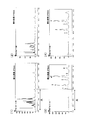
- the fraction containing a low compound (the part indicated by the arrow A in FIG. 1, hereinafter referred to as a compound group having low hydrophobicity) has physiological activity as shown in Examples 13 and 14.
- the areas of the components other than iso- ⁇ acid and ⁇ -acid relative to the HPLC total peak area of components other than ⁇ -acid among the degradation products The ratio is 30% or more, preferably 70% or more, more preferably 90% or more.
- the main component of the low hydrophobic group of compounds exhibiting the above physiological activity was considered to be humic acids due to their molecular weight.
- the content of humic acids contained in the decomposition product is preferably not less than the total content of iso ⁇ acid and ⁇ acid as the amount of substance.
- the term “humulic acid” refers to humic acid, adhumic acid, cohumulic acid, posthumic acid, and prehumic acid, and acetylhumuric acid, dihydrohumulic acid, acetyldihydrohumulic acid, humic acid C, and humic acid D.
- O-methylhumuric acid D O-methylhumuric acid D
- oxyhumuric acid oxyhumuric acid
- dehydrohumuric acid dehydrated humic acid
- dehydrated dihydrohumuric acid O-methylhumuric acid D
- oxyhumuric acid oxyhumuric acid
- dehydrohumuric acid dehydrated humic acid
- dehydrated dihydrohumuric acid O-methylhumuric acid D
- oxyhumuric acid oxyhumuric acid
- dehydrohumuric acid dehydrated humic acid
- dehydrated dihydrohumuric acid O-methylhumuric acid D
- oxyhumuric acid oxyhumuric acid
- dehydrohumuric acid dehydrated humic acid
- dehydrated dihydrohumuric acid dehydrated humuric acid
- the degradation product according to the present invention contains fatty acids produced by alkali decomposition treatment, and it has been found that depending on the alkali treatment conditions or the mode of intake, intake may be hindered by the unpleasant odor peculiar to fatty acids. Therefore, the degradation product according to the present invention is preferably a product obtained by removing fatty acids from components contained in the degradation product, and more preferably a component comprising a component that forms a complex with a metal ion among the components contained in the degradation product. It is.
- the fatty acid content in the degradation product according to the present invention is preferably 40% by weight or less, more preferably 10% by weight or less of the content of humic acids. The method for removing the fatty acid will be described later.
- the isomerized hop extract can be produced by decomposing under alkaline conditions.
- the hop extract is heated at a temperature of room temperature to 100 ° C. for several seconds to 72 hours under an alkaline condition, and is preferably heated at a pH of 10 to 14 and a temperature range of 50 ° C. to 90 ° C. for 5 minutes to 24 hours.
- an alkaline decomposition product of hop extract can be obtained.
- a commonly used alkaline aqueous solution may be used.
- hop extract isomerized into an aqueous solution of sodium hydroxide or potassium carbonate having a concentration of 0.5 to 2M. May be added so that the dry weight of the extract is 3 to 30 w / v%.
- Alkaline decomposition treatment decomposes alpha acids such as humulone and isoalpha acids such as isohumulone contained in the hop extract.
- the degree of decomposition of these components can be analyzed and confirmed by HPLC or the like.
- An isomerized hop extract subjected to a decomposition treatment under alkaline conditions can be obtained by isomerizing the hop extract.
- the isomerization method is known and any method may be used.
- the hop extract is heated under a weak alkaline condition of pH 8-9 or in the presence of magnesium oxide. be able to.
- the hop extract may be subjected to an isomerization treatment as it is.
- the hop extract is added to warm alkaline water (pH 8 to 9 after adding the hop extract), and the dissolved ⁇ acid and insoluble ⁇ acid are added. The acid may be separated and the resulting ⁇ acid fraction may be subjected to isomerization.
- a hop extract prepared by subjecting spikelets or compressed products thereof to the extraction operation as they are or after pulverization can be used.
- the extraction method include an extraction method using an ethanol solvent and a supercritical carbon dioxide extraction method used as a method for preparing a hop extract used for beer brewing.
- the supercritical carbon dioxide extraction has a feature that there are few polyphenol components, and bitterness and essential oil components are more concentrated.
- other commonly used methods can be employed, for example, a method of immersing hop spikelets, pulverized products thereof, etc.
- the obtained extract may be used as it is, after removing solids by filtration or centrifugation as necessary, or may be used as it is, or may be partially concentrated or dried by distilling off the solvent. . Further, after concentration or drying, it may be used after being purified by washing with a non-soluble solvent, or it may be further dissolved or suspended in a suitable solvent. Furthermore, you may use the hop extract extract dried material obtained by drying the solvent extract obtained as mentioned above by normal means, such as reduced-pressure drying and freeze-drying.
- Examples of the solvent used for the extraction include water; lower alcohols having 1 to 4 carbon atoms such as methanol, ethanol, propanol and butanol; lower alkyl esters such as ethyl acetate; ethylene glycol, butylene glycol, propylene glycol, Examples include known organic solvents such as glycols such as glycerin; polar solvents such as acetone and acetic acid; hydrocarbons such as benzene and hexane; and nonpolar solvents such as ethers such as ethyl ether and petroleum ether. These solvents may be used alone or in combination of two or more.
- the hop extract is heated at a temperature of room temperature to 100 ° C. for several seconds to 72 hours under alkaline conditions of pH 9 or higher, and preferably at a pH range of 10 to 14, 50 ° C. to 90 ° C. for 5 minutes to 48 minutes. By heating for a period of time, an alkaline decomposition product of hop extract can be obtained.
- hop extract is added to an aqueous solution of sodium hydroxide or potassium carbonate having a concentration of 0.5 to 2 M so that the dry weight of the extract is 3 to 10 w / v%. May be.
- the hop extract may be subjected to an alkali decomposition treatment as it is, but the ⁇ acid may be fractionated from the hop extract prior to the alkali decomposition treatment and may be subjected to the decomposition treatment.
- the separation of ⁇ acid and ⁇ acid can be carried out in the same manner as described above.
- the hop extract to be subjected to the decomposition treatment under alkaline conditions can be prepared by subjecting the spiked flower or its compressed product to the extraction operation as it is or after pulverization in the same manner as described above.
- the decomposition product itself obtained by subjecting hop extract to alkaline decomposition is alkaline, it is appropriately selected depending on the acid generally used for neutralization of sulfuric acid, hydrochloric acid, nitric acid, phosphoric acid, citric acid, lactic acid, tartaric acid, etc. You may neutralize.
- the neutralized degradation product can be used by adding to foods and pharmaceuticals as described later.
- the hop extract subjected to the alkali decomposition treatment is commercially available as a beer additive, and a commercially available product can be used in the present invention.
- hop extract obtained by supercritical carbon dioxide extraction of humrons and luprones mainly from pulverized hop spikelets (for example, CO2 Pure Resin Extract (Hopsteiner)), isomerized extract of carbon dioxide gas from hop spikelet pulverized products (For example, Isomerized Kettle Extract (SS.
- a hop extract extracted using a solvent adjusted under alkaline conditions similar to the alkali decomposition treatment can also be used as a decomposition product according to the present invention. That is, an alkaline decomposition product of hop extract can be prepared by performing an extraction operation using a solvent adjusted to alkaline conditions (pH 9 or more, preferably pH 13 or more) as it is or after pulverization of spikelets or compressed products thereof. it can.
- a solvent adjusted to alkaline conditions pH 9 or more, preferably pH 13 or more
- the fatty acid removal treatment for removing the fatty acid generated by the treatment is performed. Also good.
- the method for removing the fatty acid is not particularly limited.
- a known method such as a method in which fatty acid is volatilized and removed with heated steam (steam distillation method) or a method of adsorbing with a carrier (adsorption method) after acidic treatment of the decomposition product can be used.
- the degradation product is treated under acidic conditions and precipitated as an oil component, and the fatty acid is removed by centrifugal washing with water (centrifugation method), and the fatty acid is removed using fermentation by microorganisms.
- centrifugal washing with water centrifugal washing with water
- the fatty acid is removed using fermentation by microorganisms.
- Fusion method or a method of removing fatty acids as a result by separating components that form a complex with metal ions (complex formation method) can also be used.
- a physiologically active component can be insolubilized as a metal complex and solid-liquid separated from a solution containing a fatty acid.
- this method is extremely simple and efficient, and is very advantageous in that the operator is not exposed to the unpleasant odor of fatty acids because the operation is performed under alkaline conditions.
- a metal ion may be added to the alkaline decomposition product of hop extract, the component complexed with the metal ion may be collected, and the component may be used in the food according to the present invention or the inhibitor according to the present invention.
- the components complexed in the above method can be dissociated from metal ions using acids such as sulfuric acid, hydrochloric acid, nitric acid, phosphoric acid, citric acid, lactic acid, tartaric acid, and used for the food according to the present invention and the inhibitor according to the present invention. it can.
- the metal ion that can be used for complex formation is preferably a divalent metal ion, and examples thereof include magnesium ion (magnesium chloride), calcium ion, zinc ion, iron ion, and copper ion.
- physiologically active components such as humic acids contained in the degradation product according to the present invention form a complex with a metal ion and are insolubilized.
- the decomposition product according to the present invention can form a salt with an alkali metal such as potassium or sodium to form an aqueous alkali metal salt solution.
- the aqueous solution can be pulverized by spray drying or the like.
- the alkali metal salt that can be used for forming the metal salt of the decomposition product according to the present invention include salts that are allowed to be added to foods such as potassium salt and sodium salt, but potassium salt is preferable.
- the alkali metal salt of the decomposition product according to the present invention is excellent in water solubility and is advantageous in that it can be easily added to foods (especially beverages).
- the alkali metal salt of the decomposition product according to the present invention obtained as described above may be subjected to a fatty acid removal treatment to remove the fatty acid. Moreover, you may prepare the alkali metal salt of the decomposition product by this invention using the decomposition product by this invention attached
- the alkali decomposition products obtained as described above contain humic acids
- the humic acids may be isolated and purified by further performing an extraction step. For example, after adsorbing an alkaline decomposition product to an adsorption resin or the like, only humic acids may be selectively eluted and added to food, and used as a food additive according to the present invention or an inhibitor according to the present invention. Also good.
- the alkaline degradation product of hop extract significantly suppressed body weight gain in mice fed with a high fat diet and significantly reduced visceral fat and subcutaneous fat in mice fed with a high fat diet. It was. Moreover, the alkaline decomposition product of hop extract significantly suppressed lipid accumulation in the mouse liver.
- the degradation product according to the present invention is useful as a fat accumulation inhibitor (particularly, visceral fat and subcutaneous fat accumulation inhibitor) and a weight gain inhibitor.
- the degradation product according to the present invention is useful for the prevention and / or treatment of obesity.
- humic acids inhibit fat accumulation. It is useful as an agent and a weight gain inhibitor. Moreover, humic acids are useful for the prevention and / or treatment of obesity.
- the degradation products and humic acids according to the present invention do not have an intense bitter taste like isomerized hop extract (Examples 11, 16, and 17). Therefore, the degradation products and humic acids according to the present invention are advantageous in that they can be used as they are without taking a masking means for bitterness in foods and beverages and pharmaceuticals while expecting the above physiological activity.
- the degradation product according to the present invention When the degradation product according to the present invention is provided as a pharmaceutical product, it can be produced by mixing the degradation product according to the present invention with a pharmaceutically acceptable additive. Since the degradation product according to the present invention does not have an intense bitter taste like an isohumulone compound, it is not necessary to take a means for masking the bitter taste or in a state in which the bitter taste is sufficiently masked using an existing masking means. This is advantageous in that the preparation can be expected to have the efficacy of
- the alkaline decomposition product of hop extract itself not only the alkaline decomposition product of hop extract itself, but also a component forming a complex with a metal ion among components contained in the decomposition product and isolated / purified humic acids can be used. Since the fatty acid produced by alkali decomposition is almost removed from the component that forms a complex with the metal ion, it is advantageous in that an unpleasant odor peculiar to fatty acid does not occur even when these components are used in pharmaceuticals at a high concentration.
- the degradation product according to the present invention can be administered orally or parenterally as an active ingredient, and preferably is orally administered.
- Oral preparations include granules, powders, tablets (including sugar-coated tablets), pills, capsules, syrups, emulsions, and suspensions.
- parenteral preparations include injections (for example, subcutaneous injections, intravenous injections, intramuscular injections, intraperitoneal injections), drops, and external preparations (for example, nasal preparations, transdermal preparations, ointments) ), Suppositories (for example, rectal suppositories, vaginal suppositories). These preparations can be formulated using a pharmaceutically acceptable carrier by a technique usually performed in this field.
- Pharmaceutically acceptable carriers include excipients, binders, diluents, additives, fragrances, buffers, thickeners, colorants, stabilizers, emulsifiers, dispersants, suspending agents, preservatives, etc.
- excipients include excipients, binders, diluents, additives, fragrances, buffers, thickeners, colorants, stabilizers, emulsifiers, dispersants, suspending agents, preservatives, etc.
- magnesium carbonate, magnesium stearate, talc, sugar, lactose, pectin, dextrin, starch, gelatin, tragacanth, methylcellulose, sodium carboxymethylcellulose, low melting point wax, cocoa butter can be used as a carrier.
- the preparation can be produced, for example, as follows.
- Oral preparations contain active ingredients such as excipients (eg lactose, sucrose, starch, mannitol), disintegrants (eg calcium carbonate, carboxymethylcellulose calcium), binders (eg pregelatinized starch, gum arabic, carboxy Methylcellulose, polyvinylpyrrolidone, hydroxypropylcellulose) or lubricant (eg talc, magnesium stearate, polyethylene glycol 6000) and compression molded, then, if necessary, taste masking, enteric or sustained purposes Therefore, it can be produced by coating by a method known per se.
- active ingredients eg lactose, sucrose, starch, mannitol
- disintegrants eg calcium carbonate, carboxymethylcellulose calcium
- binders eg pregelatinized starch, gum arabic, carboxy Methylcellulose, polyvinylpyrrolidone, hydroxypropylcellulose
- ethyl cellulose for example, ethyl cellulose, hydroxymethyl cellulose, polyoxyethylene glycol, cellulose acetate phthalate, hydroxypropyl methylcellulose phthalate and Eudragit (Rohm, Germany, methacrylic acid / acrylic acid copolymer) can be used.
- An injection comprises an active ingredient containing a dispersant (for example, Tween 80 (manufactured by Atlas Powder, USA), HCO 60 (manufactured by Nikko Chemicals), polyethylene glycol, carboxymethylcellulose, sodium alginate, etc.), a preservative (for example, methylparaben).
- a dispersant for example, Tween 80 (manufactured by Atlas Powder, USA), HCO 60 (manufactured by Nikko Chemicals), polyethylene glycol, carboxymethylcellulose, sodium alginate, etc.
- a preservative for example, methylparaben
- aqueous solvents eg, distilled water, physiological saline, Ringer's solution, etc.
- an oily solvent for example, vegetable oil such as olive oil, sesame oil, cottonseed oil, corn oil, propylene glycol.
- additives such as a solubilizing agent (for example, sodium salicylate, sodium acetate), a stabilizer (for example, human serum albumin), a soothing agent (for example, benzalkonium chloride, procaine hydrochloride) are added. Also good.
- a solubilizing agent for example, sodium salicylate, sodium acetate
- a stabilizer for example, human serum albumin
- a soothing agent for example, benzalkonium chloride, procaine hydrochloride
- External preparations can be produced by making the active ingredient into a solid, semi-solid or liquid composition.
- the solid composition is prepared by using the active ingredient as it is, or an excipient (eg, lactose, mannitol, starch, microcrystalline cellulose, sucrose), a thickener (eg, natural gums, cellulose derivatives, acrylic acid). Polymer) and the like can be added and mixed to form a powder.
- the liquid composition can be produced in almost the same manner as in the case of an injection.
- the semi-solid composition is preferably an aqueous or oily gel or a cartilage.
- compositions are all pH adjusters (for example, carbonic acid, phosphoric acid, citric acid, hydrochloric acid, sodium hydroxide), preservatives (for example, p-hydroxybenzoates, chlorobutanol, benzalkonium chloride). Etc. may be included. Suppositories can be produced by making the active ingredient into an oily or aqueous solid, semi-solid or liquid composition.
- pH adjusters for example, carbonic acid, phosphoric acid, citric acid, hydrochloric acid, sodium hydroxide
- preservatives for example, p-hydroxybenzoates, chlorobutanol, benzalkonium chloride.
- Etc. may be included.
- Suppositories can be produced by making the active ingredient into an oily or aqueous solid, semi-solid or liquid composition.
- oily base used in the composition examples include higher fatty acid glycerides [for example, cacao butter, witepsols (manufactured by Dynamite Nobel)], intermediate fatty acids [for example, miglyols (manufactured by Dynamite Nobel)], or vegetable oils (for example, , Sesame oil, soybean oil, cottonseed oil).
- aqueous base examples include polyethylene glycols and propylene glycol.
- aqueous gel base examples include natural gums, cellulose derivatives, vinyl polymers, and acrylic acid polymers.
- the food additive according to the present invention is a degradation product according to the present invention intended to be added to food.
- the degradation product according to the present invention exhibits physiological actions such as a fat accumulation inhibiting effect and a weight gain inhibiting effect. Therefore, food additives according to the present invention include those intended for addition to foods that expect the physiological effects of the degradation products according to the present invention.
- the addition object and addition aspect can follow the description regarding the foodstuff by this invention.
- the food according to the present invention is a food or drink containing an effective amount of the degradation product according to the present invention.
- “containing an effective amount” of the degradation product according to the present invention means a content that allows humic acids to be ingested in the range described later when an amount normally consumed in each food or drink is ingested.
- the degradation product according to the present invention can be blended into the food as it is. More specifically, the food according to the present invention is prepared by directly preparing the decomposition product according to the present invention as a food or drink, further blended with various proteins, sugars, fats, trace elements, vitamins, etc., liquid, semi-liquid Or what was made into solid state, what was made into aqueous solution, such as potassium salt and sodium salt, and what was added to the general food-drinks may be used.
- the degradation product according to the present invention does not have an intense bitter taste like an isohumulone compound, it is not necessary to take a means for masking the bitter taste or in a state in which the bitter taste is sufficiently masked using an existing masking means. It is advantageous in that it can be a food that is expected to have a physiological effect.
- the alkaline decomposition product of hop extract itself not only the alkaline decomposition product of hop extract itself, but also a component that forms a complex with a metal ion among components contained in the decomposition product and an isolated and purified humic acid can be used for food. Since the fatty acid produced by alkali decomposition is almost removed from the component that forms a complex with the metal ion, it is advantageous in that an unpleasant odor peculiar to fatty acid does not occur even when these components are used in food at a high concentration.
- “food” is used to mean including health food, functional food, food for specified health use, and food for the sick.
- the form of “food” is not particularly limited, and may be, for example, a drink form.
- the degradation product according to the present invention Since the degradation product according to the present invention has a fat accumulation inhibitory action and a weight gain inhibitory action, it is a food that is taken daily or a health food or functional food that is taken as a supplement, preferably a lipid-containing food or a high-calorie food.
- the degradation product according to the present invention can be provided as a food useful for maintaining and promoting health, specifically as a food having functions such as a fat accumulation inhibiting action and a weight gain inhibiting action. That is, the food according to the present invention is a food suitable for consumers who are concerned about fat accumulation (particularly accumulation of body fat and visceral fat) and consumers concerned about weight gain, particularly food for specified health use. Can be provided.
- Such foods and drinks include foods and drinks containing carbohydrates such as rice, noodles, breads and pasta; Western confectionery such as cookies and cakes; Japanese confectionery such as buns and sheepskin; candy, gums, yogurt and pudding Various confectionery such as frozen confectionery and ice confectionery such as whiskey, bourbon, spirits, liqueur, wine, fruit liquor, sake, Chinese sake, shochu, beer, non-alcoholic beer with alcohol content of 1% or less, sparkling liquor, other miscellaneous sake, Alcoholic drinks such as strawberry high; fruit juice drinks, vegetable juice drinks, fruit and vegetable juice drinks, soft drinks, milk, soy milk, milk drinks, drink type yogurt, drink type jelly, coffee, cocoa, tea drinks , Non-alcoholic beverages such as energy drinks, sports drinks and mineral water; processed products using eggs, seafood ( Ca, octopus, shellfish, including processed products (delicacies eel, etc.) and meat (including offal lever or the like)) can be exemplified such as, but not limited thereto.
- tea beverages include black tea, green tea, barley tea, brown rice tea, sencha, gyokuro tea, roasted tea, oolong tea, turmeric tea, puer tea, rooibos tea, rose tea, chrysanthemum tea, herbal tea (for example, mint tea, jasmine) Tea).
- fruits used in fruit juice-containing beverages and fruit and vegetable juice-containing beverages include apples, mandarin oranges, grapes, bananas, pears, and ume.
- a vegetable used for a drink containing vegetable juice, fruit juice, and a drink containing vegetable juice a tomato, a carrot, a celery, a cucumber, and a watermelon are mentioned, for example.
- the pharmaceuticals and foods according to the present invention use hop extracts that humans have taken as food and drink for many years, they have low toxicity and mammals that require it (for example, humans, mice, rats, rabbits, dogs, cats) , Cattle, horses, pigs, monkeys, etc.).
- the dose or intake of the degradation product according to the present invention can be determined depending on the recipient, the age and weight of the recipient, symptoms, administration time, dosage form, administration method, drug combination, and the like.
- the degradation product according to the present invention is orally administered as a medicine, it is 10 to 600 mg, preferably 20 to 200 mg, preferably 1 to 100 mg, preferably 10 to 600 mg, preferably administered parenterally per day for an adult weighing 60 kg in terms of humic acids.
- the dose can be divided into 1 to 3 times a day so that the dose is in the range of 3 to 30 mg.
- Drugs having other mechanisms of action to be used in combination with the degradation product according to the present invention can also be appropriately determined based on the clinically used dose.
- the degradation product according to the present invention is added to the food so that the intake per day for an adult weighing 60 kg is in the range of 25 to 9600 mg, preferably in the range of 25 to 780 mg, in terms of humic acids. Can be blended.
- Example 1 Preparation of Strong Alkaline Thermal Decomposition Product
- An isomerized hop extract (Isoextract 30%; hopsteiner) containing isohumulone, isoadhumulone, and isocohumulone as main components in a 2M sodium hydroxide aqueous solution heated to 95 ° C. in an extract dry weight of 3 % W / v was added, and the heating time was maintained up to 10 minutes. The pH in the aqueous solution during heating was 13 or more.
- Example 2 Preparation of weak alkali pyrolysis product Isomeric hop extract (Isoextract 30%; hopsteiner) containing isohumulone, isoadhumulone, and isocohumulone as main components in 0.5M potassium carbonate aqueous solution heated to 80 ° C by dry weight of extract 6% w / v was added, and the heating time was maintained until 24 hours later. The pH in the aqueous solution during heating was 10-12.
- Example 3 Analysis of Alkaline Thermal Decomposition Product
- the alkaline thermal decomposition solution prepared in Examples 1 and 2 was pretreated as follows. [Reaction solution analysis pretreatment] The collected reaction solution was adjusted to pH 3 or lower with hydrochloric acid, and diluted with ethanol so that the isomerized hop extract contained in the HPLC sample solution was 0.1 to 0.3% w / v by dry weight.
- the ratio (%) of the peak area values of isohumulone compound and humulone compound in the total area value (mAU ⁇ min) of all peaks excluding ⁇ acid detected at a detection wavelength of 270 nm under the above analysis conditions was calculated.
- the total peak excluding ⁇ -acid is in the area until after elution of adhumulone, and in the area until after elution of cisisoadhumulone when gradient program (ii) is used. It is defined as a peak to be detected, and those described as all peaks below shall follow this definition. In the waveform analysis, areas where solvent peaks and negative peaks due to injection shock occur were excluded from analysis.
- FIG. 1 (1) and (2) show the HPLC chromatogram (gradient program (ii)) at the time of analysis of the degradation product prepared in Example 1 above. Moreover, the chromatogram at the time of analysis when distilled water was used instead of 2M sodium hydroxide aqueous solution and it did not heat is shown to FIG. 1 (3) and (4).
- the isohumulone compounds detected at this time are transisocohumulone, cisisocohumulone, transisohumulone, cisisohumulone, transisoadhumulone, and cisisoadhumulone, which correspond to peaks 1 to 6 in FIG. 1 (3), respectively. did.
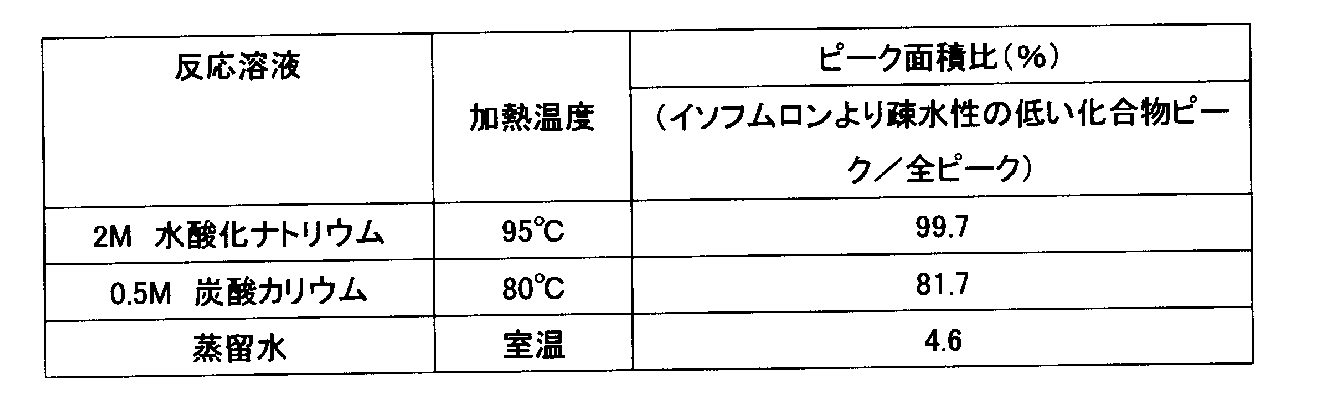
- Table 1 shows the ratio (%) of the peak area value of the isohumulone compound in the total area value (mAU ⁇ min) of all peaks detected at a detection wavelength of 270 nm in each analysis sample.
- a peak of a compound having a lower hydrophobicity than that of the isohumulone compound appeared in the alkaline thermal decomposition product. That is, the peak eluted at a time earlier than the transisocohumulone elution time corresponds to the peak within the range fractionated by the arrow A in FIGS.
- Table 2 shows the ratio (%) of compound peak area values that are less hydrophobic than the isohumulone compound in the total area value (mAU ⁇ min) of all peaks detected at a detection wavelength of 270 nm.
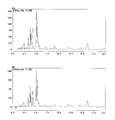
- Fig. 3 shows an enlarged HPLC chromatogram of the elution time of a compound having a lower hydrophobicity than the isohumulone compound after the strong alkali thermal decomposition treatment.
- the isohumulone compound is hydrolyzed at the C4 side chain acyl group by alkali heat treatment, so that humic acid and fatty acids (4-methyl-2-pentenoic acid) and 4-methyl-3-pentenoic acid are obtained. (4-methyl-3-pentenoic acid) and the like, and peaks a and b detected at 210 nm were assumed to be fatty acids generated by decomposition.
- Peak b was identified as 4-methyl-2-pentenoic acid because it had the same retention time and molecular weight as 4-methyl-2-pentenoic acid available as a commercial sample.
- peak a had the same molecular weight as peak b, and was identified as 4-methyl-3-pentenoic acid from the results of NMR measurement after fractionation.
- Peaks 1 ', 2', and 3 'observed at 270 nm were identified as cohumulic acid, humic acid, and adhumulic acid (a mixture of cis and trans isomers, respectively) as a result of various instrumental analyses.
- FIG. 4 shows an enlarged HPLC chromatogram of the compound elution time, which is less hydrophobic than the isohumulone compound after the weak alkali thermal decomposition treatment. Peaks 1 ′, 2 ′, and 3 ′ were detected at 270 nm as in the case of the strong alkaline pyrolysis product, and peaks 4 ′ and 5 that were identified as a mixture of acetylhumuric acid homologues that are humic acid derivatives from instrumental analysis results. 'Is detected.
- ⁇ -acid, iso- ⁇ -acid, humulic acid and fatty acids contained in hop extract or its alkaline decomposition product is possible by the above analysis method.
- ⁇ -acid and iso- ⁇ -acid can be used, for example, ICE-2, ICS-I2, and ICS-T2 from Internal Calibration Standards available from American Society of Brewing Chemistry (ASBC).
- ASBC American Society of Brewing Chemistry
- humic acids can be quantified using transhumic acid as a standard product. Transhumulic acid isolated by a known method can be used.
- 4-methyl-2-pentenoic acid is a commercially available product or isolated by a known method
- 4-methyl-3-pentenoic acid is fractionated and purified by HPLC from an alkaline decomposition product, or by other known methods. Quantification is possible by using the isolated product as a standard product.
- Example 4 Removal of fatty acid (1) (complex formation method)
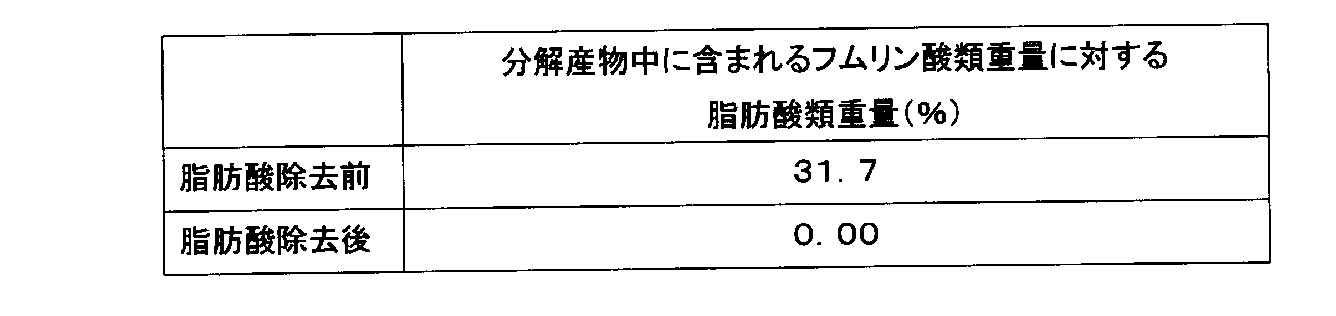
- the alkaline thermal decomposition products prepared in Examples 1 and 2 contain fatty acids resulting from the decomposition reaction, and depending on the mode of consumption, it is considered difficult to ingest comfortably due to an unpleasant odor caused by this fatty acid. It was. Therefore, removal of fatty acids was examined.
- a yellow solid was dissolved in ethanol, fatty acids were measured at a measurement wavelength of 210 nm, and humic acids were quantitatively analyzed at a measurement wavelength of 270 nm in the same manner as in Example 3, and the fatty acid removal rate was determined based on the weight of humic acid in the decomposition product. It was shown as a change in the weight percentage (Table 3). The chromatogram at the time of analysis is shown in FIG.
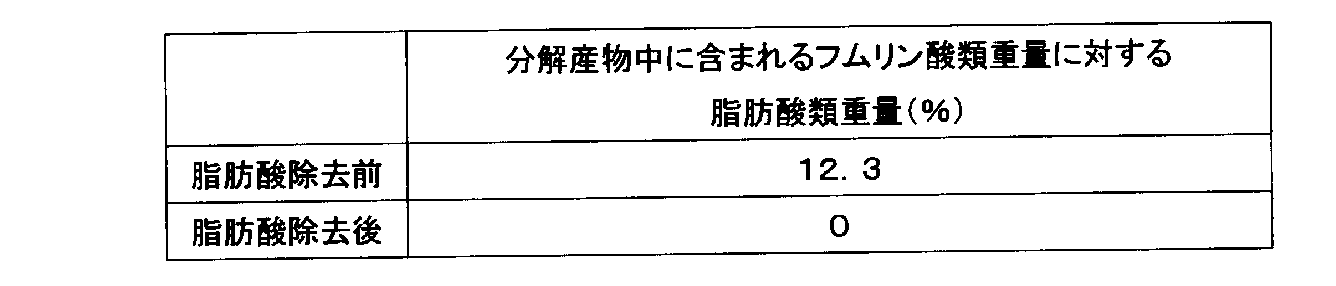
- Example 5 Removal of fatty acid (2) (complex formation method) The fatty acid removal by the complex formation method was examined from the product obtained in Example 2. The procedure described in Example 4 was followed.
- the obtained yellow solid was dissolved in ethanol, and fatty acids were quantitatively analyzed at a measurement wavelength of 210 nm and humic acids were measured at a measurement wavelength of 270 nm in the same manner as in Example 3, and the fatty acid removal rate was determined as humic acid in the degradation product. It was shown as a change in the ratio (%) of the fatty acid weight to the weight (Table 4). The chromatogram at the time of analysis is shown in FIG.
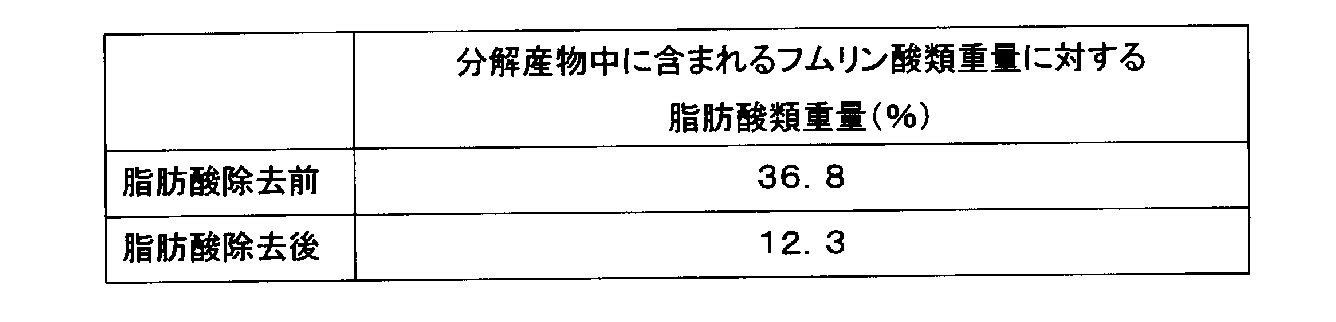
- Example 6 Removal of fatty acid (1) (centrifugation method) The fatty acid removal by centrifugation was examined from the product obtained in Example 1.
- the solution pH was adjusted to about 2 by adding sulfuric acid to the product, and a tan solid was obtained by centrifugation (5000 rpm, 10 minutes). Further, the solid was washed with 0.5 M sodium hydrogen carbonate solution and then dissolved in ethanol, and humic acid and fatty acid in the resin were analyzed by the method described in Example 3.
- the fatty acid removal rate by centrifugation was shown as a change in the ratio (%) of the weight of fatty acid to the weight of humic acid in the degradation product (Table 5).
- Example 7 Removal of fatty acid (2) (centrifugation method) From the product obtained in Example 2, removal of fatty acids by centrifugation was examined.
- Example 6 Executed according to the method described in Example 6 to obtain a tan solid. After the obtained solid was dissolved in ethanol, humic acids and fatty acids were analyzed by the method described in Example 3.
- the fatty acid removal rate by centrifugation was shown as a change in the ratio (%) of the weight of fatty acid to the weight of humic acid in the degradation product (Table 6).
- Example 8 Removal of fatty acids (Evaluation of fatty acid assimilation by microorganisms) Regarding the fatty acids in the product obtained in Example 1, the assimilation by microorganisms was examined.
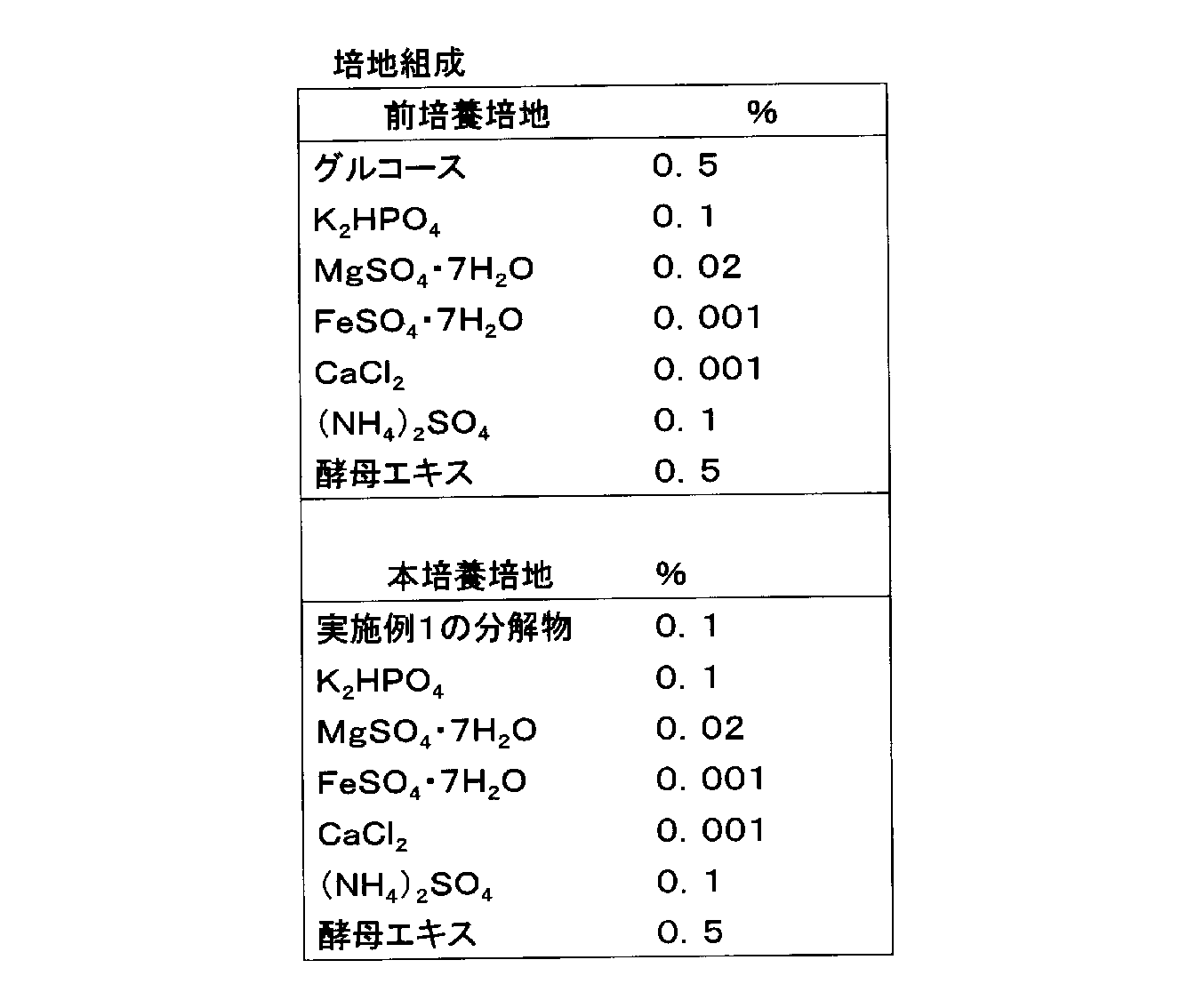
- Penicillium camenberti PC12 For evaluation, Aspergillus oryzae RIB40 (NBRC100959), Aspergillus kawachii NBRC4308, Trichoderma reesei NBRC31239, Penicillium camenberti PC12. After preculture of each strain, 1 mL of the bacterial cells was added to 100 mL of the main culture medium. Penicillium camenberti PC12 was cultured at 20 ° C for 4 days under aerobic conditions at 30 ° C.
- the ratio (%) of the weight of fatty acid to the weight of humic acid in the culture solution obtained as a result of HPLC analysis was used as an index of fatty acid assimilation property.
- Aspergillus oryzae RIB40 (NBRC100959), Aspergillus kawachii NBRC4308, and Trichoderma reesei NBRC31239. Aspergillus kawachii NBRC4308 was particularly effective, and it was confirmed that the unpleasant odor of fatty acids almost disappeared even in the sample after 72 hours.
- fatty acid can be removed.
- Examples 4 and 5 complex formation method
- the unpleasant odor caused by the fatty acid during the working process is remarkably reduced, and the operation is simple and very easy. It is efficient.
- Example 9 Potassium Chloride Chlorination of Alkaline Decomposition Product While heating the yellow solid obtained in Example 7 to 80 ° C., a 3M potassium carbonate aqueous solution was added to adjust the pH to 8, and an alkaline decomposition product potassium salt aqueous solution was prepared. Obtained. The obtained aqueous potassium salt solution was diluted and subjected to HPLC analysis according to the method of Example 3 so that the alkali decomposition product was 20% (w / w) in terms of solid content.
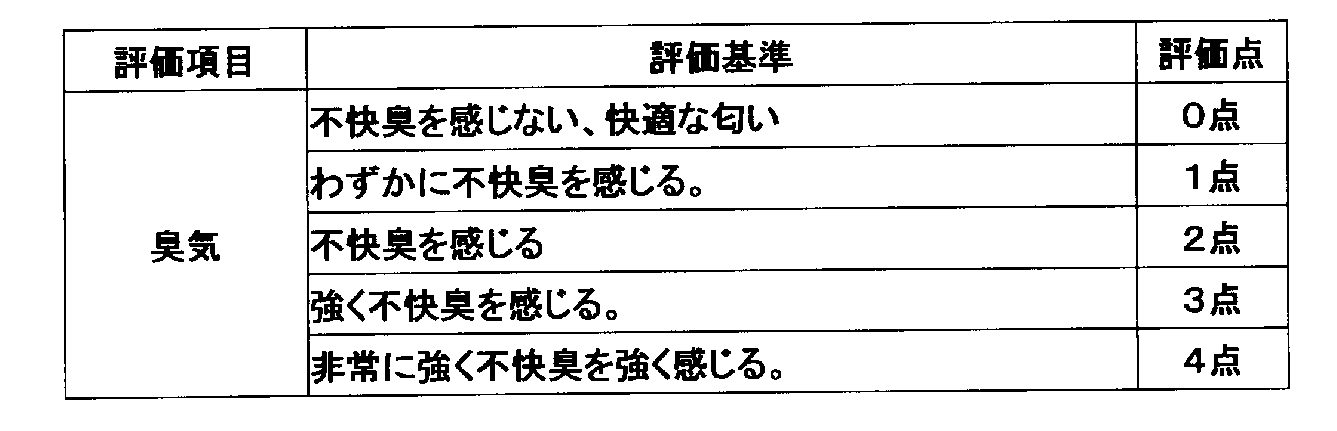
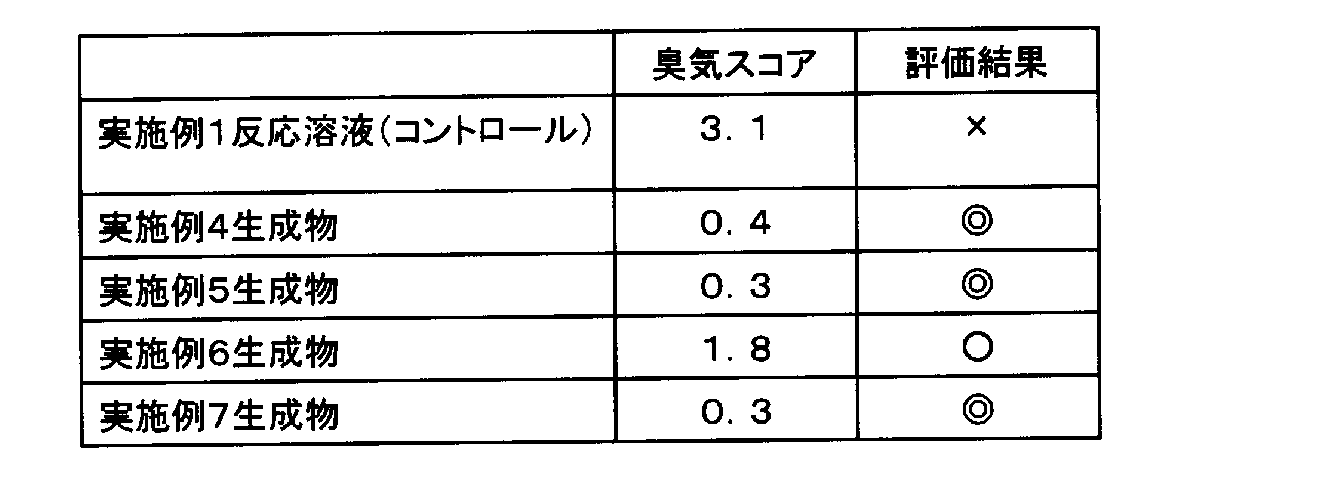
- Example 10 Odor sensory evaluation [Odor sensory evaluation evaluation method] The unpleasant odor caused by the fatty acids of the products obtained in Examples 4 to 7 and the product (control) obtained in Example 1 was subjected to sensory evaluation using seven in-house panelists by the following method.
- the degradation products of Examples 1 and 4 to 7 were evaluated using solutions prepared by adding humic acids to a citrate buffer solution (about pH 3.5) so as to contain 500 ppm of humic acids.
- the decomposition products of Examples 4 to 7 have reduced unpleasant odors with respect to the control, and in particular, the decomposition products obtained in Examples 4, 5, and 7 have disappeared almost completely, and drinking It was suggested that the flavor is suitable for the above.
- Example 11 Bitter taste sensory evaluation The degradation products obtained in Examples 4 to 7 were compared for their bitter taste by sensory evaluation.
- the sensory evaluation included a sample number mL in the mouth and evaluated according to the evaluation criteria. The result was obtained as an average value of the seven evaluation points, and was symbolized according to the following criteria.
- Example 12 Preparation of physiological action evaluation sample In order to evaluate the physiological action of the strong alkaline thermal decomposition product prepared in Example 1, only the decomposition product was extracted from the decomposition product solution by the following method.
- Example 13 Evaluation of effects on fat accumulation (1)
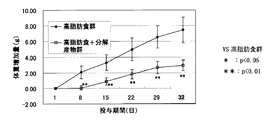
- the physiological evaluation of the degradation product obtained in Example 12 strong alkaline thermal degradation treatment product when the sodium hydroxide concentration was 2M was performed using mice.
- One group of 6 C57BL / 6J (male) (Charles River Japan Co., Ltd.) was acclimated with AIN93G feed for 1 week, and then the degradation product obtained in Example 12 was added to the high fat diet group and the high fat diet with a solid content of 0.
- Body weight is measured every week from the start of administration, and administration is continued for up to 32 days.
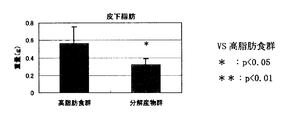
- Built-in fat weight (expressed as the sum of peritesticular fat, mesenteric fat, and perirenal fat weight), subcutaneous fat weight, organ weight at the time of dissection Various blood parameters were measured.
- liver total cholesterol, neutral fat, and phospholipid content were measured.
- the liver was immediately frozen under liquid nitrogen, and then a part of the liver was obtained after crushing, and crushing under ice-cooling using a Teflon (registered trademark) homogenizer under 9 times the amount of physiological saline. Thereafter, lipids were extracted according to the method described in Timothy P. Carr et al., Clinical Biochemistry 26, 39-42, 1993.
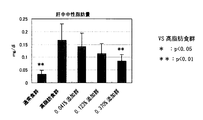
- Example 14 Evaluation of effects on fat accumulation (2) The physiological effect of the product obtained in Example 4 (sample obtained by removing fatty acids from the degradation product) was confirmed using a mouse in the same manner as in Example 13.
- a high-fat diet group a group obtained by adding the product of Example 4 to a high-fat diet to a solid content of 0.370%, 0.123%, and 0.041%
- a normal diet group AIN93G 5 groups were set and the administration period was 32 days.
- significant body weight gain suppression, visceral fat weight reduction, and liver weight reduction were observed (FIGS. 15 to 20).
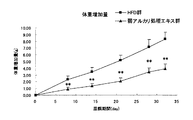
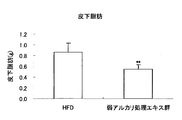
- Example 15 Evaluation of effects on fat accumulation (3)
- the physiological effect of the product obtained in Example 9 was confirmed using a mouse in the same manner as in Example 13.
- One group of 6 C57BL / 6J (male) (Charles River Japan Co., Ltd.) was acclimatized with AIN93G feed for 1 week, then the high-fat diet group (HFD group) and the high-fat diet obtained in Example 9
- Two groups in total (group of weak alkali-treated extracts) to which a product (decomposed product from which fatty acids had been removed) was added in a solid content of 0.40% (W / W) were set.
- Body weight was measured every week from the start of administration, and administration was continued up to 32 days. Peritesticular fat weight and subcutaneous fat weight were measured during dissection.
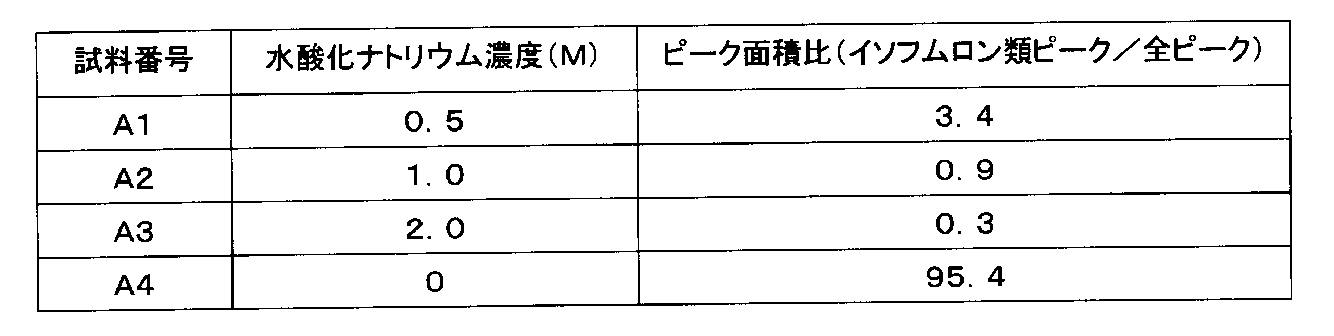
- Example 16 Examination of alkali concentration The optimum alkali concentration for the strong alkali thermal decomposition carried out in Example 1 was examined.
- An isomerized hop extract (Isoextract 30%; Hopsteiner) containing an isohumulone compound as a main component is added to a 0 to 2M sodium hydroxide solution so that the dry weight of the extract is 3 w / v%, and the heating time is maintained for 10 minutes.
- Each recovered solution was measured by HPLC, and the ratio of the peak area of the isohumulone compound to the total peak area was calculated. HPLC analysis was performed according to the procedure shown in Example 3.
- the ratio of the peak area of the isohumulone compound to the total peak area was 70% or less when the sodium hydroxide concentration was in the range of 0.5 to 2.0M.
- Example 17 Extract Addition Heating Temperature—Time 2 M An aqueous sodium hydroxide solution was heated to room temperature to 90 ° C., and an isomerized hop extract (Isoextract 30%; Hopsteiner) containing an isohumulone compound as a main component was 3 w / dry dry weight. After the addition, the heating time is maintained from several seconds to 24 hours, the reaction solution is collected over time, and each supernatant is measured by HPLC according to the method of Example 3, and the entire peak is measured. The peak area ratio of the isohumulone compound to the area of was calculated. In addition, sensory evaluation was performed according to the method described in Example 11. The results were as follows.
- sample 27 As a result, in sample 27, the peak area ratio reached 70% or less after 5 minutes and the bitterness was reduced, but the resin did not dissolve in the aqueous layer, and the yield was extremely bad.
- Sample 18 was proportional to the heating temperature and the heating time, and as the heating temperature increased, the time for the peak area ratio to reach 70% or less was shortened, and the bitterness was efficiently reduced.
- Example 18 Preparation of Strong Alkaline Thermal Decomposition Product from Non-Isomerized Hop Extract
- CO2 hop containing humulone, adhumulone, and cohumulone as main components in a 2M sodium hydroxide aqueous solution heated to 80 ° C. extract; Hopsteiner
- the pH in the aqueous solution during heating was 13 or more.
- Example 3 After the pretreatment of Example 3 was performed on the obtained degradation product solution, it was subjected to the HPLC analysis of Example 3 (gradient program (i)), and the peak area ratio of the humulone compound and isohumulone compound to the total peak area was calculated. did. Furthermore, bitterness evaluation was performed for each sample by the evaluation method of Example 11. The results were as follows.
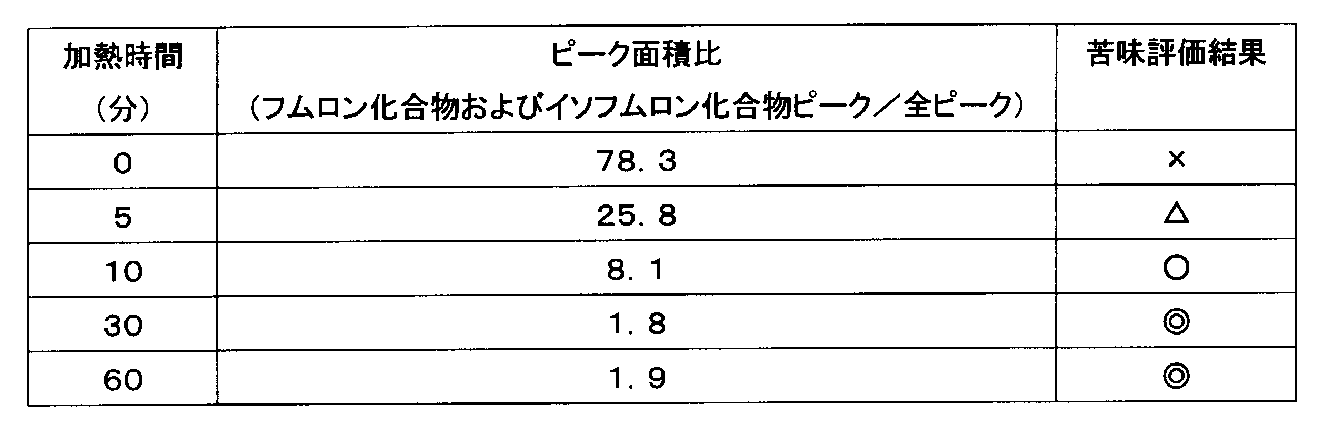
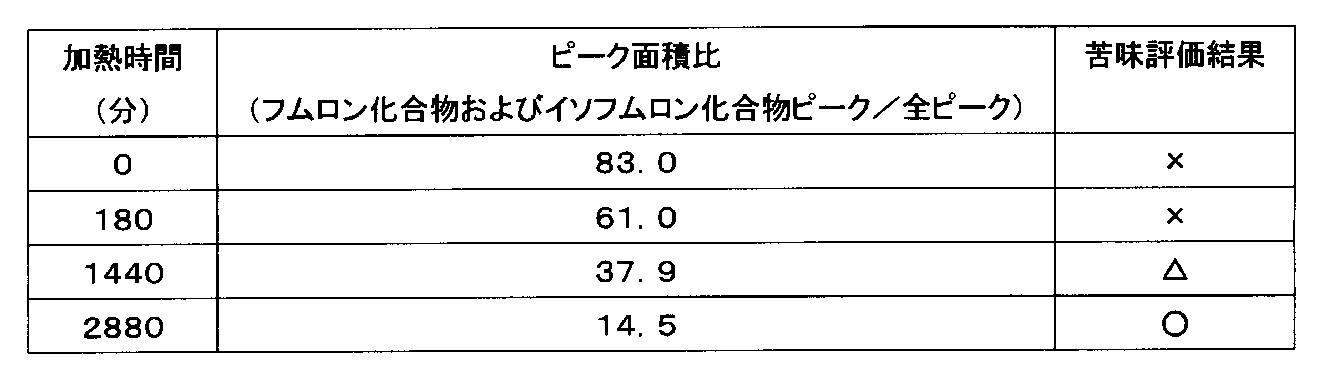
- Example 19 Was added to 5% w / v, the heating time was maintained from 0 to 48 hours, and the reaction solution was collected over time. The pH in the aqueous solution during heating was 10-12. After the pretreatment of Example 3 was performed on the obtained degradation product solution, it was subjected to HPLC analysis (gradient program (i)), and the peak area ratio of the humulone compound and the isohumulone compound to the total peak area was calculated. Furthermore, bitterness evaluation was performed for each sample by the evaluation method of Example 11. The results were as follows.
- Example 20 Production of beverage containing alkaline decomposition products
- the yellow solid obtained in Example 4 was potassium-chlorinated by the method of Example 9 and commercial coffee at a concentration of 50 mg in solid weight per 350 ml of each beverage. It was added to beverages and commercial black tea beverages (straight) to produce beverages containing alkaline degradation products. The evaluation was performed immediately after the addition, and after 1 week at 50 ° C., the evaluation was performed again. The residual ratio of the alkaline decomposition product was evaluated by the HPLC analysis of Example 3 to investigate the stability. As a result, the obtained beverage did not bother bitterness, and even after 1 week at 50 ° C., the residual rate of alkali decomposition products was 90% or more and was stable.
Landscapes
- Health & Medical Sciences (AREA)
- Life Sciences & Earth Sciences (AREA)
- Chemical & Material Sciences (AREA)
- Engineering & Computer Science (AREA)
- Natural Medicines & Medicinal Plants (AREA)
- Pharmacology & Pharmacy (AREA)
- Veterinary Medicine (AREA)
- Public Health (AREA)
- General Health & Medical Sciences (AREA)
- Animal Behavior & Ethology (AREA)
- Medicinal Chemistry (AREA)
- Epidemiology (AREA)
- Mycology (AREA)
- Botany (AREA)
- Nutrition Science (AREA)
- Polymers & Plastics (AREA)
- Food Science & Technology (AREA)
- Medical Informatics (AREA)
- Alternative & Traditional Medicine (AREA)
- Microbiology (AREA)
- Biotechnology (AREA)
- Chemical Kinetics & Catalysis (AREA)
- General Chemical & Material Sciences (AREA)
- Nuclear Medicine, Radiotherapy & Molecular Imaging (AREA)
- Bioinformatics & Cheminformatics (AREA)
- Child & Adolescent Psychology (AREA)
- Hematology (AREA)
- Obesity (AREA)
- Organic Chemistry (AREA)
- Diabetes (AREA)
- Coloring Foods And Improving Nutritive Qualities (AREA)
- Medicines Containing Plant Substances (AREA)
- Acyclic And Carbocyclic Compounds In Medicinal Compositions (AREA)
Abstract
Description
本発明により提供される「ホップエキスのアルカリ分解産物」(以下、単に「本発明による分解産物」ということがある)は、ホップエキスをアルカリ分解処理に付すことにより得ることができる。本発明において「アルカリ分解処理」とは、アルカリ条件下での分解処理を意味し、分解処理中のpHがアルカリ性を維持していれば特に限定されるものではないが、分解効率の観点から、好ましくはpH9以上、更に好ましくは、強アルカリ条件下、すなわち、pH13以上の条件下で分解処理を行うことができる。アルカリ分解処理の手法は後述する。また、本発明において「ホップエキス」とは、ホップ毬花の抽出物を意味し、ホップエキスを異性化処理に付すことにより得られた異性化ホップエキスを含む意味で用いられる。ホップエキスの抽出手法や異性化処理については後述する。
分解処理
本発明による分解産物は、異性化されたホップエキスをアルカリ条件下で分解処理することにより製造することができる。
ホップエキスをアルカリ分解処理に付して得られた分解産物には臭気の原因となる脂肪酸が含まれていることから、該処理により生成した脂肪酸を除去する脂肪酸除去処理を実施してもよい。
本発明による分解産物はカリウムやナトリウム等のアルカリ金属と塩を形成させ、アルカリ金属塩水溶液とすることができる。また、その水溶液をスプレードライ等により粉末化することができる。本発明による分解産物の金属塩形成に使用可能なアルカリ金属塩としては、カリウム塩、ナトリウム塩のような食品への添加が許容された塩が挙げられるが、カリウム塩が好ましい。本発明による分解産物のアルカリ金属塩は水溶性が優れており、食品(特に飲料)への添加を容易に行うことができる点で有利である。
上記のようにして得られたアルカリ分解産物にはフムリン酸類が含まれているが、更に抽出工程を行ってフムリン酸類を単離・精製してもよい。例えばアルカリ分解産物を吸着樹脂等に吸着させた後、フムリン酸類のみを選択的に溶出させ、それを食品に添加してよく、また、本発明による食品添加剤や本発明による抑制剤として用いてもよい。
後記実施例13~15に示される通り、ホップエキスのアルカリ分解産物は、高脂肪食摂取マウスにおいて体重増加を有意に抑制するとともに、高脂肪食摂取マウスの内臓脂肪や皮下脂肪を有意に減少させた。また、ホップエキスのアルカリ分解産物は、マウス肝臓中において脂質蓄積を有意に抑制した。
本発明による分解産物を医薬品として提供する場合には、本発明による分解産物を薬学上許容される添加物と混合することにより製造できる。本発明による分解産物はイソフムロン化合物のような強烈な苦味を有さないことから、苦味をマスキングするための手段を講じずに、あるいは既存のマスキング手段を用いて苦味を十分にマスキングした状態で所定の効能を期待する製剤とすることができる点で有利である。
経口剤は、有効成分に、例えば賦形剤(例えば、乳糖、白糖、デンプン、マンニトール)、崩壊剤(例えば、炭酸カルシウム、カルボキシメチルセルロースカルシウム)、結合剤(例えば、α化デンプン、アラビアゴム、カルボキシメチルセルロース、ポリビニールピロリドン、ヒドロキシプロピルセルロース)または滑沢剤(例えば、タルク、ステアリン酸マグネシウム、ポリエチレングリコール6000)を添加して圧縮成形し、次いで必要により、味のマスキング、腸溶性あるいは持続性の目的のため自体公知の方法でコーティングすることにより製造することができる。コーティング剤としては、例えばエチルセルロース、ヒドロキシメチルセルロース、ポリオキシエチレングリコール、セルロースアセテートフタレート、ヒドロキシプロピルメチルセルロースフタレートおよびオイドラギット(ローム社製、ドイツ、メタアクリル酸・アクリル酸共重合物)などを用いることができる。
95℃に加熱した2M水酸化ナトリウム水溶液中にイソフムロン、イソアドフムロン、イソコフムロンを主成分とする異性化ホップエキス(Isoextract30%;hopsteiner社)をエキス乾燥重量で3%w/vとなるよう添加し、10分まで加熱時間を保持した。加熱中の水溶液中のpHは13以上であった。
80℃に加熱した0.5M炭酸カリウム水溶液中にイソフムロン、イソアドフムロン、イソコフムロンを主成分とする異性化ホップエキス(Isoextract30%;hopsteiner社)をエキス乾燥重量で6%w/vとなるよう添加し、24時間後まで加熱時間を保持した。加熱中の水溶液中のpHは10~12であった。
実施例1、2で調製したアルカリ加熱分解溶液を以下のよう前処理を行った。
[反応液分析前処理]
採取した反応液を塩酸にてpH3以下に調整し、HPLCサンプル溶液中に含まれる異性化ホップエキスが乾燥重量で0.1~0.3%w/vとなるようにエタノールにて希釈した。
[HPLC構成装置]
ホンプ:LC-10ADvp×2(SHIMADZU)
デガッサー:DGU-14A(SHIMADZU)
システムコントローラー:CBM-20A(SHIMADZU)
オートサンプラー:SIL-20AC(SHIMADZU)
カラムオーブン:CTO-20AC(SHIMADZU)
フォトダイオードアレー検出器:SPD-M20A(SHIMADZU)
波形解析ソフトウェア:LCSolution(SHIMADZU)
[HPLC条件]
カラム:Alltima C18 4.6mm I.D. x 150mm 粒子径5μm
流速:1.8mL/min
溶出溶媒A:水/リン酸、1000/0.2, (v/v) + EDTA(free) 0.02%(w/v)
溶出溶媒B:アセトニトリル
注入量:10μL
カラム温度:40℃
検出波長:270nm(フムリン酸類、イソα酸、α酸、β酸)
210nm(脂肪酸類)
グラジエントプログラム(i):0-20分:52%Bイソクラティック
20-30分:52-70%Bリニアグラジエント
30-60分:70%Bイソクラティック
60分:ストップ
グラジエントプログラム(ii):0-20分:52%Bイソクラティック
20分:ストップ

実施例1および2で調製されたアルカリ加熱分解産物は分解反応に起因する脂肪酸を含んでおり、摂取する態様によっては、この脂肪酸に起因する不快臭のため快適な摂取が困難であると考えられた。そこで、脂肪酸の除去を検討した。
実施例2で得られた生成物より、錯体形成法による脂肪酸除去を検討した。実施例4に記載された方法に従って行った。
実施例1で得られた生成物より、遠心分離による脂肪酸除去を検討した。
実施例2で得られた生成物より、遠心分離による脂肪酸除去を検討した。

実施例1で得られた生成物中の脂肪酸類について、微生物による資化性を検討した。
実施例7で得られた黄色固形物を80℃に加温しながら、3M炭酸カリウム水溶液を加えpHを8に調整し、アルカリ分解産物のカリウム塩水溶液を得た。得られたカリウム塩水溶液を希釈し実施例3の方法に従いHPLC分析を行い、アルカリ分解産物が固形分量で20%(w/w)となるよう調製した。
[臭気官能評価の評価方法]
実施例4~7で得た生成物、および実施例1で得た生成物(コントロール)の脂肪酸に起因する不快臭について、以下の方法で7人の社内パネラーを用いて官能評価を行った。実施例1、4~7の分解物をクエン酸バッファー溶液(pH3.5程度)にフムリン酸類が500ppm含まれるよう添加調製した溶液にて評価を実施した。
○:良好(平均値が1以上~2未満)
△:やや悪い(平均値が2以上~3未満)
×:非常に悪い(平均値が3以上~4)
[評価基準]
実施例4~7で得られた分解産物について、その苦味を官能評価にて比較した。
実施例4~7の分解産物、イソフムロン化合物(Isoextract30%;Hopsteiner社)(コントロール)の苦味について、以下の方法で7人の社内パネラーを用いて官能評価を行った。実施例4~7の分解産物についてはイソフムロン化合物50ppmからの分解産物生成相当量となるように、コントロールについてはイソフムロン50ppmとなるように、それぞれpH中性付近の水溶液を作製した。
◎:非常によい(平均値が0~1未満)
○:良好(平均値が1以上~2未満)
△:やや悪い(平均値が2以上~3未満)
×:非常に悪い(平均値が3以上~4)


実施例1で調製された強アルカリ加熱分解産物の生理作用を評価するために、以下の方法により分解産物溶液から分解産物のみを抽出した。
実施例12で得た分解産物(水酸化ナトリウム濃度が2Mの場合の強アルカリ加熱分解処理産物)について、マウスを用いて生理評価を実施した。1群6匹のC57BL/6J(雄)(日本チャールスリバー社)を、AIN93G飼料にて1週間馴化後、高脂肪食群、高脂肪食に実施例12で得た分解産物を固形分量0.5%(W/W)添加した群の計2群を設定した。投与開始時より毎週体重を測定し、32日間まで投与を継続し、解剖時に内蔵脂肪重量(精巣周囲脂肪、腸間膜脂肪、腎周囲脂肪重量の合計で表した)、皮下脂肪重量、臓器重量、各種血中パラメーター等を測定した。

実施例4で得られた生成物(分解物から脂肪酸除去したサンプル)について、実施例13と同様の手法でマウスを用いて生理作用を確認した。本実施例では、高脂肪食群、高脂肪食に実施例4の生成物を固形分量で0.370%、0.123%、0.041%となるよう添加した群、通常食群(AIN93G)の5群を設定し投与期間を32日間とした。その結果、有意な体重増加抑制、内臓脂肪重量低下、肝重量低下が認められた(図15~20)。
実施例9で得られた生成物(分解物から脂肪酸を除去しカリウム塩化したサンプル)について、実施例13と同様の手法でマウスを用いて生理作用を確認した。1群6匹のC57BL/6J(雄)(日本チャールスリバー社)を、AIN93G飼料にて1週間馴化後、高脂肪食群(HFD群)、高脂肪食に実施例9で得た弱アルカリ分解産物(脂肪酸除去した分解物)を固形分量0.40%(W/W)添加した群(弱アルカリ処理エキス群)の計2群を設定した。投与開始時より毎週体重を測定し、32日間まで投与を継続し、解剖時に精巣周囲脂肪重量、皮下脂肪重量を測定した。
実施例1で行った強アルカリ加熱分解に最適なアルカリ濃度を検討した。0~2Mの水酸化ナトリウム溶液にイソフムロン化合物を主成分とする異性化ホップエキス(Isoextract30%;Hopsteiner社)をエキス乾燥重量で3w/v%となるよう添加し、10分まで加熱時間を保持し、それぞれの回収液をHPLCにて測定し、ピーク全体の面積に対するイソフムロン化合物のピークの面積比を算出した。HPLC分析は実施例3に示された手順に従って行った。

2M 水酸化ナトリウム水溶液を室温~90℃に加熱し、イソフムロン化合物を主成分とする異性化ホップエキス(Isoextract30%;Hopsteiner社)をエキス乾燥重量で3w/v%となるよう添加し、添加後、数秒~24時間まで加熱時間を保持し、経時的に反応溶液を採取し、それぞれの上清を実施例3の方法に従ってHPLCにて測定し、ピーク全体の面積に対するイソフムロン化合物のピーク面積比を算出した。また、実施例11に記載された方法に従って官能評価を実施した。結果は以下の通りであった。

80℃に加熱した2M水酸化ナトリウム水溶液中にフムロン、アドフムロン、コフムロンを主成分とするホップCO2抽出物(CO2 hop extract;hopsteiner社)をエキス乾燥重量で5%w/vとなるよう添加し、0から60分まで加熱時間を保持し、反応溶液を経時的に採取した。加熱中の水溶液中のpHは13以上であった。得られた分解産物溶液について実施例3の前処理を実施した後、実施例3のHPLC分析(グラジエントプログム(i))に供し、ピーク全体の面積に対するフムロン化合物およびイソフムロン化合物のピーク面積比を算出した。さらに、各サンプルについて実施例11の評価法により苦味評価を行なった。結果は以下の通りであった。
80℃に加熱した0.5M炭酸カリウム水溶液中にホップCO2抽出物(CO2 hop extract;hopsteiner社)をエキス乾燥重量で5%w/vとなるよう添加し、0から48時間後まで加熱時間を保持し、反応溶液を経時的に採取した。加熱中の水溶液中のpHは10~12であった。得られた分解産物溶液について実施例3の前処理を実施した後、HPLC分析(グラジエントプログム(i))に供し、ピーク全体の面積に対するフムロン化合物およびイソフムロン化合物のピーク面積比を算出した。さらに、各サンプルについて実施例11の評価法により苦味評価を行なった。結果は以下の通りであった。
実施例4で得た黄色固形物(脂肪酸除去)を実施例9の方法によりカリウム塩化し、各飲料350ml当たり固形分重量で50mgの濃度で市販コーヒー飲料および市販紅茶飲料(ストレート)に添加し、アルカリ分解産物を含む飲料を製造した。添加直後に評価を行なうとともに、50℃で1週間置いた後再度評価を行い、アルカリ分解産物の残存率を実施例3のHPLC分析で評価し安定性を調査した。
その結果、得られた飲料では苦みが気にならず、50℃で1週間経過後であってもアルカリ分解産物の残存率が90%以上であり、安定であった。
Claims (16)
- ホップエキスのアルカリ分解産物を含んでなる食品添加剤。
- 分解産物が、分解産物のHPLC分析による総ピーク面積(β酸を除く)に対するイソα酸およびα酸の面積の割合が30%以下であるものである、請求項1に記載の食品添加剤。
- 分解産物がフムリン酸類を含んでなり、フムリン酸類の含有物質量がイソα酸およびα酸の含有物質量の合計量以上である、請求項1または2に記載の食品添加剤。
- 分解産物に含まれる成分から脂肪酸が除去されたことを特徴とする、請求項1~3のいずれか一項に記載の食品添加剤。
- 分解産物がアルカリ金属塩の形態である、請求項1~4のいずれか一項に記載の食品添加剤。
- 分解産物が金属イオンと錯体形成する成分からなる、請求項1~5のいずれか一項に記載の食品添加剤。
- 分解産物の脂肪酸含有量がフムリン酸類含有量の30重量%以下である、請求項4~6のいずれか一項に記載の食品添加剤。
- 脂肪酸が、4-メチル-2-ペンテン酸、4-メチル-3-ペンテン酸、および4-メチルペンタン酸、並びにこれらの組み合わせから選択される、請求項4または7に記載の食品添加剤。
- フムリン酸類の成人1日摂取量が25~780mgとなるように分解産物が食品に添加される、請求項1~8のいずれか一項に記載の食品添加剤。
- 請求項1~9のいずれか一項に記載のホップエキスのアルカリ分解産物が添加されてなる、食品。
- ホップエキスをアルカリ処理し、次いで、該処理により生成した脂肪酸を除去することを特徴とする、請求項1~9のいずれか一項に記載のホップエキスのアルカリ分解産物の製造方法。
- ホップエキスのアルカリ分解産物に金属イオンを添加し、該金属イオンと錯体形成した成分を分取することを含んでなる、請求項11に記載の製造方法。
- 請求項1~9のいずれか一項に記載のホップエキスのアルカリ分解産物を有効成分とする、脂肪蓄積抑制剤または体重増加抑制剤。
- フムリン酸類が成人1日当たり25~780mgの範囲で投与されることを特徴とする、請求項13に記載の脂肪蓄積抑制剤または体重増加抑制剤。
- ホップエキスをアルカリ加熱処理し、次いで、該処理により生成した脂肪酸を除去することを特徴とする、請求項13または14に記載の脂肪蓄積抑制剤または体重増加抑制剤の製造方法。
- ホップエキスのアルカリ分解産物に金属イオンを添加し、該金属イオンと錯体形成した成分を分取することを含んでなる、請求項15に記載の製造方法。
Priority Applications (3)
| Application Number | Priority Date | Filing Date | Title |
|---|---|---|---|
| US13/377,392 US8980953B2 (en) | 2009-06-12 | 2010-06-11 | Alkaline decomposition product of hop extract and use thereof |
| EP10786250A EP2441463A4 (en) | 2009-06-12 | 2010-06-11 | ALKALINE DERIVED PRODUCT OF A YEAST EXTRACT AND USE THEREOF |
| JP2011518589A JP5781434B2 (ja) | 2009-06-12 | 2010-06-11 | ホップエキスのアルカリ分解産物およびその用途 |
Applications Claiming Priority (2)
| Application Number | Priority Date | Filing Date | Title |
|---|---|---|---|
| JP2009141316 | 2009-06-12 | ||
| JP2009-141316 | 2009-06-12 |
Publications (1)
| Publication Number | Publication Date |
|---|---|
| WO2010143719A1 true WO2010143719A1 (ja) | 2010-12-16 |
Family
ID=43308974
Family Applications (1)
| Application Number | Title | Priority Date | Filing Date |
|---|---|---|---|
| PCT/JP2010/059970 Ceased WO2010143719A1 (ja) | 2009-06-12 | 2010-06-11 | ホップエキスのアルカリ分解産物およびその用途 |
Country Status (4)
| Country | Link |
|---|---|
| US (1) | US8980953B2 (ja) |
| EP (1) | EP2441463A4 (ja) |
| JP (1) | JP5781434B2 (ja) |
| WO (1) | WO2010143719A1 (ja) |
Cited By (10)
| Publication number | Priority date | Publication date | Assignee | Title |
|---|---|---|---|---|
| WO2012081675A1 (ja) * | 2010-12-15 | 2012-06-21 | キリンホールディングス株式会社 | ホップ酸化反応産物、その製造法および用途 |
| WO2012101931A1 (ja) * | 2011-01-24 | 2012-08-02 | 富士フイルム株式会社 | 経口用組成物 |
| WO2013191258A1 (ja) * | 2012-06-20 | 2013-12-27 | キリンホールディングス株式会社 | 酸化処理に付したホップの水性媒体抽出物を含有する飲料 |
| WO2013191264A1 (ja) * | 2012-06-20 | 2013-12-27 | キリン株式会社 | ホップ酸化反応産物抽出物含有発泡性飲料 |
| JP2016188180A (ja) * | 2015-03-30 | 2016-11-04 | 株式会社東洋新薬 | 特定成分含有組成物 |
| WO2017195359A1 (ja) | 2016-05-13 | 2017-11-16 | サントリーホールディングス株式会社 | ホップ加工品 |
| US10653967B2 (en) | 2016-11-15 | 2020-05-19 | Genvid Technologies, Inc. | Systems and methods of video game streaming with interactive overlay and additional data |
| JP2022015247A (ja) * | 2020-07-08 | 2022-01-21 | サントリーホールディングス株式会社 | ビールテイスト飲料、およびビールテイスト飲料の製造方法 |
| JP2022015251A (ja) * | 2020-07-08 | 2022-01-21 | サントリーホールディングス株式会社 | ビールテイスト飲料、およびビールテイスト飲料の製造方法 |
| JP2023542024A (ja) * | 2020-09-28 | 2023-10-04 | ザ プロクター アンド ギャンブル カンパニー | ホップ-金属錯体を含む水性組成物 |
Families Citing this family (3)
| Publication number | Priority date | Publication date | Assignee | Title |
|---|---|---|---|---|
| EP3752172A4 (en) | 2018-02-16 | 2021-12-01 | The New Zealand Institute For Plant And Food Research Limited | ORAL PHARMACEUTICAL FORMS WITH A HOP EXTRACT |
| CN111718814B (zh) * | 2020-06-29 | 2022-11-01 | 汉源县昊业科技有限公司 | 一种花椒精酿啤酒及其制备方法 |
| CN116600772A (zh) * | 2020-09-28 | 2023-08-15 | 宝洁公司 | 包含啤酒花-金属配合物的含水组合物 |
Citations (4)
| Publication number | Priority date | Publication date | Assignee | Title |
|---|---|---|---|---|
| JPS63196260A (ja) * | 1987-01-27 | 1988-08-15 | エレクトリシテ・ド・フランス−セルヴィス・ナショナル | 飲料特にビール製造用ホップの事前異性化法 |
| US4844939A (en) * | 1984-02-28 | 1989-07-04 | Kalamazoo Holdings, Inc. | Separation of the constitutents of CO2 hop extracts |
| WO2003068205A1 (en) | 2002-02-14 | 2003-08-21 | Kirin Beer Kabushiki Kaisha | Compositions and foods for improving lipid metabolism |
| JP2008099682A (ja) | 2006-09-22 | 2008-05-01 | Sanei Gen Ffi Inc | 機能性素材及び/又はエキス含有組成物 |
Family Cites Families (11)
| Publication number | Priority date | Publication date | Assignee | Title |
|---|---|---|---|---|
| GB1171341A (en) | 1966-01-31 | 1969-11-19 | Guinness Son & Co Ltd A | An Improved Process for the Separation of Lupulin from Hops |
| US3839588A (en) * | 1971-07-12 | 1974-10-01 | Commw Scient Ind Res Org | Process of preparing hop extracts |
| AU476799B2 (en) | 1974-02-04 | 1976-08-05 | Carlton And United Breweries Limited | Preparation of a water soluble isomerised hop extract |
| DE3513169A1 (de) | 1985-04-12 | 1986-10-16 | Hopstabil Hopfenverarbeitungs-Gesellschaft mbH, 8069 Wolnzach | Verfahren zur herstellung von isohumulonen |
| JPH0698738A (ja) * | 1992-01-20 | 1994-04-12 | Asama Kasei Kk | 食品用保存剤 |
| USPP12404P2 (en) * | 1999-04-06 | 2002-02-12 | Yakima Chief Ranches, Inc. | Hop plant named YCR Accession No. 5 |
| JP2002238455A (ja) * | 2001-02-15 | 2002-08-27 | Oriza Yuka Kk | 米油およびその製造方法 |
| US7413758B2 (en) * | 2002-03-26 | 2008-08-19 | Millercoors Llc | Preparation of light stable hop products |
| JP2006306800A (ja) * | 2005-04-28 | 2006-11-09 | Kirin Brewery Co Ltd | ファルネソイドx受容体活性化剤 |
| DE102006018988B3 (de) | 2006-04-25 | 2007-08-09 | Nateco2 Gmbh & Co. Kg | Verfahren zur Herstellung eines Xanthohumol-haltigen Pulvers hoher Reinheit und dessen Verwendung |
| AU2008286868B2 (en) | 2007-08-15 | 2013-03-28 | Flaxan Gmbh & Co. Kg | Xanthohumol-enriched hop extract |
-
2010
- 2010-06-11 EP EP10786250A patent/EP2441463A4/en not_active Withdrawn
- 2010-06-11 JP JP2011518589A patent/JP5781434B2/ja not_active Expired - Fee Related
- 2010-06-11 US US13/377,392 patent/US8980953B2/en not_active Expired - Fee Related
- 2010-06-11 WO PCT/JP2010/059970 patent/WO2010143719A1/ja not_active Ceased
Patent Citations (4)
| Publication number | Priority date | Publication date | Assignee | Title |
|---|---|---|---|---|
| US4844939A (en) * | 1984-02-28 | 1989-07-04 | Kalamazoo Holdings, Inc. | Separation of the constitutents of CO2 hop extracts |
| JPS63196260A (ja) * | 1987-01-27 | 1988-08-15 | エレクトリシテ・ド・フランス−セルヴィス・ナショナル | 飲料特にビール製造用ホップの事前異性化法 |
| WO2003068205A1 (en) | 2002-02-14 | 2003-08-21 | Kirin Beer Kabushiki Kaisha | Compositions and foods for improving lipid metabolism |
| JP2008099682A (ja) | 2006-09-22 | 2008-05-01 | Sanei Gen Ffi Inc | 機能性素材及び/又はエキス含有組成物 |
Non-Patent Citations (5)
| Title |
|---|
| FOOD SCIENCE JOURNAL, 2004, pages 54 |
| HIROAKI YAJIMA ET AL.: "Beer Nigami Seibun no Shibo Chikuseki Yokusei Sayo", JAPANESE SOCIETY OF NUTRITION AND FOOD SCIENCE SOKAI KOEN YOSHISHU, vol. 57TH, 2003, pages 242, 3D - 07P, XP008149259 * |
| See also references of EP2441463A4 |
| SILVESTER D.J.: "Simultaneous determination of a, and iso-a acids in hops and hop products.", J.INST.BREW., vol. 90, no. 5, 1984, pages 319 - 322, XP008148232 * |
| TIMOTHY P. CARR ET AL., CLINICAL BIOCHEMISTRY, vol. 26, 1993, pages 39 - 42 |
Cited By (20)
| Publication number | Priority date | Publication date | Assignee | Title |
|---|---|---|---|---|
| AU2011342117B2 (en) * | 2010-12-15 | 2017-06-01 | Kirin Holdings Kabushiki Kaisha | Hops oxidation product, and production method and use therefor |
| WO2012081675A1 (ja) * | 2010-12-15 | 2012-06-21 | キリンホールディングス株式会社 | ホップ酸化反応産物、その製造法および用途 |
| US11179429B2 (en) | 2010-12-15 | 2021-11-23 | Kirin Holdings Kabushiki Kaisha | Hop oxidation-reaction product, preparing method thereof and use thereof |
| WO2012101931A1 (ja) * | 2011-01-24 | 2012-08-02 | 富士フイルム株式会社 | 経口用組成物 |
| JP2012167081A (ja) * | 2011-01-24 | 2012-09-06 | Fujifilm Corp | 経口用組成物 |
| CN103327832A (zh) * | 2011-01-24 | 2013-09-25 | 富士胶片株式会社 | 经口用组合物 |
| US20130309394A1 (en) * | 2011-01-24 | 2013-11-21 | Fujifilm Corporation | Composition for oral administration |
| CN103327832B (zh) * | 2011-01-24 | 2016-08-10 | 富士胶片株式会社 | 经口用组合物 |
| US10660351B2 (en) | 2012-06-20 | 2020-05-26 | Kirin Holdings Kabushiki Kaisha | Beverage containing aqueous medium extract of hop subjected to oxidation treatment |
| WO2013191258A1 (ja) * | 2012-06-20 | 2013-12-27 | キリンホールディングス株式会社 | 酸化処理に付したホップの水性媒体抽出物を含有する飲料 |
| WO2013191264A1 (ja) * | 2012-06-20 | 2013-12-27 | キリン株式会社 | ホップ酸化反応産物抽出物含有発泡性飲料 |
| JP2016188180A (ja) * | 2015-03-30 | 2016-11-04 | 株式会社東洋新薬 | 特定成分含有組成物 |
| WO2017195359A1 (ja) | 2016-05-13 | 2017-11-16 | サントリーホールディングス株式会社 | ホップ加工品 |
| US12376614B2 (en) | 2016-05-13 | 2025-08-05 | Suntory Holdings Limited | Method for producing hop processed product |
| US10653967B2 (en) | 2016-11-15 | 2020-05-19 | Genvid Technologies, Inc. | Systems and methods of video game streaming with interactive overlay and additional data |
| JP2022015247A (ja) * | 2020-07-08 | 2022-01-21 | サントリーホールディングス株式会社 | ビールテイスト飲料、およびビールテイスト飲料の製造方法 |
| JP2022015251A (ja) * | 2020-07-08 | 2022-01-21 | サントリーホールディングス株式会社 | ビールテイスト飲料、およびビールテイスト飲料の製造方法 |
| JP7015345B2 (ja) | 2020-07-08 | 2022-02-02 | サントリーホールディングス株式会社 | ビールテイスト飲料、およびビールテイスト飲料の製造方法 |
| JP7015346B2 (ja) | 2020-07-08 | 2022-02-02 | サントリーホールディングス株式会社 | ビールテイスト飲料、およびビールテイスト飲料の製造方法 |
| JP2023542024A (ja) * | 2020-09-28 | 2023-10-04 | ザ プロクター アンド ギャンブル カンパニー | ホップ-金属錯体を含む水性組成物 |
Also Published As
| Publication number | Publication date |
|---|---|
| JPWO2010143719A1 (ja) | 2012-11-29 |
| JP5781434B2 (ja) | 2015-09-24 |
| US8980953B2 (en) | 2015-03-17 |
| EP2441463A4 (en) | 2013-02-27 |
| EP2441463A1 (en) | 2012-04-18 |
| US20120270950A1 (en) | 2012-10-25 |
Similar Documents
| Publication | Publication Date | Title |
|---|---|---|
| JP5781434B2 (ja) | ホップエキスのアルカリ分解産物およびその用途 | |
| JP6113890B2 (ja) | ホップ酸化反応産物、その製造法および用途 | |
| JP5925698B2 (ja) | ホップエキス酸化反応物、その製造法および用途 | |
| JP2009137929A (ja) | ポリフェノール抽出物の製造方法、骨粗鬆症予防剤、糖質消化酵素阻害剤、これらを用いた機能性組成物、およびこの機能性組成物を含む、食品組成物、特定保健用食品組成物、医薬部外品組成物、医薬組成物 | |
| US9724361B2 (en) | Composition for inhibiting liver function deterioration, containing citrus peel extract or narirutin as active ingredient, and method for extracting narirutin from citrus peel | |
| EP2535056A2 (en) | Composition for preventing or treating rotavirus infection containing licorice extract | |
| JPWO2012115026A1 (ja) | トマトシドa含有組成物 | |
| JP7616528B2 (ja) | 認知機能改善用組成物 | |
| JP2005104951A (ja) | 血圧降下用組成物および血管柔軟性改善用組成物並びにこれらの機能が付与された食品 | |
| JP5549008B2 (ja) | イモ焼酎粕又はそれに由来する物質を含む抗アレルギー剤又は抗アトピー性炎症剤 | |
| JP2017061436A (ja) | 血中尿酸値低下剤 | |
| JP2007077117A (ja) | α−アミラーゼ阻害剤 | |
| JP2007063161A (ja) | 急性相反応タンパク質転写抑制活性剤。 | |
| JP2006016340A (ja) | ザクロ抽出物を有効成分とする、血中尿酸値低下剤 | |
| WO2006082743A1 (ja) | 治療剤 | |
| JP2005247747A (ja) | リパーゼ阻害剤及びリパーゼ阻害飲食物 | |
| KR101338532B1 (ko) | 해삼 추출물을 포함하는 대장암 예방 또는 치료용 조성물 | |
| WO2019181058A1 (ja) | 精神機能の低下抑制用組成物 | |
| KR20250145514A (ko) | 생물전환된 풋귤 추출물을 유효성분으로 함유하는 항비만용 조성물 | |
| JP2007246429A (ja) | リパーゼ阻害剤及び飲食品 | |
| KR101262743B1 (ko) | 해삼의 추출물을 포함하는 당뇨병 예방 또는 치료용 조성물 | |
| KR20260018676A (ko) | 망고생강 유래 화합물을 유효성분으로 함유하는 전립선비대증 예방 또는 치료용 조성물 | |
| US20200046728A1 (en) | Composition comprising oleanolic acid acetate as active ingredient for preventing, alleviating, or treating renal toxicity induced by medicine | |
| JP2023076373A (ja) | アミロイドβ凝集抑制剤とこれを含む医薬組成物および飲食品、ネプリライシン産生促進剤およびγ-セクレターゼ産生抑制剤 | |
| JP2010260827A (ja) | 骨吸収抑制剤 |
Legal Events
| Date | Code | Title | Description |
|---|---|---|---|
| 121 | Ep: the epo has been informed by wipo that ep was designated in this application |
Ref document number: 10786250 Country of ref document: EP Kind code of ref document: A1 |
|
| WWE | Wipo information: entry into national phase |
Ref document number: 2011518589 Country of ref document: JP |
|
| NENP | Non-entry into the national phase |
Ref country code: DE |
|
| REEP | Request for entry into the european phase |
Ref document number: 2010786250 Country of ref document: EP |
|
| WWE | Wipo information: entry into national phase |
Ref document number: 2010786250 Country of ref document: EP |
|
| WWE | Wipo information: entry into national phase |
Ref document number: 13377392 Country of ref document: US |