WO2009145221A1 - 木材の着色方法、着色装置および着色された着色木材 - Google Patents
木材の着色方法、着色装置および着色された着色木材 Download PDFInfo
- Publication number
- WO2009145221A1 WO2009145221A1 PCT/JP2009/059680 JP2009059680W WO2009145221A1 WO 2009145221 A1 WO2009145221 A1 WO 2009145221A1 JP 2009059680 W JP2009059680 W JP 2009059680W WO 2009145221 A1 WO2009145221 A1 WO 2009145221A1
- Authority
- WO
- WIPO (PCT)
- Prior art keywords
- wood
- pressure
- coloring
- pressure steam
- treatment
- Prior art date
- Legal status (The legal status is an assumption and is not a legal conclusion. Google has not performed a legal analysis and makes no representation as to the accuracy of the status listed.)
- Ceased
Links
Images






Classifications
-
- B—PERFORMING OPERATIONS; TRANSPORTING
- B27—WORKING OR PRESERVING WOOD OR SIMILAR MATERIAL; NAILING OR STAPLING MACHINES IN GENERAL
- B27K—PROCESSES, APPARATUS OR SELECTION OF SUBSTANCES FOR IMPREGNATING, STAINING, DYEING, BLEACHING OF WOOD OR SIMILAR MATERIALS, OR TREATING OF WOOD OR SIMILAR MATERIALS WITH PERMEANT LIQUIDS, NOT OTHERWISE PROVIDED FOR; CHEMICAL OR PHYSICAL TREATMENT OF CORK, CANE, REED, STRAW OR SIMILAR MATERIALS
- B27K1/00—Damping wood
-
- B—PERFORMING OPERATIONS; TRANSPORTING
- B27—WORKING OR PRESERVING WOOD OR SIMILAR MATERIAL; NAILING OR STAPLING MACHINES IN GENERAL
- B27K—PROCESSES, APPARATUS OR SELECTION OF SUBSTANCES FOR IMPREGNATING, STAINING, DYEING, BLEACHING OF WOOD OR SIMILAR MATERIALS, OR TREATING OF WOOD OR SIMILAR MATERIALS WITH PERMEANT LIQUIDS, NOT OTHERWISE PROVIDED FOR; CHEMICAL OR PHYSICAL TREATMENT OF CORK, CANE, REED, STRAW OR SIMILAR MATERIALS
- B27K5/00—Treating of wood not provided for in groups B27K1/00, B27K3/00
- B27K5/007—Treating of wood not provided for in groups B27K1/00, B27K3/00 using pressure
- B27K5/0075—Vacuum
-
- B—PERFORMING OPERATIONS; TRANSPORTING
- B27—WORKING OR PRESERVING WOOD OR SIMILAR MATERIAL; NAILING OR STAPLING MACHINES IN GENERAL
- B27K—PROCESSES, APPARATUS OR SELECTION OF SUBSTANCES FOR IMPREGNATING, STAINING, DYEING, BLEACHING OF WOOD OR SIMILAR MATERIALS, OR TREATING OF WOOD OR SIMILAR MATERIALS WITH PERMEANT LIQUIDS, NOT OTHERWISE PROVIDED FOR; CHEMICAL OR PHYSICAL TREATMENT OF CORK, CANE, REED, STRAW OR SIMILAR MATERIALS
- B27K2240/00—Purpose of the treatment
- B27K2240/50—Ageing
Definitions
- the present invention relates to a method for coloring wood used for, for example, building materials, a coloring apparatus, and improvement of colored colored wood.
- Patent Document 1 discloses that wood is treated with high-temperature steam in a compressed state inside a high-temperature and high-pressure container, so that cellulose, hemicellulose, and lignin, which are constituent components of wood, are altered and the whole is colored brown. A method for treating wood to be caused has been proposed.
- colored wood can be obtained by slicing after heat treatment without drying the wood or performing water absorption treatment again.
- the present invention has been made in view of the above circumstances, and in the heating and coloring treatment using high-pressure steam, wood capable of shortening the processing time while preventing dry cracking of wood due to surface drying during pressure reduction treatment. It is an object of the present invention to provide a coloring method, a coloring apparatus, and a colored wood.
- the wood coloring method according to claim 1 is a wood coloring method in which wood is colored by high-pressure steam treatment. After the wood is colored by high-pressure steam treatment, the high-pressure steam treatment is performed. It is characterized in that after the submerged wood is submerged, the pressure is reduced.
- the wood coloring method according to claim 2 is characterized in that, in claim 1, the wood is a sliced veneer.
- the wood coloring method according to claim 3 is characterized in that, in claim 1, the wood is a flitch material excluding bark having a moisture content of 33% or more (dry base).
- the wood coloring method according to the third aspect wherein the flitch material is constrained in a state where a plurality of the flitch materials are stacked with a spacer interposed therebetween, subjected to high-pressure steam treatment, and cooled in water. It is characterized by being.
- Claims 5 to 9 propose desirable processing conditions for each processing that the inventor has learned in carrying out the method of the present invention.
- the wood coloring method according to claim 5 is the method according to any one of claims 1 to 4, wherein the submergence of the wood maintains the pressure in a state in which the pressure is not lowered by 0.15 MPa or more from the pressure of the high-pressure steam treatment. It is characterized by being performed.
- the method for coloring wood according to claim 6 is characterized in that, in any one of claims 1 to 5, the pressure reduction treatment is performed after the wood has been cooled to a temperature of 115 ° C or lower. .
- the wood coloring method according to claim 7 is characterized in that, in any one of claims 1 to 6, the wood has one or more of vertical, horizontal, and length of 180 mm or less. .
- the wood coloring method according to claim 8 is characterized in that, in any one of claims 1 to 7, the heat treatment condition by the high-pressure steam treatment is an atmospheric temperature of 120 ° C or higher and 190 ° C or lower. .
- the wood coloring method according to claim 9 is the method according to any one of claims 1 to 8, wherein in the high-pressure steam treatment, the difference between the center temperature and the ambient temperature of the wood is 10 ° C for 15 minutes or more. It is characterized by being held within.
- claims 10 to 13 propose the wood coloring apparatus of the present invention.
- the wood coloring apparatus has a high-pressure high-temperature steam introduction port and an exhaust port, and is provided with at least a pedestal for placing the wood in a restrained state. After the high-pressure and high-temperature steam is introduced and the wood is colored by high-pressure steam treatment inside the high-pressure steam kettle, water is stored in the high-pressure steam kettle and the wood is restrained by the pedestal It is characterized in that after the water is submerged, the pressure is reduced.
- the wood coloring apparatus wherein the water weir having at least a pedestal that has an inlet for high-pressure and high-temperature steam and an exhaust port and is placed in a state where the wood is constrained is provided as a high-pressure steam.
- the wood coloring apparatus comprising a high-pressure steam kettle having an introduction port for high-pressure and high-temperature steam and an exhaust port, and at least holding means for holding the wood in a restrained state.
- a high-pressure steam kettle having an introduction port for high-pressure and high-temperature steam and an exhaust port, and at least holding means for holding the wood in a restrained state.
- the wood coloring apparatus includes at least a water reservoir container having an introduction port for high-pressure and high-temperature steam and an exhaust port and having holding means for holding the wood in a restrained state.
- a high-pressure steam kettle provided, high-temperature steam is introduced into the high-pressure steam kettle, and the wood restrained by the holding means is exposed to a high-pressure steam atmosphere to develop a color; Is maintained in a predetermined state, cooling water is introduced into the water reservoir, the wood is submerged in the cooling water and cooled, and then the pressure is reduced.
- the colored wood according to claim 14 is characterized by being colored by the wood coloring method according to any one of claims 1 to 9.
- the wood is colored by high-pressure steam treatment, so that the high-pressure steam permeates into the wood and the wood is heat-treated in a wet state to develop color.
- the flitch material does not harden the wood due to drying, and is easy to slice after processing.
- the flitch material is subjected to high-pressure steam treatment and then laminated and bonded.
- the color of the material can be easily controlled, and a material with little color variation can be obtained.
- the obtained raw materials have color variations of the raw materials
- high-pressure steam treatment is performed to reduce the color variations of the raw materials, or the sliced veneer with a more uniform color is manufactured by combining the colored raw materials can do.
- the pressure, temperature, wood size, etc. are controlled under normal controllable conditions, so that the wood varies in color. It can be colored without.
- the submergence of the wood is performed while maintaining the pressure in a state in which the pressure is not lowered by 0.15 MPa or more than the pressure of the high-pressure steam treatment, so that the surface is more effective. Can prevent dry cracking. Further, according to the wood coloring method of the sixth aspect, since the pressure reduction treatment is performed by cooling to a temperature of 115 ° C. or lower, it is possible to prevent dry cracking of the surface during the pressure reduction treatment.
- any one of vertical, horizontal and length of wood is 180 mm or less, the temperature inside can be quickly raised. For this reason, there is no possibility of cracking by the temperature gradient inside the wood during the temperature rise and cooling.
- the wood coloring method according to claim 8 since the high-pressure steam treatment is performed at an atmospheric temperature of 120 ° C. or higher, it is possible to quickly color to a required concentration without color variation. Moreover, deterioration of wood can be effectively prevented by setting the upper limit to 190 ° C. or lower.
- an apparatus that can efficiently implement the present invention can be easily configured by incorporating necessary equipment in the high-pressure steam kettle.
- a water reservoir weir or a water reservoir container is provided in the high-pressure steam kettle, water is stored therein, and the wood restrained by the pedestal or the holding means is submerged. It is desirable when a thick flitch material or the like is laminated and colored.
- the colored wood according to claim 14 since it is colored by the wood coloring method according to any one of claims 1 to 9, it is heat-treated in a wet state. Therefore, the surface of the wood is not excessively dried during the heat treatment. Further, since the wood subjected to the high pressure steam treatment is submerged before the pressure reduction treatment, the surface of the wood is not excessively dried in the pressure reduction treatment. Thus, according to the wood of claim 14, it is possible to effectively prevent dry cracking of the surface during coloring.
- FIG. 5 is a schematic cross-sectional view of the coloring device of FIG. 4. It is a flowchart which shows the coloring procedure in the coloring apparatus of FIG. It is the table
- FIG. It is a conceptual diagram which shows the structure of the coloring apparatus of the wood of the 3rd Embodiment of this invention.
- FIG. 9 is a schematic cross-sectional view of the coloring device of FIG. 8. It is a flowchart which shows the coloring procedure in the coloring apparatus of FIG. It is the table
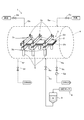
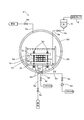
- FIG. 1 is a conceptual diagram showing a configuration of a wood coloring device according to a first embodiment of the present invention
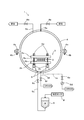
- FIG. 2 is a schematic sectional view of the coloring device
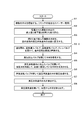
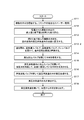
- FIG. 3 is a flowchart showing a coloring procedure in the coloring apparatus.
- this wood coloring apparatus 1 is configured by providing a pedestal 3 for placing a wood 2 in a high-pressure steam pot 4 in a restrained state.
- the pedestal 3 is fixed to the inside of the high-pressure steam kettle 4 while being supported by the support legs 5 from the inner wall surface of the high-pressure steam kettle 4, and includes an upper fixed beam 3a and a lower fixed beam 3b.
- the upper fixed beam 3a and the lower fixed beam 3b are configured to be openable and closable so that the wood 2 can be restrained. That is, the wood 2 is sandwiched between the upper and lower sides of the pressing plates 2a and 2b and placed between the upper fixed beam 3a and the lower fixed beam 3b of the base 3, and the bolt hole 3c of the lower fixed beam 3b. It is restrained by a bolt 3d screwed into (FIG. 2).
- the high-pressure steam kettle 4 is made of a stainless steel material from the viewpoint of minimizing metal contamination of the wood 2 and is configured to be split vertically as shown in FIG.
- the inside of the high-pressure steam kettle 4 can be opened by attaching and detaching bolts 4a and nuts 4b.
- the high-pressure steam kettle 4 is provided with a high-pressure and high-temperature steam inlet 5a, an exhaust port 5b, and a pressurized water inlet 5c from the water tank 9 pressurized by the pressurized tank 8.
- a drain port 5e for draining the liquefied vapor through the steam trap 5d and a water drain port 5f are provided.
- the high-pressure and high-temperature steam inlet 5a, the outlet 5b, the water inlet 5c, the steam drain 5e, and the water drain 5f are respectively a steam inlet valve 6a, a steam exhaust valve 6b, The introduction valve 6c, the drain valve 6e, and the water discharge valve 6f adjust the flow rate of the fluid flowing through each of them.
- step S1 a plurality of woods 2 are stacked.
- spacers are used so that they stick to each other so that the substantial plate thickness does not increase.
- step S2 the uppermost surface and the lowermost surface of the plurality of laminated timbers 2 are sandwiched between the pressing plates 2a and 2b.
- step S3 the plurality of woods 2 sandwiched between the pressing plates 2a and 2b are fixed to the base 3 in the empty high-pressure steam kettle 4.
- step S3-2 the high pressure steam kettle 4 is closed, the steam introduction valve 6a, the steam exhaust valve 6b, and the drain valve 6e are opened, and the air in the high pressure steam kettle 4 is replaced with steam.
- step S4 the steam exhaust valve 6b is closed and the wood 2 is colored.
- the wood 2 is preferably subjected to high-pressure steam treatment at a pressure of 0.1 MPa or more.
- saturated steam is used for high-pressure steam treatment, and the temperature is determined by pressure.
- the wood 2 can be colored while preventing dry cracking of the surface more effectively. If the ambient temperature is low, the coloring is slow and the coloring does not proceed, so that the color cannot be colored to a required concentration, for example, the color remains initially varied. Moreover, when the temperature is high, the wood deteriorates.
- the heat treatment condition by the high-pressure steam treatment is heated in an atmosphere temperature of 120 ° C. or higher and 190 ° C. or lower.
- the difference between the center temperature of the wood and the ambient temperature is made as small as possible and the temperature is maintained for a sufficient time. It is necessary to secure the energy required for coloring inside the interior.
- step S5 the water introduction valve 6c is opened, water is supplied into the high-pressure steam kettle 4, and the wood 2 fixed to the pedestal 3 remains in a high pressure state with a predetermined pressure applied. 2 is submerged in cooling water and cooled.
- the space created in the steam kettle due to the replacement of high-pressure steam and water must be handled so that the heated steam that fills it does not cause a vacuum due to condensation.
- the submerged cooling is preferably performed while maintaining the pressure so that the pressure is not lowered by 0.15 MPa or more from the pressure of the high-pressure steam treatment.
- the cooling water diffuses when the wood is submerged, and the steam condenses and the atmospheric pressure decreases, the moisture in the wood evaporates and promotes dry cracks on the surface, thus suppressing pressure fluctuations. Therefore, water must be introduced with appropriate calmness. Therefore, it is preferable to stabilize the water surface by introducing the cooling water so as to gradually and gently rise from below so that the water surface of the cooling water does not scatter.
- step S6 If the wood has been cooled to a temperature of 115 ° C. or lower (preferably 100 ° C. or lower), the steam exhaust valve 6b is opened and the pressure in the high-pressure steam kettle 4 is reduced in step S6.
- step S7 the water discharge valve 6f is opened to drain the water in the high-pressure steam kettle 4.
- step S8 the high-pressure steam kettle 4 is opened, the wood 2 is taken out from the pedestal 3, and colored wood is obtained to finish.
- this coloring apparatus 1 introduces high-pressure and high-temperature steam, and after the wood 2 is colored by high-pressure steam treatment inside the high-pressure steam kettle 4, water is stored in the high-pressure steam kettle 4, and the pedestal The wood 2 restrained by 3 is submerged and cooled in a high pressure state, and then exhausted through the exhaust port 5b to perform a pressure reduction process.
- FIG. 4 is a conceptual diagram showing a configuration of a wood coloring apparatus according to a second embodiment of the present invention
- FIG. 5 is a schematic sectional view of the coloring apparatus
- FIG. 6 is a flowchart showing a coloring procedure in the coloring apparatus.
- the wood coloring device 11 is constituted by a high-pressure steam kettle 4 provided with a pedestal 3 for placing the wood 2 in a restrained state. It is the same as the coloring method and the coloring device 1 of the wood 2 according to the form.
- the pedestal 3 is provided in the water pool weir 12 provided inside the high-pressure steam kettle 4, and the high-pressure steam kettle 4. It is supported by the support leg 5 from the inner wall surface.
- the procedure for coloring the wood 2 is performed as shown in FIG.
- step S11 a plurality of woods 2 are stacked.
- spacers are used in order to prevent them from sticking to each other and increasing the substantial plate thickness.
- step S12 the uppermost surface and the lowermost surface of the plurality of laminated timbers 2 are sandwiched between the pressing plates 2a and 2b.
- step S13 the plurality of timbers 2 sandwiched between the pressing plates 2a and 2b are fixed to the base 3 in the empty water reservoir weir 12.
- step S13-2 the high pressure steam kettle 4 is closed, the steam introduction valve 6a, the steam exhaust valve 6b, and the drain valve 6e are opened, and the air in the high pressure steam kettle 4 is replaced with steam.
- step S14 the steam exhaust valve 6b is closed and the wood 2 is colored.
- step S15 the water introduction valve 6c is opened, water is supplied into the water reservoir weir 12, and the wood 2 fixed to the pedestal 3 is submerged and cooled in a high pressure state.
- the submerged cooling is performed while maintaining the pressure so that the pressure is not lowered by 0.15 MPa or more from the pressure of the high-pressure steam treatment.
- step S16 the steam exhaust valve 6b is opened, and the wood 2 is subjected to a pressure reduction process.
- step S17 the water discharge valve 6f is opened to drain the water in the water reservoir weir 12.
- step S18 the high-pressure steam kettle 4 is opened, the wood 2 is taken out from the pedestal 3, and colored wood is obtained to finish.
- the water 2 is stored in the water weir 12 and the wood 2 restrained by the pedestal 3. Is submerged and cooled in a high pressure state, and then exhausted from the exhaust port 5b to perform a pressure reduction process.
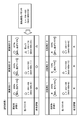
- FIG. 7 is a table summarizing the evaluation results of each example.
- Example 1 is an example of coloring wood 2 performed using the wood coloring apparatus 1 according to the first embodiment.
- the wood 2 has a size of 170 mm (thickness) x 140 mm (width) x 485 mm (length) and a moisture content of 35% to 110%.
- a temperature increase from 30 ° C. to 160 ° C. (transition time 30 minutes) with high-pressure steam and a heat treatment of holding at 160 ° C. for 120 minutes with high-pressure steam were performed. Then until the product is submerged. Water was poured in as if the water was pushed up from the bottom, and the temperature was lowered. At this time, if the size of the wood is large, the inside cannot be quickly heated. For this reason, a temperature gradient inside the wood occurs during heating and cooling, and it may break due to thermal strain.
- At least one of the vertical, horizontal, and length of the wood is 180 mm or less.
- the timber 2 is sized and laminated and glued so that the final overall size is 170 mm (thickness) x 317 mm (width) x 1860 mm (length). Formed.
- Example 2 is an example of coloring the wood 2 performed using the wood coloring device 11 according to the second embodiment.
- the water weir 12 for storing water is disposed in the high-pressure steam kettle 4 to alleviate the thermal shock of the high-pressure steam kettle 4.
- Other conditions are the same as in the first embodiment.
- Example 3 a sliced veneer was used instead of the flitch in Example 1. That is, forty slices of oak having a size of 0.25 mm ⁇ 300 mm ⁇ 600 mm and a moisture content of 35 to 110% were loaded.
- Comparative Example 1 is a case where the pressure-lowering treatment is performed simultaneously with the temperature lowering without injecting high-pressure water in Example 1, and other conditions are the same as in Example 1.
- Evaluation item Confirmed the occurrence of dry cracks and calculated the yield rate.
- the non-defective product rate indicates the yield of the sliced single plate after the flitch assembly for the flitches of Examples 1 and 2 and Comparative Example 1. Moreover, about the slice single board (Example 3), the yield with a single board is shown.
- FIG. 7 also compares the product temperature at the end of processing and the container temperature of the high-pressure steam kettle 4, respectively. Since it is preferable that the high-pressure steam kettle 4 be gradually cooled in consideration of metal fatigue, the container temperature of the high-pressure steam kettle 4 at the end of the treatment is considered to be less deteriorated as it approaches the treatment temperature (160 ° C. this time). .
- the evaluation results are as follows. That is, the non-defective product rate is 96% ( ⁇ ) in Example 1, 97% (O) in Example 2, 95% (O) in Example 3, and twisting and cracking in the comparative example 1 0% ( ⁇ ).
- the product temperature (container temperature) is 42 ° C. (54 ° C.) in Example 1, 45 ° C. (127 ° C.) in Example 2, 42 ° C. (54 ° C.) in Example 3, and Comparative Example 1.
- the product temperature is 42 ° C. (54 ° C.) in Example 1, 45 ° C. (127 ° C.) in Example 2, 42 ° C. (54 ° C.) in Example 3, and Comparative Example 1.
- the product temperature and the container temperature will be described. Since the container temperature is closer to the processing temperature (160 ° C.) at the end of the processing, the deterioration is considered to be less. Therefore, the example 2 is the most preferable among the examples. Comparative Example 1 seems to have little deterioration, but it can be seen that the product temperature is as high as 92 ° C. and the cooling efficiency is low.
- Example 1 is ( ⁇ )
- Example 2 is ( ⁇ )
- Example 3 is ( ⁇ )
- Comparative Example 1 is ( ⁇ )
- coloring device 11 having a water weir 12 is provided.
- Example 2 of the flitch by the coloring device 1 is the best, followed by Example 1 of the flitch by the coloring device 1 and Example 3 of the sliced veneer by the coloring device 1, followed by lowering the temperature without injecting high-pressure water in the coloring device 1. It turned out that the comparative example 1 in the case of the flitch which performed the pressure
- the flitch and slice veneer containing moisture be subjected to thermal coloring treatment as they are, but also the coloring treatment can be carried out more easily than conventional coloring methods.
- FIG. 8 is a conceptual diagram showing a configuration of a wood coloring device according to a third embodiment of the present invention
- FIG. 9 is a schematic cross-sectional view of the coloring device of FIG.
- FIG. 10 is a flowchart showing a coloring procedure in the coloring apparatus of FIG.
- the same members as those of the wood coloring apparatus 1 according to the first embodiment of the present invention are denoted by the same reference numerals, and redundant description is omitted.
- the high-pressure steam pot 24 includes a water reservoir 25 having a pedestal 23 as a holding means for holding the wood 2 in a constrained state. In preparation.
- the pedestal 23 is the same as the wood coloring apparatus 1 in that the pedestal 23 includes an upper fixed beam 3a, a lower fixed beam 3b, and pressing plates 2a and 2b.
- FIG. 9 shows an example of a flitch, in which the wood 2 is sandwiched from the upper and lower sides by the pressing plates 2a and 2b, and the base 23 is fixed to the upper side with the spacers 7a and 7b interposed in order to secure a gap. It is placed and restrained between the beam 3a and the lower fixed beam 3b.
- the pedestal 23 is fixed in a water reservoir 25, and the water reservoir 25 is moved and fixed by a wheel 27 inside the high-pressure steam kettle 24 while being supported by the rail 26 from the inner wall surface of the high-pressure steam kettle 24. It is provided as possible.
- the high-pressure steam kettle 24 and the water reservoir 25 are provided separately, the thermal shock applied to the high-pressure steam kettle 24 when introducing the cooling water into the water reservoir 25 can be reduced. As a result, the high-pressure steam The safety of the pressure vessel of the pot 24 is also increased.
- the high-pressure steam pot 24 is configured to be splittable in the longitudinal direction.
- the high-pressure steam pot 24 is configured so that the water reservoir 25 can be taken out together with the pedestal 23 by opening and closing the lid 24c by attaching and detaching the flanges 24a and 24b by a bolt nut mechanism or a clamp mechanism (not shown). It has become.
- the high-pressure steam kettle 4 is provided with a high-pressure and high-temperature steam inlet 5a, an exhaust port 5b, and a pressurized water inlet 5c from the water tank 9 pressurized by the pressurized tank 8.
- the valve 6f is provided in the same manner as the wood coloring apparatus 1.
- wood 2, beech flitch material having a wet moisture content of 33% or more (moisture content: 33 to 67% dry base raw material) that has not been subjected to a drying treatment is employed.
- any one or more of the vertical, horizontal, and length of the wood 2 is 180 mm or less.
- the size is 42 mm (thickness) ⁇ 140 mm (width) ⁇ 450 mm (length), and the L * value of the colorimeter varies from 59 to 83.
- step S ⁇ b> 21 a plurality of woods 2 are stacked with spacers 7 a and 7 b interposed therebetween to ensure a gap between the woods 2.
- step S22 the upper and lowermost surfaces of the plurality of laminated timbers 2 are sandwiched between the pressing plates 2a and 2b.
- step S23 the plurality of timbers 2 sandwiched between the pressing plates 2a and 2b are fixed to the base 23 which is a holding means in the empty high-pressure steam kettle 24.
- step S23-2 the water reservoir 25 is inserted into the high-pressure steam kettle 24.
- a drain pipe and a drain pipe are also connected to the bottom of the water reservoir 25 and connected to a water drain port 5f and a drain port 5e, respectively, and the lid 24c is closed and closed.
- step S23-3 the steam introduction valve 6a, the exhaust valve 6b, and the drain valve 6e are opened to replace the air in the kettle with steam.
- step S24 the steam exhaust valve 6b is closed, and the high pressure steam is supplied into the high pressure steam pot 24 to color the wood 2.
- step S25 the steam introduction valve 6a is closed, and the water introduction valve 6c is opened in the high-pressure steam pot 24 while being pressurized and water is supplied to fix the wood to the base 23. 2 is submerged.
- the water introduction valve 6c is opened, water is inserted into the high-pressure steam pot 24 (0.7 MPa), and the wood 2 fixed to the pedestal 23 is submerged and cooled in a high-pressure state. At that time, management is performed so that the pressure in the high-pressure steam pot 24 does not drop. To lower the pressure, the steam introduction valve 6a is opened auxiliary, or the pressure of water is increased. Further, when the pressure rises too much, it is controlled by the steam exhaust valve 6b. In order to further increase the cooling efficiency, the water is circulated while adjusting by overflowing.
- step S26 the steam exhaust valve 6b is opened, and the high-pressure steam pot 24 is subjected to a pressure reduction process. Further, after the drain valve 6f is opened and the cooling water in the water reservoir 25 is discharged, the drain pipe and the drain pipe connected to the water drain port 5f and the drain port 5e, respectively, are removed from the water reservoir 25.
- the water reservoir 25 is taken out from the high-pressure steam pot 24 in step S26-2.
- step S27 the wood 2 is taken out from the pedestal 23 of the holding means to obtain a colored wood, and the process ends.
- FIG. 11 is a table summarizing the evaluation results of the raw material yield and product color variation of each of the above experimental examples using the wood coloring apparatus of FIG. The color variation indicates the L * value of the product. Evaluation was represented by symbols ⁇ (very good), ⁇ (good), ⁇ (normal), and ⁇ (poor).
- Example 2-1 when the size is 42 mm (thickness) ⁇ 140 mm (width) ⁇ 450 mm (length) and the L * value of the colorimeter varies from 59 to 83, the temperature reaches 135 ° C. in 30 minutes. The temperature was raised and high-pressure steam treatment was performed for 1 hour at 135 ° C. (The center temperature was held for 0.7 hours at 125 ° C. or higher) Thereafter, 0.7 MPa of pressurized water was inserted and cooled for 30 minutes, then released to atmospheric pressure and taken out.
- the difference between the center temperature of the wood 2 and the ambient temperature is kept within 10 ° C. for 15 minutes or more in order to ensure the internal energy necessary for coloring. .
- the heat-treated wood 2 is dimensionally adjusted and finished with a molder and a saw, and an adhesive is applied to the surface, and then laminated and bonded with a press.
- the laminated wood 2 was sliced to a thickness of 0.25 mm with a slicer.
- Example 2-2 is obtained by increasing the flitch size in Example 2-1. Tree species, moisture content, and colorimeter L * values are the same as in Example 2-1.
- Example 2-2 the size of 180 mm (thickness) ⁇ 180 mm (width) ⁇ 450 mm (length) was raised to 135 ° C. in 30 minutes, and the flitch size was large. High-pressure steam treatment was performed for 4 hours longer than (1 hour). (The center temperature was held for 0.5 hours at 125 ° C. or higher) Thereafter, 0.7 MPa of pressurized water was inserted and cooled for 2 hours, then released to atmospheric pressure and taken out.
- Gluing and slicing are the same as in Example 2-1.
- Example 2-3 is a case where the heat treatment time is shortened in Example 2-1, and the tree species, flitch size, moisture content, and L * value of the colorimeter are the same as Example 2-1.
- Example 2-3 the temperature was raised to 135 ° C. in 30 minutes, which was the same as in Example 2-1, but a high-pressure steam treatment was performed for 0.3 hours, which was shorter than Example 2-1 (1 hour). It was.
- the center temperature was 125 ° C. or more as in Example 2-1, but the retention time was only 0.1 hour compared to 0.7 hours in Example 2-1. .
- Comparative Example 2-1 is a case where the heat treatment temperature is too high in Example 2-1, and the tree species, flitch size, moisture content, and L * value of the colorimeter are the same as in Example 2-1.
- Example 2-1 the high-pressure steam treatment was performed in 30 minutes by raising the temperature to 195 ° C., which was 60 ° C. higher than that in Example 2-1, and maintaining the same 1 hour as in Example 2-1 (1 hour). (The center temperature was held at 185 ° C. or higher for 0.25 hours) Thereafter, 0.16 MPa of pressurized water was inserted and cooled for 45 minutes, then released to atmospheric pressure and taken out.
- Gluing and slicing are the same as in Example 2-1.
- Comparative Example 2-2 is a case where the size of the wood 2 is too large in Example 2-1, and the tree species, flitch size, moisture content, and L * value of the colorimeter are the same as in Example 2-1. is there.
- Comparative Example 2-2 the size of 200 mm (thickness) ⁇ 200 mm (width) ⁇ 450 mm (length) was raised to 135 ° C. in 30 minutes, and the flitch size was large.
- a high-pressure steam treatment was performed for 5 hours longer than 1 (1 hour). (The center temperature was held for 0.5 hours at 125 ° C. or higher) Thereafter, 0.7 MPa of pressurized water was inserted and cooled for 2.5 hours, then released to atmospheric pressure and taken out.
- Gluing and slicing are the same as in Example 2-1.
- Comparative Example 2-3 is a case in which water cooling is not used in the cooling process in Example 2-1, and the container is left as it is.
- the tree species, flitch size, moisture content, and L * value of the colorimeter are Same as Example 2-1.
- Example 2-3 As in Example 2-1, high-pressure steam treatment was performed in which the temperature was raised to 135 ° C. in 30 minutes and held for 1 hour. (The center temperature was maintained for 0.7 hours at 125 ° C. or higher as in Example 2-1.) Thereafter, the pressurized water was not inserted and the container was left as it was in the closed kettle and cooled from 135 ° C. to 102 ° C. for 5 hours, then released to atmospheric pressure and taken out.
- Gluing and slicing are the same as in Example 2-1.
- Example 2-1 the raw material yield is 95% in Example 2-1, Example 2-2 in which the flitch size is slightly larger, and Example 2-3 in which the heat treatment time is shorter. Breaking 5%) O, 86% (cracking, bending 14%) O, 97% (cracking bending 3%) O are all good, and Example 2-3 with a short heat treatment time was the best. It was.
- the overall evaluation is that the example 2-1 is the best, ⁇ , then the flitch size is slightly larger, the example 2-2 is good O, and the heat treatment time is shorter, the example 2-3 is normal.
- Comparative Example 2-1 in which the heat treatment temperature was too high, Comparative Example 2-2 in which the size of the wood was too large, and Comparative Example 2-3 in the natural cooling were all poor.
- the wood 2 is colored by high-pressure steam treatment, so that the high-pressure steam penetrates into the wood 2 and the wood 2 is Colored by heat treatment in a wet state.
- the wood 2 that has been subjected to the high-pressure steam treatment is submerged before the pressure reduction treatment, the wood 2 can be quickly cooled, and the surface of the wood 2 is not excessively dried during the pressure reduction treatment. Therefore, dry cracking of the surface can be effectively prevented.
- the flitch material is subjected to high-pressure steam treatment and then laminated and bonded.
- the color of the material can be easily controlled, and a material with little color variation can be obtained.
- the obtained raw materials have color variations of the raw materials
- high-pressure steam treatment is performed to reduce the color variations of the raw materials, or the sliced veneer with a more uniform color is manufactured by combining the colored raw materials can do.
- the normal controllable conditions such as pressure, temperature, and the size of the wood 2 can be controlled to easily color the wood 2 without color variation.
- the submergence of the wood 2 is performed while maintaining the pressure in a state where the pressure is not lowered by 0.15 MPa or more from the pressure of the high-pressure steam treatment, so that dry cracking of the surface can be more effectively prevented.
- the inside can be quickly heated. Therefore, the temperature gradient inside the wood 2 does not break when the temperature is raised or cooled. Moreover, uniform coloring without color variation is obtained.
- the high-pressure steam treatment is performed at an atmospheric temperature of 120 ° C. or higher, it is possible to more quickly color to a required concentration without color variation. Moreover, deterioration of the timber 2 can be effectively prevented by setting the upper limit to 190 ° C. or less.
- the difference between the center temperature and the ambient temperature of the wood 2 is kept within 10 ° C. for 15 minutes or more in the high-pressure steam treatment, it is possible to secure the energy necessary for coloring inside the wood 2.
- the color variation between the center of the wood 2 and the outer surface can be further reduced.
- a device capable of efficiently carrying out the present invention can be easily configured by incorporating necessary equipment in the high-pressure steam kettles 4 and 24.
- the high-pressure steam kettles 4 and 24 are provided with the pedestals 3 and 23, and the wood 2 is submerged in a state of being restrained by the pedestals 3 and 23.
- the condition of the high-pressure steam kettles 4, 24 is changed by moving the wood 2 and changing the posture, etc., or the water vapor in the high-pressure steam kettles 4, 24 is condensed to cause high-pressure steam. It is prevented in advance that a negative pressure space is generated in the hooks 4 and 24, and the water vapor contained in the wood 2 is rapidly evaporated to cause surface cracks.
- the water storage weir 12 or the water storage container 25 is provided in the high-pressure steam pots 4 and 24, water is stored therein, and the wood 2 restrained by the holding means is submerged. Therefore, it is desirable when a thick flitch material or the like is laminated and colored.
- the reservoir weir 12 and the reservoir 25 that come into contact with water are made of stainless steel, and the high-pressure steam pots 4 and 24 are made of materials that are cheaper than that. Cost can be reduced.
- FIG. 12 is an explanatory view showing a configuration in which wood is restrained by a metal basket as a holding means.
- the metal basket 35 includes a net basket 35a and a basket base 35b, and can store a plurality of wood 2 stacked by opening the top of the net basket 35a.
- a plurality of timbers 2 stacked via a spacer 7a are packed in a metal cage 35 and subjected to high-pressure steam treatment, and the timber 2 is submerged while preventing the timber 2 from floating by the metal cage 35. It is configured to cool.
- various holding means can be employed as long as the structure can hold the wood 2 in a restrained state.
- the material of the high-pressure steam pots 4 and 24 is not limited to stainless steel. Considering metal contamination of the wood 2, stainless steel is preferable for the pressure vessel, but other materials can be adopted.
- the wood 2 is not limited to a beech material having a wet moisture content of 33 to 67% (raw material) that has not been subjected to a drying treatment.
- Various substrates can be used, and various design changes can be made in size. Various design changes can be made to the assembly and slicing conditions.
- the wood 2 is applied to the flitch and slices loaded with single plates, but can also be applied to other wood 2 such as interior materials, furniture materials, decorative wood materials manufactured by slicing, etc. is there.
- the heat treatment with high-pressure steam is preferably 120 ° C. or more and 190 ° C. or less. However, when the treatment temperature is 130 ° C. (treatment pressure 0.175 MPa) or less, the submerging of the wood 2 is caused by high-pressure steam treatment. It is preferable to maintain the pressure in a state where the pressure does not drop 0.08 MPa or more from the pressure.
- high-pressure air is used to maintain the pressure.
- nitrogen gas or the like when nitrogen gas or the like is used, oxidation of the wood 2 can be suppressed.
- the water pressurizing means is not particularly limited, but it is preferable to use a high-pressure water tank or a high-pressure pump.
- the required cooling temperature inside the wood 2 varies depending on the size and tree species, it is generally considered to be 115 ° C. or lower, preferably 105 ° C. or lower.
Landscapes
- Life Sciences & Earth Sciences (AREA)
- Engineering & Computer Science (AREA)
- Wood Science & Technology (AREA)
- Forests & Forestry (AREA)
- Chemical And Physical Treatments For Wood And The Like (AREA)
Abstract
木材を高圧蒸気処理して着色する場合に、降圧処理時における表面乾燥による木材の乾燥割れを防止し、かつ処理時間の短縮化を図ることができる木材の着色方法、着色装置および着色された着色木材を提供する。木材の着色方法は、木材2を高圧蒸気処理して着色した後、高圧蒸気処理された木材を水没させて降圧処理することを特徴としている。
Description
本発明は、例えば建材用に用いられる木材の着色方法、着色装置および着色された着色木材の改良に関する。
一般に木材を熱処理すると木材成分の変質により茶褐色に変色する。この変色で木材本来の木目や木理、節等は引き立たされ木材の木味感は強調される。この木材の熱処理は通常木材に割れが発生しないレベルまで乾燥処理して行うが、熱処理後にスライス加工をして着色された木材を得ようとする場合、再度木材の吸水処理を行う必要があるなど、工程が煩雑になるという問題があった。
また、木材として樹皮を除いたフリッチ材を加熱して発色させるには、100度以上の温度で加熱する必要があり、加熱に伴う表面の乾燥割れを防止するためには、さらに木材を常に濡れた状態にする必要があるが、従来の着色方法は加熱に伴う表面の乾燥割れには対応していなかった。
そこで、原料となる木材を乾燥させることなく熱処理する着色方法として、高圧蒸気処理により木材を着色する方法が種々提案されている。
例えば、特許文献1には、木材を高温高圧容器の内部で圧縮した状態で高温の水蒸気により処理させることにより、木材の組成成分であるセルロース、ヘミセルロース、リグニンを成分変質させて全体を茶褐色に着色させる木材の処理方法が提案されている。
このような高圧蒸気処理により木材を着色する方法の場合、木材を乾燥させたり、再度吸水処理を行ったりすることなく、熱処理後スライス加工をして着色された木材を得ることができる。
しかしながら、上述の特許文献1に開示された木材の処理方法では、熱処理最終段階において、木材が高圧高温から大気圧に戻る際、木材の表面が過度に乾燥されて木材に乾燥割れを生じてしまうという問題があった。
本発明は上記事情に鑑みてなされたものであり、高圧水蒸気を用いた加熱着色処理において、降圧処理時における表面乾燥による木材の乾燥割れを防止しつつ、処理工程の時間短縮を可能とした木材の着色方法や着色装置および着色された着色木材を提供することを目的としている。
上記目的を解決するために、請求項1に記載の木材の着色方法は、木材を高圧蒸気処理して着色する木材の着色方法において、上記木材を高圧蒸気処理して着色した後、高圧蒸気処理された木材を水没させてから降圧処理することを特徴とする。
請求項2に記載の木材の着色方法は、請求項1において、上記木材は、スライスされた単板であることを特徴とする。
請求項3に記載の木材の着色方法は、請求項1において、上記木材は、含水率分が33%以上(ドライベース)の樹皮を除いたフリッチ材であることを特徴とする。
請求項4に記載の木材の着色方法は、請求項3において、上記フリッチ材は、複数のものが、スペーサを介在させて積み上げた状態で拘束されて、高圧蒸気処理され、水没冷却されるものであることを特徴とする。
請求項5~9には、本発明方法を実施するにあたって発明者が知得した各処理における望ましい処理条件を提案している。
すなわち、請求項5に記載の木材の着色方法は、請求項1乃至4のいずれか1項において、上記木材の水没は、高圧蒸気処理の圧力より0.15MPa以上は低下させない状態に圧力を維持して行われることを特徴とする。
請求項6に記載の木材の着色方法は、請求項1乃至5のいずれか1項において、上記降圧処理は、上記木材が115℃以下の温度にまで冷却されてから行われることを特徴とする。
請求項7に記載の木材の着色方法は、請求項1乃至6のいずれか1項において、上記木材は、縦、横、長さのいずれか1つ以上が180mm以下であることを特徴とする。
請求項8に記載の木材の着色方法は、請求項1乃至7のいずれか1項において、上記高圧水蒸気処理による熱処理条件が雰囲気温度120℃以上で、かつ190℃以下であることを特徴とする。
請求項9に記載の木材の着色方法は、請求項1乃至8のいずれか1項において、上記高圧水蒸気処理においては、15分以上の間、上記木材の中心温度と雰囲気温度の差を10℃以内に保持することを特徴とする。
また、請求項10~13には、本発明の木材の着色装置が提案されている。
ここで、請求項10に記載の木材の着色装置は、高圧高温蒸気の導入口と、排気口とを有し、かつ木材を拘束した状態に載置する台座を少なくとも内部に設けた高圧蒸気釜を備え、上記高圧高温蒸気を導入して、木材を上記高圧蒸気釜内部で高圧蒸気処理して着色した後は、上記高圧蒸気釜内に水を貯留させて、上記台座に拘束されている木材を水没させてから、降圧処理するようにしたことを特徴とする。
請求項11に記載の木材の着色装置は、高圧高温蒸気の導入口と、排気口とを有し、かつ木材を拘束した状態に載置する台座を少なくとも内部に設けた水溜堰を、高圧蒸気釜内部に備え、上記高圧高温蒸気を導入して、木材を上記高圧蒸気釜内部で高圧蒸気処理して着色した後は、上記水溜堰に水を貯留させて、上記台座に拘束されている木材を水没させてから、降圧処理するようにしたことを特徴とする。
請求項12に記載の木材の着色装置は、高圧高温蒸気の導入口と、排気口とを有し、かつ木材を拘束した状態に保持する保持手段を少なくとも内部に設けた高圧蒸気釜を備え、上記高圧蒸気釜に高温蒸気を導入して、上記保持手段によって拘束されている木材を、高圧蒸気雰囲気中に晒して発色させた後、上記高圧蒸気釜内の圧力を所定の状態に保持して、上記高圧蒸気釜内に冷却水を導入して、上記木材を冷却水内に水没させて冷却させてから、降圧処理するようにしたことを特徴とする。
請求項13に記載の木材の着色装置は、高圧高温蒸気の導入口と、排気口とを有し、かつ木材を拘束した状態に保持する保持手段を内部に有した水溜容器とを少なくとも内部に設けた高圧蒸気釜を備え、上記高圧蒸気釜に高温蒸気を導入して、上記保持手段によって拘束されている木材を、高圧蒸気雰囲気中に晒して発色させた後、上記高圧蒸気釜内の圧力を所定の状態に保持して、上記水溜容器内に冷却水を導入して、上記木材を冷却水内に水没させて冷却させてから、降圧処理するようにしたことを特徴とする。
請求項14に記載の着色木材は、請求項1乃至9のいずれか1項に記載の木材の着色方法により着色されたことを特徴とする。
本発明の木材の着色方法によれば、木材を高圧蒸気処理して着色するので、木材に高圧蒸気が浸透して木材は、湿式状態で熱処理され発色する。
また、降圧処理の前に、高圧蒸気処理された木材を水没させているので、迅速に冷却できるだけでなく、降圧処理において木材の表面が過度に乾燥することがない。そのため、表面の乾燥割れも効果的に防止できる。
特に、請求項2に記載の木材の着色方法によれば、スライスされた単板において、降圧処理時における表面の乾燥割れが防止できるだけでなく、後の木材加工も容易になる。
請求項3に記載の木材の着色方法によれば、フリッチ材において、乾燥による木材の硬化が無く、処理後のスライス加工が容易である。
また、スライス加工される集成材を形成する場合に、本発明方法を用いれば、フリッチ材を高圧水蒸気処理した後、集成接着するので、集成材を形成してから着色するものに比べて、集成材の色コントロールが容易にでき、色のバラツキの少ないものが得られる。
例えば、入手した原材料に原材料の色バラツキがあったりしても、高圧水蒸気処理を行ってこの原材料の色バラツキを低減したり、着色後の原材料を組み合わせてより均一な色のスライス単板を製造することができる。
あるいは意図的に異なる色に着色した木材を集成接着したものをスライス加工してモザイク状に色をばらつかせたスライス単板を製造する場合にも多様で精度の高い色管理を行なうことができる。
このように、多様で精度の高い色管理を行ない、集成材の割れ不良を防止することができるので、スライス単板の製造において歩留まりを高くすることができる。
請求項4に記載の木材の着色方法によれば、複数のものが、スペーサを介在させて積み上げた状態で拘束されて、高圧蒸気処理されるので、一度に多数のフリッチ材を処理することができるだけでなく、樹皮のないフリッチ材同士が処理中にくっつき合って、それぞれの厚みが変化することが防止できるので、バラツキのない着色が出来る。
請求項5~8に記載した木材の着色方法によれば、高圧蒸気釜を作動する環境下において、圧力、温度、木材のサイズなどを通常の制御可能な条件でコントロールして、木材を色バラツキなく着色することが出来る。
すなわち、請求項5、6、7によれば、圧力、温度、木材のサイズなどの条件をコントロールすることにより容易に表面の乾燥割れを防止することができる。
すなわち、請求項5に記載の木材の着色方法によれば、木材の水没は、高圧蒸気処理の圧力より0.15MPa以上は低下させない状態に圧力を維持して行われるので、より効果的に表面の乾燥割れを防止することができる。
また、請求項6に記載の木材の着色方法によれば、115℃以下の温度にまで冷却して降圧処理するので、降圧処理時の表面の乾燥割れを防止することができる。
また、請求項6に記載の木材の着色方法によれば、115℃以下の温度にまで冷却して降圧処理するので、降圧処理時の表面の乾燥割れを防止することができる。
さらに、請求項7に記載の木材の着色方法によれば、木材は、縦、横、長さのいずれか1つ以上が180mm以下であるので、速やかに内部を昇温することができる。そのため、昇温、冷却の際に木材内部の温度勾配で割れるようなことが無い。
また、色バラツキの無い均一な着色が得られる。
また、180mm以下であれば、木材を高圧水蒸気処理した後、集成接着して形成した集成材をスライス加工してスライス単板を製造することが容易である。
また、請求項8に記載の木材の着色方法によれば、雰囲気温度120℃以上で高圧水蒸気処理するので、より速やかに色バラツキ無く必要な濃度に着色することが可能である。また、上限を190℃以下にすることにより、木材の劣化を効果的に防止することができる。
さらに、請求項9に記載の木材の着色方法によれば、高圧水蒸気処理において15分以上の間、木材の中心温度と雰囲気温度の差を10℃以内に保持するので、木材の内部において、着色に必要なエネルギーを確保することが可能であり、木材の中心と外表面との間の色バラツキを、より低減することが出来る。
請求項10~13に記載の木材の着色装置によれば、高圧蒸気釜内に必要な設備を組み込むことで本発明を効率よく実施できる装置が簡易に構成できる。
すなわち、請求項10~13に記載の装置によれば、高圧蒸気釜に台座もしくは保持手段を設けて、木材を拘束した状態で水没させるので高圧蒸気釜に冷却水を導入する際に木材が移動し姿勢を変えるなどして、高圧蒸気釜の条件が変化したり、高圧蒸気釜内の水蒸気が結露して、高圧蒸気釜に負圧空間を生じてしまって、木材中に含まれている水蒸気が急激に蒸発して表面割れを生じたりすることが未然に防止される。
また、請求項11、13に記載の装置によれば、高圧蒸気釜内に水溜堰あるいは水溜容器を設け、そこに水を貯溜させて、台座もしくは保持手段で拘束されている木材を水没させるので、厚みのあるフリッチ材などを積層して着色する場合に望ましい。
特に、高圧蒸気釜内部に水溜堰や水溜容器を設けて、そこに冷却水を導入しているので、水溜堰や水溜容器内に冷却水を導入する際にも、高圧蒸気釜に加わる熱衝撃を少なくすることができる。
また、水に触れる水溜堰や水溜容器のみをステンレスで製造し、高圧蒸気釜はそれよりも安価な材料を採用するなど、使用する材料を異なるものにすることにより、装置のコストを低減することができる。
請求項14に記載の着色木材によれば、請求項1乃至9のいずれか1項に記載の木材の着色方法により着色されるので、湿式状態で熱処理される。そのため、熱処理において木材の表面が過度に乾燥することがない。また、降圧処理の前に、高圧蒸気処理された木材を水没させるので、降圧処理において木材の表面が過度に乾燥することがない。このように、請求項14に記載の木材によれば、着色における表面の乾燥割れを効果的に防止したものにすることができる。
以下、添付図面を参照しながら本発明の第1の実施形態について説明する。図1は、本発明の第1の実施形態の木材の着色装置の構成を示す概念図であり、図2は、着色装置の概略の断面図である。また、図3は、着色装置における着色手順を示すフロー図である。
図1に示すように、この木材の着色装置1は、高圧蒸気釜4内に木材2を拘束した状態に載置する台座3を内部に設けて構成されている。
台座3は、高圧蒸気釜4の内壁面から支持脚5によって支持された状態で高圧蒸気釜4の内部に固定されており、上側固定梁3aと下側固定梁3bとを備えている。この上側固定梁3aと下側固定梁3bとは、間隔を開閉可能に構成されており、木材2を拘束することができるようになっている。すなわち、木材2は、押さえ板2a、2bで上下両側から挟まれ、台座3の上側固定梁3aと下側固定梁3bとの間に置かれた状態で、下側固定梁3bのボルト孔3c(図2)に螺合するボルト3dによって拘束される。
高圧蒸気釜4は、木材2の金属汚染をできるだけ少なくするとの考えから、ステンレスの材料で製作されており、図2に示すように、上下に分割可能に構成されている。この高圧蒸気釜4は、ボルト4a、ナット4bの着脱により、内部を開放することができるようになっている。
また、高圧蒸気釜4には、高圧高温蒸気の導入口5aと、排気口5bと、加圧タンク8で加圧された水タンク9からの加圧水の導入口5cとが設けられている他、液化した蒸気をスチームトラップ5dを介して排水するドレン口5eと、水の排水口5fが設けられている。
そして、これら高圧高温蒸気の導入口5aと、排気口5bと、水の導入口5cと蒸気のドレン口5eと、水の排水口5fとは、それぞれ蒸気導入バルブ6a、蒸気排気バルブ6b、水導入バルブ6c、ドレンバルブ6e、水排出バルブ6fによって、それぞれを流れる流体の流量が調節されるようになっている。
次に、図3を参照して、この木材の着色装置1を用いて実施する木材2の着色手順について説明する。
すなわち、この木材の着色装置1においては、まず、ステップS1において、複数の木材2を積層する。この場合、フリッチの場合はそれぞれがくっついて実質的板厚が大きくならないようにするため、スペーサを使用する。
次に、ステップS2において、積層された複数の木材2の最上面と最下面とを押さえ板2a、2bで挟む。
そして、ステップS3において、押さえ板2a、2bで挟んだ複数の木材2を、空の状態の高圧蒸気釜4内の台座3に固定する。
それから、ステップS3-2において、高圧蒸気釜4を閉め、蒸気導入バルブ6a、蒸気排気バルブ6b、ドレンバルブ6eを開いて、高圧蒸気釜4内の空気を蒸気と置換する。
その後、ステップS4において、蒸気排気バルブ6bを閉じて、木材2を着色する。
ここで、木材2の着色に際しては、0.1MPa以上の圧力で木材2を高圧蒸気処理することが好ましい。本実施形態では、高圧蒸気処理に飽和水蒸気を使用しており、温度は圧力で決まる。例えば木材を120℃の温度で着色する場合、120℃の飽和水蒸気圧力は、約0.2MPaであり、大気圧力が0.1MPaなので、処理圧力としては、0.2MPa-0.1MPa=0.1MPaとなる。
したがって、0.1MPa以上の圧力で木材を高圧蒸気処理すれば、より効果的に表面の乾燥割れを防止しながら木材2を着色をすることができる。
雰囲気温度が低いと、着色が遅く、着色が進まないので、色は最初バラツいたままになるなど、必要な濃度に着色することができない。また、温度が、高いと、木材が劣化する。
雰囲気温度が低いと、着色が遅く、着色が進まないので、色は最初バラツいたままになるなど、必要な濃度に着色することができない。また、温度が、高いと、木材が劣化する。
そのため、高圧水蒸気処理による熱処理条件は、雰囲気温度120℃以上かつ190℃以下の状態で加熱することが好ましい。
また、高圧水蒸気処理において木材2の中心と外表面との間の色バラツキを低減するには、木材の中心温度と雰囲気温度の差をできるだけ小さく、また、十分な時間だけ温度を保持して木材の内部において、着色に必要なエネルギーを確保することが必要である。
高圧水蒸気処理においては、15分以上の間、木材2の中心温度と雰囲気温度の差を10℃以内に保持することが好ましい。
着色が完了したら、ステップS5において、水導入バルブ6cを開いて、高圧蒸気釜4内に水を供給して、台座3に固定している木材2を所定の圧力を加えた高圧状態のまま木材2を冷却水内に水没させて冷却させる。
この時、蒸気が凝縮して雰囲気の圧力が低下すると、木材の水分が蒸発して表面の乾燥割れを助長するので、圧力が下がらないようにする必要がある。
また、水没冷却中に、高圧蒸気と水の置換などで蒸気釜内に生じた空間は、それを満たしている加熱蒸気が結露を生じて、真空状態が発生しないように扱う必要がある。水没冷却は、高圧蒸気処理の圧力より0.15MPa以上は低下させない状態に圧力を維持して行われることが好ましい。
また、木材の水没の際に、冷却水が拡散するなどして、蒸気が凝縮して雰囲気の圧力が低下すると、木材の水分が蒸発して表面の乾燥割れを助長するので、圧力変動を抑えるため、水は適切な穏やかさを以って導入する必要がある。そのため、冷却水の水面が飛散しないよう、下方から極力穏やかに徐々にせり上げるようにして冷却水を導入し、水面を安定させるのが好ましい。
また、冷却時間の短縮をはかるため、水を循環させることは有益である。水を導入しながら、一方で、導入された水をオーバーフローさせて排水し、常にフレッシュな水を供給し続けて循環させることにより、冷却効率を高めることができる。
木材が115℃以下の温度(100℃以下が望ましい)にまで冷却されたなら、ステップS6において、蒸気排気バルブ6bを開いて、高圧蒸気釜4の中を降圧処理する。
また、ステップS7において、水排出バルブ6fを開いて、高圧蒸気釜4内の水を排水する。
そして、ステップS8において、高圧蒸気釜4を開いて、台座3から木材2を取り出し、着色木材を得て終了する。
このように、この着色装置1は、高圧高温蒸気を導入して、木材2を高圧蒸気釜4内部で高圧蒸気処理して着色した後は、高圧蒸気釜4内に水を貯留させて、台座3に拘束されている木材2を高圧状態のまま水没冷却させてから、排気口5bより排気を行って、降圧処理するようにしている。
次に図4~図6を参照して、本発明の第2の実施形態に係る木材の着色装置について説明する。図4は、本発明の第2の実施形態の木材の着色装置の構成を示す概念図であり、図5は、着色装置の概略の断面図である。また、図6は、着色装置における着色手順を示すフロー図である。
なお以下の説明では、本発明の第1の実施の形態に係る木材の着色装置1と同様の部材には同一の符号を付し、重複する説明を省略するものとする。
図4、図5に示すように、この木材の着色装置11は、木材2を拘束した状態に載置する台座3を内部に設けた高圧蒸気釜4で構成されている点は第1の実施形態に係る木材2の着色方法および着色装置1と同様である。
しかし、第2の実施形態に係る木材の着色方法および着色装置11においては、台座3は、高圧蒸気釜4の内部に設けられた水溜堰12の中に設けられた状態で、高圧蒸気釜4の内壁面から支持脚5によって支持されている。
このようにすれば、水が直接高圧蒸気釜4に触れる面積が小さいので、冷却処理の際の高圧蒸気釜4の熱衝撃を緩和することができるようになる。
そして、第2の実施形態に係る木材の着色装置11においては、木材2の着色手順は、図6のように行う。
すなわち、まず、ステップS11において、複数の木材2を積層する。この場合、フリッチ材の場合はそれぞれがくっついて実質的板厚が大きくならないようにするため、スペーサを使用する。
次に、ステップS12において、積層された複数の木材2の最上面と最下面とを押さえ板2a、2bで挟む。
そして、ステップS13において、押さえ板2a、2bで挟んだ複数の木材2を、空の状態の水溜堰12内の台座3に固定する。
それから、ステップS13-2において、高圧蒸気釜4を閉め、蒸気導入バルブ6a、蒸気排気バルブ6b、ドレンバルブ6eを開いて、高圧蒸気釜4内の空気を蒸気と置換する。
その後、ステップS14において、蒸気排気バルブ6bを閉じて、木材2を着色する。
着色が完了したら、ステップS15において、水導入バルブ6cを開いて、水溜堰12内に水を供給して、台座3に固定している木材2を高圧状態のまま水没冷却させる。
この時、蒸気が凝縮して雰囲気の圧力が低下すると、木材の水分が蒸発して表面の乾燥割れを助長するので、圧力が下がらないようにする必要がある。そのため、水没冷却は、高圧蒸気処理の圧力より0.15MPa以上は低下させない状態に圧力を維持して行われることが好ましい。
そして、ステップS16において、蒸気排気バルブ6bを開いて、木材2を降圧処理する。
また、ステップS17において、水排出バルブ6fを開いて、水溜堰12内の水を排水する。
そして、ステップS18において、高圧蒸気釜4を開いて、台座3から木材2を取り出し、着色木材を得て終了する。
このように、高圧高温蒸気を導入して、木材2を高圧蒸気釜4内部で高圧蒸気処理して着色した後は、水溜堰12に水を貯留させて、台座3に拘束されている木材2を高圧状態のまま水没冷却させてから、排気口5bより排気を行って、降圧処理するようにしている。
ここで、図7の表を参照して、上述の木材の着色装置1、11を用いた実施例について説明する。図7は、各実施例の評価結果をまとめた表である。
図7において、実施例1は、第1の実施形態に係る木材の着色装置1を用いて行った木材2の着色例である。
すなわち、実施例1においては、木材2としてサイズ170mm(厚)×140mm(巾)x485mm(長さ)で、含水率:35%~110%のナラ材のフリッチが採用されており、この木材2について、高圧水蒸気による30℃から160℃(移行時間30分)の昇温と、高圧水蒸気による160℃、120分保持の熱処理を行った。その後、製品水没まで。底から水を押し上げるようにして水を注入し降温を行った、
この時、木材のサイズが大きいと、速やかに内部を昇温することができない。そのため、昇温、冷却の際に木材内部の温度勾配が生じ、熱歪のために割れるようなことがある。
この時、木材のサイズが大きいと、速やかに内部を昇温することができない。そのため、昇温、冷却の際に木材内部の温度勾配が生じ、熱歪のために割れるようなことがある。
また、表面と内部とで色バラツキが発生し、均一な着色が得られない。
そのため、木材は、縦、横、長さのいずれか1つ以上が180mm以下であることが好ましい。
この時、熱処理後の保持すべき高圧状態は、熱処理圧力より0.15Mpa以上低下すると乾燥割れが発生するので、熱処理圧力と同程度もしくはそれ以上に保持することが好ましい。そのため、圧力変動は熱処理圧力より0.15Mpa以上低下しないように高圧エアーにてコントロールした。冷却時間には30分を要した。
その後、この木材2をサイズ加工するとともに、最終全体サイズ170mm(厚)×317mm(巾)×1860mm(長さ)となるよう、集成接着を行い、スライス加工して0.25mm厚のスライス単板を形成した。
また、実施例2は、第2の実施形態に係る木材の着色装置11を用いて行った木材2の着色例である。すなわち、実施例2では、高圧蒸気釜4内に水を貯める水溜堰12を配し、高圧蒸気釜4の熱衝撃を緩和する。他の条件は実施例1と同様である。
また、実施例3では、実施例1においてフリッチの代わりにスライス単板を使用した。すなわち、サイズ0.25mm×300mm×600mmで、含水率:35~110%のナラ材のスライス単板を40枚積載した。
他の条件は実施例1と同様である。
また、比較例1は、実施例1において、高圧水を注入せずに、降温と同時に降圧処理を行った場合であり、他の条件は実施例1と同様である。
評価項目は、乾燥クラック発生を確認し、良品率を算出した。ここで、良品率は、実施例1、2、比較例1のフリッチについては、フリッチ集成後のスライス単板の歩留まりを示している。また、スライス単板(実施例3)については単板での歩留まりを示している。
図7では、また、それぞれ、処理終了時の製品温度、高圧蒸気釜4の容器温度を比較している。高圧蒸気釜4は、金属疲労を考えるとなるべく徐冷することが好ましいので、処理終了時の高圧蒸気釜4の容器温度は、処理温度(今回は160℃)に近いほど劣化は少ないと考えられる。
評価結果は、以下の通りである。すなわち、良品率は、実施例1が、96%(○)、実施例2が、97%(○)、実施例3が、95%(○)、比較例1が、ねじれ、木口割れのため、0%(×)、であった。
次に、製品温度(容器温度)は、実施例1が、42℃(54℃)、実施例2が、45℃(127℃)、実施例3が、42℃(54℃)、比較例1が、92℃(133℃)であった。
ここで、製品温度と容器温度について説明すると、処理終了時に容器温度が処理温度(160℃)に近いほど劣化は少ないと考えられるので、実施例の中では実施例2が最も好ましい。比較例1は、劣化は少ないと思われるが、製品温度が92℃と高く冷却効率が低いことがわかる。
以上より、総合の評価は、実施例1が(○)、実施例2が(◎)実施例3が(○)、比較例1が、(×)となり、水溜堰12を備えた着色装置11によるフリッチの実施例2が最も良く、着色装置1によるフリッチの実施例1と、着色装置1によるスライス単板の実施例3がそれに続き、着色装置1において高圧水を注入せずに、降温と同時に降圧処理を行ったフリッチの場合の比較例1が、最も悪いことがわかった。
このように、本発明により湿分を含んだフリッチやスライス単板をそのまま熱着色処理することが可能であるだけでなく、従来の着色方法に比べて簡便に着色処理が行える。
次に、図8~図11を参照しながら本発明の第3の実施形態について説明する。図8は、本発明の第3の実施形態の木材の着色装置の構成を示す概念図であり、図9は、図8の着色装置の概略の断面図である。また、図10は、図8の着色装置における着色手順を示すフロー図である。以下の説明では、本発明の第1の実施の形態に係る木材の着色装置1と同様の部材には同一の符号を付し、重複する説明を省略するものとする。
図8と図9とに示すように、木材の着色装置21においては、高圧蒸気釜24は、木材2を拘束した状態に保持する保持手段としての台座23を内部に有した水溜容器25を内部に備えている。
台座23は、上側固定梁3a、下側固定梁3bと、押さえ板2a、2bとを備えている点は、木材の着色装置1と同様である。図9では、フリッチの例を示しており、木材2は、押さえ板2a、2bで上下両側から挟まれ、隙間を確保するために、スペーサー7a、7bを介在させた状態で台座23の上側固定梁3a、下側固定梁3bとの間に置かれ拘束される。
この台座23は、水溜容器25の中に固定されており、水溜容器25は、高圧蒸気釜24の内壁面からレール26によって支持された状態で高圧蒸気釜24の内部で車輪27により移動かつ固定可能に設けられている。
このように、高圧蒸気釜24と水溜容器25とが別々に設けられるので、水溜容器25内に冷却水を導入させる際の高圧蒸気釜24に加わる熱衝撃を少なくすることができる結果、高圧蒸気釜24の耐圧容器の安全性も高まる。
また、水に触れる水溜容器25だけをステンレスで製造し、高圧蒸気釜24はそれよりも安価な材料を採用するなど、使用する材料を異なるものにすることにより、装置のコストを低減することができる。
高圧蒸気釜24は、長手方向に分割可能に構成されている。この高圧蒸気釜24は、不図示のボルトナット機構あるいはクランプ機構により、フランジ24a、24bを着脱することによりふた24cを開けて内部を開放し、台座23ごと水溜容器25を取り出すことができるようになっている。
また、高圧蒸気釜4には、高圧高温蒸気の導入口5aと、排気口5bと、加圧タンク8で加圧された水タンク9からの加圧水の導入口5cとが設けられている他、液化した蒸気をスチームトラップ5dを介して排水するドレン口5eと、水の排水口5fが設けられている点や、蒸気導入バルブ6a、蒸気排気バルブ6b、水導入バルブ6c、ドレンバルブ6e、排水バルブ6f、が設けられている点は、木材の着色装置1と同様である。
ここでも、木材2としては、乾燥処理を施していない湿った含水率が33%以上(含水率:33~67%ドライベースの生材)のブナのフリッチ材が採用されている。
また、木材2は、縦、横、長さのいずれか1つ以上が180mm以下である。本実施形態では、サイズが42mm(厚)×140mm(巾)×450mm(長さ)で、測色計のL*値が59~83にばらついたものが採用されている。
次に、図10を参照して、この木材の着色装置21を用いて実施する着色手順について説明する。
木材の着色装置21においては、まず、ステップS21において、複数の木材2を、スペーサー7a、7bを介在させて積層し、木材2それぞれの隙間を確保する。
次に、ステップS22において、積層された複数の木材2の最上面と最下面に押さえ板2a、2bで挟む。
また、ステップS23において、押さえ板2a、2bで挟んだ複数の木材2を、空の状態の高圧蒸気釜24において保持手段である台座23に固定する。
それから、ステップS23-2において、水溜容器25ごと高圧蒸気釜24に挿入。水溜容器25の底部にも排水管、ドレイン管を接続してそれぞれ水の排水口5f、ドレン口5eと接続し、ふた24cを閉じて閉釜する。
また、ステップS23-3において、蒸気導入バルブ6a、排気バルブ6b、ドレンバルブ6eを開いて釜内空気を蒸気と置換する。
また、ステップS24において、蒸気排気バルブ6bを閉めて、高圧蒸気釜24の中に高圧蒸気を供給して木材2を着色する。
それから、着色が完了したら、ステップS25において、蒸気導入バルブ6aを閉めて、加圧保持しながら高圧蒸気釜24内に水導入バルブ6cを開いて水を供給して台座23に固定している木材2を水没させる。
この時、水導入バルブ6cを開いて、高圧蒸気釜24内に水を挿入して(0.7MPa)、台座23に固定している木材2を高圧状態のまま水没冷却させる。その際、高圧蒸気釜24内の圧力が下がらないように管理する。圧力の低下には蒸気導入バルブ6aを補助的に開、あるいは水の圧力をアップする。また、圧力の上がり過ぎには蒸気排気バルブ6bでコントロールする。さらに冷却効率を上げるため、水をオーバーフローさせて調整しながら、循環させる。
そして、冷却が完了したら、ステップS26において、蒸気排気バルブ6bを開いて、高圧蒸気釜24を降圧処理する。また、排水バルブ6fを開いて水溜容器25内の冷却水を排出後、それぞれ水の排水口5f、ドレン口5eと接続している排水管、ドレイン管を水溜容器25から取り外す。
排水バルブ6fを開いて水溜容器25内の冷却水を排出後、ステップS26-2において、水溜容器25ごと高圧蒸気釜24内から取り出す。
最後に、ステップS27において、保持手段の台座23から木材2を取り出し、着色木材を得て終了する。
ここで、図11を参照して、上述の木材の着色装置21を用いて行った実験例(実施例2-1、2-2、2-3、比較例2-1、2-2、2-3)について説明する。図11は、図8の木材の着色装置を用いた上述の各実験例の原材料の歩留まりと製品の色バラツキとについて評価結果をまとめた表である。色バラツキは、製品のL*値を示している。評価は記号◎(極めて良好)、○(良好)、△(普通)、×(不良)で表した。
実施例2-1では、サイズが42mm(厚)×140mm(巾)×450mm(長さ)で、測色計のL*値が59~83にばらついたものについて、30分間で、135℃に昇温させ、この135℃の状態で1時間保持する高圧水蒸気処理を行った。(中心部温度は、125℃以上の状態で0.7時間保持された)
その後、0.7MPaの加圧水を挿入して30分冷却した後、大気圧に開放し、取り出した。
その後、0.7MPaの加圧水を挿入して30分冷却した後、大気圧に開放し、取り出した。
このように、この高圧水蒸気処理においては、着色に必要な内部のエネルギーを確保するために、15分以上の間、木材2の中心温度と雰囲気温度の差を10℃以内に保持するようにした。
その後、熱処理された木材2をモルダー、鋸にて寸法調整と表面仕上げを行い、表面に接着剤を塗布してプレスにて集成接着する。
そして、集成接着された木材2をスライサーにて0.25mm厚にスライス加工した。
実施例2-2は、実施例2-1において、フリッチサイズを大きくしたものである。樹種、含水率、測色計のL*値は実施例2-1と同じである。
実施例2-2では、サイズが180mm(厚)×180mm(巾)×450mm(長さ)のものについて、30分間で、135℃に昇温させ、フリッチサイズが大きいので、実施例2-1(1時間)より長く4時間保持する高圧水蒸気処理を行った。(中心部温度は、125℃以上の状態で0.5時間保持された)
その後、0.7MPaの加圧水を挿入して2時間冷却した後、大気圧に開放し、取り出した。
その後、0.7MPaの加圧水を挿入して2時間冷却した後、大気圧に開放し、取り出した。
集成接着、スライス加工は、実施例2-1と同様である。
実施例2-3は、実施例2-1において、熱処理時間を短くした場合であり、樹種、フリッチサイズ、含水率、測色計のL*値は、実施例2-1と同じである。
この実施例2-3では、30分間で、実施例2-1と同じ135℃に昇温させたが、実施例2-1(1時間)より短く0.3時間保持する高圧水蒸気処理を行った。中心部温度は、実施例2-1と同様125℃以上になったが、保持時間は、実施例2-1が0.7時間であったのに対して0.1時間しか保持されなかった。
水冷条件、集成接着、スライス加工は、実施例2-1と同様である。
比較例2-1は、実施例2-1において、熱処理温度が高すぎる場合であり、樹種、フリッチサイズ、含水率、測色計のL*値は、実施例2-1と同じである。
この比較例2-1では、30分間で、実施例2-1より60℃高い195℃に昇温させ、実施例2-1(1時間)と同じ1時間保持する高圧水蒸気処理を行った。(中心部温度は、185℃以上の状態で0.25時間保持された)
その後、0.16MPaの加圧水を挿入して45分冷却した後、大気圧に開放し、取り出した。
その後、0.16MPaの加圧水を挿入して45分冷却した後、大気圧に開放し、取り出した。
集成接着、スライス加工は、実施例2-1と同様である。
比較例2-2は、実施例2-1において、木材2のサイズが大きすぎる場合であり、樹種、フリッチサイズ、含水率、測色計のL*値は、実施例2-1と同じである。
この比較例2-2では、サイズが200mm(厚)×200mm(巾)×450mm(長さ)のものについて、30分間で、135℃に昇温させ、フリッチサイズが大きいので、実施例2-1(1時間)より長く5時間保持する高圧水蒸気処理を行った。(中心部温度は、125℃以上の状態で0.5時間保持された)
その後、0.7MPaの加圧水を挿入して2.5時間冷却した後、大気圧に開放し、取り出した。
その後、0.7MPaの加圧水を挿入して2.5時間冷却した後、大気圧に開放し、取り出した。
集成接着、スライス加工は、実施例2-1と同様である。
比較例2-3は、実施例2-1において、冷却工程に水冷を使わず、閉缶のまま放置した場合であり、樹種、フリッチサイズ、含水率、測色計のL*値は、実施例2-1と同じである。
この比較例2-3では、実施例2-1と同様、30分間で、135℃に昇温させ、1時間保持する高圧水蒸気処理を行った。(中心部温度は、実施例2-1と同様、125℃以上の状態で0.7時間保持された)
その後、加圧水を挿入せず、閉釜のまま放置して温度が135℃から102℃まで5時間冷却した後、大気圧に開放し、取り出した。
その後、加圧水を挿入せず、閉釜のまま放置して温度が135℃から102℃まで5時間冷却した後、大気圧に開放し、取り出した。
集成接着、スライス加工は、実施例2-1と同様である。
図11の結果によれば、原材料歩留まりは、実施例2-1と、フリッチサイズがやや大きめの実施例2-2と、熱処理時間が短めの実施例2-3とが、それぞれ、95%(割れ曲がり5%)O、86%(割れ、曲がり14%)O、97%(割れ曲がり3%)Oと、いずれも良好であり、熱処理時間が短めの実施例2-3が最も良好であった。
これに対し、比較例では、いずれも不良×であり、自然冷却の比較例2-3が55%(割れ曲がり45%)×、熱処理温度が高すぎる比較例2-1が25%(割れ、劣化75%)×、木材のサイズが大きすぎる比較例2-2が15%(割れ75%)×というように、この順に原材料歩留まりが低下した。
次に、色バラツキは、処理前の色バラツキがL*59~83(MAX-MIN=24)に対し、熱処理時間が短めの実施例2-3がL*39~73(MAX-MIN=34)△、であった以外は、実施例2-1が最も良好で、L*39~48(MAX-MIN=9)O、次に、フリッチサイズがやや大きめの実施例2-2が、L*42~53(MAX-MIN=11)Oと良好であった。
これに対し、比較例では、熱処理温度が高すぎる比較例2-1が、L*29~38(MAXM-IN=9)O、自然冷却の比較例2-3が、L*38~47(MAX-MIN=9)Oであったが、木材のサイズが大きすぎる比較例2-2が、L*40~55(MAX-MIN=15)△であった。
その結果、総合評価が、実施例2-1が最も良好で◎、次に、フリッチサイズがやや大きめの実施例2-2が良好O、熱処理時間が短めの実施例2-3が普通で△であったのに対して、熱処理温度が高すぎる比較例2-1、木材のサイズが大きすぎる比較例2-2、自然冷却の比較例2-3は、いずれも不良×であった。
以上説明したように、上記実施形態の着色装置1、11、21およびそれぞれの着色方法によれば、木材2を高圧蒸気処理して着色するので、木材2に高圧蒸気が浸透して木材2は、湿式状態で熱処理され発色する。
また、降圧処理の前に、高圧蒸気処理された木材2を水没させているので、迅速に冷却できるだけでなく、降圧処理において木材2の表面が過度に乾燥することがない。そのため、表面の乾燥割れも効果的に防止できる。
特に、スライスされた単板において、降圧処理時における表面の乾燥割れが防止できるだけでなく、後の木材加工も容易になる。
また、含水率が33%以上(ドライベース)の樹皮のないフリッチ材を用いた場合、乾燥による木材2の硬化が無く、処理後のスライス加工が容易である。
また、スライス加工される集成材を形成する場合に、本発明方法を用いれば、フリッチ材を高圧水蒸気処理した後、集成接着するので、集成材を形成してから着色するものに比べて、集成材の色コントロールが容易にでき、色のバラツキの少ないものが得られる。
例えば、入手した原材料に原材料の色バラツキがあったりしても、高圧水蒸気処理を行ってこの原材料の色バラツキを低減したり、着色後の原材料を組み合わせてより均一な色のスライス単板を製造することができる。
あるいは意図的に異なる色に着色した木材2を集成接着したものをスライス加工してモザイク状に色をばらつかせたスライス単板を製造する場合にも多様で精度の高い色管理を行なうことができる。
このように、多様で精度の高い色管理を行ない、集成材の割れ不良を防止することができるので、スライス単板の製造において歩留まりを高くすることができる。
さらに、複数のものを、スペーサを介在させて積み上げた状態で拘束して高圧蒸気処理すれば、一度に多数のフリッチ材を処理することができるだけでなく、樹皮のないフリッチ材同士が処理中にくっつき合って、それぞれの厚みが変化することが防止できるので、バラツキのない着色が出来る。
また、高圧蒸気釜4、24を作動する環境下において、圧力、温度、木材2のサイズなど通常の制御可能な条件をコントロールして、容易に木材2を色バラツキなく着色することが出来る。
すなわち、木材2の水没は、高圧蒸気処理の圧力より0.15MPa以上は低下させない状態に圧力を維持して行われるので、より効果的に表面の乾燥割れを防止することができる。
また、115℃以下の温度にまで冷却して降圧処理するので、降圧処理時の表面の乾燥割れを防止することができる。
さらに、木材2は、縦、横、長さのいずれか1つ以上が180mm以下であるので、速やかに内部を昇温することができる。そのため、昇温、冷却の際に木材2内部の温度勾配で割れるようなことが無い。また、色バラツキの無い均一な着色が得られる。
また、180mm以下であれば、木材2を高圧水蒸気処理した後、集成接着したものをスライス加工してスライス単板を製造することが容易である。
また、雰囲気温度120℃以上で高圧水蒸気処理するので、より速やかに色バラツキ無く必要な濃度に着色することが可能である。また、上限を190℃以下にすることにより、木材2の劣化を効果的に防止することができる。
さらに、高圧水蒸気処理において15分以上の間、木材2の中心温度と雰囲気温度の差を10℃以内に保持するので、木材2の内部において、着色に必要なエネルギーを確保することが可能であり、木材2の中心と外表面との間の色バラツキを、より低減することが出来る。
また、これらの木材の着色装置1、11、21によれば、高圧蒸気釜4、24内に必要な設備を組み込むことで本発明を効率よく実施できる装置が簡易に構成できる。
すなわち、これらの着色装置1、11、21によれば、高圧蒸気釜4、24に台座3、23を設けて、木材2を台座3、23に拘束した状態で水没させるので高圧蒸気釜4、24に冷却水を導入する際に木材2が移動し姿勢を変えるなどして、高圧蒸気釜4、24の条件が変化したり、高圧蒸気釜4、24内の水蒸気が結露して、高圧蒸気釜4、24に負圧空間を生じてしまって、木材2中に含まれている水蒸気が急激に蒸発して表面割れを生じたりすることが未然に防止される。
また、これらの着色装置11、21によれば、高圧蒸気釜内4、24に水溜堰12あるいは水溜容器25を設け、そこに水を貯溜させて、保持手段で拘束されている木材2を水没させるので、厚みのあるフリッチ材などを積層して着色する場合に望ましい。
特に、高圧蒸気釜4、24内部に水溜堰12や水溜容器25を設けて、そこに冷却水を導入しているので、水溜堰12や水溜容器25内に冷却水を導入する際にも、高圧蒸気釜4、24に加わる熱衝撃を少なくすることができる。
また、水に触れる水溜堰12や水溜容器25のみをステンレスで製造し、高圧蒸気釜4、24はそれよりも安価な材料を採用するなど、使用する材料を異なるものにすることにより、装置のコストを低減することができる。
上述した実施の形態は本発明の好ましい具体例を例示したものに過ぎず、本発明は上述した実施の形態に限定されない。
例えば、保持手段は、図示の台座3、23のような、構成に限定されない。図12は、保持手段としての金属カゴに木材を拘束させる構成を示す説明図である。図12の着色装置31において、金属カゴ35は、網カゴ35aとカゴ台35bとを備え、網カゴ35aの上部を開いて積層した複数の木材2を収納できるようになっている。この着色装置31においては、スペーサー7aを介して積層した複数の木材2を金属カゴ35に詰めて高圧蒸気処理するとともに、この金属カゴ35によって木材2の浮きを防止しながら木材2を水没させて冷却するように構成されている。このように、木材2を拘束した状態に保持することができる構造であれば、種々の保持手段が採用可能である。
高圧蒸気釜4、24の材質もステンレスに限定されない。木材2の金属汚染を考えると、圧力容器はステンレスが好ましいが、その他の材料が採用可能である。
また、本実施形態では、木材2は、乾燥処理を施していない湿った含水率:33~67%ドライベース(生材)のブナ材に限定されない。種々の基材が採用可能であるし、サイズも種々の設計変更が可能である。集成、スライス条件なども種々の設計変更が可能である。
また、木材2はフリッチと、スライス単板の積載されたものに適用したが、例えば、内装材、家具材等、スライスして製造される化粧木質材料など、その他の木材2にも適用可能である。
また、高圧水蒸気による熱処理は、120℃以上で、かつ190℃以下であることが好ましいが、処理温度130℃(処理圧力0.175MPa)以下の場合は、木材2の水没は、高圧蒸気処理の圧力より0.08MPa以上下がらない状態で圧力を保持することが好ましい。
また、今回の実施例では圧力保持に高圧エアーを使ったが、例えば窒素ガス等を使用すると木材2の酸化を抑制することができる。
また、水の加圧手段は特に限定しないが、高圧水タンクや高圧ポンプの使用が、好ましい。
木材2内部の必要冷却温度はサイズ、樹種によって異なるが、概ね115℃以下、望ましくは105℃以下が適当と考えられる。
その他、本発明の特許請求の範囲内で種々の設計変更が可能であることはいうまでもない。
1、11、21 木材の着色装置
2 木材
3、23 台座(保持手段)
35 金属カゴ(保持手段)
4、24 高圧蒸気釜
4c 高圧高温蒸気の導入口
5b 高圧高温蒸気の排気口
12 水溜堰
25 水溜容器
2 木材
3、23 台座(保持手段)
35 金属カゴ(保持手段)
4、24 高圧蒸気釜
4c 高圧高温蒸気の導入口
5b 高圧高温蒸気の排気口
12 水溜堰
25 水溜容器
Claims (14)
- 木材を高圧蒸気処理して着色する木材の着色方法において、
上記木材を高圧蒸気処理して着色した後、高圧蒸気処理された木材を水没させてから降圧処理することを特徴とする木材の着色方法。 - 請求項1において、
上記木材は、スライスされた単板であることを特徴とする木材の着色方法。 - 請求項1において、
上記木材は、含水率分が33%以上(ドライベース)の樹皮を除いたフリッチ材であることを特徴とする木材の着色方法。 - 請求項3において、
上記フリッチ材は、複数のものが、スペーサを介在させて積み上げた状態で拘束されて、高圧蒸気処理され、水没冷却されるものであることを特徴とする木材の着色方法。 - 請求項1乃至4のいずれか1項において、
上記木材の水没は、高圧蒸気処理の圧力より0.15MPa以上は低下させない状態に圧力を維持して行われることを特徴とする木材の着色方法。 - 請求項1乃至5のいずれか1項において、
上記降圧処理は、上記木材が115℃以下の温度にまで冷却されてから行われることを特徴とする木材の着色方法。 - 請求項1乃至6のいずれか1項において、
上記木材は、縦、横、長さのいずれか1つ以上が180mm以下であることを特徴とする木材の着色方法。 - 請求項1乃至7のいずれか1項において、
上記高圧水蒸気処理による熱処理条件が雰囲気温度120℃以上で、かつ190℃以下であることを特徴とする木材の着色方法。 - 請求項1乃至8のいずれか1項において、
上記高圧水蒸気処理においては、15分以上の間、上記木材の中心温度と雰囲気温度の差を10℃以内に保持することを特徴とする木材の着色方法。 - 高圧高温蒸気の導入口と、排気口とを有し、かつ木材を拘束した状態に載置する台座を少なくとも内部に設けた高圧蒸気釜を備え、
上記高圧高温蒸気を導入して、木材を上記高圧蒸気釜内部で高圧蒸気処理して着色した後は、上記高圧蒸気釜内に水を貯留させて、上記台座に拘束されている木材を水没させてから、降圧処理するようにしたことを特徴とする木材の着色装置。 - 高圧高温蒸気の導入口と、排気口とを有し、かつ木材を拘束した状態に載置する台座を少なくとも内部に設けた水溜堰を、高圧蒸気釜内部に備え、
上記高圧高温蒸気を導入して、木材を上記高圧蒸気釜内部で高圧蒸気処理して着色した後は、上記水溜堰に水を貯留させて、上記台座に拘束されている木材を水没させてから、降圧処理するようにしたことを特徴とする木材の着色装置。 - 高圧高温蒸気の導入口と、排気口とを有し、かつ木材を拘束した状態に保持する保持手段を少なくとも内部に設けた高圧蒸気釜を備え、
上記高圧蒸気釜に高温蒸気を導入して、上記保持手段によって拘束されている木材を、高圧蒸気雰囲気中に晒して発色させた後、上記高圧蒸気釜内の圧力を所定の状態に保持して、上記高圧蒸気釜内に冷却水を導入して、上記木材を冷却水内に水没させて冷却させてから、降圧処理するようにしたことを特徴とする木材の着色装置。 - 高圧高温蒸気の導入口と、排気口とを有し、かつ木材を拘束した状態に保持する保持手段を内部に有した水溜容器とを少なくとも内部に設けた高圧蒸気釜を備え、
上記高圧蒸気釜に高温蒸気を導入して、上記保持手段によって拘束されている木材を、高圧蒸気雰囲気中に晒して発色させた後、上記高圧蒸気釜内の圧力を所定の状態に保持して、上記水溜容器内に冷却水を導入して、上記木材を冷却水内に水没させて冷却させてから、降圧処理するようにしたことを特徴とする木材の着色装置。 - 請求項1乃至9のいずれか1項に記載の木材の着色方法により着色されたことを特徴とする着色木材。
Applications Claiming Priority (4)
| Application Number | Priority Date | Filing Date | Title |
|---|---|---|---|
| JP2008-138004 | 2008-05-27 | ||
| JP2008138004 | 2008-05-27 | ||
| JP2008-276462 | 2008-10-28 | ||
| JP2008276462A JP4972626B2 (ja) | 2008-05-27 | 2008-10-28 | 木材の着色方法および着色装置 |
Publications (1)
| Publication Number | Publication Date |
|---|---|
| WO2009145221A1 true WO2009145221A1 (ja) | 2009-12-03 |
Family
ID=41377092
Family Applications (1)
| Application Number | Title | Priority Date | Filing Date |
|---|---|---|---|
| PCT/JP2009/059680 Ceased WO2009145221A1 (ja) | 2008-05-27 | 2009-05-27 | 木材の着色方法、着色装置および着色された着色木材 |
Country Status (2)
| Country | Link |
|---|---|
| JP (1) | JP4972626B2 (ja) |
| WO (1) | WO2009145221A1 (ja) |
Cited By (6)
| Publication number | Priority date | Publication date | Assignee | Title |
|---|---|---|---|---|
| JP2014019027A (ja) * | 2012-07-17 | 2014-02-03 | Panasonic Corp | 木質化粧板の製造方法 |
| FR3000419A1 (fr) * | 2013-01-02 | 2014-07-04 | A2C | Systeme de maintien de pieces a traiter dans une enceinte de traitement de ces pieces, recevant un liquide |
| CN107538335A (zh) * | 2016-06-28 | 2018-01-05 | 福州明榕工艺品有限公司 | 一种虫蛀仿古工艺 |
| WO2019012403A1 (fr) * | 2017-07-11 | 2019-01-17 | Opal Créations Sa | Procédé de traitement du bois |
| CN110450251A (zh) * | 2019-07-12 | 2019-11-15 | 浙江水墨江南新材料科技有限公司 | 一种木皮染色浸泡装置及木皮染色处理方法 |
| CN110883892A (zh) * | 2019-12-25 | 2020-03-17 | 东阳潘辰竹木工艺品有限公司 | 一种用于木材熏蒸的蒸汽机设备 |
Families Citing this family (8)
| Publication number | Priority date | Publication date | Assignee | Title |
|---|---|---|---|---|
| CN102449556B (zh) | 2009-06-04 | 2014-04-02 | 户田工业株式会社 | 电子照相显影剂用磁性载体及其制造方法、以及双组分类显影剂 |
| JP5597041B2 (ja) * | 2010-06-25 | 2014-10-01 | パナソニック株式会社 | 木材の調湿方法,及び単板の製造方法 |
| JP5503582B2 (ja) * | 2011-03-23 | 2014-05-28 | パナソニック株式会社 | 着色木材の製造方法 |
| JP5503584B2 (ja) * | 2011-03-23 | 2014-05-28 | パナソニック株式会社 | 着色木材の製造方法 |
| JP5760186B2 (ja) * | 2011-05-23 | 2015-08-05 | パナソニックIpマネジメント株式会社 | 集成材の製造方法及びその製造方法により製造された集成材 |
| JP6573227B2 (ja) * | 2013-12-09 | 2019-09-11 | パナソニックIpマネジメント株式会社 | 化粧単板の製造方法及びこれを用いて製造された化粧単板を備えた木質板状建材の製造方法 |
| CN106985239B (zh) * | 2017-05-15 | 2018-06-01 | 嘉善久顺木业有限公司 | 一种木皮的烟熏装置及烟熏方法 |
| LT6837B (lt) * | 2019-12-13 | 2021-08-10 | Lietuvos agrarinių ir miškų mokslų centras | Medienos modifikavimo būdas |
Citations (3)
| Publication number | Priority date | Publication date | Assignee | Title |
|---|---|---|---|---|
| JPS491703A (ja) * | 1972-04-28 | 1974-01-09 | ||
| JPS53130404A (en) * | 1977-04-15 | 1978-11-14 | Matsushita Electric Works Ltd | Wood discoloring method |
| JPH08155909A (ja) * | 1994-12-05 | 1996-06-18 | Hisaka Works Ltd | 木材の処理方法 |
-
2008
- 2008-10-28 JP JP2008276462A patent/JP4972626B2/ja active Active
-
2009
- 2009-05-27 WO PCT/JP2009/059680 patent/WO2009145221A1/ja not_active Ceased
Patent Citations (3)
| Publication number | Priority date | Publication date | Assignee | Title |
|---|---|---|---|---|
| JPS491703A (ja) * | 1972-04-28 | 1974-01-09 | ||
| JPS53130404A (en) * | 1977-04-15 | 1978-11-14 | Matsushita Electric Works Ltd | Wood discoloring method |
| JPH08155909A (ja) * | 1994-12-05 | 1996-06-18 | Hisaka Works Ltd | 木材の処理方法 |
Cited By (7)
| Publication number | Priority date | Publication date | Assignee | Title |
|---|---|---|---|---|
| JP2014019027A (ja) * | 2012-07-17 | 2014-02-03 | Panasonic Corp | 木質化粧板の製造方法 |
| FR3000419A1 (fr) * | 2013-01-02 | 2014-07-04 | A2C | Systeme de maintien de pieces a traiter dans une enceinte de traitement de ces pieces, recevant un liquide |
| CN107538335A (zh) * | 2016-06-28 | 2018-01-05 | 福州明榕工艺品有限公司 | 一种虫蛀仿古工艺 |
| WO2019012403A1 (fr) * | 2017-07-11 | 2019-01-17 | Opal Créations Sa | Procédé de traitement du bois |
| CN110450251A (zh) * | 2019-07-12 | 2019-11-15 | 浙江水墨江南新材料科技有限公司 | 一种木皮染色浸泡装置及木皮染色处理方法 |
| CN110883892A (zh) * | 2019-12-25 | 2020-03-17 | 东阳潘辰竹木工艺品有限公司 | 一种用于木材熏蒸的蒸汽机设备 |
| CN110883892B (zh) * | 2019-12-25 | 2021-01-05 | 惠州市万山林木制品有限公司 | 一种用于木材熏蒸的蒸汽机设备 |
Also Published As
| Publication number | Publication date |
|---|---|
| JP4972626B2 (ja) | 2012-07-11 |
| JP2010006045A (ja) | 2010-01-14 |
Similar Documents
| Publication | Publication Date | Title |
|---|---|---|
| JP4972626B2 (ja) | 木材の着色方法および着色装置 | |
| CN107405784B (zh) | 木材的处理 | |
| US8096064B2 (en) | Method for drying lumber, method of impregnating lumber with chemicals, and drying apparatus | |
| CN108160015B (zh) | 木质纤维素材料的乙酰化的方法和反应器系统及应用 | |
| CN103017485B (zh) | 一种木材高温高湿快速干燥工艺方法 | |
| KR20050085824A (ko) | 강화목 및 그 제조방법 | |
| CA2902947C (en) | Manufacturing method for a high durability, high insulating composite timber member and a composite timber member | |
| US8475880B2 (en) | Process and apparatus for the heat treatment of a wood product and treated wood product | |
| JP5154307B2 (ja) | 木材の着色方法 | |
| CN105276930B (zh) | 一种抑制木材干燥皱缩的方法 | |
| JP5756909B2 (ja) | 処理木材製造方法、及びこの処理木材を用いた木質板状建材 | |
| JP5503584B2 (ja) | 着色木材の製造方法 | |
| JP5503582B2 (ja) | 着色木材の製造方法 | |
| JP6631952B2 (ja) | 木材処理方法 | |
| KR102222941B1 (ko) | 국산 참나무 데크재 제조 방법 및 이에 의해 제조된 국산 참나무 데크재 | |
| JP7118400B2 (ja) | 木材の乾燥方法 | |
| CN111805646A (zh) | 一种松木重组木制造工艺 | |
| JP2009085542A (ja) | 木材乾燥方法 | |
| JP5346531B2 (ja) | 化粧単板の製造方法 | |
| NO813990L (no) | Fremgangsmaate for dimensjonsstabilisering av pressede trematerialer | |
| CN102275193A (zh) | 一种桉木板材的改性方法 | |
| RU2263257C1 (ru) | Способ сушки трудносохнущих древесных пород | |
| US4233753A (en) | Method for preventing the splitting of logs during drying | |
| JP5154474B2 (ja) | 木材の耐光処理方法 | |
| JP7393794B2 (ja) | 染色方法、製造方法、及び、染色木材 |
Legal Events
| Date | Code | Title | Description |
|---|---|---|---|
| 121 | Ep: the epo has been informed by wipo that ep was designated in this application |
Ref document number: 09754729 Country of ref document: EP Kind code of ref document: A1 |
|
| NENP | Non-entry into the national phase |
Ref country code: DE |
|
| 122 | Ep: pct application non-entry in european phase |
Ref document number: 09754729 Country of ref document: EP Kind code of ref document: A1 |