WO2007148652A1 - ポリカーボネート系光拡散性樹脂組成物および光拡散板 - Google Patents
ポリカーボネート系光拡散性樹脂組成物および光拡散板 Download PDFInfo
- Publication number
- WO2007148652A1 WO2007148652A1 PCT/JP2007/062231 JP2007062231W WO2007148652A1 WO 2007148652 A1 WO2007148652 A1 WO 2007148652A1 JP 2007062231 W JP2007062231 W JP 2007062231W WO 2007148652 A1 WO2007148652 A1 WO 2007148652A1
- Authority
- WO
- WIPO (PCT)
- Prior art keywords
- light
- mass
- resin composition
- polycarbonate
- light diffusing
- Prior art date
- Legal status (The legal status is an assumption and is not a legal conclusion. Google has not performed a legal analysis and makes no representation as to the accuracy of the status listed.)
- Ceased
Links
Classifications
-
- G—PHYSICS
- G02—OPTICS
- G02B—OPTICAL ELEMENTS, SYSTEMS OR APPARATUS
- G02B5/00—Optical elements other than lenses
- G02B5/02—Diffusing elements; Afocal elements
- G02B5/0273—Diffusing elements; Afocal elements characterized by the use
- G02B5/0278—Diffusing elements; Afocal elements characterized by the use used in transmission
-
- C—CHEMISTRY; METALLURGY
- C08—ORGANIC MACROMOLECULAR COMPOUNDS; THEIR PREPARATION OR CHEMICAL WORKING-UP; COMPOSITIONS BASED THEREON
- C08K—Use of inorganic or non-macromolecular organic substances as compounding ingredients
- C08K3/00—Use of inorganic substances as compounding ingredients
-
- C—CHEMISTRY; METALLURGY
- C08—ORGANIC MACROMOLECULAR COMPOUNDS; THEIR PREPARATION OR CHEMICAL WORKING-UP; COMPOSITIONS BASED THEREON
- C08K—Use of inorganic or non-macromolecular organic substances as compounding ingredients
- C08K5/00—Use of organic ingredients
- C08K5/0008—Organic ingredients according to more than one of the "one dot" groups of C08K5/01 - C08K5/59
- C08K5/005—Stabilisers against oxidation, heat, light, ozone
-
- C—CHEMISTRY; METALLURGY
- C08—ORGANIC MACROMOLECULAR COMPOUNDS; THEIR PREPARATION OR CHEMICAL WORKING-UP; COMPOSITIONS BASED THEREON
- C08K—Use of inorganic or non-macromolecular organic substances as compounding ingredients
- C08K5/00—Use of organic ingredients
- C08K5/04—Oxygen-containing compounds
- C08K5/10—Esters; Ether-esters
-
- C—CHEMISTRY; METALLURGY
- C08—ORGANIC MACROMOLECULAR COMPOUNDS; THEIR PREPARATION OR CHEMICAL WORKING-UP; COMPOSITIONS BASED THEREON
- C08L—COMPOSITIONS OF MACROMOLECULAR COMPOUNDS
- C08L69/00—Compositions of polycarbonates; Compositions of derivatives of polycarbonates
-
- G—PHYSICS
- G02—OPTICS
- G02B—OPTICAL ELEMENTS, SYSTEMS OR APPARATUS
- G02B5/00—Optical elements other than lenses
- G02B5/02—Diffusing elements; Afocal elements
-
- G—PHYSICS
- G02—OPTICS
- G02B—OPTICAL ELEMENTS, SYSTEMS OR APPARATUS
- G02B5/00—Optical elements other than lenses
- G02B5/02—Diffusing elements; Afocal elements
- G02B5/0205—Diffusing elements; Afocal elements characterised by the diffusing properties
- G02B5/0236—Diffusing elements; Afocal elements characterised by the diffusing properties the diffusion taking place within the volume of the element
- G02B5/0242—Diffusing elements; Afocal elements characterised by the diffusing properties the diffusion taking place within the volume of the element by means of dispersed particles
-
- C—CHEMISTRY; METALLURGY
- C08—ORGANIC MACROMOLECULAR COMPOUNDS; THEIR PREPARATION OR CHEMICAL WORKING-UP; COMPOSITIONS BASED THEREON
- C08K—Use of inorganic or non-macromolecular organic substances as compounding ingredients
- C08K3/00—Use of inorganic substances as compounding ingredients
- C08K3/34—Silicon-containing compounds
- C08K3/36—Silica
-
- C—CHEMISTRY; METALLURGY
- C08—ORGANIC MACROMOLECULAR COMPOUNDS; THEIR PREPARATION OR CHEMICAL WORKING-UP; COMPOSITIONS BASED THEREON
- C08K—Use of inorganic or non-macromolecular organic substances as compounding ingredients
- C08K5/00—Use of organic ingredients
- C08K5/04—Oxygen-containing compounds
- C08K5/10—Esters; Ether-esters
- C08K5/101—Esters; Ether-esters of monocarboxylic acids
- C08K5/103—Esters; Ether-esters of monocarboxylic acids with polyalcohols
-
- C—CHEMISTRY; METALLURGY
- C08—ORGANIC MACROMOLECULAR COMPOUNDS; THEIR PREPARATION OR CHEMICAL WORKING-UP; COMPOSITIONS BASED THEREON
- C08K—Use of inorganic or non-macromolecular organic substances as compounding ingredients
- C08K5/00—Use of organic ingredients
- C08K5/16—Nitrogen-containing compounds
- C08K5/20—Carboxylic acid amides
-
- C—CHEMISTRY; METALLURGY
- C08—ORGANIC MACROMOLECULAR COMPOUNDS; THEIR PREPARATION OR CHEMICAL WORKING-UP; COMPOSITIONS BASED THEREON
- C08K—Use of inorganic or non-macromolecular organic substances as compounding ingredients
- C08K7/00—Use of ingredients characterised by shape
- C08K7/02—Fibres or whiskers
- C08K7/04—Fibres or whiskers inorganic
-
- C—CHEMISTRY; METALLURGY
- C08—ORGANIC MACROMOLECULAR COMPOUNDS; THEIR PREPARATION OR CHEMICAL WORKING-UP; COMPOSITIONS BASED THEREON
- C08K—Use of inorganic or non-macromolecular organic substances as compounding ingredients
- C08K7/00—Use of ingredients characterised by shape
- C08K7/02—Fibres or whiskers
- C08K7/04—Fibres or whiskers inorganic
- C08K7/10—Silicon-containing compounds
-
- C—CHEMISTRY; METALLURGY
- C08—ORGANIC MACROMOLECULAR COMPOUNDS; THEIR PREPARATION OR CHEMICAL WORKING-UP; COMPOSITIONS BASED THEREON
- C08K—Use of inorganic or non-macromolecular organic substances as compounding ingredients
- C08K7/00—Use of ingredients characterised by shape
- C08K7/02—Fibres or whiskers
- C08K7/04—Fibres or whiskers inorganic
- C08K7/14—Glass
-
- C—CHEMISTRY; METALLURGY
- C08—ORGANIC MACROMOLECULAR COMPOUNDS; THEIR PREPARATION OR CHEMICAL WORKING-UP; COMPOSITIONS BASED THEREON
- C08L—COMPOSITIONS OF MACROMOLECULAR COMPOUNDS
- C08L2205/00—Polymer mixtures characterised by other features
- C08L2205/22—Mixtures comprising a continuous polymer matrix in which are dispersed crosslinked particles of another polymer
-
- C—CHEMISTRY; METALLURGY
- C08—ORGANIC MACROMOLECULAR COMPOUNDS; THEIR PREPARATION OR CHEMICAL WORKING-UP; COMPOSITIONS BASED THEREON
- C08L—COMPOSITIONS OF MACROMOLECULAR COMPOUNDS
- C08L33/00—Compositions of homopolymers or copolymers of compounds having one or more unsaturated aliphatic radicals, each having only one carbon-to-carbon double bond, and only one being terminated by only one carboxyl radical, or of salts, anhydrides, esters, amides, imides or nitriles thereof; Compositions of derivatives of such polymers
- C08L33/04—Homopolymers or copolymers of esters
- C08L33/06—Homopolymers or copolymers of esters of esters containing only carbon, hydrogen and oxygen, which oxygen atoms are present only as part of the carboxyl radical
- C08L33/08—Homopolymers or copolymers of acrylic acid esters
-
- C—CHEMISTRY; METALLURGY
- C08—ORGANIC MACROMOLECULAR COMPOUNDS; THEIR PREPARATION OR CHEMICAL WORKING-UP; COMPOSITIONS BASED THEREON
- C08L—COMPOSITIONS OF MACROMOLECULAR COMPOUNDS
- C08L33/00—Compositions of homopolymers or copolymers of compounds having one or more unsaturated aliphatic radicals, each having only one carbon-to-carbon double bond, and only one being terminated by only one carboxyl radical, or of salts, anhydrides, esters, amides, imides or nitriles thereof; Compositions of derivatives of such polymers
- C08L33/04—Homopolymers or copolymers of esters
- C08L33/06—Homopolymers or copolymers of esters of esters containing only carbon, hydrogen and oxygen, which oxygen atoms are present only as part of the carboxyl radical
- C08L33/10—Homopolymers or copolymers of methacrylic acid esters
- C08L33/12—Homopolymers or copolymers of methyl methacrylate
-
- C—CHEMISTRY; METALLURGY
- C08—ORGANIC MACROMOLECULAR COMPOUNDS; THEIR PREPARATION OR CHEMICAL WORKING-UP; COMPOSITIONS BASED THEREON
- C08L—COMPOSITIONS OF MACROMOLECULAR COMPOUNDS
- C08L83/00—Compositions of macromolecular compounds obtained by reactions forming in the main chain of the macromolecule a linkage containing silicon with or without sulfur, nitrogen, oxygen or carbon only; Compositions of derivatives of such polymers
- C08L83/04—Polysiloxanes
Definitions
- the present invention relates to a polycarbonate-based light diffusing resin composition and a light diffusing plate formed by molding the composition.
- LCDs liquid crystal displays
- a so-called light diffusion plate that scatters light from the knocklight is used.
- light diffusers thickness: 1 to 3 mm
- acrylic resin has low heat resistance and high hygroscopicity, resulting in low dimensional stability, resulting in warpage deformation at large screen sizes.
- aromatic PC resin an aromatic polycarbonate resin
- PC resin which is superior to acrylic resin in terms of heat resistance and moisture absorption
- PC resin is a light diffusion plate. It is used as a matrix resin and its demand is expanding.
- Patent Document 1 Japanese Patent Laid-Open No. 11 158364
- Patent Document 2 JP-A-10-0773725
- the conventional extrusion method has multiple layers and local light resistance to the surface layer by coating.
- the injection molding method is basically a single layer, and it is necessary to increase the concentration of the ultraviolet absorber to improve the light resistance.
- a resin with improved fluidity in order to obtain a light diffusion plate with a large area by injection molding, it is necessary to use a resin with improved fluidity. Therefore, a high fluidizing agent such as a styrene-acrylic copolymer can be used. Addition is desired.
- the main object of the present invention is to provide a polycarbonate-based light diffusing resin composition with little initial coloration after molding regardless of the molding method, and a light diffusing plate formed by molding this composition. It is to provide.
- PC resin composition The polycarbonate-based light diffusing resin composition of the present invention (hereinafter simply referred to as "PC resin composition”) that solves the above-mentioned problems is (A) 100 parts by mass of an aromatic polycarbonate resin.
- the blending amount of the light diffusing agent is in the range of 0.01 to: LO parts by mass, when a light diffusing plate or the like is molded with the present composition, A molded article having good light diffusibility and sufficiently high luminance can be obtained.
- the blending amount of the predetermined light-proofing agent is in the range of 0.5 to 2 parts by mass, the obtained molded article exhibits good light resistance and easily maintains the initial color tone.
- prescribed ester compound exists in the range of 0.01-1 mass part, the molded object with little coloring after shaping
- the light diffusing agent is a crosslinked PMMA resin particle, silicone resin particle, polyorganosilsesquioxane particle, silica particle, quartz particle, silica fiber, quartz fiber, and glass fiber. Any one of the selected force, or a combination of two or more It is preferable that
- the composition is formed into a molded body such as a light diffusing plate. As a result, a molded article having good light diffusibility can be obtained.
- (E) 0.01 to 1 part by mass of an organopolysiloxane is added.
- the component (E) preferably has a refractive index of (A) an aromatic polycarbonate. More preferably, the difference is 0.1 or less.
- the thermal stability during molding of the composition can be improved. Further, by setting the refractive index difference as described above, there is an effect that the transparency of the obtained molded product is not lowered (a reduction in light transmittance can be reduced).
- (F) 0.01 to 1 part by mass of an acrylic thermoplastic resin is blended.
- the acrylic thermoplastic resin preferably has a viscosity average molecular weight of 1,000. -200, 0 00 is more preferred!
- the light guide property of the aromatic PC resin itself as the component (A) can be further improved.
- good luminance can be obtained when a light diffusion plate is used.
- the viscosity average molecular weight is in the above-described range, the compatibility with the aromatic PC resin of component (A) becomes good.
- the light diffusing plate of the present invention is formed by molding any of the polycarbonate-based light diffusing resin compositions described above.
- the present invention it is possible to obtain a light diffusing plate with little initial coloring and in which light deterioration due to a cold cathode tube or the like used for a backlight is suppressed.
- Component (A) constituting the polycarbonate-based light diffusing resin composition (PC resin composition) of the present invention is an aromatic PC resin, which is a combination of divalent phenol and phosgene or carbonate ester resin. It can manufacture by making it react with polycarbonate precursors, such as a thing. For example, in a solvent such as methylene chloride, in the presence of a known acid acceptor or molecular weight regulator, a branching agent may be added if necessary, and carbon such as divalent phenol and phosgene. It is produced by a reaction with a carbonate precursor or by a transesterification reaction between a divalent phenol and a carbonate precursor such as diphenol carbonate.
- 2,2bis (4-hydroxyphenol) propane (common name: bisphenol A) is suitable.
- bisphenols other than bisphenol A include bis (4 hydroxyphenol) methane; 1,1-bis (4 hydroxyphenol) ethane; 2,2 bis (4 hydroxyphenol) butane; 2, 2-bis (4-hydroxyphenyl) octane; 2, 2 bis (4-hydroxyphenyl) phenyl methane; 2, 2 bis (4-hydroxy 1-methylphenol) propane; bis (4-hydroxyphenyl) 1, 2 bis (4 hydroxy t butyl phenol) propane; 2, 2 bis (4 hydroxy 1 -3 bromophenol) propane; 2, 2 bis (4 hydroxy —3, 5 tetratetramethyl) 2,2 bis (4 hydroxy-l 3 chlorophenol) propane; 2, 2 bis (4 hydroxy 3,4,5-tetrachlorophenol) propane; , 5—Tetrabromophenol) Bis (hydroxyaryl) alkanes such as bread, 1, 1-bis (4 hydroxyphenol)
- Examples of the carbonic acid ester compound include diaryl carbonates such as diphenyl carbonate, dialkyl carbonates such as dimethyl carbonate, and jetyl carbonate.
- As molecular weight regulator it is usually used for polymerization of polycarbonate Various things can be used.
- monohydric phenols include phenol, o- n butyl phenol, m- n butyl phenol, ⁇ - n-butyl phenol, o isobutyl phenol, m isobutyl phenol, p isobutyl phenol, o- t- Butylphenol, m-t Butylphenol, p-t-Butylphenol Nore, o-n-Pentinolenoenole, m-n-Pentinolenoenole, p-n-Pentinoleenenore, o-n-Hexinolef Enole, m-n-hexenolephenol, p-n-hexylphenol, p-t-octylphenol, o-cyclohexylphenol, m-cyclohexylphenol, p-cyclohexylphenol, o phenol-phenol, m-phenylphenol, p-phenyl
- branching agents include, for example, 1, 1, 1-tris (4-hydroxyphenol) ethane; ⁇ , ⁇ ', ⁇ "-tris (4-hydroxyphenol) 1, 3, 5 Triisopropylbenzene; 1- [a-methyl-a- (4'-hydroxyphenyl) ethyl] 4- [ ⁇ ', ⁇ '-bis (4 "-hydroxyphenyl) ethyl] benzene; phloroglysin, Compounds having three or more functional groups such as trimellitic acid and isatin bis ( ⁇ -taresole) can also be used.
- the PC resin used in the present invention usually has a viscosity average molecular weight of 10,000-100,000, more preferably 15,000-40,000.
- This viscosity average molecular weight (Mv) is obtained by measuring the viscosity of a methylene chloride solution at 20 ° C using an Ubbelohde viscometer, obtaining the intrinsic viscosity [r?] From this, and calculating by the following equation: .
- the light diffusing agent of the component (B) is optically transparent and also has a solid power having a refractive index different from that of the aromatic PC resin of the component (A). If it becomes The light diffusing agent may be used alone or in combination of two or more.
- the average particle size of the light diffusing agent is usually about 1 to: LOO / zm, preferably 2 to 50 / ⁇ ⁇ . When the average particle diameter of the light diffusing agent is 1 to: LOO / zm, it is preferable because the light transmittance is high and the light diffusibility is good.
- the light diffusing agent include cross-linked polymethyl methacrylate (cross-linked PMMA) resin particles, silicone resin particles, polyorganosilsesquioxane particles, silica particles, quartz particles, silica fibers, quartz fibers, glass fibers, Examples thereof include silica beads, silicone resin beads and glass beads, and hollow beads and amorphous powders or plate powders of the same material. These can be used alone or in combination of two or more.
- cross-linked PMMA cross-linked polymethyl methacrylate
- silicone resin particles silicone resin particles
- polyorganosilsesquioxane particles silica particles, quartz particles, silica fibers, quartz fibers, glass fibers
- silica beads, silicone resin beads and glass beads and hollow beads and amorphous powders or plate powders of the same material.
- crosslinked PMMA resin particles silicone resin particles, polyorganosilsesquioxane particles, silica particles, quartz particles, silica force fibers, quartz fibers and glass fibers are used.
- Preferred cross-linked PMMA resin particles, silicone resin particles, polyorganosilsesquioxane particles, silica particles and quartz particles are particularly preferred.
- the blending amount of the light diffusing agent as the component (B) needs to be 0.01 to 10 parts by mass, preferably 0 with respect to 100 parts by mass of the aromatic PC resin as the component (A). .5 to 5 parts by mass.
- the blending amount of the light diffusing agent is less than 0.01 parts by mass, the light diffusibility becomes insufficient when the PC resin composition is molded into a molded body such as a PC light diffusing plate. Also, the amount of light diffusing agent is
- the light-proofing agent of component (C) is a malonic acid ester compound, an oxalyl halide compound, and an acrylic having a side chain having a benzotriazole skeleton.
- One kind selected from the system rosins is used alone or in combination of two or more kinds.
- Examples of the malonic acid ester compounds include benzylidene bisjetyl malonate and 4-methoxyphenyl-lumethylene-dimethyl ester.
- Examples of the oxalyl halide compound include an oxalyl halide compound having a hydrocarbon group having 1 to 12 carbon atoms.
- acrylic resin having side chain with benzotriazole skeleton examples thereof include compounds in which a 2- (5-t-octyl-2-hydroxyphenol) benzotriazole group is bonded to a polymethyl methacrylate (PMMA) side chain.
- These light stabilizers are ultraviolet absorbers having a maximum wavelength in the ultraviolet absorption spectrum of 290 to 330 nm.
- the blending amount of the light-proofing agent as component (C) must be 0.05 to 10 parts by mass, preferably 0.1 to 10 parts by mass with respect to 100 parts by mass of aromatic PC resin as component (A). 3 parts by mass. If the blending amount of the light stabilizer is less than 0.05 parts by mass, sufficient light resistance will not be exhibited. If it exceeds 10 parts by mass, smoke generation during molding will increase, and the initial color tone of the molded product will deteriorate.
- the component (D) is an ester compound of a fatty acid and a polyhydric alcohol.
- the component (D) is, for example, an ester of a fatty acid having 5 to 30 carbon atoms and one or more polyhydric alcohols selected from among glycerin, trimethylolethane, trimethylolpropane, pentaerythritol and sorbitan. Is a partial ester.
- the partial ester means an ester in which at least one hydroxyl group in the polyhydric alcohol remains in the form of a hydroxyl group that is not esterified.
- the fatty acid may be a saturated fatty acid or an unsaturated fatty acid, and may be a linear fatty acid or a branched fatty acid.
- fatty acids include decanoic acid (including all isomers), undecanoic acid (including all isomers), dodecanoic acid (including all isomers), and tridecanoic acid (all isomers). ), Tetradecanoic acid (including all isomers), pentadecanoic acid (including all isomers), hexadecanoic acid (including all isomers), heptadecanoic acid (including all isomers), octadecane Acid (including all isomers), nonadecanoic acid (including all isomers), eicosanoic acid (including all isomers), heneicosanoic acid (including all isomers)
- Saturated fatty acids such as docosanoic acid (including all isomers); decenoic acid (including all isomers), undecenoic acid (including all isomers), dodecenoic acid (including all isomers), Tridecenoic acid (including all isomers), tetradecenoic acid (including all isomers), pentadecenoic acid (including all isomers), hexadecenoic acid (including all isomers), heptadecenoic acid (Including all isomers), octadecenoic acid (including all isomers), nonadecenoic acid (including all isomers), eicosenoic acid (including all isomers), hene eicosenoic acid (all All isomers), unsaturated fatty acids such as docosenoic acid (including all isomers); and mixtures thereof.
- docosanoic acid including all isomers
- decenoic acid including all isomers
- the fatty acid ester of the polyhydric alcohol it is preferable that the fatty acid has 5 to 30 carbon atoms and the polyhydric alcohol has 3 to 10 carbon atoms from the viewpoint of compatibility with PC rosin.
- glycerin monododecanoate glycerin monolaurate
- glycerin monoisolaurate glycerin didodecanoate (glycerin dilaurate), glycerin diisolaurate, dariserine monooctadecanoate (glycerin monostearate) ), Glycerol monoisostearate, glycerol monooctadecenoate (glycerin monooleate), etc .
- trimethylol ethane monododecanoate trimethylol ethane monolaurate
- Limethylolpropane monododecanoate trimethylolpropane monododecanoate (trimethylolpropane monol
- sorbitan monododecanoate sorbitan monolaurate
- sorbitan monoisola Rate sorbitan distearate dodecanoate
- sorbitan distearate iso laurate
- sorbitan esters such as sorbitan tri dodeca Noe over preparative (sorbitan trilaurate); and the like and mixtures thereof are preferably used.
- these esters more preferred are glycerin monostearate and pentaerythritol tetrastearate.
- the blending amount of the ester compound of component (D) needs to be 0.01-1 part by mass with respect to 100 parts by mass of aromatic PC resin of component (A). Yes, preferably 0.05 to 0.5 parts by mass.
- the blended amount of component (D) is less than 0.01 parts by weight, the effect of improving color tone is poor when the PC resin composition of the present invention is molded, while the blended amount of component (D) is 1 mass. If it exceeds the area, the molded product may be deformed under high temperature and high humidity, which is not preferable.
- the initial wear is A molded product having good light diffusibility with few colors and sufficiently high luminance can be obtained. Further, the obtained molded article is excellent in light resistance and easily maintains the initial color tone.
- a molded product with less coloring after molding can be provided regardless of the molding method, it is particularly suitable for the production of injection molded products having a high shear rate during molding.
- the PC resin composition of the present invention preferably further contains an organopolysiloxane as component (E).
- an organopolysiloxane as component (E).
- the thermal stability when molding the PC resin composition of the present invention can be improved.
- the difference in refractive index from the aromatic PC resin of component (A) is 0.1 or less, the molded article can be obtained without lowering the transparency (the decrease in light transmittance is small! /). It is done.
- Organopolysiloxane includes phenyl group, diphenyl group, bur group or alkoxy group (for example, methoxy group, ethoxy group, etc.) from the viewpoint of not reducing transparency and initial color tone when PC resin composition is formed into a molded product.
- organopolysiloxanes having phenyl and diphenyl groups Preference is given to organopolysiloxanes having bur and alkoxy groups, and organopolysiloxanes having phenyl, alkoxy and bur groups. More preferred is an organopolysiloxane having a full group, a methoxy group and a bur group.
- the blending amount of the organopolysiloxane of the component (E) is about 0.01 to 3 parts by mass, preferably 0.02 to 1 part by mass with respect to 100 parts by mass of the aromatic PC resin of the component (A). is there.
- the blending amount is less than 0.01 parts by mass, the thermal stability during molding is inferior, and when it exceeds 3 parts by mass, the balance between the effect and the economy is inferior.
- the PC resin composition of the present invention preferably further contains an acrylic resin as component (F) in order to improve the light guide property of the molded product.
- the viscosity average molecular weight of the acrylic resin is more preferably about 1000 to 200,000. When the viscosity average molecular weight is within this range, the compatibility with the aromatic PC resin of component (A) becomes good.
- the viscosity average molecular weight is a value measured by the method described above.
- Acrylic resin used in the present invention is acrylic acid, acrylic ester, acrylonitrile And a resin having a monomer unit of a derivative thereof as a repeating unit, and may be a homopolymer, a copolymer having two or more of the above units, or a copolymer with styrene, butadiene or the like.
- polyacrylic acid polymethyl methacrylate (PMMA), polyacrylonitrile, acrylate acrylate-acrylic acid 2-chloroethyl acrylate copolymer, n-butyl acrylate-atari mouth-tolyl copolymer, acryl- Examples include tolyl styrene copolymer, acrylonitrile-butadiene copolymer, acrylonitrile-butadiene-styrene copolymer, and the like. Of these, polymethyl methacrylate (PMMA) is particularly suitable.
- This polymethyl methacrylate (PMMA) is known and is usually produced by bulk polymerization of methyl methacrylate monomer in the presence of a peroxide or azo polymerization initiator.
- the blending amount of the acrylic resin as component (D) is usually about 0.01 to 1 part by mass, preferably 0.1 to 1 part by mass with respect to 100 parts by mass of aromatic PC resin as component (A). 02 to 0.8 parts by mass.
- the blending amount of the acrylic resin is 0.01 parts by mass or more, the light guiding property of the aromatic PC resin, component (A), which is the base resin matrix, is sufficiently improved. improves.
- the blending amount is 1 part by mass or less, the phase separation of the acrylic resin component becomes appropriate and does not become cloudy. Therefore, the light guide property of the aromatic PC resin of component (A) Becomes good and good luminance is obtained.
- the PC resin composition of the present invention may contain various resin additives as shown below, if necessary.
- a copolymer of styrene and an acrylic compound in order to improve the fluidity of the PC resin composition and to further improve the retention stability, for example, the copolymer of phthalate and styrene.
- the addition amount of such a styrene copolymer is preferably 0.1 to 20 parts by mass. When the amount is less than 1 part by mass, the fluidity improving effect is not manifested, and when it exceeds 20 parts by mass, the light transmittance of the molded product may be reduced.
- the phosphate compound and aromatic phosphine compound strength are also selected.
- An improved phosphorus stabilizer can be incorporated. Examples thereof include aromatic phosphine compounds represented by the following formula.
- At least one of them is an aryl group having 6 to 18 carbon atoms which may have a substituent.
- triphenylphosphine diphenylbutylphosphine, diphenyloctadecylphosphine, tris (p-tolyl) phosphine, tris (p-norphenyl) phosphine, tris (naphthyl) phosphine, diphenyl (Hydroxymethyl) monophosphine, diphenyl (acetoxymethyl) monophosphine, diphenyl (13-ethylcarboxyethyl) monophosphine, tris (p-chlorophenol) phosphine, tris (p- Fluorophenol) phosphine, diphenylpentylphosphine, diphenyl- ⁇ -cyanethinolephosphine, diphenyl ( ⁇ -hydroxyphenol) monophosphine, diphenyl-1,4-dihydroxyphenyl Examples include lu 2-phosphine and ferronap
- the amount of such a phosphorus-based stabilizer is preferably 0.001 to 1 part by mass, more preferably 0.005 to 0.5 part by mass, with respect to 100 parts by mass of the aromatic PC resin as the component (ii). Parts, more preferably 0.008 to 0.1 parts by mass.
- the blending amount is 0.001 part by mass or more, the thermal stability during molding is good, the initial yellowness (YI value) is improved, and the oven heat resistance (high temperature aging resistance) is also good.
- the amount is 1 part by mass or less, the balance between the effect that the steam resistance is not deteriorated and the economic efficiency becomes good.
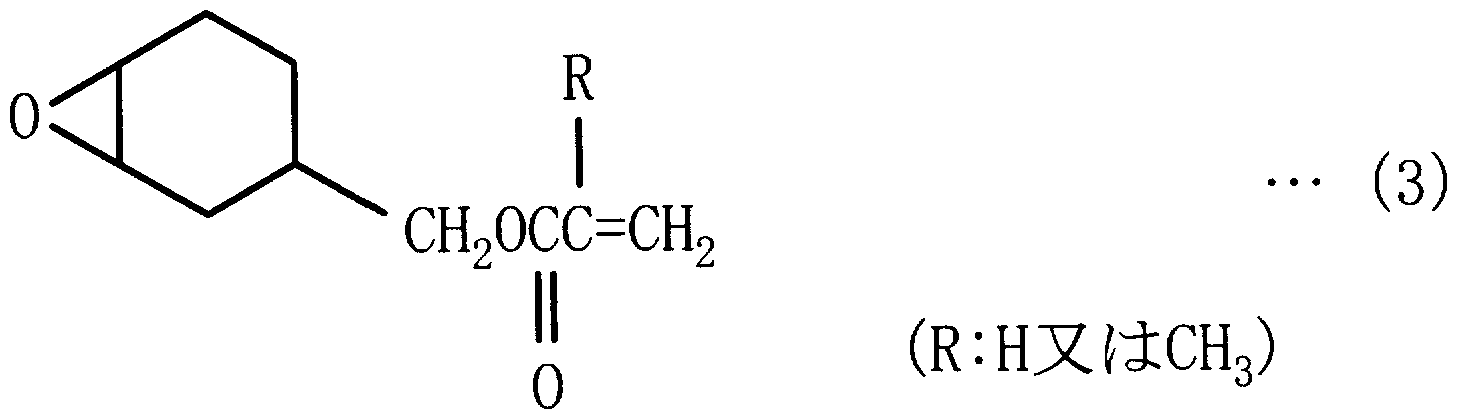
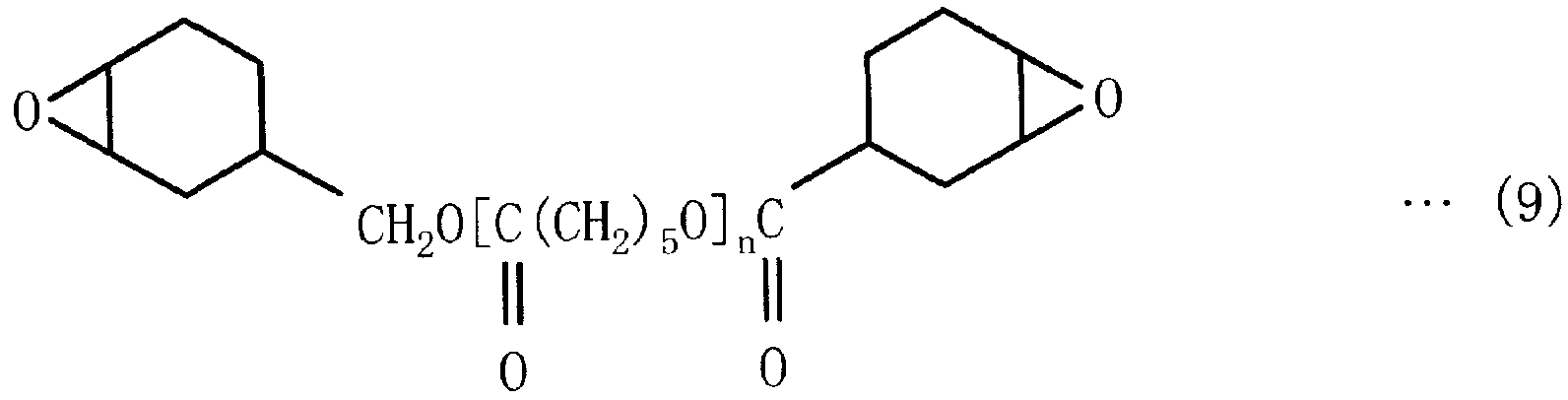
- An alicyclic epoxy compound means a cycloaliphatic compound having an alicyclic epoxy group, that is, an epoxy group in which an oxygen atom is added to an ethylene bond in an aliphatic ring.
- Compounds represented by formulas (2) to (11) are preferably used.
- the compound represented by the formula (2), the formula (7) or the formula (11) is more preferably used because it is excellent in compatibility with the PC resin composition and does not impair the transparency. It is done.
- the blending amount of the alicyclic epoxy compound is preferably 0.001 to 1.0 part by mass, more preferably 0.01 to 0.5 part by mass with respect to 100 parts by mass of the aromatic PC resin. More preferably, it is 0.02-0.2 parts by mass. If the blending amount is less than 0.001 part by mass, the effect of improving the transparency of the molded product is insufficient, and the effect of improving the hydrolysis resistance is also low. On the other hand, if the blending amount exceeds 1.0 parts by mass, phase separation tends to occur, and the transparency of the molded product may be lowered.
- the PC resin composition of the present invention includes hindered phenol-based and ester-based antioxidants, hindered amine-based light stabilizers, commonly used flame retardants and flame retardant aids. , Mold release agents, antistatic agents, colorants, and the like can be added.
- the PC resin composition of the present invention can be produced by kneading by a commonly used method.
- a ribbon blender, a Henschel mixer, a Banbury mixer, a drum tumbler, a single screw extruder, a twin screw extruder, a conider, a multi-screw extruder, etc. can be used.
- the heating temperature at the time of kneading is usually preferably about 240 to 280 ° C.
- the PC resin composition of the present invention can be formed into a molded body such as a light diffusion plate by molding by injection molding or the like.
- a light diffusing plate it is preferable to have a thickness of about 0.5 to 2 mm from the viewpoint that it is difficult to bend and warp when assembled into a product.
- the light diffusing plate can be suitably used in the field of liquid crystal display, the use of optical components, and a glass substitute application.
- the optical component include optical elements such as an optical lens and a light guide plate (light guide), and examples of glass replacement applications include street light covers, laminated glass for vehicles and building materials.
- PCC1 was manufactured as follows.
- the methylene chloride phase was concentrated under reduced pressure to obtain polytetramethylene glycol monobis (4-hydroxybenzoate).
- P-hydroxybenzoic acid was 10 mass ppm or less, and methyl p-hydroxybenzoate was 0.2 mass%.
- the measurement method by HPLC is as follows. Measurement was performed using an ODS-3 column manufactured by GL Sciences Inc. under a column temperature of 40 ° C, a 0.5% by mass phosphoric acid aqueous solution and a acetonitrile mixed solvent at a flow rate of 1.0 milliliter Z. The quantification was calculated based on a calibration curve with a standard.
- the tubular reactor had a jacket part, and the temperature of the reaction solution was kept at 40 ° C or less by passing cooling water through the jacket.
- the reaction solution exiting the tubular reactor was continuously introduced into a 40-liter baffled tank reactor equipped with receding blades, where BPA sodium hydroxide aqueous solution 2.8 liter Zhr, 25 mass 0/0 Mizusani ⁇ aqueous sodium 0.07 l ZHR, was subjected to water 17 l ZHR, 1 wt% of Toriechiruamin aqueous 0. to 64 liters ZHR added Caro reaction.
- the reaction liquid overflowing from the tank reactor is continuously extracted and allowed to stand.
- the aqueous phase was separated and removed, and the methylene chloride phase was collected.
- the polycarbonate oligomer thus obtained had a concentration of 329 gZ liters and a chromate group concentration of 0.74 molZ liters.
- the methylene chloride solution of PCC 1 thus obtained was washed successively with 15 vol% 0.03 mol Z liter NaOH aqueous solution and 0.2N hydrochloric acid, and the electric conductivity in the aqueous phase after washing was then increased. Washing with pure water was repeated until the pressure became 0.01 SZm or less.
- the methylene chloride solution of PCC1 obtained by washing was concentrated and pulverized, and the obtained flakes were dried at 100 ° C. under reduced pressure.
- the amount of polytetramethylene glycol bis (4-hydroxybenzoate) residue determined by 1 ! "I-NMR in the obtained PCC1 was 5.0% by mass, and its viscosity average molecular weight was 14200. .
- Stearic acid monoglyceride S100A [trade name, manufactured by Riken Vitamin]
- Pentaerythritol tetrastearate EW440A [trade name, manufactured by Riken Vitamin]
- each component was mixed in the proportions shown in Table 1, and then kneaded in a single-screw kneading extruder (caliber: 40 mm ⁇ ) at 280 ° C., screw rotation speed: 100 rpm, discharge amount: 15 kgZhr, and pelletized.
- the parts by mass of each component are values relative to 100 parts by mass of PC resin.
- the resulting pellets were molded into a 140mm sq., 2mm thick flat plate under conditions of a molding temperature of 300 ° C and a mold temperature of 80 ° C to form optical properties and light resistance.
- the body was molded into a 140mm sq., 2mm thick flat plate under conditions of a molding temperature of 300 ° C and a mold temperature of 80 ° C to form optical properties and light resistance. The body.
- a light diffusion plate having a thickness of 32 inches and a thickness of 2 mm was molded by a 650 t injection molding machine under the conditions of a molding temperature of 300 ° C. and a mold temperature of 80 ° C. to obtain a molded body for moisture and heat resistance evaluation.
- Light transmittance, haze and YI were measured according to JIS K 7105. YI was measured under the conditions of a measurement area of 30 ⁇ and a C light source with a 2-degree field of view.
- the molded article for evaluation was placed in a constant temperature and humidity chamber set at 60 ° C and 95% RH for 240 hours, and then evaluated according to the following criteria.
- ⁇ Can be incorporated into the LCD backlight that warps and deforms the evaluation molded body.
- X The evaluation molded body cannot be fitted into the designed backlight chassis at 100 ⁇ m crossing due to warpage or deformation. thing
- Example 1 65 92 2. 5 5 ⁇ Example 2 65 92 2. 3 5 ⁇ Example 3 65 92 2. 3 5 ⁇ Example 4 65 92 2. 0 5 ⁇ Example 5 65 92 2. 0 5 ⁇ Example 6 65 92 1. 8 6 ⁇ Example 7 65 92 1. 6 7 ⁇ Example 8 65 92 1. 8 5 ⁇ Comparative example 1 65 92 3. 5 5 ⁇ Comparative example 2 65 92 3. 5 5 ⁇ Comparative Example 3 65 92 1. 5 5 X Comparative Example 4 65 92 2. 3 13 ⁇
- Comparative Example 1 since the ester compound is not blended, the initial coloring (YI) is large. Further, in Comparative Example 2, although the ester compound was blended, the initial coloring reduction effect was not exhibited because the blending amount was small. On the other hand, in Comparative Example 3, since the amount of the ester compound is too large, the heat and moisture resistance is inferior. In Comparative Example 4, the amount of light-proofing agent is small, so that the light resistance is remarkably inferior.
- the polycarbonate-based light diffusing resin composition of the present invention is used for light diffusing plates in the field of liquid crystal displays, optical elements such as optical lenses and light guide plates (light guides), street light covers, It can be suitably used for glass substitutes in vehicles and building materials.
Landscapes
- Chemical & Material Sciences (AREA)
- Physics & Mathematics (AREA)
- Health & Medical Sciences (AREA)
- Chemical Kinetics & Catalysis (AREA)
- Medicinal Chemistry (AREA)
- Polymers & Plastics (AREA)
- Organic Chemistry (AREA)
- General Physics & Mathematics (AREA)
- Optics & Photonics (AREA)
- Dispersion Chemistry (AREA)
- Compositions Of Macromolecular Compounds (AREA)
- Optical Elements Other Than Lenses (AREA)
Abstract
Description





Claims
Priority Applications (3)
| Application Number | Priority Date | Filing Date | Title |
|---|---|---|---|
| KR1020097000978A KR101419562B1 (ko) | 2006-06-19 | 2007-06-18 | 폴리카보네이트계 광확산성 수지 조성물 및 광확산판 |
| DE112007001387T DE112007001387T5 (de) | 2006-06-19 | 2007-06-18 | Lichtstreuende Polycarbonatharz-Zusammensetzung und Lichtstreuplatte |
| US12/305,207 US8877850B2 (en) | 2006-06-19 | 2007-06-18 | Light-diffusing polycarbonate resin composition and light-diffusing plate |
Applications Claiming Priority (2)
| Application Number | Priority Date | Filing Date | Title |
|---|---|---|---|
| JP2006-168865 | 2006-06-19 | ||
| JP2006168865A JP5047543B2 (ja) | 2006-06-19 | 2006-06-19 | ポリカーボネート系光拡散性樹脂組成物および光拡散板 |
Publications (1)
| Publication Number | Publication Date |
|---|---|
| WO2007148652A1 true WO2007148652A1 (ja) | 2007-12-27 |
Family
ID=38833394
Family Applications (1)
| Application Number | Title | Priority Date | Filing Date |
|---|---|---|---|
| PCT/JP2007/062231 Ceased WO2007148652A1 (ja) | 2006-06-19 | 2007-06-18 | ポリカーボネート系光拡散性樹脂組成物および光拡散板 |
Country Status (7)
| Country | Link |
|---|---|
| US (1) | US8877850B2 (ja) |
| JP (1) | JP5047543B2 (ja) |
| KR (1) | KR101419562B1 (ja) |
| CN (1) | CN101472993A (ja) |
| DE (1) | DE112007001387T5 (ja) |
| TW (1) | TWI448508B (ja) |
| WO (1) | WO2007148652A1 (ja) |
Cited By (1)
| Publication number | Priority date | Publication date | Assignee | Title |
|---|---|---|---|---|
| JP2012051997A (ja) * | 2010-08-31 | 2012-03-15 | Sumitomo Chemical Co Ltd | 樹脂組成物の製造方法、樹脂組成物および成形体 |
Families Citing this family (16)
| Publication number | Priority date | Publication date | Assignee | Title |
|---|---|---|---|---|
| CN101812226A (zh) * | 2010-04-24 | 2010-08-25 | 广州金园聚合物挤出成型科技有限公司 | 一种防眩光阻燃聚碳酸酯及其制备方法 |
| TWI457608B (zh) * | 2010-07-06 | 2014-10-21 | Ching Wu Wang | Light diffuse plate with high transmittance and high haze |
| TWI411627B (zh) * | 2010-12-01 | 2013-10-11 | Chi Mei Corp | 聚碳酸酯組成物 |
| JP5879124B2 (ja) * | 2011-12-28 | 2016-03-08 | 出光興産株式会社 | ポリカーボネート樹脂組成物ペレットの製造方法 |
| WO2013141005A1 (ja) | 2012-03-21 | 2013-09-26 | 帝人株式会社 | 光拡散性樹脂組成物 |
| KR20140092470A (ko) * | 2012-12-28 | 2014-07-24 | 코오롱플라스틱 주식회사 | 폴리카보네이트 수지 조성물 및 이를 포함하는 폴리카보네이트 수지 성형품 |
| CN103724964B (zh) * | 2013-12-06 | 2015-11-18 | 江门市道生工程塑料有限公司 | 一种高韧性高扩散型pc/abs合金材料及其制备方法 |
| KR101932306B1 (ko) * | 2014-12-31 | 2018-12-26 | 롯데첨단소재(주) | 도광판 및 그 제조방법 |
| CN108350265B (zh) * | 2015-11-20 | 2021-09-10 | 出光兴产株式会社 | 聚碳酸酯树脂颗粒的制造方法 |
| JP6837987B2 (ja) * | 2015-11-20 | 2021-03-03 | 出光興産株式会社 | ポリカーボネート樹脂組成物及びその成形品 |
| KR20180132665A (ko) * | 2016-03-02 | 2018-12-12 | 사빅 글로벌 테크놀러지스 비.브이. | 유리 충전제-보강된 고형 수지 |
| CN106810804A (zh) * | 2016-12-09 | 2017-06-09 | 芜湖天鸿汽车零部件有限公司 | 一种汽车灯罩成型材料及其制备方法 |
| CN121825134A (zh) | 2017-02-09 | 2026-04-10 | 吉昂功能材料(东莞)有限公司 | 导热聚卤乙烯 |
| US20190079219A1 (en) * | 2017-09-14 | 2019-03-14 | Polyone Corporation | Inherently flame retardant compound to diffuse visible light from fixtures containing light emitting diodes |
| JP2021181528A (ja) * | 2020-05-19 | 2021-11-25 | 帝人株式会社 | 芳香族ポリカーボネート樹脂組成物およびその成形品 |
| WO2021235272A1 (ja) * | 2020-05-19 | 2021-11-25 | 帝人株式会社 | 芳香族ポリカーボネート樹脂組成物およびその成形品 |
Citations (8)
| Publication number | Priority date | Publication date | Assignee | Title |
|---|---|---|---|---|
| JP2005298720A (ja) * | 2004-04-14 | 2005-10-27 | Teijin Chem Ltd | 光拡散性ポリカーボネート樹脂組成物から形成された車輌用外装成形品 |
| JP2005344006A (ja) * | 2004-06-03 | 2005-12-15 | Teijin Chem Ltd | ポリカーボネート樹脂組成物 |
| JP2006051655A (ja) * | 2004-08-11 | 2006-02-23 | Mitsubishi Engineering Plastics Corp | 合成樹脂製積層体及びその製造方法 |
| JP2006063122A (ja) * | 2004-08-25 | 2006-03-09 | Mitsubishi Engineering Plastics Corp | 光拡散性樹脂組成物およびそれを用いた光拡散性部材 |
| JP2006078954A (ja) * | 2004-09-13 | 2006-03-23 | Asahi Kasei Chemicals Corp | 直下型パックライト用拡散板 |
| JP2006083230A (ja) * | 2004-09-14 | 2006-03-30 | Mitsubishi Engineering Plastics Corp | 芳香族ポリカーボネート樹脂組成物およびその成形体 |
| WO2006043618A1 (ja) * | 2004-10-22 | 2006-04-27 | Idemitsu Kosan Co., Ltd. | ポリカーボネート系光拡散性樹脂組成物 |
| JP2006143949A (ja) * | 2004-11-24 | 2006-06-08 | Asahi Kasei Chemicals Corp | 芳香族ポリカ−ボネ−ト樹脂組成物および成形体 |
Family Cites Families (14)
| Publication number | Priority date | Publication date | Assignee | Title |
|---|---|---|---|---|
| US4396678A (en) * | 1981-04-10 | 1983-08-02 | General Electric Company | Coated surface stabilized polycarbonate article |
| JP3330498B2 (ja) | 1996-07-01 | 2002-09-30 | 出光石油化学株式会社 | 導光板およびその製造方法 |
| JP4104707B2 (ja) | 1997-11-27 | 2008-06-18 | 出光興産株式会社 | ポリカーボネート樹脂組成物及び導光板 |
| JP4211136B2 (ja) | 1999-05-12 | 2009-01-21 | 住友ベークライト株式会社 | 透明複層樹脂積層体 |
| WO2001072900A1 (en) | 2000-03-28 | 2001-10-04 | Teijin Chemicals, Ltd. | Reclaimed resin composition |
| JP3669299B2 (ja) * | 2001-07-12 | 2005-07-06 | 住友化学株式会社 | メタクリル酸メチル系樹脂組成物およびその成形体 |
| EP1635196A4 (en) * | 2003-06-17 | 2008-10-01 | Teijin Chemicals Ltd | DIRECT REAR LIQUID CRYSTAL DISPLAY AND LIGHT DIFFUSION PLATE |
| JP4478428B2 (ja) * | 2003-10-07 | 2010-06-09 | 出光興産株式会社 | ポリカーボネート系樹脂組成物及び光学部品 |
| JP2005259593A (ja) * | 2004-03-12 | 2005-09-22 | Mitsubishi Engineering Plastics Corp | Led信号機用レンズ |
| JP5230056B2 (ja) * | 2004-04-14 | 2013-07-10 | 出光興産株式会社 | 光拡散性樹脂組成物 |
| TW200626365A (en) | 2004-09-27 | 2006-08-01 | Sumitomo Chemical Co | Light diffusing plate |
| JP4914027B2 (ja) * | 2005-06-08 | 2012-04-11 | 出光興産株式会社 | 光拡散性ポリカーボネート系樹脂組成物、および同樹脂組成物を用いた光拡散板 |
| JP5063873B2 (ja) * | 2005-07-05 | 2012-10-31 | 出光興産株式会社 | 光拡散性ポリカーボネート系樹脂組成物、および同樹脂組成物を用いた光拡散板 |
| JP5073226B2 (ja) * | 2006-05-11 | 2012-11-14 | 出光興産株式会社 | 光拡散性樹脂組成物及びそれを用いた光拡散板 |
-
2006
- 2006-06-19 JP JP2006168865A patent/JP5047543B2/ja active Active
-
2007
- 2007-06-15 TW TW096121875A patent/TWI448508B/zh active
- 2007-06-18 KR KR1020097000978A patent/KR101419562B1/ko active Active
- 2007-06-18 US US12/305,207 patent/US8877850B2/en active Active
- 2007-06-18 CN CNA200780022353XA patent/CN101472993A/zh active Pending
- 2007-06-18 DE DE112007001387T patent/DE112007001387T5/de not_active Ceased
- 2007-06-18 WO PCT/JP2007/062231 patent/WO2007148652A1/ja not_active Ceased
Patent Citations (8)
| Publication number | Priority date | Publication date | Assignee | Title |
|---|---|---|---|---|
| JP2005298720A (ja) * | 2004-04-14 | 2005-10-27 | Teijin Chem Ltd | 光拡散性ポリカーボネート樹脂組成物から形成された車輌用外装成形品 |
| JP2005344006A (ja) * | 2004-06-03 | 2005-12-15 | Teijin Chem Ltd | ポリカーボネート樹脂組成物 |
| JP2006051655A (ja) * | 2004-08-11 | 2006-02-23 | Mitsubishi Engineering Plastics Corp | 合成樹脂製積層体及びその製造方法 |
| JP2006063122A (ja) * | 2004-08-25 | 2006-03-09 | Mitsubishi Engineering Plastics Corp | 光拡散性樹脂組成物およびそれを用いた光拡散性部材 |
| JP2006078954A (ja) * | 2004-09-13 | 2006-03-23 | Asahi Kasei Chemicals Corp | 直下型パックライト用拡散板 |
| JP2006083230A (ja) * | 2004-09-14 | 2006-03-30 | Mitsubishi Engineering Plastics Corp | 芳香族ポリカーボネート樹脂組成物およびその成形体 |
| WO2006043618A1 (ja) * | 2004-10-22 | 2006-04-27 | Idemitsu Kosan Co., Ltd. | ポリカーボネート系光拡散性樹脂組成物 |
| JP2006143949A (ja) * | 2004-11-24 | 2006-06-08 | Asahi Kasei Chemicals Corp | 芳香族ポリカ−ボネ−ト樹脂組成物および成形体 |
Cited By (1)
| Publication number | Priority date | Publication date | Assignee | Title |
|---|---|---|---|---|
| JP2012051997A (ja) * | 2010-08-31 | 2012-03-15 | Sumitomo Chemical Co Ltd | 樹脂組成物の製造方法、樹脂組成物および成形体 |
Also Published As
| Publication number | Publication date |
|---|---|
| JP2007332327A (ja) | 2007-12-27 |
| US20100149644A1 (en) | 2010-06-17 |
| KR20090020704A (ko) | 2009-02-26 |
| JP5047543B2 (ja) | 2012-10-10 |
| US8877850B2 (en) | 2014-11-04 |
| TWI448508B (zh) | 2014-08-11 |
| KR101419562B1 (ko) | 2014-07-14 |
| CN101472993A (zh) | 2009-07-01 |
| TW200815525A (en) | 2008-04-01 |
| DE112007001387T5 (de) | 2009-04-23 |
Similar Documents
| Publication | Publication Date | Title |
|---|---|---|
| WO2007148652A1 (ja) | ポリカーボネート系光拡散性樹脂組成物および光拡散板 | |
| JP5063873B2 (ja) | 光拡散性ポリカーボネート系樹脂組成物、および同樹脂組成物を用いた光拡散板 | |
| JP4914027B2 (ja) | 光拡散性ポリカーボネート系樹脂組成物、および同樹脂組成物を用いた光拡散板 | |
| EP2799200B1 (en) | Polycarbonate resin composition pellets and process for manufacturing same | |
| JP6249139B2 (ja) | 芳香族ポリカーボネート樹脂、芳香族ポリカーボネート樹脂組成物及び芳香族ポリカーボネート樹脂成形体の製造方法 | |
| KR101479113B1 (ko) | 도광판용 방향족 폴리카보네이트 수지 조성물 및 도광판 | |
| WO2007132604A1 (ja) | 光拡散性樹脂組成物及びそれを用いた光拡散板 | |
| JP4478428B2 (ja) | ポリカーボネート系樹脂組成物及び光学部品 | |
| JP5421548B2 (ja) | ガラス繊維強化難燃性ポリカーボネート樹脂組成物及び該樹脂組成物を用いた成形品 | |
| WO2006043618A1 (ja) | ポリカーボネート系光拡散性樹脂組成物 | |
| JP2014062203A (ja) | 芳香族ポリカーボネート樹脂組成物及び該樹脂組成物を用いた成形品 | |
| JP6895778B2 (ja) | ポリカーボネート樹脂組成物およびそれからなる成形品 | |
| JP6483340B2 (ja) | 導光性能を有するポリカーボネート樹脂組成物およびそれからなる導光体 | |
| JP4946089B2 (ja) | 光拡散性樹脂組成物と光拡散性部材 |
Legal Events
| Date | Code | Title | Description |
|---|---|---|---|
| WWE | Wipo information: entry into national phase |
Ref document number: 200780022353.X Country of ref document: CN |
|
| 121 | Ep: the epo has been informed by wipo that ep was designated in this application |
Ref document number: 07767133 Country of ref document: EP Kind code of ref document: A1 |
|
| WWE | Wipo information: entry into national phase |
Ref document number: 1120070013877 Country of ref document: DE |
|
| WWE | Wipo information: entry into national phase |
Ref document number: 12305207 Country of ref document: US |
|
| WWE | Wipo information: entry into national phase |
Ref document number: 1020097000978 Country of ref document: KR |
|
| RET | De translation (de og part 6b) |
Ref document number: 112007001387 Country of ref document: DE Date of ref document: 20090423 Kind code of ref document: P |
|
| 122 | Ep: pct application non-entry in european phase |
Ref document number: 07767133 Country of ref document: EP Kind code of ref document: A1 |