US9827253B2 - Prodrug salts - Google Patents
Prodrug salts Download PDFInfo
- Publication number
- US9827253B2 US9827253B2 US15/034,274 US201415034274A US9827253B2 US 9827253 B2 US9827253 B2 US 9827253B2 US 201415034274 A US201415034274 A US 201415034274A US 9827253 B2 US9827253 B2 US 9827253B2
- Authority
- US
- United States
- Prior art keywords
- compound
- formula
- treated
- condition
- edema
- Prior art date
- Legal status (The legal status is an assumption and is not a legal conclusion. Google has not performed a legal analysis and makes no representation as to the accuracy of the status listed.)
- Active
Links
- 0 [1*]C1=CC=C(OP([6*])([7*])=O)C(C(=O)NC2=C([2*])C([3*])=C([4*])C([5*])=C2)=C1 Chemical compound [1*]C1=CC=C(OP([6*])([7*])=O)C(C(=O)NC2=C([2*])C([3*])=C([4*])C([5*])=C2)=C1 0.000 description 18
- LMUJAMWFQGUYLE-UHFFFAOYSA-N CC(C)C1CCCCO1.CC(C)C1CCCO1 Chemical compound CC(C)C1CCCCO1.CC(C)C1CCCO1 LMUJAMWFQGUYLE-UHFFFAOYSA-N 0.000 description 4
- LQVLIVXSNQJMAR-UHFFFAOYSA-N CC1=CC(C(F)(F)F)=CC(NC(=O)C2=CC(Cl)=CC=C2OP(=O)(O)O)=C1.[K+] Chemical compound CC1=CC(C(F)(F)F)=CC(NC(=O)C2=CC(Cl)=CC=C2OP(=O)(O)O)=C1.[K+] LQVLIVXSNQJMAR-UHFFFAOYSA-N 0.000 description 3
- WSHXPHFIHYXZKC-UHFFFAOYSA-N O=C(NC1=CC(C(F)(F)F)=CC(C(F)(F)F)=C1)C1=CC(Cl)=CC=C1OP(=O)(O)O.[K+] Chemical compound O=C(NC1=CC(C(F)(F)F)=CC(C(F)(F)F)=C1)C1=CC(Cl)=CC=C1OP(=O)(O)O.[K+] WSHXPHFIHYXZKC-UHFFFAOYSA-N 0.000 description 3
- WWTVVJRQHUYGKX-UHFFFAOYSA-N NCCO.NCCO.O=C(NC1=CC(C(F)(F)F)=CC(C(F)(F)F)=C1)C1=CC(Cl)=CC=C1OP(=O)(O)O Chemical compound NCCO.NCCO.O=C(NC1=CC(C(F)(F)F)=CC(C(F)(F)F)=C1)C1=CC(Cl)=CC=C1OP(=O)(O)O WWTVVJRQHUYGKX-UHFFFAOYSA-N 0.000 description 2
- ITWZUPRMUREEJV-UHFFFAOYSA-N O=C(NC1=CC(C(F)(F)F)=CC(C(F)(F)F)=C1)C1=C(O[PH-](=O)([O-])O)C=CC(Cl)=C1.[Na+].[Na+] Chemical compound O=C(NC1=CC(C(F)(F)F)=CC(C(F)(F)F)=C1)C1=C(O[PH-](=O)([O-])O)C=CC(Cl)=C1.[Na+].[Na+] ITWZUPRMUREEJV-UHFFFAOYSA-N 0.000 description 2
- DELQRPRORXEFJW-UHFFFAOYSA-N O=C(NC1=CC(C(F)(F)F)=CC(C(F)(F)F)=C1)C1=CC(Cl)=CC=C1OP(=O)(O)O.OCCNCCO.OCCNCCO Chemical compound O=C(NC1=CC(C(F)(F)F)=CC(C(F)(F)F)=C1)C1=CC(Cl)=CC=C1OP(=O)(O)O.OCCNCCO.OCCNCCO DELQRPRORXEFJW-UHFFFAOYSA-N 0.000 description 2
- DLUOATVWXZONIT-UHFFFAOYSA-N CC1=CC(C(F)(F)F)=CC(NC(=O)C2=CC(Cl)=CC=C2OP(=O)(O)O)=C1.NCCO Chemical compound CC1=CC(C(F)(F)F)=CC(NC(=O)C2=CC(Cl)=CC=C2OP(=O)(O)O)=C1.NCCO DLUOATVWXZONIT-UHFFFAOYSA-N 0.000 description 1
- UJIZPSLEPQDIOF-UHFFFAOYSA-N CC1=CC(C(F)(F)F)=CC(NC(=O)C2=CC(Cl)=CC=C2OP(=O)(O)O)=C1.NCCO.NCCO Chemical compound CC1=CC(C(F)(F)F)=CC(NC(=O)C2=CC(Cl)=CC=C2OP(=O)(O)O)=C1.NCCO.NCCO UJIZPSLEPQDIOF-UHFFFAOYSA-N 0.000 description 1
- VPGYIWOQUCNOMW-UHFFFAOYSA-N CC1=CC(C(F)(F)F)=CC(NC(=O)C2=CC(Cl)=CC=C2OP(=O)(O)O)=C1.OCCC(CCO)CCO Chemical compound CC1=CC(C(F)(F)F)=CC(NC(=O)C2=CC(Cl)=CC=C2OP(=O)(O)O)=C1.OCCC(CCO)CCO VPGYIWOQUCNOMW-UHFFFAOYSA-N 0.000 description 1
- JUWCYXVKEGHHID-UHFFFAOYSA-N CC1=CC(C(F)(F)F)=CC(NC(=O)C2=CC(Cl)=CC=C2OP(=O)(O)O)=C1.OCCC(CCO)CCO.OCCC(CCO)CCO Chemical compound CC1=CC(C(F)(F)F)=CC(NC(=O)C2=CC(Cl)=CC=C2OP(=O)(O)O)=C1.OCCC(CCO)CCO.OCCC(CCO)CCO JUWCYXVKEGHHID-UHFFFAOYSA-N 0.000 description 1
- RPXYTCXQLGFIQB-UHFFFAOYSA-N CC1=CC(C(F)(F)F)=CC(NC(=O)C2=CC(Cl)=CC=C2OP(=O)(O)O)=C1.OCCNCCO Chemical compound CC1=CC(C(F)(F)F)=CC(NC(=O)C2=CC(Cl)=CC=C2OP(=O)(O)O)=C1.OCCNCCO RPXYTCXQLGFIQB-UHFFFAOYSA-N 0.000 description 1
- VDWKMKZVFWHEOQ-UHFFFAOYSA-N CC1=CC(C(F)(F)F)=CC(NC(=O)C2=CC(Cl)=CC=C2OP(=O)(O)O)=C1.OCCNCCO.OCCNCCO Chemical compound CC1=CC(C(F)(F)F)=CC(NC(=O)C2=CC(Cl)=CC=C2OP(=O)(O)O)=C1.OCCNCCO.OCCNCCO VDWKMKZVFWHEOQ-UHFFFAOYSA-N 0.000 description 1
- VLMMKMLSPUQHMY-UHFFFAOYSA-N CC1=CC(C(F)(F)F)=CC(NC(=O)C2=CC(Cl)=CC=C2OP(=O)(OCCC[SiH](C)C)OCC[Si](C)(C)C)=C1 Chemical compound CC1=CC(C(F)(F)F)=CC(NC(=O)C2=CC(Cl)=CC=C2OP(=O)(OCCC[SiH](C)C)OCC[Si](C)(C)C)=C1 VLMMKMLSPUQHMY-UHFFFAOYSA-N 0.000 description 1
- JTGFZAYCFSLYNU-UHFFFAOYSA-N CC1=CC(N)=CC(C(F)(F)F)=C1.CO.C[Si](C)(C)CCOP(=O)(OCC[Si](C)(C)C)OC1=C(C(=O)NC2=CC(C(F)(F)F)=CC(C(F)(F)F)=C2)C=C(Cl)C=C1.NCCO.NCCO.NCCO.O=C(NC1=CC(C(F)(F)F)=CC(C(F)(F)F)=C1)C1=C(O)C=CC(Cl)=C1.O=C(NC1=CC(C(F)(F)F)=CC(C(F)(F)F)=C1)C1=C(OP(=O)(O)O)C=CC(Cl)=C1.O=C(NC1=CC(C(F)(F)F)=CC(C(F)(F)F)=C1)C1=C(OP(=O)(O)O)C=CC(Cl)=C1.O=C(O)C1=C(O)C=CC(Cl)=C1.[H]P(=O)(OCC[Si](C)(C)C)OCC[Si](C)(C)C Chemical compound CC1=CC(N)=CC(C(F)(F)F)=C1.CO.C[Si](C)(C)CCOP(=O)(OCC[Si](C)(C)C)OC1=C(C(=O)NC2=CC(C(F)(F)F)=CC(C(F)(F)F)=C2)C=C(Cl)C=C1.NCCO.NCCO.NCCO.O=C(NC1=CC(C(F)(F)F)=CC(C(F)(F)F)=C1)C1=C(O)C=CC(Cl)=C1.O=C(NC1=CC(C(F)(F)F)=CC(C(F)(F)F)=C1)C1=C(OP(=O)(O)O)C=CC(Cl)=C1.O=C(NC1=CC(C(F)(F)F)=CC(C(F)(F)F)=C1)C1=C(OP(=O)(O)O)C=CC(Cl)=C1.O=C(O)C1=C(O)C=CC(Cl)=C1.[H]P(=O)(OCC[Si](C)(C)C)OCC[Si](C)(C)C JTGFZAYCFSLYNU-UHFFFAOYSA-N 0.000 description 1
- UIHWETFADBLGNM-UHFFFAOYSA-N CCCOP(=O)(OCC[Si](C)(C)C)OC1=CC=C(Cl)C=C1C(=O)NC1=CC(C)=CC(C(F)(F)F)=C1 Chemical compound CCCOP(=O)(OCC[Si](C)(C)C)OC1=CC=C(Cl)C=C1C(=O)NC1=CC(C)=CC(C(F)(F)F)=C1 UIHWETFADBLGNM-UHFFFAOYSA-N 0.000 description 1
- GGBXXARNXWORFD-UHFFFAOYSA-N C[SiH](C)CCCOP(=O)(OCC[Si](C)(C)C)OC1=CC=C(Cl)C=C1C(=O)NC1=CC(C(F)(F)F)=CC(C(F)(F)F)=C1 Chemical compound C[SiH](C)CCCOP(=O)(OCC[Si](C)(C)C)OC1=CC=C(Cl)C=C1C(=O)NC1=CC(C(F)(F)F)=CC(C(F)(F)F)=C1 GGBXXARNXWORFD-UHFFFAOYSA-N 0.000 description 1
- KREMFKCVKZCXCN-UHFFFAOYSA-N C[Si](C)(C)CCOP(=O)(OCC[Si](C)(C)C)OC1=C(C(=O)NC2=CC(C(F)(F)F)=CC(C(F)(F)F)=C2)C=C(Cl)C=C1 Chemical compound C[Si](C)(C)CCOP(=O)(OCC[Si](C)(C)C)OC1=C(C(=O)NC2=CC(C(F)(F)F)=CC(C(F)(F)F)=C2)C=C(Cl)C=C1 KREMFKCVKZCXCN-UHFFFAOYSA-N 0.000 description 1
- MEASJKSTELTSCB-UHFFFAOYSA-N NCCO.O=C(NC1=CC(C(F)(F)F)=CC(C(F)(F)F)=C1)C1=CC(Cl)=CC=C1OP(=O)(O)O Chemical compound NCCO.O=C(NC1=CC(C(F)(F)F)=CC(C(F)(F)F)=C1)C1=CC(Cl)=CC=C1OP(=O)(O)O MEASJKSTELTSCB-UHFFFAOYSA-N 0.000 description 1
- CHILCFMQWMQVAL-UHFFFAOYSA-N O=C(NC1=CC(C(F)(F)F)=CC(C(F)(F)F)=C1)C1=C(O)C=CC(Cl)=C1 Chemical compound O=C(NC1=CC(C(F)(F)F)=CC(C(F)(F)F)=C1)C1=C(O)C=CC(Cl)=C1 CHILCFMQWMQVAL-UHFFFAOYSA-N 0.000 description 1
- QGUBOIBVFJBAHC-UHFFFAOYSA-N O=C(NC1=CC(C(F)(F)F)=CC(C(F)(F)F)=C1)C1=C(OP(=O)(O)O)C=CC(Cl)=C1.OCCN(CCO)CCO.OCCN(CCO)CCO Chemical compound O=C(NC1=CC(C(F)(F)F)=CC(C(F)(F)F)=C1)C1=C(OP(=O)(O)O)C=CC(Cl)=C1.OCCN(CCO)CCO.OCCN(CCO)CCO QGUBOIBVFJBAHC-UHFFFAOYSA-N 0.000 description 1
- OQWKDLXRELLXSK-UHFFFAOYSA-N O=C(NC1=CC(C(F)(F)F)=CC(C(F)(F)F)=C1)C1=CC(Cl)=CC=C1OP(=O)(O)O.OCCC(CCO)CCO Chemical compound O=C(NC1=CC(C(F)(F)F)=CC(C(F)(F)F)=C1)C1=CC(Cl)=CC=C1OP(=O)(O)O.OCCC(CCO)CCO OQWKDLXRELLXSK-UHFFFAOYSA-N 0.000 description 1
- MZTBTGDTKUQHFG-UHFFFAOYSA-N O=C(NC1=CC(C(F)(F)F)=CC(C(F)(F)F)=C1)C1=CC(Cl)=CC=C1OP(=O)(O)O.OCCC(CCO)CCO.OCCC(CCO)CCO Chemical compound O=C(NC1=CC(C(F)(F)F)=CC(C(F)(F)F)=C1)C1=CC(Cl)=CC=C1OP(=O)(O)O.OCCC(CCO)CCO.OCCC(CCO)CCO MZTBTGDTKUQHFG-UHFFFAOYSA-N 0.000 description 1
- UFGYWAZSERAZFI-UHFFFAOYSA-N O=C(NC1=CC(C(F)(F)F)=CC(C(F)(F)F)=C1)C1=CC(Cl)=CC=C1OP(=O)(O)O.OCCNCCO Chemical compound O=C(NC1=CC(C(F)(F)F)=CC(C(F)(F)F)=C1)C1=CC(Cl)=CC=C1OP(=O)(O)O.OCCNCCO UFGYWAZSERAZFI-UHFFFAOYSA-N 0.000 description 1
- AGIYUGPCVGTHPA-UHFFFAOYSA-N O=C(NC1=CC(C(F)(F)F)=CC(C(F)(F)F)=C1)C1=CC(Cl)=CC=C1OP(=O)(OCC1=CC=CC=C1)OCC1=CC=CC=C1 Chemical compound O=C(NC1=CC(C(F)(F)F)=CC(C(F)(F)F)=C1)C1=CC(Cl)=CC=C1OP(=O)(OCC1=CC=CC=C1)OCC1=CC=CC=C1 AGIYUGPCVGTHPA-UHFFFAOYSA-N 0.000 description 1
- OLKOCCRGAWSHON-UHFFFAOYSA-N [H]P(=O)(OCCC)OCC[Si](C)(C)C Chemical compound [H]P(=O)(OCCC)OCC[Si](C)(C)C OLKOCCRGAWSHON-UHFFFAOYSA-N 0.000 description 1
Images




Classifications
-
- A—HUMAN NECESSITIES
- A61—MEDICAL OR VETERINARY SCIENCE; HYGIENE
- A61K—PREPARATIONS FOR MEDICAL, DENTAL OR TOILETRY PURPOSES
- A61K31/00—Medicinal preparations containing organic active ingredients
- A61K31/66—Phosphorus compounds
-
- A—HUMAN NECESSITIES
- A61—MEDICAL OR VETERINARY SCIENCE; HYGIENE
- A61K—PREPARATIONS FOR MEDICAL, DENTAL OR TOILETRY PURPOSES
- A61K31/00—Medicinal preparations containing organic active ingredients
- A61K31/66—Phosphorus compounds
- A61K31/661—Phosphorus acids or esters thereof not having P—C bonds, e.g. fosfosal, dichlorvos, malathion or mevinphos
-
- A—HUMAN NECESSITIES
- A61—MEDICAL OR VETERINARY SCIENCE; HYGIENE
- A61K—PREPARATIONS FOR MEDICAL, DENTAL OR TOILETRY PURPOSES
- A61K31/00—Medicinal preparations containing organic active ingredients
- A61K31/16—Amides, e.g. hydroxamic acids
- A61K31/165—Amides, e.g. hydroxamic acids having aromatic rings, e.g. colchicine, atenolol, progabide
- A61K31/167—Amides, e.g. hydroxamic acids having aromatic rings, e.g. colchicine, atenolol, progabide having the nitrogen of a carboxamide group directly attached to the aromatic ring, e.g. lidocaine, paracetamol
-
- A—HUMAN NECESSITIES
- A61—MEDICAL OR VETERINARY SCIENCE; HYGIENE
- A61K—PREPARATIONS FOR MEDICAL, DENTAL OR TOILETRY PURPOSES
- A61K31/00—Medicinal preparations containing organic active ingredients
- A61K31/21—Esters, e.g. nitroglycerine, selenocyanates
- A61K31/215—Esters, e.g. nitroglycerine, selenocyanates of carboxylic acids
- A61K31/22—Esters, e.g. nitroglycerine, selenocyanates of carboxylic acids of acyclic acids, e.g. pravastatin
- A61K31/222—Esters, e.g. nitroglycerine, selenocyanates of carboxylic acids of acyclic acids, e.g. pravastatin with compounds having aromatic groups, e.g. dipivefrine, ibopamine
-
- A—HUMAN NECESSITIES
- A61—MEDICAL OR VETERINARY SCIENCE; HYGIENE
- A61K—PREPARATIONS FOR MEDICAL, DENTAL OR TOILETRY PURPOSES
- A61K31/00—Medicinal preparations containing organic active ingredients
- A61K31/33—Heterocyclic compounds
- A61K31/395—Heterocyclic compounds having nitrogen as a ring hetero atom, e.g. guanethidine or rifamycins
- A61K31/535—Heterocyclic compounds having nitrogen as a ring hetero atom, e.g. guanethidine or rifamycins having six-membered rings with at least one nitrogen and one oxygen as the ring hetero atoms, e.g. 1,2-oxazines
- A61K31/5375—1,4-Oxazines, e.g. morpholine
-
- A—HUMAN NECESSITIES
- A61—MEDICAL OR VETERINARY SCIENCE; HYGIENE
- A61K—PREPARATIONS FOR MEDICAL, DENTAL OR TOILETRY PURPOSES
- A61K47/00—Medicinal preparations characterised by the non-active ingredients used, e.g. carriers or inert additives; Targeting or modifying agents chemically bound to the active ingredient
- A61K47/02—Inorganic compounds
-
- A—HUMAN NECESSITIES
- A61—MEDICAL OR VETERINARY SCIENCE; HYGIENE
- A61K—PREPARATIONS FOR MEDICAL, DENTAL OR TOILETRY PURPOSES
- A61K47/00—Medicinal preparations characterised by the non-active ingredients used, e.g. carriers or inert additives; Targeting or modifying agents chemically bound to the active ingredient
- A61K47/06—Organic compounds, e.g. natural or synthetic hydrocarbons, polyolefins, mineral oil, petrolatum or ozokerite
- A61K47/16—Organic compounds, e.g. natural or synthetic hydrocarbons, polyolefins, mineral oil, petrolatum or ozokerite containing nitrogen, e.g. nitro-, nitroso-, azo-compounds, nitriles, cyanates
- A61K47/18—Amines; Amides; Ureas; Quaternary ammonium compounds; Amino acids; Oligopeptides having up to five amino acids
-
- A—HUMAN NECESSITIES
- A61—MEDICAL OR VETERINARY SCIENCE; HYGIENE
- A61K—PREPARATIONS FOR MEDICAL, DENTAL OR TOILETRY PURPOSES
- A61K47/00—Medicinal preparations characterised by the non-active ingredients used, e.g. carriers or inert additives; Targeting or modifying agents chemically bound to the active ingredient
- A61K47/06—Organic compounds, e.g. natural or synthetic hydrocarbons, polyolefins, mineral oil, petrolatum or ozokerite
- A61K47/16—Organic compounds, e.g. natural or synthetic hydrocarbons, polyolefins, mineral oil, petrolatum or ozokerite containing nitrogen, e.g. nitro-, nitroso-, azo-compounds, nitriles, cyanates
- A61K47/18—Amines; Amides; Ureas; Quaternary ammonium compounds; Amino acids; Oligopeptides having up to five amino acids
- A61K47/186—Quaternary ammonium compounds, e.g. benzalkonium chloride or cetrimide
-
- A—HUMAN NECESSITIES
- A61—MEDICAL OR VETERINARY SCIENCE; HYGIENE
- A61K—PREPARATIONS FOR MEDICAL, DENTAL OR TOILETRY PURPOSES
- A61K9/00—Medicinal preparations characterised by special physical form
- A61K9/0012—Galenical forms characterised by the site of application
- A61K9/0019—Injectable compositions; Intramuscular, intravenous, arterial, subcutaneous administration; Compositions to be administered through the skin in an invasive manner
-
- A—HUMAN NECESSITIES
- A61—MEDICAL OR VETERINARY SCIENCE; HYGIENE
- A61K—PREPARATIONS FOR MEDICAL, DENTAL OR TOILETRY PURPOSES
- A61K9/00—Medicinal preparations characterised by special physical form
- A61K9/0012—Galenical forms characterised by the site of application
- A61K9/0019—Injectable compositions; Intramuscular, intravenous, arterial, subcutaneous administration; Compositions to be administered through the skin in an invasive manner
- A61K9/0021—Intradermal administration, e.g. through microneedle arrays or needleless injectors
-
- A—HUMAN NECESSITIES
- A61—MEDICAL OR VETERINARY SCIENCE; HYGIENE
- A61K—PREPARATIONS FOR MEDICAL, DENTAL OR TOILETRY PURPOSES
- A61K9/00—Medicinal preparations characterised by special physical form
- A61K9/08—Solutions
-
- A—HUMAN NECESSITIES
- A61—MEDICAL OR VETERINARY SCIENCE; HYGIENE
- A61K—PREPARATIONS FOR MEDICAL, DENTAL OR TOILETRY PURPOSES
- A61K9/00—Medicinal preparations characterised by special physical form
- A61K9/10—Dispersions; Emulsions
-
- A—HUMAN NECESSITIES
- A61—MEDICAL OR VETERINARY SCIENCE; HYGIENE
- A61P—SPECIFIC THERAPEUTIC ACTIVITY OF CHEMICAL COMPOUNDS OR MEDICINAL PREPARATIONS
- A61P1/00—Drugs for disorders of the alimentary tract or the digestive system
- A61P1/16—Drugs for disorders of the alimentary tract or the digestive system for liver or gallbladder disorders, e.g. hepatoprotective agents, cholagogues, litholytics
-
- A—HUMAN NECESSITIES
- A61—MEDICAL OR VETERINARY SCIENCE; HYGIENE
- A61P—SPECIFIC THERAPEUTIC ACTIVITY OF CHEMICAL COMPOUNDS OR MEDICINAL PREPARATIONS
- A61P11/00—Drugs for disorders of the respiratory system
-
- A—HUMAN NECESSITIES
- A61—MEDICAL OR VETERINARY SCIENCE; HYGIENE
- A61P—SPECIFIC THERAPEUTIC ACTIVITY OF CHEMICAL COMPOUNDS OR MEDICINAL PREPARATIONS
- A61P15/00—Drugs for genital or sexual disorders; Contraceptives
-
- A—HUMAN NECESSITIES
- A61—MEDICAL OR VETERINARY SCIENCE; HYGIENE
- A61P—SPECIFIC THERAPEUTIC ACTIVITY OF CHEMICAL COMPOUNDS OR MEDICINAL PREPARATIONS
- A61P21/00—Drugs for disorders of the muscular or neuromuscular system
-
- A—HUMAN NECESSITIES
- A61—MEDICAL OR VETERINARY SCIENCE; HYGIENE
- A61P—SPECIFIC THERAPEUTIC ACTIVITY OF CHEMICAL COMPOUNDS OR MEDICINAL PREPARATIONS
- A61P25/00—Drugs for disorders of the nervous system
-
- A—HUMAN NECESSITIES
- A61—MEDICAL OR VETERINARY SCIENCE; HYGIENE
- A61P—SPECIFIC THERAPEUTIC ACTIVITY OF CHEMICAL COMPOUNDS OR MEDICINAL PREPARATIONS
- A61P25/00—Drugs for disorders of the nervous system
- A61P25/06—Antimigraine agents
-
- A—HUMAN NECESSITIES
- A61—MEDICAL OR VETERINARY SCIENCE; HYGIENE
- A61P—SPECIFIC THERAPEUTIC ACTIVITY OF CHEMICAL COMPOUNDS OR MEDICINAL PREPARATIONS
- A61P25/00—Drugs for disorders of the nervous system
- A61P25/08—Antiepileptics; Anticonvulsants
-
- A—HUMAN NECESSITIES
- A61—MEDICAL OR VETERINARY SCIENCE; HYGIENE
- A61P—SPECIFIC THERAPEUTIC ACTIVITY OF CHEMICAL COMPOUNDS OR MEDICINAL PREPARATIONS
- A61P27/00—Drugs for disorders of the senses
- A61P27/02—Ophthalmic agents
-
- A—HUMAN NECESSITIES
- A61—MEDICAL OR VETERINARY SCIENCE; HYGIENE
- A61P—SPECIFIC THERAPEUTIC ACTIVITY OF CHEMICAL COMPOUNDS OR MEDICINAL PREPARATIONS
- A61P31/00—Antiinfectives, i.e. antibiotics, antiseptics, chemotherapeutics
- A61P31/04—Antibacterial agents
-
- A—HUMAN NECESSITIES
- A61—MEDICAL OR VETERINARY SCIENCE; HYGIENE
- A61P—SPECIFIC THERAPEUTIC ACTIVITY OF CHEMICAL COMPOUNDS OR MEDICINAL PREPARATIONS
- A61P35/00—Antineoplastic agents
-
- A—HUMAN NECESSITIES
- A61—MEDICAL OR VETERINARY SCIENCE; HYGIENE
- A61P—SPECIFIC THERAPEUTIC ACTIVITY OF CHEMICAL COMPOUNDS OR MEDICINAL PREPARATIONS
- A61P43/00—Drugs for specific purposes, not provided for in groups A61P1/00-A61P41/00
-
- A—HUMAN NECESSITIES
- A61—MEDICAL OR VETERINARY SCIENCE; HYGIENE
- A61P—SPECIFIC THERAPEUTIC ACTIVITY OF CHEMICAL COMPOUNDS OR MEDICINAL PREPARATIONS
- A61P7/00—Drugs for disorders of the blood or the extracellular fluid
-
- A—HUMAN NECESSITIES
- A61—MEDICAL OR VETERINARY SCIENCE; HYGIENE
- A61P—SPECIFIC THERAPEUTIC ACTIVITY OF CHEMICAL COMPOUNDS OR MEDICINAL PREPARATIONS
- A61P7/00—Drugs for disorders of the blood or the extracellular fluid
- A61P7/08—Plasma substitutes; Perfusion solutions; Dialytics or haemodialytics; Drugs for electrolytic or acid-base disorders, e.g. hypovolemic shock
-
- A—HUMAN NECESSITIES
- A61—MEDICAL OR VETERINARY SCIENCE; HYGIENE
- A61P—SPECIFIC THERAPEUTIC ACTIVITY OF CHEMICAL COMPOUNDS OR MEDICINAL PREPARATIONS
- A61P7/00—Drugs for disorders of the blood or the extracellular fluid
- A61P7/10—Antioedematous agents; Diuretics
-
- A—HUMAN NECESSITIES
- A61—MEDICAL OR VETERINARY SCIENCE; HYGIENE
- A61P—SPECIFIC THERAPEUTIC ACTIVITY OF CHEMICAL COMPOUNDS OR MEDICINAL PREPARATIONS
- A61P9/00—Drugs for disorders of the cardiovascular system
-
- A—HUMAN NECESSITIES
- A61—MEDICAL OR VETERINARY SCIENCE; HYGIENE
- A61P—SPECIFIC THERAPEUTIC ACTIVITY OF CHEMICAL COMPOUNDS OR MEDICINAL PREPARATIONS
- A61P9/00—Drugs for disorders of the cardiovascular system
- A61P9/04—Inotropic agents, i.e. stimulants of cardiac contraction; Drugs for heart failure
-
- A—HUMAN NECESSITIES
- A61—MEDICAL OR VETERINARY SCIENCE; HYGIENE
- A61P—SPECIFIC THERAPEUTIC ACTIVITY OF CHEMICAL COMPOUNDS OR MEDICINAL PREPARATIONS
- A61P9/00—Drugs for disorders of the cardiovascular system
- A61P9/10—Drugs for disorders of the cardiovascular system for treating ischaemic or atherosclerotic diseases, e.g. antianginal drugs, coronary vasodilators, drugs for myocardial infarction, retinopathy, cerebrovascula insufficiency, renal arteriosclerosis
-
- C—CHEMISTRY; METALLURGY
- C07—ORGANIC CHEMISTRY
- C07F—ACYCLIC, CARBOCYCLIC OR HETEROCYCLIC COMPOUNDS CONTAINING ELEMENTS OTHER THAN CARBON, HYDROGEN, HALOGEN, OXYGEN, NITROGEN, SULFUR, SELENIUM OR TELLURIUM
- C07F9/00—Compounds containing elements of Groups 5 or 15 of the Periodic Table
- C07F9/02—Phosphorus compounds
- C07F9/06—Phosphorus compounds without P—C bonds
- C07F9/08—Esters of oxyacids of phosphorus
- C07F9/09—Esters of phosphoric acids
Definitions
- novel prodrug salts of selective aquaporin inhibitors e.g., of aquaporin-4 and/or aquaporin-2, of Formula I as described below, their use as pharmaceuticals and pharmaceutical compositions comprising them, and novel intermediates used in and novel processes for their synthesis.
- novel prodrug salts are useful e.g., in the prophylaxis, treatment, and control of aquaporin-mediated conditions, e.g., diseases of water imbalance, for example edema (particularly edema of the brain and spinal cord, e.g., following trauma or ischemic stroke, as well as edema associated with glioma, meningitis, acute mountain sickness, epileptic seizure, infection, metabolic disorder, hypoxia, water intoxication, hepatic failure, hepatic encephalopathy, diabetic ketoacidosis, abscess, eclampsia, Creutzfeldt-Jakob disease, and lupus cerebritis, as well as edema consequent to microgravity and/or radiation exposure, as well as optic nerve edema, e.g., optic nerve edema consequent to microgravity and/or radiation exposure, as well as edema consequent to an invasive central nervous system procedure, e.g.,
- lactic acidosis due to hypoxia before the resuscitation period), as well as hyponatremia and excess fluid retention, ovarian hyperstimulation syndrome, and diseases such as epilepsy, retinal ischemia and other diseases of the eye associated with abnormalities in intraocular pressure and/or tissue hydration, myocardial ischemia, myocardial ischemia/reperfusion injury, myocardial infarction, myocardial hypoxia, congestive heart failure, sepsis, neuromyelitis optica, and glioblastoma, as well as fibromyalgia, multiple sclerosis, and migraines.
- diseases such as epilepsy, retinal ischemia and other diseases of the eye associated with abnormalities in intraocular pressure and/or tissue hydration, myocardial ischemia, myocardial ischemia/reperfusion injury, myocardial infarction, myocardial hypoxia, congestive heart failure, sepsis, neuromyelitis optica, and gli
- Aquaporins are cell membrane proteins that act as molecular water channels to mediate the flow of water in and out of the cells. While there is some degree of passive diffusion or osmosis of water across cell membranes, the rapid and selective transport of water in and out of cells involves aquaporins. These water channels selectively conduct water molecules in and out of the cell, while blocking the passage of ions and other solutes, thereby preserving the membrane potential of the cell. Aquaporins are found in virtually all life forms, from bacteria to plants to animals. In humans, they are found in cells throughout the body.
- Aquaporin inhibitors may be of utility in the treatment or control of diseases of water imbalance, for example edema (particularly edema of the brain and spinal cord), hyponatremia, and excess fluid retention, as well as diseases such as epilepsy, retinal ischemia and other diseases of the eye, myocardial ischemia, myocardial ischemia/reperfusion injury, myocardial infarction, myocardial hypoxia, congestive heart failure, sepsis, and neuromyelitis optica, as well as migraines.
- diseases of water imbalance for example edema (particularly edema of the brain and spinal cord), hyponatremia, and excess fluid retention, as well as diseases such as epilepsy, retinal ischemia and other diseases of the eye, myocardial ischemia, myocardial ischemia/reperfusion injury, myocardial infarction, myocardial hypoxia, congestive heart failure, sepsis, and neuromyelitis optica, as well as migraines.
- R 1 , R 2 , R 3 , R 4 , and R 5 are independently H, halogen (e.g., Cl or Br), C 1-4 -alkyl, C 1-4 -haloalkyl (e.g., —CF 3 ), or cyano; one of R 6 and R 7 is OH and the other is O ⁇ Q + or both of R 6 and R 7 are O ⁇ Q + ; each Q + is independently Na + , K + , HOR 8 NH 3 + , (HOR 8 ) 2 NH 2 + , or (HOR 8 ) 3 NH + ; and each R 8 is independently C 1-4 -alkylene (e.g., —CH 2 —CH 2 —).
- R 6 and R 7 are OH and the other is O ⁇ Q + or both of R 6 and R 7 are O ⁇ Q + ; each Q + is independently K + , HOR 8 NH 3 + , (HOR 8 ) 2 NH 2 + , or (HOR 8 ) 3 NH + ; and each R 8 is independently C 1-4 -alkylene (e.g., —CH 2 —CH 2 —).
- composition comprising a compound of Formula I, e.g., a compound of Formula II, and a pharmaceutically acceptable excipient.
- a compound of Formula I for the prophylaxis, treatment, and control of aquaporin-mediated conditions, e.g., diseases of water imbalance, for example edema (particularly edema of the brain and spinal cord, e.g., following trauma or ischemic stroke, as well as edema associated with glioma, meningitis, acute mountain sickness, epileptic seizure, infection, metabolic disorder, hypoxia, water intoxication, hepatic failure, hepatic encephalopathy, diabetic ketoacidosis, abscess, eclampsia, Creutzfeldt-Jakob disease, and lupus cerebritis, as well as edema consequent to microgravity and/or radiation exposure, as well as optic nerve edema, e.g., optic nerve edema consequent to microgravity and/or radiation exposure, as well as edema consequent to an invasive central
- lactic acidosis due to hypoxia before the resuscitation period), as well as hyponatremia and excess fluid retention, ovarian hyperstimulation syndrome, as well as diseases such as epilepsy, retinal ischemia and other diseases of the eye associated with abnormalities in intraocular pressure and/or tissue hydration, myocardial ischemia, myocardial ischemia/reperfusion injury, myocardial infarction, myocardial hypoxia, congestive heart failure, sepsis, neuromyelitis optica, and glioblastoma, as well as migraines.
- diseases such as epilepsy, retinal ischemia and other diseases of the eye associated with abnormalities in intraocular pressure and/or tissue hydration, myocardial ischemia, myocardial ischemia/reperfusion injury, myocardial infarction, myocardial hypoxia, congestive heart failure, sepsis, neuromyelitis optica, and glioblastoma, as well as migraines.
- R 30 , R 31 , R 32 , R 33 , and R 34 are independently H, halogen (e.g., Cl or Br), C 1-4 -alkyl, C 1-4 -haloalkyl (e.g., —CF 3 ), or cyano; and R 35 and R 36 are independently protecting groups, e.g., wherein R 35 and R 36 are independently a protecting group comprising Si, S, N, and/or O, e.g., wherein R 35 and R 36 are independently a protecting group comprising an optionally substituted cyclic or acyclic ether, an optionally substituted silyl (e.g., —Si(C 1-6 -alkyl) 3 , e.g., —Si(C 1-4 -alkyl) 3 , e.g., —Si(CH 3 ) 3 ), an optionally substituted silyl ether, an optionally substituted ester, an optionally substituted ketone,
- each R′ is independently H, C 1-6 -alkyl (e.g., C 1-4 -alkyl), —CH 2 Si(R′′) 3 , —CH 2 -Aryl (e.g., phenyl), —C 1-6 -alkenyl, —CH 2 OSi(R′′) 3 , alkoxyalkyl, or —CH 2 CH 2 Si(R′′) 3 and each R′′ is independently C 1-6 -alkyl (e.g., C 1-4 -alkyl) or aryl optionally substituted with alkoxy (e.g., —C 1-6 -alkoxy, e.g., —C 1-4 -alkoxy), hal
- R 40 and R 41 are independently protecting groups, e.g., wherein R 40 and R 41 are independently a protecting group comprising Si, S, N, and/or O, e.g., wherein R 40 and R 41 are independently a protecting group comprising an optionally substituted cyclic or acyclic ether, an optionally substituted silyl (e.g., —Si(C 1-6 -alkyl) 3 , e.g., —Si(C 1-4 -alkyl) 3 , e.g., —Si(CH 3 ) 3 ), an optionally substituted silyl ether, an optionally substituted ester, an optionally substituted ketone, or an optionally substituted thioether, e.g., wherein R 40 and R 41 are independently —CH 2 OR′, —CH 2 SR′,
- each R′ is independently H, C 1-6 -alkyl (e.g., C 1-4 -alkyl), —CH 2 Si(R′′) 3 , —CH 2 -Aryl (e.g., phenyl), —C 1-6 -alkenyl, —CH 2 OSi(R′′) 3 , alkoxyalkyl, or —CH 2 CH 2 Si(R′′) 3 and each R′′ is independently C 1-6 -alkyl (e.g., C 1-4 -alkyl) or aryl optionally substituted with alkoxy (e.g., —C 1-6 -alkoxy, e.g., —C 1-4 -alkoxy), hal
- FIG. 1 depicts results of aquaporin-4 ( FIG. 1A ) and aquaporin-2 ( FIG. 1B ) mediated cell volume change assay, and the inhibitory effect of 5-chloro-N-(3,5-dichlorophenyl)-2-hydroxybenzamide (Compound 3) against these aquaporins.
- FIG. 2 depicts specificity of 5-chloro-N-(3,5-dichlorophenyl)-2-hydroxybenzamide (Compound 3) towards AQP-1, AQP-2, AQP-4-M1, AQP-4-M23, and AQP-5.
- FIG. 3 depicts a Hummel-Dryer style assay for [3H]-labeled N-(3,5-bis(trifluoromethyl)phenyl)-2-hydroxy-5-(trifluoromethyl)benzamide (Compound 4) binding to purified AQP4b.
- FIG. 4 depicts percent survival curves for the water toxicity mouse model using 0.76 mg/kg N-[3,5-bis(trifluoromethyl)phenyl]-5-chloro-2-hydroxybenzamide (Compound 1).
- a time course of edema formation is shown comparing no drug vs. N-[3,5-bis(trifluoromethyl)phenyl]-5-chloro-2-hydroxybenzamide (Compound 1) at 0.76 mg/kg.
- the first time point at 5.67 min coincides with the scan slice at the middle of the brain during the first post-injection scan. Other time points are placed in a similar manner.
- V/V 0 V i +dV max (1 ⁇ e ( ⁇ kt) );
- V/V 0 relative brain volume
- V i initial relative brain volume
- dV max maximum change in relative brain volume
- k first order rate constant (min ⁇ 1 )
- t time in minutes.
- FIG. 6 depicts the calcein fluorescence end-point assay used for high throughput screening.
- FIG. 7 depicts hit validation using the Cell Bursting Aquaporin Assay; inset shows the structure of 5-chloro-N-(3,5-dichlorophenyl)-2-hydroxybenzamide (Compound 3).
- FIG. 8 depicts reduction in intracranial pressure (ICP) in the mouse water toxicity model with N-[3,5-bis(trifluoromethyl)phenyl]-5-chloro-2-hydroxybenzamide (Compound 1) at 0.76 mg/kg.
- ICP intracranial pressure
- FIG. 9 depicts plasma and serum levels of N-[3,5-bis(trifluoromethyl)phenyl]-5-chloro-2-hydroxybenzamide (Compound 1) converted from 2- ⁇ [3,5-bis(trifluoromethyl)phenyl]carbamoyl ⁇ -4-chlorophenyl phosphate bis ethanolamine salt.
- FIG. 10 depicts mouse middle cerebral artery occlusion (MCAo) model of ischemic stroke.
- FIG. 11 depicts relative change in hemispheric brain volume in the mouse middle cerebral artery occlusion (MCAo) model.
- FIG. 12 depicts neurological outcome following MCAo in mice treated with saline (no drug, ⁇ ) or Compound 5 ( ⁇ ) (2- ⁇ [3,5-bis(trifluoromethyl)phenyl]carbamoyl ⁇ -4-chlorophenyl phosphate disodium salt).
- Aquaporin-4 is upregulated in animal models of trauma, stroke and water intoxication as well as around human malignant brain tumors. Aquaporin-4 (AQP4) has been shown to play a critical role in the development of cerebral and spinal cord edema. AQP4 provides the primary route for water movement across the blood-brain barrier (BBB) and glia limitans. AQP4 knockout mice, without the APQ4 gene, have improved survival compared to wild-type mice in models of ischemic stroke, water toxicity, bacterial meningitis, and spinal cord compression.
- BBB blood-brain barrier
- AQP4 knockout mice without the APQ4 gene, have improved survival compared to wild-type mice in models of ischemic stroke, water toxicity, bacterial meningitis, and spinal cord compression.
- Cerebral edema may be generally divided into 2 major categories: vasogenic and cytotoxic.
- Vasogenic cerebral edema may occur when a breach in the BBB allows water and solutes to diffuse into the brain. It has been reported that AQP4-null mice have increased brain edema in a model of subarachnoid hemorrhage, suggesting that AQP4 may be required for the clearance of water collected in intercellular space.
- cytotoxic cerebral edema may be initiated by ischemia which may result in reduced plasma osmolality rather than a disrupted BBB.
- Ischemia may lead to a drop in ATP levels, which is thought to slow the Na—K ATPase pump resulting in an uptake of Na + and Cl ⁇ through leakage pathways.
- the net effect may be a cellular osmotic imbalance, drawing H 2 O into cells—astrocytes more so than neurons—and leading to increased ICP.
- Mouse models for ischemic stroke, water toxicity, bacterial meningitis, and spinal-cord compression fall into this category. In these models, AQP4-null mice have been reported to have reduced CE pointing to AQP4 as the central pathway for water movement into the brain during the formation of cytotoxic CE.
- cytotoxic and vasogenic edema are not sharply divided categories; an injury that initially causes cytotoxic edema may be followed later, e.g., within the next hours to days, by vasogenic edema. This may suggest different treatments for cerebral edema at different times.
- AQP4 inhibitors may be of further utility for certain ailments where control of AQP4-medited water movement may augment neuroexcitation (by alteration of neuronal potassium homeostasis) and prove beneficial by reducing neuronal excitation, for example ailments such as fibromyalgia, multiple sclerosis, migraines and seizures (in particular but not limited to seizures associated with epilepsy).
- Glioblastoma is a common and aggressive malignant primary brain tumor. Inhibition of AQP4 in U87 human gliobastoma cell lines induces apoptosis.
- Aquaporin-2 is the primary route of water movement at the collecting duct in the kidney. Blocking this water channel would lower water reabsorption without incurring electrolyte imbalances or interfering with vasopressin receptor-mediated signaling. Evidence that an AQP2 blocker would not produce electrolyte imbalances, and instead be an effective treatment for hyponatremia, comes from patients with diabetes insipidus who lack functional AQP2. They exhibit chronic aquaresis but—if normal hydration is maintained—do not demonstrate any other consequence of their long-term loss of AQP2 function.
- an IV infusion or IV bolus may be preferred.
- rapid achievement of therapeutically effective amounts of therapeutic agent may be important to a successful therapeutic outcome.
- a therapeutic agent with only a limited solubility in water and/or physiological media may make IV administration of the therapeutic agent challenging.
- novel prodrug salts of selective aquaporin inhibitors which may have improved solubility in aqueous and/or physiological media
- novel prodrug salts of N-[3,5-bis(trifluoromethyl)phenyl]-5-chloro-2-hydroxybenzamide which may have improved solubility in aqueous and/or physiological media.
- a prodrug form is a derivative of an active ingredient which converts in the body to the active ingredient, e.g., a prodrug of N-[3,5-bis(trifluoromethyl)phenyl]-5-chloro-2-hydroxybenzamide is a derivative of N-[3,5-bis(trifluoromethyl)phenyl]-5-chloro-2-hydroxybenzamide which converts in the body to N-[3,5-bis(trifluoromethyl)phenyl]-5-chloro-2-hydroxybenzamide.
- alkyl is a saturated hydrocarbon moiety, preferably having one to six carbon atoms, preferably having one to four carbon atoms, which may be linear or branched.
- a “C 1-4 -alkyl” is an alkyl having one to four carbon atoms.
- alkylene is a saturated hydrocarbon moiety, preferably having one to six carbon atoms, preferably having one to four carbon atoms, which may be linear or branched and which has two points of attachment.
- a C 1-4 -alkylene is an alkylene having from one to four carbon atoms.
- C 1 -alkylene is methylene (—CH 2 —).
- halogen is F, Cl, Br, or I.
- haloalkyl is a saturated hydrocarbon moiety, preferably having one to six carbon atoms, preferably having one to four carbon atoms, which may be linear or branched, and is mono-, di-, or tri-substituted with halogen.
- the halogens may be the same (e.g., dichloromethyl) or different (e.g., chlorofluoromethyl).
- a C 1-4 -haloalkyl is a haloalkyl having from one to four carbon atoms.
- aryl is a mono or polycyclic (e.g., bicyclic) aromatic hydrocarbon, preferably phenyl, which may be optionally substituted, e.g., optionally substituted with one or more groups independently selected from C 1-6 alkyl (e.g., methyl), halogen (e.g., Cl or F), C 1-6 -haloalkyl (e.g., trifluoromethyl), hydroxy, and carboxy.
- aryl in addition to being substituted with the groups disclosed herein, is further substituted with an aryl or a heteroaryl to form, e.g., biphenyl or pyridylphenyl.
- heteroaryl is an mono or polycyclic (e.g., bicyclic) aromatic moiety wherein one or more of the atoms making up the aromatic ring is sulfur or nitrogen rather than carbon, e.g., pyridyl or thiadiazolyl, which may be optionally substituted, e.g., optionally substituted with one or more groups independently selected from C 1-6 alkyl (e.g., methyl), halogen (e.g., Cl or F), C 1-6 -haloalkyl (e.g., trifluoromethyl), hydroxy, and carboxy.
- C 1-6 alkyl e.g., methyl
- halogen e.g., Cl or F
- C 1-6 -haloalkyl e.g., trifluoromethyl
- hydroxy is —OH.
- patient includes human or non-human (i.e., animal) patient.
- the term encompasses both human and nonhuman.
- the term encompasses nonhuman.
- the term encompasses human.
- therapeutically effective amount refers to an amount effective, when administered to a human or non-human patient, to provide a therapeutic benefit such as amelioration of symptoms, slowing of disease progression, or prevention of disease.
- the specific dose of substance administered to obtain a therapeutic benefit will, of course, be determined by the particular circumstances surrounding the case, including, for example, the specific substance administered, the route of administration, the condition being treated, and the individual being treated.
- fairly rapid with respect to onset of action means that the time it takes after a compound is administered for a response to be observed is 30 minutes or less, for example 20 minutes or less, for example 15 minutes or less, for example 10 minutes or less, for example 5 minutes or less, for example 1 minute or less.
- sodium phosphate refers to sodium dihydrogen phosphate (NaH 2 PO 4 ), disodium hydrogen phosphate (Na 2 HPO 4 ), and trisodium phosphate (Na 3 PO 4 ).
- potassium phosphate refers to potassium dihydrogen phosphate (KH 2 PO 4 ), dipotassium hydrogen phosphate (K 2 HPO 4 ), and tripotassium phosphate (K 3 PO 4 ).
- bolus refers to administration of a therapeutic agent in a single injection that lasts for a relatively short period of time, e.g., about 5 minutes or less, e.g., about 3 minutes or less. A bolus may rapidly deliver a therapeutically effective amount of the therapeutic agent to the blood.
- R 1 , R 2 , R 3 , R 4 , and R 5 are independently H, halogen (e.g., Cl or Br), C 1-4 -alkyl, C 1-4 -haloalkyl (e.g., —CF 3 ), or cyano; one of R 6 and R 7 is OH and the other is O ⁇ Q + or both of R 6 and R 7 are O ⁇ Q + ; each Q + is independently Na + , K + , HOR 8 NH 3 + , (HOR 8 ) 2 NH 2 + , or (HOR 8 ) 3 NH + , e.g., K + , HOR 8 NH 3 + , (HOR 8 ) 2 NH 2 + , or (HOR 8 ) 3 NH + , e.g., HOR 8 NH 3 + , (HOR 8 ) 2 NH 2 + , or (HOR 8 ) 3 NH + , e.g., HOR 8 NH 3 +
- R 6 and R 7 are OH and the other is O ⁇ Q + or both of R 6 and R 7 are O ⁇ Q + ; each Q + is independently K + , HOR 8 NH 3 + , (HOR 8 ) 2 NH 2 + , or (HOR 8 ) 3 NH + , e.g., HOR 8 NH 3 + , (HOR 8 ) 2 NH 2 + , or (HOR 8 ) 3 NH + ; and each R 8 is independently C 1-4 -alkylene (e.g., —CH 2 —CH 2 —).
- a pharmaceutical composition comprising a compound of Formula I, e.g., a compound of 1.1-1.52, and a pharmaceutically acceptable excipient.
- a pharmaceutical composition comprising a compound of Formula II, e.g., a compound of 2.1-2.26, and a pharmaceutically acceptable excipient.
- a method (Method A) of treating or controlling a disease or condition mediated by an aquaporin comprising administering to a patient in need thereof a therapeutically effective amount of a compound of Formula I, e.g., a compound of 1.1-1.52, or, e.g., a compound of Formula II, e.g., a compound of 2.1-2.26.
- a compound of Formula I e.g., a compound of 1.1-1.52
- a compound of Formula II e.g., a compound of 2.1-2.26.
- edema e.g. edema of the brain or spinal cord
- cerebral edema e.g. cerebral edema consequent to head trauma, ischemic stroke, glioma, meningitis, acute mountain sickness, epileptic seizure, infection, metabolic disorder, hypoxia, water intoxication, hepatic failure, hepatic encephalopathy, diabetic ketoacidosis, abscess, eclampsia, Creutzfeldt-Jakob disease, lupus cerebritis, cardiac arrest, microgravity and/or radiation exposure, or invasive central nervous system procedures, e.g., neurosurgery, endovascular clot removal, spinal tap, aneurysm repair, or deep brain stimulation or, e.g., optic nerve edema, e.g., optic nerve edema consequent to microgravity and/or radiation exposure
- optic nerve edema e.g., optic nerve edema consequent to microgravity and/
- Method C of treating or controlling a condition selected from hyponatremia and excessive fluid retention, e.g., consequent to heart failure (HF), for example congestive heart failure, liver cirrhosis, nephrotic disorder, syndrome of inappropriate antidiuretic hormone secretion (SIADH), or infertility treatment, comprising administering a therapeutically effective amount of a prodrug salt of an inhibitor of AQP2, e.g., a compound of Formula I, e.g., a compound of 1.1-1.52, or, e.g., a compound of Formula II, e.g., a compound of 2.1-2.26, to a patient in need thereof.
- HF heart failure
- SIADH syndrome of inappropriate antidiuretic hormone secretion
- Method D of treating or controlling a condition selected from epilepsy, retinal ischemia or other diseases of the eye associated with abnormalities in intraocular pressure and/or tissue hydration, myocardial ischemia, myocardial ischemia/reperfusion injury, myocardial infarction, myocardial hypoxia, congestive heart failure, sepsis, neuromyelitis optica, glioblastoma, fibromyalgia, multiple sclerosis, and a migraine comprising administering a therapeutically effective amount of a prodrug salt of an inhibitor of AQP4, e.g., a compound of Formula I, e.g., a compound of 1.1-1.52, or, e.g., a compound of Formula II, e.g., the compound of 2.1-2.26, to a patient in need thereof.
- Method E of treating or controlling a disease or condition mediated by an aquaporin comprising administering to a patient in need thereof a prodrug salt of the aquaporin inhibitor, e.g., a compound of Formula I, e.g., a compound of 1.1-1.52, or, e.g., a compound of Formula II, e.g., a compound of 2.1-2.26, in an amount effective to inhibit the aquaporin.
- a prodrug salt of the aquaporin inhibitor e.g., a compound of Formula I, e.g., a compound of 1.1-1.52, or, e.g., a compound of Formula II, e.g., a compound of 2.1-2.26, in an amount effective to inhibit the aquaporin.
- Method F of inhibiting an aquaporin in vivo comprising administering a compound of Formula I, e.g., a compound of 1.1-1.52, or, e.g., a compound of Formula II, e.g., a compound of 2.1-2.26, in an amount effective to inhibit the aquaporin.
- a compound of Formula I e.g., a compound of 1.1-1.52
- a compound of Formula II e.g., a compound of 2.1-2.26
- Method G to inhibit an aquaporin in a patient suffering from a disease or condition mediated by an aquaporin comprising administering an effective amount of a prodrug salt of an inhibitor of the aquaporin, e.g., a compound of Formula I, e.g., a compound of 1.1-1.52, or, e.g., a compound of Formula II, e.g., a compound of 2.1-2.26, to inhibit the aquaporin.
- a prodrug salt of an inhibitor of the aquaporin e.g., a compound of Formula I, e.g., a compound of 1.1-1.52, or, e.g., a compound of Formula II, e.g., a compound of 2.1-2.26
- a compound of Formula I e.g., a compound of 1.1-1.52, or, e.g., a compound of Formula II, e.g., a compound of 2.1-2.26, for use in treating or controlling a disease or condition mediated by an aquaporin.
- a compound of Formula I e.g., a compound of 1.1-1.52, or, e.g., a compound of Formula II, e.g., a compound of 2.1-2.26, for use in any of Methods A, e.g., A.1-A.58, any of Methods B, e.g., B.1-B.41, any of Methods C, e.g., C.1-C.8, any of Methods D, e.g., D.1-D.19, any of Methods E, e.g., E.1-E.59, any of Methods F, e.g., F.1-F.5, and any of Methods G, e.g., G.1-G.58.
- Methods A e.g., A.1-A.58
- any of Methods B e.g., B.1-B.41
- any of Methods C e.g., C.1-C.8
- a compound of Formula I e.g., a compound of 1.1-1.52, or, e.g., a compound of Formula II, e.g., a compound of 2.1-2.26, in the manufacture of a medicament for treating or controlling a disease or condition mediated by an aquaporin.
- a compound of Formula I e.g., a compound of 1.1-1.52, or, e.g., a compound of Formula II, e.g., a compound of 2.1-2.26, in the manufacture of a medicament for use in any of Methods A, e.g, A.1-A.58, any of Methods B, e.g., B.1-B.41, any of Methods C, e.g, C.1-C.8, any of Methods D, e.g., D.1-D.19, any of Methods E, e.g., E.1-E.59, any of Methods F, e.g., F.1-F.5, and any of Methods G, e.g., G.1-G.58.
- Methods A e.g., A.1-A.58
- any of Methods B e.g., B.1-B.41
- any of Methods C e.g, C.1-C.
- a pharmaceutical composition comprising a compound of Formula I, e.g., a compound of 1.1-1.52, or, e.g., a compound of Formula II, e.g., a compound of 2.1-2.26, in combination with a pharmaceutically acceptable excipient for use in treating or controlling a disease or condition mediated by an aquaporin.
- a pharmaceutical composition comprising a compound of Formula I, e.g., a compound of 1.1-1.52, or, e.g., a compound of Formula II, e.g., a compound of 2.1-2.26, in combination with a pharmaceutically acceptable excipient for use in any of Methods A, e.g., A.1-A.58, any of Methods B, e.g., B.1-B.41, any of Methods C, e.g., C.1-C.8, any of Methods D, e.g., D.1-D.19, any of Methods E, e.g., E.1-E.59, any of Methods F, e.g., F.1-F.5, and any of Methods G, e.g., G.1-G.58.
- a pharmaceutically acceptable excipient for use in any of Methods A, e.g., A.1-A.58, any of Methods B, e.g
- Compounds of Formula I may be used as a sole therapeutic agent, but may also be used in combination or for co-administration with other active agents, for example in conjunction with conventional therapies for cerebral edema, stroke, traumatic brain injury, glioma (e.g., glioblastoma), meningitis, acute mountain sickness, infection, metabolic disorder, hypoxia, water intoxication, hepatic failure, hepatic encephalopathy, diabetic ketoacidosis, abscess, eclampsia, Creutzfeldt-Jakob disease, lupus cerebritis, optic nerve edema, hyponatremia, fluid retention, ovarian hyperstimulation syndrome, epilepsy, retinal ischemia or other diseases of the eye associated with abnormalities in intraocular pressure and/
- a dose or method of administration of the dose of the present disclosure is not particularly limited. Dosages employed in practicing the present disclosure will of course vary depending, e.g. on the particular disease or condition to be treated, the particular compound used, the mode of administration, and the therapy desired.
- the compounds may be administered by any suitable route, including orally, parenterally, transdermally, or by inhalation. In stroke or other severely debilitating diseases or conditions, for example where the patient may be unconscious or unable to swallow, an IV infusion and/or IV bolus may be preferred. In general, satisfactory results, e.g. for the treatment of diseases as hereinbefore set forth are indicated to be obtained on oral administration at dosages of the order from about 0.01 to 15.0 mg/kg.
- an indicated daily dosage for oral administration will accordingly be in the range of from about 0.75 to 1000 mg per day, conveniently administered once, or in divided doses 2 to 3 times, daily or in sustained release form.
- Unit dosage forms for oral administration thus for example may comprise from about 0.2 to 75 or 150 mg, e.g. from about 0.2 or 2.0 mg to 50, 75, 100, 125, 150 or 200 mg of a compound of Formula I, e.g., a compound of 1.1-1.52, or, e.g., a compound of Formula II, e.g., a compound of 2.1-2.26, together with a pharmaceutically acceptable diluent or carrier therefor.
- the dose may be 0.1 or 0.25 mg to 500 mg per day, e.g., from about 0.25 to 75 or 150 mg, e.g., from about 0.1 or 0.25 or 2.0 mg to 50, 75, 100, 125, 150, 200, 300, 400, or 500 mg, by bolus or if IV by bolus or infusion.
- composition I a pharmaceutical composition
- Composition I comprising a compound of Formula I, e.g., a compound of 1.1-1.52, or, e.g., a compound of Formula II, e.g., a compound of 2.1-2.26, and a pharmaceutically acceptable excipient.
- composition I as follows:
- the compound of Formula I e.g., the compound of 1.1-1.52
- the compound of Formula II e.g., the compound of 2.1-2.26
- a solvent e.g., a sterile solution
- the powdered compound of Formula I e.g., the compound of 1.1-1.52, or, e.g., the compound of Formula II, e.g., the compound of 2.1-2.26
- a container for example, in a vial to which is added the solvent.
- the contents of the vial may be added to the solvent in a separate container.
- the powdered the compound of Formula I, e.g., the compound of 1.1-1.52, or, e.g., the compound of Formula II, e.g., the compound of 2.1-2.26 is packaged in a sachet, such as a foil package, that can be opened and the contents added to the solvent.
- the powdered compound of Formula I e.g., the compound of 1.1-1.52, or, e.g., the compound of Formula II, e.g., the compound of 2.1-2.26, is formulated as a tablet that dissolves when it is added to the solvent.
- a pharmaceutical composition comprising a compound of Formula I, e.g., a compound of 1.1-1.52, or, e.g., a compound of Formula II, e.g., a compound of 2.1-2.26, e.g., Composition I, e.g., composition 1.1-1.52, is prepared by admixing the compound of Formula I, e.g., the compound of 1.1-1.52, or, e.g., the compound of Formula II, e.g., the compound of 2.1-2.26, with a pharmaceutically acceptable excipient.
- the compound of Formula I e.g., the compound of 1.1-1.52, or, e.g., the compound of Formula II, e.g., the compound of 2.1-2.26, is crystalline.
- the compound of Formula I e.g., the compound of 1.1-1.52, or, e.g., the compound of Formula II, e.g., the compound of 2.1-2.26, is amorphous.
- the compound of Formula I, e.g., the compound of 1.1-1.52, or, e.g., the compound of Formula II, e.g., the compound of 2.1-2.26 is lyophilized.
- the compound of Formula I e.g., the compound of 1.1-1.52, or, e.g., the compound of Formula II, e.g., the compound of 2.1-2.26, and the pharmaceutically acceptable excipient, e.g., Composition I, e.g., composition 1.1-1.57, is lyophilized.
- a pharmaceutical composition comprising a compound of Formula I, e.g., a compound of 1.1-1.52, or, e.g., a compound of Formula II, e.g., a compound of 2.1-2.26, e.g., Composition I, e.g., composition 1.1-1.57, is prepared by admixing the compound of Formula I, e.g., the compound of 1.1-1.52, or, e.g., the compound of Formula II, e.g., the compound of 2.1-2.26, with a sterile solution, e.g., sterile water for injection or a sterile solution comprising sodium chloride (e.g., 0.9% sodium chloride injection), to form a pharmaceutically acceptable liquid.
- a sterile solution e.g., sterile water for injection or a sterile solution comprising sodium chloride (e.g., 0.9% sodium chloride injection
- the compound of Formula I e.g., the compound of 1.1-1.52, or, e.g., the compound of Formula II, e.g., the compound of 2.1-2.26, is admixed with the sterile solution immediately or shortly before administration.
- the compound of Formula I e.g., the compound of 1.1-1.52, or, e.g., the compound of Formula II, e.g., the compound of 2.1-2.26, is admixed with a buffering agent, e.g., sodium citrate and/or sodium phosphate (e.g., Na 2 HPO 4 ), prior to admixture with the sterile solution, e.g., sterile water for injection or a sterile solution comprising sodium chloride (e.g., 0.9% sodium chloride injection).
- a buffering agent e.g., sodium citrate and/or sodium phosphate (e.g., Na 2 HPO 4 )
- the sterile solution e.g., sterile water for injection or a sterile solution comprising sodium chloride (e.g., 0.9% sodium chloride injection).
- the compound of Formula I e.g., the compound of 1.1-1.52, or, e.g., the compound of Formula II, e.g., the compound of 2.1-2.26, is admixed with a buffering agent, e.g., sodium citrate and/or sodium phosphate (e.g., Na 2 HPO 4 ), and/or a bulking agent, e.g., dextran (e.g., dextran 40), prior to admixture with the sterile solution, e.g., sterile water for injection or a sterile solution comprising sodium chloride (e.g., 0.9% sodium chloride injection).
- a buffering agent e.g., sodium citrate and/or sodium phosphate (e.g., Na 2 HPO 4 )
- a bulking agent e.g., dextran (e.g., dextran 40)
- the sterile solution e.g., sterile water for injection or a
- the compound of Formula I e.g., the compound of 1.1-1.52, or, e.g., the compound of Formula II, e.g., the compound of 2.1-2.26, admixed with the buffering agent and/or the bulking agent is lyophilized.
- the compound of Formula I e.g., the compound of 1.1-1.52, or, e.g., the compound of Formula II, e.g., the compound of 2.1-2.26, is admixed with a sterile solution comprising a buffering agent, e.g., sodium citrate and/or sodium phosphate (e.g., Na 2 HPO 4 ).
- a buffering agent e.g., sodium citrate and/or sodium phosphate (e.g., Na 2 HPO 4 ).
- the compound of Formula I e.g., the compound of 1.1-1.52, or, e.g., the compound of Formula II, e.g., the compound of 2.1-2.26, is admixed with a sterile solution comprising a buffering agent, e.g., sodium citrate and/or sodium phosphate (e.g., Na 2 HPO 4 ) and/or a bulking agent.
- a buffering agent e.g., sodium citrate and/or sodium phosphate (e.g., Na 2 HPO 4 ) and/or a bulking agent.
- the admixture of the compound of Formula I, e.g., the compound of 1.1-1.52, or, e.g., the compound of Formula II, e.g., the compound of 2.1-2.26, and the sterile solution is agitated, e.g., any mode of agitation that results in a clear liquid, e.g., mechanical agitation, sonication, conventional mixing, conventional stirring and the combinations thereof.
- the compound of Formula I, e.g., the compound of 1.1-1.52, or, e.g., the compound of Formula II, e.g., the compound of 2.1-2.26, admixed with the sterile solution is lyophilized.
- the compound of Formula I e.g., the compound of 1.1-1.52, or, e.g., the compound of Formula II, e.g., the compound of 2.1-2.26, admixed with the sterile solution is crystalline.
- the compound of Formula I, e.g., the compound of 1.1-1.52, or, e.g., the compound of Formula II, e.g., the compound of 2.1-2.26, admixed with the sterile solution is amorphous.
- Composition I e.g., composition 1.1-1.57
- Composition I is prepared by admixing the compound of Formula I, e.g., the compound of 1.1-1.52, or, e.g., the compound of Formula II, e.g., the compound of 2.1-2.26, with a solvent, e.g., a sterile water for injection or a sterile solution comprising sodium chloride (e.g., 0.9% sodium chloride injection).
- a solvent e.g., a sterile water for injection or a sterile solution comprising sodium chloride (e.g., 0.9% sodium chloride injection).
- the compound of Formula I e.g., the compound of 1.1-1.52, or, e.g., the compound of Formula II, e.g., the compound of 2.1-2.26, is admixed with a buffering agent, e.g., sodium citrate and/or sodium phosphate (e.g., Na 2 HPO 4 ), and/or a bulking agent, e.g., dextran (e.g., dextran 40), prior to admixture with the solvent.
- a buffering agent e.g., sodium citrate and/or sodium phosphate (e.g., Na 2 HPO 4 )
- a bulking agent e.g., dextran (e.g., dextran 40)
- the solvent comprises a buffering agent, e.g., sodium citrate and/or sodium phosphate (e.g., Na 2 HPO 4 ) and/or a bulking agent, e.g., dextran (e.g., dextran 40).
- a buffering agent e.g., sodium citrate and/or sodium phosphate (e.g., Na 2 HPO 4 ) and/or a bulking agent, e.g., dextran (e.g., dextran 40).
- the admixture of the compound of Formula I e.g., the compound of 1.1-1.52, or, e.g., the compound of Formula II, e.g., the compound of 2.1-2.26
- the solvent is agitated after admixture, e.g., by any mode of agitation that results in a clear liquid, e.g., mechanical agitation, sonication, conventional mixing, conventional stirring and the combinations thereof.
- the compound of Formula I e.g., the compound of 1.1-1.52, or, e.g., the compound of Formula II, e.g., the compound of 2.1-2.26, is lyophilized.
- the admixture of the compound of Formula I, e.g., the compound of 1.1-1.52, or, e.g., the compound of Formula II, e.g., the compound of 2.1-2.26, and the buffering agent and/or bulking agent is lyophilized.
- the compound of Formula I e.g., the compound of 1.1-1.52, or, e.g., the compound of Formula II, e.g., the compound of 2.1-2.26, is admixed with the solvent, e.g., the sterile solution, immediately or shortly before administration.
- the solvent e.g., the sterile solution
- compositions disclosed herein e.g., Composition I, e.g., composition 1.1-1.57, may be contained in a sterilized vessel such as syringes, vials or ampoules of various sizes and capacities.
- a sterilized vessel such as syringes, vials or ampoules of various sizes and capacities.
- kit comprising a compound of Formula I, e.g., a compound of 1.1-1.52, or, e.g., a compound of Formula II, e.g., a compound of 2.1-2.26.
- Kit I as follows:
- the kit is prepared by transferring a liquid comprising a compound of Formula I, e.g., a compound of 1.1-1.52, or, e.g., the compound of Formula II, e.g., the compound of 2.1-2.26, to a container, e.g., a vial, in a predetermined volume first and then subjecting the liquid to a lyophilization process.
- a container e.g., a vial
- liquid can be lyophilized in a large volume and then a predetermined amount of the lyophilized preparation can be placed in a container.
- R 30 , R 31 , R 32 , R 33 , and R 34 are independently H, halogen (e.g., Cl or Br), C 1-4 -alkyl, C 1-4 -haloalkyl (e.g., —CF 3 ), or cyano; and R 35 and R 36 are independently protecting groups, e.g., wherein R 35 and R 36 are independently a protecting group comprising Si, S, N, and/or O, e.g., wherein R 35 and R 36 are independently a protecting group comprising an optionally substituted cyclic or acyclic ether, an optionally substituted silyl (e.g., —Si(C 1-6 -alkyl) 3 , e.g., —Si(C 1-4 -alkyl) 3 , e.g., —Si(CH 3 ) 3 ), an optionally substituted silyl ether, an optionally substituted ester, an optionally substituted ketone,
- each R′ is independently H, C 1-6 -alkyl (e.g., C 1-4 -alkyl), —CH 2 Si(R′′) 3 , —CH 2 -Aryl (e.g., phenyl), —C 1-6 -alkenyl, —CH 2 OSi(R′′) 3 , alkoxyalkyl, or —CH 2 CH 2 Si(R′′) 3 and each R′′ is independently C 1-6 -alkyl (e.g., C 1-4 -alkyl) or aryl optionally substituted with alkoxy (e.g., —C 1-6 -alkoxy, e.g., —C 1-4 -alkoxy), hal
- R 40 and R 41 are independently protecting groups, e.g., wherein R 40 and R 41 are independently a protecting group comprising Si, S, N, and/or O, e.g., wherein R 40 and R 41 are independently a protecting group comprising an optionally substituted cyclic or acyclic ether, an optionally substituted silyl (e.g., —Si(C 1-6 -alkyl) 3 , e.g., —Si(C 1-4 -alkyl) 3 , e.g., —Si(CH 3 ) 3 ), an optionally substituted silyl ether, an optionally substituted ester, an optionally substituted ketone, or an optionally substituted thioether, e.g., wherein R 40 and R 41 are independently —CH 2 OR′, —CH 2 SR′,
- each R′ is independently H, C 1-6 -alkyl (e.g., C 1-4 -alkyl), —CH 2 Si(R′′) 3 , —CH 2 -Aryl (e.g., phenyl), —C 1-6 -alkenyl, —CH 2 OSi(R′′) 3 , alkoxyalkyl, or —CH 2 CH 2 Si(R′′) 3 and each R′′ is independently C 1-6 -alkyl (e.g., C 1-4 -alkyl) or aryl optionally substituted with alkoxy (e.g., —C 1-6 -alkoxy, e.g., —C 1-4 -alkoxy), hal
- Compounds of Formula I include their polymorphs, hydrates, solvates and complexes.
- Some individual compounds within the scope of this disclosure may contain double bonds. Representations of double bonds herein are meant to include both the E and the Z isomer of the double bond. In addition, some compounds within the scope of this disclosure may contain one or more asymmetric centers. This disclosure includes the use of any of the optically pure stereoisomers as well as any combination of stereoisomers.
- compounds of Formula I e.g., compounds of formula 1.1-1.52, or, e.g., compounds of Formula II, e.g., compounds of formula 2.1-2.26, and compounds Formula III, e.g., compounds of formula 3.1-3.21, encompass their stable and unstable isotopes.
- Stable isotopes are nonradioactive isotopes which contain one additional neutron compared to the abundant nuclides of the same species (i.e., element). It is expected that the activity of compounds comprising such isotopes would be retained, and such compound would also have utility for measuring pharmacokinetics of the non-isotopic analogs.
- the hydrogen atom at a certain position on a compound of Formula I may be replaced with deuterium (a stable isotope which is non-radioactive).
- a stable isotope which is non-radioactive examples include, but not limited to, deuterium, 13 C, 15 N, 18 O.
- unstable isotopes which are radioactive isotopes which contain additional neutrons compared to the abundant nuclides of the same species (i.e., element), e.g., 123 I, 131 I, 125 I, 11 C, 18 F, may replace the corresponding abundant species of I, C, and F.
- a useful isotope of a compound of Formula I e.g., a compound of 1.1-1.52, or, e.g., a compound of Formula II, e.g., a compound of 2.1-2.26, or a compound of Formula III, e.g., a compound of formula 3.1-3.21, is the 11 C isotope.
- radio isotopes may be useful for radio-imaging and/or pharmacokinetic studies of compounds of Formula I, e.g., compounds of 1.1-1.52, or, e.g., compounds of Formula II, e.g., compounds of 2.1-2.26.
- Compounds of Formula I e.g., compounds of formula 1.1-1.52, or, e.g., compounds of Formula II, e.g., compounds of formula 2.1-2.26, and compounds of Formula III, e.g., 3.1-3.21, may be made using the methods as described and exemplified herein and by methods similar thereto and by methods known in the chemical art. Such methods include, but not limited to, those described below. If not commercially available, starting materials for these processes may be made by procedures which are selected from the chemical art using techniques which are similar or analogous to the synthesis of known compounds.
- novel processes for the synthesis compounds of Formula I e.g., compounds of formula 1.1-1.52, or, e.g., compounds of Formula II, e.g., compounds of formula 2.1-2.26.
- Novel intermediates of Formula III e.g., compounds of formula 3.1-3.21, may be used in the synthesis of compounds of Formula I, e.g., compounds of formula 1.1-1.52 and in the synthesis of compounds of Formula II, e.g., compounds of formula 2.1-2.26.
- R, R 2 , R 3 , R 4 , R 5 , and Q are as defined for Formula I.
- 5-chloro salicylic acid (8.75 g, 50 mmol, 1 eq) is dissolved in toluene (300 mL) under N 2 atmosphere then phosphorus trichloride (2.2 mL, 25 mmol, 0.5 eq) is added dropwise followed by 3,5-bis(trifluoromethyl)aniline (10 g, 43.7 mmol, 0.87 eq).
- the reaction mixture is stirred under reflux for 12 h then cooled to room temperature.
- the reaction mixture is quenched with NaHCO 3 saturated solution and stirred for 10 min.
- Step 2 2-((3,5-bis(trifluoromethyl)phenyl)carbamoyl)-4-chlorophenyl bis(2-(trimethylsilyl)ethyl) phosphate
- N-(3,5-bis(trifluoromethyl)phenyl)-5-chloro-2-hydroxybenzamide (4.0 g, 0.01 mol, 1 eq) is dissolved in CH 3 CN (104 mL) then DMAP (0.08 g, 0.001 mol, 0.06 eq), Hunig's base (7.36 mL, 0.021 mol, 2 eq) and CCl 4 (8.02 g, 0.052 mol, 5 eq) are added in this order. The solution is cooled to 0° C.
- Step 3 2-((3,5-bis(trifluoromethyl)phenyl)carbamoyl)-4-chlorophenyl dihydrogen phosphate
- 2-((3,5-bis(trifluoromethyl)phenyl)carbamoyl)-4-chlorophenyl hydrogen phosphate mono sodium salt, 2-((3,5-bis(trifluoromethyl)phenyl)carbamoyl)-4-chlorophenyl phosphate bis sodium salt, and 2-((3,5-bis(trifluoromethyl)phenyl)carbamoyl)-4-chlorophenyl phosphate bis ethanolamine salt are made as follows: 2 mM of 2-((3,5-bis(trifluoromethyl)phenyl)carbamoyl)-4-chlorophenyl dihydrogen phosphate is dissolved in ethanol 50 ml and appropriate equivalents of each base are added. Evaporation gives salts which are dissolved in water and freeze dried.
- 2-((3,5-bis(trifluoromethyl)phenyl)carbamoyl)-4-chlorophenyl hydrogen phosphate mono ethanolamine salt is made as follows: 1 g of 2-((3,5-bis(trifluoromethyl)phenyl)carbamoyl)-4-chlorophenyl dihydrogen phosphate is dissolved in isopropanol and 1 eq ethanol amine is added. Evaporation gave 2-((3,5-bis(trifluoromethyl)phenyl)carbamoyl)-4-chlorophenyl hydrogen phosphate mono ethanolamine salt.
- 2-((3,5-bis(trifluoromethyl)phenyl)carbamoyl)-4-chlorophenyl phosphate mono ethanolamine salt (“mono ethanolamine salt”) is made as in Example 8. Surprisingly, the mono ethanolamine salt only shows about 1% hydrolysis after 5 days at RT. Its solubility in water is about 5 mg/ml. Solubility is expected to be higher at higher pH.
- Structure activity relationships are determined by assaying analogues of selected hits to guide chemistry for the preparation of new molecules to be tested for improved potency.
- a quantitative kinetic assay the Aquaporin-Mediated Cell Volume Change Assa—in a 96-well multiplate reader. It detects changes in light scattering by a monolayer of CHO cells expressing the desired AQP as they shrink when exposed to hypertonic solution (300 mOsm ⁇ 530 mOsm).
- FIG. 1 depicts the aquaporin-mediated cell volume change assay with AQP4 expressing cells ( FIG. 1A ) and AQP2 expressing cells ( FIG. 1B ).
- the cells expressing aquaporins shrink more rapidly than control cells, due to enhanced water flow, which shrinkage can be inhibited by a compound that inhibits the aquaporin.
- FIG. 1 aquaporin-expressing cells are shown in the presence of DMSO (triangles) or in the presence of the test compound (here, Compound 3) at 10 ⁇ M (squares), along with CHO-CD81 expressing control cells in the presence of DMSO (diamonds). Each curve represents an average of 16 wells in the 96-well plate.
- FIG. 1A when the AQP4b cells treated with DMSO are exposed to hypertonic shock, the cells show rapid shrinking, giving a rise in light scattering (increasing relative change in absorbance, Abs/Abs 0 ) followed by a decay as cells detach from the plate.
- the CHO-AQP4b cell line shows a 4.5-fold increase in the rate of shrinking compared to CHO-CD81 control cells (fitted to a double exponential model).
- CHO-AQP4b cells treated with the Compound 3 analogue at 10 ⁇ M (squares) show a slower rate of shrinking (55% inhibition) as seen by characteristic ‘unbending’ of the light scattering curve.
- FIG. 1A when the AQP4b cells treated with DMSO are exposed to hypertonic shock, the cells show rapid shrinking, giving a rise in light scattering (increasing relative change in absorbance, Abs/Abs 0 ) followed by a decay as cells detach from the plate.
- FIG. 1B depicts an experiment comparing CHO-AQP2 treated with DMSO or with Compound 3 at 10 ⁇ M.
- Aquaporin-2 has a lower intrinsic water permeability than AQP4 as observed here.
- CHO-AQP2 cell lines treated with DMSO FIG. 1B , triangles
- FIG. 1B show a 1.7-fold increase in the rate of shrinking compared to CHO-CD81 control cells (diamonds) also treated with DMSO (fitted to a double exponential model)
- FIG. 1B CHO-AQP2 cells treated with Compound 3 at 10 ⁇ M (squares) show a slower rate of shrinking (81% inhibition), when comparing the relative change in Abs (Abs/Abs 0 ) ( FIG. 1B ).
- Compound 3 is capable of significantly inhibiting AQP2 and AQP4 activity, e.g. by greater than 50%, at concentrations of 10 ⁇ M.
- the specificity of the compounds is tested against the most closely related of the 13 known aquaporins: AQP1, AQP2, AQP5 and both splice variants of AQP4 (A and B).
- a stable CHO cell line is created for each of the above aquaporins and the inhibition of water permeability using the Aquaporin-Mediated Cell Volume Change Assay with 10 ⁇ M Compound 3 is tested.
- Compound 3 inhibits AQP2 and 4, while it poorly inhibits AQP1 and 5 ( FIG. 2 ).
- FIG. 3 shows the elution profile of [ 3 H]-Compound 4 from the gel filtration column with the elution positions of tetrameric and monomeric AQP4b indicated.
- the rise in [ 3 H]-Compound 4 from a baseline value of 1 ⁇ M represents binding to each of these proteins.
- this assay reveals the presence of a small, albeit vanishing, amount of monomer.
- the relative affinities for Compound 4 are ⁇ 100 ⁇ M and less than 1 ⁇ M for tetramer and monomer, respectively.
- This assay shows relatively weak binding of Compound 4 to solubilized AQP4b; nevertheless, it clearly demonstrates that this phenylbenzamide directly interacts with AQP4b.
- mice The in vivo efficacies of the compounds are tested using the mouse water toxicity model, where a mouse is injected with water at 20% of its body weight.
- Manley, G. T. et al. Aquaporin -4 deletion in mice reduces brain edema after acute water intoxication and ischemic stroke . Nat Med 6, 159-163 (2000); Gullans, S. R. & Verbalis, J. G. Control of brain volume during hyperosmolar and hypoosmolar conditions . Annual Review of Medicine 44, 289-301 (1993).
- the resulting euvolemic hyponatremia rapidly leads to CE, making this a practical model to test an inhibitor of the CNS aquaporin, AQP4b.
- mice The ability of mice to survive H 2 O toxicity is determined in three experiments using 10-12 mice each (16-19 weak old male/female). Deionized water is prepared for injection with either 0.39 mg/kg phenylbenzamide (placebo) or 0.76 mg/kg with test compound.
- Mouse Water Toxicity Model Brain Volume by Magnetic Resonance Imaging (MRI): MRI is used to measure changes in brain volume in response to water shock, using the water toxicity model. As described for the survival and brain water content studies above, mice are injected, IP, with a water bolus alone or water bolus and test compound at 0.76 mg/kg, and changes in brain volume as detected by MRI are monitored. Mouse brain volumes are assessed using MRI scans collected with a 9.4T Bruker Biospec MRI scanner at the Case Center for Imaging Research at Case Western Reserve University. This imaging method is found to provide sufficient contrast and resolution to sensitively detect changes in total brain volume in the mouse water toxicity model for cerebral edema.
- MRI Magnetic Resonance Imaging
- Each scan contains twenty-five 0.7 mm contiguous imaging slices of which 14-15 slices contain a portion of the brain.
- the cross sectional area of the brain in each imaging slice is measured by manual region-of-interest selection using ImageJ. Brain volumes are then calculated for each scan by summing the individual cross sectional brain areas and multiplying by the slice thickness (0.7 mm).
- Treatment with Compound 1 at 0.76 mg/kg reduces the rate of CE development from 0.081 to 0.032 min ⁇ 1 (or 2.5-fold) fit to a single exponential model ( FIG. 5 ). Also, the extent of CE during the period of observation is reduced ( FIG. 5 ). Moreover, plasma levels in the same assay are found to range between 0.03-0.06 g as determined by LC-MS/MS (performed at Lemer Center, Cleveland Clinic, Cleveland, Ohio) and are sufficient to show efficacy in this model for CE.
- the brain volume by magnetic resonance imaging experiment is also conducted with phenylbenzamide (0.39 mg/kg) and Compound 4 (0.83 mg/kg).
- Compound 4 reduces the rate of CE development from 0.081 to 0.022 min ⁇ 1 (Table 1).
- Phenylbenzamide fails to show reduction in the rate of CE in mice (Table 1).
- hypotonic shock in a 384 well plate format, we return osmolality to normal (300 mOSM) by adding 2 ⁇ concentrated phosphate buffered saline supplemented to 2 ⁇ M with a nonfluorescent acetoxymethyl derivative of calcein (calcein-AM) to each well.
- Intact cells take up calcein-AM and convert it to the fluorescent dye calcein—giving a quantitative measure of the remaining intact cells. Burst cells do not convert the precursor to the dye. Water uptake by AQP4-expressing cells is relatively rapid, with most test cells bursting within 4 min of hypotonic shock, whereas most cells expressing CD81 remain viable after 8 min. Intracellular conversion of calcein-AM provides a strong and easily detectable signal at 535 nM in our assay ( FIG. 6 ).
- the signal for the CD81 cells is ca. 5 ⁇ higher than the signal for the APQ4 cells, because by 5.5 mins, most of the AQP4 cells have burst, while most of the CD81 cells remain intact. Inhibition of AQP4 would therefore be expected to provide a higher signal, more like the CD81 cells.
- This assay is applied in a pilot screen of the MicroSource GenPlus 960 and the Maybridge DiversityTM 20 k libraries (approximately 21,000 compounds tested, each compound at 10-20 ⁇ M).
- Hits from the HTS are validated using the same assay using a different plating arrangement.
- FIG. 7 we show this validation assay used to examine Compound 3.
- CHO cells expressing CD81 are seeded in lanes 2-3 as a control, and CHO cells expressing AQP4, in lanes 4-23.
- Cells are treated with 0.1% DMSO in 10% FBS, DMEM (even numbered columns) or 10 ⁇ M Compound 1 (odd number columns) in 0.1% DMSO, 10% FBS, DMEM for 30 minutes.
- the cells are shocked with H 2 O for 5:30 minutes, then osmolality returned to 300 mOSM in the presence of 1 ⁇ M calcein-AM, as described above.
- the cells are incubated at 37° C. for 30 minutes and the relative fluorescence measured (ex 495/em 535 nM) on a fluorescence multiplate reader.
- ICP Intracranial Pressure
- ICP is monitored using a Samba 420 Sensor, pressure transducer, with a Samba 202 control unit (Harvard Apparatus, Holliston, Mass.).
- This ICP monitoring system consists of a 0.42 mm silicon sensor element mounted on an optical fiber.
- a 20-gauge syringe needle is implanted through the cisterna magna to a depth of ⁇ 1 cm. The needle then acts as a guide for insertion of the Samba Sensor and the site of implantation and the open end of the needle are sealed with 100% silicone sealant.
- a baseline ICP reading is established followed by a water bolus IP injection (20% weight of animal) with or without Compound 1. ICP is monitored until the animal expires from the water load.
- Compound 3 is introduced to improve quantitation using multiple reaction monitoring (MRM).
- MRM multiple reaction monitoring
- Samples are analyzed by tandem LC-MS/MS using C18 reversed-phase chromatography and mass analysis with a triple-quadrapole mass spectrometer.
- the LC method is sufficient to separate Compound 1 from Compound 3 and subsequent MRM gave reliable quantitation with a linear response from 0.004-0.4 ng of Compound 1 for its most abundant daughter ion.
- the dashed line in FIG. 9 is the relative effective plasma concentration of Compound 1 observed in the mouse water toxicity model.
- the solubility of Compound 1 in water is 3.8 g/ml.
- the solubility of Compound 5 in water is 1 mg/ml.
- 2- ⁇ [3,5-bis(trifluoromethyl)phenyl]carbamoyl ⁇ -4-chlorophenyl phosphate bis ethanolamine salt is undetectable in plasma samples taken from mice injected IP with 2- ⁇ [3,5-bis(trifluoromethyl)phenyl]carbamoyl ⁇ -4-chlorophenyl phosphate mono ethanolamine.
- Compound 1 is detected at a concentration consistent with good bioavailability and near-complete conversion of 2- ⁇ [3,5-bis(trifluoromethyl)phenyl]carbamoyl ⁇ -4-chlorophenyl phosphate bis ethanolamine.
- MCA middle cerebral artery occlusion
- ECA external carotid artery
- ICA internal carotid artery
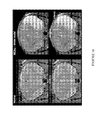
- FIG. 10 shows a single slice from a T2-weighted MR image depicting the center of the brain showing cerebral cortex, hippocampus, thalamus, amygdala and hypothalamus for a “Normal” mouse (left panels) and a mouse which receives MCAo for one hour followed by 24 hours of reperfusion (right panels). Dashed lines mark the midline of the brain and show a large shift in the MCAo brain due to cerebral edema. Solid line highlights the region of infarct in the MCAo brain.
- mice are scored for neurological outcome on a simple 5 point scale described in Manley, G. T. et al., Aquaporin -4 Deletion in Mice Reduces Brain Edema After Acute Water Intoxication and Ischemic Stroke , Nature Medicine, 6, 159-163 (2000).
- An improvement in neurological outcome is observed for animals given Compound 5.
Landscapes
- Health & Medical Sciences (AREA)
- Chemical & Material Sciences (AREA)
- Life Sciences & Earth Sciences (AREA)
- General Health & Medical Sciences (AREA)
- Medicinal Chemistry (AREA)
- Animal Behavior & Ethology (AREA)
- Veterinary Medicine (AREA)
- Pharmacology & Pharmacy (AREA)
- Public Health (AREA)
- Organic Chemistry (AREA)
- Chemical Kinetics & Catalysis (AREA)
- General Chemical & Material Sciences (AREA)
- Engineering & Computer Science (AREA)
- Bioinformatics & Cheminformatics (AREA)
- Nuclear Medicine, Radiotherapy & Molecular Imaging (AREA)
- Epidemiology (AREA)
- Pain & Pain Management (AREA)
- Dermatology (AREA)
- Neurology (AREA)
- Cardiology (AREA)
- Hematology (AREA)
- Heart & Thoracic Surgery (AREA)
- Biomedical Technology (AREA)
- Neurosurgery (AREA)
- Diabetes (AREA)
- Oil, Petroleum & Natural Gas (AREA)
- Proteomics, Peptides & Aminoacids (AREA)
- Emergency Medicine (AREA)
- Molecular Biology (AREA)
- Biochemistry (AREA)
- Dispersion Chemistry (AREA)
- Communicable Diseases (AREA)
- Urology & Nephrology (AREA)
- Pulmonology (AREA)
- Gastroenterology & Hepatology (AREA)
- Orthopedic Medicine & Surgery (AREA)
- Reproductive Health (AREA)
- Endocrinology (AREA)
- Ophthalmology & Optometry (AREA)
- Oncology (AREA)
Priority Applications (1)
| Application Number | Priority Date | Filing Date | Title |
|---|---|---|---|
| US15/034,274 US9827253B2 (en) | 2013-11-06 | 2014-11-06 | Prodrug salts |
Applications Claiming Priority (5)
| Application Number | Priority Date | Filing Date | Title |
|---|---|---|---|
| US201361900919P | 2013-11-06 | 2013-11-06 | |
| US201361900878P | 2013-11-06 | 2013-11-06 | |
| US201361900946P | 2013-11-06 | 2013-11-06 | |
| US15/034,274 US9827253B2 (en) | 2013-11-06 | 2014-11-06 | Prodrug salts |
| PCT/US2014/064447 WO2015069961A1 (en) | 2013-11-06 | 2014-11-06 | Novel prodrug salts |
Related Parent Applications (1)
| Application Number | Title | Priority Date | Filing Date |
|---|---|---|---|
| PCT/US2014/064447 A-371-Of-International WO2015069961A1 (en) | 2013-11-06 | 2014-11-06 | Novel prodrug salts |
Related Child Applications (1)
| Application Number | Title | Priority Date | Filing Date |
|---|---|---|---|
| US15/792,707 Division US10258636B2 (en) | 2013-11-06 | 2017-10-24 | Prodrug salts |
Publications (2)
| Publication Number | Publication Date |
|---|---|
| US20160264604A1 US20160264604A1 (en) | 2016-09-15 |
| US9827253B2 true US9827253B2 (en) | 2017-11-28 |
Family
ID=53042097
Family Applications (9)
| Application Number | Title | Priority Date | Filing Date |
|---|---|---|---|
| US15/034,274 Active US9827253B2 (en) | 2013-11-06 | 2014-11-06 | Prodrug salts |
| US15/034,543 Active US9949991B2 (en) | 2013-11-06 | 2014-11-06 | Methods of treating aquaporin-mediated conditions |
| US15/035,006 Abandoned US20160279155A1 (en) | 2013-11-06 | 2014-11-06 | Novel formulations |
| US15/792,707 Active US10258636B2 (en) | 2013-11-06 | 2017-10-24 | Prodrug salts |
| US16/236,817 Active US10894055B2 (en) | 2013-11-06 | 2018-12-31 | Pharmaceutical compositions, methods of making pharmaceutical compositions, and kits comprising 2-{[3,5-bis(trifluoromethyl)phenyl]carbamoyl}4-chlorophenyl dihydrogen phosphate |
| US16/665,333 Active US11071744B2 (en) | 2013-11-06 | 2019-10-28 | Prodrug salts |
| US17/099,435 Active 2035-03-18 US11801254B2 (en) | 2013-11-06 | 2020-11-16 | Pharmaceutical compositions and methods of making pharmaceutical compositions comprising 2-{[3,5-bis(trifluoromethyl)phenyl]carbamoyl}-4-chlorophenyl dihydrogen phosphate |
| US17/304,201 Active 2036-06-19 US12213987B2 (en) | 2013-11-06 | 2021-06-16 | Prodrug salts |
| US18/492,750 Active US12496308B2 (en) | 2013-11-06 | 2023-10-23 | Methods of administering a pharmaceutically acceptable salt of 2-{[3,5-bis(trifluoromethyl)phenyl]carbamoyl}-4-chlorophenyl dihydrogen phosphate |
Family Applications After (8)
| Application Number | Title | Priority Date | Filing Date |
|---|---|---|---|
| US15/034,543 Active US9949991B2 (en) | 2013-11-06 | 2014-11-06 | Methods of treating aquaporin-mediated conditions |
| US15/035,006 Abandoned US20160279155A1 (en) | 2013-11-06 | 2014-11-06 | Novel formulations |
| US15/792,707 Active US10258636B2 (en) | 2013-11-06 | 2017-10-24 | Prodrug salts |
| US16/236,817 Active US10894055B2 (en) | 2013-11-06 | 2018-12-31 | Pharmaceutical compositions, methods of making pharmaceutical compositions, and kits comprising 2-{[3,5-bis(trifluoromethyl)phenyl]carbamoyl}4-chlorophenyl dihydrogen phosphate |
| US16/665,333 Active US11071744B2 (en) | 2013-11-06 | 2019-10-28 | Prodrug salts |
| US17/099,435 Active 2035-03-18 US11801254B2 (en) | 2013-11-06 | 2020-11-16 | Pharmaceutical compositions and methods of making pharmaceutical compositions comprising 2-{[3,5-bis(trifluoromethyl)phenyl]carbamoyl}-4-chlorophenyl dihydrogen phosphate |
| US17/304,201 Active 2036-06-19 US12213987B2 (en) | 2013-11-06 | 2021-06-16 | Prodrug salts |
| US18/492,750 Active US12496308B2 (en) | 2013-11-06 | 2023-10-23 | Methods of administering a pharmaceutically acceptable salt of 2-{[3,5-bis(trifluoromethyl)phenyl]carbamoyl}-4-chlorophenyl dihydrogen phosphate |
Country Status (14)
| Country | Link |
|---|---|
| US (9) | US9827253B2 (enExample) |
| EP (3) | EP3065729A4 (enExample) |
| JP (4) | JP2016535787A (enExample) |
| KR (1) | KR20160079109A (enExample) |
| CN (3) | CN106163506A (enExample) |
| AU (2) | AU2014346682B2 (enExample) |
| CA (1) | CA2929821A1 (enExample) |
| ES (1) | ES2834131T3 (enExample) |
| HK (1) | HK1224228A1 (enExample) |
| IL (1) | IL245420B (enExample) |
| MX (2) | MX386250B (enExample) |
| RU (1) | RU2691951C2 (enExample) |
| SG (1) | SG11201604153UA (enExample) |
| WO (3) | WO2015069956A2 (enExample) |
Cited By (3)
| Publication number | Priority date | Publication date | Assignee | Title |
|---|---|---|---|---|
| US10258636B2 (en) | 2013-11-06 | 2019-04-16 | Aeromics, Inc. | Prodrug salts |
| US11084778B2 (en) | 2012-05-08 | 2021-08-10 | Aeromics, Inc. | Methods of treating cardiac edema, neuromyelitis optica, and hyponatremia |
| US11117909B2 (en) | 2016-05-13 | 2021-09-14 | Aeromics, Inc. | Crystals |
Families Citing this family (5)
| Publication number | Priority date | Publication date | Assignee | Title |
|---|---|---|---|---|
| JP2021023226A (ja) * | 2019-08-06 | 2021-02-22 | 学校法人慶應義塾 | アクアポリン活性調節剤候補のハイスループットスクリーニング方法 |
| CN110790787B (zh) * | 2019-11-12 | 2022-06-14 | 广东药科大学 | 一类水溶性前药、其制备方法及其作为药物的用途 |
| BR112023002129A2 (pt) * | 2020-08-05 | 2023-04-18 | Jiangsu Simcere Pharm Co Ltd | Composição farmacêutica de inibidor de aquaporina e método de preparação da mesma |
| CN117105810B (zh) * | 2023-10-23 | 2024-02-09 | 中国农业大学 | 一种具有广谱抗菌活性的化合物及其抗菌组合物 |
| CN118178653B (zh) * | 2024-03-22 | 2026-02-06 | 山东第一医科大学附属省立医院(山东省立医院) | 跨膜水交换蛋白aqp4抑制剂在制备抗脑胶质瘤药物上的应用 |
Citations (43)
| Publication number | Priority date | Publication date | Assignee | Title |
|---|---|---|---|---|
| US3331874A (en) | 1962-05-29 | 1967-07-18 | Herbert C Stecker | Bistrifluoromethyl anilides |
| US3332996A (en) | 1961-03-25 | 1967-07-25 | Cassella Farbwerke Mainkur Ag | Trifluoromethyl-substituted salicylanilides |
| US5137871A (en) | 1989-07-28 | 1992-08-11 | Regents Of The University Of California | Treatment to reduce edema for brain and musculature injuries |
| US5519035A (en) | 1993-07-02 | 1996-05-21 | Cornell Research Foundation, Inc. | Treatment of stroke or in anticipation of the occurrence of brain ischemia |
| US5741671A (en) | 1991-12-12 | 1998-04-21 | The Johns Hopkins University | Isolation cloning and expression of transmembrane water channel aquaporin 1(AQP1) |
| US5858702A (en) | 1991-12-13 | 1999-01-12 | The Johns Hopkins University | Isolation, cloning and expression of transmembrane water channel Aquaporin 5 (AQP5) |
| WO1999007382A1 (en) | 1997-08-06 | 1999-02-18 | Smithkline Beecham Corporation | Macrophage scavenger receptor antagonists for use in the treatment of cardiovascular diseases |
| US5905090A (en) | 1998-04-29 | 1999-05-18 | Italfarmaco S.P.A. | Analogues of the active metabolite of leflunomide |
| US20010046993A1 (en) | 1999-12-10 | 2001-11-29 | Takafumi Ikeda | 5-memberd heteroaryl substituted 1,4-dihydropyridine compounds as bradykinin antagonists |
| WO2002049632A1 (en) | 2000-12-18 | 2002-06-27 | Institute Of Medicinal Molecular Design. Inc. | Inhibitors against the production and release of inflammatory cytokines |
| EP1512397A1 (en) | 2002-06-06 | 2005-03-09 | Institute of Medicinal Molecular Design, Inc. | O-substituted hydroxyaryl derivatives |
| EP1535609A1 (en) | 2002-06-10 | 2005-06-01 | Institute of Medicinal Molecular Design, Inc. | Nf-kb activation inhibitors |
| EP1555018A1 (en) | 2002-06-11 | 2005-07-20 | Institute of Medicinal Molecular Design, Inc. | Remedies for neurodegenerative diseases |
| US20050182012A1 (en) | 2003-12-02 | 2005-08-18 | Mcevoy Leslie M. | NF-kappaB oligonucleotide decoy molecules |
| WO2006074127A2 (en) | 2005-01-04 | 2006-07-13 | Novartis Ag | Biomarkers for identifying efficacy of tegaserod in patients with chronic constipation |
| US20060167110A1 (en) | 1995-01-13 | 2006-07-27 | Blume Cherly D | Methods for treating cerebrovascular disease by administering desmethylselegiline |
| WO2007084464A2 (en) | 2006-01-17 | 2007-07-26 | The University Of North Carolina At Chapel Hill | Water channel blockers and methods of use thereof |
| US20070281978A1 (en) | 2006-06-01 | 2007-12-06 | Niigata University | Inhibitors of aquaporin 4, methods and uses thereof |
| WO2008052190A2 (en) | 2006-10-26 | 2008-05-02 | Flynn Gary A | Aquaporin modulators and methods of using them for the treatment of edema and fluid imbalance |
| US20080125488A1 (en) | 2003-05-01 | 2008-05-29 | Leverve Xavier M | Lactate Containing Pharmaceutical Composition and Uses Thereof |
| US20080171719A1 (en) | 2006-11-28 | 2008-07-17 | Alcon Manufacturing, Ltd. | RNAi-MEDIATED INHIBITION OF AQUAPORIN 1 FOR TREATMENT OF IOP-RELATED CONDITIONS |
| US20080176822A1 (en) | 2007-01-16 | 2008-07-24 | Chien-Hung Chen | Novel composition for treating metabolic syndrome |
| US20080214486A1 (en) | 2006-11-28 | 2008-09-04 | Alcon Manufacturing, Ltd. | RNAi-MEDIATED INHIBITION OF AQUAPORIN 4 FOR TREATMENT OF IOP-RELATED CONDITIONS |
| WO2009006555A2 (en) | 2007-07-02 | 2009-01-08 | Yu, Ming | Methods, composition, targets for combinational cancer treatments |
| WO2009054439A1 (ja) | 2007-10-23 | 2009-04-30 | Institute Of Medicinal Molecular Design, Inc. | Pai-1産生抑制剤 |
| US20090163545A1 (en) | 2007-12-21 | 2009-06-25 | University Of Rochester | Method For Altering The Lifespan Of Eukaryotic Organisms |
| US20090239919A1 (en) | 2008-03-08 | 2009-09-24 | Richard Delarey Wood | Glutamate receptor modulators and therapeutic agents |
| US20090239868A1 (en) | 2007-10-23 | 2009-09-24 | Institute Of Medical Molecular Design, Inc. | Inhibitor of pai-1 production |
| US7671058B2 (en) | 2006-06-21 | 2010-03-02 | Institute Of Medicinal Molecular Design, Inc. | N-(3,4-disubstituted phenyl) salicylamide derivatives |
| US7700655B2 (en) | 2002-06-06 | 2010-04-20 | Institute Of Medicinal Molecular Design, Inc. | Antiallergic agents |
| WO2010048273A2 (en) | 2008-10-21 | 2010-04-29 | President And Fellows Of Harvard College | Methods and compounds for treatment of neurodegenerative disorders |
| US20100125090A1 (en) | 2003-10-08 | 2010-05-20 | Vertex Pharmaceuticals Incorporated | Modulators of ATP-Binding Cassette Transporters |
| US20100190796A1 (en) | 2006-11-16 | 2010-07-29 | The Regents Of The University Of California | Methods for identifying inhibitors of solute transporters |
| WO2011112791A1 (en) | 2010-03-10 | 2011-09-15 | Corthera, Inc | Modulating aquaporins with relaxin |
| US20120183600A1 (en) | 2007-01-16 | 2012-07-19 | Chien-Hung Chen | Novel composition for treating metabolic syndrome and other conditions |
| US20120238623A1 (en) | 2011-03-14 | 2012-09-20 | Chandraratna Roshantha A | Inflammation and Autoimmune Disorder Treatment using RARa Selective Agonists |
| US20120245094A1 (en) | 2008-12-22 | 2012-09-27 | Oyvind Jacobsen | Compounds, compositions and use |
| WO2012150857A1 (en) | 2011-05-02 | 2012-11-08 | Vereniging Voor Christelijk Hoger Onderwijs, Wetenschappelijk Onderzoek En Patiëntenzorg | Protection against endothelial barrier dysfunction through inhibition of the tyrosine kinase abl-related gene (arg) |
| US20120282591A1 (en) | 2007-02-17 | 2012-11-08 | United States Government As Represented By The Department Of Veterans Affairs | Compositions and Methods for Tissue Preservation |
| WO2013169939A2 (en) | 2012-05-08 | 2013-11-14 | Aeromics, Llc | New methods |
| WO2015037659A1 (ja) | 2013-09-13 | 2015-03-19 | 株式会社医薬分子設計研究所 | 水溶液製剤及びその製造方法 |
| WO2015069956A2 (en) | 2013-11-06 | 2015-05-14 | Aeromics, Llc | Novel formulations |
| WO2016077787A1 (en) | 2014-11-13 | 2016-05-19 | Aeromics, Llc | Novel methods |
Family Cites Families (49)
| Publication number | Priority date | Publication date | Assignee | Title |
|---|---|---|---|---|
| GB8809205D0 (en) | 1988-04-19 | 1988-05-25 | Nye P C G | Treatment of oedema |
| DE4010536A1 (de) * | 1990-04-02 | 1991-10-10 | Boehringer Mannheim Gmbh | Pharmazeutische waessrige loesung von 4-(2-(benzolsulfonylamino)-ethyl)-phenoxyessigsaeure |
| US5486530A (en) | 1991-04-27 | 1996-01-23 | Boehringer Mannheim Gmbh | Use of torasemide for the treatment of brain oedemas |
| DE4113820A1 (de) | 1991-04-27 | 1992-10-29 | Boehringer Mannheim Gmbh | Verwendung von torasemid zur behandlung von hirnoedemen |
| WO1998021951A1 (en) | 1996-11-18 | 1998-05-28 | Emisphere Technologies, Inc. | Methods and compositions for inducing oral tolerance in mammals |
| CO5180581A1 (es) * | 1999-09-30 | 2002-07-30 | Pfizer Prod Inc | Compuestos para el tratamiento de la isquemia ciones farmaceuticas que los contienen para el tratamiento de la isquemia |
| US6500809B1 (en) | 1999-11-12 | 2002-12-31 | Neuron Therapeutics, Inc. | Hyperoncotic artificial cerebrospinal fluid and method of treating neural tissue edema therewith |
| ES2807274T3 (es) | 2002-03-20 | 2021-02-22 | Univ Maryland | Un canal catiónico no selectivo en células neurales y compuestos que bloquean el canal para su uso en el tratamiento de la inflamación del cerebro |
| US8980952B2 (en) | 2002-03-20 | 2015-03-17 | University Of Maryland, Baltimore | Methods for treating brain swelling with a compound that blocks a non-selective cation channel |
| WO2003103658A1 (ja) | 2002-06-05 | 2003-12-18 | 株式会社医薬分子設計研究所 | 免疫関連プロテインキナーゼ阻害剤 |
| EA009523B1 (ru) | 2002-06-05 | 2008-02-28 | Инститьют Оф Медисинал Молекьюлар Дизайн. Инк. | Ингибиторы в отношении активации ар-1 и nfat |
| CA2488342A1 (en) | 2002-06-05 | 2003-12-18 | Institute Of Medicinal Molecular Design, Inc. | Therapeutic drug for diabetes |
| EA010835B1 (ru) | 2002-06-10 | 2008-12-30 | Инститьют Оф Медисинал Молекьюлар Дизайн. Инк. | Лекарственное средство для лечения рака |
| EP1542699A4 (en) | 2002-07-15 | 2009-03-25 | Myriad Genetics Inc | COMPOUNDS, COMPOSITIONS AND METHODS OF USE THEREOF |
| DK1590458T3 (da) | 2003-02-06 | 2013-02-04 | Univ Belfast | Bradykinin B2-receptorantagonistpeptid fra amfibiehud |
| US20070042997A1 (en) | 2003-07-16 | 2007-02-22 | Akiko Itai | Medicament for treatment of dermal pigmentation |
| US8467876B2 (en) | 2003-10-15 | 2013-06-18 | Rmx, Llc | Breathing disorder detection and therapy delivery device and method |
| US20070254956A1 (en) | 2003-10-29 | 2007-11-01 | Koichi Shudo | Medicament for Therapeutic and/or Preventive Treatment of Restenosis or Reocclusion After Vascular Recanalization Operation |
| US10583094B2 (en) | 2004-09-18 | 2020-03-10 | University Of Maryland | Therapeutic methods that target the NCCA-ATP channel |
| JP5085326B2 (ja) | 2004-09-18 | 2012-11-28 | ユニバーシティ オブ メリーランド,ボルチモア | NCCa−ATPチャネルを標的とする処置剤およびその使用方法 |
| US7601745B2 (en) | 2004-09-27 | 2009-10-13 | 4Sc Ag | Heterocyclic NF-kB inhibitors |
| MY147790A (en) | 2005-04-28 | 2013-01-31 | Takeda Pharmaceutical | Stable emulsion composition |
| JP2009539870A (ja) | 2006-06-06 | 2009-11-19 | ジェネンテック・インコーポレーテッド | 血管発生の調節ための組成物および方法 |
| AU2007319672B2 (en) | 2006-06-06 | 2011-06-30 | Genentech, Inc. | Anti-DLL4 antibodies and methods using same |
| US10004703B2 (en) | 2006-10-12 | 2018-06-26 | Biogen Chesapeake Llc | Treatment of alzheimer's disease using compounds that reduce the activity of non-selective CA++ activated ATP-sensitive cation channels regulated by SUR1 channels |
| US20100056444A1 (en) | 2006-10-12 | 2010-03-04 | Sven Martin Jacobson | Treatment of Alzheimer's Disease Using Compounds that Reduce the Activity of Non Selective Ca Activated ATP- Sensitive Cation Channels Regulated by SUR1 Receptors |
| WO2008089103A2 (en) | 2007-01-12 | 2008-07-24 | University Of Maryland, Baltimore | Targeting ncca-atp channel for organ protection following ischemic episode |
| US20100092469A1 (en) | 2007-02-09 | 2010-04-15 | Simard J Marc | Antagonists of a non-selective cation channel in neural cells |
| TW200848063A (en) | 2007-04-23 | 2008-12-16 | Combinatorx Inc | Methods and compositions for the treatment of neurodegenerative disorders |
| CA2691199C (en) | 2007-06-22 | 2017-09-12 | Marc J. Simard | Inhibitors of ncca-atp channels for therapy |
| CA3123813C (en) | 2007-12-04 | 2024-10-08 | Remedy Pharmaceuticals, Inc. | IMPROVED GLIBENCLAMIDE FORMULATIONS AND RELATED FREEZE-DRYING METHODS, AND FREEZE-DRY SATE PRODUCED THUS |
| GB0724340D0 (en) | 2007-12-13 | 2008-01-30 | Univ Dundee | Novel Therapeutic Agents |
| WO2009097443A2 (en) | 2008-01-29 | 2009-08-06 | Remedy Pharmaceuticals, Inc. | Liquid formulations of compounds active at sulfonylurea receptors |
| US20090286799A1 (en) | 2008-05-16 | 2009-11-19 | Zhi-Gang Jiang | Methods for the treatment of brain edema |
| US20110263478A1 (en) | 2008-09-16 | 2011-10-27 | Simard J Marc | Sur1 inhibitors for therapy |
| CN102348668B (zh) | 2009-01-12 | 2014-11-19 | 培力有限公司 | 化合物及其用于治疗炎症和调节免疫应答的用途 |
| US20120039805A1 (en) | 2009-02-20 | 2012-02-16 | Pangea Biosciences, Inc. | Therapeutics And Methods For Treating Neoplastic Diseases Comprising Determining The Level Of Caveolin-1 And/Or Caveolin-2 In A Stromal Cell Sample |
| CA2806069C (en) | 2010-07-19 | 2021-01-19 | Remedy Pharmaceuticals, Inc. | Methods of intravenous administration of glyburide and other drugs |
| JP2013535457A (ja) * | 2010-07-28 | 2013-09-12 | ベーリンガー インゲルハイム インターナショナル ゲゼルシャフト ミット ベシュレンクテル ハフツング | 呼吸器系及び炎症性疾患の治療用医薬組成物 |
| US20110052678A1 (en) | 2010-11-05 | 2011-03-03 | Shantha Totada R | Method for treating age related macular degeneration |
| RU2461375C1 (ru) * | 2011-05-19 | 2012-09-20 | Учреждение Российской академии медицинских наук Научно-исследовательский институт онкологии Сибирского отделения Российской академии медицинских наук (НИИ онкологии СО РАМН) | Способ комбинированного лечения больных местно-распространенным раком желудка |
| WO2013152313A1 (en) * | 2012-04-05 | 2013-10-10 | The Regents Of The University Of California | Compositions and methods for treating cancer and diseases and conditions responsive to growth factor inhibition |
| US9452973B2 (en) | 2012-05-04 | 2016-09-27 | The United States Of America, As Represented By The Secretary Department Of Health And Human Services | Modulators of the relaxin receptor 1 |
| SG11201604477SA (en) | 2013-12-13 | 2016-07-28 | Vertex Pharma | Prodrugs of pyridone amides useful as modulators of sodium channels |
| CN108348567B (zh) | 2015-05-29 | 2022-03-01 | 马里兰州立大学巴尔的摩分校 | 减少或预防由内皮细胞的机械刺激所致的内膜损伤的方法 |
| KR20240105519A (ko) | 2015-10-07 | 2024-07-05 | 레메디 파마슈티칼즈, 인크. | Cns 부종과 관련한 손상 또는 병태의 치료 방법 |
| AU2017261828B2 (en) | 2016-05-13 | 2023-04-13 | Aeromics, Inc. | Crystals |
| JP7165648B2 (ja) | 2016-07-29 | 2022-11-04 | バイオジェン チェサピーク エルエルシー | Sur1-trpm4チャネル阻害剤による医療処置方法 |
| BR112023002129A2 (pt) | 2020-08-05 | 2023-04-18 | Jiangsu Simcere Pharm Co Ltd | Composição farmacêutica de inibidor de aquaporina e método de preparação da mesma |
-
2014
- 2014-11-06 EP EP14860390.5A patent/EP3065729A4/en active Pending
- 2014-11-06 JP JP2016552485A patent/JP2016535787A/ja not_active Ceased
- 2014-11-06 KR KR1020167014998A patent/KR20160079109A/ko not_active Withdrawn
- 2014-11-06 US US15/034,274 patent/US9827253B2/en active Active
- 2014-11-06 US US15/034,543 patent/US9949991B2/en active Active
- 2014-11-06 EP EP14859359.3A patent/EP3065727B1/en active Active
- 2014-11-06 CN CN201480061066.XA patent/CN106163506A/zh active Pending
- 2014-11-06 WO PCT/US2014/064441 patent/WO2015069956A2/en not_active Ceased
- 2014-11-06 AU AU2014346682A patent/AU2014346682B2/en active Active
- 2014-11-06 SG SG11201604153UA patent/SG11201604153UA/en unknown
- 2014-11-06 MX MX2016006012A patent/MX386250B/es unknown
- 2014-11-06 CN CN202011275472.XA patent/CN112402434A/zh active Pending
- 2014-11-06 CA CA2929821A patent/CA2929821A1/en active Pending
- 2014-11-06 US US15/035,006 patent/US20160279155A1/en not_active Abandoned
- 2014-11-06 JP JP2016552486A patent/JP6535338B2/ja active Active
- 2014-11-06 EP EP14859943.4A patent/EP3065728A4/en not_active Withdrawn
- 2014-11-06 ES ES14859359T patent/ES2834131T3/es active Active
- 2014-11-06 WO PCT/US2014/064447 patent/WO2015069961A1/en not_active Ceased
- 2014-11-06 WO PCT/US2014/064432 patent/WO2015069948A1/en not_active Ceased
- 2014-11-06 RU RU2016121850A patent/RU2691951C2/ru active
- 2014-11-06 HK HK16112696.4A patent/HK1224228A1/zh unknown
- 2014-11-06 CN CN202011275350.0A patent/CN112370456A/zh active Pending
-
2016
- 2016-05-02 IL IL245420A patent/IL245420B/en active IP Right Grant
- 2016-05-06 MX MX2021008629A patent/MX2021008629A/es unknown
-
2017
- 2017-10-24 US US15/792,707 patent/US10258636B2/en active Active
-
2018
- 2018-12-31 US US16/236,817 patent/US10894055B2/en active Active
-
2019
- 2019-05-31 JP JP2019102367A patent/JP6957557B2/ja active Active
- 2019-10-28 US US16/665,333 patent/US11071744B2/en active Active
-
2020
- 2020-06-01 AU AU2020203697A patent/AU2020203697A1/en not_active Abandoned
- 2020-11-16 US US17/099,435 patent/US11801254B2/en active Active
-
2021
- 2021-06-16 US US17/304,201 patent/US12213987B2/en active Active
- 2021-10-06 JP JP2021164647A patent/JP2022003084A/ja active Pending
-
2023
- 2023-10-23 US US18/492,750 patent/US12496308B2/en active Active
Patent Citations (67)
| Publication number | Priority date | Publication date | Assignee | Title |
|---|---|---|---|---|
| US3332996A (en) | 1961-03-25 | 1967-07-25 | Cassella Farbwerke Mainkur Ag | Trifluoromethyl-substituted salicylanilides |
| US3331874A (en) | 1962-05-29 | 1967-07-18 | Herbert C Stecker | Bistrifluoromethyl anilides |
| US5137871A (en) | 1989-07-28 | 1992-08-11 | Regents Of The University Of California | Treatment to reduce edema for brain and musculature injuries |
| US5741671A (en) | 1991-12-12 | 1998-04-21 | The Johns Hopkins University | Isolation cloning and expression of transmembrane water channel aquaporin 1(AQP1) |
| US5858702A (en) | 1991-12-13 | 1999-01-12 | The Johns Hopkins University | Isolation, cloning and expression of transmembrane water channel Aquaporin 5 (AQP5) |
| US5519035A (en) | 1993-07-02 | 1996-05-21 | Cornell Research Foundation, Inc. | Treatment of stroke or in anticipation of the occurrence of brain ischemia |
| US20060167110A1 (en) | 1995-01-13 | 2006-07-27 | Blume Cherly D | Methods for treating cerebrovascular disease by administering desmethylselegiline |
| WO1999007382A1 (en) | 1997-08-06 | 1999-02-18 | Smithkline Beecham Corporation | Macrophage scavenger receptor antagonists for use in the treatment of cardiovascular diseases |
| US6255298B1 (en) | 1997-08-06 | 2001-07-03 | Smithkline Beecham Corporation | Macrophage scavenger receptor antagonists for use in the treatment of cardiovascular diseases |
| US5905090A (en) | 1998-04-29 | 1999-05-18 | Italfarmaco S.P.A. | Analogues of the active metabolite of leflunomide |
| US20010046993A1 (en) | 1999-12-10 | 2001-11-29 | Takafumi Ikeda | 5-memberd heteroaryl substituted 1,4-dihydropyridine compounds as bradykinin antagonists |
| US8097759B2 (en) | 2000-12-18 | 2012-01-17 | Institute Of Medicinal Molecular Design, Inc. | Inflammatory cytokine release inhibitor |
| US20040259877A1 (en) | 2000-12-18 | 2004-12-23 | Susumu Muto | Inhibitors against the production and release of inflammatory cytokines |
| US20100274051A1 (en) | 2000-12-18 | 2010-10-28 | Institute Of Medicinal Molecular Design. Inc. | Inflammatory cytokine release inhibitor |
| WO2002049632A1 (en) | 2000-12-18 | 2002-06-27 | Institute Of Medicinal Molecular Design. Inc. | Inhibitors against the production and release of inflammatory cytokines |
| US8263657B2 (en) | 2000-12-18 | 2012-09-11 | Institute Of Medicinal Molecular Design, Inc. | Inhibitors against the production and release of inflammatory cytokines |
| EP1352650A1 (en) | 2000-12-18 | 2003-10-15 | Institute of Medicinal Molecular Design, Inc. | Inhibitors against the production and release of inflammatory cytokines |
| US20060094718A1 (en) | 2002-06-06 | 2006-05-04 | Susumu Muto | O-substituted hydroxyaryl derivatives |
| EP1512397A1 (en) | 2002-06-06 | 2005-03-09 | Institute of Medicinal Molecular Design, Inc. | O-substituted hydroxyaryl derivatives |
| US7700655B2 (en) | 2002-06-06 | 2010-04-20 | Institute Of Medicinal Molecular Design, Inc. | Antiallergic agents |
| US20100113770A1 (en) * | 2002-06-06 | 2010-05-06 | Institute Of Medicinal Molecular Design, Inc. | O-substituted hydroxyaryl derivatives |
| US7626042B2 (en) | 2002-06-06 | 2009-12-01 | Institute Of Medicinal Molecular Design, Inc. | O-substituted hydroxyaryl derivatives |
| EP1535609A1 (en) | 2002-06-10 | 2005-06-01 | Institute of Medicinal Molecular Design, Inc. | Nf-kb activation inhibitors |
| US20080234233A1 (en) | 2002-06-11 | 2008-09-25 | Institute Of Medicinal Molecular Design Inc. | Medicament for treatment of neurodegenerative diseases |
| EP1555018A1 (en) | 2002-06-11 | 2005-07-20 | Institute of Medicinal Molecular Design, Inc. | Remedies for neurodegenerative diseases |
| US20080125488A1 (en) | 2003-05-01 | 2008-05-29 | Leverve Xavier M | Lactate Containing Pharmaceutical Composition and Uses Thereof |
| US20100125090A1 (en) | 2003-10-08 | 2010-05-20 | Vertex Pharmaceuticals Incorporated | Modulators of ATP-Binding Cassette Transporters |
| US20050182012A1 (en) | 2003-12-02 | 2005-08-18 | Mcevoy Leslie M. | NF-kappaB oligonucleotide decoy molecules |
| WO2006074127A2 (en) | 2005-01-04 | 2006-07-13 | Novartis Ag | Biomarkers for identifying efficacy of tegaserod in patients with chronic constipation |
| WO2007084464A2 (en) | 2006-01-17 | 2007-07-26 | The University Of North Carolina At Chapel Hill | Water channel blockers and methods of use thereof |
| US20070281978A1 (en) | 2006-06-01 | 2007-12-06 | Niigata University | Inhibitors of aquaporin 4, methods and uses thereof |
| US7659312B2 (en) | 2006-06-01 | 2010-02-09 | Niigata University | Inhibitors of Aquaporin 4, methods and uses thereof |
| US7671058B2 (en) | 2006-06-21 | 2010-03-02 | Institute Of Medicinal Molecular Design, Inc. | N-(3,4-disubstituted phenyl) salicylamide derivatives |
| US20110172195A1 (en) | 2006-10-26 | 2011-07-14 | Arizona Board Of Reg. On Behalf Of The Univ. Of Az | Aquaporin modulators and methods of using them for the treatment of edema and fluid imbalance |
| WO2008052190A2 (en) | 2006-10-26 | 2008-05-02 | Flynn Gary A | Aquaporin modulators and methods of using them for the treatment of edema and fluid imbalance |
| US20080221169A1 (en) | 2006-10-26 | 2008-09-11 | Arizona Board Of Reg. On Behalf Of The Univ. Of Az | Aquaporin modulators and methods of using them for the treatment of edema and fluid imbalance |
| US7906555B2 (en) | 2006-10-26 | 2011-03-15 | Arizona Board Of Regents On Behalf Of The University Of Arizona | Aquaporin modulators and methods of using them for the treatment of edema and fluid imbalance |
| US20100190796A1 (en) | 2006-11-16 | 2010-07-29 | The Regents Of The University Of California | Methods for identifying inhibitors of solute transporters |
| US20080171719A1 (en) | 2006-11-28 | 2008-07-17 | Alcon Manufacturing, Ltd. | RNAi-MEDIATED INHIBITION OF AQUAPORIN 1 FOR TREATMENT OF IOP-RELATED CONDITIONS |
| US20080214486A1 (en) | 2006-11-28 | 2008-09-04 | Alcon Manufacturing, Ltd. | RNAi-MEDIATED INHIBITION OF AQUAPORIN 4 FOR TREATMENT OF IOP-RELATED CONDITIONS |
| WO2008089212A1 (en) | 2007-01-16 | 2008-07-24 | Ipintl, Llc | Novel composition for treating metabolic syndrome |
| US20120183600A1 (en) | 2007-01-16 | 2012-07-19 | Chien-Hung Chen | Novel composition for treating metabolic syndrome and other conditions |
| US20080176822A1 (en) | 2007-01-16 | 2008-07-24 | Chien-Hung Chen | Novel composition for treating metabolic syndrome |
| US20120282591A1 (en) | 2007-02-17 | 2012-11-08 | United States Government As Represented By The Department Of Veterans Affairs | Compositions and Methods for Tissue Preservation |
| WO2009006555A2 (en) | 2007-07-02 | 2009-01-08 | Yu, Ming | Methods, composition, targets for combinational cancer treatments |
| EP2201946A1 (en) | 2007-10-23 | 2010-06-30 | Institute of Medicinal Molecular Design, Inc. | Pai-1 production inhibitor |
| US20090239868A1 (en) | 2007-10-23 | 2009-09-24 | Institute Of Medical Molecular Design, Inc. | Inhibitor of pai-1 production |
| WO2009054439A1 (ja) | 2007-10-23 | 2009-04-30 | Institute Of Medicinal Molecular Design, Inc. | Pai-1産生抑制剤 |
| US20090163545A1 (en) | 2007-12-21 | 2009-06-25 | University Of Rochester | Method For Altering The Lifespan Of Eukaryotic Organisms |
| US20090239919A1 (en) | 2008-03-08 | 2009-09-24 | Richard Delarey Wood | Glutamate receptor modulators and therapeutic agents |
| WO2010048273A2 (en) | 2008-10-21 | 2010-04-29 | President And Fellows Of Harvard College | Methods and compounds for treatment of neurodegenerative disorders |
| US20120245094A1 (en) | 2008-12-22 | 2012-09-27 | Oyvind Jacobsen | Compounds, compositions and use |
| WO2010101648A1 (en) | 2009-03-06 | 2010-09-10 | Wood Richard D | Glutamate receptor modulators and therapeutic agents |
| WO2011112791A1 (en) | 2010-03-10 | 2011-09-15 | Corthera, Inc | Modulating aquaporins with relaxin |
| US20120238623A1 (en) | 2011-03-14 | 2012-09-20 | Chandraratna Roshantha A | Inflammation and Autoimmune Disorder Treatment using RARa Selective Agonists |
| WO2012150857A1 (en) | 2011-05-02 | 2012-11-08 | Vereniging Voor Christelijk Hoger Onderwijs, Wetenschappelijk Onderzoek En Patiëntenzorg | Protection against endothelial barrier dysfunction through inhibition of the tyrosine kinase abl-related gene (arg) |
| WO2013169939A2 (en) | 2012-05-08 | 2013-11-14 | Aeromics, Llc | New methods |
| US20150133405A1 (en) | 2012-05-08 | 2015-05-14 | Aeromics, Llc | Methods |
| US20150342967A1 (en) | 2012-05-08 | 2015-12-03 | Aeromics, Llc | Methods |
| US9573885B2 (en) | 2012-05-08 | 2017-02-21 | Aeromics, Inc. | Methods of treating cerebral edema |
| WO2015037659A1 (ja) | 2013-09-13 | 2015-03-19 | 株式会社医薬分子設計研究所 | 水溶液製剤及びその製造方法 |
| US20160220680A1 (en) | 2013-09-13 | 2016-08-04 | Akiko Itai | Aqueous solution formulation and method for manufacturing same |
| WO2015069956A2 (en) | 2013-11-06 | 2015-05-14 | Aeromics, Llc | Novel formulations |
| WO2015069948A1 (en) | 2013-11-06 | 2015-05-14 | Aeromics, Llc | Novel methods |
| US20160279155A1 (en) | 2013-11-06 | 2016-09-29 | Aeromics, Inc. | Novel formulations |
| US20160346302A1 (en) | 2013-11-06 | 2016-12-01 | Aeromics, Inc. | Novel methods |
| WO2016077787A1 (en) | 2014-11-13 | 2016-05-19 | Aeromics, Llc | Novel methods |
Non-Patent Citations (175)
| Title |
|---|
| Advisory Action dated Dec. 16, 2016, issued in U.S. Appl. No. 14/398,947, 3 pages. |
| Alexander, J. et al., "Administration of the Soluble Complement Inhibitor, Crry-Ig, Reduces Inflammation and Aquaporin 4 Expression in Lupus Cerebritis," Biochimica et Biophysica Acta, 2003, 1639, 169-176. |
| Amiry-Moghaddam, M. et al. "Anchoring of Aquaporin-4 in Brain: Molecular Mechanisms and Implications for the Physiology and Pathophysiology of Water Transport," Neuroscience, 2004, 129, 999-1010. |
| Amiry-Moghaddam, M. et al., "Alpha-Syntrophin Deletion Removes the Perivascular But Not Endothelial Pool of Aquaporin-4 at the Blood-Brain Barrier and Delays the Development of Brain Edema in an Experimental Model of Acute Hyponatremia," The FASEB Journal, 2004, 18, 542-544. |
| Aoki, K. et al., "Enhanced Expression of Aquaporin 4 in Human Brain with Infarction," Acta Neuropathologica, 2003, 106, 121-124. |
| Aoki-Yoshino, K. et al., "Enhanced Expression of Aquaporin 4 in Human Brain with Inflammatory Diseases," Acta Neuropathologica, 2005, 110, 281-288. |
| Banamine (Flunixin Meglumine), retrieved from https://web.archive.org/web/20110711140225/http://www.banamine.com/research/FlunixinMeglumine.asp, 1 page, face of article states: Jul. 11, 2011. |
| Bao, W. et al., "Selective mGluR5 Receptor Antagonist or Agonist Provides Neuroprotection in a Rat Model of Focal Cerebral Ischemia," Brain Research, 2001, 922, 173-179. |
| Bardutzky, J. et al., "Antiedema Therapy in Ischemic Stroke," Stroke, 2007, 38, 3084-3094. |
| Beeton, C. et al., "Induction and Monitoring of Active Delayed Type Hypersensitivity (DTH) in Rats," JoVE. 6. http://www.jove.com/index/Details.stp?ID=237, doi:10.3791/237, 2007, 2 pages. |
| Bereczki, D. et al., "Cochrane Report: A Systematic Review of Mannitol Therapy for Acute Ischemic Stroke and Cerebral Parenchymal Hemorrhage," Stroke, 2000, 31, 2719-2722. |
| Bhattacharyya, S. et al., "Specific Effects of BCL10 Serine Mutations on Phosphorylations in Canonical and Noncanonical Pathways of NF-κB Activation Following Carrageenan," The American Journal of Physiology-Gastrointesintal and Liver Physiology, 2011, 301, G475-G486. |
| Bhattacharyya, S. et al., "Specific Effects of BCL10 Serine Mutations on Phosphorylations in Canonical and Noncanonical Pathways of NF-κB Activation Following Carrageenan," The American Journal of Physiology—Gastrointesintal and Liver Physiology, 2011, 301, G475-G486. |
| Binder, D. et al., "Aquaporin-4 and Epilepsy," GLIA, 2012, 60, 1203-1214. |
| Binder, D. et al., "Increased Seizure Duration and Slowed Potassium Kinetics in Mice Lacking Aquaporin-4 Water Channels," GLIA, 2006, 53, 631-636. |
| Binder, D. et al., "Increased Seizure Threshold in Mice Lacking Aquaporin-4 Water Channels," NeuroReport, 2004, 15 (2), 259-262. |
| Bloch, O. et al., "Aquaporin-4 Gene Deletion in Mice Increases Focal Edema Associated with Staphylococcal Brain Abscess," Journal of Neurochemistry, 2005, 95, 254-262. |
| Brown, L. et al., "In Vitro and In Vivo Hydrolysis of Salicylanilide N-Methylcarbamate and 4-Biphenylyl N-Methylcarbamate," Journal of Pharmaceutical Sciences, 1972, 61 (6), 858-860. |
| Caraci, F. et al., "Metabotropic Glutamate Receptors in Neurodegeneration/Neuroprotection: Still a Hot Topic?," Neurochemistry International, 2012, 61, 559-565. |
| Cernak, I., "Animal Models of Head Trauma," NeuroRx, 2005, 2, 410-422. |
| Chen, C. et al., "Animal Models of Nervous System Diseases," Jilin Science and Technology Press, 2007, pp. 252-254. |
| Chiamulera, C. et al., "Activation of Metabotropic Receptors has a Neuroprotective Effect in a Rodent Model of Focal Ischaemia," European Journal of Pharmacology, 1992, 216, 335-336. |
| Cooper, G. et al., "Transport of Volatile Solutes Through AQP1," Journal of Physiology, 2002, 542.1, 17-29. |
| Crash Trial, "Effect of Intravenous Corticosteroids on Death within 14 Days in 10008 Adults with Clinically Significant Head Injury (MRC CRASH Trial): Randomised Placebo Controlled Trial," Lancet, 2004, 264, 1321-1328. |
| Da, T. et al., "Aquaporin-4 Gene Disruption in Mice Protects Against Impaired Retinal Function and Cell Death after Ischemia," Investigative Ophthalmology & Visual Science, 2004, 45 (12), 4477-4483. |
| Dearden, N. et al., "Effect of High-Dose Dexamethasone on Outcome from Severe Head Injury," Journal of Neurosurgery, 1986, 64, 81-88. |
| Di Renzo, G. et al., "Why have Ionotropic and Metabotropic Glutamate Antagonists Failed in Stroke Therapy?," in New Strategies in Stroke Intervention, L. Annunziato, Ed., Humana Press, 2009, pp. 13-25. |
| Dibas, A. et al., "Changes in Ocular Aquaporin-4 (AQP4) Expression Following Retinal Injury," Molecular Vision, 2008, 14, 1770-1783. |
| Ding, F., Neurobiology, Science Press, 2007, pp. 421-423. |
| Ding, T. et al., "Knockdown a Water Channel Protein, Aquaporin-4, Induced Glioblastoma Cell Apoptosis," PLOS ONE, 2013, 8 (8), e66751, 9 pages, doi:10.1371/journal.pone.0066751. |
| Dixon, C. et al., "A Controlled Cortical Impact Model of Traumatic Brain Injury in the Rat," Journal of Neuroscience Methods, 1991, 39, 253-262. |
| Dudek, F. et al., "Regulation of Brain Water: Is there a Role for Aquaporins in Epilepsy?," Epilepsy Currents, 2005, 5 (3), 104-106, retrieved on Jul. 22, 2015, from http://www.ncbi.nlm.nih.gov/pmc/articles/PMC1198631/. |
| Eid, T. et al., "Loss of Perivascular Aquaporin 4 May Underlie Deficient Water and K+ Homeostasis in the Human Epileptogenic Hippocampus," Proceedings of the National Academy of Sciences, 2005, 102 (4), 1193-1198. |
| Eisenberg, H. et al., "High-Dose Barbiturate Control of Elevated Intracranial Pressure in Patients with Severe Head Injury," Journal of Neurosurgery, 1988, 69, 15-23. |
| Elati, C. et al., "Novel Synthesis of Fosphenytoin: Anti-Convulsant Prodrug," Synthetic Communications, 2008, 38, 2950-2957. |
| Engel, O. et al., "Modeling Stroke in Mice-Middle Cerebral Artery Occlusion with the Filament Model," Journal of Visualized Experiments, 2011, 47, e2423, 5 pages, doi:10.3791/2423. |
| Engel, O. et al., "Modeling Stroke in Mice—Middle Cerebral Artery Occlusion with the Filament Model," Journal of Visualized Experiments, 2011, 47, e2423, 5 pages, doi:10.3791/2423. |
| Esteva-Font, C. et al., "Experimental Evaluation of Proposed Small-Molecule Inhibitors of Water Channel Aquaporin-1," Molecular Pharmacology, 2016, 89, 686-693. |
| Farinas, J. et al., "Plasma Membrane Water Permeability of Cultured Cells and Epithelia Measured by Light Microscopy with Spatial Filtering," The Journal of General Physiology, 1997, 110, 283-296. |
| Fei, Z. et al., "Metabotropic Glutamate Receptor Antagonists and Agonists: Potential Neuroprotectors in Diffuse Brain Injury," Journal of Clinical Neuroscience, 2006, 13, 1023-1027. |
| Final Office Action dated Aug. 30, 2016, issued in U.S. Appl. No. 14/752,839, 17 pages. |
| Final Office Action dated Sep. 20, 2016, issued in U.S. Appl. No. 14/398,947, 41 pages. |
| Frigeri, A. et al., "Immunolocalization of the Mercurial-Insensitive Water Channel and Glycerol Intrinsic Protein in Epithelial Cell Plasma Membranes," Proceedings of the National Academy of Sciences, 1995, 92, 4328-4331. |
| Frigeri, A. et al., "Localization of MIWC and GLIP Water Channel Homologs in Neuromuscular, Epithelial and Glandular Tissues," Journal of Cell Science, 1995, 108, 2993-3002. |
| Gerber, J. et al., "Mechanisms of Injury in Bacterial Meningitis," Current Opinion in Neurology, 2010, 23, 312-318. |
| Gotoh, O. et al., "Ischemic Brain Edema Following Occlusion of the Middle Cerebral Artery in the Rat. I: The Time Courses of the Brain Water, Sodium and Potassium Contents and Blood Brain Barrier Permeability to 125I-Albumin," Stroke, 1985, 16 (1), 101-109. |
| Gullans, S., "Control of Brain Volume During Hyperosmolar and Hypoosmolar Conditions," Annual Review of Medicine, 1993, 44, 289-301. |
| Gunnarson, E. et al., "Identification of a Molecular Target for Glutamate Regulation of Astrocyte Water Permeability," Glia, 2008, 56, 587-596. |
| Guo, Q. et al., "Progesterone Administration Modulates AQP4 Expression and Edema After Traumatic Brain Injury in Male Rats," Experimental Neurology, 2006, 198, 469-478. |
| Hall, G. et al., "Inhibitor-κB Kinase-β regulates LPS-Induced TNF-α Production in Cardiac Myocytes Through Modulation of NF-κB p65 Subunit Phosphorylation," American Journal of Heart Physiology-Heart and Circulatory Physiology, 2005, 289, H2103-H2111. |
| Hall, G. et al., "Inhibitor-κB Kinase-β regulates LPS-Induced TNF-α Production in Cardiac Myocytes Through Modulation of NF-κB p65 Subunit Phosphorylation," American Journal of Heart Physiology—Heart and Circulatory Physiology, 2005, 289, H2103-H2111. |
| Himadri, P. et al., "Role of Oxidative Stress and Inflammation in Hypoxia-Induced Cerebral Edema: A Molecular Approach," High Altitude Medicine & Biology, 2010, 11 (3), 231-244. |
| Hiroaki, Y. et al., "Implications of the Aquaporin-4 Structure on Array Formation and Cell Adhesion," Journal of Molecular Biology, 2006, 355, 628-639. |
| Ho, J. et al., "Crystal Structure of Human Aquaporin 4 at 1.8 Å and its Mechanism of Conductance," Proceedings of the National Academy of Sciences, 2009, 106 (18), 7437-7442. |
| Hsu, M. et al., "Potential Role of the Glial Water Channel Aquaporin-4 in Epilepsy," Neuron Glia Biology, 2008, doi: 10.1017/S1740925X08000112, 11 pages. |
| Huber, V. et al., "Identification of Aquaporin 4 Inhibitors Using in vitro and in silico Methods," Bioorganic & Medicinal Chemistry, 2009, 17, 411-417. |
| Huber, V. et al., "Identification of Arylsulfonamides as Aquaporin 4 Inhibitors," Bioorganic and Medicinal Chemistry Letters, 2007, 17, 1270-1273. |
| Huber, V. et al., "Inhibition of Aquaporin 4 by Antiepileptic Drugs," Bioorganic & Medicinal Chemistry, 2009, 17, 418-424. |
| Igarashi, H. et al., "Pretreatment with a Novel Aquaporin 4 Inhibitor, TGN-020, Significantly Reduces Ischemic Cerebral Edema," Neurological Sciences, 2011, 32, 113-116. |
| International Preliminary Report on Patentability for International Application No. PCT/US2013/040194, dated Nov. 11, 2014, 8 pages. |
| International Search Report for International Application No. PCT/US2013/040194, dated Dec. 20, 2013, 5 pages. |
| International Search Report for International Application No. PCT/US2014/064432, dated Apr. 13, 2015, 5 pages. |
| International Search Report for International Application No. PCT/US2014/064441, dated Feb. 13, 2015, 4 pages. |
| International Search Report for International Application No. PCT/US2014/064447, dated mailing Apr. 6, 2015, 5 pages. |
| International Search Report for International Application No. PCT/US2015/060731, dated Jan. 29, 2016, 4 pages. |
| Ito, J. et al., "Characterization of Edema by Diffusion-Weighted Imaging in Experimental Traumatic Brain Injury," Journal of Neurosurgery, 1996, 84, 97-103. |
| Jeyaseelan, K. et al., "Aquaporins: A Promising Target for Drug Development," Expert Opinion on Therapeutic Targets, 2006, 10 (6), 889-909. |
| Jung, J. et al., "Molecular Characterization of an Aquaporin cDNA from Brain: Candidate Osmoreceptor and Regulator of Water Balance," Proceedings of the National Academy of Sciences, 1994, 91, 13052-13056. |
| Jüttler, E. et al., "Clinical Review: Therapy for Refractory Intracranial Hypertension in Ischaemic Stroke," Critical Care, 2007, 11, 231, 14 pages, doi:10.1186/cc6087. |
| Kalita,J. et al., "Current Status of Osmotherapy in Intracerebral Hemorrhage," Neurology India, 2003, 51 (1), 104-109. |
| Kamon, J. et al., "A Novel IKKβ Inhibitor Stimulates Adiponectin Levels and Ameliorates Obesity-Linked Insulin Resistance," Biochemical and Biophysical Research Communications, 2004, 323, 242-248. |
| Katada, R. et al., "Greatly Improved Survival and Neuroprotection in Aquaporin-4-Knockout Mice Following Global Cerebral Ischemia," The FASEB Journal, 2014, 28, 10 pages, face of article states: published online Nov. 1, 2013, doi: 10.1096/fj.13-231274. |
| Kaufmann, A. et al., "Ischemic Core and Penumbra in Human Stroke," Stroke, 1999, 30, 93-99. |
| Ke, C. et al., "Heterogeneous Responses of Aquaporin-4 in Oedema Formation in a Replicated Severe Traumatic Brain Injury Model in Rats," Neuroscience Letters, 2001, 301, 21-24. |
| Kiening, K. et al., "Decreased Hemispheric Aquaporin-4 is Linked to Evolving Brain Edema Following Controlled Cortical Impact Injury in Rats," Neuroscience Letters, 2002, 324, 105-108. |
| Krave, U. et al., "Transient, Powerful Pressures are Generated in the Brain by a Rotational Acceleration Impulse to the Head," European Journal of Neuroscience, 2005, 21, 2876-2882. |
| Lea, P. et al., "Neuroprotective Activity of the mGluR5 Antagonists MPEP and MTEP Against Acute Excitotoxicity Differs and Does Not Reflect Actions at mGluR5 Receptors," British Journal of Pharmacology, 2005, 145 (4), 527-534. |
| Lee, D. et al., "Decreased Expression of the Glial Water Channel Aquaporin-4 in the Intrahippocampal Kainic Acid Model of Epileptogenesis," Experimental Neurology, 2012, doi:10.1016/j.expneurolo.2012.02.002, 10 pages. |
| Lennon, V. et al., "IgG Marker of Optic-Spinal Multiple Sclerosis Binds to the Aquaporin-4 Water Channel," The Journal of Experimental Medicine, 2005, 202 (4), 473-477. |
| Li, L. et al., "Proinflammatory Role of Aquaporin-4 in Autoimmune Neuroinflammation," The FASEB Journal, 2011, 25, 1556-1566. |
| Li, L. et al., "Synthesis and Biological Evaluation of a Water Soluble Phosphate Prodrug of 3-Aminopyridine-2-carboxaldehyde Thiosemicarbazone (3-AP)," Bioogranic & Medicinal Chemistry Letters, 1998, 8, 3159-3164. |
| Loane, D. et al., "Activation of Metabotropic Glutamate Receptor 5 Modulates Microglial Reactivity and Neurotoxicity by Inhibiting NADPH Oxidase," The Journal of Biological Chemistry, 2009, 284 (23), 15629-15639. |
| Longa, E. et al., "Reversible Middle Cerebral Artery Occlusion Without Craniectomy in Rats," Stroke, 1989, 20, 84-91. |
| Ma, T. et al., "Generation and Phenotype of a Transgenic Knockout Mouse Lacking the Mercurial-Insensitive Water Channel Aquaporin-4," Journal of Clinical Investigation, 1997, 100 (5), 957-962. |
| Manley, G. et al., "Aquaporin-4 Deletion in Mice Reduces Brain Edema After Acute Water Intoxication and Ischemic Stroke," Nature Medicine, 2000, 6 (2), 159-163. |
| Manley, G. et al., "New Insights into Water Transport and Edema in the Central Nervous System from Phenotype Analysis of Aquaporin-4 Null Mice," Neuroscience, 2004, 129, 983-991. |
| Marmarou, A. et al., "Traumatic Brain Edema in Diffuse and Focal Injury: Cellular or Vasogenic?," Acta Neurochirurgica, 2006 [Supplement], 96, 24-29. |
| Mehlhorn, U. et al., "Myocardial Fluid Balance," European Journal of Cardio-throacic Surgery, 2001, 20, 1220-1230. |
| Meli, E. et al., "Activation of mGlu1 but not mGlu5 Metabotropic Glutamate Receptors Contributes to Postischemic Neuronal Injury In Vitro and In Vivo," Pharmacology, Biochemistry and Behavior, 2002, 73, 439-446. |
| Migliati, E. et al., "Inhibition of Aquaporin-1 and Aquaporin-4 Water Permeability by a Derivative of the Loop Diuretic Bumetanide Acting at an Internal Pore-Occluding Binding Site," Molecular Pharmacology, 2009, 76 (1), 105-112. |
| Mola, M. et al., "Automated Cell-Based Assay for Screening of Aquaporin Inhibitors," Analytical Chemistry, 2009, 81, 8219-8229. |
| Mola, M. et al., "Automated Cell-Based Assay for Screening of Aquaporin Inhibitors," Author Manuscript, available in PMC 2010, 24 pages, face of article states: Published in final edited form as: Anal Chem. Oct. 1, 2009; 81(19): 8219-8229. doi:10.1021/ac901526k. |
| Morimoto, Y. et al., "Acute Brain Swelling After Out-of-Hospital Cardiac Arrest: Pathogenesis and Outcome," Critical Care Medicine, 1993, 21 (1), 104-110. |
| Neely, J. et al., "Syntrophin-Dependent Expression and Localization of Aquaporin-4 Water Channel Protein," Proceedings of the National Academy of Sciences, 2001, 98 (24), 14108-14113. |
| Nishikawa, S. et al., "A Molecular Targeting Against Nuclear Factor-κB, as a Chemotherapeutic Approach for Human Malignant Mesothelioma," Cancer Medicine, 2014, 3 (2), 416-425. |
| Non-Final Office Action dated Dec. 18, 2015, issued in U.S. Appl. No. 14/398,947, 31 pages. |
| Non-Final Office Action dated Mar. 8, 2016, issued in U.S. Appl. No. 14/752,839, 23 pages. |
| Notice of Allowance mailed Oct. 7, 2016, in U.S. Appl. No. 14/752,839, 10 pages. |
| Ogawa, M. et al., "The Mechanism of Anti-Inflammatory Effects of Prostaglandin E2 Receptor 4 Activation in Murine Cardiac Transplantation," Transplantation, 2009, 87, 1645-1653. |
| Onai, Y. et al., "Inhibition of IκB Phosphorylation in Cardiomyoctyes Attenuates Myocardial Ischemia/Reperfusion Injury," Cardiovascular Research, 2004, 63, 51-59. |
| Onai, Y. et al., "Inhibition of NF-κB Improves Left Ventricular Remodeling and Cardiac Dysfunction after Myocardial Infarction," American Journal of Heart Physiology-Heart and Circulatory Physiology, 2007, 292, H530-H538. |
| Onai, Y. et al., "Inhibition of NF-κB Improves Left Ventricular Remodeling and Cardiac Dysfunction after Myocardial Infarction," American Journal of Heart Physiology—Heart and Circulatory Physiology, 2007, 292, H530-H538. |
| Papadopoulos, M. et al., "Aquaporin Water Channels in the Nervous System," NIH Public Access, Author Manuscript, available in PMC 2014, 28 pages, face of article states: Published in final edited form as Nat Rev Neurosci. Apr. 2013; 14(4): 265-277. doi:10.1038/nrn3468. |
| Papadopoulos, M. et al., "Aquaporin-4 Facilitates Reabsorption of Excess Fluid in Vasogenic Brain Edema," The FASEB Journal, 2004, 18, 1291-1293. |
| Papadopoulos, M. et al., "Aquaporin-4 Facilitates Reabsorption of Excess Fluid in Vasogenic Brain Edema," The FASEB Journal, published online Jun. 18, 2004, doi: 10.1096/fj.04-1723jfe, 18 pages. |
| Papadopoulos, M. et al., "Aquaporin-4 Gene Disruption in Mice Reduces Brain Swelling and Mortality in Pneumococcal Meningitis," The Journal of Biological Chemistry, 2005, 280 (14), 13906-13912. |
| Quick, A. et al., "Pregnancy-Induced Up-Regulation of Aquaporin-4 Protein in Brain and Its Role in Eclampsia," The FASEB Journal, 2005, 19, 170-175. |
| Rabinstein, A., "Treatment of Cerebral Edema," The Neurologist, 2006, 12 (2), 59-73. |
| Rao, K. et al., "Marked Potentiation of Cell Swelling by Cytokines in Ammonia-Sensitized Cultured Astrocytes," Journal of Neuroinflammation, 2010, 7 (66), 8 pages. |
| Raslan, A. et al., "Medical Management of Cerebral Edema," Neurosurgical Focus, 2007, 22(5), E12, 12 pages. |
| Raslan, A. et al., "Medical Management of Cerebral Edema," retrieved on Jan. 2, 2015, from http://www.medscape.com/viewarticle559004-6, 17 pages, face of article states: Neurosurgery Focus, 2007, 22 (5), E12. |
| Raslan, A. et al., "Medical Management of Cerebral Edema," retrieved on Jan. 2, 2015, from http://www.medscape.com/viewarticle559004—6, 17 pages, face of article states: Neurosurgery Focus, 2007, 22 (5), E12. |
| Requirement for Restriction/Election dated Aug. 13, 2015, issued in U.S. Appl. No. 14/398,947, 10 pages. |
| Requirement for Restriction/Election dated Sep. 22, 2015, issued in U.S. Appl. No. 14/752,839, 6 pages. |
| Restrepo, D. et al., "Essential Activation of Na+-H+ Exchange by [H+], in HL-60 Cells," American Journal of Physiology, 1990, 259, C490-0502. |
| Restrepo, L. et al., "Osmotherapy: A Call to Arms," Stroke, 2001, 32, 811. |
| Rutkovskiy, A. et al., "Aquaporin-4 in the Heart: Expression, Regulation and Functional Role in Ischemia," Basic Research in Cardiology, 2012, doi: 10.1007/s00395-012-0280-6, 13 pages. |
| Saadoun, S. et al., "AQP4 Gene Deletion in Mice Does Not Alter Blood-Brain Barrier Integrity or Brain Morphology," Neuroscience, 2009, 161, 764-772. |
| Saadoun, S. et al., "Aquaporin-4 in Brain and Spinal Cord Oedema," Neuroscience, 2010, 168, 1036-1046. |
| Saadoun, S. et al., "Greatly Improved Neurological Outcome After Spinal Cord Compression Injury in AQP4-Deficient Mice," Brain, 2008, 131, 1087-1098. |
| Saadoun, S. et al., "Involvement of Aquaporin-4 in Astroglial Cell Migration and Glial Scar Formation," Journal of Cell Science, 2005, 118, 5691-5698. |
| Schwartz, M. et al., "The University of Toronto Head Injury Treatment Study: A Prospective, Randomized Comparison of Pentobarbital and Mannitol," The Canadian Journal of Neurological Sciences, 1984, 11, 434-440. |
| Second Office Action issued in Chinese Patent Application No. 201380033198.7 dated Dec. 13, 2016, and English-language translation, 13 pages (8 pages Second Office Action, 5 pages translation). |
| Sepramaniam, S. et al. "MicroRNA 320a Functions as a Novel Endogenous Modulator of Aquaporins 1 and 4 as Well as a Potential Therapeutic Target in Cerebral Ischemia," The Journal of Biological Chemistry, 2010, 285 (38), 29223-29230. |
| Silberstein, C. et al., "Membrane Organization and Function of M1 and M23 Isoforms of Aquaporin-4 in Epithelial Cells," American Journal of Physiology, Renal Physiology, 2004, 287, F501-F511. |
| Slater, J. et al., "Discriminating Between Preservation and Reperfusion Injury in Human Cardiac Allografts Using Heart Weight and Left Ventricular Mass," retrieved on Jul. 23, 2015, from https://circ.ahajournals.org/content/92/9/223.full, 8 pages, face of article states: Circulation, 1995, 92, 223-227. |
| Slivka, A. et al., "High Dose Methylprednisolone Treatment in Experimental Focal Cerebral Ischemia," Experimental Neurology, 2001, 167, 166-172. |
| Solenov, E. et al., "Sevenfold-Reduced Osmotic Water Permeability in Primary Astrocyte Cultures from AQP-4-Deficient Mice, Measured by a Fluorescence Quenching Method," American Journal of Physiology, Cell Physiology, 2004, 286, C426-C432. |
| Steiner, T. et al., "Treatment Options for Large Hemispheric Stroke," Neurology, 2001, 57 (Supplement 2), S61-68. |
| Stella, V. et al., Eds., Biotechnology: Pharmaceutical Aspects; Prodrugs: Challenges and Rewards, Part 2, Springer, New York, New York, 2007, p. 161. |
| Stroop, R. et al., "Magnetic Resonance Imaging Studies with Cluster Algorithm for Characterization of Brain Edema after Controlled Cortical Impact Injury (CCII)," Acta Neurochirurgica, 1998 [Supplement], 71, 303-305. |
| Su, C. et al., "Endogenous Memory CD8 T Cells Directly Mediate Cardiac Allograft Rejection," American Journal of Transplantation, 2014, 14, 568-579. |
| Sui, H. et al., "Structural Basis of Water-Specific Transport Through the AQP1 Water Channel," Nature, 2001, 414 (20/27), 872-878. |
| Sun, M. et al., "Regulation of Aquaporin-4 in a Traumatic Brain Injury Model in Rats," Journal of Neurosurgery, 2003, 98, 565-569. |
| Szabó, G. et al., "Systolic and Diastolic Properties and Myocardial Blood Flow in the Heterotopically Transplanted Rat Heart during Acute Cardiac Rejection," World Journal of Surgery, 2001, 25, 545-552. |
| Tait, M. et al. "Increased Brain Edema in AQP4-Null Mice in an Experimental Model of Subarachnoid Hemorrhage," Neuroscience, 2010, 167, 60-67. |
| Tajkhorshid, E. et al., "Control of the Selectivity of the Aquaporin Water Channel Family by Global Orientational Tuning," Science, 2002, 296, 525-530. |
| Taniguchi, M. et al., "Induction of Aquaporin-4 Water Channel mRNA After Focal Cerebral Ischemia in Rat," Molecular Brain Research, 2000, 78, 131-137. |
| Tanimura, Y. et al., "Acetazolamide Reversibly Inhibits Water Conduction by Aquaporin-4," Journal of Structural Biology, 2009, 166, 16-21. |
| U.S. Appl. No. 12/381,086, filed Mar. 6, 2009, Wood et al. |
| U.S. Appl. No. 14/398,947, dated Nov. 4, 2014, Pelletier et al. |
| U.S. Appl. No. 14/752,839, filed Jun. 27, 2015, Pelletier et al. |
| U.S. Appl. No. 15/034,543, dated May 4, 2016, Pelletier et al. |
| U.S. Appl. No. 15/035,006, dated May 6, 2016, Pelletier et al. |
| Unterberg, A. et al., "Characterisation of Brain Edema Following 'Controlled Cortical Impact Injury' in Rats," Acta Neurochimrgica, 1997 [Supplement], 70, 106-108. |
| Unterberg, A. et al., "Edema and Brain Trauma," Neuroscience, 2004, 129, 1021-1029. |
| Unterberg, A. et al., "Characterisation of Brain Edema Following ‘Controlled Cortical Impact Injury’ in Rats," Acta Neurochimrgica, 1997 [Supplement], 70, 106-108. |
| Van Hoek, A. et al., "Freeze-Fracture Analysis of Plasma Membranes of CHO Cells Stably Expressing Aquaporins 1-5," The Journal of Membrane Biology, 1998, 165, 243-254. |
| Verkman, A. et al., "Aquaporin-4: Orthogonal Array Assembly, CNS Functions, and Role in Neuromyelitis Optica," Author Manuscript, available in PMC 2013, 16 pages, face of article states: Published in final edited form as: Acta Pharmacol Sin. 2011, 32(6), 702-710. doi:10.1038/aps.2011.27. |
| Verkman, A. et al., "Aquaporins: Important But Elusive Drug Targets," Nature Reviews Drug Discovery, published online 2014, 19 pages, doi:10.1038/nrd4426. |
| Verkman, A. et al., "Three Distinct Roles of Aquaporin-4 in Brain Function Revealed by Knockout Mice," Biochmica et Biophysica Acta, 2006, doi: 10.1016/j.bbamem.2006.02.018, 9 pages. |
| Verkman, A., "Aquaporins at a Glance," Journal of Cell Science, 2011, 124, 2107-2112. |
| Verkman, A., "Aquaporins in Clinical Medicine," NIH Public Access, Author Manuscript, available in PMC 2013, 16 pages, face of article states: Published in final edited form as Annu Rev Med. 2012 63: 303-316. doi:10.1146/annurev-med-043010-193843. |
| Vizuete, M. et al., "Differential Upregulation of Aquaporin-4 mRNA Expression in Reactive Astrocytes After Brain Injury: Potential Role in Brain Edema," Neurobiology of Disease, 1999, 6, 245-258. |
| Wakatsuki, S. et al., "A Novel IKK Inhibitor Suppresses Heart Failure and Chronic Remodeling After Myocardial Ischemia Via MMP Alteration," Expert Opinion on Therapeutic Targets, 2008, 12 (12), 1469-1476. |
| Wang, F. et al., "Aquaporins as Potential Drug Targets," Acta Pharmacologica Sinica, 2006, 27 (4), 395-401. |
| Wang, J-W. et al., "Activation of Metabotropic Glutamate Receptor 5 Reduces the Secondary Brain Injury After Traumatic Brain Injury in Rats," Biochemical and Biophysical Research Communications, 2013, 430, 1016-1021. |
| Wang, X. et al., "Pre-Ischemic Treadmill Training Alleviates Brain Damage Via GLT-1-Mediated Signal Pathway After Ischemic Stroke in Rats," Neuroscience, 2014, 274, 393-402. |
| Wick, W. et al., "Brain Edema in Neurooncology: Radiological Assessment and Management," Onkologie, 2004, 27, 261-266. |
| Wilson, M. et al., "The Cerebral Effects of Ascent to High Altitudes," Lancet Neurology, 2009, 8, 175-191. |
| Wong, L. et al., "Vasoporessin V2 Receptor Antagonists," Cardiovascular Research, 2001, 51, 391-402. |
| Written Opinion of the International Searching Authority for International Application No. PCT/US2014/064432, dated Apr. 13, 2015, 7 pages. |
| Written Opinion of the International Searching Authority for International Application No. PCT/US2014/064441, dated Feb. 13, 2015, 8 pages. |
| Written Opinion of the International Searching Authority for International Application No. PCT/US2014/064447, dated Apr. 6, 2015, 6 pages. |
| Written Opinion of the International Searching Authority for International Application No. PCT/US2015/060731, dated Jan. 29, 2016, 8 pages. |
| Yang, B. et al., "Lack of Aquaporin-4 Water Transport Inhibition by Antiepileptics and Arylsulfonamides," Bioorganic & Medicinal Chemistry, 2008, 16, 7489-7493. |
| Yang, B. et al., "The Mercurial Insensitive Water Channel (AQP-4) Forms Orthogonal Arrays in Stably Transfected Chinese Hamster Ovary Cells," The Journal of Biological Chemistry, 1996, 271 (9), 4577-4580. |
| Yang, N. et al., "Effect of (S)-4C3HPG on Brain Damage in the Acute Stage of Moderate Traumatic Brain Injury Model of Mice and Underlying Mechanism," Acta Physiologica Sinica, 2010, 62 (6), 555-559. |
| Young, E., Chapter 9 entitled "IKKβ as a Therapeutic Intervention Point for Diseases Related to Inflammation," pp. 255-296, in Anti-Inflammatory Drug Discovery, Levin, J. et al., Eds., Royal Society of Chemistry, 2012. |
| Zador, Z et al., "Aquaporins: Role in Cerebral Edema and Brain Water Balance," Progress in Brain Research, 2007, 161, Chapter 12, 185-194. |
| Zeidel, M. et al., "Ultrastructure, Pharmacologic Inhibition, and Transport Selectivity of Aquaporin Channel-Forming Integral Protein in Proteoliposomes," Biochemistry, 1994, 33, 1606-1615. |
| Zelenina, M. et al., "Water Permeability of Aquaporin-4 is Decreased by Protein Kinase C and Dopamine," American Journal of Physiology, Renal Physiology, 2002, 283, F309-F318. |
| Zhang, D. et al.,"Aquaporin Deletion in Mice Reduces Intraocular Pressure and Aqueous Fluid Production," The Journal of General Physiology, 2002, 119, 561-569. |
| Zhang, F. et al., "The Effect of Treadmill Training Pre-Exercise on Glutamate Receptor Expression in Rats After Cerebral Ischemia," International Journal of Molecular Sciences, 2010, 11, 2658-2669. |
| Zhang, Z-Y. et al., "Activation of mGluR5 Attenuates Microglial Activation and Neuronal Apoptosis in Early Brain Injury After Experimental Subarachnoid Hemorrhage in Rats," Neurochemical Research, 2015, 40, 1121-1132. |
Cited By (12)
| Publication number | Priority date | Publication date | Assignee | Title |
|---|---|---|---|---|
| US11084778B2 (en) | 2012-05-08 | 2021-08-10 | Aeromics, Inc. | Methods of treating cardiac edema, neuromyelitis optica, and hyponatremia |
| US11873266B2 (en) | 2012-05-08 | 2024-01-16 | Aeromics, Inc. | Methods of treating or controlling cytotoxic cerebral edema consequent to an ischemic stroke |
| US12503425B2 (en) | 2012-05-08 | 2025-12-23 | Aeromics, Inc. | Methods of treating or controlling cytotoxic cerebral edema |
| US10258636B2 (en) | 2013-11-06 | 2019-04-16 | Aeromics, Inc. | Prodrug salts |
| US10894055B2 (en) | 2013-11-06 | 2021-01-19 | Aeromics, Inc. | Pharmaceutical compositions, methods of making pharmaceutical compositions, and kits comprising 2-{[3,5-bis(trifluoromethyl)phenyl]carbamoyl}4-chlorophenyl dihydrogen phosphate |
| US11071744B2 (en) | 2013-11-06 | 2021-07-27 | Aeromics, Inc. | Prodrug salts |
| US11801254B2 (en) | 2013-11-06 | 2023-10-31 | Aeromics, Inc. | Pharmaceutical compositions and methods of making pharmaceutical compositions comprising 2-{[3,5-bis(trifluoromethyl)phenyl]carbamoyl}-4-chlorophenyl dihydrogen phosphate |
| US12213987B2 (en) * | 2013-11-06 | 2025-02-04 | Aeromics, Inc. | Prodrug salts |
| US12496308B2 (en) | 2013-11-06 | 2025-12-16 | Aeromics, Inc. | Methods of administering a pharmaceutically acceptable salt of 2-{[3,5-bis(trifluoromethyl)phenyl]carbamoyl}-4-chlorophenyl dihydrogen phosphate |
| US11117909B2 (en) | 2016-05-13 | 2021-09-14 | Aeromics, Inc. | Crystals |
| US11725018B2 (en) | 2016-05-13 | 2023-08-15 | Aeromics, Inc. | Crystals |
| US12091431B2 (en) | 2016-05-13 | 2024-09-17 | Aeromics, Inc. | Crystals |
Also Published As
Similar Documents
| Publication | Publication Date | Title |
|---|---|---|
| US12213987B2 (en) | Prodrug salts | |
| US11873266B2 (en) | Methods of treating or controlling cytotoxic cerebral edema consequent to an ischemic stroke | |
| JP2016536370A5 (enExample) | ||
| HK1228761B (en) | Novel prodrug salts | |
| HK1228761A1 (en) | Novel prodrug salts |
Legal Events
| Date | Code | Title | Description |
|---|---|---|---|
| AS | Assignment |
Owner name: AEROMICS, INC., OHIO Free format text: ASSIGNMENT OF ASSIGNORS INTEREST;ASSIGNORS:PELLETIER, MARC F.;MCGUIRK, PAUL ROBERT;FARR, GEORGE WILLIAM;AND OTHERS;SIGNING DATES FROM 20160424 TO 20160428;REEL/FRAME:038761/0283 |
|
| AS | Assignment |
Owner name: AEROMICS, INC., OHIO Free format text: ASSIGNMENT OF ASSIGNORS INTEREST;ASSIGNORS:PELLETIER, MARC F.;MCGUIRK, PAUL ROBERT;FARR, GEORGE WILLIAM;AND OTHERS;SIGNING DATES FROM 20160424 TO 20160428;REEL/FRAME:039068/0553 |
|
| STCF | Information on status: patent grant |
Free format text: PATENTED CASE |
|
| MAFP | Maintenance fee payment |
Free format text: PAYMENT OF MAINTENANCE FEE, 4TH YR, SMALL ENTITY (ORIGINAL EVENT CODE: M2551); ENTITY STATUS OF PATENT OWNER: SMALL ENTITY Year of fee payment: 4 |
|
| AS | Assignment |
Owner name: AEROMICS, INC., CONNECTICUT Free format text: ASSIGNEE CHANGE OF ADDRESS;ASSIGNOR:AEROMICS, INC.;REEL/FRAME:065155/0526 Effective date: 20230813 |
|
| MAFP | Maintenance fee payment |
Free format text: PAYMENT OF MAINTENANCE FEE, 8TH YR, SMALL ENTITY (ORIGINAL EVENT CODE: M2552); ENTITY STATUS OF PATENT OWNER: SMALL ENTITY Year of fee payment: 8 |