US9611466B2 - Modified enterokinase light chain - Google Patents
Modified enterokinase light chain Download PDFInfo
- Publication number
- US9611466B2 US9611466B2 US14/364,464 US201214364464A US9611466B2 US 9611466 B2 US9611466 B2 US 9611466B2 US 201214364464 A US201214364464 A US 201214364464A US 9611466 B2 US9611466 B2 US 9611466B2
- Authority
- US
- United States
- Prior art keywords
- light chain
- enterokinase light
- bovine
- enterokinase
- refolding
- Prior art date
- Legal status (The legal status is an assumption and is not a legal conclusion. Google has not performed a legal analysis and makes no representation as to the accuracy of the status listed.)
- Active
Links
Images




Classifications
-
- C—CHEMISTRY; METALLURGY
- C12—BIOCHEMISTRY; BEER; SPIRITS; WINE; VINEGAR; MICROBIOLOGY; ENZYMOLOGY; MUTATION OR GENETIC ENGINEERING
- C12N—MICROORGANISMS OR ENZYMES; COMPOSITIONS THEREOF; PROPAGATING, PRESERVING, OR MAINTAINING MICROORGANISMS; MUTATION OR GENETIC ENGINEERING; CULTURE MEDIA
- C12N9/00—Enzymes; Proenzymes; Compositions thereof; Processes for preparing, activating, inhibiting, separating or purifying enzymes
- C12N9/14—Hydrolases (3)
- C12N9/48—Hydrolases (3) acting on peptide bonds (3.4)
- C12N9/50—Proteinases, e.g. Endopeptidases (3.4.21-3.4.25)
- C12N9/64—Proteinases, e.g. Endopeptidases (3.4.21-3.4.25) derived from animal tissue
- C12N9/6421—Proteinases, e.g. Endopeptidases (3.4.21-3.4.25) derived from animal tissue from mammals
- C12N9/6424—Serine endopeptidases (3.4.21)
-
- C—CHEMISTRY; METALLURGY
- C12—BIOCHEMISTRY; BEER; SPIRITS; WINE; VINEGAR; MICROBIOLOGY; ENZYMOLOGY; MUTATION OR GENETIC ENGINEERING
- C12P—FERMENTATION OR ENZYME-USING PROCESSES TO SYNTHESISE A DESIRED CHEMICAL COMPOUND OR COMPOSITION OR TO SEPARATE OPTICAL ISOMERS FROM A RACEMIC MIXTURE
- C12P21/00—Preparation of peptides or proteins
- C12P21/06—Preparation of peptides or proteins produced by the hydrolysis of a peptide bond, e.g. hydrolysate products
-
- C—CHEMISTRY; METALLURGY
- C12—BIOCHEMISTRY; BEER; SPIRITS; WINE; VINEGAR; MICROBIOLOGY; ENZYMOLOGY; MUTATION OR GENETIC ENGINEERING
- C12Y—ENZYMES
- C12Y304/00—Hydrolases acting on peptide bonds, i.e. peptidases (3.4)
- C12Y304/21—Serine endopeptidases (3.4.21)
- C12Y304/21009—Enteropeptidase (3.4.21.9), i.e. enterokinase
-
- C—CHEMISTRY; METALLURGY
- C07—ORGANIC CHEMISTRY
- C07K—PEPTIDES
- C07K2319/00—Fusion polypeptide
- C07K2319/50—Fusion polypeptide containing protease site
-
- C—CHEMISTRY; METALLURGY
- C12—BIOCHEMISTRY; BEER; SPIRITS; WINE; VINEGAR; MICROBIOLOGY; ENZYMOLOGY; MUTATION OR GENETIC ENGINEERING
- C12N—MICROORGANISMS OR ENZYMES; COMPOSITIONS THEREOF; PROPAGATING, PRESERVING, OR MAINTAINING MICROORGANISMS; MUTATION OR GENETIC ENGINEERING; CULTURE MEDIA
- C12N15/00—Mutation or genetic engineering; DNA or RNA concerning genetic engineering, vectors, e.g. plasmids, or their isolation, preparation or purification; Use of hosts therefor
- C12N15/09—Recombinant DNA-technology
- C12N15/11—DNA or RNA fragments; Modified forms thereof; Non-coding nucleic acids having a biological activity
- C12N15/62—DNA sequences coding for fusion proteins
Definitions
- the present invention is related to novel mammalian enterokinase analogues, methods of making such and the use of said mammalian enterokinase analogues for cleaving proteins having an enterokinase cleavage site.
- the serine protease enterokinase in short enterokinase or EK
- enteropeptidase is a heterodimeric glycoprotein, a mammalian enzyme catalyzing the conversion of trypsinogen into active trypsin.
- Enterokinase has preference for the substrate sequence Asp-Asp-Asp-Asp-Lys ((Asp) 4 -Lys, DDDDK), where it selectively cleaves after lysine.
- Enterokinase isolated from bovine duodenal mucosa exhibits a molecular weight (MW) of 150,000 and a carbohydrate content of 35 percent.
- the enzyme is comprised of a heavy chain (MW ⁇ 115,000) and a disulfide-linked light chain (MW ⁇ 35,000) (Liepnieks et al., J. Biol. Chem., 254(5): 1677-1683 (1979)).
- the function of the heavy chain is to anchor the enzyme to the mucosal membrane.
- the light chain acts as the catalytic subunit.
- E. coli In E. coli many mammalian proteins are expressed as fusion proteins, which have to be cleaved to release the mature, active protein. For that purpose a processing enzyme is needed, preferably one which cleaves directly at the junction leaving no extra amino acids on the product. Enterokinase is such an enzyme, and much effort has been made to establish a recombinant process to obtain enterokinase or enterokinase analogues in E. coli . However, the results so far have been rather poor: Available commercial products are expensive and of low specific activity, due to inefficient renaturation of precipitated EK or inefficient secretion of soluble EK.
- a process in E. coli aiming at a soluble EK product leads to a mixture of soluble and insoluble protein, requiring 2 routes of purification, expensive affinity columns and low yields altogether.
- the EK has to be produced as insoluble material in inclusion bodies. They are easy to isolate but challenging to renature in satisfactory yields, due to possible aggregation of the protein.
- An object of the invention is to obtain a mammalian enterokinase analogue with improved properties.
- the present invention is related to mammalian enterokinase analogues mutated in appropriate sites.
- One or more substitutions of an enterokinase analogue of the invention may e.g. be from hydrophobic to hydrophilic, charged amino acids relative to the amino acids in the parent (wild type) mammalian enterokinase.
- a bovine enterokinase light chain analogue which comprises at least one substitution in position 134 and/or 135 from hydrophobic to a hydrophilic charged amino acid(s).
- the bovine enterokinase light chain analogue according to the invention further comprises a substitution in position 112.
- the invention is also related to a method for obtaining improved solubility in a renaturation process of an enterokinase light chain analogue.
- the method comprises the step of mutating one or more hydrophobic amino acids of wild type bovine enterokinase light chain to hydrophilic amino acids and optionally mutating other amino acids of wild type bovine enterokinase light chain, wherein the hydrophobic amino acids subject to mutation are present on the surface of folded wild type bovine enterokinase light chain.
- the invention provides an improved production process for obtaining mammalian enterokinase analogues. Also or alternatively, in a second aspect, the invention provides an improved production process resulting in improved production yield.
- the method for production of a bovine enterokinase light chain analogue comprises the steps:
- the invention provides a method for recombinantly producing a peptide or protein in a bacterial or yeast host cell.
- the method comprises:
- the invention may also solve further problems that will be apparent from the disclosure of the exemplary embodiments.
- FIG. 1 Dependence of both Trx-EK L (A) and Trx-EK LM (B) expression upon induction time.
- M Marker; BI: Before Induction; I2, I3, I4 and I6 represent induction time (hr) by IPTG, respectively; 15% gel; Fermentation defined medium (FDM) used.
- FDM Fermentation defined medium
- FIG. 2 Flowchart for EK purification
- FIG. 3 % refolding yield ( FIG. 3A ) and the amount of purified EK L and EK LM in 1 L refolding buffer (mg, FIG. 3B ) as a function of the Trx-linker-EK L and Trx-linker-EK LM concentration during refolding.
- Trx-linker-EK L 1 mg/ml inclusion body (IB);
- Trx-linker-EK LM 6 mg/ml IB;
- Trx-linker-EK LM 4 mg/ml IB.
- Trx-linker-EK LM or Trx-linker-EK L were lysed and inclusion bodies were solublized to different concentrations, i.e. 1 mg/ml for Trx-linker-EK L , 4 mg/ml or 6 mg/ml for Trx-linker-EK LM in buffer containing 20 mM Tris, 8 M urea, pH8.0, 20 mM DTT. After dilution to the concentrations as indicated in the refolding buffer containing 20 mM Tris, 1 M Urea, 1 mM GSSG, 3 mM GSH, pH 8.3 and incubation at 20° C. for 24 hrs, the EK LM /EK L was subjected to purification by Q HP chromatography as described in Experiments.
- FIG. 4 The refolding yield of Trx-EK L increases with incubation time.
- 1.3 g cell pellets of Trx-EK L were lysed and inclusion bodies were solublized to 1.6 mg/ml in buffer containing 20 mM Tris, 8 M urea, pH8.0, 20 mM DTT. After 100 fold dilution in the refolding buffer containing 20 mM Tris, 1 M Urea, 1 mM GSSG, 3 mM GSH, pH 8.3 and incubated at 20° C. for 24 hrs or 48 hrs, respectively, the enzyme activity was assayed as described in Experiments.
- FIG. 5 Dependence of the refolding yield upon urea concentration.
- 1.3 g cell pellets of Trx-EK L were lysed and inclusion bodies were solubilized to 1.6 mg/ml in buffer containing 20 mM Tris, 8 M urea, pH8.0, 20 mM DTT. After 100 fold dilution in the refolding buffer containing 20 mM Tris, 1 mM GSSG, 3 mM GSH, pH 8.3 and 0 mM, 0.5 mM, 1 mM, 1.5 mM or 2 mM urea, respectively, and incubated at 20° C. for 24 hrs, the enzyme activity was assayed as described in Experiments.
- FIG. 6 Dependence of the refolding yield with redox GSSG/GSH ratio.
- 1.3 g cell pellets of Trx-EK L were lysed and inclusion bodies were solublized to 1.6 mg/ml in buffer containing 20 mM Tris, 8 M urea, pH8.0, 20 mM DTT. After 100 fold dilution in the refolding buffer containing 20 mM Tris, 1 M Urea, pH 8.3 and GSSG/GSH as indicated, and incubated at 20° C. for 24 hrs, the enzyme activity was assayed as described in Experiments.
- FIG. 7 Purification of EK LM by Q HP chromatography.
- A A chromatogram. EK LM was eluted by sodium gradient, as shown in P2. The fractions containing EK enzymatic activity were indicated.
- B SDS-PAGE of EK LM at each step under reduced conditions.
- EK LM High purity EK LM (>90%) obtained from further purification of P2 by Hydrophobic Interaction Chromatography; M: Marker, BI: Before Induction, Total: Total lysates; Sup: Supernatant after lysis of cells; IB: Inclusion bodies subjected to refolding and purification; App: Samples applied to Q HP column after refolding and auto-activation; P1, P2 and P3 represent the pooled fractions of each peak indicated in FIG. 7A . (C): Enzymatic activity. ⁇ :P1. 1 ul of sample added to 100 ul of reaction buffer; ⁇ : P2.
- Trx-EK LM was subjected to purification by Q HP chromatography as described in Experiments.
- FIG. 8 Similar specific enzymatic activity between EK L and EK LM . 25 EU of purified EK L and EK LM was loaded on SDS-PAGE.
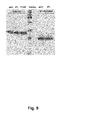
- FIG. 9 EK LM is stable for at least 3 month at ⁇ 80° C. or 4° C.
- the purified EK LM as described in Experiments was aliquoted and stored at ⁇ 80° C. or 4° C. After 3 month, 5 ⁇ g of EK LM from each temperature was loaded on SDS-PAGE under reduced and non-reduced condition, and compared with freshly purified EK LM (Fresh).
- FIG. 10 Comparison of amino acid sequences trxEK LM (SEQ ID No: 9) and trx-linker-EK LM (SEQ ID No: 8).
- trx-linker-EK LM the spacer between trx and EK LM is 37 amino acids longer than in trxEK LM .
- FIG. 11 The refolding efficiency of Trx-linker-EK LM increases with PEG1000 or cyclodextrin added into the refolding buffer.
- the inclusion body was solubilized into 7.3 mg/ml and diluted with the ratio of 1 to 20 into the refolding buffer.
- the final concentration of PEG1000 and cyclodextrin in the refolding buffer is 1% and 1.5% respectively.
- the present invention is related to mammalian enterokinase analogues mutated in appropriate sites.
- One or more substitutions of an enterokinase analogue of the invention may e.g. be from hydrophobic to hydrophilic, charged amino acids relative to the amino acids in the parent (wild type) mammalian enterokinase.
- one or more substitutions of a mammalian enterokinase analogue of the invention is from hydrophobic to hydrophilic, charged amino acids relative to the amino acids in wild type bovine enterokinase.
- the hydrophobic amino acids subject to mutation are present on the surface of folded wild type mammalian enterokinase light chain such as folded wild type bovine enterokinase light chain.
- the wild type bovine enterokinase light chain generally exhibits good activity in the presence of various detergents and denaturants over a wide pH range (4.5-9.5) and temperature range (4-45° C.). Therefore, the enterokinase light chain as a powerful tool has been used in biotechnology for the in vitro cleavage of fusion proteins.
- the mammalian enterokinase analogue is a mammalian enterokinase light chain analogue such as a bovine enterokinase light chain analogue.
- the mammalian enterokinase analogue is a bovine enterokinase light chain analogue.
- the bovine light chain analogue comprises substitution(s) in position 134 and/or position 135.
- the bovine enterokinase light chain analogue comprises substitutions in positions 112, 134 and/or 135.
- the bovine enterokinase light chain analogue comprises at least two substitutions.
- the bovine enterokinase light chain analogue comprises at least three substitutions. In one aspect the bovine enterokinase light chain analogue comprises substitutions in positions 112, 134 and 135. In one aspect the bovine enterokinase light chain analogue comprises the substitutions C112A, L134K and I135K.
- Novel bovine enterokinase light chain analogues of the invention include those having the primary structural conformation (i.e., amino acid sequence) of the light chain of wild type bovine enterokinase.
- the light chain of wild type bovine enterokinase has the sequence substantially as set forth in SEQ ID NO:1.
- bovine enterokinase light chain analogues of the invention have enterokinase protease activity.
- Antibodies to such proteases are also available.
- the bovine enterokinase light chain analogue described by the present invention maintains enterokinase wild type protease activity for use as a restriction proteases to specifically cleave fusion proteins.
- bovine enterokinase as used herein means the bovine enterokinase enzyme whose structure and properties are well-known. Mammalian enterokinases are carbohydrate containing heterodimers with a heavy chain of 650-800 amino acids and a catalytic light chain of around 235 amino acids and an overall homology of 75-80% (Liepniecks et al., J. Biol. Chem. 254, 1677 (1979), Matsushima et al., J. Biol. Chem. 269 (31), 19976 (1994), Kitamoto et al., Biochemistry 34, 4562 (1995) for bovine, porcine and human enterokinase, respectively).
- bovine enterokinase light chain means the light chain of bovine enterokinase having 4 disulphide bridges.
- the bovine enterokinase light chain is e.g. described in LaVallie et al, above.
- the term “surface” in connection with amino acids present on the surface of folded wild type bovine enterokinase light chain means amino acids identified as present on the surface of the folded wild type bovine enterokinase light chain on a 3D structure as e.g. described in Mod Base P 98072.
- An enterokinase light chain according to the invention is herein to be understood as bovine enterokinase light chain or an enterokinase light chain from another species such as porcine or human enterokinase light chain.
- enterokinase light chain peptide means a peptide which is either bovine enterokinase light chain or an analog or a derivative thereof with enterokinase activity.
- enterokinase activity means the capability of cleaving peptide or protein substrates at a specific site; for protein substrates, this is generally following the sequence (Asp) 4 -Lys, or a similar sequence such as those described in Light et al., Anal. Biochem. 106: 199(1980); (a cluster of negatively charged amino acids followed by a positively charged amino acid).
- such activity is measured by activation of trypsinogen by cleaving the N-terminal propeptide (containing (Asp) 4 -Lys) with the enterokinase or enterokinase analogue and subsequently assaying the amount of active trypsin generated using tosyl-arginine-methylester (TAME).
- trypsinogen by cleaving the N-terminal propeptide (containing (Asp) 4 -Lys) with the enterokinase or enterokinase analogue and subsequently assaying the amount of active trypsin generated using tosyl-arginine-methylester (TAME).
- enterokinase activity can be measured directly by incubating the enzyme with the peptide substrate Gly (Asp) 4 -Lys-ss-naphthylamide and measuring the increase in fluorescence (excitation at 337 nm, emission at 420 nm) generated by cleavage and release of the ss-NA (ss-naphthylamide) moiety.
- Gly (Asp) 4 -Lys-ss-naphthylamide the peptide substrate Gly (Asp) 4 -Lys-ss-naphthylamide and measuring the increase in fluorescence (excitation at 337 nm, emission at 420 nm) generated by cleavage and release of the ss-NA (ss-naphthylamide) moiety.
- Bovine enterokinase is also active on some trypsin substrates like TAME and BAEE (benzyl-arginine
- wild type enterokinase light chain as used herein is intended to mean an enterokinase light chain before any substitutions according to the invention have been applied thereto.
- enterokinase light chain analogue or “bovine enterokinase light chain analogue” as used herein means a modified bovine enterokinase light chain wherein one or more amino acid residues of the enterokinase light chain have been substituted by other amino acid residues and/or wherein one or more amino acid residues have been deleted from the enterokinase light chain and/or wherein one or more amino acid residues have been added and/or inserted to the enterokinase light chain.
- an enterokinase light chain analogue comprises less than 10 amino acid modifications (substitutions, deletions, additions (including insertions) and any combination thereof) relative to bovine enterokinase light chain, alternatively less than 9, 8, 7, 6, 5, 4, 3 or 2 modifications relative to bovine enterokinase light chain.
- an enterokinase light chain analogue comprises 5 amino acid modifications, in one aspect 4 amino acid modifications, in one aspect 3 amino acid modifications, in one aspect 2 amino acid modifications and in one aspect 1 amino acid modification relative to bovine enterokinase light chain.
- Modifications in the enterokinase molecule light chain are denoted stating the position and the one or three letter code for the amino acid residue substituting the native amino acid residue.
- terms like 134K and 135K designates that the amino acid in position 134 and 135, respectively, is K.
- the corresponding expressions are 134Lys and 135Lys, respectively.
- 112Ala, 134Lys, 135Lys bovine enterokinase light chain is an analogue of bovine enterokinase light chain where the amino acid in position 112 is substituted with alanine, the amino acid in position 134 is substituted with lysine and the amino acid in position 135 is substituted with lysine.
- amino acid residue is an amino acid from which, formally, a hydroxy group has been removed from a carboxy group and/or from which, formally, a hydrogen atom has been removed from an amino group.
- bovine enterokinase light chain analogues are such wherein Leu in position 134 is substituted with Lys or another charged amino acid, at position 135 where Ile is substituted with Lys or another charged amino acid.
- Cys in position 112 may be substituted with a number of amino acids including Ala and Ser.
- bovine enterokinase light chain analogues include, without limitation: 134Lys bovine enterokinase light chain; 135Lys bovine enterokinase light chain; 134Lys, 135Lys bovine enterokinase light chain; 112Ala, 134Lys, 135Lys bovine enterokinase light chain; 112Ala, 134Lys bovine enterokinase light chain; 112Ala, 135Lys bovine enterokinase light chain and any such combinations including substitutions with other charged amino acids.
- a bovine enterokinase light chain analogue which has improved solubility in a renaturation process relative to natural bovine enterokinase light chain.
- a bovine enterokinase light chain analogue according to the invention has one or more surface oriented hydrophobic amino acids which have been mutated to hydrophilic, charged amino acids wherein improved solubility in a renaturation process relative to natural bovine enterokinase light chain is obtained.
- surface oriented hydrophobic amino acids for substitution to hydrophilic charged amino acids are selected after aligning the bovine enterokinase light chain with other serine proteases and scanning the solvent-accessable surfaces through a computational 3D model of enterokinase.
- refolding a bovine enterokinase light chain analogue according to the invention is known to the person skilled in the art.
- refolding may be carried out by denaturation in urea, followed by oxidative refolding in glutathione or another re-dox environment.
- a buffer (refolding buffer) is used during the refolding process.
- the refolding buffer comprises urea.
- the refolding buffer comprises between 0 M and 2 M urea.
- the refolding buffer comprises between 0.5 M and 2 M urea, between 0 M and 1.5 M urea or between 0.5 M and 1.5 M urea.
- the refolding buffer comprises about 1 M urea.
- the initial concentration of inclusion body may affect the refolding yield.
- the concentration of inclusion body is between 1 and 4 mg/ml.
- the thioredoxin (Trx) tag is removed during refolding, i.e. during dilution and incubation under refolding conditions. It has thus been found that refolding and activation may be obtained without addition of an activation enzyme.
- the linker connecting the trx tag and the bovine enterokinase light chain analogue of the invention is removed by autocleavage. It has thus by the inventors surprisingly been found that the linker connecting the trx tag and the bovine enterokinase light chain analogue of the invention facilitates the refolding.
- a bovine enterokinase light chain analogue according to the invention has the substitutions L134K and I135K, where the bovine enterokinase light chain analogue is more soluble during the renaturation process relative to wild type EK.
- a bovine enterokinase light chain analogue according to the invention further has the substitution C112A.
- a bovine enterokinase light chain analogue of the invention has full enterokinase activity compared to wild type bovine enterokinase.
- a bovine enterokinase light chain analogue of the invention has a substantially equivalent functional or biological activity as wild type bovine enterokinase.
- a bovine enterokinase light chain analogue has substantially equivalent functional or biological activities (i.e., is a functional equivalent) of the polypeptide having the amino acid sequence set forth as SEQ ID NO: 1 (e.g., has a substantially equivalent enteropeptidase activities).
- Nucleic acid forms encoding enterokinase light chain analogues of the present invention are also within the scope of the invention.
- Nucleic acids according to the invention include genomic DNA (gDNA), complementary DNA (cDNA), synthetic DNA prepared by chemical synthesis as well as DNA with deletions or substitutions, allelic variants and sequences that hybridize thereto under stringent conditions as long as they encode enterokinase light chain analogues of the present invention.
- nucleic acid comprising a polynucleotide sequence, and wherein said nucleic acid encodes a mammalian enterokinase light chain analogue such as a bovine enterokinase light chain analogue according to the invention.
- the nucleic acid is operably linked to an inducible promoter.
- a recombinant vector is provided which comprises the nucleic acid operably linked to the inducible promoter.
- the inducible promoter is selected from a group consisting of AraB, T7, trp, lac, tac.
- a further embodiment of the invention provides a host cell comprising the recombinant vector comprising the polynucleotide sequence coding for the amino acid sequence of a mammalian enterokinase light chain analogue such as a bovine enterokinase light chain analogue according to the invention.
- a mammalian enterokinase light chain analogue such as a bovine enterokinase light chain analogue according to the invention.
- a further aspect of the invention provides the host cell comprising the recombinant vector comprising the polynucleotide sequence coding for the amino acid sequence encoding a mammalian enterokinase light chain analogue such as a bovine enterokinase light chain analogue according to the invention.
- the host cell is selected from a group consisting of E. coli, B. subtilis, S. saccaromyces and A. oryzae.
- enterokinase light chain The production of polypeptides, e.g., enterokinase light chain, is well known in the art.
- the bovine enterokinase light chain analogue may for instance be produced by classical peptide synthesis, e.g., solid phase peptide synthesis using t-Boc or Fmoc chemistry or other well established techniques, see, e.g., Greene and Wuts, “Protective Groups in Organic Synthesis”, John Wiley & Sons, 1999.
- the bovine enterokinase light chain analogue may also be produced by a method which comprises culturing a host cell containing a DNA sequence encoding the analogue and capable of expressing the bovine enterokinase light chain analogue in a suitable nutrient medium under conditions permitting the expression of the bovine enterokinase light chain analogue.
- a method which comprises culturing a host cell containing a DNA sequence encoding the analogue and capable of expressing the bovine enterokinase light chain analogue in a suitable nutrient medium under conditions permitting the expression of the bovine enterokinase light chain analogue.
- enterokinase in microorganisms such as, e.g., Escherichia coli and Saccharomyces cerevisiae are, e.g., disclosed in WO 94/16083.
- the bovine enterokinase light chain analogue is produced by expressing a DNA sequence encoding the bovine enterokinase light chain analogue in question or a precursor thereof in a suitable host cell by well known technique as disclosed in e.g. WO 94/16083
- the bovine enterokinase light chain analogues of the invention may be recovered from the cell culture medium or from the cells.
- the bovine enterokinase light chain analogues of the present invention may be purified by a variety of procedures known in the art including, but not limited to, chromatography (e.g., ion exchange, affinity, hydrophobic, chromatofocusing, and size exclusion), electrophoretic procedures (e.g., preparative isoelectric focusing (IEF), differential solubility (e.g., ammonium sulfate precipitation), or extraction (see, e.g., Protein Purification, J. C. Janson and Lars Ryden, editors, VCH Publishers, New York, 1989).
- chromatography e.g., ion exchange, affinity, hydrophobic, chromatofocusing, and size exclusion
- electrophoretic procedures e.g., preparative isoelectric focusing (IEF), differential solubility (e.g., ammonium sulf
- the bovine enterokinase light chain analogues of the present invention are purified using anion exchange chromatography.
- the anion exchange chromatography is followed by hydrophobic interaction chromatography.
- the bovine enterokinase light chain analogues of the present invention are purified using Q HP anion exchange chromatography.
- the Q HP anion exchange chromatography is followed by Phenyl FF hydrophobic interaction chromatography.
- an improved process for production of a mammalian enterokinase light chain analogue such as a bovine enterokinase light chain analogue is provided, wherein said method comprises the steps:
- a bovine enterokinase light chain analogue according to the invention may e.g. be localized in the inclusion bodies of E. coli or in the secreted material of yeast. In one embodiment expression of enterokinase is localized in the inclusion bodies of E. coli.
- E. coli Various strains of E. coli are useful as host cells for the production of non-glycosylated, homogeneous enterokinase activity are also well-known in the art.
- a non-exclusive list of such strains includes E. coli B BL21 DE3, E. coli K12 W3110, MC1061, DH1, K803, HB101, JM101 and other K12 like strains.
- other bacterial species may be used, including B. subtilis , various strains of Pseudomonas , other bacilli and the like.
- yeast cells are also available as host cells for expression of the enterokinase activity of the present invention.
- Yeast cells are especially useful as a host for pre/pro fusion to mature enterokinase. When expressed using a suitable yeast vector, the fusion is secreted by virtue of a signal peptide.
- the bovine enterokinase light chain analogue of this invention When expressed in bacterial cells, it may be expressed intracellularly usually as inclusion bodies, or it may be secreted from bacterial cells in active form if a secretory signal is included. Where necessary or desired, as when reduced bioactivity is observed, the enterokinase activity may be obtained by conventional methods such as solubilization of protein in urea or guanidine HCl, followed by dilution to reduce the concentration of these reagents and treatment with oxidizing agents such as dithiothreitol or ss-mercapto ethanol to enhance refolding.
- the bovine enterokinase light chain analogues according to the invention are enzymatically active proteases which cleave specifically after a (Asp) 4 -Lys (DDDDK) sequence in various numbers of fused protein products between affinity tag and the mature protein.
- the bovine enterokinase light chain analogues according to the invention have retained enzymatic activity
- a process for preparing a bovine enterokinase light chain analogue in E. coli cells wherein the E. coli cells are transformed with a plasmid carrying the bovine enterokinase light chain analogue gene and an inducible promoter by fermentation involving batch and fed batch stages and isolation and purification of the expressed protein from the cultures.
- a refolding process for a bovine enterokinase light chain analogue according to the invention is obtained, wherein the expression of the enterokinase light chain analogue is in the form of inclusion bodies in recombinant E. coli .
- denaturation followed by refolding in a redox system is used.
- enterokinase light chain analogues of the invention may be used in a method for cleaving proteins having an enterokinase cleavage site, and especially fusion proteins having such a cleavage site engineered into their sequence.
- the amounts needed are readily determined empirically by one skilled in the art.
- fusion protein as used herein is meant to refer to a protein created through genetic engineering from two or more proteins or peptides.
- a fusion protein can refer to a protein in which a Asp-Asp-Asp-Asp-Lys (D4K) sequence has been intentionally introduced for specific cleavage. Generally, cleavage of the fusion protein generates two polypeptides.
- a fusion protein according to the invention can be a recombinant fusion protein.
- a fusion protein can be generated, for example, from the addition of a vector-derived residue peptide at one terminus, for example the N-terminus, in addition to the amino acid sequence of the wild type protein of interest. In this way, for example, a recombinant fusion protein can be constructed to have Asp-Asp-Asp-Lys (D4K) cleavage site in the vector upstream joined to the protein of interest.
- D4K Asp-Asp-Asp-
- operably linked denotes herein a configuration in which a control sequence is placed at an appropriate position relative to the coding sequence of the polynucleotide sequence such that the control sequence directs the expression of the coding sequence of a polypeptide.
- protease is intended to include any polypeptide/s, alone or in combination with other polypeptides, that break peptide bonds between amino acids of proteins.
- proteolytic activity is meant to refer to the cleavage activity of a substrate by an enzyme.
- the term refers to the enzymatic cleavage by enteropeptidases.
- the term is meant to refer to the specific activity of a bovine enterokinase light chain analogue of the invention for Asp-Asp-Asp-Asp-Lys cleavage sites.
- Non-specific proteolytic activity is meant to refer to cleavage activity that is not directed to a specific cleavage site.
- Specific proteolytic activity is meant to refer to cleavage activity that is directed to a specific cleavage site.
- a bovine enterokinase light chain analogue according to the invention is superior for cleavage of fusion proteins when compared to the bovine-derived two-chain form.
- the enterokinase light chain analogue of the invention is incorporated as one of the fusion protein partners to yet another protein.
- the fusion protein results in the release of additional enterokinase activity which in turn can catalyze many more proteolytic cleavages of fusion proteins.
- large amounts of enterokinase activity can be produced from a fusion protein in an autocatalytic manner.
- Another particular aspect of the invention teaches a method for cleavage of a protein containing an Asp-Asp-Asp-Asp-Lys cleavage site using any of the bovine enterokinase light chain analogues of the invention described herein, the method comprising contacting the protein with any of the bovine enterokinase light chain analogues of the invention, and wherein the contacting of the protein with the bovine enterokinase light chain analogue results in specific cleavage.
- the protein is a fusion protein.
- the fusion protein is a recombinant fusion protein.
- the protein is bacterially produced.
- the protein is a synthetic protein.
- the invention teaches a method for the preparation of recombinant protein using any of the bovine enterokinase light chain analogues according to the invention as described herein, the method comprising providing a recombinant fusion protein containing a Asp-Asp-Asp-Asp-Lys cleavage site, and contacting the fusion protein with any of the bovine enterokinase light chain analogues of the invention, wherein contacting the recombinant fusion protein with the bovine enterokinase light chain analogue results in Asp-Asp-Asp-Asp-Lys specific cleavage and preparation of recombinant protein.
- bovine enterokinase light chain analogues a production process for making bovine enterokinase light chain analogues.
- the bovine enterokinase light chain analogues were fused to thioredoxin tag expressed as inclusion bodies in E. coli .
- the active enterokinase light chain analogue was purified by Q HP anion exchange chromatography.
- triple substitutions (C112A, L134K and I135K) of bovine enterokinase light chain (EK LM ) which improved the surface hydrophilic properties, increased the refolding yield 4 fold without loosing activity.
- the yield of purified enterokinase light chain analogue was 800 mg/L from a culture of 4 g/L, and the specific activity was determined as 5000 ⁇ 10 EU/mg.
- our enterokinase light chain analogue production process provides a valuable tool for processing therapeutic fusion proteins and other fusion proteins.
- the DNA sequence encoding the catalytic subunit of bovine enterokinase was amplified with the following primers:
- These two primers contained Kpn I and EcoR I restriction enzyme sites, respectively.
- the target fragment was introduced into pET32a (Novagen) from KpnI and EcoRI site. Routine PCR reaction was performed using Pfu DNA Polymerase from Stratagene. The sequence of plasmid pET32a-EK L was confirmed by sequencing. Three substitution sites, i.e. C112A, L134K, I135K were introduced by using QuikChange® XL Site-Directed Mutagenesis Kit from Stratagene with the primers:
- Cells from a glycerol stock were inoculated on an EC1 plate grown overnight at 37° C., and washed with 0.9% sodium chloride (NaCl) to suspend the cells.
- the culture was allowed to grow in a fermentor containing fermentation defined medium (FDM) at 37° C. for 16 hrs, and induced with 1.0 mM IPTG at an OD600 of 150 , and then grown for 6 hours at 37° C. before harvesting by centrifugation.
- FDM fermentation defined medium
- Trx-linker-EK L and Trx-linker-EK LM in E. coli BL21 were expressed in fed-batch fermentation. As shown in FIG. 1 , no apparent leaky expression judged by SDS-PAGE was observed before IPTG induction. An induced band just above 43 kD on SDS-PAGE by IPTG appeared, and it was confirmed by LC-MS that this band represented the target protein. Moreover, the expression level of the target protein was dependent upon the induction time. 4 hrs or 6 hrs of induction for Trx-linker-EK L and Trx-linker-EK LM by using fermentation defined medium (FDM), respectively gave acceptable expression, and ⁇ 4 g/L of the target proteins was achieved.
- FDM fermentation defined medium
- lysis buffer (1:10, w/w) containing 20 mM Tris, pH 8.0, and lysed by French press.
- Inclusion bodies were sedimented at 20,000 g for 1 hr at 4° C., and then washed once by using lysis buffer.
- the inclusion bodies were solublized to 3.2 mg/ml in buffer containing 20 mM Tris, 8 M urea, pH8.0, 20 mM DTT and incubated at 4° C. for 3 hrs. After centrifugation at 20,000 g for 30 min, the solublized EK (i.e.
- Trx-linker-EK L and/or Trx-linker-EK LM was diluted 80 fold into refolding buffer containing 20 mM Tris, 1 M Urea, 1 mM GSSG, 3 mM GSH, pH 8.3 and incubated at 20° C. for 24 hrs.
- the process scheme is shown in FIG. 2 .
- the inclusion bodies were solublized in the buffer containing 5-8 M urea and 10-20 mM DTT. It should be noted that the inclusion body concentration affected the refolding yield. It was found that the refolding yield of 4 mg/ml Trx-linker-EK LM was 2 fold higher than that of 6 mg/ml Trx-linker-EK LM ( FIG. 3A ).
- the refolding occurred by dilution.
- the amount of purified enzyme from a fixed volume was also dependant upon the Trx linker EK concentration in the refolding buffer, and reached a maximum when Trx-linker-EK LM concentration was 120 ⁇ g/ml.
- the auto-catalytic activation occurred concomitantly with the refolding process.
- the active EK was liberated from Trx-linker-EK by the escape active EK, which specifically cleaved Trx tag off at DDDDK recognition site just before the mature EK.
- the refolding and auto-catalytic activation process seemed optimal at 48 hrs ( FIG. 4 ).
- Considering the inhibition of EK by urea it was found that the refolding yield was largely reduced if above 2 M urea in refolding buffer. Our result showed that 1 M urea in refolding buffer was optimal ( FIG. 5 ).
- GSSG/GSH in the ratio 1:3 was found optimal and better than Cystine/cystein ( FIG. 6 ).
- the active EK after refolding and auto-activation was purified and concentrated by one step anion exchange chromatographic purification (QHP column, FIG. 7A ). It was found that Trx tag was in P1, EK LM was mainly in P2 together with the impurity of Trx tag, and P3 contained trace amount of EK LM , which is confirmed by the activity assay shown in FIG. 7C . It should be noted that high purity EK LM (>90%) was obtained by further purification of P2 using hydrophobic interaction chromatography (HIC) ( FIG. 7B ). Moreover, the enzymatic activity of each fraction was also assayed ( FIG. 7C ), and pooled.
- HIC hydrophobic interaction chromatography
- Trx-linker-EK L the refolding yield was rather low beyond 40 ⁇ g/ml of Trx-linker-EK L during the refolding process (4.4% at 40 ⁇ g/ml), which made this process practically difficult. In other words, a huge holding tank is required to produce large amount of EK ( ⁇ 1,000 g).
- EK LM greatly improved the refolding yield, especially when EK LM concentration in refolding buffer was beyond 40 ⁇ g/ml, which is the bottle neck for the large scale production of EK L ( FIG. 3A ). As shown in FIG.
- Trx-linker-EK LM at 40 ⁇ g/ml of Trx-linker-EK LM concentration in the refolding buffer, the refolding yield of Trx-linker-EK LM (17%) was 4 fold higher than that of Trx-linker-EK L (4.4%). Moreover, ⁇ 16 mg of active EK LM could be purified from 1 L refolding tank in which the EK LM concentration is 120 ⁇ g/ml.
- EK L and EK LM The specific enzymatic activity between EK L and EK LM was compared as in FIG. 8 .
- the triple substitutions of EK LM had no apparent effect on enzyme activity, which was evidenced by the fact that EK L and EK LM have similar bands on SDS-PAGE if loaded the same activity.
- EK LM was quite stable if stored in buffer containing 20 mM Tris, 200 mM NaCl at ⁇ 80° C. or 4° C. No apparent degradation and decrease of activity were observed up to 3 months ( FIG. 9 ).
- the enzymatic activity was measured directly using a fluorogenic substrate, GDDDDK-Beta-naphthylamide.
- the reaction was started with addition of 1 ul sample into each well of Fluorescent 96 well plate containing 100 ul of reaction buffer. After mixing for 10 seconds, the fluorescence was measured with Fluostar OPTIMA (excitation at 340 nM and emission at 420 nM).
- the enzyme activity was defined by arbitrary unit (EU), which derived from slope*60/30,000, where the slope represented linear range.
- TrxEK LM cell pellet was resuspended in 100 ml of lysis buffer (20 mM Tris, pH 8.0), and the cells were disrupted by using a homogenizer under a pressure of 30,000 psi. After the supernatant was discarded, the IBs weighed 3.53 g. The isolated IBs were resuspended in 70 ml of solublization buffer (20 mM Tris, 8 M urea, pH8.0, 20 mM DTT (freshly added)) and incubated at 4° C. for 4 hrs. The solublized samples were clarified by centrifugation.
- the elution fractions with highest enzyme activity were combined resulting in a pool volume of 30 ml and total enzyme activity of 14,100 EU.
- the protein amount was 2.82 mg.
- Trx-linkerEK LM cell pellet was resuspended in 1000 ml of lysis buffer (20 mM Tris, pH 8.0), and the cells were disrupted by using a homogenizer under a pressure of 30,000 psi. After the supernatant was discarded, the IBs weighed 22 g and were washed by 1000 ml of 20 mM Tris, pH 8.0 once. After wash, the IBs solution was divided into 6 bottles for centrifugation.
- solublization buffer (20 mM Tris, 8 M urea, pH8.0, 20 mM DTT (freshly added)) was added into one bottle and incubated at 4° C. for 3 hrs.
- the solublized IBs were clarified by centrifugation and the final volume was 43 ml.
- the enzyme activity of elution fractions 18-23 is higher than the other fractions through activity test.
- the elution fractions with highest enzyme activity were combined resulting in a pool volume of 30 ml and total enzyme activity of 24,900 EU.
- the protein amount was 4.98 mg.
- EK LM protein 2.82 mg was produced from 0.5 L of refolding solution when using TrxEK LM when the protein concentration was 60 ⁇ g/ml during refolding, whereas 4.98 mg of EK protein was produced from Trx-linker-EK LM version under the same conditions.
- Trx-linker-EK LM version 3.98 mg of EK protein was produced from Trx-linker-EK LM version under the same conditions.
- the inclusion bodies were solubilized to 7.3 mg/ml in the buffer containing 20 mM Tris, 8 M urea, pH8.0, 20 mM DTT, and then the solubilized Trx-linker-EK LM was added into the optimized refolding buffer containing certain additive by 20-fold dilution. The mixture was incubated at 4° C. for 20 hrs and the amount of correctly refolded Trx-linker-EK LM was quantified by protease activity assay as described in Example 4.
Landscapes
- Chemical & Material Sciences (AREA)
- Health & Medical Sciences (AREA)
- Life Sciences & Earth Sciences (AREA)
- Organic Chemistry (AREA)
- Engineering & Computer Science (AREA)
- Zoology (AREA)
- Wood Science & Technology (AREA)
- Bioinformatics & Cheminformatics (AREA)
- Genetics & Genomics (AREA)
- General Health & Medical Sciences (AREA)
- General Engineering & Computer Science (AREA)
- Biochemistry (AREA)
- Biomedical Technology (AREA)
- Molecular Biology (AREA)
- Biotechnology (AREA)
- Microbiology (AREA)
- Medicinal Chemistry (AREA)
- Chemical Kinetics & Catalysis (AREA)
- General Chemical & Material Sciences (AREA)
- Enzymes And Modification Thereof (AREA)
- Micro-Organisms Or Cultivation Processes Thereof (AREA)
- Preparation Of Compounds By Using Micro-Organisms (AREA)
- Peptides Or Proteins (AREA)
Applications Claiming Priority (4)
| Application Number | Priority Date | Filing Date | Title |
|---|---|---|---|
| WOPCT/CN2011/002169 | 2011-12-23 | ||
| CN2011002169 | 2011-12-23 | ||
| CNPCT/CN2011/002169 | 2011-12-23 | ||
| PCT/EP2012/076372 WO2013092855A1 (en) | 2011-12-23 | 2012-12-20 | Modified enterokinase light chain |
Publications (2)
| Publication Number | Publication Date |
|---|---|
| US20150064744A1 US20150064744A1 (en) | 2015-03-05 |
| US9611466B2 true US9611466B2 (en) | 2017-04-04 |
Family
ID=47561561
Family Applications (1)
| Application Number | Title | Priority Date | Filing Date |
|---|---|---|---|
| US14/364,464 Active US9611466B2 (en) | 2011-12-23 | 2012-12-20 | Modified enterokinase light chain |
Country Status (6)
| Country | Link |
|---|---|
| US (1) | US9611466B2 (enExample) |
| EP (1) | EP2794875B1 (enExample) |
| JP (1) | JP6138151B2 (enExample) |
| CN (1) | CN103998606B (enExample) |
| ES (1) | ES2819288T3 (enExample) |
| WO (1) | WO2013092855A1 (enExample) |
Families Citing this family (7)
| Publication number | Priority date | Publication date | Assignee | Title |
|---|---|---|---|---|
| EP3083701B1 (en) * | 2013-12-17 | 2019-08-07 | Novo Nordisk A/S | Enterokinase cleavable polypeptides |
| CN104911166A (zh) * | 2014-12-15 | 2015-09-16 | 上海张江生物技术有限公司 | 一种新型重组鳉鱼肠激酶轻链蛋白质 |
| WO2017118752A1 (en) * | 2016-01-07 | 2017-07-13 | Novo Nordisk A/S | Modified enterokinase light chain and its preparation method |
| CN108265042A (zh) * | 2016-12-30 | 2018-07-10 | 江苏万邦生化医药集团有限责任公司 | 一种重组肠激酶的制备方法 |
| CN109136209B (zh) * | 2018-07-18 | 2021-07-06 | 上海雅心生物技术有限公司 | 肠激酶轻链突变体及其应用 |
| CN114774397B (zh) * | 2022-06-20 | 2022-10-04 | 北京惠之衡生物科技有限公司 | 牛肠激酶轻链蛋白突变体及重组融合蛋白 |
| CN114807101B (zh) * | 2022-06-20 | 2022-09-16 | 北京惠之衡生物科技有限公司 | 包含牛肠激酶轻链蛋白的融合蛋白及其表达载体和重组工程菌 |
Citations (7)
| Publication number | Priority date | Publication date | Assignee | Title |
|---|---|---|---|---|
| KR19990073067A (ko) | 1999-03-13 | 1999-10-05 | 문정복 | 레일천공기 |
| KR20030097036A (ko) | 2002-06-18 | 2003-12-31 | 프로테온 주식회사 | 엔테로키나제 경사슬의 아미노말단 또는 카르복실말단이변형된 재조합 엔테로키나제 |
| CN1470634A (zh) | 2002-07-26 | 2004-01-28 | 刘建宁 | 一种具有高活性和高稳定性的肠激酶轻链变体 |
| CN1869236A (zh) | 2005-05-24 | 2006-11-29 | 上海新生源医药研究有限公司 | 一种重组牛肠激酶的生产方法 |
| WO2008136014A1 (en) | 2007-05-07 | 2008-11-13 | Usv Limited | Cloning and expression of enterokinase and its process for production |
| CN100557019C (zh) | 2007-05-11 | 2009-11-04 | 上海张江生物技术有限公司 | 重组牛肠激酶、其制备方法及用途 |
| CN102061302A (zh) | 2010-11-26 | 2011-05-18 | 扬子江药业集团北京海燕药业有限公司 | 肠激酶轻链基因的合成及其表达产物的制备方法 |
Family Cites Families (1)
| Publication number | Priority date | Publication date | Assignee | Title |
|---|---|---|---|---|
| AU675506B2 (en) | 1993-01-15 | 1997-02-06 | Genetics Institute, Llc | Cloning of enterokinase and method of use |
-
2012
- 2012-12-20 US US14/364,464 patent/US9611466B2/en active Active
- 2012-12-20 JP JP2014548013A patent/JP6138151B2/ja active Active
- 2012-12-20 EP EP12816050.4A patent/EP2794875B1/en active Active
- 2012-12-20 WO PCT/EP2012/076372 patent/WO2013092855A1/en not_active Ceased
- 2012-12-20 CN CN201280063896.7A patent/CN103998606B/zh active Active
- 2012-12-20 ES ES12816050T patent/ES2819288T3/es active Active
Patent Citations (7)
| Publication number | Priority date | Publication date | Assignee | Title |
|---|---|---|---|---|
| KR19990073067A (ko) | 1999-03-13 | 1999-10-05 | 문정복 | 레일천공기 |
| KR20030097036A (ko) | 2002-06-18 | 2003-12-31 | 프로테온 주식회사 | 엔테로키나제 경사슬의 아미노말단 또는 카르복실말단이변형된 재조합 엔테로키나제 |
| CN1470634A (zh) | 2002-07-26 | 2004-01-28 | 刘建宁 | 一种具有高活性和高稳定性的肠激酶轻链变体 |
| CN1869236A (zh) | 2005-05-24 | 2006-11-29 | 上海新生源医药研究有限公司 | 一种重组牛肠激酶的生产方法 |
| WO2008136014A1 (en) | 2007-05-07 | 2008-11-13 | Usv Limited | Cloning and expression of enterokinase and its process for production |
| CN100557019C (zh) | 2007-05-11 | 2009-11-04 | 上海张江生物技术有限公司 | 重组牛肠激酶、其制备方法及用途 |
| CN102061302A (zh) | 2010-11-26 | 2011-05-18 | 扬子江药业集团北京海燕药业有限公司 | 肠激酶轻链基因的合成及其表达产物的制备方法 |
Non-Patent Citations (15)
| Title |
|---|
| Ågren Lena et al. Hydrophobicity engineering of cholera toxin A1 subunit in the strong adjuvant fusion protein CTA1-DD, "Protein Engineering", Year 1999, vol. 12, No. 2, pp. 173-178. |
| Chica et al. Curr Opin Biotechnol. Aug. 2005;16(4):378-84. * |
| Chun Haarin et al. Design and efficient production of bovine enterokinase light; chain with higher specificity in E. coli, "Biotechnol Lett", Year 2011, vol. 33, No. 6, pp. 1227-1232. |
| DATABASE Geneseq [online] 1 September 2011 (2011-09-01), HAN H, LIANG Y, YAN X: "Targeted soluble protein TrxHis,SEQ ID:5.", XP002693798, retrieved from EBI |
| Database Geneseq Sep. 1, 2011 (Sep. 1, 2011),; "Targeted soluble protein TrxHis.SEQ; I D : 5 .", XP002693798; retrieved from EBI accession No. GSP:AZJ84253. |
| Gasparian M E et al. Expression, purification, and characterization of human; enteropeptidase catalytic subunit in Escherichia coli, "Protein Expression and Purification" Year 2003, vol. 31, No. 1, pp. 133-139. |
| Kitamoto et al., "Enterokinase, the initiator of intestinal digestion, is a mosaic protease composed of a distinctive assortment of domains," Pro Natl Acad Sci USA, 1994, vol. 91, pp. 7588-7592. |
| Liepnieks J J et al. The Preparation and Properties of Bovine Enterokinase, "Journal Biological Chemistry", Year 1979, vol. 254, No. 5, pp. 1677-1683. |
| Lu Deshun et al.Crystal Structure of Enteropeptidase Light Chain Complexed with an Analog of the Trypsinogen Activation Peptide, "J. Mol. Biol", Year 1999, vol. 292, No. 2, pp. 361-373. |
| S Peter et al. Surface Supercharged human enteropeptidase light chain shows improved; solubility and refolding yield, "Protein Engineering Design and Selection", Year 2011, vol. 24, No. 3, pp. 261-268. |
| Sen et al. Appl Biochem Biotechnol. Dec. 2007;143(3):212-23. * |
| Su Y et al. The acidity of protein fusion partners predominantly determines; the efficacy to improve the solubility of the target proteins expressed in Escherichia coli,; "Journal of Biotechnology", Year 2007, vol. 129, No. 3, pp. 373-382. |
| Tan Haidong et al. Purification and refolding optimization of recombinant bovine enterokinase light chain overexpressed in Escherichia coli, "Protein Expression and Purification", Year 2007, vol. 56, No. 1, pp. 40-47. |
| UniProtKB - F7AVP5 (F7AVP5—HORSE), Last modified: Jul. 27, 2011, URL, http://www.uniprot.org/uniprot/F7AVP5, retrieved on Oct. 24, 2016. |
| Zou Zhoung et al. Hyper-acidic protein fusion partners improve solubility and assist correct folding of recombinant proteins expressed in Escherichia coli, "Journal of Biotechnology", Year 2008, vol. 135, No. 4, pp. 333-339. |
Also Published As
| Publication number | Publication date |
|---|---|
| ES2819288T3 (es) | 2021-04-15 |
| US20150064744A1 (en) | 2015-03-05 |
| JP2015502167A (ja) | 2015-01-22 |
| EP2794875B1 (en) | 2020-07-22 |
| JP6138151B2 (ja) | 2017-05-31 |
| WO2013092855A1 (en) | 2013-06-27 |
| EP2794875A1 (en) | 2014-10-29 |
| CN103998606B (zh) | 2018-04-17 |
| CN103998606A (zh) | 2014-08-20 |
Similar Documents
| Publication | Publication Date | Title |
|---|---|---|
| EP2794875B1 (en) | Modified enterokinase light chain | |
| EP2507258B1 (en) | Novel peptidyl alpha-hydroxyglycine alpha-amidating lyases | |
| ES2754271T3 (es) | Polipéptidos escindibles por enteroquinasa | |
| NO309153B1 (no) | Fremgangsmåte for ökning ved sekresjon av disulfidbrodannede proteiner | |
| Böttcher et al. | Functional expression of the γ-isoenzyme of pig liver carboxyl esterase in Escherichia coli | |
| WO2012104099A1 (en) | Process for the production of recombinant trypsin | |
| CN106434699A (zh) | Sumo与sumo蛋白酶编码基因及其应用 | |
| CN109439643B (zh) | 一种新型赖氨酸特异性内切酶及其制备方法 | |
| Tan et al. | Purification and refolding optimization of recombinant bovine enterokinase light chain overexpressed in Escherichia coli | |
| EP3741774A1 (en) | N-terminal fusion partner for producing recombinant polypeptide, and method for producing recombinant polypeptide using same | |
| WO2017118752A1 (en) | Modified enterokinase light chain and its preparation method | |
| US7662935B2 (en) | Processing of peptides and proteins | |
| KR20160077750A (ko) | 재조합 트랜스 글루타미나아제의 대량 생산 방법 | |
| EP1706494B1 (en) | Method for production of recombinant growth hormone in form of hybrid protein | |
| CN112824527A (zh) | 人工设计的赖氨酰内切酶及编码序列和发酵方法 | |
| Nataraj et al. | Truncated thioredoxin peptides serves as an efficient fusion tag for production of proinsulin | |
| EP1697509B1 (en) | Processing of peptides and proteins | |
| JP3892397B2 (ja) | ペプチド、ペプチド模倣物およびタンパク質を合成するための方法 | |
| EP1841862B1 (en) | A ubp1 protease mutant,and its coding sequence, their applications and heterogonous protein expression system | |
| US20250283065A1 (en) | Truncated polypeptides having protein ligase activity and methods of production thereof | |
| EP3221449B1 (en) | Process for refolding recombinant chymotrypsin | |
| CN116217699A (zh) | 一种高效表达羊生长激素的方法 | |
| EP2867250A2 (en) | Proinsulin with enhanced helper sequence | |
| KR100562873B1 (ko) | 인간 인슐린 발현 플라스미드 및 이를 이용한 인간인슐린의 제조 방법 | |
| CN111197041A (zh) | 制备青鳉鱼肠激酶活性亚基的方法、其产物和用途 |
Legal Events
| Date | Code | Title | Description |
|---|---|---|---|
| AS | Assignment |
Owner name: NOVO NORDISK A/S, DENMARK Free format text: ASSIGNMENT OF ASSIGNORS INTEREST;ASSIGNORS:WOELDIKE, HELLE FABRICIUS;ZHANG, XUJIA;LIU, YUN;AND OTHERS;SIGNING DATES FROM 20140925 TO 20141217;REEL/FRAME:034657/0302 |
|
| STCF | Information on status: patent grant |
Free format text: PATENTED CASE |
|
| MAFP | Maintenance fee payment |
Free format text: PAYMENT OF MAINTENANCE FEE, 4TH YEAR, LARGE ENTITY (ORIGINAL EVENT CODE: M1551); ENTITY STATUS OF PATENT OWNER: LARGE ENTITY Year of fee payment: 4 |
|
| MAFP | Maintenance fee payment |
Free format text: PAYMENT OF MAINTENANCE FEE, 8TH YEAR, LARGE ENTITY (ORIGINAL EVENT CODE: M1552); ENTITY STATUS OF PATENT OWNER: LARGE ENTITY Year of fee payment: 8 |