US8650400B2 - Data processor, relay transmitter, and data transmission system - Google Patents
Data processor, relay transmitter, and data transmission system Download PDFInfo
- Publication number
- US8650400B2 US8650400B2 US12/731,463 US73146310A US8650400B2 US 8650400 B2 US8650400 B2 US 8650400B2 US 73146310 A US73146310 A US 73146310A US 8650400 B2 US8650400 B2 US 8650400B2
- Authority
- US
- United States
- Prior art keywords
- data processor
- relay transmitter
- transmitter
- relay
- physical address
- Prior art date
- Legal status (The legal status is an assumption and is not a legal conclusion. Google has not performed a legal analysis and makes no representation as to the accuracy of the status listed.)
- Active, expires
Links
Images




Classifications
-
- H—ELECTRICITY
- H04—ELECTRIC COMMUNICATION TECHNIQUE
- H04N—PICTORIAL COMMUNICATION, e.g. TELEVISION
- H04N1/00—Scanning, transmission or reproduction of documents or the like, e.g. facsimile transmission; Details thereof
- H04N1/32—Circuits or arrangements for control or supervision between transmitter and receiver or between image input and image output device, e.g. between a still-image camera and its memory or between a still-image camera and a printer device
- H04N1/32358—Circuits or arrangements for control or supervision between transmitter and receiver or between image input and image output device, e.g. between a still-image camera and its memory or between a still-image camera and a printer device using picture signal storage, e.g. at transmitter
- H04N1/324—Circuits or arrangements for control or supervision between transmitter and receiver or between image input and image output device, e.g. between a still-image camera and its memory or between a still-image camera and a printer device using picture signal storage, e.g. at transmitter intermediate the transmitter and receiver terminals, e.g. at an exchange
-
- H—ELECTRICITY
- H04—ELECTRIC COMMUNICATION TECHNIQUE
- H04N—PICTORIAL COMMUNICATION, e.g. TELEVISION
- H04N1/00—Scanning, transmission or reproduction of documents or the like, e.g. facsimile transmission; Details thereof
- H04N1/32—Circuits or arrangements for control or supervision between transmitter and receiver or between image input and image output device, e.g. between a still-image camera and its memory or between a still-image camera and a printer device
- H04N1/32101—Display, printing, storage or transmission of additional information, e.g. ID code, date and time or title
- H04N1/32106—Display, printing, storage or transmission of additional information, e.g. ID code, date and time or title separate from the image data, e.g. in a different computer file
- H04N1/32117—Display, printing, storage or transmission of additional information, e.g. ID code, date and time or title separate from the image data, e.g. in a different computer file in a separate transmission or protocol signal prior to or subsequent to the image data transmission, e.g. in digital identification signal [DIS], in non standard setup [NSS] or in non standard field [NSF]
-
- H—ELECTRICITY
- H04—ELECTRIC COMMUNICATION TECHNIQUE
- H04N—PICTORIAL COMMUNICATION, e.g. TELEVISION
- H04N1/00—Scanning, transmission or reproduction of documents or the like, e.g. facsimile transmission; Details thereof
- H04N1/32—Circuits or arrangements for control or supervision between transmitter and receiver or between image input and image output device, e.g. between a still-image camera and its memory or between a still-image camera and a printer device
- H04N1/32358—Circuits or arrangements for control or supervision between transmitter and receiver or between image input and image output device, e.g. between a still-image camera and its memory or between a still-image camera and a printer device using picture signal storage, e.g. at transmitter
- H04N1/324—Circuits or arrangements for control or supervision between transmitter and receiver or between image input and image output device, e.g. between a still-image camera and its memory or between a still-image camera and a printer device using picture signal storage, e.g. at transmitter intermediate the transmitter and receiver terminals, e.g. at an exchange
- H04N1/32406—Circuits or arrangements for control or supervision between transmitter and receiver or between image input and image output device, e.g. between a still-image camera and its memory or between a still-image camera and a printer device using picture signal storage, e.g. at transmitter intermediate the transmitter and receiver terminals, e.g. at an exchange in connection with routing or relaying, e.g. using a fax-server or a store-and-forward facility
- H04N1/32411—Handling instructions for routing or relaying
-
- H—ELECTRICITY
- H04—ELECTRIC COMMUNICATION TECHNIQUE
- H04N—PICTORIAL COMMUNICATION, e.g. TELEVISION
- H04N21/00—Selective content distribution, e.g. interactive television or video on demand [VOD]
- H04N21/40—Client devices specifically adapted for the reception of or interaction with content, e.g. set-top-box [STB]; Operations thereof
- H04N21/43—Processing of content or additional data, e.g. demultiplexing additional data from a digital video stream; Elementary client operations, e.g. monitoring of home network or synchronising decoder's clock; Client middleware
- H04N21/436—Interfacing a local distribution network, e.g. communicating with another STB or one or more peripheral devices inside the home
- H04N21/4367—Establishing a secure communication between the client and a peripheral device or smart card
-
- H—ELECTRICITY
- H04—ELECTRIC COMMUNICATION TECHNIQUE
- H04N—PICTORIAL COMMUNICATION, e.g. TELEVISION
- H04N2201/00—Indexing scheme relating to scanning, transmission or reproduction of documents or the like, and to details thereof
- H04N2201/32—Circuits or arrangements for control or supervision between transmitter and receiver or between image input and image output device, e.g. between a still-image camera and its memory or between a still-image camera and a printer device
- H04N2201/3201—Display, printing, storage or transmission of additional information, e.g. ID code, date and time or title
- H04N2201/3204—Display, printing, storage or transmission of additional information, e.g. ID code, date and time or title of data relating to a user, sender, addressee, machine or electronic recording medium
- H04N2201/3207—Display, printing, storage or transmission of additional information, e.g. ID code, date and time or title of data relating to a user, sender, addressee, machine or electronic recording medium of an address
- H04N2201/3208—Display, printing, storage or transmission of additional information, e.g. ID code, date and time or title of data relating to a user, sender, addressee, machine or electronic recording medium of an address of an e-mail or network address
-
- H—ELECTRICITY
- H04—ELECTRIC COMMUNICATION TECHNIQUE
- H04N—PICTORIAL COMMUNICATION, e.g. TELEVISION
- H04N2201/00—Indexing scheme relating to scanning, transmission or reproduction of documents or the like, and to details thereof
- H04N2201/32—Circuits or arrangements for control or supervision between transmitter and receiver or between image input and image output device, e.g. between a still-image camera and its memory or between a still-image camera and a printer device
- H04N2201/3201—Display, printing, storage or transmission of additional information, e.g. ID code, date and time or title
- H04N2201/3225—Display, printing, storage or transmission of additional information, e.g. ID code, date and time or title of data relating to an image, a page or a document
- H04N2201/3233—Display, printing, storage or transmission of additional information, e.g. ID code, date and time or title of data relating to an image, a page or a document of authentication information, e.g. digital signature, watermark
-
- H—ELECTRICITY
- H04—ELECTRIC COMMUNICATION TECHNIQUE
- H04N—PICTORIAL COMMUNICATION, e.g. TELEVISION
- H04N2201/00—Indexing scheme relating to scanning, transmission or reproduction of documents or the like, and to details thereof
- H04N2201/32—Circuits or arrangements for control or supervision between transmitter and receiver or between image input and image output device, e.g. between a still-image camera and its memory or between a still-image camera and a printer device
- H04N2201/3201—Display, printing, storage or transmission of additional information, e.g. ID code, date and time or title
- H04N2201/3225—Display, printing, storage or transmission of additional information, e.g. ID code, date and time or title of data relating to an image, a page or a document
- H04N2201/3233—Display, printing, storage or transmission of additional information, e.g. ID code, date and time or title of data relating to an image, a page or a document of authentication information, e.g. digital signature, watermark
- H04N2201/3235—Checking or certification of the authentication information, e.g. by comparison with data stored independently
-
- H—ELECTRICITY
- H04—ELECTRIC COMMUNICATION TECHNIQUE
- H04N—PICTORIAL COMMUNICATION, e.g. TELEVISION
- H04N2201/00—Indexing scheme relating to scanning, transmission or reproduction of documents or the like, and to details thereof
- H04N2201/32—Circuits or arrangements for control or supervision between transmitter and receiver or between image input and image output device, e.g. between a still-image camera and its memory or between a still-image camera and a printer device
- H04N2201/3201—Display, printing, storage or transmission of additional information, e.g. ID code, date and time or title
- H04N2201/328—Processing of the additional information
- H04N2201/3281—Encryption; Ciphering
Definitions
- the following description relates to one or more image transmitting techniques.
- each of the camera main body and the lens unit acquires an authenticator, an ID, a MAC address, an IP address from the other, and stores these pieces of information onto a non-volatile memory thereof.
- the camera main body and the lens unit can perform wireless communication with each other.
- the camera main body first displays, on an LCD thereof, a list of all lens unit IDs. After the list is displayed, when the user operates an operation key to select one of lens units corresponding to the lens unit IDs displayed, the camera main body reads out an authenticator of the selected lens unit from the non-volatile memory.
- the camera main body issues, to the selected lens unit, a connection request that includes the read authenticator, the MAC address of the camera main body, and the lens unit ID.
- the lens unit receives the connection request from the camera main body and determines whether the lens unit ID thereof is identical to the lens unit ID included in the received connection request.
- the lens unit when determining that the lens unit ID thereof is identical to the lens unit ID included in the received connection request, the lens unit reads, out of the non-volatile memory thereof, a main body ID and an authenticator that correspond to the received MAC address of the camera main body. Then, the lens unit determines whether the read main body ID and authenticator are identical to those included in the received connection request.
- the lens unit When determining that the read main body ID and authenticator are identical to those included in the received connection request, the lens unit transmits a response “OK” to the camera main body. After that, the lens unit can be operated from the side of the camera main body via wireless communication using the IP addresses previously exchanged therebetween.
- a unit that performs communication with other facsimile machines and a unit that inputs or outputs images are incorporated in a single housing.
- a user when accepting initial default settings, a user can generally perform facsimile communication merely by turning on the device.
- the wireless connection is not established therebetween until the user attaches the lens unit to the camera main body.
- the technique does not make it possible to establish the wireless connection between the camera main body and the lens unit merely by turning on the camera main body and the lens unit just after purchasing the camera main body and the lens unit. Therefore, unfortunately, even though the technique is applied to the aforementioned image transmission system configured with the separate units, it is difficult to attain the same operability and user-friendliness as the aforementioned integrated device.
- aspects of the present invention are advantageous to provide one or more improved techniques that make it possible to establish wireless connection between devices merely by turning on the devices.
- a data processor configured to perform data communication with an external device via wireless communication with a relay transmitter.
- the data processor includes a communication unit configured to perform wireless communication with the relay transmitter, a storage unit configured to store a first physical address for the relay transmitter, an authentication starter configured to, in response to the data processor being turned on, transmit, to the relay transmitter, an instruction to start authentication between the data processor and the relay transmitter along with a physical address for the data processor, an address receiver configured to receive a second physical address for the relay transmitter from the relay transmitter as a response to the instruction, a determining unit configured to make a determination as to whether the second physical address for the relay transmitter is identical to the first physical address for the relay transmitter, and a connecting unit configured to, when one or more authentication requirements are satisfied, establish wireless connection between the communication unit and the relay transmitter so as to achieve the data communication between the data processor and the external device via the relay transmitter, the authentication requirements including the determination by the determining unit that the second physical address for the relay transmitter is identical to the first physical address for the relay
- a relay transmitter which includes a first communication unit configured to perform wireless communication with an data processor, a second communication unit configured to perform data communication with an external device, a storage unit configured to store a first physical address for the data processor, an address receiver configured to, in response to the relay transmitter being turned on, receive, from the data processor, a second physical address for the data processor along with an instruction to start authentication between the data processor and the relay transmitter, a determining unit configured to, in response to the instruction from the data processor, make a determination as to whether the second physical address for the data processor is identical to the first physical address for the data processor, and a connecting unit configured to, when one or more authentication requirements are satisfied, transmit a physical address for the relay transmitter to the data processor and establish wireless connection between the first communication unit and the data processor so as to achieve data communication between the data processor and the external device via the relay transmitter, the authentication requirements including the determination by the determining unit that the second physical address for the data processor is identical to the first physical address for the data processor.
- a data transmission system which includes a relay transmitter configured to perform data communication with an external device, and an data processor configured to perform data communication with the external device via wireless communication with the relay transmitter.
- the data processor includes a communication unit configured to perform wireless communication with the relay transmitter, a storage unit configured to store a first physical address for the relay transmitter, an authentication starter configured to, in response to the data processor being turned on, transmit, to the relay transmitter, an instruction to start authentication between the data processor and the relay transmitter along with a physical address for the data processor, an address receiver configured to receive a second physical address for the relay transmitter from the relay transmitter as a response to the instruction, a determining unit configured to make a determination as to whether the second physical address for the relay transmitter is identical to the first physical address for the relay transmitter, and a connecting unit configured to, when one or more authentication requirements are satisfied, establish wireless connection between the communication unit and the relay transmitter so as to achieve the data communication between the data processor and the external device via the relay transmitter, the authentication requirements including the determination by the determining
- the relay transmitter includes a first relay-transmitter-side communication unit configured to perform wireless communication with the data processor, a second relay-transmitter-side communication unit configured to perform data communication with the external device, a relay-transmitter-side storage unit configured to store a first physical address for the data processor, a relay-transmitter-side address receiver configured to, in response to the relay transmitter being turned on, receive, from the data processor, a second physical address for the data processor along with the instruction to start authentication between the data processor and the relay transmitter, a relay-transmitter-side determining unit configured to, in response to the instruction from the data processor, make a determination as to whether the second physical address for the data processor is identical to the first physical address for the data processor, and a relay-transmitter-side connecting unit configured to, when the authentication requirements are satisfied, transmit a physical address for the relay transmitter to the data processor and establish wireless connection between the first communication unit and the data processor so as to achieve the data communication between the data processor and the external device via the relay transmitter, the authentication requirements including the determination
- the physical address for the data processor may be employed for uniquely identifying a wireless communication interface (hardware for wireless communication) of the data processor on a wireless network containing thereon the data processor and the relay transmitter.
- the physical address for the relay transmitter may be employed for uniquely identifying a wireless communication interface (hardware for wireless communication) of the relay transmitter on the wireless network.
- MAC media access control
- each of the data processor and the relay transmitter may have a non-volatile storage unit separate from the non-volatile memory of the wireless communication interface thereof. On the non-volatile storage unit, stored is the physical address assigned to the wireless communication interface of the other device (i.e., a communication target device).
- FIGS. 1A and 1B exemplify respective overall network configurations each of which includes an image transmission system and an external device in an embodiment according to one or more aspects of the present invention.
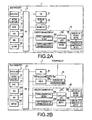
- FIG. 2A is a block diagram schematically showing a configuration of an image processor in the embodiment according to one or more aspects of the present invention.
- FIG. 2B is a block diagram schematically showing a configuration of a relay transmitter in the embodiment according to one or more aspects of the present invention.
- FIG. 3 is a flowchart showing a procedure of a process to be executed by the image processor in the embodiment according to one or more aspects of the present invention.
- FIG. 4 is a flowchart showing a procedure of a process to be executed by the relay transmitter in the embodiment according to one or more aspects of the present invention.
- FIG. 5 is a sequence diagram showing in sequence respective states of the image processor and the relay transmitter until wireless connection is established therebetween in the embodiment according to one or more aspects of the present invention.
- an image transmission system in the embodiment which is configured to transmit and receive images via facsimile communication, includes an image processor 1 and a relay transmitter 2 .
- the image processor 1 and the relay transmitter 2 can perform direct wireless communication with each other.
- the image processor 1 and the relay transmitter 2 can perform indirect wireless communication via the access point 3 .
- the image processor 1 can communicate with an external facsimile machine 5 outside the image transmission system.
- the image processor 1 can communicate with a wireless communication device 6 other than the relay transmitter 2 .
- the image processor 1 includes a CPU 10 , a display unit 11 , a button input unit 12 , a panel 13 , a ROM 14 A, a RAM 14 B, an EEPROM 14 C, a USB interface 15 , a recording unit 16 , a reading unit 17 , and a wireless communication unit 18 .
- the display unit 11 , the button input unit 12 , the panel 13 , the ROM 14 A, the RAM 14 B, the EEPROM 14 C, the USB interface 15 , the recording unit 16 , the reading unit 17 are substantially the same as those of a general MFP.
- the CPU 10 is configured to control each element of the image processor 1 in accordance with a control program stored on the ROM 14 A.
- the display unit 11 is provided with a liquid crystal display (LCD) and configured to display various kinds of information. For example, the display unit 11 is utilized to display a received facsimile image without printing the image.
- the button input unit 12 and the panel 13 are utilized when a user performs an input operation therethrough to use various functions of the image processor 1 .
- the ROM 14 A stores information that is not required to be rewritten, such as a program for controlling the image processor 1 .
- the RAM 14 B stores data that causes no problem even though disappearing in response to the image processor 1 being turned off.
- the EEPROM 14 C stores various setting data that is required to remain even when the image processor 1 is turned off.
- the USB interface 15 is an input/output (I/O) interface to be utilized when a device complying with the USB standard is connected with the image processor 1 .
- the recording unit 16 is provided with a printing mechanism using an inkjet method or an electrophotographic method and configured to form an image on a sheet in a printer function, a copy function, or a facsimile receiving function.
- the reading unit 17 is provided with an image sensor and an automatic document feeder (ADF) and configured to optically read an image from a document sheet in a scanner function, the copy function, or a facsimile transmitting function.
- ADF automatic document feeder
- the image processor 1 has the wireless communication unit 18 , for performing wireless communication with the relay transmitter 2 , which is not included in a general MFP.
- a general MFP has been known that includes a wireless communication unit connectable with a wireless network.
- the wireless communication unit 18 of the image processor 1 is not only connectable with a wireless network but adapted to perform wireless communication with the relay transmitter 2 .
- the image processor 1 is different from the general MFP which does not support a device corresponding to the relay transmitter 2 .
- the wireless communication unit 18 includes a normal communication section 18 A, an encryption/decryption communication section 18 B, a particular-data determining section 18 C, a wireless LAN communication section 18 D, and a wireless LAN antenna section 18 E.
- the normal communication section 18 A generates transmission data to be transmitted in a normal procedure or analyzes received data that has been transmitted in a normal procedure, before the image processor 1 is ready to perform encrypted communication with the relay transmitter 2 , or when the image processor 1 attempts to communicate with a device (e.g., the wireless communication device 6 ) other than the relay transmitter 2 .
- a device e.g., the wireless communication device 6
- the encryption/decryption communication section 18 B encrypts data in an encryption method specific to the image processor 1 and the relay transmitter 2 , or decrypts or analyzes received data that has been transmitted in a state encrypted in an encryption method specific to the image processor 1 and the relay transmitter 2 , when the image processor 1 attempts to communicate with the relay transmitter 2 after being ready to perform encrypted communication with the relay transmitter 2 .
- the particular-data determining section 18 C transmits data to the wireless LAN communication section 18 D with a flag set in the data, which flag represents through which section, between the normal communication section 18 A and the encryption/decryption communication section 18 B, data is transmitted. Further, when receiving data, the particular-data determining section 18 C sorts the received data into one of the normal communication section 18 A and the encryption/decryption communication section 18 B, based on a flag in the received data.
- the wireless LAN communication section 18 D complies with a wireless LAN standard (e.g., IEEE802.11 standards such as IEEE802.11a, IEEE802.11b, and IEEE802.11g), and is configured to switch a communication mode of the image processor 1 between an infrastructure mode and an ad hoc mode.
- a wireless LAN standard e.g., IEEE802.11 standards such as IEEE802.11a, IEEE802.11b, and IEEE802.11g
- the image processor 1 can communicate directly with the relay transmitter 2 by establishing wireless connection with the relay transmitter 2 . Further, when switching the communication mode to the infrastructure mode, as illustrated in FIG. 1B , the image processor 1 can communicate with the relay transmitter 2 or devices other than the relay transmitter 2 (e.g., the wireless communication device 6 ) via the access point 3 by establishing wireless connection with the access point 3 .
- the relay transmitter 2 or devices other than the relay transmitter 2 e.g., the wireless communication device 6
- the wireless LAN communication section 18 D has a physical address (MAC address) assigned thereto that is used for wireless communication.
- the physical address is stored on a non-volatile memory (not shown) incorporated in the wireless LAN communication section 18 D.
- the physical address corresponds to the image processor 1 .
- the relay transmitter 2 includes a CPU 20 , a display unit 21 , a button input unit 22 , a panel 23 , a ROM 24 A, a RAM 24 B, an EEPROM 24 C, a USB interface 25 , a wireless communication unit 28 , and an external-line communication unit 29 .
- the CPU 20 controls each element included in the relay transmitter 2 in accordance with a control program stored on the ROM 24 A.
- the display unit 21 is provided with a liquid crystal display and configured to display various kinds of information.
- the display unit 21 is utilized for displaying incoming and outgoing call registers.
- the button input unit 22 and the panel are utilized for the user to perforin input operations therethrough to use functions of the relay transmitter 2 .
- the ROM 24 A stores information that is not required to be rewritten, such as a program for controlling the relay transmitter 2 .
- the RAM 24 B stores data that would cause no problem even though disappearing when the relay transmitter 2 is turned off.
- the EEPROM 24 C stores various kinds of setting data that is desired to remain even though the relay transmitter 2 is turned off.
- the aforementioned physical address for the image processor 1 is stored on the EEPROM 24 C as well. It is noted that, for example, the physical address for the image processor 1 may be stored on the EEPROM 24 C as a factory default setting. Alternatively, the physical address for the image processor 1 may be stored before supplied to the user after set in some way (e.g., by a service person).
- the USB interface 25 is an input/output (I/O) interface to be utilized when a device complying with the USB standard is connected with the relay transmitter 2 .
- the wireless communication unit 28 is provided for wireless communication with the image processor 1 .
- the wireless communication unit 28 includes a normal communication section 28 A, an encryption/decryption communication section 28 B, an particular-data determining section 28 C, a wireless LAN communication section 28 D, and a wireless LAN antenna section 28 E.
- the normal communication section 28 A generates transmission data to be transmitted in a normal procedure or analyzes received data that has been transmitted in a normal procedure, when the relay transmitter 2 attempts to communicate with the image processor 1 before being ready to perform encrypted communication with the image processor 1 .
- the encryption/decryption communication section 28 B encrypts data in an encryption method specific to the image processor 1 and the relay transmitter 2 , or decrypts or analyzes received data that has been transmitted in a state encrypted in an encryption method specific to the image processor 1 and the relay transmitter 2 , when the relay transmitter 2 attempts to communicate with the image processor 1 after being ready to perform encrypted communication with the image processor 1 .
- the particular-data determining section 28 C transmits data to the wireless LAN communication section 28 D with a flag set in the data, which flag represents through which, of the normal communication section 28 A and the encryption/decryption communication section 28 B, data is transmitted. Further, when receiving data, the particular-data determining section 28 C sorts the received data into one of the normal communication section 28 A and the encryption/decryption communication section 28 B, based on a flag in the received data.
- the wireless LAN communication section 28 D complies with the same wireless LAN standard as the standard with which the wireless LAN communication section 18 D of the image processor 1 complies.
- the wireless LAN communication section 28 D is configured to switch a communication mode of the relay transmitter 2 between the infrastructure mode and an ad hoc mode.
- the relay transmitter 2 can communicate directly with the image processor 1 by establishing wireless connection with the image processor 1 . Further, when switching the communication mode to the infrastructure mode, as illustrated in FIG. 1B , the relay transmitter 2 can communicate with the image processor 1 via the access point 3 by establishing wireless connection with the access point 3 .
- the wireless LAN communication section 28 D has a physical address (MAC address) assigned thereto that is to be used for wireless communication.
- the physical address is stored on a non-volatile memory (not shown) incorporated in the wireless LAN communication section 28 D.
- the physical address corresponds to the relay transmitter 2 .
- the physical address for the relay transmitter 2 may be stored, as a factory default setting, on the EEPROM 14 C as well.
- the external-line communication unit 29 is an element which is not provided to a general MFP.
- the external-line communication unit 29 includes a modem 29 A and a telephone line connection section 29 B.
- the modem 29 A is configured to convert one of digital data and a sound signal into the other.
- the telephone line connection section 29 B configured to perform a communication operation (e.g., operations of making an outgoing call and receiving an incoming call) in utilizing a voice communication function or a facsimile function.
- the image transmission system as a whole attains the same functions as a known MFP and a known facsimile machine.
- the image processor 1 serves as a portion that mainly inputs and outputs images (e.g., reads, prints, and displays images) while the relay transmitter 2 serves as a portion that mainly communicates with a destination device (e.g., the facsimile machine 5 ).
- the image is transmitted using the image processor 1 and the relay transmitter 2 , the image is transmitted by the wireless communication unit 18 of the image processor 1 to the wireless communication unit 28 of the relay transmitter 2 via wireless communication using a wireless LAN method. Then, the transmitted image is sent by the external-line communication unit 29 of the relay transmitter 2 to a destination device (e.g., the facsimile machine 5 ) via the PSTN 4 .
- a destination device e.g., the facsimile machine 5
- the image processor 1 and the relay transmitter 2 when an image is received using the image processor 1 and the relay transmitter 2 , the image, transmitted by a transmitting source device (e.g., the facsimile device 5 ) via the PSTN 4 , is received by the external-line communication unit 29 of the relay transmitter 2 . Then, the received image is transmitted by the wireless communication unit 28 of the relay transmitter 2 to the wireless communication unit 18 of the image processor 1 via wireless communication using the wireless LAN method. Thereafter, the image is displayed on the display unit 11 of the image processor 1 or printed by the recording unit 16 of the image processor 1 .
- a transmitting source device e.g., the facsimile device 5
- FIG. 3 shows major ones of steps to be executed by the image processor 1 .
- FIG. 4 shows major ones of steps to be executed by the relay transmitter 2 .
- the CPU 10 of the image processor 1 begins to execute a process shown in FIG. 3 .
- the CPU 10 creates a service set identifier (SSID) and a wired equivalent privacy (WEP) from the physical addresses (MAC addresses), and saves settings therefor (S 105 ).
- the CPU 10 sets the communication mode of the wireless communication unit 18 to the ad hoc mode (S 110 ).
- the SSID created in D 105 is an identifier corresponding to a network name of a wireless network established between the image processor 1 and the relay transmitter 2 . Further, the WEP created in S 105 is one of encryption standards for a wireless LAN that employs a common key encryption method.
- both the SSID and the WEP are created based on the physical address for the image processor 1 and the physical address for the relay transmitter 2 .
- the physical address for the image processor 1 is read out of the non-volatile memory inside the wireless LAN communication section 18 D.
- the physical address for the relay transmitter 2 is read out of the EEPROM 14 C, which has the physical address for the relay transmitter 2 stored thereon, e.g., as a factory default setting. It is noted that the physical address for the relay transmitter 2 may be stored on the EEPROM 14 C before supplied to the user after set in some way (e.g., by a service person).
- each of the two physical addresses has 12 digits in a hexadecimal form. It is assumed that the physical address for the image processor 1 is expressed with “ZYXWVUTSRQPO” (it is noted that each of the twelve symbols “Z” to “O” for the twelve digits is any of values “0” to “f” for representing each digit of a hexadecimal number) and the physical address for the relay transmitter 2 is expressed with “ABCDEFGHIJKL” (it is noted that the twelve symbols “A” to “L” for the twelve digits are any of the values “0” to “f” for representing each digit of a hexadecimal number).
- the CPU 10 extracts the last six digits from each of the two physical addresses and determines, as the SSID, a hexadecimal number of twelve digits created by rearranging the respective twelve values for the extracted twelve digits in an order “GTHSIRJQKPLO.” Further, the CPU 10 determines, as the WEP, a hexadecimal number of thirteen digits created by rearranging the respective twelve values for the extracted twelve digits in an order “LOKPJQIRHSGTG.”
- GTHSIRJQKPLO and “LOKPJQIRHSGTG” are just examples of the rearrangement orders of the respective values for the extracted twelve digits in creating the SSID and the WEP.
- the arrangement orders or the digits to be extracted may be changed.
- the image processor 1 and the relay transmitter 2 are required to apply an identical rearrangement order for the SSID and an identical rearrangement order for the WEP under a common rule between the image processor 1 and the relay transmitter 2 .
- the CPU 10 creates an advanced encryption standard (AES) encryption key from the physical addresses, and saves the AES encryption key (S 115 ).
- AES advanced encryption standard
- the AES is one of common key encryption methods.
- the CPU 10 extracts twelve digits from each of the two physical addresses, and determines, as the AES encryption key, a hexadecimal number of 24 digits created by rearranging the respective 24 values for the extracted 24 digits in an order “AZBYCXDWEVFUGTHSIRJQKPLO.”
- the CPU 10 After creating the AES encryption key determined as above (S 115 ), the CPU 10 configures an initial setting concerning the wireless network (S 120 ). Then, to start wireless communication, the CPU 10 begins to transmit the SSID (S 125 ). After that, the CPU 10 establishes an ad hoc network with the relay transmitter 2 (S 130 ). Thereafter, the CPU 10 automatically assigns thereto (to the image processor 1 ) a logic address (IP address) using automatic private IP addressing (APIPA) (S 135 ).
- IP address logic address
- APIPA automatic private IP addressing
- the APIPA is a function that causes a device, having the function, to retrieve an unused IP address on a network of the device and to assign the unused IP address to the device when there is not on the network an external device (e.g., a DHCP server) having a function to assign an IP address to the device.
- an external device e.g., a DHCP server
- the CPU 10 retrieves management information within the network based on a simple network management protocol (SNMP) (S 140 ).
- SNMP simple network management protocol
- the CPU 10 receives the response and acquires a “physical address for the relay transmitter 2 ” included in the response. Then, the CPU 10 determines whether the acquired “physical address for the relay transmitter 2 ” is identical to the “physical address for the relay transmitter 2 ” stored on the EEPROM 14 C, by comparing both the physical addresses with each other (S 145 ).
- the CPU 10 When determining that both the physical addresses are not identical to each other (S 145 : No), the CPU 10 displays on the display unit 11 information on the unsuccessful connection with the relay transmitter 2 (S 150 ). After that, the CPU 10 terminates the present process shown in FIG. 3 . Meanwhile, when determining that both the physical addresses are identical to each other (S 145 : Yes), the CPU 10 cannot definitely determine yet at this stage whether the response has been transmitted by the relay transmitter 2 or another wireless communication device that masquerades as the relay transmitter 2 .
- the CPU 10 starts authentication to establish wireless connection with the relay transmitter 2 (S 155 ).
- the CPU 10 controls the encryption/decryption communication section 18 B to encrypt an instruction to start the authentication and the physical address for the image processor 1 with the AES encryption key (S 160 ).
- the CPU 10 controls the particular-data determining section 18 C to add the flag to the encrypted data and transmit the encrypted data with the flag set therein to the relay transmitter 2 as particular data (S 165 ).
- the CPU 10 determines whether the response is particular data (S 175 ). It is noted that when the response is proper, the response should be particular data encrypted with the AES encryption key.
- the CPU 10 controls the encryption/decryption communication section 18 B to decrypt the encrypted data (i.e., the response from the relay transmitter 2 ) with AES encryption key (S 180 ). Then, the CPU 10 determines whether the decrypted data is a response to (the instruction to start) the authentication from the relay transmitter 2 (S 185 ).
- the CPU 10 determines whether a “physical address for the relay transmitter 2 ” included in the response is identical to the “physical address for the relay transmitter 2 ” stored on the EEPROM 14 C, by comparing both the physical addresses (S 190 ).
- the CPU 10 When determining that both the physical addresses are identical to each other (S 190 : Yes), the CPU 10 stores the logic address of the relay transmitter 2 onto the EEPROM 14 C (S 195 ), and displays on the display unit 11 information on the successful connection with the relay transmitter 2 (S 200 ). After that, the CPU 10 terminates the present process shown in FIG. 3 .
- the relay transmitter 2 performs a process shown in FIG. 4 .
- the CPU 20 of the relay transmitter 2 starts the process shown in FIG. 4 .
- S 305 to S 335 are substantially the same as S 105 to S 135 executed by the image processor 1 , respectively.
- the CPU 20 first creates an SSID and an WEP from the physical addresses (MAC addresses), and saves settings therefor (S 305 ). Then, the CPU 20 sets the communication mode of the wireless communication unit 28 to the ad hoc mode (S 310 ). It is noted that the SSID and the WEP are the same as those created in S 105 .
- the CPU 20 creates an AES encryption key from the physical addresses, and saves the AES encryption key (S 315 ).
- the AES encryption key created in S 315 is the same as that created in S 115 .
- the CPU 20 After creating the AES encryption key (S 315 ), the CPU 20 configures an initial setting concerning the wireless network (S 320 ). Then, to start wireless communication, the CPU 20 begins to transmit the SSID (S 325 ). After that, the CPU 20 establishes an ad hoc network with the image processor 1 (S 330 ). Thereafter, the CPU 20 automatically assigns thereto a logic address (IP address) using the APIPA (S 335 ).
- IP address logic address
- the CPU 20 determines whether the CPU 20 has received a request for management information (S 340 ).
- the CPU 20 determines in S 340 that the CPU 20 has received a request for management information (S 340 : Yes). In that case, the CPU 20 transmits, to the image processor 1 , a response that includes information regarding the logic address and the physical address for the relay transmitter 2 (S 345 ).
- the response transmitted in S 345 is the aforementioned response that includes the information (i.e., the physical address for the relay transmitter 2 ) to be compared with the physical address for the relay transmitter 2 stored on the EEPROM 14 C in S 145 .
- the CPU 20 goes to S 350 . Meanwhile, when determining in S 340 that the CPU 20 has not received a request for management information (S 340 : No), the CPU 20 goes to S 350 without executing S 345 .
- the CPU 20 determines whether the CPU 20 has received particular data from the image processor 1 (S 350 ). It is noted that the particular data, which the CPU 20 determines in S 350 whether the CPU 20 has received, is transmitted in the aforementioned step S 165 .
- the CPU 20 controls the encryption/decryption communication section 28 B to decrypt the particular data with the AES encryption key (S 355 ). Thereafter, the CPU 20 determines whether the particular data includes the instruction to start the authentication (S 360 ).
- the CPU 20 When determining that the particular data includes the instruction to start the authentication (S 360 : Yes), the CPU 20 further decrypts the received particular data to acquire a physical address (S 365 ). Then, the CPU 20 compares the acquired “physical address for the image processor 1 ” with the “physical address for the image processor 1 ” stored on the EEPROM 24 C, and determines whether both the physical addresses are identical to each other (S 370 ).
- the CPU 20 controls the encryption/decryption communication section 28 B to encrypt a response to (the instruction to start) the authentication and the physical address of the relay transmitter 2 with the AES encryption key (S 375 ). Then, the CPU 20 controls the particular-data determining section 28 C to add the flag to the encrypted data and transmit the encrypted data with the flag set therein to the image processor 1 as particular data (S 380 ).
- the CPU 20 stores the logic address of the image processor 1 onto the EEPROM 24 C (S 385 ). Thereafter, the CPU 20 terminates the process shown in FIG. 4 . Meanwhile, when the CPU 20 has not received particular data from the image processor 1 (S 350 : No), or the received particular data does not include the instruction to start the authentication (S 360 : No), or both the physical addresses are not identical to each other (S 370 : No), the CPU 20 terminates the process shown in FIG. 4 .
- the image processor 1 performs the steps S 105 to S 135 in response to the image processor 1 being powered on, so as to create the SSID, the WEP, and the AES encryption key from the physical addresses for both the image processor 1 and the relay transmitter 2 and establish communication environments for wireless communication in the ad hoc mode.
- the relay transmitter 2 performs the steps S 305 to S 335 in response to the relay transmitter 2 being powered on, so as to create the SSID, the WEP, and the AES encryption key from the physical addresses for both the image processor 1 and the relay transmitter 2 and establish communication environments for wireless communication in the ad hoc mode.
- the image processor 1 retrieves management information within the network based on the SNMP in S 140 .
- the relay transmitter 2 transmits to the image processor 1 the physical address and the logic address for the relay transmitter 2 in S 345 . It is noted that by this time, an encrypting operation with the AES encryption key has not yet been performed.
- the image processor 1 recognizes a device which may be the relay transmitter 2 . Therefore, subsequently in S 155 to S 165 , the image processor 1 transmits, to the relay transmitter 2 , the instruction to start the authentication along with the physical address of the image processor 1 in an encrypted manner. In response to receipt of the instruction, the relay transmitter 2 transmits the response to the authentication along with the physical address of the relay transmitter 2 in an encrypted manner in S 375 to S 380 . Thereby, both the image processor 1 and the relay transmitter 2 recognize each other as a device with which communication can be performed using a common encryption key, and thus determine each other to be a proper device with which communication is to be established. Then, both the image processor 1 and the relay transmitter 2 register their logic addresses onto the EEPROM 14 C and the EEPROM 24 C, respectively. After that, encrypted communication can be achieved between the image processor 1 and the relay transmitter 2 .
- the image transmission system including the image processor 1 and the relay transmitter 2 , it is possible to certainly establish wireless connection between the image processor 1 and the relay transmitter 2 by turning on the image processor 1 and the relay transmitter 2 .
- the image transmission system is set to be able to perform facsimile communication.
- the image processor 1 and the relay transmitter 2 authenticate each other with the physical address of each other.
- each of the image processor 1 and the relay transmitter 2 does not establish wireless connection with a device other than the image processor 1 and the relay transmitter 2 .
- each of the image processor 1 and the relay transmitter 2 stores the physical addresses of both the image processor 1 and the relay transmitter 2 , and creates the same network name based on the two physical addresses. Then, by using the same network name created, each of the image processor 1 and the relay transmitter 2 serves as a node of the same wireless network and performs wireless communication. Accordingly, even though another wireless network is present near the image processor 1 and the relay transmitter 2 , another wireless communication device can hardly use the same network name.
- each of the image processor 1 and the relay transmitter 2 stores the physical addresses of both the image processor 1 and the relay transmitter 2 , and creates the same encryption key based on the two physical addresses. Then, by using the same encryption key created, each of the image processor 1 and the relay transmitter 2 performs the same encrypted communication in the same encryption method. Accordingly, when the image processor 1 and the relay transmitter 2 perform wireless communication therebetween, a third party, who does not know the physical addresses of the image processor 1 and the relay transmitter 2 , can hardly decrypt encrypted data. Thus, it is possible to transmit and receive confidential data between the image processor 1 and the relay transmitter 2 .
- the image processor 1 when authentication is established between the image processor 1 and the relay transmitter 2 , an encryption key usable only therebetween is used for encrypted communication therebetween.
- the image processor 1 is configured to communicate with the wireless communication device 6 other than the relay transmitter 2 .
- the image processor 1 performs wireless communication with the wireless communication device 6 without using the encryption key created for the communication with the relay transmitter 2 . Accordingly, even though communication is performed between the image processor 1 and the relay transmitter 2 , the wireless communication device 6 cannot decrypt data exchanged between the image processor 1 and the relay transmitter 2 . Thus, it is possible to exchange highly confidential data between the image processor 1 and the relay transmitter 2 .
- the image processor 1 can establish wireless connection with the wireless communication device 6 which cannot recognize the encryption key created in the image processor 1 and the relay transmitter 2 . Therefore, another device such as the wireless communication device 6 can easily utilize the image processor 1 .
- the image transmission system is exemplified which is configured to perform facsimile communication (i.e., to transmit and receive facsimile data).
- aspects of the present invention may be applied to an image transmission system configured just for transmitting facsimile data or an image transmission system configured just for receiving facsimile data.
- the image processor 1 and the relay transmitter 2 authenticate each other as a target device with which wireless connection is to be established, using the physical address of each other. Further, the image processor 1 and the relay transmitter 2 create the same network name and the same encryption key. Nevertheless, the network name and the encryption key may not necessarily be associated with the physical addresses for the image processor 1 and the relay transmitter 2 . In this respect, however, when the network name and the encryption key are created in association with the physical addresses for the image processor 1 and the relay transmitter 2 as exemplified in the aforementioned embodiment, the image transmission system can handle more highly confidential information that would hardly be decrypted by any other wireless communication device.
Landscapes
- Engineering & Computer Science (AREA)
- Multimedia (AREA)
- Signal Processing (AREA)
- Computer Networks & Wireless Communication (AREA)
- General Engineering & Computer Science (AREA)
- Mobile Radio Communication Systems (AREA)
- Facsimiles In General (AREA)
- Facsimile Transmission Control (AREA)
- Radio Relay Systems (AREA)
Applications Claiming Priority (2)
| Application Number | Priority Date | Filing Date | Title |
|---|---|---|---|
| JP2009085993A JP4687808B2 (ja) | 2009-03-31 | 2009-03-31 | 画像伝送システム |
| JP2009-085993 | 2009-03-31 |
Publications (2)
| Publication Number | Publication Date |
|---|---|
| US20100250940A1 US20100250940A1 (en) | 2010-09-30 |
| US8650400B2 true US8650400B2 (en) | 2014-02-11 |
Family
ID=42199454
Family Applications (1)
| Application Number | Title | Priority Date | Filing Date |
|---|---|---|---|
| US12/731,463 Active 2032-06-29 US8650400B2 (en) | 2009-03-31 | 2010-03-25 | Data processor, relay transmitter, and data transmission system |
Country Status (4)
| Country | Link |
|---|---|
| US (1) | US8650400B2 (de) |
| EP (1) | EP2237547B1 (de) |
| JP (1) | JP4687808B2 (de) |
| CN (1) | CN101854626B (de) |
Cited By (1)
| Publication number | Priority date | Publication date | Assignee | Title |
|---|---|---|---|---|
| US10681748B2 (en) * | 2017-06-30 | 2020-06-09 | Canon Kabushiki Kaisha | Communication method and communication apparatus |
Families Citing this family (5)
| Publication number | Priority date | Publication date | Assignee | Title |
|---|---|---|---|---|
| JP5037718B1 (ja) * | 2011-07-27 | 2012-10-03 | 株式会社ビジョナリスト | 簡易操作型無線データ送受信システム及び簡易操作型無線データ送受信プログラム |
| WO2013014763A1 (ja) * | 2011-07-27 | 2013-01-31 | 株式会社ビジョナリスト | 簡易操作型無線データ送受信システム及び簡易操作型無線データ送受信プログラム |
| US10069802B2 (en) * | 2014-02-18 | 2018-09-04 | Ciena Corporation | Method for securely configuring customer premise equipment |
| CN106576042B (zh) | 2014-07-14 | 2019-12-06 | 三菱电机株式会社 | 无线通信系统以及无线通信方法 |
| US10116633B2 (en) * | 2016-09-16 | 2018-10-30 | Bank Of America Corporation | Systems and devices for hardened remote storage of private cryptography keys used for authentication |
Citations (25)
| Publication number | Priority date | Publication date | Assignee | Title |
|---|---|---|---|---|
| WO2002028022A2 (en) | 2000-09-28 | 2002-04-04 | Palm, Inc. | Method and system for name discovery in a wireless network |
| US20030065952A1 (en) | 2001-09-28 | 2003-04-03 | Brother Kogyo Kabushiki Kaisha | Authentication system using device address to verify authenticity of terminal |
| EP1404106A2 (de) | 2002-09-30 | 2004-03-31 | Pitney Bowes Inc. | Verfahren und System zum Erzeugen und Senden eines Faksimile bei Verwendung eines digitales Stiftes |
| US20050059342A1 (en) | 2002-01-07 | 2005-03-17 | Marc Engels | Wireless cellular network architecture |
| JP2005142792A (ja) | 2003-11-06 | 2005-06-02 | Sanyo Electric Co Ltd | 接続情報設定方法および無線通信端末 |
| US20050125682A1 (en) * | 2003-12-03 | 2005-06-09 | Tadashi Eguchi | Setting method for wireless communication device, computer peripheral equipment, and information processor |
| US20060039332A1 (en) | 2004-08-17 | 2006-02-23 | Kotzin Michael D | Mechanism for hand off using subscriber detection of synchronized access point beacon transmissions |
| US20060246941A1 (en) | 2005-04-27 | 2006-11-02 | Canon Kabushiki Kaisha | Communication device and method for setting communication parameters |
| JP2007116474A (ja) | 2005-10-20 | 2007-05-10 | Fujifilm Corp | カメラシステム |
| US20070244963A1 (en) | 2001-11-09 | 2007-10-18 | Brother Kogyo Kabushiki Kaisha | Printing system |
| US20080002614A1 (en) | 2006-06-28 | 2008-01-03 | Casio Computer Co., Ltd. | Wireless communication system |
| US20080176596A1 (en) | 2007-01-22 | 2008-07-24 | Sony Corporation | Communication apparatus, phone set, communication system, communication method and communication program |
| US20080182570A1 (en) | 2004-05-21 | 2008-07-31 | Carmen Kuhl | Device and Method For Automated Functionality-Based Selective Establishing of Wireless Data Communication Connections |
| JP2008182439A (ja) | 2007-01-24 | 2008-08-07 | Fuji Xerox Co Ltd | 情報処理装置、無線通信装置、無線通信システム、無線設定プログラム |
| US20080244097A1 (en) * | 2007-04-02 | 2008-10-02 | Sony Corporation | Method and Apparatus to Speed Transmission of CEC Commands |
| JP2008278522A (ja) | 2008-06-10 | 2008-11-13 | Canon Inc | 撮像装置及びその制御方法、並びに、無線通信環境設定方法 |
| US7455229B2 (en) * | 2004-06-16 | 2008-11-25 | Fujifilm Corporation | Direct print system |
| US20080313698A1 (en) | 2007-06-13 | 2008-12-18 | Meiyuan Zhao | Apparatus and methods for negotiating a capability in establishing a peer-to-peer communication link |
| JP2009088750A (ja) | 2007-09-28 | 2009-04-23 | Mitsubishi Electric Corp | 管理装置、無線端末、アドホックネットワークシステム、管理装置の設定変更プログラム、管理装置の設定変更方法、無線端末の設定変更プログラム及び無線端末の設定変更方法 |
| US20090158148A1 (en) | 2007-12-17 | 2009-06-18 | Microsoft Corporation | Automatically provisioning a WWAN device |
| US20090224906A1 (en) | 2008-02-26 | 2009-09-10 | Abb Research Ltd. | Method for configuring a node of an industrial wireless network |
| US20100067442A1 (en) | 2008-09-12 | 2010-03-18 | Koninklijke Kpn N.V. | Communication System and Method For Wirelessly Exchanging User Data With a User Terminal |
| US20110222465A1 (en) | 2008-11-26 | 2011-09-15 | Nobuhiko Arashin | Communication terminal, relay device, wireless communication system, wireless communication control method, and program |
| US20110310798A1 (en) | 2009-01-27 | 2011-12-22 | Panasonic Corporation | Wireless communication device and connection destination search method |
| US20120051272A1 (en) | 2007-09-12 | 2012-03-01 | Deepak Jain | Wirelessly Accessing Broadband Services Using Intelligent Covers |
Family Cites Families (4)
| Publication number | Priority date | Publication date | Assignee | Title |
|---|---|---|---|---|
| JP2002118698A (ja) * | 2000-10-11 | 2002-04-19 | Canon Inc | 記憶媒体および情報処理装置 |
| US7571240B2 (en) * | 2001-12-27 | 2009-08-04 | Brother Kogyo Kabushiki Kaisha | Service providing system that provides services and terminal device that requests services via a wireless network |
| WO2006103646A2 (en) * | 2005-03-30 | 2006-10-05 | Nds Limited | Home networking security solution |
| CN101304365B (zh) * | 2007-05-08 | 2012-12-12 | 华为技术有限公司 | 认证方法和认证系统 |
-
2009
- 2009-03-31 JP JP2009085993A patent/JP4687808B2/ja active Active
-
2010
- 2010-03-24 EP EP10003161.6A patent/EP2237547B1/de not_active Not-in-force
- 2010-03-25 US US12/731,463 patent/US8650400B2/en active Active
- 2010-03-31 CN CN2010101581831A patent/CN101854626B/zh active Active
Patent Citations (31)
| Publication number | Priority date | Publication date | Assignee | Title |
|---|---|---|---|---|
| WO2002028022A2 (en) | 2000-09-28 | 2002-04-04 | Palm, Inc. | Method and system for name discovery in a wireless network |
| US20030065952A1 (en) | 2001-09-28 | 2003-04-03 | Brother Kogyo Kabushiki Kaisha | Authentication system using device address to verify authenticity of terminal |
| US20070244963A1 (en) | 2001-11-09 | 2007-10-18 | Brother Kogyo Kabushiki Kaisha | Printing system |
| US20050059342A1 (en) | 2002-01-07 | 2005-03-17 | Marc Engels | Wireless cellular network architecture |
| EP1404106A2 (de) | 2002-09-30 | 2004-03-31 | Pitney Bowes Inc. | Verfahren und System zum Erzeugen und Senden eines Faksimile bei Verwendung eines digitales Stiftes |
| JP2005142792A (ja) | 2003-11-06 | 2005-06-02 | Sanyo Electric Co Ltd | 接続情報設定方法および無線通信端末 |
| US20070086394A1 (en) | 2003-11-06 | 2007-04-19 | Tomohiro Yamada | Wireless communication terminal and connection information setting method |
| US20050125682A1 (en) * | 2003-12-03 | 2005-06-09 | Tadashi Eguchi | Setting method for wireless communication device, computer peripheral equipment, and information processor |
| US20080182570A1 (en) | 2004-05-21 | 2008-07-31 | Carmen Kuhl | Device and Method For Automated Functionality-Based Selective Establishing of Wireless Data Communication Connections |
| US7455229B2 (en) * | 2004-06-16 | 2008-11-25 | Fujifilm Corporation | Direct print system |
| US20060039332A1 (en) | 2004-08-17 | 2006-02-23 | Kotzin Michael D | Mechanism for hand off using subscriber detection of synchronized access point beacon transmissions |
| US20060246941A1 (en) | 2005-04-27 | 2006-11-02 | Canon Kabushiki Kaisha | Communication device and method for setting communication parameters |
| JP2006311137A (ja) | 2005-04-27 | 2006-11-09 | Canon Inc | 無線通信装置及びその通信用パラメータの設定方法 |
| US7742742B2 (en) | 2005-04-27 | 2010-06-22 | Canon Kabushiki Kaisha | Communication device and method for setting communication parameters |
| JP2007116474A (ja) | 2005-10-20 | 2007-05-10 | Fujifilm Corp | カメラシステム |
| US20070147815A1 (en) | 2005-10-20 | 2007-06-28 | Fujifilm Corporation | Camera system, lens unit, camera body, and wireless communication adapter |
| US20080002614A1 (en) | 2006-06-28 | 2008-01-03 | Casio Computer Co., Ltd. | Wireless communication system |
| US20080176596A1 (en) | 2007-01-22 | 2008-07-24 | Sony Corporation | Communication apparatus, phone set, communication system, communication method and communication program |
| JP2008182439A (ja) | 2007-01-24 | 2008-08-07 | Fuji Xerox Co Ltd | 情報処理装置、無線通信装置、無線通信システム、無線設定プログラム |
| US20080244097A1 (en) * | 2007-04-02 | 2008-10-02 | Sony Corporation | Method and Apparatus to Speed Transmission of CEC Commands |
| US20080313698A1 (en) | 2007-06-13 | 2008-12-18 | Meiyuan Zhao | Apparatus and methods for negotiating a capability in establishing a peer-to-peer communication link |
| CN101330427A (zh) | 2007-06-13 | 2008-12-24 | 英特尔公司 | 用于协商建立对等通信链路的能力的设备和方法 |
| US20120051272A1 (en) | 2007-09-12 | 2012-03-01 | Deepak Jain | Wirelessly Accessing Broadband Services Using Intelligent Covers |
| JP2009088750A (ja) | 2007-09-28 | 2009-04-23 | Mitsubishi Electric Corp | 管理装置、無線端末、アドホックネットワークシステム、管理装置の設定変更プログラム、管理装置の設定変更方法、無線端末の設定変更プログラム及び無線端末の設定変更方法 |
| US20090158148A1 (en) | 2007-12-17 | 2009-06-18 | Microsoft Corporation | Automatically provisioning a WWAN device |
| US20090224906A1 (en) | 2008-02-26 | 2009-09-10 | Abb Research Ltd. | Method for configuring a node of an industrial wireless network |
| US8165141B2 (en) | 2008-02-26 | 2012-04-24 | Abb Research Ltd. | Method for configuring a node of an industrial wireless network |
| JP2008278522A (ja) | 2008-06-10 | 2008-11-13 | Canon Inc | 撮像装置及びその制御方法、並びに、無線通信環境設定方法 |
| US20100067442A1 (en) | 2008-09-12 | 2010-03-18 | Koninklijke Kpn N.V. | Communication System and Method For Wirelessly Exchanging User Data With a User Terminal |
| US20110222465A1 (en) | 2008-11-26 | 2011-09-15 | Nobuhiko Arashin | Communication terminal, relay device, wireless communication system, wireless communication control method, and program |
| US20110310798A1 (en) | 2009-01-27 | 2011-12-22 | Panasonic Corporation | Wireless communication device and connection destination search method |
Non-Patent Citations (4)
| Title |
|---|
| Notification of Reasons for Rejection dated Apr. 24, 2012 received from the Japanese Patent Office in related JP 2010-143793 corresponding to U.S. Appl. No. 13/168,397. |
| Office Action dated Jun. 14, 2012 received from the Chinese Patent Office from related Chinese Appl. No. 201010158183.1, together with an English-language translation. |
| Search Report and Search Opinion dated Apr. 18, 2012 received from the European Patent Office from related European Application No. 10003161.6. |
| United States Official Action dated Jul. 26, 2013 from related U.S. Appl. No. 13/168,397. |
Cited By (1)
| Publication number | Priority date | Publication date | Assignee | Title |
|---|---|---|---|---|
| US10681748B2 (en) * | 2017-06-30 | 2020-06-09 | Canon Kabushiki Kaisha | Communication method and communication apparatus |
Also Published As
| Publication number | Publication date |
|---|---|
| US20100250940A1 (en) | 2010-09-30 |
| EP2237547B1 (de) | 2020-04-15 |
| EP2237547A3 (de) | 2012-05-16 |
| JP4687808B2 (ja) | 2011-05-25 |
| JP2010239450A (ja) | 2010-10-21 |
| CN101854626A (zh) | 2010-10-06 |
| CN101854626B (zh) | 2013-05-08 |
| EP2237547A2 (de) | 2010-10-06 |
Similar Documents
| Publication | Publication Date | Title |
|---|---|---|
| US11630619B2 (en) | Terminal device, access point, communication device, and computer programs therefor | |
| US9924355B2 (en) | System, communication apparatus, communication method, and storage medium storing program | |
| JP5838988B2 (ja) | 通信プログラムおよび通信装置 | |
| US8650400B2 (en) | Data processor, relay transmitter, and data transmission system | |
| US11736274B2 (en) | Terminal device and non-transitory computer-readable medium storing computer-readable instructions for terminal device | |
| US20070180236A1 (en) | Communication apparatus, control method thereof, and program | |
| JP7312212B2 (ja) | 情報処理装置、その制御方法、及びプログラム | |
| US10430089B2 (en) | Copy method of copying information between first processing apparatus and second processing apparatus, the first processing apparatus, and the second processing apparatus | |
| JP7622801B2 (ja) | 通信装置と通信装置のためのコンピュータプログラム | |
| KR20100064585A (ko) | 데이터송수신장치 및 그 방법 | |
| JP2017028457A (ja) | 通信装置、通信方法及びプログラム | |
| JP2007142958A (ja) | 通信装置及び通信方法 | |
| KR20180059207A (ko) | 모바일 단말을 이용한 화상 형성 장치의 무선 연결 설정 방법 및 이를 수행하기 위한 화상 형성 장치 | |
| US20200311357A1 (en) | Authentication processing system, authentication method and image processing apparatus | |
| JP2023068539A (ja) | プログラムおよび方法 | |
| US10805504B2 (en) | Communication device and non-transitory computer-readable recording medium storing computer-readable instructions for communication device | |
| JP4739248B2 (ja) | 送信装置、受信装置、送信装置の制御方法および受信装置の制御方法 | |
| JP6844107B2 (ja) | プログラム、fax装置、及び携帯端末 | |
| CN116647839A (zh) | 通信设备及其控制方法 | |
| JP2023121535A (ja) | 通信装置、制御方法、およびプログラム | |
| JP2008272939A (ja) | 印刷装置及び印刷処理システム | |
| US20240407021A1 (en) | Communication apparatus, method, and storage medium for storing a program | |
| JP2006128892A (ja) | 情報格納方式及び情報格納方法及び受信情報提供装置及び情報記憶端末 | |
| JP7198012B2 (ja) | 通信装置、制御方法、及びプログラム | |
| JP2024084450A (ja) | 情報処理装置、方法、プログラム、システム |
Legal Events
| Date | Code | Title | Description |
|---|---|---|---|
| AS | Assignment |
Owner name: BROTHER KOGYO KABUSHIKI KAISHA, JAPAN Free format text: ASSIGNMENT OF ASSIGNORS INTEREST;ASSIGNOR:KITAGAWA, ISAMU;REEL/FRAME:024137/0181 Effective date: 20100308 |
|
| STCF | Information on status: patent grant |
Free format text: PATENTED CASE |
|
| FPAY | Fee payment |
Year of fee payment: 4 |
|
| MAFP | Maintenance fee payment |
Free format text: PAYMENT OF MAINTENANCE FEE, 8TH YEAR, LARGE ENTITY (ORIGINAL EVENT CODE: M1552); ENTITY STATUS OF PATENT OWNER: LARGE ENTITY Year of fee payment: 8 |
|
| MAFP | Maintenance fee payment |
Free format text: PAYMENT OF MAINTENANCE FEE, 12TH YEAR, LARGE ENTITY (ORIGINAL EVENT CODE: M1553); ENTITY STATUS OF PATENT OWNER: LARGE ENTITY Year of fee payment: 12 |