EP2237547B1 - Datenprozessor, Relaissender und Datenübertragungssystem - Google Patents
Datenprozessor, Relaissender und Datenübertragungssystem Download PDFInfo
- Publication number
- EP2237547B1 EP2237547B1 EP10003161.6A EP10003161A EP2237547B1 EP 2237547 B1 EP2237547 B1 EP 2237547B1 EP 10003161 A EP10003161 A EP 10003161A EP 2237547 B1 EP2237547 B1 EP 2237547B1
- Authority
- EP
- European Patent Office
- Prior art keywords
- relay transmitter
- data processor
- physical address
- unit
- communication
- Prior art date
- Legal status (The legal status is an assumption and is not a legal conclusion. Google has not performed a legal analysis and makes no representation as to the accuracy of the status listed.)
- Not-in-force
Links
Images



Classifications
-
- H—ELECTRICITY
- H04—ELECTRIC COMMUNICATION TECHNIQUE
- H04N—PICTORIAL COMMUNICATION, e.g. TELEVISION
- H04N1/00—Scanning, transmission or reproduction of documents or the like, e.g. facsimile transmission; Details thereof
- H04N1/32—Circuits or arrangements for control or supervision between transmitter and receiver or between image input and image output device, e.g. between a still-image camera and its memory or between a still-image camera and a printer device
- H04N1/32358—Circuits or arrangements for control or supervision between transmitter and receiver or between image input and image output device, e.g. between a still-image camera and its memory or between a still-image camera and a printer device using picture signal storage, e.g. at transmitter
- H04N1/324—Circuits or arrangements for control or supervision between transmitter and receiver or between image input and image output device, e.g. between a still-image camera and its memory or between a still-image camera and a printer device using picture signal storage, e.g. at transmitter intermediate the transmitter and receiver terminals, e.g. at an exchange
-
- H—ELECTRICITY
- H04—ELECTRIC COMMUNICATION TECHNIQUE
- H04N—PICTORIAL COMMUNICATION, e.g. TELEVISION
- H04N1/00—Scanning, transmission or reproduction of documents or the like, e.g. facsimile transmission; Details thereof
- H04N1/32—Circuits or arrangements for control or supervision between transmitter and receiver or between image input and image output device, e.g. between a still-image camera and its memory or between a still-image camera and a printer device
- H04N1/32101—Display, printing, storage or transmission of additional information, e.g. ID code, date and time or title
- H04N1/32106—Display, printing, storage or transmission of additional information, e.g. ID code, date and time or title separate from the image data, e.g. in a different computer file
- H04N1/32117—Display, printing, storage or transmission of additional information, e.g. ID code, date and time or title separate from the image data, e.g. in a different computer file in a separate transmission or protocol signal prior to or subsequent to the image data transmission, e.g. in digital identification signal [DIS], in non standard setup [NSS] or in non standard field [NSF]
-
- H—ELECTRICITY
- H04—ELECTRIC COMMUNICATION TECHNIQUE
- H04N—PICTORIAL COMMUNICATION, e.g. TELEVISION
- H04N1/00—Scanning, transmission or reproduction of documents or the like, e.g. facsimile transmission; Details thereof
- H04N1/32—Circuits or arrangements for control or supervision between transmitter and receiver or between image input and image output device, e.g. between a still-image camera and its memory or between a still-image camera and a printer device
- H04N1/32358—Circuits or arrangements for control or supervision between transmitter and receiver or between image input and image output device, e.g. between a still-image camera and its memory or between a still-image camera and a printer device using picture signal storage, e.g. at transmitter
- H04N1/324—Circuits or arrangements for control or supervision between transmitter and receiver or between image input and image output device, e.g. between a still-image camera and its memory or between a still-image camera and a printer device using picture signal storage, e.g. at transmitter intermediate the transmitter and receiver terminals, e.g. at an exchange
- H04N1/32406—Circuits or arrangements for control or supervision between transmitter and receiver or between image input and image output device, e.g. between a still-image camera and its memory or between a still-image camera and a printer device using picture signal storage, e.g. at transmitter intermediate the transmitter and receiver terminals, e.g. at an exchange in connection with routing or relaying, e.g. using a fax-server or a store-and-forward facility
- H04N1/32411—Handling instructions for routing or relaying
-
- H—ELECTRICITY
- H04—ELECTRIC COMMUNICATION TECHNIQUE
- H04N—PICTORIAL COMMUNICATION, e.g. TELEVISION
- H04N21/00—Selective content distribution, e.g. interactive television or video on demand [VOD]
- H04N21/40—Client devices specifically adapted for the reception of or interaction with content, e.g. set-top-box [STB]; Operations thereof
- H04N21/43—Processing of content or additional data, e.g. demultiplexing additional data from a digital video stream; Elementary client operations, e.g. monitoring of home network or synchronising decoder's clock; Client middleware
- H04N21/436—Interfacing a local distribution network, e.g. communicating with another STB or one or more peripheral devices inside the home
- H04N21/4367—Establishing a secure communication between the client and a peripheral device or smart card
-
- H—ELECTRICITY
- H04—ELECTRIC COMMUNICATION TECHNIQUE
- H04N—PICTORIAL COMMUNICATION, e.g. TELEVISION
- H04N2201/00—Indexing scheme relating to scanning, transmission or reproduction of documents or the like, and to details thereof
- H04N2201/32—Circuits or arrangements for control or supervision between transmitter and receiver or between image input and image output device, e.g. between a still-image camera and its memory or between a still-image camera and a printer device
- H04N2201/3201—Display, printing, storage or transmission of additional information, e.g. ID code, date and time or title
- H04N2201/3204—Display, printing, storage or transmission of additional information, e.g. ID code, date and time or title of data relating to a user, sender, addressee, machine or electronic recording medium
- H04N2201/3207—Display, printing, storage or transmission of additional information, e.g. ID code, date and time or title of data relating to a user, sender, addressee, machine or electronic recording medium of an address
- H04N2201/3208—Display, printing, storage or transmission of additional information, e.g. ID code, date and time or title of data relating to a user, sender, addressee, machine or electronic recording medium of an address of an e-mail or network address
-
- H—ELECTRICITY
- H04—ELECTRIC COMMUNICATION TECHNIQUE
- H04N—PICTORIAL COMMUNICATION, e.g. TELEVISION
- H04N2201/00—Indexing scheme relating to scanning, transmission or reproduction of documents or the like, and to details thereof
- H04N2201/32—Circuits or arrangements for control or supervision between transmitter and receiver or between image input and image output device, e.g. between a still-image camera and its memory or between a still-image camera and a printer device
- H04N2201/3201—Display, printing, storage or transmission of additional information, e.g. ID code, date and time or title
- H04N2201/3225—Display, printing, storage or transmission of additional information, e.g. ID code, date and time or title of data relating to an image, a page or a document
- H04N2201/3233—Display, printing, storage or transmission of additional information, e.g. ID code, date and time or title of data relating to an image, a page or a document of authentication information, e.g. digital signature, watermark
-
- H—ELECTRICITY
- H04—ELECTRIC COMMUNICATION TECHNIQUE
- H04N—PICTORIAL COMMUNICATION, e.g. TELEVISION
- H04N2201/00—Indexing scheme relating to scanning, transmission or reproduction of documents or the like, and to details thereof
- H04N2201/32—Circuits or arrangements for control or supervision between transmitter and receiver or between image input and image output device, e.g. between a still-image camera and its memory or between a still-image camera and a printer device
- H04N2201/3201—Display, printing, storage or transmission of additional information, e.g. ID code, date and time or title
- H04N2201/3225—Display, printing, storage or transmission of additional information, e.g. ID code, date and time or title of data relating to an image, a page or a document
- H04N2201/3233—Display, printing, storage or transmission of additional information, e.g. ID code, date and time or title of data relating to an image, a page or a document of authentication information, e.g. digital signature, watermark
- H04N2201/3235—Checking or certification of the authentication information, e.g. by comparison with data stored independently
-
- H—ELECTRICITY
- H04—ELECTRIC COMMUNICATION TECHNIQUE
- H04N—PICTORIAL COMMUNICATION, e.g. TELEVISION
- H04N2201/00—Indexing scheme relating to scanning, transmission or reproduction of documents or the like, and to details thereof
- H04N2201/32—Circuits or arrangements for control or supervision between transmitter and receiver or between image input and image output device, e.g. between a still-image camera and its memory or between a still-image camera and a printer device
- H04N2201/3201—Display, printing, storage or transmission of additional information, e.g. ID code, date and time or title
- H04N2201/328—Processing of the additional information
- H04N2201/3281—Encryption; Ciphering
Definitions
- the following description relates to one or more image transmitting techniques.
- WO 02/28022 A2 there is known a method and system whereby an initiator device discovers the user-friendly name of another device in a wireless network of devices, such as a Bluetooth network.
- the initiator device broadcasts in inquiry message that is received by the other device (the responding device).
- the responding device provides its address in response to the inquiry.
- the initiator device transmits a page, followed by a name request, to the responding device.
- the responding device provides its user-friendly name in response to the name request.
- the initiator device stores (e.g., caches) the address and the associated user-friendly name in a memory cache.
- the initiator device When the initiator device subsequently sends an inquiry message that is received by the responding device, the responding device will provide its address to the initiator device.; However, instead of sending a name request, the initiator device can retrieve the user-friendly name from the memory cache based on the address. Thus, the number of messages needed for the name discovery process is reduced, allowing the process to be performed more quickly and conserving the battery resources of the initiator and responding devices. In addition, potential errors associated with the name requests can be reduced or eliminated.
- each of the camera main body and the lens unit acquires an authenticator, an ID, a MAC address, an IP address from the other, and stores these pieces of information onto a non-volatile memory thereof.
- the camera main body and the lens unit can perform wireless communication with each other.
- the camera main body first displays, on an LCD thereof, a list of all lens unit IDs. After the list is displayed, when the user operates an operation key to select one of lens units corresponding to the lens unit IDs displayed, the camera main body reads out an authenticator of the selected lens unit from the non-volatile memory.
- the camera main body issues, to the selected lens unit, a connection request that includes the read authenticator, the MAC address of the camera main body, and the lens unit ID.
- the lens unit receives the connection request from the camera main body and determines whether the lens unit ID thereof is identical to the lens unit ID included in the received connection request.
- the lens unit when determining that the lens unit ID thereof is identical to the lens unit ID included in the received connection request, the lens unit reads, out of the non-volatile memory thereof, a main body ID and an authenticator that correspond to the received MAC address of the camera main body. Then, the lens unit determines whether the read main body ID and authenticator are identical to those included in the received connection request.
- the lens unit When determining that the read main body ID and authenticator are identical to those included in the received connection request, the lens unit transmits a response "OK" to the camera main body. After that, the lens unit can be operated from the side of the camera main body via wireless communication using the IP addresses previously exchanged therebetween.
- a unit that performs communication with other facsimile machines and a unit that inputs or outputs images are incorporated in a single housing.
- a user when accepting initial default settings, a user can generally perform facsimile communication merely by turning on the device.
- the wireless connection is not established therebetween until the user attaches the lens unit to the camera main body.
- the technique does not make it possible to establish the wireless connection between the camera main body and the lens unit merely by turning on the camera main body and the lens unit just after purchasing the camera main body and the lens unit. Therefore, unfortunately, even though the technique is applied to the aforementioned image transmission system configured with the separate units, it is difficult to attain the same operability and user-friendliness as the aforementioned integrated device.
- aspects of the present invention are advantageous to provide one or more improved techniques that make it possible to establish wireless connection between devices merely by turning on the devices.
- a data processor according to claim 1 is provided.
- a data transmission system comprising the data processor according to claim 1 and the relay transmitter according to claim 7.
- the physical address for the data processor may be employed for uniquely identifying a wireless communication interface (hardware for wireless communication) of the data processor on a wireless network containing thereon the data processor and the relay transmitter.
- the physical address for the relay transmitter may be employed for uniquely identifying a wireless communication interface (hardware for wireless communication) of the relay transmitter on the wireless network.
- MAC media access control
- each of the data processor and the relay transmitter may have a non-volatile storage unit separate from the non-volatile memory of the wireless communication interface thereof. On the non-volatile storage unit, stored is the physical address assigned to the wireless communication interface of the other device (i.e., a communication target device).
- an image transmission system in the embodiment which is configured to transmit and receive images via facsimile communication, includes an image processor 1 and a relay transmitter 2.
- the image processor 1 and the relay transmitter 2 can perform direct wireless communication with each other.
- the image processor 1 and the relay transmitter 2 can perform indirect wireless communication via the access point 3.
- the image processor 1 can communicate with an external facsimile machine 5 outside the image transmission system.
- the image processor 1 can communicate with a wireless communication device 6 other than the relay transmitter 2.
- the image processor 1 includes a CPU 10, a display unit 11, a button input unit 12, a panel 13, a ROM 14A, a RAM 14B, an EEPROM 14C, a USB interface 15, a recording unit 16, a reading unit 17, and a wireless communication unit 18.
- the display unit 11, the button input unit 12, the panel 13, the ROM 14A, the RAM 14B, the EEPROM 14C, the USB interface 15, the recording unit 16, the reading unit 17 are substantially the same as those of a general MFP.
- the CPU 10 is configured to control each element of the image processor 1 in accordance with a control program stored on the ROM 14A.
- the display unit 11 is provided with a liquid crystal display (LCD) and configured to display various kinds of information.
- the display unit 11 is utilized to display a received facsimile image without printing the image.
- the button input unit 12 and the panel 13 are utilized when a user performs an input operation therethrough to use various functions of the image processor 1.
- the ROM 14A stores information that is not required to be rewritten, such as a program for controlling the image processor 1.
- the RAM 14B stores data that causes no problem even though disappearing in response to the image processor 1 being turned off.
- the EEPROM 14C stores various setting data that is required to remain even when the image processor 1 is turned off.
- the USB interface 15 is an input/output (I/O) interface to be utilized when a device complying with the USB standard is connected with the image processor 1.
- the recording unit 16 is provided with a printing mechanism using an inkjet method or an electrophotographic method and configured to form an image on a sheet in a printer function, a copy function, or a facsimile receiving function.
- the reading unit 17 is provided with an image sensor and an automatic document feeder (ADF) and configured to optically read an image from a document sheet in a scanner function, the copy function, or a facsimile transmitting function.
- ADF automatic document feeder
- the image processor 1 has the wireless communication unit 18, for performing wireless communication with the relay transmitter 2, which is not included in a general MFP.
- a general MFP has been known that includes a wireless communication unit connectable with a wireless network.
- the wireless communication unit 18 of the image processor 1 is not only connectable with a wireless network but adapted to perform wireless communication with the relay transmitter 2.
- the image processor 1 is different from the general MFP which does not support a device corresponding to the relay transmitter 2.
- the wireless communication unit 18 includes a normal communication section 18A, an encryption/decryption communication section 18B, a particular-data determining section 18C, a wireless LAN communication section 18D, and a wireless LAN antenna section 18E.
- the normal communication section 18A generates transmission data to be transmitted in a normal procedure or analyzes received data that has been transmitted in a normal procedure, before the image processor 1 is ready to perform encrypted communication with the relay transmitter 2, or when the image processor 1 attempts to communicate with a device (e.g., the wireless communication device 6) other than the relay transmitter 2.
- a device e.g., the wireless communication device 6
- the encryption/decryption communication section 18B encrypts data in an encryption method specific to the image processor 1 and the relay transmitter 2, or decrypts or analyzes received data that has been transmitted in a state encrypted in an encryption method specific to the image processor 1 and the relay transmitter 2, when the image processor 1 attempts to communicate with the relay transmitter 2 after being ready to perform encrypted communication with the relay transmitter 2.
- the particular-data determining section 18C transmits data to the wireless LAN communication section 18D with a flag set in the data, which flag represents through which section, between the normal communication section 18A and the encryption/decryption communication section 18B, data is transmitted. Further, when receiving data, the particular-data determining section 18C sorts the received data into one of the normal communication section 18A and the encryption/decryption communication section 18B, based on a flag in the received data.
- the wireless LAN communication section 18D complies with a wireless LAN standard (e.g., IEEE802.11 standards such as IEEE802.11a, IEEE802.11b, and IEEE802.11g), and is configured to switch a communication mode of the image processor 1 between an infrastructure mode and an ad hoc mode.
- a wireless LAN standard e.g., IEEE802.11 standards such as IEEE802.11a, IEEE802.11b, and IEEE802.11g
- the image processor 1 can communicate directly with the relay transmitter 2 by establishing wireless connection with the relay transmitter 2. Further, when switching the communication mode to the infrastructure mode, as illustrated in Fig. 1B , the image processor 1 can communicate with the relay transmitter 2 or devices other than the relay transmitter 2 (e.g., the wireless communication device 6) via the access point 3 by establishing wireless connection with the access point 3.
- the relay transmitter 2 or devices other than the relay transmitter 2 e.g., the wireless communication device 6
- the wireless LAN communication section 18D has a physical address (MAC address) assigned thereto that is used for wireless communication.
- the physical address is stored on a non-volatile memory (not shown) incorporated in the wireless LAN communication section 18D.
- the physical address corresponds to the image processor 1.
- the relay transmitter 2 includes a CPU 20, a display unit 21, a button input unit 22, a panel 23, a ROM 24A, a RAM 24B, an EEPROM 24C, a USB interface 25, a wireless communication unit 28, and an external-line communication unit 29.
- the CPU 20 controls each element included in the relay transmitter 2 in accordance with a control program stored on the ROM 24A.
- the display unit 21 is provided with a liquid crystal display and configured to display various kinds of information. For example, the display unit 21 is utilized for displaying incoming and outgoing call registers. Further, the button input unit 22 and the panel are utilized for the user to perform input operations therethrough to use functions of the relay transmitter 2.
- the ROM 24A stores information that is not required to be rewritten, such as a program for controlling the relay transmitter 2.
- the RAM 24B stores data that would cause no problem even though disappearing when the relay transmitter 2 is turned off.
- the EEPROM 24C stores various kinds of setting data that is desired to remain even though the relay transmitter 2 is turned off.
- the aforementioned physical address for the image processor 1 is stored on the EEPROM 24C as well. It is noted that, for example, the physical address for the image processor 1 may be stored on the EEPROM 24C as a factory default setting. Alternatively, the physical address for the image processor 1 may be stored before supplied to the user after set in some way (e.g., by a service person).
- the USB interface 25 is an input/output (I/O) interface to be utilized when a device complying with the USB standard is connected with the relay transmitter 2.
- the wireless communication unit 28 is provided for wireless communication with the image processor 1.
- the wireless communication unit 28 includes a normal communication section 28A, an encryption/decryption communication section 28B, an particular-data determining section 28C, a wireless LAN communication section 28D, and a wireless LAN antenna section 28E.
- the normal communication section 28A generates transmission data to be transmitted in a normal procedure or analyzes received data that has been transmitted in a normal procedure, when the relay transmitter 2 attempts to communicate with the image processor 1 before being ready to perform encrypted communication with the image processor 1.
- the encryption/decryption communication section 28B encrypts data in an encryption method specific to the image processor 1 and the relay transmitter 2, or decrypts or analyzes received data that has been transmitted in a state encrypted in an encryption method specific to the image processor 1 and the relay transmitter 2, when the relay transmitter 2 attempts to communicate with the image processor 1 after being ready to perform encrypted communication with the image processor 1.
- the particular-data determining section 28C transmits data to the wireless LAN communication section 28D with a flag set in the data, which flag represents through which, of the normal communication section 28A and the encryption/decryption communication section 28B, data is transmitted. Further, when receiving data, the particular-data determining section 28C sorts the received data into one of the normal communication section 28A and the encryption/decryption communication section 28B, based on a flag in the received data.
- the wireless LAN communication section 28D complies with the same wireless LAN standard as the standard with which the wireless LAN communication section 18D of the image processor 1 complies.
- the wireless LAN communication section 28D is configured to switch a communication mode of the relay transmitter 2 between the infrastructure mode and an ad hoc mode.
- the relay transmitter 2 can communicate directly with the image processor 1 by establishing wireless connection with the image processor 1. Further, when switching the communication mode to the infrastructure mode, as illustrated in Fig. 1B , the relay transmitter 2 can communicate with the image processor 1 via the access point 3 by establishing wireless connection with the access point 3.
- the wireless LAN communication section 28D has a physical address (MAC address) assigned thereto that is to be used for wireless communication.
- the physical address is stored on a non-volatile memory (not shown) incorporated in the wireless LAN communication section 28D.
- the physical address corresponds to the relay transmitter 2.
- the physical address for the relay transmitter 2 may be stored, as a factory default setting, on the EEPROM 14C as well.
- the external-line communication unit 29 is an element which is not provided to a general MFP.
- the external-line communication unit 29 includes a modem 29A and a telephone line connection section 29B.
- the modem 29A is configured to convert one of digital data and a sound signal into the other.
- the telephone line connection section 29B configured to perform a communication operation (e.g., operations of making an outgoing call and receiving an incoming call) in utilizing a voice communication function or a facsimile function.
- the image transmission system as a whole attains the same functions as a known MFP and a known facsimile machine.
- the image processor 1 serves as a portion that mainly inputs and outputs images (e.g., reads, prints, and displays images) while the relay transmitter 2 serves as a portion that mainly communicates with a destination device (e.g., the facsimile machine 5).
- the image is transmitted using the image processor 1 and the relay transmitter 2
- the image is transmitted by the wireless communication unit 18 of the image processor 1 to the wireless communication unit 28 of the relay transmitter 2 via wireless communication using a wireless LAN method.
- the transmitted image is sent by the external-line communication unit 29 of the relay transmitter 2 to a destination device (e.g., the facsimile machine 5) via the PSTN 4.
- a destination device e.g., the facsimile machine 5
- the image processor 1 and the relay transmitter 2 when an image is received using the image processor 1 and the relay transmitter 2, the image, transmitted by a transmitting source device (e.g., the facsimile device 5) via the PSTN 4, is received by the external-line communication unit 29 of the relay transmitter 2. Then, the received image is transmitted by the wireless communication unit 28 of the relay transmitter 2 to the wireless communication unit 18 of the image processor 1 via wireless communication using the wireless LAN method. Thereafter, the image is displayed on the display unit 11 of the image processor 1 or printed by the recording unit 16 of the image processor 1.
- a transmitting source device e.g., the facsimile device 5
- the CPU 10 of the image processor 1 begins to execute a process shown in Fig. 3 .
- the CPU 10 creates a service set identifier (SSID) and a wired equivalent privacy (WEP) from the physical addresses (MAC addresses), and saves settings therefor (S105).
- the CPU 10 sets the communication mode of the wireless communication unit 18 to the ad hoc mode (S110).
- the SSID created in D105 is an identifier corresponding to a network name of a wireless network established between the image processor 1 and the relay transmitter 2. Further, the WEP created in S105 is one of encryption standards for a wireless LAN that employs a common key encryption method.
- both the SSID and the WEP are created based on the physical address for the image processor 1 and the physical address for the relay transmitter 2.
- the physical address for the image processor 1 is read out of the non-volatile memory inside the wireless LAN communication section 18D.
- the physical address for the relay transmitter 2 is read out of the EEPROM 14C, which has the physical address for the relay transmitter 2 stored thereon, e.g., as a factory default setting. It is noted that the physical address for the relay transmitter 2 may be stored on the EEPROM 14C before supplied to the user after set in some way (e.g., by a service person).
- each of the two physical addresses has 12 digits in a hexadecimal form. It is assumed that the physical address for the image processor 1 is expressed with "ZYXWVUTSRQPO" (it is noted that each of the twelve symbols “Z” to “O” for the twelve digits is any of values “0" to "f' for representing each digit of a hexadecimal number) and the physical address for the relay transmitter 2 is expressed with "ABCDEFGHIJKL” (it is noted that the twelve symbols “A” to “L” for the twelve digits are any of the values "0" to "f' for representing each digit of a hexadecimal number).
- the CPU 10 extracts the last six digits from each of the two physical addresses and determines, as the SSID, a hexadecimal number of twelve digits created by rearranging the respective twelve values for the extracted twelve digits in an order "GTHSIRJQKPLO.” Further, the CPU 10 determines, as the WEP, a hexadecimal number of thirteen digits created by rearranging the respective twelve values for the extracted twelve digits in an order "LOKPJQIRHSGTG.”
- GTHSIRJQKPLO and "LOKPJQIRHSGTG” are just examples of the rearrangement orders of the respective values for the extracted twelve digits in creating the SSID and the WEP.
- the arrangement orders or the digits to be extracted may be changed.
- the image processor 1 and the relay transmitter 2 are required to apply an identical rearrangement order for the SSID and an identical rearrangement order for the WEP under a common rule between the image processor 1 and the relay transmitter 2.
- the CPU 10 creates an advanced encryption standard (AES) encryption key from the physical addresses, and saves the AES encryption key (S115).
- AES advanced encryption standard
- the AES is one of common key encryption methods.
- the CPU 10 extracts twelve digits from each of the two physical addresses, and determines, as the AES encryption key, a hexadecimal number of 24 digits created by rearranging the respective 24 values for the extracted 24 digits in an order "AZBYCXDWEVFUGTHSIRJQKPLO.”
- the CPU 10 After creating the AES encryption key determined as above (S115), the CPU 10 configures an initial setting concerning the wireless network (S120). Then, to start wireless communication, the CPU 10 begins to transmit the SSID (S125). After that, the CPU 10 establishes an ad hoc network with the relay transmitter 2 (S130). Thereafter, the CPU 10 automatically assigns thereto (to the image processor 1) a logic address (IP address) using automatic private IP addressing (APIPA) (S135).
- IP address logic address
- APIPA automatic private IP addressing
- the APIPA is a function that causes a device, having the function, to retrieve an unused IP address on a network of the device and to assign the unused IP address to the device when there is not on the network an external device (e.g., a DHCP server) having a function to assign an IP address to the device.
- an external device e.g., a DHCP server
- the CPU 10 retrieves management information within the network based on a simple network management protocol (SNMP) (S140).
- S140 simple network management protocol
- the CPU 10 receives the response and acquires a "physical address for the relay transmitter 2" included in the response. Then, the CPU 10 determines whether the acquired "physical address for the relay transmitter 2" is identical to the "physical address for the relay transmitter 2" stored on the EEPROM 14C, by comparing both the physical addresses with each other (S145).
- SNMP simple network management protocol
- the CPU 10 When determining that both the physical addresses are not identical to each other (S145: No), the CPU 10 displays on the display unit 11 information on the unsuccessful connection with the relay transmitter 2 (S150). After that, the CPU 10 terminates the present process shown in Fig. 3 . Meanwhile, when determining that both the physical addresses are identical to each other (S145: Yes), the CPU 10 cannot definitely determine yet at this stage whether the response has been transmitted by the relay transmitter 2 or another wireless communication device that masquerades as the relay transmitter 2.
- the CPU 10 starts authentication to establish wireless connection with the relay transmitter 2 (S155).
- the CPU 10 controls the encryption/decryption communication section 18B to encrypt an instruction to start the authentication and the physical address for the image processor 1 with the AES encryption key (S160).
- the CPU 10 controls the particular-data determining section 18C to add the flag to the encrypted data and transmit the encrypted data with the flag set therein to the relay transmitter 2 as particular data (S165).
- the CPU 10 determines whether the response is particular data (S175). It is noted that when the response is proper, the response should be particular data encrypted with the AES encryption key.
- the CPU 10 controls the encryption/decryption communication section 18B to decrypt the encrypted data (i.e., the response from the relay transmitter 2) with AES encryption key (S180). Then, the CPU 10 determines whether the decrypted data is a response to (the instruction to start) the authentication from the relay transmitter 2 (S185).
- the CPU 10 determines whether a "physical address for the relay transmitter 2" included in the response is identical to the "physical address for the relay transmitter 2" stored on the EEPROM 14C, by comparing both the physical addresses (S190).
- the CPU 10 When determining that both the physical addresses are identical to each other (S190: Yes), the CPU 10 stores the logic address of the relay transmitter 2 onto the EEPROM 14C (S195), and displays on the display unit 11 information on the successful connection with the relay transmitter 2 (S200). After that, the CPU 10 terminates the present process shown in Fig. 3 .
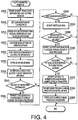
- the relay transmitter 2 performs a process shown in Fig. 4 .
- the CPU 20 of the relay transmitter 2 starts the process shown in Fig. 4 .
- S305 to S335 are substantially the same as S105 to S135 executed by the image processor 1, respectively.
- the CPU 20 first creates an SSID and an WEP from the physical addresses (MAC addresses), and saves settings therefor (S305). Then, the CPU 20 sets the communication mode of the wireless communication unit 28 to the ad hoc mode (S310). It is noted that the SSID and the WEP are the same as those created in S105.
- the CPU 20 creates an AES encryption key from the physical addresses, and saves the AES encryption key (S315).
- the AES encryption key created in S315 is the same as that created in S115.
- the CPU 20 After creating the AES encryption key (S315), the CPU 20 configures an initial setting concerning the wireless network (S320). Then, to start wireless communication, the CPU 20 begins to transmit the SSID (S325). After that, the CPU 20 establishes an ad hoc network with the image processor 1 (S330). Thereafter, the CPU 20 automatically assigns thereto a logic address (IP address) using the APIPA (S335).
- IP address logic address
- the CPU 20 determines whether the CPU 20 has received a request for management information (S340).
- the CPU 20 determines in S340 that the CPU 20 has received a request for management information (S340: Yes). In that case, the CPU 20 transmits, to the image processor 1, a response that includes information regarding the logic address and the physical address for the relay transmitter 2 (S345).
- the response transmitted in S345 is the aforementioned response that includes the information (i.e., the physical address for the relay transmitter 2) to be compared with the physical address for the relay transmitter 2 stored on the EEPROM 14C in S145.
- the CPU 20 goes to S350. Meanwhile, when determining in S340 that the CPU 20 has not received a request for management information (S340: No), the CPU 20 goes to S350 without executing S345.
- the CPU 20 determines whether the CPU 20 has received particular data from the image processor 1 (S350). It is noted that the particular data, which the CPU 20 determines in S350 whether the CPU 20 has received, is transmitted in the aforementioned step S165.
- the CPU 20 controls the encryption/decryption communication section 28B to decrypt the particular data with the AES encryption key (S355). Thereafter, the CPU 20 determines whether the particular data includes the instruction to start the authentication (S360).
- the CPU 20 When determining that the particular data includes the instruction to start the authentication (S360: Yes), the CPU 20 further decrypts the received particular data to acquire a physical address (S365). Then, the CPU 20 compares the acquired "physical address for the image processor 1" with the "physical address for the image processor 1" stored on the EEPROM 24C, and determines whether both the physical addresses are identical to each other (S370).
- the CPU 20 controls the encryption/decryption communication section 28B to encrypt a response to (the instruction to start) the authentication and the physical address of the relay transmitter 2 with the AES encryption key (S375). Then, the CPU 20 controls the particular-data determining section 28C to add the flag to the encrypted data and transmit the encrypted data with the flag set therein to the image processor 1 as particular data (S380).
- the CPU 20 stores the logic address of the image processor 1 onto the EEPROM 24C (S385). Thereafter, the CPU 20 terminates the process shown in Fig. 4 . Meanwhile, when the CPU 20 has not received particular data from the image processor 1 (S350: No), or the received particular data does not include the instruction to start the authentication (S360: No), or both the physical addresses are not identical to each other (S370: No), the CPU 20 terminates the process shown in Fig. 4 .
- the image processor 1 performs the steps S105 to S135 in response to the image processor 1 being powered on, so as to create the SSID, the WEP, and the AES encryption key from the physical addresses for both the image processor 1 and the relay transmitter 2 and establish communication environments for wireless communication in the ad hoc mode.
- the relay transmitter 2 performs the steps S305 to S335 in response to the relay transmitter 2 being powered on, so as to create the SSID, the WEP, and the AES encryption key from the physical addresses for both the image processor 1 and the relay transmitter 2 and establish communication environments for wireless communication in the ad hoc mode.
- the image processor 1 retrieves management information within the network based on the SNMP in S140.
- the relay transmitter 2 transmits to the image processor 1 the physical address and the logic address for the relay transmitter 2 in S345. It is noted that by this time, an encrypting operation with the AES encryption key has not yet been performed.
- the image processor 1 recognizes a device which may be the relay transmitter 2. Therefore, subsequently in S155 to S165, the image processor 1 transmits, to the relay transmitter 2, the instruction to start the authentication along with the physical address of the image processor 1 in an encrypted manner.
- the relay transmitter 2 transmits the response to the authentication along with the physical address of the relay transmitter 2 in an encrypted manner in S375 to S380.
- both the image processor 1 and the relay transmitter 2 recognize each other as a device with which communication can be performed using a common encryption key, and thus determine each other to be a proper device with which communication is to be established.
- both the image processor 1 and the relay transmitter 2 register their logic addresses onto the EEPROM 14C and the EEPROM 24C, respectively. After that, encrypted communication can be achieved between the image processor 1 and the relay transmitter 2.
- the image transmission system including the image processor 1 and the relay transmitter 2
- the image transmission system is set to be able to perform facsimile communication.
- the image processor 1 and the relay transmitter 2 authenticate each other with the physical address of each other.
- each of the image processor 1 and the relay transmitter 2 does not establish wireless connection with a device other than the image processor 1 and the relay transmitter 2.
- each of the image processor 1 and the relay transmitter 2 stores the physical addresses of both the image processor 1 and the relay transmitter 2, and creates the same network name based on the two physical addresses. Then, by using the same network name created, each of the image processor 1 and the relay transmitter 2 serves as a node of the same wireless network and performs wireless communication. Accordingly, even though another wireless network is present near the image processor 1 and the relay transmitter 2, another wireless communication device can hardly use the same network name.
- each of the image processor 1 and the relay transmitter 2 stores the physical addresses of both the image processor 1 and the relay transmitter 2, and creates the same encryption key based on the two physical addresses. Then, by using the same encryption key created, each of the image processor 1 and the relay transmitter 2 performs the same encrypted communication in the same encryption method. Accordingly, when the image processor 1 and the relay transmitter 2 perform wireless communication therebetween, a third party, who does not know the physical addresses of the image processor 1 and the relay transmitter 2, can hardly decrypt encrypted data. Thus, it is possible to transmit and receive confidential data between the image processor 1 and the relay transmitter 2.
- the image processor 1 when authentication is established between the image processor 1 and the relay transmitter 2, an encryption key usable only therebetween is used for encrypted communication therebetween.
- the image processor 1 is configured to communicate with the wireless communication device 6 other than the relay transmitter 2.
- the image processor 1 performs wireless communication with the wireless communication device 6 without using the encryption key created for the communication with the relay transmitter 2. Accordingly, even though communication is performed between the image processor 1 and the relay transmitter 2, the wireless communication device 6 cannot decrypt data exchanged between the image processor 1 and the relay transmitter 2. Thus, it is possible to exchange highly confidential data between the image processor 1 and the relay transmitter 2.
- the image processor 1 can establish wireless connection with the wireless communication device 6 which cannot recognize the encryption key created in the image processor 1 and the relay transmitter 2. Therefore, another device such as the wireless communication device 6 can easily utilize the image processor 1.
- the image transmission system is exemplified which is configured to perform facsimile communication (i.e., to transmit and receive facsimile data).
- aspects of the present invention may be applied to an image transmission system configured just for transmitting facsimile data or an image transmission system configured just for receiving facsimile data.
- the image processor 1 and the relay transmitter 2 authenticate each other as a target device with which wireless connection is to be established, using the physical address of each other. Further, the image processor 1 and the relay transmitter 2 create the same network name and the same encryption key. Nevertheless, the network name and the encryption key may not necessarily be associated with the physical addresses for the image processor 1 and the relay transmitter 2. In this respect, however, when the network name and the encryption key are created in association with the physical addresses for the image processor 1 and the relay transmitter 2 as exemplified in the aforementioned embodiment, the image transmission system can handle more highly confidential information that would hardly be decrypted by any other wireless communication device.
Landscapes
- Engineering & Computer Science (AREA)
- Multimedia (AREA)
- Signal Processing (AREA)
- Computer Networks & Wireless Communication (AREA)
- General Engineering & Computer Science (AREA)
- Mobile Radio Communication Systems (AREA)
- Facsimiles In General (AREA)
- Facsimile Transmission Control (AREA)
- Radio Relay Systems (AREA)
Claims (12)
- Datenprozessor (1), der dafür ausgelegt ist, über eine drahtlose Kommunikation mit einem Relais-Sender (2) einen Datenaustausch mit einer externen Vorrichtung (5) durchzuführen, aufweisend:eine Kommunikationseinheit; (18), die dafür ausgelegt ist, eine drahtlose Kommunikation mit dem Relais-Sender (2) durchzuführen;eine Speichereinheit (14C), die dafür ausgelegt ist, eine erste physische Adresse für den Relais-Sender (2) zu speichern;eine Authentifizierungsstarteinrichtung, die dafür ausgelegt ist, als Reaktion darauf, dass der Datenprozessor (1) eingeschaltet wird, einen Befehl zum Starten einer Authentifizierung zwischen dem Datenprozessor (1) und dem Relais-Sender (2) zusammen mit einer physischen Adresse für den Datenprozessor (1) an den Relais-Sender (2) zu senden;einen Adressenempfänger, der dafür ausgelegt ist, als Reaktion auf den Befehl eine zweite physische Adresse für den Relais-Sender (2) von dem Relais-Sender (2) zu empfangen;eine Bestimmungseinheit, um eine Bestimmung dahingehend zu treffen, ob die zweite physische Adresse für den Relais-Sender (2) identisch ist mit der ersten physischen Adresse für den Relais-Sender (2); undeine Verbindungseinheit, die dafür ausgelegt ist, eine drahtlose Verbindung zwischen der Kommunikationseinheit (18) und dem Relais-Sender (2) einzurichten, wenn eine oder mehrere Authentifizierungsanforderungen erfüllt sind, um den Datenaustausch zwischen dem Datenprozessor (1) und der externen Vorrichtung (5) über den Relais-Sender (2) zu erreichen, wobei die Authentifizierungsanforderungen die Bestimmung durch die Bestimmungseinheit, dass die zweite physische Adresse für den Relais-Sender (2) identisch ist mit der ersten physischen Adresse für den Relais-Sender (2), einschließt,dadurch gekennzeichnet, dass die erste physische Adresse für den Relais-Sender (2) in der Speichereinheit (14C) gespeichert wird, bevor der Datenprozessor (1) eingeschaltet wird, und dass der Datenprozessor (1) eine Verschlüsselungsschlüssel-Erzeugungseinheit aufweist, die dafür ausgelegt ist, auf Basis der physischen Adresse des Datenprozessors (1) und der ersten physischen Adresse für den Relais-Sender (2) einen Verschlüsselungsschlüssel zu erzeugen, so dass der erzeugte Verschlüsselungsschlüssel identisch ist mit einem Verschlüsselungsschlüssel, der von dem Relais-Sender (2) erzeugt wird,wobei die Kommunikationseinheit (18) dafür ausgelegt ist, unter Verwendung des Verschlüsselungsschlüssels, der von der Verschlüsselungsschlüssel-Erzeugungseinheit erzeugt wird, eine drahtlose Kommunikation mit dem Relais-Sender (2) durchzuführen, so dass der Befehl und die physische Adresse für den Prozessor (1), die durch die Authentifizierungsstarteinrichtung an den Relais-Sender (2) gesendet werden, unter Verwendung des von der Verschlüsselungsschlüssel-Erzeugungseinheit erzeugten Verschlüsselungsschlüssels verschlüsselt werden und so, dass die zweite physische Adresse für den Relais-Sender (2), die vom Adressenempfänger empfangen wird, unter Verwendung des von der Verschlüsselungsschlüssel-Erzeugungseinheit erzeugten Verschlüsselungsschlüssels entschlüsselt wird.
- Datenprozessor (1) nach Anspruch 1,
wobei die Speichereinheit dafür ausgelegt ist, eine erste physische Adresse für den Relais-Sender (2) vorab zu speichern;
wobei der Adressenempfänger dafür ausgelegt ist, in einem Zustand, wo die erste physische Adresse für den Relais-Sender (2) in der Speichereinheit gespeichert ist, vom Relais-Sender (2) die zweite physische Adresse für den Relais-Sender (2) zu empfangen, nachdem der Datenprozessor (1) eingeschaltet worden ist. - Datenprozessor (1) nach Anspruch 1 oder 2, ferner eine Bilderfassungseinheit aufweisend, die dafür ausgelegt ist, ein Bild zu erfassen,
wobei die Kommunikationseinheit (18) einen Bildsender aufweist, der dafür ausgelegt ist, das von der Bilderfassungseinheit erfasste Bild zu senden. - Datenprozessor (1) nach einem der Ansprüche 1 bis 3,
wobei die Kommunikationseinheit (18) einen Bildempfänger aufweist, der dafür ausgelegt ist, über drahtlose Kommunikation mit dem Relais-Sender (2) ein Bild von der externen Vorrichtung (5) zu empfangen, und
wobei der Datenprozessor (1) ferner eine Bildausgabeeinheit aufweist, die dafür ausgelegt ist, das vom Bildempfänger empfangene Bild auszugeben. - Datenprozessor (1) nach einem der Ansprüche 1 bis 4, ferner eine Netznamenerzeugungseinheit aufweisend, die dafür ausgelegt ist, auf Basis der physischen Adresse für den Datenprozessor (1) und der ersten physischen Adresse für den Relais-Sender (2) einen Netznamen für ein drahtloses Netz zu erzeugen, in dem der Datenprozessor (1) und der Relais-Sender (2) enthalten sind, so dass der erzeugte Netzname identisch ist mit einem Netznamen, der vom Relais-Sender (2) für das drahtlose Netz erzeugt wird,
wobei die Kommunikationseinheit (18) dafür ausgelegt ist, auf Basis des von der Netznamenerzeugungseinheit erzeugten Netznamens eine drahtlose Kommunikation mit dem Relais-Sender (2) durchzuführen. - Datenprozessor (1) nach einem der Ansprüche 1 bis 5,
wobei die Kommunikationseinheit (18) dafür ausgelegt ist, eine drahtlose Kommunikation mit einer drahtlosen Kommunikationsvorrichtung (6), bei der es sich nicht um den Relais-Sender (2) handelt, entweder auf direkte Weise oder auf indirekte Weise über einen Zugriffspunkt durchzuführen.
wobei die Kommunikationseinheit (18) bestimmt, ob sie mit dem Relais-Sender (2) oder der anderen drahtlosen Kommunikationsvorrichtung (6) kommunizieren soll,
wobei die Kommunikationseinheit (18), wenn sie bestimmt, dass die Kommunikationseinheit (18) mit dem Relais-Sender (2) kommunizieren soll, eine verschlüsselte Kommunikation mit dem Relais-Sender (2) durchführt,
wobei die Kommunikationseinheit (18), wenn sie bestimmt, dass die Kommunikationseinheit (18) mit dem Relais-Sender (2) kommunizieren soll, die verschlüsselte drahtlose Kommunikation mit dem Relais-Sender (2) unter Verwendung des von der Verschlüsselungsschlüssel-Erzeugungseinheit verschlüsselten Verschlüsselungsschlüssels durchführt,
wobei die Kommunikationseinheit (18), wenn sie bestimmt, dass die Kommunikationseinheit (18) mit der anderen drahtlosen Vorrichtung (6) kommunizieren soll, eine drahtlose Kommunikation mit der anderen drahtlosen Vorrichtung (6) durchführt, ohne den Verschlüsselungsschlüssel zu verwenden. - Relais-Sender (2), aufweisend:eine erste Kommunikationseinheit (28), die dafür ausgelegt ist, eine drahtlose Kommunikation mit einem Datenprozessor (1) durchzuführen;eine zweite Kommunikationseinheit (29), die dafür ausgelegt ist, einen Datenaustausch mit einer externen Vorrichtung (5) durchzuführen;eine Speichereinheit (24C), die dafür ausgelegt ist, eine erste physische Adresse für den Datenprozessor (1) zu speichern;einen Adressenempfänger, der dafür ausgelegt ist, als Reaktion darauf, dass der Relais-Sender (2) eingeschaltet wird, vom Datenprozessor (1) eine zweite physische Adresse für den Datenprozessor (1) zusammen mit einem Befehl zum Starten einer Authentifizierung zwischen dem Datenprozessor (1) und dem Relais-Sender (2) zu empfangen;eine Bestimmungseinheit, die dafür ausgelegt ist, als Reaktion auf den Befehl vom Datenprozessor (1) eine Bestimmung dahingehend zu treffen, ob die zweite physische Adresse für den Datenprozessor (1) identisch ist mit der ersten physischen Adresse für den Datenprozessor (1); undeine Verbindungseinheit, die dafür ausgelegt ist, eine physische Adresse für den Relais-Sender (2) an den Datenprozessor (1) zu senden und eine drahtlose Verbindung zwischen der Kommunikationseinheit (28) und dem Datenprozessor (1) einzurichten, wenn eine oder mehrere Authentifizierungsanforderungen erfüllt sind, um den Datenaustausch zwischen dem Datenprozessor (1) und der externen Vorrichtung (5) über den Relais-Sender (2) zu erreichen, wobei die Authentifizierungsanforderungen die Bestimmung durch die Bestimmungseinheit, dass die zweite physische Adresse für den Datenprozessor (1) identisch ist mit der ersten physischen Adresse für den Datenprozessor (1), einschließt,dadurch gekennzeichnet, dass die erste physische Adresse für den Datenprozessor (1) in der Speichereinheit (24C) gespeichert wird, bevor der Relais-Sender (2) eingeschaltet wird, und dass der Relais-Sender (2) eine Verschlüsselungsschlüssel-Erzeugungseinheit aufweist, die dafür ausgelegt ist, auf Basis der physischen Adresse für den Relais-Sender (2) und der ersten physischen Adresse für den Datenprozessor (1) einen Verschlüsselungsschlüssel zu erzeugen, so dass der erzeugte Verschlüsselungsschlüssel identisch ist mit einem Verschlüsselungsschlüssel, der von dem Datenprozessor (1) erzeugt wird,wobei die erste Kommunikationseinheit (28) dafür ausgelegt ist, unter Verwendung des Verschlüsselungsschlüssels, der von der Verschlüsselungsschlüssel-Erzeugungseinheit erzeugt wird, eine drahtlose Kommunikation mit dem Datenprozessor (1) durchzuführen, so dass die physische Adresse für den Relais-Sender (2), die von der Verbindungseinheit an den Datenprozessor (1) gesendet wird, unter Verwendung des von der Verschlüsselungsschlüssel-Erzeugungseinheit erzeugten Verschlüsselungsschlüssels verschlüsselt wird und so, dass die zweite physische Adresse für den Datenprozessor (1) und der Befehl zum Starten der Authentifizierung zwischen dem Datenprozessor (1) und dem Relais-Sender (2), die vom Adressenempfänger empfangen werden, unter Verwendung des von der Verschlüsselungsschlüssel-Erzeugungseinheit erzeugten Verschlüsselungsschlüssels entschlüsselt werden.
- Relais-Sender (2) nach Anspruch 7,
wobei die Speichereinheit dafür ausgelegt ist, eine erste physische Adresse für den Datenprozessor (1) vorab zu speichern; und
wobei der Adressenempfänger dafür ausgelegt ist, in einem Zustand, wo die erste physische Adresse für den Datenprozessor (1) in der Speichereinheit gespeichert ist, vom Datenprozessor (1) die zweite physische Adresse für den Datenprozessor (1) zu empfangen, nachdem der Relais-Sender (2) eingeschaltet worden ist, - Relais-Sender (2) nach Anspruch 7 oder 8,
wobei die erste Kommunikationseinheit (28) eine erste Empfangseinheit aufweist, die dafür ausgelegt ist, über drahtlose Kommunikation ein Bild von dem Datenprozessor (1) zu empfangen, und
wobei die zweite Kommunikationseinheit (29) eine erste Sendeeinheit aufweist, die dafür ausgelegt ist, das an der ersten Empfangseinheit empfangene Bild über Faksimile-Kommunikation an die externe Vorrichtung (5) zu senden. - Relais-Sender (2) nach einem der Ansprüche 7 bis 9,
wobei die zweite Kommunikationseinheit (29) eine zweite Empfangseinheit aufweist, die dafür ausgelegt ist, über Faksimile-Kommunikation ein Bild von der externen Vorrichtung (5) zu empfangen, und wobei die erste Kommunikationseinheit (28) eine zweite Sendeeinheit aufweist, die dafür ausgelegt ist, das von der zweiten Empfangseinheit empfangene Bild über drahtlose Kommunikation an den Datenprozessor (1) zu senden. - Relais-Sender (2) nach einem der Ansprüche 7 bis 10, ferner eine Netznamenerzeugungseinheit aufweisend, die dafür ausgelegt ist, auf Basis der physischen Adresse für den Relais-Sender (2) und der ersten physischen Adresse für den Datenprozessor (1) einen Netznamen für ein drahtloses Netz zu erzeugen, in dem der Datenprozessor (1) und der Relais-Sender (2) enthalten sind, so dass der erzeugte Netzname identisch ist mit einem Netznamen, der Datenprozessor (1) für das drahtlose Netz erzeugt wird,
wobei die erste Kommunikationseinheit (28) dafür ausgelegt ist, auf Basis des von der Netznamenerzeugungseinheit erzeugten Netznamens eine drahtlose Kommunikation mit dem Datenprozessor (1) durchzuführen. - Datenübertragungssystem, den Datenprozessor (1) nach Anspruch 1 und den Relais-Sender (2) nach Anspruch 7 aufweisend.
Applications Claiming Priority (1)
| Application Number | Priority Date | Filing Date | Title |
|---|---|---|---|
| JP2009085993A JP4687808B2 (ja) | 2009-03-31 | 2009-03-31 | 画像伝送システム |
Publications (3)
| Publication Number | Publication Date |
|---|---|
| EP2237547A2 EP2237547A2 (de) | 2010-10-06 |
| EP2237547A3 EP2237547A3 (de) | 2012-05-16 |
| EP2237547B1 true EP2237547B1 (de) | 2020-04-15 |
Family
ID=42199454
Family Applications (1)
| Application Number | Title | Priority Date | Filing Date |
|---|---|---|---|
| EP10003161.6A Not-in-force EP2237547B1 (de) | 2009-03-31 | 2010-03-24 | Datenprozessor, Relaissender und Datenübertragungssystem |
Country Status (4)
| Country | Link |
|---|---|
| US (1) | US8650400B2 (de) |
| EP (1) | EP2237547B1 (de) |
| JP (1) | JP4687808B2 (de) |
| CN (1) | CN101854626B (de) |
Families Citing this family (6)
| Publication number | Priority date | Publication date | Assignee | Title |
|---|---|---|---|---|
| JP5037718B1 (ja) * | 2011-07-27 | 2012-10-03 | 株式会社ビジョナリスト | 簡易操作型無線データ送受信システム及び簡易操作型無線データ送受信プログラム |
| WO2013014763A1 (ja) * | 2011-07-27 | 2013-01-31 | 株式会社ビジョナリスト | 簡易操作型無線データ送受信システム及び簡易操作型無線データ送受信プログラム |
| US10069802B2 (en) * | 2014-02-18 | 2018-09-04 | Ciena Corporation | Method for securely configuring customer premise equipment |
| CN106576042B (zh) | 2014-07-14 | 2019-12-06 | 三菱电机株式会社 | 无线通信系统以及无线通信方法 |
| US10116633B2 (en) * | 2016-09-16 | 2018-10-30 | Bank Of America Corporation | Systems and devices for hardened remote storage of private cryptography keys used for authentication |
| JP6580090B2 (ja) * | 2017-06-30 | 2019-09-25 | キヤノン株式会社 | 通信方法、通信装置、およびプログラム |
Family Cites Families (29)
| Publication number | Priority date | Publication date | Assignee | Title |
|---|---|---|---|---|
| US7356347B1 (en) * | 2000-09-28 | 2008-04-08 | Palmsource, Inc. | Efficient discovery of devices in a bluetooth environment |
| JP2002118698A (ja) * | 2000-10-11 | 2002-04-19 | Canon Inc | 記憶媒体および情報処理装置 |
| JP4644998B2 (ja) * | 2001-09-28 | 2011-03-09 | ブラザー工業株式会社 | 認証システム、認証装置およびサービス提供装置 |
| EP1310862B1 (de) * | 2001-11-09 | 2018-09-26 | Brother Kogyo Kabushiki Kaisha | Druckersystem |
| US7571240B2 (en) * | 2001-12-27 | 2009-08-04 | Brother Kogyo Kabushiki Kaisha | Service providing system that provides services and terminal device that requests services via a wireless network |
| GB0200237D0 (en) * | 2002-01-07 | 2002-02-20 | Imec Inter Uni Micro Electr | Wireless cellular network architecture |
| US7417773B2 (en) * | 2002-09-30 | 2008-08-26 | Pitney Bowes Inc. | Method and system for creating and sending a facsimile using a digital pen |
| JP2005142792A (ja) | 2003-11-06 | 2005-06-02 | Sanyo Electric Co Ltd | 接続情報設定方法および無線通信端末 |
| JP4307227B2 (ja) * | 2003-12-03 | 2009-08-05 | キヤノン株式会社 | 設定方法 |
| WO2005114913A1 (en) * | 2004-05-21 | 2005-12-01 | Nokia Corporation | Device and method for automated functionality-based selective establishing of wireless data communication connections |
| JP2006001063A (ja) * | 2004-06-16 | 2006-01-05 | Fuji Photo Film Co Ltd | ダイレクト・プリント・システム |
| US20060039332A1 (en) * | 2004-08-17 | 2006-02-23 | Kotzin Michael D | Mechanism for hand off using subscriber detection of synchronized access point beacon transmissions |
| WO2006103646A2 (en) * | 2005-03-30 | 2006-10-05 | Nds Limited | Home networking security solution |
| JP4689339B2 (ja) | 2005-04-27 | 2011-05-25 | キヤノン株式会社 | 通信装置及びその通信用パラメータの設定方法 |
| JP2007116474A (ja) | 2005-10-20 | 2007-05-10 | Fujifilm Corp | カメラシステム |
| JP4281763B2 (ja) * | 2006-06-28 | 2009-06-17 | カシオ計算機株式会社 | 無線通信システム |
| JP4894532B2 (ja) * | 2007-01-22 | 2012-03-14 | ソニー株式会社 | 通信装置、通信システム、通信方法及び通信プログラム |
| JP2008182439A (ja) | 2007-01-24 | 2008-08-07 | Fuji Xerox Co Ltd | 情報処理装置、無線通信装置、無線通信システム、無線設定プログラム |
| US8429713B2 (en) * | 2007-04-02 | 2013-04-23 | Sony Corporation | Method and apparatus to speed transmission of CEC commands |
| CN101304365B (zh) * | 2007-05-08 | 2012-12-12 | 华为技术有限公司 | 认证方法和认证系统 |
| US8010778B2 (en) | 2007-06-13 | 2011-08-30 | Intel Corporation | Apparatus and methods for negotiating a capability in establishing a peer-to-peer communication link |
| US20090070691A1 (en) * | 2007-09-12 | 2009-03-12 | Devicefidelity, Inc. | Presenting web pages through mobile host devices |
| JP2009088750A (ja) | 2007-09-28 | 2009-04-23 | Mitsubishi Electric Corp | 管理装置、無線端末、アドホックネットワークシステム、管理装置の設定変更プログラム、管理装置の設定変更方法、無線端末の設定変更プログラム及び無線端末の設定変更方法 |
| US8949434B2 (en) * | 2007-12-17 | 2015-02-03 | Microsoft Corporation | Automatically provisioning a WWAN device |
| EP2096505A1 (de) * | 2008-02-26 | 2009-09-02 | ABB Research Ltd. | Verfahren, Produkte und System zur Konfiguration eines neuen Knotens eines industriellen Funknetzwerks |
| JP2008278522A (ja) | 2008-06-10 | 2008-11-13 | Canon Inc | 撮像装置及びその制御方法、並びに、無線通信環境設定方法 |
| EP2568767A1 (de) * | 2008-09-12 | 2013-03-13 | Koninklijke KPN N.V. | Kommunikationssystem und Verfahren für den drahtlosen Austausch von Benutzerdaten mit einem Benutzerendgerät |
| JP4490499B2 (ja) * | 2008-11-26 | 2010-06-23 | パナソニック株式会社 | 通信端末、中継機器、無線通信システム、無線通信制御方法、及びプログラム |
| JP2010177757A (ja) * | 2009-01-27 | 2010-08-12 | Panasonic Corp | 無線通信装置および接続先検索方法 |
-
2009
- 2009-03-31 JP JP2009085993A patent/JP4687808B2/ja active Active
-
2010
- 2010-03-24 EP EP10003161.6A patent/EP2237547B1/de not_active Not-in-force
- 2010-03-25 US US12/731,463 patent/US8650400B2/en active Active
- 2010-03-31 CN CN2010101581831A patent/CN101854626B/zh active Active
Non-Patent Citations (1)
| Title |
|---|
| None * |
Also Published As
| Publication number | Publication date |
|---|---|
| US8650400B2 (en) | 2014-02-11 |
| US20100250940A1 (en) | 2010-09-30 |
| EP2237547A3 (de) | 2012-05-16 |
| JP4687808B2 (ja) | 2011-05-25 |
| JP2010239450A (ja) | 2010-10-21 |
| CN101854626A (zh) | 2010-10-06 |
| CN101854626B (zh) | 2013-05-08 |
| EP2237547A2 (de) | 2010-10-06 |
Similar Documents
| Publication | Publication Date | Title |
|---|---|---|
| US11630619B2 (en) | Terminal device, access point, communication device, and computer programs therefor | |
| EP2237547B1 (de) | Datenprozessor, Relaissender und Datenübertragungssystem | |
| JP6797651B2 (ja) | 印刷装置、印刷装置の制御方法、及びプログラム | |
| JP7312212B2 (ja) | 情報処理装置、その制御方法、及びプログラム | |
| JP5743673B2 (ja) | 通信システム、通信装置、情報処理装置、制御方法、およびプログラム | |
| JP2022131419A (ja) | 情報処理装置、その制御方法、並びにプログラム | |
| JP6570355B2 (ja) | 通信装置、通信方法及びプログラム | |
| JP2006101416A (ja) | 無線通信装置及び無線通信装置の制御方法 | |
| JP2023068539A (ja) | プログラムおよび方法 | |
| US10805504B2 (en) | Communication device and non-transitory computer-readable recording medium storing computer-readable instructions for communication device | |
| US20200311357A1 (en) | Authentication processing system, authentication method and image processing apparatus | |
| JP2022131420A (ja) | 情報処理装置、その制御方法、並びにプログラム | |
| JP6149385B2 (ja) | 画像処理システム,画像処理装置,および情報処理装置 | |
| JP5040949B2 (ja) | 通信装置とアクセスポイントとアドレス提供システム。 | |
| JP7797142B2 (ja) | 情報処理装置、その制御方法、並びにプログラム | |
| CN116647839A (zh) | 通信设备及其控制方法 | |
| JP2013041538A (ja) | 情報処理装置、情報処理装置の制御方法及び情報処理装置の制御プログラム | |
| JP2023079947A (ja) | 通信装置、その制御方法、並びにプログラム | |
| JP4479494B2 (ja) | ドキュメント処理システム | |
| JP6256567B2 (ja) | 情報処理システム、情報処理装置及びプログラム | |
| US20240407021A1 (en) | Communication apparatus, method, and storage medium for storing a program | |
| JP7647131B2 (ja) | 通信システム、通信装置、及び、サーバのためのコンピュータプログラム | |
| JP2024084450A (ja) | 情報処理装置、方法、プログラム、システム | |
| JP2023166256A (ja) | 通信システム、通信装置とその制御方法、並びにプログラム | |
| JP5883185B2 (ja) | 通信装置、通信システム、制御方法、通信方法、およびプログラム |
Legal Events
| Date | Code | Title | Description |
|---|---|---|---|
| PUAI | Public reference made under article 153(3) epc to a published international application that has entered the european phase |
Free format text: ORIGINAL CODE: 0009012 |
|
| AK | Designated contracting states |
Kind code of ref document: A2 Designated state(s): AT BE BG CH CY CZ DE DK EE ES FI FR GB GR HR HU IE IS IT LI LT LU LV MC MK MT NL NO PL PT RO SE SI SK SM TR |
|
| AX | Request for extension of the european patent |
Extension state: AL BA ME RS |
|
| PUAL | Search report despatched |
Free format text: ORIGINAL CODE: 0009013 |
|
| AK | Designated contracting states |
Kind code of ref document: A3 Designated state(s): AT BE BG CH CY CZ DE DK EE ES FI FR GB GR HR HU IE IS IT LI LT LU LV MC MK MT NL NO PL PT RO SE SI SK SM TR |
|
| AX | Request for extension of the european patent |
Extension state: AL BA ME RS |
|
| RIC1 | Information provided on ipc code assigned before grant |
Ipc: H04N 1/32 20060101AFI20120412BHEP |
|
| 17P | Request for examination filed |
Effective date: 20121116 |
|
| 17Q | First examination report despatched |
Effective date: 20150415 |
|
| STAA | Information on the status of an ep patent application or granted ep patent |
Free format text: STATUS: EXAMINATION IS IN PROGRESS |
|
| GRAP | Despatch of communication of intention to grant a patent |
Free format text: ORIGINAL CODE: EPIDOSNIGR1 |
|
| STAA | Information on the status of an ep patent application or granted ep patent |
Free format text: STATUS: GRANT OF PATENT IS INTENDED |
|
| INTG | Intention to grant announced |
Effective date: 20191021 |
|
| GRAS | Grant fee paid |
Free format text: ORIGINAL CODE: EPIDOSNIGR3 |
|
| GRAA | (expected) grant |
Free format text: ORIGINAL CODE: 0009210 |
|
| STAA | Information on the status of an ep patent application or granted ep patent |
Free format text: STATUS: THE PATENT HAS BEEN GRANTED |
|
| AK | Designated contracting states |
Kind code of ref document: B1 Designated state(s): AT BE BG CH CY CZ DE DK EE ES FI FR GB GR HR HU IE IS IT LI LT LU LV MC MK MT NL NO PL PT RO SE SI SK SM TR |
|
| REG | Reference to a national code |
Ref country code: GB Ref legal event code: FG4D Ref country code: CH Ref legal event code: EP |
|
| REG | Reference to a national code |
Ref country code: DE Ref legal event code: R096 Ref document number: 602010063896 Country of ref document: DE |
|
| REG | Reference to a national code |
Ref country code: IE Ref legal event code: FG4D |
|
| REG | Reference to a national code |
Ref country code: AT Ref legal event code: REF Ref document number: 1258666 Country of ref document: AT Kind code of ref document: T Effective date: 20200515 |
|
| REG | Reference to a national code |
Ref country code: NL Ref legal event code: MP Effective date: 20200415 |
|
| REG | Reference to a national code |
Ref country code: LT Ref legal event code: MG4D |
|
| PG25 | Lapsed in a contracting state [announced via postgrant information from national office to epo] |
Ref country code: FI Free format text: LAPSE BECAUSE OF FAILURE TO SUBMIT A TRANSLATION OF THE DESCRIPTION OR TO PAY THE FEE WITHIN THE PRESCRIBED TIME-LIMIT Effective date: 20200415 Ref country code: IS Free format text: LAPSE BECAUSE OF FAILURE TO SUBMIT A TRANSLATION OF THE DESCRIPTION OR TO PAY THE FEE WITHIN THE PRESCRIBED TIME-LIMIT Effective date: 20200815 Ref country code: GR Free format text: LAPSE BECAUSE OF FAILURE TO SUBMIT A TRANSLATION OF THE DESCRIPTION OR TO PAY THE FEE WITHIN THE PRESCRIBED TIME-LIMIT Effective date: 20200716 Ref country code: NO Free format text: LAPSE BECAUSE OF FAILURE TO SUBMIT A TRANSLATION OF THE DESCRIPTION OR TO PAY THE FEE WITHIN THE PRESCRIBED TIME-LIMIT Effective date: 20200715 Ref country code: NL Free format text: LAPSE BECAUSE OF FAILURE TO SUBMIT A TRANSLATION OF THE DESCRIPTION OR TO PAY THE FEE WITHIN THE PRESCRIBED TIME-LIMIT Effective date: 20200415 Ref country code: PT Free format text: LAPSE BECAUSE OF FAILURE TO SUBMIT A TRANSLATION OF THE DESCRIPTION OR TO PAY THE FEE WITHIN THE PRESCRIBED TIME-LIMIT Effective date: 20200817 Ref country code: SE Free format text: LAPSE BECAUSE OF FAILURE TO SUBMIT A TRANSLATION OF THE DESCRIPTION OR TO PAY THE FEE WITHIN THE PRESCRIBED TIME-LIMIT Effective date: 20200415 Ref country code: LT Free format text: LAPSE BECAUSE OF FAILURE TO SUBMIT A TRANSLATION OF THE DESCRIPTION OR TO PAY THE FEE WITHIN THE PRESCRIBED TIME-LIMIT Effective date: 20200415 |
|
| REG | Reference to a national code |
Ref country code: AT Ref legal event code: MK05 Ref document number: 1258666 Country of ref document: AT Kind code of ref document: T Effective date: 20200415 |
|
| PG25 | Lapsed in a contracting state [announced via postgrant information from national office to epo] |
Ref country code: BG Free format text: LAPSE BECAUSE OF FAILURE TO SUBMIT A TRANSLATION OF THE DESCRIPTION OR TO PAY THE FEE WITHIN THE PRESCRIBED TIME-LIMIT Effective date: 20200715 Ref country code: HR Free format text: LAPSE BECAUSE OF FAILURE TO SUBMIT A TRANSLATION OF THE DESCRIPTION OR TO PAY THE FEE WITHIN THE PRESCRIBED TIME-LIMIT Effective date: 20200415 Ref country code: LV Free format text: LAPSE BECAUSE OF FAILURE TO SUBMIT A TRANSLATION OF THE DESCRIPTION OR TO PAY THE FEE WITHIN THE PRESCRIBED TIME-LIMIT Effective date: 20200415 |
|
| REG | Reference to a national code |
Ref country code: DE Ref legal event code: R097 Ref document number: 602010063896 Country of ref document: DE |
|
| PG25 | Lapsed in a contracting state [announced via postgrant information from national office to epo] |
Ref country code: AT Free format text: LAPSE BECAUSE OF FAILURE TO SUBMIT A TRANSLATION OF THE DESCRIPTION OR TO PAY THE FEE WITHIN THE PRESCRIBED TIME-LIMIT Effective date: 20200415 Ref country code: EE Free format text: LAPSE BECAUSE OF FAILURE TO SUBMIT A TRANSLATION OF THE DESCRIPTION OR TO PAY THE FEE WITHIN THE PRESCRIBED TIME-LIMIT Effective date: 20200415 Ref country code: IT Free format text: LAPSE BECAUSE OF FAILURE TO SUBMIT A TRANSLATION OF THE DESCRIPTION OR TO PAY THE FEE WITHIN THE PRESCRIBED TIME-LIMIT Effective date: 20200415 Ref country code: SM Free format text: LAPSE BECAUSE OF FAILURE TO SUBMIT A TRANSLATION OF THE DESCRIPTION OR TO PAY THE FEE WITHIN THE PRESCRIBED TIME-LIMIT Effective date: 20200415 Ref country code: DK Free format text: LAPSE BECAUSE OF FAILURE TO SUBMIT A TRANSLATION OF THE DESCRIPTION OR TO PAY THE FEE WITHIN THE PRESCRIBED TIME-LIMIT Effective date: 20200415 Ref country code: ES Free format text: LAPSE BECAUSE OF FAILURE TO SUBMIT A TRANSLATION OF THE DESCRIPTION OR TO PAY THE FEE WITHIN THE PRESCRIBED TIME-LIMIT Effective date: 20200415 Ref country code: CZ Free format text: LAPSE BECAUSE OF FAILURE TO SUBMIT A TRANSLATION OF THE DESCRIPTION OR TO PAY THE FEE WITHIN THE PRESCRIBED TIME-LIMIT Effective date: 20200415 Ref country code: RO Free format text: LAPSE BECAUSE OF FAILURE TO SUBMIT A TRANSLATION OF THE DESCRIPTION OR TO PAY THE FEE WITHIN THE PRESCRIBED TIME-LIMIT Effective date: 20200415 |
|
| PLBE | No opposition filed within time limit |
Free format text: ORIGINAL CODE: 0009261 |
|
| STAA | Information on the status of an ep patent application or granted ep patent |
Free format text: STATUS: NO OPPOSITION FILED WITHIN TIME LIMIT |
|
| PG25 | Lapsed in a contracting state [announced via postgrant information from national office to epo] |
Ref country code: SK Free format text: LAPSE BECAUSE OF FAILURE TO SUBMIT A TRANSLATION OF THE DESCRIPTION OR TO PAY THE FEE WITHIN THE PRESCRIBED TIME-LIMIT Effective date: 20200415 Ref country code: PL Free format text: LAPSE BECAUSE OF FAILURE TO SUBMIT A TRANSLATION OF THE DESCRIPTION OR TO PAY THE FEE WITHIN THE PRESCRIBED TIME-LIMIT Effective date: 20200415 |
|
| 26N | No opposition filed |
Effective date: 20210118 |
|
| PG25 | Lapsed in a contracting state [announced via postgrant information from national office to epo] |
Ref country code: SI Free format text: LAPSE BECAUSE OF FAILURE TO SUBMIT A TRANSLATION OF THE DESCRIPTION OR TO PAY THE FEE WITHIN THE PRESCRIBED TIME-LIMIT Effective date: 20200415 |
|
| PG25 | Lapsed in a contracting state [announced via postgrant information from national office to epo] |
Ref country code: MC Free format text: LAPSE BECAUSE OF FAILURE TO SUBMIT A TRANSLATION OF THE DESCRIPTION OR TO PAY THE FEE WITHIN THE PRESCRIBED TIME-LIMIT Effective date: 20200415 |
|
| REG | Reference to a national code |
Ref country code: CH Ref legal event code: PL |
|
| GBPC | Gb: european patent ceased through non-payment of renewal fee |
Effective date: 20210324 |
|
| REG | Reference to a national code |
Ref country code: BE Ref legal event code: MM Effective date: 20210331 |
|
| PG25 | Lapsed in a contracting state [announced via postgrant information from national office to epo] |
Ref country code: LU Free format text: LAPSE BECAUSE OF NON-PAYMENT OF DUE FEES Effective date: 20210324 Ref country code: LI Free format text: LAPSE BECAUSE OF NON-PAYMENT OF DUE FEES Effective date: 20210331 Ref country code: CH Free format text: LAPSE BECAUSE OF NON-PAYMENT OF DUE FEES Effective date: 20210331 Ref country code: IE Free format text: LAPSE BECAUSE OF NON-PAYMENT OF DUE FEES Effective date: 20210324 Ref country code: GB Free format text: LAPSE BECAUSE OF NON-PAYMENT OF DUE FEES Effective date: 20210324 Ref country code: FR Free format text: LAPSE BECAUSE OF NON-PAYMENT OF DUE FEES Effective date: 20210331 |
|
| PG25 | Lapsed in a contracting state [announced via postgrant information from national office to epo] |
Ref country code: BE Free format text: LAPSE BECAUSE OF NON-PAYMENT OF DUE FEES Effective date: 20210331 |
|
| PG25 | Lapsed in a contracting state [announced via postgrant information from national office to epo] |
Ref country code: HU Free format text: LAPSE BECAUSE OF FAILURE TO SUBMIT A TRANSLATION OF THE DESCRIPTION OR TO PAY THE FEE WITHIN THE PRESCRIBED TIME-LIMIT; INVALID AB INITIO Effective date: 20100324 Ref country code: CY Free format text: LAPSE BECAUSE OF FAILURE TO SUBMIT A TRANSLATION OF THE DESCRIPTION OR TO PAY THE FEE WITHIN THE PRESCRIBED TIME-LIMIT Effective date: 20200415 |
|
| PG25 | Lapsed in a contracting state [announced via postgrant information from national office to epo] |
Ref country code: MK Free format text: LAPSE BECAUSE OF FAILURE TO SUBMIT A TRANSLATION OF THE DESCRIPTION OR TO PAY THE FEE WITHIN THE PRESCRIBED TIME-LIMIT Effective date: 20200415 |
|
| PGFP | Annual fee paid to national office [announced via postgrant information from national office to epo] |
Ref country code: DE Payment date: 20240209 Year of fee payment: 15 |
|
| PG25 | Lapsed in a contracting state [announced via postgrant information from national office to epo] |
Ref country code: TR Free format text: LAPSE BECAUSE OF FAILURE TO SUBMIT A TRANSLATION OF THE DESCRIPTION OR TO PAY THE FEE WITHIN THE PRESCRIBED TIME-LIMIT Effective date: 20200415 |
|
| PG25 | Lapsed in a contracting state [announced via postgrant information from national office to epo] |
Ref country code: MT Free format text: LAPSE BECAUSE OF FAILURE TO SUBMIT A TRANSLATION OF THE DESCRIPTION OR TO PAY THE FEE WITHIN THE PRESCRIBED TIME-LIMIT Effective date: 20200415 |
|
| REG | Reference to a national code |
Ref country code: DE Ref legal event code: R119 Ref document number: 602010063896 Country of ref document: DE |
|
| PG25 | Lapsed in a contracting state [announced via postgrant information from national office to epo] |
Ref country code: DE Free format text: LAPSE BECAUSE OF NON-PAYMENT OF DUE FEES Effective date: 20251001 |