US4110422A - Production of stabilized wet process phosphoric acid - Google Patents
Production of stabilized wet process phosphoric acid Download PDFInfo
- Publication number
- US4110422A US4110422A US05/812,319 US81231977A US4110422A US 4110422 A US4110422 A US 4110422A US 81231977 A US81231977 A US 81231977A US 4110422 A US4110422 A US 4110422A
- Authority
- US
- United States
- Prior art keywords
- sub
- acid
- perlite
- phosphoric acid
- underflow
- Prior art date
- Legal status (The legal status is an assumption and is not a legal conclusion. Google has not performed a legal analysis and makes no representation as to the accuracy of the status listed.)
- Expired - Lifetime
Links
- NBIIXXVUZAFLBC-UHFFFAOYSA-N Phosphoric acid Chemical compound OP(O)(O)=O NBIIXXVUZAFLBC-UHFFFAOYSA-N 0.000 title claims abstract description 85
- 238000000034 method Methods 0.000 title claims abstract description 57
- 229910000147 aluminium phosphate Inorganic materials 0.000 title claims abstract description 42
- 238000004519 manufacturing process Methods 0.000 title description 6
- 239000002253 acid Substances 0.000 claims abstract description 88
- 235000019362 perlite Nutrition 0.000 claims abstract description 56
- 239000010451 perlite Substances 0.000 claims abstract description 55
- 239000007787 solid Substances 0.000 claims abstract description 52
- YKTSYUJCYHOUJP-UHFFFAOYSA-N [O--].[Al+3].[Al+3].[O-][Si]([O-])([O-])[O-] Chemical compound [O--].[Al+3].[Al+3].[O-][Si]([O-])([O-])[O-] YKTSYUJCYHOUJP-UHFFFAOYSA-N 0.000 claims abstract description 32
- 239000000463 material Substances 0.000 claims abstract description 22
- 238000000247 postprecipitation Methods 0.000 claims abstract description 18
- 239000000203 mixture Substances 0.000 claims description 17
- 238000004458 analytical method Methods 0.000 claims description 16
- 238000002156 mixing Methods 0.000 claims description 16
- 239000000395 magnesium oxide Substances 0.000 claims description 15
- 238000001704 evaporation Methods 0.000 claims description 14
- 239000000292 calcium oxide Substances 0.000 claims description 13
- 230000008020 evaporation Effects 0.000 claims description 13
- NLYAJNPCOHFWQQ-UHFFFAOYSA-N kaolin Chemical compound O.O.O=[Al]O[Si](=O)O[Si](=O)O[Al]=O NLYAJNPCOHFWQQ-UHFFFAOYSA-N 0.000 claims description 11
- 239000005995 Aluminium silicate Substances 0.000 claims description 10
- 235000012211 aluminium silicate Nutrition 0.000 claims description 10
- 238000005352 clarification Methods 0.000 claims description 9
- CDBYLPFSWZWCQE-UHFFFAOYSA-L Sodium Carbonate Chemical compound [Na+].[Na+].[O-]C([O-])=O CDBYLPFSWZWCQE-UHFFFAOYSA-L 0.000 claims description 8
- 235000017550 sodium carbonate Nutrition 0.000 claims description 4
- 229910000029 sodium carbonate Inorganic materials 0.000 claims description 4
- 238000007599 discharging Methods 0.000 claims description 2
- 238000002425 crystallisation Methods 0.000 claims 1
- 230000008025 crystallization Effects 0.000 claims 1
- 239000002244 precipitate Substances 0.000 abstract description 3
- 239000000047 product Substances 0.000 description 56
- 239000000706 filtrate Substances 0.000 description 31
- XEEYBQQBJWHFJM-UHFFFAOYSA-N Iron Chemical compound [Fe] XEEYBQQBJWHFJM-UHFFFAOYSA-N 0.000 description 24
- XLYOFNOQVPJJNP-UHFFFAOYSA-N water Substances O XLYOFNOQVPJJNP-UHFFFAOYSA-N 0.000 description 18
- CSCPPACGZOOCGX-UHFFFAOYSA-N Acetone Chemical compound CC(C)=O CSCPPACGZOOCGX-UHFFFAOYSA-N 0.000 description 16
- 239000010802 sludge Substances 0.000 description 16
- 239000011734 sodium Substances 0.000 description 16
- 239000007788 liquid Substances 0.000 description 14
- CPLXHLVBOLITMK-UHFFFAOYSA-N magnesium oxide Inorganic materials [Mg]=O CPLXHLVBOLITMK-UHFFFAOYSA-N 0.000 description 13
- ODINCKMPIJJUCX-UHFFFAOYSA-N Calcium oxide Chemical compound [Ca]=O ODINCKMPIJJUCX-UHFFFAOYSA-N 0.000 description 12
- AXZKOIWUVFPNLO-UHFFFAOYSA-N magnesium;oxygen(2-) Chemical compound [O-2].[Mg+2] AXZKOIWUVFPNLO-UHFFFAOYSA-N 0.000 description 12
- 239000000243 solution Substances 0.000 description 12
- 238000003860 storage Methods 0.000 description 12
- BRPQOXSCLDDYGP-UHFFFAOYSA-N calcium oxide Chemical compound [O-2].[Ca+2] BRPQOXSCLDDYGP-UHFFFAOYSA-N 0.000 description 11
- 241000196324 Embryophyta Species 0.000 description 10
- 239000012535 impurity Substances 0.000 description 10
- 230000005484 gravity Effects 0.000 description 9
- 239000002002 slurry Substances 0.000 description 9
- 229910052782 aluminium Inorganic materials 0.000 description 8
- 239000013078 crystal Substances 0.000 description 8
- ZLMJMSJWJFRBEC-UHFFFAOYSA-N Potassium Chemical compound [K] ZLMJMSJWJFRBEC-UHFFFAOYSA-N 0.000 description 7
- 238000001914 filtration Methods 0.000 description 7
- 239000011591 potassium Substances 0.000 description 7
- 229910052700 potassium Inorganic materials 0.000 description 7
- VYPSYNLAJGMNEJ-UHFFFAOYSA-N Silicium dioxide Chemical compound O=[Si]=O VYPSYNLAJGMNEJ-UHFFFAOYSA-N 0.000 description 6
- XAGFODPZIPBFFR-UHFFFAOYSA-N aluminium Chemical compound [Al] XAGFODPZIPBFFR-UHFFFAOYSA-N 0.000 description 6
- 239000002367 phosphate rock Substances 0.000 description 6
- DGAQECJNVWCQMB-PUAWFVPOSA-M Ilexoside XXIX Chemical compound C[C@@H]1CC[C@@]2(CC[C@@]3(C(=CC[C@H]4[C@]3(CC[C@@H]5[C@@]4(CC[C@@H](C5(C)C)OS(=O)(=O)[O-])C)C)[C@@H]2[C@]1(C)O)C)C(=O)O[C@H]6[C@@H]([C@H]([C@@H]([C@H](O6)CO)O)O)O.[Na+] DGAQECJNVWCQMB-PUAWFVPOSA-M 0.000 description 5
- 238000007792 addition Methods 0.000 description 5
- 239000012467 final product Substances 0.000 description 5
- 238000010438 heat treatment Methods 0.000 description 5
- 229910052742 iron Inorganic materials 0.000 description 5
- 229910052708 sodium Inorganic materials 0.000 description 5
- 239000007864 aqueous solution Substances 0.000 description 4
- 238000004140 cleaning Methods 0.000 description 4
- 229910052500 inorganic mineral Inorganic materials 0.000 description 4
- QSHDDOUJBYECFT-UHFFFAOYSA-N mercury Chemical compound [Hg] QSHDDOUJBYECFT-UHFFFAOYSA-N 0.000 description 4
- 229910052753 mercury Inorganic materials 0.000 description 4
- 235000010755 mineral Nutrition 0.000 description 4
- 239000011707 mineral Substances 0.000 description 4
- -1 organics Substances 0.000 description 4
- OYPRJOBELJOOCE-UHFFFAOYSA-N Calcium Chemical compound [Ca] OYPRJOBELJOOCE-UHFFFAOYSA-N 0.000 description 3
- LFQSCWFLJHTTHZ-UHFFFAOYSA-N Ethanol Chemical compound CCO LFQSCWFLJHTTHZ-UHFFFAOYSA-N 0.000 description 3
- 229910019142 PO4 Inorganic materials 0.000 description 3
- 229910004074 SiF6 Inorganic materials 0.000 description 3
- 239000011575 calcium Substances 0.000 description 3
- 229910052791 calcium Inorganic materials 0.000 description 3
- YYRMJZQKEFZXMX-UHFFFAOYSA-N calcium;phosphoric acid Chemical compound [Ca+2].OP(O)(O)=O.OP(O)(O)=O YYRMJZQKEFZXMX-UHFFFAOYSA-N 0.000 description 3
- 238000005119 centrifugation Methods 0.000 description 3
- 150000001875 compounds Chemical class 0.000 description 3
- 238000001816 cooling Methods 0.000 description 3
- MNNHAPBLZZVQHP-UHFFFAOYSA-N diammonium hydrogen phosphate Chemical compound [NH4+].[NH4+].OP([O-])([O-])=O MNNHAPBLZZVQHP-UHFFFAOYSA-N 0.000 description 3
- 239000003337 fertilizer Substances 0.000 description 3
- 239000008394 flocculating agent Substances 0.000 description 3
- 239000010440 gypsum Substances 0.000 description 3
- 229910052602 gypsum Inorganic materials 0.000 description 3
- 238000001556 precipitation Methods 0.000 description 3
- 238000002360 preparation method Methods 0.000 description 3
- 238000011084 recovery Methods 0.000 description 3
- 238000004064 recycling Methods 0.000 description 3
- 230000002829 reductive effect Effects 0.000 description 3
- 239000011435 rock Substances 0.000 description 3
- 239000000126 substance Substances 0.000 description 3
- 239000002426 superphosphate Substances 0.000 description 3
- 239000000725 suspension Substances 0.000 description 3
- 229910018404 Al2 O3 Inorganic materials 0.000 description 2
- QGZKDVFQNNGYKY-UHFFFAOYSA-N Ammonia Chemical compound N QGZKDVFQNNGYKY-UHFFFAOYSA-N 0.000 description 2
- 239000004254 Ammonium phosphate Substances 0.000 description 2
- 239000005696 Diammonium phosphate Substances 0.000 description 2
- KRHYYFGTRYWZRS-UHFFFAOYSA-M Fluoride anion Chemical compound [F-] KRHYYFGTRYWZRS-UHFFFAOYSA-M 0.000 description 2
- YCKRFDGAMUMZLT-UHFFFAOYSA-N Fluorine atom Chemical compound [F] YCKRFDGAMUMZLT-UHFFFAOYSA-N 0.000 description 2
- UQSXHKLRYXJYBZ-UHFFFAOYSA-N Iron oxide Chemical compound [Fe]=O UQSXHKLRYXJYBZ-UHFFFAOYSA-N 0.000 description 2
- FYYHWMGAXLPEAU-UHFFFAOYSA-N Magnesium Chemical compound [Mg] FYYHWMGAXLPEAU-UHFFFAOYSA-N 0.000 description 2
- 229910004742 Na2 O Inorganic materials 0.000 description 2
- 229910004014 SiF4 Inorganic materials 0.000 description 2
- QAOWNCQODCNURD-UHFFFAOYSA-N Sulfuric acid Chemical compound OS(O)(=O)=O QAOWNCQODCNURD-UHFFFAOYSA-N 0.000 description 2
- RTAQQCXQSZGOHL-UHFFFAOYSA-N Titanium Chemical compound [Ti] RTAQQCXQSZGOHL-UHFFFAOYSA-N 0.000 description 2
- 239000000654 additive Substances 0.000 description 2
- 235000019289 ammonium phosphates Nutrition 0.000 description 2
- 238000011021 bench scale process Methods 0.000 description 2
- 230000015572 biosynthetic process Effects 0.000 description 2
- OSGAYBCDTDRGGQ-UHFFFAOYSA-L calcium sulfate Chemical compound [Ca+2].[O-]S([O-])(=O)=O OSGAYBCDTDRGGQ-UHFFFAOYSA-L 0.000 description 2
- 238000006243 chemical reaction Methods 0.000 description 2
- 239000012141 concentrate Substances 0.000 description 2
- 238000007796 conventional method Methods 0.000 description 2
- 229910000388 diammonium phosphate Inorganic materials 0.000 description 2
- 235000019838 diammonium phosphate Nutrition 0.000 description 2
- 230000029087 digestion Effects 0.000 description 2
- 238000005516 engineering process Methods 0.000 description 2
- 229910052731 fluorine Inorganic materials 0.000 description 2
- 239000011737 fluorine Substances 0.000 description 2
- 150000002222 fluorine compounds Chemical class 0.000 description 2
- AMWRITDGCCNYAT-UHFFFAOYSA-L hydroxy(oxo)manganese;manganese Chemical compound [Mn].O[Mn]=O.O[Mn]=O AMWRITDGCCNYAT-UHFFFAOYSA-L 0.000 description 2
- 239000011777 magnesium Substances 0.000 description 2
- 229910052749 magnesium Inorganic materials 0.000 description 2
- 230000014759 maintenance of location Effects 0.000 description 2
- 238000012986 modification Methods 0.000 description 2
- 230000004048 modification Effects 0.000 description 2
- 235000021317 phosphate Nutrition 0.000 description 2
- 150000003013 phosphoric acid derivatives Chemical class 0.000 description 2
- 229920002401 polyacrylamide Polymers 0.000 description 2
- 230000002265 prevention Effects 0.000 description 2
- 150000003839 salts Chemical class 0.000 description 2
- 239000013049 sediment Substances 0.000 description 2
- 239000000377 silicon dioxide Substances 0.000 description 2
- ABTOQLMXBSRXSM-UHFFFAOYSA-N silicon tetrafluoride Chemical compound F[Si](F)(F)F ABTOQLMXBSRXSM-UHFFFAOYSA-N 0.000 description 2
- PUZPDOWCWNUUKD-UHFFFAOYSA-M sodium fluoride Chemical compound [F-].[Na+] PUZPDOWCWNUUKD-UHFFFAOYSA-M 0.000 description 2
- 229910052712 strontium Inorganic materials 0.000 description 2
- CIOAGBVUUVVLOB-UHFFFAOYSA-N strontium atom Chemical compound [Sr] CIOAGBVUUVVLOB-UHFFFAOYSA-N 0.000 description 2
- 239000001117 sulphuric acid Substances 0.000 description 2
- 235000011149 sulphuric acid Nutrition 0.000 description 2
- 238000012360 testing method Methods 0.000 description 2
- 229910052719 titanium Inorganic materials 0.000 description 2
- 239000010936 titanium Substances 0.000 description 2
- MHCVCKDNQYMGEX-UHFFFAOYSA-N 1,1'-biphenyl;phenoxybenzene Chemical compound C1=CC=CC=C1C1=CC=CC=C1.C=1C=CC=CC=1OC1=CC=CC=C1 MHCVCKDNQYMGEX-UHFFFAOYSA-N 0.000 description 1
- OKTJSMMVPCPJKN-UHFFFAOYSA-N Carbon Chemical compound [C] OKTJSMMVPCPJKN-UHFFFAOYSA-N 0.000 description 1
- VEXZGXHMUGYJMC-UHFFFAOYSA-M Chloride anion Chemical compound [Cl-] VEXZGXHMUGYJMC-UHFFFAOYSA-M 0.000 description 1
- 244000007835 Cyamopsis tetragonoloba Species 0.000 description 1
- 241000446313 Lamella Species 0.000 description 1
- OAICVXFJPJFONN-UHFFFAOYSA-N Phosphorus Chemical compound [P] OAICVXFJPJFONN-UHFFFAOYSA-N 0.000 description 1
- XUIMIQQOPSSXEZ-UHFFFAOYSA-N Silicon Chemical compound [Si] XUIMIQQOPSSXEZ-UHFFFAOYSA-N 0.000 description 1
- QAOWNCQODCNURD-UHFFFAOYSA-L Sulfate Chemical compound [O-]S([O-])(=O)=O QAOWNCQODCNURD-UHFFFAOYSA-L 0.000 description 1
- 229910052770 Uranium Inorganic materials 0.000 description 1
- 238000009825 accumulation Methods 0.000 description 1
- 150000007513 acids Chemical class 0.000 description 1
- 230000001154 acute effect Effects 0.000 description 1
- 230000000996 additive effect Effects 0.000 description 1
- 238000005273 aeration Methods 0.000 description 1
- PNEYBMLMFCGWSK-UHFFFAOYSA-N aluminium oxide Inorganic materials [O-2].[O-2].[O-2].[Al+3].[Al+3] PNEYBMLMFCGWSK-UHFFFAOYSA-N 0.000 description 1
- ILRRQNADMUWWFW-UHFFFAOYSA-K aluminium phosphate Chemical class O1[Al]2OP1(=O)O2 ILRRQNADMUWWFW-UHFFFAOYSA-K 0.000 description 1
- 229910021529 ammonia Inorganic materials 0.000 description 1
- 229910000148 ammonium phosphate Inorganic materials 0.000 description 1
- ZRIUUUJAJJNDSS-UHFFFAOYSA-N ammonium phosphates Chemical class [NH4+].[NH4+].[NH4+].[O-]P([O-])([O-])=O ZRIUUUJAJJNDSS-UHFFFAOYSA-N 0.000 description 1
- 229910001570 bauxite Inorganic materials 0.000 description 1
- 230000009286 beneficial effect Effects 0.000 description 1
- 230000005587 bubbling Effects 0.000 description 1
- 239000006227 byproduct Substances 0.000 description 1
- 229910001634 calcium fluoride Inorganic materials 0.000 description 1
- 229910052799 carbon Inorganic materials 0.000 description 1
- 239000007795 chemical reaction product Substances 0.000 description 1
- 239000004927 clay Substances 0.000 description 1
- 229910052681 coesite Inorganic materials 0.000 description 1
- 239000000470 constituent Substances 0.000 description 1
- 229910052906 cristobalite Inorganic materials 0.000 description 1
- 239000012045 crude solution Substances 0.000 description 1
- 238000006115 defluorination reaction Methods 0.000 description 1
- 230000008021 deposition Effects 0.000 description 1
- 238000013461 design Methods 0.000 description 1
- 230000001627 detrimental effect Effects 0.000 description 1
- 238000010586 diagram Methods 0.000 description 1
- 230000000694 effects Effects 0.000 description 1
- 239000004744 fabric Substances 0.000 description 1
- 238000004858 feed analysis Methods 0.000 description 1
- 238000011049 filling Methods 0.000 description 1
- 238000005189 flocculation Methods 0.000 description 1
- 230000016615 flocculation Effects 0.000 description 1
- 239000012530 fluid Substances 0.000 description 1
- 239000011521 glass Substances 0.000 description 1
- 230000002401 inhibitory effect Effects 0.000 description 1
- 229910003480 inorganic solid Inorganic materials 0.000 description 1
- 229910052622 kaolinite Inorganic materials 0.000 description 1
- 239000011368 organic material Substances 0.000 description 1
- 239000011146 organic particle Substances 0.000 description 1
- 230000036961 partial effect Effects 0.000 description 1
- 239000002245 particle Substances 0.000 description 1
- 239000011574 phosphorus Substances 0.000 description 1
- 229910052698 phosphorus Inorganic materials 0.000 description 1
- 229910001392 phosphorus oxide Inorganic materials 0.000 description 1
- 239000011505 plaster Substances 0.000 description 1
- 229920006350 polyacrylonitrile resin Polymers 0.000 description 1
- 229920000642 polymer Polymers 0.000 description 1
- 150000003112 potassium compounds Chemical class 0.000 description 1
- CHWRSCGUEQEHOH-UHFFFAOYSA-N potassium oxide Chemical compound [O-2].[K+].[K+] CHWRSCGUEQEHOH-UHFFFAOYSA-N 0.000 description 1
- 229910001950 potassium oxide Inorganic materials 0.000 description 1
- 235000019353 potassium silicate Nutrition 0.000 description 1
- 230000003134 recirculating effect Effects 0.000 description 1
- 238000007670 refining Methods 0.000 description 1
- 230000000717 retained effect Effects 0.000 description 1
- 238000004062 sedimentation Methods 0.000 description 1
- 238000000926 separation method Methods 0.000 description 1
- 150000004760 silicates Chemical class 0.000 description 1
- 229910052710 silicon Inorganic materials 0.000 description 1
- 239000010703 silicon Substances 0.000 description 1
- 239000011775 sodium fluoride Substances 0.000 description 1
- 235000013024 sodium fluoride Nutrition 0.000 description 1
- KKCBUQHMOMHUOY-UHFFFAOYSA-N sodium oxide Chemical compound [O-2].[Na+].[Na+] KKCBUQHMOMHUOY-UHFFFAOYSA-N 0.000 description 1
- 229910001948 sodium oxide Inorganic materials 0.000 description 1
- 235000019351 sodium silicates Nutrition 0.000 description 1
- 239000012265 solid product Substances 0.000 description 1
- 238000003756 stirring Methods 0.000 description 1
- 229910052682 stishovite Inorganic materials 0.000 description 1
- 238000006467 substitution reaction Methods 0.000 description 1
- 150000003467 sulfuric acid derivatives Chemical class 0.000 description 1
- 229920001059 synthetic polymer Polymers 0.000 description 1
- VSAISIQCTGDGPU-UHFFFAOYSA-N tetraphosphorus hexaoxide Chemical compound O1P(O2)OP3OP1OP2O3 VSAISIQCTGDGPU-UHFFFAOYSA-N 0.000 description 1
- 229910052905 tridymite Inorganic materials 0.000 description 1
- DNYWZCXLKNTFFI-UHFFFAOYSA-N uranium Chemical compound [U][U][U][U][U][U][U][U][U][U][U][U][U][U][U][U][U][U][U][U][U][U][U][U][U][U][U][U][U][U][U][U][U][U][U][U][U][U][U][U][U][U][U][U][U][U][U][U][U][U][U][U][U][U][U][U][U][U][U][U][U][U][U][U][U][U][U][U][U][U][U][U][U][U][U][U][U][U][U][U][U][U][U][U][U][U][U][U][U][U][U][U][U][U][U][U][U][U][U][U][U][U][U][U][U][U][U][U][U][U][U][U][U][U] DNYWZCXLKNTFFI-UHFFFAOYSA-N 0.000 description 1
- 229910052720 vanadium Inorganic materials 0.000 description 1
- GPPXJZIENCGNKB-UHFFFAOYSA-N vanadium Chemical compound [V]#[V] GPPXJZIENCGNKB-UHFFFAOYSA-N 0.000 description 1
- 238000013022 venting Methods 0.000 description 1
- 239000005335 volcanic glass Substances 0.000 description 1
- 238000005406 washing Methods 0.000 description 1
Images

Classifications
-
- C—CHEMISTRY; METALLURGY
- C01—INORGANIC CHEMISTRY
- C01B—NON-METALLIC ELEMENTS; COMPOUNDS THEREOF; METALLOIDS OR COMPOUNDS THEREOF NOT COVERED BY SUBCLASS C01C
- C01B25/00—Phosphorus; Compounds thereof
- C01B25/16—Oxyacids of phosphorus; Salts thereof
- C01B25/18—Phosphoric acid
- C01B25/234—Purification; Stabilisation; Concentration
- C01B25/235—Clarification; Stabilisation to prevent post-precipitation of dissolved impurities
Definitions
- the conventional methods for the production of wet process phosphoric acid, finely ground phosphate rock is reacted with dilute phosphoric acid (10% P 2 O 5 to 25% P 2 O 5 ) and sulphuric acid which may or may not be diluted.
- the reaction product is leached (i.e., digested or reacted with the acid) to yield a crude aqueous phosphoric acid solution in which is suspended a substantial quantity of solid impurities.
- This slurry is filtered to separate most of the undissolved gypsum and other solid impurities to yield a crude (22% P 2 O 5 to 35% P 2 O 5 ) aqueous product sometimes known as the number one filtrate.
- This filtrate contains suspended, finely divided, impurities that were not removed during the solidliquid separation step plus solids that have crystallized after filtration.
- the solution also contains dissolved impurities.
- the problems occasioned by suspended and dissolved impurities are particularly acute with respect to wet process phosphoric acid.
- Variable quantities of impurities in the phosphate rock such as organics, calcium, potassium, sodium, aluminum, iron, strontium, titanium, silicon, uranium, vanadium, fluorine, magnesium, etc. are put into solution during the reaction of the phosphate rock with sulphuric and/or phosphoric acid.
- Standing, cooling, or concentration of the phosphoric acid solution results in additional solids being formed and precipitated to form a sludge consisting mainly of complexed iron, aluminum, potassium, sodium, calcium, etc.; and phosphates, fluorides, silicates, sulphates, etc. This is known in the art as post-precipitation.
- Concentrated wet process phosphoric acid upon standing or during shipment in tank cars or the like, deposits a layer of solid matter forming sludge as above described, which renders handling stored or shipped acid exceedingly difficult and frequently economically unfeasible.
- Some solids may be removed from the crude solution by conventional filtration or centrifugation. With respect to conventional filtration, however, the concentrated acid is very viscous and difficult to filter. Further, the solids are of such nature that they readily blind the filter cloth and the solids are difficult to remove from the filter. With respect to conventional centrifugation, many of the finely divided solids will not be removed, particularly the organic particles, which are lighter and are not removed with the larger heavier inorganic solids from the solution.
- This invention relates to a method of inhibiting post-precipitation in concentrated phosphoric acid and to the resultant product, which may be stored for long periods or shipped long distances without appreciable post-precipitation.
- an eminently satisfactory clarified, stabilized, concentrated phosphoric acid, produced from crude wet process phosphoric acid can be achieved by means of a series of specific but interdependent steps.
- My invention requires a clarified filtrate. If the available No. 1 filtrate contains suspended solids, it must first be clarified. Crude phosphoric acid from the conventional wet process acid filter at 22% to 35% P 2 O 5 concentration (No. 1 filtrate) ordinarily contains 0.5-8.0 wt. % suspended solids and accordingly is first substantially clarified. In this step it has been found satisfactory to remove 85% to 98% by volume of the suspended solids. These solids may be returned to the digestion circuit or to the phosphoric acid filter food tank.
- the clarified acid with less than 2% by volume of suspended solids is next mixed with an aluminum silicate material, preferably perlite, e.g., perlite filter aid, then passed to a conventional wet process phosphoric acid evaporator. After reaching a concentration of 48% to 50% P 2 O 5 the evaporator product is introduced to a crystallizer, then subjected to settling where a small portion is removed as underflow containing approximately 10 to 40% by weight of solids. This underflow may be returned to the 30% filter feed tank or to diammonium phosphate, run-of-pile triplesuperphosphate, or granular triplesuperphosphate circuit, or it may be separated by centrifugation or filtration to recover the P 2 O 5 values. The overflow preferably goes to another evaporator and is brought up to 52 to 63% P 2 O 5 preferably 60 % P 2 O 5 . This product may be immediately loaded in a tank car or stored in tanks until ready to be shipped or used.
- an aluminum silicate material preferably perlite,
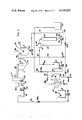
- FIGS. 1, 2, and 3 show in schematic form flow sheets for several embodiments of the invention.
- FIG. 1 is a simplified flowsheet for a hypothetical large scale commercial plant, for making 1000 tons per day of 100% P 2 O 5 , as contained in the final product, which is phosphoric acid concentrated to 60% P 2 O 5 .
- FIG. 2 is basically like FIG. 1 except that the quantities have been reduced to pilot plant size, and certain modifications have correspondingly been made (e.g., one evaporator is used for two stages of concentration).
- FIG. 3 is also a flow diagram for a pilot plant, again using one evaporator, but with additional flow options, including a preferred type of crystallizer.
- Aluminum silicate material e.g., perlite or other aluminum silicate suitably in company with small amounts of sodium and potassium compounds, all finely divided so as to be soluble in phosphoric acid as the concentration is increased from approximately 22-35% P 2 O 5 to approximately 42-52% P 2 O 5 .
- Perlite is a naturally occuring mineral, being a type of volcanic glass, and is available commercially in various grades.
- the product is an aluminum silicate with varying amounts of sodium and potassium silicates.
- Typical analyses of suitable grades of perlite preferred for use in this invention are shown below.
- the first column gives the analysis of the filter aid grade of perlite used in the examples in this specification.
- the second column gives a weight range of perlite components, suitable for use in this invention.
- perlite contains 2-6% trapped H 2 O and a Na 2 O:K 2 O weight ratio in the range of about 1/1-1/4. Material of this type dissolves in the acid mostly during the evaporation step. Very little seems to dissolve on simple mixing. The ability of the perlite or other aluminum silicate material to dissolve in the acid is regarded as essential in the practice of this invention.
- grades of perlite I have found that two are particularly advantageous in carrying out my invention. One of these grades is filter aid grade. The other is light weight plaster aggregate grade, which should be crushed for this use. Both forms are available commercially. Both are made by "popping" mineral perlite in a furnace, i.e., heating it at about 1500°-2000° F. so that the contained water forms bubbles in the softened glass, whereby the particles are expanded to 15 or 20 times their original volume.
- I can add 1-40 lbs. of perlite or other aluminum silicate material per ton of equivalent P 2 O 5 contained in the acid, or 0.05-2.0 wt. % based on the P 2 O 5 in the acid. All tons herein are short tons (2,000 lbs.).
- concentration of the overflow to 52-63% P 2 O 5 product.
- step 1 above (where necessary) is one of settling under specific conditions.
- Filtrate from a conventional filter is pumped to the head box of a mixing launder, where a polymeric flocculant is also added.
- Polyhall M295, a polyacrylamide-type flocculant commercially available from Stein, Hall & Co., Inc., of New York, N. Y. has been successfully used at a wt. concentration in water of 0.085%. This concentration has been varied from 0.02 to 0.4% by wt. in water without noticeably affecting the results.
- the Polyhall solution is added to the filtrate at a rate of 0.2% to 3.8% by volume of the 22% to 35 % filtrate preferably 0.8% by volume.
- flocculants are available for clarification. Examples include water soluble high molecular weight synthetic polymers, guar, etc.
- the polyacrylamides and the hydrolyzed polyacrylonitrile resins and their salts and derivatives are particularly useful.
- Flocculants are used conventionally in the phosphoric acid industry in settling higher concentrations of acid, e.g., 42%, 52% and 54%. Such flocculants are available commercially and are useful in this invention.
- a temperature drop of the filtrate of 1° C. to 20° C. is beneficial to proper clarification.
- the feed to the clarifier has been found to be satisfactory from 30° to 65° C. with best results obtained between 46° C. to 54° C.
- the temperature drop was best accomplished in a launder which has partial baffles so the polymer-filtrate mixture must follow a zig-zag path before discharging to a stilling well in the clarifier.
- the launder was 6 inch wide with sides 6 inches high and 8 feet - 0 inch long sloped 2 on 12 or about 9-1/2° off the horizontal, having 10 baffles 4 inches wide by 4 inches high and alternately attached to the launder sides. This provided a gentle but thorough mixing and cooling action.
- a mix tank can be used, but care must be taken to stir very slowly, so as not to disintegrate the flocs.
- the pilot plant clarifier of nominal 50 sq. ft. has been able to satisfactorily operate up to 10 GPM. Nominal rates have been 6 GPM to 8 GPM or 8-1/3 sq. ft. per GPM to 6-1/2 sq. ft. per GPM. Satisfactory results have been achieved at a rate of 5 sq. ft. per GPM. Since phosphate rock is a mineral found in nature, its composition is not always uniform. It has been found by experience that some dilute acids produced may require up to 20 sq. ft. per GPM for acceptable clarity.
- the retention time in the clarifier based on 6 GPM feed rate to the clarifier was about 73 minutes. Good results have been obtained with retention times as low as 43 minutes.
- Underflow from the clarifier may be filtered and washed and the solids discarded. Tests have shown that the filtration rate of the underflow was in excess of 100 gallons per square foot per hour, and the cake washes readily with water. This cake averages 25 to 45% moisture and on a dry basis contained less than 4% P 2 O 5 . In the pilot plant the underflow was returned to the conventional filter.
- the clarifier overflow is next mixed with an aluminum silicate material, preferably a good commercial grade of perlite filter aid.
- an aluminum silicate material e.g., perlite is added at a rate of 1 to 40 lbs. per ton of P 2 O 5 (0.05-2.0 wt. %), generally 5 to 15 lbs. perlite per ton P 2 O 5 (0.25-0.75 wt. %) but more preferably 6 to 8 lbs. per ton P 2 O 5 (0.3-0.4 wt. %).
- the perlite-acid mixture is fed to a conventional evaporator.
- the product of this evaporation may be taken off at 42% P 2 O 5 or higher although 46 to 50% P 2 O 5 is the preferred range, however, even up to 52% is not detrimental.
- the most preferred range, however, is 48 to 50% P 2 O 5 .
- the evaporator product is introduced to a crystallizer.
- the incoming acid is preferably mixed with acid that has had at least 30 min. and even more preferably 1 to 3 hours recycling in a crystallizer provided with a recycle tube and cone tank.
- the ratio of recycle acid to incoming feed is best at 1:1 to 30:1.
- the cone is tapered and equipped with rakes to discharge the acid-crystal product from a centrally located annular opening at the bottom. Recycling is accomplished by bubbling air within the inner tube causing an air lift.
- the product of the crystallizer is subjected to gravity settling for a period of time sufficient to allow the heavier crystals to settle out.
- These settling crystals form a slurry of about 25% by wt. of solids.
- This slurry which is approximately 1 to 10% by volume of the crystallizer feed, and generally 2 to 4% by volume, then may either be used to make dry products such as diammonium phosphate, triple superphosphate, or run-of-pile triple superphosphate or may be sent to the conventional 30% acid filter.
- the settler overflow can be accepted as final product. However it is next preferably evaporated to 52-63% P 2 O 5 concentration, and preferably to about 60%.
- This product which is now clarified and stabilized, may be shipped directly or sent to storage tanks until ready for use. Some additional solids may come out because of cooling; however, these solids are generally less than 1/2% by wt. and do not cause excessive post-precipitation.
- K-containing compounds may be contraindicated as additives for the prevention of post-precipitation.
- perlite which contains potassium
- perlite which contains potassium
- my final product contains a sizeable amount of K 2 O. Nevertheless post-precipitation is inhibited to a substantial extent.
- This example has not actually been carried out, but is based on my information and belief, and especially on the results of my work in a small pilot plant.
- FIG. 1 Based on a hypothetical production of 1000 tons per day of 100% P 2 O 5 , as contained in 60% P 2 O 5 phosphoric acid, the quantities noted apply.
- the feed stream is No. 1 filtrate analyzing about 29.3% P 2 O 5 .
- the quantity of feed is 1085 tons per day P 2 O 5 , equivalent to about 450 gallons per minute with a specific gravity of about 1.34.
- This No. 1 filtrate enters via line 1 into a mixing vessel 2.
- a flocculant solution There is also added to the mixing vessel 2 a flocculant solution.
- the particular flocculant is a polyacrylamide derivative available commercially as "Polyhall", from Stein, Hall & Co., Inc.
- This flocculant is prepared as an aqueous solution, 0.085% weight of flocculant in water.
- This aqueous solution of flocculant is added via line 3 to mixer 2 as a 1% by volume of feed, i.e., 4.5 gallons per minute of flocculant solution. This is equivalent to 45.9 lbs. per day of dry flocculant.
- the mixture of No. 1 filtrate and flocculant is then passed via line 4 to clarifier 5. Within the clarifier, the flocculant aids in the rapid and thorough settling of suspended solids contained in the No. 1 filtrate. These solids are typically 3.0% of the total weight of the No. 1 filtrate.
- Two streams are drawn from the clarifier, namely the underflow at line 6 and the product stream at line 7.
- the underflow at line 6 approximates 8% by volume of the feed going into the clarifier.
- This underflow exits the clarifier at a rate typically 36 gallons per minute of slurry, equivalent to 304 tons per day of slurry having a specific gravity of 1.41.
- This stream is returned to the filter.
- filter is meant the main filter separating gypsum from the No. 1 filtrate.
- the underflow comprises about 27 wt. % solids which analyzes about 4% P 2 O 5 by weight on a washed dry basis.
- This stream proceeds to mixing tank 8, where perlite is added at the rate of 10,850 lbs. per day of perlite, or about 10 lb./ton of P 2 O 5 in the incoming stream. This material is thoroughly mixed with the liquid in tank 8.
- a production stream is drawn off through line 9 continuously from mixing tank 8. This stream has very nearly the composition of incoming stream 7, to wit, 1020 tons per day P 2 O 5 , 414 gallons per minute, specific gravity 1.32.
- This stream now proceeds to evaporator 10, where it is heated to 85° C.
- Crystallizer 12 under an absolute pressure of 4-6 inches of mercury, to evaporate the product to approximately 50% P 2 O 5 .
- This product exits the evaporator 10 via line 11 to crystallizer 12.
- the product entering crystallizer 12 flows at the rate of 1020 tons per day P 2 O 5 , 210 gallons per minute, and has a specific gravity of about 1.62.
- the crystallizer 12 provides 2 streams, an underflow stream at 13 and a product stream at 14.
- the underflow stream at 13 is about 2% by volume of the feed. Thus it is about 4 gallons per minute of slurry of 43.2 tons per day of slurry. It has a specific gravity of about 1.8.
- Stream 13 contains sufficient P 2 O 5 to warrant recovery of its P 2 O 5 content.
- Stream 13 comprises about 25% by weight of solids and about 75% by weight of liquid recoverable as filtrate.
- the solids comprise 4.3 tons per day of P 2 O 5 .
- This high content of P 2 O 5 precludes returning underflow 13 to the primary filter, since it would be irrevocably lost with the gypsum. Hence it should be sent to various recovery systems such as run-of-pile, or granular triple superphosphate, for plants having such facilities.
- the liquid portion of underflow 13 comprises 14.9 tons per day of P 2 O 5 containing 46 to 50% P 2 O 5 . If underflow 13 is recovered in the manner recommended it would, of course, recover both solids and liquid, and hence recover all of the P 2 O 5 .
- This stream goes to a second evaporator 15, where it is concentrated to a product containing about 60% P 2 O 5 by heating to a temperature of about 85°-90° C. and under a vacuum of about 1-2 inches of mercury, absolute pressure. In this second evaporator there may be expected some very small loss of P 2 O 5 in the condenser.
- Storage tank 17 is preferably equipped with means to draw off any sludge that collects on the bottom.
- Feed from the mixing tank 8 to the evaporator 10 is typically 11.86 tons per day P 2 O 5 of clarified acid, or about 4.88 GPM.
- Product leaving evaporator 10 is likewise about 11.86 tons per day P 2 O 5 , at about 2.33 GPM.
- Underflow from crystallizer 12 is typically 0.05 GPM.
- Overflow is typically 11.63 tons per day P 2 O 5 at the rate of about 2.33 GPM.
- the overflow product goes to evaporator 15, and here the effluent provides about 11.63 tons per day P 2 O 5 , collectible in storage tank 17 as the final 60% product.
- This embodiment differs in certain respects from that described in Example 1.
- the main difference in the equipment was the use of one evaporator in lieu of the two evaporators described in Example 1.
- one evaporator was used in the pilot plant for both concentration steps.
- acid was concentrated to acid analyzing about 50% P 2 O 5 .
- This product was then collected and run back through the evaporator to concentrate it to 60% P 2 O 5 acid.
- FIG. 2 it will be noted that the same equipment of FIG. 1 is retained, except that evaporator 15 is omitted and a 30% acid feed tank 27 is added.
- one evaporator can be utilized in the following way.
- 30% acid is run into feed tank 27. This is a holding tank with a capacity of 4000 to 6000 gallons. This acid exits via line 28 into a small surge tank 29 of about 200 gallons capacity. Operations then proceed substantially as described in Example 1 through mixer 3, clarifier 5, mixer 8, and thence to evaporator 10.
- the product is evaporated to 50% P 2 O 5 acid as in the preceding example, passes into crystallizer 12, and thence into storage tank 17, where it is collected. At this point valve 9a is closed, and the 50% acid is pumped from storage tank 17 back to evaporator 10, where it is next concentrated to 60% P 2 O 5 acid.
- a further modification involves the use of two separate storage tanks, one for the acid first concentrated, e.g., to 50%, and the other for acid as concentrated a second time, e.g., to 60% P 2 O 5 .
- the lines are appropriately valved to avoid backflow and improper mixing.
- FIG. 3 Primary filtrate flows through line 35 into storage vessel 27. This vessel is conveniently 4000-6000 gallons capacity. Product from this storage vessel is pumped via pump 36 and line 28 into surge tank 29. The latter has about 200 gallons capacity and is heated by steam coils to about 47° C. The product is then pumped via line 37 and pump 38 followed by line 39 to launder 65. Meanwhile a solution of flocculant is mixed with water in vessel 40, and it is pumped therefrom via line 41, pump 42, and line 3 into the launder 65. The two streams mix in the launder 65 and are discharged into the stilling well 41 of clarifier 5. Sludge exits the clarifier at 6 and is sent to the filter.
- Vessel 8 is conveniently equipped with a mixing propeller 43 and means for steam heating shown schematically at 44.
- the perlite is mixed at 66 into the liquid, which is discharged from vessel 8 via line 44 and pump 45 through lines 46 and 61 where it enters evaporator 10.
- the acid is initially concentrated in evaporator 10 with the aid of vapor box 47. Water vapor exits via line 48.
- line 48 goes to a conventional condenser (not shown), where it is cooled and condensed, and exits the system as liquid via a conventional barometric leg (not shown). Liquid condensate in the vapor box divides into two streams.
- One stream shown at 49 recycles back to the evaporator 10 via pump 50.
- the second stream is taken off the vapor box at line 50 where it discharges into evaporator product tank 51 as approximately 50% P 2 O 5 acid.
- the overall evaporation system used in this Example is known as "f.c.” ("forced circulation") and is conventional in the art.
- From tank 51 the product exits via line 52, pump 53, line 54, and line 55 to crystallizer 12. Underflow from crystallizer 12 exits via drain 13 and is utilized for its P 2 O 5 value as herein described.
- Overflow from crystallizer 12 exits via line 14 into tank 56. This tank is conveniently equipped with propeller mixer 57.
- Product exits the tank via line 58.
- valves for control of flow direction in pertinent lines, e.g., valves at 60a, 60b, 61a, 59a, 13a, 55a, 28a, 50a, etc.
- evaporated product can be returned via lines 58, 60, and 67 to perlite addition vessel 8.
- valves 60a and 67a are open; valves 59a and 60b are closed.
- this can be done by closing valve 61a and opening valves 60b and 67a. In essence, this simply recycles the product out of and back into vessel 8.
- a mixing tank 40 had a capacity of 211 gallons. It was found that this amount of flocculant solution lasted about one week during normal operation of the pilot plant.
- soda ash is conveniently 0.1 to 2.0% by weight of the content of P 2 O 5 .
- Soda ash causes precipitation of Na 2 SiF 6 which in turn helps to sink the flocs.
- the aforesaid pilot plant was run semi-continuously (i.e., continuously but with several shutdowns) over a period of some weeks, and the product was used to fill three tank cars.
- Table 1 The values given in Table 1 are typical average values, but, of course, are subject to variation from run to run.
- the clarifier was cylindrical in section with a conical bottom leading to an underflow drain. It was equipped with a stilling well and with rakes generally conforming to the conical bottom and driven by an electrical motor the shaft of which was axial with the center line of the stilling well.
- the incoming feed from the open trough launder is added to the clarifier through the stilling well in order to minimize turbulence.
- the clarifier is best described as to capacity as being 6-8square feet of surface per gallon per minute of feed. This capacity may vary somewhat depending on the type of feed. This again may vary to some extent on the type of reaction system, starting with phosphate rock, etc. In one operation a feed was used where it was necessary to use a clarifier capacity of about 20 square feet/GPM. However 6-12 square feet/GPM is generally suitable.
- the clarifier operates at its most efficient when full and when operated on a continuous basis.
- the clarifier may be equipped with conventional accessories, e.g., skimmer, overflow weir, etc.
- the suspended solids that are removed consist mainly of CaSO 4 .2H 2 O, Na 2 SiF 6 , K 2 SiF 6 , and organic materials.
- the evaporation in FIG. 3 had a feed rate of 3 to 5 gallons per minute. It was steam-heated, and operated under a vacuum of 24-26 inches (4-6 inches of mercury absolute pressure) in evaporating 29-30% acid to 50% acid, and at 1-2 inches of mercury in concentrating that acid to 60% P 2 O 5 acid. (Actually, acid analyzing 62-63% P 2 O 5 was made during some runs of the pilot plant.) It was equipped with a vapor head box for venting vapors via a conventional system.
- the acid When the acid is to be shipped away from the plant site, it is preferably concentrated to about 60% P 2 O 5 to save freight. Otherwise freight has to be paid on the extra water. Concentration to 60% is a good practical upper limit when heating the evaporator with steam. Higher concentrations can be achieved by heating with Dowtherm. If the buyer wants a more dilute grade, he simply adds water.
- FIG. 3 The one that seemed to perform best was a so-called Pachuca type of section-crystallizer, shown schematically at 12 in FIG. 3. This was generally cylindrical in cross-section with a conical bottom and was equipped with an internal cylinder again terminated with an open conical bottom. A third cylinder open at top and bottom was positioned within the second shell. The outer and middle shells were equipped with rakes generally conforming to the contour of their respective conical bottoms, and driven by an electrical motor and shaft on the center line of the innermost cylinder. The liquid feed product was added into the innermost cylinder along with air to provide aeration. The air was not necessary to prevent post-precipitation in the final product, but did aid in internal liquid recycling, control of scaling, and in the formation of better crystals, within the crystallizer.
- the crystallizer works most efficiently when full, and when operated continuously.
- the overflow from the crystallizer i.e., of about 50% P 2 O 5 product, may contain a few crystals (Fe/Al complexes). These go substantially back into solution during a subsequent concentration, e.g., to 60%, and do not cause sludge problems.
- the pilot plant product was used to fill three tank cars, each containing 8000-10000 gallons of 60% acid specific gravity typically 1.818. Each of the three cars was shipped away from the plant site. About 3-4 weeks was required to fill each car, and another three weeks to ship and unload the car. Sludge in all of these three cars was reported as negligible, i.e., about 0.1-0.2% by weight. Furthermore, even this minimal amount was fluid and pumpable, indicating that standard car cleaning equipment would not be required for cars in which the acid of my invention had been shipped.
- tank cars containing wet process acid similar to that herein described except not treated by my process, to deposit sludge over the same time period to the extent of about 5%.
- This sludge deposits in the bottom of the tank car. It cannot be removed conveniently at the point of destination, and generally has no use whatsoever by the purchaser.
- the tank car containing the sludge is returned to the production plant, where it is necessary to clean the car using special equipment and hot water or acid to break up the sludge.
- Great care must be taken in cleaning sludge-containing cars, because phosphoric acid tank cars have a special rubber lining about 1/4 inch thick, which must not be broken during the cleaning operation.
- Table 2 following provides analytical data for feed, clarifier, crystallizer, and resulting products as made by the process of this invention.
- feed analysis is variable and may depend on the type of rock available and on preceding process factors.
- Variables for clarification and crystallizer operation have been mentioned in the text.
- the data in the Table represent typical clarifier and crystallizer runs.
- perlite to make a grade of wet process phosphoric acid substantially free from post-precipitation has been described in my U.S. Pat. No. 3,907,680, in which perlite was used as a filter bed to remove impurities from phosphoric acid by filtration, thereby to inhibit deposition of sludge in the filtered material. Also perlite has been added to wet process phosphoric acid to remove fluorine therefrom as SiF 4 ; see U.S. Pat. No. 2,987,376 to Gloss, Method for Defluorination of Phosphoric Acid. Also the preparation of a wet process phosphoric acid substantially free from post-precipitation is not new.
- such material can be prepared by simply permitting sludge to deposit from a standing body of wet process acid until such sludge no longer collects. At this point the upper acid will no longer deposit sludge and can be shipped out as sludge-free acid.
- the amount of storage equipment required and the amount of time required make the process uneconomical. So far as I can determine, my process is the first to provide a wet process phosphoric acid with a high mineral content and which is nevertheless free from substantial post-precipitation problems.
- perlite or other aluminum silicate material can be added again after, e.g., the first evaporation and/or the second evaporator. In such case the stream would pass to a crystallizer for removal of any additional sludge. Ordinarily, however, plural additions of perlite or other aluminum silicate are not necessary.
- the product has at least all the uses of merchant grade phosphoric acid. It is especially useful in making liquid fertilizers and as a feed for superphosphoric acid.
- the number 1 filtrate is preferably 22-35% P 2 O 5 , and even more preferably 28-32% P 2 O 5 . It enters the process at a temperature preferably within the range 30-65° C., and even more preferably 45°-54° C.
- the actual temperature of the No. 1 filtrate as used in the pilot plant was about 30° C. If the No. 1 filtrate is colder than the ranges given, it should preferably be steam-heated to bring it up to temperature.
- the solids content of the No. 1 filtrate may vary typically from 0.5 to 8%.
- the product that was used in the pilot plant was generally about 3% solids in all cases.
- the analysis of the No. 1 filtrate can vary quite a bit, but is typically and preferably approximately that given in Table 2, Clarifier Inlet.
- the amount of flocculant is preferably 0.02 to 2.0 pounds per ton of P 2 O 5 in the No. 1 filtrate; even more preferably this weight ratio is 0.03 to 0.08 pounds per ton of P 2 O 5 .
- 0.05 pounds of flocculant was used per ton of P 2 O 5 .
- the flocculant is made up into an aqueous solution prior to addition to the No. 1 filtrate.
- the concentration of this aqueous solution can vary but is preferably within the range of 0.02 to 1.0 weight percent, of flocculant based on the weight of water; even more preferably the range is 0.04 to 0.1 weight percent; typically in the pilot plant runs the concentration was 0.085 weight percent.
- the capacity of the clarifier is preferably 5-20 square feet/GPM; even more preferably this range is 61/2-81/3 square feet/GPM. Specifically, in the pilot plant runs, a clarifier was used having a capacity of 81/3 square feet/GPM.
- the underflow as a percent of feed to the clarifier is preferably 2 to 20% by volume of the feed; and even more preferably 7 to 9%.
- the typical ratio as used in the pilot plant was about 8%, based on volume of feed to the clarifier.
- a preferred range is 1-40 pounds per ton of P 2 O 5 .
- a more preferred range is 5-15 pounds per ton, and in typical pilot plant usage, I used 6.8 pounds of perlite per ton of P 2 O 5 .
- the initial acid In the first evaporator, it is preferred to concentrate the initial acid to 42-52% P 2 O 5 , and even more preferably 46-50% P 2 O 5 . Pilot plant runs were about 48-50%. If a second evaporator is used, the acid is concentrated to a range of 52-63% P 2 O 5 ; and even more preferably 54 to 60% P 2 O 5 . The pilot plant generally gave a product about 60% P 2 O 5 in the second evaporator.
- the crystallizer is preferably adjusted to give about 10 to 40 weight percent solids in the underflow; even more preferably this range is 20 to 25 percent.
- the weight of solids in the underflow averaged about 23.6%.
- the underflow volume based on the feed is preferably 1-10%, and even more preferably 1-4%.
- a typical ratio in the pilot plant was about 2%.
- perlite is the preferred additive, and is exemplified in the above runs, aluminum silicates generally appear to be operable in the process of this invention.
- Perlite is an aluminum silicate.
- Another aluminum silicate which has been tried is a material obtained as a byproduct in the preparation of sodium fluoride for bauxite refining. It is referred to herein as Aluminum Silicate A. Its analysis is given below, compared to a range typical of perlites. (Values in percent by weight.)
- the SiO 2 and Al 2 O 3 of the Aluminum Silicate A on a dry basis are within the ranges shown for perlite.
- the Na 2 O and K 2 O are outside of the ranges indicated for perlite.
- the first column is a control.
- the second column is perlite and the third column is Aluminum Silicate A adjusted to be equivalent to dry perlite.
- Aluminum Silicate A offered a problem in that during concentration of the acid in the pilot plant evaporator, scale tended to deposit on the interiors of the evaporator tubes. In one run the tubes plugged on account of scaling. This problem was not encountered with perlite. In a commercial plant this problem would require that the tubes be descaled from time to time. (As a matter of fact, scaling is a common problem in commercial phosphoric acid evaporators, aside from the use of Aluminum Silicate A, and a typical evaporator must be shut down for cleaning after, say, 240 hours of operation. Perlite may be unique in that it causes little or no evaporator scaling.) Another aluminum silicate, kaolin, was tried.
- Kaolin is a clay, consisting principally of kaolinite, Al 2 O 3 . 2SiO 2 . 2H 2 O. In one mode I used kaolin in its natural form. In another mode I calcined the kaolin to drive off the water. Both forms performed about like Aluminum Silicate A, i.e., they both gave fair prevention of post precipitation (though not as good as perlite) and both gave typical scaling in the evaporator.
Landscapes
- Chemical & Material Sciences (AREA)
- Organic Chemistry (AREA)
- Inorganic Chemistry (AREA)
- Separation Of Suspended Particles By Flocculating Agents (AREA)
Priority Applications (1)
| Application Number | Priority Date | Filing Date | Title |
|---|---|---|---|
| US06/054,449 US4305915A (en) | 1976-05-06 | 1979-07-03 | Stabilized wet process phosphoric acid |
Applications Claiming Priority (1)
| Application Number | Priority Date | Filing Date | Title |
|---|---|---|---|
| US68375676A | 1976-05-06 | 1976-05-06 |
Related Parent Applications (1)
| Application Number | Title | Priority Date | Filing Date |
|---|---|---|---|
| US68375676A Continuation-In-Part | 1976-05-06 | 1976-05-06 |
Related Child Applications (2)
| Application Number | Title | Priority Date | Filing Date |
|---|---|---|---|
| US05/883,381 Continuation-In-Part US4164550A (en) | 1976-05-06 | 1978-03-06 | Production of stabilized wet process phosphoric acid |
| US95180478A Continuation-In-Part | 1976-05-06 | 1978-10-16 |
Publications (1)
| Publication Number | Publication Date |
|---|---|
| US4110422A true US4110422A (en) | 1978-08-29 |
Family
ID=24745322
Family Applications (1)
| Application Number | Title | Priority Date | Filing Date |
|---|---|---|---|
| US05/812,319 Expired - Lifetime US4110422A (en) | 1976-05-06 | 1977-07-01 | Production of stabilized wet process phosphoric acid |
Country Status (8)
| Country | Link |
|---|---|
| US (1) | US4110422A (en:Method) |
| JP (1) | JPS52134893A (en:Method) |
| BR (1) | BR7702853A (en:Method) |
| DE (1) | DE2719701C3 (en:Method) |
| IT (1) | IT1109490B (en:Method) |
| MX (1) | MX148797A (en:Method) |
| NL (1) | NL166443C (en:Method) |
| ZA (1) | ZA772710B (en:Method) |
Cited By (24)
| Publication number | Priority date | Publication date | Assignee | Title |
|---|---|---|---|---|
| US4164550A (en) * | 1976-05-06 | 1979-08-14 | W. R. Grace & Co. | Production of stabilized wet process phosphoric acid |
| DE2818728A1 (de) * | 1978-03-06 | 1979-09-13 | Grace W R & Co | Verfahren zur ueberfuehrung von rohphosphorsaeure in ein nicht zu ausfaellen neigendes produkt |
| US4248846A (en) * | 1979-07-03 | 1981-02-03 | W. R. Grace & Co. | Production of stabilized wet process phosphoric acid |
| US4250154A (en) * | 1979-10-22 | 1981-02-10 | W. R. Grace & Co. | Re-post precipitation control |
| US4279877A (en) * | 1980-01-10 | 1981-07-21 | W. R. Grace & Co. | Oxidative control of post precipitation in phosphoric acid |
| US4293311A (en) * | 1980-01-10 | 1981-10-06 | W. R. Grace & Co. | Phosphoric acid crystallizer underflow return |
| US4294809A (en) * | 1976-05-06 | 1981-10-13 | W. R. Grace & Co. | Aeration of phosphoric acid |
| US4301131A (en) * | 1980-11-28 | 1981-11-17 | W. R. Grace & Co. | Oxidation of phosphoric acid plus K compound addition |
| US4303524A (en) * | 1980-05-28 | 1981-12-01 | Richards Thomas E | Rotary vacuum precoat filter |
| US4305915A (en) * | 1976-05-06 | 1981-12-15 | W. R. Grace & Co. | Stabilized wet process phosphoric acid |
| US4313919A (en) * | 1980-07-15 | 1982-02-02 | Occidental Chemical Company | Process for removing fine solids from phosphoric acid by vacuum filtration |
| US4364912A (en) * | 1981-07-20 | 1982-12-21 | W. R. Grace & Co. | Post precipitation control of low-iron phosphoric acid, without perlite |
| US4411811A (en) * | 1981-07-30 | 1983-10-25 | Mobil Oil Corporation | Clarification of black phosphoric acid with phosphoric acid rinse water |
| US4442081A (en) * | 1982-12-02 | 1984-04-10 | W. R. Grace & Co. | Process for producing a stabilized phosphoric acid |
| US4487750A (en) * | 1983-08-01 | 1984-12-11 | Freeport Minerals Company | Stabilization of wet process phosphoric acid |
| US4536378A (en) * | 1983-10-13 | 1985-08-20 | White Edward A | Phosphate fertilizer production |
| US4632814A (en) * | 1985-12-20 | 1986-12-30 | International Minerals & Chemical Corp. | Process for stabilizing phosphoric acid |
| US4710366A (en) * | 1986-10-23 | 1987-12-01 | Freeport Minerals Company | Method for producing stabilized wet process phosphoric acid with low content of magnesium and aluminum |
| US5066471A (en) * | 1990-11-26 | 1991-11-19 | Imc Fertilizer, Inc. | Lowering post-precipitation in merchant acid |
| US5236679A (en) * | 1992-05-06 | 1993-08-17 | Freeport-Mcmoran Resource Partners | Removal of aluminum contamination during production of phosphoric acid |
| WO2009148866A1 (en) * | 2008-05-30 | 2009-12-10 | Nalco Company | Inhibition of water formed scale in acid conditions |
| US20100084351A1 (en) * | 2008-10-03 | 2010-04-08 | Gary Lee Smith | Method of filtering phosphate utilizing a rotary table filter or horizontal table filter |
| US20130022519A1 (en) * | 2008-07-31 | 2013-01-24 | Urtek, Llc | Extraction of Uranium from Wet-Process Phosphoric Acid |
| US8883096B2 (en) | 2008-07-31 | 2014-11-11 | Urtek, Llc | Extraction of uranium from wet-process phosphoric acid |
Citations (15)
| Publication number | Priority date | Publication date | Assignee | Title |
|---|---|---|---|---|
| CA463505A (en) * | 1950-03-07 | R. Singer Marshall | Manufacture of phosphoric acid | |
| US2883266A (en) * | 1956-06-29 | 1959-04-21 | Swift & Co | Production of sodium silico fluoride and fluorine-free phosphoric acid |
| US2987376A (en) * | 1956-12-27 | 1961-06-06 | Int Minerals & Chem Corp | Method for defluorination of phosphoric acid |
| CA637832A (en) * | 1962-03-06 | American Cyanamid Company | Phosphoric acid preparation | |
| US3141734A (en) * | 1960-10-25 | 1964-07-21 | Int Minerals & Chem Corp | Method of clarifying acidic phosphatic solutions |
| US3151941A (en) * | 1960-05-02 | 1964-10-06 | Smith Douglass Company Inc | Defluorination of peosphoric acid |
| US3193351A (en) * | 1961-07-05 | 1965-07-06 | Nat Distillers Chem Corp | Removal of fluorine from wet process prosphoric acid |
| GB1010107A (en) * | 1962-11-09 | 1965-11-17 | Heurtey Sa | Purification of phosphoric acid during manufacture |
| NL6413920A (en:Method) * | 1964-11-30 | 1966-05-31 | ||
| CA776577A (en) * | 1968-01-23 | G. Brown Martin | Production of phosphoric acid and gypsum | |
| GB1113922A (en) * | 1964-08-19 | 1968-05-15 | Fisons Ltd | Clarifying phosphoric acid |
| US3528771A (en) * | 1967-10-10 | 1970-09-15 | Int Minerals & Chem Corp | Phosphoric acid clarification |
| SU479726A1 (ru) * | 1973-03-30 | 1975-08-05 | Ленинградский Ордена Трудового Красного Знамени Технологический Институт Им.Ленсовета | Способ предотвращени загустевани упаренной магнийсодержащей эктракционной фосфорной кислоты |
| US3907680A (en) * | 1973-11-06 | 1975-09-23 | Sr Richard N Hill | Clarification of aqueous acidic phosphatic solutions |
| US4048289A (en) * | 1973-12-13 | 1977-09-13 | Fertilizantes Fosfatados Mexicanos, S.A. | Stabilization of wet-process phosphoric acid |
Family Cites Families (5)
| Publication number | Priority date | Publication date | Assignee | Title |
|---|---|---|---|---|
| DE596368C (de) * | 1931-11-29 | 1934-04-30 | Chem Fab Budenheim Akt Ges | Reinigung der durch sauren Aufschluss von Rohphosphaten erhaltenen Rohphosphorsaeure |
| US3160495A (en) * | 1961-03-28 | 1964-12-08 | Minerals & Chem Philipp Corp | Wet process phosphoric acid and liquid fertilizer compositions containing the same |
| US3206282A (en) * | 1962-02-20 | 1965-09-14 | Allied Chem | Removal of soluble after-precipitate from concentrated phosphoric acid |
| DE2032263B2 (de) * | 1970-06-30 | 1973-01-11 | Chemische Fabrik Budenheim Rudolf A. Oetker, 6501 Budenheim | Verfahren zur entfernung von sulfationen aus technischer phosphorsaeure |
| CA1042180A (en) * | 1973-12-13 | 1978-11-14 | Sergio O. Pierres | Stabilization of wet process phosphoric acid |
-
1977
- 1977-05-03 DE DE2719701A patent/DE2719701C3/de not_active Expired
- 1977-05-04 NL NL7704900.A patent/NL166443C/xx not_active IP Right Cessation
- 1977-05-04 BR BR7702853A patent/BR7702853A/pt unknown
- 1977-05-04 JP JP5088577A patent/JPS52134893A/ja active Granted
- 1977-05-04 MX MX169025A patent/MX148797A/es unknown
- 1977-05-05 ZA ZA00772710A patent/ZA772710B/xx unknown
- 1977-05-05 IT IT23235/77A patent/IT1109490B/it active
- 1977-07-01 US US05/812,319 patent/US4110422A/en not_active Expired - Lifetime
Patent Citations (15)
| Publication number | Priority date | Publication date | Assignee | Title |
|---|---|---|---|---|
| CA776577A (en) * | 1968-01-23 | G. Brown Martin | Production of phosphoric acid and gypsum | |
| CA637832A (en) * | 1962-03-06 | American Cyanamid Company | Phosphoric acid preparation | |
| CA463505A (en) * | 1950-03-07 | R. Singer Marshall | Manufacture of phosphoric acid | |
| US2883266A (en) * | 1956-06-29 | 1959-04-21 | Swift & Co | Production of sodium silico fluoride and fluorine-free phosphoric acid |
| US2987376A (en) * | 1956-12-27 | 1961-06-06 | Int Minerals & Chem Corp | Method for defluorination of phosphoric acid |
| US3151941A (en) * | 1960-05-02 | 1964-10-06 | Smith Douglass Company Inc | Defluorination of peosphoric acid |
| US3141734A (en) * | 1960-10-25 | 1964-07-21 | Int Minerals & Chem Corp | Method of clarifying acidic phosphatic solutions |
| US3193351A (en) * | 1961-07-05 | 1965-07-06 | Nat Distillers Chem Corp | Removal of fluorine from wet process prosphoric acid |
| GB1010107A (en) * | 1962-11-09 | 1965-11-17 | Heurtey Sa | Purification of phosphoric acid during manufacture |
| GB1113922A (en) * | 1964-08-19 | 1968-05-15 | Fisons Ltd | Clarifying phosphoric acid |
| NL6413920A (en:Method) * | 1964-11-30 | 1966-05-31 | ||
| US3528771A (en) * | 1967-10-10 | 1970-09-15 | Int Minerals & Chem Corp | Phosphoric acid clarification |
| SU479726A1 (ru) * | 1973-03-30 | 1975-08-05 | Ленинградский Ордена Трудового Красного Знамени Технологический Институт Им.Ленсовета | Способ предотвращени загустевани упаренной магнийсодержащей эктракционной фосфорной кислоты |
| US3907680A (en) * | 1973-11-06 | 1975-09-23 | Sr Richard N Hill | Clarification of aqueous acidic phosphatic solutions |
| US4048289A (en) * | 1973-12-13 | 1977-09-13 | Fertilizantes Fosfatados Mexicanos, S.A. | Stabilization of wet-process phosphoric acid |
Cited By (31)
| Publication number | Priority date | Publication date | Assignee | Title |
|---|---|---|---|---|
| US4305915A (en) * | 1976-05-06 | 1981-12-15 | W. R. Grace & Co. | Stabilized wet process phosphoric acid |
| US4164550A (en) * | 1976-05-06 | 1979-08-14 | W. R. Grace & Co. | Production of stabilized wet process phosphoric acid |
| US4294809A (en) * | 1976-05-06 | 1981-10-13 | W. R. Grace & Co. | Aeration of phosphoric acid |
| DE2818728A1 (de) * | 1978-03-06 | 1979-09-13 | Grace W R & Co | Verfahren zur ueberfuehrung von rohphosphorsaeure in ein nicht zu ausfaellen neigendes produkt |
| US4248846A (en) * | 1979-07-03 | 1981-02-03 | W. R. Grace & Co. | Production of stabilized wet process phosphoric acid |
| US4250154A (en) * | 1979-10-22 | 1981-02-10 | W. R. Grace & Co. | Re-post precipitation control |
| US4279877A (en) * | 1980-01-10 | 1981-07-21 | W. R. Grace & Co. | Oxidative control of post precipitation in phosphoric acid |
| US4293311A (en) * | 1980-01-10 | 1981-10-06 | W. R. Grace & Co. | Phosphoric acid crystallizer underflow return |
| US4303524A (en) * | 1980-05-28 | 1981-12-01 | Richards Thomas E | Rotary vacuum precoat filter |
| US4313919A (en) * | 1980-07-15 | 1982-02-02 | Occidental Chemical Company | Process for removing fine solids from phosphoric acid by vacuum filtration |
| US4301131A (en) * | 1980-11-28 | 1981-11-17 | W. R. Grace & Co. | Oxidation of phosphoric acid plus K compound addition |
| US4364912A (en) * | 1981-07-20 | 1982-12-21 | W. R. Grace & Co. | Post precipitation control of low-iron phosphoric acid, without perlite |
| US4411811A (en) * | 1981-07-30 | 1983-10-25 | Mobil Oil Corporation | Clarification of black phosphoric acid with phosphoric acid rinse water |
| US4442081A (en) * | 1982-12-02 | 1984-04-10 | W. R. Grace & Co. | Process for producing a stabilized phosphoric acid |
| US4487750A (en) * | 1983-08-01 | 1984-12-11 | Freeport Minerals Company | Stabilization of wet process phosphoric acid |
| WO1985000582A1 (en) * | 1983-08-01 | 1985-02-14 | Freeport Minerals Company | Stabilization of wet process phosphoric acid |
| US4536378A (en) * | 1983-10-13 | 1985-08-20 | White Edward A | Phosphate fertilizer production |
| US4632814A (en) * | 1985-12-20 | 1986-12-30 | International Minerals & Chemical Corp. | Process for stabilizing phosphoric acid |
| US4710366A (en) * | 1986-10-23 | 1987-12-01 | Freeport Minerals Company | Method for producing stabilized wet process phosphoric acid with low content of magnesium and aluminum |
| US5066471A (en) * | 1990-11-26 | 1991-11-19 | Imc Fertilizer, Inc. | Lowering post-precipitation in merchant acid |
| US5236679A (en) * | 1992-05-06 | 1993-08-17 | Freeport-Mcmoran Resource Partners | Removal of aluminum contamination during production of phosphoric acid |
| CN102046525A (zh) * | 2008-05-30 | 2011-05-04 | 纳尔科公司 | 抑制酸性条件下的水成垢 |
| WO2009148866A1 (en) * | 2008-05-30 | 2009-12-10 | Nalco Company | Inhibition of water formed scale in acid conditions |
| US8703077B2 (en) * | 2008-07-31 | 2014-04-22 | Urtek, Llc. | Extraction of uranium from wet-process phosphoric acid |
| US20130022519A1 (en) * | 2008-07-31 | 2013-01-24 | Urtek, Llc | Extraction of Uranium from Wet-Process Phosphoric Acid |
| US8685349B2 (en) | 2008-07-31 | 2014-04-01 | Urtek, Llc | Extraction of uranium from wet-process phosphoric acid |
| US8883096B2 (en) | 2008-07-31 | 2014-11-11 | Urtek, Llc | Extraction of uranium from wet-process phosphoric acid |
| US9217189B2 (en) | 2008-07-31 | 2015-12-22 | Urtek, Llc | Extraction of uranium from wet-process phosphoric acid |
| US9932654B2 (en) | 2008-07-31 | 2018-04-03 | Urtek, Llc | Extraction of uranium from wet-process phosphoric acid |
| US7736526B2 (en) * | 2008-10-03 | 2010-06-15 | Thompson Industrial Services, Llc | Method of filtering phosphate utilizing a rotary table filter or horizontal table filter |
| US20100084351A1 (en) * | 2008-10-03 | 2010-04-08 | Gary Lee Smith | Method of filtering phosphate utilizing a rotary table filter or horizontal table filter |
Also Published As
| Publication number | Publication date |
|---|---|
| DE2719701B2 (de) | 1979-08-30 |
| NL166443C (nl) | 1981-08-17 |
| DE2719701A1 (de) | 1977-11-10 |
| IT1109490B (it) | 1985-12-16 |
| NL7704900A (nl) | 1977-11-08 |
| ZA772710B (en) | 1978-04-26 |
| JPS5428392B2 (en:Method) | 1979-09-17 |
| BR7702853A (pt) | 1978-09-19 |
| MX148797A (es) | 1983-06-22 |
| DE2719701C3 (de) | 1986-10-02 |
| JPS52134893A (en) | 1977-11-11 |
Similar Documents
| Publication | Publication Date | Title |
|---|---|---|
| US4110422A (en) | Production of stabilized wet process phosphoric acid | |
| US4164550A (en) | Production of stabilized wet process phosphoric acid | |
| US2769686A (en) | Recovery of mineral values from leached zone material overlying florida pebble phosphate deposits | |
| US2936888A (en) | Production of clarified acidic phosphatic solutions | |
| CN104058378B (zh) | 用湿法浓缩磷酸渣酸生产磷酸一铵及磷酸铵镁的方法 | |
| US2968528A (en) | Process for producing clarified phosphoric acid | |
| US3528771A (en) | Phosphoric acid clarification | |
| US3907680A (en) | Clarification of aqueous acidic phosphatic solutions | |
| CN1025021C (zh) | 一种工业级磷酸铵的生产方法 | |
| JPS62171906A (ja) | 湿式法燐酸から不純物を除去する方法 | |
| US4048289A (en) | Stabilization of wet-process phosphoric acid | |
| US3795728A (en) | Process for manufacturing phosphoric acid and substantially alkalisilico-fluoride-free gypsum | |
| US4487750A (en) | Stabilization of wet process phosphoric acid | |
| US4557915A (en) | Production of phosphoric acid | |
| US4500502A (en) | Process for removing impurities from wet process of phosphoric acid | |
| US4305915A (en) | Stabilized wet process phosphoric acid | |
| US3494736A (en) | Process for removing silicon,aluminum and fluorine from wet process phosphoric acid | |
| US4828811A (en) | Method for producing phosphoric acid from phosphate ore | |
| US4393032A (en) | Production of phosphoric acid and additional products from phosphate ore | |
| US5279806A (en) | Process for eliminating heavy metals from phosphoric acid | |
| US3099622A (en) | Production of clarified acidic phosphatic solutions | |
| CA1126478A (en) | Production of stabilized wet process phosphoric acid | |
| US4710366A (en) | Method for producing stabilized wet process phosphoric acid with low content of magnesium and aluminum | |
| US5093088A (en) | Apparatus for producing phosphoric acid from phosphate ore | |
| US4364912A (en) | Post precipitation control of low-iron phosphoric acid, without perlite |