US20240294973A1 - Single-cell profiling of rna translation status - Google Patents
Single-cell profiling of rna translation status Download PDFInfo
- Publication number
- US20240294973A1 US20240294973A1 US18/575,255 US202218575255A US2024294973A1 US 20240294973 A1 US20240294973 A1 US 20240294973A1 US 202218575255 A US202218575255 A US 202218575255A US 2024294973 A1 US2024294973 A1 US 2024294973A1
- Authority
- US
- United States
- Prior art keywords
- probe
- complementary
- oligonucleotide
- probes
- rna
- Prior art date
- Legal status (The legal status is an assumption and is not a legal conclusion. Google has not performed a legal analysis and makes no representation as to the accuracy of the status listed.)
- Pending
Links
Images




Classifications
-
- C—CHEMISTRY; METALLURGY
- C12—BIOCHEMISTRY; BEER; SPIRITS; WINE; VINEGAR; MICROBIOLOGY; ENZYMOLOGY; MUTATION OR GENETIC ENGINEERING
- C12Q—MEASURING OR TESTING PROCESSES INVOLVING ENZYMES, NUCLEIC ACIDS OR MICROORGANISMS; COMPOSITIONS OR TEST PAPERS THEREFOR; PROCESSES OF PREPARING SUCH COMPOSITIONS; CONDITION-RESPONSIVE CONTROL IN MICROBIOLOGICAL OR ENZYMOLOGICAL PROCESSES
- C12Q1/00—Measuring or testing processes involving enzymes, nucleic acids or microorganisms; Compositions therefor; Processes of preparing such compositions
- C12Q1/68—Measuring or testing processes involving enzymes, nucleic acids or microorganisms; Compositions therefor; Processes of preparing such compositions involving nucleic acids
- C12Q1/6804—Nucleic acid analysis using immunogens
-
- C—CHEMISTRY; METALLURGY
- C12—BIOCHEMISTRY; BEER; SPIRITS; WINE; VINEGAR; MICROBIOLOGY; ENZYMOLOGY; MUTATION OR GENETIC ENGINEERING
- C12Q—MEASURING OR TESTING PROCESSES INVOLVING ENZYMES, NUCLEIC ACIDS OR MICROORGANISMS; COMPOSITIONS OR TEST PAPERS THEREFOR; PROCESSES OF PREPARING SUCH COMPOSITIONS; CONDITION-RESPONSIVE CONTROL IN MICROBIOLOGICAL OR ENZYMOLOGICAL PROCESSES
- C12Q1/00—Measuring or testing processes involving enzymes, nucleic acids or microorganisms; Compositions therefor; Processes of preparing such compositions
- C12Q1/68—Measuring or testing processes involving enzymes, nucleic acids or microorganisms; Compositions therefor; Processes of preparing such compositions involving nucleic acids
- C12Q1/6813—Hybridisation assays
- C12Q1/6841—In situ hybridisation
-
- C—CHEMISTRY; METALLURGY
- C12—BIOCHEMISTRY; BEER; SPIRITS; WINE; VINEGAR; MICROBIOLOGY; ENZYMOLOGY; MUTATION OR GENETIC ENGINEERING
- C12Q—MEASURING OR TESTING PROCESSES INVOLVING ENZYMES, NUCLEIC ACIDS OR MICROORGANISMS; COMPOSITIONS OR TEST PAPERS THEREFOR; PROCESSES OF PREPARING SUCH COMPOSITIONS; CONDITION-RESPONSIVE CONTROL IN MICROBIOLOGICAL OR ENZYMOLOGICAL PROCESSES
- C12Q2531/00—Reactions of nucleic acids characterised by
- C12Q2531/10—Reactions of nucleic acids characterised by the purpose being amplify/increase the copy number of target nucleic acid
- C12Q2531/125—Rolling circle
-
- C—CHEMISTRY; METALLURGY
- C12—BIOCHEMISTRY; BEER; SPIRITS; WINE; VINEGAR; MICROBIOLOGY; ENZYMOLOGY; MUTATION OR GENETIC ENGINEERING
- C12Q—MEASURING OR TESTING PROCESSES INVOLVING ENZYMES, NUCLEIC ACIDS OR MICROORGANISMS; COMPOSITIONS OR TEST PAPERS THEREFOR; PROCESSES OF PREPARING SUCH COMPOSITIONS; CONDITION-RESPONSIVE CONTROL IN MICROBIOLOGICAL OR ENZYMOLOGICAL PROCESSES
- C12Q2533/00—Reactions characterised by the enzymatic reaction principle used
- C12Q2533/10—Reactions characterised by the enzymatic reaction principle used the purpose being to increase the length of an oligonucleotide strand
- C12Q2533/107—Probe or oligonucleotide ligation
-
- C—CHEMISTRY; METALLURGY
- C12—BIOCHEMISTRY; BEER; SPIRITS; WINE; VINEGAR; MICROBIOLOGY; ENZYMOLOGY; MUTATION OR GENETIC ENGINEERING
- C12Q—MEASURING OR TESTING PROCESSES INVOLVING ENZYMES, NUCLEIC ACIDS OR MICROORGANISMS; COMPOSITIONS OR TEST PAPERS THEREFOR; PROCESSES OF PREPARING SUCH COMPOSITIONS; CONDITION-RESPONSIVE CONTROL IN MICROBIOLOGICAL OR ENZYMOLOGICAL PROCESSES
- C12Q2563/00—Nucleic acid detection characterized by the use of physical, structural and functional properties
- C12Q2563/179—Nucleic acid detection characterized by the use of physical, structural and functional properties the label being a nucleic acid
Definitions
- Transcriptional profiles in single cells do not consistently correlate with proteomic profiles from the same cells. This suggests that various mechanisms exist at the post-transcriptional level to regulate protein production and degradation, including some that have yet to be characterized. Therefore, mRNA levels are an imperfect proxy for estimating protein production and are likely biased in defining cellular states. Additional methods for directly quantifying single-cell proteomes could provide a more functionally relevant base to interpret cell types and cell-type-specific responses to environments. An accurate determination of protein production in a cell could be useful in studying an array of physiological states or even in treating various diseases, as well as in drug development. Accordingly, additional and better systems for accurately quantifying protein production in a single cell are needed.
- ribosome profiling i.e., profiling of RNAs of interest that are being actively translated
- Such systems represent a crucial technology to bridge the gap between the transcriptome and the proteome of a cell by quantifying/profiling actively translated mRNAs.
- a strategy based on proximity ligation is described herein to achieve specific and high-throughput characterization of RNA translation status in situ as an estimation of single-cell proteomes.
- the present system utilizes agents that recognize a ribosome conjugated to an oligonucleotide probe that recognizes the sequences of corresponding probes annealed to mRNA molecules that are bound by ribosomes ( FIG. 1 ).
- the present system utilizes a probe or set of probes comprising unique molecular barcodes to identify a target sequence within an mRNA of interest.
- ribosomes are bound by an oligonucleotide sequence portion of a primer that is complementary to a portion of the ribosome, or by a ribosome-specific primary antibody that is bound by a secondary antibody conjugated to a DNA primer.
- the DNA primer conjugated to the oligonucleotide sequence complementary to a portion of the ribosome, or to the secondary antibody (and thus bound to the ribosome) is ligated to the probe.
- the mRNA of interest is amplified by rolling circle amplification to yield a measurable sequence signal. Additionally, the antibodies are detectable via antibody staining to provide spatial information. By labeling ribosomes and localizing mRNAs of interest, precise spatial information of actively translated mRNAs can be extracted by means of highly selective RNA-ribosome colocalization, an important readout for understanding the spatiotemporal patterns of translation in both health and disease. Interactions between the ribosome and mRNA can be probed to determine the translation of mRNAs of interest.
- the present disclosure provides methods for profiling RNAs being translated in a cell (see, for example, FIGS. 1 , 3 , and 6 ).
- a cell may be contacted with one or more pairs of probes or sets of probes, which are described further herein and may be used to amplify (e.g., by rolling circle amplification) RNAs that are actively being translated by a ribosome to produce one or more concatenated amplicons.
- RNAs being translated in a cell may be profiled and spatiotemporal information obtained to improve the field's understanding of how translation location and timing affect cellular function in health and disease.
- the method may be useful for comparing RNA translation in, for example, a cell (or multiple cells) from diseased and healthy tissue samples; or for comparing RNA translation in, for example, a cell treated with an agent and an untreated cell.
- the method described herein may include two probes or three probes for profiling mRNA molecules during translation. Each method is useful for profiling mRNA molecules during translation, but the three-probe method has been demonstrated to produce a better signal-to-noise ratio.
- the present disclosure provides a two-probe method for profiling RNAs being translated in a cell comprising the steps of:
- the present disclosure provides a three-probe method for profiling RNAs being translated in a cell comprising the steps of:
- RNA translation in tissues e.g., developing tissues, normal tissues, diseased tissues
- diagnosing and treating various diseases for research purposes, and for drug discovery.
- the present disclosure provides methods for diagnosing a disease or disorder in a subject (e.g., cancer).
- the methods for profiling RNAs being translated described herein may be performed on a cell, or on multiple cells, taken from a subject (e.g., a subject who is thought to have or is at risk of having a disease or disorder, or a subject who is healthy or thought to be healthy).
- the expression of various RNAs of interest in the cell can then be compared to the expression of the same RNAs of interest in a non-diseased cell or a cell from a non-diseased tissue sample (e.g., a cell from a healthy individual, or multiple cells from a population of healthy individuals).
- RNA translation in one or more non-diseased cells may be profiled alongside expression in a diseased cell as a control experiment.
- RNA translation in one or more non-diseased cells may have also been profiled previously, and expression in a diseased cell may be compared to this reference data for a non-diseased cell.
- the present disclosure provides methods for screening for an agent capable of modulating translation of one or more RNAs of interest.
- the methods for profiling RNAs being translated described herein may be performed in a cell in the presence of one or more candidate agents.
- the expression of various RNAs of interest being translated in the cell e.g., a normal cell, or a diseased cell
- Any difference in the RNA translation profile relative to translation in the cell that was not exposed to the candidate agent(s) may indicate that translation (or potentially transcription) of the one or more RNAs of interest is modulated by the candidate agent(s).
- a particular signature (e.g., of multiple RNAs of interest being translated) that is known to be associated with the treatment of a disease may be used to identify other agents capable of modulating translation in a desired manner and thus treating a disease.
- the methods described herein may also be used to identify drugs that have certain side effects, for example, by looking for specific RNA translation signatures when one or more cells is treated with a candidate agent or known drug.
- the methods described herein may also be used to identify research reagents or chemical probes that may be useful for studying the basic biology of cellular translation and protein production.
- the present disclosure provides methods for treating a disease or disorder in a subject (e.g., cancer).
- a disease or disorder in a subject e.g., cancer
- the methods for profiling RNAs being translated described herein may be performed in a cell from a sample taken from a subject (e.g., a subject who is thought to have or is at risk of having a disease or disorder).
- the profile of one or more RNAs being translated in the cell can then be compared to the translation status of the same RNAs of interest in a cell from a non-diseased tissue sample.
- a treatment for the disease or disorder may then be administered to the subject if any difference in the RNA translation profile relative to a non-diseased cell is observed.
- RNA translation in one or more non-diseased cells may be profiled alongside RNA translation in a diseased cell as a control experiment.
- RNA translation in one or more non-diseased cells e.g., normal cells
- RNA translation in one or more non-diseased cells may have also been profiled previously, and translation in a diseased cell may be compared to this reference data for a non-diseased cell.
- the present disclosure provides pairs of probes comprising a first probe (also referred to herein as the “padlock” probe) and a second probe (also referred to herein as the “primer” probe), wherein:
- the present disclosure provides sets of oligonucleotide probes comprising a first probe (also referred to herein as the “padlock” probe), a second probe (also referred to herein as the “splint probe” or as the “blocked probe”), and a third probe (also referred to herein as the “primer probe”), wherein:
- kits e.g., a kit comprising any of the pairs or sets of probes disclosed herein.
- the kit comprises multiple pairs or sets of probes as described herein, each of which can be used to identify a specific RNA of interest that is being translated.
- the kits described herein may also include any other reagents or components useful in performing the methods described herein, including, but not limited to, cells, enzymes such as a ligase and/or a polymerase, amine-modified nucleotides, primary antibodies, secondary antibodies, buffers, reagents (including dyes, stains, and more), and monomers for making a polymeric matrix (e.g., a polyacrylamide matrix).
- the present disclosure provides systems for profiling RNA translation in a cell.
- a system comprises:
- such a system comprises:
- probes i.e., the pairs of probes or sets of probes
- any of the probes i.e., the pairs of probes or sets of probes described herein may be used in the systems contemplated by the present disclosure.
- FIG. 1 is a schematic for a method of characterizing/profiling RNA translation in situ.
- a DNA-conjugated secondary antibody is used to recognize padlock probes residing on the same RNA in close proximity, enabling their amplification.
- Each padlock probe contains a unique barcode encoding the identity of the RNA site.
- the barcode information is amplified by rolling circle amplification and decoded by SEDAL in situ sequencing.
- FIGS. 2 A- 2 D are images of single-cell profiling of in situ RNA translation.
- FIG. 2 A shows detection of actively transcribed beta-actin (ACTB) RNAs compared to negative controls in FIG. 2 B (no primary antibody), FIG. 2 C (secondary antibody with no DNA conjugated), and FIG. 2 D (no secondary antibody).
- ACTB actively transcribed beta-actin
- FIG. 3 is a schematic of an in situ ribosome profiling method using ribosomal antibodies and three-part DNA probes.
- a DNA-conjugated secondary antibody is used to recognize padlock probes residing on the same RNA in close proximity, enabling ligation.
- Each padlock probe contains a unique barcode encoding the identity of the RNA site.
- the barcode sequence is amplified by rolling circle amplification to yield optimally measurable signals.
- the method is compatible with immunofluorescence staining to label subcellular organelles (e.g., the endoplasmic reticulum and mitochondria).
- FIGS. 4 A- 4 C are images of ribosomal protein antibody-based in situ ribosome profiling using an anti-40S ribosomal protein S3 (RPS3) antibody.
- FIG. 4 A shows an in situ ribosome profiling signal for ACTB.
- FIG. 4 B shows a negative control ribosome profiling signal using IgG in place of the anti-RPS3 antibody.
- FIG. 4 C shows an in situ ribosome profiling signal for the non-coding RNA metastasis associated lung adenocarcinoma transcript 1 (MALATi).
- MALATi non-coding RNA metastasis associated lung adenocarcinoma transcript 1
- FIGS. 5 A- 5 C are images of ribosomal protein antibody-based in situ ribosome profiling using an anti-60S ribosomal protein L4 (RPL4) antibody.
- FIG. 5 A shows an in situ ribosome profiling signal for ACTB.
- FIG. 5 B shows a negative control ribosome profiling signal using IgG in place of the anti-RPL4 antibody.
- FIG. 5 C shows an in situ ribosome profiling signal for the non-coding RNA MALAT1.
- FIG. 6 is a schematic of an in situ ribosome profiling method using three-part DNA probes that hybridize rRNAs and mRNAs.
- rRNA-hybridizing probes are used to recognize padlock probes residing on the same RNA in close proximity, enabling ligation.
- Each padlock probe contains a unique barcode encoding the identity of the RNA site.
- the barcode information is amplified by rolling circle amplification and decoded by SEDAL in situ sequencing.
- the method is compatible with immunofluorescence staining to label subcellular organelles (e.g., the endoplasmic reticulum and mitochondria).
- FIGS. 7 A- 7 C are images of an rRNA-hybridized probe-based in situ ribosome profiling method.
- FIG. 7 A shows an in situ ribosome profiling signal for ACTB.
- FIG. 7 B shows a negative control ribosome profiling signal using probes without the portion that hybridizes to rRNA within the ribosome.
- FIG. 7 C shows an in situ ribosome profiling signal for the non-coding RNA MALAT1.
- FIG. 8 shows the detailed design of exemplary probes useful in the RNA profiling methods described herein.
- FIGS. 9 A- 9 J show RIBOmap for in situ profiling of mRNA translation at subcellular resolution.
- FIG. 9 A provides a schematic of RIBOmap. After the sample (cell line or tissue sample) is prepared, a pair of barcoded padlock probes and primers are hybridized to a targeted intracellular RNA, and the splint probe is hybridized to ribosomes via 18S rRNA. The splint probe is used as a template for the proximity ligation to circularize the padlock probe. The splint probe is designed with 3′ Inverted dT modifications to block its extension during rolling circle amplification RCA. The intact padlock probe can then be amplified to generate amine-modified DNA amplicons in situ.
- FIG. 9 B shows an example of the tri-probe strategy.
- (Left) Fluorescent images of tri-probe samples show the RIBOmap signal of ACTB mRNA in HeLa cells.
- (Middle) Fluorescent images of negative control samples without the primer or splint probe show minimum DNA amplicon signal.
- FIG. 9 D provides a schematic representation of RIBOmap signal verification by targeting mRNA (ACTB) and non-coding RNA (MALAT] and vtRNA]-1).
- FIG. 9 E provides fluorescent images showing RNA detection results by STARmap and translation of RNA detection results by RIBOmap. Scale bar, 10 ⁇ m.
- FIG. 9 G provides a schematic of translational regulation by Harringtonine.
- FIG. 9 H shows three pairs of SNAIL probes targeting different sites of ACTB mRNA. Probe pair 1 is near the start codon, while Probe pair 2 and Probe pair 3 are 115 nt and 405 nt downstream of the start codon in the CDS region, respectively.
- FIG. 9 I provides fluorescent images showing the RIBOmap signal of 3 sets of probes targeted to different regions of ACTB mRNA in HeLa cells before and after Harringtonine treatment.
- FIG. 9 J shows quantification of the RIBOmap signal intensity that was normalized to the DAPI signal shown in FIG. 9 I .
- Error bars standard deviation.
- n 3 images per condition. Student's t-test, **P ⁇ 0.01.
- FIGS. 10 A- 10 K show that RIBOmap simultaneously measures the subcellular translation of 981 genes in human HeLa cells.
- FIG. 10 A provides schematics of RIBOmap detection in HeLa/FUCCI cells to measure localized mRNA translation. RIBOmap reads out ribosome-bound mRNA signals, and STARmap detects the targeted RNA. Organelle staining was combined in the procedure to visualize nucleus, ER, and cell morphology.
- FIG. 10 B provides representative images showing the simultaneous mapping of FUCCI fluorescence signal, cDNA amplicons, and organelle staining signal in HeLa cells. Left, FUCCI fluorescence imaging results of the cells for RIBOmap (top) and STARmap (bottom).
- the fluorescent signals indicate the cell cycle stage of the HeLa cells.
- Middle Representative images showing the maximum-intensity projections (MAX) of the first sequencing cycle for 981 genes with zoomed-in views of a representative cell and single-frame views of the representative cell across 6 sequencing cycles.
- Right Zoomed-in view of the organelle staining signal of the representative cell. Alexa Fluor 594 conjugate of concanavalin A (ConA) staining of ER, flamingo fluorescent staining of cell morphology, and DAPI staining of the nucleus are shown according to the legend provided.
- ConA concanavalin A
- FIG. 10 C shows diffusion map embeddings of cell-cycle stage clusters determined using the single-cell expression profile of 41 cell-cycle marker genes for STARmap (upper left) and RIBOmap (upper right) measurements along with the corresponding single-cell protein fluorescence profiles of the monomeric Kusabira-Orange 2 (mKO2)-hCDT1 and monomeric Azami-Green (mAG)-hGEN FUCCI cell-cycle markers (STARmap, bottom left; RIBOmap, bottom right).
- FIG. 10 D shows a single-cell translatome covariation matrix showing the pairwise Pearson's correlation coefficients of the cell-to-cell variation across 981 measured genes, shown together with their averaged expression levels.
- FIG. 10 E shows a matrix of the pairwise colocalization p-values describing the degree to which the reads of two genes tend to co-exist in a sphere of 3-um radius in the same cell in RIBOmap results (left) and STARmap results (right), shown together with the expression level of these genes.
- the STARmap matrix uses the same order of genes as the RIBOmap matrix.
- Five strongly correlating modules of genes are indicated by the gray boxes in the matrix.
- FIG. 10 F shows bar plots visualizing the most significantly enriched GO terms (maximum 3) in each of the five gene modules.
- FIG. 10 G shows an enlarged matrix of gene Module 3 and gene Module 4.
- FIG. 10 H shows the spatial distribution of RIBOmap signals of Module 3 and Module 4 genes, overlaid on the ER image. The images are MAXs of the gene dots and ER signals.
- FIG. 101 shows quantification of the ER-localized percentage of Module 3 genes, Module 4 genes, and all the detected genes. Wilcoxon signed-rank test, ****P ⁇ 0.0001.
- FIG. 10 J provides a diagram showing the calculation of spatial parameter Distance Ratio (DR).
- FIG. 10 K provides violin plots for the ribosome-bound RNA DR and RNA DR values for m 6 A genes and non-m 6 A genes. Wilcoxon signed-rank test, ****P ⁇ 0.0001.
- FIGS. 11 A- 11 N show spatially resolved single-cell translatome profiling of 5,413 genes in the mouse brain.
- FIG. 11 A provides a diagram of the targeted mouse coronal hemibrain region (marked in a box) for RIBOmap.
- FIG. 11 B provides representative images showing the measurements of localized translation of 5,413 genes by RIBOmap in a mouse coronal hemibrain slice.
- (Left) Maximum-intensity projection of the first sequencing round of 5,413 genes, showing all five channels simultaneously. Square, zoomed-in region.
- FIG. 11 C provides RIBOmap images of three cell-type marker genes in comparison with the Allen Brain ISH images showing the expression patterns of the corresponding genes.
- FIG. 11 D shows a Uniform Manifold Approximation and Projection (UMAP) plot visualization of translational profiles of 62,753 cells collected from mouse coronal hemibrain. 57 cell types were identified using Leiden clustering.
- FIG. 11 E provides a representative spatial cell-type atlas. (Left) Schematic highlighting different brain regions of the imaged coronal mouse brain slice.
- FIG. 11 D Representative spatial cell-type atlas in the imaged coronal hemibrain region using the same code of FIG. 11 D .
- Scale bar 500 ⁇ m.
- Scale bar 200 ⁇ m.
- FIG. 11 F provides a scheme of a hippocampal slice showing the somata and processes of hippocampal neurons.
- FIG. 11 G shows a section in the CA1 region showing somata reads and neuronal and glial processes reads. Scale bar, 50 ⁇ m.
- FIG. 11 F provides a scheme of a hippocampal slice showing the somata and processes of hippocampal neurons.
- FIG. 11 G shows a section in the CA1 region showing somata reads and neuronal and glial processes reads.
- Scale bar 50 ⁇ m.
- FIG. 11 H shows processes reads percentage of individual genes in the 5,413-gene RIBOmap measurements, with genes rank-ordered based on their processes reads percentage.
- FIG. 11 I show the top 10 significantly enriched GO terms for processes-enriched-translation genes.
- FIG. 11 J shows the top 10 significantly enriched GO terms for somata-enriched-translation genes.
- FIGS. 11 K- 11 L show the spatial translation map of example processes-enriched-translation genes ( FIG. 11 K ) and somata-enriched-translation genes ( FIG. 11 L ) in the hippocampus region, showing somata reads and processes reads.
- FIGS. 11 M- 11 N show the spatial translation map of glial cell marker gene examples of processes-enriched-translation genes (M) and somata-enriched-translation genes (N) in the hippocampus region, showing somata reads and processes reads.
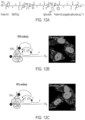
- FIGS. 12 A- 12 F show an example of the antibody-based RIBOmap strategy.
- FIG. 12 A provides a synthetic scheme for splint probe-conjugated protein A/G preparation.
- FIG. 12 B shows anti-ribosomal protein S3 (RPS3) antibody-based RIBOmap signal of ACTB mRNA in HeLa cells.
- RPS3 antibody binds to RPS3 protein in the small unit of the ribosome and brings in protein A/G-conjugated splint probe to the translating mRNA.
- the padlock probe targeted to the translating mRNA can then be ligated and amplified to generate amine-modified DNA amplicons in situ.
- FIG. 12 A provides a synthetic scheme for splint probe-conjugated protein A/G preparation.
- FIG. 12 B shows anti-ribosomal protein S3 (RPS3) antibody-based RIBOmap signal of ACTB mRNA in HeLa cells.
- RPS3 antibody binds to R
- FIG. 12 C shows anti-ribosomal protein L4 (RPL4) antibody-based RIBOmap signal of ACTB mRNA in HeLa cells.
- FIG. 12 D shows IgG control of the antibody-based RIBOmap signal of ACTB mRNA in HeLa cells.
- FIGS. 13 A- 13 B show transcriptomic and translatomic dissection of cell-cycle-related variations.
- FIG. 13 A shows cell-cycle marker gene expression on cell-cycle stage cluster embedding.
- FIG. 13 B shows cell-cycle marker gene translation on cell-cycle stage cluster embedding.
- FIGS. 14 A- 14 F show covariation analysis of the single-cell translatome.
- FIG. 14 A shows the top three significantly enriched GO terms in each of the five modules identified in the single-cell translatome covariation matrix.
- FIGS. 14 B- 14 D show Enlarged Module 1 ( FIG. 14 B ), Module 2 ( FIG. 14 C ), and Module 4 ( FIG. 14 D ) identified in the single-cell translatome covariation matrix.
- FIG. 14 E provides a zoomed-in view showing the correlation between gene Module 3 (G2M marker genes) and gene Module 5 (G1S marker genes).
- FIG. 14 F provides a zoomed-in view showing the correlation between cell-cycle marker gene modules and translation machinery gene modules.
- FIGS. 15 A- 15 F show protein-protein interaction analysis and spatial distribution of co-localized gene modules.
- FIG. 15 A shows String protein network analysis of the genes in Module 3 (left) and Module 4 (right).
- FIG. 15 B shows the enlarged Module 1 (left), Module 2 (top right), and Module 5 (bottom right) in the ribosome-bound RNA subcellular colocalization matrix.
- FIG. 15 C shows String protein network analysis of the genes in Module 1 (top), Module 2 (middle), and Module 5 (bottom).
- FIG. 15 D shows the spatial distribution of RIBOmap signals of the Module 1, Module 2, and Module 5 genes, overlaid on the ER image.
- FIG. 15 E shows quantification of the ER-localized percentage of Module 1 genes, Module 2 genes, Module 5 genes, and all the detected genes. Wilcoxon signed-rank test, ****P ⁇ 0.0001.
- FIG. 15 F shows colocalization pairwise correlation p-value on the hierarchical clustering matrix of covariation analysis.
- FIGS. 16 A- 16 C show cross-validation of RIBOmap measurements with in situ hybridization and immunofluorescence.
- FIG. 16 A provides RIBOmap images of six example cell marker genes in comparison with the Allen Brain ISH images showing the expression patterns of the corresponding genes.
- FIGS. 16 B- 16 C show translation profiles obtained from RIBOmap, in situ hybridization (ISH) data from the Allen Brain Atlas, and antibody-based immunofluorescence (IF) profiling from the HPA Brain Atlas of Sst ( FIG. 16 B ) and Nefl ( FIG. 16 C ).
- FIGS. 17 A- 17 B show quality control and cell type marker expression level of RIBOmap mouse brain data.
- FIG. 17 A provides a histogram showing the number of transcripts and genes in each cell after logarithmic transformation of the RIBOmap mouse brain dataset. Vertical lines represent the filtering thresholds estimated by median absolute deviation (MAD).
- FIG. 17 B provides UMAPs showing expression levels of canonical markers for major cell types of mouse brain in the RIBOmap dataset.
- FIGS. 18 A- 18 D show cell-type clustering based on single-cell translation profiling.
- FIG. 18 A shows the hierarchical taxonomy of cell types showing level 1-3 cell clustering.
- FIG. 18 B provides a Uniform Manifold Approximation and Projection (UMAP) plot visualization of the level 1 clustering to classify cells into neuronal cells and glial cells.
- FIG. 18 C provides a UMAP plot visualization of the level 2 clustering to classify cells into excitatory neurons, inhibitory neurons, astrocytes, oligodendrocytes, oligodendrocyte precursor cells, microglia, and vascular cells.
- FIG. 18 D provides gene expression heatmaps for representative markers aligned with level 2 clustering-identified cell types. Expression for each gene is z-scored across all genes in each cell.
- FIGS. 19 A- 19 C provide gene expression and spatial maps of excitatory neurons.
- FIG. 19 A provides gene expression heatmaps for representative markers aligned with excitatory neuron subtypes. Expression for each gene is z-scored across all genes in each cell.
- FIG. 19 B shows UMAP plot visualization of the 21 excitatory neuron subtypes.
- FIG. 19 C provides a spatial cell map of excitatory neuron subtypes in the imaged coronal hemibrain region with a zoomed-in view showing the spatial cell map in the cortex and hippocampus region.
- FIGS. 20 A- 20 C provide gene expression and spatial maps of inhibitory neurons.
- FIG. 20 A provides gene expression heatmaps for representative markers aligned with inhibitory neuron subtypes. Expression for each gene is z-scored across all genes in each cell.
- FIG. 20 B shows UMAP plot visualization of the 18 inhibitory neuron subtypes.
- FIG. 20 C shows the spatial cell map of inhibitory neuron subtypes in the imaged coronal hemibrain region with a zoomed-in view showing the spatial cell map in the cortex and striatum region.
- FIGS. 21 A- 21 C provide gene expression and spatial maps of glial cells.
- FIG. 21 A provides gene expression heatmaps for representative markers aligned with glial cell subtypes. Expression for each gene is z-scored across all genes in each cell.
- FIG. 21 B shows UMAP plot visualization of the 18 glial cell subtypes.
- FIG. 21 C provides a spatial cell map of glial cell subtypes in the imaged coronal hemibrain region with a zoomed-in view showing the spatial cell map in the cortex and hippocampus regions.
- FIGS. 22 A- 22 D provide spatial maps of examples of processes-enriched-translation genes.
- FIGS. 22 A- 22 B show translation spatial maps of additional examples of processes-enriched-translation genes ( FIG. 22 A ) and somata-enriched-translation genes ( FIG. 22 B ) in the hippocampus region. Somata reads and processes reads are shown.
- FIGS. 22 C- 22 D provide translation spatial maps of additional glial cell marker gene examples of processes-enriched-translation genes ( FIG. 22 C ) and somata-enriched-translation genes ( FIG. 22 D ) in the hippocampus region. Somata reads and processes reads are shown.
- administer refers to implanting, absorbing, ingesting, injecting, inhaling, or otherwise introducing a treatment or therapeutic agent, or a composition of treatments or therapeutic agents, in or on a subject.
- amplicon refers to a nucleic acid (e.g., RNA) that is the product of an amplification reaction (i.e., the production of one or more copies of a genetic fragment or target sequence) or replication reaction. Amplicons can be formed artificially using, for example, PCR or other polymerization reactions.
- amplification reaction i.e., the production of one or more copies of a genetic fragment or target sequence
- replication reaction i.e., the production of one or more copies of a genetic fragment or target sequence
- Amplicons can be formed artificially using, for example, PCR or other polymerization reactions.
- concatenated amplicons refers to multiple amplicons that are joined together to form a single nucleic acid molecule.
- Concatenated amplicons can be formed, for example, by rolling circle amplification (RCA), in which a circular oligonucleotide is amplified to produce multiple linear copies of the oligonucleotide as a single nucleic acid molecule comprising multiple amplicons that are concatenated.
- RCA rolling circle amplification
- an “antibody” refers to a glycoprotein belonging to the immunoglobulin superfamily.
- the terms antibody and immunoglobulin are used interchangeably.
- mammalian antibodies are typically made of basic structural units each with two large heavy chains and two small light chains.
- Five different antibody isotypes are known in mammals (IgG, IgA, IgE, IgD, and IgM, which perform different roles, and help direct the appropriate immune response for each different type of foreign object they encounter.
- an antibody as used herein also encompasses antibody fragments and nanobodies, as well as variants of antibodies and variants of antibody fragments and nanobodies.
- an antibody is administered as a treatment for a disease or disorder (e.g., one that is associated with a change in the profile of RNAs being translated in a cell taken from a subject).
- an antibody is conjugated to an oligonucleotide probe as described herein.
- the antibody binds to a ribosome (e.g., the antibody is an anti-40S ribosomal protein S3 (RPS3) antibody or an anti-60S ribosomal protein L4 (RPL4) antibody).
- RPS3 anti-40S ribosomal protein S3
- RPL4 anti-60S ribosomal protein L4
- cancer refers to a class of diseases characterized by the development of abnormal cells that proliferate uncontrollably and have the ability to infiltrate and destroy normal body tissues. See e.g., Stedman's Medical Dictionary, 25th ed.; Hensyl ed.; Williams & Wilkins: Philadelphia, 1990. Cancer is one example of a proliferative disease.
- Exemplary cancers include, but are not limited to, acoustic neuroma; adenocarcinoma; adrenal gland cancer; anal cancer; angiosarcoma (e.g., lymphangiosarcoma, lymphangioendotheliosarcoma, hemangiosarcoma); appendix cancer; benign monoclonal gammopathy; biliary cancer (e.g., cholangiocarcinoma); bladder cancer; breast cancer (e.g., adenocarcinoma of the breast, papillary carcinoma of the breast, mammary cancer, medullary carcinoma of the breast); brain cancer (e.g., meningioma, glioblastomas, glioma (e.g., astrocytoma, oligodendroglioma), medulloblastoma); bronchus cancer; carcinoid tumor; cervical cancer (e.g., cervical adenocarcinoma); choriocar
- liver cancer e.g., hepatocellular cancer (HCC), malignant hepatoma
- lung cancer e.g., bronchogenic carcinoma, small cell lung cancer (SCLC), non-small cell lung cancer (NSCLC), adenocarcinoma of the lung
- leiomyosarcoma LMS
- mastocytosis e.g., systemic mastocytosis
- muscle cancer myelodysplastic syndrome (MDS); mesothelioma; myeloproliferative disorder (MPD) (e.g., polycythemia vera (PV), essential thrombocytosis (ET), agnogenic myeloid metaplasia (AMM) a.k.a.
- myelofibrosis MF
- chronic idiopathic myelofibrosis chronic myelocytic leukemia (CML), chronic neutrophilic leukemia (CNL), hypereosinophilic syndrome (HES)
- neuroblastoma e.g., neurofibromatosis (NF) type 1 or type 2, schwannomatosis
- neuroendocrine cancer e.g., gastroenteropancreatic neuroendoctrine tumor (GEP-NET), carcinoid tumor
- osteosarcoma e.g., bone cancer
- ovarian cancer e.g., cystadenocarcinoma, ovarian embryonal carcinoma, ovarian adenocarcinoma
- papillary adenocarcinoma pancreatic cancer
- pancreatic cancer e.g., pancreatic adenocarcinoma, intraductal papillary mucinous neoplasm (IPMN), Islet cell tumors
- a “cell,” as used herein, may be present in a population of cells (e.g., in a tissue, a sample, a biopsy, an organ, or an organoid).
- a population of cells is composed of a plurality of different cell types.
- Cells for use in the methods of the present disclosure can be present within an organism, a single cell type derived from an organism, or a mixture of cell types. Included are naturally occurring cells and cell populations, genetically engineered cell lines, cells derived from transgenic animals, cells from a subject, etc. Virtually any cell type and size can be accommodated in the methods and systems described herein.
- the cells are mammalian cells (e.g., complex cell populations such as naturally occurring tissues).
- the cells are from a human.
- the cells are collected from a subject (e.g., a human) through a medical procedure such as a biopsy.
- the cells may be a cultured population (e.g., a culture derived from a complex population, or a culture derived from a single cell type where the cells have differentiated into multiple lineages).
- the cells may also be provided in situ in a tissue sample.
- Cell types contemplated for use in the methods of the present disclosure include, but are not limited to, stem and progenitor cells (e.g., embryonic stem cells, hematopoietic stem cells, mesenchymal stem cells, neural crest cells, etc.), endothelial cells, muscle cells, myocardial cells, smooth and skeletal muscle cells, mesenchymal cells, epithelial cells, hematopoietic cells, lymphocytes such as T-cells (e.g., Th1 T cells, Th2 T cells, Th0 T cells, cytotoxic T cells) and B cells (e.g., pre-B cells), monocytes, dendritic cells, neutrophils, macrophages, natural killer cells, mast cells, adipocytes, immune cells, neurons, hepatocytes, and cells involved with particular organs (e.g., thymus, endocrine glands, pancreas, brain, neurons, glia, astrocytes, dendrocytes, and
- the cells may also be transformed or neoplastic cells of different types (e.g., carcinomas of different cell origins, lymphomas of different cell types, etc.) or cancerous cells of any kind (e.g., from any of the cancers disclosed herein).
- Cells of different origins e.g., ectodermal, mesodermal, and endodermal
- the cells are microglia, astrocytes, oligodendrocytes, excitatory neurons, or inhibitory neurons.
- cells of multiple cell types are present within the same sample.
- complementary is used herein to refer to two oligonucleotide sequences (e.g., DNA or RNA) comprising bases that hydrogen bond to one another.
- the degree of complementarity between two oligonucleotide sequences can vary, from complete complementarity to no complementarity.
- two oligonucleotide sequences may be only partially complementary to one another (e.g., in the probes described herein, wherein only a portion of the probe is complementary to another probe, or to an RNA of interest).
- Two oligonucleotide sequences may be, e.g., 70% or more complementary to one another, 75% or more complementary to one another, 80% or more complementary to one another, 85% or more complementary to one another, 90% or more complementary to one another, 95% or more complementary to one another, 96% or more complementary to one another, 97% or more complementary to one another, 98% or more complementary to one another, 99% or more complementary to one another, or 100% complementary to one another.
- polynucleotide refers to a series of nucleotide bases (also called “nucleotides”) in DNA and RNA and mean any chain of two or more nucleotides.
- the polynucleotides can be chimeric mixtures or derivatives or modified versions thereof, and single-stranded or double-stranded.
- the oligonucleotide can be modified at the base moiety, sugar moiety, or phosphate backbone, for example, to improve stability of the molecule, its hybridization parameters, etc.
- a “protein,” “peptide,” or “polypeptide” comprises a polymer of amino acid residues linked together by peptide bonds.
- the term refers to proteins, polypeptides, and peptides of any size, structure, or function. Typically, a protein will be at least three amino acids long.
- a protein may refer to an individual protein or a collection of proteins. Inventive proteins preferably contain only natural amino acids, although non-natural amino acids (i.e., compounds that do not occur in nature but that can be incorporated into a polypeptide chain) and/or amino acid analogs as are known in the art may alternatively be employed.
- amino acids in a protein may be modified, for example, by the addition of a chemical entity such as a carbohydrate group, a hydroxyl group, a phosphate group, a farnesyl group, an isofarnesyl group, a fatty acid group, a linker for conjugation or functionalization, or other modification.
- a protein may also be a single molecule or may be a multi-molecular complex.
- a protein may be a fragment of a naturally occurring protein or peptide.
- a protein may be naturally occurring, recombinant, synthetic, or any combination of these.
- a protein may also be a therapeutic protein administered as a treatment for a disease or disorder (e.g., one that is associated with a change in the profile of RNAs being translated in a cell taken from a subject).
- the protein is an antibody.
- RNA transcript is the product resulting from RNA polymerase-catalyzed transcription of a DNA sequence.
- RNA transcript is a complimentary copy of the DNA sequence, it is referred to as the primary transcript, or it may be an RNA sequence derived from post-transcriptional processing of the primary transcript and is referred to as the mature RNA.
- Messenger RNA (mRNA) refers to the RNA that is without introns and can be translated into polypeptides by the cell.
- cRNA refers to complementary RNA, transcribed from a recombinant cDNA template.
- cDNA refers to DNA that is complementary to and derived from an mRNA template.
- sample refers to any sample including tissue samples (such as tissue sections, surgical biopsies, and needle biopsies of a tissue); cell samples (e.g., cytological smears (such as Pap or blood smears) or samples of cells obtained by microdissection); or cell fractions, fragments, or organelles (such as obtained by lysing cells and separating the components thereof by centrifugation or otherwise).
- tissue samples such as tissue sections, surgical biopsies, and needle biopsies of a tissue
- cell samples e.g., cytological smears (such as Pap or blood smears) or samples of cells obtained by microdissection) or cell fractions, fragments, or organelles (such as obtained by lysing cells and separating the components thereof by centrifugation or otherwise).
- biological samples include, but are not limited to, blood, serum, urine, semen, fecal matter, cerebrospinal fluid, interstitial fluid, mucous, tears, sweat, pus, biopsied tissue (e.g., obtained by a surgical biopsy or needle biopsy), nipple aspirates, milk, vaginal fluid, saliva, swabs (such as buccal swabs), or any material containing biomolecules that is derived from a first biological sample.
- a biological sample is a surgical biopsy taken from a subject, for example, a biopsy of any of the tissues described herein.
- a biological sample is a tumor biopsy (e.g., from a subject diagnosed with, suspected of having, or thought to have cancer).
- the tumor biopsy captures primary tumor cells and tissue for direct study.
- liquid biopsy can be used on tumor cells that have been captured and/or sorted via traditional methods (e.g., FACS, affinity capture, etc.) from blood or other bodily fluids (CNS fluid, lymph, etc.).
- the sample is brain tissue.
- the tissue is cardiac tissue.
- the tissue is muscle tissue.
- small molecule refers to molecules, whether naturally-occurring or artificially created (e.g., via chemical synthesis) that have a relatively low molecular weight.
- a small molecule is an organic compound (e.g., it contains carbon).
- the small molecule may contain multiple carbon-carbon bonds, stereocenters, and other functional groups (e.g., amines, hydroxyl, carbonyls, and heterocyclic rings, etc.).
- the molecular weight of a small molecule is not more than about 1,000 g/mol, not more than about 900 g/mol, not more than about 800 g/mol, not more than about 700 g/mol, not more than about 600 g/mol, not more than about 500 g/mol, not more than about 400 g/mol, not more than about 300 g/mol, not more than about 200 g/mol, or not more than about 100 g/mol.
- the molecular weight of a small molecule is at least about 100 g/mol, at least about 200 g/mol, at least about 300 g/mol, at least about 400 g/mol, at least about 500 g/mol, at least about 600 g/mol, at least about 700 g/mol, at least about 800 g/mol, at least about 900 g/mol, or at least about 1,000 g/mol. Combinations of the above ranges (e.g., at least about 200 g/mol and not more than about 500 g/mol) are also possible.
- the small molecule is a therapeutically active agent such as a drug (e.g., a molecule approved by the U.S. Food and Drug Administration.
- the small molecule may also be complexed with one or more metal atoms and/or metal ions.
- Preferred small molecules are biologically active in that they produce a biological effect in animals, preferably mammals, and more preferably humans.
- the small molecule is a drug.
- the drug is one that has already been deemed safe and effective for use in humans or animals by the appropriate governmental agency or regulatory body.
- a “subject” to which administration is contemplated refers to a human (i.e., male or female of any age group, e.g., pediatric subject (e.g., infant, child, or adolescent) or adult subject (e.g., young adult, middle-aged adult, or senior adult)) or non-human animal.
- the non-human animal is a mammal (e.g., primate (e.g., cynomolgus monkey or rhesus monkey) or mouse).
- the term “patient” refers to a subject in need of treatment of a disease.
- the subject is human.
- the patient is human.
- the human may be a male or female at any stage of development.
- a subject or patient “in need” of treatment of a disease or disorder includes, without limitation, those who exhibit any risk factors or symptoms of a disease or disorder.
- a subject is a non-human experimental animal (e.g., a mouse, rat, dog, or non-human primate).
- a “therapeutically effective amount” of a treatment or therapeutic agent is an amount sufficient to provide a therapeutic benefit in the treatment of a condition or to delay or minimize one or more symptoms associated with the condition.
- a therapeutically effective amount of a treatment or therapeutic agent means an amount of the therapy, alone or in combination with other therapies, that provides a therapeutic benefit in the treatment of the condition.
- the term “therapeutically effective amount” can encompass an amount that improves overall therapy, reduces or avoids symptoms, signs, or causes of the condition, and/or enhances the therapeutic efficacy of another therapeutic agent.
- tissue is a group of cells and their extracellular matrix from the same origin. Together, the cells carry out a specific function. The association of multiple tissue types together forms an organ. The cells may be of different cell types.
- a tissue is an epithelial tissue. Epithelial tissues are formed by cells that cover an organ surface (e.g., the surface of the skin, airways, soft organs, reproductive tract, and inner lining of the digestive tract). Epithelial tissues perform protective functions and are also involved in secretion, excretion, and absorption.
- a tissue is a connective tissue.
- Connective tissues are fibrous tissues made up of cells separated by non-living material (e.g., an extracellular matrix). Connective tissues provide shape to organs and hold organs in place. Connective tissues include fibrous connective tissue, skeletal connective tissue, and fluid connective tissue. Examples of connective tissues include, but are not limited to, blood, bone, tendon, ligament, adipose, and areolar tissues.
- a tissue is a muscular tissue.
- Muscular tissue is an active contractile tissue formed from muscle cells. Muscle tissue functions to produce force and cause motion. Muscle tissue includes smooth muscle (e.g., as found in the inner linings of organs), skeletal muscle (e.g., as typically attached to bones), and cardiac muscle (e.g., as found in the heart, where it contracts to pump blood throughout an organism).
- a tissue is a nervous tissue. Nervous tissue includes cells comprising the central nervous system and peripheral nervous system. Nervous tissue forms the brain, spinal cord, cranial nerves, and spinal nerves (e.g., motor neurons).
- a tissue is brain tissue.
- a tissue is placental tissue.
- a tissue is heart tissue.
- translatome refers to all of the open reading frames (i.e., DNA sequences that fall between start and stop codons) in a particular cell or organism.
- the methods, probes, and kits provided herein are useful for studying and/or profiling the translatome.
- treatment refers to reversing, alleviating, delaying the onset of, or inhibiting the progress of a disease described herein (e.g., cancer).
- treatment may be administered after one or more signs or symptoms of the disease have developed or have been observed (e.g., prophylactically (as may be further described herein) or upon suspicion or risk of disease).
- treatment may be administered in the absence of signs or symptoms of the disease.
- treatment may be administered to a susceptible subject prior to the onset of symptoms (e.g., in light of a history of symptoms in the subject, or family members of the subject). Treatment may also be continued after symptoms have resolved, for example, to delay or prevent recurrence.
- treatment may be administered after using the methods disclosed herein and observing a change in the profile of RNAs being expressed in a cell or tissue in comparison to a healthy cell or tissue.
- the present disclosure provides methods, compositions, and systems for profiling RNAs being translated in a cell.
- the present disclosure also provides methods for diagnosing a disease or disorder in a subject based on a profile of the RNAs being translated in a cell, including cells within an intact tissue. Methods of screening for or testing a candidate agent capable of modulating translation of one or more RNAs are also provided by the present disclosure.
- the present disclosure also provides methods for treating a disease or disorder in a subject in need thereof. Pairs and sets of oligonucleotide probes, which may be useful for performing the methods described herein, are also described by the present disclosure, as well as kits comprising any of the oligonucleotide probes described herein.
- the present disclosure provides methods for profiling RNAs being translated in a cell.
- a cell may be contacted with one or more pairs of probes or sets of probes, which are described further herein and may be used to amplify RNAs that are actively being translated by a ribosome to produce one or more concatenated amplicons.
- the one or more concatenated amplicons may then be embedded in a polymeric matrix and sequenced to determine the identity of the transcripts and their location within the polymeric matrix (e.g., through SEDAL sequencing as described further herein).
- RNAs being translated in a cell may be profiled.
- the methods provided herein have several advantages over previously disclosed methods and systems, including, but not limited to, the ability to profile RNA translation in a sample without disrupting the spatial information of subcellular structures, cell morphology, and/or tissue organization in the sample.
- the present disclosure provides a method for profiling RNAs being translated in a cell comprising the steps of:
- the methods disclosed herein contemplate the use of a pair of probes comprising a first probe and a second probe.
- the second probe (also referred to herein as the “primer probe”) comprises a portion that recognizes a ribosome (i.e., a ribosome that is bound to and is actively translating the RNA of interest).
- the portion of the probe that recognizes a ribosome may be a protein, peptide, nucleic acid, or small molecule.
- the portion of the second probe that recognizes a ribosome is an agent that binds an antibody, or an antibody variant or fragment.
- the portion of the second probe that recognizes the ribosome comprises an antibody (e.g., a secondary antibody), or an antibody variant or fragment.
- the method may optionally further comprise contacting the cell with a primary antibody that recognizes a ribosome and is recognized by the secondary antibody of the second probe.
- the primary antibody may recognize any portion of the ribosome, for example, any protein, nucleic acid (e.g., rRNA), or combination thereof of the ribosome.
- the primary antibody is an anti-40S ribosomal protein S3 (RPS3) antibody (e.g., an anti-RPS3 monoclonal antibody).
- the antibody is an anti-60S ribosomal protein L4 (RPL4) antibody (e.g., an anti-RPL4 polyclonal antibody).
- RPL4 anti-60S ribosomal protein L4
- the present disclosure also contemplates the use of any agent capable of recognizing the ribosome on the probes described herein.
- the portion of the second probe that recognizes the ribosome comprises an oligonucleotide that is complementary to a portion of the ribosomal RNA (rRNA) within the ribosome.
- the portion of the second probe that recognizes the ribosome comprises an oligonucleotide that is complementary to a portion of the 40S small ribosomal subunit (including, e.g., the 18S rRNA) or to a portion of the 60S large ribosomal subunit (including, e.g., the 5S rRNA, the 28S rRNA, and the 5.8S rRNA).
- the portion of the second probe that recognizes the ribosome comprises an oligonucleotide that is complementary to a portion of the 18S rRNA.
- the oligonucleotide complementary to a portion of rRNA is 5, 6, 7, 8, 9, 10, 11, 12, 13, 14, 15, 16, 17, 18, 19, 20, 21, 22, 23, 24, 25, 26, 27, 28, 29, 30, or more than 30 nucleotides in length. In certain embodiments, the oligonucleotide complementary to a portion of rRNA is about 25 nucleotides in length.
- the second probe also comprises a portion that is complementary to a portion of the first probe.
- the portion of the second probe that is complementary to a portion of the first probe is 3, 4, 5, 6, 7, 8, 9, 10, 11, 12, 13, 14, 15, 16, 17, 18, 19, or 20 nucleotides in length.
- the present disclosure contemplates any arrangement of the portions of the second probe.
- the second probe used in the methods described herein comprises the structure:
- the first probe used in the methods described herein includes an oligonucleotide barcode sequence made up of a specific sequence of nucleotides.
- the oligonucleotide barcode sequence of the first probe is about 3 to about 20, about 5 to about 15, about 6 to about 14, about 7 to about 13, about 8 to about 12, or about 9 to about 11 nucleotides in length.
- the oligonucleotide barcode sequence of the first probe is 3, 4, 5, 6, 7, 8, 9, 10, 11, 12, 13, 14, or 15 nucleotides in length.
- the barcodes of the oligonucleotide probes described herein may comprise gene-specific sequences used to identify RNAs of interest that are being translated (i.e., each barcode sequence is associated with a specific gene or transcript).
- each barcode sequence is associated with a specific gene or transcript.
- the use of the barcodes on probes analogous to those described herein is further described in, for example, International Patent Application Publication No. WO 2019/199579, published Oct. 17, 2019, and Wang et al., Science 2018, 361, 380, both of which are incorporated herein by reference in their entireties.
- the first probe also comprises an oligonucleotide portion that is complementary to the second probe, and an oligonucleotide portion that is complementary to the RNA of interest.
- the portion of the first probe that is complementary to an RNA of interest is about 5, about 6, about 7, about 8, about 9, about 10, about 11, about 12, about 13, about 14, about 15, about 16, about 17, about 18, about 19, about 20, about 21, about 22, about 23, about 24, about 25, about 26, about 27, about 28, about 29, or about 30 nucleotides long.
- the first probe is about 20, about 21, about 22, about 23, about 24, about 25, about 26, about 27, about 28, about 29, about 30, about 31, about 32, about 33, about 34, about 35, about 36, about 37, about 38, about 39, or about 40 nucleotides long or longer.
- the arrangement of the portions of the first oligonucleotide probe in any order is contemplated by the present disclosure.
- the first probe comprises the structure:
- the present disclosure provides a method for profiling RNAs being translated in a cell comprising the steps of:
- the methods disclosed herein contemplate the use of a set of probes comprising a first probe, a second probe, and a third probe.
- the addition of the third probe (also referred to herein as a “primer probe”) may result in increased specificity and/or reduced off target amplification compared to embodiments of the methods where a third probe is not used.
- the second probe (also referred to herein as a “splint probe” or as a “blocked probe”) comprises a portion that recognizes a ribosome (i.e., a ribosome that is bound to and is actively translating the RNA of interest).
- the second probe further comprises a polymerization blocker.
- the addition of a polymerization blocker prevents the second probe from being used as a primer in the amplification of step (c), ensuring that the third probe will be used as the primer during amplification.
- the polymerization blocker on the second probe can be any moiety capable of preventing the use of the second probe as a primer in the amplification of step (c) of the methods described herein.
- the polymerization blocker is at the 3′ end of the second probe.
- the polymerization blocker can be, for example, any chemical moiety that prevents a polymerase from using the second probe as a primer for polymerization.
- the polymerization blocker is a nucleic acid residue comprising a blocked 3′ hydroxyl group (e.g., comprising an oxygen protecting group on the 3′ hydroxyl group).
- the polymerization blocker comprises a hydrogen in place of the 3′ hydroxyl group.
- the polymerization blocker comprises any chemical moiety in place of the 3′ hydroxyl group that prevents an additional nucleotide from being added.
- the polymerization blocker comprises an inverted nucleic acid residue. In some embodiments, the polymerization blocker is an inverted adenosine, thymine, cytosine, guanosine, or uridine residue. In certain embodiments, the polymerization blocker is an inverted thymine residue.
- the second probe also comprises a portion that is complementary to a portion of the first probe.
- the portion of the second probe that is complementary to a portion of the first probe is 4-20, 5-19, 6-18, 7-17, 8-16, 9-15, 10-14, or 11-13 nucleotides in length.
- the portion of the second probe that is complementary to a portion of the first probe is 4, 5, 6, 7, 8, 9, 10, 11, 12, 13, 14, 15, 16, 17, 18, 19, or 20 nucleotides in length.
- the portion of the second probe that recognizes the ribosome and the portion of the second probe that is complementary to the first probe are joined by a poly-A nucleotide linker.
- the poly-A nucleotide linker is 20-80, 30-70, or 40-60 nucleotides in length (e.g., about 50 nucleotides in length).
- the second probe used in the methods described herein comprises the structure:
- the second probe comprises the structure:
- the first probe used in the methods described herein includes a first oligonucleotide barcode sequence and a second oligonucleotide barcode sequence made up of a specific sequence of nucleotides.
- the first and second oligonucleotide barcode sequences on the first probe comprise the same nucleotide sequence.
- the presence of the second barcode sequence of the first oligonucleotide probe may increase the specificity of the detection of the RNA of interest in the methods described herein (i.e., as compared to if the method were performed using a first oligonucleotide probe that did not comprise a second barcode sequence).
- an additional oligonucleotide barcode sequence of the first oligonucleotide probe may also play a role in reducing non-specific amplification of the RNA of interest in the methods described herein. This is accomplished because the oligonucleotide barcode sequence of the third probe used in the methods described herein is complementary to the first oligonucleotide barcode sequence on the first probe, adding an additional layer of specificity that is required before amplification can occur using the third probe as a primer.
- the portion of the first probe that is complementary to the third probe is 5-15, 6-14, 7-13, 8-12, or 9-11 nucleotides in length. In some embodiments, the portion of the first probe that is complementary to the third probe is 5, 6, 7, 8, 9, 10, 11, 12, 13, 14, or 15 nucleotides in length.
- the first probe also comprises an oligonucleotide portion that is complementary to the second probe and a portion that is complementary to an RNA of interest.
- the portion of the first probe that is complementary to the second probe is 4-20, 5-19, 6-18, 7-17, 8-16, 9-15, 10-14, or 11-13 nucleotides in length.
- the portion of the first probe that is complementary to the second probe is 4, 5, 6, 7, 8, 9, 10, 11, 12, 13, 14, 15, 16, 17, 18, 19, or 20 nucleotides in length.
- the oligonucleotide portion of the first probe that is complementary to the second probe is split between the 5′ end and the 3′ end of the first probe.
- the portion of the first probe that is complementary to the RNA of interest is 10-30, 11-29, 12-28, 13-27, 14-26, 15-25, 16-24, 17-23, 18-22, or 19-21 nucleotides in length. In some embodiments, the portion of the first probe that is complementary to an RNA of interest is about 5, about 6, about 7, about 8, about 9, about 10, about 11, about 12, about 13, about 14, about 15, about 16, about 17, about 18, about 19, about 20, about 21, about 22, about 23, about 24, about 25, about 26, about 27, about 28, about 29, or about 30 nucleotides long.
- the first probe is about 20, about 21, about 22, about 23, about 24, about 25, about 26, about 27, about 28, about 29, about 30, about 31, about 32, about 33, about 34, about 35, about 36, about 37, about 38, about 39, or about 40 nucleotides long or longer.
- the first probe comprises the structure:
- the third probe used in the methods disclosed herein includes a barcode sequence made up of a specific sequence of nucleotides.
- the barcode sequence of the third probe is about 3 to about 20, about 5 to about 15, about 6 to about 14, about 7 to about 13, about 8 to about 12, or about 9 to about 11 nucleotides in length.
- the barcode sequence of the third probe is 3, 4, 5, 6, 7, 8, 9, 10, 11, 12, 13, 14, or 15 nucleotides in length.
- the barcode sequence of the third probe is 10 nucleotides in length.
- the third probe also comprises a portion that is complementary to an RNA of interest and a portion that is complementary to a portion of the first probe.
- the first and the third probes are complementary to and bind different portions of the RNA of interest.
- the portion of the third probe that is complementary to the RNA of interest is 10-30, 11-29, 12-28, 13-27, 14-26, 15-25, 16-24, 17-23, 18-22, or 19-21 nucleotides in length.
- the portion of the third probe that is complementary to an RNA of interest is about 5, about 6, about 7, about 8, about 9, about 10, about 11, about 12, about 13, about 14, about 15, about 16, about 17, about 18, about 19, about 20, about 21, about 22, about 23, about 24, about 25, about 26, about 27, about 28, about 29, or about 30 nucleotides long.
- the third probe is about 20, about 21, about 22, about 23, about 24, about 25, about 26, about 27, about 28, about 29, about 30, about 31, about 32, about 33, about 34, about 35, about 36, about 37, about 38, about 39, or about 40 nucleotides long or longer.
- the portion of the third probe that is complementary to the first probe is 5-15, 6-14, 7-13, 8-12, or 9-11 nucleotides in length.
- the portion of the third probe that is complementary to the first probe is 5, 6, 7, 8, 9, 10, 11, 12, 13, 14, or 15 nucleotides in length.
- the third probe comprises the structure:
- the cell is a mammalian cell. In certain embodiments, the cell is a human cell.
- the present disclosure also contemplates performing the methods described herein on multiple cells simultaneously (e.g., more than 100 cells, more than 200 cells, more than 300 cells, more than 400 cells, more than 500 cells, more than 1000 cells, more than 10,000 cells, more than 20,000 cells, more than 30,000 cells, more than 40,000 cells, or more than 50,000 cells simultaneously).
- the method is performed on multiple cells of the same cell type. In some embodiments, the method is performed on multiple cells comprising cells of different cell types.
- RNAs being translated may be profiled using the methods disclosed herein include, but are not limited to, stem cells, progenitor cells, neuronal cells, astrocytes, dendritic cells, endothelial cells, microglia, oligodendrocytes, muscle cells, myocardial cells, mesenchymal cells, epithelial cells, immune cells, hepatic cells, smooth and skeletal muscle cells, hematopoietic cells, lymphocytes, monocytes, neutrophils, macrophages, natural killer cells, mast cells, adipocytes, and neurons.
- the cell or cells are present within an intact tissue (e.g., of any of the tissue types described herein).
- the intact tissue is a fixed tissue sample. In some embodiments, the intact tissue comprises multiple cell types. In certain embodiments, the tissue is cardiac tissue, lymph node tissue, liver tissue, muscle tissue, bone tissue, eye tissue, or ear tissue. In certain embodiments, the tissue is brain tissue.
- RNAs of interest for which gene expression is profiled in the methods described herein may be transcripts that have been expressed from the genomic DNA of the cell.
- the RNAs of interest are mRNA.
- the methods described herein may be used to profile one RNA being translated in a cell at a time, or multiple RNAs of interest simultaneously.
- RNA translation in a cell, or multiple cells is profiled for more than 1, more than 2, more than 3, more than 4, more than 5, more than 10, more than 20, more than 30, more than 40, more than 50, more than 100, more than 200, more than 500, more than 1000, more than 2000, more than 3000 RNAs, more than 4000 RNAs, or more than 5000 RNAs simultaneously.
- the polymeric matrix is used in the methods described herein following rolling circle amplification to facilitate sequencing and imaging of the RNAs of interest being translated in the cell.
- the use of various polymeric matrices is contemplated by the present disclosure, and any polymeric matrix in which the one or more concatenated amplicons can be embedded is suitable for use in the methods described herein.
- the polymeric matrix is a hydrogel (i.e., a network of crosslinked polymers that are hydrophilic).
- the hydrogel is a polyvinyl alcohol hydrogel, a polyethylene glycol hydrogel, a sodium polyacrylate hydrogel, an acrylate polymer hydrogel, or a polyacrylamide hydrogel.
- the hydrogel is a polyacrylamide hydrogel.
- a hydrogel may be prepared, for example, by incubating the sample in a buffer comprising acrylamide and bis-acrylamide, removing the buffer, and incubating the sample in a polymerization mixture (comprising, e.g., ammonium persulfate and tetramethylethylenediamine).
- the step of performing rolling circle amplification to amplify the circular oligonucleotide to produce one or more concatenated amplicons further comprises providing nucleotides modified with reactive chemical groups (e.g., amine modified nucleotides such as 5-(3-aminoallyl)-dUTP).
- nucleotides modified with reactive chemical groups make up about 5%, about 6%, about 7%, about 8%, about 9%, or about 10% of the nucleotides used in the amplification reaction.
- the step of performing rolling circle amplification to amplify the circular oligonucleotide to produce one or more concatenated amplicons may further comprise providing amine-modified nucleotides such as 5-(3-aminoallyl)-dUTP.
- the amine-modified nucleotides are incorporated into the one or more concatenated amplicons as they are produced.
- the resulting amplicons are functionalized with primary amines, which can be further reacted with another compatible chemical moiety (e.g., N-hydroxysuccinimide) to facilitate the step of embedding the concatenated amplicons in the polymeric matrix.
- another compatible chemical moiety e.g., N-hydroxysuccinimide
- the step of embedding the one or more concatenated amplicons in a polymeric matrix comprises reacting the amine-modified nucleotides of the one or more concatenated amplicons with acrylic acid N-hydroxysuccinimide ester and co-polymerizing the one or more concatenated amplicons and the polymer matrix.
- the methods disclosed herein also include a step of sequencing the concatenated amplicons embedded in the polymeric matrix.
- the step of sequencing comprises performing “sequencing with error-reduction by dynamic annealing and ligation” (SEDAL sequencing).
- SEDAL is performed two, three, four, five, or more than five times on a particular sample.
- SEDAL sequencing is described further in Wang, X. et al., Three-dimensional intact-tissue sequencing of single-cell transcriptional states. Science 2018, 361, 380, and International Patent Application Publication No. WO 2019/199579, published Oct. 17, 2019, each of which is incorporated herein by reference.
- an oligonucleotide probe comprising a detectable label (i.e., any label that can be used to visualize the location of the additional oligonucleotide probe, for example, through imaging) is provided to the cell.
- the detectable label is fluorescent (e.g., a fluorophore).
- the additional oligonucleotide probe is complementary to the oligonucleotide barcode sequence of the first probe and is thus linked to the identity of an RNA of interest and can be used to identify the location of an RNA of interest within the cell.
- the additional oligonucleotide probe used in the methods described herein may be read out using any suitable imaging technique known in the art.
- the fluorophore may be read out using imaging to identify the RNA of interest.
- the additional oligonucleotide probe comprises a sequence complementary to a barcode sequence on the first oligonucleotide probe, which is used to detect a specific RNA of interest.
- the step of imaging comprises fluorescent imaging.
- the step of imaging comprises confocal microscopy.
- the step of imaging comprises epifluorescence microscopy.
- two rounds of imaging are performed.
- three rounds of imaging are performed.
- four rounds of imaging are performed.
- five or more rounds of imaging are performed.
- the methods for profiling RNA translation described herein may be combined with methods for profiling additional molecules within the cell. For example, expression of non-translating RNAs may be profiled alongside RNA translation using probes that do not comprise a portion that recognizes a ribosome. RNAs in other subcellular locations that are not actively being translated may be profiled alongside RNA translation as well.
- Profiling of protein expression e.g., using traditional proteomics methods
- any of the methods provided herein further comprise a step of overexpressing or knocking out one or more genes in the cell to determine whether the one or more genes are involved in regulating the translation of the RNA of interest.
- any of the methods described herein may also be used to determine the cell type and/or cell state of one or more cells.
- any of the methods provided herein further comprise a step of determining the cell type of the profiled cell, or the cell types of multiple profiled cells, by comparing the RNA translation profile of the cell or cells to reference data comprising RNA translation profiles of cells of various cell types.
- any of the methods provided herein further comprise a step of determining the cell state of the profiled cell, or the cell states of multiple profiled cells, by comparing the RNA translation profile of the cell or cells to reference data comprising RNA translation profiles of cells of various cell states.
- the present disclosure provides methods for diagnosing a disease or disorder in a subject.
- the methods for profiling RNAs being translated described herein may be performed on a cell or multiple cells taken from a subject (e.g., a subject who is thought to have or is at risk of having a disease or disorder, or a subject who is healthy or thought to be healthy).
- the expression of various RNAs of interest in the cell can then be compared to the expression of the same RNAs of interest in a non-diseased cell or a cell from a non-diseased tissue sample (e.g., a cell from a healthy individual, or multiple cells from a population of healthy individuals).
- RNA translation in one or more non-diseased cells may be profiled alongside expression in a diseased cell as a control experiment.
- RNA translation in one or more non-diseased cells may have also been profiled previously, and expression in a diseased cell may be compared to this reference data for a non-diseased cell.
- a method for diagnosing a disease or disorder in a subject comprises the steps of:
- a method for diagnosing a disease or disorder in a subject comprises the steps of:
- RNAs being translated in one or more non-diseased cells are profiled simultaneously alongside the cell taken from a subject using the methods disclosed herein as a control experiment.
- the profile of RNAs being translated in one or more non-diseased cells that is compared to expression in a diseased cell comprises reference data from when the method was performed on one or more non-diseased cells previously.
- the disease or disorder is a genetic disease, a proliferative disease, an inflammatory disease, an autoimmune disease, a liver disease, a spleen disease, a lung disease, a hematological disease, a neurological disease, a psychiatric disease, a gastrointestinal (GI) tract disease, a genitourinary disease, an infectious disease, a musculoskeletal disease, an endocrine disease, a metabolic disorder, an immune disorder, a central nervous system (CNS) disorder, or a cardiovascular disease.
- the disease is cancer.
- the cell is present in a tissue (e.g., epithelial tissue, connective tissue, muscular tissue, or nervous tissue).
- the tissue is a tissue sample from a subject.
- the subject is a non-human experimental animal (e.g., a mouse, a rat, a dog, a pig, or a non-human primate).
- the subject is a domesticated animal.
- the subject is a human.
- the tissue sample comprises a fixed tissue sample.
- the tissue sample is a biopsy (e.g., bone, bone marrow, breast, gastrointestinal tract, lung, liver, pancreas, prostate, brain, nerve, renal, endometrial, cervical, lymph node, muscle, or skin biopsy).
- the biopsy is a tumor biopsy.
- the tissue is brain tissue.
- the tissue is from the central nervous system.
- the present disclosure provides methods for screening for an agent capable of modulating translation of one or more RNAs of interest.
- the methods for profiling RNAs being translated described herein may be performed in a cell in the presence of one or more candidate agents.
- the expression of various RNAs of interest being translated in the cell e.g., a normal cell, or a diseased cell
- Any difference in the RNA translation profile relative to translation in the cell that was not exposed to the candidate agent(s) may indicate that translation of the one or more RNAs of interest is modulated by the candidate agent(s).
- a particular signature (e.g., of multiple RNAs of interest being translated) that is known to be associated with treatment of the disease may be used to identify a candidate agent capable of modulating translation in a desired manner.
- the methods described herein may also be used to identify drugs that have certain side effects, for example, by looking for specific RNA translation signatures when one or more cells is treated with a candidate agent or known drug.
- the present disclosure provides a method for screening for an agent capable of modulating translation of one or more RNAs comprises the steps of:
- a difference in the profile of RNAs being translated in the presence of the candidate agent relative to in the absence of the candidate agent indicates that the candidate agent modulates translation of one or more RNAs.
- the present disclosure provides a method for screening for an agent capable of modulating translation of one or more RNAs comprises the steps of:
- the candidate agent is a small molecule, a protein, a peptide, a nucleic acid, a lipid, or a carbohydrate. In some embodiments, the candidate agent comprises a known drug or an FDA-approved drug.
- the protein is an antibody. In certain embodiments, the protein is an antibody fragment or an antibody variant. In certain embodiments, the protein is a receptor. In certain embodiments, the protein is a cytokine.
- the nucleic acid is an mRNA, an antisense RNA, an miRNA, an siRNA, an RNA aptamer, a double stranded RNA (dsRNA), a short hairpin RNA (shRNA), or an antisense oligonucleotide (ASO).
- Any candidate agent may be screened using the methods described herein.
- any candidate agents thought to be capable of modulating translation of one or more RNAs may be screened using the methods described herein.
- modulation of translation of one or more RNAs of interest by the candidate agent is associated with reducing, relieving, or eliminating the symptoms of a disease or disorder, or preventing the development or progression of the disease or disorder.
- the disease or disorder modulated by the candidate agent is a genetic disease, a proliferative disease, an inflammatory disease, an autoimmune disease, a liver disease, a spleen disease, a lung disease, a hematological disease, a neurological disease, a psychiatric disease, a gastrointestinal (GI) tract disease, a genitourinary disease, an infectious disease, a musculoskeletal disease, an endocrine disease, a metabolic disorder, an immune disorder, a central nervous system (CNS) disorder, or a cardiovascular disease.
- the disease or disorder modulated by the candidate agent is cancer.
- the present disclosure provides methods for treating a disease or disorder in a subject.
- the methods for profiling RNAs being translated described herein may be performed in a cell from a sample taken from a subject (e.g., a subject who is thought to have or is at risk of having a disease or disorder).
- the profile of one or more RNAs being translated in the cell can then be compared to the translation status of the same RNAs of interest in a cell from a non-diseased tissue sample.
- a treatment for the disease or disorder may then be administered to the subject if any difference in the RNA translation profile relative to a non-diseased cell is observed.
- RNA translation in one or more non-diseased cells may be profiled alongside RNA translation in a diseased cell as a control experiment.
- RNA translation in one or more non-diseased cells may have also been profiled previously, and translation in a diseased cell may be compared to this reference data for a non-diseased cell.
- the present disclosure provides a method for treating a disease or disorder in a subject comprising the steps of:
- the present disclosure provides a method for treating a disease or disorder in a subject comprising the steps of:
- RNA translation in one or more non-diseased cells is profiled simultaneously using the methods disclosed herein as a control experiment.
- the RNA translation data in one or more non-diseased cells that is compared to translation in a diseased cell comprises reference data from a time the method was performed on a non-diseased cell previously.
- the treatment comprises administering a therapeutic agent.
- the treatment comprises surgery.
- the treatment comprises imaging.
- the treatment comprises performing further diagnostic methods.
- the treatment comprises radiation therapy.
- the therapeutic agent is a small molecule, a protein, a peptide, a nucleic acid, a lipid, or a carbohydrate.
- the therapeutic agent is a known drug and/or an FDA-approved drug.
- the protein is an antibody.
- the protein is an antibody fragment or antibody variant.
- the protein is a receptor, or a fragment or variant thereof.
- the protein is a cytokine.
- the nucleic acid is an mRNA, an antisense RNA, an miRNA, an siRNA, an RNA aptamer, a double stranded RNA (dsRNA), a short hairpin RNA (shRNA), or an antisense oligonucleotide (ASO).
- the disease or disorder is a genetic disease, a proliferative disease, an inflammatory disease, an autoimmune disease, a liver disease, a spleen disease, a lung disease, a hematological disease, a neurological disease, a gastrointestinal (GI) tract disease, a genitourinary disease, an infectious disease, a musculoskeletal disease, an endocrine disease, a metabolic disorder, an immune disorder, a central nervous system (CNS) disorder, a neurological disorder, an ophthalmic disease, or a cardiovascular disease.
- the disease is cancer.
- the subject is a human.
- the sample comprises a biological sample.
- the sample comprises a tissue sample.
- the tissue sample is a biopsy (e.g., bone, bone marrow, breast, gastrointestinal tract, lung, liver, pancreas, prostate, brain, nerve, renal, endometrial, cervical, lymph node, muscle, or skin biopsy).
- the biopsy is a tumor biopsy.
- the biopsy is a solid tumor biopsy.
- the tissue sample is a brain tissue sample.
- the tissue sample is a central nervous system tissue sample.
- the present disclosure also provides pairs and sets of probes for use in the methods and systems described herein.
- the present disclosure provides pairs of probes comprising a first probe (also referred to herein as the “padlock” probe) and a second probe (also referred to herein as the “primer” probe), wherein:
- All of the probes described herein may optionally have spacers or linkers of various nucleotide lengths in between each of the recited components, or the components of the oligonucleotide probes may be joined directly to one another (i.e., by a phosphodiester bond). All of the probes described herein may comprise standard nucleotides, or some of the standard nucleotides may be substituted for any modified nucleotides known in the art.
- the pair of probes described herein comprises a first probe and a second probe.
- the second probe comprises a portion that recognizes a ribosome (i.e., a ribosome that is bound to and is actively translating the RNA of interest).
- the portion of the second probe that recognizes a ribosome is an agent that binds an antibody, or an antibody variant or fragment.
- the portion of the second probe that recognizes the ribosome comprises an antibody (e.g., a secondary antibody), or an antibody variant or fragment.
- the portion of the second probe that recognizes the ribosome is a secondary antibody, the secondary antibody may bind to a primary antibody that recognizes the ribosome.
- the primary antibody is an anti-40S ribosomal protein S3 (RPS3) antibody. In some embodiments, the primary antibody is an anti-60S ribosomal protein L4 (RPL4) antibody. In place of an antibody, the present disclosure also contemplates the use of any agent capable of recognizing the ribosome on the probes described herein. In some embodiments, the portion of the second probe that recognizes the ribosome comprises an oligonucleotide that is complementary to a portion of the ribosomal RNA (rRNA) within the ribosome.
- rRNA ribosomal RNA
- the portion of the second probe that recognizes the ribosome comprises an oligonucleotide that is complementary to a portion of the 40S small ribosomal subunit (including, e.g., the 18S rRNA) or to a portion of the 60S large ribosomal subunit (including, e.g., the 5S rRNA, the 28S rRNA, and the 5.8S rRNA).
- the portion of the second probe that recognizes the ribosome comprises an oligonucleotide that is complementary to a portion of the 18S rRNA.
- the oligonucleotide complementary to a portion of rRNA is 5, 6, 7, 8, 9, 10, 11, 12, 13, 14, 15, 16, 17, 18, 19, 20, 21, 22, 23, 24, 25, 26, 27, 28, 29, 30, or more than 30 nucleotides in length.
- the oligonucleotide complementary to a portion of rRNA is about 25 nucleotide in length.
- the first probe of the pair of probes described herein includes an oligonucleotide barcode sequence made up of a specific sequence of nucleotides.
- the oligonucleotide barcode sequence of the first probe is about 3 to about 20, about 5 to about 15, about 6 to about 14, about 7 to about 13, about 8 to about 12, or about 9 to about 11 nucleotides in length.
- the oligonucleotide barcode sequence of the first probe is 3, 4, 5, 6, 7, 8, 9, 10, 11, 12, 13, 14, or 15 nucleotides in length.
- the barcodes of the oligonucleotide probes described herein may comprise gene-specific sequences used to identify RNAs of interest (i.e., RNAs that are being translated by a ribosome).
- the first probe also comprises a portion that is complementary to the second probe, and a portion that is complementary to the RNA of interest.
- the arrangement of the portions of the first oligonucleotide probe in any order is contemplated by the present disclosure.
- the first probe comprises the structure:
- ]-[ comprises an optional nucleotide linker.
- the second probe also comprises a portion that is complementary to a portion of the first probe.
- the present disclosure contemplates any arrangement of the portions of the second probe.
- the second probe of the pair of probes described herein comprises the structure:
- the present disclosure provides sets of oligonucleotide probes comprising a first probe (also referred to herein as a “padlock probe”), a second probe (also referred to herein as a “splint probe” or as a “blocked probe”), and a third probe (also referred to herein as a “primer probe”), wherein:
- the sets of probes contemplated by the present disclosure comprise a third probe.
- the addition of the third probe may result in increased specificity and/or reduced off target amplification compared to embodiments where a third probe is not used.
- the second probe comprises a portion that recognizes a ribosome (i.e., a ribosome that is bound to and is actively translating the RNA of interest).
- the second probe further comprises a polymerization blocker. The addition of a polymerization blocker prevents the second probe from being used as a primer in the amplification of step (c), ensuring that the third probe will be used as the primer during amplification.
- the polymerization blocker on the second probe can be any moiety capable of preventing the use of the second probe as a primer in the amplification of step (c) of the methods described herein.
- the polymerization blocker is at the 3′ end of the second probe.
- the polymerization blocker can be, for example, any chemical moiety that prevents a polymerase from using the second probe as a primer for polymerization.
- the polymerization blocker is a nucleic acid residue comprising a blocked 3′ hydroxyl group (e.g., comprising an oxygen protecting group on the 3′ hydroxyl group).
- the polymerization blocker comprises a hydrogen in place of the 3′ hydroxyl group.
- the polymerization blocker comprises any chemical moiety in place of the 3′ hydroxyl group that prevents an additional nucleotide from being added.
- the polymerization blocker comprises an inverted nucleic acid residue.
- the polymerization blocker is an inverted adenosine, thymine, cytosine, guanosine, or uridine residue.
- the polymerization blocker is an inverted thymine residue.
- the second probe also comprises a portion that is complementary to a portion of the first probe.
- the portion of the second probe that is complementary to a portion of the first probe is 4-20, 5-19, 6-18, 7-17, 8-16, 9-15, 10-14, or 11-13 nucleotides in length.
- the portion of the second probe that is complementary to a portion of the first probe is 4, 5, 6, 7, 8, 9, 10, 11, 12, 13, 14, 15, 16, 17, 18, 19, or 20 nucleotides in length.
- the portion of the second probe that recognizes the ribosome and the portion of the second probe that is complementary to the first probe are joined by a poly-A nucleotide linker.
- the poly-A nucleotide linker is 20-80, 30-70, or 40-60 nucleotides in length (e.g., about 50 nucleotides in length).
- the present disclosure contemplates any arrangement of the portions of the second probe.
- the second probe comprises the structure: 5′-[portion recognizing ribosome]-[portion complementary to first probe]-3′; wherein]-[comprises an optional nucleotide linker.
- the second probe comprises the structure:
- the first probe of the sets of probes described herein includes a first oligonucleotide barcode sequence and a second oligonucleotide barcode sequence made up of a specific sequence of nucleotides.
- the first and second oligonucleotide barcode sequences on the first probe comprise the same nucleotide sequence.
- the second barcode sequence of the first oligonucleotide probe may increase the specificity of the detection of the RNA of interest in the methods described herein (i.e., as compared to if the method were performed using a first probe that did not comprise a second barcode sequence).
- the use of an additional oligonucleotide barcode sequence of the first oligonucleotide probe may also play a role in reducing non-specific amplification of the RNA of interest being translated by a ribosome.
- the oligonucleotide barcode sequence of the third probe is complementary to the first oligonucleotide barcode sequence on the first probe, adding an additional layer of specificity that is required before amplification can occur, using the third probe as a primer.
- the portion of the first probe that is complementary to a portion of the third probe is 5-15, 6-14, 7-13, 8-12, or 9-11 nucleotides in length.
- the portion of the first probe that is complementary to a portion of the third probe is 5, 6, 7, 8, 9, 10, 11, 12, 13, 14, or 15 nucleotides in length.
- the first probe also comprises an oligonucleotide portion that is complementary to the second probe and a portion that is complementary to an RNA of interest.
- the portion of the first probe that is complementary to a portion of the second probe is 4-20, 5-19, 6-18, 7-17, 8-16, 9-15, 10-14, or 11-13 nucleotides in length.
- the portion of the first probe that is complementary to a portion of the second probe is 4, 5, 6, 7, 8, 9, 10, 11, 12, 13, 14, 15, 16, 17, 18, 19, or 20 nucleotides in length.
- the oligonucleotide portion of the first probe that is complementary to the second probe is split between the 5′ end and the 3′ end of the first probe.
- the portion of the first probe that is complementary to the RNA of interest is 10-30, 11-29, 12-28, 13-27, 14-26, 15-25, 16-24, 17-23, 18-22, or 19-21 nucleotides in length. In some embodiments, the portion of the first probe that is complementary to an RNA of interest is about 10, about 11, about 12, about 13, about 14, about 15, about 16, about 17, about 18, about 19, about 20, about 21, about 22, about 23, about 24, about 25, about 26, about 27, about 28, about 29, or about 30 nucleotides long.
- the first probe is about 20, about 21, about 22, about 23, about 24, about 25, about 26, about 27, about 28, about 29, about 30, about 31, about 32, about 33, about 34, about 35, about 36, about 37, about 38, about 39, or about 40 nucleotides long.
- the first probe comprises the structure:
- the third probe of the sets of probes disclosed herein includes a barcode sequence made up of a specific sequence of nucleotides.
- the barcode sequence of the third probe is about 3 to about 20, about 5 to about 15, about 6 to about 14, about 7 to about 13, about 8 to about 12, or about 9 to about 11 nucleotides in length.
- the barcode sequence of the third probe is 3, 4, 5, 6, 7, 8, 9, 10, 11, 12, 13, 14, or 15 nucleotides in length.
- the barcode sequence of the third probe is 10 nucleotides in length.
- the third probe also comprises a portion that is complementary to an RNA of interest and a portion that is complementary to a portion of the first probe.
- the first and the third probes are complementary to and bind different portions of the RNA of interest.
- the portion of the third probe that is complementary to the RNA of interest is 10-30, 11-29, 12-28, 13-27, 14-26, 15-25, 16-24, 17-23, 18-22, or 19-21 nucleotides in length.
- the portion of the third probe that is complementary to an RNA of interest is about 5, about 6, about 7, about 8, about 9, about 10, about 11, about 12, about 13, about 14, about 15, about 16, about 17, about 18, about 19, about 20, about 21, about 22, about 23, about 24, about 25, about 26, about 27, about 28, about 29, or about 30 nucleotides long.
- the third probe is about 20, about 21, about 22, about 23, about 24, about 25, about 26, about 27, about 28, about 29, about 30, about 31, about 32, about 33, about 34, about 35, about 36, about 37, about 38, about 39, or about 40 nucleotides long.
- the portion of the third probe that is complementary to a portion of the first probe is 5-15, 6-14, 7-13, 8-12, or 9-11 nucleotides in length. In some embodiments, the portion of the third probe that is complementary to a portion of the first probe is 5, 6, 7, 8, 9, 10, 11, 12, 13, 14, or 15 nucleotides in length.
- the third probe comprises the structure:
- the present disclosure provides a plurality of probes comprising multiple pairs of probes as described herein. In some embodiments, the present disclosure provides a plurality of probes comprising multiple sets of probes as described herein. In certain embodiments, each pair or set of probes in the plurality of probes comprises oligonucleotide portions that are complementary to a different RNA of interest.
- kits may comprise one or more of the probes as described herein. In some embodiments, the kits comprise any of the pairs of probes described herein, or multiple pairs of probes. In some embodiments, the kits comprise any of the sets of probes described herein, or multiple sets of probes. In some embodiments, the kits may further comprise a container (e.g., a vial, ampule, bottle, and/or dispenser package, or other suitable container). The kits may also comprise cells for performing control experiments.
- a container e.g., a vial, ampule, bottle, and/or dispenser package, or other suitable container.
- the kits may also comprise cells for performing control experiments.
- kits may further comprise other reagents for performing the methods disclosed herein (e.g., enzymes such as a ligase or a polymerase, amine-modified nucleotides as described herein, primary antibodies, secondary antibodies, buffers, and/or reagents and monomers for making a polymeric matrix (e.g., a polyacrylamide matrix)).
- the kits are useful for profiling gene and protein expression in a cell.
- the kits are useful for diagnosing a disease in a subject.
- the kits are useful for screening for an agent capable of modulating RNA translation.
- the kits are useful for diagnosing a disease or disorder in a subject.
- the kits are useful for treating a disease or disorder in a subject.
- a kit described herein further includes instructions for using the kit.
- the present disclosure provides systems for profiling RNAs being translated in a cell.
- a system comprises:
- such a system comprises:
- the microscope is a confocal microscope.
- the system further comprises a CPU.
- the system further comprises computer storage and/or memory, or a storage device.
- the system further comprises a camera.
- the system further comprises a CCD.
- the system further comprises software for performing microscopy and/or for image analysis.
- the system further comprises a ligase.
- the system further comprises a polymerase.
- the system further comprises amine-modified nucleotides.
- the system further comprises reagents for making a polymeric matrix (e.g., a polyacrylamide matrix).
- a polymeric matrix e.g., a polyacrylamide matrix
- the cell in the systems of the present disclosure may be of any of the cell types disclosed herein.
- the system comprises multiple cells.
- the cells are of different cell types.
- the cells are present in a tissue.
- the tissue is a tissue sample provided by or from a subject.
- the subject is a human.
- In situ ribosome profiling was used to visualize active translation of beta-actin (ACTB) mRNAs ( FIGS. 2 A- 2 D ).
- An oligonucleotide-conjugated ribosome antibody converts the binding of ribosomes to an amplifiable primer, which can be readily amplified and detected by fluorescent methods.
- a pool of padlock probes was designed to convert a targeted segment of sequence into a unique barcode. Combinatorial and sequential SEDAL sequencing rounds were then performed to read out the barcode and decipher the identity of the mRNA and the number of ribosomes on that mRNA.
- FIG. 3 To further improve the detection specificity of in situ ribosome profiling, a three-part probe strategy was developed and utilized ( FIG. 3 ). The anti-ribosomal antibody-conjugated DNA probes are blocked at the 3′ end and can thus only be used for padlock probe ligation.
- the intact padlock probe can then be amplified to generate DNA amplicons using a primer probe that hybridizes to a neighboring site.
- a primer probe that hybridizes to a neighboring site.
- only ribosome-bound RNA will generate cDNA amplicons, while mRNA that is not bound by a ribosome cannot be ligated or amplified.
- the identity of each gene is encoded in the padlock and primer probes and read out by SEDAL in situ sequencing. To obtain subcellular localization information, organelle staining was incorporated into the in situ ribosome profiling procedure ( FIG. 3 ). Overall, high specificity in situ single-cell translational states with subcellular localization information can be obtained using this improved strategy.
- Eukaryotic ribosomes consist of a small 40S subunit and a large 60S subunit, which together contain approximately 80 structurally distinct proteins in total.
- Antibodies targeting both small subunit protein RPS3 (ribosomal protein S3) and large subunit protein RPL4 (ribosomal protein L4) were utilized to test the three-probe in situ ribosome profiling method. Both anti-RPS3 antibody and anti-RPL4 antibody were shown to work in this method ( FIGS. 4 A- 4 C and 5 A- 5 C ).
- FIGS. 4 A- 4 C and 5 A- 5 C A strong in situ ribosome profiling signal for ACTB using anti-RPS3 antibody or anti-RPL4 antibody
- the antibody-based in situ ribosome profiling method described here can accurately detect ribosome-bound mRNA; however, the procedure relies on the specificity of anti-ribosome antibodies and requires extra steps of antibody-DNA conjugation. Since the ribosome consists of ribosomal RNA (rRNA) and ribosomal proteins, a procedure that utilizes rRNA-hybridized probes for padlock probe ligation was developed to avoid the antibody binding steps ( FIG. 6 ). The procedure utilized the three-probe strategy described herein, and it is also compatible with the two-probe strategy described herein as well.
- the rRNA-hybridized probe is blocked at the 3′ end and cannot be used as the primer for rolling-circle amplification.
- Probes that hybridize to 18S rRNA were used to test the in situ ribosome profiling method. This procedure was found to give the best signal-to-noise contrast in comparison with the aforementioned approaches ( FIGS. 7 A- 7 C ).
- a strong in situ ribosome profiling signal for ACTB was observed near the cell membrane ( FIG. 7 A ), which is consistent with the localized translation of ACTB RNA.
- the negative control samples utilizing probes without the rRNA hybridization portion or that targeted the non-coding MALATI gene both showed minimal signal ( FIGS. 9 B and 9 C ).
- RIBOmap is a three-dimensional (3D) in situ profiling method to detect mRNA translation for thousands of genes simultaneously at subcellular resolution in intact cells and tissues.
- 3D three-dimensional
- RIBOmap presents the first spatially resolved single-cell translatomics technology, accelerating the understanding of localized protein synthesis in the context of subcellular architecture, cell states, and tissue anatomy. Overall, RIBOmap enables single-cell in situ profiling of mRNA translation in 3D for thousands of genes simultaneously in intact cells and tissues.
- RIBOmap The protein synthesis of 981 genes was profiled in intact cells with RIBOmap, and computational pipelines were developed to analyze the subcellular patterning of local translation. RIBOmap was also applied to profile 5,413 genes in intact mouse brain tissues at subcellular resolution, revealing spatial patterns of protein synthesis across cell types and tissue regions.
- RIBOmap is built upon a targeted-sequencing strategy that uses a unique design of tri-probes, which selectively detects and amplifies ribosome-bound mRNAs, followed by hydrogel-tissue embedding and highly multiplexed in situ sequencing readout (20).
- the RIBOmap tri-probe set includes: (1) a splint DNA probe that hybridizes to ribosomal RNAs (rRNAs) and serves as the splint to circularize nearby padlock probes (see below); (2) a padlock probe that targets specific mRNA species of interest and encodes a gene-unique identifier; and (3) a primer that targets the adjacent site of the padlock probe on the same mRNA and serves as the primer to enable amplification of the circularized padlock probes through rolling circle amplification (RCA), producing a DNA nanoball (amplicon).
- rRNAs ribosomal RNAs
- the gene-specific hybridization pair of primer-padlock probes exclude false-positive signals arising from the nonspecific hybridization of a single probe (20) ( FIG. 9 A ).
- RNAs will only be amplified to DNA amplicons when all three probes are present in proximity ( FIGS. 9 B and 9 C ).
- the DNA amplicons are subsequently embedded in situ in a polyacrylamide hydrogel matrix using tissue-hydrogel conjugation chemistry (20).
- the gene-unique barcodes in the DNA amplicons are then decoded through in situ sequencing with error-reduction by dynamic annealing and ligation (SEDAL, FIG. 9 A ) (20).
- FIG. 12 A An alternative strategy for RIBOmap workflow was also designed, utilizing primary antibodies targeting ribosomal proteins, which are subsequently detected by splint-conjugated Protein A/G for tri-probe amplification ( FIG. 12 A ). Specifically, this strategy was evaluated using anti-RPS3 (small 40S subunit ribosomal protein 3) antibody and anti-RPL4 (large 80S subunit ribosome protein 4) antibody ( FIGS. 12 B- 12 E ). The signal-to-noise ratio (SNR) of the antibody-based strategy was in the range of 13.6-16.7. The SNR of the rRNA-targeting strategy was 93 ⁇ 17 ( FIG. 12 F ).
- SNR signal-to-noise ratio
- RIBOmap tri-probe amplification for ribosome-bound mRNAs was evaluated.
- detection specificity was tested using non-translating long non-coding RNAs (nuclear-localized MALAT] RNA and cytoplasmic localized vtRNA]-]RNA) as negative controls.
- RIBOmap and previously reported STARmap (20) imaging were performed for ACTB and negative control RNAs in HeLa cells to detect ribosome-bound RNAs, and total RNAs, respectively ( FIG. 9 D ). It was found that RIBOmap only detected ACTB mRNAs, while STARmap detected both mRNA and non-coding RNAs ( FIGS. 9 E and 9 F ).
- RIBOmap can specifically detect ribosome-bound mRNAs.
- RIBOmap After benchmarking the SNR and specificity of RIBOmap, cell-cycle dependent and localized mRNA translation was profiled at subcellular resolution in single cells by performing a highly multiplexed 981-gene RIBOmap experiment in HeLa cells ( FIG. 10 A ).
- the 981 genes represent a curated list composed of cell-cycle gene markers, genes with diverse subcellular patterns, and genes of varying RNA stabilities (21-24).
- a multi-modal RIBOmap experiment was designed that further incorporates the information of cell-cycle stages and subcellular organelles: (1) the cell-cycle phase of each cell was captured by the fluorescent ubiquitination-based cell cycle indicators (FUCCI) (25, 26); (2) ribosome-bound mRNAs (981 genes) were in situ sequenced after FUCCI imaging (20); (3) finally, nucleus, endoplasmic reticulum, and cell shape were stained and imaged ( FIG. 2 B ). All three imaging modalities were registered by the shared channel of nuclear (DAPI) staining.
- FUCCI fluorescent ubiquitination-based cell cycle indicators
- RNA mapping of the same 981 genes was conducted using STARmap (with identical RNA hybridization sequences) for the same batch of HeLa FUCCI cells ( FIG. 10 A ).
- 1,813 cells were sequenced by RIBOmap (1,500 ribosome-bound RNA reads per cell on average) and 1,757 cells by STARmap (2,349 RNA reads per cell on average) after quality-control filtration.
- RIBOmap could dissect cell cycle-dependent mRNA translation.
- the single-cell translatomic profiles generated by RIBOmap and the single-cell transcriptomic profiles generated by STARmap were subjected to single-cell trajectory analysis (21).
- the single-cell profiles of known cell-cycle gene markers (21) were used to embed single cells on diffusion maps with pseudotime values to delineate cell-cycle progression ( FIG. 10 C and FIGS. 13 A and 13 B ).
- the RNA-defined G1, S, and G2/M cell-cycle phases were consistent with the expected cell-cycle-dependent patterns of FUCCI protein fluorescence ( FIG. 10 C ), demonstrating the capability of RIBOmap in detecting cell states.
- the co-regulated gene modules were identified by covariation analysis.
- the pairwise correlations for all gene pairs based on single-cell translatomic expression were calculated, and hierarchical clustering was used to identify genes with high correlation coefficients across single cells.
- five gene modules were found with substantial intra-module correlation and enrichment of distinct functional pathways (Module 1-5, FIG. 10 D and FIGS. 14 A to 14 D ).
- genes in Modules 3 and 5 were enriched with G2/M and GUS cell-cycle marker genes, respectively ( FIG. 10 E ). These two gene modules are also negatively correlated ( FIG. 14 E ).
- Module 2 contains genes encoding protein translation machinery such as ribosomal proteins (RPS3, RPS28, and RPL37) and translational factors (EEF2, EIF3B, and ETF1) ( FIG. 14 C ). These genes show a positive correlation with Module 5 (Gl/S marker genes) and a negative correlation with Module 3 (G2/M marker genes) ( FIG. 14 F ). This implies that the protein translation machinery is more actively produced in the GUS phase to supply the protein production for the physical expanding and replicating of subcellular organelles.
- RIBOmap could detect subcellular patterns of translation.
- Five gene modules were identified with highly correlated subcellular spatial organizations and distinct functional enrichment (Modules 1-5, FIGS. 10 E- 10 G and FIGS. 15 A- 15 C ). Among them, Modules 2, 4, and 5 are functionally enriched with membrane protein and secretion pathway ( FIGS. 10 F and 10 G and FIGS.
- Module 1 and 3 genes are enriched in big protein complexes of mitotic spindle (e.g., CDK1, NUSAP], KIF23, SPAG5, TACC3, FAM83D) and translation machinery (e.g., RPS3, RPS28, RPL36A, EEF2, DHX9), respectively ( FIGS. 10 F and 10 G and FIGS. 15 A and 15 C ).
- mitotic spindle e.g., CDK1, NUSAP]
- KIF23 e.g., SPAG5, TACC3, FAM83D
- translation machinery e.g., RPS3, RPS28, RPL36A, EEF2, DHX9
- RNAs with N 6 -Methyladenosine modification (m 6 A), a critical post-transcriptional RNA modification (28), would have distinct spatial translation patterns.
- m 6 A N 6 -Methyladenosine modification
- 28 a critical post-transcriptional RNA modification
- the translation distribution of each gene was quantified with a distance-ratio (DR) metric, which estimated the relative position of each amplicon between nuclear and cytoplasmic membranes ( FIG. 10 J ).
- DR distance-ratio
- tissue RIBOmap data was benchmarked by comparing the spatial translation pattern of well-known cell-type marker genes (e.g., Slc17a7, Gad2, and Pcp4) with in situ hybridization (ISH) images of the corresponding genes from the Allen Brain database (36)
- ISH in situ hybridization
- FIG. 11 C and FIG. 16 A where the comparison showed consistent spatial patterns. Strikingly, it was observed that RiBOmap reads of specific genes correlated better with the protein signals than the RNA signals (ISH) in specific brain regions, such as Sst in CA3and Nel in CA1 of the hippocampus ( FIGS. 16 B and 16 C ). This result is consistent with previous reports that the ribosome profiling results correlated better with protein abundance than RNA-seq data (7, 11, 12). Next, all 62,753 cells were subjected to brain cell-type identifications ( FIG. 17 ). Here, a hierarchical clustering strategy was adopted (20, 31): Level-1 clustering classified cells into neuronal cells and glial cells ( FIGS.
- FIGS. 18 A and 18 B Level-2 clustering identified excitatory neurons, inhibitory neurons, astrocytes, oligodendrocytes, oligodendrocyte precursor cells, microglia, and vascular cells ( FIGS. 18 A, 18 C, and 18 D ); Level-3 clustering identified 57 distinct subtypes ( FIG. 11 D and FIGS. 19 - 21 ). Based on the cell typing results, a spatial cell map from the imaged hemibrain region was generated ( FIG. 11 E ). The spatial distribution of these translatomically defined cell types is largely as expected.
- the cortex is enriched with layer specific excitatory neurons (Layer 2/3: Cplx2+, Layer 4/5: Dkk3+, Layer 6: Nr4a2+, Layer 6: Pcp4+), corpus callosum with oligodendrocytes (Mbp+, Mal+, Cnp+, Plp1+), striatum with medium spiny neurons (Tac1+, Adora2a+, Ppp1r1b+, Penk+, Rasd2+), thalamus with excitatory neurons (Prkcd+, Synpo2+), and hypothalamus with peptidergic neurons (Hap1+, Tac1+, Dlk+).
- layer specific excitatory neurons Layer 2/3: Cplx2+, Layer 4/5: Dkk3+, Layer 6: Nr4a2+, Layer 6: Pcp4+
- corpus callosum with oligodendrocytes Mbp+, Mal+, Cnp+, Plp1+
- the potential of RIBOmap to identify diverse brain cell types based on the single-cell translatomes was demonstrated as an alternative strategy for generating spatial tissue atlases.
- RIBOmap RIBOmap reads were divided into somata-reads (i.e., inside the cell body area identified by ClusterMap (43)) and processes-reads (i.e., the rest of the reads) ( FIGS. 11 F and 11 G ).
- FIG. 11 H Gene Ontology (GO) analysis showed that processes-enriched-translation genes are associated with translation, synapse, and postsynaptic density ( FIG. 11 I ). In contrast, somata-enriched-translation genes are associated with the plasma membrane, extracellular matrix, and endoplasmic reticulum ( FIG. 11 J ).
- RIBOmap in detecting subcellular localized translation of tissue samples, as membrane and secreted proteins are expected to be translated at ER in the somata region.
- processes-enriched-translation signals was observed in hippocampal neuropils, such as postsynaptic density proteins (e.g., Shank], Dlg4, and Grik5), translation machinery protein (e.g., Eef2, Eef1a, Rpl3, and Rps5), motor proteins (e.g., Kif5a and Kifla), and calcium sensor and signaling proteins (e.g., Calm] and Camk2n1) ( FIG. 11 K and FIG. 22 A ).
- postsynaptic density proteins e.g., Shank], Dlg4, and Grik5
- translation machinery protein e.g., Eef2, Eef1a, Rpl3, and Rps5
- motor proteins e.g., Kif5a and Kifla
- calcium sensor and signaling proteins e.g., Cal
- somata-enriched-translation genes showed sparse RIBOmap signals in hippocampal neuropils ( FIG. 11 L and FIG. 22 B ), such as App, which encodes a transmembrane precursor protein and is associated with Alzheimer's Disease, and Rtn4, which is known to be associated with the endoplasmic reticulum.
- App which encodes a transmembrane precursor protein and is associated with Alzheimer's Disease
- Rtn4 which is known to be associated with the endoplasmic reticulum.
- the localized translation of glial cell marker genes was also observed ( FIGS. 11 M and 11 N and FIGS. 22 C and 22 D ).
- the marker genes Mbp and Plekhb1 were identified as processes-enriched-translation genes, while Mal and Cnp were somata-enriched-translation genes ( FIGS.
- FIGS. 22 C and 22 D show that Astrocytes have many processes, and their marker genes were enriched in the processes-enriched-translation category, like Gfap, Ttyh], Apoe, and Clu ( FIG. 11 M and FIG. 22 C ).
- their marker genes are enriched in the somata-enriched-translation gene group, like Ptgds, Itm2a, and Bsg ( FIG. 22 C ).
- RIBOmap is a powerful tool to study localized translation in processes of both neuronal and glial cells in the mouse brain tissue.
- RIBOmap a novel spatial-omic method, spatial mRNA translation can be mapped at the single-cell and subcellular levels. It was demonstrated herein that RIBOmap enables a critical step toward a more comprehensive understanding of mRNA regulation and protein synthesis by examining the translation of 981 genes during the cell cycle and revealing the distinct subcellular distribution patterns of translating RNAs in human cells. To illustrate this, the present disclosure demonstrates the spatial profiling of translatomic states in situ in intact tissue samples with high 3D spatial resolution, generating a translatome-defined spatial cell map in mouse brain tissue. Moreover, compared to the Ribo-STAMP and TRAP methods, RIBOmap does not rely on genetic manipulation.
- Human HeLa cells were obtained from ATCC (CCL-2) and were cultured in DMEM supplemented with 10% FBS at 37° C. and 5% CO 2 .
- Harringtonine treatment was performed by adding the drug to a final concentration of 2 ⁇ g/ml and incubating at 37° C. for 5 min.
- the HeLa FUCCI cells were generated using lentiviral particles as previously described (26). Briefly, HEK 293T cells were transfected with pBOB-EF1-FastFUCCI-Puro (obtained from Addgene, #86849) and packaging plasmids (psPAX2 and VSVG). Supernatant from the culture medium containing the virus was collected 48 hours post-transfection. The supernatant was filtered through a 0.45 ⁇ m PES filter, and the viral supernatant was used to transduce HeLa cells. Following puromycin selection, the stable cell line was expanded.
- Phi29 DNA polymerase (Thermo Scientific, EP0094). 10 mM dNTP mix (Thermo Scientific, 18427089). UltraPure BSA (Thermo Scientific, ArM2618). 5—(3-aminoallyl)-dUTP (Thermo Scientific, AM8439). Methacrylic acid NHS ester, 98% (Sigma-Aldrich, 730300). DMSO, anhydrous (Molecular Probes, D12345). Acrylamide solution, 40% (Bio-Rad, 161-0140). Bis Solution, 2% (Bio-Rad, 161-0142). Ammonium persulfate (Sigma-Aldrich, A3678).
- N,N,N′,N′-Tetramnethylethylenediamine (Sigma-Aldrich, T9281). OminiPur SDS, 20% (Calbiochem, 7991). Proteinase K Solution, RNA grade (Thermo Scientific, 25530049). Antarctic Phosphatase (New England Biolabs, M0289L). DAPI (Molecular Probes, D1306). 10% Triton X-100 (Sigma-Aldrich, 93443). Concanavalin A, Alexa Fluor 594 Conjugate (Thermo Scientific, C11253). Flamingo Fluorescent Protein Gel Stain (Bio-Rad, 1610490).
- DL-Dithiothreitol (Sigma-Aldrich, D9779). 0.5 ml 30-kDa Amicon Ultra Filters (Millipore, UFC503024). Ribosonal protein L4 Polyclonal antibody (Thermo Scientific, 11302-1-AP). RPS3 Monoclonal Antibody (Thermo Scientific, 66046-1-IG). Micro Bio-SpinTM P-6 Gel Columns, Tris Buffer (Bio-Rad, 7326221). PierceTM SM(PEG) 2 , No-WeighTM Format (Thermo Scientific, A35397). ZebarTM Spin Desalting Columns, 7K MWCO, 0.5 mL (Thermo Scientific, 89882).
- RIBOmap was performed using the tri-probes strategy that contained splint probes and SNAIL probes.
- the splint probe consisted of three parts: a 25 nt sequence at the 5′ end that is hybridized to 18S ribosomal RNA (rRNA), a 50 nt deoxyadenosine (dA) sequence in the middle, and a 12 nt splint-padlock annealing sequence at the 3′ end.
- the design of the 25 nt sequence that hybridized to 18S rRNA was applied as previously described (44).
- the probes are targeted to the regions on 18S rRNA that are relatively unstructured and accessible for chemical modification. Five unique probes were designed in total.
- the 3′ end of the splint probes are blocked by 3′ Inverted dT modifications and cannot be used as primer for RCA amplification.
- the splint probes were synthesized by Integrated DNA Technologies (IDT).
- the HeLa FUCCI cells were cultured in 24-well plates, washed with PBS before sample collection, and fixed with 300 ⁇ l 1.6% PFA in PBS buffer at room temperature for 15 minutes. After fixation, the cells were permeabilized with 450 ⁇ l of cold methanol and incubated at ⁇ 20° C. for an hour. The HeLa FUCCI cell samples were then taken from ⁇ 20° C. to room temperature for 5 min, then quenched by 200 ⁇ l quenching solution (1 mg/ml Yeast tRNA, 0.1 U/ ⁇ l SUPERase-In RNase Inhibitor, 100 mM Glycine, 0.1% Tween-20 in PBS) at room temperature for 10 min.
- quenching solution (1 mg/ml Yeast tRNA, 0.1 U/ ⁇ l SUPERase-In RNase Inhibitor, 100 mM Glycine, 0.1% Tween-20 in PBS
- the samples were incubated with 200 ⁇ l of 1X hybridization buffer (2 ⁇ SSC, 10% formamide, 20 mM Ribonucleoside vanadyl complex, 0.1 mg/ml yeast tRNA, 0.5% SUPERaseIn, 0.1% Tween-20, pooled SNAIL probes at 1 nM per oligo and splint probe for RIBOmap sample at 1 ⁇ M per probe) at 40° C. in a humidified oven with parafilm wrapping and shaking for 12 h.
- 1X hybridization buffer 2 ⁇ SSC, 10% formamide, 20 mM Ribonucleoside vanadyl complex, 0.1 mg/ml yeast tRNA, 0.5% SUPERaseIn, 0.1% Tween-20, pooled SNAIL probes at 1 nM per oligo and splint probe for RIBOmap sample at 1 ⁇ M per probe
- the samples were washed by 300 ⁇ l PBSTR (0.1 U/ ⁇ l SUPERase-In RNase Inhibitor, 0.1% Tween-20 in PBS) twice at and 300 ⁇ l high-salt washing buffer (4 ⁇ SSC dissolved in PBSTR) once at 37° C., 20 min for each wash. Finally, the samples were rinsed once with 300 ⁇ l PBSTR at room temperature.
- the samples were then incubated with a 200 ⁇ l ligation mixture (0.25 U/ ⁇ l T4 DNA ligase, 0.5 mg/ml BSA, and 0.4 U/ ⁇ l of SUPERase-In RNase inhibitor in 1X T4 DNA ligase buffer) at room temperature for two hours with gentle shaking.
- a 200 ⁇ l ligation mixture (0.25 U/ ⁇ l T4 DNA ligase, 0.5 mg/ml BSA, and 0.4 U/ ⁇ l of SUPERase-In RNase inhibitor in 1X T4 DNA ligase buffer
- the samples were washed twice with 300 ⁇ l PBSTR and then incubated with 200 ⁇ l rolling circle amplification (RCA) mixture (0.5 U/ ⁇ l Phi29 DNA polymerase, 250 ⁇ M dNTP, 20 ⁇ M 5-(3-aminoallyl)-dUTP, 0.5 mg/ml BSA and 0.4U/ ⁇ l of SUPERase-In RNase inhibitor in 1X Phi29 buffer) at 4° C. for 30 min and 30° C. for two hours with gentle shaking. After that, the samples were washed twice with PBST (0.1% Tween-20 in PBS). Then imaging was performed to record the FUCCI fluorescence signal for the RIBOmap sample and STARmap sample simultaneously.
- RCA rolling circle amplification
- the samples were treated with 200 ⁇ l modification mixture (25 mM Methylacrylic acid NHS ester in 100 mM Sodium bicarbonate buffer) at room temperature for one hour and then rinsed once by PBST.
- the samples were incubated with 150 ⁇ l monomer buffer (4% acrylamide, 0.2% bis-acrylamide in 2 ⁇ SSC) at room temperature for 15 min. Then the buffer was aspirated, and 25 ⁇ L polymerization mixture (0.2% ammonium persulfate, 0.2% tetramethylethylenediamine dissolved in monomer buffer) was added to the center of the sample and immediately covered by Gel Slick-coated coverslip.
- the polymerization reaction is performed for one hour at room temperature in a N2 box, then washed by PBST twice for 5 min each.
- tissue-gel hybrids were then digested with 200 ⁇ l Proteinase K mixture (0.2 mg/ml Proteinase K, 1% SDS, 100 mM NaCl, and 50 mM Tris) at 37° C. for one hour, then washed by PBST three times for 5 min each. Subsequently, the samples were treated with 200 ⁇ l dephosphorylation mixture (0.25 U/ ⁇ L Antarctic Phosphatase, 0.5 mg/mL BSA in 1X Antarctic Phosphatase buffer) at 37° C. for 1 hour and washed by PBST three times for 5 min each.
- 200 ⁇ l dephosphorylation mixture (0.25 U/ ⁇ L Antarctic Phosphatase, 0.5 mg/mL BSA in 1X Antarctic Phosphatase buffer
- each sequencing cycle began with treating the sample with 200p1 stripping buffer (60% formamide, 0.1% Triton X-100 in H 2 O) at room temperature twice for 10 min each, followed by washing with PBST three times for 5 min each. Then the samples were incubated with a 200 ⁇ l sequencing mixture (0.1875 U/ ⁇ l T4 DNA ligase, 0.5 mg/ml BSA, 10 ⁇ M reading probe, and 5 ⁇ M fluorescent oligos in 1X T4 DNA ligase buffer) at room temperature for at least 3 hours. The samples were washed by 300 ⁇ l washing and imaging buffer (10% formamide in 2 ⁇ SSC buffer) three times for 10 min each, then immersed in washing and imaging buffer for imaging.
- 200p1 stripping buffer 50% formamide, 0.1% Triton X-100 in H 2 O
- Images were acquired using Leica TCS SP8 confocal microscopy with 40X oil immersion objective (NA 1.3) and voxel size of 94.64 nm ⁇ 94.64 nm ⁇ 350 nm.
- the DAPI signal was imaged at the first round of sequencing. Six cycles of imaging were performed to detect 981 genes.
- the samples were treated with 200 ⁇ l stripping buffer three times at room temperature for 10 min each.
- the sample was then washed with PBST three times for 5 min each and incubated with 200 ⁇ l ER staining mixture (0.05 mg/ml concanavalin A diluted in 100 mM sodium bicarbonate buffer), then washed by PBST twice for 5 min each.
- 200 ⁇ l Flamingo staining mixture (lx Flamingo Fluorescent Gel Stain in washing and imaging buffer) at room temperature overnight, then washed by 300 ⁇ l PBST three times.
- mice used in this study were anesthetized with isoflurane and then rapidly decapitated.
- the mouse brain tissue was collected and placed in Tissue-Tek O.C.T. Compound. Then the brain tissue in O.C.T. was frozen in liquid nitrogen and kept at ⁇ 80° C.
- the brain tissue was transferred to cryostat (Leica CM1950) and cut into 20 ⁇ m coronal sections at ⁇ 20° C. The slices were transferred and attached to glass-bottom 12-well plates pretreated by 3-(Trimethoxysilyl)propyl methacrylate and poly-D-lysine.
- the brain slices were fixed with 4% PFA in PBS at room temperature for 15 min, then permeabilized with cold methanol and placed at ⁇ 80° C. for an hour.
- the experimental procedures for mouse brain tissue are almost the same as for HeLa cells, except that all the reaction volumes were doubled as the brain tissues were prepared in 12-well plates. No imaging procedures were performed for fluorescent protein, and no organelle staining procedures were involved. Images were acquired using Leica TCS SP8 confocal microscopy with 63X oil immersion objective (NA 1.3) and voxel size of 90.14 nm ⁇ 90.14 nm ⁇ 300 nm. The DAPI signal was imaged at the first round of sequencing, and nine cycles of imaging were performed to detect the 5,413 genes.
- the splint probe-conjugated protein A/G was prepared first.
- 5′-thiol modified splint probe (IDT) was activated by DL-Dithiothreitol (DTT) for 2h at room temperature and purified by Micro Bio-SpinTM P-6 Gel Columns to remove excess DTT.
- Protein A/G was reacted with PEGylated SMCC crosslinker [SM(PEG) 2 ] for 2h at 4° C., and then purified by Zeba desalting columns to remove excess cross-linkers.
- Activated splint probe was incubated with protein A/G (molar ratio of protein A/G to splint probe of—1:11) overnight at 4° C.
- the final conjugated protein A/G was washed by using 0.5 ml 30-kDa Amicon Ultra Filters five times to remove non-reacted DNA oligonucleotides.
- the fixation step is the same as for the rRNA probe-based RIBOmap strategy.
- For the hybridization step only the SNAIL probes but not the splint probes were added.
- the other reagents for this step are the same as for the rRNA probe-based RIBOmap strategy.
- ribosomal protein (RPS3 or RPL4) antibody incubation was performed. Cell samples were blocked with blocking solution (5 mg/ml BSA in PBSTR) for 30 minutes at room temperature, and then stained with 1:100 diluted primary antibody (RPS3 or RPL4, IgG for the control sample) in the blocking solution for 1 h at 4° C. The samples were washed with PBSTR three times at room temperature for 5 min each.
- the samples were then incubated with splint probe-conjugated protein A/G for 1 h at room temperature and washed with PBSTR three times at room temperature for 5 min each.
- the ligation step and RCA step are the same as that for the rRNA probe-based RIBOmap strategy.
- the samples were then incubated with 50 nM fluorescent oligo complementary to DNA amplicon and DAPI in PBST. The DNA amplicon signal was detected by imaging.
- Image deconvolution was achieved with Huygens Essential version 21.04 (Scientific Volume Imaging, The Netherlands, svi.nl), using the CMLE algorithm, with SNR:10 and 10 iterations. According to previous reports, similar Image registration, spot calling, and barcode filtering with minor adjustments were applied (20).
- 3D Cell Segmentation Image segmentation was achieved with a strategy combining 2D reference segmentations generated by CellProfiler v4.1.3, and 3D staining images were processed with customized MATLAB scripts. First, a composite image combining amplicon channels and a flamingo fluorescent gel staining image was created to represent the cell boundary. The maximum projections of both the 3D DAPI staining image and composite image were fed into a customized pipeline created in CellProfiler v4.1.3. A median filter was used to remove the high-frequency noise on the images and the IdentifyPrimayObjects function was used to detect the cell nucleus.
- the images targeting different cellular compartments were first processed by a median filter and binarized with the manually curated threshold. All connected components (objects) that had fewer than 200 voxels were removed from the binary image. Then, images were dilated with a disk structure element with radius equal to 10.
- a 3D segmentation mask targeting each cellular region was then generated by an element-wise multiplication process between the binary image and the 2D reference cell segmentation from the previous step. The nucleus regions were removed from the 3D cell segmentation masks to create the cytoplasm segmentation.
- a per-cell gene expression matrix in each cellular compartment was created by quantifying filtered amplicons overlapping each labeled region in 3D.
- Protein signal quantification of FUCCI cell line Both mAG and mKO2 fluorescence images were aligned with sequencing images through image registration according to previous reports. The signal level of each protein was quantified as the integrated intensity of the voxels overlapping with the 3D nucleus segmentation mask.
- the genes were filtered based on the percentage of cells that expressed them (LB: 10%) and their maximum count (RIBOmap LB: 2; STARmap LB: 4) in a cell.
- the difference in filtering criteria for RIBOmap and STARmap came from different expectations for each technique.
- 1,813 cells for the RIBOmap dataset and 1,757 cells for STARmap with 897 genes entered subsequent analyses.
- Covariation analysis To identify covarying gene modules, the expression matrix was first normalized to the same total number of transcripts per cell, then the Pearson correlation coefficient across each gene pair was calculated to measure the similarity in cell-to-cell variation. A hierarchical clustering with ward linkage was performed on RIBOmap with n_cluster set to 10.
- Colocalization analysis was performed to uncover the co-localized reads clusters. Given one read inside a cell, the gene identities of neighbor reads (within 3 m radius) were recorded. By screening all the cells, the counts of each neighbor gene pair, which were identified as the observed count, were obtained. Next, a 1000-times permutation test was performed to randomly shuffle the gene labels of the RNA reads without disturbing their subcellular locations. For each permutation round, the counts of each neighbor gene pair were collected for generating the permutation distribution. Afterwards, the one-tail p-value of each gene pair was inferred by comparing the observed count with the permutation distribution. The pairwise p-values were further used to construct the heatmaps ( FIG. 10 E ).
- the rows and columns in the heatmap of the RIBOmap sample were ordered by hierarchical clustering.
- the heatmap for the STARmap sample used the same order as RIBOmap to detect the gene modules with spatial distribution differences.
- To quantitatively compare the endoplasmic reticulum (ER)-localization level among gene modules the percentage of reads localized in ER for genes in target gene modules at the single cell level was calculated. The same percentage for all genes was used as a comparison baseline. The Wilcoxon signed-rank test was performed for testing statistical significance.
- ER endoplasmic reticulum
- DR distance-ratio
- the DR value for a read was defined as the shortest distance of the read to the nucleus boundary (di), determined by nucleus segmentation, normalized by a sum of this distance and the shortest distance of the read to the cell membrane (d 2 ), determined by cell segmentation.
- the Euclidean distance transform function (distance_transform_edit) in Scipy was used to calculate the shortest distance between each read and target surfaces defined by 3D segmentation.
- RNA amplicon-based segmentation method (ClusterMap (43)) was used to achieve single-cell signal quantification.
- a basic processing pipeline involving background signal rejection, DAPI signal sampling, and density-based segmentation was applied to each field of view (FOV).
- 10% of the RNA signals were identified as locally low-density signals and were excluded in single-cell level quantification.
- Additional signal spots were sampled from coupled DAPI staining images with setting parameter dapi_grid_interval equal to 5 to further improve the segmentation accuracy.
- parameter cell_num_threshold was set to 0.02 based on qualitative testing compared with DAPI staining. Algorithm-identified cells with less than 5 transcripts or not overlapping with coupled DAPI staining were excluded.
- ClusterMap signal assignment of all FOVs were merged to create a cell-by-gene matrix.
- Lower ⁇ boundary median ⁇ ( reads ⁇ per ⁇ cell ) - 4 * MAD
- Upper ⁇ boundary median ⁇ ( reads ⁇ per ⁇ cell ) + 4 * MAD
- transcriptome profile with 62,753 cells and 5,413 genes was obtained.
- genes with a maximum count of less than 3 were further excluded across cells, resulting in 3,995 genes used in the downstream analysis such as cell type classification.
- the transcriptome profile was then normalized according to the median of the number of transcripts per cell by the pp.normalize_total function (Scanpy v1.8.2). Then the logarithmic transformation was performed on the data with the pp.log 1p function. Finally, the data matrix was scaled to unit variance by pp.scale function and was used in downstream analysis such as dimensionality reduction, and unsupervised clustering.
- Cell type classification A hierarchical clustering strategy was applied to generate a three-level cell-type annotation for the RIBOmap mouse brain dataset.
- PCA principal component analysis
- the function tl.pca was used to calculate the top 30 principal components, and all of them were used to construct a k-nearest neighbor (k-NN) graph where cells were connected with their neighbors in high dimensional space based on their transcriptomic profiles' similarity.
- the Leiden community detection algorithm was then applied over the kNN graph to detect cell clusters.
- each cluster was classified into either neuron or glial cells as their first level annotation.
- a second level annotation indicated its major glial cell types (i.e., astrocyte, oligodendrocyte, vascular cells, etc.), and a third level annotation (a unique identifier) represented the subtype within a major population.
- major glial cell types i.e., astrocyte, oligodendrocyte, vascular cells, etc.
- third level annotation a unique identifier
- neuronal cell subtypes To identify neuronal cell subtypes, the same unsupervised clustering was applied to both excitatory and inhibitory neuron populations individually. Specifically, 15 and 10 principal components were used to construct the kNN graph for excitatory and inhibitory neurons, respectively. The majority of neuronal cell clusters were annotated based on their spatial representation in the brain section (i.e., anatomy regions such as L2/3, L4, CA, DG, TH, etc.), whereas some of the inhibitory neuron clusters were annotated based on their gene markers encoding different neuronal peptides (i.e., Sst and Npy).
- Region-enriched-translation genes identification RNA amplicons excluded by ClusterMap in single-cell quantification were treated as RNA outside the somata area of cells. The RNA counts for each gene in both somata and processes regions were calculated and normalized to percentages based on the overall RNA number of each gene. The top 10% genes with highest RNA percentage in each region were annotated as region-enriched-translation genes, and their RNA spatial distributions were visualized on the brain section.
- DAVID Database (david.ncifcrf.gov) (45, 46) was used for GO enrichment analysis.
- the Benjamini and Hochberg false discovery rate (FDR) was performed for adjusting the p-values in multiple hypergeometric tests.
- the results from biological processes (BP) and cellular component (CC) (FDR ⁇ 0.05) were selected as the enriched GO terms.
- the top 3 most significantly enriched GO terms were used for covariation analysis and gene colocalization interrogation, while the top 10 enriched terms were extracted in the somata-enriched-translation genes and processes-enriched-translation genes.
- the disclosure encompasses all variations, combinations, and permutations in which one or more limitations, elements, clauses, and descriptive terms from one or more of the listed claims is introduced into another claim.
- any claim that is dependent on another claim can be modified to include one or more limitations found in any other claims that is dependent on the same base claim.
- elements are presented as lists, e.g., in Markush group format, each subgroup of the elements is also disclosed, and any element(s) can be removed from the group. It should it be understood that, in general, where the invention, or aspects of the invention, is/are referred to as comprising particular elements and/or features, certain embodiments of the disclosure or aspects of the disclosure consist, or consist essentially of, such elements and/or features.
Landscapes
- Chemical & Material Sciences (AREA)
- Life Sciences & Earth Sciences (AREA)
- Organic Chemistry (AREA)
- Health & Medical Sciences (AREA)
- Zoology (AREA)
- Wood Science & Technology (AREA)
- Proteomics, Peptides & Aminoacids (AREA)
- Engineering & Computer Science (AREA)
- Analytical Chemistry (AREA)
- Immunology (AREA)
- Molecular Biology (AREA)
- Bioinformatics & Cheminformatics (AREA)
- Biotechnology (AREA)
- Biophysics (AREA)
- Physics & Mathematics (AREA)
- Genetics & Genomics (AREA)
- Biochemistry (AREA)
- Microbiology (AREA)
- General Engineering & Computer Science (AREA)
- General Health & Medical Sciences (AREA)
- Pathology (AREA)
- Measuring Or Testing Involving Enzymes Or Micro-Organisms (AREA)
- Medicines That Contain Protein Lipid Enzymes And Other Medicines (AREA)
- Pharmaceuticals Containing Other Organic And Inorganic Compounds (AREA)
- Peptides Or Proteins (AREA)
Priority Applications (1)
| Application Number | Priority Date | Filing Date | Title |
|---|---|---|---|
| US18/575,255 US20240294973A1 (en) | 2021-06-29 | 2022-06-28 | Single-cell profiling of rna translation status |
Applications Claiming Priority (3)
| Application Number | Priority Date | Filing Date | Title |
|---|---|---|---|
| US202163216315P | 2021-06-29 | 2021-06-29 | |
| PCT/US2022/035271 WO2023278409A1 (en) | 2021-06-29 | 2022-06-28 | Single-cell profiling of rna translation status |
| US18/575,255 US20240294973A1 (en) | 2021-06-29 | 2022-06-28 | Single-cell profiling of rna translation status |
Publications (1)
| Publication Number | Publication Date |
|---|---|
| US20240294973A1 true US20240294973A1 (en) | 2024-09-05 |
Family
ID=82742808
Family Applications (1)
| Application Number | Title | Priority Date | Filing Date |
|---|---|---|---|
| US18/575,255 Pending US20240294973A1 (en) | 2021-06-29 | 2022-06-28 | Single-cell profiling of rna translation status |
Country Status (10)
| Country | Link |
|---|---|
| US (1) | US20240294973A1 (https=) |
| EP (2) | EP4696786A3 (https=) |
| JP (1) | JP2024529290A (https=) |
| KR (1) | KR20240025672A (https=) |
| CN (1) | CN117881797A (https=) |
| AU (1) | AU2022303140A1 (https=) |
| CA (1) | CA3223946A1 (https=) |
| IL (1) | IL309636A (https=) |
| MX (1) | MX2024000117A (https=) |
| WO (1) | WO2023278409A1 (https=) |
Cited By (4)
| Publication number | Priority date | Publication date | Assignee | Title |
|---|---|---|---|---|
| US20230279475A1 (en) * | 2022-01-21 | 2023-09-07 | 10X Genomics, Inc. | Multiple readout signals for analyzing a sample |
| US12359253B2 (en) | 2018-04-09 | 2025-07-15 | The Board Of Trustees Of The Leland Stanford Junior University | Method of in situ gene sequencing |
| US12510744B1 (en) | 2024-03-07 | 2025-12-30 | Stellaromics, Inc. | Methods and systems for volumetric imaging |
| US12525042B2 (en) * | 2021-06-04 | 2026-01-13 | Toru Nagasaka | Image analysis method, image analysis device and computer program for implementing image analysis method |
Families Citing this family (3)
| Publication number | Priority date | Publication date | Assignee | Title |
|---|---|---|---|---|
| WO2025059443A1 (en) | 2023-09-15 | 2025-03-20 | The Broad Institute, Inc. | Untargeted multiplexed in situ rna profiling and the uses and means therefor |
| WO2025067452A1 (en) * | 2023-09-27 | 2025-04-03 | Westlake Laboratory Of Life Sciences And Biomedicine | Methods for deep untargeted profiling of spatial transcriptome and proteome in intact tissues |
| WO2025136916A1 (en) | 2023-12-18 | 2025-06-26 | The Board Institute, Inc. | Thick tissue transcriptomics and translatomics |
Family Cites Families (3)
| Publication number | Priority date | Publication date | Assignee | Title |
|---|---|---|---|---|
| US8486865B2 (en) * | 2008-11-03 | 2013-07-16 | The Regents Of The University Of California | Methods for detecting modification resistant nucleic acids |
| GB201219976D0 (en) * | 2012-11-06 | 2012-12-19 | Nairz Knud | Means and methods for identifying ribosome associated RNA molecules |
| JP7502787B2 (ja) | 2018-04-09 | 2024-06-19 | ザ ボード オブ トラスティーズ オブ ザ レランド スタンフォード ジュニア ユニバーシティー | インサイチュ遺伝子配列決定の方法 |
-
2022
- 2022-06-28 MX MX2024000117A patent/MX2024000117A/es unknown
- 2022-06-28 CN CN202280059350.8A patent/CN117881797A/zh active Pending
- 2022-06-28 WO PCT/US2022/035271 patent/WO2023278409A1/en not_active Ceased
- 2022-06-28 EP EP25194035.9A patent/EP4696786A3/en active Pending
- 2022-06-28 EP EP22748129.8A patent/EP4363614B1/en active Active
- 2022-06-28 JP JP2024500034A patent/JP2024529290A/ja active Pending
- 2022-06-28 CA CA3223946A patent/CA3223946A1/en active Pending
- 2022-06-28 KR KR1020247003127A patent/KR20240025672A/ko active Pending
- 2022-06-28 AU AU2022303140A patent/AU2022303140A1/en active Pending
- 2022-06-28 IL IL309636A patent/IL309636A/en unknown
- 2022-06-28 US US18/575,255 patent/US20240294973A1/en active Pending
Cited By (5)
| Publication number | Priority date | Publication date | Assignee | Title |
|---|---|---|---|---|
| US12359253B2 (en) | 2018-04-09 | 2025-07-15 | The Board Of Trustees Of The Leland Stanford Junior University | Method of in situ gene sequencing |
| US12525042B2 (en) * | 2021-06-04 | 2026-01-13 | Toru Nagasaka | Image analysis method, image analysis device and computer program for implementing image analysis method |
| US20230279475A1 (en) * | 2022-01-21 | 2023-09-07 | 10X Genomics, Inc. | Multiple readout signals for analyzing a sample |
| US12497653B2 (en) * | 2022-01-21 | 2025-12-16 | 10X Genomics, Inc. | Multiple readout signals for analyzing a sample |
| US12510744B1 (en) | 2024-03-07 | 2025-12-30 | Stellaromics, Inc. | Methods and systems for volumetric imaging |
Also Published As
| Publication number | Publication date |
|---|---|
| EP4363614A1 (en) | 2024-05-08 |
| MX2024000117A (es) | 2024-03-14 |
| KR20240025672A (ko) | 2024-02-27 |
| EP4696786A2 (en) | 2026-02-18 |
| AU2022303140A1 (en) | 2024-01-25 |
| WO2023278409A9 (en) | 2023-03-23 |
| CN117881797A (zh) | 2024-04-12 |
| IL309636A (en) | 2024-02-01 |
| JP2024529290A (ja) | 2024-08-06 |
| EP4696786A3 (en) | 2026-03-11 |
| WO2023278409A1 (en) | 2023-01-05 |
| EP4363614B1 (en) | 2025-08-06 |
| CA3223946A1 (en) | 2023-01-05 |
Similar Documents
| Publication | Publication Date | Title |
|---|---|---|
| US20240294973A1 (en) | Single-cell profiling of rna translation status | |
| Gur et al. | LGR5 expressing skin fibroblasts define a major cellular hub perturbed in scleroderma | |
| Takei et al. | Integrated spatial genomics reveals global architecture of single nuclei | |
| Alon et al. | Expansion sequencing: Spatially precise in situ transcriptomics in intact biological systems | |
| JP6910145B2 (ja) | プライマー伸長によるスライドガラス上での染色 | |
| CN109789228B (zh) | 高度复用荧光成像 | |
| CN102369294B (zh) | 非小细胞肺癌标记物及其检测方法、试剂盒和生物芯片 | |
| US20200224243A1 (en) | Proximity Ligation in Situ Hybridization (PLISH) | |
| EP4347878B1 (en) | Co-mapping transcriptional states and protein histology | |
| CN105339503A (zh) | 用于个人表观基因组学的至天然染色质的转座 | |
| JP2022058977A (ja) | ライゲーション増幅を使用する分子検出 | |
| KR20240046547A (ko) | 계내 에피트랜스크립톰 프로파일링 | |
| JPWO2008102825A1 (ja) | 遺伝子発現パターンから遺伝子を分類する方法 | |
| McGregor et al. | Spatial fibroblast niches define Crohn’s fistulae | |
| TW202014522A (zh) | 用於偵測不穩定之細胞游離dna的方法及其偵測裝置 | |
| Rasuleva et al. | EvIPqPCR, target circulating tumorous extracellular vesicles for detection of pancreatic cancer | |
| US20120156681A1 (en) | Composition for diagnosis of liver metastasis of colorectal cancer and the use thereof | |
| CN108060220B (zh) | 弓形虫慢性感染雄性小鼠生殖系统靶标基因的鉴定及其在临床上的应用 | |
| Mendoza-Ferri et al. | Tissular chromatin-state cartography based on double-barcoded DNA arrays that capture unloaded PA-Tn5 transposase | |
| Zhang | Incorporating single molecule in situ hybridization approach to single cell sequencing workflows | |
| Handler | Development of Sphere-Sequencing to Study Local Microenvironments within Complex Tissues at Single-Cell Resolution | |
| Stanney III et al. | TALE and NF-Y co-occupancy marks enhancers of developmental control genes during zygotic genome activation in zebrafish | |
| WO2025136916A1 (en) | Thick tissue transcriptomics and translatomics | |
| WO2026035501A1 (en) | Particle-based spatial hash-tagging method | |
| CN105420366B (zh) | Adamts-2基因及其表达产物在诊治胃癌中的应用 |
Legal Events
| Date | Code | Title | Description |
|---|---|---|---|
| AS | Assignment |
Owner name: THE BROAD INSTITUTE, INC., MASSACHUSETTS Free format text: ASSIGNMENT OF ASSIGNORS INTEREST;ASSIGNOR:ZENG, HU;REEL/FRAME:067107/0395 Effective date: 20221117 Owner name: MASSACHUSETTS INSTITUTE OF TECHNOLOGY, MASSACHUSETTS Free format text: ASSIGNMENT OF ASSIGNORS INTEREST;ASSIGNOR:WANG, XIAO;REEL/FRAME:067107/0390 Effective date: 20230109 Owner name: THE BROAD INSTITUTE, INC., MASSACHUSETTS Free format text: ASSIGNMENT OF ASSIGNORS INTEREST;ASSIGNOR:WANG, XIAO;REEL/FRAME:067107/0390 Effective date: 20230109 Owner name: MASSACHUSETTS INSTITUTE OF TECHNOLOGY, MASSACHUSETTS Free format text: ASSIGNMENT OF ASSIGNORS INTEREST;ASSIGNOR:REN, JINGYI;REEL/FRAME:067107/0386 Effective date: 20230104 |
|
| STPP | Information on status: patent application and granting procedure in general |
Free format text: DOCKETED NEW CASE - READY FOR EXAMINATION |
|
| STPP | Information on status: patent application and granting procedure in general |
Free format text: NON FINAL ACTION COUNTED, NOT YET MAILED |
|
| STPP | Information on status: patent application and granting procedure in general |
Free format text: NON FINAL ACTION MAILED |