US10864268B2 - CD47 antibodies, methods, and uses - Google Patents
CD47 antibodies, methods, and uses Download PDFInfo
- Publication number
- US10864268B2 US10864268B2 US15/527,551 US201515527551A US10864268B2 US 10864268 B2 US10864268 B2 US 10864268B2 US 201515527551 A US201515527551 A US 201515527551A US 10864268 B2 US10864268 B2 US 10864268B2
- Authority
- US
- United States
- Prior art keywords
- antibody
- seq
- set forth
- antibodies
- human
- Prior art date
- Legal status (The legal status is an assumption and is not a legal conclusion. Google has not performed a legal analysis and makes no representation as to the accuracy of the status listed.)
- Expired - Fee Related, expires
Links
Images




Classifications
-
- A—HUMAN NECESSITIES
- A61—MEDICAL OR VETERINARY SCIENCE; HYGIENE
- A61K—PREPARATIONS FOR MEDICAL, DENTAL OR TOILETRY PURPOSES
- A61K39/00—Medicinal preparations containing antigens or antibodies
- A61K39/395—Antibodies; Immunoglobulins; Immune serum, e.g. antilymphocytic serum
- A61K39/39533—Antibodies; Immunoglobulins; Immune serum, e.g. antilymphocytic serum against materials from animals
- A61K39/39558—Antibodies; Immunoglobulins; Immune serum, e.g. antilymphocytic serum against materials from animals against tumor tissues, cells, antigens
-
- C—CHEMISTRY; METALLURGY
- C07—ORGANIC CHEMISTRY
- C07K—PEPTIDES
- C07K16/00—Immunoglobulins [IG], e.g. monoclonal or polyclonal antibodies
- C07K16/18—Immunoglobulins [IG], e.g. monoclonal or polyclonal antibodies against material from animals or humans
- C07K16/28—Immunoglobulins [IG], e.g. monoclonal or polyclonal antibodies against material from animals or humans against receptors, cell surface antigens or cell surface determinants
- C07K16/2803—Immunoglobulins [IG], e.g. monoclonal or polyclonal antibodies against material from animals or humans against receptors, cell surface antigens or cell surface determinants against the immunoglobulin superfamily
-
- A—HUMAN NECESSITIES
- A61—MEDICAL OR VETERINARY SCIENCE; HYGIENE
- A61P—SPECIFIC THERAPEUTIC ACTIVITY OF CHEMICAL COMPOUNDS OR MEDICINAL PREPARATIONS
- A61P35/00—Antineoplastic agents
-
- C—CHEMISTRY; METALLURGY
- C07—ORGANIC CHEMISTRY
- C07K—PEPTIDES
- C07K16/00—Immunoglobulins [IG], e.g. monoclonal or polyclonal antibodies
- C07K16/18—Immunoglobulins [IG], e.g. monoclonal or polyclonal antibodies against material from animals or humans
- C07K16/28—Immunoglobulins [IG], e.g. monoclonal or polyclonal antibodies against material from animals or humans against receptors, cell surface antigens or cell surface determinants
- C07K16/2896—Immunoglobulins [IG], e.g. monoclonal or polyclonal antibodies against material from animals or humans against receptors, cell surface antigens or cell surface determinants against molecules with a "CD"-designation, not provided for elsewhere
-
- A—HUMAN NECESSITIES
- A61—MEDICAL OR VETERINARY SCIENCE; HYGIENE
- A61K—PREPARATIONS FOR MEDICAL, DENTAL OR TOILETRY PURPOSES
- A61K39/00—Medicinal preparations containing antigens or antibodies
- A61K2039/505—Medicinal preparations containing antigens or antibodies comprising antibodies
-
- C—CHEMISTRY; METALLURGY
- C07—ORGANIC CHEMISTRY
- C07K—PEPTIDES
- C07K2317/00—Immunoglobulins specific features
- C07K2317/30—Immunoglobulins specific features characterized by aspects of specificity or valency
- C07K2317/34—Identification of a linear epitope shorter than 20 amino acid residues or of a conformational epitope defined by amino acid residues
-
- C—CHEMISTRY; METALLURGY
- C07—ORGANIC CHEMISTRY
- C07K—PEPTIDES
- C07K2317/00—Immunoglobulins specific features
- C07K2317/50—Immunoglobulins specific features characterized by immunoglobulin fragments
- C07K2317/52—Constant or Fc region; Isotype
-
- C—CHEMISTRY; METALLURGY
- C07—ORGANIC CHEMISTRY
- C07K—PEPTIDES
- C07K2317/00—Immunoglobulins specific features
- C07K2317/50—Immunoglobulins specific features characterized by immunoglobulin fragments
- C07K2317/55—Fab or Fab'
-
- C—CHEMISTRY; METALLURGY
- C07—ORGANIC CHEMISTRY
- C07K—PEPTIDES
- C07K2317/00—Immunoglobulins specific features
- C07K2317/50—Immunoglobulins specific features characterized by immunoglobulin fragments
- C07K2317/56—Immunoglobulins specific features characterized by immunoglobulin fragments variable (Fv) region, i.e. VH and/or VL
- C07K2317/565—Complementarity determining region [CDR]
-
- C—CHEMISTRY; METALLURGY
- C07—ORGANIC CHEMISTRY
- C07K—PEPTIDES
- C07K2317/00—Immunoglobulins specific features
- C07K2317/50—Immunoglobulins specific features characterized by immunoglobulin fragments
- C07K2317/56—Immunoglobulins specific features characterized by immunoglobulin fragments variable (Fv) region, i.e. VH and/or VL
- C07K2317/567—Framework region [FR]
-
- C—CHEMISTRY; METALLURGY
- C07—ORGANIC CHEMISTRY
- C07K—PEPTIDES
- C07K2317/00—Immunoglobulins specific features
- C07K2317/70—Immunoglobulins specific features characterized by effect upon binding to a cell or to an antigen
- C07K2317/71—Decreased effector function due to an Fc-modification
-
- C—CHEMISTRY; METALLURGY
- C07—ORGANIC CHEMISTRY
- C07K—PEPTIDES
- C07K2317/00—Immunoglobulins specific features
- C07K2317/70—Immunoglobulins specific features characterized by effect upon binding to a cell or to an antigen
- C07K2317/73—Inducing cell death, e.g. apoptosis, necrosis or inhibition of cell proliferation
-
- C—CHEMISTRY; METALLURGY
- C07—ORGANIC CHEMISTRY
- C07K—PEPTIDES
- C07K2317/00—Immunoglobulins specific features
- C07K2317/70—Immunoglobulins specific features characterized by effect upon binding to a cell or to an antigen
- C07K2317/73—Inducing cell death, e.g. apoptosis, necrosis or inhibition of cell proliferation
- C07K2317/734—Complement-dependent cytotoxicity [CDC]
-
- C—CHEMISTRY; METALLURGY
- C07—ORGANIC CHEMISTRY
- C07K—PEPTIDES
- C07K2317/00—Immunoglobulins specific features
- C07K2317/70—Immunoglobulins specific features characterized by effect upon binding to a cell or to an antigen
- C07K2317/76—Antagonist effect on antigen, e.g. neutralization or inhibition of binding
-
- C—CHEMISTRY; METALLURGY
- C07—ORGANIC CHEMISTRY
- C07K—PEPTIDES
- C07K2317/00—Immunoglobulins specific features
- C07K2317/90—Immunoglobulins specific features characterized by (pharmaco)kinetic aspects or by stability of the immunoglobulin
- C07K2317/92—Affinity (KD), association rate (Ka), dissociation rate (Kd) or EC50 value
Definitions
- the subject matter herein relates generally to antibodies binding to CD47.
- the described anti-CD47 antibodies are useful as therapeutic agents for hematological disorders such as leukemias.
- CD47 The protein cluster of differentiation 47 (CD47), also known as integrin associated protein (IAP), ovarian cancer antigen OA3, and Rh-related antigen, is a ubiquitously expressed cell surface pentaspan transmembrane Ig superfamily member. CD47 interacts with SIRP alpha (signal-regulatory protein alpha) on macrophages and thereby dampens phagocytosis. Cancer cells that co-opt this pathway evade phagocytosis and thereby promote cancer cell survival (Jaiswal, S., et al., Trends in Immunol 31: 212-219, 2010). This is a newly discovered mechanism of tumor immune avoidance; thus therapeutically targeting CD47 has widespread application in numerous cancers.
- SIRP alpha signal-regulatory protein alpha
- CD47 correlates with worse clinical outcomes in many distinct malignancies including Non-Hodgkin lymphoma (NHL), acute lymphocytic leukemia (ALL), acute myelogenous leukemia (AML), ovarian cancer, glioma, glioblastoma, etc.
- NHL Non-Hodgkin lymphoma
- ALL acute lymphocytic leukemia
- AML acute myelogenous leukemia
- ovarian cancer glioma, glioblastoma, etc.
- CD47 has been identified as a cancer stem cell marker in both leukemias and solid tumors (Jaiswal, et al., 2009 Cell, 138(2): 271-85; Chan, et al., 2009 Proc Natl Acad Sci USA, 106(33): 14016-21; Chan et al., 2010 Curr Opin Urol, 20(5): 393-7; Majeti R, et al., 2011 Oncogene, 30(9): 1009-19).
- CD47-blocking antibodies have demonstrated anti-tumor activity for multiple in vivo tumor models. Blocking the interaction of CD47 with SIRP alpha is capable of promoting phagocytosis of CD47-expressing cells by macrophages (reviewed in Chao, et al., 2012 Curr Opin Immunol, 24(2): 225-32). Furthermore, these CD47-blocking antibodies have been shown to synergize with other therapeutic antibodies including Rituxan® and Herceptin® in tumor models.
- CD47 antibodies have been reported to cause platelet aggregation and hemagglutination of red blood cells. Platelet aggregation and hemagglutination are examples of homotypic interactions, wherein two CD47-expressing cells are caused to aggregate or clump when treated with a bivalent CD47 binding entity.
- the CD47 antibody, MABL as a full IgG or F(ab′) 2 , has been reported to cause hemagglutination of erythrocytes and only when MABL was altered into an scFv or bivalent scFv was this effect mitigated.
- Described herein are antibodies that specifically bind to CD47, inhibit CD47 from interacting with SIRP alpha, and do not have significant platelet aggregation activity.
- the antibody specifically binds to CD47 by interacting with CD47 (SEQ ID NO: 21 excluding the signal sequence) amino acid residues: Q1, L3, N27, E29, E97, L101, T102, R103, and E104. In some embodiments, the antibody interacts with CD47 (SEQ ID NO: 21 excluding the signal sequence) amino acid residues Y37, K39, R45, D46, T49, A53, L54, N55, K56, S57, T58, V59, P60, T61, S64, A66, and K67.
- the antibody interacts with CD47 (SEQ ID NO: 21 excluding the signal sequence) amino acid residues E35, K39, Y37, D46, 49, D51, A53, L54, K56, T58, V59, T99, L101, and T102.
- the antibody interact with CD47 (SEQ ID NO: 21 excluding the signal sequence) amino acid residues E29, Q31, N32, T34, E35, V36, Y37, K39, N41, D46, D51, A53, E97, T99, E100, L101, T102, R103, and E104.
- an antibody that specifically binds to human or cyno CD47 comprising a variable heavy chain selected from SEQ ID NOs: 4-6.
- the antibody optionally comprises a variable light (VL) chain region selected from SEQ ID NOs: 7 and 8.
- VL variable light
- the antibody comprises a VH chain region selected from SEQ ID NOs: 4-6 and a VL chain region selected from SEQ ID NOs: 7 and 8.
- the antibody has a VH chain region comprising SEQ ID NO: 4 or SEQ ID NO: 5 paired with a VL chain region comprising SEQ ID NO: 7.
- the antibody has a VH chain region comprising SEQ ID NO: 6 paired with a VL chain region comprising SEQ ID NO: 8.
- the CD47 antibody comprises a VH complementarity determining region 1 (CDR1) sequence set forth in SEQ ID NO: 9 or SEQ ID NO: 10, a VH CDR2 sequence set forth in SEQ ID NO: 11 or SEQ ID NO: 12, a VH CDR3 sequence set forth in SEQ ID NO: 13 or SEQ ID NO: 14, a VL CDR1 sequence set forth in SEQ ID NO: 15 or SEQ ID NO: 16, a VL CDR2 sequence set forth in SEQ ID NO: 17 or SEQ ID NO: 18 and a VL CDR3 sequence set forth in SEQ ID NO: 19 or SEQ ID NO: 20.
- CDR1 VH complementarity determining region 1
- the CD47 antibody comprises a VH CDR1 sequence set forth in SEQ ID NO: 9, a VH CDR2 sequence set forth in SEQ ID NO: 11, a VH CDR3 sequence set forth in SEQ ID NO: 13, a VL CDR1 sequence set forth in SEQ ID NO: 15, a VL CDR2 sequence set forth in SEQ ID NO: 17, and a VL CDR3 sequence set forth in SEQ ID NO: 19.
- the CD47 antibody comprises a VH CDR1 sequence set forth in SEQ ID NO: 10, a VH CDR2 sequence set forth in SEQ ID NO: 12, a VH CDR3 sequence set forth in SEQ ID NO: 14, a VL CDR1 set forth in SEQ ID NO: 16, a VL CDR2 sequence set forth in SEQ ID NO: 18, and a VL CDR3 sequence set forth in SEQ ID NO: 20.
- the antibodies bind to CD47 in a position wherein a VH chain has more extensive contacts with CD47 than a VL chain, wherein the VH chain of the antibody is positioned near the membrane of a CD47 expressing cell, and wherein a VL chain of the antibody occludes a SIRP alpha binding site on CD47.
- the antibodies do not have significant hemagglutination activity.
- the platelet-aggregation activity of the antibodies is no more than 10% greater than the degree of platelet-aggregation observed in the absence of the antibody.
- the antibody is chimeric, humanized, or fully human.
- the antibody binds to human CD47 or cynomolgus (cyno) CD47.
- the antibody promotes macrophage-mediated phagocytosis of a CD47-expressing cell.
- the antibody or antigen binding fragment thereof comprises an IgG isotype selected from IgG1 isotype and IgG2 isotype.
- compositions that include an antibody described herein and a pharmaceutical acceptable carrier.
- the described antibodies can be included in kits.
- Polynucleotides encoding the described antibodies as well as vectors and cells suitable for expressing the described polynucleotides are also described.
- Another embodiment comprises methods of alleviating a symptom of a cancer or other neoplastic condition by administering to a subject in need thereof one or more antibodies described herein, wherein the antibody does not have significant platelet aggregation activity after administration.
- the antibody is administered in an amount sufficient to alleviate the symptom of the cancer or other neoplastic condition in the subject.
- the subject is a human.
- the antibody is chimeric, humanized, or fully human.
- the antibody inhibits CD47 from interacting with SIRP alpha.
- the antibody comprises an IgG isotype selected from the group consisting of IgG1 isotype and IgG2 isotype.
- chemotherapy is administered along with the described antibodies.
- FIGS. 1A and 1B Inhibition of SIRP alpha-Fc binding to Jurkat cells by phage-derived human IgG2 Fc-silent mAbs ( FIG. 1A ). Binding to Jurkat cells by phage-derived human IgG2 Fc-silent mAbs. ( FIG. 1B ). Shown are the SIRP alpha-blocking and CD47-binding activities of ten phage-derived mAbs in comparison to a positive control anti-CD47 mAb B6H12.2 and a human IgG2 Fc-silent (IgG2sigma) isotype control as determined by MSD (A) and FACS (B) assays respectively.
- FIGS. 2A-2D Dose dependent inhibition of SIRP alpha-Fc binding to CD47 expressing Jurkat cells by a subset of 23 human IgG2 Fc-silent mAbs. Shown are the dose response curves of 17 hybridoma mAbs and 3 phage mAbs in comparison to the positive control anti-CD47 mAb B6H12.2 in the cell-based SIRP alpha-blocking MSD assay.
- FIGS. 3A and 3B Hemagglutination of human red blood cells in response to varying doses of anti-human CD47 monoclonal antibodies IgG1/IgG2 Fc-silent B6H12.2 and commercially available BRIC126 ( FIG. 3A ). Representative results of hemagglutination assays with 23 anti-CD47 mAbs. Shown are hemagglutination results in response to C47B91, C47B98, C47B116, C47B123, and C47B131 ( FIG. 3B ).
- FIG. 4 Hemagglutination of human red blood cells in response to varying doses of anti-human IgG1/IgG2 Fc-silent C47B157, C47B161, and C47B222. IgG2 Fc silent C47B98 known to induce hemagglutination (see FIG. 3B ) was included as positive control.
- FIGS. 5A-5D Dose dependent inhibition of SIRP alpha-Fc binding to CD47 expressing Jurkat cells by HFA variants of C47B116. Shown are the dose response curves of 12 human frame work adapted variants in comparison to the parent hybridoma mAb C47B116 in the cell-based SIRP alpha-blocking MSD assay.
- FIG. 6 Epitope and paratope regions of C47B161 (SEQ ID NOS 56, 57 and 62, respectively, in order of appearance), C47B167 (SEQ ID NOS 56, 58 and 63, respectively, in order of appearance), C47B222 (SEQ ID NOS 56, 59 and 64, respectively, in order of appearance), C47B227 (SEQ ID NOS 56, 60 and 65, respectively, in order of appearance), and B6H12.2 (SEQ ID NOS 56, 61 and 66, respectively, in order of appearance).
- C47B161 SEQ ID NOS 56, 57 and 62, respectively, in order of appearance
- C47B167 SEQ ID NOS 56, 58 and 63, respectively, in order of appearance
- C47B222 SEQ ID NOS 56, 59 and 64, respectively, in order of appearance
- C47B227 SEQ ID NOS 56, 60 and 65, respectively, in order of appearance
- B6H12.2 SEQ ID NOS 56, 61 and
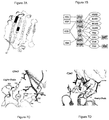
- FIGS. 7A-7D Epitope location and interactions between CD47 and C47B161.
- C47B161 binds to the epitope bin 2 shown in black ( FIG. 7A ).
- CDRs L1 and L2 are engaged in contacts with the antigen, while CDR L3 does not interact with CD47.
- Residues from all heavy chain CDRs contact CD47. Van der Waals interactions are shown as dashed lines, H bonds are solid lines with arrows indicating backbone H bonds and pointing to the backbone atoms.
- CD47, VL and VH residues are in gray boxes, white boxes and ovals, respectively. A distance cut-off of 4 ⁇ was used to define the contacting residues ( FIG.
- the long CDR-L1 is represented by residues H31, N33, Y35 and Y37. H-bonds are shown as dashed lines. CD47 residues are underlined.
- FIG. 8A-8D Epitope location and interactions between CD47 and C47B167.
- C47B167 recognizes the epitope bin 3 region in black.
- the antibody binds well to human CD47 (SEQ ID NO: 67) and weakly to cyno CD47 (SEQ ID NO: 68) due to sequence differences in the V59-T61 epitope region ( FIG. 8A ).
- CD47, VL and VH residues are in gray boxes, white boxes and ovals, respectively.
- FIG. 8B A distance cut-off of 4 ⁇ was used to define the contacting residues ( FIG. 8B ).
- FIGS. 9A and 9B CD47 bound to both C47B161 and C47B167.
- the ternary complex was achieved by superposition of equivalent CD47 Ca atoms in both complexes ( FIG. 9A ).
- the CD47 structure from the C47B167 complex is shown in FIG. 9B .
- the C47B167 epitope is shown in black and the C47B161 epitope is in white.
- FIGS. 10A-10D Epitope location and interactions between CD47 and C47B222. Epitope overall location: C47B161 binds to the epitope bin 1 region shown in black ( FIG. 10A ). 2D Interaction map between CD47 and C47B222: there is segregation between the CD47 residues recognize by the LC and HC. Van der Waals interactions are shown as dashed lines, H bonds are solid lines with arrows indicating backbone H bonds and pointing to the backbone atoms. CD47, VL and VH residues are in gray boxes, white boxes and ovals, respectively ( FIG. 10B ). A distance cut-off of 4 ⁇ was used to define the contacting residues. CD47 main interactions with the Fab light ( FIG. 10C ) and heavy ( FIG. 10D ) chains. CDR-L3 does not bind CD47. H-bonds are shown as dashed lines. CD47 residues are underlined.
- FIG. 11A-11D Epitope location and interactions between CD47 and C47B227. Epitope overall location: C47B227 binds to the epitope bin 1 region shown in black ( FIG. 11A ). 2D Interaction map between CD47 and C47B227: there is epitope segregation with regions recognized either by the LC or HC. Van der Waals interactions are shown as dashed lines, H bonds are solid lines with arrows indicating backbone H bonds and pointing to the backbone atoms. CD47, VL and VH residues are in gray boxes, white boxes and ovals, respectively. A distance cut-off of 4 ⁇ was used to define the contacting residues ( FIG. 11B ). Main interactions of CD47 with the Fab light ( FIG. 11C ) and heavy ( FIG. 11D ) chains. H-bonds are shown as dashed lines. CD47 residues are underlined.
- FIGS. 12A and 12B Epitope and paratope differences between C47B222 and C47B227. Differences in the light chain interactions: N30G, N31S and Y93S mutations in CDR-L1 and CDR-L3 result in repositioning of the FG loop of CD47 and changes in the H bond pattern ( FIG. 12A ). Differences in the heavy chain interactions: A different conformation for the CDR-H3 loop of C47B222 increases the number of H bonds made by the H3 loop from none in C47B227 to 4 bonds in C47B222 (with CD47 residues Y37, K39, D46 and D51). The structural overlay was achieved by superposition of equivalent CD47 Ca atoms in both complexes. The CD47 residues are underlined ( FIG. 12B ).
- FIGS. 13A-13D Epitope location and interactions between CD47 and B6H12.2. Epitope overall location. B6H12.2 binds to the epitope bin 1 region shown in black ( FIG. 13A ). 2D Interaction map between CD47 and B6H12.2: Van der Waals interactions are shown as dashed lines, H bonds are solid lines with arrows indicating backbone H bonds and pointing to the backbone atoms. CD47, VL and VH residues are in gray boxes, white boxes and ovals, respectively. A distance cut-off of 4 ⁇ was used to define the contacting residues ( FIG. 13B ). CD47 main interactions with the Fab Light ( FIG. 13C ) and Heavy ( FIG. 13D ) chains. H-bonds are shown as dashed lines. CD47 residues are underlined.
- FIG. 14 Phagocytosis of Jurkat target cells by human PBMC derived macrophages in response to 90 minute treatment with varying concentrations of anti-human CD47 IgG1/IgG2 Fc-silent C47B157, C47B161, C47B222, and B6H12.2.
- FIGS. 15A and 15B Induction of apoptosis in ( FIG. 15A ) Jurkat cells and (FIG. 15 B) HL60 cells in response to 24 hour treatment with varying concentrations of anti-human CD47 IgG1/IgG2 Fc-silent C47B157, C47B161, C47B222, and B6H12.2.
- FIGS. 16A and 16B Enhancement of complement dependent cytotoxicity against Wil2-s target cells in response to varying concentrations of anti-human CD47 IgG1/IgG2 Fc-silent C47B157, C47B161, C47B222, B6H12.2.
- Rituximab was included as positive control.
- FIGS. 17A-17D Aggregation of human platelets in response to incubation of platelet rich plasma with ( FIG. 17A ) PBS, 200 ⁇ g/ml IgG1/IgG2 Fc silent B6H12.2 and 10 ⁇ M ADP; ( FIG. 17B ) PBS, 200 ⁇ g/ml IgG1/IgG2 Fc-silent C47B157, and IgG1 B6H12.2; ( FIG. 17C ) PBS, 200 ⁇ g/ml IgG1/IgG2sigma C47B161, and IgG1 B6H12.2; and ( FIG. 17D ) PBS, 200 ⁇ g/ml IgG1/IgG2sigma C47B222, and IgG1 B6H12.2.
- FIGS. 18A-18D In vivo activity of IgG1/IgG2 Fc-silent C47B157, C47B161, C47B222, and B6H12.2 in the HL60/NSG mice model. NSG mice were implanted with 10 million HL60 cells intravenously and antibody treatment was initiated on day 6 following tumor cell implant. Each group consisted of five mice. Animals received a total of six doses, twice weekly (final dose day 23). Peripheral blood from the mice was collected weekly and analyzed via FACS to assess tumor cell outgrowth and treatment effects starting on day 14 (final collection on day 42).
- FIGS. 19A and 19B In vivo activity of IgG1/IgG2 Fc-silent C47B157, C47B161, C47B222, and B6H12.2 in the MV4-11/NSG mice model. NSG mice were intravenously implanted with five million MV4-11 cells and antibody treatment was initiated on day 6 following tumor cell implant. Each group consisted of five mice. Animals received a total of six doses, twice weekly (final dose day 23). Peripheral blood from mice was collected on day 34 and was analyzed via FACS to assess effects of treatment on tumor cell outgrowth.
- FIG. 20A-20D In vivo activity of IgG1/IgG2 Fc-silent C47B157, C47B161, C47B222, and B6H12.2 in the Kasumi-3/NSG mice model. NSG mice were implanted with 10 million Kasumi-3 cells intravenously and antibody treatment was initiated on day 6 following tumor cell implant. Each treatment group consisted of five mice. Animals received a total of twelve doses, twice weekly (final dose day 44). Peripheral blood from the mice was collected weekly and analyzed via FACS to assess tumor cell outgrowth and treatment effects starting on day 14. Graph shows percentage of CD45% cells starting on day 34.
- FIGS. 21A and 21B Mode of antibody neutralization. Structural overlay of CD47/Fab complexes onto the CD47/SIRPa complex showing regions of clash between Fab and SIRP alpha. The overlay was achieved by superposition of equivalent CD47 Ca atoms in both complexes ( FIG. 21A ). Overlap regions between each epitope and the SIRP alpha binding site ( FIG. 21B ). The structure of CD47 from the C47B222 complex was used in FIG. 21B .
- the antibodies described herein stand to be of great importance in the treatment of a multitude of cancers.
- the IgG CD47 antibodies described herein do not exhibit significant platelet aggregation and hemagglutination, thereby increasing the efficacy of therapeutically targeting CD47, and maintain the ability to block the interaction of CD47 with SIRP alpha, which promotes phagocytosis of CD47-expressing cells.
- the full IgG CD47 antibodies of the present disclosure e.g., C47B157, C47B161 and C47B222
- the CD47 antibodies described herein do not have significant platelet aggregation and hemagglutination activity.
- the antibodies described herein are unique among existing CD47 antibodies in their ability to block SIRP alpha, without significant platelet aggregation and hemagglutination activity.
- compositions of matter and methods described herein are produced or performed without undue experimentation using, unless otherwise indicated, conventional techniques of molecular biology, microbiology, virology, recombinant DNA technology, peptide synthesis in solution, solid phase peptide synthesis, pharmaceutical chemistry, medicinal chemistry and immunology. Standard techniques are used for pharmaceutical preparation, formulation, and delivery, and treatment of patients.
- CD47 As used herein, the terms “CD47”, “integrin-associated protein (IAP)”, “ovarian cancer antigen OA3”, and “Rh-related antigen” are synonymous and may be used interchangeably.
- red blood cell(s) and “erythrocyte(s)” are synonymous and used interchangeably herein.
- platelet aggregation refers to the adhesion of activated platelets to one another that results in the formation of aggregates or clumps of activated platelets. Platelet aggregation is measured, as described in the Examples, using an aggregometer, which measures the increase in the transmittance of light as platelet aggregation occurs. “Significant platelet aggregation activity” occurs if there is an increase in light transmittance of at least 25% by 6 minutes after the addition of an antibody described herein relative to light transmittance prior to antibody addition.
- agglutination refers to cellular clumping
- hemagglutination refers to clumping of a specific subset of cells, i.e., red blood cells.
- hemagglutination is a type of agglutination.
- hemagglutination assay In the hemagglutination assay described herein, patterns in a given well are formed by erythrocytes which can be either “buttons,” “halos,” or intermediate between the two.
- the term “significant hemagglutination activity” refers to the presence of any halo pattern in a well upon the addition of an antibody described herein.
- antibody refers to immunoglobulin molecules and immunologically active portions of immunoglobulin (Ig) molecules, i.e., molecules that contain an antigen binding site that specifically binds (immunoreacts with) an antigen.
- Ig immunoglobulin
- bind or “immunoreacts with” or “directed against” is meant that the antibody reacts with one or more antigenic determinants of the desired antigen and does not react with, or binds at much lower affinity (K d >10 6 ), to other polypeptides.
- Antibodies include, but are not limited to monoclonal, chimeric, dAb (domain antibody), single chain, Fab, Fab- and F(ab′) 2 fragments, F v , scFvs, and an Fab expression library.
- the basic antibody structural unit is known to comprise a tetramer.
- Each tetramer is composed of two identical pairs of polypeptide chains, each pair having one “light” (about 25 kDa) and one “heavy” chain (about 50-70 kDa).
- the amino-terminal portion of each chain includes a variable region of about 100 to 110 or more amino acids primarily responsible for antigen recognition.
- the carboxy-terminal portion of each chain defines a constant region primarily responsible for effector function.
- antibody molecules obtained from humans relate to any of the classes IgG, IgM, IgA, IgE and IgD, which differ from one another by the nature of the heavy chain present in the molecule. Certain classes have subclasses as well, such as IgG1, IgG 2 , and others.
- the light chain may be a kappa chain or a lambda chain.
- mAb monoclonal antibody
- monoclonal antibody composition refers to a population of antibody molecules that contain only one molecular species of antibody molecule consisting of a unique light chain gene product and a unique heavy chain gene product.
- CDRs complementarity determining regions
- MAbs contain an antigen binding site capable of immunoreacting with a particular epitope of the antigen.
- antibody molecules obtained from humans relate to any of the classes IgG, IgM, IgA, IgE and IgD, which differ from one another by the nature of the heavy chain present in the molecule. Certain classes have subclasses as well, such as IgG 1 , IgG 2 , and others. Furthermore, in humans, the light chain may be a kappa chain or a lambda chain.
- antigen binding site refers to the part of the immunoglobulin molecule that participates in antigen binding.
- the antigen binding site is formed by amino acid residues of the N-terminal variable (“V”) regions of the heavy (“H”) and light (“L”) chains.
- V N-terminal variable
- L light
- hypervariable regions Three highly divergent stretches within the V regions of the heavy and light chains, referred to as “hypervariable regions,” are interposed between more conserved flanking stretches known as “framework regions,” or “FRs”.
- FR refers to amino acid sequences which are naturally found between, and adjacent to, hypervariable regions in immunoglobulins.
- the three hypervariable regions of a light chain and the three hypervariable regions of a heavy chain are disposed relative to each other in three-dimensional space to form an antigen-binding surface.
- the antigen-binding surface is complementary to the three-dimensional surface of a bound antigen, and the three hypervariable regions of each of the heavy and light chains are referred to as “complementarity-determining regions,” or “CDRs.”
- CDRs complementarity-determining regions
- epitopic determinants include any protein determinant capable of specific binding to an immunoglobulin or fragment thereof, or a T-cell receptor.
- epitopic determinants usually consist of chemically active surface groupings of molecules such as amino acids or sugar side chains and usually have specific three dimensional structural characteristics, as well as specific charge characteristics. An antibody is said to specifically bind an antigen when the dissociation constant is ⁇ 1 ⁇ M.
- the terms “specifically binds,” refers to the non-covalent interactions of the type which occur between an immunoglobulin molecule and an antigen for which the immunoglobulin is specific.
- the strength, or affinity of immunological binding interactions can be expressed in terms of the dissociation constant (K d ) of the interaction, wherein a smaller K d represents a greater affinity.
- Immunological binding properties of selected polypeptides can be quantified using methods well known in the art.
- One such method entails measuring the rates of antigen-binding site/antigen complex formation and dissociation, wherein those rates depend on the concentrations of the complex partners, the affinity of the interaction, and geometric parameters that equally influence the rate in both directions.
- both the “on rate constant” (k on ) and the “off rate constant” (k off ) can be determined by calculation of the concentrations and the actual rates of association and dissociation. (See Nature 361:186-87 (1993)).
- the ratio of k off /k on enables the cancellation of all parameters not related to affinity, and is equal to the dissociation constant K d .
- An antibody of the present disclosure is said to specifically bind to CD47, when the equilibrium binding constant (K d ) is ⁇ 1 ⁇ M, as measured by assays such as radioligand binding assays, surface plasmon resonance (SPR), flow cytometry binding assay, or similar assays known to those skilled in the art.
- assays such as radioligand binding assays, surface plasmon resonance (SPR), flow cytometry binding assay, or similar assays known to those skilled in the art.
- an “isolated” antibody is one which has been identified and separated and/or recovered from a component of its natural environment. Contaminant components of its natural environment are materials which would interfere with diagnostic or therapeutic uses for the antibody, and may include enzymes, hormones, and other proteinaceous or nonproteinaceous solutes.
- the antibody will be purified (1) to greater than 95% by weight of antibody as determined by the Lowry method, and most preferably more than 99% by weight, (2) to a degree sufficient to obtain at least 15 residues of N-terminal or internal amino acid sequence by use of a spinning cup sequenator, or (3) to homogeneity by SDS-PAGE under reducing or nonreducing conditions using Coomassie blue or, preferably, silver stain.
- Isolated antibody includes the antibody in situ within recombinant cells since at least one component of the antibody's natural environment will not be present. Ordinarily, however, isolated antibody will be prepared by at least one purification step.
- polypeptide is used herein as a generic term to refer to native protein, fragments, or analogs of a polypeptide sequence. Hence, native protein fragments, and analogs are species of the polypeptide genus.
- naturally-occurring refers to the fact that an object can be found in nature.
- a polypeptide or polynucleotide sequence that is present in an organism (including viruses) that can be isolated from a source in nature and which has not been intentionally modified by man in the laboratory or otherwise is naturally-occurring.
- oligonucleotide includes naturally occurring, and modified nucleotides linked together by naturally occurring, and non-naturally occurring oligonucleotide linkages.
- Oligonucleotides are a polynucleotide subset generally comprising a length of 200 bases or fewer.
- Preferably oligonucleotides are 10 to 60 bases in length and most preferably 12, 13, 14, 15, 16, 17, 18, 19, or 20 to 40 bases in length.
- Oligonucleotides are usually single stranded, e.g., for probes, although oligonucleotides may be double stranded, e.g., for use in the construction of a gene mutant.
- Oligonucleotides described herein are either sense or antisense oligonucleotides.
- sequence identity means that two polynucleotide or amino acid sequences are identical (i.e., on a nucleotide-by-nucleotide or residue-by-residue basis) over the comparison window.
- percentage of sequence identity is calculated by comparing two optimally aligned sequences over the window of comparison, determining the number of positions at which the identical nucleic acid base (e.g., A, T, C, G, U or I) or residue occurs in both sequences to yield the number of matched positions, dividing the number of matched positions by the total number of positions in the comparison window (i.e., the window size), and multiplying the result by 100 to yield the percentage of sequence identity.
- substantially identical denotes a characteristic of a polynucleotide or amino acid sequence, wherein the polynucleotide or amino acid comprises a sequence that has at least 85 percent sequence identity, preferably at least 90 to 95 percent sequence identity, more usually at least 99 percent sequence identity as compared to a reference sequence over a comparison window of at least 18 nucleotide (6 amino acid) positions, frequently over a window of at least 24-48 nucleotide (8-16 amino acid) positions, wherein the percentage of sequence identity is calculated by comparing the reference sequence to the sequence which may include deletions or additions which total 20 percent or less of the reference sequence over the comparison window.
- the reference sequence may be a subset of a larger sequence.
- Examples of unconventional amino acids include: 4 hydroxyproline, ⁇ -carboxyglutamate, ⁇ -N,N,N-trimethyllysine, ⁇ -N-acetyllysine, O-phosphoserine, N-acetylserine, N-formylmethionine, 3-methylhistidine, 5-hydroxylysine, ⁇ -N-methylarginine, and other similar amino acids and imino acids (e.g., 4-hydroxyproline).
- the left-hand direction is the amino terminal direction and the right-hand direction is the carboxy-terminal direction, in accordance with standard usage and convention.
- the left-hand end of single-stranded polynucleotide sequences is the 5′ end the left-hand direction of double-stranded polynucleotide sequences is referred to as the 5′ direction.
- the direction of 5′ to 3′ addition of nascent RNA transcripts is referred to as the transcription direction sequence regions on the DNA strand having the same sequence as the RNA and which are 5′ to the 5′ end of the RNA transcript are referred to as “upstream sequences”, sequence regions on the DNA strand having the same sequence as the RNA and which are 3′ to the 3′ end of the RNA transcript are referred to as “downstream sequences”.
- the term “substantial identity” means that two peptide sequences, when optimally aligned, such as by the programs GAP or BESTFIT using default gap weights, share at least 80 percent sequence identity, preferably at least 90 percent sequence identity, more preferably at least 95 percent sequence identity, and most preferably at least 99 percent sequence identity.
- residue positions which are not identical differ by conservative amino acid substitutions.
- Constant amino acid substitutions refer to the interchangeability of residues having similar side chains.
- a group of amino acids having aliphatic side chains is glycine, alanine, valine, leucine, and isoleucine
- a group of amino acids having aliphatic-hydroxyl side chains is serine and threonine
- a group of amino acids having amide-containing side chains is asparagine and glutamine
- a group of amino acids having aromatic side chains is phenylalanine, tyrosine, and tryptophan
- a group of amino acids having basic side chains is lysine, arginine, and histidine
- a group of amino acids having sulfur-containing side chains is cysteine and methionine.
- Preferred conservative amino acids substitution groups are: valine-leucine-isoleucine, phenylalanine-tyrosine, lysine-arginine, alanine-valine, glutamic-aspartic, and asparagine-glutamine.
- amino acid sequences of antibodies or immunoglobulin molecules are contemplated as being encompassed by the present disclosure, providing that the variations in the amino acid sequence maintain at least 75%, more preferably at least 80%, 90%, 95%, and most preferably 99%.
- conservative amino acid replacements are contemplated. Conservative replacements are those that take place within a family of amino acids that are related in their side chains.
- amino acids are generally divided into families: (1) acidic amino acids are aspartate, glutamate; (2) basic amino acids are lysine, arginine, histidine; (3) non-polar amino acids are alanine, valine, leucine, isoleucine, proline, phenylalanine, methionine, tryptophan, and (4) uncharged polar amino acids are glycine, asparagine, glutamine, cysteine, serine, threonine, tyrosine.
- the hydrophilic amino acids include arginine, asparagine, aspartate, glutamine, glutamate, histidine, lysine, serine, and threonine.
- the hydrophobic amino acids include alanine, cysteine, isoleucine, leucine, methionine, phenylalanine, proline, tryptophan, tyrosine and valine.
- Other families of amino acids include (i) serine and threonine, which are the aliphatic-hydroxy family; (ii) asparagine and glutamine, which are the amide containing family; (iii) alanine, valine, leucine and isoleucine, which are the aliphatic family; and (iv) phenylalanine, tryptophan, and tyrosine, which are the aromatic family.
- Structural and functional domains can be identified by comparison of the nucleotide and/or amino acid sequence data to public or proprietary sequence databases.
- computerized comparison methods are used to identify sequence motifs or predicted protein conformation domains that occur in other proteins of known structure and/or function. Methods to identify protein sequences that fold into a known three-dimensional structure are known (Bowie et al. Science 253:164 (1991)).
- sequence motifs and structural conformations that may be used to define structural and functional domains in accordance with the present disclosure.
- Preferred amino acid substitutions are those which: (1) reduce susceptibility to proteolysis, (2) reduce susceptibility to oxidation, (3) alter binding affinity for forming protein complexes, (4) alter binding affinities, and (5) confer or modify other physicochemical or functional properties of such analogs.
- Analogs can include various muteins of a sequence other than the naturally-occurring peptide sequence. For example, single or multiple amino acid substitutions (preferably conservative amino acid substitutions) may be made in the naturally-occurring sequence (preferably in the portion of the polypeptide outside the domain(s) forming intermolecular contacts.
- a conservative amino acid substitution should not substantially change the structural characteristics of the parent sequence (e.g., a replacement amino acid should not tend to break a helix that occurs in the parent sequence, or disrupt other types of secondary structure that characterizes the parent sequence).
- Examples of art-recognized polypeptide secondary and tertiary structures are described in Proteins, Structures and Molecular Principles (Creighton, Ed., W. H. Freeman and Company, New York (1984)); Introduction to Protein Structure (C. Branden and J. Tooze, eds., Garland Publishing, New York, N.Y. (1991)); and Thornton et al. Nature 354:105 (1991).
- agent is used herein to denote a chemical compound, a mixture of chemical compounds, a biological macromolecule, or an extract made from biological materials.
- label refers to incorporation of a detectable marker, e.g., by incorporation of a radiolabeled amino acid or attachment to a polypeptide of biotinyl moieties that can be detected by marked avidin (e.g., streptavidin containing a fluorescent marker or enzymatic activity that can be detected by optical or calorimetric methods). In certain situations, the label or marker can also be therapeutic. Various methods of labeling polypeptides and glycoproteins are known in the art and may be used.
- labels for polypeptides include, but are not limited to, the following: radioisotopes or radionuclides (e.g., 3 H, 14 C, 15 N, 35 S, 90 Y, 99 Tc, 111 In, 125 I, 131 I) fluorescent labels (e.g., FITC, rhodamine, lanthanide phosphors), enzymatic labels (e.g., horseradish peroxidase, p-galactosidase, luciferase, alkaline phosphatase), chemiluminescent, biotinyl groups, predetermined polypeptide epitopes recognized by a secondary reporter (e.g., leucine zipper pair sequences, binding sites for secondary antibodies, metal binding domains, epitope tags).
- radioisotopes or radionuclides e.g., 3 H, 14 C, 15 N, 35 S, 90 Y, 99 Tc, 111 In, 125 I, 131 I
- labels are attached by spacer arms of various lengths to reduce potential steric hindrance.
- pharmaceutical agent or drug refers to a chemical compound or composition capable of inducing a desired therapeutic effect when properly administered to a patient.
- anti-plastic agent is used herein to refer to agents that have the functional property of inhibiting a development or progression of a neoplasm in a human, particularly a malignant (cancerous) lesion, such as a carcinoma, sarcoma, lymphoma, or leukemia. Inhibition of metastasis is frequently a property of antineoplastic agents.
- Monoclonal antibodies described herein have the ability to bind CD47, to inhibit the binding of SIRP alpha to CD47, decrease CD47-SIRP alpha-mediated signaling, promote phagocytosis, and to inhibit tumor growth and/or migration. Inhibition is determined, for example, using the cellular assay described herein in the Examples.
- Exemplary antibodies described herein include an antibody having a variable heavy (VH) chain selected from SEQ ID NOs: 4-6, and having a variable light (VL) chain selected from SEQ ID NOs: 7 and 8.
- exemplary antibodies include those provided in Table 1.
- VH Variable heavy Variable light Antibody chain (VL) chain C47B157 SEQ ID NO: 4 SEQ ID NO: 7 C47B161 SEQ ID NO: 5 SEQ ID NO: 7 C47B222 SEQ ID NO: 6 SEQ ID NO: 8
- the amino acid sequence of VH CDR1 is DYNMH (SEQ ID NO: 9) or DYWIG (SEQ ID NO: 10).
- the amino acid sequence of VH CDR2 is DIYPYNGGTGYNQKFKG (SEQ ID NO: 11) or IIYPGDSDTRYSPSFQG (SEQ ID NO: 12).
- the amino acid sequence of VH CDR3 is GGWHAMDS (SEQ ID NO: 13) or VGRFASHQLDY (SEQ ID NO: 14).
- the amino acid sequence of VL CDR1 is RSRQSIVHTNRYTYLA (SEQ ID NO: 15) or RASQSVNNRLA (SEQ ID NO: 16).
- the amino acid sequence of VL CDR2 is KVSNRFS (SEQ ID NO: 17) or WASTRAI (SEQ ID NO: 18).
- the amino acid sequence of VL CDR3 is FQGSHVPYT (SEQ ID NO: 19) or QQGASWPFT (SEQ ID NO: 20).
- antibodies that bind to the same epitope as the CD47 antibodies described herein specifically bind to an epitope that includes one or more amino acid residues of an exemplary human CD47 that is provided below (GenBank Accession No. Q08722.1 (GI:1171879), incorporated herein by reference).
- the signal sequence (amino acids 1-18) is underlined.
- the antibodies interact with Y37, K39, R45, D46, T49, A53, L54, N55, K56, S57, T58, V59, P60, T61, S64, A66, and K67 of SEQ ID NO:21. In some embodiments the antibodies interact with E35, K39, Y37, D46, 49, D51, A53, L54, K56, T58, V59, T99, L101, and T102 of SEQ ID NO: 21.
- the antibodies interact with E29, Q31, N32, T34, E35, V36, Y37, K39, N41, D46, D51, A53, E97, T99, E100, L101, T102, R103, and E104 of SEQ ID NO: 21.
- an antibody has the same specificity as one of the antibodies described herein (e.g., C47B157, C47B161 and C47B222, or an antibody having a variable heavy chain selected from SEQ ID NOs: 4-6, and a variable light chain selected from SEQ ID NOs: 7 and 8) by ascertaining whether the former prevents the latter from binding to CD47. If the antibody being tested competes with the antibody of this disclosure, as shown by a decrease in binding by the antibody described herein, then the two antibodies likely bind to the same, or a nearby, epitope.
- An alternative method for determining whether an antibody has the specificity of an antibody described herein is to pre-incubate the antibody described herein with soluble CD47 protein (with which it is normally reactive), and then add the antibody being tested to determine if the antibody being tested is inhibited in its ability to bind CD47. If binding of the antibody being tested is inhibited then, in all likelihood, it has the same, or functionally equivalent, epitope specificity as the antibody of this disclosure.
- the antibodies described herein can be assessed for the ability to modulate, block, inhibit, reduce, antagonize, neutralize or otherwise interfere with CD47- and/or CD47/SIRP alpha-mediated signaling.
- assessments may include measuring CD47- and/or CD47/SIRP alpha-mediated signaling in the presence of one or more of the antibodies described herein.
- assays can include competitive binding assays or can measure a biologic readout, for example the ability to promote phagocytosis of a CD47 expressing cell by a macrophage, as is described in Example 7.
- Fully human antibodies are antibody molecules in which the entire sequence of both the light chain and the heavy chain, including the CDRs, arise from human genes. Such antibodies are termed “human antibodies” or “fully human antibodies” herein. Human monoclonal antibodies are prepared, for example, using the procedures described in the Examples provided below.
- Human monoclonal antibodies can be also prepared by using the trioma technique; the human B-cell hybridoma technique (see Kozbor, et al., 1983 Immunol Today 4: 72); and the EBV hybridoma technique to produce human monoclonal antibodies (see Cole, et al., 1985 In: MONOCLONAL ANTIBODIES AND CANCER THERAPY, Alan R. Liss, Inc., pp. 77-96). Human monoclonal antibodies may be utilized and may be produced by using human hybridomas (see Cote, et al., 1983.
- Antibodies are purified by well-known techniques, such as affinity chromatography using protein A or protein G, which provide primarily the IgG fraction of immune serum. Subsequently, or alternatively, the specific antigen which is the target of the immunoglobulin sought, or an epitope thereof, may be immobilized on a column to purify the immune specific antibody by immunoaffinity chromatography. Purification of immunoglobulins is discussed, for example, by D. Wilkinson (The Engineer, published by The Engineer, Inc., Philadelphia Pa., Vol. 14, No. 8 (Apr. 17, 2000), pp. 25-28).
- the CD47 antibodies of this disclosure are monoclonal antibodies.
- Monoclonal antibodies that modulate, block, inhibit, reduce, antagonize, neutralize or otherwise interfere with CD47- and/or CD47/SIRP alpha-mediated cell signaling are generated, e.g., by immunizing an animal with membrane bound and/or soluble CD47, such as, for example, human CD47 or an immunogenic fragment, derivative or variant thereof.
- the animal is immunized with cells transfected with a vector containing a nucleic acid molecule encoding CD47 such that CD47 is expressed and associated with the surface of the transfected cells.
- the antibodies are obtained by screening a library that contains antibody or antigen binding domain sequences for binding to CD47.
- This library is prepared, e.g., in bacteriophage as protein or peptide fusions to a bacteriophage coat protein that is expressed on the surface of assembled phage particles and the encoding DNA sequences contained within the phage particles (i.e., “phage displayed library”). Hybridomas resulting from myeloma/B cell fusions are then screened for reactivity to CD47.
- Monoclonal antibodies are prepared, for example, using hybridoma methods, such as those described by Kohler and Milstein, Nature, 256:495 (1975).
- a hybridoma method a mouse, hamster, or other appropriate host animal, is typically immunized with an immunizing agent to elicit lymphocytes that produce or are capable of producing antibodies that will specifically bind to the immunizing agent.
- the lymphocytes can be immunized in vitro.
- the immunizing agent will typically include the protein antigen, a fragment thereof, or a fusion protein thereof.
- peripheral blood lymphocytes are used if cells of human origin are desired, or spleen cells or lymph node cells are used if non-human mammalian sources are desired.
- the lymphocytes are then fused with an immortalized cell line using a suitable fusing agent, such as polyethylene glycol, to form a hybridoma cell (Goding, Monoclonal Antibodies: Principles and Practice, Academic Press, (1986) pp. 59-103).
- Immortalized cell lines are usually transformed mammalian cells, particularly myeloma cells of rodent, bovine and human origin.
- rat or mouse myeloma cell lines are employed.
- the hybridoma cells can be cultured in a suitable culture medium that preferably contains one or more substances that inhibit the growth or survival of the unfused, immortalized cells.
- a suitable culture medium that preferably contains one or more substances that inhibit the growth or survival of the unfused, immortalized cells.
- the culture medium for the hybridomas typically will include hypoxanthine, aminopterin, and thymidine (“HAT medium”), which substances prevent the growth of HGPRT-deficient cells.
- Preferred immortalized cell lines are those that fuse efficiently, support stable high level expression of antibody by the selected antibody-producing cells, and are sensitive to a medium such as HAT medium. More preferred immortalized cell lines are murine myeloma lines, which can be obtained, for instance, from the Salk Institute Cell Distribution Center, San Diego, Calif. and the American Type Culture Collection, Manassas, Va. Human myeloma and mouse-human heteromyeloma cell lines also have been described for the production of monoclonal antibodies. (See Kozbor, J. Immunol., 133:3001 (1984); Brodeur et al., Monoclonal Antibody Production Techniques and Applications, Marcel Dekker, Inc., New York, (1987) pp. 51-63)).
- the culture medium in which the hybridoma cells are cultured can then be assayed for the presence of monoclonal antibodies directed against the antigen.
- the binding specificity of monoclonal antibodies produced by the hybridoma cells is determined by immunoprecipitation or by an in vitro binding assay, such as radioimmunoassay (RIA) or enzyme-linked immunoabsorbent assay (ELISA).
- RIA radioimmunoassay
- ELISA enzyme-linked immunoabsorbent assay
- the binding affinity of the monoclonal antibody can, for example, be determined by the Scatchard analysis of Munson and Pollard, Anal. Biochem., 107:220 (1980).
- the clones can be subcloned by limiting dilution procedures and grown by standard methods. (See Goding, Monoclonal Antibodies: Principles and Practice , Academic Press, (1986) pp. 59-103). Suitable culture media for this purpose include, for example, Dulbecco's Modified Eagle's Medium and RPMI-1640 medium. Alternatively, the hybridoma cells can be grown in vivo as ascites in a mammal.
- the monoclonal antibodies secreted by the subclones can be isolated or purified from the culture medium or ascites fluid by conventional immunoglobulin purification procedures such as, for example, protein A-Sepharose, hydroxylapatite chromatography, gel electrophoresis, dialysis, or affinity chromatography.
- Monoclonal antibodies can also be made by recombinant DNA methods, such as those described in U.S. Pat. No. 4,816,567.
- DNA encoding the monoclonal antibodies described herein can be readily isolated and sequenced using conventional procedures (e.g., by using oligonucleotide probes that are capable of binding specifically to genes encoding the heavy and light chains of murine antibodies).
- the hybridoma cells described herein serve as a preferred source of such DNA.
- the DNA can be placed into expression vectors, which are then transfected into host cells such as Chinese hamster ovary (CHO) cells, Human Embryonic Kidney (HEK) 293 cells, simian COS cells, PER.C6®, NS0 cells, SP2/0, YB2/0, or myeloma cells that do not otherwise produce immunoglobulin protein, to obtain the synthesis of monoclonal antibodies in the recombinant host cells.
- the DNA also can be modified, for example, by substituting the coding sequence for human heavy and light chain constant domains in place of the homologous murine sequences (see U.S. Pat. No.
- non-immunoglobulin polypeptide can be substituted for the constant domains of an antibody described herein, or can be substituted for the variable domains of one antigen-combining site of an antibody described herein to create a chimeric bivalent antibody.
- the antibodies described herein include fully human antibodies or humanized antibodies. These antibodies are suitable for administration to humans without engendering an immune response by the human against the administered immunoglobulin.
- a CD47 antibody is generated, for example, by phage-display methods using antibodies containing only human sequences. Such approaches are well-known in the art, e.g., in WO92/01047 and U.S. Pat. No. 6,521,404, which are hereby incorporated by reference. In this approach, a combinatorial library of phage carrying random pairs of light and heavy chains are screened using natural or recombinant source of CD47 or fragments thereof. In another approach, a CD47 antibody can be produced by a process wherein at least one step of the process includes immunizing a transgenic, non-human animal with human CD47 protein.
- the production of antibodies with reduced immunogenicity is also accomplished via humanization, chimerization and display techniques using appropriate libraries.
- murine antibodies or antibodies from other species can be humanized or primatized using techniques well known in the art. See e.g., Winter and Harris Immunol Today 14:43 46 (1993) and Wright et al. Crit. Reviews in Immunol. 12125-168 (1992).
- the antibody of interest may be engineered by recombinant DNA techniques to substitute the CH1, CH2, CH3, hinge domains, and/or the framework domain with the corresponding human sequence (See WO 92102190 and U.S. Pat. Nos.
- Ig cDNA for construction of chimeric immunoglobulin genes is known in the art (Liu et al. P.N.A.S. 84:3439 (1987) and J. Immunol. 139:3521 (1987)).
- mRNA is isolated from a hybridoma or other cell producing the antibody and used to produce cDNA.
- the cDNA of interest may be amplified by the polymerase chain reaction using specific primers (U.S. Pat. Nos. 4,683,195 and 4,683,202). Alternatively, a library is made and screened to isolate the sequence of interest.
- the DNA sequence encoding the variable region of the antibody is then fused to human constant region sequences.
- the sequences of human constant regions genes may be found in Kabat et al. (1991) Sequences of Proteins of immunological Interest, N.I.H. publication no. 91-3242. Human C region genes are readily available from known clones. The choice of isotype will be guided by the desired effecter functions, such as complement fixation, or activity in antibody-dependent cellular cytotoxicity. Preferred isotypes are IgG1 and IgG2. Either of the human light chain constant regions, kappa or lambda, may be used. The chimeric, humanized antibody is then expressed by conventional methods.
- Antibody fragments such as Fv, F(ab′) 2 and Fab may be prepared by cleavage of the intact protein, e.g., by protease or chemical cleavage.
- a truncated gene is designed.
- a chimeric gene encoding a portion of the F(ab′) 2 fragment would include DNA sequences encoding the CH1 domain and hinge region of the H chain, followed by a translational stop codon to yield the truncated molecule.
- Consensus sequences of H and L J regions may be used to design oligonucleotides for use as primers to introduce useful restriction sites into the J region for subsequent linkage of V region segments to human C region segments.
- C region cDNA can be modified by site directed mutagenesis to place a restriction site at the analogous position in the human sequence.
- Expression vectors include plasmids, retroviruses, YACs, EBV derived episomes, and the like.
- a convenient vector is one that encodes a functionally complete human CH or CL immunoglobulin sequence, with appropriate restriction sites engineered so that any VH or VL sequence can be easily inserted and expressed.
- splicing usually occurs between the splice donor site in the inserted J region and the splice acceptor site preceding the human C region, and also at the splice regions that occur within the human CH exons. Polyadenylation and transcription termination occur at native chromosomal sites downstream of the coding regions.
- the resulting chimeric antibody may be joined to any strong promoter, including retroviral LTRs, e.g., SV-40 early promoter, (Okayama et al. Mol. Cell. Bio. 3:280 (1983)), Rous sarcoma virus LTR (Gorman et al. P.N.A.S. 79:6777 (1982)), and moloney murine leukemia virus LTR (Grosschedl et al. Cell 41:885 (1985)).
- retroviral LTRs e.g., SV-40 early promoter, (Okayama et al. Mol. Cell. Bio. 3:280 (1983)), Rous sarcoma virus LTR (Gorman et al. P.N.A.S. 79:6777 (1982)), and moloney murine leukemia virus LTR (Grosschedl et al. Cell 41:885 (1985)).
- native Ig promoters and the like may be used
- human antibodies or antibodies from other species can be generated through display type technologies, including, without limitation, phage display, retroviral display, ribosomal display, and other techniques, using techniques well known in the art and the resulting molecules can be subjected to additional maturation, such as affinity maturation, as such techniques are well known in the art.
- display type technologies including, without limitation, phage display, retroviral display, ribosomal display, and other techniques, using techniques well known in the art and the resulting molecules can be subjected to additional maturation, such as affinity maturation, as such techniques are well known in the art.
- antibodies can be generated to CD47 expressing cells, soluble forms of CD47, epitopes or peptides thereof, and expression libraries thereto (See e.g., U.S. Pat. No. 5,703,057), which can thereafter be assessed as described previously for desired characteristics.
- the CD47 antibodies described herein can be expressed by a vector containing a DNA segment encoding the single chain antibody described above.
- Vectors include chemical conjugates such as described in WO 93/64701, which has targeting moiety (e.g. a ligand to a cellular surface receptor), and a nucleic acid binding moiety (e.g. polylysine), viral vector (e.g. a DNA or RNA viral vector), fusion proteins such as described in PCT/US95/02140 (WO 95/22618) which is a fusion protein containing a target moiety (e.g. an antibody specific for a target cell) and a nucleic acid binding moiety (e.g. a protamine), plasmids, phage, etc.
- the vectors can be chromosomal, non-chromosomal or synthetic.
- Retroviral vectors include moloney murine leukemia viruses. DNA viral vectors are preferred. These vectors include pox vectors such as orthopox or avipox vectors, herpesvirus vectors such as a herpes simplex I virus (HSV) vector (see Geller, A. I. et al., J. Neurochem, 64:487 (1995); Lim, F., et al., in DNA Cloning: Mammalian Systems, D. Glover, Ed. (Oxford Univ. Press, Oxford England) (1995); Geller, A. I. et al., Proc Natl. Acad. Sci.: U.S.A.
- HSV herpes simplex I virus
- Pox viral vectors introduce the gene into the cells cytoplasm.
- Avipox virus vectors result in only a short term expression of the nucleic acid.
- Adenovirus vectors, adeno-associated virus vectors and herpes simplex virus (HSV) vectors are preferred for introducing the nucleic acid into neural cells.
- the adenovirus vector results in a shorter term expression (about 2 months) than adeno-associated virus (about 4 months), which in turn is shorter than HSV vectors.
- the particular vector chosen will depend upon the target cell and the condition being treated.
- the introduction can be by standard techniques, e.g. infection, transfection, transduction or transformation. Examples of modes of gene transfer include e.g., naked DNA, CaPO 4 precipitation, DEAE dextran, electroporation, protoplast fusion, lipofection, cell microinjection, and viral vectors.
- the vector can be employed to target essentially any desired target cell.
- stereotaxic injection can be used to direct the vectors (e.g. adenovirus, HSV) to a desired location.
- the particles can be delivered by intracerebroventricular (icy) infusion using a minipump infusion system, such as a SynchroMed Infusion System.
- icy intracerebroventricular
- a method based on bulk flow, termed convection, has also proven effective at delivering large molecules to extended areas of the brain and may be useful in delivering the vector to the target cell.
- convection A method based on bulk flow, termed convection, has also proven effective at delivering large molecules to extended areas of the brain and may be useful in delivering the vector to the target cell.
- Other methods that can be used include catheters, intravenous, parenteral, intraperitoneal and subcutaneous injection, and oral or other known routes of administration.
- vectors can be used to express large quantities of antibodies that can be used in a variety of ways. For example, to detect the presence of CD47 in a sample.
- the antibody can also be used to try to bind to and disrupt CD47- and/or the CD47/SIRP alpha interaction and CD47/SIRP alpha-mediated signaling.
- Techniques can be adapted for the production of single-chain antibodies specific to an antigenic protein described herein (see e.g., U.S. Pat. No. 4,946,778).
- methods can be adapted for the construction of Fab expression libraries (see e.g., Huse, et al., 1989 Science 246: 1275-1281) to allow rapid and effective identification of monoclonal Fab fragments with the desired specificity for a protein or derivatives, fragments, analogs or homologs thereof.
- Antibody fragments that contain the idiotypes to a protein antigen may be produced by techniques known in the art including, but not limited to: (i) an F(ab′) 2 fragment produced by pepsin digestion of an antibody molecule; (ii) an Fab fragment generated by reducing the disulfide bridges of an F(ab′) 2 fragment; (iii) an Fab fragment generated by the treatment of the antibody molecule with papain and a reducing agent and (iv) F v fragments.
- the antibody described herein is an IgG isotype.
- the constant region of the antibody is of human IgG1 isotype, having the amino acid sequence of SEQ ID NO: 1.
- the constant region of the antibody is of human IgG2 isotype, having the amino acid sequence of SEQ ID NO: 2.
- the human IgG2 constant region is modified at amino acids Va1234, Gly237, Pro238, His268, Va1309, Ala329, and Pro330 (Kabat Numbering) to alter Fc receptor interactions (see WO11/066501 Al).
- the constant region of the antibody of the modified human IgG2 has the amino acid sequence of SEQ ID NO: 3.
- therapeutics in accordance with the described embodiments will be administered with suitable carriers, excipients, and other agents that are incorporated into formulations to provide improved transfer, delivery, tolerance, and the like.
- suitable carriers, excipients, and other agents that are incorporated into formulations to provide improved transfer, delivery, tolerance, and the like.
- a multitude of appropriate formulations can be found in the formulary known to all pharmaceutical chemists: Remington's Pharmaceutical Sciences (15th ed, Mack Publishing Company, Easton, Pa. (1975)), particularly Chapter 87 by Blaug, Seymour, therein.
- formulations include, for example, powders, pastes, ointments, jellies, waxes, oils, lipids, lipid (cationic or anionic) containing vesicles (such as LipofectinTM), DNA conjugates, anhydrous absorption pastes, oil-in-water and water-in-oil emulsions, emulsions carbowax (polyethylene glycols of various molecular weights), semi-solid gels, and semi-solid mixtures containing carbowax. Any of the foregoing mixtures may be appropriate for use in treatments and therapies in accordance with the present disclosure, provided that the active ingredient in the formulation is not inactivated by the formulation and the formulation is physiologically compatible and tolerable with the route of administration.
- the described antibodies may be used as therapeutic agents. Such agents will generally be employed to treat, alleviate, and/or prevent a disease or pathology associated with aberrant CD47 expression, activity and/or signaling in a subject.
- a therapeutic regimen is carried out by identifying a subject, e.g., a human patient suffering from (or at risk of developing) a disease or disorder associated with aberrant CD47 expression, activity and/or signaling, e.g., a cancer or other neoplastic disorder, using standard methods.
- An antibody preparation preferably one having high specificity and high affinity for its target antigen, is administered to the subject and will generally have an effect due to its binding with the target.
- Administration of the antibody may abrogate or inhibit or interfere with the expression, activity and/or signaling function of the target (e.g., CD47).
- Administration of the antibody may abrogate or inhibit or interfere with the binding of the target (e.g., CD47) with an endogenous ligand (e.g., SIRP alpha) to which it naturally binds.
- the antibody binds to the target and modulates, blocks, inhibits, reduces, antagonizes, neutralizes, or otherwise interferes with CD47 expression, activity and/or signaling.
- an antibody having heavy and light chain CDRs with the amino acid sequences described in Table 2 may be administered to a subject in order to treat a disease or disorder associated with aberrant CD47 expression.
- the disease or disorder associated with aberrant CD47 expression may be cancer.
- Hematological cancers include, e.g., leukemia, lymphoma and myeloma.
- leukemia include, by way of non-limiting example, acute lymphocytic leukemia (ALL); acute myeloid leukemia (AML); chronic lymphocytic leukemia (CLL); chronic myelogenous leukemia (CML); Myeloproliferative disorder/neoplasm (MPDS); and myelodysplasia syndrome.
- ALL acute lymphocytic leukemia
- AML acute myeloid leukemia
- CLL chronic lymphocytic leukemia
- CML chronic myelogenous leukemia
- MPDS Myeloproliferative disorder/neoplasm
- myelodysplasia syndrome myelodysplasia syndrome.
- lymphoma include, by way of non-limiting example, Hodgkin's lymphoma, both indolent and aggressive non-Hodgkin's lymphoma, Burkitt's lymphoma, and follicular lymphoma (small cell and large cell).
- Certain forms of myeloma include, by way of non-limiting example, multiple myeloma (MM), giant cell myeloma, heavy-chain myeloma, and light chain or Bence-Jones myeloma.
- Solid tumors include, e.g., breast tumors, ovarian tumors, lung tumors, pancreatic tumors, prostate tumors, melanoma tumors, colorectal tumors, lung tumors, head and neck tumors, bladder tumors, esophageal tumors, liver tumors, and kidney tumors.
- Symptoms associated with cancers and other neoplastic disorders include, for example, inflammation, fever, general malaise, fever, pain, often localized to the inflamed area, loss of appetite, weight loss, edema, headache, fatigue, rash, anemia, muscle weakness, muscle fatigue and abdominal symptoms such as, for example, abdominal pain, diarrhea or constipation.
- a therapeutically effective amount of an antibody described herein relates generally to the amount needed to achieve a therapeutic objective. As noted above, this may be a binding interaction between the antibody and its target antigen that, in certain cases, interferes with the functioning of the target.
- the amount required to be administered will furthermore depend on the binding affinity of the antibody for its specific antigen, and will also depend on the rate at which an administered antibody cleared from the body.
- Common ranges for therapeutically effective dosing of an antibody or antibody fragment described herein may be, by way of nonlimiting example, from about 0.1 mg/kg body weight to about 100 mg/kg body weight. In one embodiment the therapeutically effective does of an antibody described herein is from about 0.1 mg/kg body weight to about 0.3 mg/kg body weight.
- the therapeutically effective does of an antibody described herein is from about 0.4 mg/kg body weight to about 0.6 mg/kg body weight. In one embodiment the therapeutically effective does of an antibody described herein is from about 0.7 mg/kg body weight to about 0.9 mg/kg body weight. In one embodiment the therapeutically effective does of an antibody described herein is from about 1.0 mg/kg body weight to about 2.0 mg/kg body weight. In one embodiment the therapeutically effective does of an antibody described herein is from about 2.0 mg/kg body weight to about 3.0 mg/kg body weight. In one embodiment the therapeutically effective does of an antibody described herein is from about 3.0 mg/kg body weight to about 4.0 mg/kg body weight.
- the therapeutically effective does of an antibody described herein is from about 4.0 mg/kg body weight to about 5.0 mg/kg body weight. In one embodiment the therapeutically effective does of an antibody described herein is from about 5.0 mg/kg body weight to about 6.0 mg/kg body weight. In one embodiment the therapeutically effective does of an antibody described herein is from about 6.0 mg/kg body weight to about 7.0 mg/kg body weight. In one embodiment the therapeutically effective does of an antibody described herein is from about 7.0 mg/kg body weight to about 8.0 mg/kg body weight. In one embodiment the therapeutically effective does of an antibody described herein is from about 8.0 mg/kg body weight to about 9.0 mg/kg body weight.
- the therapeutically effective does of an antibody described herein is from about 9.0 mg/kg body weight to about 10.0 mg/kg body weight. In one embodiment the therapeutically effective does of an antibody described herein is from about 10.0 mg/kg body weight to about 15.0 mg/kg body weight. In one embodiment the therapeutically effective does of an antibody described herein is from about 15.0 mg/kg body weight to about 20.0 mg/kg body weight. Common dosing frequencies may range, for example, from once a day to twice daily to once every other day to once a week.
- Efficaciousness of treatment is determined in association with any known method for diagnosing or treating the particular inflammatory-related disorder. Alleviation of one or more symptoms of the inflammatory-related disorder indicates that the antibody confers a clinical benefit.
- antibodies directed against CD47 may be used in methods known within the art relating to the localization and/or quantitation of CD47 (e.g., for use in measuring levels of CD47 and/or both CD47 and SIRP alpha within appropriate physiological samples, for use in diagnostic methods, for use in imaging the protein, and the like).
- antibodies specific to CD47, or derivative, fragment, analog or homolog thereof, that contain the antibody derived antigen binding domain are utilized as pharmacologically active compounds (referred to hereinafter as “therapeutics”).
- an antibody specific for CD47 can be used to isolate a CD47 polypeptide, by standard techniques, such as immunoaffinity, chromatography or immunoprecipitation.
- Antibodies directed against the CD47 protein (or a fragment thereof) can be used to detect the protein in a biological sample.
- CD47 may be detected in a biological sample as part of a clinical testing procedure, e.g., to, for example, determine the efficacy of a given treatment regimen. Detection can be facilitated by coupling (i.e., physically linking) the antibody to a detectable substance. Examples of detectable substances include various enzymes, prosthetic groups, fluorescent materials, luminescent materials, bioluminescent materials, and radioactive materials.
- suitable enzymes include horseradish peroxidase, alkaline phosphatase, ⁇ -galactosidase, or acetylcholinesterase;
- suitable prosthetic group complexes include streptavidin/biotin and avidin/biotin;
- suitable fluorescent materials include umbelliferone, fluorescein, fluorescein isothiocyanate, rhodamine, dichlorotriazinylamine fluorescein, dansyl chloride or phycoerythrin;
- an example of a luminescent material includes luminol;
- examples of bioluminescent materials include luciferase, luciferin, and aequorin, and examples of suitable radioactive material include 125 I, 131 I, 35 S or 3 H.
- an antibody according to this disclosure can be used as an agent for detecting the presence of CD47 and/or both CD47 and SIRP alpha protein (or a protein fragment thereof) in a sample.
- the antibody contains a detectable label.
- Antibodies are polyclonal, or more preferably, monoclonal. An intact antibody, or a fragment thereof (e.g., Fab, scFv, or F(ab′) 2 ) is used.
- the term “labeled”, with regard to an antibody is intended to encompass direct labeling of the antibody by coupling (i.e., physically linking) a detectable substance to the antibody, as well as indirect labeling of the antibody by reactivity with another reagent that is directly labeled.
- Examples of indirect labeling include detection of a primary antibody using a fluorescently-labeled secondary antibody and end-labeling of an antibody with biotin such that it can be detected with fluorescently-labeled streptavidin.
- bio sample is intended to include tissues, cells and biological fluids isolated from a subject, as well as tissues, cells and fluids present within a subject. Included within the usage of the term “biological sample”, therefore, is blood and a fraction or component of blood including blood serum, blood plasma, or lymph. That is, the detection method of a described embodiment can be used to detect an analyte mRNA, protein, or genomic DNA in a biological sample in vitro as well as in vivo.
- in vitro techniques for detection of an analyte mRNA include Northern hybridizations and in situ hybridizations.
- In vitro techniques for detection of an analyte protein include enzyme linked immunosorbent assays (ELISAs), Western blots, immunoprecipitations, and immunofluorescence.
- In vitro techniques for detection of an analyte genomic DNA include Southern hybridizations. Procedures for conducting immunoassays are described, for example in “ELISA: Theory and Practice: Methods in Molecular Biology”, Vol. 42, J. R. Crowther (Ed.) Human Press, Totowa, N.J., 1995; “Immunoassay”, E. Diamandis and T.
- in vivo techniques for detection of an analyte protein include introducing into a subject a labeled anti-analyte protein antibody.
- the antibody can be labeled with a radioactive marker whose presence and location in a subject can be detected by standard imaging techniques.
- the antibodies described herein and derivatives, fragments, analogs and homologs thereof, can be incorporated into pharmaceutical compositions suitable for administration.
- Principles and considerations involved in preparing such compositions, as well as guidance in the choice of components are well known in the art, for example, see Remington's Pharmaceutical Sciences: The Science And Practice Of Pharmacy 19th ed. (Alfonso R. Gennaro, et al., editors) Mack Pub. Co., Easton, Pa.: 1995; Drug Absorption Enhancement: Concepts, Possibilities, Limitations, And Trends, Harwood Academic Publishers, Langhorne, Pa., 1994; and Peptide And Protein Drug Delivery (Advances In Parenteral Sciences, Vol. 4), 1991, M. Dekker, New York.
- compositions typically comprise the antibody and a pharmaceutically acceptable carrier.
- antibody fragments are used, the smallest inhibitory fragment that specifically binds to the binding domain of the target protein may be preferred.
- peptide molecules can be designed that retain the ability to bind the target protein sequence.
- Such peptides can be synthesized chemically and/or produced by recombinant DNA technology. (See, e.g., Marasco et al., Proc. Natl. Acad. Sci. USA, 90: 7889-7893 (1993)).
- the term “pharmaceutically acceptable carrier” is intended to include any and all solvents, dispersion media, coatings, antibacterial and antifungal agents, isotonic and absorption delaying agents, and the like, compatible with pharmaceutical administration. Suitable carriers are described in the most recent edition of Remington's Pharmaceutical Sciences, a standard reference text in the field, which is incorporated herein by reference. Preferred examples of such carriers or diluents include, but are not limited to, water, saline, ringer's solutions, dextrose solution, and 5% human serum albumin. Liposomes and non-aqueous vehicles such as fixed oils may also be used. The use of such media and agents for pharmaceutically active substances is well known in the art. Except insofar as any conventional media or agent is incompatible with the antibody, use thereof in the compositions is contemplated.
- the formulations to be used for in vivo administration must be sterile. This is readily accomplished by filtration through sterile filtration membranes.
- a pharmaceutical composition of a described embodiment is formulated to be compatible with its intended route of administration.
- routes of administration include parenteral, e.g., intravenous, intradermal, subcutaneous, oral (e.g., inhalation), transdermal (i.e., topical), transmucosal, and rectal administration.
- Solutions or suspensions used for parenteral, intradermal, or subcutaneous application can include the following components: a sterile diluent such as water for injection, saline solution, fixed oils, polyethylene glycols, glycerine, propylene glycol or other synthetic solvents; antibacterial agents such as benzyl alcohol or methyl parabens; antioxidants such as ascorbic acid or sodium bisulfate; chelating agents such as ethylenediaminetetraacetic acid (EDTA); buffers such as acetates, citrates or phosphates, and agents for the adjustment of tonicity such as sodium chloride or dextrose.
- the pH can be adjusted with acids or bases, such as hydrochloric acid or sodium hydroxide.
- the parenteral preparation can be enclosed in ampoules, disposable syringes or multiple dose vials made of glass or plastic.
- compositions suitable for injectable use include sterile aqueous solutions (where water soluble) or dispersions and sterile powders for the extemporaneous preparation of sterile injectable solutions or dispersion.
- suitable carriers include physiological saline, bacteriostatic water, Cremophor ELTM (BASF, Parsippany, N.J.) or phosphate buffered saline (PBS).
- the composition must be sterile and should be fluid to the extent that easy syringeability exists. It must be stable under the conditions of manufacture and storage and must be preserved against the contaminating action of microorganisms such as bacteria and fungi.
- the carrier can be a solvent or dispersion medium containing, for example, water, ethanol, polyol (for example, glycerol, propylene glycol, and liquid polyethylene glycol, and the like), and suitable mixtures thereof.
- the proper fluidity can be maintained, for example, by the use of a coating such as lecithin, by the maintenance of the required particle size in the case of dispersion and by the use of surfactants.
- Prevention of the action of microorganisms can be achieved by various antibacterial and antifungal agents, for example, parabens, chlorobutanol, phenol, ascorbic acid, thimerosal, and the like.
- isotonic agents for example, sugars, polyalcohols such as manitol, sorbitol, sodium chloride in the composition.
- Prolonged absorption of the injectable compositions can be brought about by including in the composition an agent which delays absorption, for example, aluminum monostearate and gelatin.
- Sterile injectable solutions can be prepared by incorporating the antibody in the required amount in an appropriate solvent with one or a combination of ingredients enumerated above, as required, followed by filtered sterilization.
- dispersions are prepared by incorporating the antibody into a sterile vehicle that contains a basic dispersion medium and the required other ingredients from those enumerated above.
- methods of preparation are vacuum drying and freeze-drying that yields a powder of the active ingredient plus any additional desired ingredient from a previously sterile-filtered solution thereof.
- the compounds are delivered in the form of an aerosol spray from pressured container or dispenser which contains a suitable propellant, e.g., a gas such as carbon dioxide, or a nebulizer.
- a suitable propellant e.g., a gas such as carbon dioxide, or a nebulizer.
- Systemic administration can also be by transmucosal or transdermal means.
- penetrants appropriate to the barrier to be permeated are used in the formulation.
- penetrants are generally known in the art, and include, for example, for transmucosal administration, detergents, bile salts, and fusidic acid derivatives.
- Transmucosal administration can be accomplished through the use of nasal sprays or suppositories.
- one or more of the described antibodies may be formulated into an ointment, salve, gel, or cream as generally known in the art.
- the compounds can also be prepared in the form of suppositories (e.g., with conventional suppository bases such as cocoa butter and other glycerides) or retention enemas for rectal delivery.
- suppositories e.g., with conventional suppository bases such as cocoa butter and other glycerides
- retention enemas for rectal delivery.
- the described antibodies may be prepared with carriers that will protect against rapid elimination from the body, such as sustained/controlled release formulations, including implants and microencapsulated delivery systems.
- sustained/controlled release formulations including implants and microencapsulated delivery systems.
- Biodegradable, biocompatible polymers can be used, such as ethylene vinyl acetate, polyanhydrides, polyglycolic acid, collagen, polyorthoesters, and polylactic acid. Methods for preparation of such formulations will be apparent to those skilled in the art.
- the active ingredients can be encapsulated in microcapsules prepared, for example, by coacervation techniques or by interfacial polymerization, for example, hydroxymethylcellulose or gelatin-microcapsules and poly-(methylmethacrylate) microcapsules, respectively, in colloidal drug delivery systems (for example, liposomes, albumin microspheres, microemulsions, nano-particles, and nanocapsules) or in macroemulsions.
- colloidal drug delivery systems for example, liposomes, albumin microspheres, microemulsions, nano-particles, and nanocapsules
- sustained-release preparations can be prepared. Suitable examples of sustained-release preparations include semipermeable matrices of solid hydrophobic polymers containing the antibody, which matrices are in the form of shaped articles, e.g., films, or microcapsules. Examples of sustained-release matrices include polyesters, hydrogels (for example, poly(2-hydroxyethyl-methacrylate), or poly(vinylalcohol)), polylactides (U.S. Pat. No.
- copolymers of L-glutamic acid and ⁇ ethyl-L-glutamate copolymers of L-glutamic acid and ⁇ ethyl-L-glutamate, non-degradable ethylene-vinyl acetate, degradable lactic acid-glycolic acid copolymers such as the LUPRON DEPOTTM (injectable microspheres composed of lactic acid-glycolic acid copolymer and leuprolide acetate), and poly-D-( ⁇ )-3-hydroxybutyric acid. While polymers such as ethylene-vinyl acetate and lactic acid-glycolic acid enable release of molecules for over 100 days, certain hydrogels release proteins for shorter time periods.
- Liposomal suspensions including liposomes targeted to infected cells with monoclonal antibodies to viral antigens
- Dosage unit form refers to physically discrete units suited as unitary dosages for the subject to be treated; each unit containing a predetermined quantity of one or more of the described antibodies calculated to produce the desired therapeutic effect in association with the required pharmaceutical carrier.
- the specification for the dosage unit forms of the described embodiments are dictated by and directly dependent on the unique characteristics of the antibody and the particular therapeutic effect to be achieved, and the limitations inherent in the art of compounding such an antibody for the treatment of individuals.
- compositions can be included in a container, pack, or dispenser together with instructions for administration.
- the formulation described herein can also contain more than one of the described antibodies as necessary for the particular indication being treated, preferably those with complementary activities that do not adversely affect each other.
- the composition can comprise an agent that enhances its function, such as, for example, a cytotoxic agent, cytokine, chemotherapeutic agent, or growth-inhibitory agent.
- cytotoxic agent such as, for example, a cytotoxic agent, cytokine, chemotherapeutic agent, or growth-inhibitory agent.
- Such molecules are suitably present in combination in amounts that are effective for the purpose intended.
- one or more of the described antibodies may be administered as a combination therapy, i.e., combined with other agents, e.g., therapeutic agents, that are useful for treating pathological conditions or disorders, such as various forms of cancer, autoimmune disorders and inflammatory diseases.
- agents e.g., therapeutic agents
- the term “in combination” in this context means that the agents are given substantially contemporaneously, either simultaneously or sequentially. If given sequentially, at the onset of administration of the second compound, the first of the two compounds is preferably still detectable at effective concentrations at the site of treatment.
- the combination therapy can include one or more antibodies described herein coformulated with, and/or coadministered with, one or more additional therapeutic agents, e.g., one or more cytokine and growth factor inhibitors, immunosuppressants, anti-inflammatory agents, metabolic inhibitors, enzyme inhibitors, and/or cytotoxic or cytostatic agents, as described in more detail below.
- additional therapeutic agents e.g., one or more cytokine and growth factor inhibitors, immunosuppressants, anti-inflammatory agents, metabolic inhibitors, enzyme inhibitors, and/or cytotoxic or cytostatic agents, as described in more detail below.
- Such combination therapies may advantageously utilize lower dosages of the administered therapeutic agents, thus avoiding possible toxicities or complications associated with the various monotherapies.
- Preferred therapeutic agents used in combination with an antibody described herein are those agents that interfere at different stages in an inflammatory response.
- one or more antibodies described herein may be coformulated with, and/or coadministered with, one or more additional agents such as other cytokine or growth factor antagonists (e.g., soluble receptors, peptide inhibitors, small molecules, ligand fusions); or antibodies or antigen binding fragments that bind to other targets (e.g., antibodies that bind to other cytokines or growth factors, their receptors, or other cell surface molecules); and anti-inflammatory cytokines or agonists thereof.
- cytokine or growth factor antagonists e.g., soluble receptors, peptide inhibitors, small molecules, ligand fusions
- antibodies or antigen binding fragments that bind to other targets e.g., antibodies that bind to other cytokines or growth factors, their receptors, or other cell surface molecules
- anti-inflammatory cytokines or agonists thereof e.g
- the antibodies described herein are used as vaccine adjuvants against autoimmune disorders, inflammatory diseases, etc.
- the combination of adjuvants for treatment of these types of disorders are suitable for use in combination with a wide variety of antigens from targeted self-antigens, i.e., autoantigens, involved in autoimmunity, e.g., myelin basic protein; inflammatory self-antigens, e.g., amyloid peptide protein, or transplant antigens, e.g., alloantigens.
- the antigen may comprise peptides or polypeptides derived from proteins, as well as fragments of any of the following: saccharides, proteins, polynucleotides or oligonucleotides, autoantigens, amyloid peptide protein, transplant antigens, allergens, or other macromolecular components. In some instances, more than one antigen is included in the antigenic composition.
- the present disclosure provides methods (also referred to herein as “screening assays”) for identifying modulators, i.e., candidate or test compounds or agents (e.g., peptides, peptidomimetics, small molecules or other drugs) that modulate or otherwise interfere with the binding of CD47 to SIRP alpha, or candidate or test compounds or agents that modulate or otherwise interfere with the signaling function of CD47 and/or CD47-SIRP alpha. Also provided are methods of identifying compounds useful to treat disorders associated with aberrant CD47 and/or CD47-SIRP alpha expression, activity and/or signaling.
- the screening methods can include those known or used in the art or those described herein.
- CD47 can be immobilized on a microtiter plate and incubated with a candidate or test compound, e.g., a CD47 antibody, in the presence of SIRP alpha. Subsequently, bound SIRP alpha can be detected using a secondary antibody, and absorbance can be detected on a plate reader.
- a candidate or test compound e.g., a CD47 antibody
- Methods of identifying compounds capable of promoting phagocytosis of tumor cells by macrophages are also provided. These methods can include those known or used in the art or those described herein. For example, macrophages are incubated with labeled tumor cells in the presence of a candidate compound, e.g., a CD47 antibody. After a period of time, the macrophages can be observed for internalization of the tumor label to identify phagocytosis. Additional details regarding these methods, e.g., SIRP alpha blocking assays and phagocytosis assays, are provided in the Examples. This disclosure also includes compounds identified in the screening assays described herein.
- test compounds are provided for screening candidate or test compounds which modulate the signaling function of CD47.
- the test compounds can be obtained using any of the numerous approaches in combinatorial library methods known in the art, including: biological libraries; spatially addressable parallel solid phase or solution phase libraries; synthetic library methods requiring deconvolution; the “one-bead one-compound” library method; and synthetic library methods using affinity chromatography selection.
- the biological library approach is limited to peptide libraries, while the other four approaches are applicable to peptide, non-peptide oligomer or small molecule libraries of compounds. (See, e.g., Lam, 1997. Anticancer Drug Design 12: 145).
- a “small molecule” as used herein, is meant to refer to a composition that has a molecular weight of less than about 5 kD and most preferably less than about 4 kD.
- Small molecules can be, e.g., nucleic acids, peptides, polypeptides, peptidomimetics, carbohydrates, lipids or other organic or inorganic molecules.
- Libraries of chemical and/or biological mixtures, such as fungal, bacterial, or algal extracts, are known in the art and can be screened with any of the assays of described in this disclosure. Examples of methods for the synthesis of molecular libraries can be found in the art, for example in: DeWitt, et al., 1993. Proc. Natl. Acad. Sci.
- a candidate compound is introduced to an antibody-antigen complex and determining whether the candidate compound disrupts the antibody-antigen complex, wherein a disruption of this complex indicates that the candidate compound modulates the signaling function of CD47 and/or the interaction between CD47 and SIRP alpha.
- a soluble CD47 and/or both CD47 and SIRP alpha protein described herein is provided and exposed to at least one neutralizing monoclonal antibody. Formation of an antibody-antigen complex is detected, and one or more candidate compounds are introduced to the complex. If the antibody-antigen complex is disrupted following introduction of the one or more candidate compounds, the candidate compounds is useful to treat disorders associated with aberrant CD47 and/or CD47-SIRP alpha signaling.
- Determining the ability of the test compound to interfere with or disrupt the antibody-antigen complex can be accomplished, for example, by coupling the test compound with a radioisotope or enzymatic label such that binding of the test compound to the antigen or biologically-active portion thereof can be determined by detecting the labeled compound in a complex.
- test compounds can be labeled with 125 I, 35 S, 14 C, or 3 H, either directly or indirectly, and the radioisotope detected by direct counting of radioemission or by scintillation counting.
- test compounds can be enzymatically-labeled with, for example, horseradish peroxidase, alkaline phosphatase, or luciferase, and the enzymatic label detected by determination of conversion of an appropriate substrate to product.
- the assay comprises contacting an antibody-antigen complex with a test compound, and determining the ability of the test compound to interact with the antigen or otherwise disrupt the existing antibody-antigen complex.
- determining the ability of the test compound to interact with the antigen and/or disrupt the antibody-antigen complex comprises determining the ability of the test compound to preferentially bind to the antigen or a biologically-active portion thereof, as compared to the antibody.
- the assay comprises contacting an antibody-antigen complex with a test compound and determining the ability of the test compound to modulate the antibody-antigen complex. Determining the ability of the test compound to modulate the antibody-antigen complex can be accomplished, for example, by determining the ability of the antigen to bind to or interact with the antibody, in the presence of the test compound.
- the antibody may be a neutralizing antibody, which modulates or otherwise interferes with CD47 activity and/or signaling.
- the screening methods disclosed herein may be performed as a cell-based assay or as a cell-free assay.
- the cell-free assays of the described embodiments are amenable to use of either the soluble form or the membrane-bound form of CD47 and fragments thereof.
- solubilizing agents include non-ionic detergents such as n-octylglucoside, n-dodecylglucoside, n-dodecylmaltoside, octanoyl-N-methylglucamide, decanoyl-N-methylglucamide, Triton® X-100, Triton® X-114, Thesit®, Isotridecypoly(ethylene glycol ether) n , N-dodecyl-N,N-dimethyl-3-ammonio-1-propane sulfonate, 3-(3-cholamidopropyl) dimethylamminiol-1-propane sulfonate (CHAPS), or 3-(3-cholamidopropyl)dimethylamminiol-2-hydroxy-1-propane sulfonate (CHAPSO).
- non-ionic detergents such as n-octylglucoside, n-
- Observation of the antibody-antigen complex in the presence and absence of a candidate compound can be accomplished in any vessel suitable for containing the reactants. Examples of such vessels include microtiter plates, test tubes, and micro-centrifuge tubes.
- a fusion protein that adds a domain that allows one or both of the proteins to be bound to a matrix can be provided.
- GST-antibody fusion proteins or GST-antigen fusion proteins can be adsorbed onto glutathione sepharose beads (Sigma Chemical, St.
- the test compound for example, Louis, Mo. or glutathione derivatized microtiter plates, that are then combined with the test compound, and the mixture is incubated under conditions conducive to complex formation (e.g., at physiological conditions for salt and pH). Following incubation, the beads or microtiter plate wells are washed to remove any unbound components, the matrix immobilized in the case of beads, complex determined either directly or indirectly. Alternatively, the complexes can be dissociated from the matrix, and the level of antibody-antigen complex formation can be determined using standard techniques.
- immobilizing proteins on matrices can also be used in the screening assays of a described embodiment.
- the antibody e.g., C47B157, C47B161 and C47B222, or an antibody having a variable heavy chain selected from SEQ ID NOs: 4-6 and a variable light chain selected from SEQ ID NOs: 7 and 8) or the antigen (e.g. CD47 protein) can be immobilized utilizing conjugation of biotin and streptavidin.
- Biotinylated antibody or antigen molecules can be prepared from biotin-NHS(N-hydroxy-succinimide) using techniques well-known within the art (e.g., biotinylation kit, Pierce Chemicals, Rockford, Ill.), and immobilized in the wells of streptavidin-coated 96 well plates (Pierce Chemical).
- biotinylation kit Pierce Chemicals, Rockford, Ill.
- other antibodies reactive with the antibody or antigen of interest but which do not interfere with the formation of the antibody-antigen complex of interest, can be derivatized to the wells of the plate, and unbound antibody or antigen trapped in the wells by antibody conjugation.
- Methods for detecting such complexes include immunodetection of complexes using such other antibodies reactive with the antibody or antigen.
- the present disclosure further pertains to novel agents identified by any of the aforementioned screening assays and uses thereof for treatments as described herein.
- the antibodies described herein may be used in diagnostic and prophylactic formulations.
- one or more of the described antibodies may be administered to a subject that are at risk of developing one or more of the aforementioned diseases, such as for example, without limitation, cancer or other neoplastic condition.
- a subject's or organ's predisposition to one or more of the aforementioned cancers or other neoplastic conditions can be determined using genotypic, serological or biochemical markers.
- Antibodies described herein are also useful in the detection of CD47 and/or SIRP alpha in patient samples and accordingly are useful as diagnostics.
- the CD47 antibodies described herein are used in in vitro assays, e.g., ELISA, to detect CD47 and/or SIRP alpha levels in a patient sample.
- an antibody described herein is immobilized on a solid support (e.g., the well(s) of a microtiter plate).
- the immobilized antibody serves as a capture antibody for any CD47 and/or SIRP alpha that may be present in a test sample.
- the solid support Prior to contacting the immobilized antibody with a patient sample, the solid support is rinsed and treated with a blocking agent such as milk protein or albumin to prevent nonspecific adsorption of the analyte.
- the wells are treated with a test sample suspected of containing the antigen, or with a solution containing a standard amount of the antigen.
- a sample is, e.g., a serum sample from a subject suspected of having levels of circulating antigen considered to be diagnostic of a pathology.
- the solid support is treated with a second antibody that is detectably labeled.
- the labeled second antibody serves as a detecting antibody. The level of detectable label is measured, and the concentration of CD47 and/or SIRPa in the test sample is determined by comparison with a standard curve developed from the standard samples.
- stage of disease e.g., a clinical indication associated with ischemia, an autoimmune or inflammatory disorder
- stage of disease e.g., a clinical indication associated with ischemia, an autoimmune or inflammatory disorder
- samples of blood are taken from subjects diagnosed as being at various stages in the progression of the disease, and/or at various points in the therapeutic treatment of the disease.
- a range of concentrations of the antigen that may be considered characteristic of each stage is designated.
- Balb/c mice were immunized with recombinant human CD47-Fc Chimera (R&D systems) to initiate anti-CD47 antibody development utilizing Freunds adjuvant (Sigma), InterFAD (mouse Interferon alpha, PBL InterferonSource), or 2-dose adjuvant (Creative Diagnostics) using standard immunization protocols.
- R&D systems recombinant human CD47-Fc Chimera
- InterFAD mouse Interferon alpha, PBL InterferonSource
- 2-dose adjuvant Creative Diagnostics
- Hybridoma clones from 4 fusions (C47Y1, C47Y2, C47Y3, and C47Y4) were assayed by ELISA for antibody binding to CD47 but not to the Fc-Tag.
- the hybridoma supernatants showing specific binding to CD47 were further screened for binding to CD47-expressing Jurkat cells (TIB-152, ATCC) and for blocking SIRP alpha binding to Jurkat cells by meso scale discovery (MSD)-based assays.
- Jurkat cells were washed and resuspended in phosphate buffered saline and then captured onto MSD 96-well high bind plates at 30,000 cells per well by incubating at 37° C. for 1.5 hours. The plates were blocked with 15% fetal bovine serum (FBS) (or heat-inactivated FBS) for 30 min at room temperature with gentle agitation.
- FBS fetal bovine serum
- hybridoma supernatants were incubated with cells captured on MSD high binding plates at 4° C. for 1 hour, and the bound antibodies were detected with a MSD Sulfo-Tag labeled goat anti-mouse antibody.
- SIRP alpha-blocking activity For SIRP alpha-blocking activity, recombinant SIRP alpha-Fc (R&D systems) at 2 ⁇ g/ml was incubated with Jurkat cells in the presence of hybridoma supernatants for 1-1.5 hours, and the bound SIRP alpha was detected with a MSD Sulfo-Tag labeled mouse anti-SIRP alpha antibody (R&D systems). The plates were read on a Sector 6000 imager and electrochemiluminescence (ECL) signals were recorded. The percent inhibition was normalized to no antibody and no SIRP alpha controls included in the assay. Hybridoma hits showing neutralization of SIRP alpha binding were selected for molecular cloning of antibody V-regions.
- the cDNAs from hybridoma hits of interest were isolated by reverse transcriptase reaction with Invitrogen's SuperScript III cells Direct cDNA System, and then V regions were amplified through PCR with pre-mixed forwards primers and reverse primers prior to infusion cloning onto murine IgG1/K constant regions. After recombinant expression in HEK293 cells (Life Technologies), the transient transfection supernatants containing mIgG1 mAbs were re-screened in the Jurkat cell-binding and SIRP alpha-blocking assays.
- a total of 20 sequence unique mIgG1 mAbs with confirmed SIRP alpha-blocking activity (>40% inhibition, Table 3) were selected for conversion into chimeric human IgG2 Fc-silent/human kappa mAbs.
- CD47 Reagents and Methods A recombinant human CD47 extracellular domain (ECD) protein (SEQ ID NO. 22) with the addition of a C-terminal 6 ⁇ HIS tag (SEQ ID NO: 55) was generated in-house for phage panning.
- the cDNA clone for human CD47 was obtained from Origene, and the ECD region was amplified by PCR and subcloned into a mammalian expression vector. After transient transfection of HEK 293F cells, the secreted His-tagged human CD47-ECD proteins were purified via Immobilized-metal affinity chromatography (IMAC) using HisTrap columns (GE Healthcare).
- IMAC Immobilized-metal affinity chromatography
- CD47-ECD proteins were biotinylated using a 10-fold molar excess of sulfo-NHS-LC-Biotin (Pierce) for phage panning experiments.
- Three de novo phage libraries (DNP00004-169HC/LC mix, DNP00005-323HC/LC mix and DNP00006-551HC/LC mix) displaying Fab variants on phage coat protein pIX were panned against biotinylated human CD47-ECD in the dimer form according to standard protocols.
- the panning conditions used include: panning with biotinylated human CD47 ECD dimer at room temperature for 1 hour, with Round 1 antigen concentration at 100 nM and using Streptavidin beads in capturing phage; Round 2 antigen concentration at 100 nM and using Neutravidin beads in capturing phage; and Round 3 antigen concentration at 10 nM and using with Streptavidin beads in capturing phage.
- Fab proteins were produced and captured onto ELISA plates by a polyclonal anti-Fd (CH1) antibody.
- Biotinylated CD47 ECD was added at the desired nM concentration, and the bound biotinylated CD47 was detected by HRP-conjugated streptavidin and chemiluminescence read in a plate reader.
- Fab clones were also sequenced for their VH and VL identity. The VHs from selected Fabs were amplified with framework-specific primers from E.
- coli clone expressing the Fab of interest using PCR and subcloned into mammalian expression vector containing signal peptide for mammalian expression and the human IgG2 effector function silent (IgG2 Fc silent) heavy chain constant region.
- the VLs were amplified and were subcloned into a mammalian expression vector containing the kappa light chain constant region. The subcloning was done by Infusion cloning (Clontech) with the primers used summarized in Table 4. Infusion cloning is also known as ligation-independent cloning (LIC), where DNA fragments were connected to each other based on sequence homology without the use of restriction endonucleases or DNA ligase.
- LIC ligation-independent cloning
- CD47 binding assay Human CD47 and Cyno CD47 ECD proteins were generated in-house as His-tagged proteins as described in Example 2. Kinetic binding affinities to human CD47 and Cyno CD47 ECD proteins were determined by a Protein Interaction Array System (ProteOn). Briefly, mAbs were captured on the sensor chip via anti-IgG-Fc to reach surface density of 200-350 RU. The CD47 ECD monomeric proteins were serially titrated from 300 nM down to 3.7 nM and injected for 5 min. The dissociation was monitored for 30 min. Data were fitted to 1:1 binding model. The K D values of the 23 mAbs as well as the ratios between affinities to human and Cyno CD47 proteins are listed in Table 3. Most of the mAbs showed cyno CD47 cross-reactivity (within 5 fold affinity of human CD47) with the exception of C47B121, C47B120, and C47B131.
- Binning assay This assay permits assessment of the panel of antibodies individually as both capture and detection reagents with the rest of the antibodies in the panel. Antibodies forming effective capture/detection reagents with each other theoretically recognize spatially-separated epitopes on a monomeric protein, thus allowing both antibodies to bind to the target protein at the same time. Groups of clones exhibiting similar patterns of activity across the entire panel are hypothesized to bind to similar epitopes. Selecting clones from different groups should therefore provide antibodies recognizing different epitopes. The CD47 antibodies were directly immobilized on GLC sensors (BioRad).
- Competing samples were pre-incubated with 200 nM of CD47-ECD for 4 hrs before injection over the chip surface for 4 min to allow association. Dissociation was then monitored for 4 min.
- the results suggest there might be 4 distinct epitope groups, with group 1 and 2 overlapping and competing with each other, while group 3 only overlaps with group 1 but not with group 2.
- SIRP alpha Blocking Activity The potency of SIRP alpha blocking by the 23 CD47 antibodies was measured by serially titrating the antibodies and incubating with Jurkat cells captured on MSD high-binding plates for 1 hour, then removed before incubation of recombinant SIRP alpha-Fc to Jurkat cells for another 1.5 hrs. The bound SIRP alpha was detected with a MSD Sulfo-Tag labeled mouse anti-SIRP alpha antibody. The ECL signal was plotted as a function of antibody concentrations, and EC 50 values were obtained from fitting the dose-response curves using non-linear regression model in GraphPad Prism. All antibodies demonstrated dose-dependent inhibition of SIRP alpha binding to CD47-expressing cells.
- FIG. 2 shows the dose-response curves of a subset of the anti-CD47 mAbs in the assay.
- Hemagglutination Activity The 23 mAbs were also evaluated for activity in hemagglutination assays. Briefly, blood was collected from healthy donor volunteers into Vacutainer blood collection tubes (BD Biosciences), buffered with sodium citrate.
- HFA human framework adaption of C47B116 to reduce immunogenicity in humans
- four human VH IGHV1-3, IGHV1-46, IGHV1-69, and IGHV5-51
- 3 human VL IGKV2-28, IGKV3-1, and IGKV4-1 variants chains
- IGKV2-28, IGKV3-1, and IGKV4-1 variants chains have been designed to replace the mouse framework in C47B116 VL and VH sequences with human frameworks while keeping the CDRs intact, based on sequence homology analysis and consideration for future affinity maturation using in-house de novo libraries.
- VH and VL variants were co-transfected into HEK 293Expi expression system and the resulting 12 HFA variants were purified from culture supernatants by Protein-A chromatography.
- the purified C47B116 HFA variants were again characterized for SIRP alpha—blocking, binding affinities to human and Cyno CD47, and hemagglutination as previously described.
- the starting concentration from which 2-fold serial dilutions were prepared was 200 ⁇ g/ml for most mAbs tested. In instances were antibody stock concentrations were less concentrated, starting concentrations for the serial dilutions were prepared at 125 ⁇ g/ml (C47B160), 170 ⁇ g/ml487B156), and 195 ⁇ g/ml (C47B159). All variants demonstrated potent SIRP alpha-blocking activity ( FIG. 5 ). C47B148, C47B151, C47B152, C47B156, and C47B160 induced hemagglutination, suggesting frameworks may contribute to this activity.
- C47B116 HFA variants investigated for kinetic binding studies showed similar affinity to human CD47 and cyno CD47.
- Some HFA variants (C47B155, C47B157, C47B159 and C47B161) retained good binding affinity (within 5-fold of the parent mAb C47B116) to CD47, whereas others (C47B147, C47B149, C47B151 and C47B153) showed more significant loss in affinity (more than 6 fold decrease compared to C47B116).
- Table 6 summarized in Table 6.
- C47B157 and C47B161 were chosen for further characterization because they maintained potent SIRP alpha—blocking activity, good binding affinity to both human and cyno CD47, but exhibited no hemagglutination activity or biophysical property concerns.
- the heavy chain of C47B91 (SEQ ID NO: 35) is coming from 5-51 germline, and the light chain (SEQ ID NO: 36) is coming from L6 germline.
- Two Fab libraries were designed for the affinity maturation of C47B91.
- One of the Fab libraries is heavy chain library (C47F8L1), adding diversity from de novo V5.0 to the CDR1 and CDR2 in VH of C47B91 (Table 7); and another Fab library is light chain library (C47F18L1), adding VL diversity from de novo V5.0 based on the VL germline (L6) of C47B91 (Table 8).
- the Fab libraries were constructed in a pIX phage display system as described in U.S. Pat. No. 6,472,147 and International application No. WO09/085462 with minor modifications to restriction enzyme sites for cloning purposes.
- Affinity maturation Fab libraries displayed on phage coat protein IX was panned against CHO-S mammalian cells expressing full length of human CD47.
- the phage library was pre-cleared with 1 ⁇ 10 8 CHO-S parental cells by incubating together in 10% FBS/DMEM at 4° C. overnight. Pre-cleared libraries were recovered through centrifugation to remove the CHO-S parental cells, and concentrated by PEG/NaCl precipitation. About 1 ⁇ 10 7 CHO-S CD47 expressing cells were used for each round of panning, panning was about 2 hours at 4° C.
- Fab production was induced from phage plasmid DNA enriched after panning.
- the supernatants containing secreted Fabs were used directly to test for inhibition of recombinant human SIRP alpha binding to human CD47 on Jurkat cells and to check their binding to human CD47 ECD monomer and dimer by ELISA as previously described.
- the Fab clones were also sequenced to check for their VH and VL identity. Fab hits were selected based on unique sequences, binding activity to ECD proteins, and SIRP alpha-blocking activity.
- V H from selected Fabs was amplified with framework-specific primers from E. coli clone expressing the Fab of interest using PCR.
- the amplified fragments were subcloned into mammalian expression vector containing signal peptide for mammalian expression and the human IgG2 Sigma heavy chain constant region.
- the V L fragments were amplified and were subcloned into a mammalian expression vector containing the kappa light chain constant region.
- the subcloning was done by Infusion cloning (Clontech) with the following primers: HuG1_DNVH_F551, HuG1_DNVH_R, HuK_DNVL_FA27L6muSP, and HuK_DNVL_R (sequences listed in Table 3).
- HuG1_DNVH_F551, HuG1_DNVH_R, HuK_DNVL_FA27L6muSP, and HuK_DNVL_R sequences listed in Table 3
- the newly generated V H and V L mammalian expression DNA constructs were paired together to generate mAbs for further characterization.
- a total of 32 C47B91 affinity matured mAbs were generated through pairing of 10 affinity matured VH chains (SEQ ID NO: 6, and 37-45) with the parent VL chain, 4 affinity matured VL chains (SEQ ID NO: 8, and 46-48) with the parent VH chain or from best chains crosses. They were expressed in HEK 293 Expi cells, purified via Protein-A chromatography, and characterized for SIRP alpha-blocking activity, binding affinity to human and Cyno CD47, and hemagglutination activity. A biochemical assay was conducted to investigate the ability of the variants to block SIRP alpha-binding to CD47.
- His-tagged CD47-ECD dimer protein was pre-incubated with the mAbs before addition to the SIRP alpha-Fc captured on MSD standard plates and then the amount of CD47 bound was detected by a sheep polyclonal anti-CD47 antibody (R&D systems) combined with an MSD SulfoTag-labeled anti-sheep antibody (Meso Scale Discovery).
- the SIRP alpha-blocking activity of the antibodies was normalized to the percentage of inhibition relative to the signal of no Ab (maximum binding) and no CD47 (background).
- C47B161, C47B167, C47B222, C47B227 and B6H12.2 were determined by co-crystallization of their corresponding Fabs with the CD47 ECD-C15G mutant [(SEQ ID NO: 49) hereafter simply CD47] and structure determination by X-ray crystallography.
- the His-tagged C47B161, C47B167, C47B222, C47B227 Fabs were expressed in HEK293 cells and purified using affinity and size exclusion chromatography.
- the His-tagged CD47 was deglycosylated and further purified by affinity chromatography.
- the complex CD47:Fab was prepared by mixing Fabs with excess CD47 at a molar ratio ranging from 1.2:1.0 to 1.5:1.0.
- the complex was incubated overnight at 4° C., separated from the uncomplexed species using size exclusion chromatography, and concentrated to 7.5-20 mg/mL in 20 mM HEPES pH 7.4, 100 mM NaCl, 5% glycerol.
- the concentrated complex was then used to set up crystallization trials using the sitting drop method at 20° C. and crystals were optimized by varying the protein to reservoir ratio.
- the optimized crystallization conditions for each of the Fab-CD47 complexes are listed in Table 10.
- CD47/C47B161 Complex was treated with 200 mU endoH/mg of CD47 (endoH from Sigma E7642) and the fully deglycosylated protein was purified in Concanavalin A Sepharose 4B (GE 17-0440-03) and buffer exchanged to 50 mM Tris pH 8, 50 mM NaCl (ELN CD47-2013-196).
- the CD47/C47B161 complex was then prepared by mixing deglycosylated CD47 with C47B161 at a molar ratio of 1.2:1.0 (excess CD47), incubated at 4° C.
- CD47/C47B167 Complex The complex was prepared by mixing CD47 with C47B167 at a molar ratio of 1.2:1.0 (excess CD47), incubated at 4° C.
- Crystals suitable for X-diffraction were obtained from 25% PEG 3k, 1M LiCl, 0.1M Mes pH 6.5 using the sitting drop vapor- diffusion with microseed matrix screening method 10 at 20° C.
- CD47/C47B227 Complex The CD47/C47B227 complex was prepared similarly to the C47B167 complex. Crystals suitable for X-diffraction were obtained from 4.5M Na Formate, 0.1M Tris pH 8.5 using the sitting drop vapor-diffusion with microseed matrix screening method 10 at 20° C.
- CD47/B61112.2 Complex The complex was prepared similarly to the C47B167 complex, with the exception of B6H12.2 complex being eluted from monoS with a gradient of 119-137 mM NaCl in 20 mM Hepes pH 7.0 and concentrated to 3 mg/mL. Crystals suitable for X-diffraction were obtained from 2.4M (NH 4 ) 2 SO 4 , 0.1M Na Acetate pH 5.5 using the sitting drop vapor-diffusion with microseed matrix screening method 10 at 20° C.
- C47B161, C47B167, C47B222, C47B227 Fabs C47B161, C47B167 and C47B227 were respectively, concentrated to 8, 17 and 20 mg/mL without further purification.
- Crystals suitable for X- diffraction were obtained from the conditions listed in Table 2 using the sitting drop vapor-diffusion method at 20° C. (ELN CD47-2013-219).
- E47B222 the best quality dataset (described in Table 2) was derived from a crystal that was set up to be of a CD47/C47B222 complex but, instead contained only the free Fab.
- This CD47/C47B222 complex was prepared similarly to the C47B222 complex described previously, with the difference of the complex being eluted from monoS with a gradient of 119-145 mM NaCl in 20 mM Hepes pH 7.0 and concentrated to 23 mg/mL.
- the structural models for the CD47 molecules include residues from 1 to at least 114, corresponding to the IgV domain, and glycans in positions 5, 16, 32, 55, and 93, except for CD47 in the C47B161 Fab complex with no visible glycans.
- the CD47 C-terminal 6 ⁇ His (SEQ ID NO: 55) is disordered.
- the Fab structural models contain residues from 1 to at least 211 for the light chain and from 1 to at least 217 for the heavy chain.
- the Fab C-terminal 6 ⁇ His tag (SEQ ID NO: 55) and inter-chain disulfide bond are disordered.
- residues 135-140 are also disordered.
- the antibody/antigen combining site is well defined by electron density in all 5 complexes, which allows reliable positioning of the binding residues.
- the Fabs are numbered sequentially in all figures and CD47 numbering starts at the N-terminus of the mature protein.
- CD47 molecules in the Fab complexes superimposed among themselves and with CD47 bound to SIRP alpha (Hatherley, 2008) with RMSD of 0.45-0.98 ⁇ , indicating a high degree of structural similarity of CD47 in the various complexes and absence of large conformational changes induced by Fab or receptor binding.
- C47B161, C47B167, and C47B222/C47B227/B6H12.2 bind to 3 distinct epitope bins as revealed by antibody competition binning assays.
- C47B222 and C47B227 bind to the same overall location, while C47B167 binds closer to the cell membrane and C47B161 and B6H12.2 bind to a more apical region of CD47. Binding to an epitope closer to the membrane can cause additional constraints to the Fab that might propagate to the 2 nd Fab arm in the antibody and make binding of this arm to another CD47 molecule more challenging.
- C47B161 recognizes a conformational epitope composed of residues in the CD47 N-terminal (Q1 and L3), BC (N27 and E29) and FG (residues 101-103) loop regions and the F (residue E97) and G (E104) ⁇ -strands as seen in FIG. 7 .
- M259 binds to epitope bin 2 region and covers an area of about 690 ⁇ 2 on CD47.
- the paratope is composed of residues from five CDRs except CDR-L3.
- the LC is positioned mostly on the CD47 ⁇ -sheet, while the HC covers the apical loop regions of the antigen.
- C47B161 has a long CDR-L1 with an insertion of six residues at position 30.
- the Y35 and Y37 residues near the tip of the CDR-L1 loop enhance the affinity of the antibody for its antigen by H bonding the ⁇ -sheet of CD47 ( FIG. 7C ).
- C47B167 recognizes a conformational epitope composed of residues of the C (Y37 and K39), C′ (R45, D46 and T49) and C′′ (N55-T58) ⁇ -strands and CC′′ (A53, L54) and C′′E (V59-T61, S64, A66, K67) loop regions as shown in FIG. 8 .
- C47B167 binds to the epitope bin 3 region and covers an area of about 930 ⁇ 2 on CD47.
- the C47B167 paratope is made of residues from all six CDRs.
- the C and C′ ⁇ -strands (Y37, K39, R45, D46 and T49) interact only with the LC CDRs, while the loop region 64-67 is contacted only by the long CDR-H3 (9 residue insertion).
- C47B167 has reduced cross-reactivity to cyno monkey CD47 due to sequence divergence in the epitope region V59-T61 (see stretch of sequence alignment in FIG. 8A ).
- the T61A human to cynoCD47 change kills the H bonds between residue 61 and LC residues D49 and R52 in cyno ( FIG. 8C ).
- a potential N-linked glycosylation site in position 62 of cyno CD47 (and not in human) could create steric hindrance for antibody binding to the V59-T61 region.
- the V59A change should have a minor impact ( FIG. 8D ).
- C47B161 (bin 2) and C47B167 (bin 3) can bind simultaneously to CD47 without any clash regions as shown in FIG. 9 .
- This result has also been demonstrated using antibody competition binning assays (see Example 3).
- C47B167 recognizes a larger area of the CD47 ⁇ -sheet than C47B161 and binds considerably closer to the cell membrane.
- C47B222 recognizes a conformational epitope composed of residues of the C (Y37 and K39), C′ (D46, T49, D51), C′′ (1(56, T58) and F (T99) ⁇ -strands and the BC (E35), C′C′′ (A53 and L54), C′′E (V59), and FG (L101, T102) loop regions as shown in FIG. 10 .
- the epitope of C47B222 is located in the bin 1 region and covers a CD47 area of about 730 ⁇ 2 .
- C47B222 competes for CD47 binding with C47B161, C47B167, C47B227 and B6H12.2.
- the regions of C47B222 epitope overlap with the other epitopes are displayed in FIG. 6 .
- the C47B222 paratope is composed of residues from all CDRs except CDR-L3.
- the majority of the C47B222 interactions with CD47 are made by the heavy chain using a combination of H bonds and van der Waals contacts ( FIG. 10 ).
- the heavy chain interacts exclusively with the C′C′′ loop and all ⁇ -strand epitope regions except for the F strand.
- the light chain binds, also with exclusivity, the BC and FG loops and the F strand, occupying a more apical position on CD47 that serves to block SIRP alpha binding to CD47 very effectively.
- Leucine 54 in the C′C′′ loop is in a central location of the combining site and contacts all three heavy chain CDRs ( FIG. 10B ).
- the C47B227 conformational epitope is also located in bin 1.
- the epitope covers a CD47 area of about 800 ⁇ 2 composed of residues of all strands of the ⁇ -sheet (strand C: Y37; strand C′: T49 and D51; strand C′′: N55, K56 and T58; strand F: T99; strand G: E104) and segments of the BC (E35), C′C′′ (residue range 53-55) and FG (L101, T102) loop regions as shown in FIG. 11 .
- the C47B227 paratope is composed of residues from all CDRs. Similar to C47B222, the heavy chain of C47B227 interacts exclusively with the C, C′, and C′′ ⁇ -strands and most of the C′C′′ loop region—the exception is A53, which is in the C′C′′ loop and has a van der Waals contact with CDR-L3.
- the light chain of M263 binds to the F and G strands and the BC and FG loops.
- C47B222 and C47B227 bind to CD47 with a similar orientation and share many epitope and paratope residues ( FIG. 6 ).
- C47B222 has 97% sequence identity to C47B227 with 6 amino acid changes in the regions near or at the CDRs (HC: T30D and LC: N30G, N31S, H49Y, I56T and S93Y changes from C47B222 to C47B227. See FIG. 6 ). Nevertheless, C47B222 and C47B227 bind to CD47 with the same overall orientation and recognize roughly the same epitope region with similar affinity (about 1 nM). This epitope tolerance to different light chains is a direct consequence of the C47B222/C47B227 recognition of CD47 being heavily based on the HC contacts and the separation between the epitope regions recognized by the HC and LC paratopes (epitope segregation).
- the effective number of residues changes between C47B222 and C47B227 is only three (N30G, N31S and S93Y) since the heavy chain T30D and light chain H49Y and I56T changes are too far away (greater than 6 ⁇ ) from the combining site to have an effect in CD47 recognition.
- Replacement of G30 with Asn in C47B222 only induces accommodation of the CD47 FG loop in a slightly different position to avoid steric clashes between L101 and N30 as seen in FIG. 11A .
- B6H12.2 binds to the epitope bin 1 region and it was used as a control antibody.
- B6H12.2 recognizes a conformational epitope composed of residues of the C (V36, Y37, K39 and K41), C′ (D46, D51), F (E97, T99) and G (E104) ⁇ -strands and the BC (E29, Q31, N32, T34 and E35), C′C′′ (A53) and FG (E100-R103) loop regions as shown in FIG. 10 .
- B6H12.2 does not recognize any residues in neither the C′′ ⁇ -strand nor the C′′D loop region.
- B6H12.2 has a larger epitope area than C47B161, C47B167, C47B222 and C47B227 (about 1055 ⁇ 2 versus 690 ⁇ 2 for C47B161, 930 ⁇ 2 for C47B167, 730 ⁇ 2 for C47B222, and 800 ⁇ 2 for C47B227).
- the B6H12.2 paratope is composed of residues from all CDRs ( FIG. 13 ).
- the antibody and antigen recognition appears to be mostly driven by H bonds.
- the light chain makes 6H bonds with CD47 side chains and 3 with backbone atoms.
- the heavy chain on the other hand, is engaged in 13H bonds with CD47, most of them involving backbone atoms.
- B6H12.2 has a short CDR-H3 that goes deep into the combining site, stabilizes the FG loop and gives space for CDR-H2 to spread on top of the BC loop.
- the heavy chain contacts with exclusivity the BC (mostly CDR-H2), C′C′′ (CDR-H3) and most of the FG (CDRs-H2 and H3) loop regions, while the LC contacts exclusively the C′ strand and the adjacent C-terminal area of the C strand.
- BC mostly CDR-H2
- C′C′′ CDR-H3
- FG CDRs-H2 and H3
- B6H12.2 does not recognize the N-terminal region of CD47. Unlike C47B167, C47B222, and C47B227, B6H12.2 does not recognize any residues in either the C′′ ⁇ -strand or the C′′D loop regions of CD47 (see FIG. 6 ). Specifically, the epitope residues of each Fab that do not coincide with the epitope identified for B6H12.2 are:
- CD14 positive monocytes were isolated from leukopak purified PBMCs by negative depletion using the Stemcell EasySep human monocyte enrichment kit without CD16 depletion. Purified monocytes were plated at 0.1 ⁇ 10 6 cells/cm 2 in X-VIVO-10 medium (Lonza) supplemented with 10% FBS (Invitrogen) and 25 ng/ml M-CSF (R&D Systems) and were differentiated to macrophages for seven days.
- IFN- ⁇ (R&D Systems) was added at 50 ng/ml during the final 24 hours of differentiation. Subsequently, adherent macrophages were detached from tissue culture dishes by Accutase (Sigma) treatment and macrophages (1 ⁇ 10 5 ) were plated in 96-well U-bottom plates at a 1:1 ratio with GFP expressing Jurkat cells (1 ⁇ 10 5 ) in the presence of varying concentrations of anti-CD47 mAbs. Cells were incubated at 37° C. for 90 minutes. Upon completion of incubation, cells were washed once with PBS and cells were detached with Accutase (20 minute incubation).
- C47B157, C47B161, and C47B222 were tested for complement mediated cytotoxicity (CDC).
- CDC assays were performed with Wil2-S target cells. 50,000 Wil2-S cells were plated in opaque white 96-well plates in 25 ⁇ l RPMI-1640 supplemented with 10% heat inactivated FBS and 0.1 mM NEAA (all reagents from Invitrogen). Upon addition of 25 ⁇ l of medium supplemented with or without antibodies cells were incubated for 30 minutes at 37° C. Subsequently, 50 ⁇ l of human serum (Bioreclamation, complement preserved) was added and cells were incubated at 37° C. for 2 hours.
- human serum Bioreclamation, complement preserved
- IgG1/IgG2sigma C47B157, C47B161, and C47B222 did not enhance CDC as IgG1 or IgG2sigma.
- the tool mAb B6H12.2 IgG1 mediated robust CDC similar to the positive control rituximab, and did not enhance CDC in the effector function silent IgG2sigma backbone.
- Platelet aggregation was measured with the PAP-8E aggregometer (Biodata Corporation) as recommended by the manufacturer. Specifically, 25 ⁇ l of ADP (positive control; Biodata Corporation) or antibodies were added to 225 ⁇ l of PRP for a final concentration of 10 ⁇ M ADP or 100, 140, 150, or 200 ⁇ g/ml test antibodies (depending on availability of antibody tested). Aggregation was determined by measuring the transmission of light through the 250 ⁇ l sample at 37° C. with continuous stirring. The transmission of PPP was set as 100%. Aggregation was recorded for a total of 6 minutes.
- the platelet aggregation assays demonstrated that C47B157, C47B161, and C47B222 did not induce platelet aggregation in either the IgG1 or IgG2sigma backbone with three independent donors when tested at concentrations ranging from 100 to 200 ⁇ g/ml (see FIG. 17 b - d depicting results for an experiment run at 200 ⁇ g/ml). Maximal aggregation observed for IgG1/IgG2sigma C47B157, C47B161, and C47B222 ranged from 0 to 7% similar to what was observed for the PBS control (eight independent donors; maximal aggregation ranged from 2-11%).
- B6H12.2 tested at 100 and 200 ⁇ g/ml induced aggregation as IgG1, ranging from 40 to 93% (eight donors) similar to the positive control 10 ⁇ M ADP (five donors; aggregation ranging from 55 to 120%), but not as IgG2sigma ranging from 1 to 6% (five independent donors).
- C47B157, C47B161, and C47B222 were tested in three human tumor cell models. Briefly, for the first two models 10 ⁇ 10 6 HL-60 or 5 ⁇ 10 6 MV4-11 cells were intravenously implanted into NSG mice. For both of these models, antibody treatment was initiated on day 6 following tumor cell implant, and animals were dosed twice weekly at 0.2 and 10 mg/kg via intraperitoneal injection. A total of six doses were administered (final dose on day 23) and each dosing group consisted of five mice. For the HL-60/NSG mice model peripheral blood from the mice was collected weekly and analyzed via FACS to assess tumor cell outgrowth and treatment effects starting on day 14 (final collection on day 42).
- peripheral blood from mice was collected on day 34 and was analyzed via FACS to assess effects of treatment on tumor cell outgrowth in the peripheral blood.
- 10 ⁇ 10 6 Kasumi-3 cells were intravenously implanted into NSG mice, and treatment was initiated on day 6 following tumor cell implant. Animals were dosed twice weekly at 0.2 and 10 mg/kg via intraperitoneal injection for a total of 12 doses. Final dose was administered on day 44 and each dosing group consisted of five mice.
- Peripheral blood was collected from mice weekly and analyzed via FACS to assess tumor cell outgrowth in the peripheral blood starting on day 14.
- C47B157, C47B161, C47B222, and B6H12.2 demonstrated anti-tumor activity.
- the efficacy of each mAb was dependent on the dose tested and the Fc effector function of each mAb.
- the effector function competent IgG1 and effector function silent IgG2 sigma versions of all mAbs demonstrated dose dependent activity.
- IgG1 robustly suppressed tumor cell outgrowth at 10 mg/kg and delayed tumor cell outgrowth at 0.2 mg/kg.
- IgG2sigma delayed tumor cell growth at 10 mg/kg, while at 0.2 mg/kg the anti-tumor effects were less pronounced.
- the mAbs effectively suppress tumor cell growth as IgG1 at 0.2 and 10 mg/kg. Tumor cell outgrowth suppression was less when the mAbs were tested in the IgG2 sigma backbone. While effector function provided an enhancement in efficacy in the HL60 and MV4-11 models, IgG1 and IgG2sigma C47B157, C47B161, C47B222, and B6H12.2 demonstrate robust anti-tumor activity when tested in the IgG1 or IgG2sigma backbone at both 0.2 and 10 mg/kg ( FIG. 20 ).
- antibodies have been generated that can promote cell phagocytosis likely by blocking the binding of CD47 in the target cell to the SIRP alpha receptor in macrophages and, consequently, disrupting the “eat-me-not” signal that otherwise the target cell would send to the macrophage.
- the overlay of CD47/Fab structures with the CD47/SIRP alpha structure in FIG. 21 shows regions of clash between all Fv domains and SIRP alpha D1 domain, making impossible for both antibody and SIRP alpha to bind simultaneously to CD47.
Landscapes
- Health & Medical Sciences (AREA)
- Chemical & Material Sciences (AREA)
- Immunology (AREA)
- Organic Chemistry (AREA)
- Medicinal Chemistry (AREA)
- Life Sciences & Earth Sciences (AREA)
- General Health & Medical Sciences (AREA)
- Biophysics (AREA)
- Genetics & Genomics (AREA)
- Molecular Biology (AREA)
- Proteomics, Peptides & Aminoacids (AREA)
- Biochemistry (AREA)
- Engineering & Computer Science (AREA)
- Public Health (AREA)
- Veterinary Medicine (AREA)
- Pharmacology & Pharmacy (AREA)
- Animal Behavior & Ethology (AREA)
- Oncology (AREA)
- Biomedical Technology (AREA)
- Bioinformatics & Cheminformatics (AREA)
- Microbiology (AREA)
- Mycology (AREA)
- Epidemiology (AREA)
- Nuclear Medicine, Radiotherapy & Molecular Imaging (AREA)
- General Chemical & Material Sciences (AREA)
- Chemical Kinetics & Catalysis (AREA)
- Peptides Or Proteins (AREA)
- Medicines Containing Antibodies Or Antigens For Use As Internal Diagnostic Agents (AREA)
- Preparation Of Compounds By Using Micro-Organisms (AREA)
Priority Applications (1)
| Application Number | Priority Date | Filing Date | Title |
|---|---|---|---|
| US15/527,551 US10864268B2 (en) | 2014-11-18 | 2015-11-17 | CD47 antibodies, methods, and uses |
Applications Claiming Priority (3)
| Application Number | Priority Date | Filing Date | Title |
|---|---|---|---|
| US201462081134P | 2014-11-18 | 2014-11-18 | |
| US15/527,551 US10864268B2 (en) | 2014-11-18 | 2015-11-17 | CD47 antibodies, methods, and uses |
| PCT/US2015/061014 WO2016081423A1 (en) | 2014-11-18 | 2015-11-17 | Cd47 antibodies, methods, and uses |
Publications (2)
| Publication Number | Publication Date |
|---|---|
| US20180250395A1 US20180250395A1 (en) | 2018-09-06 |
| US10864268B2 true US10864268B2 (en) | 2020-12-15 |
Family
ID=54705894
Family Applications (1)
| Application Number | Title | Priority Date | Filing Date |
|---|---|---|---|
| US15/527,551 Expired - Fee Related US10864268B2 (en) | 2014-11-18 | 2015-11-17 | CD47 antibodies, methods, and uses |
Country Status (15)
| Country | Link |
|---|---|
| US (1) | US10864268B2 (enExample) |
| EP (1) | EP3221358B1 (enExample) |
| JP (1) | JP6857603B2 (enExample) |
| KR (1) | KR20170081699A (enExample) |
| CN (1) | CN107406503B (enExample) |
| AU (1) | AU2015350190B2 (enExample) |
| BR (1) | BR112017010303A2 (enExample) |
| CA (1) | CA2967379A1 (enExample) |
| EA (1) | EA201791093A1 (enExample) |
| IL (1) | IL252198A0 (enExample) |
| MX (1) | MX2017006485A (enExample) |
| PH (1) | PH12017500915A1 (enExample) |
| SG (1) | SG11201704058TA (enExample) |
| WO (1) | WO2016081423A1 (enExample) |
| ZA (1) | ZA201704117B (enExample) |
Cited By (1)
| Publication number | Priority date | Publication date | Assignee | Title |
|---|---|---|---|---|
| EP4365197A4 (en) * | 2021-06-30 | 2025-05-14 | Innobation Bio Co., Ltd. | Humanized antibody specific to CD47 and pharmaceutical composition containing it for the prevention or treatment of CD47-mediated disease |
Families Citing this family (91)
| Publication number | Priority date | Publication date | Assignee | Title |
|---|---|---|---|---|
| US20170151281A1 (en) | 2015-02-19 | 2017-06-01 | Batu Biologics, Inc. | Chimeric antigen receptor dendritic cell (car-dc) for treatment of cancer |
| IL254039B2 (en) | 2015-02-19 | 2023-12-01 | Compugen Ltd | Anti-pvrig antibodies and methods of use |
| RU2740672C2 (ru) | 2015-08-07 | 2021-01-19 | ЭйЭлЭкс Онколоджи Инк. | Конструкции, имеющие sirp-альфа домен или его вариант |
| WO2017184553A1 (en) * | 2016-04-18 | 2017-10-26 | Baylor College Of Medicine | Cancer gene therapy targeting cd47 |
| CN106084052B (zh) * | 2016-06-17 | 2019-12-27 | 长春金赛药业股份有限公司 | 抗cd47单克隆抗体及其应用 |
| US12344669B2 (en) | 2016-06-17 | 2025-07-01 | Changchun Genescience Pharmaceutical Co., Ltd. | Anti-CD47 monoclonal antibody and use thereof |
| JP7120989B2 (ja) | 2016-07-06 | 2022-08-17 | セルジーン コーポレイション | 低免疫原性を有する抗体及びその使用 |
| KR101953617B1 (ko) * | 2016-07-15 | 2019-05-23 | 한국과학기술연구원 | 신규 나노케이지 및 그의 용도 |
| KR102585976B1 (ko) | 2016-08-17 | 2023-10-05 | 컴퓨젠 엘티디. | 항-tigit 항체, 항-pvrig 항체 및 이들의 조합 |
| US20200140565A1 (en) * | 2016-10-20 | 2020-05-07 | I-Mab | Novel cd47 monoclonal antibodies and uses thereof |
| WO2018081898A1 (en) | 2016-11-03 | 2018-05-11 | Trillium Therapeutics Inc. | Improvements in cd47 blockade therapy by hdac inhibitors |
| MX2020001309A (es) * | 2017-08-02 | 2020-08-20 | Phanes Therapeutics Inc | Anticuerpos anti-cd47 y sus usos. |
| BR112020002636A2 (pt) * | 2017-08-10 | 2020-07-28 | Grifols Diagnostic Solutions Inc. | composições, métodos e/ou kits que compreendem um domínio extracelular recombinante de cd38 humano |
| WO2019034895A1 (en) * | 2017-08-18 | 2019-02-21 | Ultrahuman Four Limited | LIAISON AGENTS |
| CN111655283A (zh) * | 2017-11-17 | 2020-09-11 | 马萨诸塞大学 | 用于人体的针对淋病奈瑟氏球菌脂寡糖(los)表位的人源化2c7单克隆抗体 |
| AR113862A1 (es) | 2017-12-01 | 2020-06-17 | Seattle Genetics Inc | Anticuerpos anti-cd47 y sus usos para tratar cáncer |
| CN110144009B (zh) * | 2018-02-14 | 2020-01-21 | 上海洛启生物医药技术有限公司 | Cd47单域抗体及其用途 |
| GB201804860D0 (en) * | 2018-03-27 | 2018-05-09 | Ultrahuman Two Ltd | CD47 Binding agents |
| CN110577597B (zh) * | 2018-06-11 | 2021-10-22 | 康诺亚生物医药科技(成都)有限公司 | 一种阻断CD47和SIRPα相互作用的抗体 |
| CN112566662A (zh) | 2018-06-15 | 2021-03-26 | 阿库鲁斯生物科学公司 | 针对cd47的阻断抗体及其使用方法 |
| CN109053882B (zh) * | 2018-08-28 | 2019-08-23 | 东莞市朋志生物科技有限公司 | 一种ns1蛋白的结合蛋白以及应用 |
| KR102587442B1 (ko) * | 2018-08-31 | 2023-10-11 | 난징 산홈 팔마세우티칼 컴퍼니 리미티드 | 항-cd47 항체 또는 그 적용 |
| US12331320B2 (en) | 2018-10-10 | 2025-06-17 | The Research Foundation For The State University Of New York | Genome edited cancer cell vaccines |
| EP3876977A1 (en) | 2018-11-06 | 2021-09-15 | The Regents Of The University Of California | Chimeric antigen receptors for phagocytosis |
| MX2021010265A (es) | 2019-02-26 | 2021-09-23 | Janssen Biotech Inc | Terapias de combinacion y estratificacion de pacientes con anticuerpos anti-egfr/c-met biespecificos. |
| EP3955963A4 (en) | 2019-04-18 | 2023-05-31 | QLSF Biotherapeutics Inc. | ANTIBODIES TARGETED TO HUMAN CD47 |
| US11026973B2 (en) | 2019-04-30 | 2021-06-08 | Myeloid Therapeutics, Inc. | Engineered phagocytic receptor compositions and methods of use thereof |
| US11850248B2 (en) | 2019-05-14 | 2023-12-26 | Yuhan Corporation | Therapies with 3rd generation EGFR tyrosine kinase inhibitors |
| MY208668A (en) | 2019-05-14 | 2025-05-23 | Janssen Biotech Inc | Combination therapies with bispecific anti-egfr/c-met antibodies and 3rd generation egfr tyrosine kinase inhibitors |
| CA3141130A1 (en) | 2019-05-31 | 2020-12-03 | ALX Oncology Inc. | Methods of treating cancer with sirp alpha fc fusion in combination with an immune checkpoint inhibitor |
| EP3980747A1 (en) | 2019-06-07 | 2022-04-13 | ALX Oncology Inc. | Methods and reagents for reducing the interference of drugs that bind cd47 in serological assays |
| AU2020315598B2 (en) | 2019-07-16 | 2024-12-12 | Gilead Sciences, Inc. | HIV vaccines and methods of making and using |
| WO2021046243A2 (en) | 2019-09-03 | 2021-03-11 | Myeloid Therapeutics, Inc. | Methods and compositions for genomic integration |
| PH12022550835A1 (en) | 2019-10-18 | 2023-07-03 | Forty Seven Inc | Combination therapies for treating myelodysplastic syndromes and acute myeloid leukemia |
| JP7520972B2 (ja) | 2019-10-25 | 2024-07-23 | ウーシー バイオロジクス アイルランド リミテッド | 新規抗cd47抗体及びその使用 |
| NZ786589A (en) | 2019-10-31 | 2025-03-28 | Forty Seven Llc | Anti-cd47 and anti-cd20 based treatment of blood cancer |
| WO2021108693A1 (en) | 2019-11-27 | 2021-06-03 | ALX Oncology Inc. | Combination therapies for treating cancer |
| GB201918230D0 (en) | 2019-12-11 | 2020-01-22 | Prec Therapeutics Ltd | Antibodies and their uses |
| US10980836B1 (en) | 2019-12-11 | 2021-04-20 | Myeloid Therapeutics, Inc. | Therapeutic cell compositions and methods of manufacturing and use thereof |
| CN115362003B (zh) | 2019-12-24 | 2024-03-22 | 卡尔那生物科学株式会社 | 二酰基甘油激酶调节化合物 |
| BR112022015140A2 (pt) | 2020-02-12 | 2022-10-11 | Janssen Biotech Inc | Tratamento de pacientes que têm mutações de salto do éxon 14 de c-met |
| TWI890283B (zh) | 2020-02-14 | 2025-07-11 | 美商基利科學股份有限公司 | 結合ccr8之抗體及融合蛋白及其用途 |
| US12091681B2 (en) | 2020-03-27 | 2024-09-17 | Mendus B.V. | Ex vivo use of modified cells of leukemic origin for enhancing the efficacy of adoptive cell therapy |
| WO2022003568A1 (en) | 2020-06-30 | 2022-01-06 | Dcprime B.V. | Use of leukemia-derived cells in ovarian cancer vaccines |
| CN120040592A (zh) * | 2020-07-31 | 2025-05-27 | 百奥泰生物制药股份有限公司 | Cd47抗体及其应用 |
| CA3200514A1 (en) | 2020-11-03 | 2022-05-12 | Rdiscovery, LLC | Therapies for treatment of cancer and phagocytosis-deficiency related diseases |
| EP4240367A4 (en) | 2020-11-04 | 2024-10-16 | Myeloid Therapeutics, Inc. | MODIFIED CHIMERIC FUSION PROTEIN COMPOSITIONS AND METHODS OF USE THEREOF |
| WO2022120286A1 (en) | 2020-12-06 | 2022-06-09 | ALX Oncology Inc. | Multimers for reducing the interference of drugs that bind cd47 in serological assays |
| JP2024503822A (ja) * | 2021-01-05 | 2024-01-29 | ナショナル インスティテュート オブ バイオロジカル サイエンシズ,ベイジン | Gpc3及びcd47を標的とする二重特異性抗体 |
| US20250277031A1 (en) * | 2021-01-08 | 2025-09-04 | Beijing Hanmi Pharmaceutical Co., Ltd. | Antibody specifically binding to cd47 and antigen-binding fragment thereof |
| WO2022190058A1 (en) | 2021-03-12 | 2022-09-15 | Dcprime B.V. | Methods of vaccination and use of cd47 blockade |
| KR20240013094A (ko) | 2021-03-17 | 2024-01-30 | 마이얼로이드 테라퓨틱스, 인크. | 조작된 키메라 융합 단백질 조성물 및 그의 사용 방법 |
| TW202302145A (zh) | 2021-04-14 | 2023-01-16 | 美商基利科學股份有限公司 | CD47/SIRPα結合及NEDD8活化酶E1調節次單元之共抑制以用於治療癌症 |
| WO2022241029A1 (en) | 2021-05-11 | 2022-11-17 | Myeloid Therapeutics, Inc. | Methods and compositions for genomic integration |
| JP2024520902A (ja) | 2021-05-13 | 2024-05-27 | エーエルエックス オンコロジー インコーポレイテッド | がんを治療するための併用療法 |
| CN117355531A (zh) | 2021-06-23 | 2024-01-05 | 吉利德科学公司 | 二酰基甘油激酶调节化合物 |
| JP7651018B2 (ja) | 2021-06-23 | 2025-03-25 | ギリアード サイエンシーズ, インコーポレイテッド | ジアシルグリセロールキナーゼ調節化合物 |
| EP4359413A1 (en) | 2021-06-23 | 2024-05-01 | Gilead Sciences, Inc. | Diacylglyercol kinase modulating compounds |
| MX2023014762A (es) | 2021-06-23 | 2024-01-15 | Gilead Sciences Inc | Compuestos moduladores de diacilglicerol quinasa. |
| EP4423078A1 (en) | 2021-10-28 | 2024-09-04 | Gilead Sciences, Inc. | Pyridizin-3(2h)-one derivatives |
| PE20241186A1 (es) | 2021-10-29 | 2024-06-03 | Gilead Sciences Inc | Compuestos de cd73 |
| CN118488948A (zh) | 2021-12-22 | 2024-08-13 | 吉利德科学公司 | Ikaros锌指家族降解剂及其用途 |
| US20240124412A1 (en) | 2021-12-22 | 2024-04-18 | Gilead Sciences, Inc. | Ikaros zinc finger family degraders and uses thereof |
| CN114371282B (zh) * | 2021-12-30 | 2025-07-11 | 上海药明生物技术有限公司 | 一种评估抗原沉默效应对抗体药效影响的方法及其应用 |
| CA3248911A1 (en) | 2022-01-28 | 2023-08-03 | Gilead Sciences, Inc. | POLY(ADENOSINE DIPHOSPHATE-RIBOSE) POLYMERASE 7 INHIBITORS |
| PL4245756T3 (pl) | 2022-03-17 | 2025-02-17 | Gilead Sciences, Inc. | Środki degradujące palec cynkowy z rodziny ikaros i ich zastosowania |
| AU2023240346A1 (en) | 2022-03-24 | 2024-09-19 | Gilead Sciences, Inc. | Combination therapy for treating trop-2 expressing cancers |
| TWI876305B (zh) | 2022-04-05 | 2025-03-11 | 美商基利科學股份有限公司 | 用於治療結腸直腸癌之組合療法 |
| EP4511127A1 (en) | 2022-04-21 | 2025-02-26 | Gilead Sciences, Inc. | Kras g12d modulating compounds |
| WO2024006929A1 (en) | 2022-07-01 | 2024-01-04 | Gilead Sciences, Inc. | Cd73 compounds |
| CA3259040A1 (en) | 2022-07-12 | 2024-01-18 | Gilead Sciences, Inc. | HIV Immunogenic Polypeptides and Vaccines and Their Uses |
| US20240091351A1 (en) | 2022-09-21 | 2024-03-21 | Gilead Sciences, Inc. | FOCAL IONIZING RADIATION AND CD47/SIRPa DISRUPTION ANTICANCER COMBINATION THERAPY |
| CN120390653A (zh) | 2022-12-09 | 2025-07-29 | 辉瑞大药厂 | Cd47阻断剂及抗bcma/抗cd3双特异性抗体的组合疗法 |
| TW202440151A (zh) | 2022-12-09 | 2024-10-16 | 美商輝瑞大藥廠 | Cd47阻斷劑及抗cd20/抗cd3雙特異性抗體組合療法 |
| CN118221812A (zh) * | 2022-12-14 | 2024-06-21 | 上海迈石生物技术有限公司 | 一种靶向cd47的单克隆抗体及其应用 |
| EP4638436A1 (en) | 2022-12-22 | 2025-10-29 | Gilead Sciences, Inc. | Prmt5 inhibitors and uses thereof |
| CN120584133A (zh) * | 2022-12-29 | 2025-09-02 | 上海复宏汉霖生物技术股份有限公司 | 抗cd47抗体及使用方法 |
| AU2024236678A1 (en) | 2023-03-13 | 2025-10-30 | Janssen Biotech, Inc. | Combination therapies with bi-specific anti-egfr/c-met antibodies and anti-pd-1 antibodies |
| WO2024215754A1 (en) | 2023-04-11 | 2024-10-17 | Gilead Sciences, Inc. | Kras modulating compounds |
| PE20260121A1 (es) | 2023-04-21 | 2026-01-16 | Gilead Sciences Inc | Inhibidores de prmt5 y usos de los mismos |
| JP2026522894A (ja) | 2023-06-30 | 2026-07-09 | ギリアード サイエンシーズ, インコーポレイテッド | Kras調節化合物 |
| AU2024297978A1 (en) | 2023-07-26 | 2026-02-05 | Gilead Sciences, Inc. | Parp7 inhibitors |
| CN121568935A (zh) | 2023-07-26 | 2026-02-24 | 吉利德科学公司 | Parp7抑制剂 |
| EP4774280A1 (en) | 2023-09-08 | 2026-07-15 | Gilead Sciences, Inc. | Kras g12d modulating compounds |
| US20250109147A1 (en) | 2023-09-08 | 2025-04-03 | Gilead Sciences, Inc. | Kras g12d modulating compounds |
| WO2025096589A1 (en) | 2023-11-03 | 2025-05-08 | Gilead Sciences, Inc. | Prmt5 inhibitors and uses thereof |
| US20250230168A1 (en) | 2023-12-22 | 2025-07-17 | Gilead Sciences, Inc. | Azaspiro wrn inhibitors |
| WO2025245003A1 (en) | 2024-05-21 | 2025-11-27 | Gilead Sciences, Inc. | Prmt5 inhibitors and uses thereof |
| US20260098049A1 (en) | 2024-08-12 | 2026-04-09 | Gilead Sciences, Inc. | Kras modulating compounds |
| US20260130893A1 (en) | 2024-10-21 | 2026-05-14 | Gilead Sciences, Inc. | Prmt5 inhibitors and uses thereof |
| WO2026136515A1 (en) | 2024-12-19 | 2026-06-25 | Gilead Sciences, Inc. | Parp7 inhibitors |
Citations (35)
| Publication number | Priority date | Publication date | Assignee | Title |
|---|---|---|---|---|
| US3068507A (en) | 1959-08-28 | 1962-12-18 | Babcock & Wilcox Ltd | Fluid heater cleaners |
| US3068506A (en) | 1958-02-19 | 1962-12-18 | Trico Products Corp | Combined windshield cleaner and washer |
| US3773919A (en) | 1969-10-23 | 1973-11-20 | Du Pont | Polylactide-drug mixtures |
| US4522811A (en) | 1982-07-08 | 1985-06-11 | Syntex (U.S.A.) Inc. | Serial injection of muramyldipeptides and liposomes enhances the anti-infective activity of muramyldipeptides |
| US4683195A (en) | 1986-01-30 | 1987-07-28 | Cetus Corporation | Process for amplifying, detecting, and/or-cloning nucleic acid sequences |
| US4683202A (en) | 1985-03-28 | 1987-07-28 | Cetus Corporation | Process for amplifying nucleic acid sequences |
| US4816567A (en) | 1983-04-08 | 1989-03-28 | Genentech, Inc. | Recombinant immunoglobin preparations |
| US4946778A (en) | 1987-09-21 | 1990-08-07 | Genex Corporation | Single polypeptide chain binding molecules |
| WO1992001047A1 (en) | 1990-07-10 | 1992-01-23 | Cambridge Antibody Technology Limited | Methods for producing members of specific binding pairs |
| US5233409A (en) | 1992-02-25 | 1993-08-03 | Schwab Karl W | Color analysis of organic constituents in sedimentary rocks for thermal maturity |
| WO1994002602A1 (en) | 1992-07-24 | 1994-02-03 | Cell Genesys, Inc. | Generation of xenogeneic antibodies |
| WO1995022618A1 (en) | 1994-02-22 | 1995-08-24 | Dana-Farber Cancer Institute | Nucleic acid delivery system, method of synthesis and uses thereof |
| EP0463151B1 (en) | 1990-01-12 | 1996-06-12 | Cell Genesys, Inc. | Generation of xenogeneic antibodies |
| US5530101A (en) | 1988-12-28 | 1996-06-25 | Protein Design Labs, Inc. | Humanized immunoglobulins |
| WO1996034096A1 (en) | 1995-04-28 | 1996-10-31 | Abgenix, Inc. | Human antibodies derived from immunized xenomice |
| US5693792A (en) | 1992-02-18 | 1997-12-02 | Otsuga Kagaku Kabushiki Kaisha | β-lactam and cephem compounds and processes for their production |
| US5703057A (en) | 1995-04-07 | 1997-12-30 | Board Of Regents The University Of Texas System | Expression library immunization |
| US5714350A (en) | 1992-03-09 | 1998-02-03 | Protein Design Labs, Inc. | Increasing antibody affinity by altering glycosylation in the immunoglobulin variable region |
| US5733743A (en) | 1992-03-24 | 1998-03-31 | Cambridge Antibody Technology Limited | Methods for producing members of specific binding pairs |
| WO1998024893A2 (en) | 1996-12-03 | 1998-06-11 | Abgenix, Inc. | TRANSGENIC MAMMALS HAVING HUMAN IG LOCI INCLUDING PLURAL VH AND Vλ REGIONS AND ANTIBODIES PRODUCED THEREFROM |
| US5777085A (en) | 1991-12-20 | 1998-07-07 | Protein Design Labs, Inc. | Humanized antibodies reactive with GPIIB/IIIA |
| US6075181A (en) | 1990-01-12 | 2000-06-13 | Abgenix, Inc. | Human antibodies derived from immunized xenomice |
| US6150584A (en) | 1990-01-12 | 2000-11-21 | Abgenix, Inc. | Human antibodies derived from immunized xenomice |
| US6162963A (en) | 1990-01-12 | 2000-12-19 | Abgenix, Inc. | Generation of Xenogenetic antibodies |
| WO2000076310A1 (en) | 1999-06-10 | 2000-12-21 | Abgenix, Inc. | Transgenic animals for producing specific isotypes of human antibodies via non-cognate switch regions |
| WO2002033073A1 (en) | 2000-10-20 | 2002-04-25 | Chugai Seiyaku Kabushiki Kaisha | Degraded agonist antibody |
| US6472147B1 (en) | 1999-05-25 | 2002-10-29 | The Scripps Research Institute | Methods for display of heterodimeric proteins on filamentous phage using pVII and pIX, compositions, vectors and combinatorial libraries |
| US6521404B1 (en) | 1991-12-02 | 2003-02-18 | Medical Research Council | Production of anti-self antibodies from antibody segment repertoires and displayed on phage |
| WO2009085462A1 (en) | 2007-12-19 | 2009-07-09 | Centocor, Inc. | Design and generation of human de novo pix phage display libraries via fusion to pix or pvii, vectors, antibodies and methods |
| WO2011066501A1 (en) | 2009-11-30 | 2011-06-03 | Centocor Ortho Biotech Inc. | Antibody fc mutants with ablated effector functions |
| EP2351838A1 (en) | 2000-10-20 | 2011-08-03 | Chugai Seiyaku Kabushiki Kaisha | Crosslinking agonistic antibodies |
| WO2011143624A2 (en) | 2010-05-14 | 2011-11-17 | The Board Of Trustees Of The Leland Stanford Junior University | Humanized and chimeric monoclonal antibodies to cd47 |
| WO2013119714A1 (en) | 2012-02-06 | 2013-08-15 | Inhibrx Llc | Cd47 antibodies and methods of use thereof |
| WO2014093678A2 (en) | 2012-12-12 | 2014-06-19 | Frazier William A | Therapeutic cd47 antibodies |
| WO2014123580A1 (en) * | 2013-02-06 | 2014-08-14 | Inhibrx Llc | Non-platelet depleting and non-red blood cell depleting cd47 antibodies and methods of use thereof |
Family Cites Families (8)
| Publication number | Priority date | Publication date | Assignee | Title |
|---|---|---|---|---|
| US5223409A (en) | 1988-09-02 | 1993-06-29 | Protein Engineering Corp. | Directed evolution of novel binding proteins |
| JPH06504779A (ja) | 1990-12-13 | 1994-06-02 | スミスクライン・ビーチャム・コーポレイション | 新規csaids |
| KR100252547B1 (ko) | 1991-09-05 | 2000-09-01 | 프레드 마리얀스키 | 폴리-또는 올리고누클레오티드의 세포로의 표적화된 전달 |
| GB9930706D0 (en) * | 1999-12-24 | 2000-02-16 | Medical Res Council | Composition for inhibiting macrophage activity |
| JP4637749B2 (ja) * | 2003-11-11 | 2011-02-23 | 中外製薬株式会社 | ヒト化抗cd47抗体 |
| JP5027804B2 (ja) * | 2005-05-26 | 2012-09-19 | シアトル ジェネティクス,インコーポレーテッド | ヒト化抗cd40抗体およびその使用方法 |
| EP3766511A1 (en) * | 2012-01-17 | 2021-01-20 | The Board of Trustees of the Leland Stanford Junior University | High affinity sirp-alpha reagents |
| WO2014121093A1 (en) * | 2013-01-31 | 2014-08-07 | Thomas Jefferson University | Fusion proteins that facilitate cancer cell destruction |
-
2015
- 2015-11-17 WO PCT/US2015/061014 patent/WO2016081423A1/en not_active Ceased
- 2015-11-17 SG SG11201704058TA patent/SG11201704058TA/en unknown
- 2015-11-17 AU AU2015350190A patent/AU2015350190B2/en not_active Ceased
- 2015-11-17 EP EP15801630.3A patent/EP3221358B1/en active Active
- 2015-11-17 CN CN201580073804.7A patent/CN107406503B/zh not_active Expired - Fee Related
- 2015-11-17 MX MX2017006485A patent/MX2017006485A/es unknown
- 2015-11-17 EA EA201791093A patent/EA201791093A1/ru unknown
- 2015-11-17 US US15/527,551 patent/US10864268B2/en not_active Expired - Fee Related
- 2015-11-17 BR BR112017010303A patent/BR112017010303A2/pt not_active Application Discontinuation
- 2015-11-17 KR KR1020177016228A patent/KR20170081699A/ko not_active Withdrawn
- 2015-11-17 CA CA2967379A patent/CA2967379A1/en not_active Abandoned
- 2015-11-17 JP JP2017526534A patent/JP6857603B2/ja not_active Expired - Fee Related
-
2017
- 2017-05-10 IL IL252198A patent/IL252198A0/en unknown
- 2017-05-17 PH PH12017500915A patent/PH12017500915A1/en unknown
- 2017-06-15 ZA ZA2017/04117A patent/ZA201704117B/en unknown
Patent Citations (44)
| Publication number | Priority date | Publication date | Assignee | Title |
|---|---|---|---|---|
| US3068506A (en) | 1958-02-19 | 1962-12-18 | Trico Products Corp | Combined windshield cleaner and washer |
| US3068507A (en) | 1959-08-28 | 1962-12-18 | Babcock & Wilcox Ltd | Fluid heater cleaners |
| US3773919A (en) | 1969-10-23 | 1973-11-20 | Du Pont | Polylactide-drug mixtures |
| US4522811A (en) | 1982-07-08 | 1985-06-11 | Syntex (U.S.A.) Inc. | Serial injection of muramyldipeptides and liposomes enhances the anti-infective activity of muramyldipeptides |
| US4816567A (en) | 1983-04-08 | 1989-03-28 | Genentech, Inc. | Recombinant immunoglobin preparations |
| US4683202A (en) | 1985-03-28 | 1987-07-28 | Cetus Corporation | Process for amplifying nucleic acid sequences |
| US4683202B1 (enExample) | 1985-03-28 | 1990-11-27 | Cetus Corp | |
| US4683195B1 (enExample) | 1986-01-30 | 1990-11-27 | Cetus Corp | |
| US4683195A (en) | 1986-01-30 | 1987-07-28 | Cetus Corporation | Process for amplifying, detecting, and/or-cloning nucleic acid sequences |
| US4946778A (en) | 1987-09-21 | 1990-08-07 | Genex Corporation | Single polypeptide chain binding molecules |
| US5530101A (en) | 1988-12-28 | 1996-06-25 | Protein Design Labs, Inc. | Humanized immunoglobulins |
| US5693761A (en) | 1988-12-28 | 1997-12-02 | Protein Design Labs, Inc. | Polynucleotides encoding improved humanized immunoglobulins |
| US5585089A (en) | 1988-12-28 | 1996-12-17 | Protein Design Labs, Inc. | Humanized immunoglobulins |
| EP0463151B1 (en) | 1990-01-12 | 1996-06-12 | Cell Genesys, Inc. | Generation of xenogeneic antibodies |
| JP3068180B2 (ja) | 1990-01-12 | 2000-07-24 | アブジェニックス インコーポレイテッド | 異種抗体の生成 |
| US6162963A (en) | 1990-01-12 | 2000-12-19 | Abgenix, Inc. | Generation of Xenogenetic antibodies |
| US6150584A (en) | 1990-01-12 | 2000-11-21 | Abgenix, Inc. | Human antibodies derived from immunized xenomice |
| JP3068507B2 (ja) | 1990-01-12 | 2000-07-24 | アブジェニックス インコーポレイテッド | 異種抗体の生成 |
| US6075181A (en) | 1990-01-12 | 2000-06-13 | Abgenix, Inc. | Human antibodies derived from immunized xenomice |
| US5939598A (en) | 1990-01-12 | 1999-08-17 | Abgenix, Inc. | Method of making transgenic mice lacking endogenous heavy chains |
| US6114598A (en) | 1990-01-12 | 2000-09-05 | Abgenix, Inc. | Generation of xenogeneic antibodies |
| JP3068506B2 (ja) | 1990-01-12 | 2000-07-24 | アブジェニックス インコーポレイテッド | 異種抗体の生成 |
| WO1992001047A1 (en) | 1990-07-10 | 1992-01-23 | Cambridge Antibody Technology Limited | Methods for producing members of specific binding pairs |
| US6521404B1 (en) | 1991-12-02 | 2003-02-18 | Medical Research Council | Production of anti-self antibodies from antibody segment repertoires and displayed on phage |
| US5777085A (en) | 1991-12-20 | 1998-07-07 | Protein Design Labs, Inc. | Humanized antibodies reactive with GPIIB/IIIA |
| US5693792A (en) | 1992-02-18 | 1997-12-02 | Otsuga Kagaku Kabushiki Kaisha | β-lactam and cephem compounds and processes for their production |
| US5233409A (en) | 1992-02-25 | 1993-08-03 | Schwab Karl W | Color analysis of organic constituents in sedimentary rocks for thermal maturity |
| US5714350A (en) | 1992-03-09 | 1998-02-03 | Protein Design Labs, Inc. | Increasing antibody affinity by altering glycosylation in the immunoglobulin variable region |
| US5733743A (en) | 1992-03-24 | 1998-03-31 | Cambridge Antibody Technology Limited | Methods for producing members of specific binding pairs |
| WO1994002602A1 (en) | 1992-07-24 | 1994-02-03 | Cell Genesys, Inc. | Generation of xenogeneic antibodies |
| WO1995022618A1 (en) | 1994-02-22 | 1995-08-24 | Dana-Farber Cancer Institute | Nucleic acid delivery system, method of synthesis and uses thereof |
| US5703057A (en) | 1995-04-07 | 1997-12-30 | Board Of Regents The University Of Texas System | Expression library immunization |
| WO1996034096A1 (en) | 1995-04-28 | 1996-10-31 | Abgenix, Inc. | Human antibodies derived from immunized xenomice |
| WO1998024893A2 (en) | 1996-12-03 | 1998-06-11 | Abgenix, Inc. | TRANSGENIC MAMMALS HAVING HUMAN IG LOCI INCLUDING PLURAL VH AND Vλ REGIONS AND ANTIBODIES PRODUCED THEREFROM |
| US6472147B1 (en) | 1999-05-25 | 2002-10-29 | The Scripps Research Institute | Methods for display of heterodimeric proteins on filamentous phage using pVII and pIX, compositions, vectors and combinatorial libraries |
| WO2000076310A1 (en) | 1999-06-10 | 2000-12-21 | Abgenix, Inc. | Transgenic animals for producing specific isotypes of human antibodies via non-cognate switch regions |
| WO2002033073A1 (en) | 2000-10-20 | 2002-04-25 | Chugai Seiyaku Kabushiki Kaisha | Degraded agonist antibody |
| EP2351838A1 (en) | 2000-10-20 | 2011-08-03 | Chugai Seiyaku Kabushiki Kaisha | Crosslinking agonistic antibodies |
| WO2009085462A1 (en) | 2007-12-19 | 2009-07-09 | Centocor, Inc. | Design and generation of human de novo pix phage display libraries via fusion to pix or pvii, vectors, antibodies and methods |
| WO2011066501A1 (en) | 2009-11-30 | 2011-06-03 | Centocor Ortho Biotech Inc. | Antibody fc mutants with ablated effector functions |
| WO2011143624A2 (en) | 2010-05-14 | 2011-11-17 | The Board Of Trustees Of The Leland Stanford Junior University | Humanized and chimeric monoclonal antibodies to cd47 |
| WO2013119714A1 (en) | 2012-02-06 | 2013-08-15 | Inhibrx Llc | Cd47 antibodies and methods of use thereof |
| WO2014093678A2 (en) | 2012-12-12 | 2014-06-19 | Frazier William A | Therapeutic cd47 antibodies |
| WO2014123580A1 (en) * | 2013-02-06 | 2014-08-14 | Inhibrx Llc | Non-platelet depleting and non-red blood cell depleting cd47 antibodies and methods of use thereof |
Non-Patent Citations (79)
| Title |
|---|
| Almagro & Fransson, Frontiers in Bioscience 2008; 13:1619-33 (Year: 2008). * |
| Bobo, et al., Convection-enhanced delivery of macromolecules in the brain, Proc. Natd. Acad. Sci., Oct. 25, 1993, pp. 2076-2080, vol. 91. |
| Bowie, et al., A Method to Identify Protien Sequences That Fold into a Known Three-Dimensional Structure, Science, Jul. 12, 1991, pp. 164-170, vol. 253. |
| Brodeur, et al., Mouse-Human Myeloma Partners for the Production of Heterohybridomas, Production of Heterohybridomas, 1987, pp. 51-63, Chapter 4. |
| Carell, et al., A Solution-Phase Screening Procedure for the Isolation of Active Compounds from a Library of molecules**, Angew. Chem. Int .Ed. Engl., 1994, pp. 2061-2064, vol. 33 Issue 20. |
| Castagnoli, et al., Selection of Antibody Ligands from a Large Library of Oligopeptides Expressed on a Multivalent Exposition Vector, J. Mol. Biol., Jul. 26, 1991, pp. 301-310, vol. 222. |
| Chan, et al., Cancer stem cells in bladder cancer: a revisited and evolving concept, Current Opinion in Urology, 2010, pp. 393-397, vol. 20. |
| Chan, et al., Identification, molecular characterization, clinical prognosis, and therapeutic targeting of human bladder tumor-initiating cells, PNAS, Aug. 18, 2009, pp. 14016-14021, vol. 106 Issue 33. |
| Chao, et al., The CD47-SIRPa pathway in cancer immune evasion and potential therapeutic implications, Current Opinion in Immunology, Feb. 4, 2012, pp. 225-232, vol. 24. |
| Chao, et al., The CD47—SIRPa pathway in cancer immune evasion and potential therapeutic implications, Current Opinion in Immunology, Feb. 4, 2012, pp. 225-232, vol. 24. |
| Chiswell, et al., Phage antibodies: will new ‘coliclonar’ antibodies replace monoclonal antibodies?, TIBTECH, 1992, pp. 80-84, vol. 10. |
| Chiswell, et al., Phage antibodies: will new 'coliclonar' antibodies replace monoclonal antibodies?, TIBTECH, 1992, pp. 80-84, vol. 10. |
| Cho, et al., An Unnatural Biopolymer, Science, Sep. 3, 1993, pp. 1303-1305, vol. 261. |
| Chothia, et al., Canonical Structures for the Hypervariable Regions of Immunoglobulins, J. Mol. Biol . . . , Apr. 23, 1987, pp. 901-917, vol. 196. |
| Chothia, et al., Conformations of immunoglobulin hypervariable regions, Nature, 1989, pp. 877-883, vol. 342. |
| Cole, et al., HuM291, a Humanized Anti-CD3 Antibody, Is Immunosuppressive to T Cells While Exhibiting Reduced Mitogenicity in Vitro1, Immunogenetics, Aug. 27, 1999, pp. 563-571, vol. 68 Issue 4. |
| Cole, et al., The EBV-Hybridoma Technique and Its Application to Human Lung Cancer., Monoclonal Antibodies and cancer Therapy., 1985, pp. 77-96, Page Number. |
| Cote, et al., Generation of human monoclonal antibodies reactive with cellular antigens, Immunology, Apr. 1983, pp. 2026-2030, vol. 80. |
| Crell, et al., A Novel Procedure for the Synthesis of Libaries Containing Small Organic Molecules**, Angew. Int. Ed. Engl., 1994, pp. 2059-2061, vol. 33 Issue 20. |
| Crowther, et al., ELISA: Theory and Practice. Methods in Molecular Biology, vol. 42., TEM, 1996, pp. 352-353, vol. 7 Issue 9. |
| Cull, et al., Screening for Receptor Ligands Using Large Libraries of Peptides Linked to the C Terminus of the las Repressor, Proc. Natl. Acad. Sci., 1992, pp. 1865-1869, vol. 89. |
| Cwirla, et al., Peptides on phage: A vast library of peptides for identifying ligands, Proc. Nati. Acad., May 3, 1990, pp. 6378-6382, vol. 87. |
| Davidson, et al., A mode; system for in vivo gene transfer into the central nervous system using an adenoviral vector, Nature Genetics, 1993, pp. 219-223, vol. 3. |
| Davies, et al., Antibody-Antigen COMPLEXEX1, Annu.Rev.Biochem., 1990, pp. 439-473, vol. 59. |
| De Genst et al., Dev Comp Immunol 2006; 30:187-98 (Year: 2006). * |
| Deborah Wilkinson., Immunochemical techniques inspire development of new antibody purification methods, LabConsumer, Apr. 17, 2000, pp. 25-28, Page Number. |
| Dennis R. Burton, Commentary Phage display, Immunotechnology, Jul. 3, 1995, pp. 87-94, vol. 1. |
| Devlin, et al., Random Peptide Libraries: A Source of Specific Protein Binding Molecules, Science, Jul. 27, 1990, pp. 404-406, vol. 249 Issue 4967. |
| DeWitt, et al., "Diversomers": An approach to nonpeptide, nonoligomeric chemical diversity, Proc. Natl. Acad. Sci., Apr. 8, 1993, pp. 6909-6913, vol. 90. |
| Dorahy, et al., Stimulation of Platelet Activation and Aggregation by a Carboxyl-terminal Peptide from Thrombospondin Binding to the Integrin-associated Protein Receptor*, The Journal of Biological Chemistry, Aug. 31, 1996, pp. 1323-1330, vol. 272 Issue 2. |
| Erb, et al., Recursive deconvolution of combinatorial chemical libraries, Proc. Nati. Acad. Sci. USA, Aug. 3, 1994, pp. 11422-11426, vol. 91. |
| Fodor, et al., Multiplexed Biochemical Assays with Biological Chips, Nature, 1993, pp. 555-556, vol. 364, Nature Publishing Group. |
| Gallop, et al., Applications of Combinatorial Technologies to Drug Discovery. 1, Background and Peptide Combinatorial Libraries, Journal of Medicinal Chemistry, Apr. 29, 1994, pp. 1233-1251, vol. 37, No. 9. |
| Geller, et al., An HSV-1 Vector Expressing Tyrosine Hydroxylase Causes Production and Release of L-DOPA from Cultured Rat Striatal Cells, J. Neurochem., 1995, pp. 487-496, vol. 64 Issue 2. |
| Geller, et al., Infection of cultured central nervous system neurons with a defective herpes simplex virus 1 vector results in stable expression of Escherichia coli fi-galactosidase, Proc. Natl. Acad, Sci., Nov. 15, 1989, pp. 1149-1153, vol. 87. |
| Geller, et al., Long-term increases in neurotransmitter release from neuronal cells expressing a constitutively active adenylate cyclase from a herpes simplex virus type 1 vector, Proc. Natl. Acad. Sci., Apr. 28, 1993, pp. 7603-7607, vol. 90. |
| Goding, Production of Monoclonal Antibodies, Monoclonal Antibodies: Principles and Practice, 1986, pp. 59-103, Chapter 3. |
| Gorman, et al., The Rous sarcoma virus long terminal repeat is a strong promoter when introduced into a variety of eukaryotic cells by DNA-mediated transfection, Proc. Natl. Acad. Sci, Nov. 1982, pp. 6777-6781, vol. 79. |
| Green, et al., Antigen-specific human monoclonal antibodies from mice engineered with human Ig heavy and light chain YACs, Nature Genetics, 1994, pp. 13-21, vol. 7. |
| Grosschedl,et al., Cell-Type Specificity of Immunoglobulin Gene Expression is Regulated by at Least Three DNA Sequence Elements, Cell, Jul. 1985, pp. 885-897, vol. 41. |
| Hanes, et al., In vitro selection and evolution of functional proteins by using ribosome display, Proc. Natl. Acad. Sci., Nov. 7, 1996, pp. 4937-4942, vol. 94. |
| Hinz, et al., Thermodynamic Data for Biochemistry and Biotechnology, Analytical Biochemistry, 1987, pp. 309-310, vol. 162. |
| Hoogenboom, et al., Buliding Antibodies from their Genes, Immunological Reviews, 1992, pp. 41-68, Issue 130. |
| Houghten, et al., The Use of Synthetic Peptide Combinatorial Libraries for the Identification of Bioactive Peptides, Biotechniques, 1992, pp. 412-421, vol. 13, No. 3. |
| Huse, et al., Generation of a Large Combinatorial of the Immunoglobulin Repertoire in Phage Lambda, Research Article, 1989, pp. 1275-1281, vol. 246. |
| Jaiswal, et al., CD47 Is Upregulated on Circulating Hematopoietic Stem Cells and Leukemia Cells to Avoid Phagocytosis, Cell, 2009, pp. 271-285, vol. 138. |
| Jaiswal, et al., Macrophages as mediators of tumor immunosurveillance, Trends in Immunology, 2010, pp. 212-219, vol. 31. |
| Jamie K.Scott, Discovering peptide ligands using epitope libraries, TIBS, 1992, pp. 241-245, Page Number. |
| Kabat, et al., Sequences of Protiens of Immunological Intrest, Breifly Noted, 1963, pp. 323-323, page number. |
| Kaplitt, et al., Long-term gene expression and phenotypic correction using adeno-associated virus vectors in the mammalian brain, Nature Genetics, 1994, pp. 148-154, vol. 8. |
| Kit S. Lam, Application of Combinatorial Library Methods in Cancer Research and Drug Discovery, Anti-Cancer Drug Design, 1997, pp. 145-167, vol. 12. |
| Kiyoshi Ichihara, MD., Immunoassay, Jpn J Clin Pathol, 1993, pp. 737-742, vol. 41. |
| Kohler, et al., Continuous cultures of fused cells secreting antibody of predefined specificity, Nature, Aug. 7, 1975, pp. 495-497, vol. 256. |
| Kozbor, et al., A Human Hybrid Myeloma for Production of Human Monoclonal Antibodies, the Journal of Immunology, 1984, pp. 3001-3005, vol. 133, No. 6. |
| Kozbor, et al., A Human Hybrid Myeloma for Production of Human Monoclonal Antibodies, the Journal of Immunology, Dec. 1984, pp. 3001-3005, vol. 133, No. 6. |
| Kozbor, et al., The production of monoclonal antibodies from human lymphocytes, Immunology Today, 1983, pp. 72-79, vol. 4, No. 3. |
| Lam, et al., A New Type of Synthetic Peptide Library for Identifying Ligand-Binding Activity, Nature, Nov. 7, 1991, pp. 82-84, vol. 354. |
| Lim, et al., Expression using a defective herpes simplex virus (HSV-1) vector system, Supplied by the British Library, Apr. 13, 2018, pp. 263-283, Chapter 8. |
| Liu, et al., Production of a mouse-human chimeric monoclonal antibody to CD20 with potent Fc-dependent biologic activity., The Journal of Immunology, Aug. 18, 1987, pp. 3521-3526, vol. 139. |
| Liu,et al, Chimeric mouse-human IgGi antibody that can mediate lysis of cancer cells, Medical Sciences, May 1987, pp. 3439-3443, vol. 84. |
| Magnus Malmqvist., Biospecific interaction analysis using biosensor technology, Nature, 1993, pp. 186-187, vol. 361. |
| Marasco, et al., Design, intracellular expression, and activity of a human anti-human immunodeficiency virus type 1 gpl20 single-chain antibody, Proc. Natl. Acad. Sci., Feb. 23, 1993, pp. 7869-7893, vol. 90. |
| Morrison, et al., High-flow microinfusion: tissue penetration and pharmacodynamics, Modeling in physiology, 1994, pp. R292-R305, vol. 266. |
| Munson, et al., Ligand: A Versatile Computerized Approach for Characterization of Ligand-Binding Systems, Anal. Biochem, Mar. 4, 1980, pp. 220-239, vol. 107. |
| Okayama, et al., A cDNA Cloning Vector That Permits Expression of cDNA Inserts in Mammalian Cells, Molecular and Cellular Biology, 1983, pp. 280-289, vol. 3, No. 2. |
| R Majeti., Monoclonal antibody therapy directed against human acute myeloid leukemia stem cells, Oncogene, Nov. 15, 2010, pp. 1009-1019, vol. 30. |
| Russell, et al., Retroviral Vectors displaying functional antibody fragments, Nucleic Acids Research, Feb. 5, 1993, pp. 1081-1085, vol. 21 Issue 5. |
| Salle, et al., An Adenovirus Vector for Gene Transfer into Neurons and Gila in the Brain, Science, Feb. 12, 1993, pp. 988-990, vol. 259. |
| Scott, et al., Searching for Peptide Ligands with an Epitope Library, Science, 1990, pp. 386-390, vol. 249. |
| Sherie L. Morrison, Success in specification, Nature, Apr. 28, 1994, pp. 812-813, vol. 368. |
| Shi, et al., De Novo Selection of High-Affinity Antibodies from Synthetic Fab Libraries Displayed on Phage as pIX Fusion Proteins, J. Mol. Biol., Jan. 28, 2010, pp. 385-396, vol. 397 Issue 2. |
| Thornton, et al., Prediction of progress at last, Nature, Nov. 14, 1991, pp. 105-106, vol. 354. |
| UniProtKB, RecName: Full=Leukocyte surface antigen CD47; AltName: Full=Antigenic surface determinant protein OA3; AltName: Full=Integrin-associated protein; Short=IAP; AltName: Full=Protein MER6; AltName: CD_antigen=CD47; Flags: Precursor, UniProtKB, Feb. 28, 2018, pp. 1-9, Q08722.1. |
| Uno, et al,, Antitumor activity of a monoclonal antibody aganist CD47 in xenograft models of human leukemia, Oncology Reports, Jan. 23, 2007, pp. 1189-1194, vol. 17. |
| Winter, et al., Humanized antibodies, tmmunolo˜ Today, 1993, pp. 243-246, vol. 14 Issue 6. |
| Wright, et al., Genetically Engineered Antibodies: Progress and Prospects, Critical Reviews in Immunology, 1992, pp. 125-168, vol. 2 Issue 3,4. |
| Yang, et al., Cellular and Humoral Immune Responses to Viral Antigens Create Barriers to Lung-Directed Gene Therapy with Recombinant Adenoviruses, Journal of Virology, Dec. 16, 1994, pp. 2004-2015, vol. 69 Issue 4. |
| Yoshinaga et al., J. Biochem 2008; 143:593-601 (Year: 2008). * |
| Zuckermann, et al., Discovery of Nanomolar Ligands for 7-Transmembrane G-Protein-Coupled Receptors for a Diverse N-(Substituted)Glycine Peptoid Library, J. Med. Chem., 1994, pp. 2678-2685, vol. 37. |
Cited By (1)
| Publication number | Priority date | Publication date | Assignee | Title |
|---|---|---|---|---|
| EP4365197A4 (en) * | 2021-06-30 | 2025-05-14 | Innobation Bio Co., Ltd. | Humanized antibody specific to CD47 and pharmaceutical composition containing it for the prevention or treatment of CD47-mediated disease |
Also Published As
| Publication number | Publication date |
|---|---|
| PH12017500915A1 (en) | 2017-11-20 |
| CA2967379A1 (en) | 2016-05-26 |
| JP2018502060A (ja) | 2018-01-25 |
| IL252198A0 (en) | 2017-07-31 |
| EP3221358B1 (en) | 2021-07-21 |
| AU2015350190B2 (en) | 2021-08-05 |
| AU2015350190A1 (en) | 2017-06-01 |
| EA201791093A1 (ru) | 2018-04-30 |
| KR20170081699A (ko) | 2017-07-12 |
| US20180250395A1 (en) | 2018-09-06 |
| MX2017006485A (es) | 2018-03-23 |
| SG11201704058TA (en) | 2017-06-29 |
| JP6857603B2 (ja) | 2021-04-14 |
| BR112017010303A2 (pt) | 2018-05-15 |
| ZA201704117B (en) | 2019-09-25 |
| CN107406503A (zh) | 2017-11-28 |
| CN107406503B (zh) | 2021-07-16 |
| EP3221358A1 (en) | 2017-09-27 |
| WO2016081423A1 (en) | 2016-05-26 |
Similar Documents
| Publication | Publication Date | Title |
|---|---|---|
| EP3221358B1 (en) | Cd47 antibodies, methods, and uses | |
| US20210371522A1 (en) | Cd47 antibodies and methods of use thereof | |
| US20210317205A1 (en) | Non-platelet depleting and non-red blood cell depleting cd47 antibodies and methods of use thereof | |
| KR102276974B1 (ko) | 비-혈소판 및 비-적혈구 세포 격감성 cd47 항체 및 이를 이용하는 방법 | |
| US10954302B2 (en) | Anti-PD-L1 antibodies | |
| AU2014306564B2 (en) | Antibodies against frizzled proteins and methods of use thereof | |
| US10266607B2 (en) | Antibody binding to TFPI and composition comprising the same | |
| CN114057876B (zh) | Cd47抗体及其应用 | |
| HK40071904B (en) | Cd47 antibody and the use thereof | |
| HK40071904A (en) | Cd47 antibody and the use thereof | |
| HK1218863B (en) | Non-platelet depleting and non-red blood cell depleting cd47 antibodies and methods of use thereof |
Legal Events
| Date | Code | Title | Description |
|---|---|---|---|
| AS | Assignment |
Owner name: JANSSEN PHARMACEUTICA NV, BELGIUM Free format text: ASSIGNMENT OF ASSIGNORS INTEREST;ASSIGNOR:ZHOU, H. MIMI;REEL/FRAME:045503/0691 Effective date: 20180110 Owner name: JANSSEN PHARMACEUTICA NV, BELGIUM Free format text: ASSIGNMENT OF ASSIGNORS INTEREST;ASSIGNOR:DONG, JIANYING;REEL/FRAME:045503/0589 Effective date: 20180110 Owner name: JANSSEN PHARMACEUTICA NV, BELGIUM Free format text: ASSIGNMENT OF ASSIGNORS INTEREST;ASSIGNOR:CARDOSO, ROSA M.F.;REEL/FRAME:045503/0664 Effective date: 20180110 Owner name: JANSSEN PHARMACEUTICA NV, BELGIUM Free format text: ASSIGNMENT OF ASSIGNORS INTEREST;ASSIGNOR:PIETSCH, E. CHRISTINE;REEL/FRAME:045503/0528 Effective date: 20180117 |
|
| STPP | Information on status: patent application and granting procedure in general |
Free format text: DOCKETED NEW CASE - READY FOR EXAMINATION |
|
| STPP | Information on status: patent application and granting procedure in general |
Free format text: NON FINAL ACTION MAILED |
|
| STPP | Information on status: patent application and granting procedure in general |
Free format text: NON FINAL ACTION MAILED |
|
| STPP | Information on status: patent application and granting procedure in general |
Free format text: RESPONSE TO NON-FINAL OFFICE ACTION ENTERED AND FORWARDED TO EXAMINER |
|
| STPP | Information on status: patent application and granting procedure in general |
Free format text: NON FINAL ACTION MAILED |
|
| STPP | Information on status: patent application and granting procedure in general |
Free format text: RESPONSE TO NON-FINAL OFFICE ACTION ENTERED AND FORWARDED TO EXAMINER |
|
| STPP | Information on status: patent application and granting procedure in general |
Free format text: NOTICE OF ALLOWANCE MAILED -- APPLICATION RECEIVED IN OFFICE OF PUBLICATIONS |
|
| STPP | Information on status: patent application and granting procedure in general |
Free format text: PUBLICATIONS -- ISSUE FEE PAYMENT VERIFIED |
|
| STCF | Information on status: patent grant |
Free format text: PATENTED CASE |
|
| FEPP | Fee payment procedure |
Free format text: MAINTENANCE FEE REMINDER MAILED (ORIGINAL EVENT CODE: REM.); ENTITY STATUS OF PATENT OWNER: LARGE ENTITY |
|
| LAPS | Lapse for failure to pay maintenance fees |
Free format text: PATENT EXPIRED FOR FAILURE TO PAY MAINTENANCE FEES (ORIGINAL EVENT CODE: EXP.); ENTITY STATUS OF PATENT OWNER: LARGE ENTITY |
|
| STCH | Information on status: patent discontinuation |
Free format text: PATENT EXPIRED DUE TO NONPAYMENT OF MAINTENANCE FEES UNDER 37 CFR 1.362 |
|
| FP | Lapsed due to failure to pay maintenance fee |
Effective date: 20241215 |