US10092595B2 - Compositions and methods for treating inflammatory arthritis - Google Patents
Compositions and methods for treating inflammatory arthritis Download PDFInfo
- Publication number
- US10092595B2 US10092595B2 US12/781,970 US78197010A US10092595B2 US 10092595 B2 US10092595 B2 US 10092595B2 US 78197010 A US78197010 A US 78197010A US 10092595 B2 US10092595 B2 US 10092595B2
- Authority
- US
- United States
- Prior art keywords
- arthritis
- human subject
- receptor
- fibroblast
- synoviocytes
- Prior art date
- Legal status (The legal status is an assumption and is not a legal conclusion. Google has not performed a legal analysis and makes no representation as to the accuracy of the status listed.)
- Active, expires
Links
Images




Classifications
-
- A—HUMAN NECESSITIES
- A61—MEDICAL OR VETERINARY SCIENCE; HYGIENE
- A61K—PREPARATIONS FOR MEDICAL, DENTAL OR TOILETRY PURPOSES
- A61K33/00—Medicinal preparations containing inorganic active ingredients
- A61K33/24—Heavy metals; Compounds thereof
-
- A—HUMAN NECESSITIES
- A61—MEDICAL OR VETERINARY SCIENCE; HYGIENE
- A61K—PREPARATIONS FOR MEDICAL, DENTAL OR TOILETRY PURPOSES
- A61K45/00—Medicinal preparations containing active ingredients not provided for in groups A61K31/00 - A61K41/00
- A61K45/06—Mixtures of active ingredients without chemical characterisation, e.g. antiphlogistics and cardiaca
-
- A—HUMAN NECESSITIES
- A61—MEDICAL OR VETERINARY SCIENCE; HYGIENE
- A61P—SPECIFIC THERAPEUTIC ACTIVITY OF CHEMICAL COMPOUNDS OR MEDICINAL PREPARATIONS
- A61P19/00—Drugs for skeletal disorders
- A61P19/02—Drugs for skeletal disorders for joint disorders, e.g. arthritis, arthrosis
-
- A—HUMAN NECESSITIES
- A61—MEDICAL OR VETERINARY SCIENCE; HYGIENE
- A61P—SPECIFIC THERAPEUTIC ACTIVITY OF CHEMICAL COMPOUNDS OR MEDICINAL PREPARATIONS
- A61P29/00—Non-central analgesic, antipyretic or antiinflammatory agents, e.g. antirheumatic agents; Non-steroidal antiinflammatory drugs [NSAID]
-
- A—HUMAN NECESSITIES
- A61—MEDICAL OR VETERINARY SCIENCE; HYGIENE
- A61P—SPECIFIC THERAPEUTIC ACTIVITY OF CHEMICAL COMPOUNDS OR MEDICINAL PREPARATIONS
- A61P43/00—Drugs for specific purposes, not provided for in groups A61P1/00-A61P41/00
-
- C—CHEMISTRY; METALLURGY
- C12—BIOCHEMISTRY; BEER; SPIRITS; WINE; VINEGAR; MICROBIOLOGY; ENZYMOLOGY; MUTATION OR GENETIC ENGINEERING
- C12N—MICROORGANISMS OR ENZYMES; COMPOSITIONS THEREOF; PROPAGATING, PRESERVING, OR MAINTAINING MICROORGANISMS; MUTATION OR GENETIC ENGINEERING; CULTURE MEDIA
- C12N5/00—Undifferentiated human, animal or plant cells, e.g. cell lines; Tissues; Cultivation or maintenance thereof; Culture media therefor
- C12N5/06—Animal cells or tissues; Human cells or tissues
- C12N5/0602—Vertebrate cells
- C12N5/0652—Cells of skeletal and connective tissues; Mesenchyme
- C12N5/0655—Chondrocytes; Cartilage
-
- A—HUMAN NECESSITIES
- A61—MEDICAL OR VETERINARY SCIENCE; HYGIENE
- A61K—PREPARATIONS FOR MEDICAL, DENTAL OR TOILETRY PURPOSES
- A61K2300/00—Mixtures or combinations of active ingredients, wherein at least one active ingredient is fully defined in groups A61K31/00 - A61K41/00
-
- C—CHEMISTRY; METALLURGY
- C12—BIOCHEMISTRY; BEER; SPIRITS; WINE; VINEGAR; MICROBIOLOGY; ENZYMOLOGY; MUTATION OR GENETIC ENGINEERING
- C12N—MICROORGANISMS OR ENZYMES; COMPOSITIONS THEREOF; PROPAGATING, PRESERVING, OR MAINTAINING MICROORGANISMS; MUTATION OR GENETIC ENGINEERING; CULTURE MEDIA
- C12N2501/00—Active agents used in cell culture processes, e.g. differentation
- C12N2501/40—Regulators of development
- C12N2501/48—Regulators of apoptosis
-
- C—CHEMISTRY; METALLURGY
- C12—BIOCHEMISTRY; BEER; SPIRITS; WINE; VINEGAR; MICROBIOLOGY; ENZYMOLOGY; MUTATION OR GENETIC ENGINEERING
- C12N—MICROORGANISMS OR ENZYMES; COMPOSITIONS THEREOF; PROPAGATING, PRESERVING, OR MAINTAINING MICROORGANISMS; MUTATION OR GENETIC ENGINEERING; CULTURE MEDIA
- C12N2501/00—Active agents used in cell culture processes, e.g. differentation
- C12N2501/999—Small molecules not provided for elsewhere
Definitions
- the present disclosure generally relates to the field of methods for treating rheumatoid arthritis and other inflammatory arthritis using arsenic trioxide.
- RA Rheumatoid arthritis
- RA is an autoimmune arthropathy associated with systemic inflammatory manifestations.
- the synovium the inner lining of synovial joints, is abnormal.
- There is infiltration of acute inflammatory cells in the synovium which undergoes hypertrophy, resulting in effusion of the joint.
- Hyperplastic synovium may also lead to erosion of the adjacent cartilage and bone, causing joint destruction.
- the end result is joint inflammation, effusion, joint and adjacent ligament destruction, joint deformity and, finally, loss of function.
- RA is the most common inflammatory joint disease, affecting virtually all populations in the world. It is a serious worldwide health problem.
- Immunomodulatory drugs may also be effective, including immunosuppressive drugs such as corticosteroids, methotrexate and cyclosporine (Tamer, et al., Nat. Clin. Pract. Rheumatol., 3:336-45 (2007)).
- immunosuppressive drugs such as corticosteroids, methotrexate and cyclosporine (Tamer, et al., Nat. Clin. Pract. Rheumatol., 3:336-45 (2007)).
- Other disease modifying medications including penicillamine and gold may also be used.
- cytokine signaling pathways incriminated in RA pathogenesis include the tumor necrosis factor alpha (TNF- ⁇ ) pathway, the mitogen activated protein kinase (MAPK) pathway, the Janus kinases (JAK) pathway, and the signal transducer and activator of transcription (STAT) pathways.
- TNF- ⁇ tumor necrosis factor alpha
- MAPK mitogen activated protein kinase
- JNK Janus kinases
- STAT signal transducer and activator of transcription
- TNF- ⁇ pathway An important molecule downstream of TNF- ⁇ pathway is the transcription factor nuclear factor kappa B (NF ⁇ B). These pathways play important parts in the synovial proliferation, and the consequent joint damage characteristic of RA (Tamer, et al., Nat. Clin. Pract. Rheumatol., 3:336-45 (2007)).
- NF ⁇ B transcription factor nuclear factor kappa B
- synovium plays an active role in joint inflammation. Fibroblast-like synoviocytes are the most important cellular component of the synovium. Synoviocytes are necessary for the initiation and propagation of the inflammation observed in RA, mediating both cartilage damage and acute and chronic inflammation (Lipsky, N. Engl. J. Med., 356:2419-20 (2007)). The importance of the synoviocytes is further shown by the finding that mouse models deficient in a functional synovium are resistant to experimental arthritis (Amano, et al., Genes Dev., 17:2436-49 (2003); Lee, et al., Science, 315:1006-10 (2007)).
- infliximab has been associated with tuberculosis (Keane, et al., N. Engl. J. Med., 345:1098-104 (2001)), and other opportunistic infections including pneumocystis pneumonia (Harigai, et al., N. Engl. J. Med., 357:1874-6 (2007))) and cerebral toxoplasmosis (Young, et al., N. Engl. J. Med., 353:1530-1 (2005)). Serious infections have also happened to patients on tocilizumab treatment (Nishimoto, et al., Ann. Rheum Dis ., (2008)). These medications are also expensive. Moreover, because they are given intravenously, they are expensive and cumbersome for the patient.
- synoviocytes may also play important pathogenetic roles in other inflammatory arthritis
- Methods for inhibiting or reducing the growth of synoviocytes using As 2 O 3 are provided. Also provided are methods for treating or preventing one or more symptoms of rheumatoid arthritis and other inflammatory arthritis using formulations containing As 2 O 3 .
- FIG. 1B is a bar graph showing the percent of apoptosis in the absence or presence of 5 ⁇ M As 2 O 3 , as determined by FACS analysis of MH7A cells following propidium iodide (PI) and annexin-V staining. Apoptotic cells were
- Arsenic trioxide is very useful in the treatment of refractory promyelocytic (M3) subtype of acute myeloid leukemia.
- An oral arsenic trioxide (As 2 O 3 ) is highly efficacious for relapsed acute promyelocytic leukemia.
- Oral As 2 O 3 causes a smaller prolongation of QT intervals, and therefore is a much safer drug for treating leukemia.
- oral As 2 O 3 produces minimal QT prolongation in the heart, meaning that it is safe for prolonged use (Siu, et al., Blood, 108:103-6 (2006)).
- the following delivery systems are representative of formulations for administering the As 2 O 3 .
- Injectable drug delivery systems include pharmaceutically acceptable solutions, suspensions, gels, microspheres and implants. Typically these will be in the form of distilled water, phosphate buffered saline, or other vehicle for injection intravenously or subcutaneously.
- Oral delivery systems include solutions, suspensions, and solid dosage forms such as tablets (e.g, compressed tablets, sugar-coated tablets, film-coated tablets, and enteric coated tablets), capsules (e.g., hard or soft gelatin or non-gelatin capsules), blisters, and cachets.
- tablets e.g, compressed tablets, sugar-coated tablets, film-coated tablets, and enteric coated tablets
- capsules e.g., hard or soft gelatin or non-gelatin capsules
- blisters e.g., hard or soft gelatin or non-gelatin capsules
- binders e.g., hydroxypropylmethylcellulose, polyvinyl pyrilodone, other cellulosic materials and starch
- diluents e.g., lactose and other sugars, starch, dicalcium phosphate and cellulosic materials
- disintegrating agents e.g., starch polymers and cellulosic materials
- lubricating agents e.g., stearates and talc.
- the solid dosage forms can be coated using coatings and techniques well known in the art.
- Oral liquid dosage forms include solutions, syrups, suspensions, emulsions, elixirs (e.g., hydroalcoholic solutions), and powders for reconstitutable delivery systems.
- the formulations can contain one or more carriers or excipients, such as suspending agents (e.g., gums, zanthans, cellulosics and sugars), humectants (e.g., sorbitol), solubilizers (e.g., ethanol, water, PEG, glycerin, and propylene glycol), surfactants (e.g., sodium lauryl sulfate, Spans, TWEENs, and cetyl pyridine), emulsifiers, preservatives and antioxidants (e.g., parabens, vitamins E and C, and ascorbic acid), anti-caking agents, coating agents, chelating agents (e.g., EDTA), flavorants, colorants, and combinations thereof.
- suspending agents
- Transmucosal delivery systems include patches, tablets, suppositories, pessaries, gels and creams, and can contain excipients such as solubilizers and enhancers (e.g., propylene glycol, bile salts and amino acids), and other vehicles (e.g., polyethylene glycol, fatty acid esters and derivatives, and hydrophilic polymers such as hydroxypropylmethylcellulose and hyaluronic acid).
- solubilizers and enhancers e.g., propylene glycol, bile salts and amino acids
- other vehicles e.g., polyethylene glycol, fatty acid esters and derivatives, and hydrophilic polymers such as hydroxypropylmethylcellulose and hyaluronic acid.
- Dermal delivery systems include, for example, aqueous and nonaqueous gels, creams, multiple emulsions, microemulsions, liposomes, ointments, aqueous and nonaqueous solutions, lotions, aerosols, hydrocarbon bases and powders, and can contain excipients such as solubilizers, permeation enhancers (e.g., fatty acids, fatty acid esters, fatty alcohols and amino acids), and hydrophilic polymers (e.g., polycarbophil and polyvinylpyrolidone).
- the pharmaceutically acceptable carrier is a liposome or a transdermal enhancer.
- As 2 O 3 formulations are administered to an individual having RA in an effective amount to inhibit or reduce the proliferation of synoviocytes, to inhibit or reduce cell surface expression of the IL-6 receptor in synovial cells, or in an effective amount to treat or reduce the risk of developing one or more symptoms of rheumatoid arthritis.
- the disclosed As 2 O 3 formulations can be administered therapeutically or prophylactically.
- Therapeutically effective amounts of the disclosed As 2 O 3 formulations refers to amounts effective to delay progression, expedite remission, induce remission, augment remission, speed recovery, increase efficacy of or decrease resistance to alternative therapeutics, or a combination thereof.
- Therapeutically effective amounts can be effective in reducing the severity of symptoms, reducing the severity of an acute episode, reducing the number of symptoms, reducing the incidence of disease-related symptoms, reducing the latency of symptoms, ameliorating symptoms, reducing secondary symptoms, reducing secondary infections, prolonging patient survival, or a combination thereof.
- Prophylactically effective amounts of the As 2 O 3 formulations refers to amounts effective to delay the onset of symptoms, prevent relapse to a disease, decrease the number or frequency of relapse episodes, increasing latency between symptomatic episodes, or a combination thereof.
- MH7A As a model of RA synovium, since MH7A retains most of the biological properties of fibroblast-like synoviocytes, including surface immunophenotype and response to cytokines (Miyazawa, et al., J. Biochem., 124:1153-62 (1998)). Cellular signaling and gene expression patterns of MH7A cells are also similar to primary RA synoviocytes (Kitano, et al., Arthritis Rheum., 54:742-53 (2006)). Using this model, it was discovered that As 2 O 3 is effective to inhibit the proliferation of fibroblast synoviocytes implicated in the development of rheumatoid arthritis.
- IL-6 signals by binding to the IL-6 receptor complex, which comprises an 80-kDa IL-6 binding protein (IL-6 receptor ⁇ ) and a 130 kDa signal transducer gp130 (Naka and Kishimoto, Arthritis Res., 4:154-6 (2002)).
- IL-6 receptor complex which comprises an 80-kDa IL-6 binding protein (IL-6 receptor ⁇ ) and a 130 kDa signal transducer gp130 (Naka and Kishimoto, Arthritis Res., 4:154-6 (2002)).
- the examples demonstrate that an autocrine IL-6 loop functions in MH7A cells, as shown by expression of both IL-6 and IL-6 receptor, and that IL-6 neutralization significantly inhibits MH7A cellular proliferation.
- IL-6 signals by binding to the IL-6 receptor complex, which comprises an 80-kDa IL-6 binding protein (IL-6 receptor ⁇ ) and a 130 kDa signal transducer gp130 (Naka and Kishimoto, Arthritis Res., 4:154-6 (2002)).
- the examples demonstrate that As 2 O 3 treatment leads to a time and dose dependent decrease in gp130 cell surface expression post-transcriptionally.
- the examples show that As 2 O 3 -mediated decreases of gp130 are regulated by the lysosome and not the proteasome or caspase systems.
- the examples also show that gp130 degradation is initiated by mono-ubiquitination, a process that provides a biologic signal leading to sorting of the receptors for degradation in the lysosomes (Marmor and Yarden, Oncogene, 23:2057-70 (2004)).
- the As 2 O 3 formulations can be administered before, during or after the onset of symptoms associated with rheumatoid arthritis. Any acceptable method known to one of ordinary skill in the art can be used to administer the disclosed As 2 O 3 formulations to a subject.
- the administration can be localized (i.e., to a particular region, physiological system, tissue, organ, or cell type) or systemic.
- As 2 O 3 formulations can be administered by different routes, such as oral, parenteral and topical.
- the As 2 O 3 formulations can also be administered directly to a joint, especially a synovial joint.
- the particular route of administration selected will depend upon factors such as the particular formulation, the severity of the state of the subject being treated, and the dosage required to induce an effective immune response.
- the As 2 O 3 formulations are administered orally.
- Effective oral dosages of As 2 O 3 range from about 0.5 mg to about 1 to 10 mg, typically about 5 to 10 mg depending on the age if the subject and their kidney function. As 2 O 3 is excreted via the kidneys, and therefore As 2 O 3 dosage has to be adjusted according to the renal function, lowering the dosage where renal function of the patient is impaired.
- An effective level of the As 2 O 3 formulation can be ideally obtained after one single administration. In certain circumstances, it can be beneficial to administer two or more doses of As 2 O 3 formulations.
- the As 2 O 3 formulations can be administered alone or in combination with one or more additional therapeutic or prophylactic agents, or can be coupled with surgical, radiologic, or other approaches in order to affect treatment.
- the As 2 O 3 formulations can be administered in combination with one or more anti-inflammatory agents.
- Anti-inflammatory agents can be non-steroidal, steroidal, or a combination thereof.
- non-steroidal anti-inflammatory agents include, without limitation, oxicams, such as piroxicam, isoxicam, tenoxicam, sudoxicam; salicylates, such as aspirin, disalcid, benorylate, trilisate, safapryn, solprin, diflunisal, and fendosal; acetic acid derivatives, such as diclofenac, fenclofenac, indomethacin, sulindac, tolmetin, isoxepac, furofenac, tiopinac, zidometacin, acematacin, fentiazac, zomepirac, clindanac, oxepinac, felbinac, and ketorolac; fenamates, such as mefenamic, meclofenamic, flufenamic, niflumic
- steroidal anti-inflammatory drugs include, without limitation, corticosteroids such as hydrocortisone, hydroxyl-triamcinolone, alpha-methyl dexamethasone, dexamethasone-phosphate, beclomethasone dipropionates, clobetasol valerate, desonide, desoxymethasone, desoxycorticosterone acetate, dexamethasone, dichlorisone, diflorasone diacetate, diflucortolone valerate, fluadrenolone, fluclorolone acetonide, fludrocortisone, flumethasone pivalate, fluosinolone acetonide, fluocinonide, flucortine butylesters, fluocortolone, fluprednidene (fluprednylidene) acetate, flurandrenolone, halcinonide, hydrocortisone acetate, hydrocortisone butyrate, cort
- MH7A was purchased from the Riken BioResource Center (Tsukuba, Japan). Cells were maintained in RPMI1640 (Invitrogen, Carlsbad, Calif., USA) supplemented with 10% heat inactivated fetal bovine serum (FBS; Invitrogen) in 5% CO 2 at 37° C.
- FBS heat inactivated fetal bovine serum
- Reagents included As 2 O 3 and dimethylsulphoxide (DMSO) (Sigma, St. Louis, Mo., USA), ammonium chloride (NH 4 Cl) (Amresco, Solon, Ohio, USA), the proteasome inhibitor MG115, pan-caspase inhibitor Z-VAD-FMK, JNK inhibitor SP600125 and its negative control (Merck, Darmtadt, Germany), and recombinant human IL-6 (Peprotech, Rocky Hill, N.J., USA).
- DMSO dimethylsulphoxide
- NH 4 Cl ammonium chloride
- MG115 proteasome inhibitor
- pan-caspase inhibitor Z-VAD-FMK pan-caspase inhibitor Z-VAD-FMK
- JNK inhibitor SP600125 and its negative control
- recombinant human IL-6 Peprotech, Rocky Hill, N.J., USA.
- Cellular proliferation was assessed by an MTT assay (GE Healthcare, Piscataway, N.J., USA) (Cheung et al., Cancer Lett., 246:122-8 (2007)).
- Cells (2 ⁇ 10 4 cells/well in 96-well plates) were incubated overnight before treatment with controls or reagents for 2-6 days. The treated cells were then incubated with the MTT labeling solution (10 ⁇ L/well). After 4 hours of incubation, cells were lyzed, and formazan crystals solubilized overnight at 37° C. Formazean signal was detected at 570 nm ( ⁇ -QuantTM microplate spectrometer, Bio-Tek Instruments Inc., VT, USA). Data obtained were analyzed by the KC junior software (BLD Science, Garner, N.C., USA).
- the membranes were then washed thrice with TBS-T, and incubated for 1 hour at room temperature with 1:2000 horseradish peroxidase-conjugated secondary antibodies (Amersham-Pharmacia Biotechnology, Piscataway, N.J., USA). Immunoreactive bands were detected with chemiluminescence using the SuperSignal West Pico Chemiluminescent Substrate (Pierce Chemical Co., Rockford, Ill., USA), and visualized on X-ray films. Densitometric quantification of band signals was performed using ImageJ 1.36b software (National Institutes of Health, USA). All experiments were performed in triplicates.
- apoptosis assay 1 ⁇ 10 6 cells were incubated in 10-cm plates overnight, before treatment with controls or reagents for 24 hours. Cells were then trypsinized, washed twice with ice-cold phosphate buffered saline (PBS), re-suspended in 500 ⁇ L of binding buffer, and incubated on ice for 10 minutes with FITC-conjugated annexin-V and propidium iodide (PI) (Immunotech; Fullerton, Calif., USA).
- PBS ice-cold phosphate buffered saline
- PI propidium iodide
- Apoptotic cells (annexin-V-positive, PI-negative) were enumerated by flow cytometry in triplicates (Epics, Beckman Coulter, Fullerton, Calif., USA) after appropriate color compensation. Data analysis was performed by the WinMDI 2.8 software (The Scripps Research Institute, La Jolla, Calif., USA).
- MH7A cells were incubated with As 2 O 3 (5 ⁇ M) for 0-24 hours, and stained with propodium iodide (PT) and annexin-V to distinguish between apoptotic cells and dead cells.
- PT propodium iodide
- Immunoblot analysis was performed with gp130 ubiquitinylation.
- MH7A cells are incubated with 100 ⁇ M As 2 O 3 for 0, 4 or 6 hours.
- Antibody to gp130 is used for immunoprecipitation (IP) of total cell lysates, followed by Western blot analysis with anti-ubiquitin antibodies FK1 and FK2.
- IP immunoprecipitation
- NIS non-immune rabbit serum
- Quantitative-RT-PCR for GP130 was performed with the Assays-on-DemandTM Gene Expression System (AssayID: Hs00174360_m1, PE Biosystems, Foster City, Calif., USA) according to the manufacturer's instructions.
- the reaction mix contained 2 ⁇ L of cDNA, 10 ⁇ L of TaqMan® Universal PCR Master Mix, 1 ⁇ L of Assay-on-DemandTM Gene Expression Assay Mix, and RNase-free water to a volume of 20 ⁇ L.
- Q-PCR was performed with the ABI Prism 7700 Sequence Detector (PE Biosystems). Thermal cycling was initiated with an initial setup for 50° C. for 2 minutes, followed by a first denaturation step at 95° C.
- GAPDH was used as an internal control for cDNA input.
- amplification was performed with an initiation step of 2 minutes at 50° C., a first denaturation step of heating at 95° C. for 10 minutes, and then 40 cycles of 95° C. for 20 seconds (denaturation) and 62° C. for 1 minute (annealing and extension).
- Real-time PCR amplification data were collected continuously and analyzed with the ABI Prism 7700 Sequence Detector.
- RT-PCR Semi-quantitative reverse transcription polymerase chain reaction
- Example 4 As 2 O 3 Induces Degradation of gp130 Through the Lysosomal Pathway
- Immunoprecipitation was performed by standard procedures (Pang et al., Gastroenterology, 132:1088-103 (2007)). Cells were washed with ice-cold PBS supplemented with 1 mM sodium orthovanadate and Complete protease inhibitor cocktail (Complete; Roche Molecular Biochemicals), and lysed with buffer (50 mM Tris-HCl, pH: 7.5, 100 mM NaCl, 1% Triton X-100, 4 ⁇ g/mL aprotinin, 100 ⁇ M phenylmethylsulfonyl fluoride, 200 ⁇ M sodium orthovanadate, 2 ⁇ g/mL leupeptin, 1 mM ditheiothreitol, and 1 ⁇ Complete) at 4° C.
- buffer 50 mM Tris-HCl, pH: 7.5, 100 mM NaCl, 1% Triton X-100, 4 ⁇ g/mL aprotinin, 100 ⁇
- the supernatant was aspirated, and 50 ⁇ L of 2 ⁇ Laemmli buffer added.
- the antibody-protein complex was released from the beads by heating at 95° C. for 10 minutes.
- the immunoprecipitates were then analyzed by Western blotting in triplicates
- Example 6 As 2 O 3 Activation of the c-Jun-Terminal-N Kinase (JNK) is Involved in Suppression of IL-6 Signaling
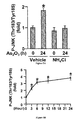
- JNK activation was investigated. As 2 O 3 treatment resulted in significant increases in JNK phosphorylation and hence its activation ( FIG. 4A ). Pre-treatment with the JNK inhibitor SP600125 (30 ⁇ M) prevented As 2 O 3 -induced increase in JNK phosphorylation. JNK activation was biologically relevant, as inhibition of As 2 O 3 -induced JNK activation significantly prevented As 2 O 3 -mediated suppression of MH7A cellular proliferation ( FIG. 4B ).
- Example 7 As 2 O 3 -Induced JNK Activation Might Induce Growth Arrest Via the p53 Pathway
- NF ⁇ B Another important cross-talk partner of JNK is NF ⁇ B (Liu and Lin, Oncogene, 26:3267-78 (2007)). NF ⁇ B is also an important pro-inflammatory factor in arthritis (Simmonds, et al., Rheumatology, 47:584-90 (2008)). As shown in FIGS. 6A and 6B , NF ⁇ B was constitutively expressed in MI-17A. As 2 O 3 treatment significantly decreased the level of NF ⁇ B in a dose ( FIG. 6A ) and time ( FIG. 6B ) dependent manner.
Landscapes
- Health & Medical Sciences (AREA)
- Life Sciences & Earth Sciences (AREA)
- Chemical & Material Sciences (AREA)
- Engineering & Computer Science (AREA)
- General Health & Medical Sciences (AREA)
- Veterinary Medicine (AREA)
- Medicinal Chemistry (AREA)
- Public Health (AREA)
- Pharmacology & Pharmacy (AREA)
- Animal Behavior & Ethology (AREA)
- Organic Chemistry (AREA)
- Biomedical Technology (AREA)
- Rheumatology (AREA)
- Bioinformatics & Cheminformatics (AREA)
- Epidemiology (AREA)
- Zoology (AREA)
- Biotechnology (AREA)
- Genetics & Genomics (AREA)
- Wood Science & Technology (AREA)
- Nuclear Medicine, Radiotherapy & Molecular Imaging (AREA)
- General Chemical & Material Sciences (AREA)
- Chemical Kinetics & Catalysis (AREA)
- Inorganic Chemistry (AREA)
- Biochemistry (AREA)
- Microbiology (AREA)
- General Engineering & Computer Science (AREA)
- Cell Biology (AREA)
- Immunology (AREA)
- Orthopedic Medicine & Surgery (AREA)
- Physical Education & Sports Medicine (AREA)
- Pain & Pain Management (AREA)
- Pharmaceuticals Containing Other Organic And Inorganic Compounds (AREA)
- Medicinal Preparation (AREA)
- Peptides Or Proteins (AREA)
- Medicines That Contain Protein Lipid Enzymes And Other Medicines (AREA)
Priority Applications (2)
| Application Number | Priority Date | Filing Date | Title |
|---|---|---|---|
| US12/781,970 US10092595B2 (en) | 2009-05-18 | 2010-05-18 | Compositions and methods for treating inflammatory arthritis |
| US16/110,607 US20190046564A1 (en) | 2009-05-18 | 2018-08-23 | Compositions and methods for treating inflammatory arthritis |
Applications Claiming Priority (2)
| Application Number | Priority Date | Filing Date | Title |
|---|---|---|---|
| US17914709P | 2009-05-18 | 2009-05-18 | |
| US12/781,970 US10092595B2 (en) | 2009-05-18 | 2010-05-18 | Compositions and methods for treating inflammatory arthritis |
Related Child Applications (1)
| Application Number | Title | Priority Date | Filing Date |
|---|---|---|---|
| US16/110,607 Division US20190046564A1 (en) | 2009-05-18 | 2018-08-23 | Compositions and methods for treating inflammatory arthritis |
Publications (2)
| Publication Number | Publication Date |
|---|---|
| US20100291234A1 US20100291234A1 (en) | 2010-11-18 |
| US10092595B2 true US10092595B2 (en) | 2018-10-09 |
Family
ID=43068694
Family Applications (2)
| Application Number | Title | Priority Date | Filing Date |
|---|---|---|---|
| US12/781,970 Active 2030-11-26 US10092595B2 (en) | 2009-05-18 | 2010-05-18 | Compositions and methods for treating inflammatory arthritis |
| US16/110,607 Abandoned US20190046564A1 (en) | 2009-05-18 | 2018-08-23 | Compositions and methods for treating inflammatory arthritis |
Family Applications After (1)
| Application Number | Title | Priority Date | Filing Date |
|---|---|---|---|
| US16/110,607 Abandoned US20190046564A1 (en) | 2009-05-18 | 2018-08-23 | Compositions and methods for treating inflammatory arthritis |
Country Status (5)
| Country | Link |
|---|---|
| US (2) | US10092595B2 (ja) |
| EP (1) | EP2432480B1 (ja) |
| JP (2) | JP6049455B2 (ja) |
| CN (2) | CN102427822A (ja) |
| WO (1) | WO2010133087A1 (ja) |
Cited By (1)
| Publication number | Priority date | Publication date | Assignee | Title |
|---|---|---|---|---|
| US11583552B2 (en) | 2021-02-17 | 2023-02-21 | Manoj Maniar | Pharmaceutical formulation of arsenic trioxide |
Families Citing this family (1)
| Publication number | Priority date | Publication date | Assignee | Title |
|---|---|---|---|---|
| CN102427822A (zh) * | 2009-05-18 | 2012-04-25 | 香港大学 | 治疗炎症性关节炎的组合物和方法 |
Citations (2)
| Publication number | Priority date | Publication date | Assignee | Title |
|---|---|---|---|---|
| US20080089951A1 (en) * | 2006-10-11 | 2008-04-17 | The University Of Hong Kong | Method for Inhibiting Cancer Using Arsenic Trioxide |
| US20080193560A1 (en) * | 2007-02-02 | 2008-08-14 | Michael Hwang | Use of arsenic compounds for treatment of pain and inflammation |
Family Cites Families (10)
| Publication number | Priority date | Publication date | Assignee | Title |
|---|---|---|---|---|
| AU700819B2 (en) * | 1994-10-07 | 1999-01-14 | Chugai Seiyaku Kabushiki Kaisha | Rheumatoid arthritis remedy containing IL-6 antagonist as effective component |
| CN1256096C (zh) * | 2001-09-19 | 2006-05-17 | 台湾东洋药品工业股份有限公司 | 用于治疗皮下肿瘤的局部施用药物组合物 |
| CA2506230A1 (en) * | 2002-11-15 | 2004-06-03 | Centocor, Inc. | Anti-angiogenic uses of il-6 antagonists |
| TW200500065A (en) * | 2003-05-21 | 2005-01-01 | Wyeth Corp | Antiarthritic combinations |
| CN1934256A (zh) * | 2004-03-26 | 2007-03-21 | 株式会社洛科摩基因 | 针对滑膜蛋白基因启动子的诱杀核酸 |
| US20060292243A1 (en) * | 2005-06-24 | 2006-12-28 | Shao-Chi Hsin | Arsenic compounds for the treatment of the arsenic-sensitive blast-cell related diseases |
| JP2008255008A (ja) * | 2005-07-19 | 2008-10-23 | Tokyo Medical & Dental Univ | 滑膜細胞増殖抑制剤 |
| JP2007176823A (ja) * | 2005-12-27 | 2007-07-12 | Kureha Corp | 関節リウマチ予防用又は治療用組成物、並びにそれらの組成物を含有する関節リウマチ予防又は治療剤及び飲食物 |
| HRP20140405T1 (hr) * | 2007-06-20 | 2014-06-20 | Galapagos N.V. | Molekularni ciljevi i metode za identificiranje spojeva za lijeäśenje degenerativnih bolesti kostiju i zglobova |
| CN102427822A (zh) * | 2009-05-18 | 2012-04-25 | 香港大学 | 治疗炎症性关节炎的组合物和方法 |
-
2010
- 2010-05-17 CN CN2010800216345A patent/CN102427822A/zh active Pending
- 2010-05-17 CN CN201510114235.8A patent/CN104825487A/zh active Pending
- 2010-05-17 JP JP2012511124A patent/JP6049455B2/ja active Active
- 2010-05-17 WO PCT/CN2010/000690 patent/WO2010133087A1/en not_active Ceased
- 2010-05-17 EP EP10777291.5A patent/EP2432480B1/en active Active
- 2010-05-18 US US12/781,970 patent/US10092595B2/en active Active
-
2016
- 2016-08-15 JP JP2016159143A patent/JP2016190880A/ja active Pending
-
2018
- 2018-08-23 US US16/110,607 patent/US20190046564A1/en not_active Abandoned
Patent Citations (2)
| Publication number | Priority date | Publication date | Assignee | Title |
|---|---|---|---|---|
| US20080089951A1 (en) * | 2006-10-11 | 2008-04-17 | The University Of Hong Kong | Method for Inhibiting Cancer Using Arsenic Trioxide |
| US20080193560A1 (en) * | 2007-02-02 | 2008-08-14 | Michael Hwang | Use of arsenic compounds for treatment of pain and inflammation |
Non-Patent Citations (27)
Cited By (1)
| Publication number | Priority date | Publication date | Assignee | Title |
|---|---|---|---|---|
| US11583552B2 (en) | 2021-02-17 | 2023-02-21 | Manoj Maniar | Pharmaceutical formulation of arsenic trioxide |
Also Published As
| Publication number | Publication date |
|---|---|
| JP2012527408A (ja) | 2012-11-08 |
| JP2016190880A (ja) | 2016-11-10 |
| EP2432480A4 (en) | 2012-10-17 |
| EP2432480B1 (en) | 2021-05-05 |
| CN104825487A (zh) | 2015-08-12 |
| WO2010133087A1 (en) | 2010-11-25 |
| JP6049455B2 (ja) | 2016-12-21 |
| US20100291234A1 (en) | 2010-11-18 |
| US20190046564A1 (en) | 2019-02-14 |
| EP2432480A1 (en) | 2012-03-28 |
| CN102427822A (zh) | 2012-04-25 |
Similar Documents
| Publication | Publication Date | Title |
|---|---|---|
| US7678391B2 (en) | Formulations and methods of using nitric oxide mimetics against a malignant cell phenotype | |
| CA2294247C (en) | Antioxidant enhancement of therapy for hyperproliferative conditions | |
| Xie et al. | IRE1α RNase–dependent lipid homeostasis promotes survival in Myc-transformed cancers | |
| US9526915B2 (en) | Methods for regulating cell mitosis by inhibiting serine/threonine phosphatase | |
| Lin et al. | The protective effect of hesperetin in osteoarthritis: an in vitro and in vivo study | |
| JP2005527510A (ja) | 癌の治療において一酸化窒素模倣体を使用するための製剤および方法 | |
| JP2014510155A (ja) | 抗ウイルス組み合わせ治療薬 | |
| ES3040089T3 (en) | Gls-1 inhibitors for use in the treatment of cancer | |
| Malley et al. | Synergistic anti-human immunodeficiency virus type 1 effect of hydroxamate compounds with 2', 3'-dideoxyinosine in infected resting human lymphocytes. | |
| WO1997004761A1 (en) | Methods and compositions for treating cell proliferative disorders | |
| US20230026808A1 (en) | Compounds, compositions, and methods for treating ischemia-reperfusion injury and/or lung injury | |
| US20190046564A1 (en) | Compositions and methods for treating inflammatory arthritis | |
| US20080089951A1 (en) | Method for Inhibiting Cancer Using Arsenic Trioxide | |
| Caraglia et al. | Chemotherapy regimen GOLF induces apoptosis in colon cancer cells through multi-chaperone complex inactivation and increased Raf-1 ubiquitin-dependent degradation | |
| MD4802C1 (ro) | Utilizarea derivatului de glutaramidă pentru tratarea afecţiunilor, asociate cu activitatea aberantă a citokinelor | |
| WO1996002268A1 (en) | Inhibition of virus by nitric oxide | |
| Linder et al. | Rho-kinase and RGS-containing RhoGEFs as molecular targets for the treatment of erectile dysfunction | |
| WO2004024073A2 (en) | Use of statins in the prevention and treatment of radiation injury and other disorders associated with reduced endothelial thrombomodulin | |
| WO2007022044A2 (en) | Combination of organic compounds | |
| WO2014149973A2 (en) | Compositions and methods for treating bone diseases | |
| AU785322B2 (en) | Antioxidant enhancement of therapy for hyperproliferative conditions | |
| KR20230126161A (ko) | 시스플라틴 및 5-아자시티딘을 포함하는 엡스타인-바 바이러스 양성 위암 예방, 개선, 또는 치료용 조성물 | |
| WO2025078334A1 (en) | Combination of pak1 inhibitors and clk inhibitors for preventing resistance to chemotherapy in patients suffering from acute myeloid leukemia | |
| HK1126127B (en) | Use of edg receptor binding agents in cancer | |
| HK1126127A1 (en) | Use of edg receptor binding agents in cancer |
Legal Events
| Date | Code | Title | Description |
|---|---|---|---|
| AS | Assignment |
Owner name: THE UNIVERSITY OF HONG KONG, CHINA Free format text: ASSIGNMENT OF ASSIGNORS INTEREST;ASSIGNOR:KWONG, YOK-LAM;REEL/FRAME:024966/0622 Effective date: 20100531 |
|
| STCF | Information on status: patent grant |
Free format text: PATENTED CASE |
|
| MAFP | Maintenance fee payment |
Free format text: PAYMENT OF MAINTENANCE FEE, 4TH YR, SMALL ENTITY (ORIGINAL EVENT CODE: M2551); ENTITY STATUS OF PATENT OWNER: SMALL ENTITY Year of fee payment: 4 |
|
| MAFP | Maintenance fee payment |
Free format text: PAYMENT OF MAINTENANCE FEE, 8TH YR, SMALL ENTITY (ORIGINAL EVENT CODE: M2552); ENTITY STATUS OF PATENT OWNER: SMALL ENTITY Year of fee payment: 8 |