EP4582540A1 - Method for producing nucleic acid molecule - Google Patents
Method for producing nucleic acid molecule Download PDFInfo
- Publication number
- EP4582540A1 EP4582540A1 EP23860446.6A EP23860446A EP4582540A1 EP 4582540 A1 EP4582540 A1 EP 4582540A1 EP 23860446 A EP23860446 A EP 23860446A EP 4582540 A1 EP4582540 A1 EP 4582540A1
- Authority
- EP
- European Patent Office
- Prior art keywords
- nucleic acid
- seq
- splints
- sequence
- specific sequence
- Prior art date
- Legal status (The legal status is an assumption and is not a legal conclusion. Google has not performed a legal analysis and makes no representation as to the accuracy of the status listed.)
- Pending
Links
Images










Classifications
-
- C—CHEMISTRY; METALLURGY
- C12—BIOCHEMISTRY; BEER; SPIRITS; WINE; VINEGAR; MICROBIOLOGY; ENZYMOLOGY; MUTATION OR GENETIC ENGINEERING
- C12N—MICROORGANISMS OR ENZYMES; COMPOSITIONS THEREOF; PROPAGATING, PRESERVING, OR MAINTAINING MICROORGANISMS; MUTATION OR GENETIC ENGINEERING; CULTURE MEDIA
- C12N15/00—Mutation or genetic engineering; DNA or RNA concerning genetic engineering, vectors, e.g. plasmids, or their isolation, preparation or purification; Use of hosts therefor
- C12N15/09—Recombinant DNA-technology
- C12N15/63—Introduction of foreign genetic material using vectors; Vectors; Use of hosts therefor; Regulation of expression
- C12N15/66—General methods for inserting a gene into a vector to form a recombinant vector using cleavage and ligation; Use of non-functional linkers or adaptors, e.g. linkers containing the sequence for a restriction endonuclease
-
- C—CHEMISTRY; METALLURGY
- C12—BIOCHEMISTRY; BEER; SPIRITS; WINE; VINEGAR; MICROBIOLOGY; ENZYMOLOGY; MUTATION OR GENETIC ENGINEERING
- C12N—MICROORGANISMS OR ENZYMES; COMPOSITIONS THEREOF; PROPAGATING, PRESERVING, OR MAINTAINING MICROORGANISMS; MUTATION OR GENETIC ENGINEERING; CULTURE MEDIA
- C12N15/00—Mutation or genetic engineering; DNA or RNA concerning genetic engineering, vectors, e.g. plasmids, or their isolation, preparation or purification; Use of hosts therefor
- C12N15/09—Recombinant DNA-technology
- C12N15/11—DNA or RNA fragments; Modified forms thereof; Non-coding nucleic acids having a biological activity
- C12N15/113—Non-coding nucleic acids modulating the expression of genes, e.g. antisense oligonucleotides; Antisense DNA or RNA; Triplex- forming oligonucleotides; Catalytic nucleic acids, e.g. ribozymes; Nucleic acids used in co-suppression or gene silencing
-
- C—CHEMISTRY; METALLURGY
- C12—BIOCHEMISTRY; BEER; SPIRITS; WINE; VINEGAR; MICROBIOLOGY; ENZYMOLOGY; MUTATION OR GENETIC ENGINEERING
- C12P—FERMENTATION OR ENZYME-USING PROCESSES TO SYNTHESISE A DESIRED CHEMICAL COMPOUND OR COMPOSITION OR TO SEPARATE OPTICAL ISOMERS FROM A RACEMIC MIXTURE
- C12P19/00—Preparation of compounds containing saccharide radicals
- C12P19/26—Preparation of nitrogen-containing carbohydrates
- C12P19/28—N-glycosides
- C12P19/30—Nucleotides
- C12P19/34—Polynucleotides, e.g. nucleic acids, oligoribonucleotides
-
- C—CHEMISTRY; METALLURGY
- C12—BIOCHEMISTRY; BEER; SPIRITS; WINE; VINEGAR; MICROBIOLOGY; ENZYMOLOGY; MUTATION OR GENETIC ENGINEERING
- C12N—MICROORGANISMS OR ENZYMES; COMPOSITIONS THEREOF; PROPAGATING, PRESERVING, OR MAINTAINING MICROORGANISMS; MUTATION OR GENETIC ENGINEERING; CULTURE MEDIA
- C12N2310/00—Structure or type of the nucleic acid
- C12N2310/10—Type of nucleic acid
- C12N2310/20—Type of nucleic acid involving clustered regularly interspaced short palindromic repeats [CRISPR]
-
- C—CHEMISTRY; METALLURGY
- C12—BIOCHEMISTRY; BEER; SPIRITS; WINE; VINEGAR; MICROBIOLOGY; ENZYMOLOGY; MUTATION OR GENETIC ENGINEERING
- C12N—MICROORGANISMS OR ENZYMES; COMPOSITIONS THEREOF; PROPAGATING, PRESERVING, OR MAINTAINING MICROORGANISMS; MUTATION OR GENETIC ENGINEERING; CULTURE MEDIA
- C12N2310/00—Structure or type of the nucleic acid
- C12N2310/30—Chemical structure
- C12N2310/31—Chemical structure of the backbone
- C12N2310/315—Phosphorothioates
-
- C—CHEMISTRY; METALLURGY
- C12—BIOCHEMISTRY; BEER; SPIRITS; WINE; VINEGAR; MICROBIOLOGY; ENZYMOLOGY; MUTATION OR GENETIC ENGINEERING
- C12N—MICROORGANISMS OR ENZYMES; COMPOSITIONS THEREOF; PROPAGATING, PRESERVING, OR MAINTAINING MICROORGANISMS; MUTATION OR GENETIC ENGINEERING; CULTURE MEDIA
- C12N2310/00—Structure or type of the nucleic acid
- C12N2310/30—Chemical structure
- C12N2310/32—Chemical structure of the sugar
- C12N2310/321—2'-O-R Modification
-
- C—CHEMISTRY; METALLURGY
- C12—BIOCHEMISTRY; BEER; SPIRITS; WINE; VINEGAR; MICROBIOLOGY; ENZYMOLOGY; MUTATION OR GENETIC ENGINEERING
- C12N—MICROORGANISMS OR ENZYMES; COMPOSITIONS THEREOF; PROPAGATING, PRESERVING, OR MAINTAINING MICROORGANISMS; MUTATION OR GENETIC ENGINEERING; CULTURE MEDIA
- C12N2310/00—Structure or type of the nucleic acid
- C12N2310/30—Chemical structure
- C12N2310/32—Chemical structure of the sugar
- C12N2310/322—2'-R Modification
-
- C—CHEMISTRY; METALLURGY
- C12—BIOCHEMISTRY; BEER; SPIRITS; WINE; VINEGAR; MICROBIOLOGY; ENZYMOLOGY; MUTATION OR GENETIC ENGINEERING
- C12N—MICROORGANISMS OR ENZYMES; COMPOSITIONS THEREOF; PROPAGATING, PRESERVING, OR MAINTAINING MICROORGANISMS; MUTATION OR GENETIC ENGINEERING; CULTURE MEDIA
- C12N2310/00—Structure or type of the nucleic acid
- C12N2310/30—Chemical structure
- C12N2310/32—Chemical structure of the sugar
- C12N2310/323—Chemical structure of the sugar modified ring structure
- C12N2310/3231—Chemical structure of the sugar modified ring structure having an additional ring, e.g. LNA, ENA
Definitions
- the present disclosure relates to ligation reactions for the synthesis of long oligonucleotides or polynucleotides or variants thereof and applications of the ligation reactions.
- DNA cleavage and ligation are one of the most important basic techniques in genetic engineering, and there are various techniques. RNA cleavage and ligation are also one of important basic techniques, and there are various techniques.
- the present disclosure has achieved process shortening, dramatic efficiency in ligation using a nucleic acid splint. That is, the present disclosure has found that, in a nucleic acid ligation reaction, by adding two or more nucleic acid splints having a sequence complementary to the nucleic acid and substantially eliminating deletion, the ligation efficiency between the 3' end side of the nucleic acid and the 5' end side of the nucleic acid is dramatically improved.
- the present invention provides, for example, the following items.
- nucleic acid splint has a sequence that protrudes from a joining point of a polynucleotide fragment molecule.
- the carrier is polystyrene, CPG (Controlled pore glass), or magnetic beads.
- a polynucleotide molecule produced by the method according to any one of the preceding items.
- kits for producing a polynucleotide molecule having a specific sequence including:
- the modification includes halo (fluoro, chloro, iodide, and the like), substituted (including alkoxy and the like) or unsubstituted alkyl (for example, methyl), nucleic acid or modified nucleic acid (for example, BNA, LNA), phosphorothioate and the like.
- the nucleic acid splint has a sequence that protrudes from a joining point of a polynucleotide fragment molecule.
- the nucleic acid splint has a sequence that protrudes 2 to 8 mer or more from a joining point of a polynucleotide fragment molecule.
- kit in which in the enzymatic ligation reactions, (A) one ligation reaction is performed in a combination that results in a total extension which is shorter than the specific sequence of the polynucleotide fragment molecule, then the next ligation reaction is performed using a product of the one ligation reaction, and (B) (A) is repeated as necessary.
- a method for producing a polynucleotide molecule having a specific sequence including:
- a method for producing a polypeptide fragment and a nucleic acid splint for producing a polynucleotide molecule having a specific sequence including:
- the polynucleotide fragment molecules are RNA or modified RNA
- the nucleic acid splints are DNA
- the ligation is performed with an RNA ligase.
- the modification includes halo (fluoro, chloro, iodide, and the like), substituted (including alkoxy and the like) or unsubstituted alkyl (for example, methyl), nucleic acid or modified nucleic acid (for example, BNA, LNA), phosphorothioate and the like.
- the polynucleotide fragment molecule is provided in at least one method selected from a group consisting of chemical synthesis and transcriptional synthesis.
- the method according to any one of the preceding items including providing the polynucleotide fragment molecule by transcriptional synthesis, and monophosphorylating a 5' end of the polynucleotide fragment molecule after the transcriptional synthesis, in which the ligation is performed using an RNA ligase.
- nucleic acid splints are 8 mer or more complementary to the polynucleotide molecule.
- a distance between a nucleic acid splint aligned with the specific sequence and a nucleic acid splint adjacent to the nucleic acid splint aligned with the specific sequence is 2 bases or less.
- deletions are 2 bases or less.
- nucleic acid splints are 10 mer to 50 mer.
- nucleic acid splint has a sequence that protrudes from a joining point of a polynucleotide fragment molecule.
- nucleic acid splint has a sequence that protrudes 2 to 8 mer or more from a joining point of a polynucleotide fragment molecule.
- nucleic acid splint has a sequence that protrudes 5 mer or more from a joining point of a polynucleotide fragment molecule.
- the polynucleotide fragment molecules are RNA or modified RNA
- the nucleic acid splints are DNA
- the ligation is performed with an RNA ligase.
- the modification includes halo (fluoro, chloro, iodide, and the like), substituted (including alkoxy and the like) or unsubstituted alkyl (for example, methyl), nucleic acid or modified nucleic acid (for example, BNA, LNA), phosphorothioate and the like.
- the program including providing the polynucleotide fragment molecule by transcriptional synthesis, and monophosphorylating a 5' end of the polynucleotide fragment molecule after the transcriptional synthesis, in which the ligation is performed using an RNA ligase.
- nucleic acid splints are 8 mer or more complementary to the polynucleotide molecule.
- a distance between a nucleic acid splint aligned with the specific sequence and a nucleic acid splint adjacent to the nucleic acid splint aligned with the specific sequence is 2 bases or less.
- nucleic acid splints are 10 mer to 50 mer.
- nucleic acid splint has a sequence that protrudes from a joining point of a polynucleotide fragment molecule.
- nucleic acid splint has a sequence that protrudes 2 to 8 mer or more from a joining point of a polynucleotide fragment molecule.
- nucleic acid splint has a sequence that protrudes 5 mer or more from a joining point of a polynucleotide fragment molecule.
- the carrier is polystyrene, CPG (Controlled pore glass), or magnetic beads.
- a recording medium storing a program for causing a computer to execute a method of designing a polypeptide fragment and a nucleic acid splint for producing a polynucleotide molecule having a specific sequence, the method including:
- the recording medium according to any one of the preceding items, in which there are three or more of the polynucleotide fragment molecules used.
- the recording medium according to any one of the preceding items, in which there are four or more of the polynucleotide fragment molecules used.
- the recording medium according to any one of the preceding items, in which there are five or more of the polynucleotide fragment molecules used.
- the recording medium according to any one of the preceding items, in which there are 10 or more of the polynucleotide fragment molecules used.
- the recording medium according to any one of the preceding items, in which there are 50 or less of the polynucleotide fragment molecules used.
- the polynucleotide fragment molecules are RNA or modified RNA
- the nucleic acid splints are DNA
- the ligation is performed with an RNA ligase.
- the recording medium according to any one of the preceding items, in which the modification includes halo (fluoro, chloro, iodide, and the like), substituted (including alkoxy and the like) or unsubstituted alkyl (for example, methyl), nucleic acid or modified nucleic acid (for example, BNA, LNA), phosphorothioate and the like.
- the modification includes halo (fluoro, chloro, iodide, and the like), substituted (including alkoxy and the like) or unsubstituted alkyl (for example, methyl), nucleic acid or modified nucleic acid (for example, BNA, LNA), phosphorothioate and the like.
- the recording medium according to any one of the preceding items, in which the polynucleotide fragment molecule is monophosphorylated.
- the recording medium according to any one of the preceding items, in which the polynucleotide fragment molecule is a monophosphorylated RNA.
- the recording medium according to any one of the preceding items, in which the polynucleotide fragment molecule is provided in at least one method selected from a group consisting of chemical synthesis and transcriptional synthesis.
- the recording medium according to any one of the preceding items, in which the polynucleotide fragment molecule is provided in both a chemical synthesis method and a transcriptional synthesis method.
- the recording medium including providing the polynucleotide fragment molecule by transcriptional synthesis, and monophosphorylating a 5' end of the polynucleotide fragment molecule after the transcriptional synthesis, in which the ligation is performed using an RNA ligase.
- the recording medium according to any one of the preceding items, in which the nucleic acid splints are 8 mer or more complementary to the polynucleotide molecule.
- a distance between a nucleic acid splint aligned with the specific sequence and a nucleic acid splint adjacent to the nucleic acid splint aligned with the specific sequence is 2 bases or less.
- the recording medium according to any one of the preceding items, in which the nucleic acid splints are 10 mer to 50 mer.
- the recording medium according to any one of the preceding items, in which the polynucleotide fragment molecules are 10 mer to 50 mer.
- the recording medium according to any one of the preceding items, in which the nucleic acid splint has a sequence that protrudes from a joining point of a polynucleotide fragment molecule.
- the recording medium according to any one of the preceding items in which the nucleic acid splint has a sequence that protrudes 2 to 8 mer or more from a joining point of a polynucleotide fragment molecule.
- the recording medium according to any one of the preceding items, in which the nucleic acid splint has a sequence that protrudes 5 mer or more from a joining point of a polynucleotide fragment molecule.
- the recording medium according to any one of the preceding items, in which the two or more nucleic acid splints and the polynucleotide fragment molecules have a sequence designed to be shifted by one or more bases when aligned with the specific sequence.
- the recording medium according to any one of the preceding items, in which at least one end of the polynucleotide fragment molecule has an association with a carrier.
- the recording medium according to any one of the preceding items, in which the carrier is polystyrene, CPG (Controlled pore glass), or magnetic beads.
- the recording medium according to any one of the preceding items, in which the ligation is performed through enzymatic ligation reactions.
- the recording medium according to any one of the preceding items, in which the enzymatic ligation reactions are performed simultaneously or at different times.
- Nucleic acid splints are used to provide a ligation reaction of nucleic acids using complementary sequences which are substantially free of deletions. By using the present ligation reaction, the yield can be improved as compared with the conventional ligation reactions.
- the present disclosure also provides a technique capable of ligating DNA to mRNA and its 3' end, and provides a technique with improved efficiency.
- the present disclosure also provides a technique in which an in vitro virus method can also be utilized, and provides a more efficient processing technique for specific cleavage and binding of DNA, which contributes to the development of genetic engineering.
- nucleotide and nucleotide molecule refer to a nucleoside in which a sugar moiety is a phosphate ester.
- nucleoside refers to a compound in which a base and a sugar form an N-glycosidic bond.
- ribonucleotides Those in which the sugar moiety is D-ribose are referred to as ribonucleotides, and are obtained by hydrolysis of RNA.
- ribonucleotides Those in which the sugar moiety is D-2'-deoxyribose are referred to as deoxyribonucleotides, and are obtained by enzymatic degradation of DNA.
- a nucleotide may be natural or non-natural, or may be artificially synthesized.
- a "nucleotide” may be modified, and modifications may be made in any of a base, a sugar moiety, and a phosphate group moiety, or a combination thereof, preferably the sugar moiety, the phosphate group moiety of the nucleotide, and/or the 3'position of the nucleotide may be modified with a phosphate group.
- the 3' position of the nucleotide may be modified with a phosphate group, and at least one oxygen atom of the phosphate group may be substituted with a sulfur atom, boron (boranophosphated), a methyl group (methylated), or the like.
- Oligonucleotide molecule refers to two or more polymers of nucleotides, including polymers or oligomers of commonly used nucleotides.
- Oligonucleotide molecule refers to two or more polymers of nucleotides, including polymers or oligomers of commonly used nucleotides.
- Oligonucleotide molecule refers to two or more polymers of nucleotides, including polymers or oligomers of commonly used nucleotides.
- Oligonucleotide molecule refers to two or more polymers of nucleotides, including polymers or oligomers of commonly used nucleotides.
- modification also referred to as “modify”, and in English, any of them usually corresponds to modification/modify, and includes the concepts of substitution, substitute, displacement, displace, replacement, and replace
- substitution as used in the context of a nucleic acid, refers to a state in which a constituent unit of the nucleic acid or a part or all of its end is replaced with another atomic group or a functional group is added.
- variants of DNA, RNA, nucleic acid, oligonucleotide, or the like.
- Modifications may be made to any of a base, a sugar moiety, and a phosphate group moiety, or a combination thereof at the nucleotide, preferably the sugar moiety, phosphate group moiety of the oligonucleotide or polynucleotide may be modified, and/or the 3' position of the 3' end of the oligonucleotide or polynucleotide may be modified with a phosphate group.
- the 3' position of the 3' end of the oligonucleotide or polynucleotide may be modified with a phosphate group, and at least one oxygen atom of the phosphate group may be substituted with a sulfur atom.
- Oxidide variants and “polynucleotide variants” in the present description are used interchangeably and refer to polymers or oligomers of nucleotides and/or nucleotide variants.
- Variants of oligonucleotides include all those capable of alkylation such as methylation, and include those including any modification disclosed in the present description (modification with various substituents).
- deoxyribonucleic acid means a molecule including at least one deoxyribonucleotide monomer moiety.
- the DNA may be modified with any functional group, and examples of variants of the DNA include, but are not limited to, a cross-ligated nucleic acid: 2', 4'-BNA/LNA, 2', 4'-BNANC [N-Me], 2'-O, 4'-C-ethylene-cross-ligated nucleic acid (ENA), an amide-cross-ligated nucleic acid (AmNA), and the like.
- modified DNA is also within the scope of "oligonucleotide,” “oligonucleotide molecule,” “polynucleotide,” and “polynucleotide molecule” of the present disclosure.
- template nucleic acid refers to a nucleic acid having a sequence complementary to a polynucleotide or an oligonucleotide, or a variant thereof, to which the technique such as the production method of the present disclosure is applied.
- 3' end of an oligonucleotide (or polynucleotide) or a variant thereof refers to a terminal monomer moiety attached to the 3' side of the oligonucleotide (or polynucleotide) or the variant thereof.
- oligonucleotide or polynucleotide
- a variant thereof refers to a terminal monomer moiety attached to the 5' side of the oligonucleotide (or polynucleotide) or the variant thereof.
- ligation means bonding via an arbitrary chemical bond, a linker, or the like, or an action of bonding, and the chemical bond is not limited thereto, and is usually a covalent bond.
- condition under which ligation occurs refers to conditions under which an oligonucleotide (or polynucleotide) or a variant thereof can be ligated.
- conditions under which ligation occurs conditions using an enzyme having nucleic acid ligation activity such as ligase and chemical ligation conditions are assumed.
- Conditions under which chemical ligation occurs include temperature, pH, solvent, salt concentration (buffer, sodium chloride, etc.), and the like, and can be appropriately adjusted by those skilled in the art.
- Conditions for using an enzyme also include conditions suitable for generating a desired reaction catalyzed by the enzyme to be used, for example, concentration of a substrate such as a nucleic acid fragment, concentration of the enzyme, temp erature, pH, solvent, salt concentration (buffer, sodium chloride, etc.), and the like, and can be appropriately adjusted by those skilled in the art.
- assembly refers to a collection including the sequence of two or more fragment molecules of an oligonucleotide (or polynucleotide) or a variant thereof.
- a “splint” or “nucleic acid splint” is a nucleic acid molecule that is used interchangeably and has a sequence that, when used with another nucleic acid molecule, is complementary to a portion of the other nucleic acid molecule.
- the nucleic acid splint may be DNA or RNA, but is preferably DNA, in which case it is referred to as DNA splint.
- complementary refers to a relationship between a region of one nucleic acid and a region of another nucleic acid, and refers to a relationship in which both can interact with a certain degree of affinity, and representatively means that a similar region of two single-stranded nucleic acids or a nucleotide sequence of two different regions of the same single-stranded nucleic acid has a nucleic acid base composition that enables hybridization.
- the sequences that hybridize with each other may be fully or partially complementary to the target sequence intended by standard nucleic acid base pairing (e.g., G:C, A:T, or A:U pairing).
- Substantially complementary may not be completely identical as long as hybridization proceeds, and in particular, in the case of the nucleic acid molecule of the present disclosure, both or either of the 5' end or the 3' end may be deleted. For example, it has been shown that the reaction proceeds without difficulty even if both of the 5' end and the 3' end are deficient by several bases (see Examples, FIGS. 6-1 , 7-1 , 8-1 , etc.).
- hybridize refers to that nucleic acids form a complex in a complementary manner.
- substantially complementary refers to that the nucleic acid splint has a complementary sequence to the extent that the nucleic acid splint can form double strands with a single-stranded nucleic acid.
- protrusion refers to a portion where the 3' end of a nucleic acid extends beyond the 5' end of another complementary nucleic acid with which the nucleic acid hybridizes, or conversely, a portion where the 5' end of a nucleic acid extends beyond the 3' end of another complementary nucleic acid with which the nucleic acid hybridizes.
- nucleic acid splints and the polynucleotide fragment molecule are aligned with a specific sequence, (preferably, the 3' end of the nucleic acid extends beyond the 5' end of the other complementary nucleic acid with which the nucleic acid hybridizes) the nucleic acid splints and the polynucleotide fragment molecule have a sequence designed to be shifted by one base or more (for example, 2 to 8 mer or the like).
- carrier refers to a substance for immobilizing a nucleotide molecule when the nucleotide molecule is ligated.
- carrier include polystyrene, CPG (Controlled pore glass), magnetic beads, and the like, but are not limited thereto as long as a nucleotide molecule can be immobilized.
- kit refers to a unit in which a portion to be provided is usually provided in two or more compartments.
- the form of kit is preferred when the purpose is to provide compositions that, for reasons such as stability, should not be mixed at the time of provision but are preferably mixed immediately before use.
- design refers to providing a nucleic acid having a desired sequence and/or creating a schematic representation of such a nucleic acid.
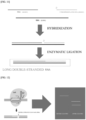
- FIG. 9 A schematic diagram of the present disclosure is shown in FIG. 9 .
- the method of the present disclosure involves designing nucleic acid splints (here, DNA splints) to form strands which are complementary to the entire target sequence, which is the specific sequence. Then, unlike conventional techniques, this method is implemented by dividing the splints rather than using a single-stranded approach. As a result, the nucleic acid splints have significantly shorter strand lengths compared to single-stranded (ss) RNA, thereby facilitating purification.
- FIG. 10 is a schematic diagram.
- the method of the present disclosure involves designing nucleic acid splints (here, DNA splints) to form strands which are complementary to the entire target sequence, which is the specific sequence. Then, unlike conventional techniques, this method is implemented by dividing the splints rather than using a single-stranded approach, and furthermore, preparing the divided splints in a non-continuous manner. As a result, the nucleic acid splints have significantly shorter strand lengths compared to single-stranded (ss) RNA, thereby facilitating purification.
- the method can also be used for RNA synthesized by in vitro transcription. By partially ligating synthetic oligo-nucleic acids including chemical modifications, it becomes possible to synthesize long nucleic acids having chemical modifications inserted at arbitrary positions.
- a specific sequence can be any sequence desired for production or synthesis purposes.
- a part of the specific sequence may be any part as long as it is a part of the specific sequence for production or synthesis, and may be preferably at the 5' end or in the middle of the sequence.
- a polynucleotide fragment molecule including a part of the specific sequence can be prepared by synthesis or the like of a polynucleotide including the specific sequence.
- the fragments used are 3 or more, 4 or more, 5 or more, 6 or more, 7 or more, 8 or more, 9 or more, or 10 or more.
- 3 or more fragments the efficiency of the ligation reaction can be improved.
- two or more polynucleotide fragment molecules prepared as described above are ligated in the presence of two or more nucleic acid splints.
- This ligation can be performed by any method, for example, using (enzymes such as ligase or polymerase, or under conditions that chemically promote ligation. Those skilled in the art can apply appropriate conditions.
- each sequence of two or more polynucleotide fragment molecules is assembled to substantially constitute the specific sequence.
- the nucleic acid splint used is substantially complementary to the polynucleotide molecule and includes a sequence which is substantially free of deletions when at least two of the nucleic acid splints are aligned with the specific sequence.
- improvement of reactivity between polynucleotides and a high reaction yield can be achieved by using a technique of ligating polynucleotides using a nucleic acid splint.
- a plurality of or all ligation reactions can be simultaneously started, and improvement of reactivity and a high reaction yield can be achieved.
- the polynucleotide fragment molecule used in the present disclosure is RNA or modified RNA.
- the modification may be halo (fluoro, chloro, iodide, and the like), substituted (including alkyl such as methyl, alkoxy such as methoxy and ethoxy, and the like) or unsubstituted alkyl (for example, methyl, ethyl, and the like), nucleic acid or modified nucleic acid (for example, BNA, LNA, and the like), phosphorothioate, etc., examples of other modifications are described elsewhere in the present description.
- the nucleic acid splint used in the present disclosure is DNA.
- the DNA splint may be modified.
- the polynucleotide fragment molecule used in the present disclosure is RNA or modified RNA
- the nucleic acid splint used in the present disclosure is DNA.
- an RNA fragment can be used as a ligation molecule, and a DNA splint can be used, and in this case, ligation is usually performed with an RNA ligase.
- the RNA ligase used may include T4 RNA ligase, RtcB ligase, T4 DNA ligase (T4 DNA ligase having an RNA ligation action is known), Splint (registered trademark) Ligase, etc.
- the polynucleotide fragment molecule used in the present disclosure is monophosphorylated, more preferably a monophosphorylated RNA.
- the monophosphorylated RNA is advantageously used in a synthesis reaction using a ligase or the like.
- a monophosphate group may be at the 5' end or the 3' end or both.
- the polynucleotide fragment molecule used in the present disclosure may not be in a phosphate form.
- the polynucleotide fragment molecule used in the present disclosure is provided by at least one method selected from a group consisting of chemical synthesis and transcriptional synthesis.
- the case of a polynucleotide fragment molecule provided by chemical synthesis is preferable because not only unmodified RNA or DNA but also modified RNA or DNA can be used.
- chemically synthesized or modified RNA can be used.
- Such chemically synthesized RNA or modified RNA may be realized using techniques known in the art (for example, without intending to be limiting, see Roy, S.; Caruthers, M. Synthesis of DNA/RNA and Their Analogs via Phosphoramidite and H-Phosphonate Chemistries. Molecules 2013, 18, 14268-14284. https://doi.org/10.3390/molecules181114268 ).
- the polynucleotide fragment molecule used in the present disclosure is provided by both the chemical synthesis method and the transcriptional synthesis method.
- the technique of the present disclosure can be used for both chemical synthesis and transcriptional synthesis, and can be used even when the two are mixed.
- One specific embodiment includes providing the polynucleotide fragment molecule used in the present disclosure by transcriptional synthesis, and monophosphorylating the 5' end of the polynucleotide fragment molecule after the transcriptional synthesis, in which the ligation is performed using an RNA ligase.
- RNA ligase can be advantageously used by monophosphorylation.
- Monophosphorylation can be realized by using an enzyme such as RppH (RNA 5'pyrophosphohydrolase), but is not limited thereto.
- the nucleic acid splints used in the present disclosure are complementary to the polynucleotide molecules used in the present disclosure by 8 mer or more.
- the nucleic acid splints are complementary by 9 mer or more, 10 mer or more, 11 mer or more, 12 mer or more, 13 mer or more, 14 mer or more, 15 mer or more, 16 mer or more, 17 mer or more, 18 mer or more, 19 mer or more, or 20 mer or more.
- the use of nucleic acid splints allows for easy removal through purification, and the nucleic acid splints can also be reused. It is observed that the efficiency of the dehydration condensation reaction by the enzyme is improved by having a certain complementary length.
- the distance between the nucleic acid splint aligned with the specific sequence used in the present disclosure and the nucleic acid splint adjacent to the nucleic acid splint aligned with the specific sequence used in the present disclosure is 2 bases or less.
- the nucleic acid splints are assembled with the fragment in a manner that the distance between the adjacent nucleic acid splints is 2 bases or less as compared with the case where the base pairing is only partially complementary, whereby the improvement of reactivity and the high reaction yield can be achieved.
- the distance is preferably 2 bases or less, more preferably 1 base or less.
- the deletion used in the present disclosure is 2 bases or less, preferably 1 base or less.
- the reason why it is preferable that the number of deletions is 1 or less is that the ligation activity is high when the number of deletions is small.
- bases examples include, as natural bases, purine bases such as adenine and guanine, and pyrimidine bases such as cytosine, uracil, and thymine.
- examples of the bases include inosine, xanthine, hypoxanthine, nubularine, isoguanisine, and tubercidine.
- the present disclosure can also be widely utilized in genome editing technology.
- the present invention can be applied to, for example, sgRNAs used in genome editing, particularly, production of sgRNAs ( J. Filippova et al., Biochimie 167 2019 49-60 , Ayal Hendel et al. nature biotechnology 33 2015 985-989 ).
- sgRNAs used in genome editing, particularly, production of sgRNAs
- the activity seems to be increased by using an oligonucleotide including a modified (varied) base of the present disclosure or a variant thereof (oligo-nucleic acid)
- fragments of an oligo-nucleic acid including a modified base synthesized using the technique of the present disclosure are connected and produced.
- a proliferative disease, disorder or condition includes, but is not limited to, cancer, hematologic tumors, proliferative breast diseases, proliferative lung disorders, proliferative colonic disorders, proliferative liver disorders, and proliferative ovarian disorders.
- the in vitro transcription reaction is generally a reaction in which a single-stranded RNA is synthesized using a double-stranded DNA having a promoter region sequence specifically recognized by the enzyme as a template using T7 RNA polymerase or SP6 RNA polymerase (for example, see Beckert B, Masquida B. Synthesis of RNA by in vitro transcription. Methods Mol Biol. 2011;703:29-41. doi: 10.1007/978-1-59745-248-9_3. PMID: 21125481 .).
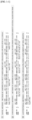
- nucleic acid strands were filled without gaps to perform a ligation reaction. Details are as follows.
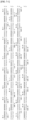
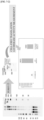
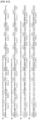
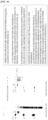
- Spsg100 5'-aaaagcaccgactcggtgccactttttcaagttgataacggactagccttattttaacttgctatttctagctctaaaacgccaagcgca cctaatttcc-3' The nucleic acid combinations used are shown in FIG. 1-1 .
- Enzymatic ligation was performed according to the following procedure.
- Complementary strand nucleic acid splints were assembled from the joining point several bases at a time.
- the ligation reaction solution was appropriately sampled 1, 4, 24, and 48 hours after the start of the reaction, mixed with an equal amount of 5 mM EDTA solution, and used for subsequent analysis.
- the ligation reaction solution was appropriately sampled 1, 4, 24, and 48 hours after the start of the reaction, mixed with an equal amount of 5 mM EDTA solution, and used for subsequent analysis.
- the enzymatic ligation reaction solution from which the enzyme protein had been removed by phenol/chloroform extraction or the like was subjected to UHPLC/LC-MS analysis under the following conditions.
- the UHPLC area% of the 100 mer enzymatic ligation product in this test is shown in FIG. 3 .
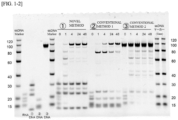
- the reaction rate was higher when the ligation reaction was performed by the novel method than in Conventional Methods 1 and 2.
- Conventional method 2 0h 0 0 0 1h 1.79 0.62 1 4h 64.69 12. 38 22. 88 24h 76.14 46.91 33.21 48h 75.24 58.24 33.57
- RNA synthesized by this method can be used, for example, for cleaving and editing genomic DNA by the CRISPR-Cas9 method.
- the 100 mer RNA synthesized by the present method and double-stranded DNA having any strand length targeted by the 20 bases at the 5' end are mixed with Cas9 protein in an appropriate buffer, and the DNA cleavage activity can be examined.
- RNA-Cas9 complexes can also be administered to cultured cells and in vivo using appropriate DDS to edit genomic DNA.
- FIG. 4 shows the results of Denatured-PAGE.
- the theoretical molecular weight of the target product in this test is 71035.9.
- the measured mass in LC-MS analysis was 71035.3. Therefore, it was revealed that the enzymatic ligation product in this test was a target 220 mer RNA.
- FIG. 15 An outline of a ligation reaction test of transcripts and chemically synthesized RNA using DNA splints is shown ( FIG. 15 ).
- the ligation reaction is likely to proceed when the DNA splints are assembled with the long RNA at all sites other than the joining point.
- complementary strands are not assembled outside the joining point because the ligation reaction hardly proceeds and non-specific ligation also occurs.
- experiments were conducted by sequentially removing one kind of complementary 25-fragment DNA splints, which were assembled outside the moiety ligating the long transcriptionally-synthesized RNA, from the reaction. That is, the procedure was performed in a manner that complementary DNA splints were not assembled outside the moiety ligating the long transcriptionally-synthesized RNA.
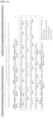
- the DNA splint combinations are as follows.
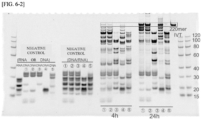
- FIG. 18 shows Denatured-PAGE results and relative band intensities. As illustrated, it was shown that, as a result of conducting experiments by sequentially removing each time one kind of complementary 25-fragment DNA splints, which were assembled outside the moiety ligating the long transcriptionally-synthesized RNA, from the reaction, when there was a moiety where DNA splints were not assembled, the reaction efficiency changed depending on the position of the moiety.
- the compounds of the present disclosure may be provided in appropriate dosage forms. Examples thereof will be described below.
- Examples include tablets, capsules, powders, granules, solutions, suspensions, injections, patches, cataplasms, and the like.
- these formulations can be produced by a known method, such as appropriately mixing these using additives used as normal pharmaceutical additives.
- mice with disease are administered the polynucleotide of the present disclosure or a placebo intraperitoneally.
Landscapes
- Life Sciences & Earth Sciences (AREA)
- Health & Medical Sciences (AREA)
- Genetics & Genomics (AREA)
- Engineering & Computer Science (AREA)
- Chemical & Material Sciences (AREA)
- Organic Chemistry (AREA)
- Molecular Biology (AREA)
- Wood Science & Technology (AREA)
- Zoology (AREA)
- Biotechnology (AREA)
- General Engineering & Computer Science (AREA)
- Biomedical Technology (AREA)
- Bioinformatics & Cheminformatics (AREA)
- Biochemistry (AREA)
- Microbiology (AREA)
- General Health & Medical Sciences (AREA)
- Physics & Mathematics (AREA)
- Biophysics (AREA)
- Plant Pathology (AREA)
- Chemical Kinetics & Catalysis (AREA)
- General Chemical & Material Sciences (AREA)
- Measuring Or Testing Involving Enzymes Or Micro-Organisms (AREA)
- Saccharide Compounds (AREA)
Applications Claiming Priority (2)
| Application Number | Priority Date | Filing Date | Title |
|---|---|---|---|
| JP2022138632 | 2022-08-31 | ||
| PCT/JP2023/031631 WO2024048684A1 (ja) | 2022-08-31 | 2023-08-30 | 核酸分子の製造方法 |
Publications (1)
| Publication Number | Publication Date |
|---|---|
| EP4582540A1 true EP4582540A1 (en) | 2025-07-09 |
Family
ID=90099739
Family Applications (1)
| Application Number | Title | Priority Date | Filing Date |
|---|---|---|---|
| EP23860446.6A Pending EP4582540A1 (en) | 2022-08-31 | 2023-08-30 | Method for producing nucleic acid molecule |
Country Status (4)
| Country | Link |
|---|---|
| EP (1) | EP4582540A1 (https=) |
| JP (1) | JPWO2024048684A1 (https=) |
| CN (1) | CN120202295A (https=) |
| WO (1) | WO2024048684A1 (https=) |
Family Cites Families (7)
| Publication number | Priority date | Publication date | Assignee | Title |
|---|---|---|---|---|
| US3687808A (en) | 1969-08-14 | 1972-08-29 | Univ Leland Stanford Junior | Synthetic polynucleotides |
| AU312022S (en) | 2005-07-25 | 2006-12-15 | Scanlan & Theodore | A lady's garment |
| CN100563415C (zh) | 2007-07-04 | 2009-11-25 | 华为技术有限公司 | 直通风散热装置及其控制方法 |
| MX370398B (es) | 2011-08-25 | 2019-12-11 | Bonac Corp | Compuesto de glicosido, metodo para producir tioeter, eter, metodo para producir eter, metodo para producir un compuesto de glicosido, metodo para producir acido nucleico. |
| JP2016098198A (ja) * | 2014-11-20 | 2016-05-30 | 国立大学法人埼玉大学 | Dnaライブラリの製造方法、dnaライブラリ、スクリーニング方法及びスクリーニングキット |
| CN115335521B (zh) * | 2019-11-27 | 2026-04-28 | 克里斯珀医疗股份公司 | 合成rna分子的方法 |
| JP7490201B2 (ja) | 2021-03-10 | 2024-05-27 | 三甲株式会社 | 棚 |
-
2023
- 2023-08-30 JP JP2024544350A patent/JPWO2024048684A1/ja active Pending
- 2023-08-30 EP EP23860446.6A patent/EP4582540A1/en active Pending
- 2023-08-30 WO PCT/JP2023/031631 patent/WO2024048684A1/ja not_active Ceased
- 2023-08-30 CN CN202380075995.5A patent/CN120202295A/zh active Pending
Also Published As
| Publication number | Publication date |
|---|---|
| CN120202295A (zh) | 2025-06-24 |
| JPWO2024048684A1 (https=) | 2024-03-07 |
| WO2024048684A1 (ja) | 2024-03-07 |
Similar Documents
| Publication | Publication Date | Title |
|---|---|---|
| EP3899034B1 (en) | Methods for rna analysis | |
| CN113164509B (zh) | 用于抑制17β-HSD 13型(HSD17B13)表达的RNAi试剂、其组合物和使用方法 | |
| JP7348922B2 (ja) | B型肝炎感染の治療用のPAPD5及びPAPD7 mRNAを低減させるための核酸分子 | |
| JP3529135B2 (ja) | 特定のrna鎖の切断方法 | |
| CN116209762A (zh) | Adar依赖性编辑组合物及其使用方法 | |
| KR100858465B1 (ko) | 올리고뉴클레오티드 엔3'→피5' 티오포스포라미데이트,이의 합성 및 용도 | |
| JP2022519019A (ja) | オリゴヌクレオチド組成物及びその方法 | |
| AU2022202991A1 (en) | Organic compositions to treat KRAS-related diseases | |
| JP2022526419A (ja) | 中枢神経系における遺伝子発現を阻害するための組成物及び方法 | |
| JP7830340B2 (ja) | PNPLA3の発現を阻害するためのRNAi薬、その医薬組成物、及び使用方法 | |
| JP2008504840A (ja) | 非リン酸骨格結合を含むオリゴヌクレオチド | |
| JP2021511042A (ja) | Aldh2発現を阻害するための組成物及び方法 | |
| KR20200023427A (ko) | Hmgb1 발현을 억제하기 위한 조성물 및 방법 | |
| CN119137271A (zh) | 用于加帽rna的组合物和方法 | |
| KR20230173116A (ko) | 보체 성분 3 발현을 저해하기 위한 조성물 및 방법 | |
| JP2022517742A (ja) | Hmgb1発現を阻害するための組成物及び方法 | |
| JP2024508069A (ja) | ミトコンドリアアミドキシム還元成分1(marc1)発現を阻害するための組成物および方法 | |
| JP2024514880A (ja) | Pnpla3発現を調節するための組成物及び方法 | |
| JP7453921B2 (ja) | Gys2発現を阻害するための組成物及び方法 | |
| Koch et al. | Locked nucleic acid | |
| EP4582540A1 (en) | Method for producing nucleic acid molecule | |
| CN121057820A (zh) | 使用环状前药核酸递送rna治疗药物 | |
| WO2024040041A1 (en) | Regulation of activity of rnai molecules | |
| EP4711455A1 (en) | Small artificial rna (smartrna) oligonucleotide for modulating protein expression | |
| CN121127248A (zh) | 用于抑制线粒体偕胺肟还原组分1 (MARC1)表达的RNAi剂、其药用组合物及使用方法 |
Legal Events
| Date | Code | Title | Description |
|---|---|---|---|
| STAA | Information on the status of an ep patent application or granted ep patent |
Free format text: STATUS: THE INTERNATIONAL PUBLICATION HAS BEEN MADE |
|
| PUAI | Public reference made under article 153(3) epc to a published international application that has entered the european phase |
Free format text: ORIGINAL CODE: 0009012 |
|
| STAA | Information on the status of an ep patent application or granted ep patent |
Free format text: STATUS: REQUEST FOR EXAMINATION WAS MADE |
|
| 17P | Request for examination filed |
Effective date: 20250319 |
|
| AK | Designated contracting states |
Kind code of ref document: A1 Designated state(s): AL AT BE BG CH CY CZ DE DK EE ES FI FR GB GR HR HU IE IS IT LI LT LU LV MC ME MK MT NL NO PL PT RO RS SE SI SK SM TR |
|
| DAV | Request for validation of the european patent (deleted) | ||
| DAX | Request for extension of the european patent (deleted) |