EP4567970A2 - Trennelement, zusammengesetzte batterie und wärmeübertragungssteuerungsverfahren für eine zusammengesetzte batterie - Google Patents
Trennelement, zusammengesetzte batterie und wärmeübertragungssteuerungsverfahren für eine zusammengesetzte batterie Download PDFInfo
- Publication number
- EP4567970A2 EP4567970A2 EP25166960.2A EP25166960A EP4567970A2 EP 4567970 A2 EP4567970 A2 EP 4567970A2 EP 25166960 A EP25166960 A EP 25166960A EP 4567970 A2 EP4567970 A2 EP 4567970A2
- Authority
- EP
- European Patent Office
- Prior art keywords
- partition member
- cells
- single cell
- cell
- thermal resistance
- Prior art date
- Legal status (The legal status is an assumption and is not a legal conclusion. Google has not performed a legal analysis and makes no representation as to the accuracy of the status listed.)
- Pending
Links
Images




Classifications
-
- H—ELECTRICITY
- H01—ELECTRIC ELEMENTS
- H01M—PROCESSES OR MEANS, e.g. BATTERIES, FOR THE DIRECT CONVERSION OF CHEMICAL ENERGY INTO ELECTRICAL ENERGY
- H01M10/00—Secondary cells; Manufacture thereof
- H01M10/60—Heating or cooling; Temperature control
- H01M10/61—Types of temperature control
- H01M10/617—Types of temperature control for achieving uniformity or desired distribution of temperature
-
- H—ELECTRICITY
- H01—ELECTRIC ELEMENTS
- H01M—PROCESSES OR MEANS, e.g. BATTERIES, FOR THE DIRECT CONVERSION OF CHEMICAL ENERGY INTO ELECTRICAL ENERGY
- H01M50/00—Constructional details or processes of manufacture of the non-active parts of electrochemical cells other than fuel cells, e.g. hybrid cells
- H01M50/20—Mountings; Secondary casings or frames; Racks, modules or packs; Suspension devices; Shock absorbers; Transport or carrying devices; Holders
- H01M50/289—Mountings; Secondary casings or frames; Racks, modules or packs; Suspension devices; Shock absorbers; Transport or carrying devices; Holders characterised by spacing elements or positioning means within frames, racks or packs
-
- H—ELECTRICITY
- H01—ELECTRIC ELEMENTS
- H01M—PROCESSES OR MEANS, e.g. BATTERIES, FOR THE DIRECT CONVERSION OF CHEMICAL ENERGY INTO ELECTRICAL ENERGY
- H01M10/00—Secondary cells; Manufacture thereof
- H01M10/42—Methods or arrangements for servicing or maintenance of secondary cells or secondary half-cells
-
- H—ELECTRICITY
- H01—ELECTRIC ELEMENTS
- H01M—PROCESSES OR MEANS, e.g. BATTERIES, FOR THE DIRECT CONVERSION OF CHEMICAL ENERGY INTO ELECTRICAL ENERGY
- H01M10/00—Secondary cells; Manufacture thereof
- H01M10/60—Heating or cooling; Temperature control
- H01M10/62—Heating or cooling; Temperature control specially adapted for specific applications
- H01M10/625—Vehicles
-
- H—ELECTRICITY
- H01—ELECTRIC ELEMENTS
- H01M—PROCESSES OR MEANS, e.g. BATTERIES, FOR THE DIRECT CONVERSION OF CHEMICAL ENERGY INTO ELECTRICAL ENERGY
- H01M10/00—Secondary cells; Manufacture thereof
- H01M10/60—Heating or cooling; Temperature control
- H01M10/62—Heating or cooling; Temperature control specially adapted for specific applications
- H01M10/627—Stationary installations, e.g. power plant buffering or backup power supplies
-
- H—ELECTRICITY
- H01—ELECTRIC ELEMENTS
- H01M—PROCESSES OR MEANS, e.g. BATTERIES, FOR THE DIRECT CONVERSION OF CHEMICAL ENERGY INTO ELECTRICAL ENERGY
- H01M10/00—Secondary cells; Manufacture thereof
- H01M10/60—Heating or cooling; Temperature control
- H01M10/64—Heating or cooling; Temperature control characterised by the shape of the cells
- H01M10/647—Prismatic or flat cells, e.g. pouch cells
-
- H—ELECTRICITY
- H01—ELECTRIC ELEMENTS
- H01M—PROCESSES OR MEANS, e.g. BATTERIES, FOR THE DIRECT CONVERSION OF CHEMICAL ENERGY INTO ELECTRICAL ENERGY
- H01M10/00—Secondary cells; Manufacture thereof
- H01M10/60—Heating or cooling; Temperature control
- H01M10/65—Means for temperature control structurally associated with the cells
- H01M10/651—Means for temperature control structurally associated with the cells characterised by parameters specified by a numeric value or mathematical formula, e.g. ratios, sizes or concentrations
-
- H—ELECTRICITY
- H01—ELECTRIC ELEMENTS
- H01M—PROCESSES OR MEANS, e.g. BATTERIES, FOR THE DIRECT CONVERSION OF CHEMICAL ENERGY INTO ELECTRICAL ENERGY
- H01M10/00—Secondary cells; Manufacture thereof
- H01M10/60—Heating or cooling; Temperature control
- H01M10/65—Means for temperature control structurally associated with the cells
- H01M10/653—Means for temperature control structurally associated with the cells characterised by electrically insulating or thermally conductive materials
-
- H—ELECTRICITY
- H01—ELECTRIC ELEMENTS
- H01M—PROCESSES OR MEANS, e.g. BATTERIES, FOR THE DIRECT CONVERSION OF CHEMICAL ENERGY INTO ELECTRICAL ENERGY
- H01M10/00—Secondary cells; Manufacture thereof
- H01M10/60—Heating or cooling; Temperature control
- H01M10/65—Means for temperature control structurally associated with the cells
- H01M10/655—Solid structures for heat exchange or heat conduction
- H01M10/6554—Rods or plates
- H01M10/6555—Rods or plates arranged between the cells
-
- H—ELECTRICITY
- H01—ELECTRIC ELEMENTS
- H01M—PROCESSES OR MEANS, e.g. BATTERIES, FOR THE DIRECT CONVERSION OF CHEMICAL ENERGY INTO ELECTRICAL ENERGY
- H01M10/00—Secondary cells; Manufacture thereof
- H01M10/60—Heating or cooling; Temperature control
- H01M10/65—Means for temperature control structurally associated with the cells
- H01M10/658—Means for temperature control structurally associated with the cells by thermal insulation or shielding
-
- H—ELECTRICITY
- H01—ELECTRIC ELEMENTS
- H01M—PROCESSES OR MEANS, e.g. BATTERIES, FOR THE DIRECT CONVERSION OF CHEMICAL ENERGY INTO ELECTRICAL ENERGY
- H01M50/00—Constructional details or processes of manufacture of the non-active parts of electrochemical cells other than fuel cells, e.g. hybrid cells
- H01M50/20—Mountings; Secondary casings or frames; Racks, modules or packs; Suspension devices; Shock absorbers; Transport or carrying devices; Holders
-
- H—ELECTRICITY
- H01—ELECTRIC ELEMENTS
- H01M—PROCESSES OR MEANS, e.g. BATTERIES, FOR THE DIRECT CONVERSION OF CHEMICAL ENERGY INTO ELECTRICAL ENERGY
- H01M50/00—Constructional details or processes of manufacture of the non-active parts of electrochemical cells other than fuel cells, e.g. hybrid cells
- H01M50/20—Mountings; Secondary casings or frames; Racks, modules or packs; Suspension devices; Shock absorbers; Transport or carrying devices; Holders
- H01M50/204—Racks, modules or packs for multiple batteries or multiple cells
-
- H—ELECTRICITY
- H01—ELECTRIC ELEMENTS
- H01M—PROCESSES OR MEANS, e.g. BATTERIES, FOR THE DIRECT CONVERSION OF CHEMICAL ENERGY INTO ELECTRICAL ENERGY
- H01M50/00—Constructional details or processes of manufacture of the non-active parts of electrochemical cells other than fuel cells, e.g. hybrid cells
- H01M50/20—Mountings; Secondary casings or frames; Racks, modules or packs; Suspension devices; Shock absorbers; Transport or carrying devices; Holders
- H01M50/249—Mountings; Secondary casings or frames; Racks, modules or packs; Suspension devices; Shock absorbers; Transport or carrying devices; Holders specially adapted for aircraft or vehicles, e.g. cars or trains
-
- H—ELECTRICITY
- H01—ELECTRIC ELEMENTS
- H01M—PROCESSES OR MEANS, e.g. BATTERIES, FOR THE DIRECT CONVERSION OF CHEMICAL ENERGY INTO ELECTRICAL ENERGY
- H01M50/00—Constructional details or processes of manufacture of the non-active parts of electrochemical cells other than fuel cells, e.g. hybrid cells
- H01M50/20—Mountings; Secondary casings or frames; Racks, modules or packs; Suspension devices; Shock absorbers; Transport or carrying devices; Holders
- H01M50/289—Mountings; Secondary casings or frames; Racks, modules or packs; Suspension devices; Shock absorbers; Transport or carrying devices; Holders characterised by spacing elements or positioning means within frames, racks or packs
- H01M50/291—Mountings; Secondary casings or frames; Racks, modules or packs; Suspension devices; Shock absorbers; Transport or carrying devices; Holders characterised by spacing elements or positioning means within frames, racks or packs characterised by their shape
-
- H—ELECTRICITY
- H01—ELECTRIC ELEMENTS
- H01M—PROCESSES OR MEANS, e.g. BATTERIES, FOR THE DIRECT CONVERSION OF CHEMICAL ENERGY INTO ELECTRICAL ENERGY
- H01M50/00—Constructional details or processes of manufacture of the non-active parts of electrochemical cells other than fuel cells, e.g. hybrid cells
- H01M50/20—Mountings; Secondary casings or frames; Racks, modules or packs; Suspension devices; Shock absorbers; Transport or carrying devices; Holders
- H01M50/289—Mountings; Secondary casings or frames; Racks, modules or packs; Suspension devices; Shock absorbers; Transport or carrying devices; Holders characterised by spacing elements or positioning means within frames, racks or packs
- H01M50/293—Mountings; Secondary casings or frames; Racks, modules or packs; Suspension devices; Shock absorbers; Transport or carrying devices; Holders characterised by spacing elements or positioning means within frames, racks or packs characterised by the material
-
- H—ELECTRICITY
- H01—ELECTRIC ELEMENTS
- H01M—PROCESSES OR MEANS, e.g. BATTERIES, FOR THE DIRECT CONVERSION OF CHEMICAL ENERGY INTO ELECTRICAL ENERGY
- H01M2220/00—Batteries for particular applications
- H01M2220/10—Batteries in stationary systems, e.g. emergency power source in plant
-
- H—ELECTRICITY
- H01—ELECTRIC ELEMENTS
- H01M—PROCESSES OR MEANS, e.g. BATTERIES, FOR THE DIRECT CONVERSION OF CHEMICAL ENERGY INTO ELECTRICAL ENERGY
- H01M2220/00—Batteries for particular applications
- H01M2220/20—Batteries in motive systems, e.g. vehicle, ship, plane
-
- Y—GENERAL TAGGING OF NEW TECHNOLOGICAL DEVELOPMENTS; GENERAL TAGGING OF CROSS-SECTIONAL TECHNOLOGIES SPANNING OVER SEVERAL SECTIONS OF THE IPC; TECHNICAL SUBJECTS COVERED BY FORMER USPC CROSS-REFERENCE ART COLLECTIONS [XRACs] AND DIGESTS
- Y02—TECHNOLOGIES OR APPLICATIONS FOR MITIGATION OR ADAPTATION AGAINST CLIMATE CHANGE
- Y02E—REDUCTION OF GREENHOUSE GAS [GHG] EMISSIONS, RELATED TO ENERGY GENERATION, TRANSMISSION OR DISTRIBUTION
- Y02E60/00—Enabling technologies; Technologies with a potential or indirect contribution to GHG emissions mitigation
- Y02E60/10—Energy storage using batteries
-
- Y—GENERAL TAGGING OF NEW TECHNOLOGICAL DEVELOPMENTS; GENERAL TAGGING OF CROSS-SECTIONAL TECHNOLOGIES SPANNING OVER SEVERAL SECTIONS OF THE IPC; TECHNICAL SUBJECTS COVERED BY FORMER USPC CROSS-REFERENCE ART COLLECTIONS [XRACs] AND DIGESTS
- Y02—TECHNOLOGIES OR APPLICATIONS FOR MITIGATION OR ADAPTATION AGAINST CLIMATE CHANGE
- Y02T—CLIMATE CHANGE MITIGATION TECHNOLOGIES RELATED TO TRANSPORTATION
- Y02T10/00—Road transport of goods or passengers
- Y02T10/60—Other road transportation technologies with climate change mitigation effect
- Y02T10/70—Energy storage systems for electromobility, e.g. batteries
Definitions
- the present invention relates to a partition member, to an assembled battery and to a method for controlling heat transfer in an assembled battery.
- Secondary batteries that are used as power sources for instance in vehicles are generally utilized in the form of assembled batteries made up of a plurality of single cells (hereafter also referred to as "cells"); accordingly, in a case where such a temperature region is arrived at due to damage to one of the constituent battery cells, battery cells adjacent thereto may become damaged due to the generated heat, the damage spreading thereupon in a positive-feedback fashion throughout the assembled battery.
- technologies have been proposed that involve cooling the damaged battery cells or suppressing flow of heat from damaged battery cells to undamaged battery cells.
- PTL 1 addresses a method for cooling an abnormally heated battery.
- PTL 1 discloses a battery module wherein cooling units are provided in which a cooling material is accommodated in the vicinity of single cells, each cooling unit having a sealing portion that is formed through sealing of a sheet-shaped portion, and wherein an openable portion is provided, in part of the sealing portion, which becomes open upon abnormal heating of the single cells.
- PTL 1 discloses a detailed study on a method for cooling an abnormally heated battery, but the quantity of heat generated by abnormally heated cells and the cooling capacity of a coolant are not quantitatively addressed.
- PTL 2 discloses a detailed study on a method for cooling an abnormally heated battery, but the quantity of heat generated by abnormally heated cells and the cooling capacity of a coolant are not quantitatively addressed.
- the inventors focused on thermal resistance values, not addressed in conventional technologies, that are necessary for preventing positive-feedback damage between battery cells, and studied in detail conditions pertaining to the thermal resistance values.
- the inventors found that in a partition member which has two surfaces in the thickness direction, and which separates single cells that make up an assembled battery, it is important to control properly a thermal resistance value depending on whether the average temperatures of the two surfaces are comparable to cell temperature in a normal state, or whether the average temperatures of the two surfaces are comparable to cell temperature in an abnormal heating state, and arrived at the present invention on the basis of that finding.
- Embodiments of the present invention is as follows.
- it is able to provide a partition member that allows controlling transfer of heat between single cells in an assembled battery having a plurality of single cells.
- the partition member according to the present invention is a partition member that separates single cells that make up an assembled battery.
- the partition member which separates single cells that make up an assembled battery, has two surfaces in the thickness direction, wherein when the average temperature of one of the two surfaces exceeds 180°C, a thermal resistance per unit area ( ⁇ 1 ) in the thickness direction satisfies Expression 1 below; and when the average temperatures of both of the two surface do not exceed 80°C, a thermal resistance per unit area ( ⁇ 2 ) in the thickness direction satisfies Expression 2 below.
- ⁇ 1 5.0 ⁇ 10 ⁇ 3 m 2 ⁇ K / W ⁇ 2 ⁇ 4.0 ⁇ 10 ⁇ 3 m 2 ⁇ K / W
- ⁇ 1 is 1.0 ⁇ 10 -2 or greater and more preferably 2.0 ⁇ 10 -2 or greater.
- ⁇ 2 is preferably 2.0 ⁇ 10 -3 or smaller and more preferably 1.0 ⁇ 10 -3 or smaller.
- the thermal resistance per unit area ( ⁇ 1 ) satisfies Expression 1 above, and when the average temperatures of both of two surfaces do not exceed 100°C, the thermal resistance per unit area ( ⁇ 2 ) satisfies Expression 2 above.
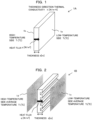
- Fig. 1 is a diagram illustrating an example of a partition member.
- Fig. 1 illustrates a rectangular parallelepiped (plate body) partition member 1 (referred to as partition member 1A in the explanation of Fig. 1 ) having length, width and thickness (depth).
- the partition member 1A has two surfaces, namely a surface 1a and a surface 1b opposing each other in the thickness direction.
- the partition member 1A is disposed between respective single cells that make up an assembled battery, in order to partition the single cells from each other.
- the surface 1a and the surface 1b are brought to a state in which the foregoing oppose respective single cells to be partitioned.
- the surface 1a and the surface 1b can be used as "two thickness-direction surfaces that partition single cells making up an assembled battery".
- one of the "two thickness-direction surfaces that partition single cells making up an assembled battery” may in some instances not oppose a single cell.
- the thermal resistance per unit area ( ⁇ ) of a partition member is referred to as heat transfer resistance per unit cross-sectional area of the partition member in the thickness direction.
- the thermal resistance per unit area ( ⁇ ) of the partition member can be expressed using the thermal conductivity (k (W/m ⁇ K)) in the thickness direction of the material used as the partition member and using the thickness (d (m)) of the partition member.
- the thermal resistance per unit area ( ⁇ ) of the partition member 1A illustrated in Fig. 1 will be explained next.
- the partition member 1A will be assumed to be formed out of a single material and to have constant density.
- k (W/m ⁇ K) denotes the thermal conductivity of the partition member 1A in the thickness direction
- d (m) denotes the thickness of the partition member 1A.
- T 1 (°C) denotes the average value of surface temperature of the surface 1b of the partition member 1A
- T 2 (°C) denotes the average value of the surface temperature of the surface 1a.
- a surface temperature difference T 1 -T 2 arises between the surface 1b side and the surface 1a side of the partition member 1A in a case where T 2 is lower than T 1 .
- the heat flow rate (heat flux) q per unit cross-sectional area of the partition member 1A can be given by Expression (1) below.
- the thermal resistance per unit area ( ⁇ ) can be expressed using the thermal conductivity (k) of the partition member 1A in the thickness direction and the thickness (d) of the partition member. That is, the thermal resistance per unit area ( ⁇ ) can be given by Expression (3) below.
- ⁇ d / k m 2 ⁇ K / W
- the shape (structure) of the partition member 1 is not limited to a rectangular parallelepiped. So long as the partition member 1 is shaped to have a thickness direction, the thermal resistance of the partition member 1 can be expressed by Expression (3) also in a case where the partition member has for instance a comb-type structure, a hollow structure or a lattice structure.
- the partition member 1 is not limited to being formed out of single material, and may be formed of a combination of a plurality of materials.
- the thermal resistance per unit area of the partition member 1 can be given by Expression (3) above also in a case where the partition member 1 is formed of a combination of a plurality of materials.
- polyethylene chlorinated polyethylene, ethylene-vinyl chloride copolymers, ethylene-vinyl acetate copolymers, polyvinyl acetate, polypropylene, polybutene, polybutadiene, polymethylpentene, polystyrene, poly ⁇ -methylstyrene, poly(p-vinyl phenol), ABS resins, SAN resins, AES resins, AAS resins, methacrylic resins, norbornene resins, PVC, acrylic-modified polyvinyl chloride, polyvinylidene chloride, polyallylamine, polyvinyl ether, polyvinyl alcohol, ethylene vinyl alcohol copolymers, petroleum resins, thermoplastic elastomers, thermoplastic polyurethane resins, polyacrylonitrile, polyvinyl butyral, phenolic resins, epoxy resins, urea resins, melafine resins,
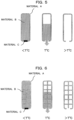
- Fig. 2 illustrates an example of a partition member 1 (referred to as partition member 1B in the explanation of Fig. 2 ) having a comb-type structure.
- the partition member 1B is formed to have overall a platelike shape the cross section of which has a comb shape.
- the partition member 1B as well has two surfaces, namely a surface 1c and a surface 1d opposing each other in the thickness direction.
- the surface 1c is a surface having stripe-like crenellations, while the surface 1d is a flat surface.
- the cross section resulting from cutting the partition member 1B along a plane in the thickness direction is a comb shape.
- the surface 1c and the surface 1d can be treated in the same manner as the surface 1a and the surface 1b.
- the thermal resistance per unit area ( ⁇ ) of the partition member 1B illustrated in Fig. 2 can be worked out as follows.
- the average temperatures at the surface 1c and the surface 1d can be used as T 1 and T 2 in Expression (1) and Expression (2) above.
- the average value of heat flow rate per unit cross-sectional area of the partition member 1B can be used as the heat flux (q) in Expression (1) and Expression (2) above.
- the thermal resistance per unit area ( ⁇ ) can be expressed using Expression (3) above by using, as the thermal conductivity (k) in Expression (1) and Expression (3), a combined thermal conductivity that is calculated taking into consideration the structure and material types of the partition member 1B.
- the thermal resistance per unit area ( ⁇ ) an effective thermal resistance per unit area, which is calculated with consideration of the structure and material types of the partition member 1B, can be used.
- R n thermal resistance
- a combined thermal conductivity of the composite member in a case where n types of material are arrayed in series will be calculated next.
- R n ⁇ n / A
- the combined thermal conductivity ( ⁇ ) can be expressed as follows using Expression (7) and Expression (8).
- the thermal conductivity of a composite member in a case where n types of material are arrayed in parallel will be calculated next.
- the thermal resistance (R n ) of each material can be expressed as follows using a respective thermal resistance ( ⁇ n ) per unit cross-sectional area, with A n (m 2 ) denoting the respective cross-sectional area of the n types of material in the heat transfer direction.
- R n ⁇ n / A n
- the thickness-direction thermal conductivity is preferably 2.0 ⁇ 10 -2 W/m ⁇ K or more and 2.0 W/m ⁇ K or less, and when the average temperature of that surface (for instance any one of surfaces 1a to 1d) does not exceed 80°C, the thickness-direction thermal conductivity is preferably 5.0 ⁇ 10 -2 W/m ⁇ K or more and 50 W/m ⁇ K or less.
- the barycenter of the partition member to be checked is worked out.
- a perpendicular line is drawn from the barycenter to one face of the partition member, and the obtained intersection point is taken as a first point.
- Heating is then performed so that entire surface that encompasses the first point is heated to 160°C.
- the heating method is not particularly limited, so long as heating can be performed through control of the temperature so that the entire surface including a given first point is at 160°C to 300°C.
- the temperature of the surface including the first point is raised from 160°C to 300°C, on the basis of the first point and the second point.
- the thermal resistance ( ⁇ 1 ) is then worked out in accordance with the method described above, when the temperature of the entire system reaches a steady state, at temperatures of 160°C, 180°C, 210°C, 240°C, 270°C and 300°C.
- the entire surface including the first point is heated at 100°C.
- the heating method is not particularly limited, so long as heating can be performed through control of the temperature so that the entire surface including the above first point lies in the range of 20°C to 1000°C.
- the temperature of the surface including the first point is lowered from 100°C to 20°C, on the basis of the first point and the second point.
- the thermal resistance ( ⁇ 2 ) is then worked out in accordance with the method described above, when the temperature of the entire system reaches a steady state, at temperatures of 80°C, 60°C, 40°C and 20°C.
- the partition member 1 is one constituent element that makes up an assembled battery.
- the assembled battery that can be used in the present invention is utilized in a battery pack mounted for instance in electric vehicles (EVs), hybrid electric vehicles (HEVs), plug-in hybrid electric vehicles (PHEVs), electric heavy equipment, electric bikes, electrically assisted bicycles, ships, aircraft, trains, uninterruptible power supplies (UPSs), household storage systems, and storage battery systems for stabilization of electric power systems that utilize renewable energy such as wind power, solar power, tidal power, and geothermal power.
- the assembled battery can also be used as a power source for supplying power to equipment other than the abovementioned EVs and so forth.
- Fig. 3 is a diagram illustrating an example of an assembled battery.
- Fig. 3 illustrates a three-cell connected simple battery pack as the assembled battery 10.
- the assembled battery is formed through connection of a number of single cells (also referred to as cells) corresponding to the desired output power, in series, in parallel, or in a combination thereof.
- the number of cells is set as appropriate depending on the requested power.
- the single cells are connected in series, with a partition member disposed between respective single cells.
- the assembled battery 10 in the example of the assembled battery 10 depicted in Fig. 3 has: a cell 21 (Cell 1: first single cell), a cell 22 (Cells 2: second single cell) and a cell 23 (Cell 3: third single cell); as well as a partition member 11 (Spacer 1: first partition member) and a partition member 12 (Spacer 2: second partition member) disposed between respective cells and which partition the cells from each other.
- the assembled battery 10 is provided with bus bars 3 and a case 4.
- the partition member 11 and the partition member 12 will be referred to as partition members 1 in the explanation below.
- the cell 21, cells 22 and cell 23 will be notated as cells 2.
- the first single cell, second single cell and third single cell, as well as the first partition member and the second partition member obey a relative positional relationship such as the one illustrated in Fig. 3 .
- a given single cell reaches an abnormal heating state, that single cell is regarded as the first single cell, to determine thus the second single cell, third single cell, first partition member and second partition member.
- the cells 2 are each a lithium ion secondary battery cell provided for instance with a positive electrode and a negative electrode capable of storing and releasing lithium ions, and with an electrolyte.
- secondary batteries such as lithium ion all-solid-state battery cells, nickel-hydride battery cells, nickel cadmium battery cells and lead storage battery cells can be used.
- a partition member explained on the basis of Fig. 1 and Fig. 2 can be used herein as each partition member 1.
- Each bus bar 3 is a conductor rod used in order to supply power outputted from respective cells to a load (for instance a motor), and is for instance formed of a conductor such as aluminum.
- the case 4 accommodates the partition members 1 and the cells 2.
- the case 4 can be formed for instance of a metal, a resin (for instance polypropylene), or of a combination of metal and a resin.
- the cells 2 having the partition members 1 inserted between cells may be clamped by end plates that are in turn connected by connecting plates, in such a manner that the cells 2 and the partition members 1 become fixed to each other.
- part or the entirety of the chemical substances that make up for instance the electrolyte solution and the electrodes that constitute the cells 2 undergo decomposition reactions inside the cells 2 with generation of heat as a result of which the temperature in the cells 2 increases and partial regions or the entirety of the cells 2 may reach a temperature of 200°C or higher.
- This state is referred to as an "abnormal heating state".
- a charging negative electrode (lithium-intercalated carbon negative electrode) exhibits basically the same strong reducibility as that of metallic lithium; as is known, a coating film forms thus on the negative electrode surface upon reaction with the electrolyte solution, with further reactions being inhibited by that coating film. Therefore the chemical composition, structure and thermal stability of this protective coating film exerts a significant influence the thermal stability of the charging negative electrode at the time of rises in temperature. Reactions between the charging negative electrode and the electrolyte solution are ordinarily explained by the formation of a protective coating film and by ensuing explosive reductive decomposition reactions arising from breakdown of that film.
- the protective film formation reaction on the negative electrode proceeds generally from around 130°C, and the subsequent coating film decomposition reaction proceeds at about 200°C, eventually leading to an explosive reductive decomposition reaction.
- an instance where part or the entire area of the cells 2 is at 200°C or above denotes ongoing breakdown of the coating film on the negative electrode surface, i.e. indicates that the cells 2 are in a thermal runaway state (Reference 4: Battery Handbook, 1st Edition Ohm Co., p. 591 ; Reference 5: Cutting-Edge High-Safety Technologies and Evaluation Technologies in Lithium Ion Batteries, CMC Publishing Co., Ltd., p. 90 ).
- a state in which a chemical substance constituting for instance the electrolyte solution or the electrodes that make up the cells 2 does not elicit a decomposition reaction at or above a given heat generation rate in the interior of the cells 2 will be referred to herein as a "normal state".
- the heat generation state in the cells 2 can be evaluated by ARC (Accelerating Rate Calorimetry), which is a means for measuring quantitatively thermal behavior during self-heating decomposition, under adiabatic conditions, of a reactive chemical substance. According to the definition by Dahn et al., as a dependable yardstick, a self-heating reaction is progressing inside a cell when the heating rate observed by ARC exceeds 0.04°C/min (Reference 6: J.
- Cells 2 in a normal state will be referred to as “single cells maintaining a normal state", and cells 2 deviating from the normal state but not having reached an abnormal heating state will be referred to as “single cells deviating from the normal state”. Heat generated inside the cells 2 is transmitted to other cells 2 via various transmission paths.
- Fig. 4 is a diagram illustrating an example of heat transfer paths in an assembled battery.
- the heat generated by the cell 21 is transmitted to other cells 22, 23 via: (1) the partition member 11 disposed between the cells, (2) the bus bars 3, and (3) the case 4 of the assembled battery 10 in contact with the cells 2; in addition, (4) the heat is also dissipated out of the case of the assembled battery 10.
- the upper limit of a surface average temperature envisaged for a case where the cells 2 in contact with or in the vicinity of partition members 1 deviate from the normal state but have not reached an abnormal heating state is set herein to 180°C. It is known that the meltdown temperature of generic separator materials is 160°C to 200°C. When the surface average temperature of the cells 2 exceeds 180°C, therefore, there is a risk of meltdown of part of the generic separator material that makes up the cells 2, leading to an abnormal heating state.
- the upper limit of surface average temperature envisaged for an instance where cells 2 in contact with or in the vicinity of partition members 1 do not deviate from the normal state is set herein to 80°C.
- the boiling points of generic electrolyte solution components are 90°C or higher, as given in Table 1.
- Generic electrolyte solution components include for instance ethylene carbonate (EC), diethyl carbonate, dimethyl carbonate (DMC) and ethyl methyl carbonate (EMC). If the surface average temperature of the cells 2 is lower than 80°C there ensues thus no boiling of the generic electrolyte solution itself that makes up the cells 2.
- a means for controlling the thermal resistance per unit area ( ⁇ ) depending on the surface temperature of the partition members 1 will be explained next. Firstly a material A and a material B that make up the partition members 1 will be illustrated below.
- the thermal resistance per unit area ( ⁇ ) of the material A satisfies (Expression 1) above.
- the material A is for instance a resin plate made of polycarbonate or butyl rubber.
- the thermal resistance per unit area ( ⁇ ) of the material B satisfies (Expression 2) above.
- the material B is for instance a ceramic, a glass plate or polyethylene, in solid form, or water, ethylene glycol or glycerin, in liquid form.
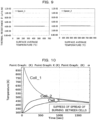
- the partition member 1 has a substantially rectangular parallelepiped bag-like structure ( Fig. 5 ), of hollow interior, made up of the material A having a melting point at a temperature higher than T (°C).
- the interior of the bag-like structure is filled with the material B, which is in liquid state at T (°C).
- the lower face of the bag-like structure is provided with an opening through which the interior of the bag-like structure communicates with the exterior.
- the opening is closed by a plug made of a material C having for instance a melting point around T (°C).
- the partition member 1 is designed so that when the plug made of the material C melts, at around T (°C), an opening becomes formed through which the material B that fills the interior flows down to the exterior.
- the outer shape of the bag-like structure may be other than a rectangular parallelepiped shape. In Fig. 5 an opening is provided at the lower face of the bag-like structure, but the opening may be provided at a side face, so long as the opening lies at a position at which the material B can flow down out of the bag-like structure.
- the partition member 1 may have a structure formed through juxtaposition of multiple bag-like structures described above, each filled with the material B, in the transversal direction or the longitudinal direction.
- the plug is not necessarily essential herein.
- the melting point of the material C may be similar or lower than that of the material B.
- the plug may in some instances be made of the material B.
- the material B need no necessarily be liquid at T (°C), and may be in a fluid state other than liquid.
- the thermal resistance per unit area ( ⁇ ) satisfies (Expression 2), thanks to the material B inside the bag-like structure, when the surface temperature of such a partition member 1 having a bag-like structure is lower than T (°C).
- T temperature of the partition member 1
- the thermal resistance per unit area ( ⁇ ) of the partition member 1 satisfies (Expression 1), given that the material B flows down out of the bag-like structure whereupon the partition member 1 is now made up of the material A.
- the partition member 1 has a structure ( Fig. 6 ) in which a lattice-like frame is provided inside the bag-like structure of Fig. 5 .
- the interior of the bag-like structure is filled with the material B, which is liquid at T (°C), at a portion other than the frame, the lower face of the bag-like structure being closed off by a plug formed of the material C that has a melting point around T (°C).
- the partition member 1 is designed so that in a case where the plug formed of the material C melts at around T (°C), the material B that fills the space portions of the bag-like structure flows down to the exterior, through the opening that becomes formed upon melting of the plug.
- the frame has the effect of maintaining the rigidity (strength) of the bag-like structure when the material B flows out.
- the thermal resistance per unit area ( ⁇ ) satisfies (Expression 2) thanks to the material B that filters the space portions of the bag-like structure.
- the thermal resistance per unit area ( ⁇ ) of the partition members 1 satisfies (Expression 1), given that the material B flows down out of the bag-like structure whereupon the partition members 1 is now made up of the material A.
- Transfer of heat between the cells 2 that make up the assembled battery 10 is controlled in such a manner so as not to reduce the quantity of heat transmitted from cells 2 having reached an abnormal heating state to cells 2 maintaining a normal state, without mediation of electrode bodies of cells 2 deviating from the normal state, or the quantity of heat transmitted from cells 2 deviating from the normal state to cells 2 maintaining the normal state, while reducing the quantity of heat transmitted from cells 2 having reached an abnormal heating state to the cells 2 deviating from the normal state.
- the electrode bodies of the cells 2 are structures having electrodes, separators and electrolyte solutions, i.e. are bodies of respective cells.
- Fig. 4 it will be assumed for instance that the cell 21 has reached an abnormal heating state, the cell 22 deviates from the normal state, and the cell 23 maintains the normal state. In this case, control is performed so that the quantity of heat transmitted from the cell 21 to the cell 22 is reduced, and so as not to reduce the quantity of heat transmitted from the cell 21 to the cell 23 without mediation of the electrode body of the cell 22, or the quantity of heat transmitted from the cell 22 to the cell 23.
- Transfer of heat among the cells 2 can be controlled on the basis of a switching function of the partition members 1. Specifically, the quantity of heat that is transmitted to the cell 22, from among the quantity of heat generated by the cell 21, is reduced through an increase in the heat transfer resistance of the partition member 11 disposed between the cell 22 deviating from the normal state and the cell 21 having reached an abnormal heating state. Also, by not increasing the heat transfer resistance of the partition member 12 that is disposed between the cell 22 deviating from the normal state and the cell 23 maintaining the normal state, the quantity of heat transmitted from the cell 22 to the cell 23, and the quantity of heat transmitted to the cell 23, without mediation of the electrode body of the cell 22, from among the quantity of heat generated by the cell 21 are not reduced.
- the quantity of heat generated by the cell 21 having reached an abnormal heating state is controlled to be transmitted to the cell 23 maintaining a normal state, while reducing the quantity of heat that is transmitted to the cell 22 deviating from the normal state, so that the temperatures of the cells 2 in the assembled battery 10 are equalized. This allows as a result preventing that an abnormal heating state should be reached by cells 2 other than those cells 2 that have reached abnormal heating state.
- Fig. 3 there were estimated the temperatures in the interior of the adjacent cell 22 and cell 23, as well as the surface average temperature and thermal resistance per unit area of the partition members 1, upon abnormal heating of the left-end cell 21, and there was evaluated the effect for instance of suppressing spread of burning on the basis of changes in the heat transfer resistance of the partition members 1.
- the temperature in the interior of each cell 2 was assumed to be the temperature obtained by measuring the average temperature in the interior of respective electrode bodies (structure including electrodes, separators and electrolyte solutions).
- Fig. 7 is a graph illustrating changes in temperature in the interior of the cells in Comparative example 1.
- the vertical axis represents absolute temperature (K) in the interior of the cells 2, and the horizontal axis represents the time (seconds) elapsed since the cell 21 has reached an abnormal heating state.
- K absolute temperature
- seconds time
- the graph suggests that after about 150 seconds have elapsed since the cell 21 reached an abnormal heating state, the temperature in the interior of the cell 22 and the cell 23 exceeds 1000K, with spreading of burning from the abnormally heated cell 21 to the cell 22 and the cell 23.
- Fig. 8 is a graph illustrating the evolution of surface average temperature of partition members in Comparative example 1.
- the vertical axis represents the surface average temperature (°C) of the partition members 1 and the horizontal axis represents the time (seconds) after the cell 21 has reached an abnormal heating state. It was estimated that immediately after the cell 21 reaches an abnormal heating state, the surface average temperature of the partition member 11 (Spacer 1) rises rapidly and reaches 400°C, and after about 150 second have elapsed, also the surface average temperature of the partition member 12 (Spacer 2) rises rapidly and exceeds 700°C.
- Fig. 9 is a set of graphs illustrating the evolution of thermal resistance per unit area of the partition members in Comparative example 1.
- the vertical axis represents thermal resistance per unit area (m 2 ⁇ K/W) and the horizontal axis represents the surface average temperature (°C) of the respective partition members 1.
- the value of thermal resistance per unit area ( ⁇ 1 ) at a surface average temperature of 190°C of the partition member 11 (Spacer 1) and of the partition member 12 (Spacer 2) was 4.2 ⁇ 10 -3 m 2 ⁇ K/W
- the value of thermal resistance per unit area ( ⁇ 2 ) at an average temperature of 70°C was 4.2 ⁇ 10 -3 m 2 ⁇ K/W. That is, the partition members 1 in Comparative example 1 fail to satisfy the conditions of (Expression 1) and (Expression 2) described above pertaining to thermal resistance per unit area.
- Example 1 the partition members 1 were assumed to be high-performance partition members having a switching function whereby thermal conductivity changes at the point in time where the surface temperature of the partition members 1, on the side of abnormally heated cell, reaches a predetermined temperature.
- the thickness of the partition members 1 was set to 1.0 mm.
- Various conditions pertaining to the bus bars 3 and the case 4 were set to be identical to those in Comparative example 1.
- the partition members 1 having a switching function can be prescribed to have each a structure wherein for instance a substance being in a liquid state at 150°C, from among the materials B described above, is sealed in the interior of a bag-like structure made up of a material having a melting point in the vicinity of 150°C, from among the materials A described above, the structure of the partition member being designed so that upon melting of part of the bag-like structure made up of the material A at 150°C, the material B sealed in the interior flows down out of the bag-like structure.
- each partition member 1 in such a structure was set to 150°C, the initial thermal conductivity to 1.0 W/m ⁇ K and the thermal conductivity after switching to 0.10 W/m ⁇ K, and there were estimated the temperature inside each cell 2, as well as the surface average temperature and thermal resistance per unit area of each partition member 1.
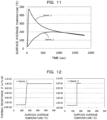
- Fig. 10 is a graph illustrating changes in temperature in the interior of the cells in Example 1.
- the vertical axis represents absolute temperature (K) in the interior of the cells 2
- the horizontal axis represents the time (seconds) elapsed since the cell 21 has reached an abnormal heating state.
- the graph reveals that after the cell 21 has reached an abnormal heating state, the temperature in the interior of the cell 22 and the cell 23 rises gradually, but does not reach an abnormal heating state, and converges at about 430K, which indicates that it is possible to suppress spread of burning between the cells 2.
- Fig. 11 is a graph illustrating the evolution of surface average temperature of partition members in Example 1.
- the vertical axis represents the surface average temperature (°C) of the partition members 1 and the horizontal axis represents the time (seconds) after the cell 21 has reached an abnormal heating state. It was estimated that immediately after the cell 21 reaches an abnormal heating state the surface average temperature of the partition member 11 (Spacer 1) rises rapidly and exceeds 400°C, but the surface average temperature of the partition member 12 (Spacer 2) converges at about 160°C, without rising rapidly.
- Fig. 12 is a set of graphs illustrating the evolution of thermal resistance per unit area of the partition members in Example 1.
- the vertical axis represents thermal resistance per unit area (m 2 ⁇ K/W) and the horizontal axis represents the surface average temperature (°C) of the respective partition members 1.
- the value of thermal resistance per unit area ( ⁇ 1 ) at a surface average temperature of 190°C of the partition member 11 (Spacer 1) and of the partition member 12 (Spacer 2) was 1.0 ⁇ 10 -2 m 2 ⁇ K/W
- the value of thermal resistance per unit area ( ⁇ 2 ) at an average temperature of 70°C was 1.0 ⁇ 10 -3 m 2 ⁇ K/W. That is, the partition members 1 in Comparative example 1 satisfy the conditions of both (Expression 1) and (Expression 2) described above pertaining to thermal resistance per unit area.
- Comparative example 2 and Comparative example 3 illustrate examples envisaging partition members 1 not having a switching function.
- the partition members 1 are assumed to be partition members 1 of lower thermal conductivity than that in Comparative example 1, with thickness set to 1.0 mm and thermal conductivity set to 0.10 W/m ⁇ K.
- Various conditions pertaining to the bus bars 3 and the case 4 were set to be identical to those in Comparative example 1.
- Fig. 13 is a graph illustrating changes in temperature in the interior of the cells in Comparative example 2.
- the vertical axis represents absolute temperature (K) in the interior of the cells 2
- the horizontal axis represents the time (seconds) elapsed since the cell 21 has reached an abnormal heating state.
- the graph indicated that the time required for the occurrence of spread of burning from the abnormally heated cell 21 to the cell 22 and cell 23 was herein longer than that in Comparative example 1, in which partition members 1 made of a general resin were used, but there was not achieved suppression of the spread of burning.
- Fig. 14 is a graph illustrating the evolution of the surface average temperature of partition members in Comparative example 2.
- the vertical axis represents the surface average temperature (°C) of partition members 1 and the horizontal axis represents the time (seconds) after the cell 21 has reached an abnormal heating state.
- the surface average temperature of the partition member 11 (Spacer 1) began rising about 250 seconds after the cell 21 reached an abnormal heating state. From these results it was estimated that in a case where the thermal insulation properties of the members 1 is enhanced, the heat generated by the cell 21 is not eliminated efficiently, at an initial stage where the cell 21 has reached the abnormal heating state and as a result spread of burning is not suppressed.
- Fig. 15 is a set of graphs illustrating the evolution of thermal resistance per unit area of the partition members in Comparative example 2.
- the vertical axis represents thermal resistance per unit area (m 2 ⁇ K/W) and the horizontal axis represents the surface average temperature (°C) of the respective partition members 1.
- the value of thermal resistance per unit area ( ⁇ 1 ) at a surface average temperature of 190°C of the partition member 11 (Spacer 1) and of the partition member 12 (Spacer 2) was 1.0 ⁇ 10-2 M 2 ⁇ K/W
- the value of thermal resistance per unit area ( ⁇ 2 ) at an average temperature of 70°C was 1.0 ⁇ 10 -2 m 2 ⁇ K/W. That is, the partition members 1 in Comparative example 2 satisfy the condition of (Expression 1) described above pertaining to thermal resistance per unit area, but not the condition of (Expression 2).
- the partition members 1 are assumed to be partition members 1 of higher thermal conductivity than that in Comparative example 1, with thickness set to 1.0 mm and thermal conductivity set to 1.0 W/m ⁇ K.
- Various conditions pertaining to the bus bars 3 and the case 4 were set to be identical to those in Comparative example 1.
- Fig. 16 is a graph illustrating changes in temperature in the interior of the cells in Comparative example 3.
- the vertical axis represents absolute temperature (K) in the interior of the cells 2, and the horizontal axis represents the time (seconds) elapsed since the cell 21 has reached an abnormal heating state.
- the graph indicated that the time required for the occurrence of spread of burning from the abnormally heated cell 21 to the cell 22 and cell 23 was shorter than that in Comparative example 1, in which partition members 1 made of a general resin were used, and that the cell 22 and cell 23 underwent abnormal heating substantially simultaneously with cell 21.
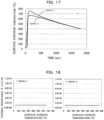
- Fig. 17 is a graph illustrating the evolution of surface average temperature of partition members in Comparative example 3.
- the vertical axis represents the surface average temperature (°C) of the partition members 1 and the horizontal axis represents the time (seconds) after the cell 21 has reached an abnormal heating state. It was estimated that immediately after the cell 21 reaches an abnormal heating state, the surface average temperatures of the partition member 11 (Spacer 1) and of the partition member 12 (Spacer 2) rise rapidly, and the surface average temperature of all the foregoing exceeds 600°C by the time that 100 seconds have elapsed. From these results it was estimated that in a case where heat transfer properties of the partition members 1 are improved, spread of burning cannot be suppressed given that heat generated upon abnormal heating of the cell 21 propagates quickly to the adjacent cell 22 and cell 23.
- Fig. 18 is a set of graphs illustrating the evolution of thermal resistance per unit area of the partition members in Comparative example 3.
- the vertical axis represents thermal resistance per unit area (m 2 ⁇ K/W) and the horizontal axis represents the surface average temperature (°C) of the respective partition members 1.
- the value of thermal resistance per unit area ( ⁇ 1 ) at a surface average temperature of 190°C of the partition member 11 (Spacer 1) and of the partition member 12 (Spacer 2) was 1.0 ⁇ 10 -3 m 2 ⁇ K/W
- the value of thermal resistance per unit area ( ⁇ 2 ) at an average temperature of 70°C was 1.0 ⁇ 10 -3 m 2 ⁇ K/W. That is, the partition members 1 in Comparative example 3 do not satisfy the condition of (Expression 1) described above pertaining to thermal resistance per unit area, but satisfy the condition of (Expression 2).
- Comparative example 4 provides an example in which even with high-performance partition members having a switching function with change in thermal conductivity, burning spreads from an abnormally heated cell to adjacent cells due to the fact that the value of thermal resistance per unit area before and after a change in thermal conductivity does not lie within an appropriate range.
- Comparative example 4 the partition members 1 were set to have a thickness of 1.0 mm, a switching temperature of 150°C, an initial thermal conductivity of 0.24 W/m ⁇ K, and a thermal conductivity after switching of 0.10 W/m ⁇ K.
- Various conditions pertaining to the bus bars 3 and the case 4 were set to be identical to those in Comparative example 1.
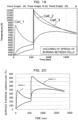
- Fig. 19 is a graph illustrating changes in temperature in the interior of the cells in Comparative example 4.
- the vertical axis represents absolute temperature (K) in the interior of the cells 2, and the horizontal axis represents the time (seconds) elapsed since the cell 21 has reached an abnormal heating state.
- K absolute temperature
- seconds time
- the graph suggests that after about 600 seconds have elapsed since the cell 21 reached an abnormal heating state, the temperature in the interior of the cell 22 and the cell 23 exceeds 1200K, with spreading of burning from the abnormally heated cell 21 to the cell 22 and the cell 23.
- Fig. 20 is a graph illustrating the evolution of surface average temperature of partition members in Comparative example 4.
- the vertical axis represents the surface average temperature (°C) of the partition members 1 and the horizontal axis represents the time (seconds) after the cell 21 has reached an abnormal heating state. It was estimated that immediately after the cell 21 reaches an abnormal heating state, the surface average temperature of the partition member 11 (Spacer 1) rises rapidly beyond 400°C, and after about 600 seconds have elapsed, also the surface average temperature of the partition member 12 (Spacer 2) rises rapidly beyond 800°C. From the above results it was estimated that even when the partition members 1 have a switching function, spread of burning cannot be reduced unless the thermal conductivity of the partition members 1 is properly controlled.
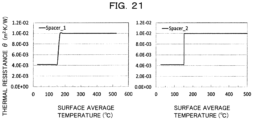
- Fig. 21 is a set of graphs illustrating the evolution of thermal resistance per unit area of the partition members in Comparative example 4.
- the vertical axis represents thermal resistance per unit area (m 2 ⁇ K/W) and the horizontal axis represents the surface average temperature (°C) of the respective partition members 1.
- the value of thermal resistance per unit area ( ⁇ 1 ) at a surface average temperature of 190°C of the partition member 11 (Spacer 1) and of the partition member 12 (Spacer 2) was 1.0 ⁇ 10 -2 m 2 ⁇ K/W
- the value of thermal resistance per unit area ( ⁇ 2 ) at an average temperature of 70°C was 4.2 ⁇ 10 -3 m 2 ⁇ K/W. That is, the partition members 1 in Comparative example 4 satisfy the condition of (Expression 1) described above pertaining to thermal resistance per unit area, but not the condition of (Expression 2).
- the following aspects are preferred embodiments of the invention.
- a partition member which has two surfaces in a thickness direction, and which separates single cells that make up an assembled battery
- thermal conductivity in the thickness direction is 2.0 ⁇ 10 -2 W/m ⁇ K or more and 2.0 W/m ⁇ K or less; and when the average temperatures of both of the two surfaces are 80°C or lower, thermal conductivity in the thickness direction is 5.0 ⁇ 10 -2 W/m ⁇ K or more and 50 W/m ⁇ K or less.
- An assembled battery comprising the partition member according to any one of aspects 1 to 4.
- An assembled battery comprising:
Landscapes
- Chemical & Material Sciences (AREA)
- Chemical Kinetics & Catalysis (AREA)
- Electrochemistry (AREA)
- General Chemical & Material Sciences (AREA)
- Engineering & Computer Science (AREA)
- Manufacturing & Machinery (AREA)
- General Physics & Mathematics (AREA)
- Physics & Mathematics (AREA)
- Algebra (AREA)
- Mathematical Analysis (AREA)
- Mathematical Optimization (AREA)
- Pure & Applied Mathematics (AREA)
- Aviation & Aerospace Engineering (AREA)
- Secondary Cells (AREA)
- Battery Mounting, Suspending (AREA)
Applications Claiming Priority (3)
| Application Number | Priority Date | Filing Date | Title |
|---|---|---|---|
| JP2016254342 | 2016-12-27 | ||
| EP17886854.3A EP3565020B1 (de) | 2016-12-27 | 2017-12-27 | Trennwand, zusammengesetzte batterie und wärmeübertragungsteuerungsverfahren für eine zusammengesetzte batterie |
| PCT/JP2017/047090 WO2018124231A1 (ja) | 2016-12-27 | 2017-12-27 | 仕切り部材、組電池及び組電池の熱伝達制御方法 |
Related Parent Applications (1)
| Application Number | Title | Priority Date | Filing Date |
|---|---|---|---|
| EP17886854.3A Division EP3565020B1 (de) | 2016-12-27 | 2017-12-27 | Trennwand, zusammengesetzte batterie und wärmeübertragungsteuerungsverfahren für eine zusammengesetzte batterie |
Publications (2)
| Publication Number | Publication Date |
|---|---|
| EP4567970A2 true EP4567970A2 (de) | 2025-06-11 |
| EP4567970A3 EP4567970A3 (de) | 2026-01-21 |
Family
ID=62709555
Family Applications (2)
| Application Number | Title | Priority Date | Filing Date |
|---|---|---|---|
| EP17886854.3A Active EP3565020B1 (de) | 2016-12-27 | 2017-12-27 | Trennwand, zusammengesetzte batterie und wärmeübertragungsteuerungsverfahren für eine zusammengesetzte batterie |
| EP25166960.2A Pending EP4567970A3 (de) | 2016-12-27 | 2017-12-27 | Trennelement, zusammengesetzte batterie und wärmeübertragungssteuerungsverfahren für eine zusammengesetzte batterie |
Family Applications Before (1)
| Application Number | Title | Priority Date | Filing Date |
|---|---|---|---|
| EP17886854.3A Active EP3565020B1 (de) | 2016-12-27 | 2017-12-27 | Trennwand, zusammengesetzte batterie und wärmeübertragungsteuerungsverfahren für eine zusammengesetzte batterie |
Country Status (7)
| Country | Link |
|---|---|
| US (4) | US20190319223A1 (de) |
| EP (2) | EP3565020B1 (de) |
| JP (1) | JP6835101B2 (de) |
| KR (2) | KR102934157B1 (de) |
| CN (2) | CN110114903B (de) |
| CA (1) | CA3048603A1 (de) |
| WO (1) | WO2018124231A1 (de) |
Families Citing this family (8)
| Publication number | Priority date | Publication date | Assignee | Title |
|---|---|---|---|---|
| WO2020054875A1 (ja) | 2018-09-14 | 2020-03-19 | 三菱ケミカル株式会社 | 充填部材及び組電池 |
| JP7167802B2 (ja) * | 2019-03-26 | 2022-11-09 | 三菱ケミカル株式会社 | 仕切り部材及び組電池 |
| CN118348057A (zh) * | 2019-03-28 | 2024-07-16 | 三菱化学株式会社 | 分隔构件和电池组 |
| US11515587B2 (en) * | 2019-10-10 | 2022-11-29 | Robert Bosch Gmbh | Physics-based control of battery temperature |
| CN115009524B (zh) * | 2022-07-17 | 2023-11-17 | 西北工业大学 | 一种基于正常运行状态下的太阳能飞机热控系统及方法 |
| EP4645560A1 (de) | 2022-12-28 | 2025-11-05 | Mitsubishi Chemical Corporation | Trennelement und batterieanordnung |
| CN120453552A (zh) * | 2024-02-06 | 2025-08-08 | 比亚迪股份有限公司 | 电池组件和装置 |
| CN222867787U (zh) * | 2024-06-28 | 2025-05-13 | 比亚迪股份有限公司 | 电池组件、电池包和用电设备 |
Citations (7)
| Publication number | Priority date | Publication date | Assignee | Title |
|---|---|---|---|---|
| JP2006010648A (ja) | 2004-06-29 | 2006-01-12 | Mitsubishi Chemicals Corp | 温度分布評価方法並びにシミュレーション装置及びシミュレーションプログラム |
| JP2010097693A (ja) | 2008-10-14 | 2010-04-30 | Toyota Motor Corp | 蓄電装置 |
| JP2010165597A (ja) | 2009-01-16 | 2010-07-29 | Toyota Motor Corp | 蓄電装置 |
| JP4900534B2 (ja) | 2009-02-24 | 2012-03-21 | パナソニック株式会社 | 電池モジュールとそれを用いた電池モジュール集合体 |
| JP2013035293A (ja) | 2006-08-31 | 2013-02-21 | Toray Battery Separator Film Co Ltd | 多層微多孔膜及びその製造方法、並びに電池用セパレータ及び電池 |
| JP5352681B2 (ja) | 2010-09-09 | 2013-11-27 | パナソニック株式会社 | 電池モジュール |
| JP2015208894A (ja) | 2014-04-24 | 2015-11-24 | 東レバッテリーセパレータフィルム株式会社 | ポリオレフィン製積層微多孔膜 |
Family Cites Families (23)
| Publication number | Priority date | Publication date | Assignee | Title |
|---|---|---|---|---|
| JPS49534B1 (de) | 1969-05-16 | 1974-01-08 | ||
| JPS5651210Y2 (de) | 1976-10-07 | 1981-11-30 | ||
| JP2009135088A (ja) * | 2007-10-29 | 2009-06-18 | Panasonic Corp | 電池パックおよび電池搭載機器 |
| JP2010061982A (ja) * | 2008-09-03 | 2010-03-18 | Toyota Motor Corp | 蓄電装置 |
| US8372269B2 (en) | 2009-10-02 | 2013-02-12 | Basf Corporation | Heavy metals trapping co-catalyst for FCC processes |
| JP5740103B2 (ja) * | 2009-10-19 | 2015-06-24 | 日東電工株式会社 | 熱伝導部材、及びそれを用いた組電池装置 |
| JP4814405B2 (ja) * | 2009-11-25 | 2011-11-16 | パナソニック株式会社 | 電池モジュール |
| WO2011073425A1 (de) * | 2009-12-18 | 2011-06-23 | Magna E-Car Systems Gmbh & Co Og | Kühl-/heizelement für einen akkumulator |
| TWI419391B (zh) * | 2009-12-25 | 2013-12-11 | Ind Tech Res Inst | 電池系統中的散熱與熱失控擴散防護結構 |
| CN102117945A (zh) * | 2009-12-31 | 2011-07-06 | 财团法人工业技术研究院 | 电池系统中的散热与热失控扩散防护结构 |
| JP5379238B2 (ja) * | 2010-03-30 | 2013-12-25 | パナソニック株式会社 | 電池パック |
| JP5572442B2 (ja) * | 2010-04-27 | 2014-08-13 | 日立ビークルエナジー株式会社 | 液冷式蓄電システム |
| DE102010030881A1 (de) * | 2010-07-02 | 2012-01-05 | Robert Bosch Gmbh | Thermische Entkopplung von Batteriezellen im Störfall |
| JP5520320B2 (ja) * | 2010-11-05 | 2014-06-11 | パナソニック株式会社 | 電池モジュール |
| JP2013033723A (ja) * | 2011-07-04 | 2013-02-14 | Nissan Motor Co Ltd | 組電池 |
| US8993145B2 (en) * | 2011-09-19 | 2015-03-31 | Zee.Aero Inc. | Preventing cell thermal runaway propagation within a battery |
| KR101272524B1 (ko) * | 2011-09-20 | 2013-06-11 | 현대자동차주식회사 | 배터리 셀용 방열판 및 이를 갖는 배터리 모듈 |
| KR101417248B1 (ko) * | 2012-02-08 | 2014-07-09 | 현대자동차주식회사 | 배터리 셀 모듈용 방열 플레이트 및 이를 갖는 배터리 셀 모듈 |
| JP6153702B2 (ja) * | 2012-05-08 | 2017-06-28 | 東洋ゴム工業株式会社 | 熱伝導率可変材料 |
| JP2014127403A (ja) * | 2012-12-27 | 2014-07-07 | Mitsubishi Heavy Ind Ltd | 電池モジュール |
| JP6135660B2 (ja) * | 2014-12-25 | 2017-05-31 | トヨタ自動車株式会社 | 組電池 |
| EP3062381B1 (de) * | 2015-02-26 | 2018-04-11 | Magneti Marelli S.p.A. | Kühlkreislauf mit kühlflüssigkeit für lithiumbatterien und fahrzeug mit dem kühlkreislauf |
| CN105720225B (zh) * | 2016-03-31 | 2018-05-04 | 苏州工业园区职业技术学院 | 一种动力电池组快捷连接件 |
-
2017
- 2017-12-27 WO PCT/JP2017/047090 patent/WO2018124231A1/ja not_active Ceased
- 2017-12-27 CN CN201780080853.2A patent/CN110114903B/zh active Active
- 2017-12-27 KR KR1020247009201A patent/KR102934157B1/ko active Active
- 2017-12-27 EP EP17886854.3A patent/EP3565020B1/de active Active
- 2017-12-27 EP EP25166960.2A patent/EP4567970A3/de active Pending
- 2017-12-27 KR KR1020197019964A patent/KR102650754B1/ko active Active
- 2017-12-27 JP JP2018559611A patent/JP6835101B2/ja active Active
- 2017-12-27 CN CN202211104938.9A patent/CN115472995B/zh active Active
- 2017-12-27 CA CA3048603A patent/CA3048603A1/en active Pending
-
2019
- 2019-06-26 US US16/452,587 patent/US20190319223A1/en not_active Abandoned
-
2022
- 2022-03-25 US US17/656,632 patent/US11837705B2/en active Active
-
2023
- 2023-11-02 US US18/500,945 patent/US12412943B2/en active Active
-
2025
- 2025-08-13 US US19/299,237 patent/US20250372753A1/en active Pending
Patent Citations (7)
| Publication number | Priority date | Publication date | Assignee | Title |
|---|---|---|---|---|
| JP2006010648A (ja) | 2004-06-29 | 2006-01-12 | Mitsubishi Chemicals Corp | 温度分布評価方法並びにシミュレーション装置及びシミュレーションプログラム |
| JP2013035293A (ja) | 2006-08-31 | 2013-02-21 | Toray Battery Separator Film Co Ltd | 多層微多孔膜及びその製造方法、並びに電池用セパレータ及び電池 |
| JP2010097693A (ja) | 2008-10-14 | 2010-04-30 | Toyota Motor Corp | 蓄電装置 |
| JP2010165597A (ja) | 2009-01-16 | 2010-07-29 | Toyota Motor Corp | 蓄電装置 |
| JP4900534B2 (ja) | 2009-02-24 | 2012-03-21 | パナソニック株式会社 | 電池モジュールとそれを用いた電池モジュール集合体 |
| JP5352681B2 (ja) | 2010-09-09 | 2013-11-27 | パナソニック株式会社 | 電池モジュール |
| JP2015208894A (ja) | 2014-04-24 | 2015-11-24 | 東レバッテリーセパレータフィルム株式会社 | ポリオレフィン製積層微多孔膜 |
Non-Patent Citations (4)
| Title |
|---|
| DAHN ET AL., ELECTROCHEMISTRY COMMUNICATION, vol. 9, 2007, pages 2534 - 2540 |
| HIROKI KOBAYASHI: "Synchrotron Radiation-Based Evaluation and Analysis Technologies for Positive Electrode Materials in Lithium Ion Secondary Batteries", SPRING-8 PROMOTION ASSOCIATION, article "Cutting-Edge High-Safety Technologies and Evaluation Technologies", pages: 591 |
| J. DAHN ET AL., ELECTROCHIMICA ACTA, vol. 49, 2004, pages 4599 - 4604 |
| SPOTNITZ ET AL., J. POWER SOURCES, vol. 163, 2007, pages 1080 - 1086 |
Also Published As
| Publication number | Publication date |
|---|---|
| US12412943B2 (en) | 2025-09-09 |
| KR20190097112A (ko) | 2019-08-20 |
| KR20240042179A (ko) | 2024-04-01 |
| US11837705B2 (en) | 2023-12-05 |
| US20240072325A1 (en) | 2024-02-29 |
| CN115472995A (zh) | 2022-12-13 |
| WO2018124231A1 (ja) | 2018-07-05 |
| KR102650754B1 (ko) | 2024-03-22 |
| CN110114903A (zh) | 2019-08-09 |
| JPWO2018124231A1 (ja) | 2019-11-14 |
| US20250372753A1 (en) | 2025-12-04 |
| CN110114903B (zh) | 2022-09-27 |
| US20190319223A1 (en) | 2019-10-17 |
| JP6835101B2 (ja) | 2021-02-24 |
| KR102934157B1 (ko) | 2026-03-05 |
| US20220223946A1 (en) | 2022-07-14 |
| EP4567970A3 (de) | 2026-01-21 |
| EP3565020A1 (de) | 2019-11-06 |
| EP3565020B1 (de) | 2025-04-16 |
| CN115472995B (zh) | 2025-05-30 |
| EP3565020C0 (de) | 2025-04-16 |
| EP3565020A4 (de) | 2020-01-08 |
| CA3048603A1 (en) | 2018-07-05 |
Similar Documents
| Publication | Publication Date | Title |
|---|---|---|
| US12412943B2 (en) | Partition member, assembled battery and method for controlling heat transfer in an assembled battery | |
| JP7605249B2 (ja) | 仕切り部材及び組電池 | |
| EP2210311B1 (de) | Fahrzeug mit batteriesystem | |
| Chen et al. | Thermal analysis of lithium polymer electrolyte batteries by a two dimensional model—thermal behaviour and design optimization | |
| US12469903B2 (en) | Battery cell pack for electric vehicle | |
| EP3142173B1 (de) | Positivelektrode für eine sekundärbatterie mit wasserfreiem elektrolyt und sekundärbatterien mit wasserfreiem elektrolyt | |
| JP7043813B2 (ja) | 仕切り部材及び組電池 | |
| JP6954213B2 (ja) | 充填部材、組電池及び熱伝達の制御方法 | |
| US20210159559A1 (en) | Filling member and battery pack | |
| JP6954214B2 (ja) | 充填部材、組電池、及び熱伝達の制御方法 | |
| JP7719205B2 (ja) | バッテリーモジュール、バッテリーパック及びこれを含む自動車 | |
| Sangiri et al. | Electro-thermal modeling of Lithium-ion cell for higher discharge rate applications | |
| KR20260036375A (ko) | 구획 부재, 조전지 및 조전지의 열전달 제어 방법 |
Legal Events
| Date | Code | Title | Description |
|---|---|---|---|
| PUAI | Public reference made under article 153(3) epc to a published international application that has entered the european phase |
Free format text: ORIGINAL CODE: 0009012 |
|
| STAA | Information on the status of an ep patent application or granted ep patent |
Free format text: STATUS: THE APPLICATION HAS BEEN PUBLISHED |
|
| AC | Divisional application: reference to earlier application |
Ref document number: 3565020 Country of ref document: EP Kind code of ref document: P |
|
| AK | Designated contracting states |
Kind code of ref document: A2 Designated state(s): AL AT BE BG CH CY CZ DE DK EE ES FI FR GB GR HR HU IE IS IT LI LT LU LV MC MK MT NL NO PL PT RO RS SE SI SK SM TR |
|
| RIN1 | Information on inventor provided before grant (corrected) |
Inventor name: SOGA, IWAO Inventor name: KAWAI, TOMOHIRO Inventor name: WATANABE, YOKO |
|
| REG | Reference to a national code |
Ref country code: DE Ref legal event code: R079 Free format text: PREVIOUS MAIN CLASS: H01M0010655500 Ipc: H01M0010617000 |
|
| PUAL | Search report despatched |
Free format text: ORIGINAL CODE: 0009013 |
|
| AK | Designated contracting states |
Kind code of ref document: A3 Designated state(s): AL AT BE BG CH CY CZ DE DK EE ES FI FR GB GR HR HU IE IS IT LI LT LU LV MC MK MT NL NO PL PT RO RS SE SI SK SM TR |
|
| RIC1 | Information provided on ipc code assigned before grant |
Ipc: H01M 10/617 20140101AFI20251218BHEP Ipc: H01M 10/625 20140101ALI20251218BHEP Ipc: H01M 10/627 20140101ALI20251218BHEP Ipc: H01M 10/647 20140101ALI20251218BHEP Ipc: H01M 10/651 20140101ALI20251218BHEP Ipc: H01M 10/658 20140101ALI20251218BHEP |