EP4538375A1 - Ep6-promotor, verwandtes biomaterial und verwendung davon - Google Patents
Ep6-promotor, verwandtes biomaterial und verwendung davon Download PDFInfo
- Publication number
- EP4538375A1 EP4538375A1 EP23818802.3A EP23818802A EP4538375A1 EP 4538375 A1 EP4538375 A1 EP 4538375A1 EP 23818802 A EP23818802 A EP 23818802A EP 4538375 A1 EP4538375 A1 EP 4538375A1
- Authority
- EP
- European Patent Office
- Prior art keywords
- promoter
- seq
- vector
- recombinant
- amino acid
- Prior art date
- Legal status (The legal status is an assumption and is not a legal conclusion. Google has not performed a legal analysis and makes no representation as to the accuracy of the status listed.)
- Pending
Links
Images
Classifications
-
- C—CHEMISTRY; METALLURGY
- C07—ORGANIC CHEMISTRY
- C07K—PEPTIDES
- C07K14/00—Peptides having more than 20 amino acids; Gastrins; Somatostatins; Melanotropins; Derivatives thereof
- C07K14/195—Peptides having more than 20 amino acids; Gastrins; Somatostatins; Melanotropins; Derivatives thereof from bacteria
- C07K14/24—Peptides having more than 20 amino acids; Gastrins; Somatostatins; Melanotropins; Derivatives thereof from bacteria from Enterobacteriaceae (F), e.g. Citrobacter, Serratia, Proteus, Providencia, Morganella, Yersinia
- C07K14/245—Escherichia (G)
-
- C—CHEMISTRY; METALLURGY
- C12—BIOCHEMISTRY; BEER; SPIRITS; WINE; VINEGAR; MICROBIOLOGY; ENZYMOLOGY; MUTATION OR GENETIC ENGINEERING
- C12N—MICROORGANISMS OR ENZYMES; COMPOSITIONS THEREOF; PROPAGATING, PRESERVING, OR MAINTAINING MICROORGANISMS; MUTATION OR GENETIC ENGINEERING; CULTURE MEDIA
- C12N15/00—Mutation or genetic engineering; DNA or RNA concerning genetic engineering, vectors, e.g. plasmids, or their isolation, preparation or purification; Use of hosts therefor
- C12N15/09—Recombinant DNA-technology
- C12N15/63—Introduction of foreign genetic material using vectors; Vectors; Use of hosts therefor; Regulation of expression
- C12N15/74—Vectors or expression systems specially adapted for prokaryotic hosts other than E. coli, e.g. Lactobacillus, Micromonospora
- C12N15/77—Vectors or expression systems specially adapted for prokaryotic hosts other than E. coli, e.g. Lactobacillus, Micromonospora for Corynebacterium; for Brevibacterium
-
- C—CHEMISTRY; METALLURGY
- C12—BIOCHEMISTRY; BEER; SPIRITS; WINE; VINEGAR; MICROBIOLOGY; ENZYMOLOGY; MUTATION OR GENETIC ENGINEERING
- C12P—FERMENTATION OR ENZYME-USING PROCESSES TO SYNTHESISE A DESIRED CHEMICAL COMPOUND OR COMPOSITION OR TO SEPARATE OPTICAL ISOMERS FROM A RACEMIC MIXTURE
- C12P13/00—Preparation of nitrogen-containing organic compounds
- C12P13/04—Alpha- or beta- amino acids
- C12P13/08—Lysine; Diaminopimelic acid; Threonine; Valine
-
- C—CHEMISTRY; METALLURGY
- C12—BIOCHEMISTRY; BEER; SPIRITS; WINE; VINEGAR; MICROBIOLOGY; ENZYMOLOGY; MUTATION OR GENETIC ENGINEERING
- C12P—FERMENTATION OR ENZYME-USING PROCESSES TO SYNTHESISE A DESIRED CHEMICAL COMPOUND OR COMPOSITION OR TO SEPARATE OPTICAL ISOMERS FROM A RACEMIC MIXTURE
- C12P13/00—Preparation of nitrogen-containing organic compounds
- C12P13/04—Alpha- or beta- amino acids
- C12P13/14—Glutamic acid; Glutamine
-
- C—CHEMISTRY; METALLURGY
- C12—BIOCHEMISTRY; BEER; SPIRITS; WINE; VINEGAR; MICROBIOLOGY; ENZYMOLOGY; MUTATION OR GENETIC ENGINEERING
- C12R—INDEXING SCHEME ASSOCIATED WITH SUBCLASSES C12C - C12Q, RELATING TO MICROORGANISMS
- C12R2001/00—Microorganisms ; Processes using microorganisms
- C12R2001/01—Bacteria or Actinomycetales ; using bacteria or Actinomycetales
- C12R2001/15—Corynebacterium
Definitions
- the present invention relates to an EP6 promoter, a related biomaterial and use thereof in the field of biotechnologies.
- An object of the present invention is to provide an EP6 promoter.
- the EP6 promoter can be used to produce an amino acid.
- a sequence of the EP6 promoter provided by the present invention is set forth in SEQ ID No. 3 in the sequence listing.
- the present invention further provides a biomaterial associated with the EP6 promoter.
- the biomaterial is any of the followings B1) to B7):
- the expression cassette containing the EP6 promoter of B1) refers to a DNA that can drive the expression of a target gene with the EP6 promoter in a host cell, and this DNA may include not only the target gene, but also a terminator that terminates the transcription of the target gene. Further, the expression cassette may also include an enhancer sequence.
- the recombinant vector containing the EP6 promoter may be constructed by using the existing expression vector.
- the vector may be a plasmid, a cosmid, a bacteriophage or a viral vector.
- the microorganism may be yeast, bacteria, algae, or fungus.
- the bacteria may be Corynebacterium glutamicum, Brevibacterium lactofermentum, brevibacterium flavum, Corynebacterium pekinense, Brevibacterium ammoniagenes, Corynebacterium crenatum, or Pantoea.
- the present invention further provides use of the EP6 promoter as a promoter.
- the present invention further provides use of the EP6 promoter in the production of an amino acid.
- the present invention further provides use of a biomaterial in the production of an amino acid.
- the amino acid may be lysine, glutamic acid or valine.
- the EP6 promoter of the present invention may be used to produce a variety of products, including but not limited to lysine, glutamic acid and valine in the embodiment; and the products may also be glycine, alanine, leucine, isoleucine, methionine, proline, tryptophan, serine, tyrosine, cysteine, phenylalanine, asparagine, glutamine, threonine, aspartic acid, arginine, histidine, shikimic acid, protocatechuic acid, succinic acid, ⁇ -ketoglutarate, citric acid, ornithine, citrulline, etc.
- the EP6 promoter of the present invention is placed in the upstream of a gene in a synthesis pathway of a target product; and the EP6 promoter drives the synthesis of the gene in the synthesis pathway of the target product to realize the production of the target product.
- the present invention further provides a method for producing an amino acid.
- the method includes: introducing the EP6 promoter into a biological cell capable of synthesizing a target amino acid, so that the EP6 promoter drives the expression of a gene in a synthesis pathway of a target amino acid in the biological cell to obtain a recombinant biological cell; and culturing the recombinant biological cell to obtain the target amino acid.
- the biological cell may be yeast, bacteria, algae, fungus, a plant cell or an animal cell that can synthesize the target amino acid.
- the biological cell is any biological cell that can synthesize the target amino acid.
- the bacteria may be Corynebacterium glutamicum, Brevibacterium lactofermentum, brevibacterium flavum, Corynebacterium pekinense, Brevibacterium ammoniagenes, Corynebacterium crenatum, or Pantoea.
- the target amino acid is lysine; and the bacteria are Corynebacterium glutamicum CGMCC No. 12856.
- the bacteria used in the production of lysine by using the promoter of the present invention include, but are not limited to, Corynebacterium glutamicum CGMCC No. 12856.
- the EP6 promoter of the present invention is placed in the upstream of a gene in a lysine synthesis pathway of these bacteria, so that the EP6 promoter of the present invention can synthesize lysine by driving the expression of the gene in the lysine synthesis pathway of these bacteria.
- the target amino acid is glutamic acid; and the bacteria are Corynebacterium glutamicum CGMCC No. 21220.
- the bacteria used in the production of glutamic acid by using the promoter of the present invention include, but are not limited to, Corynebacterium glutamicum CGMCC No. 21220.
- the EP6 promoter of the present invention is placed in the upstream of a gene in a glutamic acid synthesis pathway of these bacteria, so that the EP6 promoter of the present invention can synthesize glutamic acid by driving the expression of the gene in the glutamic acid synthesis pathway of these bacteria.
- the target amino acid is valine; and the bacteria are Corynebacterium glutamicum CGMCC No. 21260.
- the bacteria used in the production of valine by using the promoter of the present invention include, but are not limited to, Corynebacterium glutamicum CGMCC No. 21260.
- the EP6 promoter of the present invention is placed in the upstream of a gene in a valine synthesis pathway of these bacteria, so that the EP6 promoter of the present invention can synthesize valine by driving the expression of the gene in the valine synthesis pathway of these bacteria.
- the target amino acid may be lysine, glutamic acid or valine.
- the EP6 promoter of the present invention may be used to produce a variety of products, including but not limited to lysine, glutamic acid and valine in the embodiment; and the products may also be glycine, alanine, leucine, isoleucine, methionine, proline, tryptophan, serine, tyrosine, cysteine, phenylalanine, asparagine, glutamine, threonine, aspartic acid, arginine, histidine, shikimic acid, protocatechuic acid, succinic acid, ⁇ -ketoglutarate, citric acid, ornithine, citrulline, etc.
- the EP6 promoter of the present invention is placed in the upstream of a gene in a synthesis pathway of a target product; and the EP6 promoter drives the synthesis of the gene in the synthesis pathway of the target product to realize the production of the target product.
- the target amino acid is lysine
- the bacteria are Corynebacterium glutamicum CGMCC No. 12856
- the gene in the lysine synthesis pathway is a lysA gene (positions 149-1486 of SEQ ID No. 4).
- the recombinant biological cell is realized by replacing the EP6 promoter with an original promoter of the lysA gene in Corynebacterium glutamicum CGMCC No. 12856.
- the target amino acid is glutamic acid
- the bacteria are Corynebacterium glutamicum CGMCC No. 21220
- the gene in the glutamic acid synthesis pathway is a BBD29_14295 gene (positions 37-1161 of SEQ ID No. 11).
- the recombinant biological cell is realized by replacing the EP6 promoter with an original promoter of the BBD29_14295 gene in Corynebacterium glutamicum CGMCC No. 21220.
- the target amino acid is valine
- the bacteria are Corynebacterium glutamicum CGMCC No. 21260
- the gene in the valine synthesis pathway is an ilvC gene (positions 180-1196 of SEQ ID No. 18).
- the recombinant biological cell is realized by replacing the EP6 promoter with an original promoter of the ilvC gene in Corynebacterium glutamicum CGMCC No. 21260.
- the present invention further provides a product for producing an amino acid, an active ingredient of which is the EP6 promoter or the biomaterial.
- CGMCC Abbreviation of preservation unit
- CGMCC Abbreviation of preservation unit
- CGMCC Abbreviation of preservation unit
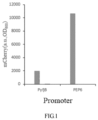
- FIG. 1 shows detection results of promoter activities of EP6 and yfjB.
- PEP6 is an EP6 promoter.
- a pEC-H10-mCherry vector was recorded in the Chinese patent application (publication No.: CN 112980867A ) with application number of 202110256579.8 , and its preparation method was as follows: Primers were designed and synthesized for the construction of the pEC-H10-mCherry vector by taking a strongest promoter H10 (GCTCAACCCTTACCGGTCGGCTCTAAGCCGGCGGCGTATGGTAAGTAAGCTCTGTTAT GTATAGTCCGAGCACGGCGAAAGGATACTC (SEQ ID No. 25)) reported by Wei et al. (Promoter library-based module combination (PLMC) technology for optimization of threonine biosynthesis in Corynebacterium glutamicum.
- PLMC Promoter library-based module combination
- a backbone region of a pEC plasmid (6743 bp) was amplified with the primer 1 and the primer 2 by taking pEC-XK99E as a template; a fragment (387 bp) containing an upstream region of a H10 promoter was amplified with the primer 3 and the primer 4 by taking the H10 promoter as a template; and a fragment (810 bp) containing a downstream region of the H10 promoter as well as a mCherry gene was amplified with the primer 5 and the primer 6 by taking a plasmid pBblactam containing the mCherry gene ( Zhang et al., Development of a transcription factor based lactam biosensor. ACS synthetic biology.2017,6,439-445 .) as a template.
- bands with lengths of 387 bp, 810 bp and 6743 bp were obtained respectively, and the above three bands were subjected to gel extraction by agarose gel electrophoresis; and after extraction, fusion PCR for amplification was performed with the primer 3 and the primer 6 by taking DNA fragments of the bands with lengths of 387 bp and 810 bp as templates. The resulting PCR amplified fragments were subjected to gel extraction.
- the extracted fragments i.e., fragments containing H10 and mCherry
- pEC backbone fragments were respectively enzymatically digested (SpeI, XbaI), and the fragments were purified with a column after enzymatic digestion.
- the pEC backbone fragments were mixed with the fragments containing H10 and mCherry at a molar ratio of 1: 2, and a T4 DNA ligase reaction solution was added.
- the fragments were transferred to an E. coli DH5 ⁇ strain after ligation at 16°C for 1 h.
- the resulting recombinant vector with a correct sequence was the pEC-H10-mCherry vector.
- pk18 vector Addgene, Cat. No. MLCC1103.
- Corynebacterium glutamicum CGMCC No. 12856 (strain number: YP097158) in the following example had been preserved in the General Microbiological Center of the China Microbiological Culture Collection Management Committee on August 16, 2016, with the preservation number of CGMCC No. 12856.
- Corynebacterium glutamicum CGMCC No. 21220 (strain number: YPGLU001) in the following example had been preserved in the General Microbiological Center of the China Microbiological Culture Collection Management Committee on November 23, 2020, with the preservation number of CGMCC No. 21220.
- Corynebacterium glutamicum CGMCC No. 21260 (strain number: YPFV1) in the following example had been preserved in the General Microbiological Center of the China Microbiological Culture Collection Management Committee on November 30, 2020, with the preservation number of CGMCC No. 21260.
- a pEC-PyfjB-mCherry vector was constructed to promote the expression of mCherry with a strong promoter PyfjB in E. coli.
- the pEC-PyfjB-mCherry vector containing a W3110yfjB promoter SEQ ID No. 1: gaatttetecgcgtttttttcgcattcatctcgetaacttcgettattatggggatcagtttcagggtttcaagggaageactcacattgtcatcaatet tcgcaacaaggacctcggaaaa) in E.
- coli was constructed by using a NEBuilder recombination technology; the promotion intensity of PyfjB was detected according to the expression of a reporter protein mCherry, and treated as a control for subsequent mutant promoter sequences.
- the primer sequences were as follows (synthesized by Shanghai Invitrogen Company):
- a backbone region (7772 bp) of the pEC-H10-mCherry vector was amplified with primers pEC01 and pEC02 by taking the pEC-H10-mCherry vector as a template; and a fragment (194 bp) of the yfjB promoter (abbreviated as PyfjB) containing a homologous arm of the pEC-H10-mCherry vector was amplified with primers P1 and P2 by taking the DNA fragment shown in SEQ ID No. 1 as a template.
- the above two DNA fragments (the backbone region of the pEC-H10-mCherry vector and the PyfjB fragment containing the homologous arm of the pEC-H10-mCherry vector) were separated and purified by agarose gel electrophoresis, and then ligated with a NEBuilder enzyme (NEB) at 50°C for 30 min; monoclones grown after the transformation of the ligation product into E. coli DH5a were identified with primers pECF/R (pECF: 5'-GTACCCGGGGATCCTCTAG-3' (SEQ ID No. 36), pECR: 5'-GTTATCTTCTTCTCCTTTACGCAT-3' (SEQ ID No. 37)); and plasmids were extracted to obtain a positive recombinant vector with a correct sequence, i.e., pEC-PyfjB-mCherry.
- NEB NEBuilder enzyme
- a sequence of the recombinant vector pEC-PyfjB-mCherry was SEQ ID No. 2 in the sequence listing, in which the yfjB promoter promotes the expression of the reporter gene mCherry, and the intensity of the yfjB promoter was obtained by detecting a fluorescence value of mCherry.
- the EP6 promoter was obtained with a size of 124 bp and a sequence of SEQ ID No. 3.
- the vector was constructed by using the NEBuilder recombination technology, and the primers were designed as follows (synthesized by Shanghai Invitrogen Company):
- a backbone region (7772 bp) of the pEC-H10-mCherry vector was amplified with primers pEC01 and pEC02 by taking the pEC-PyfjB-mCherry vector as a template; and a fragment (196 bp) of the EP6 promoter containing a homologous arm of the pEC-H10-mCherry vector was amplified with the primers P5 and P6 by taking a DNA fragment shown in SEQ ID No. 3 as a template.
- the above two DNA fragments (the backbone region of the pEC-H10-mCherry vector and the EP6 promoter fragment containing the homologous arm of the pEC-H10-mCherry vector) were separated and purified by agarose gel electrophoresis, and then ligated with a NEBuilder enzyme (NEB) at 50°C for 30 min; monoclones grown after the transformation of the ligation product into E. coli DH5a was identified with primers pECF/R (pECF: 5'-GTACCCGGGGATCCTCTAG-3' (SEQ ID No. 36), pECR: 5'-GTTATCTTCTTCTCCTTTACGCAT-3' (SEQ ID No. 37)); and plasmids were extracted to obtain a positive recombinant vector with a correct sequence, marked as pEC-EP6-mCherry.
- NEB NEBuilder enzyme
- pEC-EP6-mCherry was a recombinant vector obtained by replacing PyfjB (SEQ ID No. 1) of pEC-PyfjB-mCherry with EP6 (SEQ ID No. 3).
- the pEC-EP6-mCherry vector in step II and the pEC-PyfjB-mCherry vector in step I were introduced into wild-type Corynebacterium glutamicum ATCC13032 respectively to obtain recombinant bacteria ATCC13032/pEC-EP6-mCherry and ATCC13032/pEC-PyfjB-mCherry; the pEC-EP6-mCherry in step II and the pEC-PyfjB-mCherry vector in step I were introduced into the wild-type Corynebacterium glutamicum ATCC13869 respectively to obtain recombinant bacteria ATCC13869/pEC-EP6-mCherry and ATCC13869/pEC-PyfjB-mCherry; and the pEC-EP6-mCherry in step II and the pEC-PyfjB-mCherry vector in step I were introduced into the wild-type Corynebacterium glutamicum ATCC14067
- Monoclones of the above 6 recombinant bacteria were respectively inoculated into a 96 deep-well plate containing 900 ⁇ L of LBHIS medium, wherein each monoclone contained 3 replicates, a fluorescence value of mCherry was detected by a microplate reader after culture at 30°C and 800 rpm for 24 h, and the promoter activities of yfjB and EP6 were compared according to the fluorescence intensities.
- LBHIS medium 5 g of Tryptone/L; 5 g of NaCl/L; 2.5 g of yeast extract/L; 18.5 g of brain heart infusion (BHI)/L; and 91 g of sorbitol/L, with pH of 7.2.
- the EP6 and yfjB promoters were replaced with an original promoter (positions 1-148 of SEQ ID No. 4) of a key gene lysA of a lysine metabolism pathway of Corynebacterium glutamicum CGMCC No. 12856 with high-yield lysine by using a pk18 vector and a homologous recombination method, so as to promote the expression of lysA in the lysine metabolism pathway by using an exogenous promoter, thereby obtaining lysine-producing bacteria with an exogenous promoter-gene combination.
- a vector was constructed by using the NEBuilder recombination technology, and the primers were designed as follows (synthesized by Shanghai Invitrogen Company):
- PCR amplification was performed by taking Corynebacterium glutamicum ATCC13032 as a template and with primers P7/P8 (a PCR product sequence was positions 1-801 of SEQ ID No. 5) to obtain an upstream homologous arm fragment (801 bp); PCR amplification was performed by taking the vector pEC-PyfjB-mCherry as a template and with primers P9/P10 to obtain PyfjB (162 bp) (a PCR product sequence was positions 762-923 of SEQ ID No.
- PCR amplification was performed by taking Corynebacterium glutamicum ATCC13032 as a template and with primers P11/P12 (a PCR product sequence was positions 884-1648 of SEQ ID No. 5) to obtain a downstream homologous arm fragment (765 bp).
- the three PCR products were recovered by electrophoresis by using a column-type DNA gel recovery kit.
- the three recovered PCR products were ligated with a pK18mobsacB vector (Addgene, this vector contained kanamycin resistance as a selection marker), which is purified after XbalI and BamHI enzymatic digestion, at 50°C for 30 min by using a NEBuilder enzyme (NEB).
- NEB NEBuilder enzyme
- M13R 5'-CAGGAAACAGCTATGACC-3'(SEQ ID No. 51)
- a positive integrated vector recombinant vector
- a recombinant vector with a correct sequence was extracted and marked as pK18-PyfjB-lysAOE.
- This recombinant vector contained a kanamycin resistance marker, and a recombinant in which the vector was integrated into a genome was obtained by kanamycin screening.
- pK18-PyfjB-lysAOE contained a DNA fragment as shown in SEQ ID No. 5, in which positions 1-801 were a sequence of an upstream homologous arm fragment, positions 884-1648 were a sequence of a downstream homologous arm fragment, and positions 762-923 were a sequence of PyfjB.
- PCR amplification was performed by taking Corynebacterium glutamicum ATCC13032 as a template and with primers P7/P8E (positions 1-801 of SEQ ID No. 6) to obtain an upstream homologous arm fragment (801 bp); PCR amplification was performed by taking pEC-PyfjB-mCherry as a template and with primers P9E/P10E to obtain EP6 (164 bp) (positions 762-925 of SEQ ID No. 6); and PCR amplification was performed by taking Corynebacterium glutamicum ATCC13032 as a template and with primers P11E/P12 (positions 886-1650 of SEQ ID No. 6) to obtain a downstream homologous arm fragment (765 bp).
- the three PCR products were recovered by electrophoresis by using a column-type DNA gel recovery kit.
- the three recovered PCR products were ligated with a pK18mobsacB vector (Addgene, this vector contained kanamycin resistance as a selection marker), which is purified after XbalI and BamHI enzymatic digestion, at 50°C for 30 min by using a NEBuilder enzyme (NEB).
- NEB NEBuilder enzyme
- M13R 5'-CAGGAAACAGCTATGACC-3'(SEQ ID No. 51)
- a positive integrated vector recombinant vector
- a recombinant vector with a correct sequence was extracted and marked as pK18-EP6-lysAOE.
- This recombinant vector contained a kanamycin resistance marker, and a recombinant in which the vector was integrated into a genome was obtained by kanamycin screening.
- pK18-EP6-lysAOE contained a DNA fragment as shown in SEQ ID No. 6, in which positions 1-801 were a sequence of an upstream homologous arm fragment, positions 886-1650 were a sequence of a downstream homologous arm fragment, and positions 762-925 were a sequence of EP6.
- the primers for PCR identification were as follows:
- Fermentation medium 1 a solvent was water, and a solute and its content in the fermentation medium 1 were 30 g/L starch hydrolyzed sugar, 12 g/L ammonium sulfate, 0.87 g/L magnesium sulfate, 20 g/L molasses, 3 mL/L acidified corn syrup, 0.4 mL/L phosphoric acid, 0.53 g/L potassium chloride, 4 mL/L defoamer (2% Paodi), 120 mg/L ferrous sulfate, 120 mg/L manganese sulfate, 42 mg/L niacinamide, 6.3 mg/L calcium pantothenate, 6.3 mg/L vitamin B1, 0.6 g/L copper sulfate, 0.6 g/L zinc sulfate, and 0.88 mg/L biotin, respectively.
- the acidified corn syrup was a product from Ningxia EPPEN Biotechnology Co., Ltd.
- a vector was constructed by using the NEBuilder recombination technology, and the primers were designed as follows (synthesized by Shanghai Invitrogen Company):
- the three PCR products were recovered by electrophoresis by using a column-type DNA gel recovery kit.
- the three recovered PCR products were ligated with a pK18mobsacB vector (Addgene, this vector contained kanamycin resistance as a selection marker), which was purified after XbalI and BamHI enzymatic digestion, at 50°C for 30 min by using a NEBuilder enzyme (NEB).
- NEB NEBuilder enzyme
- M13R 5'-CAGGAAACAGCTATGACC-3'(SEQ ID No. 51)
- M13R 5'-CAGGAAACAGCTATGACC-3'(SEQ ID No. 51)
- a recombinant vector with a correct sequence was marked as pK18-Py1jB-BBD29_14295OE.
- This recombinant vector contained a kanamycin resistance marker, and a recombinant in which the vector was integrated into a genome was obtained by kanamycin screening.
- pK18-PyfjB-BBD29_14295OE contained a DNA fragment as shown in SEQ ID No. 12, in which positions 1-792 were a sequence of an upstream homologous arm fragment, positions 875-1699 were a sequence of a downstream homologous arm fragment, and positions 753-914 were a sequence of PyfjB.
- PCR amplification was performed by taking Corynebacterium glutamicum ATCC13869 as a template and with primers P17/P18E (positions 1-792 of SEQ ID No. 13) to obtain an upstream homologous arm fragment (792 bp); PCR amplification was performed by taking the vector pEC-EP6-mCherry as a template and with primers P19E/P20E to obtain EP6 (164 bp) (positions 753-916 of SEQ ID No. 13); and PCR amplification was performed by taking Corynebacterium glutamicum ATCC13869 as a template and with primers P21E/P22 (positions 877-1701 of SEQ ID No. 13) to obtain a downstream homologous arm fragment (825 bp).
- the three PCR products were recovered by electrophoresis by using a column-type DNA gel recovery kit.
- the three recovered PCR products were ligated with a pK18mobsacB vector (Addgene, this vector contained kanamycin resistance as a selection marker), which was purified after XbalI and BamHI enzymatic digestion, at 50°C for 30 min by using a NEBuilder enzyme (NEB).
- NEB NEBuilder enzyme
- M13R 5'-CAGGAAACAGCTATGACC-3'(SEQ ID No. 51)).
- a recombinant vector with a correct sequence was marked as pK18-EP6-BBD29_14295OE.
- This recombinant vector contained a kanamycin resistance marker, and a recombinant in which the vector was integrated into a genome was obtained by kanamycin screening.
- pK18-EP6-BBD29_14295OE contained a DNA fragment as shown in SEQ ID No. 13, in which positions 1-792 were a sequence of an upstream homologous arm fragment, positions 877-1701 were a sequence of a downstream homologous arm fragment, and positions 753-916 were a sequence of EP6.
- the recombinant vectors (pK18-PyfjB-BBD29_14295OE and pK18-EP6-BBD29_14295OE) with correct sequencing were respectively electrotransformed into Corynebacterium glutamicum CGMCC No. 21220 with high-yield glutamic acid, and cultured in a recovery medium (same as Example 2) according to rejuvenation culture conditions (same as Example 2). Single colonies generated by culture were subjected to PCR identification with P23/P24 primers.
- a fragment (849 bp) (SEQ ID No. 14) obtained by PCR amplification of PyfjB-BBD29_14295 integrated bacteria was a positive strain
- a fragment (849 bp) (SEQ ID No. 15) obtained by PCR amplification of EP6-BBD29_14290 integrated bacteria was a positive strain.
- Bacteria that cannot amplify any fragment were original bacteria.
- the positive strain was cultured on a medium containing 15% sucrose (same as the medium containing 15% sucrose in Example 2). Single colonies produced by culture were further subjected to PCR amplification with P25/P26 primers.
- a strain with a size of 889 bp (SEQ ID No. 16) was amplified as a strain with PyfjB replacing an original BBD29_14295 promoter on a Corynebacterium glutamicum CGMCC No. 21220 genome with high-yield glutamic acid.
- a strain with a size of 891 bp (SEQ ID No. 17) was amplified as a strain with EP6 replacing the original BBD29_14295 promoter on the Corynebacterium glutamicum CGMCC No. 21220 genome with high-yield glutamic acid. Bacteria that cannot amplify any fragment were original bacteria.
- the recombinant strain obtained by replacing PyfjB with the original BBD29_14295 promoter was named YPG-091 (PyfjB-BBD29_14295 integrated strain), and the recombinant strain obtained by replacing EP6 with the original BBD29_14295 promoter was named YPG-092 (EP6-BBD29_14295 integrated strain).
- YPG-091 (PyfjB-BBD29_14295 integrated strain) was recombinant bacteria obtained by replacing the original BBD29_14295 promoter (positions 1-36 of SEQ ID No. 11) of Corynebacterium glutamicum CGMCC No. 21220 with high-yield glutamic acid by PyfjB and keeping the other nucleotides in its genome unchanged, which can increase the yield of glutamic acid.
- YPG-092 (EP6-BBD29_14295 integrated strain) was recombinant bacteria obtained by replacing the original BBD29_14295 promoter (positions 1-36 of SEQ ID No. 11) of Corynebacterium glutamicum CGMCC No.
- the EP6 promoter as a mutant yfjB promoter, promotes the expression of BBD29_14295 and can improve the yield of glutamic acid.
- the primers for PCR identification were as follows:
- the above strains YPG-091 and YPG-092 and an original strain CGMCC No. 21220 were fermented in a fermentation tank of BLBIO-5GC-4-H model (Shanghai Bailun Biotechnology Co., Ltd.) with a fermentation medium 2 and a culture condition 2, and the L-glutamic acid yield and the OD value were detected at the end of fermentation. Each strain was repeated three times The glutamic acid yield was detected by a biosensor.
- Fermentation medium 2 a solvent was water, and a solute and its concentration in the fermentation medium 2 were 5.0 g/L glucose, 0.38 g/L phosphoric acid, 1.85 g/L magnesium sulfate, 1.6 g/L potassium chloride, 550 ⁇ g/L biotin, 300 ⁇ g/L vitamin B1, 10 mg/L ferrous sulfate, 10 g/dl manganese sulfate, 2.8 g/L KH 2 PO 4 , 0.75 mg/L vitamin C, 2.5 ⁇ g/L vitamin B12, 0.75 mg/L para-aminobenzoic acid, 0.0015 mL/dL antifoam, 1.5 g/L betaine, 7 mL/L sugarcane molasses, 77 mL/L corn syrup, and 1.7 g/L aspartic acid.
- the EP6 and yfjB promoters were replaced with an original promoter (positions 1-179 of SEQ ID No. 18) of a key gene ilvC of a valine metabolism pathway of Corynebacterium glutamicum CGMCC No. 21260 with high-yield valine by using a pk18 vector and a homologous recombination method, so as to promote the expression of the ilvC gene in the glutamic acid metabolism pathway by using an exogenous promoter, thereby obtaining valine-producing bacteria with an exogenous promoter-gene combination.
- the strain with EP6 promoting ilvC could increase the yield of valine, and this strain was named YPV-098.
- Positions 180-1196 of SEQ ID No. 18 were a sequence of ilvC.
- a vector was constructed by using the NEBuilder recombination technology, and the primers were designed as follows (synthesized by Shanghai Invitrogen Company):
- PCR amplification was performed by taking Corynebacterium glutamicum ATCC14067 as a template and with primers P27/P28 (positions 1-805 of SEQ ID No. 19) to obtain an upstream homologous arm fragment (805 bp); PCR amplification was performed by taking the vector pEC-PyfjB-mCherry as a template and with primers P29/P30 to obtain PyfjB (162 bp) (positions 766-927 of SEQ ID No.
- the three PCR products were recovered by electrophoresis by using a column-type DNA gel recovery kit.
- the three recovered PCR products were ligated with a pK18mobsacB vector (Addgene, this vector contained kanamycin resistance as a selection marker), which was purified after XbalI and BamHI enzymatic digestion, at 50°C for 30 min by using a NEBuilder enzyme (NEB).
- NEB NEBuilder enzyme
- M13R 5'-CAGGAAACAGCTATGACC-3'(SEQ ID No. 51)
- a recombinant vector with a correct sequence was marked as pK18-PyfjB-ilvCOE.
- This recombinant sequence contained a kanamycin resistance marker, and a recombinant in which the vector was integrated into a genome was obtained by kanamycin screening.
- pK18-PyfjB-ilvCOE contained a DNA fragment as shown in SEQ ID No. 19, in which positions 1-805 were a sequence of an upstream homologous arm fragment, positions 888-1822 were a sequence of a downstream homologous arm fragment, and positions 766-927 were a sequence of PyfjB.
- PCR amplification was performed by taking Corynebacterium glutamicum ATCC14067 as a template and with primers P27/P28E (positions 1-805 of SEQ ID No. 20) to obtain an upstream homologous arm fragment (805 bp); PCR amplification was performed by taking the vector pEC-EP6-mCherry as a template and with primers P29E/P30E to obtain EP6 (164 bp) (positions 766-929 of SEQ ID No. 20); and PCR amplification was performed by taking Corynebacterium glutamicum ATCC14067 as a template and with primers P31E/P32 (positions 890-1824 of SEQ ID No. 20) to obtain a downstream homologous arm fragment (935 bp).
- the three PCR products were recovered by electrophoresis by using a column-type DNA gel recovery kit.
- the three recovered PCR products were ligated with a pK18mobsacB vector (Addgene, this vector contained kanamycin resistance as a selection marker), which was purified after XbalI and BamHI enzymatic digestion, at 50°C for 30 min by using a NEBuilder enzyme (NEB).
- NEB NEBuilder enzyme
- M13R 5'-CAGGAAACAGCTATGACC-3'(SEQ ID No. 51)
- a positive integrated vector recombinant vector
- a recombinant vector with a correct sequence was marked as pK18-EP6-ilvCOE.
- This recombinant vector contained a kanamycin resistance marker, and a recombinant in which the vector was integrated into a genome was obtained by kanamycin screening.
- the integrated vectors (pK18-PyfjB-ilvCOE and pK18-EP6-ilvCOE) with correct sequencing were respectively electrotransformed into Corynebacterium glutamicum CGMCC No. 21260 with high-yield valine, and cultured in a recovery medium (same as Example 2) according to rejuvenation culture conditions (same as Example 2). Single colonies generated by culture were subjected to PCR identification with P33/P34 primers.
- a fragment (901 bp) (SEQ ID No. 21) obtained by PCR amplification of PyfjB-ilvC integrated bacteria was a positive strain
- a fragment (901 bp) (SEQ ID No. 22) obtained by PCR amplification of EP6-ilvC integrated strain was a positive strain.
- Bacteria that cannot amplify any fragment were original bacteria.
- the recombinant strain obtained by replacing PyfjB with the original ilvC promoter was named YPV-097 (PyfjB-ilvC integrated strain), and the recombinant strain obtained by replacing EP6 with the original ilvC promoter was named YPV-098 (EP6-ilvC integrated strain).
- YPV-097 (PyfjB-ilvC integrated strain) was recombinant bacteria obtained by replacing the original ilvC promoter (positions 1-179 of SEQ ID No. 18) of Corynebacterium glutamicum CGMCC No. 21260 with high-yield valine with PyfjB and keeping the other nucleotides in its genome unchanged, which can increase the yield of valine.
- YPV-098 EP6-ilvC integrated strain
- the EP6 promoter as a mutant yfjB promoter, promotes the expression of ilvC and can improve the yield of valine.
- the primers for PCR identification were as follows:
- Fermentation medium 3 a solvent was water, and a solute and its concentration were 14 g/L ammonium sulfate, 1 g/L potassium dihydrogen phosphate, 0.5 g/L magnesium sulfate, 2 g/L yeast powder, 18 mg/L ferrous sulfate, 4.2 mg/L manganese sulfate, 0.02 mg/L biotin, 2 mg/L vitamin B1, 0.5 mL/L antifoam (CB-442), and 40 g/L 70% glucose (base sugar), respectively.
- a solvent was water, and a solute and its concentration were 14 g/L ammonium sulfate, 1 g/L potassium dihydrogen phosphate, 0.5 g/L magnesium sulfate, 2 g/L yeast powder, 18 mg/L ferrous sulfate, 4.2 mg/L manganese sulfate, 0.02 mg/L biotin, 2 mg/L vitamin B1, 0.5 mL/
- the EP6 promoter promotes the genes in the corresponding amino acid synthesis pathways to obtain the corresponding expression cassette.
- the expression cassette is used as an exogenous strong promoter to be integrated into bacteria with high-yield amino acids to replace an original promoter of key genes for amino acid synthesis, so that the yield of a corresponding amino acid is improved. It is noted that the EP6 promoter of the present invention not only has high starting activity, but also can be used for the production of amino acids, and has a very important application prospect.
Landscapes
- Chemical & Material Sciences (AREA)
- Organic Chemistry (AREA)
- Life Sciences & Earth Sciences (AREA)
- Health & Medical Sciences (AREA)
- Engineering & Computer Science (AREA)
- Genetics & Genomics (AREA)
- Zoology (AREA)
- Wood Science & Technology (AREA)
- General Engineering & Computer Science (AREA)
- Biotechnology (AREA)
- Bioinformatics & Cheminformatics (AREA)
- General Health & Medical Sciences (AREA)
- Biochemistry (AREA)
- Microbiology (AREA)
- General Chemical & Material Sciences (AREA)
- Chemical Kinetics & Catalysis (AREA)
- Biomedical Technology (AREA)
- Biophysics (AREA)
- Molecular Biology (AREA)
- Physics & Mathematics (AREA)
- Plant Pathology (AREA)
- Gastroenterology & Hepatology (AREA)
- Medicinal Chemistry (AREA)
- Proteomics, Peptides & Aminoacids (AREA)
- Micro-Organisms Or Cultivation Processes Thereof (AREA)
- Preparation Of Compounds By Using Micro-Organisms (AREA)
Applications Claiming Priority (2)
| Application Number | Priority Date | Filing Date | Title |
|---|---|---|---|
| CN202210650799.3A CN114717237B (zh) | 2022-06-10 | 2022-06-10 | 一种ep6启动子与其相关生物材料及应用 |
| PCT/CN2023/084969 WO2023236634A1 (zh) | 2022-06-10 | 2023-03-30 | 一种ep6启动子与其相关生物材料及应用 |
Publications (2)
| Publication Number | Publication Date |
|---|---|
| EP4538375A1 true EP4538375A1 (de) | 2025-04-16 |
| EP4538375A4 EP4538375A4 (de) | 2025-12-17 |
Family
ID=82232745
Family Applications (1)
| Application Number | Title | Priority Date | Filing Date |
|---|---|---|---|
| EP23818802.3A Pending EP4538375A4 (de) | 2022-06-10 | 2023-03-30 | Ep6-promotor, verwandtes biomaterial und verwendung davon |
Country Status (6)
| Country | Link |
|---|---|
| EP (1) | EP4538375A4 (de) |
| JP (1) | JP2025518941A (de) |
| KR (1) | KR20250031234A (de) |
| CN (1) | CN114717237B (de) |
| AU (1) | AU2023283419B2 (de) |
| WO (1) | WO2023236634A1 (de) |
Families Citing this family (2)
| Publication number | Priority date | Publication date | Assignee | Title |
|---|---|---|---|---|
| CN114717237B (zh) * | 2022-06-10 | 2022-08-19 | 北京中科伊品生物科技有限公司 | 一种ep6启动子与其相关生物材料及应用 |
| CN121406637A (zh) * | 2024-07-24 | 2026-01-27 | 宁夏伊品生物科技股份有限公司 | 一种新型启动子及其相关生物材料在制备l-赖氨酸中的应用 |
Family Cites Families (10)
| Publication number | Priority date | Publication date | Assignee | Title |
|---|---|---|---|---|
| DE60332487D1 (de) * | 2002-12-12 | 2010-06-17 | Showa Denko Kk | Verfahren zur selektion eines ein fremdgen überexprimierenden escherichia coli-stamms, so selektionierte escherichia coli-mutante und verfahren zur herstellung eines enzyms und einer verbindung unter verwendung davon |
| DE102004061846A1 (de) * | 2004-12-22 | 2006-07-13 | Basf Ag | Mehrfachpromotoren |
| KR101261147B1 (ko) * | 2011-01-18 | 2013-05-06 | 씨제이제일제당 (주) | L-아미노산의 생산능이 향상된 미생물 및 이를 이용하여 l-아미노산을 생산하는 방법 |
| ES2856755T3 (es) * | 2015-12-07 | 2021-09-28 | Zymergen Inc | Promotores de Corynebacterium glutamicum |
| CN113201535B (zh) * | 2020-07-20 | 2022-02-08 | 中国科学院天津工业生物技术研究所 | 谷氨酸脱氢酶基因启动子的突变体及其应用 |
| CN112175894B (zh) * | 2020-10-13 | 2023-01-06 | 宁夏伊品生物科技股份有限公司 | 一种产l-氨基酸的重组菌株及其构建方法与应用 |
| CN113201536B (zh) * | 2020-08-19 | 2022-09-13 | 中国科学院天津工业生物技术研究所 | 具有启动子活性的多核苷酸及其在生产氨基酸中的应用 |
| CN112980867B (zh) * | 2021-03-09 | 2023-04-11 | 中国科学院深圳先进技术研究院 | 一种改造谷氨酸棒杆菌启动子的重组菌株及其构建方法与产l-氨基酸的应用 |
| CN114181288B (zh) * | 2022-02-17 | 2022-05-03 | 北京中科伊品生物科技有限公司 | 制备l-缬氨酸的方法及其所用的基因与该基因编码的蛋白质 |
| CN114717237B (zh) * | 2022-06-10 | 2022-08-19 | 北京中科伊品生物科技有限公司 | 一种ep6启动子与其相关生物材料及应用 |
-
2022
- 2022-06-10 CN CN202210650799.3A patent/CN114717237B/zh active Active
-
2023
- 2023-03-30 WO PCT/CN2023/084969 patent/WO2023236634A1/zh not_active Ceased
- 2023-03-30 AU AU2023283419A patent/AU2023283419B2/en active Active
- 2023-03-30 EP EP23818802.3A patent/EP4538375A4/de active Pending
- 2023-03-30 JP JP2024572629A patent/JP2025518941A/ja active Pending
- 2023-03-30 KR KR1020257001080A patent/KR20250031234A/ko active Pending
Also Published As
| Publication number | Publication date |
|---|---|
| EP4538375A4 (de) | 2025-12-17 |
| AU2023283419B2 (en) | 2026-03-26 |
| AU2023283419A1 (en) | 2025-01-23 |
| KR20250031234A (ko) | 2025-03-06 |
| CN114717237B (zh) | 2022-08-19 |
| CN114717237A (zh) | 2022-07-08 |
| WO2023236634A1 (zh) | 2023-12-14 |
| JP2025518941A (ja) | 2025-06-19 |
Similar Documents
| Publication | Publication Date | Title |
|---|---|---|
| CN109750069B (zh) | 生产l-赖氨酸的重组菌、其构建方法以及l-赖氨酸的生产方法 | |
| EP4538375A1 (de) | Ep6-promotor, verwandtes biomaterial und verwendung davon | |
| KR20250019107A (ko) | NCgl2747 유전자 돌연변이체 및 이의 L-라이신 제조에서의 응용 | |
| US20250290050A1 (en) | Microorganism having enhanced activity of 3-methyl-2-oxobutanoate hydroxymethyltransferase and uses thereof | |
| JP2025516089A (ja) | アスパラギン酸デヒドロゲナーゼを発現する遺伝子組換え細菌、及び発酵によってビタミンb5を生産するための方法 | |
| CN113957073B (zh) | 一种tkt基因启动子突变体及其在生产L-赖氨酸中的应用 | |
| KR100830290B1 (ko) | L-아르기닌 생산 변이주 및 이의 제조방법 | |
| EP4682161A1 (de) | Tkt-genmutante und anwendung davon bei der herstellung von l-lysin | |
| CN111411092B (zh) | 高产l-赖氨酸的谷氨酸棒状杆菌及其应用 | |
| CN117384813A (zh) | 依克多因合成菌株及其构建方法和应用 | |
| CN116997655A (zh) | L-瓜氨酸生产能力得到提高的谷氨酸棒状杆菌变异株及利用其的l-瓜氨酸的生产方法 | |
| WO2008007914A1 (en) | A nucleotide sequence of a mutant argf with increased activity and a method for producing l-arginine using a transformed cell containing the same | |
| CN117625605A (zh) | Bbd29_04605基因启动子突变体及其在制备l-谷氨酸中的应用 | |
| EP4644555A1 (de) | Galactose-1-phosphaturidyltransferasemutante und verwendung davon bei der herstellung von l-lysin | |
| CN116790467A (zh) | 一种利用微生物发酵糖质原料生产胍基乙酸的方法 | |
| CN116063417A (zh) | Bbd29_14255基因突变体及其在制备l-谷氨酸中的应用 | |
| US20230323412A1 (en) | Recombinant strain for producing l-amino acid and construction method and use thereof | |
| CN112625992A (zh) | 一种改造基因bbd29_11265产l-谷氨酸的重组菌株及其构建方法与应用 | |
| EP2837688A1 (de) | Verfahren zur herstellung einer aminosäure | |
| CN117264034B (zh) | Bbd29_09715基因突变体及其在制备l-谷氨酸中的应用 | |
| AU2021443607B2 (en) | Corynebacterium glutamicum variant with improved l-lysine production ability, and method for producing l-lysine using same | |
| US20240218405A1 (en) | Corynebacterium glutamicum variant having improved l-lysine production ability, and method for producing l-lysine using same | |
| CN121495935A (zh) | 一种启动子突变体及其用在生产异亮氨酸上的应用 | |
| CN121406637A (zh) | 一种新型启动子及其相关生物材料在制备l-赖氨酸中的应用 | |
| CN121674400A (zh) | 一种启动子突变体在发酵生产l-异亮氨酸中的应用 |
Legal Events
| Date | Code | Title | Description |
|---|---|---|---|
| STAA | Information on the status of an ep patent application or granted ep patent |
Free format text: STATUS: THE INTERNATIONAL PUBLICATION HAS BEEN MADE |
|
| PUAI | Public reference made under article 153(3) epc to a published international application that has entered the european phase |
Free format text: ORIGINAL CODE: 0009012 |
|
| STAA | Information on the status of an ep patent application or granted ep patent |
Free format text: STATUS: REQUEST FOR EXAMINATION WAS MADE |
|
| 17P | Request for examination filed |
Effective date: 20250109 |
|
| AK | Designated contracting states |
Kind code of ref document: A1 Designated state(s): AL AT BE BG CH CY CZ DE DK EE ES FI FR GB GR HR HU IE IS IT LI LT LU LV MC ME MK MT NL NO PL PT RO RS SE SI SK SM TR |
|
| DAV | Request for validation of the european patent (deleted) | ||
| DAX | Request for extension of the european patent (deleted) | ||
| REG | Reference to a national code |
Ref country code: DE Ref legal event code: R079 Free format text: PREVIOUS MAIN CLASS: C12N0015113000 Ipc: C12N0015770000 |
|
| A4 | Supplementary search report drawn up and despatched |
Effective date: 20251119 |
|
| RIC1 | Information provided on ipc code assigned before grant |
Ipc: C12N 15/77 20060101AFI20251113BHEP Ipc: C07K 14/245 20060101ALI20251113BHEP Ipc: C12N 1/21 20060101ALI20251113BHEP Ipc: C12P 13/08 20060101ALI20251113BHEP Ipc: C12P 13/14 20060101ALI20251113BHEP Ipc: C12R 1/15 20060101ALN20251113BHEP |