EP4534673A1 - Nucleic acid modified to obtain enhanced ergothioneine productivity, and microorganism having genetic modification - Google Patents
Nucleic acid modified to obtain enhanced ergothioneine productivity, and microorganism having genetic modification Download PDFInfo
- Publication number
- EP4534673A1 EP4534673A1 EP23816064.2A EP23816064A EP4534673A1 EP 4534673 A1 EP4534673 A1 EP 4534673A1 EP 23816064 A EP23816064 A EP 23816064A EP 4534673 A1 EP4534673 A1 EP 4534673A1
- Authority
- EP
- European Patent Office
- Prior art keywords
- seq
- region
- amino acid
- ergothioneine
- nucleic acid
- Prior art date
- Legal status (The legal status is an assumption and is not a legal conclusion. Google has not performed a legal analysis and makes no representation as to the accuracy of the status listed.)
- Pending
Links
Images


Classifications
-
- C—CHEMISTRY; METALLURGY
- C07—ORGANIC CHEMISTRY
- C07K—PEPTIDES
- C07K14/00—Peptides having more than 20 amino acids; Gastrins; Somatostatins; Melanotropins; Derivatives thereof
- C07K14/37—Peptides having more than 20 amino acids; Gastrins; Somatostatins; Melanotropins; Derivatives thereof from fungi
- C07K14/38—Peptides having more than 20 amino acids; Gastrins; Somatostatins; Melanotropins; Derivatives thereof from fungi from Aspergillus
-
- C—CHEMISTRY; METALLURGY
- C07—ORGANIC CHEMISTRY
- C07K—PEPTIDES
- C07K14/00—Peptides having more than 20 amino acids; Gastrins; Somatostatins; Melanotropins; Derivatives thereof
- C07K14/195—Peptides having more than 20 amino acids; Gastrins; Somatostatins; Melanotropins; Derivatives thereof from bacteria
-
- C—CHEMISTRY; METALLURGY
- C12—BIOCHEMISTRY; BEER; SPIRITS; WINE; VINEGAR; MICROBIOLOGY; ENZYMOLOGY; MUTATION OR GENETIC ENGINEERING
- C12N—MICROORGANISMS OR ENZYMES; COMPOSITIONS THEREOF; PROPAGATING, PRESERVING, OR MAINTAINING MICROORGANISMS; MUTATION OR GENETIC ENGINEERING; CULTURE MEDIA
- C12N15/00—Mutation or genetic engineering; DNA or RNA concerning genetic engineering, vectors, e.g. plasmids, or their isolation, preparation or purification; Use of hosts therefor
- C12N15/09—Recombinant DNA-technology
- C12N15/63—Introduction of foreign genetic material using vectors; Vectors; Use of hosts therefor; Regulation of expression
- C12N15/79—Vectors or expression systems specially adapted for eukaryotic hosts
- C12N15/80—Vectors or expression systems specially adapted for eukaryotic hosts for fungi
-
- C—CHEMISTRY; METALLURGY
- C12—BIOCHEMISTRY; BEER; SPIRITS; WINE; VINEGAR; MICROBIOLOGY; ENZYMOLOGY; MUTATION OR GENETIC ENGINEERING
- C12P—FERMENTATION OR ENZYME-USING PROCESSES TO SYNTHESISE A DESIRED CHEMICAL COMPOUND OR COMPOSITION OR TO SEPARATE OPTICAL ISOMERS FROM A RACEMIC MIXTURE
- C12P13/00—Preparation of nitrogen-containing organic compounds
- C12P13/04—Alpha- or beta- amino acids
-
- C—CHEMISTRY; METALLURGY
- C12—BIOCHEMISTRY; BEER; SPIRITS; WINE; VINEGAR; MICROBIOLOGY; ENZYMOLOGY; MUTATION OR GENETIC ENGINEERING
- C12P—FERMENTATION OR ENZYME-USING PROCESSES TO SYNTHESISE A DESIRED CHEMICAL COMPOUND OR COMPOSITION OR TO SEPARATE OPTICAL ISOMERS FROM A RACEMIC MIXTURE
- C12P17/00—Preparation of heterocyclic carbon compounds with only O, N, S, Se or Te as ring hetero atoms
- C12P17/10—Nitrogen as only ring hetero atom
Definitions
- the present inventors have carried out avid research for the purpose of increasing ERG productivity by Aspergillus oryzae, and as a result have found that ergothioneine productivity is enhanced by introducing a specific gene mutation into a gene of unknown function, thereupon devising the present invention.
- a microorganism having, in a region within a functional domain corresponding to the functional domain of W404 to Q515 of SEQ ID NO: 1, in a gene corresponding to AO090005000664, a mutation that modulates the function of the functional domain, is able to enhance ERG production.
- the microorganism into which the gene mutation of the invention is to be transferred may be any microorganism having ergothioneine production ability.
- Such microorganisms are preferably filamentous fungi, and more preferably a fungus belonging to Aspergillus, Penicillium and Rasamsonia and Talaromyces is used.
- filamentous fungi belonging to Aspergillus include Aspergillus oryzae, Aspergillus sojae, Aspergillus luchuensis, Aspergillus tamarii, Aspergillus niger, and Aspergillus nidulans.
- filamentous fungi strains examples include Aspergillus oryzae RIB40 and RIB326, which are publicly available strains, strains in seed koji commercially available from seed koji shops, and strains obtained by separation from food and beverage production environments such as sake and soy sauce breweries.
- the gene with the introduced mutation is related to the gene named AO090005000664 for Aspergillus oryzae RIB40, and its ortholog gene.
- the gene has a translated region of unknown function, and consists of a nucleotide sequence (SEQ ID NO: 2) encoding a protein comprising a 657-residue amino acid sequence (SEQ ID NO: 1).
- SEQ ID NO: 2 The nucleotide sequence of the Aspergillus sojae ortholog gene of AO090005000664 gene corresponds to REGION 19840...21877 with Accession No. BaCA02000013 (SEQ ID NO: 4), and its amino acid sequence is listed as SEQ ID NO: 3.
- the Aspergillus tamarii, Aspergillus luchuensis, Aspergillus niger and Aspergillus nidulans ortholog genes of AO090005000664 gene are, respectively, BDV40DRAFT_264902 (amino acid sequence: SEQ ID NO: 5, nucleotide sequence: SEQ ID NO: 6), AAWM_07753 (amino acid sequence: SEQ ID NO: 7, nucleotide sequence: SEQ ID NO: 8), An16g07990 (amino acid sequence: SEQ ID NO: 9, nucleotide sequence: SEQ ID NO: 10) and ANIA_10201 (amino acid sequence: SEQ ID NO: 11, nucleotide sequence: SEQ ID NO: 12).
- a particular conserved region is the region corresponding to positions 411 to 479 of SEQ ID NO: 1 (SEQ ID NO: 13). From the viewpoint of being a more highly conserved region, the conserved region is preferably the region corresponding to position 411 to position 467 (SEQ ID NO: 14), more preferably the region corresponding to position 411 to position 462 (SEQ ID NO: 15), even more preferably the region corresponding to position 411 to position 444 (SEQ ID NO: 16), yet more preferably the region corresponding to position 427 to position 444 (SEQ ID NO: 17) and even yet more preferably the region corresponding to position 433 to position 440 (SEQ ID NO: 18), of SEQ ID NO: 1.
- the region corresponding to position 433 to position 440 (SEQ ID NO: 18) is preferably very highly conserved in Aspergillus, and more preferably completely identical.
- the nucleic acid of the invention may be derived from filamentous fungi such as those of Aspergillus, Penicillium, Rasamsonia or Talaromyces.
- the nucleic acid of the invention is highly conserved in these filamentous fungi.
- Nucleic acid derived from filamentous fungi belonging to Aspergillus encodes an amino acid sequence having 75 to 100% homology with SEQ ID NO: 1.
- Nucleic acid derived from filamentous fungi belonging to Penicillium encodes an amino acid sequence having 68 to 75% homology with SEQ ID NO: 1.
- Nucleic acid derived from filamentous fungi belonging to Rasamsonia encodes an amino acid sequence having 70% homology with SEQ ID NO: 1.
- Nucleic acid derived from filamentous fungi belonging to Talaromyces encodes an amino acid sequence having 64 to 68% homology with SEQ ID NO: 1.
- sequence corresponding to SEQ ID NO: 1 can be defined by comprising a conserved region.
- the sequence corresponding to SEQ ID NO: 1 is therefore an amino acid sequence encoded by a gene which is an ortholog of AO090005000664, and is specified by a predetermined conserved region in SEQ ID NO: 1.
- Specific examples of sequences corresponding to SEQ ID NO: 1 include amino acid sequences selected from the group consisting of SEQ ID NO: 1, 3, 5, 7, 9 and 11.
- the deleted region may include or not include the position corresponding to position 428 of SEQ ID NO: 1.
- the deleted region preferably includes the position corresponding to position 428 of SEQ ID NO: 1.
- the deleted region is a region corresponding to one or more regions selected from the group consisting of position 428, position 427 to position 429 position 427 to position 440, position 427 to position 444 and position 419 to position 444 of SEQ ID NO: 1.
- the present invention also relates to nucleic acid that comprises a nucleotide sequence having at least 60% identity with the nucleotide sequences of SEQ ID NO: 2, 4, 6, 8, 10 and 12 and coding for a mutation at the position corresponding to position 428 and/or the position corresponding to position 459 of the amino acid sequence listed as SEQ ID NO: 1, and that enhances ergothioneine production when introduced into an ergothioneine-producing microorganism. Ergothioneine production can be enhanced by mutations G428S and C459F.
- Identity with SEQ ID NO: 2, 4, 6, 8, 10 or 12 means at least 60%, at least 65%, at least 70%, at least 75%, at least 80%, at least 90% or at least 95% identity.
- the Aspergillus sojae ortholog gene and Aspergillus niger ortholog gene have 68% and 67% identity, respectively, and the mutation corresponding to G428S (G442S in Aspergillus niger ) has been confirmed to enhance ERG production when transferred ( Figs. 4 and 5 ).
- Culturing a microorganism of the invention can produce ergothioneine at a high level of productivity.
- the microorganism of the invention may be cultured by either solid culture or liquid culture.
- culturing of a microorganism of the invention allows production of ergothioneine at a high level of productivity.
- the microorganism of the invention may be cultured by either solid culture or liquid culture.
- culturing of a microorganism of the invention in steamed rice allows production of ergothioneine-containing rice malt with a high content of ergothioneine.
- the malt can be used to produce soy sauce, miso, salt koji or amazake by a process known in the technical field, and the Aspergillus oryzae can be collected to obtain mycoprotein.
- One aspect of the invention therefore, relates to a method for producing rice malt with a high content of ergothioneine.
- the produced ergothioneine can be refined from the cultured product by an established method. As an example, the cultured product may be crushed and the water evaporated off to obtain dry powder. Ethanol-containing water may be added to the dried ergothioneine-containing material for extraction of the ergothioneine into an ethanol solution. The insoluble substances may also be removed, and the ergothioneine in the ethanol solution may be purified by chromatography.
- a gene cassette was constructed for transfer of the G428S mutation into the AO090005000664 gene, using Aspergillus oryzae RIB40_dKP ( ⁇ ku70, ⁇ pyrG) as the host.
- the primer sequences are shown in Table 1.
- a gene fragment was amplified by PCR, with the genomic sequence of RIB40 as template, using the primer sets of AoG428S_F1 and R1, AoG428S_F2 and R2, AoG428S_F3 and R3, AopyrG F and R.
- the PCR conditions were according to the manufacturer's protocol.
- the purified four PCR amplification fragments and Linearized pUC19 (Takara) were mixed with 2.5 ⁇ L of NEBuilder HiFi DNA Assembly Master Mix (NEB), and reaction was conducted at 60°C for 1 hour.
- a 4 ⁇ L portion of reaction product was introduced into ECOS Competent E . coli JM109 (Nippon Gene Co., Ltd.) for transformation.
- the plasmids extracted from the transformants were then used as template, with the primer set AoG428S_NF and NR, and the gene fragment amplified by PCR was used as a G428S cassette.
- a 50 ⁇ L portion of PCR product was treated by ethanol precipitation and dissolved in 10 ⁇ L of sterilized water.
- agar medium (3.5% Czapek-DOX broth, 1.2 M sorbitol, 0.1% trace element, 2% agar
- Top Agar (3.5% Cz-DOX broth, 1.2 M sorbitol, 0.1% trace element, 0.5% agar) at 50°C was layered over it, and culturing was carried out for about 1 week at 30°C.
- An amino acid-deleted gene cassette was constructed using RIB40_dKP ( ⁇ ku70, ⁇ pyrG) as the host.
- the deleted amino acids were highly-conserved amino acids centered around G428 ( Fig. 6 ). Specifically, position 428, position 427 to position 429, position 427 to position 440, position 427 to position 444 and position 419 to position 444 were each deleted.
- the primers used are shown in Table 1.
- Plasmids extracted from the transformants were then used as template for amplification of gene fragments by PCR, with the sets of primers 7 and 8 (Ao3DEL), primers 9 and 8 (Ao18DEL) and primers 9 and 10 (Ao26DEL).
- the PCR conditions were according to the manufacturer's protocol.
- DpnI was added to each PCR reaction solution and reaction was conducted for 1 hour at 37°C.
- a 2 ⁇ l portion of each DpnI-treated PCR product was mixed with 5 ⁇ l of Ligation high Ver.2 (Toyobo), 1 ⁇ l of T4 Polynucleotide Kinase and 7 ⁇ l of sterilized water, and reaction was conducted for 1 hour at 16°C.
- the AoXDEL cassette was introduced to transform RIB40_dKP.
- the transformants were replanted 3 times by spotting in Cz-DOX agar medium for purification.
- the ERG amounts in the analyzed samples were measured under the following analysis conditions.
- Example 8 Creation of amino acid-deficient strains of Aspergillus oryzae RIB40
- An amino acid-deleted gene cassette was constructed using RIB40_dKP ( ⁇ ku70, ⁇ pyrG) as the host. This was used as the amino acids for deletion of all or part of the domain, based on the predicted structure in Example 10. Specifically, position 431 to position 475, position 419 to position 475 and position 404 to position 515 were each deleted. The primers used are shown in Table 1.
- cassette-introduced locations were confirmed based on band size, using primers 26 and 29.
- the PCR products were purified and sequenced to confirm amino acid deletion.
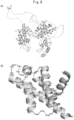
- Example 10 Structural analysis of protein expressed from AO090005000664 gene
- the amino acid sequence encoded by the AO090005000664 gene has deletion of position 427 to position 429 (3DEL), deletion of positions 427 to 444 (18DEL) and deletions of position 419 to position 444 (26DEL), position 431 to position 475 (45DEL), position 419 to position 475 (57DEL) and position 404 to position 515 (112DEL) ( Figs. 7A and C ).
- Position 431 to position 475 corresponded to the second ⁇ -helix and the third helix of the super secondary structure domain composed of five ⁇ -helices.
- Position 404 to position 515 corresponded to the entire super secondary structure domain.
Landscapes
- Chemical & Material Sciences (AREA)
- Life Sciences & Earth Sciences (AREA)
- Organic Chemistry (AREA)
- Health & Medical Sciences (AREA)
- Genetics & Genomics (AREA)
- Engineering & Computer Science (AREA)
- Zoology (AREA)
- Wood Science & Technology (AREA)
- General Health & Medical Sciences (AREA)
- Biochemistry (AREA)
- General Engineering & Computer Science (AREA)
- Biotechnology (AREA)
- Bioinformatics & Cheminformatics (AREA)
- Microbiology (AREA)
- Biophysics (AREA)
- Molecular Biology (AREA)
- Mycology (AREA)
- Biomedical Technology (AREA)
- General Chemical & Material Sciences (AREA)
- Chemical Kinetics & Catalysis (AREA)
- Gastroenterology & Hepatology (AREA)
- Medicinal Chemistry (AREA)
- Proteomics, Peptides & Aminoacids (AREA)
- Physics & Mathematics (AREA)
- Plant Pathology (AREA)
- Micro-Organisms Or Cultivation Processes Thereof (AREA)
Applications Claiming Priority (3)
| Application Number | Priority Date | Filing Date | Title |
|---|---|---|---|
| JP2022089120 | 2022-05-31 | ||
| JP2022112588 | 2022-07-13 | ||
| PCT/JP2023/020131 WO2023234307A1 (ja) | 2022-05-31 | 2023-05-30 | エルゴチオネイン生産性を高めるように改変された核酸、並びに遺伝子改変された微生物 |
Publications (1)
| Publication Number | Publication Date |
|---|---|
| EP4534673A1 true EP4534673A1 (en) | 2025-04-09 |
Family
ID=89024879
Family Applications (1)
| Application Number | Title | Priority Date | Filing Date |
|---|---|---|---|
| EP23816064.2A Pending EP4534673A1 (en) | 2022-05-31 | 2023-05-30 | Nucleic acid modified to obtain enhanced ergothioneine productivity, and microorganism having genetic modification |
Country Status (6)
| Country | Link |
|---|---|
| EP (1) | EP4534673A1 (https=) |
| JP (1) | JPWO2023234307A1 (https=) |
| KR (1) | KR20250007610A (https=) |
| CN (1) | CN119343451A (https=) |
| TW (1) | TW202405183A (https=) |
| WO (1) | WO2023234307A1 (https=) |
Family Cites Families (5)
| Publication number | Priority date | Publication date | Assignee | Title |
|---|---|---|---|---|
| FR2707087B1 (fr) | 1993-06-28 | 1995-10-13 | Bioxytech | Nouveau procédé de préparation de l'ergothionéine. |
| WO2016104437A1 (ja) | 2014-12-22 | 2016-06-30 | 国立大学法人 岡山大学 | エルゴチオネインの産生方法 |
| WO2016121285A1 (ja) * | 2015-01-30 | 2016-08-04 | キッコーマン株式会社 | エルゴチオネイン生産能が増強された形質転換糸状菌及びエルゴチオネインの製造方法 |
| JP6263672B1 (ja) | 2016-02-29 | 2018-01-17 | 長瀬産業株式会社 | エルゴチオネインの発酵生産 |
| JP6277215B2 (ja) | 2016-03-10 | 2018-02-07 | 株式会社三共 | 遊技機 |
-
2023
- 2023-05-30 JP JP2024524880A patent/JPWO2023234307A1/ja active Pending
- 2023-05-30 CN CN202380043295.8A patent/CN119343451A/zh active Pending
- 2023-05-30 WO PCT/JP2023/020131 patent/WO2023234307A1/ja not_active Ceased
- 2023-05-30 EP EP23816064.2A patent/EP4534673A1/en active Pending
- 2023-05-30 KR KR1020247039586A patent/KR20250007610A/ko active Pending
- 2023-05-30 TW TW112120151A patent/TW202405183A/zh unknown
Also Published As
| Publication number | Publication date |
|---|---|
| TW202405183A (zh) | 2024-02-01 |
| KR20250007610A (ko) | 2025-01-14 |
| WO2023234307A1 (ja) | 2023-12-07 |
| JPWO2023234307A1 (https=) | 2023-12-07 |
| CN119343451A (zh) | 2025-01-21 |
Similar Documents
| Publication | Publication Date | Title |
|---|---|---|
| Murata et al. | Oxidative rearrangement of (+)-sesamin by CYP92B14 co-generates twin dietary lignans in sesame | |
| Zheng et al. | UvHOG1 is important for hyphal growth and stress responses in the rice false smut fungus Ustilaginoidea virens | |
| JP2015530879A (ja) | クラビン類アルカロイドを製造するための遺伝子およびプロセス | |
| Díaz-Sánchez et al. | Identification and regulation of fusA, the polyketide synthase gene responsible for fusarin production in Fusarium fujikuroi | |
| JP7550408B2 (ja) | イソプレノイドの製造方法並びにそのためのタンパク質、遺伝子及び形質転換体 | |
| Cleere et al. | New colours for old in the blue-cheese fungus Penicillium roqueforti | |
| US20240309412A1 (en) | Methods for producing betalains in yeast | |
| CN108795970B (zh) | 构巢曲霉异源表达系统的构建及其应用 | |
| Sato et al. | Overexpression and repression of the tyrosinase gene in Lentinula edodes using the pChG vector | |
| EP4534673A1 (en) | Nucleic acid modified to obtain enhanced ergothioneine productivity, and microorganism having genetic modification | |
| Xu et al. | Construction of a Monascus purpureus mutant showing lower citrinin and higher pigment production by replacement of ctnA with pks1 without using vector and resistance gene | |
| JPWO1997000944A1 (ja) | Pf1022物質を産生する形質転換体、及び糸状菌綱に属する菌の形質転換方法 | |
| JP5846476B2 (ja) | 微生物のコウジ酸生産性を向上させる方法 | |
| Gong et al. | Histone lysine methyltransferases MpDot1 and MpSet9 are involved in the production of lovastatin and MonAzPs by histone crosstalk modification | |
| CN120624243A (zh) | 一种β-胡萝卜素生产工程菌及构建方法和应用 | |
| Yamamoto et al. | Analysis of genomic characteristics and their influence on metabolism in Aspergillus luchuensis albino mutants using genome sequencing | |
| Ninomiya et al. | Rediscovery of viomellein as an antibacterial compound and identification of its biosynthetic gene cluster in dermatophytes | |
| JP6579862B2 (ja) | レンチナン含量が高いシイタケ | |
| JP6830603B2 (ja) | アスコクロリン及びイリシコリンaの製造方法 | |
| JP6219064B2 (ja) | セリンパルミトイルトランスフェラーゼ | |
| KR102840389B1 (ko) | 아스퍼질러스 푸미가투스로부터 슈로틴 a를 대량 생산하는 방법 | |
| US20130145496A1 (en) | Flavin enzyme having flavonol 8-hydroxylase activity and use thereof | |
| Dyer et al. | New colours for old in the blue-cheese fungus Penicillium roqueforti | |
| CN119799757B (zh) | 一种生产角鲨烯的重组菌株及其构建方法和应用 | |
| JP4935969B2 (ja) | 酵母カプロン酸高生産株 |
Legal Events
| Date | Code | Title | Description |
|---|---|---|---|
| STAA | Information on the status of an ep patent application or granted ep patent |
Free format text: STATUS: THE INTERNATIONAL PUBLICATION HAS BEEN MADE |
|
| PUAI | Public reference made under article 153(3) epc to a published international application that has entered the european phase |
Free format text: ORIGINAL CODE: 0009012 |
|
| STAA | Information on the status of an ep patent application or granted ep patent |
Free format text: STATUS: REQUEST FOR EXAMINATION WAS MADE |
|
| 17P | Request for examination filed |
Effective date: 20241122 |
|
| AK | Designated contracting states |
Kind code of ref document: A1 Designated state(s): AL AT BE BG CH CY CZ DE DK EE ES FI FR GB GR HR HU IE IS IT LI LT LU LV MC ME MK MT NL NO PL PT RO RS SE SI SK SM TR |
|
| DAV | Request for validation of the european patent (deleted) | ||
| DAX | Request for extension of the european patent (deleted) |