EP4534146A2 - Dimenhydrinat und calciumpantothenat zur prävention und behandlung von muskelerkrankungen - Google Patents
Dimenhydrinat und calciumpantothenat zur prävention und behandlung von muskelerkrankungen Download PDFInfo
- Publication number
- EP4534146A2 EP4534146A2 EP25159755.5A EP25159755A EP4534146A2 EP 4534146 A2 EP4534146 A2 EP 4534146A2 EP 25159755 A EP25159755 A EP 25159755A EP 4534146 A2 EP4534146 A2 EP 4534146A2
- Authority
- EP
- European Patent Office
- Prior art keywords
- vitamin
- dimenhydrinate
- calcium pantothenate
- harmol
- muscle
- Prior art date
- Legal status (The legal status is an assumption and is not a legal conclusion. Google has not performed a legal analysis and makes no representation as to the accuracy of the status listed.)
- Pending
Links
Images










Classifications
-
- A—HUMAN NECESSITIES
- A61—MEDICAL OR VETERINARY SCIENCE; HYGIENE
- A61K—PREPARATIONS FOR MEDICAL, DENTAL OR TOILETRY PURPOSES
- A61K31/00—Medicinal preparations containing organic active ingredients
- A61K31/185—Acids; Anhydrides, halides or salts thereof, e.g. sulfur acids, imidic, hydrazonic or hydroximic acids
- A61K31/19—Carboxylic acids, e.g. valproic acid
-
- A—HUMAN NECESSITIES
- A23—FOODS OR FOODSTUFFS; TREATMENT THEREOF, NOT COVERED BY OTHER CLASSES
- A23L—FOODS, FOODSTUFFS OR NON-ALCOHOLIC BEVERAGES, NOT OTHERWISE PROVIDED FOR; PREPARATION OR TREATMENT THEREOF
- A23L33/00—Modifying nutritive qualities of foods; Dietetic products; Preparation or treatment thereof
- A23L33/10—Modifying nutritive qualities of foods; Dietetic products; Preparation or treatment thereof using additives
-
- A—HUMAN NECESSITIES
- A61—MEDICAL OR VETERINARY SCIENCE; HYGIENE
- A61K—PREPARATIONS FOR MEDICAL, DENTAL OR TOILETRY PURPOSES
- A61K31/00—Medicinal preparations containing organic active ingredients
- A61K31/13—Amines
- A61K31/135—Amines having aromatic rings, e.g. ketamine, nortriptyline
- A61K31/137—Arylalkylamines, e.g. amphetamine, epinephrine, salbutamol, ephedrine or methadone
-
- A—HUMAN NECESSITIES
- A61—MEDICAL OR VETERINARY SCIENCE; HYGIENE
- A61K—PREPARATIONS FOR MEDICAL, DENTAL OR TOILETRY PURPOSES
- A61K31/00—Medicinal preparations containing organic active ingredients
- A61K31/185—Acids; Anhydrides, halides or salts thereof, e.g. sulfur acids, imidic, hydrazonic or hydroximic acids
- A61K31/19—Carboxylic acids, e.g. valproic acid
- A61K31/195—Carboxylic acids, e.g. valproic acid having an amino group
- A61K31/197—Carboxylic acids, e.g. valproic acid having an amino group the amino and the carboxyl groups being attached to the same acyclic carbon chain, e.g. gamma-aminobutyric acid [GABA], beta-alanine, epsilon-aminocaproic acid or pantothenic acid
-
- A—HUMAN NECESSITIES
- A61—MEDICAL OR VETERINARY SCIENCE; HYGIENE
- A61K—PREPARATIONS FOR MEDICAL, DENTAL OR TOILETRY PURPOSES
- A61K31/00—Medicinal preparations containing organic active ingredients
- A61K31/33—Heterocyclic compounds
- A61K31/395—Heterocyclic compounds having nitrogen as a ring hetero atom, e.g. guanethidine or rifamycins
- A61K31/435—Heterocyclic compounds having nitrogen as a ring hetero atom, e.g. guanethidine or rifamycins having six-membered rings with one nitrogen as the only ring hetero atom
- A61K31/4353—Heterocyclic compounds having nitrogen as a ring hetero atom, e.g. guanethidine or rifamycins having six-membered rings with one nitrogen as the only ring hetero atom ortho- or peri-condensed with heterocyclic ring systems
- A61K31/437—Heterocyclic compounds having nitrogen as a ring hetero atom, e.g. guanethidine or rifamycins having six-membered rings with one nitrogen as the only ring hetero atom ortho- or peri-condensed with heterocyclic ring systems the heterocyclic ring system containing a five-membered ring having nitrogen as a ring hetero atom, e.g. indolizine, beta-carboline
-
- A—HUMAN NECESSITIES
- A61—MEDICAL OR VETERINARY SCIENCE; HYGIENE
- A61K—PREPARATIONS FOR MEDICAL, DENTAL OR TOILETRY PURPOSES
- A61K31/00—Medicinal preparations containing organic active ingredients
- A61K31/33—Heterocyclic compounds
- A61K31/395—Heterocyclic compounds having nitrogen as a ring hetero atom, e.g. guanethidine or rifamycins
- A61K31/495—Heterocyclic compounds having nitrogen as a ring hetero atom, e.g. guanethidine or rifamycins having six-membered rings with two or more nitrogen atoms as the only ring heteroatoms, e.g. piperazine or tetrazines
- A61K31/505—Pyrimidines; Hydrogenated pyrimidines, e.g. trimethoprim
- A61K31/519—Pyrimidines; Hydrogenated pyrimidines, e.g. trimethoprim ortho- or peri-condensed with heterocyclic rings
- A61K31/52—Purines, e.g. adenine
- A61K31/522—Purines, e.g. adenine having oxo groups directly attached to the heterocyclic ring, e.g. hypoxanthine, guanine, acyclovir
-
- A—HUMAN NECESSITIES
- A61—MEDICAL OR VETERINARY SCIENCE; HYGIENE
- A61P—SPECIFIC THERAPEUTIC ACTIVITY OF CHEMICAL COMPOUNDS OR MEDICINAL PREPARATIONS
- A61P21/00—Drugs for disorders of the muscular or neuromuscular system
-
- A—HUMAN NECESSITIES
- A61—MEDICAL OR VETERINARY SCIENCE; HYGIENE
- A61P—SPECIFIC THERAPEUTIC ACTIVITY OF CHEMICAL COMPOUNDS OR MEDICINAL PREPARATIONS
- A61P21/00—Drugs for disorders of the muscular or neuromuscular system
- A61P21/04—Drugs for disorders of the muscular or neuromuscular system for myasthenia gravis
-
- A—HUMAN NECESSITIES
- A23—FOODS OR FOODSTUFFS; TREATMENT THEREOF, NOT COVERED BY OTHER CLASSES
- A23V—INDEXING SCHEME RELATING TO FOODS, FOODSTUFFS OR NON-ALCOHOLIC BEVERAGES AND LACTIC OR PROPIONIC ACID BACTERIA USED IN FOODSTUFFS OR FOOD PREPARATION
- A23V2002/00—Food compositions, function of food ingredients or processes for food or foodstuffs
-
- A—HUMAN NECESSITIES
- A23—FOODS OR FOODSTUFFS; TREATMENT THEREOF, NOT COVERED BY OTHER CLASSES
- A23V—INDEXING SCHEME RELATING TO FOODS, FOODSTUFFS OR NON-ALCOHOLIC BEVERAGES AND LACTIC OR PROPIONIC ACID BACTERIA USED IN FOODSTUFFS OR FOOD PREPARATION
- A23V2200/00—Function of food ingredients
- A23V2200/30—Foods, ingredients or supplements having a functional effect on health
- A23V2200/316—Foods, ingredients or supplements having a functional effect on health having an effect on regeneration or building of ligaments or muscles
-
- A—HUMAN NECESSITIES
- A61—MEDICAL OR VETERINARY SCIENCE; HYGIENE
- A61K—PREPARATIONS FOR MEDICAL, DENTAL OR TOILETRY PURPOSES
- A61K45/00—Medicinal preparations containing active ingredients not provided for in groups A61K31/00 - A61K41/00
- A61K45/06—Mixtures of active ingredients without chemical characterisation, e.g. antiphlogistics and cardiaca
Definitions
- the present disclosure relates to a pharmaceutical composition for treatment of a muscular disease. More particularly, the present disclosure relates to a pharmaceutical composition for preventing or treating a muscular disease, the composition comprising dimenhydrinate, harmol and/or calcium pantothenate as an active ingredient.
- a skeletal muscle makes up the largest part of the human body, and accounts for 40 to 50% of a total body weight and plays an important role in various metabolic functions in the body, including energy homeostasis and heat generation.
- An amount of a human muscle decreases by more than 1% annually after an age 40 and then to a 50% of a maximum muscle amount at an age 80. This muscle loss in the old age is recognized as the most important factor that impairs overall physical functions.
- a muscle and fat content changes and a skeletal distortion occurs.
- a prevalence of an obesity due to the reduction of the muscle amount in the old age has been continuously increasing from 30% worldwide.
- Abnormal insulin secretion may cause a muscle development disorder due to poor energy supply to cells, such that sarcopenia increases in patients having diabetes mellitus compared to a normal person.
- a decrease in muscle causes more arthritis, back pain, chronic pain and causes urinary incontinence caused by abdominal obesity to be worsen. Fracture injuries may lead to increased depression in an old age, leading to death.
- sarcopenia in the old age is associated with various diseases and thus is a major cause of poor quality of life.
- the sarcopenia refers to a condition in which the amount and function of a skeletal muscle are reduced.
- the sarcopenia is caused by a variety of causes, including aging, hormonal abnormalities, malnutrition, lack of physical activity, inflammatory and degenerative diseases. Among them, cancer, aging and sex hormone deficiency are known to be a major cause of the sarcopenia. Due to the development of medical technology and the development of various treatment agents, the aging population is increasing as life expectancy increases. Accordingly, the demand for treatment of sarcopenia is expected to increase continuously.
- sarcopenia causes a significant increase in the risk of osteoporotic fractures in addition to the deterioration of the quality of life. Further, in sarcopenia patients, chronic diseases such as diabetes and metabolic syndrome, obesity, chronic renal failure, chronic liver failure, etc. are developed, leading to the increased mortality. Thus, sarcopenia is of interest as a disease that must be treated properly. Recently, it is reported in the United States that a 1.5 to 3.5-fold increase in the likelihood of developing physical disabilities in sarcopenia patients occurs, resulting in $ 18.5 billion in social costs per year. In Korea, according to the National Health and Nutrition Survey, the prevalence of sarcopenia is 42.0% for males and 42.7% for females over 60 years old. In particular, as Korea has the fastest aging rate in the world, it is certain that the sarcopenia will be a significant social problem in the future.
- Cancer-induced sarcopenia is caused by malnutrition, lack of exercise and cytokines secreted by cancer such that muscle mass and physical function are significantly reduced. According to statistics, sarcopenia caused by cancer is found in 14 to 78.7% of all cancer patients. According to statistics, sarcopenia caused by cancer is found in more than 50% of patients of cancers of a digestive system and in about 40% of patients of lung cancer and liver cancer. According to a recent report from the European Cancer Center, patients with esophageal cancer having sarcopenia had an average of 2 years and 8 months of shortening of life expectancy and showed an increase in complications of cancer surgery compared to patients with esophageal cancer without sarcopenia.
- sarcopenia may affect the cancer recurrence.
- anticancer drug discontinuation and dose reduction also occur more frequently than in patients without sarcopenia, Thus, the sarcopenia affects an overall survival percentage.
- sarcopenia may be a bad factor that greatly affects the overall survival of the cancer patients.
- Sarcopenia caused by degeneration of spinal nerve, motor nerve or skeletal muscle fibers associated with muscle disease is one of representative refractory diseases for which a causing factor has not yet been identified. So far, research has shown that the motor nerves that induce skeletal muscle contraction degenerate such that contraction of the skeletal muscle does not progress, or the expression of proteins involved in muscle contraction in the skeletal muscle is reduced or the protein is modified so that normal skeletal muscle contraction does not proceed, and in the long term, the motor nerve or skeletal muscle is transformed into fibrous tissue. The underlying cause of sarcopenia has not yet been identified. No method has been developed to prevent motor neuron or skeletal muscle degeneration or recover the motor neuron or skeletal muscle.
- a method of treating sarcopenia includes a method of suppressing muscular atrophy caused by degeneration or progressive mutation of muscle cells, which is a kind of sarcopenia.
- WO 2007/088123 discloses a therapeutic agent for muscular atrophy, which contains a nitrooxy derivative as an active ingredient.
- WO 2006/081997 discloses a therapeutic agent for muscular atrophy, which contains an atraric acid or a derivative thereof as an active ingredient.
- these therapeutic agents comprising compounds as active ingredients act not only on skeletal muscles in which muscular atrophy is developed, but also on visceral or myocardium that is not associated with muscular atrophy. Thus, various side effects may be caused. Thus, the above agents are not used for practical treatment.
- hormonal preparations have significantly lowered side effects than compound preparations and the hormonal preparations are bio-friendly. Thus, the development of drugs for treating muscular atrophy or sarcopenia using hormonal preparations is being accelerated.
- the present inventors have identified from finding preventive and therapeutic substances for muscular disease, that dimenhydrinate, harmol or calcium pantothenate has therapeutic effects on muscular disease, especially sarcopenia, and a combination thereof has a synergy effect. Thus, the present disclosure was completed.
- the present disclosure provides a pharmaceutical composition for prevention or treatment of a muscular disease, the composition comprising dimenhydrinate, harmol or calcium pantothenate as an active ingredient.
- the present disclosure provides a pharmaceutical composition for the prevention or treatment of muscle and fat loss due to administration of an anticancer drug, the composition comprising dimenhydrinate or calcium pantothenate as an active ingredient.
- the present disclosure provides a food composition for prevention or amelioration of a muscular disease, the composition comprising dimenhydrinate, harmol or calcium pantothenate.
- Dimenhydrinate, harmol and calcium pantothenate in accordance with the present disclosure alone have an effect of promoting the proliferation and differentiation of myoblasts.
- the combination of these has an effect of synergistically increasing the proliferation and differentiation promoting effects of myoblast.
- the dimenhydrinate, harmol and calcium pantothenate may be usefully used for the prevention or treatment of the muscular disease alone or in combinations thereof.
- the dimenhydrinate, harmol and calcium pantothenate may also be used to prevent or treat the muscle and fat loss caused by anticancer drugs.
- the present disclosure relates to a pharmaceutical composition for the prevention or treatment of muscular diseases, the composition comprising dimenhydrinate, harmol or calcium pantothenate as an active ingredient.
- the dimenhydrinate may include a compound of molecular formula C 24 H 28 ClN 5 O 3 and molecular weight 469.97 g/mol, as represented by a following Chemical Formula 1:
- the harmol may include a compound of molecular formula C 12 H 10 N 2 O and a molecular weight of 198.225 g/mol as represented by a following Chemical Formula 2:
- the calcium pantothenate may refer to a calcium salt of water-soluble vitamin B5, and may include a compound of molecular formula C 18 H 32 CaN 2 O 10 and molecular weight 476.536 g/mol as represented by a following Chemical Formula 3:
- the calcium pantothenate may comprise vitamins.
- the vitamin may include a water-soluble vitamin selected from the group consisting of vitamin C, vitamin B1, vitamin B2, vitamin B6, vitamin H, vitamin PP or pro-vitamin B5 or mixtures thereof.
- the vitamin may include a fat-soluble vitamin selected from the group consisting of vitamin A, vitamin D, vitamin E, vitamin K1 or carotene or mixtures thereof.
- the vitamin may include vitamin B2 (riboflavin, vit B2).
- each of dimenhydrinate, harmol and calcium pantothenate may be contained in a content range of from 250 nM to 20 ⁇ M. More preferably, the harmol may be contained in a content range of 500 nM to 10 ⁇ M and the calcium pantothenate may be contained in a content range of 500 nM to 20 ⁇ M.
- the pharmaceutical composition according to the present disclosure may contain a combination of dimenhydrinate and harmol, a combination of dimenhydrinate and calcium pantothenate, a combination of harmol and calcium pantothenate, or a combination of dimenhydrinate, harmol and calcium pantothenate as an active ingredient.
- the pharmaceutical composition according to the present disclosure may contain combinations of dimenhydrinate, harmol and/or calcium pantothenate as follows: dimenhydrinate 5 ⁇ M + harmol 250 nM, dimenhydrinate 5 ⁇ M + harmol 500 nM, dimenhydrinate 5 ⁇ M + calcium pantothenate 5 ⁇ M, dimenhydrinate 5 ⁇ M + calcium pantothenate 10 ⁇ M, dimenhydrinate 10 ⁇ M + harmol 250 nM, dimenhydrinate 10 ⁇ M + harmol 500 nM, dimenhydrinate 10 ⁇ M + calcium pantothenate 5 ⁇ M, dimenhydrinate 10 ⁇ M + calcium pantothenate 10 ⁇ M, harmol 250 nM + calcium pantothenate 5 ⁇ M, harmol 250 nM + calcium pantothenate 10 ⁇ M, harmol 500 nM + calcium pantothenate 5 ⁇ M, harmol 500 nM + calcium pantothenate 5 ⁇
- the pharmaceutical composition according to the present disclosure may contain combinations of dimenhydrinate, harmol and/or calcium pantothenate as follows: dimenhydrinate 10 ⁇ M + calcium pantothenate 5 ⁇ M, dimenhydrinate 10 ⁇ M + calcium pantothenate 10 ⁇ M, harmol 250 nM + calcium pantothenate 5 ⁇ M, and harmol 250 nM + calcium pantothenate 10 ⁇ M.
- the muscular disease may include a muscular disease due to muscular dysfunction, muscle loss or muscle degeneration and may include one or more selected from a group consisting of atony, muscular atrophy, muscular dystrophy, myasthenia, cachexia and sarcopenia. More preferably, the muscular disease may include sarcopenia due to aging or cancer.
- dimenhydrinate, harmol and/or calcium pantothenate in accordance with the present disclosure may increase muscle mass or muscle strength or improve muscle function via the promotion of myoblast proliferation and differentiation.
- dimenhydrinate, harmol and/or calcium pantothenate in accordance with the present disclosure may prevent or treat muscle or fat loss due to anticancer treatment.
- the anticancer treatment may involve in one or more selected from a group consisting of anticancer agents, chemotherapeutic agents, immunotherapy agents, antibacterial agents, radiotherapy agents and antiviral agents, and photodynamic therapy.
- the anticancer agent may be 5-FU (5-fluorouracil).
- composition in accordance with the present disclosure contains not only dimenhydrinate, harmol and calcium pantothenate represented by the Chemical Formulas 1 to 3, but also pharmaceutically acceptable salts thereof, and possible solvates, hydrates, racemates or stereoisomers that may be prepared therefrom.
- Dimenhydrinate, harmol and calcium pantothenate as represented by Chemical Formulas 1 to 3 according to the present disclosure may be used in the form of pharmaceutically acceptable salts.
- the salts may be acid addition salts formed with pharmaceutically acceptable free acids.
- Acid addition salts may include inorganic acids such as hydrochloric acid, nitric acid, phosphoric acid, sulfuric acid, hydrobromic acid, hydroiodic acid, nitrous acid or phosphorous acid, non-toxic organic acids such as aliphatic mono and dicarboxylates, phenyl-substituted alkanoates, hydroxy alkanoates and alkanedioates, aromatic acids, aliphatic and aromatic sulfonic acids.
- Such pharmaceutically non-toxic salts may include sulfate, pyrosulfate, bisulfate, sulfite, bisulfite, nitrate, phosphate, monohydrogen phosphate, diaidogen phosphate, metaphosphate, pyrophosphate chloride, bromide, iodide, fluoride, acetate, propionate, decanoate, caprylate, acrylate, formate, isobutyrate, caprate, heptanoate, propiolate, oxalate, malonate, succinate, suberate, sebacate, fumarate, maleate, butine-1,4-dioate, hexane-1,6-dioate, benzoate, chlorobenzoate, methylbenzoate, dinitro benzoate, hydroxybenzoate, methoxybenzoate, phthalate, terephthalate, benzenesulfonate, toluenesulfonate, chlor
- Acid addition salts may be prepared by conventional methods, for example by dissolving dimenhydrinate, harmol and calcium pantothenate as represented by Chemical Formulas 1 to 3 in an excess of aqueous solution of acid, and by precipitation of the salts with a water-miscible organic solvent such as methanol, ethanol, acetone or acetonitrile. Further, the acid addition salts according to the present disclosure may be prepared by evaporation of solvents or excess acid from the mixture and drying the mixture, or by absorbing- filtration of the precipitated salts.
- bases may be used to produce the pharmaceutically acceptable metal salts.
- Alkali metal or alkaline earth metal salts may be prepared, for example, by dissolving the compound in an excess of alkali metal hydroxide or alkaline earth metal hydroxide solution, and filtering non-dissolved compound salts, and evaporating and drying the filtrate. In this case, it is pharmaceutically suitable to prepare sodium, potassium or calcium salts as the metal salt.
- the corresponding silver salt may be obtained by reacting an alkali or alkaline earth metal salt with a suitable silver salt (e.g. silver nitrate).
- the pharmaceutical composition according to the present disclosure may further contain known muscular disease therapeutic agents in addition to dimenhydrinate, harmol and calcium pantothenate as active ingredients.
- the pharmaceutical composition, according to the present disclosure may be combined with other treatment agents known for the treatment of the muscular diseases.
- the present disclosure relates to a pharmaceutical composition for the prevention or treatment of muscle and fat loss caused by anticancer drugs, the composition comprising dimenhydrinate or calcium pantothenate as an active ingredient.
- prevention means any action that inhibits or delays the occurrence, spread and recurrence of the muscular disease by administration of the pharmaceutical composition according to the present disclosure.
- treatment means any action that reduces or beneficially alters the symptoms of the muscular disease by administration of one or more selected from the group consisting of dimenhydrinate, harmol, and calcium pantothenate, or a pharmaceutically acceptable salt thereof, or a composition comprising the same according to the present disclosure.
- the person having ordinary knowledge in the technical field to which the present disclosure belongs refers to the materials presented by the Korean Medical Association, etc. to determine the exact criteria of the disease on which the composition according to the present disclosure will act effectively and to determine the extent of reduction, improvement and treatment thereof.
- the term "therapeutically effective amount" as used in combination with an active ingredient means an amount effective to prevent or treat a subject disease.
- the therapeutically effective amount of the composition according to the present disclosure may vary depending on several factors, such as the method of administration, the site of destination, and the condition of the patient. Therefore, when used in humans, the dosage should be determined in an appropriate amount in consideration of both safety and efficiency. It is possible to estimate the amount used in humans from the effective amount determined from the animal testing. Considerations in determining the effective amount are described, for example, in a following document: Hardman and Limbird, eds., Goodman and Gilman's The Pharmacological Basis of Therapeutics, 10th ed.(2001), Pergamon Press ; and E.W. Martin ed., Remington's Pharmaceutical Sciences, 18th ed.(1990), Mack Publishing Co.
- the pharmaceutical composition according to the present disclosure is administered in a pharmaceutically effective amount.
- pharmaceutically effective amount means an amount sufficient to treat the disease that does not cause side effects at a reasonable benefit/risk ratio applicable to medical treatment.
- the effective dose level may be determined based on the patient's condition, the type of muscular disease, the cause of the muscular disease, the severity, the activity of the drug, the sensitivity to the drug, the method of administration, the time of administration, the route of administration and the rate of release, duration of treatment, drugs for combination or concurrent use, or other factors well known in the medical arts.
- composition according to the present disclosure may be administered as an individual therapeutic agent or in combination with other therapeutic agents and may be administered sequentially or simultaneously with a conventional therapeutic agent and may be administered in a single dose or multiple doses. It is important to administer an amount that will achieve the maximum effect with a minimum amount without side effects, with taking all of the above factors into consideration. The amount may be readily determined by one skilled in the art.
- compositions according to the present disclosure may comprise carriers, diluents, excipients or combinations of two or more commonly used in biological products.
- pharmaceutically acceptable refers to being non-toxic to cells or humans exposed to the composition.
- the carrier is not particularly limited as long as the carrier is suitable for in vivo delivery of the composition.
- the carrier may employ a compound recited in Merck Index, 13th ed., Merck & Co. Inc. , saline solution, sterile water, Ringer's solution, buffered saline solution, dextrose solution, maltodextrin solution, glycerol, ethanol and a mixture of at least two of these components.
- compositions may be preferably formulated based on each disease or component using a suitable method in the art or using a method disclosed in Remington's Pharmaceutical Science (Mack Publishing Company, Easton PA, 18th, 1990 ).
- the pharmaceutical composition may be prepared in one or more formulations selected from the group consisting of oral formulations, external application preparations, suppositories, sterile injectable solutions and sprays.
- the pharmaceutical composition may be prepared in oral or injectable formulations.
- the term "administration" means provision of a predetermined substance to an individual or patient in any suitable way.
- the substance may be administered non-orally (for example, applied as an injectable formulation intravenously, subcutaneously, intraperitoneally or topically) or orally. Dosage may vary according to the patient's weight, age, sex, health condition, diet, time of administration, method of administration, rate of excretion and severity of disease.
- Liquid preparations for oral administration of the composition according to the present disclosure include suspensions, solutions, emulsions, and syrups.
- compositions such as wetting agents, sweeteners, fragrances, preservatives, etc.
- Various excipients such as wetting agents, sweeteners, fragrances, preservatives, etc., in addition to the commonly used simple diluents, water and liquid paraffin may be contained in the composition.
- Preparations for parenteral administration include sterile aqueous solutions, non-aqueous solvents, suspensions, emulsions, lyophilized preparations, suppositories, and the like.
- the pharmaceutical composition may be administered by any device that allows the active substance to migrate to the target cell.
- Preferred modes of administration and preparations may include intravenous, subcutaneous, intradermal, intramuscular, drip injectables and the like.
- the injectables may be prepared using aqueous solvents such as physiological saline solution and ringers solution, vegetable oils, higher fatty acid esters (e.g., ethyl oleate, etc.), non-aqueous solvents such as alcohols (e.g., ethanol, benzyl alcohol, propylene glycol, glycerin, etc.).
- aqueous solvents such as physiological saline solution and ringers solution, vegetable oils, higher fatty acid esters (e.g., ethyl oleate, etc.), non-aqueous solvents such as alcohols (e.g., ethanol, benzyl alcohol, propylene glycol, glycerin, etc.).
- the injectables may contain stabilizers to prevent alteration (e.g.
- emulsifiers such as a buffer for adjusting pH, a preservative for inhibiting microbial growth (e.g., phenyl mercury nitrate, thiomersal, benzalkonium chloride, phenol, cresol, benzyl alcohol, etc.).
- a pharmaceutical carrier such as a buffer for adjusting pH
- a preservative for inhibiting microbial growth e.g., phenyl mercury nitrate, thiomersal, benzalkonium chloride, phenol, cresol, benzyl alcohol, etc.
- the term "individual” means all animals including monkeys, cows, horses, sheep, humans, pigs, chickens, turkeys, quails, cats, dogs, mice, rats, rabbits or guinea pigs that have or may have the muscular disease.
- Administering the pharmaceutical composition according to the present disclosure to the individual may allow the diseases to be effectively prevented or treated.
- the pharmaceutical composition according to the present disclosure may be administered in combination with existing therapeutic agents.
- the pharmaceutical compositions may comprise further pharmaceutically acceptable additives.
- the pharmaceutically acceptable additives may include starch, gelatinized starch, microcrystalline cellulose, lactose, povidone, colloidal silicon dioxide, calcium hydrogen phosphate, lactose, mannitol, malt, arabian rubber, pregelatinized starch, corn starch, powdered cellulose, hydroxypropyl cellulose, Opadry, sodium starch glycolate, carnauba lead, synthetic aluminum silicate, stearic acid, magnesium stearate, aluminum stearate, calcium stearate, sucrose, dextrose, sorbitol, talc and the like.
- the pharmaceutically acceptable additive, according to the present disclosure may be preferably contained in a range of 0.1 parts by weight to 90 parts by weight with respect to a weight of the composition but is not limited thereto.
- the present disclosure relates to a pharmaceutical composition for the prevention or treatment of muscle and fat loss caused by anticancer drugs, the composition ddining dimenhydrinate or calcium pantothenate as active ingredients.
- calcium pantothenate may comprise vitamins.
- the vitamin may include a water-soluble vitamin selected from the group consisting of vitamin C, vitamin B1, vitamin B2, vitamin B6, vitamin H, vitamin PP or pro-vitamin B5 or mixtures thereof.
- the vitamin may include a fat-soluble vitamin selected from the group consisting of vitamin A, vitamin D, vitamin E, vitamin K1 or carotene or mixtures thereof.
- the vitamin may include vitamin B2 (riboflavin, vit B2).
- the present disclosure relates to a food composition for prevention or amelioration of a muscular disease, the composition comprising dimenhydrinate, harmol or calcium pantothenate.
- calcium pantothenate may comprise vitamins.
- the vitamin may include a water-soluble vitamin selected from the group consisting of vitamin C, vitamin B1, vitamin B2, vitamin B6, vitamin H, vitamin PP or pro-vitamin B5 or mixtures thereof.
- the vitamin may include a fat-soluble vitamin selected from the group consisting of vitamin A, vitamin D, vitamin E, vitamin K1 or carotene or mixtures thereof.
- the vitamin may include vitamin B2 (riboflavin, vit B2).
- each of dimenhydrinate, harmol and calcium pantothenate may be contained in a content range of from 250 nM to 20 ⁇ M. More preferably, the harmol may be contained in a content range of 500 nM to 10 ⁇ M and calcium pantothenate may be contained in a content range of 500 nM to 20 ⁇ M.
- the pharmaceutical composition may comprise a combination of dimenhydrinate and harmol, a combination of dimenhydrinate and calcium pantothenate, a combination of harmol and calcium pantothenate, or a combination of dimenhydrinate, harmol and calcium pantothenate as an active ingredient.
- the pharmaceutical composition may comprise combinations of dimenhydrinate, harmol and/or calcium pantothenate as follows: dimenhydrinate 5 ⁇ M + harmol 250 nM, dimenhydrinate 5 ⁇ M + harmol 500 nM, dimenhydrinate 5 ⁇ M + calcium pantothenate 5 ⁇ M, dimenhydrinate 5 ⁇ M + calcium pantothenate 10 ⁇ M, dimenhydrinate 10 ⁇ M + harmol 250 nM, dimenhydrinate 10 ⁇ M + harmol 500 nM, dimenhydrinate 10 ⁇ M + calcium pantothenate 5 ⁇ M, dimenhydrinate 10 ⁇ M + calcium pantothenate 10 ⁇ M, harmol 250 nM + calcium pantothenate 5 ⁇ M, harmol 250 nM + calcium pantothenate 10 ⁇ M, harmol 500 nM + calcium pantothenate 5 ⁇ M, harmol 500 nM + calcium pantothenate 5 ⁇ M, harmol
- the pharmaceutical composition may comprise combinations of dimenhydrinate, harmol and/or calcium pantothenate as follows: dimenhydrinate 10 ⁇ M + calcium pantothenate 5 ⁇ M, dimenhydrinate 10 ⁇ M + calcium pantothenate 10 ⁇ M, harmol 250 nM + calcium pantothenate 5 ⁇ M, and harmol 250 nM + calcium pantothenate 10 ⁇ M.
- dimenhydrinate, harmol and calcium pantothenate, according to the present disclosure showed a synergistic effect when they are contained in the composition in a combination manner rather than contained therein alone.
- dimenhydrinate, harmol and/or calcium pantothenate in accordance with the present disclosure may increase muscle mass or muscle strength via the promotion of myoblast proliferation and differentiation.
- the muscular disease may include a muscular disease due to muscular dysfunction, muscle loss or muscle degeneration and may include one or more selected from a group consisting of atony, muscular atrophy, muscular dystrophy, myasthenia, cachexia and sarcopenia. More preferably, the muscular disease may include sarcopenia due to aging or cancer.
- the dimenhydrinate, harmol or calcium pantothenate may be added as it is or may be used with other foods or food ingredients and may be used suitably according to a conventional method.
- the composition may comprise food-acceptable food supplement additives in addition to the active ingredient.
- the mixed amount of the active ingredient may be appropriately determined depending on the purpose of use (prevention, health or therapeutic treatment).
- the term "food supplement additive” means a component that may be added to a food in a supplementing manner and may be added to prepare the health functional food of each formulation and may be selected by those skilled in the art as appropriate.
- the food supplement additives may include flavors such as various nutrients, vitamins, minerals (electrolytes), synthetic and natural flavors, colorants and fillers, pectic acid and salts thereof, alginic acid and salts thereof, organic acids, protective colloidal thickeners, pH adjusters, stabilizers, preservatives, glycerin, alcohols, carbonation agents used in carbonated drinks.
- flavors such as various nutrients, vitamins, minerals (electrolytes), synthetic and natural flavors, colorants and fillers, pectic acid and salts thereof, alginic acid and salts thereof, organic acids, protective colloidal thickeners, pH adjusters, stabilizers, preservatives, glycerin, alcohols, carbonation agents used in carbonated drinks.
- the examples above do not limit the type of the food supplement additive according to the
- a health functional food may comprise the food composition according to the present disclosure.
- the term "health functional food” as used in the present disclosure refers to food products prepared and processed in the form of tablets, capsules, powders, granules, liquids, and pills using raw materials or ingredients having useful functions for the human body.
- the term 'functional' means to obtain a useful effect for health purposes such as nutrient control or physiological action on the structure and function of the human body.
- Health functional foods according to the present disclosure may be prepared by methods commonly used in the art. In the preparation, the food may be prepared by adding the raw materials and components commonly added in the art. In addition, the formulation of the health functional food may be prepared without limitation as long as the formulation is recognized as a health functional food.
- the food according to the present disclosure may be prepared in various forms of formulation.
- the food has the advantage that unlike a general medicine, there is no side effect that may occur when taking the medicine for a long time. Due to its high portability, health functional foods in accordance with the present disclosure may be taken as supplements to enhance the effectiveness of anticancer drugs.
- compositions according to the present disclosure may be mixed with other appropriate additives and other known additives that may be included in the health functional food according to the choice of those skilled in the art.
- the foods may include meat, sausages, bread, chocolate, candy, snacks, confectionery, pizza, ramen, other noodles, gum, dairy products comprising ice cream, various soups, beverages, tea, drinks, alcoholic drinks and vitamin complexes.
- the food may be prepared by adding the composition according to the present disclosure as a main ingredient into tea, jelly and juice.
- Mouse myoblast strain C2C12 was dispensed in 96-well plates at 1.5 ⁇ 10 3 cells/well, and then cultured in DMEM medium containing 10% fetal bovine serum (FBS) at 37°C and 5% CO 2 for one day at a low density manner. Thereafter, the medium was replaced with DMEM medium containing 400 nM H 2 O 2 and 0 nM, 250 nM, 500 nM, 1 ⁇ M, 2.5 ⁇ M, 5 ⁇ M, 10 ⁇ M or 20 ⁇ M of dimenhydrinate (OC-501) respectively.
- FBS fetal bovine serum
- the wells were treated with MTT reagent and then the mouse myoblast strain C2C12 was incubated in the DMEM medium in a dark incubator for 3 hours. After removing supernatant therefrom and applying 100 ⁇ l of DMSO to the well, the optical density (OD) was measured at 595 nm. Cells were identified using a microscope.
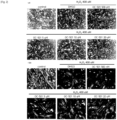
- dimenhydrinate was found to promote myoblast proliferation ( FIG. 1 ).
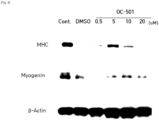
- Mouse myoblast strain C2C12 was dispensed into 12-well plates at 0.7 ⁇ 10 5 cells/well and then cultured to a cell density of 70 to 80%. The cells were then washed with PBS and then the medium was replaced with DMEM medium (differentiation medium) containing 2% horse serum, 400 ⁇ M H 2 O 2 , and dimenhydrinate (OC-501) of 0 nM (DMSO), 500 nM, 5 ⁇ M, 10 ⁇ M or 20 ⁇ M respectively. Differentiation of the myoblast was induced for 5 to 7 days while the replacement of the medium occurred every other day. After the differentiation, cells were identified using a microscope (4 ⁇ and 10 ⁇ magnification), and cells were disrupted and then Western blot analysis was performed using differentiation markers myogenin and myosin heavy chain (MHC) antibodies.
- MHC myogenin and myosin heavy chain
- dimenhydrinate promoted differentiation of myoblast ( FIG. 2 ).
- the differentiation promotion increased especially at 5 ⁇ M of dimenhydrinate ( FIG. 3 ).
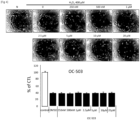
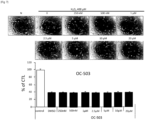
- Mouse myoblast strain C2C12 was dispensed in 96-well plates at 1.5 ⁇ 10 3 cells/well, and then cultured in DMEM medium containing 10% fetal bovine serum (FBS) at 37°C and 5% CO 2 for one day at a low density manner. Thereafter, the medium was replaced with DMEM medium containing 400 nM H 2 O 2 and 0 nM, 250 nM, 500 nM, 1 ⁇ M, 2.5 ⁇ M, 5 ⁇ M, 10 ⁇ M or 20 ⁇ M of harmol (OC-503) respectively.
- FBS fetal bovine serum
- the wells were treated with MTT reagent and then the mouse myoblast strain C2C12 was incubated in the DMEM medium in a dark incubator for 3 hours. After removing supernatant therefrom and applying 100 ⁇ l of DMSO to the well, the optical density (OD) was measured at 595 nm. Cells were identified using a microscope.
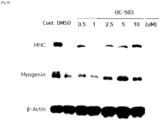
- Mouse myoblast strain C2C12 was dispensed into 12-well plates at 0.7 ⁇ 10 5 cells/well and then cultured to a cell density of 70 to 80%. The cells were then washed with PBS and then the medium was replaced with DMEM medium (differentiation medium) containing 2% horse serum, 400 ⁇ M H 2 O 2 , and harmol (OC-503) of 0 nM (DMSO), 500 nM, 1 ⁇ M, 2.5 ⁇ M, 5 ⁇ M, or 10 ⁇ M respectively. Differentiation of the myoblast was induced for 5 to 7 days while the replacement of the medium occurred every other day. After the differentiation, cells were identified using a microscope, and cells were disrupted, then Western blot analysis was performed using differentiation markers myogenin and myosin heavy chain (MHC) antibodies.
- MHC myogenin and myosin heavy chain
- harmol promoted differentiation of myoblast ( FIG. 5 ).
- the differentiation promotion increased especially at 5 ⁇ M and 10 ⁇ M of harmol ( FIG. 6 ).
- Mouse myoblast strain C2C12 was dispensed in 96-well plates at 1.5 ⁇ 10 3 cells/well, and then cultured in DMEM medium containing 10% fetal bovine serum (FBS) at 37°C and 5% CO 2 for one day at a low density manner. Thereafter, the medium was replaced with DMEM medium containing 400 nM H 2 O 2 and 0 nM, 250 nM, 500 nM, 1 ⁇ M, 2.5 ⁇ M, 5 ⁇ M, 10 ⁇ M or 20 ⁇ M of calcium pantothenate (OC-504) respectively.
- FBS fetal bovine serum
- the wells were treated with MTT reagent and then the mouse myoblast strain C2C12 was incubated in the DMEM medium in a dark incubator for 3 hours. After removing supernatant therefrom and applying 100 ⁇ l of DMSO to the well, the optical density (OD) was measured at 595 nm. Cells were identified using a microscope.
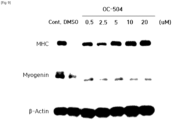
- Mouse myoblast strain C2C12 was dispensed into 12-well plates at 0.7 ⁇ 10 5 cells/well and then cultured to a cell density of 70 to 80%. The cells were then washed with PBS and then the medium was replaced with DMEM medium (differentiation medium) containing 2% horse serum, 400 ⁇ M H 2 O 2 , and calcium pantothenate (OC-504) of 0 nM (DMSO), 500 nM, 2.5 ⁇ M, 5 ⁇ M, 10 ⁇ M or 20 ⁇ M respectively. Differentiation of the myoblast was induced for 5 to 7 days while the replacement of the medium occurred every other day. After the differentiation, cells were identified using a microscope (4 ⁇ and 10 ⁇ magnification), and cells were disrupted, then Western blot analysis was performed using differentiation markers myogenin and myosin heavy chain (MHC) antibodies.
- MHC myogenin and myosin heavy chain
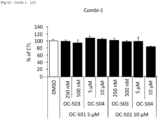
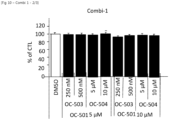
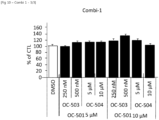
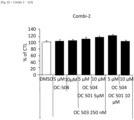
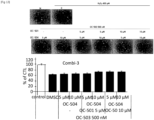
- Mouse myoblast strain C2C12 was dispensed in 96-well plates at 1.5 ⁇ 10 3 cells/well. A combination of dimenhydrinate (OC-501), harmol (OC-503) and calcium pantothenate (OC-504) was applied thereto.
- the mouse myoblast strain C2C12 was cultured in DMEM medium containing 10% fetal bovine serum (FBS) and each of combinations of OC-501 5 ⁇ M + OC-503 250 nM, OC-501 5 ⁇ M + OC-503 500 nM, OC-501 5 ⁇ M + OC-504 5 ⁇ M, OC-501 5 ⁇ M + OC-504 10 ⁇ M, OC-501 10 ⁇ M + OC-503 250 nM, OC-501 10 ⁇ M + OC-503 500 nM, OC-501 10 ⁇ M + OC-504 5 ⁇ M, OC-501 10 ⁇ M + OC-504 10 ⁇ M, OC-503 250 nM + OC-504 5 ⁇ M, OC-503 250 nM + OC-504 10 ⁇ M, OC-503 500 nM + OC-504 5 ⁇ M, OC-503 500 ⁇ M + OC-504 10 ⁇ M, OC-50
- the wells were treated with MTT reagent and then the mouse myoblast strain C2C12 was incubated in the DMEM medium in a dark incubator for 3 hours. After removing supernatant therefrom and applying 100 ⁇ l of DMSO to each well, the optical density (OD) was measured at 595 nm to identify cytotoxicity. The experiment was performed three times.
- Mouse myoblast strain C2C12 was dispensed in 96-well plates at 1.5 ⁇ 10 3 cells/well, and then cultured in DMEM medium containing 10% fetal bovine serum (FBS) at 37°C and 5% CO 2 for one day at a low density manner.
- FBS fetal bovine serum
- the wells were treated with MTT reagent and then the mouse myoblast strain C2C12 was incubated in the DMEM medium in a dark incubator for 3 hours. After removing supernatant therefrom and applying 100 ⁇ l of DMSO to the well, the optical density (OD) was measured at 595 nm. Cells were identified using a microscope.
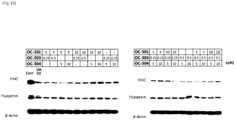
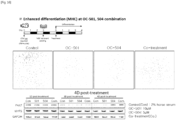
- Mouse myoblast strain C2C12 was dispensed into 12-well plates at 0.7 ⁇ 10 5 cells/well and then cultured to a cell density of 70 to 80%. The cells were then washed with PBS and then the medium was replaced with DMEM medium (differentiation medium) containing 2% horse serum, 400 ⁇ M H 2 O 2 , and each of following combinations of dimenhydrinate (OC-501), harmol (OC-503), and calcium pantothenate (OC-504): OC-501 5 ⁇ M + OC-503 250 nM, OC-501 5 ⁇ M + OC-503 500 nM, OC-501 5 ⁇ M + OC-504 5 ⁇ M, OC-501 5 ⁇ M + OC-504 10 ⁇ M, OC-501 10 ⁇ M + OC-503 250 nM, OC-501 10 ⁇ M + OC-503 500 nM, OC-501 10 ⁇ M + OC-503 500 nM, OC-501 10
- Differentiation of the myoblast was induced for 5 to 7 days while the replacement of the medium occurred every other day. After the differentiation, cells were identified using a microscope (4 ⁇ and 10 ⁇ magnification), and cells were disrupted, and then Western blot analysis was performed using differentiation markers myogenin and myosin heavy chain (MHC) antibodies.
- MHC myogenin and myosin heavy chain
- a combination of dimenhydrinate and calcium pantothenate, and a combination of dimenhydrinate and harmol facilitated differentiation of myoblasts ( FIG. 14 ).
- the promotion of differentiation thereof was more markedly increased when applying OC-501 10 ⁇ M + OC-504 5 ⁇ M, OC-501 10 ⁇ M + OC-504 10 ⁇ M, OC-503 250 nM + OC-504 5 ⁇ M, and OC-503 250 nM + OC-504 10 ⁇ M ( FIG. 15 ).
- Mesenchymal stem cells were isolated on day 3 after cobratoxin was inserted into the tibialis anterior muscle of the mouse. Two days after the separation, 10 ⁇ M of dimenhydrinate (OC-501) and 5 ⁇ M of calcium pantothenate (OC-504) were administered individually or in combination. West blot analysis was performed using differentiation markers PAX7 (paired box protein-7) and MYF5 (Myogenic factor 5) antibodies. After the differentiation, cells were identified using a microscope (4 ⁇ and 10 ⁇ magnification).
- each of dimenhydrinate (OC-501) and calcium pantothenate (OC-504) was applied at 30 mpk (mg/kg) for 3 days, and dimenhydrinate (OC-501) and calcium pantothenate (OC-504) were co-administered such that each content is 15 or 30 mpk (mg/kg) for 3 days.
- each of dimenhydrinate (OC-501) and calcium pantothenate (OC-504) was applied at 30 mpk (mg/kg), and dimenhydrinate (OC-501) and calcium pantothenate (OC-504) were co-administered such that each content is 15 or 30 mpk (mg/kg). Then, the muscle fiber was identified.
- the muscle fibers contracted and mostly showed a size of 200 ⁇ m 2 or smaller.
- the muscle fiber size was well sparred ( FIG. 18 ).
- Cancer-associated sarcopenia was induced by administering 5-FU (5-fluorouracil) as an anticancer agent to mice transplanted with colorectal cancer cells CT26. Further, after the colon cancer cell transplantation, dimenhydrinate (OC-501) and calcium pantothenate (OC-504) were applied thereto alone or in combination. MRI was measured every week to determine muscle and fat changes in OC-501 and 504 alone and combination-treated groups ( FIG. 19 ).
- sarcopenia was hardly induced in the control mice transplanted with only cancer cells.
- the muscle amount was decreased by about 40% and the fat was decreased by 95% when the anticancer drug was administered.
- the muscle mass and fat mass were increased in the groups treated with dimenhydrinate (OC-501) and calcium pantothenate (OC-504) alone or in combination ( FIG. 20 ).
- the combination of 20 mpk of dimenhydrinate (OC-501) and 40 mpk of calcium pantothenate (OC-504) recovered muscle and fat levels to a similar degree to the control group.
- a pharmaceutical composition for prevention or treatment of a muscular disease comprising dimenhydrinate, harmol and/or calcium pantothenate as an active ingredient.
- dimenhydrinate can be represented by a following Chemical Formula 1:
- harmol can be represented by a following Chemical Formula 2:
- calcium pantothenate can be represented by a following Chemical Formula 3:
- the composition can comprise a combination of dimenhydrinate and harmol, a combination of dimenhydrinate and calcium pantothenate, a combination of harmol and calcium pantothenate, or a combination of dimenhydrinate, harmol and calcium pantothenate as an active ingredient.
- the muscular diseases can be due to muscle function deterioration, muscle wasting or muscle degeneration.
- the muscular disease can include at least one selected from a group consisting of atony, muscular atrophy, muscular dystrophy, myasthenia, cachexia and sarcopenia, preferably wherein the sarcopenia is due to aging or cancer.
- the pharmaceutical composition can further comprise a water-soluble vitamin selected from the group consisting of vitamin C, vitamin B1, vitamin B2, vitamin B6, vitamin H, vitamin PP or pro-vitamin B5 or mixtures thereof.
- the pharmaceutical composition can further comprise a fat-soluble vitamin selected from the group consisting of vitamin A, vitamin D, vitamin E, vitamin K1 or carotene or mixtures thereof.
- a pharmaceutical composition for prevention or treatment of muscle and fat loss due to administration of an anticancer drug comprising dimenhydrinate, harmol and/or calcium pantothenate as an active ingredient.
- the pharmaceutical composition can further comprise vitamin selected from the group consisting of vitamin C, vitamin B1, vitamin B2, vitamin B6, vitamin H, vitamin PP, pro-vitamin B5, vitamin A, vitamin D, vitamin E, vitamin K1 or carotene or mixtures thereof.
- a food composition for prevention or amelioration of a muscular disease comprising dimenhydrinate, harmol and/or calcium pantothenate.
- the composition can comprise a combination of dimenhydrinate and harmol, a combination of dimenhydrinate and calcium pantothenate, a combination of harmol and calcium pantothenate, or a combination of dimenhydrinate, harmol and calcium pantothenate.
- the muscular disease can be due to muscle function deterioration, muscle wasting or muscle degeneration.
- the muscular disease can include at least one selected from a group consisting of atony, muscular atrophy, muscular dystrophy, myasthenia, cachexia and sarcopenia.
- the composition can further comprise vitamin selected from the group consisting of vitamin C, vitamin B1, vitamin B2, vitamin B6, vitamin H, vitamin PP, pro-vitamin B5, vitamin A, vitamin D, vitamin E, vitamin K1 or carotene or mixtures thereof.
- a use of dimenhydrinate, harmol and/or calcium pantothenate for prevention or treatment of a muscular disease is provided.
- a use of dimenhydrinate, harmol and/or calcium pantothenate for treatment of muscle and fat loss caused by administration of an anticancer drug is provided.
- a method for treatment of a muscular disease comprising using dimenhydrinate, harmol and/or calcium pantothenate.
- a method for treatment of muscle and fat loss caused by administration of an anticancer drug comprising using dimenhydrinate, harmol and/or calcium pantothenate.
Landscapes
- Health & Medical Sciences (AREA)
- Life Sciences & Earth Sciences (AREA)
- Chemical & Material Sciences (AREA)
- Medicinal Chemistry (AREA)
- Pharmacology & Pharmacy (AREA)
- Animal Behavior & Ethology (AREA)
- General Health & Medical Sciences (AREA)
- Public Health (AREA)
- Veterinary Medicine (AREA)
- Epidemiology (AREA)
- Engineering & Computer Science (AREA)
- Physical Education & Sports Medicine (AREA)
- Neurology (AREA)
- Orthopedic Medicine & Surgery (AREA)
- Bioinformatics & Cheminformatics (AREA)
- Chemical Kinetics & Catalysis (AREA)
- General Chemical & Material Sciences (AREA)
- Nuclear Medicine, Radiotherapy & Molecular Imaging (AREA)
- Organic Chemistry (AREA)
- Mycology (AREA)
- Nutrition Science (AREA)
- Food Science & Technology (AREA)
- Polymers & Plastics (AREA)
- Emergency Medicine (AREA)
- Acyclic And Carbocyclic Compounds In Medicinal Compositions (AREA)
- Pharmaceuticals Containing Other Organic And Inorganic Compounds (AREA)
- Medicines That Contain Protein Lipid Enzymes And Other Medicines (AREA)
- Coloring Foods And Improving Nutritive Qualities (AREA)
- Medicines Containing Plant Substances (AREA)
Applications Claiming Priority (3)
| Application Number | Priority Date | Filing Date | Title |
|---|---|---|---|
| KR20180047957 | 2018-04-25 | ||
| EP19789574.1A EP3607949B1 (de) | 2018-04-25 | 2019-04-17 | Dimenhydrinate und calciumpantothenat zur vorbeugung und behandlung von muskelerkrankungen |
| PCT/KR2019/004631 WO2019208968A1 (ko) | 2018-04-25 | 2019-04-17 | 근육 질환 예방 및 치료용 조성물 |
Related Parent Applications (1)
| Application Number | Title | Priority Date | Filing Date |
|---|---|---|---|
| EP19789574.1A Division EP3607949B1 (de) | 2018-04-25 | 2019-04-17 | Dimenhydrinate und calciumpantothenat zur vorbeugung und behandlung von muskelerkrankungen |
Publications (2)
| Publication Number | Publication Date |
|---|---|
| EP4534146A2 true EP4534146A2 (de) | 2025-04-09 |
| EP4534146A3 EP4534146A3 (de) | 2025-06-25 |
Family
ID=68294135
Family Applications (2)
| Application Number | Title | Priority Date | Filing Date |
|---|---|---|---|
| EP25159755.5A Pending EP4534146A3 (de) | 2018-04-25 | 2019-04-17 | Dimenhydrinat und calciumpantothenat zur prävention und behandlung von muskelerkrankungen |
| EP19789574.1A Active EP3607949B1 (de) | 2018-04-25 | 2019-04-17 | Dimenhydrinate und calciumpantothenat zur vorbeugung und behandlung von muskelerkrankungen |
Family Applications After (1)
| Application Number | Title | Priority Date | Filing Date |
|---|---|---|---|
| EP19789574.1A Active EP3607949B1 (de) | 2018-04-25 | 2019-04-17 | Dimenhydrinate und calciumpantothenat zur vorbeugung und behandlung von muskelerkrankungen |
Country Status (9)
| Country | Link |
|---|---|
| US (3) | US11364244B2 (de) |
| EP (2) | EP4534146A3 (de) |
| JP (2) | JP7250810B2 (de) |
| KR (3) | KR102204204B1 (de) |
| CN (1) | CN110636847B (de) |
| AU (4) | AU2019261476B2 (de) |
| CA (2) | CA3090241C (de) |
| ES (1) | ES3015109T3 (de) |
| WO (1) | WO2019208968A1 (de) |
Families Citing this family (2)
| Publication number | Priority date | Publication date | Assignee | Title |
|---|---|---|---|---|
| KR102580507B1 (ko) | 2020-08-10 | 2023-09-20 | 주식회사 온코크로스 | 척수성 근위축성 측색 경화증 또는 뒤센 근이영양증의 예방 및 치료용 조성물 |
| KR102772405B1 (ko) * | 2022-06-10 | 2025-02-26 | (주)케어젠 | 근육 손실 저해 및 근육량 증진 활성을 갖는 펩타이드 및 이의 용도 |
Citations (2)
| Publication number | Priority date | Publication date | Assignee | Title |
|---|---|---|---|---|
| WO2006081997A2 (de) | 2005-02-05 | 2006-08-10 | Lts Lohmann Therapie-Systems Ag | Isolierung von atrarsäure, synthese von atrarsäure-derivaten sowie verwendung der atrarsäure und ihrer derivate zur behandlung der benignen prostatahyperplasie, des prostatakarzinoms und der spinobulbären muskelatrophie |
| WO2007088123A2 (en) | 2006-02-03 | 2007-08-09 | Nicox S.A. | Use of nitrooxyderivative of drug for the treatment of muscular dystrophies |
Family Cites Families (21)
| Publication number | Priority date | Publication date | Assignee | Title |
|---|---|---|---|---|
| US5554647A (en) | 1989-10-12 | 1996-09-10 | Perricone; Nicholas V. | Method and compositions for treatment and/or prevention of skin damage and aging |
| FR2660557B1 (fr) * | 1990-04-09 | 1994-05-27 | Endobio Groupe Etu Rech Risqu | Compositions pharmaceutiques et/ou dietetiques contenant de la carnitine, de la lysine et de la methionine avec ou sans acide pantothenique. |
| MEP28108A (en) | 2000-03-15 | 2010-10-10 | Sanofi Aventis Deutschland | Substituted beta-carbolines with ikb-kinase inhibiting activity |
| US8252309B2 (en) * | 2000-04-04 | 2012-08-28 | Sigma-Tau Industrie Farmaceutiche Riunite Spa | Dietary supplement energy-providing to skeletal muscles |
| US6686340B2 (en) * | 2001-06-19 | 2004-02-03 | Matthias Rath | Composition and method for prevention and treatment of health conditions caused by constriction of smooth muscle cells |
| US20050101623A1 (en) * | 2003-07-23 | 2005-05-12 | Pharmacia Corporation | Beta-carboline compounds and analogues thereof as mitogen-activated protein kinase-activated protein kinase-2 inhibitors |
| US20050215640A1 (en) * | 2004-03-26 | 2005-09-29 | Baxter Jeffrey H | HMB compositions and uses thereof |
| US9889110B2 (en) * | 2004-06-07 | 2018-02-13 | University Of Tennessee Research Foundation | Selective androgen receptor modulator for treating hormone-related conditions |
| DE102005014142B4 (de) * | 2005-03-23 | 2006-11-09 | Hennig Arzneimittel Gmbh & Co. Kg | Pelletförmige Retardzubereitung gegen Schwindel |
| DE102008064588A1 (de) * | 2008-12-23 | 2010-06-24 | Hans Dieter Minge | Nahrungsergänzungsmittel auf der Basis von Pantothensäure |
| CN101987082B (zh) * | 2010-07-16 | 2013-04-03 | 钟术光 | 固体制剂及其制备方法 |
| CA2989896C (en) | 2010-07-22 | 2021-02-09 | Reven Pharmaceuticals, Inc. | Methods of treating or ameliorating diseases and enhancing performance comprising the use of a magnetic dipole stabilized solution |
| CN102302152A (zh) * | 2011-07-22 | 2012-01-04 | 郝聪梅 | 一种营养组合物及其制备方法 |
| CA2853117C (en) * | 2011-10-25 | 2018-08-07 | Expermed S.A. | Sublingual pharmaceutical composition containing an antihistamine agent and method for the preparation thereof |
| SG11201507061XA (en) * | 2013-03-15 | 2015-10-29 | Alltech Inc | Compositions comprising selenium and use of same for the treatment and prevention of disease or conditions associated with mitochondrial dysfunction |
| US9907786B2 (en) * | 2014-10-21 | 2018-03-06 | Ions Pharmaceutical S.À R.L. | Therapeutic compositions containing harmine and isovanillin components, and methods of use thereof |
| KR101832897B1 (ko) * | 2015-05-26 | 2018-02-27 | (주)뉴트리 | 모루신, 구와논 지 또는 상백피를 함유하는 근육 질환 예방 및 치료용 또는 근 기능 개선용 조성물 |
| KR101800632B1 (ko) * | 2016-04-28 | 2017-12-20 | 연세대학교 원주산학협력단 | 엔테로코커스 패칼리스, 이의 배양액 또는 이의 사균체를 유효성분으로 함유하는 근육감퇴, 약화 및 근위축 예방, 개선 또는 치료용 약학 조성물, 식품 조성물 및 식품첨가제 |
| WO2017203540A1 (en) | 2016-05-21 | 2017-11-30 | Laila Impex | Dietary supplements and compositions for enhancing physical performance and energy levels |
| WO2017218905A1 (en) | 2016-06-17 | 2017-12-21 | Brown University | A method for treating spinal muscular atrophy |
| KR101986883B1 (ko) * | 2017-01-06 | 2019-06-07 | 연세대학교 산학협력단 | 시멘 또는 이의 약학적으로 허용 가능한 염을 유효성분으로 포함하는 근육 질환 예방 또는 치료용 조성물 |
-
2019
- 2019-04-17 CA CA3090241A patent/CA3090241C/en active Active
- 2019-04-17 EP EP25159755.5A patent/EP4534146A3/de active Pending
- 2019-04-17 CA CA3188049A patent/CA3188049A1/en active Pending
- 2019-04-17 KR KR1020190044769A patent/KR102204204B1/ko active Active
- 2019-04-17 EP EP19789574.1A patent/EP3607949B1/de active Active
- 2019-04-17 CN CN201980002035.XA patent/CN110636847B/zh active Active
- 2019-04-17 WO PCT/KR2019/004631 patent/WO2019208968A1/ko not_active Ceased
- 2019-04-17 ES ES19789574T patent/ES3015109T3/es active Active
- 2019-04-17 JP JP2020547090A patent/JP7250810B2/ja active Active
- 2019-04-17 AU AU2019261476A patent/AU2019261476B2/en active Active
- 2019-04-17 US US16/607,266 patent/US11364244B2/en active Active
-
2020
- 2020-09-01 KR KR1020200110962A patent/KR102295317B1/ko active Active
- 2020-09-01 KR KR1020200110961A patent/KR102295305B1/ko active Active
-
2021
- 2021-11-17 AU AU2021269368A patent/AU2021269368A1/en not_active Abandoned
- 2021-11-17 AU AU2021269360A patent/AU2021269360A1/en not_active Abandoned
-
2022
- 2022-05-13 US US17/744,339 patent/US12064435B2/en active Active
-
2023
- 2023-03-22 JP JP2023046074A patent/JP2023078374A/ja active Pending
- 2023-10-27 AU AU2023255014A patent/AU2023255014B2/en active Active
-
2024
- 2024-05-30 US US18/678,506 patent/US20240307404A1/en active Pending
Patent Citations (2)
| Publication number | Priority date | Publication date | Assignee | Title |
|---|---|---|---|---|
| WO2006081997A2 (de) | 2005-02-05 | 2006-08-10 | Lts Lohmann Therapie-Systems Ag | Isolierung von atrarsäure, synthese von atrarsäure-derivaten sowie verwendung der atrarsäure und ihrer derivate zur behandlung der benignen prostatahyperplasie, des prostatakarzinoms und der spinobulbären muskelatrophie |
| WO2007088123A2 (en) | 2006-02-03 | 2007-08-09 | Nicox S.A. | Use of nitrooxyderivative of drug for the treatment of muscular dystrophies |
Non-Patent Citations (3)
| Title |
|---|
| "Goodman and Gilman's The Pharmacological Basis of Therapeutics", 2001, PERGAMON PRESS |
| "Remington's Pharmaceutical Science", 1990, MACK PUBLISHING COMPANY |
| "Remington's Pharmaceutical Sciences", September 1990, MACK PUBLISHING CO |
Also Published As
| Publication number | Publication date |
|---|---|
| US20220265663A1 (en) | 2022-08-25 |
| EP4534146A3 (de) | 2025-06-25 |
| CN110636847A (zh) | 2019-12-31 |
| CN110636847B (zh) | 2023-06-09 |
| AU2021269360A1 (en) | 2021-12-16 |
| KR20200105786A (ko) | 2020-09-09 |
| KR102204204B1 (ko) | 2021-01-18 |
| EP3607949A4 (de) | 2021-03-17 |
| KR102295317B1 (ko) | 2021-08-30 |
| AU2023255014B2 (en) | 2025-01-30 |
| WO2019208968A1 (ko) | 2019-10-31 |
| JP7250810B2 (ja) | 2023-04-03 |
| CA3090241A1 (en) | 2019-10-31 |
| US20200246343A1 (en) | 2020-08-06 |
| US12064435B2 (en) | 2024-08-20 |
| KR20190124143A (ko) | 2019-11-04 |
| AU2021269368A1 (en) | 2021-12-16 |
| EP3607949C0 (de) | 2025-02-26 |
| ES3015109T3 (en) | 2025-04-29 |
| EP3607949B1 (de) | 2025-02-26 |
| US20240307404A1 (en) | 2024-09-19 |
| EP3607949A1 (de) | 2020-02-12 |
| CA3188049A1 (en) | 2019-10-31 |
| KR20200105785A (ko) | 2020-09-09 |
| AU2019261476B2 (en) | 2021-11-18 |
| CA3090241C (en) | 2023-03-28 |
| AU2023255014A1 (en) | 2023-11-16 |
| AU2019261476A1 (en) | 2020-07-23 |
| JP2021515025A (ja) | 2021-06-17 |
| JP2023078374A (ja) | 2023-06-06 |
| KR102295305B1 (ko) | 2021-08-30 |
| US11364244B2 (en) | 2022-06-21 |
Similar Documents
| Publication | Publication Date | Title |
|---|---|---|
| US20240307404A1 (en) | Composition for Treatment of Muscular Disorders | |
| KR102239075B1 (ko) | IF1 (ATPase inhibitory factor 1)을 유효성분으로 함유하는 근감소증의 예방 또는 치료용 약학 조성물 | |
| KR102122970B1 (ko) | 금제제를 유효성분으로 포함하는 파골세포 분화 억제용 조성물 | |
| KR101232872B1 (ko) | 스핑고신-1-포스페이트(sphingosine-1-phosphate) 또는 이의 약학적으로 허용가능한 염을 유효성분으로 포함하는 비만 예방 및 치료용 약학적 조성물 | |
| KR102509715B1 (ko) | 암의 전이 억제 및 치료용 조성물 | |
| US12263206B2 (en) | Pharmaceutical composition for preventing or treating obesity or sarcopenia, containing IF1 as active ingredient | |
| JP7720104B2 (ja) | トルセミドおよびクロモリンを含む代謝疾患予防または治療用組成物 | |
| US12514836B2 (en) | Composition for prevention and treatment of myopathy | |
| US20210212959A1 (en) | Gip elevation inhibitor | |
| KR20140135617A (ko) | 폐섬유화증 예방 또는 치료용 약학 조성물 | |
| WO2014017741A1 (ko) | 프루네틴을 유효성분으로 함유하는 비만 또는 대사성 질환의 예방 또는 치료용 약학적 조성물 | |
| US20250064867A1 (en) | Method for preventing or treating muscle disease | |
| JP2017122068A (ja) | 治療用組成物 | |
| CN117398385A (zh) | 用于抑制癌症转移及治疗的组合物 |
Legal Events
| Date | Code | Title | Description |
|---|---|---|---|
| PUAI | Public reference made under article 153(3) epc to a published international application that has entered the european phase |
Free format text: ORIGINAL CODE: 0009012 |
|
| STAA | Information on the status of an ep patent application or granted ep patent |
Free format text: STATUS: THE APPLICATION HAS BEEN PUBLISHED |
|
| AC | Divisional application: reference to earlier application |
Ref document number: 3607949 Country of ref document: EP Kind code of ref document: P |
|
| AK | Designated contracting states |
Kind code of ref document: A2 Designated state(s): AL AT BE BG CH CY CZ DE DK EE ES FI FR GB GR HR HU IE IS IT LI LT LU LV MC MK MT NL NO PL PT RO RS SE SI SK SM TR |
|
| REG | Reference to a national code |
Ref country code: DE Ref legal event code: R079 Free format text: PREVIOUS MAIN CLASS: A61P0021040000 Ipc: A61K0031197000 |
|
| PUAL | Search report despatched |
Free format text: ORIGINAL CODE: 0009013 |
|
| AK | Designated contracting states |
Kind code of ref document: A3 Designated state(s): AL AT BE BG CH CY CZ DE DK EE ES FI FR GB GR HR HU IE IS IT LI LT LU LV MC MK MT NL NO PL PT RO RS SE SI SK SM TR |
|
| RIC1 | Information provided on ipc code assigned before grant |
Ipc: A61P 21/04 20060101ALI20250520BHEP Ipc: A61K 31/19 20060101ALI20250520BHEP Ipc: A61K 31/137 20060101ALI20250520BHEP Ipc: A23L 33/10 20160101ALI20250520BHEP Ipc: A61P 21/00 20060101ALI20250520BHEP Ipc: A61K 31/437 20060101ALI20250520BHEP Ipc: A61K 31/522 20060101ALI20250520BHEP Ipc: A61K 31/197 20060101AFI20250520BHEP |
|
| STAA | Information on the status of an ep patent application or granted ep patent |
Free format text: STATUS: REQUEST FOR EXAMINATION WAS MADE |
|
| 17P | Request for examination filed |
Effective date: 20251219 |