EP4530255A1 - Verfahren zur herstellung von hochreinem cristobalit - Google Patents
Verfahren zur herstellung von hochreinem cristobalit Download PDFInfo
- Publication number
- EP4530255A1 EP4530255A1 EP24713377.0A EP24713377A EP4530255A1 EP 4530255 A1 EP4530255 A1 EP 4530255A1 EP 24713377 A EP24713377 A EP 24713377A EP 4530255 A1 EP4530255 A1 EP 4530255A1
- Authority
- EP
- European Patent Office
- Prior art keywords
- purity
- cristobalite
- preparation
- coupling agent
- amorphous silica
- Prior art date
- Legal status (The legal status is an assumption and is not a legal conclusion. Google has not performed a legal analysis and makes no representation as to the accuracy of the status listed.)
- Granted
Links
Images

Classifications
-
- C—CHEMISTRY; METALLURGY
- C01—INORGANIC CHEMISTRY
- C01B—NON-METALLIC ELEMENTS; COMPOUNDS THEREOF; METALLOIDS OR COMPOUNDS THEREOF NOT COVERED BY SUBCLASS C01C
- C01B33/00—Silicon; Compounds thereof
- C01B33/113—Silicon oxides; Hydrates thereof
- C01B33/12—Silica; Hydrates thereof, e.g. lepidoic silicic acid
- C01B33/18—Preparation of finely divided silica neither in sol nor in gel form; After-treatment thereof
- C01B33/181—Preparation of finely divided silica neither in sol nor in gel form; After-treatment thereof by a dry process
-
- C—CHEMISTRY; METALLURGY
- C01—INORGANIC CHEMISTRY
- C01B—NON-METALLIC ELEMENTS; COMPOUNDS THEREOF; METALLOIDS OR COMPOUNDS THEREOF NOT COVERED BY SUBCLASS C01C
- C01B33/00—Silicon; Compounds thereof
- C01B33/113—Silicon oxides; Hydrates thereof
- C01B33/12—Silica; Hydrates thereof, e.g. lepidoic silicic acid
-
- C—CHEMISTRY; METALLURGY
- C01—INORGANIC CHEMISTRY
- C01P—INDEXING SCHEME RELATING TO STRUCTURAL AND PHYSICAL ASPECTS OF SOLID INORGANIC COMPOUNDS
- C01P2002/00—Crystal-structural characteristics
- C01P2002/70—Crystal-structural characteristics defined by measured X-ray, neutron or electron diffraction data
- C01P2002/72—Crystal-structural characteristics defined by measured X-ray, neutron or electron diffraction data by d-values or two theta-values, e.g. as X-ray diagram
-
- C—CHEMISTRY; METALLURGY
- C01—INORGANIC CHEMISTRY
- C01P—INDEXING SCHEME RELATING TO STRUCTURAL AND PHYSICAL ASPECTS OF SOLID INORGANIC COMPOUNDS
- C01P2002/00—Crystal-structural characteristics
- C01P2002/80—Crystal-structural characteristics defined by measured data other than those specified in group C01P2002/70
- C01P2002/82—Crystal-structural characteristics defined by measured data other than those specified in group C01P2002/70 by IR- or Raman-data
-
- C—CHEMISTRY; METALLURGY
- C01—INORGANIC CHEMISTRY
- C01P—INDEXING SCHEME RELATING TO STRUCTURAL AND PHYSICAL ASPECTS OF SOLID INORGANIC COMPOUNDS
- C01P2004/00—Particle morphology
- C01P2004/60—Particles characterised by their size
-
- C—CHEMISTRY; METALLURGY
- C01—INORGANIC CHEMISTRY
- C01P—INDEXING SCHEME RELATING TO STRUCTURAL AND PHYSICAL ASPECTS OF SOLID INORGANIC COMPOUNDS
- C01P2004/00—Particle morphology
- C01P2004/60—Particles characterised by their size
- C01P2004/62—Submicrometer sized, i.e. from 0.1-1 micrometer
-
- C—CHEMISTRY; METALLURGY
- C01—INORGANIC CHEMISTRY
- C01P—INDEXING SCHEME RELATING TO STRUCTURAL AND PHYSICAL ASPECTS OF SOLID INORGANIC COMPOUNDS
- C01P2004/00—Particle morphology
- C01P2004/60—Particles characterised by their size
- C01P2004/64—Nanometer sized, i.e. from 1-100 nanometer
-
- C—CHEMISTRY; METALLURGY
- C01—INORGANIC CHEMISTRY
- C01P—INDEXING SCHEME RELATING TO STRUCTURAL AND PHYSICAL ASPECTS OF SOLID INORGANIC COMPOUNDS
- C01P2006/00—Physical properties of inorganic compounds
- C01P2006/80—Compositional purity
Definitions
- the present invention pertains to the technical field of quartz sand, particularly focusing on a method for the preparation of high-purity cristobalite.
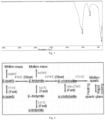
- Quartz is an oxide of silicon with a framework structure, having various homogenous variants. At atmospheric pressure, there are seven crystal types: ⁇ -quartz, ⁇ -quartz, ⁇ -tridymite, ⁇ 1-tridymite, ⁇ -tridymite, ⁇ -cristobalite, and ⁇ -cristobalite. Their transition temperatures are illustrated in Figure 4 . Among them, ⁇ -type represents the stable crystal type at high temperatures, while ⁇ -type represents the stable crystal type at low temperatures. Quartz is widely distributed in nature, and unless specifically stated, the term "quartz" typically refers to ⁇ -quartz.
- High-purity quartz sand generally refers to quartz with a silica content greater than 99.9%. Based on SiO 2 purity, high-purity quartz products can be classified into four grades: high-end ⁇ (SiO 2 ) ⁇ 99.998% (4N8), mid-high ⁇ (SiO 2 ) ⁇ 99.995% (4N5), mid-range ⁇ (SiO 2 ) ⁇ 99.99% (4N), and low-end ⁇ (SiO 2 ) ⁇ 99.9% (3N) (refer to " Concept and Classification of High-Purity Quartz Raw Materials," Conservation and Utilization of Mineral Resources, October 2022, Issue 5 ). However, untreated natural quartz is challenging to meet the quality requirements of high-purity quartz.
- high-purity quartz sand is derived from natural quartz deposits and processed through a complex purification process to achieve extremely high SiO 2 purity.
- high-purity quartz sand has strict requirements for particle size (typically 40-200 mesh) and mineral phases. Therefore, commonly mentioned silicon powders, white carbon blacks, and other amorphous silicas, even with high purity, do not qualify as high-purity quartz sand.
- Impurity elements in natural quartz sand mainly include Al, K, Na, Li, Ca, Cu, B, Fe, Mn, Co, Ti, P, etc.
- monovalent and divalent ions exist in the quartz lattice as charge-compensating defects in the form of interstitial atoms.
- Trivalent, tetravalent, and pentavalent ions primarily exist within the lattice.
- the present invention provides a method for preparing high-purity cristobalite, obtaining high-purity cristobalite by drying, calcining, and dispersing amorphous silica.
- the amorphous silica includes but is not limited to that obtained through the oxidation of metallic silicon.
- the oxidation of metallic silicon includes the combustion of metallic silicon, or the high-temperature reaction of metallic silicon with high-purity water, or the conversion of metallic silicon into silicon-containing organic compounds, such as silane, followed by calcination to transform into any one of various forms of amorphous nano-silica.
- the particle size of the amorphous silica is in the range of 5 nanometers to 1 micron.
- the drying conditions are as follows: treatment at 100°C to 150°C for 1 to 2 hours.
- the calcination conditions are as follows: treatment at 1100°C to 1700°C for 2 to 10 hours.
- the particle size of the high-purity cristobalite is in the range of 120 to 450 microns.
- the total content of elements Al, B, Ca, Cr, Cu, Fe, K, Li, Mg, Mn, Na, Ni, P, Ti, Zn in the high-purity cristobalite is less than 20 ppm.
- the process includes a step of using a coupling agent for treatment.
- the coupling agent is selected from silane coupling agents and titanate coupling agents.
- the silane coupling agent is one containing only carbon, silicon, hydrogen, and oxygen elements.
- the silane coupling agent containing only carbon, silicon, hydrogen, and oxygen elements has a carbon chain length not exceeding 5.
- the particle size of the amorphous silica in the present invention is in the range of 5 nanometers to 1 micron, with a specific surface area of 90 to 200m 2 /g.
- the source can be purchased from the market, such as Aladdin, or prepared by the following method.
- Photovoltaic-grade polycrystalline silicon is burned in oxygen under controlled conditions to obtain high-purity amorphous silica with different particle sizes.
- amorphous silica (particle size 5 nanometers, specific surface area 200m 2 /g) is labeled as amorphous silica A.
- Amorphous silica (particle size 10 nanometers, specific surface area 150m 2 /g) is labeled as amorphous silica B.
- Amorphous silica (particle size 1 micron, specific surface area 90m 2 /g) is labeled as amorphous silica C.
- Amorphous silica A is dried at 100°C for 2 hours, calcined at 1170°C for 10 hours, naturally cooled, and dispersed with airflow to obtain high-purity cristobalite with a particle size of 120 microns.
- Amorphous silica A is dried at 150°C for 1 hour, calcined at 1700°C for 2 hours, naturally cooled, and dispersed with airflow to obtain high-purity cristobalite with a particle size of 200 microns.
- Amorphous silica B is dried at 100°C for 2 hours, calcined at 1170°C for 10 hours, naturally cooled, and dispersed with airflow to obtain high-purity cristobalite with a particle size of 380 microns.
- Example 4 (Demonstrating the result of preparing high-purity cristobalite from micron-level raw materials)
- Amorphous silica C is dried at 100°C for 2 hours, calcined at 1170°C for 10 hours, naturally cooled, and dispersed with airflow to obtain high-purity cristobalite with a particle size of 630 microns.
- Amorphous silica A (3 kg) is dried at 100°C for 2 hours.
- a modified liquid is obtained by mixing 30g of coupling agent (CH 3 O) 3 Si(CH 2 ) 10 CH 3 with 100g of ethanol.
- the modified liquid is mixed uniformly with the dried amorphous silica, dried at 100°C for 2 hours, and then calcined at 1170°C for 10 hours.
- the resulting high-purity cristobalite has a particle size of 180 microns.
- Amorphous silica A (3 kg) is dried at 100°C for 2 hours.
- a modified liquid is obtained by mixing 30g of coupling agent (CH 3 O) 3 Si(CH 2 ) 10 CH 3 with 100g of ethanol.
- the modified liquid is mixed uniformly with the dried amorphous silica, dried at 100°C for 2 hours, and then calcined at 1170°C for 10 hours.
- the resulting high-purity cristobalite has a particle size of 157 microns.
- Amorphous silica A (3 kg) is dried at 100°C for 2 hours.
- a modified liquid is obtained by mixing 30g of coupling agent (CH 3 O) 3 Si(CH 2 ) 5 CH 3 with 100g of ethanol.
- the modified liquid is mixed uniformly with the dried amorphous silica, dried at 100°C for 2 hours, and then calcined at 1170°C for 6 hours.
- the resulting high-purity cristobalite has a particle size of 135 microns.
- Amorphous silica A (3 kg) is dried at 100°C for 2 hours.
- a modified liquid is obtained by mixing 30g of coupling agent (CH 3 O) 3 Si(CH 2 ) 7 CH 3 with 100g of ethanol.
- the modified liquid is mixed uniformly with the dried amorphous silica, dried at 100°C for 2 hours, and then calcined at 1170°C for 8 hours.
- the resulting high-purity cristobalite has a particle size of 163 microns.
- the high-purity quartz ITOA-6 from US Unimin Corporation is dried at 100°C for 2 hours and calcined at 1170°C for 10 hours.
- the resulting high-purity cristobalite has a particle size of 230 microns.
- ICP-OES is used to test impurity ions in the obtained samples (detection limit is 1 ppb), and the results are shown in Table 1.
- Example 1 120 0.63 94% 99.9997
- Example 2 200 0.62 97% 99.9997
- Example 3 380 0.60 92% 99.9997
- Example 4 630 0.61 95% 99.9996
- Example 5 180 0.28 98% 99.9997
- Example 6 157 0.29 97% 99.9997
- Example 7 135 0.24 98% 99.9997 Comparative Example 1 163 0.30 91% 99.9996 Comparative Example 2 230 0.42 96% 99.9998
- Table 3 shows the hydroxyl group content (in ppm) in materials before and after coupling agent treatment of Examples 5-7.
- the hydroxyl group content is calculated based on infrared spectra. The results are shown in Table 3.
- Table 3 Hydroxyl Group Content in Materials Before Coupling Agent Treatment Hydroxyl Group Content in Materials After Coupling Agent Treatment Hydroxyl Group Content in Resulting Cristobalite
- Example 5 510 12 1
- the porosity significantly decreases after high-temperature calcination.
- the use of a long-chain silane coupling agent results in a relatively high porosity, and the use of a short-chain silane coupling agent achieves a higher crystallinity in a shorter time, making it more energy-efficient.
- Figure 2 is the infrared spectrum of the high-purity amorphous silica raw material, showing vibration peaks at 3410cm -1 and 1642cm -1 , indicating the presence of hydroxyl groups on its surface.
- Figure 3 is the infrared spectrum of the cristobalite, showing no vibration peaks at 3410cm -1 and 1642cm -1 , indicating the absence of hydroxyl groups on its surface.
Landscapes
- Chemical & Material Sciences (AREA)
- Organic Chemistry (AREA)
- Inorganic Chemistry (AREA)
- Silicon Compounds (AREA)
Applications Claiming Priority (2)
| Application Number | Priority Date | Filing Date | Title |
|---|---|---|---|
| CN202310980924.1A CN116873943B (zh) | 2023-08-07 | 2023-08-07 | 一种高纯方石英的制备方法 |
| PCT/CN2024/083450 WO2025030863A1 (zh) | 2023-08-07 | 2024-03-25 | 一种高纯方石英的制备方法 |
Publications (3)
| Publication Number | Publication Date |
|---|---|
| EP4530255A1 true EP4530255A1 (de) | 2025-04-02 |
| EP4530255A4 EP4530255A4 (de) | 2025-10-01 |
| EP4530255B1 EP4530255B1 (de) | 2026-07-22 |
Family
ID=88269959
Family Applications (1)
| Application Number | Title | Priority Date | Filing Date |
|---|---|---|---|
| EP24713377.0A Active EP4530255B1 (de) | 2023-08-07 | 2024-03-25 | Verfahren zur herstellung von hochreinem cristobalit |
Country Status (5)
| Country | Link |
|---|---|
| US (1) | US20260167506A1 (de) |
| EP (1) | EP4530255B1 (de) |
| JP (1) | JP7897315B2 (de) |
| CN (1) | CN116873943B (de) |
| WO (1) | WO2025030863A1 (de) |
Families Citing this family (4)
| Publication number | Priority date | Publication date | Assignee | Title |
|---|---|---|---|---|
| CN116873943B (zh) * | 2023-08-07 | 2024-02-23 | 安徽壹石通材料科技股份有限公司 | 一种高纯方石英的制备方法 |
| CN119241077B (zh) * | 2024-09-20 | 2025-10-17 | 安徽壹石通材料科技股份有限公司 | 一种微晶石英陶瓷及其制备方法与应用 |
| CN119911913B (zh) * | 2025-02-17 | 2026-05-01 | 合肥综合性国家科学中心能源研究院(安徽省能源实验室) | 一种高纯晶态方石英石英砂的制备方法 |
| CN121266713B (zh) * | 2025-12-10 | 2026-03-31 | 中南大学 | 一种基于卵石原料的光伏玻璃用石英砂干法制备工艺 |
Family Cites Families (16)
| Publication number | Priority date | Publication date | Assignee | Title |
|---|---|---|---|---|
| JPH0761852B2 (ja) * | 1987-03-23 | 1995-07-05 | 日東化学工業株式会社 | 非焼結クリストバライト化シリカの製造方法 |
| JP2617822B2 (ja) * | 1990-04-10 | 1997-06-04 | 日東化学工業株式会社 | 非焼結状クリストバライト粒子の製造方法 |
| JP2839725B2 (ja) * | 1990-12-28 | 1998-12-16 | 新日鐵化学株式会社 | 高純度結晶質シリカの製造方法 |
| JP2586973B2 (ja) * | 1992-01-24 | 1997-03-05 | 日東化学工業株式会社 | クリストバライトの製造方法 |
| JP3661026B2 (ja) * | 1994-04-13 | 2005-06-15 | 東ソー株式会社 | クリストバライト粒子の製造方法 |
| EP1256547A4 (de) * | 1999-12-28 | 2005-07-13 | Watanabe & Co Ltd M | Verfahren zur herstellung von kieselsäureteilchen, synthetischem quarzpulver und synthetischem quarzglass |
| JP4898014B2 (ja) * | 2000-06-28 | 2012-03-14 | ジャパンスーパークォーツ株式会社 | 合成石英粉の製造方法および石英ガラスルツボの製造方法 |
| JP4371565B2 (ja) * | 2000-11-08 | 2009-11-25 | 株式会社トクヤマ | 石英ガラス前駆体及びその製造方法 |
| JP2004131311A (ja) * | 2002-10-09 | 2004-04-30 | Honda Motor Co Ltd | シリコン酸化物の製造方法 |
| CN100509669C (zh) * | 2002-11-29 | 2009-07-08 | 信越石英株式会社 | 合成石英玻璃的制造方法及合成石英玻璃体 |
| US9051203B2 (en) * | 2012-09-13 | 2015-06-09 | Shin-Etsu Quartz Products Co., Ltd. | Black synthetic quartz glass with transparent layer and method for producing the same |
| CN106430912A (zh) * | 2016-08-31 | 2017-02-22 | 中国建筑材料科学研究总院 | 低羟基石英玻璃的制备方法及石英玻璃 |
| CN108675308B (zh) * | 2018-06-21 | 2021-10-01 | 浙江仟源海力生制药有限公司 | 一种方英石的制备方法及含该方英石的蒙脱石标准对照品的制备方法 |
| CN108821295A (zh) * | 2018-07-24 | 2018-11-16 | 衢州市鼎盛化工科技有限公司 | 无定型二氧化硅制备超纯石英砂的方法 |
| CN113307275B (zh) * | 2021-03-05 | 2022-08-05 | 武汉大学 | 一种高纯结晶二氧化硅颗粒的制备方法 |
| CN116873943B (zh) * | 2023-08-07 | 2024-02-23 | 安徽壹石通材料科技股份有限公司 | 一种高纯方石英的制备方法 |
-
2023
- 2023-08-07 CN CN202310980924.1A patent/CN116873943B/zh active Active
-
2024
- 2024-03-25 JP JP2024528474A patent/JP7897315B2/ja active Active
- 2024-03-25 US US18/716,945 patent/US20260167506A1/en active Pending
- 2024-03-25 EP EP24713377.0A patent/EP4530255B1/de active Active
- 2024-03-25 WO PCT/CN2024/083450 patent/WO2025030863A1/zh not_active Ceased
Also Published As
| Publication number | Publication date |
|---|---|
| CN116873943A (zh) | 2023-10-13 |
| EP4530255A4 (de) | 2025-10-01 |
| JP7897315B2 (ja) | 2026-07-29 |
| WO2025030863A1 (zh) | 2025-02-13 |
| JP2025528296A (ja) | 2025-08-28 |
| EP4530255B1 (de) | 2026-07-22 |
| CN116873943B (zh) | 2024-02-23 |
| US20260167506A1 (en) | 2026-06-18 |
Similar Documents
| Publication | Publication Date | Title |
|---|---|---|
| CN116873943B (zh) | 一种高纯方石英的制备方法 | |
| JP7851192B2 (ja) | 改質再生骨材の製造方法及び改質再生骨材 | |
| EP2522628A1 (de) | Synthetisches amorphes siliciumpulver und herstellungsverfahren dafür | |
| JP4336148B2 (ja) | 酸化マグネシウム粉末及びその製造方法 | |
| CN1143939A (zh) | 氧化铁中残余氯化物的降低 | |
| JPH04219310A (ja) | 非焼結状クリストバライト粒子の製造方法 | |
| Xue et al. | N, N-Dimethyl formamide facilitated formation of hexagonal boron nitride from boric acid | |
| CN116654945B (zh) | 一种高纯石英砂及其制备方法 | |
| JP5755677B2 (ja) | Zsm−5の製造方法 | |
| KR101549477B1 (ko) | 고순도 탄화규소 분말의 제조방법 | |
| CN110627509B (zh) | 一种氮化铝粉体的制备方法 | |
| RU2394764C1 (ru) | Способ получения диоксида кремния | |
| CN117756068B (zh) | 一种高纯高分散纳米氮化硅粉的制备方法 | |
| CN113307280A (zh) | 一种凹凸棒石产品质量归一化的方法 | |
| CN118343762A (zh) | 一种碳化硅纳米粉体及制备方法 | |
| JP2020164341A (ja) | 酸化マグネシウム及びその製造方法 | |
| CN113336233B (zh) | 一种高纯纳米石英粉的制备方法 | |
| Bousbih et al. | Purification of Tabuk silica using chemical attack and thermal treatment | |
| Delfrate et al. | Slip casting of submicron BaTiO3 produced by low-temperature aqueous synthesis | |
| CN119929804B (zh) | 一种半导体用碳化硅超细粉体纯化工艺 | |
| EP2730541A1 (de) | Teilchen aus kieselsäure und kohlenstoff sowie verfahren zur herstellung einer mischung aus kieselsäure und kohlenstoff | |
| CN112010310A (zh) | 一种精密研磨用碳化硅粉体的制备方法 | |
| CN121872390A (zh) | 一种碳硅空心球前体及其制备方法与应用 | |
| JPH07267632A (ja) | γ−アルミナ多孔体の製造方法 | |
| CN120157492A (zh) | 一种六方氮化硼粉体及其制备方法 |
Legal Events
| Date | Code | Title | Description |
|---|---|---|---|
| STAA | Information on the status of an ep patent application or granted ep patent |
Free format text: STATUS: UNKNOWN |
|
| STAA | Information on the status of an ep patent application or granted ep patent |
Free format text: STATUS: THE INTERNATIONAL PUBLICATION HAS BEEN MADE |
|
| PUAI | Public reference made under article 153(3) epc to a published international application that has entered the european phase |
Free format text: ORIGINAL CODE: 0009012 |
|
| STAA | Information on the status of an ep patent application or granted ep patent |
Free format text: STATUS: REQUEST FOR EXAMINATION WAS MADE |
|
| 17P | Request for examination filed |
Effective date: 20240329 |
|
| AK | Designated contracting states |
Kind code of ref document: A1 Designated state(s): AL AT BE BG CH CY CZ DE DK EE ES FI FR GB GR HR HU IE IS IT LI LT LU LV MC ME MK MT NL NO PL PT RO RS SE SI SK SM TR |
|
| A4 | Supplementary search report drawn up and despatched |
Effective date: 20250902 |
|
| RIC1 | Information provided on ipc code assigned before grant |
Ipc: C01B 33/18 20060101AFI20250828BHEP Ipc: C01B 33/12 20060101ALI20250828BHEP |
|
| GRAP | Despatch of communication of intention to grant a patent |
Free format text: ORIGINAL CODE: EPIDOSNIGR1 |
|
| STAA | Information on the status of an ep patent application or granted ep patent |
Free format text: STATUS: GRANT OF PATENT IS INTENDED |
|
| GRAJ | Information related to disapproval of communication of intention to grant by the applicant or resumption of examination proceedings by the epo deleted |
Free format text: ORIGINAL CODE: EPIDOSDIGR1 |
|
| STAA | Information on the status of an ep patent application or granted ep patent |
Free format text: STATUS: REQUEST FOR EXAMINATION WAS MADE |
|
| DAV | Request for validation of the european patent (deleted) | ||
| DAX | Request for extension of the european patent (deleted) | ||
| INTG | Intention to grant announced |
Effective date: 20260108 |
|
| INTC | Intention to grant announced (deleted) | ||
| GRAP | Despatch of communication of intention to grant a patent |
Free format text: ORIGINAL CODE: EPIDOSNIGR1 |
|
| STAA | Information on the status of an ep patent application or granted ep patent |
Free format text: STATUS: GRANT OF PATENT IS INTENDED |
|
| INTG | Intention to grant announced |
Effective date: 20260318 |
|
| GRAS | Grant fee paid |
Free format text: ORIGINAL CODE: EPIDOSNIGR3 |
|
| GRAA | (expected) grant |
Free format text: ORIGINAL CODE: 0009210 |
|
| STAA | Information on the status of an ep patent application or granted ep patent |
Free format text: STATUS: THE PATENT HAS BEEN GRANTED |
|
| RIN1 | Information on inventor provided before grant (corrected) |
Inventor name: JIANG, XUEXIN Inventor name: CHEN, BO |
|
| AK | Designated contracting states |
Kind code of ref document: B1 Designated state(s): AL AT BE BG CH CY CZ DE DK EE ES FI FR GB GR HR HU IE IS IT LI LT LU LV MC ME MK MT NL NO PL PT RO RS SE SI SK SM TR |
|
| REG | Reference to a national code |
Ref country code: CH Ref legal event code: F10 Free format text: ST27 STATUS EVENT CODE: U-0-0-F10-F00 (AS PROVIDED BY THE NATIONAL OFFICE) Effective date: 20260722 Ref country code: GB Ref legal event code: FG4D |
|
| REG | Reference to a national code |
Ref country code: IE Ref legal event code: FG4D |
|
| REG | Reference to a national code |
Ref country code: DE Ref legal event code: R096 Ref document number: 602024006337 Country of ref document: DE |