EP4497780A1 - Schmelzmischung, zusammensetzung und formkörper - Google Patents
Schmelzmischung, zusammensetzung und formkörper Download PDFInfo
- Publication number
- EP4497780A1 EP4497780A1 EP22935442.8A EP22935442A EP4497780A1 EP 4497780 A1 EP4497780 A1 EP 4497780A1 EP 22935442 A EP22935442 A EP 22935442A EP 4497780 A1 EP4497780 A1 EP 4497780A1
- Authority
- EP
- European Patent Office
- Prior art keywords
- mass
- molten mixture
- resin
- parts
- composition
- Prior art date
- Legal status (The legal status is an assumption and is not a legal conclusion. Google has not performed a legal analysis and makes no representation as to the accuracy of the status listed.)
- Pending
Links
Images

Classifications
-
- C—CHEMISTRY; METALLURGY
- C08—ORGANIC MACROMOLECULAR COMPOUNDS; THEIR PREPARATION OR CHEMICAL WORKING-UP; COMPOSITIONS BASED THEREON
- C08J—WORKING-UP; GENERAL PROCESSES OF COMPOUNDING; AFTER-TREATMENT NOT COVERED BY SUBCLASSES C08B, C08C, C08F, C08G or C08H
- C08J3/00—Processes of treating or compounding macromolecular substances
- C08J3/20—Compounding polymers with additives, e.g. colouring
-
- C—CHEMISTRY; METALLURGY
- C08—ORGANIC MACROMOLECULAR COMPOUNDS; THEIR PREPARATION OR CHEMICAL WORKING-UP; COMPOSITIONS BASED THEREON
- C08J—WORKING-UP; GENERAL PROCESSES OF COMPOUNDING; AFTER-TREATMENT NOT COVERED BY SUBCLASSES C08B, C08C, C08F, C08G or C08H
- C08J3/00—Processes of treating or compounding macromolecular substances
- C08J3/02—Making solutions, dispersions, lattices or gels by other methods than by solution, emulsion or suspension polymerisation techniques
- C08J3/03—Making solutions, dispersions, lattices or gels by other methods than by solution, emulsion or suspension polymerisation techniques in aqueous media
-
- C—CHEMISTRY; METALLURGY
- C08—ORGANIC MACROMOLECULAR COMPOUNDS; THEIR PREPARATION OR CHEMICAL WORKING-UP; COMPOSITIONS BASED THEREON
- C08J—WORKING-UP; GENERAL PROCESSES OF COMPOUNDING; AFTER-TREATMENT NOT COVERED BY SUBCLASSES C08B, C08C, C08F, C08G or C08H
- C08J3/00—Processes of treating or compounding macromolecular substances
- C08J3/02—Making solutions, dispersions, lattices or gels by other methods than by solution, emulsion or suspension polymerisation techniques
- C08J3/03—Making solutions, dispersions, lattices or gels by other methods than by solution, emulsion or suspension polymerisation techniques in aqueous media
- C08J3/05—Making solutions, dispersions, lattices or gels by other methods than by solution, emulsion or suspension polymerisation techniques in aqueous media from solid polymers
-
- C—CHEMISTRY; METALLURGY
- C08—ORGANIC MACROMOLECULAR COMPOUNDS; THEIR PREPARATION OR CHEMICAL WORKING-UP; COMPOSITIONS BASED THEREON
- C08J—WORKING-UP; GENERAL PROCESSES OF COMPOUNDING; AFTER-TREATMENT NOT COVERED BY SUBCLASSES C08B, C08C, C08F, C08G or C08H
- C08J5/00—Manufacture of articles or shaped materials containing macromolecular substances
- C08J5/04—Reinforcing macromolecular compounds with loose or coherent fibrous material
- C08J5/045—Reinforcing macromolecular compounds with loose or coherent fibrous material with vegetable or animal fibrous material
-
- C—CHEMISTRY; METALLURGY
- C08—ORGANIC MACROMOLECULAR COMPOUNDS; THEIR PREPARATION OR CHEMICAL WORKING-UP; COMPOSITIONS BASED THEREON
- C08K—Use of inorganic or non-macromolecular organic substances as compounding ingredients
- C08K5/00—Use of organic ingredients
- C08K5/54—Silicon-containing compounds
- C08K5/541—Silicon-containing compounds containing oxygen
- C08K5/5435—Silicon-containing compounds containing oxygen containing oxygen in a ring
-
- C—CHEMISTRY; METALLURGY
- C08—ORGANIC MACROMOLECULAR COMPOUNDS; THEIR PREPARATION OR CHEMICAL WORKING-UP; COMPOSITIONS BASED THEREON
- C08L—COMPOSITIONS OF MACROMOLECULAR COMPOUNDS
- C08L1/00—Compositions of cellulose, modified cellulose or cellulose derivatives
- C08L1/02—Cellulose; Modified cellulose
-
- C—CHEMISTRY; METALLURGY
- C08—ORGANIC MACROMOLECULAR COMPOUNDS; THEIR PREPARATION OR CHEMICAL WORKING-UP; COMPOSITIONS BASED THEREON
- C08L—COMPOSITIONS OF MACROMOLECULAR COMPOUNDS
- C08L23/00—Compositions of homopolymers or copolymers of unsaturated aliphatic hydrocarbons having only one carbon-to-carbon double bond; Compositions of derivatives of such polymers
-
- C—CHEMISTRY; METALLURGY
- C08—ORGANIC MACROMOLECULAR COMPOUNDS; THEIR PREPARATION OR CHEMICAL WORKING-UP; COMPOSITIONS BASED THEREON
- C08L—COMPOSITIONS OF MACROMOLECULAR COMPOUNDS
- C08L23/00—Compositions of homopolymers or copolymers of unsaturated aliphatic hydrocarbons having only one carbon-to-carbon double bond; Compositions of derivatives of such polymers
- C08L23/02—Compositions of homopolymers or copolymers of unsaturated aliphatic hydrocarbons having only one carbon-to-carbon double bond; Compositions of derivatives of such polymers not modified by chemical after-treatment
- C08L23/04—Homopolymers or copolymers of ethene
-
- C—CHEMISTRY; METALLURGY
- C08—ORGANIC MACROMOLECULAR COMPOUNDS; THEIR PREPARATION OR CHEMICAL WORKING-UP; COMPOSITIONS BASED THEREON
- C08L—COMPOSITIONS OF MACROMOLECULAR COMPOUNDS
- C08L23/00—Compositions of homopolymers or copolymers of unsaturated aliphatic hydrocarbons having only one carbon-to-carbon double bond; Compositions of derivatives of such polymers
- C08L23/26—Compositions of homopolymers or copolymers of unsaturated aliphatic hydrocarbons having only one carbon-to-carbon double bond; Compositions of derivatives of such polymers modified by chemical after-treatment
-
- C—CHEMISTRY; METALLURGY
- C08—ORGANIC MACROMOLECULAR COMPOUNDS; THEIR PREPARATION OR CHEMICAL WORKING-UP; COMPOSITIONS BASED THEREON
- C08J—WORKING-UP; GENERAL PROCESSES OF COMPOUNDING; AFTER-TREATMENT NOT COVERED BY SUBCLASSES C08B, C08C, C08F, C08G or C08H
- C08J2300/00—Characterised by the use of unspecified polymers
- C08J2300/24—Thermosetting resins
-
- C—CHEMISTRY; METALLURGY
- C08—ORGANIC MACROMOLECULAR COMPOUNDS; THEIR PREPARATION OR CHEMICAL WORKING-UP; COMPOSITIONS BASED THEREON
- C08J—WORKING-UP; GENERAL PROCESSES OF COMPOUNDING; AFTER-TREATMENT NOT COVERED BY SUBCLASSES C08B, C08C, C08F, C08G or C08H
- C08J2301/00—Characterised by the use of cellulose, modified cellulose or cellulose derivatives
- C08J2301/02—Cellulose; Modified cellulose
-
- C—CHEMISTRY; METALLURGY
- C08—ORGANIC MACROMOLECULAR COMPOUNDS; THEIR PREPARATION OR CHEMICAL WORKING-UP; COMPOSITIONS BASED THEREON
- C08J—WORKING-UP; GENERAL PROCESSES OF COMPOUNDING; AFTER-TREATMENT NOT COVERED BY SUBCLASSES C08B, C08C, C08F, C08G or C08H
- C08J2315/00—Characterised by the use of rubber derivatives
- C08J2315/02—Rubber derivatives containing halogen
-
- C—CHEMISTRY; METALLURGY
- C08—ORGANIC MACROMOLECULAR COMPOUNDS; THEIR PREPARATION OR CHEMICAL WORKING-UP; COMPOSITIONS BASED THEREON
- C08J—WORKING-UP; GENERAL PROCESSES OF COMPOUNDING; AFTER-TREATMENT NOT COVERED BY SUBCLASSES C08B, C08C, C08F, C08G or C08H
- C08J2323/00—Characterised by the use of homopolymers or copolymers of unsaturated aliphatic hydrocarbons having only one carbon-to-carbon double bond; Derivatives of such polymers
- C08J2323/02—Characterised by the use of homopolymers or copolymers of unsaturated aliphatic hydrocarbons having only one carbon-to-carbon double bond; Derivatives of such polymers not modified by chemical after treatment
- C08J2323/10—Homopolymers or copolymers of propene
- C08J2323/12—Polypropene
-
- C—CHEMISTRY; METALLURGY
- C08—ORGANIC MACROMOLECULAR COMPOUNDS; THEIR PREPARATION OR CHEMICAL WORKING-UP; COMPOSITIONS BASED THEREON
- C08L—COMPOSITIONS OF MACROMOLECULAR COMPOUNDS
- C08L2201/00—Properties
- C08L2201/54—Aqueous solutions or dispersions
-
- C—CHEMISTRY; METALLURGY
- C08—ORGANIC MACROMOLECULAR COMPOUNDS; THEIR PREPARATION OR CHEMICAL WORKING-UP; COMPOSITIONS BASED THEREON
- C08L—COMPOSITIONS OF MACROMOLECULAR COMPOUNDS
- C08L2205/00—Polymer mixtures characterised by other features
- C08L2205/14—Polymer mixtures characterised by other features containing polymeric additives characterised by shape
- C08L2205/16—Fibres; Fibrils
Definitions
- biomass materials have been attracting attention from the viewpoint of environmental protection, and naturally-derived organic fillers and composite materials with biopolymers have begun to be used as materials for the fields of automobiles, OA electrical and electronic fields, and the like.
- the aforesaid two inventions have indicated the possibility of producing a composition in which a cellulose nanofiber-containing resin composition or molten mixture has been dispersed well in a resin. They have also indicated that each composition is superior to the base resin in mechanical strength values including modulus in flexure. However, there is still a room for further pursuit on enhancement of interfacial adhesion between the resin and the cellulose nanofiber to improve the dispersibility of the cellulose nanofiber in the resin.
- composition means a composition obtained by melt mixing a molten mixture and a polyolefin or a molten mixture, a polyolefin, and a modified polyolefin.
- a nano natural polymer having a crystallinity index range of 50% or more is preferably used, because when a nano natural polymer having a low crystallinity index is used, the ability of the nano natural polymer to be loaded on a resin deteriorates due to a reduction in the specific surface area of it and the ability and workability (fluidity of the resin and shape retention of a resin molded or formed product) of the resin molded formed product deteriorate due to reduction in strength, elasticity, and thixotropic properties.
- the nano natural polymer having a lower crystallinity index is more perishable.
- a nano natural polymer having an average polymerization degree range of 400 to 900 is preferably used, because a nano natural polymer having an average polymerization degree higher than 900 is inferior in the ability to be loaded on a resin due to a reduction in the specific surface area of the nano natural polymer, leading to a poor resin reinforcing effect.
- the nano natural polymer has an average polymerization degree less than 400, the number of steps necessary for defibration increases, leading to an increase in the production cost of the nano natural polymer.
- CNF examples include CNFs derived from polysaccharides including natural plants such as wood fibers, hardwood, softwood, bamboo fibers, sugarcane fibers, seed hair fibers, leaf fibers, and seaweed. These CNFs may be used either singly or as a mixture of two or more. It may be a product obtained from a crop residue derived from plant leaves, flowers, stems, roots, hulls, and the like such as bagasse, rice straws, tea grounds, and pomace of fruit juice.
- the CNF in the present invention is obtained as a CNF dispersion (which may also be called “water-containing CNF", hereinafter) by carrying out the following defibration treatment.
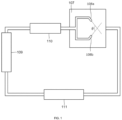
- the defibration treatment is performed using the aqueous counter collision method (which may also be called “ACC method”, hereinafter) shown in FIG. 1 . It is a method of introducing pulp suspended in water into two nozzles (108a and 108b in FIG. 1 ) facing with each other in a chamber (107 in Fig. 1 ) and injecting the resulting pulp suspensions from these nozzles toward one point and causing them to collide.
- the apparatus shown in FIG. 1 is a liquid circulation type. It is equipped with a tank (109 in FIG.
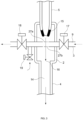
- the production apparatus 1 is equipped with a polysaccharide slurry supply path 3, which is a first liquid medium supply path placed to enable supply of a polysaccharide slurry to a chamber 2 and a second liquid medium supply path 4 that circulates non-polysaccharide slurry, for example, water via the chamber 2.
- the apparatus has, in the chamber 2, an orifice injection unit 5 that performs orifice injection of the non-polysaccharide slurry of the second liquid medium supply path 4 in a direction intersecting a polysaccharide slurry supply direction from the polysaccharide slurry supply path 3.
- the polysaccharide slurry supply path 3 enables the polysaccharide slurry to circulate via the chamber 2.
- the polysaccharide slurry supply path 3 is a polysaccharide slurry supply unit and has a tank 7 for storing polysaccharide slurry therein and a pump 8 in a circulation path 9, while the second liquid medium supply path 4 has a tank 10, a pump 11, a heat exchanger 12, and a plunger 13 in the liquid medium supply path 4 which is a circulation path.
- the circulation path 9 of the polysaccharide slurry supply path 3 is placed in a mode of penetrating the chamber 2 and an orifice injection port 15 of the orifice injection unit 5, which is connected to the plunger 13 of the second liquid medium supply path 4 to enable orifice injection of the non-polysaccharide slurry in a direction crossing the circulation path and thereby penetrate the slurry through the circulation path 9, is opened inside the chamber 2.
- a discharge port 16 of the chamber 2 is placed at a position facing with the orifice injection port 15 of the chamber 2 and the circulation path of the second liquid medium supply path 4 is connected to this discharge port 16 of the chamber 2 to constitute the second liquid medium supply path 4.
- the orifice injection of the non-polysaccharide slurry that circulates through the second liquid medium supply path 4 is performed to the polysaccharide slurry that circulates through the polysaccharide slurry supply path 3 and is distributed in the chamber 2. Described specifically, high-pressure water is supplied from the plunger 13 to the orifice injection port 14 connected to the plunger 13 and is then subjected to orifice injection to the circulation path 9 from the orifice injection port 15 at a high pressure of about 50 to 400 MPa.
- the defibration degree of pulp fibers into CNF can be evaluated by the viscosity value of the CNF dispersion. Described specifically, since the fiber length of CNF contained in the CNF dispersion having an increased defibration degree is short, the dispersion has a low viscosity value. Therefore, the CNF dispersion having a high defibration degree has a low viscosity. In a CNF dispersion having a defibration degree higher than the aforesaid one, on the other hand, the fiber length of CNF contained in such a CNF dispersion is long so that the dispersion has a higher viscosity value. Therefore, it has a low defibration degree compared with the aforesaid CNF dispersion.
- the CNF obtained in the aforesaid manner is free from a structural change of a cellulose molecule because nanofibrillation is achieved by cleaving only the mutual action between natural cellulose fibers and it has a structural formula represented by the following chemical formula 1.
- the CNF to be used in the present invention has 6 hydroxyl groups in the cellobiose unit in the chemical formula 1, meaning that it is not chemically modified. This can be confirmed by using FT-IR and comparing the IR spectrum of cellulose with and that of CNF to be used in the present invention.
- cellulose fibers can be ground into even an average fiber length of 10 ⁇ m by the present ACC method and as a result, CNF having an average thickness of 3 to 200 nm and average length of 0.1 ⁇ m or more can be obtained.
- the cellulose nanocrystal in the present invention can be obtained by subjecting the cellulose fiber obtained by the ACC method to chemical treatment such as acid hydrolysis with an acid such as sulfuric acid or subjecting pulp, before fibrillation treatment by the ACC method, to chemical treatment such as acid hydrolysis with sulfuric acid or the like, followed by fibrillation treatment by the ACC method.
- the cellulose nanocrystal is also called "cellulose nanowhisker”.
- cellulose nanofibers obtained by another known cellulose nanofiber manufacturing method including a chemical treatment method such as treatment with a TEMPO oxidation catalyst, phosphorylation treatment, ozone treatment, enzymatic treatment, treatment with maleic acid, hydrophobicity modification with an alkenylsuccinic anhydride, hydrophobicity modification with an alkyl ketene dimer, or hydrophobicity modification by acetylation; and a physical method that thins cellulose-based fibers by wet grinding making use of the mechanical action of a grinder (a stone mill type grinder), a disc type refiner, a conical refiner, or the like can be used for a CNF dispersion in the present invention.
- cellulose nanofibers obtained by a method using chemical treatment and physical treatment in combination can also be used for a CNF dispersion.
- the CNF dispersion thus obtained has usually a CNF concentration range of 0.1 to 10%.
- the aqueous polyolefin resin dispersion is a dispersion of a polyolefin in water and can be prepared by a method of dispersing in water a kneaded material composed of the polyolefin and a water soluble polymer such as polyvinyl alcohol, a method of melt kneading the polyolefin with a carboxyl-containing polyolefin, supplying the kneaded material in hot water containing a basic material, and applying a shear force to obtain a dispersion, or the like.
- diene examples include isoprene, butadiene, dicyclopentadiene, pentadiene-1,4, 2-methyl-pentadiene-1,4, hexadiene-1,4, divinylbenzene, methylidene norbornene, and ethylidene norbornene. They may be used either singly or in combination of two or more. Further, styrene, vinyl acetate, acrylic acid, an acrylate ester such as methyl acrylate, methacrylic acid, and a methacrylate ester such as methyl methacrylate can also be used.
- polystyrene resin examples include polyethylene, polypropylene, ethylene ⁇ propylene copolymer, ethylene ⁇ butene-1 copolymer, propylene-butene-1 copolymer, ethylene ⁇ propylene. hexadiene-1,4 copolymer, ethylene ⁇ propylene ⁇ dicyclopentadiene copolymer, ethylene ⁇ propylene-5-ethylidene-2-norbornene copolymer, ethylene ⁇ propylene-5-vinyl-2-norbornene copolymer, ethylene ⁇ butene.
- 1,5-ethylidene ⁇ 2-norbornene copolymer ethylene ⁇ butene-1 ⁇ dicyclopentadiene copolymer, ethylene ⁇ dicyclopentadiene copolymer, ethylene-vinyl acetate copolymer, ethylene-methyl methacrylate copolymer, ethylene ⁇ acrylic acid copolymer, ethylene-methacrylic acid copolymer, and ethylene butadiene copolymer.
- the mixture may contain an anionic surfactant and/or nonionic surfactant.
- the aqueous polyolefin resin dispersion thus prepared has usually a solid concentration of 10 to 70% and solid content particles have an average particle size of 0.01 to 20 ⁇ m. It is to be noted that the average particle size can be measured by either a Coulter counter method or a Microtrac method.
- the silane coupling agent is an organic silicon compound having, in one molecule thereof, both a hydrolyzable group and an organic functional group.
- hydrolysable group means a substituent that may directly bond to a silicon atom to form a siloxane bond by a hydrolyzation reaction and/or condensation reaction. In general, it represents a hydrogen atom or an alkyl group having 1 or more and 22 or less carbon atoms.
- the alkyl group may be any of linear, branched, and cyclic ones.
- the silane coupling agent has, in the molecule thereof, a plurality of hydrolyzable groups, the substituents may be either the same or different from each other.
- the organic functional group is preferably at least one selected from a vinyl group, an epoxy group, a styryl group, a methacrylic group, an acrylic group, an amino group, an ureido group, a mercapto group, a sulfide group, an isocyanate group, an isocyanurate group, and the like.
- the silane coupling agent has, in the molecule thereof, a plurality of the organic functional groups, the organic functional groups may be the same or different from each other.
- silane coupling agent examples include vinyltrimethoxysilane, vinyltriethoxysilane, 2-(3,4-epoxycyclohexyl)ethyltrimethoxysilane, 3-glycidoxypropylmethyldimethoxysilane, 3-glycidoxypropyltrimethoxysilane, 3- glycidoxypropylmethyldimethoxysilane, 3-glycidoxypropyltrimethoxysilane, 3- glycidoxypropylmethyldiethoxysilane, 3-glycidoxypropyltriethoxysilane, p-styryltrimethoxysilane, 3-methacryloxypropylmethyldimethoxysilane, 3-methacryloxypropyltrimethoxysilane, 3-methacryloxypropyltriethoxysilane, 3-acryloxypropyltrimethoxysilane, N-2-(aminoethoxysilane, 2-(3,4-epoxycyclo
- the molten mixture of the present invention may further contain a modified polyolefin.
- the modified polyolefin is used for improving the dispersibility between the cellulose nanofiber and another component, and the like. It is to be noted that the molten mixture of the present invention may contain both the silane coupling agent (B-1) and the modified polyolefin (B-2).
- the modified polyolefin is not particularly limited as far as it is a polyolefin modified to have polarity.
- examples include polypropylenes modified with carboxylic acid (anhydride), epoxide, oxazoline, isocyanate, carbodiimide, or the like.
- Preferred examples include maleic anhydride-modified polypropylene, carbodiimide-modified polypropylene, and epoxy-modified polypropylene.
- a modified polyolefin having a weight average molecular weight of 500,000 or less, preferably 300,000 or less, more preferably 200,000 or less may be used.
- the molten mixture of the present invention contains, based on 1 part by mass of the cellulose nanofiber (A), 0.05 to 1 part by mass, preferably 0.1 part by mass to 0.5 part by mass, more preferably 0.2 part by mass to 0.3 part by mass in terms of a solid content of the aqueous polyolefin resin dispersion (B).
- the aqueous polyolefin resin dispersion has no effect on the dispersibility of the cellulose nanofiber when added in an amount less than 0.05 part by mass, while it acts as a lubricant, does not apply shear force, and fails to remove a water content from the molten mixture when added in an amount more than 1 part by mass.
- the water content of the resulting molten mixture may be adjusted to 5.0% or less, preferably 3.0% or less, more preferably 1.0% or less, because the molten mixture having a water content higher than 5.0% may deteriorate the dispersibility of the nano natural polymer when the molten mixture (D) is mixed with (C) a resin which will be described later.
- a powderizing means is not particularly limited as far as it can heat and apply a shear force to the mixture. Described specifically, examples of it include a single screw extruder, a twin screw extruder, a twin screw kneader, a kneader, a Banbury mixer, a reciprocating kneader, and a roll kneader.
- Use of a continuous extruder such as twin screw kneader here is particularly preferred in terms of efficiency because steps until a step of kneading in the resin can be conducted continuously.
- Degassing equipment or the like may be used to remove a water content and another volatile matter which may be generated during the powderizing step.
- heating conditions to be applied to the nano natural polymer heating conditions such as heating time are not particularly limited.
- thermoplastic resin means a resin to be melt-molded or melt-formed by heating.
- specific examples include at least one selected from each of the following groups: general-purpose plastics such as polyethylene (HDPE, MDPE, LDPE, and LLDPE), po(vinyl chloride), polypropylene, polystyrene, ABS resin, AS resin (polystyrene-acrylonitrile copolymer), and methacrylic resin, general-purpose engineering plastics such as polyamide, polyacetal, polycarbonate, modified polyphenylene ether, polyethylene terephthalate, and ultrahigh molecular polyethylene, super engineering plastics such as polysulfone, polyether sulfone, polyphenylene sulfide, polyarylate, polyamide-imide, polyetherimide, polyether ketone, polyimide, liquid crystal polymer, and fluorine resin, biodegradable plastics such as polylactic acid, polycaprolactone, and polybutylene succinate.
- general-purpose plastics such
- thermosetting resin When in the resin composition of the present invention, a (C-2) thermosetting resin is used as the matrix component (C), the thermosetting resin is present as a uniform dispersion with the cellulose nanofiber in the resin composition of the present invention.
- the kind of the thermosetting resin is not particularly limited.
- the thermosetting resin include an epoxy resin, a phenolic resin, a urea resin, a melamine resin, polyurethane, an unsaturated polyester resin, a silicone resin, a polyimide resin, and a diallyl phthalate resin.
- a resin which has such a characteristic as being soluble in water or having a liquid form at normal temperatures and is usable as a liquid, such as a dicyclopentadiene resin, can also be used.
- the aforesaid thermosetting resins may be used either singly or in combination of two or more.
- Examples of the rubber to be used here include natural rubber, chloroprene rubber, ethylene-propylene-nonconjugated diene copolymer rubber, ethylene-butene-1 copolymer rubber, ethylene-hexene copolymer rubber, ethylene-octene copolymer rubber, polybutadiene, styrene-butadiene block copolymer rubber, partially hydrogenated styrene-butadiene-styrene block copolymer rubber, styrene-isoprene block copolymer rubber, partially hydrogenated styrene-isoprene block copolymer rubber, polyurethane rubber, styrene graft-ethylene-propylene-nonconjugated diene copolymer rubber, styrene-graft-ethylene-propylene copolymer rubber, styrene/acrylonitrile-graft-ethylene-propylene-noncon
- the component (D) is less than 0.5 mass%, it is difficult to distinguish the strength of the resulting composition from that of the single resin component, while when it is more than 60%, the melt viscosity increases and the resulting resin composition has inferior moldability or formability.
- the component (D) is 0.5 to 60 mass%
- the component (C) is 35 to 99 mass%
- the modified polypropylene (B-2) When the component (B-2) is less than 0.5%, the modified polypropylene (B-2) does not exhibit its effect, while the amount more than 5% may cause a deterioration in physical property values.
- Examples of the hard segment of the styrene-based thermoplastic elastomer include segments composed of polystyrene.
- Examples of the soft segment include segments composed of polybutadiene, hydrogenated polybutadiene, polyisoprene, or hydrogenated polyisoprene.
- Examples of the hard segment of the polyolefin-based elastomer include segments composed of polypropylene, propylene-ethylene copolymer, polyethylene, or the like.
- Examples of the soft segment include polyethylene and segments obtained by copolymerizing ethylene with a small amount of a diene component. More specific examples include ethylene-butene copolymers, EPR
- polyester-based thermoplastic elastomer examples include those obtained by copolymerizing a polyester structure as a hard segment with polyether, polyester, or the like as a soft segment.
- nonionic surfactants examples include sugar ester-based surfactants such as sorbitan fatty acid esters and polyoxyethylene sorbitan fatty acid esters, fatty acid ester-based surfactants such as polyoxyethylene resin acid esters and polyoxyethylene fatty acid diethyl, ether-based surfactants such as polyoxyethylene alkyl ethers, polyoxyethylene alkyl phenyl ethers, and polyoxyethylene-polypropylene glycols, and aromatic nonionic surfactants such as polyoxyalkylene octyl phenyl ethers, polyoxyalkylene nonyl phenyl ethers, polyoxyalkyl dibutyl phenyl ethers, polyoxyalkyl styryl phenyl ethers, polyoxyalkyl benzyl phenyl ethers, polyoxyalkyl bisphenyl ethers, and polyoxyalkyl cumyl phenyl ethers.
- a plate-shaped product For producing a plate-shaped product from the composition of the present invention, it is the common practice to use extrusion forming, but flat pressing may also be used. In addition, contour extrusion, blow molding, compression molding, vacuum forming, injection molding, and the like can be used.
- solution casting As well as melt extrusion can be used.
- melt formation method examples of it include blown film formation, casting, extrusion lamination, calendaring, sheet forming, fiber forming, blow molding, injection molding, rotational molding, and coating.
- a resin used is cured by active energy rays
- a molded or formed product can be produced by using various curing methods using active energy rays.
- a CNF solid content (0.15 g) was dissolved in 30 mL of a 0.5M copper ethylenediamine solution and the viscosity ⁇ of the CNF ⁇ copper ethylenediamine solution was measured using a Canon Fenceke kinematic viscosity tube. With the viscosity of the 0.5M copper ethylenediamine solution as ⁇ 0, an ultimate viscosity [ ⁇ ] was determined from the following Schulz-Blaschke formula and a polymerization degree DP was calculated based on the following Mark-Houwink-Sakurada formula.
- CNF water mixture (CNF solid content: 50%, water content: 50%, average polymerization degree: 810) derived from softwood pulp and an aqueous polyolefin resin dispersion (product of BYK JAPAN, HORDAMAR PE02, polyethylene, nonvolatile content: 40%) were mixed at a ratio of 9:1 (1:0.1) to obtain a mixture.
- the mixture thus obtained was subjected to a twin screw extruder (Japan Steel Works, Ltd., model: TEX25 ⁇ III) to obtain a molten mixture.
- the screw diameter was set at ⁇ 25 mm and the average cylinder temperature was set at 121°C.
- Example 2 In a manner similar to that of Example 1 except that a CNF water mixture (CNF solid content: 30%, water content: 70%, average polymerization degree: 810) derived from softwood pulp and an aqueous polyolefin resin dispersion (product of Mitsui Chemicals, CHEMIPEARL A100, PE-based elastomer, solid concentration: 40%, particle size: 4 ⁇ m (Coulter counter method), viscosity: 5000 mPa ⁇ s (Brookfield type viscometer 6 rpm))) were mixed at a ratio of 9:1 (1:0.1) and the average cylinder temperature was set at 125°C, a molten mixture was obtained.
- CNF water mixture CNF solid content: 30%, water content: 70%, average polymerization degree: 810
- an aqueous polyolefin resin dispersion product of Mitsui Chemicals, CHEMIPEARL A100, PE-based elastomer, solid concentration: 40%, particle size: 4 ⁇ m (
- Example 2 In a manner similar to that of Example 1 except that a CNF water mixture (CNF solid content: 30%, water content: 70%, average polymerization degree: 810) derived from softwood pulp and an aqueous polyolefin resin dispersion (product of Mitsui Chemicals, CHEMIPEARL M200, LDPE, solid concentration: 40%, particle size: 0.7 ⁇ m (Coulter counter method), viscosity: 5000 mPa ⁇ s (Brookfield type viscometer 6 rpm))) were mixed at a ratio of 9:1 (1:0.1) and the average cylinder temperature was set at 125°C, a molten mixture was obtained.
- CNF water mixture CNF solid content: 30%, water content: 70%, average polymerization degree: 810
- an aqueous polyolefin resin dispersion product of Mitsui Chemicals, CHEMIPEARL M200, LDPE, solid concentration: 40%, particle size: 0.7 ⁇ m (Coulter counter method), visco
- Example 2 In a manner similar to that of Example 1 except that a CNF water mixture (CNF solid content: 30%, water content: 70%, average polymerization degree: 810) derived from softwood pulp and an aqueous polyolefin resin dispersion (product of Mitsui Chemicals, CHEMIPEARL S500, ionomer, solid concentration: 42%, particle size: 0.7 ⁇ m (Microtrac method), viscosity: 150 mPa ⁇ s (Brookfield type viscometer 6 rpm))) were mixed at a ratio of 9:1 (1:0.1) and the average cylinder temperature was set at 124°C, a molten mixture was obtained.
- CNF water mixture CNF solid content: 30%, water content: 70%, average polymerization degree: 810
- an aqueous polyolefin resin dispersion product of Mitsui Chemicals, CHEMIPEARL S500, ionomer, solid concentration: 42%, particle size: 0.7 ⁇ m (Micro
- Example 2 In a manner similar to that of Example 1 except that a CNF water mixture (CNF solid content: 30%, water content: 70%, average polymerization degree: 810) derived from softwood pulp and an aqueous polyolefin resin dispersion (product of Mitsui Chemicals, CHEMIPEARL S300, ionomer, solid concentration: 35%, particle size: 0.5 ⁇ m (Microtrac method), viscosity: 400 mPa ⁇ s (Brookfield type viscometer 6 rpm))) were mixed at a ratio of 9:1 (1:0.1) and the average cylinder temperature was set at 125°C, a molten mixture was obtained.
- CNF water mixture CNF solid content: 30%, water content: 70%, average polymerization degree: 810
- an aqueous polyolefin resin dispersion product of Mitsui Chemicals, CHEMIPEARL S300, ionomer, solid concentration: 35%, particle size: 0.5 ⁇ m (Micro
- Example 2 In a manner similar to that of Example 1 except that a CNF water mixture (CNF solid content: 30%, water content: 70%, average polymerization degree: 810) derived from softwood pulp and an aqueous polyolefin resin dispersion (product of Mitsui Chemicals, CHEMIPEARL W401, polyethylene wax, solid concentration: 40%, particle size: 1 ⁇ m (Microtrac method), viscosity: 500 mPa ⁇ s (Brookfield type viscometer 60 rpm))) were mixed at a ratio of 9:1 (1:0.1) and the average cylinder temperature was set at 127°C, a molten mixture was obtained.
- CNF water mixture CNF solid content: 30%, water content: 70%, average polymerization degree: 810
- an aqueous polyolefin resin dispersion product of Mitsui Chemicals, CHEMIPEARL W401, polyethylene wax, solid concentration: 40%, particle size: 1 ⁇ m (Microtrac method), viscosity:
- Example 2 In a manner similar to that of Example 1 except that a CNF water mixture (CNF solid content: 30%, water content: 70%, average polymerization degree: 810) derived from softwood pulp and an aqueous polyolefin resin dispersion (product of Mitsui Chemicals, CHEMIPEARL W700, polyethylene wax, solid concentration: 40%, particle size: 1 ⁇ m (Microtrac method), viscosity: 800 mPa ⁇ s (Brookfield type viscometer 60 rpm))) were mixed at a ratio of 9:1 (1:0.1) and the average cylinder temperature was set at 125°C, a molten mixture was obtained.
- CNF water mixture CNF solid content: 30%, water content: 70%, average polymerization degree: 810
- an aqueous polyolefin resin dispersion product of Mitsui Chemicals, CHEMIPEARL W700, polyethylene wax, solid concentration: 40%, particle size: 1 ⁇ m (Microtrac method), viscosity:
- Example 2 In a manner similar to that of Example 1 except that a CNF water mixture (CNF solid content: 20%, water content: 80%, average polymerization degree: 810) derived from softwood pulp and an aqueous polyolefin resin dispersion (product of Mitsui Chemicals, CHEMIPEARL W500, polyethylene wax, solid concentration: 40%, particle size: 2.5 ⁇ m (Coulter counter method), viscosity: 1000 mPa ⁇ s (Brookfield type viscometer 60 rpm))) were mixed at a ratio of 9:1 (1:0.1) and the average cylinder temperature was set at 128°C, a molten mixture was obtained.
- CNF water mixture CNF solid content: 20%, water content: 80%, average polymerization degree: 810
- an aqueous polyolefin resin dispersion product of Mitsui Chemicals, CHEMIPEARL W500, polyethylene wax, solid concentration: 40%, particle size: 2.5 ⁇ m (Coulter counter method), viscos
- Example 2 In a manner similar to that of Example 1 except that a CNF water mixture (CNF solid content: 30%, water content: 70%, average polymerization degree: 810) derived from softwood pulp and an aqueous polyolefin resin dispersion (product of Mitsui Chemicals, CHEMIPEARL S100, ionomer, solid concentration: 27%, particle size: 0.1 ⁇ m (Microtrac method), viscosity: 500 mPa ⁇ s (Brookfield type viscometer 6 rpm))) were mixed at a ratio of 9:1 (1:0.1) and the average cylinder temperature was set at 127°C, a molten mixture was obtained.
- CNF water mixture CNF solid content: 30%, water content: 70%, average polymerization degree: 810
- an aqueous polyolefin resin dispersion product of Mitsui Chemicals, CHEMIPEARL S100, ionomer, solid concentration: 27%, particle size: 0.1 ⁇ m (Micro
- Example 2 In a manner similar to that of Example 1 except that a CNF water mixture (CNF solid content: 30%, water content: 70%, average polymerization degree: 810) derived from softwood pulp and an aqueous polyolefin resin dispersion (product of Mitsui Chemicals, CHEMIPEARL V300, EVA, solid concentration: 40%, particle size: 6 ⁇ m (Coulter counter method), viscosity: 7000 mPa ⁇ s (Brookfield type viscometer 6 rpm))) were mixed at a ratio of 9:1 (1:0.1) and the average cylinder temperature was set at 124°C, a molten mixture was obtained.
- CNF water mixture CNF solid content: 30%, water content: 70%, average polymerization degree: 810
- an aqueous polyolefin resin dispersion product of Mitsui Chemicals, CHEMIPEARL V300, EVA, solid concentration: 40%, particle size: 6 ⁇ m (Coulter counter method), viscosity:
- the yellowness of the molten mixtures obtained in Examples 1 to 10 was evaluated according to JIS K 7373 by using a color difference meter (product of Nippon Denshoku Industries Co., Ltd., model: ZE6000, light source C/2). The following was the measuring method: a round cell to be used exclusively for powders was filled moderately with the molten mixture without a space and measurement was performed three times per sample.
- CNF water mixture (CNF solid content: 30%, water content: 70%, average polymerization degree: 810) derived from softwood pulp and an aqueous polyolefin resin dispersion (product of BYK JAPAN: HORDAMAR PE02), which were mixed at a ratio of 9:1 (1:0.1), and 3.3 parts by mass, based on 100 parts by mass of the resulting mixture, of 3-glycidoxypropyltriethoxysilane (product of Shin-Etsu Chemical Co., Ltd.: KBE-403) as a silane coupling agent were mixed to obtain a mixture.
- the mixture thus obtained was subjected to a twin screw extruder (Japan Steel Works, Ltd., model: TEX25 ⁇ III) to obtain a molten mixture.
- the screw diameter was set at ⁇ 25 mm and the average cylinder temperature was set at 123°C.
- Example 11 In a manner similar to that of Example 11 except that 3-methacryloxypropyltrimethoxysilane (product of Shin-Etsu Chemical Co., Ltd.: KBE-503) was used as the silane coupling agent and the average cylinder temperature was set at 124°C, a molten mixture was obtained.
- 3-methacryloxypropyltrimethoxysilane product of Shin-Etsu Chemical Co., Ltd.: KBE-503
- Example 11 In a manner similar to that of Example 11 except that N-2-(aminoethyl)-3-aminopropyltrimethoxysilane (product of Shin-Etsu Chemical Co., Ltd.: KBE-603) was used as the silane coupling agent and the average cylinder temperature was set at 124°C, a molten mixture was obtained.
- N-2-(aminoethyl)-3-aminopropyltrimethoxysilane product of Shin-Etsu Chemical Co., Ltd.: KBE-603
- Example 11 In a manner similar to that of Example 11 except that N-2-(aminoethyl)-3-aminopropyltrimethoxysilane (product of Shin-Etsu Chemical Co., Ltd.: KBE-603) diluted 20 times was used as the silane coupling agent and the average cylinder temperature was set at 123°C, a molten mixture was obtained.
- N-2-(aminoethyl)-3-aminopropyltrimethoxysilane product of Shin-Etsu Chemical Co., Ltd.: KBE-603
- Example 11 In a manner similar to that of Example 11 except that 13.2 parts by mass, based on 100 parts by mass of the mixture, of 3-glycidoxypropyltrimethoxysilane (product of Dow Toray: OFS-6040 Silane) was used as the silane coupling agent and the average cylinder temperature was set at 123°C, a molten mixture was obtained.
- 3-glycidoxypropyltrimethoxysilane product of Dow Toray: OFS-6040 Silane
- Example 11 In a manner similar to that of Example 11 except that 1.8 parts by mass, based on 100 parts by mass of the mixture, of 3-glycidoxypropyltrimethoxysilane (product of Dow Toray: OFS-6040 Silane) was used as a silane coupling agent and the average cylinder temperature was set at 123°C, a molten mixture was obtained.
- 3-glycidoxypropyltrimethoxysilane product of Dow Toray: OFS-6040 Silane
- CNF water mixture (CNF solid content: 31%, water content: 69%, average polymerization degree: 810) derived from softwood pulp and an aqueous polyolefin resin dispersion (product of Mitsui Chemicals: CHEMIPEARL W401), which were mixed at a ratio of 9:1 (1:0.1), and 12 parts by mass, based on 100 parts by mass of the resulting mixture, of maleic anhydride-modified polypropylene ((product of BYK Japan: SCONA TSPP 22113GA)) were mixed to obtain a mixture.
- the mixture thus obtained was subjected to a twin screw extruder (Japan Steel Works, Ltd., model: TEX25 ⁇ III) to obtain a molten mixture.
- the screw diameter was set at ⁇ 25 mm and the average cylinder temperature was set at 128°C.
- CNF water mixture (CNF solid content: 50%, water content: 50%, average polymerization degree: 810) derived from softwood pulp and an aqueous polyolefin resin dispersion (product of BYK JAPAN: HORDAMAR PE02) were mixed at a ratio of 9:1 (1:0.1) to obtain a mixture.
- the mixture thus obtained was subjected to a twin screw extruder (Japan Steel Works, Ltd., model: TEX25 ⁇ III) to obtain a molten mixture.
- the screw diameter was set at ⁇ 25 mm and the average cylinder temperature was set at 121°C.
- the moisture content of the molten mixtures obtained in Examples 1 to 17 and Referential Example 1 was measured using an infrared halogen moisture analyzer (product of Mettler Toledo: model: HC103).
- CNF water mixture (CNF solid content: 30%, water content: 70%, average polymerization degree: 810) derived from softwood pulp and an aqueous polyolefin resin dispersion (product of BYK JAPAN: HORDAMAR PE02,) were mixed at a mass% ratio of 9:1 to obtain a mixture.
- the mixture thus obtained was subjected to a twin screw extruder (Japan Steel Works, Ltd., model: TEX25 ⁇ III) to obtain a molten mixture.
- the screw diameter was set at ⁇ 25 mm and the average cylinder temperature was set at 125°C.
- the pellets thus obtained were dried at 80°C for 12 hours and then, injection molded using an injection molding machine (Nissei Plastic Industrial Co., Ltd., model: NEX801V) under the following conditions: a cylinder temperature of 190°C and a mold temperature of 50°C to prepare a multi-purpose specimen A1.
- an injection molding machine Nei Plastic Industrial Co., Ltd., model: NEX801V
- CNF water mixture (CNF solid content: 30%, water content: 70%, average polymerization degree: 810) derived from softwood pulp and an aqueous polyolefin resin dispersion (product of BYK JAPAN: HORDAMAR PE02) were mixed at a mass% ratio of 9:1 to obtain a mixture.
- the mixture thus obtained and 3.3 parts by mass, based on 100 parts by mass of the mixture, of 3-glycidoxypropyltriethoxysilane (product of Shin-Etsu Chemical, KBE-403) as a silane coupling agent were subjected to a twin screw extruder (Japan Steel Works, Ltd., model: TEX25 ⁇ III) to obtain a molten mixture.
- the screw diameter was set at ⁇ 25 mm and the average cylinder temperature was set at 123°C.
- polypropylene product of Nippon Polypropylene Corporation: J105G, injection molding grade, MFR9
- maleic anhydride-modified polypropylene product of BYK Japan: SCONA TSPP 22113GA
- the resulting mixture was supplied to a twin screw extruder (Japan Steel Works, Ltd., model: TEX25 ⁇ III) and melt kneaded at 180°C to pelletize it.
- the pellets thus obtained were dried at 80°C for 12 hours and then, were injection molded using an injection molding machine (Nissei Plastic Industrial Co., Ltd., model: NEX801V) under the following conditions: a cylinder temperature of 190°C and a mold temperature of 50°C to prepare a multi-purpose specimen A1.
- an injection molding machine Nei Plastic Industrial Co., Ltd., model: NEX801V
- Example 19 In a manner similar to that of Example 19 except that the molten mixture, the polypropylene, and the maleic anhydride-modified polypropylene were mixed at a ratio of 57.7:34.3:8, a multi-purpose specimen A1 was prepared.
- Example 2 to Example 8 Each of the molten mixtures obtained in Example 2 to Example 8, Examples 15 to17, and Referential Example 1, polypropylene (product of Prime Polymer Co., Ltd.: J105G, injection molding grade: MFR9), and maleic anhydride-modified polypropylene (product of BYK Japan: SCONA TSPP 22113GA) were mixed at a mass% ratio of 64.7:33.3:2.0. The resulting mixture was supplied to a twin screw extruder (Japan Steel Works, Ltd., model: TEX25 ⁇ III) and melt kneaded at 180°C to pelletize it.
- a twin screw extruder Japan Steel Works, Ltd., model: TEX25 ⁇ III
- the pellets thus obtained were dried at 80°C for 12 hours and then, injection molded using an injection molding machine (Nissei Plastic Industrial Co., Ltd., model: NEX81V) under the following conditions: a cylinder temperature of 190°C and a mold temperature of 50°C to prepare a multi-purpose specimen A1.
- an injection molding machine Nei Plastic Industrial Co., Ltd., model: NEX81V
- Polypropylene (product of Prime Polymer Co., Ltd.: J105G, injection molding grade, MFR9) was injection molded using an injection molding machine (Nissei Plastic Industrial Co., Ltd., model: NEX801V) under the following conditions: a cylinder temperature of 190°C and a mold temperature of 50°C to prepare a multi-purpose specimen A1.
- CNF water mixture (CNF solid content: 30%, water content: 70%, average polymerization degree: 810) derived from softwood pulp and a styrene-based polymer (Yasuhara Chemical Co., Ltd., YS Resin SX100) were mixed at a mass % ratio of 7:3.
- the resulting mixture of CNF and styrene-based polymer was subjected to a twin screw extruder (Japan Steel Works, Ltd., model: TEX25 ⁇ III) to obtain powdery cellulose nanofiber.
- the screw diameter was set at ⁇ 25 mm and the average cylinder temperature was set at 113°C.
- the powdery cellulose nanofiber thus obtained, polypropylene (product of Primer Polymer Co., Ltd.: J105G, injection molding grade, MFR9), and maleic anhydride-modified polypropylene ((product of BYK Japan: SCONA TSPP 22113GA) were mixed at a mass% ratio of 42.9:55.1:2.0.
- the resulting mixture was supplied to a twin screw extruder (Japan Steel Works, Ltd., model: TEX25 ⁇ III) and melt kneaded at 180°C to pelletize it.
- the pellets thus obtained were dried at 80°C for 12 hours and then, injection molded using an injection molding machine (Nissei Plastic Industrial Co., Ltd., model: NEX801V) under the following conditions: a cylinder temperature of 190°C and a mold temperature of 50°C to prepare a multi-purpose specimen A1.
- an injection molding machine Nei Plastic Industrial Co., Ltd., model: NEX801V
- Example 18 to Example 30 and Comparative Examples 1 and 2 were subjected to an impact test in accordance with JIS K7111-1:2012 by using a digital impact tester (Toyo Seiki Seisaku-sho, Ltd., model: Impact tester IT, hammer capacity: 0.5 J). The results are shown in Table 4 to Table 6. [Table 4] Ex. 18 Ex. 19 Ex.
- the molten mixture of the present invention excellent in uniform dispersibility in resins, compatibility with resins, and interfacial adhesion can be easily and uniformly blended with thermoplastic resins, thermosetting resins, or rubber components.
- parts for various purposes can be obtained from it by a general resin molding or forming method such as injection molding.
- it can be used preferably for industrial machinery parts, general machinery parts, automobile ⁇ railway ⁇ vehicle parts (for example, outer panels, chassis, aerodynamic members, tires, and seats), ship members (for example, hulls and seats), aviation-related parts (for example, seats and interior materials), spacecraft ⁇ artificial satellite members (such as motor cases and antennas), electronic ⁇ electrical parts, sliding members (such as gears, gears, bearings, and metals), construction ⁇ civil engineering materials water treatment materials (such as vibration isolation materials and bearings), paints inks, adhesives ⁇ sealants ⁇ coating agents ⁇ binder agents, packaging ⁇ wrapping ⁇ film materials, and the like.
- industrial machinery parts for example, general machinery parts, automobile ⁇ railway ⁇ vehicle parts (for example, outer panels, chassis, aerodynamic members, tires, and seats), ship members (for example, hulls and seats), aviation-related parts (for example, seats and interior materials), spacecraft ⁇ artificial satellite members (such as motor cases and antennas), electronic ⁇ electrical parts, sliding members (
Landscapes
- Chemical & Material Sciences (AREA)
- Health & Medical Sciences (AREA)
- Chemical Kinetics & Catalysis (AREA)
- Medicinal Chemistry (AREA)
- Polymers & Plastics (AREA)
- Organic Chemistry (AREA)
- Dispersion Chemistry (AREA)
- General Chemical & Material Sciences (AREA)
- Engineering & Computer Science (AREA)
- Manufacturing & Machinery (AREA)
- Materials Engineering (AREA)
- Compositions Of Macromolecular Compounds (AREA)
Applications Claiming Priority (1)
| Application Number | Priority Date | Filing Date | Title |
|---|---|---|---|
| PCT/JP2022/016616 WO2023188300A1 (ja) | 2022-03-31 | 2022-03-31 | 溶融混合物、組成物、並びに成形品 |
Publications (2)
| Publication Number | Publication Date |
|---|---|
| EP4497780A1 true EP4497780A1 (de) | 2025-01-29 |
| EP4497780A4 EP4497780A4 (de) | 2025-05-28 |
Family
ID=84101895
Family Applications (1)
| Application Number | Title | Priority Date | Filing Date |
|---|---|---|---|
| EP22935442.8A Pending EP4497780A4 (de) | 2022-03-31 | 2022-03-31 | Schmelzmischung, zusammensetzung und formkörper |
Country Status (5)
| Country | Link |
|---|---|
| EP (1) | EP4497780A4 (de) |
| JP (1) | JP7175429B1 (de) |
| KR (1) | KR20240155961A (de) |
| CN (1) | CN118974158A (de) |
| WO (1) | WO2023188300A1 (de) |
Cited By (1)
| Publication number | Priority date | Publication date | Assignee | Title |
|---|---|---|---|---|
| EP4606851A4 (de) * | 2022-11-11 | 2026-04-22 | Chuetsu Pulp And Paper Co Ltd | Kautschukzusammensetzung |
Families Citing this family (1)
| Publication number | Priority date | Publication date | Assignee | Title |
|---|---|---|---|---|
| CN119307111A (zh) * | 2024-09-11 | 2025-01-14 | 中极木雨新材料科技(苏州)有限公司 | 一种生物纳米防水纤维材料及其制备方法 |
Family Cites Families (13)
| Publication number | Priority date | Publication date | Assignee | Title |
|---|---|---|---|---|
| JP5923370B2 (ja) * | 2011-06-07 | 2016-05-24 | 花王株式会社 | 樹脂改質用添加剤及びその製造方法 |
| JP5462227B2 (ja) * | 2011-09-07 | 2014-04-02 | 株式会社日本製鋼所 | セルロースナノファイバー入りポリオレフィン微多孔延伸フィルムの製造方法及びセルロースナノファイバー入りポリオレフィン微多孔延伸フィルム及び非水二次電池用セパレータ |
| JP6502645B2 (ja) | 2014-10-20 | 2019-04-17 | 出光ライオンコンポジット株式会社 | ポリオレフィン樹脂組成物 |
| JP6591304B2 (ja) * | 2016-02-08 | 2019-10-16 | 大日精化工業株式会社 | 易分散性セルロース組成物、易分散性セルロース組成物の製造方法、セルロース分散樹脂組成物及びセルロース分散樹脂組成物の製造方法 |
| JP2019014845A (ja) * | 2017-07-10 | 2019-01-31 | 三井・デュポンポリケミカル株式会社 | ディスパージョンの製造方法 |
| JP6952529B2 (ja) * | 2017-07-28 | 2021-10-20 | 東洋レヂン株式会社 | 熱可塑性複合樹脂、該樹脂を用いた3dプリンタ用フィラメント及びそれらの製造方法 |
| JP2019172752A (ja) * | 2018-03-27 | 2019-10-10 | 三菱製紙株式会社 | ミクロフィブリル化セルロース含有ポリプロピレン樹脂複合体の製造方法 |
| CN112004863B (zh) * | 2018-04-23 | 2023-07-14 | 旭化成株式会社 | 纤维素纳米纤维含水分散液 |
| JP2020063347A (ja) * | 2018-10-16 | 2020-04-23 | 旭化成株式会社 | セルロース配合ポリオレフィン系樹脂組成物の製造方法 |
| JP2020075996A (ja) * | 2018-11-07 | 2020-05-21 | バンドー化学株式会社 | 伝動ベルト用ゴム組成物及びその製造方法、並びにそれを用いた伝動ベルト |
| JP6704551B1 (ja) | 2019-05-27 | 2020-06-03 | 中越パルプ工業株式会社 | 溶融混合物、溶融混合物の製造方法、組成物、組成物の製造方法並びに成形品 |
| JP2021138875A (ja) * | 2020-03-06 | 2021-09-16 | ユニチカ株式会社 | ポリプロピレン樹脂組成物およびそれを用いた樹脂組成物 |
| JP2022045900A (ja) * | 2020-09-09 | 2022-03-22 | 三洋化成工業株式会社 | セルロースナノファイバー用改質剤、改質セルロースナノファイバーの製造方法、改質セルロースナノファイバー及び繊維強化複合材料 |
-
2022
- 2022-03-31 EP EP22935442.8A patent/EP4497780A4/de active Pending
- 2022-03-31 KR KR1020247033150A patent/KR20240155961A/ko active Pending
- 2022-03-31 WO PCT/JP2022/016616 patent/WO2023188300A1/ja not_active Ceased
- 2022-03-31 JP JP2022544781A patent/JP7175429B1/ja active Active
- 2022-03-31 CN CN202280094550.7A patent/CN118974158A/zh active Pending
Cited By (1)
| Publication number | Priority date | Publication date | Assignee | Title |
|---|---|---|---|---|
| EP4606851A4 (de) * | 2022-11-11 | 2026-04-22 | Chuetsu Pulp And Paper Co Ltd | Kautschukzusammensetzung |
Also Published As
| Publication number | Publication date |
|---|---|
| CN118974158A (zh) | 2024-11-15 |
| WO2023188300A9 (ja) | 2023-11-23 |
| KR20240155961A (ko) | 2024-10-29 |
| JPWO2023188300A1 (de) | 2023-10-05 |
| EP4497780A4 (de) | 2025-05-28 |
| WO2023188300A1 (ja) | 2023-10-05 |
| JP7175429B1 (ja) | 2022-11-18 |
Similar Documents
| Publication | Publication Date | Title |
|---|---|---|
| EP3978561B1 (de) | Schmelzmischung, verfahren zur herstellung einer schmelzmischung, zusammensetzung, verfahren zur herstellung einer zusammensetzung und formkörper | |
| EP4497780A1 (de) | Schmelzmischung, zusammensetzung und formkörper | |
| JP5433949B2 (ja) | セルロース繊維含有ポリオレフィン系樹脂組成物 | |
| JPH05170930A (ja) | 熱可塑性エラストマー組成物の製造方法 | |
| EP3564321B1 (de) | Harzzusammensetzung | |
| JP6704551B1 (ja) | 溶融混合物、溶融混合物の製造方法、組成物、組成物の製造方法並びに成形品 | |
| EP3594246A1 (de) | Verfahren zur herstellung modifizierter cellulosefasern | |
| JP7470674B2 (ja) | セルロース繊維強化ポリプロピレン樹脂成形体及びその製造方法 | |
| DE102012017353B4 (de) | Verfahren zur Herstellung einer thermoplastische Elastomerzusammensetzung | |
| JP2021172671A (ja) | 粉末状微細セルロース繊維、樹脂組成物、成形体およびその製造方法 | |
| Salmah et al. | The effect of filler loading and maleated polypropylene on properties of rubberwood filled polypropylene/natural rubber composites | |
| CN112654674B (zh) | 树脂成型体和树脂组合物 | |
| CN115702191B (zh) | 纤维素纤维增强树脂成型体及其制造方法 | |
| Chun et al. | Effect of eco-degradant on properties of low density polyethylene/corn stalk eco-composites | |
| JP7510027B1 (ja) | ゴム組成物 | |
| CN112805327B (zh) | 有机纤维增强树脂成型体及其制造方法 | |
| EP3885410B1 (de) | Harzformkörper und harzzusammensetzung | |
| KR20230075842A (ko) | 폴리프로필렌 수지 조성물, 이의 제조방법 및 이를 포함하는 성형품 | |
| EP4461766A1 (de) | Masterbatch | |
| Passador et al. | Influence of blending protocol on the thermal and mechanical properties of HDPE/LLDPE blend-based nanocomposites | |
| Xueqi | Spray-dried Cellulose Nanocrystal Reinforced Polypropylene Composites | |
| JP2025109706A (ja) | 樹脂組成物 | |
| WO2025150576A1 (ja) | 樹脂組成物 | |
| KR20230039418A (ko) | 고분자 복합체 및 이를 포함하는 성형품 |
Legal Events
| Date | Code | Title | Description |
|---|---|---|---|
| STAA | Information on the status of an ep patent application or granted ep patent |
Free format text: STATUS: THE INTERNATIONAL PUBLICATION HAS BEEN MADE |
|
| PUAI | Public reference made under article 153(3) epc to a published international application that has entered the european phase |
Free format text: ORIGINAL CODE: 0009012 |
|
| STAA | Information on the status of an ep patent application or granted ep patent |
Free format text: STATUS: REQUEST FOR EXAMINATION WAS MADE |
|
| 17P | Request for examination filed |
Effective date: 20241022 |
|
| AK | Designated contracting states |
Kind code of ref document: A1 Designated state(s): AL AT BE BG CH CY CZ DE DK EE ES FI FR GB GR HR HU IE IS IT LI LT LU LV MC MK MT NL NO PL PT RO RS SE SI SK SM TR |
|
| A4 | Supplementary search report drawn up and despatched |
Effective date: 20250428 |
|
| RIC1 | Information provided on ipc code assigned before grant |
Ipc: C08J 5/04 20060101ALI20250422BHEP Ipc: C08J 3/05 20060101ALI20250422BHEP Ipc: C08J 3/03 20060101ALI20250422BHEP Ipc: C08L 23/26 20250101ALI20250422BHEP Ipc: C08L 23/00 20060101ALI20250422BHEP Ipc: C08J 3/20 20060101ALI20250422BHEP Ipc: C08L 1/02 20060101AFI20250422BHEP |
|
| DAV | Request for validation of the european patent (deleted) | ||
| DAX | Request for extension of the european patent (deleted) |