EP4458166A1 - Natürliche sauce und verfahren zur herstellung davon - Google Patents
Natürliche sauce und verfahren zur herstellung davon Download PDFInfo
- Publication number
- EP4458166A1 EP4458166A1 EP22916586.5A EP22916586A EP4458166A1 EP 4458166 A1 EP4458166 A1 EP 4458166A1 EP 22916586 A EP22916586 A EP 22916586A EP 4458166 A1 EP4458166 A1 EP 4458166A1
- Authority
- EP
- European Patent Office
- Prior art keywords
- sauce
- parts
- natural
- weight
- pasteurization
- Prior art date
- Legal status (The legal status is an assumption and is not a legal conclusion. Google has not performed a legal analysis and makes no representation as to the accuracy of the status listed.)
- Pending
Links
Images


Classifications
-
- A—HUMAN NECESSITIES
- A23—FOODS OR FOODSTUFFS; TREATMENT THEREOF, NOT COVERED BY OTHER CLASSES
- A23L—FOODS, FOODSTUFFS OR NON-ALCOHOLIC BEVERAGES, NOT OTHERWISE PROVIDED FOR; PREPARATION OR TREATMENT THEREOF
- A23L23/00—Soups; Sauces; Preparation or treatment thereof
-
- A—HUMAN NECESSITIES
- A23—FOODS OR FOODSTUFFS; TREATMENT THEREOF, NOT COVERED BY OTHER CLASSES
- A23B—PRESERVATION OF FOODS, FOODSTUFFS OR NON-ALCOHOLIC BEVERAGES; CHEMICAL RIPENING OF FRUIT OR VEGETABLES
- A23B2/00—Preservation of foods or foodstuffs, in general
- A23B2/40—Preservation of foods or foodstuffs, in general by heating loose unpacked materials
-
- A—HUMAN NECESSITIES
- A23—FOODS OR FOODSTUFFS; TREATMENT THEREOF, NOT COVERED BY OTHER CLASSES
- A23L—FOODS, FOODSTUFFS OR NON-ALCOHOLIC BEVERAGES, NOT OTHERWISE PROVIDED FOR; PREPARATION OR TREATMENT THEREOF
- A23L27/00—Spices; Flavouring agents or condiments; Artificial sweetening agents; Table salts; Dietetic salt substitutes; Preparation or treatment thereof
- A23L27/20—Synthetic spices, flavouring agents or condiments
- A23L27/21—Synthetic spices, flavouring agents or condiments containing amino acids
- A23L27/215—Synthetic spices, flavouring agents or condiments containing amino acids heated in the presence of reducing sugars, e.g. Maillard's non-enzymatic browning
-
- A—HUMAN NECESSITIES
- A23—FOODS OR FOODSTUFFS; TREATMENT THEREOF, NOT COVERED BY OTHER CLASSES
- A23L—FOODS, FOODSTUFFS OR NON-ALCOHOLIC BEVERAGES, NOT OTHERWISE PROVIDED FOR; PREPARATION OR TREATMENT THEREOF
- A23L27/00—Spices; Flavouring agents or condiments; Artificial sweetening agents; Table salts; Dietetic salt substitutes; Preparation or treatment thereof
- A23L27/30—Artificial sweetening agents
-
- A—HUMAN NECESSITIES
- A23—FOODS OR FOODSTUFFS; TREATMENT THEREOF, NOT COVERED BY OTHER CLASSES
- A23L—FOODS, FOODSTUFFS OR NON-ALCOHOLIC BEVERAGES, NOT OTHERWISE PROVIDED FOR; PREPARATION OR TREATMENT THEREOF
- A23L27/00—Spices; Flavouring agents or condiments; Artificial sweetening agents; Table salts; Dietetic salt substitutes; Preparation or treatment thereof
- A23L27/30—Artificial sweetening agents
- A23L27/33—Artificial sweetening agents containing sugars or derivatives
-
- A—HUMAN NECESSITIES
- A23—FOODS OR FOODSTUFFS; TREATMENT THEREOF, NOT COVERED BY OTHER CLASSES
- A23L—FOODS, FOODSTUFFS OR NON-ALCOHOLIC BEVERAGES, NOT OTHERWISE PROVIDED FOR; PREPARATION OR TREATMENT THEREOF
- A23L29/00—Foods or foodstuffs containing additives; Preparation or treatment thereof
- A23L29/30—Foods or foodstuffs containing additives; Preparation or treatment thereof containing carbohydrate syrups; containing sugars; containing sugar alcohols, e.g. xylitol; containing starch hydrolysates, e.g. dextrin
-
- A—HUMAN NECESSITIES
- A23—FOODS OR FOODSTUFFS; TREATMENT THEREOF, NOT COVERED BY OTHER CLASSES
- A23V—INDEXING SCHEME RELATING TO FOODS, FOODSTUFFS OR NON-ALCOHOLIC BEVERAGES AND LACTIC OR PROPIONIC ACID BACTERIA USED IN FOODSTUFFS OR FOOD PREPARATION
- A23V2002/00—Food compositions, function of food ingredients or processes for food or foodstuffs
-
- A—HUMAN NECESSITIES
- A23—FOODS OR FOODSTUFFS; TREATMENT THEREOF, NOT COVERED BY OTHER CLASSES
- A23V—INDEXING SCHEME RELATING TO FOODS, FOODSTUFFS OR NON-ALCOHOLIC BEVERAGES AND LACTIC OR PROPIONIC ACID BACTERIA USED IN FOODSTUFFS OR FOOD PREPARATION
- A23V2200/00—Function of food ingredients
- A23V2200/04—Colour
- A23V2200/048—Preventing colour changes
-
- A—HUMAN NECESSITIES
- A23—FOODS OR FOODSTUFFS; TREATMENT THEREOF, NOT COVERED BY OTHER CLASSES
- A23V—INDEXING SCHEME RELATING TO FOODS, FOODSTUFFS OR NON-ALCOHOLIC BEVERAGES AND LACTIC OR PROPIONIC ACID BACTERIA USED IN FOODSTUFFS OR FOOD PREPARATION
- A23V2200/00—Function of food ingredients
- A23V2200/10—Preserving against microbes
-
- A—HUMAN NECESSITIES
- A23—FOODS OR FOODSTUFFS; TREATMENT THEREOF, NOT COVERED BY OTHER CLASSES
- A23V—INDEXING SCHEME RELATING TO FOODS, FOODSTUFFS OR NON-ALCOHOLIC BEVERAGES AND LACTIC OR PROPIONIC ACID BACTERIA USED IN FOODSTUFFS OR FOOD PREPARATION
- A23V2250/00—Food ingredients
- A23V2250/24—Non-sugar sweeteners
-
- A—HUMAN NECESSITIES
- A23—FOODS OR FOODSTUFFS; TREATMENT THEREOF, NOT COVERED BY OTHER CLASSES
- A23V—INDEXING SCHEME RELATING TO FOODS, FOODSTUFFS OR NON-ALCOHOLIC BEVERAGES AND LACTIC OR PROPIONIC ACID BACTERIA USED IN FOODSTUFFS OR FOOD PREPARATION
- A23V2250/00—Food ingredients
- A23V2250/24—Non-sugar sweeteners
- A23V2250/254—Luo Han Guo
-
- A—HUMAN NECESSITIES
- A23—FOODS OR FOODSTUFFS; TREATMENT THEREOF, NOT COVERED BY OTHER CLASSES
- A23V—INDEXING SCHEME RELATING TO FOODS, FOODSTUFFS OR NON-ALCOHOLIC BEVERAGES AND LACTIC OR PROPIONIC ACID BACTERIA USED IN FOODSTUFFS OR FOOD PREPARATION
- A23V2250/00—Food ingredients
- A23V2250/60—Sugars, e.g. mono-, di-, tri-, tetra-saccharides
- A23V2250/64—Sugar alcohols
- A23V2250/6402—Erythritol
-
- A—HUMAN NECESSITIES
- A23—FOODS OR FOODSTUFFS; TREATMENT THEREOF, NOT COVERED BY OTHER CLASSES
- A23V—INDEXING SCHEME RELATING TO FOODS, FOODSTUFFS OR NON-ALCOHOLIC BEVERAGES AND LACTIC OR PROPIONIC ACID BACTERIA USED IN FOODSTUFFS OR FOOD PREPARATION
- A23V2250/00—Food ingredients
- A23V2250/60—Sugars, e.g. mono-, di-, tri-, tetra-saccharides
- A23V2250/64—Sugar alcohols
- A23V2250/6416—Maltitol
Definitions
- the present disclosure relates to a method for preparing a natural(naturally derived additives-based) sauce, a natural sauce prepared by the method, a food composition comprising the sauce, and a method for reducing browning of a natural sauce.
- Sauce is derived from the Latin word 'salsus', meaning ⁇ salted', and is a general term for seasonings in a liquid or semi-liquid state that are added to or sprinkled on food to add flavor or color to dishes.
- sauce products are distributed refrigerated or at room temperature.
- the sugar content is very high (about 80%) so as to ensure microbial stability, resulting in high calories, which is a problem.
- caramelization proceeds through a heating process, such as high-temperature pasteurization, high-temperature filling, etc., browning occurs during the cooling process while being distributed, thereby increasing variation in quality for each product and affecting consumer preference such as product appearance, taste, etc., which may be problematic.
- Patent Document 1 KR 10-0520438 B1
- the present inventors have prepared a sauce which is low in calories by reducing the sugars compared to existing products, does not cause browning, and utilizes only natural(naturally derived) ingredients, while maintaining excellent sweetness and microbial stability similar to sauces containing excessive amounts of sugars and dairy ingredients, and developed a method for preparing a natural(naturally derived additives-based) sauce with improved quality control and preference, a natural sauce prepared by the method, a food composition comprising the sauce, and a method for reducing browning of the natural sauce, thereby completing the present disclosure.
- It is even another object of the present disclosure to provide a natural sauce comprising sucrose, liquid sugars, sugar alcohols, natural high-intensity sweeteners, and dairy ingredients.
- the method for preparing a natural (naturally derived additives-based) sauce of the present disclosure replaces sucrose and liquid sugars with sugar alcohols and natural high-intensity sweeteners, and includes a two-step pasteurization process by low-temperature long-time (LTLT) pasteurization and high-temperature short-time (HTST) pasteurization, and thus provides a natural sauce, which is low in calories by reducing the sugars compared to existing products, does not cause browning, and utilizes only natural ingredients, thereby improving quality control and preference, while maintaining excellent sweetness and microbial stability similar to sauces containing excessive amounts of sugars and dairy ingredients.
- LTLT low-temperature long-time
- HTST high-temperature short-time
- One aspect of the present disclosure provides a method for preparing a natural(naturally derived additives-based) sauce, comprising sucrose, liquid sugars, sugar alcohols, natural high-intensity sweeteners, and dairy ingredients.
- the present disclosure provides a method for preparing a natural sauce, comprising: mixing sucrose, liquid sugars, sugar alcohols, natural high-intensity sweeteners, and dairy ingredients in water; dissolving and caramelizing the mixture by heating; subjecting the caramelized mixture to primary pasteurization using low-temperature long-time (LTLT) pasteurization at a temperature range of 60°C to 80°C for 30 to 60 minutes; and subjecting the primarily pasteurized mixture to secondary pasteurization using high-temperature short-time (HTST) pasteurization at a temperature range of 90°C to 100°C for 30 seconds to 3 minutes.
- LTLT low-temperature long-time
- HTST high-temperature short-time
- the sugar content is very high (about 80%) so as to ensure microbial stability, resulting in high calories, which is a problem.
- caramelization proceeds through a heating process, such as high-temperature pasteurization, high-temperature filling, etc., browning occurs during the cooling process while being distributed, thereby increasing variation in quality for each product and affecting consumer preference such as product appearance, taste, etc., which may be problematic.
- the method for preparing a natural sauce of the present disclosure replaces sucrose and liquid sugars with sugar alcohols and natural high-intensity sweeteners at a certain rate, and comprises a two-step pasteurization process by low-temperature long-time (LTLT) pasteurization and high-temperature short-time (HTST) pasteurization, and thus prepares a natural sauce, which is low in calories by reducing the sugars compared to existing products, does not cause browning, and utilizes only natural ingredients, while maintaining excellent sweetness and microbial stability similar to sauces containing excessive amounts of sugars and dairy ingredients, thereby providing excellent effects of improving quality control and consumer preference.
- LTLT low-temperature long-time
- HTST high-temperature short-time
- the sauce is a general term for seasonings in a liquid or semi-liquid state that are added to or sprinkled on food to add flavor or color to food, and may be classified in various ways, depending on the purpose for which it is used, the materials it is made from, its color, the use of mother sauces, etc.
- the sauce may include all of table sauces such as caramel sauce, Worcestershire sauce, pork cutlet sauce, anchovy sauce, chili sauce, Tabasco sauce, tomato ketchup, mayonnaise, dressings, etc., and cooking sauces (mother sauces) such as velouté sauce, almond sauce, Supreme sauce, Béchamel sauce, tomato sauce, Espagnole sauce, etc.
- it may be a sauce containing excessive amounts of sugars and dairy ingredients, and more specifically, it may be a caramel sauce, but is not limited thereto.
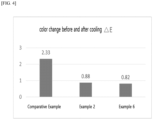
- the color change ( ⁇ E) is calculated as a change in lightness (L value), yellow value (b value), and red value (a value), and generally, the color difference cannot be recognized, when the color change ( ⁇ E) is less than 1.
- sucrose and liquid sugars may be contained in an amount of 50 to 60 parts by weight based on 100 parts by weight of the total sauce, but is not limited thereto.
- the liquid sugar may be one or more selected from the group consisting of high-fructose corn syrup, starch syrup, and liquid oligosaccharide. Specifically, it may be high-fructose corn syrup and starch syrup, but is not limited thereto.
- sucrose and liquid sugars used herein are not particularly limited, and sucrose and liquid sugars commonly used in the technical field or similar fields may be used.
- sucrose specifically, refined sucrose may be used.
- the sauce of the present disclosure may reduce sugars by about 30% or more compared to existing products by replacing sucrose with sugar alcohols and natural high-intensity sweeteners at a certain rate.
- the sugar alcohol may be contained in an amount of 20 to 40 parts by weight, specifically 25 to 35 parts by weight, and more specifically 28 to 32 parts by weight based on 100 parts by weight of the total composition, but is not limited thereto.
- the sugar alcohol When the sugar alcohol is contained in the above range, it can effectively replace sucrose while maintaining sweetness compared to existing products, and thus, the sugar may be reduced. If the sugar alcohol is contained in an amount less than 20 parts by weight, it may be difficult to maintain sweetness, and if it is contained in an amount exceeding 40 parts by weight, it may exhibit a sweetness profile and physical properties different from sucrose, decreasing preference, and may cause gastrointestinal disorders. Additionally, there may be a problem that the probability of precipitation into the products may increase as crystallization occurs easily relative to sucrose.
- the sugar alcohol may be one or more selected from the group consisting of erythritol, tagatose, xylose, arabinose, ribose, xylitol, lactitol, maltitol, and sorbitol, and may specifically be erythritol or maltitol, but is not limited thereto.
- the erythritol is a sugar alcohol known to have a sweetness profile most similar to white sucrose. It has about 70% of the sweetness of sucrose, has a very small calorie of 0 to 0.2 kcal/g, and is excreted outside the body and does not affect insulin, and accordingly, it is sometimes used in a diabetic or low-carbohydrate diet. In the case of other sugar alcohol-based sweeteners, it may cause indigestion and osmotic diarrhea, when consumed more than 10 g per day and thus, the amount consumed must be adjusted. However, erythritol is absorbed in the small intestine immediately after consumption and does not remain in the stomach for long, causing less diarrhea than other sugar alcohol sweeteners. Therefore, it can be effectively used in the preparation of low-calorie products by containing erythritol.
- the maltitol is a polyol obtained by hydrogenating maltose, which has lower calories than sucrose and has sensory properties similar to sugar. Maltitol has excellent solubility and does not precipitate into the product, and thus can be effectively used in the preparation of low-calorie products by containing maltitol.
- the natural high-intensity sweetener may be contained in an amount of 0.01 to 0.1 parts by weight, specifically 0.02 to 0.07 parts by weight, and more specifically 0.02 to 0.06 parts by weight, based on 100 parts by weight of the total composition, but is not limited thereto.
- the natural high-intensity sweetener When the natural high-intensity sweetener is contained in the above range, it may have sweetness similar to sucrose when the same amount of sucrose is used, and may mask off-smell and off-flavors of the composition and improve solubility and dispersibility. If the natural high-intensity sweetener is added in a small amount, the sweetness will be lower than that of sucrose, and thus the effect of increasing sweetness by mixing high-intensity sweeteners may not be achieved. In contrast, although these sweeteners are products that improve bitterness and aftertaste, they do not completely provide the same sweetness as sucrose. Thus, if it is contained in an excess amount, it produces a bitter taste inherent to high-intensity sweeteners, which may be inappropriate.
- the natural (naturally derived) high-intensity sweetener may be one or more selected from the group consisting of enzyme-treated stevia, steviol glycosides, monk fruit extracts, licorice extracts, and thaumatin, specifically enzyme-treated stevia and/or steviol glycosides, and more specifically enzyme-treated stevia, but is not limited thereto.
- the enzyme-treated stevia is a product obtained by adding glucose to steviol glycosides (stevioside) using a glycosyltransferase, and is a taste-improving product from which bitterness and aftertaste inherent to steviol glycosides are removed.
- the steviol glycosides are one of the high-intensity sweeteners classified as natural additives. They are natural sweeteners manufactured by extracting and purifying the leaves of stevia (which belongs to the family Asteraceae, Stevia rebaudiana Bertoni). They are heat- and pH-stable sweeteners and are about 200 times sweeter than sucrose. However, although steviol glycosides have superior sweetness relative to sucrose, they have the disadvantage of having a long-lasting aftertaste and a bitter and unpleasant taste in addition to the sweet taste.
- the steviol glycoside may be steviol glycosides (stevioside), rebaudioside A, rebaudioside B, rebaudioside C, rebaudioside D, rebaudioside E, rubusoside, dulcoside A, stevioside, or a mixture thereof, but is not limited thereto, and any high-intensity sweetener that can be used by those skilled in the art to add sweetness may be used. More specifically, it may be rebaudioside A.
- rebaudioside A may be used interchangeably with “REBATEN TM”
- the rebaudioside A exhibits sweetness and persistence of sweetness most similar to sucrose, and when mixed with a sugar alcohol, it does not leave a bitter aftertaste in the end and improves persistence of sweetness.
- the natural high-intensity sweeteners have their own bitter taste. Accordingly, the bitter taste of the natural high-intensity sweeteners may be reduced and the preference may be increased by mixing with the sugar alcohol, specifically erythritol or maltitol. Therefore, it is possible to provide a sauce which maintains excellent sweetness similar to sauces containing excessive amounts of sugars and dairy ingredients, increases persistence of sweetness, improves persistence of overall flavor, and does not cause browning, while significantly reducing calories.
- the dairy ingredient may be contained in an amount of 5 to 20 parts by weight, specifically 8 to 15 parts by weight, and more specifically 9 to 10 parts by weight based on 100 parts by weight of the total composition, but is not limited thereto.
- the dairy ingredient may be one or more selected from the group consisting of fresh cream, skim milk powder, whole milk powder, skim condensed milk, whole condensed milk, and sweetened condensed milk. More specifically, it may be fresh cream and skim milk powder, but is not limited thereto.
- the fresh cream single cream with 30 to 40% milk fat, extra-light cream with 3 to 10% milk fat, light cream with 10 to 20% milk fat, table cream with 20 to 30% milk fat, table cream, sour cream, and whipping cream, which are a processed milk cream with a milk fat content of 18% or more, processed by adding food or food additives to the milk cream, double cream with 48 to 60% milk fat, or powdered milk cream (with a milk fat content of 50% or more) prepared by adding food or food additives to milk cream may generally be used in replacement of fresh cream, but the fresh cream is not limited thereto.
- the dairy ingredients used herein are not particularly limited, and dairy ingredients commonly used in the technical field or similar fields may be used.
- the sauce of the present disclosure may be used, for example, in the form of a concentrated beverage base which is consumed by diluting in coffee or milk. Accordingly, it may contain excessive amounts of sugars and dairy ingredients.
- the natural sauce of the present disclosure may further comprise natural stabilizers, natural flavors, etc. Further, the natural sauce of the present disclosure may further comprise known materials commonly used in sauces.
- sucrose, liquid sugars, sugar alcohols, natural high-intensity sweeteners, and dairy ingredients are mixed in water.
- the water may be purified water, but is not limited thereto, and the dissolving step may be performed in a temperature range where a caramelization reaction can occur, but is not limited thereto.
- the caramelized mixture is subjected to primary pasteurization using low-temperature long-time (LTLT) pasteurization at a temperature range of 60°C to 80°C for 30 to 60 minutes.
- LTLT low-temperature long-time
- the primary pasteurization step is performed at a temperature below 60°C, pasteurization may not occur properly because heat-resistant microorganisms such as fungi cannot be controlled, and if it is performed at a temperature exceeding 80°C, it takes a long time to heat up, reducing the efficiency of the manufacturing process.
- heat-resistant microorganisms such as fungi cannot be controlled
- it is performed at a temperature exceeding 80°C, it takes a long time to heat up, reducing the efficiency of the manufacturing process.
- dairy ingredients and sugars with low heat resistance are exposed to temperatures exceeding 80°C for a long period of time, such as 30 to 60 minutes, browning may occur.
- the primarily pasteurized mixture is subjected to secondary pasteurization using high-temperature short-time (HTST) pasteurization at a temperature range of 90°C to 100°C for 30 seconds to 3 minutes.
- HTST high-temperature short-time
- LTLT low-temperature long-time
- HTST high-temperature short-time
- the step of preparing a sauce by homogenizing the pasteurized sauce may be further included, but is not limited thereto.
- the step of cooling the pasteurized sauce to room temperature may be further included, but is not limited thereto.
- the cooling step may be a step involved in the distribution process, but is not limited thereto.
- sauces specifically sauces containing excessive amounts of sugars and dairy ingredients
- preservatives are added to ensure quality stability and microbial stability, but potassium sorbate and synthetic preservatives are mainly used, which are not suitable for the needs of consumers who prefer natural additives/raw materials.
- the method for preparing a natural sauce of the present disclosure replaces sucrose and liquid sugars with sugar alcohols and natural high-intensity sweeteners at a certain rate, and comprises a two-step pasteurization process by low-temperature long-time (LTLT) pasteurization and high-temperature short-time (HTST) pasteurization, and thus prepares a natural sauce, which is low in calories by reducing the sugars compared to existing products, does not cause browning, and utilizes only natural ingredients, while maintaining excellent sweetness and microbial stability similar to sauces containing excessive amounts of sugars and dairy ingredients, thereby providing excellent effects of improving quality control and consumer preference.
- LTLT low-temperature long-time
- HTST high-temperature short-time
- Another aspect of the present disclosure provides a natural sauce prepared by the method described above.
- the method and the natural sauce are as described above.
- the sauce may have reduced browning compared to a sauce prepared by a method that does not comprise the primary and secondary pasteurization steps, but is not limited thereto.
- the term "reduction” is a concept that includes both reduced or no browning compared to a sauce prepared by a method that does not comprise primary and secondary pasteurization steps.
- the reduction may be used interchangeably with terms such as weakness, reduce, and attenuation, etc.
- the sauce may have a color change ( ⁇ E) of 0. 1 to 1 after cooling to room temperature, relative to the sauce before cooling, but is not limited thereto.
- Still another aspect of the present disclosure provides a food composition comprising the natural sauce.
- the natural sauce is as described above.
- the food composition may further comprise water, coffee, or milk in addition to the natural sauce.
- the sauce of the present disclosure When the sauce of the present disclosure is used in a food composition, the sauce may be added as it is or may be used together with other food compositions or ingredients, and may be used appropriately according to a conventional method.
- the amount of the active ingredient to be mixed may be suitably determined in consideration of the taste and flavor of the food, the purpose of use, health, etc.
- Examples of the food composition may include, but are not limited to, various sauces, ketchup, dressings, beverages, tea, drinks, alcoholic beverages, vitamin complexes, soups, dairy products, candies, chocolates, etc., and any composition that can produce food, comprising sauce, may be used without limitation.
- Yet another aspect of the present disclosure provides a method for reducing browning of a natural sauce.
- the natural sauce and browning are as described above.
- a method for reducing browning of a natural sauce comprising: mixing sucrose, liquid sugars, sugar alcohols, natural high-intensity sweeteners, and dairy ingredients in water; dissolving and caramelizing the mixture by heating; subjecting the caramelized mixture to primary pasteurization using low-temperature long-time (LTLT) pasteurization at a temperature range of 60°C to 80°C for 30 to 60 minutes; and subjecting the primarily pasteurized mixture to secondary pasteurization using high-temperature short-time (HTST) pasteurization at a temperature range of 90°C to 100°C for 30 seconds to 3 minutes.
- LTLT low-temperature long-time
- HTST high-temperature short-time
- the sucrose and liquid sugars may be contained in an amount of 50 to 60 parts by weight based on 100 parts by weight of the total sauce; the sugar alcohols may be contained in an amount of 20 to 40 parts by weight based on 100 parts by weight of the total sauce; the natural high-intensity sweeteners may be contained in an amount of 0.01 to 0.1 parts by weight based on 100 parts by weight of the total sauce; and the dairy ingredients may be contained in an amount of 5 to 20 parts by weight based on 100 parts by weight of the total sauce, but the contents are not limited thereto.
- a sauce with increased brightness may be prepared using the method of reducing browning of a natural sauce described above, and thus, the sauce of the present disclosure may be used as a brightness enhancer of the sauce.
- Even another aspect of the present disclosure provides a natural sauce comprising sucrose, liquid sugars, sugar alcohols, natural high-intensity sweeteners, and dairy ingredients.
- the natural sauce is as described above.
- the sucrose and liquid sugars may be contained in an amount of 50 to 60 parts by weight based on 100 parts by weight of the total sauce; the sugar alcohols may be contained in an amount of 20 to 40 parts by weight based on 100 parts by weight of the total sauce; the natural high-intensity sweeteners may be contained in an amount of 0.01 to 0.1 parts by weight based on 100 parts by weight of the total sauce; and the dairy ingredients may be contained in an amount of 5 to 20 parts by weight based on 100 parts by weight of the total sauce, and the sauce may be caramelized, but is not limited thereto.
- the sauce has a color of higher lightness (L value) and yellow color value (b value) and a lower red color value (a value) measured at room temperature compared to a sauce that does not contain sugar alcohols and natural high sweeteners, but is not limited thereto.
- Caramel sauces of Comparative Example and Examples 1 to 6 were prepared with the compositions shown in Table 1 below.
- the mixture was subjected to primary pasteurization using low-temperature long-time (LTLT) pasteurization at a temperature range of 60°C to 80°C for 30 to 60 minutes; and then the primarily pasteurized mixture was subjected to secondary pasteurization using high-temperature short-time (HTST) pasteurization at a temperature range of 90°C to 100°C for 30 seconds to 3 minutes.
- LTLT low-temperature long-time
- HTST high-temperature short-time
- the primary pasteurization was performed at 60°C for 30 minutes, and then the secondary pasteurization was performed by raising the temperature to 80°C (takes about 25 minutes).
- the secondary pasteurization was performed at a temperature of 95°C ⁇ 5°C for 30 seconds to 1 minute and 40 seconds using a tubular sterilizer, and when the temperature was decreased, it was performed for a total of less than 3 minutes, including the time to return and re-pass.
- caramel sauce was prepared by homogenizing at 3000 rpm using a homomixer (homogenizer), placed in the same container, stored at room temperature (about 25°C), and used in the experiment.
- homomixer homomixer
- the caramel sauces prepared in Examples were prepared to contain 20 to 30% sugar alcohols and 50 to 60% sugars (white sucrose, high-fructose corn syrup, and starch syrup) excluding sugar alcohol, and were named Examples 1 to 6, respectively.
- the caramel sauce was prepared with the same composition as a commercially available general-purpose product, and was prepared in the same manner as in Examples, except that it was pasteurized for 30 minutes to 1 hour at a temperature range of 90°C to 100°C.
- the pasteurization was performed by raising the temperature of the solution at a temperature of 30°C to 50°C to 90°C (took about 40 minutes), and performed at 90°C for 30 minutes, and then homogenization was performed by raising the temperature to 95°C (took about 5 minutes).
- the caramel sauce prepared in Comparative Example was prepared such that it did not contain sugar alcohols and contained more than 80% of sugars (white sucrose, high-fructose corn syrup, and starch syrup) excluding sugar alcohol, and was named Comparative Example.
- Example 2 was prepared by: preparing a representative of Example 1 in order to confirm whether it was possible to reduce sugars by about 30% or more compared to the actual existing product (Comparative Example).
- Example 2 which was designed to theoretically reduce sugar by 33.78% based on 100% sugar of Comparative Example, was commissioned by an authorized institution to carry out nutritional analysis.
- Table 3 [nutritional analysis result] Comparative Example Example2 sugar 60.82 40.55 reduction(%) - 33.32
- Comparative Example, Example 2, and Example 6 were diluted at 1/10 in sterilized water, and the number of general bacteria and fungi was measured according to the General Test Method of the Food Code. A 3M medium was used, and the average of 3 repeated values was used for each sample.
- Sample before pasteurization Sample just before pasteurization after mixing raw materials and measuring specifications.
- Sample after pasteurization Sample with all pasteurization/homogenization/filling completed.
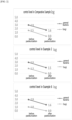
- Examples 2 and 6 immediately after high-temperature filling and after completion of cooling of the product temperature (room temperature, day 2), L (lightness) a (red), b (yellow), and ⁇ E (color change) values were measured using a colorimeter (Minolta CR300).
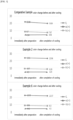
- the products of Examples 2 and 6 were compared with the existing product (general-purpose commercially-available caramel sauce) based on six items: color, sweetness, persistence of sweetness, caramel taste (flavor), mouthfeel, and body.
- Examples 2 and 6 exhibited detailed sensory properties similar to those of Comparative Example, and in particular, the persistence of sweetness was confirmed to be superior compared to that of Comparative Example.
Landscapes
- Life Sciences & Earth Sciences (AREA)
- Engineering & Computer Science (AREA)
- Food Science & Technology (AREA)
- Polymers & Plastics (AREA)
- Chemical & Material Sciences (AREA)
- Health & Medical Sciences (AREA)
- Nutrition Science (AREA)
- Proteomics, Peptides & Aminoacids (AREA)
- Wood Science & Technology (AREA)
- Zoology (AREA)
- Molecular Biology (AREA)
- Seeds, Soups, And Other Foods (AREA)
- Seasonings (AREA)
- Confectionery (AREA)
Applications Claiming Priority (2)
| Application Number | Priority Date | Filing Date | Title |
|---|---|---|---|
| KR1020210191606A KR102817170B1 (ko) | 2021-12-29 | 2021-12-29 | 천연 소스 및 그 제조 방법 |
| PCT/KR2022/020840 WO2023128444A1 (ko) | 2021-12-29 | 2022-12-20 | 천연 소스 및 그 제조 방법 |
Publications (2)
| Publication Number | Publication Date |
|---|---|
| EP4458166A1 true EP4458166A1 (de) | 2024-11-06 |
| EP4458166A4 EP4458166A4 (de) | 2025-05-21 |
Family
ID=86999782
Family Applications (1)
| Application Number | Title | Priority Date | Filing Date |
|---|---|---|---|
| EP22916586.5A Pending EP4458166A4 (de) | 2021-12-29 | 2022-12-20 | Natürliche sauce und verfahren zur herstellung davon |
Country Status (6)
| Country | Link |
|---|---|
| US (1) | US20250366501A1 (de) |
| EP (1) | EP4458166A4 (de) |
| JP (1) | JP2024545911A (de) |
| KR (1) | KR102817170B1 (de) |
| CN (1) | CN118613174A (de) |
| WO (1) | WO2023128444A1 (de) |
Family Cites Families (13)
| Publication number | Priority date | Publication date | Assignee | Title |
|---|---|---|---|---|
| KR100520438B1 (ko) | 2003-11-10 | 2005-10-11 | 대상 주식회사 | 저장안정성과 감미질이 개선된 설탕대체용 감미료 조성물및 그 제조방법 |
| JP2012039915A (ja) * | 2010-08-18 | 2012-03-01 | Uha Mikakuto Co Ltd | 餅様食感含水チョコレート及びその製造方法 |
| JP2012100560A (ja) * | 2010-11-08 | 2012-05-31 | Q P Corp | 糖類高含有ソース類の製造方法、及び糖類高含有ソース類 |
| MX2015009650A (es) * | 2013-01-29 | 2015-12-07 | Tate & Lyle Ingredients | Confiterias reducidas en azucar. |
| GB201315559D0 (en) * | 2013-08-02 | 2013-10-16 | Tate & Lyle Ingredients | Sweetener compositions |
| CN104642990A (zh) * | 2013-11-20 | 2015-05-27 | 上海爱普植物科技有限公司 | 一种焦糖酱的制备方法 |
| KR101898210B1 (ko) * | 2016-07-15 | 2018-09-12 | 인그리디언코리아 유한회사 | 저당함량 감미제 및 이를 포함하는 식품 조성물 |
| KR20190049534A (ko) * | 2017-11-01 | 2019-05-09 | 씨제이제일제당 (주) | 알룰로스를 함유하는 소스 제조용 조성물 및 이의 용도 |
| KR102246960B1 (ko) * | 2017-11-24 | 2021-04-30 | 주식회사 삼양사 | 저칼로리 매운 맛 소스 |
| CN108618083A (zh) * | 2018-04-24 | 2018-10-09 | 嘉兴纳诺生物科技有限公司 | 含有罗汉果甜苷的低糖分焦糖风味组合物、制备方法和应用 |
| KR102106161B1 (ko) * | 2018-05-23 | 2020-04-29 | 주식회사 삼양사 | 색도 안정성이 높은 감미 조성물 |
| WO2020123067A2 (en) * | 2018-10-12 | 2020-06-18 | Epc Natural Products Co., Ltd. | Sweetener and flavor compositions, methods of making and methods of use thereof |
| KR102062716B1 (ko) * | 2019-06-24 | 2020-01-06 | 정남옥 | 숙성노니원액이 함유된 숙취해소용 음료조성물 및 그의 제조방법 |
-
2021
- 2021-12-29 KR KR1020210191606A patent/KR102817170B1/ko active Active
-
2022
- 2022-12-20 EP EP22916586.5A patent/EP4458166A4/de active Pending
- 2022-12-20 JP JP2024539526A patent/JP2024545911A/ja active Pending
- 2022-12-20 US US18/725,734 patent/US20250366501A1/en active Pending
- 2022-12-20 CN CN202280090366.5A patent/CN118613174A/zh active Pending
- 2022-12-20 WO PCT/KR2022/020840 patent/WO2023128444A1/ko not_active Ceased
Also Published As
| Publication number | Publication date |
|---|---|
| WO2023128444A1 (ko) | 2023-07-06 |
| KR102817170B1 (ko) | 2025-06-05 |
| JP2024545911A (ja) | 2024-12-13 |
| US20250366501A1 (en) | 2025-12-04 |
| EP4458166A4 (de) | 2025-05-21 |
| CN118613174A (zh) | 2024-09-06 |
| KR20230101476A (ko) | 2023-07-06 |
Similar Documents
| Publication | Publication Date | Title |
|---|---|---|
| CN102429201B (zh) | 对于高甜度甜味料呈现味道改良的组成物及其应用 | |
| JP6972208B2 (ja) | プシコースを含有するシロップ組成物、及びこれを含む食品 | |
| US9044038B2 (en) | Method of improving sweetness qualities of stevia extract | |
| AU2010219684B2 (en) | Milk-flavoured beverage | |
| JPWO2003007734A1 (ja) | 呈味改良組成物及びその応用 | |
| CA3027697A1 (en) | Steviol glycoside compositions for oral ingestion or use | |
| BR112016027088B1 (pt) | Composição adoçante, seu uso, produto de bebida ou alimentício e adoçante de mesa | |
| JP2013252075A (ja) | 高甘味度甘味料に起因する可食組成物の味質改善方法 | |
| US20220159988A1 (en) | Tea beverage having improved quality of taste exhibited by sugar and sweetener | |
| JP3508127B2 (ja) | 甘味付与方法及び甘味料 | |
| AU2014298419A1 (en) | Stable sweetener compositions | |
| Saulo | Sugars and sweeteners in foods | |
| JP2001258502A (ja) | 甘味料組成物、甘味付与方法およびその利用 | |
| JP2010279350A (ja) | 高甘味度甘味料の味質改善方法 | |
| US20160150812A1 (en) | Sweetener compositions comprising steviol glycosides and other sweeteners | |
| US20160183575A1 (en) | Stable sweetener compositions | |
| US20250366501A1 (en) | Natural sauce, and method for preparing same | |
| JP2004033226A (ja) | 甘味料組成物、甘味付与方法およびその利用 | |
| JP3558399B2 (ja) | 高温加熱殺菌飲料の甘味付与方法 | |
| JP6261834B1 (ja) | 飲料、飲料の製造方法、及び飲料の香味を改善する方法 | |
| EP2865279B1 (de) | Kalorienarme Getränkezusammensetzung | |
| KR20200002893A (ko) | 감미료 조성물 및 스테비아 추출물의 미질 개선 방법 | |
| BR112020022564A2 (pt) | Derivados de glicosídeo de terpeno e usos dos mesmos |
Legal Events
| Date | Code | Title | Description |
|---|---|---|---|
| STAA | Information on the status of an ep patent application or granted ep patent |
Free format text: STATUS: THE INTERNATIONAL PUBLICATION HAS BEEN MADE |
|
| PUAI | Public reference made under article 153(3) epc to a published international application that has entered the european phase |
Free format text: ORIGINAL CODE: 0009012 |
|
| STAA | Information on the status of an ep patent application or granted ep patent |
Free format text: STATUS: REQUEST FOR EXAMINATION WAS MADE |
|
| 17P | Request for examination filed |
Effective date: 20240729 |
|
| AK | Designated contracting states |
Kind code of ref document: A1 Designated state(s): AL AT BE BG CH CY CZ DE DK EE ES FI FR GB GR HR HU IE IS IT LI LT LU LV MC ME MK MT NL NO PL PT RO RS SE SI SK SM TR |
|
| DAV | Request for validation of the european patent (deleted) | ||
| DAX | Request for extension of the european patent (deleted) | ||
| A4 | Supplementary search report drawn up and despatched |
Effective date: 20250416 |
|
| RIC1 | Information provided on ipc code assigned before grant |
Ipc: A23B 2/40 20250101ALI20250411BHEP Ipc: A23L 27/21 20160101ALI20250411BHEP Ipc: A23L 27/30 20160101ALI20250411BHEP Ipc: A23L 23/00 20160101AFI20250411BHEP |