EP4445896A1 - Nanosuspension mit progerinin und herstellungsverfahren dafür - Google Patents
Nanosuspension mit progerinin und herstellungsverfahren dafür Download PDFInfo
- Publication number
- EP4445896A1 EP4445896A1 EP21967320.9A EP21967320A EP4445896A1 EP 4445896 A1 EP4445896 A1 EP 4445896A1 EP 21967320 A EP21967320 A EP 21967320A EP 4445896 A1 EP4445896 A1 EP 4445896A1
- Authority
- EP
- European Patent Office
- Prior art keywords
- nanosuspension
- progerinin
- drug
- suspension
- prepare
- Prior art date
- Legal status (The legal status is an assumption and is not a legal conclusion. Google has not performed a legal analysis and makes no representation as to the accuracy of the status listed.)
- Granted
Links
Images




Classifications
-
- A—HUMAN NECESSITIES
- A61—MEDICAL OR VETERINARY SCIENCE; HYGIENE
- A61K—PREPARATIONS FOR MEDICAL, DENTAL OR TOILETRY PURPOSES
- A61K9/00—Medicinal preparations characterised by special physical form
- A61K9/10—Dispersions; Emulsions
-
- A—HUMAN NECESSITIES
- A61—MEDICAL OR VETERINARY SCIENCE; HYGIENE
- A61K—PREPARATIONS FOR MEDICAL, DENTAL OR TOILETRY PURPOSES
- A61K9/00—Medicinal preparations characterised by special physical form
- A61K9/10—Dispersions; Emulsions
- A61K9/107—Emulsions ; Emulsion preconcentrates; Micelles
-
- A—HUMAN NECESSITIES
- A61—MEDICAL OR VETERINARY SCIENCE; HYGIENE
- A61K—PREPARATIONS FOR MEDICAL, DENTAL OR TOILETRY PURPOSES
- A61K31/00—Medicinal preparations containing organic active ingredients
- A61K31/33—Heterocyclic compounds
- A61K31/335—Heterocyclic compounds having oxygen as the only ring hetero atom, e.g. fungichromin
- A61K31/365—Lactones
- A61K31/366—Lactones having six-membered rings, e.g. delta-lactones
- A61K31/37—Coumarins, e.g. psoralen
-
- A—HUMAN NECESSITIES
- A61—MEDICAL OR VETERINARY SCIENCE; HYGIENE
- A61K—PREPARATIONS FOR MEDICAL, DENTAL OR TOILETRY PURPOSES
- A61K47/00—Medicinal preparations characterised by the non-active ingredients used, e.g. carriers or inert additives; Targeting or modifying agents chemically bound to the active ingredient
- A61K47/06—Organic compounds, e.g. natural or synthetic hydrocarbons, polyolefins, mineral oil, petrolatum or ozokerite
- A61K47/08—Organic compounds, e.g. natural or synthetic hydrocarbons, polyolefins, mineral oil, petrolatum or ozokerite containing oxygen, e.g. ethers, acetals, ketones, quinones, aldehydes, peroxides
- A61K47/12—Carboxylic acids; Salts or anhydrides thereof
-
- A—HUMAN NECESSITIES
- A61—MEDICAL OR VETERINARY SCIENCE; HYGIENE
- A61K—PREPARATIONS FOR MEDICAL, DENTAL OR TOILETRY PURPOSES
- A61K47/00—Medicinal preparations characterised by the non-active ingredients used, e.g. carriers or inert additives; Targeting or modifying agents chemically bound to the active ingredient
- A61K47/06—Organic compounds, e.g. natural or synthetic hydrocarbons, polyolefins, mineral oil, petrolatum or ozokerite
- A61K47/20—Organic compounds, e.g. natural or synthetic hydrocarbons, polyolefins, mineral oil, petrolatum or ozokerite containing sulfur, e.g. dimethyl sulfoxide [DMSO], docusate, sodium lauryl sulfate or aminosulfonic acids
-
- A—HUMAN NECESSITIES
- A61—MEDICAL OR VETERINARY SCIENCE; HYGIENE
- A61K—PREPARATIONS FOR MEDICAL, DENTAL OR TOILETRY PURPOSES
- A61K47/00—Medicinal preparations characterised by the non-active ingredients used, e.g. carriers or inert additives; Targeting or modifying agents chemically bound to the active ingredient
- A61K47/06—Organic compounds, e.g. natural or synthetic hydrocarbons, polyolefins, mineral oil, petrolatum or ozokerite
- A61K47/22—Heterocyclic compounds, e.g. ascorbic acid, tocopherol or pyrrolidones
-
- A—HUMAN NECESSITIES
- A61—MEDICAL OR VETERINARY SCIENCE; HYGIENE
- A61K—PREPARATIONS FOR MEDICAL, DENTAL OR TOILETRY PURPOSES
- A61K47/00—Medicinal preparations characterised by the non-active ingredients used, e.g. carriers or inert additives; Targeting or modifying agents chemically bound to the active ingredient
- A61K47/30—Macromolecular organic or inorganic compounds, e.g. inorganic polyphosphates
- A61K47/36—Polysaccharides; Derivatives thereof, e.g. gums, starch, alginate, dextrin, hyaluronic acid, chitosan, inulin, agar or pectin
- A61K47/38—Cellulose; Derivatives thereof
-
- A—HUMAN NECESSITIES
- A61—MEDICAL OR VETERINARY SCIENCE; HYGIENE
- A61K—PREPARATIONS FOR MEDICAL, DENTAL OR TOILETRY PURPOSES
- A61K9/00—Medicinal preparations characterised by special physical form
- A61K9/14—Particulate form, e.g. powders, Processes for size reducing of pure drugs or the resulting products, Pure drug nanoparticles
- A61K9/141—Intimate drug-carrier mixtures characterised by the carrier, e.g. ordered mixtures, adsorbates, solid solutions, eutectica, co-dried, co-solubilised, co-kneaded, co-milled, co-ground products, co-precipitates, co-evaporates, co-extrudates, co-melts; Drug nanoparticles with adsorbed surface modifiers
- A61K9/145—Intimate drug-carrier mixtures characterised by the carrier, e.g. ordered mixtures, adsorbates, solid solutions, eutectica, co-dried, co-solubilised, co-kneaded, co-milled, co-ground products, co-precipitates, co-evaporates, co-extrudates, co-melts; Drug nanoparticles with adsorbed surface modifiers with organic compounds
-
- A—HUMAN NECESSITIES
- A61—MEDICAL OR VETERINARY SCIENCE; HYGIENE
- A61K—PREPARATIONS FOR MEDICAL, DENTAL OR TOILETRY PURPOSES
- A61K47/00—Medicinal preparations characterised by the non-active ingredients used, e.g. carriers or inert additives; Targeting or modifying agents chemically bound to the active ingredient
- A61K47/06—Organic compounds, e.g. natural or synthetic hydrocarbons, polyolefins, mineral oil, petrolatum or ozokerite
- A61K47/08—Organic compounds, e.g. natural or synthetic hydrocarbons, polyolefins, mineral oil, petrolatum or ozokerite containing oxygen, e.g. ethers, acetals, ketones, quinones, aldehydes, peroxides
- A61K47/10—Alcohols; Phenols; Salts thereof, e.g. glycerol; Polyethylene glycols [PEG]; Poloxamers; PEG/POE alkyl ethers
-
- A—HUMAN NECESSITIES
- A61—MEDICAL OR VETERINARY SCIENCE; HYGIENE
- A61K—PREPARATIONS FOR MEDICAL, DENTAL OR TOILETRY PURPOSES
- A61K47/00—Medicinal preparations characterised by the non-active ingredients used, e.g. carriers or inert additives; Targeting or modifying agents chemically bound to the active ingredient
- A61K47/30—Macromolecular organic or inorganic compounds, e.g. inorganic polyphosphates
- A61K47/32—Macromolecular compounds obtained by reactions only involving carbon-to-carbon unsaturated bonds, e.g. carbomers, poly(meth)acrylates, or polyvinyl pyrrolidone
Definitions
- the present disclosure relates to a nanosuspension including progerinin which is a poorly soluble drug, and a preparation method thereof.
- wetting agents are often required to promote suspension of hydrophobic drug particles in aqueous media.
- surface-active wetting agents i.e., surfactants
- sodium lauryl sulfate reduce the interfacial tension between the drug particles and the suspension vehicle to allow suspension vehicles to penetrate into drug aggregates and/or pores on the drug particle, thereby increasing suspension properties of hydrophobic drugs in the aqueous medium, at least partially.
- surfactants such as sodium lauryl sulfate
- suspensions containing free drugs may be chemically unstable.
- Another undesirable consequence of using relatively high amounts of surfactant to promote suspension of low soluble drugs is that because surfactants stabilize bubbles, accompanying air tends to remain trapped during homogenization or shaking of these suspensions. Since this trapped air changes with the stirring force, duration of the stirring, and an elapsed time of the stirring, the volume of the suspension changes, making it difficult or impossible to administer at a uniform dose over time.
- a low water-soluble drug is administered as a suspension, it is desirable that the suspension shows gentle sedimentation to provide adequate uniformity in the dose. Conversely, if rapid sedimentation occurs, as the case of the vehicle, the suspension must be shaken before each administration in order to achieve uniformity in the dose. If other factors (such as drug particle size, uniformity, and density) are equivalent, a sinking rate of drug particles decreases as a viscosity of a particular suspension vehicle increases. Therefore, it is desirable that the suspension be moderately viscous to inhibit or slow down the sedimentation of drug particles. However, while this increased viscosity promotes physical stability, it also makes it difficult to pour or administer the suspension.
- progerinin which has a structure represented by the following Chemical Formula 1, has shown excellent effects of suppressing progerin expression and effects of inhibiting binding between progerin and lamin A, and, as a drug exhibiting effects of prolonging a survival period of progeria-induced animal model, it may be used as a pharmaceutical composition for preventing or treating progeria.
- the compound name of the progerinin is (7S)-(+)-8,8-dimethyl-7-(3-phenylallyloxy)-7,8-dihydro-6H-pyrano [3,2-g]chromen-2-one (named 'SLC-D011').
- Progerinin a drug that has been shown to be effective in progeria, is a BCS class II molecule exhibiting high apparent permeability and low solubility in aqueous media according to the criteria of the Biopharmaceutical Classification System (BCS).
- BCS Biopharmaceutical Classification System
- the nanosuspension is a colloidal dispersion of stabilized drug particles in the presence of polymers, surfactants, or both.
- the nanosuspension is used to deliver drug substances that exhibit low water solubility and lipid solubility.
- the small particles in the nanosuspension provide a very large drug surface area, thereby increasing a dissolution rate of insoluble drugs. Consequently, BCS class II and IV compounds exhibit enhanced bioavailability, rapid activity, and other desirable biopharmaceutical effects.
- the inventors were able to conduct animal experiments using a mixture of monoolein and tricaprin, which are oil-based solutions, but due to the nature of the disease, it was found that an oil-dissolved formulation is incompatible as high doses and long-term intake are required, recognizing a need for development of a new formulation that allows a long-term intake.
- the above-mentioned progerinin is poorly soluble to the extent that its solubility in water is close to zero, and the solubility is very low even in existing ingestible solvents, such that it is necessary to develop a formulation that enables long-term intake and body absorption through the introduction of new technology.
- the inventors have attempted to develop a nanosuspension formulation that is suitable for progerinin drugs with effects of preventing or treating progeria, and a preparation method thereof. Specifically, by optimizing the particle diameter of progerinin drugs with excellent bioabsorption efficiency and selecting water-soluble polymers and excipients for preparation of nanosuspensions, it was aimed to develop an oral progerinin nanosuspension preparation including progerinin drugs with outstanding dispersibility or uniformity and enhanced bioavailability as well as enhanced stability.
- the present disclosure provides a nanosuspension including progerinin, including (a) 1 to 10 wt% of a progerinin compound represented by the following Chemical Formula 1; (b) 0.5 to 5 wt% of hydroxypropyl methylcellulose (HPMC) which is a polymeric suspension; (c) 0.5 to 5 wt% of D- ⁇ -tocopherol polyethylene glycol succinate (TPGS) which is a solubility enhancer; and (d) 0.1 to 0.5 wt% of potassium sorbate which is a preservative, wherein the progerinin compound is drug particles formed via wet type ball milling in an average particle diameter (D50) of 100 nm to 300 nm.
- D50 average particle diameter
- the present disclosure provides a nanosuspension including progerinin, including (a) 1 to 10 wt% of a progerinin compound represented by the following Chemical Formula 1; (b') 0.5 to 5 wt% of hydroxypropyl cellulose (HPC) which is a polymeric suspension; (c') 0.1 to 0.5 wt% of dioctyl sodium sulfosuccinate (DOSS) which is a surfactant; and (d) 0.1 to 0.5 wt% of potassium sorbate which is a preservative, wherein the progerinin compound is drug particles formed via wet type ball milling in an average particle diameter (D50) of 100 nm to 300 nm.
- a progerininin compound represented by the following Chemical Formula 1
- HPC hydroxypropyl cellulose
- DOSS dioctyl sodium sulfosuccinate
- potassium sorbate which is a preservative
- the present disclosure provides a method of preparing a nanosuspension including progerinin, including (i) mixing purified water with hydroxypropyl methylcellulose (HPMC) (b) and D- ⁇ -tocopherol polyethylene glycol succinate (TPGS) (c) to prepare a vehicle solution and then adding and mixing progerinin (a) represented by the following Chemical Formula 1 so as to prepare a suspension; (ii) subjecting the suspension to wet type ball milling to prepare a nanosuspension; and (iii) mixing the nanosuspension with potassium sorbate (d) to finally prepare a nanosuspension with enhanced stability, wherein the progerinin compound in the nanosuspension of (iii) is in the form of drug particles with an average particle diameter (D50) of 100 nm to 300 nm.
- D50 average particle diameter
- the present disclosure provides a method of preparing a nanosuspension including progerinin, including (i) mixing purified water with hydroxypropyl cellulose (HPC) (b'); and dioctyl sodium sulfosuccinate (DOSS) (c'); to prepare a vehicle solution and then adding and mixing progerinin (a) represented by the following Chemical Formula 1 so as to prepare a suspension; (ii) subjecting the suspension to wet type ball milling to prepare a nanosuspension; and (iii) mixing the nanosuspension with potassium sorbate (d) to finally prepare a nanosuspension with enhanced stability, wherein the progerinin compound in the nanosuspension of (iii) is in the form of drug particles with an average particle diameter (D50) of 100 nm to 300 nm.
- HPC hydroxypropyl cellulose
- DOSS dioctyl sodium sulfosuccinate
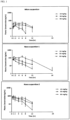
- the present disclosure relates to a nanosuspension formulation suitable for a poorly soluble progerinin drug and a preparation method thereof, wherein, in the case of the nanosuspension according to the present disclosure which includes drug particles with an average particle diameter of 200 nm or less and is obtained by mixing micronized progerinin drugs with hydroxypropyl methylcellulose (HPMC) or hydroxypropyl cellulose (HPC), a water-soluble polymer; D- ⁇ -tocopherol polyethylene glycol succinic acid (TPGS), a solubility agent, or dioctyl sodium sulfosuccinate (DOSS), a surfactant; and potassium sorbate, a preservative; and then subjecting the mixture to ball milling in a dyno-mill chamber for a predetermined period of time, excellent bioavailability was exhibited (Example 1-1 and FIG. 1 ).
- HPMC hydroxypropyl methylcellulose
- HPC hydroxypropyl cellulose
- the nanosuspension including the progerinin according to the present disclosure as an active ingredient has uniform dispersibility and stability
- it was determined that the nanosuspension has dispersion stability and excellent bioabsorption efficiency by maintaining particle homogeneity of 200 nm or less for more than 20 days (up to 70 days) at 4°C.
- the inventors have completed a method of preparing a progerinin nanosuspension with enhanced bioavailability, wherein, in the case of the nanosuspension that is obtained by mixing micronized progerinin drugs in a vehicle solution including hydroxypropyl methylcellulose (HPMC), D- ⁇ -tocopherol polyethylene glycol succinate (TPGS), and potassium sorbate and then subjecting the mixture to wet type ball milling in a dyno-mill chamber for a predetermined period of time, it has uniform particle dispersibility by including particles with an average particle diameter (D50) of 200 nm or less and also ensures stability as the dispersibility is maintained for more than 20 days at 4°C.
- a vehicle solution including hydroxypropyl methylcellulose (HPMC), D- ⁇ -tocopherol polyethylene glycol succinate (TPGS), and potassium sorbate
- HPMC hydroxypropyl methylcellulose
- TPGS D- ⁇ -tocopherol polyethylene glycol succinate
- the present disclosure provides a nanosuspension including progerinin with enhanced bioavailability.
- a nanosuspension according to the present disclosure incudes (a) 1 to 10 wt% of a progerinin compound represented by the following Chemical Formula 1; (b) 0.5 to 5 wt% of hydroxypropyl methylcellulose (HPMC) which is a polymeric suspension; (c) 0.5 to 5 wt% of D- ⁇ -tocopherol polyethylene glycol succinate (TPGS) which is a solubility enhancer; and (d) 0.1 to 0.5 wt% of potassium sorbate which is a preservative.
- a progerinin compound represented by the following Chemical Formula 1
- HPMC hydroxypropyl methylcellulose
- TPGS D- ⁇ -tocopherol polyethylene glycol succinate
- potassium sorbate which is a preservative.
- a nanosuspension according to the present disclosure includes (a) 1 to 10 wt% of a progerinin compound represented by the following Chemical Formula 1; (b') 0.5 to 5 wt% of hydroxypropyl cellulose (HPC) which is a polymeric suspension; (c') 0.1 to 0.5 wt% of dioctyl sodium sulfosuccinate (DOSS) which is a surfactant; and (d) 0.1 to 0.5 wt% of potassium sorbate which is a preservative.
- a progerinin compound represented by the following Chemical Formula 1
- HPC hydroxypropyl cellulose
- DOSS dioctyl sodium sulfosuccinate
- potassium sorbate which is a preservative.
- progerinin (a) is a decursin derivative which is (7S)-(+)-8,8-dimethyl-7-(3-phenylallyloxy)-7,8-dihydro-6H-pyrano[3,2-g]chromen-2-one.
- progerinin may also be named 'SLC-D011'.
- Progerinin drugs have shown excellent effects of suppressing progerin expression and effects of inhibiting binding between progerin and lamin A and may be used as a pharmaceutical composition for preventing or treating progeria, an age-related disease, as a drug that has an effect of prolonging a survival period in progeria-induced animal models. While progerinin is poorly soluble that its solubility in water is close to zero, in the present disclosure, solubility is enhanced, and a formulation that enables long-term intake and absorption in the human body is provided.
- hydroxypropyl methylcellulose (HPMC) (b) or hydroxypropyl cellulose (HPC) (b'), which corresponds to a water-soluble polymer that is a polymeric suspension agent in the present disclosure, is an ingredient that helps dispersion of progerinin drugs and other components in a solution. It is desirable that the polymeric suspension agent is included in an amount of 0.5 to 5 wt% with respect to the total nanosuspension. More preferably, the amount is 1 to 3 wt%.
- the polymeric suspension agent is included below the range, the sinking rate of the suspension becomes poor, and if the polymeric suspension agent is included above the range, preparation becomes challenging due to difficulty in stirring. In particular, if the polymeric suspension agent is included above the range, the dispersibility of the suspension is lowered due to poor uniformity in the stirring, thereby resulting in an increase in the volume of defective products with insufficiency in the content in the production of the product.
- D- ⁇ -tocopherol polyethylene glycol succinate (TPGS) (c), a solubility enhancer, is a component that enhances the solubility of a poorly soluble drug. It is desirable that the TPGS is included in an amount of 0.5 to 5 wt% with respect to the total nanosuspension. More preferably, the amount is 1 wt%. If the solubility enhancer is included below the range, the solubility is lowered, and if the solubility enhancer is included above the range, the toxicity permissible limit may be exceeded, such that it is recommended to use it within the above range.
- dioctyl succinate sodium (DOSS) (c'), a surfactant may be used instead of the solubility enhancer.
- DOSS dioctyl succinate sodium
- c' a surfactant
- the progerinin drug which is a poorly soluble drug in the suspension, has an average particle diameter (D50) of 100 nm to 300 nm. More preferably, the average particle diameter is 150 nm to 250 nm, and even more preferably, the average particle diameter is 200 nm or less. With the average particle diameter within the above range, the solubility is the highest, and nanoparticles have a larger surface area to be dissolved more easily, thereby maximizing the bioavailability or bioabsorption efficiency. This was determined by Example ⁇ 1-1> that is described below. Moreover, for the preparation of nanosuspensions having the average particle diameter, it may be prepared via wet type ball milling using a dyno-mill.
- the term “stability” may all include homogeneity, dispersibility, sedimentation stability, and storage stability of drug particles.
- the nanosuspension according to the present disclosure has uniform dispersibility for more than 20 days at 4°C and ensures an advanced effect in that it increases easiness in the manufacture and storage stability of the suspension.
- the "sinking rate” as used herein refers to a rate and degree at which particles settle in a fluid, and in the case of suspensions, a certain level of sedimentation must be satisfied (if 1 is the maximum, 0.9 or higher is required) in order to be approved for sale as a drug.
- the nanosuspension according to the present disclosure is very excellent in the sinking rate by using a vehicle solution that includes hydroxypropyl methylcellulose (HPMC), TPGS or dioctyl sodium sulfosuccinate (DOSS), and potassium sorbate that are suitable for the progerinin drug.
- the pH of the suspension of the present disclosure may be 5.5 to 8.5, preferably 6.0 to 7.0.
- the nanosuspension may have a viscosity of 2 to 8.5 mPa ⁇ s, preferably 7 to 8.5 mPa ⁇ s.
- the nanosuspension of the present disclosure may further include one or more components selected from the group consisting of sweeteners, preservatives, flavors, pH adjusters, and colorants.
- sweetener refers to a food additive that has (produces) a sweetness but generally a lower food caloric value, including those that are both natural and synthetic.
- the sweetener may be applied to the present disclosure without limitation if it is generally available in the field of food and medicine.
- the term "preservative” refers to a pharmaceutically acceptable substance that prevents microbial proliferation or degradation by undesired chemical changes.
- the preservative has bactericidal and/or fungicidal or antioxidant properties, and in the present disclosure, it is desirable to use potassium sorbate (d) in an amount of 0.1 to 0.5 wt%, and more preferably 0.2 wt%. Within the above range, it is possible to enhance the shelf life without degrading the effectiveness of the drug. If it is added before milling, the content decreases, so it is preferable to complete the nanosuspension by post-addition after milling.
- flavor or "aroma” as used herein includes flavoring ingredients or compositions commonly used in the food industry, whether it is natural or synthetic. This includes a single compound or mixture.
- pH adjuster refers to an excipient used to adjust the pH of a suspension to a desired value, and may be, for example, but is not limited to, citric acid, sodium citrate, or ascorbic acid, and those commonly used in the technical field of the present disclosure may be used in the present disclosure without limitation.
- colorant as used herein is included to make difference in the color of the suspension and may be used to prepare a suspension that has a desired color by being included in a formulation. If it is commonly used in the technical field of the present disclosure, it may be included in the present disclosure without limitation.
- the present disclosure provides a method of preparing a nanosuspension including a poorly soluble decursin derivative drug with enhanced bioavailability and stability.
- a method of preparing a nanosuspension according to the present disclosure includes (i) mixing purified water with hydroxypropyl methylcellulose (HPMC) (b) and D- ⁇ -tocopherol polyethylene glycol succinate (TPGS) (c) to prepare a vehicle solution and then adding and mixing progerinin represented by the following Chemical Formula 1 so as to prepare a suspension; (ii) subjecting the suspension to wet type ball milling to prepare a nanosuspension; and (iii) mixing the nanosuspension with potassium sorbate (d) to finally prepare a nanosuspension with enhanced stability.
- HPMC hydroxypropyl methylcellulose
- TPGS D- ⁇ -tocopherol polyethylene glycol succinate
- a method of preparing a nanosuspension according to the present disclosure includes (i) mixing purified water with hydroxypropyl cellulose (HPC) (b'); and dioctyl sodium sulfosuccinate (DOSS) (c'); to prepare a vehicle solution and then adding and mixing progerinin (a) represented by the following Chemical Formula 1 so as to prepare a suspension; (ii) subjecting the suspension to wet type ball milling to prepare a nanosuspension; and (iii) mixing the nanosuspension with potassium sorbate (d) to finally prepare a nanosuspension with enhanced stability.
- progerinin a represented by the following Chemical Formula 1
- FIG. 8 is a flow diagram showing a method of preparing a nanosuspension including a poorly soluble decursin derivative drug with enhanced bioavailability and stability according to the present disclosure.
- the step (i) in the present disclosure is to mix a micronized progerinin drug in a vehicle solution, specifically mixing purified water with hydroxypropyl methylcellulose (HPMC) or hydroxypropyl cellulose (HPC) (b'), which is a polymeric suspension; and D- ⁇ -tocopherol polyethylene glycol succinate (TPGS) (c) or dioctyl sodium sulfosuccinate (DOSS) (c').
- the purified water with a temperature of 50 to 70°C may be used, preferably a temperature of 60°C.
- the suspension (coarse suspension) thus mixed is then cooled to room temperature and then subjected to the next step to prepare the nanosuspension.
- the step (ii) is to prepare the nanosuspension by subjecting the suspension of the step (i) to the wet type ball milling.
- dyno-mill may be used for the wet type ball milling.
- Ball milling in the present disclosure refers to the wet type ball milling for preparation of nanosuspensions, which is an important step in the preparation of progerinin nanosuspensions.
- the selection of the suitable bead size, the crushing medium and API ratio in the chamber, and the temperature control of the crushing chamber are considered important.
- the suspension of the step (i) and zirconia beads having the average particle diameter of 0.1 to 1 mm may be used, preferably 0.02 to 0.04 mm.
- the suspension of the step (i) and zirconia beads may be used in a volume ratio of 1:1 to 1:5, but if the average particle diameter (D50) of the drug is producible in 200 nm or less, it may be modified in accordance with the condition.
- the step (iii) is to mix the nanosuspension prepared in the step (ii) with potassium sorbate to finally prepare the nanosuspension with enhanced stability.
- the addition of potassium sorbate completely disperses the drug particles, thereby further enhancing the stability of the nanosuspension.
- a process of mixing and stirring poorly soluble drugs with solvents, water-soluble polymers, or surfactants is included, at which time a nanosuspension may be prepared at a mixing rate of 500 rpm to 1,000 rpm.
- lipid-based preparations were determined to be unsuitable for use in clinical settings due to inadequate drug loading and high lipid intake expected with the proposed clinical dose.
- Limited attempts to produce amorphous solid dispersions (ASDs) have shown that there is a difficulty for the amorphous solid dispersions (ASDs) to be dispersed in aqueous media due to rapid crystallization.
- these lipid-based preparations are considered unsuitable for use in clinical settings due to inadequate drug loading and high lipid intake expected with the proposed clinical dose.
- the inventors aimed to prepare progerinin, which is a poorly soluble drug, as a nanosuspension and embody the nanosuspension that is optimized for clinical use by selecting a vehicle composition that may enhance the stability of a drug.
- HPMC or HPC may be fixed onto the surface of drug particles, occupy adsorption sites, and prevent drug molecules from bonding into crystal lattices in solution, thus providing a mechanical barrier for crystallization.
- concentration of the polymer is insufficient, the crystals grow rapidly and agglomerate.
- concentration of polymers continues to increase, the size of the particles increases together due to the thick layer on the surface of the particles, and the diffusion between the solvent and semisolvent is inhibited during the agglomeration process.
- the osmotic pressure increases, resulting in an increase in the attraction among the colloidal particles. This leads to the growth of particles.
- surfactants are adsorbed at the solid-liquid interface to reduce the surface tension of the interface and increase the nucleation rate, which leads to an initial reduction in the particle size.
- the adsorption of the surfactant reduces hydrophobic interactions and coagulation, making resveratrol particles less hydrophobic and the particle growth reduced.
- SLS an ionic surfactant
- the particle surface becomes negatively charged. This increases the repulsive force between the particles to increase the energy barrier, thereby preventing growth and agglomeration of the particles.
- the addition of a stabilizing agent at an appropriate concentration may lower the excessively high surface energy of the nanoparticles being manufactured.
- the size of the drug particles in the nanosuspension is an important factor in determining the bioabsorption efficiency.
- the inventors have determined that the selection of stabilizing agents, such as polymers and surfactants, as well as particle size in the suspension are important factors in the preparation of nanosuspensions of poorly soluble drugs.
- stabilizing agents such as polymers and surfactants
- particle size in the suspension are important factors in the preparation of nanosuspensions of poorly soluble drugs.
- the microsuspension was prepared using Vivapur power, and the two nanosuspensions were prepared using zirconia beads.
- the suspension prepared as described above was administered orally to mice at doses of 10 mg/kg, 30 mg/kg, and 100 mg/kg, and results were checked by analyzing the pharmacokinetics (PK) of the suspension in vivo ( FIG. 1 ).
- PK pharmacokinetics
- the present inventors performed a process using hot melt extrusion, spray drying, ultra-high pressure homogenizer, and wet type ball milling using beads and attempted to select the most suitable method for preparing the progerinin nanosuspension among them.
- solid dispersions for various polymers were prepared using the hot melt extrusion method.
- the ratio of drug to polymer was set to 1:3 to prepare the mixture.
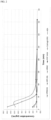
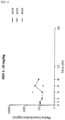
- Solubility tests were performed on a solid dispersion equivalent to 100 mg of progerinin with 300 mL of pH 1.2 buffer (Eudragit EPO, AEA) or 300 mL of pH 6.8 buffer (HPMCAS, HPC, HPMC, PVP VA64) as an eluate ( FIGS. 2 to 4 ).
- the elution conditions are as follows: paddle method, temperature: 37°C, rotation rate: 150 rpm
- progerinin which is the main component of the current drug, could not be developed in a formulation by the hot melt extrusion process.
- the polymer of the Example ⁇ 1-2> was used, but an amorphous solid dispersion was prepared using the spray drying process.
- Solid dispersions for various polymers (HPMCAS, HPC, HPMC, PVP VA64, Eudragit EPO, AEA) were prepared via the spray drying process. At this time, the mixture was prepared by setting a ratio of drug and polymer to 1:3.
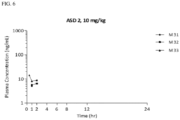
- Solubility test was conducted on a solid dispersion equivalent to 100 mg of progerinin with 300 mL of pH 1.2 buffer (Eudragit EPO, AEA) and 300 mL of pH 6.8 buffer (HPMCAS, HPC, HPMC, PVP VA64) as an eluate, respectively ( FIG. 5 ).
- the elution conditions are as follows: paddle method, temperature: 37°C, rotation rate: 150 rpm
- progerinin which is the main component of the current drug, could not be developed in a formulation by the spray drying method.
- the inventors have prepared the nanosuspensions using an ultra-high pressure homogenizer as an alternative method to prepare the nanosuspension. Specifically, polymer (HPMC 3cp) and surfactant (TPGS) were dissolved in a 100 mL beaker containing distilled water, and then the drug (SLC-D011) was weighed and added to prepare the suspension by stirring for 2 hours. The nanosuspension was prepared by injecting the suspension into an ultra-high pressure homogenizer (pressure: 40000 psi, 1 hour). TABLE 2 Initial 3 Day Z-average (nm) 338.6 354.6 PI 0.076 0.278 D (90%) (nm) 517.1 893.9
- Table 2 is a measurement of the particle diameter of the drug, identifying that the size of the particles increased after 3 days. Therefore, the preparation of nanosuspensions using ultra-high pressure homogenizers had the limitation that the particles increase over time. Again, this is not a suitable method for the preparation of progerinin nanosuspensions.
- the inventors prepared a nanosuspension using wet type ball milling using beads. Specifically, polymer (HPMC 3cp) and surfactant (TPGS) were dissolved in a 100 mL beaker containing distilled water, and then progerinin was weighed and added to prepare the suspension by stirring for 2 hours. Tubes with beads and suspensions added were mounted on Delta Vita and Netzsch (Zentrimix 380R) devices to prepare the nanosuspension (rate: 1200 rpm, temperature: -10°C, 6 hours). FIG. 7 shows the appearance (top) of the nanosuspension prepared by the preparation method and results (bottom) of measuring the average particle diameter.
- polymer HPMC 3cp
- TPGS surfactant
- the nanosuspension including drug nanoparticles As a result of FIG. 7 , it was possible to prepare the nanosuspension including drug nanoparticles with an average particle diameter of 170 nm. In terms of the stability of nanosuspensions, it was found that the solubility was more excellent when the average particle diameter of the drug particles is 200 nm or less, and that the nanoparticles have a larger surface area and are more easily dissolved, thus maximizing the bioavailability.
- the inventors determined that it was necessary to select a vehicle composition that is suitable for the preparation of nanosuspensions with an average particle diameter of 200 nm or less while preparing nanosuspensions using wet type ball milling using beads, and sought to select optimized polymers, surface stabilizing agents such as surfactants, and preservatives.
- TPGS solution is prepared by dissolving TGPS in 60°C warm water and then cooling to room temperature.
- HPMC E3 solution is prepared by dissolving HPMC E3 in 60°C warm water and then cooling it to room temperature. Then the two solutions are stirred and mixed thoroughly.
- progerinin as an active pharmaceutical ingredient API is filled in a slowly mixed solution with continuous stirring.
- the parameters of the Agitator Bead Mill, a mixing and wet grinding equipment, are set appropriately to start the wet type ball milling, and a hydrostatic pump is adjusted to have the suspension circulated.
- the suspension escaping the Agitator Bead Mill is recirculated back into the suspension vessel while maintaining a preset value below 35°C.
- Wet type ball milling continues with a dyno-mill until the drug particles achieve PSD (D50 ⁇ 200 nm).
- the pump is turned off, and the milling suspension line is separated from the suspension vessel.
- the suspension obtained by nano-milling is thoroughly mixed by adding potassium sorbate as a preservative. It is filled in a sterile glass jar. The bottle filling is carried out with 100% visual inspection and checking of the filling weight, after which the bottle is sealed with a rubber finish and an aluminum flip-off seal.
- the oral progerinin nanosuspension was prepared via the method in Example ⁇ 2-1>.
- Prototype 1 consists of 10.0 wt% of progerinin, 3.0 wt% of HPMC E3, 1.0 wt% of surfactant TPGS, and 0.2 wt% of potassium sorbate, and a suspension was prepared by mixing TPGS and HPMC solutions and then adding progerinin.
- the mixture prepared as described above was then mixed with 0.3 mm VHD ZrO beads in a volume ratio of 1:1 to 5, and the ball milling was performed.
- the temperature of the vessel was closely monitored during the preparation process.
- the particle size distribution was monitored until the target average particle size reached D50 ⁇ 200 nm.
- Prototypes 2 to 5 were also prepared in the same way.
- the particle diameter, zeta potential, drug content, flowability, and viscosity of the nanosuspension prepared as described above were measured in the following methods.
- prototypes 1 and 3 are the most suitable vehicle compositions in terms of dispersibility, stability, and effectiveness of the drug.
- the prototype 4 was not selected as a suitable vehicle composition. In the case of prototype 2, the tendency that particles increase over time, made it an unsuitable candidate. In the case of Prototype 5, the formation of nanosuspensions was not possible at all.
- a roller mixer it was intended to prepare a nanosuspension of prototype 1 at a target concentration of 100 mg/g. Specifically, the nanosuspension of prototype 1 was prepared, and the prepared nanosuspension was mixed with the zirconia beads shown in Table 2 below in a 1:1 weight ratio. Furthermore, as shown in Table 4, the PSD was monitored daily to observe the tendency of size reduction.
- the inventors used a dyno-mill (5 g API scale) to prepare a nanosuspension of prototype 1 at a target concentration of 100 mg/g. Specifically, loaded in a dyno-mill milling chamber were 45 mL of 0.5 mm zirconia beads. The prepared nanosuspension of prototype 1 (5 g, 10% w/w HPMC E3, 3%/TPGS 1%) was filled in the milling chamber from the top. The device was operated for 5 hours at 2,200 rpm with a -19°C circulating cooling liquid. White nanosuspension (FR00497-3-190911-100) was collected as the final nanosuspension.
- a dyno-mill 5 g API scale
- the condition for the average particle diameter (D50) of 200 nm or less is the most ideally required in terms of the dispersion stability of the particle and the bioavailability efficiency of the progerinin drug.
- the present inventors sought to prepare a nanosuspension with a target concentration of 100 mg/g using a dyno-mill for a 30 g API scale for the preparation by scale up. Specifically, loaded in the dyno-mill chamber were 45 mL of 0.3 mm zirconia beads. The 30 g of prepared progerinin is first suspended in a vehicle solution to prepare a suspension (30 g, 10% w/w in the vehicle HPMC E3 3%/TPGS 1% in water), and then the suspension is filled into the milling chamber from the top. At a low temperature of -19°C, the device with circulating cooling liquid was operated for 20 hours at 2,200 to 2,500 rpm.
- progerinin was mixed with HPMC E3, TPGS, and potassium sorbate in a ratio of 1:10, and the effectiveness of the drug (API) components was measured under 40°C/75% RH condition over 2 weeks and shown in Table 9 and Table 10.
- Monobasic potassium phosphate (6.8 gm) and sodium hydroxide (0.616 gm) were added to a 1000 ml volume flask with 250 ml distilled water, then rotated until the above components are dissolved, and then another 700 ml of distilled water was added, followed by pH measurement. The pH was adjusted to pH 6.8 +/- 0.1 by adding 0.2N sodium hydroxide or 0.2N hydrochloric acid.
- a translucent HDPE vial (25 ml) with an HDPE lid was added with a nanosuspension of prototype 1 in an appropriate amount. At this time, it was diluted in 15 ml of simulated gastric fluids or simulated intestinal fluids to reach a final concentration of progenin to 0.5 mg/ml. Then, after adding a dispersant, the formulation prepared above was shaken until it was completely dispersed. The vial was placed in an oil bath at 37°C until flocculation takes place. The size of the precipitated particles was measured using the Horiba-LA-910 particle analyzer. In general, the above substances were cultured in human gastric fluid on an empty stomach for approximately 3 hours.
- the weight of the bead cores was calculated in the SIF or SGF experiment, and the bead cores were dispersed in volumes such as SIF or SGF.
- 120 gm of distilled water was poured into the Horiba LA-910 chamber and drained until the device was empty. Afterwards, 120 gm of distilled water was poured, and the entire volume of the cultured formulation (at 15 ml of SGF or SIF) was poured into the Horiba LA-910 chamber and the average particle diameter was measured.
- progerinin drug prototype 1 with the average particle diameter (D50) of 200 nm or less was maintained at 190 to 220 nm even in simulated intestinal fluids or simulated gastric fluids, and the dispersion stability and bioavailability of the drug were maintained.
Landscapes
- Health & Medical Sciences (AREA)
- Chemical & Material Sciences (AREA)
- Public Health (AREA)
- Pharmacology & Pharmacy (AREA)
- Epidemiology (AREA)
- Life Sciences & Earth Sciences (AREA)
- Animal Behavior & Ethology (AREA)
- General Health & Medical Sciences (AREA)
- Medicinal Chemistry (AREA)
- Veterinary Medicine (AREA)
- Engineering & Computer Science (AREA)
- Chemical Kinetics & Catalysis (AREA)
- General Chemical & Material Sciences (AREA)
- Oil, Petroleum & Natural Gas (AREA)
- Dispersion Chemistry (AREA)
- Bioinformatics & Cheminformatics (AREA)
- Inorganic Chemistry (AREA)
- Pharmaceuticals Containing Other Organic And Inorganic Compounds (AREA)
- Medicinal Preparation (AREA)
Applications Claiming Priority (1)
| Application Number | Priority Date | Filing Date | Title |
|---|---|---|---|
| PCT/KR2021/018550 WO2023106447A1 (ko) | 2021-12-08 | 2021-12-08 | 프로게리닌을 포함하는 나노현탁액 및 이의 제조방법 |
Publications (3)
| Publication Number | Publication Date |
|---|---|
| EP4445896A1 true EP4445896A1 (de) | 2024-10-16 |
| EP4445896A4 EP4445896A4 (de) | 2025-08-27 |
| EP4445896B1 EP4445896B1 (de) | 2026-04-08 |
Family
ID=86730713
Family Applications (1)
| Application Number | Title | Priority Date | Filing Date |
|---|---|---|---|
| EP21967320.9A Active EP4445896B1 (de) | 2021-12-08 | 2021-12-08 | Nanosuspension mit progerinin und herstellungsverfahren dafür |
Country Status (5)
| Country | Link |
|---|---|
| US (1) | US20250017853A1 (de) |
| EP (1) | EP4445896B1 (de) |
| JP (1) | JP7776905B2 (de) |
| CN (1) | CN118401235A (de) |
| WO (1) | WO2023106447A1 (de) |
Family Cites Families (5)
| Publication number | Priority date | Publication date | Assignee | Title |
|---|---|---|---|---|
| US20030224058A1 (en) * | 2002-05-24 | 2003-12-04 | Elan Pharma International, Ltd. | Nanoparticulate fibrate formulations |
| EP1490030B2 (de) | 2002-03-20 | 2010-07-14 | Elan Pharma International Limited | Nanopartikelzusammensetzungen von angiogeneseinhibitoren |
| US20080220075A1 (en) * | 2002-03-20 | 2008-09-11 | Elan Pharma International Ltd. | Nanoparticulate compositions of angiogenesis inhibitors |
| KR102070328B1 (ko) | 2017-04-25 | 2020-01-28 | (주)피알지에스앤텍 | 데커신 유도체를 유효성분으로 함유하는 노화 관련 질환 예방 또는 치료용 약학조성물 |
| WO2018199633A1 (ko) * | 2017-04-25 | 2018-11-01 | (주)피알지에스앤텍 | 데커신 유도체를 유효성분으로 함유하는 노화 관련 질환 예방 또는 치료용 약학조성물 |
-
2021
- 2021-12-08 CN CN202180104844.9A patent/CN118401235A/zh active Pending
- 2021-12-08 US US18/712,281 patent/US20250017853A1/en active Pending
- 2021-12-08 JP JP2024530513A patent/JP7776905B2/ja active Active
- 2021-12-08 WO PCT/KR2021/018550 patent/WO2023106447A1/ko not_active Ceased
- 2021-12-08 EP EP21967320.9A patent/EP4445896B1/de active Active
Also Published As
| Publication number | Publication date |
|---|---|
| JP2024542259A (ja) | 2024-11-13 |
| JP7776905B2 (ja) | 2025-11-27 |
| US20250017853A1 (en) | 2025-01-16 |
| WO2023106447A1 (ko) | 2023-06-15 |
| EP4445896B1 (de) | 2026-04-08 |
| CN118401235A (zh) | 2024-07-26 |
| EP4445896A4 (de) | 2025-08-27 |
Similar Documents
| Publication | Publication Date | Title |
|---|---|---|
| Souto et al. | SLN and NLC for topical delivery of ketoconazole | |
| US4997454A (en) | Method for making uniformly-sized particles from insoluble compounds | |
| KR20100017714A (ko) | 서방성의 음하전기를 갖는 저분자 약물 함유 나노 입자 | |
| KR102438425B1 (ko) | 풀베스트란트 제제 및 그의 사용 방법 | |
| CN109316440B (zh) | 一种温敏性液晶纳米水凝胶及其制备方法与应用 | |
| KR20190112050A (ko) | Crac 채널 억제제 조성물 | |
| WO2018142336A1 (en) | Lamotrigine suspension dosage form | |
| BR122024001653A2 (pt) | Suspensão aquosa e para uso, e, método para preparar uma suspensão | |
| WO2004054549A1 (en) | A topical nanoparticulate spironolactone formulation | |
| CN106794251A (zh) | 阿立哌唑前体药物组合物 | |
| Elsebay et al. | Nanosuspension: a formulation technology for tackling the poor aqueous solubility and bioavailability of poorly soluble drugs | |
| Purohit et al. | Proof-of-concept in developing a 45% drug loaded amorphous nanoparticle formulation | |
| WO2023138531A1 (zh) | 一种纳米晶组合物及其制备方法和用途 | |
| KR102369827B1 (ko) | 프로게리닌을 포함하는 나노현탁액 및 이의 제조방법 | |
| Al-Nimry et al. | Preparation and optimization of sertraline hydrochloride tablets with improved dissolution through crystal modification | |
| EP4445896B1 (de) | Nanosuspension mit progerinin und herstellungsverfahren dafür | |
| CN118986896A (zh) | 一种注射用药物缓释微球及其制备方法 | |
| CN101584661B (zh) | 一种供口服或静脉注射用索拉非尼自微乳化给药系统及其制备方法 | |
| EP4470529A1 (de) | Granulat mit progerinin und beutel damit | |
| WO2025022463A1 (en) | Novel composition for suspension formulation | |
| KR100958138B1 (ko) | 안정성이 우수한 초산메게스트롤 약학 조성물 및 그제조방법 | |
| EP4732831A1 (de) | Ternäre systeme mit verbesserter wirkstoffbeladungskapazität, physikalischer stabilität und ausfällungshemmung | |
| EP4324457A1 (de) | Dreifachstabilisator | |
| EP4324458A1 (de) | Dreifachstabilisierungssystem | |
| CN104470517B (zh) | 注射用抗生素制剂及其使用方法 |
Legal Events
| Date | Code | Title | Description |
|---|---|---|---|
| STAA | Information on the status of an ep patent application or granted ep patent |
Free format text: STATUS: THE INTERNATIONAL PUBLICATION HAS BEEN MADE |
|
| PUAI | Public reference made under article 153(3) epc to a published international application that has entered the european phase |
Free format text: ORIGINAL CODE: 0009012 |
|
| STAA | Information on the status of an ep patent application or granted ep patent |
Free format text: STATUS: REQUEST FOR EXAMINATION WAS MADE |
|
| 17P | Request for examination filed |
Effective date: 20240523 |
|
| AK | Designated contracting states |
Kind code of ref document: A1 Designated state(s): AL AT BE BG CH CY CZ DE DK EE ES FI FR GB GR HR HU IE IS IT LI LT LU LV MC MK MT NL NO PL PT RO RS SE SI SK SM TR |
|
| DAV | Request for validation of the european patent (deleted) | ||
| DAX | Request for extension of the european patent (deleted) | ||
| REG | Reference to a national code |
Ref country code: DE Ref legal event code: R079 Free format text: PREVIOUS MAIN CLASS: A61K0009107000 Ipc: A61K0009100000 Ref document number: 602021051942 Country of ref document: DE |
|
| A4 | Supplementary search report drawn up and despatched |
Effective date: 20250730 |
|
| RIC1 | Information provided on ipc code assigned before grant |
Ipc: A61K 9/10 20060101AFI20250724BHEP Ipc: A61K 9/14 20060101ALI20250724BHEP Ipc: A61K 9/107 20060101ALI20250724BHEP Ipc: A61K 47/38 20060101ALI20250724BHEP Ipc: A61K 47/22 20060101ALI20250724BHEP Ipc: A61K 47/12 20060101ALI20250724BHEP Ipc: A61K 31/37 20060101ALI20250724BHEP |
|
| GRAP | Despatch of communication of intention to grant a patent |
Free format text: ORIGINAL CODE: EPIDOSNIGR1 |
|
| RIC1 | Information provided on ipc code assigned before grant |
Ipc: A61K 9/10 20060101AFI20251008BHEP Ipc: A61K 9/14 20060101ALI20251008BHEP Ipc: A61K 9/107 20060101ALI20251008BHEP Ipc: A61K 47/38 20060101ALI20251008BHEP Ipc: A61K 47/22 20060101ALI20251008BHEP Ipc: A61K 47/12 20060101ALI20251008BHEP Ipc: A61K 31/37 20060101ALI20251008BHEP |
|
| STAA | Information on the status of an ep patent application or granted ep patent |
Free format text: STATUS: GRANT OF PATENT IS INTENDED |
|
| INTG | Intention to grant announced |
Effective date: 20251113 |
|
| GRAS | Grant fee paid |
Free format text: ORIGINAL CODE: EPIDOSNIGR3 |
|
| GRAA | (expected) grant |
Free format text: ORIGINAL CODE: 0009210 |
|
| STAA | Information on the status of an ep patent application or granted ep patent |
Free format text: STATUS: THE PATENT HAS BEEN GRANTED |
|
| AK | Designated contracting states |
Kind code of ref document: B1 Designated state(s): AL AT BE BG CH CY CZ DE DK EE ES FI FR GB GR HR HU IE IS IT LI LT LU LV MC MK MT NL NO PL PT RO RS SE SI SK SM TR |
|
| REG | Reference to a national code |
Ref country code: CH Ref legal event code: F10 Free format text: ST27 STATUS EVENT CODE: U-0-0-F10-F00 (AS PROVIDED BY THE NATIONAL OFFICE) Effective date: 20260408 Ref country code: GB Ref legal event code: FG4D |