EP4470529A1 - Granulat mit progerinin und beutel damit - Google Patents
Granulat mit progerinin und beutel damit Download PDFInfo
- Publication number
- EP4470529A1 EP4470529A1 EP23747253.5A EP23747253A EP4470529A1 EP 4470529 A1 EP4470529 A1 EP 4470529A1 EP 23747253 A EP23747253 A EP 23747253A EP 4470529 A1 EP4470529 A1 EP 4470529A1
- Authority
- EP
- European Patent Office
- Prior art keywords
- progerinin
- nanosuspension
- granule
- suspension
- prepare
- Prior art date
- Legal status (The legal status is an assumption and is not a legal conclusion. Google has not performed a legal analysis and makes no representation as to the accuracy of the status listed.)
- Pending
Links
Images


Classifications
-
- A—HUMAN NECESSITIES
- A61—MEDICAL OR VETERINARY SCIENCE; HYGIENE
- A61P—SPECIFIC THERAPEUTIC ACTIVITY OF CHEMICAL COMPOUNDS OR MEDICINAL PREPARATIONS
- A61P43/00—Drugs for specific purposes, not provided for in groups A61P1/00-A61P41/00
-
- A—HUMAN NECESSITIES
- A61—MEDICAL OR VETERINARY SCIENCE; HYGIENE
- A61K—PREPARATIONS FOR MEDICAL, DENTAL OR TOILETRY PURPOSES
- A61K31/00—Medicinal preparations containing organic active ingredients
- A61K31/33—Heterocyclic compounds
- A61K31/335—Heterocyclic compounds having oxygen as the only ring hetero atom, e.g. fungichromin
- A61K31/365—Lactones
-
- A—HUMAN NECESSITIES
- A61—MEDICAL OR VETERINARY SCIENCE; HYGIENE
- A61K—PREPARATIONS FOR MEDICAL, DENTAL OR TOILETRY PURPOSES
- A61K31/00—Medicinal preparations containing organic active ingredients
- A61K31/33—Heterocyclic compounds
- A61K31/335—Heterocyclic compounds having oxygen as the only ring hetero atom, e.g. fungichromin
- A61K31/365—Lactones
- A61K31/366—Lactones having six-membered rings, e.g. delta-lactones
-
- A—HUMAN NECESSITIES
- A61—MEDICAL OR VETERINARY SCIENCE; HYGIENE
- A61K—PREPARATIONS FOR MEDICAL, DENTAL OR TOILETRY PURPOSES
- A61K47/00—Medicinal preparations characterised by the non-active ingredients used, e.g. carriers or inert additives; Targeting or modifying agents chemically bound to the active ingredient
- A61K47/06—Organic compounds, e.g. natural or synthetic hydrocarbons, polyolefins, mineral oil, petrolatum or ozokerite
- A61K47/22—Heterocyclic compounds, e.g. ascorbic acid, tocopherol or pyrrolidones
-
- A—HUMAN NECESSITIES
- A61—MEDICAL OR VETERINARY SCIENCE; HYGIENE
- A61K—PREPARATIONS FOR MEDICAL, DENTAL OR TOILETRY PURPOSES
- A61K47/00—Medicinal preparations characterised by the non-active ingredients used, e.g. carriers or inert additives; Targeting or modifying agents chemically bound to the active ingredient
- A61K47/30—Macromolecular organic or inorganic compounds, e.g. inorganic polyphosphates
- A61K47/36—Polysaccharides; Derivatives thereof, e.g. gums, starch, alginate, dextrin, hyaluronic acid, chitosan, inulin, agar or pectin
- A61K47/38—Cellulose; Derivatives thereof
-
- A—HUMAN NECESSITIES
- A61—MEDICAL OR VETERINARY SCIENCE; HYGIENE
- A61K—PREPARATIONS FOR MEDICAL, DENTAL OR TOILETRY PURPOSES
- A61K9/00—Medicinal preparations characterised by special physical form
- A61K9/0087—Galenical forms not covered by A61K9/02 - A61K9/7023
- A61K9/009—Sachets, pouches characterised by the material or function of the envelope
-
- A—HUMAN NECESSITIES
- A61—MEDICAL OR VETERINARY SCIENCE; HYGIENE
- A61K—PREPARATIONS FOR MEDICAL, DENTAL OR TOILETRY PURPOSES
- A61K9/00—Medicinal preparations characterised by special physical form
- A61K9/14—Particulate form, e.g. powders, Processes for size reducing of pure drugs or the resulting products, Pure drug nanoparticles
- A61K9/16—Agglomerates; Granulates; Microbeadlets ; Microspheres; Pellets; Solid products obtained by spray drying, spray freeze drying, spray congealing,(multiple) emulsion solvent evaporation or extraction
- A61K9/1605—Excipients; Inactive ingredients
- A61K9/1617—Organic compounds, e.g. phospholipids, fats
-
- A—HUMAN NECESSITIES
- A61—MEDICAL OR VETERINARY SCIENCE; HYGIENE
- A61K—PREPARATIONS FOR MEDICAL, DENTAL OR TOILETRY PURPOSES
- A61K9/00—Medicinal preparations characterised by special physical form
- A61K9/14—Particulate form, e.g. powders, Processes for size reducing of pure drugs or the resulting products, Pure drug nanoparticles
- A61K9/16—Agglomerates; Granulates; Microbeadlets ; Microspheres; Pellets; Solid products obtained by spray drying, spray freeze drying, spray congealing,(multiple) emulsion solvent evaporation or extraction
- A61K9/1605—Excipients; Inactive ingredients
- A61K9/1629—Organic macromolecular compounds
- A61K9/1641—Organic macromolecular compounds obtained otherwise than by reactions only involving carbon-to-carbon unsaturated bonds, e.g. polyethylene glycol, poloxamers
-
- A—HUMAN NECESSITIES
- A61—MEDICAL OR VETERINARY SCIENCE; HYGIENE
- A61K—PREPARATIONS FOR MEDICAL, DENTAL OR TOILETRY PURPOSES
- A61K9/00—Medicinal preparations characterised by special physical form
- A61K9/14—Particulate form, e.g. powders, Processes for size reducing of pure drugs or the resulting products, Pure drug nanoparticles
- A61K9/16—Agglomerates; Granulates; Microbeadlets ; Microspheres; Pellets; Solid products obtained by spray drying, spray freeze drying, spray congealing,(multiple) emulsion solvent evaporation or extraction
- A61K9/1605—Excipients; Inactive ingredients
- A61K9/1629—Organic macromolecular compounds
- A61K9/1652—Polysaccharides, e.g. alginate, cellulose derivatives; Cyclodextrin
-
- A—HUMAN NECESSITIES
- A61—MEDICAL OR VETERINARY SCIENCE; HYGIENE
- A61K—PREPARATIONS FOR MEDICAL, DENTAL OR TOILETRY PURPOSES
- A61K9/00—Medicinal preparations characterised by special physical form
- A61K9/14—Particulate form, e.g. powders, Processes for size reducing of pure drugs or the resulting products, Pure drug nanoparticles
- A61K9/16—Agglomerates; Granulates; Microbeadlets ; Microspheres; Pellets; Solid products obtained by spray drying, spray freeze drying, spray congealing,(multiple) emulsion solvent evaporation or extraction
- A61K9/1682—Processes
- A61K9/1694—Processes resulting in granules or microspheres of the matrix type containing more than 5% of excipient
-
- A—HUMAN NECESSITIES
- A61—MEDICAL OR VETERINARY SCIENCE; HYGIENE
- A61K—PREPARATIONS FOR MEDICAL, DENTAL OR TOILETRY PURPOSES
- A61K9/00—Medicinal preparations characterised by special physical form
- A61K9/48—Preparations in capsules, e.g. of gelatin, of chocolate
- A61K9/4833—Encapsulating processes; Filling of capsules
-
- A—HUMAN NECESSITIES
- A61—MEDICAL OR VETERINARY SCIENCE; HYGIENE
- A61K—PREPARATIONS FOR MEDICAL, DENTAL OR TOILETRY PURPOSES
- A61K9/00—Medicinal preparations characterised by special physical form
- A61K9/48—Preparations in capsules, e.g. of gelatin, of chocolate
- A61K9/4841—Filling excipients; Inactive ingredients
- A61K9/4858—Organic compounds
-
- A—HUMAN NECESSITIES
- A61—MEDICAL OR VETERINARY SCIENCE; HYGIENE
- A61K—PREPARATIONS FOR MEDICAL, DENTAL OR TOILETRY PURPOSES
- A61K9/00—Medicinal preparations characterised by special physical form
- A61K9/48—Preparations in capsules, e.g. of gelatin, of chocolate
- A61K9/4841—Filling excipients; Inactive ingredients
- A61K9/4866—Organic macromolecular compounds
Definitions
- the present disclosure relates to granules including progerinin which is a poorly soluble drug, a capsule or sachet using the same, and a preparation method thereof.
- wetting agents are often required to promote suspension of hydrophobic drug particles in aqueous media.
- surface-active wetting agents i.e., surfactants
- sodium lauryl sulfate reduce the interfacial tension between the drug particles and the suspension vehicle to allow suspension vehicles to penetrate into drug aggregates and/or pores on the drug particle, thereby increasing suspension properties of hydrophobic drugs in the aqueous medium, at least partially.
- surfactants such as sodium lauryl sulfate
- suspensions containing free drugs may be chemically unstable.
- Another undesirable consequence of using relatively high amounts of surfactant to promote suspension of low soluble drugs is that because surfactants stabilize bubbles, accompanying air may tend to remain trapped during homogenization or shaking of these suspensions. Since this trapped air changes with the stirring force, duration of the stirring, and an elapsed time of the stirring, the volume of the suspension changes, making it difficult or impossible to administer at a uniform dose over time.
- a low water-soluble drug is administered as a suspension, it is desirable that the suspension shows gentle sedimentation to provide adequate uniformity in the dose. Conversely, if rapid sedimentation occurs, as the case of the vehicle, the suspension must be shaken before each administration in order to achieve uniformity in the dose. If other factors (such as drug particle size, uniformity, and density) are equivalent, a sinking rate of drug particles decreases as a viscosity of a particular suspension vehicle increases. Therefore, it is desirable that the suspension be moderately viscous to inhibit or slow down the sedimentation of drug particles. However, while this increased viscosity promotes physical stability, it also makes it difficult to pour or administer the suspension.
- progerinin which has a structure represented by the following Chemical Formula 1, has shown excellent effects of suppressing progerin expression and effects of inhibiting binding between progerin and lamin A, and, as a drug exhibiting effects of prolonging a survival period of progeria-induced animal model, it may be used as a pharmaceutical composition for preventing or treating progeria.
- the compound name of the progerinin is (7S)-(+)-8,8-dimethyl-7-(3-phenylallyloxy)-7,8-dihydro-6H-pyrano[3,2-g]chromen-2-one (named 'SLC-D011').
- Progerinin a drug that has been shown to be effective in progeria, is a BCS class II molecule exhibiting high apparent permeability and low solubility in aqueous media according to the criteria of the Biopharmaceutical Classification System (BCS).
- BCS Biopharmaceutical Classification System
- the nanosuspension is a colloidal dispersion of stabilized drug particles in the presence of polymers, surfactants, or both.
- the nanosuspension is used to deliver drug substances that exhibit low water solubility and lipid solubility.
- the small particles in the nanosuspension provide a very large drug surface area, thereby increasing a dissolution rate of insoluble drugs. Consequently, BCS class II and IV compounds may exhibit enhanced bioavailability, rapid activity, and other desirable biopharmaceutical effects.
- the inventors were able to conduct animal experiments using a mixture of monoolein and tricaprin, which are oil-based solutions, but due to the nature of the disease, it was found that the use of an oil-dissolved formulation is impossible as high doses and long-term intake are required, recognizing a need for development of a new formulation that allows a long-term intake.
- the above-mentioned progerinin is poorly soluble to the extent that its solubility in water is close to zero, and the solubility is very low even in existing ingestible solvents, such that it is necessary to develop a formulation that enables long-term intake and body absorption through the introduction of new technology.
- Korean Patent Application No. 10-2020-0113071 filed on September 4, 2020
- the present inventor optimized the particle diameter of a progerinin drug with excellent bioabsorption efficiency and selected water-soluble polymers and excipients for the preparation of nanosuspensions to provide a stability-enhanced oral nanosuspension preparation containing progerinin with excellent dispersibility or uniformity and improved bioavailability, but there were inconveniences in terms of storage, transportation, and patient administration.
- An object of the present disclosure is to provide granules including progerinin with excellent bioavailability and a preparation method thereof.
- Another object of the present disclosure is to provide a capsule or sachet using granules including progerinin in order to provide an improved formulation with excellent bioavailability to be more advantageous in terms of storage, transportation, and patient administration, and a preparation method thereof.
- the present disclosure provides a granule including progerinin, including: (a) 20 to 40 wt% of progerinin represented by the following Chemical Formula 1; (b) 5 to 15 wt% of hydroxypropyl methylcellulose (HPMC); (c) 1 to 10 wt% of D- ⁇ -tocopherol polyethylene glycol succinate (TPGS); and (d) a residual amount of additives, wherein the progerinin is drug particles formed via wet type ball milling with an average particle diameter (D50) of 100 nm to 300 nm.
- D50 average particle diameter
- the present disclosure provides a capsule or sachet including the granule.
- the present disclosure provides a method of preparing a granule including progerinin, including: (1) mixing purified water with hydroxypropyl methylcellulose (HPMC) and D- ⁇ -tocopherol polyethylene glycol succinate (TPGS) to prepare a vehicle solution and then adding and mixing progerinin represented by the following Chemical Formula 1 so as to prepare a suspension; (2) subjecting the suspension to wet type ball milling to prepare a nanosuspension; and (3) mixing the nanosuspension with one or more additives selected from the group consisting of excipients, binders, disintegrants, and lubricants, followed by granulating in a fluid bed granulator, wherein the progerinin in the nanosuspension of the step (2) is in the form of particles with an average particle diameter (D50) of 100 nm to 300 nm.
- D50 average particle diameter
- progerininin granules including specific water-soluble polymers, dissolution enhancers, and excipients in an optimal composition ratio were developed, and, by developing oral solid preparations such as capsules or sachets using the granules, it was possible to improve the dispersion stability and bioavailability of progerinin, as well as storage, transportation, and patient compliance.
- the present inventor had prepared a nanosuspension of progerinin to improve the bioavailability of progerinin which is a poorly soluble drug, but when developed as an actual drug, it is required to consider aspects of storage and transportation issues as well as patient compliance. Therefore, the present inventor has completed the present disclosure by developing an oral solid formulation such as a capsule or a sachet using the nanosuspension.
- the present disclosure provides a granule including progerinin, including (a) 20 to 40 wt% of progerinin represented by the following Chemical Formula 1; (b) 5 to 15 wt% of hydroxypropyl methylcellulose (HPMC); (c) 1 to 10 wt% of D- ⁇ -tocopherol polyethylene glycol succinate (TPGS); and (d) a residual amount of additives, wherein the progerinin is drug particles formed via wet type ball milling with an average particle diameter (D50) of 100 nm to 300 nm:
- progerinin is a decursin derivative which is (7S)-(+)-8,8-dimethyl-7-(3-phenylallyloxy)-7,8-dihydro-6H-pyrano[3,2-g]chromen-2-one.
- progerinin may also be named 'SLC-D011'.
- Progerinin has shown excellent effects of suppressing progerin expression and effects of inhibiting binding between progerin and lamin A and may be used as a pharmaceutical composition for preventing or treating progeria, an age-related disease, as a drug that has an effect of prolonging a survival period in progeria-induced animal models. While progerinin is poorly soluble to the extent that its solubility in water is close to zero (0), according to the present disclosure, provided is an oral solid formulation for enhancing solubility, which allows for long-term intake and body absorption and takes into account storage and transportation issues and patient compliance aspects.
- the hydroxypropyl methylcellulose (HPMC) as a polymeric suspension agent is a component which helps dispersion of progerinin and other components in a solution, wherein, if the polymeric suspension agent is included below the above content range, the sinking rate of the suspension becomes poor, and if the polymeric suspension agent is included above the range, preparation may become challenging due to difficulty in stirring. In particular, if the polymeric suspension agent is included above the range, the dispersibility of the suspension is lowered due to poor uniformity in the stirring, which may result in an increase in the volume of defective products with insufficiency in the content during production of the product.
- the D- ⁇ -tocopherol polyethylene glycol succinate is a solubility enhancer, which is a component that enhances solubility of the poorly soluble drug, wherein, if the solubility enhancer is included below the range, the solubility is lowered while the toxicity tolerance limit may be exceeded if included above the range, such that it is desirable to use within the above range.
- progerinin a poorly soluble drug in the suspension
- an average particle diameter (D50) of 100 nm to 300 nm.
- the average particle diameter may be 100 nm to 200 nm.
- the solubility is the highest, and nanoparticles have a larger surface area to be dissolved more easily, thereby maximizing the bioavailability or bioabsorption efficiency.
- nanosuspensions having the average particle diameter it may be prepared via wet type ball milling using wet grinding apparatuses such as an agitator bead mill or a dyno-mill.
- the pH of the nanosuspension of the present disclosure may be 5.5 to 8.5, preferably 6.0 to 7.0, and the nanosuspension may have a viscosity of 2 to 8.5 mPa.s, preferably 7 to 8.5 mPa.s.
- nanosuspension of the present disclosure may additionally include preservatives, pH adjusters, colorants, or the like.
- the preservative refers to a pharmaceutically acceptable substance that prevents microbial proliferation or degradation by undesired chemical changes. Potassium sorbate may be used as the preservative, but is not limited thereto.
- the pH adjuster refers to a substance that is used to adjust the pH of the suspension to a desired value and may be citric acid, sodium citrate, or ascorbic acid, but is not limited thereto.
- the colorant is included to vary the color of the nanosuspension and may be used to prepare the nanosuspension having a desired color by being included in the formulation. Anything that is commonly used in the technical field of the present disclosure may be included herein without limitation.
- the additives may be one or more additives selected from the group consisting of excipients, binders, disintegrants, and lubricants.
- the excipient refers to a substance added for the purpose of giving a drug a suitable hardness or shape, or for the purpose of giving a certain dose and weight in the case of a small amount of main ingredients so as to make it a size that is easy to handle.
- the excipients may be, but are not limited to, one or more selected from the group consisting of mannitol, starch, microcrystalline cellulose, dextrin, sodium alginate, methylcellulose, sodium carboxymethylcellulose, lactose, glucose, fructose, sodium alginate, and hydroxypropyl starch.
- the binder refers to a substance added for the purpose of combining the particles of an ingredient to have a certain size.
- the binders may be, but are not limited to, one or more selected from the group consisting of gelatin, gum arabic, glucose, ethanol, purified water, dextrin, glycerin, microcrystalline cellulose, methylcellulose, hydroxypropyl cellulose, hydroxypropyl methylcellulose, carboxymethylcellulose, sodium carboxymethylcellulose, and calcium carboxymethylcellulose.
- the disintegrant refers to a substance added for the purpose of promoting disintegration of tablets, capsules, and granules in digestive juices.
- the disintegrants may be, but are not limited to, one or more selected from the group consisting of sodium croscarmellose, starch, hydroxypropyl starch, methylcellulose, sodium alginate, calcium citrate, sodium carboxymethylcellulose, calcium carboxymethylcellulose, silicic acid anhydride, sodium lauryl sulfate, carbonate, and dextran.
- the lubricant refers to a substance that improves the fluidity of the granule and thus increases its chargeability.
- the lubricants may be, but are not limited to, one or more selected from the group consisting of calcium stearate, magnesium stearate, sodium stearate, stearic acid, hydrogenated vegetable oil, talc, kaolin, liquid paraffin, and magnesium oxide.
- the present disclosure provides a capsule including the granule in a capsule.
- the present disclosure provides a sachet including the granule, a sweetener, and a flavor.
- the sweetener refers to a food additive that exhibits sweetness, but generally has a lower food caloric value, including both natural or synthetic, and may be used without particular limitation if the sweetener is one that may be used conventionally in the field of food and medicine, including sucralose.
- the flavor includes a flavoring ingredient or composition commonly used in the food industry, whether it has a natural or synthetic origin, and the flavor may be used without particular limitation if it is conventionally used in the field of food and medicine, including grape flavor.
- the present disclosure provides a method of preparing a granule including progerinin, including (1) mixing purified water with hydroxypropyl methylcellulose (HPMC) and D- ⁇ -tocopherol polyethylene glycol succinate (TPGS) to prepare a vehicle solution and then adding and mixing progerinin represented by the following Chemical Formula 1 so as to prepare a suspension; (2) subjecting the suspension to wet type ball milling to prepare a nanosuspension; and (3) mixing the nanosuspension with one or more additives selected from the group consisting of excipients, binders, disintegrants, and lubricants, followed by granulating in a fluid bed granulator, wherein the progerinin in the nanosuspension of the step (2) is in the form of particles with an average particle diameter (D50) of 100 nm to 300 nm.
- D50 average particle diameter
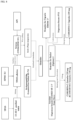
- FIG. 8 is a flow diagram illustrating a preparation process of granule, capsule, and sachet formulations of progerinin according to the present disclosure.
- the step (1) is a process of mixing micronized progerinin into a vehicle solution, specifically mixing hydroxypropyl methylcellulose (HPMC), which is a polymeric suspension agent, and D- ⁇ -tocopherol polyethylene glycol succinate (TPGS) in purified water.
- HPMC hydroxypropyl methylcellulose
- TPGS D- ⁇ -tocopherol polyethylene glycol succinate
- the purified water may be used at a temperature of 50 to 70°C, preferably at 60°C.
- the coarse suspension thus mixed is then cooled at room temperature, followed by the next step to prepare the nanosuspension.
- the step (2) is a step of preparing the nanosuspension by wet type ball milling of the suspension of (1).
- the wet type ball milling may be performed by means of a wet grinding apparatus, such as an agitator bead mill or a dyno-mill. It is desirable for ball milling conditions to proceed until the average particle diameter of the drug particles is between 100 nm and 300 nm. More preferably, the average particle diameter is 100 nm to 200 nm. Having the average particle size within the above range, the solubility becomes the most superior, and it is possible to maximize the bioavailability or bioabsorption efficiency of the drug.
- the ball milling is wet type ball milling for the preparation of nanosuspensions, which is an important step in the preparation of progerinin nanosuspensions, and selection of suitable bead size, grinding medium, and API ratio in a chamber as well as temperature control of a grinding chamber may play an important role.
- a suspension of the step (1) and zirconia beads with an average particle diameter of 0.1 to 1 mm may be used, preferably those of 0.02 to 0.04 mm may be used.
- the suspension and zirconia beads of the step (1) may be used in a volume ratio of 1:1 to 1:5, but if it is possible to produce the drug to have the average particle diameter (D50) of 200 nm or less, the volume ratio may be changed appropriately according to conditions.
- the step (3) is a step of preparing a granule by mixing the nanosuspension prepared in the step (2) with one or more additives selected from the group consisting of excipients, binders, disintegrants, and lubricants, followed by granulating the mixture in a fluid bed granulator.
- the present disclosure provides a method of preparing a capsule including progerinin, including (1) mixing purified water with hydroxypropyl methylcellulose (HPMC) and D- ⁇ -tocopherol polyethylene glycol succinate (TPGS) to prepare a vehicle solution and then adding and mixing progerinin represented by the following Chemical Formula 1 so as to prepare a suspension; (2) subjecting the suspension to wet type ball milling to prepare a nanosuspension; (3) mixing the nanosuspension with one or more additives selected from the group consisting of excipients, binders, disintegrants, and lubricants, followed by granulating in a fluid bed granulator; and (4) filling the granulated granule in a capsule, wherein the progerinin in the nanosuspension of the step (2) is in the form of particles with an average particle diameter (D50) of 100 nm to 300 nm.
- D50 average particle diameter
- the present disclosure provides a method of preparing a sachet including progerinin, including (1) mixing purified water with hydroxypropyl methylcellulose (HPMC) and D- ⁇ -tocopherol polyethylene glycol succinate (TPGS) to prepare a vehicle solution and then adding and mixing progerinin represented by the following Chemical Formula 1 so as to prepare a suspension; (2) subjecting the suspension to wet type ball milling to prepare a nanosuspension; (3) mixing the nanosuspension with one or more additives selected from the group consisting of excipients, binders, disintegrants, and lubricants, followed by granulating in a fluid bed granulator; and (4) adding a sweetener and a flavor to the granulated granule and then filling the granule into a sachet, wherein the progerinin in the nanosuspension of the step (2) is in the form of particles with an average particle diameter (D50) of 100 nm to 300 nm.
- lipid-based preparations were determined to be unsuitable for use in clinical settings due to inadequate drug loading and high lipid intake expected with the proposed clinical dose.
- Limited attempts to produce amorphous solid dispersions (ASDs) have shown that there is a difficulty for the amorphous solid dispersions (ASDs) to be dispersed in aqueous media due to rapid crystallization.
- these lipid-based preparations are considered unsuitable for use in clinical settings due to inadequate drug loading and high lipid intake expected with the proposed clinical dose.
- the inventors aimed to prepare progerinin, which is a poorly soluble drug, as a nanosuspension and implement the nanosuspension that is optimized for clinical use by selecting a vehicle composition that may enhance the stability of a drug.
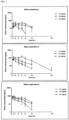
- the microsuspension was prepared using Vivapur power, and the two nanosuspensions were prepared using zirconia beads.
- the suspension prepared as described above was administered orally to mice at doses of 10 mg/kg, 30 mg/kg, and 100 mg/kg, and results were checked by analyzing the pharmacokinetics (PK) of the suspension in vivo ( FIG. 1 ).
- PK pharmacokinetics
- the present inventors performed a process using hot melt extrusion, spray drying, ultra-high pressure homogenizer, and wet type ball milling using beads and attempted to select the most suitable method for preparing the progerinin nanosuspension among them.
- solid dispersions for various polymers were prepared using the hot melt extrusion method.
- the ratio of drug to polymer was set to 1:3 to prepare the mixture.
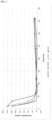
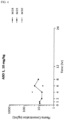
- Solubility tests were performed on a solid dispersion equivalent to 100 mg of progerinin with 300 mL of pH 1.2 buffer (Eudragit EPO, AEA) or 300 mL of pH 6.8 buffer (HPMCAS, HPC, HPMC, PVP VA64) as an eluate ( FIGS. 2 to 4 ).
- the elution conditions are as follows: paddle method, temperature: 37°C, rotation rate: 150 rpm
- progerinin which is the main component of the current drug, could not be developed in a formulation by the hot melt extrusion process.
- the polymer of the Example ⁇ 1-2> was used, but an amorphous solid dispersion was prepared using the spray drying process.
- Solid dispersions for various polymers (HPMCAS, HPC, HPMC, PVP VA64, Eudragit EPO, AEA) were prepared via the spray drying process. At this time, the mixture was prepared by setting a ratio of drug and polymer to 1:3.
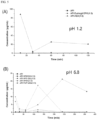
- Solubility test was conducted on a solid dispersion equivalent to 100 mg of progerinin with 300 mL of pH 1.2 buffer (Eudragit EPO, AEA) and 300 mL of pH 6.8 buffer (HPMCAS, HPC, HPMC, PVP VA64) as an eluate, respectively ( FIG. 5 ).
- the elution conditions are as follows: paddle method, temperature: 37°C, rotation rate: 150 rpm
- progerinin which is the main component of the current drug, could not be developed in a formulation by the spray drying method.
- the inventors have prepared the nanosuspensions using an ultra-high pressure homogenizer as an alternative method to prepare the nanosuspension. Specifically, polymer (HPMC 3cp) and surfactant (TPGS) were dissolved in a 100 mL beaker containing distilled water, and then the drug (SLC-D011) was weighed and added to prepare the suspension by stirring for 2 hours. The nanosuspension was prepared by injecting the suspension into an ultra-high pressure homogenizer (pressure: 40000 psi, 1 hour). TABLE 2 Initial 3 Day Z-average (nm) 338.6 354.6 PI 0.076 0.278 D (90%) (nm) 517.1 893.9
- Table 2 is a measurement of the particle diameter of the drug, identifying that the size of the particles increased after 3 days. Therefore, the preparation of nanosuspensions using ultra-high pressure homogenizers had the limitation that the particles increase over time. Again, this is not a suitable method for the preparation of progerinin nanosuspensions.
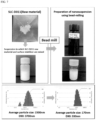
- the inventors prepared a nanosuspension using wet type ball milling using beads. Specifically, polymer (HPMC 3cp) and surfactant (TPGS) were dissolved in a 100 mL beaker containing distilled water, and then progerinin was weighed and added to prepare the suspension by stirring for 2 hours. Tubes with beads and suspensions added were mounted on DeltaVita ® , Netzsch (Zentrimix 380R) devices to prepare the nanosuspension (rate: 1200 rpm, temperature: -10°C, 6 hours). FIG. 7 shows the appearance (top) of the nanosuspension prepared by the preparation method and results (bottom) of measuring the average particle diameter.
- polymer HPMC 3cp
- TPGS surfactant
- the nanosuspension including drug nanoparticles As a result of FIG. 7 , it was possible to prepare the nanosuspension including drug nanoparticles with an average particle diameter of 170 nm. In terms of the stability of nanosuspensions, it was found that the solubility was more excellent when the average particle diameter of the drug particles is 200 nm or less, and that the nanoparticles have a larger surface area and are more easily dissolved, thus maximizing the bioavailability.
- the inventors determined that it was necessary to select a vehicle composition that is suitable for the preparation of nanosuspensions with an average particle diameter of 200 nm or less while preparing nanosuspensions using wet type ball milling using beads, and sought to select optimized polymers, surface stabilizing agents such as surfactants, and preservatives.
- TPGS solution was prepared by dissolving TGPS in 60°C warm water and then cooling it to room temperature.
- HPMC E3 solution was prepared by dissolving HPMC E3 in 60°C warm water and then cooling it to room temperature. Then the two solutions were stirred and mixed thoroughly.
- progerinin as an active pharmaceutical ingredient API was slowly filled in the mixed solution with continuous stirring.
- Parameters of the Agitator Bead Mill, a mixing and wet grinding equipment, were set appropriately to start the wet type ball milling, and a hydrostatic pump was adjusted to have the suspension circulated.
- the suspension coming from the Agitator Bead Mill was recirculated back into a suspension vessel while maintaining a preset value below 35°C.
- Wet type ball milling continued until PSD (D50 ⁇ 200 nm) of the drug particles was achieved.
- the target PSD D50 ⁇ 200nm
- the pump was turned off, and the milling suspension line was separated from the suspension vessel.
- the suspension obtained by nano-milling was thoroughly mixed by adding potassium sorbate as a preservative. It was placed and filled into a sterilized glass bottle. The operation of filling the bottle was carried out with 100% visual inspection and checking of filling weight, after which the bottle was sealed with a rubber finish and an aluminum flip-off seal.
- the oral progerinin nanosuspension was prepared via the method in Example ⁇ 2-1>.
- Prototype 1 consists of 10.0 wt% of progerinin, 3.0 wt% of HPMC E3, 1.0 wt% of surfactant TPGS, and 0.2 wt% of potassium sorbate, and a suspension was prepared by mixing TPGS and HPMC solutions and then adding progerinin.
- the mixture prepared as described above was then mixed with 0.3 mm VHD ZrO beads in a volume ratio of 1:1 to 5, and the ball milling was performed.
- the temperature of the vessel was closely monitored during the preparation process.
- the particle size distribution was monitored until the target average particle size reached D50 ⁇ 200 nm.
- Prototypes 2 to 5 were also prepared in the same way.
- the particle diameter, zeta potential, drug content, flowability, and viscosity of the nanosuspension prepared as described above were measured in the following methods.
- the average particle diameters (D50) of the drug particles of prototype 1 and prototype 3 were 165.8 nm and 146.3 nm, respectively with the average particle diameter of 200 nm or less satisfied, and the drug content had a value higher than 95% without the detection of impurities.
- prototypes 1 and 3 are the most suitable vehicle compositions in terms of dispersibility, stability, and effectiveness of the drug.
- the prototype 4 was not selected as a suitable vehicle composition.
- prototype 2 the tendency that particles increase over time, made it an unsuitable candidate.
- Prototype 5 the formation of nanosuspensions was not possible at all.
- progerinin was mixed with HPMC E3, TPGS, and potassium sorbate in a ratio of 1: 10, and, as a result of measuring whether the drug (API) components are effective under 40°C/75% RH condition over 2 weeks, it was found that the addition of HPMC E3, TPGS, and potassium sorbate to the progerinin drug had no effect on the drug.
- the content decreases when added before milling, such that it is preferable to complete it by post-addition after milling, and the preliminary excipient compatibility studies suggested that the drugs had compatibility with excipients.
- the average particle size was 200 nm or less, ensuring stability of the nanodrug particles for more than 3 weeks.
- the nanosuspension of prototype 1 was prepared in the same method as in Example ⁇ 2-1>, and was prepared with the components and content in Table 6 below.
- the dispersion stability in the simulated intestinal fluid (SIF) and simulated gastric fluid (SGF) was checked for the nanosuspension prepared as described above.
- the specific experimental method is as follows.
- Monobasic potassium phosphate (6.8 gm) and sodium hydroxide (0.616 gm) were added to a 1000 ml volume flask with 250 ml distilled water, then rotated until the above components are dissolved, and then another 700 ml of distilled water was added, followed by pH measurement. The pH was adjusted to pH 6.8 +/- 0.1 by adding 0.2N sodium hydroxide or 0.2N hydrochloric acid.
- a translucent HDPE vial (25 ml) with an HDPE lid was added with a nanosuspension of prototype 1 in an appropriate amount. At this time, it was diluted in 15 ml of simulated gastric fluids or simulated intestinal fluids to reach a final concentration of progenin to 0.5 mg/ml. Then, after adding a dispersant, the formulation prepared above was shaken until it was completely dispersed. The vial was placed in an oil bath at 37°C until flocculation takes place. The size of the precipitated particles was measured using the Horiba-LA-910 particle analyzer. In general, the above substances were cultured in human gastric fluid on an empty stomach for approximately 3 hours.
- the weight of the bead cores was calculated in the SIF or SGF experiment, and the bead cores were dispersed in volumes such as SIF or SGF.
- 120 gm of distilled water was poured into the Horiba LA-910 chamber and drained until the device was empty. Afterwards, 120 gm of distilled water was poured, and the entire volume of the cultured formulation (at 15 ml of SGF or SIF) was poured into the Horiba LA-910 chamber and the average particle diameter was measured.
- the progerinin drug (prototype 1) with the average particle diameter (D50) of 200 nm or less was maintained at 190 to 220 nm even in simulated intestinal fluids or simulated gastric fluids, and it was found that the dispersion stability and bioavailability of the drug were maintained.
- Progerinin nanosuspension (10%, w/w) was prepared in a composition of the following Table. TABLE 8 Substance name Unit composition (w/w, %) C19010954-C [API, Progerinin] 10.0 HPMC E3 3.0 TPGS 1.0 Purified water 86.0 Total 100.0
- purified water was prepared at 55°C ⁇ 60°C
- TPGS was added to a solution preparation vessel while stirring, and the constant temperature water bath heated to 55°C ⁇ 60°C was maintained until TPGS was completely dissolved.
- HPMC E3 was added to the solution preparation vessel while stirring and then cooled to ambient temperature (15°C ⁇ 25°C) while stirring until the solid is completely dissolved and the HPMC E3 solution becomes transparent.
- Progerinin (Batch Formula C19010954-C) was slowly filled into the solution preparation vessel and stirred continuously.
- Progerinin sachet formulations were prepared in compositions of the following Table 10. To the container with the nanosuspension previously prepared, mannitol 100SD, mannitol 200SD, and sodium croscarmellose SD-711 were added. The mixture was mixed for at least 2 hours, followed by checking that the redispersant was completely dissolved. After preheating the machine and materials, the granulation solution (nozzle size: 1.0mm) was sprayed. Inlet airflow, inlet air temperature, and spray rate were adjusted to maintain proper fluidization throughout the entire spray process. When the granulation process was over, the granules were dried. LOD (measured at 105°C) was monitored at appropriate time points, and drying was stopped until LOD was 2.00% or less. After drying, the inlet air temperature was set to 25.0°C (20.0 ⁇ 30.0°C) and cooling was started until the product temperature becomes below 35.0°C.
- the sachet for R&D was filled manually, and the Sachet Filling Machine was used in the production of Human PK batches.
Landscapes
- Health & Medical Sciences (AREA)
- Chemical & Material Sciences (AREA)
- Life Sciences & Earth Sciences (AREA)
- Veterinary Medicine (AREA)
- Medicinal Chemistry (AREA)
- Pharmacology & Pharmacy (AREA)
- Animal Behavior & Ethology (AREA)
- General Health & Medical Sciences (AREA)
- Public Health (AREA)
- Engineering & Computer Science (AREA)
- Bioinformatics & Cheminformatics (AREA)
- Epidemiology (AREA)
- Chemical Kinetics & Catalysis (AREA)
- General Chemical & Material Sciences (AREA)
- Nuclear Medicine, Radiotherapy & Molecular Imaging (AREA)
- Organic Chemistry (AREA)
- Biophysics (AREA)
- Molecular Biology (AREA)
- Oil, Petroleum & Natural Gas (AREA)
- Inorganic Chemistry (AREA)
- Medicinal Preparation (AREA)
- Pharmaceuticals Containing Other Organic And Inorganic Compounds (AREA)
Applications Claiming Priority (2)
| Application Number | Priority Date | Filing Date | Title |
|---|---|---|---|
| KR1020220010690A KR102686558B1 (ko) | 2022-01-25 | 2022-01-25 | 프로게리닌을 포함하는 과립제 및 이를 이용한 샤셋제 |
| PCT/KR2023/000926 WO2023146211A1 (ko) | 2022-01-25 | 2023-01-19 | 프로게리닌을 포함하는 과립제 및 이를 이용한 샤셋제 |
Publications (2)
| Publication Number | Publication Date |
|---|---|
| EP4470529A1 true EP4470529A1 (de) | 2024-12-04 |
| EP4470529A4 EP4470529A4 (de) | 2026-02-25 |
Family
ID=87471886
Family Applications (1)
| Application Number | Title | Priority Date | Filing Date |
|---|---|---|---|
| EP23747253.5A Pending EP4470529A4 (de) | 2022-01-25 | 2023-01-19 | Granulat mit progerinin und beutel damit |
Country Status (7)
| Country | Link |
|---|---|
| US (1) | US20250064778A1 (de) |
| EP (1) | EP4470529A4 (de) |
| JP (1) | JP7841772B2 (de) |
| KR (1) | KR102686558B1 (de) |
| CN (1) | CN118613254A (de) |
| AU (1) | AU2023211896B2 (de) |
| WO (1) | WO2023146211A1 (de) |
Family Cites Families (7)
| Publication number | Priority date | Publication date | Assignee | Title |
|---|---|---|---|---|
| US20030224058A1 (en) * | 2002-05-24 | 2003-12-04 | Elan Pharma International, Ltd. | Nanoparticulate fibrate formulations |
| US8263652B2 (en) | 2007-10-31 | 2012-09-11 | Sk Biopharmaceuticals Co., Ltd. | Stabilized pediatric suspension of carisbamate |
| EP2802314B1 (de) * | 2012-01-13 | 2020-11-25 | XSpray Microparticles AB | Verfahren zur herstellung stabiler, amorpher hybrider nanopartikel mit mindestens einem proteinkinaseinhibitor und mindestens einer polymeren stabilisierungs- und matrixformungskomponente |
| KR102070328B1 (ko) * | 2017-04-25 | 2020-01-28 | (주)피알지에스앤텍 | 데커신 유도체를 유효성분으로 함유하는 노화 관련 질환 예방 또는 치료용 약학조성물 |
| WO2018199633A1 (ko) * | 2017-04-25 | 2018-11-01 | (주)피알지에스앤텍 | 데커신 유도체를 유효성분으로 함유하는 노화 관련 질환 예방 또는 치료용 약학조성물 |
| KR102212895B1 (ko) | 2019-03-21 | 2021-02-09 | 한국전자기술연구원 | 송광 모듈 및 그를 갖는 스캐닝 라이다 |
| KR102369827B1 (ko) * | 2020-09-04 | 2022-03-04 | (주)피알지에스앤텍 | 프로게리닌을 포함하는 나노현탁액 및 이의 제조방법 |
-
2022
- 2022-01-25 KR KR1020220010690A patent/KR102686558B1/ko active Active
-
2023
- 2023-01-19 EP EP23747253.5A patent/EP4470529A4/de active Pending
- 2023-01-19 JP JP2024541172A patent/JP7841772B2/ja active Active
- 2023-01-19 AU AU2023211896A patent/AU2023211896B2/en active Active
- 2023-01-19 WO PCT/KR2023/000926 patent/WO2023146211A1/ko not_active Ceased
- 2023-01-19 US US18/726,803 patent/US20250064778A1/en active Pending
- 2023-01-19 CN CN202380018780.XA patent/CN118613254A/zh active Pending
Also Published As
| Publication number | Publication date |
|---|---|
| EP4470529A4 (de) | 2026-02-25 |
| JP7841772B2 (ja) | 2026-04-07 |
| CN118613254A (zh) | 2024-09-06 |
| AU2023211896B2 (en) | 2025-11-13 |
| AU2023211896A1 (en) | 2024-08-01 |
| KR102686558B9 (ko) | 2025-06-23 |
| KR102686558B1 (ko) | 2024-07-22 |
| JP2025502120A (ja) | 2025-01-24 |
| KR20230114478A (ko) | 2023-08-01 |
| WO2023146211A1 (ko) | 2023-08-03 |
| US20250064778A1 (en) | 2025-02-27 |
Similar Documents
| Publication | Publication Date | Title |
|---|---|---|
| Cerdeira et al. | Formulation and drying of miconazole and itraconazole nanosuspensions | |
| AU2014232508B2 (en) | Abiraterone acetate formulation | |
| CN103998037B (zh) | 对高熔点疏水性化合物具有改进的生物利用度的药物组合物 | |
| US20210002267A1 (en) | Novel formulation of meloxicam | |
| JP7780442B2 (ja) | メチル{4,6-ジアミノ-2-[5-フルオロ-1-(2-フルオロベンジル)-1H-ピラゾロ[3,4-b]ピリジン-3-イル]ピリミジン-5-イル}カルバメートのナノ製剤 | |
| MX2010011295A (es) | Composiciones farmaceuticas orales en una dispersion solida que comprenden preferiblemente posaconazol y acetato-succinato de hidroxipropilmetilcelulosa. | |
| BG65254B1 (bg) | Бързо диспергируема твърда лекарствена форма | |
| WO2018142336A1 (en) | Lamotrigine suspension dosage form | |
| TW201722401A (zh) | 物理及化學穩定之口服吉維諾司他(givinostat)懸浮液 | |
| Elsebay et al. | Nanosuspension: a formulation technology for tackling the poor aqueous solubility and bioavailability of poorly soluble drugs | |
| Al-Nimry et al. | Preparation and optimization of sertraline hydrochloride tablets with improved dissolution through crystal modification | |
| CN118450894A (zh) | 一种纳米晶组合物及其制备方法和用途 | |
| EP4470529A1 (de) | Granulat mit progerinin und beutel damit | |
| KR102369827B1 (ko) | 프로게리닌을 포함하는 나노현탁액 및 이의 제조방법 | |
| EP4445896B1 (de) | Nanosuspension mit progerinin und herstellungsverfahren dafür | |
| JP2020517578A (ja) | 脂質を製粉工程の潤滑剤として用いる活性物質のナノ粒子の製造方法 | |
| AU2024301186A1 (en) | Novel composition for suspension formulation | |
| US20220409543A1 (en) | Deposition of nanosuspensions of active pharmaceutical ingredients on carriers | |
| CN116196274A (zh) | 纳米混悬液、冻干粉及制备方法、应用 | |
| JP2004002245A (ja) | 溶出性を改善したイトラコナゾール経口投与製剤 |
Legal Events
| Date | Code | Title | Description |
|---|---|---|---|
| STAA | Information on the status of an ep patent application or granted ep patent |
Free format text: STATUS: THE INTERNATIONAL PUBLICATION HAS BEEN MADE |
|
| PUAI | Public reference made under article 153(3) epc to a published international application that has entered the european phase |
Free format text: ORIGINAL CODE: 0009012 |
|
| STAA | Information on the status of an ep patent application or granted ep patent |
Free format text: STATUS: REQUEST FOR EXAMINATION WAS MADE |
|
| 17P | Request for examination filed |
Effective date: 20240722 |
|
| AK | Designated contracting states |
Kind code of ref document: A1 Designated state(s): AL AT BE BG CH CY CZ DE DK EE ES FI FR GB GR HR HU IE IS IT LI LT LU LV MC ME MK MT NL NO PL PT RO RS SE SI SK SM TR |
|
| DAV | Request for validation of the european patent (deleted) | ||
| DAX | Request for extension of the european patent (deleted) | ||
| REG | Reference to a national code |
Ref country code: DE Ref legal event code: R079 Free format text: PREVIOUS MAIN CLASS: A61K0009160000 Ipc: A61K0031366000 |
|
| A4 | Supplementary search report drawn up and despatched |
Effective date: 20260123 |
|
| RIC1 | Information provided on ipc code assigned before grant |
Ipc: A61K 31/366 20060101AFI20260119BHEP Ipc: A61K 9/16 20060101ALI20260119BHEP Ipc: A61K 9/48 20060101ALI20260119BHEP Ipc: A61K 9/00 20060101ALI20260119BHEP Ipc: A61P 43/00 20060101ALI20260119BHEP |