EP4406533A2 - Ophthalmische zusammensetzung zur behandlung von trockenem auge - Google Patents
Ophthalmische zusammensetzung zur behandlung von trockenem auge Download PDFInfo
- Publication number
- EP4406533A2 EP4406533A2 EP24157147.0A EP24157147A EP4406533A2 EP 4406533 A2 EP4406533 A2 EP 4406533A2 EP 24157147 A EP24157147 A EP 24157147A EP 4406533 A2 EP4406533 A2 EP 4406533A2
- Authority
- EP
- European Patent Office
- Prior art keywords
- composition
- eye
- patient
- score
- treatment
- Prior art date
- Legal status (The legal status is an assumption and is not a legal conclusion. Google has not performed a legal analysis and makes no representation as to the accuracy of the status listed.)
- Pending
Links
Images



Classifications
-
- A—HUMAN NECESSITIES
- A61—MEDICAL OR VETERINARY SCIENCE; HYGIENE
- A61F—FILTERS IMPLANTABLE INTO BLOOD VESSELS; PROSTHESES; DEVICES PROVIDING PATENCY TO, OR PREVENTING COLLAPSING OF, TUBULAR STRUCTURES OF THE BODY, e.g. STENTS; ORTHOPAEDIC, NURSING OR CONTRACEPTIVE DEVICES; FOMENTATION; TREATMENT OR PROTECTION OF EYES OR EARS; BANDAGES, DRESSINGS OR ABSORBENT PADS; FIRST-AID KITS
- A61F9/00—Methods or devices for treatment of the eyes; Devices for putting in contact-lenses; Devices to correct squinting; Apparatus to guide the blind; Protective devices for the eyes, carried on the body or in the hand
- A61F9/0008—Introducing ophthalmic products into the ocular cavity or retaining products therein
-
- A—HUMAN NECESSITIES
- A61—MEDICAL OR VETERINARY SCIENCE; HYGIENE
- A61K—PREPARATIONS FOR MEDICAL, DENTAL OR TOILETRY PURPOSES
- A61K38/00—Medicinal preparations containing peptides
- A61K38/04—Peptides having up to 20 amino acids in a fully defined sequence; Derivatives thereof
- A61K38/12—Cyclic peptides, e.g. bacitracins; Polymyxins; Gramicidins S, C; Tyrocidins A, B or C
- A61K38/13—Cyclosporins
-
- A—HUMAN NECESSITIES
- A61—MEDICAL OR VETERINARY SCIENCE; HYGIENE
- A61K—PREPARATIONS FOR MEDICAL, DENTAL OR TOILETRY PURPOSES
- A61K47/00—Medicinal preparations characterised by the non-active ingredients used, e.g. carriers or inert additives; Targeting or modifying agents chemically bound to the active ingredient
- A61K47/06—Organic compounds, e.g. natural or synthetic hydrocarbons, polyolefins, mineral oil, petrolatum or ozokerite
-
- A—HUMAN NECESSITIES
- A61—MEDICAL OR VETERINARY SCIENCE; HYGIENE
- A61K—PREPARATIONS FOR MEDICAL, DENTAL OR TOILETRY PURPOSES
- A61K9/00—Medicinal preparations characterised by special physical form
- A61K9/0012—Galenical forms characterised by the site of application
- A61K9/0048—Eye, e.g. artificial tears
-
- A—HUMAN NECESSITIES
- A61—MEDICAL OR VETERINARY SCIENCE; HYGIENE
- A61K—PREPARATIONS FOR MEDICAL, DENTAL OR TOILETRY PURPOSES
- A61K9/00—Medicinal preparations characterised by special physical form
- A61K9/08—Solutions
-
- A—HUMAN NECESSITIES
- A61—MEDICAL OR VETERINARY SCIENCE; HYGIENE
- A61P—SPECIFIC THERAPEUTIC ACTIVITY OF CHEMICAL COMPOUNDS OR MEDICINAL PREPARATIONS
- A61P27/00—Drugs for disorders of the senses
- A61P27/02—Ophthalmic agents
- A61P27/04—Artificial tears; Irrigation solutions
Definitions
- Keratoconjunctivitis sicca also known as dry eye disease or dysfunctional tear syndrome
- Keratoconjunctivitis sicca is today understood as a multifunctional disorder of the tear film and of the ocular surface which results in discomfort, visual disturbance, and often even in ocular surface damage caused by tear film instability.
- Estimates of the prevalence of dry eye vary considerably, depending on the criteria used to define the disease, but in the U.S., it has been estimated that as many as 3.2 million women and 1.7 million men over the age of 50 have dry eye, with a projected 40% increase in number of patients affected by 2030.
- Cyclosporine is available, at least in the US as an approved medicine in the form of an ophthalmic (o/w) emulsion (Restasis ® ). This product is indicated to increase tear production in patients whose tear production is presumed to be suppressed due to ocular inflammation associated with keratoconjunctivis sicca.
- WO2011/073134 A1 discloses pharmaceutical compositions in the form of solutions comprising cyclosporine and a semifluorinated alkane as a liquid vehicle which may be administered to the eye of a patient, such as for the treatment of keratoconjunctivitis sicca, for instance compositions comprising cyclosporine in semifluorinated alkane 1-(perfluorobutyl)pentane (F4H5) in the presence of ethanol as a co-solvent.
- WO2018/115097 describes a dosing regimen for the treatment of patients with dry eye disease, based on ophthalmic compositions comprising about 0.05 to 0.1 % (w/v) cyclosporine dissolved in 1-(perfluorobutyl)pentane.
- This document does not disclose a targeted treatment in respect of specific symptoms associated with dry eye disease and the frequency of their occurrence.
- the method of treatment also does not disclose a composition for use in a treatment of patients meeting a specific set of dry eye disease signs and symptoms.
- the invention relates to an ophthalmic composition
- an ophthalmic composition comprising 0.1 % (w/v) cyclosporine dissolved in 1-(perfluorobutyl)pentane for use in a method of treating keratoconjunctivitis sicca (dry eye disease), wherein the method comprises a step of topically administering the composition to an eye of a patient, and wherein the patient has a total ocular surface disease index (OSDI) score of equal or greater than 45. In other embodiments, the patient has a total ocular surface disease index (OSDI) score of equal or greater than 55.
- OSDI total ocular surface disease index
- the invention in a second aspect, relates to an ophthalmic composition
- an ophthalmic composition comprising 0.1 % (w/v) cyclosporine dissolved in 1-(perfluorobutyl)pentane for use in: a) a method of treating and/or ameliorating the symptoms associated with keratoconjunctivitis sicca (dry eyes), wherein the symptoms are dryness and blurred vision; and/or b) for use in a method of treating and/or ameliorating the awareness of symptoms of dry eyes and the frequency of dryness.
- the present invention relates to, in a first aspect, an ophthalmic composition
- an ophthalmic composition comprising 0.1 % (w/v) cyclosporine dissolved in 1-(perfluorobutyl)pentane for use in a method of treating of keratoconjunctivitis sicca (dry eye disease), wherein the method comprises a step of topically administering the composition to an eye of a patient, and wherein the patient has a total ocular surface disease index (OSDI) score of equal or greater than 45.
- OSDI total ocular surface disease index
- Dry eye disease also abbreviated as DED, and which also may be known as keratoconjunctivitis sicca, dysfunctional tear syndrome or dry eye syndrome
- DED Dry eye disease
- keratoconjunctivitis sicca dysfunctional tear syndrome or dry eye syndrome
- a patient having keratoconjunctivitis sicca may experience any one of, or a combination of tear hyperosmolarity, tear film instability or abnormalities in the lipid layer composition of the tear film.
- DED keratoconjunctivitis sicca or dry eye disease
- Sjögren syndrome patients suffer from autoimmune disorders in which the lacrimal glands are invaded by activated T-cells, which leads not only to dry eye disease but also to a dry mouth condition.
- the Sjögren syndrome can be a primary disease or can result from other autoimmune diseases, such as systemic lupus erythrematosus or rheumathroid arthritis.
- Non-Sjögren patients suffering from an aqueous-deficient DED usually have a lacrimal gland insufficiency, lacrimal duct obstruction or reflex hyposecretion.
- the second major class evaporative dry eye disease
- evaporative dry eye disease is also somewhat heterogeneous and can develop as a result of diverse root causes.
- One of the major causes is meibomian gland disease or dysfunction, eyelid aperture disorders, blink disorders (as in Parkinson's disease) or ocular surface disorders (as in allergic conjunctivitis).
- Symptoms of dry eye disease may include, but are not limited to, any one, or combination of, the following: a dry, scratchy, gritty, or sandy feeling in the eye; foreign body sensation; pain or soreness; stinging or burning; itching; increased blinking; eye fatigue; photophobia; blurry vision; redness; mucus discharge; contact lens intolerance; and excessive reflex tearing. It is understood that not all patients suffering from dry eye disease may exhibit all of these symptoms simultaneously.
- Subjects suffering from dry eye disease may experience symptoms which individually, or collectively, such as blurring, pain, irritation which may contribute to visual impairment or difficulties which can be reflected by a negative effect on the subject's performance in functional tasks where visual performance and acuity may be essential. Dry eye disease may also lead, or contribute to corneal surface damage for example to the central cornea.
- dry eye disease individually may refer to any one or combination of the subtypes or categories, or root causes as described herein and that any symptom or aspect or pathophysiological consequences of dry eye disease may be addressed.
- the severity of dry eye disease in subjects or patients can be classified and scored using one or more, or a combination of standard tests based on assessment of dry eye disease symptoms.
- the severity of dry eye disease may be determined using tests based on the assessment of patient perception of ocular symptoms and their effect on vision, based on questionnaires such as the Ocular Surface Disease Index (OSDI) questionnaire, which is a 12-item questionnaire focussed on symptoms of ocular irritation associated with dry eye disease and their impact on daily activities and lifestyle of the patient during the week preceding their assessment.
- OSDI Ocular Surface Disease Index
- the OSDI test is scored using a scale of 0 to 4 for each question. For example, as part of the test patients may be asked questions regarding problems with blurred vision during the last week, and are asked to indicate, if applicable, either 0 for none of the time, 1 for some of the time, 2 for half of the time, 3 for most of the time or 4 for all of the time.
- the scores from the questionnaire are totalled and assessed on a scale of 0 to 100, with higher scores representing greater degree/severity and impact of dry eye disease.
- compositions as defined are particularly effective especially in the treatment of dry eye disease in patients having at baseline, prior to commencement of treatment with the composition, a total OSDI score of equal, or greater than 45; or patients with a total OSDI score of equal, or greater than 55.
- the dry eye symptom visual analogue scale is a test in the form of a questionnaire, where subjects are asked to rate their ocular symptoms (both eyes simultaneously) by placing a vertical mark on the horizontal line to indicate the level of discomfort from a scale of 0 to 100% with regards to dryness, sticky feeling, burning / stinging, foreign body sensation, itching, blurred vision, sensitivity to light, and pain, wherein 0 corresponds to "no discomfort” while 100% corresponds to "maximal discomfort”.
- the VAS test also assesses the frequency in occurrence of dryness experienced by the subject, as well as the percentage of time the subject is aware of experiencing the symptoms of dry eye, (with 0 corresponding to 'never' and 100% corresponding to ⁇ all of the time').
- the VAS test may be conducted at various time points to assess the effectiveness and patient response in respect to impact of therapy on these symptoms of dry eye disease.
- Signs of dry eye disease in a patient's eye may also be evaluated and determined using any combination of objective clinical measures such as the Schirmer test type 1, fluorescein staining and/or lissamine green staining of the cornea and conjunctiva, and tear-film break up time (TFBUT, or TBUT) as a measurement of tear quality.
- Therapeutic efficacy may also be assessed by comparison of measurements for each or combination of these clinical measures, obtained at various time points during a given treatment period, also in combination or conjunction with any of the symptom assessments described above.
- the subject or patient has, prior to treatment with the compositions defined herein, a total OSDI scoring of equal or greater than 45, or preferably equal or greater than 55, as well as, in at least one eye, or alternatively both eyes, any one or combination of the following:
- Cyclosporine is a pharmacological treatment option for dry eye disease, which is available as a prescription medication, for example, in the US in the form of an 0.05 % ophthalmic (o/w) emulsion (Restasis ® ). This product is indicated to increase tear production in patients whose tear production is presumed to be suppressed due to ocular inflammation associated with keratoconjunctivis sicca. Restasis ® is administered twice a day in each eye approximately 12 hours apart. It is packaged in single-vials. (Prescribing Information, Restasis ® ).
- Cyclosporine (synonyms include cyclosporin A, CsA, or ciclosporin) is a cyclic nonribosomal peptide comprising 11 amino acids with the empirical formula C 62 H 111 N 11 O 12 and molecular weight of 1202.61. It is an immunosuppressant drug that is widely used in post-allergenic organ transplant, to reduce the activity of the patient's immune system and thereby, the risk of organ rejection. Cyclosporine is typically provided as a colourless or white powder. Cyclosporine is thought to bind to the cytosolic protein cyclophilin (immunophilin) of immunocompetent lymphocytes, especially T-lymphocytes.
- cytosolic protein cyclophilin immunocompetent lymphocytes
- the ophthalmic composition according to the present invention employs, as a liquid vehicle for the cyclosporine, the compound 1-(perfluorobutyl)pentane.
- 1-(perfluorobutyl)pentane is a semifluorinated alkane with the chemical formula F(CF 2 ) 4 (CH 2 ) 5 H. It is an inert, water-insoluble liquid, with a density of 1.284 g/cm 3 at 25 °C and refractive index of 1.3204 at 20 °C.
- F4H5 Alternative nomenclature for this compound includes F4H5, wherein F denotes a linear perfluorinated alkane segment comprising 4 carbon atoms and wherein H denotes a linear and non-fluorinated alkane hydrocarbon segment of 5 carbon atoms.
- H denotes a linear and non-fluorinated alkane hydrocarbon segment of 5 carbon atoms.
- the 1-(perfluorobutyl)pentane is substantially free of water.
- the ophthalmic composition for any one of the uses according to the present invention may comprise or consist, further to the cyclosporine featured in any one the preferred concentrations of the invention, of at least about 97 % (w/w) or more preferably, of at least about 98 % (w/w), or of at least about 99 % (w/w) of 1-(perfluorobutyl)pentane, based on the total weight of the ophthalmic composition (final dosage form).
- the pharmaceutical composition for any one of the uses according to the present invention may consist of, in addition to the cyclosporine in an amount or concentration as defined herein, from about 95.0 to about 99.99 % (w/w), or about 96.0 to about 99.99 % (w/w), or from about 98.0 to 99.99% (w/w), or from about 99.999 to about 99.9999 % (w/w) of 1-(perfluorobutyl)pentane, based on the total weight of the final composition.
- the ophthalmic composition for any one of the uses described herein for the present invention may optionally further comprise 2-(perfluorobutyl)pentane.
- the composition, in addition to 1-(perfluorobutyl)pentane, may optionally comprise minor amounts of 2-(perfluorobutyl)pentane, of up to 2 % (w/w), or up to 1 % (w/w), or up to 0.5 % (w/w).
- the concentration of cyclosporine in the ophthalmic compositions for any one of the uses according to the invention is 0.1 % (w/v) of the composition.
- % (w/v) denotes the amount of a component of a composition as a weight percentage in relation to the total volume of the composition (with 'w' denoting the weight and 'v' denoting volume). For example 0.1 % (w/v) would correspond to 1.0 mg of a component in 1 mL of the composition.
- % (w/w) or wt % refers to the amount of a component of a composition as a weight percentage in relation to the total weight of the composition (with 'w' denoting weight).
- a parameter for example such as the concentration of cyclosporine dissolved in the composition or the volume featured in a single dose or applied liquid drop of the composition includes the precise value as defined, as well as any value falling within the degree of variability usually observed in measuring or determining these parameters using the standard techniques and equipment known in the art and field.
- the ophthalmic composition as defined herein may be used for the treatment of human subjects with dry eye disease, as well as for any related conditions, or signs and symptoms associated therewith.
- the present invention provides for the following items:
- the present disclosure may relate to a method of treatment according to the following:
- the present invention provides for the following items:
- the present invention provides for the following method:
- the present invention provides for the following method:
- the present invention provides for an ophthalmic composition for use in a method of increasing tear production volume in a subject, wherein the composition comprises 0.1 % w/v cyclosporine dissolved in 1-(perfluorobutyl)pentane.
- Said method may comprise a step of topically administering the composition to an eye of a subject, for example to the surface of the eye (e.g. the surface of the cornea and/or conjunctiva).
- the composition may be administered in the form of a single (i.e. one) liquid drop per dose.
- the drop volume of said administered dose is between about 8 to 10 ⁇ L.
- the composition may be administered twice a day per eye of the subject.
- composition according to said aspect may comprise of about 0.1 % w/v cyclosporine dissolved in 1-(perfluorobutyl)pentane, and optionally, up to about 1.0 % w/w of ethanol.
- composition for use in said method of increasing tear production volume in a subject may be a solution consisting of about 0.1 % w/v cyclosporine dissolved in 1-(perfluorobutyl)pentane and about 1.0 % w/w ethanol.
- the composition is a solution consisting of about 0.1 % w/v cyclosporin dissolved in 1-(perfluorobutyl)pentane.
- the ophthalmic composition for use according to this aspect and any one of its embodiments above may be used in a method of increasing tear production volume in a subject, wherein the subject's tear production is suppressed, or presumed to be suppressed because of ocular inflammation associated with keratoconjunctivitis sicca.
- Tear suppression such as due to ocular inflammation associated with keratoconjunctivitis sicca in the subject may for example be determined in a subject based on any one or combination of the methods as described herein used to assay dry eye disease signs and symptoms, for example Schirmer type I test or corneal fluorescein staining, or patient questionnaire.
- the present invention provides for an ophthalmic composition for use in a method of treating xerophtalmia, wherein the composition comprises 0.1 % w/v cyclosporine dissolved in 1-(perfluorobutyl)pentane.
- said treatment method increases tear production in the subject.
- the method according to said aspect may comprise a step of topically administering the composition to an eye of a subject, for example to the surface of the eye (e.g. the cornea and/or conjunctiva).
- the composition may be administered in the form of a single liquid drop per dose; in an embodiment, the volume of the administered drop is between about 8 to 10 ⁇ L.
- the composition may be administered twice daily (two times per day) per eye of the subject.
- composition according to said aspect may comprise of about 0.1 % w/v cyclosporine dissolved in 1-(perfluorobutyl)pentane, and optionally, up to about 1.0 % w/w of ethanol.
- the composition for use in said method of treating xerophtalmia, optionally wherein the method increases tear production in a subject is a solution consisting of about 0.1 % w/v cyclosporine dissolved in 1-(perfluorobutyl)pentane and about 1.0% w/w ethanol.
- the composition is a solution consisting of 0.1 % w/v cyclosporin dissolved in 1-(perfluorobutyl)pentane.
- the tear film with its lipid, aqueous and mucin layers normally provides a protective barrier to corneal tissue and corneal epithelium and has a wetting function i.e. prevents drying/desiccation. It acts as a conduit for the provision of oxygen and nutrients to the corneal epithelial cells, as well as removal of any potential pathogens, debris and waste products.
- the tear film In patients with dry eye disease, the tear film is typically unstable or disrupted (for example, as a result of reduced aqueous secretion or increased evaporation of the tear film, or reduced secretion of mucin or lipids) and consequently, the corneal tissue, and conjunctiva may become less protected and vulnerable and/or prone to damage and deterioration.
- the severity of ocular surface damage which may be characterized by, for example punctate disruption of the corneal epithelium or surface disruption of the bulbar conjunctiva, may be assessed by corneal and conjunctival staining measurements, for example such as described herein, i.e. fluorescein staining (NEI scale) and lissamine green staining (Oxford scale), which highlight and stain in particular, dead or damaged corneal and conjunctival cells.
- fluorescein staining NKI scale
- lissamine green staining Olford scale
- central corneal fluorescein staining which assays the central corneal area (as compared to the peripheral corneal area including inferior, superior, nasal, and temporal regions of the cornea) reflects ocular surface damage that impacts visual function impairment.
- the term 'corneal staining' or ⁇ total corneal staining' refers to staining observed as a sum in respect of all regions of the cornea, i.e. the inferior, superior, central, temporal, and nasal regions of the cornea.
- the term 'conjunctival staining' or ⁇ total conjunctival staining' refers to staining observed as a sum in respect of all regions of the conjunctivis, i.e. the temporal and nasal regions of the conjunctivis.
- the term is used specifying the specific conjunctival region (e.g. nasal conjunctiva staining), optionally in conjunction with mention of the dye used for staining, such as lissamine green, it is to be understood that this refers specifically to staining observed in said region.
- the ophthalmic composition for any one of the uses according to the invention may be used to treat and reduce the signs of dry eye diseases, in particular treat or reduce ocular surface damage, such as corneal damage and/or conjunctival damage, in a subject suffering from dry eye disease.
- said subject to be treated may have ocular surface damage of the cornea, and have a total corneal fluorescein staining score of at least equal to, or greater than 10 ( ⁇ 10), the score being the sum of scores obtained for inferior, superior, central, nasal, and temporal regions of the cornea, based on the NEI grading scale of 0-3.
- the subject may have a total corneal fluorescein staining score of at least equal to, or greater than 11, prior to commencement of treatment, optionally wherein the subject has a total OSDI score of equal to or greater than 45, or equal or greater than 55.
- the ophthalmic composition according to any one of the uses according to the invention may be used to reduce ocular surface damage, such as corneal damage and/or conjunctival damage, in a subject suffering from dry eye disease.
- said subject may have a central corneal fluorescein staining score of at least equal to, or greater than 2 ( ⁇ 2), based on the NEI grading scale of 0-3.
- said subject may in addition also have a total lissamine green conjunctival staining score (sum of temporal and nasal regions), based on the Oxford scale, of at least equal to, or greater than 2 (i.e. ⁇ 2).
- the invention relates to an ophthalmic composition for use in treating i.e. reducing ocular surface damage in a subject suffering from dry eye disease, wherein said subject has a total OSDI score of equal, or greater than 45, wherein the composition comprises about 0.1 %(w/v) cyclosporine dissolved in 1-(perfluorobutyl)pentane, and optionally up to about 1.0 % (w/w) of ethanol; wherein the composition is administered topically twice daily, one drop per eye at a drop volume of about 8 to 10 ⁇ L.
- such use may be for the treatment e.g. reduction of corneal surface damage, in particular reduction of ocular surface damage of the central corneal region and/or the inferior corneal region.
- said ophthalmic composition may be used in the effective treatment of patients with dry eye disease with signs of corneal ocular surface damage (e.g. with total corneal staining scores (NEI scale) of at least 11) wherein the composition is administered twice daily.
- Said composition may be topically administered as a single drop per dose and per eye, said drop having a volume of about 10 ⁇ L.
- the present disclosure relates to an ophthalmic composition
- an ophthalmic composition comprising 0.1 % (w/v) cyclosporine dissolved in 1-(perfluorobutyl)pentane for use in: a) a method of treating and/or ameliorating the symptoms associated with keratoconjunctivitis sicca (dry eye disease), wherein the symptoms are dryness, and blurred vision; and/or b) for use in a method of treating and/or ameliorating the awareness of symptoms of dry eye disease and the frequency of dryness.
- the method of treatment according to said embodiment comprises topical administration twice daily of a single drop of the composition per eye, further optionally at a drop volume of about 8 to 10 ⁇ L.
- said composition may consist of 0.1 % (w/v) cyclosporine dissolved in 1-(perfluorobutyl)pentane and optionally up to 1.0 % (w/w) of ethanol.
- the term 'severity of dryness' may be used interchangeably with the term (ocular) 'dryness', which refers to the symptomatic ocular sensation of dryness which may be experienced by patients with keratoconjunctivitis sicca (dry eye disease).
- composition for use as defined above is surprisingly efficacious in treating, i.e. reducing the degree of severity in particular in dry eye symptoms selected from dryness and blurred vision.
- dryness refers to the ocular sensation of dryness, and is the first question of the VAS questionnaire as described below.
- Blurred vision may refer to for example a certain degree of impaired vision, e.g. objects/text appear to subjects with blurred vision to be less well-defined or unclear, or may appear partially obscured. These symptoms may contribute to overall visual impairment or difficulties, which can have a negative effect on the subject's performance in functional tasks where visual performance and acuity may be essential.
- a positive and in particular early impact in terms of alleviating and reducing these symptoms in subjects can be particularly beneficial, in terms of improving quality of vision and providing relief, and in particular in subjects for which the discomfort level of these symptoms is very high and frequent.
- the present composition according to the invention has also been found to be effective in reducing the overall degree of frequency of dryness.
- a reduction in frequency in which dryness, is experienced by a subject, and/or reduction in a subject's overall awareness of dry eye symptoms may also be beneficial in terms of improving overall quality of vision and would allow the subject undertake activities, which may be previously may be severely limited due to frequent irritation or distraction due to constant awareness or occurrence of dry eye symptoms.
- the amelioration of these symptoms may be based on, and determined by application of the visual analog scale (VAS) eye dryness test, wherein the patients are assessed over the course of treatment in respect of said symptoms on a scale of 0-100% level of discomfort, as well as on a scale of 0 to 100%, the percentage of time in which they are aware of, or experience (i.e. frequency) the symptoms in their eyes.
- VAS visual analog scale
- the compositions for any of the uses of the present invention are effective in improving by at least 25% a reduction in the severity of dryness (e.g. ocular dryness) and/or the frequency of dryness experienced by a patient or subject as described herein.
- the composition is effective in providing at least a 25% reduction in severity of dryness and frequency of dryness within 2 weeks of commencement of the treatment.
- the composition is effective in providing at least a 25% reduction in severity of dryness and frequency of dryness within 2 weeks of commencement of the treatment in at least 25% of the subjects undergoing the treatment.
- the treatment is effective in providing at least 25% reduction in severity of dryness and/or frequency of dryness, within 4 weeks of commencement i.e. start of the treatment in at least 30% of the subjects undergoing the treatment.
- the reduction may be determined by comparison of VAS scoring for each or combination of the above symptoms with initial baseline scores obtained prior to treatment.
- the method of treating keratoconjunctivitis sicca may comprise the topical administration of a compostion according to the invention to an eye, or both eyes of a patient and treating or ameliorating the frequency of dryness and/or awareness of the symptoms associated with dry eye disease (e.g. symptoms selected from dryness, sticky feeling, burning/stinging, foreign body sensation, itching, blurred vision, sensitivity to light, and pain), wherein said treatment comprises an effective reduction of the frequency of dryness or awareness of dry eye symptoms in general, of at least 25%, within 2, or within 4 weeks after the start of treatment.
- dry eye disease e.g. symptoms selected from dryness, sticky feeling, burning/stinging, foreign body sensation, itching, blurred vision, sensitivity to light, and pain
- the ophthalmic composition and dosage thereof as described herein may be used for treating patients or subjects who are not responsive, or who are insufficiently responsive to treatment with aqueous artificial tears.
- Artificial tears also known as lubricating eye drops or tear substitutes are used for relief and treatment of the symptoms of dry eye disease, and which normally may be obtained over the counter (OTC).
- OTC lubricating eye drops
- These are normally aqueous-based compositions, in the form of solutions, but also in the form of gels or ointments which function by adding moisture to the eyes, and usually may comprise lubricating agents (e.g. hydroxypropyl methyl cellulose (HPMC), carbomethylcellulose (CMC), polyvinyl alcohol, liquid polyols such as propylene glycol, polyethylene glycol) and may contain additives which promote healing (e.g. hyaluronic acid) or mimic electrolyte composition of natural tear film, or which promote retention (e.g. gelling agents such as carbomers) of the composition on the eye surface.
- lubricating agents e.g. hydroxypropyl methyl cellulose (HPMC), carbomethylcellulose (CMC), polyvinyl alcohol, liquid poly
- the ophthalmic compositions for any one of the uses according to the invention may be used to treat patients with persisting dry eye disease symptoms and associated conditions even following a treatment period with only aqueous artificial tears over a period of at least 2 weeks, or at least 1 month, or at least about 6 months.
- a dose of a composition for any one of the uses according to the present invention and as described in any one of the embodiments herein is topically administered in the form of a (i.e. one) single drop to an eye of a subject.
- the drop may be administered to the surface of the eye, preferably to any surface region or tissue of the eye that is accessible to topical administration or instillation, for example to the cornea or conjunctiva.
- the single drop of the composition may be instilled directly onto a surface of the eye, such as the corneal surface of the eye, or alternatively into a space i.e. sac or pocket formed by gently pulling down of the lower eyelid of an eye.
- the term 'administration to an eye' or ⁇ per eye' refers to the administration of a given dose, e.g. a single dose, of a ophthalmic composition according to the invention to an individual eye of a subject.
- a given dose e.g. a single dose
- a ophthalmic composition according to the invention to an individual eye of a subject.
- the therapy of the dry eye disease and dry eye disease associated conditions as described herein however, should be understood as being not limited to the treatment of a single eye in a subject, but as being also inclusive of a therapy involving the administration of compositions according to the present invention to each i.e. both eyes of a subject which are affected by the dry eye condition.
- the ophthalmic compositions for any of the uses described herein are administered at a dose of a single drop two times a day per eye.
- a patient undergoing treatment for both eyes in accordance with such dosing scheme would receive a total of two drops for each eye on each day of a given treatment period.
- the time interval between topical administration of the composition to the eye or eye surface of the first dose and the second dose may be at least 4 hours, or at least 6 hours, or at least 12 hours.
- the ophthalmic compositions for any of the uses of the present invention are administered over a treatment period of at least 1 month (four weeks), and more at least 3 months (12 weeks).
- the ophthalmic compositions for any of the uses of the present invention may be administered on a continuous basis while dry eye disease symptoms and indicators persist.
- the ophthalmic compositions for any of the uses in accordance with the invention may comprise up to about 1.0 % (w/w) of ethanol.
- the term "up to about” or “up to” used in context of a parameter refers to any value of the parameter greater than zero and up to, and inclusive of, the defined parameter.
- an amount of "up to about 1.0 % (w/w) of ethanol” should be understood as including any value greater than zero ranging up to and including the value of 1.0 % (w/w) of ethanol, and would include, for example, values such as 0.01%, 0.05%, 0.1 %, 0.2 %, 0.3 %, 0.4 %, 0.5 % 0.6 %, 0.7, 0.8, 0.9, 0.95 %, 0.99 % (w/w) of ethanol, taking into account any degree of variability usually observed in measuring or determining this parameter, using the standard techniques and equipment known in the relevant field.
- compositions for the therapeutic uses as described herein may consist essentially of about 0.1% (w/v) cyclosporine dissolved in 1-(perfluorobutyl)pentane, and optionally about 1.0 % (w/w) of ethanol.
- compositions as described herein are essentially free of ethanol, in which the composition consists essentially only of cyclosporine in an amount as described in any of the embodiments described herein dissolved in 1-(perfluorobutyl)pentane.
- compositions for any of the uses as described herein may preferably comprise, or consist of:
- compositions for any of the uses of the invention are preferably provided as a clear solution, wherein the cyclosporine is fully dissolved and in solution in the 1-(perfluorobutyl)pentane (at room temperature conditions i.e. between 15 to 25 °C). If ethanol is included, said compositions are also provided as a clear solution of cyclosporine dissolved and in solution in 1-(perfluorobutyl)pentane and the ethanol. In one embodiment, the compositions are provided in sterile form.
- the ophthalmic compositions for any one of the uses according to the present invention are substantially free of water and/or substantially free of a preservative.
- the term 'substantially free', or alternatively 'essentially free' in reference to a composition constituent refers to the presence of said constituent in no more than trace amounts and that if present in trace amounts the constituent provides no technical contribution to the composition.
- the ophthalmic compositions for any one of the uses according to the present invention are substantially free of water, substantially free of a preservative and are effective in inhibiting microbal growth.
- the ophthalmic compositions for any one of the uses according to the present invention are charaterized by a remarkable wetting and spreading behaviour by which they can rapidly and effectively spread over the surface of the eye, such as the corneal and/or the conjunctival surface.
- a droplet (drop) of the ophthalmic compositions for any one of the uses according to the present invention when administered to the surface of the eye leads to rapid spreading of the compositions over the corneal and/or the conjunctival surface.
- the ophthalmic compositions for any one of the uses according to the present invention form small droplets (drops), in the range of about 8-10 ⁇ l, such as about 10 ⁇ L when administered from a drop dispenser.
- the ophthalmic compositions for any one of the uses according to the present invention are characterized by the comparable low amount of cyclosporine administered in a single dose per eye, such as about 10 ⁇ g cyclosporine administered in a single dose per eye, or about 8 to 10 ⁇ g of cyclosporin administered in a single dose per eye.
- the term “consists” and related terms “consisting” or “consist” is to be understood as meaning that no other features, other than those prefaced by the term are present.
- any other constituent or component is present in the composition other than those prefaced by such term, then it is present only in trace or residual amounts such as to confer no technical advantage or relevance in respect of the object of the invention, such as may be further understood by the term 'essentially” or “substantially” used in conjunction with these terms (e.g. 'essentially consisting of").
- an ophthalmic composition as described in any one of the above embodiments in the manufacture or preparation of a medicament or a medicine for the treatment of a subject in need thereof in relation to any one of preferred dry eye disease conditions described herein are also provided for in the context of the present invention. Further provided for within the context of the present invention, are also methods of treating subjects diagnosed with, and/or suffering from said dry eye disease conditions as described herein, wherein the methods may comprise the topical administration, such as by direct topical instillation to the eye, of any one of the defined compositions, preferably in any one of the described doses or amounts, and/or over any one of the defined periods for therapy.
- Said treatment methods and compositions for therapeutic use are moreover preferably targeted towards human subjects or patients diagnosed and/or suffering dry eye disease.
- the invention provides also a kit comprising an ophthalmic composition for any one of the uses according to the invention and any of the embodiments described above.
- the kit comprises a container for holding the ophthalmic composition and a drop dispenser adapted for administering about 8 to 10 ⁇ L, or about 10 ⁇ l volume of the composition per drop.
- the kit may also further comprise instructions for use, for examples in the form of a leaflet, packaging or other readable means, indicating use in accordance with any one of the uses or methods described herein.
- the drop dispenser may be a dispenser or applicator means which may be mounted, fixed or connected to the container for holding the ophthalmic composition.
- the drop dispenser is adapted for dispensing a single dose in the form of a single drop of the composition. More preferably, the drop dispenser is adapted for dispensing a single dose of about 8- to 10- ⁇ l volume, or is adapted for dispensing a single dose of about 10- ⁇ l volume.
- the container for holding the ophthalmic composition as understood herein is preferably of a volume which may hold a single dose, but more preferably of a volume which may hold multiple or a plurality of doses of the composition.
- the present disclosure also provides for:
- CyclASol 0.1% Ophthalmic Solution is a clear ophthalmic solution of Cyclosporine A dissolved in 1-(perfluorobutyl)pentane.
- 1-(perfluorobutyl)pentane, which is commonly abbreviated F4H5 is used as the vehicle.
- the only other component in the formulation is ethanol 1.0 % (w/w) as co-solvent.
- the administered dose of CyclASol, i.e. a single drop has a volume of about 8-10 ⁇ L.
- the full analysis set of patients were, respectively, 162 for CyclAsol 0.1% treatment and 166 for vehicle treatment.
- the CyclAsol 01.% group of patients had the following characteristic: a mean total corneal fluorescein staining NEI scale (SD) of 11.5 (1.26); a mean central corneal fluorescein staining NEI scale (SD) of 2 (0.51); a mean conjunctival staining of 4.1 (1.70); a mean total OSDI (SD) of 46.9 (16.73); a VAS severity of dryness (SD) of 68.5 (21.6); a mean Schirmer test score of 5.2 (2.83).
- SD total corneal fluorescein staining NEI scale
- SD mean central corneal fluorescein staining NEI scale
- the vehicle group of patients had the following characteristics: a mean total corneal fluorescein staining NEI scale (SD) of 11.5 (1.25); a mean central corneal fluorescein staining NEI scale (SD) of 2 (0.52); a mean conjunctival staining of 4.3 (1.66); a mean total OSDI (SD) of 47.1 (16.41); a VAS severity of dryness (SD) of 69.9 (20.5); a mean Schirmer test score of 5.1 (2.64).
- SD total corneal fluorescein staining NEI scale
- SD mean central corneal fluorescein staining NEI scale
- each subject was assessed in terms of treatment efficacy using tests including: corneal fluorescein staining (NEI Grading); conjunctival staining (Lissamine, Oxford grading), as well as subject symptom assessment questionnaires such as Ocular Surface Disease Index questionnaire(OSDI, ref. Schiffman R.M. et al 2000; 118:615-621.) and visual analogue scale (VAS).
- OSDI Ocular Surface Disease Index questionnaire
- VAS visual analogue scale
- total corneal fluorescein staining total score refers to a sum of scores from the inferior, superior, central, temporal, and nasal regions of the cornea.
- Conjunctival Lissamine Green Staining ( Bron A.J. et al, Cornea. 2003; 22:640-650 ) was conducted by instillation of 10 ⁇ l of lissamine green solution into the inferior conjunctival cul-de-sac of a subject. After waiting for approximately 30 seconds the staining was evaluated. The subject was instructed to blink several times to distribute the lissamine green. The staining was graded with the Oxford Grading Scale. Herein, the lissamine staining is represented by punctate dots on a series of panels (A-E). Staining ranges from 0-5 for each panel and 0-10 for the total exposed inter-palpebral conjunctiva. Both nasal and temporal regions were graded separately. A score of 0 means no staining. Total conjunctival lissamine green staining scores were obtained, referring to the sum of scores from both temporal and nasal regions of the conjunctiva.
- OSDI Ocular Surface Disease Index
- Ocular Surface Disease Index (ref. Schiffman RM, et al., Arch Ophthalmol. 2000; 118:615-621 ) is a survey tool used for the assessment of symptoms of ocular irritation in dry eye disease and how they affect functioning related to vision. It is a 12-item questionnaire assessing dry eye symptoms and effects on vision-related function in the past week of a patient's life. The questionnaire has 3 subscales: ocular symptoms, vision-related function, and environmental triggers. Patients rate their responses on a 0 to 4 scale with 0 corresponding to "none of the time" and 4 corresponding to "all of the time.” A final score is calculated which ranges from 0 to 100.
- the questions assess dry eye symptoms experienced by the patient within past week including the following: sensitivity to light, gritty sensation, pain or sore eyes, blurriness, and poor vision; vision-related function, in terms of problems in: reading, driving at night, working on a computer or bank machine, watching television; and in terms of environmental factors or triggers i.e. discomfort during: windy conditions, places with low humidity, and areas with air condition. Subtotals are obtained for all the questions, as well as the total number of questions answered.
- the OSDI index is assessed based on a scale of 0 to 100, with higher scores representing a greater disability.
- the OSDI index is calculated from the sum of the scores multiplied by a factor of 25, over the total number of questions answered.
- VAS Visual Analog Scale
- Subjects were asked to rate their ocular symptoms (both eyes simultaneously) due to ocular dryness in a 10-item questionnaire and asked to place a vertical mark on the horizontal line starting at the value of 0%, corresponding to no discomfort, and ending at a value of 100%, corresponding to maximal discomfort, to indicate the level of discomfort.
- Subjects were asked about the each of following: dryness (corresponding to the first question in the VAS questionnaire, and also referred to in the text and in the graphs as severity of dryness), sticky feeling (question 2), burning / stinging (question 3), foreign body sensation (question 4), itching (question 5), blurred vision (question 6), sensitivity to light (question 7), and pain (question 8).
- a comparison may be made between the values indicated by the patient at each visit, compared to baseline values at Day 1 visit 1, to determine the effectiveness of treatment.
- Schirmer Tear Test I is performed according to the following procedure. Do not blot prior to the test. Using a sterile Tear Flo Schirmer test strip, a bend in the strip is made in line with the notch in the strip. The subject is instructed to gaze up and in. The Schirmer test strip is placed in the lower temporal lid margin of each eye such that the strip fits tightly. Subjects were instructed to close their eyes. After 5 minutes have elapsed, the Schirmer strip was removed. The length of the moistened area was recorded (mm) for each eye.
- the examiner instilled 5 ⁇ L of 2% preservative-free sodium fluorescein solution into the inferior conjunctival cul-de-sac of each eye. To thoroughly mix the fluorescein with the tear film, the subject was instructed to blink several times. In order to achieve maximum fluorescence, the examiner should wait approximately 30 seconds after instillation before evaluating TFBUT.
- TFBUT was measured in seconds using a stopwatch and a digital image recording system for the right eye followed by the left eye.
- a Wratten #12 yellow filter was used to enhance the ability to grade TFBUT.
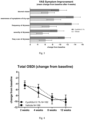
- the responder rate for the reduction in the frequency of dryness experienced by the patients was also higher for the CyclASol treatment compared to the vehicle.
- the percentage of patients with a response rate of 25% or higher for the reduction in frequency of dryness was observed to be 34%, 42 % and 37%, respectively.
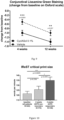
- the region of the cornea which benefited most of the CyclAsol 0.1 % treatment was the central area, which is the most important region for visual function. As shown in Figure 7 , an improvement in central corneal fluorescein staining ⁇ 1 grade was obtained in 58,6% of the subjects undergoing CyclAsol 0.1% treatment after 4 weeks treatment.
Landscapes
- Health & Medical Sciences (AREA)
- Life Sciences & Earth Sciences (AREA)
- Public Health (AREA)
- Chemical & Material Sciences (AREA)
- Veterinary Medicine (AREA)
- Animal Behavior & Ethology (AREA)
- General Health & Medical Sciences (AREA)
- Pharmacology & Pharmacy (AREA)
- Medicinal Chemistry (AREA)
- Epidemiology (AREA)
- Engineering & Computer Science (AREA)
- Ophthalmology & Optometry (AREA)
- Bioinformatics & Cheminformatics (AREA)
- General Chemical & Material Sciences (AREA)
- Chemical Kinetics & Catalysis (AREA)
- Nuclear Medicine, Radiotherapy & Molecular Imaging (AREA)
- Immunology (AREA)
- Proteomics, Peptides & Aminoacids (AREA)
- Gastroenterology & Hepatology (AREA)
- Organic Chemistry (AREA)
- Oil, Petroleum & Natural Gas (AREA)
- Vascular Medicine (AREA)
- Biomedical Technology (AREA)
- Heart & Thoracic Surgery (AREA)
- Medicines That Contain Protein Lipid Enzymes And Other Medicines (AREA)
- Acyclic And Carbocyclic Compounds In Medicinal Compositions (AREA)
- Medicinal Preparation (AREA)
- Medical Preparation Storing Or Oral Administration Devices (AREA)
- Media Introduction/Drainage Providing Device (AREA)
Applications Claiming Priority (5)
| Application Number | Priority Date | Filing Date | Title |
|---|---|---|---|
| EP18200154 | 2018-10-12 | ||
| EP18202263 | 2018-10-24 | ||
| EP19167551 | 2019-04-05 | ||
| EP19783074.8A EP3863658B1 (de) | 2018-10-12 | 2019-10-11 | Ophthalmische zusammensetzung zur behandlung von trockenem auge |
| PCT/EP2019/077578 WO2020074697A1 (en) | 2018-10-12 | 2019-10-11 | Ophthalmic composition for treatment of dry eye disease |
Related Parent Applications (1)
| Application Number | Title | Priority Date | Filing Date |
|---|---|---|---|
| EP19783074.8A Division EP3863658B1 (de) | 2018-10-12 | 2019-10-11 | Ophthalmische zusammensetzung zur behandlung von trockenem auge |
Publications (2)
| Publication Number | Publication Date |
|---|---|
| EP4406533A2 true EP4406533A2 (de) | 2024-07-31 |
| EP4406533A3 EP4406533A3 (de) | 2024-10-09 |
Family
ID=68138117
Family Applications (2)
| Application Number | Title | Priority Date | Filing Date |
|---|---|---|---|
| EP19783074.8A Active EP3863658B1 (de) | 2018-10-12 | 2019-10-11 | Ophthalmische zusammensetzung zur behandlung von trockenem auge |
| EP24157147.0A Pending EP4406533A3 (de) | 2018-10-12 | 2019-10-11 | Ophthalmische zusammensetzung zur behandlung von trockenem auge |
Family Applications Before (1)
| Application Number | Title | Priority Date | Filing Date |
|---|---|---|---|
| EP19783074.8A Active EP3863658B1 (de) | 2018-10-12 | 2019-10-11 | Ophthalmische zusammensetzung zur behandlung von trockenem auge |
Country Status (12)
| Country | Link |
|---|---|
| US (3) | US11413323B2 (de) |
| EP (2) | EP3863658B1 (de) |
| JP (2) | JP7500550B2 (de) |
| CN (1) | CN112823020A (de) |
| AU (1) | AU2019358249B2 (de) |
| CA (1) | CA3112031A1 (de) |
| ES (1) | ES2974839T3 (de) |
| IL (1) | IL281773A (de) |
| MY (1) | MY206642A (de) |
| PH (1) | PH12021550620A1 (de) |
| SG (1) | SG11202102820VA (de) |
| WO (1) | WO2020074697A1 (de) |
Families Citing this family (17)
| Publication number | Priority date | Publication date | Assignee | Title |
|---|---|---|---|---|
| MY166228A (en) | 2012-09-12 | 2018-06-22 | Novaliq Gmbh | Compositions comprising mixtures of semifluorinated alkanes |
| DE202016008738U1 (de) | 2015-09-30 | 2019-04-09 | Novaliq Gmbh | Semifluorierte Verbindungen und ihre Zusammensetzungen |
| PT3442480T (pt) | 2016-06-23 | 2019-12-23 | Novaliq Gmbh | Método de administração tópica |
| KR102614858B1 (ko) | 2016-09-22 | 2023-12-18 | 노바리크 게엠베하 | 안검염 치료에 사용되는 약제학적 조성물 |
| AU2017329983B2 (en) | 2016-09-23 | 2022-05-05 | Novaliq Gmbh | Ophthalmic compositions comprising ciclosporin |
| EP3612228B1 (de) | 2017-04-21 | 2023-08-23 | Dermaliq Therapeutics, Inc. | Jodzusammensetzungen |
| BR112020006072A2 (pt) | 2017-09-27 | 2020-10-06 | Novaliq Gmbh | composições oftalmáticas compreendendo latanoprost para uso no tratamento de doenças oculares |
| CN119909046A (zh) | 2017-10-04 | 2025-05-02 | 诺瓦利克有限责任公司 | 包含f6h8的眼用组合物 |
| EP3758676A1 (de) | 2018-03-02 | 2021-01-06 | Novaliq GmbH | Pharmazeutische zusammensetzungen mit nebivolol |
| CN112153970A (zh) | 2018-04-27 | 2020-12-29 | 诺瓦利克有限责任公司 | 用于治疗青光眼的包含他氟前列素的眼用组合物 |
| CA3112031A1 (en) | 2018-10-12 | 2020-04-16 | Novaliq Gmbh | Ophthalmic composition for treatment of dry eye disease |
| EP3923907B1 (de) | 2019-02-13 | 2024-09-25 | Novaliq GmbH | Zusammensetzungen und verfahren zur behandlung von okularer neovaskularisation |
| BR112022004677A2 (pt) | 2019-09-06 | 2022-05-17 | Novaliq Gmbh | Composição oftálmica para o tratamento de uveíte |
| US11191751B1 (en) * | 2020-10-08 | 2021-12-07 | Ads Therapeutics Llc | Topical ophthalmological atropine free base compositions |
| WO2022169788A1 (en) | 2021-02-03 | 2022-08-11 | Ads Therapeutics Llc | Topical ophthalmological compositions |
| EP4637708A2 (de) * | 2022-12-23 | 2025-10-29 | Novaliq GmbH | Semifluorierte alkanzusammensetzungen mit hyoscyamin |
| WO2024170514A1 (en) * | 2023-02-13 | 2024-08-22 | Novaliq Gmbh | Ophthalmic composition for ocular surgery preparation in patients with ocular surface disease |
Citations (2)
| Publication number | Priority date | Publication date | Assignee | Title |
|---|---|---|---|---|
| WO2011073134A1 (en) | 2009-12-14 | 2011-06-23 | Novaliq Gmbh | Pharmaceutical composition for treatment of dry eye syndrome |
| WO2018115097A1 (en) | 2016-12-23 | 2018-06-28 | Novaliq Gmbh | Ophthalmic composition for treatment of dry eye disease |
Family Cites Families (146)
| Publication number | Priority date | Publication date | Assignee | Title |
|---|---|---|---|---|
| US2616927A (en) | 1950-05-12 | 1952-11-04 | Minnesota Mining & Mfg | Fluorocarbon tertiary amines |
| US4452818A (en) | 1982-03-19 | 1984-06-05 | Haidt Sterling J | Extraocular method of treating the eye with liquid perfluorocarbons |
| US4649047A (en) | 1985-03-19 | 1987-03-10 | University Of Georgia Research Foundation, Inc. | Ophthalmic treatment by topical administration of cyclosporin |
| US5077036A (en) | 1986-01-14 | 1991-12-31 | Alliance Pharmaceutical Corp. | Biocompatible stable fluorocarbon emulsions for contrast enhancement and oxygen transport comprising 40-125% wt./volume fluorocarbon combined with a phospholipid |
| JPH0764702B2 (ja) | 1986-04-23 | 1995-07-12 | 鐘紡株式会社 | 多相乳化型化粧料 |
| JPS6452722A (en) | 1987-05-01 | 1989-02-28 | Anjierini Pharmaceut Inc | Ophthalmic composition |
| JPH03279323A (ja) | 1989-12-15 | 1991-12-10 | Johnson & Johnson Consumer Prod Inc | 日焼け止め組成物 |
| JP3046346B2 (ja) | 1990-03-12 | 2000-05-29 | 昭和電工株式会社 | 外用剤基剤又は補助剤とそれを含有する人又は動物の外用剤 |
| US6458376B1 (en) | 1990-09-27 | 2002-10-01 | Allergan, Inc. | Nonaqueous fluorinated drug delivery suspensions |
| US5518731A (en) | 1990-09-27 | 1996-05-21 | Allergan, Inc. | Nonaqueous fluorinated drug delivery vehicle suspensions |
| US5152997A (en) | 1990-12-11 | 1992-10-06 | Theratech, Inc. | Method and device for transdermally administering testosterone across nonscrotal skin at therapeutically effective levels |
| US5326566A (en) | 1991-05-17 | 1994-07-05 | Bristol-Myers Squibb Company | Use of dibutyl adipate and isopropyl myristate in topical and transdermal products |
| GB9114374D0 (en) | 1991-07-03 | 1991-08-21 | Smithkline Beecham Plc | Novel process |
| US5126127A (en) | 1991-07-16 | 1992-06-30 | Euroceltique, S.A. | Stabilized PVP-I solutions |
| FR2679150A1 (fr) | 1991-07-17 | 1993-01-22 | Atta | Preparations comprenant un fluorocarbure ou compose hautement fluore et un compose organique lipophile-fluorophile, et leurs utilisations. |
| US6602900B2 (en) | 1992-09-21 | 2003-08-05 | Allergan, Inc. | Cyclopentane heptan(ENE)oic acid, 2-heteroarylalkenyl derivatives as therapeutic agents |
| US5336175A (en) | 1992-10-29 | 1994-08-09 | Mames Robert N | Method for the treatment of retinal detachments |
| US5370313A (en) | 1994-01-10 | 1994-12-06 | Beard; Walter C. | Sterile liquid dispenser |
| DE4405627A1 (de) | 1994-02-22 | 1995-08-24 | Hoechst Ag | Fluorkohlenwasserstoffe enthaltende Ölemulsionen |
| FR2720943B1 (fr) | 1994-06-09 | 1996-08-23 | Applic Transferts Technolo | Emulsions inverses stables à forte concentration en composé(s) fluoré(s) et leur utilisation pour l'administration pulmonaire de médicaments et pour la fabrication d'émulsions multiples. |
| US5849291A (en) | 1994-10-17 | 1998-12-15 | Symbollon Corporation | Opthalmic non-irritating iodine medicament |
| US6294563B1 (en) | 1994-10-27 | 2001-09-25 | Allergan Sales, Inc. | Combinations of prostaglandins and brimonidine or derivatives thereof |
| US5696164A (en) | 1994-12-22 | 1997-12-09 | Johnson & Johnson Consumer Products, Inc. | Antifungal treatment of nails |
| US5667809A (en) | 1995-06-07 | 1997-09-16 | Alliance Pharmaceutical Corp. | Continuous fluorochemical microdispersions for the delivery of lipophilic pharmaceutical agents |
| US5874481A (en) | 1995-06-07 | 1999-02-23 | Alliance Pharmaceutical Corp. | Fluorochemical solutions for the delivery of lipophilic pharmaceutical agents |
| DE19536504C2 (de) | 1995-09-29 | 1999-09-23 | H Meinert | Verwendung fluorierter Alkane |
| US5874469A (en) | 1996-01-05 | 1999-02-23 | Alcon Laboratories, Inc. | Fluoroalkyl hydrocarbons for administering water insoluble or unstable drugs |
| FR2752161B1 (fr) | 1996-08-07 | 1998-09-25 | Atta | Emulsions multiples de type hydrocarbure-dans-eau-dans- fluorocarbone pour le transport de substances medicamenteuses hydrophiles et/ou lipophiles |
| US5863560A (en) | 1996-09-11 | 1999-01-26 | Virotex Corporation | Compositions and methods for topical application of therapeutic agents |
| IN184589B (de) | 1996-10-16 | 2000-09-09 | Alza Corp | |
| DE69823852T2 (de) | 1997-02-04 | 2005-05-19 | Johnstone, Murray A., Seattle | Verfahren zur förderung des haarwuchses und entwicklung des haarsystems |
| DE19709704C2 (de) | 1997-03-10 | 1999-11-04 | Michael Georgieff | Verwendung einer flüssigen Präparation von Xenon zur intravenösen Verabreichung bei Einleitung und/oder Aufrechterhaltung der Anaesthesie |
| US5980936A (en) | 1997-08-07 | 1999-11-09 | Alliance Pharmaceutical Corp. | Multiple emulsions comprising a hydrophobic continuous phase |
| US6645963B2 (en) | 1997-11-05 | 2003-11-11 | Senju Pharmaceutical Co., Ltd. | Prolonged-action eye drop |
| US5851544A (en) | 1997-12-18 | 1998-12-22 | Chesebrough-Pond's Usa Co., Division Of Conopco, Inc. | Cosmetic skin or hair care compositions containing fluorocarbons infused with carbon dioxide |
| US5981607A (en) | 1998-01-20 | 1999-11-09 | Allergan | Emulsion eye drop for alleviation of dry eye related symptoms in dry eye patients and/or contact lens wearers |
| CA2278328C (en) | 1998-02-09 | 2008-07-22 | Macrochem Corporation | Antifungal nail lacquer and method using same |
| DE19861012A1 (de) | 1998-03-18 | 1999-09-30 | Pharm Pur Gmbh | Behandlungsmittel für die Ophthalmologie |
| ATE252889T1 (de) | 1998-08-19 | 2003-11-15 | Skyepharma Canada Inc | Injizierbare wässerige propofoldispersionen |
| US6140374A (en) | 1998-10-23 | 2000-10-31 | Abbott Laboratories | Propofol composition |
| US6159977A (en) | 1998-11-16 | 2000-12-12 | Astan, Inc. | Therapeutic anti-fungal nail preparation |
| WO2000045790A2 (en) | 1999-02-08 | 2000-08-10 | Alza Corporation | Stable non-aqueous single phase viscous vehicles and formulations utilizing such vehicles |
| US7258869B1 (en) | 1999-02-08 | 2007-08-21 | Alza Corporation | Stable non-aqueous single phase viscous vehicles and formulations utilizing such vehicle |
| EP1124416A1 (de) | 1999-03-15 | 2001-08-22 | John Claude Krusz | Behandlung von akuten kopfschmerzem und chronischem schmerz durch verwendung von subanästhetischen dosierungen von schnell entlasteten anästhetischen arzneimitteln |
| US6177477B1 (en) | 1999-03-24 | 2001-01-23 | American Home Products Corporation | Propofol formulation containing TRIS |
| US6239113B1 (en) | 1999-03-31 | 2001-05-29 | Insite Vision, Incorporated | Topical treatment or prevention of ocular infections |
| DE19926890C1 (de) | 1999-06-12 | 2000-07-27 | Pharm Pur Gmbh | Verwendung eines hochfluorierten oligomeren Alkans in der Ophthalmologie |
| DE19938668B4 (de) | 1999-08-14 | 2006-01-26 | Bausch & Lomb Inc. | Tränenersatzmittel |
| US6528086B2 (en) | 1999-09-28 | 2003-03-04 | Zars, Inc. | Methods and apparatus for drug delivery involving phase changing formulations |
| JP2001158734A (ja) | 1999-12-02 | 2001-06-12 | Lion Corp | 眼科用組成物及びソフトコンタクトレンズに対する吸着抑制方法 |
| WO2001046134A1 (en) | 1999-12-22 | 2001-06-28 | Alcon Universal Ltd. | 6-KETO PROSTAGLANDIN F1α AND ANALOGS FOR TREATING DRY EYE |
| US20030018044A1 (en) | 2000-02-18 | 2003-01-23 | Peyman Gholam A. | Treatment of ocular disease |
| DE10024413A1 (de) | 2000-05-19 | 2001-12-06 | Mika Pharma Gmbh | Pharmazeutische und/oder kosmetische Zubereitung |
| DE10042412B4 (de) | 2000-08-30 | 2005-12-22 | Lts Lohmann Therapie-Systeme Ag | Transdermales therapeutisches System zur Abgabe von Venlafaxin, und seine Verwendung |
| US6399087B1 (en) | 2000-12-20 | 2002-06-04 | Amphastar Pharmaceuticals, Inc. | Propofol formulation with enhanced microbial inhibition |
| WO2002089849A1 (en) | 2001-05-07 | 2002-11-14 | Corium International | Compositions and delivery systems for administration of a local anesthetic agent |
| TWI298257B (en) | 2001-05-31 | 2008-07-01 | Allergan Inc | Hypotensive lipid and timolol compositions and methods of using same |
| PT1423102E (pt) | 2001-09-04 | 2008-02-25 | Trommsdorff Arzneimittel | Emplastro para o tratamento de disfunções e perturbações o crescimento da unha |
| US20040033228A1 (en) | 2002-08-16 | 2004-02-19 | Hans-Juergen Krause | Formulation of human antibodies for treating TNF-alpha associated disorders |
| US7074827B2 (en) | 2002-10-24 | 2006-07-11 | Sucampo Ag (Usa) Inc. | Method for treating ocular hypertension and glaucoma |
| JP3998596B2 (ja) | 2003-03-31 | 2007-10-31 | 日本ペイント株式会社 | 塗膜ムラの算出式算出方法及び塗膜ムラの数値化方法 |
| KR20060113657A (ko) | 2003-08-25 | 2006-11-02 | 포믹스 리미티드 | 침투성 약제용 거품제 |
| US20050079210A1 (en) | 2003-10-09 | 2005-04-14 | Gupta Shyam K. | Liposomal delivery system for topical pharmaceutical, cosmeceutical, and cosmetic ingredients |
| MXPA06003316A (es) | 2003-10-10 | 2006-06-08 | Antares Pharma Ipl Ag | Formulacion farmaceutica transdermica para minimizar los residuos en la piel. |
| JP2007511616A (ja) | 2003-11-19 | 2007-05-10 | バーンズ−ジューイッシュ ホスピタル | 増強された薬物送達 |
| GB0408164D0 (en) | 2004-04-13 | 2004-05-19 | Immune Targeting Systems Ltd | Antigen delivery vectors and constructs |
| CA2563544A1 (en) | 2004-04-19 | 2005-10-27 | Centre National De La Recherche Scientifique (C.N.R.S.) | Lung surfactant supplements |
| JP2008501806A (ja) | 2004-06-08 | 2008-01-24 | オキュラリス ファーマ, インコーポレイテッド | 疎水性眼用組成物および使用方法 |
| US7063241B2 (en) | 2004-06-10 | 2006-06-20 | Allergan, Inc. | Dispensing tip |
| CN101043884A (zh) | 2004-07-01 | 2007-09-26 | 谢彭斯眼科研究公司 | 用于治疗眼部疾病和病症的组合物和方法 |
| US20060078580A1 (en) | 2004-10-08 | 2006-04-13 | Mediquest Therapeutics, Inc. | Organo-gel formulations for therapeutic applications |
| US7740875B2 (en) | 2004-10-08 | 2010-06-22 | Mediquest Therapeutics, Inc. | Organo-gel formulations for therapeutic applications |
| EP1688161A1 (de) | 2004-11-02 | 2006-08-09 | Switch Biotech Aktiengesellschaft | Verwendung von pirlindol zur Behandlung der Krankheiten gekennzeichnet durch Proliferation von t-Lymphozyten und/oder Hyperproliferation von Keratinozyten, ins besondere atopischer Dermatitis und Psoriasis |
| US7851504B2 (en) | 2005-03-16 | 2010-12-14 | Allergan, Inc. | Enhanced bimatoprost ophthalmic solution |
| GB0511499D0 (en) | 2005-06-06 | 2005-07-13 | Medpharm Ltd | Topical ungual formulations |
| EA200800258A1 (ru) | 2005-08-05 | 2008-06-30 | Бхарат Сирумс Энд Вэксинс Лтд. | Эмульсионные композиции пропофола для внутривенного введения, имеющие консервирующую эффективность |
| FR2892023B1 (fr) | 2005-10-14 | 2009-09-25 | Galderma Sa | Composition pharmaceutique a base d'amorolfine et d'agent filmogene hydrosoluble pour application ungueale et peri-ungueale |
| DE102005050431A1 (de) | 2005-10-21 | 2007-04-26 | Lts Lohmann Therapie-Systeme Ag | Transdermales therapeutisches System zur Verabreicherung lipophiler und/oder wenig hautpermeabler Wirkstoffe |
| DE102005055811A1 (de) | 2005-11-23 | 2007-05-31 | Novaliq Gmbh | Verwendung einer Zusammensetzung zur Konservierung von Organen und Gliedmaßen |
| TWI376239B (en) | 2006-02-01 | 2012-11-11 | Andrew Xian Chen | Vitamin e succinate stabilized pharmaceutical compositions, methods for the preparation and the use thereof |
| WO2008011836A2 (es) | 2006-07-25 | 2008-01-31 | Osmotica Corp. | Soluciones oftálmicas |
| WO2008019146A2 (en) | 2006-08-04 | 2008-02-14 | Insys Therapeutics Inc. | Aqueous dronabinol formulations |
| US20080089923A1 (en) | 2006-09-29 | 2008-04-17 | Burkstrand Michael J | Biodegradable ocular implants and methods for treating ocular conditions |
| JP5569899B2 (ja) | 2006-11-28 | 2014-08-13 | ウィスコンシン・アラムナイ・リサーチ・ファウンデーション | 揮発性のフッ化麻酔薬を静脈内送達するためのフルオロポリマーベースのエマルション |
| EP2089282B1 (de) | 2006-12-07 | 2014-01-08 | Sun Pharma Advanced Research Company Ltd | Flasche mit tropfenabmessung zur ausgabe von mikroliter-mengen einer flüssigkeit in tropfenform |
| CN200977281Y (zh) | 2006-12-08 | 2007-11-21 | 陈宇 | 带助滴器的滴眼瓶 |
| FR2918891B1 (fr) | 2007-07-20 | 2009-09-25 | Thea Sa Lab | Solution ophtalmique a base de prostaglandines sans conservateur |
| US8222292B2 (en) | 2007-08-06 | 2012-07-17 | Insys Therapeutics, Inc. | Liquid cannabinoid formulations |
| DE102007055046A1 (de) | 2007-11-19 | 2009-05-28 | Fluoron Gmbh | Infusionslösung |
| US20090136430A1 (en) | 2007-11-27 | 2009-05-28 | Dugger Harry A | Antihistamine/Corticosteroid preparations for the treatment of atopic dermatitis |
| WO2009072007A2 (en) | 2007-12-07 | 2009-06-11 | Foamix Ltd. | Carriers, formulations, methods for formulating unstable active agents for external application and uses thereof |
| JP5886523B2 (ja) | 2008-01-09 | 2016-03-16 | ザ スキーペンズ アイ リサーチ インスティチュート インコーポレイテッド | 眼の炎症性障害を処置するための治療組成物 |
| EP2110126B9 (de) | 2008-04-18 | 2012-09-19 | Novaliq GmbH | Inhalative und instillative Verwendung von semifluorierten Alkanen als Wirkstoffträger im intrapulmonalen Bereich |
| US20100006600A1 (en) | 2008-07-14 | 2010-01-14 | Dascanio Gustavo A | Fluid dispenser including hydrophobic ring |
| ES2622582T3 (es) | 2008-10-31 | 2017-07-06 | University Of Mississippi | Proceso para la preparación de ésteres de delta-9-THC-aminoácido |
| WO2010062394A2 (en) | 2008-11-26 | 2010-06-03 | Surmodics, Inc. | Implantable ocular drug delivery device and methods |
| WO2010064636A1 (ja) | 2008-12-02 | 2010-06-10 | ロート製薬株式会社 | 眼科用組成物 |
| US8501800B2 (en) | 2009-03-05 | 2013-08-06 | Insite Vision Incorporated | Controlled-release ophthalmic vehicles |
| IT1393419B1 (it) | 2009-03-19 | 2012-04-20 | Medivis S R L | Composizioni oftalmiche a base di acidi grassi polinsaturi omega-3 e omega-6. |
| DK2429317T4 (da) | 2009-04-17 | 2019-05-13 | Natac Pharma S L | Sammensætninger med højt indhold af omega-3-fedtsyrer og med lavt indhold af phytansyre |
| WO2010146536A1 (en) | 2009-06-18 | 2010-12-23 | Koninklijke Philips Electronics N.V. | Suspension of particles with drug |
| JP5736635B2 (ja) | 2009-06-25 | 2015-06-17 | ライオン株式会社 | ドライアイ治療剤 |
| US9012503B2 (en) | 2009-06-25 | 2015-04-21 | Lion Corporation | Ophthalmic composition |
| BRPI1006790B8 (pt) | 2009-07-24 | 2021-05-25 | Mika Pharma Ges Fuer Die Entwicklung Und Vermarktung Pharmazeutischer Produkte Mbh | método para desenvolver uma composição farmacêutica líquida a ser aplicada na pele como uma espuma e composição adequada para uso tópico |
| JP2011024841A (ja) | 2009-07-28 | 2011-02-10 | 健太 ▲浜崎▼ | 点眼補助具 |
| EP2332525A1 (de) | 2009-11-23 | 2011-06-15 | Novaliq GmbH | Pharmazeutische Zusammensetzung mit Propofol |
| US20110223208A1 (en) | 2010-03-09 | 2011-09-15 | Beth Hill | Non-Aqueous High Concentration Reduced Viscosity Suspension Formulations |
| ES2564502T3 (es) | 2010-03-17 | 2016-03-23 | Novaliq Gmbh | Composición farmacéutica para el tratamiento de la presión intraocular aumentada |
| DE102010022567A1 (de) | 2010-06-02 | 2011-12-08 | Fluoron Gmbh | Zubereitung |
| EP2444063A1 (de) | 2010-10-20 | 2012-04-25 | Novaliq GmbH | Flüssige pharmazeutische Zusammensetzungen zur Abgabe von Wirkstoffen |
| EP2462921A1 (de) | 2010-11-11 | 2012-06-13 | Novaliq GmbH | Flüssige pharmazeutische Zusammensetzungen zur Behandlung einer Erkrankung der Hinterseite des Auges |
| DK2661280T3 (en) | 2011-01-04 | 2019-03-04 | Novaliq Gmbh | O / V EMULSIONS INCLUDING SEMIFLUORINATED ALKANES |
| CN103561724B (zh) | 2011-05-25 | 2016-06-29 | 诺瓦利克有限责任公司 | 给药给甲的药物组合物 |
| EP3192501B1 (de) | 2011-05-25 | 2020-05-13 | Novaliq GmbH | Topische pharmazeutische zusammensetzung auf der basis von semifluorierten alkanen |
| CN202136470U (zh) | 2011-06-08 | 2012-02-08 | 天津市金亿达药用包装材料有限公司 | 便于滴药的眼药瓶 |
| US8758826B2 (en) | 2011-07-05 | 2014-06-24 | Wet Inc. | Cannabinoid receptor binding agents, compositions, and methods |
| ES2625538T3 (es) | 2012-01-23 | 2017-07-19 | Novaliq Gmbh | Composiciones de proteínas estabilizadas basadas en alcanos semifluorados |
| US9549966B2 (en) | 2012-02-21 | 2017-01-24 | Massachusetts Eye & Ear Infirmary | Inflammatory eye disorders |
| US9878000B2 (en) | 2012-06-20 | 2018-01-30 | University Of Waterloo | Mucoadhesive nanoparticle composition comprising immunosuppresant and methods of use thereof |
| EP4342537A3 (de) | 2012-09-12 | 2024-07-03 | Novaliq GmbH | Semifluorierte alkanzusammensetzungen |
| MY166228A (en) | 2012-09-12 | 2018-06-22 | Novaliq Gmbh | Compositions comprising mixtures of semifluorinated alkanes |
| CN104995303A (zh) | 2012-12-18 | 2015-10-21 | 诺华股份有限公司 | 利用结合乙酰透明质酸的肽标签的组合物和方法 |
| AU2014239252B2 (en) | 2013-03-14 | 2017-07-06 | Panoptica, Inc. | Ocular formulations for drug-delivery to the posterior segment of the eye |
| EP2783703A1 (de) | 2013-03-25 | 2014-10-01 | B. Braun Melsungen AG | Semi-Fluorkohlenstoff-Verbindung mit Kontrastmittel |
| DK3024484T3 (en) | 2013-07-23 | 2018-10-08 | Novaliq Gmbh | STABILIZED ANTIBODY COMPOSITIONS |
| CN106061490A (zh) | 2013-10-09 | 2016-10-26 | 列奥尼达斯·A·约翰逊 | 一种治疗和预防眼部疾病症状或体征的方法及组合物 |
| CN203524843U (zh) | 2013-10-20 | 2014-04-09 | 吕相瑜 | 自助滴眼液辅助支架 |
| CA2931039C (en) | 2013-11-20 | 2022-07-12 | Mary Lynch | Compositions and methods for treatment of ocular inflammation and pain |
| US10543121B2 (en) | 2014-03-31 | 2020-01-28 | Amcor Rigid Plastics Usa, Llc | Controlled release container |
| EP2944324A1 (de) | 2014-05-13 | 2015-11-18 | LTS LOHMANN Therapie-Systeme AG | Verwendung von semifluorierten Alkanen in transdermalen therapeutischen Systemen |
| GB2544213B (en) | 2014-08-13 | 2017-09-27 | Univ Florida | Preservative removal from eye drops |
| ES2954412T3 (es) | 2014-10-20 | 2023-11-22 | Sentiss Pharma Private Ltd | Solución oftálmica |
| MA41299A (fr) | 2014-12-30 | 2017-11-07 | Axim Biotechnologies Inc | Solutions ophtalmiques pour le traitement du glaucome et de la conjonctivite |
| DE202016008738U1 (de) | 2015-09-30 | 2019-04-09 | Novaliq Gmbh | Semifluorierte Verbindungen und ihre Zusammensetzungen |
| CN113662928A (zh) | 2015-09-30 | 2021-11-19 | 诺瓦利克有限责任公司 | 用于眼部给药的半氟化化合物 |
| US10286035B2 (en) | 2015-10-14 | 2019-05-14 | Paul Gavaris | Ophthalmic treatment composition and vehicle for delivery of pharmaceutical substances or therapeutic agents |
| BR112018015904A2 (pt) | 2016-02-04 | 2018-12-26 | Wayne Dyer Gordon | método de rompimento de um plastrão de artrópode resistente a óleo e água com a finalidade de danificar o artrópode e de enfraquecimento do estado de cassie-baxter |
| PT3442480T (pt) | 2016-06-23 | 2019-12-23 | Novaliq Gmbh | Método de administração tópica |
| KR102614858B1 (ko) | 2016-09-22 | 2023-12-18 | 노바리크 게엠베하 | 안검염 치료에 사용되는 약제학적 조성물 |
| AU2017329983B2 (en) | 2016-09-23 | 2022-05-05 | Novaliq Gmbh | Ophthalmic compositions comprising ciclosporin |
| CA3036313A1 (en) | 2016-09-28 | 2018-04-05 | Novaliq Gmbh | Compositions comprising a cannabinoid receptor binding ligand |
| WO2018114557A1 (en) | 2016-12-22 | 2018-06-28 | Novaliq Gmbh | Compositions comprising tacrolimus for the treatment of intraocular inflammatory eye diseases |
| EP3612228B1 (de) | 2017-04-21 | 2023-08-23 | Dermaliq Therapeutics, Inc. | Jodzusammensetzungen |
| WO2018206656A1 (en) | 2017-05-12 | 2018-11-15 | Novaliq Gmbh | Pharmaceutical compositions comprosing semifluorinated alkanes for the treatment of contact lense-related conditions |
| EP3758676A1 (de) | 2018-03-02 | 2021-01-06 | Novaliq GmbH | Pharmazeutische zusammensetzungen mit nebivolol |
| CA3112031A1 (en) | 2018-10-12 | 2020-04-16 | Novaliq Gmbh | Ophthalmic composition for treatment of dry eye disease |
-
2019
- 2019-10-11 CA CA3112031A patent/CA3112031A1/en active Pending
- 2019-10-11 ES ES19783074T patent/ES2974839T3/es active Active
- 2019-10-11 MY MYPI2021001465A patent/MY206642A/en unknown
- 2019-10-11 EP EP19783074.8A patent/EP3863658B1/de active Active
- 2019-10-11 SG SG11202102820VA patent/SG11202102820VA/en unknown
- 2019-10-11 JP JP2021517030A patent/JP7500550B2/ja active Active
- 2019-10-11 AU AU2019358249A patent/AU2019358249B2/en active Active
- 2019-10-11 WO PCT/EP2019/077578 patent/WO2020074697A1/en not_active Ceased
- 2019-10-11 EP EP24157147.0A patent/EP4406533A3/de active Pending
- 2019-10-11 CN CN201980066967.0A patent/CN112823020A/zh active Pending
-
2021
- 2021-03-18 PH PH12021550620A patent/PH12021550620A1/en unknown
- 2021-03-24 IL IL281773A patent/IL281773A/en unknown
- 2021-04-12 US US17/228,309 patent/US11413323B2/en active Active
-
2022
- 2022-04-01 US US17/711,932 patent/US12059449B2/en active Active
-
2024
- 2024-06-05 JP JP2024091857A patent/JP2024116245A/ja active Pending
- 2024-07-25 US US18/784,569 patent/US20240374678A1/en active Pending
Patent Citations (2)
| Publication number | Priority date | Publication date | Assignee | Title |
|---|---|---|---|---|
| WO2011073134A1 (en) | 2009-12-14 | 2011-06-23 | Novaliq Gmbh | Pharmaceutical composition for treatment of dry eye syndrome |
| WO2018115097A1 (en) | 2016-12-23 | 2018-06-28 | Novaliq Gmbh | Ophthalmic composition for treatment of dry eye disease |
Non-Patent Citations (6)
| Title |
|---|
| ANONYMOUS: "HIGHLIGHTS OF PRESCRIBING INFORMATION VEVYE", 1 January 2024 (2024-01-01), pages 1 - 6, XP093308469, Retrieved from the Internet <URL:https://www.accessdata.fda.gov/drugsatfda_docs/label/2024/217469s003lbl.pdf> * |
| BRON A.J. ET AL., CORNEA, vol. 22, 2003, pages 640 - 650 |
| GEHLSEN ET AL., INVESTIGATIVE OPHTHALMOLOGY & VISUAL SCIENCE, vol. 56, June 2015 (2015-06-01), pages 319 |
| HESSEN MICHELLE ET AL: "Dry eye: An inflammatory ocular disease", JOURNAL OF OPHTHALMIC & VISION RESEARCH, vol. 9, no. 2, 1 April 2014 (2014-04-01), Iran, pages 240 - 250, XP093308454, ISSN: 2008-2010, Retrieved from the Internet <URL:https://pmc.ncbi.nlm.nih.gov/articles/PMC4181208/pdf/JOVR-09-240.pdf> * |
| SCHIFFMAN RM ET AL., ARCH OPHTHALMOL, vol. 118, 2000, pages 615 - 621 |
| SOOK CHUN Y ET AL., AM J OPHTHALMOL, vol. 157, no. 5, May 2014 (2014-05-01), pages 1097 - 102 |
Also Published As
| Publication number | Publication date |
|---|---|
| JP2024116245A (ja) | 2024-08-27 |
| WO2020074697A1 (en) | 2020-04-16 |
| AU2019358249A1 (en) | 2021-05-13 |
| IL281773A (en) | 2021-05-31 |
| JP7500550B2 (ja) | 2024-06-17 |
| US20210236591A1 (en) | 2021-08-05 |
| ES2974839T3 (es) | 2024-07-01 |
| EP4406533A3 (de) | 2024-10-09 |
| US12059449B2 (en) | 2024-08-13 |
| EP3863658C0 (de) | 2024-02-14 |
| SG11202102820VA (en) | 2021-04-29 |
| MY206642A (en) | 2024-12-30 |
| EP3863658A1 (de) | 2021-08-18 |
| PH12021550620A1 (en) | 2021-10-04 |
| CN112823020A (zh) | 2021-05-18 |
| EP3863658B1 (de) | 2024-02-14 |
| US20220226427A1 (en) | 2022-07-21 |
| US20240374678A1 (en) | 2024-11-14 |
| JP2022502421A (ja) | 2022-01-11 |
| CA3112031A1 (en) | 2020-04-16 |
| AU2019358249B2 (en) | 2024-02-22 |
| US11413323B2 (en) | 2022-08-16 |
Similar Documents
| Publication | Publication Date | Title |
|---|---|---|
| US12059449B2 (en) | Ophthalmic composition for treatment of dry eye disease | |
| EP3399962B1 (de) | Ophthalmische zusammensetzung zur behandlung von trockenem auge | |
| US20250295607A1 (en) | Ophthalmic compositions for treatment of ocular surface damage and symptoms of dryness | |
| CN111182893A (zh) | 包含f6h8的眼用组合物 | |
| KR20210127197A (ko) | 4-(7-히드록시-2-이소프로필-4-옥소-4h-퀴나졸린-3-일)-벤조니트릴의 제형 | |
| JP2025004186A (ja) | 眼表面疼痛を治療する方法 | |
| HK40114301A (en) | Ophthalmic composition for treatment of dry eye disease | |
| RU2828769C2 (ru) | Офтальмологические композиции для лечения синдрома сухого глаза | |
| HK40058504A (en) | Ophthalmic composition for treatment of dry eye disease | |
| HK40058504B (en) | Ophthalmic composition for treatment of dry eye disease | |
| US12496326B2 (en) | Ophthalmic composition for treatment of dry eye disease | |
| RU2850452C2 (ru) | Способы лечения боли на поверхности глаза | |
| HK40113015A (en) | Ophthalmic composition for treatment of dry eye disease | |
| HK40000392B (en) | Ophthalmic composition for treatment of dry eye disease | |
| HK40000392A (en) | Ophthalmic composition for treatment of dry eye disease | |
| HK40028751A (en) | Ophthalmic compositions comprising f6h8 |
Legal Events
| Date | Code | Title | Description |
|---|---|---|---|
| PUAI | Public reference made under article 153(3) epc to a published international application that has entered the european phase |
Free format text: ORIGINAL CODE: 0009012 |
|
| STAA | Information on the status of an ep patent application or granted ep patent |
Free format text: STATUS: THE APPLICATION HAS BEEN PUBLISHED |
|
| AC | Divisional application: reference to earlier application |
Ref document number: 3863658 Country of ref document: EP Kind code of ref document: P |
|
| AK | Designated contracting states |
Kind code of ref document: A2 Designated state(s): AL AT BE BG CH CY CZ DE DK EE ES FI FR GB GR HR HU IE IS IT LI LT LU LV MC MK MT NL NO PL PT RO RS SE SI SK SM TR |
|
| REG | Reference to a national code |
Ref country code: DE Ref legal event code: R079 Free format text: PREVIOUS MAIN CLASS: A61K0009080000 Ipc: A61K0038130000 |
|
| PUAL | Search report despatched |
Free format text: ORIGINAL CODE: 0009013 |
|
| AK | Designated contracting states |
Kind code of ref document: A3 Designated state(s): AL AT BE BG CH CY CZ DE DK EE ES FI FR GB GR HR HU IE IS IT LI LT LU LV MC MK MT NL NO PL PT RO RS SE SI SK SM TR |
|
| RIC1 | Information provided on ipc code assigned before grant |
Ipc: A61K 9/08 20060101ALI20240830BHEP Ipc: A61K 47/10 20170101ALI20240830BHEP Ipc: A61K 47/06 20060101ALI20240830BHEP Ipc: A61K 9/00 20060101ALI20240830BHEP Ipc: A61P 27/04 20060101ALI20240830BHEP Ipc: A61K 38/13 20060101AFI20240830BHEP |
|
| REG | Reference to a national code |
Ref country code: HK Ref legal event code: DE Ref document number: 40114301 Country of ref document: HK |
|
| STAA | Information on the status of an ep patent application or granted ep patent |
Free format text: STATUS: REQUEST FOR EXAMINATION WAS MADE |
|
| 17P | Request for examination filed |
Effective date: 20250408 |
|
| STAA | Information on the status of an ep patent application or granted ep patent |
Free format text: STATUS: EXAMINATION IS IN PROGRESS |
|
| 17Q | First examination report despatched |
Effective date: 20250902 |
|
| 111L | Licence recorded |
Designated state(s): AL AT BE BG CH CY CZ DE DK EE ES FI FR GB GR HR HU IE IS IT LT LU LV MC MK MT NL NO PL PT RO RS SE SI SK SM TR Free format text: EXCLUSIVE LICENSE Name of requester: LABORATOIRES THEA, FR Effective date: 20251022 Designated state(s): AL AT BE BG CH CY CZ DE DK EE ES FI FR GB GR HR HU IE IS IT LT LU LV MC MK MT NL NO PL PT RO RS SE SI SK SM TR Name of requester: LABORATOIRES THEA, FR Effective date: 20251022 |