EP4403336A1 - Vorrichtung und verfahren zur herstellung einer sekundärbatterie - Google Patents
Vorrichtung und verfahren zur herstellung einer sekundärbatterie Download PDFInfo
- Publication number
- EP4403336A1 EP4403336A1 EP22911680.1A EP22911680A EP4403336A1 EP 4403336 A1 EP4403336 A1 EP 4403336A1 EP 22911680 A EP22911680 A EP 22911680A EP 4403336 A1 EP4403336 A1 EP 4403336A1
- Authority
- EP
- European Patent Office
- Prior art keywords
- sealing
- heating body
- pair
- temperature
- sealing part
- Prior art date
- Legal status (The legal status is an assumption and is not a legal conclusion. Google has not performed a legal analysis and makes no representation as to the accuracy of the status listed.)
- Granted
Links
Images




Classifications
-
- H—ELECTRICITY
- H01—ELECTRIC ELEMENTS
- H01M—PROCESSES OR MEANS, e.g. BATTERIES, FOR THE DIRECT CONVERSION OF CHEMICAL ENERGY INTO ELECTRICAL ENERGY
- H01M10/00—Secondary cells; Manufacture thereof
- H01M10/04—Construction or manufacture in general
- H01M10/0404—Machines for assembling batteries
-
- B—PERFORMING OPERATIONS; TRANSPORTING
- B29—WORKING OF PLASTICS; WORKING OF SUBSTANCES IN A PLASTIC STATE IN GENERAL
- B29C—SHAPING OR JOINING OF PLASTICS; SHAPING OF MATERIAL IN A PLASTIC STATE, NOT OTHERWISE PROVIDED FOR; AFTER-TREATMENT OF THE SHAPED PRODUCTS, e.g. REPAIRING
- B29C65/00—Joining or sealing of preformed parts, e.g. welding of plastics materials; Apparatus therefor
- B29C65/02—Joining or sealing of preformed parts, e.g. welding of plastics materials; Apparatus therefor by heating, with or without pressure
-
- B—PERFORMING OPERATIONS; TRANSPORTING
- B29—WORKING OF PLASTICS; WORKING OF SUBSTANCES IN A PLASTIC STATE IN GENERAL
- B29C—SHAPING OR JOINING OF PLASTICS; SHAPING OF MATERIAL IN A PLASTIC STATE, NOT OTHERWISE PROVIDED FOR; AFTER-TREATMENT OF THE SHAPED PRODUCTS, e.g. REPAIRING
- B29C65/00—Joining or sealing of preformed parts, e.g. welding of plastics materials; Apparatus therefor
- B29C65/02—Joining or sealing of preformed parts, e.g. welding of plastics materials; Apparatus therefor by heating, with or without pressure
- B29C65/14—Joining or sealing of preformed parts, e.g. welding of plastics materials; Apparatus therefor by heating, with or without pressure using wave energy, i.e. electromagnetic radiation, or particle radiation
- B29C65/1429—Joining or sealing of preformed parts, e.g. welding of plastics materials; Apparatus therefor by heating, with or without pressure using wave energy, i.e. electromagnetic radiation, or particle radiation characterised by the way of heating the interface
- B29C65/1445—Joining or sealing of preformed parts, e.g. welding of plastics materials; Apparatus therefor by heating, with or without pressure using wave energy, i.e. electromagnetic radiation, or particle radiation characterised by the way of heating the interface heating both sides of the joint
-
- B—PERFORMING OPERATIONS; TRANSPORTING
- B29—WORKING OF PLASTICS; WORKING OF SUBSTANCES IN A PLASTIC STATE IN GENERAL
- B29C—SHAPING OR JOINING OF PLASTICS; SHAPING OF MATERIAL IN A PLASTIC STATE, NOT OTHERWISE PROVIDED FOR; AFTER-TREATMENT OF THE SHAPED PRODUCTS, e.g. REPAIRING
- B29C65/00—Joining or sealing of preformed parts, e.g. welding of plastics materials; Apparatus therefor
- B29C65/02—Joining or sealing of preformed parts, e.g. welding of plastics materials; Apparatus therefor by heating, with or without pressure
- B29C65/14—Joining or sealing of preformed parts, e.g. welding of plastics materials; Apparatus therefor by heating, with or without pressure using wave energy, i.e. electromagnetic radiation, or particle radiation
- B29C65/1429—Joining or sealing of preformed parts, e.g. welding of plastics materials; Apparatus therefor by heating, with or without pressure using wave energy, i.e. electromagnetic radiation, or particle radiation characterised by the way of heating the interface
- B29C65/1464—Joining or sealing of preformed parts, e.g. welding of plastics materials; Apparatus therefor by heating, with or without pressure using wave energy, i.e. electromagnetic radiation, or particle radiation characterised by the way of heating the interface making use of several radiators
-
- B—PERFORMING OPERATIONS; TRANSPORTING
- B29—WORKING OF PLASTICS; WORKING OF SUBSTANCES IN A PLASTIC STATE IN GENERAL
- B29C—SHAPING OR JOINING OF PLASTICS; SHAPING OF MATERIAL IN A PLASTIC STATE, NOT OTHERWISE PROVIDED FOR; AFTER-TREATMENT OF THE SHAPED PRODUCTS, e.g. REPAIRING
- B29C65/00—Joining or sealing of preformed parts, e.g. welding of plastics materials; Apparatus therefor
- B29C65/02—Joining or sealing of preformed parts, e.g. welding of plastics materials; Apparatus therefor by heating, with or without pressure
- B29C65/14—Joining or sealing of preformed parts, e.g. welding of plastics materials; Apparatus therefor by heating, with or without pressure using wave energy, i.e. electromagnetic radiation, or particle radiation
- B29C65/1429—Joining or sealing of preformed parts, e.g. welding of plastics materials; Apparatus therefor by heating, with or without pressure using wave energy, i.e. electromagnetic radiation, or particle radiation characterised by the way of heating the interface
- B29C65/1464—Joining or sealing of preformed parts, e.g. welding of plastics materials; Apparatus therefor by heating, with or without pressure using wave energy, i.e. electromagnetic radiation, or particle radiation characterised by the way of heating the interface making use of several radiators
- B29C65/1467—Joining or sealing of preformed parts, e.g. welding of plastics materials; Apparatus therefor by heating, with or without pressure using wave energy, i.e. electromagnetic radiation, or particle radiation characterised by the way of heating the interface making use of several radiators at the same time, i.e. simultaneous welding
-
- B—PERFORMING OPERATIONS; TRANSPORTING
- B29—WORKING OF PLASTICS; WORKING OF SUBSTANCES IN A PLASTIC STATE IN GENERAL
- B29C—SHAPING OR JOINING OF PLASTICS; SHAPING OF MATERIAL IN A PLASTIC STATE, NOT OTHERWISE PROVIDED FOR; AFTER-TREATMENT OF THE SHAPED PRODUCTS, e.g. REPAIRING
- B29C65/00—Joining or sealing of preformed parts, e.g. welding of plastics materials; Apparatus therefor
- B29C65/02—Joining or sealing of preformed parts, e.g. welding of plastics materials; Apparatus therefor by heating, with or without pressure
- B29C65/18—Joining or sealing of preformed parts, e.g. welding of plastics materials; Apparatus therefor by heating, with or without pressure using heated tools
-
- B—PERFORMING OPERATIONS; TRANSPORTING
- B29—WORKING OF PLASTICS; WORKING OF SUBSTANCES IN A PLASTIC STATE IN GENERAL
- B29C—SHAPING OR JOINING OF PLASTICS; SHAPING OF MATERIAL IN A PLASTIC STATE, NOT OTHERWISE PROVIDED FOR; AFTER-TREATMENT OF THE SHAPED PRODUCTS, e.g. REPAIRING
- B29C65/00—Joining or sealing of preformed parts, e.g. welding of plastics materials; Apparatus therefor
- B29C65/02—Joining or sealing of preformed parts, e.g. welding of plastics materials; Apparatus therefor by heating, with or without pressure
- B29C65/18—Joining or sealing of preformed parts, e.g. welding of plastics materials; Apparatus therefor by heating, with or without pressure using heated tools
- B29C65/24—Joining or sealing of preformed parts, e.g. welding of plastics materials; Apparatus therefor by heating, with or without pressure using heated tools characterised by the means for heating the tool
- B29C65/245—Joining or sealing of preformed parts, e.g. welding of plastics materials; Apparatus therefor by heating, with or without pressure using heated tools characterised by the means for heating the tool the heat transfer being achieved contactless, e.g. by radiation
-
- B—PERFORMING OPERATIONS; TRANSPORTING
- B29—WORKING OF PLASTICS; WORKING OF SUBSTANCES IN A PLASTIC STATE IN GENERAL
- B29C—SHAPING OR JOINING OF PLASTICS; SHAPING OF MATERIAL IN A PLASTIC STATE, NOT OTHERWISE PROVIDED FOR; AFTER-TREATMENT OF THE SHAPED PRODUCTS, e.g. REPAIRING
- B29C65/00—Joining or sealing of preformed parts, e.g. welding of plastics materials; Apparatus therefor
- B29C65/72—Joining or sealing of preformed parts, e.g. welding of plastics materials; Apparatus therefor by combined operations or combined techniques, e.g. welding and stitching
-
- B—PERFORMING OPERATIONS; TRANSPORTING
- B29—WORKING OF PLASTICS; WORKING OF SUBSTANCES IN A PLASTIC STATE IN GENERAL
- B29C—SHAPING OR JOINING OF PLASTICS; SHAPING OF MATERIAL IN A PLASTIC STATE, NOT OTHERWISE PROVIDED FOR; AFTER-TREATMENT OF THE SHAPED PRODUCTS, e.g. REPAIRING
- B29C65/00—Joining or sealing of preformed parts, e.g. welding of plastics materials; Apparatus therefor
- B29C65/78—Means for handling the parts to be joined, e.g. for making containers or hollow articles, e.g. means for handling sheets, plates, web-like materials, tubular articles, hollow articles or elements to be joined therewith; Means for discharging the joined articles from the joining apparatus
- B29C65/7858—Means for handling the parts to be joined, e.g. for making containers or hollow articles, e.g. means for handling sheets, plates, web-like materials, tubular articles, hollow articles or elements to be joined therewith; Means for discharging the joined articles from the joining apparatus characterised by the feeding movement of the parts to be joined
- B29C65/7861—In-line machines, i.e. feeding, joining and discharging are in one production line
- B29C65/787—In-line machines, i.e. feeding, joining and discharging are in one production line using conveyor belts or conveyor chains
-
- B—PERFORMING OPERATIONS; TRANSPORTING
- B29—WORKING OF PLASTICS; WORKING OF SUBSTANCES IN A PLASTIC STATE IN GENERAL
- B29C—SHAPING OR JOINING OF PLASTICS; SHAPING OF MATERIAL IN A PLASTIC STATE, NOT OTHERWISE PROVIDED FOR; AFTER-TREATMENT OF THE SHAPED PRODUCTS, e.g. REPAIRING
- B29C66/00—General aspects of processes or apparatus for joining preformed parts
- B29C66/01—General aspects dealing with the joint area or with the area to be joined
- B29C66/02—Preparation of the material, in the area to be joined, prior to joining or welding
- B29C66/024—Thermal pre-treatments
- B29C66/0242—Heating, or preheating, e.g. drying
-
- B—PERFORMING OPERATIONS; TRANSPORTING
- B29—WORKING OF PLASTICS; WORKING OF SUBSTANCES IN A PLASTIC STATE IN GENERAL
- B29C—SHAPING OR JOINING OF PLASTICS; SHAPING OF MATERIAL IN A PLASTIC STATE, NOT OTHERWISE PROVIDED FOR; AFTER-TREATMENT OF THE SHAPED PRODUCTS, e.g. REPAIRING
- B29C66/00—General aspects of processes or apparatus for joining preformed parts
- B29C66/01—General aspects dealing with the joint area or with the area to be joined
- B29C66/05—Particular design of joint configurations
- B29C66/10—Particular design of joint configurations particular design of the joint cross-sections
- B29C66/11—Joint cross-sections comprising a single joint-segment, i.e. one of the parts to be joined comprising a single joint-segment in the joint cross-section
- B29C66/112—Single lapped joints
-
- B—PERFORMING OPERATIONS; TRANSPORTING
- B29—WORKING OF PLASTICS; WORKING OF SUBSTANCES IN A PLASTIC STATE IN GENERAL
- B29C—SHAPING OR JOINING OF PLASTICS; SHAPING OF MATERIAL IN A PLASTIC STATE, NOT OTHERWISE PROVIDED FOR; AFTER-TREATMENT OF THE SHAPED PRODUCTS, e.g. REPAIRING
- B29C66/00—General aspects of processes or apparatus for joining preformed parts
- B29C66/01—General aspects dealing with the joint area or with the area to be joined
- B29C66/05—Particular design of joint configurations
- B29C66/10—Particular design of joint configurations particular design of the joint cross-sections
- B29C66/13—Single flanged joints; Fin-type joints; Single hem joints; Edge joints; Interpenetrating fingered joints; Other specific particular designs of joint cross-sections not provided for in groups B29C66/11 - B29C66/12
- B29C66/131—Single flanged joints, i.e. one of the parts to be joined being rigid and flanged in the joint area
-
- B—PERFORMING OPERATIONS; TRANSPORTING
- B29—WORKING OF PLASTICS; WORKING OF SUBSTANCES IN A PLASTIC STATE IN GENERAL
- B29C—SHAPING OR JOINING OF PLASTICS; SHAPING OF MATERIAL IN A PLASTIC STATE, NOT OTHERWISE PROVIDED FOR; AFTER-TREATMENT OF THE SHAPED PRODUCTS, e.g. REPAIRING
- B29C66/00—General aspects of processes or apparatus for joining preformed parts
- B29C66/01—General aspects dealing with the joint area or with the area to be joined
- B29C66/05—Particular design of joint configurations
- B29C66/20—Particular design of joint configurations particular design of the joint lines, e.g. of the weld lines
- B29C66/24—Particular design of joint configurations particular design of the joint lines, e.g. of the weld lines said joint lines being closed or non-straight
- B29C66/242—Particular design of joint configurations particular design of the joint lines, e.g. of the weld lines said joint lines being closed or non-straight said joint lines being closed, i.e. forming closed contours
- B29C66/2424—Particular design of joint configurations particular design of the joint lines, e.g. of the weld lines said joint lines being closed or non-straight said joint lines being closed, i.e. forming closed contours being a closed polygonal chain
- B29C66/24243—Particular design of joint configurations particular design of the joint lines, e.g. of the weld lines said joint lines being closed or non-straight said joint lines being closed, i.e. forming closed contours being a closed polygonal chain forming a quadrilateral
- B29C66/24244—Particular design of joint configurations particular design of the joint lines, e.g. of the weld lines said joint lines being closed or non-straight said joint lines being closed, i.e. forming closed contours being a closed polygonal chain forming a quadrilateral forming a rectangle
-
- B—PERFORMING OPERATIONS; TRANSPORTING
- B29—WORKING OF PLASTICS; WORKING OF SUBSTANCES IN A PLASTIC STATE IN GENERAL
- B29C—SHAPING OR JOINING OF PLASTICS; SHAPING OF MATERIAL IN A PLASTIC STATE, NOT OTHERWISE PROVIDED FOR; AFTER-TREATMENT OF THE SHAPED PRODUCTS, e.g. REPAIRING
- B29C66/00—General aspects of processes or apparatus for joining preformed parts
- B29C66/40—General aspects of joining substantially flat articles, e.g. plates, sheets or web-like materials; Making flat seams in tubular or hollow articles; Joining single elements to substantially flat surfaces
- B29C66/41—Joining substantially flat articles ; Making flat seams in tubular or hollow articles
- B29C66/43—Joining a relatively small portion of the surface of said articles
- B29C66/433—Casing-in, i.e. enclosing an element between two sheets by an outlined seam
-
- B—PERFORMING OPERATIONS; TRANSPORTING
- B29—WORKING OF PLASTICS; WORKING OF SUBSTANCES IN A PLASTIC STATE IN GENERAL
- B29C—SHAPING OR JOINING OF PLASTICS; SHAPING OF MATERIAL IN A PLASTIC STATE, NOT OTHERWISE PROVIDED FOR; AFTER-TREATMENT OF THE SHAPED PRODUCTS, e.g. REPAIRING
- B29C66/00—General aspects of processes or apparatus for joining preformed parts
- B29C66/50—General aspects of joining tubular articles; General aspects of joining long products, i.e. bars or profiled elements; General aspects of joining single elements to tubular articles, hollow articles or bars; General aspects of joining several hollow-preforms to form hollow or tubular articles
- B29C66/51—Joining tubular articles, profiled elements or bars; Joining single elements to tubular articles, hollow articles or bars; Joining several hollow-preforms to form hollow or tubular articles
- B29C66/54—Joining several hollow-preforms, e.g. half-shells, to form hollow articles, e.g. for making balls, containers; Joining several hollow-preforms, e.g. half-cylinders, to form tubular articles
- B29C66/549—Joining several hollow-preforms, e.g. half-shells, to form hollow articles, e.g. for making balls, containers; Joining several hollow-preforms, e.g. half-cylinders, to form tubular articles said hollow-preforms being interconnected during their moulding process, e.g. by a hinge
-
- B—PERFORMING OPERATIONS; TRANSPORTING
- B29—WORKING OF PLASTICS; WORKING OF SUBSTANCES IN A PLASTIC STATE IN GENERAL
- B29C—SHAPING OR JOINING OF PLASTICS; SHAPING OF MATERIAL IN A PLASTIC STATE, NOT OTHERWISE PROVIDED FOR; AFTER-TREATMENT OF THE SHAPED PRODUCTS, e.g. REPAIRING
- B29C66/00—General aspects of processes or apparatus for joining preformed parts
- B29C66/80—General aspects of machine operations or constructions and parts thereof
- B29C66/81—General aspects of the pressing elements, i.e. the elements applying pressure on the parts to be joined in the area to be joined, e.g. the welding jaws or clamps
- B29C66/814—General aspects of the pressing elements, i.e. the elements applying pressure on the parts to be joined in the area to be joined, e.g. the welding jaws or clamps characterised by the design of the pressing elements, e.g. of the welding jaws or clamps
- B29C66/8141—General aspects of the pressing elements, i.e. the elements applying pressure on the parts to be joined in the area to be joined, e.g. the welding jaws or clamps characterised by the design of the pressing elements, e.g. of the welding jaws or clamps characterised by the surface geometry of the part of the pressing elements, e.g. welding jaws or clamps, coming into contact with the parts to be joined
- B29C66/81431—General aspects of the pressing elements, i.e. the elements applying pressure on the parts to be joined in the area to be joined, e.g. the welding jaws or clamps characterised by the design of the pressing elements, e.g. of the welding jaws or clamps characterised by the surface geometry of the part of the pressing elements, e.g. welding jaws or clamps, coming into contact with the parts to be joined comprising a single cavity, e.g. a groove
-
- B—PERFORMING OPERATIONS; TRANSPORTING
- B29—WORKING OF PLASTICS; WORKING OF SUBSTANCES IN A PLASTIC STATE IN GENERAL
- B29C—SHAPING OR JOINING OF PLASTICS; SHAPING OF MATERIAL IN A PLASTIC STATE, NOT OTHERWISE PROVIDED FOR; AFTER-TREATMENT OF THE SHAPED PRODUCTS, e.g. REPAIRING
- B29C66/00—General aspects of processes or apparatus for joining preformed parts
- B29C66/80—General aspects of machine operations or constructions and parts thereof
- B29C66/83—General aspects of machine operations or constructions and parts thereof characterised by the movement of the joining or pressing tools
- B29C66/832—Reciprocating joining or pressing tools
- B29C66/8322—Joining or pressing tools reciprocating along one axis
- B29C66/83221—Joining or pressing tools reciprocating along one axis cooperating reciprocating tools, each tool reciprocating along one axis
-
- B—PERFORMING OPERATIONS; TRANSPORTING
- B29—WORKING OF PLASTICS; WORKING OF SUBSTANCES IN A PLASTIC STATE IN GENERAL
- B29C—SHAPING OR JOINING OF PLASTICS; SHAPING OF MATERIAL IN A PLASTIC STATE, NOT OTHERWISE PROVIDED FOR; AFTER-TREATMENT OF THE SHAPED PRODUCTS, e.g. REPAIRING
- B29C66/00—General aspects of processes or apparatus for joining preformed parts
- B29C66/90—Measuring or controlling the joining process
- B29C66/91—Measuring or controlling the joining process by measuring or controlling the temperature, the heat or the thermal flux
- B29C66/912—Measuring or controlling the joining process by measuring or controlling the temperature, the heat or the thermal flux by measuring the temperature, the heat or the thermal flux
- B29C66/9121—Measuring or controlling the joining process by measuring or controlling the temperature, the heat or the thermal flux by measuring the temperature, the heat or the thermal flux by measuring the temperature
-
- B—PERFORMING OPERATIONS; TRANSPORTING
- B29—WORKING OF PLASTICS; WORKING OF SUBSTANCES IN A PLASTIC STATE IN GENERAL
- B29C—SHAPING OR JOINING OF PLASTICS; SHAPING OF MATERIAL IN A PLASTIC STATE, NOT OTHERWISE PROVIDED FOR; AFTER-TREATMENT OF THE SHAPED PRODUCTS, e.g. REPAIRING
- B29C66/00—General aspects of processes or apparatus for joining preformed parts
- B29C66/90—Measuring or controlling the joining process
- B29C66/91—Measuring or controlling the joining process by measuring or controlling the temperature, the heat or the thermal flux
- B29C66/912—Measuring or controlling the joining process by measuring or controlling the temperature, the heat or the thermal flux by measuring the temperature, the heat or the thermal flux
- B29C66/9121—Measuring or controlling the joining process by measuring or controlling the temperature, the heat or the thermal flux by measuring the temperature, the heat or the thermal flux by measuring the temperature
- B29C66/91211—Measuring or controlling the joining process by measuring or controlling the temperature, the heat or the thermal flux by measuring the temperature, the heat or the thermal flux by measuring the temperature with special temperature measurement means or methods
- B29C66/91216—Measuring or controlling the joining process by measuring or controlling the temperature, the heat or the thermal flux by measuring the temperature, the heat or the thermal flux by measuring the temperature with special temperature measurement means or methods enabling contactless temperature measurements, e.g. using a pyrometer
-
- B—PERFORMING OPERATIONS; TRANSPORTING
- B29—WORKING OF PLASTICS; WORKING OF SUBSTANCES IN A PLASTIC STATE IN GENERAL
- B29C—SHAPING OR JOINING OF PLASTICS; SHAPING OF MATERIAL IN A PLASTIC STATE, NOT OTHERWISE PROVIDED FOR; AFTER-TREATMENT OF THE SHAPED PRODUCTS, e.g. REPAIRING
- B29C66/00—General aspects of processes or apparatus for joining preformed parts
- B29C66/90—Measuring or controlling the joining process
- B29C66/91—Measuring or controlling the joining process by measuring or controlling the temperature, the heat or the thermal flux
- B29C66/912—Measuring or controlling the joining process by measuring or controlling the temperature, the heat or the thermal flux by measuring the temperature, the heat or the thermal flux
- B29C66/9121—Measuring or controlling the joining process by measuring or controlling the temperature, the heat or the thermal flux by measuring the temperature, the heat or the thermal flux by measuring the temperature
- B29C66/91221—Measuring or controlling the joining process by measuring or controlling the temperature, the heat or the thermal flux by measuring the temperature, the heat or the thermal flux by measuring the temperature of the parts to be joined
-
- B—PERFORMING OPERATIONS; TRANSPORTING
- B29—WORKING OF PLASTICS; WORKING OF SUBSTANCES IN A PLASTIC STATE IN GENERAL
- B29C—SHAPING OR JOINING OF PLASTICS; SHAPING OF MATERIAL IN A PLASTIC STATE, NOT OTHERWISE PROVIDED FOR; AFTER-TREATMENT OF THE SHAPED PRODUCTS, e.g. REPAIRING
- B29C66/00—General aspects of processes or apparatus for joining preformed parts
- B29C66/90—Measuring or controlling the joining process
- B29C66/91—Measuring or controlling the joining process by measuring or controlling the temperature, the heat or the thermal flux
- B29C66/914—Measuring or controlling the joining process by measuring or controlling the temperature, the heat or the thermal flux by controlling or regulating the temperature, the heat or the thermal flux
- B29C66/9141—Measuring or controlling the joining process by measuring or controlling the temperature, the heat or the thermal flux by controlling or regulating the temperature, the heat or the thermal flux by controlling or regulating the temperature
-
- B—PERFORMING OPERATIONS; TRANSPORTING
- B29—WORKING OF PLASTICS; WORKING OF SUBSTANCES IN A PLASTIC STATE IN GENERAL
- B29C—SHAPING OR JOINING OF PLASTICS; SHAPING OF MATERIAL IN A PLASTIC STATE, NOT OTHERWISE PROVIDED FOR; AFTER-TREATMENT OF THE SHAPED PRODUCTS, e.g. REPAIRING
- B29C66/00—General aspects of processes or apparatus for joining preformed parts
- B29C66/90—Measuring or controlling the joining process
- B29C66/91—Measuring or controlling the joining process by measuring or controlling the temperature, the heat or the thermal flux
- B29C66/914—Measuring or controlling the joining process by measuring or controlling the temperature, the heat or the thermal flux by controlling or regulating the temperature, the heat or the thermal flux
- B29C66/9161—Measuring or controlling the joining process by measuring or controlling the temperature, the heat or the thermal flux by controlling or regulating the temperature, the heat or the thermal flux by controlling or regulating the heat or the thermal flux, i.e. the heat flux
- B29C66/91641—Measuring or controlling the joining process by measuring or controlling the temperature, the heat or the thermal flux by controlling or regulating the temperature, the heat or the thermal flux by controlling or regulating the heat or the thermal flux, i.e. the heat flux the heat or the thermal flux being non-constant over time
- B29C66/91643—Measuring or controlling the joining process by measuring or controlling the temperature, the heat or the thermal flux by controlling or regulating the temperature, the heat or the thermal flux by controlling or regulating the heat or the thermal flux, i.e. the heat flux the heat or the thermal flux being non-constant over time following a heat-time profile
- B29C66/91645—Measuring or controlling the joining process by measuring or controlling the temperature, the heat or the thermal flux by controlling or regulating the temperature, the heat or the thermal flux by controlling or regulating the heat or the thermal flux, i.e. the heat flux the heat or the thermal flux being non-constant over time following a heat-time profile by steps
-
- B—PERFORMING OPERATIONS; TRANSPORTING
- B29—WORKING OF PLASTICS; WORKING OF SUBSTANCES IN A PLASTIC STATE IN GENERAL
- B29C—SHAPING OR JOINING OF PLASTICS; SHAPING OF MATERIAL IN A PLASTIC STATE, NOT OTHERWISE PROVIDED FOR; AFTER-TREATMENT OF THE SHAPED PRODUCTS, e.g. REPAIRING
- B29C66/00—General aspects of processes or apparatus for joining preformed parts
- B29C66/90—Measuring or controlling the joining process
- B29C66/91—Measuring or controlling the joining process by measuring or controlling the temperature, the heat or the thermal flux
- B29C66/919—Measuring or controlling the joining process by measuring or controlling the temperature, the heat or the thermal flux characterised by specific temperature, heat or thermal flux values or ranges
-
- B—PERFORMING OPERATIONS; TRANSPORTING
- B29—WORKING OF PLASTICS; WORKING OF SUBSTANCES IN A PLASTIC STATE IN GENERAL
- B29C—SHAPING OR JOINING OF PLASTICS; SHAPING OF MATERIAL IN A PLASTIC STATE, NOT OTHERWISE PROVIDED FOR; AFTER-TREATMENT OF THE SHAPED PRODUCTS, e.g. REPAIRING
- B29C66/00—General aspects of processes or apparatus for joining preformed parts
- B29C66/90—Measuring or controlling the joining process
- B29C66/96—Measuring or controlling the joining process characterised by the method for implementing the controlling of the joining process
- B29C66/961—Measuring or controlling the joining process characterised by the method for implementing the controlling of the joining process involving a feedback loop mechanism, e.g. comparison with a desired value
-
- H—ELECTRICITY
- H01—ELECTRIC ELEMENTS
- H01M—PROCESSES OR MEANS, e.g. BATTERIES, FOR THE DIRECT CONVERSION OF CHEMICAL ENERGY INTO ELECTRICAL ENERGY
- H01M10/00—Secondary cells; Manufacture thereof
- H01M10/04—Construction or manufacture in general
-
- H—ELECTRICITY
- H01—ELECTRIC ELEMENTS
- H01M—PROCESSES OR MEANS, e.g. BATTERIES, FOR THE DIRECT CONVERSION OF CHEMICAL ENERGY INTO ELECTRICAL ENERGY
- H01M10/00—Secondary cells; Manufacture thereof
- H01M10/04—Construction or manufacture in general
- H01M10/0481—Compression means other than compression means for stacks of electrodes and separators
-
- H—ELECTRICITY
- H01—ELECTRIC ELEMENTS
- H01M—PROCESSES OR MEANS, e.g. BATTERIES, FOR THE DIRECT CONVERSION OF CHEMICAL ENERGY INTO ELECTRICAL ENERGY
- H01M50/00—Constructional details or processes of manufacture of the non-active parts of electrochemical cells other than fuel cells, e.g. hybrid cells
- H01M50/10—Primary casings; Jackets or wrappings
- H01M50/102—Primary casings; Jackets or wrappings characterised by their shape or physical structure
- H01M50/105—Pouches or flexible bags
-
- H—ELECTRICITY
- H01—ELECTRIC ELEMENTS
- H01M—PROCESSES OR MEANS, e.g. BATTERIES, FOR THE DIRECT CONVERSION OF CHEMICAL ENERGY INTO ELECTRICAL ENERGY
- H01M50/00—Constructional details or processes of manufacture of the non-active parts of electrochemical cells other than fuel cells, e.g. hybrid cells
- H01M50/10—Primary casings; Jackets or wrappings
- H01M50/172—Arrangements of electric connectors penetrating the casing
- H01M50/174—Arrangements of electric connectors penetrating the casing adapted for the shape of the cells
- H01M50/178—Arrangements of electric connectors penetrating the casing adapted for the shape of the cells for pouch or flexible bag cells
-
- H—ELECTRICITY
- H01—ELECTRIC ELEMENTS
- H01M—PROCESSES OR MEANS, e.g. BATTERIES, FOR THE DIRECT CONVERSION OF CHEMICAL ENERGY INTO ELECTRICAL ENERGY
- H01M50/00—Constructional details or processes of manufacture of the non-active parts of electrochemical cells other than fuel cells, e.g. hybrid cells
- H01M50/10—Primary casings; Jackets or wrappings
- H01M50/183—Sealing members
- H01M50/19—Sealing members characterised by the material
- H01M50/198—Sealing members characterised by the material characterised by physical properties, e.g. adhesiveness or hardness
-
- B—PERFORMING OPERATIONS; TRANSPORTING
- B29—WORKING OF PLASTICS; WORKING OF SUBSTANCES IN A PLASTIC STATE IN GENERAL
- B29L—INDEXING SCHEME ASSOCIATED WITH SUBCLASS B29C, RELATING TO PARTICULAR ARTICLES
- B29L2031/00—Other particular articles
- B29L2031/34—Electrical apparatus, e.g. sparking plugs or parts thereof
- B29L2031/3468—Batteries, accumulators or fuel cells
-
- B—PERFORMING OPERATIONS; TRANSPORTING
- B29—WORKING OF PLASTICS; WORKING OF SUBSTANCES IN A PLASTIC STATE IN GENERAL
- B29L—INDEXING SCHEME ASSOCIATED WITH SUBCLASS B29C, RELATING TO PARTICULAR ARTICLES
- B29L2031/00—Other particular articles
- B29L2031/712—Containers; Packaging elements or accessories, Packages
- B29L2031/7146—Battery-cases
-
- Y—GENERAL TAGGING OF NEW TECHNOLOGICAL DEVELOPMENTS; GENERAL TAGGING OF CROSS-SECTIONAL TECHNOLOGIES SPANNING OVER SEVERAL SECTIONS OF THE IPC; TECHNICAL SUBJECTS COVERED BY FORMER USPC CROSS-REFERENCE ART COLLECTIONS [XRACs] AND DIGESTS
- Y02—TECHNOLOGIES OR APPLICATIONS FOR MITIGATION OR ADAPTATION AGAINST CLIMATE CHANGE
- Y02E—REDUCTION OF GREENHOUSE GAS [GHG] EMISSIONS, RELATED TO ENERGY GENERATION, TRANSMISSION OR DISTRIBUTION
- Y02E60/00—Enabling technologies; Technologies with a potential or indirect contribution to GHG emissions mitigation
- Y02E60/10—Energy storage using batteries
-
- Y—GENERAL TAGGING OF NEW TECHNOLOGICAL DEVELOPMENTS; GENERAL TAGGING OF CROSS-SECTIONAL TECHNOLOGIES SPANNING OVER SEVERAL SECTIONS OF THE IPC; TECHNICAL SUBJECTS COVERED BY FORMER USPC CROSS-REFERENCE ART COLLECTIONS [XRACs] AND DIGESTS
- Y02—TECHNOLOGIES OR APPLICATIONS FOR MITIGATION OR ADAPTATION AGAINST CLIMATE CHANGE
- Y02P—CLIMATE CHANGE MITIGATION TECHNOLOGIES IN THE PRODUCTION OR PROCESSING OF GOODS
- Y02P70/00—Climate change mitigation technologies in the production process for final industrial or consumer products
- Y02P70/50—Manufacturing or production processes characterised by the final manufactured product
Definitions
- the present invention relates to a device and method for manufacturing a secondary battery, which is capable of improving sealing force of a sealing part of a pouch from which an electrode lead is drawn out.
- secondary batteries refer to batteries, which are chargeable and dischargeable unlike non-rechargeable primary batteries, and are widely used in electronic devices such as mobile phones, notebook computers and camcorders, electric vehicles, or the like.
- Such secondary batteries include an electrode assembly provided with an electrode tab, an electrode lead coupled to the electrode tab, a pouch that accommodates the electrode assembly with a front end of the electrode lead drawn out to the outside thereof, and a lead film provided in the electrode lead disposed on a sealing part of the pouch.
- the pouch includes an accommodation part that accommodates the electrode assembly, and the sealing part that is formed along an edge surface of the accommodation part and seals the accommodation part.
- a method for manufacturing a secondary battery may include an accommodating process of accommodating an electrode assembly in an accommodation part of a pouch, and a sealing process of sealing a sealing part of the pouch using a pair of sealing blocks.
- the sealing part of the pouch may be sealed by raising a temperature of the pair of sealing blocks to apply heat to the sealing part.
- the sealing part of the pouch from which an electrode lead is drawn out is sealed. Then, there is a problem that the sealing force is reduced because of a heat loss through the electrode lead made of a metal material.
- a lead heater system which supplies a heat source to the electrode lead, and accordingly, the heat loss through the electrode lead may be minimized. Consequently, the sealing force of the sealing part may be increased.
- the sealing process with the introduced lead heater system may minimize the heat loss through the electrode lead because the electrode lead is directly heated, it has a problem that there is a temperature difference in the entire pouch from which the electrode lead is drawn out. Such a problem leads to a problem that there is a sealing force difference in the entire sealing part of the pouch from which the electrode lead is drawn out. In particular, there is a limit to supply of sufficient heat to the electrode lead or the sealing blocks in a short time.
- the present invention for solving the problems as above may include a preheating member to heat a sealing part of a pouch and a sealing block to a preheat temperature lower than a seal temperature before the sealing part of the pouch is sealed. Accordingly, as an electrode lead is also heated to the preheat temperature together with the sealing part of the pouch, a heat loss through the electrode lead may be minimized. Consequently, sealing force of the sealing part of the pouch from which the electrode lead is drawn out may be increased. In particular, the sealing part of the pouch from which the electrode lead is drawn out may be uniformly heated, and the temperature of the sealing block may be suppressed from decreasing during continuous manufacture.
- An object of the present invention for preventing the difference is to provide a device and method for manufacturing a secondary battery, which may preheat the sealing block to prevent a decrease in temperature of the heat source of the sealing block and consequently, may maintain the sealing force to be uniform in the overall sealing process.
- a device for manufacturing a secondary battery according to the present invention for achieving the object as above may include: a pair of sealing blocks that are disposed at both sides, respectively, of a sealing part of a pouch, from which an electrode lead is drawn out, and compress and seal the sealing part at a seal temperature and pressure; and a preheating member that preheats each of the sealing part of the pouch and the pair of sealing blocks to a preheat temperature.
- the preheating member may include: a first heating body that preheats a surface of the sealing part, on which each of the pair of sealing blocks is disposed, to the preheat temperature; and a second heating body that preheats a surface of each of the pair of sealing blocks, which faces the sealing part, to the preheat temperature.
- the preheat temperature of the sealing part preheated by the first heating body and the preheat temperature of the pair of sealing blocks preheated by the second heating body may be the same as or different from each other.
- the preheat temperature of the sealing part preheated by the first heating body and the preheat temperature of the pair of sealing blocks preheated by the second heating body are different from each other, the preheat temperature of the sealing part preheated by the first heating body may be lower than the preheat temperature of the pair of sealing blocks preheated by the second heating body.
- the preheat temperature may be set to 100°C to 230°C.
- Each of the first heating body and the second heating body may be provided as a heating lamp.
- the preheating member may further include a temperature detecting sensor, which detects a temperature of each of the sealing part of the pouch and the pair of sealing blocks, and a controller which stops the preheating of the sealing part of the pouch and the pair of sealing blocks by stopping an operation of each of the first heating body and the second heating body when the temperature detected by the temperature detecting sensor rises to the preheat temperature.
- a temperature detecting sensor which detects a temperature of each of the sealing part of the pouch and the pair of sealing blocks
- a controller which stops the preheating of the sealing part of the pouch and the pair of sealing blocks by stopping an operation of each of the first heating body and the second heating body when the temperature detected by the temperature detecting sensor rises to the preheat temperature.
- the preheating member may further include a first moving body, which allows the first heating body to move toward the sealing part or return to an initial position, and a second moving body which allows the second heating body to move toward each of the pair of sealing blocks or return to an initial position.
- the preheat temperature may be lower than the seal temperature.
- the preheating process may include preheating the surface of the sealing part, on which the pair of sealing blocks are disposed, to the preheat temperature by a first heating body of the preheating member, and preheating the surface of each of the pair of sealing blocks, which faces the sealing part, to the preheat temperature by a second heating body of the preheating member.
- the preheat temperature of the sealing part preheated by the first heating body and the preheat temperature of the pair of sealing blocks preheated by the second heating body may be the same as or different from each other.
- the preheat temperature of the sealing part preheated by the first heating body and the preheat temperature of the pair of sealing blocks preheated by the second heating body are different from each other, the preheat temperature of the sealing part preheated by the first heating body may be lower than the preheat temperature of the pair of sealing blocks preheated by the second heating body.
- the preheat temperature may be set to 100°C to 230°C.
- a heating lamp may be used as each of the first heating body and the second heating body.
- the preheating process may further include detecting a temperature of each of the sealing part of the pouch and the pair of sealing blocks by a temperature detecting sensor, and stopping, by a controller, the preheating of the sealing part of the pouch and the pair of sealing blocks by stopping an operation of each of the first heating body and the second heating body when the temperature detected by the temperature detecting sensor rises to the preheat temperature.
- the transfer process may further include a temporarily preheating the sealing part formed in the pouch of the secondary battery during transfer.
- the device and method for manufacturing the secondary battery according to the present invention may include the preheating member to heat the sealing part of the pouch and the sealing block to the preheat temperature before the sealing part of the pouch is sealed. Accordingly, the heat loss through the electrode lead may be minimized to increase the sealing force of the sealing part of the pouch from which the electrode lead is drawn out. In particular, the entire sealing part of the pouch from which the electrode lead is drawn out may be uniformly heated, and the temperature of the sealing block may be suppressed from being reduced and becoming mild during the continuous manufacture.
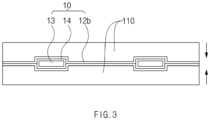
- a secondary battery 10 includes an electrode assembly 11, an electrode lead 13 coupled to an electrode tab of the electrode assembly 11, a pouch 12 that accommodates the electrode assembly 11 with a front end of the electrode lead 13 drawn out to the outside thereof, and a lead film 14 provided in the electrode lead 13 disposed on a sealing part of the pouch.
- the electrode assembly 11 has a structure in which a plurality of separators and a plurality of electrodes are alternately stacked.
- the plurality of electrodes may be a positive electrode and a negative electrode.
- the plurality of electrodes are provided with an electrode tab, and the electrode lead 13 is coupled to the electrode tab.
- the electrode tab includes a positive electrode tab provided in the positive electrode, and a negative electrode tab provided in the negative electrode.
- the electrode lead includes a positive electrode lead coupled to the positive electrode tab and a negative electrode lead coupled to the negative electrode tab.
- the pouch 12 includes an accommodation part 12a, which accommodates the electrode assembly 11, and a sealing part 12b which is formed along an edge surface of the accommodation part 12a and seals the accommodation part 12a.
- the lead film 14 is intended to increase sealing force between the electrode lead 13 and the sealing part 12b of the pouch 12. That is, the lead film 14 is provided in a shape surrounding a main surface of the electrode lead 13 disposed on the sealing part 12b.
- the secondary battery having the structure as above may be manufactured by a device for manufacturing a secondary battery according to a first embodiment of the present invention.
- the device 100 for manufacturing a secondary battery manufactures the secondary battery by accommodating the electrode assembly 11 in the accommodation part 12a of the pouch 12 and then using a pair of sealing blocks 110 to seal the sealing part 12b of the pouch 12.
- the device 100 for manufacturing a secondary battery according to the first embodiment of the present invention may preheat the sealing part 12b of the pouch 12 and the sealing blocks 110 before the sealing part 12b of the pouch 12 is sealed. Accordingly, the sealing force of the sealing part 12b of the pouch 12 from which the electrode lead 13 is drawn out may be increased, and a loss of heat that escapes through the electrode lead may be eliminated or minimized to increase the sealing force.
- the device 100 for manufacturing a secondary battery according to the first embodiment of the present invention may also seal the sealing part 12b of the pouch 12, which is not provided with the electrode lead 13, but the sealing part of the pouch from which the electrode lead 13 is drawn out will be described herein as one embodiment.
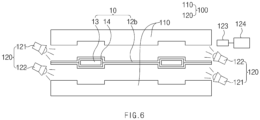
- a device 100 for manufacturing a secondary battery according to a first embodiment of the present invention includes a pair of sealing blocks 110 and a preheating member 120.
- the pair of sealing blocks 110 are intended to seal a sealing part of a pouch in which an electrode assembly 11 is accommodated.
- the pair of sealing blocks 110 are intended to compress and seal the sealing part of the pouch, from which an electrode lead 13 is drawn out, by heat and pressure.
- the pair of sealing blocks 110 are disposed to correspond to both sides, respectively, of a sealing part 12b of a pouch 12 from which the electrode lead 13 is drawn out, and compresses and seals the sealing part 12b at a seal temperature and pressure.
- the seal temperature refers to a temperature of the heated sealing blocks for thermally fusing the sealing part 12b.
- the seal temperature may be 190°C to 230°C.
- the preheating member 120 is intended to preheat the sealing part 12b of the pouch 12 and the pair of sealing blocks 110 to a preheat temperature before the sealing part of the pouch 12 is sealed. That is, when the sealing part 12b of the pouch 12 and the pair of sealing blocks 110 are preheated to the preheat temperature, the preheating member 120 may suppress a temperature of the sealing blocks from being reduced and becoming mild during the continuous manufacturing. That is, when secondary batteries are continuously sealed through the sealing blocks, a heat source becomes weak and accordingly, a sealing force difference may occur between the secondary batteries produced at the beginning of a sealing process and the secondary batteries produced at each of the middle and the later part of the sealing process.
- the present invention may preheat the sealing blocks to prevent the heat source of the sealing blocks from becoming weak and consequently, may uniformly maintain the sealing force in the overall sealing process. Moreover, as the electrode lead 13 is preheated together with the sealing part 12b of the pouch 12, a loss of heat that escapes through the electrode lead 13 may be eliminated or minimized.
- the preheating member 120 includes a first heating body 121 that preheats to the preheat temperature a surface of the sealing part 12b, on which each of the pair of sealing blocks 110 is disposed, and a second heating body 122 that preheats to the preheat temperature a surface of each of the pair of sealing blocks 110, which faces the sealing part 12b.
- the preheating member 120 heats the sealing part 12b of the pouch 12 and the pair of sealing blocks 110 to the preheat temperature, time for which thermal energy required for high sealing force is supplied to the pouch may be reduced to increase productivity.
- the temperature of the sealing block is suppressed from decreasing during the continuous manufacturing, the secondary batteries having uniform sealing quality may be produced.
- the sealing block that is a heat source needs to press the pouch for a long time (e.g., 5 seconds) for strong sealing, and addition of the preheating may minimize the loss of the heat, which escapes the sealing part of the pouch, and time for which the sealing block presses the pouch may be greatly reduced accordingly (e.g., 2 seconds).
- the preheating member 120 may minimize the temperature difference of the entire sealing part 12b of the pouch 12 and consequently, the entire sealing part 12b of the pouch 12 may be uniformly sealed to prevent a sealing defect.
- the preheat temperature of the sealing part 12b preheated by the first heating body 121 and the preheat temperature of the pair of sealing blocks 110 preheated by the second heating body 122 may be the same as or different from each other.
- the first heating body 121 and the second heating body 122 may heat the sealing part 12b of the pouch 12 and the pair of sealing blocks 110 simultaneously at the same temperature.
- the same heating body may be used as each of the first heating body 121 and the second heating body 122.
- the preheat temperature of the sealing part 12b preheated by the first heating body 121 and the preheat temperature of the pair of sealing blocks 110 preheated by the second heating body 122 are different from each other, the preheat temperature of the sealing part 12b preheated by the first heating body 121 may be lower than the preheat temperature of the pair of sealing blocks preheated by the second heating body 122. That is, a heating temperature of the sealing part 12b highly likely to be deformed by heat is set to a lower temperature, and a heating temperature of the sealing blocks 110 for sealing the pouch 12 is set to a higher temperature.
- the preheat temperature of each of the sealing part and the sealing blocks may be set to 100°C to 230°C, preferably 150°C to 200°C.
- the preheat temperature of the sealing blocks is 100°C or lower, it takes much time to raise the preheat temperature of the sealing blocks to the seal temperature.
- the preheat temperature of the sealing blocks is 230°C or higher, it takes less time to raise the preheat temperature of the sealing blocks to the seal temperature, but there is a problem that workability is reduced because it takes much time to raise the temperature of the sealing blocks to the preheat temperature.
- a heating lamp may be used as each of the first heating body 121 and the second heating body 122. Accordingly, the entireties of the sealing part 12b of the pouch 12 and the pair of sealing blocks 110 may be stably heated.
- the preheating member 120 may further include a temperature detecting sensor 123, which detects the temperature of each of the sealing part 12b of the pouch 12 and the pair of sealing blocks 110, and a controller 124 which stops the preheating of the sealing part 12b of the pouch 12 and the pair of sealing blocks 110 by stopping an operation of each of the first heating body 121 and the second heating body 122 when the temperature detected by the temperature detecting sensor 123 rises to the preheat temperature. Accordingly, as the preheating member 120 includes the temperature detecting sensor 123 and the controller 124, each of the sealing part 12b of the pouch 12 and the pair of sealing blocks 110 may be stably preheated to the preheat temperature.
- the sealing force of the sealing part 12b of the pouch 12 from which the electrode lead 13 is drawn out may be increased and the sealing defect may be prevented.
- a method for manufacturing a secondary battery according to a first embodiment of the present invention includes a transfer process, a disposing process, a preheating process, and a sealing process.
- FIG. 5 is a side view illustrating the transfer process of the method for manufacturing a secondary battery according to the first embodiment of the present invention.
- a secondary battery 10 is transferred to the disposing process by a transfer device 20 using a conveyor belt (not shown) or the like.
- the secondary battery 10 includes an electrode assembly 11, an electrode lead 13 coupled to the electrode assembly 11, a pouch 12 that accommodates the electrode assembly 11 with a front end of the electrode lead 13 drawn out to the outside, and a lead film 14 provided in the electrode lead 13 disposed in the pouch 12.
- the secondary battery 10 is described above in detail and thus, the detailed description thereof will be omitted.
- FIG. 6 is a side view illustrating the disposing process and the preheating process of the method for manufacturing a secondary battery according to the first embodiment of the present invention.
- each of a pair of sealing blocks 110 is disposed to correspond to each of both sides of a sealing part 12b formed in the pouch 12 of the secondary battery, preferably both sides of the sealing part 12b of the pouch 12 from which the electrode lead 13 is drawn out.
- each of the pair of sealing blocks 110 is disposed to be spaced a predetermined distance from the sealing part 12b of the pouch 12.
- a preheating member 120 is used to heat to a preheat temperature a corresponding surface of each of the sealing part 12b of the pouch 12 and the pair of sealing blocks 110. That is, the preheating process may include preheating the surface of the sealing part 12b, on which each of the pair of sealing blocks 110 is disposed, to the preheat temperature by using a first heating body 121 of the preheating member 120, and preheating the surface of each of the pair of sealing blocks 110, which faces the sealing part 12b, to the preheat temperature by using a second heating body 122 of the preheating member 120.
- the preheat temperature of the sealing part 12b preheated by the first heating body 121 and the preheat temperature of the pair of sealing blocks 110 preheated by the second heating body 122 may be the same as or different from each other.
- the preheat temperature of the sealing part 12b preheated by the first heating body 121 and the preheat temperature of the pair of sealing blocks 110 preheated by the second heating body 122 are different from each other, the preheat temperature of the sealing part 12b preheated by the first heating body 121 may be lower than the preheat temperature of the pair of sealing blocks 110 preheated by the second heating body 122.
- the preheat temperature of the sealing part 12b is set to a temperature lower than that of the sealing block 110, deformation of the sealing part 12b is prevented, and as the preheat temperature of the sealing block 110 is set to a temperature higher than that of the sealing part 12b, time required for raising the temperature to a seal temperature is reduced.
- the preheat temperature of each of the sealing part and the sealing block may be set to 100°C to 230°C, preferably 150°C to 200°C.
- a heating lamp that emits high-temperature light may be used as each of the first heating body 121 and the second heating body 122. Accordingly, the entireties of the sealing part 12b and the sealing block 110 may be stably and uniformly heated to the preheat temperature.
- the preheating process may further include detecting the temperature of each of the sealing part 12b of the pouch 12 and the pair of sealing blocks 110 by a temperature detecting sensor 123, and stopping, by a controller 124, the preheating of the sealing part 12b of the pouch 12 and the pair of sealing blocks 110 by stopping an operation of each of the first heating body 121 and the second heating body 122 when the temperature detected by the temperature detecting sensor 123 rises to the preheat temperature. Accordingly, the sealing part 12b of the pouch 12 and the pair of sealing blocks 110 may be stably preheated to the preheat temperature in the preheating process.
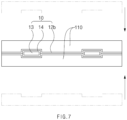
- FIG. 7 is a side view illustrating the sealing process of the method for manufacturing a secondary battery according to the first embodiment of the present invention.
- the pair of sealing blocks 110 are heated to the seal temperature higher than the preheat temperature and then, the sealing part 12b of the pouch 12, which has been preheated to the preheat temperature, are compressed and sealed using the pair of sealing blocks 110.
- time required for supplying a heat source necessary for the sealing may be greatly reduced.
- a heat loss may be prevented because the electrode lead 13 drawn out from the sealing part 12b of the pouch 12 is also heated to the preheat temperature. Consequently, a sealing force decrease and a defect of the sealing part 12b of the pouch 12 may be prevented.
- the electrode lead 13 is preheated to the preheat temperature, a temperature different may be minimized between the electrode lead and the pouch 12 heated and compressed by the pair of sealing blocks 110. Accordingly, the loss of heat that escapes through the electrode lead may be eliminated or minimized.
- the secondary battery 10 that is a complete product may be manufactured.
- the transfer process may further include temporarily preheating the sealing part 12b, which is formed in the pouch 12 of the secondary battery 10 during transfer, by using a temporary heating body 120a.
- the temporary heating body 120a is provided in plurality to be installed along a transfer line of the secondary battery 10. Accordingly, time required for raising the temperature of the sealing part 12b of the pouch 12 to the preheat temperature in the preheating process may be greatly reduced.
- the sealing part 12b of the pouch 12 may be preheated to a temperature lower than the temperature to which the sealing part 12b of the pouch 12 is preheated in the preheating process.
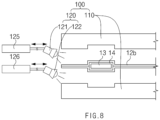
- a device 100 for manufacturing a secondary battery according to a second embodiment of the present invention includes a pair of sealing blocks 110 that are disposed to correspond to both sides, respectively, of a sealing part 12b of a pouch 12 from which an electrode lead 13 is drawn out, and seal the sealing part 12b of the pouch 12 at a seal temperature and pressure, and a preheating member 120 that preheats the sealing part 12b of the pouch 12 and the pair of sealing blocks 110 to a preheat temperature lower than the seal temperature before the sealing part 12b of the pouch 12 is sealed by the pair of sealing blocks 110.
- the preheating member 120 includes a first heating body 121, which preheats to the preheat temperature a surface of the sealing part 12b, on which each of the pair of sealing blocks 110 is disposed, and a second heating body 122 which preheats to the preheat temperature a surface of each of the pair of sealing blocks 110, which faces the sealing part 12b.
- the preheating member 120 includes a first moving body 125, which moves the first heating body 121 toward the sealing part 12b of the pouch 12 or to an initial position, and a second moving body 126 which moves the second heating body 122 toward each of the pair of sealing blocks 110 or to an initial position.
- Each of the first moving body 125 and the second moving body 126 may be a cylinder.
- the device 100 for manufacturing a secondary battery according to the second embodiment of the present invention may adjust a distance between the sealing part 12b of the pouch 12 and the first heating body 121, and a distance between ach of the pair of sealing blocks 110 and the second heating body 122. Accordingly, the sealing part 12b of the pouch 12 and the pair of sealing blocks may be more uniformly and stably preheated to the preheat temperature.
Landscapes
- Engineering & Computer Science (AREA)
- Mechanical Engineering (AREA)
- Physics & Mathematics (AREA)
- Chemical Kinetics & Catalysis (AREA)
- Electrochemistry (AREA)
- General Chemical & Material Sciences (AREA)
- Chemical & Material Sciences (AREA)
- Thermal Sciences (AREA)
- Manufacturing & Machinery (AREA)
- Health & Medical Sciences (AREA)
- Electromagnetism (AREA)
- Toxicology (AREA)
- Sealing Battery Cases Or Jackets (AREA)
- Secondary Cells (AREA)
Applications Claiming Priority (2)
| Application Number | Priority Date | Filing Date | Title |
|---|---|---|---|
| KR1020210183211A KR20230094058A (ko) | 2021-12-20 | 2021-12-20 | 이차전지 제조장치 및 제조방법 |
| PCT/KR2022/019483 WO2023121047A1 (ko) | 2021-12-20 | 2022-12-02 | 이차전지 제조장치 및 제조방법 |
Publications (3)
| Publication Number | Publication Date |
|---|---|
| EP4403336A1 true EP4403336A1 (de) | 2024-07-24 |
| EP4403336A4 EP4403336A4 (de) | 2025-01-01 |
| EP4403336B1 EP4403336B1 (de) | 2025-09-10 |
Family
ID=86903011
Family Applications (1)
| Application Number | Title | Priority Date | Filing Date |
|---|---|---|---|
| EP22911680.1A Active EP4403336B1 (de) | 2021-12-20 | 2022-12-02 | Vorrichtung und verfahren zur herstellung einer sekundärbatterie |
Country Status (7)
| Country | Link |
|---|---|
| US (1) | US20250201892A1 (de) |
| EP (1) | EP4403336B1 (de) |
| JP (1) | JP2024543465A (de) |
| KR (1) | KR20230094058A (de) |
| CN (1) | CN118139739A (de) |
| ES (1) | ES3045784T3 (de) |
| WO (1) | WO2023121047A1 (de) |
Families Citing this family (2)
| Publication number | Priority date | Publication date | Assignee | Title |
|---|---|---|---|---|
| WO2025048387A1 (ko) * | 2023-09-01 | 2025-03-06 | 주식회사 엘지에너지솔루션 | 파우치형 이차전지의 실링 툴 및 파우치형 이차전지의 실링 방법 |
| WO2025211905A1 (ko) * | 2024-04-02 | 2025-10-09 | 주식회사 엘지에너지솔루션 | 위치 정렬이 용이한 파우치 전지셀 실링장치 및 이를 이용한 파우치 전지셀 실링방법 |
Family Cites Families (12)
| Publication number | Priority date | Publication date | Assignee | Title |
|---|---|---|---|---|
| US5057169A (en) * | 1981-03-23 | 1991-10-15 | The Crowell Corporation | Process of protecting a surface using a foam laminate |
| JP4687862B2 (ja) * | 2003-07-22 | 2011-05-25 | トヨタ自動車株式会社 | 二次電池及びその作製方法 |
| JP4641737B2 (ja) * | 2004-04-30 | 2011-03-02 | 三洋電機株式会社 | パック電池 |
| JP5082263B2 (ja) * | 2006-03-10 | 2012-11-28 | 日本電気株式会社 | フィルム外装電気デバイスの製造方法 |
| JP2013037793A (ja) * | 2011-08-04 | 2013-02-21 | Sanyo Electric Co Ltd | 組電池 |
| KR101527124B1 (ko) * | 2012-12-28 | 2015-06-09 | 주식회사 엘지화학 | 이차 전지의 파우치 케이스 실링 장치 및 실링 방법 |
| JP6060840B2 (ja) * | 2013-07-17 | 2017-01-18 | 株式会社豊田自動織機 | 蓄電装置モジュール |
| KR101781828B1 (ko) * | 2015-03-26 | 2017-09-26 | 주식회사 엘지화학 | 측면 밀봉 잉여부가 절곡된 전지셀의 제조방법 |
| JP6863710B2 (ja) * | 2015-12-28 | 2021-04-21 | パナソニック株式会社 | 二次電池 |
| KR102120084B1 (ko) * | 2016-03-23 | 2020-06-08 | 주식회사 엘지화학 | 전극 리드 예열 방식의 전지셀 제조 방법 |
| JP6999299B2 (ja) | 2017-06-28 | 2022-01-18 | アズビル株式会社 | 照明制御方法および装置 |
| JP7223280B2 (ja) * | 2019-09-13 | 2023-02-16 | トヨタ自動車株式会社 | 電池モジュール |
-
2021
- 2021-12-20 KR KR1020210183211A patent/KR20230094058A/ko active Pending
-
2022
- 2022-12-02 ES ES22911680T patent/ES3045784T3/es active Active
- 2022-12-02 WO PCT/KR2022/019483 patent/WO2023121047A1/ko not_active Ceased
- 2022-12-02 CN CN202280070985.8A patent/CN118139739A/zh active Pending
- 2022-12-02 EP EP22911680.1A patent/EP4403336B1/de active Active
- 2022-12-02 US US18/701,686 patent/US20250201892A1/en active Pending
- 2022-12-02 JP JP2024527827A patent/JP2024543465A/ja active Pending
Also Published As
| Publication number | Publication date |
|---|---|
| CN118139739A (zh) | 2024-06-04 |
| US20250201892A1 (en) | 2025-06-19 |
| JP2024543465A (ja) | 2024-11-21 |
| WO2023121047A1 (ko) | 2023-06-29 |
| EP4403336B1 (de) | 2025-09-10 |
| ES3045784T3 (en) | 2025-11-28 |
| KR20230094058A (ko) | 2023-06-27 |
| EP4403336A4 (de) | 2025-01-01 |
Similar Documents
| Publication | Publication Date | Title |
|---|---|---|
| EP4403336A1 (de) | Vorrichtung und verfahren zur herstellung einer sekundärbatterie | |
| KR102442472B1 (ko) | 이차전지용 라미네이션 장치 및 방법 | |
| EP4197750A1 (de) | Dichtungsvorrichtung für sekundärbatterie | |
| KR102640956B1 (ko) | 클램핑 모듈을 포함하는 클램핑 이송장치 및 이차전지셀 제조장치 | |
| US20190363389A1 (en) | Lamination apparatus and method for secondary battery | |
| CN107646153A (zh) | 用于电池组的片附接装置 | |
| CN117279771A (zh) | 袋型电池单元和袋型电池单元的袋翼部弯曲装置 | |
| US20220393225A1 (en) | Electrode Assembly, and Apparatus and Method for Manufacturing the Same | |
| EP4477389A1 (de) | Faltvorrichtung und faltverfahren für einen beutelförmigen sekundärbatteriedichtungsabschnitt | |
| KR102363196B1 (ko) | 파우치형 배터리의 충방전용 그립퍼 및 이를 구비한 파우치형 배터리의 충방전 장치 | |
| EP4261970A1 (de) | Formungsvorrichtung für batteriezelle | |
| US20080134495A1 (en) | Method for manufacturing metal separator for fuel cell | |
| EP2816631B1 (de) | Batterieverstärkungsverfahren | |
| JP7703831B2 (ja) | パウチ型二次電池の2次シーリング装置 | |
| US20240120521A1 (en) | Electrode Assembly, and Manufacturing Apparatus and Manufacturing Method Therefor | |
| KR20230040527A (ko) | 이차전지 실링장치 및 이차전지 실링방법 | |
| EP4401207A1 (de) | Dichtungsverfahren für pouch-sekundärbatterie, herstellungsverfahren für pouch-sekundärbatterie, dichtungsvorrichtung für pouch-sekundärbatterie und damit hergestellte pouch-sekundärbatterie | |
| KR20220042720A (ko) | 납축전지의 케이스와 카바의 융착 강도 강화 방법 | |
| KR101792821B1 (ko) | 상단 캡 체결 수단을 구비한 전지팩 제조 장치 | |
| EP4410521A1 (de) | Vorrichtung zum versiegeln einer beutelartigen sekundärbatterie und verfahren zum versiegeln einer beutelartigen sekundärbatterie | |
| US12463234B2 (en) | Formation device of pouch-type battery cell | |
| EP4333146A1 (de) | Vorrichtung zur herstellung einer elektrodenanordnung zur verhinderung des faltens eines separators und damit hergestellte elektrodenanordnung | |
| US20230134414A1 (en) | Laminator for Manufacture of Unit Structural Bodies with Increased Force of Adhesion | |
| CN118541838A (zh) | 堆叠电极体的侧密封装置、包括堆叠电极体的二次电池及其制造方法 | |
| KR20220045436A (ko) | 전지셀 제조 장치 및 방법 |
Legal Events
| Date | Code | Title | Description |
|---|---|---|---|
| STAA | Information on the status of an ep patent application or granted ep patent |
Free format text: STATUS: THE INTERNATIONAL PUBLICATION HAS BEEN MADE |
|
| PUAI | Public reference made under article 153(3) epc to a published international application that has entered the european phase |
Free format text: ORIGINAL CODE: 0009012 |
|
| STAA | Information on the status of an ep patent application or granted ep patent |
Free format text: STATUS: REQUEST FOR EXAMINATION WAS MADE |
|
| 17P | Request for examination filed |
Effective date: 20240417 |
|
| AK | Designated contracting states |
Kind code of ref document: A1 Designated state(s): AL AT BE BG CH CY CZ DE DK EE ES FI FR GB GR HR HU IE IS IT LI LT LU LV MC ME MK MT NL NO PL PT RO RS SE SI SK SM TR |
|
| REG | Reference to a national code |
Ref country code: DE Ref legal event code: R079 Free format text: PREVIOUS MAIN CLASS: B29C0065000000 Ipc: B29C0065020000 Ref country code: DE Ref legal event code: R079 Ref document number: 602022021403 Country of ref document: DE Free format text: PREVIOUS MAIN CLASS: B29C0065000000 Ipc: B29C0065020000 |
|
| A4 | Supplementary search report drawn up and despatched |
Effective date: 20241129 |
|
| RIC1 | Information provided on ipc code assigned before grant |
Ipc: B29L 31/34 20060101ALN20241125BHEP Ipc: B29L 31/00 20060101ALN20241125BHEP Ipc: H01M 50/178 20210101ALI20241125BHEP Ipc: H01M 50/105 20210101ALI20241125BHEP Ipc: H01M 10/04 20060101ALI20241125BHEP Ipc: B29C 65/78 20060101ALI20241125BHEP Ipc: B29C 65/72 20060101ALI20241125BHEP Ipc: B29C 65/24 20060101ALI20241125BHEP Ipc: B29C 65/18 20060101ALI20241125BHEP Ipc: B29C 65/14 20060101ALI20241125BHEP Ipc: B29C 65/02 20060101AFI20241125BHEP |
|
| DAV | Request for validation of the european patent (deleted) | ||
| DAX | Request for extension of the european patent (deleted) | ||
| GRAP | Despatch of communication of intention to grant a patent |
Free format text: ORIGINAL CODE: EPIDOSNIGR1 |
|
| STAA | Information on the status of an ep patent application or granted ep patent |
Free format text: STATUS: GRANT OF PATENT IS INTENDED |
|
| RIC1 | Information provided on ipc code assigned before grant |
Ipc: B29C 65/02 20060101AFI20250618BHEP Ipc: B29C 65/14 20060101ALI20250618BHEP Ipc: B29C 65/18 20060101ALI20250618BHEP Ipc: B29C 65/24 20060101ALI20250618BHEP Ipc: B29C 65/72 20060101ALI20250618BHEP Ipc: B29C 65/78 20060101ALI20250618BHEP Ipc: H01M 10/04 20060101ALI20250618BHEP Ipc: H01M 50/105 20210101ALI20250618BHEP Ipc: H01M 50/178 20210101ALI20250618BHEP Ipc: B29L 31/00 20060101ALN20250618BHEP Ipc: B29L 31/34 20060101ALN20250618BHEP |
|
| GRAS | Grant fee paid |
Free format text: ORIGINAL CODE: EPIDOSNIGR3 |
|
| INTG | Intention to grant announced |
Effective date: 20250703 |
|
| GRAA | (expected) grant |
Free format text: ORIGINAL CODE: 0009210 |
|
| STAA | Information on the status of an ep patent application or granted ep patent |
Free format text: STATUS: THE PATENT HAS BEEN GRANTED |
|
| AK | Designated contracting states |
Kind code of ref document: B1 Designated state(s): AL AT BE BG CH CY CZ DE DK EE ES FI FR GB GR HR HU IE IS IT LI LT LU LV MC ME MK MT NL NO PL PT RO RS SE SI SK SM TR |
|
| REG | Reference to a national code |
Ref country code: GB Ref legal event code: FG4D |
|
| REG | Reference to a national code |
Ref country code: CH Ref legal event code: EP |
|
| P01 | Opt-out of the competence of the unified patent court (upc) registered |
Free format text: CASE NUMBER: UPC_APP_4929_4403336/2025 Effective date: 20250827 |
|
| REG | Reference to a national code |
Ref country code: DE Ref legal event code: R096 Ref document number: 602022021403 Country of ref document: DE |
|
| REG | Reference to a national code |
Ref country code: IE Ref legal event code: FG4D |
|
| REG | Reference to a national code |
Ref country code: SE Ref legal event code: TRGR |
|
| REG | Reference to a national code |
Ref country code: ES Ref legal event code: FG2A Ref document number: 3045784 Country of ref document: ES Kind code of ref document: T3 Effective date: 20251128 |