EP4403193A2 - Verfahren zur reduzierung der biobelastung in der chromatographie - Google Patents
Verfahren zur reduzierung der biobelastung in der chromatographie Download PDFInfo
- Publication number
- EP4403193A2 EP4403193A2 EP24179373.6A EP24179373A EP4403193A2 EP 4403193 A2 EP4403193 A2 EP 4403193A2 EP 24179373 A EP24179373 A EP 24179373A EP 4403193 A2 EP4403193 A2 EP 4403193A2
- Authority
- EP
- European Patent Office
- Prior art keywords
- hours
- bacteria
- chromatography matrix
- acetic acid
- composition
- Prior art date
- Legal status (The legal status is an assumption and is not a legal conclusion. Google has not performed a legal analysis and makes no representation as to the accuracy of the status listed.)
- Pending
Links
Images









Classifications
-
- A—HUMAN NECESSITIES
- A61—MEDICAL OR VETERINARY SCIENCE; HYGIENE
- A61L—METHODS OR APPARATUS FOR STERILISING MATERIALS OR OBJECTS IN GENERAL; DISINFECTION, STERILISATION OR DEODORISATION OF AIR; CHEMICAL ASPECTS OF BANDAGES, DRESSINGS, ABSORBENT PADS OR SURGICAL ARTICLES; MATERIALS FOR BANDAGES, DRESSINGS, ABSORBENT PADS OR SURGICAL ARTICLES
- A61L2/00—Disinfection or sterilisation of materials or objects, in general; Accessories therefor
- A61L2/16—Disinfection or sterilisation of materials or objects, in general; Accessories therefor using chemical substances
- A61L2/18—Liquid substances
-
- A—HUMAN NECESSITIES
- A61—MEDICAL OR VETERINARY SCIENCE; HYGIENE
- A61L—METHODS OR APPARATUS FOR STERILISING MATERIALS OR OBJECTS IN GENERAL; DISINFECTION, STERILISATION OR DEODORISATION OF AIR; CHEMICAL ASPECTS OF BANDAGES, DRESSINGS, ABSORBENT PADS OR SURGICAL ARTICLES; MATERIALS FOR BANDAGES, DRESSINGS, ABSORBENT PADS OR SURGICAL ARTICLES
- A61L2/00—Disinfection or sterilisation of materials or objects, in general; Accessories therefor
- A61L2/26—Accessories
- A61L2/28—Devices for testing the effectiveness or completeness of sterilisation or disinfection, e.g. indicators which change colour
-
- B—PERFORMING OPERATIONS; TRANSPORTING
- B01—PHYSICAL OR CHEMICAL PROCESSES OR APPARATUS IN GENERAL
- B01D—SEPARATION
- B01D15/00—Separating processes involving the treatment of liquids with solid sorbents; Apparatus therefor
- B01D15/08—Selective adsorption, e.g. chromatography
- B01D15/10—Selective adsorption, e.g. chromatography characterised by constructional or operational features
- B01D15/20—Selective adsorption, e.g. chromatography characterised by constructional or operational features relating to the conditioning of the sorbent material
-
- B—PERFORMING OPERATIONS; TRANSPORTING
- B01—PHYSICAL OR CHEMICAL PROCESSES OR APPARATUS IN GENERAL
- B01D—SEPARATION
- B01D15/00—Separating processes involving the treatment of liquids with solid sorbents; Apparatus therefor
- B01D15/08—Selective adsorption, e.g. chromatography
- B01D15/10—Selective adsorption, e.g. chromatography characterised by constructional or operational features
- B01D15/20—Selective adsorption, e.g. chromatography characterised by constructional or operational features relating to the conditioning of the sorbent material
- B01D15/203—Equilibration or regeneration
-
- B—PERFORMING OPERATIONS; TRANSPORTING
- B01—PHYSICAL OR CHEMICAL PROCESSES OR APPARATUS IN GENERAL
- B01D—SEPARATION
- B01D15/00—Separating processes involving the treatment of liquids with solid sorbents; Apparatus therefor
- B01D15/08—Selective adsorption, e.g. chromatography
- B01D15/26—Selective adsorption, e.g. chromatography characterised by the separation mechanism
- B01D15/38—Selective adsorption, e.g. chromatography characterised by the separation mechanism involving specific interaction not covered by one or more of groups B01D15/265 and B01D15/30 - B01D15/36, e.g. affinity, ligand exchange or chiral chromatography
- B01D15/3804—Affinity chromatography
- B01D15/3809—Affinity chromatography of the antigen-antibody type, e.g. protein A, G or L chromatography
-
- G—PHYSICS
- G01—MEASURING; TESTING
- G01N—INVESTIGATING OR ANALYSING MATERIALS BY DETERMINING THEIR CHEMICAL OR PHYSICAL PROPERTIES
- G01N30/00—Investigating or analysing materials by separation into components using adsorption, absorption or similar phenomena or using ion-exchange, e.g. chromatography or field flow fractionation
- G01N30/02—Column chromatography
- G01N30/50—Conditioning of the sorbent material or stationary liquid
-
- G—PHYSICS
- G06—COMPUTING OR CALCULATING; COUNTING
- G06V—IMAGE OR VIDEO RECOGNITION OR UNDERSTANDING
- G06V20/00—Scenes; Scene-specific elements
- G06V20/10—Terrestrial scenes
-
- G—PHYSICS
- G06—COMPUTING OR CALCULATING; COUNTING
- G06V—IMAGE OR VIDEO RECOGNITION OR UNDERSTANDING
- G06V20/00—Scenes; Scene-specific elements
- G06V20/40—Scenes; Scene-specific elements in video content
- G06V20/46—Extracting features or characteristics from the video content, e.g. video fingerprints, representative shots or key frames
-
- G—PHYSICS
- G08—SIGNALLING
- G08G—TRAFFIC CONTROL SYSTEMS
- G08G1/00—Traffic control systems for road vehicles
- G08G1/01—Detecting movement of traffic to be counted or controlled
- G08G1/017—Detecting movement of traffic to be counted or controlled identifying vehicles
- G08G1/0175—Detecting movement of traffic to be counted or controlled identifying vehicles by photographing vehicles, e.g. when violating traffic rules
-
- G—PHYSICS
- G01—MEASURING; TESTING
- G01N—INVESTIGATING OR ANALYSING MATERIALS BY DETERMINING THEIR CHEMICAL OR PHYSICAL PROPERTIES
- G01N30/00—Investigating or analysing materials by separation into components using adsorption, absorption or similar phenomena or using ion-exchange, e.g. chromatography or field flow fractionation
- G01N30/02—Column chromatography
- G01N30/88—Integrated analysis systems specially adapted therefor, not covered by a single one of the groups G01N30/04 - G01N30/86
- G01N2030/8809—Integrated analysis systems specially adapted therefor, not covered by a single one of the groups G01N30/04 - G01N30/86 analysis specially adapted for the sample
- G01N2030/8813—Integrated analysis systems specially adapted therefor, not covered by a single one of the groups G01N30/04 - G01N30/86 analysis specially adapted for the sample biological materials
- G01N2030/8831—Integrated analysis systems specially adapted therefor, not covered by a single one of the groups G01N30/04 - G01N30/86 analysis specially adapted for the sample biological materials involving peptides or proteins
-
- G—PHYSICS
- G06—COMPUTING OR CALCULATING; COUNTING
- G06V—IMAGE OR VIDEO RECOGNITION OR UNDERSTANDING
- G06V20/00—Scenes; Scene-specific elements
- G06V20/60—Type of objects
- G06V20/62—Text, e.g. of license plates, overlay texts or captions on TV images
- G06V20/625—License plates
-
- G—PHYSICS
- G06—COMPUTING OR CALCULATING; COUNTING
- G06V—IMAGE OR VIDEO RECOGNITION OR UNDERSTANDING
- G06V2201/00—Indexing scheme relating to image or video recognition or understanding
- G06V2201/08—Detecting or categorising vehicles
Definitions
- the present invention provides methods for microbial bioburden reduction of various chromatography matrices, including bioburden reduction in the context of large-scale Protein A-based affinity chromatography columns.
- Antibody drugs are the most prevalent biopharmaceutical products.
- Affinity chromatography e.g., performed with a natural or engineered staphylococcal protein A ligand, is widely used as a capture method in the antibody drug manufacturing process to remove impurities and contaminants.
- Protein A binds the Fc-region of antibodies, with protein A columns considered to be selective for purification of monoclonal antibodies.
- Affinity chromatography with protein A typically involves a clean-in-place (CIP) step to clean and remove impurities that are bound to the column, such as precipitated or denatured substances.
- CIP is normally performed with a sodium hydroxide solution.
- sodium hydroxide solutions or phosphoric acid solutions with benzyl alcohol
- benzyl alcohol are used to reduce the number of microbes in a protein A chromatography matrix or column.
- the bioburden increases as such bacteria and microbes accumulate on the column.
- Column performance generally degrades as bioburden increases. Signs of such degradation include decrease in product purity, column packing deterioration, and increased backpressure.
- microbial bioburden reduction is not limited to protein A chromatography matrices but encompasses other chromatography matrices with proteinaceous ligands coupled to a support as well as matrices not involving proteinaceous ligands such as, e.g., various ion exchange chromatography matrices, hydrophobic interaction chromatography (HIC) matrices, mixed mode chromatography matrices, size exclusion chromatography matrices, etc.
- various ion exchange chromatography matrices e.g., hydrophobic interaction chromatography (HIC) matrices, mixed mode chromatography matrices, size exclusion chromatography matrices, etc.
- HIC hydrophobic interaction chromatography
- Microbial bioburden reduction of chromatography matrices is particularly important in the context of a good manufacturing practice (GMP), or current good manufacturing practice (CGMP).
- GMP good manufacturing practice
- CGMP current good manufacturing practice
- Such practices must provide consistency in manufacturing steps and quality of product so as to meet requirements of regulatory bodies, such as the U.S. Food and Drug Administration.
- GMP and CGMP require a high degree of predictability and standardization in manufacturing processes, particularly with ensuring purity of the manufactured therapeutic biomolecules used in human patients.
- An excessive bioburden can decrease column performance, which can interfere with purifying the product in a standardized and predictable way and possibly cause other failure points to be triggered.
- solutions based on sodium hydroxide, and those based on phosphoric acid with benzyl alcohol, may be effective to kill microorganisms but also tend to denature the proteinaceious ligands (e.g., protein A) thus negatively affecting their function.
- proteinaceious ligands e.g., protein A
- oxidants and other components of such solutions can remain with the purified monoclonal antibodies and further degrade them downstream.
- the present invention provides a method for microbial bioburden reduction of a chromatography matrix, comprising contacting the chromatography matrix with a composition comprising from about 0.1 M to about 0.5 M acetic acid, wherein the contacting step is performed for at least about 2 hours.
- the invention provides a method for microbial bioburden reduction of a chromatography matrix, comprising contacting the chromatography matrix with a composition comprising from about 0.5 M to about 1.0 M acetic acid, wherein the contacting step is performed for at least about 1 hour.
- the invention provides a method for microbial bioburden reduction of a chromatography matrix, comprising contacting the chromatography matrix with a composition comprising from about 0.1 M to about 1.0 M acetic acid, wherein the contacting step results in one or more of a reduction in the amount of spore forming bacteria by at least 3 log 10 , a reduction in the amount of gram positive bacteria by at least 5 log 10 , and a reduction in the amount of gram negative bacteria by at least 5 log 10 in the chromatography matrix.
- the present invention provides a method for microbial bioburden reduction of a chromatography matrix, comprising contacting the chromatography matrix with a composition comprising from about 4.0 M to about 12.0 M urea, wherein the contacting step is performed for at least about 30 minutes.
- the invention provides a method for microbial bioburden reduction of a chromatography matrix, comprising contacting the chromatography matrix with a composition comprising from about 4.0 M to about 12.0 M urea, wherein the contacting step results in one or more of a reduction in the amount of spore forming bacteria by at least 2 log 10 , a reduction in the amount of gram positive bacteria by at least 5 log 10 , and a reduction in the amount of gram negative bacteria by at least 5 log 10 , in the chromatography matrix.
- the invention provides a method for microbial bioburden reduction of MabSelect TM Xtra chromatography matrix, comprising contacting the chromatography matrix with a composition consisting essentially of about 0.5 M acetic acid, wherein the contacting step is performed for at least about 4 hours.
- the invention provides a method for microbial bioburden reduction of MabSelect TM Xtra chromatography matrix, comprising contacting the chromatography matrix with a composition consisting essentially of about 0.1 M acetic acid and about 20% ethanol, wherein the contacting step is performed for at least about 4 hours.
- the invention provides a method for microbial bioburden reduction of MabSelect TM Xtra chromatography matrix, comprising contacting the chromatography matrix with a composition consisting essentially of about 8 M urea, wherein the contacting step is performed for at least about 1 hour.
- the invention provides a method for microbial bioburden reduction of MabSelect TM Xtra chromatography matrix, comprising contacting the chromatography matrix with a composition consisting essentially of about 8 M urea and about 20% ethanol, wherein the contacting step is performed for at least about 1 hour.
- the invention provides a method for reducing microbial load before applying a composition comprising a pharmaceutical agent for purification comprising (a) providing a chromatography matrix; (b) performing any of the above methods of the invention; and (c) applying the composition comprising the pharmaceutical agent to the chromatography matrix.
- the present invention provides a method for microbial bioburden reduction of a chromatography matrix, comprising contacting the chromatography matrix with a composition comprising from about 0.1 M to about 0.5 M acetic acid, wherein the contacting step is performed for at least about 2 hours.
- the contacting step is performed for 2 to 5 hours, 2 to 10 hours, 2 to 25 hours, 2 to 200 hours, 2 to 375 hours, or 2 to 400 hours.
- the contacting step is performed for at least about 4 hours.
- the contacting step is performed for 4 to 5 hours, 4 to 10 hours, 4 to 25 hours, 4 to 200 hours, 4 to 375 hours, or 4 to 400 hours.
- the composition comprises about 0.1 M acetic acid and the contacting step is performed for at least about 4 hours. In one embodiment, the composition comprises about 0.5 M acetic acid and the contacting step is performed for at least about 4 hours. In various embodiments, the composition comprises about 0.5 M acetic acid and the contacting step is performed for 4 to 5 hours, 4 to 10 hours, 4 to 25 hours, 4 to 200 hours, 4 to 375 hours, or 4 to 400 hours.
- the composition further comprises an alcohol.
- alcohols that can be used include ethanol (e.g., about 20%) and benzyl alcohol (e.g., from about 1% to about 2%).
- the composition consists essentially of about 0.1M acetic acid and about 20% ethanol.
- the invention provides a method for microbial bioburden reduction of a chromatography matrix, comprising contacting the chromatography matrix with a composition consisting essentially of about 0.1 M to about 0.5 M acetic acid, wherein the contacting step is performed for at least about 2 hours. In one specific embodiment, the contacting step is performed for at least about 4 hours. In various embodiments, the contacting step is performed for 4 to 5 hours, 4 to 10 hours, 4 to 25 hours, 4 to 200 hours, 4 to 375 hours, or 4 to 400 hours. In one specific embodiment, the composition consists essentially of about 0.1 M acetic acid and the contacting step is performed for at least about 4 hours.
- the composition consists essentially of about 0.5 M acetic acid and the contacting step is performed for at least about 4 hours. In various embodiments, the composition comprises about 0.5 M acetic acid and the contacting step is performed for 4 to 5 hours, 4 to 10 hours, 4 to 25 hours, 4 to 200 hours, 4 to 375 hours, or 4 to 400 hours.
- the invention provides a method for microbial bioburden reduction of a chromatography matrix, comprising contacting the chromatography matrix with a composition comprising from about 0.5 M to about 1.0 M acetic acid, wherein the contacting step is performed for at least about 1 hour.
- the contacting step is performed for 1 to 5 hours, 1 to 10 hours, 1 to 25 hours, 1 to 200 hours, 1 to 375 hours, 1 to 400 hours, 4 to 5 hours, 4 to 10 hours, 4 to 25 hours, 4 to 200 hours, 4 to 375 hours, or 4 to 400 hours.
- the composition comprises about 0.5 M acetic acid and the contacting step is performed for at least about 1 hour.
- the composition comprises about 0.5 M acetic acid and the contacting step is performed for 1 to 5 hours, 1 to 10 hours, 1 to 25 hours, 1 to 200 hours, 1 to 375 hours, 1 to 400 hours, 4 to 5 hours, 4 to 10 hours, 4 to 25 hours, 4 to 200 hours, 4 to 375 hours, or 4 to 400 hours.
- the composition further comprises an alcohol.
- alcohols that can be used include ethanol (e.g., about 20%) and benzyl alcohol (e.g., from about 1% to about 2%).
- the composition consists essentially of about 0.5 M acetic acid and about 20% ethanol.
- the invention provides a method for microbial bioburden reduction of a chromatography matrix, comprising contacting the chromatography matrix with a composition consisting essentially of about 0.5 M to about 1.0 M acetic acid, wherein the contacting step is performed for at least about 1 hour.
- the composition consists essentially of about 0.5 M to about 1.0 M acetic acid and the contacting step is performed for 1 to 5 hours, 1 to 10 hours, 1 to 25 hours, 1 to 200 hours, 1 to 375 hours, 1 to 400 hours, 4 to 5 hours, 4 to 10 hours, 4 to 25 hours, 4 to 200 hours, 4 to 375 hours, or 4 to 400 hours.
- the composition consists essentially of about 0.5 M acetic acid and the contacting step is performed for at least about 1 hour. In various embodiments, the composition consists essentially of about 0.5 M acetic acid and the contacting step is performed for 1 to 5 hours, 1 to 10 hours, 1 to 25 hours, 1 to 200 hours, 1 to 375 hours, 1 to 400 hours, 4 to 5 hours, 4 to 10 hours, 4 to 25 hours, 4 to 200 hours, 4 to 375 hours, or 4 to 400 hours.
- the invention provides a method for microbial bioburden reduction of a chromatography matrix, comprising contacting the chromatography matrix with a composition comprising from about 0.1 M to about 1.0 M acetic acid, wherein the contacting step results in one or more of a reduction in the amount of spore forming bacteria (e.g., Bacillus pseudofirmus) by at least 3 log 10 , a reduction in the amount of gram positive bacteria (e.g., Microbacterium spp.) by at least 5 log 10 , and a reduction in the amount of gram negative bacteria (e.g., Stenotrophomonas maltophilia) by at least 5 log 10 in the chromatography matrix.
- spore forming bacteria e.g., Bacillus pseudofirmus
- gram positive bacteria e.g., Microbacterium spp.
- gram negative bacteria e.g., Stenotrophomonas maltophilia
- the contacting step results in a reduction in the amount of one or more of spore forming bacteria (e.g., Bacillus pseudofirmus), gram positive bacteria (e.g., Microbacterium spp.), and gram negative bacteria (e.g., Stenotrophomonas maltophilia), in the chromatography matrix, to below the limit of detection as determined by an assay, such as, for example, (1) a biofiltration assay, (2) microscopic bacterial staining, (3) IR/FTIR spectroscopy method, (4) a sterility test, or (5) a bacterial identification test.
- an assay such as, for example, (1) a biofiltration assay, (2) microscopic bacterial staining, (3) IR/FTIR spectroscopy method, (4) a sterility test, or (5) a bacterial identification test.
- the contacting step is performed for at least about 1 hour, 1 to 5 hours, 1 to 10 hours, 1 to 25 hours, 1 to 200 hours, 1 to 375 hours, 1 to 400 hours, for at least about 4 hours, for 4 to 5 hours, 4 to 10 hours, 4 to 25 hours, 4 to 200 hours, 4 to 375 hours, or 4 to 400 hours.
- the composition further comprises an alcohol.
- alcohols that can be used include ethanol (e.g., about 20%) and benzyl alcohol (e.g., from about 1% to about 2%).
- the composition consists essentially of about 0.1 M acetic acid and about 20% ethanol.
- the composition consists essentially of about 0.5 M acetic acid and about 20% ethanol.
- the invention provides a method for microbial bioburden reduction of a chromatography matrix, comprising contacting the chromatography matrix with a composition consisting essentially of about 0.1 M to about 1.0 M acetic acid, wherein the contacting step results in one or more of a reduction in the amount of spore forming bacteria (e.g., Bacillus pseudofirmus) by at least 3 log 10 , a reduction in the amount of gram positive bacteria (e.g., Microbacterium spp.) by at least 5 log 10 , and a reduction in the amount of gram negative bacteria (e.g., Stenotrophomonas maltophilia) by at least 5 log 10 , in the chromatography matrix.
- spore forming bacteria e.g., Bacillus pseudofirmus
- gram positive bacteria e.g., Microbacterium spp.
- gram negative bacteria e.g., Stenotrophomonas maltophilia
- the contacting step results in a reduction in the amount of one or more of spore forming bacteria (e.g., Bacillus pseudofirmus), gram positive bacteria (e.g., Microbacterium spp.), and gram negative bacteria (e.g., Stenotrophomonas maltophilia), in the chromatography matrix, to below the limit of detection as determined by an assay, such as, for example, (1) a biofiltration assay, (2) microscopic bacterial staining, (3) IR/FTIR spectroscopy method, (4) a sterility test, or (5) a bacterial identification test.
- an assay such as, for example, (1) a biofiltration assay, (2) microscopic bacterial staining, (3) IR/FTIR spectroscopy method, (4) a sterility test, or (5) a bacterial identification test.
- the contacting step is performed for at least about 1 hour, 1 to 5 hours, 1 to 10 hours, 1 to 25 hours, 1 to 200 hours, 1 to 375 hours, 1 to 400 hours, at least about 4 hours, 4 to 5 hours, 4 to 10 hours, 4 to 25 hours, 4 to 200 hours, 4 to 375 hours, or 4 to 400 hours.
- the composition further comprises an acetate salt.
- the composition has pH between about 2 and about 3.
- the present invention provides a method for microbial bioburden reduction of a chromatography matrix, comprising contacting the chromatography matrix with a composition comprising from about 4.0 M to about 12.0 M urea, wherein the contacting step is performed for at least about 30 minutes. In one embodiment, the contacting step is performed for at least about 1 hour. In one embodiment, the composition comprises about 8 M urea.
- the composition further comprises an alcohol.
- alcohols that can be used include ethanol (e.g., about 20%) and benzyl alcohol (e.g., from about 1% to about 2%).
- the composition consists essentially of about 8 M urea and about 20% ethanol.
- the invention provides a method for microbial bioburden reduction of a chromatography matrix, comprising contacting the chromatography matrix with a composition consisting essentially of about 4.0 M to about 12.0 M urea, wherein the contacting step is performed for at least about 30 minutes. In one specific embodiment, the contacting step is performed for at least about 1 hour. In one specific embodiment, the composition consists essentially of 8 M urea.
- the invention provides a method for microbial bioburden reduction of a chromatography matrix, comprising contacting the chromatography matrix with a composition comprising from about 4.0 M to about 12.0 M urea, wherein the contacting step results in one or more of a reduction in the amount of spore forming bacteria (e.g., Bacillus pseudofirmus) by at least 2 log 10 , a reduction in the amount of gram positive bacteria (e.g., Microbacterium spp.) by at least 5 log 10 , and a reduction in the amount of gram negative bacteria (e.g., Stenotrophomonas maltophilia) by at least 5 log 10 , in the chromatography matrix.
- spore forming bacteria e.g., Bacillus pseudofirmus
- gram positive bacteria e.g., Microbacterium spp.
- gram negative bacteria e.g., Stenotrophomonas maltophilia
- the contacting step results in a reduction in the amount of one or more of spore forming bacteria (e.g., Bacillus pseudofirmus), gram positive bacteria (e.g., Microbacterium spp.), and gram negative bacteria (e.g., Stenotrophomonas maltophilia), in the chromatography matrix, to below the limit of detection as determined by an assay, such as, for example, (1) a biofiltration assay, (2) microscopic bacterial staining, (3) IR/FTIR spectroscopy method, (4) a sterility test, or (5) a bacterial identification test.
- an assay such as, for example, (1) a biofiltration assay, (2) microscopic bacterial staining, (3) IR/FTIR spectroscopy method, (4) a sterility test, or (5) a bacterial identification test.
- the composition further comprises an alcohol.
- alcohols that can be used include ethanol (e.g., about 20%) and benzyl alcohol (e.g., from about 1% to about 2%).
- the composition consists essentially of about 8 M urea and about 20% ethanol.
- the invention provides a method for microbial bioburden reduction of a chromatography matrix, comprising contacting the chromatography matrix with a composition consisting essentially of about 4.0 M to about 12.0 M urea, wherein the contacting step results in one or more of a reduction in the amount of spore forming bacteria (e.g., Bacillus pseudofirmus) by at least 2 log 10 , a reduction in the amount of gram positive bacteria (e.g., Microbacterium spp.) by at least 5 log 10 , and a reduction in the amount of gram negative bacteria (e.g., Stenotrophomonas maltophilia ) by at least 5 log 10 , in the chromatography matrix.
- spore forming bacteria e.g., Bacillus pseudofirmus
- gram positive bacteria e.g., Microbacterium spp.
- gram negative bacteria e.g., Stenotrophomonas maltophilia
- the contacting step results in a reduction in the amount of one or more of spore forming bacteria (e.g., Bacillus pseudofirmus), gram positive bacteria (e.g., Microbacterium spp.), and gram negative bacteria (e.g., Stenotrophomonas maltophilia), in the chromatography matrix, to below the limit of detection as determined by an assay, such as, for example, (1) a biofiltration assay, (2) microscopic bacterial staining, (3) IR/FTIR spectroscopy method, (4) a sterility test, or (5) a bacterial identification test.
- an assay such as, for example, (1) a biofiltration assay, (2) microscopic bacterial staining, (3) IR/FTIR spectroscopy method, (4) a sterility test, or (5) a bacterial identification test.
- the invention provides a method for microbial bioburden reduction of a chromatography matrix, comprising contacting the chromatography matrix with a composition comprising from about 4.0 M to about 12.0 M guanidine hydrochloride, wherein the contacting step is performed for at least about 30 minutes. In one embodiment, the contacting step is performed for at least about 1 hour. In one embodiment, the composition comprises about 6 M guanidine hydrochloride.
- the composition further comprises an alcohol.
- alcohols that can be used include ethanol (e.g., about 20%) and benzyl alcohol (e.g., from about 1% to about 2%).
- the composition consists essentially of about 6 M guanidine hydrochloride and about 20% ethanol.
- the invention provides a method for microbial bioburden reduction of a chromatography matrix, comprising contacting the chromatography matrix with a composition consisting essentially of about 4.0 M to about 12.0 M guanidine hydrochloride, wherein the contacting step is performed for at least about 30 minutes. In one specific embodiment, the contacting step is performed for at least about 1hour. In one specific embodiment, the composition consists essentially of about 6 M guanidine hydrochloride.
- the invention provides a method for microbial bioburden reduction of a chromatography matrix, comprising contacting the chromatography matrix with a composition comprising from about 4.0 M to about 12.0 M guanidine hydrochloride, wherein the contacting step results in one or more of a reduction in the amount of spore forming bacteria (e.g., Bacillus pseudofirmus) by at least 2 log 10 , a reduction in the amount of gram positive bacteria (e.g., Microbacterium spp.) by at least 4 log 10 , and a reduction in the amount of gram negative bacteria (e.g., Stenotrophomonas maltophilia ) by at least 2 log 10 , in the chromatography matrix.
- spore forming bacteria e.g., Bacillus pseudofirmus
- gram positive bacteria e.g., Microbacterium spp.
- gram negative bacteria e.g., Stenotrophomonas maltophilia
- the contacting step results in a reduction in the amount of one or more of spore forming bacteria (e.g., Bacillus pseudofirmus), gram positive bacteria (e.g., Microbacterium spp.), and gram negative bacteria (e.g., Stenotrophomonas maltophilia), in the chromatography matrix, to below the limit of detection as determined by an assay, such as, for example, (1) a biofiltration assay, (2) microscopic bacterial staining, (3) IR/FTIR spectroscopy method, (4) a sterility test, or (5) a bacterial identification test.
- an assay such as, for example, (1) a biofiltration assay, (2) microscopic bacterial staining, (3) IR/FTIR spectroscopy method, (4) a sterility test, or (5) a bacterial identification test.
- the composition further comprises an alcohol.
- alcohols that can be used include ethanol (e.g., about 20%) and benzyl alcohol (e.g., from about 1% to about 2%).
- the composition consists essentially of about 6 M guanidine hydrochloride and about 20% ethanol.
- the invention provides a method for microbial bioburden reduction of a chromatography matrix, comprising contacting the chromatography matrix with a composition consisting essentially of about 4.0 M to about 12.0 M guanidine hydrochloride, wherein the contacting step results in one or more of a reduction in the amount of spore forming bacteria (e.g., Bacillus pseudofirmus) by at least 2 log 10 , a reduction in the amount of gram positive bacteria (e.g., Microbacterium spp.) by at least 4 log 10 , and a reduction in the amount of gram negative bacteria (e.g., Stenotrophomonas maltophilia ) by at least 2 log 10 , in the chromatography matrix.
- spore forming bacteria e.g., Bacillus pseudofirmus
- gram positive bacteria e.g., Microbacterium spp.
- gram negative bacteria e.g., Stenotrophomonas maltophilia
- the contacting step results in a reduction in the amount of one or more of spore forming bacteria (e.g., Bacillus pseudofirmus), gram positive bacteria (e.g., Microbacterium spp.), and gram negative bacteria (e.g., Stenotrophomonas maltophilia), in the chromatography matrix, to below the limit of detection as determined by an assay, such as, for example, (1) a biofiltration assay, (2) microscopic bacterial staining, (3) IR/FTIR spectroscopy method, (4) a sterility test, or (5) a bacterial identification test.
- an assay such as, for example, (1) a biofiltration assay, (2) microscopic bacterial staining, (3) IR/FTIR spectroscopy method, (4) a sterility test, or (5) a bacterial identification test.
- the invention provides a method for microbial bioburden reduction of a chromatography matrix, comprising contacting the chromatography matrix with a composition comprising from about 0.5 M to about 1.0 M acetic acid and (i) from about 4.0 M to about 12.0 M urea and/or (ii) from about 4.0 M to about 12.0 M guanidine hydrochloride, wherein the contacting step is performed for at least about 1 hour.
- the composition further comprises an alcohol.
- Alcohols Non-limiting examples of alcohols that can be used include ethanol (e.g., about 20%) and benzyl alcohol (e.g., from about 1% to about 2%).
- the contacting step is conducted at a temperature between 15°C and 30°C. In one specific embodiment, the contacting step is conducted at a temperature between 20°C and 25°C.
- the composition is substantially free of oxidants.
- the composition does not comprise a peroxyacid.
- the composition does not comprise a peroxide.
- the composition does not comprise NaOH.
- the contacting step is repeated at least once.
- the chromatography matrix is packed in a chromatography column.
- the chromatography column has an inner diameter between 0.5 cm and 1.5 cm and a bed height between 15 cm and 30 cm. In one specific embodiment, the chromatography column has an inner diameter of about 1 cm and a bed height of about 20 cm. In one specific embodiment, the chromatography column has an inner diameter between 40 cm and 1.6 meters and a bed height between 15 cm and 30 cm. In one specific embodiment, the chromatography column has an inner diameter of about 1.4 meters and a bed height of about 20 cm.
- the chromatography matrix comprises a proteinaceous ligand coupled to a support.
- the proteinaceous ligand comprises one or more immunoglobulin binding domains.
- the proteinaceous ligand is Protein A or a fragment or a derivative thereof.
- the proteinaceous ligand is selected from the group consisting of Staphylococcus Protein A, Peptostreptococcus Protein L, Streptococcus Protein G, Streptococcus Protein A, and fragments and derivatives thereof.
- the chromatography matrix is selected from the group consisting of MabSelect TM , MabSelect TM Xtra, MabSelect TM SuRe, MabSelect TM SuRe pcc, MabSelect TM SuRe LX, MabCapture TM A, nProtein A Sepharose 4 Fast Flow, Protein A Sepharose 4 Fast Flow, Protein A Mag Sepharose, Protein A Sepharose CL-4B, rmp Protein A Sepharose Fast Flow, rProtein A Sepharose 4 Fast Flow, Capto TM L, ProSep TM -A, ProSep Ultra Plus, Absolute TM , CaptivA TM PriMab TM , Protein A Diamond, Eshmuno TM A, Toyopearl TM AF-rProtein A, Amsphere TM Protein A, KanCapA TM , Protein G Mag Sepharose Xtra, and Protein G Sepharose 4 Fast Flow
- the chromatography matrix is selected from the group consisting of MabSelect TM , MabSelect TM Xtra, MabSelect TM SuRe, MabSelect TM SuRe PCC, and MabSelect TM SuRe LX.
- the proteinaceous ligand is not measurably denatured after the method is performed.
- the invention provides a method for microbial bioburden reduction of MabSelect TM Xtra chromatography matrix, comprising contacting the chromatography matrix with a composition consisting essentially of about 0.5 M acetic acid, wherein the contacting step is performed for at least about 4 hours.
- the invention provides a method for microbial bioburden reduction of MabSelect TM Xtra chromatography matrix, comprising contacting the chromatography matrix with a composition consisting essentially of about 0.1 M acetic acid and about 20% ethanol, wherein the contacting step is performed for at least about 4 hours.
- the contacting step is performed for at least about 1 hour, 1 to 5 hours, 1 to 10 hours, 1 to 25 hours, 1 to 200 hours, 1 to 375 hours, 1 to 400 hours, at least about 4 hours, 4 to 5 hours, 4 to 10 hours, 4 to 25 hours, 4 to 200 hours, 4 to 375 hours, or 4 to 400 hours.
- the invention provides a method for microbial bioburden reduction of MabSelect TM Xtra chromatography matrix, comprising contacting the chromatography matrix with a composition consisting essentially of about 8 M urea, wherein the contacting step is performed for at least about 1 hour.
- the invention provides a method for microbial bioburden reduction of MabSelect TM Xtra chromatography matrix, comprising contacting the chromatography matrix with a composition consisting essentially of about 8 M urea and about 20% ethanol, wherein the contacting step is performed for at least about 1 hour.
- the invention provides a method for microbial bioburden reduction of MabSelect TM Xtra chromatography matrix, comprising contacting the chromatography matrix with a composition consisting essentially of about 6 M guanidine hydrochloride, wherein the contacting step is performed for at least about 1 hour.
- the invention provides a method for microbial bioburden reduction of MabSelect TM Xtra chromatography matrix, comprising contacting the chromatography matrix with a composition consisting essentially of about 6 M guanidine hydrochloride and about 20% ethanol, wherein the contacting step is performed for at least about 1 hour.
- the invention provides a method for reducing microbial load before applying a composition comprising a pharmaceutical agent for purification comprising (a) providing a chromatography matrix; (b) performing any of the above methods of the invention; and (c) applying the composition comprising the pharmaceutical agent to the chromatography matrix.
- microbe encompass prokaryotic organisms including bacteria and archaea, and eukaryotic organisms, including fungi. These terms encompass both live cells and spores (for spore-forming organisms) as well as microbial products such as, e.g., endotoxins.
- microbial bioburden reduction and "microbe bioburden reduction” as used herein combines killing of microbes and some interference with the interaction between a microbe and a chromatography matrix.
- the reduction of microbial bioburden according to the present invention is not the same as any previously disclosed sanitization process that was designed to kill essentially all, or even at least 99%, of the microbes that might exist on a chromatography column or matrix.
- the present invention includes methods capable of killing less than 80%, less than 70%, less than 60%, or 40-60% of non-spore forming microbes.
- less than 50%, less than 40%, less than 30%, less than 20% or less than 10%, or 10-20% of the spore forming microbes, such as Bacillus, on a column would be killed by the methods of the present invention.
- the present invention includes methods that do not kill all of the bacteria on a column, at least 85%, at least 90%, at least 95%, at least 97%, about 98%, about 99% or about 100% of the viable microbes capable of being detected by the biofiltration assay, or any other microbiological assay disclosed herein and known in the art are removed from the chromatography matrix after treatment.
- the level of microbial bioburden is reduced below GMP-acceptable levels in a pre-use flush sample, in an equilibration sample, in a load sample, or in all GMP samples from the load taken subsequently during that run.
- the present invention can reduce a microbial bioburden to below GMP alert levels because of interference between the interaction between a microbe and a chromatography matrix that also occurs during methods of the claimed invention.
- This interference may involve, but is not limited to mechanisms such as reducing the affinity, binding, or any other interaction between the microbe and the chromatography matrix.
- Such mechanisms are similar to the common strip step used on a chromatography column that impurities such as host cell proteins and DNA from a column. Accordingly, this interference could be detected after use of a method of the present invention, which does not kill all of the microbes, when the microbial bioburden has been reduced to levels consistent with the requirements of GMP production of a biologic pharmaceutical drug.
- the reagents are not necessarily as harsh and therefore are more favorable for approval from regulatory agencies, e.g., FDA or EMA, that have to approve the process and the product for market.
- the same strip buffer components or at least the active agents that are used on a chromatography column during GMP production of a biologic pharmaceutical can be used to reduce microbial bioburden when applied at a higher concentration (for example, 10X, 15X, or 20X) and for a longer contract time (for example, 3X, 4X, or 5X).
- a higher concentration for example, 10X, 15X, or 20X
- a longer contract time for example, 3X, 4X, or 5X.
- GMP good manufacturing practice
- CGMP current good manufacturing practice
- a failure point could be triggered so as to stop the process so that product contaminated with microbes is identified and not further produced.
- detection of a bioburden of at least 5 CFU per 10 mL can trigger an alert.
- a bioburden of at least 10 CFU per 10 mL can trigger action, which can include undertaking one or more of the methods or embodiments described herein, alone or in combination, to reduce the bioburden.
- microbes can be introduced into the product, rendering it unacceptable for therapeutic use.
- An excessive bioburden can also decrease column performance, which can interfere with purifying the product in a standardized and predictable way and possibly cause other failure points to be triggered. Therefore, it is desirable to use the herein described aspects and embodiments of reducing bioburden preemptively to ensure compliance with a GMP or CGMP, and to minimize failure point triggering, and the associated troubleshooting and downtime.
- any of the aspects or embodiments described herein may further comprise a step of applying a small molecule-containing or biomolecule-containing (e.g., monoclonal antibody-containing) preparation for purification after the contacting step.
- a method for reducing microbial load before applying a small molecule-containing or biomolecule-containing (e.g., monoclonal antibody-containing) preparation for purification can comprise the steps of any of the methods of microbe bioburden reduction described herein.
- a method for purifying a biomolecule can comprise conducting the steps of any methods described herein and then applying a preparation comprising the biomolecule to the chromatography matrix.
- any of the aspects or embodiments described herein may be performed after the chromatography matrix is removed from storage but before application of a drug-containing, biomolecule-containing, or monoclonal antibody-containing preparation for purification.
- a drug-containing, biomolecule-containing, or monoclonal antibody-containing preparation for purification may be applied to purification.
- a small amount of bacteria present in a chromatography matrix or column may grow and increase bioburden.
- any of the aspects or embodiments described herein may be used as part of an aseptic technique, or to support an aseptic technique.
- the resulting reduction in bioburden on the chromatography matrix can be sufficient for an aseptic technique, or can be used before or after other steps in an aseptic technique.
- the described methods of reducing bioburden can reduce the odds that an aseptic technique failure point would be triggered and can be used in response to an impending failure point trigger.
- a MabSelect TM Xtra chromatography matrix undergoes microbe bioburden reduction by contacting the matrix with a composition consisting essentially of about 0.5 M acetic acid, for at least 4 hours. In various embodiments, the contacting step is performed for 4 to 5 hours, 4 to 10 hours, 4 to 25 hours, 4 to 200 hours, 4 to 375 hours, or 4 to 400 hours. In another aspect, a MabSelect TM Xtra chromatography matrix undergoes microbe bioburden reduction by contacting the matrix with a composition consisting essentially of 0.1 M acetic acid and about 20% ethanol, for at least 4 hours.
- the chromatography matrix may comprise a proteinaceous ligand coupled to a support.
- the proteinaceous ligand in turn, may comprise one or more immunoglobulin binding domains.
- Other useful chromatography matrices include, without limitation, various ion exchange chromatography matrices, hydrophobic interaction chromatography (HIC) matrices, mixed mode chromatography matrices, and size exclusion chromatography matrices.
- the proteinaceous ligand of the chromatography matrix may be Protein A or a fragment or a derivative thereof.
- Exemplary proteinaceous ligands include Staphylococcus Protein A, Peptostreptococcus Protein L, Streptococcus Protein G, Streptococcus Protein A, and fragments and derivatives of any of Staphylococcus protein A, Peptostreptococcus Protein L, Streptococcus Protein G, Streptococcus Protein A.
- Staphylococcus Protein A may be found on the cell wall of the bacteria Staphylococcus aureus. Protein A may bind antibodies in the Fc region, between the CH2 and CH3 domains. Protein A may be cultured in Staphylococcus aureus or produced recombinantly in other bacteria, for example, E. coli or Brevibacillus. Fragments or derivatives of Staphylococcus Protein A may also bind to antibodies in the Fc region, between the CH2 and CH3 domains.
- Peptostreptococcus Protein L may be found on the surface of Peptostreptococcus magnus and can bind to antibodies via an interaction with the antibody light chain. Unlike Protein A, Protein L may bind to single chain variable fragments (scFv) and Fab fragments. Fragments or derivatives of Protein L may also bind to the light chain of antibodies, single chain variable fragments (scFv) and Fab fragments.
- Streptococcus Protein G may be found on the cell wall of group G Streptococcal strains. Protein G may bind antibodies in the Fab and Fc regions. Protein G may be produced recombinantly in other bacteria, for example, E. coli. Fragments or derivatives of Protein G may also bind to antibodies in the Fab and Fc regions.
- the chromatography matrix may be a resin that is part of a column.
- One suitable resin is MabSelect SuRe TM from GE Healthcare.
- An exemplary column suitable for small scale purifications is packed with MabSelect SuRe TM , is about 1.0 cm in diameter, and about 20 cm long.
- a larger column, such as 1.4 m x 20 cm, can be used for manufacturing scale purifications.
- the methods of the present invention can be used for chromatography columns of various sizes, including laboratory scale, large process scale, and very large process scale.
- the chromatography column may have an inner diameter between 0.5 cm to 1.5 cm and a bed height of between 15 to 30 cm (e.g., 20 cm).
- the inner diameter may be between 0.7 to 1.2 cm, alternatively 0.9 to 1.4 cm, 1.2 to 1.5 cm, 1.0 to 1.2 cm, or about 1 cm.
- the chromatography column may have an inner diameter of between 40 cm to 1.6 meters (e.g., 60 cm, 80 cm, 1.0 meter, 1.2 meters, or 1.4 meters).
- the chromatography column may have a bed height of between 15 to 30 cm (e.g., 20 cm).
- Exemplary chromatography matrices include MabSelect TM , MabSelect TM Xtra, MabSelect TM SuRe, MabSelect TM SuRe pcc, MabSelect TM SuRe LX, nProtein A Sepharose 4 Fast Flow, Protein A Sepharose 4 Fast Flow, Protein A Mag Sepharose, Protein A Sepharose CL-4B, rmp Protein A Sepharose Fast Flow, rProtein A Sepharose 4 Fast Flow, Capto TM L, ProSep TM -A, ProSep Ultra Plus, Absolute TM , CaptivA TM PriMab TM , Protein A Diamond, Eshmuno TM A, Toyopearl TM AF-rProtein A, Amsphere TM Protein A, KanCapA TM , Protein G Mag Sepharose Xtra, and Protein G Sepharose 4 Fast Flow.
- MabSelect TM , MabSelect TM Xtra, MabSelect TM SuRe, and MabSelect TM SuRe LX have a recombinant protein A ligand, produced in E. coli., that is attached to a highly cross-linked agarose matrix.
- Microbe bioburden reduction can restore performance of a chromatography matrix so that it can be used for additional purification rather than being replaced.
- microbe bioburden reduction can be conducted after the chromatography matrix has been used.
- bacteria and other microorganisms that may be introduced into the chromatography matrix from cell culture broths comprising a monoclonal antibody of interest can be removed.
- Substantial expense can be saved when using chromatography matrices comprised of proteinaceous ligands, such as Protein A.
- Denaturation of the protein ligand and/or damage to the chromatography matrix can be measured indirectly by assaying various performance characteristics of the chromatography matrix, e.g., by assaying the purity and abundance of the product that elutes from the matrix and by assaying residual elution of a component of the matrix (e.g., Protein A). For example, if the proteinaceous ligand is Protein A, the purity and abundance of monoclonal antibodies would be assayed.
- a component of the matrix e.g., Protein A
- Exemplary assays include size exclusion chromatography (e.g., SE-HPLC and SE-UPLC), capillary electrophoresis (e.g., CE-SDS), capillary isoelectric focusing (iCIEF) that can optionally include whole column imaging. Also, residual Protein A from the column can be measured (e.g., by an assay comprising ELISA).
- size exclusion chromatography e.g., SE-HPLC and SE-UPLC
- CE-SDS capillary electrophoresis
- iCIEF capillary isoelectric focusing
- residual Protein A from the column can be measured (e.g., by an assay comprising ELISA).
- Microbe bioburden reduction undertaken according to the methods described herein can be a cost-effective way to maintain performance of a column comprising Protein A or other proteinaceous ligands, by removing bacteria without damaging the Protein A.
- exposure of a Protein A-containing matrix to an acetic acid-comprising solution e.g., 0.5 M acetic acid
- acetic acid-comprising solution e.g., 0.5 M acetic acid
- Microbe bioburden reduction according to the methods described herein can remove nearly all of the bacteria without killing all of the bacteria.
- acetic acid can interfere with the affinity between bacteria and the proteinaceous ligand, e.g., protein A.
- a microbe-contaminated matrix or column can have microbes reduced according to methods described herein by disrupting interactions between microbial organisms and the resin. The bacteria would tend to remain in the acetic acid-containing solution. Removal of the bacteria may be further enhanced by repeating the contacting steps with acetic acid or undertaking additional flushing of the chromatography matrix with acetic acid-containing solutions.
- the method removes spore-forming bacteria from the chromatography matrix.
- Spore-forming bacteria have the ability to switch to endospore form.
- Endospore form is a stripped-down, dormant form to which the bacterium can reduce itself. Endospore formation is usually triggered by a lack of nutrients or harsh conditions, such as acidic or basic environment. Endospores enable bacteria to lie dormant for extended periods even in unfavorable conditions. When the environment becomes more favorable, the endospore can reactivate to the vegetative state. Examples of bacteria that can form endospores include Bacillus and Clostridium.
- spore-forming bacteria are thought to be able to form endospore under normal operating conditions in chromatography purification processes due to the existence of unfavorable conditions for these spore-forming bacteria in the manufacturing process.
- methods that can be used to detect spore-forming bacteria include but not limited to microscopic bacterial staining method, IR/FTIR spectroscopy method, sterility tests, and bacterial identification tests (e.g., biochemical reactions, 16S rRNA sequence determination, or taxa-specific sequence determinations).
- the method removes Gram positive bacteria from the chromatography matrix. In some embodiments, the method can remove Gram negative bacteria from the chromatography matrix. In some embodiments, the method removes spore-forming bacteria, Gram positive bacteria and Gram negative bacteria from the chromatography matrix.
- the contacting step may result in a reduction in the amount of one or more of spore forming bacteria, gram positive bacteria, and gram negative bacteria, in the chromatography matrix, to below the limit of detection of an assay selected from the group consisting of (1) a biofiltration assay, (2) microscopic bacterial staining, (3) IR/FTIR spectroscopy method, (4) a sterility test, and (5) a bacterial identification test (e.g., a biochemical reaction, 16S rRNA sequence determination, or a taxa-specific sequence determination). Biofiltration assays are described in the U.S.
- the concentration of acetic acid in the composition is from about 0.1 M to about 1.0 M. In some embodiments, the concentration of acetic acid in the composition is from about 0.2 M to about 0.8 M. In some embodiments, the concentration of acetic acid in the composition is from about 0.4 M to about 0.7 M. In some embodiments, the concentration of acetic acid in the composition is about 0.5 M. In some embodiments, the concentration of acetic acid in the composition is from about 0.1 M to about 0.5 M. In some embodiments, the concentration of acetic acid in the composition is about 0.1 M.
- the concentration of urea in the composition is from about 4 M to about 12 M. In some embodiments, the concentration of urea in the composition is from about 6 M to about 10 M. In some embodiments, the concentration of urea in the composition is from about 6 M to about 8 M. In some embodiments, the concentration of urea in the composition is about 8 M.
- the concentration of guanidine hydrochloride in the composition is from about 3 M to about 10 M. In some embodiments, the concentration of guanidine hydrochloride in the composition is from about 4 M to about 8 M. In some embodiments, the concentration of guanidine hydrochloride in the composition is from about 5 M to about 7 M. In some embodiments, the concentration of guanidine hydrochloride in the composition is about 6 M.
- the concentration of guanidine hydrochloride in the composition is from about 3 M to about 10 M. In some embodiments, the concentration of guanidine hydrochloride in the composition is from about 4 M to about 8 M. In some embodiments, the concentration of guanidine hydrochloride in the composition is from about 5 M to about 7 M. In some embodiments, the concentration of guanidine hydrochloride in the composition is about 6 M.
- the pH of the solution is at least 2.0.
- the pH may be from 2.0 to 7.0.
- the pH may be from 2.5 to 6.5, from 3.0 to 6.0, from 4.0 to 7.0, from 2.0 to 5.0, from 3.5 to 5.5, from 3.0 to 4.0, or about 4.0.
- the pH may be about any of the following: 2.0, 2.1, 2.2, 2.3, 2.4, 2.5, 2.6, 2.7, 2.8, 2.9, 3.0, 3.1, 3.2, 3.3, 3.4, 3.5, 3.6, 3.7, 3.8, 3.9, 4.0, 4.1, 4.2, 4.3, 4.4, 4.5, 4.6, 4.7, 4.8, 4.9, 5.0, 5.1, 5.2, 5.3, 5.4, 5.5, 5.6, 5.7, 5.8, 5.9, 6.0, 6.1, 6.2, 6.3, 6.4, 6.5, 6.6, 6.7, 6.8, 6.9,or 7.0.
- the composition comprises ethanol.
- the composition may comprise 1-40% ethanol, 5-35% ethanol, 10-25% ethanol, 15-30% ethanol, 18-24% ethanol, about 20% ethanol, or 20% ethanol.
- the composition comprises about 0.1M acetic acid and about 20% ethanol.
- the composition consists essentially of about 0.1M acetic acid and about 20% ethanol.
- the composition further comprises an acetate salt.
- the acetate salt may serve as a buffer for compositions comprising acetic acid.
- the composition may comprise sodium acetate in addition to acetic acid such that the composition is a buffer.
- the composition may comprise from 0.1 M sodium acetate to 1.0 M sodium acetate, 0.2 to 0.8 M sodium acetate, 0.4 to 0.7 M sodium acetate, about 0.5 M sodium acetate, or 0.5 M sodium acetate. Buffering the acetic acid with sodium acetate or another acetate salt may be effective to maintain the pH of the solution in the chromatography matrix.
- the pH may be at least 2.0, from about 2 to 3, from 2.0 to 3.0, from 2.0 to 7.0, from 2.5 to 6.5, from 3.0 to 6.0, from 4.0 to 7.0, from 2.0 to 5.0, from 3.5 to 5.5, from 3.0 to 4.0, or about 4.0.
- the pH may be about any of the following: 2.0, 2.1, 2.2, 2.3, 2.4, 2.5, 2.6, 2.7, 2.8, 2.9, 3.0, 3.1, 3.2, 3.3, 3.4, 3.5, 3.6, 3.7, 3.8, 3.9, 4.0, 4.1, 4.2, 4.3, 4.4, 4.5, 4.6, 4.7, 4.8, 4.9, 5.0, 5.1, 5.2, 5.3, 5.4, 5.5, 5.6, 5.7, 5.8, 5.9, 6.0, 6.1, 6.2, 6.3, 6.4, 6.5, 6.6, 6.7, 6.8, 6.9,or 7.0.
- the contacting step is performed for at least one hour, alternatively for 1 to 4 hours, alternatively for at least 2 hours. In some embodiments, the contacting step is performed for 2 to 4 hours. In some embodiments, the contacting step is performed for at least 4 hours. In various embodiments, the contacting step is performed for 90 minutes to 6 hours, 2 hours to 5 hours, 4 hours to 5 hours, 4 hours to 6 hours, 90 minutes to 3 hours, 5 hours to 6 hours, 4 hours to 10 hours, 4 hours to 25 hours, 4 hours to 200 hours, 4 hours to 375 hours, or 4 hours to 400 hours.
- the contacting step is performed for at least 30 minutes, alternatively at least one hour, alternatively for at least two hours. In some embodiments, the contacting step is performed for one to two hours. In some embodiments, the contacting step is performed for at least two hours. In various embodiments, the contacting step is performed for 30 minutes to 4 hours, 1 hour to 3 hours, or 90 minutes to 2 hours.
- the contacting step is performed for at least 30 minutes, alternatively at least one hour, alternatively for at least two hours. In some embodiments, the contacting step is performed for one to two hours. In some embodiments, the contacting step is performed for at least two hours. In various embodiments, the contacting step is performed for 30 minutes to 4 hours, 1 hour to 3 hours, or 90 minutes to 2 hours.
- the contacting step is performed for at least 30 minutes, alternatively for at least about 1 hour, alternatively for 1 to 4 hours, alternatively for at least 2 hours.
- the contacting step can be repeated.
- the contacting step may be performed for about one hour and then repeated multiple times.
- the contacting step is repeated 2, 3, 4, 5, or 6 times.
- the column may be exposed to additional acetic acid, which can result in additional disruption of bacteria and microorganisms from the chromatography matrix.
- Repeating the contacting step can lead to more flushing, or removal, of bacteria and microorganisms from the chromatography matrix, e.g., a Protein A ligand, and the column.
- the microbe bioburden reduction process may reduce bioburden more when conducted multiple times in succession.
- bioburden assays The effectiveness of any of the microbe bioburden reduction methods described herein can be monitored by using any number of bioburden assays.
- One such assay is a filtration assay where a volume of eluate is passed through a filter membrane that traps the bacteria present in the eluate.
- the bacteria titer can be determined by placing the filter membrane on agar plates such that the bacteria on the filter membrane form colonies on the plates.
- the agar plates may contain trypticase soy agar (TSA). Culturing may occur for 3 to 7 days at temperatures between 25°C and 37°C. The number of colonies is then counted. If there are too many colonies formed, dilutions of the eluate can be undertaken.
- TSA trypticase soy agar
- a chromatography matrix is contaminated with Bacillus pseudofirmus
- contacting such matrix with an 8 M urea solution, 8 M urea / 20% ethanol solution, a 6 M guanidine hydrochloride solution, or a 6 M guanidine hydrochloride / 20% ethanol solution, for at least one hour can reduce the number of Bacillus pseudofirmus by at least 1.5 log 10 .
- the binding capacity of the chromatography matrix is preserved over 10 or more cycles when the method for microbial bioburden reduction is undertaken. In other embodiments, the binding capacity is preserved over 50 or more cycles. In some other embodiments, the binding capacity is preserved over 100 or more cycles. In some embodiments, the binding capacity is preserved over 200 or more cycles.
- the degradation of the chromatography matrix is measured by the protein quality of a protein that binds to the matrix (e.g., a monoclonal antibody that binds to a Protein A matrix).
- the proteinaceous ligand is not measurably denatured. Denaturation can be determined using functional assays such as, e.g., measuring column performance, product yield and/or quality, leachable proteinaceous ligand from the matrix, denaturation of the proteinaceous ligand, etc.
- the composition e.g., 0.5 M acetic acid
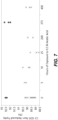
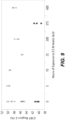
- Detection of the proteinaceous ligand, or Protein A, in the eluate or liquid phase of the affinity column can thus indicate measurable denaturation. Denaturation of other proteinaceous ligands, besides Protein A, may also lead to their leaching from the chromatography matrix. In some embodiments, the measurement of leaching of Protein A and/or other proteinaceous ligands comprises ELISA. An exemplary assay is described in Example 6 and Figures 8 , 13 and 18 .
- Reduction of microbes in three packed 1 cm MabSelect TM Xtra columns was assessed by measuring the bioburden after the column is spiked with a particular bacterium and then again after reducing microbes with a 0.5 M acetic acid solution.
- the column was flushed with two column volumes of water for injection (WFI).
- WFI water for injection
- a representative microorganism was added to the column by adding the microorganism to WFI to form spiked WFI, wherein the microorganism is present in a titer of approximately 10 5 cfu/mL.
- One column was spiked with spore-forming bacteria, particularly Bacillus psuedofirmus.
- One column was spiked with Gram positive bacteria, particularly Microbacterium spp.
- the third column was spiked with Gram negative bacteria, particularly Stenotrophomonas maltophilia.
- Each spiked WFI was then loaded onto each column.
- the columns were then flushed with 14 column volumes of WFI at 229 cm/hour, which were collected.
- Each column was held for one hour and then flushed again with the spiked WFI.
- a 20 mL sample was collected from each column as a positive control, with the amount of each of the Gram negative bacteria, Gram positive bacteria and spore-forming bacteria in the sample subsequently assayed.
- a filtration-based bioburden assay was performed.
- Agar plates are prepared that have TSA media.
- Negative control plates are prepared by passing 100 mL of sterile PBS into a separate filter manifold or filter funnel unit with a 0.45 micron filter membrane. Each membrane is then placed on top of the agar plate prepared with TSA media. The plates were incubated for 5-7 days at 30-35 °C. The number of colony forming units was then counted and expressed in a log 10 format.
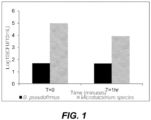
- Table 1 Microbe Bioburden Reduction Solution Microbe Bioburden Reduction Duration Bacillus pseudofirmus Saturation / Pre-Microbe Bioburden Reduction (logic) Bacillus pseudofirmus Post- Microbe Bioburden Reduction (logic) 0.5 M acetic acid 1 hour 1.5 1.1 0.5 M acetic acid 4 hour 3.4 0 Table 2. Microbe Bioburden Reduction Solution Microbe Bioburden Reduction Duration Microbacterium spp. Saturation / Pre- Microbe Bioburden Reduction (logic) Microbacterium spp.
- 0.5 M acetic acid is effective to remove a wide range of microorganisms, including spore-forming bacteria, when held in a protein A column for four hours.
- Example 1 The steps in Example 1 above were undertaken, except that instead of 0.5 M acetic acid, a solution of 0.1 M acetic acid and 20% ethanol was used. As with Example 1, the 0.1 M acetic acid and 20% ethanol solution was held for one hour in one set of experiments and for four hours in another set of experiments. The results below also show a substantial decrease in the amount of bacteria after the microbe bioburden reduction solution was held in the column for either one or four hours. Table 4.
- Microbe Bioburden Reduction Solution Microbe Bioburden Reduction Duration Bacillus pseudofirmus Saturation / Pre-Microbe Bioburden Reduction (log 10 ) Bacillus pseudofirmus Post- Microbe Bioburden Reduction (log 10 ) 0.1 M acetic acid and 20% ethanol 1 hour 2.2 1.8 0.1 M acetic acid and 20% ethanol 4 hours 2.5 0 Table 5.
- Microbe Bioburden Reduction Solution Microbe Bioburden Reduction Duration Microbacterium spp. Saturation / Pre- Microbe Bioburden Reduction (log 10 ) Microbacterium spp.
- Example 7 The steps in Example 1 above were undertaken, except that instead of 0.5 M acetic acid, a solution of 8 M urea and a solution of 8 M urea/20% ethanol were used and only a one hour hold was measured.
- Table 7 show a substantial decrease in bacteria after the microbe bioburden reduction solution was held in the column for one hour. The reduction in spore-forming B. psuedofirmus was extensive and unexpected, particularly after only one hour of treatment.
- Table 7 Microbial Bioburden Reduction Solutions Hold time Logic of Reduction Bacillus pseudofirmus Microbacterium species Stenotrophomonas maltophilia 8 M Urea 1hr 1.9 5.8 5.7 8 M Urea/ 20% Ethanol 1hr 1.6 5.7 6.7
- Example 1 The steps in Example 1 above were undertaken, except that instead of 0.5 M acetic acid, a solution of 6 M guanidine hydrochloride and a solution of 6 M guanidine hydrochloride/20% ethanol were used and only a one hour hold was measured.
- Table 8 show a substantial decrease in bacteria after the microbe bioburden reduction solution was held in the column for one hour. The reduction in spore-forming B. psuedofirmus was extensive and unexpected, particularly after only one hour of treatment.
- Additional solution spike studies were performed using other agents, where the extent of killing of Bacillus psuedofirmus, Microbacterium species, and Stenotrophomonas maltophilia were measured in solution.
- the following agents were added: (a) water for injection (WFI), (b) 8 M urea, (c) 8 M urea and 20% ethanol, (d) 6 M guanidine hydrochloride, (e) 6 M guanidine hydrochloride with 20% ethanol.
- WFI water for injection
- 8 M urea 8 M urea
- c 8 M urea and 20% ethanol
- 6 M guanidine hydrochloride (e) 6 M guanidine hydrochloride with 20% ethanol.
- a spike confirmation measurement in PBS was taken, as well as measurements at the 0 minute, 30 minute, and 60 minute time points.
- the bioburden reduction is achieved by a combination of killing and disrupting of interactions between microbes and chromatography resin with at least the following solutions: 0.5 M acetic acid, 8 M urea and 8 M urea/20% ethanol, 6 M guanidine hydrochloride and 6 M guanidine hydrochloride/20% ethanol.
- bioburden reduction may occur by a combination of killing and disrupting interactions for 8 M urea and 0.5 M acetic acid, which are solutions that are not able to kill 100% of Microbacterium species.
- killing may be largely responsible for bioburden reduction with 8 M urea/20% ethanol, 6 M guanidine hydrochloride and 6 M guanidine hydrochloride/20% ethanol, which were observed to kill 100% of the Microbacterium in solution.
- 8 M urea, 8 M urea/20% ethanol were able to kill 100% Stenotrophomonas maltophilia in solution.
- Examples 1-5 in summary show that 0.5 M acetic acid with a 4-hour hold, 8 M urea with a 1-hour hold and 8 M urea/20% ethanol with a 1-hour hold, 6 M guanidine hydrochloride with 1-hour hold and 6 M guanidine hydrochloride/20% ethanol with 1-hour hold were discovered to be an effective microbial bioburden reduction method for packed MabSelect TM Xtra column in manufacturing. As described in Examples 1-5, these agents are effective through the combination of killing the microbes and disrupting the interaction between microbial organisms and chromatography resin, or 100% to killing microbial organisms.
- MabSelect TM Xtra resin exposure to 0.5 M acetic acid resulted in minimal impact on Protein A resin.
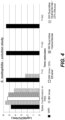
- the performance characteristics of two different chromatography affinity resins were assessed after the resins were soaked in 0.5 M acetic acid for various lengths of time. Specifically, one fraction of MabSelect TM Xtra (used to capture mAb A) was soaked in 0.5 M acetic acid for 375 hours. As a negative control, another fraction of MabSelect TM Xtra was not soaked in 0.5 M acetic acid. Five different fractions of MabSelect TM SuRe (used to capture mAb B) were soaked in 0.5 M acetic acid for each of 5 hours, 10 hours, 25 hours, 200 hours, or 400 hours. As a control, another fraction of MabSelect TM SuRe was not soaked in 0.5 M acetic acid.
- CE-SDS was conducted for mAb A and PICO Microchip CE-Electrophoresis (PICO MCE-SDS) was conducted for mAb B.
- Capillary electrophoresis was conducted in SDS-containing gel-filled capillaries (CE-SDS) to measure the molecular weight distribution and relative abundance of light and heavy chain from monoclonal antibodies. These proteins were separated based on their size and electrophoretic mobility. The relative abundance of total light chain and heavy chain was conducted under reducing and non-reducing conditions.
- CE-SDS was performed using the IgG Purity Analysis Kit (Beckman Coulter, A10663) with a Bare Fused Silica Capillary (capillary length 57 cm, effective length 50 cm).
- PICO MCE-SDS was performed using Protein Express LabChip, LabChip ® GXII, or LabChip ® GXII Touch HT (Perkin Elmer, 760499 or 760528). Internal standards were used to calibrate the relative migration time.
- Capillary isoelectric focusing with whole-column imaging was performed to quantify the amount of complementarity determining region 2 (CDR2) in a monoclonal antibody sample. Relative abundance of the CDR2 was calculated in each electropherogram by integrating the area under each of the sample-derived isoelectric point (pi) distribution peaks observed and calculating the percentage attributable to CDR2.
- the reported iCIEF Region 2 is the principal peak of neutral species and corresponds to the largest protein peak in the internal reference standard.
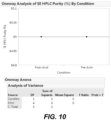
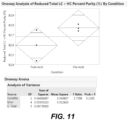
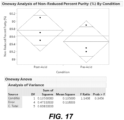
- Figures 15 through 19 show protein quality of the resultant mAb B pool after MabSelect SuRe purifications.
- ANOVA analysis of protein quality shows no statistical significant (p ⁇ 0.05) besides in the SE-UPLC percent purity of the mAb B MabSelect SuRe pool.
- the post-acid pool purity is higher than the pre-acid pool purity. Therefore, there is no negative effect on the mAb B pool after purification with MabSelect SuRe that has prolonged exposure to 0.5 M acetic acid.
Landscapes
- Chemical & Material Sciences (AREA)
- Health & Medical Sciences (AREA)
- Life Sciences & Earth Sciences (AREA)
- Chemical Kinetics & Catalysis (AREA)
- Analytical Chemistry (AREA)
- General Health & Medical Sciences (AREA)
- Physics & Mathematics (AREA)
- General Physics & Mathematics (AREA)
- Engineering & Computer Science (AREA)
- Animal Behavior & Ethology (AREA)
- Veterinary Medicine (AREA)
- Public Health (AREA)
- Epidemiology (AREA)
- Immunology (AREA)
- General Chemical & Material Sciences (AREA)
- Multimedia (AREA)
- Theoretical Computer Science (AREA)
- Pathology (AREA)
- Molecular Biology (AREA)
- Biochemistry (AREA)
- Treatment Of Liquids With Adsorbents In General (AREA)
- Peptides Or Proteins (AREA)
- Solid-Sorbent Or Filter-Aiding Compositions (AREA)
- Measuring Or Testing Involving Enzymes Or Micro-Organisms (AREA)
- Apparatus For Disinfection Or Sterilisation (AREA)
- Medicines Containing Antibodies Or Antigens For Use As Internal Diagnostic Agents (AREA)
- Micro-Organisms Or Cultivation Processes Thereof (AREA)
- Apparatus Associated With Microorganisms And Enzymes (AREA)
- Preparation Of Compounds By Using Micro-Organisms (AREA)
- Enzymes And Modification Thereof (AREA)
- Detergent Compositions (AREA)
Applications Claiming Priority (3)
| Application Number | Priority Date | Filing Date | Title |
|---|---|---|---|
| US201762452140P | 2017-01-30 | 2017-01-30 | |
| PCT/US2018/015764 WO2018140887A1 (en) | 2017-01-30 | 2018-01-29 | Method for reducing bioburden in chromatography |
| EP18706335.9A EP3573734B1 (de) | 2017-01-30 | 2018-01-29 | Verfahren zur verringerung von biobelastung in der chromatografie |
Related Parent Applications (2)
| Application Number | Title | Priority Date | Filing Date |
|---|---|---|---|
| EP18706335.9A Division-Into EP3573734B1 (de) | 2017-01-30 | 2018-01-29 | Verfahren zur verringerung von biobelastung in der chromatografie |
| EP18706335.9A Division EP3573734B1 (de) | 2017-01-30 | 2018-01-29 | Verfahren zur verringerung von biobelastung in der chromatografie |
Publications (2)
| Publication Number | Publication Date |
|---|---|
| EP4403193A2 true EP4403193A2 (de) | 2024-07-24 |
| EP4403193A3 EP4403193A3 (de) | 2025-01-22 |
Family
ID=61249704
Family Applications (2)
| Application Number | Title | Priority Date | Filing Date |
|---|---|---|---|
| EP18706335.9A Active EP3573734B1 (de) | 2017-01-30 | 2018-01-29 | Verfahren zur verringerung von biobelastung in der chromatografie |
| EP24179373.6A Pending EP4403193A3 (de) | 2017-01-30 | 2018-01-29 | Verfahren zur reduzierung der biobelastung in der chromatographie |
Family Applications Before (1)
| Application Number | Title | Priority Date | Filing Date |
|---|---|---|---|
| EP18706335.9A Active EP3573734B1 (de) | 2017-01-30 | 2018-01-29 | Verfahren zur verringerung von biobelastung in der chromatografie |
Country Status (11)
| Country | Link |
|---|---|
| US (4) | US10925986B2 (de) |
| EP (2) | EP3573734B1 (de) |
| JP (5) | JP7479151B2 (de) |
| KR (3) | KR102716846B1 (de) |
| CN (2) | CN110267721B (de) |
| AU (2) | AU2018212974B2 (de) |
| CA (2) | CA3047790A1 (de) |
| IL (4) | IL312404B1 (de) |
| MX (3) | MX2019008996A (de) |
| SG (2) | SG10202102298YA (de) |
| WO (1) | WO2018140887A1 (de) |
Families Citing this family (8)
| Publication number | Priority date | Publication date | Assignee | Title |
|---|---|---|---|---|
| AU2014226126B2 (en) | 2013-03-08 | 2019-02-14 | Genzyme Corporation | Continuous purification of therapeutic proteins |
| TWI709569B (zh) | 2014-01-17 | 2020-11-11 | 美商健臻公司 | 無菌層析樹脂及其用於製造方法的用途 |
| TWI709570B (zh) | 2014-01-17 | 2020-11-11 | 美商健臻公司 | 無菌層析法及製法 |
| AU2018212974B2 (en) * | 2017-01-30 | 2023-08-24 | Regeneron Pharmaceuticals, Inc. | Compositions and methods for reducing bioburden in chromatography |
| AU2019332764B2 (en) * | 2018-08-31 | 2025-05-29 | Genzyme Corporation | Sterile chromatography resin and use thereof in manufacturing processes |
| WO2020214792A1 (en) * | 2019-04-17 | 2020-10-22 | Bristol-Myers Squibb Company | Methods for regenerating chromatography resins |
| JP7631742B2 (ja) * | 2020-11-10 | 2025-02-19 | 東ソー株式会社 | ペプチド性リガンド固定化カラムの洗浄方法 |
| BR112023023046A2 (pt) * | 2021-05-07 | 2024-01-23 | Genzyme Corp | Composição e métodos de higienização |
Family Cites Families (45)
| Publication number | Priority date | Publication date | Assignee | Title |
|---|---|---|---|---|
| US5202246A (en) * | 1989-08-16 | 1993-04-13 | Armour Pharmaceutical Company | Treatment of immobilized matrices for preparation of pharmaceutical and biological products with anti-microbial agents to remove pyrogen-producing organisms and pyrogens |
| AT408191B (de) * | 1991-08-19 | 2001-09-25 | Haemosan Erzeugung Pharmazeuti | Verfahren zur inaktivierung von prionen |
| DE4321904B4 (de) * | 1993-07-01 | 2013-05-16 | Qiagen Gmbh | Verfahren zur chromatographischen Reinigung und Trennung von Nucleinsäuregemischen |
| US5756680A (en) * | 1994-01-05 | 1998-05-26 | Sepragen Corporation | Sequential separation of whey proteins and formulations thereof |
| US5643755A (en) * | 1994-10-07 | 1997-07-01 | Regeneron Pharmaceuticals Inc. | Nucleic acid encoding tie-2 ligand |
| WO1995032783A1 (en) * | 1994-05-31 | 1995-12-07 | Biosepra Inc. | Sterilization of liquid chromatography resins |
| US5814464A (en) * | 1994-10-07 | 1998-09-29 | Regeneron Pharma | Nucleic acids encoding TIE-2 ligand-2 |
| US5650496A (en) * | 1995-04-14 | 1997-07-22 | Cephalon, Inc. | IGF-I purification process |
| US6022694A (en) * | 1997-04-04 | 2000-02-08 | Regeneron Pharmaceuticals, Inc. | Assay for ligands to tyrosine kinase receptors |
| US7320784B1 (en) * | 1999-02-17 | 2008-01-22 | Bracco Imaging S.P.A. | Immobilized labeling compounds and methods |
| MXPA02003517A (es) * | 1999-10-08 | 2004-09-10 | Vi Technologies Inc | Composiciones sanguineas desprovistas de isoaglutinina y metodo para elaborarlas. |
| WO2001058925A2 (en) * | 2000-02-08 | 2001-08-16 | The Regents Of The University Of Michigan | Protein separation and display |
| WO2002032537A2 (en) * | 2000-10-13 | 2002-04-25 | Eli Lilly And Company | Improved method of expanded bed chromatography |
| SE0004929D0 (sv) * | 2000-12-29 | 2000-12-29 | Apbiotech Ab | A method for producing liquid chromatography matrices |
| JP2003095914A (ja) * | 2001-09-21 | 2003-04-03 | Toyo Beauty Kk | 尿素含有外用剤 |
| DE10155984A1 (de) * | 2001-11-15 | 2003-05-28 | Boehringer Ingelheim Pharma | Verfahren zur Reduktion des Liganden-leakage von Affinitätschromatographie-Matrices |
| JP2003306609A (ja) * | 2002-04-18 | 2003-10-31 | Taimei Chemicals Co Ltd | 吸水性ポリマー組成物、およびその製造方法 |
| US6913695B2 (en) * | 2003-07-08 | 2005-07-05 | Bayer Healthcare Llc | Sanitization of chromatographic media |
| EP1793926B1 (de) * | 2004-09-22 | 2016-11-23 | GE Healthcare BioProcess R&D AB | Verfahren zur herstellung einer chromatografischen matrix |
| CA2583578C (en) * | 2004-10-21 | 2014-04-01 | Ge Healthcare Bio-Sciences Ab | Chromatography ligand |
| WO2007109163A2 (en) * | 2006-03-16 | 2007-09-27 | Amgen Inc | Wash buffer and method of using |
| WO2007139463A1 (en) * | 2006-05-29 | 2007-12-06 | Ge Healthcare Bio-Sciences Ab | Preparation of monolithic articles |
| CN101511387A (zh) * | 2006-09-08 | 2009-08-19 | 惠氏公司 | 使用亲和色谱法纯化蛋白质的精氨酸洗涤液 |
| MX2009008002A (es) * | 2007-02-01 | 2009-08-07 | Mallinckrodt Baker Inc | Soluciones de almacenamiento para medios cromatograficos y equipo cromatografico y uso de las mismas. |
| DE102008030142A1 (de) * | 2008-06-27 | 2009-12-31 | Qiagen Gmbh | Verfahren zur Proteinaufreinigung unter denaturierenden Bedingungen |
| SG177202A1 (en) | 2008-09-15 | 2012-01-30 | Emd Millipore Corp | Methods for quantifying protein leakage from protein based affinity chromatography resins |
| US20120282654A1 (en) * | 2009-04-29 | 2012-11-08 | Schering Corporation | Antibody purification |
| ES2813398T3 (es) | 2009-10-20 | 2021-03-23 | Abbvie Inc | Aislamiento y purificación de anticuerpos anti-IL-13 usando cromatografía de afinidad a Proteína A |
| EP2560738B8 (de) * | 2010-04-23 | 2019-09-25 | Serum Institute of India Private Limited | Einfaches verfahren zur simultanen beseitigung mehrerer unreinheiten aus kulturüberständen auf extrem geringe konzentrationen |
| EP2627425A4 (de) * | 2010-10-11 | 2014-11-05 | Abbvie Inc | Verfahren zur reinigung von proteinen |
| JP6055615B2 (ja) * | 2011-05-27 | 2016-12-27 | アッヴィ バイオテクノロジー リミテッド | Dachyp組成物および方法 |
| US9102709B1 (en) * | 2011-07-08 | 2015-08-11 | Biogen Ma Inc. | Regeneration of chromatography material |
| RU2014137623A (ru) * | 2012-02-29 | 2016-04-20 | Ф. Хоффманн-Ля Рош Аг | Колоночное ферментативное расщепление |
| EP2656892A1 (de) * | 2012-04-23 | 2013-10-30 | Merck Patent GmbH | Chromatographieverfahren |
| US20140154270A1 (en) * | 2012-05-21 | 2014-06-05 | Chen Wang | Purification of non-human antibodies using kosmotropic salt enhanced protein a affinity chromatography |
| JP5782533B2 (ja) * | 2013-03-28 | 2015-09-24 | 富士フイルム株式会社 | クロマトグラフ方法及びクロマトグラフキット |
| CN105518020A (zh) | 2013-09-04 | 2016-04-20 | Emd密理博公司 | 清洗基于a蛋白的亲和色谱柱的方法 |
| US20150093800A1 (en) * | 2013-09-05 | 2015-04-02 | Genentech, Inc. | Method for chromatography reuse |
| CN204232347U (zh) * | 2014-08-07 | 2015-04-01 | 师炜瑶 | 口罩 |
| JP5910696B1 (ja) * | 2014-10-06 | 2016-04-27 | 栗田工業株式会社 | 逆浸透膜の洗浄剤、洗浄液、および洗浄方法 |
| GB201503578D0 (en) * | 2015-03-03 | 2015-04-15 | Ge Healthcare Bio Sciences Ab | Sanitization method for affinity chromatography matrices |
| WO2016149088A1 (en) | 2015-03-13 | 2016-09-22 | Bristol-Myers Squibb Company | Use of alkaline washes during chromatography to remove impurities |
| US20170066839A1 (en) | 2015-09-08 | 2017-03-09 | Merck Patent Gmbh | Novel affinity chromatography media for removal of anti-a and/or anti-b antibodies |
| CN107064286B (zh) * | 2017-01-16 | 2018-07-20 | 常州市疾病预防控制中心 | 革兰氏阳性及阴性菌质谱检测试剂盒及快速鉴定的方法 |
| AU2018212974B2 (en) * | 2017-01-30 | 2023-08-24 | Regeneron Pharmaceuticals, Inc. | Compositions and methods for reducing bioburden in chromatography |
-
2018
- 2018-01-29 AU AU2018212974A patent/AU2018212974B2/en active Active
- 2018-01-29 MX MX2019008996A patent/MX2019008996A/es unknown
- 2018-01-29 SG SG10202102298YA patent/SG10202102298YA/en unknown
- 2018-01-29 CN CN201880008672.3A patent/CN110267721B/zh active Active
- 2018-01-29 KR KR1020237008226A patent/KR102716846B1/ko active Active
- 2018-01-29 KR KR1020197024930A patent/KR102586771B1/ko active Active
- 2018-01-29 SG SG11201905510XA patent/SG11201905510XA/en unknown
- 2018-01-29 IL IL312404A patent/IL312404B1/en unknown
- 2018-01-29 CA CA3047790A patent/CA3047790A1/en active Pending
- 2018-01-29 EP EP18706335.9A patent/EP3573734B1/de active Active
- 2018-01-29 IL IL287543A patent/IL287543B2/en unknown
- 2018-01-29 EP EP24179373.6A patent/EP4403193A3/de active Pending
- 2018-01-29 JP JP2019540624A patent/JP7479151B2/ja active Active
- 2018-01-29 US US15/882,845 patent/US10925986B2/en active Active
- 2018-01-29 WO PCT/US2018/015764 patent/WO2018140887A1/en not_active Ceased
- 2018-01-29 KR KR1020247033529A patent/KR102915514B1/ko active Active
- 2018-01-29 CN CN202210115636.5A patent/CN114470872A/zh active Pending
- 2018-01-29 CA CA3233933A patent/CA3233933A1/en active Pending
- 2018-01-29 IL IL299270A patent/IL299270B2/en unknown
-
2019
- 2019-07-14 IL IL268029A patent/IL268029B/en unknown
- 2019-07-29 MX MX2023008870A patent/MX2023008870A/es unknown
- 2019-07-29 MX MX2023015125A patent/MX2023015125A/es unknown
-
2021
- 2021-01-20 US US17/153,205 patent/US11369707B2/en active Active
- 2021-12-21 JP JP2021206920A patent/JP7361754B2/ja active Active
-
2022
- 2022-06-20 JP JP2022098756A patent/JP2022137067A/ja active Pending
- 2022-06-24 US US17/848,936 patent/US11717586B2/en active Active
-
2023
- 2023-07-05 US US18/218,532 patent/US20230343086A1/en active Pending
- 2023-10-20 JP JP2023181001A patent/JP7678863B2/ja active Active
- 2023-11-24 AU AU2023270342A patent/AU2023270342B2/en active Active
-
2024
- 2024-05-07 JP JP2024075184A patent/JP7752722B2/ja active Active
Non-Patent Citations (2)
| Title |
|---|
| "Applied Microbiology Biotechnology", article "IR/FTIR spectroscopy methods are described in BRUKER Application Note AN#405 Current Research, Technology and Education Topics" |
| REYNOLDS, J. ET AL.: "Differential staining of bacteria: endospore stain", CURR. PROC. MICROBIOL., 2009 |
Also Published As
Similar Documents
| Publication | Publication Date | Title |
|---|---|---|
| US11717586B2 (en) | Compositions and methods for reducing bioburden in chromatography | |
| US11014129B2 (en) | Methods of cleaning a protein A based affinity chromatography column | |
| Shukla et al. | Demonstration of robust host cell protein clearance in biopharmaceutical downstream processes | |
| HK40011076B (en) | Method for reducing bioburden in chromatography | |
| HK40011076A (en) | Method for reducing bioburden in chromatography | |
| CN103772490A (zh) | 一种地衣芽孢杆菌分泌的抗菌肽及其制备方法和应用 | |
| GB2452301A (en) | Sterilization Method |
Legal Events
| Date | Code | Title | Description |
|---|---|---|---|
| PUAI | Public reference made under article 153(3) epc to a published international application that has entered the european phase |
Free format text: ORIGINAL CODE: 0009012 |
|
| STAA | Information on the status of an ep patent application or granted ep patent |
Free format text: STATUS: THE APPLICATION HAS BEEN PUBLISHED |
|
| AC | Divisional application: reference to earlier application |
Ref document number: 3573734 Country of ref document: EP Kind code of ref document: P |
|
| AK | Designated contracting states |
Kind code of ref document: A2 Designated state(s): AL AT BE BG CH CY CZ DE DK EE ES FI FR GB GR HR HU IE IS IT LI LT LU LV MC MK MT NL NO PL PT RO RS SE SI SK SM TR |
|
| REG | Reference to a national code |
Ref country code: DE Ref legal event code: R079 Free format text: PREVIOUS MAIN CLASS: A61L0002280000 Ipc: B01D0015200000 |
|
| PUAL | Search report despatched |
Free format text: ORIGINAL CODE: 0009013 |
|
| AK | Designated contracting states |
Kind code of ref document: A3 Designated state(s): AL AT BE BG CH CY CZ DE DK EE ES FI FR GB GR HR HU IE IS IT LI LT LU LV MC MK MT NL NO PL PT RO RS SE SI SK SM TR |
|
| RIC1 | Information provided on ipc code assigned before grant |
Ipc: A61L 2/28 20060101ALI20241219BHEP Ipc: A61L 2/18 20060101ALI20241219BHEP Ipc: B01D 15/20 20060101AFI20241219BHEP |
|
| STAA | Information on the status of an ep patent application or granted ep patent |
Free format text: STATUS: REQUEST FOR EXAMINATION WAS MADE |
|
| 17P | Request for examination filed |
Effective date: 20250715 |
|
| STAA | Information on the status of an ep patent application or granted ep patent |
Free format text: STATUS: EXAMINATION IS IN PROGRESS |
|
| 17Q | First examination report despatched |
Effective date: 20260313 |