EP4378811A1 - Behavior control device, lean vehicle, and behavior control method - Google Patents
Behavior control device, lean vehicle, and behavior control method Download PDFInfo
- Publication number
- EP4378811A1 EP4378811A1 EP22758585.8A EP22758585A EP4378811A1 EP 4378811 A1 EP4378811 A1 EP 4378811A1 EP 22758585 A EP22758585 A EP 22758585A EP 4378811 A1 EP4378811 A1 EP 4378811A1
- Authority
- EP
- European Patent Office
- Prior art keywords
- angular velocity
- acceleration
- behavior
- lean vehicle
- vehicle
- Prior art date
- Legal status (The legal status is an assumption and is not a legal conclusion. Google has not performed a legal analysis and makes no representation as to the accuracy of the status listed.)
- Pending
Links
Images

Classifications
-
- B—PERFORMING OPERATIONS; TRANSPORTING
- B62—LAND VEHICLES FOR TRAVELLING OTHERWISE THAN ON RAILS
- B62J—CYCLE SADDLES OR SEATS; AUXILIARY DEVICES OR ACCESSORIES SPECIALLY ADAPTED TO CYCLES AND NOT OTHERWISE PROVIDED FOR, e.g. ARTICLE CARRIERS OR CYCLE PROTECTORS
- B62J45/00—Electrical equipment arrangements specially adapted for use as accessories on cycles, not otherwise provided for
- B62J45/40—Sensor arrangements; Mounting thereof
- B62J45/41—Sensor arrangements; Mounting thereof characterised by the type of sensor
- B62J45/415—Inclination sensors
-
- B—PERFORMING OPERATIONS; TRANSPORTING
- B62—LAND VEHICLES FOR TRAVELLING OTHERWISE THAN ON RAILS
- B62J—CYCLE SADDLES OR SEATS; AUXILIARY DEVICES OR ACCESSORIES SPECIALLY ADAPTED TO CYCLES AND NOT OTHERWISE PROVIDED FOR, e.g. ARTICLE CARRIERS OR CYCLE PROTECTORS
- B62J45/00—Electrical equipment arrangements specially adapted for use as accessories on cycles, not otherwise provided for
- B62J45/40—Sensor arrangements; Mounting thereof
- B62J45/41—Sensor arrangements; Mounting thereof characterised by the type of sensor
- B62J45/415—Inclination sensors
- B62J45/4152—Inclination sensors for sensing longitudinal inclination of the cycle
-
- B—PERFORMING OPERATIONS; TRANSPORTING
- B62—LAND VEHICLES FOR TRAVELLING OTHERWISE THAN ON RAILS
- B62J—CYCLE SADDLES OR SEATS; AUXILIARY DEVICES OR ACCESSORIES SPECIALLY ADAPTED TO CYCLES AND NOT OTHERWISE PROVIDED FOR, e.g. ARTICLE CARRIERS OR CYCLE PROTECTORS
- B62J45/00—Electrical equipment arrangements specially adapted for use as accessories on cycles, not otherwise provided for
- B62J45/40—Sensor arrangements; Mounting thereof
- B62J45/41—Sensor arrangements; Mounting thereof characterised by the type of sensor
- B62J45/412—Speed sensors
-
- B—PERFORMING OPERATIONS; TRANSPORTING
- B62—LAND VEHICLES FOR TRAVELLING OTHERWISE THAN ON RAILS
- B62J—CYCLE SADDLES OR SEATS; AUXILIARY DEVICES OR ACCESSORIES SPECIALLY ADAPTED TO CYCLES AND NOT OTHERWISE PROVIDED FOR, e.g. ARTICLE CARRIERS OR CYCLE PROTECTORS
- B62J45/00—Electrical equipment arrangements specially adapted for use as accessories on cycles, not otherwise provided for
- B62J45/40—Sensor arrangements; Mounting thereof
- B62J45/41—Sensor arrangements; Mounting thereof characterised by the type of sensor
- B62J45/414—Acceleration sensors
-
- B—PERFORMING OPERATIONS; TRANSPORTING
- B62—LAND VEHICLES FOR TRAVELLING OTHERWISE THAN ON RAILS
- B62J—CYCLE SADDLES OR SEATS; AUXILIARY DEVICES OR ACCESSORIES SPECIALLY ADAPTED TO CYCLES AND NOT OTHERWISE PROVIDED FOR, e.g. ARTICLE CARRIERS OR CYCLE PROTECTORS
- B62J50/00—Arrangements specially adapted for use on cycles not provided for in main groups B62J1/00 - B62J45/00
- B62J50/20—Information-providing devices
- B62J50/21—Information-providing devices intended to provide information to rider or passenger
Definitions
- the present invention relates to a behavior controller that controls behavior of a lean vehicle, a lean vehicle including the behavior controller, and a behavior control method for controlling behavior of a lean vehicle.
- a behavior controller that controls behavior of the lean vehicle is configured to control the behavior of the lean vehicle on the basis of output of an inertial measurement unit mounted to the lean vehicle.
- a behavior control system that controls the behavior of the lean vehicle is configured to include: the inertial measurement unit mounted to the lean vehicle; and the behavior controller that controls the behavior of the lean vehicle on the basis of the output of the inertial measurement unit.
- a two-wheeled motor vehicle as one type of the lean vehicle is disclosed.
- the behavior controller for this two-wheeled motor vehicle is configured to control a brake system on the basis of the output of the inertial measurement unit and thereby control behavior of the two-wheeled motor vehicle.
- the inertial measurement unit includes: an acceleration sensor that detects acceleration in mutually orthogonal three-axis directions; and an angular velocity sensor that detects an angular velocity around each of the above-described three axes.
- the inertial measurement unit includes the three acceleration sensors and the three angular velocity sensors.
- the present invention has been made with the above-described problem as the background and therefore has a purpose of obtaining a behavior controller capable of improving general versatility of a behavior control system for a lean vehicle in comparison with a conventional behavior control system.
- the present invention has a second purpose of obtaining a lean vehicle that includes such a behavior controller.
- the present invention has a third purpose of obtaining a behavior control method capable of improving general versatility of a behavior control system for a lean vehicle in comparison with a conventional behavior control system.
- a behavior controller is a behavior controller that controls behavior of a lean vehicle, and includes: an acceleration information acquisition section that acquires acceleration information in a body up-down direction of the lean vehicle on the basis of output of at least one acceleration sensor; a vehicle velocity information acquisition section that acquires vehicle velocity information of the lean vehicle; and a first angular velocity information acquisition section that acquires first angular velocity information by using the acceleration information and the vehicle velocity information.
- the motorcycle whose body is tilted in the turning direction during the turn may have an engine as a propelling source or may have a motor as the propelling source, and examples of the motorcycle are a bike, a scooter, and an electric scooter.
- the pedal-driven vehicle means a vehicle in general that can travel forward on a road by a depression force applied to pedals by a rider.
- the pedal-driven vehicles include a normal pedal-driven vehicle, an electrically-assisted pedal-driven vehicle, an electric pedal-driven vehicle, and the like.
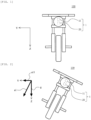
- Fig. 1 and Fig. 2 are front views of the lean vehicle according to the first embodiment of the present invention.
- Fig. 1 illustrates an upright state of a body of a lean vehicle 100.
- Fig. 2 illustrates a state where the lean vehicle 100 makes a turn and the body of the lean vehicle 100 is tilted in a turning direction.
- a Z-axis illustrated in Fig. 1 and Fig. 2 is an axis in a vertical direction.
- a Y-axis illustrated in Fig. 1 and Fig. 2 is an axis in a horizontal direction that is perpendicular to an advancing direction of the lean vehicle 100.
- the lean vehicle 100 includes a behavior control system 1 that controls behavior of the lean vehicle 100.
- This behavior control system 1 includes an acceleration sensor 11 and a behavior controller 20.
- the acceleration sensor 11 detects acceleration information in a body up-down direction of the lean vehicle 100.
- the acceleration sensor 11 detects acceleration in the body up-down direction of the lean vehicle 100.
- the acceleration information in the body up-down direction of the lean vehicle 100 is acceleration information in the Z-axis direction.
- the acceleration information in the body up-down direction of the lean vehicle 100 is acceleration information in a direction in which the lean vehicle 100 is tilted with respect to the Z-axis direction (in a direction a1 indicated in Fig. 2 ) when seen in the front view.
- the acceleration information that is detected by the acceleration sensor 11 may be another physical quantity that can substantially be converted to the acceleration.
- the behavior control system 1 may include a sensor other than the acceleration sensor 11. In such a case, these sensors may be formed separately or may be unitized.
- the behavior controller 20 controls the behavior of the lean vehicle 100 on the basis of output of the at least one acceleration sensor that is mounted to the lean vehicle 100.
- the behavior controller 20 is partially or entirely constructed of a microcomputer, a microprocessor unit, or the like.
- the behavior controller 20 may partially or entirely be constructed of one whose firmware and the like can be updated, or may partially or entirely be a program module or the like that is executed by a command from a CPU or the like, for example.
- the behavior controller 20 may be provided as a single unit or may be divided into plural units, for example.
- the behavior controller 20 can be configured as follows, for example.
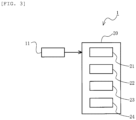
- Fig. 3 is a block diagram illustrating the behavior control system according to the first embodiment of the present invention.
- the behavior controller 20 in the behavior control system 1 includes, as functional sections, an acceleration information acquisition section 21, a vehicle velocity information acquisition section 22, a first angular velocity information acquisition section 23, and a control section 24.
- the acceleration information acquisition section 21 acquires the acceleration information in the body up-down direction of the lean vehicle 100 on the basis of the output of the at least one acceleration sensor that is mounted to the lean vehicle 100.
- the acceleration information acquisition section 21 acquires the acceleration that is detected by the acceleration sensor 11.
- the acceleration information that is acquired by the acceleration information acquisition section 21 may be another physical quantity that can substantially be converted to the acceleration.
- the acceleration information that is acquired by the acceleration information acquisition section 21 may be an output value of the acceleration sensor 11, or may be a physical quantity that is converted from the output value of the acceleration sensor 11.
- the vehicle velocity information acquisition section 22 acquires vehicle velocity information of the lean vehicle 100.
- the vehicle velocity information of the lean vehicle 100 may be a vehicle velocity of the lean vehicle 100 that is acquired from a speedometer or the like, or may be another physical quantity (a wheel rotational frequency, location information by the GPS, or the like) that can substantially be converted to the vehicle velocity of the lean vehicle 100.
- the first angular velocity information acquisition section 23 acquires first angular velocity information of the lean vehicle 100 by using the acceleration information acquired by the acceleration information acquisition section 21 and the vehicle velocity information acquired by the vehicle velocity information acquisition section 22.
- the first angular velocity information acquisition section 23 acquires, as the first angular velocity information, an angular velocity of the lean vehicle 100 by using these pieces of the acceleration information and the vehicle velocity information. More specifically, in this first embodiment, the first angular velocity information acquisition section 23 acquires at least one of a yaw rate and a pitch rate of the lean vehicle 100.
- the first angular velocity information that is acquired by the first angular velocity information acquisition section 23 may be another physical quantity that can substantially be converted to the angular velocity.
- the first angular velocity information acquisition section 23 can acquire the yaw rate and the pitch rate of the lean vehicle 100 as follows.
- a velocity V and acceleration ⁇ of an object that rotates about a reference axis can be expressed as follows by using an angular velocity ⁇ around the reference axis and a rotation radius R (a distance between the reference axis and the object).
- the yaw rate of the lean vehicle 100 is an angular velocity of the lean vehicle 100 around the Z-axis.
- the velocity V in the equation (3) is a vehicle velocity V1 of the lean vehicle 100.
- the acceleration that contributes to the rotation of the lean vehicle 100 around the Z-axis is acceleration that acts in the Y-axis direction.
- the acceleration ⁇ in the equation (3) is acceleration of the lean vehicle 100 in the Y-axis direction.
- the acceleration in the body up-down direction of the lean vehicle 100 is set as acceleration a1.
- the direction of the acceleration a1 is a direction that is tilted with respect to the Z-axis and the Y-axis.
- acceleration all of the lean vehicle 100 in the Y-axis direction is an acceleration component in the Y-axis direction of the acceleration a1.
- the yaw rate of the lean vehicle 100 is expressed as a yaw rate ⁇ y
- the yaw rate ⁇ y of the lean vehicle 100 can be calculated by the following equation (5).
- ⁇ y a11/V1
- the pitch rate of the lean vehicle 100 is an angular velocity around an axis that is perpendicular to the advancing direction of the lean vehicle 100 and is perpendicular to the body up-down direction of the lean vehicle 100. That is, in Fig. 2 , the pitch rate of the lean vehicle 100 is an angular velocity around an axis that is perpendicular to the acceleration a1 in the body up-down direction of the lean vehicle 100.
- the velocity V in the equation (3) is the vehicle velocity V1 of the lean vehicle 100.
- acceleration that contributes to the rotation of the lean vehicle 100 around the perpendicular axis to the acceleration a1 in the body up-down direction of the lean vehicle 100 is the acceleration a1 in the body up-down direction of the lean vehicle 100.
- the yaw rate wy of the lean vehicle 100 can be calculated by the following equation (7).
- ⁇ y ⁇ p ⁇ a11/a1
- the yaw rate ⁇ y of the lean vehicle 100 can also be calculated from the pitch rate ⁇ of the lean vehicle 100 by using a ratio between the acceleration a1 and the acceleration all.
- the pitch rate ⁇ of the lean vehicle 100 can also be calculated from the yaw rate ⁇ y of the lean vehicle 100 by using the ratio between the acceleration a1 and the acceleration all.
- ⁇ p ⁇ y ⁇ a1/a11
- the first angular velocity information acquisition section 23 can also calculate a roll rate of the lean vehicle 100 by using the acceleration information acquired by the acceleration information acquisition section 21.
- the first angular velocity information acquisition section 23 can calculate the roll rate of the lean vehicle 100 as follows. In the case where the acceleration a1 in the body up-down direction of the lean vehicle 100 is the same, the acceleration all, which is the acceleration component in the Y-axis direction of the acceleration a1, is increased as the tilt of the body of the lean vehicle 100 during the turn is increased, that is, as the lean angle is increased.
- the lean angle of the lean vehicle 100 can be calculated on the basis of a magnitude of the acceleration all with respect to the acceleration a1, in other words, on the basis of a value that is acquired by dividing the acceleration all by the acceleration a1.
- the roll rate of the lean vehicle 100 can be considered as a change amount per unit time of the lean angle of the lean vehicle 100.
- the roll rate of the lean vehicle 100 can be calculated on the basis of a change amount per unit time of the magnitude of the acceleration all with respect to the acceleration a1.
- the first angular velocity information acquisition section 23 may calculate the first angular velocity information on the basis of the stored equations, or may calculate the first angular velocity information by using a table in which parameters in the equations are associated with the first angular velocity information.
- the control section 24 controls the behavior of the lean vehicle 100 on the basis of the acceleration information acquired by the acceleration information acquisition section 21, the first angular velocity information acquired by the first angular velocity information acquisition section 23, and the like.
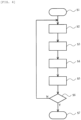
- Fig. 4 is a chart illustrating a control flow of exemplary operation of the behavior controller according to the first embodiment of the present invention.
- step S1 the behavior controller 20 initiates the control illustrated in Fig. 4 .
- An example of the control initiation condition is a time when an engine of the lean vehicle 100 is started.
- Step S2 is an acceleration information acquisition step.
- the acceleration information acquisition section 21 of the behavior controller 20 acquires the acceleration information in the body up-down direction of the lean vehicle 100 on the basis of the output of the at least one acceleration sensor that is mounted to the lean vehicle 100. In this first embodiment, the acceleration information acquisition section 21 acquires the acceleration that is detected by the acceleration sensor 11.
- Step S3, which follows step S2, is a vehicle velocity information acquisition step.
- the vehicle velocity information acquisition section 22 of the behavior controller 20 acquires the vehicle velocity information of the lean vehicle 100.
- Step S4, which follows step S3, is an angular velocity information acquisition step.
- the first angular velocity information acquisition section 23 of the behavior controller 20 acquires the first angular velocity information of the lean vehicle 100 by using the acceleration information acquired by the acceleration information acquisition section 21 and the vehicle velocity information acquired by the vehicle velocity information acquisition section 22.
- Step S5, which follows step S4, is a control step.
- the control section 24 of the behavior controller 20 controls the behavior of the lean vehicle 100 on the basis of the acceleration information acquired by the acceleration information acquisition section 21, the first angular velocity information acquired by the first angular velocity information acquisition section 23, and the like.
- Step S6, which follows step S5, is a termination determination step.
- the behavior controller 20 determines whether a control termination condition is satisfied.
- An example of the control termination condition is a time when the engine of the lean vehicle 100 is stopped. If the control termination condition is satisfied, the processing proceeds to step S7, and the behavior controller 20 terminates the control illustrated in Fig. 4 . On the other hand, if the control termination condition is not satisfied, the behavior controller 20 repeats the processing in step S2 to step S6.
- the behavior controller 20 is the behavior controller that controls the behavior of the lean vehicle 100.
- the behavior controller 20 includes the acceleration information acquisition section 21, the vehicle velocity information acquisition section 22, and the first angular velocity information acquisition section 23.
- the acceleration information acquisition section 21 acquires the acceleration information in the body up-down direction of the lean vehicle 100 on the basis of the output of the at least one acceleration sensor.
- the vehicle velocity information acquisition section 22 acquires the vehicle velocity information of the lean vehicle 100.
- the first angular velocity information acquisition section 23 acquires the first angular velocity information of the lean vehicle 100 by using the acceleration information acquired by the acceleration information acquisition section 21 and the vehicle velocity information acquired by the vehicle velocity information acquisition section 22.
- the behavior controller that controls the behavior of the lean vehicle is configured to control the behavior of the lean vehicle on the basis of the output of the inertial measurement unit mounted to the lean vehicle.
- the behavior control system that controls the behavior of the lean vehicle is configured to include: the inertial measurement unit mounted to the lean vehicle; and the behavior controller that controls the behavior of the lean vehicle on the basis of the output of the inertial measurement unit.
- the inertial measurement unit includes: the acceleration sensor that detects the acceleration in the mutually orthogonal three-axis directions; and the angular velocity sensor that detects the angular velocity around each of the above-described three axes.
- the inertial measurement unit includes the three acceleration sensors and the three angular velocity sensors. That is, the conventional behavior controller for the lean vehicle is based on the premise of controlling the behavior of the lean vehicle on the basis of the output of each of the sensors in the inertial measurement unit. For this reason, the conventional behavior control system for the lean vehicle must always include the three acceleration sensors and the three angular velocity sensors, and thus is not generally versatile.
- the behavior controller 20 acquires the angular velocity information on the basis of the output of the acceleration sensor.
- the behavior control system 1 for the lean vehicle 100 that uses the behavior controller 20 according to this first embodiment does not always have to include all the sensors in the inertial measurement unit. Therefore, with the behavior controller 20 according to this first embodiment, general versatility of the behavior control system 1 can be improved when compared to that of the conventional behavior control system.
- the behavior controller 20 may be configured to control the behavior of the lean vehicle 100 not on the basis of the output of the angular velocity sensor.
- the behavior control system 1 does not have to include the angular velocity sensor, and thus cost of the behavior control system 1 can be cut. That is, cost of the lean vehicle 100 can be cut.
- the behavior control system 1 may include the angular velocity sensor.
- a description will be made on an example of the behavior controller 20 for the behavior control system 1 that includes the angular velocity sensor. Matters, which will not be described in this second embodiment, are the same as those in the first embodiment.
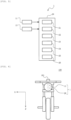
- Fig. 5 is a block diagram illustrating the behavior control system according to the second embodiment of the present invention.
- the behavior control system 1 includes an angular velocity sensor 13 in addition to the components in the first embodiment.
- the angular velocity sensor 13 detects the angular velocity information of the lean vehicle 100.
- the angular velocity sensor 13 detects the angular velocity of the lean vehicle 100.
- the angular velocity sensor 13 detects the pitch rate of the lean vehicle 100. That is, a pitch rate sensor that detects the pitch rate of the lean vehicle 100 is used as the angular velocity sensor 13.
- the angular velocity sensor 13 may be the angular velocity sensor other than the pitch rate sensor, and may detect the angular velocity other than the pitch rate of the lean vehicle 100.
- the angular velocity information detected by the angular velocity sensor 13 may be another physical quantity that can substantially be converted to the angular velocity.
- the behavior controller 20 includes, as functional sections, a second angular velocity information acquisition section 25 and a comparison section 26 in addition to the components in the first embodiment.
- the second angular velocity information acquisition section 25 acquires second angular velocity information on the basis of output of the angular velocity sensor 13.
- the second angular velocity information acquisition section 25 acquires, as the second angular velocity information, the pitch rate of the lean vehicle 100 detected by the angular velocity sensor 13.
- the second angular velocity information acquired by the second angular velocity information acquisition section 25 may be the angular velocity other than the pitch rate, and may be another physical quantity that can substantially be converted to the angular velocity.
- the pitch rate of the lean vehicle 100 can substantially be converted to the yaw rate of the lean vehicle 100.
- the behavior controller 20 may acquire the yaw rate of the lean vehicle 100 as the second angular velocity information on the basis of the output of the angular velocity sensor 13 that detects the pitch rate.
- the comparison section 26 compares the first angular velocity information acquired by the first angular velocity information acquisition section 23 with the second angular velocity information acquired by the second angular velocity information acquisition section 25.
- the first angular velocity information is a first physical quantity that is acquired on the basis of the detection value by the acceleration sensor 11.
- the second angular velocity information is a second physical quantity that is acquired on the basis of the detection value by the angular velocity sensor 13 and is the same type of the physical quantity as the first physical quantity.
- the comparison section 26 compares the first physical quantity with the second physical quantity.
- the behavior controller 20 that includes the comparison section 26 can monitor whether the acceleration sensor 11 and the angular velocity sensor 13 are operated normally on the basis of a comparison result by the comparison section 26.
- the comparison result by the comparison section 26 is used as follows, for example.
- the behavior controller 20 may use the comparison result between the first angular velocity information and the second angular velocity information by the comparison section 26 to control the behavior of the lean vehicle 100. More specifically, for example, in the case where there is a significant difference between the first angular velocity information and the second angular velocity information, of the control operation used to control the behavior of the lean vehicle 100, the control section 24 of the behavior controller 20 does not execute the control operation that is executed on the basis of the output of at least one of the acceleration sensor 11 and the angular velocity sensor 13. This is because, when there is the significant difference between the first angular velocity information and the second angular velocity information, there is a possibility that at least one of the acceleration sensor 11 and the angular velocity sensor 13 is not operated normally.
- An example of the case where there is the significant difference between the first angular velocity information and the second angular velocity information is a case where the difference between the first angular velocity information and the second angular velocity information is equal to or larger than a preset value.
- the control section 24 of the behavior controller 20 controls the behavior of the lean vehicle 100 on the basis of the acceleration information acquired by the acceleration information acquisition section 21, the first angular velocity information acquired by the first angular velocity information acquisition section 23, the second angular velocity information acquired by the second angular velocity information acquisition section 25, and the like.
- the control section 24 only needs to use the angular velocity information acquired by at least one thereof to control the behavior of the lean vehicle 100.
- comparison result by the comparison section 26 may be used as in the following modified examples.
- Fig. 6 is a front view of a lean vehicle according to a modified example of the second embodiment of the present invention.
- Fig. 7 is a block diagram illustrating a behavior control system for a lean vehicle according to the modified example of the second embodiment of the present invention.
- the lean vehicle 100 includes a display device 101 that is an example of a notification device.
- the behavior controller 20 includes, as the functional section, a notification operation execution section 27 in addition to the components illustrated in Fig. 5 .
- the notification operation execution section 27 outputs a signal for causing the notification device to make a notification in the case where, in the comparison section 26, the difference between the first angular velocity information and the second angular velocity information becomes equal to or larger than the preset value.
- An example of a specific notification content is that there is the possibility that at least one of the acceleration sensor 11 and the angular velocity sensor 13 is not operated normally.
- the display device 101 is used as the notification device. Accordingly, in the modified example illustrated in Fig.
- the notification operation execution section 27 outputs a signal that causes the display device 101 to provide a display.
- the display device 101 shows that there is the possibility that at least one of the acceleration sensor 11 and the angular velocity sensor 13 is not operated normally, for example.
- the notification device is not limited to the display device 101.
- a speaker or the like that is provided to the lean vehicle 100 may be used as the notification device to notify by sound that there is the possibility that at least one of the acceleration sensor 11 and the angular velocity sensor 13 is not operated normally.
- the notification operation execution section 27 outputs a notification signal for causing the notification device such as the speaker to output the sound in the case where the difference between the first angular velocity information and the second angular velocity information becomes equal to or larger than the preset value in the comparison section 26.
- the notification device that receives the notification signal output from the notification operation execution section 27 is not limited to the component provided to the lean vehicle 100.
- the notification device may be an accessory that is associated with the lean vehicle 100, and examples of the accessory are a helmet and gloves worn by a driver of the lean vehicle 100. That is, the notification operation execution section 27 may output the notification signal to the accessory associated with the lean vehicle 100, and the accessory may make the notification.
- the driver of the lean vehicle 100 can recognize the possibility that at least one of the acceleration sensor 11 and the angular velocity sensor 13 is not operated normally. Therefore, the safety of the lean vehicle 100, which is configured as in the modified example illustrated in Fig. 6 and Fig. 7 , is improved.
- the behavior controller 20 can use the comparison result between the first angular velocity information and the second angular velocity information by the comparison section 26 to control the behavior of the lean vehicle 100. As a result, the safety of the lean vehicle 100 is further improved.
- the behavior control system 1 according to this second embodiment may include a sensor other than the acceleration sensor 11 and the angular velocity sensor 13 in addition thereto. At this time, together with the other sensor, the acceleration sensor 11 and the angular velocity sensor 13 are possibly unitized as a measurement unit.
- the behavior control system 1 according to this second embodiment that includes such a measurement unit can exert the following effects.
- the behavior controller in the behavior control system that includes such a measurement unit does not execute control operation that is based on the output of all the sensors constituting the measurement unit when recognizing failure of the measurement unit.
- the behavior controller in the behavior control system that includes such a measurement unit does not execute the control operation when recognizing the failure of the measurement unit even in the case where such control operation is operation that is executed on the basis of the output of the normally operated sensor in the measurement unit.
- the behavior controller 20 in the behavior control system 1 according to this second embodiment even when recognizing the failure of the measurement unit, the behavior controller 20 can recognize that the acceleration sensor 11 and the angular velocity sensor 13 are operated normally on the basis of the comparison result between the first angular velocity information and the second angular velocity information by the comparison section 26.
- the behavior controller 20 in the behavior control system 1 can continue the control operation that is executed on the basis of the output of the acceleration sensor 11 and the angular velocity sensor 13. As a result, the safety of the lean vehicle 100 is improved.
- the at least one angular velocity sensor (the angular velocity sensor 13) is necessary.
- This angular velocity sensor 13 is preferably the pitch rate sensor.
- the behavior control system 1 according to this second embodiment only needs to at least include the acceleration sensor 11 and the angular velocity sensor 13.
- the number of the sensors can be reduced. That is, compared to the conventional behavior control system that includes the inertial measurement unit, the cost of the behavior control system 1 according to this second embodiment can be cut.
- Such a low-cost behavior control system 1 is suitable for use in the small-sized lean vehicle 100 (in other words, the inexpensive lean vehicle 100).
- the angular velocity sensor 13 is preferably the pitch rate sensor.
- the behavior controller 20 is preferably configured to control the behavior of the lean vehicle 100 not on the basis of the output of the angular velocity sensor other than the pitch rate sensor. This is because, since the angular velocity sensor other than the pitch rate sensor becomes unnecessary, the cost of the behavior control system 1 can be cut. That is, this is because the cost of the lean vehicle 100 can be cut.
- the acceleration information acquisition section 21 in the behavior controller 20 acquires the acceleration information in the body up-down direction of the lean vehicle 100 on the basis of the output of the single acceleration sensor.
- the acceleration information acquisition section 21 only needs to acquire the acceleration information in the body up-down direction of the lean vehicle 100 on the basis of the output of the at least one acceleration sensor.
- the acceleration information acquisition section 21 may acquire the acceleration information in the body up-down direction of the lean vehicle 100 on the basis of output of two acceleration sensors that detect the acceleration in different directions from each other. It is assumed that matters not described in this third embodiment are the same as those in the first embodiment or the second embodiment.
- Fig. 8 is a side view of a lean vehicle according to the third embodiment of the present invention.
- a left side of the sheet corresponds to a front side of the lean vehicle 100.
- An X-axis illustrated in Fig. 8 is an axis of the lean vehicle 100 in a straight advancing direction.
- the behavior control system 1 includes the acceleration sensor 11 and an acceleration sensor 12.
- a direction in the acceleration information detected by the acceleration sensor 11 and the acceleration sensor 12 is the body up-down direction of the lean vehicle 100.
- the direction in the acceleration information detected by the acceleration sensor 11 and the acceleration sensor 12 is tilted with respect to the body up-down direction of the lean vehicle 100.
- the direction of the acceleration a1 detected by the acceleration sensor 11 is a direction indicated in Fig. 8 .
- a direction of acceleration a2 detected by the acceleration sensor 12 is a direction indicated in Fig. 8 .
- the direction of the acceleration a1 detected by the acceleration sensor 11 and the direction of the acceleration a2 detected by the acceleration sensor 12 are tilted by 90°, for example.
- the acceleration information acquisition section 21 in the behavior controller 20 can acquire the acceleration information in the body up-down direction of the lean vehicle 100 by adding a component in the body up-down direction of the lean vehicle 100 of the acceleration information detected by the acceleration sensor 11 and a component in the body up-down direction of the lean vehicle 100 of the acceleration information detected by the acceleration sensor 12.
- the acceleration information acquisition section 21 can also acquire the acceleration information in the body up-down direction of the lean vehicle 100 on the basis of the output of the two acceleration sensors.
- the behavior controller 20 is configured as described in this third embodiment, the general versatility of the behavior control system 1 can be improved when compared to the conventional behavior control system.
- the behavior control system 1 is configured to acquire the acceleration information in the body up-down direction of the lean vehicle 100 on the basis of the output of the two acceleration sensors, the following effects can be exerted.
- the components in the same direction are acquired from the acceleration information detected by the acceleration sensor 11 and the acceleration information detected by the acceleration sensor 12.
- the components in the X-axis direction are acquired from the acceleration information detected by the acceleration sensor 11 and the acceleration information detected by the acceleration sensor 12.
- the acceleration information acquisition section 21 acquires these components. Then, by comparing these components, it is possible to monitor whether the acceleration sensor 11 and the acceleration sensor 12 are operated normally on the basis of the comparison result. This is because, when there is a significant difference between these components, there is a possibility that at least one of the acceleration sensor 11 and the acceleration sensor 12 is not operated normally.
- the comparison section 26 compares these components.
- a comparison result of these components can be used as follows, for example.
- the difference in these components will be expressed as an acceleration component difference.
- the control section 24 in the behavior controller 20 does not execute the control operation that is executed on the basis of the output of at least one of the acceleration sensor 11 and the acceleration sensor 12.
- An example of the case where the acceleration component difference is significant is a case where the acceleration component difference is equal to or larger than the preset value. In this way, it is possible to suppress the behavior of the lean vehicle 100 from being controlled by using the sensor that is not operated normally. Thus, the safety of the lean vehicle 100 is improved.
- the notification operation execution section 27 may output the signal for notifying the notification device.
- the driver of the lean vehicle 100 can recognize the possibility that at least one of the acceleration sensor 11 and the acceleration sensor 12 is not operated normally.
- the safety of the lean vehicle 100 is improved.
- the acceleration sensor 11 and the acceleration sensor 12 are unitized as a measurement unit, for example.
- the behavior controller 20 can recognize that the acceleration sensor 11 and the acceleration sensor 12 are operated normally on the basis of the acceleration component difference.
- the behavior controller 20 can continue the control operation that is executed on the basis of the acceleration sensor 11 and the acceleration sensor 12.
- the safety of the lean vehicle 100 is improved.
- the acceleration information in the body up-down direction of the lean vehicle 100 is acquired on the basis of the output of the single acceleration sensor, it is possible to cut the cost of the behavior control system 1 by eliminating the acceleration sensor 12, and thus the cost of the lean vehicle 100 can be cut.
- the behavior controller according to the present invention is not limited to the description of each of the embodiments.
- all or parts of the embodiments may be combined to constitute the behavior controller according to the present invention.
Landscapes
- Engineering & Computer Science (AREA)
- Mechanical Engineering (AREA)
- Control Of Driving Devices And Active Controlling Of Vehicle (AREA)
- Motorcycle And Bicycle Frame (AREA)
- Combined Controls Of Internal Combustion Engines (AREA)
Applications Claiming Priority (2)
| Application Number | Priority Date | Filing Date | Title |
|---|---|---|---|
| JP2021123776 | 2021-07-29 | ||
| PCT/IB2022/056372 WO2023007286A1 (ja) | 2021-07-29 | 2022-07-11 | 挙動制御装置、リーン車両、及び挙動制御方法 |
Publications (1)
| Publication Number | Publication Date |
|---|---|
| EP4378811A1 true EP4378811A1 (en) | 2024-06-05 |
Family
ID=83059323
Family Applications (1)
| Application Number | Title | Priority Date | Filing Date |
|---|---|---|---|
| EP22758585.8A Pending EP4378811A1 (en) | 2021-07-29 | 2022-07-11 | Behavior control device, lean vehicle, and behavior control method |
Country Status (5)
| Country | Link |
|---|---|
| US (1) | US20240326943A1 (https=) |
| EP (1) | EP4378811A1 (https=) |
| JP (1) | JP7719873B2 (https=) |
| CN (1) | CN117730029A (https=) |
| WO (1) | WO2023007286A1 (https=) |
Citations (2)
| Publication number | Priority date | Publication date | Assignee | Title |
|---|---|---|---|---|
| US20150308827A1 (en) * | 2014-04-25 | 2015-10-29 | Yamaha Hatsudoki Kabushiki Kaisha | Roll angle estimation device and transport apparatus |
| EP3375647A1 (en) * | 2017-03-17 | 2018-09-19 | Toyota Jidosha Kabushiki Kaisha | Automatic tilting vehicle |
Family Cites Families (13)
| Publication number | Priority date | Publication date | Assignee | Title |
|---|---|---|---|---|
| JPH11295335A (ja) * | 1998-04-14 | 1999-10-29 | Fujikura Ltd | 移動体の位置検出装置 |
| KR100503303B1 (ko) * | 2003-01-16 | 2005-07-25 | 현대모비스 주식회사 | 차량의 블랙박스 장치 |
| JP2013145168A (ja) * | 2012-01-13 | 2013-07-25 | Denso Corp | 車載用ジャイロの角速度誤差補正装置 |
| WO2015159476A1 (ja) * | 2014-04-16 | 2015-10-22 | ヤマハ発動機株式会社 | 横力推定システム、横力推定方法および車両 |
| DE102014007044A1 (de) * | 2014-05-14 | 2015-11-19 | Wolfgang Voss | Schräglagensensor für Einspurfahrzeuge |
| JP6502782B2 (ja) * | 2015-07-31 | 2019-04-17 | Kyb株式会社 | バンク角度検知装置およびバンク角度検知方法 |
| EP3335954A4 (en) * | 2015-08-17 | 2018-09-12 | Yamaha Hatsudoki Kabushiki Kaisha | Leaning vehicle |
| EP3363723B1 (en) * | 2015-11-20 | 2020-04-01 | Yamaha Hatsudoki Kabushiki Kaisha | Vehicle |
| US11021165B2 (en) * | 2016-11-28 | 2021-06-01 | Honda Motor Co., Ltd. | Driving assistance device, driving assistance system, program, and control method for driving assistance device |
| JP6728393B2 (ja) * | 2016-11-29 | 2020-07-22 | ヤマハ発動機株式会社 | リーン車両の路面垂直方向軸周りの角速度取得装置 |
| WO2018134876A1 (ja) * | 2017-01-17 | 2018-07-26 | 三菱電機株式会社 | 車両傾斜角度計測装置 |
| JP7186867B2 (ja) * | 2018-09-24 | 2022-12-09 | ロベルト・ボッシュ・ゲゼルシャフト・ミト・ベシュレンクテル・ハフツング | 自動二輪車を監視するための方法および装置 |
| WO2021079494A1 (ja) * | 2019-10-25 | 2021-04-29 | ヤマハ発動機株式会社 | リーン車両走行状態データ出力装置及びリーン車両操縦技量判定装置 |
-
2022
- 2022-07-11 CN CN202280051691.0A patent/CN117730029A/zh active Pending
- 2022-07-11 WO PCT/IB2022/056372 patent/WO2023007286A1/ja not_active Ceased
- 2022-07-11 JP JP2023537727A patent/JP7719873B2/ja active Active
- 2022-07-11 EP EP22758585.8A patent/EP4378811A1/en active Pending
- 2022-07-11 US US18/291,319 patent/US20240326943A1/en active Pending
Patent Citations (2)
| Publication number | Priority date | Publication date | Assignee | Title |
|---|---|---|---|---|
| US20150308827A1 (en) * | 2014-04-25 | 2015-10-29 | Yamaha Hatsudoki Kabushiki Kaisha | Roll angle estimation device and transport apparatus |
| EP3375647A1 (en) * | 2017-03-17 | 2018-09-19 | Toyota Jidosha Kabushiki Kaisha | Automatic tilting vehicle |
Non-Patent Citations (1)
| Title |
|---|
| See also references of WO2023007286A1 * |
Also Published As
| Publication number | Publication date |
|---|---|
| JP7719873B2 (ja) | 2025-08-06 |
| CN117730029A (zh) | 2024-03-19 |
| US20240326943A1 (en) | 2024-10-03 |
| JPWO2023007286A1 (https=) | 2023-02-02 |
| WO2023007286A1 (ja) | 2023-02-02 |
Similar Documents
| Publication | Publication Date | Title |
|---|---|---|
| JP6843156B2 (ja) | 電動補助システムおよび電動補助車両 | |
| JP4319928B2 (ja) | 車両状態検知システムおよび車両状態検知方法 | |
| TWI589477B (zh) | 腳踏車警示方法及系統 | |
| CN104968559A (zh) | 用于利用双陀螺仪装置对机动化的两轮车进行行驶稳定化的方法和装置 | |
| JP2018507136A (ja) | 二輪車のリーン角を決定する方法 | |
| JP6663006B2 (ja) | 車両の挙動検出装置 | |
| JP2021088321A (ja) | ライダー支援システム、及び、ライダー支援システムの制御方法 | |
| US10442463B2 (en) | Method and device for ascertaining the steering angle of a one-track vehicle | |
| WO2021260477A1 (ja) | ライダー支援システムの制御装置、ライダー支援システム、及び、ライダー支援システムの制御方法 | |
| EP4378811A1 (en) | Behavior control device, lean vehicle, and behavior control method | |
| JP2006151280A (ja) | 二輪車の傾斜角度検出装置、エアバッグ装置、転倒防止装置及び方向指示器自動解除装置 | |
| CN104703871B (zh) | 倒立型移动体及其控制方法 | |
| EP4246429A1 (en) | Image data generation device, leaning vehicle, and image data generation method | |
| US11932266B2 (en) | Rider-assistance system and control method for rider-assistance system | |
| JP2021037928A (ja) | ライダー支援システム、及び、ライダー支援システムの制御方法 | |
| JP7696227B2 (ja) | リーン車両の事故の発生の有無を判別する処理装置、及び、方法 | |
| WO2020201867A1 (ja) | モータサイクルの動作を制御する制御装置及び制御方法 | |
| EP4108535B1 (en) | Processing device, motorcycle, and processing method | |
| EP4596355A1 (en) | Control device and control method for rider assistance system | |
| JP2024056153A (ja) | 制御装置、支援システム、リーン車両、及び制御方法 | |
| WO2024003648A1 (ja) | 制御装置及び制御方法 | |
| JP2025086496A (ja) | 制御装置、リーン車両及び制御方法 |
Legal Events
| Date | Code | Title | Description |
|---|---|---|---|
| STAA | Information on the status of an ep patent application or granted ep patent |
Free format text: STATUS: UNKNOWN |
|
| STAA | Information on the status of an ep patent application or granted ep patent |
Free format text: STATUS: THE INTERNATIONAL PUBLICATION HAS BEEN MADE |
|
| PUAI | Public reference made under article 153(3) epc to a published international application that has entered the european phase |
Free format text: ORIGINAL CODE: 0009012 |
|
| STAA | Information on the status of an ep patent application or granted ep patent |
Free format text: STATUS: REQUEST FOR EXAMINATION WAS MADE |
|
| 17P | Request for examination filed |
Effective date: 20240229 |
|
| AK | Designated contracting states |
Kind code of ref document: A1 Designated state(s): AL AT BE BG CH CY CZ DE DK EE ES FI FR GB GR HR HU IE IS IT LI LT LU LV MC MK MT NL NO PL PT RO RS SE SI SK SM TR |
|
| DAV | Request for validation of the european patent (deleted) | ||
| DAX | Request for extension of the european patent (deleted) | ||
| STAA | Information on the status of an ep patent application or granted ep patent |
Free format text: STATUS: EXAMINATION IS IN PROGRESS |
|
| 17Q | First examination report despatched |
Effective date: 20250225 |