EP4375285A1 - Neue kristalline form von ertapenem-natrium und herstellungsverfahren dafür - Google Patents
Neue kristalline form von ertapenem-natrium und herstellungsverfahren dafür Download PDFInfo
- Publication number
- EP4375285A1 EP4375285A1 EP21954827.8A EP21954827A EP4375285A1 EP 4375285 A1 EP4375285 A1 EP 4375285A1 EP 21954827 A EP21954827 A EP 21954827A EP 4375285 A1 EP4375285 A1 EP 4375285A1
- Authority
- EP
- European Patent Office
- Prior art keywords
- crystal form
- sodium
- propanol
- acid
- methanol
- Prior art date
- Legal status (The legal status is an assumption and is not a legal conclusion. Google has not performed a legal analysis and makes no representation as to the accuracy of the status listed.)
- Pending
Links
Images




Classifications
-
- C—CHEMISTRY; METALLURGY
- C07—ORGANIC CHEMISTRY
- C07D—HETEROCYCLIC COMPOUNDS
- C07D477/00—Heterocyclic compounds containing 1-azabicyclo [3.2.0] heptane ring systems, i.e. compounds containing a ring system of the formula:, e.g. carbapenicillins, thienamycins; Such ring systems being further condensed, e.g. 2,3-condensed with an oxygen-, nitrogen- or sulphur-containing hetero ring
- C07D477/10—Heterocyclic compounds containing 1-azabicyclo [3.2.0] heptane ring systems, i.e. compounds containing a ring system of the formula:, e.g. carbapenicillins, thienamycins; Such ring systems being further condensed, e.g. 2,3-condensed with an oxygen-, nitrogen- or sulphur-containing hetero ring with hydrogen atoms, hydrocarbon or substituted hydrocarbon radicals, directly attached in position 4, and with a carbon atom having three bonds to hetero atoms with at the most one bond to halogen, e.g. an ester or nitrile radical, directly attached in position 2
- C07D477/12—Heterocyclic compounds containing 1-azabicyclo [3.2.0] heptane ring systems, i.e. compounds containing a ring system of the formula:, e.g. carbapenicillins, thienamycins; Such ring systems being further condensed, e.g. 2,3-condensed with an oxygen-, nitrogen- or sulphur-containing hetero ring with hydrogen atoms, hydrocarbon or substituted hydrocarbon radicals, directly attached in position 4, and with a carbon atom having three bonds to hetero atoms with at the most one bond to halogen, e.g. an ester or nitrile radical, directly attached in position 2 with hydrogen atoms, hydrocarbon or substituted hydrocarbon radicals, attached in position 6
- C07D477/16—Heterocyclic compounds containing 1-azabicyclo [3.2.0] heptane ring systems, i.e. compounds containing a ring system of the formula:, e.g. carbapenicillins, thienamycins; Such ring systems being further condensed, e.g. 2,3-condensed with an oxygen-, nitrogen- or sulphur-containing hetero ring with hydrogen atoms, hydrocarbon or substituted hydrocarbon radicals, directly attached in position 4, and with a carbon atom having three bonds to hetero atoms with at the most one bond to halogen, e.g. an ester or nitrile radical, directly attached in position 2 with hydrogen atoms, hydrocarbon or substituted hydrocarbon radicals, attached in position 6 with hetero atoms or carbon atoms having three bonds to hetero atoms with at the most one bond to halogen, e.g. an ester or nitrile radical, directly attached in position 3
- C07D477/20—Sulfur atoms
-
- A—HUMAN NECESSITIES
- A61—MEDICAL OR VETERINARY SCIENCE; HYGIENE
- A61P—SPECIFIC THERAPEUTIC ACTIVITY OF CHEMICAL COMPOUNDS OR MEDICINAL PREPARATIONS
- A61P31/00—Antiinfectives, i.e. antibiotics, antiseptics, chemotherapeutics
-
- C—CHEMISTRY; METALLURGY
- C07—ORGANIC CHEMISTRY
- C07D—HETEROCYCLIC COMPOUNDS
- C07D477/00—Heterocyclic compounds containing 1-azabicyclo [3.2.0] heptane ring systems, i.e. compounds containing a ring system of the formula:, e.g. carbapenicillins, thienamycins; Such ring systems being further condensed, e.g. 2,3-condensed with an oxygen-, nitrogen- or sulphur-containing hetero ring
- C07D477/02—Preparation
-
- C—CHEMISTRY; METALLURGY
- C07—ORGANIC CHEMISTRY
- C07D—HETEROCYCLIC COMPOUNDS
- C07D477/00—Heterocyclic compounds containing 1-azabicyclo [3.2.0] heptane ring systems, i.e. compounds containing a ring system of the formula:, e.g. carbapenicillins, thienamycins; Such ring systems being further condensed, e.g. 2,3-condensed with an oxygen-, nitrogen- or sulphur-containing hetero ring
- C07D477/02—Preparation
- C07D477/06—Preparation from compounds already containing the ring or condensed ring systems, e.g. by dehydrogenation of the ring, by introduction, elimination or modification of substituents
-
- A—HUMAN NECESSITIES
- A61—MEDICAL OR VETERINARY SCIENCE; HYGIENE
- A61K—PREPARATIONS FOR MEDICAL, DENTAL OR TOILETRY PURPOSES
- A61K31/00—Medicinal preparations containing organic active ingredients
- A61K31/33—Heterocyclic compounds
- A61K31/395—Heterocyclic compounds having nitrogen as a ring hetero atom, e.g. guanethidine or rifamycins
- A61K31/40—Heterocyclic compounds having nitrogen as a ring hetero atom, e.g. guanethidine or rifamycins having five-membered rings with one nitrogen as the only ring hetero atom, e.g. sulpiride, succinimide, tolmetin, buflomedil
- A61K31/407—Heterocyclic compounds having nitrogen as a ring hetero atom, e.g. guanethidine or rifamycins having five-membered rings with one nitrogen as the only ring hetero atom, e.g. sulpiride, succinimide, tolmetin, buflomedil condensed with other heterocyclic ring systems, e.g. ketorolac, physostigmine
-
- C—CHEMISTRY; METALLURGY
- C07—ORGANIC CHEMISTRY
- C07B—GENERAL METHODS OF ORGANIC CHEMISTRY; APPARATUS THEREFOR
- C07B2200/00—Indexing scheme relating to specific properties of organic compounds
- C07B2200/13—Crystalline forms, e.g. polymorphs
Definitions
- the disclosure relates to the field of organic synthesis, and specifically relates to a new crystal form of ertapenem sodium and preparation method therefor.
- Ertapenem sodium has a structural formula of monosodium (4R,5S,6S)-3-[[[(3S,5S)-5-[(3-carboxyphenyl)amino]carbonyl]-3-pyrrolidinyl]thio]-6-[(1R)-1-hydroxy ethyl)-4-methyl-7-oxocarbonyl-1-azabicyclo[3.2.0]hept-2-ene-2-carboxylate.
- 4R,5S,6S -3-[[[(3S,5S)-5-[(3-carboxyphenyl)amino]carbonyl]-3-pyrrolidinyl]thio]-6-[(1R)-1-hydroxy ethyl)-4-methyl-7-oxocarbonyl-1-azabicyclo[3.2.0]hept-2-ene-2-carboxylate.
- the ertapenem sodium has a wider range of activity than most of other ⁇ -lactam antibiotics and has higher drug resistance to ⁇ -lactamase, which are also served as main mechanisms of drug resistance in many bacteria.
- the antibiotic has better pharmacokinetic characteristics, which allows for treatment with a single drug and a once-daily dose.
- the crystal form is a key characteristic of all specific crystal products. Different crystal forms usually lead to different properties, such as stability, solubility and uniformity.
- the ertapenem sodium has poor stability under acidic, alkaline and thermal conditions, and needs to be dried and stored at low temperature during production.
- the ertapenem sodium has five different crystal forms.
- a crystal form A, a crystal form B and a crystal form C were first reported by Merck in patents WO03026572 and WO03027067 . Detailed description of processes may refer to j.org.Chem (2005), 70, 7478-7487 . According to the processes of Merck, the crystal form A was obtained by crystallization in a system containing methanol, water and n-propanol.
- the crystal form A has 21 characteristic peaks at a 2 ⁇ value of 4.8°, 6.7°, 10.5°, 11.7°, 13.6°, 14.4°, 16.0°, 17.2°, 18.4°, 19.7°, 20.8°, 21.6°, 22.1°, 23.1°, 24.1°, 26.1°, 26.6°, 27.0°, 27.4°, 28.6° and 31.1°.
- the crystal form A was stirred and washed in a system containing water and isopropanol (at a volume ratio of 15:85) to obtain the crystal form B.
- the crystal form B has 24 characteristic peaks at a 2 ⁇ value of 4.8°, 6.8°, 7.8°, 10.4°, 11.8°, 13.6°, 14.4°, 15.2°, 17.3°, 18.5°, 19.0°, 19.7°, 20.9°, 21.9°, 23.1°, 24.1°, 24.5°, 26.1°, 26.5°, 26.9°, 27.7°, 28.7°, 30.0°, 31.1° and 32.2°.
- the crystal form C was obtained.
- the crystal form C has 19 characteristic peaks at a 2 ⁇ value of 4.8°, 6.8°, 7.8°, 10.7°, 11.8°, 13.7°, 14.6°, 17.3°, 18.6°, 19.14°, 19.9°, 21.0°, 22.1°, 24.2°, 26.1°, 27.9°, 28.7°, 31.3° and 32.5°.
- a crystal form D was first reported in a patent WO2009150630 . A crude product of ertapenem sodium was dissolved in pure water and methanol, and then crystallized with n-propanol. A resulting system was stirred at about 0°C to obtain a solid. The solid and acetone were stirred into a slurry to obtain a product of the crystal form D.
- the crystal form D has 11 characteristic peaks at a 2 ⁇ value of 4.44 ⁇ 0.2°, 5.26 ⁇ 0.2°, 7.44 ⁇ 0.2°, 8.12 ⁇ 0.2°, 10.98 ⁇ 0.2°, 12.74 ⁇ 0.2°, 19.28 ⁇ 0.2°, 22.93 ⁇ 0.2°, 23.51 ⁇ 0.2°, 25.07 ⁇ 0.2° and 30.15 ⁇ 0.2°, respectively.
- a crystal form E was first reported in a patent WO2013067878 .
- a crude product of ertapenem sodium was dissolved in water (with a concentration of 50-90 mg/mL), and the pH of a resulting solution was adjusted to 5.4-5.5 with acetic acid.
- a solution containing methanol and n-propanol was added, and a resulting system was subjected to standing.
- the crystal form E has 15 characteristic peaks at a 2 ⁇ value of 4.22 ⁇ 0.2°, 4.90 ⁇ 0.2°, 6.98 ⁇ 0.2°, 8.00 ⁇ 0.2°, 10.72 ⁇ 0.2°, 11.96 ⁇ 0.2°, 13.96 ⁇ 0.2°, 14.74 ⁇ 0.2°, 17.32 ⁇ 0.2°, 18.64 ⁇ 0.2°, 19.20 ⁇ 0.2°, 22.06 ⁇ 0.2°, 24.78 ⁇ 0.2°, 26.30 ⁇ 0.2° and 27.92 ⁇ 0.2°.
- a process for preparing amorphous ertapenem sodium was also disclosed in a patent CN1752090A . A filtrate was concentrated under vacuum, and then the pH was adjusted to 5.5. Then, methanol and n-propanol were added at a volume ratio of 1:1 to precipitate a product.
- the processes for preparing the crystal form A, the crystal form B and the crystal form C involve a lot of extraction steps, so that the operation time is prolonged, and the processes have many impurities (such as dimers or ring-opening impurities) and lower product purity.
- impurities such as dimers or ring-opening impurities
- the process for preparing the crystal form D due to particularly small particles, filtration is difficult, and accordingly, a product with high purity and a high yield cannot be obtained.
- the process for preparing the crystal form E due a small particle size and easy aggregation, the product is difficult to dry.
- a large amount of solvents are used during preparation, a poor environmental protection effect is achieved.
- the process for preparing the amorphous ertapenem sodium the process has the main disadvantages of poor purity and stability of a product, which cannot be compared with other crystal forms.
- crystal form products of ertapenem sodium in the prior art have low purity and a low yield. Therefore, it is necessary to provide a method for preparing a new crystal form product of ertapenem sodium, so as to achieve the advantages that the product has high purity and a high yield, and a preparation process is simple and easy to operate, which facilitates large-scale production in a factory easily.
- the main purpose of the disclosure is to provide a new crystal form of ertapenem sodium and preparation method therefor, so as to solve the problems of low purity and low yield of crystal form products of ertapenem sodium in the prior art.
- a new crystal form of ertapenem sodium which has a structure shown in Formula I, and the new crystal form of ertapenem sodium has characteristic peaks at a diffraction angle (2 ⁇ ) value of 4.3 ⁇ 0.2°, 5.1 ⁇ 0.2°, 7.1 ⁇ 0.2°, 8.2 ⁇ 0.2°, 10.8 ⁇ 0.2°, 12.0 ⁇ 0.2°, 12.7 ⁇ 0.2°, 13.9 ⁇ 0.2°, 14.7 ⁇ 0.2°, 15.5 ⁇ 0.2°, 16.3 ⁇ 0.2°, 17.5 ⁇ 0.2°, 18.4 ⁇ 0.2°, 18.8 ⁇ 0.2°, 19.1 ⁇ 0.2°, 20.0 ⁇ 0.2°, 21.3 ⁇ 0.2°, 22.1 ⁇ 0.2°, 24.5 ⁇ 0.2°, 24.9 ⁇ 0.2°, 26.5 ⁇ 0.2°, 28.0 ⁇ 0.2°, 29.3 ⁇ 0.2°, 31.7 ⁇ 0.2°, 32.6 ⁇ 0.2°, 34.7 ⁇ 0.2° and 36.2 ⁇ 0.2° in an X-ray powder diffraction diagram using a Cuk ⁇ ray:
- the new crystal form of ertapenem sodium has characteristic peaks at the diffraction angle (2 ⁇ ) value of 4.3°, 5.1°, 7.1°, 8.2°, 10.8°, 12.0°, 12.7°, 13.9°, 14.7°, 15.5°, 16.3°, 17.5°, 18.4°, 18.8°, 19.1°, 20.0°, 21.3°, 22.1°, 24.5°, 24.9°, 26.5°, 28.0°, 29.3°, 31.7°, 32.6°, 34.7° and 36.2° in the X-ray powder diffraction diagram using a Cuk ⁇ ray.
- a preparation method for the new crystal form of ertapenem sodium includes the following steps: adding a crude product of ertapenem sodium into an alkaline aqueous solution containing sodium ions to form a first system; adding methanol and n-propanol into the first system to form a second system; cooling the second system to -10°C to 15°C, and adding a mixed solution of an acid, methanol and n-propanol into the second system in 3-10 times to form a third system, where the volume of the mixed solution is 30-50% of the volume of the second system; cooling the third system to -30°C to -15°C, and heating the third system to -10°C to 15°C to form a fourth system; and then, sequentially subjecting the fourth system to filtration, washing treatment and drying treatment to obtain the new crystal form of ertapenem sodium; where the crude product of ertapenem sodium has a high performance liquid
- the acid in the mixed solution of an acid, methanol and n-propanol, is acetic acid, formic acid, propionic acid, hydrochloric acid or hydrogen bromide; preferably, in the mixed solution of an acid, methanol and n-propanol, the volume ratio of the acid to the methanol to the n-propanol is 1:(10-20):(15-30); preferably, in the process of adding the mixed solution of an acid, methanol and n-propanol, the added amount is 10-35% of the volume of the mixed solution of an acid, methanol and n-propanol each time; and preferably, the time interval between two adjacent additions is 20-60 minutes.
- the crude product of ertapenem sodium has a concentration of 100-250 mg/mL in the first system.
- the cooling is performed at a rate of 0.02-0.2°C/min; and preferably, in the heating process, the heating is performed at a rate of 0.02-0.2°C/min.
- the washing treatment includes sequentially performing a first washing process and a second washing process; preferably, a detergent used in the first washing process is a mixture of water, acetone and isopropanol; preferably, a detergent used in the second washing process is a mixture of acetone and water; more preferably, in the first washing process, the volume ratio of the water to the acetone to the isopropanol is 1:(1-7):(1-7); and more preferably, in the second washing process, the volume ratio of the acetone to the water is (90-99):(1-10).
- the alkaline aqueous solution containing sodium ions is a sodium bicarbonate aqueous solution, a sodium acetate aqueous solution or a sodium hydroxide aqueous solution; preferably, the alkaline aqueous solution containing sodium ions has a mass concentration of 20-50 mg/mL; and preferably, the molar ratio of alkali in the alkaline aqueous solution containing sodium ions to the crude product of ertapenem sodium is (0.9-1.5):1.
- the method further includes a step of adding methanol and n-propanol into the third system; and preferably, the volume ratio of the methanol to the n-propanol is (4-7):(7-10).
- the crystal form of the disclosure has a rod-like crystal habit, which has a large particle size and is not prone to aggregation. Therefore, the crystal form is easier to dry, and a product with high purity may be obtained by simple drying treatment. Meanwhile, the crystal form of the disclosure has better stability, and the crystal form may remain unchanged to a maximum extent in subsequent washing and drying processes, thereby further improving the purity of the product. In addition, since the crystal form of ertapenem sodium of the disclosure has a larger particle size and better stability, large-scale production in factory is easier, so that a product with high purity and a high yield can be obtained, where the purity of the product may be 99.2% or above, and the yield may be 93% or above.
- the disclosure provides a new crystal form of ertapenem sodium, which has a structure shown in Formula I, and the new crystal form of ertapenem sodium has characteristic peaks at a diffraction angle (2 ⁇ ) value of 4.3 ⁇ 0.2°, 5.1 ⁇ 0.2°, 7.1 ⁇ 0.2°, 8.2 ⁇ 0.2°, 10.8 ⁇ 0.2°, 12.0 ⁇ 0.2°, 12.7 ⁇ 0.2°, 13.9 ⁇ 0.2°, 14.7 ⁇ 0.2°, 15.5 ⁇ 0.2°, 16.3 ⁇ 0.2°, 17.5 ⁇ 0.2°, 18.4 ⁇ 0.2°, 18.8 ⁇ 0.2°, 19.1 ⁇ 0.2°, 20.0 ⁇ 0.2°, 21.3 ⁇ 0.2°, 22.1 ⁇ 0.2°, 24.5 ⁇ 0.2°, 24.9 ⁇ 0.2°, 26.5 ⁇ 0.2°, 28.0 ⁇ 0.2°, 29.3 ⁇ 0.2°, 31.7 ⁇ 0.2°, 32.6 ⁇ 0.2°, 34.7 ⁇ 0.2° and 36.2 ⁇ 0.2° in an
- the crystal form of the disclosure has a rod-like crystal habit, which has a large particle size and is not prone to aggregation. Therefore, the crystal form is easier to dry, and a product with high purity may be obtained by simple drying treatment. Meanwhile, the crystal form of the disclosure has better stability, and the crystal form may remain unchanged to a maximum extent in subsequent washing and drying processes, thereby further improving the purity of the product. In addition, since the crystal form of ertapenem sodium of the disclosure has a larger particle size and better stability, large-scale production in factory is easier, so that a product with high purity and a high yield can be obtained, where the purity of the product may be 99.2% or above, and the yield may be 93% or above.
- the new crystal form of ertapenem sodium has characteristic peaks at a diffraction angle (2 ⁇ ) value of 4.3°, 5.1°, 7.1°, 8.2°, 10.8°, 12.0°, 12.7°, 13.9°, 14.7°, 15.5°, 16.3°, 17.5°, 18.4°, 18.8°, 19.1°, 20.0°, 21.3°, 22.1°, 24.5°, 24.9°, 26.5°, 28.0°, 29.3°, 31.7°, 32.6°, 34.7° and 36.2° in the X-ray powder diffraction diagram using a Cuk ⁇ ray.
- the disclosure further provides a preparation method for the new crystal form of ertapenem sodium.
- the preparation method includes the following steps: adding a crude product of ertapenem sodium into an alkaline aqueous solution containing sodium ions to form a first system; adding methanol and n-propanol into the first system to form a second system; cooling the second system to -10°C to 15°C, and adding a mixed solution of an acid, methanol and n-propanol into the second system in 3-10 times to form a third system, where the volume of the mixed solution is 30-50% of the volume of the second system; cooling the third system to -30°C to -15°C, and heating the third system to -10°C to 15°C to form a fourth system; and then, sequentially subjecting the fourth system to filtration, washing treatment and drying treatment to obtain the new crystal form of ertapenem sodium; where the crude product of ertapenem sodium has an HPLC purity of 90-98%.
- the new crystal form can be effectively controlled and obtained through coordination of the above operations.
- the crystal form prepared by the disclosure has a rod-like crystal habit, which has a large particle size and is not prone to aggregation. Therefore, the crystal form is easier to dry, and a product with high purity may be obtained by simple drying treatment. Meanwhile, the crystal form of the disclosure has better properties and stability, and the crystal form may remain unchanged to a maximum extent in subsequent washing and drying processes, so as to ensure the high purity of the product.
- the preparation method of the disclosure is simple and easy to operate and has better tolerance, which facilitates large-scale production in factory more easily.
- the crude product of ertapenem sodium is first pre-dissolved in the alkaline aqueous solution containing sodium ions to promote dissolution of most of ertapenem sodium. Then, the methanol and the n-propanol are added. On the one hand, the ertapenem sodium can be further completely dissolved. On the other hand, an environment can be provided for subsequent crystallization. Particularly, based on analysis of the crystal structure of the ertapenem sodium (a crystal compound of weakly bonded water), the ertapenem sodium is more sensitive to external perturbations due to multiple action forces between crystal water and molecules. In addition to factors such as solvent ratio and temperature, supersaturation is the most important factor affecting the crystal form.
- the system by adding the mixed solution of an acid, methanol and n-propanol into the system in a batch mode, the system is always crystallized at a low supersaturation, and the low supersaturation can be continuously stabilized in the crystallization process.
- a good and stable environment can be created for assembly of unit cells of the crystal form. Accordingly, the new crystal form can be prepared by assembly, and improvement of the crystal crystallinity is facilitated.
- impurities such as ring-opening impurities, oxazinone, dimers and ring-opening methyl ester impurities
- the above impurities are derived from the following processes. After the ertapenem sodium is dissolved, the ring-opening impurities and the ring-opening methyl ester impurities are produced.
- the dimers are produced by dehydration of the one-molecule ertapenem and the one-molecule ring-opening impurities, and a total of 6-10 dimers are produced.
- the oxazinone is brought by the crude product of ertapenem sodium.
- the new crystal form of ertapenem sodium with high purity and a high yield can be obtained in the disclosure, where the purity of the product may be 99.2% or above, and the yield may be 93% or above.
- the crude product of ertapenem sodium may be selected as a raw material product in the disclosure.
- the cooling and the heating may be repeated for several times to further remove excess impurities and improve the purity of the product. More preferably, the cooling and the heating may be repeated for three times, so as to better balance energy consumption and high purity of the product.
- the mixed solution of an acid, methanol and n-propanol is added.
- stirring may be performed at a rate of 100-300 r/min during formation of the first system, the second system and the third system. After a solid precipitate is observed in the third system, the stirring rate may be stabilized at 300 r/min.
- crystal cultivation treatment is performed once after the mixed solution of an acid, methanol and n-propanol is added each time (the temperature of the system is remained unchanged, the stirring rate is remained unchanged at 300 r/min, and the time is 20-60 min).
- the crystal cultivation is performed for 3-10 times, which is consistent with the frequency of adding the mixed solution of an acid, methanol and n-propanol.
- the third system is cooled to -25°C to -20°C, the third system is heated to -10°C to 5°C.
- the acid is acetic acid, formic acid, propionic acid, hydrochloric acid or hydrogen bromide; preferably, the molar ratio of the acid to the crude product of ertapenem sodium is (0.9-1.5):1; and preferably, in the mixed solution of acid, methanol and n-propanol, the volume ratio of the acid to the methanol to the n-propanol is 1 :(10-20):(15-30).
- the added amount is 10-35% of the volume of the mixed solution of an acid, methanol and n-propanol each time; and preferably, the time interval between two adjacent additions is 20-60 minutes.
- the cooling is performed at a rate of 0.02-0.2°C/min; and preferably, in the heating process, the heating is performed at a rate of 0.02-0.2°C/min.
- the crude product of ertapenem sodium has a concentration of 100-250 mg/mL in the first system; and more preferably, the crude product of ertapenem sodium has a concentration of 100-150 mg/mL.
- the washing treatment includes sequentially performing a first washing process and a second washing process; preferably, a detergent used in the first washing process is a mixture of water, acetone and isopropanol; preferably, a detergent used in the second washing process is a mixture of acetone and water; preferably, in the first washing process, the volume ratio of the water to the acetone to the isopropanol is 1:(1-7):(1-7); and preferably, in the second washing process, the volume ratio of the acetone to the water is (90-99):(1-10).
- the volume ratio of the water to the acetone to the isopropanol is 1 :(2-5):(4-7). More preferably, in the second washing process, the volume ratio of the acetone to the water is (95-98):(2-5).
- the washing treatment is performed at a stirring rate of 50-500 r/min.
- the alkaline aqueous solution containing sodium ions is a sodium bicarbonate aqueous solution, a sodium acetate aqueous solution or a sodium hydroxide aqueous solution; and preferably, the alkaline aqueous solution containing sodium ions has a mass concentration of 20-50 mg/mL.
- the molar ratio of an alkali in the alkaline aqueous solution containing sodium ions to the crude product of ertapenem sodium is (0.9-1.5):1.
- the method further includes a step of adding methanol and n-propanol into the first system, where the volume ratio of the methanol to the n-propanol is (2-4):(2.5-4.5).
- the method further includes a step of adding methanol and n-propanol into the third system, where the volume ratio of the methanol to the n-propanol is (4-7):(7-10).
- the product is dried with wet nitrogen; preferably, the wet nitrogen has a relative humidity of 5-60%; and more preferably, the relative humidity is 10-30%.
- the product is dried with the wet nitrogen until a residual solvent meets ICH (International Conference on Harmonization of Technical Requirements for Registration of Pharmaceuticals for Human Use ) requirements and a moisture content meets specification requirements (KF: 15.5-19.0%).
- a preparation process is as follows.
- a sodium bicarbonate solution was prepared (with 1,000 mL of pure water and 25.35 g of sodium bicarbonate), and 100 g of a crude product of ertapenem sodium ( CAS: 153773-82-1 ; HPLC purity: 93%) was added into the solution to form a first system.
- the crude product of ertapenem sodium had a concentration of 100 mg/mL in the first system.
- a mixed solution of acetic acid, methanol and n-propanol (acetic acid: 18.15 g, methanol: 250 mL, n-propanol: 300 mL) was added into the second system in 8 times to form a third system.
- the added amount was 12.5% of the volume of the mixed solution of acetic acid, methanol and n-propanol each time; and the time interval between two adjacent additions was 30 minutes.
- the third system was cooled to -25°C, then the third system was heated to 5°C, and the cooling and heating operations were repeated for two times to form a fourth system.
- the cooling was performed at a rate of 0.15°C/min, and the heating was performed at a rate of 0.15°C/min.
- the fourth system was filtered for the first time, washed with isopropanol/acetone/pure water (700 mL/500 mU100 mL) at 0°C, filtered for the second time, washed with acetone/pure water (950 mL/50 mL) at 0°C, and filtered for the third time to obtain a solid product. Then, the product was dried with wet nitrogen (10-30%).
- the product was detected by an X-ray diffractometer (Bruker D8 Focus). Then, the product was sampled and scanned at a 2 ⁇ value of 3° to 42° at a step size 0.02° (2 ⁇ ), a tube voltage of 40 kV and a tube current of 40 mA.
- XRPD X-ray powder diffraction
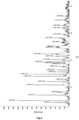
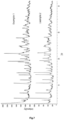
- Fig. 1 An X-ray powder diffraction (XRPD) diagram of the product is shown in Fig. 1 .
- a crystal form of the product has 27 principal characteristic peaks at a 2 ⁇ value of 4.3°, 5.1°, 7.1°, 8.2°, 10.8°, 12.0°, 12.7°, 13.9°, 14.7°, 15.5°, 16.3°, 17.5°, 18.4°, 18.8°, 19.1°, 20.0°, 21.3°, 22.1°, 24.5°, 24.9°, 26.5°, 28.0°, 29.3°, 31.7°, 32.6°, 34.7° and 36.2°. Specific data are shown in Table 1 below. According to determination of the product by HPLC, the ertapenem sodium has an HPLC purity of 99.4%.
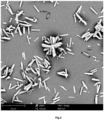
- a solid sample was detected by SEM using a Phenom desktop scanning electron microscope (Phenom pure+). After sprayed in an ion sputtering device for 60 s, the solid was detected by a scanning electron microscope in an electron scanning mode. Sample results show no obvious aggregation, as shown in Fig. 2 and Fig. 3 .
- Table 2 Data of the stability of the product at -18°C are shown in Table 2 below: Table 2 Time (month) 0 1 2 3 4 5 6 7 8 9 10 11 12 Purity (%) 99.4 99.4 99.4 99.4 99.4 99.3 99.3 99.3 99.3 99.3 99.3 99.2 99.2 Content 99.2 99.2 99.2 99.2 99.1 99.1 99.1 99.1 99.0 99.0 (%)
- the crystal form product is very stable and is degraded at a slow rate.
- Example 2 20.28 g of sodium bicarbonate was used. A mixed solution of acetic acid, methanol and n-propanol (acetic acid: 14.52 g, methanol: 250 mL, n-propanol: 300 mL) was added into a second system in 3 times. A third system was cooled to -25°C, and then the third system was heated to 5°C to obtain a fourth system. Ertapenem sodium had a concentration of 100 mg/mL in a first system. The added amount was 33% of the volume of the mixed solution of acetic acid, methanol and n-propanol each time; and the time interval between two adjacent additions was 30 minutes. The cooling was performed at a rate of 0.12°C/min, and the heating was performed at a rate of 0.12°C/min. The cooling and the heating were only repeated for one time.
- acetic acid 14.52 g, methanol: 250 mL, n-propanol: 300 mL
- XRPD X-ray powder diffraction
- Example 7 shows a coverage diagram of X-ray powder diffraction in Example 1 and Example 2 of the disclosure.
- the ertapenem sodium has an HPLC purity of 99.2%.
- a solid sample was detected by SEM using a Phenom desktop scanning electron microscope (Phenom pure+). After sprayed in an ion sputtering device for 60 s, the solid was detected by a scanning electron microscope in an electron scanning mode. Sample results show no obvious aggregation, as shown in Fig. 5 and Fig. 6 .
- Table 4 Data of the stability of the product at -18°C are shown in Table 4 below: Table 4 Time (month) 0 1 2 3 4 5 6 7 8 9 10 11 12 Purity (%) 99.2 99.2 99.2 99.2 99.1 99.1 99.1 99.1 99.0 99.0 99.0 Content (%) 99.1 99.1 99.1 99.1 99.1 99.0 99.0 99.0 99.0 99.0 99.0 99.0 99.0 99.0 99.0 99.0 99.0 99.0 99.0 99.0
- the crystal form product is very stable and is degraded at a slow rate.
- a crystal form A product of ertapenem sodium, a crystal form B product of ertapenem sodium and a crystal form C product of ertapenem sodium were prepared with reference to patents WO03026572 and WO03027067 .
- a crystal form D product of ertapenem sodium was prepared with reference to a patent WO2009150630 .
- a crystal form E product of ertapenem sodium was prepared with reference a patent WO2013067878 .
- Ertapenem sodium with a purity of 98.4% was prepared with reference a patent CN102363617 .
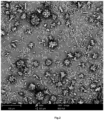
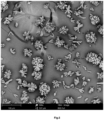
- Scanning electron microscope (SEM) photos of the ertapenem sodium are shown in Fig. 8 and Fig. 9 .
- the crystal form of ertapenem sodium has obvious aggregation, small particles and poor crystallinity.
- the new crystal form products of the disclosure have a typical rod-like crystal habit, which have a large particle size and are not prone to aggregation.
- the crystal form B was obtained by stirring and washing the crystal form A and the crystal form C was obtained by stirring and washing the crystal form B, only the filtration time of the crystal form A was counted.
- the drying was performed at a temperature of 5-15°C, a nitrogen flow rate of 1-2 m 3 /h and a nitrogen humidity of 20-40%.
- the new crystal form product prepared by the disclosure has a rod-like crystal habit, which has a large particle size and is not prone to aggregation, so that the filtration efficiency and the drying efficiency are obviously improved, the production efficiency can be effectively improved in large-scale production, and meanwhile, the degradation risk of the product can be reduced.
- Carr index tap density ⁇ bulk density /tap density ⁇ 100% .
- Hausner ratio tap density/bulk density. Table 7 Carr index Hausner ratio Fluidity evaluation ⁇ 10% 1.00-1.11 Extremely good 11-15% 1.12-1.18 Good 16-20% 1.19-1.25 Less good 21-25% 1.26-1.34 Acceptable 26-31% 1.35-1.45 Poor 32-37% 1.46-1.59 Extremely poor ⁇ 38% ⁇ 1.60 Highly extremely poor
- the new crystal form product of the disclosure has better fluidity when compared with the existing crystal form A, the crystal form B, the crystal form C, the crystal form D, the crystal form E and the amorphous product based on the Carr index, the Hausner ratio and the angle of repose.
- the ertapenem sodium is mainly used in preparations in the form of a freeze-dried powder, and due to the better fluidity, infinite possibilities are provided for development and use of other potential dosage forms.
Landscapes
- Chemical & Material Sciences (AREA)
- Organic Chemistry (AREA)
- Health & Medical Sciences (AREA)
- Life Sciences & Earth Sciences (AREA)
- Molecular Biology (AREA)
- Animal Behavior & Ethology (AREA)
- Veterinary Medicine (AREA)
- Public Health (AREA)
- General Health & Medical Sciences (AREA)
- Medicinal Chemistry (AREA)
- Pharmacology & Pharmacy (AREA)
- Nuclear Medicine, Radiotherapy & Molecular Imaging (AREA)
- Communicable Diseases (AREA)
- General Chemical & Material Sciences (AREA)
- Chemical Kinetics & Catalysis (AREA)
- Oncology (AREA)
- Pharmaceuticals Containing Other Organic And Inorganic Compounds (AREA)
- Epidemiology (AREA)
- Nitrogen Condensed Heterocyclic Rings (AREA)
Applications Claiming Priority (2)
| Application Number | Priority Date | Filing Date | Title |
|---|---|---|---|
| CN202110965003.9A CN113416193B (zh) | 2021-08-23 | 2021-08-23 | 厄他培南钠新晶型及其制备方法 |
| PCT/CN2021/134856 WO2023024310A1 (zh) | 2021-08-23 | 2021-12-01 | 厄他培南钠新晶型及其制备方法 |
Publications (2)
| Publication Number | Publication Date |
|---|---|
| EP4375285A1 true EP4375285A1 (de) | 2024-05-29 |
| EP4375285A4 EP4375285A4 (de) | 2025-03-26 |
Family
ID=77719120
Family Applications (1)
| Application Number | Title | Priority Date | Filing Date |
|---|---|---|---|
| EP21954827.8A Pending EP4375285A4 (de) | 2021-08-23 | 2021-12-01 | Neue kristalline form von ertapenem-natrium und herstellungsverfahren dafür |
Country Status (6)
| Country | Link |
|---|---|
| US (1) | US20250034144A1 (de) |
| EP (1) | EP4375285A4 (de) |
| JP (1) | JP7782021B2 (de) |
| KR (1) | KR20240049586A (de) |
| CN (1) | CN113416193B (de) |
| WO (1) | WO2023024310A1 (de) |
Families Citing this family (1)
| Publication number | Priority date | Publication date | Assignee | Title |
|---|---|---|---|---|
| CN113416193B (zh) * | 2021-08-23 | 2021-12-17 | 凯莱英医药集团(天津)股份有限公司 | 厄他培南钠新晶型及其制备方法 |
Family Cites Families (15)
| Publication number | Priority date | Publication date | Assignee | Title |
|---|---|---|---|---|
| MXPA04002797A (es) * | 2001-09-26 | 2004-07-02 | Merck & Co Inc | Procedimiento para elaborar compuestos de carbapenemo. |
| US7145002B2 (en) * | 2001-09-26 | 2006-12-05 | Merck & Co. Inc. | Crystalline forms of carbapenem antibiotics and methods of preparation |
| CN100457760C (zh) | 2005-10-20 | 2009-02-04 | 上海交通大学 | 尔他培南钠盐的制备方法 |
| WO2009150630A2 (en) | 2008-06-11 | 2009-12-17 | Ranbaxy Laboratories Limited | Process for preparing a carbapenem antibiotic composition |
| WO2012038979A2 (en) * | 2010-09-24 | 2012-03-29 | Sequent Anti Biotics Private Limited | A process for preparation of ertapenem |
| CN102558182B (zh) * | 2010-12-31 | 2015-02-11 | 石药集团中奇制药技术(石家庄)有限公司 | 一种厄他培南钠晶型及其制备方法 |
| CN102731502B (zh) * | 2011-04-13 | 2016-08-03 | 石药集团中奇制药技术(石家庄)有限公司 | 一种碳青霉烯抗生素的制备方法 |
| CN102363617B (zh) | 2011-11-09 | 2013-09-18 | 上海希迈医药科技有限公司 | 一种厄他培南单钠盐结晶体及其制备方法 |
| CN103848832A (zh) * | 2012-11-28 | 2014-06-11 | 上海创诺医药集团有限公司 | 厄他培南单钠盐的纯化方法 |
| CN103159770A (zh) * | 2013-03-22 | 2013-06-19 | 成都自豪药业有限公司 | 一种厄他培南单钠盐晶型 |
| CN104788454A (zh) * | 2014-01-16 | 2015-07-22 | 浙江九洲药业股份有限公司 | 一种厄他培南单钠盐新晶型及其制备工艺 |
| CN106749258B (zh) * | 2015-11-24 | 2020-08-21 | 重庆圣华曦药业股份有限公司 | 一种厄他培南钠的纯化方法 |
| CN110642860A (zh) * | 2018-06-27 | 2020-01-03 | 杭州森泽医药科技有限公司 | 一种用于纯化厄他培南钠的方法 |
| CN110423237B (zh) * | 2019-09-10 | 2021-12-31 | 石药集团中诺药业(石家庄)有限公司 | 一种厄他培南钠的精制方法 |
| CN113416193B (zh) * | 2021-08-23 | 2021-12-17 | 凯莱英医药集团(天津)股份有限公司 | 厄他培南钠新晶型及其制备方法 |
-
2021
- 2021-08-23 CN CN202110965003.9A patent/CN113416193B/zh active Active
- 2021-12-01 EP EP21954827.8A patent/EP4375285A4/de active Pending
- 2021-12-01 WO PCT/CN2021/134856 patent/WO2023024310A1/zh not_active Ceased
- 2021-12-01 KR KR1020247009163A patent/KR20240049586A/ko active Pending
- 2021-12-01 JP JP2024512963A patent/JP7782021B2/ja active Active
- 2021-12-01 US US18/684,395 patent/US20250034144A1/en active Pending
Also Published As
| Publication number | Publication date |
|---|---|
| KR20240049586A (ko) | 2024-04-16 |
| US20250034144A1 (en) | 2025-01-30 |
| JP7782021B2 (ja) | 2025-12-08 |
| JP2024530289A (ja) | 2024-08-16 |
| WO2023024310A1 (zh) | 2023-03-02 |
| CN113416193B (zh) | 2021-12-17 |
| CN113416193A (zh) | 2021-09-21 |
| EP4375285A4 (de) | 2025-03-26 |
Similar Documents
| Publication | Publication Date | Title |
|---|---|---|
| CN104130273B (zh) | 一种头孢曲松钠的合成方法 | |
| KR101929960B1 (ko) | 에르타페넴 나트륨의 결정형 및 이의 제조 방법 | |
| EP3466958B1 (de) | Neue kristalline formen eines natriumglucose-cotransporterhemmers, herstellungsverfahren und verwendung davon | |
| CN102363617B (zh) | 一种厄他培南单钠盐结晶体及其制备方法 | |
| CN102816084B (zh) | 一种制备注射级土霉素的方法 | |
| WO2022036975A1 (zh) | 一种比阿培南原料药的制备方法 | |
| EP4375285A1 (de) | Neue kristalline form von ertapenem-natrium und herstellungsverfahren dafür | |
| CN103265444A (zh) | 一种5-氨基乙酰丙酸磷酸盐的结晶方法 | |
| US20040138447A1 (en) | Anhydrous mirtazapine crystals and process for preparing the same | |
| CN111548310A (zh) | 一种左西孟旦钠晶型及其制备方法 | |
| CN109096283A (zh) | 一种高纯度替比培南酯晶体的制备方法 | |
| EP3279206B1 (de) | Verfahren zur herstellung von epirubicin und neues herstellungszwischenprodukt dafür | |
| EP3981759A1 (de) | Neue kristallform von treprostinil-natriumsalz und verfahren zu ihrer herstellung | |
| CN114349768B (zh) | 一种头孢噻肟酸的制备方法 | |
| KR101682389B1 (ko) | 고순도로 결정화된 반코마이신 제조방법 및 고순도 반코마이신 결정화용 용액 | |
| CN109824699A (zh) | 一种盐酸头孢吡肟的纯化方法 | |
| CN114426513A (zh) | 阿维巴坦钠有关物质及其制备方法和用途 | |
| CN113683607B (zh) | 一种特力利汀中间体晶型ii及其制备方法 | |
| CN113336757B (zh) | 一种左亚叶酸晶体的制备方法 | |
| CN113968874B (zh) | 头孢克肟的精制方法 | |
| CN115504974A (zh) | 一种氨曲南新晶型及其制备方法和应用 | |
| CN108727410A (zh) | 一种羟甲基头孢妥仑匹酯的制备方法 | |
| US9840506B2 (en) | Crystal of doripenem, and preparation method therefor | |
| IL91216A (en) | Acid) R5, S6 (-2-carbamoyloxymethyl-R)] -16 (- hydroxyethyl [-2-phenol-crystalline carboxyl and pharmaceutical preparations containing it | |
| CN114195662A (zh) | 一种高含量依地酸钙钠的合成方法 |
Legal Events
| Date | Code | Title | Description |
|---|---|---|---|
| STAA | Information on the status of an ep patent application or granted ep patent |
Free format text: STATUS: THE INTERNATIONAL PUBLICATION HAS BEEN MADE |
|
| PUAI | Public reference made under article 153(3) epc to a published international application that has entered the european phase |
Free format text: ORIGINAL CODE: 0009012 |
|
| STAA | Information on the status of an ep patent application or granted ep patent |
Free format text: STATUS: REQUEST FOR EXAMINATION WAS MADE |
|
| 17P | Request for examination filed |
Effective date: 20240222 |
|
| AK | Designated contracting states |
Kind code of ref document: A1 Designated state(s): AL AT BE BG CH CY CZ DE DK EE ES FI FR GB GR HR HU IE IS IT LI LT LU LV MC MK MT NL NO PL PT RO RS SE SI SK SM TR |
|
| DAV | Request for validation of the european patent (deleted) | ||
| DAX | Request for extension of the european patent (deleted) | ||
| A4 | Supplementary search report drawn up and despatched |
Effective date: 20250224 |
|
| RIC1 | Information provided on ipc code assigned before grant |
Ipc: A61P 31/00 20060101ALI20250218BHEP Ipc: C07D 477/02 20060101ALI20250218BHEP Ipc: C07D 477/20 20060101AFI20250218BHEP |