EP4366152A1 - Leistungswandler - Google Patents
Leistungswandler Download PDFInfo
- Publication number
- EP4366152A1 EP4366152A1 EP21948484.7A EP21948484A EP4366152A1 EP 4366152 A1 EP4366152 A1 EP 4366152A1 EP 21948484 A EP21948484 A EP 21948484A EP 4366152 A1 EP4366152 A1 EP 4366152A1
- Authority
- EP
- European Patent Office
- Prior art keywords
- axis
- gain
- power converter
- flux component
- value
- Prior art date
- Legal status (The legal status is an assumption and is not a legal conclusion. Google has not performed a legal analysis and makes no representation as to the accuracy of the status listed.)
- Withdrawn
Links
Images



Classifications
-
- H—ELECTRICITY
- H02—GENERATION; CONVERSION OR DISTRIBUTION OF ELECTRIC POWER
- H02P—CONTROL OR REGULATION OF ELECTRIC MOTORS, ELECTRIC GENERATORS OR DYNAMO-ELECTRIC CONVERTERS; CONTROLLING TRANSFORMERS, REACTORS OR CHOKE COILS
- H02P21/00—Arrangements or methods for the control of electric machines by vector control, e.g. by control of field orientation
- H02P21/24—Vector control not involving the use of rotor position or rotor speed sensors
- H02P21/26—Rotor flux based control
-
- H—ELECTRICITY
- H02—GENERATION; CONVERSION OR DISTRIBUTION OF ELECTRIC POWER
- H02P—CONTROL OR REGULATION OF ELECTRIC MOTORS, ELECTRIC GENERATORS OR DYNAMO-ELECTRIC CONVERTERS; CONTROLLING TRANSFORMERS, REACTORS OR CHOKE COILS
- H02P21/00—Arrangements or methods for the control of electric machines by vector control, e.g. by control of field orientation
- H02P21/0003—Control strategies in general, e.g. linear type, e.g. P, PI, PID, using robust control
- H02P21/0014—Control strategies in general, e.g. linear type, e.g. P, PI, PID, using robust control using neural networks
-
- H—ELECTRICITY
- H02—GENERATION; CONVERSION OR DISTRIBUTION OF ELECTRIC POWER
- H02P—CONTROL OR REGULATION OF ELECTRIC MOTORS, ELECTRIC GENERATORS OR DYNAMO-ELECTRIC CONVERTERS; CONTROLLING TRANSFORMERS, REACTORS OR CHOKE COILS
- H02P21/00—Arrangements or methods for the control of electric machines by vector control, e.g. by control of field orientation
- H02P21/05—Arrangements or methods for the control of electric machines by vector control, e.g. by control of field orientation specially adapted for damping motor oscillations, e.g. for reducing hunting
-
- H—ELECTRICITY
- H02—GENERATION; CONVERSION OR DISTRIBUTION OF ELECTRIC POWER
- H02P—CONTROL OR REGULATION OF ELECTRIC MOTORS, ELECTRIC GENERATORS OR DYNAMO-ELECTRIC CONVERTERS; CONTROLLING TRANSFORMERS, REACTORS OR CHOKE COILS
- H02P21/00—Arrangements or methods for the control of electric machines by vector control, e.g. by control of field orientation
- H02P21/14—Estimation or adaptation of machine parameters, e.g. flux, current or voltage
- H02P21/141—Flux estimation
-
- H—ELECTRICITY
- H02—GENERATION; CONVERSION OR DISTRIBUTION OF ELECTRIC POWER
- H02P—CONTROL OR REGULATION OF ELECTRIC MOTORS, ELECTRIC GENERATORS OR DYNAMO-ELECTRIC CONVERTERS; CONTROLLING TRANSFORMERS, REACTORS OR CHOKE COILS
- H02P21/00—Arrangements or methods for the control of electric machines by vector control, e.g. by control of field orientation
- H02P21/14—Estimation or adaptation of machine parameters, e.g. flux, current or voltage
- H02P21/18—Estimation of position or speed
-
- H—ELECTRICITY
- H02—GENERATION; CONVERSION OR DISTRIBUTION OF ELECTRIC POWER
- H02P—CONTROL OR REGULATION OF ELECTRIC MOTORS, ELECTRIC GENERATORS OR DYNAMO-ELECTRIC CONVERTERS; CONTROLLING TRANSFORMERS, REACTORS OR CHOKE COILS
- H02P21/00—Arrangements or methods for the control of electric machines by vector control, e.g. by control of field orientation
- H02P21/22—Current control, e.g. using a current control loop
Definitions
- This invention relates to a power converter apparatus.
- the controller's memory stores magnet motor induced voltage data, and based on the angular frequency ⁇ and rotation position ⁇ , d-axis and q-axis induced voltage command values are generated based on the angular frequency ⁇ and rotational position ⁇ , and the control technique to make the current sinusoidal is described in Patent Document 1.
- Patent Document 1 it is necessary to store magnet motor induced voltage data in the controller's memory.
- the induced voltage is a square wave
- current pulsation due to odd components (11th, 13th, 17th, 19th, 23rd, 25th%) excluding multiples of 3 of the harmonic components may occur.
- the generation of current pulsation is possible.
- the purpose of this invention is to provide a power converter apparatus that makes the magnet motor current sinusoidal without having induced voltage data.
- One preferred example of the invention is a power converter apparatus comprising a power converter that outputs signal to the magnet motor to vary the output frequency, output voltage and output current of the magnet motor, a control unit controls the power converter, wherein the control unit calculating the gain of the magnetic flux component of the q-axis, which varies with the phase of the magnet motor, calculating the d-axis induced voltage command value based on a value of the induced voltage coefficient, frequency estimates or frequency command value, and the gain of the flux component of the q-axis.
- the current of magnet motor can be sinusoidal without having induced voltage data.
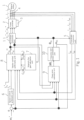
- Fig. 1 shows a system configuration diagram with power converter apparatus and magnet motor in Example 1.
- Magnet motor 1 outputs motor torque that is a composite of the torque component due to the magnetic flux of the permanent magnet and the torque component due to the inductance of the armature winding.
- Power converter 2 is equipped with semiconductor devices as switching elements. Power converter 2 inputs 3-phase AC voltage command value v u *, v v *, v w * and outputs voltage values proportional to 3-phase AC voltage command value v u *, v v *, v w * based on the output of power converter 2, magnet motor 1 is driven, and the output voltage value, output frequency value, and output current value of magnet motor! are controlled variably.
- IGBT Insulated gate bipolar transistor
- DC power supply 3 supplies DC voltage and DC current to power converter2.
- the current detector 4 outputs i uc , i vc , and i wc , which are the detected values of the alternating current i u , i v , and i w of the three phase magnet motor 1.
- the current detector 4 detects the alternating current of two of the three phase magnet motor 1, for example, phase u and phase w.
- the current detector 4 is shown in the power converter apparatus, but it can also be located outside the power converter apparatus.
- the control unit is equipped with a coordinate conversion unit 5, speed control arithmetic unit 6, magnetic flux gain calculation unit 7, vector control arithmetic unit 8, phase error estimation unit 9, frequency and phase estimation 10, and coordinate conversion unit 11 described below.
- Unit 8 phase error estimation unit 9, frequency and phase estimation 10, and coordinate conversion unit 11.
- the control unit controls the output of power converter2 so that the output voltage value, output frequency value, and output current of magnet motor1 are controlled variably.
- the control unit is composed of microcomputers and semiconductor integrated circuits (arithmetic and control means) such as DSP (digital signal processor), etc. Any or all of the control unit can be composed of hardware such as ASIC (Application Specific Integrated Circuit) and FPGA (Field Programmable Gate Array).
- DSP digital signal processor
- Any or all of the control unit can be composed of hardware such as ASIC (Application Specific Integrated Circuit) and FPGA (Field Programmable Gate Array).
- the CPU (Central Processing Unit) of the control unit reads the program stored in the memory or other recording device and executes the processing of each part of the coordinate conversion unit5 and other parts described above.
- Coordinate conversion unit 5 outputs current sense values i dc and i qc for the d- and q-axes from the three-phase alternating current i u , i v , i w detection values i uc , i vc , i wc and phase estimate value ⁇ dc .
- the speed control arithmetic unit 6 calculates the torque command value ⁇ * based on the frequency command value ⁇ r * and frequency estimates ⁇ dc and divides it by the torque coefficient to output the q-axis current command value i q *
- the magnetic flux gain calculation unit 7 outputs the gains G d (q dc ) and G q (q dc ) of the d-axis and q-axis magnetic flux components that vary with phase based on the phase estimate value ⁇ dc
- the vector control arithmetic unit 8 outputs current command value i d *, i q *, current sense value i dc , i qc , frequency estimates ⁇ dc of the d-axis and q-axis, the electrical circuit parameters of magnet motor 1 and voltage command value v dc ** and v qc ** are calculated based on the gains G d (q dc ) and G q (q dc ) of the magnetic flux components of the q-axis and d-axis.
- the phase error estimation unit 9 outputs the estimated phase error ⁇ c ,which is the deviation between the phase estimate value ⁇ dc ,which is the phase of the control, and the phase ⁇ d of the magnet motor1 by using the control axis d-axis and q-axis voltage command value v dc **, v qc **, frequency estimates ⁇ dc , current sense value i dc , i qc and electrical circuit parameters of magnet motor 1.
- the frequency and phase estimation 10 outputs the frequency estimate ⁇ dc and phase estimate value ⁇ dc based on the phase error estimates ⁇ c
- Coordinate conversion unit 11 outputs 3-phase AC voltage command value v u *, v v *, and v w * from d-axis and q-axis voltage command value v dc ** and v qc ** and phase estimate value ⁇ dc .
- the speed control arithmetic unit 6 calculates the torque command ⁇ * and the current command value i q * of the q-axis according to Formula 1 by proportional and integral control so that the frequency estimates ⁇ dc follow the frequency command value ⁇ r *.
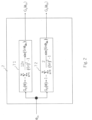
- Figure 2 shows the block diagram of the magnetic flux gain calculation unit 7, which consists of the q-axis magnetic flux gain calculation unit 71 and the d-axis magnetic flux gain calculation unit 72. flux gain calculation unit 72 for the d-axis.
- the q-axis magnetic flux gain calculation unit 71 calculates the sine function of the phase estimate according to Formula 2 using the phase estimate value ⁇ dc and outputs the q-axis magnetic flux gain G q ( ⁇ dc ).
- the magnetic flux gain calculation unit 72 of d-axis calculates the sine function of the phase estimate according to Formula 3 using the phase estimate value ⁇ dc and outputs the magnetic flux gain G q ( ⁇ dc ) of d-axis.
- N is the order and a natural number.
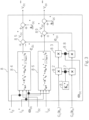
- Figure 3 shows the block diagram of vector control arithmetic unit 8. First, the d-axis voltage command value of vector control arithmetic unit 8 is explained.
- the permanent magnet motor1 induced voltage coefficient K e * 81 and q-axis magnetic flux gain G q ( ⁇ dc ) are input to multiplier 82.
- multiplier 82 The output of multiplier 82 is input to multiplier 83 together with frequency estimates ⁇ dc and its output is d-axis induced voltage command value e dc * shown in Formula 4.
- frequency estimates ⁇ dc is used as the input to multiplier83, but it can be modified so that instead of frequency estimates ⁇ dc , frequency command value ⁇ r * is used as the input to multiplier 83 and multiplied with the output of multiplier 82.
- e dc ⁇ ⁇ dc K e ⁇ G q ⁇ dc
- the induced voltage coefficient K e * 81 is a constant value and is not a data such as induced voltage that varies with rotational position.
- the calculation section 84 calculates d-axis voltage command value v dc0 * according to Formula 5 by using the electrical circuit parameters of the permanent magnet motor 1, such as the set value of winding resistance R*, the set value of q-axis inductance L q *, the d-axis current command value i d *, the q-axis current command value i q *, frequency estimates ⁇ dc .
- v dc0 * of arithmetic unit 84 is input to adder 85 together with the d-axis induced voltage command value e dc *, and the output of adder 85 is the d-axis voltage command value reference value v dc * shown in Formula 6.
- v dc0 ⁇ R ⁇ i d ⁇ ⁇ dc L q ⁇ 1 1 + Tacr s i q ⁇
- v dc ⁇ v dc0 ⁇ ⁇ e dc ⁇ where T acr : Response time constant of current control
- the induced voltage coefficient K e * 81 of permanent magnet motor 1 and the magnetic flux gain G d ( ⁇ dc ) of the d-axis are input to multiplier 87.
- multiplier 87 The output of multiplier 87 is input to multiplier 88 together with frequency estimate ⁇ dc .
- multiplier 88 The output of multiplier 88 is the q-axis induced voltage command value e qc * shown in Formula 7.
- frequency estimates ⁇ dc is used as the input of multiplier 88, but it can be modified so that frequency command value ⁇ r * is used as the input of multiplier 88 instead of frequency estimates ⁇ dc and multiplied with the output of multiplier87.
- e qc ⁇ ⁇ dc K e ⁇ G d ⁇ dc
- the calculation section 86 calculates the electrical circuit parameters of the permanent magnet motor 1 of winding resistance setting R*, d-axis inductance setting L d *, d-axis current command value i d *, q-axis current command value i q *, frequency estimates ⁇ dc are used to calculate the q-axis voltage command value v qc0 * according to Formula 8.
- v qc0 * of arithmetic unit 86 is input to adder 89 together with the q-axis induced voltage command value e qc *.
- the output of adder 89 is the reference value v qc * of the q-axis voltage command value shown in Formula 9.
- v qc0 ⁇ R ⁇ i q ⁇ + ⁇ dc L d ⁇ 1 1 + Tacr s i d ⁇
- v qc ⁇ v qc0 ⁇ + e qc ⁇
- d-axis and q-axis voltage correction values ⁇ v dc and ⁇ v qc are calculated according to Formula 10 by proportional control and integral control so that the current sense values i dc and i qc of each component follow the current command values i d * and i q * of the d and q axes, respectively.
- ⁇ v dc K pd + K id s i d ⁇ ⁇ i dc
- ⁇ v qc K pq + K iq s i q ⁇ ⁇ i qc WHEREAS,
- v dc ** and v qc ** are calculated according to Formula 11.
- v dc ⁇ ⁇ v dc ⁇ + ⁇ v dc
- v qc ⁇ ⁇ v qc ⁇ + ⁇ v qc
- the phase error estimation unit 9 calculates the phase error estimates ⁇ based on the d-axis and q-axis voltage command value v dc **, v qc **, current sense value i dc , i qc and the electrical circuit parameters of magnet motor1 (R*, L q *), frequency estimation ⁇ dc and the extended induced voltage formula (Formula 12).
- ⁇ c tan ⁇ 1 v dc ⁇ ⁇ ⁇ R ⁇ i dc + ⁇ dc L q ⁇ i qc v qc ⁇ ⁇ ⁇ R ⁇ i qc ⁇ ⁇ dc L q ⁇ i dc
- phase error estimates ⁇ c follow the command value ⁇ c *, frequency estimates ⁇ dc are calculated according to Formula 13 by P(proportional) + I(integral) control operation, and phase estimates value ⁇ dc are calculated according to Formula 14 by I control operation.
- ⁇ dc Kp pll + Ki pll s ⁇ c ⁇ ⁇ ⁇ c WHEREAS, Kp pll : proportional gain of PLL control, Ki pll : integral gain of PLL control
- ⁇ dc 1 s ⁇ ⁇ dc
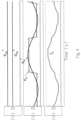
- the upper row displays the d-axis and q-axis induced voltage command value e dc * and e qc *
- the middle row displays the square wave induced voltage e u of phase u and the command value equivalent e u * of the induced voltage of phase u
- the alternating current i u of phase u is not a sinusoidal current, but a distorted current with superimposed 5th and 7th harmonics.
- the order N shown in Formula 2 is set to 4, for example.
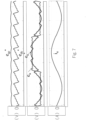
- Fig. 7 the top row shows the d-axis and q-axis induced voltage command value e dc * and e qc *, the middle row shows the square wave induced voltage e u of phase u and the command value equivalent e u * of the induced voltage of phase u, and the bottom row shows the alternating current i u of phase u.
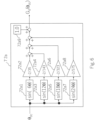
- G q ( ⁇ dc ) is shown the block diagram in Fig. 5
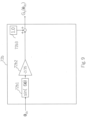
- G d ( ⁇ dc ) shown in the block diagram in Fig. 6 .
- the d-axis and q-axis induced voltage command values e dc * and e qc * include up to 24th harmonic components, and the induced voltage command value equivalent e u * is a waveform far from a sine wave containing harmonics, but the alternating current i u is a sinusoidal current.
- the d-axis induced voltage command value e dc * is zero, but the d-axis induced voltage command value e dc * is not zero as in Fig. 4 , but has a shape that includes harmonic components (sawtooth wave). This is one of the characteristics.
- set N 1 in the magnetic flux gain calculation unit 7 in Fig. 1 .
- set N 1.
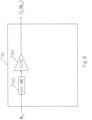
- the signal is G q ( ⁇ dc ).
- the constant “1” is set in the setting unit 72b3.
- the upper row displays the d-axis and q-axis induced voltage command values e dc * and e qc *
- the middle row displays the square wave induced voltage of phase u e u and the command value equivalent e u * of the induced voltage of phase u
- the lower row displays the alternating current i u of phase u.
- G q ( ⁇ dc ) is the block diagram in Fig. 8
- G d ( ⁇ dc ) is the case of the calculation in the block diagram in Fig. 9 .
- the d-axis and q-axis induced voltage command values e dc * and e qc * contain 6th harmonic components, and the induced voltage command value equivalent e u * is far from a sinusoidal waveform, but the alternating current i u of phase u is somewhat distorted compared to a sinusoidal waveform.
- the effect of this invention is obvious.
- N is a natural number, and the larger the value of N, the closer the alternating current of the u-phase can be to a sine wave.
- the current of magnet motor can be made sinusoidal without having induced voltage data by a general-purpose controller or other means.
- voltage detector 21 and current detector 22 are attached to the power converter apparatus 20 that drives magnet motor 1, and encoder 23 is attached to the shaft of magnet encoder 23 is attached to the shaft ofmagnet motor 1.
- the voltage detection values of 3-phase AC (v uc , v vc , v wc ) and current sense values of 3-phase AC (i uc , i vc , i wc ), which are outputs of voltage detector 21, and the position detection values ⁇ , which are outputs of encoder, are input to the calculation section 24, for vector voltage and current components, v dcc , v qcc , i dcc and i qcc of the vector current components and the detected value ⁇ rc , which is the derivative of position ⁇ , are calculated.
- each part waveform calculates the d-axis and q-axis induced voltages e dc ⁇ and e qc ⁇ using Formula 16.
- Fig. 12 shows the system configuration diagram with power converter apparatus and magnet motor in Example 2.
- Example 1 modifies the U-V-W voltage command value of the fixed coordinates.
- Fig. 12 magnet motor 1, power converter 2, DC power supply 3, current detector 4, coordinate conversion unit 5, speed control arithmetic unit 6, magnetic flux gain calculation unit 7, phase error estimation unit 9, frequency and phase estimation 10, and coordinate conversion unit 11 are the same as in Fig. 1 .
- the vector control arithmetic unit 8 in Fig. 3 without the induced voltage coefficients K e * 81, multiplier 82, multiplier 83, adder 85, multiplier 87, multiplier 88, and adder 89 is shown in Fig. 12.
- Fig. 12 shows the vector control arithmetic unit 8.
- Coordinate conversion unit 12 is the coordinate conversion unit from rotational coordinates to fixed coordinates and 13 is the adder. Coordinate conversion unit 12 replaces the operations in vector control arithmetic unit 8 in Fig. 3 . magnetic flux gain G q ( ⁇ dc ) and d-axis magnetic flux gain G d ( ⁇ dc ) to calculate the d-axis and q-axis induced voltage command values e dc * and e qc *. Then, coordinate conversion unit 12 outputs three-phase induced voltage command values e u *, e v *, and e w * from the d-axis and q-axis induced voltage command values e dc *, e qc * and the phase estimate value ⁇ dc .
- the d-axis and q-axis induced voltage command values e dc * and e qc * are converted to 3-phase induced voltage command values e u *, e v *, and e w * to modify the 3-phase voltage command values.
- a sinusoidal current can be realized as in Example 1.
- Fig. 13 is a system configuration diagram with power converter apparatus and magnet motor in Example 3.
- magnet motor 1 power converter 2, DC power supply 3, current detector 4, coordinate conversion unit 5, speed control arithmetic unit 6, magnetic flux gain calculation unit 7, vector control arithmetic unit 8, phase error estimation unit 9, frequency and phase estimation 10, and coordinate conversion unit 11 is identical to Fig. 1 .
- 14 is an IOT(Internet of Things) controller that can perform machine learning.
- Example 1 is a configuration in which the drive mode (square wave drive or sine wave drive) and parameters such as the order N of Formula 2 or Formula 3 are set in the controller (microcomputer or other control unit) of the power converter.
- control unit in Example 3 When the control unit in Example 3 receives an instruction for sinusoidal drive, it sets the gain of the q-axis flux component to 0 and the gain of the d-axis flux component to 1.
- the control unit calculates the gain of said magnetic flux component of the q-axis as a sine function of the phase estimate based on Formula 2. Furthermore, the control unit calculates the gain of the magnetic flux component of the d-axis as a sinusoidal function of the phase estimate based on Formula 3, and subtracts the result of the calculation from 1.
- the control unit feeds back the voltage command value v dc **, v qc ** and current sense value i dc , i qc , phase error estimates ⁇ c to the upper IOT CONTROLLER 14.
- IOT CONTROLLER 14 analyzes the signals such as voltage command, value v dc ** , v qc ** and current sense value i dc , i qc , phase error estimates ⁇ c by machine learning, and based on the machine learning, the control unit re-sets the drive mode and order N to the power converter 2 controller.
- a sinusoidal current can be realized as in Example 1.
- Fig. 14 shows the system configuration diagram with power converter apparatus and magnet motor in Example 4.
- This example is the application of this system to a magnet motor drive system.
- Fig. 14 the components magnet motor 1, coordinate conversion unit 5, speed control arithmetic unit 6, magnetic flux gain calculation unit 7, vector control arithmetic unit 8, phase error estimation unit 9, frequency and phase estimation 10, and coordinate conversion unit 11 are identical to those in Fig. 1 .
- Magnet motor 1 a component of Fig. 1 , is driven by power converter apparatus 20.
- Power converter apparatus 20 consists of coordinate conversion unit 5, speed control arithmetic unit 6, magnetic flux gain calculation unit 7, vector control arithmetic unit 8, vector control arithmetic unit 8, phase error estimation unit 9, frequency and phase estimation unit 10, and magnetic flux gain calculation unit 11.
- arithmetic unit 6, magnetic flux gain calculation unit 7, vector control arithmetic unit 8, phase error estimation unit 9, frequency and phase estimation 10 and coordinate conversion unit 11 are implemented as software 20a.
- the power converter apparatus 20 has the power converter 2, DC power supply 3, and current detector4 of Fig. 1 implemented as hardware.
- the "drive mode "26 to set the square wave drive or sinusoidal drive of software 20a, Formula 2 and Formula 3, the "order N 27" can be set and changed.
- the current of magnet motor which is a square wave induced voltage, can be controlled sinusoidally.
- the "drive mode” and “N” may be set on a field bus such as a programmable logic controller, a local area network connected to a computer, or an IOT CONTROLLER.
- the calculation results in the calculation sections 71a2, 71a4, 71a6, 71a8 of the magnetic flux gain in Fig. 5 and the calculation sections 72a2, 72a4, 72a6, 72a8 in Fig. 6 in Example 1 are constants, but these constants may be rewritten.
- the voltage correction values ⁇ v d_p * for the proportional component of d-axis, ⁇ v d_i * for the integral component of d-axis, ⁇ v q_p * for the proportional component of q-axis and the modified values ⁇ v q_i * of the integral component of the q-axis are created using Formula 19.
- the primary delay signal i qctd of the d-axis current command value i d * and q-axis current sense value i qc , frequency , estimates ⁇ dc and the electrical circuit parameters of magnet motor 1 may be used to perform the vector control operation shown in Formula 21.
- the switching device that constitutes power converter 2 may be a Si(silicon) semiconductor device or a wide bandgap semiconductor device such as SiC(silicon carbide) or GaN(gallium nitride).
Landscapes
- Engineering & Computer Science (AREA)
- Power Engineering (AREA)
- Artificial Intelligence (AREA)
- Evolutionary Computation (AREA)
- Control Of Ac Motors In General (AREA)
- Control Of Motors That Do Not Use Commutators (AREA)
Applications Claiming Priority (2)
| Application Number | Priority Date | Filing Date | Title |
|---|---|---|---|
| JP2021107665A JP2023005629A (ja) | 2021-06-29 | 2021-06-29 | 電力変換装置 |
| PCT/JP2021/041409 WO2023276181A1 (ja) | 2021-06-29 | 2021-11-10 | 電力変換装置 |
Publications (2)
| Publication Number | Publication Date |
|---|---|
| EP4366152A1 true EP4366152A1 (de) | 2024-05-08 |
| EP4366152A4 EP4366152A4 (de) | 2025-04-16 |
Family
ID=84691096
Family Applications (1)
| Application Number | Title | Priority Date | Filing Date |
|---|---|---|---|
| EP21948484.7A Withdrawn EP4366152A4 (de) | 2021-06-29 | 2021-11-10 | Leistungswandler |
Country Status (5)
| Country | Link |
|---|---|
| US (1) | US12334847B2 (de) |
| EP (1) | EP4366152A4 (de) |
| JP (1) | JP2023005629A (de) |
| CN (1) | CN116746049A (de) |
| WO (1) | WO2023276181A1 (de) |
Families Citing this family (1)
| Publication number | Priority date | Publication date | Assignee | Title |
|---|---|---|---|---|
| JP2024157737A (ja) * | 2023-04-26 | 2024-11-08 | 株式会社日立産機システム | 電力変換装置 |
Family Cites Families (12)
| Publication number | Priority date | Publication date | Assignee | Title |
|---|---|---|---|---|
| JP4154149B2 (ja) * | 2001-12-28 | 2008-09-24 | 株式会社東芝 | ベクトル制御インバータ装置 |
| JP2009017676A (ja) * | 2007-07-04 | 2009-01-22 | Aisin Seiki Co Ltd | 同期モータの制御装置及び制御方法 |
| JP5259241B2 (ja) * | 2008-04-23 | 2013-08-07 | 株式会社東芝 | モータ制御装置,モータ駆動システム,洗濯機,空調機,永久磁石モータの着磁量変更方法 |
| JP5417195B2 (ja) * | 2010-01-19 | 2014-02-12 | 国産電機株式会社 | 永久磁石モータのトルクリプル抑制制御装置、電動パワーステアリングシステム |
| JP2014166082A (ja) * | 2013-02-27 | 2014-09-08 | Hitachi Appliances Inc | モータ制御装置、およびそれを用いた空気調和機 |
| US9525376B2 (en) | 2014-05-13 | 2016-12-20 | Gbox, Llc | Wound field synchronous machine with resonant field exciter |
| EP3282574A4 (de) | 2015-04-10 | 2018-10-24 | MITSUBA Corporation | Antriebsvorrichtung und verfahren zur steuerung der antriebsvorrichtung |
| JP6516537B2 (ja) * | 2015-04-10 | 2019-05-22 | 株式会社ミツバ | モータ駆動装置及びモータ駆動装置の制御方法 |
| JP6457472B2 (ja) * | 2016-12-14 | 2019-01-23 | ファナック株式会社 | 制御システム及び機械学習装置 |
| JP7032250B2 (ja) | 2018-06-28 | 2022-03-08 | 株式会社日立産機システム | 電力変換装置 |
| JP7489899B2 (ja) * | 2019-10-18 | 2024-05-24 | 株式会社安川電機 | 事象推定システム及び事象推定方法 |
| JP7095760B1 (ja) * | 2021-01-14 | 2022-07-05 | 株式会社安川電機 | 制御装置、磁束推定装置及び磁束推定方法 |
-
2021
- 2021-06-29 JP JP2021107665A patent/JP2023005629A/ja active Pending
- 2021-11-10 CN CN202180090523.8A patent/CN116746049A/zh active Pending
- 2021-11-10 US US18/273,844 patent/US12334847B2/en active Active
- 2021-11-10 WO PCT/JP2021/041409 patent/WO2023276181A1/ja not_active Ceased
- 2021-11-10 EP EP21948484.7A patent/EP4366152A4/de not_active Withdrawn
Also Published As
| Publication number | Publication date |
|---|---|
| US20240079982A1 (en) | 2024-03-07 |
| EP4366152A4 (de) | 2025-04-16 |
| WO2023276181A1 (ja) | 2023-01-05 |
| JP2023005629A (ja) | 2023-01-18 |
| CN116746049A (zh) | 2023-09-12 |
| US12334847B2 (en) | 2025-06-17 |
Similar Documents
| Publication | Publication Date | Title |
|---|---|---|
| JP5155344B2 (ja) | 電動機の磁極位置推定装置 | |
| CN107660325B (zh) | 交流旋转电机的控制装置及电动助力转向装置 | |
| CN104584419B (zh) | 电动机控制装置 | |
| EP1460758B1 (de) | Vektorsteuerungsverfahren und -vorrichtung | |
| CN104167960B (zh) | 同步电机控制装置 | |
| EP3817218A1 (de) | Stromumwandlungsvorrichtung | |
| JP6374037B2 (ja) | モータ制御装置 | |
| EP4072005A1 (de) | Stromumwandlungsvorrichtung | |
| US11437944B2 (en) | Power conversion device | |
| CN106257822A (zh) | 马达控制装置、磁通指令生成装置和磁通指令生成方法 | |
| US12334847B2 (en) | Power converter apparatus | |
| EP4340211A1 (de) | Leistungswandler | |
| JP2008206330A (ja) | 同期電動機の磁極位置推定装置および磁極位置推定方法 | |
| WO2012026568A1 (ja) | 単相信号入力装置及び系統連系装置 | |
| KR20200059507A (ko) | 인버터 제어장치 | |
| JP2020010566A (ja) | モータ制御装置 | |
| JP4722002B2 (ja) | Pwmインバータ制御装置及びpwmインバータ制御方法並びに冷凍空調装置 | |
| JP6848680B2 (ja) | 同期電動機の制御装置 | |
| JP6729249B2 (ja) | 電力変換器の制御装置 | |
| US10622930B2 (en) | Motor control device and control method | |
| EP4075665B1 (de) | Stromwandler | |
| EP4686078A1 (de) | Motorsteuerungsvorrichtung | |
| JP5456873B1 (ja) | 同期機制御装置 | |
| JP6880448B2 (ja) | 同期電動機の制御装置 | |
| EP4704330A1 (de) | Leistungswandler |
Legal Events
| Date | Code | Title | Description |
|---|---|---|---|
| STAA | Information on the status of an ep patent application or granted ep patent |
Free format text: STATUS: THE INTERNATIONAL PUBLICATION HAS BEEN MADE |
|
| PUAI | Public reference made under article 153(3) epc to a published international application that has entered the european phase |
Free format text: ORIGINAL CODE: 0009012 |
|
| STAA | Information on the status of an ep patent application or granted ep patent |
Free format text: STATUS: REQUEST FOR EXAMINATION WAS MADE |
|
| 17P | Request for examination filed |
Effective date: 20240129 |
|
| AK | Designated contracting states |
Kind code of ref document: A1 Designated state(s): AL AT BE BG CH CY CZ DE DK EE ES FI FR GB GR HR HU IE IS IT LI LT LU LV MC MK MT NL NO PL PT RO RS SE SI SK SM TR |
|
| DAV | Request for validation of the european patent (deleted) | ||
| DAX | Request for extension of the european patent (deleted) | ||
| A4 | Supplementary search report drawn up and despatched |
Effective date: 20250314 |
|
| RIC1 | Information provided on ipc code assigned before grant |
Ipc: H02P 21/18 20160101ALI20250310BHEP Ipc: H02P 21/14 20160101ALI20250310BHEP Ipc: H02P 21/05 20060101ALI20250310BHEP Ipc: H02P 21/00 20160101ALI20250310BHEP Ipc: H02P 21/26 20160101ALI20250310BHEP Ipc: H02P 6/10 20060101AFI20250310BHEP |
|
| STAA | Information on the status of an ep patent application or granted ep patent |
Free format text: STATUS: THE APPLICATION IS DEEMED TO BE WITHDRAWN |
|
| 18D | Application deemed to be withdrawn |
Effective date: 20251002 |