EP4328512A1 - Kältekreislaufvorrichtung und innenraumeinheit - Google Patents
Kältekreislaufvorrichtung und innenraumeinheit Download PDFInfo
- Publication number
- EP4328512A1 EP4328512A1 EP21937899.9A EP21937899A EP4328512A1 EP 4328512 A1 EP4328512 A1 EP 4328512A1 EP 21937899 A EP21937899 A EP 21937899A EP 4328512 A1 EP4328512 A1 EP 4328512A1
- Authority
- EP
- European Patent Office
- Prior art keywords
- damper
- heat exchange
- air
- air inlet
- exchange unit
- Prior art date
- Legal status (The legal status is an assumption and is not a legal conclusion. Google has not performed a legal analysis and makes no representation as to the accuracy of the status listed.)
- Withdrawn
Links
Images


Classifications
-
- F—MECHANICAL ENGINEERING; LIGHTING; HEATING; WEAPONS; BLASTING
- F24—HEATING; RANGES; VENTILATING
- F24F—AIR-CONDITIONING; AIR-HUMIDIFICATION; VENTILATION; USE OF AIR CURRENTS FOR SCREENING
- F24F11/00—Control or safety arrangements
- F24F11/70—Control systems characterised by their outputs; Constructional details thereof
- F24F11/72—Control systems characterised by their outputs; Constructional details thereof for controlling the supply of treated air, e.g. its pressure
- F24F11/74—Control systems characterised by their outputs; Constructional details thereof for controlling the supply of treated air, e.g. its pressure for controlling air flow rate or air velocity
-
- F—MECHANICAL ENGINEERING; LIGHTING; HEATING; WEAPONS; BLASTING
- F24—HEATING; RANGES; VENTILATING
- F24F—AIR-CONDITIONING; AIR-HUMIDIFICATION; VENTILATION; USE OF AIR CURRENTS FOR SCREENING
- F24F7/00—Ventilation
- F24F7/007—Ventilation with forced flow
-
- F—MECHANICAL ENGINEERING; LIGHTING; HEATING; WEAPONS; BLASTING
- F24—HEATING; RANGES; VENTILATING
- F24F—AIR-CONDITIONING; AIR-HUMIDIFICATION; VENTILATION; USE OF AIR CURRENTS FOR SCREENING
- F24F1/00—Room units for air-conditioning, e.g. separate or self-contained units or units receiving primary air from a central station
- F24F1/0007—Indoor units, e.g. fan coil units
- F24F1/0018—Indoor units, e.g. fan coil units characterised by fans
-
- F—MECHANICAL ENGINEERING; LIGHTING; HEATING; WEAPONS; BLASTING
- F24—HEATING; RANGES; VENTILATING
- F24F—AIR-CONDITIONING; AIR-HUMIDIFICATION; VENTILATION; USE OF AIR CURRENTS FOR SCREENING
- F24F1/00—Room units for air-conditioning, e.g. separate or self-contained units or units receiving primary air from a central station
- F24F1/0007—Indoor units, e.g. fan coil units
- F24F1/0035—Indoor units, e.g. fan coil units characterised by introduction of outside air to the room
-
- F—MECHANICAL ENGINEERING; LIGHTING; HEATING; WEAPONS; BLASTING
- F24—HEATING; RANGES; VENTILATING
- F24F—AIR-CONDITIONING; AIR-HUMIDIFICATION; VENTILATION; USE OF AIR CURRENTS FOR SCREENING
- F24F1/00—Room units for air-conditioning, e.g. separate or self-contained units or units receiving primary air from a central station
- F24F1/0007—Indoor units, e.g. fan coil units
- F24F1/0059—Indoor units, e.g. fan coil units characterised by heat exchangers
-
- F—MECHANICAL ENGINEERING; LIGHTING; HEATING; WEAPONS; BLASTING
- F24—HEATING; RANGES; VENTILATING
- F24F—AIR-CONDITIONING; AIR-HUMIDIFICATION; VENTILATION; USE OF AIR CURRENTS FOR SCREENING
- F24F1/00—Room units for air-conditioning, e.g. separate or self-contained units or units receiving primary air from a central station
- F24F1/0007—Indoor units, e.g. fan coil units
- F24F1/0059—Indoor units, e.g. fan coil units characterised by heat exchangers
- F24F1/0063—Indoor units, e.g. fan coil units characterised by heat exchangers by the mounting or arrangement of the heat exchangers
-
- F—MECHANICAL ENGINEERING; LIGHTING; HEATING; WEAPONS; BLASTING
- F24—HEATING; RANGES; VENTILATING
- F24F—AIR-CONDITIONING; AIR-HUMIDIFICATION; VENTILATION; USE OF AIR CURRENTS FOR SCREENING
- F24F1/00—Room units for air-conditioning, e.g. separate or self-contained units or units receiving primary air from a central station
- F24F1/0007—Indoor units, e.g. fan coil units
- F24F1/0071—Indoor units, e.g. fan coil units with means for purifying supplied air
- F24F1/0073—Indoor units, e.g. fan coil units with means for purifying supplied air characterised by the mounting or arrangement of filters
-
- F—MECHANICAL ENGINEERING; LIGHTING; HEATING; WEAPONS; BLASTING
- F24—HEATING; RANGES; VENTILATING
- F24F—AIR-CONDITIONING; AIR-HUMIDIFICATION; VENTILATION; USE OF AIR CURRENTS FOR SCREENING
- F24F11/00—Control or safety arrangements
- F24F11/70—Control systems characterised by their outputs; Constructional details thereof
- F24F11/80—Control systems characterised by their outputs; Constructional details thereof for controlling the temperature of the supplied air
- F24F11/81—Control systems characterised by their outputs; Constructional details thereof for controlling the temperature of the supplied air by controlling the air supply to heat-exchangers or bypass channels
-
- F—MECHANICAL ENGINEERING; LIGHTING; HEATING; WEAPONS; BLASTING
- F24—HEATING; RANGES; VENTILATING
- F24F—AIR-CONDITIONING; AIR-HUMIDIFICATION; VENTILATION; USE OF AIR CURRENTS FOR SCREENING
- F24F13/00—Details common to, or for air-conditioning, air-humidification, ventilation or use of air currents for screening
- F24F13/30—Arrangement or mounting of heat-exchangers
-
- F—MECHANICAL ENGINEERING; LIGHTING; HEATING; WEAPONS; BLASTING
- F24—HEATING; RANGES; VENTILATING
- F24F—AIR-CONDITIONING; AIR-HUMIDIFICATION; VENTILATION; USE OF AIR CURRENTS FOR SCREENING
- F24F7/00—Ventilation
- F24F7/003—Ventilation in combination with air cleaning
-
- F—MECHANICAL ENGINEERING; LIGHTING; HEATING; WEAPONS; BLASTING
- F24—HEATING; RANGES; VENTILATING
- F24F—AIR-CONDITIONING; AIR-HUMIDIFICATION; VENTILATION; USE OF AIR CURRENTS FOR SCREENING
- F24F13/00—Details common to, or for air-conditioning, air-humidification, ventilation or use of air currents for screening
- F24F13/08—Air-flow control members, e.g. louvres, grilles, flaps or guide plates
- F24F13/10—Air-flow control members, e.g. louvres, grilles, flaps or guide plates movable, e.g. dampers
-
- F—MECHANICAL ENGINEERING; LIGHTING; HEATING; WEAPONS; BLASTING
- F25—REFRIGERATION OR COOLING; COMBINED HEATING AND REFRIGERATION SYSTEMS; HEAT PUMP SYSTEMS; MANUFACTURE OR STORAGE OF ICE; LIQUEFACTION SOLIDIFICATION OF GASES
- F25B—REFRIGERATION MACHINES, PLANTS OR SYSTEMS; COMBINED HEATING AND REFRIGERATION SYSTEMS; HEAT PUMP SYSTEMS
- F25B5/00—Compression machines, plants or systems, with several evaporator circuits, e.g. for varying refrigerating capacity
- F25B5/04—Compression machines, plants or systems, with several evaporator circuits, e.g. for varying refrigerating capacity arranged in series
-
- F—MECHANICAL ENGINEERING; LIGHTING; HEATING; WEAPONS; BLASTING
- F25—REFRIGERATION OR COOLING; COMBINED HEATING AND REFRIGERATION SYSTEMS; HEAT PUMP SYSTEMS; MANUFACTURE OR STORAGE OF ICE; LIQUEFACTION SOLIDIFICATION OF GASES
- F25B—REFRIGERATION MACHINES, PLANTS OR SYSTEMS; COMBINED HEATING AND REFRIGERATION SYSTEMS; HEAT PUMP SYSTEMS
- F25B6/00—Compression machines, plants or systems, with several condenser circuits
- F25B6/04—Compression machines, plants or systems, with several condenser circuits arranged in series
Definitions
- the present disclosure relates to a refrigeration cycle apparatus and an indoor unit.
- Patent Literature 1 Japanese Unexamined Patent Application Publication No. H 11 -257793
- the indoor unit is provided with a heat exchanger dedicated to ventilation. This limits the size of a heat exchanger that can be used to perform cooling and heating without providing ventilation, and thus may decrease efficiency of the refrigeration cycle apparatus.
- the present disclosure has been made to solve the problem described above. It is an object of the present disclosure to provide a refrigeration cycle apparatus that performs cooling and heating, in which it is possible to set whether to provide ventilation and it is also possible to prevent a decrease in efficiency when the refrigeration cycle apparatus does not provide ventilation.
- a refrigeration cycle apparatus includes an indoor unit provided with a first air inlet communicating with an inside of a room and a second air inlet communicating with outside of the room; a first heat exchange unit located in a first air flow passage connecting the first air inlet and an air outlet; a second heat exchange unit located in a second air flow passage connecting the second air inlet and the air outlet, the second heat exchange unit being connected to the first heat exchange unit such that the second heat exchange unit is positioned downstream of the first heat exchange unit when the refrigeration cycle apparatus performs heating operation; a first damper capable of adjusting an amount of air entering from the first air flow passage to the second air flow passage; and a second damper provided at the second air inlet and capable of adjusting an amount of air to be sucked from the second air inlet.
- the refrigeration cycle apparatus it is possible to set whether to provide ventilation. Even when not providing ventilation, the refrigeration cycle apparatus can still exhibit equal performance compared to an indoor heat exchanger installed in some refrigeration cycle apparatus. This can prevent the refrigeration cycle apparatus from decreasing its efficiency regardless of the usage conditions.
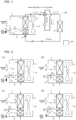
- Fig. 1 illustrates the configuration of a refrigeration cycle apparatus 100 in the present embodiment.
- the refrigeration cycle apparatus 100 includes a compressor 1, a four-way valve 2, an indoor unit 3, an expansion valve 9, and an outdoor heat exchanger 10.
- the indoor unit 3 has a first indoor heat exchange unit 4, a second indoor heat exchange unit 5, and a first indoor fan 6 accommodated in the indoor unit 3.
- the outdoor heat exchanger 10 is accommodated in an outdoor unit (not illustrated) and an outdoor fan is also accommodated in the outdoor unit.
- the refrigeration cycle apparatus 100 includes a controller 50.
- the controller 50 issues a command to the compressor 1, the four-way valve 2, the first air-sending means 6, the expansion valve 9, a first damper 11, and a second damper 12, which will be described later, and the outdoor fan (not illustrated), to control operation of the respective components.
- the compressor 1, the four-way valve 2, the first indoor heat exchange unit 4, the second indoor heat exchange unit 5, the expansion valve 9, and the outdoor heat exchanger 10 are connected by pipes, forming a refrigerant circuit.
- refrigerant such as R32 (difluoromethane) circulates.
- R32 difluoromethane
- the type of refrigerant to be filled in the refrigeration cycle apparatus 100 is not particularly limited.
- refrigerant flows in the direction shown by the dotted arrows. That is, refrigerant discharged from the compressor 1 condenses in the outdoor heat exchanger 10, is reduced in pressure by the expansion valve 9, and evaporates in the second indoor heat exchange unit 5 and the first indoor heat exchange unit 4. The refrigerant having evaporated flows back to the compressor 1.
- refrigerant flows in the direction shown by the solid arrows. That is, refrigerant discharged from the compressor 1 condenses in the first indoor heat exchange unit 4 and the second indoor heat exchange unit 5, is reduced in pressure by the expansion valve 9, and evaporates in the outdoor heat exchanger 10. The refrigerant having evaporated flows back to the compressor 1. Switching between the cooling operation and the heating operation is performed by the four-way valve 2 changing the connection in the refrigerant circuit.
- the compressor 1 is, for example, a rotary compressor.
- the capacity, rated frequency, and other specifications of the compressor 1 are determined by the type of refrigerant to be filled in the refrigerant circuit, the capacity of the refrigeration cycle apparatus 100, and other factors.
- the compressor 1 may be a piston compressor or a scroll compressor.
- the compressor 1 may be operated with a rated frequency by the controller 50 or with a variable frequency controlled by an inverter installed in the controller 50.
- the four-way valve 2 is configured to switch flow passages, and switches between flow passages depending on whether the refrigeration cycle apparatus 100 performs cooling operation or heating operation.
- the four-way valve 2 connects a discharge port of the compressor 1 and the outdoor heat exchanger 10, and also connects the first indoor heat exchange unit 4 and a suction port of the compressor 1.
- the four-way valve 2 connects the discharge port of the compressor 1 and the first indoor heat exchange unit 4, and also connects the outdoor heat exchanger 10 and the suction port of the compressor 1.
- the connections in the four-way valve 2 are changed by the controller 50.
- the indoor unit 3 accommodates the first indoor heat exchange unit 4, the second indoor heat exchange unit 5, and the first indoor fan 6 in the indoor unit 3.
- the first indoor heat exchange unit 4 and the second indoor heat exchange unit 5 may be identical indoor heat exchangers to each other, or may be different indoor heat exchangers.
- the first point is that the first indoor heat exchange unit 4 is positioned upstream of the second indoor heat exchange unit 5 in a flow of refrigerant when the refrigeration cycle apparatus 100 performs heating operation, while the second indoor heat exchange unit 5 is positioned downstream of the first indoor heat exchange unit 4 during the heating operation.
- the second point is that, as will be described later, while room air always flows through the first indoor heat exchange unit 4, outside air or room air flows through the second indoor heat exchange unit 5.
- the first indoor heat exchange unit 4 and the second indoor heat exchange unit 5 are each, for example, a fin-and-tube heat exchanger made up of cooper tubes and aluminum fins fixedly attached to the copper tubes. Refrigerant flows through the inside of the copper tubes, and heat of the refrigerant is thus transmitted to the fins. This allows the refrigerant and air flowing between the fins to exchange heat with each other. Note that, in general, in a fin-and-tube heat exchanger, refrigerant flows through the inside of multiple branches of copper tubes (hereinafter, "paths"). The number of branches of copper tubes (hereinafter, “the number of paths”) may be equal or different between the first indoor heat exchange unit 4 and the second indoor heat exchange unit 5.
- the density and shape of the fins may also be the same or different between the first indoor heat exchange unit 4 and the second indoor heat exchange unit 5. Note that, when the volume of the first heat exchange unit 4 and the volume of the second heat exchange unit 5 are considered, the first heat exchange unit 4 is larger in volume than the second heat exchange unit 5. As will be described later, when the refrigeration cycle apparatus 100 performs heating operation, a relatively large amount of refrigerant in a gas state and in a two-phase gas-liquid state flows through a first indoor heat exchange unit 4a, while a relatively large amount of refrigerant in a liquid state flows through a second indoor heat exchange unit 4b.
- the first heat exchange unit 4 needs to have a volume larger than a volume of the second heat exchange unit 5.
- the first indoor heat exchange unit 4 and the second indoor heat exchange unit 5 are connected by copper tubes.
- the first indoor heat exchange unit 4 and the second indoor heat exchange unit 5 may be connected in any manner.
- the first indoor heat exchange unit 4 and the second indoor heat exchange unit 5 have equal number of paths, their respective paths may be connected to each other.
- some of the paths of the first indoor heat exchange unit 4 may be merged into one that is merged with a path of the second indoor heat exchange unit 5.
- the first indoor fan 6 is, for example, a cross flow fan provided inside the indoor unit 3.
- the first indoor fan 6 generates airflow to help blow out the air with its temperature adjusted by the first indoor heat exchange unit 4 and the second indoor heat exchange unit 5 from the indoor unit 3.
- the first indoor fan 6 is controlled by the controller 50.
- the first indoor fan 6 is not limited to the cross flow fan, and any means such as a propeller fan and a sirocco fan may be used as the first indoor fan 6.
- a first air inlet 13 through which room air is sucked, a second air inlet 14 through which outside air is sucked, and an air outlet 15 through which air with its temperature adjusted is blown out are formed in the indoor unit 3.
- outside air is sucked from an air passage hole provided at a wall of a room or from a duct connecting to the outside of the room through the second air inlet 14.
- Room air sucked through the first air inlet 13 into the indoor unit 3 passes through the first indoor heat exchange unit 4 and is blown out from the air outlet 15.
- outside air sucked through the second air inlet 14 into the indoor unit 3 passes through the second indoor heat exchange unit 5 and is blown out from the air outlet 15.
- the room air described above flows through an air flow passage, that is, a path connecting the first air inlet 13 and the air outlet 15. This path is defined as a first air flow passage 7.
- the outside air flows through an air flow passage, that is, a path connecting the second air inlet 14 and the air outlet 15. This path is defined as a second air flow passage 8.
- Figs. 2(a) to 2(d) illustrate the states of the first damper 11 and the second damper 12, and flows of air through the first air flow passage 7 and the second air flow passage 8.
- the first damper 11 is installed in the first air flow passage 7 at a position at which the first damper 11 is capable of adjusting the amount of room air that branches off from the first air flow passage 7 and flows through the second air flow passage 8.
- the second damper 12 is installed in the vicinity of the second air inlet 14 or another position at which the second damper 12 is capable of adjusting the amount of outside air to be sucked through the air inlet 14.
- a partition wall 18 may be provided inside the indoor unit 3 to separate the first air flow passage 7 from the second air flow passage 8.
- the first damper 11 is installed at a position at which the first damper 11 is capable of opening and closing the hole. The first damper 11 is installed in this manner, and the first damper 11 thus can prevent the room air flowing through the first air flow passage 7 from flowing to the second heat exchange unit 5, or can adjust the room air described above such that it flows to the second heat exchange unit 5.
- the partition wall 18 may not be necessarily provided as long as a flow of room air can be adjusted by only the first damper 11 without the partition wall 18.
- the partition wall 18 is provided for the purpose of preventing room air from entering the second heat exchange unit 5 when the first damper 11 is in a closed state. Therefore, the structure of the partition wall 18 is not limited to the example as described above in which the partition wall 18 separates the first air flow passage 7 from the second air flow passage 8 and has a hole on a portion of the partition wall 18 to allow both the air flow passages to communicate with each other.
- FIG. 2(a) A flow of air in the indoor unit 3 is described below in more detail.
- the first damper 11 is in a closed state, while the second damper 12 is in an open state.
- room air sucked through the first air inlet 13 enters the first indoor heat exchange unit 4 from the first air flow passage 7.
- Outside air sucked through the second air inlet 14 enters the second indoor heat exchange unit 5 from the second air flow passage 8.
- the first damper 11 is in an open state, while the second damper 12 is in a closed state.
- room air sucked through the first air inlet 13 flows to the first air flow passage 7.
- the first damper 11 is in an open state, a portion of the sucked room air branches off from the first air flow passage 7 and then also flows to the second air flow passage 8. In this case, the room air enters both the first indoor heat exchange unit 4 and the second indoor heat exchange unit 5.
- the first damper 11 is in a closed state, while the second damper 12 is in a half-open state.
- room air sucked through the first air inlet 13 flows to the first air flow passage 7.
- Outside air sucked through the second air inlet 14 flows to the second air flow passage 8.
- the second damper 12 is in a half-open sate, and accordingly has a smaller open area of the second air inlet 14 compared to an open area in a case of Fig. 2(a) . For this reason, the amount of outside air to be sucked through the second air inlet 14 is reduced compared to the amount of outside air in a case of Fig. 2(a) .
- the first damper 11 and the second damper 12 are each in a half-open state.
- room air sucked through the first air inlet 13 passes through the first air flow passage 7.
- the first damper 11 is in a half-open state, a portion of the sucked room air flows to the second air flow passage 8. Outside air sucked through the second air inlet 14, and the portion of the sucked room air flows to the second air flow passage 8.
- the expansion valve 9 is, for example, a solenoid valve with its opening degree controllable.
- the expansion valve 9 reduces the high pressure of refrigerant having entered the expansion valve 9 to a low pressure.
- the opening degree of the solenoid valve is controlled by the controller 50.
- the outdoor heat exchanger 10 is, for example, a fin-and-tube heat exchanger. While Fig. 1 illustrates the example in which there is a single outdoor heat exchanger 10, the number of paths may be variable or the density and shape of the fins may be variable, for example, in any location throughout the outdoor heat exchanger 10.
- the controller 50 is made up of, for example, a central processing unit (CPU), a storage medium having control programs stored in the storage medium, such as a read only memory (ROM), a working memory such as a random access memory (RAM), and a communication circuit.
- the controller 50 issues a command to the compressor 1, the four-way valve 2, the first air-sending means 6, the expansion valve 9, the first damper 11, the second damper 12, and the outdoor fan in accordance with operational programs stored in advance or signals input by a user of a refrigeration cycle apparatus, and thus controls operation of the respective components.
- the first damper 11 and the second damper 12 operate automatically by detecting the conditions in a room through a sensor and other devices.
- the first damper 11 and the second damper 12 are brought into any of the states in Figs. 2(a) to 2(d) depending on the outside air temperature and the room air temperature, as well as on contamination status of the room air.
- the configuration of the refrigeration cycle apparatus 100 in the present disclosure is not limited to this, and the first damper 11 and the second damper 12 may operate in accordance with a signal input through a remote control or other means by a user of the refrigeration cycle apparatus 100, or may be operated manually by the user.
- the level of air contamination in the room is reduced.
- the contaminated air in the room is discharged to the outside from a window or an air vent provided in the room, or from a crack.
- FIG. 3 illustrates the state in the first indoor heat exchange unit 4 and the second indoor heat exchange unit 5. Note that, in a case of Fig. 3 , the state in the first indoor heat exchange unit 4 and the second indoor heat exchange unit 5 in Fig. 2(a) is illustrated by the solid line.
- high-temperature and high-pressure gas refrigerant compressed in the compressor 1 enters the first indoor heat exchange unit 4.
- the high-temperature and high-pressure gas refrigerant exchanges heat with room air and thus becomes two-phase gas-liquid refrigerant.
- the two-phase gas-liquid refrigerant further exchanges heat with the room air and thus becomes liquid refrigerant.
- the refrigerant having become liquid refrigerant enters the second indoor heat exchange unit 5. Since the outside air temperature is lower than the room air temperature, the difference in temperature between the refrigerant and the outside air increases at the second indoor heat exchange unit 5, and accordingly the amount of heat exchange increases. The refrigerant having become subcooled liquid through the heat exchange flows out from the second indoor heat exchange unit 5.
- Fig. 3 shows the state in the existing indoor heat exchanger by the dotted line.
- heat is exchanged between refrigerant and high-temperature room air even in the region where the refrigerant has become liquid. That is, there is a relatively small difference in temperature between the air and the refrigerant, and accordingly the amount of heat exchange decreases.
- the subcooled liquid region in the heat exchanger is enlarged, while the two-phase gas-liquid region in the heat exchanger is reduced.
- the heat transfer rate in tubes of a heat exchanger is higher in the two-phase gas-liquid region than in the subcooled liquid region.
- the first indoor heat exchange unit 4 and the second indoor heat exchange unit 5 of the present disclosure illustrated by the solid line can still ensure a sufficient amount of heat exchange even in the subcooled liquid region since the second indoor heat exchange unit 5 has a relatively large difference in temperature between refrigerant and outside air. Consequently, the two-phase gas-liquid region in the heat exchanger is larger compared to the existing heat exchanger, and thus the efficiency of the heat exchanger improves. Accordingly, the pressure in the heat exchanger decreases compared to the pressure in a case of the existing heat exchanger.
- the ratio between high-pressure and low-pressure in a refrigeration cycle formed in the refrigeration cycle apparatus 100 that is, the compression ratio in the compressor 1 decreases, which improves efficiency of the compressor 1, and leads to energy saving. Further, as the subcooled liquid region is reduced, the amount of refrigerant to be filled in the refrigeration cycle apparatus 100 decreases in its entirety.
- the second damper 12 is in a closed state, while the first damper 11 is in an open state.
- the room air flows to the first indoor heat exchange unit 4 and the second indoor heat exchange unit 5.
- the states in the first indoor heat exchange unit 4 and the second indoor heat exchange unit 5 are the same as the states in a case of the existing heat exchanger in which outside air is not drawn into the indoor unit, and therefore descriptions of the states in the first indoor heat exchange unit 4 and the second indoor heat exchange unit 5 are omitted.
- the first damper 11 may be brought into a half-open state as illustrated in Fig. 2(d) .
- room air sucked through the first air inlet 13 partially enters the second air flow passage 8.
- the room air described above and outside air sucked through the second air inlet 14 are mixed together.
- the mixed air since the room air temperature is lower than the outside air temperature, the mixed air has a temperature lower than the outside air temperature.
- the mixed air described above enters the second indoor heat exchange unit 5.
- the refrigeration cycle apparatus 100 can provide ventilation, while preventing a decrease in the amount of heat exchange.
- both the first damper 11 and the second damper 12 may be each brought into an open state. In this case, even when the outside air temperature is relatively high, it is still possible, in addition to increasing the amount of ventilation, to slow the decrease in the amount of heat exchange in the second indoor heat exchange unit 5.
- each of the first damper 11 and the second damper 12 is in any of an open state, a closed state, or a half-open state. However, it is still possible for each of the first damper 11 and the second damper 12 to be in an intermediate state between the open state and the half-open state or in an intermediate state between the closed state and the half-open state.
- the opening degree of each of the first damper 11 and the second damper 12 can be set minutely in the manner as described above, and the refrigeration cycle apparatus 100 thus can adjust the amount of ventilation in response to the circumstances in the room, and can optimize as possible the efficiency of the heat exchanger.
- the refrigeration cycle apparatus 100 can also perform cooling operation.
- circumstances are considered where the outside air temperature is higher than the room air temperature and the room air is contaminated.
- the second damper 12 is in an open state, while the first damper 11 is in a closed state, and room air flows through the first indoor heat exchange unit 4, while outside air flows through the second indoor heat exchange unit 5.
- the refrigeration cycle apparatus 100 can provide ventilation by supplying the outside air, in addition to preventing the reduction in cooling capacity and the increase in blowing temperature.
- the refrigeration cycle apparatus 100 also changes the states of the first damper 11 and the second damper 12 in response to the contamination status of the room air, and the outside air temperature and the room air temperature. This allows the refrigeration cycle apparatus 100 to provide the proper amount of ventilation, in addition to maintaining its cooling capacity and efficiency under various circumstances.
- the refrigeration cycle apparatus 100 in the present embodiment operates the first damper 11 and the second damper 12 in response to the contamination status of room air, the outside air temperature, the room air temperature, and other factors. This allows the refrigeration cycle apparatus 100 to provide the proper amount of ventilation, in addition to reducing variations in its blowing temperature.
- the refrigeration cycle apparatus 100 can feed room air to the second indoor heat exchange unit 5 by operating the first damper 11 and the second damper 12.
- the condition of air inside the indoor unit 3, that is, a mechanism to exchange heat between the air and refrigerant is the same as the mechanism to exchange heat between air and refrigerant in an indoor unit of an existing refrigeration cycle apparatus. Therefore, even when it is unnecessary to provide ventilation, the refrigeration cycle apparatus 100 can still achieve efficiency almost equal to efficiency of the existing refrigeration cycle apparatus.
- Fig. 4 illustrates another configuration example of the indoor unit 3.
- a second indoor fan 16 is provided. It is thus possible to adjust the amount of outside air that enters the second indoor heat exchange unit 5 independently of the amount of room air that enters the first indoor heat exchange unit 4.
- a filter 17 is installed at the second air inlet 14. The filter 17 removes dust and dirt contained in the outside air. This allows cleaner outside air to be supplied into a room.
- Figs. 5(a) to 5(e) illustrate the structure and operation of the indoor unit 3 of the refrigeration cycle apparatus 100 in Working Example 1, and illustrate a flow of air inside the indoor unit 3.
- Fig. 5(a) is a perspective view illustrating the structure of an indoor unit 3a in its entirety.
- Fig. 5(b) is a front view of the indoor unit 3a, which is viewed from the front.
- Fig. 5(c) is a rear view of the indoor unit 3a, which is viewed from the rear.
- Figs. 5(d) and 5(e) are left-side views of the indoor unit 3a, which is viewed from the left.
- the first air inlet 13 is provided at the top face of the indoor unit 3a, through which room air is sucked, and a second air inlet 14a is provided at the rear face of the indoor unit 3a, through which outside air is sucked.
- the air outlet 15 is provided at the lower portion of the front face of the indoor unit 3a.
- the air outlet 15 is provided with an air-flow direction adjustment means configured to adjust the direction of airflow blown out from the indoor unit 3a.
- the indoor unit 3a has first indoor heat exchange units 4a and 4b, a second indoor heat exchange unit 5a, and the first indoor fan 6 accommodated in the indoor unit 3a.
- the indoor unit 3a has a first damper 11a and a second damper 12a accommodated in the indoor unit 3a.
- the second damper 12a is located in the vicinity of the second air inlet 14a.
- the second damper 12a has a shape substantially the same as a shape of the second air inlet 14a. Additionally, the second damper 12a is slightly larger in size than the second air inlet 14a. In the example illustrated in Fig. 5(c) , the second damper 12a is located immediately below the second air inlet 14a. While the second air inlet 14a has a rectangular shape, the second damper 12a also has a rectangular shape.
- the second damper 12a has a width and a height that are both greater than a width and a height of the second air inlet 14a.
- the second damper 12a has an operating means (not illustrated) and operates such that the second damper 12a is brought into any of an open state in which the second damper 12a does not interfere with outside air flowing from the second air inlet 14a into the indoor unit 3a, a closed state in which the second damper 12a closes the second air inlet 14a and stops the outside air from entering the indoor unit 3a, and a half-open state that is intermediate between the open state and the closed state.
- the second damper 12a is in the closed state, since the second damper 12a is greater in size than the second air inlet 14a, the second damper 12a can completely seal the second air inlet 14a.
- any type of means can be used.
- a rotational shaft may be attached to one end of the second damper 12a, and the rotational shaft may be rotated by power to operate the second damper 12a.
- the first damper 11a is located inside the indoor unit 3a and between the first air inlet 13 and the second indoor heat exchange unit 5a. In the example illustrated in Figs. 5(a) and 5(d) , the first damper 11a is installed in the rear face of the indoor unit 3a below the first air inlet 13.
- the first damper 11a has a size large enough to stop the room air sucked through the first air inlet 13 from entering the second indoor heat exchange unit 5a.
- the first damper 11a has a width greater than a width of the first air inlet 13, and a length greater than the distance from the rear face of the indoor unit 3a to the second indoor heat exchange unit 5a.
- the first damper 11a has the size as described above, and when the first damper 11a is in a closed state, which will be described later, the first damper 11a thus can stop the room air from entering the second indoor heat exchange unit 5a.
- the first damper 11a has an operating means (not illustrated) and operates such that the first damper 11a is brought into any of a closed state in which the first damper 11a stops room air sucked through the first air inlet 13 from entering the second indoor heat exchange unit 5a, an open state in which the first damper 11a does not interfere with the room air entering the second indoor heat exchange unit 5a, and a half-open state that is intermediate between the open state and the closed state.
- the first damper 11a When the first damper 11a is in the closed state, since the first damper 11a has the width greater than the width of the first air inlet 13, and the length greater than a length from the rear face of the indoor unit 3a to the second indoor heat exchange unit 5a, the first damper 11a can stop the room air from entering the second indoor heat exchange unit 5a.
- any type of means can be used.
- a rotational shaft may be attached to one end of the first damper 11a, and the rotational shaft may be rotated by power to operate the first damper 11a.
- Figs. 5(d) and 5(e) illustrate airflow in the indoor unit 3a when the indoor unit 3a is viewed from the leftward direction.
- the second damper 12a is in the open state, while the first damper 11a is in the closed state.
- the second damper 12a is in the closed state, while the first damper 11a is in the open state.
- the room air enters the indoor unit 3a from the first air inlet 13, while the outside air enters the indoor unit 3a from the second air inlet 14a.
- the room air sucked through the first air inlet 13 is interfered with by the first damper 11a, and thus enters the first indoor heat exchange units 4a and 4b without entering the second indoor heat exchange unit 5a.
- the second damper 12a Since the second damper 12a is in the open state, the outside air is sucked through the second air inlet 14a and enters the second indoor heat exchange unit 5a.
- the first indoor heat exchange units 4a and 4b, and the second indoor heat exchange unit 5a are in a state in which the subcooled liquid region is reduced as illustrated by the solid line in Fig. 3 , and accordingly the efficiency of the heat exchanger increases in its entirety.
- the second damper 12a is in the closed state, while the first damper 11a is in the open state.
- the outside air does not enter from the second air inlet 14a since the second damper 12a seals the second air inlet 14a.
- the room air having entered from the first air inlet 13 enters the first indoor heat exchange units 4a and 4b and the second indoor heat exchange unit 5a.
- Figs. 6(a) to 6(c) illustrate the structure and operation of the indoor unit 3 in Working Example 2, and illustrate a flow of air inside the indoor unit 3.
- Fig. 6(a) is a perspective view illustrating the structure of an indoor unit 3b in its entirety.
- Figs. 6(b) and 6(c) are rear views of the indoor unit 3b, which is viewed from the rear. Note that the differences between Working Example 1 illustrated in Figs. 5(a) to 5(e) and Working Example 2 illustrated in Figs. 6(a) to 6(c) will be described below.
- a second air inlet 14b is provided through which outside air is sucked.
- the location and shape of the second air inlet 14b are different from the location and shape of the second air inlet in Working Example 1.
- the indoor unit 3b has first indoor heat exchange units 4a, 4b, and 4c, and second indoor heat exchange units 5b and 5c accommodated in the indoor unit 3b.
- the shapes of the first indoor heat exchange unit 4 and the second indoor heat exchange unit 5 are different from the shapes of the first indoor heat exchange unit 4 and the second indoor heat exchange unit 5 in Working Example 1.
- the indoor unit 3b has a first damper 11b and a second damper 12b accommodated in the indoor unit 3b.
- the second damper 12b is located in the vicinity of the second air inlet 14b.
- the second damper 12b has a shape substantially the same as a shape of the second air inlet 14b. Additionally, the second damper 12b is larger in size than the second air inlet 14b.
- Fig. 6(b) illustrates the example in which the second damper 12b is located on the right of the second air inlet 14b along the rear face of the indoor unit 3b. While the second air inlet 14b has a substantially square shape, the second damper 12b also has a substantially square shape.
- the second damper 12b has a width and a length that are both greater than a width and a length of the second air inlet 14b.
- the second damper 12b has an operating means (not illustrated) and operates such that the second damper 12b is brought into any of an open state in which the second damper 12b does not interfere with outside air flowing from the second air inlet 14b into the indoor unit 3b, a closed state in which the second damper 12b closes the second air inlet 14b and stops the outside air from entering the indoor unit 3b, and a half-open state that is intermediate between the open state and the closed state.
- Fig. 6(b) illustrates the example in which the second damper 12b is positioned on the right of the second air inlet 14b and in an open state in which the second damper 12b does not close the second air inlet 14b.
- Fig. 6(b) illustrates the example in which the second damper 12b is positioned on the right of the second air inlet 14b and in an open state in which the second damper 12b does not close the second air inlet 14b.
- 6(c) illustrates the example in which the second damper 12b has moved to a position at which the second damper 12b closes the second air inlet 14b from the inner side, and is in a closed state in which the second damper 12b closes the second air inlet 14b. Note that, when the second damper 12b is in the closed state, since the second damper 12b is greater in size than the second air inlet 14b, the second damper 12b can completely seal the second air inlet 14b.
- any type of means can be used.
- a rail may be installed for the second damper 12b to move the second damper 12b along the rail.
- the first damper 11b is located inside the indoor unit 3b and between the first air inlet 13 and the second indoor heat exchange units 5b and 5c.
- Figs. 6(a) and 6 (b) illustrate the example in which the first damper 11b is installed in the rear face of the indoor unit 3b below the first air inlet 13.
- the first damper 11b has a size large enough to stop the room air sucked through the first air inlet 13 from entering the second indoor heat exchange units 5b and 5c.
- the first damper 11b has a width greater than a width of the second indoor heat exchange unit 5b, and a length greater than the distance from the rear face of the indoor unit 3b to the front-side end portion of the second indoor heat exchange unit 5b.
- the first damper 11b has the size as described above, and when the first damper 11b is in a closed state, which will be described later, the first damper 11b thus can stop the room air from entering the second indoor heat exchange units 5b and 5c.
- the first damper 11b has an operating means (not illustrated) and operates such that the first damper 11b is brought into any of a closed state in which the first damper 11b stops room air sucked through the first air inlet 13 from entering the second indoor heat exchange units 5b and 5c, an open state in which the first damper 11b does not interfere with the room air entering the second indoor heat exchange units 5b and 5c, and a half-open state that is intermediate between the open state and the closed state.
- Figs. 6(a) and 6(b) illustrate the example in which the first damper 11b is in the closed state.
- the first damper 11b has the width greater than the width of the second indoor heat exchange unit 5b, and the length greater than the distance from the rear face of the indoor unit 3b to the front-side end portion of the second indoor heat exchange unit 5b.
- This configuration can stop the room air from entering the second indoor heat exchange units 5b and 5c.
- Fig. 6(c) illustrates the example in which the first damper 11b is in the open state. At this time, since the first damper 11b is not positioned between the first air inlet 13 and the second indoor heat exchange units 5b and 5c, the first damper 11b allows the room air to enter the second indoor heat exchange units 5b and 5c.
- any type of means can be used.
- a rail may be installed for the first damper 11b to move the first damper 12b along the rail.
- Figs. 6(b) and 6(c) illustrate airflow in the indoor unit 3b when the indoor unit 3b is viewed from the rear.
- the second damper 12b is in the open state, while the first damper 11b is in the closed state.
- the second damper 12b is in the closed state, while the first damper 11b is in the open state.
- the room air enters the indoor unit 3b from the first air inlet 13, while the outside air enters the indoor unit 3b from the second air inlet 14b.
- the room air sucked through the first air inlet 13 is interfered with by the first damper 11b, and thus enters the first indoor heat exchange units 4a, 4b, and 4c without entering the second indoor heat exchange units 5b and 5c.
- the second damper 12b Since the second damper 12b is in the open state, the outside air is sucked through the second air inlet 14b and enters the second indoor heat exchange units 5b and 5c.
- the first indoor heat exchange units 4a, 4b, and 4c, and the second indoor heat exchange units 5b and 5c are in a state in which the subcooled liquid region is reduced as illustrated by the solid line in Fig. 3 , and accordingly the efficiency of the heat exchanger increases in its entirety.
- the second damper 12b is in the closed state, while the first damper 11b is in the open state.
- the outside air does not enter from the second air inlet 14b since the second damper 12b seals the second air inlet 14b.
- the room air having entered from the first air inlet 13 enters the first indoor heat exchange units 4a, 4b, and 4c, and the second indoor heat exchange units 5b and 5c.
- the refrigeration cycle apparatus 100 operates in heating mode, the first indoor heat exchange units 4a, 4b, and 4c, and the second indoor heat exchange units 5b and 5c are brought into the same state as in the existing heat exchanger illustrated by the dotted line in Fig. 3 , into which outside air is not drawn.
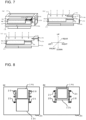
- Figs. 7(a) to 7(c) illustrate the structure and operation of the indoor unit 3 in Working Example 3, and illustrate a flow of air inside the indoor unit 3.
- Fig. 7(a) is a perspective view illustrating the structure of an indoor unit 3c in its entirety.
- Figs. 7(b) and 7(c) are front views of the indoor unit 3c, which is viewed from the front. Note that the differences between Working Example 1 illustrated in Figs. 5(a) to 5(e) and Working Example 3 illustrated in Figs. 7(a) to 7(c) and between Working Example 2 illustrated in Figs. 6(a) to 6(c) and Working Example 3 illustrated in Figs. 7(a) to 7(c) will be described below.
- a second air inlet 14c is provided through which outside air is sucked.
- the second air inlet 14c is provided at a position different from the position in Working Examples 1 and 2.
- the indoor unit 3c has the first indoor heat exchange units 4a, 4b, and 4c, and the second indoor heat exchange units 5b and 5c accommodated in the indoor unit 3c.
- the indoor unit 3c has a first damper 11c and a second damper 12c accommodated in the indoor unit 3c.
- the second damper 12c is located in the vicinity of the second air inlet 14c.
- the second damper 12c has a shape substantially the same as a shape of the second air inlet 14c. Additionally, the second damper 12c is larger in size than the second air inlet 14c.
- Fig. 7(a) illustrates the example in which the second damper 12c is located below the second air inlet 14c along the right face of the indoor unit 3c. While the second air inlet 14c has a square shape, the second damper 12c also has a square shape.
- the second damper 12c has a width and a length that are both greater than a width and a length of the second air inlet 14c.
- the second damper 12c has an operating means (not illustrated) and operates such that the second damper 12c is brought into any of an open state in which the second damper 12c does not interfere with outside air flowing from the second air inlet 14c into the indoor unit 3c, a closed state in which the second damper 12c closes the second air inlet 14c and stops the outside air from entering the indoor unit 3c, and a half-open state that is intermediate between the open state and the closed state.
- Fig. 7(b) illustrates the example in which the second damper 12c is positioned below the second air inlet 14c and is in an open state in which the second damper 12c does not close the second air inlet 14c.
- Fig. 7(b) illustrates the example in which the second damper 12c is positioned below the second air inlet 14c and is in an open state in which the second damper 12c does not close the second air inlet 14c.
- Fig. 7(b) illustrates the example in which the second damper 12c is positioned below
- FIG. 7(c) illustrates the example in which the second damper 12c has moved and is thus in a closed state in which the second damper 12c closes the second air inlet 14c. Note that, when the second damper 12c is in the closed state, since the second damper 12c is greater in size than the second air inlet 14c, the second damper 12c can completely seal the second air inlet 14c.
- any type of means can be used.
- the operating means of the second damper 12c may be manually operated by a user.
- Figs. 8(a) and 8(b) illustrate an example in which the operating means of the second damper 12c is manually operated.
- slits 20 with protruding portions may be provided at the right face of the indoor unit 3c, and tabs 21 that are movable along the slits 20 may be attached to the second damper 12c, and a user thus can move the tabs 21 to operate the second damper 12c.
- the second damper 12c is brought into the open state by the operating means described above.
- the second damper 12c is brought into the closed state by the operating means described above.
- the protruding portions are also provided at the middle of the respective slits 20, and the second damper 12c can be brought into the half-open state by a user moving the tabs 21 to the middle protruding portions described above.
- the first damper 11c is located inside the indoor unit 3c and between the first air inlet 13 and the second indoor heat exchange units 5b and 5c.
- the first damper 11c is installed in the rear face of the indoor unit 3c below the first air inlet 13.
- the shape and operation of the first damper 11c in the present working example are substantially the same as the shape and operation of the first damper 11b in Working Example 2. However, it is necessary to avoid the first damper 11c from interfering with the second damper 12c as will be described later.
- the first damper 11c has a size large enough to stop the room air sucked through the first air inlet 13 from entering the second indoor heat exchange units 5b and 5c.
- the first damper 11c similarly to Working Example 2, has a width greater than the width of the second indoor heat exchange unit 5b, and a length greater than the distance from the rear face of the indoor unit 3c to the front-side end portion of the second indoor heat exchange unit 5b.
- the first damper 11c needs to have a size such that the first damper 11c does not interfere with the second damper 12c when the second damper 12c is in the closed state and the first damper 11c is in an open state, which will be described later.
- the first damper 11c has an operating means (not illustrated) and operates such that the first damper 11c is brought into any of a closed state in which the first damper 11c stops room air sucked through the first air inlet 13 from entering the second indoor heat exchange units 5b and 5c, an open state in which the first damper 11c does not interfere with the room air entering the second indoor heat exchange units 5b and 5c, and a half-open state that is intermediate between the open state and the closed state.
- Figs. 7(a) and 7(b) illustrate the example in which the first damper 11c is in the closed state.
- Fig. 7(c) illustrates the example in which the first damper 11c is in the open state.
- any type of means can be used. Note that the operating means of the first damper 11c needs to have a size such that the first damper 11c does not interfere with the second damper 12c when the second damper 12c is in the closed state and the first damper 11c is in the open state.
- Figs. 7(b) and 7(c) illustrate a flow of air in the indoor unit 3c when the indoor unit 3c is viewed from the front.
- the second damper 12c is in the open state, while the first damper 11c is in the closed state.
- the second damper 12c is in the closed state, while the first damper 11c is in the open state.
- the first indoor heat exchange units 4a, 4b, and 4c, and the second indoor heat exchange units 5b and 5c are in a state in which the subcooled liquid region is reduced as illustrated by the solid line in Fig. 3 , and accordingly the efficiency of the heat exchanger increases in its entirety.
- the state in the first indoor heat exchange units 4a, 4b, and 4c, and the second indoor heat exchange units 5b and 4c is the same as the state in the existing heat exchanger illustrated by the dotted line in Fig. 3 , into which outside air is not drawn.
- the refrigeration cycle apparatus 100 in the present disclosure has the first indoor heat exchange unit 4 and the second indoor heat exchange unit 5.
- the indoor unit 3 is provided with the first air inlet 13 through which room air is sucked, and the second air inlet 14 through which outside air is sucked. Further, the first damper 11 and the second damper 12 are installed in the indoor unit 3.
- the second damper 12 When the refrigeration cycle apparatus 100 performs heating operation, the second damper 12 is brought into the open state, while the first damper 11 is brought into the closed state, and low-temperature outside air thus enters the second indoor heat exchange unit 5.
- ventilation is provided by drawing the outside air into a room.
- the indoor heat exchange unit 5 the amount of heat exchange between the refrigerant and the outside air increases, and the temperature of outside air entering the indoor unit thus can be quickly increased. Therefore, although ventilation is provided by allowing the outside air to enter the room, a reduction in the heating capacity is less likely to occur.
- the refrigeration cycle apparatus 100 achieves energy saving. Note that, when the outside air temperature is almost equal to the room air temperature, or when the outside air is contaminated, the second damper 12 is brought into the closed state, while the first damper 11 is brought into the open state, and the refrigeration cycle apparatus 100 thus can operate substantially the same as the existing refrigeration cycle apparatus.
- the partition wall 18 can also be provided to more reliably separate room air flowing in the indoor unit 3 from outside air.
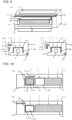
- Figs. 9(a), 9(b), and 9(c) illustrate the structure of the indoor unit 3a in Working Example 1 when the partition wall 18 is provided inside the indoor unit 3a.
- Figs. 9(a), 9(b), and 9(c) illustrate an example in which the partition wall 18 is attached to the rear face of the indoor unit 3a with the first damper 11a located at the tip end portion of the partition wall 18. Therefore, in Figs. 9(a), 9(b), and 9(c) , both the partition wall 18 and the first damper 11a are located between the first air inlet 13 and the second indoor heat exchange unit 5a.
- the first damper 11a operates, for example, such that the first damper 11a rotates about its connection portion with the partition wall 18. Specifically, in Fig. 9(b) , the first damper 11a is in the closed state, and prevents the room air sucked through the first air inlet 13 from flowing to the second heat exchange unit 5. In contrast, in Fig. 9(c) , the first damper 11a has rotated about its connection portion with the partition wall 18 and is thus in the open state. Therefore, the first damper 11a allows the room air sucked through the first air inlet 13 to enter the second heat exchange unit 5.
- the partition wall 18 and the first damper 11a are located in the manner as described above, which helps easily control a flow of air in the indoor unit 3a. This facilitates making use of the capacity of the refrigeration cycle apparatus as designed.
- Figs. 10(a) and 10(b) illustrate the structure of the indoor unit 3b in Working Example 2 when the partition wall 18 is provided inside the indoor unit 3b.
- the partition wall 18 is provided on the left of the second air inlet 14b.
- the second damper 12b is in the open state, and outside air is sucked through the second air inlet 14 into the indoor unit 3b and flows to the second heat exchange unit 5.
- room air is sucked through the first air inlet 13 into the indoor unit 3b, however, this room air flows in a direction limited by the first damper 11b and the partition wall 18, and thus very little amount of the room air flows to the second heat exchange unit 5.
- the first damper 11b is in the open state.
- the first damper 11b moves transversely in the drawings, while the partition wall 18 is provided such that the movement of the first damper 11b described above is allowed. Therefore, even in a case where the partition wall 18 is provided, the first damper 11b still operates properly, and in addition, flows of room air and outside air in the indoor unit 3b can be reliably controlled. This facilitates making use of the capacity of the refrigeration cycle apparatus as designed.
- the refrigeration cycle apparatus of the present disclosure is particularly applicable to performing heating operation while providing ventilation.
Landscapes
- Engineering & Computer Science (AREA)
- Chemical & Material Sciences (AREA)
- Combustion & Propulsion (AREA)
- Mechanical Engineering (AREA)
- General Engineering & Computer Science (AREA)
- Physics & Mathematics (AREA)
- Thermal Sciences (AREA)
- Fluid Mechanics (AREA)
- Air-Flow Control Members (AREA)
- Air Conditioning Control Device (AREA)
Applications Claiming Priority (1)
| Application Number | Priority Date | Filing Date | Title |
|---|---|---|---|
| PCT/JP2021/016303 WO2022224406A1 (ja) | 2021-04-22 | 2021-04-22 | 冷凍サイクル装置及び室内機 |
Publications (2)
| Publication Number | Publication Date |
|---|---|
| EP4328512A1 true EP4328512A1 (de) | 2024-02-28 |
| EP4328512A4 EP4328512A4 (de) | 2024-05-22 |
Family
ID=83722104
Family Applications (1)
| Application Number | Title | Priority Date | Filing Date |
|---|---|---|---|
| EP21937899.9A Withdrawn EP4328512A4 (de) | 2021-04-22 | 2021-04-22 | Kältekreislaufvorrichtung und innenraumeinheit |
Country Status (5)
| Country | Link |
|---|---|
| US (1) | US20240230139A9 (de) |
| EP (1) | EP4328512A4 (de) |
| JP (1) | JP7466764B2 (de) |
| CN (1) | CN117157493A (de) |
| WO (1) | WO2022224406A1 (de) |
Family Cites Families (11)
| Publication number | Priority date | Publication date | Assignee | Title |
|---|---|---|---|---|
| JP3456021B2 (ja) * | 1994-07-29 | 2003-10-14 | 株式会社デンソー | 車両用空気調和装置 |
| JPH0914690A (ja) * | 1995-06-27 | 1997-01-17 | Mitsubishi Electric Corp | 空気調和装置の室内ユニット |
| US5826443A (en) * | 1997-12-06 | 1998-10-27 | Ares; Roland | Heat pump with heat-pipe enhancement and with primary system reheat |
| JPH11257793A (ja) | 1998-03-12 | 1999-09-24 | Hitachi Ltd | 換気機能付き空気調和機 |
| JP2004294026A (ja) * | 2003-03-28 | 2004-10-21 | Fujitsu General Ltd | 空気調和機 |
| KR100519306B1 (ko) * | 2003-05-28 | 2005-10-10 | 엘지전자 주식회사 | 환기일체형 공조시스템 |
| JP5199041B2 (ja) * | 2008-11-27 | 2013-05-15 | シャープ株式会社 | 空気調和機 |
| JP5838316B2 (ja) * | 2011-05-26 | 2016-01-06 | パナソニックIpマネジメント株式会社 | 車両用空調装置 |
| JP2014066476A (ja) * | 2012-09-27 | 2014-04-17 | Panasonic Corp | 熱交換装置とそれを用いた発熱体収納装置 |
| KR101613963B1 (ko) * | 2014-12-08 | 2016-04-20 | 엘지전자 주식회사 | 히트펌프 사이클을 구비한 의류처리장치 |
| CN105485783B (zh) * | 2016-01-28 | 2018-07-03 | 海信(广东)空调有限公司 | 一种空调室内机 |
-
2021
- 2021-04-22 CN CN202180097105.1A patent/CN117157493A/zh active Pending
- 2021-04-22 JP JP2023515977A patent/JP7466764B2/ja active Active
- 2021-04-22 US US18/546,499 patent/US20240230139A9/en not_active Abandoned
- 2021-04-22 EP EP21937899.9A patent/EP4328512A4/de not_active Withdrawn
- 2021-04-22 WO PCT/JP2021/016303 patent/WO2022224406A1/ja not_active Ceased
Also Published As
| Publication number | Publication date |
|---|---|
| JPWO2022224406A1 (de) | 2022-10-27 |
| WO2022224406A1 (ja) | 2022-10-27 |
| CN117157493A (zh) | 2023-12-01 |
| EP4328512A4 (de) | 2024-05-22 |
| US20240230139A9 (en) | 2024-07-11 |
| JP7466764B2 (ja) | 2024-04-12 |
| US20240133576A1 (en) | 2024-04-25 |
Similar Documents
| Publication | Publication Date | Title |
|---|---|---|
| US9500396B2 (en) | Oil separator and air conditioner using the same | |
| US11047584B2 (en) | Air conditioner | |
| CN107327929B (zh) | 立式空调器以及立式空调器的控制方法 | |
| CN102597647A (zh) | 空调机 | |
| CN215001922U (zh) | 空调室内机 | |
| JP6750240B2 (ja) | 空気調和装置 | |
| CN215001903U (zh) | 空调室内机 | |
| EP3764020B1 (de) | Innenraumeinheit und klimaanlage | |
| EP3382295B1 (de) | Innenraumeinheit einer klimaanlage | |
| JP2002267204A (ja) | 除湿装置 | |
| CN214949389U (zh) | 空调室内机 | |
| EP4328512A1 (de) | Kältekreislaufvorrichtung und innenraumeinheit | |
| CN210601897U (zh) | 空调器 | |
| JP7450807B2 (ja) | 空気調和機 | |
| CN107327930A (zh) | 立式空调器以及立式空调器的控制方法 | |
| CN112577102B (zh) | 空调器 | |
| CN110805958B (zh) | 空调内机、空调器以及控制方法 | |
| JPWO2023170734A5 (de) | ||
| JP2011231952A (ja) | 空気調和装置 | |
| KR101218862B1 (ko) | 냉난방 동시형 멀티 공기 조화기 | |
| KR102944110B1 (ko) | 재열 기능을 가지는 히트 펌프를 포함하는 공기조화 시스템 | |
| JP2020063860A (ja) | 空気調和装置 | |
| KR20210121437A (ko) | 공기 조화기 | |
| CN222230710U (zh) | 空气处理系统 | |
| JP2024087326A (ja) | 冷凍装置 |
Legal Events
| Date | Code | Title | Description |
|---|---|---|---|
| STAA | Information on the status of an ep patent application or granted ep patent |
Free format text: STATUS: THE INTERNATIONAL PUBLICATION HAS BEEN MADE |
|
| PUAI | Public reference made under article 153(3) epc to a published international application that has entered the european phase |
Free format text: ORIGINAL CODE: 0009012 |
|
| STAA | Information on the status of an ep patent application or granted ep patent |
Free format text: STATUS: REQUEST FOR EXAMINATION WAS MADE |
|
| 17P | Request for examination filed |
Effective date: 20231017 |
|
| AK | Designated contracting states |
Kind code of ref document: A1 Designated state(s): AL AT BE BG CH CY CZ DE DK EE ES FI FR GB GR HR HU IE IS IT LI LT LU LV MC MK MT NL NO PL PT RO RS SE SI SK SM TR |
|
| A4 | Supplementary search report drawn up and despatched |
Effective date: 20240422 |
|
| RIC1 | Information provided on ipc code assigned before grant |
Ipc: F24F 7/007 20060101ALI20240416BHEP Ipc: F24F 7/003 20210101ALI20240416BHEP Ipc: F24F 1/0063 20190101ALI20240416BHEP Ipc: F24F 11/74 20180101AFI20240416BHEP |
|
| 18W | Application withdrawn |
Effective date: 20240619 |