EP4252842B1 - Ecm hydrogel for treating esophageal inflammation - Google Patents
Ecm hydrogel for treating esophageal inflammation Download PDFInfo
- Publication number
- EP4252842B1 EP4252842B1 EP23186922.3A EP23186922A EP4252842B1 EP 4252842 B1 EP4252842 B1 EP 4252842B1 EP 23186922 A EP23186922 A EP 23186922A EP 4252842 B1 EP4252842 B1 EP 4252842B1
- Authority
- EP
- European Patent Office
- Prior art keywords
- ecm
- esophagus
- hydrogel
- digest solution
- subject
- Prior art date
- Legal status (The legal status is an assumption and is not a legal conclusion. Google has not performed a legal analysis and makes no representation as to the accuracy of the status listed.)
- Active
Links
Images







Classifications
-
- A—HUMAN NECESSITIES
- A61—MEDICAL OR VETERINARY SCIENCE; HYGIENE
- A61K—PREPARATIONS FOR MEDICAL, DENTAL OR TOILETRY PURPOSES
- A61K35/00—Medicinal preparations containing materials or reaction products thereof with undetermined constitution
- A61K35/12—Materials from mammals; Compositions comprising non-specified tissues or cells; Compositions comprising non-embryonic stem cells; Genetically modified cells
-
- A—HUMAN NECESSITIES
- A61—MEDICAL OR VETERINARY SCIENCE; HYGIENE
- A61K—PREPARATIONS FOR MEDICAL, DENTAL OR TOILETRY PURPOSES
- A61K9/00—Medicinal preparations characterised by special physical form
- A61K9/06—Ointments; Bases therefor; Other semi-solid forms, e.g. creams, sticks, gels
-
- A—HUMAN NECESSITIES
- A61—MEDICAL OR VETERINARY SCIENCE; HYGIENE
- A61P—SPECIFIC THERAPEUTIC ACTIVITY OF CHEMICAL COMPOUNDS OR MEDICINAL PREPARATIONS
- A61P1/00—Drugs for disorders of the alimentary tract or the digestive system
- A61P1/04—Drugs for disorders of the alimentary tract or the digestive system for ulcers, gastritis or reflux esophagitis, e.g. antacids, inhibitors of acid secretion, mucosal protectants
Definitions
- This relates to the field of hydrogels, specifically to the use of an extracellular matrix (ECM) hydrogel for use in the treatment of esophageal inflammation such as Barrett's esophagus.
- ECM extracellular matrix
- EAC esophageal adenocarcinoma
- Barrett's esophagus involves metaplasia of the cells of the lower (distal) portion of the esophagus, and is characterized by the replacement of the normal stratified squamous epithelium lining of the esophagus by simple columnar epithelium with goblet cells. Barrett's esophagus is strongly associated with esophageal adenocarcinoma. The main cause of Barrett's esophagus is thought to be an adaptation and response to chronic acid exposure from reflux esophagitis.
- the cells of Barrett's esophagus after biopsy, are classified into four general categories: nondysplastic, low-grade dysplasia, high-grade dysplasia, and frank carcinoma.
- High-grade dysplasia and early stages of adenocarcinoma are usually treated by endoscopic resection and endoscopic therapies such as radiofrequency ablation, while nondysplastic and low-grade patients are generally advised to undergo annual observation with endoscopy.
- endoscopic therapies such as radiofrequency ablation
- nondysplastic and low-grade patients are generally advised to undergo annual observation with endoscopy.
- a need remains for methods and compositions that can be used for treating esophageal inflammation and Barrett's esophagus.
- ECM hydrogel When manufactured as a hydrogel, extracellular-matrix (ECM) bioscaffolds have bioactivity ( Freytes et al., Biomaterials 29: 1630-7, 2008 ).
- ECM hydrogel has unique physical and mechanical properties. These distinctive properties extend the applications of ECM beyond those possible for the sheet form.
- the ECM hydrogel in comparison to the sheet form, can be delivered to irregularly- shaped and sized surface areas, ensures contact of ECM with tissue that has an irregular topology, does not require a fixation device (e.g. sutures, stent) and does not impart adverse rigidity to the area where it is implanted.
- the hydrogel has the characteristic of being a liquid at room temperature (pre-gel), but becomes a gel when exposed to body temperature (37°C), making it easily deliverable through devices like syringes, catheters, irrigators, and probes, among others.
- ECM in sheet form has been used to treat late stage esophageal dysplastic and neoplastic disease, however, the need for a fixation device (i.e. stent), rigidity of the sheet form and relative invasiveness of implantation has not allowed it to expand its use.
- the distinctive properties of the ECM hydrogel make it ideal for application to a surface of the esophagus, and/or the treatment of esophageal disease that is not treatable with the sheet form.
- the ECM hydrogel's viscoelastic and mucoadhesion properties support its potential for the treatment of esophageal disease.
- the hydrogel can be used to reverse cancerous and pre-cancerous lesions in the esophagus.
- the sheet form has been used for treatment of esophageal late stage cancerous and precancerous disease with success.
- the sheet is placed circumferentially and held in place by a stent.
- fixation devices i.e. sutures or stents
- its inability to fill irregularly sized defects and its limited area of coverage (to the size of the sheet).
- these limitations have constrained the use of the ECM sheet to the treatment of late stage esophageal disease, one of the few situations where the use of a temporary stent and an advanced procedure is justified.
- the disclosed hydrogels can be administered topically to the esophagus.
- the hydrogel can be administered to the lumen of the esophagus to coat the surface. This is a non-invasive application.
- the application is oral, such as by swallowing. In other embodiments, application can be gavage.
- the hydrogel is formed at the surface of the esophageal tissue. In some embodiments, the hydrogel coats the mucosa, and does not invade into the underlying submucosa or musculature.
- a hydrogel such as a hydrogel produced from esophageal ECM
- the ECM hydrogel can inhibit inflammation and mitigate the effects of inflammation.
- the ECM hydrogel can reduce stricture.
- the ECM hydrogel is effective when utilized at concentrations of about 2 mg/ml to about 20 mg/ml, such as about 8 mg/ml to about 12 mg/ml.
- Comminute (comminution and comminuting): The process of reducing larger particles into smaller particles, including, without limitation, by grinding, blending, shredding, slicing, milling, cutting, shredding.
- ECM can be comminuted while in any form, including, but not limited to, hydrated forms, frozen, air-dried, lyophilized, powdered, sheet-form.
- Extracellular Matrix The non-cellular component of tissues and organs.
- Natural ECMs (ECMs found in multicellular organisms, such as mammals and humans) are complex mixtures of structural and non-structural biomolecules, including, but not limited to, collagens, elastins, laminins, glycosaminoglycans, proteoglycans, antimicrobials, chemoattractants, cytokines, and growth factors. In mammals, ECM often comprises about 90% collagen by dry weight mass, in its various forms. Biologic scaffolds can be created by removing the cells from a given tissue or organ. The composition and structure of ECMs vary depending on the source of the tissue.
- small intestine submucosa SIS
- urinary bladder matrix UBM
- esophagus E
- liver stroma ECM each differ in their overall structure and composition due to the unique cellular niche needed for each tissue.
- An intact "extracellular matrix” and “intact ECM” bioscaffold consists of extracellular matrix that ideally retains activity of its structural and non-structural biomolecules, including, but not limited to, collagens, elastins, laminins, glycosaminoglycans, proteoglycans, antimicrobials, chemoattractants, cytokines, and growth factors, such as, without limitation comminuted ECM as described herein.
- Gastroesophageal Reflux Disease A chronic symptom of mucosal damage caused by stomach acid refluxing from the stomach into the esophagus. GERD is usually caused by changes in the barrier between the stomach and the esophagus, including abnormal relaxation of the lower esophageal sphincter, which normally holds the top (proximal portion) of the stomach closed, impaired expulsion of gastric reflux from the esophagus, or a hiatal hernia. These changes may be permanent or temporary.
- Isotonic Buffered Solution A solution that is buffered to a pH between 7.2 and 7.8 and that has a balanced concentration of salts to promote an isotonic environment.
- Therapeutic agent Used in a generic sense, it includes treating agents, prophylactic agents, and replacement agents. "Treatment” or “treating” means providing a substance, such as a ECM hydrogel, to a patient in an amount sufficient to measurably reduce, inhibit, or mitigate any disease symptom, slow disease progression, or cause disease regression. In certain embodiments treatment of the disease may be commenced before the patient presents symptoms of the disease. The disclosed methods inhibit esophageal inflammation and/or mitigate the effects of esophageal inflammation.
- the ECM is isolated from a vertebrate animal, for example and without limitation, from a warm blooded mammalian vertebrate animal including, but not limited to, humans, monkeys, horses, pigs, cows and sheep. In specific non-limiting examples, the ECM is porcine or human.
- the ECM can be derived from any organ or tissue, including without limitation, urinary bladder, intestine, liver, esophagus and dermis. In one embodiment, the ECM is isolated from a urinary bladder. In another embodiment, the ECM is from an esophagus. The ECM may or may not include the basement membrane portion of the ECM. In certain embodiments, the ECM includes at least a portion of the basement membrane. In other embodiments, the ECM is harvested from a cell culture.
- the ECM hydrogel can be produced by a combination of two or more tissue sources.
- a urinary bladder ECM such as porcine bladder ECM is prepared by abrading bladder tissue to remove the outer (abluminal) layers including both the tunica serosa and the tunica muscularis using a longitudinal wiping motion with a scalpel handle and moistened gauze. Following eversion of the tissue segment, the luminal portion of the tunica mucosa is delaminated from the underlying tissue using the same wiping motion. In some embodiments, perforation of the submucosa is prevented. After these tissues are removed, the resulting ECM consists mainly of the tunica submucosa.
- the ECM is derived from small intestinal submucosa or SIS.
- Commercially available preparations include, but are not limited to, SURGISIS TM , SURGISIS-ES TM , STRATASIS TM , and STRATASIS-ES TM (Cook Urological Inc.; Indianapolis, Ind.) and GRAFTPATCH TM (Organogenesis Inc.; Canton Mass.).
- the ECM is derived from dermis.
- ECM is derived from urinary bladder.
- Commercially available preparations include, but are not limited to UBM (Acell Corporation; Jessup, Md.).
- Source tissue used for preparation of ECM can be harvested in a large variety of ways and once harvested, a variety of portions of the harvested tissue may be used.
- ECM has also been prepared from the esophagus and small intestine, and hydrogels have been prepared from this ECM, see, for example, Keane et al., Tissue Eng. Part A, 21(17-18): 2293-2300, 2015 .
- Esophageal ECM can be prepared by mechanically separating the mucosa and submucosa from the muscularis externa and digesting the mucosal layers in a buffer including trypsin, followed by exposure to sucrose, TRITON-X100 ® , deoxycholic acid, peracetic acid and DNAse.
- Small intestinal submucosa can be prepared by mechanically removing the superficial layers of the tunica mucosa, tunica serosa, and tunica muscularis externa from the intact small intestine, leaving the submucosa, muscularis mucosa, and basilar stratum compactum intact. The SIS is then treated with peracetic acid. Exemplary protocols are provided in Keane et al.
- the ECM is isolated from harvested porcine urinary bladder to prepare urinary bladder matrix (UBM). Excess connective tissue and residual urine are removed from the urinary bladder.
- the tunica serosa, tunica muscularis externa, tunica submucosa and most of the muscularis mucosa can be removed by mechanical abrasion or by a combination of enzymatic treatment, hydration, and abrasion. Mechanical removal of these tissues can be accomplished by abrasion using a longitudinal wiping motion to remove the outer layers (particularly the abluminal smooth muscle layers) and even the luminal portions of the tunica mucosa (epithelial layers).
- the epithelial cells can be delaminated first by first soaking the tissue in a de-epithelializing solution such as hypertonic saline, for example and without limitation, 1.0 N saline, for periods of time ranging from 10 minutes to 4 hours. Exposure to hypertonic saline solution effectively removes the epithelial cells from the underlying basement membrane.
- the tissue remaining after the initial delamination procedure includes epithelial basement membrane and the tissue layers abluminal to the epithelial basement membrane. This tissue is next subjected to further treatment to remove the majority of abluminal tissues but not the epithelial basement membrane.
- the outer serosal, adventitial, smooth muscle tissues, tunica submucosa and most of the muscularis mucosa are removed from the remaining de-epithelialized tissue by mechanical abrasion or by a combination of enzymatic treatment, hydration, and abrasion.
- standard techniques including, but not limited to, exposure to peracetic acid, low dose gamma radiation, gas plasma sterilization, ethylene oxide treatment, supercritical CO 2 , or electron beam treatment. More typically, sterilization of ECM is obtained by soaking in 0.1% (v/v) peracetic acid, 4% (v/v) ethanol, and 95.9% (v/v) sterile water for two hours. The peracetic acid residue is removed by
- ECM material can be sterilized by propylene oxide or ethylene oxide treatment, gamma irradiation treatment (0.05 to 4 mRad), gas plasma sterilization, peracetic acid sterilization, supercritical CO 2 , or electron beam treatment.
- the ECM can also be sterilized by treatment with glutaraldehyde, which causes cross linking of the protein material, but this treatment substantially alters the material such that it is slowly resorbed or not resorbed at all and incites a different type of host remodeling which more closely resembles scar tissue formation or encapsulation rather than constructive remodeling.
- Cross-linking of the protein material can also be induced with carbodiimide or dehydrothermal or photooxidation methods. As disclosed in U.S. Patent No.
- ECM is disinfected by immersion in 0.1% (v/v) peracetic acid (a), 4% (v/v) ethanol, and 96% (v/v) sterile water for 2 h.
- decellularization is performed by various methods, for example and without limitation, exposure to hypertonic saline, peracetic acid, TRITON-X ® or other detergents. Sterilization and decellularization can be simultaneous. For example and without limitation, sterilization with peracetic acid, described above, also can serve to decellularize the ECM. Decellularized ECM can then be dried, either lyophilized (freeze-dried) or air dried. Dried ECM can be comminuted by methods including, but not limited to, tearing, milling, cutting, grinding, and shearing.
- the comminuted ECM can also be further processed into a powdered form by methods, for example and without limitation, such as grinding or milling in a frozen or freeze-dried state.
- comminuted ECM is digested with an acid protease in an acidic solution to form a digest solution.
- the digest solution of ECM typically is kept at a constant stir for a certain amount of time at room temperature.
- the ECM digest can be used immediately or be stored at -20° C. or frozen at, for example and without limitation, -20° C or -80° C.
- the pH of the solution is raised to between 7.2 and 7.8, and according to one embodiment, to pH 7.4.
- Bases such as bases containing hydroxyl ions, including NaOH, can be used to raise the pH of the solution.
- buffers such as an isotonic buffer, including, without limitation, Phosphate Buffered Saline (PBS), can be used to bring the solution to a target pH, or to aid in maintaining the pH and ionic strength of the gel to target levels, such as physiological pH and ionic conditions.
- PBS Phosphate Buffered Saline
- pre-gel The neutralized digest solution (pre-gel) can be gelled at temperatures approaching 37° C, wherein the temperature approaches physiological temperature.
- the method typically does not include a dialysis step prior to gelation, yielding a more-complete ECM-like matrix that typically gels at 37° C at specific rates (see below).
- the ECM typically can be derived from mammalian tissue, such as, without limitation from one of urinary bladder, esophagus, or small intestine.
- the ECM hydrogel can be produced from two or more tissue source, such as 2, 3, or 4 tissue sources.
- the ECM is lyophilized and comminuted.
- the ECM is then solubilized with an acid protease in an acidic solution to produce digested ECM, such as esophageal ECM.
- the acid protease may be, without limitation, pepsin or trypsin, or a combination thereof.
- the ECM can then be solubilized at an acid pH suitable or optimal for the protease, such as greater than about pH 2, or between pH and 4, for example in a 0.01M HCl solution.
- the solution typically is solubilized for about 12 to about 48 hours, depending upon the tissue type (e.g., see examples below), with mixing (stirring, agitation, admixing, blending, rotating, tilting, etc.).
- ECM hydrogel is prepared by (i) comminuting an extracellular matrix, (ii) solubilizing intact, non-dialyzed or non-cross-linked extracellular matrix by digestion with an acid protease in an acidic solution to produce a digest solution, (iii) raising the pH of the digest solution to a pH between 7.2 and 7.8 to produce a neutralized digest solution (pre-gel solution), and (iv) gelling the solution at a temperature of approximately 37° C within the esophagus of a subject of interest.
- the ECM hydrogel when exposed to temperatures of about 37° C, forms the gel.
- the ECM hydrogel in the "pre-gel” form can be frozen and stored at, for example and without limitation, -20° C or -80° C.
- the ECM hydrogel in the "pre-gel” form can be stored at room temperature, such about 25 °C.
- the ECM hydrogel is in the pre-gel form at below 37° C, such as at 25, 24, 23, 22, 21, 20, 19, 18, 17, 16, 15, 14, 13, 12, 11, 10, 9, 8, 7, 6, 5, 4° C.
- the ECM hydrogel can be frozen for storage, and thus, can be stored at below 0° C.
- pre-gel form refers to the ECM hydrogel wherein the pH is increased, but has not gelled.
- an ECM hydrogel in the pre-gel form has a pH between 7.2 and 7.8.
- the ECM hydrogel can be delivered in a pre-gel form to a subject with esophageal inflammation, such as orally, via a catheter, or endoscopically.
- the ECM hydrogel in the pre-gel form is amenable to introduction into the esophagus of a patient. Once introduced into the esophagus, which is approximately 37 °C, the ECM hydrogel gels and coats the esophagus.
- the ECM hydrogel includes many native soluble factors, such as, but not limited to, cytokines.
- the specific characteristics of non-dialyzed (whole ECM) preparations prepared from a variety of tissues, such as the esophagus, are disclosed herein.
- the hydrogel gels with kinetics such that the ECM hydrogel can be administered via oral administration, endoscopic administration, or via a catheter into the esophagus, and the hydrogel subsequently gels within, and coats, the esophagus.
- the ECM hydrogel has the following characteristics: a) a time to 50% gelation of less than 30 minutes at a temperature of about 37 °C; b) a flow viscosity suitable for infusion into the esophagus; and c) a stiffness of i) about 10 to about 300 Pascal (Pa), ii) about 10 to about 450 Pa; iii) about 10 to about 600 Pa, iv) about 5 to about 1,000 Pa, v) about 10 to 1,000 Pa, or vi) about 10 to about 70 Pa.
- the ECM hydrogel has the following characteristics: a) a time to 50% gelation of less than 30 minutes at a temperature of about 37 °C; b) a flow viscosity suitable for infusion into the esophagus; and c) a stiffness of about 10 to about-300 Pascal (Pa). In other embodiments, the ECM hydrogel has the following characteristics: a) a time to 50% gelation of less than 30 minutes at a temperature of about 37 °C; b) a flow viscosity suitable for infusion into the esophagus; and c) a stiffness of about 10 to about 450 Pascal (Pa).
- the ECM hydrogel has the following characteristics: a) a time to 50% gelation of less than 30 minutes at a temperature of about 37 °C; b) a flow viscosity suitable for infusion into the esophagus; and c) a stiffness of about 10 to about 600 Pascal (Pa).
- the ECM hydrogel has the following characteristics: a) a time to 50% gelation of less than 30 minutes at a temperature of about 37 °C; b) a flow viscosity suitable for infusion into the esophagus; and c) a stiffness of about 5 to about 1,000 Pascal (Pa). In other embodiments, the ECM hydrogel has the following characteristics: a) a time to 50% gelation of less than 30 minutes at a temperature of about 37 °C; b) a flow viscosity suitable for infusion into the esophagus; and c) a stiffness of about 10 to about 1,000 Pascal (Pa).
- the ECM hydrogel has the following characteristics: a) a time to 50% gelation of less than 30 minutes at a temperature of about 37 °C; b) a flow viscosity suitable for infusion into the esophagus; and c) a stiffness of 10-70 Pascal (Pa).
- the ECM hydrogel is an esophageal hydrogel.
- the ECM hydrogel can be produced from two or more tissue sources.
- the ECM hydrogel can be produced from urinary bladder or small intestine.
- the ECM hydrogel is produced by (a) solubilizing acellular extracellular matrix (ECM) by digestion of tissue with an acid protease in an acidic solution to produce digested esophageal ECM; (b) raising the pH of the digested ECM to a pH between 7.2 and 7.8 to produce a neutralized digest solution; (c) diluting the digested ECM to a concentration of about 2 mg/ml to about 16 mg/ml, such as about 8 mg/ml to about 12 mg/ml of the ECM hydrogel. This hydrogel is then introduced into the esophagus of the subject, wherein it gels.
- the ECM can be esophageal ECM.
- the ECM hydrogels of use in the methods disclosed herein have a time to 50% gelation of less than 30 minutes at a temperature of about 37 °C, such as less than 29, 28, 27, 26, 25, 24, 23, 22, 21, 20, 19, 18, 17, 16, 15, 14, 13, 12, 1, 10, 9, 8, 7, 6, 5, 4, 3 minutes.
- the ECM hydrogels have a time to gelation of less than 10 minutes at a temperature of about 37 °C.
- the time to 50% gelation is about 3 to about 30 minutes at a temperature of about 37 °C.
- the time to 50% gelation is about 4 to about 10 minutes at a temperature of about 37 °C.
- the time to 50% gelation is about 5 to about 10 minutes or about 10 to about 20 minutes at a temperature of about 37 °C.
- the disclosed ECM hydrogels can have a flow viscosity suitable for infusion into the esophagus.
- the ECM hydrogel has a flow viscosity of about 10 to about 100 Pa*s at a sheer rate of 0.2/s, such as about 10, 20, 30, 40, 50, 60, 70, 80, or 90 Pa*s at a sheer rate of 0.2/s.
- the ECM hydrogel has a flow viscosity of about 1 to about 40 Pa*s at a shear rate of 0.1/s, such as about 1, 2, 3, 4, 5, 6, 7, 8, 9, 10, 15, 20, 25, 30, 35, or 40 Pa*s at a shear rate of 0.1/s.
- the ECM hydrogel has a flow viscosity of about 0.01 to about 0.20 Pa*s at a sheer rate of 1000/s, or of about 0.01 to about 0.10 Pa*s at a sheer rate of 1000/s, such as about 0.01, 0.02, 0.03, 0.04, 0.05, 0.06, 0.07, 0.08, 0.09, 0.10, 0.11, 0.12, 0.13, 0.14, 0.15, 0.16, 0.17, 0.19 or 0.2 at a sheer rate of 1000/s.
- the ECM hydrogel has about 0.02 to about 0.8 Pa*s at a shear rate of 100/s, or of about 0.1 to about 0.8 Pa*s at a shear rate of 100/s, such as about 0.02, 0.03, 0.04, 0.05, 0.06, 0.07, 0.08, 0.09, 0.1, 0.2, 0.3, 0.4, 0.5, 0.6, 0.7, or 0.08 Pa*s.
- the ECM hydrogel has a flow viscosity of about 10 to about 100 Pa*s at a sheer rate of 0.2/s and a flow viscosity of about 0.01 to about 0.10 Pa*s at a sheer rate of 1000/s. In more embodiments, the ECM hydrogel has a flow viscosity of 1 to 40 Pa*s at a shear rate of 0.1/s and 0.01 to 0.2 Pa*s at a shear rate of 1000/s.
- the ECM hydrogel has a flow viscosity of about 1 to about 40 Pa*s, such as 1 to about 30 Pa*s, or 1 to about 20 Pa*s, or 1 to about 10 Pa*s at a sheer rate of 1/s, such as about 1, 2, 3, 4, 5, 6, 7, 8, or 9 Pa*s at a sheer rate of 1/s.
- the shear rate can be, for example, 10, 20, 30 or 40 Pa*s at a sheer rate of 1/s.
- the ECM hydrogel has a flow viscosity of about 0.05 to about 0.20 at a sheer rate of 100/s, such as about 0.05, 0.06, 0.07, 0.08, 0.09, 0.1, 0.15 or 0.2 at a sheer rate of 100/s.
- the flow viscosity is about 0.1 to about 25 Pa*s at a shear rate of 1/s, and is about 0.02 to about 0.8 Pa*s at a shear rate of 100/s. In additional embodiments, the flow viscosity is about 1 to about 10 Pa*s at a shear rate of 1/s, and is about 0.05 to about 0.20 at a shear rate of 100/s.
- the ECM hydrogel has a flow viscosity of about 10 to about 100 Pa*s at a sheer rate of 0.2/s. In other embodiments, the ECM hydrogel has a flow viscosity of about 0.01 to about 0.10 Pa*s at a sheer rate of 1000/s. In other embodiments, the ECM hydrogel has a flow viscosity of about 1 to about 40 Pa*s at a shear rate of 0.1/s and is 0.01 to 0.2 Pa*s at a shear rate of 1000/s.
- the disclosed ECM hydrogels have a stiffness of about 10 to about 80, 90, 100, 110, 120, 130, 140, 150, 160, 170, 180, 190, 200, 210, 220, 230, 240, 250, 260, 270, 280, 290, or 300 Pa.
- the disclosed ECM hydrogel can have a stiffness of about 70, 75, 80, 85, 90, 95, 100, 110, 120, 130, 140, 150, 160, 170, 180, 190, 200, 210, 220, 230, 240, 250, 260, 270, 280, 290, or 300Pa.
- the ECM concentration in the hydrogel is about 2 mg/ml to about 20 mg/ml, such as about 8 mg/ml to about 12 mg/ml or about 2mg/ml to about 16 mg/ml. In other embodiments, the ECM concentration in the hydrogel is about 2, 3, 4, 5, 6, 7, 8, 9, 10, 11, 12, 13, 14, 15, or 16 mg/ml. Exemplary concentrations of use include, but are not limited to, about 9 mg/ml to about 11 mg/ml, and about 10/mg to about 12 mg/ml.
- Additional exemplary concentrations include about 8 mg/ml to about 10 mg/ml, about 8 mg/ml to about 11 mg/ml, about 8 mg/ml o about 13 mg/ml, about 8 mg/ml to about 14 mg/ml, about 8 mg/ml to about 15 mg/ml, and about 8 mg/ml to about 16 mg/ml. Further exemplary concentrations of use also include about 6 mg/ml to about 12 mg/ml, about 13 mg/ml, about 14 mg/ml, about 15 mg/ml or about 16 mg/ml.
- the disclosed ECM hydrogels can be provided as components of a kit.
- the ECM hydrogel can be provided in frozen or lyophilized form.
- the kit can include the components needed to form the hydrogel, such as one container including the hydrogel, such as in a lyophilized form, one container including a solution for solubilizing the lyophilized hydrogel, and optionally a container comprising a neutralizing solution for neutralizing the solubilized form.
- the kit can include a container including the solubilized hydrogel, and a second container including a neutralizing agent.
- such a kit includes additional components including packaging, instructions and various other reagents, such as buffers, substrates, or other therapeutic ingredients.
- the kit can include a container and a label or package insert on or associated with the container.
- Suitable containers include, for example, bottles, vials, syringes, etc.
- the containers may be formed from a variety of materials such as glass or plastic.
- the container typically holds a composition including the ECM hydrogel, such as in frozen or lyophilized form, which is effective for inhibiting esophageal inflammation and/or mitigating the effects of esophageal inflammation in a subject.
- the container may have a sterile access port (for example the container may be an intravenous solution bag or a vial having a stopper pierceable by a hypodermic injection needle).
- the label or package insert indicates that the composition is used for treating the particular condition, such as Barrett's esophagus.
- the label or package insert typically will further include instructions for use.
- the package insert typically includes instructions customarily included in commercial packages of therapeutic products that contain information about the indications, usage, dosage, administration, contraindications and/or warnings concerning the use of such therapeutic products.
- the instructional materials may be written, in an electronic form (such as a computer diskette or compact disk) or may be visual (such as video files).
- the kits may also include additional components to facilitate the particular application for which the kit is designed, such as needles or catheters.
- the kits may additionally include buffers and other reagents routinely used for the practice of a particular method. Kits and appropriate contents are well known to those of skill in the art.
- an ECM hydrogel allows treatment of early stage neoplastic esophageal disease and dysplastic esophageal disease.
- the disclosed hydrogels can be used to treat both pre-neoplastic and neoplastic esophageal diseases.
- the versatility of the disclosed hydrogels allow them to be used to treat esophageal burns, ulcerations and other pathologies which can extend throughout multiple, non-connected areas of the esophagus.
- the disclosed hydrogels are also of use for treatment of long segment or disperse esophageal injuries without the need for the use of stent or invasive techniques. It is not feasible to use the sheet form of ECM in these conditions, because multiple stents and ECM sheets across the surface of the esophagus would be required. Furthermore, the sheet and hydrogel form of ECM have major differences in terms of active components. Any of the disclosed hydrogels are of use in these methods of treatment. One of skill in the art, such as a skilled physician, can readily identify therapeutic efficacy.
- a subject can be selected that has esophageal inflammation.
- a subject can has be selected that has, or is at risk for having structure of the esophagus.
- the subject is apparently healthy, such as a subject who does not exhibit symptoms of esophageal adenocarcinoma (EAC) (for example, does not have EAC, and/or has not previously had gastroesphogeal reflux disease (GERD) or Barrett's esophagus), but has esophageal inflammation.
- EAC esophageal adenocarcinoma
- GSD gastroesphogeal reflux disease
- Barrett's esophagus Barrett's esophagus
- a healthy subject is one that if examined by a medical professional, would be characterized as healthy and free of symptoms, such as GERD.
- the subject has esophageal inflammation, for example as determined by endoscopic administration. In some embodiments, the disclosed methods inhibit this inflammation.
- the subject has GERD and/or Barrett's esophagus.
- the subject can use acid reducing drugs such as proton pump inhibitors or histamine antagonists to suppress gastroesophageal discomfort.
- the subject may be at increased risk due to smoking and/or alcohol use.
- the subject can have low grade dysplasia or high grade dysplasia of the esophagus.
- the subject does not have esophageal adenocarcinoma. However, the subject can be at risk for esophageal adenocarcinoma.
- the method inhibits or reverses the development of esophageal neoplasia in the subject. In other embodiments, the method restores the epithelial barrier in the esophagus of the subject. In further embodiments, the method increases chemotaxis of both epithelial cells and/or stem cells to the site of injury in the esophagus of the subject. In further embodiments, the method inhibits the development of esophageal adenocarcinoma. In other embodiments the treatment permits the subject to reduce or avoid use of proton pump inhibitors and/or histamine antagonist drugs. However, the disclosed methods can be used in conjunction with proton pump inhibitors and/or histamine antagonist drugs.
- treatment reduces stricture as compared to a control, such as a subject not treated with the ECM hydrogel.
- the treatment can increase circumference of the esophagus as compared to a control, such as a subject not treated with the ECM hydrogel.
- An ECM hydrogel as disclosed herein, is maintained at a temperature at or below which it gels, such as at or below room temperature (e.g., about 25 °C).
- the ECM hydrogel can be maintained, for example, at 25 °C or 4 °C prior to administration.
- An effective amount of the ECM hydrogel, in the pre-gel form, is then administered to the esophagus of the subject.
- the ECM hydrogel can be administered orally, such that the hydrogel is swallowed by the subject and gels when delivered to the esophagus.
- the ECM hydrogel can be administered directly to the esophagus, using either a catheter or by endoscopic administration.
- the ECM hydrogel gels in the esophagus of the subject, which is at a temperature of approximately 37 °C.
- about 5 to about 60 ml of the ECM hydrogel is administered to the subject, such as about 10 ml to about 30 ml of the ECM hydrogel, such as about 10, 15, 20, 25 or 20 ml of the ECM hydrogel.
- the ECM hydrogel can be provided in in a lyophilized or frozen form, and reconstituted just prior to administration to the subject.
- the disclosed methods include administering to the esophagus of the subject, such as, but not limited to, a subject with esophageal inflammation, or a subject with stricture or at risk for structure, a therapeutically effective amount of an ECM hydrogel as disclosed herein, in the pre-gel form, and allowing the hydrogel to gel in the esophagus of the subject.
- the ECM hydrogel a) a time to 50% gelation of less than 30 minutes at a temperature of about 37 °C, b) a flow viscosity suitable for infusion into the esophagus; and c) a stiffness of 10-70 Pascal (Pa).
- any of the hydrogels disclosed above can be utilized.
- the ECM hydrogel can, in some embodiments, be derived from any mammalian tissue, such as but not limited to porcine or human tissue, and be, in some non-limiting examples, urinary bladder, small intestine, or the esophagus. Any of the hydrogels disclosed above can be used in for the treatment of esophageal inflammation and/or for restoring an epithelial barrier in the esophagus of a subject. Any of the hydrogels disclosed above can also be used to treat stricture. In some embodiments, local delivery to the surface avoids any undesired side effects. In specific non-limiting example, the subject has Barrett's esophagus or is at risk for having Barrett's esophagus.
- the disclosed hydrogels can be administered topically to the mucosa of the esophagus in the pre-gel form.
- the hydrogel can be administered to the lumen of the esophagus to coat the surface, using a non-invasive method of application.
- the application is oral, such as by swallowing the hydrogel in the pre-gel form.
- application can be gavage, wherein the hydrogel in the pre-gel form is place at the desired location.
- the hydrogel coats the mucosa, and does not invade into the underlying submucosa or musculature.
- the hydrogel is provided in the pre-gel form via endoscopy to make sure that the medicament is locally delivered, such as specifically to the region of the esophagus that needs treatment.
- local delivery of the hydrogel can be via an endoscope/gastroscope.
- delivery is topical to the mucosa of the esophagus, in order to non-invasively deliver the pre-gel form of the hydrogel.
- the hydrogel gels at the surface and coats the desired area of the mucosa.
- the ECM hydrogel gels and provides a protective barrier to protect the mucosa.
- esophagogastroduodenoscopy (EGD) or upper gastrointestinal endoscopy can be performed for the subject of interest. These procedures can be performed before the application of the hydrogel, select the subject of interest. These procedures can also be performed following the use of the disclosed methods, to evaluate the effects on the subject, and to determine if additional applications are necessary.
- Mucosal inflammation is an inflammatory condition characterized by swelling, irritation, and discomfort of the mucosal linings of the gastrointestinal tract. Mucositis can result in erosions or ulcers, which can be present throughout the gastrointestinal tract. As an inflammation of the mucosal lining, which often involves infection and/or ulceration, mucositis is a serious and often painful condition. It is disclosed herein that extracellular matrix (ECM) hydrogels are a potential therapeutic for treating mucosal inflammation, such as esophageal inflammation. The ECM hydrogel can provide a protective barrier from continued insult to the mucosa, promote an environment that is anti-inflammatory, and/or facilitates repair of damaged and inflamed mucosa.
- ECM hydrogel can provide a protective barrier from continued insult to the mucosa, promote an environment that is anti-inflammatory, and/or facilitates repair of damaged and inflamed mucosa.
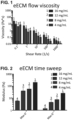
- eECM homologous esophageal ECM hydrogels for a range of ECM concentrations (4-16 mg/mL). Samples were placed on a rheometer at 10°C, a temperature well below gelation, and a steady state flow test (shear rate 0.1 -1000 1/s) was performed to determine the viscosity profile of the ECM pre-gels ( FIG. 1 ).
- ECM pre-gels At each shear rate, viscosity increases with increasing ECM concentration, and the ECM pre-gels are shear-thinning (viscosity decreases with increasing shear rate). Shear-thinning is a good property for an ECM pre-gel that may be injected through a catheter where it can experience a range of shear rates of 10-1000 1/s. Further evidence of injectability was obtained in videos, which showed ECM pre-gels (Esophageal ECM and UBM, 8-12 mg/mL tested dyed in blue) are all injectable through an oral gavage (5fr size, ⁇ 15.9 G). Temperature was then rapidly raised to 37°C to induce gelation, and a time sweep (0.5% oscillatory strain) was performed at 37°C to measure gel stiffness ( FIG.
- FIG. 2 shows that the storage modulus (G') or "stiffness" of the formed ECM hydrogel increases with increasing ECM concentration. A similar trend was observed for the loss modulus (G''), or the viscous component of the formed ECM hydrogel.
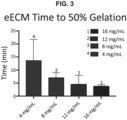
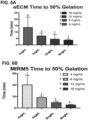
- the time to 50% gelation was measured during the time sweep test ( Figure 3 ).
- eECM shows concentration dependent gelation times i.e., gelation time decreased with increasing ECM concentration.
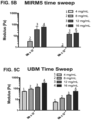
- UBM ECM ( FIG. 5C ) showed increasing storage modulus (stiffness) with increasing ECM concentration similarly as esophageal ECM ( FIG. 5A ).
- Dermal ECM ( FIG. 5B ) did not form a hydrogel at the low concentration of 4 mg/mL, demonstrating that not all ECM hydrogels derived from different tissue sources behave similarly.
- the stiffness ranges of the three ECM hydrogels was distinctive.
- esophageal hydrogels provide unique properties, and are of use at a variety of concentrations such as, but not limited to, from 8 mg/ml to about 12 mg/ml.
- Mucosal inflammation is an inflammatory condition characterized by swelling, irritation, and discomfort of the mucosal linings of the gastrointestinal tract. Mucositis can result in ulcers, which can be present throughout the gastrointestinal tract. As an inflammation of the mucosal lining, which often involves infection and/or ulceration, mucositis is a serious and often painful condition.
- Mucositis often develops as a complication of chemo- or radiation therapy for cancer, for example.
- Exposure to radiation and/or chemotherapeutics often results in significant disruption of cellular integrity in mucosal epithelium and the underlying connective tissue, leading to inflammation, infection and/or ulceration at mucosal sites such as, for example, in the esophagus and other portions of the Gl tract.
- Extracellular matrix (ECM) hydrogels are a therapeutic for treating mucosal inflammation.
- ECM Extracellular matrix
- the mechanism by which ECM may support mucosal healing is (1) by formation of a hydrogel that provides a protective barrier from continued insult to the mucosa, (2) by promoting an environment that is anti-inflammatory, and/or (3) by facilitating repair of damaged and inflamed mucosa.
- the properties of esophageal hydrogels were investigated, as disclosed in Example 1.
- Macrophages when exposed to ECM hydrogels, elicit a secreted cytokine profile that is primarily anti-inflammatory, including elevated levels of PGE2 ( FIG. 7 ).
- the level of anti-inflammatory cytokines varies depending upon the tissue from which the ECM was derived. Esophageal hydrogels provide strong anti-inflammatory effects.
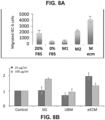
- ECM hydrogels can promote the restoration of an epithelial barrier by increasing the chemotaxis of both epithelial cells and stem cells.
- the secreted products of macrophages exposed to ECM enhance the migration of epithelial cells ( FIG. 8A ).
- ECM hydrogels directly promote the chemotaxis of esophageal stem cells; these effects are dependent upon the source tissue from which the ECM was derived ( FIG. 8B ).
- Esophageal stem cells migrated preferentially towards esophageal ECM and small intestine ECM.
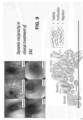
- FIG. 9 shows exemplary treatment of Barrett's esophagus.
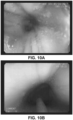
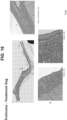
- FIG. 10A shows the effects forty minutes after oral administration, the hydrogel remained coating the mucosa despite normal swallowing and could be identified. This was performed to test the mucoadhesiveness of the gel in-vivo to confirm that oral swallowing was effective.
- FIG. 10B using a catheter and endoscope, the hydrogel was delivered to a specified location within the esophagus (in this case in the shape of a ring). Thus, the hydrogel was delivered to a specific topical location within the esophagus.
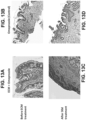
- FIG. 11 also shows the effects of hydrogel treatment.
- the top row is the result of constant reflux for at least three months in the animals, with esophageal inflammation.
- the three dogs to the left were treated with Omeprazole (a proton pump inhibitor) and the esophageal ECM hydrogel.
- the last animal (right panel) was only treated with Omeprazole.
- improvement in esophageal inflammation can be seen in the three animals that received ECM hydrogel.
- the animal that only received Omeprazole showed no improvement (gray box, right panels).
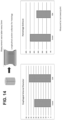
- FIGS. 12A-12B show an evaluation of the safety of the ECM hydrogel.
- the animals underwent a procedure that increased the acid reflux to create esophagitis, and subsequently create Barrett's Esophagus. None of the eight animals lost weight after surgery to induce BE nor during treatment with the hydrogel ( FIG. 12A ).
- Physiological parameters were analyzed. After 30 days of twice daily administration of the hydrogel, the animal's physiologic parameters were stable and did not go out of the normal range ( FIG. 12B ).
- a full circumferential mucosal resection of 5 cm of longitudinal width was performed using a combination of EMR and ESD techniques (Nieponice, 2009, 18657808) in two mongrel dogs. Evaluated treatments were twice daily administration of UBM hydrogel and an untreated control. Endoscopy was performed if animals presented any clinical signs of stricture or had reached 1 month after the procedure. According the endoscopic findings on the animals, a dilation was performed if possible and necessary. Animals were euthanized if they presented severe stricture or reached the 2 month timepoint after the balloon dilation. At the necropsy, animal tissue was measured to determine stricture and samples were harvested for histologic analysis. This animal model allowed measuring the following endpoints:
- Each dog was induced with Acepromazine (0.01 mg/kg, SC) and ketamine (5-11 mg/kg), and surgical plane anesthesia maintained with 1-5% Isofluorane via endotracheal tube. After induction, the animal was moved to the surgery table and positioned inside the sterile surgical theater. Throughout the procedure and observation animals were infused with 2 ml/kg/h of lactated Ringer's solution. Temperature was controlled through warm water recirculating heating pads placed under the animal. Physiologic parameters such as heart, respiration rate, body temperature, and responsiveness were monitored during the procedure. Antibiotic prophylaxis with 25mg/kg of Cefazolin was administered before starting the procedure.
- the animal was placed in supine decubitus with and a Pentax EG3430K endoscope was used to evaluate the esophagus. Distance from the mouth to the GE junction was measured. After identifying reference points in the esophagus, the mucosa and submucosa were separated by with injection of saline using a Olympus Injectorforce 4mm 23G needle. The full circumference of the mucosa (100%) for a length of 5 cm was removed using the ESD and Loop EMR technique. The ESD technique was done by injecting fluid or ECM into the mucosa/submucosa to separate the mucosa from the submucosa then using an endoscopic TT knife to cut the area. To perform EMR, a Cook Duette Kit with a ligation band was used. The mucosa was then excised with the use of a snare. The area of resection was demarked using Spot Endoscopic Marker.
- mice were continually monitored for 24 hours. Body temperature was determined and recorded every 12 hours. The animals were kept warm and dry to prevent hypothermia and was rotated once per half-hour until they maintained a sternal position.
- Dogs were held in single housing with other animals in the room until animals were stable, and then placed in normal living facilities. Buprenorphine (0.005-0.01 mg/kg IM or IV, q12h), was administered following each surgical procedure for 5 days for pain and was continued if signs of pain were present and cephalexin (35 mg/kg q12) for 5 days.
- Buprenorphine 0.005-0.01 mg/kg IM or IV, q12h
- animals were monitored for signs of esophageal stenosis like decrease in food consumption, loss of body weight, and for signs of distress, as determined by increases in breathing patterns, vocal expression, emetic episodes or difficulty swallowing food and/or decreased activity. If these signs were present, animals were evaluated with a contrast esophagogram and/or endoscopy.
- a balloon dilation was performed.
- an Olympus 20mm balloon dilator was used to perform the dilation procedure.
- the balloon was inflated until moderate or significant amount of resistance could be identified with approximately 10 mL of 0.9% NaCl sterile and was kept inflated for 30-60 seconds.
- 50 mL of ECM was immediately applied to the injured area using a MILA EDC 190 catheter and left to gel for 5 minutes. After the procedure animals were not given access to food or water for at least an hour.
- ECM was delivered orally to the animals with the use of a 60 ml cathether tip syringe at 15 °C. 50 mL were delivered twice daily from day 0 until completion of the study. Animals were not allowed to eat or drink for an hour after each delivery of the hydrogel.
- the ECM hydrogel treated stricture.
- animals were treated for up to 81 days with ECM hydrogel.
- a control animal had a severe untreatable stricture and was euthanized after 14 days.
- An ECM treated animal had esophageal stenosis at 21 days which was dilated. Two months after dilation, the animal was sacrificed and esophageal measurements were taken.
- the ECM treated animal had a wider internal circumference and a lower decrease in circumference when compared to the control.
- a control animal at 14 days showed disorganized collagen deposition with high cellular infiltration and erosion at the center where the mucosal resection was created.
- treated animals showed re-epithelialization at the center of the defect with lower cellular infiltration and a more organized and dense collagen deposition.
Landscapes
- Health & Medical Sciences (AREA)
- Life Sciences & Earth Sciences (AREA)
- Chemical & Material Sciences (AREA)
- Medicinal Chemistry (AREA)
- Pharmacology & Pharmacy (AREA)
- Animal Behavior & Ethology (AREA)
- General Health & Medical Sciences (AREA)
- Public Health (AREA)
- Veterinary Medicine (AREA)
- Engineering & Computer Science (AREA)
- Epidemiology (AREA)
- Nuclear Medicine, Radiotherapy & Molecular Imaging (AREA)
- Immunology (AREA)
- General Chemical & Material Sciences (AREA)
- Bioinformatics & Cheminformatics (AREA)
- Organic Chemistry (AREA)
- Biomedical Technology (AREA)
- Biotechnology (AREA)
- Cell Biology (AREA)
- Developmental Biology & Embryology (AREA)
- Chemical Kinetics & Catalysis (AREA)
- Virology (AREA)
- Zoology (AREA)
- Medicinal Preparation (AREA)
- Materials For Medical Uses (AREA)
- Medicines That Contain Protein Lipid Enzymes And Other Medicines (AREA)
- Medicines Containing Material From Animals Or Micro-Organisms (AREA)
- Pharmaceuticals Containing Other Organic And Inorganic Compounds (AREA)
Applications Claiming Priority (3)
| Application Number | Priority Date | Filing Date | Title |
|---|---|---|---|
| US201762465985P | 2017-03-02 | 2017-03-02 | |
| PCT/US2018/020758 WO2018161028A1 (en) | 2017-03-02 | 2018-03-02 | Ecm hydrogel for treating esophageal inflammation |
| EP18760637.1A EP3589292B1 (en) | 2017-03-02 | 2018-03-02 | Ecm hydrogel for treating esophageal inflammation |
Related Parent Applications (1)
| Application Number | Title | Priority Date | Filing Date |
|---|---|---|---|
| EP18760637.1A Division EP3589292B1 (en) | 2017-03-02 | 2018-03-02 | Ecm hydrogel for treating esophageal inflammation |
Publications (3)
| Publication Number | Publication Date |
|---|---|
| EP4252842A2 EP4252842A2 (en) | 2023-10-04 |
| EP4252842A3 EP4252842A3 (en) | 2023-10-25 |
| EP4252842B1 true EP4252842B1 (en) | 2025-06-25 |
Family
ID=63371156
Family Applications (2)
| Application Number | Title | Priority Date | Filing Date |
|---|---|---|---|
| EP23186922.3A Active EP4252842B1 (en) | 2017-03-02 | 2018-03-02 | Ecm hydrogel for treating esophageal inflammation |
| EP18760637.1A Active EP3589292B1 (en) | 2017-03-02 | 2018-03-02 | Ecm hydrogel for treating esophageal inflammation |
Family Applications After (1)
| Application Number | Title | Priority Date | Filing Date |
|---|---|---|---|
| EP18760637.1A Active EP3589292B1 (en) | 2017-03-02 | 2018-03-02 | Ecm hydrogel for treating esophageal inflammation |
Country Status (9)
| Country | Link |
|---|---|
| US (3) | US11213545B2 (enExample) |
| EP (2) | EP4252842B1 (enExample) |
| JP (3) | JP7203428B2 (enExample) |
| KR (1) | KR102745611B1 (enExample) |
| CN (1) | CN110352061A (enExample) |
| AU (2) | AU2018226867B2 (enExample) |
| CA (1) | CA3052489A1 (enExample) |
| ES (2) | ES3039679T3 (enExample) |
| WO (1) | WO2018161028A1 (enExample) |
Families Citing this family (12)
| Publication number | Priority date | Publication date | Assignee | Title |
|---|---|---|---|---|
| EP3119448B1 (en) | 2014-03-21 | 2020-04-22 | University of Pittsburgh- Of the Commonwealth System of Higher Education | Methods for preparation of a terminally sterilized hydrogel derived from extracellular matrix |
| EP4268892B1 (en) | 2016-03-02 | 2025-01-29 | University of Pittsburgh- Of the Commonwealth System of Higher Education | Matrix bound nanovesicles and their use |
| ES3039679T3 (en) | 2017-03-02 | 2025-10-23 | Univ Pittsburgh Commonwealth Sys Higher Education | Ecm hydrogel for treating esophageal inflammation |
| EP3589294B1 (en) | 2017-03-02 | 2022-10-26 | University of Pittsburgh - Of the Commonwealth System of Higher Education | Extracellular matrix (ecm) hydrogel and soluble fraction thereof for use in the treatment of cancer |
| ES2945740T3 (es) | 2017-05-05 | 2023-07-06 | Univ Pittsburgh Commonwealth Sys Higher Education | Aplicaciones oculares de vesículas unidas a matriz (MBV) |
| KR20210005942A (ko) | 2018-05-03 | 2021-01-15 | 유니버시티 오브 피츠버그 - 오브 더 커먼웰쓰 시스템 오브 하이어 에듀케이션 | Il-33을 포함하는 매트릭스 결합 소포 (mbvs) 및 그 용도 |
| JP2021529024A (ja) | 2018-06-21 | 2021-10-28 | ユニバーシティ オブ ピッツバーグ − オブ ザ コモンウェルス システム オブ ハイヤー エデュケイション | 食道粘膜下流体クッションとしての細胞外マトリックス(ecm)ヒドロゲルの使用 |
| CA3103973A1 (en) * | 2018-06-21 | 2019-12-26 | University Of Pittsburgh - Of The Commonwealth System Of Higher Education | Use of a urinary bladder ecm hydrogel as an esophageal submucosal fluid cushion |
| AU2019288588B2 (en) * | 2018-06-21 | 2024-06-13 | University Of Pittsburgh - Of The Commonwealth System Of Higher Education | Extracellular matrix (ECM) hydrogel as a submucosal fluid cushion |
| KR20210142003A (ko) * | 2019-03-13 | 2021-11-23 | 유니버시티 오브 피츠버그 - 오브 더 커먼웰쓰 시스템 오브 하이어 에듀케이션 | 음향 세포외 기질 하이드로겔 및 이의 용도 |
| JP2023514821A (ja) * | 2020-02-28 | 2023-04-11 | テキサス メディカル センター | 癒着阻止および組織治癒向上のための噴霧可能刺激応答性マイクロヒドロゲル |
| EP4230725A4 (en) * | 2020-11-17 | 2025-02-12 | Cellartgen Inc. | ESOPHAGEAL EXTRACELLULAR MATRIX DERIVED SCAFFOLD FOR ESOPHAGEAL ORGANOID CULTURE AND TRANSPLANTATION, AND PRODUCTION METHOD THEREOF |
Family Cites Families (92)
| Publication number | Priority date | Publication date | Assignee | Title |
|---|---|---|---|---|
| US3155095A (en) | 1961-02-07 | 1964-11-03 | Adolph M Brown | Anastomosis method and means |
| US4294241A (en) | 1977-06-09 | 1981-10-13 | Teruo Miyata | Collagen skin dressing |
| US4582640A (en) | 1982-03-08 | 1986-04-15 | Collagen Corporation | Injectable cross-linked collagen implant material |
| US4563350A (en) | 1984-10-24 | 1986-01-07 | Collagen Corporation | Inductive collagen based bone repair preparations |
| US4978668A (en) | 1986-09-02 | 1990-12-18 | Purdue Research Foundation | Treatment to reduce ischemic tissue injury |
| US4956178A (en) | 1988-07-11 | 1990-09-11 | Purdue Research Foundation | Tissue graft composition |
| US4902508A (en) | 1988-07-11 | 1990-02-20 | Purdue Research Foundation | Tissue graft composition |
| US5007927A (en) | 1989-10-24 | 1991-04-16 | Purdue Research Foundation | Muscle-powered cardiac assist device |
| US5281422A (en) | 1991-09-24 | 1994-01-25 | Purdue Research Foundation | Graft for promoting autogenous tissue growth |
| US5354274A (en) | 1992-08-20 | 1994-10-11 | Methodist Hospital Of Indiana, Inc. | Device for oral administration of liquids |
| US5275826A (en) | 1992-11-13 | 1994-01-04 | Purdue Research Foundation | Fluidized intestinal submucosa and its use as an injectable tissue graft |
| US5641518A (en) | 1992-11-13 | 1997-06-24 | Purdue Research Foundation | Method of repairing bone tissue |
| US5352463A (en) | 1992-11-13 | 1994-10-04 | Badylak Steven F | Tissue graft for surgical reconstruction of a collagenous meniscus and method therefor |
| US6653291B1 (en) | 1992-11-13 | 2003-11-25 | Purdue Research Foundation | Composition and method for production of transformed cells |
| ATE219343T1 (de) | 1994-04-29 | 2002-07-15 | Scimed Life Systems Inc | Stent mit kollagen |
| US6475232B1 (en) | 1996-12-10 | 2002-11-05 | Purdue Research Foundation | Stent with reduced thrombogenicity |
| US5695998A (en) | 1995-02-10 | 1997-12-09 | Purdue Research Foundation | Submucosa as a growth substrate for islet cells |
| US6485723B1 (en) | 1995-02-10 | 2002-11-26 | Purdue Research Foundation | Enhanced submucosal tissue graft constructs |
| US5554389A (en) | 1995-04-07 | 1996-09-10 | Purdue Research Foundation | Urinary bladder submucosa derived tissue graft |
| DE69622548T2 (de) | 1995-04-07 | 2003-09-18 | Methodist Health Group, Inc. | Gewebetransplantat zur blasenrekonstruktion |
| US5711969A (en) | 1995-04-07 | 1998-01-27 | Purdue Research Foundation | Large area submucosal tissue graft constructs |
| CA2160647C (en) | 1995-10-16 | 2002-05-28 | Thomas William Garay | Helical bearing anchor catcher |
| US5755791A (en) | 1996-04-05 | 1998-05-26 | Purdue Research Foundation | Perforated submucosal tissue graft constructs |
| BR9711166A (pt) | 1996-08-23 | 1999-08-17 | Cook Biotech Inc | PrÄtese de enxerto materiais para sua prepara-Æo e m-todos para seu uso |
| CA2263898C (en) | 1996-09-16 | 2009-12-08 | Purdue Research Foundation | Composition and method for repairing neurological tissue |
| CA2267449C (en) | 1996-11-05 | 2008-10-14 | Purdue Research Foundation | Myocardial graft constructs |
| TW510803B (en) | 1996-11-20 | 2002-11-21 | Yasuhiko Shimizu | Man-made esophagus and its manufacturing method |
| US6375989B1 (en) | 1996-12-10 | 2002-04-23 | Purdue Research Foundation | Submucosa extracts |
| AU736572B2 (en) | 1996-12-10 | 2001-08-02 | Purdue Research Foundation | Artificial vascular valves |
| WO1998025636A1 (en) | 1996-12-10 | 1998-06-18 | Purdue Research Foundation | Stomach submucosa derived tissue graft |
| CA2274033C (en) | 1996-12-10 | 2010-05-11 | Purdue Research Foundation | Biomaterial derived from vertebrate liver tissue |
| AU743779B2 (en) | 1996-12-10 | 2002-02-07 | Cook Biotech, Inc. | Tubular grafts from purified submucosa |
| US6696270B2 (en) | 1996-12-10 | 2004-02-24 | Purdue Research Foundation | Gastric submucosal tissue as a novel diagnostic tool |
| EP1011699B1 (en) | 1997-09-11 | 2001-12-05 | Purdue Research Foundation | Galactosidase modified submucosal tissue |
| WO1999043786A2 (en) | 1998-02-27 | 1999-09-02 | Purdue Research Foundation | Submucosa gel compositions |
| US6448076B2 (en) | 1998-09-15 | 2002-09-10 | The Regents Of The University Of Michigan | Method for chemically acellularizing a biological tissue sample |
| US6918396B1 (en) | 1998-12-01 | 2005-07-19 | Purdue Research Foundation | Method for vocal cord reconstruction |
| AU759272B2 (en) | 1998-12-01 | 2003-04-10 | Medical College Of Ohio At Toledo | Submucosa modulation of mammalian immune response |
| US6576265B1 (en) | 1999-12-22 | 2003-06-10 | Acell, Inc. | Tissue regenerative composition, method of making, and method of use thereof |
| US6579538B1 (en) | 1999-12-22 | 2003-06-17 | Acell, Inc. | Tissue regenerative compositions for cardiac applications, method of making, and method of use thereof |
| AU2001284968B2 (en) | 2000-08-16 | 2006-12-21 | Duke University | Decellularized tissue engineered constructs and tissues |
| EP1343492B1 (en) * | 2000-11-22 | 2006-02-01 | Rxkinetix, Inc. | Treatment of mucositis |
| AU2003202261A1 (en) | 2002-01-11 | 2003-07-30 | Purdue Research Foundation | Biomaterial derived from vertebrate liver tissue |
| WO2003059284A2 (en) | 2002-01-11 | 2003-07-24 | Purdue Research Foundation | Composition and method for inhibiting hypersensitivity |
| CN1665527A (zh) | 2002-05-02 | 2005-09-07 | 普渡研究基金会 | 血管化增强的移植构造物 |
| CN1713861A (zh) | 2002-05-02 | 2005-12-28 | 普渡研究基金会 | 血管化增强的移植构造物 |
| NZ536563A (en) | 2002-05-02 | 2008-03-28 | Purdue Research Foundation | Vascularization enhanced graft constructs |
| US7402319B2 (en) | 2002-09-27 | 2008-07-22 | Board Of Regents, The University Of Texas System | Cell-free tissue replacement for tissue engineering |
| US20040191226A1 (en) | 2002-12-04 | 2004-09-30 | Badylak Stephen F. | Method for repair of body wall |
| US20040187877A1 (en) | 2002-12-04 | 2004-09-30 | Badylak Stephen F. | Method for repair of liver tissue |
| US20040176855A1 (en) | 2003-03-07 | 2004-09-09 | Acell, Inc. | Decellularized liver for repair of tissue and treatment of organ deficiency |
| US20040175366A1 (en) | 2003-03-07 | 2004-09-09 | Acell, Inc. | Scaffold for cell growth and differentiation |
| AU2004253508A1 (en) | 2003-06-25 | 2005-01-13 | Acell, Inc. | Conditioned matrix compositions for tissue restoration |
| US7326571B2 (en) | 2003-07-17 | 2008-02-05 | Boston Scientific Scimed, Inc. | Decellularized bone marrow extracellular matrix |
| US8021692B2 (en) | 2003-08-25 | 2011-09-20 | Cook Biotech Incorporated | Graft materials containing bioactive substances, and methods for their manufacture |
| US8741352B2 (en) | 2003-08-25 | 2014-06-03 | Cook Biotech Incorporated | Graft materials containing ECM components, and methods for their manufacture |
| KR101084563B1 (ko) | 2004-03-19 | 2011-11-17 | 도요타 지도샤(주) | 자동차용 바이저 |
| US7905826B2 (en) | 2004-11-03 | 2011-03-15 | Cook Incorporated | Methods for modifying vascular vessel walls |
| US8874204B2 (en) | 2004-12-20 | 2014-10-28 | Cardiac Pacemakers, Inc. | Implantable medical devices comprising isolated extracellular matrix |
| US9138445B2 (en) | 2005-03-09 | 2015-09-22 | Cook Biotech Incorporated | Medical graft materials with adherent extracellular matrix fibrous mass |
| WO2007005792A2 (en) | 2005-07-01 | 2007-01-11 | University Of Pittsburgh | Wound healing polymeric networks |
| WO2007084278A2 (en) | 2006-01-06 | 2007-07-26 | University Of Pittsburgh-Of The Commonwealth System Of Higher Education | Extracellular matrix based gastroesophageal junction reinforcement device |
| US8241908B2 (en) | 2006-05-16 | 2012-08-14 | Becton, Dickinson And Company | Extracellular matrix coated surface for culturing cells |
| WO2008008266A2 (en) | 2006-07-07 | 2008-01-17 | University Of Pittsburgh- Of The Commonwealth System Of Higher Education | Biohybrid elastomeric scaffolds and methods of use thereof |
| CN106390200A (zh) | 2006-10-23 | 2017-02-15 | 库克生物科技公司 | 组分特性增强的处理的ecm材料 |
| US8361503B2 (en) | 2007-03-02 | 2013-01-29 | University of Pittsburgh—of the Commonwealth System of Higher Education | Extracellular matrix-derived gels and related methods |
| US20110184439A1 (en) | 2008-05-09 | 2011-07-28 | University Of Pittsburgh-Of The Commonwealth System Of Higher Education | Biological Matrix for Cardiac Repair |
| US9277999B2 (en) | 2009-02-27 | 2016-03-08 | University of Pittsburgh—of the Commonwealth System of Higher Education | Joint bioscaffolds |
| WO2011044443A2 (en) | 2009-10-09 | 2011-04-14 | University Of Pittsburgh-Of The Commonwealth System Of Higher Education | Matricryptic ecm peptides for tissue reconstruction |
| US9814744B2 (en) | 2009-12-22 | 2017-11-14 | University of Pittsburg—Of the Commonwealth System of Higher Education | Decellularized adipose cell growth scaffold |
| WO2012024390A2 (en) | 2010-08-17 | 2012-02-23 | University Of Pittsburgh - Of The Commonwealth System Of Higher Education | Biohybrid composite scaffold |
| CA2832811A1 (en) | 2011-04-12 | 2012-10-18 | Novo Nordisk A/S | Double-acylated glp-1 derivatives |
| US20140356331A1 (en) | 2011-07-08 | 2014-12-04 | University Of Pittsburgh-Of The Commonwealth System Of Higher Education | Injectable cns-derived ecm for tissue reconstruction |
| US20140227364A1 (en) | 2013-02-08 | 2014-08-14 | Kimberly A. Kentner | Methods of manufacturing bioactive gels from extracellular matrix material |
| AU2014251110A1 (en) | 2013-04-08 | 2015-11-26 | Regentys Corporation | Method and composition for treating inflammatory bowel disease without colectomy |
| US9861662B2 (en) | 2013-07-03 | 2018-01-09 | University of Pittsburgh—of the Commonwealth System of Higher Education | Bone-derived extra cellular matrix gel |
| ITMI20131924A1 (it) | 2013-11-20 | 2015-05-21 | Cosmo Technologies Ltd | Emulsions or microemulsions for use in endoscopic mucosal resectioning and/or endoscopic submucosal dissection emulsioni o microemulsioni per uso nella resezione mucosale endoscopica e/o dissezione submucosale endoscopica |
| US10286119B2 (en) | 2014-01-24 | 2019-05-14 | University of Pittsburgh—of the Commonwealth System of Higher Education | Extracellular matrix mesh coating |
| EP3119448B1 (en) | 2014-03-21 | 2020-04-22 | University of Pittsburgh- Of the Commonwealth System of Higher Education | Methods for preparation of a terminally sterilized hydrogel derived from extracellular matrix |
| US20170049932A1 (en) | 2014-04-24 | 2017-02-23 | University Of Pittsburgh-Of The Commonwealth System Of Higher Education | Fractionating Extracellular Matrix to Modulate Bioactivity and the Host Response |
| EP3319653A4 (en) | 2015-07-10 | 2019-03-27 | University of Pittsburgh - Of the Commonwealth System of Higher Education | METHOD FOR PRODUCING ECM EQUIPMENT AND HYDROGELS FROM COLON |
| WO2017044787A1 (en) | 2015-09-10 | 2017-03-16 | University Of Pittsburgh-Of The Commonwealth System Of Higher Education | Bi-layer extra cellular matrix scaffolds and uses therefor |
| ES2873519T3 (es) | 2015-09-18 | 2021-11-03 | Univ Pittsburgh Commonwealth Sys Higher Education | Matriz extracelular soluble no gelificante con actividad biológica |
| AU2017207015B2 (en) | 2016-01-13 | 2022-08-04 | University Of Pittsburgh-Of The Commonwealth System Of Higher Education | Vascular extracellular matrix hydrogel |
| EP4268892B1 (en) | 2016-03-02 | 2025-01-29 | University of Pittsburgh- Of the Commonwealth System of Higher Education | Matrix bound nanovesicles and their use |
| CA3017747A1 (en) | 2016-03-14 | 2017-09-21 | Regentys Corporation | Method and composition for treating inflammatory bowel disease |
| EP3589294B1 (en) * | 2017-03-02 | 2022-10-26 | University of Pittsburgh - Of the Commonwealth System of Higher Education | Extracellular matrix (ecm) hydrogel and soluble fraction thereof for use in the treatment of cancer |
| ES3039679T3 (en) | 2017-03-02 | 2025-10-23 | Univ Pittsburgh Commonwealth Sys Higher Education | Ecm hydrogel for treating esophageal inflammation |
| US11389569B2 (en) | 2017-04-03 | 2022-07-19 | University of Pittsburgh—of the Commonwealth System of Higher Education | Biodegradable, porous, thermally responsive injectable hydrogel as soft tissue defect filler |
| ES2945740T3 (es) | 2017-05-05 | 2023-07-06 | Univ Pittsburgh Commonwealth Sys Higher Education | Aplicaciones oculares de vesículas unidas a matriz (MBV) |
| US12329883B2 (en) | 2017-10-24 | 2025-06-17 | Davol Inc. | Soft tissue repair implants comprising hydroxybutyrate |
| KR20210005942A (ko) | 2018-05-03 | 2021-01-15 | 유니버시티 오브 피츠버그 - 오브 더 커먼웰쓰 시스템 오브 하이어 에듀케이션 | Il-33을 포함하는 매트릭스 결합 소포 (mbvs) 및 그 용도 |
-
2018
- 2018-03-02 ES ES23186922T patent/ES3039679T3/es active Active
- 2018-03-02 EP EP23186922.3A patent/EP4252842B1/en active Active
- 2018-03-02 EP EP18760637.1A patent/EP3589292B1/en active Active
- 2018-03-02 US US16/490,054 patent/US11213545B2/en active Active
- 2018-03-02 CN CN201880015258.5A patent/CN110352061A/zh active Pending
- 2018-03-02 JP JP2019547483A patent/JP7203428B2/ja active Active
- 2018-03-02 KR KR1020197026981A patent/KR102745611B1/ko active Active
- 2018-03-02 ES ES18760637T patent/ES2957291T3/es active Active
- 2018-03-02 CA CA3052489A patent/CA3052489A1/en active Pending
- 2018-03-02 AU AU2018226867A patent/AU2018226867B2/en active Active
- 2018-03-02 WO PCT/US2018/020758 patent/WO2018161028A1/en not_active Ceased
-
2021
- 2021-11-12 US US17/525,577 patent/US11707485B2/en active Active
-
2022
- 2022-12-20 JP JP2022202955A patent/JP7681909B2/ja active Active
-
2023
- 2023-07-14 US US18/222,187 patent/US12303533B2/en active Active
-
2024
- 2024-02-01 AU AU2024200617A patent/AU2024200617B2/en active Active
- 2024-11-26 JP JP2024205576A patent/JP2025019254A/ja active Pending
Also Published As
| Publication number | Publication date |
|---|---|
| EP4252842A3 (en) | 2023-10-25 |
| AU2018226867B2 (en) | 2023-11-02 |
| JP2023024578A (ja) | 2023-02-16 |
| CN110352061A (zh) | 2019-10-18 |
| AU2024200617B2 (en) | 2025-10-23 |
| EP4252842A2 (en) | 2023-10-04 |
| US20240189349A1 (en) | 2024-06-13 |
| JP7681909B2 (ja) | 2025-05-23 |
| US20200009187A1 (en) | 2020-01-09 |
| ES2957291T3 (es) | 2024-01-16 |
| US12303533B2 (en) | 2025-05-20 |
| EP3589292A1 (en) | 2020-01-08 |
| KR20190120258A (ko) | 2019-10-23 |
| EP3589292A4 (en) | 2020-12-09 |
| CA3052489A1 (en) | 2018-09-07 |
| JP7203428B2 (ja) | 2023-01-13 |
| US11707485B2 (en) | 2023-07-25 |
| US11213545B2 (en) | 2022-01-04 |
| AU2024200617A1 (en) | 2024-02-22 |
| ES3039679T3 (en) | 2025-10-23 |
| JP2025019254A (ja) | 2025-02-06 |
| AU2018226867A1 (en) | 2019-08-22 |
| US20220249549A1 (en) | 2022-08-11 |
| WO2018161028A1 (en) | 2018-09-07 |
| KR102745611B1 (ko) | 2024-12-20 |
| EP3589292B1 (en) | 2023-08-23 |
| JP2020509048A (ja) | 2020-03-26 |
Similar Documents
| Publication | Publication Date | Title |
|---|---|---|
| AU2024200617B2 (en) | Ecm hydrogel for treating esophageal inflammation | |
| JP7742172B2 (ja) | 粘膜下流体クッションとしての細胞外マトリックス(ecm)ヒドロゲル | |
| JP2024060076A (ja) | 食道粘膜下流体クッションとしての膀胱ecmヒドロゲルの使用 | |
| JP2024060075A (ja) | 食道粘膜下流体クッションとしての細胞外マトリックス(ecm)ヒドロゲルの使用 | |
| HK40091837A (en) | Ecm hydrogel for treating esophageal inflammation | |
| HK40091837B (en) | Ecm hydrogel for treating esophageal inflammation | |
| HK40012466B (en) | Ecm hydrogel for treating esophageal inflammation | |
| HK40012466A (en) | Ecm hydrogel for treating esophageal inflammation |
Legal Events
| Date | Code | Title | Description |
|---|---|---|---|
| PUAI | Public reference made under article 153(3) epc to a published international application that has entered the european phase |
Free format text: ORIGINAL CODE: 0009012 |
|
| STAA | Information on the status of an ep patent application or granted ep patent |
Free format text: STATUS: REQUEST FOR EXAMINATION WAS MADE |
|
| REG | Reference to a national code |
Free format text: PREVIOUS MAIN CLASS: A61P0001000000 Ref country code: DE Ref legal event code: R079 Ref document number: 602018083102 Country of ref document: DE Free format text: PREVIOUS MAIN CLASS: A61P0001000000 Ipc: A61K0035120000 |
|
| PUAL | Search report despatched |
Free format text: ORIGINAL CODE: 0009013 |
|
| 17P | Request for examination filed |
Effective date: 20230721 |
|
| AC | Divisional application: reference to earlier application |
Ref document number: 3589292 Country of ref document: EP Kind code of ref document: P |
|
| AK | Designated contracting states |
Kind code of ref document: A2 Designated state(s): AL AT BE BG CH CY CZ DE DK EE ES FI FR GB GR HR HU IE IS IT LI LT LU LV MC MK MT NL NO PL PT RO RS SE SI SK SM TR |
|
| AK | Designated contracting states |
Kind code of ref document: A3 Designated state(s): AL AT BE BG CH CY CZ DE DK EE ES FI FR GB GR HR HU IE IS IT LI LT LU LV MC MK MT NL NO PL PT RO RS SE SI SK SM TR |
|
| RIC1 | Information provided on ipc code assigned before grant |
Ipc: A61P 1/00 20060101ALI20230919BHEP Ipc: A61K 35/12 20150101AFI20230919BHEP |
|
| REG | Reference to a national code |
Ref country code: HK Ref legal event code: DE Ref document number: 40091837 Country of ref document: HK |
|
| GRAP | Despatch of communication of intention to grant a patent |
Free format text: ORIGINAL CODE: EPIDOSNIGR1 |
|
| STAA | Information on the status of an ep patent application or granted ep patent |
Free format text: STATUS: GRANT OF PATENT IS INTENDED |
|
| INTG | Intention to grant announced |
Effective date: 20240822 |
|
| GRAJ | Information related to disapproval of communication of intention to grant by the applicant or resumption of examination proceedings by the epo deleted |
Free format text: ORIGINAL CODE: EPIDOSDIGR1 |
|
| STAA | Information on the status of an ep patent application or granted ep patent |
Free format text: STATUS: REQUEST FOR EXAMINATION WAS MADE |
|
| GRAP | Despatch of communication of intention to grant a patent |
Free format text: ORIGINAL CODE: EPIDOSNIGR1 |
|
| STAA | Information on the status of an ep patent application or granted ep patent |
Free format text: STATUS: GRANT OF PATENT IS INTENDED |
|
| INTC | Intention to grant announced (deleted) | ||
| INTG | Intention to grant announced |
Effective date: 20250121 |
|
| GRAS | Grant fee paid |
Free format text: ORIGINAL CODE: EPIDOSNIGR3 |
|
| GRAA | (expected) grant |
Free format text: ORIGINAL CODE: 0009210 |
|
| STAA | Information on the status of an ep patent application or granted ep patent |
Free format text: STATUS: THE PATENT HAS BEEN GRANTED |
|
| AC | Divisional application: reference to earlier application |
Ref document number: 3589292 Country of ref document: EP Kind code of ref document: P |
|
| AK | Designated contracting states |
Kind code of ref document: B1 Designated state(s): AL AT BE BG CH CY CZ DE DK EE ES FI FR GB GR HR HU IE IS IT LI LT LU LV MC MK MT NL NO PL PT RO RS SE SI SK SM TR |
|
| REG | Reference to a national code |
Ref country code: GB Ref legal event code: FG4D |
|
| REG | Reference to a national code |
Ref country code: CH Ref legal event code: EP |
|
| P01 | Opt-out of the competence of the unified patent court (upc) registered |
Free format text: CASE NUMBER: APP_24843/2025 Effective date: 20250523 |
|
| REG | Reference to a national code |
Ref country code: CH Ref legal event code: EP |
|
| REG | Reference to a national code |
Ref country code: IE Ref legal event code: FG4D |
|
| REG | Reference to a national code |
Ref country code: DE Ref legal event code: R096 Ref document number: 602018083102 Country of ref document: DE |
|
| REG | Reference to a national code |
Ref country code: NL Ref legal event code: FP |
|
| PG25 | Lapsed in a contracting state [announced via postgrant information from national office to epo] |
Ref country code: FI Free format text: LAPSE BECAUSE OF FAILURE TO SUBMIT A TRANSLATION OF THE DESCRIPTION OR TO PAY THE FEE WITHIN THE PRESCRIBED TIME-LIMIT Effective date: 20250625 |
|
| REG | Reference to a national code |
Ref country code: LT Ref legal event code: MG9D |
|
| PG25 | Lapsed in a contracting state [announced via postgrant information from national office to epo] |
Ref country code: NO Free format text: LAPSE BECAUSE OF FAILURE TO SUBMIT A TRANSLATION OF THE DESCRIPTION OR TO PAY THE FEE WITHIN THE PRESCRIBED TIME-LIMIT Effective date: 20250925 Ref country code: GR Free format text: LAPSE BECAUSE OF FAILURE TO SUBMIT A TRANSLATION OF THE DESCRIPTION OR TO PAY THE FEE WITHIN THE PRESCRIBED TIME-LIMIT Effective date: 20250926 |
|
| PG25 | Lapsed in a contracting state [announced via postgrant information from national office to epo] |
Ref country code: BG Free format text: LAPSE BECAUSE OF FAILURE TO SUBMIT A TRANSLATION OF THE DESCRIPTION OR TO PAY THE FEE WITHIN THE PRESCRIBED TIME-LIMIT Effective date: 20250625 |
|
| PG25 | Lapsed in a contracting state [announced via postgrant information from national office to epo] |
Ref country code: HR Free format text: LAPSE BECAUSE OF FAILURE TO SUBMIT A TRANSLATION OF THE DESCRIPTION OR TO PAY THE FEE WITHIN THE PRESCRIBED TIME-LIMIT Effective date: 20250625 |
|
| PG25 | Lapsed in a contracting state [announced via postgrant information from national office to epo] |
Ref country code: RS Free format text: LAPSE BECAUSE OF FAILURE TO SUBMIT A TRANSLATION OF THE DESCRIPTION OR TO PAY THE FEE WITHIN THE PRESCRIBED TIME-LIMIT Effective date: 20250925 |
|
| REG | Reference to a national code |
Ref country code: ES Ref legal event code: FG2A Ref document number: 3039679 Country of ref document: ES Kind code of ref document: T3 Effective date: 20251023 |
|
| PG25 | Lapsed in a contracting state [announced via postgrant information from national office to epo] |
Ref country code: LV Free format text: LAPSE BECAUSE OF FAILURE TO SUBMIT A TRANSLATION OF THE DESCRIPTION OR TO PAY THE FEE WITHIN THE PRESCRIBED TIME-LIMIT Effective date: 20250625 |
|
| PG25 | Lapsed in a contracting state [announced via postgrant information from national office to epo] |
Ref country code: PT Free format text: LAPSE BECAUSE OF FAILURE TO SUBMIT A TRANSLATION OF THE DESCRIPTION OR TO PAY THE FEE WITHIN THE PRESCRIBED TIME-LIMIT Effective date: 20251027 |