EP4252003B1 - Analytical method for glycoconjugates using a capillary-based immunoassay system - Google Patents
Analytical method for glycoconjugates using a capillary-based immunoassay system Download PDFInfo
- Publication number
- EP4252003B1 EP4252003B1 EP21819229.2A EP21819229A EP4252003B1 EP 4252003 B1 EP4252003 B1 EP 4252003B1 EP 21819229 A EP21819229 A EP 21819229A EP 4252003 B1 EP4252003 B1 EP 4252003B1
- Authority
- EP
- European Patent Office
- Prior art keywords
- glycoconjugate
- sample
- capillary
- glycoconjugates
- signal
- Prior art date
- Legal status (The legal status is an assumption and is not a legal conclusion. Google has not performed a legal analysis and makes no representation as to the accuracy of the status listed.)
- Active
Links
Images


Classifications
-
- G—PHYSICS
- G01—MEASURING; TESTING
- G01N—INVESTIGATING OR ANALYSING MATERIALS BY DETERMINING THEIR CHEMICAL OR PHYSICAL PROPERTIES
- G01N33/00—Investigating or analysing materials by specific methods not covered by groups G01N1/00 - G01N31/00
- G01N33/48—Biological material, e.g. blood, urine; Haemocytometers
- G01N33/50—Chemical analysis of biological material, e.g. blood, urine; Testing involving biospecific ligand binding methods; Immunological testing
- G01N33/53—Immunoassay; Biospecific binding assay; Materials therefor
- G01N33/558—Immunoassay; Biospecific binding assay; Materials therefor using diffusion or migration of antigen or antibody
- G01N33/561—Immunoelectrophoresis
-
- G—PHYSICS
- G01—MEASURING; TESTING
- G01N—INVESTIGATING OR ANALYSING MATERIALS BY DETERMINING THEIR CHEMICAL OR PHYSICAL PROPERTIES
- G01N33/00—Investigating or analysing materials by specific methods not covered by groups G01N1/00 - G01N31/00
- G01N33/48—Biological material, e.g. blood, urine; Haemocytometers
- G01N33/50—Chemical analysis of biological material, e.g. blood, urine; Testing involving biospecific ligand binding methods; Immunological testing
- G01N33/68—Chemical analysis of biological material, e.g. blood, urine; Testing involving biospecific ligand binding methods; Immunological testing involving proteins, peptides or amino acids
- G01N33/6803—General methods of protein analysis not limited to specific proteins or families of proteins
- G01N33/6842—Proteomic analysis of subsets of protein mixtures with reduced complexity, e.g. membrane proteins, phosphoproteins, organelle proteins
-
- G—PHYSICS
- G01—MEASURING; TESTING
- G01N—INVESTIGATING OR ANALYSING MATERIALS BY DETERMINING THEIR CHEMICAL OR PHYSICAL PROPERTIES
- G01N33/00—Investigating or analysing materials by specific methods not covered by groups G01N1/00 - G01N31/00
- G01N33/48—Biological material, e.g. blood, urine; Haemocytometers
- G01N33/50—Chemical analysis of biological material, e.g. blood, urine; Testing involving biospecific ligand binding methods; Immunological testing
- G01N33/53—Immunoassay; Biospecific binding assay; Materials therefor
- G01N33/569—Immunoassay; Biospecific binding assay; Materials therefor for microorganisms, e.g. protozoa, bacteria, viruses
- G01N33/56911—Bacteria
- G01N33/56916—Enterobacteria, e.g. shigella, salmonella, klebsiella, serratia
-
- G—PHYSICS
- G01—MEASURING; TESTING
- G01N—INVESTIGATING OR ANALYSING MATERIALS BY DETERMINING THEIR CHEMICAL OR PHYSICAL PROPERTIES
- G01N2333/00—Assays involving biological materials from specific organisms or of a specific nature
- G01N2333/195—Assays involving biological materials from specific organisms or of a specific nature from bacteria
- G01N2333/24—Assays involving biological materials from specific organisms or of a specific nature from bacteria from Enterobacteriaceae (F), e.g. Citrobacter, Serratia, Proteus, Providencia, Morganella, Yersinia
- G01N2333/245—Escherichia (G)
-
- G—PHYSICS
- G01—MEASURING; TESTING
- G01N—INVESTIGATING OR ANALYSING MATERIALS BY DETERMINING THEIR CHEMICAL OR PHYSICAL PROPERTIES
- G01N2440/00—Post-translational modifications [PTMs] in chemical analysis of biological material
- G01N2440/38—Post-translational modifications [PTMs] in chemical analysis of biological material addition of carbohydrates, e.g. glycosylation, glycation
Definitions
- the present invention relates to method for analysing a glycoconjugate in a test sample which comprises a mixture of at least 4 glycoconjugates, in particular to methods for analysing a glycoconjugate in a test sample comprising at least 4 glycoconjugates, in particular in a case where the glycoconjugate leads to the generation of broad signals which may comprise not fully-resolved peaks.
- glycoconjugate vaccines i.e. identification and quantification of individual glycoconjugates within such a composition
- labor-intensive methods such as an enzyme-linked immunosorbent assay (ELISA) or a manual dot blot Western.
- ELISA enzyme-linked immunosorbent assay
- Such a method typically involves a large amount of manual labor.
- the frequently used ELISA provides no information on different glycosylation variants of each glycoconjugate.
- a recent alternative is a capillary-based immunoassay method, i.e. a capillary western blot, which can be fullyautomated except for the sample preparation step [see e.g., Rustandi et al., Applications of an Automated and Quantitative CE-Based Size and Charge Western Blot for Therapeutic Proteins and Vaccines. 2016. In: Tran N., Taverna M. (eds) Capillary Electrophoresis of Proteins and Peptides: Methods and Protocols. Methods in Molecular Biology, vol 1466, pp. 197-217 ]. Such a method can significantly reduce the amount of manual labor as well as the overall analysis time.
- the different components of a sample are separated within a capillary and detected by means of a specific antibody.
- Minsker et al. [Vaccine 2020, 38: 7155-7174 ] describe the identification and relative quantification of glycoproteins using capillary western blot.
- the protein component of the glycoprotein is detected and the resulting signal is used to determine the relative abundance of the glycoproteins. Accordingly, this method does not include the measurement of calibration samples for the generation of a calibration curve nor absolute quantification of glycoproteins of interest. In addition, no details on the data analysis are provided. Instead, it is stated that "all unspecified settings were applied as default vendor recommendations".
- glycoconjugates may lead to the generation of narrow signals which are quantifiable by currently available capillary-based immunoassay methods, others do not.
- a glycoconjugate comprising an EPA carrier protein with four glycosylation sites, can exist in a mono, di-, tri- or tetraglycosylated form.
- Such a glycoconjugate can be produced by enzymatic conjugation of the polysaccharide component to a carrier protein, e.g. using the PglB oligosaccharyltransferase [see e.g. WO 2015/124769 ; WO 2020/191082 ; Poolman and Wacker, J. Infect. Dis. (2016) v.213(1), pp. 6-13 and references therein].
- the glycoconjugate is also referred to as a bioconjugate.
- the signals generated for such bioconjugates upon analysis by means of a capillary-based immunoassay method are typically broad and comprise several peaks corresponding to different glycosylation states, e.g. a mixture of mono-, di-, tri- or tetraglycosylated forms of the bioconjugate that are typically not fully-resolved, i.e. not baseline separated.
- the currently available capillary based immunoassay system namely the Wes TM system in combination with the software "Compass for SW version 3.1.7" [commercially available from Bio-techne; https://www.proteinsimple.com/wes.html, accessed on 07 September 2020], fails to provide reliable quantitative data on the test sample.
- known capillary based immunoassay methods are not suitable for the identification and absolute quantification of all glycoconjugates, in particular glycoconjugates which result in broad signals as it is typically the case for bioconjugates.
- Such broad signals may span a molecular weight range of between 100 - 500 kDa, typically of between 200 - 400 kDa.
- bioconjugates comprising a carrier protein with a defined number of glycosylation sites, e.g. 1-10 such as 4, and where the glycans are conjugated to a limited number of specific glycosylation sites, e.g. 1-10 such as 1, 2, 3, or 4.
- this is the case for bioconjugates and mixtures thereof comprising:
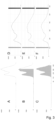
- A-C Integration of O25B-EPA triplicate measurements using the Dropped Lines function of the software "Compass for SW version 3.1.8" that is included in the WES TM system, also referred to as perpendicular drop method. Analysis using the Compass software leads to different integration ranges (marked area) for each measurement. In each case the Compass software fails to integrate the whole area of the signal.
- the glycoconjugates are glycoconjugate vaccines that are part of a glycoconjugate vaccine composition.
- Glycoconjugate vaccines comprise a carrier protein which is linked to one or more PS components, said PS components corresponding to an antigen, in particular a bacterial O-antigen.
- Bioconjugates, as opposed to chemical glycoconjugates, have recently emerged as particularly suitable glycoconjugate vaccines.
- Particularly suitable within the scope of the invention are glycoproteins selected from the group of glycoconjugate vaccines, more particularly bioconjugates.
- jejuni PglB that is capable of covalently linking O-antigen polysaccharides to an asparagine (Asn) residue in a glycosylation consensus sequence (Asn-X-Ser (Thr), wherein X can be any amino acid except Pro) in a carrier protein via N-linked glycosylation, and (iii) an rfb gene cluster encoding the enzymes responsible for generating the O-antigen polysaccharide of a desired serotype.
- different bioconjugates can be prepared, e.g. comprising O-antigen polysaccharides from different E. coli or Shigella serotypes.
- the bioconjugate is a conjugation product containing an E. coli O-antigen polysaccharide covalently bound to a carrier protein. In embodiments of the invention, the bioconjugate is a conjugation product containing a Shigella O-antigen polysaccharide covalently bound to a carrier protein.
- O-antigen is known in the field and used in its normal context, it is not to be confused with O-linked.
- the O-antigen polysaccharide is N-linked to the carrier protein.
- O-antigen polysaccharide generally refers to a repetitive glycan polymer contained within an LPS of a bacteria, such as E. coli.
- the O-antigen of E. coli is a polymer of immunogenic repeating oligosaccharides (typically 1-40 repeating units, e.g. 5-30 repeating units) and typically used for serotyping and glycoconjugate vaccine production.
- a glycoconjugate in particular a bioconjugate, comprising an EPA carrier protein with four glycosylation sites can exist in a mono-, di-, tri- or tetraglycosylated form.
- the conjugated polysaccharide originates from a pathogenic species (e.g. Escherichia coli ) with said repeating unit defined by the genetics of the specific pathogen.
- the repeating unit can thus be a specific marker / identifier of the pathogen.
- polysaccharide component consequently denotes one or more glycan chain(s) of a glycoconjugate.
- Glycans can be monomers or polymers of sugar residues, but typically contain at least three sugars, and can be linear or branched.
- the PS component of the glycoconjugate corresponds to different serotypes of the "O-antigen" of Escherichia coli (E. coli).
- modified monosaccharides are O-acetylated and/or N-acetylated monosaccharides, specifically monosaccharides comprising one O-acetylation or N-acetylation.
- suitable repeating units comprise monosaccharides selected from the group consisting of Mannose, Rhamnose, Glucose, Fucose, Galactose, modified Mannose, modified Rhamnose, modified Glucose, modified Fucose, and modified Galactose.
- O1A antigen polysaccharide O2 antigen polysaccharide (O2) O4 antigen polysaccharide (O4)
- O6A antigen polysaccharide O6A antigen polysaccharide (O6)
- O8 antigen polysaccharide O8 antigen polysaccharide (O8) ⁇ -D-Manp3Me-(1 ⁇ [3)- ⁇ -D-Manp-(1 ⁇ 2)- ⁇ -D-Manp-(1 ⁇ 2)- ⁇ -D-Manp-(1 ⁇ ]n
- O15 antigen polysaccharide 015) [ ⁇ 2)- ⁇ -D-Galp-(1 ⁇ 3)- ⁇ -L-FucpNAc-(1 ⁇ 3)- ⁇ -D-GlcpNAc-(1 ⁇ ] n
- O16 antigen polysaccharide 016)
- O18A antigen polysaccharide O18A
- the test sample comprises at least 4 and up to 20 glycoconjugates, e.g. at least 4 and up to 12 glycoconjugates, e.g. 4, 5, 6, 7, 8, 9, 10, 11, or 12 glycoconjugates. In certain embodiments, the test sample comprises 4, 9 or 10 glycoconjugates.
- calibration sample relates to a sample comprising a known concentration of the glycoconjugate to be analysed.
- a set of calibration samples thus relates to a multitude of calibration samples with graded concentrations of the glycoconjugate.
- the concentration range of the set of calibration samples also covers the expected concentration of the glycoconjugate within the test sample.
- Such a set of calibration samples is suitable for establishing a calibration curve for the absolute quantification of the glycoconjugate within the test sample.
- control sample relates to a sample comprising a known concentration of the glycoconjugate to be analysed for verification of the suitability of the capillary-based immunoassay system to perform the intended analysis.
- control samples are also known as system suitability controls (SSC).
- SSC system suitability controls
- control samples may comprise additional components such as a suitable buffer (e.g. the same buffer as the test sample) but comprise only one glycoconjugate and therefore typically differ from the test sample.
- the concentration of the glycoconjugate in the control sample is higher than in the test sample.
- ladder sample relates to a sample comprising a size standard.
- size standards are known and typically include a mixture of proteins or modified proteins of a known molecular weight.
- a suitable ladder sample comprises a mixture of biotinylated proteins with molecular weights spanning the range from 66 kDa to 440 kDa.
- glycoconjugates particularly bioconjugates, including those which lead to the generation of broad signals comprising not fully-resolved peaks.
- an example of such a glycoconjugate is a glycoconjugate comprising an EPA carrier protein with four glycosylation sites and a PS component corresponding to an E. coli O-antigen as listed in claim 5 (ii).
- identification and/or absolute quantification of a glycoconjugate As discussed above, analysis includes identification and absolute quantification of a glycoconjugate, in particular a bioconjugate. In principle, both, identification and quantification of a glycoconjugate can either relate to the glycoconjugate as a whole or the individual components of said glycoconjugate, i.e. the carrier protein and/or the PS component.
- the decisive aspect is the choice of the primary antibody which is applied to detect the glycoconjugate (e.g. the primary antibody may recognize the PS component or the carrier protein).
- the constant region (Fc) of the primary antibody can then be recognized by a secondary antibody which is capable of generating a detectable signal which can be used for absolute quantification of the glycoconjugate based on a calibration curve.
- identification and absolute quantification of the PS component is of relevance. Therefore, a primary antibody is used which specifically binds to the PS component of the glycoconjugate.
- identification and absolute quantification of the glycoconjugate refers to identification and absolute quantification of the PS component of the glycoconjugate.
- the concentration of the glycoconjugate refers to the concentration of the PS component.
- a glycoconjugate concentration of 0.100 ⁇ g mL -1 refers to a concentration of 0.100 ⁇ g mL -1 of the PS component, independent of the amount of carrier protein within the sample (as mentioned above, one or more polysaccharides are covalently bound to the carrier protein).
- identification and absolute quantification of the glycoconjugate with respect to the carrier protein is also possible.
- a primary antibody can be used which specifically binds to said carrier protein.
- the invention relates to a method for analysing a glycoconjugate in a test sample which comprises a mixture of at least 4 glycoconjugates, wherein the analysis includes both, the identification of said glycoconjugate and the quantification of said glycoconjugate.
- the inventive method comprises the steps of:
- the term "identification” relates to the identification of a glycoconjugate based on the PS component of said glycoconjugate and the term “quantification” relates to the absolute quantification of said glycoconjugate based on a calibration curve.
- a test sample of present invention comprises a mixture of at least 4 glycoconjugates.
- a broad range of samples may be used in the context of this invention.
- Quantifiable glycoconjugates also include glycoconjugates which lead to the generation of broad signals comprising not fully-resolved peaks and are hence not quantifiable by currently available capillary-based immunoassay methods.
- Such broad signals may for example span a molecular weight range of between 50-600 kDa, preferably of between 100 - 500 kDa, typically of between 200 - 400 kDa. Examples of such broad signals are shown in Fig. 1 - 3 . For instance, the signal shown in Fig.
- the Compass Software included in the WES TM system fails to reliably integrate the whole signal area.
- Such analysis methods may also be applied to a mixture of closely related glycoconjugates, i.e. glycoconjugates, particularly bioconjugates, which only differ in the polysaccharide component.
- the glycoconjugate comprises one carrier protein and one or more polysaccharides covalently bound to said carrier protein, preferably wherein said carrier protein is a detoxified Exotoxin A of Pseudomonas aeruginosa (EPA) with four glycosylation sites.
- EPA Pseudomonas aeruginosa
- the glycoconjugate comprises one carrier protein and one or more polysaccharides covalently bound to said carrier protein, wherein said polysaccharide is an E. coli O-antigen, preferably selected from the group consisting of O1A, O2, O4, O6A, O8, 015, 016, O18A, O25B or O75 antigen.
- E. coli O-antigen preferably selected from the group consisting of O1A, O2, O4, O6A, O8, 015, 016, O18A, O25B or O75 antigen.
- the glycoconjugate comprises one carrier protein and one or more polysaccharides covalently bound to said carrier protein, wherein said glycoconjugate is produced by enzymatic conjugation of the PS component to the carrier protein using an oligosaccharyltransferase (such as PglB) in E. coli.
- an oligosaccharyltransferase such as PglB
- the glycoconjugates thereby are referred to as 'bioconjugates' and differ in this embodiment from glycoconjugates where the carrier protein and the PS component are chemically coupled.
- said polysaccharide(s) comprise 1-100, preferably 3-30, more preferably 5 - 20, repeating units.
- Said repeating units comprise non-modified monosaccharides and/or modified monosaccharides.
- the modified monosaccharides are O-acetylated and/or N-acetylated monosaccharides, e.g. monosaccharides comprising one O-acetylation or N-acetylation.
- test sample may comprise, and typically does, additional components.
- the test sample further comprises an aqueous matrix, which optionally includes one or more of buffers, inorganic salts, sugar alcohols, and/or non-ionic surfactants.
- the sample further comprises polysaccharides not bound to carrier protein ("free PS").
- free PS carrier protein
- the sample further comprises non-related proteins, for example host-cell proteins.
- the sample further comprises a carrier protein free of polysaccharides.
- the test sample comprises a multitude of different glycoconjugates, preferably 4-20, e.g. 4 - 10 glycoconjugates.
- the sample comprises 4, 9 or 10 glycoconjugates, said glycoconjugate differing in the Escherichia coli polysaccharide components listed above.
- test sample is a multivalent vaccine composition adapted for direct use in a subject in need thereof.
- the inventive method also allows the identification and/or quantification of mono-, di-, tri- or tetraglycosylated variants of said glycoconjugate and mixtures thereof by means of the capillary based immunoassay method described herein.
- the invention also provides for a method, wherein said analysis includes the identification of mono-, di-, tri- and/or tetraglycosylated variants of said glycoconjugate and mixtures thereof and/or the quantification of mono-, di-, tri- and/or tetraglycosylated variants of said glycoconjugate and mixtures thereof.
- the term “identification” more precisely relates to the identification of a glycoconjugate based on the PS component of said glycoconjugate and the term “quantification” more precisely relates to the absolute quantification of mono-, di-, tri- and/or tetraglycosylated variants of said glycoconjugate based on a calibration curve.
- Step a Providing samples to an analytical device is known per se.
- the concentration of a glycoconjugate in a test sample may vary over a broad range, if required it is adapted in step (a1), outlined below.
- step (a) further comprises one or more of the following steps (a1), (a2) and /or (a3), preferably in the order as indicated:
- this includes (a1) adjusting the concentration of the glycoconjugate to an expected concentration of 0.01 - 0.50 ⁇ g mL -1 .
- the concentration of the glycoconjugate relates to the concentration of the PS component of the glycoconjugate. It will be clear to the skilled person that this step is optional, e.g. if the concentration of the glycoconjugate is already expected to be in this range, this step is not needed.
- this includes (a2) adding to the sample one or more auxiliary reagents selected from a sample buffer, a disulfide bridge reducing agent, such as dithiothreitol, and one or more markers, such as fluorescent protein markers with a known molecular weight.
- auxiliary reagents selected from a sample buffer, a disulfide bridge reducing agent, such as dithiothreitol, and one or more markers, such as fluorescent protein markers with a known molecular weight.
- markers can be used as a molecular weight reference within each capillary and are used to account for differences in the electrophoretic migration between individual capillaries.
- this includes (a3) applying a heat program and thereby denaturing the sample.
- a heat program is heating the respective sample at 95°C for 5 min.
- Step b Measuring a sample by means of a capillary-based immunoassay method is known per se.
- step (b) further comprises one or more of the following steps (b1) to (b7), preferably in the order as indicated:
- this includes (b1) loading an analysis matrix into the capillaries of said immunoassay system; preferably the analysis matrix is a size-exclusion matrix; preferably said size-exclusion matrix comprises at least two matrix components with different pore sizes (stacking and separation matrix).
- glycoconjugates are separated based on their size / molecular weight.
- identification and absolute quantification of a glycoconjugate by means of an immunoassay system relates to identification and absolute quantification of a glycoconjugate by means of a size-based / molecular weight based immunoassay system.
- Analysis of glycoconjugates based on their size / molecular weight differs from analysis of glycoconjugates based on their isoelectric point (e.g. isoelectric focusing immunoassay).
- this includes (b2) loading the test sample, calibration samples, optional ladder sample, and optional control sample into the capillaries of said immunoassay system.
- this includes (b3) separating the components of said samples, preferably according to the molecular weight of each component. This separation is performed in the analysis matrix in the capillaries of said immunoassay system.
- this includes (b4) immobilising the components of said sample, e.g. by photochemical crosslinking.
- this includes (b5) applying a glycan-specific primary antibody which binds to said glycoconjugate.
- Glycan-specific antibodies bind to the PS part of the glycoconjugate, and are specific for a given PS structure. They are known as such and can be obtained from commercial sources or prepared by known standard techniques. They may be monoclonal or polyclonal antibodies.
- this includes (b6) applying a secondary antibody which binds to the primary antibody and which generates a detectable signal.
- the secondary antibody may for instance bind to the constant region (Fc) of the primary antibody.
- Fc constant region
- a variety of possibilities to generate said detectable signal (step b6) are well-known to a person skilled in the art.
- said signal can be generated by applying in step (b6) a secondary antibody which is covalently linked to an enzyme, which is capable of catalyzing a chemiluminescent reaction, a chemifluorescent reaction or a chemical reaction leading to a colored or fluorescent product. Examples of such enzymes are horseradish peroxidase or alkaline phosphatase.
- a detectable signal can also be generated by other means.
- said secondary antibody (step b6) can be linked to a fluorescent dye, such as an Alexa Fluor, Alexa Fluor Plus, IRDye, fluorescein isothiocyanate (FITC), Cy3, Cy5, allophycocyanin (APC), tetramethylrhodamine, DyLight, Texas Red, Texas Red-X, phycoerythrin (R-PE), Qdot, 3-Car-boxy-6,8-difluor-7-hydroxycumarin or pacific orange dye.
- a primary antibody in step (b5) which is linked to biotin.
- a detectable signal may be generated by in step (b6) applying a streptavidin protein which is linked to HRP instead of applying a secondary antibody.
- a substrate for HRP is applied.
- step (b6) Another possibility is in step (b6) to apply a secondary antibody which is linked to a gold nanoparticle.
- this includes (b7), in case the secondary antibody is linked to an enzyme, applying a substrate for said enzyme.
- said secondary antibody is linked to the enzyme horseradish peroxidase (HRP).
- HRP horseradish peroxidase
- the detectable signal is generated by applying a substrate in step (b7).
- the substrate is a luminol/peroxide mixture.
- Step c The analysis of data by a computer program is known. However, as discussed above and shown in Fig. 1 , 3 and Tables 3 - 5, the present standard method of analysis of data is insufficient and does not allow reliable quantification.
- step c) further comprises one or more of the following steps, preferably in the order as indicated:
- step (c1) the dataset generated in step (b) is received by a computer.
- step (c2) the background for each capillary is identified by applying a linear regression from the signal that was measured for each capillary before the start of the integration range to the signal that was measured after the end of the integration range.
- the onset and the width of the first and the second window can be individually selected.
- a suitable width of the adjustable molecular weight window is 10 kDa. Nevertheless, the width of the molecular weight window may also be adjusted to deviate from a predefined value of 10 kDa, e.g. to 8 kDa or 13 kDa, as long as each, the first window and the second window, comprise at least 3 data points.
- the respective average data points P1 and P2 consist of the average of the signal intensities (y-axis) of at least 3 data points within the respective first or second molecular weight window and the average of the molecular weight at these data points (X-axis).
- the respective average data points P1 and P2 consist of the average of the signal intensities (y-axis) of at least 3 data points within the respective first or second molecular weight window and the molecular weight at the start or end of the integration range, respectively.
- step (c3) the background signal at each specific molecular weight, which is obtainable from the linear regression line calculated above, is subtracted from the corresponding total signal at each specific individual molecular weight, i.e. the difference between the signal detected within a capillary at each molecular weight and the background signal at the corresponding molecular weight.
- step (c4) the background corrected signal is integrated between the limits for integration set in (c2), first step. Said integration yields an area under the curve for each analyte.
- the Compass software included in the Wes TM system does not provide an option to receive limits for integration and to reliably integrate a whole signal area within these limits. It was surprisingly found that in case of glycoconjugates as described herein, in particular bioconjugates, the Compass software included in the Wes TM system fails to provide reliable integration of the whole signal area (cf. Fig. 1 , 3 , and Tables 3-5).
- a calibration curve is established by applying non-linear regression to the signals generated by the calibration samples in step b).
- the calibration curve comprises the calculated area under the curve for each signal depending on the concentration of the corresponding calibration sample.
- the Compass software included in the Wes TM system does not provide an option to establish a calibration curve based on such model but instead uses a linear regression model or a Four Parameter Logistic (4PL) Curve model.
- establishing the calibration curve based on a bi-logarithmic with quadratic effects regression model improves the accuracy of the results.
- step (c6) the concentration of the glycoconjugate within the test sample is calculated by comparing the area under the curve that was measured for the test sample with the calibration curve.
- step (c7) the validity of the calculated concentration is evaluated by automated comparison with pre-defined acceptance criteria.
- pre-defined acceptance criteria are:
- the first feature is the calculation of a background signal for each capillary and subtraction of said background signal from the signal which is generated by the glycoconjugate within that capillary.
- the background signal varies between the capillaries and thus reduces the reproducibility of quantification unless accounted for in each capillary.
- the second feature is the possibility to receive limits for signal integration. These limits are typically set by the user. The thereby calculated concentration is automatically compared to pre-defined acceptance criteria. This allows to evaluate if the test sample complies with predefined acceptance criteria.
- a glycoprotein sample in larger quantities was directly obtained from a manufacturing batch and was aliquoted and stored appropriately (e.g. -80 °C). The different characterization steps were performed on thawed aliquots of said glycoprotein sample.
- the test sample used was a glycoconjugate vaccine comprising 10 different glycoconjugates (each being a bioconjugate, the composition comprising the ten different bioconjugates being described for instance in WO 2020/191082 ), each comprising an EPA carrier protein with four glycosylation sites that is covalently linked to a PS component corresponding to one of the E. coli O-antigens of the serotypes O1A, O2, O4, O6A, O8, 015, 016, O18A, O25B or O75. Due to the presence of 4 glycosylation sites, each of the glycoconjugates was present as a mono-, di-, tri- or tetraglycosylated variant of the same serotype, or a mixture thereof.
- Optimal conditions must demonstrate to quantitatively release all the monosaccharides from the polysaccharide chain with no further degradation of the monosaccharide molecule targeted for absolute quantification.
- a set of calibration standards was prepared using a commercially available monosaccharide (in this case N-Acetylglucosamine; GlcNAc). If the targeted monosaccharide for quantification undergoes modification during the above-mentioned hydrolysis step (e.g. N-Acetylglucosamine is turned into Glucosamine) the appropriate monosaccharide (e.g. Glucosamine) must be used, or alternatively, the above-mentioned hydrolysis procedure must also be performed on the set of calibration standards.
- a commercially available monosaccharide in this case N-Acetylglucosamine; GlcNAc
- an ion chromatography system e.g. Dionex ICS-5000
- a pulsed amperometric detector (PAD) and a disposable gold electrode on Polytetrafluoroethylene (PTFE) was prepared.
- a Dionex CarboPac PA1 analytical column (4x 250 mm) was used in combination with a Dionex CarboPac PA1 guard column (4x 50 mm).
- the system was equilibrated with Eluent A (16 mM NaOH for sample elution) and Eluent B (500 mM NaOH for column cleaning).
- Eluent A (16 mM NaOH for sample elution
- Eluent B 500 mM NaOH for column cleaning
- these gradients may need to be optimized.
- the amount of targeted monosaccharide can also be used to back-calculate the absolute amount of repeating units/polysaccharides in ⁇ g/mL in the glycoconjugate sample.
- test sample to be analysed was directly obtained from a manufacturing batch of a glycoconjugate vaccine.
- a reference material was prepared as described above reflecting the same glycoconjugate species, i.e. the same PS component (in this case E. coli O4 antigen polysaccharide) and the same carrier protein (in this case detoxified EPA having SEQ ID NO: 3).
- the test sample additionally comprised nine further O-EPA bioconjugates corresponding to E. coli serotypes O1A, O2, O6A, O8, 015, 016, O18A, O25B and O75.
- the concentrations of the O4 O-EPA bioconjugate present within the test sample, the calibration samples and the control sample were diluted to the respective target concentrations using 0.1x sample buffer (SB) provided by Bio-Techne (Catalog # 042-195).
- SB sample buffer
- the expected concentration was calculated from the concentrations that were measured for manufacturing batches of the individual glycoconjugates before the individual glycoconjugates were combined into a multivalent glycoconjugate vaccine composition.
- the fluorescent markers and a biotinylated ladder were obtained from Bio-Techne (Catalog # PS-FL03-8). Two fluorescent markers were included in each capillary and were used to account for differences in the electrophoretic migration between individual capillaries. The fluorescent markers migrated at 57 kDa and 280 kDa.
- the biotinylated ladder comprised a multitude of proteins of a known molecular weight and was analysed in a separate capillary. The ladder was used as a size reference for the glycoconjugates to be analysed. The molecular weight of the proteins within the biotinylated ladder spanned the range from 66 kDa to 440 kDa.
- the fluorescent markers and the biotinylated ladder were prepared according to the manufacturer's instructions:
- the concentrations of the other nine bioconjugates present within the glycoconjugate vaccine were determined using the corresponding antibodies.
- Two batches of a glycoconjugate vaccine composition comprising 9 different bioconjugates (each bioconjugate comprising detoxified EPA having SEQ ID NO: 3 covalently linked to one of E. coli O-antigen polysaccharides of the serotypes O1A, O2, O4, O6A, 015, 016, O18A, O25B, and O75) were analyzed with respect to the O25B O-EPA bioconjugate concentration according to the prior art (Wes TM with Compass Software) and the inventive method.
- a calibration curve was established based on 4 O25B glycoconjugate calibration samples (0.080, 0.063, 0.045, 0.028 ⁇ g/mL; concentration based on PS component) according to the procedure described above (parallel analysis in different capillaries of the Wes TM system; dilution as was found optimal for O25B O-EPA bioconjugate).
- Each of the above calibration samples was measured in independently prepared triplicates (replicates denoted as a-c in Table 3). The whole signal area for each sample was analyzed using both the commercially available Compass software (prior art) and the computer program described herein (inventive method). The resulting AUCs according to both methods and the coefficient of variation (CV) based on the triplicate measurements are shown in Table 3 below.
- Electropherograms corresponding to triplicates of the 0.063 ⁇ g/ml O25B O-EPA calibration sample are shown in Fig. 3 (A-C: integration via Compass software; D-F: integration via computer program as described herein
- an O25B O-EPA bioconjugate control sample (system suitability control; SSC) was measured in parallel (separate capillaries) and analyzed according to the prior art method or the inventive method.
- O25B O-EPA bioconjugate present within a 9-valent glycoconjugate vaccine composition E. coli serotypes O1A, O2, O4, O6A, 015, 016, O18A, O25B, and O75
- Sample Target PS content [ ⁇ g/ml] Measured PS Content [ ⁇ g/ml] Measured PS Content [ ⁇ g/ml] prior art
- O25B-EPA (batch 1_a) 32 55.87 32.19 O25B-EPA (batch 1_b) 32 56.53 32.59 O25B-EPA (batch 1_c) 32 6.61 26.13 O25B-EPA (batch 1_d) 32 58.51 34.28 O25B-EPA (batch 2_a) 32 10.13 35.02 O25B-EPA (batch 2_b) 32 66.38 37.76 O25B-EPA (batch 2_c) 32
- the method of the prior art fails to provide reliable absolute quantification on the other bioconjugates (e.g. O6A, O18A and O25B O-EPA bioconjugates) .
- the Compass software in fact completely fails to provide meaningful data.
- the inventive method provided reliable absolute quantification on all bioconjugates, including the particularly challenging O18A and O25B O-EPA bioconjugates. Identification of the bioconjugates was successfully achieved through the generation of a detectable signal upon binding of a PS-specific antibody to each of the bioconjugates.
Landscapes
- Health & Medical Sciences (AREA)
- Life Sciences & Earth Sciences (AREA)
- Immunology (AREA)
- Engineering & Computer Science (AREA)
- Molecular Biology (AREA)
- Chemical & Material Sciences (AREA)
- Biomedical Technology (AREA)
- Urology & Nephrology (AREA)
- Hematology (AREA)
- Physics & Mathematics (AREA)
- Microbiology (AREA)
- Cell Biology (AREA)
- General Physics & Mathematics (AREA)
- Biotechnology (AREA)
- Food Science & Technology (AREA)
- Medicinal Chemistry (AREA)
- Pathology (AREA)
- Analytical Chemistry (AREA)
- Biochemistry (AREA)
- General Health & Medical Sciences (AREA)
- Bioinformatics & Cheminformatics (AREA)
- Bioinformatics & Computational Biology (AREA)
- Biophysics (AREA)
- Tropical Medicine & Parasitology (AREA)
- Virology (AREA)
- Chemical Kinetics & Catalysis (AREA)
- Electrochemistry (AREA)
- Proteomics, Peptides & Aminoacids (AREA)
- Peptides Or Proteins (AREA)
- Investigating Or Analysing Materials By The Use Of Chemical Reactions (AREA)
- Heterocyclic Carbon Compounds Containing A Hetero Ring Having Oxygen Or Sulfur (AREA)
- Other Investigation Or Analysis Of Materials By Electrical Means (AREA)
Applications Claiming Priority (2)
| Application Number | Priority Date | Filing Date | Title |
|---|---|---|---|
| EP20210768 | 2020-11-30 | ||
| PCT/IB2021/061115 WO2022113048A1 (en) | 2020-11-30 | 2021-11-30 | Analytical method for glycoconjugates using a capillary-based immunoassay system |
Publications (3)
| Publication Number | Publication Date |
|---|---|
| EP4252003A1 EP4252003A1 (en) | 2023-10-04 |
| EP4252003C0 EP4252003C0 (en) | 2025-03-05 |
| EP4252003B1 true EP4252003B1 (en) | 2025-03-05 |
Family
ID=73646265
Family Applications (1)
| Application Number | Title | Priority Date | Filing Date |
|---|---|---|---|
| EP21819229.2A Active EP4252003B1 (en) | 2020-11-30 | 2021-11-30 | Analytical method for glycoconjugates using a capillary-based immunoassay system |
Country Status (10)
| Country | Link |
|---|---|
| US (2) | US20230349913A1 (pl) |
| EP (1) | EP4252003B1 (pl) |
| JP (1) | JP7495578B2 (pl) |
| CN (1) | CN116406445B (pl) |
| CA (1) | CA3203450C (pl) |
| ES (1) | ES3030259T3 (pl) |
| HU (1) | HUE071448T2 (pl) |
| IL (1) | IL301880A (pl) |
| PL (1) | PL4252003T3 (pl) |
| WO (1) | WO2022113048A1 (pl) |
Family Cites Families (20)
| Publication number | Priority date | Publication date | Assignee | Title |
|---|---|---|---|---|
| US5431793A (en) * | 1994-07-29 | 1995-07-11 | Beckman Instruments, Inc. | Quantitative analysis of glycosylated hemoglobin by immunocappillary electrophoresis |
| DE69840508D1 (de) | 1997-08-27 | 2009-03-12 | Childrens Hosp Medical Center | Molekular-mimetika von meningokokkus b epitopen |
| US6087128A (en) * | 1998-02-12 | 2000-07-11 | Ndsu Research Foundation | DNA encoding an avian E. coli iss |
| US7179658B2 (en) * | 2001-09-06 | 2007-02-20 | Beckman Coulter, Inc. | Particle based homogeneous assays using capillary electrophoresis with laser-induced fluorescence detection |
| FI20055417A0 (fi) * | 2005-07-20 | 2005-07-20 | Glykos Finland Oy | Syöpäpesifiset glykaanit ja niiden käyttö |
| JP2007017445A (ja) | 2006-07-20 | 2007-01-25 | Ge Healthcare Bioscience Kk | クロマトグラフィー用充填剤 |
| US20090023156A1 (en) * | 2007-07-20 | 2009-01-22 | Voss Karl O | Methods and reagents for quantifying analytes |
| SI2257307T1 (sl) | 2008-02-20 | 2018-09-28 | Glaxosmithkline Biologicals S.A. | Biokonjugati, izdelani iz rekombinantnih N-glikoziliranih proteinov iz prokariontskih celic |
| US20180259508A1 (en) * | 2008-12-10 | 2018-09-13 | University Of Georgia Research Foundation, Inc. | Glycan-specific analytical tools |
| CA2847621A1 (en) * | 2011-09-06 | 2013-03-14 | Glycovaxyn Ag | Bioconjugate vaccines made in prokaryotic cells |
| NZ723328A (en) * | 2014-02-24 | 2018-01-26 | Glycovaxyn Ag | Compositions comprising e. coli o25b antigen, uses thereof and methods of manufacture |
| TWI715617B (zh) * | 2015-08-24 | 2021-01-11 | 比利時商葛蘭素史密斯克藍生物品公司 | 對抗腸道外病原性大腸桿菌之免疫保護之方法及組合物 |
| CN108603883A (zh) | 2016-01-27 | 2018-09-28 | 富士胶片和光纯药株式会社 | 前列腺癌的判定方法 |
| CN107576733B (zh) * | 2017-06-26 | 2020-11-24 | 复旦大学 | 一种基于糖蛋白非糖肽的质谱多反应监测定量糖蛋白方法 |
| JP2020530554A (ja) * | 2017-07-20 | 2020-10-22 | シートムエックス セラピューティクス,インコーポレイテッド | 活性化抗体の特性を定性的および/または定量的に分析する方法およびその使用 |
| JP2019148564A (ja) | 2018-02-28 | 2019-09-05 | 学校法人近畿大学 | 糖鎖解析方法、糖鎖解析システム、糖鎖解析用プログラム、及び糖鎖解析用キット |
| TW201946650A (zh) * | 2018-03-12 | 2019-12-16 | 美商詹森藥物公司 | 針對腹內感染之疫苗 |
| CN112136047A (zh) | 2018-05-18 | 2020-12-25 | 富士胶片和光纯药株式会社 | 判断前列腺癌的方法 |
| IL286467B2 (en) | 2019-03-18 | 2026-02-01 | Janssen Pharmaceuticals Inc | Methods for producing bioconjugates of polysaccharides E. coli o-antigen, preparations thereof and methods for using them |
| CR20210522A (es) | 2019-03-18 | 2021-12-17 | Janssen Pharmaceuticals Inc | Bioconjugados de antígenos–polisacáridos de e. coli, métodos de producción y métodos de utilización de los mismos |
-
2021
- 2021-11-30 IL IL301880A patent/IL301880A/en unknown
- 2021-11-30 JP JP2023532197A patent/JP7495578B2/ja active Active
- 2021-11-30 WO PCT/IB2021/061115 patent/WO2022113048A1/en not_active Ceased
- 2021-11-30 CN CN202180075323.5A patent/CN116406445B/zh active Active
- 2021-11-30 HU HUE21819229A patent/HUE071448T2/hu unknown
- 2021-11-30 CA CA3203450A patent/CA3203450C/en active Active
- 2021-11-30 ES ES21819229T patent/ES3030259T3/es active Active
- 2021-11-30 US US18/038,833 patent/US20230349913A1/en not_active Abandoned
- 2021-11-30 PL PL21819229.2T patent/PL4252003T3/pl unknown
- 2021-11-30 EP EP21819229.2A patent/EP4252003B1/en active Active
-
2025
- 2025-03-19 US US19/083,996 patent/US20250377362A1/en active Pending
Also Published As
| Publication number | Publication date |
|---|---|
| US20230349913A1 (en) | 2023-11-02 |
| US20250377362A1 (en) | 2025-12-11 |
| WO2022113048A1 (en) | 2022-06-02 |
| IL301880A (en) | 2023-06-01 |
| PL4252003T3 (pl) | 2025-08-04 |
| JP7495578B2 (ja) | 2024-06-04 |
| EP4252003C0 (en) | 2025-03-05 |
| CN116406445A (zh) | 2023-07-07 |
| CA3203450A1 (en) | 2022-06-02 |
| ES3030259T3 (en) | 2025-06-27 |
| CA3203450C (en) | 2025-05-13 |
| JP2023549573A (ja) | 2023-11-27 |
| HUE071448T2 (hu) | 2025-08-28 |
| EP4252003A1 (en) | 2023-10-04 |
| CN116406445B (zh) | 2024-07-12 |
Similar Documents
| Publication | Publication Date | Title |
|---|---|---|
| de Haan et al. | Glycomics studies using sialic acid derivatization and mass spectrometry | |
| Patwa et al. | Screening of glycosylation patterns in serum using natural glycoprotein microarrays and multi-lectin fluorescence detection | |
| Stavenhagen et al. | Site-specific protein N-and O-glycosylation analysis by a C18-porous graphitized carbon–liquid chromatography-electrospray ionization mass spectrometry approach using pronase treated glycopeptides | |
| Rangel-Angarita et al. | Mucinomics as the next frontier of mass spectrometry | |
| JP4184282B2 (ja) | 癌発生及び転移に関与するタンパク質の糖鎖変化を測定して癌を診断する方法及びそれを利用した診断キット | |
| Mitra et al. | Structural characterization of serum N-glycans by methylamidation, fluorescent labeling, and analysis by microchip electrophoresis | |
| Patwa et al. | Glycoprotein analysis using protein microarrays and mass spectrometry | |
| Pihikova et al. | Sweet characterisation of prostate specific antigen using electrochemical lectin‐based immunosensor assay and MALDI TOF/TOF analysis: Focus on sialic acid | |
| Uchiyama et al. | Optimization of evanescent‐field fluorescence‐assisted lectin microarray for high‐sensitivity detection of monovalent oligosaccharides and glycoproteins | |
| Lee | Fluorescence spectrometry in studies of carbohydrate-protein interactions | |
| Gonzalez-Begne et al. | Characterization of the human submandibular/sublingual saliva glycoproteome using lectin affinity chromatography coupled to multidimensional protein identification technology | |
| WO2013192530A2 (en) | Methods and reagents for glycoproteomics | |
| Vainauskas et al. | Profiling of core fucosylated N-glycans using a novel bacterial lectin that specifically recognizes α1, 6 fucosylated chitobiose | |
| Šunderić et al. | Lectin‐based protein microarray analysis of differences in serum alpha‐2‐macroglobulin glycosylation between patients with colorectal cancer and persons without cancer | |
| US20220074927A1 (en) | A Label-Free Detection Method for Characterization of the Behavior of a Component in a Liquid | |
| US20250377362A1 (en) | Analytical method for glycogonjugates using a capillary-based immunoassay system | |
| JP7797409B2 (ja) | 複合体である複合糖質組成物中の多糖類を同定し定量する方法 | |
| EP4478050A1 (en) | Method for quantifying bound acetate in glycoconjugates | |
| US20120258471A1 (en) | Peptide marker for cancer diagnosis, and cancer diagnosis method using same | |
| Nguyen | Method Development to Facilitate Translation From Research to Biomedical Applications | |
| Helander | Chromatographic measurement of transferrin glycoforms for detecting alcohol abuse and congenital disorders of glycosylation | |
| Lee | Structural Identification of N-Glycans Derived From Human Serum, Urine, and Their Exosomes With Capillary Electrophoresis-Tandem Mass Spectrometry | |
| KR20230160360A (ko) | 생물학적 분자의 기능적 특징을 기술하기 위한 글리코실화 프로파일링 방법 | |
| Lang | An LC-MS/MS-based approach for analysis of site-specific core-fucosylation of low-concentrated glycoproteins in human serum using the biomarker prostate-specific antigen (PSA) as example | |
| Krotkiewska et al. | Biosensor BIAcore application in analysis of a carbohydrate moiety of glycoproteins |
Legal Events
| Date | Code | Title | Description |
|---|---|---|---|
| STAA | Information on the status of an ep patent application or granted ep patent |
Free format text: STATUS: UNKNOWN |
|
| STAA | Information on the status of an ep patent application or granted ep patent |
Free format text: STATUS: THE INTERNATIONAL PUBLICATION HAS BEEN MADE |
|
| PUAI | Public reference made under article 153(3) epc to a published international application that has entered the european phase |
Free format text: ORIGINAL CODE: 0009012 |
|
| STAA | Information on the status of an ep patent application or granted ep patent |
Free format text: STATUS: REQUEST FOR EXAMINATION WAS MADE |
|
| 17P | Request for examination filed |
Effective date: 20230530 |
|
| AK | Designated contracting states |
Kind code of ref document: A1 Designated state(s): AL AT BE BG CH CY CZ DE DK EE ES FI FR GB GR HR HU IE IS IT LI LT LU LV MC MK MT NL NO PL PT RO RS SE SI SK SM TR |
|
| DAV | Request for validation of the european patent (deleted) | ||
| DAX | Request for extension of the european patent (deleted) | ||
| STAA | Information on the status of an ep patent application or granted ep patent |
Free format text: STATUS: EXAMINATION IS IN PROGRESS |
|
| 17Q | First examination report despatched |
Effective date: 20240318 |
|
| GRAP | Despatch of communication of intention to grant a patent |
Free format text: ORIGINAL CODE: EPIDOSNIGR1 |
|
| STAA | Information on the status of an ep patent application or granted ep patent |
Free format text: STATUS: GRANT OF PATENT IS INTENDED |
|
| INTG | Intention to grant announced |
Effective date: 20240930 |
|
| GRAS | Grant fee paid |
Free format text: ORIGINAL CODE: EPIDOSNIGR3 |
|
| GRAA | (expected) grant |
Free format text: ORIGINAL CODE: 0009210 |
|
| STAA | Information on the status of an ep patent application or granted ep patent |
Free format text: STATUS: THE PATENT HAS BEEN GRANTED |
|
| AK | Designated contracting states |
Kind code of ref document: B1 Designated state(s): AL AT BE BG CH CY CZ DE DK EE ES FI FR GB GR HR HU IE IS IT LI LT LU LV MC MK MT NL NO PL PT RO RS SE SI SK SM TR |
|
| REG | Reference to a national code |
Ref country code: GB Ref legal event code: FG4D |
|
| REG | Reference to a national code |
Ref country code: CH Ref legal event code: EP |
|
| REG | Reference to a national code |
Ref country code: IE Ref legal event code: FG4D |
|
| REG | Reference to a national code |
Ref country code: DE Ref legal event code: R096 Ref document number: 602021027270 Country of ref document: DE |
|
| U01 | Request for unitary effect filed |
Effective date: 20250402 |
|
| U07 | Unitary effect registered |
Designated state(s): AT BE BG DE DK EE FI FR IT LT LU LV MT NL PT RO SE SI Effective date: 20250408 |
|
| REG | Reference to a national code |
Ref country code: ES Ref legal event code: FG2A Ref document number: 3030259 Country of ref document: ES Kind code of ref document: T3 Effective date: 20250627 |
|
| PG25 | Lapsed in a contracting state [announced via postgrant information from national office to epo] |
Ref country code: RS Free format text: LAPSE BECAUSE OF FAILURE TO SUBMIT A TRANSLATION OF THE DESCRIPTION OR TO PAY THE FEE WITHIN THE PRESCRIBED TIME-LIMIT Effective date: 20250605 |
|
| PG25 | Lapsed in a contracting state [announced via postgrant information from national office to epo] |
Ref country code: HR Free format text: LAPSE BECAUSE OF FAILURE TO SUBMIT A TRANSLATION OF THE DESCRIPTION OR TO PAY THE FEE WITHIN THE PRESCRIBED TIME-LIMIT Effective date: 20250305 |
|
| PG25 | Lapsed in a contracting state [announced via postgrant information from national office to epo] |
Ref country code: GR Free format text: LAPSE BECAUSE OF FAILURE TO SUBMIT A TRANSLATION OF THE DESCRIPTION OR TO PAY THE FEE WITHIN THE PRESCRIBED TIME-LIMIT Effective date: 20250606 |
|
| REG | Reference to a national code |
Ref country code: HU Ref legal event code: AG4A Ref document number: E071448 Country of ref document: HU |
|
| PG25 | Lapsed in a contracting state [announced via postgrant information from national office to epo] |
Ref country code: SM Free format text: LAPSE BECAUSE OF FAILURE TO SUBMIT A TRANSLATION OF THE DESCRIPTION OR TO PAY THE FEE WITHIN THE PRESCRIBED TIME-LIMIT Effective date: 20250305 |
|
| PG25 | Lapsed in a contracting state [announced via postgrant information from national office to epo] |
Ref country code: SK Free format text: LAPSE BECAUSE OF FAILURE TO SUBMIT A TRANSLATION OF THE DESCRIPTION OR TO PAY THE FEE WITHIN THE PRESCRIBED TIME-LIMIT Effective date: 20250305 |
|
| PG25 | Lapsed in a contracting state [announced via postgrant information from national office to epo] |
Ref country code: IS Free format text: LAPSE BECAUSE OF FAILURE TO SUBMIT A TRANSLATION OF THE DESCRIPTION OR TO PAY THE FEE WITHIN THE PRESCRIBED TIME-LIMIT Effective date: 20250705 |
|
| U20 | Renewal fee for the european patent with unitary effect paid |
Year of fee payment: 5 Effective date: 20251008 |
|
| REG | Reference to a national code |
Ref country code: CH Ref legal event code: U11 Free format text: ST27 STATUS EVENT CODE: U-0-0-U10-U11 (AS PROVIDED BY THE NATIONAL OFFICE) Effective date: 20251201 |
|
| PGFP | Annual fee paid to national office [announced via postgrant information from national office to epo] |
Ref country code: HU Payment date: 20251105 Year of fee payment: 5 |
|
| PGFP | Annual fee paid to national office [announced via postgrant information from national office to epo] |
Ref country code: GB Payment date: 20251001 Year of fee payment: 5 |
|
| PLBE | No opposition filed within time limit |
Free format text: ORIGINAL CODE: 0009261 |
|
| STAA | Information on the status of an ep patent application or granted ep patent |
Free format text: STATUS: NO OPPOSITION FILED WITHIN TIME LIMIT |
|
| PGFP | Annual fee paid to national office [announced via postgrant information from national office to epo] |
Ref country code: NO Payment date: 20251113 Year of fee payment: 5 Ref country code: MC Payment date: 20251028 Year of fee payment: 5 |
|
| REG | Reference to a national code |
Ref country code: CH Ref legal event code: L10 Free format text: ST27 STATUS EVENT CODE: U-0-0-L10-L00 (AS PROVIDED BY THE NATIONAL OFFICE) Effective date: 20260114 |
|
| PGFP | Annual fee paid to national office [announced via postgrant information from national office to epo] |
Ref country code: CH Payment date: 20251201 Year of fee payment: 5 |
|
| PGFP | Annual fee paid to national office [announced via postgrant information from national office to epo] |
Ref country code: CZ Payment date: 20251121 Year of fee payment: 5 Ref country code: IE Payment date: 20251001 Year of fee payment: 5 |
|
| PGFP | Annual fee paid to national office [announced via postgrant information from national office to epo] |
Ref country code: PL Payment date: 20251024 Year of fee payment: 5 |
|
| PGFP | Annual fee paid to national office [announced via postgrant information from national office to epo] |
Ref country code: ES Payment date: 20251211 Year of fee payment: 5 |
|
| 26N | No opposition filed |
Effective date: 20251208 |
|
| PGFP | Annual fee paid to national office [announced via postgrant information from national office to epo] |
Ref country code: TR Payment date: 20260127 Year of fee payment: 6 |
|
| PGFP | Annual fee paid to national office [announced via postgrant information from national office to epo] |
Ref country code: CY Payment date: 20260122 Year of fee payment: 5 |