EP4242998B1 - Verfahren und vorrichtung zur bestimmung von verkehrsstrominformationen, elektronische vorrichtung und speichermedium - Google Patents
Verfahren und vorrichtung zur bestimmung von verkehrsstrominformationen, elektronische vorrichtung und speichermedium Download PDFInfo
- Publication number
- EP4242998B1 EP4242998B1 EP20960481.8A EP20960481A EP4242998B1 EP 4242998 B1 EP4242998 B1 EP 4242998B1 EP 20960481 A EP20960481 A EP 20960481A EP 4242998 B1 EP4242998 B1 EP 4242998B1
- Authority
- EP
- European Patent Office
- Prior art keywords
- traffic stream
- information
- vehicle
- fitting
- host vehicle
- Prior art date
- Legal status (The legal status is an assumption and is not a legal conclusion. Google has not performed a legal analysis and makes no representation as to the accuracy of the status listed.)
- Active
Links
Images

Classifications
-
- G—PHYSICS
- G08—SIGNALLING
- G08G—TRAFFIC CONTROL SYSTEMS
- G08G1/00—Traffic control systems for road vehicles
- G08G1/01—Detecting movement of traffic to be counted or controlled
- G08G1/0104—Measuring and analyzing of parameters relative to traffic conditions
- G08G1/0125—Traffic data processing
- G08G1/0133—Traffic data processing for classifying traffic situation
-
- G—PHYSICS
- G08—SIGNALLING
- G08G—TRAFFIC CONTROL SYSTEMS
- G08G1/00—Traffic control systems for road vehicles
- G08G1/16—Anti-collision systems
- G08G1/161—Decentralised systems, e.g. inter-vehicle communication
- G08G1/163—Decentralised systems, e.g. inter-vehicle communication involving continuous checking
-
- B—PERFORMING OPERATIONS; TRANSPORTING
- B60—VEHICLES IN GENERAL
- B60W—CONJOINT CONTROL OF VEHICLE SUB-UNITS OF DIFFERENT TYPE OR DIFFERENT FUNCTION; CONTROL SYSTEMS SPECIALLY ADAPTED FOR HYBRID VEHICLES; ROAD VEHICLE DRIVE CONTROL SYSTEMS FOR PURPOSES NOT RELATED TO THE CONTROL OF A PARTICULAR SUB-UNIT
- B60W30/00—Purposes of road vehicle drive control systems not related to the control of a particular sub-unit, e.g. of systems using conjoint control of vehicle sub-units
- B60W30/10—Path keeping
-
- B—PERFORMING OPERATIONS; TRANSPORTING
- B60—VEHICLES IN GENERAL
- B60W—CONJOINT CONTROL OF VEHICLE SUB-UNITS OF DIFFERENT TYPE OR DIFFERENT FUNCTION; CONTROL SYSTEMS SPECIALLY ADAPTED FOR HYBRID VEHICLES; ROAD VEHICLE DRIVE CONTROL SYSTEMS FOR PURPOSES NOT RELATED TO THE CONTROL OF A PARTICULAR SUB-UNIT
- B60W30/00—Purposes of road vehicle drive control systems not related to the control of a particular sub-unit, e.g. of systems using conjoint control of vehicle sub-units
- B60W30/10—Path keeping
- B60W30/12—Lane keeping
-
- G—PHYSICS
- G08—SIGNALLING
- G08G—TRAFFIC CONTROL SYSTEMS
- G08G1/00—Traffic control systems for road vehicles
- G08G1/01—Detecting movement of traffic to be counted or controlled
- G08G1/0104—Measuring and analyzing of parameters relative to traffic conditions
- G08G1/0125—Traffic data processing
-
- G—PHYSICS
- G08—SIGNALLING
- G08G—TRAFFIC CONTROL SYSTEMS
- G08G1/00—Traffic control systems for road vehicles
- G08G1/01—Detecting movement of traffic to be counted or controlled
- G08G1/0104—Measuring and analyzing of parameters relative to traffic conditions
- G08G1/0125—Traffic data processing
- G08G1/0129—Traffic data processing for creating historical data or processing based on historical data
-
- G—PHYSICS
- G08—SIGNALLING
- G08G—TRAFFIC CONTROL SYSTEMS
- G08G1/00—Traffic control systems for road vehicles
- G08G1/01—Detecting movement of traffic to be counted or controlled
- G08G1/052—Detecting movement of traffic to be counted or controlled with provision for determining speed or overspeed
-
- G—PHYSICS
- G08—SIGNALLING
- G08G—TRAFFIC CONTROL SYSTEMS
- G08G1/00—Traffic control systems for road vehicles
- G08G1/01—Detecting movement of traffic to be counted or controlled
- G08G1/056—Detecting movement of traffic to be counted or controlled with provision for distinguishing direction of travel
-
- G—PHYSICS
- G08—SIGNALLING
- G08G—TRAFFIC CONTROL SYSTEMS
- G08G1/00—Traffic control systems for road vehicles
- G08G1/065—Traffic control systems for road vehicles by counting the vehicles in a section of the road or in a parking area, i.e. comparing incoming count with outgoing count
-
- G—PHYSICS
- G08—SIGNALLING
- G08G—TRAFFIC CONTROL SYSTEMS
- G08G1/00—Traffic control systems for road vehicles
- G08G1/09—Arrangements for giving variable traffic instructions
- G08G1/0962—Arrangements for giving variable traffic instructions having an indicator mounted inside the vehicle, e.g. giving voice messages
- G08G1/0967—Systems involving transmission of highway information, e.g. weather, speed limits
- G08G1/096708—Systems involving transmission of highway information, e.g. weather, speed limits where the received information might be used to generate an automatic action on the vehicle control
- G08G1/096725—Systems involving transmission of highway information, e.g. weather, speed limits where the received information might be used to generate an automatic action on the vehicle control where the received information generates an automatic action on the vehicle control
-
- G—PHYSICS
- G08—SIGNALLING
- G08G—TRAFFIC CONTROL SYSTEMS
- G08G1/00—Traffic control systems for road vehicles
- G08G1/16—Anti-collision systems
- G08G1/167—Driving aids for lane monitoring, lane changing, e.g. blind spot detection
-
- B—PERFORMING OPERATIONS; TRANSPORTING
- B60—VEHICLES IN GENERAL
- B60W—CONJOINT CONTROL OF VEHICLE SUB-UNITS OF DIFFERENT TYPE OR DIFFERENT FUNCTION; CONTROL SYSTEMS SPECIALLY ADAPTED FOR HYBRID VEHICLES; ROAD VEHICLE DRIVE CONTROL SYSTEMS FOR PURPOSES NOT RELATED TO THE CONTROL OF A PARTICULAR SUB-UNIT
- B60W50/00—Details of control systems for road vehicle drive control not related to the control of a particular sub-unit, e.g. process diagnostic or vehicle driver interfaces
- B60W2050/0001—Details of the control system
- B60W2050/0019—Control system elements or transfer functions
- B60W2050/0022—Gains, weighting coefficients or weighting functions
- B60W2050/0025—Transfer function weighting factor
-
- B—PERFORMING OPERATIONS; TRANSPORTING
- B60—VEHICLES IN GENERAL
- B60W—CONJOINT CONTROL OF VEHICLE SUB-UNITS OF DIFFERENT TYPE OR DIFFERENT FUNCTION; CONTROL SYSTEMS SPECIALLY ADAPTED FOR HYBRID VEHICLES; ROAD VEHICLE DRIVE CONTROL SYSTEMS FOR PURPOSES NOT RELATED TO THE CONTROL OF A PARTICULAR SUB-UNIT
- B60W2552/00—Input parameters relating to infrastructure
- B60W2552/10—Number of lanes
-
- B—PERFORMING OPERATIONS; TRANSPORTING
- B60—VEHICLES IN GENERAL
- B60W—CONJOINT CONTROL OF VEHICLE SUB-UNITS OF DIFFERENT TYPE OR DIFFERENT FUNCTION; CONTROL SYSTEMS SPECIALLY ADAPTED FOR HYBRID VEHICLES; ROAD VEHICLE DRIVE CONTROL SYSTEMS FOR PURPOSES NOT RELATED TO THE CONTROL OF A PARTICULAR SUB-UNIT
- B60W2552/00—Input parameters relating to infrastructure
- B60W2552/53—Road markings, e.g. lane marker or crosswalk
-
- B—PERFORMING OPERATIONS; TRANSPORTING
- B60—VEHICLES IN GENERAL
- B60W—CONJOINT CONTROL OF VEHICLE SUB-UNITS OF DIFFERENT TYPE OR DIFFERENT FUNCTION; CONTROL SYSTEMS SPECIALLY ADAPTED FOR HYBRID VEHICLES; ROAD VEHICLE DRIVE CONTROL SYSTEMS FOR PURPOSES NOT RELATED TO THE CONTROL OF A PARTICULAR SUB-UNIT
- B60W2554/00—Input parameters relating to objects
- B60W2554/40—Dynamic objects, e.g. animals, windblown objects
- B60W2554/404—Characteristics
- B60W2554/4041—Position
-
- B—PERFORMING OPERATIONS; TRANSPORTING
- B60—VEHICLES IN GENERAL
- B60W—CONJOINT CONTROL OF VEHICLE SUB-UNITS OF DIFFERENT TYPE OR DIFFERENT FUNCTION; CONTROL SYSTEMS SPECIALLY ADAPTED FOR HYBRID VEHICLES; ROAD VEHICLE DRIVE CONTROL SYSTEMS FOR PURPOSES NOT RELATED TO THE CONTROL OF A PARTICULAR SUB-UNIT
- B60W2554/00—Input parameters relating to objects
- B60W2554/40—Dynamic objects, e.g. animals, windblown objects
- B60W2554/404—Characteristics
- B60W2554/4042—Longitudinal speed
-
- B—PERFORMING OPERATIONS; TRANSPORTING
- B60—VEHICLES IN GENERAL
- B60W—CONJOINT CONTROL OF VEHICLE SUB-UNITS OF DIFFERENT TYPE OR DIFFERENT FUNCTION; CONTROL SYSTEMS SPECIALLY ADAPTED FOR HYBRID VEHICLES; ROAD VEHICLE DRIVE CONTROL SYSTEMS FOR PURPOSES NOT RELATED TO THE CONTROL OF A PARTICULAR SUB-UNIT
- B60W2554/00—Input parameters relating to objects
- B60W2554/40—Dynamic objects, e.g. animals, windblown objects
- B60W2554/404—Characteristics
- B60W2554/4043—Lateral speed
-
- B—PERFORMING OPERATIONS; TRANSPORTING
- B60—VEHICLES IN GENERAL
- B60W—CONJOINT CONTROL OF VEHICLE SUB-UNITS OF DIFFERENT TYPE OR DIFFERENT FUNCTION; CONTROL SYSTEMS SPECIALLY ADAPTED FOR HYBRID VEHICLES; ROAD VEHICLE DRIVE CONTROL SYSTEMS FOR PURPOSES NOT RELATED TO THE CONTROL OF A PARTICULAR SUB-UNIT
- B60W2554/00—Input parameters relating to objects
- B60W2554/40—Dynamic objects, e.g. animals, windblown objects
- B60W2554/408—Traffic behavior, e.g. swarm
Definitions
- Embodiments of the present disclosure relate to the technical field of intelligent driving, and more particularly, to a method and a device for determining traffic stream information, electronic equipment and a storage medium.
- the positioning of vehicle lateral position and the generation of target travel path are usually based on the lane line information collected by the forward camera of the vehicle. It can be seen that the accuracy of vehicle lateral positioning (namely, positioning of a lane where a vehicle is located), vehicle lateral control and target travel path generation depends on the recognition accuracy of a lane line by an intelligent driving system or a camera.
- the traffic stream can be understood as a traffic stream formed by multiple vehicles moving in the same direction on the same lane.
- the traffic stream information can be understood as information about the trajectory of traffic stream.
- CN111738207A relates to a lane line detection method and device, electronic equipment and a readable storage medium.
- CN111738207A discloses a lane line detection method that is characterized by comprising the following steps: acquiring current position information and a historical track of a vehicle and each vehicle in all surrounding vehicles of the vehicle; determining the road trend of the current road according to the historical track of the vehicle and each vehicle in the surrounding vehicles; determining a lane to which each vehicle belongs according to the current position information of the vehicle and each vehicle in the surrounding vehicles; for each lane, obtaining a lane central line of the lane according to the historical track of each vehicle belonging to the lane and the road trend; and obtaining the lane borderline of each lane based on the lane central line of each lane.
- CN108171967A discloses a kind of traffic control method and devices, to provide a kind of generation method of driving line, driving line can be applied to perform traffic service.
- the embodiments of the present disclosure provide a new sensing means capable of sensing traffic traffic stream information.
- the traffic stream can be understood as a traffic stream formed by multiple vehicles moving in the same direction on the same lane.
- the traffic stream information can be understood as information about the trajectory of traffic stream. Since a lane line can be regarded as a line and a trajectory can also be regarded as a line, the traffic stream information can replace the lane line for vehicle lateral positioning (i.e., positioning of a lane on which a vehicle is located), vehicle lateral control, and target travel path generation.
- Embodiments of the present disclosure provide a method and a device for determining traffic stream information, electronic equipment and a storage medium. By grouping a plurality of target vehicles and determining the fitting weight of each of the target vehicles, the method can generate the current traffic stream information by fitting based on the grouping information, the fitting weight, the motion information of the host vehicle and the state information of the target vehicle, so as to achieve the sensing of traffic stream.
- Embodiments of the present disclosure may be applied to an intelligent driving vehicle, and may also be applied to electronic equipment.
- the intelligent driving vehicle is a vehicle equipped with different levels of intelligent driving systems including, for example, an unmanned driving system, an assisted driving system, a driving assistance system, a highly automatic driving system, a fully automatic driving vehicle, etc.
- the electronic equipment is equipped with an intelligent driving system.
- the electronic equipment may be used to test an intelligent driving algorithm.
- the electronic equipment may be an on-board device.
- the electronic equipment may also be applied to other fields.
- the embodiments of the present disclosure describe the method and device for determining traffic stream information, electronic equipment or a storage medium by taking an intelligent driving vehicle as an example.
- Fig. 1 is an exemplary scenario diagram for determining traffic stream information provided by an embodiment of the present disclosure.
- a host vehicle 101 is traveling straight.
- a left-right boundary of a trajectory of the host vehicle is 104.
- Three vehicles are on the left side of the host vehicle, such as 103 in Fig. 1 , and two vehicles are on the right side.
- Fig. 2 is an exemplary overall architecture diagram of an intelligent driving vehicle provided by an embodiment of the present disclosure.
- the intelligent driving vehicle shown in Fig. 2 may be implemented as the vehicle 101 in Fig. 1 .
- the intelligent driving vehicle includes a sensor set, a smart driving system, a vehicle underlying execution system, and other components that may be used to drive and control operation of the vehicle, such as a brake pedal, a steering wheel, and an accelerator pedal.
- the sensor set is used for collecting data of the vehicle environment and detecting position data of the vehicle.
- the sensor set includes, for example, but is not limited to, at least one of a camera, a lidar, a millimeter-wave radar, an ultrasonic radar, a GPS (Global Positioning System), and a IMU (Inertial Measurement Unit).
- the sensor set is also used to collect dynamic data of the vehicle.
- the sensor set also includes, but is not limited to, at least one of a wheel speed sensor, a speed sensor, an acceleration sensor, a steering wheel angle sensor, and a front wheel angle sensor.
- the intelligent driving system is used for acquiring sensing data of the sensor set.
- the sensing data includes, but is not limited to, an image, a video, a laser point cloud, millimeter waves, GPS information, a vehicle state, etc.
- the intelligent driving system performs environmental sensing and vehicle location based on the sensed data to generate sensed information and vehicle position and attitude; performing planning and decision-making based on the sensed information and the vehicle position and attitude, and generating planning and decision-making information; generating vehicle control commands based on the planning and decision information and issuing the same to the vehicle underlying execution system.
- the control instructions may include, but are not limited to, steering wheel steering, lateral control commands, longitudinal control commands, etc.
- the intelligent driving system acquires sensor data, V2X (Vehicle to X, wireless communication for vehicles) data, high-precision map data, etc. performs environment sensing and positioning based on at least one of the above data, and generates sensing information and positioning information.
- the sensing information may include, but is not limited to, at least one of obstacle information, road signs/marks, pedestrian/vehicle information, and travelable area.
- the positioning information includes a vehicle position and attitude.
- the intelligent driving system generates planning and decision information based on the sensed information and the vehicle position and attitude, and at least one of V2X data, high precision maps, and the like.
- the planning information may include, but is not limited to, planning paths, etc.
- the decision information may include, but is not limited to, at least one of behaviors (e.g. including but not limited to following, passing, parking, bypassing, etc.), vehicle heading, a vehicle speed, a desired acceleration of the vehicle, a desired steering wheel angle, etc.
- the method for determining traffic stream information provided by embodiments of the present disclosure may be applied in the intelligent driving system.
- the intelligent driving system may be a software system, a hardware system, or a combination of hardware and software system.
- the intelligent driving system is a software system running on an operating system
- the in-vehicle hardware system is a hardware system supporting the operation of the operating system.
- the intelligent driving system may interact with a cloud server.
- the intelligent driving system interacts with the cloud server via a wireless communication network (e.g., a wireless communication network including, but not limited to, a GPRS network, a Zigbee network, a Wifi network, a 3G network, a 4G network, a 5G network, etc.).
- a wireless communication network including, but not limited to, a GPRS network, a Zigbee network, a Wifi network, a 3G network, a 4G network, a 5G network, etc.
- the cloud server is configured to interact with the vehicle.
- the cloud server can send environment information, positioning information, control information, and other information required during the intelligent driving of the vehicle to the vehicle.
- the cloud server may receive sensed data from the vehicle, vehicle state information, vehicle travel information, and related information requested by the vehicle.
- the cloud server may remotely control the vehicle based on user settings or vehicle requests.
- the cloud server may be a server or a group of servers. The server group may be centralized or distributed. In some embodiments, the cloud server may be local or remote.
- the vehicle underlying execution system receives vehicle control commands and controls vehicle travel based on the vehicle control commands.
- the vehicle underlying execution system includes, but is not limited to, a steering system, a brake system and a driving system.
- the vehicle underlying execution system may also include an underlying controller that may interpret vehicle control commands and issue them to corresponding systems such as a steering system, a brake system, and a driving system, respectively.
- the intelligent driving vehicle may also include a vehicle CAN bus, not shown in Fig. 2 , that interfaces with the vehicle underlying execution system.
- vehicle CAN bus not shown in Fig. 2
- the information interaction between the intelligent driving system and the vehicle underlying execution system is communicated via the vehicle CAN bus.
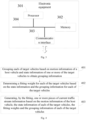
- Fig. 3 is a schematic structural diagram of an electronic equipment provided by an embodiment of the present disclosure.
- the electronic equipment may be vehicle-mounted equipment.
- the electronic equipment may support operation of the intelligent driving system.
- the electronic equipment includes at least one processor 301, at least one memory 302, and at least one communication interface 303.
- the various components in the in-vehicle equipment are coupled together by a bus system 304.
- the communication interface 303 is used for information transmission with external equipment. Understandably, the bus system 304 is used to enable connection communication between these components.
- the bus system 304 includes a power bus, a control bus, and a state signal bus in addition to a data bus. For clarity of illustration, however, the various buses are labeled in Fig. 3 as the bus system 304.
- the memory 302 in this embodiment may be either a volatile memory or a nonvolatile memory, or may include both the volatile and nonvolatile memory.
- the memory 302 stores the following elements, executable units, or data structures, or a subset thereof, or an extended set thereof: operating systems and applications.
- the operating system contains various system programs, such as framework layers, core library layers, driver layers, etc. for implementing various basic tasks and handling hardware-based tasks.
- the applications including various applications such as Media Player, Browser, etc. are used to implement various application tasks.
- the program implementing the method for determining traffic stream information provided by embodiments of the present disclosure may be included in an application program.
- the processor 301 is used for performing the steps of embodiments of the method for determining traffic stream information provided by embodiments of the present disclosure by invoking programs or instructions stored in the memory 302, and in particular, programs or instructions stored in an application.
- the method for determining traffic stream information may be applied to or implemented by the processor 301.
- the processor 301 may be an integrated circuit chip having signal processing capabilities. In implementation, the steps of the method described above may be performed by integrated logic circuit in the hardware or instructions in the software in the processor 301.
- the processor 301 may be a general purpose processor, a digital signal processor (DSP), an application specific integrated circuit (ASIC), a field programmable gate array (FPGA) or other programmable logic device, a discrete gate or transistor logic device, a discrete hardware component.
- DSP digital signal processor
- ASIC application specific integrated circuit
- FPGA field programmable gate array
- the general purpose processor may be a microprocessor or the processor may be any conventional processor or the like.
- the steps of the method for determining traffic stream information provided by the embodiments of the present disclosure may be directly embodied as being performed by a hardware decoding processor, or performed by a combination of hardware and software units in a decoding processor.
- the software unit may be located in a mature storage medium in the art such as a random access memory, a flash memory, a read-only memory, a programmable read-only memory or an electrically erasable programmable memory, a register, etc.
- the storage medium is located in a memory 302, and the processor 301 reads the information in the memory 302 and completes the steps of the method in combination with its hardware.
- Fig. 4 is an exemplary flowchart of a method for determining traffic stream information provided by an embodiment of the present disclosure.
- the execution subject of the method is electronic equipment, and in some embodiments may also be an intelligent driving system supported by the electronic equipment.
- the flow of the method for determining traffic stream information will be with the intelligent driving system as the execution subject.
- the intelligent driving system groups each of the target vehicles based on the motion information of the host vehicle and the state information of one or more target vehicles to obtain grouping information.
- the motion information of the host vehicle is driving-related dynamics information of the host vehicle during driving.
- the motion information of the host vehicle may include, but is not limited to, a wheel speed, a vehicle speed, an acceleration, a steering wheel angle, a front wheel angle, and a yaw velocity.
- the motion information of the host vehicle may be collected by the sensor set shown in Fig. 1 .
- the intelligent driving system may acquire the motion information of the host vehicle from the sensor set.
- the intelligent driving system acquires sensor data, V2X data, high-precision map data, and the like, and senses the environment based on at least one of the above data to obtain state information of one or more target vehicles.
- the state information of the target vehicle is a generic term for information such as relative position and relative motion between the target vehicle and the host vehicle.
- the state information of the target vehicle may include, but is not limited to, at least one of a lateral displacement, a longitudinal displacement, a lateral speed, and a longitudinal speed of the target vehicle with respect to the host vehicle.
- the lateral direction may be understood as a landscape orientation, i.e., perpendicular to the lane line direction.
- the state information of the target vehicle may also include, but is not limited to, one or more of identification (ID), a sensing type, a life cycle, and target confidence level, etc.
- ID identification
- the life cycle can be understood as a time period from the time when the target vehicle is first sensed to the current time, that is, a time period during which the target vehicle appears in the "view" of the host vehicle.
- the target confidence level is used to represent the credibility of the target vehicle, and is automatically generated by the sensing algorithm of the intelligent driving system.
- the grouping rule adopted by the intelligent driving system divides the groups of the target vehicles into five groups according to the lane on which they are located: a first lane group on a left side of the lane on which the host vehicle is located, a second lane group on a left side of the lane on which the host vehicle is located, a first lane group on a right side of the lane on which the host vehicle is located, a second lane group on a right side of the lane on which the host vehicle is located, and other groups.
- the other groups are any cases other than the aforementioned four groups.
- the other groupings may be one or more of a lane on which the host vehicle is located, a third lane to the left of the lane on which the host vehicle is located, and a third lane to the right of the lane on which the host vehicle is located.
- the intelligent driving system may group and mark each of the target vehicles for characterizing the group to which the target vehicle belongs.
- the grouping mark may be a grouping flag bit of which different values represent different groups.
- the grouping information includes at least a group mark.
- the grouping information may also include, but is not limited to, one or more of an ID of the target vehicle, a sensing type, a life cycle, and a target confidence level, etc.
- the intelligent driving system determines a travel trajectory of the host vehicle based on motion information of the host vehicle when grouping each of the target vehicles. Furthermore, based on the travel trajectory of the host vehicle and the state information of each of the target vehicles, a relative lane on which each of the target vehicles is located (the relative lane being relative to a lane on which the host vehicle is located) can be determined. Thus, the grouping information can be obtained by grouping each of the target vehicles according to the aforementioned grouping rule based on the relative lane on which each of the target vehicles is located.
- the intelligent driving system when determining the travel trajectory of the host vehicle, calculates a turning radius of the host vehicle after filtering based on the signals of the vehicle speed, the steering wheel angle and the yaw velocity of the host vehicle, and then determines the current travel trajectory of the host vehicle based on the turning radius. It should be noted that determining the travel trajectory from the turning radius is a mature technology in the field of intelligent driving, and a detailed determination process will not be described here.
- the target vehicle may be an ineffective vehicle.
- the target vehicle runs in an opposite direction with that of the host vehicle, and should not participate in the subsequent fitting traffic stream information. Therefore, in order to avoid the ineffective vehicle participating in the subsequent fitting traffic stream information, resulting in a decrease in fitting accuracy, in the present embodiment, the intelligent driving system first screens the effective target vehicles and filters the ineffective target vehicles before grouping. Then, based on the travel trajectory of the host vehicle and the state information of each effective target vehicle, each effective target vehicle is grouped to obtain grouping information.
- the intelligent driving system screens one or more effective target vehicles based on the motion information of the host vehicle and the state information of each of the target vehicles. For example, the intelligent driving system performs screening by removing ineffective target vehicles including: a target vehicle of which the longitudinal speed is negative (the speed of the host vehicle is positive) or a target vehicle of which the longitudinal distance is greater than a preset longitudinal distance threshold. That is, the longitudinal speed of the effective target vehicle is positive (or zero) and the longitudinal distance thereof is less than or equal to the preset longitudinal distance threshold.
- the host vehicle may be moving non-directly, such as lane changing, steering, etc. which may cause grouping errors.
- the target vehicle should be divided into a first lane group on a left side of the lane on which the host vehicle is located while keeping the first lane on the left side of the host vehicle straight.
- the target vehicle may be divided into a second lane group on a left side of the lane on which the host vehicle is located, which may cause grouping errors. Therefore, it is necessary to modify the grouping information so as to avoid the grouping errors caused by the rapid turning of the host vehicle.
- the intelligent driving system modifies the grouping information based on the historical traffic stream information.
- the historical traffic stream information is generated by fitting the last determination period.
- the determination period is a period for determining traffic stream information set in advance by the intelligent driving system. In practical applications, the determination period can be set based on the requirements of an application scenario for a refresh rate of a fitting result. The value is ranged between several tens of milliseconds and several seconds. For example, the determination period is set to be 5 seconds.
- Each group corresponds to a traffic stream, i.e., a piece of historical traffic stream information corresponds to a group.
- the historical traffic stream information includes a value of a fitting parameter, and the fitting parameter includes a quadratic term, a monomial term and a constant term. If the quadratic term exists, the historical traffic stream information corresponds to a curve. If the quadratic term is zero and the monomial term is not zero, the historical traffic stream information corresponds to a straight line. In some embodiments, the historical traffic stream information further includes a confidence level indicative of a degree of confidence in the traffic stream. If there is no historical traffic stream information, for example, the intelligent driving system has not stored the historical traffic stream information when the host vehicle moves out of the garage and enters a low speed lane, then the confidence level of the historical traffic stream information is zero and the grouping information is not modified.
- the intelligent driving system judges whether a target vehicle exists within a preset range around the historical traffic stream information, and if so, modifies the group of the target vehicle into a group corresponding to the historical traffic stream information.
- the preset range can be set according to actual needs, and this embodiment does not define the specific value of the preset range.
- the grouping of a certain target vehicle is a second lane group on a left side, and the target vehicle is located within the preset range around the historical traffic stream information corresponding to a first lane group on the left side. Therefore, the grouping of the target vehicle is modified from the second lane group on the left side to the first lane group on the left side.
- the intelligent driving system caches vehicles satisfying the cache condition in each modified group.
- the cached vehicles are historical vehicles.
- the cache time may be set. The cache time may be set based on actual needs. This embodiment does not define the specific value of the cache time.
- the cache condition is used for screening vehicles which travel in the same direction as the host vehicle and do not belong to other groups. It should be noted that, for each determination period, the intelligent driving system caches the vehicles satisfying the caching condition in each modified group in the determination period, namely, the caching opportunity is within the determination period.
- the intelligent driving system determines a fitting weight for each of the target vehicles based on the state information and the grouping information of each of the target vehicles. In some embodiments, in the determining the fitting weight for each of the target vehicles, the intelligent driving system, for each of the target vehicles, determines a lateral speed deviation weight of the target vehicle, a lateral displacement deviation weight of the target vehicle, a life cycle weight of the target vehicle, and a speed weight of the target vehicle based on the state information of the target vehicle and the grouping information of the target vehicle; and multiplies the lateral speed deviation weight of the target vehicle, the lateral displacement deviation weight of the target vehicle, the life cycle weight of the target vehicle, and the speed weight of the target vehicle to obtain the fitting weight of the target vehicle.
- the lateral speed deviation weight of the target vehicle is calculated by calculating an average lateral speed of all target vehicles in the group to which the target vehicle belongs; calculating a lateral speed deviation weight of the target vehicle based on the lateral speed of the target vehicle and the average lateral speed.
- the larger the lateral speed of the target vehicle deviates from the average lateral speed the lower the lateral speed deviation weight is.
- the lateral displacement deviation weight of the target vehicle is calculated by calculating an average lateral displacement of all target vehicles in the group to which the target vehicle belongs; and calculating a lateral displacement deviation weight of the target vehicle based on the lateral displacement of the target vehicle and the average lateral displacement.
- the further the lateral displacement of the target vehicle deviates from the average lateral displacement the lower the lateral displacement deviation weight is.
- the life cycle weight of the target vehicle is calculated by calculating a life cycle weight of the target vehicle based on the life cycle of the target vehicle and/or the target confidence level.
- the longer the life cycle of the target vehicle is the higher the life cycle weight is.
- the speed weight of the target vehicle is calculated by the manner below. If there is no historical traffic stream information corresponding to the group of the target vehicle, the speed weight of the target vehicle is 1.
- the lateral displacement deviation weight of the target vehicle may be determined in conjunction with the historical traffic stream information. Specifically, a lateral displacement deviation weight of the target vehicle is calculated based on the lateral displacement of the target vehicle and the historical traffic stream information corresponding to the group of the target vehicle. In the present embodiment, the further the lateral displacement of the target vehicle deviates from the historical traffic stream, the lower the lateral displacement deviation weight is.
- the speed weight of the target vehicle may be determined in conjunction with the historical traffic stream information. Specifically, a traveling speed of the target vehicle is synthesized on the basis of a lateral speed and a longitudinal speed of the target vehicle, so that a travel direction of the target vehicle is determined.
- the speed weight of the target vehicle is calculated based on the travel direction of the target vehicle and the historical traffic stream information corresponding to the grouping of the target vehicle.
- the intelligent driving system determines a fitting weight for each effective target vehicle based on the historical traffic stream information, the state information of each effective target vehicle, and the modified grouping information.
- the intelligent driving system generates, by fitting, one or more pieces of current traffic stream information based on the motion information of the host vehicle, the state information of each of the target vehicles, the fitting weight and the grouping information of each of the target vehicles.
- each group corresponds to a traffic stream.
- the intelligent driving system generates, by fitting, current traffic stream information corresponding to the group, in particular, selects a fit method based on the number of target vehicles in the group and the longitudinal distribution distance of all target vehicles in the group; and generates, by fitting, current traffic stream information corresponding to the group based on the selected fit method and by using the motion information of the host vehicle, the state information of each of the target vehicles in the group and the fitting weight of each of the target vehicles in the group.
- the traffic stream obtained by grouping and fitting the first left lane is called a left-side traffic stream information of the host vehicle.
- the traffic stream obtained by grouping and fitting the right first lane is called a right-side traffic stream information of the host vehicle.
- the intelligent driving system judges whether the number of target vehicles in the group satisfies a first number condition and whether the longitudinal distribution distance is greater than a preset first distance threshold.
- the first number condition is, for example, 3.
- the first distance threshold is, for example, 50 meters. Over-fitting is avoided (for example, the traffic stream is actually a straight line, but fitting is performed in a curve manner), and the specific values of the first number condition and the first distance threshold can be set according to actual needs.
- the first number condition is satisfied and the longitudinal distribution distance is greater than the preset first distance threshold, selecting a first-order fitting and a second-order fitting; otherwise, judging whether the number of target vehicles in the group satisfies a second number condition and whether the longitudinal distribution distance is greater than a preset second distance threshold.
- the second number condition is, for example, greater than or equal to 2 and less than 4
- the second distance threshold is, for example, 30 meters. The specific values of the first number condition and the first distance threshold can be set according to actual needs.
- a first-order fitting is selected; otherwise, no fitting is made, and the data of the last traffic stream information determination period is continued.
- the intelligent driving system if a first-order fitting and a second-order fitting are selected, the intelligent driving system generates, by fitting, current traffic stream information corresponding to the group. At the moment, the intelligent driving system generates, by fitting, a first-order fitting result corresponding to the group, and determines a first mean square error of the first-order fitting result; generates, by fitting, a second-order fitting result corresponding to the grouping, and determines a second mean square error of the second-order fitting result; then compares the first mean square error and the second mean square error.
- the first mean square error is greater than a preset multiple of the second mean square error (for example, 1.5 times, the preset multiple can also be set according to actual situations)
- a second-order fitting result is selected as current traffic stream information corresponding to the group. Otherwise, the first-order fitting result is selected as the current traffic stream information corresponding to the group.
- the intelligent driving system when the current traffic stream information corresponding to the group is generated, by fitting, by using the motion information of the host vehicle, the state information of each of the target vehicles in the group and the fitting weight of each of the target vehicles in the group, the intelligent driving system generates, by the fitting, initial traffic stream information corresponding to the group based on the state information of each of the target vehicles in the group and the fitting weight of each of the target vehicles in the group; and constrains the initial traffic stream information based on the historical traffic stream information and the motion information of the host vehicle to obtain current traffic stream information corresponding to the group.
- the constraining the initial traffic stream information includes at least one of a position constraint, a heading constraint and a curvature constraint.
- the position constraint comprises constraining a variable quantity of a constant term in a fitting parameter corresponding to the initial traffic stream information based on a confidence level corresponding to the historical traffic stream information; wherein the relationship between the variable quantity of the constant item and the confidence level corresponding to the historical traffic stream information is an inverse correlation; and the relationship between the variable quantity of the constant term and the fitting quantity corresponding to the initial traffic stream information is a positive correlation.
- the fitting quantity can be understood as the quantity of target vehicles participating in the fitting.
- the heading constraint comprises constraining a variable quantity of a monomial term in the fitting parameter corresponding to the initial traffic stream information based on the confidence level corresponding to the historical traffic stream information and/or the motion information of the host vehicle; wherein the relationship between the variable quantity of the monomial term and the confidence level corresponding to the historical traffic stream information is an inverse correlation, the relationship between the variable quantity of the monomial term and a steering range of the host vehicle is a positive correlation, and/or the relationship between the variable quantity of the monomial term and the fitting quantity corresponding to the initial traffic stream information is a positive correlation.
- the curvature constraint comprises constraining a variable quantity of a quadratic term in the fitting parameter corresponding to the initial traffic stream information based on the confidence level corresponding to the historical traffic stream information and/or the motion information of the host vehicle; wherein the relationship between the variable quantity of the quadratic term and the confidence level corresponding to the historical traffic stream information is an inverse correlation, the relationship between the variable quantity of the quadratic term and the speed of the host vehicle is an inverse correlation, and/or the relationship between the variable quantity of the quadratic term and a speed of a steering wheel of the host vehicle is a positive correlation.
- each group corresponds to a traffic stream.
- the intelligent driving system ensures that the number of target vehicles in the grouping satisfies a preset fitting quantity. Otherwise, the fitting cannot be performed. Therefore, the intelligent driving system judges whether the number of target vehicles satisfies a preset fitting quantity; if so, judges whether the travel state of the host vehicle is straight; if it is straight, the cached historical vehicles are acquired.
- the acquired historical vehicles may be one or more, and the acquired historical vehicles belong to the group.
- the historical vehicle satisfies a cache condition.
- the cache condition is used for screening vehicles which travel in the same direction as the host vehicle and do not belong to other groups.
- the caching conditions include (1) to (3) below.
- the intelligent driving system updates the coordinates of each historical vehicle to obtain the virtual vehicle corresponding to each historical vehicle and the state information of each of the virtual vehicles.
- the way to update the coordinates includes, for example, calculating a time difference between the cache time and the current time of the historical vehicle, and updating coordinates using the state information of the historical vehicle and the calculated time difference.
- a travel speed of the historical vehicle is synthesized by a lateral speed and a longitudinal speed in the state information of the historical vehicle, and the coordinates are updated based on the travel speed and the calculated time difference.
- the state information of the historical vehicle is the state information corresponding to the historical vehicle when the historical vehicle is cached.
- the state information of the virtual vehicle includes, but is not limited to, at least one of a lateral displacement, a longitudinal displacement, a lateral speed, a longitudinal speed, and the like of the virtual vehicle relative to the host vehicle.
- the lateral displacement and the longitudinal displacement are determined based on the aforementioned coordinate update.
- the lateral speed and the longitudinal speed are the same as the lateral speed and the longitudinal speed of the corresponding historical vehicle.
- the state information of the virtual vehicle may also include, but is not limited to, one or more of identification (ID), a sensing type, a life cycle, and target confidence level, etc. that are the same as the historical vehicle to which the virtual vehicle corresponds.
- ID identification
- the sensing type of the virtual vehicle is the sensing type of the corresponding historical vehicle.
- the grouping information of the virtual vehicles is the same as the grouping information of the corresponding historical vehicles.
- the historical vehicle when the travel state of the host vehicle is not straight, the historical vehicle is not screened, because the relative relationship between the historical vehicle and the host vehicle cannot be determined, and the coordinates of the historical vehicle cannot be updated to obtain the virtual vehicle. Even if the coordinates of the historical vehicle are updated to obtain the virtual vehicle, the relative relationship between the historical vehicle and the host vehicle is uncertain, so that the relative relationship between the virtual vehicle and the host vehicle is uncertain, and thus the state information of the virtual vehicle cannot be determined.
- the intelligent driving system may determine a fitting weight for each of the virtual vehicles based on the historical traffic stream information, the motion information of the host vehicle, the state information of each of the virtual vehicles, and grouping information of each of the virtual vehicles.
- the intelligent driving system determines a lateral speed deviation weight of the virtual vehicle, a lateral displacement deviation weight of the virtual vehicle, a life cycle weight of the virtual vehicle, a speed weight of the virtual vehicle, and a weight of the virtual vehicle based on the state information of the virtual vehicle and the grouping information of the virtual vehicle; and then multiplies the lateral speed deviation weight of the virtual vehicle, the lateral displacement deviation weight of the virtual vehicle, the life cycle weight of the virtual vehicle, the speed weight of the virtual vehicle, and the weight of the virtual vehicle to obtain the fitting weight of the virtual vehicle.
- the calculation methods of the lateral speed deviation weight of the virtual vehicle, the lateral displacement deviation weight of the virtual vehicle, the life cycle weight of the virtual vehicle, and the speed weight of the virtual vehicle are respectively the same as the calculation methods of the lateral speed deviation weight of the target vehicle, the lateral displacement deviation weight of the target vehicle, the life cycle weight of the target vehicle, and the speed weight of the target vehicle, and will not be described in detail.
- the weight of the virtual vehicle is calculated based on the cache time of the virtual vehicle. The longer the cache time of the virtual vehicle is, the lower the weight of the virtual vehicle is.
- the intelligent driving system after determining the virtual vehicles and the state information of the virtual vehicles, the intelligent driving system generates, by the fitting, one or more pieces of current traffic stream information based on the state information of each of the target vehicles, the fitting weight of each of the target vehicles, the state information of each of the virtual vehicles, and the fitting weight of each of the virtual vehicles.
- the process of generation by fitting is similar to the aforementioned process of fitting only based on the target vehicle, and will not be described in detail herein.
- the intelligent driving system may determine a confidence level increment based on the current traffic stream information; and determine the confidence level corresponding to the current traffic stream information based on the confidence level and the confidence level increment of the historical traffic stream information. For example, a confidence level based on the historical traffic stream information is added to a confidence level increment to obtain a confidence level corresponding to the current traffic stream information. It should be noted that the current traffic stream information and the historical traffic stream information both correspond to the same group so as to determine the confidence level corresponding to the current traffic stream information in the manner of the present embodiment.
- the relationship between the confidence level increment and the mean square error of the fitting result corresponding to the current traffic stream information is an inverse correlation
- the relationship between the confidence level increment and the fitting quantity corresponding to the current traffic stream information is a positive correlation
- the relationship between the confidence level increment and the longitudinal distribution distance of the target vehicle (if there is a virtual vehicle, the virtual vehicle should also be taken into account) corresponding to the current traffic stream information is a positive correlation.
- the intelligent driving system determines whether two pieces of current traffic stream information intersects. If so, it compares the fitting quantity and the longitudinal distribution distance corresponding to the two pieces of traffic stream; and determines the confidence level increment corresponding to the current traffic stream information with a less fitting quantity or a shorter longitudinal distribution distance to be negative. For example, the intelligent driving system determines whether there is an intersection between the traffic stream on the left side of the host vehicle and the traffic stream on the right side of the host vehicle. If two pieces of current traffic stream information intersects, it compares the fitting quantity and the longitudinal distribution distance corresponding to the two pieces of traffic stream; and determines the confidence level increment corresponding to the current traffic stream information with a less fitting quantity or a shorter longitudinal distribution distance to be negative.
- the confidence level increment is determined to be negative if the current traffic stream information determination period is not fitted. This negative value will be accumulated to the confidence level in the corresponding historical traffic stream information.
- the intelligent driving system may determine a travel reference path of the host vehicle based on the current traffic stream information and the confidence level corresponding to the current traffic stream information.
- the determining the travel reference path of the host vehicle includes:
- the intelligent driving system may determine an auxiliary location marker based on the current traffic stream information and the confidence level corresponding to the current traffic stream information.
- the auxiliary location marker is used to assist in determining the lane on which the host vehicle is located.
- the auxiliary location marker is independent of the lane line information, and can help determine the lane of the host vehicle when the lane line is not enough to determine the unique lane in some multi-lane scenes, which provides the necessary basis for the long-distance path planning of L3 automatic driving system.
- the determining an auxiliary location marker includes: if the confidence levels corresponding to the current traffic stream information on both sides of the host vehicle are both higher than the preset confidence level threshold, determining the auxiliary location marker as a first marker.
- the first marker indicates that there are lanes on both sides of the host vehicle.
- the auxiliary location marker may be a flag bit. Fhe value of the flag bit corresponding to the first mark is, for example, 1. When the intelligent driving system determines that the auxiliary location marker is 1, it is determined that lanes exist on both sides of the host vehicle.
- the auxiliary location marker is determined as a second marker.
- the second marker represents that a lane exists on the left side of the host vehicle.
- the value of the flag bit corresponding to the second marker is, for example, 2.
- the auxiliary location marker is determined as a third marker.
- the third marker represents that a lane exists on the right side of the host vehicle.
- the value of the flag bit corresponding to the third marker is, for example, 3.
- the intelligent driving system may perform the host vehicle lateral control based on the current traffic stream information, get rid of the dependence on the lane line information, and facilitate maintaining the host vehicle lateral control in a congested environment.
- Transverse control based on a path is a mature technical means in the art, and will not be described in detail here.
- Embodiments of the present disclosure also provide a non-transitory computer-readable storage medium storing programs or instructions that cause a computer to perform, such as, the steps of embodiments of the method for determining traffic stream information, which will not be described in detail herein to avoid redundant description.
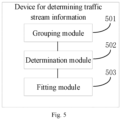
- Fig. 5 is an exemplary block diagram of a device for determining traffic stream information provided by an embodiment of the present disclosure.
- the device for determining traffic stream information includes, but is not limited to, a grouping module 501, a determination module 502, and a fitting module 503.
- the grouping module 501 is configured for grouping each of target vehicles based on motion information of a host vehicle and state information of one or more of the target vehicles to obtain grouping information.
- the determination module 502 is configured for determining a fitting weight for each of the target vehicles based on the state information and the grouping information for each of the target vehicles.
- the fitting module 503 is configured for generating, by the fitting, one or more pieces of current traffic stream information based on the motion information of the host vehicle, the state information of each of the target vehicles, the fitting weights and the grouping information of each of the target vehicles.
- the grouping module 501 is configured for determining a travel trajectory of the host vehicle based on the motion information of the host vehicle; filtering one or more effective target vehicles based on the motion information of the host vehicle and the state information of each of the target vehicles; and grouping each of the effective target vehicles based on the travel trajectory of the host vehicle and the state information of each of the effective target vehicles to obtain grouping information.
- the grouping module 501 is further configured for modifying the grouping information based on the historical traffic stream information after the grouping information is obtained; accordingly, the determination module 502 is configured for determining a fitting weight for each of the effective target vehicles based on the historical traffic stream information, the state information of each of the effective target vehicles, and the modified grouping information.
- the grouping module 501 for each effective target vehicle, determines a relative lane on which the effective target vehicle is located based on the state information of the effective target vehicle and the travel trajectory of the host vehicle; and determines grouping information for the effective target vehicle based on the relative lanes.
- the grouping information comprises the following five groups: a first lane group on a left side of the lane on which the host vehicle is located, a second lane group on a left side of the lane on which the host vehicle is located, a first lane group on a right side of the lane on which the host vehicle is located, a second lane group on a right side of the lane on which the host vehicle is located, and other groups.
- the fitting module 503 is further configured for judging whether the number of target vehicles satisfies a preset fitting quantity before generating, by the fitting, one or more pieces of current traffic stream information; if so, judging whether the travel state of the host vehicle is straight; acquiring cached historical vehicles if the travel state of the host vehicle is straight; updating coordinates of each of the historical vehicles to obtain virtual vehicles corresponding to each of the historical vehicles and state information of each of the virtual vehicles; and determining a fitting weight for each of the virtual vehicles based on the historical traffic stream information, the motion information of the host vehicle, the state information of each of the virtual vehicles, and grouping information of each of the virtual vehicles.
- the fitting module 503 is configured for generating, by the fitting, one or more pieces of current traffic stream information based on the state information of each of the target vehicles, the fitting weight of each of the target vehicles, the state information of each of the virtual vehicles, and the fitting weight of each of the virtual vehicles.
- the historical vehicle satisfies a cache condition, wherein the cache condition is used for screening vehicles which travel in the same direction as the host vehicle and do not belong to other groups.
- the cache condition includes: the vehicle is located in front of the host vehicle and the relative distance to the host vehicle is greater than a preset relative distance threshold.
- the angle between the direction of the speed of the vehicle relative to the host vehicle and the direction of travel of the host vehicle is less than a preset angle threshold; and the lateral distance of the vehicle relative to the host vehicle is within a preset lateral distance range.
- the cache condition further comprises that the life cycle of the vehicle is greater than a preset life cycle threshold.
- the determination module 502 determines, for each of the target vehicles, a lateral speed deviation weight of the target vehicle, a lateral displacement deviation weight of the target vehicle, a life cycle weight of the target vehicle, and a speed weight of the target vehicle based on the state information of the target vehicle and the grouping information of the target vehicle; and multiplies the lateral speed deviation weight of the target vehicle, the lateral displacement deviation weight of the target vehicle, the life cycle weight of the target vehicle, and the speed weight of the target vehicle to obtain the fitting weight of the target vehicle.
- the determination module 502 determines, for each of the virtual vehicles, determines a lateral speed deviation weight of the virtual vehicle, a lateral displacement deviation weight of the virtual vehicle, a life cycle weight of the virtual vehicle, a speed weight of the virtual vehicle, and a weight of the virtual vehicle based on the state information of the virtual vehicle and the grouping information of the virtual vehicle; and then multiplies the lateral speed deviation weight of the virtual vehicle, the lateral displacement deviation weight of the virtual vehicle, the life cycle weight of the virtual vehicle, the speed weight of the virtual vehicle, and the weight of the virtual vehicle to obtain the fitting weight of the virtual vehicle.
- each group corresponds to a traffic stream.
- the fitting module 503, for one group selects a fit method based on the number of target vehicles in the group and the longitudinal distribution distance of all target vehicles in the group; and generates, by fitting, current traffic stream information corresponding to the group based on the selected fit method and by using the motion information of the host vehicle, the state information of each of the target vehicles in the group and the fitting weight of each of the target vehicles in the group.
- the fitting module 503 selects a fitting manner based on the number of target vehicles in the group and the longitudinal distribution distance of all target vehicles in the group, including: judging whether the number of target vehicles in the group satisfies a first number condition and whether the longitudinal distribution distance is greater than a preset first distance threshold; if the first number condition is satisfied and the longitudinal distribution distance is greater than the preset first distance threshold, selecting a first-order fitting and a second-order fitting; otherwise, judging whether the number of target vehicles in the group satisfies a second number condition and whether the longitudinal distribution distance is greater than a preset second distance threshold; and if the second number condition is satisfied and the longitudinal distribution distance is greater than a preset second distance threshold, selecting a first-order fitting; otherwise, making no fitting.
- the fitting module 503 if a first-order fitting and a second-order fitting are selected, the fitting module 503 generates, by fitting, current traffic stream information corresponding to the group, including generating, by fitting, a first-order fitting result corresponding to the group, and determining a first mean square error of the first-order fitting result; generating, by fitting, a second-order fitting result corresponding to the group, and determining a second mean square error of the second-order fitting result; then comparing the first mean square error and the second mean square error. If the first mean square error is greater than a preset multiple of the second mean square error, a second-order fitting result is selected as current traffic stream information corresponding to the group. Otherwise, the first-order fitting result is selected as the current traffic stream information corresponding to the group.
- the fitting module 503 generates, by fitting, the current traffic stream information corresponding to the group by using the motion information of the host vehicle, the state information of each of the target vehicles in the group and the fitting weight of each of the target vehicles in the group, including generating, by the fitting, initial traffic stream information corresponding to the group based on the state information of each of the target vehicles in the group and the fitting weight of each of the target vehicles in the group; and constraining the initial traffic stream information based on the historical traffic stream information and the motion information of the host vehicle to obtain current traffic stream information corresponding to the group.
- the constraint includes at least one of a position constraint, a heading constraint and a curvature constraint.
- the position constraint includes constraining a variable quantity of a constant term in a fitting parameter corresponding to the initial traffic stream information based on a confidence level corresponding to the historical traffic stream information; the relationship between the variable quantity of the constant item and the confidence level corresponding to the historical traffic stream information is an inverse correlation; and the relationship between the variable quantity of the constant term and the fitting quantity corresponding to the initial traffic stream information is a positive correlation.
- the heading constraint includes constraining a variable quantity of a monomial term in the fitting parameter corresponding to the initial traffic stream information based on the confidence level corresponding to the historical traffic stream information and/or the motion information of the host vehicle; wherein the relationship between the variable quantity of the monomial term and the confidence level corresponding to the historical traffic stream information is an inverse correlation, the relationship between the variable quantity of the monomial term and a steering range of the host vehicle is a positive correlation, and/or the relationship between the variable quantity of the monomial term and the fitting quantity corresponding to the initial traffic stream information is a positive correlation.
- the curvature constraint includes constraining a variable quantity of a quadratic term in the fitting parameter corresponding to the initial traffic stream information based on the confidence level corresponding to the historical traffic stream information and/or the motion information of the host vehicle; wherein the relationship between the variable quantity of the quadratic term and the confidence level corresponding to the historical traffic stream information is an inverse correlation, the relationship between the variable quantity of the quadratic term and the speed of the host vehicle is an inverse correlation, and/or the relationship between the variable quantity of the quadratic term and a speed of a steering wheel of the host vehicle is a positive correlation.
- the device for determining traffic stream information further includes a confidence level determination unit, not shown in Fig. 5 , configured for determining a confidence level increment based on the current traffic stream information; and determining a confidence level corresponding to the current traffic stream information based on the confidence level of the historical traffic stream information and the confidence level increment.
- the relationship between the confidence level increment and the mean square error of the fitting result corresponding to the current traffic stream information is an inverse correlation
- the relationship between the confidence level increment and the fitting quantity corresponding to the current traffic stream information is a positive correlation
- the relationship between the confidence level increment and the longitudinal distribution distance of the target vehicle corresponding to the current traffic stream information is a positive correlation.
- the confidence level determination unit is used for determining a confidence level increment based on the current traffic stream information comprises: if two pieces of current traffic stream information intersects, then comparing the fitting quantity and the longitudinal distribution distance corresponding to the two pieces of traffic stream; and determining the confidence level increment corresponding to the current traffic stream information with a less fitting quantity or a shorter longitudinal distribution distance to be negative.
- the device for determining traffic stream information further includes a reference path determination unit, not shown in Fig. 5 , for determining a travel reference path of the host vehicle based on the current traffic stream information and the confidence level corresponding to the current traffic stream information.
- the determining a travel reference path of the host vehicle includes: if the confidence levels corresponding to the current traffic stream information on both sides of the host vehicle are both higher than a preset confidence level threshold, determining that the parameter of the travel reference path of the host vehicle is a weighted average value of the fitting parameter corresponding to the current traffic stream information on both sides of the host vehicle; wherein the relationship between the weight of the fitting parameter corresponding to the current traffic stream information on both sides of the host vehicle and the change rate of the fitting parameter is an inverse correlation; if the confidence level corresponding to the current traffic stream information on only one side of the host vehicle is higher than a preset confidence level threshold, determining that the monomial term and the quadratic term in the parameter of the travel reference path of the host vehicle are the same as the monomial term and the quadratic term in the fitting parameter corresponding to the current traffic stream information on the side, wherein the constant term in the parameter of the travel reference path of the host vehicle is zero; if the confidence levels corresponding to the current traffic stream information on both sides of
- the device for determining traffic stream information further includes an auxiliary location marker determination unit, not shown in Fig. 5 , for determining an auxiliary location marker based on the current traffic stream information and the confidence level corresponding to the current traffic stream information.
- the determining an auxiliary location marker includes: if the confidence levels corresponding to the current traffic stream information on both sides of the host vehicle are both higher than the preset confidence level threshold, determining the auxiliary location marker as a first marker; if the confidence level corresponding to the current traffic stream information on the left side of the host vehicle is higher than the preset confidence level threshold, determining the auxiliary location marker as a second marker; and if the confidence level corresponding to the current traffic stream information on the right side of the host vehicle is higher than the preset confidence level threshold, determining the auxiliary location marker as a third marker.
- each unit in the device for determining traffic stream information is only a logical function division, and there may be other division manners in actual implementation.
- at least two units of the grouping module 501, the determination module 502 and the fitting module 503 may be implemented as one unit.
- the grouping module 501, the determination module 502 or the fitting module 503 may also be divided into a plurality of sub-units.
- each unit or sub-unit can be implemented in electronic hardware, or a combination of computer software and electronic hardware. Whether such functionality is implemented as hardware or software depends upon the particular application and design constraints imposed on the implementation. Those skilled in the art may implement the described functionality in varying ways for each particular application.
- the method can generate the current traffic stream information by fitting based on the grouping information, the fitting weight, the motion information of the host vehicle and the state information of the target vehicle, so as to achieve the sensing of traffic stream.
- the disclosed embodiments can determine an auxiliary location marker based on the current traffic stream information and the confidence level corresponding to the current traffic stream information.
- the auxiliary location marker is independent of the lane line information, and can help determine the lane of the host vehicle when the lane line is not enough to determine the unique lane in some multi-lane scenes, which provides the necessary basis for the long-distance path planning of L3 automatic driving system.
- the disclosed embodiment may perform the host vehicle lateral control based on the current traffic stream information, get rid of the dependence on the lane line information, and facilitate maintaining the host vehicle lateral control in a congested environment. It has industrial applicability.
Landscapes
- Physics & Mathematics (AREA)
- General Physics & Mathematics (AREA)
- Chemical & Material Sciences (AREA)
- Analytical Chemistry (AREA)
- Engineering & Computer Science (AREA)
- Automation & Control Theory (AREA)
- Transportation (AREA)
- Mechanical Engineering (AREA)
- Life Sciences & Earth Sciences (AREA)
- Atmospheric Sciences (AREA)
- Traffic Control Systems (AREA)
Claims (13)
- Verfahren, das von einem intelligenten Fahrsystem ausgeführt wird, zum Bestimmen von Verkehrsstrominformationen, wobei das intelligente Fahrsystem einen Sensorsatz beinhaltet, der zum Sammeln von Bewegungsinformationen eines Host-Fahrzeugs verwendet wird, wobei das Verfahren umfasst:Gruppieren eines jeden von Zielfahrzeugen basierend auf Bewegungsinformationen des Host-Fahrzeugs und Zustandsinformationen eines oder mehrerer der Zielfahrzeuge, um Gruppierungsinformationen zu erhalten;Bestimmen einer Anpassungsgewichtung für jedes der Zielfahrzeuge basierend auf den Zustandsinformationen und den Gruppierungsinformationen für jedes der Zielfahrzeuge; undErzeugen, durch die Anpassung, einer oder mehrerer aktueller Verkehrsstrominformationen basierend auf den Bewegungsinformationen des Host-Fahrzeugs, den Zustandsinformationen jedes der Zielfahrzeuge, den Anpassungsgewichtungen und den Gruppierungsinformationen jedes der Zielfahrzeuge;wobei das Gruppieren jedes der Zielfahrzeuge umfasst:Bestimmen einer Fahrtrajektorie des Host-Fahrzeugs basierend auf den Bewegungsinformationen des Host-Fahrzeugs;Bestimmen einer relativen Fahrspur, auf der sich jedes der Zielfahrzeuge befindet, basierend auf der Fahrtrajektorie des Host-Fahrzeugs und den Zustandsinformationen jedes der Zielfahrzeuge;Gruppieren jedes der Zielfahrzeuge gemäß der zuvor genannten Gruppierungsregel basierend auf der relativen Fahrspur, auf der sich jedes der Zielfahrzeuge befindet;wobei das Bestimmen einer Anpassungsgewichtung für jedes der Zielfahrzeuge umfasst:für jedes der Zielfahrzeuge,Bestimmen einer Gewichtung einer Seitengeschwindigkeitsabweichung des Zielfahrzeugs, einer Gewichtung einer Seitenverschiebungsabweichung des Zielfahrzeugs, einer Lebenszyklusgewichtung des Zielfahrzeugs und einer Geschwindigkeitsgewichtung des Zielfahrzeugs basierend auf den Zustandsinformationen des Zielfahrzeugs und den Gruppierungsinformationen des Zielfahrzeugs; undMultiplizieren der Gewichtung der Seitengeschwindigkeitsabweichung des Zielfahrzeugs, der Gewichtung der Seitenverschiebungsabweichung des Zielfahrzeugs, der Lebenszyklusgewichtung des Zielfahrzeugs und der Geschwindigkeitsgewichtung des Zielfahrzeugs, um die Anpassungsgewichtung des Zielfahrzeugs zu erhalten;wobei jede Gruppe einem Verkehrsstrom entspricht; das Erzeugen, durch die Anpassung, einer oder mehrerer aktueller Verkehrsstrominformationen umfasst:
für eine der Gruppen:Auswählen eines Anpassungsverfahrens basierend auf der Anzahl an Zielfahrzeugen in der Gruppe und dem Längsverteilungsabstand aller Zielfahrzeuge in der Gruppe; undErzeugen, durch Anpassen, von aktuellen Verkehrsstrominformationen, die der Gruppe entsprechen, basierend auf dem ausgewählten Anpassungsverfahren und unter Verwendung der Bewegungsinformationen des Host-Fahrzeugs, der Zustandsinformationen jedes der Zielfahrzeuge in der Gruppe und der Anpassungsgewichtung jedes der Zielfahrzeuge in der Gruppe;wobei die Verkehrsinformationen Informationen über die Trajektorie des Verkehrsstroms sind und der Verkehrsstrom durch mehrere Fahrzeuge gebildet wird, die sich in der gleichen Richtung auf der gleichen Fahrspur bewegen. - Verfahren nach Anspruch 1, dadurch gekennzeichnet, dass das Gruppieren eines jeden von Zielfahrzeugen basierend auf Bewegungsinformationen eines Host-Fahrzeugs und Zustandsinformationen eines oder mehrerer Zielfahrzeuge, um Gruppierungsinformationen zu erhalten, umfasst:Bestimmen einer Fahrtrajektorie des Host-Fahrzeugs basierend auf den Bewegungsinformationen des Host-Fahrzeugs;Filtern eines oder mehrerer effektiver Zielfahrzeuge basierend auf den Bewegungsinformationen des Host-Fahrzeugs und den Zustandsinformationen jedes der Zielfahrzeuge; undGruppieren jedes der effektiven Zielfahrzeuge basierend auf der Fahrtrajektorie des Host-Fahrzeugs und den Zustandsinformationen jedes der effektiven Zielfahrzeuge, um Gruppierungsinformationen zu erhalten;oder das Gruppieren eines jeden von Zielfahrzeugen basierend auf Bewegungsinformationen eines Host-Fahrzeugs und Zustandsinformationen eines oder mehrerer der Zielfahrzeuge, um Gruppierungsinformationen zu erhalten, Bestimmen einer Fahrtrajektorie des Host-Fahrzeugs basierend auf den Bewegungsinformationen des Host-Fahrzeugs; Filtern eines oder mehrerer effektiver Zielfahrzeuge basierend auf den Bewegungsinformationen des Host-Fahrzeugs und den Zustandsinformationen jedes der Zielfahrzeuge; und Gruppieren jedes der effektiven Zielfahrzeuge basierend auf der Fahrtrajektorie des Host-Fahrzeugs und den Zustandsinformationen jedes der effektiven Zielfahrzeuge, um Gruppierungsinformationen zu erhalten, umfasst;das Verfahren nach Erhalten der Gruppierungsinformationen weiter umfasst:Ändern der Gruppierungsinformationen basierend auf den historischen Verkehrsstrominformationen; unddementsprechend Bestimmen der Anpassungsgewichtung für jedes der effektiven Zielfahrzeuge basierend auf den historischen Verkehrsstrominformationen, den Zustandsinformationen jedes der effektiven Zielfahrzeuge und den geänderten Gruppierungsinformationen;oder das Gruppieren eines jeden von Zielfahrzeugen basierend auf Bewegungsinformationen eines Host-Fahrzeugs und Zustandsinformationen eines oder mehrerer Zielfahrzeuge, um Gruppierungsinformationen zu erhalten, Bestimmen einer Fahrtrajektorie des Host-Fahrzeugs basierend auf den Bewegungsinformationen des Host-Fahrzeugs; Filtern eines oder mehrerer effektiver Zielfahrzeuge basierend auf den Bewegungsinformationen des Host-Fahrzeugs und den Zustandsinformationen jedes der Zielfahrzeuge; und Gruppieren jedes der effektiven Zielfahrzeuge basierend auf der Fahrtrajektorie des Host-Fahrzeugs und den Zustandsinformationen jedes der effektiven Zielfahrzeuge, um Gruppierungsinformationen zu erhalten, umfasst; das Gruppieren jedes der effektiven Zielfahrzeuge basierend auf der Fahrtrajektorie des Host-Fahrzeugs und den Zustandsinformationen jedes der effektiven Zielfahrzeuge, um Gruppierungsinformationen zu erhalten, umfasst:für jedes der effektiven Zielfahrzeuge,Bestimmen einer relativen Fahrspur, auf der sich das effektive Zielfahrzeug befindet, basierend auf den Zustandsinformationen des effektiven Zielfahrzeugs und der Fahrtrajektorie des Host-Fahrzeugs; undBestimmen der Gruppierungsinformationen für das effektive Zielfahrzeug basierend auf der relativen Fahrspur.
- Verfahren nach Anspruch 1 oder 2, dadurch gekennzeichnet, dass das Verfahren vor dem Erzeugen, durch die Anpassung, einer oder mehrerer aktueller Verkehrsstrominformationen weiter umfasst:Beurteilen, ob die Anzahl von Zielfahrzeugen eine voreingestellte Anpassungsgröße erfüllt; wenn dies der Fall ist, Beurteilen, ob der Fahrtzustand des Host-Fahrzeugs gerade ist;Erfassen zwischengespeicherter historischer Fahrzeuge, wenn der Fahrtzustand des Host-Fahrzeugs gerade ist;Aktualisieren von Koordinaten jedes der historischen Fahrzeuge, um virtuelle Fahrzeuge zu erhalten, die jedem der historischen Fahrzeuge entsprechen, und Zustandsinformationen jedes der virtuellen Fahrzeuge;Bestimmen einer Anpassungsgewichtung für jedes der virtuellen Fahrzeuge basierend auf den historischen Verkehrsstrominformationen, den Bewegungsinformationen des Host-Fahrzeugs, den Zustandsinformationen jedes der virtuellen Fahrzeuge und Gruppierungsinformationen jedes der virtuellen Fahrzeuge; unddementsprechend das Erzeugen, durch die Anpassung, einer oder mehrerer aktueller Verkehrsstrominformationen Erzeugen, durch die Anpassung, einer oder mehrerer aktueller Verkehrsstrominformationen basierend auf den Zustandsinformationen jedes der Zielfahrzeuge, der Anpassungsgewichtung jedes der Zielfahrzeuge, den Zustandsinformationen jedes der virtuellen Fahrzeuge und der Anpassungsgewichtung jedes der virtuellen Fahrzeuge umfasst.
- Verfahren nach Anspruch 3, dadurch gekennzeichnet, dass das historische Fahrzeug eine Zwischenspeicherbedingung erfüllt, wobei die Zwischenspeicherbedingung zum Überprüfen von Fahrzeugen verwendet wird, die in die gleiche Richtung wie das Host-Fahrzeug fahren und nicht zu anderen Gruppen gehören;oder das historische Fahrzeug eine Zwischenspeicherbedingung erfüllt, wobei die Zwischenspeicherbedingung zum Überprüfen von Fahrzeugen verwendet wird, die in die gleiche Richtung wie das Host-Fahrzeug fahren und nicht zu anderen Gruppen gehören; wobei die Zwischenspeicherbedingung Folgendes umfasst:das Fahrzeug befindet sich vor dem Host-Fahrzeug und der relative Abstand zum Host-Fahrzeug ist größer als ein voreingestellter relativer Abstandsschwellenwert;der Winkel zwischen der Richtung der Geschwindigkeit des Fahrzeugs in Bezug zum Host-Fahrzeug und der Fahrtrichtung des Host-Fahrzeugs ist kleiner als ein voreingestellter Winkelschwellenwert; undder Seitenabstand des Fahrzeugs in Bezug zum Host-Fahrzeug liegt innerhalb eines voreingestellten Seitenabstandsbereichs;oder das historische Fahrzeug erfüllt eine Zwischenspeicherbedingung, wobei die Zwischenspeicherbedingung zum Überprüfen von Fahrzeugen verwendet wird, die in die gleiche Richtung wie das Host-Fahrzeug fahren und nicht zu anderen Gruppen gehören; die Zwischenspeicherbedingung umfasst Folgendes: das Fahrzeug befindet sich vor dem Host-Fahrzeug und der relative Abstand zum Host-Fahrzeug ist größer als ein voreingestellter relativer Abstandsschwellenwert; der Winkel zwischen der Geschwindigkeitsrichtung des Fahrzeugs in Bezug zum Host-Fahrzeug und der Fahrtrichtung des Host-Fahrzeugs ist kleiner als ein voreingestellter Winkelschwellenwert; der Seitenabstand des Fahrzeugs in Bezug zum Host-Fahrzeug liegt innerhalb eines voreingestellten Seitenabstandsbereichs; und der Lebenszyklus des Fahrzeugs ist größer als ein voreingestellter Lebenszyklusschwellenwert.
- Verfahren nach Anspruch 3, dadurch gekennzeichnet, dass das Bestimmen einer Anpassungsgewichtung für jedes der virtuellen Fahrzeuge umfasst:für jedes der virtuellen Fahrzeuge,Bestimmen einer Gewichtung einer Seitengeschwindigkeitsabweichung des virtuellen Fahrzeugs, einer Gewichtung einer Seitenverschiebungsabweichung des virtuellen Fahrzeugs, einer Lebenszyklusgewichtung des virtuellen Fahrzeugs, einer Geschwindigkeitsgewichtung des virtuellen Fahrzeugs und einer Gewichtung des virtuellen Fahrzeugs basierend auf den Zustandsinformationen des virtuellen Fahrzeugs und den Gruppierungsinformationen des virtuellen Fahrzeugs; undMultiplizieren der Gewichtung der Seitengeschwindigkeitsabweichung des virtuellen Fahrzeugs, der Gewichtung der Seitenverschiebungsabweichung des virtuellen Fahrzeugs, der Lebenszyklusgewichtung des virtuellen Fahrzeugs, der Geschwindigkeitsgewichtung des virtuellen Fahrzeugs und der Gewichtung des virtuellen Fahrzeugs, um die Anpassungsgewichtung des virtuellen Fahrzeugs zu erhalten.
- Verfahren nach Anspruch 1, dadurch gekennzeichnet, dass das Auswählen eines Anpassungsverfahrens basierend auf der Anzahl an Zielfahrzeugen in der Gruppe und dem Längsverteilungsabstand aller Zielfahrzeuge in der Gruppe umfasst:Beurteilen, ob die Anzahl an Zielfahrzeugen in der Gruppe eine erste Anzahlbedingung erfüllt und ob der Längsverteilungsabstand größer als ein voreingestellter erster Abstandsschwellenwert ist;wenn die erste Anzahlbedingung erfüllt ist und der Längsverteilungsabstand größer als der voreingestellte erste Abstandsschwellenwert ist, Auswählen einer Anpassung erster Ordnung und einer Anpassung zweiter Ordnung;andernfalls Beurteilen, ob die Anzahl an Zielfahrzeugen in der Gruppe eine zweite Anzahlbedingung erfüllt und ob der Längsverteilungsabstand größer als ein voreingestellter zweiter Abstandsschwellenwert ist; undwenn die zweite Anzahlbedingung erfüllt ist und der Längsverteilungsabstand größer als ein voreingestellter zweiter Abstandsschwellenwert ist, Auswählen einer Anpassung erster Ordnung; andernfalls Vornehmen keiner Anpassung.
- Verfahren nach Anspruch 6, dadurch gekennzeichnet, dass, wenn die Anpassung erster Ordnung und die Anpassung zweiter Ordnung ausgewählt werden, das Erzeugen, durch Anpassung, von aktuellen Verkehrsstrominformationen, die der Gruppe entsprechen, umfasst:Erzeugen, durch Anpassen, eines Anpassungsergebnisses erster Ordnung, das der Gruppe entspricht, und Bestimmen eines ersten mittleren quadratischen Fehlers des Anpassungsergebnisses erster Ordnung;Erzeugen, durch Anpassen, eines Anpassungsergebnisses zweiter Ordnung, das der Gruppe entspricht, und Bestimmen eines zweiten mittleren quadratischen Fehlers des Anpassungsergebnisses zweiter Ordnung; undVergleichen des ersten mittleren quadratischen Fehlers und des zweiten mittleren quadratischen Fehlers, und, wenn der erste mittlere quadratische Fehler größer als ein voreingestelltes Vielfaches des zweiten mittleren quadratischen Fehlers ist, Auswählen des Anpassungsergebnisses zweiter Ordnung als aktuelle Verkehrsstrominformationen, die der Gruppe entsprechen;andernfalls Auswählen des Anpassungsergebnisses erster Ordnung als aktuelle Verkehrsstrominformation, die der Gruppe entsprechen.
- Verfahren nach Anspruch 1, dadurch gekennzeichnet, dass das Erzeugen, durch Anpassen, von aktuellen Verkehrsstrominformationen, die der Gruppe entsprechen, unter Verwendung der Bewegungsinformationen des Host-Fahrzeugs, der Zustandsinformationen jedes der Zielfahrzeuge in der Gruppe und der Anpassungsgewichtung jedes der Zielfahrzeuge in der Gruppe umfasst:Erzeugen, durch die Anpassung, von anfänglichen Verkehrsstrominformationen, die der Gruppe entsprechen, basierend auf den Zustandsinformationen jedes der Zielfahrzeuge in der Gruppe und der Anpassungsgewichtung jedes der Zielfahrzeuge in der Gruppe; undEinschränken der anfänglichen Verkehrsstrominformationen basierend auf den historischen Verkehrsstrominformationen und den Bewegungsinformationen des Host-Fahrzeugs, um aktuelle Verkehrsstrominformationen zu erhalten, die der Gruppe entsprechen.
- Verfahren nach Anspruch 8, dadurch gekennzeichnet, dass die Einschränkung mindestens eine von einer Positionseinschränkung, einer Steuerkurseinschränkung und einer Krümmungseinschränkung umfasst;wobei die Positionseinschränkung Einschränken einer variablen Größe eines konstanten Terms in einem Anpassungsparameter umfasst, der den anfänglichen Verkehrsstrominformationen entspricht, basierend auf einem Konfidenzniveau, das den historischen Verkehrsstrominformationen entspricht;die Beziehung zwischen der variablen Größe des konstanten Elements und dem Konfidenzniveau, das den historischen Verkehrsstrominformationen entspricht, eine inverse Korrelation ist; und die Beziehung zwischen der variablen Größe des konstanten Terms und der Anpassungsgröße, die den anfänglichen Verkehrsstrominformationen entspricht, eine positive Korrelation ist; und/oderdie Steuerkurseinschränkung Einschränken einer variablen Größe eines monomialen Terms im Anpassungsparameter umfasst, der den anfänglichen Verkehrsstrominformationen entspricht, basierend auf dem Konfidenzniveau, das den historischen Verkehrsstrominformationen und/oder den Bewegungsinformationen des Host-Fahrzeugs entspricht; wobei die Beziehung zwischen der variablen Größe des monomialen Terms und dem Konfidenzniveau, das den historischen Verkehrsstrominformationen entspricht, eine inverse Korrelation ist, die Beziehung zwischen der variablen Größe des monomialen Terms und einem Lenkbereich des Host-Fahrzeugs eine positive Korrelation ist, und/oder die Beziehung zwischen der variablen Größe des monomialen Terms und der Anpassungsgröße, die den anfänglichen Verkehrsstrominformationen entspricht, eine positive Korrelation ist; und/oderdie Krümmungseinschränkung Einschränken einer variablen Größe eines quadratischen Terms im Anpassungsparameter umfasst, der den anfänglichen Verkehrsstrominformationen entspricht, basierend auf dem Konfidenzniveau, das den historischen Verkehrsstrominformationen und/oder den Bewegungsinformationen des Host-Fahrzeugs entspricht; wobei die Beziehung zwischen der variablen Größe des quadratischen Terms und dem Konfidenzniveau, das den historischen Verkehrsstrominformationen entspricht, eine inverse Korrelation ist, die Beziehung zwischen der variablen Größe des quadratischen Terms und der Geschwindigkeit des Host-Fahrzeugs eine inverse Korrelation ist, und/oder die Beziehung zwischen der variablen Größe des quadratischen Terms und einer Geschwindigkeit eines Lenkrads des Host-Fahrzeugs eine positive Korrelation ist.
- Verfahren nach Anspruch 1, dadurch gekennzeichnet, dass das Verfahren weiter umfasst:Bestimmen einer Konfidenzniveauerhöhung basierend auf den aktuellen Verkehrsstrominformationen; undBestimmen eines Konfidenzniveaus, das den aktuellen Verkehrsstrominformationen entspricht, basierend auf dem Konfidenzniveau der historischen Verkehrsstrominformationen und der Konfidenzniveauerhöhung;wobei die Beziehung zwischen der Konfidenzniveauerhöhung und dem mittleren quadratischen Fehler des Anpassungsergebnisses, das den aktuellen Verkehrsstrominformationen entspricht, eine inverse Korrelation ist, die Beziehung zwischen der Konfidenzniveauerhöhung und der Anpassungsgröße, die den aktuellen Verkehrsstrominformationen entspricht, eine positive Korrelation ist, und/oder die Beziehung zwischen der Konfidenzniveauerhöhung und dem Längsverteilungsabstand des Zielfahrzeugs entsprechend den aktuellen Verkehrsstrominformationen eine positive Korrelation ist;oder, wenn sich zwei aktuelle Verkehrsstrominformationen überschneiden, dann Vergleichen der Anpassungsgröße und des Längsverteilungsabstands, die den beiden Verkehrsströmen entsprechen; Bestimmen, dass die Konfidenzniveauerhöhung entsprechend den aktuellen Verkehrsstrominformationen mit einer geringeren Anpassungsgröße oder einem kürzeren Längsverteilungsabstand negativ ist;Bestimmen eines Konfidenzniveaus, das den aktuellen Verkehrsstrominformationen entspricht, basierend auf dem Konfidenzniveau der historischen Verkehrsstrominformationen und der Konfidenzniveauerhöhung;wobei die Beziehung zwischen der Konfidenzniveauerhöhung und dem mittleren quadratischen Fehler des Anpassungsergebnisses, das den aktuellen Verkehrsstrominformationen entspricht, eine inverse Korrelation ist, die Beziehung zwischen der Konfidenzniveauerhöhung und der Anpassungsgröße, die den aktuellen Verkehrsstrominformationen entspricht, eine positive Korrelation ist, und/oder die Beziehung zwischen der Konfidenzniveauerhöhung und dem Längsverteilungsabstand des Zielfahrzeugs entsprechend den aktuellen Verkehrsstrominformationen eine positive Korrelation ist;oder Bestimmen einer Konfidenzniveauerhöhung basierend auf den aktuellen Verkehrsstrominformationen; Bestimmen eines Konfidenzniveaus, das den aktuellen Verkehrsstrominformationen entspricht, basierend auf dem Konfidenzniveau der historischen Verkehrsstrominformationen und der Konfidenzniveauerhöhung;wobei die Beziehung zwischen der Konfidenzniveauerhöhung und dem mittleren quadratischen Fehler des Anpassungsergebnisses, das den aktuellen Verkehrsstrominformationen entspricht, eine inverse Korrelation ist, die Beziehung zwischen der Konfidenzniveauerhöhung und der Anpassungsgröße, die den aktuellen Verkehrsstrominformationen entspricht, eine positive Korrelation ist, und/oder die Beziehung zwischen der Konfidenzniveauerhöhung und dem Längsverteilungsabstand des Zielfahrzeugs entsprechend den aktuellen Verkehrsstrominformationen eine positive Korrelation ist; das Verfahren weiter Bestimmen eines Fahrtreferenzpfades des Host-Fahrzeugs basierend auf den aktuellen Verkehrsstrominformationen und dem Konfidenzniveau, das den aktuellen Verkehrsstrominformationen entspricht, umfasst;das Bestimmen des Fahrreferenzpfads des Host-Fahrzeugs umfasst:wenn die Konfidenzniveaus, die den aktuellen Verkehrsstrominformationen auf beiden Seiten des Host-Fahrzeugs entsprechen, beide höher sind als ein voreingestellter Konfidenzniveauschwellenwert, Bestimmen, dass der Parameter des Fahrtreferenzpfads des Host-Fahrzeugs ein gewichteter Durchschnittswert des Anpassungsparameters ist, der den aktuellen Verkehrsstrominformationen auf beiden Seiten des Host-Fahrzeugs entspricht;wobei die Beziehung zwischen der Gewichtung des Anpassungsparameters, der den aktuellen Verkehrsstrominformationen auf beiden Seiten des Host-Fahrzeugs entspricht, und der Änderungsrate des Anpassungsparameters eine inverse Korrelation ist;wenn das Konfidenzniveau, das den aktuellen Verkehrsstrominformationen auf nur einer Seite des Host-Fahrzeugs entspricht, höher ist als ein voreingestellter Konfidenzniveauschwellenwert, Bestimmen, dass der monomiale Term und der quadratische Term im Parameter des Fahrtreferenzpfads des Host-Fahrzeugs dieselben sind wie der monomiale Term und der quadratische Term im Anpassungsparameter, der den aktuellen Verkehrsstrominformationen auf der Seite entspricht, wobei der konstante Term im Parameter des Fahrtreferenzpfads des Host-Fahrzeugs null ist;wenn die Konfidenzniveaus, die den aktuellen Verkehrsstrominformationen auf beiden Seiten des Host-Fahrzeugs entsprechen, beide niedriger sind als der voreingestellte Konfidenzniveauschwellenwert, Bestimmen, dass die Parameter des Fahrtreferenzpfads des Host-Fahrzeugs alle null sind;oder Bestimmen einer Konfidenzniveauerhöhung basierend auf den aktuellen Verkehrsstrominformationen; Bestimmen eines Konfidenzniveaus, das den aktuellen Verkehrsstrominformationen entspricht, basierend auf dem Konfidenzniveau der historischen Verkehrsstrominformationen und der Konfidenzniveauerhöhung;wobei die Beziehung zwischen der Konfidenzniveauerhöhung und dem mittleren quadratischen Fehler des Anpassungsergebnisses, das den aktuellen Verkehrsstrominformationen entspricht, eine inverse Korrelation ist, die Beziehung zwischen der Konfidenzniveauerhöhung und der Anpassungsgröße, die den aktuellen Verkehrsstrominformationen entspricht, eine positive Korrelation ist, und/oder die Beziehung zwischen der Konfidenzniveauerhöhung und dem Längsverteilungsabstand des Zielfahrzeugs entsprechend den aktuellen Verkehrsstrominformationen eine positive Korrelation ist; das Verfahren weiter Bestimmen einer Hilfsstellenmarkierung basierend auf den aktuellen Verkehrsstrominformationen und dem Konfidenzniveau, das den aktuellen Verkehrsstrominformationen entspricht, umfasst;das Bestimmen einer Hilfsstellenmarkierung umfasst:
wenn die Konfidenzniveaus, die den aktuellen Verkehrsstrominformationen auf beiden Seiten des Host-Fahrzeugs entsprechen, beide höher sind als der voreingestellte Konfidenzniveauschwellenwert, Bestimmen der Hilfsstellenmarkierung als erste Markierung; wenn das Konfidenzniveau, das den aktuellen Verkehrsstrominformationen auf der linken Seite des Host-Fahrzeugs entspricht, höher ist als der voreingestellte Konfidenzniveauschwellenwert, Bestimmen der Hilfsstellenmarkierung als zweite Markierung; und wenn das Konfidenzniveau, das den aktuellen Verkehrsstrominformationen auf der rechten Seite des Host-Fahrzeugs entspricht, höher ist als der voreingestellte Konfidenzniveauschwellenwert, Bestimmen der Hilfsstellenmarkierung als dritte Markierung. - Vorrichtung zum Bestimmen von Verkehrsstrominformationen, umfassend:ein Gruppierungsmodul, das zum Gruppieren eines jeden von Zielfahrzeugen basierend auf Bewegungsinformationen eines Host-Fahrzeugs und Zustandsinformationen eines oder mehrerer der Zielfahrzeuge konfiguriert ist, um Gruppierungsinformationen zu erhalten;ein Bestimmungsmodul, das zum Bestimmen einer Anpassungsgewichtung für jedes der Zielfahrzeuge basierend auf den Zustandsinformationen und den Gruppierungsinformationen für jedes der Zielfahrzeuge konfiguriert ist; undein Anpassungsmodul, das zum Erzeugen, durch die Anpassung, einer oder mehrerer aktueller Verkehrsstrominformationen basierend auf den Bewegungsinformationen des Host-Fahrzeugs, den Zustandsinformationen jedes der Zielfahrzeuge, der Anpassungsgewichtungen und den Gruppierungsinformationen jedes der Zielfahrzeuge konfiguriert ist;wobei das Gruppieren jedes der Zielfahrzeuge umfasst:Bestimmen einer Fahrtrajektorie des Host-Fahrzeugs basierend auf den Bewegungsinformationen des Host-Fahrzeugs;Bestimmen einer relativen Fahrspur, auf der sich jedes der Zielfahrzeuge befindet, basierend auf der Fahrtrajektorie des Host-Fahrzeugs und den Zustandsinformationen jedes der Zielfahrzeuge;Gruppieren jedes der Zielfahrzeuge gemäß der zuvor genannten Gruppierungsregel basierend auf der relativen Fahrspur, auf der sich jedes der Zielfahrzeuge befindet;wobei das Bestimmen einer Anpassungsgewichtung für jedes der Zielfahrzeuge umfasst:für jedes der Zielfahrzeuge,Bestimmen einer Gewichtung einer Seitengeschwindigkeitsabweichung des Zielfahrzeugs, einer Gewichtung einer Seitenverschiebungsabweichung des Zielfahrzeugs, einer Lebenszyklusgewichtung des Zielfahrzeugs und einer Geschwindigkeitsgewichtung des Zielfahrzeugs basierend auf den Zustandsinformationen des Zielfahrzeugs und den Gruppierungsinformationen des Zielfahrzeugs; undMultiplizieren der Gewichtung der Seitengeschwindigkeitsabweichung des Zielfahrzeugs, der Gewichtung der Seitenverschiebungsabweichung des Zielfahrzeugs, der Lebenszyklusgewichtung des Zielfahrzeugs und der Geschwindigkeitsgewichtung des Zielfahrzeugs, um die Anpassungsgewichtung des Zielfahrzeugs zu erhalten;wobei jede Gruppe einem Verkehrsstrom entspricht; das Erzeugen, durch die Anpassung, einer oder mehrerer aktueller Verkehrsstrominformationen umfasst:
für eine der Gruppen:Auswählen eines Anpassungsverfahrens basierend auf der Anzahl an Zielfahrzeugen in der Gruppe und dem Längsverteilungsabstand aller Zielfahrzeuge in der Gruppe; undErzeugen, durch Anpassen, von aktuellen Verkehrsstrominformationen, die der Gruppe entsprechen, basierend auf dem ausgewählten Anpassungsverfahren und unter Verwendung der Bewegungsinformationen des Host-Fahrzeugs, der Zustandsinformationen jedes der Zielfahrzeuge in der Gruppe und der Anpassungsgewichtung jedes der Zielfahrzeuge in der Gruppe;wobei die Verkehrsinformationen Informationen über die Trajektorie des Verkehrsstroms sind, und der Verkehrsstrom durch mehrere Fahrzeuge gebildet wird, die sich in der gleichen Richtung auf der gleichen Fahrspur bewegen. - Elektronische Ausrüstung, die einen Prozessor und einen Speicher umfasst, wobei der Prozessor betreibbar ist, um die Schritte des Verfahrens nach einem der Ansprüche 1 bis 10 durch Aufrufen von im Speicher gespeicherten Programmen oder Anweisungen durchzuführen.
- Nichtflüchtiges computerlesbares Speichermedium, wobei das nichtflüchtige computerlesbare Speichermedium Anweisungen speichert, die, wenn sie von einem Computer ausgeführt werden, den Computer veranlassen, die Schritte des Verfahrens nach einem der Ansprüche 1 bis 10 durchzuführen.
Applications Claiming Priority (1)
| Application Number | Priority Date | Filing Date | Title |
|---|---|---|---|
| PCT/CN2020/127499 WO2022095023A1 (zh) | 2020-11-09 | 2020-11-09 | 一种交通流信息的确定方法、装置、电子设备和存储介质 |
Publications (3)
| Publication Number | Publication Date |
|---|---|
| EP4242998A1 EP4242998A1 (de) | 2023-09-13 |
| EP4242998A4 EP4242998A4 (de) | 2023-11-22 |
| EP4242998B1 true EP4242998B1 (de) | 2025-02-19 |
Family
ID=75034957
Family Applications (1)
| Application Number | Title | Priority Date | Filing Date |
|---|---|---|---|
| EP20960481.8A Active EP4242998B1 (de) | 2020-11-09 | 2020-11-09 | Verfahren und vorrichtung zur bestimmung von verkehrsstrominformationen, elektronische vorrichtung und speichermedium |
Country Status (6)
| Country | Link |
|---|---|
| US (1) | US12469384B2 (de) |
| EP (1) | EP4242998B1 (de) |
| JP (1) | JP7580155B2 (de) |
| KR (1) | KR102620325B1 (de) |
| CN (1) | CN112567439B (de) |
| WO (1) | WO2022095023A1 (de) |
Families Citing this family (8)
| Publication number | Priority date | Publication date | Assignee | Title |
|---|---|---|---|---|
| WO2022081083A1 (en) * | 2020-10-16 | 2022-04-21 | Grabtaxi Holdings Pte. Ltd. | Method, electronic device, and system for detecting overspeeding |
| KR102620325B1 (ko) * | 2020-11-09 | 2024-01-03 | 우이시 (상하이) 오토모티브 테크놀로지스 리미티드 | 교통 흐름 정보의 결정 방법, 장치, 전자 기기 및 저장 매체 |
| CN114005279A (zh) * | 2021-11-11 | 2022-02-01 | 蔚来汽车科技(安徽)有限公司 | 车端交通流预测方法、装置、存储介质和车辆 |
| CN115019554B (zh) * | 2022-05-30 | 2024-03-26 | 中国第一汽车股份有限公司 | 一种车辆告警方法、装置、电子设备及存储介质 |
| CN115027470B (zh) * | 2022-06-09 | 2025-09-09 | 中国第一汽车股份有限公司 | 车辆纵向控制方法、装置以及车辆 |
| CN115294776B (zh) * | 2022-06-23 | 2024-04-12 | 北京北大千方科技有限公司 | 基于时间切片统计车辆通行量的方法、装置、设备及介质 |
| CN115468778B (zh) * | 2022-09-14 | 2023-08-15 | 北京百度网讯科技有限公司 | 车辆测试方法、装置、电子设备及存储介质 |
| CN115879294B (zh) * | 2022-11-30 | 2024-04-26 | 西部科学城智能网联汽车创新中心(重庆)有限公司 | 一种基于多车环境感知的全样车流轨迹生成方法及系统 |
Citations (2)
| Publication number | Priority date | Publication date | Assignee | Title |
|---|---|---|---|---|
| CN111325187A (zh) * | 2020-03-23 | 2020-06-23 | 北京经纬恒润科技有限公司 | 一种车道位置的识别方法及装置 |
| EP4242998A1 (de) * | 2020-11-09 | 2023-09-13 | UISEE (Shanghai) Automotive Technologies Ltd | Verfahren und vorrichtung zur bestimmung von verkehrsstrominformationen, elektronische vorrichtung und speichermedium |
Family Cites Families (21)
| Publication number | Priority date | Publication date | Assignee | Title |
|---|---|---|---|---|
| JP2000132783A (ja) | 1998-10-26 | 2000-05-12 | Semba Corp | 交通流シミュレータ、環境解析システム、交通流のシミュレーション方法および記憶媒体 |
| JP2003156413A (ja) | 2001-11-20 | 2003-05-30 | Toyo Tire & Rubber Co Ltd | 車体振動のシミュレーション方法 |
| JP5185663B2 (ja) | 2008-03-12 | 2013-04-17 | 富士重工業株式会社 | 車両用運転支援装置 |
| JP5868586B2 (ja) | 2009-11-04 | 2016-02-24 | ヴァレオ・シャルター・ウント・ゼンゾーレン・ゲーエムベーハー | ビデオ画像に基づく道路特性分析、車線検出、および車線逸脱防止方法および装置 |
| US9406229B2 (en) * | 2009-11-12 | 2016-08-02 | Gm Global Technology Operations, Llc | Travel lane advisor |
| CN103903019B (zh) * | 2014-04-11 | 2017-12-15 | 北京工业大学 | 一种多车道车辆轨迹时空图的自动生成方法 |
| KR101526816B1 (ko) | 2014-09-12 | 2015-06-05 | 현대자동차주식회사 | 차선 추정 시스템 및 그 방법 |
| JP5984155B2 (ja) * | 2014-09-26 | 2016-09-06 | インターナショナル・ビジネス・マシーンズ・コーポレーションInternational Business Machines Corporation | 情報処理装置、プログラム、及び、情報処理方法 |
| CN110235189B (zh) * | 2017-02-09 | 2021-10-29 | 三菱电机株式会社 | 信息处理装置、信息处理方法以及计算机能读取的存储介质 |
| KR102215325B1 (ko) * | 2017-02-28 | 2021-02-15 | 현대자동차주식회사 | 차량의 위치 추정 장치 및 방법과 이를 이용한 차량 |
| CN107402131B (zh) * | 2017-08-03 | 2018-05-25 | 安徽大学 | 一种基于轨边声学信号时频脊线的高速列车运动参数识别方法 |
| CN108171967B (zh) | 2017-11-24 | 2021-04-09 | 华为技术有限公司 | 一种交通控制方法及装置 |
| US10761535B2 (en) | 2018-08-21 | 2020-09-01 | GM Global Technology Operations LLC | Intelligent vehicle navigation systems, methods, and control logic for multi-lane separation and trajectory extraction of roadway segments |
| CN109242912A (zh) | 2018-08-29 | 2019-01-18 | 杭州迦智科技有限公司 | 采集装置外参标定方法、电子设备、存储介质 |
| CN109541583B (zh) * | 2018-11-15 | 2020-05-01 | 众安信息技术服务有限公司 | 一种前车距离检测方法及系统 |
| CN109683617B (zh) * | 2018-12-27 | 2022-06-28 | 潍柴动力股份有限公司 | 一种自动驾驶方法、装置及电子设备 |
| CN111176269B (zh) * | 2019-10-11 | 2022-07-05 | 中国第一汽车股份有限公司 | 车辆的航向调整方法、装置、车辆及存储介质 |
| CN110703754B (zh) * | 2019-10-17 | 2021-07-09 | 南京航空航天大学 | 一种自动驾驶车辆路径与速度高度耦合的轨迹规划方法 |
| CN110782667A (zh) | 2019-10-30 | 2020-02-11 | 北京百度网讯科技有限公司 | 信号灯分时段配时方法、装置、电子设备及存储介质 |
| CN111241224B (zh) * | 2020-01-10 | 2021-05-11 | 福瑞泰克智能系统有限公司 | 目标距离估计的方法、系统、计算机设备和存储介质 |
| CN111738207B (zh) * | 2020-07-13 | 2022-11-08 | 腾讯科技(深圳)有限公司 | 车道线检测方法、装置、电子设备及可读存储介质 |
-
2020
- 2020-11-09 KR KR1020237018513A patent/KR102620325B1/ko active Active
- 2020-11-09 JP JP2023527374A patent/JP7580155B2/ja active Active
- 2020-11-09 CN CN202080002861.7A patent/CN112567439B/zh active Active
- 2020-11-09 US US18/035,936 patent/US12469384B2/en active Active
- 2020-11-09 EP EP20960481.8A patent/EP4242998B1/de active Active
- 2020-11-09 WO PCT/CN2020/127499 patent/WO2022095023A1/zh not_active Ceased
Patent Citations (2)
| Publication number | Priority date | Publication date | Assignee | Title |
|---|---|---|---|---|
| CN111325187A (zh) * | 2020-03-23 | 2020-06-23 | 北京经纬恒润科技有限公司 | 一种车道位置的识别方法及装置 |
| EP4242998A1 (de) * | 2020-11-09 | 2023-09-13 | UISEE (Shanghai) Automotive Technologies Ltd | Verfahren und vorrichtung zur bestimmung von verkehrsstrominformationen, elektronische vorrichtung und speichermedium |
Also Published As
| Publication number | Publication date |
|---|---|
| KR20230098633A (ko) | 2023-07-04 |
| KR102620325B1 (ko) | 2024-01-03 |
| JP2023548879A (ja) | 2023-11-21 |
| CN112567439A (zh) | 2021-03-26 |
| WO2022095023A1 (zh) | 2022-05-12 |
| EP4242998A1 (de) | 2023-09-13 |
| EP4242998A4 (de) | 2023-11-22 |
| JP7580155B2 (ja) | 2024-11-11 |
| CN112567439B (zh) | 2022-11-29 |
| US12469384B2 (en) | 2025-11-11 |
| US20230419824A1 (en) | 2023-12-28 |
Similar Documents
| Publication | Publication Date | Title |
|---|---|---|
| EP4242998B1 (de) | Verfahren und vorrichtung zur bestimmung von verkehrsstrominformationen, elektronische vorrichtung und speichermedium | |
| RU2737874C1 (ru) | Способ хранения информации транспортного средства, способ управления движением транспортного средства и устройство хранения информации транспортного средства | |
| US12024207B2 (en) | Vehicle autonomous mode operating parameters | |
| CN112829753B (zh) | 基于毫米波雷达的护栏估计方法、车载设备和存储介质 | |
| CN113677581A (zh) | 一种车道保持方法、车载设备和存储介质 | |
| CN113525406A (zh) | 用于车辆运动控制器的基于贝叶斯全局优化的参数调谐 | |
| US20250376172A1 (en) | Detecting positioning of a sensor system associated with a vehicle | |
| RU2757234C2 (ru) | Способ и система для вычисления данных для управления работой беспилотного автомобиля | |
| US12487353B2 (en) | Guardrail estimation method based on multi-sensor data fusion, and vehicle-mounted device | |
| CN118636904B (zh) | 预见性车速控制方法、装置、设备及存储介质 | |
| CN114194219B (zh) | 一种自动驾驶车辆行驶道路模型预测方法 | |
| JP7544010B2 (ja) | マップデータ、マップ更新方法、車両制御方法、及び車両制御システム | |
| US20240140486A1 (en) | Methods and apparatuses for closed-loop evaluation for autonomous vehicles | |
| US20250010880A1 (en) | Lateral controller for autonomous vehicles | |
| US12534087B2 (en) | Prediction of road grade for autonomous vehicle navigation | |
| US20250196886A1 (en) | Path planning and operation domain navigation with gnss error predictions | |
| CN111469841B (zh) | 一种弯道目标选择方法、车载设备和存储介质 | |
| JP7544009B2 (ja) | マップデータ、マップ更新方法、車両制御方法、及び車両制御システム | |
| CN112596509A (zh) | 车辆控制方法、装置、计算机设备及计算机可读存储介质 | |
| CN118907227A (zh) | 方向盘转角提示方法、设备和系统及信息处理装置 | |
| CN118833233A (zh) | 一种车道线确定方法、装置、设备及存储介质 | |
| CN117087676A (zh) | 车道曲率确定 | |
| EP4320019A1 (de) | Systematischer ansatz zur systemidentifizierungsbasierten gierratenschätzung mit kostengünstigen imu+gps-einheiten | |
| CN120431715A (zh) | 道路经验速度的确定方法、装置、设备及存储介质 | |
| CN120517415A (zh) | 一种车辆控制方法、装置、设备以及存储介质 |
Legal Events
| Date | Code | Title | Description |
|---|---|---|---|
| STAA | Information on the status of an ep patent application or granted ep patent |
Free format text: STATUS: THE INTERNATIONAL PUBLICATION HAS BEEN MADE |
|
| PUAI | Public reference made under article 153(3) epc to a published international application that has entered the european phase |
Free format text: ORIGINAL CODE: 0009012 |
|
| STAA | Information on the status of an ep patent application or granted ep patent |
Free format text: STATUS: REQUEST FOR EXAMINATION WAS MADE |
|
| 17P | Request for examination filed |
Effective date: 20230609 |
|
| AK | Designated contracting states |
Kind code of ref document: A1 Designated state(s): AL AT BE BG CH CY CZ DE DK EE ES FI FR GB GR HR HU IE IS IT LI LT LU LV MC MK MT NL NO PL PT RO RS SE SI SK SM TR |
|
| A4 | Supplementary search report drawn up and despatched |
Effective date: 20231023 |
|
| RIC1 | Information provided on ipc code assigned before grant |
Ipc: B60W 40/109 20120101ALI20231017BHEP Ipc: B60W 40/107 20120101ALI20231017BHEP Ipc: B60W 40/105 20120101ALI20231017BHEP Ipc: B60W 30/12 20200101ALI20231017BHEP Ipc: G08G 1/16 20060101ALI20231017BHEP Ipc: G08G 1/052 20060101AFI20231017BHEP |
|
| DAV | Request for validation of the european patent (deleted) | ||
| DAX | Request for extension of the european patent (deleted) | ||
| GRAP | Despatch of communication of intention to grant a patent |
Free format text: ORIGINAL CODE: EPIDOSNIGR1 |
|
| STAA | Information on the status of an ep patent application or granted ep patent |
Free format text: STATUS: GRANT OF PATENT IS INTENDED |
|
| INTG | Intention to grant announced |
Effective date: 20241002 |
|
| GRAS | Grant fee paid |
Free format text: ORIGINAL CODE: EPIDOSNIGR3 |
|
| GRAA | (expected) grant |
Free format text: ORIGINAL CODE: 0009210 |
|
| STAA | Information on the status of an ep patent application or granted ep patent |
Free format text: STATUS: THE PATENT HAS BEEN GRANTED |
|
| AK | Designated contracting states |
Kind code of ref document: B1 Designated state(s): AL AT BE BG CH CY CZ DE DK EE ES FI FR GB GR HR HU IE IS IT LI LT LU LV MC MK MT NL NO PL PT RO RS SE SI SK SM TR |
|
| REG | Reference to a national code |
Ref country code: GB Ref legal event code: FG4D |
|
| REG | Reference to a national code |
Ref country code: CH Ref legal event code: EP |
|
| REG | Reference to a national code |
Ref country code: DE Ref legal event code: R096 Ref document number: 602020046604 Country of ref document: DE |
|
| REG | Reference to a national code |
Ref country code: IE Ref legal event code: FG4D |
|
| REG | Reference to a national code |
Ref country code: NL Ref legal event code: MP Effective date: 20250219 |
|
| PG25 | Lapsed in a contracting state [announced via postgrant information from national office to epo] |
Ref country code: RS Free format text: LAPSE BECAUSE OF FAILURE TO SUBMIT A TRANSLATION OF THE DESCRIPTION OR TO PAY THE FEE WITHIN THE PRESCRIBED TIME-LIMIT Effective date: 20250519 |
|
| PG25 | Lapsed in a contracting state [announced via postgrant information from national office to epo] |
Ref country code: FI Free format text: LAPSE BECAUSE OF FAILURE TO SUBMIT A TRANSLATION OF THE DESCRIPTION OR TO PAY THE FEE WITHIN THE PRESCRIBED TIME-LIMIT Effective date: 20250219 |
|
| PG25 | Lapsed in a contracting state [announced via postgrant information from national office to epo] |
Ref country code: PL Free format text: LAPSE BECAUSE OF FAILURE TO SUBMIT A TRANSLATION OF THE DESCRIPTION OR TO PAY THE FEE WITHIN THE PRESCRIBED TIME-LIMIT Effective date: 20250219 |
|
| PG25 | Lapsed in a contracting state [announced via postgrant information from national office to epo] |
Ref country code: ES Free format text: LAPSE BECAUSE OF FAILURE TO SUBMIT A TRANSLATION OF THE DESCRIPTION OR TO PAY THE FEE WITHIN THE PRESCRIBED TIME-LIMIT Effective date: 20250219 |
|
| REG | Reference to a national code |
Ref country code: LT Ref legal event code: MG9D |
|
| PG25 | Lapsed in a contracting state [announced via postgrant information from national office to epo] |
Ref country code: IS Free format text: LAPSE BECAUSE OF FAILURE TO SUBMIT A TRANSLATION OF THE DESCRIPTION OR TO PAY THE FEE WITHIN THE PRESCRIBED TIME-LIMIT Effective date: 20250619 Ref country code: NO Free format text: LAPSE BECAUSE OF FAILURE TO SUBMIT A TRANSLATION OF THE DESCRIPTION OR TO PAY THE FEE WITHIN THE PRESCRIBED TIME-LIMIT Effective date: 20250519 |
|
| PG25 | Lapsed in a contracting state [announced via postgrant information from national office to epo] |
Ref country code: NL Free format text: LAPSE BECAUSE OF FAILURE TO SUBMIT A TRANSLATION OF THE DESCRIPTION OR TO PAY THE FEE WITHIN THE PRESCRIBED TIME-LIMIT Effective date: 20250219 |
|
| PG25 | Lapsed in a contracting state [announced via postgrant information from national office to epo] |
Ref country code: HR Free format text: LAPSE BECAUSE OF FAILURE TO SUBMIT A TRANSLATION OF THE DESCRIPTION OR TO PAY THE FEE WITHIN THE PRESCRIBED TIME-LIMIT Effective date: 20250219 |
|
| PG25 | Lapsed in a contracting state [announced via postgrant information from national office to epo] |
Ref country code: LV Free format text: LAPSE BECAUSE OF FAILURE TO SUBMIT A TRANSLATION OF THE DESCRIPTION OR TO PAY THE FEE WITHIN THE PRESCRIBED TIME-LIMIT Effective date: 20250219 Ref country code: PT Free format text: LAPSE BECAUSE OF FAILURE TO SUBMIT A TRANSLATION OF THE DESCRIPTION OR TO PAY THE FEE WITHIN THE PRESCRIBED TIME-LIMIT Effective date: 20250620 |
|
| PG25 | Lapsed in a contracting state [announced via postgrant information from national office to epo] |
Ref country code: BG Free format text: LAPSE BECAUSE OF FAILURE TO SUBMIT A TRANSLATION OF THE DESCRIPTION OR TO PAY THE FEE WITHIN THE PRESCRIBED TIME-LIMIT Effective date: 20250219 Ref country code: GR Free format text: LAPSE BECAUSE OF FAILURE TO SUBMIT A TRANSLATION OF THE DESCRIPTION OR TO PAY THE FEE WITHIN THE PRESCRIBED TIME-LIMIT Effective date: 20250520 |
|
| REG | Reference to a national code |
Ref country code: AT Ref legal event code: MK05 Ref document number: 1769098 Country of ref document: AT Kind code of ref document: T Effective date: 20250219 |
|
| PG25 | Lapsed in a contracting state [announced via postgrant information from national office to epo] |
Ref country code: SE Free format text: LAPSE BECAUSE OF FAILURE TO SUBMIT A TRANSLATION OF THE DESCRIPTION OR TO PAY THE FEE WITHIN THE PRESCRIBED TIME-LIMIT Effective date: 20250219 |
|
| PG25 | Lapsed in a contracting state [announced via postgrant information from national office to epo] |
Ref country code: SM Free format text: LAPSE BECAUSE OF FAILURE TO SUBMIT A TRANSLATION OF THE DESCRIPTION OR TO PAY THE FEE WITHIN THE PRESCRIBED TIME-LIMIT Effective date: 20250219 |
|
| PG25 | Lapsed in a contracting state [announced via postgrant information from national office to epo] |
Ref country code: DK Free format text: LAPSE BECAUSE OF FAILURE TO SUBMIT A TRANSLATION OF THE DESCRIPTION OR TO PAY THE FEE WITHIN THE PRESCRIBED TIME-LIMIT Effective date: 20250219 |
|
| PG25 | Lapsed in a contracting state [announced via postgrant information from national office to epo] |
Ref country code: IT Free format text: LAPSE BECAUSE OF FAILURE TO SUBMIT A TRANSLATION OF THE DESCRIPTION OR TO PAY THE FEE WITHIN THE PRESCRIBED TIME-LIMIT Effective date: 20250219 |
|
| PG25 | Lapsed in a contracting state [announced via postgrant information from national office to epo] |
Ref country code: AT Free format text: LAPSE BECAUSE OF FAILURE TO SUBMIT A TRANSLATION OF THE DESCRIPTION OR TO PAY THE FEE WITHIN THE PRESCRIBED TIME-LIMIT Effective date: 20250219 |
|
| PG25 | Lapsed in a contracting state [announced via postgrant information from national office to epo] |
Ref country code: CZ Free format text: LAPSE BECAUSE OF FAILURE TO SUBMIT A TRANSLATION OF THE DESCRIPTION OR TO PAY THE FEE WITHIN THE PRESCRIBED TIME-LIMIT Effective date: 20250219 Ref country code: EE Free format text: LAPSE BECAUSE OF FAILURE TO SUBMIT A TRANSLATION OF THE DESCRIPTION OR TO PAY THE FEE WITHIN THE PRESCRIBED TIME-LIMIT Effective date: 20250219 |
|
| PG25 | Lapsed in a contracting state [announced via postgrant information from national office to epo] |
Ref country code: RO Free format text: LAPSE BECAUSE OF FAILURE TO SUBMIT A TRANSLATION OF THE DESCRIPTION OR TO PAY THE FEE WITHIN THE PRESCRIBED TIME-LIMIT Effective date: 20250219 |
|
| PG25 | Lapsed in a contracting state [announced via postgrant information from national office to epo] |
Ref country code: SK Free format text: LAPSE BECAUSE OF FAILURE TO SUBMIT A TRANSLATION OF THE DESCRIPTION OR TO PAY THE FEE WITHIN THE PRESCRIBED TIME-LIMIT Effective date: 20250219 |
|
| REG | Reference to a national code |
Ref country code: DE Ref legal event code: R097 Ref document number: 602020046604 Country of ref document: DE |
|
| PLBE | No opposition filed within time limit |
Free format text: ORIGINAL CODE: 0009261 |
|
| STAA | Information on the status of an ep patent application or granted ep patent |
Free format text: STATUS: NO OPPOSITION FILED WITHIN TIME LIMIT |
|
| PGFP | Annual fee paid to national office [announced via postgrant information from national office to epo] |
Ref country code: DE Payment date: 20251117 Year of fee payment: 6 |
|
| PGFP | Annual fee paid to national office [announced via postgrant information from national office to epo] |
Ref country code: GB Payment date: 20251126 Year of fee payment: 6 |
|
| PGFP | Annual fee paid to national office [announced via postgrant information from national office to epo] |
Ref country code: FR Payment date: 20251127 Year of fee payment: 6 |
|
| 26N | No opposition filed |
Effective date: 20251120 |