EP4214217B1 - Verfahren zur herstellung von dihydronicotinamidribosid aus nicotinamidribosidchlorid - Google Patents
Verfahren zur herstellung von dihydronicotinamidribosid aus nicotinamidribosidchlorid Download PDFInfo
- Publication number
- EP4214217B1 EP4214217B1 EP21766096.8A EP21766096A EP4214217B1 EP 4214217 B1 EP4214217 B1 EP 4214217B1 EP 21766096 A EP21766096 A EP 21766096A EP 4214217 B1 EP4214217 B1 EP 4214217B1
- Authority
- EP
- European Patent Office
- Prior art keywords
- nrh
- nrcl
- riboside
- dihydronicotinamide
- solution
- Prior art date
- Legal status (The legal status is an assumption and is not a legal conclusion. Google has not performed a legal analysis and makes no representation as to the accuracy of the status listed.)
- Active
Links
Images















Classifications
-
- C—CHEMISTRY; METALLURGY
- C07—ORGANIC CHEMISTRY
- C07H—SUGARS; DERIVATIVES THEREOF; NUCLEOSIDES; NUCLEOTIDES; NUCLEIC ACIDS
- C07H19/00—Compounds containing a hetero ring sharing one ring hetero atom with a saccharide radical; Nucleosides; Mononucleotides; Anhydro-derivatives thereof
- C07H19/02—Compounds containing a hetero ring sharing one ring hetero atom with a saccharide radical; Nucleosides; Mononucleotides; Anhydro-derivatives thereof sharing nitrogen
- C07H19/04—Heterocyclic radicals containing only nitrogen atoms as ring hetero atom
- C07H19/048—Pyridine radicals
-
- C—CHEMISTRY; METALLURGY
- C07—ORGANIC CHEMISTRY
- C07H—SUGARS; DERIVATIVES THEREOF; NUCLEOSIDES; NUCLEOTIDES; NUCLEIC ACIDS
- C07H1/00—Processes for the preparation of sugar derivatives
-
- C—CHEMISTRY; METALLURGY
- C07—ORGANIC CHEMISTRY
- C07H—SUGARS; DERIVATIVES THEREOF; NUCLEOSIDES; NUCLEOTIDES; NUCLEIC ACIDS
- C07H1/00—Processes for the preparation of sugar derivatives
- C07H1/06—Separation; Purification
Definitions
- the present disclosure generally relates to methods for producing dihydronicotinamide riboside from nicotinamide riboside chloride and related purification and stabilization methods.
- SIRTs sirtuins
- PARPs poly (ADP-ribose) polymerases
- the sirtuins have several key roles maintaining nuclear, mitochondrial, cytoplasmic or metabolic homeostasis. The most important roles of PARPs are repairing DNA and maintaining chromatin structure and function. Aging, and some disruptive factors such as an
- NAD + nicotinic acid
- nicotinamide are commercially available, natural compounds used as nutritional supplements to increase the concentrations of NAD + .
- NR is a more efficient NAD + precursor in comparison to niacin and nicotinamide because it is metabolized to NAD + in mammalian cells in fewer steps ( Scheme 1 ). Studies show that taking NR as a supplement is effective for stimulating NAD + metabolism and can boost the level of NAD + by 60 percent.
- NR can increase the NAD + level of cell and improve cell health, NR must be taken in large quantities to be effective.
- Sauve et al. have synthesized 1,4-dihydronicotinamide riboside (NRH) and demonstrated that this compound is a potent NAD + concentration enhancer in both in vitro and in vivo conditions. They found that, after administration of NRH to mammalian cells, it increased the NAD + concentration by 2.5-10-fold over control values in just one hour. Their findings demonstrate that the use of NRH is more effective than either NR or NMN.
- NRH considerably enhances the NAD + /NADH ratio in the cultured cells without induction of apoptotic markers or a substantial increases in lactate levels in cells. More recently, Canto et al. have found that, contrary to the NR pathway, NRH uses different steps and enzymes to synthesize NAD + . That explains why NRH is a more effective and a faster NAD + precursor compared to the NR in mammalian cells. The same researchers have also demonstrated, in experiments with mice, that NRH is orally bioavailable as an NAD + precursor and prevents cisplatin-induced, acute kidney injury. In addition to increasing NAD + levels, NRH can also deplete some genotoxins such as hydrogen peroxide and methylmethane sulfonate. As a result, the mouse cells treated with NRH are resistant to cell death.
- NRH NRH
- This compound can be prepared from dihydronicotinamide mononucleotide (NMNH) by hydrolysis of the 5'-phosphate ester in the presence of alkaline phosphatase.
- the method from NMNH is time-consuming and is not cost-effective because NMNH as a precursor must be enzymatically hydrolyzed from NADH.
- Another method for the synthesis of NRH is the reduction of NR in the presence of sodium dithionite (Na 2 S 2 O 4 ) as a reducing agent. In this method, nicotinamide riboside triflate is reduced to NRH in an aqueous solution of sodium dithionite and potassium hydrogen phosphate ( Scheme 2 ).
- nicotinamide riboside triflate is very expensive, is a very hygroscopic material, and must be stored at -20 ° C under an inert atmosphere. Moreover, this compound is not food grade because of the presence of the triflate anion in the structure of nicotinamide riboside triflate. Therefore, a complete purification of NRH from the remaining NR (triflate) is required after the reduction.
- NRH Another method for the synthesis of NRH is the use of triacetylated nicotinamide riboside triflate instead of nicotinamide riboside triflate ( Scheme 3 ).
- triacetylated NR converts to triacetylated NRH with Na 2 S 2 O 4 .
- the NRH is formed by methanolysis of triacetylated NRH while ball-milling. This method might be appropriate for scalable synthesis of NRH because it provides a good yield.
- the use of triacetylated nicotinamide riboside triflate an expensive and non-food grade substance, may limit this procedure.
- nicotinamide ribosides that have been used for the synthesis of NRH are the mixture of two anomeric ⁇ - and ⁇ - forms. However, only the ⁇ -anomer of NR represents bioactivity and medicinal properties. Among NR derivatives, only nicotinamide riboside chloride (NRCl) is commercially available as a dietary supplement.
- the present disclosure includes the recognition that using ⁇ -NRCl as a precursor to synthesize NRH would represent a breakthrough for the commercialization of the NRH, a desired and valuable product. Indeed, the method of producing NRH disclosed herein has an advantageously high yield from a commercially available NR or its derivatives such as ⁇ -NRCl.
- compositions disclosed herein may lack any element that is not specifically disclosed herein.
- a disclosure of an embodiment using the term “comprising” includes a disclosure of embodiments “consisting essentially of” and “consisting of” the components identified.
- X and/or Y should be interpreted as “X,” or “Y,” or “X and Y.”
- at least one of X or Y should be interpreted as “X,” or “Y,” or “X and Y.”
- dithionite or a functionally similar reducing agent should be interpreted as “dithionite,” or “a functionally similar reducing agent,” or “both dithionite and a functionally similar reducing agent.”
- a condition “associated with” or “linked with” another condition means the conditions occur concurrently, preferably means that the conditions are caused by the same underlying condition, and most preferably means that one of the identified conditions is caused by the other identified condition.
- a basic solution refers to a solution with a pH greater than 7.0.
- a basic solution could have a pH in the range of about 7.5 to about 10.0, about 7.8 to about 9.0, about 7.9 to about 8.8, or preferably about 8.0 to about 8.5.
- values correspond to pH measured at 25 °C with standard equipment.
- neutral pH refers to a pH of about 7.0. When reference herein is made to the pH, values correspond to pH measured at 25 °C with standard equipment.
- room temperature refers to a temperature commonly used in Physics and Chemistry, namely a temperature of essentially about 293 K (or about 20°C).
- anaerobic condition refers to a condition in absence of free oxygen.
- anobic condition refers to a condition in presence of free oxygen.
- dithionite refers to an anion of S 2 O 4 2- .
- nicotinamide riboside refers to a form pyridine-nucleoside of vitamin B3 that functions as a precursor to nicotinamide adenine dinucleotide or NAD + .
- the Nicotinamide riboside or NR has either an ⁇ -form or a ⁇ -form.
- the ⁇ -form of the Nicotinamide riboside or NR has a chemical structure Formula I as follows:
- alkali salt or “basic salt,” as used herein, refers to a salt that is the product of the neutralization of a strong base and a weak acid.
- An alkali salt or basic salt when hydrolyzes, can form a basic solution.
- alkali salts or basic salts may include metal carbonates, metal bicarbonate, metal acetate, metal phosphate derivatives and others.
- high yield refers to a total yield of a synthesis at least 40%, at least 41%, at least 42%, at least 43%, at least 44%, at least 45%, at least 46%, at least 47%, at least 48%, at least 49%, at least 50%, at least 51%, at least 52%, at least 52%, at least 53%, at least 54%, at least 55%, at least 56%, at least 57%, at least 58%, at least 59%, at least 60%, at least 61%, at least 62%, at least 63%, at least 64%, at least 65%, at least 66%, at least 67%, at least 68%, at least 69%, at least 70%, at least 71%, at least 72%, at least 73%, at least 74%, at least 75%, at least 76%, at least 77%, at least 78%, at least 79%, at least 80%, at least 81%, at least 82%, at least 83%, at least 84%, at least 85%, at least 80%, at least 81%
- a high yield of the present disclosure is at least 50%, at least 51%, at least 52%, at least 52%, at least 53%, at least 54%, at least 55%, at least 56%, at least 57%, at least 58%, at least 59%, at least 60%, at least 61%, at least 62%, at least 63%, at least 64%, at least 65%, at least 66%, at least 67%, at least 68%, at least 69%, at least 70%, at least 71%, at least 72%, at least 73%, at least 74%, at least 75%, at least 76%, at least 77%, at least 78%, at least 79%, at least 80%, at least 81%, at least 82%, at least 83%, at least 84%, at least 85%, at least 86%, at least 87%, at least 88%, at least 89%, at least 90%, at least 91%, at least 92%, at least 93%, at least 94%, at least 95%, at least 96%, at least 97%, at least 97%
- high purity refers to a purity of a compound or substance at least 70%, at least 71%, at least 72%, at least 73%, at least 74%, at least 75%, at least 76%, at least 77%, at least 78%, at least 79%, at least 80%, at least 81%, at least 82%, at least 83%, at least 84%, at least 85%, at least 86%, at least 87%, at least 88%, at least 89%, at least 90%, at least 91%, at least 92%, at least 93%, at least 94%, at least 95%, at least 96%, at least 97%, at least 98%, or at least 99%.
- a high purity of the present disclosure is at least 90%, at least 91%, at least 92%, at least 93%, at least 94%, at least 95%, at least 96%, at least 97%, at least 98%, or at least 99%.
- an effective amount refers to an amount of a substance capable of either increasing (directly or indirectly) the yield of reduction product or increasing selectivity toward 1,4-dihydronicotinamide riboside (NRH).
- Optimum amounts of a given substance can vary based on reaction conditions and the identity of other constituents yet can be readily determined in light of the discrete circumstances of a given application.
- chromatography refers to any kind of purification technique which separates the compound of interest from other molecules in the mixture, for example, by their differences in partition between a solid substrate and the mobile phase, including but not limited to, solution, buffer or solvent and allows the compound of interested to be isolated.
- eluent refers to a solvent or a mixture of two or more solvents used in a chromatography process to move, or elute, one or more substances from a stationary support material.
- a polar solvent such as methanol may be used as an eluent to wash out the NRH from the stationary phase during a chromatographic process.
- adsorbent or "stationary phase,” as used herein, refers to a material which exists in the fluid stream as a solid form in a chromatographic process.
- a mixture of basic alumina and silica may be used as the adsorbent during a chromatographic process.
- solvent refers to a substance capable of dissolving another substance (solute).
- An aspect of the present disclosure is a method of producing 1,4-dihydronicotinamide riboside (NRH) from a commercial available chemical such as nicotinamide riboside chloride (NRCl). Nicotinamide riboside chloride (NRCl) is the only commercially available NR derivative (e.g., as a dietary supplement). Thus, the present method represents a new pathway for production and commercialization of 1,4-dihydronicotinamide riboside (NRH).
- nicotinamide riboside chloride NRCl
- a reducing agent such as a dithionite
- NHCl 1,4-dihydronicotinamide riboside
- Applicant further surprisingly found that the resulting 1,4-dihydronicotinamide riboside (NRH) can be isolated and purified with a high yield by using column chromatography.
- the present disclosure relates to a method of producing 1,4-dihydronicotinamide riboside (NRH) from nicotinamide riboside chloride (NRCl).
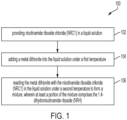
- FIG. 1 shows an exemplary method (100) of producing 1,4-dihydronicotinamide riboside from nicotinamide riboside chloride, according to an embodiment provided by the present disclosure.
- the method 100 comprises providing nicotinamide riboside chloride (NRCl) in a liquid solution (102).
- NRCl nicotinamide riboside chloride
- Nicotinamide riboside chloride is commercially available, and could be purchased as, e.g., Niagen TM from ChromaDex.
- Nicotinamide riboside chloride (NRCl) includes either ⁇ -form NRCl ( ⁇ -NRCl) or ⁇ -form NRCl ( ⁇ -NRCl).
- the nicotinamide riboside chloride (NRCl) of present disclosure comprises ⁇ -NRCl.
- the nicotinamide riboside chloride (NRCl) of present disclosure is ⁇ -NRCl.
- the present disclosure uses ⁇ -NRCl as the exemplary starting material to produce 1,4-dihydronicotinamide riboside (NRH).
- the present method of producing 1,4-dihydronicotinamide riboside (NRH) can also be applied to using ⁇ -NRCl as a starting material.
- a chemically effective amount of nicotinamide riboside chloride ( ⁇ -NRCl) as a form of solid (e.g., a powder) is provided.
- the solid form of nicotinamide riboside chloride ( ⁇ -NRCl) may be used in a solid-state reaction to produce 1,4-dihydronicotinamide riboside (NRH).
- NSH 1,4-dihydronicotinamide riboside
- the solid form of ⁇ -nicotinamide riboside chloride ( ⁇ -NRCl) is dissolved in a solvent such as water to form a liquid solution for the production of 1,4-dihydronicotinamide riboside (NRH).
- a chemically effective amount of ⁇ -nicotinamide riboside chloride is first dissolved in a solution such as water to form a solution for a liquid-based production of 1,4-dihydronicotinamide riboside (NRH).
- the method 100 may comprise adding a metal dithionite into the liquid solution under a first temperature (104).
- a reducing agent such as a metal dithionite may be added into the liquid solution.
- the reducing agent may comprise a metal dithionite such as sodium dithionite (Na 2 S 2 O 4 ).
- the only reducing agent may be a metal dithionite such as sodium dithionite (Na 2 S 2 O 4 ).
- Scheme 4 shows an exemplary reduction reaction of ⁇ -nicotinamide riboside chloride ( ⁇ -NRCl) with sodium dithionite (Na 2 S 2 O 4 ) in a liquid solution.
- Scheme 5 shows a reaction mechanism of NRH synthesis from NR by using Na 2 S 2 O 4 as a reducing agent. As shown in Scheme 5, a reduction reaction of NR by using Na 2 S 2 O 4 initially forms a sulfinate intermediate, which is stable at basic conditions.
- the sulfinate intermediate forms its sulfinic acid derivative.
- This sulfinic acid intermediate is unstable at ambient conditions and converts to NRH via SO 2 leaving.
- a particularly preferred embodiment uses a pH that will not only stabilize Na 2 S 2 O 4 but will also protonate the sulfonate intermediate to produce the NRH. Moreover, because NRH has an N-glycoside bond in its structure, NRH is susceptible to hydrolysis. Consequently, a particularly preferred embodiment adjusts the pH and maintains the pH precisely during the whole course of the reaction so that NRH is not hydrolyzed.
- the present methods include adjusting the pH of the related solutions and maintaining it precisely within a specific range (e.g., 8.0-8.5, preferably 8.1) for effective production of NRH.
- a specific range e.g., 8.0-8.5, preferably 8.1
- Na 2 S 2 O 4 was used as an exemplary reducing agent.
- Other functionally similar reducing agent may also be used.
- the reducing agent is Na 2 S 2 O 4 .
- a molar ratio of ⁇ -nicotinamide riboside chloride ( ⁇ -NRCl) to the reducing agent such as Na 2 S 2 O 4 is preferably between about 1:1 and about 1:5, between about 1:1.5 and about 1:4, or between about 1:2 and about 1:3, preferably between about 1:2 and about 1:3, more preferably about 1:2.7.
- ⁇ -NRCl ⁇ -nicotinamide riboside chloride
- the liquid solution may be purged with an inert gas to remove free oxygen in the solution.
- An inert gas may include nitrogen (N 2 ), argon (Ar) or others. In an embodiment, either nitrogen or argon is used as the inert gas.
- the liquid solution may be purged with an inert gas throughout the reduction reaction.
- the inert gas comprises nitrogen gas.
- the only inert gas is nitrogen gas.
- the liquid solution comprises a basic solution. In an embodiment, the liquid solution is a basic solution.
- the basic solution comprises sodium bicarbonate (NaHCO 3 ).
- the liquid solution may include at least one alkali salt or basic salt such as sodium bicarbonate (NaHCO 3 ) to form a basic solution.
- the only alkali salt or basic salt is sodium bicarbonate (NaHCO 3 ).
- other alkali salt or basic salt such as sodium carbonate, potassium carbonate, potassium bicarbonate and similar compounds may optionally be used.
- a pH value of the liquid solution may be controlled by the concentration of the at least one alkali salt or basic salt in the solution.
- concentration of the at least one alkali salt or basic salt in the solution For example, by using 1-1.5 M, preferably 1.1-1.4M, more preferably 1.2M of NaHCO 3 , the pH value of the liquid solution may be controlled in the range of about 8.0 to about 8.5, about 8.05 to about 8.45, about 8.07 to about 8.35, about 8.08 to about 8.29, about 8.09 to about 8.19, preferably about 8.1.
- the method 100 comprises maintaining a pH value of the NaHCO 3 solution between 8.0-8.5. In an embodiment, the method 100 comprises maintaining a pH value of the NaHCO 3 solution between about 8.0 and about 8.5. In an embodiment, the method 100 comprises maintaining a pH value of the NaHCO 3 solution about 8.1.
- the NaHCO 3 solution has a concentration from about 1.0 to about 1.5 M. In an embodiment, the NaHCO 3 solution has a concentration about 1.2 M.
- the reducing agent such as Na 2 S 2 O 4 may be gradually added into the liquid solution of the ⁇ -nicotinamide riboside chloride ( ⁇ -NRCl) under an inert gas atmosphere at a first temperature.
- the reducing agent such as Na 2 S 2 O 4 may be pre-dissolved into a solvent such as water and the solution of the reducing agent such as Na 2 S 2 O 4 may be dropped-wise into the liquid solution of the ⁇ -nicotinamide riboside chloride ( ⁇ -NRCl) under an inert gas atmosphere at a first temperature.
- the first temperature is a low temperature such as about 0°C (e.g., by using ice water to control) so that the reduction reaction can be controlled during the addition of the reducing agent such as Na 2 S 2 O 4 .
- the method 100 may comprise reacting the metal dithionite with the nicotinamide riboside chloride (NRCl) in the liquid solution under a second temperature to form a mixture, wherein a portion of the mixture is the 1,4-dihydronicotinamide riboside (NRH) (106).
- NRCl nicotinamide riboside chloride
- the temperature of the liquid solution is preferably increased from the first temperature to a second temperature.
- the nicotinamide riboside chloride (NRCl) in the liquid solution can completely and effectively react with the reducing agent such as Na 2 S 2 O 4 to form the 1,4-dihydronicotinamide riboside (NRH).
- the second temperature is room temperature.
- the reducing agent such as Na 2 S 2 O 4 and the ⁇ -nicotinamide riboside chloride ( ⁇ -NRCl) may continuously and completely react to form a mixture, wherein at least portion of the mixture is the 1,4-dihydronicotinamide riboside (NRH).
- progress of the reduction reaction between the reducing agent such as Na 2 S 2 O 4 and the ⁇ -nicotinamide riboside chloride ( ⁇ -NRCl) may be monitored by using a chromatography technique.
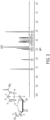
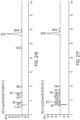
- a chromatography technique For example, as shown in FIG. 2a , all compounds of ⁇ -NRCl, NRH and nicotinamide (NA; a degradation product from NRH; see Scheme 6) were visible at a wavelength of 254 nm. However, at a wavelength of 365 nm, only NRH was visible.
- the resulting mixture may be dried to obtain a solid of the mixture.
- the resulting mixture may be freeze-dried to obtain a yellow solid of the mixture.
- a purification method for obtaining a high purity of the resulting NRH is disclosed.
- a chromatography method may be used to isolate the resulting NRH from the mixture.
- column chromatography can be used to separate NRH from ⁇ -NRCI or other impurity substances based on differential adsorption of compounds to the adsorbent; compounds move through the column at different rates, allowing them to be separated into fractions.
- the column chromatograph method uses an alcohol as its eluent.
- the eluent comprises methanol.
- the only eluent is methanol. Nevertheless, other solvents such as a mixture of methanol and ethanol can optionally be used as eluent additionally or alternatively.
- the adsorbent of the column chromatograph comprises at least basic alumina and silica.
- basic alumina and silica are the only adsorbents of the column chromatograph.
- the basic alumina and the silica may have a weight ratio of between about 1:10 and about 10:1, between about 1:9 and about 9: 1, between about 1:8 and about 8:1, between about 1:7 and about 7:1, between about 1:6 and about 6:1, between about 1:5 and about 5:1, between about 1:4 and about 4:1, between about 1:3 and about 3:1, or between about 1:2 and about 2:1, preferably about 2:3.
- a column chromatograph purification method may use basic alumina with silica, for example with the weight ratio of about 2:3, to isolate NRH with a purity at least 70%, at least 72%, at least 75%, at least 77%, at least 80%, at least 83%, at least 85%, at least 87%, at least 90%, at least 93%, at least 95%, at least 96%, or at least 98%, preferably at least 96%.
- the column chromatograph purification method by using basic alumina with silica may remove at least 90%, at least 95%, at least 99%, at least 99.9%, or at least 99.999 of the unreacted NRCl in the mixture.
- the column chromatograph purification method by using basic alumina with silica may completely purify the NRH product from the unreacted NRCl in the mixture.
- Basic alumina as a polar surface with many hydroxyl groups on it, can presumably physically separate NR from NRH to a moderate degree (by difference of their polarities). Moreover, because basic alumina has negative charges on its surface and NR has a positive charge, basic alumina could act as a cationic exchange resin to immobilize NR on the surface of the basic alumina.
- the total yield of NRH for the present method may be at least 35%, at least 40%, at least 45%, at least 50%, at least 55%, at least 60%, at least 65%, at least 70%, at least 75%, at least 80%, at least 85%, or at least 90%, preferably at least 55%.
- the present method of producing NRH in a liquid solution produces a significantly higher yield than that of a solid-state method.
- the present method of producing NRH in a liquid solution produces a yield at least 20%, at least 25%, at least 30%, at least 35%, at least 40%, at least 45%, at least 50%, at least 55%, at least 60%, at least 65%, at least 70%, at least 75%, at least 80%, at least 85%, at least 90%, at least 95%, at least 100%, at least 120%, at least 140%, at least 160%, at least 180%, at least 200%, at least 220%, at least 240%, at least 260%, at least 280%, at least 300%, at least 320%, at least 340%, at least 360%, at least 380%, at least 400%, at least 420%, at least 440%, at least 460%, at least 480%, at least 500%, or at least 600% higher than that of a solid-state method.
- Examples below provide a detailed exemplary solid-state method of producing NRH with a yield between about 15% and about 17%.
- the exemplary solution-based methods of producing and purifying NRH demonstrate a yield in the range of about 42% to about 55%.
- the present method of producing NRH in a liquid solution may produce a yield at least 267% higher than that of the exemplary solid-state method.
- the present disclosure relates to stabilities of the NRH as produced from methods as discussed herein.
- DHNA 1,4-dihydronicotinamide
- a pH value of the liquid solution of the method of producing NRH may be maneuvered to control a reaction rate of the method and hydrolysis of both the starting material of NRCl and the product of NRH.
- a pH value about 8.1 may be preferred for increasing the reaction rate of the reduction, while decreasing possibility of side reactions, such as hydrolysis of both NR and NRH.
- the pH of the reaction for producing NRH may be necessarily adjusted to minimize the formation of NA and DHNA to decreasing the reaction time.
- the retardation factor (Rf) values of these by-products of NA and DHNA are close to the R f values of NRH. Therefore, NA and DHNA cannot be separated from the NRH product by common column chromatography (see FIG. 5a ).
- the pH of the reaction for producing NRH may be adjusted to about 8.1.
- the NRH is more thermally stable than the NRCl under a nitrogen atmosphere.
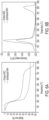
- FIGs. 6a and 6b showed that while both NRH and NR show their greatest weight loss at around 218 °C and 910 °C, respectively, NRH shows only around 50% weight loss at this temperature, while NRCl shows around 65% weight loss at this temperature.
- NRH shows another distinctive weight loss with a peak at around 800 °C which contributes to 30% weight loss.
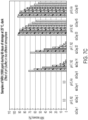
- NRH may be susceptible to oxidation in the presence of air and NRH may be more stable under a N 2 atmosphere than that in the presence of air, as demonstrated in FIG. 7 . Further, pure NRH (as a powder) may be stable in a refrigerator, in a sealed tube, for a few months without any degradation.
- the NRH product may be completely degraded in less than one day at pH 5, while the NRH products prepared in the ammonium acetate buffer at pH 7 may show a linear decrease of NRH concentration from around 70% in day one to around 2% in day 30.
- the NRH products prepared in the carbonate buffer at pH 9 may be air stable both in air (e.g., around 45% degradation measured after 60 days) and under N 2 (e.g., around 42% degradation measured after 60 days).
- the NR in an aqueous solution may be very stable with no detectable degradation after 60 days, while NRH in an aqueous solution stored in air may show 9% and 10% degradation after 30 and 60 days, respectively.
- NRH in an aqueous solution stored under a N 2 blanket may be fairly stable with no detectable degradation after 60 days of storage.
- the following non-limiting example presents scientific data developing and supporting the concept of methods and processes for producing 1,4-dihydronicotinamide riboside from nicotinamide riboside chloride and related purification and stability studies.
- NAD + precursor 1,4-dihydronicotinamide riboside (NRH) from commercially available nicotinamide riboside chloride (NRCl) and in the presence of sodium dithionite as a reducing agent.
- the method is potentially scalable.
- NRH is industrially relevant as the most effective, synthetic NAD + precursor.
- NR chloride (beta form) was a gift from ChromaDex Company.
- Sodium dithionite was purchased from VWR
- sodium hydrogen carbonate was purchased from Aldrich
- silica gel P60, 40-63 ⁇ m, 60 ⁇
- silica gel P60, 40-63 ⁇ m, 60 ⁇
- basic alumina 50-200 ⁇ m, 60 ⁇ , pH 8) was purchased from Acros.
- a 500 NMR (Bruker INOVA) spectrometer was used to prepare the 1 H and 13 C-NMR spectra in deuterated water.
- Fourier transform infrared spectra (FTIR) were recorded on a Shimadzu IRAffinity-1S spectrophotometer by collecting 128 scans with a resolution of 8 cm -1 .
- UV-vis spectra of the NR and NRH solutions were recorded on a Shimadzu UV-2600 spectrophotometer.
- Thermogravimetric analysis (TGA) thermograms were prepared in the range of 20-900 °C at a temperature rate of 10°C min -1 under N 2 flow, using a TA Q100 instrument.
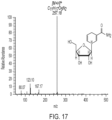
- LC-MS analysis we used LC (Agilent 1100 series) coupled with a mass spectrometer. Reverse-phase chromatography was used with a Phenomenex Luna Omega (Phenomenex) LC column with the following specifications: 100 ⁇ 4.6 mm, 3 ⁇ m, polar C18, 100 ⁇ pore size with a flow rate of 0.3 mL min -1 .
- LC eluents include ammonium acetate 20 mM (solution A) and acetonitrile (solution B) using gradient elution (solution A:B composition change with time: 0 min: 95:5, 3 min: 95:5, 15 min: 85:15, 17 min: 90:10, and 20 min 95:5).
- the mass spectrometer (Finnigan LTQ mass spectrometer) was equipped with an electrospray interface (ESI) set in positive electrospray ionization mode for analyzing the NRH.
- the optimized parameters were a sheath gas flow rate at 20 arbitrary unit, spray voltage set at 4.00 kV, capillary temperature at 350 °C, capillary voltage at 41.0 V, and tube lens set at 125.0 V.
- the residue was purified by column chromatography using a mixture of basic alumina and silica with the weight ratio of 2:3 respectively, using methanol as eluent.
- the extra methanol was removed by rotary evaporator at room temperature to obtain a pale yellow, sticky solid that was next converted to a yellow powder (precipitate) by adding ethyl acetate.
- the isolated product was washed with n-hexane and dried under reduced pressure at room temperature to obtain pure NRH in 55% yield (0.24 g).
- NRCl (0.1 g), Na 2 S 2 O 4 (0.2 g), base and solid support were placed in a mortar and ground for 15 min, then all the reaction mixture were added to 8 mL of NaHCO 3 (1 M) solution and stirred for 30 min.
- c The reaction of NRCl (0.5 g) and Na 2 S 2 O 4 (0.8 g) was carried out in 20 mL of NaHCO 3 (1.2 M) solution under N 2 atmosphere at pH 8.1.
- the reaction of NRCl (0.5 g) and Na 2 S 2 O 4 (0.8 g) was carried out in a solution of 20 mL of NaHCO 3 (1.2 M) and 0.2 g of Na 2 CO 3 under N 2 atmosphere at pH 8.5.
- e The yields refer to the isolated pure products.
- f The product contains 12% of dihydronicotinamide impurity based on 1 H NMR.
- NRH has an N-glycoside bond in its structure, it is susceptible to hydrolysis. Consequently, it is necessary to adjust the pH and maintain it precisely during the whole course of the reaction so that NRH is not hydrolyzed.
- the minimum pH to stabilize the aqueous solution of Na 2 S 2 O 4 , without decreasing its activity as a reducing agent, is between 8.0-8.5.
- NRCl was dissolved in this solution and Na 2 S 2 O 4 was gradually added to the reaction mixture, under a nitrogen atmosphere at 0°C.
- the pH decreased.
- the sodium bicarbonate solution with the concentration of 1.2 M was enough to keep the pH constant during the course of the reaction.
- the reaction was carried out at room temperature for 3 hours.
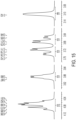
- the FT-IR spectrum of the synthesized and purified NRH was studied and compared to the spectrum of the pristine NRCl ( FIG. 2b ).
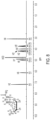
- Two peaks at 3340 and 3209 cm -1 refer to asymmetric and symmetric stretching bands of NH 2 group in the structure of NRH which implies that the amide group is intact during the course of the reaction.
- Thermal stability is very important for drugs and supplements that have the potential for use in food due to the high temperatures that are often needed for industrial processing.
- TGA thermal stability of the NRH
- FIG. 6 shows the TGA thermograms in the range of 25 to 900 °C for NRH and NRCl.
- the NRH is clearly more thermally stable than the NRCl.
- a stock solution of the freshly synthesized and purified NRH (10,000 ppm) was prepared in deoxygenated DI water. This stock solution was used for preparation of 1000 ppm NRH solutions for stability measurements. The effects of light, pH (buffer), temperature, and oxygen (as air) were investigated during a 60-day period of storage. The remaining NRH concentration was measured using HPLC. This procedure was also used for an NR stability measurement and the results were compared to the NRH samples at the same conditions.
- NRH is an unstable, sensitive molecule due to its N-glycosidic bond and can undergo degradation, hydrolysis, and oxidation during exposure to high temperatures, nucleophiles, and oxygen. Some of the major products of these degradation reactions for NRH are shown in Scheme 6. Studying the NRH degradation under different conditional variables is important for developing new supplements or potential beverage products. Here, we study the effect of light, temperature, oxygen, and pH on the degradation rate of the freshly synthesized and purified NRH in an aqueous solution during a period of 60 days.
- NRH oxidative sensitivity of the NRH, as a dihydronicotinamide derivative
- NRH has a high oxidation potential.
- FIG. 7a shows the NRH recovery (%) during the 60 days of storage based on the HPLC results both for samples in the dark/light and in air/under N 2 .
- NRH nicotinamide
- DHNA dihydronicotinamide
- NRH ionic (nitrogen in the ring does not have a positive charge). Therefore, we might anticipate that the NRH should be more stable compared to the NR molecule in terms of spontaneous dissociation of the N-glycosidic bond due to the temperature.
- the oxidative degradation of the NRH also plays an important role for its stability as we showed in previous section.
- FIG. 7b shows the results of the recovery of the NRH in aqueous solutions kept at 4 °C and 25 °C during 60 days of storage.
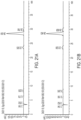
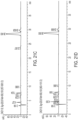
- FIG. 21 shows the corresponding HPLC chromatograms of some of the samples in 60 days of storage.
- Dissociative degradation of the NR molecule is pH independent.
- the NRH molecule showed relatively good stability in a basic medium (as we also emphasize in the results and discussion) and rapid degradation under acidic conditions during a 10 h monitoring period.
- FIG. 7c 25 °C, pH 7 air and N 2
- FIG. 7b 25 °C, DI water
- the rapid degradation of the NRH at pH 7 is due to the ammonium acetate salt used to make the buffer.
- the presence of some anions, such as chloride and acetate accelerate the oxidation of NRH to NR because the existence of an anion as a counter ion of NR is necessary in this oxidation process.
- the acetate ion may act as a nucleophile and accelerate the NRH hydrolysis.
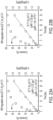
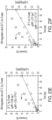
- FIG. 23 shows the kinetic graphs and the first order degradation rates for NRH samples stored at pH 7.0, at 25 °C, under N 2 and air ( FIGs. 23a and 23b ), samples stored at pH 9.0, at 25 °C, under N 2 and air ( FIGs. 23c and 23d ), and for NRH samples that have been kept in DI water, at 25 °C, under N 2 and air ( FIGs. 23e and 23f ).
- the degradation rate for samples that have been kept at 25 °C in DI water under air is 1.27 ⁇ 10 -7 s -1 , which corresponds to a half-life of 63 days.
- the degradation rate for the NRH samples that have been kept at 25 °C in DI water under N 2 is 5.90 ⁇ 10 -8 s -1 , which correspond to a half-life of 136 days ( FIG. 23 ).
- NRH is the reduced form of NR and has a much higher biological activity. However, it is essential to compare the stability of NR to NRH. If the NRH is not as stable as NR, the latter would be useful for more applications.
- the NR solution that has been kept at 25 °C shows 48% and 68% degradation after 30 and 60 days of storage, while this degradation is 36% and 50% for NRH solutions that have been kept under air after 30 and 60 days and 13% and 27% for and NRH solutions that have been kept under N 2 after 30 and 60 days, respectively.
Landscapes
- Chemical & Material Sciences (AREA)
- Organic Chemistry (AREA)
- Engineering & Computer Science (AREA)
- Health & Medical Sciences (AREA)
- Biochemistry (AREA)
- Biotechnology (AREA)
- General Health & Medical Sciences (AREA)
- Genetics & Genomics (AREA)
- Molecular Biology (AREA)
- Life Sciences & Earth Sciences (AREA)
- Saccharide Compounds (AREA)
- Pharmaceuticals Containing Other Organic And Inorganic Compounds (AREA)
- Pyridine Compounds (AREA)
Claims (23)
- Verfahren zum Herstellen von 1,4-Dihydronicotinamid-Ribosid (NRH), umfassend: Bereitstellen vonNicotinamid-Ribosidchlorid (NRCI) in einer flüssigen Lösung;Hinzufügen eines Metalldithionits zu der flüssigen Lösung bei einer ersten Temperatur; undReagieren des Metalldithionits mit dem Nicotinamid-Ribosidchlorid (NRCl) in der flüssigen Lösung bei einer zweiten Temperatur, um eine Mischung auszubilden, wobei mindestens ein Anteil der Mischung das 1,4-Dihydronicotinamid-Ribosid (NRH) umfasst.
- Verfahren nach Anspruch 1, wobei das Nicotinamid-Ribosidchlorid (NRCI) β-Nicotinamid-Ribosidchlorid (β-NRCI) umfasst.
- Verfahren nach Anspruch 1, wobei die flüssige Lösung eine basische Lösung ist.
- Verfahren nach Anspruch 3, wobei die basische Lösung NaHCO3 umfasst.
- Verfahren nach Anspruch 4, umfassend ein Aufrechterhalten eines pH-Werts der basischen Lösung zwischen 8,0 - 8,5.
- Verfahren nach Anspruch 5, wobei die basische Lösung eine NaHCOs-Konzentration von 1,0 M bis 1,5 M aufweist.
- Verfahren nach Anspruch 6, wobei die basische Lösung eine NaHCOs-Konzentration von etwa 1,2 M aufweist.
- Verfahren nach Anspruch 1, wobei das Metalldithionit Natriumdithionit umfasst.
- Verfahren nach Anspruch 1, wobei die erste Temperatur etwa 0 °C ist.
- Verfahren nach Anspruch 1, wobei die zweite Temperatur Raumtemperatur ist.
- Verfahren nach Anspruch 1, umfassend ein Entfernen von Sauerstoff aus der flüssigen Lösung und ein Halten der flüssigen Lösung unter einem Inertgas.
- Verfahren nach Anspruch 11, wobei das Inertgas Stickstoffgas umfasst.
- Verfahren nach Anspruch 1, wobei das Verfahren ferner ein Gefriertrocknen der Mischung umfasst, um ein gelbes festes Pulver zu erhalten.
- Verfahren nach Anspruch 13, wobei das Verfahren ferner ein Reinigen des gelben festen Pulvers durch Säulenchromatographie unter Verwendung einer Mischung aus basischem Aluminiumoxid und Siliciumdioxid umfasst.
- Verfahren nach Anspruch 14, wobei das basische Aluminiumoxid und das Siliciumdioxid ein Gewichtsverhältnis von etwa 2 : 3 aufweisen.
- Verfahren nach Anspruch 15, wobei das 1,4-Dihydronicotinamid-Ribosid (NRH) eine Reinheit von mindestens 90 % aufweist.
- Verfahren nach Anspruch 16, wobei die Reinheit des 1,4-Dihydronicotinamid-Ribosids (NRH) mindestens 93 % beträgt.
- Verfahren nach Anspruch 17, wobei die Reinheit des 1,4-Dihydronicotinamid-Ribosids (NRH) mindestens 95 % beträgt.
- Verfahren nach Anspruch 18, wobei die Reinheit des 1,4-Dihydronicotinamid-Ribosids (NRH) mindestens 96 % beträgt.
- Verfahren nach Anspruch 1, wobei eine Ausbeute des 1,4-Dihydronicotinamid-Ribosids (NRH) mindestens 40 % beträgt.
- Verfahren nach Anspruch 20, wobei die Ausbeute des 1,4-Dihydronicotinamid-Ribosids (NRH) mindestens 45 % beträgt.
- Verfahren nach Anspruch 21, wobei die Ausbeute des 1,4-Dihydronicotinamid-Ribosids (NRH) mindestens 50 % beträgt.
- Verfahren nach Anspruch 22, wobei die Ausbeute des 1,4-Dihydronicotinamid-Ribosids (NRH) mindestens 55 % beträgt.
Applications Claiming Priority (2)
| Application Number | Priority Date | Filing Date | Title |
|---|---|---|---|
| US202063078526P | 2020-09-15 | 2020-09-15 | |
| PCT/EP2021/075245 WO2022058312A1 (en) | 2020-09-15 | 2021-09-14 | Methods for producing dihydronicotinamide riboside from nicotinamide riboside chloride |
Publications (2)
| Publication Number | Publication Date |
|---|---|
| EP4214217A1 EP4214217A1 (de) | 2023-07-26 |
| EP4214217B1 true EP4214217B1 (de) | 2024-09-18 |
Family
ID=78049187
Family Applications (1)
| Application Number | Title | Priority Date | Filing Date |
|---|---|---|---|
| EP21766096.8A Active EP4214217B1 (de) | 2020-09-15 | 2021-09-14 | Verfahren zur herstellung von dihydronicotinamidribosid aus nicotinamidribosidchlorid |
Country Status (9)
| Country | Link |
|---|---|
| US (1) | US20230271995A1 (de) |
| EP (1) | EP4214217B1 (de) |
| JP (1) | JP2023540980A (de) |
| CN (1) | CN116390930A (de) |
| AU (1) | AU2021343852A1 (de) |
| BR (1) | BR112023003217A2 (de) |
| CA (1) | CA3187278A1 (de) |
| ES (1) | ES3001124T3 (de) |
| WO (1) | WO2022058312A1 (de) |
Family Cites Families (4)
| Publication number | Priority date | Publication date | Assignee | Title |
|---|---|---|---|---|
| GB201313465D0 (en) * | 2013-07-29 | 2013-09-11 | Queens University Of The Belfast | Methods of preparing nicotinamide riboside and derivatives thereof |
| WO2016014927A2 (en) * | 2014-07-24 | 2016-01-28 | W.R. Grace & Co.-Conn. | Crystalline form of nicotinamide riboside |
| US10280190B2 (en) * | 2015-03-16 | 2019-05-07 | Chromadex, Inc. | Nicotinic acid riboside or nicotinamide riboside compositions, reduced derivatives thereof, and the use thereof to enhance skin permeation in treating skin conditions |
| US10611790B2 (en) * | 2015-11-02 | 2020-04-07 | Mitobridge, Inc. | Nicotinamide riboside and nicotinamide mononucleotide derivatives for use in the treatments of mitochondrial-related diseases |
-
2021
- 2021-09-14 BR BR112023003217A patent/BR112023003217A2/pt unknown
- 2021-09-14 JP JP2023514915A patent/JP2023540980A/ja not_active Withdrawn
- 2021-09-14 AU AU2021343852A patent/AU2021343852A1/en not_active Abandoned
- 2021-09-14 CA CA3187278A patent/CA3187278A1/en active Pending
- 2021-09-14 ES ES21766096T patent/ES3001124T3/es active Active
- 2021-09-14 WO PCT/EP2021/075245 patent/WO2022058312A1/en not_active Ceased
- 2021-09-14 CN CN202180052243.8A patent/CN116390930A/zh not_active Withdrawn
- 2021-09-14 EP EP21766096.8A patent/EP4214217B1/de active Active
- 2021-09-14 US US18/245,044 patent/US20230271995A1/en active Pending
Also Published As
| Publication number | Publication date |
|---|---|
| WO2022058312A1 (en) | 2022-03-24 |
| JP2023540980A (ja) | 2023-09-27 |
| EP4214217A1 (de) | 2023-07-26 |
| ES3001124T3 (es) | 2025-03-04 |
| US20230271995A1 (en) | 2023-08-31 |
| CA3187278A1 (en) | 2022-03-24 |
| AU2021343852A1 (en) | 2023-02-23 |
| CN116390930A (zh) | 2023-07-04 |
| BR112023003217A2 (pt) | 2023-03-28 |
Similar Documents
| Publication | Publication Date | Title |
|---|---|---|
| EP4169906B1 (de) | Verfahren zur synthese von roxadustat und zwischenprodukt davon sowie zwischenprodukt davon | |
| CN118496111B (zh) | 一种奥拉氟化合物的合成方法 | |
| US10081620B2 (en) | Radioactive fluorine labeling precursor compound and method for manufacturing radioactive fluorine labeled compound using the same | |
| CN111848710A (zh) | 烟酰胺核糖及其还原态、盐的制备方法 | |
| Zarei et al. | Dihydronicotinamide riboside: synthesis from nicotinamide riboside chloride, purification and stability studies | |
| CN113214276A (zh) | 一种化合物a1及其制备方法与作为普拉洛芬杂质的应用 | |
| White et al. | Biosynthesis of the pyrimidine moiety of thiamin in Escherichia coli: incorporation of stable isotope-labeled glycines | |
| US20230271995A1 (en) | Methods for producing dihydronicotinamide riboside from nicotinamide riboside chloride | |
| US20260015377A1 (en) | Crystalline form i of reduced nicotinamide mononucleotide disodium monohydrate and preparation method therefor | |
| EP3279206B1 (de) | Verfahren zur herstellung von epirubicin und neues herstellungszwischenprodukt dafür | |
| Thérisod et al. | The origin of the carbon chain in the thiazole moiety of thiamine in Escherichia coli: incorporation of deuterated 1-deoxy-D-threo-2-pentulose | |
| HK40096439A (zh) | 用於由烟酰胺核糖核苷氯化物生产二氢烟酰胺核糖核苷的方法 | |
| US20080227991A1 (en) | Sodium salt of disaccharide compound, production method and use of same | |
| CN113603721B (zh) | 一种合成saicar的方法 | |
| CN112028954B (zh) | 烟酰胺核糖的制备方法 | |
| JPH0217199A (ja) | 2’−デオキシ−β−アデノシンの製造方法 | |
| Zhao et al. | Determination of free fatty acids from soil and bryophyte by HPLC with fluorescence detection and identification with mass spectrometry | |
| EP3816176B1 (de) | Hydratkristall von 3' ,3'-cgamp | |
| EP3021669B1 (de) | Neuartige , von solanidin abgeleitete verbindungen | |
| JP4118357B2 (ja) | Ampアルキルエステル誘導体の製造方法 | |
| Gattavecchia et al. | Chemical reduction of the radiosensitizer misonidazole by zinc or glucose | |
| EP4317165A1 (de) | Borsäureverbindung und verfahren zur herstellung davon | |
| EP3875463A1 (de) | Zyklischer di-amp-natrium-salzkristall | |
| RU2563453C2 (ru) | Способ аралкилирования 4'-гидроксильной группы антрациклинов | |
| JP3796810B2 (ja) | フェノール系配糖体の製造方法 |
Legal Events
| Date | Code | Title | Description |
|---|---|---|---|
| STAA | Information on the status of an ep patent application or granted ep patent |
Free format text: STATUS: UNKNOWN |
|
| STAA | Information on the status of an ep patent application or granted ep patent |
Free format text: STATUS: THE INTERNATIONAL PUBLICATION HAS BEEN MADE |
|
| PUAI | Public reference made under article 153(3) epc to a published international application that has entered the european phase |
Free format text: ORIGINAL CODE: 0009012 |
|
| STAA | Information on the status of an ep patent application or granted ep patent |
Free format text: STATUS: REQUEST FOR EXAMINATION WAS MADE |
|
| 17P | Request for examination filed |
Effective date: 20230417 |
|
| AK | Designated contracting states |
Kind code of ref document: A1 Designated state(s): AL AT BE BG CH CY CZ DE DK EE ES FI FR GB GR HR HU IE IS IT LI LT LU LV MC MK MT NL NO PL PT RO RS SE SI SK SM TR |
|
| DAV | Request for validation of the european patent (deleted) | ||
| DAX | Request for extension of the european patent (deleted) | ||
| GRAP | Despatch of communication of intention to grant a patent |
Free format text: ORIGINAL CODE: EPIDOSNIGR1 |
|
| STAA | Information on the status of an ep patent application or granted ep patent |
Free format text: STATUS: GRANT OF PATENT IS INTENDED |
|
| INTG | Intention to grant announced |
Effective date: 20240426 |
|
| GRAS | Grant fee paid |
Free format text: ORIGINAL CODE: EPIDOSNIGR3 |
|
| GRAA | (expected) grant |
Free format text: ORIGINAL CODE: 0009210 |
|
| STAA | Information on the status of an ep patent application or granted ep patent |
Free format text: STATUS: THE PATENT HAS BEEN GRANTED |
|
| P01 | Opt-out of the competence of the unified patent court (upc) registered |
Free format text: CASE NUMBER: APP_43895/2024 Effective date: 20240727 |
|
| AK | Designated contracting states |
Kind code of ref document: B1 Designated state(s): AL AT BE BG CH CY CZ DE DK EE ES FI FR GB GR HR HU IE IS IT LI LT LU LV MC MK MT NL NO PL PT RO RS SE SI SK SM TR |
|
| REG | Reference to a national code |
Ref country code: GB Ref legal event code: FG4D |
|
| REG | Reference to a national code |
Ref country code: CH Ref legal event code: EP |
|
| REG | Reference to a national code |
Ref country code: IE Ref legal event code: FG4D |
|
| REG | Reference to a national code |
Ref country code: DE Ref legal event code: R096 Ref document number: 602021019018 Country of ref document: DE |
|
| REG | Reference to a national code |
Ref country code: NL Ref legal event code: FP |
|
| REG | Reference to a national code |
Ref country code: SE Ref legal event code: TRGR |
|
| REG | Reference to a national code |
Ref country code: LT Ref legal event code: MG9D |
|
| PG25 | Lapsed in a contracting state [announced via postgrant information from national office to epo] |
Ref country code: NO Free format text: LAPSE BECAUSE OF FAILURE TO SUBMIT A TRANSLATION OF THE DESCRIPTION OR TO PAY THE FEE WITHIN THE PRESCRIBED TIME-LIMIT Effective date: 20241218 |
|
| PG25 | Lapsed in a contracting state [announced via postgrant information from national office to epo] |
Ref country code: GR Free format text: LAPSE BECAUSE OF FAILURE TO SUBMIT A TRANSLATION OF THE DESCRIPTION OR TO PAY THE FEE WITHIN THE PRESCRIBED TIME-LIMIT Effective date: 20241219 Ref country code: FI Free format text: LAPSE BECAUSE OF FAILURE TO SUBMIT A TRANSLATION OF THE DESCRIPTION OR TO PAY THE FEE WITHIN THE PRESCRIBED TIME-LIMIT Effective date: 20240918 |
|
| PG25 | Lapsed in a contracting state [announced via postgrant information from national office to epo] |
Ref country code: BG Free format text: LAPSE BECAUSE OF FAILURE TO SUBMIT A TRANSLATION OF THE DESCRIPTION OR TO PAY THE FEE WITHIN THE PRESCRIBED TIME-LIMIT Effective date: 20240918 |
|
| PG25 | Lapsed in a contracting state [announced via postgrant information from national office to epo] |
Ref country code: LV Free format text: LAPSE BECAUSE OF FAILURE TO SUBMIT A TRANSLATION OF THE DESCRIPTION OR TO PAY THE FEE WITHIN THE PRESCRIBED TIME-LIMIT Effective date: 20240918 |
|
| PG25 | Lapsed in a contracting state [announced via postgrant information from national office to epo] |
Ref country code: HR Free format text: LAPSE BECAUSE OF FAILURE TO SUBMIT A TRANSLATION OF THE DESCRIPTION OR TO PAY THE FEE WITHIN THE PRESCRIBED TIME-LIMIT Effective date: 20240918 |
|
| PG25 | Lapsed in a contracting state [announced via postgrant information from national office to epo] |
Ref country code: RS Free format text: LAPSE BECAUSE OF FAILURE TO SUBMIT A TRANSLATION OF THE DESCRIPTION OR TO PAY THE FEE WITHIN THE PRESCRIBED TIME-LIMIT Effective date: 20241218 |
|
| PG25 | Lapsed in a contracting state [announced via postgrant information from national office to epo] |
Ref country code: RS Free format text: LAPSE BECAUSE OF FAILURE TO SUBMIT A TRANSLATION OF THE DESCRIPTION OR TO PAY THE FEE WITHIN THE PRESCRIBED TIME-LIMIT Effective date: 20241218 Ref country code: NO Free format text: LAPSE BECAUSE OF FAILURE TO SUBMIT A TRANSLATION OF THE DESCRIPTION OR TO PAY THE FEE WITHIN THE PRESCRIBED TIME-LIMIT Effective date: 20241218 Ref country code: LV Free format text: LAPSE BECAUSE OF FAILURE TO SUBMIT A TRANSLATION OF THE DESCRIPTION OR TO PAY THE FEE WITHIN THE PRESCRIBED TIME-LIMIT Effective date: 20240918 Ref country code: HR Free format text: LAPSE BECAUSE OF FAILURE TO SUBMIT A TRANSLATION OF THE DESCRIPTION OR TO PAY THE FEE WITHIN THE PRESCRIBED TIME-LIMIT Effective date: 20240918 Ref country code: GR Free format text: LAPSE BECAUSE OF FAILURE TO SUBMIT A TRANSLATION OF THE DESCRIPTION OR TO PAY THE FEE WITHIN THE PRESCRIBED TIME-LIMIT Effective date: 20241219 Ref country code: FI Free format text: LAPSE BECAUSE OF FAILURE TO SUBMIT A TRANSLATION OF THE DESCRIPTION OR TO PAY THE FEE WITHIN THE PRESCRIBED TIME-LIMIT Effective date: 20240918 Ref country code: BG Free format text: LAPSE BECAUSE OF FAILURE TO SUBMIT A TRANSLATION OF THE DESCRIPTION OR TO PAY THE FEE WITHIN THE PRESCRIBED TIME-LIMIT Effective date: 20240918 |
|
| REG | Reference to a national code |
Ref country code: ES Ref legal event code: FG2A Ref document number: 3001124 Country of ref document: ES Kind code of ref document: T3 Effective date: 20250304 |
|
| PG25 | Lapsed in a contracting state [announced via postgrant information from national office to epo] |
Ref country code: IS Free format text: LAPSE BECAUSE OF FAILURE TO SUBMIT A TRANSLATION OF THE DESCRIPTION OR TO PAY THE FEE WITHIN THE PRESCRIBED TIME-LIMIT Effective date: 20250118 Ref country code: PT Free format text: LAPSE BECAUSE OF FAILURE TO SUBMIT A TRANSLATION OF THE DESCRIPTION OR TO PAY THE FEE WITHIN THE PRESCRIBED TIME-LIMIT Effective date: 20250120 |
|
| PG25 | Lapsed in a contracting state [announced via postgrant information from national office to epo] |
Ref country code: RO Free format text: LAPSE BECAUSE OF FAILURE TO SUBMIT A TRANSLATION OF THE DESCRIPTION OR TO PAY THE FEE WITHIN THE PRESCRIBED TIME-LIMIT Effective date: 20240918 Ref country code: SM Free format text: LAPSE BECAUSE OF FAILURE TO SUBMIT A TRANSLATION OF THE DESCRIPTION OR TO PAY THE FEE WITHIN THE PRESCRIBED TIME-LIMIT Effective date: 20240918 |
|
| PG25 | Lapsed in a contracting state [announced via postgrant information from national office to epo] |
Ref country code: EE Free format text: LAPSE BECAUSE OF FAILURE TO SUBMIT A TRANSLATION OF THE DESCRIPTION OR TO PAY THE FEE WITHIN THE PRESCRIBED TIME-LIMIT Effective date: 20240918 |
|
| PG25 | Lapsed in a contracting state [announced via postgrant information from national office to epo] |
Ref country code: CZ Free format text: LAPSE BECAUSE OF FAILURE TO SUBMIT A TRANSLATION OF THE DESCRIPTION OR TO PAY THE FEE WITHIN THE PRESCRIBED TIME-LIMIT Effective date: 20240918 Ref country code: PL Free format text: LAPSE BECAUSE OF FAILURE TO SUBMIT A TRANSLATION OF THE DESCRIPTION OR TO PAY THE FEE WITHIN THE PRESCRIBED TIME-LIMIT Effective date: 20240918 |
|
| PG25 | Lapsed in a contracting state [announced via postgrant information from national office to epo] |
Ref country code: SK Free format text: LAPSE BECAUSE OF FAILURE TO SUBMIT A TRANSLATION OF THE DESCRIPTION OR TO PAY THE FEE WITHIN THE PRESCRIBED TIME-LIMIT Effective date: 20240918 |
|
| REG | Reference to a national code |
Ref country code: DE Ref legal event code: R097 Ref document number: 602021019018 Country of ref document: DE |
|
| PG25 | Lapsed in a contracting state [announced via postgrant information from national office to epo] |
Ref country code: DK Free format text: LAPSE BECAUSE OF FAILURE TO SUBMIT A TRANSLATION OF THE DESCRIPTION OR TO PAY THE FEE WITHIN THE PRESCRIBED TIME-LIMIT Effective date: 20240918 |
|
| PLBE | No opposition filed within time limit |
Free format text: ORIGINAL CODE: 0009261 |
|
| STAA | Information on the status of an ep patent application or granted ep patent |
Free format text: STATUS: NO OPPOSITION FILED WITHIN TIME LIMIT |
|
| 26N | No opposition filed |
Effective date: 20250619 |
|
| REG | Reference to a national code |
Ref country code: CH Ref legal event code: U11 Free format text: ST27 STATUS EVENT CODE: U-0-0-U10-U11 (AS PROVIDED BY THE NATIONAL OFFICE) Effective date: 20251001 |
|
| PGFP | Annual fee paid to national office [announced via postgrant information from national office to epo] |
Ref country code: DE Payment date: 20250929 Year of fee payment: 5 |
|
| PGFP | Annual fee paid to national office [announced via postgrant information from national office to epo] |
Ref country code: NL Payment date: 20250926 Year of fee payment: 5 Ref country code: TR Payment date: 20250822 Year of fee payment: 5 Ref country code: IT Payment date: 20250919 Year of fee payment: 5 |
|
| REG | Reference to a national code |
Ref country code: AT Ref legal event code: UEP Ref document number: 1724630 Country of ref document: AT Kind code of ref document: T Effective date: 20240918 |
|
| PGFP | Annual fee paid to national office [announced via postgrant information from national office to epo] |
Ref country code: BE Payment date: 20250929 Year of fee payment: 5 Ref country code: GB Payment date: 20250929 Year of fee payment: 5 |
|
| PGFP | Annual fee paid to national office [announced via postgrant information from national office to epo] |
Ref country code: AT Payment date: 20251020 Year of fee payment: 5 Ref country code: FR Payment date: 20250925 Year of fee payment: 5 |
|
| PGFP | Annual fee paid to national office [announced via postgrant information from national office to epo] |
Ref country code: SE Payment date: 20250927 Year of fee payment: 5 |
|
| PGFP | Annual fee paid to national office [announced via postgrant information from national office to epo] |
Ref country code: CH Payment date: 20251001 Year of fee payment: 5 |
|
| PGFP | Annual fee paid to national office [announced via postgrant information from national office to epo] |
Ref country code: ES Payment date: 20251001 Year of fee payment: 5 |