EP4137328B1 - 3d pop-up karte mit stofffigur - Google Patents
3d pop-up karte mit stofffigur Download PDFInfo
- Publication number
- EP4137328B1 EP4137328B1 EP22190938.5A EP22190938A EP4137328B1 EP 4137328 B1 EP4137328 B1 EP 4137328B1 EP 22190938 A EP22190938 A EP 22190938A EP 4137328 B1 EP4137328 B1 EP 4137328B1
- Authority
- EP
- European Patent Office
- Prior art keywords
- card
- base
- support element
- fabric
- pop
- Prior art date
- Legal status (The legal status is an assumption and is not a legal conclusion. Google has not performed a legal analysis and makes no representation as to the accuracy of the status listed.)
- Active
Links
Images


Classifications
-
- B—PERFORMING OPERATIONS; TRANSPORTING
- B42—BOOKBINDING; ALBUMS; FILES; SPECIAL PRINTED MATTER
- B42D—BOOKS; BOOK COVERS; LOOSE LEAVES; PRINTED MATTER CHARACTERISED BY IDENTIFICATION OR SECURITY FEATURES; PRINTED MATTER OF SPECIAL FORMAT OR STYLE NOT OTHERWISE PROVIDED FOR; DEVICES FOR USE THEREWITH AND NOT OTHERWISE PROVIDED FOR; MOVABLE-STRIP WRITING OR READING APPARATUS
- B42D15/00—Printed matter of special format or style not otherwise provided for
- B42D15/02—Postcards; Greeting, menu, business or like cards; Letter cards or letter-sheets
- B42D15/022—Postcards; Greeting, menu, business or like cards; Letter cards or letter-sheets combined with permanently fastened sound-producing or light-emitting means or carrying sound records
-
- B—PERFORMING OPERATIONS; TRANSPORTING
- B42—BOOKBINDING; ALBUMS; FILES; SPECIAL PRINTED MATTER
- B42D—BOOKS; BOOK COVERS; LOOSE LEAVES; PRINTED MATTER CHARACTERISED BY IDENTIFICATION OR SECURITY FEATURES; PRINTED MATTER OF SPECIAL FORMAT OR STYLE NOT OTHERWISE PROVIDED FOR; DEVICES FOR USE THEREWITH AND NOT OTHERWISE PROVIDED FOR; MOVABLE-STRIP WRITING OR READING APPARATUS
- B42D15/00—Printed matter of special format or style not otherwise provided for
- B42D15/02—Postcards; Greeting, menu, business or like cards; Letter cards or letter-sheets
- B42D15/04—Foldable or multi-part cards or sheets
- B42D15/042—Foldable cards or sheets
-
- B—PERFORMING OPERATIONS; TRANSPORTING
- B42—BOOKBINDING; ALBUMS; FILES; SPECIAL PRINTED MATTER
- B42D—BOOKS; BOOK COVERS; LOOSE LEAVES; PRINTED MATTER CHARACTERISED BY IDENTIFICATION OR SECURITY FEATURES; PRINTED MATTER OF SPECIAL FORMAT OR STYLE NOT OTHERWISE PROVIDED FOR; DEVICES FOR USE THEREWITH AND NOT OTHERWISE PROVIDED FOR; MOVABLE-STRIP WRITING OR READING APPARATUS
- B42D15/00—Printed matter of special format or style not otherwise provided for
- B42D15/02—Postcards; Greeting, menu, business or like cards; Letter cards or letter-sheets
- B42D15/04—Foldable or multi-part cards or sheets
- B42D15/045—Multi-part cards or sheets, i.e. combined with detachably mounted articles
-
- G—PHYSICS
- G09—EDUCATION; CRYPTOGRAPHY; DISPLAY; ADVERTISING; SEALS
- G09F—DISPLAYING; ADVERTISING; SIGNS; LABELS OR NAME-PLATES; SEALS
- G09F1/00—Cardboard or like show-cards of foldable or flexible material
- G09F1/04—Folded cards
- G09F1/06—Folded cards to be erected in three dimensions [3D]
-
- G—PHYSICS
- G09—EDUCATION; CRYPTOGRAPHY; DISPLAY; ADVERTISING; SEALS
- G09F—DISPLAYING; ADVERTISING; SIGNS; LABELS OR NAME-PLATES; SEALS
- G09F13/00—Illuminated signs; Luminous advertising
- G09F13/005—Illumination controller or illuminated signs including an illumination control system
-
- G—PHYSICS
- G09—EDUCATION; CRYPTOGRAPHY; DISPLAY; ADVERTISING; SEALS
- G09F—DISPLAYING; ADVERTISING; SIGNS; LABELS OR NAME-PLATES; SEALS
- G09F25/00—Audible advertising
Definitions
- the invention relates to a 3D pop-up card with a fabric figure.
- 3D pop-up cards which will be referred to simply as 3D cards below, have been known in a wide variety of designs for a long time and essentially comprise a card that is usually simply folded up as a base, referred to as a card below, and a figure arranged in this card.
- the main function of such a 3D card is that a figure that is initially essentially two-dimensionally compressed rises three-dimensionally from the card plane when the folded card is opened.
- corresponding 3D cards can be opened from a closed state by unfolding the two foldable card parts by a total of 180° into a flat plane.
- the underlying mechanism is based on the fact that the compressed figure is fixed in the card in such a way that opening the folded card applies a tensile stress to the figure, which transforms the figure from the compressed into the three-dimensional or expanded shape.
- a new idea is to make the three-dimensional figure out of fabric.
- the construction of such a 3D card with a fabric figure requires, on the one hand, the formation of this fabric figure, which can be converted from a compressed two-dimensional to a three-dimensional state, and, on the other hand, a way of attaching this figure inside the card.
- the fabric figure will not automatically assume a stable three-dimensional shape when the card is unfolded, as is the case with the three-dimensional figures made of paper or similarly stiff materials known from other 3D cards, but will at least partially collapse in on itself.
- document EP 3 042 783 A1 reveals a 3D pop-up card with a fabric figure, a foldable base and a foldable card.
- the object of the invention is to provide an improved construction that enables the attachment of fabric figures in a 3D map.
- the 3D pop-up card comprises a fabric figure which can be reversibly converted from a flat compressed state into a three-dimensional expanded state, and a foldable base which can be reversibly converted from a flat compressed state into a three-dimensional expanded state, and a foldable card with a Inside and an outside which can be reversibly converted from a folded closed state into an unfolded open state, wherein the foldable base is fixed to the inside of the foldable card and wherein the foldable figure is fixed to the foldable base and the card comprises an additional support element which is arranged inside the base and supports the base from the inside when the card is in the unfolded state.
- the fabric figure can be made of any material.
- the term fabric is to be understood broadly here and includes any woven, knitted, or other textiles.
- the fabric figure can also have non-textile decorations, for example made of metal, plastic or glass. The possibilities for corresponding decorations cannot be listed exhaustively at this point and ultimately are not relevant to the invention.
- An essential idea of the invention lies in the attachment of a base with an additional support element, wherein the support element is provided within the base preferably on the center line of the foldable card and wherein the foldable fabric figure can be attached to the base.
- the base with support element solves this problem.
- the expansion of the fabric figure is triggered directly by the expansion of the base.
- the 3D card according to the invention therefore comprises three foldable elements, namely the actual three-dimensional fabric figure, the base with support element and the foldable card.
- the foldable elements can be reversibly converted or transformed from a folded or compressed state into an unfolded or expanded state. The transformation is triggered by opening or closing the foldable card.
- the card (or the 3D card or 3D pop-up card) should be considered open when the unfolded card forms a flat surface, i.e. the two parts or halves of the card have been unfolded by a total angle of 180° and lie next to each other in one plane.
- the card should be considered closed when the two parts or halves of the card lie on top of each other and their inner sides lie on top of each other.
- the 3D card has an outside and an inside, with the base attached to the inside and the base and the fabric figure located between the insides of the folded card when the card is closed.
- the card is provided with at least two layers, with an outer layer and an inner layer.
- Such a double-layered design of the card is advantageous in order to be able to arrange the electronics, which will be described in more detail below, in a sandwich-like manner between the two layers and thus conceal them.
- such a double-layered card is obtained by folding together a card originally made up of four adjacent sections.
- Such an original card therefore comprises four sections, namely two outer and two inner sections.
- This original card is preferably provided in one piece with an outer side and an inner side, but variants are also conceivable in which the original card is made up of several parts. For example, individual, several or all sections can only be connected to one another secondarily, for example by adhesive connections.
- the two outer sections and the two inner sections correspond in their outlines, with the outer section being folded over onto the adjacent inner section.
- the sections of the card may include cutouts and slots to define and place additional elements, such as the base, the support element or other light and sound effects in or on the card.
- the base preferably has essentially the same basic shape as the fabric figure. If the fabric figure is conical, the base is also conical. If the fabric figure is cylindrical, the base is also cylindrical, etc.
- the base can preferably be fixed in the slots provided in the card using fastening elements, such as tabs.
- the base can also be attached directly to the inside of the card, for example by gluing the fastening elements to the inside of the card.
- the fabric figure can be attached to the base preferably by known adhesives.
- both the three-dimensional fabric figure and the base are converted into an essentially flat, two-dimensional shape.
- the base can be made from a flexible film or paper, but the support element should be made from a stronger plastic, such as PET, or cardboard, and should not bend so easily.
- the support element is essentially flat and can be provided in one piece. Its outline preferably corresponds to the axial longitudinal section through the erected base. For a base in the shape of a pointed cone, the shape of the support element would therefore be an isosceles triangle, for a blunt cone a trapezoid, for a cube a square, etc.
- the support element itself is provided in at least two parts and, in addition to the actual support element described above, also comprises a reinforcing element.
- the reinforcing element is connected to the support element.
- the material of the actual support element can also be rather thin and made of paper, for example, since the required strength of the overall construction consisting of the support element and the reinforcing element is primarily provided by the reinforcing element.
- the shape of the reinforcing element follows the shape of the support element.
- the support element comprises fastening elements on the lower side that is to be connected to the card, which enable a more stable connection between the support element and the card.
- the support element is preferably fixed to the card alone.
- Various recesses can be provided for fixing or carrying out additional elements on the support element, for example lighting elements or corresponding cabling.
- extensions can be provided which protrude beyond the actual outline of the support element as described above and in particular can only protrude from the base and accordingly from the fabric figure when the card is opened.
- the extension or elements attached to it therefore protrude from the fabric figure when the card is opened.
- the fabric figure can represent a cake from which a candle attached to the extension only protrudes when the card is opened.
- the candle is accordingly attached to an extension of the reinforcement element and/or the support element.
- Many other combinations of fabric figures and other gimmicks on the corresponding extensions are conceivable.
- the card also includes other light effects and acoustic effects that are triggered by opening the card.
- the card comprises conventional electronic elements such as a power supply, a switch, an integrated circuit for controlling the electronic elements and a number of light elements and acoustic elements.
- the electronic elements are arranged on a circuit board.
- the preferred light elements are LEDs, whereby the colors and number of LEDs can be any.
- the preferred acoustic elements are loudspeakers.
- the light and acoustic elements are designed to emit certain optical and acoustic stimuli.
- a preferred power source is batteries.
- the switch is used to activate the electronics when opening the 3D card in order to ensure the opening and/or the open state of the 3D card with the unfolded
- the 3D pop-up card according to the invention has the advantage that the fabric figure is significantly more dimensionally stable when set up thanks to the base and the reinforcement.
- the inventive design of the base with additional reinforcement also enables an extremely material-saving and yet stable design.
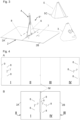
- Figure 1 shows a preferred embodiment of the 3D card 1 with fabric figure 3.
- the fabric figure 3 is arranged together with a light element 4 on the inner surface, which is formed by the two halves 2A, 2B of the foldable card 2.
- the two halves 2A, 2B of the foldable card 2 form a flat plane from which the fabric figure 3 protrudes with a light element 4.
- a few first recesses 8 are provided on the inner surface, which enable further light effects by means of light elements (LEDs) that can be attached there.
- LEDs light elements
- Figure 2 shows the preferred embodiment of the 3D map 1 according to Figure 1 , showing a longitudinal section through the fabric figure 3.
- This inner construction comprises a conical base 5 and an additional support element 6.
- the conical base 5 comprises second fastening means 5C, with which the base 5 can be fixed to the inside of the card 2 and preferably to slots 7 provided for this purpose.
- the additional support element 6 is provided inside the conical base 5.
- the shape of the support element 6 essentially corresponds to the sectional area of a longitudinal section through the blunt conical base 5, in this case it is trapezoidal.
- the additional support element 6 is provided along the center line M of the card 2.
- Figure 3 shows individual elements that make up the 3D map 1 ( Figure 1 ), namely the card 2 with the two halves 2A, 2B and the support element 6 arranged between the two halves 2A, 2B with the light element 4 as well as the base 5 with the two second fastening means 5C and the fabric figure 3.
- support element 6 The combination of support element 6, reinforcement 10 ( Figure 6 ) and light element 4 form the reinforced illuminated support element 6".
- the support element 6 or the reinforced illuminated support element 6" is provided in the middle of the inside of the card 2 between the two halves 2A, 2B. When the card 2 is unfolded, it protrudes vertically from it; when the card 2 is folded up (not shown), it lies flat between the two halves 2A, 2B of the card 2.
- the base 5 in its expanded form preferably follows the shape of the expanded fabric figure 3 in order to fulfil the best possible support function, i.e. to keep the fabric figure 3 in its intended expanded form.
- the base 5 is pushed over the support element 6 with the light element 4 and secured with the second fastening means 5C on the inside of the card 2 to the slots 7 provided for this purpose.
- the fabric figure 3 is then pushed over the base 5 and fixed to it, for example by gluing it.
- Figure 4 shows a preferred and inexpensively producible embodiment of the foldable card 2.
- card 2 is made in one piece and in its unassembled form comprises four sections I to IV arranged next to each other, whereby sections I and IV as well as II and III are each of the same size. Sections I and IV are slightly narrower than sections II and III. In addition, sections I and IV each include a second recess 9 on their outer edge.
- the card 2 is assembled by folding section I onto section II and section IV onto section III. Accordingly, the outer edges with the second recesses 9 of sections I and IV lie opposite each other on the card center line M with a small gap. During further assembly, the support element 6 or ultimately the reinforced support element with the light element 6" is fixed into this gap or the second recesses 9.
- Figure 5 shows the details of the base 5 with the base body 5A, the first fastening element 5B and the second fastening elements 5C in the unassembled and assembled state.
- the base 5 is here - according to the fabric figure - conical in shape with an open upper end for the passage of the light element 4 ( Figure 3 ).
- Figure 6 shows the details of the support element 6 with the fastening elements 6A and the recess 6B as well as the reinforcing element 10 with the reinforcing body 10A and the extension 10B in the unassembled and assembled state.
- the support element 6 is present - according to the shape of the base 5 ( Figure 5 ) - trapezoidal design
- the fastening elements 6A are used to fix the support element 6 to the card 2 ( Figure 2 ).
- the recesses 6B are intended for the optional passage of connections of a light element (not shown).
- the support element 6 preferably comprises two congruent elements that can be folded onto one another, wherein the optional reinforcing element 10 can be arranged between the two elements.
- the outline of the body 10A of the reinforcing element 10 essentially corresponds to the outline of the support element 6.
- the reinforcing element 10 can - as shown - comprise an extension 10B which can be used for attaching, for example, a light element 4 ( Figure 1 ) is provided.
- the connection between the support element 6 and the reinforcing element 10 is a reinforced support element 6'.
- Figure 7 shows the details of the light element 4 and the final construction of the reinforced illuminated support element 6" comprising the light element 4 and the reinforced support element 6'.
- the light element 4 can, as shown in the example of a candle, be constructed from the light element body 4A, an effect element 4B - which in this case imitates a flame through its shape, a shielding element 4C and a light source (LED) 4D.
- the shielding element 4C is provided so that the light of the LED 4D can be perceived solely through the effect element 4B.
- the lighting element 4 is preferably fixed to the extension 10B of the reinforcing element 10.
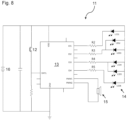
- Figure 8 shows a preferred circuit diagram 11 for the electronics of the 3D card 1 according to the invention ( Figure 1 ) with a power supply 16, a switch 12, an integrated circuit or a microprocessor 13 and a number of light elements 14 and acoustic elements 15.
- a power supply 16 a switch 12
- a microprocessor 13 a microprocessor 13
- a number of light elements 14 and acoustic elements 15 Preferably, all of the above-mentioned elements, with the exception of the light and optionally the acoustic elements 14, 15, are arranged on a printed circuit board.
- Preferred light elements 14 are LEDs, whereby the colors and number of LEDs can be any desired.
- Preferred acoustic elements 15 are loudspeakers. The light and acoustic elements 14, 15 are intended to emit certain optical and acoustic stimuli.
- a preferred power supply 16 is batteries or rechargeable batteries.
- the switch 12 is used to activate the electronics when the 3D card is opened in order to complement the opening and the opened state of the 3D card with the unfolded figure with optical and acoustic stimuli. Accordingly, all types of switches are suitable that enable the electronics to be activated by opening the card. The person skilled in the art will be familiar with such switches.
Landscapes
- Physics & Mathematics (AREA)
- General Physics & Mathematics (AREA)
- Engineering & Computer Science (AREA)
- Theoretical Computer Science (AREA)
- Credit Cards Or The Like (AREA)
Description
- Die Erfindung betrifft eine 3D Pop-Up Karte mit einer Stofffigur.
- 3D Pop-Up Karten, die nachfolgend einfach als 3D Karten bezeichnet werden sollen, sind in den verschiedensten Ausführungen bereits seit längerer Zeit bekannt und umfassen im Wesentlichen eine in der Regel einfach zusammengefaltete Karte als Basis, nachfolgend als Karte bezeichnet, und eine in dieser Karte angeordnete Figur. Die wesentliche Funktion einer solchen 3D Karte liegt darin, dass sich eine zunächst im Wesentlichen zweidimensional komprimierte Figur beim Öffnen der zusammengefalteten Karte dreidimensional aus der Kartenebene erhebt.
- Vorzugsweise lassen sich entsprechende 3D Karten aus einem geschlossenen Zustand durch das Aufklappen der beiden klappbaren Kartenteile um insgesamt 180° in eine plane Ebene öffnen.
- Der zugrunde liegende Mechanismus beruht darauf, dass die komprimierte Figur so in der Karte befestigt ist, dass durch das Öffnen der gefalteten Karte eine Zugspannung an der Figur angelegt wird, die die Figur aus der komprimierten in die dreidimensionale oder expandierte Gestalt überführt.
- Trotz der zunehmenden Digitalisierung erfreuen sich entsprechende 3D Karten noch immer großer Beliebtheit. Die Nachfrage nach neuen Formen und Designs ist ungebrochen.
- Zugleich lastet angesichts der häufig kostenfrei erhältlichen digitalen Grußkartenangebote ein enormer Kosten- und Innovationsdruck auf den Anbietern entsprechender 3D Karten.
- Eine neue Idee ist es, die dreidimensionale Figur aus Stoff zu fertigen. Die Konstruktion einer solchen 3D Karte mit Stofffigur erfordert somit zum einen die Bildung eben dieser Stofffigur, die sich von einem komprimierten zweidimensionalen in einen dreidimensionalen Zustand überführen lässt, und zum anderen eine Befestigungsmöglichkeit dieser Figur im Inneren der Karte. Die Stofffigur wird dabei nicht, wie die aus anderen 3D Karten bekannten dreidimensionalen Figuren aus Papier oder ähnlich steifen Materialien, bereits von sich aus eine stabile dreidimensionale Form beim Auseinanderklappen der Karte annehmen, sondern zumindest teilweise in sich zusammensacken.
- So ist bislang keine zufriedenstellende, nämlich eine stabile und zugleich kostengünstige und platzsparende Konstruktion bekannt, um eine Stofffigur expandierbar in einer 3D Karte anzubringen.
- Dokument
EP 3 042 783 A1 offenbart eine 3D Pop-Up Karte mit einer Stofffigur, einem faltbaren Sockel und einer faltbaren Karte. - Aufgabe der Erfindung ist es, eine verbesserte Konstruktion zur Verfügung zu stellen, die die Anbringung von Stofffiguren in einer 3D Karte ermöglicht.
- Gelöst wird diese Aufgabe durch eine Erfindung mit den Merkmalen des Anspruchs 1. Vorteilhafte Ausgestaltungen sind jeweils Gegenstand der abhängigen Ansprüche.
- Die erfindungsgemäße 3D Pop-Up Karte umfasst eine Stofffigur, die reversibel von einem flachen komprimierten Zustand in einen dreidimensionalen expandierten Zustand überführbar ist, und einen faltbaren Sockel, der reversibel von einem flachen komprimierten Zustand in einen dreidimensionalen expandierten Zustand überführbar ist, und eine faltbare Karte mit einer Innenseite und einer Außenseite, die reversibel von einem zusammengefalteten geschlossenen Zustand in einen auseinandergefalteten geöffneten Zustand überführbar ist, wobei der faltbare Sockel an der Innenseite der faltbaren Karte festgelegt ist und wobei die faltbare Figur an dem faltbaren Sockel festgelegt ist und die Karte ein zusätzliches Stützelement umfasst, das im Inneren des Sockels angeordnet ist und den Sockel im aufgeklappten Zustand der Karte von innen stützt.
- Die Stofffigur kann aus jedem beliebigen Material bestehen. Der Begriff Stoff ist hier weitgefasst zu verstehen und umfasst beliebige gewebte, gewirkte, gestrickte oder sonstige Textilien. Selbstverständlich können an der Stofffigur auch nicht-textile Verzierungen vorgesehen sein, beispielsweise aus Metall, Kunststoff oder Glas. Die Möglichkeiten entsprechender Verzierungen sind an dieser Stelle nicht abschließend aufzuzählen und letztendlich auch nicht erfindungsrelevant.
- Ein wesentlicher Erfindungsgedanke liegt in der Anbringung eines Sockels mit einem zusätzlichen Stützelement, wobei das Stützelement innerhalb des Sockels vorzugsweise an der Mittellinie der faltbaren Karte vorgesehen ist und wobei die faltbare Stofffigur an dem Sockel anbringbar ist.
- Problematisch bei der Verwendung einer Stofffigur als 3D Figur in einer Klappkarte ist nämlich das vollständige und gleichmäßige Entfalten der zusammengeklappten Stofffigur beim Öffnen der Karte, da eine Stofffigur allein durch ihr in der Regel eher weiches und instabiles textiles Material keine ausreichende Steifigkeit besitzt, um ihre dreidimensionale Form im aufgeklappten Zustand eigenständig aufrecht zu halten.
- Der Sockel mit Stützelement löst dieses Problem. Die Expansion der Stofffigur wird dabei unmittelbar durch die Expansion des Sockels ausgelöst.
- Die erfindungsgemäße 3D Karte umfasst demnach drei faltbare Elemente, nämlich die eigentliche dreidimensionale Stofffigur, den Sockel mit Stützelement und die faltbare Karte.
- Die faltbaren Elemente können jeweils reversibel von einem gefalteten oder komprimierten Zustand in einen aufgefalteten oder expandierten Zustand überführt beziehungsweise transformiert werden. Die Transformation wird durch das Öffnen respektive Schließen der faltbaren Karte ausgelöst.
- Als geöffnet soll die Karte (beziehungsweise die 3D Karte oder 3D Pop-Up Karte) dann angesehen werden, wenn die aufgeklappte Karte eine plane Ebene bildet, also die beiden Teile beziehungsweise Hälften der Karte insgesamt um einen Winkel von 180° aufgeklappt wurden und nebeneinander in einer Ebene liegen. Als geschlossen hingegen soll die Karte dann angesehen werden, wenn die beiden Teile beziehungsweise Hälften der Karte übereinander und ihre Innenseiten aufeinander liegen.
- Die 3D Karte weist eine Außenseite und eine Innenseite auf, wobei der Sockel an der Innenseite festgelegt ist und sich der Sockel und die Stofffigur bei geschlossener Karte zwischen den Innenseiten der zusammengeklappten Karte befinden.
- Vorzugsweise ist die Karte zumindest zweilagig vorgesehen mit einer äußeren Lage und einer inneren Lage. Eine solche doppellagige Ausführung der Karte ist vorteilhaft, um die nachfolgend noch näher zu beschreibende Elektronik sandwichartig zwischen den beiden Lagen anordnen und so verbergen zu können.
- Vorzugsweise ist eine solche doppellagige Karte durch das Zusammenklappen einer aus ursprünglich vier nebeneinander liegenden Sektionen vorgesehenen Karte erhältlich. Eine solche ursprüngliche Karte umfasst demnach vier Sektionen, nämlich zwei außen und zwei innen liegende Sektionen. Diese ursprüngliche Karte ist vorzugsweise einteilig vorgesehen mit einer Außenseite und einer Innenseite, es sind jedoch auch Varianten denkbar, bei denen die ursprüngliche Karte aus mehreren Teilen zusammengesetzt ist. Beispielsweise können einzelne, mehrere oder alle Sektionen erst sekundär beispielsweise durch Klebeverbindungen miteinander verbunden sein.
- Vorzugsweise entsprechen sich die beiden außen liegenden Sektionen und die beiden innen liegenden Sektionen in ihren Umrissen, wobei jeweils die äußere Sektion auf die benachbarte innere Sektion umgeschlagen wird.
- Entsprechend erhält man eine doppellagige Karte, deren sichtbare Flächen der Außenseite der ursprünglichen Karte entsprechen, wohingegen die Innenseite der ursprünglichen Karte zwischen den umgeschlagenen Sektionen liegt.
- Entsprechend genügt es, die ursprüngliche Karte nur auf der Außenseite zu bedrucken, um nach dem Umschlagen der Sektionen eine doppellagige Karte zu erhalten, die auf allen sichtbaren Flächen bedruckt ist.
- Die Sektionen der Karte können Aussparungen und Einschübe umfassen, um weitere Elemente, wie beispielsweise den Sockel, das Stützelement oder sonstige Licht- und Toneffekte in oder an der Karte festzulegen und zu platzieren.
- Der Sockel weist vorzugsweise im Wesentlichen die Grundform der Stofffigur auf. Ist also die Stofffigur kegelförmig vorgesehen, so ist auch der Sockel kegelförmig vorgesehen. Ist die Stofffigur zylinderförmig vorgesehen, so ist auch der Sockel zylinderförmig vorgesehen etc.
- Der Sockel kann vorzugsweise mittels Befestigungselementen, beispielsweise Laschen, in den hierfür vorgesehenen Einschüben der Karte fixiert werden. Alternativ kann der Sockel auch direkt auf der Innenseite der Karte angebracht werden, beispielsweise indem die Befestigungselemente an der Innenseite der Karte verklebt werden.
- Die Stofffigur kann an dem Sockel vorzugsweise durch bekannte Klebemittel festgelegt werden. Beim Zuklappen der Karte werden sowohl die dreidimensionale Stofffigur als auch der Sockel in eine im Wesentlichen flache, zweidimensionale Gestalt überführt.
- Um das Material des Sockels möglichst weit reduzieren zu können und dennoch eine ausreichende Stabilität zu schaffen, ist es bei der erfindungsgemäßen Konstruktion mit einem Sockel und zusätzlichem Stützelement ausreichend, den Sockel aus einem eher dünnen jedoch ausreichend steifen Material zu fertigen und allein das Stützelement aus einem vergleichsweise stabileren Material. So kann der Sockel beispielsweise aus einer biegsamen Folie oder aus Papier gefertigt sein, das Stützelement sollte jedoch beispielsweise aus einem festeren Kunststoff, beispielsweise PET, oder aus Pappe gefertigt sein und sich nicht so leicht verbiegen lassen.
- Das Stützelement ist im Wesentlichen flach und kann einteilig vorgesehen sein. In seinem Umriss entspricht es vorzugsweise dem axialen Längsschnitt durch den aufgerichteten Sockel. Bei einem Sockel in Form eines spitzen Kegels wäre also die Form des Stützelements ein gleichschenkliges Dreieck, bei einem stumpfen Kegel ein Trapez, bei einem Würfel ein Quadrat etc.
- Vorzugsweise ist das Stützelement selbst zumindest zweiteilig vorgesehen und umfasst neben dem eigentlichen zuvor beschriebenen Stützelement noch ein Verstärkungselement. Das Verstärkungselement ist mit dem Stützelement verbunden.
- Bei einer solchen zweiteiligen Konstruktion kann das Material des eigentlichen Stützelements ebenfalls eher dünn ausfallen und beispielsweise aus Papier vorgesehen sein, da der Gesamtkonstruktion aus Stützelement und Verstärkungselement die benötigte Festigkeit vor allem durch das Verstärkungselement verliehen wird. Das Verstärkungselement folgt in seiner Form der Form des Stützelements.
- Vorzugsweise umfasst das Stützelement an der unteren Seite, die mit der Karte zu verbinden ist, Befestigungselemente, die eine stabilere Verbindung zwischen Stützelement und Karte ermöglichen. Das Stützelement ist vorzugsweise allein an der Karte festgelegt.
- Zur Festlegung oder auch Durchführung weiterer Elemente an dem Stützelement, beispielsweise von Lichtelementen oder einer entsprechenden Verkabelung, können verschiedene Aussparungen vorgesehen sein.
- Insbesondere an dem Verstärkungselement aber auch oder alternativ an dem Stützelement an sich können Fortsätze vorgesehen sein, die über den eigentlichen Umriss des Stützelements wie oben beschrieben hinausragen und insbesondere erst beim Aufklappen der Karte aus dem Sockel und entsprechend aus der Stofffigur hinausragen können. Der Fortsatz oder daran festgelegte Elemente ragen also bei geöffneter Karte aus der Stofffigur heraus.
- So kann beispielsweise die Stofffigur eine Torte darstellen, aus der erst beim Öffnen der Karte eine an dem Fortsatz festgelegte Kerze hinausragt. Die Kerze ist entsprechend an einem Fortsatz des Verstärkungselements und/oder des Stützelements festgelegt. Viele weitere Kombinationen von Stofffiguren und sonstigen Gimmicks an den entsprechenden Fortsätzen sind denkbar.
- Vorzugsweise umfasst die Karte neben der Stofffigur noch weitere Lichteffekte und akustische Effekte, die durch das Öffnen der Karte ausgelöst werden.
- Hierzu umfasst die Karte übliche elektronische Elemente wie eine Stromversorgung, einen Schalter, einen integrierten Schaltkreis zur Steuerung der elektronischen Elemente sowie eine Anzahl von Lichtelementen und Akustikelementen. Vorzugsweise sind die elektronischen Elemente mit Ausnahme der Licht- und Akustikelemente auf einer Leiterplatte angeordnet.
- Bevorzugte Lichtelemente sind LEDs, wobei Farben und Anzahl der LEDs beliebig sein können. Bevorzugte Akustikelement sind Lautsprecher. Die Licht- und Akustikelemente sind vorgesehen, bestimmte optische und akustische Reize auszugeben. Eine bevorzugte Stromversorgung sind Batterien oder Akkus.
- Der Schalter dient zur Aktivierung der Elektronik beim Öffnen der 3D Karte, um das Öffnen und/oder den geöffneten Zustand der 3D Karte mit der entfalteten
- Figur durch optische und akustische Reize zu ergänzen. Entsprechend sind alle Schaltertypen wie auch Licht- oder Bewegungssensoren geeignet, die eine Aktivierung der Elektronik durch das Öffnen der Karte ermöglichen. Dem Fachmann sind entsprechende Schalter und Sensoren bekannt.
- Die erfindungsgemäße 3D Pop-Up Karte weist den Vorteil auf, dass die Stofffigur durch den Sockel und die Verstärkung im aufgestellten Zustand deutlich formstabiler ist. Durch die erfindungsgemäße Konstruktion des Sockels mit einer zusätzlichen Verstärkung ist zudem eine äußerst materialsparende und trotzdem stabile Ausführung möglich.
- Die Erfindung sowie das technische Umfeld werden nachfolgend anhand der Figuren näher erläutert. Es ist darauf hinzuweisen, dass die Figuren eine besonders bevorzugte Ausführungsvariante der Erfindung zeigen. Die Erfindung ist jedoch nicht auf die gezeigte Ausführungsvariante beschränkt. Insbesondere umfasst die Erfindung, soweit es technisch sinnvoll ist, beliebige Kombinationen der technischen Merkmale, die in den Ansprüchen aufgeführt oder in der Beschreibung als erfindungsrelevant beschrieben sind.
- Es zeigen:
- Fig. 1
- eine bevorzugte Ausführungsform der 3D Karte mit Stofffigur;
- Fig. 2
- die bevorzugte Ausführungsform der 3D Karte mit einem Längsschnitt durch die Stofffigur, den Sockel und das Stützelement;
- Fig. 3
- die einzelnen Elemente der bevorzugten Ausführungsform der 3D Karte;
- Fig. 4
- eine bevorzugte Ausführungsform der Karte;
- Fig. 5
- eine bevorzugte Ausführungsform des Sockels;
- Fig. 6
- eine bevorzugte Ausführungsform des Stützelements und des Verstärkungselements;
- Fig. 7
- eine bevorzugte Ausführungsform des Stützelements mit Verstärkungselement und Lichtelement;
- Fig. 8
- eine bevorzugte Ausführungsform des elektronischen Schaltkreises.
-
Figur 1 zeigt eine bevorzugte Ausführungsform der 3D Karte 1 mit Stofffigur 3. Die Stofffigur 3 ist zusammen mit einem Lichtelement 4 auf der Innenfläche angeordnet, die durch die beiden Hälften 2A, 2B der faltbaren Karte 2 gebildet werden. In dem dargestellten aufgeklappten Zustand bilden die beiden Hälften 2A, 2B der faltbaren Karte 2 eine plane Ebene, aus der die Stofffigur 3 mit einem Lichtelement 4 herausragt. Auf der Innenfläche sind einige erste Aussparungen 8 vorgesehen, die weitere Lichteffekte durch dort anbringbare Lichtelemente (LEDs) ermöglichen. -
Figur 2 zeigt die bevorzugte Ausführungsform der 3D Karte 1 gemäßFigur 1 , wobei ein Längsschnitt durch die Stofffigur 3 gezeigt ist. In dem Längsschnitt ist die innere Konstruktion innerhalb der Stofffigur 3 erkennbar. Diese innere Konstruktion umfasst einen kegelförmigen Sockel 5 und ein zusätzliches Stützelement 6. - Der kegelförmige Sockel 5 umfasst zweite Befestigungsmittel 5C, mit denen der Sockel 5 an der Innenseite der Karte 2 und vorzugsweise an dafür vorgesehenen Einschüben 7 festlegbar ist.
- Das zusätzliche Stützelement 6 ist im Inneren des kegelförmigen Sockels 5 vorgesehen. Die Form des Stützelements 6 entspricht im Wesentlichen der Schnittfläche eines Längsschnittes durch den stumpfen kegelförmigen Sockel 5, sie ist vorliegend also trapezförmig.
- Das zusätzliche Stützelement 6 ist entlang der Mittellinie M der Karte 2 vorgesehen.
-
Figur 3 zeigt einzelne Elemente, aus denen die 3D Karte 1 (Figur 1 ) zusammengesetzt ist, nämlich die Karte 2 mit den beiden Hälften 2A, 2B und das zwischen den beiden Hälften 2A, 2B angeordnete Stützelement 6 mit dem Lichtelement 4 sowie den Sockel 5 mit den beiden zweiten Befestigungsmitteln 5C und die Stofffigur 3. - Die Kombination aus Stützelement 6, Verstärkung 10 (
Figur 6 ) und Lichtelement 4 bildet das verstärkte beleuchtete Stützelement 6". - Das Stützelement 6 beziehungsweise das verstärkte beleuchtete Stützelement 6" ist mittig auf der Innenseite der Karte 2 zwischen den beiden Hälften 2A, 2B vorgesehen. Im aufgeklappten Zustand der Karte 2 steht es senkrecht aus dieser hervor, im zusammengeklappten Zustand der Karte 2 (nicht dargestellt) liegt es flach zwischen beiden Hälften 2A, 2B der Karte 2.
- Der Sockel 5 folgt in seiner expandierten Form vorzugsweise der Form der expandierten Stofffigur 3, um eine möglichst gute Stützfunktion zu erfüllen, also die Stofffigur 3 in ihrer angedachten expandierten Form zu halten.
- Der Sockel 5 wird zur Montage der 3D Karte über das Stützelement 6 mit dem Lichtelement 4 geschoben und mit den zweiten Befestigungsmitteln 5C an der Innenseite der Karte 2 an dafür vorgesehenen Einschüben 7 festgelegt.
- Die Stofffigur 3 wird dann über den Sockel 5 geschoben und an diesem fixiert, beispielsweise mit diesem verklebt.
-
Figur 4 zeigt eine bevorzugte und kostengünstig herstellbare Ausführungsform der faltbaren Karte 2. WieAbbildung 4A zeigt, ist die Karte 2 einteilig gefertigt und umfasst in ihrer nicht montierten Form vier nebeneinander angeordnete Sektionen I bis IV, wobei sich die Sektionen I und IV sowie II und III jeweils in ihrer Größe entsprechen. Die Sektionen I und IV sind dabei etwas schmaler vorgesehen als die Sektionen II und III. Zudem umfassen die Sektionen I und IV jeweils eine zweite Aussparung 9 an ihrer außen liegenden Kante. - Wie
Abbildung 4B zeigt, wird die Karte 2 montiert, indem die Sektion I auf die Sektion II und die Sektion IV auf die Sektion III umgeschlagen werden. Entsprechend liegen sich die Außenkanten mit den zweiten Aussparungen 9 der Sektionen I und IV an der Kartenmittellinie M mit einem kleinen Spalt gegenüber. In diesen Spalt beziehungsweise die zweiten Aussparungen 9 wird bei der weiteren Montage das Stützelement 6 beziehungsweise letztendlich das verstärkte Stützelement mit dem Lichtelement 6" festgelegt. -
Figur 5 zeigt die Details des Sockels 5 mit dem Sockelkörper 5A, dem ersten Befestigungselement 5B und den zweiten Befestigungselementen 5C einmal im nicht montierten und im montierten Zustand. Der Sockel 5 ist vorliegend - entsprechend der Stofffigur - kegelförmig gestaltet mit einem offenen oberen Ende zur Durchführung des Lichtelements 4 (Figur 3 ). -
Figur 6 zeigt die Details des Stützelements 6 mit den Befestigungselementen 6A und der Aussparung 6B sowie das Verstärkungselement 10 mit dem Verstärkungskörper 10A und dem Fortsatz 10B einmal im nicht montierten und im montierten Zustand. Das Stützelement 6 ist vorliegend - entsprechend der Form des Sockels 5 (Figur 5 ) - trapezförmig gestaltet - Die Befestigungselemente 6A sind zur Festlegung des Stützelements 6 an der Karte 2 (
Figur 2 ) vorgesehen. Die Aussparungen 6B sind zur optionalen Hindurchführung von Anschlüssen eines Lichtelements (nicht dargestellt) vorgesehen. - Das Stützelement 6 umfasst vorzugsweise zwei aufeinander klappbare deckungsgleiche Elemente, wobei das optionale Verstärkungselement 10 zwischen den beiden Elementen angeordnet vorgesehen sein kann. Dabei entspricht der Umriss des Körpers 10A des Verstärkungselements 10 im Wesentlichen dem Umriss des Stützelements 6.
- Das Verstärkungselement 10 kann - wie dargestellt - einen Fortsatz 10B umfassen, der zur Anbringung beispielweise eines Lichtelements 4 (
Figur 1 ) vorgesehen ist. Die Verbindung aus Stützelement 6 und Verstärkungselement 10 ist ein verstärktes Stützelement 6'. -
Figur 7 zeigt die Details des Lichtelements 4 und die letztendliche Konstruktion des verstärkten beleuchteten Stützelements 6" umfassend das Lichtelement 4 und das verstärkte Stützelement 6'. Das Lichtelement 4 kann, wie an dem Beispiel einer Kerze dargestellt, aus dem Lichtelementkörper 4A, einem Effektelement 4B - das vorliegend durch seine Form eine Flamme imitiert, einem Abschirmelement 4C und einem Leuchtmittel (LED) 4D aufgebaut sein. Das Abschirmelement 4C ist vorgesehen, damit das Licht der LED 4D allein durch das Effektelement 4B wahrnehmbar ist. - Das Leuchtelement 4 wird vorzugsweise an dem Fortsatz 10B des Verstärkungselements 10 festgelegt.
-
Figur 8 zeigt ein bevorzugtes Schaltkreisdiagramm 11 für die Elektronik der erfindungsgemäßen 3D Karte 1 (Figur 1 ) mit einer Stromversorgung 16, einem Schalter 12, einem integrierten Schaltkreis oder auch einem Mikroprozessor 13 sowie einer Anzahl von Lichtelementen 14 und Akustikelementen 15. Vorzugsweise sind sämtliche genannten Elemente mit Ausnahme der Licht- und gegebenenfalls der Akustikelemente 14, 15 auf einer Leiterplatte angeordnet. - Bevorzugte Lichtelemente 14 sind LEDs, wobei Farben und Anzahl der LEDs beliebig sein können. Bevorzugte Akustikelemente 15 sind Lautsprecher. Die Licht- und Akustikelemente 14, 15 sind vorgesehen, bestimmte optische und akustische Reize auszugeben. Eine bevorzugte Stromversorgung 16 sind Batterien oder Akkus.
- Der Schalter 12 dient zur Aktivierung der Elektronik beim Öffnen der 3D Karte, um das Öffnen und den geöffneten Zustand der 3D Karte mit der entfalteten Figur durch optische und akustische Reize zu ergänzen. Entsprechend sind alle Schaltertypen geeignet, die eine Aktivierung der Elektronik durch das Öffnen der Karte ermöglichen. Dem Fachmann sind entsprechende Schalter bekannt.
-
- 1
- 3D Pop-Up Karte
- 2
- faltbare Karte (2A: erste Hälfte; 2B: zweite Hälfte)
- 3
- Stofffigur (dreidimensional)
- 4
- Lichtelement (4A: Lichtelementkörper; 4B: Effektelement; 4C: Abschirmelement; 4D: Leuchtmittel, LED)
- 5
- Sockel (5A: Sockelkörper; 5B: erstes Befestigungselement; 5C: zweites Befestigungselement)
- 6
- Stützelement (6A: Befestigungselement; 6B: Aussparung; 6': verstärktes Stützelement; 6": verstärktes beleuchtetes Stützelement)
- 7
- Einschub
- 8
- erste Aussparung
- 9
- zweite Aussparung
- 10
- Verstärkungselement (10A: Körper; 10B: Fortsatz)
- 11
- Schaltkreis
- 12
- Schalter
- 13
- Mikroprozessor (IC)
- 14
- Leuchtmittel (LED)
- 15
- Akustikelement (Lautsprecher)
- 16
- Stromversorgung
- M
- Mittellinie
- I - IV
- Sektionen der Karte
Claims (9)
- 3D Pop-Up Karte mit einer Stofffigur (3), die reversibel von einem flachen komprimierten Zustand in einen dreidimensionalen expandierten Zustand überführbar ist, und einem faltbaren Sockel (5), der reversibel von einem flachen komprimierten Zustand in einen dreidimensionalen expandierten Zustand überführbar ist, und einer faltbaren Karte (2) mit einer Innenseite und einer Außenseite, die reversibel von einem zusammengefalteten geschlossenen Zustand in einen auseinandergefalteten geöffneten Zustand überführbar ist, wobei der faltbare Sockel (5) an der Innenseite der faltbaren Karte (2) festgelegt ist und wobei die Stofffigur (3) an dem faltbaren Sockel (5) festgelegt ist, dadurch gekennzeichnet, dass die Karte (2) ein zusätzliches Stützelement (6) umfasst, das im Inneren des Sockels (5) angeordnet ist und den Sockel (5) im aufgeklappten Zustand der Karte (2) von innen stützt.
- 3D Pop-Up Karte nach Anspruch 1, dadurch gekennzeichnet, dass das zusätzliche Stützelement (6) allein an der Karte (2) festgelegt ist.
- 3D Pop-Up Karte nach Anspruch 1 oder 2, dadurch gekennzeichnet, dass das zusätzliche Stützelement (6) ein Material umfasst, das formstabiler ist als das Material, aus dem der Sockel (5) besteht.
- 3D Pop-Up Karte nach einem der vorherigen Ansprüche, dadurch gekennzeichnet, dass der Sockel (5) im expandierten Zustand kegelförmig ist und einen runden Grundriss aufweist.
- 3D Pop-Up Karte nach einem der vorherigen Ansprüche, dadurch gekennzeichnet, dass die Karte (2) weiterhin Licht- und Akustikelemente (14, 15), einen Schalter (12) zur Aktivierung der Licht- und Akustikelemente (14, 15), einen Schaltkreis oder einen Mikroprozessor (13) zur Steuerung der elektrischen Bauteile und eine Stromversorgung (16) umfasst.
- 3D Pop-Up Karte nach einem der vorherigen Ansprüche, dadurch gekennzeichnet, dass die Karte (2) in zwei Hälften (2A, 2B) aufgeteilt ist, die aufeinander klappbar vorgesehen sind und wobei die Hälften (2A, 2B) doppellagig mit einer inneren und einer äußeren Lage vorgesehen sind.
- 3D Pop-Up Karte nach einem der vorherigen Ansprüche, dadurch gekennzeichnet, dass das Stützelement (6) einen Fortsatz umfasst, wobei der Fortsatz bei geöffneter Karte (2) aus der Stofffigur (3) herausragt.
- 3D Pop-Up Karte nach einem der vorherigen Ansprüche, dadurch gekennzeichnet, dass das Stützelement (6) ein Verstärkungselement (10) umfasst.
- 3D Pop-Up Karte nach Anspruch 8, dadurch gekennzeichnet, dass das Verstärkungselement (10) einen Körper (10A) und einen Fortsatz (10B) umfasst, wobei der Fortsatz bei geöffneter Karte (2) aus der Stofffigur (3) herausragt.
Applications Claiming Priority (1)
| Application Number | Priority Date | Filing Date | Title |
|---|---|---|---|
| DE202021104469.1U DE202021104469U1 (de) | 2021-08-20 | 2021-08-20 | 3D Pop-Up Karte mit Stofffigur |
Publications (3)
| Publication Number | Publication Date |
|---|---|
| EP4137328A1 EP4137328A1 (de) | 2023-02-22 |
| EP4137328B1 true EP4137328B1 (de) | 2024-08-14 |
| EP4137328C0 EP4137328C0 (de) | 2024-08-14 |
Family
ID=78605480
Family Applications (1)
| Application Number | Title | Priority Date | Filing Date |
|---|---|---|---|
| EP22190938.5A Active EP4137328B1 (de) | 2021-08-20 | 2022-08-18 | 3d pop-up karte mit stofffigur |
Country Status (3)
| Country | Link |
|---|---|
| US (1) | US12051342B2 (de) |
| EP (1) | EP4137328B1 (de) |
| DE (1) | DE202021104469U1 (de) |
Families Citing this family (9)
| Publication number | Priority date | Publication date | Assignee | Title |
|---|---|---|---|---|
| DE202021104469U1 (de) * | 2021-08-20 | 2021-10-29 | JAST Gifts (Shenzhen) Company Limited | 3D Pop-Up Karte mit Stofffigur |
| US12168362B2 (en) | 2022-06-14 | 2024-12-17 | JAST Gifts Shenzhen Company Limited | Greeting card assembly with simulated background fireworks |
| US20230398804A1 (en) * | 2022-06-14 | 2023-12-14 | JAST Gifts Shenzhen Company Limited | Greeting card with fireworks effect |
| US12296612B2 (en) | 2022-07-15 | 2025-05-13 | JAST Gifts Shenzhen Company Limited | 3D pop-up card assembly |
| DE202022103988U1 (de) * | 2022-07-15 | 2022-08-29 | JAST Gifts Shenzhen Company Limited | 3D-Pop-Up-Karte |
| US12384188B1 (en) | 2022-07-15 | 2025-08-12 | JAST Gifts Shenzhen Company Limited | 3D pop-up card assembly |
| USD1099208S1 (en) | 2023-12-28 | 2025-10-21 | LovePop, Inc. | Pop-up assembly |
| WO2025145167A1 (en) * | 2023-12-28 | 2025-07-03 | LovePop, Inc. | Pop-up assembly |
| DE102024105837B3 (de) * | 2024-02-29 | 2025-05-15 | Bentino Gmbh | Klappkarte |
Family Cites Families (22)
| Publication number | Priority date | Publication date | Assignee | Title |
|---|---|---|---|---|
| US2974434A (en) * | 1960-01-04 | 1961-03-14 | Hallmark Cards | Greeting card |
| US3228138A (en) * | 1962-11-05 | 1966-01-11 | Hallmark Cards | Greeting card |
| US3995388A (en) * | 1975-12-08 | 1976-12-07 | Compak Systems, Inc. | Pop-up products and method of making |
| US4349973A (en) * | 1978-08-16 | 1982-09-21 | Compak Systems, Inc. | Pop-ups and methods of making |
| US5658620A (en) * | 1995-05-19 | 1997-08-19 | Trust One N. Joseph And Jeanette Ross | Place mat having erectable and interchangeable pop-up figures |
| NL1004396C1 (nl) * | 1996-10-31 | 1998-05-08 | Gerard Westendorp | Scharnierenstelsel voor 'Pop-up's. |
| ITFI20040236A1 (it) * | 2004-11-12 | 2005-02-12 | Editoriale Friulana S R L | Articolo di cartoleria o editoria |
| US7845099B2 (en) * | 2007-07-27 | 2010-12-07 | Vertis, Inc. | Method for manufacturing a pop-up article |
| US8490306B2 (en) * | 2010-11-05 | 2013-07-23 | American Greetings Corporation | Motion greeting cards |
| US8695242B2 (en) * | 2010-11-05 | 2014-04-15 | American Greetings Corporation | Motion greeting cards |
| US20120266504A1 (en) * | 2011-04-25 | 2012-10-25 | Michlin Irving R | Pop-Up Greeting Card |
| US20130155715A1 (en) * | 2011-06-23 | 2013-06-20 | Samuel Kim | Optoelectronic food decoration and packaging |
| DE102011079944B4 (de) * | 2011-07-27 | 2014-02-06 | Markus Reinauer | Informationsvorrichtung |
| US20130139420A1 (en) * | 2011-12-06 | 2013-06-06 | The Lehigh Press Llc | Pop-up format |
| US8544757B2 (en) * | 2011-12-23 | 2013-10-01 | Target Brands, Inc. | Transaction product with expandable pages and three dimensional viewing |
| US8661719B2 (en) | 2012-04-03 | 2014-03-04 | American Greetings Corporation | Interactive greeting card with magnet |
| US10155173B2 (en) * | 2013-10-31 | 2018-12-18 | Dawn Simmons | Three-dimensional stand alone pop up assembly and method |
| EP3042783B1 (de) * | 2015-01-12 | 2018-06-13 | Lawrence Yeh | Artikel mit abnehmbarem dreidimensionalem objekt |
| US10682583B2 (en) * | 2016-10-31 | 2020-06-16 | Dawn Simmons | Three-dimensional stand alone pop up assembly and method |
| US10137723B2 (en) * | 2017-02-24 | 2018-11-27 | Hallmark Cards, Incorporated | Greeting card having compressed object therein and method of selectively controlling deformation thereof |
| DE202021104469U1 (de) * | 2021-08-20 | 2021-10-29 | JAST Gifts (Shenzhen) Company Limited | 3D Pop-Up Karte mit Stofffigur |
| US11577539B1 (en) * | 2021-08-25 | 2023-02-14 | 100 Greetings, LLC | Pop-up greeting card with plush display element |
-
2021
- 2021-08-20 DE DE202021104469.1U patent/DE202021104469U1/de active Active
-
2022
- 2022-08-18 EP EP22190938.5A patent/EP4137328B1/de active Active
- 2022-08-19 US US17/891,214 patent/US12051342B2/en active Active
Also Published As
| Publication number | Publication date |
|---|---|
| US12051342B2 (en) | 2024-07-30 |
| EP4137328C0 (de) | 2024-08-14 |
| DE202021104469U1 (de) | 2021-10-29 |
| US20230053542A1 (en) | 2023-02-23 |
| EP4137328A1 (de) | 2023-02-22 |
Similar Documents
| Publication | Publication Date | Title |
|---|---|---|
| EP4137328B1 (de) | 3d pop-up karte mit stofffigur | |
| EP0292869B1 (de) | Faltblatt | |
| EP0900892A2 (de) | Faltbares Plattenelement | |
| DE202012007518U1 (de) | Hintergrundbeleuchtete Fahrzeug-Innenstruktur | |
| WO1993015916A1 (de) | Faltbarer gegenstand wie informationsträger, behälter, und dergleichen | |
| DE202021103268U1 (de) | 3D Pop-Up Karte | |
| DE202022103988U1 (de) | 3D-Pop-Up-Karte | |
| DE69929999T2 (de) | Diorama oder aufrechtstehende bildkarte | |
| DE29813735U1 (de) | Vordere Abdeckung eines Kalenders oder Notizbuches | |
| DE921910C (de) | Mehrteilige Karten, Glueckwunschkarten, Menuekarten, Tischkarten, Spielzeug-, Reklame-, Scherzartikel od. dgl. | |
| DE69627434T2 (de) | Gefaltetes Pappelement wie Regal, Träger oder dergleichen für einen Schaustand oder dergleichen | |
| DE102011102057B4 (de) | Thekendisplay und einteiliger Zuschnitt hierfür | |
| DE197862C (de) | ||
| DE20108964U1 (de) | Bodenfeuerwerkskörper mit verbreiterbarer Fußplatte | |
| DE102007033687A1 (de) | Buch mit einer Aufstellvorrichtung | |
| DE102018002635B3 (de) | Rechenlernhilfe für Grundrechenarten | |
| DE202018106751U1 (de) | Kalender, insbesondere Adventskalender | |
| DE940031C (de) | Gefalzter Bogen mit beim Aufklappen des Bogens sich aufrichtender, den Falz uebergreifender Einlage, insbesondere fuer Werbezwecke | |
| DE19850657A1 (de) | Informationsträger aus faltbarem Material | |
| WO2005051141A1 (de) | Betrachtungsvorrichtung und kartonzuschnitt zu ihrer herstellung | |
| DE202016002225U1 (de) | Karton | |
| DE202021100108U1 (de) | Mehrzweckfaltschachtel | |
| DE29613431U1 (de) | Karte mit mehreren Kartenblättern | |
| DE202009011391U1 (de) | Hülle, insbesondere für Aktenordner | |
| DE202009002745U1 (de) | Gruß- oder Werbekarte |
Legal Events
| Date | Code | Title | Description |
|---|---|---|---|
| PUAI | Public reference made under article 153(3) epc to a published international application that has entered the european phase |
Free format text: ORIGINAL CODE: 0009012 |
|
| STAA | Information on the status of an ep patent application or granted ep patent |
Free format text: STATUS: THE APPLICATION HAS BEEN PUBLISHED |
|
| AK | Designated contracting states |
Kind code of ref document: A1 Designated state(s): AL AT BE BG CH CY CZ DE DK EE ES FI FR GB GR HR HU IE IS IT LI LT LU LV MC MK MT NL NO PL PT RO RS SE SI SK SM TR |
|
| STAA | Information on the status of an ep patent application or granted ep patent |
Free format text: STATUS: REQUEST FOR EXAMINATION WAS MADE |
|
| 17P | Request for examination filed |
Effective date: 20230818 |
|
| RBV | Designated contracting states (corrected) |
Designated state(s): AL AT BE BG CH CY CZ DE DK EE ES FI FR GB GR HR HU IE IS IT LI LT LU LV MC MK MT NL NO PL PT RO RS SE SI SK SM TR |
|
| RAP1 | Party data changed (applicant data changed or rights of an application transferred) |
Owner name: JAST COMPANY LIMITED Owner name: 100 GREETINGS, LLC |
|
| GRAP | Despatch of communication of intention to grant a patent |
Free format text: ORIGINAL CODE: EPIDOSNIGR1 |
|
| STAA | Information on the status of an ep patent application or granted ep patent |
Free format text: STATUS: GRANT OF PATENT IS INTENDED |
|
| INTG | Intention to grant announced |
Effective date: 20240311 |
|
| RIN1 | Information on inventor provided before grant (corrected) |
Inventor name: KAMHI, JAY Inventor name: GONZALES, ANTHONY CARL T. Inventor name: CHEN, JEN-LIN |
|
| GRAS | Grant fee paid |
Free format text: ORIGINAL CODE: EPIDOSNIGR3 |
|
| GRAA | (expected) grant |
Free format text: ORIGINAL CODE: 0009210 |
|
| STAA | Information on the status of an ep patent application or granted ep patent |
Free format text: STATUS: THE PATENT HAS BEEN GRANTED |
|
| AK | Designated contracting states |
Kind code of ref document: B1 Designated state(s): AL AT BE BG CH CY CZ DE DK EE ES FI FR GB GR HR HU IE IS IT LI LT LU LV MC MK MT NL NO PL PT RO RS SE SI SK SM TR |
|
| REG | Reference to a national code |
Ref country code: GB Ref legal event code: FG4D Free format text: NOT ENGLISH |
|
| REG | Reference to a national code |
Ref country code: CH Ref legal event code: EP |
|
| REG | Reference to a national code |
Ref country code: DE Ref legal event code: R096 Ref document number: 502022001449 Country of ref document: DE |
|
| REG | Reference to a national code |
Ref country code: IE Ref legal event code: FG4D Free format text: LANGUAGE OF EP DOCUMENT: GERMAN |
|
| U01 | Request for unitary effect filed |
Effective date: 20240822 |
|
| U07 | Unitary effect registered |
Designated state(s): AT BE BG DE DK EE FI FR IT LT LU LV MT NL PT RO SE SI Effective date: 20240902 |
|
| U20 | Renewal fee for the european patent with unitary effect paid |
Year of fee payment: 3 Effective date: 20240829 |
|
| PG25 | Lapsed in a contracting state [announced via postgrant information from national office to epo] |
Ref country code: NO Free format text: LAPSE BECAUSE OF FAILURE TO SUBMIT A TRANSLATION OF THE DESCRIPTION OR TO PAY THE FEE WITHIN THE PRESCRIBED TIME-LIMIT Effective date: 20241114 |
|
| PG25 | Lapsed in a contracting state [announced via postgrant information from national office to epo] |
Ref country code: GR Free format text: LAPSE BECAUSE OF FAILURE TO SUBMIT A TRANSLATION OF THE DESCRIPTION OR TO PAY THE FEE WITHIN THE PRESCRIBED TIME-LIMIT Effective date: 20241115 Ref country code: PL Free format text: LAPSE BECAUSE OF FAILURE TO SUBMIT A TRANSLATION OF THE DESCRIPTION OR TO PAY THE FEE WITHIN THE PRESCRIBED TIME-LIMIT Effective date: 20240814 |
|
| PG25 | Lapsed in a contracting state [announced via postgrant information from national office to epo] |
Ref country code: IS Free format text: LAPSE BECAUSE OF FAILURE TO SUBMIT A TRANSLATION OF THE DESCRIPTION OR TO PAY THE FEE WITHIN THE PRESCRIBED TIME-LIMIT Effective date: 20241214 |
|
| PG25 | Lapsed in a contracting state [announced via postgrant information from national office to epo] |
Ref country code: HR Free format text: LAPSE BECAUSE OF FAILURE TO SUBMIT A TRANSLATION OF THE DESCRIPTION OR TO PAY THE FEE WITHIN THE PRESCRIBED TIME-LIMIT Effective date: 20240814 |
|
| PG25 | Lapsed in a contracting state [announced via postgrant information from national office to epo] |
Ref country code: RS Free format text: LAPSE BECAUSE OF FAILURE TO SUBMIT A TRANSLATION OF THE DESCRIPTION OR TO PAY THE FEE WITHIN THE PRESCRIBED TIME-LIMIT Effective date: 20241114 Ref country code: ES Free format text: LAPSE BECAUSE OF FAILURE TO SUBMIT A TRANSLATION OF THE DESCRIPTION OR TO PAY THE FEE WITHIN THE PRESCRIBED TIME-LIMIT Effective date: 20240814 |
|
| PG25 | Lapsed in a contracting state [announced via postgrant information from national office to epo] |
Ref country code: RS Free format text: LAPSE BECAUSE OF FAILURE TO SUBMIT A TRANSLATION OF THE DESCRIPTION OR TO PAY THE FEE WITHIN THE PRESCRIBED TIME-LIMIT Effective date: 20241114 Ref country code: PL Free format text: LAPSE BECAUSE OF FAILURE TO SUBMIT A TRANSLATION OF THE DESCRIPTION OR TO PAY THE FEE WITHIN THE PRESCRIBED TIME-LIMIT Effective date: 20240814 Ref country code: NO Free format text: LAPSE BECAUSE OF FAILURE TO SUBMIT A TRANSLATION OF THE DESCRIPTION OR TO PAY THE FEE WITHIN THE PRESCRIBED TIME-LIMIT Effective date: 20241114 Ref country code: IS Free format text: LAPSE BECAUSE OF FAILURE TO SUBMIT A TRANSLATION OF THE DESCRIPTION OR TO PAY THE FEE WITHIN THE PRESCRIBED TIME-LIMIT Effective date: 20241214 Ref country code: HR Free format text: LAPSE BECAUSE OF FAILURE TO SUBMIT A TRANSLATION OF THE DESCRIPTION OR TO PAY THE FEE WITHIN THE PRESCRIBED TIME-LIMIT Effective date: 20240814 Ref country code: GR Free format text: LAPSE BECAUSE OF FAILURE TO SUBMIT A TRANSLATION OF THE DESCRIPTION OR TO PAY THE FEE WITHIN THE PRESCRIBED TIME-LIMIT Effective date: 20241115 Ref country code: ES Free format text: LAPSE BECAUSE OF FAILURE TO SUBMIT A TRANSLATION OF THE DESCRIPTION OR TO PAY THE FEE WITHIN THE PRESCRIBED TIME-LIMIT Effective date: 20240814 |
|
| PG25 | Lapsed in a contracting state [announced via postgrant information from national office to epo] |
Ref country code: SM Free format text: LAPSE BECAUSE OF FAILURE TO SUBMIT A TRANSLATION OF THE DESCRIPTION OR TO PAY THE FEE WITHIN THE PRESCRIBED TIME-LIMIT Effective date: 20240814 |
|
| PG25 | Lapsed in a contracting state [announced via postgrant information from national office to epo] |
Ref country code: SK Free format text: LAPSE BECAUSE OF FAILURE TO SUBMIT A TRANSLATION OF THE DESCRIPTION OR TO PAY THE FEE WITHIN THE PRESCRIBED TIME-LIMIT Effective date: 20240814 |
|
| PLBE | No opposition filed within time limit |
Free format text: ORIGINAL CODE: 0009261 |
|
| STAA | Information on the status of an ep patent application or granted ep patent |
Free format text: STATUS: NO OPPOSITION FILED WITHIN TIME LIMIT |
|
| PG25 | Lapsed in a contracting state [announced via postgrant information from national office to epo] |
Ref country code: MC Free format text: LAPSE BECAUSE OF FAILURE TO SUBMIT A TRANSLATION OF THE DESCRIPTION OR TO PAY THE FEE WITHIN THE PRESCRIBED TIME-LIMIT Effective date: 20240814 |
|
| 26N | No opposition filed |
Effective date: 20250515 |
|
| PG25 | Lapsed in a contracting state [announced via postgrant information from national office to epo] |
Ref country code: IE Free format text: LAPSE BECAUSE OF NON-PAYMENT OF DUE FEES Effective date: 20240818 |
|
| U20 | Renewal fee for the european patent with unitary effect paid |
Year of fee payment: 4 Effective date: 20250827 |
|
| PGFP | Annual fee paid to national office [announced via postgrant information from national office to epo] |
Ref country code: CZ Payment date: 20250808 Year of fee payment: 4 |
|
| PG25 | Lapsed in a contracting state [announced via postgrant information from national office to epo] |
Ref country code: CY Free format text: LAPSE BECAUSE OF FAILURE TO SUBMIT A TRANSLATION OF THE DESCRIPTION OR TO PAY THE FEE WITHIN THE PRESCRIBED TIME-LIMIT; INVALID AB INITIO Effective date: 20220818 |
|
| PG25 | Lapsed in a contracting state [announced via postgrant information from national office to epo] |
Ref country code: HU Free format text: LAPSE BECAUSE OF FAILURE TO SUBMIT A TRANSLATION OF THE DESCRIPTION OR TO PAY THE FEE WITHIN THE PRESCRIBED TIME-LIMIT; INVALID AB INITIO Effective date: 20220818 |
|
| REG | Reference to a national code |
Ref country code: CH Ref legal event code: H13 Free format text: ST27 STATUS EVENT CODE: U-0-0-H10-H13 (AS PROVIDED BY THE NATIONAL OFFICE) Effective date: 20260324 |