EP4129788B1 - Automatisch geführtes fahrzeug und verfahren und system zur steuerung des automatisch geführten fahrzeugs - Google Patents
Automatisch geführtes fahrzeug und verfahren und system zur steuerung des automatisch geführten fahrzeugs Download PDFInfo
- Publication number
- EP4129788B1 EP4129788B1 EP21808942.3A EP21808942A EP4129788B1 EP 4129788 B1 EP4129788 B1 EP 4129788B1 EP 21808942 A EP21808942 A EP 21808942A EP 4129788 B1 EP4129788 B1 EP 4129788B1
- Authority
- EP
- European Patent Office
- Prior art keywords
- automated guided
- guided vehicle
- signal
- receiver
- transmitter
- Prior art date
- Legal status (The legal status is an assumption and is not a legal conclusion. Google has not performed a legal analysis and makes no representation as to the accuracy of the status listed.)
- Active
Links
Images

Classifications
-
- G—PHYSICS
- G05—CONTROLLING; REGULATING
- G05D—SYSTEMS FOR CONTROLLING OR REGULATING NON-ELECTRIC VARIABLES
- G05D1/00—Control of position, course, altitude or attitude of land, water, air or space vehicles, e.g. using automatic pilots
- G05D1/02—Control of position or course in two dimensions
- G05D1/021—Control of position or course in two dimensions specially adapted to land vehicles
- G05D1/0276—Control of position or course in two dimensions specially adapted to land vehicles using signals provided by a source external to the vehicle
-
- G—PHYSICS
- G05—CONTROLLING; REGULATING
- G05D—SYSTEMS FOR CONTROLLING OR REGULATING NON-ELECTRIC VARIABLES
- G05D1/00—Control of position, course, altitude or attitude of land, water, air or space vehicles, e.g. using automatic pilots
- G05D1/02—Control of position or course in two dimensions
- G05D1/021—Control of position or course in two dimensions specially adapted to land vehicles
- G05D1/0276—Control of position or course in two dimensions specially adapted to land vehicles using signals provided by a source external to the vehicle
- G05D1/028—Control of position or course in two dimensions specially adapted to land vehicles using signals provided by a source external to the vehicle using a RF signal
-
- B—PERFORMING OPERATIONS; TRANSPORTING
- B60—VEHICLES IN GENERAL
- B60W—CONJOINT CONTROL OF VEHICLE SUB-UNITS OF DIFFERENT TYPE OR DIFFERENT FUNCTION; CONTROL SYSTEMS SPECIALLY ADAPTED FOR HYBRID VEHICLES; ROAD VEHICLE DRIVE CONTROL SYSTEMS FOR PURPOSES NOT RELATED TO THE CONTROL OF A PARTICULAR SUB-UNIT
- B60W30/00—Purposes of road vehicle drive control systems not related to the control of a particular sub-unit, e.g. of systems using conjoint control of vehicle sub-units
- B60W30/08—Active safety systems predicting or avoiding probable or impending collision or attempting to minimise its consequences
- B60W30/09—Taking automatic action to avoid collision, e.g. braking and steering
-
- B—PERFORMING OPERATIONS; TRANSPORTING
- B60—VEHICLES IN GENERAL
- B60W—CONJOINT CONTROL OF VEHICLE SUB-UNITS OF DIFFERENT TYPE OR DIFFERENT FUNCTION; CONTROL SYSTEMS SPECIALLY ADAPTED FOR HYBRID VEHICLES; ROAD VEHICLE DRIVE CONTROL SYSTEMS FOR PURPOSES NOT RELATED TO THE CONTROL OF A PARTICULAR SUB-UNIT
- B60W30/00—Purposes of road vehicle drive control systems not related to the control of a particular sub-unit, e.g. of systems using conjoint control of vehicle sub-units
- B60W30/18—Propelling the vehicle
- B60W30/18009—Propelling the vehicle related to particular drive situations
- B60W30/181—Preparing for stopping
-
- B—PERFORMING OPERATIONS; TRANSPORTING
- B60—VEHICLES IN GENERAL
- B60W—CONJOINT CONTROL OF VEHICLE SUB-UNITS OF DIFFERENT TYPE OR DIFFERENT FUNCTION; CONTROL SYSTEMS SPECIALLY ADAPTED FOR HYBRID VEHICLES; ROAD VEHICLE DRIVE CONTROL SYSTEMS FOR PURPOSES NOT RELATED TO THE CONTROL OF A PARTICULAR SUB-UNIT
- B60W40/00—Estimation or calculation of non-directly measurable driving parameters for road vehicle drive control systems not related to the control of a particular sub unit, e.g. by using mathematical models
- B60W40/10—Estimation or calculation of non-directly measurable driving parameters for road vehicle drive control systems not related to the control of a particular sub unit, e.g. by using mathematical models related to vehicle motion
- B60W40/105—Speed
-
- B—PERFORMING OPERATIONS; TRANSPORTING
- B60—VEHICLES IN GENERAL
- B60W—CONJOINT CONTROL OF VEHICLE SUB-UNITS OF DIFFERENT TYPE OR DIFFERENT FUNCTION; CONTROL SYSTEMS SPECIALLY ADAPTED FOR HYBRID VEHICLES; ROAD VEHICLE DRIVE CONTROL SYSTEMS FOR PURPOSES NOT RELATED TO THE CONTROL OF A PARTICULAR SUB-UNIT
- B60W40/00—Estimation or calculation of non-directly measurable driving parameters for road vehicle drive control systems not related to the control of a particular sub unit, e.g. by using mathematical models
- B60W40/10—Estimation or calculation of non-directly measurable driving parameters for road vehicle drive control systems not related to the control of a particular sub unit, e.g. by using mathematical models related to vehicle motion
- B60W40/107—Longitudinal acceleration
-
- B—PERFORMING OPERATIONS; TRANSPORTING
- B60—VEHICLES IN GENERAL
- B60W—CONJOINT CONTROL OF VEHICLE SUB-UNITS OF DIFFERENT TYPE OR DIFFERENT FUNCTION; CONTROL SYSTEMS SPECIALLY ADAPTED FOR HYBRID VEHICLES; ROAD VEHICLE DRIVE CONTROL SYSTEMS FOR PURPOSES NOT RELATED TO THE CONTROL OF A PARTICULAR SUB-UNIT
- B60W50/00—Details of control systems for road vehicle drive control not related to the control of a particular sub-unit, e.g. process diagnostic or vehicle driver interfaces
-
- B—PERFORMING OPERATIONS; TRANSPORTING
- B60—VEHICLES IN GENERAL
- B60W—CONJOINT CONTROL OF VEHICLE SUB-UNITS OF DIFFERENT TYPE OR DIFFERENT FUNCTION; CONTROL SYSTEMS SPECIALLY ADAPTED FOR HYBRID VEHICLES; ROAD VEHICLE DRIVE CONTROL SYSTEMS FOR PURPOSES NOT RELATED TO THE CONTROL OF A PARTICULAR SUB-UNIT
- B60W50/00—Details of control systems for road vehicle drive control not related to the control of a particular sub-unit, e.g. process diagnostic or vehicle driver interfaces
- B60W50/0098—Details of control systems ensuring comfort, safety or stability not otherwise provided for
-
- B—PERFORMING OPERATIONS; TRANSPORTING
- B60—VEHICLES IN GENERAL
- B60W—CONJOINT CONTROL OF VEHICLE SUB-UNITS OF DIFFERENT TYPE OR DIFFERENT FUNCTION; CONTROL SYSTEMS SPECIALLY ADAPTED FOR HYBRID VEHICLES; ROAD VEHICLE DRIVE CONTROL SYSTEMS FOR PURPOSES NOT RELATED TO THE CONTROL OF A PARTICULAR SUB-UNIT
- B60W60/00—Drive control systems specially adapted for autonomous road vehicles
- B60W60/001—Planning or execution of driving tasks
- B60W60/0015—Planning or execution of driving tasks specially adapted for safety
-
- G—PHYSICS
- G05—CONTROLLING; REGULATING
- G05D—SYSTEMS FOR CONTROLLING OR REGULATING NON-ELECTRIC VARIABLES
- G05D1/00—Control of position, course, altitude or attitude of land, water, air or space vehicles, e.g. using automatic pilots
- G05D1/02—Control of position or course in two dimensions
- G05D1/021—Control of position or course in two dimensions specially adapted to land vehicles
- G05D1/0212—Control of position or course in two dimensions specially adapted to land vehicles with means for defining a desired trajectory
- G05D1/0214—Control of position or course in two dimensions specially adapted to land vehicles with means for defining a desired trajectory in accordance with safety or protection criteria, e.g. avoiding hazardous areas
-
- G—PHYSICS
- G05—CONTROLLING; REGULATING
- G05D—SYSTEMS FOR CONTROLLING OR REGULATING NON-ELECTRIC VARIABLES
- G05D1/00—Control of position, course, altitude or attitude of land, water, air or space vehicles, e.g. using automatic pilots
- G05D1/02—Control of position or course in two dimensions
- G05D1/021—Control of position or course in two dimensions specially adapted to land vehicles
- G05D1/0287—Control of position or course in two dimensions specially adapted to land vehicles involving a plurality of land vehicles, e.g. fleet or convoy travelling
- G05D1/0289—Control of position or course in two dimensions specially adapted to land vehicles involving a plurality of land vehicles, e.g. fleet or convoy travelling with means for avoiding collisions between vehicles
-
- G—PHYSICS
- G05—CONTROLLING; REGULATING
- G05D—SYSTEMS FOR CONTROLLING OR REGULATING NON-ELECTRIC VARIABLES
- G05D1/00—Control of position, course, altitude or attitude of land, water, air or space vehicles, e.g. using automatic pilots
- G05D1/20—Control system inputs
- G05D1/24—Arrangements for determining position or orientation
- G05D1/247—Arrangements for determining position or orientation using signals provided by artificial sources external to the vehicle, e.g. navigation beacons
-
- G—PHYSICS
- G05—CONTROLLING; REGULATING
- G05D—SYSTEMS FOR CONTROLLING OR REGULATING NON-ELECTRIC VARIABLES
- G05D1/00—Control of position, course, altitude or attitude of land, water, air or space vehicles, e.g. using automatic pilots
- G05D1/60—Intended control result
- G05D1/617—Safety or protection, e.g. defining protection zones around obstacles or avoiding hazards
- G05D1/622—Obstacle avoidance
-
- G—PHYSICS
- G06—COMPUTING OR CALCULATING; COUNTING
- G06F—ELECTRIC DIGITAL DATA PROCESSING
- G06F9/00—Arrangements for program control, e.g. control units
- G06F9/06—Arrangements for program control, e.g. control units using stored programs, i.e. using an internal store of processing equipment to receive or retain programs
-
- B—PERFORMING OPERATIONS; TRANSPORTING
- B60—VEHICLES IN GENERAL
- B60W—CONJOINT CONTROL OF VEHICLE SUB-UNITS OF DIFFERENT TYPE OR DIFFERENT FUNCTION; CONTROL SYSTEMS SPECIALLY ADAPTED FOR HYBRID VEHICLES; ROAD VEHICLE DRIVE CONTROL SYSTEMS FOR PURPOSES NOT RELATED TO THE CONTROL OF A PARTICULAR SUB-UNIT
- B60W2520/00—Input parameters relating to overall vehicle dynamics
- B60W2520/04—Vehicle stop
-
- B—PERFORMING OPERATIONS; TRANSPORTING
- B60—VEHICLES IN GENERAL
- B60W—CONJOINT CONTROL OF VEHICLE SUB-UNITS OF DIFFERENT TYPE OR DIFFERENT FUNCTION; CONTROL SYSTEMS SPECIALLY ADAPTED FOR HYBRID VEHICLES; ROAD VEHICLE DRIVE CONTROL SYSTEMS FOR PURPOSES NOT RELATED TO THE CONTROL OF A PARTICULAR SUB-UNIT
- B60W2520/00—Input parameters relating to overall vehicle dynamics
- B60W2520/10—Longitudinal speed
- B60W2520/105—Longitudinal acceleration
-
- B—PERFORMING OPERATIONS; TRANSPORTING
- B60—VEHICLES IN GENERAL
- B60W—CONJOINT CONTROL OF VEHICLE SUB-UNITS OF DIFFERENT TYPE OR DIFFERENT FUNCTION; CONTROL SYSTEMS SPECIALLY ADAPTED FOR HYBRID VEHICLES; ROAD VEHICLE DRIVE CONTROL SYSTEMS FOR PURPOSES NOT RELATED TO THE CONTROL OF A PARTICULAR SUB-UNIT
- B60W2554/00—Input parameters relating to objects
- B60W2554/20—Static objects
-
- B—PERFORMING OPERATIONS; TRANSPORTING
- B60—VEHICLES IN GENERAL
- B60W—CONJOINT CONTROL OF VEHICLE SUB-UNITS OF DIFFERENT TYPE OR DIFFERENT FUNCTION; CONTROL SYSTEMS SPECIALLY ADAPTED FOR HYBRID VEHICLES; ROAD VEHICLE DRIVE CONTROL SYSTEMS FOR PURPOSES NOT RELATED TO THE CONTROL OF A PARTICULAR SUB-UNIT
- B60W2554/00—Input parameters relating to objects
- B60W2554/40—Dynamic objects, e.g. animals, windblown objects
- B60W2554/402—Type
- B60W2554/4029—Pedestrians
-
- B—PERFORMING OPERATIONS; TRANSPORTING
- B60—VEHICLES IN GENERAL
- B60W—CONJOINT CONTROL OF VEHICLE SUB-UNITS OF DIFFERENT TYPE OR DIFFERENT FUNCTION; CONTROL SYSTEMS SPECIALLY ADAPTED FOR HYBRID VEHICLES; ROAD VEHICLE DRIVE CONTROL SYSTEMS FOR PURPOSES NOT RELATED TO THE CONTROL OF A PARTICULAR SUB-UNIT
- B60W2556/00—Input parameters relating to data
- B60W2556/45—External transmission of data to or from the vehicle
-
- B—PERFORMING OPERATIONS; TRANSPORTING
- B60—VEHICLES IN GENERAL
- B60W—CONJOINT CONTROL OF VEHICLE SUB-UNITS OF DIFFERENT TYPE OR DIFFERENT FUNCTION; CONTROL SYSTEMS SPECIALLY ADAPTED FOR HYBRID VEHICLES; ROAD VEHICLE DRIVE CONTROL SYSTEMS FOR PURPOSES NOT RELATED TO THE CONTROL OF A PARTICULAR SUB-UNIT
- B60W2720/00—Output or target parameters relating to overall vehicle dynamics
- B60W2720/10—Longitudinal speed
Definitions
- This disclosure relates to the technical field of intelligent device, and particularly, to an automated guided vehicle and a method and system for controlling the automated guided vehicle.
- AGV automated guided vehicle
- a mobile robot including a communication unit configured to communicate with another mobile robot that emits a signal and a controller configured to recognize the location of the another mobile robot and control the another mobile robot to follow a moving path corresponding to a trajectory information stored in a memory of the mobile robot.
- US 2019/025839 A1 discloses a mining vehicle control system including a detection unit configured to determine a proximity of a monitored mining vehicle to a first mining vehicle and a controller configured to determine first protection lines that linearly project from the first mining vehicle and second protection lines that linearly project from the monitored mining vehicle.
- the controller is configured to direct the first mining vehicle to change movement of the first mining vehicle responsive to intersection of one or more of the first protection lines with one or more of the second protection lines.
- an automated guided vehicle comprising: a first receiver configured to receive a first signal of a first frequency that is sent by a first transmitter equipped on a movable object or a fixed object; and a controller configured to control operation of the automated guided vehicle according to whether the first receiver receives the first signal.
- the controller is configured to: control the automated guided vehicle to stop or decelerate in the condition that the first receiver receives the first signal; or control the automated guided vehicle to operate normally in the condition that the first receiver does not receive the first signal.
- the controller is configured to: determine a distance between the first transmitter sending the first signal and the automated guided vehicle according to strength of the received first signal in the condition that the first receiver receives the first signal; determine an acceleration for the automated guided vehicle to decelerate according to the distance between the first transmitter sending the first signal and the automated guided vehicle; and control the automated guided vehicle to decelerate according to the acceleration.
- the automated guided vehicle further comprises: a second receiver configured to receive a second signal of a second frequency that is sent by a second transmitter equipped on the movable object or the fixed object, wherein the first frequency is less than the second frequency, wherein the first frequency is less than the second frequency; wherein the controller is further configured to control the operation of the automated guided vehicle according to whether the second receiver receives the second signal in the condition that the first receiver does not receive the first signal.
- the controller is configured to: control the automated guided vehicle to operate normally if the second receiver receives the second signal in the condition that the first receiver does not receive the first signal.
- the controller is configured to: control the automated guided vehicle to operate normally if the second receiver receives the second signal sent by the second transmitter or forwarded by another automated guided vehicle in the condition that the first receiver does not receive the first signal.
- a method for controlling an automated guided vehicle comprising: turning on a first receiver equipped on the automated guided vehicle, the first receiver being configured to receive a first signal of a first frequency that is sent by a first transmitter equipped on a movable object or fixed object; and controlling operation of the automated guided vehicle according to whether the first receiver receives the first signal.
- controlling operation of the automated guided vehicle comprises: controlling the automated guided vehicle to stop or decelerate in the condition that the first receiver receives the first signal; or controlling the automated guided vehicle to operate normally in the condition that the first receiver does not receive the first signal.
- the controlling the automated guided vehicle to decelerate comprises: determining a distance between the first transmitter sending the first signal and the automated guided vehicle according to strength of the received first signal in the condition that the first receiver receives the first signal; determining an acceleration for the automated guided vehicle to decelerate according to the distance between the first transmitter sending the first signal and the automated guided vehicle; and controlling the automated guided vehicle to decelerate according to the acceleration.
- the method further comprises: turning on a second receiver equipped on the automated guided vehicle, the second receiver being configured to receive a second signal of a second frequency that is sent by a second transmitter equipped on the movable object or the fixed object, wherein the first frequency is less than the second frequency; wherein the controlling operation of the automated guided vehicle comprises: controlling the operation of the automated guided vehicle according to whether the second receiver receives the second signal in the condition that the first receiver does not receive the first signal.
- controlling the operation of the automated guided vehicle comprises: controlling the automated guided vehicle to operate normally if the second receiver receives the second signal in the condition that the first receiver does not receive the first signal.
- controlling the operation of the automated guided vehicle comprises: controlling the automated guided vehicle to operate normally if the second receiver receives the second signal sent by the second transmitter or forwarded by another automated guided vehicle in the condition that the first receiver does not receive the first signal.
- a non-transitory computer-readable storage medium stored a computer program which implements the method for controlling an automated guided vehicle according to any of the embodiments when executed by a processor.
- a system for controlling an automated guided vehicle comprising: a first transmitter equipped on a mobile object or a fixed object, configured to send a first signal of a first frequency; and one or more automated guided vehicles according to any of the embodiments.
- the system further comprises: a second transmitter equipped on the movable object or the fixed object, configured to send a second signal of a second frequency, wherein the first frequency is less than the second frequency.
- the embodiments of the present disclosure provide a solution of preventing an automated guided vehicle from colliding with objects such as people or devices during its operation.
- the automated guided vehicle is equipped with a signal receiver
- the movable object or fixed object to be protected is equipped with a signal transmitter
- the automated guided vehicle can judge whether the automated guided vehicle is in a safe operation range relative to the object to be protected according to whether the receiver receives a signal, so as to control the operation of the automated guided vehicle, thereby preventing the automated guided vehicle from colliding with the object to be protected, such as people or devices, during the operation.
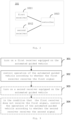
- Fig. 1 illustrates a schematic diagram of a system for controlling an automated guided vehicle according to some embodiments of the present disclosure.
- the system 100 for controlling an automated guided vehicle of this embodiment comprises one or more automated guided vehicles 101 equipped with a signal receiver, and a signal transmitter equipped on an object 102 to be protected, such as a movable object or a fixed object.
- the signal transmitter comprises, for example, a first transmitter 1021. If the automated guided vehicle enters signal coverage of the first transmitter 1021, this shows that the automated guided vehicle is close to the object to be protected that is equipped with the first transmitter 1021 and is within a dangerous operation range.
- the signal transmitter further comprises, for example, a second transmitter 1022.
- a signal receiver used in combination with the first transmitter 1021 is designated as a first receiver 1011.
- a signal receiver used in combination with the second transmitter 1022 is designated as a second receiver 1012.
- the first transmitter 1021 can be, for example, a signal transmitter equipped on the object to be protected, such as the movable object or the fixed object, and the first transmitter 1021 is configured to send a first signal of a first frequency.
- the first transmitter 1021 can be equipped on the movable object such as people or other movable devices, or can be equipped on the fixed object such as fixed facilities.
- the first signal is a periodic signal sent by the first transmitter 1021, and data content of the first signal is, for example, ID (Identity Document) identification information of the first transmitter.
- a sending antenna of the first transmitter can employ, for example, an omnidirectional antenna, to make 360 degree protection to the object equipped with the first transmitter.
- the first frequency is set such that a transmission distance of the first signal is greater than or equal to the safe braking distance of the automated guided vehicle.
- the first frequency is set such that the transmission distance of the first signal is slightly greater than the safety braking distance of the automated guided vehicle. Assuming that the safety braking distance of the automated guided vehicle is 5 meters, the first frequency for the transmission is set in such a way that the first signal can reach 5.2 meters, to reserve sufficient response time for the automated guided vehicle.
- the automated guided vehicle 101 is configured to receive the first signal sent by the first transmitter 1021 through the first receiver 1011 and control operation of the automated guided vehicle according to whether the first receiver 1011 receives the first signal.
- the automated guided vehicle 101 is configured to, in the condition that the first receiver 1011 receives the first signal, which shows that the automated guided vehicle 101 is close to the object to be protected that is equipped with the first transmitter 1021 and is in the dangerous operation range, control the automated guided vehicle 101 to stop or decelerate; and in the condition that the first receiver does not receive the first signal, which shows that the automated guided vehicle is far from the object to be protected that is equipped with the first transmitter 1021 and is currently in the safe operation range, control the automated guided vehicle 101 to operate normally.
- a method for controlling the automated guided vehicle 101 to decelerate comprises: in the condition that the first receiver receives the first signal, first, determining a distance between the first transmitter 1021 sending the first signal and the automated guided vehicle 101 according to strength of the received first signal; then, determining an acceleration for the automated guided vehicle 101 to decelerate according to the distance between the first transmitter 1021 sending the first signal and the automated guided vehicle 101; next, controlling the automated guided vehicle 101 to decelerate according to the determined acceleration.
- the determining a distance between the first transmitter 1021 sending the first signal and the automated guided vehicle 101 according to strength of the received first signal comprises, for example: calculating the distance between the first transmitter 1021 (i.e. the movable object or fixed object equipped the first transmitter) and the automated guided vehicle 101 using a RSSI (Received Signal Strength Indication) method, which is, for example, denoted as S.
- RSSI Received Signal Strength Indication
- the automated guided vehicle can decelerate at the acceleration, and until a certain distance is reached, the automated guided vehicle can be controlled to stop.
- a certain distance interval corresponds to one determined acceleration value
- the automated guided vehicle can decelerate at the acceleration, and until a certain distance is reached.
- the second transmitter 1022 can be, for example, a second transmitter equipped on the movable object or the fixed object, and the second transmitter 1022 is configured to send a second signal of a second frequency.
- the second signal is a periodic signal sent by the second transmitter 1022, and data content of the second signal is, for example, ID (Identity Document) identification information of the second transmitter.
- the second transmitter 1022 can be equipped on the movable object such as people or other movable devices, or can be equipped on the fixed object such as fixed facilities.
- the first frequency is less than the second frequency, that is, the second signal uses a higher frequency than the first signal, and thus a transmission distance of the second signal can be farther.
- the transmission distance of the first signal is related to a set danger distance, and if the automated guided vehicle receives the first signal, this shows that the distance between the object to be protected and the automated guided vehicle is dangerous, and the automated guided vehicle needs to be controlled to decelerate or stop.
- the transmission distance of the second signal is related to a set safety distance, if the automated guided vehicle receives the second signal, this shows that the distance between the object to be protected and the automated guided vehicle is safe, and the automated guided vehicle can be controlled to operate normally.
- the first signal (with short transmission distance) is used for detecting the danger distance for the operation of the automated guided vehicle
- the second signal (with long transmission distance) is used for detecting the safety distance for the operation of the automated guided vehicle
- the reliability of the whole system for safety control of the automated guided vehicle can be improved, to prevent the automated guided vehicle from colliding with the object to be protected, such as people or devices.
- the automated guided vehicle 101 receives the second signal of the second frequency that is sent by the second transmitter 1022 through the second receiver 1012.
- the operation of the automated guided vehicle 101 is controlled according to whether the second receiver 1012 receives the second signal. For example, in the condition that the first receiver 1011 does not receive the first signal, if the second receiver 1012 receives the second signal, this shows that the automated guided vehicle is far from the object to be protected that is equipped with the second transmitter 1022 and is currently in the safe operation range, and the automated guided vehicle 101 can be controlled to operate normally.
- That the second receiver 1012 receives the second signal comprises: the second receiver 1012 receiving the second signal directly sent by the second transmitter 1022.
- the second receiver 1012 of the automated guided vehicle 101 can also determine that the automated guided vehicle is in the safe operation range by receiving a second signal forwarded by another automated guided vehicle 101, and if the automated guided vehicle 101 can receive the second signal forwarded by another automated guided vehicle 101, this shows that the automated guided vehicle 101 is far from the object to be protected that is equipped with the second transmitter 1022 and is currently in the safe operation range, and the automated guided vehicle 101 can be controlled to operate normally.
- the automated guided vehicle can not only receive the second signal directly sent by the second transmitter, but also receive the second signal forwarded by other automated guided vehicles, so that the second signal can cover as many automated guided vehicles as possible. If the automated guided vehicle receives the second signal, this shows that the automated guided vehicle is far from the object to be protected that is equipped with the second transmitter and is currently in the safe operation range and the automated guided vehicle can be controlled to operate normally, thereby ensuring that the automated guided vehicle is prevented from colliding with the object to be protected, such as people or devices.
- each object to be protected can be equipped with a plurality of first transmitters, or, a plurality of second transmitters.
- any transmitter (the first transmitter or the second transmitter) on each movable object or fixed object can independently transmit a signal to any receiver (the first receiver or the second receiver) on any automated guided vehicle, and a receiver on each automated guided vehicle can receive a signal sent by any transmitter equipped on the movable object or fixed object, which improves the reliability of the whole system with respect to safety control of the automated guided vehicle.
- a detection circuit is added, an output port of which is connected to an enable port of the second transmitter. That is, if the first transmitter is unable to transmit the first signal, the second signal is also unable to be sent. This avoids a situation that the automated guided vehicle is controlled to operate normally due to misjudgment of the automated guided vehicle that is caused by a failure of the first transmitter, that is, this avoids the automated guided vehicle from colliding with other objects, and ensures the safe operation of the automated guided vehicle.
- Fig. 2 illustrates a schematic diagram of an automated guided vehicle according to some embodiments of the present disclosure.
- the automated guided vehicles 101 of some exemplary embodiments will be described below in conjunction with Fig. 2 .
- the automated guided vehicle 101 of this embodiment comprises a signal receiver.
- the signal receiver comprises, for example, a first receiver 1011, and a controller 1013, and can also comprise a second receiver 1012, wherein the two receivers can receive signals of different frequencies (or, different transmission distances).
- the first receiver 1011 can be set to be one or more, or the second receiver 1012 can be set to be one or more.
- any first receiver 1011 can receive a signal sent by a first transmitter
- any second receiver 1012 can receive a signal sent by a second transmitter, and providing more than one signal receivers improves the reliability of the whole system with respect to safety control of the automated guided vehicle.
- the first receiver 1011 is configured to receive a first signal of a first frequency that is sent by the first transmitter (for example, the first transmitter 1021 shown in Fig. 1 ) equipped on a movable object or a fixed object.
- the controller 1013 is configured to control operation of the automated guided vehicle 101 according to whether the first receiver 1011 receives the first signal.
- the controller 1013 is configured to: in the condition that the first receiver 1011 receives the first signal, control the automated guided vehicle 101 to stop or decelerate; and in the condition that the first receiver 1011 does not receive the first signal, control the automated guided vehicle 101 to operate normally.
- the controlling the automated guided vehicle 101 to decelerate comprises: in the condition that the first receiver 1011 receives the first signal, first, determining a distance between the first transmitter sending the first signal and the automated guided vehicle 101 according to strength of the received first signal, for example, referring to the aforementioned method for determining the distance between the first transmitter and the automated guided vehicle; then, determining an acceleration for the automated guided vehicle 101 to decelerate according to the distance between the first transmitter sending the first signal and the automated guided vehicle 101, for example, referring to the aforementioned method for determining the acceleration for the automated guided vehicle to decelerate; next, controlling the automated guided vehicle 101 to decelerate according to the acceleration.
- the second receiver 1012 is configured to receive a second signal of a second frequency that is sent by the second transmitter (for example, the second transmitter 1022 shown in Fig. 1 ) equipped on the mobile object or the fixed object, wherein the first frequency is less than the second frequency.
- the first signal (with short transmission distance) is used for detecting a danger distance for the operation of the automated guided vehicle
- the second signal (with long transmission distance) is used for detecting a safety distance for the operation of the automated guided vehicle
- the reliability of the whole system with respect to safety control of the automated guided vehicle can be improved, which ensures that the automated guided vehicle is prevented from colliding with the object to be protected, such as people or devices.
- the automated guided vehicle 101 can forward the second signal received by its own second receiver 1012 to other automated guided vehicles, for example, by means of broadcasting.
- the controller 1013 is configured to: in the condition that the first receiver 1011 does not receive the first signal, control the operation of the automated guided vehicle 101 according to whether the second receiver 1012 receives the second signal.
- the controller 1013 is configured to: in the condition that the first receiver 1011 does not receive the first signal, if the second receiver 1012 receives the second signal, control the automated guided vehicle 101 to operate normally. That the second receiver 1012 receives the second signal comprises: in the condition that the first receiver 1011 does not receive the first signal, the second receiver 1012 receiving the second signal sent by the second transmitter, or the second receiver 1012 receiving a second signal forwarded by another automated guided vehicle 101.
- Fig. 3 illustrates a flow diagram of a method for controlling an automated guided vehicle according to some embodiments of the present disclosure.
- the method for this embodiment comprises steps 301 to 304.
- a first receiver equipped on the automated guided vehicle is turned on, the first receiver being configured to receive a first signal of a first frequency that is sent by a first transmitter equipped on a movable object or a fixed object.
- a first receiver equipped on each automated guided vehicle can be turned on by controlling console commands of all automated guided vehicles by workers.
- the first receiver can be multiple, so that any first receiver on each automated guided vehicle can receive the first signal sent by the first transmitter, which improves the reliability of the whole system with respect to safety control of the automated guided vehicles and ensures the reliability of the whole system.
- step 302 operation of the automated guided vehicle is controlled according to whether the first receiver receives the first signal.
- the controlling operation of the automated guided vehicle comprises: in the condition that the first receiver receives the first signal, controlling the automated guided vehicle to stop or decelerate; and in the condition that the first receiver does not receive the first signal, controlling the automated guided vehicle to operate normally.
- the controlling the automated guided vehicle to decelerate comprises: in the condition that the first receiver receives the first signal, first, determining a distance between the first transmitter sending the first signal and the automated guided vehicle according to strength of the received first signal, for example, referring to the aforementioned method for determining the distance between the first transmitter and the automated guided vehicle; then, determining an acceleration for the automated guided vehicle to decelerate according to the distance between the first transmitter sending the first signal and the automated guided vehicle, for example, referring to the aforementioned method for determining the acceleration for the automated guided vehicle to decelerate; next, controlling the automated guided vehicle to decelerate according to the acceleration.
- the method further comprises steps 303 and 304.
- the second receiver can be multiple, so that any second receiver on each automated guided vehicle can receive the second signal sent by the second transmitter, which improves the reliability of the whole system with respect to safety control of the automated guided vehicle and ensures the reliability of the whole system.
- the second receiver equipped on the automated guided vehicle is turned on.
- the second receiver is configured to receive a second signal of a second frequency that is sent by a second transmitter equipped on the movable object or the fixed object, wherein the first frequency is less than the second frequency.
- step 304 in the condition that the first receiver does not receive the first signal, the operation of the automated guided vehicle is controlled according to whether the second receiver receives the second signal.
- the controlling the operation of the automated guided vehicle comprises: in the condition that the first receiver does not receive the first signal, if the second receiver receives the second signal, controlling the automated guided vehicle to operate normally. That the second receiver receives the second signal comprises: the second receiver receiving the second signal sent by the second transmitter, or the second receiver receiving a second signal forwarded by another automated guided vehicle.
- the automated guided vehicle comprises the first receiver, the operation of the automated guided vehicle can be controlled according to the first signal received by the first receiver, the transmission distance of the first signal is related to the set danger distance, if the automated guided vehicle receives the first signal, this shows that the distance between the object to be protected and the automated guided vehicle is dangerous and the automated guided vehicle needs to be controlled to decelerate or stop, so that the automated guided vehicle can travel safely, and by means of one group of signal receiver and signal transmitter, the safe travelling can be realized with a relatively low cost.
- the automated guided vehicle comprises the first receiver and the second receiver, the operation of the automated guided vehicle is controlled according to the first signal and the second signal respectively received by the first receiver and the second receiver, the first signal (with short transmission distance) is used for detecting the dangerous distance for the operation of the automated guided vehicle, the second signal (with long transmission distance) is used for detecting the safe distance of the operation of the automated guided vehicle, and by using the first signal and the second signal in combination, the reliability of the whole system with respect to safety control of the automated guided vehicle can be improved, which ensures that the automated guided vehicle is prevented from colliding with the object to be protected, such as people or devices.
- the first receiver equipped on the automated guided vehicle can be multiple, or the second receiver equipped on the automated guided vehicle can also be multiple, so that any first receiver or any second receiver on each automated guided vehicle can receive a signal sent by a corresponding first transmitter or second transmitter, which improves the reliability of the whole system with respect to safety control of the automated guided vehicle.
- the embodiments of the present disclosure can be provided as a method, system, or computer program product. Accordingly, the present disclosure can take a form of an entire hardware embodiment, an entire software embodiment or an embodiment combining software and hardware aspects. Furthermore, the present disclosure can take a form of a computer program product implemented on one or more computer-non-transitory readable storage media (including, but not limited to, disk memories, CD-ROMs, optical memories, etc.) having computer program code embodied therein.
- each flow and/or block of the flow diagrams and/or block diagrams, and a combination of flows and/or blocks in the flow diagrams and/or block diagrams can be implemented by computer program instructions.
- These computer program instructions can be provided to a processor of a general-purpose computer, special-purpose computer, embedded processor, or other programmable data processing devices to produce a machine, such that the instructions, which are executed by the processor of the computer or other programmable data processing devices, create means for implementing the function specified in one or more flows in the flow diagrams and/or in one or more blocks in the block diagrams.
- These computer program instructions can also be stored in a computer-readable memory that can guide the computer or other programmable data processing devices to work in a specific manner, such that the instructions stored in the computer-readable memory produce an article of manufacture including instruction means which implement the functions specified in one or more flows in the flow diagrams and/or in one or more blocks in the block diagrams.
- These computer program instructions can also be loaded onto the computer or other programmable data processing devices, such that a series of operation steps are performed on the computer or other programmable devices to produce a computer-implemented process, and thus the instructions executed on the computer or other programmable devices provide steps for implementing the functions specified in one or more flows in the flow diagrams and/or in one or more blocks in the block diagrams.
Landscapes
- Engineering & Computer Science (AREA)
- Automation & Control Theory (AREA)
- Physics & Mathematics (AREA)
- Transportation (AREA)
- Mechanical Engineering (AREA)
- General Physics & Mathematics (AREA)
- Remote Sensing (AREA)
- Radar, Positioning & Navigation (AREA)
- Aviation & Aerospace Engineering (AREA)
- Human Computer Interaction (AREA)
- Mathematical Physics (AREA)
- Software Systems (AREA)
- Theoretical Computer Science (AREA)
- General Engineering & Computer Science (AREA)
- Control Of Position, Course, Altitude, Or Attitude Of Moving Bodies (AREA)
- Traffic Control Systems (AREA)
Claims (15)
- Automatisiert geführtes Fahrzeug (101), dadurch gekennzeichnet, dass es umfasst:einen ersten Empfänger (1011), der ausgebildet ist, ein erstes Signal einer ersten Frequenz zu empfangen, das von einem ersten Sender (1021) gesendet wird, der an einem bewegbaren Objekt oder einem festen Objekt angebracht ist, wobei eine Übertragungsdistanz des ersten Signals mit einer festgelegten Gefahrendistanz in Beziehung steht;einen zweiten Empfänger (1012), der ausgebildet ist, ein zweites Signal einer zweiten Frequenz zu empfangen, das von einem zweiten Sender (1022) gesendet wird, der an dem bewegbaren Objekt oder dem festen Objekt angebracht ist, wobei eine Übertragungsdistanz des zweiten Signals mit einer festgelegten Sicherheitsdistanz in Beziehung steht, wobei die Übertragungsdistanz des zweiten Signals weiter als die Übertragungsdistanz des ersten Signals ist; undeine Steuerung (1013), die ausgebildet ist, den Betrieb des automatisiert geführten Fahrzeugs in Abhängigkeit davon zu steuern, ob der erste Empfänger das erste Signal empfängt, um zu verhindern, dass das automatisiert geführte Fahrzeug mit dem bewegbaren Objekt oder dem festen Objekt, das mit dem ersten Sender ausgestattet ist, kollidiert; und den Betrieb des automatisiert geführten Fahrzeugs in Abhängigkeit davon zu steuern, ob der zweite Empfänger das zweite Signal unter der Bedingung empfängt, dass der erste Empfänger das erste Signal nicht empfängt.
- Automatisiert geführtes Fahrzeug nach Anspruch 1, dadurch gekennzeichnet, dass die Steuerung (1013) ausgebildet ist:das automatisiert geführte Fahrzeug so zu steuern, dass es unter der Bedingung stoppt oder verlangsamt, dass der erste Empfänger das erste Signal empfängt; oderdas automatisiert geführte Fahrzeug so zu steuern, dass es unter der Bedingung normal agiert, dass der erste Empfänger das erste Signal nicht empfängt.
- Automatisiert geführtes Fahrzeug nach Anspruch 2, dadurch gekennzeichnet, dass die Steuerung (1013) ausgebildet ist:einen Abstand zwischen dem ersten Sender, der das erste Signal sendet, und dem automatisiert geführten Fahrzeug gemäß der Stärke des empfangenen ersten Signals unter der Bedingung zu bestimmen, dass der erste Empfänger das erste Signal empfängt;eine Beschleunigung für das automatisiert geführte Fahrzeug zum Verlangsamen gemäß dem Abstand zwischen dem ersten Sender, der das erste Signal sendet, und dem automatisiert geführten Fahrzeug zu bestimmen; unddas automatisiert geführte Fahrzeug so zu steuern, dass es gemäß der Beschleunigung verlangsamt.
- Automatisiert geführtes Fahrzeug nach Anspruch 1, dadurch gekennzeichnet, dass die erste Frequenz kleiner als die zweite Frequenz ist.
- Automatisiert geführtes Fahrzeug nach Anspruch 4, dadurch gekennzeichnet, dass die Steuerung (1013) ausgebildet ist:
das automatisiert geführte Fahrzeug so zu steuern, dass es normal agiert, wenn der zweite Empfänger das zweite Signal unter der Bedingung empfängt, dass der erste Empfänger das erste Signal nicht empfängt. - Automatisiert geführtes Fahrzeug nach Anspruch 5, dadurch gekennzeichnet, dass die Steuerung (1013) ausgebildet ist:
das automatisiert geführte Fahrzeug so zu steuern, dass es normal agiert, wenn der zweite Empfänger das zweite Signal empfängt, das von dem zweiten Sender gesendet oder von einem anderen automatisiert geführten Fahrzeug weitergeleitet wird, unter der Bedingung, dass der erste Empfänger das erste Signal nicht empfängt. - Verfahren zum Steuern eines automatisiert geführten Fahrzeugs, dadurch gekennzeichnet, dass es umfasst:Einschalten eines ersten Empfängers, der an dem automatisiert geführten Fahrzeug angebracht ist, wobei der erste Empfänger ausgebildet ist, ein erstes Signal einer ersten Frequenz zu empfangen, das von einem ersten Sender gesendet wird, der an einem bewegbaren Objekt oder einem festen Objekt (301) angebracht ist, wobei eine Übertragungsdistanz des ersten Signals mit einer festgelegten Gefahrendistanz in Beziehung steht;Einschalten eines zweiten Empfängers, der an dem automatisiert geführten Fahrzeug angebracht ist, wobei der zweite Empfänger ausgebildet ist, ein zweites Signal einer zweiten Frequenz zu empfangen, das von einem zweiten Sender gesendet wird, der an dem bewegbaren Objekt oder dem festen Objekt (303) angebracht ist, wobei eine Übertragungsdistanz des zweiten Signals mit einer festgelegten Sicherheitsdistanz in Beziehung steht, wobei die Übertragungsdistanz des zweiten Signals weiter als die Übertragungsdistanz des ersten Signals ist; undSteuern des Betriebs des automatisiert geführten Fahrzeugs in Abhängigkeit davon, ob der erste Empfänger das erste Signal empfängt, um zu verhindern, dass das automatisiert geführte Fahrzeug mit dem bewegbaren Objekt oder dem festen Objekt, das mit dem ersten Sender (302) ausgestattet ist, kollidiert, und Steuern des Betriebs des automatisiert geführten Fahrzeugs in Abhängigkeit davon, ob der zweite Empfänger das zweite Signal unter der Bedingung empfängt, dass der erste Empfänger das erste Signal nicht empfängt (304).
- Verfahren zum Steuern eines automatisiert geführten Fahrzeugs nach Anspruch 7, dadurch gekennzeichnet, dass das Steuern des Betriebs des automatisiert geführten Fahrzeugs umfasst:Steuern des automatisiert geführten Fahrzeugs so, dass es unter der Bedingung stoppt oder verlangsamt, dass der erste Empfänger das erste Signal empfängt; oderSteuern des automatisiert geführten Fahrzeugs so, dass es unter der Bedingung normal agiert, dass der erste Empfänger das erste Signal nicht empfängt.
- Verfahren zum Steuern eines automatisiert geführten Fahrzeugs nach Anspruch 8, dadurch gekennzeichnet, dass das Steuern des automatisiert geführten Fahrzeugs zum Verlangsamen umfasst:Bestimmen eines Abstands zwischen dem ersten Sender, der das erste Signal sendet, und dem automatisiert geführten Fahrzeug gemäß der Stärke des empfangenen ersten Signals unter der Bedingung, dass der erste Empfänger das erste Signal empfängt;Bestimmen einer Beschleunigung für das automatisiert geführte Fahrzeug zum Verlangsamen gemäß dem Abstand zwischen dem ersten Sender, der das erste Signal sendet, und dem automatisiert geführten Fahrzeug; undSteuern des automatisiert geführten Fahrzeugs zum Verlangsamen gemäß der Beschleunigung.
- Verfahren zum Steuern eines automatisiert geführten Fahrzeugs nach Anspruch 7, dadurch gekennzeichnet, dass die erste Frequenz weniger als die zweite Frequenz ist.
- Verfahren zum Steuern eines automatisiert geführten Fahrzeugs nach Anspruch 10, dadurch gekennzeichnet, dass das Steuern des Betriebs des automatisiert geführten Fahrzeugs umfasst:
Steuern des automatisiert geführten Fahrzeugs so, dass es normal agiert, wenn der zweite Empfänger das zweite Signal unter der Bedingung empfängt, dass der erste Empfänger das erste Signal nicht empfängt. - Verfahren zum Steuern eines automatisiert geführten Fahrzeugs nach Anspruch 11, dadurch gekennzeichnet, dass das Steuern des Betriebs des automatisiert geführten Fahrzeugs umfasst:
Steuern des automatisiert geführten Fahrzeugs so, dass es normal agiert, wenn der zweite Empfänger das zweite Signal empfängt, das von dem zweiten Sender gesendet oder von einem anderen automatisiert geführten Fahrzeug weitergeleitet wird, unter der Bedingung, dass der erste Empfänger das erste Signal nicht empfängt. - Nichtflüchtiges computerlesbares Speichermedium, auf dem ein Computerprogramm gespeichert ist, das das Verfahren zum Steuern eines automatisiert geführten Fahrzeugs nach einem der Ansprüche 7 bis 12 implementiert, wenn es von einem Prozessor ausgeführt wird.
- System zum Steuern eines automatisiert geführten Fahrzeugs, dadurch gekennzeichnet, dass es umfasst:einen ersten Sender (1021), der an einem beweglichen Objekt oder einem festen Objekt angebracht und ausgebildet ist, ein erstes Signal einer ersten Frequenz zu senden; undein oder mehrere automatisiert geführte Fahrzeuge (101) nach einem der Ansprüche 1 bis 6.
- System zum Steuern eines automatisiert geführten Fahrzeugs nach Anspruch 14, dadurch gekennzeichnet, dass es weiter umfasst:
einen zweiten Sender (1022), der an dem bewegbaren Objekt oder dem festen Objekt angebracht und ausgebildet ist, ein zweites Signal einer zweiten Frequenz zu senden, wobei die erste Frequenz weniger als die zweite Frequenz ist.
Applications Claiming Priority (2)
| Application Number | Priority Date | Filing Date | Title |
|---|---|---|---|
| CN202010436900.6A CN111762156B (zh) | 2020-05-21 | 2020-05-21 | 自动导引车以及控制自动导引车的方法和系统 |
| PCT/CN2021/094931 WO2021233386A1 (zh) | 2020-05-21 | 2021-05-20 | 自动导引车以及控制自动导引车的方法和系统 |
Publications (4)
| Publication Number | Publication Date |
|---|---|
| EP4129788A1 EP4129788A1 (de) | 2023-02-08 |
| EP4129788A4 EP4129788A4 (de) | 2024-01-17 |
| EP4129788C0 EP4129788C0 (de) | 2024-12-18 |
| EP4129788B1 true EP4129788B1 (de) | 2024-12-18 |
Family
ID=72720650
Family Applications (1)
| Application Number | Title | Priority Date | Filing Date |
|---|---|---|---|
| EP21808942.3A Active EP4129788B1 (de) | 2020-05-21 | 2021-05-20 | Automatisch geführtes fahrzeug und verfahren und system zur steuerung des automatisch geführten fahrzeugs |
Country Status (7)
| Country | Link |
|---|---|
| US (1) | US12393198B2 (de) |
| EP (1) | EP4129788B1 (de) |
| JP (1) | JP7761593B2 (de) |
| KR (1) | KR20230013240A (de) |
| CN (1) | CN111762156B (de) |
| PL (1) | PL4129788T3 (de) |
| WO (1) | WO2021233386A1 (de) |
Families Citing this family (4)
| Publication number | Priority date | Publication date | Assignee | Title |
|---|---|---|---|---|
| CN111762156B (zh) | 2020-05-21 | 2021-12-03 | 北京京东乾石科技有限公司 | 自动导引车以及控制自动导引车的方法和系统 |
| CN114527467A (zh) * | 2021-11-03 | 2022-05-24 | 宁波大榭招商国际码头有限公司 | 基于声波的防止港区流机设备鬼探头的预警方法及系统 |
| CN114779223A (zh) * | 2021-11-03 | 2022-07-22 | 宁波大榭招商国际码头有限公司 | 基于光波的防止港区流机设备鬼探头的预警方法及系统 |
| CN114563790A (zh) * | 2021-11-03 | 2022-05-31 | 宁波大榭招商国际码头有限公司 | 一种防止港区流机设备发生鬼探头的预警方法及系统 |
Family Cites Families (17)
| Publication number | Priority date | Publication date | Assignee | Title |
|---|---|---|---|---|
| US8965677B2 (en) * | 1998-10-22 | 2015-02-24 | Intelligent Technologies International, Inc. | Intra-vehicle information conveyance system and method |
| JP3888230B2 (ja) | 2002-05-30 | 2007-02-28 | 村田機械株式会社 | 無人搬送車システム |
| US10816986B2 (en) | 2016-08-02 | 2020-10-27 | Ge Global Sourcing Llc | Systems for vehicle collision avoidance |
| US20040117076A1 (en) | 2002-12-02 | 2004-06-17 | Canac Inc. | Remote control system for locomotives using a TDMA communication protocol |
| CN104977929B (zh) * | 2014-04-09 | 2019-04-12 | 燕成祥 | 导引式清洁装置与导引式清洁组 |
| CN105223951B (zh) * | 2015-09-14 | 2018-01-26 | 苏州爱普电器有限公司 | 自移动机器人 |
| US12038765B2 (en) * | 2016-08-02 | 2024-07-16 | Transportation Ip Holdings, Llc | Vehicle control system and method |
| JP6604317B2 (ja) * | 2016-11-29 | 2019-11-13 | トヨタ自動車株式会社 | 駐車支援装置 |
| WO2019048296A1 (en) * | 2017-09-07 | 2019-03-14 | Signify Holding B.V. | INTERIOR SYSTEM FOR LOCATING MOBILE OBJECTS |
| DE102019001508A1 (de) | 2018-03-22 | 2019-09-26 | SEW-EURODRlVE GmbH & Co. KG | System und Verfahren zum Betreiben eines Systems mit zumindest einem ersten und einem zweiten Mobilteil |
| WO2019201412A1 (en) * | 2018-04-16 | 2019-10-24 | Volvo Truck Corporation | A method for a string of vehicles |
| WO2019212240A1 (en) * | 2018-05-04 | 2019-11-07 | Lg Electronics Inc. | A plurality of robot cleaner and a controlling method for the same |
| CN110968090B (zh) * | 2018-09-28 | 2024-08-20 | 物流及供应链多元技术研发中心有限公司 | 具有防碰撞设备的自动导引车辆 |
| US10816635B1 (en) * | 2018-12-20 | 2020-10-27 | Autonomous Roadway Intelligence, Llc | Autonomous vehicle localization system |
| US11738746B2 (en) * | 2019-06-19 | 2023-08-29 | Ted JEWELL | Lifeform transmission system for collision avoidance |
| IT201900012414A1 (it) * | 2019-07-19 | 2021-01-19 | Ubiquicom S R L | Sistema e metodo anticollisione di veicoli terrestri |
| CN111762156B (zh) | 2020-05-21 | 2021-12-03 | 北京京东乾石科技有限公司 | 自动导引车以及控制自动导引车的方法和系统 |
-
2020
- 2020-05-21 CN CN202010436900.6A patent/CN111762156B/zh active Active
-
2021
- 2021-05-20 EP EP21808942.3A patent/EP4129788B1/de active Active
- 2021-05-20 US US17/997,291 patent/US12393198B2/en active Active
- 2021-05-20 WO PCT/CN2021/094931 patent/WO2021233386A1/zh not_active Ceased
- 2021-05-20 PL PL21808942.3T patent/PL4129788T3/pl unknown
- 2021-05-20 KR KR1020227037988A patent/KR20230013240A/ko active Pending
- 2021-05-20 JP JP2022570682A patent/JP7761593B2/ja active Active
Also Published As
| Publication number | Publication date |
|---|---|
| CN111762156A (zh) | 2020-10-13 |
| EP4129788A1 (de) | 2023-02-08 |
| EP4129788C0 (de) | 2024-12-18 |
| WO2021233386A1 (zh) | 2021-11-25 |
| EP4129788A4 (de) | 2024-01-17 |
| US20230176586A1 (en) | 2023-06-08 |
| JP2023526475A (ja) | 2023-06-21 |
| JP7761593B2 (ja) | 2025-10-28 |
| PL4129788T3 (pl) | 2025-03-03 |
| US12393198B2 (en) | 2025-08-19 |
| CN111762156B (zh) | 2021-12-03 |
| KR20230013240A (ko) | 2023-01-26 |
Similar Documents
| Publication | Publication Date | Title |
|---|---|---|
| EP4129788B1 (de) | Automatisch geführtes fahrzeug und verfahren und system zur steuerung des automatisch geführten fahrzeugs | |
| US20220163964A1 (en) | Operation-Security System for an Automated Vehicle | |
| US6313758B1 (en) | Automatic following travel system | |
| EP2620828B1 (de) | Fahrzeugsflotte Managementsystem und Verfahren für die Steuerung der Distanz zwischen Fahrzeuge | |
| US10395524B2 (en) | Method and system for detecting autonomously driven vehicles, for distance measurement and for distance control | |
| US6321147B1 (en) | Unmanned vehicle running system | |
| EP2637149B1 (de) | Bordvorrichtung und steuerungsverfahren | |
| US10741080B2 (en) | Method and device for operating a motor vehicle traveling driverlessly within a parking area | |
| CA2989067A1 (en) | On-board terminal device and vehicle collision prevention method | |
| EP3442841B1 (de) | Regionale anpassung für fahrerassistenzfunktionen | |
| KR20200075917A (ko) | 적재물 추락 발생 감지에 따른 차량 제어 방법 및 시스템 | |
| CN113415561B (zh) | 一种基于uwb技术的四向穿梭车防撞避障方法及系统 | |
| CN109324608B (zh) | 无人车控制方法、装置、设备以及存储介质 | |
| EP3258455B1 (de) | Warnsystem für ein automatisiertes fahrzeug | |
| JP3863012B2 (ja) | 衝突回避システム | |
| KR20220001021A (ko) | 군집 주행 제어 장치, 그를 포함한 시스템 및 그 제동 제어 방법 | |
| JP2017199079A (ja) | 衝突判定装置、コンピュータプログラム及び衝突判定方法 | |
| KR20200058416A (ko) | 열차 제어 시스템 | |
| US11340357B2 (en) | Method and apparatus for detecting a position of a vehicle having a high level of automation | |
| CN114932888A (zh) | 一种无人车的制动控制方法与系统 | |
| EP4368451A1 (de) | Unterstützungsvorrichtung zum anbringen einer antikollisionsvorrichtung an einem angezogenen element | |
| CN113734164A (zh) | 无人车的控制方法、装置、存储介质及电子设备 | |
| CN112327820A (zh) | 自动导引车agv的控制方法、装置、系统及存储介质 | |
| US20250368194A1 (en) | Method for monitoring a traffic area using a traffic monitoring system | |
| JP3146730B2 (ja) | 無人搬送車の自律交差点制御方法 |
Legal Events
| Date | Code | Title | Description |
|---|---|---|---|
| STAA | Information on the status of an ep patent application or granted ep patent |
Free format text: STATUS: THE INTERNATIONAL PUBLICATION HAS BEEN MADE |
|
| PUAI | Public reference made under article 153(3) epc to a published international application that has entered the european phase |
Free format text: ORIGINAL CODE: 0009012 |
|
| STAA | Information on the status of an ep patent application or granted ep patent |
Free format text: STATUS: REQUEST FOR EXAMINATION WAS MADE |
|
| 17P | Request for examination filed |
Effective date: 20221027 |
|
| AK | Designated contracting states |
Kind code of ref document: A1 Designated state(s): AL AT BE BG CH CY CZ DE DK EE ES FI FR GB GR HR HU IE IS IT LI LT LU LV MC MK MT NL NO PL PT RO RS SE SI SK SM TR |
|
| DAV | Request for validation of the european patent (deleted) | ||
| DAX | Request for extension of the european patent (deleted) | ||
| A4 | Supplementary search report drawn up and despatched |
Effective date: 20231219 |
|
| RIC1 | Information provided on ipc code assigned before grant |
Ipc: G05D 1/02 20200101ALI20231213BHEP Ipc: B60W 60/00 20200101ALI20231213BHEP Ipc: B60W 50/00 20060101ALI20231213BHEP Ipc: B60W 30/09 20120101AFI20231213BHEP |
|
| GRAP | Despatch of communication of intention to grant a patent |
Free format text: ORIGINAL CODE: EPIDOSNIGR1 |
|
| STAA | Information on the status of an ep patent application or granted ep patent |
Free format text: STATUS: GRANT OF PATENT IS INTENDED |
|
| RIC1 | Information provided on ipc code assigned before grant |
Ipc: G05D 1/00 20060101ALI20240726BHEP Ipc: B60W 60/00 20200101ALI20240726BHEP Ipc: B60W 50/00 20060101ALI20240726BHEP Ipc: B60W 30/09 20120101AFI20240726BHEP |
|
| INTG | Intention to grant announced |
Effective date: 20240816 |
|
| GRAS | Grant fee paid |
Free format text: ORIGINAL CODE: EPIDOSNIGR3 |
|
| GRAA | (expected) grant |
Free format text: ORIGINAL CODE: 0009210 |
|
| STAA | Information on the status of an ep patent application or granted ep patent |
Free format text: STATUS: THE PATENT HAS BEEN GRANTED |
|
| AK | Designated contracting states |
Kind code of ref document: B1 Designated state(s): AL AT BE BG CH CY CZ DE DK EE ES FI FR GB GR HR HU IE IS IT LI LT LU LV MC MK MT NL NO PL PT RO RS SE SI SK SM TR |
|
| REG | Reference to a national code |
Ref country code: CH Ref legal event code: EP |
|
| REG | Reference to a national code |
Ref country code: DE Ref legal event code: R096 Ref document number: 602021023656 Country of ref document: DE |
|
| REG | Reference to a national code |
Ref country code: IE Ref legal event code: FG4D |
|
| U01 | Request for unitary effect filed |
Effective date: 20241218 |
|
| U07 | Unitary effect registered |
Designated state(s): AT BE BG DE DK EE FI FR IT LT LU LV MT NL PT RO SE SI Effective date: 20250102 |
|
| PG25 | Lapsed in a contracting state [announced via postgrant information from national office to epo] |
Ref country code: HR Free format text: LAPSE BECAUSE OF FAILURE TO SUBMIT A TRANSLATION OF THE DESCRIPTION OR TO PAY THE FEE WITHIN THE PRESCRIBED TIME-LIMIT Effective date: 20241218 |
|
| PG25 | Lapsed in a contracting state [announced via postgrant information from national office to epo] |
Ref country code: NO Free format text: LAPSE BECAUSE OF FAILURE TO SUBMIT A TRANSLATION OF THE DESCRIPTION OR TO PAY THE FEE WITHIN THE PRESCRIBED TIME-LIMIT Effective date: 20250318 |
|
| PG25 | Lapsed in a contracting state [announced via postgrant information from national office to epo] |
Ref country code: GR Free format text: LAPSE BECAUSE OF FAILURE TO SUBMIT A TRANSLATION OF THE DESCRIPTION OR TO PAY THE FEE WITHIN THE PRESCRIBED TIME-LIMIT Effective date: 20250319 |
|
| PG25 | Lapsed in a contracting state [announced via postgrant information from national office to epo] |
Ref country code: RS Free format text: LAPSE BECAUSE OF FAILURE TO SUBMIT A TRANSLATION OF THE DESCRIPTION OR TO PAY THE FEE WITHIN THE PRESCRIBED TIME-LIMIT Effective date: 20250318 |
|
| U20 | Renewal fee for the european patent with unitary effect paid |
Year of fee payment: 5 Effective date: 20250416 |
|
| PG25 | Lapsed in a contracting state [announced via postgrant information from national office to epo] |
Ref country code: SM Free format text: LAPSE BECAUSE OF FAILURE TO SUBMIT A TRANSLATION OF THE DESCRIPTION OR TO PAY THE FEE WITHIN THE PRESCRIBED TIME-LIMIT Effective date: 20241218 |
|
| PGFP | Annual fee paid to national office [announced via postgrant information from national office to epo] |
Ref country code: PL Payment date: 20250509 Year of fee payment: 5 |
|
| PG25 | Lapsed in a contracting state [announced via postgrant information from national office to epo] |
Ref country code: ES Free format text: LAPSE BECAUSE OF FAILURE TO SUBMIT A TRANSLATION OF THE DESCRIPTION OR TO PAY THE FEE WITHIN THE PRESCRIBED TIME-LIMIT Effective date: 20241218 |
|
| PG25 | Lapsed in a contracting state [announced via postgrant information from national office to epo] |
Ref country code: IS Free format text: LAPSE BECAUSE OF FAILURE TO SUBMIT A TRANSLATION OF THE DESCRIPTION OR TO PAY THE FEE WITHIN THE PRESCRIBED TIME-LIMIT Effective date: 20250418 |
|
| PG25 | Lapsed in a contracting state [announced via postgrant information from national office to epo] |
Ref country code: SK Free format text: LAPSE BECAUSE OF FAILURE TO SUBMIT A TRANSLATION OF THE DESCRIPTION OR TO PAY THE FEE WITHIN THE PRESCRIBED TIME-LIMIT Effective date: 20241218 |
|
| PG25 | Lapsed in a contracting state [announced via postgrant information from national office to epo] |
Ref country code: CZ Free format text: LAPSE BECAUSE OF FAILURE TO SUBMIT A TRANSLATION OF THE DESCRIPTION OR TO PAY THE FEE WITHIN THE PRESCRIBED TIME-LIMIT Effective date: 20241218 |
|
| PLBE | No opposition filed within time limit |
Free format text: ORIGINAL CODE: 0009261 |
|
| STAA | Information on the status of an ep patent application or granted ep patent |
Free format text: STATUS: NO OPPOSITION FILED WITHIN TIME LIMIT |
|
| 26N | No opposition filed |
Effective date: 20250919 |