EP4122640A1 - Flux and solder paste - Google Patents
Flux and solder paste Download PDFInfo
- Publication number
- EP4122640A1 EP4122640A1 EP21770578.9A EP21770578A EP4122640A1 EP 4122640 A1 EP4122640 A1 EP 4122640A1 EP 21770578 A EP21770578 A EP 21770578A EP 4122640 A1 EP4122640 A1 EP 4122640A1
- Authority
- EP
- European Patent Office
- Prior art keywords
- mass
- acid
- solder
- flux
- less
- Prior art date
- Legal status (The legal status is an assumption and is not a legal conclusion. Google has not performed a legal analysis and makes no representation as to the accuracy of the status listed.)
- Granted
Links
Images

Classifications
-
- B—PERFORMING OPERATIONS; TRANSPORTING
- B23—MACHINE TOOLS; METAL-WORKING NOT OTHERWISE PROVIDED FOR
- B23K—SOLDERING OR UNSOLDERING; WELDING; CLADDING OR PLATING BY SOLDERING OR WELDING; CUTTING BY APPLYING HEAT LOCALLY, e.g. FLAME CUTTING; WORKING BY LASER BEAM
- B23K35/00—Rods, electrodes, materials, or media, for use in soldering, welding, or cutting
- B23K35/22—Rods, electrodes, materials, or media, for use in soldering, welding, or cutting characterised by the composition or nature of the material
- B23K35/36—Selection of non-metallic compositions, e.g. coatings or fluxes; Selection of soldering or welding materials, conjoint with selection of non-metallic compositions, both selections being of interest
- B23K35/362—Selection of compositions of fluxes
-
- B—PERFORMING OPERATIONS; TRANSPORTING
- B23—MACHINE TOOLS; METAL-WORKING NOT OTHERWISE PROVIDED FOR
- B23K—SOLDERING OR UNSOLDERING; WELDING; CLADDING OR PLATING BY SOLDERING OR WELDING; CUTTING BY APPLYING HEAT LOCALLY, e.g. FLAME CUTTING; WORKING BY LASER BEAM
- B23K35/00—Rods, electrodes, materials, or media, for use in soldering, welding, or cutting
- B23K35/22—Rods, electrodes, materials, or media, for use in soldering, welding, or cutting characterised by the composition or nature of the material
- B23K35/36—Selection of non-metallic compositions, e.g. coatings or fluxes; Selection of soldering or welding materials, conjoint with selection of non-metallic compositions, both selections being of interest
- B23K35/3601—Selection of non-metallic compositions, e.g. coatings or fluxes; Selection of soldering or welding materials, conjoint with selection of non-metallic compositions, both selections being of interest with inorganic compounds as principal constituents
-
- B—PERFORMING OPERATIONS; TRANSPORTING
- B23—MACHINE TOOLS; METAL-WORKING NOT OTHERWISE PROVIDED FOR
- B23K—SOLDERING OR UNSOLDERING; WELDING; CLADDING OR PLATING BY SOLDERING OR WELDING; CUTTING BY APPLYING HEAT LOCALLY, e.g. FLAME CUTTING; WORKING BY LASER BEAM
- B23K35/00—Rods, electrodes, materials, or media, for use in soldering, welding, or cutting
- B23K35/02—Rods, electrodes, materials, or media, for use in soldering, welding, or cutting characterised by mechanical features, e.g. shape
- B23K35/0222—Rods, electrodes, materials, or media, for use in soldering, welding, or cutting characterised by mechanical features, e.g. shape for use in soldering or brazing
- B23K35/0244—Powders, particles or spheres; Preforms made therefrom
- B23K35/025—Pastes, creams or slurries
-
- B—PERFORMING OPERATIONS; TRANSPORTING
- B23—MACHINE TOOLS; METAL-WORKING NOT OTHERWISE PROVIDED FOR
- B23K—SOLDERING OR UNSOLDERING; WELDING; CLADDING OR PLATING BY SOLDERING OR WELDING; CUTTING BY APPLYING HEAT LOCALLY, e.g. FLAME CUTTING; WORKING BY LASER BEAM
- B23K35/00—Rods, electrodes, materials, or media, for use in soldering, welding, or cutting
- B23K35/22—Rods, electrodes, materials, or media, for use in soldering, welding, or cutting characterised by the composition or nature of the material
- B23K35/24—Selection of soldering or welding materials proper
- B23K35/26—Selection of soldering or welding materials proper with the principal constituent melting at less than 400°C
- B23K35/262—Sn as the principal constituent
-
- B—PERFORMING OPERATIONS; TRANSPORTING
- B23—MACHINE TOOLS; METAL-WORKING NOT OTHERWISE PROVIDED FOR
- B23K—SOLDERING OR UNSOLDERING; WELDING; CLADDING OR PLATING BY SOLDERING OR WELDING; CUTTING BY APPLYING HEAT LOCALLY, e.g. FLAME CUTTING; WORKING BY LASER BEAM
- B23K35/00—Rods, electrodes, materials, or media, for use in soldering, welding, or cutting
- B23K35/22—Rods, electrodes, materials, or media, for use in soldering, welding, or cutting characterised by the composition or nature of the material
- B23K35/36—Selection of non-metallic compositions, e.g. coatings or fluxes; Selection of soldering or welding materials, conjoint with selection of non-metallic compositions, both selections being of interest
- B23K35/3612—Selection of non-metallic compositions, e.g. coatings or fluxes; Selection of soldering or welding materials, conjoint with selection of non-metallic compositions, both selections being of interest with organic compounds as principal constituents
-
- B—PERFORMING OPERATIONS; TRANSPORTING
- B23—MACHINE TOOLS; METAL-WORKING NOT OTHERWISE PROVIDED FOR
- B23K—SOLDERING OR UNSOLDERING; WELDING; CLADDING OR PLATING BY SOLDERING OR WELDING; CUTTING BY APPLYING HEAT LOCALLY, e.g. FLAME CUTTING; WORKING BY LASER BEAM
- B23K35/00—Rods, electrodes, materials, or media, for use in soldering, welding, or cutting
- B23K35/22—Rods, electrodes, materials, or media, for use in soldering, welding, or cutting characterised by the composition or nature of the material
- B23K35/36—Selection of non-metallic compositions, e.g. coatings or fluxes; Selection of soldering or welding materials, conjoint with selection of non-metallic compositions, both selections being of interest
- B23K35/3612—Selection of non-metallic compositions, e.g. coatings or fluxes; Selection of soldering or welding materials, conjoint with selection of non-metallic compositions, both selections being of interest with organic compounds as principal constituents
- B23K35/3613—Polymers, e.g. resins
-
- B—PERFORMING OPERATIONS; TRANSPORTING
- B23—MACHINE TOOLS; METAL-WORKING NOT OTHERWISE PROVIDED FOR
- B23K—SOLDERING OR UNSOLDERING; WELDING; CLADDING OR PLATING BY SOLDERING OR WELDING; CUTTING BY APPLYING HEAT LOCALLY, e.g. FLAME CUTTING; WORKING BY LASER BEAM
- B23K35/00—Rods, electrodes, materials, or media, for use in soldering, welding, or cutting
- B23K35/22—Rods, electrodes, materials, or media, for use in soldering, welding, or cutting characterised by the composition or nature of the material
- B23K35/36—Selection of non-metallic compositions, e.g. coatings or fluxes; Selection of soldering or welding materials, conjoint with selection of non-metallic compositions, both selections being of interest
- B23K35/3612—Selection of non-metallic compositions, e.g. coatings or fluxes; Selection of soldering or welding materials, conjoint with selection of non-metallic compositions, both selections being of interest with organic compounds as principal constituents
- B23K35/3618—Carboxylic acids or salts
-
- C—CHEMISTRY; METALLURGY
- C22—METALLURGY; FERROUS OR NON-FERROUS ALLOYS; TREATMENT OF ALLOYS OR NON-FERROUS METALS
- C22C—ALLOYS
- C22C13/00—Alloys based on tin
Definitions
- the present invention relates to a flux and a solder paste.
- a flux used for soldering has the effect of chemically removing metal oxides present on a solder, and the metal surface of an object to be joined, which is a soldering target, thereby enabling the movement of metal elements at the boundary between two objects to be joined. Therefore, by performing soldering using the flux, an intermetallic compound is formed between the solder, and the metal surface of the object to be joined. Thereby, strong joining can be obtained.
- a solder paste is a composite material obtained by mixing a solder alloy powder and a flux.
- the flux generally contains a resin component, a solvent, an activator, a thixotropic agent, and the like.
- soldering using the solder paste first, the solder paste is printed on a soldering part such as an electrode of a substrate, and components are mounted on this soldering part. Subsequently, when the substrate is heated in a heating furnace called a reflow furnace, a solder is melted, and soldering is completed.
- Patent Document 1 Japanese Unexamined Patent Application, First Publication No. H10-233577
- the solder paste generally has problems that, as the particle size of the solder alloy powder becomes smaller, the viscosity of the solder paste is likely to increase with time, the solderability deteriorates, and solder balls are likely to be generated.
- an object of the present invention is to provide a flux and a solder paste which have excellent viscosity stability over time and are capable of preventing the generation of solder balls, even when using a solder alloy powder in which the content of solder alloy particles having a particle size of 8 ⁇ m or less is 99% by mass or more.
- the present invention adopts the following constitution.
- a first aspect of the present invention is a solder paste containing: a solder alloy powder in which a content of solder alloy particles having a particle size of 8 ⁇ m or less is 99% by mass or more with respect to a total mass of the solder alloy powder; and a flux, in which the flux contains an acid-modified rosin, a solvent, an activator, and a thixotropic agent, and the activator contains a halogenated aliphatic compound, and a dicarboxylic acid represented by General Formula (2).
- R represents an alkylene group having 1 to 7 carbon atoms, or a single bond, provided that a methylene group constituting the alkylene group may be substituted with an oxygen atom
- an acid value of the acid-modified rosin is preferably 200 mgKOH/g or more, and a content of the acid-modified rosin is preferably 15% by mass or more and 40% by mass or less with respect to a total mass of the flux.
- a content of the halogenated aliphatic compound is preferably 1% by mass or more and 5% by mass or less with respect to a total mass of the flux.
- a content of the dicarboxylic acid is preferably 3% by mass or more and 6% by mass or less with respect to a total mass of the flux.
- the halogenated aliphatic compound is preferably 2,3-dibromo-1,4-butanediol.
- a second aspect of the present invention is a flux which is used for a solder paste containing a solder alloy powder, in which in the solder alloy powder, a content of solder alloy particles having a particle size of 8 ⁇ m or less is 99% by mass or more with respect to a total mass of the solder alloy powder, the flux contains a rosin, a solvent, an activator, and a thixotropic agent, the rosin includes an acid-modified rosin, the activator contains a halogenated aliphatic compound, and a dicarboxylic acid represented by General Formula (2), and the dicarboxylic acid includes one or more selected from the group consisting of an oxalic acid and a diglycolic acid.
- an acid value of the acid-modified rosin is preferably 200 mgKOH/g or more, and a content of the acid-modified rosin is preferably 15% by mass or more and 40% by mass or less with respect to a total mass of the flux.
- a content of the halogenated aliphatic compound is preferably 1% by mass or more and 5% by mass or less with respect to a total mass of the flux.
- a content of the dicarboxylic acid is preferably 3% by mass or more and 6% by mass or less with respect to a total mass of the flux.
- a content of the acid-modified rosin is preferably 60% by mass or more and 100% by mass or less with respect to a total mass of the rosin.
- the halogenated aliphatic compound preferably contains a halogenated aliphatic alcohol, and a content of the halogenated aliphatic alcohol is preferably 60% by mass or more and 100% by mass or less with respect to a total mass of the halogenated aliphatic compound.
- the halogenated aliphatic alcohol is preferably 2,3-dibromo-1,4-butanediol.
- a total content of the oxalic acid and the diglycolic acid is preferably 80% by mass or more and 100% by mass or less with respect to a total mass of the dicarboxylic acid.
- a third aspect of the present invention is a solder paste characterized by containing: a solder alloy powder in which a content of a solder alloy particle group having a particle size of 8 ⁇ m or less is 99% by mass or more with respect to a total mass of the solder alloy powder; and the flux according to the above-mentioned second aspect.
- the present invention it is possible to provide a flux and a solder paste which have excellent viscosity stability over time and are capable of preventing the generation of solder balls, even when using a solder alloy powder in which the content of solder alloy particles having a particle size of 8 ⁇ m or less is 99% by mass or more.
- a flux of the present embodiment is used for a solder paste containing a solder alloy powder.
- the flux of the present embodiment contains an acid-modified rosin, a solvent, an activator, and a thixotropic agent.
- a solder paste has a problem that the viscosity of the solder paste is likely to increase with time as the particle size of a solder alloy powder becomes smaller.
- the flux of the present embodiment makes it possible for a solder paste to have sufficient viscosity stability over time and solder ball generation prevention ability even when the particle size of a solder alloy powder used is small, particularly even when using a solder alloy powder in which the content of solder alloy particles having the particle size of 8 ⁇ m or less is 99% by mass or more.
- the flux of the present embodiment contains the acid-modified rosin, this makes it possible to have a sufficient solder ball generation prevention ability.
- Examples of the acid-modified rosin include a phenol-modified rosin, ⁇ , ⁇ -unsaturated carboxylic acid-modified products (acrylic acid-modified rosin, maleic acid-modified rosin, fumaric acid-modified rosin, and the like), and purified products, hydrogenated products, and disproportionated products of the ⁇ , ⁇ -unsaturated carboxylic acid-modified products and the like.
- one type may be used alone, or two or more types may be mixed and used.
- the acid-modified rosin is preferably an ⁇ , ⁇ -unsaturated carboxylic acid-modified product, and more preferably one or more selected from the group consisting of a maleic acid-modified hydrogenated rosin and an acrylic acid-modified hydrogenated rosin.
- the acid value of the acid-modified rosin is preferably 200 mgKOH/g or more.
- the content of the acid-modified rosin is preferably 15% by mass or more and 40% by mass or less, more preferably 20% by mass or more and 40% by mass or less, and further preferably 30% by mass or more and 40% by mass or less with respect to the total mass of the flux.
- solvent examples include alcohol solvents, glycol ether solvents, and terpineols.
- alcohol solvents examples include isopropyl alcohol, 1,2-butanediol, isobornyl cyclohexanol, 2,4-diethyl-1,5-pentanediol, 2,2-dimethyl-1,3-propanediol, 2,5-dimethyl-2,5-hexanediol, 2,5-dimethyl-3-hexyne-2,5-diol, 2,3-dimethyl-2,3-butanediol, 2-methylpentane-2,4-diol, 1,1,1-tris(hydroxymethyl)propane, 2-ethyl-2-hydroxymethyl-1,3-propanediol, 2,2'-oxybis(methylene)bis(2-ethyl-1,3-propanediol), 2,2-bis(hydroxymethyl)-1,3-propanediol, 1,2,6-trihydroxyhexane, 1-ethynyl-1-cyclohex
- glycol ether solvents examples include diethylene glycol mono-2-ethylhexyl ether, ethylene glycol monophenyl ether, diethylene glycol monohexyl ether, diethylene glycol dibutyl ether, triethylene glycol monobutyl ether, methyl propylene triglycol, butyl propylene triglycol, triethylene glycol butylmethyl ether, and tetraethylene glycol dimethyl ether.
- one type or two or more types can be used.
- the activator contained in the flux of the present embodiment contains a halogenated aliphatic compound and a specific dicarboxylic acid.
- the flux of the present embodiment contains the halogenated aliphatic compound, this makes it possible for the solder paste to have sufficient viscosity stability over time and solder ball generation prevention ability even when using the solder alloy powder in which the content of the solder alloy particles having the particle size of 8 ⁇ m or less is 99% by mass or more with respect to the total mass of the solder alloy powder.
- the flux of the present embodiment contains the halogenated aliphatic compound, this makes it possible for the solder paste to have sufficient viscosity stability over time and solder ball generation prevention ability even when using a solder alloy powder composed of a solder alloy particle group having the particle size of 5 ⁇ m or less.
- the halogenated aliphatic compound is a compound having a halogenated aliphatic hydrocarbon group.
- the halogenated aliphatic hydrocarbon group refers to one in which a part or all of hydrogen atoms constituting the aliphatic hydrocarbon group are substituted with halogen atoms.
- Examples of the halogen atoms include a fluorine atom, a chlorine atom, a bromine atom, and an iodine atom.
- the aliphatic hydrocarbon group may be any of a saturated aliphatic hydrocarbon group or an unsaturated aliphatic hydrocarbon group.
- halogenated aliphatic compound examples include halogenated aliphatic alcohols and halogenated heterocyclic compounds.
- halogenated aliphatic alcohols examples include 1-bromo-2-propanol, 3-bromo-1-propanol, 3-bromo-1,2-propanediol, 1-bromo-2-butanol, 1,3-dibromo-2-propanol, 2,3-dibromo-1-propanol, 1,4-dibromo-2-butanol, 2,3-dibromo-1,4-butanediol, and trans-2,3-dibromo-2-butene-1,4-diol.
- halogenated heterocyclic compounds include a compound represented by General Formula (1).
- R 1 ⁇ R 2 n [in the formula, R 1 represents an n-valent heterocyclic group, and R 2 represents a halogenated aliphatic hydrocarbon group]
- heterocyclic rings of the n-valent heterocyclic group as R 1 include a ring structure in which a part of carbon atoms constituting an aliphatic hydrocarbon or an aromatic hydrocarbon ring is substituted with a heteroatom.
- heteroatom in this heterocyclic ring include an oxygen atom, a sulfur atom, and a nitrogen atom.
- This heterocyclic ring is preferably a 3- to 10-membered ring, and more preferably a 5- to 7-membered ring.
- this heterocyclic ring include an isocyanurate ring.
- the halogenated aliphatic hydrocarbon group as R 2 preferably has 1 to 10 carbon atoms, more preferably 2 to 6 carbon atoms, and further preferably 3 to 5 carbon atoms. Furthermore, R 2 is preferably a brominated aliphatic hydrocarbon group or a chlorinated aliphatic hydrocarbon group, more preferably a brominated aliphatic hydrocarbon group, and further preferably a brominated saturated aliphatic hydrocarbon group.
- halogenated heterocyclic compounds examples include tris-(2,3-dibromopropyl)isocyanurate.
- halogenated aliphatic compound one type may be used alone, or two or more types may be mixed and used.
- the halogenated aliphatic compound is preferably a halogenated aliphatic alcohol, and more preferably 2,3-dibromo-1,4-butanediol.
- the content of the halogenated aliphatic compound is preferably 1 % by mass or more and 5% by mass or less with respect to the total mass of the flux.
- the content of the halogenated aliphatic alcohol is preferably 60% by mass or more and 100% by mass or less, and more preferably 80% by mass or more and 100% by mass or less with respect to the total mass of the halogenated aliphatic compound.
- the solder ball generation prevention ability can be made excellent even when using the solder alloy powder in which the content of the solder alloy particles having the particle size of 8 ⁇ m or less is 99% by mass or more.
- the solder ball generation prevention ability can be made excellent even when using the solder alloy powder composed of the solder alloy particle group having the particle size of 5 ⁇ m or less.
- the flux of the present embodiment contains the specific dicarboxylic acid, this makes it possible to have a sufficient solder ball generation prevention ability even when using the solder alloy powder in which the content of the solder alloy particles having the particle size of 8 ⁇ m or less is 99% by mass or more.
- the flux of the present embodiment contains the specific dicarboxylic acid, this makes it possible to have a sufficient solder ball generation prevention ability even when using the alloy powder composed of the solder alloy particle group having the particle size of 5 ⁇ m or less.
- the specific dicarboxylic acid contained in the flux of the present embodiment is a compound represented by General Formula (2).
- R represents an alkylene group having 1 to 7 carbon atoms, or a single bond, provided that a methylene group constituting the alkylene group may be substituted with an oxygen atom
- R when R is an alkylene group, the alkylene group may be linear or branched.
- the alkylene group is preferably linear.
- Examples of the dicarboxylic acid represented by General Formula (2) include oxalic acid, malonic acid, succinic acid, glutaric acid, adipic acid, pimelic acid, suberic acid, and diglycolic acid.
- dicarboxylic acid represented by General Formula (2) one type may be used alone, or two or more types may be mixed and used.
- the dicarboxylic acid represented by General Formula (2) is preferably one or more selected from the group consisting of oxalic acid, diglycolic acid, and azelaic acid, and more preferably one or more selected from the group consisting of oxalic acid and diglycolic acid.
- the content of the dicarboxylic acid represented by General Formula (2) is preferably 3% by mass or more and 6% by mass or less with respect to the total mass of the flux.
- the total content of the oxalic acid and the diglycolic acid is preferably 80% by mass or more and 100% by mass or less with respect to the total mass of the dicarboxylic acid represented by General Formula (2).
- the solder ball generation prevention ability can be made excellent even when using the solder alloy powder in which the content of the solder alloy particles having the particle size of 8 ⁇ m or less is 99% by mass or more.
- the solder ball generation prevention ability can be made excellent even when using the solder alloy powder composed of the solder alloy particle group having the particle size of 5 ⁇ m or less.
- thixotropic agent examples include wax-based thixotropic agents, amide-based thixotropic agents, and sorbitol-based thixotropic agents.
- wax-based thixotropic agents examples include hardened castor oil.
- amide-based thixotropic agents include monoamides, bisamides, and polyamides.
- examples thereof include lauric acid amide, palmitic acid amide, stearic acid amide, behenic acid amide, hydroxystearic acid amide, saturated fatty acid amide, oleic acid amide, erucic acid amide, unsaturated fatty acid amide, p-toluenemethane amide, aromatic amide, methylenebis(stearic acid amide), ethylenebis(lauric acid amide), ethylenebis(hydroxystearic acid amide), saturated fatty acid bis amide, methylenebis(oleic acid amide), unsaturated fatty acid bis amide, m-xylylenebis(stearic acid amide), aromatic bis amide, aliphatic polyamide (saturated fatty acid polyamide, unsaturated fatty acid polyamide), aromatic polyamide, substituted amide, methylolstearic acid amide, methylol amide
- Examples of the above-mentioned cyclic amide oligomers include an amide oligomer in which a dicarboxylic acid and a diamine are cyclically polycondensed, an amide oligomer in which a tricarboxylic acid and a diamine are cyclically polycondensed, an amide oligomer in which a dicarboxylic acid and a triamine are cyclically polycondensed, an amide oligomer in which a tricarboxylic acid and a triamine are cyclically polycondensed, an amide oligomer in which a dicarboxylic acid and a tricarboxylic acid, and a diamine are cyclically polycondensed, an amide oligomer in which a dicarboxylic acid and a tricarboxylic acid, and a diamine are cyclically polycondensed, an amide oligomer in which a dicarboxylic acid and a tricarboxy
- examples of the above-mentioned acyclic amide oligomers include a case of an amide oligomer in which a monocarboxylic acid, and a diamine and/or a triamine are acyclically polycondensed, and a case of an amide oligomer in which a dicarboxylic acid and/or a tricarboxylic acid, and a monoamine are acyclically polycondensed.
- the monocarboxylic acid and the monoamine function as terminal molecules, thereby resulting in an acyclic amide oligomer having a reduced molecular weight.
- the acyclic amide oligomer is an amide compound in which a dicarboxylic acid and/or a tricarboxylic acid, and a diamine and/or a triamine are acyclically polycondensed, it is an acyclic polymer-based amide polymer. Furthermore, the acyclic amide oligomer also includes an amide oligomer in which a monocarboxylic acid and a monoamine are acyclically condensed.
- thixotropic agent For the thixotropic agent, one type may be used alone, or two or more types may be mixed and used.
- the thixotropic agent preferably contains one or more selected from the group consisting of the amide-based thixotropic agents and the wax-based thixotropic agents.
- the amide-based thixotropic agent is preferably polyamide.
- the wax-based thixotropic agent is preferably hardened castor oil.
- the total content of the thixotropic agents is preferably 5% by mass or more and 15% by mass or less, and more preferably 5% by mass or more and 10% by mass or less with respect to the total mass of the flux.
- the total content of the amide-based thixotropic agent is preferably 2% by mass or more and 10% by mass or less, and more preferably 3% by mass or more and 8% by mass or less with respect to the total mass of the flux.
- the content of the wax-based thixotropic agent is preferably 1% by mass or more and 6% by mass or less, and more preferably 2% by mass or more and 5% by mass or less with respect to the total mass of the flux.
- the flux of the present embodiment may contain a dicarboxylic acid (another dicarboxylic acid) other than the dicarboxylic acid represented by General Formula (2), an organic acid, or an amine as another activator, for example.
- the content of the dicarboxylic acid represented by General Formula (2) is preferably 60% by mass or more and 100% by mass or less, and more preferably 80% by mass or more and 100% by mass or less with respect to the total mass of the dicarboxylic acids.
- organic acid examples include eicosanedioic acid, citric acid, glycolic acid, salicylic acid, dipicolinic acid, dibutylaniline diglycolic acid, thioglycolic acid, terephthalic acid, dodecanedioic acid, parahydroxyphenylacetic acid, picolinic acid, phenylsuccinic acid, phthalic acid, fumaric acid, maleic acid, lauric acid, benzoic acid, tartaric acid, glycine, 1,3-cyclohexanedicarboxylic acid, 2,2-bis(hydroxymethyl)butanoic acid, 2,3-dihydroxybenzoic acid, 2,4-diethylglutaric acid, 2-quinoline carboxylic acid, 3-hydroxybenzoic acid, malic acid, p-anisic acid, stearic acid, 12-hydroxystearic acid, oleic acid, linoleic acid, and linolenic acid.
- amine examples include ethylamine, triethylamine, ethylenediamine, triethylenetetramine, 2-methylimidazole, 2-undecylimidazole, 2-heptadecylimidazole, 1,2-dimethylimidazole, 2-ethyl-4-methylimidazole, 2-phenylimidazole, 2-phenyl-4-methylimidazole, 1-benzyl-2-methylimidazole, 1-benzyl-2-phenylimidazole, 1-cyanoethyl-2-methylimidazole, 1-cyanoethyl-2-undecylimidazole, 1 -cyanoethyl-2-ethyl-4-methylimidazole, 1 -cyanoethyl-2-phenylimidazole, 1-cyanoethyl-2-undecylimidazolium trimellitate, 1-cyanoethyl-2-phenylimidazolium trimellitate, 2,
- the flux of the present embodiment may contain a surfactant, a silane coupling agent, or a colorant.
- surfactant examples include nonionic surfactants, and weak cationic surfactants.
- nonionic surfactants examples include polyethylene glycol, a polyethylene glycol-polypropylene glycol copolymer, an aliphatic alcohol polyoxyethylene adduct, an aromatic alcohol polyoxyethylene adduct, a polyhydric alcohol polyoxyethylene adduct.
- weak cationic surfactants examples include diamine-terminated polyethylene glycol, a diamine-terminated polyethylene glycol-polypropylene glycol copolymer, an aliphatic amine polyoxyethylene adduct, an aromatic amine polyoxyethylene adduct, and a polyvalent amine polyoxyethylene adduct.
- surfactants other than the above-mentioned examples of the surfactants include polyoxyalkylene acetylene glycols, polyoxyalkylene glyceryl ethers, polyoxyalkylene alkyl ethers, polyoxyalkylene esters, polyoxyalkylene alkylamines, and polyoxyalkylene alkylamides.
- the flux of the present embodiment may contain a rosin other than the acid-modified rosin.
- the rosin other than the acid-modified rosin include raw material rosins such as gum rosin, wood rosin, and tall oil rosin, and derivatives obtained from the raw material rosins.
- Examples of the derivatives include purified rosin, hydrogenated rosin, disproportionated rosin, and polymerized rosin, and purified products, hydrides, and disproportionated products of the polymerized rosin.
- the content of the acid-modified rosin is preferably 60% by mass or more and 100% by mass or less, and more preferably 80% by mass or more and 100% by mass or less with respect to the total mass of the rosins.
- the content of the acid-modified rosin is equal to or more than the above-mentioned lower limit value, the hygroscopicity of the solder paste is reduced, which can make the solder ball generation prevention ability sufficient, even when using the solder alloy powder in which the content of the solder alloy particles having the particle size of 8 ⁇ m or less is 99% by mass or more.
- the solder ball generation prevention ability can be made excellent even when using the solder alloy powder composed of the solder alloy particle group having the particle size of 5 ⁇ m or less.
- an antioxidant can be compounded into the flux of the present embodiment for the purpose of suppressing the oxidation of the solder alloy powder.
- a hindered phenol-based antioxidant such as 2,2'-methylenebis[6-(1-methylcyclohexyl)-p-cresol] can be used.
- An additive such as a matting agent and an anti-foaming agent may be further added to the flux of the present embodiment.
- a solder paste of the present embodiment contains a specific solder alloy powder and the above-mentioned flux.
- the solder alloy powder may be constituted of an Sn-only solder powder; or a powder of an Sn-Ag-based, Sn-Cu-based, Sn-Ag-Cu-based, Sn-Bi-based, or Sn-In-based solder alloy, or a powder of solder alloys in which Sb, Bi, In, Cu, Zn, As, Ag, Cd, Fe, Ni, Co, Au, Ge, P, or the like has been added to the above alloys.
- the solder alloy powder may be constituted of a powder of an Sn-Pb-based solder alloy, or a powder of solder alloys in which Sb, Bi, In, Cu, Zn, As, Ag, Cd, Fe, Ni, Co, Au, Ge, P, or the like has been added to the Sn-Pb-based solder alloy.
- the content of solder alloy particles having the particle size of 8 ⁇ m or less is 99% by mass or more with respect to the total mass of the solder alloy powder.
- the solder alloy powder contained in the solder paste of the present embodiment may be one composed of the solder alloy particle group having the particle size of 5 ⁇ m or less.
- the size of the solder alloy powder contained in the solder paste of the present embodiment may be a size (particle size distribution) satisfying the symbol 8 in the powder size classification (Table 2) in JIS Z 3284-1:2004.
- the solder paste of the present embodiment has sufficient viscosity stability over time and solder ball prevention ability.
- the content of the flux is preferably 5% to 30% by mass and more preferably 5% to 15% by mass with respect to the total mass of the solder paste.
- Fluxes of examples and comparative examples were blended using the compositions shown in Tables 1 and 2 below.
- An aliphatic polyamide was used as a polyamide.
- composition ratios in Tables 1 and 2 are % by mass when the total mass of the flux is 100% by mass, and blanks mean 0 % by mass.
- each of the fluxes of the examples and each of the following solder alloy powders were mixed to blend solder pastes.
- the flux was 14% by mass
- the solder alloy powder was 86% by mass.
- the solder alloy powder in the solder paste was a solder alloy in which Pb was 36% by mass, Ag was 1% by mass, Bi was 8% by mass, and the balance was Sn.
- solder alloy powders As the solder alloy powders, a solder alloy powder (1) or a solder alloy powder (2) was used.
- the solder alloy powder (1) had a size (particle size distribution) satisfying the symbol 8 in the powder size classification (Table 2) in JIS Z 3284-1 :2014, and the solder alloy powder (2) had a size (particle size distribution) satisfying the symbol 6 therein.
- solder paste was printed on a Cu-OSP-treated glass epoxy substrate by setting the land size to 100 ⁇ m ⁇ 50 ⁇ m and the mask thickness to 40 ⁇ m. After allowing to stand for 3 days in the environment of 25°C and 50% humidity, reflow was caused. Subsequently, the number of solder balls having the size of 20 ⁇ m or less generated around the solder was measured.
- the reflow conditions were as follows: the temperature was raised from 50°C to 130°C at 2 to 3°C/sec; the temperature was maintained from 130°C to 150°C for 90 to 100 seconds; thereafter, the temperature was raised from 150°C to 200°C at 1 to 2°C/sec; and the temperature was maintained at 180°C or higher for 30 to 40 seconds.
- the oxygen concentration was 150 ppm or less.
- Fig. 1 shows a graph showing the temperature change at the time of the reflow.
- Fig. 2 is a photograph obtained by imaging the state in which less than 10 solder particles of 20 ⁇ m or less were confirmed around the solder.
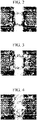
- Fig. 3 is a photograph obtained by imaging the state in which 10 or more and less than 40 solder particles of 20 ⁇ m or less were confirmed around the solder.
- Fig. 4 is a photograph obtained by imaging the state in which 40 or more solder particles of 20 ⁇ m or less, and a powder larger than 20 ⁇ m were confirmed to be generated or unaggregated around the solder.
- the solder paste having sufficient viscosity stability and solder ball generation prevention ability could be obtained with the flux containing a 2,3-dibromo-1 ,4-butanediol as the halogenated aliphatic compound, containing an oxalic acid as the dicarboxylic acid, containing a maleic acid-modified hydrogenated rosin as the acid-modified rosin, containing a polyamide (aliphatic polyamide) and a hardened castor oil as the thixotropic agent, and 10 containing a diethylene glycol monohexyl ether as the solvent.
- the flux containing a 2,3-dibromo-1 ,4-butanediol as the halogenated aliphatic compound, containing an oxalic acid as the dicarboxylic acid, containing a maleic acid-modified hydrogenated rosin as the acid-modified rosin, containing a polyamide (aliphatic polyamide) and a hard
- the evaluation of the solder ball generation prevention ability was A.
- solder paste having sufficient viscosity stability and solder ball generation prevention ability could be obtained. Furthermore, in the case in which the solder alloy powder (1) was used, the evaluation of the solder ball generation prevention ability was A.
- the evaluation of the solder ball generation prevention ability was A.
- solder paste having sufficient viscosity stability and solder ball generation prevention ability could be obtained. Furthermore, in the case in which the solder alloy powder (1) was used, the evaluation of the solder ball generation prevention ability was A.
- the solder paste having sufficient viscosity stability and solder ball generation prevention ability could be obtained. Furthermore, in the case in which the solder alloy powder (1) was used, the evaluation of the solder ball generation prevention ability was A.
- the solder paste having sufficient viscosity stability and solder ball generation prevention ability could be obtained. Furthermore, in the case in which the solder alloy powder (1) was used, the evaluation of the solder ball generation prevention ability was A.
- solder paste having sufficient viscosity stability and solder ball generation prevention ability could be obtained. Furthermore, in the case in which the solder alloy powder (1) was used, the evaluation of the solder ball generation prevention ability was A.
- solder paste having sufficient viscosity stability and solder ball generation prevention ability could be obtained. Furthermore, in the case in which the solder alloy powder (1) was used, the evaluation of the solder ball generation prevention ability was B.
- solder paste having sufficient viscosity stability and solder ball generation prevention ability could be obtained. Furthermore, in the case in which the solder alloy powder (1) was used, the evaluation of the solder ball generation prevention ability was A.
- solder paste having a sufficient solder ball generation prevention ability could be obtained.
- solder paste having a sufficient solder ball generation prevention ability could be obtained by incorporating the dicarboxylic acid specified in the present invention.
- solder paste having a sufficient viscosity stability could be obtained.
- solder paste which have excellent viscosity stability over time and are capable of preventing the generation of solder balls, even when using a solder alloy powder in which the content of alloy particles having a particle size of 8 ⁇ m or less is 99% by mass or more.
- the solder paste and the flux can be suitably used for soldering fine components to a substrate.
Landscapes
- Engineering & Computer Science (AREA)
- Mechanical Engineering (AREA)
- Chemical & Material Sciences (AREA)
- Inorganic Chemistry (AREA)
- Materials Engineering (AREA)
- Metallurgy (AREA)
- Organic Chemistry (AREA)
- Electric Connection Of Electric Components To Printed Circuits (AREA)
- Die Bonding (AREA)
Abstract
Description
- The present invention relates to a flux and a solder paste.
- Priority is claimed on
Japanese Patent Application No. 2020-047979, filed March 18, 2020 - A flux used for soldering has the effect of chemically removing metal oxides present on a solder, and the metal surface of an object to be joined, which is a soldering target, thereby enabling the movement of metal elements at the boundary between two objects to be joined. Therefore, by performing soldering using the flux, an intermetallic compound is formed between the solder, and the metal surface of the object to be joined. Thereby, strong joining can be obtained.
- A solder paste is a composite material obtained by mixing a solder alloy powder and a flux. The flux generally contains a resin component, a solvent, an activator, a thixotropic agent, and the like. In soldering using the solder paste, first, the solder paste is printed on a soldering part such as an electrode of a substrate, and components are mounted on this soldering part. Subsequently, when the substrate is heated in a heating furnace called a reflow furnace, a solder is melted, and soldering is completed.
- Conventionally, a flux containing a hydrohalic acid salt has been used as an activator.
- Furthermore, in order to obtain excellent solderability, a flux containing a rosin derivative having a primary carboxy group has been proposed (refer to Patent Document 1).
- [Patent Document 1]
Japanese Unexamined Patent Application, First Publication No. H10-233577 - The solder paste generally has problems that, as the particle size of the solder alloy powder becomes smaller, the viscosity of the solder paste is likely to increase with time, the solderability deteriorates, and solder balls are likely to be generated.
- Therefore, an object of the present invention is to provide a flux and a solder paste which have excellent viscosity stability over time and are capable of preventing the generation of solder balls, even when using a solder alloy powder in which the content of solder alloy particles having a particle size of 8 µm or less is 99% by mass or more.
- In order to achieve the above-mentioned object, the present invention adopts the following constitution.
- That is, a first aspect of the present invention is a solder paste containing: a solder alloy powder in which a content of solder alloy particles having a particle size of 8 µm or less is 99% by mass or more with respect to a total mass of the solder alloy powder; and a flux, in which the flux contains an acid-modified rosin, a solvent, an activator, and a thixotropic agent, and the activator contains a halogenated aliphatic compound, and a dicarboxylic acid represented by General Formula (2).

- In the solder paste according to the first aspect, an acid value of the acid-modified rosin is preferably 200 mgKOH/g or more, and a content of the acid-modified rosin is preferably 15% by mass or more and 40% by mass or less with respect to a total mass of the flux.
- Furthermore, in the solder paste according to the first aspect, a content of the halogenated aliphatic compound is preferably 1% by mass or more and 5% by mass or less with respect to a total mass of the flux.
- Furthermore, in the solder paste according to the first aspect, a content of the dicarboxylic acid is preferably 3% by mass or more and 6% by mass or less with respect to a total mass of the flux.
- Furthermore, in the solder paste according to the first aspect, the halogenated aliphatic compound is preferably 2,3-dibromo-1,4-butanediol.
- Furthermore, a second aspect of the present invention is a flux which is used for a solder paste containing a solder alloy powder, in which in the solder alloy powder, a content of solder alloy particles having a particle size of 8 µm or less is 99% by mass or more with respect to a total mass of the solder alloy powder, the flux contains a rosin, a solvent, an activator, and a thixotropic agent, the rosin includes an acid-modified rosin, the activator contains a halogenated aliphatic compound, and a dicarboxylic acid represented by General Formula (2), and the dicarboxylic acid includes one or more selected from the group consisting of an oxalic acid and a diglycolic acid.
- Furthermore, in the flux according to the second aspect of the present invention, an acid value of the acid-modified rosin is preferably 200 mgKOH/g or more, and a content of the acid-modified rosin is preferably 15% by mass or more and 40% by mass or less with respect to a total mass of the flux.
- Furthermore, in the flux according to the second aspect of the present invention, a content of the halogenated aliphatic compound is preferably 1% by mass or more and 5% by mass or less with respect to a total mass of the flux.
- Furthermore, in the flux according to the second aspect of the present invention, a content of the dicarboxylic acid is preferably 3% by mass or more and 6% by mass or less with respect to a total mass of the flux.
- Furthermore, in the flux according to the second aspect of the present invention, a content of the acid-modified rosin is preferably 60% by mass or more and 100% by mass or less with respect to a total mass of the rosin.
- Furthermore, in the flux according to the second aspect of the present invention, the halogenated aliphatic compound preferably contains a halogenated aliphatic alcohol, and a content of the halogenated aliphatic alcohol is preferably 60% by mass or more and 100% by mass or less with respect to a total mass of the halogenated aliphatic compound.
- Furthermore, in the flux according to the second aspect of the present invention, the halogenated aliphatic alcohol is preferably 2,3-dibromo-1,4-butanediol.
- Furthermore, in the flux according to the second aspect of the present invention, a total content of the oxalic acid and the diglycolic acid is preferably 80% by mass or more and 100% by mass or less with respect to a total mass of the dicarboxylic acid.
- Furthermore, a third aspect of the present invention is a solder paste characterized by containing: a solder alloy powder in which a content of a solder alloy particle group having a particle size of 8 µm or less is 99% by mass or more with respect to a total mass of the solder alloy powder; and the flux according to the above-mentioned second aspect.
- According to the present invention, it is possible to provide a flux and a solder paste which have excellent viscosity stability over time and are capable of preventing the generation of solder balls, even when using a solder alloy powder in which the content of solder alloy particles having a particle size of 8 µm or less is 99% by mass or more.
-
-
Fig. 1 is a graph showing the temperature change at the time of reflow in the evaluation of a solder ball generation prevention ability in Examples. -
Fig. 2 is a photograph obtained by imaging the state in which less than 10 solder particles of 20 µm or less were confirmed around a solder in Examples. -
Fig. 3 is a photograph obtained by imaging the state in which 10 or more and less than 40 solder particles of 20 µm or less were confirmed around a solder in Examples. -
Fig. 4 is a photograph obtained by imaging the state in which 40 or more solder particles of 20 µm or less, and a powder larger than 20 µm were confirmed to be generated or unaggregated around a solder in Examples. - A flux of the present embodiment is used for a solder paste containing a solder alloy powder.
- The flux of the present embodiment contains an acid-modified rosin, a solvent, an activator, and a thixotropic agent.
- A solder paste has a problem that the viscosity of the solder paste is likely to increase with time as the particle size of a solder alloy powder becomes smaller.
- The flux of the present embodiment makes it possible for a solder paste to have sufficient viscosity stability over time and solder ball generation prevention ability even when the particle size of a solder alloy powder used is small, particularly even when using a solder alloy powder in which the content of solder alloy particles having the particle size of 8 µm or less is 99% by mass or more.
- When the flux of the present embodiment contains the acid-modified rosin, this makes it possible to have a sufficient solder ball generation prevention ability.
- Examples of the acid-modified rosin include a phenol-modified rosin, α,β-unsaturated carboxylic acid-modified products (acrylic acid-modified rosin, maleic acid-modified rosin, fumaric acid-modified rosin, and the like), and purified products, hydrogenated products, and disproportionated products of the α,β-unsaturated carboxylic acid-modified products and the like.
- For the acid-modified rosin, one type may be used alone, or two or more types may be mixed and used.
- The acid-modified rosin is preferably an α,β-unsaturated carboxylic acid-modified product, and more preferably one or more selected from the group consisting of a maleic acid-modified hydrogenated rosin and an acrylic acid-modified hydrogenated rosin.
- The acid value of the acid-modified rosin is preferably 200 mgKOH/g or more.
- The content of the acid-modified rosin is preferably 15% by mass or more and 40% by mass or less, more preferably 20% by mass or more and 40% by mass or less, and further preferably 30% by mass or more and 40% by mass or less with respect to the total mass of the flux.
- Examples of the solvent include alcohol solvents, glycol ether solvents, and terpineols.
- Examples of the alcohol solvents include isopropyl alcohol, 1,2-butanediol, isobornyl cyclohexanol, 2,4-diethyl-1,5-pentanediol, 2,2-dimethyl-1,3-propanediol, 2,5-dimethyl-2,5-hexanediol, 2,5-dimethyl-3-hexyne-2,5-diol, 2,3-dimethyl-2,3-butanediol, 2-methylpentane-2,4-diol, 1,1,1-tris(hydroxymethyl)propane, 2-ethyl-2-hydroxymethyl-1,3-propanediol, 2,2'-oxybis(methylene)bis(2-ethyl-1,3-propanediol), 2,2-bis(hydroxymethyl)-1,3-propanediol, 1,2,6-trihydroxyhexane, 1-ethynyl-1-cyclohexanol, 1,4-cyclohexanediol, 1,4-cyclohexanedimethanol, and 2,4,7,9-tetramethyl-5-decyne-4,7-diol.
- Examples of the glycol ether solvents include diethylene glycol mono-2-ethylhexyl ether, ethylene glycol monophenyl ether, diethylene glycol monohexyl ether, diethylene glycol dibutyl ether, triethylene glycol monobutyl ether, methyl propylene triglycol, butyl propylene triglycol, triethylene glycol butylmethyl ether, and tetraethylene glycol dimethyl ether.
- For the solvent, one type or two or more types can be used.
- The activator contained in the flux of the present embodiment contains a halogenated aliphatic compound and a specific dicarboxylic acid.
- When the flux of the present embodiment contains the halogenated aliphatic compound, this makes it possible for the solder paste to have sufficient viscosity stability over time and solder ball generation prevention ability even when using the solder alloy powder in which the content of the solder alloy particles having the particle size of 8 µm or less is 99% by mass or more with respect to the total mass of the solder alloy powder.
- Furthermore, when the flux of the present embodiment contains the halogenated aliphatic compound, this makes it possible for the solder paste to have sufficient viscosity stability over time and solder ball generation prevention ability even when using a solder alloy powder composed of a solder alloy particle group having the particle size of 5 µm or less.
- The halogenated aliphatic compound is a compound having a halogenated aliphatic hydrocarbon group. The halogenated aliphatic hydrocarbon group refers to one in which a part or all of hydrogen atoms constituting the aliphatic hydrocarbon group are substituted with halogen atoms. Examples of the halogen atoms include a fluorine atom, a chlorine atom, a bromine atom, and an iodine atom.
- The aliphatic hydrocarbon group may be any of a saturated aliphatic hydrocarbon group or an unsaturated aliphatic hydrocarbon group.
- Examples of the halogenated aliphatic compound include halogenated aliphatic alcohols and halogenated heterocyclic compounds.
- Examples of the halogenated aliphatic alcohols include 1-bromo-2-propanol, 3-bromo-1-propanol, 3-bromo-1,2-propanediol, 1-bromo-2-butanol, 1,3-dibromo-2-propanol, 2,3-dibromo-1-propanol, 1,4-dibromo-2-butanol, 2,3-dibromo-1,4-butanediol, and trans-2,3-dibromo-2-butene-1,4-diol.
- Examples of the halogenated heterocyclic compounds include a compound represented by General Formula (1).

- Examples of heterocyclic rings of the n-valent heterocyclic group as R1 include a ring structure in which a part of carbon atoms constituting an aliphatic hydrocarbon or an aromatic hydrocarbon ring is substituted with a heteroatom. Examples of the heteroatom in this heterocyclic ring include an oxygen atom, a sulfur atom, and a nitrogen atom. This heterocyclic ring is preferably a 3- to 10-membered ring, and more preferably a 5- to 7-membered ring. Examples of this heterocyclic ring include an isocyanurate ring.
- The halogenated aliphatic hydrocarbon group as R2 preferably has 1 to 10 carbon atoms, more preferably 2 to 6 carbon atoms, and further preferably 3 to 5 carbon atoms. Furthermore, R2 is preferably a brominated aliphatic hydrocarbon group or a chlorinated aliphatic hydrocarbon group, more preferably a brominated aliphatic hydrocarbon group, and further preferably a brominated saturated aliphatic hydrocarbon group.
- Examples of the halogenated heterocyclic compounds include tris-(2,3-dibromopropyl)isocyanurate.
- For the halogenated aliphatic compound, one type may be used alone, or two or more types may be mixed and used.
- The halogenated aliphatic compound is preferably a halogenated aliphatic alcohol, and more preferably 2,3-dibromo-1,4-butanediol.
- The content of the halogenated aliphatic compound is preferably 1 % by mass or more and 5% by mass or less with respect to the total mass of the flux.
- When the flux of the present embodiment contains a halogenated aliphatic alcohol, the content of the halogenated aliphatic alcohol is preferably 60% by mass or more and 100% by mass or less, and more preferably 80% by mass or more and 100% by mass or less with respect to the total mass of the halogenated aliphatic compound.
- When the content of the halogenated aliphatic alcohol is equal to or more than the above-mentioned lower limit value, the solder ball generation prevention ability can be made excellent even when using the solder alloy powder in which the content of the solder alloy particles having the particle size of 8 µm or less is 99% by mass or more.
- Furthermore, when the content of the halogenated aliphatic alcohol is equal to or more than the above-mentioned lower limit value, the solder ball generation prevention ability can be made excellent even when using the solder alloy powder composed of the solder alloy particle group having the particle size of 5 µm or less.
- When the flux of the present embodiment contains the specific dicarboxylic acid, this makes it possible to have a sufficient solder ball generation prevention ability even when using the solder alloy powder in which the content of the solder alloy particles having the particle size of 8 µm or less is 99% by mass or more.
- Furthermore, when the flux of the present embodiment contains the specific dicarboxylic acid, this makes it possible to have a sufficient solder ball generation prevention ability even when using the alloy powder composed of the solder alloy particle group having the particle size of 5 µm or less.
- The specific dicarboxylic acid contained in the flux of the present embodiment is a compound represented by General Formula (2).

- In General Formula (2), when R is an alkylene group, the alkylene group may be linear or branched. The alkylene group is preferably linear.
- Examples of the dicarboxylic acid represented by General Formula (2) include oxalic acid, malonic acid, succinic acid, glutaric acid, adipic acid, pimelic acid, suberic acid, and diglycolic acid.
- As the dicarboxylic acid represented by General Formula (2), one type may be used alone, or two or more types may be mixed and used.
- The dicarboxylic acid represented by General Formula (2) is preferably one or more selected from the group consisting of oxalic acid, diglycolic acid, and azelaic acid, and more preferably one or more selected from the group consisting of oxalic acid and diglycolic acid.
- The content of the dicarboxylic acid represented by General Formula (2) is preferably 3% by mass or more and 6% by mass or less with respect to the total mass of the flux.
- When the flux of the present embodiment contains an oxalic acid r a diglycolic acid, the total content of the oxalic acid and the diglycolic acid is preferably 80% by mass or more and 100% by mass or less with respect to the total mass of the dicarboxylic acid represented by General Formula (2).
- When the total content of the oxalic acid and the diglycolic acid is equal to or more than the above-mentioned lower limit value, the solder ball generation prevention ability can be made excellent even when using the solder alloy powder in which the content of the solder alloy particles having the particle size of 8 µm or less is 99% by mass or more.
- Furthermore, when the total content of the oxalic acid and the diglycolic acid is equal to or more than the above-mentioned lower limit value, the solder ball generation prevention ability can be made excellent even when using the solder alloy powder composed of the solder alloy particle group having the particle size of 5 µm or less.
- Examples of the thixotropic agent include wax-based thixotropic agents, amide-based thixotropic agents, and sorbitol-based thixotropic agents.
- Examples of the wax-based thixotropic agents include hardened castor oil.
- Examples of the amide-based thixotropic agents include monoamides, bisamides, and polyamides. Examples thereof include lauric acid amide, palmitic acid amide, stearic acid amide, behenic acid amide, hydroxystearic acid amide, saturated fatty acid amide, oleic acid amide, erucic acid amide, unsaturated fatty acid amide, p-toluenemethane amide, aromatic amide, methylenebis(stearic acid amide), ethylenebis(lauric acid amide), ethylenebis(hydroxystearic acid amide), saturated fatty acid bis amide, methylenebis(oleic acid amide), unsaturated fatty acid bis amide, m-xylylenebis(stearic acid amide), aromatic bis amide, aliphatic polyamide (saturated fatty acid polyamide, unsaturated fatty acid polyamide), aromatic polyamide, substituted amide, methylolstearic acid amide, methylol amide, fatty acid ester amide, cyclic amide oligomers, and acyclic amide oligomers.
- Examples of the above-mentioned cyclic amide oligomers include an amide oligomer in which a dicarboxylic acid and a diamine are cyclically polycondensed, an amide oligomer in which a tricarboxylic acid and a diamine are cyclically polycondensed, an amide oligomer in which a dicarboxylic acid and a triamine are cyclically polycondensed, an amide oligomer in which a tricarboxylic acid and a triamine are cyclically polycondensed, an amide oligomer in which a dicarboxylic acid and a tricarboxylic acid, and a diamine are cyclically polycondensed, an amide oligomer in which a dicarboxylic acid and a tricarboxylic acid, and a triamine are cyclically polycondensed, an amide oligomer in which a dicarboxylic acid, and a diamine and a triamine are cyclically polycondensed, an amide oligomer in which a tricarboxylic acid, and a diamine and a triamine are cyclically polycondensed, and an amide oligomer in which a dicarboxylic acid and a tricarboxylic acid, and a diamine and a triamine are cyclically polycondensed.
- Furthermore, examples of the above-mentioned acyclic amide oligomers include a case of an amide oligomer in which a monocarboxylic acid, and a diamine and/or a triamine are acyclically polycondensed, and a case of an amide oligomer in which a dicarboxylic acid and/or a tricarboxylic acid, and a monoamine are acyclically polycondensed. In the case of an amide oligomer containing a monocarboxylic acid or a monoamine, the monocarboxylic acid and the monoamine function as terminal molecules, thereby resulting in an acyclic amide oligomer having a reduced molecular weight. Furthermore, when the acyclic amide oligomer is an amide compound in which a dicarboxylic acid and/or a tricarboxylic acid, and a diamine and/or a triamine are acyclically polycondensed, it is an acyclic polymer-based amide polymer. Furthermore, the acyclic amide oligomer also includes an amide oligomer in which a monocarboxylic acid and a monoamine are acyclically condensed.
- For the thixotropic agent, one type may be used alone, or two or more types may be mixed and used.
- The thixotropic agent preferably contains one or more selected from the group consisting of the amide-based thixotropic agents and the wax-based thixotropic agents.
- The amide-based thixotropic agent is preferably polyamide.
- The wax-based thixotropic agent is preferably hardened castor oil.
- The total content of the thixotropic agents is preferably 5% by mass or more and 15% by mass or less, and more preferably 5% by mass or more and 10% by mass or less with respect to the total mass of the flux.
- The total content of the amide-based thixotropic agent is preferably 2% by mass or more and 10% by mass or less, and more preferably 3% by mass or more and 8% by mass or less with respect to the total mass of the flux.
- The content of the wax-based thixotropic agent is preferably 1% by mass or more and 6% by mass or less, and more preferably 2% by mass or more and 5% by mass or less with respect to the total mass of the flux.
- The flux of the present embodiment may contain a dicarboxylic acid (another dicarboxylic acid) other than the dicarboxylic acid represented by General Formula (2), an organic acid, or an amine as another activator, for example.
- When the flux of the present embodiment contains the other dicarboxylic acid, the content of the dicarboxylic acid represented by General Formula (2) is preferably 60% by mass or more and 100% by mass or less, and more preferably 80% by mass or more and 100% by mass or less with respect to the total mass of the dicarboxylic acids.
- Examples of the organic acid include eicosanedioic acid, citric acid, glycolic acid, salicylic acid, dipicolinic acid, dibutylaniline diglycolic acid, thioglycolic acid, terephthalic acid, dodecanedioic acid, parahydroxyphenylacetic acid, picolinic acid, phenylsuccinic acid, phthalic acid, fumaric acid, maleic acid, lauric acid, benzoic acid, tartaric acid, glycine, 1,3-cyclohexanedicarboxylic acid, 2,2-bis(hydroxymethyl)butanoic acid, 2,3-dihydroxybenzoic acid, 2,4-diethylglutaric acid, 2-quinoline carboxylic acid, 3-hydroxybenzoic acid, malic acid, p-anisic acid, stearic acid, 12-hydroxystearic acid, oleic acid, linoleic acid, and linolenic acid.
- Examples of the amine include ethylamine, triethylamine, ethylenediamine, triethylenetetramine, 2-methylimidazole, 2-undecylimidazole, 2-heptadecylimidazole, 1,2-dimethylimidazole, 2-ethyl-4-methylimidazole, 2-phenylimidazole, 2-phenyl-4-methylimidazole, 1-benzyl-2-methylimidazole, 1-benzyl-2-phenylimidazole, 1-cyanoethyl-2-methylimidazole, 1-cyanoethyl-2-undecylimidazole, 1 -cyanoethyl-2-ethyl-4-methylimidazole, 1 -cyanoethyl-2-phenylimidazole, 1-cyanoethyl-2-undecylimidazolium trimellitate, 1-cyanoethyl-2-phenylimidazolium trimellitate, 2,4-diamino-6-[2'-methylimidazolyl-(1')]-ethyl-s-triazine, 2,4-diamino-6-[2'-undecylimidazolyl-(1')]-ethyl-s-triazine, 2,4-diamino-6-[2'-ethyl-4'-methylimidazolyl-(1')]-ethyl-s-triazine, a 2,4-diamino-6-[2'-methylimidazolyl-(1')]-ethyl-s-triazine isocyanuric acid adduct, a 2-phenylimidazole isocyanuric acid adduct, 2-phenyl-4,5-dihydroxymethylimidazole, 2-phenyl-4-methyl-5-hydroxymethylimidazole, 2,3-dihydro-1H-pyrrolo[1,2-a]benzimidazole, 1-dodecyl-2-methyl-3-benzylimidazolium chloride, 2-methylimidazoline, 2-phenylimidazoline, 2,4-diamino-6-vinyl-s-triazine, a 2,4-diamino-6-vinyl-s-triazine isocyanuric acid adduct, 2,4-diamino-6-methacryloyloxyethyl-s-triazine, an epoxy-imidazole adduct, 2-methylbenzimidazole, 2-octylbenzimidazole, 2-pentylbenzimidazole, 2-(1-ethylpentyl)benzimidazole, 2-nonylbenzimidazole, 2-(4-thiazolyl)benzimidazole, benzimidazole, 2-(2'-hydroxy-5' -methylphenyl)benzotriazole, 2-(2'-hydroxy-3'-tert-butyl-5'-methylphenyl)-5-chlorobenzotriazole, 2-(2'-hydroxy-3',5'-di-tert-amylphenyl)benzotriazole, 2-(2'-hydroxy-5'-tert-octylphenyl)benzotriazole, 2,2'-methylenebis[6-(2H-benzotriazol-2-yl)-4-tert-octylphenol], 6-(2-benzotriazolyl)-4-tert-octyl-6'-tert-butyl-4'-methyl-2,2'-methylenebisphenol, 1,2,3-benzotriazole, 1-[N,N-bis(2-ethylhexyl)aminomethyl]benzotriazole, carboxybenzotriazole, 1-[N,N-bis(2-ethylhexyl)aminomethyl]methylbenzotriazole, 2,2'-[[(methyl-1H-benzotriazol-1-yl)methyl]imino]bisethanol, 1-(1' ,2'-dicarboxyethyl)benzotriazole, 1-(2,3-dicarboxypropyl)benzotriazole, 1-[(2-ethylhexylamino)methyl]benzotriazole, 2,6-bis[(1H-benzotriazol-1-yl)methyl]-4-methylphenol, 5-methylbenzotriazole, and 5-phenyltetrazole.
- Furthermore, the flux of the present embodiment may contain a surfactant, a silane coupling agent, or a colorant.
- Examples of the surfactant include nonionic surfactants, and weak cationic surfactants.
- Examples of the nonionic surfactants include polyethylene glycol, a polyethylene glycol-polypropylene glycol copolymer, an aliphatic alcohol polyoxyethylene adduct, an aromatic alcohol polyoxyethylene adduct, a polyhydric alcohol polyoxyethylene adduct.
- Examples of the weak cationic surfactants include diamine-terminated polyethylene glycol, a diamine-terminated polyethylene glycol-polypropylene glycol copolymer, an aliphatic amine polyoxyethylene adduct, an aromatic amine polyoxyethylene adduct, and a polyvalent amine polyoxyethylene adduct.
- Examples of surfactants other than the above-mentioned examples of the surfactants include polyoxyalkylene acetylene glycols, polyoxyalkylene glyceryl ethers, polyoxyalkylene alkyl ethers, polyoxyalkylene esters, polyoxyalkylene alkylamines, and polyoxyalkylene alkylamides.
- Furthermore, the flux of the present embodiment may contain a rosin other than the acid-modified rosin. Examples of the rosin other than the acid-modified rosin include raw material rosins such as gum rosin, wood rosin, and tall oil rosin, and derivatives obtained from the raw material rosins.
- Examples of the derivatives include purified rosin, hydrogenated rosin, disproportionated rosin, and polymerized rosin, and purified products, hydrides, and disproportionated products of the polymerized rosin.
- When the flux of the present embodiment contains a rosin other than the acid-modified rosin, the content of the acid-modified rosin is preferably 60% by mass or more and 100% by mass or less, and more preferably 80% by mass or more and 100% by mass or less with respect to the total mass of the rosins.
- When the content of the acid-modified rosin is equal to or more than the above-mentioned lower limit value, the hygroscopicity of the solder paste is reduced, which can make the solder ball generation prevention ability sufficient, even when using the solder alloy powder in which the content of the solder alloy particles having the particle size of 8 µm or less is 99% by mass or more.
- Furthermore, when the content of the acid-modified rosin is equal to or more than the above-mentioned lower limit value, the solder ball generation prevention ability can be made excellent even when using the solder alloy powder composed of the solder alloy particle group having the particle size of 5 µm or less.
- Furthermore, an antioxidant can be compounded into the flux of the present embodiment for the purpose of suppressing the oxidation of the solder alloy powder. As the antioxidant, a hindered phenol-based antioxidant such as 2,2'-methylenebis[6-(1-methylcyclohexyl)-p-cresol] can be used.
- An additive such as a matting agent and an anti-foaming agent may be further added to the flux of the present embodiment.
- A solder paste of the present embodiment contains a specific solder alloy powder and the above-mentioned flux.
- The solder alloy powder may be constituted of an Sn-only solder powder; or a powder of an Sn-Ag-based, Sn-Cu-based, Sn-Ag-Cu-based, Sn-Bi-based, or Sn-In-based solder alloy, or a powder of solder alloys in which Sb, Bi, In, Cu, Zn, As, Ag, Cd, Fe, Ni, Co, Au, Ge, P, or the like has been added to the above alloys.
- The solder alloy powder may be constituted of a powder of an Sn-Pb-based solder alloy, or a powder of solder alloys in which Sb, Bi, In, Cu, Zn, As, Ag, Cd, Fe, Ni, Co, Au, Ge, P, or the like has been added to the Sn-Pb-based solder alloy.
- In the solder alloy powder contained in the solder paste of the present embodiment, the content of solder alloy particles having the particle size of 8 µm or less is 99% by mass or more with respect to the total mass of the solder alloy powder.
- The solder alloy powder contained in the solder paste of the present embodiment may be one composed of the solder alloy particle group having the particle size of 5 µm or less.
- The size of the solder alloy powder contained in the solder paste of the present embodiment may be a size (particle size distribution) satisfying the symbol 8 in the powder size classification (Table 2) in JIS Z 3284-1:2004.
- Even when the solder alloy powder contained is one of such a case, the solder paste of the present embodiment has sufficient viscosity stability over time and solder ball prevention ability.
- The content of the flux is preferably 5% to 30% by mass and more preferably 5% to 15% by mass with respect to the total mass of the solder paste.
- When the content of the flux in the solder paste is in this range, the viscosity stability over time and the solder ball generation prevention ability are excellent.
- Hereinafter, the present invention will be described with reference to examples, but the present invention is not limited to the following examples.
- Fluxes of examples and comparative examples were blended using the compositions shown in Tables 1 and 2 below. An aliphatic polyamide was used as a polyamide.
- The composition ratios in Tables 1 and 2 are % by mass when the total mass of the flux is 100% by mass, and blanks mean 0 % by mass.
- Each of the fluxes of the examples and each of the following solder alloy powders were mixed to blend solder pastes. In all of the blended solder pastes, the flux was 14% by mass, and the solder alloy powder was 86% by mass.
- The solder alloy powder in the solder paste was a solder alloy in which Pb was 36% by mass, Ag was 1% by mass, Bi was 8% by mass, and the balance was Sn.
- As the solder alloy powders, a solder alloy powder (1) or a solder alloy powder (2) was used. The solder alloy powder (1) had a size (particle size distribution) satisfying the symbol 8 in the powder size classification (Table 2) in JIS Z 3284-1 :2014, and the solder alloy powder (2) had a size (particle size distribution) satisfying the symbol 6 therein.
- The viscosity stability over time of the solder paste blended by mixing the flux of each of the above-mentioned examples and the above-mentioned solder alloy powder (1) was verified. The results are shown in Tables 1 and 2.
- According to the method disclosed in "4.2 Viscosity Characteristic Test" of JIS Z 3284-3:2014, the viscosity of the obtained solder paste was continuously measured for 8 hours at the rotation speed: 10 rpm and the measurement temperature: 25°C using a rotational viscometer (PCU-205, manufactured by Malcom Co., Ltd.). Then, the initial viscosity (viscosity 30 minutes after the start of measurement) and the viscosity 8 hours after the start of measurement were compared to perform evaluation of the viscosity stability over time based on the following determination criterion.
-
- A: viscosity after 8 hours ≤ initial viscosity × 1.05
A viscosity increase over time was small, which was favorable. - B: viscosity after 8 hours > initial viscosity × 1.05
A viscosity increase over time was large, which was defective. - The flux of each of the above-mentioned examples and the solder alloy powder (1) were mixed to blend solder pastes. Furthermore, the flux of each of the above-mentioned examples and the solder alloy powder (2) were mixed to blend solder pastes. Then, the solder ball generation prevention ability of these solder pastes was verified. The results are shown in Tables 1 and 2.
- The obtained solder paste was printed on a Cu-OSP-treated glass epoxy substrate by setting the land size to 100 µm × 50 µm and the mask thickness to 40 µm. After allowing to stand for 3 days in the environment of 25°C and 50% humidity, reflow was caused. Subsequently, the number of solder balls having the size of 20 µm or less generated around the solder was measured.
- The reflow conditions were as follows: the temperature was raised from 50°C to 130°C at 2 to 3°C/sec; the temperature was maintained from 130°C to 150°C for 90 to 100 seconds; thereafter, the temperature was raised from 150°C to 200°C at 1 to 2°C/sec; and the temperature was maintained at 180°C or higher for 30 to 40 seconds. The oxygen concentration was 150 ppm or less.
Fig. 1 shows a graph showing the temperature change at the time of the reflow. -
- A: less than 10 solder particles of 20 µm or less were confirmed around the solder.
- B: 10 or more and less than 40 solder particles of 20 µm or less were confirmed around the solder.
- C: 40 or more solder particles of 20 µm or less, and a powder larger than 20 µm were confirmed to be generated or unaggregated around the solder.
- Examples of each of the evaluations are shown in
Figs. 2 to 4 . -
Fig. 2 is a photograph obtained by imaging the state in which less than 10 solder particles of 20 µm or less were confirmed around the solder.Fig. 3 is a photograph obtained by imaging the state in which 10 or more and less than 40 solder particles of 20 µm or less were confirmed around the solder.Fig. 4 is a photograph obtained by imaging the state in which 40 or more solder particles of 20 µm or less, and a powder larger than 20 µm were confirmed to be generated or unaggregated around the solder.

- In the present invention, as shown in Example 1, the solder paste having sufficient viscosity stability and solder ball generation prevention ability could be obtained with the flux containing a 2,3-dibromo-1 ,4-butanediol as the halogenated aliphatic compound, containing an oxalic acid as the dicarboxylic acid, containing a maleic acid-modified hydrogenated rosin as the acid-modified rosin, containing a polyamide (aliphatic polyamide) and a hardened castor oil as the thixotropic agent, and 10 containing a diethylene glycol monohexyl ether as the solvent.
- Furthermore, in both the case in which the solder alloy powder (1) was used and the case in which the solder alloy powder (2) was used, the evaluation of the solder ball generation prevention ability was A.
- Even when a plurality of types of the acid-modified rosin were incorporated as shown in Example 2, the solder paste having sufficient viscosity stability and solder ball generation prevention ability could be obtained. Furthermore, in the case in which the solder alloy powder (1) was used, the evaluation of the solder ball generation prevention ability was A.
- Even when the content of the acid-modified rosin was changed and the hydrogenated rosin was incorporated as shown in Example 3, the solder paste having sufficient viscosity stability and solder ball generation prevention ability could be obtained. Furthermore, in the case in which the solder alloy powder (1) was used, the evaluation of the solder ball generation prevention ability was B.
- Even when the type and the content of the acid-modified rosin were changed and the polymerized rosin was incorporated as shown in Example 4, the solder paste having sufficient viscosity stability and solder ball generation prevention ability could be obtained. Furthermore, in the case in which the solder alloy powder (1) was used, the evaluation of the solder ball generation prevention ability was B.
- Even when the type of the acid-modified rosin was changed as shown in Example 5, the solder paste having sufficient viscosity stability and solder ball generation prevention ability could be obtained.
- Furthermore, in the case in which the solder alloy powder (1) was used, the evaluation of the solder ball generation prevention ability was A.
- Even when the content of the halogenated aliphatic compound was changed as shown in Examples 6 and 7, the solder paste having sufficient viscosity stability and solder ball generation prevention ability could be obtained. Furthermore, in the case in which the solder alloy powder (1) was used, the evaluation of the solder ball generation prevention ability was A.
- Even when the type of the halogenated aliphatic compound was changed as shown in Example 8, the solder paste having sufficient viscosity stability and solder ball generation prevention ability could be obtained. Furthermore, in the case in which the solder alloy powder (1) was used, the evaluation of the solder ball generation prevention ability was B.
- Even when the content of the 2,3-dibromo-1,4-butanediol was reduced and a plurality of types of the halogenated aliphatic compound were incorporated as shown in Example 9, the solder paste having sufficient viscosity stability and solder ball generation prevention ability could be obtained. Furthermore, in the case in which the solder alloy powder (1) was used, the evaluation of the solder ball generation prevention ability was B.
- Even when the content of the dicarboxylic acid was changed as shown in Example 10, the solder paste having sufficient viscosity stability and solder ball generation prevention ability could be obtained. Furthermore, in the case in which the solder alloy powder (1) was used, the evaluation of the solder ball generation prevention ability was A.
- Even when the type of the dicarboxylic acid was changed as shown in Example 11, the solder paste having sufficient viscosity stability and solder ball generation prevention ability could be obtained. Furthermore, in the case in which the solder alloy powder (1) was used, the evaluation of the solder ball generation prevention ability was A.
- Even when a plurality of types of the dicarboxylic acid were incorporated as shown in Example 12, the solder paste having sufficient viscosity stability and solder ball generation prevention ability could be obtained. Furthermore, in the case in which the solder alloy powder (1) was used, the evaluation of the solder ball generation prevention ability was A.
- Even when the type of the dicarboxylic acid was changed as shown in Example 13, the solder paste having sufficient viscosity stability and solder ball generation prevention ability could be obtained. Furthermore, in the case in which the solder alloy powder (1) was used, the evaluation of the solder ball generation prevention ability was B.
- Even when a plurality of types of the dicarboxylic acid were incorporated as shown in Examples 14 and 15, the solder paste having sufficient viscosity stability and solder ball generation prevention ability could be obtained. Furthermore, in the case in which the solder alloy powder (1) was used, the evaluation of the solder ball generation prevention ability was B.
- Even when a sebacic acid, which is a dicarboxylic acid that has not been specified in the present invention, was further incorporated as shown in Example 16, the solder paste having sufficient viscosity stability and solder ball generation prevention ability could be obtained. Furthermore, in the case in which the solder alloy powder (1) was used, the evaluation of the solder ball generation prevention ability was A.
- Even when the content of the acid-modified rosin was reduced and the hydrogenated rosin was incorporated as shown in Example 17, the solder paste having sufficient viscosity stability and solder ball generation prevention ability could be obtained. Furthermore, in the case in which the solder alloy powder (1) was used, the evaluation of the solder ball generation prevention ability was B.
- With the fluxes of Examples 1 to 17 containing the dicarboxylic acid specified in the present invention, the solder paste having a sufficient solder ball generation prevention ability could be obtained.
- On the other hand, with the fluxes of Comparative Examples 1 and 4 not containing the dicarboxylic acid specified in the present invention, the solder ball generation prevention ability of the solder paste was insufficient.
- Based on these results, it was clarified that the solder paste having a sufficient solder ball generation prevention ability could be obtained by incorporating the dicarboxylic acid specified in the present invention.
- With the fluxes of Examples 1 to 17 containing the halogenated aliphatic compound specified in the present invention, the solder paste having a sufficient viscosity stability could be obtained.
- On the other hand, with the flux of Comparative Example 2 not containing the halogenated aliphatic compound specified in the present invention but containing the hydrohalic acid salt, the solder ball generation prevention ability was sufficient when the solder alloy powder (2) was used. However, when the solder alloy powder (1) was used, the viscosity stability and the solder ball generation prevention ability of the solder paste were insufficient.
- Based on these results, it was clarified that by incorporating the halogenated aliphatic compound specified in the present invention, the solder paste in which the solder alloy powder (1) was used and which was evaluated to have sufficient viscosity stability and solder ball generation prevention ability could be obtained.
- Furthermore, with the flux of Comparative Example 3 not containing the halogenated aliphatic compound specified in the present invention and not containing the hydrohalic acid salt, the viscosity stability of the solder paste was sufficient, whereas the solder ball generation prevention ability thereof was insufficient.
- Based on these results, it was clarified that by incorporating the halogenated aliphatic compound specified in the present invention, the solder ball generation prevention ability could be evaluated to be sufficient.
- Furthermore, using the fluxes of Examples 1 to 17, and the solder alloy powder composed of the alloy particles having the particle size of 5 µm or less, the viscosity stability and the solder ball generation prevention ability of the solder paste were similarly evaluated.
- As a result, when the fluxes of Examples 1 to 17 were used, the evaluation of the viscosity stability was A. Furthermore, when the fluxes of Examples 1, 2, 5, 6, 7, 10, 11, 12, and 16 were used, the evaluation of the solder ball generation prevention ability was A. Furthermore, when the fluxes of Examples 3, 4, 8, 9, 13 to 15, and 17 were used, the evaluation of the solder ball generation prevention ability was B.
- According to the present invention, it is possible to provide a flux and a solder paste which have excellent viscosity stability over time and are capable of preventing the generation of solder balls, even when using a solder alloy powder in which the content of alloy particles having a particle size of 8 µm or less is 99% by mass or more. The solder paste and the flux can be suitably used for soldering fine components to a substrate.
Claims (14)
- A solder paste comprising:a solder alloy powder in which a content of solder alloy particles having a particle size of 8 µm or less is 99% by mass or more with respect to a total mass of the solder alloy powder; anda flux,wherein the flux contains an acid-modified rosin, a solvent, an activator, and a thixotropic agent, andthe activator contains a halogenated aliphatic compound, and a dicarboxylic acid represented by General Formula (2),

- The solder paste according to Claim 1,wherein an acid value of the acid-modified rosin is 200 mgKOH/g or more, anda content of the acid-modified rosin is 15% by mass or more and 40% by mass or less with respect to a total mass of the flux.
- The solder paste according to Claim 1 or 2, wherein a content of the halogenated aliphatic compound is 1% by mass or more and 5% by mass or less with
- The solder paste according to any one of Claims 1 to 3, wherein a content of the dicarboxylic acid is 3% by mass or more and 6% by mass or less with respect to a total mass of the flux.
- The solder paste according to any one of Claims 1 to 4, wherein the halogenated aliphatic compound is 2,3-dibromo-1,4-butanediol.
- A flux which is used for a solder paste containing a solder alloy powder,wherein in the solder alloy powder, a content of solder alloy particles having a particle size of 8 µm or less is 99% by mass or more with respect to a total mass of the solder alloy powder,the flux contains a rosin, a solvent, an activator, and a thixotropic agent,the rosin includes an acid-modified rosin,the activator contains a halogenated aliphatic compound, and a dicarboxylic acid represented by General Formula (2), andthe dicarboxylic acid includes one or more selected from the group consisting of an oxalic acid and a diglycolic acid,

- The flux according to Claim 6,wherein an acid value of the acid-modified rosin is 200 mgKOH/g or more, anda content of the acid-modified rosin is 15% by mass or more and 40% by mass or less with respect to a total mass of the flux.
- The flux according to Claim 6 or 7, wherein a content of the halogenated aliphatic compound is 1% by mass or more and 5% by mass or less with respect to a total mass of the flux.
- The flux according to any one of Claims 6 to 8, wherein a content of the dicarboxylic acid is 3% by mass or more and 6% by mass or less with respect to a total mass of the flux.
- The flux according to any one of Claims 6 to 9, wherein a content of the acid-modified rosin is 60% by mass or more and 100% by mass or less with respect to a total mass of the rosin.
- The flux according to any one of Claims 6 to 9,wherein the halogenated aliphatic compound contains a halogenated aliphatic alcohol, anda content of the halogenated aliphatic alcohol is 60% by mass or more and 100% by mass or less with respect to a total mass of the halogenated aliphatic compound.
- The flux according to any one of Claim 11, wherein the halogenated aliphatic alcohol is 2,3-dibromo-1,4-butanediol.
- The flux according to any one of Claims 6 to 12, wherein a total content of the oxalic acid and the diglycolic acid is 80% by mass or more and 100% by mass or less with respect to a total mass of the dicarboxylic acid.
- A solder paste comprising:a solder alloy powder in which a content of solder alloy particles having a particle size of 8 µm or less is 99% by mass or more with respect to a total mass of the solder alloy powder; andthe flux according to any one of Claims 6 to 13.
Applications Claiming Priority (2)
| Application Number | Priority Date | Filing Date | Title |
|---|---|---|---|
| JP2020047979A JP6849934B1 (en) | 2020-03-18 | 2020-03-18 | Flux and solder paste |
| PCT/JP2021/010564 WO2021187468A1 (en) | 2020-03-18 | 2021-03-16 | Flux and solder paste |
Publications (3)
| Publication Number | Publication Date |
|---|---|
| EP4122640A1 true EP4122640A1 (en) | 2023-01-25 |
| EP4122640A4 EP4122640A4 (en) | 2024-06-12 |
| EP4122640B1 EP4122640B1 (en) | 2026-01-07 |
Family
ID=75158380
Family Applications (1)
| Application Number | Title | Priority Date | Filing Date |
|---|---|---|---|
| EP21770578.9A Active EP4122640B1 (en) | 2020-03-18 | 2021-03-16 | Flux and solder paste |
Country Status (10)
| Country | Link |
|---|---|
| US (1) | US20230087892A1 (en) |
| EP (1) | EP4122640B1 (en) |
| JP (1) | JP6849934B1 (en) |
| KR (1) | KR102562193B1 (en) |
| CN (1) | CN115279544A (en) |
| MX (1) | MX2022011312A (en) |
| MY (1) | MY196312A (en) |
| PH (1) | PH12022552438A1 (en) |
| TW (1) | TWI782447B (en) |
| WO (1) | WO2021187468A1 (en) |
Family Cites Families (29)
| Publication number | Priority date | Publication date | Assignee | Title |
|---|---|---|---|---|
| JPH10233577A (en) | 1997-02-20 | 1998-09-02 | Taiho Kogyo Co Ltd | Solder paste |
| JP2002263884A (en) * | 2001-03-09 | 2002-09-17 | Showa Denko Kk | Soldering flux and solder paste |
| US6887319B2 (en) * | 2002-04-16 | 2005-05-03 | Senju Metal Industry Co., Ltd. | Residue-free solder paste |
| TW200633810A (en) * | 2004-12-28 | 2006-10-01 | Arakawa Chem Ind | Lead-free solder flux and solder paste |
| US7569164B2 (en) * | 2007-01-29 | 2009-08-04 | Harima Chemicals, Inc. | Solder precoating method |
| JP4859717B2 (en) * | 2007-03-14 | 2012-01-25 | 株式会社タムラ製作所 | Solder composition |
| JP6120139B2 (en) * | 2012-01-24 | 2017-04-26 | 荒川化学工業株式会社 | Lead-free solder flux, lead-free solder paste and lead-free thread solder |
| CN102950395A (en) * | 2012-10-16 | 2013-03-06 | 高新锡业(惠州)有限公司 | Environment-friendly soldering tin paste |
| JP6238007B2 (en) * | 2013-03-02 | 2017-11-29 | 荒川化学工業株式会社 | Flux for lead-free solder for clearance resist and lead-free solder paste for clearance resist |
| JP5887330B2 (en) * | 2013-12-26 | 2016-03-16 | 株式会社タムラ製作所 | Solder composition and printed wiring board using the same |
| JP2015131336A (en) * | 2014-01-15 | 2015-07-23 | 株式会社タムラ製作所 | Solder composition and printed wiring board prepared using the same |
| JP6300771B2 (en) * | 2015-09-30 | 2018-03-28 | 株式会社タムラ製作所 | Flux composition, solder composition and method for producing electronic substrate |
| JP6444953B2 (en) * | 2015-09-30 | 2018-12-26 | 株式会社タムラ製作所 | Flux composition and solder paste |
| JP6275356B1 (en) * | 2016-06-29 | 2018-02-07 | 株式会社タムラ製作所 | Flux composition, solder paste composition, and electronic circuit board |
| JP6688267B2 (en) * | 2017-09-06 | 2020-04-28 | 千住金属工業株式会社 | Flux manufacturing method |
| JP6338007B1 (en) * | 2017-11-02 | 2018-06-06 | 千住金属工業株式会社 | Flux and solder paste |
| JP6477842B1 (en) * | 2017-11-24 | 2019-03-06 | 千住金属工業株式会社 | Flux and solder paste |
| JP6390989B1 (en) * | 2017-11-24 | 2018-09-19 | 千住金属工業株式会社 | Flux and solder paste |
| JP6678704B2 (en) * | 2018-07-20 | 2020-04-08 | 千住金属工業株式会社 | Solder materials, solder paste, and solder joints |
| TWI817980B (en) * | 2018-01-16 | 2023-10-11 | 日商千住金屬工業股份有限公司 | Flux and solder paste |
| JP7097611B2 (en) * | 2018-09-04 | 2022-07-08 | 株式会社弘輝 | Flux and solder materials |
| JP7224822B2 (en) | 2018-09-14 | 2023-02-20 | キヤノン株式会社 | Image processing device and image processing method |
| JP6575702B1 (en) * | 2019-03-05 | 2019-09-18 | 千住金属工業株式会社 | Flux and solder paste |
| JP6638841B1 (en) * | 2019-03-29 | 2020-01-29 | 千住金属工業株式会社 | Flux and solder paste |
| JP6638840B1 (en) * | 2019-03-29 | 2020-01-29 | 千住金属工業株式会社 | Flux and solder paste |
| JP6638844B1 (en) * | 2019-05-27 | 2020-01-29 | 千住金属工業株式会社 | Solder paste |
| JP6638845B1 (en) * | 2019-05-27 | 2020-01-29 | 千住金属工業株式会社 | Solder paste |
| JP6643745B1 (en) * | 2019-05-27 | 2020-02-12 | 千住金属工業株式会社 | Solder paste and flux for solder paste |
| MY203908A (en) * | 2020-11-18 | 2024-07-24 | Senju Metal Industry Co | Flux and solder paste |
-
2020
- 2020-03-18 JP JP2020047979A patent/JP6849934B1/en active Active
-
2021
- 2021-03-16 CN CN202180021019.2A patent/CN115279544A/en active Pending
- 2021-03-16 KR KR1020227031818A patent/KR102562193B1/en active Active
- 2021-03-16 US US17/911,485 patent/US20230087892A1/en active Pending
- 2021-03-16 EP EP21770578.9A patent/EP4122640B1/en active Active
- 2021-03-16 MX MX2022011312A patent/MX2022011312A/en unknown
- 2021-03-16 MY MYPI2022005010A patent/MY196312A/en unknown
- 2021-03-16 WO PCT/JP2021/010564 patent/WO2021187468A1/en not_active Ceased
- 2021-03-16 PH PH1/2022/552438A patent/PH12022552438A1/en unknown
- 2021-03-17 TW TW110109572A patent/TWI782447B/en active
Also Published As
| Publication number | Publication date |
|---|---|
| KR20220137994A (en) | 2022-10-12 |
| JP6849934B1 (en) | 2021-03-31 |
| CN115279544A (en) | 2022-11-01 |
| WO2021187468A1 (en) | 2021-09-23 |
| JP2021146363A (en) | 2021-09-27 |
| TW202142349A (en) | 2021-11-16 |
| KR102562193B1 (en) | 2023-08-02 |
| EP4122640B1 (en) | 2026-01-07 |
| US20230087892A1 (en) | 2023-03-23 |
| TWI782447B (en) | 2022-11-01 |
| MX2022011312A (en) | 2022-10-07 |
| MY196312A (en) | 2023-03-24 |
| EP4122640A4 (en) | 2024-06-12 |
| PH12022552438A1 (en) | 2024-01-03 |
Similar Documents
| Publication | Publication Date | Title |
|---|---|---|
| EP3715041B1 (en) | Flux, and solder paste | |
| EP4108378B1 (en) | Flux and solder paste | |
| EP4108795A1 (en) | Flux and solder paste | |
| JP6947998B1 (en) | Flux and solder paste | |
| CN110814576B (en) | Flux and solder paste | |
| EP4541504A1 (en) | Flux and solder paste | |
| EP4541503A1 (en) | Flux and solder paste | |
| JP7054035B1 (en) | Flux and solder paste | |
| JP2020192560A (en) | Solder paste and flux for solder paste | |
| EP4230343B1 (en) | Flux and solder paste | |
| JP6575706B1 (en) | Solder paste | |
| EP4122640B1 (en) | Flux and solder paste | |
| JP6663124B1 (en) | Modified rosin, flux for soldering and solder paste | |
| JP6773986B1 (en) | New rosin compound and its manufacturing method, flux, solder paste | |
| JP7705033B2 (en) | Flux and solder paste using same | |
| HK40077518A (en) | Flux and solder paste | |
| HK40090721A (en) | Flux and solder paste | |
| HK40090721B (en) | Flux and solder paste | |
| HK40091282A (en) | Flux and solder paste | |
| HK40091282B (en) | Flux and solder paste | |
| HK40074339A (en) | Flux and solder paste |
Legal Events
| Date | Code | Title | Description |
|---|---|---|---|
| STAA | Information on the status of an ep patent application or granted ep patent |
Free format text: STATUS: THE INTERNATIONAL PUBLICATION HAS BEEN MADE |
|
| PUAI | Public reference made under article 153(3) epc to a published international application that has entered the european phase |
Free format text: ORIGINAL CODE: 0009012 |
|
| STAA | Information on the status of an ep patent application or granted ep patent |
Free format text: STATUS: REQUEST FOR EXAMINATION WAS MADE |
|
| 17P | Request for examination filed |
Effective date: 20220920 |
|
| AK | Designated contracting states |
Kind code of ref document: A1 Designated state(s): AL AT BE BG CH CY CZ DE DK EE ES FI FR GB GR HR HU IE IS IT LI LT LU LV MC MK MT NL NO PL PT RO RS SE SI SK SM TR |
|
| DAV | Request for validation of the european patent (deleted) | ||
| DAX | Request for extension of the european patent (deleted) | ||
| STAA | Information on the status of an ep patent application or granted ep patent |
Free format text: STATUS: EXAMINATION IS IN PROGRESS |
|
| A4 | Supplementary search report drawn up and despatched |
Effective date: 20240515 |
|
| RIC1 | Information provided on ipc code assigned before grant |
Ipc: B23K 35/26 20060101ALN20240508BHEP Ipc: B23K 35/362 20060101ALI20240508BHEP Ipc: C22C 13/00 20060101ALI20240508BHEP Ipc: B23K 35/02 20060101ALI20240508BHEP Ipc: B23K 35/36 20060101ALI20240508BHEP Ipc: B23K 35/363 20060101AFI20240508BHEP |
|
| 17Q | First examination report despatched |
Effective date: 20240611 |
|
| GRAP | Despatch of communication of intention to grant a patent |
Free format text: ORIGINAL CODE: EPIDOSNIGR1 |
|
| STAA | Information on the status of an ep patent application or granted ep patent |
Free format text: STATUS: GRANT OF PATENT IS INTENDED |
|
| RIC1 | Information provided on ipc code assigned before grant |
Ipc: B23K 35/363 20060101AFI20250912BHEP Ipc: B23K 35/36 20060101ALI20250912BHEP Ipc: B23K 35/02 20060101ALI20250912BHEP Ipc: C22C 13/00 20060101ALI20250912BHEP Ipc: B23K 35/362 20060101ALI20250912BHEP Ipc: B23K 35/26 20060101ALN20250912BHEP |
|
| INTG | Intention to grant announced |
Effective date: 20251006 |
|
| GRAS | Grant fee paid |
Free format text: ORIGINAL CODE: EPIDOSNIGR3 |
|
| GRAA | (expected) grant |
Free format text: ORIGINAL CODE: 0009210 |
|
| STAA | Information on the status of an ep patent application or granted ep patent |
Free format text: STATUS: THE PATENT HAS BEEN GRANTED |
|
| AK | Designated contracting states |
Kind code of ref document: B1 Designated state(s): AL AT BE BG CH CY CZ DE DK EE ES FI FR GB GR HR HU IE IS IT LI LT LU LV MC MK MT NL NO PL PT RO RS SE SI SK SM TR |
|
| REG | Reference to a national code |
Ref country code: CH Ref legal event code: F10 Free format text: ST27 STATUS EVENT CODE: U-0-0-F10-F00 (AS PROVIDED BY THE NATIONAL OFFICE) Effective date: 20260107 Ref country code: GB Ref legal event code: FG4D |
|
| REG | Reference to a national code |
Ref country code: DE Ref legal event code: R096 Ref document number: 602021046015 Country of ref document: DE |
|
| REG | Reference to a national code |
Ref country code: IE Ref legal event code: FG4D |
|
| PGFP | Annual fee paid to national office [announced via postgrant information from national office to epo] |
Ref country code: DE Payment date: 20260313 Year of fee payment: 6 |
|
| PGFP | Annual fee paid to national office [announced via postgrant information from national office to epo] |
Ref country code: CZ Payment date: 20260223 Year of fee payment: 6 |