EP4100293B1 - Schienenfahrzeug mit vollintegrierter rollstuhl-zone - Google Patents
Schienenfahrzeug mit vollintegrierter rollstuhl-zone Download PDFInfo
- Publication number
- EP4100293B1 EP4100293B1 EP21711800.9A EP21711800A EP4100293B1 EP 4100293 B1 EP4100293 B1 EP 4100293B1 EP 21711800 A EP21711800 A EP 21711800A EP 4100293 B1 EP4100293 B1 EP 4100293B1
- Authority
- EP
- European Patent Office
- Prior art keywords
- wheelchair
- rail vehicle
- zone
- galley
- vehicle according
- Prior art date
- Legal status (The legal status is an assumption and is not a legal conclusion. Google has not performed a legal analysis and makes no representation as to the accuracy of the status listed.)
- Active
Links
Images
Classifications
-
- A—HUMAN NECESSITIES
- A61—MEDICAL OR VETERINARY SCIENCE; HYGIENE
- A61G—TRANSPORT, PERSONAL CONVEYANCES, OR ACCOMMODATION SPECIALLY ADAPTED FOR PATIENTS OR DISABLED PERSONS; OPERATING TABLES OR CHAIRS; CHAIRS FOR DENTISTRY; FUNERAL DEVICES
- A61G3/00—Ambulance aspects of vehicles; Vehicles with special provisions for transporting patients or disabled persons, or their personal conveyances, e.g. for facilitating access of, or for loading, wheelchairs
- A61G3/08—Accommodating or securing wheelchairs or stretchers
- A61G3/0808—Accommodating or securing wheelchairs
-
- A—HUMAN NECESSITIES
- A61—MEDICAL OR VETERINARY SCIENCE; HYGIENE
- A61G—TRANSPORT, PERSONAL CONVEYANCES, OR ACCOMMODATION SPECIALLY ADAPTED FOR PATIENTS OR DISABLED PERSONS; OPERATING TABLES OR CHAIRS; CHAIRS FOR DENTISTRY; FUNERAL DEVICES
- A61G3/00—Ambulance aspects of vehicles; Vehicles with special provisions for transporting patients or disabled persons, or their personal conveyances, e.g. for facilitating access of, or for loading, wheelchairs
- A61G3/08—Accommodating or securing wheelchairs or stretchers
-
- B—PERFORMING OPERATIONS; TRANSPORTING
- B61—RAILWAYS
- B61D—BODY DETAILS OR KINDS OF RAILWAY VEHICLES
- B61D1/00—Carriages for ordinary railway passenger traffic
-
- B—PERFORMING OPERATIONS; TRANSPORTING
- B61—RAILWAYS
- B61D—BODY DETAILS OR KINDS OF RAILWAY VEHICLES
- B61D1/00—Carriages for ordinary railway passenger traffic
- B61D1/04—General arrangements of seats
-
- B—PERFORMING OPERATIONS; TRANSPORTING
- B61—RAILWAYS
- B61D—BODY DETAILS OR KINDS OF RAILWAY VEHICLES
- B61D35/00—Sanitation
- B61D35/005—Toilet facilities
-
- B—PERFORMING OPERATIONS; TRANSPORTING
- B61—RAILWAYS
- B61D—BODY DETAILS OR KINDS OF RAILWAY VEHICLES
- B61D49/00—Other details
Definitions
- the invention relates to a rail vehicle for passenger transport with at least one wheelchair zone, at least one entrance door, at least one sanitary cell and at least one galley.
- Galleys are also referred to as on-board kitchens and, if necessary, on-board bistros. They traditionally include preparation rooms, a sales counter and tables. However, galleys have also become known that have food and drink vending machines for self-sufficiency.
- a generic rail vehicle for passenger transport with at least one wheelchair zone, at least one entrance door, at least one sanitary cell and at least one galley is, for example, in the published patent application EP 2 535 236 A2 disclosed.
- the invention is based on the object of improving the usability of various rail vehicle facilities for people with limited mobility.
- a rail vehicle for passenger transport comprises at least one wheelchair zone, sometimes also called a wheelchair seating area, at least one first entrance door, at least one sanitary cell that is particularly suitable for people with limited mobility and can therefore be used by them, and at least one galley.
- the sanitary cell and the galley are arranged between the at least one first entry door and the wheelchair zone, with a corridor from the at least one first entry door to the wheelchair zone being provided, which is sufficiently designed for a wheelchair.
- the aisle has an aisle width that is sufficiently wide for a wheelchair to pass through the aisle.
- the aisle and the adjacent facilities and components of the rail vehicle are selected, designed and dimensioned accordingly.
- the wheelchair zone has at least one wheelchair space.
- the wheelchair zone has at least two wheelchair spaces, which are arranged on both sides of the aisle.
- the aisle leads through the wheelchair zone or the wheelchair zone is divided by the aisle.
- Wheelchair spaces are arranged on both sides of the rail vehicle. It is also possible to arrange two or possibly more wheelchair spaces on one side of the aisle, for example in a row.
- At least one seat for additional passengers is arranged on the side of the aisle opposite the wheelchair zone.
- the at least one wheelchair space in the wheelchair zone is arranged so that it has the same viewing direction as the at least one seat on the side of the aisle opposite the wheelchair zone.
- the corridor runs in particular in the longitudinal direction of the rail vehicle.
- the seats and/or wheelchair spaces arranged on the different sides of the aisle are thus arranged next to one another, in particular parallel to one another, in the transverse direction of the rail vehicle.
- Both the at least one wheelchair space in the wheelchair zone and the at least one seat on the side of the aisle opposite the wheelchair zone are further developed and aligned with a view in the longitudinal direction of the rail vehicle.
- At least one wheelchair space in the wheelchair zone is arranged directly adjacent to further seats for further passengers.
- the other seats have seats for the other passengers, in particular those that are permanently installed in the rail vehicle. If several seats for additional passengers are arranged in a common area, in particular at least two seats on both sides of an aisle, this can also be referred to as a seating zone.
- the other seats are thus arranged at least between the wheelchair zone and at least one further, second entrance door of the rail vehicle, which has at least one further, second entrance door is arranged on the side of the wheelchair zone opposite the galley and the sanitary cell in the longitudinal direction of the rail vehicle.
- a corridor from the at least one further, second entrance door to the wheelchair zone - and thus through the seating zone - can be sufficiently designed for a wheelchair.
- such an aisle between the seats for additional passengers from the at least one further, second entrance door to the wheelchair zone is unsuitable for a wheelchair. At least it is narrower. For example, the seat distance is smaller.
- the aisle is in any case sufficient for the passage of passengers and especially for a galley trolley or serving trolley.
- the wheelchair space is surrounded by adjacent seats on both sides in the longitudinal direction of the rail vehicle.
- the additional seats thus surround the wheelchair space in the longitudinal direction of the rail vehicle, whereby the wheelchair space is completely integrated into the seating area for other passengers.
- the wheelchair space is directly adjacent to the galley.
- At least one wheelchair space in the wheelchair zone is arranged so that it has the same viewing direction as the seats immediately adjacent to it, in particular as the seats immediately surrounding it with seats for the other passengers.
- At least one wheelchair space in the wheelchair zone is aligned towards at least one seat adjacent to it, in a so-called vis-a-vis arrangement, in particular with a table arranged between them, for example a folding table.
- a table arranged between them, for example a folding table.
- Both the at least one wheelchair space in the wheelchair zone and at least the seats immediately adjacent to it are further developed with a view aligned in the longitudinal direction of the rail vehicle.
- At least one seat for example at least one row of seats with at least two seats arranged next to one another for additional passengers, is arranged between the wheelchair zone and the galley.
- the rail vehicle is free of an interior door between the at least one first entrance door and the wheelchair zone.
- An interior wall is also not provided between the at least one first entrance door and the wheelchair zone.
- the rail vehicle is free of an interior door between the wheelchair zone and the seats immediately adjacent to the wheelchair zone.
- the rail vehicle is also advantageously free of an interior door or an interior wall immediately adjacent to the wheelchair zone. If a partition with an inner door is provided, this is designed in particular as an automatic inner door. Automatic interior doors open and close, especially sensor-controlled, without manual operation. If a partition wall with an inner door is provided between the wheelchair zone and the seats immediately adjacent to the wheelchair zone, it can have a wheelchair stop to secure the wheelchair.
- the wheelchair zone can be arranged in a car body of the rail vehicle - and seen in the longitudinal direction of the rail vehicle - between two entrance doors of the rail vehicle.
- the sanitary cell and the galley are then arranged between the first entrance door and the wheelchair zone. Additional seats for additional passengers are arranged between the additional, second entrance door and the wheelchair zone.
- the rail vehicle is free of an interior door between the first and second entrance doors.
- a further development can be seen in the fact that the area of at least one first entrance door is free of a wheelchair zone.
- the immediate surroundings of the wheelchair zone are also free of entry doors.
- the rail vehicle is free of a further entrance door between the at least one first entrance door and the further second entrance door.
- the sanitary cell is advantageously arranged in the area of the at least one first entry door in such a way that access to the sanitary cell points to the at least one first entry door.
- the galley is then arranged between the sanitary cell and the wheelchair zone.
- the sanitary cell is arranged in the area of the at least one first entrance door, with the rail vehicle being free of a further entry door between the sanitary cell and the wheelchair zone.
- the galley can include a standing area for visitors to the galley, with at least one further facility between the standing area of the galley and the wheelchair zone Rail vehicle, for example the galley, in particular for active use by the passenger, such as a ticket machine, a ticket validator or at least one galley device, such as a food or drinks machine, or at least one galley furnishing or galley furniture, for example one or more tables is arranged.
- a wheelchair stop can also be provided there.
- the wheelchair zone is not located directly adjacent to the standing room area of the galley, but rather is separated from this facility, i.e.
- the facility may be free of a luggage area. Areas for stowing and storing luggage and galley trolleys are then not arranged directly adjacent to the at least one wheelchair zone.
- the galley comprises at least one standing area with at least one standing table, which is designed to have at least one further device or at least one further device of the rail vehicle, in particular at least one galley device or at least one galley device, such as galley trolleys, suction -Facilities or other electrical assemblies to be accommodated and disguised.
- Devices include machines and apparatus. They can also be movable and detachable from the rail vehicle. Facilities, on the other hand, can also be passive in nature and are usually permanently installed.
- One embodiment of the invention provides that the galley and the sanitary cell are arranged relative to one another, for example directly adjacent to one another, in such a way that predetermined infrastructure facilities of the rail vehicle, such as devices for supplying the galley and the sanitary cell with electricity or compressed air and/or for supply and disposal of water and/or air, for example for air conditioning, in particular pipes can be used together.
- predetermined infrastructure facilities of the rail vehicle such as devices for supplying the galley and the sanitary cell with electricity or compressed air and/or for supply and disposal of water and/or air, for example for air conditioning, in particular pipes can be used together.
- a common air conditioning unit, a common heating or a common ventilation, a common compressed air compressor and/or a common auxiliary device converter are possible. This also increases the space usable by the passenger, particularly by eliminating redundant or additional devices or facilities.
- the specified infrastructure facilities of the rail vehicle for supplying both the galley and the sanitary cell are arranged between the galley and the sanitary cell.
- a technical room is arranged between the galley and the sanitary cell, which includes the infrastructure facilities of the rail vehicle for supplying the galley and the sanitary cell and/or which includes at least one control device for controlling the infrastructure facilities of the rail vehicle for supplying the galley and the sanitary cell.
- This could therefore be considered assigned to the sanitary cell or the galley and could therefore also be referred to as the galley technical room or the sanitary technical room.
- the arrangement is called back-to-back arrangement.
- the galley in particular a galley device or a galley device, is arranged directly adjacent to the sanitary cell.
- the advantages of the invention lie in the complete integration of people with limited mobility into the "normal" passenger area and are accompanied by an upgrade through easy access to the sanitary cell in the boarding area and to the galley.
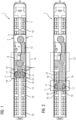
- FIG. 1 the interior of a rail vehicle 1 according to the invention is shown schematically.
- the rail vehicle 1 includes an entry area with first entry doors 2 arranged on both sides.
- a partition 3 with an inner door 4 is arranged, which separates a first seating zone 5 with several seats for passengers from the entry area.
- a sanitary cell 6 borders the entry area.
- the sanitary cell 6 is a so-called universal sanitary cell, also suitable for people with limited mobility who rely on a wheelchair. Access to the sanitary cell 6 points to one of the first entrance doors 2.
- a technical room 7 which houses infrastructure facilities for the sanitary cell 6 and for a galley 14 and / or its control means.
- the galley in turn includes a drinks and food vending machine 8, which in turn is arranged directly adjacent to the technical room in the rail vehicle 1, as well as other facilities, such as standing tables 9.
- the standing tables 9 can have a further use in that They can accommodate and cover galley devices or equipment, such as galley trolleys. Additional facilities, such as ticket machines or a standing area 10, can be arranged between the standing tables 9 and a wheelchair zone 11.
- Wheelchair zone 11 here includes two wheelchair spaces on both sides of an aisle 15.
- the aisle between the first entrance doors 2 and wheelchair zone 11 is wide enough for a wheelchair to pass through. It leads past sanitary cell 6 and through galley 14.
- the wheelchair spaces 17 of the wheelchair zone 11 and the seats 16 of the other seating zone 12 immediately adjacent to them are arranged here vis-a-vis, with a table 18 in between.
- Fig. 2 illustrates a variant of the rail vehicle 1.
- a further seating zone 13 is arranged between the first entrance doors 2 and the wheelchair zone 11, immediately adjacent to the wheelchair zone 11.
- 15 rows of seats with two seats arranged next to each other are arranged on one side of the aisle and only individual seats are arranged on the other side; However, several of these rows of seats, which are broken by the aisle, are parallel to one another.
- wheelchair spaces in wheelchair zone 11 and the seats 16 in the other seating zone 13 immediately adjacent to them are aligned equally here, so that they have the same viewing direction.
Landscapes
- Engineering & Computer Science (AREA)
- Public Health (AREA)
- Health & Medical Sciences (AREA)
- Mechanical Engineering (AREA)
- Transportation (AREA)
- General Health & Medical Sciences (AREA)
- Animal Behavior & Ethology (AREA)
- Veterinary Medicine (AREA)
- Life Sciences & Earth Sciences (AREA)
- Epidemiology (AREA)
- Seats For Vehicles (AREA)
- Fittings On The Vehicle Exterior For Carrying Loads, And Devices For Holding Or Mounting Articles (AREA)
- Vehicle Cleaning, Maintenance, Repair, Refitting, And Outriggers (AREA)
- Body Structure For Vehicles (AREA)
Description
- Die Erfindung betrifft ein Schienenfahrzeug des Personenverkehrs mit wenigstens einer Rollstuhl-Zone, wenigstens einer Einstiegstür, wenigstens einer Sanitärzelle und wenigstens einer Galley.
- Personen mit eingeschränkter Mobilität (English "People with reduced mobility"; Abkürzung PRM), insbesondere Rollstuhlfahrer haben, beispielsweise mit Ausnahme von entsprechend geeignet ausgebildeten Sanitärzellen, üblicherweise lediglich eingeschränkten Zugang zu Einrichtungen in Schienenfahrzeugen des öffentlichen Personenverkehrs, wie z.B. zur Galley oder zu Ticket-Automaten. Überdies sind Rollstuhlplätze im Allgemeinen in einer separaten Zone angeordnet, so dass weder eine Integration in den Sitzplatzbereich stattfindet noch einen Zugang zu diesem ermöglicht ist. Oft sind die Rollstuhlplätze im Bereich von Einstiegstüren vorgesehen.
- Galleys werden auch als Bordküchen, gegebenenfalls als Bordbistros bezeichnet. Sie umfassen traditionell Zubereitungsräumlichkeiten, einen Verkaufstresen und Tische. Es sind jedoch auch Galleys bekannt geworden, die zur Selbstversorgung Speise- und Getränkeautomaten aufweisen.
- Ein gattungsgemäßes Schienenfahrzeug des Personenverkehrs mit wenigstens einer Rollstuhl-Zone, wenigstens einer Einstiegstür, wenigstens einer Sanitärzelle und wenigstens einer Galley ist beispielsweise in der Offenlegungsschrift
EP 2 535 236 A2 offenbart. - Der Erfindung liegt die Aufgabe zugrunde, die Nutzbarkeit von verschiedenen Einrichtungen des Schienenfahrzeugs für Personen mit eingeschränkter Mobilität zu verbessern.
- Gelöst wird die Aufgabe durch den Gegenstand des unabhängigen Patentanspruchs 1. Weiterbildungen und Ausgestaltungen der Erfindung finden sich in den Merkmalen der abhängigen Patentansprüche wieder.
- Ein erfindungsgemäßes Schienenfahrzeug des Personenverkehrs umfasst wenigstens einer Rollstuhl-Zone, gelegentlich auch Rollstuhl-Sitzbereich genannt, wenigstens eine erste Einstiegstür, wenigstens eine, insbesondere für mobilitätseingeschränkte Personen geeignete und somit durch diese nutzbare Sanitärzelle und wenigstens einer Galley. Die Sanitärzelle und die Galley sind dabei zwischen der wenigstens einen, ersten Einstiegstür und der Rollstuhl-Zone angeordnet, wobei ein Gang von der wenigstens einen, ersten Einstiegstür zu der Rollstuhl-Zone vorgesehen ist, der für einen Rollstuhl ausreichend ausgebildet ist. Dies bedeutet insbesondere, dass der Gang eine Gangbreite aufweist, die ausreichend breit zum Passieren des Gangs mit einem Rollstuhl ist. Der Gang sowie die an ihn angrenzenden Einrichtungen und Komponenten des Schienenfahrzeugs sind entsprechend ausgewählt, ausgelegt und dimensioniert.
- Die Rollstuhl-Zone weist dabei wenigstens einen Rollstuhl-Platz auf.
- Gemäß einer Weiterbildung des erfindungsgemäßen Schienenfahrzeugs weist die Rollstuhl-Zone wenigstens zwei Rollstuhl-Plätze auf, welche beidseitig des Gangs angeordnet sind. Der Gang führt durch die Rollstuhl-Zone bzw. die Rollstuhl-Zone wird durch den Gang geteilt. Auf beiden Seiten des Schienenfahrzeugs sind somit Rollstuhl-Plätze angeordnet. Auch die Anordnung zweier oder gegebenenfalls mehrerer Rollstuhl-Plätze auf einer Seite des Gangs, beispielsweise in Reihe, ist möglich.
- Alternativ ist auf der der Rollstuhl-Zone gegenüberliegenden Seite des Gangs wenigstens ein Sitzplatz für weitere Fahrgäste angeordnet. Es können auch mehrere hintereinanderliegende Sitzplätze oder eine oder mehrere Sitzreihen mit Sitzplätzen für weitere Fahrgäste auf der anderen Seite des Gangs angeordnet sein. Gemäß einer Ausführungsform ist der wenigstens eine Rollstuhl-Platz in der Rollstuhl-Zone so angeordnet, dass er dieselbe Blickrichtung aufweist wie der wenigstens eine Sitzplatz auf der der Rollstuhl-Zone gegenüberliegenden Seite des Gangs.
- Der Gang verläuft dabei insbesondere in Längsrichtung des Schienenfahrzeugs. Die auf den unterschiedlichen Seiten des Gangs angeordneten Sitz- und/oder Rollstuhlplätze sind damit in Querrichtung des Schienenfahrzeugs nebeneinander, insbesondere parallel zueinander, angeordnet.
- Sowohl der wenigstens ein Rollstuhl-Platz in der Rollstuhl-Zone als auch der zumindest eine Sitzplatz auf der der Rollstuhl-Zone gegenüberliegenden Seite des Gangs sind weitergebildet mit Blickrichtung in Längsrichtung des Schienenfahrzeugs ausgerichtet. Dasselbe gilt für zwei auf beiden Seiten des Gangs angeordneten Rollstuhl-Plätzen der Rollstuhl-Zone. Auch sie sind insbesondere in dieselbe Blickrichtung, insbesondere in Längsrichtung des Schienenfahrzeugs, ausgerichtet.
- Gemäß einer weiteren Weiterbildung der Erfindung ist vorgesehen, dass wenigstens ein Rollstuhl-Platz in der Rollstuhl-Zone, insbesondere in Längsrichtung des Schienenfahrzeugs gesehen, unmittelbar an weitere Sitzplätze für weitere Fahrgäste angrenzend angeordnet ist. Die weiteren Sitzplätze weisen dabei, insbesondere fest im Schienenfahrzeug installierte, Sitze für die weiteren Fahrgäste auf. Sind mehrere Sitzplätze für weitere Fahrgäste in einem gemeinsamen Bereich angeordnet, insbesondere wenigstens zwei Sitzplätze beidseitig eines Gangs, kann auch von einer Sitzplatz-Zone gesprochen werden.
- Die weiteren Sitzplätze, insbesondere die Sitzplatz-Zone, sind somit zumindest zwischen der Rollstuhl-Zone und wenigstens einer weiteren, zweiten Einstiegstür des Schienenfahrzeugs angeordnet, welche wenigstens eine weitere, zweite Einstiegstür auf der der Galley und der Sanitärzelle in Längsrichtung des Schienenfahrzeugs gegenüberliegenden Seite der Rollstuhl-Zone angeordnet ist. Ein Gang von der wenigstens einen weiteren, zweiten Einstiegstür zu der Rollstuhl-Zone - und somit durch die Sitzplatz-Zone - kann zwar für einen Rollstuhl ausreichend ausgebildet sein. Gemäß einer Ausführung der Erfindung ist ein solcher Gang zwischen den Sitzplätzen für weitere Fahrgäste von der wenigstens einen weiteren, zweiten Einstiegstür bis zu der Rollstuhl-Zone jedoch ungeeignet für einen Rollstuhl. Er ist zumindest schmaler ausgebildet. Beispielsweise ist der Sitzabstand geringer. Der Gang ist jedoch in jedem Fall ausreichend für den Durchgang von Fahrgästen und insbesondere auch für einen Galley-Trolley oder Servierwagen.
- Insbesondere ist der Rollstuhl-Platz in Längsrichtung des Schienenfahrzeugs auf beiden Seiten von angrenzenden Sitzplätzen eingefasst. Die weiteren Sitzplätze umgeben somit den Rollstuhl-Platz in Längsrichtung des Schienenfahrzeugs, wodurch der Rollstuhl-Platz in den Sitzplatzbereich für weitere Fahrgäste vollständig integriert ist. Alternativ grenzt der Rollstuhl-Platz unmittelbar an die Galley an.
- Gemäß einer weiteren Weiterbildung ist wenigstens ein Rollstuhl-Platz in der Rollstuhl-Zone so angeordnet, dass er dieselbe Blickrichtung aufweist, wie die unmittelbar an ihn angrenzenden Sitzplätze, insbesondere wie die ihn unmittelbar umgebenden Sitzplätze mit Sitzen für die weiteren Fahrgäste.
- Alternativ ist wenigstens ein Rollstuhl-Platz in der Rollstuhl-Zone entgegen wenigstens einen an ihn angrenzenden Sitzplatz ausgerichtet, in einer sogenannten Vis-a-Vis-Anordnung, insbesondere mit einem dazwischen angeordneten Tisch, beispielsweise einem Klapptisch. So können die Fahrgäste sich gegenüber und gemäß der Ausführungsform mit dem Tisch auch gemeinsam am selben Tisch sitzen.
- Sowohl der wenigstens ein Rollstuhl-Platz in der Rollstuhl-Zone als auch zumindest die unmittelbar an ihn angrenzenden Sitzplätze sind weitergebildet mit Blickrichtung in Längsrichtung des Schienenfahrzeugs ausgerichtet.
- Eine weitere Weiterbildung besteht darin, dass wenigstens ein Sitzplatz, beispielsweise auch wenigstens eine Sitzreihe mit wenigstens zwei nebeneinander angeordneten Sitzen für weitere Fahrgäste, zwischen der Rollstuhl-Zone und der Galley angeordnet ist. Der Gang von der wenigstens einen, ersten Einstiegstür zu der Rollstuhl-Zone, welcher für einen Rollstuhl ausreichend ausgebildet ist, führt dann auch an diesem wenigstens einen Sitzplatz vorbei. Weitergebildet ist eine Sitzplatz-Zone mit wenigstens zwei Sitzplätzen, welche beidseitig des Gangs, welcher für einen Rollstuhl ausreichend ausgebildet ist, zwischen der Rollstuhl-Zone und der Galley angeordnet.
- Gemäß einer weiteren Weiterbildung ist das Schienenfahrzeug frei von einer Innentür zwischen der wenigstens einen, ersten Einstiegstür und der Rollstuhl-Zone. Auch eine Innenwand ist zwischen der wenigstens einen, ersten Einstiegstür und der Rollstuhl-Zone nicht vorgesehen. In einer weiteren Weitbildung ist das Schienenfahrzeug frei von einer Innentür zwischen der Rollstuhl-Zone und den unmittelbar an die Rollstuhl-Zone angrenzenden Sitzplätzen. Vorteilhaft ist das Schienenfahrzeug auch frei von einer Innentür oder von einer Innenwand unmittelbar angrenzend an die Rollstuhl-Zone. Ist eine Trennwand mit Innentür vorgesehen, ist diese insbesondere als automatische Innentür ausgebildet. Automatische Innentüren öffnen und schließen, insbesondere sensorgesteuert, ohne manuelle Betätigung. Ist eine Trennwand mit Innentür zwischen der der Rollstuhl-Zone und den unmittelbar an die Rollstuhl-Zone angrenzenden Sitzplätzen vorgesehen, kann sie einen Rollstuhl-Anschlag zur Sicherung des Rollstuhls aufweisen.
- Wie oben bereits ausgeführt kann die Rollstuhl-Zone in einem Wagenkasten des Schienenfahrzeugs - und in Längsrichtung des Schienenfahrzeugs gesehen - zwischen zwei Einstiegstüren des Schienenfahrzeugs angeordnet sein. Die Sanitärzelle und die Galley sind dann zwischen der ersten Einstiegstür und der Rollstuhl-Zone angeordnet. Weitere Sitzplätze für weitere Fahrgäste sind zwischen der weiteren, zweiten Einstiegstür und der Rollstuhl-Zone angeordnet. Gemäß einem Ausgestaltungsbeispiel der Erfindung ist das Schienenfahrzeug zwischen der ersten und der zweiten Einstiegstür frei von einer Innentür.
- Eine weitere Weiterbildung ist darin zu sehen, dass der Bereich der wenigstens einen, ersten Einstiegstür frei von einer Rollstuhl-Zone ist. Auch die unmittelbare Umgebung der Rollstuhl-Zone ist weitergebildet frei von einer Einstiegstür. Insbesondere ist das Schienenfahrzeug frei von einer weiteren Einstiegstür zwischen der wenigstens einen, ersten Einstiegstür und der weiteren, zweiten Einstiegstür.
- Vorteilhaft ist die Sanitärzelle im Bereich der wenigstens einen, ersten Einstiegstür so angeordnet, dass der Zugang zur Sanitärzelle zur wenigstens einen, ersten Einstiegstür weist. Die Galley ist dann zwischen der Sanitärzelle und der Rollstuhl-Zone angeordnet.
- Weitergebildet ist die Sanitärzelle im Bereich der wenigstens einen, ersten Einstiegstür angeordnet ist, wobei das Schienenfahrzeug frei von einer weiteren Einstiegstür zwischen der Sanitärzelle und der Rollstuhl-Zone ist.
- Wie oben bereits ausgeführt können ein oder mehrere Sitzplätze, insbesondere in Form von Sitzreihen mit Sitzen für weitere Fahrgäste zwischen der Rollstuhl-Zone und der Galley angeordnet sein. Zusätzlich oder alternativ kann die Galley weitergebildet einen Stehplatz-Bereich für Besucher der Galley umfassen, wobei zwischen dem Stehplatz-Bereich der Galley und der Rollstuhl-Zone wenigstens eine weitere Einrichtung des Schienenfahrzeugs, beispielsweise der Galley, insbesondere zur aktiven Nutzung durch den Fahrgast, wie z.B. ein Ticket-Automat, ein Ticket-Entwerter oder wenigstens ein Galley-Gerät, wie Speisen- oder Getränkeautomat, oder wenigstens ein Galley-Einrichtungsgegenstand oder Galley-Möbel, beispielweise ein oder mehrere Tische, angeordnet ist. Auch ein Rollstuhl-Anschlag kann dort vorgesehen sein. Die Rollstuhl-Zone ist nicht unmittelbar angrenzend an den Stehplatz-Bereich der Galley angeordnet, sondern vielmehr von dieser Einrichtung, also insbesondere durch einen Ticket-Automaten, einen Ticket-Entwerter, einem Speisen- oder Getränkeautomaten oder wenigstens einem Galley-Tisch, abgegrenzt. Die Einrichtung kann frei von einem Gepäck-Bereich sein. Bereiche zum Verstauen und Verwahren von Gepäck sowie von Galley-Trolleys sind dann nicht unmittelbar angrenzend an die wenigstens eine Rollstuhl-Zone angeordnet.
- Die Trennung von Rollstuhl-Zone von Stehplätzen oder Einstiegsbereichen nahe der Einstiegstüren des Schienenfahrzeugs, sowie deren Integration in Sitzplatz-Zonen führt zu deren Aufwertung.
- Weitergebildet umfasst die Galley wenigstens einen Stehplatz-Bereich mit wenigstens einem Stehtisch, der ausgebildet ist, wenigstens ein weiteres Gerät oder wenigstens eine weitere Einrichtung des Schienenfahrzeugs, insbesondere wenigstens ein Galley-Gerät oder wenigstens eine Galley-Einrichtung, wie z.B. Galley-Trolleys, Absaug-Einrichtungen oder weitere elektrische Baugruppen, aufzunehmen und zu verkleiden.
- Geräte umfassen Maschinen und Apparate. Sie können auch beweglich und vom Schienenfahrzeug lösbar sein. Einrichtungen hingegen können auch passiver Natur sein und sind meist fest installiert.
- Somit wird Bauraum der Geräte und Einrichtungen sinnvoll in vom Fahrgast nutzbare Einrichtungen integriert, wodurch weiterer Platz für die Fahrgäste geschaffen wird.
- Eine Ausgestaltung der Erfindung sieht vor, dass die Galley und die Sanitärzelle derart zueinander, beispielsweise unmittelbar aneinander angrenzend, angeordnet sind, dass vorgegebene Infrastruktureinrichtungen des Schienenfahrzeugs, wie z.B. Einrichtungen zur Versorgung der Galley und der Sanitärzelle mit Strom oder Druckluft und/oder zur Ver- und Entsorgung von Wasser und/oder Luft, beispielsweise zur Klimatisierung, insbesondere Leitungen gemeinsam genutzt werden können. Beispielsweise sind so ein gemeinsames Klimagerät, eine gemeinsame Heizung oder eine gemeinsame Lüftung, ein gemeinsamer Druckluftkompressor und/oder ein gemeinsamen Hilfsgeräteumrichter möglich. Auch hierdurch, insbesondere durch Wegfall redundanter oder zusätzlicher Geräte oder Einrichtungen, wird der vom Fahrgast nutzbare Raum vergrößert.
- Die vorgegebene Infrastruktureinrichtungen des Schienenfahrzeugs zur Versorgung sowohl von der Galley als auch von der Sanitärzelle sind weitergebildet zwischen der Galley und der Sanitärzelle angeordnet.
- Weitergebildet ist zwischen der Galley und der Sanitärzelle ein Technikraum angeordnet, welcher die Infrastruktureinrichtungen des Schienenfahrzeugs zur Versorgung der Galley und der Sanitärzelle umfasst und/oder welcher zumindest eine Steuerungseinrichtung zur Steuerung der Infrastruktureinrichtungen des Schienenfahrzeugs zur Versorgung der Galley und der Sanitärzelle umfasst. Dieser könnte somit zur Sanitärzelle oder zur Galley zugeordnet gelten und daher auch als Galley-Technikraum oder als Sanitär-Technikraum bezeichnet werden. Die Anordnung wird Rücken-an-Rücken-Anordnung genannt.
- Alternativ ist unmittelbar an die Sanitärzelle angrenzend die Galley, insbesondere ein Galley-Gerät oder eine Galley-Einrichtung, angeordnet.
- Die Vorteile der Erfindung liegen in der vollständigen Integration von Personen mit eingeschränkter Mobilität in den "normalen" Fahrgastbereich und gehen mit einer Aufwertung durch einfachen Zugang zur Sanitärzelle im Einstiegsbereich und zur Galley einher.
- Die Erfindung lässt zahlreiche Ausführungsformen zu. Sie wird anhand der nachfolgenden Figuren näher erläutert, in denen jeweils ein Ausgestaltungsbeispiel dargestellt ist. Gleiche Elemente in den Figuren sind mit gleichen Bezugszeichen versehen.
- Fig. 1
- zeigt schematisch den Innenraum eines erfindungsgemäßen Schienenfahrzeugs in einer ersten Ausführungsform,
- Fig. 2
- zeigt eine weitere Ausführungsform eines erfindungsgemäßen Schienenfahrzeugs.
- In
Fig. 1 ist der Innenraum eines erfindungsgemäßen Schienenfahrzeugs 1 schematisch dargestellt. Das Schienenfahrzeug 1 umfasst einen Einstiegsbereich mit beidseitig angeordneten ersten, Einstiegstüren 2. Neben dem Einstiegsbereich ist eine Trennwand 3 mit einer Innentür 4 angeordnet, die eine erste Sitzplatz-Zone 5 mit mehreren Sitzen für Fahrgäste vom Einstiegsbereich trennt. - Auf der anderen Seite in Längsrichtung des Schienenfahrzeugs 1 gesehen, grenzt eine Sanitärzelle 6 an den Einstiegsbereich. Die Sanitärzelle 6 ist eine sogenannte Universal-Sanitärzelle, geeignet auch für Personen mit eingeschränkter Mobilität, die auf einen Rollstuhl angewiesen sind. Der Zugang zur Sanitärzelle 6 weist zu einer der ersten Einstiegstüren 2. Unmittelbar an die Sanitärzelle angrenzend ist ein Technikraum 7, welcher Infrastruktureinrichtungen für die Sanitärzelle 6 und für eine Galley 14 und/oder deren Steuerungsmittel beherbergt. Die Galley umfasst ihrerseits einen Getränke- und Speiseautomaten 8, der seinerseits unmittelbar an den Technikraum angrenzend im Schienenfahrzeug 1 angeordnet ist, sowie weitere Einrichtungen, wie z.B. Stehtische 9. Die Stehtische 9 können einen weiteren Nutzen haben, in dem sie Galley-Geräte oder -Einrichtungen, wie z.B. Galley-Trolleys aufnehmen und verkleiden können. Zwischen den Stehtischen 9 und einer Rollstuhl-Zone 11 können noch weitere Einrichtungen, wie z.B. Ticket-Automaten, oder ein Stehbereich 10 angeordnet sein.
- Die Rollstuhl-Zone 11 umfasst hier zwei Rollstuhl-Plätze beidseits eines Gangs 15. Der Gang zwischen den ersten Einstiegstüren 2 und der Rollstuhl-Zone 11, ist breit genug zum Passieren mit einem Rollstuhl ausgebildet. Er führt an der Sanitärzelle 6 vorbei und durch die Galley 14 hindurch.
- Auf einer der ersten Einstiegstüren 2 abgewandten Seite der Rollstuhl-Zone 11 ist eine weitere Sitzplatz-Zone 12 mit mehreren parallelen Sitzreihen mit einem Gang dazwischen angeordnet, dessen Breite schmaler und somit nicht für einen Rollstuhl geeignet ist.
- Die Rollstuhl-Plätze 17 der Rollstuhl-Zone 11 und die unmittelbar an diese angrenzenden Sitzplätze 16 der weiteren Sitzplatz-Zone 12 sind hier vis-a-vis angeordnet, mit einem Tisch 18 dazwischen.
-
Fig. 2 veranschaulicht eine Variante des Schienenfahrzeugs 1. Hier ist eine weitere Sitzplatz-Zone 13 zwischen den ersten Einstiegstüren 2 und der Rollstuhl-Zone 11, unmittelbar angrenzend an die Rollstuhl-Zone 11, angeordnet. Um einen für Rollstühle geeigneten Gang 15 bereitstellen zu können, sind hier auf einer Seite des Gangs 15 Sitzreihen mit zwei nebeneinander angeordneten Sitzen und auf der anderen Seite nur einzelne Sitze angeordnet; jedoch mehrere dieser vom Gang durchbrochenen Sitzreihen parallel hintereinander. - Die Rollstuhl-Plätze der Rollstuhl-Zone 11 und die unmittelbar an diese angrenzenden Sitzplätze 16 der weiteren Sitzplatz-Zone 13 sind hier gleichermaßen ausgerichtet, so dass sie dieselbe Blickrichtung aufweisen.
- Hinter den Rollstuhl-Plätzen der Rollstuhl-Zone 11 ist eine Trennwand mit automatischer Innentüre angeordnet, wobei im Bereich der Trennwand Rollstuhl-Anschläge zur Sicherung der Rollstühle angeordnet sind.
Claims (13)
- Schienenfahrzeug des Personenverkehrs mit wenigstens einer Rollstuhl-Zone (11), wenigstens einer Einstiegstür (2), wenigstens einer Sanitärzelle (6) und wenigstens einer Galley (14),
dadurch gekennzeichnet, dass
die Sanitärzelle (6) und die Galley (14) zwischen der Einstiegstür (2) und der Rollstuhl-Zone (11) angeordnet sind, wobei ein Gang (15) von der Einstiegstür (2) zu der Rollstuhl-Zone (11) führt, der zur Nutzung eines Rollstuhls ausreichend ausgebildet ist. - Schienenfahrzeug nach Anspruch 1,
dadurch gekennzeichnet, dass
die Rollstuhl-Zone (11) wenigstens zwei Rollstuhl-Plätze (17) aufweist, welche beidseitig des Gangs (15) angeordnet sind. - Schienenfahrzeug nach einem der Ansprüche 1 oder 2,
dadurch gekennzeichnet, dass
wenigstens ein Rollstuhl-Platz (17) in der Rollstuhl-Zone (11) unmittelbar an weitere Sitzplätze mit Sitzen (16) für weitere Fahrgäste angrenzend angeordnet ist. - Schienenfahrzeug nach einem der Ansprüche 1 bis 3,
dadurch gekennzeichnet, dass
wenigstens ein Rollstuhl-Platz (17) in der Rollstuhl-Zone (11) so angeordnet ist, dass er dieselbe Blickrichtung aufweist, wie unmittelbar an ihn angrenzende Sitzplätze. - Schienenfahrzeug nach einem der Ansprüche 1 bis 3,
dadurch gekennzeichnet, dass
wenigstens ein Rollstuhl-Platz (17) in der Rollstuhl-Zone (11) so angeordnet ist, dass er entgegen wenigstens einen an ihn angrenzenden Sitzplatz ausgerichtet ist. - Schienenfahrzeug nach einem der Ansprüche 1 bis 5,
dadurch gekennzeichnet, dass
wenigstens ein Sitzplatz mit einem Sitz (16) für einen weiteren Fahrgast zwischen der Rollstuhl-Zone und der Galley (14) angeordnet ist. - Schienenfahrzeug nach einem der Ansprüche 1 bis 6,
dadurch gekennzeichnet, dass
es frei von einer Innentür zwischen der Einstiegstür (2) und der Rollstuhl-Zone (14) ist. - Schienenfahrzeug nach einem der Ansprüche 1 bis 7,
dadurch gekennzeichnet, dass
es frei von einer Innentür zwischen der Rollstuhl-Zone (11) und unmittelbar an die Rollstuhl-Zone (11) angrenzende Sitzplätze ist. - Schienenfahrzeug nach einem der Ansprüche 1 bis 8,
dadurch gekennzeichnet, dass
die Sanitärzelle (6) im Bereich der Einstiegstür (2) angeordnet ist, wobei das Schienenfahrzeug frei von einer weiteren Einstiegstür zwischen der Sanitärzelle (6) und der Rollstuhl-Zone (11) ist. - Schienenfahrzeug nach einem der Ansprüche 1 bis 9,
dadurch gekennzeichnet, dass
die Galley (14) wenigstens einen Stehplatz-Bereich (10) aufweist, wobei zwischen dem Stehplatz-Bereich (10) der Galley (14) und der Rollstuhl-Zone (11) wenigstens eine weitere Einrichtung (9) des Schienenfahrzeugs angeordnet ist. - Schienenfahrzeug nach einem der Ansprüche 1 bis 10,
dadurch gekennzeichnet, dass
die Galley (14) wenigstens einen Stehplatz-Bereich (10) mit wenigstens einem Stehtisch (9) umfasst, wobei der wenigstens eine Stehtisch (9) ausgebildet ist, wenigstens ein weiteres Gerät oder wenigstens eine weitere Einrichtung des Schienenfahrzeugs aufzunehmen und zu verkleiden. - Schienenfahrzeug nach einem der Ansprüche 1 bis 11,
dadurch gekennzeichnet, dass
vorgegebene Infrastruktureinrichtungen des Schienenfahrzeugs zur Versorgung der Galley (14) und der Sanitärzelle (6) zwischen der Galley (14) und der Sanitärzelle (6) angeordnet sind. - Schienenfahrzeug nach einem der Ansprüche 1 bis 12,
dadurch gekennzeichnet, dass
zwischen der Galley (14) und der Sanitärzelle (6) ein Versorgungsraumraum (7) angeordnet ist, welcher zumindest eine Versorgungseinrichtung zur Versorgung der Galley (14) umfasst.
Applications Claiming Priority (2)
| Application Number | Priority Date | Filing Date | Title |
|---|---|---|---|
| DE102020204471.6A DE102020204471A1 (de) | 2020-04-07 | 2020-04-07 | Schienenfahrzeug mit vollintegrierter Rollstuhl-Zone |
| PCT/EP2021/055639 WO2021204473A1 (de) | 2020-04-07 | 2021-03-05 | Schienenfahrzeug mit vollintegrierter rollstuhl-zone |
Publications (3)
| Publication Number | Publication Date |
|---|---|
| EP4100293A1 EP4100293A1 (de) | 2022-12-14 |
| EP4100293C0 EP4100293C0 (de) | 2023-11-01 |
| EP4100293B1 true EP4100293B1 (de) | 2023-11-01 |
Family
ID=74873711
Family Applications (1)
| Application Number | Title | Priority Date | Filing Date |
|---|---|---|---|
| EP21711800.9A Active EP4100293B1 (de) | 2020-04-07 | 2021-03-05 | Schienenfahrzeug mit vollintegrierter rollstuhl-zone |
Country Status (5)
| Country | Link |
|---|---|
| US (1) | US12594200B2 (de) |
| EP (1) | EP4100293B1 (de) |
| DE (1) | DE102020204471A1 (de) |
| ES (1) | ES2970500T3 (de) |
| WO (1) | WO2021204473A1 (de) |
Citations (10)
| Publication number | Priority date | Publication date | Assignee | Title |
|---|---|---|---|---|
| DE9416537U1 (de) | 1994-10-14 | 1994-12-01 | Waggonbau Ammendorf Gmbh, 06132 Halle | Nahverkehrszug |
| JP2003089355A (ja) | 2001-09-18 | 2003-03-25 | Hitachi Ltd | 鉄道車両の客車 |
| AU2005200691A1 (en) | 2004-02-20 | 2005-09-08 | Alstom Transport Technologies | An end vehicle for transporting passengers and/or freight |
| EP2060470A2 (de) | 2007-11-19 | 2009-05-20 | Bombardier Transportation GmbH | Doppelstock-Schienenfahrzeug |
| EP2060469A2 (de) | 2007-11-19 | 2009-05-20 | Bombardier Transportation GmbH | Doppelstock-Schienenfahrzeug |
| EP2100789A1 (de) | 2008-03-11 | 2009-09-16 | Alstom Transport S.A. | Schienenfahrzeug mit erleichtertem Einstieg für in ihrer Bewegungsfähigkeit eingeschränkte Reisende |
| US20120261509A1 (en) | 2011-04-18 | 2012-10-18 | Bombardier Inc. | Aircraft lavatory for a person with reduced mobility |
| EP2535236A2 (de) | 2011-06-15 | 2012-12-19 | Bombardier Transportation GmbH | Schienenfahrzeugwagen mit Rollstuhlbereich sowie Schienenfahrzeug |
| WO2013045256A1 (de) | 2011-09-28 | 2013-04-04 | Siemens Ag Österreich | Passagierschienenfahrzeug mit variabler inneneinrichtung für mobilitätseingeschränkte personen |
| EP3251912A1 (de) | 2016-06-01 | 2017-12-06 | Bombardier Transportation GmbH | Schienenfahrzeug mit verschiedenen passagierzonen |
Family Cites Families (11)
| Publication number | Priority date | Publication date | Assignee | Title |
|---|---|---|---|---|
| US4184433A (en) * | 1977-11-09 | 1980-01-22 | Pullman Incorporated | Convenience center for railway passenger vehicle |
| DE4300877A1 (de) * | 1993-01-15 | 1994-07-21 | Deutsche Aerospace Airbus | Flugzeug |
| US8152101B2 (en) * | 2006-09-12 | 2012-04-10 | Law Sondra F | System and method for integrating handicapped accessible seats into aircraft interior configurations |
| US10918541B2 (en) * | 2008-10-05 | 2021-02-16 | Valeda Company, Llc | Wheelchair passenger securement system with contoured bumper |
| DE102013201356A1 (de) * | 2013-01-29 | 2014-07-31 | Siemens Aktiengesellschaft | Schienenfahrzeug |
| GB2521351A (en) * | 2013-12-09 | 2015-06-24 | Alexander Dennis Ltd | Reconfigurable passenger restraint |
| DE102017008684A1 (de) * | 2016-09-20 | 2018-03-22 | Siemens Aktiengesellschaft | Schienengebundenes Transportmittel |
| DE102017217223A1 (de) * | 2017-09-27 | 2019-03-28 | Siemens Mobility GmbH | Fahrzeug zur Personenbeförderung |
| CN107898350A (zh) * | 2017-12-07 | 2018-04-13 | 苏州诚满信息技术有限公司 | 一种用于高铁的自助式预约餐饮设备及其工作方法 |
| FR3082815A1 (fr) * | 2018-06-25 | 2019-12-27 | Speedinnov | Voiture a terrasse |
| CN110893866B (zh) * | 2019-12-25 | 2025-06-13 | 广州广冷华旭制冷空调实业有限公司 | 餐车厨房及其服务吧台 |
-
2020
- 2020-04-07 DE DE102020204471.6A patent/DE102020204471A1/de not_active Ceased
-
2021
- 2021-03-05 US US17/917,753 patent/US12594200B2/en active Active
- 2021-03-05 EP EP21711800.9A patent/EP4100293B1/de active Active
- 2021-03-05 WO PCT/EP2021/055639 patent/WO2021204473A1/de not_active Ceased
- 2021-03-05 ES ES21711800T patent/ES2970500T3/es active Active
Patent Citations (10)
| Publication number | Priority date | Publication date | Assignee | Title |
|---|---|---|---|---|
| DE9416537U1 (de) | 1994-10-14 | 1994-12-01 | Waggonbau Ammendorf Gmbh, 06132 Halle | Nahverkehrszug |
| JP2003089355A (ja) | 2001-09-18 | 2003-03-25 | Hitachi Ltd | 鉄道車両の客車 |
| AU2005200691A1 (en) | 2004-02-20 | 2005-09-08 | Alstom Transport Technologies | An end vehicle for transporting passengers and/or freight |
| EP2060470A2 (de) | 2007-11-19 | 2009-05-20 | Bombardier Transportation GmbH | Doppelstock-Schienenfahrzeug |
| EP2060469A2 (de) | 2007-11-19 | 2009-05-20 | Bombardier Transportation GmbH | Doppelstock-Schienenfahrzeug |
| EP2100789A1 (de) | 2008-03-11 | 2009-09-16 | Alstom Transport S.A. | Schienenfahrzeug mit erleichtertem Einstieg für in ihrer Bewegungsfähigkeit eingeschränkte Reisende |
| US20120261509A1 (en) | 2011-04-18 | 2012-10-18 | Bombardier Inc. | Aircraft lavatory for a person with reduced mobility |
| EP2535236A2 (de) | 2011-06-15 | 2012-12-19 | Bombardier Transportation GmbH | Schienenfahrzeugwagen mit Rollstuhlbereich sowie Schienenfahrzeug |
| WO2013045256A1 (de) | 2011-09-28 | 2013-04-04 | Siemens Ag Österreich | Passagierschienenfahrzeug mit variabler inneneinrichtung für mobilitätseingeschränkte personen |
| EP3251912A1 (de) | 2016-06-01 | 2017-12-06 | Bombardier Transportation GmbH | Schienenfahrzeug mit verschiedenen passagierzonen |
Non-Patent Citations (5)
| Title |
|---|
| ANONYMOUS: "ACCOMPANYING REPORT N. ERA-REC-128-2/ACR TO THE RECOMMENDATION OF THE EUROPEAN UNION AGENCY FOR RAILWAYS on The amendment of Commission Regulation (EU) No 1300/2014 on the technical specifications for interoperability relating to accessibility of the Union's rail system for persons with disabilities", EUROPEAN UNION, AGENCY FOR RAILWAYS, REPORT N. ERA-REC-128-2/ACR (VERSION 1.0), 12 March 2020 (2020-03-12), XP093202367, Retrieved from the Internet <URL:https://www.era.europa.eu/system/files/2022-10/Accompanying%20Report%20.pdf?t=1717537298> |
| ANONYMOUS: "Avril by Talgo, the new Renfe high-speed train", VIA LIBRE, vol. 613, 1 December 2016 (2016-12-01), XP093202362 |
| ANONYMOUS: "Eurostar e320 Hochgeschwindigkeitszüge für Eurostar International Limited", SIEMENS, 1 January 2014 (2014-01-01), XP093202369, Retrieved from the Internet <URL:https://assets.new.siemens.com/siemens/assets/api/uuid:d27caceb-11bd-4614-b7ac-5e02468e1481/broschuere-velaro-e320-eurostar-de.pdf> |
| ANONYMOUS: "Fahrzeuglexikon für den Fernverkehr", DB, 1 September 2017 (2017-09-01), XP093202354 |
| FLOWERS ANDY: "First Great Western's "Adelante" - first impressions", MODERN RAILWAYS, 1 July 2002 (2002-07-01), pages 28 - 35, XP093202363 |
Also Published As
| Publication number | Publication date |
|---|---|
| WO2021204473A1 (de) | 2021-10-14 |
| DE102020204471A1 (de) | 2021-10-07 |
| EP4100293C0 (de) | 2023-11-01 |
| ES2970500T3 (es) | 2024-05-29 |
| EP4100293A1 (de) | 2022-12-14 |
| US20230165739A1 (en) | 2023-06-01 |
| US12594200B2 (en) | 2026-04-07 |
Similar Documents
| Publication | Publication Date | Title |
|---|---|---|
| EP2536630B1 (de) | Toilettenanordnung für ein verkehrsmittel | |
| EP2423107B1 (de) | Anordnung zum Aufnehmen von Passagieren in einem Verkehrsmittel | |
| DE10244189B4 (de) | Im Boden installiertes luftgekühltes Gehäusesystem für Boxen für elektrische Systeme und dgl. für Flugzeugpassagiere | |
| DE19827275C1 (de) | Vorrichtung zum Transport von Kranken in einem Flugzeug | |
| EP1452444B1 (de) | Sitzreihenanordnung in einer Passagierkabine eines Verkehrsflugzeuges | |
| EP1103213A2 (de) | Duscheinrichtung | |
| DE102011016031A1 (de) | Kabinensegment, Kabine und Fahrzeug mit einer Kabine | |
| DE102013008289A1 (de) | Flugzeugbereich | |
| DE102011013049A1 (de) | Flugzeugbereich | |
| DE102013008291A1 (de) | Erweiterbares Flugzeugmonument | |
| EP0290477B1 (de) | Sitzeinheit und deren anordnung für einen begleiter in einem fahrzeug, insbesondere in einem luftfahrzeug | |
| DE102014110820A1 (de) | Sitzanordnung in einer Kabine eines Flugzeugs und Flugzeug mit einer Kabine und einer darin integrierten Sitzanordnung | |
| DE10211437A1 (de) | Verfahren zur bedarfsgerechten Anpassung der Sitzreihenanordnung in Passagierflugzeugen | |
| EP2406115B1 (de) | Deckenpanel mit vorhangschiene in einer transportmittelkabine, verfahren und verwendung | |
| DE102007015520A1 (de) | Unterbodensystem für ein Flugzeug | |
| EP1471001B1 (de) | Einrichtungsmodul zur Informationsbereitstelllung an Bord von Transportmitteln | |
| EP3597484A1 (de) | Personenbeförderungsfahrzeug | |
| EP2535236B1 (de) | Schienenfahrzeugwagen mit Rollstuhlbereich sowie Schienenfahrzeug | |
| DE102015116798A1 (de) | Raumoptimierte Kabinenanordnung für ein Fahrzeug sowie eine Passagierkabine mit einer Mehrzahl von Sitzen und einer solchen Kabinenanordnung | |
| DE102019107359A1 (de) | Vielzweckanschluss für ein Flugzeugmonument sowie Flugzeugmonument, Flugzeugbereich und Flugzeug mit Vielzweckanschluss | |
| DE102016103825A1 (de) | Anordnung in einer Fahrzeugkabine mit einem Kabinenmonument mit zwei Zugangsöffnungen an zwei eine Schnittfläche ausbildenden Gängen | |
| DE102020204471A1 (de) | Schienenfahrzeug mit vollintegrierter Rollstuhl-Zone | |
| DE102013008288A1 (de) | Flugzeugbereich | |
| EP0891909A1 (de) | Stromlinienförmiger Doppelstock-Steuerwagen | |
| DE102023130973B3 (de) | Flugzeugkabine |
Legal Events
| Date | Code | Title | Description |
|---|---|---|---|
| STAA | Information on the status of an ep patent application or granted ep patent |
Free format text: STATUS: UNKNOWN |
|
| STAA | Information on the status of an ep patent application or granted ep patent |
Free format text: STATUS: THE INTERNATIONAL PUBLICATION HAS BEEN MADE |
|
| PUAI | Public reference made under article 153(3) epc to a published international application that has entered the european phase |
Free format text: ORIGINAL CODE: 0009012 |
|
| STAA | Information on the status of an ep patent application or granted ep patent |
Free format text: STATUS: REQUEST FOR EXAMINATION WAS MADE |
|
| 17P | Request for examination filed |
Effective date: 20220909 |
|
| AK | Designated contracting states |
Kind code of ref document: A1 Designated state(s): AL AT BE BG CH CY CZ DE DK EE ES FI FR GB GR HR HU IE IS IT LI LT LU LV MC MK MT NL NO PL PT RO RS SE SI SK SM TR |
|
| GRAP | Despatch of communication of intention to grant a patent |
Free format text: ORIGINAL CODE: EPIDOSNIGR1 |
|
| STAA | Information on the status of an ep patent application or granted ep patent |
Free format text: STATUS: GRANT OF PATENT IS INTENDED |
|
| DAV | Request for validation of the european patent (deleted) | ||
| DAX | Request for extension of the european patent (deleted) | ||
| INTG | Intention to grant announced |
Effective date: 20230627 |
|
| GRAS | Grant fee paid |
Free format text: ORIGINAL CODE: EPIDOSNIGR3 |
|
| GRAA | (expected) grant |
Free format text: ORIGINAL CODE: 0009210 |
|
| STAA | Information on the status of an ep patent application or granted ep patent |
Free format text: STATUS: THE PATENT HAS BEEN GRANTED |
|
| AK | Designated contracting states |
Kind code of ref document: B1 Designated state(s): AL AT BE BG CH CY CZ DE DK EE ES FI FR GB GR HR HU IE IS IT LI LT LU LV MC MK MT NL NO PL PT RO RS SE SI SK SM TR |
|
| REG | Reference to a national code |
Ref country code: GB Ref legal event code: FG4D Free format text: NOT ENGLISH |
|
| REG | Reference to a national code |
Ref country code: CH Ref legal event code: EP |
|
| REG | Reference to a national code |
Ref country code: DE Ref legal event code: R096 Ref document number: 502021001866 Country of ref document: DE |
|
| REG | Reference to a national code |
Ref country code: IE Ref legal event code: FG4D Free format text: LANGUAGE OF EP DOCUMENT: GERMAN |
|
| U01 | Request for unitary effect filed |
Effective date: 20231122 |
|
| U07 | Unitary effect registered |
Designated state(s): AT BE BG DE DK EE FI FR IT LT LU LV MT NL PT SE SI Effective date: 20231128 |
|
| PG25 | Lapsed in a contracting state [announced via postgrant information from national office to epo] |
Ref country code: GR Free format text: LAPSE BECAUSE OF FAILURE TO SUBMIT A TRANSLATION OF THE DESCRIPTION OR TO PAY THE FEE WITHIN THE PRESCRIBED TIME-LIMIT Effective date: 20240202 |
|
| PG25 | Lapsed in a contracting state [announced via postgrant information from national office to epo] |
Ref country code: IS Free format text: LAPSE BECAUSE OF FAILURE TO SUBMIT A TRANSLATION OF THE DESCRIPTION OR TO PAY THE FEE WITHIN THE PRESCRIBED TIME-LIMIT Effective date: 20240301 |
|
| U20 | Renewal fee for the european patent with unitary effect paid |
Year of fee payment: 4 Effective date: 20240318 |
|
| PG25 | Lapsed in a contracting state [announced via postgrant information from national office to epo] |
Ref country code: IS Free format text: LAPSE BECAUSE OF FAILURE TO SUBMIT A TRANSLATION OF THE DESCRIPTION OR TO PAY THE FEE WITHIN THE PRESCRIBED TIME-LIMIT Effective date: 20240301 Ref country code: GR Free format text: LAPSE BECAUSE OF FAILURE TO SUBMIT A TRANSLATION OF THE DESCRIPTION OR TO PAY THE FEE WITHIN THE PRESCRIBED TIME-LIMIT Effective date: 20240202 |
|
| REG | Reference to a national code |
Ref country code: ES Ref legal event code: FG2A Ref document number: 2970500 Country of ref document: ES Kind code of ref document: T3 Effective date: 20240529 |
|
| PG25 | Lapsed in a contracting state [announced via postgrant information from national office to epo] |
Ref country code: RS Free format text: LAPSE BECAUSE OF FAILURE TO SUBMIT A TRANSLATION OF THE DESCRIPTION OR TO PAY THE FEE WITHIN THE PRESCRIBED TIME-LIMIT Effective date: 20231101 Ref country code: PL Free format text: LAPSE BECAUSE OF FAILURE TO SUBMIT A TRANSLATION OF THE DESCRIPTION OR TO PAY THE FEE WITHIN THE PRESCRIBED TIME-LIMIT Effective date: 20231101 Ref country code: NO Free format text: LAPSE BECAUSE OF FAILURE TO SUBMIT A TRANSLATION OF THE DESCRIPTION OR TO PAY THE FEE WITHIN THE PRESCRIBED TIME-LIMIT Effective date: 20240201 Ref country code: HR Free format text: LAPSE BECAUSE OF FAILURE TO SUBMIT A TRANSLATION OF THE DESCRIPTION OR TO PAY THE FEE WITHIN THE PRESCRIBED TIME-LIMIT Effective date: 20231101 |
|
| PG25 | Lapsed in a contracting state [announced via postgrant information from national office to epo] |
Ref country code: CZ Free format text: LAPSE BECAUSE OF FAILURE TO SUBMIT A TRANSLATION OF THE DESCRIPTION OR TO PAY THE FEE WITHIN THE PRESCRIBED TIME-LIMIT Effective date: 20231101 |
|
| PG25 | Lapsed in a contracting state [announced via postgrant information from national office to epo] |
Ref country code: SK Free format text: LAPSE BECAUSE OF FAILURE TO SUBMIT A TRANSLATION OF THE DESCRIPTION OR TO PAY THE FEE WITHIN THE PRESCRIBED TIME-LIMIT Effective date: 20231101 |
|
| PG25 | Lapsed in a contracting state [announced via postgrant information from national office to epo] |
Ref country code: SM Free format text: LAPSE BECAUSE OF FAILURE TO SUBMIT A TRANSLATION OF THE DESCRIPTION OR TO PAY THE FEE WITHIN THE PRESCRIBED TIME-LIMIT Effective date: 20231101 Ref country code: SK Free format text: LAPSE BECAUSE OF FAILURE TO SUBMIT A TRANSLATION OF THE DESCRIPTION OR TO PAY THE FEE WITHIN THE PRESCRIBED TIME-LIMIT Effective date: 20231101 Ref country code: CZ Free format text: LAPSE BECAUSE OF FAILURE TO SUBMIT A TRANSLATION OF THE DESCRIPTION OR TO PAY THE FEE WITHIN THE PRESCRIBED TIME-LIMIT Effective date: 20231101 |
|
| REG | Reference to a national code |
Ref country code: DE Ref legal event code: R026 Ref document number: 502021001866 Country of ref document: DE |
|
| PLBI | Opposition filed |
Free format text: ORIGINAL CODE: 0009260 |
|
| PLAX | Notice of opposition and request to file observation + time limit sent |
Free format text: ORIGINAL CODE: EPIDOSNOBS2 |
|
| 26 | Opposition filed |
Opponent name: ALSTOM HOLDINGS Effective date: 20240731 |
|
| PG25 | Lapsed in a contracting state [announced via postgrant information from national office to epo] |
Ref country code: MC Free format text: LAPSE BECAUSE OF FAILURE TO SUBMIT A TRANSLATION OF THE DESCRIPTION OR TO PAY THE FEE WITHIN THE PRESCRIBED TIME-LIMIT Effective date: 20231101 |
|
| PG25 | Lapsed in a contracting state [announced via postgrant information from national office to epo] |
Ref country code: MC Free format text: LAPSE BECAUSE OF FAILURE TO SUBMIT A TRANSLATION OF THE DESCRIPTION OR TO PAY THE FEE WITHIN THE PRESCRIBED TIME-LIMIT Effective date: 20231101 |
|
| PLBB | Reply of patent proprietor to notice(s) of opposition received |
Free format text: ORIGINAL CODE: EPIDOSNOBS3 |
|
| PG25 | Lapsed in a contracting state [announced via postgrant information from national office to epo] |
Ref country code: IE Free format text: LAPSE BECAUSE OF NON-PAYMENT OF DUE FEES Effective date: 20240305 |
|
| PG25 | Lapsed in a contracting state [announced via postgrant information from national office to epo] |
Ref country code: IE Free format text: LAPSE BECAUSE OF NON-PAYMENT OF DUE FEES Effective date: 20240305 |
|
| U20 | Renewal fee for the european patent with unitary effect paid |
Year of fee payment: 5 Effective date: 20250320 |
|
| PGFP | Annual fee paid to national office [announced via postgrant information from national office to epo] |
Ref country code: GB Payment date: 20250403 Year of fee payment: 5 Ref country code: ES Payment date: 20250620 Year of fee payment: 5 |
|
| PG25 | Lapsed in a contracting state [announced via postgrant information from national office to epo] |
Ref country code: RO Free format text: LAPSE BECAUSE OF FAILURE TO SUBMIT A TRANSLATION OF THE DESCRIPTION OR TO PAY THE FEE WITHIN THE PRESCRIBED TIME-LIMIT Effective date: 20231101 |
|
| PGFP | Annual fee paid to national office [announced via postgrant information from national office to epo] |
Ref country code: CH Payment date: 20250611 Year of fee payment: 5 |
|
| PG25 | Lapsed in a contracting state [announced via postgrant information from national office to epo] |
Ref country code: CY Free format text: LAPSE BECAUSE OF FAILURE TO SUBMIT A TRANSLATION OF THE DESCRIPTION OR TO PAY THE FEE WITHIN THE PRESCRIBED TIME-LIMIT; INVALID AB INITIO Effective date: 20210305 |
|
| PG25 | Lapsed in a contracting state [announced via postgrant information from national office to epo] |
Ref country code: HU Free format text: LAPSE BECAUSE OF FAILURE TO SUBMIT A TRANSLATION OF THE DESCRIPTION OR TO PAY THE FEE WITHIN THE PRESCRIBED TIME-LIMIT; INVALID AB INITIO Effective date: 20210305 |
|
| RAP4 | Party data changed (patent owner data changed or rights of a patent transferred) |
Owner name: SIEMENS MOBILITY GMBH |
|
| U1H | Name or address of the proprietor changed after the registration of the unitary effect |
Owner name: SIEMENS MOBILITY GMBH; DE |
|
| PGFP | Annual fee paid to national office [announced via postgrant information from national office to epo] |
Ref country code: TR Payment date: 20260226 Year of fee payment: 6 |
|
| U20 | Renewal fee for the european patent with unitary effect paid |
Year of fee payment: 6 Effective date: 20260320 |