EP4074562B1 - Steuerungssystem und steuerungsverfahren für ein intelligentes verbundenes fahrzeug - Google Patents
Steuerungssystem und steuerungsverfahren für ein intelligentes verbundenes fahrzeug Download PDFInfo
- Publication number
- EP4074562B1 EP4074562B1 EP19956596.1A EP19956596A EP4074562B1 EP 4074562 B1 EP4074562 B1 EP 4074562B1 EP 19956596 A EP19956596 A EP 19956596A EP 4074562 B1 EP4074562 B1 EP 4074562B1
- Authority
- EP
- European Patent Office
- Prior art keywords
- information
- vehicle
- module
- planning
- control
- Prior art date
- Legal status (The legal status is an assumption and is not a legal conclusion. Google has not performed a legal analysis and makes no representation as to the accuracy of the status listed.)
- Active
Links
Images

Classifications
-
- B—PERFORMING OPERATIONS; TRANSPORTING
- B60—VEHICLES IN GENERAL
- B60W—CONJOINT CONTROL OF VEHICLE SUB-UNITS OF DIFFERENT TYPE OR DIFFERENT FUNCTION; CONTROL SYSTEMS SPECIALLY ADAPTED FOR HYBRID VEHICLES; ROAD VEHICLE DRIVE CONTROL SYSTEMS FOR PURPOSES NOT RELATED TO THE CONTROL OF A PARTICULAR SUB-UNIT
- B60W30/00—Purposes of road vehicle drive control systems not related to the control of a particular sub-unit, e.g. of systems using conjoint control of vehicle sub-units
- B60W30/02—Control of vehicle driving stability
-
- B—PERFORMING OPERATIONS; TRANSPORTING
- B60—VEHICLES IN GENERAL
- B60W—CONJOINT CONTROL OF VEHICLE SUB-UNITS OF DIFFERENT TYPE OR DIFFERENT FUNCTION; CONTROL SYSTEMS SPECIALLY ADAPTED FOR HYBRID VEHICLES; ROAD VEHICLE DRIVE CONTROL SYSTEMS FOR PURPOSES NOT RELATED TO THE CONTROL OF A PARTICULAR SUB-UNIT
- B60W30/00—Purposes of road vehicle drive control systems not related to the control of a particular sub-unit, e.g. of systems using conjoint control of vehicle sub-units
- B60W30/08—Active safety systems predicting or avoiding probable or impending collision or attempting to minimise its consequences
-
- B—PERFORMING OPERATIONS; TRANSPORTING
- B60—VEHICLES IN GENERAL
- B60W—CONJOINT CONTROL OF VEHICLE SUB-UNITS OF DIFFERENT TYPE OR DIFFERENT FUNCTION; CONTROL SYSTEMS SPECIALLY ADAPTED FOR HYBRID VEHICLES; ROAD VEHICLE DRIVE CONTROL SYSTEMS FOR PURPOSES NOT RELATED TO THE CONTROL OF A PARTICULAR SUB-UNIT
- B60W30/00—Purposes of road vehicle drive control systems not related to the control of a particular sub-unit, e.g. of systems using conjoint control of vehicle sub-units
- B60W30/10—Path keeping
-
- B—PERFORMING OPERATIONS; TRANSPORTING
- B60—VEHICLES IN GENERAL
- B60W—CONJOINT CONTROL OF VEHICLE SUB-UNITS OF DIFFERENT TYPE OR DIFFERENT FUNCTION; CONTROL SYSTEMS SPECIALLY ADAPTED FOR HYBRID VEHICLES; ROAD VEHICLE DRIVE CONTROL SYSTEMS FOR PURPOSES NOT RELATED TO THE CONTROL OF A PARTICULAR SUB-UNIT
- B60W50/00—Details of control systems for road vehicle drive control not related to the control of a particular sub-unit, e.g. process diagnostic or vehicle driver interfaces
- B60W50/0097—Predicting future conditions
-
- B—PERFORMING OPERATIONS; TRANSPORTING
- B60—VEHICLES IN GENERAL
- B60W—CONJOINT CONTROL OF VEHICLE SUB-UNITS OF DIFFERENT TYPE OR DIFFERENT FUNCTION; CONTROL SYSTEMS SPECIALLY ADAPTED FOR HYBRID VEHICLES; ROAD VEHICLE DRIVE CONTROL SYSTEMS FOR PURPOSES NOT RELATED TO THE CONTROL OF A PARTICULAR SUB-UNIT
- B60W50/00—Details of control systems for road vehicle drive control not related to the control of a particular sub-unit, e.g. process diagnostic or vehicle driver interfaces
- B60W50/0098—Details of control systems ensuring comfort, safety or stability not otherwise provided for
-
- B—PERFORMING OPERATIONS; TRANSPORTING
- B60—VEHICLES IN GENERAL
- B60W—CONJOINT CONTROL OF VEHICLE SUB-UNITS OF DIFFERENT TYPE OR DIFFERENT FUNCTION; CONTROL SYSTEMS SPECIALLY ADAPTED FOR HYBRID VEHICLES; ROAD VEHICLE DRIVE CONTROL SYSTEMS FOR PURPOSES NOT RELATED TO THE CONTROL OF A PARTICULAR SUB-UNIT
- B60W50/00—Details of control systems for road vehicle drive control not related to the control of a particular sub-unit, e.g. process diagnostic or vehicle driver interfaces
- B60W50/02—Ensuring safety in case of control system failures, e.g. by diagnosing, circumventing or fixing failures
- B60W50/0205—Diagnosing or detecting failures; Failure detection models
-
- B—PERFORMING OPERATIONS; TRANSPORTING
- B60—VEHICLES IN GENERAL
- B60W—CONJOINT CONTROL OF VEHICLE SUB-UNITS OF DIFFERENT TYPE OR DIFFERENT FUNCTION; CONTROL SYSTEMS SPECIALLY ADAPTED FOR HYBRID VEHICLES; ROAD VEHICLE DRIVE CONTROL SYSTEMS FOR PURPOSES NOT RELATED TO THE CONTROL OF A PARTICULAR SUB-UNIT
- B60W50/00—Details of control systems for road vehicle drive control not related to the control of a particular sub-unit, e.g. process diagnostic or vehicle driver interfaces
- B60W50/02—Ensuring safety in case of control system failures, e.g. by diagnosing, circumventing or fixing failures
- B60W50/029—Adapting to failures or work around with other constraints, e.g. circumvention by avoiding use of failed parts
-
- B—PERFORMING OPERATIONS; TRANSPORTING
- B60—VEHICLES IN GENERAL
- B60W—CONJOINT CONTROL OF VEHICLE SUB-UNITS OF DIFFERENT TYPE OR DIFFERENT FUNCTION; CONTROL SYSTEMS SPECIALLY ADAPTED FOR HYBRID VEHICLES; ROAD VEHICLE DRIVE CONTROL SYSTEMS FOR PURPOSES NOT RELATED TO THE CONTROL OF A PARTICULAR SUB-UNIT
- B60W50/00—Details of control systems for road vehicle drive control not related to the control of a particular sub-unit, e.g. process diagnostic or vehicle driver interfaces
- B60W50/04—Monitoring the functioning of the control system
-
- B—PERFORMING OPERATIONS; TRANSPORTING
- B60—VEHICLES IN GENERAL
- B60W—CONJOINT CONTROL OF VEHICLE SUB-UNITS OF DIFFERENT TYPE OR DIFFERENT FUNCTION; CONTROL SYSTEMS SPECIALLY ADAPTED FOR HYBRID VEHICLES; ROAD VEHICLE DRIVE CONTROL SYSTEMS FOR PURPOSES NOT RELATED TO THE CONTROL OF A PARTICULAR SUB-UNIT
- B60W50/00—Details of control systems for road vehicle drive control not related to the control of a particular sub-unit, e.g. process diagnostic or vehicle driver interfaces
- B60W50/04—Monitoring the functioning of the control system
- B60W50/045—Monitoring control system parameters
-
- B—PERFORMING OPERATIONS; TRANSPORTING
- B60—VEHICLES IN GENERAL
- B60W—CONJOINT CONTROL OF VEHICLE SUB-UNITS OF DIFFERENT TYPE OR DIFFERENT FUNCTION; CONTROL SYSTEMS SPECIALLY ADAPTED FOR HYBRID VEHICLES; ROAD VEHICLE DRIVE CONTROL SYSTEMS FOR PURPOSES NOT RELATED TO THE CONTROL OF A PARTICULAR SUB-UNIT
- B60W60/00—Drive control systems specially adapted for autonomous road vehicles
- B60W60/001—Planning or execution of driving tasks
- B60W60/0013—Planning or execution of driving tasks specially adapted for occupant comfort
-
- B—PERFORMING OPERATIONS; TRANSPORTING
- B60—VEHICLES IN GENERAL
- B60W—CONJOINT CONTROL OF VEHICLE SUB-UNITS OF DIFFERENT TYPE OR DIFFERENT FUNCTION; CONTROL SYSTEMS SPECIALLY ADAPTED FOR HYBRID VEHICLES; ROAD VEHICLE DRIVE CONTROL SYSTEMS FOR PURPOSES NOT RELATED TO THE CONTROL OF A PARTICULAR SUB-UNIT
- B60W60/00—Drive control systems specially adapted for autonomous road vehicles
- B60W60/001—Planning or execution of driving tasks
- B60W60/0015—Planning or execution of driving tasks specially adapted for safety
-
- B—PERFORMING OPERATIONS; TRANSPORTING
- B60—VEHICLES IN GENERAL
- B60W—CONJOINT CONTROL OF VEHICLE SUB-UNITS OF DIFFERENT TYPE OR DIFFERENT FUNCTION; CONTROL SYSTEMS SPECIALLY ADAPTED FOR HYBRID VEHICLES; ROAD VEHICLE DRIVE CONTROL SYSTEMS FOR PURPOSES NOT RELATED TO THE CONTROL OF A PARTICULAR SUB-UNIT
- B60W60/00—Drive control systems specially adapted for autonomous road vehicles
- B60W60/001—Planning or execution of driving tasks
- B60W60/0015—Planning or execution of driving tasks specially adapted for safety
- B60W60/0018—Planning or execution of driving tasks specially adapted for safety by employing degraded modes, e.g. reducing speed, in response to suboptimal conditions
- B60W60/00182—Planning or execution of driving tasks specially adapted for safety by employing degraded modes, e.g. reducing speed, in response to suboptimal conditions in response to weather conditions
-
- B—PERFORMING OPERATIONS; TRANSPORTING
- B60—VEHICLES IN GENERAL
- B60W—CONJOINT CONTROL OF VEHICLE SUB-UNITS OF DIFFERENT TYPE OR DIFFERENT FUNCTION; CONTROL SYSTEMS SPECIALLY ADAPTED FOR HYBRID VEHICLES; ROAD VEHICLE DRIVE CONTROL SYSTEMS FOR PURPOSES NOT RELATED TO THE CONTROL OF A PARTICULAR SUB-UNIT
- B60W60/00—Drive control systems specially adapted for autonomous road vehicles
- B60W60/001—Planning or execution of driving tasks
- B60W60/0015—Planning or execution of driving tasks specially adapted for safety
- B60W60/0018—Planning or execution of driving tasks specially adapted for safety by employing degraded modes, e.g. reducing speed, in response to suboptimal conditions
- B60W60/00186—Planning or execution of driving tasks specially adapted for safety by employing degraded modes, e.g. reducing speed, in response to suboptimal conditions related to the vehicle
-
- B—PERFORMING OPERATIONS; TRANSPORTING
- B60—VEHICLES IN GENERAL
- B60W—CONJOINT CONTROL OF VEHICLE SUB-UNITS OF DIFFERENT TYPE OR DIFFERENT FUNCTION; CONTROL SYSTEMS SPECIALLY ADAPTED FOR HYBRID VEHICLES; ROAD VEHICLE DRIVE CONTROL SYSTEMS FOR PURPOSES NOT RELATED TO THE CONTROL OF A PARTICULAR SUB-UNIT
- B60W50/00—Details of control systems for road vehicle drive control not related to the control of a particular sub-unit, e.g. process diagnostic or vehicle driver interfaces
- B60W2050/0001—Details of the control system
- B60W2050/0002—Automatic control, details of type of controller or control system architecture
-
- B—PERFORMING OPERATIONS; TRANSPORTING
- B60—VEHICLES IN GENERAL
- B60W—CONJOINT CONTROL OF VEHICLE SUB-UNITS OF DIFFERENT TYPE OR DIFFERENT FUNCTION; CONTROL SYSTEMS SPECIALLY ADAPTED FOR HYBRID VEHICLES; ROAD VEHICLE DRIVE CONTROL SYSTEMS FOR PURPOSES NOT RELATED TO THE CONTROL OF A PARTICULAR SUB-UNIT
- B60W50/00—Details of control systems for road vehicle drive control not related to the control of a particular sub-unit, e.g. process diagnostic or vehicle driver interfaces
- B60W2050/0001—Details of the control system
- B60W2050/0002—Automatic control, details of type of controller or control system architecture
- B60W2050/0004—In digital systems, e.g. discrete-time systems involving sampling
-
- B—PERFORMING OPERATIONS; TRANSPORTING
- B60—VEHICLES IN GENERAL
- B60W—CONJOINT CONTROL OF VEHICLE SUB-UNITS OF DIFFERENT TYPE OR DIFFERENT FUNCTION; CONTROL SYSTEMS SPECIALLY ADAPTED FOR HYBRID VEHICLES; ROAD VEHICLE DRIVE CONTROL SYSTEMS FOR PURPOSES NOT RELATED TO THE CONTROL OF A PARTICULAR SUB-UNIT
- B60W50/00—Details of control systems for road vehicle drive control not related to the control of a particular sub-unit, e.g. process diagnostic or vehicle driver interfaces
- B60W2050/0001—Details of the control system
- B60W2050/0002—Automatic control, details of type of controller or control system architecture
- B60W2050/0004—In digital systems, e.g. discrete-time systems involving sampling
- B60W2050/0006—Digital architecture hierarchy
-
- B—PERFORMING OPERATIONS; TRANSPORTING
- B60—VEHICLES IN GENERAL
- B60W—CONJOINT CONTROL OF VEHICLE SUB-UNITS OF DIFFERENT TYPE OR DIFFERENT FUNCTION; CONTROL SYSTEMS SPECIALLY ADAPTED FOR HYBRID VEHICLES; ROAD VEHICLE DRIVE CONTROL SYSTEMS FOR PURPOSES NOT RELATED TO THE CONTROL OF A PARTICULAR SUB-UNIT
- B60W50/00—Details of control systems for road vehicle drive control not related to the control of a particular sub-unit, e.g. process diagnostic or vehicle driver interfaces
- B60W2050/0001—Details of the control system
- B60W2050/0043—Signal treatments, identification of variables or parameters, parameter estimation or state estimation
-
- B—PERFORMING OPERATIONS; TRANSPORTING
- B60—VEHICLES IN GENERAL
- B60W—CONJOINT CONTROL OF VEHICLE SUB-UNITS OF DIFFERENT TYPE OR DIFFERENT FUNCTION; CONTROL SYSTEMS SPECIALLY ADAPTED FOR HYBRID VEHICLES; ROAD VEHICLE DRIVE CONTROL SYSTEMS FOR PURPOSES NOT RELATED TO THE CONTROL OF A PARTICULAR SUB-UNIT
- B60W50/00—Details of control systems for road vehicle drive control not related to the control of a particular sub-unit, e.g. process diagnostic or vehicle driver interfaces
- B60W2050/0062—Adapting control system settings
- B60W2050/0075—Automatic parameter input, automatic initialising or calibrating means
- B60W2050/009—Priority selection
- B60W2050/0094—Priority selection of control units
-
- B—PERFORMING OPERATIONS; TRANSPORTING
- B60—VEHICLES IN GENERAL
- B60W—CONJOINT CONTROL OF VEHICLE SUB-UNITS OF DIFFERENT TYPE OR DIFFERENT FUNCTION; CONTROL SYSTEMS SPECIALLY ADAPTED FOR HYBRID VEHICLES; ROAD VEHICLE DRIVE CONTROL SYSTEMS FOR PURPOSES NOT RELATED TO THE CONTROL OF A PARTICULAR SUB-UNIT
- B60W2556/00—Input parameters relating to data
- B60W2556/45—External transmission of data to or from the vehicle
Definitions
- This invention relates to the field of intelligent vehicle, and more particularly to a method and system for control intelligent network vehicle.
- intelligent network vehicle With the continuous development of intelligent network vehicle technology, intelligent network vehicle has gradually changed from agent assisted driving to agent independent driving. Moreover, in the process of continuous intelligence, intelligent network vehicles have many differences with traditional vehicles. For example, the high-level intelligent network vehicle has been completely separated from the driver's control, and its failure needs to be independently judged and degraded. It cannot be ignored that there is a great difference between the driving style of intelligent network vehicles and human drivers. And a high degree of intelligence is accompanied by a high driving risk. Therefore, the safety of the high-level intelligent network vehicle becomes the key to its implementation.
- control system of the intelligent network vehicle is still based on traditional control system. Considering that the control system architecture is too simple, and that the redundant control is too rigid, drivers' or inspectors' auxiliary control or even direct control is needed. This leads to the intelligent agent cannot behave well in the process of decision-making, supervision, fault diagnosis, and avoid the risk of driving.
- the current control system architecture cannot meet the requirements of independent driving of intelligent network vehicles. It has become a key and urgent technical problem to develop a reliable control system architecture according to the driving characteristics and driving conditions of intelligent network vehicles has become a key technical problem to be solved urgently.
- US 2017/248959 A1 relates to a vehicle control device including a scene determination unit, an order setting unit, a traveling plan generating unit, an executability determination unit, a traveling plan selection unit and a traveling control unit.
- the present invention provides a control system and control method for an intelligent network vehicle to solve the problem of failing to meet the safety requirements of intelligent network vehicles due to simple control system architecture and overly rigid redundancy control in the related art.
- the present invention provides a control system for intelligent network vehicle: the planning and control module is configured to determine the vehicle planning control based on the sensing information and the positioning information; the safety control module is configured to determine the vehicle safety control information based on the sensing information and the positioning information; the function assessment module is configured to determine the vehicle state assessment results; the risk assessment module is configured to determine the risk assessment results; the logic arbitration module arbitrates the vehicle planning control information and vehicle safety control information based on the working status of the function assessment module and the risk evaluation module, and determines the vehicle execution information to make the vehicle execution information more accurate, so as to reduce the driving risk of intelligent network vehicles.
- the present invention provide a method and system for control the intelligent network vehicle.
- the control instruction of the vehicle is determined based on the state assessment result, a risk assessment result, planning and control information of the vehicle and safety control information of the vehicle for improving the accuracy of the control instruction of the vehicle, and improve the safety of the intelligent network vehicle.
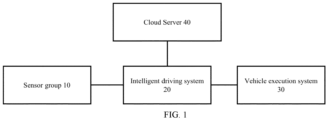
- FIG. 1 is the overall architecture diagram of an intelligent networked vehicle according to some embodiments of the present invention.
- the intelligent network vehicle includes a sensor group 10, an intelligent driving system 20, a vehicle execution system 30 and a cloud server 40.
- Intelligent driving system 20 may be configured to communicate with cloud server 40.
- the sensor group 10 is configured to obtain sensor information.
- the sensor group includes but is not limited to at least one of camera, Lidar, millimeter-wave radar, Global Positioning System (GPS), pressure sensor, IMU, Angle sensor, and/or speed sensor.
- GPS Global Positioning System
- IMU IMU
- Angle sensor and/or speed sensor.
- the intelligent driving system is configured to receive the sensor information of the sensor group and generate execution information based on the sensor information.
- the vehicle execution system is configured to receive the execution information and control the vehicle based on the execution information.
- the vehicle execution system may include, but not limited to, a steering system, a braking system, and a drive system.
- the steering system, the braking system and the drive system may be mature systems in vehicle field, which will not be mentioned again here.
- the cloud server may communicate with the intelligent driving system for coordinating and managing intelligent network vehicles.
- the cloud server can be configured to interact with one or more intelligent network vehicles, and coordinate and manage the scheduling of multiple intelligent network vehicles, etc.
- the vehicle control system 20 may communicate wirelessly with the cloud server through wireless communication networks (including but not limited to GPRS network, Zigbee network, WiFi network, 3G network, 4G network, 5G network and other wireless communication networks).
- the cloud server may be a cloud server established by a vehicle service provider to provide cloud storage and cloud computing functions.
- vehicle-side archives may be established in the cloud server.
- the vehicle-end file may store various information uploaded by the vehicle control system 20.
- the cloud server can synchronize driving data generated at the vehicle-end in real time.
- the cloud server may include a data warehouse and a data processing platform, wherein the data warehouse is configured to store the vehicle-side files created by the cloud server.
- the data warehouse can uniformly collect data from various source business systems into the data warehouse and process it on the data processing platform for vehicle-ends.
- the cloud server may be a server or a server group of.
- the server group may be centralized or distributed.
- Distributed server is beneficial to task allocation and optimization in multiple distributed servers, and overcome the defects of traditional centralized server resource shortage and response bottleneck.
- the cloud server may be local or remote.
- the cloud server can be configured to obtain information from the RSU (Road Side Unit) and the intelligent network vehicle, and send information to the intelligent network vehicle. In some embodiments, the cloud server can send the detection information corresponding to the intelligent network vehicle from the RSU to the intelligent network vehicle based the information of the intelligent network vehicle.
- RSU Rotary Side Unit
- the cloud server can send the detection information corresponding to the intelligent network vehicle from the RSU to the intelligent network vehicle based the information of the intelligent network vehicle.
- the intelligent network vehicle may include a vehicle CAN bus, wherein the vehicle CAN bus may connect the vehicle control system 20 and the vehicle execution system 30.
- vehicle CAN bus may connect the vehicle control system 20 and the vehicle execution system 30.
- the interaction information between intelligent driving system 10 and the underlying vehicle execution system is transmitted through the vehicle CAN bus.
- the intelligent network vehicle can be controlled in manual driving mode by the driver, and also can be controlled in unmanned driving mode by the vehicle control system 20.
- the driver can drive the vehicle by operating the control driving devices of the vehicle, such as, but not limited to, brake pedal, steering wheel and accelerator pedal.
- the control driving devices of the vehicle can directly operate the underlying vehicle execution system to control vehicle running.
- the intelligent network vehicle may also be an unmanned vehicle, and the vehicle may be controlled by the control instruction outputted by the intelligent control system 20 and executed by the vehicle execution system 30.
- FIG. 2 is an example block diagram of a control system for an intelligent network vehicle according to an embodiment of the present invention.
- the control system can realize some functions of the intelligent control system 20 in FIG. 1 for controlling intelligent network vehicle driving.
- the control system for intelligent network vehicle may be divided into a sensor receiving module 201, a sensing and positioning module 202, a planning and control module 203, a safety control module 204, a function assessment module 205, a risk assessment module 206, an logic arbitration module 207, an execution module 208 and other components which can be used in the intelligent network vehicles.
- the sensor receiving module 201 is configured to receive sensor information from the sensor group, and transmit the sensor information to the sensing and positioning module 202, the planning and control module 203, the safety control module 204, the function assessment module 205, and the risk assessment module 206.
- the sensor group may include, but not limited to, one or more of a camera, a laser radar, a millimeter wave radar, a pressure sensor, IMU, an Angle sensor, a speed sensor and the like; the sensor information may include environmental information and vehicle state information, wherein the environmental information may include obstacles, pedestrians, surrounding vehicles, feasible areas, road markings, etc.
- the vehicle state information may include speed, front wheel deflection angle, acceleration, deceleration, steering wheel angle, brake, throttle and other states.
- the sensor group can also monitor its own status information and send the own state information to the function assessment module 205 via the sensor receiving module 201.
- the own state information may include the working state of each sensor in the sensor group.
- the sensing and positioning module 202 is configured to determine sensing information and positioning information.
- the sensing and positioning module 202 may further sense its own state information, and transmit the own state information to the planning and control module 203, the safety control module 204, the function assessment module 205, and the risk assessment module 206.
- the sensing and positioning module 202 may include sensing unit 2021 and positioning unit 2022, wherein the sensing unit 2021 may obtain the sensing information.
- the sensing unit 2021 can obtain the sensing information by sensing the own state information of the vehicle and environment information outside the vehicle based on the sensor information.
- the sensing information includes the own state information of the vehicle, such as vehicle speed, vehicle acceleration, vehicle hardware working state and other vehicle state information.
- the sensing information may also include the environment information outside the vehicle, such as the vehicle feasible area, obstacles, pedestrians around the vehicle and other vehicles.
- the positioning unit 2022 is configured to obtain the location information of the vehicle based on the sensing information and obtain the positioning information. In some embodiments, the positioning unit 2022 may obtain the location information of the vehicle based on GPS, IMU, identification location module, etc. In some embodiments, the positioning information can be obtained by visual sensors, laser radar, etc., such as by V-SLAM, LIDAR-SLAM, etc.
- the planning and control module 203 determines vehicle planning control information based on the sensing information and the positioning information, wherein the vehicle planning control information may be generated based on driving comfort, timeliness and applicability.
- the planning and control module can further combine at least one of V2X data, high definition map and other data for making path planning and decision.
- the planning and control module may also receive the vehicle state assessment results and/or risk assessment results to determine the vehicle planning control information, and determine the vehicle planning control information based on the sensing information, the positioning information, the vehicle state assessment results and the risk assessment results.
- the vehicle planning control information may include the vehicle speed, front wheel deflection angle, acceleration, deceleration, steering wheel Angle, brake, throttle and other control information.
- the planning and control module 203 may include planning unit 2031 and planning motion control unit 2032, wherein the planning unit 2031 may be configured to generate planning information.
- the planning unit may generate planning information based on the sensing information and the positioning information generated by the sensing unit and positioning unit.
- the planning unit can also combine at least one of V2X data, high definition map and other data to generate the planning information.
- the planning information may include, but not limited to, desired path, behavior (e.g. including but not limited to following, overtaking, stopping, detouring, etc.), vehicle heading, vehicle speed, desired acceleration of vehicle, desired steering wheel angle, etc.
- the planning unit may receive vehicle status assessment results and/or risk assessment results to determine the planning information.
- the planning unit may determine the planning information based on passenger comfort, wherein the passenger comfort includes driving comfort, driving timeliness, driving applicability and so on.
- the planning unit may transmit the planning information and decision to the planning motion control unit.
- planning unit 2031 may transmit the planning information and performance of the planning unit 2031 to the planning motion control unit 2032.
- the planning motion control unit 2032 is configured to determine the vehicle planning control information based on the planning information, wherein the vehicle planning control information indicates execution information of the underlying control system of the vehicle.
- the planning motion control unit may transmit vehicle control information to enable the underlying vehicle execution system controlling the vehicle to drive in the desired path, such as performing lateral and longitudinal control for the vehicle by controlling the steering wheel, brake, and accelerator.
- the planned maximum acceleration may not exceed 5m/S 2
- the steering maximum angle may not exceed 15°.
- the safety control module 204 is configured to generate vehicle safety control information based on the sensing information and the positioning information, wherein the vehicle safety control information is generated based on driving safety, stability and collision consequences.
- the safety control module may determine the vehicle safety control information based on vehicle state assessment results and risk assessment information, it means that the safety control module may determining the vehicle safety control information based on the sensing information, the positioning information, the vehicle state assessment results and the risk assessment information to provide high security control decisions for intelligent network vehicles.
- the safety control module 204 may include safety planning unit 2041 and safety behavior control unit 2042.
- the planning unit 2041 is configured to generate security planning information.
- the safety planning unit 2041 may generate the security planning information based on the sensing information and the positioning information generated by the sensing module and the positioning module.
- the safety planning unit 2041 can also combine at least one of V2X data, high definition map and other data to generate the security planning information.
- the security planning information may include, but not limited to, behavior (e.g. including, but not limited to, following, overtaking, stopping, detouring, etc.), vehicle heading, vehicle speed, expected acceleration of vehicle, expected steering wheel angle, etc.
- the safety planning unit may receive the vehicle state assessment results and/or the risk assessment information for determining the security planning information.
- the safety planning unit may plan the vehicle based on driving safety, stability and collision consequences.
- the safety planning unit transmits the planning information and decision to the planning motion control unit.
- the safety behavior control unit 2042 is configured to determine the vehicle safety control information based on the security planning information, wherein the safety control information may indicate the implementation information of the vehicle underlying control system of the vehicle. In some embodiments, the safety behavior control unit may transmit the vehicle control information to the underlying vehicle control system for controlling the vehicle driving in the expected path, such as lateral and longitudinal control of the vehicle by controlling the steering wheel, brake, and throttle. In some embodiments, when the vehicle safety control information is generated, the vehicle safety planning information is determined based on safety factors, comprising, but not limited to, vehicle slip rate, yaw Angle, roll Angle and other safety factors. For example, the vehicle slip rate should not exceed 20%, and the vehicle yaw Angle and roll Angle should be kept within the safe range.
- safety factors comprising, but not limited to, vehicle slip rate, yaw Angle, roll Angle and other safety factors. For example, the vehicle slip rate should not exceed 20%, and the vehicle yaw Angle and roll Angle should be kept within the safe range.
- the function assessment module 205 is configured to generate the vehicle state assessment results.
- the function assessment module 205 monitors working status of the sensor group 201, the sensing and positioning module 202, the planning and control module 203, the safety control module 204 and the execution module 208 in real time to determine the first monitoring results, and evaluates the functions of the above functional modules based on the first monitoring results to obtain the vehicle state assessment results, wherein the first monitoring results may include, but not limited to, fault monitoring results and functional failure monitoring results of software and hardware.
- the function assessment module 205 may monitor the status of the sensor group 201, the sensing and positioning module 202, the planning and control module 203, the safety control module 204 and the execution module 208 to get the first monitoring results, and then evaluate the damage severity of the modules based on the first monitoring results in a graded manner to obtain the vehicle state assessment results.
- the first monitoring results may include, but not limited to, fault monitoring results and functional failure monitoring results of software and hardware..
- the function assessment module 205 includes function monitoring unit 2051 and function assessment unit 2052, wherein the function monitoring unit is configured to generate the first monitoring results.
- the first monitoring results may include fault monitoring results and functional failure monitoring results of software and hardware of the function modules, wherein the function modules may include the sensor group 201, the sensing and positioning module 202, the planning and control module 203, the safety control module 204, the function assessment module 205 and the execution module 208.
- the function monitoring unit may include fault monitoring sub-units and function monitoring sub-units, wherein the fault monitoring sub-units may monitor the status of the sensor group 201, the sensing and positioning module 202, the planning and control module 203, the safety control module 204, the function assessment module 205 and the execution module 208 to obtain the corresponding fault monitoring information.
- the function monitoring sub-units may be configured to monitor the status of the sensor group 201, the sensing and positioning module 202, the planning and control module 203, the safety control module 204, the function assessment module 205 and the execution module 208 to determine whether the modules described above are fail to work.
- the function assessment unit 2052 is configured to determine the vehicle status assessment results. In some embodiments, the function assessment unit 2052 is configured to evaluate the security of the vehicle based on the first monitoring result and determine the vehicle state assessment results. In some embodiments, the function assessment unit 2052 may transmit the vehicle state assessment results to the planning and control module 203 and safety control module 204. In some embodiments, when the vehicle state assessment results determined by function assessment unit 2052 are changed, the planning and control module 203 may update the vehicle planning control information based on the vehicle state assessment results. In some embodiments, the safety control module 204 may update the vehicle safety control information based on the vehicle state assessment results.
- the risk assessment module 206 is configured to determine the risk assessment results. In some embodiments, the risk assessment module 206 is configured to obtain the risk assessment results based on the sensing information, the positioning information, the status and the planning information of the planning and control module, and the status and the security planning information of the safety control module.
- the risk assessment module 206 includes a risk monitoring unit and a risk assessment unit.
- the risk monitoring unit determines the risk monitoring information based on the sensing information and the positioning information.
- the risk monitoring information may include, but not limited to, collision monitoring information, feasible region monitoring information, etc.
- the risk assessment module may use sensors independent from the sensing and positioning module to ensure the independence of the risk assessment.
- the risk monitoring unit After the risk monitoring unit determines the risk monitoring information, it sends the risk monitoring information to the risk assessment unit.
- the risk monitoring unit includes feasible region monitoring sub-unit and collision monitoring sub-unit.
- the feasible region monitoring sub-unit is configured to monitor the environment in the feasible region to obtain feasible region monitoring information and status information of the feasible region monitoring sub-units.
- the collision monitoring subunit is configured to monitor the environment around the vehicle to obtain the collision monitoring information and the working state of the collision monitoring sub-units.
- the collision monitoring information can be obtained based on the sensing information, the positioning information, and monitoring information in real-time monitoring the surrounding environment.
- the collision monitoring information may be obtained directly from independent sensors.
- the feasible region monitoring information may include, but not limited to, weather, speed, pedestrian/animal, etc.
- the risk assessment unit 2062 is configured to determine the risk assessment results based on the risk monitoring information, the vehicle planning control information and the vehicle safety control information. In some embodiments, the risk assessment unit may further determine the risk assessment results based on the working status of the risk monitoring unit, the planning unit and the safety planning unit.
- the risk assessment unit 2062 can also evaluate the overall risk of the vehicle based on the vehicle speed, driving style, weather, road complexity and other information, and then determine the risk assessment results.
- the risk assessment unit 2062 may send the risk assessment results to the planning unit 2031, the safety planning unit 2041, and the logic arbitration module 207, wherein, the planning and control module 203 may modify the vehicle planning control information based on the risk assessment results, and the safety control module 204 may modify the vehicle safety control information based on the risk assessment results. For example, when the risk assessment result is level 2, it needs to limit the minimum speed to satisfy the timeliness.
- the planning and control module 203 and the safety control module 204 can modify the vehicle planning control information and the safety control information correspondingly to limit the minimum speed at 90km/h, and modify the vehicle planning control information and safety control information correspondingly based on the minimum speed.
- the planning and control module 203 and the safety control module 204 can also limit the maximum steering angle, such as limit the maximum steering angle to 15°, and modifying the vehicle planning control information and vehicle safety control information based on the maximum steering angle.
- the logic arbitration module 207 is configured to determine vehicle execution information.
- the logic arbitration module may determine the vehicle execution information based on the vehicle planning control information and safety control information.
- the logic arbitration module further determines the vehicle execution information based on the working state of the function assessment module and the working state of the risk assessment module.
- logic arbitration module 207 can determine the planning control information as the vehicle execution information based on the risk level of risk assessment results being low.
- the safety control information can be determined as the vehicle execution information.
- the risk level may threat the safety of the vehicle or passengers, the vehicle may be determined to slow down or stop as soon as possible. If the function assessment result may include that the function modules exist fault or failure, the vehicle may be controlled to slow down or stop.
- the logic arbitration module 207 can select the vehicle planning control information when the risk level of intelligent network vehicles is low, for example, the risk level is lower than 2. In some embodiments, when the risk level of intelligent network vehicles is high, such as level 4, the logic arbitration module 207 can select the vehicle safety control information. In some embodiments, when the intelligent network vehicle has higher risk level, such as risk level above 5, the logic arbitration module 207 can be controlled to temporarily maintain the speed and seek time opportunity to temporarily stop, or to reduce the speed and seek time opportunity to stop temporarily. In some embodiments, when the intelligent network vehicle has higher risk, such as risk level above 5, the logic arbitration module 207 can choose to decelerate at a maximum deceleration speed, such as 12.5m/S 2 deceleration speed.
- the execution module 208 is configured to control the vehicle driving based on the vehicle execution information.
- the execution module 208 may receives the vehicle execution information sent by the logic arbitration module 207 and control the vehicle driving based on the vehicle execution information.
- the execution module 208 may include, but not limited to, the chassis, steering system, power system, braking system and other vehicle hardware.
- the execution module may parses the vehicle execution information and send matching execution signals to each hardware of the vehicle respectively. The execution module can also monitor its own working status and send the working status to the function assessment module.
- each module involved in the present implementation is a logical module, and in practical applications, a logical unit can be a physical unit, or part of a physical unit, or can be implemented as a combination of multiple physical units.
- a logical unit can be a physical unit, or part of a physical unit, or can be implemented as a combination of multiple physical units.
- the present implementation does not introduce the units that are less closely related to solving the technical problems presented in the present invention, but this does not indicate that other units do not exist in the present implementation.
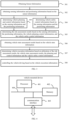
- FIG. 3 illustrates a flow chart of a control method for intelligent network vehicles according to some embodiments of the present invention.
- the execution subject of the control method is the control system provided by embodiments of the present invention, and the specific structure of the control system is not described here.
- the control method provided in the embodiments can be applied to intelligent network autonomous driving vehicles.
- control method for intelligent network vehicles can may following steps.
- the sensor information may be obtained from the sensor group and transmitted to the intelligent control system through the sensor receiving module.
- the sensor information may include environment information and vehicle status information, wherein the environment information may include obstacles, pedestrians, surrounding vehicles, driveable areas, road markings, etc.
- the vehicle state information may include speed, front wheel deflection angle, acceleration, deceleration, steering wheel angle, brake, accelerator and other states.
- the sensor group may also monitor its own state information and transmits its state information to the intelligent control system through the sensor receiving module, wherein its own state information may include the working status of each sensor in the sensor group.
- the sensing information may include state information of the vehicle, such as vehicle speed, vehicle acceleration, the working status of hardware in the vehicle and other vehicle state information.
- the sensing information may also include information about the environment outside the vehicle, such as the vehicle driveable area, obstacles, pedestrians around the vehicle and other vehicles.
- the positioning information may be obtained based on GPS, IMU, identification location module.
- the positioning information can be obtained by visual sensors, laser radar, etc., such as by V-SLAM, LIDAR-SLAM, etc.
- the vehicle planning and control information may include the vehicle speed, front wheel deflection angle, acceleration, deceleration, steering wheel angle, brake, throttle and other control information.
- the vehicle planning and control information may be determined based the sensing information, the positioning information, vehicle state assessment results and risk assessment results.
- control system may receive the sensing information, the positioning information, the vehicle state assessment results and the risk assessment results; the control system may then determine the planning information based on the sensing information, the positioning information, the vehicle state assessment results and the risk assessment results; and the control system may obtain the vehicle planning control information by analyzing the planning information.
- the safety planning information may be generated based on the sensing information and the positioning information.
- the safety planning information may be generated based on the sensing information and the positioning information, and further combined with at least one of V2X data and high definition map.
- the vehicle safety control information is determined based on the sensing information, the positioning information, the vehicle state assessment results and the risk assessment results;.
- control system may receive the sensing information, the positioning information, the vehicle state assessment results and the risk assessment results; the control system may then determine the safety planning information based on the sensing information, the positioning information, the vehicle state assessment results and the risk assessment results; the control system may obtain the vehicle safety control information by analyzing the safety planning information.
- determining the risk assessment results based on the sensing information, the positioning information, the vehicle planning control information, and the vehicle safety control information.
- the control system may determine the risk assessment results based on the sensing information, the positioning information, the working status and the planning information of the planning and control module, the working status and the safety planning information of the safety control module.
- the risk assessment module may monitor the driving environment of the intelligent network vehicle, and evaluate the risk of the intelligent network vehicle based on the sensing information, the positioning information, the status and planning information of the planning and control module, the working status and safety planning information of the safety control module.
- the risk assessment results may include one to six levels, wherein different levels indicates different of risk degree.
- the risk assessment result may be determined by the following steps: receiving the sensing information and the positioning information, and determining the risk monitoring information based on the sensing information and the positioning information; determining the risk assessment results based on the risk monitoring information, vehicle planning and control information, vehicle safety control information.
- control system may receive the status and planning information of the planning and control module, and the status and safety planning information of the safety control module; the control system may monitor the environment in feasible region to obtain feasible region monitoring information and status information; the control system may monitor the environment around the vehicle to obtain collision monitoring information and status information; the control system may obtain the risk assessment result based on the sensor information, the positioning information, the status and the planning information of the planning and control module, the status and the safety planning information of the safety control module, the feasible region monitoring information and the status information, collision monitoring information and the status information.
- feasible region monitoring information may be determined based on at least one of the weather conditions, vehicle speed, pedestrian/animal and other factors .
- the risk assessment results may be determined based on at least one of the current vehicle speed, driving style, planning information, safety planning information, risk monitoring information, feasible region monitoring information and other factors.
- the risk assessment results may be transmitted to the safety control module, the planning and control module, and the logic arbitration module.
- control system may receive the status information of the sensor group, the sensing and positioning module, the planning and control module, the safety control module and the execution module; the control system may obtain the working status of the sensor group, the sensing and positioning module, the planning and control module, the safety control module and the execution module based on the status information; the control system may determine the vehicle state assessment results based on the working status of the sensor group, the sensing and positioning module, the planning and control module, the safety control module, function assessment module and execution module.
- determining vehicle execution information based on arbitration of the risk assessment results, the vehicle state assessment results, the planning and control information and the vehicle safety control information.
- the vehicle execution information may be obtained by arbitrating the vehicle planning control information and the vehicle safety control information based on the working status of the function assessment module, the working status of the risk assessment module, the vehicle state assessment result and the risk assessment result.
- the vehicle planning and control information and the vehicle safety control information may be arbitrated based on the risk level and functional damage level of the risk assessment results, the working status of risk assessment module and function assessment module.
- the logic arbitration module may determine the vehicle planning and control information or the vehicle safety control information as the vehicle execution information.
- the execution module may execute the vehicle execution information of the logical arbitration module.
- the sensing and positioning module obtains the sensing information and the positioning information based on the sensor information;
- the planning and control module obtains the vehicle planning control information based on the basing information, the positioning information, the risk assessment results and the vehicle state assessment results.
- the safety control module obtains the vehicle safety control information based on the sensing information, the positioning information, the risk assessment results and the vehicle state assessment results.
- the function assessment module obtains the vehicle state assessment results based on the status of each unit.
- the risk assessment module obtains the risk assessment results based on the feasible region monitoring information and collision monitoring information combined with the status of the planning and control module, the planning information, the status of the safety control module and the safety planning information.
- the logic arbitration module arbitrates the vehicle planning and control information and the vehicle safety control information based on the risk assessment results and vehicle state assessment results, and sends the arbitration results to the execution module for execution.
- the decision execution information under different driving conditions is obtained from both the performance and safety perspectives by the planning and control module and the safety control module simultaneously, which not only considers the failure and fault of each unit and module, but also considers the risk of driving decision, and reduces the response time.
- the logic arbitration module can arbitrate based on the risk assessment results and performance assessment results, which makes the vehicle execution information more accurate and reduces the driving risk of intelligent network vehicles.
- FIG. 4 is the schematic diagram of a vehicle-mounted device according to some embodiments of the present invention.
- the autonomous vehicle may include the vehicle-mounted device.
- the vehicle-mounted device may include at least one processor 401, at least one memory 402, and at least one communication interface 403.
- the processor 401 and the memory 402 are coupled via the bus system 404.
- the communication interface 403 is configured to transfer information with external devices. Understandably, the bus system 404 is used for connection communication between components including processor 401 and memory 402.
- Bus system 404 may include power bus, control bus and status signal bus in addition to data bus. For illustration purposes, the various bus are labeled as bus system 404 in FIG 4 .
- the memory 402 in the present embodiment may be volatile memory or non-volatile memory, or may include both volatile and non-volatile memory.
- the memory 402 may store the following elements, executable modules or data structures, or subsets of them, or extended set of them, operating systems and applications.
- the operating system including various system procedures, such as the framework layer, core library layer, driver layer, etc., is configured to implement various underlying operations as well as handling hardware-based tasks.
- Applications including various applications such as Media Player and Browser, are configured to implement various application services.
- Program for implementing the control method provided by the present disclosed embodiment for an intelligent network vehicle may be included in the application.
- the processor 401 may call the program or instruction stored in the memory 402, specifically, the program or instruction stored in the application.
- the processor 401 is configured to execute the steps of each embodiment of the control system and control method of intelligent network vehicle provided in the disclosed embodiment.
- the control system and control method of intelligent network vehicle provided in the embodiment can be applied in or implemented by processor 401.
- the processor 401 can be an integrated circuit chip with signal processing capability. In the implementation process, the steps of the above method can be completed by the integrated logic circuit of the hardware or software instructions in processor 401.
- the processor 401 described above may be a general purpose processor, a Digital Signal Processor (DSP), an Application Specific Integrated Circuit (ASIC), a Field Programmable Gate Array (FPGA) or other programmable logic device, discrete gate or transistor logic device, discrete hardware component.
- DSP Digital Signal Processor
- ASIC Application Specific Integrated Circuit
- FPGA Field Programmable Gate Array
- the general purpose processor may be a microprocessor or the processor can also be any conventional processor, etc.
- the steps of the control method for the intelligent network vehicle provided in the present embodiment may be directly embodied as executed by the hardware decoding processor or executed with a combination of hardware and software units in the decoding processor.
- the software unit may be located in a random memory, flash memory, read-only memory, programmable read-only memory or electrically erasable programmable memory, registers, or other storage media well established in the art.
- the storage medium may be located in memory 402, and the processor 401 may read the information in memory 402, and completes the steps of the method in combination with its hardware.
- the present invention also presents a non-transitory computer readable storage medium, wherein the non-transitory computer readable storage medium may store program or instructions, and the program or instruction may enable the computer to execute the steps such as the control method for the intelligent network vehicle of each embodiment, which will not be repeated herein to avoid repetitive description.
- the terms “include”, “have” or any other variants thereof are meant to cover non-exclusive inclusion, so that a process, method, item or apparatus including a series of elements is not limited to those elements, and optionally includes other elements that are not specifically listed or that are inherent in the process, method, item or apparatus.
- an element restricted by the phrase “include a . . .” does not exclude the existence of other identical elements in the process, method, item or apparatus including the element.
Landscapes
- Engineering & Computer Science (AREA)
- Automation & Control Theory (AREA)
- Transportation (AREA)
- Mechanical Engineering (AREA)
- Human Computer Interaction (AREA)
- Traffic Control Systems (AREA)
- Control Of Driving Devices And Active Controlling Of Vehicle (AREA)
Claims (10)
- Steuerungssystem für intelligente Netzwerkfahrzeuge, das eine Sensorgruppe (10), ein Erfassungs- und Positionierungsmodul (202), ein Planungs- und Steuerungsmodul (203), ein Sicherheitssteuerungsmodul (204), ein Funktionsbewertungsmodul (205), ein Risikobewertungsmodul (206), ein logisches Schlichtungsmodul (207) und ein Ausführungsmodul (208) umfasst, wobei:die Sensorgruppe (10) konfiguriert ist, um Sensorinformationen zu erhalten;das Erfassungs- und Positionierungsmodul (202) konfiguriert ist, um die Erfassungsinformationen und Positionierungsinformationen basierend auf den Sensorinformationen zu erhalten;das Planungs- und Steuerungsmodul (203) konfiguriert ist, um die Fahrzeugplanungssteuerungsinformationen basierend auf den Erfassungsinformationen und Positionierungsinformationen zu bestimmen, und das Planungs- und Steuerungsmodul (203) konfiguriert ist, um das Fahrzeug basierend auf Fahrkomfort, Aktualität und Anwendbarkeit zu planen;das Sicherheitssteuerungsmodul (204) konfiguriert ist, um die Fahrzeugsicherheitssteuerungsinformationen basierend auf den Erfassungsinformationen und Positionierungsinformationen zu bestimmen, und das Sicherheitssteuermodul (204) konfiguriert ist, um das Fahrzeug basierend auf Fahrsicherheit, Stabilität und Kollisionsfolgen zu planen;das Funktionsbewertungsmodul (205) konfiguriert ist, um ein Fahrzeugzustandsbewertungsergebnis zu bestimmen;das Risikobewertungsmodul (206) konfiguriert ist, um ein Risikobewertungsergebnis zu bestimmen; das Risikobewertungsmodul (206) eine Risikoüberwachungseinheit und eine Risikobewertungseinheit (2062) umfasst, wobei die Risikoüberwachungseinheit konfiguriert ist, um Risikoüberwachungsinformationen basierend auf den Erfassungsinformationen und den Positionierungsinformationen zu bestimmen; die Risikobewertungseinheit (2062) konfiguriert ist, um das Risikobewertungsergebnis basierend auf den Risikoüberwachungsinformationen, den Fahrzeugplanungssteuerungsinformationen und den Fahrzeugsicherheitssteuerungsinformationen zu bestimmen;das logische Schlichtungsmodul (207) konfiguriert ist, um die Fahrzeugplanungssteuerungsinformationen und die Fahrzeugsicherheitssteuerungsinformationen basierend auf einem Arbeitsstatus des Funktionsbewertungsmoduls (205) und Arbeitsstatus des Risikobewertungsmoduls (206) zu schlichten, um die Fahrzeugausführungsinformationen zu bestimmen;das Ausführungsmodul (208) konfiguriert ist, um Fahren des Fahrzeugs basierend auf den Fahrzeugausführungsinformationen zu steuern,dadurch gekennzeichnet, dassdas Funktionsbewertungsmodul (205) eine Funktionsüberwachungseinheit (2051) und eine Funktionsbewertungseinheit (2052) umfasst, wobei:die Funktionsüberwachungseinheit (2051) konfiguriert ist, um den Arbeitsstatus der Sensorgruppe (10), des Erfassungs- und Positionierungsmoduls (202), des Planungsund Steuerungsmoduls (203), des Sicherheitssteuerungsmoduls (204), des Funktionsbewertungsmoduls (205) und des Ausführungsmoduls (208) in Echtzeit zu überwachen;die Funktionsbewertungseinheit (2052) konfiguriert ist, das Fahrzeugzustandsbewertungsergebnis basierend auf dem Arbeitsstatus jedes Moduls zu bestimmen.
- Steuerungssystem nach Anspruch 1, wobei das Erfassungs- und Positionierungsmodul (202) umfasst:die Erfassungseinheit (2021) ist konfiguriert, um die Erfassungsinformationen durch Erfassen eines Status des Fahrzeugs und einer Umgebung des Fahrzeugs basierend auf den Sensorinformationen zu erhalten;die Positionierungseinheit (2022) ist konfiguriert, um die Positionierungsinformationen durch Erhalten der Standortinformationen basierend auf den Sensorinformationen zu erhalten.
- Steuerungssystem nach Anspruch 1, wobei das Planungs- und Steuerungsmodul (203) eine Planungseinheit (2031) und eine Planungsbewegungssteuerungseinheit (2032) umfasst, wobeidie Planungseinheit (2031) konfiguriert ist, um die Planungsinformationen basierend auf den Erfassungsinformationen, den Positionierungsinformationen, dem Fahrzeugzustandsbewertungsergebnis und dem Risikobewertungsergebnis zu bestimmen;die Planungsbewegungssteuerungseinheit (2032) konfiguriert ist, um Fahrzeugplanungssteuerungsinformationen basierend auf den Planungsinformationen zu bestimmen.
- Steuerungssystem nach Anspruch 1, wobei das Sicherheitssteuerungsmodul (204) eine Sicherheitsplanungseinheit (2041) und eine Sicherheitsverhaltenssteuerungseinheit (2042) umfasst, wobeidie Sicherheitsplanungseinheit (2041) dazu konfiguriert ist, um Sicherheitsplanungsinformationen basierend auf den Erfassungsinformationen, den Positionierungsinformationen, dem Fahrzeugzustandsbewertungsergebnis und dem Risikobewertungsergebnis zu bestimmen;die Sicherheitsverhaltenssteuerungseinheit (2042) konfiguriert ist, um Fahrzeugsicherheitssteuerungsinformationen basierend auf den Sicherheitsplanungsinformationen zu bestimmen.
- Steuerungssystem nach Anspruch 1, wobei die Funktionsüberwachungseinheit (2051) umfasst:eine Fehlerüberwachungsuntereinheit, die konfiguriert ist, um zu überwachen, ob in der Sensorgruppe (10), dem Erfassungs- und Positionierungsmodul (202), dem Planungs- und Steuerungsmodul (203), dem Sicherheitssteuerungsmodul (204), dem Funktionsbewertungsmodul (205) und dem Ausführungsmodul (208) Fehler auftreten;eine Funktionsüberwachungsuntereinheit, die konfiguriert ist, um zu überwachen, ob die Sensorgruppe (10), das Erfassungs- und Positionierungsmodul (202), das Planungsund Steuerungsmodul (203), das Sicherheitssteuerungsmodul (204), das Funktionsbewertungsmodul (205) und das Ausführungsmodul (208) nicht funktionieren.
- Steuerungssystem nach Anspruch 1, wobei die Risikoüberwachungseinheit umfasst:eine Untereinheit zur Überwachung zulässiger Bereiche, die konfiguriert ist, um die Umgebung im zulässigen Bereich zu überwachen, um Informationen zur Überwachung zulässiger Bereiche und Statusinformationen der Untereinheiten zur Überwachung zulässiger Bereiche zu erhalten;eine Kollisionsüberwachungsuntereinheit, die konfiguriert ist, um die Umgebung um das Fahrzeug zu überwachen, um die Kollisionsüberwachungsinformationen und den Arbeitszustand der Untereinheiten zur Kollisionsüberwachung zu erhalten.
- Steuerungsverfahren für ein intelligentes Netzwerkfahrzeug, wobei das Steuerungsverfahren ein Verfahren eines Steuerungssystems basierend auf einem Anspruch von Anspruch 1-6 ist, wobei das Steuerungsverfahren umfasst:Erhalten von Sensorinformationen;Bestimmen von Erfassungsinformationen und Positionierungsinformationen basierend auf den Sensorinformationen;Bestimmen der Fahrzeugplanungssteuerungsinformationen basierend auf den Erfassungsinformationen, den Positionierungsinformationen, dem Fahrzeugzustandsbewertungsergebnis und dem Risikobewertungsergebnis;Bestimmen der Fahrzeugsicherheitssteuerungsinformationen basierend auf den Erfassungsinformationen, den Positionierungsinformationen, dem Fahrzeugzustandsbewertungsergebnis und dem Risikobewertungsergebnis;Bestimmen des Fahrzeugzustandsbewertungsergebnisses basierend auf Fahrzeugzustandsinformationen;Bestimmen des Risikobewertungsergebnisses basierend auf den Erfassungsinformationen, den Positionierungsinformationen, den Fahrzeugplanungssteuerungsinformationen und den Fahrzeugsicherheitssteuerungsinformationen;Bestimmen von Fahrzeugausführungsinformationen, indem basierend auf dem Risikobewertungsergebnis, dem Fahrzeugzustandsbewertungsergebnis, den Fahrzeugplanungssteuerungsinformationen und den Fahrzeugsicherheitssteuerungsinformationen geschlichtet wird;Steuern des Fahrens des Fahrzeugs basierend auf den Fahrzeugausführungsinformationen,wobei Bestimmen des Fahrzeugzustandsbewertungsergebnisses basierend auf Fahrzeugzustandsinformationen umfasst:Empfangen von Zustandsinformationen von Sensorgruppe (10), vom Erfassungsund Positionierungsmodul (202), von Planungs- und Steuerungsmodul (203), Sicherheitssteuerungsmodul (204) und Ausführungsmodul (208);Erhalten eines Arbeitsstatus basierend auf den Zustandsinformationen von der Sensorgruppe (10), dem Erfassungs- und Positionierungsmodul (202), dem Planungs- und Steuerungsmodul (203), dem Sicherheitssteuerungsmodul (204) und dem Ausführungsmodul (208);Bestimmen des Fahrzeugzustandsbewertungsergebnisses basierend auf dem Arbeitsstatus der Sensorgruppe (10), des Erfassungs- und Positionierungsmoduls (202), des Planungs- und Steuerungsmoduls (203), des Sicherheitssteuerungsmoduls (204) und des Ausführungsmoduls (208).
- Steuerungsverfahren nach Anspruch 7, wobei das Bestimmen der Fahrzeugplanungssteuerungsinformationen basierend auf den Erfassungsinformationen, den Positionierungsinformationen, dem Fahrzeugzustandsbewertungsergebnis und dem Risikobewertungsergebnis umfasst:Empfangen der Erfassungsinformationen, der Positionierungsinformationen, des Fahrzeugzustandsbewertungsergebnisses und des Risikobewertungsergebnisses;Bestimmen von Planungsinformationen basierend auf den Erfassungsinformationen, den Positionierungsinformationen, dem Fahrzeugzustandsbewertungsergebnis und dem Risikobewertungsergebnis;Erhalten der Fahrzeugplanungssteuerungsinformationen durch Analysieren der Planungsinformationen.
- Steuerungsverfahren nach Anspruch 7, wobei das Bestimmen der Fahrzeugsicherheitssteuerungsinformationen basierend auf den Erfassungsinformationen, den Positionierungsinformationen, dem Fahrzeugzustandsbewertungsergebnis und dem Risikobewertungsergebnis umfasst:Empfangen der Erfassungsinformationen, der Positionierungsinformationen, des Fahrzeugzustandsbewertungsergebnisses und des Risikobewertungsergebnisses;Bestimmen von Sicherheitsplanungsinformationen basierend auf den Erfassungsinformationen, den Positionierungsinformationen, dem Fahrzeugzustandsbewertungsergebnis und dem Risikobewertungsergebnis;Erhalten der Fahrzeugsicherheitssteuerungsinformationen durch Analysieren der Sicherheitsplanungsinformationen.
- Steuerungsverfahren nach Anspruch 7, wobei das Bestimmen des Risikobewertungsergebnisses basierend auf den Erfassungsinformationen, den Positionierungsinformationen, den Fahrzeugplanungssteuerungsinformationen und den Fahrzeugsicherheitssteuerungsinformationen umfasst:Empfangen der Erfassungsinformationen und der Positionierungsinformationen und Bestimmen von Risikoüberwachungsinformationen basierend auf den Erfassungsinformationen und den Positionierungsinformationen;Bestimmen des Risikobewertungsergebnisses basierend auf den Risikoüberwachungsinformationen, den Fahrzeugplanungssteuerungsinformationen und den Fahrzeugsicherheitssteuerungsinformationen.
Applications Claiming Priority (1)
| Application Number | Priority Date | Filing Date | Title |
|---|---|---|---|
| PCT/CN2019/125779 WO2021119964A1 (zh) | 2019-12-16 | 2019-12-16 | 用于智能网联车辆的控制系统及控制方法 |
Publications (3)
| Publication Number | Publication Date |
|---|---|
| EP4074562A1 EP4074562A1 (de) | 2022-10-19 |
| EP4074562A4 EP4074562A4 (de) | 2023-01-04 |
| EP4074562B1 true EP4074562B1 (de) | 2025-02-19 |
Family
ID=76478121
Family Applications (1)
| Application Number | Title | Priority Date | Filing Date |
|---|---|---|---|
| EP19956596.1A Active EP4074562B1 (de) | 2019-12-16 | 2019-12-16 | Steuerungssystem und steuerungsverfahren für ein intelligentes verbundenes fahrzeug |
Country Status (6)
| Country | Link |
|---|---|
| US (1) | US12275432B2 (de) |
| EP (1) | EP4074562B1 (de) |
| JP (1) | JP7450982B2 (de) |
| KR (1) | KR102803582B1 (de) |
| CN (1) | CN113272195B (de) |
| WO (1) | WO2021119964A1 (de) |
Families Citing this family (7)
| Publication number | Priority date | Publication date | Assignee | Title |
|---|---|---|---|---|
| CN114781791B (zh) * | 2022-03-11 | 2023-09-29 | 山东高速建设管理集团有限公司 | 一种基于全息感知数据的高速服务区风险识别方法 |
| US20240010211A1 (en) * | 2022-07-08 | 2024-01-11 | Ford Global Technologies, Llc | Systems and methods for selectively using a vehicle trajectory |
| CN116674563A (zh) * | 2023-06-29 | 2023-09-01 | 重庆长安汽车股份有限公司 | 智能辅助驾驶的控制方法、系统、设备及存储介质 |
| CN119142349B (zh) * | 2024-10-28 | 2025-04-04 | 江苏习胜集团有限公司 | 一种移动充电车充电过程中人车分离监测方法及系统 |
| CN119516816A (zh) * | 2024-11-06 | 2025-02-25 | 广州智体科技有限公司 | 基于多模态大模型的云端智能驾驶控制系统 |
| CN119408566A (zh) * | 2024-11-14 | 2025-02-11 | 广州智体科技有限公司 | 基于云端多模态大模型的驾驶情境预测与自适应策略生成系统 |
| CN120178700B (zh) * | 2025-03-25 | 2025-11-21 | 北京神州高铁轨道交通科技有限公司 | 内燃机车智能驾驶仿真测试方法及系统 |
Family Cites Families (24)
| Publication number | Priority date | Publication date | Assignee | Title |
|---|---|---|---|---|
| JP5324367B2 (ja) | 2009-09-16 | 2013-10-23 | 株式会社デンソー | 制御要求調停装置 |
| CN104812647B (zh) * | 2012-11-29 | 2017-10-10 | 丰田自动车株式会社 | 驾驶辅助装置以及驾驶辅助方法 |
| JP6274036B2 (ja) | 2014-07-01 | 2018-02-07 | 株式会社デンソー | 制御装置 |
| KR101664582B1 (ko) * | 2014-11-12 | 2016-10-10 | 현대자동차주식회사 | 자율주행차량의 주행경로 생성장치 및 방법 |
| CN105774803A (zh) * | 2014-12-18 | 2016-07-20 | 财团法人车辆研究测试中心 | 行车控制系统及其动态决策控制方法 |
| CN106143533A (zh) | 2015-04-21 | 2016-11-23 | 深圳市神拓机电股份有限公司 | 一种工矿用车辆安全监控的方法、系统和装置 |
| JP6308233B2 (ja) * | 2016-02-29 | 2018-04-11 | トヨタ自動車株式会社 | 車両制御装置及び車両制御方法 |
| JP6792608B2 (ja) | 2016-03-09 | 2020-11-25 | 本田技研工業株式会社 | 車両制御システム、車両制御方法、および車両制御プログラム |
| US11537134B1 (en) * | 2017-05-25 | 2022-12-27 | Apple Inc. | Generating environmental input encoding for training neural networks |
| KR20190054374A (ko) | 2017-11-13 | 2019-05-22 | 한국전자통신연구원 | 주행 경험 정보를 이용한 자율주행 학습 장치 및 방법 |
| KR20190061693A (ko) * | 2017-11-28 | 2019-06-05 | 쌍용자동차 주식회사 | 자율주행 차량의 통합 모니터링장치 및 그 방법 |
| CN109969192B (zh) | 2017-12-28 | 2021-06-11 | 郑州宇通客车股份有限公司 | 一种车辆及自动驾驶控制系统 |
| CN107972663B (zh) * | 2018-01-03 | 2024-03-01 | 一汽-大众汽车有限公司 | 一种基于智能驾驶技术的车辆控制系统、装置及方法 |
| US11650585B1 (en) * | 2018-02-01 | 2023-05-16 | Vay Technology Gmbh | Fault tolerant autonomous vehicle platform |
| CN108428357B (zh) * | 2018-03-22 | 2020-08-18 | 青岛慧拓智能机器有限公司 | 一种用于智能网联车的平行遥控驾驶系统 |
| JP7031471B2 (ja) | 2018-04-24 | 2022-03-08 | 株式会社デンソー | 衝突回避装置 |
| US10955842B2 (en) | 2018-05-24 | 2021-03-23 | GM Global Technology Operations LLC | Control systems, control methods and controllers for an autonomous vehicle |
| US20190361454A1 (en) * | 2018-05-24 | 2019-11-28 | GM Global Technology Operations LLC | Control systems, control methods and controllers for an autonomous vehicle |
| JP6434185B1 (ja) * | 2018-06-22 | 2018-12-05 | 株式会社ランドビジネス | 安全運転強制システム |
| US10394243B1 (en) * | 2018-09-21 | 2019-08-27 | Luminar Technologies, Inc. | Autonomous vehicle technology for facilitating operation according to motion primitives |
| JP7176376B2 (ja) * | 2018-11-30 | 2022-11-22 | トヨタ自動車株式会社 | 車両の制御装置 |
| US11003182B2 (en) * | 2019-01-04 | 2021-05-11 | Ford Global Technologies, Llc | Vehicle monitoring and control infrastructure |
| US11235761B2 (en) * | 2019-04-30 | 2022-02-01 | Retrospect Technology, LLC | Operational risk assessment for autonomous vehicle control |
| KR20190091419A (ko) | 2019-07-17 | 2019-08-06 | 엘지전자 주식회사 | 자율주행 차량의 제어방법 및 이를 위한 제어장치 |
-
2019
- 2019-12-16 KR KR1020227023685A patent/KR102803582B1/ko active Active
- 2019-12-16 JP JP2022536846A patent/JP7450982B2/ja active Active
- 2019-12-16 US US17/785,935 patent/US12275432B2/en active Active
- 2019-12-16 CN CN201980003925.2A patent/CN113272195B/zh active Active
- 2019-12-16 EP EP19956596.1A patent/EP4074562B1/de active Active
- 2019-12-16 WO PCT/CN2019/125779 patent/WO2021119964A1/zh not_active Ceased
Also Published As
| Publication number | Publication date |
|---|---|
| EP4074562A1 (de) | 2022-10-19 |
| KR20220114016A (ko) | 2022-08-17 |
| JP2023506869A (ja) | 2023-02-20 |
| US20230025222A1 (en) | 2023-01-26 |
| JP7450982B2 (ja) | 2024-03-18 |
| KR102803582B1 (ko) | 2025-05-08 |
| CN113272195B (zh) | 2025-09-16 |
| US12275432B2 (en) | 2025-04-15 |
| EP4074562A4 (de) | 2023-01-04 |
| CN113272195A (zh) | 2021-08-17 |
| WO2021119964A1 (zh) | 2021-06-24 |
Similar Documents
| Publication | Publication Date | Title |
|---|---|---|
| EP4074562B1 (de) | Steuerungssystem und steuerungsverfahren für ein intelligentes verbundenes fahrzeug | |
| CN111123933B (zh) | 车辆轨迹规划的方法、装置、智能驾驶域控制器和智能车 | |
| CN113677581B (zh) | 一种车道保持方法、车载设备和存储介质 | |
| US10732625B2 (en) | Autonomous vehicle operations with automated assistance | |
| CN110949406B (zh) | 一种智能驾驶系统及方法 | |
| US20230256999A1 (en) | Simulation of imminent crash to minimize damage involving an autonomous vehicle | |
| CN110606070B (zh) | 一种智能驾驶车辆及其制动方法、车载设备和存储介质 | |
| US20230040713A1 (en) | Simulation method for autonomous vehicle and method for controlling autonomous vehicle | |
| CN114501385A (zh) | 一种应用于智能网联交通系统的协同自动驾驶系统 | |
| CN111301412A (zh) | 队列行驶系统 | |
| CN110568847B (zh) | 一种车辆的智能控制系统、方法,车载设备和存储介质 | |
| CN110562269A (zh) | 一种智能驾驶车辆故障处理的方法、车载设备和存储介质 | |
| CN114407915B (zh) | 运行设计域odd的处理方法、装置及存储介质 | |
| EP4022258B1 (de) | Monitorzuweisungssystem und -verfahren | |
| US20210146953A1 (en) | Electronic Control Unit | |
| CN116762058A (zh) | 车载型计算机系统和自动驾驶辅助系统 | |
| US11801870B2 (en) | System for guiding an autonomous vehicle by a towing taxi | |
| JP7732594B2 (ja) | 処理システム及び情報提示装置 | |
| JP2026048797A (ja) | 運転システム | |
| US20250282380A1 (en) | Processing system and method | |
| US20250058804A1 (en) | Vehicle meeting method and related apparatus | |
| US20230132179A1 (en) | Tow management systems and methods for autonomous vehicles | |
| US20230368088A1 (en) | Systems and methods for specifying goals and behavioral parameters for planning systems of autonomous vehicles | |
| EP4485400A1 (de) | Automatisiertes fahrsystem | |
| US20240321109A1 (en) | Autonomous vehicle bot orchestrator |
Legal Events
| Date | Code | Title | Description |
|---|---|---|---|
| STAA | Information on the status of an ep patent application or granted ep patent |
Free format text: STATUS: THE INTERNATIONAL PUBLICATION HAS BEEN MADE |
|
| PUAI | Public reference made under article 153(3) epc to a published international application that has entered the european phase |
Free format text: ORIGINAL CODE: 0009012 |
|
| STAA | Information on the status of an ep patent application or granted ep patent |
Free format text: STATUS: REQUEST FOR EXAMINATION WAS MADE |
|
| 17P | Request for examination filed |
Effective date: 20220712 |
|
| AK | Designated contracting states |
Kind code of ref document: A1 Designated state(s): AL AT BE BG CH CY CZ DE DK EE ES FI FR GB GR HR HU IE IS IT LI LT LU LV MC MK MT NL NO PL PT RO RS SE SI SK SM TR |
|
| REG | Reference to a national code |
Ref country code: DE Ref legal event code: R079 Free format text: PREVIOUS MAIN CLASS: B60W0030080000 Ipc: B60W0050040000 Ref country code: DE Ref legal event code: R079 Ref document number: 602019066369 Country of ref document: DE Free format text: PREVIOUS MAIN CLASS: B60W0030080000 Ipc: B60W0050040000 |
|
| A4 | Supplementary search report drawn up and despatched |
Effective date: 20221206 |
|
| RIC1 | Information provided on ipc code assigned before grant |
Ipc: B60W 30/10 20060101ALI20221130BHEP Ipc: B60W 30/02 20120101ALI20221130BHEP Ipc: B60W 50/029 20120101ALI20221130BHEP Ipc: B60W 60/00 20200101ALI20221130BHEP Ipc: B60W 50/04 20060101AFI20221130BHEP |
|
| DAV | Request for validation of the european patent (deleted) | ||
| DAX | Request for extension of the european patent (deleted) | ||
| GRAP | Despatch of communication of intention to grant a patent |
Free format text: ORIGINAL CODE: EPIDOSNIGR1 |
|
| STAA | Information on the status of an ep patent application or granted ep patent |
Free format text: STATUS: GRANT OF PATENT IS INTENDED |
|
| RIC1 | Information provided on ipc code assigned before grant |
Ipc: B60W 30/10 20060101ALI20240924BHEP Ipc: B60W 30/02 20120101ALI20240924BHEP Ipc: B60W 50/029 20120101ALI20240924BHEP Ipc: B60W 60/00 20200101ALI20240924BHEP Ipc: B60W 50/04 20060101AFI20240924BHEP |
|
| INTG | Intention to grant announced |
Effective date: 20241009 |
|
| GRAS | Grant fee paid |
Free format text: ORIGINAL CODE: EPIDOSNIGR3 |
|
| GRAA | (expected) grant |
Free format text: ORIGINAL CODE: 0009210 |
|
| STAA | Information on the status of an ep patent application or granted ep patent |
Free format text: STATUS: THE PATENT HAS BEEN GRANTED |
|
| AK | Designated contracting states |
Kind code of ref document: B1 Designated state(s): AL AT BE BG CH CY CZ DE DK EE ES FI FR GB GR HR HU IE IS IT LI LT LU LV MC MK MT NL NO PL PT RO RS SE SI SK SM TR |
|
| REG | Reference to a national code |
Ref country code: GB Ref legal event code: FG4D |
|
| REG | Reference to a national code |
Ref country code: CH Ref legal event code: EP |
|
| REG | Reference to a national code |
Ref country code: DE Ref legal event code: R096 Ref document number: 602019066369 Country of ref document: DE |
|
| REG | Reference to a national code |
Ref country code: IE Ref legal event code: FG4D |
|
| REG | Reference to a national code |
Ref country code: NL Ref legal event code: MP Effective date: 20250219 |
|
| PG25 | Lapsed in a contracting state [announced via postgrant information from national office to epo] |
Ref country code: RS Free format text: LAPSE BECAUSE OF FAILURE TO SUBMIT A TRANSLATION OF THE DESCRIPTION OR TO PAY THE FEE WITHIN THE PRESCRIBED TIME-LIMIT Effective date: 20250519 |
|
| PG25 | Lapsed in a contracting state [announced via postgrant information from national office to epo] |
Ref country code: FI Free format text: LAPSE BECAUSE OF FAILURE TO SUBMIT A TRANSLATION OF THE DESCRIPTION OR TO PAY THE FEE WITHIN THE PRESCRIBED TIME-LIMIT Effective date: 20250219 |
|
| PG25 | Lapsed in a contracting state [announced via postgrant information from national office to epo] |
Ref country code: PL Free format text: LAPSE BECAUSE OF FAILURE TO SUBMIT A TRANSLATION OF THE DESCRIPTION OR TO PAY THE FEE WITHIN THE PRESCRIBED TIME-LIMIT Effective date: 20250219 |
|
| PG25 | Lapsed in a contracting state [announced via postgrant information from national office to epo] |
Ref country code: ES Free format text: LAPSE BECAUSE OF FAILURE TO SUBMIT A TRANSLATION OF THE DESCRIPTION OR TO PAY THE FEE WITHIN THE PRESCRIBED TIME-LIMIT Effective date: 20250219 |
|
| REG | Reference to a national code |
Ref country code: LT Ref legal event code: MG9D |
|
| PG25 | Lapsed in a contracting state [announced via postgrant information from national office to epo] |
Ref country code: NO Free format text: LAPSE BECAUSE OF FAILURE TO SUBMIT A TRANSLATION OF THE DESCRIPTION OR TO PAY THE FEE WITHIN THE PRESCRIBED TIME-LIMIT Effective date: 20250519 Ref country code: IS Free format text: LAPSE BECAUSE OF FAILURE TO SUBMIT A TRANSLATION OF THE DESCRIPTION OR TO PAY THE FEE WITHIN THE PRESCRIBED TIME-LIMIT Effective date: 20250619 |
|
| PG25 | Lapsed in a contracting state [announced via postgrant information from national office to epo] |
Ref country code: NL Free format text: LAPSE BECAUSE OF FAILURE TO SUBMIT A TRANSLATION OF THE DESCRIPTION OR TO PAY THE FEE WITHIN THE PRESCRIBED TIME-LIMIT Effective date: 20250219 |
|
| PG25 | Lapsed in a contracting state [announced via postgrant information from national office to epo] |
Ref country code: HR Free format text: LAPSE BECAUSE OF FAILURE TO SUBMIT A TRANSLATION OF THE DESCRIPTION OR TO PAY THE FEE WITHIN THE PRESCRIBED TIME-LIMIT Effective date: 20250219 |
|
| PG25 | Lapsed in a contracting state [announced via postgrant information from national office to epo] |
Ref country code: LV Free format text: LAPSE BECAUSE OF FAILURE TO SUBMIT A TRANSLATION OF THE DESCRIPTION OR TO PAY THE FEE WITHIN THE PRESCRIBED TIME-LIMIT Effective date: 20250219 Ref country code: PT Free format text: LAPSE BECAUSE OF FAILURE TO SUBMIT A TRANSLATION OF THE DESCRIPTION OR TO PAY THE FEE WITHIN THE PRESCRIBED TIME-LIMIT Effective date: 20250620 |
|
| PG25 | Lapsed in a contracting state [announced via postgrant information from national office to epo] |
Ref country code: BG Free format text: LAPSE BECAUSE OF FAILURE TO SUBMIT A TRANSLATION OF THE DESCRIPTION OR TO PAY THE FEE WITHIN THE PRESCRIBED TIME-LIMIT Effective date: 20250219 Ref country code: GR Free format text: LAPSE BECAUSE OF FAILURE TO SUBMIT A TRANSLATION OF THE DESCRIPTION OR TO PAY THE FEE WITHIN THE PRESCRIBED TIME-LIMIT Effective date: 20250520 |
|
| REG | Reference to a national code |
Ref country code: AT Ref legal event code: MK05 Ref document number: 1768037 Country of ref document: AT Kind code of ref document: T Effective date: 20250219 |
|
| PG25 | Lapsed in a contracting state [announced via postgrant information from national office to epo] |
Ref country code: SE Free format text: LAPSE BECAUSE OF FAILURE TO SUBMIT A TRANSLATION OF THE DESCRIPTION OR TO PAY THE FEE WITHIN THE PRESCRIBED TIME-LIMIT Effective date: 20250219 |
|
| PG25 | Lapsed in a contracting state [announced via postgrant information from national office to epo] |
Ref country code: SM Free format text: LAPSE BECAUSE OF FAILURE TO SUBMIT A TRANSLATION OF THE DESCRIPTION OR TO PAY THE FEE WITHIN THE PRESCRIBED TIME-LIMIT Effective date: 20250219 |
|
| PG25 | Lapsed in a contracting state [announced via postgrant information from national office to epo] |
Ref country code: DK Free format text: LAPSE BECAUSE OF FAILURE TO SUBMIT A TRANSLATION OF THE DESCRIPTION OR TO PAY THE FEE WITHIN THE PRESCRIBED TIME-LIMIT Effective date: 20250219 |
|
| PG25 | Lapsed in a contracting state [announced via postgrant information from national office to epo] |
Ref country code: IT Free format text: LAPSE BECAUSE OF FAILURE TO SUBMIT A TRANSLATION OF THE DESCRIPTION OR TO PAY THE FEE WITHIN THE PRESCRIBED TIME-LIMIT Effective date: 20250219 |
|
| PG25 | Lapsed in a contracting state [announced via postgrant information from national office to epo] |
Ref country code: AT Free format text: LAPSE BECAUSE OF FAILURE TO SUBMIT A TRANSLATION OF THE DESCRIPTION OR TO PAY THE FEE WITHIN THE PRESCRIBED TIME-LIMIT Effective date: 20250219 |
|
| PG25 | Lapsed in a contracting state [announced via postgrant information from national office to epo] |
Ref country code: CZ Free format text: LAPSE BECAUSE OF FAILURE TO SUBMIT A TRANSLATION OF THE DESCRIPTION OR TO PAY THE FEE WITHIN THE PRESCRIBED TIME-LIMIT Effective date: 20250219 Ref country code: EE Free format text: LAPSE BECAUSE OF FAILURE TO SUBMIT A TRANSLATION OF THE DESCRIPTION OR TO PAY THE FEE WITHIN THE PRESCRIBED TIME-LIMIT Effective date: 20250219 |
|
| PG25 | Lapsed in a contracting state [announced via postgrant information from national office to epo] |
Ref country code: RO Free format text: LAPSE BECAUSE OF FAILURE TO SUBMIT A TRANSLATION OF THE DESCRIPTION OR TO PAY THE FEE WITHIN THE PRESCRIBED TIME-LIMIT Effective date: 20250219 |
|
| PG25 | Lapsed in a contracting state [announced via postgrant information from national office to epo] |
Ref country code: SK Free format text: LAPSE BECAUSE OF FAILURE TO SUBMIT A TRANSLATION OF THE DESCRIPTION OR TO PAY THE FEE WITHIN THE PRESCRIBED TIME-LIMIT Effective date: 20250219 |
|
| REG | Reference to a national code |
Ref country code: DE Ref legal event code: R097 Ref document number: 602019066369 Country of ref document: DE |
|
| PLBE | No opposition filed within time limit |
Free format text: ORIGINAL CODE: 0009261 |
|
| STAA | Information on the status of an ep patent application or granted ep patent |
Free format text: STATUS: NO OPPOSITION FILED WITHIN TIME LIMIT |
|
| PGFP | Annual fee paid to national office [announced via postgrant information from national office to epo] |
Ref country code: GB Payment date: 20251229 Year of fee payment: 7 |
|
| PGFP | Annual fee paid to national office [announced via postgrant information from national office to epo] |
Ref country code: FR Payment date: 20251230 Year of fee payment: 7 |
|
| 26N | No opposition filed |
Effective date: 20251120 |
|
| PGFP | Annual fee paid to national office [announced via postgrant information from national office to epo] |
Ref country code: DE Payment date: 20251231 Year of fee payment: 7 |