EP4022258B1 - Monitorzuweisungssystem und -verfahren - Google Patents
Monitorzuweisungssystem und -verfahren Download PDFInfo
- Publication number
- EP4022258B1 EP4022258B1 EP20857654.6A EP20857654A EP4022258B1 EP 4022258 B1 EP4022258 B1 EP 4022258B1 EP 20857654 A EP20857654 A EP 20857654A EP 4022258 B1 EP4022258 B1 EP 4022258B1
- Authority
- EP
- European Patent Office
- Prior art keywords
- vehicle
- level
- assigned
- monitor
- supervision
- Prior art date
- Legal status (The legal status is an assumption and is not a legal conclusion. Google has not performed a legal analysis and makes no representation as to the accuracy of the status listed.)
- Active
Links
Images



Classifications
-
- G—PHYSICS
- G05—CONTROLLING; REGULATING
- G05D—SYSTEMS FOR CONTROLLING OR REGULATING NON-ELECTRIC VARIABLES
- G05D1/00—Control of position, course, altitude or attitude of land, water, air or space vehicles, e.g. using automatic pilots
- G05D1/0011—Control of position, course, altitude or attitude of land, water, air or space vehicles, e.g. using automatic pilots associated with a remote control arrangement
- G05D1/0027—Control of position, course, altitude or attitude of land, water, air or space vehicles, e.g. using automatic pilots associated with a remote control arrangement involving a plurality of vehicles, e.g. fleet or convoy travelling
-
- B—PERFORMING OPERATIONS; TRANSPORTING
- B60—VEHICLES IN GENERAL
- B60W—CONJOINT CONTROL OF VEHICLE SUB-UNITS OF DIFFERENT TYPE OR DIFFERENT FUNCTION; CONTROL SYSTEMS SPECIALLY ADAPTED FOR HYBRID VEHICLES; ROAD VEHICLE DRIVE CONTROL SYSTEMS FOR PURPOSES NOT RELATED TO THE CONTROL OF A PARTICULAR SUB-UNIT
- B60W40/00—Estimation or calculation of non-directly measurable driving parameters for road vehicle drive control systems not related to the control of a particular sub unit, e.g. by using mathematical models
- B60W40/08—Estimation or calculation of non-directly measurable driving parameters for road vehicle drive control systems not related to the control of a particular sub unit, e.g. by using mathematical models related to drivers or passengers
-
- B—PERFORMING OPERATIONS; TRANSPORTING
- B60—VEHICLES IN GENERAL
- B60W—CONJOINT CONTROL OF VEHICLE SUB-UNITS OF DIFFERENT TYPE OR DIFFERENT FUNCTION; CONTROL SYSTEMS SPECIALLY ADAPTED FOR HYBRID VEHICLES; ROAD VEHICLE DRIVE CONTROL SYSTEMS FOR PURPOSES NOT RELATED TO THE CONTROL OF A PARTICULAR SUB-UNIT
- B60W50/00—Details of control systems for road vehicle drive control not related to the control of a particular sub-unit, e.g. process diagnostic or vehicle driver interfaces
- B60W50/08—Interaction between the driver and the control system
- B60W50/14—Means for informing the driver, warning the driver or prompting a driver intervention
-
- G—PHYSICS
- G05—CONTROLLING; REGULATING
- G05D—SYSTEMS FOR CONTROLLING OR REGULATING NON-ELECTRIC VARIABLES
- G05D1/00—Control of position, course, altitude or attitude of land, water, air or space vehicles, e.g. using automatic pilots
- G05D1/0088—Control of position, course, altitude or attitude of land, water, air or space vehicles, e.g. using automatic pilots characterized by the autonomous decision making process, e.g. artificial intelligence, predefined behaviours
-
- G—PHYSICS
- G06—COMPUTING OR CALCULATING; COUNTING
- G06Q—INFORMATION AND COMMUNICATION TECHNOLOGY [ICT] SPECIALLY ADAPTED FOR ADMINISTRATIVE, COMMERCIAL, FINANCIAL, MANAGERIAL OR SUPERVISORY PURPOSES; SYSTEMS OR METHODS SPECIALLY ADAPTED FOR ADMINISTRATIVE, COMMERCIAL, FINANCIAL, MANAGERIAL OR SUPERVISORY PURPOSES, NOT OTHERWISE PROVIDED FOR
- G06Q10/00—Administration; Management
- G06Q10/02—Reservations, e.g. for tickets, services or events
-
- G—PHYSICS
- G06—COMPUTING OR CALCULATING; COUNTING
- G06Q—INFORMATION AND COMMUNICATION TECHNOLOGY [ICT] SPECIALLY ADAPTED FOR ADMINISTRATIVE, COMMERCIAL, FINANCIAL, MANAGERIAL OR SUPERVISORY PURPOSES; SYSTEMS OR METHODS SPECIALLY ADAPTED FOR ADMINISTRATIVE, COMMERCIAL, FINANCIAL, MANAGERIAL OR SUPERVISORY PURPOSES, NOT OTHERWISE PROVIDED FOR
- G06Q10/00—Administration; Management
- G06Q10/06—Resources, workflows, human or project management; Enterprise or organisation planning; Enterprise or organisation modelling
- G06Q10/063—Operations research, analysis or management
- G06Q10/0631—Resource planning, allocation, distributing or scheduling for enterprises or organisations
- G06Q10/06311—Scheduling, planning or task assignment for a person or group
-
- G—PHYSICS
- G06—COMPUTING OR CALCULATING; COUNTING
- G06Q—INFORMATION AND COMMUNICATION TECHNOLOGY [ICT] SPECIALLY ADAPTED FOR ADMINISTRATIVE, COMMERCIAL, FINANCIAL, MANAGERIAL OR SUPERVISORY PURPOSES; SYSTEMS OR METHODS SPECIALLY ADAPTED FOR ADMINISTRATIVE, COMMERCIAL, FINANCIAL, MANAGERIAL OR SUPERVISORY PURPOSES, NOT OTHERWISE PROVIDED FOR
- G06Q10/00—Administration; Management
- G06Q10/06—Resources, workflows, human or project management; Enterprise or organisation planning; Enterprise or organisation modelling
- G06Q10/063—Operations research, analysis or management
- G06Q10/0631—Resource planning, allocation, distributing or scheduling for enterprises or organisations
- G06Q10/06311—Scheduling, planning or task assignment for a person or group
- G06Q10/063114—Status monitoring or status determination for a person or group
-
- G—PHYSICS
- G06—COMPUTING OR CALCULATING; COUNTING
- G06Q—INFORMATION AND COMMUNICATION TECHNOLOGY [ICT] SPECIALLY ADAPTED FOR ADMINISTRATIVE, COMMERCIAL, FINANCIAL, MANAGERIAL OR SUPERVISORY PURPOSES; SYSTEMS OR METHODS SPECIALLY ADAPTED FOR ADMINISTRATIVE, COMMERCIAL, FINANCIAL, MANAGERIAL OR SUPERVISORY PURPOSES, NOT OTHERWISE PROVIDED FOR
- G06Q10/00—Administration; Management
- G06Q10/06—Resources, workflows, human or project management; Enterprise or organisation planning; Enterprise or organisation modelling
- G06Q10/063—Operations research, analysis or management
- G06Q10/0631—Resource planning, allocation, distributing or scheduling for enterprises or organisations
- G06Q10/06312—Adjustment or analysis of established resource schedule, e.g. resource or task levelling, or dynamic rescheduling
-
- G—PHYSICS
- G06—COMPUTING OR CALCULATING; COUNTING
- G06Q—INFORMATION AND COMMUNICATION TECHNOLOGY [ICT] SPECIALLY ADAPTED FOR ADMINISTRATIVE, COMMERCIAL, FINANCIAL, MANAGERIAL OR SUPERVISORY PURPOSES; SYSTEMS OR METHODS SPECIALLY ADAPTED FOR ADMINISTRATIVE, COMMERCIAL, FINANCIAL, MANAGERIAL OR SUPERVISORY PURPOSES, NOT OTHERWISE PROVIDED FOR
- G06Q10/00—Administration; Management
- G06Q10/06—Resources, workflows, human or project management; Enterprise or organisation planning; Enterprise or organisation modelling
- G06Q10/063—Operations research, analysis or management
- G06Q10/0639—Performance analysis of employees; Performance analysis of enterprise or organisation operations
- G06Q10/06398—Performance of employee with respect to a job function
-
- G—PHYSICS
- G06—COMPUTING OR CALCULATING; COUNTING
- G06Q—INFORMATION AND COMMUNICATION TECHNOLOGY [ICT] SPECIALLY ADAPTED FOR ADMINISTRATIVE, COMMERCIAL, FINANCIAL, MANAGERIAL OR SUPERVISORY PURPOSES; SYSTEMS OR METHODS SPECIALLY ADAPTED FOR ADMINISTRATIVE, COMMERCIAL, FINANCIAL, MANAGERIAL OR SUPERVISORY PURPOSES, NOT OTHERWISE PROVIDED FOR
- G06Q50/00—Information and communication technology [ICT] specially adapted for implementation of business processes of specific business sectors, e.g. utilities or tourism
- G06Q50/40—Business processes related to the transportation industry
-
- B—PERFORMING OPERATIONS; TRANSPORTING
- B60—VEHICLES IN GENERAL
- B60W—CONJOINT CONTROL OF VEHICLE SUB-UNITS OF DIFFERENT TYPE OR DIFFERENT FUNCTION; CONTROL SYSTEMS SPECIALLY ADAPTED FOR HYBRID VEHICLES; ROAD VEHICLE DRIVE CONTROL SYSTEMS FOR PURPOSES NOT RELATED TO THE CONTROL OF A PARTICULAR SUB-UNIT
- B60W60/00—Drive control systems specially adapted for autonomous road vehicles
- B60W60/001—Planning or execution of driving tasks
Definitions
- This disclosure relates to monitor assignment and, more particularly, to monitor assignment of autonomous vehicles.
- autonomous vehicles contain multiple electronic control units (ECUs), wherein each of these ECUs may perform a specific function. For example, these various ECUs may calculate safe trajectories for the vehicle (e.g., for navigating the vehicle to its intended destination) and may provide control signals to the vehicle's actuators, propulsions systems and braking systems.
- ECU electronice control unit
- one ECU e.g., an Autonomy Control Unit
- WO 2018/102477-A1 discloses methods and systems for providing remote support for autonomous operation of vehicles based on signal states and vehicle information.
- the disclosed technology receives state data for the vehicles by an apparatus such as a remote vehicle support apparatus.
- the state data indicates a respective current state for the vehicles.
- the vehicles are each assigned to respective remote vehicle support queues based on the respective state data. An indication that one of the vehicles is requesting remote support is received by the remote vehicle support apparatus.
- WO 2018/102475-A1 also discloses methods and systems providing remote support for autonomous operation of vehicles. State indicators are generated by a first state display based on state data from a portion of vehicles assigned to a respective first level control station. A second state display is generated for a second control station and displays state indicators for the state data of the vehicles. A remote support interface including the first state display and image data received from a first vehicle of the vehicles is generated.
- Instruction data to the first vehicle is transmitted using the remote support interface and based on an indication that the first vehicle needs remote support, the instruction data modifying the autonomous operation of the first vehicle.
- a workload between the first level control stations is allocated by assigning the vehicles using the state indicators of the second state display.
- the invention provides a computer-implement method, executed on a computing device, according to claim 1; a computer program product according to claim 8; and a computing system according to claim 9.
- a computer-implement method is executed on a computing device and includes: defining a supervision level for each of a plurality of autonomous vehicles, thus defining a plurality of level-assigned autonomous vehicles; assigning responsibility for each of the level-assigned autonomous vehicles to one of a plurality of vehicle monitors, thus defining a vehicle workload for each of the plurality of vehicle monitors; sensing a change in the supervision level of a specific level-assigned autonomous vehicle assigned to a specific vehicle monitor; and reexamining the vehicle workload associated with the specific vehicle monitor.
- Sensing a change in the supervision level of a specific level-assigned autonomous vehicle assigned to a specific vehicle monitor may include: sensing that the specific level-assigned autonomous vehicle requires the full attention of the specific vehicle monitor. If the vehicle workload associated with the specific vehicle monitor exceeds a defined level, responsibility for some of the other level-assigned autonomous vehicles that are assigned to the specific vehicle monitor may be reassigned to another vehicle monitor. Reassigning responsibility for one or more of the level-assigned autonomous vehicles assigned to the specific vehicle monitor to another vehicle monitor may include: reassigning responsibility for all of the other level-assigned autonomous vehicles that are assigned to the specific vehicle monitor to another vehicle monitor.
- the supervision level defined for each of a plurality of autonomous vehicles may include one or more class-based supervision levels.
- the supervision level defined for each of a plurality of autonomous vehicles may include one or more score-based supervision levels.
- the plurality of vehicle monitors may include: a plurality of human vehicle monitors.
- a computer program product resides on a computer readable medium and has a plurality of instructions stored on it.
- the instructions When executed by a processor, the instructions cause the processor to perform operations including: defining a supervision level for each of a plurality of autonomous vehicles, thus defining a plurality of level-assigned autonomous vehicles; assigning responsibility for each of the level-assigned autonomous vehicles to one of a plurality of vehicle monitors, thus defining a vehicle workload for each of the plurality of vehicle monitors; sensing a change in the supervision level of a specific level-assigned autonomous vehicle assigned to a specific vehicle monitor; and reexamining the vehicle workload associated with the specific vehicle monitor.
- Sensing a change in the supervision level of a specific level-assigned autonomous vehicle assigned to a specific vehicle monitor may include: sensing that the specific level-assigned autonomous vehicle requires the full attention of the specific vehicle monitor. If the vehicle workload associated with the specific vehicle monitor exceeds a defined level, responsibility for some of the other level-assigned autonomous vehicles that are assigned to the specific vehicle monitor may be reassigned to another vehicle monitor. Reassigning responsibility for one or more of the level-assigned autonomous vehicles assigned to the specific vehicle monitor to another vehicle monitor may include: reassigning responsibility for all of the other level-assigned autonomous vehicles that are assigned to the specific vehicle monitor to another vehicle monitor.
- the supervision level defined for each of a plurality of autonomous vehicles may include one or more class-based supervision levels.
- the supervision level defined for each of a plurality of autonomous vehicles may include one or more score-based supervision levels.
- the plurality of vehicle monitors may include: a plurality of human vehicle monitors.
- a computing system includes a processor and memory is configured to perform operations including: defining a supervision level for each of a plurality of autonomous vehicles, thus defining a plurality of level-assigned autonomous vehicles; assigning responsibility for each of the level-assigned autonomous vehicles to one of a plurality of vehicle monitors, thus defining a vehicle workload for each of the plurality of vehicle monitors; sensing a change in the supervision level of a specific level-assigned autonomous vehicle assigned to a specific vehicle monitor; and reexamining the vehicle workload associated with the specific vehicle monitor.
- Sensing a change in the supervision level of a specific level-assigned autonomous vehicle assigned to a specific vehicle monitor may include: sensing that the specific level-assigned autonomous vehicle requires the full attention of the specific vehicle monitor. If the vehicle workload associated with the specific vehicle monitor exceeds a defined level, responsibility for some of the other level-assigned autonomous vehicles that are assigned to the specific vehicle monitor may be reassigned to another vehicle monitor. Reassigning responsibility for one or more of the level-assigned autonomous vehicles assigned to the specific vehicle monitor to another vehicle monitor may include: reassigning responsibility for all of the other level-assigned autonomous vehicles that are assigned to the specific vehicle monitor to another vehicle monitor.
- the supervision level defined for each of a plurality of autonomous vehicles may include one or more class-based supervision levels.
- the supervision level defined for each of a plurality of autonomous vehicles may include one or more score-based supervision levels.
- the plurality of vehicle monitors may include: a plurality of human vehicle monitors.
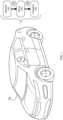
- an autonomous vehicle e.g. autonomous vehicle
- an autonomous vehicle is a vehicle that is capable of sensing its environment and moving with little or no human input.
- Autonomous vehicles e.g. autonomous vehicle 10
- Autonomous vehicle 10 may include a plurality of sensors (e.g. sensors 12), a plurality of electronic control units (e.g. ECUs 14) and a plurality of actuators (e.g. actuators 16). Accordingly, sensors 12 within autonomous vehicle 10 may monitor the environment in which autonomous vehicle 10 is operating, wherein sensors 12 may provide sensor data 18 to ECUs 14. ECUs 14 may process sensor data 18 to determine the manner in which autonomous vehicle 10 should move. ECUs 14 may then provide control data 20 to actuators 16 so that autonomous vehicle 10 may move in the manner decided by ECUs 14. For example, a machine vision sensor included within sensors 12 may "read" a speed limit sign stating that the speed limit on the road on which autonomous vehicle 10 is traveling is now 35 miles an hour.
- sensors 12 within autonomous vehicle 10 may monitor the environment in which autonomous vehicle 10 is operating, wherein sensors 12 may provide sensor data 18 to ECUs 14. ECUs 14 may process sensor data 18 to determine the manner in which autonomous vehicle 10 should move. ECUs 14 may then provide control data 20 to actuators
- This machine vision sensor included within sensors 12 may provide sensor data 18 to ECUs 14 indicating that the speed on the road on which autonomous vehicle 10 is traveling is now 35 mph.
- ECUs 14 may process sensor data 18 and may determine that autonomous vehicle 10 (which is currently traveling at 45 mph) is traveling too fast and needs to slow down. Accordingly, ECUs 14 may provide control data 20 to actuators 16, wherein control data 20 may e.g. apply the brakes of autonomous vehicle 10 or eliminate any actuation signal currently being applied to the accelerator (thus allowing autonomous vehicle 10 to coast until the speed of autonomous vehicle 10 is reduced to 35 mph).
- autonomous vehicle 10 is being controlled by the various electronic systems included therein (e.g. sensors 12, ECUs 14 and actuators 16), the potential failure of one or more of these systems should be considered when designing autonomous vehicle 10 and appropriate contingency plans may be employed.
- the various ECUs e.g., ECUs 14
- the various ECUs that are included within autonomous vehicle 10 may be compartmentalized so that the responsibilities of the various ECUs (e.g., ECUs 14) may be logically grouped.
- ECUs 14 may include autonomy control unit 50 that may receive sensor data 18 from sensors 12.
- Autonomy control unit 50 may be configured to perform various functions. For example, autonomy control unit 50 may receive and process exteroceptive sensor data (e.g., sensor data 18), may estimate the position of autonomous vehicle 10 within its operating environment, may calculate a representation of the surroundings of autonomous vehicle 10, may compute safe trajectories for autonomous vehicle 10, and may command the other ECUs (in particular, a vehicle control unit) to cause autonomous vehicle 10 to execute a desired maneuver. Autonomy control unit 50 may include substantial compute power, persistent storage, and memory.
- exteroceptive sensor data e.g., sensor data 18
- autonomy control unit 50 may process sensor data 18 to determine the manner in which autonomous vehicle 10 should be operating. Autonomy control unit 50 may then provide vehicle control data 52 to vehicle control unit 54, wherein vehicle control unit 54 may then process vehicle control data 52 to determine the manner in which the individual control systems (e.g. powertrain system 56, braking system 58 and steering system 60) should respond in order to achieve the trajectory defined by autonomous control unit 50 within vehicle control data 52.
- vehicle control unit 54 may then process vehicle control data 52 to determine the manner in which the individual control systems (e.g. powertrain system 56, braking system 58 and steering system 60) should respond in order to achieve the trajectory defined by autonomous control unit 50 within vehicle control data 52.
- the individual control systems e.g. powertrain system 56, braking system 58 and steering system 60
- Vehicle control unit 54 may be configured to control other ECUs included within autonomous vehicle 10.
- vehicle control unit 54 may control the steering, powertrain, and brake controller units.
- vehicle control unit 54 may provide: powertrain control signal 62 to powertrain control unit 64; braking control signal 66 to braking control unit 68; and steering control signal 70 to steering control unit 72.
- Powertrain control unit 64 may process powertrain control signal 62 so that the appropriate control data (commonly represented by control data 20) may be provided to powertrain system 56. Additionally, braking control unit 68 may process braking control signal 66 so that the appropriate control data (commonly represented by control data 20) may be provided to braking system 58. Further, steering control unit 72 may process steering control signal 70 so that the appropriate control data (commonly represented by control data 20) may be provided to steering system 60.
- Autonomy control unit 50 may be a highly complex computing system that may provide extensive processing capabilities (e.g., a workstation-class computing system with multi-core processors, discrete co-processing units, gigabytes of memory, and persistent storage).
- vehicle control unit 54 may be a much simpler device that may provide processing power equivalent to the other ECUs included within autonomous vehicle 10 (e.g., a computing system having a modest microprocessor (with a CPU frequency of less than 200 megahertz), less than 1 megabyte of system memory, and no persistent storage). Due to these simpler designs, vehicle control unit 54 may have greater reliability and durability than autonomy control unit 50.
- FIG 2B illustrates one example of the manner in which the various ECUs (e.g. ECUs 14) included within autonomous vehicle 10 may be configured in a redundant fashion
- autonomous control unit 50 may be configured in a redundant fashion, wherein a second autonomous control unit (not shown) is included within autonomous vehicle 10 and is configured in an active - passive or active - active fashion.
- sensors e.g., sensors 12
- actuators e.g. actuators 16
- the various ECUs of autonomous vehicle 10 may be grouped / arranged / configured to effectuate various functionalities.
- one or more of ECUs 14 may be configured to effectuate / form perception subsystem 100.
- perception subsystem 100 may be configured to process data from onboard sensors (e.g., sensor data 18) to calculate concise representations of objects of interest near autonomous vehicle 10 (examples of which may include but are not limited to other vehicles, pedestrians, traffic signals, traffic signs, road markers, hazards, etc.) and to identify environmental features that may assist in determining the location of autonomous vehicle 10.
- one or more of ECUs 14 may be configured to effectuate / form state estimation subsystem 102, wherein state estimation subsystem 102 may be configured to process data from onboard sensors (e.g., sensor data 18) to estimate the position, orientation, and velocity of autonomous vehicle 10 within its operating environment.
- one or more of ECUs 14 may be configured to effectuate / form planning subsystem 104, wherein planning subsystem 104 may be configured to calculate a desired vehicle trajectory (using perception output 106 and state estimation output 108). Further still, one or more of ECUs 14 may be configured to effectuate / form trajectory control subsystem 110, wherein trajectory control subsystem 110 uses planning output 112 and state estimation output 108 (in conjunction with feedback and/or feedforward control techniques) to calculate actuator commands (e.g., control data 20) that may cause autonomous vehicle 10 to execute its intended trajectory within it operating environment.
- actuator commands e.g., control data 20
- the above-described subsystems may be distributed across various devices (e.g., autonomy control unit 50 and vehicle control units 54, 74). Additionally / alternatively and due to the increased computational requirements, perception subsystem 100 and planning subsystem 104 may be located almost entirely within autonomy control unit 50, which (as discussed above) has much more computational horsepower than vehicle control units 54, 74. Conversely and due to their lower computational requirements, state estimation subsystem 102 and trajectory control subsystem 110 may be: located entirely on vehicle control units 54, 74 if vehicle control units 54, 74 have the requisite computational capacity; and/or located partially on vehicle control units 54, 74 and partially on autonomy control unit 50. However, the location of state estimation subsystem 102 and trajectory control subsystem 110 may be of critical importance in the design of any contingency planning architecture, as the location of these subsystems may determine how contingency plans are calculated, transmitted, and/or executed.
- planning subsystem 104 may calculate a trajectory that may span travel of many meters (in distance) and many seconds (in time). However, each iteration of the above-described loop may be calculated much more frequently (e.g., every ten milliseconds). Accordingly, autonomous vehicle 10 may be expected to execute only a small portion of each planned trajectory before a new trajectory is calculated (which may differ from the previously-calculated trajectories due to e.g., sensed environmental changes).
- the above-described trajectory may be represented as a parametric curve that describes the desired future path of autonomous vehicle 10.
- a trajectory is executed using feedback control, wherein feedback trajectory control algorithms may use e.g., a kinodynamic model of autonomous vehicle 10, per-vehicle configuration parameters, and a continuously-calculated estimate of the position, orientation, and velocity of autonomous vehicle 10 to calculate the commands that are provided to the various ECUs included within autonomous vehicle 10.
- feedback trajectory control algorithms may use e.g., a kinodynamic model of autonomous vehicle 10, per-vehicle configuration parameters, and a continuously-calculated estimate of the position, orientation, and velocity of autonomous vehicle 10 to calculate the commands that are provided to the various ECUs included within autonomous vehicle 10.
- Feedforward trajectory control algorithms may use a kinodynamic model of autonomous vehicle 10, per-vehicle configuration parameters, and a single estimate of the initial position, orientation, and velocity of autonomous vehicle 10 to calculate a sequence of commands that are provided to the various ECUs included within autonomous vehicle 10, wherein the sequence of commands are executed without using any real-time sensor data (e.g. from sensors 12) or other information.
- autonomy control unit 50 may communicate with (and may provide commands to) the various ECUs, using vehicle control unit 54 / 74 as an intermediary.
- autonomy control unit 50 may calculate steering, powertrain, and brake commands that are provided to their respective ECUs (e.g., powertrain control unit 64, braking control unit 68, and steering control unit 72; respectively), and may transmit these commands to vehicle control unit 54 / 74.
- Vehicle control unit 54 / 74 may then validate these commands and may relay them to the various ECUs (e.g., powertrain control unit 64, braking control unit 68, and steering control unit 72; respectively).
- the autonomy subsystems described above may repeatedly perform the following functionalities of: measuring the surrounding environment using on-board sensors (e.g. using sensors 12); estimating the positions, velocities, and future trajectories of surrounding vehicles, pedestrians, cyclists, other objects near autonomous vehicle 10, and environmental features useful for location determination (e.g., using perception subsystem 100); estimating the position, orientation, and velocity of autonomous vehicle 10 within the operating environment (e.g., using state estimation subsystem 102); planning a nominal trajectory for autonomous vehicle 10 to follow that brings autonomous vehicle 10 closer to the intended destination of autonomous vehicle 10 (e.g., using planning subsystem 104); and generating commands (e.g., control data 20) to cause autonomous vehicle 10 to execute the intended trajectory (e.g., using trajectory control subsystem 110).
- on-board sensors e.g. using sensors 12
- estimating the positions, velocities, and future trajectories of surrounding vehicles, pedestrians, cyclists, other objects near autonomous vehicle 10, and environmental features useful for location determination e.g.,
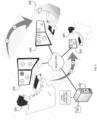
- the operation of autonomous vehicle 10 may be supervised by a vehicle monitor (e.g., a human vehicle monitor). Specifically and in a fashion similar to the manner in which an air traffic controller monitors the operation of one or more airplanes, a vehicle monitor may monitor the operation of one or more autonomous vehicles (e.g., autonomous vehicle 10).
- a vehicle monitor e.g., a human vehicle monitor.
- autonomous vehicle 10 may monitor the operation of one or more autonomous vehicles (e.g., autonomous vehicle 10).
- vehicle monitors may be located in a centralized location (such as a monitoring center) and may monitor the operation of various autonomous vehicles (e.g., autonomous vehicle 10).
- vehicle monitors 200, 202, 204 may (in this example) be monitoring the operation of nine autonomous vehicles (e.g., autonomous vehicle #1 through autonomous vehicle #9), each of which is represented as a unique circle on the displays of vehicle monitors 200, 202, 204.
- autonomous vehicles e.g., autonomous vehicle #1 through autonomous vehicle #9
- vehicle monitors 200, 202 are senior vehicle monitors who are capable of monitoring a higher quantity of autonomous vehicles than junior vehicle monitor 204.
- monitor assignment process 250 may define 300 a supervision level for each of a plurality of autonomous vehicles, thus defining a plurality of level-assigned autonomous vehicles (e.g., autonomous vehicle #1 through autonomous vehicle #9).
- Monitor assignment process 250 may be a server application and may reside on and may be executed by computing device 252, which may be connected to network 254 (e.g., the Internet or a local area network).
- Examples of computing device 252 may include, but are not limited to: a personal computer, a laptop computer, a personal digital assistant, a data-enabled cellular telephone, a notebook computer, a television with one or more processors embedded therein or coupled thereto, a cable / satellite receiver with one or more processors embedded therein or coupled thereto, a server computer, a series of server computers, a mini computer, a mainframe computer, or a cloud-based computing network.
- the instruction sets and subroutines of monitor assignment process 250 may be stored on storage device 256 coupled to computing device 252, may be executed by one or more processors (not shown) and one or more memory architectures (not shown) included within computing device 252.
- Examples of storage device 256 may include but are not limited to: a hard disk drive; a RAID device; a random access memory (RAM); a read-only memory (ROM); and all forms of flash memory storage devices.
- Network 254 may couple computing device 252 to the client electronic devices (e.g., client electronic devices 258, 260, 262) utilized by vehicle monitors 200, 202, 204 (respectively).
- client electronic devices 258, 260, 262 may include, but are not limited to, a data-enabled, cellular telephone, a laptop computer, a personal digital assistant, a personal computer, a notebook computer, a workstation computer, a smart television, and a dedicated network device.
- Client electronic devices 258, 260, 262 may each execute an operating system, examples of which may include but are not limited to Microsoft Windows tm , Android tm , WebOS tm , iOS tm , Redhat Linux tm , or a custom operating system.
- an operating system examples of which may include but are not limited to Microsoft Windows tm , Android tm , WebOS tm , iOS tm , Redhat Linux tm , or a custom operating system.
- the supervision level assigned to each of a plurality of autonomous vehicles may vary from e.g., none to total. For example, when an autonomous vehicle is out-of-service (e.g., in storage, being charged, or not in use), the supervision level assigned to this vehicle may be none or minimal. Generally, while an autonomous vehicle is being charged, there may be no need for a vehicle monitor to monitor the autonomous vehicle (as it is not moving). Alternatively, the vehicle monitor may provide minimal supervision to monitor e.g., the state of the charge so that a return-to-service time may be determined for the autonomous vehicle.
- the level of supervision that a vehicle monitor must apply to an autonomous vehicle may vary depending upon the specific operating situation of the autonomous vehicle. Therefore, if an autonomous vehicle is driving down a rural roadway with minimal traffic, the vehicle monitor may apply a low level of supervision; wherein if an autonomous vehicle is driving down a congested urban roadway that has rush-hour traffic, the vehicle monitor may apply a higher level of supervision. Further still, there may be situations in which a vehicle monitor may need to devote 100% of their attention to a single autonomous vehicle. For example, if a passenger of the autonomous vehicle requests to speak with a vehicle monitor (e.g., to ask a question about their route, to change their destination, or to complain about the condition of the vehicle), the vehicle monitor may need to dedicate 100% of their attention to the conversation.
- an autonomous vehicle may request permission from the vehicle monitor to cross a double yellow line to drive around the accident. This may require the vehicle monitor to review camera data to ensure that the autonomous vehicle may safely cross the double yellow line to get around the accident.
- the supervision level defined 300 for each of a plurality of autonomous vehicles may include one or more class-based supervision levels.
- monitor assignment process 250 may define 300 class-based supervision levels, such as:
- the supervision level defined 300 for each of a plurality of autonomous vehicles may be much more granular and may include one or more score-based supervision levels.
- Monitor assignment process 250 may assign 302 responsibility for each of the level-assigned autonomous vehicles (e.g., autonomous vehicle #1 through autonomous vehicle #9) to one of a plurality of vehicle monitors (e.g., vehicle monitors 200, 202, 204), thus defining a vehicle workload for each of the plurality of vehicle monitors (e.g., vehicle monitors 200, 202, 204).
- level-assigned autonomous vehicles e.g., autonomous vehicle #1 through autonomous vehicle #9
- a plurality of vehicle monitors e.g., vehicle monitors 200, 202, 204
- monitor assignment process 250 For this example, assume that monitor assignment process 250:
- monitor assignment process 250 may consider the experience level of the individual vehicle monitors to avoid overloading them. For example,
- the level of supervision that a level-assigned autonomous vehicles requires may vary from no supervision, to low supervision, to high supervision, to total supervision. Accordingly, the above-described maximum workload descriptions may be for e.g., low supervision level-assigned autonomous vehicles, wherein e.g., a high supervision level-assigned autonomous vehicle may count as e.g., two low supervision level-assigned autonomous vehicle. Therefore and in such a configuration, low supervision level-assigned autonomous vehicles and high supervision level-assigned autonomous vehicles may be mixed and matched across varying levels of vehicle monitors. For example:
- any vehicle monitor that is monitoring a total supervision level-assigned autonomous vehicles may only be monitoring that single level-assigned autonomous vehicle (and no others).
- monitor assignment process 250 may monitor the supervision level of each level-assigned autonomous vehicles (e.g., autonomous vehicle #1 through autonomous vehicle #9) to determine if they have changed.
- monitor assignment process 250 may reexamine 306 the vehicle workload associated with the specific vehicle monitor. If the vehicle workload associated with the specific vehicle monitor exceeds a defined level, monitor assignment process 250 may reassign 308 responsibility for some of the other level-assigned autonomous vehicles that are assigned to the specific vehicle monitor to another vehicle monitor.
- monitor assignment process 250 may reexamine 306 the vehicle workload associated with the specific vehicle monitor (e.g., vehicle monitor 200). And if the vehicle workload associated with the specific vehicle monitor (e.g., vehicle monitor 200) exceeds a defined level, monitor assignment process 250 may reassign 308 responsibility for some of the other level-assigned autonomous vehicles that are assigned to the specific vehicle monitor to another vehicle monitor.
- a specific level-assigned autonomous vehicle e.g., level-assigned autonomous vehicles 3 assigned to a specific vehicle monitor (e.g., vehicle monitor 200) from low supervision to some other supervision level
- monitor assignment process 250 may reexamine 306 the vehicle workload associated with the specific vehicle monitor (e.g., vehicle monitor 200). And if the vehicle workload associated with the specific vehicle monitor (e.g., vehicle monitor 200) exceeds a defined level, monitor assignment process 250 may reassign 308 responsibility for some of the other level-assigned autonomous vehicles that are assigned to the specific vehicle monitor to another vehicle monitor.
- monitor assignment process 250 assigns 302 responsibility for five level-assigned autonomous vehicles (i.e., level-assigned autonomous vehicles 1-5) to vehicle monitor 200, who is a senior vehicle monitor.
- a senior vehicle monitor may have a maximum workload of e.g., seven low supervision level-assigned autonomous vehicles or three high supervision level-assigned autonomous vehicles and one low supervision level-assigned autonomous vehicles. Accordingly, if all five of autonomous vehicles 1-5 assigned 302 to vehicle monitor 200 are low supervision level-assigned autonomous vehicles, the vehicle workload associated with vehicle monitor 200 is acceptable. Therefore, monitor assignment process 250 need not reassign 308 responsibility for any of the level-assigned autonomous vehicles from vehicle monitor 200 to other vehicle monitors.
- monitor assignment process 250 may determine that the vehicle workload associated with vehicle monitor 200 is not acceptable (as it is now four high supervision level-assigned autonomous vehicles and one low supervision level-assigned autonomous vehicles; which exceeds the maximum vehicle workload of three high supervision level-assigned autonomous vehicles and one low supervision level-assigned autonomous vehicles for a senior vehicle monitor).
- monitor assignment process 250 may reassign 308 responsibility for one of the high supervision level-assigned autonomous vehicles (e.g., level-assigned autonomous vehicles 3) from vehicle monitor 200 to one of vehicle monitor 202 and vehicle monitor 204, as both of vehicle monitors 202, 204 have available workload bandwidth to handle the high supervision level-assigned autonomous vehicle (e.g., level-assigned autonomous vehicles 3).
- the high supervision level-assigned autonomous vehicles e.g., level-assigned autonomous vehicles 3
- any vehicle monitor that is monitoring a total supervision level-assigned autonomous vehicles may only be monitoring that single total supervision level-assigned autonomous vehicle (and no others). Accordingly and in the event that a level-assigned autonomous vehicle being monitored by a vehicle monitor changes to a total supervision level-assigned autonomous vehicle, monitor assignment process 250 may reassign all of the other level-assigned autonomous vehicles currently being monitored by the vehicle monitor.
- monitor assignment process 250 senses 310 that level-assigned autonomous vehicle 3 has transitioned from a low supervision level-assigned autonomous vehicle to a high supervision level-assigned autonomous vehicle; now requiring the full attention of vehicle monitor 200.
- monitor assignment process 250 senses 310 that level-assigned autonomous vehicle 3 has transitioned from a low supervision level-assigned autonomous vehicle to a high supervision level-assigned autonomous vehicle; now requiring the full attention of vehicle monitor 200.
- a passenger within level-assigned autonomous vehicle 3 wishes to chat with vehicle monitor 200, thus requiring the full attention of vehicle monitor 200.
- monitor assignment process 250 may reassign 312 responsibility for all of the other level-assigned autonomous vehicles that are assigned to vehicle monitor 200 to another vehicle monitor. For example, monitor assignment process 250 may reassign 312
- the present disclosure may be embodied as a method, a system, or a computer program product. Accordingly, the present disclosure may take the form of an entirely hardware embodiment, an entirely software embodiment (including firmware, resident software, micro-code, etc.) or an embodiment combining software and hardware aspects that may all generally be referred to herein as a "circuit,” "module” or “system.” Furthermore, the present disclosure may take the form of a computer program product on a computer-usable storage medium having computer-usable program code embodied in the medium.
- the computer-usable or computer-readable medium may be, for example but not limited to, an electronic, magnetic, optical, electromagnetic, infrared, or semiconductor system, apparatus, device, or propagation medium. More specific examples (a non-exhaustive list) of the computer-readable medium may include the following: an electrical connection having one or more wires, a portable computer diskette, a hard disk, a random access memory (RAM), a read-only memory (ROM), an erasable programmable read-only memory (EPROM or Flash memory), an optical fiber, a portable compact disc read-only memory (CD-ROM), an optical storage device, a transmission media such as those supporting the Internet or an intranet, or a magnetic storage device.
- the computer-usable or computer-readable medium may also be paper or another suitable medium upon which the program is printed, as the program can be electronically captured, via, for instance, optical scanning of the paper or other medium, then compiled, interpreted, or otherwise processed in a suitable manner, if necessary, and then stored in a computer memory.
- a computer-usable or computer-readable medium may be any medium that can contain, store, communicate, propagate, or transport the program for use by or in connection with the instruction execution system, apparatus, or device.
- the computer-usable medium may include a propagated data signal with the computer-usable program code embodied therewith, either in baseband or as part of a carrier wave.
- the computer usable program code may be transmitted using any appropriate medium, including but not limited to the Internet, wireline, optical fiber cable, RF, etc.
- Computer program code for carrying out operations of the present disclosure may be written in an object oriented programming language such as Java, Smalltalk, C++ or the like. However, the computer program code for carrying out operations of the present disclosure may also be written in conventional procedural programming languages, such as the "C" programming language or similar programming languages.
- the program code may execute entirely on the user's computer, partly on the user's computer, as a stand-alone software package, partly on the user's computer and partly on a remote computer or entirely on the remote computer or server. In the latter scenario, the remote computer may be connected to the user's computer through a local area network / a wide area network / the Internet (e.g., network 14).
- These computer program instructions may also be stored in a computer-readable memory that may direct a computer or other programmable data processing apparatus to function in a particular manner, such that the instructions stored in the computer-readable memory produce an article of manufacture including instruction means which implement the function/act specified in the flowchart and/or block diagram block or blocks.
- the computer program instructions may also be loaded onto a computer or other programmable data processing apparatus to cause a series of operational steps to be performed on the computer or other programmable apparatus to produce a computer-implemented process such that the instructions which execute on the computer or other programmable apparatus provide steps for implementing the functions/acts specified in the flowchart and/or block diagram block or blocks.
- each block in the flowchart or block diagrams may represent a module, segment, or portion of code, which comprises one or more executable instructions for implementing the specified logical function(s).
- the functions noted in the block may occur out of the order noted in the figures. For example, two blocks shown in succession may, in fact, be executed substantially concurrently, or the blocks may sometimes be executed in the reverse order, depending upon the functionality involved.
Landscapes
- Engineering & Computer Science (AREA)
- Business, Economics & Management (AREA)
- Human Resources & Organizations (AREA)
- Physics & Mathematics (AREA)
- Strategic Management (AREA)
- Economics (AREA)
- Automation & Control Theory (AREA)
- Entrepreneurship & Innovation (AREA)
- General Physics & Mathematics (AREA)
- Tourism & Hospitality (AREA)
- Development Economics (AREA)
- Marketing (AREA)
- Theoretical Computer Science (AREA)
- General Business, Economics & Management (AREA)
- Transportation (AREA)
- Mechanical Engineering (AREA)
- Game Theory and Decision Science (AREA)
- Quality & Reliability (AREA)
- Educational Administration (AREA)
- Operations Research (AREA)
- Human Computer Interaction (AREA)
- Remote Sensing (AREA)
- Aviation & Aerospace Engineering (AREA)
- Radar, Positioning & Navigation (AREA)
- Mathematical Physics (AREA)
- Health & Medical Sciences (AREA)
- Artificial Intelligence (AREA)
- Evolutionary Computation (AREA)
- Medical Informatics (AREA)
- General Health & Medical Sciences (AREA)
- Primary Health Care (AREA)
- Traffic Control Systems (AREA)
- Charge And Discharge Circuits For Batteries Or The Like (AREA)
Claims (15)
- Computerimplementiertes Verfahren, ausgeführt auf einer Rechenvorrichtung, Folgendes umfassend:Definieren einer Überwachungsebene für jedes von einer Vielzahl von autonomen Fahrzeugen, sodass eine Vielzahl von ebenenzugewiesenen autonomen Fahrzeugen definiert wird;Bestimmen einer jeweiligen maximalen Arbeitsbelastung für jeden Fahrzeugmonitor einer Vielzahl von Fahrzeugmonitoren;Zuweisen der Verantwortung für jedes der ebenenzugewiesenen autonomen Fahrzeuge zu einem jeweiligen einen der Vielzahl von Fahrzeugmonitoren basierend auf der jeweiligen maximalen Arbeitsbelastung jedes Fahrzeugmonitors und der Überwachungsebene für das jeweilige ebenenzugewiesene autonome Fahrzeug, wodurch eine Fahrzeugarbeitsbelastung für jeden der Vielzahl von Fahrzeugmonitoren definiert wird;Erfassen einer Änderung der Überwachungsebene eines bestimmten ebenenzugewiesenen autonomen Fahrzeugs, das einem bestimmten Fahrzeugmonitor zugewiesen ist, wobei Erfassen der Änderung der Überwachungsebene Bestimmen umfasst, dass das bestimmte ebenenzugewiesene autonome Fahrzeug eine ländliche Straße mit minimalem Verkehr entlangfährt; underneutes Prüfen der Fahrzeugarbeitsbelastung, die dem bestimmten Fahrzeugmonitor zugeordnet ist, als Reaktion auf das Erfassen der Änderung der Überwachungsebene des bestimmten ebenenzugewiesenen autonomen Fahrzeugs.
- Computerimplementiertes Verfahren nach Anspruch 1, wobei Erfassen einer Änderung des Überwachungsniveaus eines bestimmten ebenenzugewiesenen autonomen Fahrzeugs, das einem bestimmten Fahrzeugmonitor zugewiesen ist, Folgendes beinhaltet:Erfassen, dass das bestimmte ebenenzugewiesene autonome Fahrzeug die volle Aufmerksamkeit des bestimmten Fahrzeugmonitors erfordert.
- Computerimplementiertes Verfahren nach Anspruch 1, ferner Folgendes umfassend:
Neuzuweisen der Verantwortung für einige der anderen ebenenzugewiesenen autonomen Fahrzeuge, die dem bestimmten Fahrzeugmonitor zugewiesen sind, zu einem anderen Fahrzeugmonitor, wenn die dem bestimmten Fahrzeugmonitor zugeordnete Fahrzeugarbeitsbelastung einen definierten Wert überschreitet. - Computerimplementiertes Verfahren nach Anspruch 3, wobei Neuzuweisen der Verantwortung für eines oder mehrere der ebenenzugeordneten autonomen Fahrzeuge, die dem bestimmten Fahrzeugmonitor zugewiesen sind, zu einem anderen Fahrzeugmonitor Folgendes beinhaltet:
Neuzuweisen der Verantwortung für alle anderen ebenenzugewiesenen autonomen Fahrzeuge, die dem bestimmten Fahrzeugmonitor zugewiesen sind, zu einem anderen Fahrzeugmonitor. - Computerimplementiertes Verfahren nach Anspruch 1, wobei die Überwachungsebene, die für jedes von einer Vielzahl von autonomen Fahrzeugen definiert ist, eine oder mehrere klassenbasierte Überwachungsebenen beinhaltet.
- Computerimplementiertes Verfahren nach Anspruch 1, wobei die Überwachungsebene, die für jedes von einer Vielzahl von autonomen Fahrzeugen definiert ist, eine oder mehrere bewertungsbasierte Überwachungsebenen beinhaltet.
- Computerimplementiertes Verfahren nach Anspruch 1, wobei die Vielzahl von Fahrzeugmonitoren Folgendes beinhaltet:
eine Vielzahl von menschlichen Fahrzeugmonitoren. - Computerprogrammprodukt, das sich auf einem computerlesbaren Medium befindet, mit einer darauf gespeicherten Vielzahl von Anweisungen, die bei Ausführung durch einen Prozessor den Prozessor veranlassen, das computerimplementierte Verfahren nach einem der Ansprüche 1 bis 7 durchzuführen.
- Computersystem, beinhaltend einen Prozessor und Speicher, das dazu konfiguriert ist, Operationen durchzuführen, Folgendes umfassend:Definieren einer Überwachungsebene für jedes von einer Vielzahl von autonomen Fahrzeugen, sodass eine Vielzahl von ebenenzugewiesenen autonomen Fahrzeugen definiert wird;Bestimmen einer jeweiligen maximalen Arbeitsbelastung für jeden Fahrzeugmonitor einer Vielzahl von Fahrzeugmonitoren;Zuweisen der Verantwortung für jedes der ebenenzugewiesenen autonomen Fahrzeuge zu einem jeweiligen einen der Vielzahl von Fahrzeugmonitoren basierend auf der jeweiligen maximalen Arbeitsbelastung jedes Fahrzeugmonitors und der Überwachungsebene für das jeweilige ebenenzugewiesene autonome Fahrzeug, wodurch eine Fahrzeugarbeitsbelastung für jeden der Vielzahl von Fahrzeugmonitoren definiert wird;Erfassen einer Änderung der Überwachungsebene eines bestimmten ebenenzugewiesenen autonomen Fahrzeugs, das einem bestimmten Fahrzeugmonitor zugewiesen ist, wobei Erfassen der Änderung der Überwachungsebene Bestimmen umfasst, dass das bestimmte ebenenzugewiesene autonome Fahrzeug eine ländliche Straße mit minimalem Verkehr entlangfährt; underneutes Prüfen der Fahrzeugarbeitsbelastung, die dem bestimmten Fahrzeugmonitor zugeordnet ist, als Reaktion auf das Erfassen der Änderung der Überwachungsebene des bestimmten ebenenzugewiesenen autonomen Fahrzeugs.
- Computersystem nach Anspruch 9, wobei Erfassen einer Änderung des Überwachungsniveaus eines bestimmten ebenenzugewiesenen autonomen Fahrzeugs, das einem bestimmten Fahrzeugmonitor zugewiesen ist, Folgendes beinhaltet:
Erfassen, dass das bestimmte ebenenzugewiesene autonome Fahrzeug die volle Aufmerksamkeit des bestimmten Fahrzeugmonitors erfordert. - Computersystem nach Anspruch 9, ferner umfassend:
Neuzuweisen der Verantwortung für einige der anderen ebenenzugewiesenen autonomen Fahrzeuge, die dem bestimmten Fahrzeugmonitor zugewiesen sind, zu einem anderen Fahrzeugmonitor, wenn die dem bestimmten Fahrzeugmonitor zugeordnete Fahrzeugarbeitsbelastung einen definierten Wert überschreitet. - Computersystem nach Anspruch 11, wobei Neuzuweisen der Verantwortung für eines oder mehrere der ebenenzugeordneten autonomen Fahrzeuge, die dem bestimmten Fahrzeugmonitor zugewiesen sind, zu einem anderen Fahrzeugmonitor Folgendes beinhaltet:
Neuzuweisen der Verantwortung für alle anderen ebenenzugewiesenen autonomen Fahrzeuge, die dem bestimmten Fahrzeugmonitor zugewiesen sind, zu einem anderen Fahrzeugmonitor. - Computersystem nach Anspruch 9, wobei die Überwachungsebene, die für jedes von einer Vielzahl von autonomen Fahrzeugen definiert ist, eine oder mehrere klassenbasierte Überwachungsebenen beinhaltet.
- Computersystem nach Anspruch 9, wobei die Überwachungsebene, die für jedes von einer Vielzahl von autonomen Fahrzeugen definiert ist, eine oder mehrere bewertungsbasierte Überwachungsebenen beinhaltet.
- Computersystem nach Anspruch 9, wobei die Vielzahl von Fahrzeugmonitoren Folgendes beinhaltet:
eine Vielzahl von menschlichen Fahrzeugmonitoren.
Applications Claiming Priority (2)
| Application Number | Priority Date | Filing Date | Title |
|---|---|---|---|
| US201962893990P | 2019-08-30 | 2019-08-30 | |
| PCT/US2020/048780 WO2021042049A1 (en) | 2019-08-30 | 2020-08-31 | Monitor assignment system and method |
Publications (3)
| Publication Number | Publication Date |
|---|---|
| EP4022258A1 EP4022258A1 (de) | 2022-07-06 |
| EP4022258A4 EP4022258A4 (de) | 2023-04-12 |
| EP4022258B1 true EP4022258B1 (de) | 2025-02-26 |
Family
ID=74680920
Family Applications (1)
| Application Number | Title | Priority Date | Filing Date |
|---|---|---|---|
| EP20857654.6A Active EP4022258B1 (de) | 2019-08-30 | 2020-08-31 | Monitorzuweisungssystem und -verfahren |
Country Status (4)
| Country | Link |
|---|---|
| US (1) | US20210061303A1 (de) |
| EP (1) | EP4022258B1 (de) |
| CN (1) | CN114631005B (de) |
| WO (2) | WO2021042049A1 (de) |
Families Citing this family (4)
| Publication number | Priority date | Publication date | Assignee | Title |
|---|---|---|---|---|
| CN115702404A (zh) * | 2020-05-04 | 2023-02-14 | 马格纳电子系统公司 | 基础设施交互系统和方法 |
| US12429242B2 (en) | 2022-01-18 | 2025-09-30 | Computime Electronics (Shenzhen) Co. Ltd. | Thermostat with detachable dial control |
| US12447982B2 (en) | 2022-06-24 | 2025-10-21 | Magna Electronics Inc. | Deterministic simulation of discrete block diagrams for vehicular control system |
| FR3141789B1 (fr) * | 2022-11-03 | 2024-09-20 | Psa Automobiles Sa | Sécurisation des opérations d’une flotte de véhicules automobiles autonomes supervisés à distance au moyen d’au moins un cockpit de supervision |
Family Cites Families (18)
| Publication number | Priority date | Publication date | Assignee | Title |
|---|---|---|---|---|
| US20040107133A1 (en) * | 2002-12-02 | 2004-06-03 | Pershing Investments, Llc. | Capacity planning method and system |
| KR20160057278A (ko) * | 2014-11-13 | 2016-05-23 | 엘지전자 주식회사 | 무선 전력 전송 장치, 무선 전력 수신 장치 및 무선 충전 시스템 |
| KR20170050991A (ko) * | 2015-11-02 | 2017-05-11 | 엘지이노텍 주식회사 | 무선 전력 송신기 |
| US10705519B2 (en) * | 2016-04-25 | 2020-07-07 | Transportation Ip Holdings, Llc | Distributed vehicle system control system and method |
| US10303166B2 (en) * | 2016-05-23 | 2019-05-28 | nuTonomy Inc. | Supervisory control of vehicles |
| US11454719B2 (en) * | 2016-07-08 | 2022-09-27 | Magna Electronics Inc. | 2D MIMO radar system for vehicle |
| US11087252B2 (en) * | 2016-08-16 | 2021-08-10 | Teleport Mobility, Inc. | Interactive real time system and real time method of use thereof in conveyance industry segments |
| KR101747375B1 (ko) * | 2016-09-12 | 2017-06-15 | 아이피랩 주식회사 | 차량 원격제어 장치 및 방법, 원격 운전 시스템 |
| US10216190B2 (en) * | 2016-09-20 | 2019-02-26 | International Business Machines Corporation | Managing autonomous vehicles needing energy replenishment |
| US10591912B2 (en) * | 2016-11-30 | 2020-03-17 | Nissan North America, Inc. | Autonomous vehicle remote support mapping interface |
| JP6732129B2 (ja) * | 2016-11-30 | 2020-07-29 | ニッサン ノース アメリカ,インク | 問題の状況に対処するための自律走行車の遠隔操作 |
| CN208190268U (zh) * | 2017-11-16 | 2018-12-04 | 东莞旺科知识产权运营有限公司 | 一种按压切换启动双线圈无线充电器 |
| CN207896708U (zh) * | 2018-03-09 | 2018-09-21 | 尚行科技(深圳)有限公司 | 一种分体式无线充电装置 |
| US11214265B2 (en) * | 2018-08-22 | 2022-01-04 | Phantom Auto Inc. | Vehicle teleoperator ranking and selection |
| US11325591B2 (en) * | 2019-03-07 | 2022-05-10 | Honda Motor Co., Ltd. | System and method for teleoperation service for vehicle |
| US10841427B1 (en) * | 2019-04-25 | 2020-11-17 | Liveperson, Inc. | Smart capacity for workload routing |
| US11275376B2 (en) * | 2019-06-20 | 2022-03-15 | Florida Power & Light Company | Large scale unmanned monitoring device assessment of utility system components |
| CN210431021U (zh) * | 2019-07-22 | 2020-04-28 | 深圳市时商创展科技有限公司 | 无线充电器 |
-
2020
- 2020-08-31 CN CN202080072203.5A patent/CN114631005B/zh active Active
- 2020-08-31 US US17/008,050 patent/US20210061303A1/en not_active Abandoned
- 2020-08-31 WO PCT/US2020/048780 patent/WO2021042049A1/en not_active Ceased
- 2020-08-31 EP EP20857654.6A patent/EP4022258B1/de active Active
-
2021
- 2021-07-08 WO PCT/US2021/040791 patent/WO2022046295A1/en not_active Ceased
Also Published As
| Publication number | Publication date |
|---|---|
| WO2021042049A1 (en) | 2021-03-04 |
| CN114631005A (zh) | 2022-06-14 |
| CN114631005B (zh) | 2025-03-04 |
| EP4022258A1 (de) | 2022-07-06 |
| WO2022046295A1 (en) | 2022-03-03 |
| US20210061303A1 (en) | 2021-03-04 |
| EP4022258A4 (de) | 2023-04-12 |
Similar Documents
| Publication | Publication Date | Title |
|---|---|---|
| US12565224B2 (en) | Vehicular control system having a plurality of electronic control units | |
| US12038747B2 (en) | Fault-tolerant control of an autonomous vehicle with multiple control lanes | |
| EP4022258B1 (de) | Monitorzuweisungssystem und -verfahren | |
| EP4202586B1 (de) | Benutzerschnittstellen zur empfehlung von fernunterstützungsaktionen | |
| EP3659002B1 (de) | Fahrzeugschnittstelle für autonomes fahrzeug | |
| US20200353949A1 (en) | Cost calculation system and method | |
| US20230256999A1 (en) | Simulation of imminent crash to minimize damage involving an autonomous vehicle | |
| EP4074562B1 (de) | Steuerungssystem und steuerungsverfahren für ein intelligentes verbundenes fahrzeug | |
| US20190359222A1 (en) | Contingency plan system and method | |
| US12134405B2 (en) | Responding to unsupported or degraded conditions for autonomous vehicles | |
| US20210339766A1 (en) | Infrastructure Interaction System and Method | |
| CN114379584A (zh) | 车辆控制方法、装置、车辆、设备和存储介质 | |
| US20230391327A1 (en) | Maximum speed dependent parameter management for autonomous vehicles |
Legal Events
| Date | Code | Title | Description |
|---|---|---|---|
| STAA | Information on the status of an ep patent application or granted ep patent |
Free format text: STATUS: THE INTERNATIONAL PUBLICATION HAS BEEN MADE |
|
| PUAI | Public reference made under article 153(3) epc to a published international application that has entered the european phase |
Free format text: ORIGINAL CODE: 0009012 |
|
| STAA | Information on the status of an ep patent application or granted ep patent |
Free format text: STATUS: REQUEST FOR EXAMINATION WAS MADE |
|
| 17P | Request for examination filed |
Effective date: 20210513 |
|
| AK | Designated contracting states |
Kind code of ref document: A1 Designated state(s): AL AT BE BG CH CY CZ DE DK EE ES FI FR GB GR HR HU IE IS IT LI LT LU LV MC MK MT NL NO PL PT RO RS SE SI SK SM TR |
|
| DAV | Request for validation of the european patent (deleted) | ||
| DAX | Request for extension of the european patent (deleted) | ||
| A4 | Supplementary search report drawn up and despatched |
Effective date: 20230315 |
|
| RIC1 | Information provided on ipc code assigned before grant |
Ipc: G01D 1/00 20060101AFI20230309BHEP |
|
| P01 | Opt-out of the competence of the unified patent court (upc) registered |
Effective date: 20230526 |
|
| GRAP | Despatch of communication of intention to grant a patent |
Free format text: ORIGINAL CODE: EPIDOSNIGR1 |
|
| STAA | Information on the status of an ep patent application or granted ep patent |
Free format text: STATUS: GRANT OF PATENT IS INTENDED |
|
| INTG | Intention to grant announced |
Effective date: 20240923 |
|
| GRAS | Grant fee paid |
Free format text: ORIGINAL CODE: EPIDOSNIGR3 |
|
| GRAA | (expected) grant |
Free format text: ORIGINAL CODE: 0009210 |
|
| STAA | Information on the status of an ep patent application or granted ep patent |
Free format text: STATUS: THE PATENT HAS BEEN GRANTED |
|
| AK | Designated contracting states |
Kind code of ref document: B1 Designated state(s): AL AT BE BG CH CY CZ DE DK EE ES FI FR GB GR HR HU IE IS IT LI LT LU LV MC MK MT NL NO PL PT RO RS SE SI SK SM TR |
|
| REG | Reference to a national code |
Ref country code: GB Ref legal event code: FG4D |
|
| REG | Reference to a national code |
Ref country code: CH Ref legal event code: EP |
|
| REG | Reference to a national code |
Ref country code: DE Ref legal event code: R096 Ref document number: 602020046948 Country of ref document: DE |
|
| REG | Reference to a national code |
Ref country code: IE Ref legal event code: FG4D |
|
| REG | Reference to a national code |
Ref country code: NL Ref legal event code: MP Effective date: 20250226 |
|
| PG25 | Lapsed in a contracting state [announced via postgrant information from national office to epo] |
Ref country code: RS Free format text: LAPSE BECAUSE OF FAILURE TO SUBMIT A TRANSLATION OF THE DESCRIPTION OR TO PAY THE FEE WITHIN THE PRESCRIBED TIME-LIMIT Effective date: 20250526 |
|
| PG25 | Lapsed in a contracting state [announced via postgrant information from national office to epo] |
Ref country code: FI Free format text: LAPSE BECAUSE OF FAILURE TO SUBMIT A TRANSLATION OF THE DESCRIPTION OR TO PAY THE FEE WITHIN THE PRESCRIBED TIME-LIMIT Effective date: 20250226 |
|
| PG25 | Lapsed in a contracting state [announced via postgrant information from national office to epo] |
Ref country code: PL Free format text: LAPSE BECAUSE OF FAILURE TO SUBMIT A TRANSLATION OF THE DESCRIPTION OR TO PAY THE FEE WITHIN THE PRESCRIBED TIME-LIMIT Effective date: 20250226 |
|
| PG25 | Lapsed in a contracting state [announced via postgrant information from national office to epo] |
Ref country code: ES Free format text: LAPSE BECAUSE OF FAILURE TO SUBMIT A TRANSLATION OF THE DESCRIPTION OR TO PAY THE FEE WITHIN THE PRESCRIBED TIME-LIMIT Effective date: 20250226 |
|
| REG | Reference to a national code |
Ref country code: LT Ref legal event code: MG9D |
|
| PG25 | Lapsed in a contracting state [announced via postgrant information from national office to epo] |
Ref country code: NO Free format text: LAPSE BECAUSE OF FAILURE TO SUBMIT A TRANSLATION OF THE DESCRIPTION OR TO PAY THE FEE WITHIN THE PRESCRIBED TIME-LIMIT Effective date: 20250526 Ref country code: IS Free format text: LAPSE BECAUSE OF FAILURE TO SUBMIT A TRANSLATION OF THE DESCRIPTION OR TO PAY THE FEE WITHIN THE PRESCRIBED TIME-LIMIT Effective date: 20250626 |
|
| PG25 | Lapsed in a contracting state [announced via postgrant information from national office to epo] |
Ref country code: NL Free format text: LAPSE BECAUSE OF FAILURE TO SUBMIT A TRANSLATION OF THE DESCRIPTION OR TO PAY THE FEE WITHIN THE PRESCRIBED TIME-LIMIT Effective date: 20250226 |
|
| PG25 | Lapsed in a contracting state [announced via postgrant information from national office to epo] |
Ref country code: HR Free format text: LAPSE BECAUSE OF FAILURE TO SUBMIT A TRANSLATION OF THE DESCRIPTION OR TO PAY THE FEE WITHIN THE PRESCRIBED TIME-LIMIT Effective date: 20250226 |
|
| PG25 | Lapsed in a contracting state [announced via postgrant information from national office to epo] |
Ref country code: PT Free format text: LAPSE BECAUSE OF FAILURE TO SUBMIT A TRANSLATION OF THE DESCRIPTION OR TO PAY THE FEE WITHIN THE PRESCRIBED TIME-LIMIT Effective date: 20250626 Ref country code: LV Free format text: LAPSE BECAUSE OF FAILURE TO SUBMIT A TRANSLATION OF THE DESCRIPTION OR TO PAY THE FEE WITHIN THE PRESCRIBED TIME-LIMIT Effective date: 20250226 |
|
| PG25 | Lapsed in a contracting state [announced via postgrant information from national office to epo] |
Ref country code: GR Free format text: LAPSE BECAUSE OF FAILURE TO SUBMIT A TRANSLATION OF THE DESCRIPTION OR TO PAY THE FEE WITHIN THE PRESCRIBED TIME-LIMIT Effective date: 20250527 Ref country code: BG Free format text: LAPSE BECAUSE OF FAILURE TO SUBMIT A TRANSLATION OF THE DESCRIPTION OR TO PAY THE FEE WITHIN THE PRESCRIBED TIME-LIMIT Effective date: 20250226 |
|
| REG | Reference to a national code |
Ref country code: AT Ref legal event code: MK05 Ref document number: 1771022 Country of ref document: AT Kind code of ref document: T Effective date: 20250226 |
|
| PG25 | Lapsed in a contracting state [announced via postgrant information from national office to epo] |
Ref country code: SE Free format text: LAPSE BECAUSE OF FAILURE TO SUBMIT A TRANSLATION OF THE DESCRIPTION OR TO PAY THE FEE WITHIN THE PRESCRIBED TIME-LIMIT Effective date: 20250226 |
|
| PG25 | Lapsed in a contracting state [announced via postgrant information from national office to epo] |
Ref country code: SM Free format text: LAPSE BECAUSE OF FAILURE TO SUBMIT A TRANSLATION OF THE DESCRIPTION OR TO PAY THE FEE WITHIN THE PRESCRIBED TIME-LIMIT Effective date: 20250226 |
|
| PG25 | Lapsed in a contracting state [announced via postgrant information from national office to epo] |
Ref country code: DK Free format text: LAPSE BECAUSE OF FAILURE TO SUBMIT A TRANSLATION OF THE DESCRIPTION OR TO PAY THE FEE WITHIN THE PRESCRIBED TIME-LIMIT Effective date: 20250226 |
|
| PGFP | Annual fee paid to national office [announced via postgrant information from national office to epo] |
Ref country code: DE Payment date: 20250702 Year of fee payment: 6 |
|
| PG25 | Lapsed in a contracting state [announced via postgrant information from national office to epo] |
Ref country code: IT Free format text: LAPSE BECAUSE OF FAILURE TO SUBMIT A TRANSLATION OF THE DESCRIPTION OR TO PAY THE FEE WITHIN THE PRESCRIBED TIME-LIMIT Effective date: 20250226 |
|
| PGFP | Annual fee paid to national office [announced via postgrant information from national office to epo] |
Ref country code: GB Payment date: 20250703 Year of fee payment: 6 |
|
| PG25 | Lapsed in a contracting state [announced via postgrant information from national office to epo] |
Ref country code: AT Free format text: LAPSE BECAUSE OF FAILURE TO SUBMIT A TRANSLATION OF THE DESCRIPTION OR TO PAY THE FEE WITHIN THE PRESCRIBED TIME-LIMIT Effective date: 20250226 |
|
| PGFP | Annual fee paid to national office [announced via postgrant information from national office to epo] |
Ref country code: FR Payment date: 20250703 Year of fee payment: 6 |
|
| PG25 | Lapsed in a contracting state [announced via postgrant information from national office to epo] |
Ref country code: EE Free format text: LAPSE BECAUSE OF FAILURE TO SUBMIT A TRANSLATION OF THE DESCRIPTION OR TO PAY THE FEE WITHIN THE PRESCRIBED TIME-LIMIT Effective date: 20250226 Ref country code: CZ Free format text: LAPSE BECAUSE OF FAILURE TO SUBMIT A TRANSLATION OF THE DESCRIPTION OR TO PAY THE FEE WITHIN THE PRESCRIBED TIME-LIMIT Effective date: 20250226 |
|
| PG25 | Lapsed in a contracting state [announced via postgrant information from national office to epo] |
Ref country code: RO Free format text: LAPSE BECAUSE OF FAILURE TO SUBMIT A TRANSLATION OF THE DESCRIPTION OR TO PAY THE FEE WITHIN THE PRESCRIBED TIME-LIMIT Effective date: 20250226 |
|
| PG25 | Lapsed in a contracting state [announced via postgrant information from national office to epo] |
Ref country code: SK Free format text: LAPSE BECAUSE OF FAILURE TO SUBMIT A TRANSLATION OF THE DESCRIPTION OR TO PAY THE FEE WITHIN THE PRESCRIBED TIME-LIMIT Effective date: 20250226 |
|
| REG | Reference to a national code |
Ref country code: DE Ref legal event code: R097 Ref document number: 602020046948 Country of ref document: DE |
|
| PLBE | No opposition filed within time limit |
Free format text: ORIGINAL CODE: 0009261 |
|
| STAA | Information on the status of an ep patent application or granted ep patent |
Free format text: STATUS: NO OPPOSITION FILED WITHIN TIME LIMIT |
|
| REG | Reference to a national code |
Ref country code: CH Ref legal event code: L10 Free format text: ST27 STATUS EVENT CODE: U-0-0-L10-L00 (AS PROVIDED BY THE NATIONAL OFFICE) Effective date: 20260107 |
|
| 26N | No opposition filed |
Effective date: 20251127 |
|
| REG | Reference to a national code |
Ref country code: CH Ref legal event code: H13 Free format text: ST27 STATUS EVENT CODE: U-0-0-H10-H13 (AS PROVIDED BY THE NATIONAL OFFICE) Effective date: 20260324 |
|
| PG25 | Lapsed in a contracting state [announced via postgrant information from national office to epo] |
Ref country code: MC Free format text: LAPSE BECAUSE OF FAILURE TO SUBMIT A TRANSLATION OF THE DESCRIPTION OR TO PAY THE FEE WITHIN THE PRESCRIBED TIME-LIMIT Effective date: 20250226 |
|
| PG25 | Lapsed in a contracting state [announced via postgrant information from national office to epo] |
Ref country code: LU Free format text: LAPSE BECAUSE OF NON-PAYMENT OF DUE FEES Effective date: 20250831 |