EP4070786A1 - Pharmazeutische zusammensetzung mit elemen, herstellungsverfahren dafür sowie verwendung davon - Google Patents
Pharmazeutische zusammensetzung mit elemen, herstellungsverfahren dafür sowie verwendung davon Download PDFInfo
- Publication number
- EP4070786A1 EP4070786A1 EP20895953.6A EP20895953A EP4070786A1 EP 4070786 A1 EP4070786 A1 EP 4070786A1 EP 20895953 A EP20895953 A EP 20895953A EP 4070786 A1 EP4070786 A1 EP 4070786A1
- Authority
- EP
- European Patent Office
- Prior art keywords
- cancer
- pharmaceutical composition
- elemene
- composition according
- oil
- Prior art date
- Legal status (The legal status is an assumption and is not a legal conclusion. Google has not performed a legal analysis and makes no representation as to the accuracy of the status listed.)
- Granted
Links
Images


Classifications
-
- A—HUMAN NECESSITIES
- A61—MEDICAL OR VETERINARY SCIENCE; HYGIENE
- A61P—SPECIFIC THERAPEUTIC ACTIVITY OF CHEMICAL COMPOUNDS OR MEDICINAL PREPARATIONS
- A61P35/00—Antineoplastic agents
-
- A—HUMAN NECESSITIES
- A61—MEDICAL OR VETERINARY SCIENCE; HYGIENE
- A61K—PREPARATIONS FOR MEDICAL, DENTAL OR TOILETRY PURPOSES
- A61K31/00—Medicinal preparations containing organic active ingredients
- A61K31/01—Hydrocarbons
- A61K31/015—Hydrocarbons carbocyclic
-
- A—HUMAN NECESSITIES
- A61—MEDICAL OR VETERINARY SCIENCE; HYGIENE
- A61K—PREPARATIONS FOR MEDICAL, DENTAL OR TOILETRY PURPOSES
- A61K45/00—Medicinal preparations containing active ingredients not provided for in groups A61K31/00 - A61K41/00
- A61K45/06—Mixtures of active ingredients without chemical characterisation, e.g. antiphlogistics and cardiaca
-
- A—HUMAN NECESSITIES
- A61—MEDICAL OR VETERINARY SCIENCE; HYGIENE
- A61K—PREPARATIONS FOR MEDICAL, DENTAL OR TOILETRY PURPOSES
- A61K9/00—Medicinal preparations characterised by special physical form
- A61K9/0012—Galenical forms characterised by the site of application
- A61K9/0019—Injectable compositions; Intramuscular, intravenous, arterial, subcutaneous administration; Compositions to be administered through the skin in an invasive manner
-
- A—HUMAN NECESSITIES
- A61—MEDICAL OR VETERINARY SCIENCE; HYGIENE
- A61K—PREPARATIONS FOR MEDICAL, DENTAL OR TOILETRY PURPOSES
- A61K9/00—Medicinal preparations characterised by special physical form
- A61K9/14—Particulate form, e.g. powders, Processes for size reducing of pure drugs or the resulting products, Pure drug nanoparticles
- A61K9/19—Particulate form, e.g. powders, Processes for size reducing of pure drugs or the resulting products, Pure drug nanoparticles lyophilised, i.e. freeze-dried, solutions or dispersions
-
- A—HUMAN NECESSITIES
- A61—MEDICAL OR VETERINARY SCIENCE; HYGIENE
- A61K—PREPARATIONS FOR MEDICAL, DENTAL OR TOILETRY PURPOSES
- A61K9/00—Medicinal preparations characterised by special physical form
- A61K9/48—Preparations in capsules, e.g. of gelatin, of chocolate
- A61K9/50—Microcapsules having a gas, liquid or semi-solid filling; Solid microparticles or pellets surrounded by a distinct coating layer, e.g. coated microspheres, coated drug crystals
- A61K9/51—Nanocapsules; Nanoparticles
- A61K9/5107—Excipients; Inactive ingredients
- A61K9/513—Organic macromolecular compounds; Dendrimers
- A61K9/5169—Proteins, e.g. albumin, gelatin
-
- A—HUMAN NECESSITIES
- A61—MEDICAL OR VETERINARY SCIENCE; HYGIENE
- A61K—PREPARATIONS FOR MEDICAL, DENTAL OR TOILETRY PURPOSES
- A61K47/00—Medicinal preparations characterised by the non-active ingredients used, e.g. carriers or inert additives; Targeting or modifying agents chemically bound to the active ingredient
- A61K47/30—Macromolecular organic or inorganic compounds, e.g. inorganic polyphosphates
- A61K47/42—Proteins; Polypeptides; Degradation products thereof; Derivatives thereof, e.g. albumin, gelatin or zein
-
- A—HUMAN NECESSITIES
- A61—MEDICAL OR VETERINARY SCIENCE; HYGIENE
- A61K—PREPARATIONS FOR MEDICAL, DENTAL OR TOILETRY PURPOSES
- A61K47/00—Medicinal preparations characterised by the non-active ingredients used, e.g. carriers or inert additives; Targeting or modifying agents chemically bound to the active ingredient
- A61K47/44—Oils, fats or waxes according to two or more groups of A61K47/02-A61K47/42; Natural or modified natural oils, fats or waxes, e.g. castor oil, polyethoxylated castor oil, montan wax, lignite, shellac, rosin, beeswax or lanolin
Definitions
- the present invention relates to the field of pharmaceutical formulations, in particular, to a pharmaceutical composition comprising elemene and preparation methods and use thereof.
- Elemene is a volatile oily compound extracted from plants such as Curcuma Wenyujin Y. H. Chen et C. ling and Cymbopoqon citratus ((DC.)) Stapt. This compound appears as a pale yellow or yellow clear liquid with a pungent fennel smell.
- elemene is clinically used as a mixture containing ⁇ -elemene, ⁇ -elemene, ⁇ -elemene and ⁇ -elemene, which is widely used in malignant pleural effusion, lung cancer, gastrointestinal tumors and other superficial tumors.
- Elemene is almost insoluble in water and has strong lipid solubility, especially in organic solvents such as petroleum ether, diethyl ether and the like. Its molecular formula is C 15 H 24 and only consists of hydrocarbons. Due to its unique chemical structure and physicochemical properties, there are great difficulties and obstacles in its preparation of pharmaceutical formulations. In order to increase the solubility of elemene, the Cremophor EL and other excipients were added in drug prescription available in market during the preparation of elemene into injection, resulting in problems of serious hemolysis and great irritation.
- the present application provides a pharmaceutical composition comprising elemene, an oil for injection and a protein carrier, which is able to effectively reduce one or more side effects of pharmaceutical compositions administered into the human body.
- the protein carrier used in the pharmaceutical composition includes a protein, and any suitable protein may be used.
- suitable protein include, but are not limited to, albumin, immunoglobulin, including but not limited to IgA, lipoprotein, apolipoprotein B, alpha-acid glycoprotein, beta-2-macroglobulin, thyroglobulin, transferrin protein, fibronectin, factor VII, factor VIII, factor IX, factor X and analogues.
- the protein carrier may be natural or synthetic.
- the protein carrier is a non-blood protein such as casein, alpha-lactalbumin, and beta-lactoglobulin.
- the protein carrier includes albumin, such as human serum albumin (HSA), bovine serum albumin, and the like.
- Human serum albumin is a highly soluble globulin, Mr65K, composed of 585 amino acids.
- HSA is the most abundant protein in plasma and constitutes 70-80% of the colloidal osmotic pressure in human plasma.
- the "oil for injection” used in the pharmaceutical composition includes, but are not limited to, ethyl oleate, benzyl benzoate, medium chain triglyceride (MCT) and vegetable oil, among which the vegetable oil is selected from one or more of soybean oil, safflower oil, cottonseed oil, corn oil, sunflower oil, peanut oil, and olive oil.
- the oil for injection is soybean oil.
- the pharmaceutical composition may be formulated into particles, wherein the particle size of the particles is less than 180 nm, for example, about 70-170 nm, preferably about 70-150 nm.
- the composition comprises nanoparticles of any shape (for instance, spherical or non-spherical shape), and in some embodiments, the average or intermediate diameter of the particles is no greater than about 180 nm. In some embodiments, the average or intermediate diameter of the particles is from about 50 nm to about 180 nm. In some embodiments, the average or intermediate diameter of the particles is from about 60 nm to about 180 nm. In some embodiments, the average or intermediate diameter of the particles is from about 70 nm to about 170 nm. In some embodiments, the average or intermediate diameter of the particles is from about 70 nm to about -170 nm.
- the average or intermediate diameter of the particles is from about 70 to about 150 nm. In some embodiments, the average or intermediate diameter of the particles is about 60 nm, 70 nm, 80 nm, 90 nm, 100 nm, 110 nm, 120 nm, 130 nm, 140 nm, or 150 nm. In some implementations, the particles are sterile and filterable.
- the elemene in the pharmaceutical composition is selected from one or more of ⁇ -elemene, ⁇ -elemene, ⁇ -elemene and ⁇ -elemene. In one or more embodiments of the present application, the elemene in the pharmaceutical composition is ⁇ -elemene.
- the ratio of the albumin carrier, the elemene and the oil for injection in the pharmaceutical composition is the weight ratio of the feed.
- the weight ratio of the protein carrier to the elemene in the pharmaceutical composition is 0.520; for example, 0.5-10.
- the weight ratio of the oil for injection to the elemene in the pharmaceutical composition is 0.3510; for example, 0.5 to 10.
- the pharmaceutical composition further contains a lyoprotectant.
- the lyoprotectant is selected from one or more of glucose, sucrose, maltose, lactose, mannose, trehalose, glycine and dextran, preferably trehalose or sucrose.
- the ratio of the weight of the lyoprotectant to the volume of the solution of the pharmaceutical composition is 3:100-20:100 g/mL, preferably 5:100-10:100 g/mL.
- the pharmaceutical composition further contains one or more of isoosmotic adjusting agent, antioxidant, preservative, and pH regulator.
- the isoosmotic adjusting agent is one or more of glycerol, sorbitol, mannitol or glucose;
- the pH regulator is one or more of sodium hydroxide, sodium citrate, citric acid, phosphoric acid, acetic acid or hydrochloric acid;
- the preservative is one or more of hydroxybenzene alkyl esters, benzoic acid, sodium benzoate, sorbic acid, chlorhexidine acetate, benzalkonium bromide;
- the antioxidant is one or more of sodium sulfite, sodium bisulfite, sodium metabisulfite, sodium thiosulfate, ascorbic acid, butylated hydroxyanisole, 2,6-di-tert-butylated hydroxytoluene, and vitamin E.
- the pharmaceutical composition may be formulated into particles, wherein the particle size of the particles is less than 180 nm, for example, about 70-150 nm.
- the weight ratio of the soybean oil to the elemene is about 0.35-3, and the weight ratio of the human serum albumin to the elemene is about 0.5-20; preferably, the weight ratio of the soybean oil to the elemene is about 0.5-3, the weight ratio of the human serum albumin to the elemene is about 0.5-2.5; or in the pharmaceutical composition, the weight ratio of the soybean oil to the elemene is about 0.35-1.5, and the weight ratio of the human serum albumin to the elemene is about 1.5-10.
- the weight ratio of soybean oil to elemene is about 0.5, and the weight ratio of human serum albumin to elemene is about 1.5.
- the weight ratio of soybean oil to elemene is about 0.75, and the weight ratio of human serum albumin to elemene is about 5.
- the weight ratio of soybean oil to elemene is about 1.5, and the weight ratio of human serum albumin to elemene is about 3-5.
- a pharmaceutical composition that contains an organic solvent during the preparation process.
- the organic solvent is selected from one or more of chloroform, dichloromethane, tertiary butanol, isopropanol, ethyl acetate, ethanol, tetrahydrofuran, dioxane, acetonitrile, acetone, dimethyl sulfoxide, dimethylformamide, and methylpyrrolidone.
- the liposoluble organic solvent is a mixed solvent of dichloromethane and ethanol.
- volume ratio of dichloromethane to ethanol is 1:1-8, preferably 1:4.
- the pharmaceutical composition may be formulated into particles, and the particle size of the particles is about 70-150 nm.
- the weight ratio of the soybean oil to the elemene is about 2.4-10, and the weight ratio of the human serum albumin to the elemene is about 0.5-10; preferably, in the pharmaceutical composition, the weight ratio of the soybean oil to the elemene is about 2.4, the weight ratio of the human serum albumin to the elemene is about 3.
- One or more embodiments of the present application provide a method for preparing the pharmaceutical composition of the present application, which comprises the following steps:
- One or more embodiments of the present application provide a method for preparing the pharmaceutical composition of the present application, which comprises the following steps:
- step (2) in step (2), a shearing or ultrasonic method is used for mixing; and in step (3), a method of high-pressure homogenization or micro-jet homogenization is used for homogenization.
- step (3) may further comprise: flushing the pipeline of the homogenizer with an appropriate amount of trehalose aqueous solution to replace the homogeneous solution remaining in the homogenizer, and then flushing the pipeline of the homogenizer with an appropriate amount of ultrapure water to replace the residual trehalose aqueous solution, combining the trehalose aqueous solution with the homogeneous solution, mixing evenly, and then filtering.
- the shearing may be performed by shearing with a mixer.
- the speed of shearing with the mixer is 5000 rpm-10,000 rpm.
- the shearing time of the mixer is 1 min-20 min, preferably for example 2 min-10 min or, more preferably 1 min-10 min.
- the shearing is preferably performed multiple times with the mixer, preferably more than 2 times.
- the first time is shearing at 5000 rpm for 1 min
- the second time is shearing at 10,000 rpm for 5 min.
- the pressure of the high-pressure homogenization is 200-1,600 bar, preferably for example 250-1,550 bar.
- time of the high-pressure homogenization is 1-10 min, for example, preferably 2-10 min, such as further preferably 5-8 min.
- the high-pressure homogenization is preferably performed multiple times, preferably for example more than 2 times.
- the pressure of the micro-jet homogenization is 20,000 psi.
- time of the micro-jet homogenization is 30 min.
- One or more embodiments of the present application further provide a method for preparing the pharmaceutical composition of the present application, which uses an organic solvent in the preparation process.
- the method for preparing the pharmaceutical composition of the present application comprises the following steps:
- the organic solvent in step (1) is selected from one or more of chloroform, dichloromethane, tertiary butanol, isopropanol, ethyl acetate, ethanol, tetrahydrofuran, dioxane, acetonitrile, acetone, dimethyl sulfoxide, dimethylformamide, methylpyrrolidone; for example, a mixed solvent of dichloromethane and ethanol, and the volume ratio of ethanol to dichloromethane in the mixed solvent is 1:1-8, for example 1:4.
- a shearing or ultrasonic method may be used for mixing; and in the step (4), a high-pressure or micro-jet method may be used for homogenization.
- the shearing may be performed by shearing with a mixer.
- the shearing time of the mixer is 1 min-20 min, for example 2-10 min.
- the shearing is preferably performed multiple times with the mixer, preferably more than 2 times.
- the first time is shearing at 5,000 rpm for 1 min
- the second time is shearing at 10,000 rpm for 5 min.
- the pressure of the high-pressure homogenization is 200-1,600 bar, for example 250-1,550 bar.
- time of high-pressure homogenization is 1-10 min, for example 2-10 min, such as further preferably 5-8 min.
- the high-pressure homogenization is preferably performed multiple times, for example more than 2 times.
- the pressure of the micro-jet homogenization is 20,000 psi.
- time of the micro-jet homogenization is 30 min.
- the method for preparing the pharmaceutical composition of the present application further comprises the step of lyophilizing the obtained solution of albumin nanoparticles.
- One or more embodiments of the present application further provide use of the pharmaceutical composition of the present application in a medicament for the prevention or treatment of cancer.
- the cancer involved in the present application includes adrenocortical carcinoma, cryptogenic myeloid metaplasia, AIDS-related cancer, anal caner, appendiceal cancer, astrocytoma, basal cell carcinoma, cholangiocarcinoma, bladder cancer, bone cancer, glioma, ependymoma, oligodendroglioma, meningioma, craniopharyngioma, hemangioblastoma, medulloblastoma, neuroectodermal tumor, visual pathway and hypothalamic glioma and glioblastoma, bronchial adenoma, carcinoid tumor, central nervous system lymphoma, cervical cancer, colon cancer, colorectal cancer, chronic myeloproliferative disorder, endometrial cancer, ependymoma, Ewing's tumor family, eye cancer, gallbladder cancer, gastric cancer,
- the cancer involved in the present application includes lung cancer, liver cancer, esophageal cancer, nasopharyngeal cancer, brain tumor, bone metastasis cancer, gastric cancer, intestinal cancer, uterine cancer, cervical cancer, germ cell carcinoma, endometrial cancer, gestational trophoblastic tumor, breast cancer, skin cancer, lymphoma, leukemia, malignant melanoma.
- the brain tumor includes glioma, brain stem glioma, cerebellar or cerebral astrocytoma, malignant glioma, ependymoma, oligodendroglioma, meningioma, craniopharyngioma, hemangioblastoma, medulloblastoma, visual pathway and hypothalamic glioma or glioblastoma;
- the cerebellar or cerebral astrocytoma is fibrous cell astrocytoma or diffuse astrocytoma or anaplastic (malignant) astrocytoma.
- the pharmaceutical composition of the present application may be used in combination with radiotherapy and chemotherapy for lung cancer, liver cancer, esophageal cancer, nasopharyngeal cancer, brain tumor, bone metastasis and other malignant tumors to enhance the curative effect, reduce the toxic and side effects of radiotherapy and chemotherapy, and may also be used for interventional, intracavitary chemotherapy and the treatment of cancerous hydrothorax and ascite.
- the compounds of the present application may be used in combination with other drugs such as anticancer drugs, wherein the anticancer drugs include temozolomide, paclitaxel, docetaxel, taxane, gemcitabine, anti-VEGF drugs, PD-1 antibody drugs; wherein, anti-VEGF drugs include AVASTIN, ranibizumab, aflibercept or conbercept; wherein, PD-1 antibody drugs include nivolumab, pembrolizumab, toripalimab, sintilimab, cemiplimab, atezolizumab, avelumab, or durvalumab.
- anticancer drugs include temozolomide, paclitaxel, docetaxel, taxane, gemcitabine, anti-VEGF drugs, PD-1 antibody drugs
- anti-VEGF drugs include AVASTIN, ranibizumab, aflibercept or conbercept
- PD-1 antibody drugs include nivolumab, pembrolizum
- One or more embodiments of the present application provide a method for the treatment of human disease, comprising the administration of a therapeutically effective amount of the pharmaceutical composition of the present application.
- the pharmaceutical composition is administered by parenteral, by inhalation, intraperitoneal, intravesical, intramuscular, intravenous, intratracheal, subcutaneous, intraocular, intrathecal, transdermal, rectal or vaginal.
- the pharmaceutical composition of the present application may be formulated into a pharmaceutical formulation suitable for intravenous administration, a pharmaceutical formulation for parenteral administration, a pharmaceutical formulation for gastrointestinal administration, an aerosol, a pharmaceutical formulation for vaginal administration or other suitable pharmaceutical formulation, the pharmaceutical formulation is a solid formulation, a liquid formulation or a gas formulation.
- the pharmaceutical composition of the present application may be used as a liquid formulation for injection, which comprises elemene and a pharmaceutically acceptable carrier, wherein the pharmaceutically acceptable carrier includes an albumin carrier and an oil for injection; wherein the composition may be formulated into particles, wherein the particle size of the particles is 70-150 nm; and in the composition, the weight ratio of the albumin carrier to the elemene is about 0.5-20, and the weight ratio of the oil for injection and the elemene is about 0.35-10.
- the liquid formulation of the present application may be a stable aqueous suspension reconstituted from a sterile lyophilized powder.
- One or more embodiments of the present application provide a sealed container, which may be a unit-dose container or a multi-dose container, comprising the pharmaceutical composition of the present application.
- the sealed container may be a prefilled syringe.
- the pharmaceutical composition is a liquid composition or a dry composition.
- the pharmaceutical composition is lyophilized and sterile.
- the nano-formulation or nanoparticles described herein may be present in the form of a dry formulation (for instance, a lyophilized composition) or suspended in a biocompatible medium.
- a biocompatible medium includes, but is not limited to, water, aqueous buffered medium, saline, buffered saline, optionally buffered amino acid solution, optionally buffered protein solution, optionally buffered sugar solution, optionally buffered vitamin solution, optionally buffered synthetic polymer solution, lipid-containing emulsion, and the like.
- an "individual” as used herein is a mammal including, but not limited to, a primate, human, bovine, equine, feline, canine, or rodent.
- treatment is a method of obtaining beneficial or desired outcomes, including clinical outcomes.
- beneficial or desired clinical outcomes include, but are not limited to, any one or more of the following: reducing one or more symptoms resulting from the disease, reducing the severity of the disease, stabilizing the disease (for instance, preventing or delaying the exacerbation of the disease), preventing or delaying the spread (e.g.
- the composition reduces the severity of one or more symptoms associated with cancer, as compared to corresponding symptoms in the same subject prior to treatment or compared to corresponding symptoms in other subjects who do not receiving the composition, by at least about any one of 10%, 20%, 30%, 40%, 50%, 60%, 70%, 80%, 90%, 95%, or 100%.
- Treatment also includes alleviation of the pathological consequences of cancer. The methods of the present invention contemplate any one or more of these therapeutic aspects.
- pharmaceutically acceptable or “pharmacologically compatible” means a substance that is not biological or otherwise undesirable may be incorporated into a pharmaceutical composition administered to a patient, for instance, without causing any significant undesired biological effect or without interacting in a deleterious manner with any other ingredient contained in the composition.
- the pharmaceutically acceptable carrier or excipient preferably meets the standards required for toxicology and manufacturing testing.
- Formulations for oral administration may be made of (a) a liquid solution, for instance, an effective amount of the active ingredient dissolved in a diluent such as water, saline or orange juice, (b) capsules, sachets or tablets, each containing a predetermined amount of the active ingredient in solid or granular form, (c) a suspension in an appropriate liquid, and (d) a suitable emulsion.
- a liquid solution for instance, an effective amount of the active ingredient dissolved in a diluent such as water, saline or orange juice
- a diluent such as water, saline or orange juice
- capsules, sachets or tablets each containing a predetermined amount of the active ingredient in solid or granular form
- a suspension in an appropriate liquid emulsion
- Tablet forms may include one or more of lactose, mannitol, corn starch, potato starch, microcrystalline cellulose, arabic gum, gelatin, colloidal silicon dioxide, croscarmellose sodium, talc, magnesium stearate, stearic acid and other excipients, colorants, diluents, buffers, wetting agents, preservatives, flavoring agents and pharmacologically compatible excipients.
- Lozenge forms may contain the active ingredient in spices, usually sucrose and arabic gum or tragacanth, and troches containing the active ingredient in an inert matrix, such as gelatin and glycerin, or sucrose and arabic gum, emulsions, gels, etc., in addition to the active ingredient, excipients known in the art are also contained.
- an inert matrix such as gelatin and glycerin, or sucrose and arabic gum, emulsions, gels, etc.
- Formulations for parenteral administration include an aqueous and nonaqueous, isotonic sterile injection solution, which may contain antioxidants, buffers, bacteriostatic agents, and solutes for rendering the formulation isotonic with the blood of the intended recipient, as well as an aqueous and non-aqueous sterile suspension which may include suspending agents, solubilizers, thickening agents, stabilizers and preservatives.
- the formulation may be presented in unit-dose or multi-dose sealed containers, such as ampoules and vials, and may be stored in a freeze-drying (lyophilizing) condition immediately before use, requiring only the addition of a sterile liquid excipient, such as water, for injection.
- Extemporaneous injection solutions and suspensions may be prepared from some kinds of the sterile powders, granules and tablets as described above.
- Aerosols comprise the pharmaceutical composition of the present invention
- the pharmaceutical composition includes an aqueous and nonaqueous, isotonic sterile solution which may contain antioxidants, buffers, bacteriostatic agents, and solutes, as well as an aqueous and non-aqueous sterile suspension which may include suspending agents, solubilizers, thickening agents, stabilizers and preservatives;
- the pharmaceutical composition may be prepared as an aerosol formulation alone or in combination with other suitable components for administration by inhalation.
- These aerosol formulations may be placed in pressurized acceptable propellants such as difluoromethane, propane, nitrogen, and the like. They may also be formulated as a non-pressure formulation of drugs, for example in a nebulizer or atomizer.
- suppositories may be prepared by using various bases such as emulsified bases or water-soluble bases.
- Formulations for vaginal administration may be presented as pessaries, tampons, creams, gels, pastes, foams or spray formulations, containing suitable carriers known in the art in addition to the active ingredient.
- soybean oil involved in the present invention comes from soybean oil (SIO, injection grade, Lot19C4520/Lot18C4816); the human serum albumin (HSA) involved in the present invention comes from human serum albumin (20%, Baxter, LotA1U133A) or (20%, Grifols , LotALAFD03042).
- the commonly used detection methods of the present invention include particle size and particle size distribution, content determination, hemolysis experiment, etc., and the details are as follows:
- the particle size and the particle size distribution were determined with a particle size analyzer (MALVERN ZETASIZER NANO ZS90). 25 ⁇ L of sample was taken, 1 mL of ultrapure water was added to dilute it for detection, detection angle: 90°; dispersion medium: water; temperature: 25°C.
- the particle size was the Z-average value (the average particle size of the sample) measured by the particle size analyzer, and the particle size distribution was the PDI value measured by the particle size analyzer.
- Chromatographic column was CHlRALPAK ® IG (4.6 ⁇ 150 mm, 5 ⁇ m), with acetonitrile-water (55:45) as mobile phase, at a flow rate of 1.0 mL/min.
- the injection volume was 20 ⁇ L
- the column temperature was 30°C
- the detection wavelength was 210 nm.
- reference substance solution 0.2 mg/mL
- reference substance solution 0.2 mg/mL
- acetonitrile acetonitrile was added to be dissolved and diluted to volume scale, the mixture was shaken well to obtain the reference substance solution.
- test solution the cap was removed from 1 bottle of this product and the product was precisely weighed (m 1 ), an appropriate amount of water was added (to make the ratio of API to water of 20 mg:1mL), precisely weighed (m 2 ) and reconstituted by shaking.
- Preparation of blood cell suspension a few milliliters of blood was taken from rabbits (male New Zealand rabbits, laboratory-suitable rearing for 1 week, body weight 2.5 kg-3 kg, blood was taken from the heart), and put in a beaker, the blood was stirred with a glass rod or bamboo stick to remove fibrinogen and get defibrinated blood. 0.9% sodium chloride solution was added in an amount of about 10 times, mixed evenly, centrifuged at 1,500 rpm/min for 15 min, the supernatant was discarded, and the precipitated red blood cells were washed 2-3 times with 0.9% sodium chloride solution according to the above method, until the supernatant was not red. The obtained red blood cells were prepared into 2% blood cell suspension with 0.9% sodium chloride solution for later use.
- Sample preparation according to the sample content, a proper amount was taken and diluted successively with normal saline to obtain 1 mg/mL sample (actual content).
- each drug was added in the following manner, and after mixing, the mixture was immediately placed in a water bath at 37°C for incubation, and the hemolysis was observed after 3 hours.
- Drug group 2.5 mL of 2% blood cell suspension, 2.2 mL of normal saline, and 0.3 mL of drug were successively added to a test tube.
- Positive group 2.5 mL of 2% blood cell suspension and 2.5 mL of distilled water were successively added to a test tube.
- Negative group 2.5 mL of 2% blood cell suspension and 2.5 mL of normal saline were successively added to a test tube.
- OD value 100 uL of the supernatant was pipetted into a 96-well plate, and the OD value was measured at a wavelength of 540 nm.
- the calculation method of hemolysis value (OD value of the sample - OD value of the negative group) / (OD value of the positive group - OD value of the negative group).
- the preparation of ⁇ -elemene albumin nanoparticles included the following steps: 1) 200 mg of elemene and 600 mg of soybean oil were weighted, and dissolved in 2 mL of dichloromethane to obtain an oil phase. 2) 650 mg of human serum albumin was dissolved in water for injection to obtain an aqueous solution of human serum albumin with a mass volume percentage of 3.6% (g/mL), that is, to obtain an aqueous phase. 3) Under the action of water bath ultrasound, the oil phase was added dropwise to the aqueous phase, and sonicated by a probe for 8 min (250 W) to produce a primary emulsion.
- the obtained primary emulsion was transferred to a high-pressure homogenizer for high-pressure homogenization, the homogenization pressure was 1300 bar, and the homogenization was performed for 9 times.
- the organic solvent was removed from the homogenized system by rotary evaporation, and a 0.22 ⁇ m microporous membrane was used for filtration and sterilization to obtain an aqueous solution of elemene albumin nanoparticles, and the metered volume was adjusted to 10 mg/mL with water for injection.
- 3% sucrose was added to the obtained elemene albumin nanoparticles, and lyophilized.
- the lyophilization parameters were: pre-freezing at -45°C for 5h; starting the vacuum pump and keeping the vacuum degree at about 10 Pa, temperature programming, drying at -40°C for 4h, drying at -30°C for 10h, and then drying at -20°C, -10°C, 0°C, 5°C and 10°C for 4h respectively.
- the lyophilized samples prepared above were reconstituted in pure water, and the particle size, potential and microscopic morphology of the nanoparticles were investigated by the following methods.
- the Malvern particle size analyzer was preheated for 30 min before measurement, 50 ⁇ L of aqueous solution of the elemene albumin nanoparticles was taken, diluted to 1 mL with water, shaken slightly (to avoid bubbles), and placed in a Malvern Nano-ZS90 particle size dish or a potential dish to measure particle size and Zeta potential.
- the measurement temperature was 25°C
- the equilibration time was 120 s
- the rest of the items were kept at the default values of the instrument, and the data was collected and processed by the Malvern V2.2 workstation.
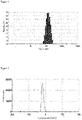
- the particle size diagram and Zeta potential of the elemene albumin nanoparticles obtained were shown in Figure 1 and Figure 2 . As shown in Figure 1 and 2 , the particle size of the elemene albumin nanoparticles was about 110 nm, PDI was 0.127, and the potential was about -18 mV.
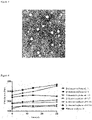
- the aqueous solution of the elemene albumin nanoparticles was aspirated by a pipette and dropped on a copper mesh. After natural evaporation, 1% phosphotungstic acid solution was dropped on the copper mesh in the same way, and evaporated naturally, a few drops of pure water was aspirated to rinse the surface of the copper mesh carefully. After evaporation, the morphology was observed by transmission electron microscope as shown in Figure 3 , the nanoparticles were spherical, regular in shape, relatively uniform in particle size, with a particle diameter of about 100 nm.
- Elemene albumin nanoparticles was prepared according to the method of Test Experiment 1, wherein the oil for injection was employed with the same amount as those of soybean oil, corn oil, camellia oil, and medium chain triglyceride (MCT) respectively to prepare elemene albumin nanoparticles using different oils for injection as raw materials.
- the particle size of the prepared nanoparticles was determined by a laser particle size analyzer. After lyophilization, the drug content of each group of formulations before and after lyophilization was determined respectively, and the drug loss rate during lyophilization was calculated.
- the preparation of elemene albumin nanoparticles without soybean oil included the following steps: 1) 200 mg of elemene was weighed and dissolved in 2 mL of dichloromethane to obtain an oil phase. 2) 650 mg of human serum albumin was dissolved in water for injection to obtain an aqueous solution of human serum albumin with a mass volume percentage of 3.6% (g/mL), that is, to obtain an aqueous phase. 3) Under the action of water bath ultrasound, the oil phase was added dropwise to the aqueous phase, and sonicated by a probe for 8 min (250 W) to produce a primary emulsion.
- the obtained primary emulsion was transferred to a high-pressure homogenizer for high-pressure homogenization, the homogenization pressure was 1300 bar, and the homogenization was performed for 9 times.
- the organic solvent was removed from the homogenized system by rotary evaporation, and a 0.22 ⁇ m microporous membrane was used for filtration and sterilization to obtain an aqueous solution of elemene albumin nanoparticles, and the metered volume was adjusted to 10 mg/mL with water for injection.
- 3) sucrose was added to the obtained elemene albumin nanoparticles, and lyophilized according to the lyophilization parameters of Test Example 1. The drug content of a certain volume of the formulation before and after lyophilization was determined respectively, and the drug loss rate during lyophilization was calculated.
- the amount of soybean oil was adjusted, the elemene albumin nanoparticles were prepared by feeding according to the mass ratio of ⁇ -elemene/soybean oil of 5:1, 1:1, 1:3, 1:5, 1:10, 1:20 and without oils for injection.
- the particle size of the prepared nanoparticles was determined by a laser particle size analyzer. After adding 3% sucrose and lyophilizing, the lyophilized samples were placed in a room temperature dryer. The samples were taken out periodically and reconstituted, and the changes of particle size and main drug content of the lyophilized samples within 30 days were determined.
- Specific detection parameters were as follows: instrument model: MALVERN ZETASIZER NANO ZS90, detection angle: 90°; detection mode: automatic; detection times: 3; detection type: nanoparticles; refractive index of the sample to be determined: 1.340; dispersion medium: water; temperature: 25°C; viscosity: 0.8872cp; refractive index of dispersion medium: 1.330; equilibration time: 120s; type of particle size dish : DTS0012.
- the particle size of the formulation without soybean oil during the preparation process was more than 200 nm after lyophilization. With the prolongation of storage time, the particle size of the sample after reconstitution showed a trend of increasing gradually, and the drug content showed a trend of decreasing. Gradually increasing the proportion of soybean oil in the formulation, the particle size of the lyophilized samples after reconstitution was all less than 200 nm, the stability of particle size was better, and the stability of the main drug content was also gradually enhanced.
- the prepared lyophilized sample of nanoparticles had no aggregation phenomenon within 30 days at room temperature, the particle size was 100-150 nm, the PDI was less than 0.3, and the content of the main drug of ⁇ -elemene changed little.
- the amount of elemene was 1 part and the amount of soybean oil was less than 1 part, the prepared nanoparticles did not show a good enough stability.
- Tumor modeling the well-grown C6 cells in logarithmic phase were digested with trypsin, centrifuged, and the upper waste solution was discarded. The cells were washed with PBS, centrifuged, and the upper waste solution was discarded, and the cells were resuspended in PBS to make the final C6 cell density about 1 ⁇ 10 6 cells/5 ⁇ L. Healthy male Kunming mice (28-30 g) were anesthetized by intraperitoneal injection of an appropriate amount of 4% chloral hydrate.
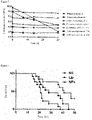
- mice On the 10th day after tumor inoculation, the tumor-bearing mice were divided into normal saline group (NS), commercially available elemene liposomes (Lip, Dalian Jingang, approval number: Guoyaozhunzi H10960114), elemene albumin nanoparticles (NPs) prepared in Test Example 1, with 12 mice in each group.
- the dosage of administration was 30 mg/kg, once every 2 days, for a total of 4 times.
- the survival time of each mouse was recorded, and the survival curve was made.
- the investigation results of survival were shown in figure 6 .
- the results of the experiment showed that the C6 glioma-bearing mice administered with the elemene albumin nanoparticles exhibited longer survival.
- the average survival of the normal saline group was 21 days
- the average survival of the elemene liposome group was 28 days
- the average survival of the elemene albumin nanoparticles group was 41 days. Therefore, the elemene albumin nanoparticles prepared in the experiment have an effect of prolonging the survival of C6-bearing glioma mice.
- Hemolysis experiment New Zealand rabbits (male, laboratory-suitable housed for 1 week, body weight 2.5 kg-3 kg) were divided into two groups of commercially available elemene injection (Ailineng, CSPC Yuanda Pharmaceutical Co., Ltd., batch number 17050302) and elemene albumin nanoparticles (NPs) prepared in Test Example 1, with 2 mice in each group, the dosage of administration was 50 mg/kg.
- the two formulations were respectively prepared into medicinal solutions having a concentration of 6 mg/mL with glucose solution, and then the rabbits were administered by intravenous infusion.
- venous blood was drawn from the ear vein and placed in a centrifuge tube coated with heparin sodium, centrifuged at 3500 r/min for 15 minutes, and the supernatant was taken to observe the color.
- the color of the obtained plasma was shown in figure 7 .
- the result showed that the New Zealand rabbits administered with the elemene albumin nanoparticles did not show hemolysis, demonstrating little irritation and high safety.
- ⁇ -elemene and 8 g of soybean oil were weighed and mixed to obtain an oil phase.
- 50 mL (10g) of 20% human serum albumin was measured, diluted evenly by adding an appropriate amount of ultrapure water, and the metered volume was adjusted to 333 mL to obtain an aqueous solution of human serum albumin with a mass volume percentage of 3% (g/mL), namely an aqueous phase.
- the aqueous phase was poured into the oil phase, and the mixer (FLUKO, FA30/30F) was used for shearing at 10,000 rpm for 10 min to form a primary emulsion.
- the obtained primary emulsion was transferred to a micro-jet homogenizer (Microfluidizer, M-110-EH) for homogenization, at a homogenization pressure of 20,000 psi for 30 min.
- the obtained emulsion was filtered by 0.45 ⁇ m and 0.22 ⁇ m PVDF plate filters, and the metered volume was adjusted, and 3% (g/mL) of sucrose was added as a lyoprotectant.
- the homogeneous solution added with the lyoprotectant was lyophilized, and after lyophilization, the lyophilized powder was reconstituted with sterilized ultrapure water.
- Particle size was 175.97 nm detected by a particle size analyzer, PDI was 0.188.
- the aqueous phase solution was poured into the oil phase, and the mixer (FLUKO, FA30/30F) was used for shearing at 10,000 rpm for 10 min to form a primary emulsion.
- the obtained primary emulsion was transferred to a micro-jet homogenizer (Microfluidizer, M-110-EH) for high-pressure homogenization, at a homogenization pressure of 20,000 psi for 30 min.
- the organic solvent was removed by a thin film evaporator (Shanghai DEA) from the organic solvent-containing emulsion, and the parameters were: temperature 30°C, vacuum degree 4000 pa, liquid feeding speed 100 rpm, scraper speed 50 rpm.
- the obtained emulsion was filtered by 0.45 ⁇ m and 0.22 ⁇ m PVDF plate filters, and the metered volume was adjusted, and 3% (g/mL) of sucrose was added as a lyoprotectant.
- the homogeneous solution added with the lyoprotectant was lyophilized, and after lyophilization, the lyophilized powder was reconstituted with sterilized ultrapure water.
- Particle size was 78.34 nm detected by a particle size analyzer, PDI was 0.207.
- Sample 3 (Elemene injection (trade name: Ailineng)): CSPC Yuanda (Dalian) Pharmaceutical Co., Ltd., batch number: 19061502; particle size was 14.74 nm detected by a particle size analyzer, PDI: 0.035.
- Kunming mice Male, SPF grade, body weight 20-25 g were used for the experiment. The dosage of administration was 50 mg/kg, administered through the tail vein. Brain tissue samples were collected at different time periods and stored at -20°C in time for the detection of drug content in brain tissue. There were a total of 45 mice for three samples, 3 Kunming mice for each dosage form at each time point. The eyeballs were removed for blood collection at 5min, 15min, 30min, 1h, and 2h after administration, and brain tissues were collected to detect drug content in brain tissues. GC-MS was used to quantitatively analyze ⁇ -elemene in biological samples of plasma and brain tissue of the Kunming mice. The results of the study on the half-life in brain tissue and the brain tissue exposure are shown in Table 2.
- ⁇ -elemene and 3 g of soybean oil were weighed and mixed to obtain an oil phase.
- 15 mL (3 g) of 20% human serum albumin was measured, diluted evenly by adding 85 mL of ultrapure water, to obtain an aqueous solution of human serum albumin with a mass volume percentage of 3% (g/mL), namely an aqueous phase.
- the aqueous phase solution was poured into the oil phase, and the mixer was used for shearing at 5000 rpm for 1 min, and at 10,000 rpm for 5 min, to form a primary emulsion.
- the obtained primary emulsion was transferred to a high-pressure homogenizer for high-pressure homogenization at a homogenization pressure of 250-300 bar for 2 min, and at 1350-1400 bar for 9 min.
- the total volume of the homogeneous solution was measured with a measuring cylinder, which was about 50 mL, 5 g trehalose was added, shaken well to be dissolved, and filtered with a 0.45 ⁇ m microporous membrane to obtain a solution of elemene albumin nanoparticles.
- the particle size was 141.0 nm detected by a particle size analyzer, PDI was 0.162.
- the homogeneous solution added with trehalose was lyophilized, and after lyophilization, the lyophilized powder was reconstituted with sterilized ultrapure water.
- the particle size was 144.07 nm detected by a particle size analyzer, PDI was 0.123.
- the loss rate of elemene content before and after lyophilization was 1.27%.
- ⁇ -elemene and 2 g of soybean oil were weighed and mixed to obtain an oil phase.
- 30 mL (6 g) of 20% human serum albumin was measured, diluted evenly by adding 170 mL of ultrapure water, to obtain an aqueous solution of human serum albumin with a mass volume percentage of 3% (g/mL), namely an aqueous phase.
- the aqueous phase solution was poured into the oil phase, and the mixer was used for shearing at 5000 rpm for 1 min, and at 10,000 rpm for 10 min, to form a primary emulsion.
- the obtained primary emulsion was transferred to a high-pressure homogenizer for high-pressure homogenization at a homogenization pressure of 250-300 bar for 2 min, and at 1350-1400bar for 24 min.
- a homogenization pressure 250-300 bar for 2 min
- 1350-1400bar 1350-1400bar
- 150 mL of homogeneous solution was measured with a measuring cylinder, 15 g trehalose was added, shaken well to be dissolved, and filtered with a 0.45 ⁇ m microporous membrane to obtain a solution of elemene albumin nanoparticles.
- the particle size was 132.4 nm detected by particle size analyzer, PDI was 0.133.
- the homogeneous solution added with trehalose was lyophilized, and after lyophilization, the lyophilized powder was reconstituted with sterilized ultrapure water.
- the particle size was 123.68 nm detected by a particle size analyzer, PDI was 0.144.
- the loss rate of elemene content after lyophilization was 1.58%.
- the homogeneous solution was filtered with a 0.45 ⁇ m filter membrane, and 50 mL of 2% HSA solution (containing 1 g of HSA) was added to the filtered homogeneous solution, and homogenized at 280 bar for 1 cycle; and the homogeneous solution was discharged, 40 mL was measured with a measuring cylinder, 4 g trehalose was added, shaken well to be dissolved, and filtered with a 0.45 ⁇ m microporous membrane to obtain a solution of albumin nanoparticles.
- the particle size was 150.86 nm detected by a particle size analyzer, PDI was 0.114.
- the homogeneous solution added with trehalose was lyophilized, and after lyophilization, the lyophilized powder was reconstituted with sterilized ultrapure water.
- the particle size was 181.56 nm detected by a particle size analyzer, PDI was 0.251.
- the loss rate of elemene content after lyophilization was 16.47%.
- the solution was filtered with a 0.22 ⁇ m filter membrane, and 50 mL of 2% HSA solution (containing 1 g of HSA) was added to the filtered homogeneous solution, homogenized at 140 bar for 1 cycle; and the homogeneous solution was discharged, 40 mL was measured with a measuring cylinder, 4 g of trehalose was added, shaken well to be dissolved, and filtered with a 0.45 ⁇ m microporous membrane to obtain a solution of albumin nanoparticles.
- the particle size was 93.11 nm detected by a particle size analyzer, PDI was 0.131.
- the homogeneous solution added with trehalose was lyophilized, and after lyophilization, the lyophilized powder was reconstituted with sterilized ultrapure water.
- the particle size was 811.70 nm detected by a particle size analyzer, PDI was 0.313.
- the loss rate of elemene content after lyophilization was 82.64%.
- ⁇ -elemene and 600 mg of soybean oil were weighed, dissolved in 2 mL of an organic solvent, and mixed by vortex to obtain an oil phase.
- the organic solvent is dichloromethane, or ethyl acetate or a mixture of dichloromethane and ethanol.
- 650 mg of human serum albumin was taken and dissolved in 18 mL of water for injection to obtain an aqueous solution of human serum albumin with a mass volume percentage of 3.6% (g/mL), that is, to obtain an aqueous phase.
- the oil phase was added dropwise to the aqueous phase, and sonicated by a probe for 8 min (250 W) to produce a primary emulsion.
- the obtained primary emulsion was transferred to a high-pressure homogenizer for high-pressure homogenization, the homogenization pressure was 1000 bar, and the homogenization times was 16 times.
- the organic solvent was removed by rotary evaporation after homogenization, and a 0.22 ⁇ m microporous membrane was used for filtration and sterilization to obtain an aqueous solution of elemene albumin nanoparticles.
- Table 3 Investigation results of single factor for organic solvents Number Organic solvent Particle size (d.nm) PDI 1 Without organic solvent 142.1 0.094 2 Ethyl acetate 122.0 0.164 3 Dichloromethane 108.8 0.129 4 Dichloromethane/ethanol (4:1) 98.5 0.130
- the oil phase was added dropwise to the aqueous phase, and sonicated by a probe for 8 min (250 W) to produce a primary emulsion.
- the obtained primary emulsion was transferred to a high-pressure homogenizer for high-pressure homogenization, the homogenization pressure was 1000 bar, and the homogenization times was 16 times.
- the organic solvent was removed by rotary evaporation, and a 0.22 ⁇ m microporous membrane was used for filtration and sterilization to obtain an aqueous solution of elemene albumin nanoparticles.
- the measured particle size was 116.4 nm, PDI was 0.118.
- the obtained primary emulsion was transferred to a high-pressure homogenizer for high-pressure homogenization, the homogenization pressure was 1000 bar, and the homogenization times was 16 times.
- the organic solvent was removed by rotary evaporation, and a 0.22 ⁇ m microporous membrane was used for filtration and sterilization to obtain an aqueous solution of elemene albumin nanoparticles.
- the measured particle size was 105.3 nm, PDI was 0.116.
- 4000 mg of human serum albumin was taken and dissolved in 100 mL of water for injection to obtain an aqueous solution of human serum albumin with 4% of mass volume percentage (g/mL), that is, to obtain an aqueous phase.
- the oil phase was added dropwise to the aqueous phase, and a tissue masher was used at 10,000 rpm for shearing for 10 min to prepare a primary emulsion.
- the obtained primary emulsion was transferred to a high-pressure homogenizer for high-pressure homogenization, the homogenization pressure was 1000 bar, and the homogenization times was 20 times.
- the organic solvent was removed by rotary evaporation, and a 0.22 ⁇ m microporous membrane was used for filtration and sterilization to obtain an aqueous solution of elemene albumin nanoparticles.
- the measured particle size was 121.3 nm, PDI was 0.133.
- 4000 mg of human serum albumin was taken and dissolved in water for injection to obtain an aqueous solution of human serum albumin with a mass volume percentage of 4% (g/mL), to obtain an aqueous phase.
- the oil phase was added dropwise to the aqueous phase, and a tissue masher was used at 12000 rpm for shearing for 10 min to prepare a primary emulsion.
- the obtained primary emulsion was transferred to a high-pressure homogenizer for high-pressure homogenization, the homogenization pressure was 1400 bar, and the homogenization times was 20 times.
- the organic solvent was removed from the homogenized system by rotary evaporation.
- the rotary-evaporated medicinal solution was filtered and sterilized via a 0.22 ⁇ m microporous membrane to obtain an aqueous solution of elemene albumin nanoparticles.
- 3% sucrose was added and lyophilized, capped after lyophilization, and stored at 4°C.
- the lyophilized samples were taken and reconstituted in water for injection, and the measured particle size was 112.6 nm, PDI was 0.101.
- the obtained primary emulsion was transferred to a high-pressure homogenizer for high-pressure homogenization, the homogenization pressure was 1000 bar, and the homogenization times was 16 times.
- the organic solvent was removed by rotary evaporation, and a 0.22 ⁇ m microporous membrane was used for filtration and sterilization to obtain an aqueous solution of elemene albumin nanoparticles.
- the measured particle size was 140.3 nm, PDI was 0.164.
- the obtained primary emulsion was transferred to a high-pressure homogenizer for high-pressure homogenization, the homogenization pressure was 1000 bar, and the homogenization times was 16 times.
- the organic solvent was removed by rotary evaporation, and a 0.22 ⁇ m microporous membrane was used for filtration and sterilization to obtain an aqueous solution of elemene albumin nanoparticles.
- the measured particle size was 125.3 nm, PDI was 0.148.
- the obtained primary emulsion was transferred to a high-pressure homogenizer for high-pressure homogenization, the homogenization pressure was 1000 bar, and the homogenization times was 20 times.
- the organic solvent was removed by rotary evaporation, and a 0.22 ⁇ m microporous membrane was used for filtration and sterilization to obtain an aqueous solution of elemene albumin nanoparticles.
- the measured particle size was 119.3 nm, PDI was 0.143.
- the prepared nanoparticle solution was taken and configured to a drug concentration of 10 mg/mL, an appropriate amount of lyoprotectant was added, and the amount of the lyoprotectant was 3% (g/mL), and lyophilized.
- 1500 mg of human serum albumin was taken and dissolved in 50 mL of water for injection to obtain an aqueous solution of human serum albumin with 3% of mass volume percentage (g/mL), to obtain an aqueous phase.
- the oil phase was added dropwise to the aqueous phase, and sonicated by a probe for 8 min (250 W) to produce a primary emulsion.
- the obtained primary emulsion was transferred to a high-pressure homogenizer for high-pressure homogenization, the homogenization pressure was 1400 bar, and the homogenization times was 10 times.
- the organic solvent was removed by rotary evaporation, and a 0.22 ⁇ m microporous membrane was used for filtration and sterilization, the filtrate was diluted and configured to a drug concentration of 15 mg/mL, 3% sucrose was added, lyophilized, capped, and stored at 4°C.
- the lyophilized sample was taken and reconstituted in water for injection, and the particle size was determined. The measured particle size was 103.5 nm, PDI was 0.123.
- 4000 mg of human serum albumin was dissolved in water for injection to obtain an aqueous solution of human serum albumin with a mass volume percentage of 4% (g/mL), to obtain an aqueous phase.
- the oil phase was added dropwise to the aqueous phase, and a tissue masher was used at 10,000 rpm for shearing for 10 min to prepare a primary emulsion.
- the obtained primary emulsion was transferred to a high-pressure homogenizer for high-pressure homogenization, the homogenization pressure was 1000 bar, and the homogenization times was 20 times.
- the organic solvent was removed from the homogenized system by rotary evaporation.
- the rotary-evaporated medicinal solution was filtered and sterilized via a 0.22 ⁇ m microporous membrane to obtain an aqueous solution of elemene albumin nanoparticles.
- the aqueous solution was diluted and configured to a drug concentration of 10 mg/mL, and 3% sucrose was added for lyophilization, capped after lyophilization, and stored at 4°C.
- the lyophilized sample was taken and reconstituted in water for injection, and the measured particle size was 115.2 nm, PDI was 0.102.
- 4000 mg of human serum albumin was dissolved in water for injection to obtain an aqueous solution of human serum albumin with a mass volume percentage of 4% (g/mL), to obtain an aqueous phase.
- the oil phase was added dropwise to the aqueous phase, and a tissue masher was used at 10,000 rpm for shearing for 10 min to prepare a primary emulsion.
- the obtained primary emulsion was transferred to a high-pressure homogenizer for high-pressure homogenization, the homogenization pressure was 1000 bar, and the homogenization times was 20 times.
- the organic solvent was removed from the homogenized system by rotary evaporation.
- the rotary-evaporated medicinal solution was filtered and sterilized via a 0.22 ⁇ m microporous membrane to obtain an aqueous solution of elemene albumin nanoparticles.
- the aqueous solution was diluted and configured to a drug concentration of 10 mg/mL, and 3% sucrose was added for lyophilization, capped after lyophilization, and stored at 4°C.
- the lyophilized sample was taken and reconstituted in water for injection, and the measured particle size was 109.6 nm, PDI was 0.113.
- 4000 mg of human serum albumin was taken and dissolved in water for injection to obtain an aqueous solution of human serum albumin with a mass volume percentage of 4% (g/mL), to obtain an aqueous phase.
- the oil phase was added dropwise to the aqueous phase, and a tissue masher was used at 10,000 rpm for shearing for 10 min to prepare a primary emulsion.
- the obtained primary emulsion was transferred to a high-pressure homogenizer for high-pressure homogenization, the homogenization pressure was 1000 bar, and the homogenization times was 20 times.
- the organic solvent was removed from the homogenized system by rotary evaporation.
- the rotary-evaporated medicinal solution was filtered and sterilized via a 0.22 ⁇ m microporous membrane to obtain an aqueous solution of elemene albumin nanoparticles.
- 3% trehalose was added for lyophilization, capped after lyophilization, and stored at 4°C.
- the lyophilized sample was taken and reconstituted in water for injection, and the measured particle size was 112.6 nm, PDI was 0.101.
- ⁇ -elemene and 1200 mg of soybean oil were weighed, successively added to isopropanol (5 mL) and mixed by vortex to obtain an oil phase.
- 1500 mg of bovine serum albumin was taken and dissolved in water for injection to obtain an aqueous solution of bovine serum albumin with a mass volume percentage of 3% (g/mL), to obtain an aqueous phase.
- the oil phase was added dropwise to the aqueous phase, and sonicated by a probe for 8 min (250 W) to produce a primary emulsion.
- the obtained primary emulsion was transferred to a high-pressure homogenizer for high-pressure homogenization, the homogenization pressure was 1400 bar, and the homogenization times was 10 times.
- the organic solvent was removed from the homogenized system by rotary evaporation.
- the rotary-evaporated medicinal solution was filtered and sterilized via a 0.22 ⁇ m microporous membrane.
- the filtrate was diluted and configured to a drug concentration of 10 mg/mL, and 3% sucrose was added for lyophilization, capped after lyophilization, and stored at 4°C.
- the lyophilized samples were reconstituted in water for injection, and the measured particle size was 128.1 nm, PDI was 0.132.
- ⁇ -elemene and 1200 mg of soybean oil were weighed, successively added to tertiary butanol (5 mL) and mixed by vortex to obtain an oil phase.
- 1500 mg of bovine serum albumin was taken and dissolved in water for injection to obtain an aqueous solution of bovine serum albumin with a mass volume percentage of 3% (g/mL), to obtain an aqueous phase.
- the oil phase was added dropwise to the aqueous phase, and sonicated by a probe for 8 min (250 W) to produce a primary emulsion.
- the obtained primary emulsion was transferred to a high-pressure homogenizer for high-pressure homogenization, the homogenization pressure was 1400 bar, and the homogenization times was 10 times.
- the organic solvent was removed by rotary evaporation.
- the rotary-evaporated medicinal solution was filtered and sterilized via a 0.22 ⁇ m microporous membrane.
- the filtrate was diluted and configured to a drug concentration of 5 mg/mL, and 3% sucrose was added for lyophilization, capped after lyophilization, and stored at 4°C.
- the lyophilized sample was taken and reconstituted in water for injection, and the measured particle size was 116.8 nm, PDI was 0.113.
- 1500 mg of bovine serum albumin was dissolved in water for injection to obtain an aqueous solution of bovine serum albumin with a mass volume percentage of 3% (g/mL), to obtain an aqueous phase.
- the oil phase was added dropwise to the aqueous phase, and sonicated by a probe for 8 min (250 W) to produce a primary emulsion.
- the obtained primary emulsion was transferred to a high-pressure homogenizer for high-pressure homogenization, the homogenization pressure was 1400 bar, and the homogenization times was 10 times.
- the organic solvent was removed by rotary evaporation.
- the rotary-evaporated medicinal solution was filtered and sterilized via a 0.22 ⁇ m microporous membrane.
- the filtrate was diluted and configured to a drug concentration of 1 mg/mL, and 3% sucrose was added for lyophilization, capped after lyophilization, and stored at 4°C.
- the lyophilized sample was taken and reconstituted in water for injection, and the measured particle size was 121.8 nm, PDI was 0.111.
- 1500 mg of bovine serum albumin was dissolved in water for injection to obtain an aqueous solution of bovine serum albumin with a mass volume percentage of 3% (g/mL), to obtain an aqueous phase.
- the oil phase was added dropwise to the aqueous phase, and sonicated by a probe for 8 min (250 W) to produce a primary emulsion.
- the obtained primary emulsion was transferred to a high-pressure homogenizer for high-pressure homogenization, the homogenization pressure was 1400 bar, and the homogenization times was 10 times.
- the organic solvent was removed by rotary evaporation.
- the rotary-evaporated medicinal solution was filtered and sterilized via a 0.22 ⁇ m microporous membrane.
- the filtrate was diluted and configured to a drug concentration of 10 mg/mL, and 3% sucrose was added for lyophilization, capped after lyophilization, and stored at 4°C.
- the lyophilized sample was taken and reconstituted in water for injection, and the measured particle size was 121.1 nm, PDI was 0.109.
- 1500 mg of bovine serum albumin was dissolved in water for injection to obtain an aqueous solution of bovine serum albumin with 3% of mass volume percentage (g/mL), to obtain an aqueous phase.
- the oil phase was added dropwise to the aqueous phase, and sonicated by a probe for 8 min (250 W) to produce a primary emulsion.
- the obtained primary emulsion was transferred to a high-pressure homogenizer for high-pressure homogenization, the homogenization pressure was 1400 bar, and the homogenization times was 10 times.
- the organic solvent was removed from the homogenized system by rotary evaporation.
- the rotary-evaporated medicinal solution was filtered and sterilized via a 0.22 ⁇ m microporous membrane.
- the filtrate was diluted and configured to a drug concentration of 12 mg/mL, and 3% sucrose was added for lyophilization, capped after lyophilization, and stored at 4°C.
- the lyophilized sample was taken and reconstituted in water for injection, and the measured particle size was 109.7 nm, PDI was 0.105.
- the obtained primary emulsion was transferred to a high-pressure homogenizer for high-pressure homogenization, the homogenization pressure was 1400 bar, and the homogenization times was 10 times.
- the organic solvent was removed from the homogenized system by rotary evaporation.
- the rotary-evaporated medicinal solution was filtered and sterilized via a 0.22 ⁇ m microporous membrane.
- the filtrate was diluted and configured to a drug concentration of 10 mg/mL, and 3% sucrose was added for lyophilization, capped after lyophilization, and stored at 4°C.
- the lyophilized sample was taken and reconstituted in water for injection, and the measured particle size was 112.7 nm, PDI was 0.112.
- the obtained primary emulsion was transferred to a high-pressure homogenizer for high-pressure homogenization, the homogenization pressure was 1000 bar, and the homogenization times was 16 times.
- the organic solvent was removed from the homogenized system by rotary evaporation, and a 0.22 ⁇ m microporous membrane was used for filtration and sterilization to obtain an aqueous solution of elemene albumin nanoparticles.
- the measured particle size was 126.1 nm, PDI was 0.122.
- the organic solvent was removed by rotary evaporation, the microporous membrane was used for filtration and sterilization, the bubbles in the formulation were removed by standing still for a moment, and a solution of elemene albumin nanoparticles was obtained.
- the measured particle size of the nanoparticles was 99.4 nm, PDI was 0.096.
- the obtained solution of elemene albumin nanoparticles was adjusted to a concentration of 10 mg/mL, 3% sucrose was added, lyophilized, and reconstituted by adding ultrapure water, the particle size was measured to be 101.6 nm, and the PDI was 0.113.
- ⁇ -elemene, soybean oil, MCT (medium chain triglyceride) and surfactants were weighed according to the component amounts listed in Table 5 and mixed to obtain an oil phase.
- 20% human serum albumin (converted by mass as shown in Table 5) was taken, diluted by adding ultrapure water to a total volume of 50 mL and mixed evenly, to obtain an aqueous solution of human serum albumin, namely an aqueous phase.
- aqueous phase solution An appropriate amount of surfactant was added to the aqueous phase solution, and the aqueous phase solution was poured into the oil phase, and sheared with a mixer (IKA, T25) at 5,000 rpm for 1 min and at 10,000 rpm for 5 min to form a primary emulsion.
- the obtained primary emulsion was transferred to a high-pressure homogenizer (ATS, AH-1500) for high-pressure homogenization at a homogenization pressure of 250-300 bar for 2 min, and at 1450-1550 bar for 6 min.
- ATS high-pressure homogenizer
- ⁇ -elemene and soybean oil were weighed according to the component amounts listed in Table 6 and mixed evenly, to obtain an oil phase.
- Human serum albumin (converted by mass as shown in Table 6) was measured, diluted to a total volume of 50 mL by adding ultrapure water and mixed evenly, to obtain an aqueous solution of human serum albumin, namely an aqueous phase.
- the aqueous phase was poured into the oil phase, and sheared with a mixer (IKA, T25) at 5,000 rpm for 1 min and at 10,000 rpm for 5 min to form a primary emulsion.
- the obtained primary emulsion was transferred to a high-pressure homogenizer (ATS, AH-1500) for high-pressure homogenization at a homogenization pressure of 250-300 bar for 2 min, and at 1450-1550 bar for 6min.
- ATS high-pressure homogenizer
- the total volume of the homogeneous solution was measured with a measuring cylinder, trehalose was added at a mass/volume ratio of 10% (g/mL), shaken well to be dissolved, and filtered with a 0.45 ⁇ m microporous membrane to obtain a solution of elemene albumin nanoparticles.
- the particle size and PDI were detected, and the hemolysis value was determined. The specific results are shown in Table 6.
- ⁇ -elemene and 8g of soybean oil were weighed and mixed to obtain an oil phase.
- 50 mL (10g) of 20% human serum albumin (HSA) was measured, diluted evenly by adding an appropriate amount of ultrapure water, to obtain an aqueous solution of human serum albumin with 3% of mass volume percentage (g/mL), namely an aqueous phase.
- the aqueous phase solution was poured into the oil phase, and the mixer (FLUKO, FA30/30F) was used for shearing at 10,000 rpm for 10 min to form a primary emulsion.
- the obtained primary emulsion was transferred to a micro-jet homogenizer (Microfluidizer, M-110-EH) for homogenization, at a homogenization pressure of 20,000 psi for 30 min.
- the homogenized solution was filtered by 0.45 ⁇ m and 0.22 ⁇ m PVDF plate filters, and the metered volume was adjusted, and different lyoprotectants (g/mL) corresponding to Table 7 was added respectively.
- the homogeneous solution added with the lyoprotectant was lyophilized, and after lyophilization, the lyophilized powder was reconstituted with sterilized ultrapure water. The particle size, PDI and hemolysis value were detected. The specific results are shown in Table 7.
- the aqueous phase solution was poured into the oil phase, and the mixer (FLUKO, FA30/30F) was used for shearing at 10,000 rpm for 10 min to form a primary emulsion.
- the obtained primary emulsion was transferred to a micro-jet homogenizer (Microfluidizer, M-110-EH) for high-pressure homogenization, at a homogenization pressure of 20,000 psi for 30 min.
- the organic solvent was removed by a thin film evaporator from the organic solvent-containing emulsion, and the parameters were: temperature 30°C, vacuum degree 4000 pa, liquid feeding speed 100 rpm, scraper speed 50 rpm.
- the obtained emulsion was filtered by 0.45 ⁇ m and 0.22 ⁇ m PVDF plate filters, and the metered volume was adjusted, and 10% (g/mL) of trehalose was added as a lyoprotectant.
- the homogeneous solution added with the lyoprotectant was lyophilized, and after lyophilization, the lyophilized powder was reconstituted with sterilized ultrapure water.
- the detected particle size was 76.28, the PDI was 0.254 and the hemolysis value was 16.3.
- ⁇ -elemene and soybean oil were weighed according to the component amounts listed in Table 8, and dissolved in an organic solvent, the organic solvent was a mixed solvent of 1 mL of ethanol and 4 mL of dichloromethane, and mixed to obtain an oil phase.
- An appropriate amount of 20% human serum albumin (HSA) (converted by mass as shown in Table 8) was measured, diluted to a total volume of 50 mL by adding ultrapure water, namely an aqueous phase.
- the aqueous phase solution was poured into the oil phase, and sheared with a mixer (IKA, T25) at 5,000 rpm for 1 min and 10,000 rpm for 5 min to form a primary emulsion.
- the obtained primary emulsion was transferred to a high-pressure homogenizer (ATS, AH-1500) for high-pressure homogenization at a homogenization pressure of 250-300 bar for 2 min, and at 1450-1550 bar for 6min.
- the organic solvent was removed with a rotary evaporator at 35°C, 150 rpm and a vacuum of 30 mbar.
- the total volume of the homogeneous solution was measured with a measuring cylinder, trehalose was added at a mass/volume ratio of 10% (g/mL), shaken well to be dissolved, and filtered with a 0.45 ⁇ m microporous membrane to obtain a solution of elemene albumin nanoparticles.
- ⁇ -elemene and soybean oil were weighed according to the component amounts listed in Table 10, to obtain an oil phase.
- An appropriate amount of 20% human serum albumin (HSA) (converted by mass as shown in Table 10) was measured, diluted to a total volume of 50 mL by adding ultrapure water, namely an aqueous phase.
- the aqueous phase solution was poured into the oil phase, and sheared with a mixer (IKA, T25) at 5,000 rpm for 1 min and at 10,000 rpm for 5 min to form a primary emulsion.
- the obtained primary emulsion was transferred to a high-pressure homogenizer (ATS, AH-1500) for high-pressure homogenization at a homogenization pressure of 250-300 bar for 2 min, and at 1350-1450 bar for 6 min.
- ATS high-pressure homogenizer
- trehalose was added at the mass/volume ratio of (g/mL) shown in Table 10, shaken well to be dissolved, and filtered with a 0.45 ⁇ m microporous membrane to obtain a solution of elemene albumin nanoparticles.
- ⁇ -elemene and 1.5g of soybean oil were weighed and mixed to obtain an oil phase.
- 45 mL (9 g) of 20% human serum albumin was measured, namely an aqueous phase.
- the aqueous phase solution was poured into the oil phase, and sheared with a mixer (IKA, T25) at 5,000 rpm for 1 min and 10,000 rpm for 5 min to form a primary emulsion.
- the obtained primary emulsion was transferred to a high-pressure homogenizer (ATS, AH-1500) for high-pressure homogenization at a homogenization pressure of 250-300 bar for 2 min, and at 1450-1550 bar for 6 min, and the homogeneous solution was collected.
- ATS high-pressure homogenizer
- the pipeline of the homogenizer was flushed with an aqueous solution of trehalose (25 mL of water + 10 g of trehalose) to replace the homogeneous solution remaining in the homogenizer, and then the pipeline of the homogenizer was flushed with 30 mL of ultrapure water to replace the residual aqueous solution of trehalose.
- the trehalose aqueous solution was combined with the homogeneous solution, mixed, and filtered through a 0.22 ⁇ m sterile filter membrane.
- the particle size was 106.4 nm detected by a particle size analyzer, PDI was 0.08.
- ⁇ -elemene and soybean oil were weighed as shown in Table 13 and mixed to obtain an oil phase. 20% human serum albumin (50 mL,10 g) was measured, namely an aqueous phase.
- the aqueous phase solution was poured into the oil phase, and sheared with a mixer (IKA, T25) at 5,000 rpm for 1 min and at 10,000 rpm for 5 min to form a primary emulsion.
- the obtained solution was transferred to a high-pressure homogenizer (ATS, AH-1500) for high-pressure homogenization at a homogenization pressure of 250-300 bar for 2 min, and at 1550-1550 bar for 6 min.
- ATS high-pressure homogenizer
- ⁇ -elemene and 1.5g of soybean oil were weighed and mixed to obtain an oil phase.
- 50 mL (10 g) of 20% human serum albumin was measured, namely an aqueous phase.
- the aqueous phase solution was poured into the oil phase, and sheared with a mixer (IKA, T25) at 5,000 rpm for 1 min and at 10,000 rpm for 5 min to form a primary emulsion.
- 5 mL of water for injection was used for cleaning the shearing head, and combined with the primary emulsion.
- the obtained solution was transferred to a high-pressure homogenizer (ATS, AH-1500) for high-pressure homogenization at a homogenization pressure of 250-300 bar for 2 min, and at 1500-1550 bar for 6 min, and the homogeneous solution was collected.
- the pipeline of the homogenizer was flushed with 22.5 mL of an aqueous solution of trehalose to replace the homogeneous solution remaining in the homogenizer, and then the pipeline of the homogenizer was flushed with 22.5 mL of ultrapure water to replace the residual aqueous solution of trehalose.
- the trehalose solution was combined with the homogeneous solution, mixed, and filtered via a 0.22 ⁇ m sterile filter membrane.
- the above nanoparticles were concentrated under reduced pressure at 37°C for 1 h, added with 12.30 g of 3% sucrose, filtered at 0.22 ⁇ m, and lyophilized.
- the particle size was 81.03 nm, PDI was 0.174.
- In vivo bioluminescence imaging assay method nude mice received a single subcutaneous injection of D-luciferin solution (120 mg/kg). 10 min after injection of fluorescein, light images of animals were taken with dark multicolor illumination during an exposure time of 1-5 min (for bioluminescence imaging of Gluc, a single intravenous injection of coelenterazine (20 mg/kg, at total volume of 150 ⁇ L) was given). Intratumoral luciferase activity was obtained by recording photon counts with a CCD camera over 5 min without lighting. Image intensity was quantitatively analyzed using Perkin Elmer's Living image software 4.3.1.
- Tumor volume was measured weekly.
- the animals were weighed weekly to monitor their healthy conditions.
- Elemene injection (trade name: Ailineng): CSPC Yuanda (Dalian) Pharmaceutical Co., Ltd., batch number: 17050302)
- ⁇ -elemene micelle formulation 17.08 g of RH40 was weighed and heated at 60°C to be dissolved. 2 mL of ⁇ -elemene was added, heated and stirred at 60°C for 5 min. 14.40 g of propylene glycol and 38.72 g of purified water were weighed and mixed, then heated at 60°C for 10min. The aqueous solution of propylene glycol was added to the RH40 solution containing ⁇ -elemene, and stirred in a water bath at 60°C for 30 min to obtain ⁇ -elemene micelles. The above micelles were filtered at 0.22 ⁇ m, and divided into 5 mL/per formulation.
- ⁇ -elemene albumin formulation 2.5001 g of ⁇ -elemene and 6.001 g of soybean oil were weighed and mixed for later use. 2 mL of ethanol and 8 mL of dichloromethane were measured, and mixed evenly for later use. The volume of the oil phase was adjusted to 12 mL by the organic phase for later use.
- the three formulations were prepared into 6 mg/mL solution using normal saline.
- Ailineng 7.5 mL of 20 mg/mL commercially available Ailineng was taken and diluted into 25 mL of 6 mg/mL sample solution with 17.5 mL of normal saline.
- ⁇ -elemene micelle formulation 5.91 mL of 25.41 mg/mL ⁇ -elemene micelle formulation was taken and diluted into 25 mL of 6 mg/mL sample solution with 19.09 mL of normal saline.
- ⁇ -elemene albumin formulation 12 ⁇ -elemene micelle formulations were taken, 2.01 mL of normal saline was added to each one, then mixed to obtain 24 mL of 6 mg/mL sample solution.
- mice Male KM mice, 20-25 g/mouse, were randomly divided into 13 groups according to body weight, with 7 mice in each group. The mice were grouped according to the prescribed dose by weight. The dosage of each sample was set as 100 mg/kg, 130 mg/kg, 170 mg/kg and 220 mg/kg, and another blank group was set. The mice were injected through tail vein, and the site of administration, reaction after administration and death conditions were observed after administration. The results of the study are shown in Table 15.
Landscapes
- Health & Medical Sciences (AREA)
- Chemical & Material Sciences (AREA)
- Life Sciences & Earth Sciences (AREA)
- Medicinal Chemistry (AREA)
- Pharmacology & Pharmacy (AREA)
- Animal Behavior & Ethology (AREA)
- General Health & Medical Sciences (AREA)
- Public Health (AREA)
- Veterinary Medicine (AREA)
- Epidemiology (AREA)
- Bioinformatics & Cheminformatics (AREA)
- Engineering & Computer Science (AREA)
- Organic Chemistry (AREA)
- Nuclear Medicine, Radiotherapy & Molecular Imaging (AREA)
- General Chemical & Material Sciences (AREA)
- Chemical Kinetics & Catalysis (AREA)
- Dermatology (AREA)
- Oil, Petroleum & Natural Gas (AREA)
- Optics & Photonics (AREA)
- Biomedical Technology (AREA)
- Nanotechnology (AREA)
- Physics & Mathematics (AREA)
- Proteomics, Peptides & Aminoacids (AREA)
- Inorganic Chemistry (AREA)
- Medicinal Preparation (AREA)
- Medicines That Contain Protein Lipid Enzymes And Other Medicines (AREA)
- Medicines Containing Antibodies Or Antigens For Use As Internal Diagnostic Agents (AREA)
- Pharmaceuticals Containing Other Organic And Inorganic Compounds (AREA)
- Acyclic And Carbocyclic Compounds In Medicinal Compositions (AREA)
Applications Claiming Priority (2)
| Application Number | Priority Date | Filing Date | Title |
|---|---|---|---|
| CN201911217202 | 2019-12-03 | ||
| PCT/CN2020/133470 WO2021110073A1 (zh) | 2019-12-03 | 2020-12-02 | 含有榄香烯的药物组合物及其制备方法和用途 |
Publications (4)
| Publication Number | Publication Date |
|---|---|
| EP4070786A1 true EP4070786A1 (de) | 2022-10-12 |
| EP4070786A4 EP4070786A4 (de) | 2023-12-27 |
| EP4070786C0 EP4070786C0 (de) | 2026-01-28 |
| EP4070786B1 EP4070786B1 (de) | 2026-01-28 |
Family
ID=76111384
Family Applications (1)
| Application Number | Title | Priority Date | Filing Date |
|---|---|---|---|
| EP20895953.6A Active EP4070786B1 (de) | 2019-12-03 | 2020-12-02 | Pharmazeutische zusammensetzung mit elemen, herstellungsverfahren dafür sowie verwendung davon |
Country Status (5)
| Country | Link |
|---|---|
| US (1) | US20230355544A1 (de) |
| EP (1) | EP4070786B1 (de) |
| JP (1) | JP2023504821A (de) |
| CN (1) | CN112891312B (de) |
| WO (1) | WO2021110073A1 (de) |
Cited By (1)
| Publication number | Priority date | Publication date | Assignee | Title |
|---|---|---|---|---|
| US12168036B2 (en) | 2018-05-10 | 2024-12-17 | Regeneron Pharmaceuticals, Inc. | Methods for treating angiogenic eye disorders with high doses of VEGF receptor fusion proteins |
Families Citing this family (2)
| Publication number | Priority date | Publication date | Assignee | Title |
|---|---|---|---|---|
| CN118767255A (zh) | 2019-06-05 | 2024-10-15 | 里珍纳龙药品有限公司 | 用于精确剂量递送的装置及方法 |
| USD1120314S1 (en) | 2022-11-30 | 2026-03-24 | Regeneron Pharmaceuticals, Inc. | Dose delivery device |
Family Cites Families (20)
| Publication number | Priority date | Publication date | Assignee | Title |
|---|---|---|---|---|
| CN1084187C (zh) * | 1997-04-14 | 2002-05-08 | 中国远大国际集团有限公司 | 以β-榄香烯为有效成分的抗癌药物的制备方法及其组成 |
| CN101306182B (zh) * | 2002-04-17 | 2011-11-23 | 谢恬 | 榄香烯静脉乳剂及其制备方法 |
| CN100374106C (zh) * | 2002-09-18 | 2008-03-12 | 中国远大国际集团有限公司 | 高纯度榄香烯抗癌药物的制备方法 |
| CN1241555C (zh) * | 2002-12-18 | 2006-02-15 | 上海医药工业研究院 | 榄香烯脂肪乳注射液及制备方法 |
| US20040192641A1 (en) * | 2003-03-14 | 2004-09-30 | Yaguang Liu | Special preparation of anticancer drugs made by novel nanotechnology |
| US20050186230A1 (en) * | 2004-01-23 | 2005-08-25 | Sd Pharmaceuticals, Inc. | Elemene compositions containing liquid oil |
| JP2008505893A (ja) * | 2004-07-07 | 2008-02-28 | ロング レンジ インターナショナル ユーエスエー リミテッド,インコーポレイテッド | マイナス型ベータエレメン、マイナス型ベータエレメナル、マイナス型ベータエレメノール、マイナス型ベータフッ化エレメンとそれらの類似体、中間体及び薬剤の合成とその利用法 |
| CN100457096C (zh) * | 2005-11-07 | 2009-02-04 | 刘玉辉 | 一种榄香烯制剂及其制备方法 |
| CN100420445C (zh) * | 2006-04-21 | 2008-09-24 | 北京国丹药物技术开发有限公司 | 一种用于恶性胸腹腔积液的脂肪乳组合物及其制备方法 |
| CN101461793B (zh) * | 2009-01-09 | 2012-06-20 | 四川省中医药科学院 | β-榄香烯脂质体及冻干粉的制备方法 |
| US20110077291A1 (en) * | 2009-09-30 | 2011-03-31 | Jianming Chen | Preparations of Taxanes for Intravenous Administration and the Preparation Method Thereof |
| CN101708161A (zh) * | 2009-12-10 | 2010-05-19 | 大连华立金港药业有限公司 | 一种榄香烯注射液及其制备方法 |
| CN101756900B (zh) * | 2010-02-25 | 2012-05-30 | 谢恬 | 一种榄香烯微乳 |
| KR101487059B1 (ko) * | 2012-06-25 | 2015-01-27 | 조선대학교산학협력단 | 황칠나무 추출물을 유효성분으로 포함하는 발모 촉진용 조성물 |
| CN105998019A (zh) * | 2016-06-29 | 2016-10-12 | 青岛云天生物技术有限公司 | 一种治疗脑胶质瘤的药物组合物及其用途 |
| FR3058058A1 (fr) * | 2016-10-31 | 2018-05-04 | Nitcheu Guy Faustin Monkam | Composition pharmaceutique comprenant en tant que principe actif une combinaison de beta-elemene, de lupeol et du 2-hydroxycinnamaldehyde et/ou du 2-benzoyloxycinnalmaldehyde et/ou beta-sitosterol |
| CN108853513A (zh) * | 2018-07-09 | 2018-11-23 | 荆楚理工学院 | 一种具有pH和温度双重响应性的靶向脂质体及其制备方法 |
| CN109432384A (zh) * | 2018-10-16 | 2019-03-08 | 罗永恒 | 一种具有抗肿瘤消炎作用的樟油微乳凝胶及其制备方法 |
| CN109330994A (zh) * | 2018-11-28 | 2019-02-15 | 杭州普施康生物科技有限公司 | 一种榄香烯固体脂质纳米粒及其制备方法 |
| CN110404067A (zh) * | 2019-09-06 | 2019-11-05 | 锦州医科大学 | 一种治疗结直肠癌的药物组合物 |
-
2020
- 2020-12-02 JP JP2022533393A patent/JP2023504821A/ja active Pending
- 2020-12-02 EP EP20895953.6A patent/EP4070786B1/de active Active
- 2020-12-02 CN CN202011394289.1A patent/CN112891312B/zh active Active
- 2020-12-02 WO PCT/CN2020/133470 patent/WO2021110073A1/zh not_active Ceased
- 2020-12-02 US US17/781,611 patent/US20230355544A1/en active Pending
Cited By (1)
| Publication number | Priority date | Publication date | Assignee | Title |
|---|---|---|---|---|
| US12168036B2 (en) | 2018-05-10 | 2024-12-17 | Regeneron Pharmaceuticals, Inc. | Methods for treating angiogenic eye disorders with high doses of VEGF receptor fusion proteins |
Also Published As
| Publication number | Publication date |
|---|---|
| US20230355544A1 (en) | 2023-11-09 |
| EP4070786C0 (de) | 2026-01-28 |
| EP4070786A4 (de) | 2023-12-27 |
| EP4070786B1 (de) | 2026-01-28 |
| CN112891312B (zh) | 2024-08-23 |
| JP2023504821A (ja) | 2023-02-07 |
| CN112891312A (zh) | 2021-06-04 |
| WO2021110073A1 (zh) | 2021-06-10 |
Similar Documents
| Publication | Publication Date | Title |
|---|---|---|
| JP6861682B2 (ja) | コエンザイムQ10(CoQ10)の静脈内投与用製剤およびその使用方法 | |
| DK2508170T3 (en) | LIPOSOM OF IRINOTECAN OR ITS HYDROCHLORIDE AND ITS PROCEDURE | |
| US20250332101A1 (en) | Composition | |
| EP4070786B1 (de) | Pharmazeutische zusammensetzung mit elemen, herstellungsverfahren dafür sowie verwendung davon | |
| CN101653414A (zh) | 多西他赛长循环固体脂质纳米粒及其制备方法 | |
| WO2022160971A1 (zh) | 一种含有难溶性药物的浓缩液以及由其制备的乳剂 | |
| US20200338519A1 (en) | Method for preparing liposome | |
| CN104507308A (zh) | 用辅酶q10治疗实体肿瘤的方法 | |
| CN102232933A (zh) | 具有肿瘤靶向性的白蛋白纳米冻干粉针制剂及其制备方法 | |
| WO2010009075A1 (en) | Methods and compositions comprising crystalline nanoparticles of hydrophobic compounds | |
| CN111770752A (zh) | 瘤内注射制剂 | |
| US20250288535A1 (en) | Instant nanoparticle composition and preparation method therefor | |
| CN115429776A (zh) | 含有榄香烯的药物组合物及其制备方法和用途 | |
| CN115364218A (zh) | 一种特定药脂比的药物组合物在抗肿瘤中的应用 | |
| RU2838027C1 (ru) | Фармацевтическая композиция, содержащая элемен, способ ее получения и ее применение | |
| HK40078790A (en) | Pharmaceutical composition containing elemene, preparation method therefor, and use thereof | |
| TWI500430B (zh) | 伊立替康或鹽酸伊立替康脂質體及其製備方法 | |
| EP4417204A1 (de) | Zusammensetzung mit antitumorwirkstoff und herstellungsverfahren dafür und verwendung davon | |
| Xue et al. | Preparation and evaluation of lactoferrin-modified curcumin long-circulating nanoliposomes for hypoxic brain injury therapy | |
| US20190365699A1 (en) | Treatment of Kidney Tumors by Intratumoral Injection of Taxane Particles | |
| HK1159482B (en) | Liposome of irinotecan or its hydrochloride and preparation method thereof |
Legal Events
| Date | Code | Title | Description |
|---|---|---|---|
| STAA | Information on the status of an ep patent application or granted ep patent |
Free format text: STATUS: THE INTERNATIONAL PUBLICATION HAS BEEN MADE |
|
| PUAI | Public reference made under article 153(3) epc to a published international application that has entered the european phase |
Free format text: ORIGINAL CODE: 0009012 |
|
| STAA | Information on the status of an ep patent application or granted ep patent |
Free format text: STATUS: REQUEST FOR EXAMINATION WAS MADE |
|
| 17P | Request for examination filed |
Effective date: 20220701 |
|
| AK | Designated contracting states |
Kind code of ref document: A1 Designated state(s): AL AT BE BG CH CY CZ DE DK EE ES FI FR GB GR HR HU IE IS IT LI LT LU LV MC MK MT NL NO PL PT RO RS SE SI SK SM TR |
|
| DAV | Request for validation of the european patent (deleted) | ||
| DAX | Request for extension of the european patent (deleted) | ||
| REG | Reference to a national code |
Ref country code: HK Ref legal event code: DE Ref document number: 40078790 Country of ref document: HK |
|
| REG | Reference to a national code |
Ref country code: DE Ref legal event code: R079 Free format text: PREVIOUS MAIN CLASS: A61K0009190000 Ipc: A61K0009000000 Ref country code: DE Ref legal event code: R079 Ref document number: 602020066319 Country of ref document: DE Free format text: PREVIOUS MAIN CLASS: A61K0009190000 Ipc: A61K0009000000 |
|
| A4 | Supplementary search report drawn up and despatched |
Effective date: 20231127 |
|
| RIC1 | Information provided on ipc code assigned before grant |
Ipc: A61K 45/06 20060101ALI20231121BHEP Ipc: A61P 35/00 20060101ALI20231121BHEP Ipc: A61K 31/015 20060101ALI20231121BHEP Ipc: A61K 47/44 20170101ALI20231121BHEP Ipc: A61K 47/42 20170101ALI20231121BHEP Ipc: A61K 9/51 20060101ALI20231121BHEP Ipc: A61K 9/19 20060101ALI20231121BHEP Ipc: A61K 9/00 20060101AFI20231121BHEP |
|
| GRAP | Despatch of communication of intention to grant a patent |
Free format text: ORIGINAL CODE: EPIDOSNIGR1 |
|
| STAA | Information on the status of an ep patent application or granted ep patent |
Free format text: STATUS: GRANT OF PATENT IS INTENDED |
|
| RIC1 | Information provided on ipc code assigned before grant |
Ipc: A61K 9/00 20060101AFI20250908BHEP Ipc: A61K 9/19 20060101ALI20250908BHEP Ipc: A61K 9/51 20060101ALI20250908BHEP Ipc: A61K 47/42 20170101ALI20250908BHEP Ipc: A61K 47/44 20170101ALI20250908BHEP Ipc: A61K 31/015 20060101ALI20250908BHEP Ipc: A61P 35/00 20060101ALI20250908BHEP Ipc: A61K 45/06 20060101ALI20250908BHEP |
|
| INTG | Intention to grant announced |
Effective date: 20250919 |
|
| GRAS | Grant fee paid |
Free format text: ORIGINAL CODE: EPIDOSNIGR3 |
|
| GRAA | (expected) grant |
Free format text: ORIGINAL CODE: 0009210 |
|
| STAA | Information on the status of an ep patent application or granted ep patent |
Free format text: STATUS: THE PATENT HAS BEEN GRANTED |
|
| AK | Designated contracting states |
Kind code of ref document: B1 Designated state(s): AL AT BE BG CH CY CZ DE DK EE ES FI FR GB GR HR HU IE IS IT LI LT LU LV MC MK MT NL NO PL PT RO RS SE SI SK SM TR |
|
| REG | Reference to a national code |
Ref country code: CH Ref legal event code: F10 Free format text: ST27 STATUS EVENT CODE: U-0-0-F10-F00 (AS PROVIDED BY THE NATIONAL OFFICE) Effective date: 20260128 Ref country code: GB Ref legal event code: FG4D |
|
| REG | Reference to a national code |
Ref country code: CH Ref legal event code: R17 Free format text: ST27 STATUS EVENT CODE: U-0-0-R10-R17 (AS PROVIDED BY THE NATIONAL OFFICE) Effective date: 20260202 |
|
| REG | Reference to a national code |
Ref country code: IE Ref legal event code: FG4D |
|
| U01 | Request for unitary effect filed |
Effective date: 20260128 |
|
| U07 | Unitary effect registered |
Designated state(s): AT BE BG DE DK EE FI FR IT LT LU LV MT NL PT RO SE SI Effective date: 20260203 |