EP4008359B1 - Psma-liganden zur bildgebung und endoradiotherapie - Google Patents
Psma-liganden zur bildgebung und endoradiotherapie Download PDFInfo
- Publication number
- EP4008359B1 EP4008359B1 EP21218180.4A EP21218180A EP4008359B1 EP 4008359 B1 EP4008359 B1 EP 4008359B1 EP 21218180 A EP21218180 A EP 21218180A EP 4008359 B1 EP4008359 B1 EP 4008359B1
- Authority
- EP
- European Patent Office
- Prior art keywords
- group
- psma
- bond
- oligo
- formula
- Prior art date
- Legal status (The legal status is an assumption and is not a legal conclusion. Google has not performed a legal analysis and makes no representation as to the accuracy of the status listed.)
- Active
Links
Images


Classifications
-
- A—HUMAN NECESSITIES
- A61—MEDICAL OR VETERINARY SCIENCE; HYGIENE
- A61K—PREPARATIONS FOR MEDICAL, DENTAL OR TOILETRY PURPOSES
- A61K51/00—Preparations containing radioactive substances for use in therapy or testing in vivo
- A61K51/02—Preparations containing radioactive substances for use in therapy or testing in vivo characterised by the carrier, i.e. characterised by the agent or material covalently linked or complexing the radioactive nucleus
- A61K51/04—Organic compounds
- A61K51/0497—Organic compounds conjugates with a carrier being an organic compounds
-
- A—HUMAN NECESSITIES
- A61—MEDICAL OR VETERINARY SCIENCE; HYGIENE
- A61K—PREPARATIONS FOR MEDICAL, DENTAL OR TOILETRY PURPOSES
- A61K51/00—Preparations containing radioactive substances for use in therapy or testing in vivo
- A61K51/02—Preparations containing radioactive substances for use in therapy or testing in vivo characterised by the carrier, i.e. characterised by the agent or material covalently linked or complexing the radioactive nucleus
- A61K51/04—Organic compounds
-
- A—HUMAN NECESSITIES
- A61—MEDICAL OR VETERINARY SCIENCE; HYGIENE
- A61K—PREPARATIONS FOR MEDICAL, DENTAL OR TOILETRY PURPOSES
- A61K51/00—Preparations containing radioactive substances for use in therapy or testing in vivo
- A61K51/02—Preparations containing radioactive substances for use in therapy or testing in vivo characterised by the carrier, i.e. characterised by the agent or material covalently linked or complexing the radioactive nucleus
- A61K51/04—Organic compounds
- A61K51/0474—Organic compounds complexes or complex-forming compounds, i.e. wherein a radioactive metal (e.g. 111In3+) is complexed or chelated by, e.g. a N2S2, N3S, NS3, N4 chelating group
- A61K51/0482—Organic compounds complexes or complex-forming compounds, i.e. wherein a radioactive metal (e.g. 111In3+) is complexed or chelated by, e.g. a N2S2, N3S, NS3, N4 chelating group chelates from cyclic ligands, e.g. DOTA
-
- A—HUMAN NECESSITIES
- A61—MEDICAL OR VETERINARY SCIENCE; HYGIENE
- A61P—SPECIFIC THERAPEUTIC ACTIVITY OF CHEMICAL COMPOUNDS OR MEDICINAL PREPARATIONS
- A61P35/00—Antineoplastic agents
-
- A—HUMAN NECESSITIES
- A61—MEDICAL OR VETERINARY SCIENCE; HYGIENE
- A61K—PREPARATIONS FOR MEDICAL, DENTAL OR TOILETRY PURPOSES
- A61K2121/00—Preparations for use in therapy
-
- A—HUMAN NECESSITIES
- A61—MEDICAL OR VETERINARY SCIENCE; HYGIENE
- A61K—PREPARATIONS FOR MEDICAL, DENTAL OR TOILETRY PURPOSES
- A61K2123/00—Preparations for testing in vivo
-
- C—CHEMISTRY; METALLURGY
- C07—ORGANIC CHEMISTRY
- C07D—HETEROCYCLIC COMPOUNDS
- C07D257/00—Heterocyclic compounds containing rings having four nitrogen atoms as the only ring hetero atoms
- C07D257/02—Heterocyclic compounds containing rings having four nitrogen atoms as the only ring hetero atoms not condensed with other rings
Definitions
- PSMA prostate-specific membrane antigen
- Prostate Cancer (PCa) remained over the last decades the most common malignant disease in men with high incidence for poor survival rates. Due to its overexpression in prostate cancer ( Silver, D.A., et al., Prostate-specific membrane antigen expression in normal and malignant human tissues. Clinical Cancer Research, 1997. 3(1): p.
- PSMA prostate-specific membrane antigen
- GCP II glutamate carboxypeptidase II
- Prostate cancer and prostatic diseases 2016 ; Maurer, T., et al., Current use of PSMA-PET in prostate cancer management. Nature Reviews Urology, 2016 ).
- Prostate-specific membrane antigen is an extracellular hydrolase whose catalytic center comprises two zinc(ll) ions with a bridging hydroxido ligand. It is highly upregulated in metastatic and hormone-refractory prostate carcinomas, but its physiologic expression has also been reported in kidneys, salivary glands, small intestine, brain and, to a low extent, also in healthy prostate tissue. In the intestine, PSMA facilitates absorption of folate by conversion of pteroylpoly- ⁇ -glutamate to the pteroylglutamate (folate).
- N-acetyl-Laspartyl- L-glutamate NAG
- NAG N-acetyl-Laspartyl- L-glutamate
- PSMA targeting molecules usually comprise a binding unit that encompasses a zinc-binding group (such as urea ( Zhou, J., et al., NAAG peptidase inhibitors and their potential for diagnosis and therapy. Nature Reviews Drug Discovery, 2005. 4(12): p. 1015-1026 ), phosphinate or phosphoramidate) connected to a P1' glutamate moiety, which warrants high affinity and specificity to PSMA and is typically further connected to an effector functionality ( Machulkin, A.E., et al., Small-molecule PSMA ligands. Current state, SAR and perspectives. Journal of drug targeting, 2016: p. 1-15 ).
- the effector part is more flexible and to some extent tolerant towards structural modifications.
- the entrance tunnel of PSMA accommodates two other prominent structural features, which are important for ligand binding.
- the first one is an arginine patch, a positively charged area at the wall of the entrance funnel and the structural explanation for the preference of negatively charged functionalities at the P1 position of PSMA.
- the concerted repositioning of the arginine side chains can lead to the opening of an S1 hydrophobic accessory pocket, the second important structure, that has been shown to accommodate an iodo-benzyl group of several urea based inhibitors, thus contributing to their high affinity for PSMA ( Barinka, C., et al., Interactions between Human Glutamate Carboxypeptidase II and Urea-Based Inhibitors: Structural Characterization ⁇ . Journal of medicinal chemistry, 2008. 51(24): p. 7737-7743 ).
- Zhang et al. discovered a remote binding site of PSMA, which can be employed for bidentate binding mode ( Zhang, A.X., et al., A remote arene-binding site on prostate specific membrane antigen revealed by antibody-recruiting small molecules. Journal of the American Chemical Society, 2010. 132(36): p. 12711-12716 ).
- the so called arene-binding site is a simple structural motif shaped by the side chains of Arg463, Arg511 and Trp541, and is part of the PSMA entrance lid.
- the engagement of the arene-binding site by a distal inhibitor moiety can result in a substantial increase in the inhibitor affinity for PSMA due to avidity effects.
- PSMA I&T (see Figure 1 ) was developed with the intention to interact this way with PSMA, albeit no crystal structure analysis of binding mode is available.
- a necessary feature according to Zhang et al. is a linker unit (suberic acid in the case of PSMA I&T) which facilitates an open conformation of the entrance lid of PSMA and thereby enabling the accessibility of the arene-binding site. It was further shown that the structural composition of the linker has a significant impact on the tumor-targeting and biologic activity as well as on imaging contrast and pharmacokinetics ( Liu, T., et al., Spacer length effects on in vitro imaging and surface accessibility of fluorescent inhibitors of prostate specific membrane antigen. Bioorganic & medicinal chemistry letters, 2011. 21(23): p. 7013-7016 ), properties which are crucial for both high imaging quality and efficient targeted endoradiotherapy.
- PSMA targeting inhibitors Two categories are currently used in clinical settings. On the one side are tracer with chelating units for radionuclide complexation as PSMA I&T or related compounds ( Kiess, A.P., et al., Prostate-specific membrane antigen as a target for cancer imaging and therapy. The quarterly journal of nuclear medicine and molecular imaging: official publication of the Italian Association of Nuclear Medicine (AIMN)[and] the International Association of Radiopharmacology (IAR) ,[and] Section of the Society of... 2015. 59(3): p. 241 ). On the other side are small molecules, comprising a targeting unit and effector molecules.
- AIMN Italian Association of Nuclear Medicine
- IAR International Association of Radiopharmacology
- the radiolabeled PSMA inhibitors may be used for imaging or endoradiotherapy.
- small molecule inhibitors with chelators for imaging the most often used agents for selective PSMA imaging are PSMA HBED-CC ( Eder, M., et al., 68Ga-complex lipophilicity and the targeting property of a urea-based PSMA inhibitor for PET imaging. Bioconjugate chemistry, 2012. 23(4): p.
- PSMA-617 Bene ⁇ ová, M., et al., Preclinical Evaluation of a Tailor-Made DOTA-Conjugated PSMA Inhibitor with Optimized Linker Moiety for Imaging and Endoradiotherapy of Prostate Cancer. Journal of Nuclear Medicine, 2015. 56(6): p. 914-920
- PSMA I&T Weineisen, M., et al., Development and first in human evaluation of PSMA I&T-A ligand for diagnostic imaging and endoradiotherapy of prostate cancer. Journal of Nuclear Medicine, 2014. 55(supplement 1): p. 1083-1083 ).
- PSMA HBED-CC was one the first PSMA inhibitors and is currently used for imaging since therapeutic applications are not possible with the chelator HBED-CC.
- 18F for PET imaging like the longer half-life, the low positron energy, which results in higher image resolution and the possibility for largescale production in a cyclotron, several groups have focused on the development of 18 F-labeled urea-based inhibitors for PCa imaging.
- the 18 F-labeled urea-based PSMA inhibitor [ 18 F]DCFPyl demonstrated promising results in detection of primary and metastatic PCa ( Rowe, S.P., et al., PSMA-Based [18F] DCFPyL PET/CT Is Superior to Conventional Imaging for Lesion Detection in Patients with Metastatic Prostate Cancer. Molecular Imaging and Biology, 2016: p. 1-9 ) and superiority to [ 68 Ga]PSMA-HBED-CC in a comparative study ( Dietlein, M., et al., Comparison of [18F] DCFPyL and [68Ga] Ga-PSMA-HBED-CC for PSMA-PET imaging in patients with relapsed prostate cancer. Molecular Imaging and Biology, 2015. 17(4): p. 575-584 ).
- PSMA DKFZ 617 Bene ⁇ ová, M., et al., Preclinical Evaluation of a Tailor-Made DOTA-Conjugated PSMA Inhibitor with Optimized Linker Moiety for Imaging and Endoradiotherapy of Prostate Cancer. Journal of Nuclear Medicine, 2015. 56(6): p. 914-920 , Becker, A., et al., Nephro-and hepatotoxicity after radioligand therapy of metastatic castrate-resistant prostate cancer with 177Lu-PSMA-617. Journal of Nuclear Medicine, 2016. 57(supplement 2): p.
- WO 2017/165473 A1 discloses a PSMA antigen conjugated to a chelating agent.
- the technical problem underlying the present invention can be seen in the provision of means and methods of alleviating radiation-induced side effects of PSMA-targeting radiolabeled diagnostics and therapeutics.
- a further technical problem can be seen in the provision of means and methods to increase tumor uptake of such diagnostics and therapeutics. More generally speaking, the technical problem can be seen in the provision of improved PSMA binding agents.
- the present invention provides, in a first aspect, a pharmaceutical composition
- a pharmaceutical composition comprising (a) a compound of formula (I), or a pharmaceutically acceptable salt thereof, wherein:
- PSMA-71 and PSMA-66 are discussed in more detail below.
- salts of the compounds of the invention including compounds of formula (I) (and including their preferred embodiments) are also suitable for use in the context of the invention. It will be understood that these salts are generally pharmaceutically acceptable salt forms of these compounds which may be formed, e.g., by protonation of an atom carrying an electron lone pair which is susceptible to protonation, such as an amino group, with an inorganic or organic acid, or as a salt of a carboxylic acid group with a physiologically acceptable cation as they are well known in the art.
- Exemplary base addition salts comprise, for example, alkali metal salts such as sodium or potassium salts; alkaline-earth metal salts such as calcium or magnesium salts; ammonium salts; aliphatic amine salts such as trimethylamine, triethylamine, dicyclohexylamine, ethanolamine, diethanolamine, triethanolamine, procaine salts, meglumine salts, diethanol amine salts or ethylenediamine salts; aralkyl amine salts such as N,N-dibenzylethylenediamine salts, benetamine salts; heterocyclic aromatic amine salts such as pyridine salts, picoline salts, quinoline salts or isoquinoline salts; quaternary ammonium salts such as tetramethylammonium salts, tetraethylammonium salts, benzyltrimethylammonium salts, benzyltriethylammonium salts, benzyltribut
- Exemplary acid addition salts comprise, for example, mineral acid salts such as hydrochloride, hydrobromide, hydroiodide, sulfate salts, nitrate salts, phosphate salts (such as, e.g., phosphate, hydrogenphosphate, or dihydrogenphosphate salts), carbonate salts, hydrogencarbonate salts or perchlorate salts; organic acid salts such as acetate, propionate, butyrate, pentanoate, hexanoate, heptanoate, octanoate, cyclopentanepropionate, undecanoate, lactate, maleate, oxalate, fumarate, tartrate, malate, citrate, nicotinate, benzoate, salicylate or ascorbate salts; sulfonate salts such as methanesulfonate, ethanesulfonate, 2-hydroxyethanesulfonate, benzenesulfonate
- compositions include, but are not limited to, acetate, adipate, alginate, ascorbate, aspartate, benzenesulfonate, benzoate, bicarbonate, bisulfate, bitartrate, borate, bromide, butyrate, calcium edetate, camphorate, camphorsulfonate, camsylate, carbonate, chloride, citrate, clavulanate, cyclopentanepropionate, digluconate, dihydrochloride, dodecylsulfate, edetate, edisylate, estolate, esylate, ethanesulfonate, formate, fumarate, gluceptate, glucoheptonate, gluconate, glutamate, glycerophosphate, glycolylarsanilate, hemisulfate, heptanoate, hexanoate, hexylresorcinate, hydr
- the structure can contain solvent molecules.
- the solvents are typically pharmaceutically acceptable solvents and include, among others, water (hydrates) or organic solvents. Examples of possible solvates include ethanolates and iso-propanolates.
- codrug refers to two or more therapeutic compounds bonded via a covalent chemical bond.
- a detailed definition can be found, e.g., in N. Das et al., European Journal of Pharmaceutical Sciences, 41, 2010, 571-588 .
- cocrystal refers to a multiple component crystal in which all components are solid under ambient conditions when in their pure form. These components co-exist as a stoichiometric or non-stoichometric ratio of a target molecule or ion (i.e., compound of the present invention) and one or more neutral molecular cocrystal formers.
- the compounds of the present invention can also be provided in the form of a prodrug, namely a compound which is metabolized in vivo to the active metabolite.
- Suitable prodrugs are, for instance, esters. Specific examples of suitable groups are given, among others, in US 2007/0072831 in paragraphs [0082] to [0118] under the headings prodrugs and protecting groups.
- a preferred pH range in this regard is from 0 to 14.
- m is an integer of 2 to 6.
- m is 2 to 4, more preferably 2.
- R 1L is CH 2 , NH or O, preferably NH.
- R 2L is C or P(OH), preferably C.
- R 3L is CH 2 , NH or O, preferably NH.
- compounds of formula (I) or their salts are also preferred wherein m is 2, R 1L is NH, R 2L is C, and R 3L is NH.
- n is an integer of 2 to 6, preferably 2 to 4, more preferably 2 or 4, and most preferably 2.
- compounds of formula (I) or their salts are particularly preferred wherein m is 2, n is 2 or 4, R 1L is NH, R 2L is C, and R 3L is NH. More preferred are compounds of formula (I) or their salts wherein m is 2, n is 2, R 1L is NH, R 2L is C, and R 3L is NH.
- X 1 in formula (I) is selected from an amide bond (i.e. -C(O)-NH-), an ether bond (i.e. -O-), a thioether bond (i.e. -S-), an ester bond (i.e. -C(O)-O-, a thioester bond (i.e. -C(S)-O- or -C(O)-S-), a urea bridge (i.e. -NH-C(O)-NH-), and an amine bond (i.e. -NH-).
- Preferred as X 1 is the amide bond.
- n is 2 and X 1 is the amide bond with the carbon atom of the amide bond -C(O)-NH- being attached to the group -(CH 2 ) n -, or that n is 4 and X 1 is the amide bond with the carbon atom of the amide bond -C(O)-NH- being attached to the group -(CH 2 ) n -.
- n is 2 and X 1 is the amide bond with the carbon atom of the amide bond -C(O)-NH- being attached to the group -(CH 2 ) n -.
- L 1 in formula (I) is a divalent linking group with a structure selected from an oligoamide, an oligoether, an oligothioether, an oligoester, an oligothioester, an oligourea, an oligo(ether-amide), an oligo(thioether-amide), an oligo(ester-amide), an oligo(thioester-amide), oligo(urea-amide), an oligo(ether-thioether), an oligo(ether-ester), an oligo(ether-thioester), an oligo(ether-urea), an oligo(thioether-ester), an oligo(thioether-thioester), an oligo(thioether-urea), an oligo(ester-thioester), an oligo(thioether-urea), an oligo(ester-thioester), an oligo(thioether-urea), an oligo(ester-thi
- oligo as used in the definition of L 1 in the terms oligoamide, oligoether, oligothioether, oligoester, oligothioester, oligourea, oligo(ether-amide), oligo(thioether-amide), oligo(ester-amide), oligo(thioester-amide), oligo(urea-amide), oligo(ether-thioether), oligo(ether-ester), oligo(ether-thioester), oligo (ether-urea), oligo(thioether-ester), oligo(thioether-thioester), oligo(thioether-urea), oligo(ester-thioester), oligo(ester-urea), and oligo(thioester-urea) is preferably to be understood as referring to a group wherein 2 to 20, more preferably wherein 2 to 10 subunits are linked by the type of bonds specified in the same terms. As will be
- L 1 has a structure selected from an oligoamide which comprises a total of 1 to 5, more preferably a total of 1 to 3, and most preferably a total of 1 or 2 amide bonds within its backbone, and an oligo(ester-amide) which comprises a total of 2 to 5, more preferably a total of 2 to 3, and most preferably a total of 2 amide and ester bonds within its backbone.
- L 1 represents a divalent linking group with an oligoamide structure which comprises 1 or 2 amide bonds within its backbone.
- L 1 may carry a group EDS (i.e. a group carrying a substituent with a high electron density or "electron dense substituent”) as defined herein, i.e. a group EDS which is covalently attached to L 1 .
- EDS i.e. a group carrying a substituent with a high electron density or "electron dense substituent” as defined herein, i.e. a group EDS which is covalently attached to L 1 .
- the optional group EDS is attached as a substituent to the backbone of the divalent linking group L 1 , L 1 having a structure as defined above selected from an oligoamide, an oligoether, an oligothioether, an oligoester, an oligothioester, an oligourea, an oligo(ether-amide), an oligo(thioether-amide), an oligo(ester-amide), an oligo(thioester-amide), oligo(urea-amide), an oligo(ether-thioether), an oligo(ether-ester), an oligo(ether-thioester), an oligo(ether-urea), an oligo(thioether-ester), an oligo(thioether-thioester), an oligo(thioether-urea), an oligo(thioether-thioester), an oligo(thioether-urea), an oligo(ester-thioester), an oli
- L 1 has a structure selected from an oligoamide which comprises a total of 1 to 5, more preferably a total of 1 to 3, and most preferably a total of 1 or 2 amide bonds within its backbone, and an oligo(ester-amide) which comprises a total of 2 to 5, more preferably a total of 2 to 3, and most preferably a total of 2 amide and ester bonds within its backbone.
- L 1 represents a divalent linking group with an oligoamide structure which comprises 1 or 2 amide bonds within its backbone.
- L 1 may carry one or more, e.g. 2 or 3, groups EDS. However, it is preferred that L 1 does not carry a group EDS, or that L 1 carries one group EDS, and it is more preferred that L 1 carries one group EDS.
- L 1 carries a group EDS (including the more preferred case that EDS carries one group EDS), it is preferred that the group EDS has a structure selected from (E-1A), (E-2A) and (E-2B). It is more preferred that the group EDS has a structure selected from (E-2A) and (E-2B), and most preferably it has the structure (E-2A).
- L 1 may carry a group EDS serves as information on a possible position of this group in the compounds in accordance with the invention.
- the fact that L 1 may carry a group EDS does not impose a restriction on the presence of other groups that may be present e.g. as alternative or additional substituents on the backbone of L 1 .
- the linking group L 1 contains one or more, such as two, groups which are independently selected from -OH, -OCH 3 , -COOH, -COOCH 3 , -NH 2 , and -NHC(NH)NH 2 attached as substitutents to its backbone. More preferably, the linking group L 1 contains one or more, such as two, groups -COOH, attached as substitutents to its backbone.
- X 2 is selected from an amide bond, an ether bond, a thioether bond, an ester bond, a thioester bond, a urea bridge, and an amine bond, and is preferably an amide bond. It is more preferred that the nitrogen atom of the amide bond -C(O)-NH- is attached to L 1 .
- X 1 and X 2 are both amide bonds, especially amide bonds arranged in the preferred orientations further defined above.
- the moiety -X 2 -L 1 -X 1 - in formula (I) has a structure selected from: *-C(O)-NH-R 7 -NH-C(O)-R 8 -C(O)-NH- (L-1), *-C(O)-NH-R 9A -NH-C(O)-R 10A -C(O)-NH-R 11A -NH-C(O)- (L-2A), and *-C(O)-NH-R 9B -C(O)-NH-R 10B -C(O)-NH-R 11B -NH-C(O)- (L-2B);
- the optional substituent on R 7 is -COOH
- the optional substituent of R 8 is a group EDS
- the optional substituent on R 9A and R 9B is -COOH
- the optional substituent on R 10A is a group EDS
- the optional substituent on R 11A and R 11B is -COOH.
- each of the groups of formula (L-1) and (L-2A) carries a group EDS as at least one substituent, as explained above preferably as a substituent of R 8 and R 10A .
- the group EDS has a structure selected from (E-1A), (E-2A) and (E-2B). It is more preferred that the group EDS has a structure selected from (E-2A) and (E-2B), and most preferably it has the structure (E-2A).
- the total number of carbon atoms in R 7 and R 8 of formula (L-1) is 6 to 20, more preferably 6 to 16, without carbon atoms contained in optional substituents
- the total number of carbon atoms in R 9A , R 10A and R 11A of formula (L-2A) is 6 to 20, more preferably 6 to 16, without carbon atoms contained in optional substituents
- the total number of carbon atoms in R 9B , R 10B and R 11B of formula (L-2B) is 6 to 20, more preferably 6 to 16, without carbon atoms contained in optional substituents.
- -X 2 -L 1 -X 1 - in formula (I) has a structure (L-1) if n is 4, and that -X 2 -L 1 -X 1 - in formula (I) has a structure (L-2A) or (L-2B) if n is 2.
- the moiety -X 2 -L 1 -X 1 - in formula (I) has a structure selected from: *-C(O)-NH-CH(COOH)-R 12 -NH-C(O)-R 13 -C(O)-NH- (L-3), *-C(O)-NH-CH(COOH)-R 14 -NH-C(O)-R 15 -C(O)-NH-R 16 -CH(COOH)-NH-C(O)- (L-4) , and *-C(O)-NH-CH(COOH)-R 17 -C(O)-NH-R 18 -C(O)-NH-R 19 -CH(COOH)-NH-C(O)- (L-5);
- the group EDS which may be attached to R 13 and R 15 has a structure selected from (E-1A), (E-2A) and (E-2B). It is more preferred that the group EDS has a structure selected from (E-2A) and (E-2B), and most preferably it has the structure (E-2A).
- the total number of carbon atoms in R 12 and R 13 in formula (L-3), without carbon atoms contained in the group EDS as substituent is 6 to 16, more preferably 6 to 14, and the total number of carbon atoms in R 14 , R 15 and R 16 in formula (L-4), without carbon atoms contained in the group EDS as substituent, is 6 to 16, more preferably 6 to 14.
- n is 2 and the moiety -X 2 -L 1 -X 1 - has one of the following structures: *-C(O)-NH-CH(COOH)-(CH 2 ) 4 -NH-C(O)-CH(EDS)-CH 2 -C(O)-NH-(CH 2 ) 3 -CH(COOH)-NH-C(O)- (L-6) *-C(O)-NH-CH(COOH)-(CH 2 ) 2 -C(O)-NH-Ph-C(O)-NH-(CH 2 ) 3 -CH(COOH)-NH-C(O)- (L-7) wherein the bond marked with * is attached to the carbon atom carrying R 2 in formula (I), EDS is a group EDS as defined herein, including its preferred embodiments, and Ph is a para-phenylene group.
- the group EDS has a structure selected from (E-1A), (E-2A) and (E-2B). It is more preferred that the group EDS has a structure selected from (E-2A) and (E-2B), and most preferably it has the structure (E-2A).
- R 2 is an optionally substituted aryl group or an optionally substituted aralkyl group, preferably an optionally substituted aralkyl group.
- aralkyl group refers to an alkyl group wherein a hydrogen atom is replaced by an aryl group as a substituent.
- the aralkyl group is a group wherein one aryl group is bound to an alkanediyl group.
- the aryl group or aralkyl group represented by R 2 may be substituted on its aromatic ring with one or more substituents selected from halogen, preferably I, and -OH.
- the aryl and the aryl portion of the aralkyl group are preferably selected from phenyl and naphthyl, such as 2-naphthyl.
- the alkanediyl portion of the aralkyl group is preferably a C1-C4 alkanediyl group, more preferably a -CH 2 - group.
- R 2 is more preferably selected from optionally substituted -CH 2 -phenyl, and optionally substituted -CH 2 -naphtyl, in particular optionally substituted -CH 2 -(2-naphtyl).
- Optionally substituted -CH 2 -(2-naphtyl) is a particularly preferred option for R 2 .
- the optionally substituted aryl group and the aryl portion of the optionally substituted aralkyl group may be substituted with one or more substituents selected from halogen, preferably I, and -OH.
- substituents selected from halogen preferably I, and -OH.
- R 2 is non-substituted.
- R 2 is most preferably non-substituted -CH 2 -(naphtyl), and that the naphthyl group is most preferably a 2-naphtyl group to provide R 2 as -CH 2 -(2-naphthyl).
- R 3 is an optionally substituted aryl group or an optionally substituted aralkyl group, preferably an optionally substituted aralkyl group.
- the aryl group or aralkyl group may be substituted on its aromatic ring with one or more substituents selected from halogen, preferably I, and -OH.
- the aryl and the aryl portion of the aralkyl group are preferably selected from phenyl and naphthyl, such as 2-naphthyl. It is more preferred that the aryl and the aryl portion of the aralkyl are phenyl.
- the alkanediyl portion of the aralkyl group is preferably a C1-C4 alkanediyl group, more preferably a -CH 2 - group.
- R 3 is more preferably optionally substituted -CH 2 -phenyl.
- the optionally substituted aryl group and the aryl portion of the optionally substituted aralkyl group may be substituted with one or more substituents selected from halogen, preferably I, and -OH.
- substituents selected from halogen preferably I, and -OH.
- substituent(s) selected from halogen, preferably I, and -OH can be present.
- R 3 is substituted with one substituent which is -OH, or with a combination of one substituent -OH and one substituent -I.
- R 3 is -CH 2 -phenyl substituted on the phenyl ring with one substituent which is -OH, or with a combination of one substituent -OH and one substituent -I, and it is most preferred that the substituent -OH is present in the para-position of the phenyl ring relative to the -CH 2 - group.
- R 2 is a group of the formula and R 3 is a group of the formula wherein marks the bond which attaches R 2 and R 3 , respectively, to the remainder of the compound of formula (I).
- R 2 and R 3 wherein R 2 is a group of the formula and R 3 is a group of the formula wherein marks the bond which attaches R 2 and R 3 , respectively, to the remainder of the compound.
- r can be 0 or 1, and it is preferred that r is 1.
- R 4 in formula (I) is selected from an aryl group and a group EDS,.
- the aryl is preferably selected from phenyl and naphthyl, such as 2-naphthyl.
- R 4 is more preferably selected from phenyl, naphtyl, such as 2-naphthyl, and a group EDS. It is most preferably a group EDS.
- R 4 is a group EDS
- the group EDS has a structure selected from (E-1A), (E-2A) and (E-1B).
- X 3 is selected from an amide bond, an ether bond, a thioether bond, an ester bond, a thioester bond, a urea bridge, an amine bond, and a group of the formula wherein the marked bond at the carbonyl group attaches X 3 to R M and the other marked bond attaches X 3 to the remainder of the molecule.
- X 3 is selected from an amide bond and a group of the formula wherein the marked bond at the carbonyl group attaches X 3 to R M and the other marked bond attaches X 3 to the remainder of the molecule.
- X 3 is an amide bond -C(O)-NH- with the carbon atom attached to R M .
- R M is a marker group which comprises a chelating group optionally containing a chelated non-radioactive or radioactive cation.
- R M comprises a chelating group encompasses the case that R M is a chelating group; in this case the chelating group is typically directly bound to X 3 ; and the case that R M comprises, together with the chelating group, e.g. a further linker moiety; in this case the chelating group can be indirectly bound via this further linker moiety to X 3 .
- the chelating group provided by R M is suitable to form a chelate with a radioactive or non-radioactive cation.
- Suitable chelating groups for diverse cations are well known in the art, and can be used in the context of the present invention.
- the chelating group optionally containing a chelated non-radioactive or radioactive cation is preferably selected from a chelating group comprising at least one of
- An exemplary chelating group is a residue of a chelating agent selected from bis(carboxymethyl)-1,4,8,11-tetraazabicyclo[6.6.2]hexadecane (CBTE2a), cyclohexyl-1,2-diaminetetraacetic acid (CDTA), 4-(1,4,8,11-tetraazacyclotetradec-1-yl)-methylbenzoic acid (CPTA), N'-[5-[acetyl(hydroxy)amino]pentyl]-N-[5-[[4-[5-aminopentyl-(hydroxy)amino]-4-oxobutanoyl]amino]pentyl]-N-hydroxybutandiamide (DFO), 4,11-bis(carboxymethyl)-1,4,8,11-tetraazabicyclo[6.6.2]hexadecan (DO2A) 1,4,7,10-tetraaza
- DOTA and DOTAGA are preferred.
- R M -X 3 - in formula (I) is a group of the formula or wherein the bond marked with is attached to the remainder of the compound of formula (I), and wherein the chelating group may contain a chelated non-radioactive or radioactive cation.
- Exemplary radioactive cations that are optionally chelated by the chelating group are selected from the cations of 44 Sc, 47 Sc, 51 Cr, 52m Mn, 58 Co, 52 Fe, 56 Ni, 57 Ni, 62 Cu, 64 Cu, 67 Cu, 66 Ga, 68 Ga, 67 Ga, 89 Zr, 90 Y, 89 Y, 94m Tc, 99m Tc, 97 Ru, 105 Rh, 109 Pd, 111 Ag, 110m In, 111 In, 113m In, 114m In, 117m Sn, 121 Sn, 127 Te, 142 Pr, 143 Pr, 149 Pm, 151 Pm, 149 Tb, 153 Sm, 157 Gd, 161 Tb, 166 Ho, 165 Dy, 169 Er, 169 Yb, 175 Yb, 172 Tm, 177 Lu, 186 Re, 188 Re, 191 Pt, 197 Hg, 198 Au, 199 Au, 212 P
- Preferred chelated cations are selected from the cations of 44 Sc, 47 Sc, 64 Cu, 67 Cu, 68 Ga, 90 Y, 111 In, 161 Tb, 166 Ho, 177 Lu, 188 Re, 212 Pb, 212 Bi, 213 Bi, 225 Ac, and 227 Th, or a cationic molecule comprising 18 F.
- the group EDS is contained at least once, such that e.g. one, two or three groups EDS may be contained.
- the compounds or salts in accordance with the invention contain one group or two groups EDS.
- the group(s) EDS may be carried by L 1 , and/or may be represented by R 4 .
- the most preferred compounds of formula (I) or their salts are those which contain one group EDS which is carried by the linking group L 1 , including its preferred embodiments as set forth above, and those which contain two groups EDS, one being represented by R 4 (i.e. r is 1) and one being carried by L 1 , including its preferred embodiments as set forth above.
- the group EDS has a structure selected from (E-1A), (E-1B), (E-2A) and (E-2B): wherein
- the substituents R 5A are the same for s > 1 and are selected from -NO 2 and -COOH, and are more preferably -COOH
- the substituents R 6A are the same for t > 1 and are selected from -NO 2 and -COOH, and are more preferably -COOH.
- the substituents R 5B are the same for s > 1 and are selected from -OH and -NH 2 , and are more preferably -NH 2
- the substituents R 6B are the same for t > 1 and are selected from -OH and -NH 2 , and are more preferably -OH.
- the compound of formula (I) contains a group EDS which has the formula (E-2A):
- group EDS in the context of the present invention is the group
- Still more preferred compounds of formula (I) are illustrated by the following formula (Ic) wherein n, X 1 , L 1 , X 2 , R 4 , X 3 and R M are defined as above, including their preferred embodiments, and wherein the group EDS is contained at least once and has a structure as defined above, including its preferred embodiments.
- R 9A , R 10A , R 11A , R 4 , X 3 and R M are defined as above, including their preferred embodiments, and wherein either (i) R4 is a group EDS with a structure as defined above, including its preferred embodiments, or (ii) R 10A carries one group EDS with a structure as defined above, including its preferred embodiments, or both (i) and (ii) apply; wherein R 9B , R 10B , R 11B , R 4 , X 3 and R M are defined as above, including their preferred embodiments, and wherein R 4 is a group EDS with a structure as defined above, including its preferred embodiments.
- R 9A , R 10A , R 11A , R 4 , X 3 and R M are defined as above, including their preferred embodiments, and wherein either (i) R4 is a group EDS with a structure as defined above, including its preferred embodiments, or (ii) R 10A carries one group EDS with a structure as defined above, including its preferred embodiments, or both (i) and (ii) apply; wherein R 9B , R 10B , R 11B , R 4 , X 3 and R M are defined as above, including their preferred embodiments, and wherein R 4 is a group EDS with a structure as defined above, including its preferred embodiments.
- said chelating group has a radionuclide bound which radionuclide emits ⁇ -radioation.
- Radionuclides emitting ⁇ -radioation include 212 Bi, 213 Bi, and 225 Ac.
- Particularly preferred compounds of the invention are the following:
- PSMA inhibitor Configuration IC 50 [nM] Internalization [%] log P HSA [%] [ nat.177 Lu]PSMA I&T -y(3-l)fk-
- the present invention provides a pharmaceutical composition comprising or consisting of one or more compounds or salts of the invention as disclosed herein above.
- the present invention provides a diagnostic composition comprising or consisting of one or more compounds or salts of the invention as disclosed herein above.
- the present invention provides a therapeutic composition comprising or consisting of one or more compounds or salts of the invention as disclosed herein above.
- the pharmaceutical composition further comprises pharmaceutically acceptable carriers, excipients and/or diluents.
- suitable pharmaceutical carriers, excipients and/or diluents are well known in the art and include phosphate buffered saline solutions, water, emulsions, such as oil/water emulsions, various types of wetting agents, sterile solutions etc.
- Compositions comprising such carriers can be formulated by well known conventional methods. These pharmaceutical compositions can be administered to the subject at a suitable dose. Administration of the suitable compositions may be effected by different ways, e.g., by intravenous, intraperitoneal, subcutaneous, intramuscular, topical, intradermal, intranasal or intrabronchial administration.
- said administration is carried out by injection and/or delivery, e.g., to a site in the pancreas or into a brain artery or directly into brain tissue.
- the compositions may also be administered directly to the target site, e.g., by biolistic delivery to an external or internal target site, like the pancreas or brain.
- the dosage regimen will be determined by the attending physician and clinical factors. As is well known in the medical arts, dosages for any one patient depends upon many factors, including the patient's size, body surface area, age, the particular compound to be administered, sex, time and route of administration, general health, and other drugs being administered concurrently. Pharmaceutically active matter may be present in amounts between 0,1 ng and 10 mg/kg body weight per dose; however, doses below or above this exemplary range are envisioned, especially considering the aforementioned factors.
- diagnostic composition and therapeutic composition comprises one or more compounds of the invention, it is preferred that no further pharmaceutically active compounds, diagnostically active compounds or therapeutically active compounds are present. In the alternative, further therapeutically active, diagnostically active or pharmaceutically active compounds may be present, for example, anticancer agents.
- Combination of a therapeutic treatment with the compounds of the present invention might have a synergistic or cumulative treatment effect, similar to the treatment of neuroendocrine tumors with [ 177 Lu]DOTATATE radiotherapy in combination with chemotherapy or immunotherapies.
- a first phase 3 study comparing the combination of 177 Lu PRRT and capecitabine (Xeloda; Genentech), an oral chemotherapy agent, with [ 177 Lu]DOTATATE alone has been started at Erasmus MC, Rotterdam in 2017 ( van Essen M, Krenning EP, Kam BL, de Herder WW, van Aken MO, Kwekkeboom DJ.
- the present invention provides one or more compounds or salts of the invention as disclosed herein above for use in medicine.
- nuclear diagnostic imaging also named nuclear molecular imaging
- targeted radiotherapy of diseases associated with an overexpression preferably of PSMA on the diseased tissue.
- the present invention provides a compound or salt of the invention as defined herein above for use in a method of diagnosing and/or staging cancer, preferably prostate cancer.
- Preferred indications are the detection or staging of cancer, such as, but not limited high grade gliomas, lung cancer and especially prostate cancer and metastasized prostate cancer, the detection of metastatic disease in patients with primary prostate cancer of intermediate-risk to high-risk, and the detection of metastatic sites, even at low serum PSA values in patients with biochemically recurrent prostate cancer.
- Another preferred indication is the imaging and visualization of neoangiogensis.
- cancer is a preferred indication.
- Prostate cancer is a particularly preferred indication.
- the present invention provides a compound or salt of the invention as defined herein above for use in a method of diagnosing and/or staging cancer, preferably prostate cancer.
- the Fmoc-(9-fluorenylmethoxycarbonyl-) and all other protected amino acid analogs were purchased from Bachem (Bubendorf, Switzerland) or Iris Biotech (Marktredwitz, Germany).
- the 2-chlorotrityl chloride (2-CTC) resin was obtained from PepChem (Tubingen, Germany).
- PSMA-DKFZ-617 was purchased from ABX advanced chemical compounds (Radeberg, Germany). All necessary solvents and other organic reagents were purchased from either Alfa Aesar (Karlsruhe, Germany), Sigma-Aldrich (Munich, Germany) or VWR (Darmstadt, Germany).
- Solid phase synthesis of the peptides was carried out by manual operation using an Intelli-Mixer syringe shaker (Neolab, Heidelberg, Germany).
- Analytical reversed-phase high performance liquid chromatography (RP-HPLC) was performed on a Nucleosil 100 C18 column (5 ⁇ m, 125 ⁇ 4.0 mm, CS GmbH, Langerwehe, Germany) using a Shimadzu gradient RP-HPLC System (Shimadzu Deutschland GmbH, Neufahrn, Germany).
- HSA binding was determined using a Chiralpak HSA (5 ⁇ m, 50 ⁇ 3 mm) analytical column connected to a Chiralpak HSA (5 ⁇ m, 10 ⁇ 3 mm) guard cartridge (Daicel Chemical Industries) purchased from Chiral Technologies Europe (Illkirch, France). Non-linear regression for the HSA binding was performed using OriginPro 2016G (Northampron, USA). Retention times t R as well as the capacity factors K ' are cited in the text. Preparative RP-HPLC of the peptides was achieved on a Shimadzu RP-HPLC system using a Multospher 100 RP 18-5 column (250 ⁇ 20 mm, CS GmbH) with a constant flow of 5 mL/min.
- Electrospray ionization mass spectrometry (ESI-MS) spectra were acquired on an expression 1 CMS mass spectrometer (Advion Ltd., Harlow, UK) and on a Varian 500-MS IT mass spectrometer (Agilent Technologies, Santa Clara, USA).
- ESI-MS Electrospray ionization mass spectrometry
- the centrifugation of the radioactive S9-metabolite assays was performed using a Heraeus PICO 17 centrifuge from Thermo Fisher Scientific Messtechnik GmbH (Munich, Germany). NMR Data were obtained applying 300 K using an AV 300 (300 MHz) or an AV 400 (400 MHz) from Bruker (Billerica, USA). The incubation of the S9-fractions for ex vivo metabolite analysis was performed in a Biometra UNO Thermoblock ( Biometra, Göttingen, Germany).
- SP-2 Peptide synthesis via TBTU/HOBt coupling: A solution of Fmoc-AA-OH (2.0 eq.), N , N , N ', N '-Tetramethyl-O-(benzotriazol-1-yl)uronium tetrafluoroborate (TBTU) (2.0 eq.), N -Hydroxybenzotriazole (HOBt) (2.0 eq.), DIPEA (4.5 eq.) in DMF (8 ml/g resin) was added to the resin-bound free amine peptide and shaken for 2 h at RT and washed with DMF (6 x ). The coupling with secondary or aromatic amines was performed employing a different protocol.
- Fmoc-AA-OH (3.0 eq.) was dissolved in DMF (8 mL/g resin) together with 1-[Bis(dimethylamino)methylene]-1 H -1,2,3-triazolo[4,5-b]pyridinium 3-oxid hexafluoro-phosphate (HATU) (3.0 eq.), 1-Hydroxy-7-azabenzotriazol (HOAt) (3.0 eq.) and DIPEA (6.0 eq.) and stirred for 15 min. The pre-activated solution was added to the resin bound peptide and shaken for 2 h at RT. After completion of the reaction, the resin was washed with DMF (6 x ).
- the resin-loaded peptide was treated with a solution containing NH 2 OH ⁇ HCl (630 mg), imidazole (460 mg), DCM (0.5 mL), DMF (0.5 mL) and N -methyl-2-pyrrolidone (NMP) (2.5 mL) for 3 h at RT. Afterwards, the resin-loaded peptide was washed with DMF (6 x ).
- t Bu/Boc deprotection Removal of the tert -butyl ( t Bu)/ tert -butyloxycarbonyl (Boc)-protecting groups was carried out by dissolving the crude product in TFA (approx. 500 ⁇ L) and stirring for 40 min at RT. Afterwards, the TFA was almost completely removed using nitrogen stream. After precipitation in Et 2 O, the crude product was centrifuged and the supernatant removed. The dried pellet was further used for the following synthesis-steps.
- SP-7.1 A) Peptide cleavage from the resin with preservation of side-chain protecting groups: The fully protected, resin-bound peptide was dissolved in a mixture of DCM/trifluoroethanol (TFE)/acetic acid (AcOH) (6/3/1; v / v / v ) and shaken for 30 min. The solution was filtered off and the resin was dissolved in another cleavage solution for another 30 min. The fractions were combined and the solvent was concentrated under reduced pressure. The filtrate was redissolved in toluene and concentrated under reduced pressure to remove the AcOH. Precipitation in water or Et 2 O resulted in the crude, side chain protected peptide.
- TFE trifluoroethanol
- AcOH acetic acid
- SP-7.2 B) Peptide cleavage from the resin with concurrent deprotection of all acid labile protecting groups: The fully protected, resin-bound peptide was dissolved in a mixture of TFA/TIPS/water (95/2.5/2.5; v / v / v ) and shaken for 30 min. The solution was filtered off and the resin was treated in the same way for another 30 min. Afterwards, the fractions were combined and the solvent was concentrated under a constant flow of nitrogen. The crude peptide was precipitated in Et 2 O and left to dry overnight.
- SP-8 Deacetylation of carbohydrate-moieties: Deacetylation was accomplished by dissolving the PSMA inhibitor in MeOH containing KCN (0.5 eq.) ( Herzig, J.; Nudelman, A.; Gottling, H. E.; Fischer, B. Studies in sugar chemistry. 2. A simple method for O-deacylation of polyacylated sugars. The Journal of Organic Chemistry 1986, 51, 727-730 .) with concomitant stirring overnight at RT. The final product was purified by RP-HPLC.
- SP-9.1 nat Ga-compounds: For the preparation of the nat Ga III -complexes, a 2.0 mm aqueous (aq.) solution of the PSMA inhibitor (50 ⁇ L) and a 2.0 mm aq. solution of Ga(NO 3 ) 3 (50 ⁇ L) were mixed and heated at 40°C for 30 min. The chelate formation was assessed using RP-HPLC and ESI-MS. The resulting 1.0 mm solution was diluted and used for in vitro IC 50 determination and HSA binding.
- nat Lu-compounds The corresponding nat Lu III -complexes were prepared from a 2.0 mm aqueous solution of the PSMA inhibitor with a 2.5 molar excess of LuCl 3 (20 mm aq. solution) and heated to 95°C for 30 min. After cooling, the nat Lu III -chelate formation was confirmed using RP-HPLC and ESI-MS. The resulting 1.0 mm aqueous solutions of the respective nat Lu-complexes were then diluted and used in the in vitro IC 50 studies without further processing.
- the synthesis of 30 was accomplished via solid phase strategy as previously described [2, 3].
- the initial starting point was the 2-CTC resin loading according to SP-1 of Fmoc-D-Lys(Boc)-OH. After conjugation of lysine, Fmoc was deprotected according to SP-3 and Fmoc-D-phenylalanine coupled applying SP-2. The same procedure was used to couple Fmoc-D-Tyr(3-I)-OH. After completion of reaction, the Fmoc protecting group was cleaved according to SP-3 and the resin bound peptide condensed with the chelator using DOTAGA-anhydride (2.0 eq.) and DIPEA (2.0 eq.) in DMF.
- the next steps included the repetitive conjugation with Fmoc-D-Lys-O t Bu ⁇ HCl (1.5 eq.), Fmoc-D-2-Nal-OH, Fmoc-D-Tyr(OtBu)-OH and Fmoc-L-Phe(4-NHBoc)-OH according to SP-2.
- the N -terminal Fmoc-deprotected amino acid L-Phe(4-NHBoc)-OH was conjugated with the chelator in the final step using DOTAGA-anhydride (2.0 eq.) and DIPEA (2.0 eq.). The reaction was allowed to stir for 48 h at RT.
- the amino group of Fmoc-D-Asp-OAlI ⁇ HCl was Fmoc-deprotected according to SP-3 and protected with Dde-OH (2.0 eq.) and DIPEA (4.0 eq.) in DMF at RT. The reaction was allowed to stir overnight. Afterwards, Allyl-deprotection of D-Asp was achieved applying SP-5. The next steps included the repetitive conjugation with Fmoc-D-Lys-O t Bu ⁇ HCl (1.5 eq.), Fmoc-D-2-Nal-OH, Fmoc-D-Tyr(Ot B u)-OH and Fmoc-L-Phe(4-NHBoc)-OH according to SP-2.
- TMA was coupled using TMA (2.0 eq.), HOBt (1.5 eq.), TBTU (1.5 eq.) and DIPEA (10 eq.) in DMF. The reaction was allowed to stir for 8 h at RT. After conjugation of TMA, Fmoc-deprotection of Fmoc-L-Phe(4-NHBoc)-OH was achieved using SP-3.
- the initial resin loading with Fmoc-D-Orn(NHDde)-OH was performed as described in SP-1.
- 2 1.5 eq.
- D-Orn(NHDde) was coupled to D-Orn(NHDde) according to SP-2.
- the Dde-protecting group was cleaved according to SP-4 and the free amino group treated with Fmoc-4-Abz-OH (1.5 eq.), HOAt (1.5 eq.), HATU (1.5 eq.) and DIPEA (4.0 eq.) in DMF.
- the reaction was allowed to stir overnight at RT.
- the Abz-residue was Fmoc-deprotected according to SP-3.
- the next steps included the repetitive conjugation with Fmoc-D-Glu-O t Bu, Fmoc-D-2-Nal-OH, Fmoc-D-Tyr(OtBu)-OH and Fmoc-L-Dap(Dde)-OH according to SP-2.
- 2,4-DNBA was coupled using 2,4-DNBA (1.5 eq.), HOBt (2.0 eq.), TBTU (2.0 eq.) and DIPEA (4.0 eq.) in DMF.
- the initial resin loading with Fmoc-D-Orn(NHDde)-OH was performed as described in SP-1 .
- Fmoc-deprotection according to SP-3 2 (1.5 eq.) was coupled to D-Orn(NHDde) according to SP-2 .
- the Dde-protecting group was cleaved according to SP-4 and the free amino group treated with Fmoc-D-Asp-OAlI ⁇ HCl (1.5 eq.) according to SP-2 .
- the amino group of Fmoc-D-Asp-OAlI ⁇ HCl was Fmoc-deprotected according to SP-3 and protected with 2.0 eq. Dde-OH and 4.0 eq. DIPEA in DMF.
- TMA was coupled using TMA (4.0 eq.), HOBt (3.0 eq.), TBTU (3.0 eq.) and DIPEA (20 eq.) in DMF. The reaction was allowed to stir for 8 h at RT. After conjugation of TMA, Fmoc-deprotection of Fmoc-L-Dap(TMA)-OH was achieved using SP-3. The N -terminal Fmoc-deprotected amino acid L-Dap was conjugated with the chelator in the final step using DOTAGA-anhydride (2.0 eq.) and DIPEA (2.0 eq.). The reaction was allowed to stir for 48 h at RT.
- the initial resin loading with Fmoc-D-Orn(NHDde)-OH was performed as described in SP-1 .
- Fmoc-deprotection according to SP-3 2 (1.5 eq.) was coupled to D-Orn(NHDde) according to SP-2 .
- the Dde-protecting group was cleaved according to SP-4 and the free amino group treated with Fmoc-D-Asp-OAlI ⁇ HCl (1.5 eq.) according to SP-2 .
- the amino group of Fmoc-D-Asp-OAlI ⁇ HCl was Fmoc-deprotected according to SP-3 and protected with Dde-OH (2.0 eq.) and DIPEA (4.0 eq.) in DMF at RT. The reaction was allowed to stir overnight. Afterwards, Allyl-deprotection of D-Asp was achieved applying SP-5 . The next steps included the repetitive conjugation with Fmoc-D-Lys-O t Bu ⁇ HCl (1.5 eq.), Fmoc-D-2-Nal-OH, Fmoc-D-Tyr(O t Bu)-OH and Fmoc-L-2-Nal-OH according to SP-2 .
- TMA was coupled using TMA (2.0 eq.), HOBt (1.5 eq.), TBTU (1.5 eq.) and DIPEA (10 eq.) in DMF. The reaction was allowed to stir for 8 h at RT. After conjugation of TMA, Fmoc-deprotection of Fmoc-L-2-Nal-OH was achieved using SP-3 .
- 68 Ga-labeling The 68 Ge/ 68 Ga generator was eluted with aq. HCl (1.0 M), from which a fraction of 1.25 mL, containing approximately 80% of the activity (600 to 800 MBq), was transferred into a reaction vial (ALLTECH, 5 mL).
- the vial was beforehand loaded with the respective compound (5.0 nmol) and an aq. 2-(4-(2-hydroxyethyl)-1-piperazinyl)-ethanesulfonic acid (HEPES) solution (950 ⁇ L, 2.7 M).
- the reaction vial was heated for 5 min at 95°C with subsequent fixation of the radiolabeled compound on a preconditioned SPE cartridge (C8 light, SepPak).
- the elution of the radiolabeled PSMA inhibitor from the cartridge was achieved with a mixture of EtOH and water (1/1; v / v ), phosphate buffered saline (PBS) (1.0 mL) and again water (1.0 mL).
- PBS phosphate buffered saline
- the EtOH was evaporated in vacuo and the tracer used without any further purification. Radiochemical purity was controlled using Radio-TLC (1.0 M sodium citrate buffer and 0.06 M NH 4 OAc/MeOH buffer (1/1 ; v / v )) .
- 125 I-labeling Briefly, the stannylated precursor (SnBu 3 -BA)(O t Bu)KuE(O t Bu) 2 (PSMA-45) (approx. 0.1 mg) was dissolved in a solution containing peracetic acid (20 ⁇ L), [ 125 I]Nal (5.0 ⁇ L, approx. 21.0 MBq) (74 TBq/mmol, 3.1 GBq/mL, 40 mM NaOH, Hartmann Analytic, Braunschweig, Germany), MeCN (20 ⁇ L) and AcOH (10 ⁇ L).
- reaction solution was incubated for 10 min at RT, loaded on a cartridge (C18 Sep Pak Plus, preconditioned with 10 mL MeOH and 10 mL water) and rinsed with water (10 mL). After elution with a 1/1 mix ( vlv ) of EtOH and MeCN (2.0 mL), the solution was evaporated to dryness under a gentle nitrogen stream and treated with TFA (200 ⁇ L) for 30 min with subsequent evaporation of TFA.
- the mobile phase consisted of a binary gradient system with a constant total flow rate of 0.5 mL/min.
- Mobile phase A was a 50 mm pH 6.9 NH 4 OAc-solution
- mobile phase B was 2-Propanol (RP-HPLC grade, VWR, Germany).
- the gradient of mobile phase A was 100% from 0 to 3 min and from 3 min to the end of each run mobile phase B was set 20%.
- the column was calibrated with nine reference substances to confirm the performance and to establish the non-linear regression.
- PSMA inhibitors were dissolved in a 0.5 mg/mL concentration in a mixture of 2-Propanol and NH 4 OAc-buffer (50 mm pH 6.9) (1/1; v / v ) .
- 10 ⁇ L of the solution containing the inhibitor was injected into the RP-HPLC system and the retention time measured.
- the literature HSA binding [%] was obtained from Valko et. al. or Yamazaki et al. [6, 7].
- Non-linear regression was established with OriginPro 2016G.
- PSMA-positive LNCAP cells (300265; Cell Lines Service GmbH) were cultivated in Dulbecco modified Eagle medium/Nutrition Mixture F-12 (1/1) (DMEM-F12, Biochrom) supplemented with fetal calf serum (FCS) (10%, Biochrom) and kept at 37°C in a humidified CO 2 atmosphere (5%).
- DMEM-F12 Dulbecco modified Eagle medium/Nutrition Mixture F-12 (1/1)
- FCS fetal calf serum
- the cultivated cells were harvested using a mixture of trypsin/ethylendiaminetetraacetate (0.05%/ 0.02%) and PBS and centrifuged. After centrifugation, the supernatant was disposed and the cell pellet resuspended in culture medium.
- IC 50 values were determined transferring 150,000 cells/mL per well into 24-well plates, whereas internalization rates were obtained by transferring 125,000 cells/mL per well into 24-well PLL-coated plates.
- the experiment was terminated by removal of the medium and consecutive rinsing with HBSS (200 ⁇ L). The media of both steps were combined in one fraction and represent the amount of free radioligand. Afterwards, the cells were lysed with NaOH (250 ⁇ L, 1.0 m) and united with the HBSS (200 ⁇ L) of the following washing step. Quantification of bound and free radioligand was accomplished in a ⁇ -counter.
- the cells were washed once with DMEM-F12-solution (500 ⁇ L, 5% BSA) and left to equilibrate for at least 15 min at 37°C in DMEM-F12-solution (200 ⁇ L, 5% BSA). Afterwards, each well was treated with either DMEM-F12-solution (25 ⁇ L, 5% BSA) or 2-PMPA-solution (25 ⁇ L, 100 ⁇ m) for blockade. Next, the respective 68 Ga- or 177 Lu-labeled PSMA inhibitor (25 ⁇ L; 2.0 nm and 10 nm, respectively) was added and the cells incubated at 37°C for 5, 15, 30 and 60 min, respectively.
- the experiment was terminated by placing the 24-well plate on ice for 3 min and the consecutive removal of the medium. Each well was rinsed with HBSS (250 ⁇ L) and the fractions from these first two steps combined, representing the amount of free radioligand. Removal of surface bound activity was accomplished by incubation of the cells with ice-cold 2-PMPA-solution (250 ⁇ L, 10 ⁇ m in PBS) for 5 min and subsequent rinsing with ice-cold PBS (250 ⁇ L). The internalized activity was determined through incubation of the cells in NaOH (250 ⁇ L, 1.0 m) and the combination with the fraction of the subsequent washing step with again NaOH (250 ⁇ L, 1.0 m). Each experiment (control and blockade) was performed in triplicate for each time point. Free, surface bound and internalized activity was quantified in a ⁇ -counter.
- Externalization kinetics of the radiolabeled PSMA inhibitors were determined using LNCaP cells, which were similarly prepared as described for the internalization assay. After an initial cell-washing step with DMEM-F12-solution (5% BSA), the cells were left to recondition for at least 15 min at 37°C. Subsequently, the LNCaP cells were incubated with the respective radiolabeled peptide (25 ⁇ L, 10.0 nm) at 37°C for 60 min in a total volume of 250 ⁇ L in each well. After 60 min, the supernatant with the unbound free fraction was removed and measured in a ⁇ -counter for the calculation of total added radioactivity. An acid wash step was avoided to warrant enzyme integrity during the following externalization and recycling study.
- DMEM-F12-solution 250 ⁇ L, 5% BSA
- 2-PMPA 225 ⁇ L DMEM-F12 (5% BSA)
- PBS 100 ⁇ m 2-PMPA-solution
- the combination of the supernatant and the volume of the concomitant washing step with HBSS account for externalized radioligand at the investigated time point. Further, the cells were then washed with ice-cold 2-PMPA HBSS solution (250 ⁇ L, 10 ⁇ m) twice, combined and thus represented the fraction of membrane-bound radioligand. The determination of the internalized fraction was achieved by lysis as described for the internalization assay with NaOH (250 ⁇ L, 1.0 m). The activities of free, externalized, membrane-bound and internalized radioligand were quantified in a ⁇ -counter.
- LNCaP cells (approx. 10 7 cells) were suspended in serum-free DMEM-F12 medium and Matrigel (1/1; v / v ) (BD Biosciences, Germany) and inoculated onto the right shoulder of male, 6 to 8 weeks old CB-17 SCID mice (Charles River Laboratories, Sulzfeld, Germany). Animals were used after the tumor size reached 4 to 8 mm in diameter for experiments.
- Imaging experiments were conducted using a Siemens Inveon small animal PET and the data analyzed by the associated Inveon Research Workplace software. Mice were anaesthetized with isoflurane and approx. 4.0 to 17 MBq of the 68 Ga-labeled compounds were injected via tail vein (approx. 150 to 300 ⁇ L). Dynamic imaging was carried out after on-bed injection for 90 min. The static blockade image was obtained after 1 h p.i. with 15 min acquisition time. PSMA-blockade was achieved by coinjection of 8 mg/kg of 2-PMPA-solution (PBS). All images were reconstructed using an OSEM3D algorithm without scanner and attenuation correction.
- PBS 2-PMPA-solution
- the binding motif was changed from EuK to EuE and the peptide spacer from -y(3-I)fk-to -y-2-nal-k-
- PSMA inhibitor Configuration IC 50 [nM] Internalization [%] log P HSA [%] [ nat/177 Lu] PSMA I&T -y(3-I)fk- ⁇ -KuE 7.9 ⁇ 2.4 75.5 ⁇ 1.6 -4.12 ⁇ 0.11 78.6 [ nat/177 Lu] PSMA-46 -y-2-nal-k- ⁇ -EuE 3.2 ⁇ 1.1 216.2 ⁇ 9.2 -4.21 ⁇ 0.08 57.7
- PSMA inhibitor Configuration IC 50 [nM] Internalization [%] logP HSA [%] [ nat/177 Lu] PSMA-46 -y-2-nal-k- ⁇ -EUE 3.2 ⁇ 1.1 216.2 ⁇ 9.2 -4.21 ⁇ 0.08 57.7 [ nat/177 Lu] PSMA-52 -F(4-NO 2 )y-2-nal-k- 3.4 ⁇ 0.2 229.9 ⁇ 8.0 -4.11 ⁇ 0.07 95.4 [ nat/177 Lu] PSMA-53 2,4 DNBA-Dap-y-2-nal-k- 3.2 ⁇ 0.5 293.6 ⁇ 10.0 -4.08 ⁇ 0.04 95.9
- PSMA inhibitor Configuration IC 50 [nM] Internalization [%] log P HSA [%] [ nat/177 LU] PSMA I&T -k(Sub- ⁇ -KuE) 7.9 ⁇ 2.4 75.5 ⁇ 1.6 -4.12 ⁇ 0.11 78.6 [ nat/177 Lu ]PSMA-49 -k(Suc- ⁇ -orn( ⁇ -EuE)) 2.5 ⁇ 0.6 245.0 ⁇ 4.2 -4.01 ⁇ 0.11 74.2 [ nat/177 Lu] PSMA-61 -k((2,4-DNBA)-d- ⁇ - orn( ⁇ -EuE)) 4.5 ⁇ 0.4 359.5 ⁇ 22.6 -4.07 ⁇ 0.05 63.3 [ nat/177 Lu] PSMA-62 -k((TMA)-d- ⁇ -orn( ⁇ -EuE)) 4 0 ⁇ 0.2 343.9 ⁇ 6.0 -4.12 ⁇ 0.05 > 91.0
- Trimesic acid was incorporated into the linker and peptide spacer of the PSMA inhibitors
- PSMA inhibitor Configuration IC 50 [nM] Internalization [%] logP HSA [%] [ nat/177 Lu] PSMA I&T -k(Sub- ⁇ -KuE) 7.9 ⁇ 2.4* 75.5 ⁇ 1.6* -4.12 ⁇ 0.11* 78.6 [ nat/177 Lu] PSMA-62 -k((TMA)-d- ⁇ -orn( ⁇ -EuE)) 4.0 ⁇ 0.2 343.9 ⁇ 6.0 -4.12 ⁇ 0.05 > 91.0 [ nat/177 Lu] PSMA-66 DOTAGA-Dap(TMA)y-2-nal-k(d[N5-orn-C4-EuE]-TMA) 3.8 ⁇ 0.3 297.8 ⁇ 2.0 -4.25 ⁇ 0.14 64.4
- [ 177 Lu] PSMA-66 demonstrated the highest intracellular activity in the tumor cells after 1 h followed by [ 177 Lu] PSMA-62 , although the internalization of [ 177 Lu] PSMA-62 was found to be higher than for [ 177 Lu] PSMA-66 (343.9% vs. 297.8%; respectively). Interestingly, even when re-internalization was blocked with 100 ⁇ M 2-PMPA-solution, the intracellular clearance [ 177 Lu] PSMA-66 was lower than for all other investigated compounds. The difference compared to reference [ 177 Lu] PSMA I&T was more than twofold, if re-internalization was blocked.
- the extensively charged character of this compound could be a possible explanation for the protracted intracellular retention due to electrostatic repulsive effects from the negatively charged cell membranes.
- [ 177 Lu]PSMA-71 may be considered as a particularly valuable tracer for endoradiotherapeutic application and is a candidate for clinical application.
- the EuK-based inhibitor PSMA-36 was evaluated in a small animal PET scan to examine the influence of the 2,4-dinitrobenzoic acid in the linker on the in vivo distribution.
- the logarithmic TACs plot shows specific kidney and tumor uptake of [ 68 Ga] PSMA-36 .
- Linear decrease of the blood pool activity and in the muscle region imply low unspecific binding and fast excretion. Accumulation in the tumor remained steady over the observed period.
- [ 177 Lu] PSMA-36 exhibited a more than threefold higher internalization rate than [ 177 Lu] PSMA I&T , tumor uptake was only moderate with 3.5% ID/mL after 85 min p.i..
- the most significant difference compared to [ 68 Ga] PSMA I&T was the high and steady uptake in the lacrimal and salivary gland, displaying approx. 2% ID/mL in both regions. Since the only structural difference to the reference [ 68 Ga] PSMA I&T is the introduction of 2,4-dinitrobenzoic acid, the linker modification must be the reason for this enhanced uptake. However, further studies are necessary to confirm this effect.
Landscapes
- Health & Medical Sciences (AREA)
- Chemical & Material Sciences (AREA)
- Life Sciences & Earth Sciences (AREA)
- Organic Chemistry (AREA)
- General Health & Medical Sciences (AREA)
- Veterinary Medicine (AREA)
- Medicinal Chemistry (AREA)
- Pharmacology & Pharmacy (AREA)
- Public Health (AREA)
- Animal Behavior & Ethology (AREA)
- Optics & Photonics (AREA)
- Epidemiology (AREA)
- Physics & Mathematics (AREA)
- Proteomics, Peptides & Aminoacids (AREA)
- Chemical Kinetics & Catalysis (AREA)
- General Chemical & Material Sciences (AREA)
- Nuclear Medicine, Radiotherapy & Molecular Imaging (AREA)
- Medicines Containing Antibodies Or Antigens For Use As Internal Diagnostic Agents (AREA)
- Medicines That Contain Protein Lipid Enzymes And Other Medicines (AREA)
- Peptides Or Proteins (AREA)
- Medicinal Preparation (AREA)
- Pharmaceuticals Containing Other Organic And Inorganic Compounds (AREA)
- Organic Low-Molecular-Weight Compounds And Preparation Thereof (AREA)
- Nuclear Medicine (AREA)
- Acyclic And Carbocyclic Compounds In Medicinal Compositions (AREA)
- Nitrogen Condensed Heterocyclic Rings (AREA)
Claims (21)
- Eine pharmazeutische Zusammensetzung, die Folgendes umfasst:a) eine Verbindung der Formel (I) oder ein pharmazeutisch akzeptables Salz davon,
 m ist eine ganze Zahl von 2 bis 6;n ist eine ganze Zahl von 2 bis 6;R1L ist CH2, NH oder O;R2L ist C oder P(OH);R3L ist CH2, NH oder O;X1 ist ausgewählt aus einer Amidbindung, einer Etherbindung, einer Thioetherbindung, einer Esterbindung, einer Thioesterbindung, einer Harnstoffbrücke und einer Aminbindung;L1 ist eine zweiwertige Verbindungsgruppe mit einer Struktur, ausgewählt aus einem Oligoamid, einem Oligoether, einem Oligothioether, einem Oligoester, einem Oligothioester, einem Oligoharnstoff, einem Oligo(ether-amid), einem Oligo(thioether-amid), einem Oligo(ester-amid), einem Oligo(thioester-amid), einem Oligo(harnstoff-amid), ein Oligo(ether-thioether), ein Oligo(ether-ester), ein Oligo(ether-thioester), ein Oligo(ether-harnstoff), ein Oligo(thioether-ester), ein Oligo(thioether-thioester), ein Oligo(thioether-harnstoff), ein Oligo(ester-thioester), ein Oligo(ester-harnstoff) und ein Oligo(thioester-harnstoff),Wobei die verbindende Gruppe eine EDS-Gruppe tragen kann;X2 ist ausgewählt aus einer Amidbindung, einer Etherbindung, einer Thioetherbindung, einer Esterbindung, einer Thioesterbindung, einer Harnstoffbrücke und einer Aminbindung;R2 ist eine optional substituierte Arylgruppe oder eine optional substituierte Aralkylgruppe, wobei die Arylgruppe oder Aralkylgruppe an ihrem aromatischen Ring mit einem oder mehreren Substituenten, ausgewählt aus Halogen und -OH, substituiert sein kann;R3 ist eine optional substituierte Arylgruppe oder eine optional substituierte Aralkylgruppe, wobei die Arylgruppe oder Aralkylgruppe an ihrem aromatischen Ring mit einem oder mehreren Substituenten, ausgewählt aus Halogen und -OH, substituiert sein kann;r ist 0 oder 1;p ist 0 oder 1;q ist 0 oder 1;R4 ist ausgewählt aus einer optional substituierten Arylgruppe und einer EDS-Gruppe, wobei die Arylgruppe an ihrem aromatischen Ring mit einem oder mehreren Substituenten, ausgewählt aus Halogen, -OH und -NH2, substituiert sein kann;X3 ist ausgewählt aus einer Amidbindung, einer Etherbindung, einer Thioetherbindung, einer Esterbindung, einer Thioesterbindung, einer Harnstoffbrücke, einer Aminbindung und einer Gruppe der Formel
 RM ist eine Markergruppe, die eine Chelat-Gruppe umfasst, die optional ein chelatgebundenes nichtradioaktives oder radioaktives Kation enthält;und wobei die EDS-Gruppe mindestens einmal in der Verbindung der Formel (I) enthalten ist und eine Struktur hat, die ausgewählt ist aus(E-1A), (E-1B), (E-2A) und (E-2B):
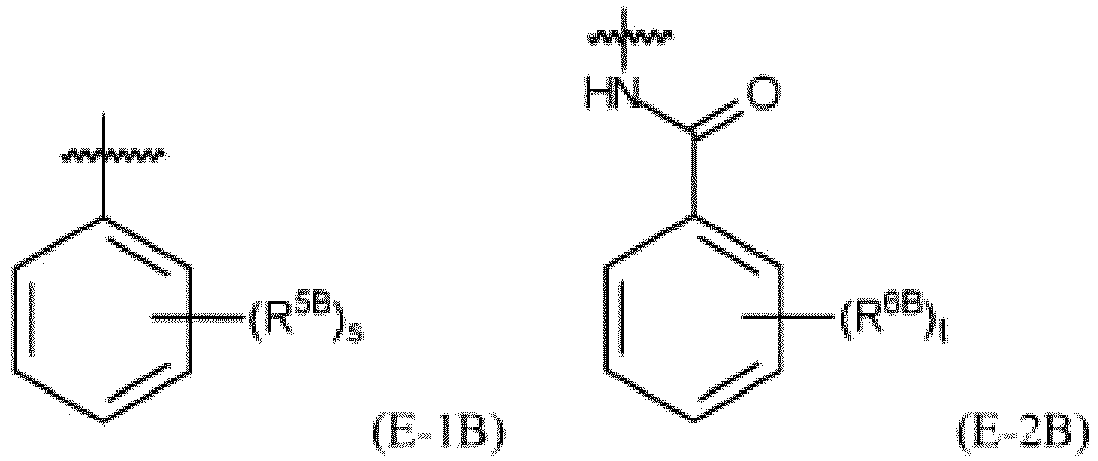 wobeidie Bindung markiert, die die EDS-Gruppe mit dem Rest der Verbindung der Formel (I) verbindet;
 s ist 1, 2 oder 3, vorzugsweise 1 oder 2 und besonders bevorzugt 1;t ist 1, 2 oder 3, vorzugsweise 1 oder 2, und noch bevorzugter 2;R5A ist unabhängig für jedes Vorkommen von s > 1 ein elektronenziehender Substituent, der vorzugsweise ausgewählt ist aus -NO2 und -COOH, und der noch bevorzugter-COOH ist, und wobei die Bindung zwischen R5A und dem Phenylring anzeigt, dass die s Gruppen R5A s Wasserstoffatome an jeder Position am Phenylring ersetzen;R5B ist unabhängig für jedes Vorkommen von s > 1 ein Substituent, der ein freies Elektronenpaar an dem Atom trägt, das direkt an den in der Formel (E-1B) gezeigten Phenylring gebunden ist, wobei der Substituent vorzugsweise ausgewählt ist aus -OH und -NH2, und der noch bevorzugter -NH2 ist, und wobei die Bindung zwischen R5B und dem Phenylring anzeigt, dass die s Gruppen R5B s Wasserstoffatome an irgendeiner Position am Phenylring ersetzen;R6A ist unabhängig für jedes Vorkommen von t > 1 ein elektronenziehender Substituent, der vorzugsweise aus -NO2 und -COOH ausgewählt ist, und der noch bevorzugter -COOH ist, und wobei die Bindung zwischen R6A und dem Phenylring anzeigt, dass die t Gruppen R6A t Wasserstoffatome an einer beliebigen Position am Phenylring ersetzen; undR6B ist unabhängig für jedes Vorkommen von t > 1 ein Substituent, der ein freies Elektronenpaar an dem Atom trägt, das direkt an den in Formel (E-1B) gezeigten Phenylring gebunden ist, wobei der Substituent vorzugsweise aus -OH und -NH2 ausgewählt ist, und der noch bevorzugter-OH ist, und wobei die Bindung zwischen R6B und dem Phenylring anzeigt, dass die t Gruppen R6B t Wasserstoffatome an irgendeiner Position am Phenylring ersetzen; undb) einen pharmazeutisch akzeptablen Träger, Hilfsstoff und/oder Verdünnungsmittel.
 - Pharmazeutische Zusammensetzung nach Anspruch 1, wobei m 2 ist, n 2 oder 4 ist, R1L- NH ist, R2L C ist und R3L NH ist.
- Pharmazeutische Zusammensetzung nach Anspruch 1 oder 2, wobei L1 eine zweiwertige Verknüpfungsgruppe mit einer Struktur ist, die ausgewählt ist aus einem Oligoamid, das insgesamt 1 bis 5, vorzugsweise insgesamt 1 bis 3 und am meisten bevorzugt insgesamt 1 oder 2 Amidbindungen innerhalb seines Rückgrats umfasst, und einem Oligo(esteramid), das insgesamt 2 bis 5, vorzugsweise insgesamt 2 bis 3 und am meisten bevorzugt insgesamt 2 Amid- und Esterbindungen innerhalb seines Rückgrats umfasst, wobei die Verknüpfungsgruppe eine EDS-Gruppe tragen kann.
- Pharmazeutische Zusammensetzung nach einem der Ansprüche 1 bis 3, wobei die Einheit -X2-L1-X1- in Formel (I) eine Struktur aufweist, die ausgewählt ist aus:
*-C(O)-NH-R7-NH-C(O)-R8-C(O)-NH- (L-1),
*-C(O)-NH-R9A-NH-C(O)-R10A-C(O)-NH-R11A-NH-C(O)- (L-2A),
and
*-C(O)-NH-R9B-C(O)-NH-R10B-C(O)-NH-R11B-NH-C(O)- (L-2B);
wobei die mit * gekennzeichnete Amidbindung an das R2-tragende Kohlenstoffatom in Formel (I) gebunden ist, und wobeiR7, R8, R9A, R9B, R11A und R11B unabhängig voneinander ausgewählt sind aus optional substituiertem C2- bis C10-Alkandiyl, wobei die Alkandiylgruppen jeweils mit einem oder mehreren Substituenten substituiert sein können, die unabhängig voneinander ausgewählt sind aus -OH, -OCH3, -COOH, -COOCH3, -NH2, -NHC(NH)NH2, und einer EDS-Gruppe, und R10A und R10B ausgewählt sind aus optional substituiertem C2- bis C10-Alkandiyl und optional substituiertem C6- bis C10-Arendiyl, wobei die Alkandiyl- und Arendiylgruppe jeweils mit einem oder mehreren Substituenten substituiert sein können, die unabhängig voneinander ausgewählt sind aus -OH, -OCH3, -COOH, -COOCH3, -NH2, -NHC(NH)NH2 und einer EDS-Gruppe. - Pharmazeutische Zusammensetzung nach Anspruch 4, wobei die Einheit X2-L1-X1- eine Struktur aufweist, die ausgewählt ist aus:
*-C(O)-NH-CH(COOH)-R12-NH-C(O)-R13-C(O)-NH- (L-3),
*-C(O)-NH-CH(COOH)-R14-NH-C(O)-R15-C(O)-NH-R16-CH(COOH)-NH-C(O)- (L-4)
, und
*-C(O)-NH-CH(COOH)-R17-C(0)-NH-R18-C(0)-NH-R19-CH(COOH)-NH-C(O)- (L-5)
;wobei die mit * gekennzeichnete Bindung an das R2-tragende Kohlenstoffatom in Formel (I) gebunden ist,R12 und R14 sind unabhängig voneinander ausgewählt aus linearem C2- bis C6-Alkandiyl,R13 ist ein lineares C2- bis C10-Alkandiyl,R15 und R16 sind unabhängig voneinander ausgewählt aus linearem C2- bis C6-Alkandiyl, und wobei jeder der Reste R13 und R15 eine EDS-Gruppe als Substituent tragen kann,R17 ist ein lineares C2- bis C6-Alkandiyl,R18 ist eine Phenylengruppe, undR19 ist ein lineares C2- bis C6-Alkandiyl. - Pharmazeutische Zusammensetzung nach einem der Ansprüche 1 bis 5, wobei R2 eine optional substituierte Aralkylgruppe ist, ausgewählt aus optional substituiertem -CH2-Phenyl und optional substituiertem CH2-Naphthyl, wobei die Phenyl- und die Naphthylgruppe optional mit einem Substituenten substituiert sind, ausgewählt aus Halogen, vorzugsweise I, und -OH.
- Pharmazeutische Zusammensetzung nach einem der Ansprüche 1 bis 6, wobei R3 eine optional substituierte Aralkylgruppe ist, ausgewählt aus optional substituiertem -CH2-Phenyl und optional substituiertem -CH2-Naphthyl, wobei die Phenyl- und die Naphthylgruppe optional mit einem Substituenten substituiert sind, ausgewählt aus Halogen und -OH.
- Pharmazeutische Zusammensetzung nach einem der Ansprüche 1 bis 7, wobei r 1 ist und wobei R4 ausgewählt ist aus optional substituiertem Phenyl, optional substituiertem Naphthyl und einer EDS-Gruppe, wobei die Phenylgruppe und die Naphthylgruppe optional mit einem Substituenten, ausgewählt aus Halogen, -OH und NH2, substituiert sind.
- Pharmazeutische Zusammensetzung nach einem der Ansprüche 1 bis 8, wobei X3 eine Amidbindung oder eine Gruppe der Formel

- Pharmazeutische Zusammensetzung nach einem der Ansprüche 1 bis 9, wobei RM eine Chelatgruppe ist, die optional ein chelatgebundenes nicht-radioaktives oder radioaktives Kation enthält.
- Pharmazeutische Zusammensetzung nach einem der Ansprüche 1 bis 10, wobei die Verbindung der Formel (I) entweder eine EDS-Gruppe enthält, die von der verbindenden Gruppe L1 getragen wird, oder zwei EDS-Gruppen enthält, von denen eine durch R4 dargestellt wird und eine von L1 getragen wird.
- Pharmazeutische Zusammensetzung nach einem der Ansprüche 1 bis 11, die eine EDS-Gruppe mit der Formel (E-2A) enthält:
 wobei die Bindung markiert, die die EDS-Gruppe an den Rest der Verbindung der Formel (I) bindet; und11 oder 2 ist, und R6A ist ausgewählt aus NO2 und COOH ist.
 - Pharmazeutische Zusammensetzung nach Anspruch 1, wobei die Verbindung oder das Salz eine der folgenden Formeln aufweist.


- Pharmazeutische Zusammensetzung nach Anspruch 1, die eine Verbindung mit einer Struktur der folgenden Formel umfasst:

- Pharmazeutische Zusammensetzung nach Anspruch 1, die eine Verbindung mit einer Struktur der folgenden Formel umfasst:

- Pharmazeutische Zusammensetzung nach Anspruch 1, die eine Verbindung mit einer Struktur der folgenden Formel umfasst:

- Pharmazeutische Zusammensetzung nach Anspruch 1, die eine Verbindung mit einer Struktur der folgenden Formel umfasst:

- Pharmazeutische Zusammensetzung nach einem der Ansprüche 1 bis 17 zur medizinischen Verwendung.
- Pharmazeutische Zusammensetzung zur Verwendung nach Anspruch 18, wobei es sich bei dem Arzneimittel um eine Strahlentherapie einer Krankheit handelt, die mit einer Überexpression von prostataspezifischem Membranantigen (PSMA) verbunden ist.
- Pharmazeutische Zusammensetzung nach einem der Ansprüche 1 bis 17 zur Verwendung bei der Behandlung von Krebs.
- Pharmazeutische Zusammensetzung nach Anspruch 20, wobei der Krebs Prostatakrebs ist.
Priority Applications (5)
| Application Number | Priority Date | Filing Date | Title |
|---|---|---|---|
| HRP20241453TT HRP20241453T1 (hr) | 2017-12-11 | 2018-12-11 | Psma ligandi za snimanje i endoradioterapiju |
| SI201831155T SI4008359T1 (sl) | 2017-12-11 | 2018-12-11 | PSMA ligandi za slikanje in endoradioterapijo |
| SM20240439T SMT202400439T1 (it) | 2017-12-11 | 2018-12-11 | Ligandi di psma per la formazione di immagini e endoradioterapia |
| EP24198677.7A EP4464341A3 (de) | 2017-12-11 | 2018-12-11 | Psma-liganden zur bildgebung und endoradiotherapie |
| RS20241176A RS66086B1 (sr) | 2017-12-11 | 2018-12-11 | Psma ligandi za snimanje i endoradioterapiju |
Applications Claiming Priority (3)
| Application Number | Priority Date | Filing Date | Title |
|---|---|---|---|
| EP17206510 | 2017-12-11 | ||
| PCT/EP2018/084399 WO2019115547A1 (en) | 2017-12-11 | 2018-12-11 | Psma ligands for imaging and endoradiotherapy |
| EP18812215.4A EP3723815B1 (de) | 2017-12-11 | 2018-12-11 | Psma-liganden zur bildgebung und endoradiotherapie |
Related Parent Applications (2)
| Application Number | Title | Priority Date | Filing Date |
|---|---|---|---|
| EP18812215.4A Division-Into EP3723815B1 (de) | 2017-12-11 | 2018-12-11 | Psma-liganden zur bildgebung und endoradiotherapie |
| EP18812215.4A Division EP3723815B1 (de) | 2017-12-11 | 2018-12-11 | Psma-liganden zur bildgebung und endoradiotherapie |
Related Child Applications (1)
| Application Number | Title | Priority Date | Filing Date |
|---|---|---|---|
| EP24198677.7A Division EP4464341A3 (de) | 2017-12-11 | 2018-12-11 | Psma-liganden zur bildgebung und endoradiotherapie |
Publications (2)
| Publication Number | Publication Date |
|---|---|
| EP4008359A1 EP4008359A1 (de) | 2022-06-08 |
| EP4008359B1 true EP4008359B1 (de) | 2024-09-11 |
Family
ID=60654872
Family Applications (3)
| Application Number | Title | Priority Date | Filing Date |
|---|---|---|---|
| EP24198677.7A Pending EP4464341A3 (de) | 2017-12-11 | 2018-12-11 | Psma-liganden zur bildgebung und endoradiotherapie |
| EP21218180.4A Active EP4008359B1 (de) | 2017-12-11 | 2018-12-11 | Psma-liganden zur bildgebung und endoradiotherapie |
| EP18812215.4A Active EP3723815B1 (de) | 2017-12-11 | 2018-12-11 | Psma-liganden zur bildgebung und endoradiotherapie |
Family Applications Before (1)
| Application Number | Title | Priority Date | Filing Date |
|---|---|---|---|
| EP24198677.7A Pending EP4464341A3 (de) | 2017-12-11 | 2018-12-11 | Psma-liganden zur bildgebung und endoradiotherapie |
Family Applications After (1)
| Application Number | Title | Priority Date | Filing Date |
|---|---|---|---|
| EP18812215.4A Active EP3723815B1 (de) | 2017-12-11 | 2018-12-11 | Psma-liganden zur bildgebung und endoradiotherapie |
Country Status (33)
| Country | Link |
|---|---|
| US (2) | US11497819B2 (de) |
| EP (3) | EP4464341A3 (de) |
| JP (3) | JP7317375B2 (de) |
| KR (1) | KR102815791B1 (de) |
| CN (2) | CN111182927B (de) |
| AU (2) | AU2018382479B2 (de) |
| BR (1) | BR112020011727A2 (de) |
| CA (1) | CA3078104A1 (de) |
| CL (1) | CL2020001542A1 (de) |
| CR (1) | CR20200241A (de) |
| CU (1) | CU24677B1 (de) |
| CY (1) | CY1125376T1 (de) |
| DK (2) | DK3723815T3 (de) |
| EC (1) | ECSP20029142A (de) |
| ES (2) | ES2914832T3 (de) |
| FI (1) | FI4008359T3 (de) |
| HR (2) | HRP20220764T1 (de) |
| HU (2) | HUE069034T2 (de) |
| IL (3) | IL313103B2 (de) |
| JO (1) | JOP20200135A1 (de) |
| LT (2) | LT4008359T (de) |
| MX (2) | MX2020005430A (de) |
| PE (1) | PE20210456A1 (de) |
| PL (1) | PL3723815T3 (de) |
| PT (2) | PT4008359T (de) |
| RS (2) | RS66086B1 (de) |
| SG (1) | SG11202002965WA (de) |
| SI (2) | SI4008359T1 (de) |
| SM (1) | SMT202400439T1 (de) |
| TN (1) | TN2020000072A1 (de) |
| UA (1) | UA126413C2 (de) |
| WO (1) | WO2019115547A1 (de) |
| ZA (1) | ZA202003472B (de) |
Families Citing this family (19)
| Publication number | Priority date | Publication date | Assignee | Title |
|---|---|---|---|---|
| NZ760537A (en) * | 2017-07-28 | 2026-01-30 | Univ Muenchen Tech | Dual mode radiotracer and -therapeutics |
| SMT202400439T1 (it) | 2017-12-11 | 2024-11-15 | Univ Muenchen Tech | Ligandi di psma per la formazione di immagini e endoradioterapia |
| WO2020157177A1 (en) * | 2019-01-30 | 2020-08-06 | Technische Universität München | Psma binding dual mode radiotracer and therapeutic |
| EA202192045A1 (ru) * | 2019-01-30 | 2021-10-27 | Технише Универзитет Мюнхен | Средства для диагностической визуализации ракового заболевания |
| US12472272B2 (en) | 2019-04-17 | 2025-11-18 | Provincial Health Services Authority | Radiolabelled compounds for diagnosis or treatment of prostate-specific membrane antigen- expressing cancer |
| CA3144094A1 (en) | 2019-06-21 | 2020-12-24 | Provincial Health Services Authority | Radiolabeled compounds targeting the prostate-specific membrane antigen |
| CN112321673B (zh) * | 2020-11-04 | 2022-09-20 | 北京市肿瘤防治研究所 | 一种前列腺特异性膜抗原靶向抑制剂及应用和探针 |
| CN116981479A (zh) * | 2020-12-17 | 2023-10-31 | 塔夫茨大学信托人 | Fap激活的放射治疗诊断法以及与之相关的用途 |
| EP4023250A1 (de) * | 2021-01-04 | 2022-07-06 | Technische Universität München | Dualmodus-radiotracer und -therapeutika |
| CN113354707A (zh) * | 2021-06-07 | 2021-09-07 | 苏州思萃同位素技术研究所有限公司 | 一种针对前列腺癌的三功能诊疗一体化药物前体的合成方法及其产品 |
| WO2023173074A2 (en) * | 2022-03-10 | 2023-09-14 | The Research Foundation For The State University Of New York | Immunostimulant-cytotoxic conjugate composition and methods for cancer treatment |
| CN115010629B (zh) * | 2022-06-07 | 2024-02-23 | 西南医科大学附属医院 | 前列腺特异性膜抗原抑制剂、其核素标记物及制法和应用 |
| TW202426433A (zh) | 2022-09-23 | 2024-07-01 | 瑞士商紐利迪姆股份公司 | 成纖維細胞活化蛋白(fap)抑制劑、fap結合物及其診斷與治療用途 |
| WO2024064969A2 (en) | 2022-09-23 | 2024-03-28 | Nuclidium Ag | High-purity copper radiopharmaceutical compositions and diagnostic and therapeutic uses thereof |
| IL326014A (en) | 2023-07-21 | 2026-03-01 | Novartis Ag | PSMA-targeted radioligand treatment regimen |
| WO2025029963A1 (en) | 2023-07-31 | 2025-02-06 | Curium Us Llc | [ 177lu] lutetium-psma i&t composition and dosimetry, kit, method of making, and method of using thereof |
| WO2025147677A1 (en) * | 2024-01-05 | 2025-07-10 | Point Biopharma, Inc. | Preparation of psma-targeted radiopharmaceutical |
| CN119101006B (zh) * | 2024-09-05 | 2025-11-07 | 西南医科大学附属医院 | 前列腺特异性膜抗原抑制剂、其放射性标记物及制法和应用 |
| WO2026088112A1 (en) | 2024-10-23 | 2026-04-30 | Novartis Ag | Combination therapies with ar-degrading agents and psma-targeting radioligands |
Family Cites Families (12)
| Publication number | Priority date | Publication date | Assignee | Title |
|---|---|---|---|---|
| EP1888581A2 (de) | 2005-05-16 | 2008-02-20 | Gilead Sciences, Inc. | Hiv-integrasehemmerverbindungen |
| US20100088264A1 (en) * | 2007-04-05 | 2010-04-08 | Aureon Laboratories Inc. | Systems and methods for treating diagnosing and predicting the occurrence of a medical condition |
| AU2009276423B2 (en) * | 2008-08-01 | 2014-10-30 | The Johns Hopkins University | PSMA-binding agents and uses thereof |
| WO2010065940A1 (en) * | 2008-12-04 | 2010-06-10 | The Regents Of The University Of California | Materials and methods for determining diagnosis and prognosis of prostate cancer |
| WO2010135431A2 (en) * | 2009-05-19 | 2010-11-25 | The Regents Of The University Of California | Compositions, devices, and methods related to prostate-specific membrane antigen |
| EP3456700A1 (de) * | 2013-10-18 | 2019-03-20 | Deutsches Krebsforschungszentrum | Markierte inhibitoren des prostataspezifischen membranantigens (psma), deren verwendung als kontrastmittel und pharmazeutika zur behandlung von prostatakrebs |
| CA2950892C (en) * | 2014-05-06 | 2023-10-24 | The Johns Hopkins University | Metal/radiometal-labeled psma inhibitors for psma-targeted imaging and radiotherapy |
| US10688200B2 (en) | 2015-12-31 | 2020-06-23 | Five Eleven Pharma Inc. | Urea-based prostate specific membrane antigen (PSMA) inhibitors for imaging and therapy |
| RS62274B1 (sr) * | 2016-03-22 | 2021-09-30 | Univ Johns Hopkins | Sredstva sa visokim afinitetom za ciljano dejstvo na membranski antigen specifičan za prostatu za endoradioterapiju kancera prostate |
| TW201930265A (zh) | 2017-12-11 | 2019-08-01 | 西班牙商阿爾米雷爾有限公司 | 作為acc抑制劑的吡咯衍生物 |
| IL275153B2 (en) | 2017-12-11 | 2024-12-01 | Helsinn Healthcare Sa | Fumarate salts of (R)-3-(1-(2, 3-dichloro-4-(pyrazin-2-yl)phenyl)-2,2,2-trifluoroethyl)-1-methyl-1-(1-methylpiperidin-4-yl)urea, methods for their preparation and use |
| SMT202400439T1 (it) | 2017-12-11 | 2024-11-15 | Univ Muenchen Tech | Ligandi di psma per la formazione di immagini e endoradioterapia |
-
2018
- 2018-12-11 SM SM20240439T patent/SMT202400439T1/it unknown
- 2018-12-11 DK DK18812215.4T patent/DK3723815T3/da active
- 2018-12-11 EP EP24198677.7A patent/EP4464341A3/de active Pending
- 2018-12-11 RS RS20241176A patent/RS66086B1/sr unknown
- 2018-12-11 SG SG11202002965WA patent/SG11202002965WA/en unknown
- 2018-12-11 CN CN201880056196.2A patent/CN111182927B/zh active Active
- 2018-12-11 LT LTEP21218180.4T patent/LT4008359T/lt unknown
- 2018-12-11 EP EP21218180.4A patent/EP4008359B1/de active Active
- 2018-12-11 TN TNP/2020/000072A patent/TN2020000072A1/en unknown
- 2018-12-11 CA CA3078104A patent/CA3078104A1/en active Pending
- 2018-12-11 RS RS20220527A patent/RS63279B1/sr unknown
- 2018-12-11 LT LTEPPCT/EP2018/084399T patent/LT3723815T/lt unknown
- 2018-12-11 PT PT212181804T patent/PT4008359T/pt unknown
- 2018-12-11 HR HRP20220764TT patent/HRP20220764T1/hr unknown
- 2018-12-11 IL IL313103A patent/IL313103B2/en unknown
- 2018-12-11 HU HUE21218180A patent/HUE069034T2/hu unknown
- 2018-12-11 BR BR112020011727-7A patent/BR112020011727A2/pt unknown
- 2018-12-11 ES ES18812215T patent/ES2914832T3/es active Active
- 2018-12-11 SI SI201831155T patent/SI4008359T1/sl unknown
- 2018-12-11 HR HRP20241453TT patent/HRP20241453T1/hr unknown
- 2018-12-11 DK DK21218180.4T patent/DK4008359T3/da active
- 2018-12-11 UA UAA202003533A patent/UA126413C2/uk unknown
- 2018-12-11 EP EP18812215.4A patent/EP3723815B1/de active Active
- 2018-12-11 MX MX2020005430A patent/MX2020005430A/es unknown
- 2018-12-11 JO JOP/2020/0135A patent/JOP20200135A1/ar unknown
- 2018-12-11 JP JP2020526146A patent/JP7317375B2/ja active Active
- 2018-12-11 US US16/765,729 patent/US11497819B2/en active Active
- 2018-12-11 FI FIEP21218180.4T patent/FI4008359T3/fi active
- 2018-12-11 PE PE2020000552A patent/PE20210456A1/es unknown
- 2018-12-11 CU CU2020000052A patent/CU24677B1/es unknown
- 2018-12-11 WO PCT/EP2018/084399 patent/WO2019115547A1/en not_active Ceased
- 2018-12-11 IL IL274072A patent/IL274072B2/en unknown
- 2018-12-11 PT PT188122154T patent/PT3723815T/pt unknown
- 2018-12-11 IL IL319022A patent/IL319022A/en unknown
- 2018-12-11 PL PL18812215.4T patent/PL3723815T3/pl unknown
- 2018-12-11 AU AU2018382479A patent/AU2018382479B2/en active Active
- 2018-12-11 HU HUE18812215A patent/HUE059083T2/hu unknown
- 2018-12-11 KR KR1020207014036A patent/KR102815791B1/ko active Active
- 2018-12-11 CR CR20200241A patent/CR20200241A/es unknown
- 2018-12-11 CN CN202310801735.3A patent/CN116617421B/zh active Active
- 2018-12-11 ES ES21218180T patent/ES2997266T3/es active Active
- 2018-12-11 SI SI201830691T patent/SI3723815T1/sl unknown
-
2020
- 2020-06-03 EC ECSENADI202029142A patent/ECSP20029142A/es unknown
- 2020-06-10 CL CL2020001542A patent/CL2020001542A1/es unknown
- 2020-06-10 ZA ZA2020/03472A patent/ZA202003472B/en unknown
- 2020-07-13 MX MX2023005053A patent/MX2023005053A/es unknown
-
2022
- 2022-07-15 US US17/866,034 patent/US20230122957A1/en active Pending
- 2022-07-20 CY CY20221100496T patent/CY1125376T1/el unknown
-
2023
- 2023-07-11 JP JP2023113523A patent/JP7572080B2/ja active Active
-
2024
- 2024-10-03 JP JP2024173980A patent/JP7857035B2/ja active Active
-
2025
- 2025-02-07 AU AU2025200837A patent/AU2025200837A1/en active Pending
Also Published As
Similar Documents
| Publication | Publication Date | Title |
|---|---|---|
| EP3723815B1 (de) | Psma-liganden zur bildgebung und endoradiotherapie | |
| AU2024200440B2 (en) | Dual mode radiotracer and -therapeutics | |
| AU2014336638B2 (en) | Labeled inhibitors of prostate specific membrane antigen (PSMA), their use as imaging agents and pharmaceutical agents for the treatment of prostate cancer | |
| EP4023250A1 (de) | Dualmodus-radiotracer und -therapeutika | |
| EP3494999A1 (de) | Psma-liganden zur bildgebung und endoradiotherapie | |
| RU2807076C2 (ru) | Лиганды PSMA для визуализации и эндорадиотерапии | |
| EP3494998A1 (de) | Glykosylierte psma-inhibitoren zur bildgebung und endoradiotherapie | |
| HK40031508B (en) | Psma ligands for imaging and endoradiotherapy | |
| HK40022705B (en) | Dual mode radiotracer and -therapeutics | |
| HK40022705A (en) | Dual mode radiotracer and -therapeutics |
Legal Events
| Date | Code | Title | Description |
|---|---|---|---|
| PUAI | Public reference made under article 153(3) epc to a published international application that has entered the european phase |
Free format text: ORIGINAL CODE: 0009012 |
|
| STAA | Information on the status of an ep patent application or granted ep patent |
Free format text: STATUS: THE APPLICATION HAS BEEN PUBLISHED |
|
| AC | Divisional application: reference to earlier application |
Ref document number: 3723815 Country of ref document: EP Kind code of ref document: P |
|
| AK | Designated contracting states |
Kind code of ref document: A1 Designated state(s): AL AT BE BG CH CY CZ DE DK EE ES FI FR GB GR HR HU IE IS IT LI LT LU LV MC MK MT NL NO PL PT RO RS SE SI SK SM TR |
|
| STAA | Information on the status of an ep patent application or granted ep patent |
Free format text: STATUS: REQUEST FOR EXAMINATION WAS MADE |
|
| 17P | Request for examination filed |
Effective date: 20221207 |
|
| RBV | Designated contracting states (corrected) |
Designated state(s): AL AT BE BG CH CY CZ DE DK EE ES FI FR GB GR HR HU IE IS IT LI LT LU LV MC MK MT NL NO PL PT RO RS SE SI SK SM TR |
|
| GRAP | Despatch of communication of intention to grant a patent |
Free format text: ORIGINAL CODE: EPIDOSNIGR1 |
|
| STAA | Information on the status of an ep patent application or granted ep patent |
Free format text: STATUS: GRANT OF PATENT IS INTENDED |
|
| INTG | Intention to grant announced |
Effective date: 20231117 |
|
| GRAS | Grant fee paid |
Free format text: ORIGINAL CODE: EPIDOSNIGR3 |
|
| GRAJ | Information related to disapproval of communication of intention to grant by the applicant or resumption of examination proceedings by the epo deleted |
Free format text: ORIGINAL CODE: EPIDOSDIGR1 |
|
| GRAL | Information related to payment of fee for publishing/printing deleted |
Free format text: ORIGINAL CODE: EPIDOSDIGR3 |
|
| STAA | Information on the status of an ep patent application or granted ep patent |
Free format text: STATUS: REQUEST FOR EXAMINATION WAS MADE |
|
| GRAP | Despatch of communication of intention to grant a patent |
Free format text: ORIGINAL CODE: EPIDOSNIGR1 |
|
| STAA | Information on the status of an ep patent application or granted ep patent |
Free format text: STATUS: GRANT OF PATENT IS INTENDED |
|
| INTC | Intention to grant announced (deleted) | ||
| P01 | Opt-out of the competence of the unified patent court (upc) registered |
Effective date: 20240318 |
|
| INTG | Intention to grant announced |
Effective date: 20240419 |
|
| GRAS | Grant fee paid |
Free format text: ORIGINAL CODE: EPIDOSNIGR3 |
|
| GRAA | (expected) grant |
Free format text: ORIGINAL CODE: 0009210 |
|
| STAA | Information on the status of an ep patent application or granted ep patent |
Free format text: STATUS: THE PATENT HAS BEEN GRANTED |
|
| AC | Divisional application: reference to earlier application |
Ref document number: 3723815 Country of ref document: EP Kind code of ref document: P |
|
| AK | Designated contracting states |
Kind code of ref document: B1 Designated state(s): AL AT BE BG CH CY CZ DE DK EE ES FI FR GB GR HR HU IE IS IT LI LT LU LV MC MK MT NL NO PL PT RO RS SE SI SK SM TR |
|
| REG | Reference to a national code |
Ref country code: GB Ref legal event code: FG4D |
|
| RIN1 | Information on inventor provided before grant (corrected) |
Inventor name: PARZINGER, MARA KATHARINA Inventor name: WESTER, HAND-JUERGEN Inventor name: SCHMIDT, ALEXANDER |
|
| REG | Reference to a national code |
Ref country code: CH Ref legal event code: EP |
|
| REG | Reference to a national code |
Ref country code: DE Ref legal event code: R081 Ref document number: 602018074426 Country of ref document: DE Owner name: TECHNISCHE UNIVERSITAET MUENCHEN, DE Free format text: FORMER OWNER: ANMELDERANGABEN UNKLAR / UNVOLLSTAENDIG, 80297 MUENCHEN, DE |
|
| REG | Reference to a national code |
Ref country code: DE Ref legal event code: R096 Ref document number: 602018074426 Country of ref document: DE |
|
| REG | Reference to a national code |
Ref country code: IE Ref legal event code: FG4D |
|
| REG | Reference to a national code |
Ref country code: DK Ref legal event code: T3 Effective date: 20241009 |
|
| REG | Reference to a national code |
Ref country code: PT Ref legal event code: SC4A Ref document number: 4008359 Country of ref document: PT Date of ref document: 20241025 Kind code of ref document: T Free format text: AVAILABILITY OF NATIONAL TRANSLATION Effective date: 20241021 |
|
| REG | Reference to a national code |
Ref country code: FI Ref legal event code: FGE |
|
| REG | Reference to a national code |
Ref country code: SE Ref legal event code: TRGR |
|
| REG | Reference to a national code |
Ref country code: NL Ref legal event code: FP |
|
| REG | Reference to a national code |
Ref country code: EE Ref legal event code: FG4A Ref document number: E024666 Country of ref document: EE Effective date: 20241105 |
|
| REG | Reference to a national code |
Ref country code: HR Ref legal event code: T1PR Ref document number: P20241453 Country of ref document: HR |
|
| REG | Reference to a national code |
Ref country code: GR Ref legal event code: EP Ref document number: 20240402610 Country of ref document: GR Effective date: 20241209 |
|
| REG | Reference to a national code |
Ref country code: HR Ref legal event code: ODRP Ref document number: P20241453 Country of ref document: HR Payment date: 20241211 Year of fee payment: 7 |
|
| REG | Reference to a national code |
Ref country code: SK Ref legal event code: T3 Ref document number: E 45331 Country of ref document: SK |
|
| REG | Reference to a national code |
Ref country code: ES Ref legal event code: FG2A Ref document number: 2997266 Country of ref document: ES Kind code of ref document: T3 Effective date: 20250214 |
|
| REG | Reference to a national code |
Ref country code: HU Ref legal event code: AG4A Ref document number: E069034 Country of ref document: HU |
|
| REG | Reference to a national code |
Ref country code: AT Ref legal event code: UEP Ref document number: 1722122 Country of ref document: AT Kind code of ref document: T Effective date: 20240911 |
|
| REG | Reference to a national code |
Ref country code: DE Ref legal event code: R097 Ref document number: 602018074426 Country of ref document: DE |
|
| PLBE | No opposition filed within time limit |
Free format text: ORIGINAL CODE: 0009261 |
|
| STAA | Information on the status of an ep patent application or granted ep patent |
Free format text: STATUS: NO OPPOSITION FILED WITHIN TIME LIMIT |
|
| 26N | No opposition filed |
Effective date: 20250612 |
|
| PGFP | Annual fee paid to national office [announced via postgrant information from national office to epo] |
Ref country code: PT Payment date: 20251120 Year of fee payment: 8 |
|
| REG | Reference to a national code |
Ref country code: HR Ref legal event code: ODRP Ref document number: P20241453 Country of ref document: HR Payment date: 20251124 Year of fee payment: 8 |
|
| REG | Reference to a national code |
Ref country code: CH Ref legal event code: U11 Free format text: ST27 STATUS EVENT CODE: U-0-0-U10-U11 (AS PROVIDED BY THE NATIONAL OFFICE) Effective date: 20260101 |
|
| PGFP | Annual fee paid to national office [announced via postgrant information from national office to epo] |
Ref country code: IS Payment date: 20251229 Year of fee payment: 8 |
|
| PGFP | Annual fee paid to national office [announced via postgrant information from national office to epo] |
Ref country code: LT Payment date: 20251121 Year of fee payment: 8 Ref country code: GB Payment date: 20251222 Year of fee payment: 8 |
|
| PGFP | Annual fee paid to national office [announced via postgrant information from national office to epo] |
Ref country code: NO Payment date: 20251218 Year of fee payment: 8 Ref country code: MC Payment date: 20251219 Year of fee payment: 8 |
|
| PGFP | Annual fee paid to national office [announced via postgrant information from national office to epo] |
Ref country code: SM Payment date: 20251222 Year of fee payment: 8 Ref country code: MK Payment date: 20251120 Year of fee payment: 8 Ref country code: AT Payment date: 20251218 Year of fee payment: 8 |
|
| PGFP | Annual fee paid to national office [announced via postgrant information from national office to epo] |
Ref country code: IT Payment date: 20251218 Year of fee payment: 8 Ref country code: FI Payment date: 20251222 Year of fee payment: 8 Ref country code: DK Payment date: 20251222 Year of fee payment: 8 |
|
| PGFP | Annual fee paid to national office [announced via postgrant information from national office to epo] |
Ref country code: LU Payment date: 20251222 Year of fee payment: 8 Ref country code: HR Payment date: 20251124 Year of fee payment: 8 Ref country code: HU Payment date: 20251203 Year of fee payment: 8 Ref country code: NL Payment date: 20251222 Year of fee payment: 8 Ref country code: FR Payment date: 20251223 Year of fee payment: 8 |
|
| PGFP | Annual fee paid to national office [announced via postgrant information from national office to epo] |
Ref country code: TR Payment date: 20251120 Year of fee payment: 8 Ref country code: AL Payment date: 20251113 Year of fee payment: 8 Ref country code: GR Payment date: 20251218 Year of fee payment: 8 Ref country code: BE Payment date: 20251231 Year of fee payment: 8 |
|
| PGFP | Annual fee paid to national office [announced via postgrant information from national office to epo] |
Ref country code: SE Payment date: 20251222 Year of fee payment: 8 |
|
| PGFP | Annual fee paid to national office [announced via postgrant information from national office to epo] |
Ref country code: IE Payment date: 20251218 Year of fee payment: 8 Ref country code: CY Payment date: 20251119 Year of fee payment: 8 Ref country code: CZ Payment date: 20251128 Year of fee payment: 8 |
|
| PGFP | Annual fee paid to national office [announced via postgrant information from national office to epo] |
Ref country code: MT Payment date: 20251226 Year of fee payment: 8 Ref country code: LV Payment date: 20251219 Year of fee payment: 8 |
|
| PGFP | Annual fee paid to national office [announced via postgrant information from national office to epo] |
Ref country code: PL Payment date: 20251121 Year of fee payment: 8 Ref country code: BG Payment date: 20251223 Year of fee payment: 8 |
|
| PGFP | Annual fee paid to national office [announced via postgrant information from national office to epo] |
Ref country code: EE Payment date: 20251230 Year of fee payment: 8 |
|
| PGFP | Annual fee paid to national office [announced via postgrant information from national office to epo] |
Ref country code: RO Payment date: 20251203 Year of fee payment: 8 Ref country code: SK Payment date: 20251120 Year of fee payment: 8 |
|
| PGFP | Annual fee paid to national office [announced via postgrant information from national office to epo] |
Ref country code: RS Payment date: 20251120 Year of fee payment: 8 |
|
| PGFP | Annual fee paid to national office [announced via postgrant information from national office to epo] |
Ref country code: SI Payment date: 20251120 Year of fee payment: 8 |
|
| PGFP | Annual fee paid to national office [announced via postgrant information from national office to epo] |
Ref country code: ES Payment date: 20260122 Year of fee payment: 8 |
|
| PGFP | Annual fee paid to national office [announced via postgrant information from national office to epo] |
Ref country code: DE Payment date: 20251230 Year of fee payment: 8 |
|
| PGFP | Annual fee paid to national office [announced via postgrant information from national office to epo] |
Ref country code: CH Payment date: 20260101 Year of fee payment: 8 |