EP3978640B1 - Verfahren zur herstellung eines auf nickel basierenden deformierten hochtemperaturlegierungsturbinenscheibenschmiedeteils für hochtemperaturanwendungen - Google Patents
Verfahren zur herstellung eines auf nickel basierenden deformierten hochtemperaturlegierungsturbinenscheibenschmiedeteils für hochtemperaturanwendungen Download PDFInfo
- Publication number
- EP3978640B1 EP3978640B1 EP20923081.2A EP20923081A EP3978640B1 EP 3978640 B1 EP3978640 B1 EP 3978640B1 EP 20923081 A EP20923081 A EP 20923081A EP 3978640 B1 EP3978640 B1 EP 3978640B1
- Authority
- EP
- European Patent Office
- Prior art keywords
- temperature
- forging
- alloy ingot
- alloy
- controlled
- Prior art date
- Legal status (The legal status is an assumption and is not a legal conclusion. Google has not performed a legal analysis and makes no representation as to the accuracy of the status listed.)
- Active
Links
Images



Classifications
-
- B—PERFORMING OPERATIONS; TRANSPORTING
- B22—CASTING; POWDER METALLURGY
- B22D—CASTING OF METALS; CASTING OF OTHER SUBSTANCES BY THE SAME PROCESSES OR DEVICES
- B22D7/00—Casting ingots, e.g. from ferrous metals
- B22D7/005—Casting ingots, e.g. from ferrous metals from non-ferrous metals
-
- C—CHEMISTRY; METALLURGY
- C22—METALLURGY; FERROUS OR NON-FERROUS ALLOYS; TREATMENT OF ALLOYS OR NON-FERROUS METALS
- C22B—PRODUCTION AND REFINING OF METALS; PRETREATMENT OF RAW MATERIALS
- C22B9/00—General processes of refining or remelting of metals; Apparatus for electroslag or arc remelting of metals
- C22B9/16—Remelting metals
- C22B9/18—Electroslag remelting
-
- C—CHEMISTRY; METALLURGY
- C22—METALLURGY; FERROUS OR NON-FERROUS ALLOYS; TREATMENT OF ALLOYS OR NON-FERROUS METALS
- C22B—PRODUCTION AND REFINING OF METALS; PRETREATMENT OF RAW MATERIALS
- C22B9/00—General processes of refining or remelting of metals; Apparatus for electroslag or arc remelting of metals
- C22B9/16—Remelting metals
- C22B9/20—Arc remelting
-
- C—CHEMISTRY; METALLURGY
- C22—METALLURGY; FERROUS OR NON-FERROUS ALLOYS; TREATMENT OF ALLOYS OR NON-FERROUS METALS
- C22C—ALLOYS
- C22C1/00—Making non-ferrous alloys
- C22C1/02—Making non-ferrous alloys by melting
- C22C1/023—Alloys based on nickel
-
- C—CHEMISTRY; METALLURGY
- C22—METALLURGY; FERROUS OR NON-FERROUS ALLOYS; TREATMENT OF ALLOYS OR NON-FERROUS METALS
- C22C—ALLOYS
- C22C1/00—Making non-ferrous alloys
- C22C1/06—Making non-ferrous alloys with the use of special agents for refining or deoxidising
-
- C—CHEMISTRY; METALLURGY
- C22—METALLURGY; FERROUS OR NON-FERROUS ALLOYS; TREATMENT OF ALLOYS OR NON-FERROUS METALS
- C22C—ALLOYS
- C22C19/00—Alloys based on nickel or cobalt
- C22C19/03—Alloys based on nickel or cobalt based on nickel
- C22C19/05—Alloys based on nickel or cobalt based on nickel with chromium
- C22C19/051—Alloys based on nickel or cobalt based on nickel with chromium and Mo or W
- C22C19/056—Alloys based on nickel or cobalt based on nickel with chromium and Mo or W with the maximum Cr content being at least 10% but less than 20%
-
- C—CHEMISTRY; METALLURGY
- C22—METALLURGY; FERROUS OR NON-FERROUS ALLOYS; TREATMENT OF ALLOYS OR NON-FERROUS METALS
- C22C—ALLOYS
- C22C19/00—Alloys based on nickel or cobalt
- C22C19/03—Alloys based on nickel or cobalt based on nickel
- C22C19/05—Alloys based on nickel or cobalt based on nickel with chromium
- C22C19/051—Alloys based on nickel or cobalt based on nickel with chromium and Mo or W
- C22C19/057—Alloys based on nickel or cobalt based on nickel with chromium and Mo or W with the maximum Cr content being less 10%
-
- C—CHEMISTRY; METALLURGY
- C22—METALLURGY; FERROUS OR NON-FERROUS ALLOYS; TREATMENT OF ALLOYS OR NON-FERROUS METALS
- C22F—CHANGING THE PHYSICAL STRUCTURE OF NON-FERROUS METALS AND NON-FERROUS ALLOYS
- C22F1/00—Changing the physical structure of non-ferrous metals or alloys by heat treatment or by hot or cold working
- C22F1/10—Changing the physical structure of non-ferrous metals or alloys by heat treatment or by hot or cold working of nickel or cobalt or alloys based thereon
-
- C—CHEMISTRY; METALLURGY
- C22—METALLURGY; FERROUS OR NON-FERROUS ALLOYS; TREATMENT OF ALLOYS OR NON-FERROUS METALS
- C22C—ALLOYS
- C22C30/00—Alloys containing less than 50% by weight of each constituent
Definitions
- the present application pertains to the field of alloy preparation, and particularly relates to a preparation method of nickel-based wrought superalloy wheel disk forgings used at high temperature.
- the service temperature of hot-end rotary wheel disk forgings for example, a high-pressure compressor disk, a turbine disk or the like, of an aeroengine and gas turbine is gradually increased, with a maximum temperature exceeding 850 °C. Therefore, the alloy materials required for the preparation of the disk forgings need to have excellent strength and plasticity in a range from room temperature to 850 °C, high-temperature creep resistance and long-term structural property stability, as well as good casting and forging processing properties.
- domestic nickel-based wrought superalloy wheel disk materials for an aeroengine cannot meet the long-term use requirements at 850 °C or higher.
- the most effective way to increase the use temperature of the nickel-based high-temperature alloy is to increase the alloying degree and the content of a strengthening phase ⁇ '.
- excessive alloying degree will induce high metallurgical segregation tendency and poor thermoplasticity in the alloy. Therefore, there are still difficulties in developing a new nickel-based wrought superalloy wheel disk material.
- Traditional nickel-based high-temperature alloys with ⁇ ' phase content of 55-65% can only be produced by powder metallurgy or casting (including equiaxed casting, directional solidification and single crystal solidification) processes.
- CN110205523A discloses a nickel base powder high-temperature alloy with high tensile strength and a preparation method thereof, belongs to the technical field of high-temperature alloys, and solves the technical problems of strict requirements on high-temperature alloy materials by such hot end parts as turbine discs in traditional engines and incapability of meeting the performance requirements by traditional high-temperature alloy materials.
- the powder high-temperature alloy comprises the following chemical components in percentage by mass: 0.04-0.08 of C, 17.0-19.0 of Co, 11.0-13.0 of Cr,6.0-6.7 of W, 4.3-5.0 of Mo, 4.9-5.4 of Al, 1.5-1.9 of Ti, 2.5-2.9 of Nb, 0.2-0.5 of Hf, B less than 0.03, Zr less than 0.03, Mg less than 0.005, Ce less than 0.002, and the balance of Ni and other inevitable impurities.
- CN110468361A discloses a preparation method for a wrought superalloy fine-grain bar.
- the preparation method for the wrought superalloy fine-grain bar comprises the following steps: raw material preparation, vacuum induction furnace smelting, vacuum self-consuming re-melting, high-temperature diffusion homogenizing annealing, upsetting and blank preparation, thermal sheathing, sand blasting for a sheathed blank, glass lubricant brushing, extrusion preparation for a bar material, and sheath removal.
- JP2018188738A discloses a production method of a Ni-based alloy softener of the present invention includes: a softening treatment step for improving the workability by softening a Ni-based alloy raw material in a temperature region lower than a solid solution temperature of a ⁇ ' phase, the softening treatment step includes a first step of hot-forging the Ni-based alloy raw material at a temperature lower than the solid solution temperature of the ⁇ ' phase; and a second step of slow cooling at a cooling speed of 100°C per hr or lower from a temperature lower than the solid solution temperature of the ⁇ ' phase.
- CN110373620A discloses a method of improving the hot workability of a high-gamma' phase volume fraction nickel-based precipitation strengthening high temperature alloy.
- the method comprises the following steps of: melting a high-gamma' phase volume fraction nickel-based precipitation strengthening high temperature alloy to obtain a remolten ingot; performing first heat treatment on the remolten ingot, and performing annealing treatment after performing first upsetting and drawing-down to obtain a first bar; carrying out second heat treatment on the first bar, and obtaining a second bar after performing second upsetting and drawing-down; carrying out third heat treatment on the second bar, and obtaining a third bar after performing third upsetting and drawing-down; carrying out fourth heat treatment on the third bar, and obtaining a fourth bar after performing fourth upsetting and drawing-down; and carrying out fifth heat treatment on the fourth bar, and obtaining a bar with the improved hot workability after performing fifth drawing-down.
- the present application provides a preparation method of a nickel-based wrought superalloy wheel disk forgings used at high temperature, which solves the problem that, at present, there is no high-performance wheel disk forgings material that can be used at 850 °C for a long time available.
- the present application provides a preparation method of a nickel-based wrought superalloy used at high temperature, which includes the steps defined in present claim 1.
- the alloy prepared according to this technical solution can be used to prepare wheel forgings for long-term use at 850 °C, which have a diameter of from 200 mm to 1200 mm, a tensile strength at 850 °C of more than 850 MPa, a yield strength of more than 700 MPa, and an endurance life at 850 °C/350 MPa of more than 50 h.
- the alloy prepared by the technical solution can be used for preparing the wheel disk forgings with an alloy diameter of 200-1200 mm by adopting smelting and forging equipment of existing high-temperature alloys, so as to achieve industrial production, uniform microstructure and good mechanical property, and effectively reduced internal stress in the forgings.
- the primary alloy ingot may be subjected to high-temperature stress relief annealing treatment by transfering into an annealing furnace within 0.1 h-2 h, in which the temperature is increased to a high-temperature stress relief annealing temperature T at a rate of 10-50/h, the temperature of T is the total melting temperature of ⁇ ' phase T ⁇ ' ⁇ 50 °C, and T ⁇ ' is calculated from the measured composition of the alloy using a thermodynamic software Jmatpro.
- alloy vacuum induction ingots can be prepared, in which alloy elements can be accurately controlled, and the alloy ingots will not suffer from hot cracking or melting speed fluctuation during the remelting process, and thus can be used to prepare high quality electroslag remelting electrode or consumable remelting electrode.
- Step 2 may further include: : preparing the primary alloy ingot into an electroslag remelting electrode, in which the filling ratio of the electroslag remelting electrode to a crystallizer is 0.75-0.9.
- the secondary alloy ingot is subjected to low-temperature stress relief annealing, in which the temperature is increased to a low-temperature stress relief annealing temperature T at a rate of 10-50 °C/h, the temperature of T is T ⁇ '-100 to T ⁇ '-250 °C, and T ⁇ ' is calculated from the measured composition of the alloy using the thermodynamic software Jmatpro.
- the present inventor has found by research that, by using this technical solution, after the primary alloy ingot prepared by vacuum induction smelting is subjected to electroslag remelting, the content of inclusions and the content of harmful impurity element S in the alloy ingot can be effectively reduced, and, meanwhile, electroslag ingots with qualified components can be prepared for preparing a vacuum consumable remelting electrode, the quality of which can be remarkably improved.
- low-temperature stress relief annealing can effectively reduce the internal stress of the electrode. improve the process stability of the vacuum consumable remelting process, and avoid the fluctuation of the melting speed, so that an electrode of the vacuum consumable ingot with a diameter of 500 mm can be prepared.
- Step 2 when the primary alloy ingot is an alloy ingot with a diameter less than 500 mm, the process of the primary alloy ingot is changed to: directly performing vacuum consumable remelting on the primary alloy ingot to obtain the alloy ingot.
- the present inventor has found by research that, through this technical solution, since consumable ingots smaller than 500mm needs a small electrode diameter, preparing the electrode by vacuum induction ingot can obtain good metallurgical quality, which can not only shorten the technological process, but also effectively reduce the cost.
- Step 3 may further include: after homogenizing annealing, heating the alloy ingot obtained in Step 2 to a forging temperature, keeping the temperature, discharging from a furnace, and forging to obtain a bar, in which the rate of temperature increase by heating before forging is controlled to be 15-60 °C/h, the temperature is kept at 1050 °C-1180 °C for 2-8 h, the forging and cogging process includes upsetting and drawing out; heat preservation in a furnace is performed for 1-6 h after the single-fire forging time exceeds 5-30 min, asbestos is coated on the surface of the alloy ingot before each forging for heat preservation, and the total forging ratio is controlled to be 5-20.
- the bar is subjected to the high-temperature homogenizing annealing after forging is finished, in which the temperature is increased to the high-temperature homogenizing annealing temperature T at a rate of 10-50 °C/h, the temperature of T is T ⁇ ' ⁇ 30 °C, and T ⁇ ' is calculated from the measured composition of the alloy using the thermodynamic software Jmatpro.
- the present inventor has found by research that, through this technical solution, a quick forging machine can be used for forging and cogging the alloy ingot, the alloy ingot does not crack, and an as-cast structure can be converted into an equiaxed crystal structure.
- Step 4 further includes: heating the cut bar, upsetting and making blank to obtain a disk blank, in which the rate of temperature increase by heating before forging is controlled to be 20-50 °C/h, the temperature is kept at 1000 °C-1150 °C for 2-8 h, and the upsetting deformation is 30-70%.
- the present inventor has found by research that, through this technical solution, a stable bar upsetting process is achieved, and forging defects such as forging cracks, large and small heads, wrinkles and the like are avoided.
- the disk blank is subjected to die forging after being heated, in which the rate of temperature increase by heating before forging is controlled to be 20-50 °C/h, the temperature is kept at 950 °C-1150 °C for 2-8 h, the die forging deformation is 30-70%, and the die heating temperature is 300-1050 °C.
- die forging of the wheel disk forgings can be realized with good mould filling effect and structure uniformity, without suffering from forging cracking.
- the present application provides a new method for preparing an ultra-high temperature nickel-based wrought superalloy, by which wheel disk forgings with a diameter of 100-1200mm can be prepared via a casting-forging process, and have good mechanical properties and satisfactory service stability in the temperature range of 850-900 °C, which fills the domestic gap regarding a long-term wrought disk material at 850 °C.
- the nickel-based wrought superalloy referred to herein includes impurity elements such as P, Mn, Si, S, O, N, Ag, Ca, Sn, Pb, Cu, Ta, V, etc.
- electroslag remelting refining is adopted to remove inclusions and S elements and improve the metallurgical quality of the alloy ingot, and then vacuum consumable remelting refining is adopted to further improve the metallurgical quality and obtain the alloy ingot with certain thermoplasticity.
- the ingot After the ingot is cast, if the ingot is not timely demoulded and annealed, the thermal stress and the structural stress in the ingot are superposed, when the stress is too large, the ingot is thermally cracked, and meanwhile, more looseness in the ingot can accelerate crack propagation.
- the present inventor has found in experiments that, for vacuum induction smelting, after molten alloy refining is finished, when pouring tapping alloy into a mould made of cast iron, heat is radiated in a vacuum chamber through heat radiation, so that the cooling condition is slow, the solidification speed of molten alloy is slow, and the temperature difference between the inside and the outside is large, thus large thermal stress and structural stress will be formed.
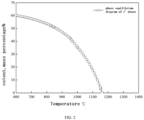
- the ⁇ ' phase content of the alloy of the present application is as high as 55-60% (see FIGS.
- the total solution temperature of the ⁇ ' phase is 1155-1170 °C (T ⁇ ')
- the ⁇ ' phase is continuously precipitated when the temperature is lower than T ⁇ ' during the cooling process after the molten alloy is poured, thereby generating structural stress, which increases the risk of thermal cracking after ingot demoulding and in the process of electroslag remelting or consumable remelting, leads to alloy ingot scrapping due to hot cracking after demoulding, or form metallurgical defects due to melting speed fluctuation caused by hot cracking during electroslag remelting or consumable remelting.
- the present application provides a high-temperature stress relief annealing process aiming at a primary alloy ingot prepared by vacuum induction smelting, including a process design idea that, the ingot is timely demoulded and transferred to the annealing furnace within a specified period of time after demoulding, and the annealing furnace is heated to temperature T at a certain heating rate, so that the ⁇ ' phase gradually are redissolved under this temperature condition and, in turn, plays the role of eliminating the thermal stress and the structural stress.
- the inventor found through experiments that, for electroslag remelting, by inserting an electroslag remelting electrode into a slag pool and dripped into a water-cooled crystallizer in the form of molten drops after being subjected to slag heat resistance melting, the thermal stress and the structural stress can be effectively reduced, since compared with vacuum induction smelting, the molten alloy pool of the electroslag remelting ingot is shallow, and the solidification speed of the molten alloy is high.
- the present application provides a low-temperature stress relief annealing process aiming at a primary alloy ingot prepared by vacuum induction smelting, including a process design idea that, the ingot is timely demoulded and transferred to the annealing furnace within a specified period of time after demoulding, and the annealing furnace is heated to temperature T at a certain heating rate, so that the ⁇ ' phase is gradually coarsened and grown and the full precipitation of all parts of the alloy ingot is ensured under such temperature condition, which can effectively reduce the internal stress of the alloy ingot and avoid the fluctuation of the melting speed during the consumable remelting process, and at the same time, the energy cost can be effectively saved by omitting a high-temperature stress relief annealing process.
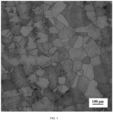
- the present inventor has found through experiments that, for the cogging of the alloy ingot to prepare the bar, due to the high total melting temperature of the ⁇ ' phase of the alloy, the ⁇ ' phase of the alloy is easy to precipitate during cogging, resulting in a decrease in the thermoplasticity of the alloy ingot and an increase in wrought resistance, and, meanwhile, due to the action of the ⁇ ' phase locking dislocation, the dynamic recrystallization of the alloy will be inhibited, so that an abnormal coarse grain structure will be remained (see FIG. 4 ), the structure and the performance uniformity of the wheel disk forging will be influenced, and, in severe cases, the wheel disk forgings will be scrapped.
- the present inventor proposed a high-temperature homogenizing annealing process for a secondary alloy ingot prepared by electroslag remelting.
- the idea of process design involves in preparing bar by ingot cogging and forging. After forging, high-temperature homogenizing annealing is carried out. The temperature is increased to high-temperature homogenizing annealing temperature T at a rate of 10-50 °C/h. At this temperature ⁇ ' phase is properly redissolved, and the action of ⁇ ' phase locking dislocation disappears. Then static recrystallization occurs in the alloy to form equiaxed grains with uniform structure to achieve homogenization of structure, which in turn provides a bar with uniform structure for subsequent blank making and die forging.
- the following table is an alloy composition table and a technical effect comparison table of examples and comparative examples.
- Table 1 Alloy composition of examples and comparative examples (values in the table are percentage values) Examples C W Cr Mo Co Ti Al Nb Zr Mg Ce B Fe Ni T ⁇ '//°C Example 1 0.04 6.9 7.7 2 15 1.5 4.5 1.5 0.004 0.004 0.004 0.004 balance 1152
- Example 2 0.01 7.9 10 3 16 1.7 5 1.7 0.01 0.01 0.01 1 balance 1175
- Example 3 0.08 6.5 7.5 1.5 14.5 1 4 1 0.005 0.005 0.005 0.01 balance 1055
- Example 5 0.03 7.5 8 2 15 1.2 4.5 1.2 0.03 0.03 0.03 0.02 balance 1130
- Example 6 0.04 7 10 3.2 16.5 1.8 5.2 1.8 0.02 0.02 0.02 0.02 1.2 balance 1178 Comparati ve Example 1 0.045 6.8 1
- Example 1 Preparation method of nickel-based wrought superalloy disk forgings for long-term use at 850 °C
- the preparation process of the alloy wheel disk forgings is shown in FIG. 3 and includes the following steps:
- the starting material may be one or more selected from the group consisting of metal nickel, metal chromium or nichrome, metal titanium, metal aluminium, metal molybdenum, ferroboron, metal cobalt, metal tungsten, nickel-tungsten alloys, niobium-nickel alloys, ferrovanadium, carbon electrodes and master alloys.
- Example 2 Preparation method of nickel-based wrought superalloy disk forgings having a diameter of 550 mm for long-term use at 850 °C
- the preparation process of the alloy wheel disk forgings is shown in FIG. 3 and includes the following steps:
- the starting material may be one or more selected from the group consisting of metal nickel, metal chromium or nichrome, metal titanium, metal aluminium, metal molybdenum, ferroboron, metal cobalt, metal tungsten, nickel-tungsten alloys, niobium-nickel alloys, ferrovanadium, carbon electrodes and master alloys.
- Examples 1 and 2 do not form part of the invention but represent background art that is useful for understanding the invention.
- Example 3 A nickel-based wrought superalloy wheel disk forgings having a diameter of 900 mm for long-term use at 850 °C
- This example prepared a nickel-based wrought superalloy disk forgings for long-term use at 850 °C, the alloy composition of which is shown in Example 3 in Table 1.
- the preparation process of the alloy wheel disk forging is shown in FIG. 3 and includes the following steps:
- the starting material may be one or more selected from the group consisting of metal nickel, metal chromium or nichrome, metal titanium, metal aluminium, metal molybdenum, ferroboron, metal cobalt, metal tungsten, nickel-tungsten alloys, niobium-nickel alloys, ferrovanadium, carbon electrodes and master alloys.
- Example 4 A nickel-based wrought superalloy disk forgings having a diameter of 900 mm for long-term use at 850 °C
- the starting material may be selected from one or more of metal nickel, metal chromium or nichrome, metal titanium, metal aluminium, metal molybdenum, ferroboron, metal cobalt, metal tungsten, nickel-tungsten alloys, niobium-nickel alloys, ferrovanadium, carbon electrodes and master alloys.
- Example 5 A nickel-based wrought superalloy disk forging having a diameter of 900 mm for long-term use at 850 °C
- the preparation process of the alloy wheel disk forgings is shown in FIG. 3 and includes the following steps:
- the starting material may be selected from one or more of metal nickel, metal chromium or nichrome, metal titanium, metal aluminium, metal molybdenum, ferroboron, metal cobalt, metal tungsten, nickel-tungsten alloys, niobium-nickel alloys, ferrovanadium, carbon electrodes and master alloys.
- Example 6 A nickel-based wrought superalloy disk forging having a diameter of 600mm for long-term use at 850 °C
- This example prepared a nickel-based wrought superalloy disk forging having a diameter of 600mm for long-term use at 850 °C, the alloy composition shown in Example 6 in Table 1.
- the preparation process of the alloy wheel disk forging is shown in FIG. 3 and includes the following steps:
- the starting material may be selected from one or more of metal nickel, metal chromium or nichrome, metal titanium, metal aluminium, metal molybdenum, ferroboron, metal cobalt, metal tungsten, nickel-tungsten alloys, niobium-nickel alloys, ferrovanadium, carbon electrodes and master alloys.
- Example 7 A nickel-based wrought superalloy disk forging having a diameter of 600mm for long-term use at 850 °C
- This example prepared a nickel-based wrought superalloy disk forging having a diameter of 600mm for long-term use at 850 °C, the alloy composition of which is shown in Example 6 in Table 1.
- Step 1 of the preparation process of the alloy wheel disk forging the primary alloy ingot was an alloy ingot with a diameter less than 500 mm, the process of the primary alloy ingot was changed to: directly performing vacuum consumable remelting on the primary alloy ingot to obtain the alloy ingot.
- Example 8 A nickel-based wrought superalloy disk forging having a diameter of 600mm for long-term use at 850 °C
- This example prepared a nickel-based wrought superalloy disk forging having a diameter of 600mm for long-term use at 850 °C, the alloy composition of which is shown in Example 1 in Table 1.
- Step 1 of the preparation process of the alloy wheel disk forging the primary alloy ingot was an alloy ingot with the diameter less than 500 mm, the process of the primary alloy ingot was changed to: directly performing vacuum consumable remelting on the primary alloy ingot to obtain the alloy ingot.
- Example 9 A nickel-based wrought superalloy disk forging having a diameter of 600mm for long-term use at 850 °C
- This example prepared a nickel-based wrought superalloy disk forging having a diameter of 600mm for long-term use at 850 °C, the alloy composition of which is shown in Example 2 in Table 1.
- Step 1 of the preparation process of the alloy wheel disk forging the primary alloy ingot is an alloy ingot with the diameter less than 500 mm, the process of the primary alloy ingot was changed to: directly performing vacuum consumable remelting on the primary alloy ingot to obtain the alloy ingot.
- Example 10 A nickel-based wrought superalloy disk forging having a diameter of 600mm for long-term use at 850 °C
- This example prepared a nickel-based wrought superalloy disk forging having a diameter of 600mm for long-term use at 850 °C, the alloy composition shown in Example 3 in Table 1.
- Step 1 of the preparation process of the alloy wheel disk forging the primary alloy ingot is an alloy ingot with the diameter less than 500 mm, the process of the primary alloy ingot was changed to: directly performing vacuum consumable remelting on the primary alloy ingot to obtain the alloy ingot.
- Example 11 A nickel-based wrought superalloy disk forging having a diameter of 600mm for long-term use at 850 °C
- This example prepared a nickel-based wrought superalloy disk forging having a diameter of 600mm for long-term use at 850 °C, the alloy composition of which is shown in Example 4 in Table 1.
- Step 1 of the preparation process of the alloy wheel disk forging the primary alloy ingot was an alloy ingot with the diameter less than 500 mm, the process of the primary alloy ingot was changed to: directly performing vacuum consumable remelting on the primary alloy ingot to obtain the alloy ingot.
- Example 12 A nickel-based wrought superalloy disk forging having a diameter of 600mm for long-term use at 850 °C
- This example prepared a nickel-based wrought superalloy disk forging having a diameter of 600mm for long-term use at 850 °C, the alloy composition of which is shown in Example 5 in Table 1.
- Step 1 of the preparation process of the alloy wheel disk forging the primary alloy ingot was an alloy ingot with the diameter less than 500 mm, the process of the primary alloy ingot was changed to: directly performing vacuum consumable remelting on the primary alloy ingot to obtain the alloy ingot.
- the precipitation speed of ⁇ ' phase is slow in the process of forging and cogging under the free forging condition, so that the problem of thermoplastic degradation of the alloy ingot caused by strain aging precipitation is avoided, the alloy has sufficient thermoplastic property, and free forging cogging can be realized.
- the nickel-based wrought superalloy obtained in any one of Examples 1 to 12 can be used for preparing a wheel disk forging with the diameter of 100-1200mm by adopting the smelting, forging cogging, forging forming and heat processes provided by the invention, industrial production can be realized by adopting existing conventional equipment, and the nickel-based wrought superalloy has good casting-forging process performance.
- the nickel-based wrought superalloy wheel disk material for long-term use at 850-900 °C obtained by any one of the examples 1 to 12 of the present application can be used to prepare a wheel disk forging with a diameter of 100-1200 mm by a reasonable composition design and preparation method, which has excellent tensile and durability properties under 850 °C conditions, and has good long-term structure stability, and moreover, has the capability of industrial batch production.
- Comparative Example 1 A nickel-based wrought superalloy disk forging having a diameter of 900 mm for long-term use at 850 °C
- the comparative example prepared a nickel-based wrought superalloy disk forging having a diameter of 900 mm for long-term use at 850 °C, the alloy composition of which is shown in Comparative Example 1 in Table 1, and compared with other examples, the content of trace elements such as B, Zr, Ce, Mg and the like is lower.
- the preparation process of the alloy wheel disk forging is as follows: the smelting adopted a duplex process, that is, vacuum induction smelting + vacuum consumable remelting, in which the diameter of the primary alloy ingot through vacuum induction smelting was 355 mm, the diameter of the electroslag remelting alloy ingot was 440mm, and the diameter of the alloy ingot through vacuum consumable remelting was 508 mm.
- the vacuum induction smelting included the following steps of: weighing raw materials according to the element ratio of the alloy, wherein the metal raw materials included: metal nickel, metal chromium or nickel-chromium alloy, metal titanium, metal aluminium, metal molybdenum, ferroboron, metal cobalt, metal tungsten, nickel-tungsten alloy, niobium-nickel alloy, ferrovanadium, carbon electrode, return material and the like.
- the vacuum induction smelting process included the steps of evacuating period, melting period, refining, tapping and the like, wherein the vacuum degree in the evacuating period was 20 Pa, the temperature in the melting period was controlled to be 1550 °C, the temperature in the refining period was controlled to be 1500 °C, the vacuum degree in the refining period was 4 Pa, the tapping temperature was controlled to be 1480 °C, and the tapping was filled with 20000 Pa argon protection.
- a primary alloy ingot was obtained by cooling for 3 h, demoulding, and cooling.
- the consumable remelting electrode was prepared by machining the primary alloy ingot.
- the filling ratio of the electrode to the crystallizer was 0.85, the melting speed was 3.5 kg/min, the cooling time was 2 h after the tertiary alloy ingot was melted, and then the ingot was demoulded and cooled to obtain the alloy ingot.
- High-temperature homogenizing annealing was performed on the alloy ingot, including the processes of heating, heat preservation and cooling, wherein the rate of temperature increase was controlled to be 35 °C/h, the temperature was kept at 1190 °C for 50 h, and the cooling rate was controlled to be 25 °C/h.
- the alloy ingot was machined, heated to a forging temperature, kept at the temperature, and then discharged out of a furnace for forging. Before forging, the rate of temperature increase by heating was controlled to be 35 °C/h, the temperature was kept at 1170 °C for 6 h, wherein the forging and cogging process included upsetting and drawing out.
- the alloy ingot was returned to the furnace for heat preservation for 2 h. Before each forging, the alloy ingot was coated with asbestos on the surface for heat preservation. The total forging ratio was controlled to be 15.
- the bar was subjected to the high-temperature homogenizing annealing, in which the temperature was increased to the high-temperature homogenizing annealing temperature T at a rate of 30 °C/h. It was calculated that the total melting temperature T ⁇ ' of the ⁇ ' phase was 1139 °C, and the annealing temperature was T ⁇ ' - 20 °C.
- a bar was cut with an appropriate length according to the weight of the wheel disk forging, with a bar height-diameter ratio of 2.5, heated, upset and made into blank.
- the rate of temperature increase by heating was controlled to be 35 °C/h
- the temperature was kept at 1120 °C for 4 h
- the upsetting deformation was controlled to be 40% to obtain the disk blank.
- the disk blank was die forged to obtain alloy wheel disk forgings, in which the rate of temperature increase by heating before forging was controlled to be 35 °C/h, the temperature was kept at 1120 °C for 4 h, the die forging deformation amount was 40%, and the die heating temperature was 650 °C.
- the wheel disk forgings were subjected to machining and heat treatment including a solid solution treatment, an intermediate aging treatment and an aging treatment, in which the solid solution treatment system was 1180 °C for 5 h, the intermediate aging treatment system was 1050 °C for 4 h, and the aging treatment system was 910 °C for 12 h.
- the ingot has a melting speed fluctuation in the process of electroslag remelting and vacuum consumable remelting, a black spot metallurgical defect is found by low-power inspection, cracking is obvious in the process of forging and cogging, and the cracking tendency is greater than that of Example 3.
- the comparative example produces a nickel-based wrought superalloy disk forging having a diameter of 900 mm for long-term use at 850 °C, the alloy composition of which is shown in Comparative Example 2 in Table 1, and compared with other examples, the Mo content was increased, the W content was decreased, and the Fe content was increased.
- the preparation process of the alloy wheel disk forging is as follows: the smelting adopted a duplex process, that is, vacuum induction smelting + electroslag remelting + vacuum consumable remelting, in which the diameter of the primary alloy ingot through vacuum induction smelting was 355 mm, the diameter of the electroslag remelting alloy ingot was 423 mm, and the diameter of the alloy ingot through vacuum consumable remelting was 508 mm.
- the vacuum induction smelting included the following steps of: weighing raw materials according to the element ratio of the alloy, in which the metal raw materials included: metal nickel, metal chromium or nickel-chromium alloy, metal titanium, metal aluminium, metal molybdenum, ferroboron, metal cobalt, metal tungsten, nickel-tungsten alloy, niobium-nickel alloy, ferrovanadium, carbon electrode, return material and the like.
- the vacuum induction smelting process included the steps of evacuation, melting period, refining and tapping, wherein the vacuum degree in the evacuating period was 20 Pa, the temperature in the melting period was controlled to be 1550 °C, the temperature in the refining period was controlled to be 1500 °C, the vacuum degree in the refining period was 4 Pa, the tapping temperature was controlled to be 1480 °C, and 20,000 Pa argon was filled for protection during tapping. After casting, cooling was carried out for 3 h, demoulding was performed, and the temperature was increased to a high-temperature stress relief annealing temperature T at a rate of 35 °C.
- the annealing temperature was T ⁇ ' + 30°C
- cooling was performed to obtain the primary alloy ingot.
- the primary alloy ingot was machined to obtain an electroslag remelting electrode.
- the filling ratio of electrode to crystallizer was 0.8
- the steady-state melting speed was 5.0 kg/min.
- the secondary alloy ingot was cooled for 2 h, demoulded, and heated to the low-temperature stress relief annealing temperature T at the rate of 45 °C/h.
- ⁇ ' phase total solution temperature T ⁇ ' was 1129°C
- the annealing temperature was T ⁇ ' - 200 °C.
- a secondary alloy ingot was obtained after cooling.
- the electroslag remelting electrode was prepared by machining the secondary alloy ingot. With a filling ratio 0.83 of the electrode to the crystallizer and a melting speed of 2.8 kg/min, the tertiary alloy ingot was melted, and then cooled for 2 h, and then the ingot was demoulded and cooled to obtain the alloy ingot.
- High-temperature homogenizing annealing was performed on the alloy ingot, including the processes of heating, heat preservation and cooling, in which the rate of temperature increase was controlled to be 35 °C/h, the temperature was kept at 1190 °C for 50 h, and the cooling rate was controlled to be 25 °C/h.
- the alloy ingot was machined, heated to a forging temperature, kept at the temperature, and then discharged out of a furnace for forging. Before forging, the rate of temperature increase by heating was controlled to be 35 °C/h, the temperature was kept at 1170 °C for 6 h, wherein the forging and cogging process included upsetting and drawing out.
- the alloy ingot was returned to the furnace for heat preservation for 2 h. Before each forging, the alloy ingot was coated with asbestos on the surface for heat preservation. The total forging ratio was controlled to be 15.
- the wheel disk forgings were subjected to machining and heat treatment including a solid solution treatment, an intermediate aging treatment and an aging treatment, in which the solid solution treatment system was 1180 °C for 5 h, the intermediate aging treatment system was 1050 °C for 4 h, and the aging treatment system was 910 °C for 12 h.
- the alloy wheel disk forging prepared in the comparative example 2 is taken as a sample, and the structure analysis showed that more coarse grains of ASTM 00 grade exist, the mixed crystal problem is more prominent, the high-temperature long-time structure stability test is carried out, after 850 °C long-time aging is carried out for 3000 h, more harmful phase ⁇ phase and ⁇ phase are precipitated.
Landscapes
- Chemical & Material Sciences (AREA)
- Engineering & Computer Science (AREA)
- Mechanical Engineering (AREA)
- Materials Engineering (AREA)
- Metallurgy (AREA)
- Organic Chemistry (AREA)
- Physics & Mathematics (AREA)
- Manufacturing & Machinery (AREA)
- Thermal Sciences (AREA)
- Crystallography & Structural Chemistry (AREA)
- Plasma & Fusion (AREA)
- Forging (AREA)
- Manufacture And Refinement Of Metals (AREA)
Claims (5)
- Verfahren zur Herstellung von geschmiedeten Radscheiben aus einer Superlegierung auf Nickelbasis, die bei hohen Temperaturen eingesetzt werden, dadurch gekennzeichnet, dass es die folgenden Schritte umfasst:Schritt 1: Wiegen von Rohstoffen gemäß einem Zusammensetzungsverhältnis, wobei die Rohstoffe in Gewichtsprozent umfassen: C: 0,01-0,08%, W: 6,5-8,0%, Cr: 7,5-11,0%, Mo: 1,5-3,5%, Co: 14,5-17,5%, Ti: 1,0-2,0%, Al: 4,0-5,5%, Nb: 1,0-2,0%, Zr: 0,005-0,05%, Mg: 0,005-0,05%; Ce: 0,001-0,05%, B: 0,005-0,05% und Fe: 0,01-1,5%, und Rest Ni; und die Rohstoffe umfassen außerdem Verunreinigungselemente: P≤0,015%, Mn≤0,5%, Si≤0,5%, S≤0,015%, O≤0,005%, N≤0,01%, Ag≤0,005%, Ca≤0,01%, Sn≤0,01%, Pb≤0,001%, Cu≤0,5%, Ta≤0,5% und V≤0,5%;Schritt 2: Schmelzen der Rohstoffe zu einem primären Legierungsblock durch Vakuuminduktionsschmelzen mit den folgenden Schritten: Evakuieren, Schmelzen, Umschmelzen und Abstechen, Entformen, Unterziehen des primären Legierungsblocks einem Hochtemperatur-Spannungsfreiglühen und Elektroschlacke-Umschmelzen, um einen sekundären Legierungsblock zu erhalten, Entformen, Unterziehen des sekundären Legierungsblocks einem Niedertemperatur-Spannungsfreiglühen und Vakuumschmelzen mit Abschmelzelektroden, um einen tertiären Legierungsblock zu erhalten, wodurch ein Legierungsblock erhalten wird;Schritt 3: Durchführen eines Hochtemperaturhomogenisierungsglühens an dem in Schritt 2 erhaltenen Legierungsblock, um eine bei Hochtemperatur homogenisierungsgeglühte Legierung zu erhalten, wobei das Hochtemperaturhomogenisierungsglühen Erwärmungs-, Wärmeerhaltungs- und Abkühlungsprozesse umfasst, wobei die Erwärmungsgeschwindigkeit auf 15-60 °C/h, die Temperatur des Wärmeerhalts auf 150 - 1.250 °C und die Zeit des Wärmeerhalts auf 24-72 h geregelt wird; und die Abkühlungsgeschwindigkeit auf 5 - 55 °C/h geregelt wird; und Durchführen von Erhitzen, Schmieden und Umformen der Legierung, um eine Stange zu erhalten, und Unterziehen der Stange einem Hochtemperaturhomogenisierungsglühen, um geschmiedete Radscheiben zu erhalten;Schritt 4: Schneiden der in Schritt 3 erhaltenen Stange entsprechend dem Gewicht der geschmiedeten Radscheiben, um eine geschnittene Stange zu erhalten, und Unterziehen der geschnittenen Stange einem Rohlingsherstellungsprozess und einem Gesenkschmiedeprozess, um eine legierte geschmiedete Radscheibe zu erhalten, wobei das Gewicht der geschnittenen Stange 1,15 - 145% des Gewichts der geschmiedeten Radscheibe beträgt, und das Höhe-Durchmesser-Verhältnis der geschnittenen Stange auf 1,5 - 3,0 geregelt wird; undSchritt 5: Durchführen einer Wärmebehandlung an den in Schritt 4 erhaltenen geschmiedeten Radscheiben aus der Superlegierung auf Nickelbasis, um geschmiedete Radscheiben zu erhalten, die bei hohen Temperaturen verwendet werden, wobei die Wärmebehandlung eine Festphasengleichgewichtbehandlung, eine Zwischenalterungsbehandlung und eine Alterungsbehandlung umfasst, wobei die Festphasengleichgewichtbehandlung das Durchführen einer Wärmekonservierung bei 1.150 - 1.220 °C für 2-10 h umfasst, die Zwischenalterungsbehandlung das Durchführen einer Wärmekonservierung bei 1.000 - 1.150 °C für 2-10 h umfasst; und die Alterungsbehandlung das Durchführen einer Wärmekonservierung bei 760 °C - 920 °C für 8-32 h umfasst.
- Herstellungsverfahren nach Anspruch 1, dadurch gekennzeichnet, dass Schritt 2 ferner umfasst: Herstellen des sekundären Legierungsblocks in einer Abschmelzelektrode, wobei das Umschmelzverhältnis der Abschmelzelektrode zum Kristallisator 0,75 bis 0,95 und die Schmelzgeschwindigkeit 1,0 bis 5,0 kg/min beträgt; und, nach Beendigung des Vakuumschmelzens mit Abschmelzelektrode, Abkühlen des tertiären Legierungsblocks für 0,5 bis 3 Stunden, dann Entformen und Abkühlen.
- Herstellungsverfahren nach Anspruch 1, dadurch gekennzeichnet, dass in Schritt 2, wenn es sich bei dem primären Legierungsblock um einen Legierungsblock mit einem Durchmesser von weniger als 500 mm handelt, das Verfahren des primären Legierungsblocks dahingehend geändert wird, dass ein Umschmelzen des primären Legierungsblocks unter Vakuum mit Abschmelzelektrode direkt durchgeführt wird, um einen Legierungsblock zu erhalten.
- Herstellungsverfahren nach Anspruch 1, dadurch gekennzeichnet, dass Schritt 4 ferner umfasst: Erwärmen der geschnittenen Stange, Stauchen und Herstellen eines Rohlings, um einen Scheibenrohling zu erhalten, wobei die Geschwindigkeit des Temperaturanstiegs durch Erwärmen vor dem Schmieden so gesteuert wird, dass sie 20-50 °C/h beträgt, die Temperatur 2-8 h lang auf 1.000 °C - 150 °C gehalten wird und die Stauchverformung 30-70 % beträgt.
- Herstellungsverfahren nach Anspruch 4, dadurch gekennzeichnet, dass der Scheibenrohling nach dem Erwärmen einem Gesenkschmiedeprozess unterzogen wird, wobei die Geschwindigkeit des Temperaturanstiegs durch Erwärmen vor dem Schmieden so gesteuert wird, dass sie 20-50 °C/h beträgt, die Temperatur 2-8 h lang bei 950 °C - 1.150 °C gehalten wird, die Gesenkschmiedeverformung 30-70 % beträgt und die Gesenkheiztemperatur 300-1.050 °C beträgt.
Applications Claiming Priority (2)
| Application Number | Priority Date | Filing Date | Title |
|---|---|---|---|
| CN202010137240.1A CN111235434B (zh) | 2020-03-02 | 2020-03-02 | 一种高温使用的镍基变形高温合金轮盘锻件的制备方法 |
| PCT/CN2020/098920 WO2021174727A1 (zh) | 2020-03-02 | 2020-06-29 | 一种高温使用的镍基变形高温合金轮盘锻件的制备方法 |
Publications (4)
| Publication Number | Publication Date |
|---|---|
| EP3978640A1 EP3978640A1 (de) | 2022-04-06 |
| EP3978640A4 EP3978640A4 (de) | 2022-11-16 |
| EP3978640C0 EP3978640C0 (de) | 2025-04-23 |
| EP3978640B1 true EP3978640B1 (de) | 2025-04-23 |
Family
ID=70878441
Family Applications (1)
| Application Number | Title | Priority Date | Filing Date |
|---|---|---|---|
| EP20923081.2A Active EP3978640B1 (de) | 2020-03-02 | 2020-06-29 | Verfahren zur herstellung eines auf nickel basierenden deformierten hochtemperaturlegierungsturbinenscheibenschmiedeteils für hochtemperaturanwendungen |
Country Status (4)
| Country | Link |
|---|---|
| US (1) | US12270097B2 (de) |
| EP (1) | EP3978640B1 (de) |
| CN (1) | CN111235434B (de) |
| WO (1) | WO2021174727A1 (de) |
Families Citing this family (72)
| Publication number | Priority date | Publication date | Assignee | Title |
|---|---|---|---|---|
| CN111235434B (zh) | 2020-03-02 | 2021-07-30 | 北京钢研高纳科技股份有限公司 | 一种高温使用的镍基变形高温合金轮盘锻件的制备方法 |
| CN111187946B (zh) * | 2020-03-02 | 2021-11-16 | 北京钢研高纳科技股份有限公司 | 一种高铝含量的镍基变形高温合金及制备方法 |
| CN111659894B (zh) * | 2020-06-19 | 2022-06-21 | 北京钢研高纳科技股份有限公司 | 粉末高温合金棒材及盘件的制备方法 |
| CN112139415B (zh) * | 2020-09-16 | 2022-04-19 | 江苏隆达超合金航材有限公司 | 一种补偿加热辅助自由锻生产难变形镍基高温合金的方法 |
| CN112226651B (zh) * | 2020-10-16 | 2022-04-19 | 中国航发北京航空材料研究院 | 一种用于850℃的变形涡轮盘合金材料及制备工艺 |
| CN112620383B (zh) * | 2020-11-02 | 2022-10-14 | 抚顺特殊钢股份有限公司 | 一种高速飞航器用镍基高温合金宽厚扁材的制造方法 |
| CN112708788B (zh) * | 2020-11-18 | 2022-06-17 | 北京钢研高纳科技股份有限公司 | 一种提高k403合金塑性的方法,模具材料和制品 |
| CN112458326B (zh) * | 2021-01-28 | 2021-04-16 | 北京科技大学 | 一种含Zr-Ce的变形高温合金及其制备方法 |
| CN112981186B (zh) * | 2021-04-22 | 2021-08-24 | 北京钢研高纳科技股份有限公司 | 低层错能的高温合金、结构件及其应用 |
| CN113234963B (zh) * | 2021-05-19 | 2021-12-17 | 沈阳航空航天大学 | 室温以及低温环境用镍铬基超合金及其制备方法 |
| CN113560481B (zh) * | 2021-07-30 | 2023-07-18 | 内蒙古工业大学 | 一种gh4738镍基高温合金的热加工工艺 |
| CN113881909A (zh) * | 2021-08-26 | 2022-01-04 | 北京钢研高纳科技股份有限公司 | 一种GH4720Li高温合金叶片锻件的热处理方法及叶片锻件 |
| CN113512670B (zh) * | 2021-09-14 | 2021-12-07 | 河北钢研德凯科技有限公司北京分公司 | 可焊接的铸造高温合金及其应用 |
| CN113862571A (zh) * | 2021-09-28 | 2021-12-31 | 江苏宇钛新材料有限公司 | 镍铬高温合金及其制备方法与应用 |
| CN114015909B (zh) * | 2021-11-16 | 2022-05-17 | 南京中远海运船舶设备配件有限公司 | 一种大规格柴油机气阀及其制造方法 |
| CN114318061A (zh) * | 2021-11-17 | 2022-04-12 | 华能核能技术研究院有限公司 | 一种用于高温或超高温气冷堆蒸汽发生器的合金及其制备方法 |
| CN114160728A (zh) * | 2021-11-18 | 2022-03-11 | 王江明 | 一种航空零部件涡轮扇叶的加工工艺 |
| CN114147426A (zh) * | 2021-11-30 | 2022-03-08 | 中国兵器工业第五九研究所 | 一种锥形薄壁构件剧烈塑性成形方法 |
| CN114182078A (zh) * | 2021-12-03 | 2022-03-15 | 上海电气上重铸锻有限公司 | 一种高强度奥氏体轴类大锻件的制备方法 |
| CN114226618B (zh) * | 2021-12-07 | 2023-10-03 | 太原科技大学 | 基于混晶调控的大型轴类锻件终锻成形的反向控制工艺 |
| CN114317921B (zh) * | 2021-12-21 | 2024-08-02 | 深圳市万泽中南研究院有限公司 | 制备涡轮盘的退火工艺方法和涡轮盘 |
| CN114262822B (zh) * | 2021-12-28 | 2022-05-31 | 北京钢研高纳科技股份有限公司 | 一种镍基粉末高温合金及其制备方法和应用 |
| CN114250368B (zh) * | 2021-12-31 | 2024-03-26 | 西部超导材料科技股份有限公司 | 一种提高钛铌合金熔炼过程稳定性的方法 |
| CN114289500B (zh) * | 2022-01-17 | 2023-07-14 | 无锡派克新材料科技股份有限公司 | 一种大型超高结构钢的异形轧制工艺 |
| CA3248019A1 (en) * | 2022-01-31 | 2025-07-10 | Proterial, Ltd. | AUSTENITICAL ALLOY STEEL MATERIAL OF THE PRECIPITATION TYPE AND ITS MANUFACTURING PROCESS, AND HEAT-TREATED AUSTENITICAL ALLOY STEEL MATERIAL OF THE PRECIPITATION TYPE AND ITS MANUFACTURING PROCESS |
| CN114540699B (zh) * | 2022-02-28 | 2022-12-13 | 江苏宏晟模具钢材料科技有限公司 | 一种高性能热作模具钢及其制备方法 |
| CN114799005A (zh) * | 2022-05-06 | 2022-07-29 | 任超群 | 一种均质细晶高温合金盘件的锻造方法 |
| CN114921688B (zh) * | 2022-05-11 | 2023-05-23 | 北冶功能材料(江苏)有限公司 | 一种难变形镍基高温合金带材、钣金件及难变形镍基高温合金带材的制备方法 |
| CN114888220B (zh) * | 2022-05-16 | 2025-07-04 | 无锡继平新材料科技有限公司 | 一种925a船用耐压壳体钢锻件锻造及热处理工艺 |
| CN114836665B (zh) * | 2022-05-17 | 2022-10-11 | 西北有色金属研究院 | 一种Ta-W-Hf-Re-C合金及其棒材的制备方法 |
| CN114990344B (zh) * | 2022-06-07 | 2023-11-24 | 大冶特殊钢有限公司 | 一种采用真空自耗熔炼生产高Al合金的方法 |
| CN115044774A (zh) * | 2022-06-08 | 2022-09-13 | 山东工业职业学院 | 一种铬合金的制备方法 |
| CN115156471B (zh) * | 2022-06-27 | 2024-08-06 | 中国航发四川燃气涡轮研究院 | 一种高强镍基高温合金材料盘、轴类锻件的制备方法 |
| CN117403081B (zh) * | 2022-07-08 | 2026-01-27 | 辽宁红银金属有限公司 | 一种均质高w镍基高温合金k465的均质化制备方法 |
| CN115383400B (zh) * | 2022-08-08 | 2023-10-13 | 陕西斯瑞新材料股份有限公司 | 一种低成本铜铬触头批量加工方法 |
| CN115369289B (zh) * | 2022-08-29 | 2024-02-09 | 江西宝顺昌特种合金制造有限公司 | 一种水下流量计用Inconel 625锻件及其制备方法 |
| CN115533000B (zh) * | 2022-10-19 | 2025-06-24 | 上海交通大学 | 一种反应堆核岛带法兰奥氏体不锈钢吊篮筒体整体锻造成形方法 |
| CN115647257A (zh) * | 2022-10-27 | 2023-01-31 | 遵义航天新力精密铸锻有限公司 | 一种喷嘴锻造工艺 |
| CN115592060B (zh) * | 2022-10-31 | 2024-08-16 | 北京钢研高纳科技股份有限公司 | Ti2AlNb合金涡轮机匣锻件及其热模锻成形方法 |
| CN115747462B (zh) * | 2022-11-08 | 2023-12-22 | 中国航发北京航空材料研究院 | 高温合金带箔材钣金件变形的控制方法 |
| CN115786830A (zh) * | 2022-11-09 | 2023-03-14 | 抚顺特殊钢股份有限公司 | 一种高合金比难变形高温合金电极坯退火工艺 |
| CN115846562B (zh) * | 2022-11-10 | 2025-10-24 | 西安聚能高温合金材料科技有限公司 | 一种高温合金棒材的制备方法 |
| CN116237473A (zh) * | 2022-12-08 | 2023-06-09 | 成都先进金属材料产业技术研究院股份有限公司 | 一种使用纯铌条生产低偏析钛铌合金三次铸锭的方法 |
| CN116005087B (zh) * | 2022-12-09 | 2024-07-23 | 陕西宏远航空锻造有限责任公司 | 一种gh4169合金锻件的热处理方法 |
| CN116159952A (zh) * | 2022-12-12 | 2023-05-26 | 中国航发南方工业有限公司 | 改善gh2909合金锻件缺口敏感的方法及gh2909合金锻件 |
| CN115852128B (zh) * | 2022-12-16 | 2023-09-19 | 东方蓝天钛金科技有限公司 | 一种消除冷拉态gh4738合金制螺栓头部混晶的方法 |
| CN115815497B (zh) * | 2022-12-16 | 2025-10-14 | 浙江久立特材科技股份有限公司 | 一种热管微堆基体用316Ti合金锻棒的制备方法及制得的合金锻棒 |
| CN115709255B (zh) * | 2023-01-04 | 2023-04-07 | 北京钢研高纳科技股份有限公司 | Gh4780合金锻件及其制备方法与应用 |
| CN115780708B (zh) * | 2023-02-08 | 2023-04-14 | 中国航发北京航空材料研究院 | 镍基粉末高温合金盘件的直接模锻成型方法 |
| CN116356229B (zh) * | 2023-02-22 | 2025-09-23 | 西安聚能高温合金材料科技有限公司 | 一种gh4648高温合金锻造棒坯及其制备方法 |
| CN116603959A (zh) * | 2023-04-19 | 2023-08-18 | 西部超导材料科技股份有限公司 | 一种细化难变形镍基高温合金棒材组织的锻造方法 |
| CN116393636A (zh) * | 2023-04-25 | 2023-07-07 | 无锡宏达重工股份有限公司 | 一种镍基合金异形自由锻件的成型方法 |
| CN116690109B (zh) * | 2023-04-28 | 2025-12-23 | 江苏隆达超合金航材有限公司 | 一种镍基高温合金饼材细晶锻造方法 |
| CN116904801B (zh) * | 2023-06-21 | 2025-07-15 | 中国航发北京航空材料研究院 | 一种高强度等轴晶铸造高温合金 |
| CN116855777A (zh) * | 2023-07-10 | 2023-10-10 | 西安聚能高温合金材料科技有限公司 | 一种汽轮机叶片用高温合金棒坯的制备方法 |
| CN117210767B (zh) * | 2023-07-11 | 2025-10-17 | 天津重型装备工程研究有限公司 | 双相不锈钢及大直径双相不锈钢液滑环锻件及其制备方法 |
| CN117025987A (zh) * | 2023-07-28 | 2023-11-10 | 西安聚能高温合金材料科技有限公司 | 一种再热蒸汽管道用高温合金棒坯的制备方法 |
| CN117070869B (zh) * | 2023-08-28 | 2024-12-03 | 西北工业大学重庆科创中心 | 一种固溶时效态Ti-6Al-6V-2Sn钛合金棒材的工程化制备方法及测试方法 |
| CN116949380B (zh) * | 2023-09-20 | 2023-12-12 | 北京钢研高纳科技股份有限公司 | 一种高热强性高温合金的热处理方法 |
| CN117123716B (zh) * | 2023-10-10 | 2024-05-03 | 哈尔滨工业大学 | 一种镍基高温合金整体叶盘锻件控制折叠的成形方法 |
| CN117126996B (zh) * | 2023-10-26 | 2024-01-02 | 东方蓝天钛金科技有限公司 | 一种gh2132合金抽芯铆钉钉套的热处理方法 |
| CN117161298B (zh) * | 2023-11-02 | 2024-02-09 | 莱州市莱索制品有限公司 | 一种工程机械用支重轮的制造方法 |
| CN118272628B (zh) * | 2024-03-12 | 2025-01-24 | 北京钢研高纳科技股份有限公司 | 一种大型涡轮盘锻件及其制备方法 |
| CN117926155B (zh) * | 2024-03-25 | 2024-07-02 | 成都先进金属材料产业技术研究院股份有限公司 | 小规格gh4141高温合金棒材及其制备方法 |
| CN118122926A (zh) * | 2024-03-25 | 2024-06-04 | 北京钢研高纳科技股份有限公司 | 一种gh4065a合金涡轮盘及其制备方法 |
| CN117961454B (zh) * | 2024-04-02 | 2024-07-26 | 上海核工程研究设计院股份有限公司 | 一种镍基合金丝杠制造方法及镍基合金丝杠 |
| CN118638994A (zh) * | 2024-06-12 | 2024-09-13 | 西安热工研究院有限公司 | 一种提高金属材料力学性能的方法 |
| CN119237632B (zh) * | 2024-10-24 | 2025-11-28 | 陕西长羽航空装备股份有限公司 | 一种高强高韧、损伤容限型钛合金筒形件的模锻成形方法 |
| CN119464840A (zh) * | 2024-11-05 | 2025-02-18 | 北京钢研高纳科技股份有限公司 | 耐800℃高强韧镍基变形高温合金及其制备方法和涡轮盘 |
| CN119710437B (zh) * | 2024-12-25 | 2025-11-07 | 中国第一重型机械股份公司 | 一种skt4模具钢锻件及其制备方法 |
| CN119857807A (zh) * | 2025-02-21 | 2025-04-22 | 贵州安大航空锻造有限责任公司 | 一种gh4169合金涡轮盘锻造方法及合金涡轮盘 |
| CN120249745A (zh) * | 2025-06-03 | 2025-07-04 | 浦夕特种合金(上海)有限公司 | 一种镍基高温合金及其制备方法 |
Family Cites Families (23)
| Publication number | Priority date | Publication date | Assignee | Title |
|---|---|---|---|---|
| US3415641A (en) * | 1966-08-24 | 1968-12-10 | Gen Electric | Wrought nickel base alloy |
| US4814023A (en) * | 1987-05-21 | 1989-03-21 | General Electric Company | High strength superalloy for high temperature applications |
| SU1713962A1 (ru) * | 1989-12-27 | 1992-02-23 | Центральный научно-исследовательский институт черной металлургии им.И.П.Бардина | Порошковый сплав на основе никел |
| US7156932B2 (en) * | 2003-10-06 | 2007-01-02 | Ati Properties, Inc. | Nickel-base alloys and methods of heat treating nickel-base alloys |
| CN102312118B (zh) * | 2011-09-21 | 2013-04-03 | 北京科技大学 | 一种gh864镍基高温合金组织精确控制的热加工方法 |
| CN103691952B (zh) * | 2014-01-06 | 2015-05-27 | 钢铁研究总院 | 一种功能梯度性能涡轮盘的制备方法 |
| CN103866392A (zh) * | 2014-01-24 | 2014-06-18 | 南京理工大学 | 一种低铼镍基单晶高温合金及其制备方法 |
| JP5869624B2 (ja) * | 2014-06-18 | 2016-02-24 | 三菱日立パワーシステムズ株式会社 | Ni基合金軟化材及びNi基合金部材の製造方法 |
| KR101640324B1 (ko) * | 2014-12-29 | 2016-07-18 | 순천대학교 산학협력단 | 이중 용해를 이용한 니켈-타이타늄계 형상기억합금의 제조 방법 |
| EP3091095B1 (de) * | 2015-05-05 | 2018-07-11 | MTU Aero Engines GmbH | Rheniumfreie nickelbasis-superlegierung mit niedriger dichte |
| CN105112728B (zh) * | 2015-09-29 | 2017-03-22 | 钢铁研究总院 | 一种700℃超超临界汽轮机转子用耐热合金及其制备方法 |
| CN106636758B (zh) * | 2016-12-29 | 2018-07-24 | 西部超导材料科技股份有限公司 | 一种小规格镍基高温合金fgh4097铸锭的冶炼工艺 |
| CN108441705B (zh) * | 2018-03-16 | 2020-06-09 | 中国航发北京航空材料研究院 | 一种高强度镍基变形高温合金及其制备方法 |
| US11542575B2 (en) * | 2018-05-11 | 2023-01-03 | Etikrom A.S. | Nickel-based alloy embodiments and method of making and using the same |
| CN108315599B (zh) * | 2018-05-14 | 2019-11-22 | 钢铁研究总院 | 一种高钴镍基高温合金及其制备方法 |
| JP6728282B2 (ja) * | 2018-08-02 | 2020-07-22 | 三菱日立パワーシステムズ株式会社 | Ni基合金軟化材の製造方法およびNi基合金部材の製造方法 |
| CN109355517A (zh) * | 2018-11-29 | 2019-02-19 | 西安华创新材料有限公司 | 一种镍钛形状记忆合金超低间隙大规格铸锭熔炼方法 |
| CN109576621B (zh) * | 2019-01-18 | 2020-09-22 | 中国航发北京航空材料研究院 | 一种镍基变形高温合金制件的精确热处理方法 |
| CN110004312B (zh) * | 2019-05-09 | 2020-10-27 | 西安聚能高温合金材料科技有限公司 | 一种镍基高温合金gh4698大规格铸锭的三联冶炼工艺 |
| CN110205523B (zh) * | 2019-07-04 | 2020-08-07 | 北京钢研高纳科技股份有限公司 | 一种具有高拉伸强度的镍基粉末高温合金及其制备方法 |
| CN110468361B (zh) * | 2019-07-22 | 2020-09-22 | 中国航发北京航空材料研究院 | 一种变形高温合金细晶棒材的制备方法 |
| CN110373620B (zh) * | 2019-09-03 | 2020-11-03 | 钢铁研究总院 | 一种改善高γ′相体积分数镍基沉淀强化型高温合金热加工性能的方法 |
| CN111235434B (zh) * | 2020-03-02 | 2021-07-30 | 北京钢研高纳科技股份有限公司 | 一种高温使用的镍基变形高温合金轮盘锻件的制备方法 |
-
2020
- 2020-03-02 CN CN202010137240.1A patent/CN111235434B/zh active Active
- 2020-06-29 EP EP20923081.2A patent/EP3978640B1/de active Active
- 2020-06-29 WO PCT/CN2020/098920 patent/WO2021174727A1/zh not_active Ceased
-
2021
- 2021-12-29 US US17/564,265 patent/US12270097B2/en active Active
Also Published As
| Publication number | Publication date |
|---|---|
| US20220119931A1 (en) | 2022-04-21 |
| US12270097B2 (en) | 2025-04-08 |
| WO2021174727A1 (zh) | 2021-09-10 |
| EP3978640A1 (de) | 2022-04-06 |
| EP3978640C0 (de) | 2025-04-23 |
| CN111235434A (zh) | 2020-06-05 |
| CN111235434B (zh) | 2021-07-30 |
| EP3978640A4 (de) | 2022-11-16 |
Similar Documents
| Publication | Publication Date | Title |
|---|---|---|
| EP3978640B1 (de) | Verfahren zur herstellung eines auf nickel basierenden deformierten hochtemperaturlegierungsturbinenscheibenschmiedeteils für hochtemperaturanwendungen | |
| CN111187946B (zh) | 一种高铝含量的镍基变形高温合金及制备方法 | |
| CN114645162A (zh) | 一种难变形高温合金的细晶均质盘锻件的制造方法 | |
| CN113877982A (zh) | 一种难变形GH4720Li高温合金小规格棒材及制备方法、叶片锻件 | |
| CN110592432B (zh) | 一种钴基变形高温合金及其制备方法 | |
| CN101104898A (zh) | 一种高热强性、高热稳定性的高温钛合金 | |
| CN114645154B (zh) | 一种高硬度铜合金的制备方法 | |
| CN113862520A (zh) | 一种航空发动机锻造叶片用GH4720Li高温合金及制备方法及应用、合金铸锭 | |
| EP4653573A1 (de) | Gh4151-legierungsstück und herstellungsverfahren dafür und verwendung davon | |
| CN115747654A (zh) | 一种抗高温氧化铁素体不锈钢及其制造方法和应用 | |
| RU2694098C1 (ru) | Способ получения полуфабрикатов из высокопрочных никелевых сплавов | |
| CN113234964A (zh) | 一种镍基耐蚀合金及其加工方法 | |
| AU2003200572B2 (en) | Cu-based alloy and method of manufacturing high strength and high thermal conductive forged article using the same | |
| CN115709255A (zh) | Gh4780合金锻件及其制备方法与应用 | |
| CN120438895A (zh) | 一种沉淀硬化型镍基合金焊丝及其制备方法 | |
| CN117418153B (zh) | 一种长期组织稳定的镍基高温合金箔材及其制备方法与应用 | |
| CN115595470B (zh) | 用于乏燃料后处理的耐熔盐腐蚀镍基合金及其制备方法 | |
| CN116809826B (zh) | 一种gh2901合金棒材锻造方法 | |
| CN114807646B (zh) | 镍基合金板坯及其制备方法 | |
| CN116065056B (zh) | 一种难变形大规格镍基高温合金棒材及其制备方法 | |
| CN112708788B (zh) | 一种提高k403合金塑性的方法,模具材料和制品 | |
| CN121538513A (zh) | 一种燃烧室用gh3230合金锻造棒材及其制造方法 | |
| JP2691713B2 (ja) | 熱間加工性の優れたCr−Ni系ステンレス鋼の製造方法 | |
| CN121023304A (zh) | 一种Nimonic90合金锻材及其制造方法 | |
| JP4993327B2 (ja) | Ni基合金熱間圧延用スラブ及びその製造方法 |
Legal Events
| Date | Code | Title | Description |
|---|---|---|---|
| STAA | Information on the status of an ep patent application or granted ep patent |
Free format text: STATUS: THE INTERNATIONAL PUBLICATION HAS BEEN MADE |
|
| PUAI | Public reference made under article 153(3) epc to a published international application that has entered the european phase |
Free format text: ORIGINAL CODE: 0009012 |
|
| STAA | Information on the status of an ep patent application or granted ep patent |
Free format text: STATUS: REQUEST FOR EXAMINATION WAS MADE |
|
| 17P | Request for examination filed |
Effective date: 20211229 |
|
| AK | Designated contracting states |
Kind code of ref document: A1 Designated state(s): AL AT BE BG CH CY CZ DE DK EE ES FI FR GB GR HR HU IE IS IT LI LT LU LV MC MK MT NL NO PL PT RO RS SE SI SK SM TR |
|
| STAA | Information on the status of an ep patent application or granted ep patent |
Free format text: STATUS: EXAMINATION IS IN PROGRESS |
|
| A4 | Supplementary search report drawn up and despatched |
Effective date: 20221018 |
|
| RIC1 | Information provided on ipc code assigned before grant |
Ipc: C22B 9/20 20060101ALI20221012BHEP Ipc: C22B 9/18 20060101ALI20221012BHEP Ipc: C22F 1/10 20060101ALI20221012BHEP Ipc: C22C 1/06 20060101ALI20221012BHEP Ipc: C22C 1/02 20060101ALI20221012BHEP Ipc: C22C 30/00 20060101ALI20221012BHEP Ipc: C22C 19/05 20060101AFI20221012BHEP |
|
| 17Q | First examination report despatched |
Effective date: 20221028 |
|
| DAV | Request for validation of the european patent (deleted) | ||
| DAX | Request for extension of the european patent (deleted) | ||
| P01 | Opt-out of the competence of the unified patent court (upc) registered |
Effective date: 20230414 |
|
| GRAP | Despatch of communication of intention to grant a patent |
Free format text: ORIGINAL CODE: EPIDOSNIGR1 |
|
| STAA | Information on the status of an ep patent application or granted ep patent |
Free format text: STATUS: GRANT OF PATENT IS INTENDED |
|
| RIC1 | Information provided on ipc code assigned before grant |
Ipc: C22C 30/00 20060101ALN20250116BHEP Ipc: C22B 9/20 20060101ALI20250116BHEP Ipc: C22B 9/18 20060101ALI20250116BHEP Ipc: C22F 1/10 20060101ALI20250116BHEP Ipc: C22C 1/06 20060101ALI20250116BHEP Ipc: C22C 1/02 20060101ALI20250116BHEP Ipc: C22C 19/05 20060101AFI20250116BHEP |
|
| GRAS | Grant fee paid |
Free format text: ORIGINAL CODE: EPIDOSNIGR3 |
|
| INTG | Intention to grant announced |
Effective date: 20250205 |
|
| GRAA | (expected) grant |
Free format text: ORIGINAL CODE: 0009210 |
|
| STAA | Information on the status of an ep patent application or granted ep patent |
Free format text: STATUS: THE PATENT HAS BEEN GRANTED |
|
| AK | Designated contracting states |
Kind code of ref document: B1 Designated state(s): AL AT BE BG CH CY CZ DE DK EE ES FI FR GB GR HR HU IE IS IT LI LT LU LV MC MK MT NL NO PL PT RO RS SE SI SK SM TR |
|
| REG | Reference to a national code |
Ref country code: GB Ref legal event code: FG4D |
|
| REG | Reference to a national code |
Ref country code: CH Ref legal event code: EP |
|
| REG | Reference to a national code |
Ref country code: DE Ref legal event code: R096 Ref document number: 602020050195 Country of ref document: DE |
|
| REG | Reference to a national code |
Ref country code: IE Ref legal event code: FG4D |
|
| P04 | Withdrawal of opt-out of the competence of the unified patent court (upc) registered |
Free format text: CASE NUMBER: APP_24166/2025 Effective date: 20250521 |
|
| U01 | Request for unitary effect filed |
Effective date: 20250519 |
|
| U07 | Unitary effect registered |
Designated state(s): AT BE BG DE DK EE FI FR IT LT LU LV MT NL PT RO SE SI Effective date: 20250523 |
|
| U20 | Renewal fee for the european patent with unitary effect paid |
Year of fee payment: 6 Effective date: 20250728 |
|
| PG25 | Lapsed in a contracting state [announced via postgrant information from national office to epo] |
Ref country code: ES Free format text: LAPSE BECAUSE OF FAILURE TO SUBMIT A TRANSLATION OF THE DESCRIPTION OR TO PAY THE FEE WITHIN THE PRESCRIBED TIME-LIMIT Effective date: 20250423 |
|
| PG25 | Lapsed in a contracting state [announced via postgrant information from national office to epo] |
Ref country code: GR Free format text: LAPSE BECAUSE OF FAILURE TO SUBMIT A TRANSLATION OF THE DESCRIPTION OR TO PAY THE FEE WITHIN THE PRESCRIBED TIME-LIMIT Effective date: 20250724 Ref country code: NO Free format text: LAPSE BECAUSE OF FAILURE TO SUBMIT A TRANSLATION OF THE DESCRIPTION OR TO PAY THE FEE WITHIN THE PRESCRIBED TIME-LIMIT Effective date: 20250723 |
|
| PG25 | Lapsed in a contracting state [announced via postgrant information from national office to epo] |
Ref country code: PL Free format text: LAPSE BECAUSE OF FAILURE TO SUBMIT A TRANSLATION OF THE DESCRIPTION OR TO PAY THE FEE WITHIN THE PRESCRIBED TIME-LIMIT Effective date: 20250423 |
|
| PG25 | Lapsed in a contracting state [announced via postgrant information from national office to epo] |
Ref country code: HR Free format text: LAPSE BECAUSE OF FAILURE TO SUBMIT A TRANSLATION OF THE DESCRIPTION OR TO PAY THE FEE WITHIN THE PRESCRIBED TIME-LIMIT Effective date: 20250423 |
|
| PG25 | Lapsed in a contracting state [announced via postgrant information from national office to epo] |
Ref country code: RS Free format text: LAPSE BECAUSE OF FAILURE TO SUBMIT A TRANSLATION OF THE DESCRIPTION OR TO PAY THE FEE WITHIN THE PRESCRIBED TIME-LIMIT Effective date: 20250723 |
|
| PG25 | Lapsed in a contracting state [announced via postgrant information from national office to epo] |
Ref country code: IS Free format text: LAPSE BECAUSE OF FAILURE TO SUBMIT A TRANSLATION OF THE DESCRIPTION OR TO PAY THE FEE WITHIN THE PRESCRIBED TIME-LIMIT Effective date: 20250823 |
|
| PG25 | Lapsed in a contracting state [announced via postgrant information from national office to epo] |
Ref country code: SM Free format text: LAPSE BECAUSE OF FAILURE TO SUBMIT A TRANSLATION OF THE DESCRIPTION OR TO PAY THE FEE WITHIN THE PRESCRIBED TIME-LIMIT Effective date: 20250423 |
|
| PG25 | Lapsed in a contracting state [announced via postgrant information from national office to epo] |
Ref country code: CZ Free format text: LAPSE BECAUSE OF FAILURE TO SUBMIT A TRANSLATION OF THE DESCRIPTION OR TO PAY THE FEE WITHIN THE PRESCRIBED TIME-LIMIT Effective date: 20250423 |
|
| PG25 | Lapsed in a contracting state [announced via postgrant information from national office to epo] |
Ref country code: SK Free format text: LAPSE BECAUSE OF FAILURE TO SUBMIT A TRANSLATION OF THE DESCRIPTION OR TO PAY THE FEE WITHIN THE PRESCRIBED TIME-LIMIT Effective date: 20250423 |
|
| REG | Reference to a national code |
Ref country code: CH Ref legal event code: H13 Free format text: ST27 STATUS EVENT CODE: U-0-0-H10-H13 (AS PROVIDED BY THE NATIONAL OFFICE) Effective date: 20260127 |
|
| PG25 | Lapsed in a contracting state [announced via postgrant information from national office to epo] |
Ref country code: MC Free format text: LAPSE BECAUSE OF FAILURE TO SUBMIT A TRANSLATION OF THE DESCRIPTION OR TO PAY THE FEE WITHIN THE PRESCRIBED TIME-LIMIT Effective date: 20250423 |