EP3978089B1 - Interaktives verfahren und system basierend auf einer vorrichtung mit erweiterter realität, elektronische vorrichtung und computerlesbares medium - Google Patents
Interaktives verfahren und system basierend auf einer vorrichtung mit erweiterter realität, elektronische vorrichtung und computerlesbares medium Download PDFInfo
- Publication number
- EP3978089B1 EP3978089B1 EP20853764.7A EP20853764A EP3978089B1 EP 3978089 B1 EP3978089 B1 EP 3978089B1 EP 20853764 A EP20853764 A EP 20853764A EP 3978089 B1 EP3978089 B1 EP 3978089B1
- Authority
- EP
- European Patent Office
- Prior art keywords
- augmented reality
- reality device
- scene
- range
- interactive object
- Prior art date
- Legal status (The legal status is an assumption and is not a legal conclusion. Google has not performed a legal analysis and makes no representation as to the accuracy of the status listed.)
- Active
Links
Images


Classifications
-
- A—HUMAN NECESSITIES
- A63—SPORTS; GAMES; AMUSEMENTS
- A63F—CARD, BOARD, OR ROULETTE GAMES; INDOOR GAMES USING SMALL MOVING PLAYING BODIES; VIDEO GAMES; GAMES NOT OTHERWISE PROVIDED FOR
- A63F13/00—Video games, i.e. games using an electronically generated display having two or more dimensions
- A63F13/20—Input arrangements for video game devices
- A63F13/21—Input arrangements for video game devices characterised by their sensors, purposes or types
- A63F13/213—Input arrangements for video game devices characterised by their sensors, purposes or types comprising photodetecting means, e.g. cameras, photodiodes or infrared cells
-
- A—HUMAN NECESSITIES
- A63—SPORTS; GAMES; AMUSEMENTS
- A63F—CARD, BOARD, OR ROULETTE GAMES; INDOOR GAMES USING SMALL MOVING PLAYING BODIES; VIDEO GAMES; GAMES NOT OTHERWISE PROVIDED FOR
- A63F13/00—Video games, i.e. games using an electronically generated display having two or more dimensions
- A63F13/20—Input arrangements for video game devices
- A63F13/21—Input arrangements for video game devices characterised by their sensors, purposes or types
- A63F13/216—Input arrangements for video game devices characterised by their sensors, purposes or types using geographical information, e.g. location of the game device or player using GPS
-
- A—HUMAN NECESSITIES
- A63—SPORTS; GAMES; AMUSEMENTS
- A63F—CARD, BOARD, OR ROULETTE GAMES; INDOOR GAMES USING SMALL MOVING PLAYING BODIES; VIDEO GAMES; GAMES NOT OTHERWISE PROVIDED FOR
- A63F13/00—Video games, i.e. games using an electronically generated display having two or more dimensions
- A63F13/50—Controlling the output signals based on the game progress
- A63F13/52—Controlling the output signals based on the game progress involving aspects of the displayed game scene
-
- A—HUMAN NECESSITIES
- A63—SPORTS; GAMES; AMUSEMENTS
- A63F—CARD, BOARD, OR ROULETTE GAMES; INDOOR GAMES USING SMALL MOVING PLAYING BODIES; VIDEO GAMES; GAMES NOT OTHERWISE PROVIDED FOR
- A63F13/00—Video games, i.e. games using an electronically generated display having two or more dimensions
- A63F13/50—Controlling the output signals based on the game progress
- A63F13/52—Controlling the output signals based on the game progress involving aspects of the displayed game scene
- A63F13/525—Changing parameters of virtual cameras
- A63F13/5255—Changing parameters of virtual cameras according to dedicated instructions from a player, e.g. using a secondary joystick to rotate the camera around a player's character
-
- A—HUMAN NECESSITIES
- A63—SPORTS; GAMES; AMUSEMENTS
- A63F—CARD, BOARD, OR ROULETTE GAMES; INDOOR GAMES USING SMALL MOVING PLAYING BODIES; VIDEO GAMES; GAMES NOT OTHERWISE PROVIDED FOR
- A63F13/00—Video games, i.e. games using an electronically generated display having two or more dimensions
- A63F13/55—Controlling game characters or game objects based on the game progress
- A63F13/57—Simulating properties, behaviour or motion of objects in the game world, e.g. computing tyre load in a car race game
- A63F13/577—Simulating properties, behaviour or motion of objects in the game world, e.g. computing tyre load in a car race game using determination of contact between game characters or objects, e.g. to avoid collision between virtual racing cars
-
- A—HUMAN NECESSITIES
- A63—SPORTS; GAMES; AMUSEMENTS
- A63F—CARD, BOARD, OR ROULETTE GAMES; INDOOR GAMES USING SMALL MOVING PLAYING BODIES; VIDEO GAMES; GAMES NOT OTHERWISE PROVIDED FOR
- A63F13/00—Video games, i.e. games using an electronically generated display having two or more dimensions
- A63F13/60—Generating or modifying game content before or while executing the game program, e.g. authoring tools specially adapted for game development or game-integrated level editor
- A63F13/65—Generating or modifying game content before or while executing the game program, e.g. authoring tools specially adapted for game development or game-integrated level editor automatically by game devices or servers from real world data, e.g. measurement in live racing competition
- A63F13/655—Generating or modifying game content before or while executing the game program, e.g. authoring tools specially adapted for game development or game-integrated level editor automatically by game devices or servers from real world data, e.g. measurement in live racing competition by importing photos, e.g. of the player
-
- A—HUMAN NECESSITIES
- A63—SPORTS; GAMES; AMUSEMENTS
- A63F—CARD, BOARD, OR ROULETTE GAMES; INDOOR GAMES USING SMALL MOVING PLAYING BODIES; VIDEO GAMES; GAMES NOT OTHERWISE PROVIDED FOR
- A63F13/00—Video games, i.e. games using an electronically generated display having two or more dimensions
- A63F13/90—Constructional details or arrangements of video game devices not provided for in groups A63F13/20 or A63F13/25, e.g. housing, wiring, connections or cabinets
- A63F13/92—Video game devices specially adapted to be hand-held while playing
-
- G—PHYSICS
- G06—COMPUTING OR CALCULATING; COUNTING
- G06F—ELECTRIC DIGITAL DATA PROCESSING
- G06F3/00—Input arrangements for transferring data to be processed into a form capable of being handled by the computer; Output arrangements for transferring data from processing unit to output unit, e.g. interface arrangements
- G06F3/01—Input arrangements or combined input and output arrangements for interaction between user and computer
- G06F3/011—Arrangements for interaction with the human body, e.g. for user immersion in virtual reality
-
- G—PHYSICS
- G06—COMPUTING OR CALCULATING; COUNTING
- G06T—IMAGE DATA PROCESSING OR GENERATION, IN GENERAL
- G06T19/00—Manipulating three-dimensional [3D] models or images for computer graphics
- G06T19/003—Navigation within 3D models or images
-
- G—PHYSICS
- G06—COMPUTING OR CALCULATING; COUNTING
- G06T—IMAGE DATA PROCESSING OR GENERATION, IN GENERAL
- G06T19/00—Manipulating three-dimensional [3D] models or images for computer graphics
- G06T19/006—Mixed reality
-
- G—PHYSICS
- G06—COMPUTING OR CALCULATING; COUNTING
- G06T—IMAGE DATA PROCESSING OR GENERATION, IN GENERAL
- G06T7/00—Image analysis
- G06T7/20—Analysis of motion
- G06T7/292—Multi-camera tracking
-
- G—PHYSICS
- G06—COMPUTING OR CALCULATING; COUNTING
- G06T—IMAGE DATA PROCESSING OR GENERATION, IN GENERAL
- G06T7/00—Image analysis
- G06T7/50—Depth or shape recovery
- G06T7/536—Depth or shape recovery from perspective effects, e.g. by using vanishing points
-
- G—PHYSICS
- G06—COMPUTING OR CALCULATING; COUNTING
- G06T—IMAGE DATA PROCESSING OR GENERATION, IN GENERAL
- G06T7/00—Image analysis
- G06T7/50—Depth or shape recovery
- G06T7/55—Depth or shape recovery from multiple images
- G06T7/579—Depth or shape recovery from multiple images from motion
-
- G—PHYSICS
- G06—COMPUTING OR CALCULATING; COUNTING
- G06T—IMAGE DATA PROCESSING OR GENERATION, IN GENERAL
- G06T7/00—Image analysis
- G06T7/50—Depth or shape recovery
- G06T7/55—Depth or shape recovery from multiple images
- G06T7/593—Depth or shape recovery from multiple images from stereo images
-
- A—HUMAN NECESSITIES
- A63—SPORTS; GAMES; AMUSEMENTS
- A63F—CARD, BOARD, OR ROULETTE GAMES; INDOOR GAMES USING SMALL MOVING PLAYING BODIES; VIDEO GAMES; GAMES NOT OTHERWISE PROVIDED FOR
- A63F2300/00—Features of games using an electronically generated display having two or more dimensions, e.g. on a television screen, showing representations related to the game
- A63F2300/20—Features of games using an electronically generated display having two or more dimensions, e.g. on a television screen, showing representations related to the game characterised by details of the game platform
- A63F2300/206—Game information storage, e.g. cartridges, CD ROM's, DVD's, smart cards
- A63F2300/207—Game information storage, e.g. cartridges, CD ROM's, DVD's, smart cards for accessing game resources from local storage, e.g. streaming content from DVD
-
- G—PHYSICS
- G06—COMPUTING OR CALCULATING; COUNTING
- G06T—IMAGE DATA PROCESSING OR GENERATION, IN GENERAL
- G06T2210/00—Indexing scheme for image generation or computer graphics
- G06T2210/08—Bandwidth reduction
Definitions
- the embodiments of the present disclosure relate to the field of the augmented reality (AR) technology, and specifically, to an interactive method based on an augmented reality device, an interactive system based on an augmented reality device, an electronic device, and a computer-readable medium.
- AR augmented reality
- US 2018/349700 A1 describes augmented reality (AR) systems and devices, which provide users with enhanced human sensorial perceptions using digital content. Benjamin Gotow J et al. discloses an interactive method based on an augmented reality device.
- US 2014/240464 A1 describes the control of depth sensors for machine vision
- a virtual game scene can be superimposed on a real scene picture, allowing an interaction between the virtual game scene and the real scene.
- an augmented reality game scene may fail to be loaded accurately, and the user cannot accurately interact with a virtual object, thereby leading to poor user experience.
- the invention is defined by the appended set of claims, which provide for an interactive method based on an augmented reality device according to claim 1, and an interactive system according to claim 7.
- the dependent claims define preferred embodiments.
- a user In the related role-playing games, a user generally uses a display to watch the game picture. Alternatively, for virtual reality games, the user can watch a virtual picture in an immersive manner by using a helmet.
- the above-mentioned games can only be implemented in fixed locations, and cannot be combined with realistic scenes or objects.
- augmented reality games emerge.
- the augmented reality games are characterized in that a game scene (i.e., a virtual scene) is superimposed on a real scene picture, allowing an interaction between the game scene and the real scene.
- the augmented reality game scene may fail to be loaded accurately.
- the user after entering the game scene, when the user interacts with the virtual object in the augmented reality game scene, the user may be unable to accurately interact with the virtual object due to the inaccurate positioning of the user, thereby resulting in poor user experience.
- FIG. 1 illustrates a schematic diagram of an interactive method based on an augmented reality device according to an embodiment of the present disclosure. As illustrated in FIG. 1 , the interactive method includes some or all of the following content.
- a distance between the current position and the loadable scene is obtained to determine whether the augmented reality device enters a loading range of a target scene.
- the aforementioned augmented reality device may be a smart terminal device such as a pair of AR glasses and an AR helmet.
- a binocular or monocular perspective optical engine can be provided on a frame of the glasses. Through the perspective optical engine, dynamic data, such as videos, charts, instruction information, control information, etc., can be displayed to the user without affecting observation of surrounding environment.
- the AR glasses may be equipped with a camera component, which may include a high-definition camera, and a depth camera, etc.
- the AR glasses may be equipped with a sensor.
- the sensor may be, for example, gyroscope, acceleration sensor, magnetometer, and optical sensor.
- the sensor may be a nine-axis sensor, such as a combination of a three-axis gyroscope, a three-axis accelerometer, and a three-axis magnetometer, or a combination of a six-axis accelerometer and a three-axis gyroscope, or a combination of a six-axis gyroscope and a three-axis accelerometer.
- the AR glasses may further be equipped with a GPS component, a Bluetooth component, a power supply component and an input device.
- the AR glasses may be connected to a controller, on which the aforementioned GPS component, the Bluetooth component, a WiFi component, the power supply component and the input device, a processor, a memory and other modules or units can be assembled.
- a data interface may be provided in a body of the AR glasses or on the controller to facilitate data transmission and connection with an external device.
- the specific structure and form of the AR glasses are not specifically limited in the present disclosure.
- the augmented reality device may be a smart terminal device, for example, a mobile phone or a tablet computer equipped with a rear camera, a sensor component, and an augmented reality application.
- the screen of the mobile phone can be used as a display configured to display a real environment and a virtual control, and so on.
- the augmented reality device is explained by adopting the AR glasses as an example.
- the above-mentioned loadable scene may be a game virtual scene containing different contents.
- Respective virtual scenes may include boundaries of different shapes and display ranges, and a corresponding coordinate range may be pre-configured based on the display range of each virtual scene.
- the current position information can be obtained using the GPS component mounted in the AR glasses.
- it can be determined whether the loadable virtual scene exists near the current position in a map. For example, referring to FIG. 2 , in the current scene, a loadable virtual scene 211, virtual scene 212, virtual scene 213, virtual scene 214, and virtual scene 215 exist near the user 201 in the current game map.
- a circle is defined by taking the current position of the user 201 as a center and a predetermined distance as a radius, and it is determined whether the loadable scene exists within the range of the circle.
- the virtual scene 212 and the virtual scene 214 are located in the predetermined range of the current position of the user 201, and the virtual scene 212 and the virtual scene 214 are the loadable scenes.
- a loading range of each virtual scene can be predetermined.
- the corresponding loading range of each virtual scene can be configured based on an actual location in the real scene of the virtual scene and surrounding environment. For example, if the virtual scene is to be displayed on a relatively empty square without obstacles obstructing the sight, it is necessary to load the virtual scene when the user can see it with his/her normal vision, and in this case, the virtual scene can be provided with a relatively large loading range. If the virtual scene is to be displayed indoors or in a relatively small space, for example, at a position under a tree or around a corner of a wall, the virtual scene can be provided with a relatively small loading range.
- the loading range and a display range may be different coordinate ranges.
- the loading ranges of the virtual scene 211, the virtual scene 212, the virtual scene 213, and the virtual scene 214 are respectively larger than the actual display ranges thereof.
- the loading range of the virtual scene may be the same as the display range of the virtual scene, for example, the virtual scene 215 as illustrated in FIG. 2 .
- the distance between the user 201 and each loadable scene can be calculated. For example, a current distance between the current position of the user and coordinates of a center of the loadable scene can be calculated based on coordinate data. If the current distance is smaller than or equal to a radius distance from the coordinates of the center of the loadable scene to the loading range, it is considered that the user enters the loading range of the loadable scene. Otherwise, it is considered that the user does not enter the loading range of the loadable scene.
- the model of the target scene can be loaded, and the target scene can be displayed on the interface of the augmented reality device.
- the model of each target scene can be stored locally or on a network server. For example, the target scene is displayed in the AR glasses.
- a task list corresponding to the target scene may be read to display the task list in the augmented reality device.
- the task list may include data such as introduction information of the target scene and task information of the target scene.
- the above-mentioned method may further include the following steps.
- a trigger instruction for activating a camera component and a sensor component of the augmented reality device is generated.
- image data corresponding to a current visual field of the augmented reality device is obtained using the camera component, and motion data of the augmented reality device is obtained using the sensor component.
- position information of the augmented reality device in a coordinate system of the target scene is obtained based on the image data and the motion data.
- the coordinate system of the target scene in the aforementioned augmented reality environment may be established based on the real environment. As illustrated in FIG. 3 , the coordinate system of the target scene may adopt the same scale as the real environment.
- the trigger instruction can be generated, and in response to the trigger instruction, the augmented reality device can activate the camera component and the sensor component to collect data and obtain the position information of the augmented reality device in the coordinate system of the target scene.
- said obtaining the position information of the augmented reality device in the coordinate system of the target scene based on the image data and the motion data may include the following steps.
- a depth image is recognized to obtain depth data of a target object, and a distance between the augmented reality device and the target object is obtained based on the depth data.
- sensor data of the augmented reality device is read, and a motion recognition result of the augmented reality device is obtained based on the sensor data.
- scene position information of the augmented reality device in the coordinate system of the target scene is determined based on the motion recognition result and the distance between the augmented reality device and the target object.
- one or more target objects may be pre-configured in each augmented reality scene to be displayed and each target scene.
- the target object may be an object existing in the real scene, such as a marked telephone pole, a marked street sign, or a marked trash can, etc.
- the target object may be a target object with marking information specially configured for each virtual scene.
- the coordinates of each target object in the coordinate system of the target scene can be determined in advance.
- the camera component that can be assembled in the AR glasses includes at least one depth camera, for example, a Time of flight (ToF) module.
- the depth camera can be used to capture a depth image corresponding to the real scene in the current visual field of the augmented reality device.
- the target object in the depth image is recognized, depth information is obtained, and the distance is used as a distance recognition result.
- the distance between the AR glasses and the at least one target object is obtained based on the depth data.
- the sensor data of the augmented reality device can be read, and the motion recognition result of the augmented reality device is obtained based on the sensor data; and more accurate coordinate information of the augmented reality device in the coordinate system of the target scene is determined based on the motion recognition result of the augmented reality device and the distance between the augmented reality device and the target object in the coordinate system of the target scene.
- angles of the AR glasses i.e., angles of the sight of the user
- angles of the AR glasses in horizontal direction and in vertical direction
- angles between the AR glasses and a feature-matching object in the horizontal direction and in the vertical direction can be obtained. Therefore, the current coordinates of the user in the coordinate system of the target scene can be more accurately calculated based on the distance between the AR glasses and the target object in the coordinate system of the target scene and the angle information between the AR glasses and the target object in the horizontal direction and in the vertical direction.
- the nine-axis sensor can recognize a head-up motion of the user and a specific angle, so that the position of the user can be more accurately determined based on the angle data based on the coordinates of the target object and the recognized distance.
- a plurality of target objects may be provided; and the interactive method may further include: obtaining a plurality of pieces of corresponding scene position information by calculating with the plurality of target objects; and performing position verification based on the plurality of pieces of corresponding scene position information to obtain accurate scene position information.
- two or more target objects recognized in the depth image may be used to calculate the accurate coordinates of the user using the above-mentioned method, and then the plurality of the accurate coordinates may be checked against each other to obtain the final accurate coordinates.
- the augmented reality device in the coordinate system of the target scene, it is determined whether the augmented reality device enters an effective interaction range of a virtual interactive object, and an interaction with the virtual interactive object is triggered when the augmented reality device enters the effective interaction range of the virtual object.
- the target scene may include a mobile virtual interactive object and a fixed virtual interactive object.
- the above-mentioned interactive method may further include the following steps.
- the target scene may include virtual objects such as a non-player character (NPC), a shop, etc.
- Each virtual object can be pre-configured with a certain effective interaction range.
- the virtual object 411 has a relatively large effective interaction range
- the virtual object 412 has a relatively small effective interaction range.
- the size of the effective interaction range of each virtual object can be determined according to specific needs or according to characteristics of character.
- For the mobile virtual interactive object its current coordinates can be determined first, and then coordinates corresponding to the effective interaction range at the current moment can be calculated based on its predetermined interaction range.
- an effective interaction range may be configured in advance.
- the current user interaction range of the augmented reality device is obtained by calculating based on the current scene position information of the augmented reality device in the coordinate system of the target scene and a predetermined interaction range.
- the current user interaction range can be calculated based on the current coordinates in the coordinate system of the target scene and the predetermined interaction range.
- the current user interaction range of the augmented reality device overlaps the effective interaction range of the mobile virtual interactive object, it is determined that the augmented reality device enters the effective interaction range of the mobile virtual interactive object, and is able to interact with the mobile virtual interactive object, for example, talking, receiving task data, etc.
- the above-mentioned interaction method may include: obtaining the current scene position information of the augmented reality device in the coordinate system of the target scene, and determining that the augmented reality device enters the effective interaction range of the fixed mobile virtual interactive object when the current position is located in the effective interaction range of the fixed virtual interactive object.
- its effective interaction range is a fixed coordinate range.
- the interaction with the fixed virtual interactive object is triggered.
- the interaction with the fixed virtual interactive object is triggered.
- the loadable augmented reality scenes near the user are determined in advance, when one or more scenes to be loaded reach a certain specific range, the one or more scenes can be pre-loaded, and the augmented reality game area scene can be triggered and loaded in time, thereby improving the user experience.
- the position of the user in the coordinate system of the target scene can be accurately determined by recognizing the collected image of the current visual field of the user based on the motion recognition result.
- the user can interact with the virtual objects in the augmented reality scenes more accurately, thereby achieving the accurate positioning of the augmented reality scene and accurate positioning in the coordinate system of the augmented reality scene. In this way, the user experience can be effectively improved.
- sequence numbers of the foregoing processes do not mean the execution sequence.
- the execution sequence of the respective processes should be determined by their functions and internal logics, and should not constitute any limitation of the implementation process of the embodiments of the present disclosure.
- FIG. 5 illustrates a schematic block diagram of an interactive system 50 based on an augmented reality device according to an embodiment of the present disclosure.
- the interactive system 50 includes: a loadable scene determination module 501 configured to obtain current position information of the augmented reality device and determine whether a loadable scene is included in a predetermined range of the current position; a target scene determination module 502 configured to obtain a distance between the current position and the loadable scene to determine whether the augmented reality device enters a loading range of a target scene when the loadable scene is included in the predetermined range of the current position; a target scene loading module 503 configured to load a model of the target scene to display the target scene in the augmented reality device when the augmented reality device enters the loading range of the target scene.
- the interactive system can enable the user to interact with the virtual objects in the augmented reality scene more accurately, so as to achieve an accurate positioning of the augmented reality scene and an accurate positioning in the coordinate system of the augmented reality scene, thereby effectively enhancing the user experience.
- the interactive system 50 further includes: a component activation module configured to generate a trigger instruction for activating a camera component and a sensor component of the augmented reality device; a data collection module configured to obtain image data corresponding to a current visual field of the augmented reality device using the camera component, and obtain motion data of the augmented reality device using the sensor component; and a position information calculation module configured to obtain position information of the augmented reality device in a coordinate system of the target scene based on the image data and the motion data.
- a component activation module configured to generate a trigger instruction for activating a camera component and a sensor component of the augmented reality device
- a data collection module configured to obtain image data corresponding to a current visual field of the augmented reality device using the camera component, and obtain motion data of the augmented reality device using the sensor component
- a position information calculation module configured to obtain position information of the augmented reality device in a coordinate system of the target scene based on the image data and the motion data.
- the position information calculation module includes: an image processing unit configured to recognize the depth image to obtain depth data of a target object, and obtain a distance between the augmented reality device and the target object based on the depth data; a sensor data processing unit configured to read sensor data of the augmented reality device, and obtain a motion recognition result of the augmented reality device based on the sensor data; and a result calculation unit configured to determine scene position information of the augmented reality device in the coordinate system of the target scene based on the motion recognition result and the distance between the augmented reality device and the target object.
- the interactive system 50 further includes a virtual interactive object recognition module.
- the virtual interactive object recognition module is configured to determine whether the augmented reality device enters an effective interactive range of a virtual interactive object in the coordinate system of the target scene, and trigger an interaction with the virtual interactive object when the augmented reality device enters the effective interactive range of the virtual object.
- the virtual interactive object is a mobile virtual interactive object
- the virtual interactive object recognition module includes: a mobile object interaction range calculation unit configured to obtain current scene position information of the mobile virtual object in the coordinate system of the target scene to determine a current effective interaction range of the mobile virtual object when the virtual interactive object is the mobile virtual interactive object; and a first interaction determination unit configured to determine that the augmented reality device enters the effective interaction range of the mobile virtual interactive object when a current user interaction range of the augmented reality device overlaps the effective interaction range of the mobile virtual interactive object.
- the virtual interactive object is a fixed virtual interactive object; and the virtual interactive object recognition module includes a second interaction determination unit.
- the second interaction determination unit is configured to obtain the current scene position information of the augmented reality device in the coordinate system of the target scene when the virtual interactive object is the fixed virtual interactive object, and determine that the augmented reality device enters the effective interaction range of the fixed mobile virtual interactive object when the current position is located in the effective interaction range of the fixed virtual interactive object.
- the current user interaction range of the augmented reality device is obtained by calculating based on the current scene position information of the augmented reality device in the coordinate system of the target scene and the predetermined interaction range.
- a plurality of target objects is provided; and the interactive system 50 further includes a position information verification module.
- the position information verification module is configured to obtain a plurality of pieces of corresponding scene position information by calculating with the plurality of target objects, and perform position verification based on the plurality of pieces of corresponding scene position information to obtain accurate scene position information.
- the interactive system further includes a task list obtaining module.
- the task list obtaining module is configured to read a task list corresponding to the target scene to display the task list in the augmented reality device, at time of loading the model of the target scene to display the target scene in the augmented reality device.
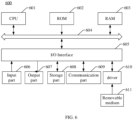
- FIG. 6 illustrates a computer system 600 of an electronic device according to an embodiment of the present disclosure.
- the electronic device may be an augmented reality device such as AR glasses, or AR helmet.
- the computer system 600 includes a Central Processing Unit (CPU) 601, which can execute various appropriate actions and processing according to programs stored in a Read-Only Memory (ROM) 602 or programs loaded into a Random Access Memory (RAM) 603 from a storage part 608. Various programs and data necessary for system operation are stored in the RAM 603.
- the CPU 601, the ROM 602, and the RAM 603 are connected to each other through a bus 604.
- An Input/Output (I/O) interface 605 is connected to the bus 604.
- the following parts are connected to the I/O interface 605: an input part 606 including a keyboard, a mouse, etc.; an output part 607 including, for example, a Cathode Ray Tube (CRT), a Liquid Crystal Display (LCD), etc., and a speaker, etc.; a storage part 608 including a hard disk, etc.; and a communication part 609 including a network interface card such as a Local Area Network (LAN) card, a modem, and the like.
- the communication part 609 performs communication processing via a network such as the Internet.
- a driver 610 may be connected to the I/O interface 605 as needed.
- a removable medium 611 for example, a magnetic disk, an optical disk, a magneto-optical disk, a semiconductor memory, etc., is installed on the drive 610 as required, so that the computer program read therefrom can be installed into the storage part 608 as required.
- an embodiment of the present disclosure includes a computer program product, which includes a computer program carried on a computer-readable medium, and the computer program contains program code for executing the method illustrated in the flowchart.
- the computer program may be downloaded and installed from the network through the communication part 609, and/or installed from the removable medium 611.
- the computer program is executed by the CPU 601, various functions defined in the system of the present disclosure are executed.
- the computer system 600 of the embodiment of the present disclosure can achieve an accurate positioning of the target scene and display the target scene timely, and it can effectively enhance user's sense of immersion and improve the user experience.
- the computer-readable medium illustrated in the embodiments of the present disclosure has a computer program stored thereon, and the computer program, when being executed by a processor, can implement the interactive method based on an augmented reality device according to the present disclosure.
- the computer-readable medium illustrated in the embodiments of the present disclosure may be a computer-readable signal medium or a computer-readable storage medium, or a combination thereof.
- the computer-readable storage medium may be, but not limited to, an electrical, magnetic, optical, electromagnetic, infrared, or semiconductor system, apparatus, or device, or any combinations thereof.
- the computer-readable storage medium may include, but are not limited to, an electrical connection with one or more wires, a portable computer disk, a hard disk, a RAM, a ROM, an Erasable Programmable Read-Only Memory (EPROM), a flash memory, an optical fiber, a portable Compact Disc Read-Only Memory (CD-ROM), an optical storage device, a magnetic storage device, or any suitable combinations thereof.
- the computer-readable storage medium may be any tangible medium that contains or stores a program, and the program may be used by or used based on an instruction execution system, apparatus, or device.
- the computer-readable signal medium may include a data signal propagated in a baseband or as a part of a carrier wave, and a computer-readable program code is carried therein.
- This propagated data signal can be in various forms, including but not limited to an electromagnetic signal, an optical signal, or any suitable combinations thereof.
- the computer-readable signal medium may be any computer-readable medium other than a computer-readable storage medium.
- the computer-readable medium may send, propagate, or transmit the program, which is used by or used in combination with the instruction execution system, apparatus, or device.
- the program code contained in the computer-readable medium can be transmitted through any suitable medium, including but not limited to, wireless transmission, wire transmission, etc., or any suitable combination thereof.
- the disclosed system, apparatus, and method can be implemented in other ways.
- the apparatus embodiments described above are only illustrative.
- the division of the unit is only a logical function division.
- multiple units or components may be combined or may be integrated into another system, or some features can be omitted or not performed.
- the illustrated or discussed mutual coupling or direct coupling or communication connection may be indirect coupling or communication connection through interfaces, apparatuses or units, and may be in electrical, mechanical or other forms.
- the unit described as a separate part may or may not be physically separated, and the part displayed as a unit may or may not be a physical unit, that is, it may be located in one place, or may be distributed on a plurality of network units. Some or all of the units may be selected based on actual needs to achieve the purposes of the solutions of the embodiments.
- the functional units in the respective embodiments of the present disclosure may be integrated into one processing unit, or each unit may exist alone physically, or two or more units may be integrated into one unit.
- the function When the function is implemented in the form of a software functional unit and sold or used as an independent product, it can be stored in the computer-readable storage medium.
- the technical solutions of the present disclosure essentially, the part that contributes to the existing technology, or the part of the technical solutions can be embodied in the form of a software product, and the computer software product is stored in a storage medium and includes several instructions to cause a computer device (for example, a personal computer, a server, or a network device, etc.) to execute all or part of the steps of the respective embodiments of the present disclosure.
- the aforementioned storage medium includes a U disk, a mobile hard disk, a ROM, a RAM, a magnetic disk, an optical disk, or other medium that can store the program code.
Landscapes
- Engineering & Computer Science (AREA)
- Multimedia (AREA)
- Theoretical Computer Science (AREA)
- Physics & Mathematics (AREA)
- General Physics & Mathematics (AREA)
- Human Computer Interaction (AREA)
- General Engineering & Computer Science (AREA)
- Computer Vision & Pattern Recognition (AREA)
- Software Systems (AREA)
- Computer Hardware Design (AREA)
- Computer Graphics (AREA)
- Radar, Positioning & Navigation (AREA)
- Remote Sensing (AREA)
- Environmental & Geological Engineering (AREA)
- User Interface Of Digital Computer (AREA)
- Processing Or Creating Images (AREA)
Claims (11)
- Interaktives Verfahren basierend auf einer Vorrichtung der erweiterten Realität, das interaktive Verfahren umfassend:(S11) Erlangen von Informationen über die gegenwärtige Position der Vorrichtung der erweiterten Realität und Bestimmen, ob eine ladbare Szene in einem im Voraus bestimmten Bereich der gegenwärtigen Position enthalten ist, wobei die ladbare Szene mit einem korrespondierenden Koordinatenbereich basierend auf einem Anzeigebereich der ladbaren Szene vorkonfiguriert ist;(S12) Erlangen, wenn die ladbare Szene in dem im Voraus bestimmten Bereich der gegenwärtigen Position enthalten ist, einer Distanz zwischen der gegenwärtigen Position und der ladbaren Szene basierend auf Koordinatendaten, um zu bestimmen, ob die Vorrichtung der erweiterten Realität in einen Ladebereich einer ladbaren Szene eintritt, und Bestimmen, als Reaktion auf Bestimmen, dass die Vorrichtung der erweiterten Realität in den Ladebereich der ladbaren Szene eintritt, der ladbaren Szene als eine Zielszene; und(S13) Laden eines Modells der Zielszene, um die Zielszene in der Vorrichtung der erweiterten Realität anzuzeigen, wenn die Vorrichtung der erweiterten Realität in den Ladebereich der Zielszene eintritt,wobei das interaktive Verfahren ferner umfasst, wenn die Vorrichtung der erweiterten Realität in den Ladebereich der Zielszene eintritt:Erzeugen einer Auslöseranweisung zum Aktivieren einer Kamerakomponente und einer Sensorkomponente der Vorrichtung der erweiterten Realität;Erlangen von Bilddaten korrespondierend mit einem gegenwärtigen Sichtfeld der Vorrichtung der erweiterten Realität unter Verwendung der Kamerakomponente und Erlangen von Bewegungsdaten der Vorrichtung der erweiterten Realität unter Verwendung der Sensorkomponente; undErlangen von Positionsinformationen der Vorrichtung der erweiterten Realität in einem Koordinatensystem der Zielszene basierend auf den Bilddaten und den Bewegungsdaten,wobei die Bilddaten ein Tiefenbild umfassen,dadurch gekennzeichnet, dass das Erlangen der Positionsinformationen der Vorrichtung der erweiterten Realität in dem Koordinatensystem der Zielszene basierend auf den Bilddaten und den Bewegungsdaten umfasst:Durchführen einer Erkennung an dem Tiefenbild, um Tiefendaten eines Zielobjekts zu erlangen, und Erlangen einer Distanz zwischen der Vorrichtung der erweiterten Realität und dem Zielobjekt basierend auf den Tiefendaten;Lesen von Sensordaten der Vorrichtung der erweiterten Realität und Erlangen eines Bewegungserkennungsergebnisses der Vorrichtung der erweiterten Realität basierend auf den Sensordaten; undBestimmen von Szenenpositionsinformationen der Vorrichtung der erweiterten Realität in dem Koordinatensystem der Zielszene basierend auf dem Bewegungserkennungsergebnis und der Distanz zwischen der Vorrichtung der erweiterten Realität und dem Zielobjekt.
- Interaktives Verfahren nach Anspruch 1, ferner umfassend:
Bestimmen, in dem Koordinatensystem der Zielszene, ob die Vorrichtung der erweiterten Realität in einen effektiven Interaktionsbereich eines virtuellen interaktiven Objekts eintritt, und Auslösen einer Interaktion mit dem virtuellen interaktiven Objekt, wenn die Vorrichtung der erweiterten Realität in den effektiven Interaktionsbereich des virtuellen interaktiven Objekts eintritt. - Interaktives Verfahren nach Anspruch 2, wobei das virtuelle interaktive Objekt ein mobiles virtuelles interaktives Objekt ist; und
wobei das Bestimmen, ob die Vorrichtung der erweiterten Realität in den effektiven Interaktionsbereich des virtuellen interaktiven Objekts eintritt, umfasst:Erlangen von gegenwärtigen Szenenpositionsinformationen des mobilen virtuellen interaktiven Objekts in dem Koordinatensystem der Zielszene, um einen gegenwärtigen effektiven Interaktionsbereich des mobilen virtuellen interaktiven Objekts zu bestimmen; undBestimmen, dass die Vorrichtung der erweiterten Realität in den effektiven Interaktionsbereich des mobilen virtuellen interaktiven Objekts eintritt, wenn ein gegenwärtiger Benutzerinteraktionsbereich der Vorrichtung der erweiterten Realität den effektiven Interaktionsbereich des mobilen virtuellen interaktiven Objekts überlappt,wahlweise wird der gegenwärtige Benutzerinteraktionsbereich der Vorrichtung der erweiterten Realität durch Berechnen basierend auf den gegenwärtigen Szenenpositionsinformationen der Vorrichtung der erweiterten Realität in dem Koordinatensystem der Zielszene und einem im Voraus bestimmten Interaktionsbereich erlangt. - Interaktives Verfahren nach Anspruch 2, wobei das virtuelle interaktive Objekt ein festes virtuelles interaktives Objekt ist; und
wobei das Bestimmen, ob die Vorrichtung der erweiterten Realität in den effektiven Interaktionsbereich des virtuellen interaktiven Objekts eintritt, umfasst:
Erlangen von gegenwärtigen Szenenpositionsinformationen der Vorrichtung der erweiterten Realität in dem Koordinatensystem der Zielszene und Bestimmen, dass die Vorrichtung der erweiterten Realität in den effektiven Interaktionsbereich des festen virtuellen interaktiven Objekts eintritt, wenn die gegenwärtigen Szenenpositionsinformationen in dem effektiven Interaktionsbereich des festen virtuellen interaktiven Objekts angeordnet sind. - Interaktives Verfahren nach Anspruch 1, wobei eine Vielzahl von Zielobjekten bereitgestellt wird; und das Verfahren ferner umfasst:Erlangen einer Vielzahl von Teilen von korrespondierenden Szenenpositionsinformationen durch Berechnen mit der Vielzahl von Zielobjekten; undDurchführen von Positionsverifizierung basierend auf der Vielzahl von Teilen von Szenenpositionsinformationen, um genaue Szenenpositionsinformationen zu erlangen.
- Interaktives Verfahren nach Anspruch 1, ferner umfassend, zur Zeit des Ladens des Modells der Zielszene, um die Zielszene in der Vorrichtung der erweiterten Realität anzuzeigen:
Lesen einer Aufgabenliste korrespondierend mit der Zielszene, um die Aufgabenliste in der Vorrichtung der erweiterten Realität anzuzeigen. - Interaktives System (50) basierend auf einer Vorrichtung der erweiterten Realität, das interaktive System umfassend:ein Modul zum Bestimmen einer ladbaren Szene (501), konfiguriert zum Erlangen von Informationen über die gegenwärtige Position der Vorrichtung der erweiterten Realität und Bestimmen, ob eine ladbare Szene in einem im Voraus bestimmten Bereich der gegenwärtigen Position enthalten ist, wobei die ladbare Szene mit einem korrespondierenden Koordinatenbereich basierend auf einem Anzeigebereich der ladbaren Szene vorkonfiguriert ist;ein Zielszenen-Bestimmungsmodul (502), konfiguriert zum: Erlangen, wenn die ladbare Szene in dem im Voraus bestimmten Bereich der gegenwärtigen Position enthalten ist, einer Distanz zwischen der gegenwärtigen Position und der ladbaren Szene basierend auf Koordinatendaten, um zu bestimmen, ob die Vorrichtung der erweiterten Realität in einen Ladebereich einer ladbaren Szene eintritt, und Bestimmen, als Reaktion auf Bestimmen, dass die Vorrichtung der erweiterten Realität in den Ladebereich der ladbaren Szene eintritt, der ladbaren Szene als eine Zielszene; undein Zielszenen-Lademodul (503), konfiguriert zum Laden eines Modells der Zielszene, um die Zielszene in der Vorrichtung der erweiterten Realität anzuzeigen, wenn die Vorrichtung der erweiterten Realität in den Ladebereich der Zielszene eintritt,wobei das interaktive System (50) ferner umfasst:ein Komponenten-Aktivierungsmodul, konfiguriert zum Erzeugen einer Auslöseranweisung zum Aktivieren einer Kamerakomponente und einer Sensorkomponente der Vorrichtung der erweiterten Realität;ein Datenerfassungsmodul, konfiguriert zum Erlangen von Bilddaten korrespondierend mit einem gegenwärtigen Sichtfeld der Vorrichtung der erweiterten Realität unter Verwendung der Kamerakomponente und zum Erlangen von Bewegungsdaten der Vorrichtung der erweiterten Realität unter Verwendung der Sensorkomponente; undein Positionsinformationen-Berechnungsmodul, konfiguriert zum Erlangen von Positionsinformationen der Vorrichtung der erweiterten Realität in einem Koordinatensystem der Zielszene basierend auf den Bilddaten und den Bewegungsdaten,wobei die Bilddaten ein Tiefenbild umfassen;dadurch gekennzeichnet, dass das Positionsinformationen-Berechnungsmodul umfasst:eine Bildverarbeitungseinheit, konfiguriert zum Durchführen einer Erkennung an dem Tiefenbild, um Tiefendaten eines Zielobjekts zu erlangen, und zum Erlangen einer Distanz zwischen der Vorrichtung der erweiterten Realität und dem Zielobjekt basierend auf den Tiefendaten;eine Sensordaten-Verarbeitungseinheit, konfiguriert zum Lesen von Sensordaten der Vorrichtung der erweiterten Realität und zum Erlangen eines Bewegungserkennungsergebnisses der Vorrichtung der erweiterten Realität basierend auf den Sensordaten; undeine Ergebnisberechnungseinheit, konfiguriert zum Bestimmen von Szenenpositionsinformationen der Vorrichtung der erweiterten Realität in dem Koordinatensystem der Zielszene basierend auf dem Bewegungserkennungsergebnis und der Distanz zwischen der Vorrichtung der erweiterten Realität und dem Zielobjekt.
- Interaktives System (50) nach Anspruch 7, ferner umfassend:
ein Modul zum Erkennen eines virtuellen interaktiven Objekts, konfiguriert zum, in dem Koordinatensystem der Zielszene, Bestimmen, ob die Vorrichtung der erweiterten Realität in einen effektiven Interaktionsbereich eines virtuellen interaktiven Objekts eintritt, und zum Auslösen einer Interaktion mit dem virtuellen interaktiven Objekt, wenn die Vorrichtung der erweiterten Realität in den effektiven Interaktionsbereich des virtuellen interaktiven Objekts eintritt. - Interaktives System (50) nach Anspruch 8, wobei das virtuelle interaktive Objekt ein mobiles virtuelles interaktives Objekt ist; und das Modul zum Erkennen eines virtuellen interaktiven Objekts umfasst:eine Einheit zum Berechnen eines Interaktionsbereichs eines mobilen Objekts, konfiguriert zum Erlangen von gegenwärtigen Szenenpositionsinformationen des mobilen virtuellen interaktiven Objekts in dem Koordinatensystem der Zielszene, um einen gegenwärtigen effektiven Interaktionsbereich des mobilen virtuellen interaktiven Objekts zu bestimmen, wenn das virtuelle interaktive Objekt das mobile virtuelle interaktive Objekt ist; undeine erste Interaktionsbestimmungseinheit, konfiguriert zum Bestimmen, dass die Vorrichtung der erweiterten Realität in den effektiven Interaktionsbereich des mobilen virtuellen interaktiven Objekts eintritt, wenn ein gegenwärtiger Benutzerinteraktionsbereich der Vorrichtung der erweiterten Realität den effektiven Interaktionsbereich des mobilen virtuellen interaktiven Objekts überlappt,wahlweise wird der gegenwärtige Benutzerinteraktionsbereich der Vorrichtung der erweiterten Realität durch Berechnen basierend auf den gegenwärtigen Szenenpositionsinformationen der Vorrichtung der erweiterten Realität in dem Koordinatensystem der Zielszene und einem im Voraus bestimmten Interaktionsbereich erlangt.
- Interaktives System (50) nach Anspruch 8, wobei das virtuelle interaktive Objekt ein festes virtuelles interaktives Objekt ist; und das Modul zum Erkennen eines virtuellen interaktiven Objekts umfasst:
eine zweite Interaktionsbestimmungseinheit, konfiguriert zum: Erlangen von gegenwärtigen Szenenpositionsinformationen der Vorrichtung der erweiterten Realität in dem Koordinatensystem der Zielszene, wenn das virtuelle interaktive Objekt das feste virtuelle interaktive Objekt ist, und Bestimmen, dass die Vorrichtung der erweiterten Realität in den effektiven Interaktionsbereich des festen virtuellen interaktiven Objekts eintritt, wenn die gegenwärtige Position in dem effektiven Interaktionsbereich des festen virtuellen interaktiven Objekts angeordnet ist. - Interaktives System (50) nach Anspruch 7, umfassend:einen oder mehrere Prozessoren; undein Speichergerät, konfiguriert zum Speichern eines oder mehrerer Programme,wobei das eine oder die mehreren Programme, wenn sie in dem einen oder den mehreren Prozessoren ausgeführt werden, die Durchführung des interaktiven Systems (50) implementieren.
Applications Claiming Priority (2)
| Application Number | Priority Date | Filing Date | Title |
|---|---|---|---|
| CN201910765900.8A CN110478901B (zh) | 2019-08-19 | 2019-08-19 | 基于增强现实设备的交互方法及系统 |
| PCT/CN2020/102478 WO2021031755A1 (zh) | 2019-08-19 | 2020-07-16 | 基于增强现实设备的交互方法及系统、电子设备、计算机可读介质 |
Publications (3)
| Publication Number | Publication Date |
|---|---|
| EP3978089A1 EP3978089A1 (de) | 2022-04-06 |
| EP3978089A4 EP3978089A4 (de) | 2022-08-10 |
| EP3978089B1 true EP3978089B1 (de) | 2025-04-23 |
Family
ID=68552079
Family Applications (1)
| Application Number | Title | Priority Date | Filing Date |
|---|---|---|---|
| EP20853764.7A Active EP3978089B1 (de) | 2019-08-19 | 2020-07-16 | Interaktives verfahren und system basierend auf einer vorrichtung mit erweiterter realität, elektronische vorrichtung und computerlesbares medium |
Country Status (4)
| Country | Link |
|---|---|
| US (1) | US20220122331A1 (de) |
| EP (1) | EP3978089B1 (de) |
| CN (1) | CN110478901B (de) |
| WO (1) | WO2021031755A1 (de) |
Families Citing this family (19)
| Publication number | Priority date | Publication date | Assignee | Title |
|---|---|---|---|---|
| US11538199B2 (en) * | 2020-02-07 | 2022-12-27 | Lenovo (Singapore) Pte. Ltd. | Displaying a window in an augmented reality view |
| CN113262478B (zh) * | 2020-02-17 | 2023-08-25 | Oppo广东移动通信有限公司 | 增强现实处理方法及装置、存储介质和电子设备 |
| CN113516989B (zh) * | 2020-03-27 | 2024-08-16 | 浙江宇视科技有限公司 | 声源音频的管理方法、装置、设备和存储介质 |
| CN111790151A (zh) * | 2020-06-28 | 2020-10-20 | 上海米哈游天命科技有限公司 | 一种场景中物体加载方法、装置、存储介质及电子设备 |
| CN112330820A (zh) * | 2020-11-12 | 2021-02-05 | 北京市商汤科技开发有限公司 | 信息展示方法、装置、电子设备及存储介质 |
| CN113791846A (zh) * | 2020-11-13 | 2021-12-14 | 北京沃东天骏信息技术有限公司 | 信息展示方法及装置、电子设备、存储介质 |
| CN113093915A (zh) * | 2021-04-23 | 2021-07-09 | 深圳市商汤科技有限公司 | 多人互动的控制方法、装置、设备及存储介质 |
| CN113577766B (zh) * | 2021-08-05 | 2024-04-02 | 百度在线网络技术(北京)有限公司 | 对象处理方法及装置 |
| CN116310062B (zh) * | 2021-12-08 | 2026-04-10 | 中国电信国际有限公司 | 三维场景构建方法及装置、存储介质及电子设备 |
| CN114327050A (zh) * | 2021-12-15 | 2022-04-12 | 中国海洋大学 | 用于遗址增强现实场景协作交互方法、系统、设备及介质 |
| KR102670496B1 (ko) * | 2022-01-13 | 2024-05-31 | 네이버랩스 주식회사 | 기 설정된 단위 공간에 기반하여 증강현실 뷰를 통해 증강 콘텐츠를 제공하는 방법 및 장치 |
| CN117354568A (zh) * | 2022-06-27 | 2024-01-05 | 华为技术有限公司 | 一种显示方法、设备及系统 |
| CN115268749B (zh) * | 2022-07-20 | 2024-04-09 | 广州视享科技有限公司 | 增强现实设备的控制方法、移动终端及防遮挡系统 |
| CN115268655A (zh) * | 2022-08-22 | 2022-11-01 | 江苏泽景汽车电子股份有限公司 | 基于增强现实的交互方法、系统,车辆及存储介质 |
| CN115082648B (zh) * | 2022-08-23 | 2023-03-24 | 海看网络科技(山东)股份有限公司 | 一种基于标志物模型绑定的ar场景布置方法及系统 |
| CN116017111B (zh) * | 2022-12-20 | 2025-03-07 | 北京新唐思创教育科技有限公司 | 全真场景下模拟日食现象的方法、装置、电子设备及介质 |
| CN116099197A (zh) * | 2022-12-29 | 2023-05-12 | 深圳市优必选科技股份有限公司 | 虚拟场景的交互对象选择方法、装置、设备及存储介质 |
| CN117599415A (zh) * | 2023-11-09 | 2024-02-27 | 北京字跳网络技术有限公司 | 交互控制方法、装置、设备和存储介质 |
| CN117687718B (zh) * | 2024-01-08 | 2024-09-06 | 元年科技(珠海)有限责任公司 | 一种虚拟数字场景展示方法以及相关装置 |
Family Cites Families (18)
| Publication number | Priority date | Publication date | Assignee | Title |
|---|---|---|---|---|
| US6166744A (en) * | 1997-11-26 | 2000-12-26 | Pathfinder Systems, Inc. | System for combining virtual images with real-world scenes |
| US9398287B2 (en) * | 2013-02-28 | 2016-07-19 | Google Technology Holdings LLC | Context-based depth sensor control |
| CN103257876B (zh) * | 2013-04-28 | 2016-04-13 | 福建天晴数码有限公司 | C3游戏地图动态加载的方法 |
| CN106020493A (zh) * | 2016-03-13 | 2016-10-12 | 成都市微辣科技有限公司 | 一种基于虚拟现实的产品展示装置及方法 |
| CN107767459A (zh) * | 2016-08-18 | 2018-03-06 | 深圳市劲嘉数媒科技有限公司 | 基于增强现实的展示方法、装置和系统 |
| CN106547599B (zh) * | 2016-11-24 | 2020-05-05 | 腾讯科技(深圳)有限公司 | 一种资源动态加载的方法及终端 |
| IT201700058961A1 (it) * | 2017-05-30 | 2018-11-30 | Artglass S R L | Metodo e sistema di fruizione di un contenuto editoriale in un sito preferibilmente culturale o artistico o paesaggistico o naturalistico o fieristico o espositivo |
| CN107198876B (zh) * | 2017-06-07 | 2021-02-05 | 北京小鸟看看科技有限公司 | 游戏场景的加载方法及装置 |
| JP6823731B2 (ja) * | 2017-10-31 | 2021-02-03 | 株式会社ドワンゴ | 入力インターフェースシステム及び位置ゲームシステム |
| CN108434739B (zh) * | 2018-01-30 | 2019-03-19 | 网易(杭州)网络有限公司 | 游戏场景中虚拟资源的处理方法及装置 |
| CN108415570B (zh) * | 2018-03-07 | 2021-08-24 | 网易(杭州)网络有限公司 | 基于增强现实的控件选择方法和装置 |
| CN108499103B (zh) * | 2018-04-16 | 2021-12-21 | 网易(杭州)网络有限公司 | 场景元素的显示方法及装置 |
| CN108568112A (zh) * | 2018-04-20 | 2018-09-25 | 网易(杭州)网络有限公司 | 一种游戏场景的生成方法、装置和电子设备 |
| CN108854070A (zh) * | 2018-06-15 | 2018-11-23 | 网易(杭州)网络有限公司 | 游戏中的信息提示方法、装置及存储介质 |
| CN109685909B (zh) * | 2018-11-12 | 2022-12-20 | 腾讯科技(深圳)有限公司 | 图像的显示方法、装置、存储介质和电子装置 |
| CN109782901A (zh) * | 2018-12-06 | 2019-05-21 | 网易(杭州)网络有限公司 | 增强现实交互方法、装置、计算机设备及存储介质 |
| CN109656441B (zh) * | 2018-12-21 | 2020-11-06 | 广州励丰文化科技股份有限公司 | 一种基于虚拟现实的导览方法及系统 |
| CN109886191A (zh) * | 2019-02-20 | 2019-06-14 | 上海昊沧系统控制技术有限责任公司 | 一种基于ar的识别物管理方法及系统 |
-
2019
- 2019-08-19 CN CN201910765900.8A patent/CN110478901B/zh active Active
-
2020
- 2020-07-16 EP EP20853764.7A patent/EP3978089B1/de active Active
- 2020-07-16 WO PCT/CN2020/102478 patent/WO2021031755A1/zh not_active Ceased
-
2021
- 2021-12-28 US US17/563,144 patent/US20220122331A1/en not_active Abandoned
Also Published As
| Publication number | Publication date |
|---|---|
| CN110478901A (zh) | 2019-11-22 |
| US20220122331A1 (en) | 2022-04-21 |
| EP3978089A4 (de) | 2022-08-10 |
| CN110478901B (zh) | 2023-09-22 |
| WO2021031755A1 (zh) | 2021-02-25 |
| EP3978089A1 (de) | 2022-04-06 |
Similar Documents
| Publication | Publication Date | Title |
|---|---|---|
| EP3978089B1 (de) | Interaktives verfahren und system basierend auf einer vorrichtung mit erweiterter realität, elektronische vorrichtung und computerlesbares medium | |
| CN107820593B (zh) | 一种虚拟现实交互方法、装置及系统 | |
| EP3437075B1 (de) | Virtuelle objektmanipulation in einer physischen umgebung | |
| EP3137976B1 (de) | Feedback über die qualität einer umgebungsfixierten anzeige | |
| US9536350B2 (en) | Touch and social cues as inputs into a computer | |
| US20150070274A1 (en) | Methods and systems for determining 6dof location and orientation of head-mounted display and associated user movements | |
| US12458887B2 (en) | Method and apparatus for displaying position mark, device, and storage medium | |
| KR20170090490A (ko) | 시선 타겟 애플리케이션 런처 | |
| WO2013028813A1 (en) | Implicit sharing and privacy control through physical behaviors using sensor-rich devices | |
| CN113041619A (zh) | 虚拟车辆的控制方法、装置、设备及介质 | |
| CN111290580A (zh) | 基于视线追踪的校准方法及相关装置 | |
| CN111569414B (zh) | 虚拟飞行器的飞行展示方法、装置、电子设备及存储介质 | |
| KR101914660B1 (ko) | 자이로 센서를 기반으로 증강현실 컨텐츠의 표시를 제어하는 방법 및 그 장치 | |
| CN113181648B (zh) | 基于虚拟对象的交互方法、装置、设备及介质 | |
| CN112788443B (zh) | 基于光通信装置的交互方法和系统 | |
| EP4398074A1 (de) | Steuerungssystem für virtuelle realität | |
| JP2018026048A (ja) | 情報処理方法および当該情報処理方法をコンピュータに実行させるためのプログラム | |
| KR101939530B1 (ko) | 지형정보 인식을 기반으로 증강현실 오브젝트를 표시하는 방법 및 그 장치 | |
| CN115300897B (zh) | 分离式虚拟系统的空间定位方法、虚拟系统 | |
| KR20190006584A (ko) | 지형정보 인식을 기반으로 증강현실 오브젝트를 표시하는 방법 및 그 장치 | |
| CN119537630B (zh) | 一种信息展示方法、装置、设备、存储介质及程序产品 | |
| EP4398075A1 (de) | Steuerungssystem für virtuelle realität | |
| US20250310506A1 (en) | Information processing device and information processing method | |
| US20240078734A1 (en) | Information interaction method and apparatus, electronic device and storage medium | |
| WO2025092464A1 (zh) | 交互控制方法、装置、电子设备和存储介质 |
Legal Events
| Date | Code | Title | Description |
|---|---|---|---|
| STAA | Information on the status of an ep patent application or granted ep patent |
Free format text: STATUS: THE INTERNATIONAL PUBLICATION HAS BEEN MADE |
|
| PUAI | Public reference made under article 153(3) epc to a published international application that has entered the european phase |
Free format text: ORIGINAL CODE: 0009012 |
|
| STAA | Information on the status of an ep patent application or granted ep patent |
Free format text: STATUS: REQUEST FOR EXAMINATION WAS MADE |
|
| 17P | Request for examination filed |
Effective date: 20211229 |
|
| AK | Designated contracting states |
Kind code of ref document: A1 Designated state(s): AL AT BE BG CH CY CZ DE DK EE ES FI FR GB GR HR HU IE IS IT LI LT LU LV MC MK MT NL NO PL PT RO RS SE SI SK SM TR |
|
| A4 | Supplementary search report drawn up and despatched |
Effective date: 20220711 |
|
| RIC1 | Information provided on ipc code assigned before grant |
Ipc: A63F 13/577 20140101ALI20220705BHEP Ipc: A63F 13/216 20140101ALI20220705BHEP Ipc: A63F 13/52 20140101AFI20220705BHEP |
|
| DAV | Request for validation of the european patent (deleted) | ||
| DAX | Request for extension of the european patent (deleted) | ||
| STAA | Information on the status of an ep patent application or granted ep patent |
Free format text: STATUS: EXAMINATION IS IN PROGRESS |
|
| 17Q | First examination report despatched |
Effective date: 20240617 |
|
| 17Q | First examination report despatched |
Effective date: 20240626 |
|
| GRAP | Despatch of communication of intention to grant a patent |
Free format text: ORIGINAL CODE: EPIDOSNIGR1 |
|
| STAA | Information on the status of an ep patent application or granted ep patent |
Free format text: STATUS: GRANT OF PATENT IS INTENDED |
|
| INTG | Intention to grant announced |
Effective date: 20250123 |
|
| GRAS | Grant fee paid |
Free format text: ORIGINAL CODE: EPIDOSNIGR3 |
|
| GRAA | (expected) grant |
Free format text: ORIGINAL CODE: 0009210 |
|
| STAA | Information on the status of an ep patent application or granted ep patent |
Free format text: STATUS: THE PATENT HAS BEEN GRANTED |
|
| AK | Designated contracting states |
Kind code of ref document: B1 Designated state(s): AL AT BE BG CH CY CZ DE DK EE ES FI FR GB GR HR HU IE IS IT LI LT LU LV MC MK MT NL NO PL PT RO RS SE SI SK SM TR |
|
| REG | Reference to a national code |
Ref country code: GB Ref legal event code: FG4D |
|
| REG | Reference to a national code |
Ref country code: CH Ref legal event code: EP |
|
| REG | Reference to a national code |
Ref country code: DE Ref legal event code: R096 Ref document number: 602020050122 Country of ref document: DE |
|
| REG | Reference to a national code |
Ref country code: IE Ref legal event code: FG4D |
|
| REG | Reference to a national code |
Ref country code: NL Ref legal event code: MP Effective date: 20250423 |
|
| PG25 | Lapsed in a contracting state [announced via postgrant information from national office to epo] |
Ref country code: NL Free format text: LAPSE BECAUSE OF FAILURE TO SUBMIT A TRANSLATION OF THE DESCRIPTION OR TO PAY THE FEE WITHIN THE PRESCRIBED TIME-LIMIT Effective date: 20250423 |
|
| REG | Reference to a national code |
Ref country code: AT Ref legal event code: MK05 Ref document number: 1787258 Country of ref document: AT Kind code of ref document: T Effective date: 20250423 |
|
| P01 | Opt-out of the competence of the unified patent court (upc) registered |
Free format text: CASE NUMBER: UPC_APP_5344_3978089/2025 Effective date: 20250829 |
|
| PG25 | Lapsed in a contracting state [announced via postgrant information from national office to epo] |
Ref country code: FI Free format text: LAPSE BECAUSE OF FAILURE TO SUBMIT A TRANSLATION OF THE DESCRIPTION OR TO PAY THE FEE WITHIN THE PRESCRIBED TIME-LIMIT Effective date: 20250423 Ref country code: ES Free format text: LAPSE BECAUSE OF FAILURE TO SUBMIT A TRANSLATION OF THE DESCRIPTION OR TO PAY THE FEE WITHIN THE PRESCRIBED TIME-LIMIT Effective date: 20250423 Ref country code: PT Free format text: LAPSE BECAUSE OF FAILURE TO SUBMIT A TRANSLATION OF THE DESCRIPTION OR TO PAY THE FEE WITHIN THE PRESCRIBED TIME-LIMIT Effective date: 20250825 |
|
| PGFP | Annual fee paid to national office [announced via postgrant information from national office to epo] |
Ref country code: DE Payment date: 20250724 Year of fee payment: 6 |
|
| REG | Reference to a national code |
Ref country code: LT Ref legal event code: MG9D |
|
| PG25 | Lapsed in a contracting state [announced via postgrant information from national office to epo] |
Ref country code: GR Free format text: LAPSE BECAUSE OF FAILURE TO SUBMIT A TRANSLATION OF THE DESCRIPTION OR TO PAY THE FEE WITHIN THE PRESCRIBED TIME-LIMIT Effective date: 20250724 Ref country code: NO Free format text: LAPSE BECAUSE OF FAILURE TO SUBMIT A TRANSLATION OF THE DESCRIPTION OR TO PAY THE FEE WITHIN THE PRESCRIBED TIME-LIMIT Effective date: 20250723 |
|
| PG25 | Lapsed in a contracting state [announced via postgrant information from national office to epo] |
Ref country code: PL Free format text: LAPSE BECAUSE OF FAILURE TO SUBMIT A TRANSLATION OF THE DESCRIPTION OR TO PAY THE FEE WITHIN THE PRESCRIBED TIME-LIMIT Effective date: 20250423 |
|
| PG25 | Lapsed in a contracting state [announced via postgrant information from national office to epo] |
Ref country code: BG Free format text: LAPSE BECAUSE OF FAILURE TO SUBMIT A TRANSLATION OF THE DESCRIPTION OR TO PAY THE FEE WITHIN THE PRESCRIBED TIME-LIMIT Effective date: 20250423 |
|
| PG25 | Lapsed in a contracting state [announced via postgrant information from national office to epo] |
Ref country code: HR Free format text: LAPSE BECAUSE OF FAILURE TO SUBMIT A TRANSLATION OF THE DESCRIPTION OR TO PAY THE FEE WITHIN THE PRESCRIBED TIME-LIMIT Effective date: 20250423 |
|
| PG25 | Lapsed in a contracting state [announced via postgrant information from national office to epo] |
Ref country code: AT Free format text: LAPSE BECAUSE OF FAILURE TO SUBMIT A TRANSLATION OF THE DESCRIPTION OR TO PAY THE FEE WITHIN THE PRESCRIBED TIME-LIMIT Effective date: 20250423 |
|
| PG25 | Lapsed in a contracting state [announced via postgrant information from national office to epo] |
Ref country code: RS Free format text: LAPSE BECAUSE OF FAILURE TO SUBMIT A TRANSLATION OF THE DESCRIPTION OR TO PAY THE FEE WITHIN THE PRESCRIBED TIME-LIMIT Effective date: 20250723 |
|
| PG25 | Lapsed in a contracting state [announced via postgrant information from national office to epo] |
Ref country code: IS Free format text: LAPSE BECAUSE OF FAILURE TO SUBMIT A TRANSLATION OF THE DESCRIPTION OR TO PAY THE FEE WITHIN THE PRESCRIBED TIME-LIMIT Effective date: 20250823 |
|
| PG25 | Lapsed in a contracting state [announced via postgrant information from national office to epo] |
Ref country code: LV Free format text: LAPSE BECAUSE OF FAILURE TO SUBMIT A TRANSLATION OF THE DESCRIPTION OR TO PAY THE FEE WITHIN THE PRESCRIBED TIME-LIMIT Effective date: 20250423 |
|
| PG25 | Lapsed in a contracting state [announced via postgrant information from national office to epo] |
Ref country code: SM Free format text: LAPSE BECAUSE OF FAILURE TO SUBMIT A TRANSLATION OF THE DESCRIPTION OR TO PAY THE FEE WITHIN THE PRESCRIBED TIME-LIMIT Effective date: 20250423 Ref country code: DK Free format text: LAPSE BECAUSE OF FAILURE TO SUBMIT A TRANSLATION OF THE DESCRIPTION OR TO PAY THE FEE WITHIN THE PRESCRIBED TIME-LIMIT Effective date: 20250423 |
|
| PG25 | Lapsed in a contracting state [announced via postgrant information from national office to epo] |
Ref country code: CZ Free format text: LAPSE BECAUSE OF FAILURE TO SUBMIT A TRANSLATION OF THE DESCRIPTION OR TO PAY THE FEE WITHIN THE PRESCRIBED TIME-LIMIT Effective date: 20250423 |
|
| PG25 | Lapsed in a contracting state [announced via postgrant information from national office to epo] |
Ref country code: EE Free format text: LAPSE BECAUSE OF FAILURE TO SUBMIT A TRANSLATION OF THE DESCRIPTION OR TO PAY THE FEE WITHIN THE PRESCRIBED TIME-LIMIT Effective date: 20250423 |
|
| REG | Reference to a national code |
Ref country code: DE Ref legal event code: R097 Ref document number: 602020050122 Country of ref document: DE |
|
| PG25 | Lapsed in a contracting state [announced via postgrant information from national office to epo] |
Ref country code: SK Free format text: LAPSE BECAUSE OF FAILURE TO SUBMIT A TRANSLATION OF THE DESCRIPTION OR TO PAY THE FEE WITHIN THE PRESCRIBED TIME-LIMIT Effective date: 20250423 Ref country code: RO Free format text: LAPSE BECAUSE OF FAILURE TO SUBMIT A TRANSLATION OF THE DESCRIPTION OR TO PAY THE FEE WITHIN THE PRESCRIBED TIME-LIMIT Effective date: 20250423 |
|
| PG25 | Lapsed in a contracting state [announced via postgrant information from national office to epo] |
Ref country code: IT Free format text: LAPSE BECAUSE OF FAILURE TO SUBMIT A TRANSLATION OF THE DESCRIPTION OR TO PAY THE FEE WITHIN THE PRESCRIBED TIME-LIMIT Effective date: 20250423 |
|
| REG | Reference to a national code |
Ref country code: CH Ref legal event code: H13 Free format text: ST27 STATUS EVENT CODE: U-0-0-H10-H13 (AS PROVIDED BY THE NATIONAL OFFICE) Effective date: 20260224 |
|
| PLBE | No opposition filed within time limit |
Free format text: ORIGINAL CODE: 0009261 |
|
| STAA | Information on the status of an ep patent application or granted ep patent |
Free format text: STATUS: NO OPPOSITION FILED WITHIN TIME LIMIT |
|
| REG | Reference to a national code |
Ref country code: CH Ref legal event code: L10 Free format text: ST27 STATUS EVENT CODE: U-0-0-L10-L00 (AS PROVIDED BY THE NATIONAL OFFICE) Effective date: 20260304 |
|
| PG25 | Lapsed in a contracting state [announced via postgrant information from national office to epo] |
Ref country code: LU Free format text: LAPSE BECAUSE OF NON-PAYMENT OF DUE FEES Effective date: 20250716 |
|
| GBPC | Gb: european patent ceased through non-payment of renewal fee |
Effective date: 20250723 |
|
| REG | Reference to a national code |
Ref country code: BE Ref legal event code: MM Effective date: 20250731 |
|
| 26N | No opposition filed |
Effective date: 20260126 |
|
| PG25 | Lapsed in a contracting state [announced via postgrant information from national office to epo] |
Ref country code: GB Free format text: LAPSE BECAUSE OF NON-PAYMENT OF DUE FEES Effective date: 20250723 |
|
| PG25 | Lapsed in a contracting state [announced via postgrant information from national office to epo] |
Ref country code: BE Free format text: LAPSE BECAUSE OF NON-PAYMENT OF DUE FEES Effective date: 20250731 |
|
| PG25 | Lapsed in a contracting state [announced via postgrant information from national office to epo] |
Ref country code: FR Free format text: LAPSE BECAUSE OF NON-PAYMENT OF DUE FEES Effective date: 20250731 |
|
| PG25 | Lapsed in a contracting state [announced via postgrant information from national office to epo] |
Ref country code: CH Free format text: LAPSE BECAUSE OF NON-PAYMENT OF DUE FEES Effective date: 20250731 |