EP3137976B1 - Feedback über die qualität einer umgebungsfixierten anzeige - Google Patents
Feedback über die qualität einer umgebungsfixierten anzeige Download PDFInfo
- Publication number
- EP3137976B1 EP3137976B1 EP15723077.2A EP15723077A EP3137976B1 EP 3137976 B1 EP3137976 B1 EP 3137976B1 EP 15723077 A EP15723077 A EP 15723077A EP 3137976 B1 EP3137976 B1 EP 3137976B1
- Authority
- EP
- European Patent Office
- Prior art keywords
- world
- head
- quality level
- display device
- mounted display
- Prior art date
- Legal status (The legal status is an assumption and is not a legal conclusion. Google has not performed a legal analysis and makes no representation as to the accuracy of the status listed.)
- Active
Links
Images





Classifications
-
- G—PHYSICS
- G06—COMPUTING OR CALCULATING; COUNTING
- G06F—ELECTRIC DIGITAL DATA PROCESSING
- G06F3/00—Input arrangements for transferring data to be processed into a form capable of being handled by the computer; Output arrangements for transferring data from processing unit to output unit, e.g. interface arrangements
- G06F3/01—Input arrangements or combined input and output arrangements for interaction between user and computer
- G06F3/011—Arrangements for interaction with the human body, e.g. for user immersion in virtual reality
-
- G—PHYSICS
- G02—OPTICS
- G02B—OPTICAL ELEMENTS, SYSTEMS OR APPARATUS
- G02B27/00—Optical systems or apparatus not provided for by any of the groups G02B1/00 - G02B26/00, G02B30/00
- G02B27/0093—Optical systems or apparatus not provided for by any of the groups G02B1/00 - G02B26/00, G02B30/00 with means for monitoring data relating to the user, e.g. head-tracking, eye-tracking
-
- G—PHYSICS
- G02—OPTICS
- G02B—OPTICAL ELEMENTS, SYSTEMS OR APPARATUS
- G02B27/00—Optical systems or apparatus not provided for by any of the groups G02B1/00 - G02B26/00, G02B30/00
- G02B27/01—Head-up displays
- G02B27/017—Head mounted
-
- G—PHYSICS
- G06—COMPUTING OR CALCULATING; COUNTING
- G06F—ELECTRIC DIGITAL DATA PROCESSING
- G06F3/00—Input arrangements for transferring data to be processed into a form capable of being handled by the computer; Output arrangements for transferring data from processing unit to output unit, e.g. interface arrangements
- G06F3/01—Input arrangements or combined input and output arrangements for interaction between user and computer
- G06F3/011—Arrangements for interaction with the human body, e.g. for user immersion in virtual reality
- G06F3/012—Head tracking input arrangements
-
- G—PHYSICS
- G06—COMPUTING OR CALCULATING; COUNTING
- G06T—IMAGE DATA PROCESSING OR GENERATION, IN GENERAL
- G06T19/00—Manipulating three-dimensional [3D] models or images for computer graphics
- G06T19/006—Mixed reality
-
- G—PHYSICS
- G02—OPTICS
- G02B—OPTICAL ELEMENTS, SYSTEMS OR APPARATUS
- G02B27/00—Optical systems or apparatus not provided for by any of the groups G02B1/00 - G02B26/00, G02B30/00
- G02B27/01—Head-up displays
- G02B27/0101—Head-up displays characterised by optical features
- G02B2027/014—Head-up displays characterised by optical features comprising information/image processing systems
-
- G—PHYSICS
- G02—OPTICS
- G02B—OPTICAL ELEMENTS, SYSTEMS OR APPARATUS
- G02B27/00—Optical systems or apparatus not provided for by any of the groups G02B1/00 - G02B26/00, G02B30/00
- G02B27/01—Head-up displays
- G02B27/017—Head mounted
- G02B2027/0178—Eyeglass type
-
- G—PHYSICS
- G02—OPTICS
- G02B—OPTICAL ELEMENTS, SYSTEMS OR APPARATUS
- G02B27/00—Optical systems or apparatus not provided for by any of the groups G02B1/00 - G02B26/00, G02B30/00
- G02B27/01—Head-up displays
- G02B27/0179—Display position adjusting means not related to the information to be displayed
- G02B2027/0187—Display position adjusting means not related to the information to be displayed slaved to motion of at least a part of the body of the user, e.g. head, eye
-
- G—PHYSICS
- G06—COMPUTING OR CALCULATING; COUNTING
- G06F—ELECTRIC DIGITAL DATA PROCESSING
- G06F2200/00—Indexing scheme relating to G06F1/04 - G06F1/32
- G06F2200/16—Indexing scheme relating to G06F1/16 - G06F1/18
- G06F2200/163—Indexing scheme relating to constructional details of the computer
- G06F2200/1637—Sensing arrangement for detection of housing movement or orientation, e.g. for controlling scrolling or cursor movement on the display of an handheld computer
Definitions
- HMD head-mounted display
- some display devices such as various head-mounted display (HMD) devices, may comprise a see-through display that allows superposition of virtual objects over a real-world environment.
- the virtual objects may appear integrated with the real-world environment when viewed by a wearer of the HMD device through the see-through display.
- augmented reality Such a relationship between the virtual objects and the real-world environment may be referred to as augmented reality.
- Simultaneous localization and mapping systems may provide augmented reality experiences.
- tracking and mapping systems are dependent upon illumination and other visual aspects of the environment in which the user is operating.
- applications or technologies may fail to operate, or may operate with a significant degradation in the user experience.
- a user may expect to use a tracking and mapping system to execute an augmented reality application in a particular environment.
- the environment may provide insufficient data to support effective tracking and mapping, causing the application to perform poorly and provide a disappointing user experience or to fail completely.
- the user may be unpleasantly surprised with the user experience.
- a user may prevented from adjusting expectations of the user experience and/or choosing another activity or other application that may operate more efficiently.
- US 2013/342570 describes a see-through, near-eye, mixed reality display apparatus providing a mixed reality environment where one or more virtual objects and one or more real objects exist within the view of the device.
- Each of the real and virtual have a commonly defined set of attributes understood by the mixed reality system allowing the system to manage relationships and interaction between virtual objects and other virtual objects, and virtual and real objects.
- the invention provides a method for communicating to a user of a head-mounted display device operatively connected to a computing device as defined in claim 1 and a head-mounted display device operatively connected to a computing device as defined in claim 6.
- Various embodiments are disclosed herein that relate to communicating to a user of a head-mounted display device an estimated quality level of a world-lock display mode in which a position of one or more virtual objects appears to be fixed relative to real-world objects viewable through the head-mounted display device.
- one disclosed embodiment provides a method comprising receiving sensor data from one or more sensors of the head-mounted display device. Using the sensor data, an estimated pose of the head-mounted display device is determined.
- one or more virtual objects are displayed via the head-mounted display device in either the world-lock display mode or in a body-lock display mode in which the position of each of the virtual objects appears to be fixed relative to the user of the head-mounted display device.
- One or more of input uncertainty values of the sensor data and pose uncertainty values of the estimated pose are determined.
- One or more of the input uncertainty values and the pose uncertainty values are mapped to the estimated quality level of the world-lock display mode. Feedback of the estimated quality level is communicated to the user via the head-mounted display device.
- FIG. 1 shows a schematic view of one embodiment of an augmented reality system 10.
- the augmented reality system 10 includes a tracking system 14 that may be stored in mass storage 18 of a computing device 22.
- the tracking system 14 may be loaded into memory 26 and executed by a processor 28 of the computing device 22 to perform one or more of the methods and processes described in more detail below.
- the augmented reality system 10 includes a display program 30 that may generate one or more virtual objects 32 for display within a real-world environment including one or more real-world objects 34.
- a display device such as a head-mounted display (HMD) device 36, may display the virtual objects 32 in superposition over a real-world environment to create an augmented reality environment 40.
- the display program 30 may utilize two different display modes for displaying the virtual objects 32.
- a virtual object 32 may be displayed via the HMD device 36 with world-locked positions.
- a virtual object 32 appears to be fixed relative to real-world objects 34 viewable through the HMD device36, and the world-locked position of each virtual object appears to be moveable relative to a wearer of the HMD device 36.
- the world-lock display mode 44 may be associated with a six degree of freedom (6DOF) tracking filter 816 that estimates a location and an orientation of the HMD device 36 in six degrees of freedom (e.g., x, y, z, pitch, roll, yaw).
- 6DOF six degree of freedom
- the estimate in six degrees of freedom may be determined using sensor data 46 from a combination of optical sensors of the HMD device 36 and other pose sensors of the HMD device that do not rely merely on optical information.
- Such other pose sensors may include, but are not limited to, accelerometers, gyroscopes, magnetometers, and other sensors used in deduced reckoning of a current position/orientation by using one or more previously determined positions/orientations and known or estimated changes over designated time periods.
- the optical sensors may provide image information of optical features of a real-world environment in which the HMD device 36 is located. As noted above, due to the reliance on illumination conditions, optical features, and other visual aspects of the real-world environment in which the user is operating, the accuracy of the sensor data 46 from the optical sensors may vary and may not be reliable. When conditions are suitable to provide accurate sensor data, however, the augmented reality experience provided by the world-lock display mode 44 may be rich and compelling.
- the HMD device 36 may operate in a body-lock display mode 48.
- the body-lock display mode 48 one or more virtual objects 32 may be displayed via the HMD device 36 with body-locked positions.
- a virtual object 32 appears to be fixed relative to the wearer of the HMD device 36, and the body-locked position of each virtual object appears to be moveable relative to the real-world objects 34.
- the body-lock display mode 48 may be associated with a three degree of freedom (3DOF) tracking filter820that may operate in parallel with the 6DOF tracking filter 816.
- the 3DOF tracking filter820 estimates an orientation of the HMD device 36 in three degrees of freedom (e.g., pitch, roll, yaw). For example, the estimate in three degrees of freedom may be determined using information from pose sensors that do not rely on optical data. Accordingly, the 3DOF tracking filter 820 may operate consistently during conditions in which the 6DOF tracking filter 816 may provide a degraded augmented reality experience.
- the computing device 22 may be operatively connected with the HMD device 36 using a wired connection, or may employ a wireless connection via WiFi, Bluetooth, or any other suitable wireless communication protocol. Additionally, the example illustrated in FIG. 1 shows the computing device 22 as a separate component from the HMD device 36. It will be appreciated that in other examples the computing device 22 may be integrated into the HMD device 36.
- the computing device 22 may take the form of a desktop computing device, a mobile computing device such as a smart phone, laptop, notebook or tablet computer, network computer, home entertainment computer, interactive television, set-top box, gaming system, or other suitable type of computing device. Additional details regarding the components and computing aspects of the computing device 22 are described in more detail below with reference to FIG. 11 .
- the tracking system 14 may be configured to communicate feedback 42 of an estimated quality level of a world-lock display mode 44 to a user 50 wearing the HMD device 36.
- the user 50 may be apprised in real-time of current environmental conditions and their effect on the quality and/or availability of a world-lock display mode user experience.
- the quality level threshold may correspond to a minimum amount and/or quality of sensor data for providing an acceptable user experience in the world-lock display mode 44. It will be appreciated that the amount and/or quality of available sensor data can vary considerably from one environment to another. Accordingly, appropriate quality level thresholds will also vary and will be readily determined by the skilled practitioner.
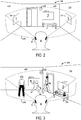
- a first video slate 208 appears to be hanging on a left-side wall 210 of the room 206 relative to the location and orientation of the user50 of the HMD device 36.
- a second video slate 212 appears to be hanging on a front facing wall 214 of the room 206 relative to the location and orientation of the user 50 of the HMD device 36.
- a third video slate 216 appears to be hanging on a right-side wall 218 relative to the location and orientation of the user 50 of the HMD device 36.
- the user 50 of the HMD device 36 has moved to the right and rotated to the left, so that he/she is facing the wall 210 and the location and the orientation of the HMD device changes accordingly. Additionally, several people have entered the room and a variety of items have been placed on the table 222 below the second video slate 212. As the HMD device 36 is operating in the world-lock display mode 44 and the video slates correspondingly have world-locked positions, the first video slate 208 appears to be fixed on the wall 210 relative to the other real-world objects and to the second video slate 212as viewed through the HMD device 36.
- the second video slate 212 appears to be fixed on the wall 214 relative to the other real-world objects and to the first video slate 208as viewed through the HMD device 36.
- the world-locked position of each of the first and second video slates appears to move relative to the user 50 as the user moves.
- the HMD device 36 may display any suitable number of video slates or other virtual objects 32 having world-locked positions.
- the video slates may present any suitable video or other images.
- the video slates may present one or more web pages, email applications, weather reports, television, news, photographs, etc.
- the video slates may be located in any suitable world-locked position within the room.
- the video slates may be displayed according to a predefined visual layout which may be location-specific.
- a predefined visual layout which may be location-specific.
- optical sensor data from the tracking system 14 may be used to recognize that the real-world environment is a particular location, such as the user's office. Accordingly, the video slates may be placed in particular locations within the office according to a location-specific visual layout.
- the video slates may be placed according to a default visual layout.
- the visual layout may be location independent, and the video slates may be displayed in the same world-locked positions in any location while operating in the world-lock display mode 44.
- the tracking system 14 utilizes sensor data 46 received from the room 206 to determine an estimated pose 54 of the HMD device 36. This estimated pose is then used to display the video slates in their world-locked positions.
- the tracking system 14 may analyze the sensor data 46 to determine one or more input uncertainty values associated with the sensor data. As noted above, a variety of environmental factors may influence uncertainty associated with sensor data. Such factors may include, but are not limited to, illumination of real-world objects, scene depth, scene motion, and feature density (e.g., scene clutter). Similarly, the tracking system 14 may analyze the estimated pose 54 to determine one or more pose uncertainty values of the estimated pose.
- the tracking system 14 may then map one or more of the input uncertainty values and the pose uncertainty values to one of a plurality of estimated quality levels of the world-lock display mode 44.
- the tracking system 14 may then communicate feedback 42 of the estimated quality level to the user 50 via the HMD device 36.
- the feedback 42 may comprise displaying one or more graphical representations of the estimated quality level via the HMD device 36.
- feedback 42 of the estimated quality levels may comprise a circle 230 displayed within the field of view 200 of the HMD device 36.
- the circle 230 may be displayed in one of a plurality of different colors, with each color corresponding to different estimated quality level of the world-lock display mode 44.
- five colors and corresponding estimated quality levels may be utilized, such as (1) Red/Unavailable, (2) Purple/Poor, (3) Yellow/Fair, (4) Blue/Good, and (5) Green/Excellent. It will be appreciated that any suitable number of quality levels and corresponding colors, and any other types and forms of graphical representations may be utilized and are within the scope of the present disclosure.
- the real-world objects in the room 206 may provide a low amount of feature density (or scene clutter) in image data collected by the HMD device 36.
- the tracking system 14 may determine that such lower amount of feature density in this environment, perhaps along with one or more other environmental aspects, will yield a Fair estimated quality level of a world-lock display mode experience. Accordingly and to alert the user 50, the tracking system 14 may display a Yellow (Y) circle 230 via the HMD device 36.
- Y Yellow
- the additional people and other real-world objects in the room 206 may provide an enhanced feature density in image data collected by the HMD device 36.
- the tracking system 14 may determine that such greater feature density will yield an Excellent estimated quality level. Accordingly and to alert the user 50, the tracking system 14 may display a Green (G) circle 230 via the HMD device 36 corresponding to an Excellent estimated quality level of a world-lock display mode experience.
- G Green
- the user 50 of the HMD device 36 has moved through the doorway of the room 206 shown in FIGS. 2 and 3 and into a hallway 400.
- illumination conditions of the hallway 400 and its features may be very poor.
- image data collected by the HMD device 36 may be characterized by low resolution yielding, for example, poor texture of the hallway 400 and its features.
- the tracking system 14 may determine that such poor illumination conditions, perhaps along with one or more other environmental factors, will yield an Unavailable estimated quality level for the world-lock display mode 44; e.g., the HMD device 36 cannot operate in the world-lock display mode.
- the tracking system 14 may display a bar graph indicator 404 via the HMD device 36 that conveys the Unavailable estimated quality level by displaying one of five possible bars.
- the tracking system 14 may be configured to disable the world lock display mode 44 when the estimated quality level is below a predetermined quality level threshold.
- the HMD device 36 may operate in the body-lock display mode 48.
- the plurality of video slates may be displayed in the field of view200 with body-locked positions.
- the plurality of video slates may appear in a spherical workspace layout where the user 50 of the HMD device 36 stands in the center of the sphere with the plurality of video slates surrounding him/her.
- the plurality of video slates may be arranged according to a predefined visual layout.
- a news application could be displayed in the first video slate on the left-side
- an email application could be displayed on in the second video slate in the middle
- a stock ticker application could be displayed in the third video slate on the right-side.
- the user 50 of the HMD device 36 is standing in the hallway 400 and next to the doorway from the room 206.
- the plurality of video slates is displayed in the field of view 200 with body-locked positions that appear to be fixed relative to the user 50 and moveable relative to real-world objects, such as the doorway.
- the user 50 of the HMD device 36 has walked down to the end of the hallway 400 and is standing in front of another doorway. Since the plurality of video slates are displayed via the HMD device 36 with body-locked positions, the plurality of video slates stay fixed relative to the user 50 even as he/she walks down the hallway. In other words, the slates move with the user 50.
- FIG. 5 also illustrates another example of communicating feedback 42 of the estimated quality level of the world-lock display mode 44 to the user 50 in which an appearance of the field of view 200 is altered.
- the tracking system 14 highlights the field of view 200 with a red tint (indicated by the plurality of R's) to communicate that the world-lock display mode 44 is Unavailable.
- the highlighting of the field of view 200 may correspondingly change to one of the other four colors mentioned above.
- any other suitable form and/or manner of altering the appearance of the field of view 200 may be utilized such as, for example, displaying transparent watermarks corresponding to an estimated quality level.
- FIGS. 6 and 7 show an example scenario in which a plurality of virtual objects are shown in a 3D view in the world-lock display mode 44 and then visually transition to a 2D view in the body-lock display mode 48.
- the HMD device 36 is operating in the world-lock display mode 44 in which a plurality of virtual objects in the form of volumetric holograms (e.g., 3D meshes) of a good wizard 600, fireball 604 and evil wizard 606 may be displayed via the HMD device 36 in a 3D view.
- the volumetric holograms may have world-locked positions in the real-world environment (e.g., a room) 610 and may appear to occupy a volume within the real-world environment.
- FIG. 6 also illustrates an example of displaying a graphical representation of the estimated quality level in the form of a plurality of 1 ⁇ 4 circle indicators 614, showing in this example four out of five indicators corresponding to a Good estimated quality level.
- the plurality of 1 ⁇ 4 circle indicators 614 may be displayed in the world-lock display mode 44 along with the virtual objects.
- the plurality of 1 ⁇ 4 circle indicators 614 may be displayed in the body-lock display mode 48 such that the indicators appear to be fixed relative to the user and remain in the user's view regardless of user movement or orientation in the real-world environment.
- the user 50 of the HMD device 36 has walked through the doorway of the room 610 and into a small hallway 702.
- the small hallway 702 may provide a very limited scene depth within which the sensors of the HMD device 36 may capture sensor data 46. Where the scene depth of the small hallway 702 is below a minimum scene depth threshold, the resulting uncertainties of the sensor data and corresponding estimated poses 54 may yield an unacceptable estimated quality level of the world-lock display mode 44.
- the tracking system 14 may switch from the world-lock display mode 44 to the body-lock display mode 48.
- the volumetric meshes may visually transition from the 3D view to a 2D view.
- the volumetric meshes may collapse to a 2D view of a video slate 706.
- the video slate 706 may be a screen viewport of a virtual world that the virtual objects inhabit.
- the video slate 706 may have a body-locked position and the virtual objects may move within the virtual world depicted in the video slate.
- one or more sensors of the HMD device 36 may be at least partially obscured by hair of the user, a hand or arm of the user, and/or a hat worn by the user.
- sensor data 46 from the one or more sensors may be analyzed to detect visual indicators of user hair, a hand or arm of the user, and/or a hat worn by the user. Based on such analysis, input uncertainty values may be determined. For example, where image data reveals a hat brim obscuring more than 50% of the field of view of an image sensor, the tracking system 14 may determine that such conditions will yield an Unavailable estimated quality level for the world-lock display mode 44.
- the feedback 42 of the estimated quality level of the world-lock display mode 44 may comprise altering the appearance of one or more virtual objects 32.
- the volumetric hologram of the evil wizard 606 may be made transparent to indicate a lower estimated quality level.
- one or more of the volumetric holograms or 2D images may be displayed in a particular color to indicate a corresponding estimated quality level.
- one or more of the holograms or images may be displayed to appear to quiver or otherwise visually vibrate to indicate a corresponding estimated quality level. It will be appreciated that the foregoing examples are not exclusive, and that many other examples of altering the appearance of one or more virtual objects 32 may be utilized.
- the tracking system 14 may provide the estimated quality level to another application, such augmented reality application 64, that utilizes the world-lock display mode 44 and body-lock display mode 48.
- the application may then convey feedback 42 of the estimated quality level to the user 50 via the HMD device 36.
- the augmented reality application 64 may engage the tracking system 14 via an application programming interface (API) and may query the tracking system 14 regarding the availability and/or estimated quality of the world-lock display mode 44. Based on the response to the query, the augmented reality application 64 may determine the type and/or manner of feedback 42 of the estimated quality level to deliver to the user 50.
- the augmented reality application 64 may provide audio feedback to the user 50 via the HMD device 36, such as vocalizing, "World-lock mode isn't available at the moment.”
- the tracking system 14 or other application may refrain from communicating feedback 42 of an estimated quality level of the world-lock display mode 44 until a user input 68 is received from the user 50 that calls for the world-lock display mode.
- the tracking system 14 may operate by default in the body-lock display mode 48 and may not provide feedback 42 of an estimated quality level of the world-lock display mode 44 while in this mode.
- the user 50 may then make a request, take an action, or otherwise interact with the augmented reality application 64 in a manner that calls for the world-lock display mode 44. For example and with reference to FIGS. 6 and 7 , the user 50 may walk from the small hallway 702, where the world-lock display mode 44 is not available, back into the room 610 where the world-lock display mode 44 is available. Accordingly, the augmented reality application 64 and tracking system 14 may then display the 1 ⁇ 4 circle indicators showing a Good estimated quality level.
- user input 68 may be used to trigger the display of the feedback 42 of an estimated quality level.
- user input 68 may be passive, such as the example above of the user 50 walking from the hallway 702 into the room 610.
- the user input 68 may be explicit, such as the user 50 speaking verbal instructions to launch an augmented reality application 64 that utilizes the world-lock display mode 44.
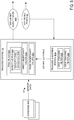
- the tracking system 14 may be configured to determine estimated poses 54 of the HMD device 36 along with an estimated quality level 804 of a world-lock display mode 44. More particularly, the tracking system 14 may utilize sensor data 46 from the HMD device 36 to provide a filtered running estimate of the actual pose of the HMD device. These estimated poses 54 may be used to display virtual objects 32 in world-locked positions. Feedback 42 of the estimated quality level 804 may be communicated to a user 50 of the HMD device 86.
- the tracking system 14 may receive sensor data 46from a plurality of sensors 808 located on HMD device 36 and/or computing device 22.
- the sensor data 46 may provide location and orientation information in six degrees of freedom (e.g., x, y, z, pitch, roll, yaw).
- the plurality of sensors 808 may include optical sensors and pose sensors as described above.
- the sensors 808 may include any suitable number and/or combination of sensors for determining a position, orientation, and/or other movement characteristics of the HMD device 36 in up to six degrees of freedom.
- the sensor data 46 may be provided to a tracking and mapping module 812 that includes two separate tracking filters that may operate in parallel.
- a 6DOF tracking filter 816 may be configured to output an estimated pose 54 comprising a location and an orientation of the HMD device in six degrees of freedom based on the sensor data 46.
- the estimated pose 54 of the 6DOF tracking filter 816 represents highly precise and accurate rotational and translational pose data that typically relies on visible light or other optical information.
- a translational pose/location of the HMD device 36 may be estimated relative to other real-world objects 34 in a real-world environment based on optical feedback of the environment.
- the 6DOF tracking filter 816 may map the real-world environment to a virtual model to determine the location of the HMD device 36 relative to other real-world objects 34. Further, in some embodiments, the optical information may be used in combination with information from pose sensors to estimate the rotational pose/orientation of the HMD device 36. As noted above, due to its reliance on visible light the 6DOF tracking filter 816 may be highly dependent on environmental conditions of the physical environment in which the HMD device 36 is located.
- a 3DOF tracking filter 820 may be configured to output an estimated pose 54 corresponding to an orientation of the HMD device 36 in three degrees of freedom based on sensor data 46 of the pose sensors.
- the estimated pose 54 of the 3DOF tracking filter 820 may be based sensor information from various sensors that do not rely on visible light or other optical information.
- Estimated poses 54 of the HMD device 36 in six degrees of freedom and/or three degrees of freedom may be provided to a pose filter 824.
- the pose filter 824 may be configured to analyze and/or adjust the estimated poses 54.
- image data from sensors 808 may have one or more characteristics, such as low texture in a scene or image blur, that generate inaccuracies in the estimated location of features in the image.
- the pose filter 824 may analyze such image data and other sensor data 46 to determine one or more input uncertainty values 830 of such data.
- a variety of factors and conditions of the real-world environment may influence uncertainty associated with sensor data.
- factors may include, but are not limited to, illumination of real-world objects, scene depth, scene motion, and feature density.
- a scene that includes numerous real-world objects and/or people in motion may heighten uncertainties associated with image data of the scene, and may therefore make reliable 6DOF tracking more difficult.
- acceleration data from an accelerometer may be analyzed to determine an input uncertainty value 830 for a translation component.
- rotation data from a gyroscope may be analyzed to determine an input uncertainty value 830 for a rotation component.
- the pose filter 824 may utilize geometric averages, harmonic means, or any other suitable method for determining such input uncertainty values 830.
- the uncertainties for each input or dimension may be expressed as covariances for that dimension. Further, the pose filter 824 may analyze uncertainty in any suitable number of dimensions.
- the input uncertainty values 830 may be mapped to an estimated quality level 804 of a world-lock display mode experience.
- uncertainty in a six degree of freedom pose estimate may be represented by a 6 x 6 covariance matrix comprising three rotation components and 3 translation components.
- the diagonal in the matrix represents an uncertainty of each of the individual axes that represent each of the three rotational angles and each of the three translation directions.
- the various covariances may be collapsed to yield a single covariance that is compared to a quality level threshold 838 and/or to the plurality of quality levels 842 to yield an estimated quality level 804.
- estimated quality level 804 may represent an estimated quality of a 6 x 6 DOF world-lock display mode experience.
- the tracking system 14 may then output the estimated quality level 804 in the form of feedback 42 to the user 50 as described above.
- the estimated poses 54 outputted by the tracking system 14 may be looped back into the pose filter 824.
- the pose filter 824 may analyze an estimated pose 54 to determine one or more pose uncertainty values 850 of the pose(s). Similar to determining the input certainty values 830, a covariance matrix may be created for the estimated pose 54 to determine a pose uncertainty value 850 for a given estimated pose 54.
- both input uncertainty values 830 and pose uncertainty values 850 may be calculated and mapped to an estimated quality level 804.
- input uncertainty values 830 may be calculated and mapped to an estimated quality level 804, while pose uncertainty values 850 are not determined or utilized. These examples may be utilized, for example, when the 3DOF tracking filter 820 is operated and the 6DOF tracking filter 816 is not operated.
- pose uncertainty values 850 may be calculated and mapped to an estimated quality level 804, while input uncertainty values 830 are not determined or utilized.
- the input uncertainty values 830, pose uncertainty values 850, estimated poses 54 and estimated quality levels 804 may be determined in any suitable manner without departing from the scope of the present disclosure.
- the tracking and mapping module 812 may monitor tick-by-tick sensor data input into the tracking system 14, and may assess and adjust the estimated poses 54 and estimated quality levels 834 over longer periods of time.
- the tracking system may be implemented in hardware, such as a processing pipeline including various logical blocks or pipe stages.
- the tracking system may be implemented as software instructions executed by a processor.
- the tracking system may be implemented as a combination of hardware and software.
- an HMD device 900 in the form of a pair of wearable glasses with a transparent display is provided. It will be appreciated that in other examples, the HMD device 900 may take other suitable forms in which a transparent, semi-transparent, and/or non-transparent display is supported in front of a viewer's eye or eyes. It will also be appreciated that the HMD device shown in FIGS. 1-7 may take the form of the HMD device 900, as described in more detail below, or any other suitable HMD device.
- the HMD device 900 includes a display system 902 and a see-through or transparent display 904 that enables images such as holographic objects to be delivered to the eyes of a wearer of the HMD device.
- the transparent display 904 may be configured to visually augment an appearance of a real-world, physical environment to a wearer viewing the physical environment through the transparent display.
- the appearance of the physical environment may be augmented by graphical content (e.g., one or more pixels each having a respective color and brightness) that is presented via the transparent display 904 to create an augmented reality environment.
- the transparent display 904 may also be configured to enable a wearer of the HMD device to view a physical, real-world object in the physical environment through one or more partially transparent pixels that are displaying a virtual object representation.
- the transparent display 904 may include image-producing elements located within lenses 906 (such as, for example, a see-through Organic Light-Emitting Diode (OLED) display).
- the transparent display 904 may include a light modulator on an edge of the lenses 906.
- the lenses 906 may serve as a light guide for delivering light from the light modulator to the eyes of a wearer. Such a light guide may enable a wearer to perceive a 3D holographic image located within the physical environment that the wearer is viewing, while also allowing the wearer to view physical objects in the physical environment, thus creating an augmented reality environment.
- the HMD device 900 may also include various sensors and related systems.
- the HMD device 900 may include a gaze tracking system 908 that includes one or more image sensors configured to acquire image data in the form of gaze tracking data from a wearer's eyes. Provided the wearer has consented to the acquisition and use of this information, the gaze tracking system 908 may use this information to track a position and/or movement of the wearer's eyes.
- the gaze tracking system 908 includes a gaze detection subsystem configured to detect a direction of gaze of each eye of a wearer.
- the gaze detection subsystem may be configured to determine gaze directions of each of a wearer's eyes in any suitable manner.
- the gaze detection subsystem may comprise one or more light sources, such as infrared light sources, configured to cause a glint of light to reflect from the cornea of each eye of a wearer.
- One or more image sensors may then be configured to capture an image of the wearer's eyes.
- Images of the glints and of the pupils as determined from image data gathered from the image sensors may be used to determine an optical axis of each eye. Using this information, the gaze tracking system 908 may then determine a direction the wearer is gazing. The gaze tracking system 908 may additionally or alternatively determine at what physical or virtual object the wearer is gazing. Such gaze tracking data may then be provided to the HMD device 900.
- the gaze tracking system 908 may have any suitable number and arrangement of light sources and image sensors.
- the gaze tracking system 908 of the HMD device 900 may utilize at least one inward facing sensor 910.
- the HMD device 900 may also include sensor systems that receive physical environment data from the physical environment.
- the HMD device 900 may also include a head tracking system 912 that utilizes one or more pose sensors, such as pose sensors 914 on HMD device 900, to capture head pose data and thereby enable position tracking, direction/location and orientation sensing, and/or motion detection of the wearer's head.
- the tracking system 14 of FIG. 8 may receive sensor data from pose sensors 914 that enable the orientation of the HMD device 900 to be estimated in three degrees of freedom or the location and orientation of the HMD device to be estimated in six degrees of freedom.
- head tracking system 912 may comprise an inertial measurement unit (IMU) configured as a three-axis or three-degree of freedom position sensor system.
- IMU inertial measurement unit
- This example position sensor system may, for example, include three gyroscopes to indicate or measure a change in orientation of the HMD device 900 within 3D space about three orthogonal axes (e.g., x, y, and z, or roll, pitch, and yaw).
- the orientation derived from the sensor signals of the IMU may be used to display, via the transparent display 904, one or more virtual objects with a body-locked position in which the position of each virtual object appears to be fixed relative to the wearer of the see-through display and the position of each virtual object appears to be moveable relative to real-world objects in the physical environment.
- head tracking system 912 may comprise an IMU configured as a six-axis or six-degree of freedom position sensor system.
- This example position sensor system may, for example, include three accelerometers and three gyroscopes to indicate or measure a change in location of the HMD device 900 along the three orthogonal axes and a change in device orientation about the three orthogonal axes.
- the head tracking system 912 may also support other suitable positioning techniques, such as GPS or other global navigation systems. Further, while specific examples of position sensor systems have been described, it will be appreciated that any other suitable position sensor systems may be used. For example, head pose and/or movement data may be determined based on sensor information from any combination of sensors mounted on the wearer and/or external to the wearer including, but not limited to, any number of gyroscopes, accelerometers, inertial measurement units, GPS devices, barometers, magnetometers, cameras (e.g., visible light cameras, infrared light cameras, time-of-flight depth cameras, structured light depth cameras, etc.), communication devices (e.g., WIFI antennas/interfaces), etc.
- the HMD device 900 may also include an optical sensor system that utilizes one or more outward facing sensors, such as optical sensor 916 on HMD device 900, to capture image data.
- the outward facing sensor(s) may detect movements within its field of view, such as gesture-based inputs or other movements performed by a wearer or by a person or physical object within the field of view.
- the outward facing sensor(s) may also capture 2D image information and depth information from the physical environment and physical objects within the environment.
- the outward facing sensor(s) may include a depth camera, a visible light camera, an infrared light camera, and/or a position tracking camera.
- the optical sensor system may include a depth tracking system that generates depth tracking data via one or more depth cameras.
- each depth camera may include left and right cameras of a stereoscopic vision system. Time-resolved images from one or more of these depth cameras may be registered to each other and/or to images from another optical sensor such as a visible spectrum camera, and may be combined to yield depth-resolved video.
- a structured light depth camera may be configured to project a structured infrared illumination, and to image the illumination reflected from a scene onto which the illumination is projected.
- a depth map of the scene may be constructed based on spacings between adjacent features in the various regions of an imaged scene.
- a depth camera may take the form of a time-of-flight depth camera configured to project a pulsed infrared illumination onto a scene and detect the illumination reflected from the scene.
- illumination may be provided by an infrared light source 918. It will be appreciated that any other suitable depth camera may be used within the scope of the present disclosure.
- the outward facing sensor(s) may capture images of the physical environment in which a wearer of the HMD device is situated.
- an augmented reality display program may include a 3D modeling system that uses such captured images to generate a virtual environment that models the physical environment surrounding the wearer of the HMD device.
- the optical sensor 916 may cooperate with the IMU to determine the location and the orientation of the HMD device 900 in six degrees of freedom.
- Such location and orientation information may be used to display, via the transparent display 904, one or more virtual objects with a world-locked position in which a position of each virtual object appears to be fixed relative to real-world objects viewable through the transparent display, and the position of each virtual object appears to be moveable relative to a wearer of the see-through display.
- the HMD device 900 may also include a microphone system that includes one or more microphones, such as microphone 920, that capture audio data.
- audio may be presented to the wearer via one or more speakers, such as speaker 922 on the HMD device 900.
- the HMD device 900 may also include a controller, such as controller 924.
- the controller 924 may include a logic machine and a storage machine, as discussed in more detail below with respect to FIG. 11 , that are in communication with the various sensors and systems of the HMD device 900.
- the storage machine may include instructions that are executable by the logic machine to receive signal inputs from the sensors, determine a pose of the HMD device 900, and adjust display properties for content displayed via the transparent display 904.
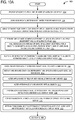
- FIGS. 10A and 10B illustrate a flow chart of a method 1000 for communicating to a user of an HMD device an estimated quality level of a world-lock display mode according to an embodiment of the present disclosure.
- the following description of method 1000 is provided with reference to the software and hardware components of the augmented reality system 10 described above and shown in FIGS. 1-9 . It will be appreciated that method 1000 may also be performed in other contexts using other suitable hardware and software components.
- the method 1000 may include receiving sensor data from one or more sensors of the head-mounted display device.
- the method 1000 may include, using the sensor data, determining an estimated pose of the head-mounted display device.
- the method 1000 may include, using the estimated pose, displaying the one or more virtual objects via the head-mounted display device in either the world-lock display mode or in the body-lock display mode.
- the method 1000 may include determining one or more of input uncertainty values of the sensor data and pose uncertainty values of the estimated pose.
- the step of determining one or more of input uncertainty values and pose uncertainty values may comprise analyzing image data for one or more of illumination of the real-world objects, a scene depth, scene motion, feature density, hair of the user, a hand of the user, and a hat worn by the user.
- the method 1000 may include mapping one or more of the input uncertainty values and the pose uncertainty values to the estimated quality level of the world-lock display mode.
- the method 1000 may include communicating feedback of the estimated quality level to the user via the head-mounted display device.
- the method 1000 may include displaying one or more graphical representations of the estimated quality level via the head-mounted computing device.
- the method 1000 may include communicating feedback of the estimated quality level by altering an appearance of a field of view viewable through the head-mounted display device.
- the method 1000 may include communicating feedback of the estimated quality level by altering an appearance of one or more virtual objects.
- the method 1000 may include communicating feedback of the estimated quality level by providing the estimated quality level to an application that utilizes the world-lock display mode and the body-lock display mode.
- the method 1000 may include conveying the feedback of the estimated quality level to the user via the application and the HMD device.
- the method 1000 may include refraining from communicating the feedback of the estimated quality level until a user input is received that calls for the world-lock display mode.
- the method 1000 may include disabling the world-lock display mode when the estimated quality level is below a quality level threshold.
- the method 1000 may include determining the input uncertainty values and not determining the pose uncertainty values.
- the method 1000 may include mapping the input uncertainty values to the estimated quality level.
- the method 1000 may include determining the pose uncertainty values and not determining the input uncertainty values.
- the method 1000 may include mapping the pose uncertainty values to the estimated quality level.
- the above described method 1000 may be performed to apprise users of an estimated quality level of a world-lock display mode via one or more forms of feedback provided by an HMD device. In this manner, users may be afforded a richer and more informative augmented reality user experience.
- method 1000 is provided by way of example and is not meant to be limiting. Therefore, it is to be understood that method 1000 may include additional and/or alternative steps than those illustrated in FIGS. 10A and 10B . Further, it is to be understood that method 1000 may be performed in any suitable order. Further still, it is to be understood that one or more steps may be omitted from method 1000 without departing from the scope of this disclosure.
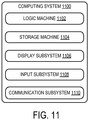
- FIG. 11 schematically shows a non-limiting embodiment of a computing system 1100 that can enact one or more of the methods and processes described above.
- Computing system 1100 is shown in simplified form.
- Computing system 1100 may take the form of one or more HMD devices or one or more devices cooperating with an HMD device (e.g., personal computers, server computers, tablet computers, home-entertainment computers, network computing devices, gaming devices, mobile computing devices, mobile communication devices (e.g., smart phones), and/or other computing devices).
- HMD device e.g., personal computers, server computers, tablet computers, home-entertainment computers, network computing devices, gaming devices, mobile computing devices, mobile communication devices (e.g., smart phones), and/or other computing devices.
- Computing system 1100 includes a logic machine 1102 and a storage machine 1104.
- Computing system 1100 may optionally include a display subsystem 1106, input subsystem 1108, communication subsystem 1110, and/or other components not shown in FIG. 11 .
- Computing system 1100 may also include computer readable media, with the computer readable media including computer readable storage media and computer readable communication media. Further, in some embodiments the methods and processes described herein may be implemented as a computer application, computer service, computer API, computer library, and/or other computer program product in a computing system that includes one or more computers.
- Logic machine 1102 includes one or more physical devices configured to execute instructions.
- the logic machine may be configured to execute instructions that are part of one or more applications, services, programs, routines, libraries, objects, components, data structures, or other logical constructs.
- Such instructions may be implemented to perform a task, implement a data type, transform the state of one or more components, achieve a technical effect, or otherwise arrive at a desired result.
- the logic machine may include one or more processors configured to execute software instructions. Additionally or alternatively, the logic machine may include one or more hardware or firmware logic machines configured to execute hardware or firmware instructions. Processors of the logic machine may be single-core or multi-core, and the instructions executed thereon may be configured for sequential, parallel, and/or distributed processing. Individual components of the logic machine optionally may be distributed among two or more separate devices, which may be remotely located and/or configured for coordinated processing. Aspects of the logic machine may be virtualized and executed by remotely accessible, networked computing devices configured in a cloud-computing configuration.
- Storage machine 1104 includes one or more physical devices configured to hold machine-readable instructions executable by the logic machine to implement the methods and processes described herein. When such methods and processes are implemented, the state of storage machine 1104 may be transformed-e.g., to hold different data.
- Storage machine 1104 may include removable and/or built-in devices.
- Storage machine 1104 may include optical memory (e.g., CD, DVD, HD-DVD, Blu-Ray Disc, etc.), semiconductor memory (e.g., RAM, EPROM, EEPROM, etc.), and/or magnetic memory (e.g., hard-disk drive, floppy-disk drive, tape drive, MRAM, etc.), among others.
- Storage machine 1104 may include volatile, nonvolatile, dynamic, static, read/write, read-only, random-access, sequential-access, location-addressable, file-addressable, and/or content-addressable devices.
- storage machine 1104 includes one or more physical devices.
- aspects of the instructions described herein alternatively may be propagated by a communication medium (e.g., an electromagnetic signal, an optical signal, etc.) that is not held by a physical device for a finite duration.
- a communication medium e.g., an electromagnetic signal, an optical signal, etc.
- data and/or other forms of information pertaining to the present disclosure may be propagated by a pure signal via computer-readable communication media.
- logic machine 1102 and storage machine 1104 may be integrated together into one or more hardware-logic components.
- Such hardware-logic components may include field-programmable gate arrays (FPGAs), program- and application-specific integrated circuits (PASIC / ASICs), program- and application-specific standard products (PSSP / ASSPs), system-on-a-chip (SOC), and complex programmable logic devices (CPLDs), for example.
- FPGAs field-programmable gate arrays
- PASIC / ASICs program- and application-specific integrated circuits
- PSSP / ASSPs program- and application-specific standard products
- SOC system-on-a-chip
- CPLDs complex programmable logic devices
- display subsystem 1106 may be used to present a visual representation of data held by storage machine 1104.
- This visual representation may take the form of a graphical user interface (GUI).
- GUI graphical user interface
- the state of display subsystem 1106 may likewise be transformed to visually represent changes in the underlying data.
- Display subsystem 1106 may include one or more display devices utilizing virtually any type of technology, such as transparent display 904 of the HMD device 900 shown in FIG. 9 . Such display devices may be combined with logic machine 1102 and/or storage machine 1104 in a shared enclosure, or such display devices may be peripheral display devices.
- input subsystem 1108 may comprise or interface with one or more user-input devices such as a keyboard, mouse, touch screen, or game controller.
- the input subsystem may comprise or interface with selected natural user input (NUI) componentry.
- NUI natural user input
- Such componentry may be integrated or peripheral, and the transduction and/or processing of input actions may be handled on- or off-board.
- Example NUI componentry may include a microphone for speech and/or voice recognition; an infrared, color, stereoscopic, and/or depth camera for machine vision and/or gesture recognition; a head tracker, eye tracker, accelerometer, and/or gyroscope for motion detection and/or intent recognition; electric-field sensing componentry for assessing brain activity; any of the sensors described above with respect to head tracking system 912 of FIG. 9 ; and/or any other suitable sensor.
- communication subsystem 1110 may be configured to communicatively couple computing system 1100 with one or more other computing devices.
- Communication subsystem 1110 may include wired and/or wireless communication devices compatible with one or more different communication protocols.
- the communication subsystem may be configured for communication via a wireless telephone network, or a wired or wireless local- or wide-area network.
- the communication subsystem may allow computing system 1100 to send and/or receive messages to and/or from other devices via a network such as the Internet.
- program and “module” may be used to describe an aspect of the augmented reality system 10 that is implemented to perform one or more particular functions. In some cases, such a program or module may be instantiated via logic machine1102 executing instructions held by storagemachine1104. It is to be understood that different programs and modules may be instantiated from the same application, service, code block, object, library, routine, API, function, etc. Likewise, the same program or module may be instantiated by different applications, services, code blocks, objects, routines, APIs, functions, etc.
- program and “module” are meant to encompass individual or groups of executable files, data files, libraries, drivers, scripts, database records, etc.
Landscapes
- Engineering & Computer Science (AREA)
- Physics & Mathematics (AREA)
- General Engineering & Computer Science (AREA)
- Theoretical Computer Science (AREA)
- General Physics & Mathematics (AREA)
- Human Computer Interaction (AREA)
- Optics & Photonics (AREA)
- Computer Graphics (AREA)
- Computer Hardware Design (AREA)
- Software Systems (AREA)
- Controls And Circuits For Display Device (AREA)
- User Interface Of Digital Computer (AREA)
- Digital Computer Display Output (AREA)
- Control Of Indicators Other Than Cathode Ray Tubes (AREA)
Claims (11)
- Verfahren (1000) zum Übermitteln an einen Nutzer (50) einer am Kopf montierten Anzeigevorrichtung (36), die mit einer Rechenvorrichtung (22) wirkverbunden ist, eines geschätzten Qualitätsniveaus (804) eines Weltsperre-Anzeigemodus (44), in dem eine Position eines oder mehrerer virtueller Objekte (32) relativ zu Objekten der realen Welt (34), die durch die am Kopf montierte Anzeigevorrichtung (36) sichtbar sind, fixiert zu sein schient, wobei das Verfahren (1000) umfasst:Erhalten (1004) von Sensordaten (46) von einem oder mehreren Sensoren (808) der am Kopf montierten Anzeigevorrichtung (36);Bestimmen (1008) einer geschätzten Pose (54) der am Kopf montierten Anzeigevorrichtung (36) unter Verwendung der Sensordaten (46);Anzeigen (1012) des einen oder der mehreren virtuellen Objekte (32) über die am Kopf montierte Anzeigevorrichtung (36) unter Verwendung der geschätzten Pose (54) in entweder dem Weltsperre-Anzeigemodus (44) oder in einem Körpersperre-Anzeigenmodus (48), in dem die Position jedes der virtuellen Objekte (32) relativ zum Nutzer (50) der am Kopf montierten Anzeigevorrichtung (36) fixiert zu sein scheint;dadurch gekennzeichnet, dass dieses weiter umfasst:Bestimmen (1016) von einem oder mehreren Eingangsunsicherheitswerten (830) der Sensordaten (46) und Posenunsicherheitswerten (850) der geschätzten Pose (54);Mappen (1024) von einem oder mehreren der Eingangsunsicherheitswerte (830) und der Posenunsicherheitswerte (850) auf das geschätzte Qualitätsniveau (804) des Weltsperre-Anzeigemodus (44); undÜbermitteln (1028) einer Rückmeldung (42) des geschätzten Qualitätsniveaus (804) über die am Kopf montierte Anzeigevorrichtung (36) an den Nutzer (50).
- Verfahren nach Anspruch 1, wobei das Übermitteln einer Rückmeldung des geschätzten Qualitätsniveaus weiter das Anzeigen von einer oder mehreren grafischen Darstellungen des geschätzten Qualitätsniveaus über die am Kopf montierte Anzeigevorrichtung (36) umfasst.
- Verfahren nach Anspruch 2, wobei das Anzeigen von dem einen oder mehreren grafischen Darstellungen das Verändern des Erscheinungsbilds eines Sichtfeldes umfasst, das über die am Kopf montierte Anzeigevorrichtung sichtbar ist.
- Verfahren nach Anspruch 2, wobei das Anzeigen von dem einen oder mehreren grafischen Darstellungen das Verändern des Erscheinungsbilds des einen oder der mehreren virtuellen Objekte umfasst.
- Verfahren nach Anspruch 1, wobei das Übermitteln einer Rückmeldung des geschätzten Qualitätsniveaus weiter umfasst:Bereitstellen des geschätzten Qualitätsniveaus an eine Anwendung, die den Weltsperre-Anzeigemodus und den Körpersperre-Anzeigemodus verwendet; undÜbertragen der Rückmeldung des geschätzten Qualitätsniveaus über die Anwendung und die am Kopf montierte Anzeigevorrichtung an den Nutzer.
- Am Kopf montierte Anzeigevorrichtung (36), die mit einer Rechenvorrichtung (22) wirkverbunden ist, wobei die am Kopf montierte, mit der Rechenvorrichtung (22) wirkverbundene Anzeigevorrichtung (36) umfasst:ein von einem Prozessor (28) der Rechenvorrichtung (22) ausgeführtes Verfolgungssystem (14), dazu konfiguriert:- Sensordaten (46) von einem oder mehreren Sensoren (808) der am Kopf montierten Anzeigevorrichtung (36) zu erhalten;- eine geschätzte Pose (54) der am Kopf montierten Anzeigevorrichtung (36) unter Verwendung der Sensordaten (808) zu bestimmen;- einen oder mehrere Eingangsunsicherheitswerte (830) der Sensordaten (808) und Posenunsicherheitswerte (850) der geschätzten Pose (54) zu bestimmen;- einen oder mehrere der Eingangsunsicherheitswerte (830) und der Posenunsicherheitswerte (850) auf ein geschätztes Qualitätsniveau (804) eines Weltsperre-Anzeigemodus (44) zu mappen, in dem eine Position eines oder mehrerer virtueller Objekte (32) relativ zu Objekten der realen Welt, die durch die am Kopf montierte Anzeigevorrichtung (36) sichtbar sind, fixiert zu sein schien;- eine Rückmeldung (42) des geschätzten Qualitätsniveaus (804) über die am Kopf montierte Anzeigevorrichtung (36) an den Nutzer (50) zu übermitteln; undein von einem Prozessor (28) der Rechenvorrichtung (22) ausgeführtes Anzeigeprogramm (30), wobei das Anzeigeprogramm (30) dazu konfiguriert ist, das eine oder die mehreren virtuellen Objekte (32) unter Verwendung der geschätzten Pose (54) in entweder dem Weltsperre-Anzeigemodus (44) oder in einem Körpersperre-Anzeigenmodus (48) anzuzeigen, in dem die Position jedes der virtuellen Objekte (32) relativ zum Nutzer (50) der am Kopf montierten Anzeigevorrichtung (36) fixiert zu sein scheint.
- Am Kopf montierte, mit der Rechenvorrichtung (22) wirkverbundene Anzeigevorrichtung (36) nach Anspruch 6, wobei das Verfolgungssystem dazu konfiguriert ist, die Rückmeldung des geschätzten Qualitätsniveaus zu übermitteln, indem das Übermitteln der Rückmeldung unterlassen wird, bis eine Nutzereingabe erhalten wird, die den Weltsperre-Anzeigemodus anfordert.
- Am Kopf montierte, mit der Rechenvorrichtung (22) wirkverbundene Anzeigevorrichtung (36) nach Anspruch 6, wobei das Verfolgungssystem weiter dazu konfiguriert ist, den Weltsperre-Anzeigemodus zu deaktivieren, wenn das geschätzte Qualitätsniveau unter einem Qualitätsniveau-Schwellenwert liegt.
- Am Kopf montierte, mit der Rechenvorrichtung (22) wirkverbundene Anzeigevorrichtung (36) nach Anspruch 6, wobei das Verfolgungssystem dazu konfiguriert ist:die Posenunsicherheitswerte zu bestimmen und nicht die Eingangsunsicherheitswerte zu bestimmen; unddie Posenunsicherheitswerte auf das geschätzte Qualitätsniveau zu mappen.
- Am Kopf montierte, mit der Rechenvorrichtung (22) wirkverbundene Anzeigevorrichtung (36) nach Anspruch 6, wobei das Verfolgungssystem dazu konfiguriert ist:sowohl die Eingangsunsicherheitswerte als auch die Posenunsicherheitswerte zu bestimmen; undsowie die Eingangsunsicherheitswerte als auch die Posenunsicherheitswerte auf das geschätzte Qualitätsniveau zu mappen.
- Computerprogramm umfassend Anleitungen, die bei Implementierung in der am Kopf montierte, mit einer Rechenvorrichtung (22) wirkverbundene Anzeigevorrichtung (36) nach Anspruch 6 das Verfahren nach einem der Ansprüche 1 bis 5 implementieren.
Applications Claiming Priority (2)
| Application Number | Priority Date | Filing Date | Title |
|---|---|---|---|
| US14/267,625 US9430038B2 (en) | 2014-05-01 | 2014-05-01 | World-locked display quality feedback |
| PCT/US2015/028382 WO2015168343A1 (en) | 2014-05-01 | 2015-04-30 | World-locked display quality feedback |
Publications (2)
| Publication Number | Publication Date |
|---|---|
| EP3137976A1 EP3137976A1 (de) | 2017-03-08 |
| EP3137976B1 true EP3137976B1 (de) | 2017-11-15 |
Family
ID=53181343
Family Applications (1)
| Application Number | Title | Priority Date | Filing Date |
|---|---|---|---|
| EP15723077.2A Active EP3137976B1 (de) | 2014-05-01 | 2015-04-30 | Feedback über die qualität einer umgebungsfixierten anzeige |
Country Status (11)
| Country | Link |
|---|---|
| US (1) | US9430038B2 (de) |
| EP (1) | EP3137976B1 (de) |
| JP (1) | JP2017516250A (de) |
| KR (1) | KR20160148557A (de) |
| CN (1) | CN106255939B (de) |
| AU (1) | AU2015253096A1 (de) |
| BR (1) | BR112016024343A2 (de) |
| CA (1) | CA2946582A1 (de) |
| MX (1) | MX2016014098A (de) |
| RU (1) | RU2016142613A (de) |
| WO (1) | WO2015168343A1 (de) |
Cited By (1)
| Publication number | Priority date | Publication date | Assignee | Title |
|---|---|---|---|---|
| US12008686B2 (en) | 2020-01-27 | 2024-06-11 | Magic Leap, Inc. | Augmented reality map curation |
Families Citing this family (90)
| Publication number | Priority date | Publication date | Assignee | Title |
|---|---|---|---|---|
| JP5724544B2 (ja) * | 2011-03-31 | 2015-05-27 | ソニー株式会社 | 画像処理装置、画像処理方法及びプログラム |
| FR2976681B1 (fr) * | 2011-06-17 | 2013-07-12 | Inst Nat Rech Inf Automat | Systeme de colocalisation d'un ecran tactile et d'un objet virtuel et dispostif pour la manipulation d'objets virtuels mettant en oeuvre un tel systeme |
| CN107924690B (zh) * | 2015-09-02 | 2021-06-25 | 交互数字Ce专利控股公司 | 用于促进扩展场景中的导航的方法、装置和系统 |
| US10304247B2 (en) * | 2015-12-09 | 2019-05-28 | Microsoft Technology Licensing, Llc | Third party holographic portal |
| US10218882B2 (en) | 2015-12-31 | 2019-02-26 | Microsoft Technology Licensing, Llc | Feedback for object pose tracker |
| JPWO2017122270A1 (ja) * | 2016-01-12 | 2018-10-11 | サン電子株式会社 | 画像表示装置 |
| JP6987797B2 (ja) | 2016-03-11 | 2022-01-05 | カールタ インコーポレイテッド | リアルタイムオンラインエゴモーション推定を有するレーザスキャナ |
| US10989542B2 (en) | 2016-03-11 | 2021-04-27 | Kaarta, Inc. | Aligning measured signal data with slam localization data and uses thereof |
| WO2019006289A1 (en) * | 2017-06-30 | 2019-01-03 | Kaarta, Inc. | SYSTEMS AND METHODS FOR SCAN ENHANCEMENT AND CORRECTION |
| US11567201B2 (en) | 2016-03-11 | 2023-01-31 | Kaarta, Inc. | Laser scanner with real-time, online ego-motion estimation |
| US11573325B2 (en) | 2016-03-11 | 2023-02-07 | Kaarta, Inc. | Systems and methods for improvements in scanning and mapping |
| US10373381B2 (en) * | 2016-03-30 | 2019-08-06 | Microsoft Technology Licensing, Llc | Virtual object manipulation within physical environment |
| US10979843B2 (en) * | 2016-04-08 | 2021-04-13 | Qualcomm Incorporated | Spatialized audio output based on predicted position data |
| US10572005B2 (en) * | 2016-07-29 | 2020-02-25 | Microsoft Technology Licensing, Llc | Private communication with gazing |
| EP3494447B1 (de) | 2016-08-04 | 2021-05-19 | Reification Inc. | Verfahren für simultane lokalisierung und mapping (slam) und zugehörige vorrichtungen und systeme |
| US10440240B2 (en) * | 2016-09-30 | 2019-10-08 | Sony Interactive Entertainment Inc. | Systems and methods for reducing an effect of occlusion of a tracker by people |
| EP4296827A1 (de) * | 2016-10-24 | 2023-12-27 | Snap Inc. | Redundantes verfolgungssystem |
| GB2555838A (en) * | 2016-11-11 | 2018-05-16 | Sony Corp | An apparatus, computer program and method |
| KR102633595B1 (ko) * | 2016-11-21 | 2024-02-05 | 삼성전자주식회사 | 디스플레이장치 및 그 제어방법 |
| US10499997B2 (en) | 2017-01-03 | 2019-12-10 | Mako Surgical Corp. | Systems and methods for surgical navigation |
| US10438399B2 (en) * | 2017-02-10 | 2019-10-08 | Sony Interactive Entertainment LLC | Paired local and global user interfaces for an improved augmented reality experience |
| EP3376163A1 (de) * | 2017-03-15 | 2018-09-19 | Essilor International | Verfahren und system zur bestimmung einer umgebungskarte eines trägers einer aktiven kopfmontierten vorrichtung |
| US10489651B2 (en) | 2017-04-14 | 2019-11-26 | Microsoft Technology Licensing, Llc | Identifying a position of a marker in an environment |
| IL301447B2 (en) * | 2017-04-24 | 2024-05-01 | Magic Leap Inc | Optical flow tracking of backscattered laser speckle samples |
| EP3399398B1 (de) | 2017-05-02 | 2022-04-13 | Nokia Technologies Oy | Vorrichtung und zugehöriges verfahren zur präsentation von raumklang |
| US10394315B2 (en) * | 2017-05-25 | 2019-08-27 | Acer Incorporated | Content-aware virtual reality systems and related methods |
| US10614308B2 (en) * | 2017-05-30 | 2020-04-07 | Edx Technologies, Inc. | Augmentations based on positioning accuracy or confidence |
| CN107742512B (zh) * | 2017-11-07 | 2020-09-01 | 北京京东方光电科技有限公司 | 一种显示驱动电路、其驱动方法及显示装置 |
| WO2019099605A1 (en) | 2017-11-17 | 2019-05-23 | Kaarta, Inc. | Methods and systems for geo-referencing mapping systems |
| ES2962152T3 (es) * | 2017-12-15 | 2024-03-15 | Ericsson Telefon Ab L M | Determinar la pose del contenido de una pieza de contenido virtual |
| WO2019165194A1 (en) | 2018-02-23 | 2019-08-29 | Kaarta, Inc. | Methods and systems for processing and colorizing point clouds and meshes |
| EP3547080B1 (de) * | 2018-03-27 | 2024-01-24 | Nokia Technologies Oy | Wiedergabe verankerter objekte in einer szene |
| US20190302903A1 (en) * | 2018-03-30 | 2019-10-03 | Microsoft Technology Licensing, Llc | Six dof input device |
| WO2019195270A1 (en) | 2018-04-03 | 2019-10-10 | Kaarta, Inc. | Methods and systems for real or near real-time point cloud map data confidence evaluation |
| EP3803688A4 (de) * | 2018-06-05 | 2021-08-04 | Magic Leap, Inc. | Anpassung von inhalt an eine räumliche 3d-umgebung |
| WO2020009826A1 (en) | 2018-07-05 | 2020-01-09 | Kaarta, Inc. | Methods and systems for auto-leveling of point clouds and 3d models |
| EP3599544A1 (de) * | 2018-07-25 | 2020-01-29 | Nokia Technologies Oy | Vorrichtung, verfahren, computerprogramm zur ermöglichung des zugang auf inhalt mit vermittelter realität durch einen entfernten benutzer |
| CN109218709B (zh) * | 2018-10-18 | 2022-02-15 | 北京小米移动软件有限公司 | 全息内容的调整方法及装置和计算机可读存储介质 |
| US10768695B2 (en) | 2019-02-01 | 2020-09-08 | Facebook Technologies, Llc | Artificial reality system having adaptive degrees of freedom (DOF) selection |
| US11494953B2 (en) * | 2019-07-01 | 2022-11-08 | Microsoft Technology Licensing, Llc | Adaptive user interface palette for augmented reality |
| US20230401798A1 (en) * | 2019-08-26 | 2023-12-14 | Apple Inc. | Accessible mixed reality applications |
| US11302063B2 (en) | 2020-07-21 | 2022-04-12 | Facebook Technologies, Llc | 3D conversations in an artificial reality environment |
| WO2022067342A2 (en) | 2020-09-25 | 2022-03-31 | Apple Inc. | Methods for interacting with virtual controls and/or an affordance for moving virtual objects in virtual environments |
| US11520456B2 (en) | 2020-09-25 | 2022-12-06 | Apple Inc. | Methods for adjusting and/or controlling immersion associated with user interfaces |
| EP4718404A2 (de) | 2020-09-25 | 2026-04-01 | Apple Inc. | Verfahren zur manipulation von objekten in einer umgebung |
| CN116670627A (zh) | 2020-12-31 | 2023-08-29 | 苹果公司 | 对环境中的用户界面进行分组的方法 |
| JP7674494B2 (ja) * | 2021-01-20 | 2025-05-09 | アップル インコーポレイテッド | 環境内のオブジェクトと相互作用するための方法 |
| KR20250103813A (ko) | 2021-02-08 | 2025-07-07 | 사이트풀 컴퓨터스 리미티드 | 생산성을 위한 확장 현실 |
| US11995230B2 (en) | 2021-02-11 | 2024-05-28 | Apple Inc. | Methods for presenting and sharing content in an environment |
| EP4047558A1 (de) * | 2021-02-17 | 2022-08-24 | Miehee Ju Kim | System zur erzeugung von mobiler erweiterter 3d-realität |
| KR20230169331A (ko) | 2021-04-13 | 2023-12-15 | 애플 인크. | 환경에 몰입형 경험을 제공하기 위한 방법 |
| CN117321543A (zh) * | 2021-05-14 | 2023-12-29 | 斯纳普公司 | 减少增强现实体验的启动时间 |
| US12099327B2 (en) | 2021-06-28 | 2024-09-24 | Meta Platforms Technologies, Llc | Holographic calling for artificial reality |
| US12554221B2 (en) | 2021-06-28 | 2026-02-17 | Meta Platforms Technologies, Llc | Holographic calling for artificial reality |
| US20230045759A1 (en) * | 2021-08-04 | 2023-02-09 | Meta Platforms Technologies, Llc | 3D Calling Affordances |
| KR20260006060A (ko) | 2021-09-25 | 2026-01-12 | 애플 인크. | 가상 환경들에서 가상 객체들을 제시하기 위한 디바이스들, 방법들, 및 그래픽 사용자 인터페이스들 |
| US12456271B1 (en) | 2021-11-19 | 2025-10-28 | Apple Inc. | System and method of three-dimensional object cleanup and text annotation |
| US11676329B1 (en) | 2022-01-07 | 2023-06-13 | Meta Platforms Technologies, Llc | Mobile device holographic calling with front and back camera capture |
| EP4463754A1 (de) | 2022-01-12 | 2024-11-20 | Apple Inc. | Verfahren zur anzeige, auswahl und bewegung von objekten und behältern in einer umgebung |
| JP7843357B2 (ja) | 2022-01-19 | 2026-04-09 | アップル インコーポレイテッド | 環境内にオブジェクトを表示及び再位置決めするための方法 |
| US12380238B2 (en) | 2022-01-25 | 2025-08-05 | Sightful Computers Ltd | Dual mode presentation of user interface elements |
| US12541280B2 (en) | 2022-02-28 | 2026-02-03 | Apple Inc. | System and method of three-dimensional placement and refinement in multi-user communication sessions |
| US12272005B2 (en) | 2022-02-28 | 2025-04-08 | Apple Inc. | System and method of three-dimensional immersive applications in multi-user communication sessions |
| US12008160B2 (en) | 2022-03-30 | 2024-06-11 | Apple Inc. | Eye tracking based selection of a user interface (UI) element based on targeting criteria |
| US12321666B2 (en) | 2022-04-04 | 2025-06-03 | Apple Inc. | Methods for quick message response and dictation in a three-dimensional environment |
| CN119404170A (zh) | 2022-04-20 | 2025-02-07 | 苹果公司 | 三维环境中的被遮蔽对象 |
| CN119987551A (zh) | 2022-04-21 | 2025-05-13 | 苹果公司 | 消息在三维环境中的表示 |
| CN119301592A (zh) * | 2022-05-26 | 2025-01-10 | 苹果公司 | 用于用户认证和设备管理的设备、方法和图形用户界面 |
| US12394167B1 (en) | 2022-06-30 | 2025-08-19 | Apple Inc. | Window resizing and virtual object rearrangement in 3D environments |
| US12200409B2 (en) | 2022-08-26 | 2025-01-14 | Meta Platforms Technologies, Llc | Authentic eye region capture through artificial reality headset |
| US12148078B2 (en) | 2022-09-16 | 2024-11-19 | Apple Inc. | System and method of spatial groups in multi-user communication sessions |
| US12112011B2 (en) | 2022-09-16 | 2024-10-08 | Apple Inc. | System and method of application-based three-dimensional refinement in multi-user communication sessions |
| US12099653B2 (en) | 2022-09-22 | 2024-09-24 | Apple Inc. | User interface response based on gaze-holding event assessment |
| US12379770B2 (en) | 2022-09-22 | 2025-08-05 | Apple Inc. | Integrated sensor framework for multi-device communication and interoperability |
| US12249033B2 (en) | 2022-09-23 | 2025-03-11 | Apple Inc. | User interfaces that include representations of the environment |
| CN119948434A (zh) * | 2022-09-23 | 2025-05-06 | 苹果公司 | 包括环境表示的用户界面 |
| US12405704B1 (en) | 2022-09-23 | 2025-09-02 | Apple Inc. | Interpreting user movement as direct touch user interface interactions |
| WO2024064950A1 (en) | 2022-09-24 | 2024-03-28 | Apple Inc. | Methods for time of day adjustments for environments and environment presentation during communication sessions |
| US20240233288A1 (en) | 2022-09-24 | 2024-07-11 | Apple Inc. | Methods for controlling and interacting with a three-dimensional environment |
| US20240103704A1 (en) | 2022-09-24 | 2024-03-28 | Apple Inc. | Methods for interacting with user interfaces based on attention |
| EP4595015A1 (de) | 2022-09-30 | 2025-08-06 | Sightful Computers Ltd | Adaptive inhaltsdarstellung mit erweiterter realität in mehreren physikalischen umgebungen |
| CN120813918A (zh) | 2023-01-30 | 2025-10-17 | 苹果公司 | 用于响应于注视和/或手势输入来显示多组控件的设备、方法和图形用户界面 |
| US12108012B2 (en) | 2023-02-27 | 2024-10-01 | Apple Inc. | System and method of managing spatial states and display modes in multi-user communication sessions |
| US12443286B2 (en) | 2023-06-02 | 2025-10-14 | Apple Inc. | Input recognition based on distinguishing direct and indirect user interactions |
| US12118200B1 (en) | 2023-06-02 | 2024-10-15 | Apple Inc. | Fuzzy hit testing |
| US12099695B1 (en) | 2023-06-04 | 2024-09-24 | Apple Inc. | Systems and methods of managing spatial groups in multi-user communication sessions |
| WO2024254096A1 (en) | 2023-06-04 | 2024-12-12 | Apple Inc. | Methods for managing overlapping windows and applying visual effects |
| US20250104371A1 (en) * | 2023-09-25 | 2025-03-27 | Meta Platforms Technologies, Llc | Augmented Call Spawn Configuration for Digital Human Representations in an Artificial Reality Environment |
| WO2025213128A1 (en) * | 2024-04-05 | 2025-10-09 | SentiAR, Inc. | Augmented reality display processing |
| US20250377719A1 (en) | 2024-06-09 | 2025-12-11 | Apple Inc. | Methods of interacting with content in a virtual environment |
Family Cites Families (15)
| Publication number | Priority date | Publication date | Assignee | Title |
|---|---|---|---|---|
| US6997882B1 (en) | 2001-12-21 | 2006-02-14 | Barron Associates, Inc. | 6-DOF subject-monitoring device and method |
| US7015831B2 (en) | 2002-12-17 | 2006-03-21 | Evolution Robotics, Inc. | Systems and methods for incrementally updating a pose of a mobile device calculated by visual simultaneous localization and mapping techniques |
| US7831094B2 (en) | 2004-04-27 | 2010-11-09 | Honda Motor Co., Ltd. | Simultaneous localization and mapping using multiple view feature descriptors |
| NO327279B1 (no) * | 2007-05-22 | 2009-06-02 | Metaio Gmbh | Kamerapositurestimeringsanordning og- fremgangsmate for foroket virkelighetsavbildning |
| US9400559B2 (en) * | 2009-05-29 | 2016-07-26 | Microsoft Technology Licensing, Llc | Gesture shortcuts |
| US8884984B2 (en) | 2010-10-15 | 2014-11-11 | Microsoft Corporation | Fusing virtual content into real content |
| US8576276B2 (en) | 2010-11-18 | 2013-11-05 | Microsoft Corporation | Head-mounted display device which provides surround video |
| CN103582893B (zh) | 2011-06-08 | 2017-10-13 | 英派尔科技开发有限公司 | 用于增强现实表示的二维图像获取 |
| AU2011204946C1 (en) | 2011-07-22 | 2012-07-26 | Microsoft Technology Licensing, Llc | Automatic text scrolling on a head-mounted display |
| US20130083018A1 (en) | 2011-09-30 | 2013-04-04 | Kevin A. Geisner | Personal audio/visual system with holographic objects |
| US9215293B2 (en) * | 2011-10-28 | 2015-12-15 | Magic Leap, Inc. | System and method for augmented and virtual reality |
| HUP1200013A2 (en) | 2012-01-06 | 2013-07-29 | Leonar3Do Internat Zrt | System and method for 3 dimension display |
| US9767720B2 (en) | 2012-06-25 | 2017-09-19 | Microsoft Technology Licensing, Llc | Object-centric mixed reality space |
| US9317971B2 (en) | 2012-06-29 | 2016-04-19 | Microsoft Technology Licensing, Llc | Mechanism to give holographic objects saliency in multiple spaces |
| JP6359644B2 (ja) * | 2013-05-02 | 2018-07-18 | クアルコム,インコーポレイテッド | コンピュータビジョンアプリケーション初期化を容易にするための方法 |
-
2014
- 2014-05-01 US US14/267,625 patent/US9430038B2/en active Active
-
2015
- 2015-04-30 MX MX2016014098A patent/MX2016014098A/es unknown
- 2015-04-30 WO PCT/US2015/028382 patent/WO2015168343A1/en not_active Ceased
- 2015-04-30 JP JP2017510437A patent/JP2017516250A/ja active Pending
- 2015-04-30 EP EP15723077.2A patent/EP3137976B1/de active Active
- 2015-04-30 AU AU2015253096A patent/AU2015253096A1/en not_active Abandoned
- 2015-04-30 CA CA2946582A patent/CA2946582A1/en not_active Abandoned
- 2015-04-30 KR KR1020167030646A patent/KR20160148557A/ko not_active Withdrawn
- 2015-04-30 RU RU2016142613A patent/RU2016142613A/ru not_active Application Discontinuation
- 2015-04-30 BR BR112016024343A patent/BR112016024343A2/pt not_active Application Discontinuation
- 2015-04-30 CN CN201580021847.0A patent/CN106255939B/zh active Active
Non-Patent Citations (1)
| Title |
|---|
| None * |
Cited By (2)
| Publication number | Priority date | Publication date | Assignee | Title |
|---|---|---|---|---|
| US12008686B2 (en) | 2020-01-27 | 2024-06-11 | Magic Leap, Inc. | Augmented reality map curation |
| US12406408B2 (en) | 2020-01-27 | 2025-09-02 | Magic Leap, Inc. | Augmented reality map curation |
Also Published As
| Publication number | Publication date |
|---|---|
| CN106255939A (zh) | 2016-12-21 |
| CN106255939B (zh) | 2019-08-27 |
| CA2946582A1 (en) | 2015-11-05 |
| WO2015168343A1 (en) | 2015-11-05 |
| AU2015253096A1 (en) | 2016-10-27 |
| RU2016142613A (ru) | 2018-05-04 |
| US20150317832A1 (en) | 2015-11-05 |
| US9430038B2 (en) | 2016-08-30 |
| KR20160148557A (ko) | 2016-12-26 |
| EP3137976A1 (de) | 2017-03-08 |
| MX2016014098A (es) | 2017-02-09 |
| BR112016024343A2 (pt) | 2017-08-15 |
| JP2017516250A (ja) | 2017-06-15 |
Similar Documents
| Publication | Publication Date | Title |
|---|---|---|
| EP3137976B1 (de) | Feedback über die qualität einer umgebungsfixierten anzeige | |
| US9361732B2 (en) | Transitions between body-locked and world-locked augmented reality | |
| EP3619599B1 (de) | Mit einem gemeinsam genutzten anker gezeigter virtueller inhalt | |
| US9495801B2 (en) | Pose tracking an augmented reality device | |
| US9824499B2 (en) | Mixed-reality image capture | |
| US10740971B2 (en) | Augmented reality field of view object follower | |
| US10248192B2 (en) | Gaze target application launcher | |
| US9934614B2 (en) | Fixed size augmented reality objects | |
| CN106489171B (zh) | 立体图像显示器 | |
| JP6359099B2 (ja) | ユーザインターフェースナビゲーション | |
| US20140071163A1 (en) | Augmented reality information detail | |
| US20160027218A1 (en) | Multi-user gaze projection using head mounted display devices | |
| US10564915B2 (en) | Displaying content based on positional state | |
| US20180046352A1 (en) | Virtual cursor movement | |
| US10152851B2 (en) | Notification artifact display | |
| EP2887639A1 (de) | Erweiterte Realität mit Kontrolle der Informationsdichte |
Legal Events
| Date | Code | Title | Description |
|---|---|---|---|
| PUAI | Public reference made under article 153(3) epc to a published international application that has entered the european phase |
Free format text: ORIGINAL CODE: 0009012 |
|
| 17P | Request for examination filed |
Effective date: 20161101 |
|
| AK | Designated contracting states |
Kind code of ref document: A1 Designated state(s): AL AT BE BG CH CY CZ DE DK EE ES FI FR GB GR HR HU IE IS IT LI LT LU LV MC MK MT NL NO PL PT RO RS SE SI SK SM TR |
|
| AX | Request for extension of the european patent |
Extension state: BA ME |
|
| GRAP | Despatch of communication of intention to grant a patent |
Free format text: ORIGINAL CODE: EPIDOSNIGR1 |
|
| RIC1 | Information provided on ipc code assigned before grant |
Ipc: G02B 27/01 20060101ALI20170621BHEP Ipc: G06F 3/01 20060101AFI20170621BHEP Ipc: G06T 19/00 20110101ALI20170621BHEP |
|
| DAV | Request for validation of the european patent (deleted) | ||
| DAX | Request for extension of the european patent (deleted) | ||
| INTG | Intention to grant announced |
Effective date: 20170721 |
|
| GRAS | Grant fee paid |
Free format text: ORIGINAL CODE: EPIDOSNIGR3 |
|
| GRAJ | Information related to disapproval of communication of intention to grant by the applicant or resumption of examination proceedings by the epo deleted |
Free format text: ORIGINAL CODE: EPIDOSDIGR1 |
|
| GRAL | Information related to payment of fee for publishing/printing deleted |
Free format text: ORIGINAL CODE: EPIDOSDIGR3 |
|
| GRAR | Information related to intention to grant a patent recorded |
Free format text: ORIGINAL CODE: EPIDOSNIGR71 |
|
| GRAA | (expected) grant |
Free format text: ORIGINAL CODE: 0009210 |
|
| INTC | Intention to grant announced (deleted) | ||
| AK | Designated contracting states |
Kind code of ref document: B1 Designated state(s): AL AT BE BG CH CY CZ DE DK EE ES FI FR GB GR HR HU IE IS IT LI LT LU LV MC MK MT NL NO PL PT RO RS SE SI SK SM TR |
|
| INTG | Intention to grant announced |
Effective date: 20171010 |
|
| REG | Reference to a national code |
Ref country code: CH Ref legal event code: EP Ref country code: GB Ref legal event code: FG4D Ref country code: AT Ref legal event code: REF Ref document number: 946890 Country of ref document: AT Kind code of ref document: T Effective date: 20171115 |
|
| REG | Reference to a national code |
Ref country code: IE Ref legal event code: FG4D |
|
| REG | Reference to a national code |
Ref country code: NL Ref legal event code: FP |
|
| REG | Reference to a national code |
Ref country code: DE Ref legal event code: R096 Ref document number: 602015006059 Country of ref document: DE |
|
| REG | Reference to a national code |
Ref country code: FR Ref legal event code: PLFP Year of fee payment: 4 |
|
| REG | Reference to a national code |
Ref country code: LT Ref legal event code: MG4D |
|
| REG | Reference to a national code |
Ref country code: AT Ref legal event code: MK05 Ref document number: 946890 Country of ref document: AT Kind code of ref document: T Effective date: 20171115 |
|
| PG25 | Lapsed in a contracting state [announced via postgrant information from national office to epo] |
Ref country code: ES Free format text: LAPSE BECAUSE OF FAILURE TO SUBMIT A TRANSLATION OF THE DESCRIPTION OR TO PAY THE FEE WITHIN THE PRESCRIBED TIME-LIMIT Effective date: 20171115 Ref country code: NO Free format text: LAPSE BECAUSE OF FAILURE TO SUBMIT A TRANSLATION OF THE DESCRIPTION OR TO PAY THE FEE WITHIN THE PRESCRIBED TIME-LIMIT Effective date: 20180215 Ref country code: LT Free format text: LAPSE BECAUSE OF FAILURE TO SUBMIT A TRANSLATION OF THE DESCRIPTION OR TO PAY THE FEE WITHIN THE PRESCRIBED TIME-LIMIT Effective date: 20171115 Ref country code: SE Free format text: LAPSE BECAUSE OF FAILURE TO SUBMIT A TRANSLATION OF THE DESCRIPTION OR TO PAY THE FEE WITHIN THE PRESCRIBED TIME-LIMIT Effective date: 20171115 Ref country code: FI Free format text: LAPSE BECAUSE OF FAILURE TO SUBMIT A TRANSLATION OF THE DESCRIPTION OR TO PAY THE FEE WITHIN THE PRESCRIBED TIME-LIMIT Effective date: 20171115 |
|
| PG25 | Lapsed in a contracting state [announced via postgrant information from national office to epo] |
Ref country code: LV Free format text: LAPSE BECAUSE OF FAILURE TO SUBMIT A TRANSLATION OF THE DESCRIPTION OR TO PAY THE FEE WITHIN THE PRESCRIBED TIME-LIMIT Effective date: 20171115 Ref country code: AT Free format text: LAPSE BECAUSE OF FAILURE TO SUBMIT A TRANSLATION OF THE DESCRIPTION OR TO PAY THE FEE WITHIN THE PRESCRIBED TIME-LIMIT Effective date: 20171115 Ref country code: HR Free format text: LAPSE BECAUSE OF FAILURE TO SUBMIT A TRANSLATION OF THE DESCRIPTION OR TO PAY THE FEE WITHIN THE PRESCRIBED TIME-LIMIT Effective date: 20171115 Ref country code: GR Free format text: LAPSE BECAUSE OF FAILURE TO SUBMIT A TRANSLATION OF THE DESCRIPTION OR TO PAY THE FEE WITHIN THE PRESCRIBED TIME-LIMIT Effective date: 20180216 Ref country code: BG Free format text: LAPSE BECAUSE OF FAILURE TO SUBMIT A TRANSLATION OF THE DESCRIPTION OR TO PAY THE FEE WITHIN THE PRESCRIBED TIME-LIMIT Effective date: 20180215 Ref country code: RS Free format text: LAPSE BECAUSE OF FAILURE TO SUBMIT A TRANSLATION OF THE DESCRIPTION OR TO PAY THE FEE WITHIN THE PRESCRIBED TIME-LIMIT Effective date: 20171115 |
|
| PG25 | Lapsed in a contracting state [announced via postgrant information from national office to epo] |
Ref country code: CZ Free format text: LAPSE BECAUSE OF FAILURE TO SUBMIT A TRANSLATION OF THE DESCRIPTION OR TO PAY THE FEE WITHIN THE PRESCRIBED TIME-LIMIT Effective date: 20171115 Ref country code: DK Free format text: LAPSE BECAUSE OF FAILURE TO SUBMIT A TRANSLATION OF THE DESCRIPTION OR TO PAY THE FEE WITHIN THE PRESCRIBED TIME-LIMIT Effective date: 20171115 Ref country code: EE Free format text: LAPSE BECAUSE OF FAILURE TO SUBMIT A TRANSLATION OF THE DESCRIPTION OR TO PAY THE FEE WITHIN THE PRESCRIBED TIME-LIMIT Effective date: 20171115 Ref country code: CY Free format text: LAPSE BECAUSE OF FAILURE TO SUBMIT A TRANSLATION OF THE DESCRIPTION OR TO PAY THE FEE WITHIN THE PRESCRIBED TIME-LIMIT Effective date: 20171115 Ref country code: SK Free format text: LAPSE BECAUSE OF FAILURE TO SUBMIT A TRANSLATION OF THE DESCRIPTION OR TO PAY THE FEE WITHIN THE PRESCRIBED TIME-LIMIT Effective date: 20171115 |
|
| REG | Reference to a national code |
Ref country code: DE Ref legal event code: R097 Ref document number: 602015006059 Country of ref document: DE |
|
| PG25 | Lapsed in a contracting state [announced via postgrant information from national office to epo] |
Ref country code: RO Free format text: LAPSE BECAUSE OF FAILURE TO SUBMIT A TRANSLATION OF THE DESCRIPTION OR TO PAY THE FEE WITHIN THE PRESCRIBED TIME-LIMIT Effective date: 20171115 Ref country code: IT Free format text: LAPSE BECAUSE OF FAILURE TO SUBMIT A TRANSLATION OF THE DESCRIPTION OR TO PAY THE FEE WITHIN THE PRESCRIBED TIME-LIMIT Effective date: 20171115 Ref country code: SM Free format text: LAPSE BECAUSE OF FAILURE TO SUBMIT A TRANSLATION OF THE DESCRIPTION OR TO PAY THE FEE WITHIN THE PRESCRIBED TIME-LIMIT Effective date: 20171115 Ref country code: PL Free format text: LAPSE BECAUSE OF FAILURE TO SUBMIT A TRANSLATION OF THE DESCRIPTION OR TO PAY THE FEE WITHIN THE PRESCRIBED TIME-LIMIT Effective date: 20171115 |
|
| PLBE | No opposition filed within time limit |
Free format text: ORIGINAL CODE: 0009261 |
|
| STAA | Information on the status of an ep patent application or granted ep patent |
Free format text: STATUS: NO OPPOSITION FILED WITHIN TIME LIMIT |
|
| 26N | No opposition filed |
Effective date: 20180817 |
|
| PG25 | Lapsed in a contracting state [announced via postgrant information from national office to epo] |
Ref country code: MC Free format text: LAPSE BECAUSE OF FAILURE TO SUBMIT A TRANSLATION OF THE DESCRIPTION OR TO PAY THE FEE WITHIN THE PRESCRIBED TIME-LIMIT Effective date: 20171115 |
|
| REG | Reference to a national code |
Ref country code: CH Ref legal event code: PL |
|
| REG | Reference to a national code |
Ref country code: BE Ref legal event code: MM Effective date: 20180430 |
|
| REG | Reference to a national code |
Ref country code: IE Ref legal event code: MM4A |
|
| PG25 | Lapsed in a contracting state [announced via postgrant information from national office to epo] |
Ref country code: LU Free format text: LAPSE BECAUSE OF NON-PAYMENT OF DUE FEES Effective date: 20180430 |
|
| PG25 | Lapsed in a contracting state [announced via postgrant information from national office to epo] |
Ref country code: BE Free format text: LAPSE BECAUSE OF NON-PAYMENT OF DUE FEES Effective date: 20180430 Ref country code: LI Free format text: LAPSE BECAUSE OF NON-PAYMENT OF DUE FEES Effective date: 20180430 Ref country code: CH Free format text: LAPSE BECAUSE OF NON-PAYMENT OF DUE FEES Effective date: 20180430 |
|
| PG25 | Lapsed in a contracting state [announced via postgrant information from national office to epo] |
Ref country code: IE Free format text: LAPSE BECAUSE OF NON-PAYMENT OF DUE FEES Effective date: 20180430 |
|
| REG | Reference to a national code |
Ref country code: DE Ref legal event code: R082 Ref document number: 602015006059 Country of ref document: DE |
|
| PG25 | Lapsed in a contracting state [announced via postgrant information from national office to epo] |
Ref country code: MT Free format text: LAPSE BECAUSE OF NON-PAYMENT OF DUE FEES Effective date: 20180430 |
|
| PG25 | Lapsed in a contracting state [announced via postgrant information from national office to epo] |
Ref country code: TR Free format text: LAPSE BECAUSE OF FAILURE TO SUBMIT A TRANSLATION OF THE DESCRIPTION OR TO PAY THE FEE WITHIN THE PRESCRIBED TIME-LIMIT Effective date: 20171115 |
|
| PG25 | Lapsed in a contracting state [announced via postgrant information from national office to epo] |
Ref country code: PT Free format text: LAPSE BECAUSE OF FAILURE TO SUBMIT A TRANSLATION OF THE DESCRIPTION OR TO PAY THE FEE WITHIN THE PRESCRIBED TIME-LIMIT Effective date: 20171115 |
|
| PG25 | Lapsed in a contracting state [announced via postgrant information from national office to epo] |
Ref country code: HU Free format text: LAPSE BECAUSE OF FAILURE TO SUBMIT A TRANSLATION OF THE DESCRIPTION OR TO PAY THE FEE WITHIN THE PRESCRIBED TIME-LIMIT; INVALID AB INITIO Effective date: 20150430 Ref country code: MK Free format text: LAPSE BECAUSE OF NON-PAYMENT OF DUE FEES Effective date: 20171115 |
|
| PG25 | Lapsed in a contracting state [announced via postgrant information from national office to epo] |
Ref country code: AL Free format text: LAPSE BECAUSE OF FAILURE TO SUBMIT A TRANSLATION OF THE DESCRIPTION OR TO PAY THE FEE WITHIN THE PRESCRIBED TIME-LIMIT Effective date: 20171115 Ref country code: IS Free format text: LAPSE BECAUSE OF FAILURE TO SUBMIT A TRANSLATION OF THE DESCRIPTION OR TO PAY THE FEE WITHIN THE PRESCRIBED TIME-LIMIT Effective date: 20180315 |
|
| PG25 | Lapsed in a contracting state [announced via postgrant information from national office to epo] |
Ref country code: SI Free format text: LAPSE BECAUSE OF NON-PAYMENT OF DUE FEES Effective date: 20180430 |
|
| P01 | Opt-out of the competence of the unified patent court (upc) registered |
Effective date: 20230501 |
|
| PGFP | Annual fee paid to national office [announced via postgrant information from national office to epo] |
Ref country code: FR Payment date: 20240320 Year of fee payment: 10 |
|
| PGFP | Annual fee paid to national office [announced via postgrant information from national office to epo] |
Ref country code: DE Payment date: 20250319 Year of fee payment: 11 |
|
| PG25 | Lapsed in a contracting state [announced via postgrant information from national office to epo] |
Ref country code: FR Free format text: LAPSE BECAUSE OF NON-PAYMENT OF DUE FEES Effective date: 20250430 |
|
| PGFP | Annual fee paid to national office [announced via postgrant information from national office to epo] |
Ref country code: GB Payment date: 20260319 Year of fee payment: 12 |
|
| PGFP | Annual fee paid to national office [announced via postgrant information from national office to epo] |
Ref country code: NL Payment date: 20260319 Year of fee payment: 12 |