EP3974601A1 - Fremdkörpererkennungssystem - Google Patents
Fremdkörpererkennungssystem Download PDFInfo
- Publication number
- EP3974601A1 EP3974601A1 EP20809037.3A EP20809037A EP3974601A1 EP 3974601 A1 EP3974601 A1 EP 3974601A1 EP 20809037 A EP20809037 A EP 20809037A EP 3974601 A1 EP3974601 A1 EP 3974601A1
- Authority
- EP
- European Patent Office
- Prior art keywords
- foreign matter
- target area
- image capturing
- image
- matter detection
- Prior art date
- Legal status (The legal status is an assumption and is not a legal conclusion. Google has not performed a legal analysis and makes no representation as to the accuracy of the status listed.)
- Pending
Links
Images



Classifications
-
- G—PHYSICS
- G06—COMPUTING OR CALCULATING; COUNTING
- G06V—IMAGE OR VIDEO RECOGNITION OR UNDERSTANDING
- G06V10/00—Arrangements for image or video recognition or understanding
- G06V10/10—Image acquisition
- G06V10/12—Details of acquisition arrangements; Constructional details thereof
- G06V10/14—Optical characteristics of the device performing the acquisition or on the illumination arrangements
- G06V10/147—Details of sensors, e.g. sensor lenses
-
- G—PHYSICS
- G01—MEASURING; TESTING
- G01V—GEOPHYSICS; GRAVITATIONAL MEASUREMENTS; DETECTING MASSES OR OBJECTS; TAGS
- G01V8/00—Prospecting or detecting by optical means
- G01V8/10—Detecting, e.g. by using light barriers
-
- G—PHYSICS
- G06—COMPUTING OR CALCULATING; COUNTING
- G06V—IMAGE OR VIDEO RECOGNITION OR UNDERSTANDING
- G06V10/00—Arrangements for image or video recognition or understanding
- G06V10/70—Arrangements for image or video recognition or understanding using pattern recognition or machine learning
- G06V10/82—Arrangements for image or video recognition or understanding using pattern recognition or machine learning using neural networks
-
- G—PHYSICS
- G06—COMPUTING OR CALCULATING; COUNTING
- G06V—IMAGE OR VIDEO RECOGNITION OR UNDERSTANDING
- G06V20/00—Scenes; Scene-specific elements
- G06V20/50—Context or environment of the image
- G06V20/52—Surveillance or monitoring of activities, e.g. for recognising suspicious objects
-
- G—PHYSICS
- G08—SIGNALLING
- G08B—SIGNALLING SYSTEMS, e.g. PERSONAL CALLING SYSTEMS; ORDER TELEGRAPHS; ALARM SYSTEMS
- G08B21/00—Alarms responsive to a single specified undesired or abnormal condition and not otherwise provided for
- G08B21/18—Status alarms
-
- H—ELECTRICITY
- H04—ELECTRIC COMMUNICATION TECHNIQUE
- H04N—PICTORIAL COMMUNICATION, e.g. TELEVISION
- H04N7/00—Television systems
- H04N7/18—Closed-circuit television [CCTV] systems, i.e. systems in which the video signal is not broadcast
- H04N7/181—Closed-circuit television [CCTV] systems, i.e. systems in which the video signal is not broadcast for receiving images from a plurality of remote sources
-
- H—ELECTRICITY
- H04—ELECTRIC COMMUNICATION TECHNIQUE
- H04N—PICTORIAL COMMUNICATION, e.g. TELEVISION
- H04N7/00—Television systems
- H04N7/18—Closed-circuit television [CCTV] systems, i.e. systems in which the video signal is not broadcast
- H04N7/183—Closed-circuit television [CCTV] systems, i.e. systems in which the video signal is not broadcast for receiving images from a single remote source
-
- E—FIXED CONSTRUCTIONS
- E04—BUILDING
- E04H—BUILDINGS OR LIKE STRUCTURES FOR PARTICULAR PURPOSES; SWIMMING OR SPLASH BATHS OR POOLS; MASTS; FENCING; TENTS OR CANOPIES, IN GENERAL
- E04H6/00—Buildings for parking cars, rolling-stock, aircraft, vessels or like vehicles, e.g. garages
- E04H6/08—Garages for many vehicles
-
- E—FIXED CONSTRUCTIONS
- E04—BUILDING
- E04H—BUILDINGS OR LIKE STRUCTURES FOR PARTICULAR PURPOSES; SWIMMING OR SPLASH BATHS OR POOLS; MASTS; FENCING; TENTS OR CANOPIES, IN GENERAL
- E04H6/00—Buildings for parking cars, rolling-stock, aircraft, vessels or like vehicles, e.g. garages
- E04H6/42—Devices or arrangements peculiar to garages, not covered elsewhere, e.g. securing devices, safety devices, monitoring and operating schemes; centering devices
- E04H6/422—Automatically operated car-parks
-
- Y—GENERAL TAGGING OF NEW TECHNOLOGICAL DEVELOPMENTS; GENERAL TAGGING OF CROSS-SECTIONAL TECHNOLOGIES SPANNING OVER SEVERAL SECTIONS OF THE IPC; TECHNICAL SUBJECTS COVERED BY FORMER USPC CROSS-REFERENCE ART COLLECTIONS [XRACs] AND DIGESTS
- Y02—TECHNOLOGIES OR APPLICATIONS FOR MITIGATION OR ADAPTATION AGAINST CLIMATE CHANGE
- Y02T—CLIMATE CHANGE MITIGATION TECHNOLOGIES RELATED TO TRANSPORTATION
- Y02T10/00—Road transport of goods or passengers
- Y02T10/60—Other road transportation technologies with climate change mitigation effect
- Y02T10/70—Energy storage systems for electromobility, e.g. batteries
Definitions
- the present disclosure relates to a detection system of a foreign matter or matters present in a target area of, for example, a parking facility.
- Non-presence of a foreign matter or matters such as a driver, an occupant or hand baggage other than a vehicle in a space into and in which the vehicle is entered and stopped such as an entry/exit space of a mechanical parking facility is required to be confirmed when an operation is to be executed such as opening/closing of a door for a doorway or conveyance of a pallet on which the vehicle is loaded.
- the non-presence of the foreign matter or matters may be visually confirmed by the driver, an attendant of the facility or the like.
- reliance only on human power may result in halfway confirmation due to carelessness or the like.
- Recently desired is a technique for automatically detecting non-presence of a foreign matter or matters with certainty without reliance only on human power.
- the vehicle is moved to and stopped in an entry/exit space with the occupants being absent; operations such as opening/closing of the door and started conveyance of the pallet may be executed by an attendant who has confirmed non-presence of a foreign matter or matters to input operation buttons. Nonetheless, the operations are executed more smoothly if there is a mechanism for automatically confirming non-presence of the foreign matter or matters to begin the operations.
- Such mechanism for detection of a foreign matter or matters may be widely required not only in a mechanical parking facility but also in any locations with some operations being executed around a stopped vehicle such as a power feeding facility for an electric-powered vehicle. Moreover, a similar mechanism is widely applicable not only for a vehicle but also for any aspect where detection of a foreign matter or matters is required around a body or object.
- Patent Literatures relevant to such techniques are, for example, below-mentioned Patent Literatures 1-7.
- the present disclosure is directed to a foreign matter detection system
- a foreign matter detection system comprising an image capturing device for acquiring an image in a target area, a transmission part through which an outside can be visually observed from inside of the target area and front- and depth-side polarizing filters relative to the image capturing device, the polarizing filters being provided on an light path from the transmission part to the image capturing device so as to have polarizing directions crossing each other, whereby a foreign matter in the target area is detected on the basis of the image acquired by the image capturing device.
- the depth-side polarizing filter may be provided on the transmission part positioned on a border between the target area and an outer space.
- the foreign matter in the image acquired by the image capturing device may be detected by a program using deep learning.
- the target area may be an entry/exit space in a mechanical parking facility.
- the present disclosure is also directed to a foreign matter detection system
- a foreign matter detection system comprising an image capturing device for acquiring an image in a target area, a display part for display of the image acquired by the image capturing device, an operation part for input of operations of parts constituting the system and a foreign matter detection part for detection of a foreign matter in the target area, whereby the image acquired by the image capturing device is displayed on the display part together with information on the foreign matter detected when presence of the foreign matter is determined by the foreign matter detection part.
- an operator may confirm non-presence of the foreign matter in the target area to input the non-presence of the foreign matter to the operation part when presence of the foreign matter is determined by the foreign matter detection part.
- operations of devices constituting the system may be forbidden when the presence of the foreign matter is determined by the foreign matter detection part and thereafter a forbidden operation state of the devices constituting the system may be released when the non-presence of the foreign matter is inputted to the operation part.
- a foreign matter detection system according to the invention can exhibit an excellent effect that a foreign matter or matters can be detected with higher accuracy by extremely simple construction.
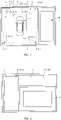
- a target area A assumed is an entry/exit space in a mechanical parking facility. Any object (foreign matter F) other than the vehicle 1 and present in the target area A is detected as the foreign matter F.
- the entry/exit space as the target area A is a space defined by walls in four directions into and from which the vehicle 1 is entered/exited through an entry/exit port 3 on a front side (a lower side in the figure).
- On a right side of the stopped position of the vehicle 1 is a space in which a conveying device 5 is installed.
- the pallet 2 Upon entering/exiting of the vehicle 1, the pallet 2 is entered/exited into/out of the target area A through a conveyance port (not shown) by the conveying device 5.
- a home position of the pallet 2 in the target area A is a center of the target area A.
- a guide mirror 6 Arranged on a depth-side wall, viewed from the entry/exit port 3, is a guide mirror 6 as shown in Fig. 2 which is in front of the vehicle 1 stopped on the pallet 2 so as to assist an eyesight of the driver in the vehicle 1 upon entering/exiting thereof.
- a doorway 7 Arranged on a position laterally of the depth-side guide mirror 6 viewed from the entry/exit port 3 is a doorway 7 for entering/exiting of a person such as the driver, an occupant or an attendant in the facility.
- a door in the doorway 7 is made from glass or other light-transmissive material so that the inside may be visually observed from outside of the doorway 7.
- a window 8 Arranged above the guide mirror 6 is a window 8.
- the doorway 7 and window 8 correspond to transmission parts; in addition, for example, a barred or railed part which borders an adjoining space is assumable as “transmission part”.
- the entry/exit port 3 may be also defined as “transmission part” (however, as mentioned hereinafter, one of main features in the foreign matter detection system explained in the disclosure is provision of polarizing filters 10 for the transmission parts. Though callable as "transmission part", the entry/exit port 3 is an opening for entering/exiting of the vehicle 1 and is not suited for the provision of the polarizing filter 10 thereon unlike the doorway 7 and window 8).
- the "foreign matter” is an object other than a target (in this case, the vehicle 1 is the target to be conveyed) present in the target area, is other than objects originally arranged in the target area and is typically the driver of the vehicle, an occupant or an attendant in the facility. Hand luggage or the like carried into the target area A and laid outside of the vehicle 1 is also an example of the "foreign matter”. Exemplarily shown in Fig. 1 are one foreign matter F in the target area A and two objects O outside of the target area A.
- a camera or other image capturing device 9 is arranged in the target area A for acquirement of an image in the target area A.
- totally three image capturing devices 9a-9c are arranged as image capturing devices 9 around the stopped position of the vehicle 1.
- the image capturing device 9a is arranged, when inside of the target area A is viewed from the entry/exit port 3, on a deeper side of the stopped position of the vehicle 1 and on one of lateral sides (on a right side in the case shown in the figure).
- the image capturing devices 9b and 9c are arranged forward of the vehicle 1 in the target area A and on lateral sides of the entry/exit port 3, respectively.
- Each of the image capturing devices 9 is arranged at a height near a ceiling of the target area A.
- Each of the image capturing devices 9a-9c has an angular field of the order of 90° as shown by dotted lines in Fig. 1 .
- the image capturing device 9a on the deep side of the stopped position of the vehicle 1 viewed from the entry/exit port 3 and on the one of the lateral sides (on the right side) is arranged so as to put the other lateral-side (left-side) space within the angle field.
- the image capturing device 9b on the left side viewed from the entry/exit port 3 is arranged so as to put the space on the deep and right side of the target area A viewed from the image capturing device 9b.
- the image capturing device 9c on the right side viewed from the entry/exit port 3 is arranged so as to put the space on the deep and left side in the target area A within the field angle viewed from the image capturing device 9c.
- the totally three image capturing devices 9 are arranged around the vehicle 1 as shield so as to acquire images in the target area A with no blind spots. Moreover, as mentioned hereinafter, the entry/exit port 3 is prevented as much as possible from being reflected within the field angles of the image capturing devices 9.
- the image capturing devices 9b and 9c on the front side viewed from the entry/exit port 3 are arranged to be opposed to the doorway 7 and window 8 as the transmission parts so as to put the doorway 7 and window 8 within the field angles thereof. And each of the image capturing devices 9b and 9c, the doorway 7 and the window 8 is provided with a polarizing filter 10 so as not to reflect outer images through the doorway 7 and window 8 in the images acquired by the image capturing devices 9b and 9c. Meritorious effect of the polarizing filters 10 will be detailedly explained hereinafter.
- the operation part 11 is an input device for inputting operations of system components such as opening/closing of the entry/exit port 3 and conveyance of the pallet 2.
- the display part 12 is a display constituted to display the image in the target area A acquired by the image capturing device 9 as needs demand.
- the display part 12 also serves to give an alarm when some affair on which attention is to be drawn to personnel occurs in the target area A or anywhere in the facility including the target area A.
- the "some affair on which attention is to be drawn to personnel" is, for example, detection of a foreign matter F other than the vehicle 1 in the target area A upon conveyance of the vehicle 1 to a storing space outside of the target area A.
- a content of the alarm given by the display part 12 is, for example, indication of an alarm message; in addition, a separate device may be further arranged which has an alarm function capable of calling personnel's attention such as alarm sound or warning-lamp lighting.
- a position on which the operation and display parts 11 and 12 are arranged is not restricted to the position disclosed here.
- Devices corresponding to them may be arranged in a control room (not shown) or the like and any of the devices may be arranged plurally and separately in separate locations.
- Arbitral changes are allowable on the operation and display parts 11 and 12 depending on layout of the target area A or other conditions.
- Fig. 3 shows an example of system construction concerning control of the image capturing devices 9, the operation part 11 and the display part 12.
- the image capturing devices 9 and the operation part 11 are informationally connected through a communication bus such as Ethernet (registered trademark) to a controller 13.
- the controller 13 is a device which monitors the whole of the mechanical parking facility including the entry/exit space as the target area A and operates the parts, and controls, for example, the opening/closing of the entry/exit port 3, the conveyance of the pallet 2 and actuation of the image capturing devices 9.
- the display part 12 is connected through the foreign matter detection part 14 to the communication bus.
- the foreign matter detection part 14 is a part for detection of any foreign matter in the target area and is constituted, in the embodiment, as an information processing device which properly processes the images in the target area A acquired by the image capturing devices 9.
- the foreign matter detection part 14 transmits, as needs demand, the image data to the display part 12 to display the image on the display part 12.
- the image processing by the foreign matter detection part 14 specifically assumed in the embodiment is to detect any foreign matter F (see Fig. 1 ); in the foreign matter detection part 14, the images in the target area A acquired by the image capturing devices 9 are analyzed to determine whether a person or other foreign matter F is present or not in the images.
- the controller 13 displays a message on the display part 12 as needed basis such as when the foreign matter F is detected from the images processed in the foreign matter detection part 14.
- the foreign matter detection part 14 has therein a program for detection of the foreign matter F reflected in the images.
- the program is constituted to detect specific kinds of objects by way of a deep learning technique using a multi-layer neural network.
- algorithms for the deep learning are various kinds of algorithms such as R-CNN (Regional-Convolutional Neural Network), Fast R-CNN, Faster R-CNN, YOLO (You Only Look Once) and SSD (Single Shot Multi box Detector); any other proper algorithm may be also used.
- the program stored in the foreign matter detection part 14 is adapted to specify a kind of the object reflected in the images and output a probability of the object being an object of the kind, a coordinate of gravity in the object, width and height of the object and the like.
- a primary kind of the foreign matter F assumed in the entry/exit space as the target area A in the mechanical parking facility is a person, so that the program stored in the foreign matter detection part 14 is to be constituted to discriminate at least a person in the image. Since various objects such as a pet or other animal, a bag and a baby buggy are assumable as other objects enterable together with the vehicle 1 into the target area A, the program may also detect these objects other than the person.
- the program may be constituted to be detectable not only persons but also various kinds of objects assumable depending on the kind of the target area.
- the polarizing filters 10 arranged for the image capturing devices 9 and the doorway 7 and window 8 as transmission parts will be described with respect to positions and meritorious effects thereof.
- the image capturing devices 9b and 9c are arranged in positions opposite to the doorway 7 and window 8 and has the angular fields within which the doorway 7 and window 8 are imaged.
- a foreign matter F is in front of the doorway 7 and two objects O are outside of the target area A and on deep sides of the doorway 7 and window 8; the doorway 7 and window 8 are visually observed as shown in Fig. 4 by bare eyes from inside of the target area A. If such image were acquired as they are by the image capturing devices 9b and 9c and the foreign matter detection were executed by the above-mentioned program in the foreign matter detection part 14, not only the foreign matter F in front of the doorway 7 and window 8 but also the objects O on the deep sides would be detected as the foreign matters.
- the detection of the foreign matter F within the target area A as the foreign matter has no problem; however, the detection of the objects O outside of the target area A is overdetection.
- the image capturing devices 9 arranged in high positions in the target area A and directed downward to take image of the target area A from above so as to cover the whole of the target area A while outside of the target area A is excluded from the angular fields thereof.
- the entry/exit port of the mechanical parking facility is generally low in ceiling height so that it is difficult for the downwardly directed image capturing devices 9 to acquire a satisfactorily wide ranged image. Even if the image capturing devices 9 can be installed in adequate high positions, then caused is a problem that maintenance of the image capturing devices 9 must be executed in the high positions.
- any structure (such as a mechanism for conveyance of the pallet 2) positioned between a floor in the target area A and the arranged height of the image capturing devices 9 may become a shield, failing in imaging the whole of the target area A.
- a personal image acquired from upward lacks in characteristic amount as person, resulting in difficulty in mechanical detection.
- each of the doorway 7 and window 8 as transmission parts and the image capturing devices 9b and 9c opposed thereto is provided with the polarizing filter 10 as shown in Fig. 1 to brock reaching of light from the outer space on the deep side of the doorway 7 and window 8 to the image capturing devices 9b and 9c. That is, on the light path from the doorway 7 and window 8 to the image capturing devices 9b and 9c, the polarizing filters 10 are arranged on the front and depth sides of the image capturing devices 9b and 9c, respectively, so as to make their polarizing directions cross each other, thereby masking a portion of the light from the doorway 7 and window 8 to the image capturing devices 9b and 9c.
- the front- and depth-side polarizing filters 10 may be arranged in proper positions on the light path from the transmission parts to the image capturing devices 9 depending on, for example, an actual spatial construction of the target area A; exemplified here is a case where the polarizing filters 10 are provided in front of the image capturing devices 9b and 9c and on the doorway 7 and window 8.
- the polarizing filters 10 shown in front of the image capturing devices 9b and 9c and on the doorway 7 and window 8 are called as front- and depth-side polarizing filters 10a and 10b, respectively, as needs demand.
- the polarizing filters 10 are plate- or film-like articles which allow passing of polarized light only in a specific direction.
- the polarizing filters 10 may be arranged to shield front sides of lenses in the image capturing devices 9b and 9c, and the film-like polarizing filters 10 may be attached to the doorway 7 and window 8 to cover the same.
- components or materials themselves of the image capturing devices 9b and 9c and the doorway 7 and window 8 e.g., lenses or lens covers on the image capturing devices 9b and 9c or glass constituting the doorway 7 and window 8) may be provided by polarizing plates or the like.
- the entry/exit port 3 which can be defined as "transmission part" just like the doorway 7 or the window 8 is hardly covered totally with a polarizing filter since the vehicle 1 is entered/exited therethrough.
- the entry/exit port 3 is within the angular field of any of the image capturing devices 9 and a person or other object is present outside of the entry/exit port 3, there is a possibility that such outer object is detected as foreign matter.
- this problem is coped with by layout of the image capturing devices 9.
- the image capturing device 9a on the deep and right side viewed from the entry/exit port 3 is arranged so as to put the left-side space within the angular field;
- the image capturing devices 9b and 9c arranged on the front and left/right sides viewed from the entry/exit port 3 are arranged so as to put the right/left space within the angular field, respectively (see Fig. 1 ).
- the whole of the target area A can be put into the images without blind angles while the entry/exit port 3 may be outside of the angular fields of the respective image capturing devices 9 or may be on farthest edges of the angular fields, if any.
- the entry/exit port 3 is not reflected in each of the images acquired by the image capturing devices 9 or is reflected in a farthest edge thereof, if any.
- the transmission parts (the doorway 7 and window 8) opposing to the image capturing devices 9 have the polarizing filters 10 by which the light is physically masked, and the transmission part (entry/exit port 3) for which the polarizing filter 10 cannot be arranged is positioned as far as possible from the center of the angular field of the image capturing device 9.
- the foreign matter detection can be executed with higher accuracy through exclusion of possibilities of overdetection due to reflection in the image of any object outside of the transmission parts (the doorway 7 and window 8 and the entry/exit port 3) and of possibilities of detection omission due to masking or the like.
- the guide mirror 6 reflects the light entering from outside through the entry/exit port 3, it is conceivable that any object outside of the entry/exit port 3 and reflected on the guide mirror 6 may be acquired as image by the image capturing devices 9b and 9c. However, even if the outer object enters in such a manner through the guide mirror 6 within the angular field of the image capturing devices 9b and 9c, given the size and shape of the object reflectable in the image, there is little probability of any object in the image being actually detected with a high degree of certainty by the foreign matter detection part 14.
- the guide mirror 6 may be separately provided with a polarizing filter to mask the light reflected on the guide mirror 6 to the image capturing devices 9b and 9c.
- the foreign matter detection system disclosed in the specification resides in that two polarizing filters 10 are provided on the light path from the transmission parts 7 and 8 to the image capturing devices 9 to thereby acquire the image of the object in front of the depth-side polarizing filters 10b while the depth side is masked. As far as such effect can be obtained, the positions of the polarizing filters 10 may be arbitrarily changed.
- polarizing filters 10 are arranged on the doorway 7 and window 8 in Fig. 1
- a polarizing filter 10 may be arranged on the guide mirror 6 which is similarly on the light path.
- the polarizing filters 10 may be on any other positions; but, in fact, it seems convenient to provide the same on the doorway 7 or window 8 positioned on a border between the target area A and an outer space or on the guide mirror 6 which provides a reflective surface from outer light.
- the controller 13 opens the entry/exit port 3. Upon the started entering, the entry/exit port 3 is opened with the pallet 2 empty being arranged in position in the center of the target area A.
- the driver moves the vehicle 1 into the target area A and stop the same on the pallet 2.
- the driver's visual sight is assisted by the guide mirror 6 so that the driver can stop the vehicle 1 in a proper position on the pallet 2.
- the driver and other occupants get out from the vehicle and leave the target area A through the doorway 7.
- the driver or the like visually observes inside of the target area A through the doorway 7 and confirms whether a person, hand luggage or other foreign matter or matters F are present in the target area A or not and operates the operation part 11 to input proper stoppage of the vehicle 1 on the pallet 2.
- the controller 13 closes the entry/exit port 3 to operate the conveying device 5 to thereby convey the pallet 2 with the vehicle 1 loaded thereon to a storage space outside of the target area A.
- the driver of the vehicle 1, the occupant, the attendant in the facility or the like operates the operation part 11 to instruct started exiting.
- the controller 13 conveys the corresponding pallet 2 into the target area A by means of the conveying device 5 and opens the entry/exit port 3.
- the driver enters through the doorway 7 into the target area A, gets in the vehicle 1 on the pallet 2 and moves the same through the entry/exit port 3 out of the target area A.
- the driver of the vehicle 1, the attendant or the like operates again the operation part 11 to input completed exiting.
- the operator operating the operation part 11 confirms non-presence of the foreign matter in the target area A through the doorway 7 or the window 8 as the transmission part and then inputs the completed exiting.
- the controller 13 closes the entry/exit port 3.
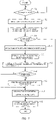
- step S1 whether a door of the doorway 7 is closed or not is confirmed with, for example, an opening/closing sensor (not shown) arranged on the doorway 7 (step S1). If the door is opened, the above-mentioned masking function by the polarizing filter 10 on the doorway 7 does not function well; thus, step S1 is repeated until the closing of the doorway 7 is confirmed; waiting continues until the closing of the doorway 7 is confirmed. In this case, a message for urging the closing of the doorway 7 may be displayed on the display part 12.
- the controller 13 actuates the respective image capturing devices 9 to acquire images in the target area A (step S2).
- the foreign matter detection part 14 executes the foreign matter detection processing, using the program, on the images acquired by the image capturing devices 9 (step S3).
- step S4 whether any foreign matter is present or not in the images is determined as a result of the foreign matter detection. If no foreign matter is present in any of the images acquired by the image capturing devices 9, non-presence confirmation of the foreign matter is completed (step S5) and the procedure of the foreign matter detection is ended. Operations are executed through the controller 13 to close the entry/exit port 3, convey the pallet 2 and the like.
- step S4 If presence of any object of a kind to be assumed as foreign matter F (for example, a person) is determined in step S4 with regard to at least one of the images acquired in step S2, processing goes to step S11.
- foreign matter F for example, a person
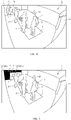
- polarizing filters 10 were not provided for the doorway 7 and window 8 in a case where any foreign matter is present in the target area A, an image as shown in Fig. 8 would be acquired by, for example, the image capturing device 9b in step S2. In this case, in steps S3 and S4, there would be a fear that, in addition to the foreign matters F as persons within the target area A, an object O positioned on a deep side of the doorway 7 would be also detected as foreign matter.
- the polarizing filters 10 are arranged for the image capturing devices 9b, the doorway 7 and the window 8 so that actually acquired in step S2 by the image capturing device 9b is an image as shown in Fig. 9 .
- the deep sides of the doorway 7 and window 8 are masked by the polarizing filters 10 so that only the foreign matters F positioned on the front side within the target area A can be detected as foreign matters.
- step S11 operations on the devices (e.g., opening/closing of the entry/exit port 3 or conveyance of the pallet 2) are forbidden (interlock) as needs demand.
- step S6 is executed.
- step S6 a fact that the foreign matter is detected is displayed on the display part 12. In this case, a message by characters or by voice is issued or a background color of the display part 12 is changed so as to call attention to the operator (personnel such as the driver of the vehicle 1 or the attendant in the facility).
- Displayed on the display part 12 is an image determined to include the foreign matter or matters among the images acquired by the image capturing devices 9.
- display of all of such images on the display part 12 may bring about hardness to see. Therefore, only the image with the detected foreign matter or matters having a highest possibility of being a specific kind (here, person) may be displayed on the display part 12.
- the image displayed in step S6 may be superposition of results from the foreign matter detection as shown in Fig. 10 .
- each of the objects detected as foreign matters is shown together with a surrounding frame to show the position of the object, the specified kind of the object (here, "person") and probability of the object being an object of the kind.
- step S7 the conformer visually observes the inside of the target area A through the doorway 7 or enters through the doorway 7 into the target area A to confirm whether the foreign matter is present or not (step S7). If the foreign matter F is present in the target area A as a result of the confirmation, a proper processing is executed into non-presence of the foreign matter F (steps S8-S9); if the foreign matter F is a person, his/her exit is called for and if it is an article, it is removed. After the foreign matter F becomes non-presence, confirmation of non-presence of the foreign matter F is inputted to the operation part 11 (step S10). After the input of the non-presence of the foreign matter F, the forbidden operation state of the devices is released (that is, the interlock done in step S11 is released) to make operations of the devices possible.
- step S7 If, as a result of the confirmation in step S7, non-presence of the foreign matter in the target area is confirmed, the determination result in the previous step S4 is regarded to be false detection; for example, in the foreign matter detection through image recognition, there is a possibility that an illustration drawn on the vehicle 1 may be falsely detected as person. In such a case, it proceeds from step S8 to step S10 and confirmation of actual non-presence of the foreign matter is inputted. After the input in step S10 is executed, non-presence confirmation of the foreign matter is completed (step S5).
- a confirmer can confirm the inside of the target area A with the kinds, positions and the like of the foreign matters being in mind, which makes it possible to execute more thoroughgoing confirmation and suitable processing for removal of the foreign matters F.
- the operator may confirm non-presence of the foreign matter in the target area A and input non-presence of foreign matter to the operation part 11 (step S10). If the foreign matter F is detected, the system side cannot confirm presence/non-presence of the mechanically detected foreign matter F to remove the same. Thus, a person confirms presence/non-presence of the foreign matter, executes a proper processing as needs demand and then inputs non-presence of the foreign matter to the machine side so that confirmation of non-presence of the foreign matter can be thoroughly executed.
- step S4 when presence of the foreign matter F is determined (step S4), operations of devices constituting the system are forbidden (step S11) and after non-presence of the foreign matter is inputted to the operation part 11, the interlock is released in accordance therewith (step S10).
- the forbidden operation state of the devices is released so that safety can be ensured upon restart of the operations of the devices.
- the procedure of the foreign matter detection as mentioned in the above may be executed at any proper timing.
- foreign matter detection may be executed when the vehicle 1 is stopped on the pallet 2 and the driver inputs the stoppage thereof to the operation part 11 during the entering of the vehicle.
- the confirmation can be done through the visual observation of the target area A by the driver; if the concurrent mechanical foreign matter detection is executed by the foreign matter detection part 14, the confirmation can be thoroughly executed.
- the foreign matter detection may be executed in any other timing in which inside-state confirmation in the target area A is deemed to be required such as when started exiting instructions are inputted, when the completed exiting is inputted so as to close the entry/exit port 3 or upon a normal condition with no operation being executed.
- an operation form such that image acquirement and processing (steps S2 and S3) are executed continuously upon execution of some operation or upon a normal condition and an alarm is issued when a foreign matter is detected.
- any proper construction may be employed as foreign matter detection part 14. Though explained in the embodiment is the case where the foreign matter F is detected on the basis of the images in the target area A acquired by the image capturing devices 9, the construction of the foreign matter detection part 14 is not limited thereto. Any device such as a 3D scanner which can detect a foreign matter F in the target area A may be employed as foreign matter detection part 14, and information of the foreign matter F detected may be displayed on the display part 12 together with the image acquired by the image capturing devices 9.
- Patent Literature 1 discloses a security verification system in which images of a vehicle drive-in room taken by cameras are displayed on a touch-panel-type operation screen so that a user checks safety in the room to push safety check buttons. Displayed on the operation screen are not only image information of the vehicle drive-in room but also detected information by sensors for detection of presence of a person and the like. That is to say, in the technique disclosed in Patent Literature 1, mechanical detection of presence of a foreign matter requires not only images by the cameras but also a plurality of separate sensors, resulting in complexity of system construction. Thus, the above-mentioned condition B is not satisfied.
- Patent Literature 4 an image in a vehicle drive-in room into which a vehicle is initially entered is compared with an image thereafter; when a changed amount exceeds a set value, a person or an animal is regarded to be present.
- environmental light such as solar light, headlights of a subsequent vehicle or light radiated by surrounding buildings and the like or noise of cameras, resulting in some overdetection.
- Patent Literature 5 a floor is painted with alternate two colors and a foreign matter is detected as discontinuous color portion in an image acquired by a camera from upward. Such painting of the floor with stripe pattern brings about unsatisfaction with respect to the above-mentioned condition C. Moreover, it is problematic in that troublesome periodic maintenances are required due to contamination of the floor.
- Patent Literature 6 persons are detected with images by cameras and an operation of an operation board is forbidden when a number of persons getting out of a vehicle does not coincide with a number of persons getting out of the area.
- the persons getting out of the vehicle generally pay attention to their feet so that it seems difficult to acquire images for mechanical identification of faces of the persons getting out of the vehicle by the cameras, which does not satisfy the above-mentioned condition A.
- complicate computation is required since face identification and matching is executed for each time a person or persons get into and out of the vehicle and the area.
- Patent Literature 7 discloses a system for remotemonitoring unmanned parking facility. Confirmation of a foreign matter is executed visually by a user or through an image of a CCD camera by an outmost operator, which does not satisfy the above-mentioned condition A.
- the entry/exit space in the mechanical parking facility is assumed in the embodiment as the target area A
- a similar foreign matter detection system may be employed irrespective of a kind of the target area, providing that the target area is a space with transmission parts between the same and an exterior space.
- a power feeding facility for electric-powered vehicles other than the vehicle-handling space, the embodiment may be applied for safety or guard in some space.
- an operative area for robot arms may be surrounded by transparent acrylic plates and the like.
- the embodiment is applicable in such location such that, for safety of the operative area, cameras are installed in the area and polarizing filters are arranged for the cameras and on the acrylic plates so that foreign matter detection is executed on the basis of images by the cameras while visual observation from outside is possible through the acrylic plates.
- polarizing filters are provided for cameras and on the walls to prevent false detection.
- a foreign matter detection system comprises an image capturing device 9 for acquiring an image in the target area A, transmission parts 7 and 8 through which outside can be visually observed from inside of the target area A and front- and depth-side polarizing filters 10a and 10b relative to the image capturing device 9, the polarizing filters being provided on a light path from the transmission parts 7 and 8 to the image capturing device 9 so as to have polarizing directions crossing each other, whereby a foreign matter in the target area A is detected on the basis of the image acquired by the image capturing device 9.
- the depth-side polarizing filter 10b is arranged on the transmission parts 7 and 8 on a border between the target area A and an outside space, which simplifies arrangement of the depth-side polarizing filter 10b.
- the foreign matter F in the image acquired by the image capturing device 9 is detected by a program using deep learning, which makes it possible to optimally execute the foreign matter detection in the system for foreign matter detection through the deep learning.
- the target area A may be an entry/exit space in a mechanical parking facility, which makes it possible to optimally execute the foreign matter detection in the entry/exit space in the mechanical parking facility.
- the foreign matter detection system comprises an image capturing device 9 for acquiring an image in a target area A, a display part 12 for display of the image acquired by the image capturing device 9, an operation part 11 for input of operations of parts constituting the system and a foreign matter detection part 14 for detection of a foreign matter F in the target area A, whereby the image acquired by the image capturing device 9 is displayed on the display part 12 together with information on the foreign matter F detected when presence of the foreign matter F is determined by the foreign matter detection part 14. Then, confirmation of inside of the target area A by manpower with a kind, a position and the like of the foreign matter F being in mind makes it possible to execute thoroughgoing confirmation and proper processing for removal of the foreign matter F.
- an operator may confirm non-presence of the foreign matter F in the target area A to input the non-presence of the foreign matter F to the operation part 11 when presence of the foreign matter F is determined by the foreign matter detection part 14. By doing so, the non-presence of the foreign matter can be thoroughly confirmed.
- operations of devices constituting the system may be forbidden when the presence of the foreign matter F is determined by the foreign matter detection part 14 and thereafter a forbidden operation state of the devices constituting the system is released when the non-presence of the foreign matter is inputted to the operation part 11. By doing so, safety can be ensured for movements of the devices.
Landscapes
- Engineering & Computer Science (AREA)
- Multimedia (AREA)
- Physics & Mathematics (AREA)
- General Physics & Mathematics (AREA)
- Theoretical Computer Science (AREA)
- General Health & Medical Sciences (AREA)
- Health & Medical Sciences (AREA)
- Signal Processing (AREA)
- Vascular Medicine (AREA)
- Evolutionary Computation (AREA)
- Emergency Management (AREA)
- Business, Economics & Management (AREA)
- Databases & Information Systems (AREA)
- Artificial Intelligence (AREA)
- General Life Sciences & Earth Sciences (AREA)
- Medical Informatics (AREA)
- Software Systems (AREA)
- Life Sciences & Earth Sciences (AREA)
- Computer Vision & Pattern Recognition (AREA)
- Computing Systems (AREA)
- Geophysics (AREA)
- Geophysics And Detection Of Objects (AREA)
- Closed-Circuit Television Systems (AREA)
- Traffic Control Systems (AREA)
- Devices For Checking Fares Or Tickets At Control Points (AREA)
- Investigating Materials By The Use Of Optical Means Adapted For Particular Applications (AREA)
- Investigating Or Analyzing Materials By The Use Of Ultrasonic Waves (AREA)
- Image Processing (AREA)
Applications Claiming Priority (2)
| Application Number | Priority Date | Filing Date | Title |
|---|---|---|---|
| JP2019094737 | 2019-05-20 | ||
| PCT/JP2020/015074 WO2020235226A1 (ja) | 2019-05-20 | 2020-04-01 | 異物検出システム |
Publications (2)
| Publication Number | Publication Date |
|---|---|
| EP3974601A1 true EP3974601A1 (de) | 2022-03-30 |
| EP3974601A4 EP3974601A4 (de) | 2023-10-04 |
Family
ID=73458104
Family Applications (1)
| Application Number | Title | Priority Date | Filing Date |
|---|---|---|---|
| EP20809037.3A Pending EP3974601A4 (de) | 2019-05-20 | 2020-04-01 | Fremdkörpererkennungssystem |
Country Status (7)
| Country | Link |
|---|---|
| US (1) | US12254695B2 (de) |
| EP (1) | EP3974601A4 (de) |
| JP (2) | JP7233529B2 (de) |
| CN (3) | CN212205966U (de) |
| SG (1) | SG11202111650YA (de) |
| TW (1) | TWI776148B (de) |
| WO (1) | WO2020235226A1 (de) |
Families Citing this family (2)
| Publication number | Priority date | Publication date | Assignee | Title |
|---|---|---|---|---|
| JP7233529B2 (ja) * | 2019-05-20 | 2023-03-06 | 株式会社Ihi | 異物検出システム |
| JP2023148140A (ja) * | 2022-03-30 | 2023-10-13 | 住友重機械搬送システム株式会社 | 機械式駐車場 |
Family Cites Families (26)
| Publication number | Priority date | Publication date | Assignee | Title |
|---|---|---|---|---|
| JPS62194366A (ja) | 1986-02-19 | 1987-08-26 | 株式会社日立製作所 | 機械式駐車場の入庫口の安全装置 |
| JPH06173483A (ja) * | 1992-12-03 | 1994-06-21 | Daifuku Co Ltd | 立体駐車場 |
| JPH0842184A (ja) | 1994-08-03 | 1996-02-13 | Shin Meiwa Ind Co Ltd | 機械式駐車場の車両内監視装置 |
| JP2000182195A (ja) | 1998-12-17 | 2000-06-30 | Shinmaywa Engineerings Ltd | 駐車場管理システム |
| JP3500140B2 (ja) * | 2001-12-10 | 2004-02-23 | 東急車輛製造株式会社 | 機械式駐車装置 |
| US7931380B2 (en) * | 2006-09-05 | 2011-04-26 | Williams Robert C | Imaging apparatus for providing background separated images |
| JP2008195495A (ja) * | 2007-02-14 | 2008-08-28 | Hitachi Ltd | 映像監視装置 |
| JP5758646B2 (ja) * | 2011-01-28 | 2015-08-05 | 富士変速機株式会社 | 駐車場の人検出器及び立体駐車装置 |
| JP2012251306A (ja) * | 2011-05-31 | 2012-12-20 | Sumitomo Heavy Ind Ltd | 車両積載異常検出装置 |
| JP2013096092A (ja) * | 2011-10-28 | 2013-05-20 | Sumitomo Heavy Ind Ltd | 機械式駐車場の車両はみ出し検出装置および方法 |
| JP5984613B2 (ja) | 2012-10-12 | 2016-09-06 | 三菱重工メカトロシステムズ株式会社 | エリア検知装置、これを備えた機械式駐車設備、その制御方法 |
| JP6175321B2 (ja) | 2013-09-11 | 2017-08-02 | Ihi運搬機械株式会社 | 機械式駐車場の庫内確認装置 |
| JP6460655B2 (ja) * | 2014-06-17 | 2019-01-30 | 三菱重工機械システム株式会社 | 機械式駐車場設備の安全確認システム、これを備えた機械式駐車場設備、および機械式駐車場設備の安全確認方法 |
| US20160292865A1 (en) * | 2015-04-02 | 2016-10-06 | Sportvision, Inc. | Automated framing and selective discard of parts of high resolution videos of large event space |
| US10839248B2 (en) * | 2015-09-30 | 2020-11-17 | Sony Corporation | Information acquisition apparatus and information acquisition method |
| JP6579903B2 (ja) * | 2015-10-15 | 2019-09-25 | 株式会社デンソーテン | 運転支援装置、車両、および車庫協調制御システム |
| JP6746112B2 (ja) * | 2016-06-14 | 2020-08-26 | 株式会社エンルート | 監視装置及び監視方法 |
| JP2018012927A (ja) * | 2016-07-19 | 2018-01-25 | 新明和工業株式会社 | 機械式駐車設備の安全確認装置 |
| JP7113283B2 (ja) * | 2017-05-26 | 2022-08-05 | パナソニックIpマネジメント株式会社 | 撮像装置、撮像システム、車両走行制御システム、及び画像処理装置 |
| JP2018207222A (ja) * | 2017-05-31 | 2018-12-27 | パナソニックIpマネジメント株式会社 | カメラ及びパラメータ登録方法 |
| US10769448B2 (en) * | 2017-05-31 | 2020-09-08 | Panasonic I-Pro Sensing Solutions Co., Ltd. | Surveillance system and surveillance method |
| JP6330095B1 (ja) * | 2017-08-30 | 2018-05-23 | 富士変速機株式会社 | 駐車装置、及び、駐車装置の制御方法 |
| JP7190088B2 (ja) * | 2017-09-29 | 2022-12-15 | 智幸 伊豆 | 駐車場監視装置、駐車場管理システム及び駐車場管理プログラム |
| CN207677847U (zh) * | 2017-12-07 | 2018-07-31 | 智慧互通科技有限公司 | 一种基于摄像机与路侧围栏结合的路侧停车图像采集装置 |
| JP6838039B2 (ja) * | 2018-12-21 | 2021-03-03 | 三菱重工機械システム株式会社 | 機械式駐車場設備及びその制御方法 |
| JP7233529B2 (ja) * | 2019-05-20 | 2023-03-06 | 株式会社Ihi | 異物検出システム |
-
2020
- 2020-04-01 JP JP2021520640A patent/JP7233529B2/ja active Active
- 2020-04-01 EP EP20809037.3A patent/EP3974601A4/de active Pending
- 2020-04-01 WO PCT/JP2020/015074 patent/WO2020235226A1/ja not_active Ceased
- 2020-04-01 SG SG11202111650YA patent/SG11202111650YA/en unknown
- 2020-05-06 TW TW109115048A patent/TWI776148B/zh active
- 2020-05-20 CN CN202020849497.5U patent/CN212205966U/zh active Active
- 2020-05-20 CN CN202010429690.8A patent/CN112050730B/zh active Active
- 2020-05-20 CN CN202511966750.9A patent/CN121522761A/zh active Pending
-
2021
- 2021-11-17 US US17/528,850 patent/US12254695B2/en active Active
-
2022
- 2022-11-16 JP JP2022183252A patent/JP7400063B2/ja active Active
Also Published As
| Publication number | Publication date |
|---|---|
| TWI776148B (zh) | 2022-09-01 |
| EP3974601A4 (de) | 2023-10-04 |
| JP2023025060A (ja) | 2023-02-21 |
| SG11202111650YA (en) | 2021-12-30 |
| JPWO2020235226A1 (de) | 2020-11-26 |
| WO2020235226A1 (ja) | 2020-11-26 |
| CN112050730A (zh) | 2020-12-08 |
| CN112050730B (zh) | 2026-01-09 |
| JP7233529B2 (ja) | 2023-03-06 |
| US20220076029A1 (en) | 2022-03-10 |
| TW202108860A (zh) | 2021-03-01 |
| JP7400063B2 (ja) | 2023-12-18 |
| US12254695B2 (en) | 2025-03-18 |
| CN121522761A (zh) | 2026-02-13 |
| CN212205966U (zh) | 2020-12-22 |
Similar Documents
| Publication | Publication Date | Title |
|---|---|---|
| US12254695B2 (en) | Foreign matter detection system | |
| EP3033287B1 (de) | Sensoren zur förderungssteuerung | |
| US20110102597A1 (en) | Millimeter Wave Concealed Object Detection System Using Portal Deployment | |
| TWI712527B (zh) | 控制月台門之系統及方法 | |
| JP7292102B2 (ja) | 異物検出システムおよび方法 | |
| JP2023026429A (ja) | 安全確認システム及び安全確認方法並びに機械式駐車場設備 | |
| JP2025085755A (ja) | 庫内死角検出方法 | |
| JP7011463B2 (ja) | 異物検知システムと方法 | |
| JP6175321B2 (ja) | 機械式駐車場の庫内確認装置 | |
| JP6826283B2 (ja) | ホームドア制御システム | |
| JP7199304B2 (ja) | 異物検出システム | |
| CN112340560B (zh) | 电梯的使用者探测系统 | |
| JP2018012927A (ja) | 機械式駐車設備の安全確認装置 | |
| JP2018154983A (ja) | 機械式駐車装置 | |
| US20200081127A1 (en) | Set-up of tof sensors and platform for perceiving a cabin of a people mover and perception system for perceiving a blockage of a cabin door, a number of passengers inside the people mover and positions, poses and activities of the passengers | |
| JP6692714B2 (ja) | 機械式駐車設備の安全確認装置 | |
| JP6850077B2 (ja) | 駐車装置の安全確認方法と制御方法 | |
| JP7176925B2 (ja) | 異物検知方法およびシステム | |
| JP2025036161A (ja) | 機械の共同作業領域における非接触防護 | |
| CN118684090A (zh) | 自主移动机器人与人类乘坐和共享电梯的系统和方法 | |
| JP2022051143A (ja) | 入庫時安全確認装置と方法 | |
| JP2019031884A (ja) | 乗降室確認装置および機械式駐車装置 |
Legal Events
| Date | Code | Title | Description |
|---|---|---|---|
| STAA | Information on the status of an ep patent application or granted ep patent |
Free format text: STATUS: THE INTERNATIONAL PUBLICATION HAS BEEN MADE |
|
| PUAI | Public reference made under article 153(3) epc to a published international application that has entered the european phase |
Free format text: ORIGINAL CODE: 0009012 |
|
| STAA | Information on the status of an ep patent application or granted ep patent |
Free format text: STATUS: REQUEST FOR EXAMINATION WAS MADE |
|
| 17P | Request for examination filed |
Effective date: 20211216 |
|
| AK | Designated contracting states |
Kind code of ref document: A1 Designated state(s): AL AT BE BG CH CY CZ DE DK EE ES FI FR GB GR HR HU IE IS IT LI LT LU LV MC MK MT NL NO PL PT RO RS SE SI SK SM TR |
|
| DAV | Request for validation of the european patent (deleted) | ||
| DAX | Request for extension of the european patent (deleted) | ||
| REG | Reference to a national code |
Ref country code: DE Ref legal event code: R079 Free format text: PREVIOUS MAIN CLASS: E04H0006180000 Ipc: G06V0020520000 |
|
| RIC1 | Information provided on ipc code assigned before grant |
Ipc: E04H 6/42 20060101ALN20230525BHEP Ipc: E04H 6/08 20060101ALN20230525BHEP Ipc: H04N 7/18 20060101ALI20230525BHEP Ipc: G06V 10/147 20220101ALI20230525BHEP Ipc: G06V 20/52 20220101AFI20230525BHEP |
|
| A4 | Supplementary search report drawn up and despatched |
Effective date: 20230901 |
|
| RIC1 | Information provided on ipc code assigned before grant |
Ipc: E04H 6/42 20060101ALN20230828BHEP Ipc: E04H 6/08 20060101ALN20230828BHEP Ipc: H04N 7/18 20060101ALI20230828BHEP Ipc: G06V 10/147 20220101ALI20230828BHEP Ipc: G06V 20/52 20220101AFI20230828BHEP |
|
| STAA | Information on the status of an ep patent application or granted ep patent |
Free format text: STATUS: EXAMINATION IS IN PROGRESS |
|
| 17Q | First examination report despatched |
Effective date: 20250916 |
|
| STAA | Information on the status of an ep patent application or granted ep patent |
Free format text: STATUS: THE APPLICATION IS DEEMED TO BE WITHDRAWN |