EP3962929B1 - Verfahren zur reinigung von lipoglykopeptid-antibiotika - Google Patents
Verfahren zur reinigung von lipoglykopeptid-antibiotika Download PDFInfo
- Publication number
- EP3962929B1 EP3962929B1 EP20725940.9A EP20725940A EP3962929B1 EP 3962929 B1 EP3962929 B1 EP 3962929B1 EP 20725940 A EP20725940 A EP 20725940A EP 3962929 B1 EP3962929 B1 EP 3962929B1
- Authority
- EP
- European Patent Office
- Prior art keywords
- previous
- acid
- silica
- group
- dalbavancin
- Prior art date
- Legal status (The legal status is an assumption and is not a legal conclusion. Google has not performed a legal analysis and makes no representation as to the accuracy of the status listed.)
- Active
Links
Images

Classifications
-
- C—CHEMISTRY; METALLURGY
- C07—ORGANIC CHEMISTRY
- C07K—PEPTIDES
- C07K1/00—General methods for the preparation of peptides, i.e. processes for the organic chemical preparation of peptides or proteins of any length
- C07K1/14—Extraction; Separation; Purification
- C07K1/16—Extraction; Separation; Purification by chromatography
-
- C—CHEMISTRY; METALLURGY
- C07—ORGANIC CHEMISTRY
- C07K—PEPTIDES
- C07K9/00—Peptides having up to 20 amino acids, containing saccharide radicals and having a fully defined sequence; Derivatives thereof
-
- C—CHEMISTRY; METALLURGY
- C07—ORGANIC CHEMISTRY
- C07K—PEPTIDES
- C07K9/00—Peptides having up to 20 amino acids, containing saccharide radicals and having a fully defined sequence; Derivatives thereof
- C07K9/006—Peptides having up to 20 amino acids, containing saccharide radicals and having a fully defined sequence; Derivatives thereof the peptide sequence being part of a ring structure
- C07K9/008—Peptides having up to 20 amino acids, containing saccharide radicals and having a fully defined sequence; Derivatives thereof the peptide sequence being part of a ring structure directly attached to a hetero atom of the saccharide radical, e.g. actaplanin, avoparcin, ristomycin, vancomycin
-
- C—CHEMISTRY; METALLURGY
- C07—ORGANIC CHEMISTRY
- C07K—PEPTIDES
- C07K1/00—General methods for the preparation of peptides, i.e. processes for the organic chemical preparation of peptides or proteins of any length
- C07K1/14—Extraction; Separation; Purification
- C07K1/16—Extraction; Separation; Purification by chromatography
- C07K1/20—Partition-, reverse-phase or hydrophobic interaction chromatography
Definitions
- the present description relates to methods for purifying active principles. More specifically, the description relates to methods for purifying lipoglycopeptide antibiotics.
- Dalbavancin is included among the lipoglycopeptide antibiotics known today. Dalbavancin is a second generation semisynthetic lipoglycopeptide with activity towards a broad spectrum of Gram-positive pathogenic microorganisms. The use of dalbavancin for treating Gram-positive bacterial infections is, for example, described in documents US 6,900,175 B2 , US 2005/0004050 A1 and US 2009/0298749 A1 .
- Methods known to date for purifying the unrefined (crude) compound A-40926 and dalbavancin are carried out by adsorption chromatography on polyamide. These methods, however, can present critical issues due to sub-optimal operating conditions, and the obtaining of a final product that may contain impurities.
- the choice of using adsorption chromatography on polyamide may require a complex fractionation work with a step gradient using carbonate/bicarbonate buffered solutions.
- these operating conditions can lead to the formation of an isomerization impurity that is difficult to control.
- US 2017/190744 discloses a method for purifying dalbavancin as a lipopeptide antibiotic.
- US 4 782 042 discloses a method for purifying precursor compounds of the antibiotic A40926.
- the method comprises a step of concentration of the eluate fractions carried out under vacuum followed by a phase of elimination of the inorganic salts by means of a silica gel column. The eluate fractions are then further concentrated under vacuum.
- the present description is intended to provide purifying methods for lipoglycopeptide antibiotics that are simple, with reduced environmental impact and capable of providing high purity products.
- the silica functionalized with organic pendants may comprise octadecyl silyl derivatized silica, octyl silyl derivatized silica, exylphenyl silyl derivatized silica, or butyl silyl derivatized silica.
- the silica functionalized with organic pendants of the stationary phase may have a particle size of less than 50 ⁇ m, preferably less than 20 um.
- the stationary phase may also be conditioned prior to the loading step ii) with a mobile phase that comprises at least one compound selected in the group consisting of ammonium formate, ammonium acetate or triethylamine salts with formic acid, acetic acid, trifluoroacetic acid.
- This mobile phase may have a pH between 5.0 and 7.0.
- the method according to the invention comprises the steps of:
- the Inventors of this application have identified specific operating conditions that favor the obtainment of effective purifications of lipoglycopeptide antibiotics by means of a simple method, characterized by lower costs and reduced environmental impact compared to the lipoglycopopeptide antibiotic purification methods known in the art.
- the selected eluate fractions have a purity equal to or greater than 90%.
- Lipoglycopeptide antibiotics that can be purified using the method described in the present description may, for example, be selected in the group consisting of A40926, dalbavancin, teicoplanin, mideplanin (MDL-62873), and ramoplanin.
- Dalbavancin and the compound A40926 (its intermediate) to be subjected to the method described in the present description can be obtained by methods known in the art.
- A40926 is a fermentation product which can be isolated, for example, from a fermentation broth of Nonomuraea gerenzanensis ATCC 39727 by filtration, affinity chromatography and concentration by azeotropic distillation with butanol, followed by the addition of petroleum ether to precipitate the unrefined product as, for example, described in the document US 4,935,238 .
- Dalbavancin can be obtained, for example, by amidation of the monomethyl ester of A40926 and subsequent hydrolysis, as described in the document US 2004/0142883 A1 .
- the antibiotic to be subjected to purification is dissolved in an aqueous solution to obtain a mixture.
- said mixture may comprise the at least one antibiotic to be subjected to purification in a concentration of between 25 g/l and 45 g/l.
- step i) may comprise adding a component selected in the group consisting of formic acid, sulfuric acid, acetic acid, trifluoroacetic acid, hydrochloric acid, and phosphoric acid, preferably hydrochloric acid, to the aqueous solution.
- the method may comprise the step of adding an acid component selected in the group consisting of formic acid, sulfuric acid, acetic acid, trifluoroacetic acid, hydrochloric acid, and phosphoric acid to the aqueous solution, when the antibiotic to be purified is dalbavancin, or teicoplanin, or mideplanin (MDL-62873), or ramoplanin.
- step i) may comprise adding a component selected in the group consisting of ammonia, sodium hydroxide, potassium hydroxide, sodium carbonate, potassium carbonate, sodium bicarbonate, and potassium bicarbonate, preferably sodium hydroxide.
- the method may comprise the step of adding a basic component to the aqueous solution selected in the group consisting of ammonia, sodium hydroxide, potassium hydroxide, sodium carbonate, potassium carbonate, sodium bicarbonate, and potassium bicarbonate, preferably sodium hydroxide when the antibiotic to be purified is A40926.
- the mixture thus obtained is loaded onto a chromatographic column with a stationary phase which may comprise silica functionalized with organic pendants.
- silica functionalized with organic pendants means silica to which aliphatic or aryl aliphatic organic chains have been covalently linked, through siloxane bonds.
- the silica functionalized with organic pendants may be selected in the group consisting of octadecyl silyl derivatized silica, octyl silyl derivatized silica, exylphenyl silyl derivatized silica, and butyl silyl derivatized silica.
- the ratio between the quantity of the loaded mixture and the volume of the stationary phase is between 0.1 g/l and 1.6 g/l.
- the stationary phase comprises octadecyl silyl derivatized silica (C18), preferably with a particle size lower than 50 ⁇ m, more preferably lower than 20 um.
- the stationary phase can be conditioned, prior to the loading step ii), with a mobile phase which may have a pH between 5.0 and 7.0.
- this mobile phase may comprise an aqueous solution of at least one compound selected in the group consisting of ammonium formate, ammonium acetate or an aqueous solution comprising triethylamine salts with formic acid, acetic acid, and trifluoroacetic acid.
- the at least one compound of the mobile phase has a concentration of between 0.01% and 10% w/v of the aqueous solution.
- the mobile phase comprises an aqueous solution of ammonium formate, preferably in a molar concentration of between 0.0025M and 0.05M.
- the mobile phase may comprise an aqueous solution of triethylamine and formic acid, preferably each in a concentration comprised between 0.005% w/w and 0.2% w/w.
- the elution step follows with an eluent composition, which may comprise at least one water-soluble organic solvent selected in the group consisting of methanol, propanol, isopropanol, acetonitrile, and acetone.
- the eluent composition comprises acetonitrile.
- the concentration of the water-soluble organic solvent can be between 10% and 90% v/v of the eluent composition.
- the eluent composition may comprise at least one additional compound selected in the group consisting of triethylamine, formic acid, acetic acid, trifluoroacetic acid, heptafluorobutyric acid, methanesulfonic acid, ammonium formate, and ammonium acetate.
- This additional component can be present in a concentration comprised between 0.005% w/w and 0.2% w/w.
- the elution step iii) can be carried out at a pH between 5.0 and 7.0, preferably between 5.2 and 6.5.
- the elution step may be carried out at a flow of between 3 and 5 bed volumes/hour.
- the eluent composition may comprise said water-soluble organic solvent, preferably acetonitrile, in a concentration increasing over time, at least in one interval of conduction time of the elution step iii) or along the entire elution step iii).
- concentration for example, of acetonitrile, may increase from a minimum value of 10% to a maximum value of 90% v/v of the eluent composition in said at least one interval of conduction time of the elution step iii) or along the entire elution step iii).
- the eluent composition comprising said at least one organic solvent in increasing concentration may be obtained by mixing i) a pure solution of said at least one organic solvent, for example, acetonitrile, with ii) an aqueous solution.
- the mixing can be carried out using a pure solution quantitative ratio of said at least one organic solvent:aqueous solution variable over the conduction time of the eluent step. This quantitative ratio may vary, for example, between a minimum value of 0.1 (pure solution: aqueous solution ratio 10:90) to a maximum value of 9 (pure solution:diluent solution 90:10).
- the aqueous solution may comprise at least one compound selected in the group consisting of triethylamine, formic acid, acetic acid, trifluoroacetic acid, heptafluorobutyric acid, methanesulfonic acid, ammonium formate, and ammonium acetate, preferably in a concentration of between 0.005% w/w and 0.2% w/w.
- the method may comprise a step of selecting the eluate fractions and collecting the selected eluate fractions. Selecting eluate fractions is based on the degree of purity of the antibiotic subjected to the method in question. Preferably, the method envisages selecting eluate fractions with a purity greater than or equal to 90% (greater than or equal to 90% considering the sum of the compounds of interest contained in the mixture).
- the selection of the eluate fractions to be concentrated is carried out by HPLC analysis using, for example, the method reported in the document US 6,900,175 B2 , or official pharmacopoeial compendial methods.
- the selected and collected eluate fractions can consequently be subjected to a concentration step to obtain a concentrate.
- This concentration step of the fractions is carried out using a membrane nanofiltration system with a molecular cut-off ranging from 100 Da and 1500 Da.
- the concentration step of the fractions allows a quantity of purified antibiotic to be obtained in the concentrate ranging from 10 mg/ml and 150 mg/ml, preferably from 20 mg/ml to 80 mg/ml.
- the method may also comprise a step of adjusting the pH of the concentrate to a value from 2.5 to 4.0 by adding, in the concentrate, an aqueous solution of an acid, for example, hydrochloric acid.
- an aqueous solution of an acid for example, hydrochloric acid.
- the aqueous solution of an acid may comprise 15% w/w of hydrochloric acid.
- the excess water in the concentrate can be eliminated, for example, by means of nanofiltration or reverse osmosis.
- the method may include a dialyzing step of the concentrate. This step allows elimination from the concentrate of the at least one compound contained in the mobile phase used for conditioning. Furthermore, this dialyzation step may allow removal of traces of the at least one organic solvent and/or of the possible additional compound selected in the group consisting of triethylamine, formic acid, acetic acid, trifluoroacetic acid, heptafluorobutyric acid, methanesulfonic acid, ammonium formate, and ammonium acetate used in the eluent composition of the elution step.
- the method may also comprise at least one step of precipitating the concentrate with a precipitation solution comprising at least one organic solvent selected in the group consisting of acetonitrile, acetone, isopropanol, propanol and ethanol, preferably acetone.
- a precipitation solution comprising at least one organic solvent selected in the group consisting of acetonitrile, acetone, isopropanol, propanol and ethanol, preferably acetone.
- the concentrate can be resuspended in water and then in acetone to obtain the complete precipitation of the required product.
- the pH can be adjusted to a value between 4.0 and 6.0, preferably 5, with an alkaline aqueous solution, for example, of sodium hydroxide.
- the alkaline solution may comprise 20% w/w sodium hydroxide.
- the precipitate obtained can be filtered and washed with an organic solvent, for example acetone.
- a step follows in which the precipitate is dried, for example, under vacuum at a temperature of 30°C.
- the precipitate may be freeze-dried, for example, at a temperature of 15°C and a pressure of 50 microbar.
- the described method compared to methods known in the art, has a number of advantages.
- the choice of the specific stationary phase and of an eluent comprising a water soluble organic solvent allows a more effective purification to be obtained.
- the method in fact, allows elimination of colored compounds, less polar impurities of the antibiotic of interest and - at the same time - more polar ones, which would otherwise require separate purification steps.
- the concentration step of the selected eluate fractions is simple and fast thanks to the use of nanofiltration; the choice of this operating condition in combination with controlling the working pH allows avoiding the degradation of the products obtained, degradation that can occur, for example, when the purification method involves concentration steps obtained by hot distillation.
- the described method allows a high yield to be obtained which is between 80.0% and 96.0%.
- the purity of the product obtained is significantly higher than the purity of products available on the market and obtained with the methods known in the art.
- Unrefined A-40926 was obtained by submerged fermentation of N. gerenzanensis, as described in the document US 4,935,238 , followed by microfiltration of the harvest broth, concentration by nanofiltration and precipitation of the unrefined product, as described in the document US 6,900,175 B2 .
- the method for obtaining unrefined A-40926 comprises the steps described below.
- gerenzanensis strain producing A40926 is used to inoculate a 500 mL (Erlenmeyer) flask containing 50 mL of culture medium A composed as follows: 1 g/l Dextrose (Roquette); 24 g/l Soluble starch (Difco-BD); 5 g/l Yeast extract (Constantine); 5 g/l Tryptose (Difco-BD); 4 g/l calcium carbonate (Imerys). The culture is incubated at 28°C on a 240 rpm rotary shaker.
- the culture broth is treated with 20% sodium hydroxide up to pH 11.4, keeping the temperature at 23°C. It is kept at this temperature for 6 hours, then it is cooled to 15°C and it is subjected to microfiltration on ceramic membranes (Koch, 0.1 micron).
- the permeate, containing A40926, is brought to pH 8.5 with 15% hydrochloric acid and subjected to concentration by means of nanofiltration (membranes 250 Da, Koch) until a solution with a concentration of 40 g/l of A40926 is obtained.
- the solution is then treated with 9 volumes of acetone obtaining the precipitation of unrefined A40926, which is then dried under vacuum to a water content of less than 10%.
- the column was then eluted at 320 ml/min with an eluent composition comprising acetonitrile (CarloErba) in an increasing concentration over the elution conduction time.
- This eluent composition was obtained following the mixing in time-varying quantitative ratios, as illustrated in Table 1, of a first solution (mobile phase A) comprising demineralized water with the addition of 0.025M ammonium formate (CarloErba) at pH 6.5, and a second solution (mobile phase B) of pure acetonitrile (CarloErba).
- Table 1 Time Mobile phase A Mobile phase B (min) % (v/v) % (v/v) 0 80 20 5 75 25 45 69 31 54 69 31 55 10 90 70 10 90
- the yield of the purification method was 93%.
- the fractions containing A40926 that resulted in the specification were concentrated and dialyzed against demineralized water (10 diavolumes) with a nanofiltration system with a molecular cut-off of 250 Da (HydroAirResearch) until a concentration of A40926 in the concentrate of 20 g/l was obtained. Dialysis allows removal of the ammonium formate present in the eluent mixture.
- the selection of the eluate fractions to be concentrated is carried out by HPLC analysis by choosing the fractions with purity greater than or equal to 90%, calculated on the sum of the areas of the peaks of the antibiotic subjected to purification.
- the concentrate was brought to pH 3.8 +/- 0.2 with 15% w/w aqueous hydrochloric acid (CarloErba) and centrifuged to remove the water.
- the solid residue was resuspended with 20 volumes of water with respect to A40926 followed by 20 volumes of acetone (CarloErba), and the pH raised to 5 with 20% aqueous sodium hydroxide (CarloErba).
- Another 120 volumes of acetone (CarloErba) were then added, obtaining the complete precipitation of the required product.
- the solid was recovered by filtration, washed with 20 volumes of acetone (CarloErba) and dried under vacuum at 30°C. The yield of the process was 92.4%.
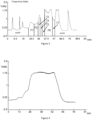
- Figure 1 illustrates the chromatographic profile (tracing of the UV signal read at 280 nm) of the purification of A40926 obtained by preparative HPLC carried out by applying the conditions of example 1.
- the vertical lines indicate the boundary between one collection fraction and the next.
- the fractions F1 and F3 correspond to two main peaks of the chromatogram: they contain the active components of the antibiotic A40926.
- the impurities are eliminated in the fractions called "waste" and F2 and F4.
- Dalbavancin was obtained from A40926 through a sequence of reactions that provide protection such as monomethyl ester, amidation with 3-N,N-dimethylaminopropylamine final deprotection to give Dalbavancin as described in document US 6,900,175 B2 .
- the method of obtaining dalbavancin comprises the steps of: methylation of A40926 in methanol (CarloErba) catalyzed by concentrated sulfuric acid (CarloErba) followed by precipitation of the methyl ester of A40926 by dilution with water and pH correction between 4.5 and 6.5 with triethylamine (CarloErba).
- the methyl ester amide obtained is hydrolyzed with 20% aqueous sodium hydroxide (CarloErba) to give an unrefined dalbavancin solution which, after correcting the pH to 3.5 with 15% aqueous hydrochloric acid (CarloErba), is used for the purification tests as such, or by preceding a dialysis against water to remove the organic solvents present (dimethyl sulfoxide and methanol).
- CarloErba aqueous sodium hydroxide
- CarloErba aqueous hydrochloric acid
- the column was then eluted at 320 ml/min with an eluent composition comprising acetonitrile (CarloErba) in an increasing concentration over the elution conduction time.
- This eluent composition was obtained following the mixing, in time-varying quantitative ratios, as illustrated in Table 3, of a first solution (mobile phase A) comprising demineralized water with the addition of 0.025M aqueous ammonium formate (CarloErba) at pH 6.5, and a second solution (mobile phase B) of pure acetonitrile (CarloErba).
- Table 3 Time Mobile phase A Mobile phase B (min) % (v/v) % (v/v) 0 80 20 5 80 20 40 65 35 50 60 40 60 55 45 70 55 45 71 10 90 85 10 90
- the yield of the purification method was found to be 95%.
- the selection of the eluate fractions to be concentrated is carried out by HPLC analysis by choosing the fractions with purity greater than or equal to 90% calculated on the sum of the areas of the peaks of the compounds of interest.
- the concentrate was then brought to pH 2.6 +/- 0.1 with 15% w/w aqueous hydrochloric acid (Carlo Erba).
- a total of 9 volumes of acetone (CarloErba) were then added to the dalbavancin solution in water at a temperature below 10°C.
- the solid is recovered after overnight incubation at 4°C by filtration on a porous septum, washed with 1.5 volumes of acetone (CarloErba) and dried under vacuum (50 ubar) at 15°C.
- the yield of the method was 84.0%.
- Figure 2 illustrates the chromatographic profile (tracing of the UV signal read at 280 nm) of the purification of dalbavancin obtained by preparative HPLC carried out by applying the conditions of example 2.
- the column was then eluted at 320 ml/min with an eluent composition comprising acetonitrile (CarloErba) in an increasing concentration over the elution conduction time.
- This eluent composition was obtained following the mixing, in quantitative ratios varying over time, as illustrated in Table 5, of a first solution (mobile phase A) comprising demineralized water with the addition of 0.1% v/v triethylamine (CarloErba) and 0.1% v/v formic acid (CarloErba) and a second solution (mobile phase B) of pure acetonitrile (CarloErba) supplemented with 0.1% v/v triethylamine (CarloErba) and 0.1% v/v formic acid (CarloErba).
- Table 5 Time Mobile phase A Mobile phase B (min) % (v/v) % (v/v) 0 80 20 5 75 25 40 70 30 50 60 40 60 60 40
- the yield of the purification method was found to be 95%.
- the concentrate was then brought to pH 2.6 +/-0.1 with 15% w/w aqueous hydrochloric acid (CarloErba).
- the selection of the eluate fractions to be concentrated is carried out by HPLC analysis by choosing the fractions with purity greater than or equal to 90% calculated on the sum of the areas of the peaks of the compounds that make up the antibiotic.
- Figure 3 illustrates the chromatographic profile (tracing of the UV signal read at 280 nm) of the purification of dalbavancin obtained by preparative HPLC carried out by applying the conditions of example 2.
- the vertical lines indicate the boundary between one collection fraction and the next.
- the chromatographic profile shows the high resolution between the various components of the mixture which, therefore, allows the almost complete removal of the impurities present.
- the column was then eluted at 320 ml/min with an eluent composition comprising acetonitrile (CarloErba) in an increasing concentration over the elution conduction time.
- This eluent composition was obtained following the mixing in time-varying quantitative ratios, as illustrated in Table 7, of a first solution (mobile phase A) comprising demineralized water with the addition of 0.025M aqueous ammonium formate (CarloErba) at pH 5.2 and a second solution (mobile phase B) of pure acetonitrile (CarloErba).
- Table 7 Time (min) Mobile phase A (% v/v) Mobile phase B % (v/v) 0 80 20 60 65 35 90 60 40 110 50 50 120 10 90 140 10 90
- the yield of the purification method was found to be 95%.
- Figure 4 illustrates the chromatographic profile (tracing of the UV signal read at 280 nm) of the purification of Dalbavancin obtained by preparative HPLC carried out by applying the conditions of example 4.
- the apparent absence of resolution is due to the high concentration of the mixture subjected to purification.
- impurities accumulate at the beginning and end of the peak, thus allowing recovery of the pure product in the central part of the peak.
- the method described in this application allows a greater overall yield to be obtained.
- the purification method carried out by polyamide stationary phase adsorption chromatography (as described, for example, in US 2004/0142883 A1 ) has a weight/weight yield of API dalbavancin between 25% and 33% weight/weight starting from the intermediate A40926 present in the initial fermentation broth.
- the method described herein has a yield by weight/weight of API dalbavancin, starting from A40926 initially present in the fermentation broth, greater than 35% weight/weight, with a yield increase that varies between 5% and 60%, on average 32%.
- the purity of the product obtained with the described method is significantly higher than that of the product obtained by purification with adsorption chromatography on polyamide, for example, described in document US 2004/0142883 A1 .
- Table 9 reports the results obtained by analyzing, by means of HPLC, a commercial sample of Dalbavancin (Xydalba, Durata Therapeutics) and a sample obtained by applying the purification method described in this description. It is possible to note that the total correlated substances are reduced by 50% and, above all, the impurity mannosyl aglycone (MAG), which originates by decomposition of the Dalbavancin, without antibiotic activity, is reduced by 88% by simultaneously increasing the active component.
- MAG impurity mannosyl aglycone
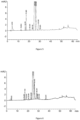
- Figure 5 and Figure 6 illustrate HPLC chromatograms (tracing the UV signal read at 280 nm) obtained by analyzing, respectively, commercial dalbavancin (Xydalba, Durata Therapeutics) and dalbavancin obtained by applying the method described in this document. Both samples were injected at the same concentration.
- the chromatogram shown in Figure 6 shows the significant reduction of all the related impurities compared to the chromatogram shown in Figure 5 (commercial dalbavancin).
Landscapes
- Chemical & Material Sciences (AREA)
- Organic Chemistry (AREA)
- General Health & Medical Sciences (AREA)
- Life Sciences & Earth Sciences (AREA)
- Biochemistry (AREA)
- Biophysics (AREA)
- Health & Medical Sciences (AREA)
- Genetics & Genomics (AREA)
- Medicinal Chemistry (AREA)
- Molecular Biology (AREA)
- Proteomics, Peptides & Aminoacids (AREA)
- Analytical Chemistry (AREA)
- Peptides Or Proteins (AREA)
Claims (12)
- Verfahren zur Reinigung von mindestens einem Lipoglykopeptid-Antibiotikum, welches folgende Schritte umfasst:i) Auflösen des mindestens einen Lipoglykopeptid-Antibiotikums in einer wässrigen Lösung zum Bilden einer Mischung,ii) Laden der Mischung in eine chromatografische Säule, welche eine stationäre Phase umfasst, wobei die stationäre Phase mit organischen Anhängseln funktionalisiertes Siliciumdioxid umfasst,iii) Eluieren der in Schritt ii) geladenen Mischung mittels einer Eluentenzusammensetzung, welche ein wasserlösliches organisches Lösemittel umfasst, wodurch Eluatfraktionen erhalten werden,iv) Auswählen der Eluatfraktionen, welche das mindestens eine gereinigte Lipoglykopeptid-Antibiotikum enthalten,v) Konzentrieren der in Schritt iv) ausgewählten Eluatfraktionen zum Erhalten eines Konzentrates,vi) wahlweise Dialysieren des in Schritt v) erhaltenen Konzentrates,vii) Ausfällen des in Schritt vi) wahlweise dialysierten Konzentrates mit einer Fällungslösung, welche mindestens ein organisches Lösemittel umfasst,viii) Trocknen des in Schritt vii) erhaltenen Fällungsproduktes,wobei der Konzentrationsschritt v) mittels eines Membran-Nanofiltrationssystems mit einer molekularen Ausschlussgrenze im Bereich von 100 Da bis 1500 Da ausgeführt wird.
- Verfahren nach Anspruch 1, wobei das mindestens eine Lipoglykopeptid-Antibiotikum ausgewählt ist aus der Gruppe bestehend aus A40926, Dalbavancin, Teicoplanin, Mideplanin (MDL-62873) und Ramoplanin.
- Verfahren nach Anspruch 1 oder 2, wobei das mit organischen Anhängseln funktionalisierte Siliciumdioxid ausgewählt ist aus der Gruppe bestehend aus Octadecylsilyl-derivatisiertem Siliciumdioxid, Octylsilyl-derivatisiertem Siliciumdioxid, Exylphenylsilyl-derivatisiertem Siliciumdioxid und Butylsilyl-derivatisiertem Siliciumdioxid, vorzugsweise Octadecylsilyl-derivatisiertem Siliciumdioxid.
- Verfahren nach einem der vorhergehenden Ansprüche, wobei das mit organischen Anhängseln funktionalisierte Siliciumdioxid eine Partikelgröße von weniger als 50 µm, vorzugsweise weniger als 20 µm, aufweist.
- Verfahren nach einem der vorhergehenden Ansprüche, wobei das in der Eluentenzusammensetzung von Schritt iii) enthaltene wasserlösliche organische Lösemittel ausgewählt ist aus der Gruppe bestehend aus Methanol, Propanol, Isopropanol, Acetonitril und Aceton.
- Verfahren nach einem der vorhergehenden Ansprüche, wobei die Eluentenzusammensetzung ferner mindestens eine zusätzliche Verbindung umfasst, die ausgewählt ist aus der Gruppe bestehend aus Ammoniumformat, Ammoniumacetat, Triethylamin, Ameisensäure, Essigsäure, Trifluoressigsäure, Heptafluorbuttersäure und Methansulfonsäure.
- Verfahren nach einem der vorhergehenden Ansprüche, wobei die Eluentenzusammensetzung das wasserlösliche organische Lösemittel, vorzugsweise Acetonitril, in einer Konzentration umfasst, die mit der Zeit zunimmt, zumindest in einem Intervall der Durchführungszeit des Elutionsschrittes iii) oder während des gesamten Elutionsschrittes iii).
- Verfahren nach einem der vorhergehenden Ansprüche, wobei der Elutionsschritt iii) bei einem pH-Wert zwischen 5,0 und 7,0, vorzugsweise zwischen 5,2 und 6,5, ausgeführt wird.
- Verfahren nach einem der vorhergehenden Ansprüche, wobei die stationäre Phase vor Schritt ii) einer Konditionierung mit einer mobilen Phase unterzogen wird, welche mindestens eine Verbindung ausgewählt aus der Gruppe bestehend aus Ammoniumformat, Ammoniumacetat oder Triethylaminsalzen mit Ameisensäure, Essigsäure und Trifluoressigsäure umfasst.
- Verfahren nach Anspruch 9, wobei die mobile Phase für das Konditionieren der stationären Phase einen pH-Wert zwischen 5,0 und 7,0 aufweist.
- Verfahren nach einem der vorhergehenden Ansprüche, wobei die Fällungslösung mindestens ein organisches Lösemittel ausgewählt aus der Gruppe bestehend aus Acetonitril, Aceton, Isopropanol, Propanol und Ethanol, vorzugsweise Aceton, umfasst.
- Verfahren nach einem der vorhergehenden Ansprüche, wobei der Trocknungsschritt durch Erhitzen bei einer Temperatur im Bereich von 15 °C bis 30 °C und, vorzugsweise, bei einem Druck von weniger als 150 mBar ausgeführt wird.
Applications Claiming Priority (2)
| Application Number | Priority Date | Filing Date | Title |
|---|---|---|---|
| IT201900006442 | 2019-04-30 | ||
| PCT/IB2020/053884 WO2020222100A1 (en) | 2019-04-30 | 2020-04-24 | Method for the purification of lipoglycopeptide antibiotics |
Publications (2)
| Publication Number | Publication Date |
|---|---|
| EP3962929A1 EP3962929A1 (de) | 2022-03-09 |
| EP3962929B1 true EP3962929B1 (de) | 2023-03-01 |
Family
ID=67470529
Family Applications (1)
| Application Number | Title | Priority Date | Filing Date |
|---|---|---|---|
| EP20725940.9A Active EP3962929B1 (de) | 2019-04-30 | 2020-04-24 | Verfahren zur reinigung von lipoglykopeptid-antibiotika |
Country Status (3)
| Country | Link |
|---|---|
| US (1) | US20220204551A1 (de) |
| EP (1) | EP3962929B1 (de) |
| WO (1) | WO2020222100A1 (de) |
Families Citing this family (2)
| Publication number | Priority date | Publication date | Assignee | Title |
|---|---|---|---|---|
| CN115219626A (zh) * | 2022-07-18 | 2022-10-21 | 丽珠集团福州福兴医药有限公司 | 达巴万星合成反应的分析方法 |
| CN115160409B (zh) * | 2022-07-22 | 2025-09-16 | 丽珠集团福州福兴医药有限公司 | 一种达巴万星中间体a40926及其分离纯化方法 |
Family Cites Families (4)
| Publication number | Priority date | Publication date | Assignee | Title |
|---|---|---|---|---|
| GB8531846D0 (en) * | 1985-12-30 | 1986-02-05 | Lepetit Spa | Antibiotic a 40926 mannosyl aglycon |
| US20050277581A1 (en) * | 2002-11-18 | 2005-12-15 | Vicuron Pharmaceuticals Inc. | Dalbavancin compositions for treatment of bacterial infections |
| SI21924A (sl) * | 2004-12-07 | 2006-06-30 | Lek Farmacevtska Druzba D.D. | Cist vankomicin hidroklorid |
| CN110412142A (zh) * | 2018-04-26 | 2019-11-05 | 鲁南制药集团股份有限公司 | 一种检测a40926含量及有关物质的方法 |
-
2020
- 2020-04-24 WO PCT/IB2020/053884 patent/WO2020222100A1/en not_active Ceased
- 2020-04-24 EP EP20725940.9A patent/EP3962929B1/de active Active
- 2020-04-24 US US17/607,639 patent/US20220204551A1/en not_active Abandoned
Also Published As
| Publication number | Publication date |
|---|---|
| WO2020222100A1 (en) | 2020-11-05 |
| EP3962929A1 (de) | 2022-03-09 |
| US20220204551A1 (en) | 2022-06-30 |
Similar Documents
| Publication | Publication Date | Title |
|---|---|---|
| DK2470555T3 (en) | A process for the purification of colistin and purified colistinkomponenter | |
| EP3064214A1 (de) | Trennung und verfahren zur reinigung von hochreinem vancomycin hydrochlorid | |
| US4874843A (en) | Chromatographic purification process | |
| EP0327548B1 (de) | Glykopeptid-antibiotika | |
| JPS62175499A (ja) | 抗生物質a40926マンノシルアグリコン | |
| US9045515B2 (en) | Procedure for the purification of tiacumicin B | |
| US20220204551A1 (en) | Method for the purification of lipoglycopeptide antibiotics | |
| WO1994023056A1 (en) | Process for isolating a83543 and its components | |
| EP0240609A2 (de) | Antibiotika-A40926-N-acylaminoglycuronyl-Aglykone und Antibiotika-A40926-Aglykone | |
| HU199873B (en) | Process for separating glycopeptides | |
| EP0146822B1 (de) | Chemisches Verfahren zur Herstellung von Antibiotikum L 17043 | |
| Michel et al. | A35512, A COMPLEX OF NEW ANTIBACTERIAL ANTIBIOTICS PRODUCED BY STREPTOMYCES CANDIDUS I. ISOLATION AND CHARACTERIZATION | |
| CN116621931A (zh) | 一种放线菌环脂肽类化合物及其提取方法与应用 | |
| JPS6158593A (ja) | 新規サフラマイシンa誘導体およびその製造法 | |
| WO2000068413A1 (en) | Halo- or hydroxy-substituted nocathiacin antibiotics | |
| EP2776453B1 (de) | Verfahren zur reinigung von teicoplanin | |
| JP2851376B2 (ja) | 新規マクロライド抗生物質及びその製造法 | |
| NZ244774A (en) | Protein-associated chromophore from actinomadura, pharmaceutical compositions and production | |
| CN103421025B (zh) | 制备7α-甲氧基头孢菌素C的方法 | |
| KR20000010589A (ko) | 항생제a40926의아미드유도체의개선된화학적제조방법 | |
| CN101031653A (zh) | 大环内酯化合物的分离方法 | |
| KR810000327B1 (ko) | 항생물질 a-35512 구성요소 b 비당체의 제조방법 | |
| CN105085627A (zh) | 一种制备恩拉霉素对照品的方法 | |
| WO2000014100A1 (en) | Nocathiacin antibiotic derivatives prepared by microbial biotransformation | |
| CN110627816A (zh) | 一种从头孢菌素c发酵液中分离纯化脱乙酰氧基头孢菌素c的方法 |
Legal Events
| Date | Code | Title | Description |
|---|---|---|---|
| STAA | Information on the status of an ep patent application or granted ep patent |
Free format text: STATUS: UNKNOWN |
|
| STAA | Information on the status of an ep patent application or granted ep patent |
Free format text: STATUS: THE INTERNATIONAL PUBLICATION HAS BEEN MADE |
|
| PUAI | Public reference made under article 153(3) epc to a published international application that has entered the european phase |
Free format text: ORIGINAL CODE: 0009012 |
|
| STAA | Information on the status of an ep patent application or granted ep patent |
Free format text: STATUS: REQUEST FOR EXAMINATION WAS MADE |
|
| 17P | Request for examination filed |
Effective date: 20210823 |
|
| AK | Designated contracting states |
Kind code of ref document: A1 Designated state(s): AL AT BE BG CH CY CZ DE DK EE ES FI FR GB GR HR HU IE IS IT LI LT LU LV MC MK MT NL NO PL PT RO RS SE SI SK SM TR |
|
| DAV | Request for validation of the european patent (deleted) | ||
| DAX | Request for extension of the european patent (deleted) | ||
| GRAP | Despatch of communication of intention to grant a patent |
Free format text: ORIGINAL CODE: EPIDOSNIGR1 |
|
| STAA | Information on the status of an ep patent application or granted ep patent |
Free format text: STATUS: GRANT OF PATENT IS INTENDED |
|
| INTG | Intention to grant announced |
Effective date: 20220921 |
|
| GRAS | Grant fee paid |
Free format text: ORIGINAL CODE: EPIDOSNIGR3 |
|
| GRAA | (expected) grant |
Free format text: ORIGINAL CODE: 0009210 |
|
| STAA | Information on the status of an ep patent application or granted ep patent |
Free format text: STATUS: THE PATENT HAS BEEN GRANTED |
|
| AK | Designated contracting states |
Kind code of ref document: B1 Designated state(s): AL AT BE BG CH CY CZ DE DK EE ES FI FR GB GR HR HU IE IS IT LI LT LU LV MC MK MT NL NO PL PT RO RS SE SI SK SM TR |
|
| REG | Reference to a national code |
Ref country code: GB Ref legal event code: FG4D |
|
| REG | Reference to a national code |
Ref country code: CH Ref legal event code: EP Ref country code: AT Ref legal event code: REF Ref document number: 1550930 Country of ref document: AT Kind code of ref document: T Effective date: 20230315 |
|
| REG | Reference to a national code |
Ref country code: DE Ref legal event code: R096 Ref document number: 602020008530 Country of ref document: DE |
|
| REG | Reference to a national code |
Ref country code: IE Ref legal event code: FG4D |
|
| REG | Reference to a national code |
Ref country code: SE Ref legal event code: TRGR |
|
| REG | Reference to a national code |
Ref country code: LT Ref legal event code: MG9D |
|
| P01 | Opt-out of the competence of the unified patent court (upc) registered |
Effective date: 20230524 |
|
| REG | Reference to a national code |
Ref country code: NL Ref legal event code: MP Effective date: 20230301 |
|
| PG25 | Lapsed in a contracting state [announced via postgrant information from national office to epo] |
Ref country code: RS Free format text: LAPSE BECAUSE OF FAILURE TO SUBMIT A TRANSLATION OF THE DESCRIPTION OR TO PAY THE FEE WITHIN THE PRESCRIBED TIME-LIMIT Effective date: 20230301 Ref country code: NO Free format text: LAPSE BECAUSE OF FAILURE TO SUBMIT A TRANSLATION OF THE DESCRIPTION OR TO PAY THE FEE WITHIN THE PRESCRIBED TIME-LIMIT Effective date: 20230601 Ref country code: LV Free format text: LAPSE BECAUSE OF FAILURE TO SUBMIT A TRANSLATION OF THE DESCRIPTION OR TO PAY THE FEE WITHIN THE PRESCRIBED TIME-LIMIT Effective date: 20230301 Ref country code: LT Free format text: LAPSE BECAUSE OF FAILURE TO SUBMIT A TRANSLATION OF THE DESCRIPTION OR TO PAY THE FEE WITHIN THE PRESCRIBED TIME-LIMIT Effective date: 20230301 Ref country code: HR Free format text: LAPSE BECAUSE OF FAILURE TO SUBMIT A TRANSLATION OF THE DESCRIPTION OR TO PAY THE FEE WITHIN THE PRESCRIBED TIME-LIMIT Effective date: 20230301 Ref country code: ES Free format text: LAPSE BECAUSE OF FAILURE TO SUBMIT A TRANSLATION OF THE DESCRIPTION OR TO PAY THE FEE WITHIN THE PRESCRIBED TIME-LIMIT Effective date: 20230301 |
|
| REG | Reference to a national code |
Ref country code: AT Ref legal event code: MK05 Ref document number: 1550930 Country of ref document: AT Kind code of ref document: T Effective date: 20230301 |
|
| PG25 | Lapsed in a contracting state [announced via postgrant information from national office to epo] |
Ref country code: PL Free format text: LAPSE BECAUSE OF FAILURE TO SUBMIT A TRANSLATION OF THE DESCRIPTION OR TO PAY THE FEE WITHIN THE PRESCRIBED TIME-LIMIT Effective date: 20230301 Ref country code: NL Free format text: LAPSE BECAUSE OF FAILURE TO SUBMIT A TRANSLATION OF THE DESCRIPTION OR TO PAY THE FEE WITHIN THE PRESCRIBED TIME-LIMIT Effective date: 20230301 Ref country code: GR Free format text: LAPSE BECAUSE OF FAILURE TO SUBMIT A TRANSLATION OF THE DESCRIPTION OR TO PAY THE FEE WITHIN THE PRESCRIBED TIME-LIMIT Effective date: 20230602 Ref country code: FI Free format text: LAPSE BECAUSE OF FAILURE TO SUBMIT A TRANSLATION OF THE DESCRIPTION OR TO PAY THE FEE WITHIN THE PRESCRIBED TIME-LIMIT Effective date: 20230301 |
|
| PG25 | Lapsed in a contracting state [announced via postgrant information from national office to epo] |
Ref country code: SM Free format text: LAPSE BECAUSE OF FAILURE TO SUBMIT A TRANSLATION OF THE DESCRIPTION OR TO PAY THE FEE WITHIN THE PRESCRIBED TIME-LIMIT Effective date: 20230301 Ref country code: RO Free format text: LAPSE BECAUSE OF FAILURE TO SUBMIT A TRANSLATION OF THE DESCRIPTION OR TO PAY THE FEE WITHIN THE PRESCRIBED TIME-LIMIT Effective date: 20230301 Ref country code: PT Free format text: LAPSE BECAUSE OF FAILURE TO SUBMIT A TRANSLATION OF THE DESCRIPTION OR TO PAY THE FEE WITHIN THE PRESCRIBED TIME-LIMIT Effective date: 20230703 Ref country code: EE Free format text: LAPSE BECAUSE OF FAILURE TO SUBMIT A TRANSLATION OF THE DESCRIPTION OR TO PAY THE FEE WITHIN THE PRESCRIBED TIME-LIMIT Effective date: 20230301 Ref country code: CZ Free format text: LAPSE BECAUSE OF FAILURE TO SUBMIT A TRANSLATION OF THE DESCRIPTION OR TO PAY THE FEE WITHIN THE PRESCRIBED TIME-LIMIT Effective date: 20230301 Ref country code: AT Free format text: LAPSE BECAUSE OF FAILURE TO SUBMIT A TRANSLATION OF THE DESCRIPTION OR TO PAY THE FEE WITHIN THE PRESCRIBED TIME-LIMIT Effective date: 20230301 |
|
| PG25 | Lapsed in a contracting state [announced via postgrant information from national office to epo] |
Ref country code: SK Free format text: LAPSE BECAUSE OF FAILURE TO SUBMIT A TRANSLATION OF THE DESCRIPTION OR TO PAY THE FEE WITHIN THE PRESCRIBED TIME-LIMIT Effective date: 20230301 Ref country code: IS Free format text: LAPSE BECAUSE OF FAILURE TO SUBMIT A TRANSLATION OF THE DESCRIPTION OR TO PAY THE FEE WITHIN THE PRESCRIBED TIME-LIMIT Effective date: 20230701 |
|
| REG | Reference to a national code |
Ref country code: DE Ref legal event code: R097 Ref document number: 602020008530 Country of ref document: DE |
|
| PG25 | Lapsed in a contracting state [announced via postgrant information from national office to epo] |
Ref country code: LU Free format text: LAPSE BECAUSE OF NON-PAYMENT OF DUE FEES Effective date: 20230424 |
|
| PLBE | No opposition filed within time limit |
Free format text: ORIGINAL CODE: 0009261 |
|
| STAA | Information on the status of an ep patent application or granted ep patent |
Free format text: STATUS: NO OPPOSITION FILED WITHIN TIME LIMIT |
|
| PG25 | Lapsed in a contracting state [announced via postgrant information from national office to epo] |
Ref country code: MC Free format text: LAPSE BECAUSE OF FAILURE TO SUBMIT A TRANSLATION OF THE DESCRIPTION OR TO PAY THE FEE WITHIN THE PRESCRIBED TIME-LIMIT Effective date: 20230301 |
|
| PG25 | Lapsed in a contracting state [announced via postgrant information from national office to epo] |
Ref country code: SI Free format text: LAPSE BECAUSE OF FAILURE TO SUBMIT A TRANSLATION OF THE DESCRIPTION OR TO PAY THE FEE WITHIN THE PRESCRIBED TIME-LIMIT Effective date: 20230301 Ref country code: MC Free format text: LAPSE BECAUSE OF FAILURE TO SUBMIT A TRANSLATION OF THE DESCRIPTION OR TO PAY THE FEE WITHIN THE PRESCRIBED TIME-LIMIT Effective date: 20230301 Ref country code: DK Free format text: LAPSE BECAUSE OF FAILURE TO SUBMIT A TRANSLATION OF THE DESCRIPTION OR TO PAY THE FEE WITHIN THE PRESCRIBED TIME-LIMIT Effective date: 20230301 |
|
| 26N | No opposition filed |
Effective date: 20231204 |
|
| PGFP | Annual fee paid to national office [announced via postgrant information from national office to epo] |
Ref country code: IE Payment date: 20240417 Year of fee payment: 5 |
|
| PGFP | Annual fee paid to national office [announced via postgrant information from national office to epo] |
Ref country code: GB Payment date: 20240423 Year of fee payment: 5 |
|
| PGFP | Annual fee paid to national office [announced via postgrant information from national office to epo] |
Ref country code: DE Payment date: 20240429 Year of fee payment: 5 |
|
| PGFP | Annual fee paid to national office [announced via postgrant information from national office to epo] |
Ref country code: CH Payment date: 20240501 Year of fee payment: 5 |
|
| PGFP | Annual fee paid to national office [announced via postgrant information from national office to epo] |
Ref country code: IT Payment date: 20240408 Year of fee payment: 5 Ref country code: FR Payment date: 20240430 Year of fee payment: 5 |
|
| PGFP | Annual fee paid to national office [announced via postgrant information from national office to epo] |
Ref country code: SE Payment date: 20240429 Year of fee payment: 5 Ref country code: MT Payment date: 20240429 Year of fee payment: 5 Ref country code: BE Payment date: 20240425 Year of fee payment: 5 |
|
| PG25 | Lapsed in a contracting state [announced via postgrant information from national office to epo] |
Ref country code: BG Free format text: LAPSE BECAUSE OF FAILURE TO SUBMIT A TRANSLATION OF THE DESCRIPTION OR TO PAY THE FEE WITHIN THE PRESCRIBED TIME-LIMIT Effective date: 20230301 |
|
| PG25 | Lapsed in a contracting state [announced via postgrant information from national office to epo] |
Ref country code: BG Free format text: LAPSE BECAUSE OF FAILURE TO SUBMIT A TRANSLATION OF THE DESCRIPTION OR TO PAY THE FEE WITHIN THE PRESCRIBED TIME-LIMIT Effective date: 20230301 |
|
| PG25 | Lapsed in a contracting state [announced via postgrant information from national office to epo] |
Ref country code: CY Free format text: LAPSE BECAUSE OF FAILURE TO SUBMIT A TRANSLATION OF THE DESCRIPTION OR TO PAY THE FEE WITHIN THE PRESCRIBED TIME-LIMIT; INVALID AB INITIO Effective date: 20200424 |
|
| PG25 | Lapsed in a contracting state [announced via postgrant information from national office to epo] |
Ref country code: HU Free format text: LAPSE BECAUSE OF FAILURE TO SUBMIT A TRANSLATION OF THE DESCRIPTION OR TO PAY THE FEE WITHIN THE PRESCRIBED TIME-LIMIT; INVALID AB INITIO Effective date: 20200424 |
|
| REG | Reference to a national code |
Ref country code: DE Ref legal event code: R119 Ref document number: 602020008530 Country of ref document: DE |
|
| REG | Reference to a national code |
Ref country code: CH Ref legal event code: H13 Free format text: ST27 STATUS EVENT CODE: U-0-0-H10-H13 (AS PROVIDED BY THE NATIONAL OFFICE) Effective date: 20251125 |
|
| REG | Reference to a national code |
Ref country code: SE Ref legal event code: EUG |
|
| PG25 | Lapsed in a contracting state [announced via postgrant information from national office to epo] |
Ref country code: TR Free format text: LAPSE BECAUSE OF FAILURE TO SUBMIT A TRANSLATION OF THE DESCRIPTION OR TO PAY THE FEE WITHIN THE PRESCRIBED TIME-LIMIT Effective date: 20230301 |
|
| GBPC | Gb: european patent ceased through non-payment of renewal fee |
Effective date: 20250424 |
|
| REG | Reference to a national code |
Ref country code: BE Ref legal event code: MM Effective date: 20250430 |
|
| PG25 | Lapsed in a contracting state [announced via postgrant information from national office to epo] |
Ref country code: DE Free format text: LAPSE BECAUSE OF NON-PAYMENT OF DUE FEES Effective date: 20251104 |
|
| PG25 | Lapsed in a contracting state [announced via postgrant information from national office to epo] |
Ref country code: GB Free format text: LAPSE BECAUSE OF NON-PAYMENT OF DUE FEES Effective date: 20250424 |
|
| PG25 | Lapsed in a contracting state [announced via postgrant information from national office to epo] |
Ref country code: FR Free format text: LAPSE BECAUSE OF NON-PAYMENT OF DUE FEES Effective date: 20250430 |
|
| PG25 | Lapsed in a contracting state [announced via postgrant information from national office to epo] |
Ref country code: BE Free format text: LAPSE BECAUSE OF NON-PAYMENT OF DUE FEES Effective date: 20250430 |
|
| PG25 | Lapsed in a contracting state [announced via postgrant information from national office to epo] |
Ref country code: CH Free format text: LAPSE BECAUSE OF NON-PAYMENT OF DUE FEES Effective date: 20250430 |
|
| PG25 | Lapsed in a contracting state [announced via postgrant information from national office to epo] |
Ref country code: SE Free format text: LAPSE BECAUSE OF NON-PAYMENT OF DUE FEES Effective date: 20250425 |
|
| PG25 | Lapsed in a contracting state [announced via postgrant information from national office to epo] |
Ref country code: IE Free format text: LAPSE BECAUSE OF NON-PAYMENT OF DUE FEES Effective date: 20250424 |
|
| PG25 | Lapsed in a contracting state [announced via postgrant information from national office to epo] |
Ref country code: IT Free format text: LAPSE BECAUSE OF NON-PAYMENT OF DUE FEES Effective date: 20250424 |