EP3954652B1 - Wasserdispergierbare graphennanofolie - Google Patents
Wasserdispergierbare graphennanofolie Download PDFInfo
- Publication number
- EP3954652B1 EP3954652B1 EP20788015.4A EP20788015A EP3954652B1 EP 3954652 B1 EP3954652 B1 EP 3954652B1 EP 20788015 A EP20788015 A EP 20788015A EP 3954652 B1 EP3954652 B1 EP 3954652B1
- Authority
- EP
- European Patent Office
- Prior art keywords
- water
- dispersible graphene
- dispersible
- graphene
- graphene nanosheet
- Prior art date
- Legal status (The legal status is an assumption and is not a legal conclusion. Google has not performed a legal analysis and makes no representation as to the accuracy of the status listed.)
- Active
Links
Images

Classifications
-
- C—CHEMISTRY; METALLURGY
- C01—INORGANIC CHEMISTRY
- C01B—NON-METALLIC ELEMENTS; COMPOUNDS THEREOF; METALLOIDS OR COMPOUNDS THEREOF NOT COVERED BY SUBCLASS C01C
- C01B32/00—Carbon; Compounds thereof
- C01B32/15—Nano-sized carbon materials
- C01B32/182—Graphene
- C01B32/184—Preparation
-
- C—CHEMISTRY; METALLURGY
- C01—INORGANIC CHEMISTRY
- C01B—NON-METALLIC ELEMENTS; COMPOUNDS THEREOF; METALLOIDS OR COMPOUNDS THEREOF NOT COVERED BY SUBCLASS C01C
- C01B32/00—Carbon; Compounds thereof
- C01B32/15—Nano-sized carbon materials
- C01B32/182—Graphene
- C01B32/184—Preparation
- C01B32/19—Preparation by exfoliation
-
- C—CHEMISTRY; METALLURGY
- C30—CRYSTAL GROWTH
- C30B—SINGLE-CRYSTAL GROWTH; UNIDIRECTIONAL SOLIDIFICATION OF EUTECTIC MATERIAL OR UNIDIRECTIONAL DEMIXING OF EUTECTOID MATERIAL; REFINING BY ZONE-MELTING OF MATERIAL; PRODUCTION OF A HOMOGENEOUS POLYCRYSTALLINE MATERIAL WITH DEFINED STRUCTURE; SINGLE CRYSTALS OR HOMOGENEOUS POLYCRYSTALLINE MATERIAL WITH DEFINED STRUCTURE; AFTER-TREATMENT OF SINGLE CRYSTALS OR A HOMOGENEOUS POLYCRYSTALLINE MATERIAL WITH DEFINED STRUCTURE; APPARATUS THEREFOR
- C30B29/00—Single crystals or homogeneous polycrystalline material with defined structure characterised by the material or by their shape
- C30B29/02—Elements
-
- B—PERFORMING OPERATIONS; TRANSPORTING
- B82—NANOTECHNOLOGY
- B82Y—SPECIFIC USES OR APPLICATIONS OF NANOSTRUCTURES; MEASUREMENT OR ANALYSIS OF NANOSTRUCTURES; MANUFACTURE OR TREATMENT OF NANOSTRUCTURES
- B82Y30/00—Nanotechnology for materials or surface science, e.g. nanocomposites
-
- B—PERFORMING OPERATIONS; TRANSPORTING
- B82—NANOTECHNOLOGY
- B82Y—SPECIFIC USES OR APPLICATIONS OF NANOSTRUCTURES; MEASUREMENT OR ANALYSIS OF NANOSTRUCTURES; MANUFACTURE OR TREATMENT OF NANOSTRUCTURES
- B82Y40/00—Manufacture or treatment of nanostructures
-
- C—CHEMISTRY; METALLURGY
- C01—INORGANIC CHEMISTRY
- C01B—NON-METALLIC ELEMENTS; COMPOUNDS THEREOF; METALLOIDS OR COMPOUNDS THEREOF NOT COVERED BY SUBCLASS C01C
- C01B32/00—Carbon; Compounds thereof
- C01B32/15—Nano-sized carbon materials
- C01B32/182—Graphene
- C01B32/194—After-treatment
-
- C—CHEMISTRY; METALLURGY
- C25—ELECTROLYTIC OR ELECTROPHORETIC PROCESSES; APPARATUS THEREFOR
- C25B—ELECTROLYTIC OR ELECTROPHORETIC PROCESSES FOR THE PRODUCTION OF COMPOUNDS OR NON-METALS; APPARATUS THEREFOR
- C25B1/00—Electrolytic production of inorganic compounds or non-metals
- C25B1/01—Products
- C25B1/135—Carbon
-
- C—CHEMISTRY; METALLURGY
- C25—ELECTROLYTIC OR ELECTROPHORETIC PROCESSES; APPARATUS THEREFOR
- C25B—ELECTROLYTIC OR ELECTROPHORETIC PROCESSES FOR THE PRODUCTION OF COMPOUNDS OR NON-METALS; APPARATUS THEREFOR
- C25B1/00—Electrolytic production of inorganic compounds or non-metals
- C25B1/01—Products
- C25B1/28—Per-compounds
-
- C—CHEMISTRY; METALLURGY
- C25—ELECTROLYTIC OR ELECTROPHORETIC PROCESSES; APPARATUS THEREFOR
- C25B—ELECTROLYTIC OR ELECTROPHORETIC PROCESSES FOR THE PRODUCTION OF COMPOUNDS OR NON-METALS; APPARATUS THEREFOR
- C25B1/00—Electrolytic production of inorganic compounds or non-metals
- C25B1/01—Products
- C25B1/28—Per-compounds
- C25B1/29—Persulfates
-
- C—CHEMISTRY; METALLURGY
- C30—CRYSTAL GROWTH
- C30B—SINGLE-CRYSTAL GROWTH; UNIDIRECTIONAL SOLIDIFICATION OF EUTECTIC MATERIAL OR UNIDIRECTIONAL DEMIXING OF EUTECTOID MATERIAL; REFINING BY ZONE-MELTING OF MATERIAL; PRODUCTION OF A HOMOGENEOUS POLYCRYSTALLINE MATERIAL WITH DEFINED STRUCTURE; SINGLE CRYSTALS OR HOMOGENEOUS POLYCRYSTALLINE MATERIAL WITH DEFINED STRUCTURE; AFTER-TREATMENT OF SINGLE CRYSTALS OR A HOMOGENEOUS POLYCRYSTALLINE MATERIAL WITH DEFINED STRUCTURE; APPARATUS THEREFOR
- C30B29/00—Single crystals or homogeneous polycrystalline material with defined structure characterised by the material or by their shape
- C30B29/60—Single crystals or homogeneous polycrystalline material with defined structure characterised by the material or by their shape characterised by shape
- C30B29/64—Flat crystals, e.g. plates, strips or discs
-
- C—CHEMISTRY; METALLURGY
- C30—CRYSTAL GROWTH
- C30B—SINGLE-CRYSTAL GROWTH; UNIDIRECTIONAL SOLIDIFICATION OF EUTECTIC MATERIAL OR UNIDIRECTIONAL DEMIXING OF EUTECTOID MATERIAL; REFINING BY ZONE-MELTING OF MATERIAL; PRODUCTION OF A HOMOGENEOUS POLYCRYSTALLINE MATERIAL WITH DEFINED STRUCTURE; SINGLE CRYSTALS OR HOMOGENEOUS POLYCRYSTALLINE MATERIAL WITH DEFINED STRUCTURE; AFTER-TREATMENT OF SINGLE CRYSTALS OR A HOMOGENEOUS POLYCRYSTALLINE MATERIAL WITH DEFINED STRUCTURE; APPARATUS THEREFOR
- C30B33/00—After-treatment of single crystals or homogeneous polycrystalline material with defined structure
- C30B33/005—Oxydation
-
- C—CHEMISTRY; METALLURGY
- C01—INORGANIC CHEMISTRY
- C01B—NON-METALLIC ELEMENTS; COMPOUNDS THEREOF; METALLOIDS OR COMPOUNDS THEREOF NOT COVERED BY SUBCLASS C01C
- C01B2204/00—Structure or properties of graphene
- C01B2204/20—Graphene characterized by its properties
- C01B2204/22—Electronic properties
-
- C—CHEMISTRY; METALLURGY
- C01—INORGANIC CHEMISTRY
- C01B—NON-METALLIC ELEMENTS; COMPOUNDS THEREOF; METALLOIDS OR COMPOUNDS THEREOF NOT COVERED BY SUBCLASS C01C
- C01B2204/00—Structure or properties of graphene
- C01B2204/20—Graphene characterized by its properties
- C01B2204/32—Size or surface area
Definitions
- the present invention relates to a graphene nanosheet and a manufacturing method thereof, and more particularly, to a water-dispersible graphene nanosheet and a manufacturing method thereof, and a composition comprising the graphene nanosheet.
- Graphene is a carbon material in the form of a two-dimensional thin film in which carbon atoms with sp 2 hybrid orbitals are arranged in a crystal lattice structure of a hexagonal honeycomb structure and stacked with a thin atomic-level thickness.
- Graphene is a very stable material structurally and chemically, and it is reported that graphene has a tensile strength of about 130 GPa and a thermal conductivity of about 4,800 - 5,300 W/m ⁇ K as well as high electrical properties of a maximum allowable current density of about 10 8 A/cm 2 or more and a charge mobility of about 280,000 cm 2 /V ⁇ s.
- a property of graphene as an excellent conductor is that it has charge mobility that is about 100 times faster than silicone, and it can conduct about 100 times more current than copper.
- graphene may have higher transmittance than indium tin oxide (ITO) used as a conventional transparent electrode.
- ITO indium tin oxide
- graphene is made of carbon, and is used in industrial fields only in a dispersed form mainly in an organic solvent after the surface of graphene is coated or chemical functional groups are bonded to the surface of graphene.
- graphene nanosheets since the technological and economic advantages of water-dispersible graphene nanosheets that are stably dispersed in water are very large, there has been a need for water-dispersible graphene nanosheets.
- a method for dispersing graphene in water conventionally, there is known a method of oxidizing a graphite carbon layer to prepare graphene oxide in which oxygen functional groups are randomly coupled to a part of the carbon layer and using the same, or a method of sulfonating the oxygen functional groups randomly bonded to the graphene oxide as above, and substituting some or all of the oxygen functional groups with sulfonate functional groups, and thus locally restoring the conjugation structure and inducing a strong surface charge to disperse it in water.
- a method of dispersing graphene nanosheets which are produced by mechanical exfoliation of a graphite carbon layer, using an organic or inorganic dispersing agent.
- the graphene oxide is known to significantly lose the mechanical, electrical, chemical and thermal properties of graphene, since an excessive amount of oxygen functional groups is randomly bound to the carbon layer and severely destroys the intrinsic structure of graphene.
- Exfoliated graphene sheets were dispersed in aqueous media and characterized by atomic force microscopy, scanning electron microscopy, Raman spectroscopy, Fourier transform infrared spectroscopy, X photoelectron spectroscopy, X-ray diffraction, electron paramagnetic resonance, zeta potential, contact angle measurements and surface energy.
- Antibacterial assays have shown lack of the significant antibacterial activity. Major effect on bacteria was slight change of bacteria morphology. Membrane remained intact despite significant change of chemical content of membrane components.
- Markovic Zoran et al "Semi-transparent, conductive thin films of electrochemical exfoliated graphene", RSC Advances, vol. 6, no. 45, 1 January 2016, pages 39275-39283, DOI: 10.1039/C6RA04250C , presents the results of electrochemical exfoliation of two different graphite precursors under an applied direct current voltage of +12 V.
- the used characterization techniques (elemental analysis, Fourier transform infrared spectroscopy, X-ray diffraction, X-photoelectron spectroscopy, Raman spectroscopy, field emission scanning electron microscopy and atomic force microscopy) showed that the exfoliated powder is highly functionalized with a low carbon/oxygen content that is similar to graphene oxide.
- the exfoliated graphene sheets dispersed in N,N'-dimethylformamide were deposited on ano-discs by vacuum filtration and transferred to glass ceramic substrates.
- the thermal annealing of the as-deposited films at 600 °C for 30 minutes resulted in an increase in the carbon/oxygen ratio by more than 3 fold and a decrease in the sheet resistance by 25%.
- the lowest values for the sheet resistance of the annealed graphene thin films were in the range of 0.32 ⁇ 0.04 to 0.84 ⁇ 0.1 kohm sq-1 depending on the graphite source that was used.
- US2016318766A1 discloses a method of making graphene powders by electrochemical exfoliating graphite contains steps of: A. Fabricating a plurality of graphene rods and B. Electrochemical exfoliating the plurality of graphite rods.
- step of A includes sub steps of: a1. Mixing vein graphite with polymer binder; a2. Compressing with a mould to prepare the plurality of graphite rods; and a3. Annealing at 500 C to graphitize remove the polymer binder from the plurality of graphite rods.
- step of B. includes sub steps of: b1. Mounting electrodes on plural chips; b2.
- the water-dispersible graphene nanosheet of the present invention can provide a water-dispersible graphene composition that can be stably dispersed in water, and more specifically has excellent dispersibility and dispersion stability without substantially using a dispersing agent while using water as a solvent. As a result, it is possible to provide various and easy methods of technical, economical and environmental application and utilization of materials using graphene.
- water-dispersible graphene nanosheet of the present invention can exhibit excellent mechanical, electrical, chemical and thermal properties inherent in graphene.
- the inventors of the present invention have manufactured a graphene nanosheet in which at least a part of the end portion of the basal plane of the graphene carbon layer is sulfated, and have found that the graphene nanosheet prepared in this way maintains the structure and physical properties of the basal plane inherent in graphene without destruction and distortion of the structure of carbon atoms in the basal plane of graphene by oxygen functional groups in graphene oxide, and has the property of being stably dispersed in water without a separate dispersing agent, and thus have completed the present invention.
- the water-dispersible graphene nanosheet according to the present invention can maintain a single-crystal carbon layer in the basal plane, and can exhibit excellent water dispersibility by excluding random oxidation of graphene and selectively sulfating the edge of graphene and thus inducing a strong surface charge.
- the water-dispersible graphene nanosheet according to the present invention has a structure in which at least a part of the end portion of the carbon layer basal plane is sulfated.
- the water-dispersible graphene nanosheet according to the present invention may have a structure in which the edge of the basal plane is selectively sulfated.
- the basal plane may be composed of a single-crystal carbon layer, and the single-crystal carbon layer represents a carbon layer in which carbon atoms are regularly arranged in a hexagonal structure.
- the edge is selectively sulfated, and thus polarity can be induced in the graphene nanosheet dispersed in water. More specifically, a negative (-) surface charge can be induced in graphene nanosheet dispersed in water.
- the effect of the present invention is, but is not limited to, that the 'water dispersibility' of the water-dispersible graphene nanosheet may be due to the polarity imparted by sulfate groups formed in at least a part of the end portion of the basal plane.
- the zeta potential ( ⁇ ) of the water-dispersible graphene nanosheet dispersed in water may be -25 mV or less ( ⁇ ⁇ -25 mV).
- the zeta potential may have a measurement error depending on the measuring device, but may represent a value measured using a zeta potential measuring device (ELSZ-1000, OTSUKA Electronics after preparing an aqueous dispersion containing water-dispersible graphene nanosheets at a concentration of 0.01 wt.% using water as a solvent.
- ELSZ-1000 zeta potential measuring device
- OTSUKA Electronics after preparing an aqueous dispersion containing water-dispersible graphene nanosheets at a concentration of 0.01 wt.% using water as a solvent.
- the degree of sulfation of the water-dispersible graphene nanosheet can be confirmed by the ratio of sulfur and carbon atoms on the graphene nanosheet, and the ratio of sulfur and carbon atoms (S/C ratio) in the water-dispersible graphene nanosheet according to the present invention may be, but is not limited to, for example, 0.005 to 0.05, and in one embodiment, 0.008 to 0.02. If the ratio of sulfur and carbon atoms is within the above range, there may be an effect of excellently exhibiting water dispersibility.
- the ratio of sulfur and carbon atoms represents the ratio of these atomic concentrations based on the value of each atomic concentration (%) of carbon and sulfur measured using X-ray photoelectron spectroscopy (XPS).
- the average diameter of the basal plane of the water-dispersible graphene nanosheet may be, but is not limited to, 0.1 to 10 ⁇ m, specifically 0.5 to 5 ⁇ m, and the average thickness of the basal plane may be, but is not limited to, 1 to 6 nm, specifically 2 to 4 nm. If the average diameter and average thickness of the basal plane of the water-dispersible graphene nanosheet are within the above ranges, it has a very large specific surface area and can have the effect of exhibiting excellent mechanical, electrical and thermal properties.
- the average diameter of the basal plane means a statistical value after measuring the diameter of each of 100 water-dispersible graphene nanosheets among a plurality of graphene nanosheets coated on a silicone oxide (SiO 2 ) substrate, and the average diameter may be a value measured according to a commonly used method, for example, a value measured using an atomic force microscope (AFM).
- AFM atomic force microscope
- the average thickness of the basal plane means a statistical value after measuring the thickness of each of 100 water-dispersible graphene nanosheets among a plurality of graphene nanosheets coated on a silicone oxide (SiO 2 ) substrate, and the average thickness may be a value measured according to a commonly used method, for example, a value measured using an atomic force microscope.
- the present invention may provide a water-dispersible graphene composition comprising a water-dispersible graphene nanosheet according to the present invention, and water.
- the water-dispersible graphene composition may substantially not comprise a dispersing agent, due to the excellent water dispersibility of the water-dispersible graphene nanosheet.
- the dispersing agent refers to a material optionally added to improve the water dispersibility of the water-dispersible graphene nanosheet, and the type thereof is not limited, and for example, it may refer to a known organic dispersing agent and an inorganic dispersing agent.
- the organic dispersing agent may be, but is not limited to, for example, saturated and unsaturated carboxylic acids having 1 to 20 carbon atoms such as formic acid, acetic acid, propionic acid, butanoic acid, hexanoic acid, heptanoic acid, octanoic acid, nonanoic acid, decanoic acid, undecanoic acid, lauric acid, myristic acid, palmitic acid, stearic acid, oleic acid, linoleic acid, and linolenic acid, hydroxycarboxylic acids, alicyclic and aromatic carboxylic acids having 6 to 34 carbon atoms.
- saturated and unsaturated carboxylic acids having 1 to 20 carbon atoms such as formic acid, acetic acid, propionic acid, butanoic acid, hexanoic acid, heptanoic acid, octanoic acid, nonanoic acid, decanoic acid, undecanoic acid
- alkenyl succinic anhydride octenyl succinic anhydride, dodecenyl succinic anhydride, hexadecenyl succinic anhydride, etc.
- organic dispersing agent having a thiol group for example, alkanethiols such as mercaptoethanol, mercapto-2-propanol, 1-mercapto-2,3-propanediol, 3-mercaptopropyltrimethoxysilane, mercaptosuccinic acid, hexanethiol, pentanedithiol, dodecanethiol, undecanethiol, and decanethiol may be mentioned.
- the organic dispersing agent having a phenol ring may be, for example, triphenylphosphine, tributylphosphine, trioctylphosphine, tributylphosphine and the like.
- organic dispersing agent having an amino group may be, for example, propylamine, butylamine, hexylamine, heptylamine, octylamine, 2-ethylhexylamine, nonylamine, decylamine, dodecylamine, hexadecylamine, oleylamine and the like.
- a known surfactant that can also be used as a dispersing agent may not be comprised, and such surfactant may comprise, for example, an anionic surfactant, a nonionic surfactant, an amphoteric surfactant, and a cationic surfactant.
- the anionic surfactant may be, for example, higher fatty acid salts, alkylsulfonates, ⁇ -olefinsulfonate, alkanesulfonic acid salts, alkylbenzenesulfonate salts, sulfosuccinic acid ester salts, alkyl sulfuric acid ester salts, alkyl ether sulfuric acid ester salts, alkyl phosphoric acid ester salts, alkyl ether phosphoric acid ester salts, alkyl ether carboxylates, ⁇ -sulfone fatty acid methyl ester salt, or methyl taurates.
- the nonionic surfactant may be, for example, glycerin fatty acid ester, polyglycerol fatty acid ester, sucrose fatty acid ester, sorbitan fatty acid ester, polyoxyethylene sorbitan fatty acid ester, polyoxyethylene alkyl ether, polyoxyethylene alkylphenyl ether, polyoxyethylene fatty acid ester, fatty acid alkanolamide, alkylglycoside and the like.
- the amphoteric surfactant may be, for example, alkyl betaine, fatty acid amide propyl betaine, alkylamine oxide and the like.
- the cationic surfactant may be, for example, alkyltrimethylammonium salt, dialkyldimethylammonium salt, alkyldimethylbenzylammonium salt, alkylpyridinium salt and the like.
- polymer surfactants such as fluorine-based surfactants, cellulose derivatives, polycarboxylates, and polystyrene sulfonates can be exemplified.
- the water-dispersible graphene composition comprises water as a solvent and is substantially free of a dispersing agent, wherein the term 'substantially free' means that the content of the dispersing agent is 5% by weight or less, for example 4% by weight or less, 3% by weight or less, 2% by weight or less, 1% by weight or less, or 0% by weight (i.e., not comprising at all) based on the total weight of the composition comprising the water and the water-dispersible graphene nanosheet.
- the water-dispersible graphene composition includes a water-dispersible graphene nanosheet according to the present invention, wherein the water-dispersible graphene nanosheet may be composed of, for example, a single layer, may comprise a laminate of water-dispersible graphene nanosheets composed of a plurality of carbon layers, and may comprise a mixture form thereof, but it is not limited thereto.
- the content of the water-dispersible graphene nanosheet in the water-dispersible graphene composition may be adjusted as necessary and is not limited thereto, but for example, it may be comprised in an amount of 0.01 to 10% by weight based on the total weight of the composition.
- the water-dispersible graphene composition may exhibit excellent water-dispersibility and water-dispersion stability. Specifically, the water-dispersible graphene composition may exhibit a change in optical transmittance of 5% or less when stored at room temperature for 12 weeks, and may exhibit excellent water-dispersibility as well as water-dispersion stability. In one embodiment, the change in optical transmittance may represent 5% or less, preferably 1% to 4%, more preferably 0.1% to 3%, and most preferably 0.01% to 2%.
- the optical transmittance may be measured using a known method.
- the change in optical transmittance can be calculated and expressed by using the measured value of optical transmittance (%) immediately after preparing using Turbiscan (Turbiscan Lab Expert, Leanontech) equipment (light source: near infrared ray of 880 nm) and the measured value after 12 weeks of storage at room temperature, after preparing a water-dispersible graphene composition containing 0.01% by weight of water-dispersible graphene nanosheet using water as a solvent.
- the present invention provides a method for manufacturing the water-dispersible graphene nanosheet.
- the method for manufacturing the water-dispersible graphene nanosheet comprising the steps of dipping at least one part of the positive electrode of a graphite material and the negative electrode of a metal material in a mixed electrolyte aqueous solution containing a persulfate salt, which contain persulfate ion (S 2 O 8 2- ); a basic salt; and a buffer, and inducing sulfation in the end portion of the graphene nanosheet derived from graphite by an electrochemical reaction.
- the pH of the mixed electrolyte aqueous solution is maintained at 7 or more during the electrochemical reaction in the mixed electrolyte aqueous solution.
- C-H represents a bond present in the edge of carbon layer in graphite, and the persulfate ion is present in a mixed electrolyte aqueous solution containing a persulfate salt, indicating that an edge-sulfated graphene nanosheet is formed.
- reaction Scheme 1 C-H + S 2 O 8 2- ⁇ C-O-SO 3- + H + + SO 4 -
- a electrolyte aqueous solution containing a persulfate salt which contains persulfate ions should be prepared.
- the electrolyte aqueous solution containing a persulfate salt may be directly prepared and used, or a commercially available product may be obtained and used, but is not limited thereto.
- the electrolyte aqueous solution containing a persulfate salt may comprise at least one selected from the group consisting of ammonium persulfate ((NH 4 ) 2 S 2 O 8 ), potassium persulfate (K 2 S 2 O 8 ), and sodium persulfate (Na 2 S 2 O 8 ).
- the electrolyte aqueous solution containing a persulfate salt at least one selected from the group consisting of ammonium persulfate, potassium persulfate, and sodium persulfate is added to distilled water and stirred to prepare a persulfate electrolyte aqueous solution, but the preparation method is not limited thereto.
- the molar concentration of persulfate ions in the aqueous solution of the persulfate electrolyte is preferably in the range of 0.01 M to 2 M.
- the inventors of the present invention have confirmed through an experiment that since the persulfate ions contained in the mixed electrolyte aqueous solution containing a persulfate salt are hydrolyzed when the pH of the mixed electrolyte aqueous solution is 7 or less, it is difficult to induce sulfation in a part of the end portion of the carbon layer through the electrochemical reaction. Therefore, the mixed electrolyte aqueous solution can be prepared by adding a basic salt in addition to the persulfate salt to adjust the pH to 7 or more, preferably to 8 or more.
- the basic salt that may be added may be, but is not limited to, for example, at least one selected from the group consisting of lithium hydroxide, sodium hydroxide, potassium hydroxide, ammonium hydroxide, lithium carbonate, sodium carbonate and potassium carbonate.
- the amount of the basic salt to be added is preferably added so that the pH of the mixed electrolyte aqueous solution containing the persulfate salt and the basic salt is adjusted within the range of 8 to 13.
- the pH of the mixed electrolyte aqueous solution must be stably maintained at 7 or more to prevent hydrolysis of persulfate ions and thus to stably induce sulfation of the edge of the carbon layer. Therefore, it is preferable to additionally add a buffer to maintain the pH of the mixed electrolyte aqueous solution containing the persulfate and the basic salt at 7 or more during the electrochemical reaction.
- the buffer to be added may be, but is not limited to, for example, at least one selected from the group consisting of ammonium acetate, ammonium carbonate, ammonium nitrate, methylammonium acetate, methylammonium carbonate, methylammonium sulfate, methylammonium nitrate, lithium bicarbonate, sodium bicarbonate, potassium bicarbonate, lithium acetate, sodium acetate, potassium acetate, lithium sulfate, sodium sulfate, potassium sulfate, lithium dihydrogen phosphate, sodium dihydrogen phosphate and potassium dihydrogen phosphate, and it is preferable to mix them and then stir them, in terms of homogeneity of the mixed electrolyte aqueous solution.
- the amount of the buffer to be added is preferably added so that the pH of the mixed electrolyte aqueous solution containing the persulfate salt, the basic salt and the buffer is adjusted within the range of 8 to 13.
- a graphite material is used as an anode(positive electrode) for electrochemical reaction.
- a positive electrode of such a graphite material if it is formed of a graphite material, its shape is not particularly limited, but, for example, a known graphite rod or graphite foil may be used.
- a metal material as a cathode(negative electrode), and for example, a known metal wire, metal foil, or metal mesh may be used, but the reduction electrode of a metal material is also not particularly limited in its shape.
- At least one part of the positive electrode and the negative electrode is dipped in the mixed electrolyte aqueous solution prepared above containing the persulfate salt, the basic salt and the buffer, and a constant voltage or constant current is applied to the positive electrode, and a constant voltage or constant current is applied to the positive electrode to induce sulfation at the edge of the graphite carbon layer.
- V +1 to +30 volts
- A amperes
- the water-dispersible graphene nanosheet sulfated at the end portion of the carbon layer through the electrochemical reaction is floated in a mixed electrolyte aqueous solution or sedimented at the bottom of the reaction vessel, after the electrochemical reaction. It is preferable to collect the prepared water-dispersible graphene nanosheets and wash them sufficiently with distilled water to completely remove remaining persulfate salts, basic salts and/or buffers. Thereafter, a water-dispersible graphene composition can be prepared by adding an excessive amount of distilled water to the washed water-dispersible graphene nanosheets and using commercially available ultrasonication.
- the water-dispersible graphene composition is in the form of a dispersion, and as described above, it exhibits excellent effects in water dispersibility and water-dispersion stability even without substantially including a dispersing agent.
- the preparation amount, the degree of sulfation, and the zeta potential, etc. of the prepared water-dispersible graphene nanosheet can be controlled in a wide range by the concentration of the persulfate salt in the mixed electrolyte aqueous solution containing the persulfate salt and the basic salt and the buffer, the pH of the mixed electrolyte, the applied constant voltage or constant current value, and the electrochemical reaction time, but it is preferable to maintain the pH of the mixed electrolyte aqueous solution at 7 or more during the electrochemical reaction.
- ammonium persulfate was added to distilled water and stirred to prepare a 0.35 M electrolyte aqueous solution containing a persulfate salt.
- Lithium hydroxide as a basic salt and ammonium acetate as a buffer were additionally added to the 0.35 M electrolyte aqueous solution containing the persulfate salt prepared above, and then stirred to adjust the pH of the mixed electrolyte containing the persulfate salt, the basic salt and the buffer to 11.
- a constant current of 5A was applied to the positive electrode to perform an electrochemical reaction for 1 hour.
- the electrochemical reaction was started from pH 11, which is the initial pH of the mixed electrolyte aqueous solution, and was terminated after 1 hour when the pH of the mixed electrolyte was dropped to about pH 7.
- pH 11 is the initial pH of the mixed electrolyte aqueous solution
- TEM transmission electron microscopy
- AFM atomic force microscope
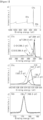
- FIG. 1 is a graph showing the results of photoelectron spectroscopy (X-ray photoelectron spectroscopy, XPS, AXIS Ultra DLD, Kratos) analysis of the water-dispersible graphene nanosheet, which shows the results of measurement and analysis of the chemical composition and chemical bonds of water-dispersible graphene nanosheets using photoelectron spectroscopy.
- photoelectron spectroscopy X-ray photoelectron spectroscopy, XPS, AXIS Ultra DLD, Kratos
- the water-dispersible graphene nanosheet does not contain a carbon-sulfur (C-S) bond
- C-S carbon-sulfur
- the carbon atom is not sulfonated (C-SO 3 H, sulfonate) by bonding with sulfur, but is sulfated (C-O-SO 3 H, sulfate).
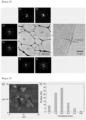
- FIG. 2 shows the results of transmission electron microscopy (TEM, JEOL) observation of the water-dispersible graphene nanosheet according to the present invention.
- TEM transmission electron microscopy
- the water-dispersible graphene nanosheet may be composed of a single-crystal carbon layer, and it can be seen that this single-crystal carbon layer has a radius of several micrometers and is a graphene nanosheet composed of a plurality of thin carbon layers. More specifically, referring to a) to f) of FIG. 2 , it can be seen that the basal plane of the water-dispersible graphene nanosheet is a single-crystal graphene nanosheet in which carbon atoms were regularly arranged in a hexagonal crystal structure. a) to f) of FIG.
- SAED Selected Area Electron Diffraction
- the basal plane of the water-dispersible graphene nanosheet according to the present invention is composed of the single-crystal graphene nanosheet composed of sp 2 covalent bonds between carbon - carbon atoms, and the edge is selectively sulfated.
- the carbon-carbon covalent bond in graphene is not dissociated and sulfated, but only the C-H bond at the edge is selectively sulfated.
- FIG. 3 is a result of statistical analysis after measuring the radius and thickness distribution of the water-dispersible graphene nanosheets according to the present invention with an atomic force microscope (Atomic Force Microscopy, AFM, Park System AFM).
- the water-dispersible graphene nanosheets according to the present invention have an average radius of several micrometers or more, specifically, an average radius of 0.5 to 5 micrometers.
- the water-dispersible graphene nanosheets according to the present invention are mostly (about 99%) composed of graphene nanosheets having an average thickness of 5 nanometers (nm) or less.
- the degree of sulfation of the water-dispersible graphene nanosheets according to the present invention is mainly determined by the pH of the mixed electrolyte aqueous solution containing a persulfate salt, a basic salt and a buffer.
- the concentration of the ammonium persulfate electrolyte was fixed to 0.35 M, and the initial pH of the mixed electrolyte aqueous solution containing ammonium persulfate, a basic salt (lithium hydroxide) and a buffer (ammonium acetate) was adjusted to 8, 9, 10, 11, 12, and 13, respectively.
- a constant current of 5A was applied to the positive electrode of the graphite material in the mixed electrolyte aqueous solution, and the electrochemical reaction was performed for 1 hour to prepare water-dispersible graphene nanosheets.
- the addition amount of buffer (ammonium acetate) was adjusted so that the final pH of the mixed electrolyte aqueous solution is equally terminated at about pH 7 after 1 hour of the electrochemical reaction.
- the degree of sulfation of the edge of the water-dispersible graphene nanosheet prepared at the initial pH condition of each mixed electrolyte aqueous solution was analyzed by measuring the atomic concentrations (%) of carbon and sulfur using photoelectron spectroscopy (X-ray photoelectron spectroscopy, XPS, AXIS Ultra DLD, Kratos).
- Table 1 shows the atomic concentration (%) of carbon and sulfur and the atomic ratio of sulfur/carbon (S/C) of the water-dispersible graphene nanosheet prepared when the initial pH is adjusted to 8, 9, 10, 11, 12, and 13 before the start of the electrochemical reaction of each of the mixed electrolyte aqueous solution.
- Table 1 Peak/Initial pH pH 8 pH 9 pH 10 pH 11 pH 12 pH 13 C 1s 90.17 89.83 89.28 88.38 89.12 87.76 S 2p 0.72 0.90 1.16 1.41 1.60 1.49 S/C ratio 0.008 0.010 0.013 0.016 0.018 0.017
- the water-dispersible graphene nanosheet prepared in Example 2 was dispersed in water to prepare a dispersion having a concentration of 0.01% by weight, and then the zeta potential was measured using a zeta potential meter (ELSZ-1000, OTSUKA Electronics).
- Table 2 shows the zeta potential of the dispersion containing water-dispersible graphene nanosheets prepared when the initial pH of the mixed electrolyte aqueous solution is adjusted to 8, 9, 10, 11, 12, and 13 under the condition that the final pH is about 7 after 1 hour of electrochemical reaction in the persulfate mixed electrolyte aqueous solution.
- Table 2 Initial pH 8 9 10 11 12 13 Surface charge (mV) -25.4 -28.73 -30.91 -33.34 -34.68 -34.40
- the water-dispersible graphene nanosheet according to the present invention exhibits surface charges of different sizes when dispersed in water depending on the degree of sulfation induced at the edge of the carbon layer.
- the reason that the water-dispersible graphene nanosheet according to the present invention exhibits a strong negative (-) surface charge in a state of being dispersed in water can be explained by the very large ionization constant of the sulfate functional group induced at the edge of the carbon layer.
- the initial pH of the mixed electrolyte aqueous solution among the manufacturing conditions of the water-dispersible graphene nanosheets was adjusted to 11, and a constant current of 5A was applied to the graphite oxidation electrode in the mixed electrolyte to cause an electrochemical reaction for 1 hour, and then the final pH of the mixed electrolyte was adjusted to about 7 to prepare water-dispersible graphene nanosheets.
- the dispersion stability was measured for 12 weeks (light source used: near-infrared ray of 880 nm).
- the results of observation of the water-dispersion stability of the water-dispersible graphene composition including the prepared water-dispersible graphene nanosheet using Turbiscan (Turbiscan Lab Expert, Leanontech) equipment are shown in FIG. 4 .
- the edges of the carbon layer are sulfated and the basal plane is composed of a single-crystal carbon layer, due to the electrochemical reaction in the mixed electrolyte aqueous solution containing a persulfate salt, a basic salt and a buffer.
- a graphene composition with good water dispersibility and water-dispersion stability can be prepared without using an organic or inorganic dispersing agent, due to the sulfate functional group induced at the edge of the carbon layer.
- the pH of the mixed electrolyte maintained during the electrochemical reaction is very important.
- the concentration of ammonium persulfate electrolyte was fixed to 0.35 M, and basic salt was added to adjust the initial pH of the persulfate mixed electrolyte aqueous solution to 11.
- the addition of the buffer added to maintain the pH of the mixed electrolyte during the electrochemical reaction at 7 was omitted.
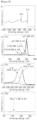
- FIG. 5 is a graph showing the results of photoelectron spectroscopy (X-ray photoelectron spectroscopy, XPS, AXIS Ultra DLD, Kratos) analysis of graphene nanosheets prepared by electrochemical reaction in a mixed electrolyte aqueous solution lacking the buffer, which shows the results of measurement and analysis of the chemical composition and chemical bonds of graphene nanosheets dispersed in the organic solvent using photoelectron spectroscopy.
- photoelectron spectroscopy X-ray photoelectron spectroscopy, XPS, AXIS Ultra DLD, Kratos
Landscapes
- Chemical & Material Sciences (AREA)
- Engineering & Computer Science (AREA)
- Organic Chemistry (AREA)
- Materials Engineering (AREA)
- Nanotechnology (AREA)
- Inorganic Chemistry (AREA)
- Metallurgy (AREA)
- Crystallography & Structural Chemistry (AREA)
- Chemical Kinetics & Catalysis (AREA)
- Electrochemistry (AREA)
- Physics & Mathematics (AREA)
- General Physics & Mathematics (AREA)
- Condensed Matter Physics & Semiconductors (AREA)
- Manufacturing & Machinery (AREA)
- Composite Materials (AREA)
- Carbon And Carbon Compounds (AREA)
Claims (11)
- Wasserdispergierbare Graphennanofolie, bei der zumindest ein Teil des Endabschnittes einer Basalebene einer Kohlenstoffschicht sulfatiert ist, um eine Kohlenstoff-Sulfat-Bindung von C-O-SO3H oder C-O-SO3 - zu umfassen.
- Wasserdispergierbare Graphennanofolie nach Anspruch 1, wobei die Basalebene der Kohlenstoffschicht aus einer einkristallinen Kohlenstoffschicht besteht.
- Wasserdispergierbare Graphennanofolie nach Anspruch 1, wobei Zetapotential der wasserdispergierbaren Graphennanofolie (ζ) <_ -25 mV bei pH 7 ist.
- Wasserdispergierbare Graphennanofolie nach Anspruch 1, wobei das Atomverhältnis von Schwefel/Kohlenstoff (S/C) der wasserdispergierbaren Graphennanofolie 0,005 bis 0,05 ist.
- Wasserdispergierbare Graphennanofolie nach Anspruch 1, wobei der durchschnittliche Durchmesser der Basalebene der Kohlenstoffschicht 0,1 bis 10 µm ist.
- Wasserdispergierbare Graphennanofolie nach Anspruch 1, wobei die durchschnittliche Dicke der Basalebene 1 bis 6 nm ist.
- Wasserdispergierbare Graphenzusammensetzung, welche die wasserdispergierbare Graphennanofolie nach einem der Ansprüche 1 bis 6 und Wasser umfasst, wobei die wasserdispergierbare Graphenzusammensetzung 5 Gew.-% oder weniger eines Dispergiermittels basierend auf dem Gesamtgewicht der wasserdispergierbaren Graphenzusammensetzung enthält und das Dispergiermittel zumindest eines von einem organischen Dispergiermittel und einem anorganischen Dispergiermittel umfasst.
- Wasserdispergierbare Graphenzusammensetzung nach Anspruch 7, wobei die wasserdispergierbare Graphenzusammensetzung eine einzelne Schicht umfasst, die aus einer Vielzahl von wasserdispergierbaren Graphennanofolien oder deren Laminat besteht.
- Verfahren zur Herstellung einer wasserdispergierbaren Graphennanofolie, umfassend die Schritte des Eintauchens von zumindest einem Teil einer positiven Elektrode aus einem Graphitmaterial und einer negativen Elektrode aus einem Metallmaterial in eine wässrige Mischelektrolytlösung, die ein Persulfatsalz, das Persulfation (S2O8 2-) enthält; ein basisches Salz; und einen Puffer enthält, und des Induzierens von Sulfatierung in dem Endabschnitt der aus Graphit gewonnenen Graphennanofolie durch eine elektrochemische Reaktion,wobei der pH während einer elektrochemischen Reaktion in der wässrigen Mischelektrolytlösung bei 7 oder mehr gehalten wird,wobei das Persulfation zumindest eines ausgewählt aus der Gruppe bestehend aus Ammoniumpersulfat, (NH4)2S2O8, Kaliumpersulfat, K2S2O8 und Natriumpersulfat, Na2S2O8, ist,wobei das basische Salz zumindest eines ausgewählt aus der Gruppe bestehend aus Lithiumhydroxid, Natriumhydroxid, Kaliumhydroxid, Ammoniumhydroxid, Lithiumcarbonat, Natriumcarbonat und Kaliumcarbonat ist, undwobei der Puffer zumindest einer ausgewählt aus der Gruppe bestehend aus Ammoniumacetat, Ammoniumcarbonat, Ammoniumnitrat, Methylammoniumacetat, Methylammoniumcarbonat, Methylammoniumsulfat, Methylammoniumnitrat, Lithiumbicarbonat, Natriumbicarbonat, Kaliumbicarbonat, Lithiumacetat, Natriumacetat, Kaliumacetat, Lithiumsulfat, Natriumsulfat, Kaliumsulfat, Lithiumdihydrogenphosphat, Natriumdihydrogenphosphat und Kaliumdihydrogenphosphat ist.
- Verfahren zur Herstellung der wasserdispergierbaren Graphennanofolie nach Anspruch 9, wobei die Molarkonzentration des Persulfatsalzes, das in der wässrigen Mischelektrolytlösung enthalten ist, 0,01 bis 2 M ist.
- Verfahren zur Herstellung der wasserdispergierbaren Graphennanofolie nach Anspruch 9, wobei der pH der wässrigen Mischelektrolytlösung 8 bis 13 ist.
Applications Claiming Priority (2)
| Application Number | Priority Date | Filing Date | Title |
|---|---|---|---|
| KR1020190042597A KR102151481B1 (ko) | 2019-04-11 | 2019-04-11 | 수분산성 그래핀 나노 시트 |
| PCT/KR2020/004833 WO2020209635A1 (ko) | 2019-04-11 | 2020-04-09 | 수분산성 그래핀 나노 시트 |
Publications (3)
| Publication Number | Publication Date |
|---|---|
| EP3954652A1 EP3954652A1 (de) | 2022-02-16 |
| EP3954652A4 EP3954652A4 (de) | 2022-06-15 |
| EP3954652B1 true EP3954652B1 (de) | 2024-08-28 |
Family
ID=72469488
Family Applications (1)
| Application Number | Title | Priority Date | Filing Date |
|---|---|---|---|
| EP20788015.4A Active EP3954652B1 (de) | 2019-04-11 | 2020-04-09 | Wasserdispergierbare graphennanofolie |
Country Status (6)
| Country | Link |
|---|---|
| US (1) | US11851330B2 (de) |
| EP (1) | EP3954652B1 (de) |
| KR (1) | KR102151481B1 (de) |
| CN (1) | CN113677832B (de) |
| ES (1) | ES2988017T3 (de) |
| WO (1) | WO2020209635A1 (de) |
Families Citing this family (7)
| Publication number | Priority date | Publication date | Assignee | Title |
|---|---|---|---|---|
| US11827850B2 (en) * | 2020-07-24 | 2023-11-28 | Saudi Arabian Oil Company | Enhanced oil recovery with janus nanoparticles |
| CN115182022A (zh) * | 2021-04-01 | 2022-10-14 | 浙江正泰电器股份有限公司 | 复配型分散剂及制备方法、混合电镀液及制备方法 |
| CN113527673A (zh) * | 2021-06-24 | 2021-10-22 | 安徽理工大学 | 一种氧化石墨烯/聚苯胺复合材料的制备方法及其应用 |
| WO2023250296A1 (en) * | 2022-06-20 | 2023-12-28 | Stepan Company | Alkaline suspending systems constructed from hydrotropes and amines |
| CN115650223B (zh) * | 2022-08-30 | 2024-05-03 | 福建华峰新材料有限公司 | 分形聚集的氧化石墨烯纳米粒子及其制备和应用 |
| CN116873910B (zh) * | 2023-08-22 | 2025-11-04 | 陕西科技大学 | 一种硬碳/石墨烯复合材料及其制备方法 |
| US12352146B2 (en) | 2023-09-11 | 2025-07-08 | Saudi Arabian Oil Company | Method for well stimulation using nanobubbles |
Family Cites Families (11)
| Publication number | Priority date | Publication date | Assignee | Title |
|---|---|---|---|---|
| KR101430361B1 (ko) | 2013-06-12 | 2014-08-13 | 서울대학교산학협력단 | 크기선택적 침전방법을 이용한 그래핀 양자점의 제조방법 |
| WO2015100682A1 (zh) * | 2013-12-31 | 2015-07-09 | 深圳粤网节能技术服务有限公司 | 一种基于无烟煤的石墨烯及氧化石墨烯的制备方法 |
| KR101576368B1 (ko) * | 2014-04-21 | 2015-12-10 | 국립대학법인 울산과학기술대학교 산학협력단 | 폴리도파민 처리 그래핀옥사이드-폴리비닐알콜 복합체 필름 제조방법 및 이를 이용한 습도 측정방법 |
| CN105131321A (zh) | 2014-06-04 | 2015-12-09 | 苏州高通新材料科技有限公司 | 用酸处理有机高分子材料的方法,以及表面附碳材料、含有官能化石墨烯的粉末产品 |
| KR20160072535A (ko) * | 2014-12-15 | 2016-06-23 | 주식회사 멕스플로러 | 과황산염 수용액에 전기화학 박리작용을 적용하는 그래핀 나노막 및 나노 잉크의 제조방법 |
| US20160318766A1 (en) * | 2015-04-29 | 2016-11-03 | Thanasis GEORGIOU | High Monolayer Yield Graphene and Methods for Making the Same |
| CN106315542A (zh) * | 2015-06-24 | 2017-01-11 | Bgt材料有限公司 | 高产量单层石墨烯及其制造方法 |
| CN107235486B (zh) * | 2016-03-23 | 2019-11-29 | 上海新池能源科技有限公司 | 水溶性石墨烯的制备方法 |
| KR101935933B1 (ko) * | 2016-10-13 | 2019-04-03 | 영남대학교 산학협력단 | 술폰화된 탄소나노튜브 및 술폰화된 그래핀 옥사이드를 포함하는 친수성 분리막 제조용 고분자 조성물 |
| KR101913471B1 (ko) * | 2016-10-24 | 2018-10-30 | 영남대학교 산학협력단 | 공유결합으로 이루어진 환원된 산화그래핀/폴리아닐린 복합체 제조방법 |
| KR101787670B1 (ko) * | 2017-05-26 | 2017-10-19 | 주식회사 멕스플로러 | 과황산염 수용액에 전기화학 박리작용을 적용하는 그래핀 나노막 및 나노 잉크의 제조방법 |
-
2019
- 2019-04-11 KR KR1020190042597A patent/KR102151481B1/ko active Active
-
2020
- 2020-04-09 CN CN202080027947.5A patent/CN113677832B/zh active Active
- 2020-04-09 WO PCT/KR2020/004833 patent/WO2020209635A1/ko not_active Ceased
- 2020-04-09 US US17/602,600 patent/US11851330B2/en active Active
- 2020-04-09 ES ES20788015T patent/ES2988017T3/es active Active
- 2020-04-09 EP EP20788015.4A patent/EP3954652B1/de active Active
Also Published As
| Publication number | Publication date |
|---|---|
| KR102151481B1 (ko) | 2020-09-03 |
| CN113677832A (zh) | 2021-11-19 |
| EP3954652A1 (de) | 2022-02-16 |
| ES2988017T3 (es) | 2024-11-19 |
| US20220204347A1 (en) | 2022-06-30 |
| US11851330B2 (en) | 2023-12-26 |
| EP3954652A4 (de) | 2022-06-15 |
| CN113677832B (zh) | 2024-02-09 |
| WO2020209635A1 (ko) | 2020-10-15 |
Similar Documents
| Publication | Publication Date | Title |
|---|---|---|
| EP3954652B1 (de) | Wasserdispergierbare graphennanofolie | |
| TWI507357B (zh) | 單石墨烯層(single graphene layers)和複石墨烯層(multiple graphene layers)在溶液中的安定分散體 | |
| Liu et al. | Shape control in epitaxial electrodeposition: Cu2O nanocubes on InP (001) | |
| US10807872B2 (en) | Graphene oxide quantum dot, material composed of same and graphene-like structure, and preparation method therefor | |
| JP5605650B2 (ja) | グラフェン分散液の製造方法 | |
| JP5777701B2 (ja) | グラフェンに基づいた2次元サンドウィッチナノ材料の製造方法 | |
| CN108698849B (zh) | 通过在悬浮的非负载型石墨烯纳米片上生长氧化锌纳米棒或微米棒获得的石墨烯基复合纳米结构的生产 | |
| CN105916807A (zh) | 采用低共熔溶剂的石墨剥离 | |
| Mao et al. | Composition and shape control of crystalline Ca1–xSrxTiO3 perovskite nanoparticles | |
| US20130266501A1 (en) | Direct Production of Large and Highly Conductive Low-Oxygen Graphene Sheets and Monodispersed Low-Oxygen Graphene Nanosheets | |
| KR20110110538A (ko) | 균일한 나노입자가 증착된 그래핀 및 그 제조방법 | |
| CN102674337A (zh) | 一类自延展石墨烯及其制备方法 | |
| Sim et al. | High-concentration dispersions of exfoliated MoS2 sheets stabilized by freeze-dried silk fibroin powder | |
| KR102035553B1 (ko) | 패턴화된 금속 산화물 나노로드를 제조하는 방법 | |
| DE102017223892A1 (de) | Verfahren zur Herstellung eines funktionalisierten Halbleiter- oder Leitermaterials und dessen Verwendung | |
| Tang et al. | Preparation and surface modification of uniform ZnO nanorods via a one-step process | |
| KR20090124213A (ko) | 금속산화물/탄소나노튜브 복합체 및 금속산화물 나노막대의제조 | |
| KR102292018B1 (ko) | 수분산성 그래핀 나노 시트 | |
| Zhitomirsky et al. | Nanostructured ceramic and hybrid materials via electrodeposition | |
| Shayesteh-Zeraati | Synthesis of Multifunctional One-dimensional and Two-dimensional Highly Conductive Nanomaterials for Charge Storage Applications | |
| KR100843666B1 (ko) | 초음파 및 전기화학적 방식을 이용한 탄소나노 콜로이드용액의 제조방법 및 탄소나노 콜로이드 용액 | |
| Alshehri | Zinc oxides for nanopigmented coatings for electroactive anti-corrosion protection of C-steel structures | |
| Wang | Electrodeposition of Organic-Inorganic Nanocomposite Materials | |
| KR20230122353A (ko) | 산화그래핀을 분산 안정제로 사용한 비산화그래핀 분산액 제조방법 및 이로부터 제조된 비산화그래핀 분산액 | |
| Aslani et al. | Organic materials in nanochemistry |
Legal Events
| Date | Code | Title | Description |
|---|---|---|---|
| STAA | Information on the status of an ep patent application or granted ep patent |
Free format text: STATUS: THE INTERNATIONAL PUBLICATION HAS BEEN MADE |
|
| PUAI | Public reference made under article 153(3) epc to a published international application that has entered the european phase |
Free format text: ORIGINAL CODE: 0009012 |
|
| STAA | Information on the status of an ep patent application or granted ep patent |
Free format text: STATUS: REQUEST FOR EXAMINATION WAS MADE |
|
| 17P | Request for examination filed |
Effective date: 20211105 |
|
| AK | Designated contracting states |
Kind code of ref document: A1 Designated state(s): AL AT BE BG CH CY CZ DE DK EE ES FI FR GB GR HR HU IE IS IT LI LT LU LV MC MK MT NL NO PL PT RO RS SE SI SK SM TR |
|
| REG | Reference to a national code |
Ref country code: DE Free format text: PREVIOUS MAIN CLASS: C01B0032194000 Ipc: C01B0032190000 Ref legal event code: R079 Ref document number: 602020036749 Country of ref document: DE |
|
| A4 | Supplementary search report drawn up and despatched |
Effective date: 20220512 |
|
| RIC1 | Information provided on ipc code assigned before grant |
Ipc: C25B 1/135 20210101ALI20220506BHEP Ipc: C25B 1/28 20210101ALI20220506BHEP Ipc: C01B 32/19 20170101AFI20220506BHEP |
|
| DAV | Request for validation of the european patent (deleted) | ||
| DAX | Request for extension of the european patent (deleted) | ||
| GRAP | Despatch of communication of intention to grant a patent |
Free format text: ORIGINAL CODE: EPIDOSNIGR1 |
|
| STAA | Information on the status of an ep patent application or granted ep patent |
Free format text: STATUS: GRANT OF PATENT IS INTENDED |
|
| INTG | Intention to grant announced |
Effective date: 20240321 |
|
| GRAS | Grant fee paid |
Free format text: ORIGINAL CODE: EPIDOSNIGR3 |
|
| GRAA | (expected) grant |
Free format text: ORIGINAL CODE: 0009210 |
|
| STAA | Information on the status of an ep patent application or granted ep patent |
Free format text: STATUS: THE PATENT HAS BEEN GRANTED |
|
| AK | Designated contracting states |
Kind code of ref document: B1 Designated state(s): AL AT BE BG CH CY CZ DE DK EE ES FI FR GB GR HR HU IE IS IT LI LT LU LV MC MK MT NL NO PL PT RO RS SE SI SK SM TR |
|
| REG | Reference to a national code |
Ref country code: CH Ref legal event code: EP |
|
| P01 | Opt-out of the competence of the unified patent court (upc) registered |
Free format text: CASE NUMBER: APP_43474/2024 Effective date: 20240725 |
|
| REG | Reference to a national code |
Ref country code: DE Ref legal event code: R096 Ref document number: 602020036749 Country of ref document: DE |
|
| REG | Reference to a national code |
Ref country code: IE Ref legal event code: FG4D |
|
| REG | Reference to a national code |
Ref country code: ES Ref legal event code: FG2A Ref document number: 2988017 Country of ref document: ES Kind code of ref document: T3 Effective date: 20241119 |
|
| REG | Reference to a national code |
Ref country code: LT Ref legal event code: MG9D |
|
| PG25 | Lapsed in a contracting state [announced via postgrant information from national office to epo] |
Ref country code: NO Free format text: LAPSE BECAUSE OF FAILURE TO SUBMIT A TRANSLATION OF THE DESCRIPTION OR TO PAY THE FEE WITHIN THE PRESCRIBED TIME-LIMIT Effective date: 20241128 |
|
| REG | Reference to a national code |
Ref country code: AT Ref legal event code: MK05 Ref document number: 1717811 Country of ref document: AT Kind code of ref document: T Effective date: 20240828 |
|
| PG25 | Lapsed in a contracting state [announced via postgrant information from national office to epo] |
Ref country code: NL Free format text: LAPSE BECAUSE OF FAILURE TO SUBMIT A TRANSLATION OF THE DESCRIPTION OR TO PAY THE FEE WITHIN THE PRESCRIBED TIME-LIMIT Effective date: 20240828 Ref country code: PL Free format text: LAPSE BECAUSE OF FAILURE TO SUBMIT A TRANSLATION OF THE DESCRIPTION OR TO PAY THE FEE WITHIN THE PRESCRIBED TIME-LIMIT Effective date: 20240828 Ref country code: GR Free format text: LAPSE BECAUSE OF FAILURE TO SUBMIT A TRANSLATION OF THE DESCRIPTION OR TO PAY THE FEE WITHIN THE PRESCRIBED TIME-LIMIT Effective date: 20241129 Ref country code: FI Free format text: LAPSE BECAUSE OF FAILURE TO SUBMIT A TRANSLATION OF THE DESCRIPTION OR TO PAY THE FEE WITHIN THE PRESCRIBED TIME-LIMIT Effective date: 20240828 Ref country code: PT Free format text: LAPSE BECAUSE OF FAILURE TO SUBMIT A TRANSLATION OF THE DESCRIPTION OR TO PAY THE FEE WITHIN THE PRESCRIBED TIME-LIMIT Effective date: 20241230 |
|
| PG25 | Lapsed in a contracting state [announced via postgrant information from national office to epo] |
Ref country code: BG Free format text: LAPSE BECAUSE OF FAILURE TO SUBMIT A TRANSLATION OF THE DESCRIPTION OR TO PAY THE FEE WITHIN THE PRESCRIBED TIME-LIMIT Effective date: 20240828 |
|
| PG25 | Lapsed in a contracting state [announced via postgrant information from national office to epo] |
Ref country code: LV Free format text: LAPSE BECAUSE OF FAILURE TO SUBMIT A TRANSLATION OF THE DESCRIPTION OR TO PAY THE FEE WITHIN THE PRESCRIBED TIME-LIMIT Effective date: 20240828 |
|
| REG | Reference to a national code |
Ref country code: NL Ref legal event code: MP Effective date: 20240828 |
|
| PG25 | Lapsed in a contracting state [announced via postgrant information from national office to epo] |
Ref country code: AT Free format text: LAPSE BECAUSE OF FAILURE TO SUBMIT A TRANSLATION OF THE DESCRIPTION OR TO PAY THE FEE WITHIN THE PRESCRIBED TIME-LIMIT Effective date: 20240828 Ref country code: IS Free format text: LAPSE BECAUSE OF FAILURE TO SUBMIT A TRANSLATION OF THE DESCRIPTION OR TO PAY THE FEE WITHIN THE PRESCRIBED TIME-LIMIT Effective date: 20241228 |
|
| PG25 | Lapsed in a contracting state [announced via postgrant information from national office to epo] |
Ref country code: HR Free format text: LAPSE BECAUSE OF FAILURE TO SUBMIT A TRANSLATION OF THE DESCRIPTION OR TO PAY THE FEE WITHIN THE PRESCRIBED TIME-LIMIT Effective date: 20240828 |
|
| PG25 | Lapsed in a contracting state [announced via postgrant information from national office to epo] |
Ref country code: RS Free format text: LAPSE BECAUSE OF FAILURE TO SUBMIT A TRANSLATION OF THE DESCRIPTION OR TO PAY THE FEE WITHIN THE PRESCRIBED TIME-LIMIT Effective date: 20241128 |
|
| PG25 | Lapsed in a contracting state [announced via postgrant information from national office to epo] |
Ref country code: RS Free format text: LAPSE BECAUSE OF FAILURE TO SUBMIT A TRANSLATION OF THE DESCRIPTION OR TO PAY THE FEE WITHIN THE PRESCRIBED TIME-LIMIT Effective date: 20241128 Ref country code: PT Free format text: LAPSE BECAUSE OF FAILURE TO SUBMIT A TRANSLATION OF THE DESCRIPTION OR TO PAY THE FEE WITHIN THE PRESCRIBED TIME-LIMIT Effective date: 20241230 Ref country code: PL Free format text: LAPSE BECAUSE OF FAILURE TO SUBMIT A TRANSLATION OF THE DESCRIPTION OR TO PAY THE FEE WITHIN THE PRESCRIBED TIME-LIMIT Effective date: 20240828 Ref country code: NO Free format text: LAPSE BECAUSE OF FAILURE TO SUBMIT A TRANSLATION OF THE DESCRIPTION OR TO PAY THE FEE WITHIN THE PRESCRIBED TIME-LIMIT Effective date: 20241128 Ref country code: NL Free format text: LAPSE BECAUSE OF FAILURE TO SUBMIT A TRANSLATION OF THE DESCRIPTION OR TO PAY THE FEE WITHIN THE PRESCRIBED TIME-LIMIT Effective date: 20240828 Ref country code: LV Free format text: LAPSE BECAUSE OF FAILURE TO SUBMIT A TRANSLATION OF THE DESCRIPTION OR TO PAY THE FEE WITHIN THE PRESCRIBED TIME-LIMIT Effective date: 20240828 Ref country code: IS Free format text: LAPSE BECAUSE OF FAILURE TO SUBMIT A TRANSLATION OF THE DESCRIPTION OR TO PAY THE FEE WITHIN THE PRESCRIBED TIME-LIMIT Effective date: 20241228 Ref country code: HR Free format text: LAPSE BECAUSE OF FAILURE TO SUBMIT A TRANSLATION OF THE DESCRIPTION OR TO PAY THE FEE WITHIN THE PRESCRIBED TIME-LIMIT Effective date: 20240828 Ref country code: GR Free format text: LAPSE BECAUSE OF FAILURE TO SUBMIT A TRANSLATION OF THE DESCRIPTION OR TO PAY THE FEE WITHIN THE PRESCRIBED TIME-LIMIT Effective date: 20241129 Ref country code: FI Free format text: LAPSE BECAUSE OF FAILURE TO SUBMIT A TRANSLATION OF THE DESCRIPTION OR TO PAY THE FEE WITHIN THE PRESCRIBED TIME-LIMIT Effective date: 20240828 Ref country code: BG Free format text: LAPSE BECAUSE OF FAILURE TO SUBMIT A TRANSLATION OF THE DESCRIPTION OR TO PAY THE FEE WITHIN THE PRESCRIBED TIME-LIMIT Effective date: 20240828 Ref country code: AT Free format text: LAPSE BECAUSE OF FAILURE TO SUBMIT A TRANSLATION OF THE DESCRIPTION OR TO PAY THE FEE WITHIN THE PRESCRIBED TIME-LIMIT Effective date: 20240828 |
|
| PG25 | Lapsed in a contracting state [announced via postgrant information from national office to epo] |
Ref country code: SM Free format text: LAPSE BECAUSE OF FAILURE TO SUBMIT A TRANSLATION OF THE DESCRIPTION OR TO PAY THE FEE WITHIN THE PRESCRIBED TIME-LIMIT Effective date: 20240828 Ref country code: DK Free format text: LAPSE BECAUSE OF FAILURE TO SUBMIT A TRANSLATION OF THE DESCRIPTION OR TO PAY THE FEE WITHIN THE PRESCRIBED TIME-LIMIT Effective date: 20240828 Ref country code: RO Free format text: LAPSE BECAUSE OF FAILURE TO SUBMIT A TRANSLATION OF THE DESCRIPTION OR TO PAY THE FEE WITHIN THE PRESCRIBED TIME-LIMIT Effective date: 20240828 |
|
| PG25 | Lapsed in a contracting state [announced via postgrant information from national office to epo] |
Ref country code: EE Free format text: LAPSE BECAUSE OF FAILURE TO SUBMIT A TRANSLATION OF THE DESCRIPTION OR TO PAY THE FEE WITHIN THE PRESCRIBED TIME-LIMIT Effective date: 20240828 |
|
| PG25 | Lapsed in a contracting state [announced via postgrant information from national office to epo] |
Ref country code: CZ Free format text: LAPSE BECAUSE OF FAILURE TO SUBMIT A TRANSLATION OF THE DESCRIPTION OR TO PAY THE FEE WITHIN THE PRESCRIBED TIME-LIMIT Effective date: 20240828 |
|
| PG25 | Lapsed in a contracting state [announced via postgrant information from national office to epo] |
Ref country code: SK Free format text: LAPSE BECAUSE OF FAILURE TO SUBMIT A TRANSLATION OF THE DESCRIPTION OR TO PAY THE FEE WITHIN THE PRESCRIBED TIME-LIMIT Effective date: 20240828 Ref country code: IT Free format text: LAPSE BECAUSE OF FAILURE TO SUBMIT A TRANSLATION OF THE DESCRIPTION OR TO PAY THE FEE WITHIN THE PRESCRIBED TIME-LIMIT Effective date: 20240828 |
|
| REG | Reference to a national code |
Ref country code: DE Ref legal event code: R097 Ref document number: 602020036749 Country of ref document: DE |
|
| PLBE | No opposition filed within time limit |
Free format text: ORIGINAL CODE: 0009261 |
|
| STAA | Information on the status of an ep patent application or granted ep patent |
Free format text: STATUS: NO OPPOSITION FILED WITHIN TIME LIMIT |
|
| PGFP | Annual fee paid to national office [announced via postgrant information from national office to epo] |
Ref country code: DE Payment date: 20250422 Year of fee payment: 6 |
|
| PGFP | Annual fee paid to national office [announced via postgrant information from national office to epo] |
Ref country code: ES Payment date: 20250530 Year of fee payment: 6 Ref country code: GB Payment date: 20250416 Year of fee payment: 6 |
|
| PGFP | Annual fee paid to national office [announced via postgrant information from national office to epo] |
Ref country code: FR Payment date: 20250425 Year of fee payment: 6 |
|
| 26N | No opposition filed |
Effective date: 20250530 |
|
| PG25 | Lapsed in a contracting state [announced via postgrant information from national office to epo] |
Ref country code: SE Free format text: LAPSE BECAUSE OF FAILURE TO SUBMIT A TRANSLATION OF THE DESCRIPTION OR TO PAY THE FEE WITHIN THE PRESCRIBED TIME-LIMIT Effective date: 20240828 |
|
| REG | Reference to a national code |
Ref country code: CH Ref legal event code: H13 Free format text: ST27 STATUS EVENT CODE: U-0-0-H10-H13 (AS PROVIDED BY THE NATIONAL OFFICE) Effective date: 20251125 |
|
| PG25 | Lapsed in a contracting state [announced via postgrant information from national office to epo] |
Ref country code: LU Free format text: LAPSE BECAUSE OF NON-PAYMENT OF DUE FEES Effective date: 20250409 |
|
| PG25 | Lapsed in a contracting state [announced via postgrant information from national office to epo] |
Ref country code: MC Free format text: LAPSE BECAUSE OF FAILURE TO SUBMIT A TRANSLATION OF THE DESCRIPTION OR TO PAY THE FEE WITHIN THE PRESCRIBED TIME-LIMIT Effective date: 20240828 |
|
| REG | Reference to a national code |
Ref country code: BE Ref legal event code: MM Effective date: 20250430 |
|
| PG25 | Lapsed in a contracting state [announced via postgrant information from national office to epo] |
Ref country code: BE Free format text: LAPSE BECAUSE OF NON-PAYMENT OF DUE FEES Effective date: 20250430 |
|
| PG25 | Lapsed in a contracting state [announced via postgrant information from national office to epo] |
Ref country code: CH Free format text: LAPSE BECAUSE OF NON-PAYMENT OF DUE FEES Effective date: 20250430 |
|
| PG25 | Lapsed in a contracting state [announced via postgrant information from national office to epo] |
Ref country code: IE Free format text: LAPSE BECAUSE OF NON-PAYMENT OF DUE FEES Effective date: 20250409 |