EP3950004A1 - Targeted compositions - Google Patents
Targeted compositions Download PDFInfo
- Publication number
- EP3950004A1 EP3950004A1 EP21152689.2A EP21152689A EP3950004A1 EP 3950004 A1 EP3950004 A1 EP 3950004A1 EP 21152689 A EP21152689 A EP 21152689A EP 3950004 A1 EP3950004 A1 EP 3950004A1
- Authority
- EP
- European Patent Office
- Prior art keywords
- compound
- seq
- group
- mmol
- preparation
- Prior art date
- Legal status (The legal status is an assumption and is not a legal conclusion. Google has not performed a legal analysis and makes no representation as to the accuracy of the status listed.)
- Pending
Links
- 0 C[C@]1C2(CC2)[C@](C2)(C2O)OC(*)C1CNC(C)=O Chemical compound C[C@]1C2(CC2)[C@](C2)(C2O)OC(*)C1CNC(C)=O 0.000 description 74
- ZLOYXFXTCRQHOC-LMRVLLHPSA-N CC(C)C(COC(C1(CC1)C1)O[C@H](CO)[C@@H]1O)OCC=C Chemical compound CC(C)C(COC(C1(CC1)C1)O[C@H](CO)[C@@H]1O)OCC=C ZLOYXFXTCRQHOC-LMRVLLHPSA-N 0.000 description 1
- WRYDJKPSTMEVOJ-HOGRAUKUSA-N CC(C1(CC1)[C@H]1O)O[C@H](CO)[C@@H]1O Chemical compound CC(C1(CC1)[C@H]1O)O[C@H](CO)[C@@H]1O WRYDJKPSTMEVOJ-HOGRAUKUSA-N 0.000 description 1
- VBZGGOFHCXPHKS-MAGSIXIQSA-N CC(CC(C[C@@H](C1)[C@@H]1C(CCC(OC(C)(C)C)=O)(CCC(OC(C)(C)C)=O)CCC(OC(C)(C)C)=O)=O)[C@@H](C)C(OCc1ccccc1)=O Chemical compound CC(CC(C[C@@H](C1)[C@@H]1C(CCC(OC(C)(C)C)=O)(CCC(OC(C)(C)C)=O)CCC(OC(C)(C)C)=O)=O)[C@@H](C)C(OCc1ccccc1)=O VBZGGOFHCXPHKS-MAGSIXIQSA-N 0.000 description 1
- YONMUVXZXFXATM-UHFFFAOYSA-N CC1(CC1)OCC(C1NCCC1)O Chemical compound CC1(CC1)OCC(C1NCCC1)O YONMUVXZXFXATM-UHFFFAOYSA-N 0.000 description 1
- NBNGOZBAOKOKJM-UHFFFAOYSA-N CCC(C)(CO)C(CC)(COC)N Chemical compound CCC(C)(CO)C(CC)(COC)N NBNGOZBAOKOKJM-UHFFFAOYSA-N 0.000 description 1
- GZMRQBWNBGEDAF-UHFFFAOYSA-N CCC(CC)C(C)(C)CNC(CC)O Chemical compound CCC(CC)C(C)(C)CNC(CC)O GZMRQBWNBGEDAF-UHFFFAOYSA-N 0.000 description 1
- RHQMKOHWECETJG-UHFFFAOYSA-N CCCC(C)(C)CC(N)=O Chemical compound CCCC(C)(C)CC(N)=O RHQMKOHWECETJG-UHFFFAOYSA-N 0.000 description 1
- ZGZZISGPFQIGOT-WYEIJNPQSA-N CCCC(C)(C)COCC(C)(C)COC(C[C@H]1OC)OC(COC)C1OC Chemical compound CCCC(C)(C)COCC(C)(C)COC(C[C@H]1OC)OC(COC)C1OC ZGZZISGPFQIGOT-WYEIJNPQSA-N 0.000 description 1
- GHQIEGBBIOFFDU-UHFFFAOYSA-N CCCN(C(C1=C2C=CC#CC1)=O)C2=O Chemical compound CCCN(C(C1=C2C=CC#CC1)=O)C2=O GHQIEGBBIOFFDU-UHFFFAOYSA-N 0.000 description 1
- SVZHHZWHZQBDDG-UHFFFAOYSA-N CCOCCC(CC1)(CC1O)NI Chemical compound CCOCCC(CC1)(CC1O)NI SVZHHZWHZQBDDG-UHFFFAOYSA-N 0.000 description 1
- QOYACBBTTVHQSZ-ALCCZGGFSA-N COC(/C(/CN=[O]1)=[O]\C)/C1=C/OC Chemical compound COC(/C(/CN=[O]1)=[O]\C)/C1=C/OC QOYACBBTTVHQSZ-ALCCZGGFSA-N 0.000 description 1
- IMEMPTCVARHAFE-GXIVVCHOSA-N COC(CC1O[C@@H](C(C([C@@H]2O)O)O)OC2C(O)=O)=C(C(O)=O)O[C@@H]1C=C Chemical compound COC(CC1O[C@@H](C(C([C@@H]2O)O)O)OC2C(O)=O)=C(C(O)=O)O[C@@H]1C=C IMEMPTCVARHAFE-GXIVVCHOSA-N 0.000 description 1
- NTVJDUPYCRASJV-UHFFFAOYSA-N C[N](C)(C)N(CC1)CC1C(COC=C)O Chemical compound C[N](C)(C)N(CC1)CC1C(COC=C)O NTVJDUPYCRASJV-UHFFFAOYSA-N 0.000 description 1
- KUMMBDBTERQYCG-UHFFFAOYSA-N Cc(cc1CO)cc(CO)c1O Chemical compound Cc(cc1CO)cc(CO)c1O KUMMBDBTERQYCG-UHFFFAOYSA-N 0.000 description 1
- XPNGNIFUDRPBFJ-UHFFFAOYSA-N Cc1ccccc1CO Chemical compound Cc1ccccc1CO XPNGNIFUDRPBFJ-UHFFFAOYSA-N 0.000 description 1
- WIVAULFDXDIRCH-UHFFFAOYSA-N NC(CNC(OCC1C=CC=CC=C1)=O)=O Chemical compound NC(CNC(OCC1C=CC=CC=C1)=O)=O WIVAULFDXDIRCH-UHFFFAOYSA-N 0.000 description 1
- XPEDIFJXUJBKOA-DDUDGIQNSA-N OC[C@H]([C@@H]([C@@H](C12CC1)O)O)OC2O Chemical compound OC[C@H]([C@@H]([C@@H](C12CC1)O)O)OC2O XPEDIFJXUJBKOA-DDUDGIQNSA-N 0.000 description 1
- SGXRLSYXCDTJEY-PHDIDXHHSA-N O[C@H](CC1)CN[C@H]1C=O Chemical compound O[C@H](CC1)CN[C@H]1C=O SGXRLSYXCDTJEY-PHDIDXHHSA-N 0.000 description 1
Images


Classifications
-
- C—CHEMISTRY; METALLURGY
- C12—BIOCHEMISTRY; BEER; SPIRITS; WINE; VINEGAR; MICROBIOLOGY; ENZYMOLOGY; MUTATION OR GENETIC ENGINEERING
- C12N—MICROORGANISMS OR ENZYMES; COMPOSITIONS THEREOF; PROPAGATING, PRESERVING, OR MAINTAINING MICROORGANISMS; MUTATION OR GENETIC ENGINEERING; CULTURE MEDIA
- C12N15/00—Mutation or genetic engineering; DNA or RNA concerning genetic engineering, vectors, e.g. plasmids, or their isolation, preparation or purification; Use of hosts therefor
- C12N15/09—Recombinant DNA-technology
- C12N15/11—DNA or RNA fragments; Modified forms thereof; Non-coding nucleic acids having a biological activity
- C12N15/113—Non-coding nucleic acids modulating the expression of genes, e.g. antisense oligonucleotides; Antisense DNA or RNA; Triplex- forming oligonucleotides; Catalytic nucleic acids, e.g. ribozymes; Nucleic acids used in co-suppression or gene silencing
-
- A—HUMAN NECESSITIES
- A61—MEDICAL OR VETERINARY SCIENCE; HYGIENE
- A61K—PREPARATIONS FOR MEDICAL, DENTAL OR TOILETRY PURPOSES
- A61K31/00—Medicinal preparations containing organic active ingredients
- A61K31/70—Carbohydrates; Sugars; Derivatives thereof
- A61K31/7088—Compounds having three or more nucleosides or nucleotides
- A61K31/713—Double-stranded nucleic acids or oligonucleotides
-
- A—HUMAN NECESSITIES
- A61—MEDICAL OR VETERINARY SCIENCE; HYGIENE
- A61K—PREPARATIONS FOR MEDICAL, DENTAL OR TOILETRY PURPOSES
- A61K47/00—Medicinal preparations characterised by the non-active ingredients used, e.g. carriers or inert additives; Targeting or modifying agents chemically bound to the active ingredient
- A61K47/50—Medicinal preparations characterised by the non-active ingredients used, e.g. carriers or inert additives; Targeting or modifying agents chemically bound to the active ingredient the non-active ingredient being chemically bound to the active ingredient, e.g. polymer-drug conjugates
- A61K47/51—Medicinal preparations characterised by the non-active ingredients used, e.g. carriers or inert additives; Targeting or modifying agents chemically bound to the active ingredient the non-active ingredient being chemically bound to the active ingredient, e.g. polymer-drug conjugates the non-active ingredient being a modifying agent
- A61K47/54—Medicinal preparations characterised by the non-active ingredients used, e.g. carriers or inert additives; Targeting or modifying agents chemically bound to the active ingredient the non-active ingredient being chemically bound to the active ingredient, e.g. polymer-drug conjugates the non-active ingredient being a modifying agent the modifying agent being an organic compound
- A61K47/549—Sugars, nucleosides, nucleotides or nucleic acids
-
- A—HUMAN NECESSITIES
- A61—MEDICAL OR VETERINARY SCIENCE; HYGIENE
- A61K—PREPARATIONS FOR MEDICAL, DENTAL OR TOILETRY PURPOSES
- A61K47/00—Medicinal preparations characterised by the non-active ingredients used, e.g. carriers or inert additives; Targeting or modifying agents chemically bound to the active ingredient
- A61K47/50—Medicinal preparations characterised by the non-active ingredients used, e.g. carriers or inert additives; Targeting or modifying agents chemically bound to the active ingredient the non-active ingredient being chemically bound to the active ingredient, e.g. polymer-drug conjugates
- A61K47/51—Medicinal preparations characterised by the non-active ingredients used, e.g. carriers or inert additives; Targeting or modifying agents chemically bound to the active ingredient the non-active ingredient being chemically bound to the active ingredient, e.g. polymer-drug conjugates the non-active ingredient being a modifying agent
- A61K47/54—Medicinal preparations characterised by the non-active ingredients used, e.g. carriers or inert additives; Targeting or modifying agents chemically bound to the active ingredient the non-active ingredient being chemically bound to the active ingredient, e.g. polymer-drug conjugates the non-active ingredient being a modifying agent the modifying agent being an organic compound
- A61K47/554—Medicinal preparations characterised by the non-active ingredients used, e.g. carriers or inert additives; Targeting or modifying agents chemically bound to the active ingredient the non-active ingredient being chemically bound to the active ingredient, e.g. polymer-drug conjugates the non-active ingredient being a modifying agent the modifying agent being an organic compound the modifying agent being a steroid plant sterol, glycyrrhetic acid, enoxolone or bile acid
-
- A—HUMAN NECESSITIES
- A61—MEDICAL OR VETERINARY SCIENCE; HYGIENE
- A61K—PREPARATIONS FOR MEDICAL, DENTAL OR TOILETRY PURPOSES
- A61K48/00—Medicinal preparations containing genetic material which is inserted into cells of the living body to treat genetic diseases; Gene therapy
-
- A—HUMAN NECESSITIES
- A61—MEDICAL OR VETERINARY SCIENCE; HYGIENE
- A61P—SPECIFIC THERAPEUTIC ACTIVITY OF CHEMICAL COMPOUNDS OR MEDICINAL PREPARATIONS
- A61P1/00—Drugs for disorders of the alimentary tract or the digestive system
- A61P1/16—Drugs for disorders of the alimentary tract or the digestive system for liver or gallbladder disorders, e.g. hepatoprotective agents, cholagogues, litholytics
-
- A—HUMAN NECESSITIES
- A61—MEDICAL OR VETERINARY SCIENCE; HYGIENE
- A61P—SPECIFIC THERAPEUTIC ACTIVITY OF CHEMICAL COMPOUNDS OR MEDICINAL PREPARATIONS
- A61P31/00—Antiinfectives, i.e. antibiotics, antiseptics, chemotherapeutics
- A61P31/12—Antivirals
- A61P31/20—Antivirals for DNA viruses
-
- C—CHEMISTRY; METALLURGY
- C07—ORGANIC CHEMISTRY
- C07H—SUGARS; DERIVATIVES THEREOF; NUCLEOSIDES; NUCLEOTIDES; NUCLEIC ACIDS
- C07H15/00—Compounds containing hydrocarbon or substituted hydrocarbon radicals directly attached to hetero atoms of saccharide radicals
- C07H15/02—Acyclic radicals, not substituted by cyclic structures
- C07H15/04—Acyclic radicals, not substituted by cyclic structures attached to an oxygen atom of the saccharide radical
- C07H15/08—Polyoxyalkylene derivatives
-
- C—CHEMISTRY; METALLURGY
- C07—ORGANIC CHEMISTRY
- C07H—SUGARS; DERIVATIVES THEREOF; NUCLEOSIDES; NUCLEOTIDES; NUCLEIC ACIDS
- C07H21/00—Compounds containing two or more mononucleotide units having separate phosphate or polyphosphate groups linked by saccharide radicals of nucleoside groups, e.g. nucleic acids
- C07H21/02—Compounds containing two or more mononucleotide units having separate phosphate or polyphosphate groups linked by saccharide radicals of nucleoside groups, e.g. nucleic acids with ribosyl as saccharide radical
-
- C—CHEMISTRY; METALLURGY
- C07—ORGANIC CHEMISTRY
- C07J—STEROIDS
- C07J63/00—Steroids in which the cyclopenta(a)hydrophenanthrene skeleton has been modified by expansion of only one ring by one or two atoms
- C07J63/008—Expansion of ring D by one atom, e.g. D homo steroids
-
- C—CHEMISTRY; METALLURGY
- C12—BIOCHEMISTRY; BEER; SPIRITS; WINE; VINEGAR; MICROBIOLOGY; ENZYMOLOGY; MUTATION OR GENETIC ENGINEERING
- C12N—MICROORGANISMS OR ENZYMES; COMPOSITIONS THEREOF; PROPAGATING, PRESERVING, OR MAINTAINING MICROORGANISMS; MUTATION OR GENETIC ENGINEERING; CULTURE MEDIA
- C12N15/00—Mutation or genetic engineering; DNA or RNA concerning genetic engineering, vectors, e.g. plasmids, or their isolation, preparation or purification; Use of hosts therefor
- C12N15/09—Recombinant DNA-technology
- C12N15/11—DNA or RNA fragments; Modified forms thereof; Non-coding nucleic acids having a biological activity
- C12N15/111—General methods applicable to biologically active non-coding nucleic acids
-
- C—CHEMISTRY; METALLURGY
- C12—BIOCHEMISTRY; BEER; SPIRITS; WINE; VINEGAR; MICROBIOLOGY; ENZYMOLOGY; MUTATION OR GENETIC ENGINEERING
- C12N—MICROORGANISMS OR ENZYMES; COMPOSITIONS THEREOF; PROPAGATING, PRESERVING, OR MAINTAINING MICROORGANISMS; MUTATION OR GENETIC ENGINEERING; CULTURE MEDIA
- C12N15/00—Mutation or genetic engineering; DNA or RNA concerning genetic engineering, vectors, e.g. plasmids, or their isolation, preparation or purification; Use of hosts therefor
- C12N15/09—Recombinant DNA-technology
- C12N15/11—DNA or RNA fragments; Modified forms thereof; Non-coding nucleic acids having a biological activity
- C12N15/113—Non-coding nucleic acids modulating the expression of genes, e.g. antisense oligonucleotides; Antisense DNA or RNA; Triplex- forming oligonucleotides; Catalytic nucleic acids, e.g. ribozymes; Nucleic acids used in co-suppression or gene silencing
- C12N15/1131—Non-coding nucleic acids modulating the expression of genes, e.g. antisense oligonucleotides; Antisense DNA or RNA; Triplex- forming oligonucleotides; Catalytic nucleic acids, e.g. ribozymes; Nucleic acids used in co-suppression or gene silencing against viruses
-
- C—CHEMISTRY; METALLURGY
- C12—BIOCHEMISTRY; BEER; SPIRITS; WINE; VINEGAR; MICROBIOLOGY; ENZYMOLOGY; MUTATION OR GENETIC ENGINEERING
- C12N—MICROORGANISMS OR ENZYMES; COMPOSITIONS THEREOF; PROPAGATING, PRESERVING, OR MAINTAINING MICROORGANISMS; MUTATION OR GENETIC ENGINEERING; CULTURE MEDIA
- C12N15/00—Mutation or genetic engineering; DNA or RNA concerning genetic engineering, vectors, e.g. plasmids, or their isolation, preparation or purification; Use of hosts therefor
- C12N15/09—Recombinant DNA-technology
- C12N15/11—DNA or RNA fragments; Modified forms thereof; Non-coding nucleic acids having a biological activity
- C12N15/117—Nucleic acids having immunomodulatory properties, e.g. containing CpG-motifs
-
- C—CHEMISTRY; METALLURGY
- C12—BIOCHEMISTRY; BEER; SPIRITS; WINE; VINEGAR; MICROBIOLOGY; ENZYMOLOGY; MUTATION OR GENETIC ENGINEERING
- C12N—MICROORGANISMS OR ENZYMES; COMPOSITIONS THEREOF; PROPAGATING, PRESERVING, OR MAINTAINING MICROORGANISMS; MUTATION OR GENETIC ENGINEERING; CULTURE MEDIA
- C12N2310/00—Structure or type of the nucleic acid
- C12N2310/10—Type of nucleic acid
- C12N2310/14—Type of nucleic acid interfering nucleic acids [NA]
-
- C—CHEMISTRY; METALLURGY
- C12—BIOCHEMISTRY; BEER; SPIRITS; WINE; VINEGAR; MICROBIOLOGY; ENZYMOLOGY; MUTATION OR GENETIC ENGINEERING
- C12N—MICROORGANISMS OR ENZYMES; COMPOSITIONS THEREOF; PROPAGATING, PRESERVING, OR MAINTAINING MICROORGANISMS; MUTATION OR GENETIC ENGINEERING; CULTURE MEDIA
- C12N2310/00—Structure or type of the nucleic acid
- C12N2310/30—Chemical structure
- C12N2310/32—Chemical structure of the sugar
- C12N2310/321—2'-O-R Modification
-
- C—CHEMISTRY; METALLURGY
- C12—BIOCHEMISTRY; BEER; SPIRITS; WINE; VINEGAR; MICROBIOLOGY; ENZYMOLOGY; MUTATION OR GENETIC ENGINEERING
- C12N—MICROORGANISMS OR ENZYMES; COMPOSITIONS THEREOF; PROPAGATING, PRESERVING, OR MAINTAINING MICROORGANISMS; MUTATION OR GENETIC ENGINEERING; CULTURE MEDIA
- C12N2310/00—Structure or type of the nucleic acid
- C12N2310/30—Chemical structure
- C12N2310/32—Chemical structure of the sugar
- C12N2310/322—2'-R Modification
-
- C—CHEMISTRY; METALLURGY
- C12—BIOCHEMISTRY; BEER; SPIRITS; WINE; VINEGAR; MICROBIOLOGY; ENZYMOLOGY; MUTATION OR GENETIC ENGINEERING
- C12N—MICROORGANISMS OR ENZYMES; COMPOSITIONS THEREOF; PROPAGATING, PRESERVING, OR MAINTAINING MICROORGANISMS; MUTATION OR GENETIC ENGINEERING; CULTURE MEDIA
- C12N2310/00—Structure or type of the nucleic acid
- C12N2310/30—Chemical structure
- C12N2310/34—Spatial arrangement of the modifications
- C12N2310/344—Position-specific modifications, e.g. on every purine, at the 3'-end
-
- C—CHEMISTRY; METALLURGY
- C12—BIOCHEMISTRY; BEER; SPIRITS; WINE; VINEGAR; MICROBIOLOGY; ENZYMOLOGY; MUTATION OR GENETIC ENGINEERING
- C12N—MICROORGANISMS OR ENZYMES; COMPOSITIONS THEREOF; PROPAGATING, PRESERVING, OR MAINTAINING MICROORGANISMS; MUTATION OR GENETIC ENGINEERING; CULTURE MEDIA
- C12N2310/00—Structure or type of the nucleic acid
- C12N2310/30—Chemical structure
- C12N2310/34—Spatial arrangement of the modifications
- C12N2310/346—Spatial arrangement of the modifications having a combination of backbone and sugar modifications
-
- C—CHEMISTRY; METALLURGY
- C12—BIOCHEMISTRY; BEER; SPIRITS; WINE; VINEGAR; MICROBIOLOGY; ENZYMOLOGY; MUTATION OR GENETIC ENGINEERING
- C12N—MICROORGANISMS OR ENZYMES; COMPOSITIONS THEREOF; PROPAGATING, PRESERVING, OR MAINTAINING MICROORGANISMS; MUTATION OR GENETIC ENGINEERING; CULTURE MEDIA
- C12N2310/00—Structure or type of the nucleic acid
- C12N2310/30—Chemical structure
- C12N2310/35—Nature of the modification
- C12N2310/351—Conjugate
-
- C—CHEMISTRY; METALLURGY
- C12—BIOCHEMISTRY; BEER; SPIRITS; WINE; VINEGAR; MICROBIOLOGY; ENZYMOLOGY; MUTATION OR GENETIC ENGINEERING
- C12N—MICROORGANISMS OR ENZYMES; COMPOSITIONS THEREOF; PROPAGATING, PRESERVING, OR MAINTAINING MICROORGANISMS; MUTATION OR GENETIC ENGINEERING; CULTURE MEDIA
- C12N2310/00—Structure or type of the nucleic acid
- C12N2310/30—Chemical structure
- C12N2310/35—Nature of the modification
- C12N2310/351—Conjugate
- C12N2310/3515—Lipophilic moiety, e.g. cholesterol
-
- C—CHEMISTRY; METALLURGY
- C12—BIOCHEMISTRY; BEER; SPIRITS; WINE; VINEGAR; MICROBIOLOGY; ENZYMOLOGY; MUTATION OR GENETIC ENGINEERING
- C12N—MICROORGANISMS OR ENZYMES; COMPOSITIONS THEREOF; PROPAGATING, PRESERVING, OR MAINTAINING MICROORGANISMS; MUTATION OR GENETIC ENGINEERING; CULTURE MEDIA
- C12N2310/00—Structure or type of the nucleic acid
- C12N2310/30—Chemical structure
- C12N2310/35—Nature of the modification
- C12N2310/352—Nature of the modification linked to the nucleic acid via a carbon atom
- C12N2310/3521—Methyl
-
- C—CHEMISTRY; METALLURGY
- C12—BIOCHEMISTRY; BEER; SPIRITS; WINE; VINEGAR; MICROBIOLOGY; ENZYMOLOGY; MUTATION OR GENETIC ENGINEERING
- C12N—MICROORGANISMS OR ENZYMES; COMPOSITIONS THEREOF; PROPAGATING, PRESERVING, OR MAINTAINING MICROORGANISMS; MUTATION OR GENETIC ENGINEERING; CULTURE MEDIA
- C12N2310/00—Structure or type of the nucleic acid
- C12N2310/30—Chemical structure
- C12N2310/35—Nature of the modification
- C12N2310/353—Nature of the modification linked to the nucleic acid via an atom other than carbon
- C12N2310/3533—Halogen
Definitions
- liver A number of diseases are specific to the liver, for example Hepatitis B and nonalcoholic steatohepatitis (NASH). Accordingly, it would be beneficial to have therapeutic compositions that can be targeted primarily to the liver, kidney, heart, pancreas or other organs in living subjects.
- NASH nonalcoholic steatohepatitis
- Nucleic acids, including siRNA are useful as therapeutic agents.
- compositions and methods that can be used to deliver (e.g. target) therapeutic nucleic acids, such as double stranded siRNA, in living subjects.
- the invention provides nucleic acid molecules (e.g., therapeutic double stranded siRNA molecules), as well as compounds, compositions and methods that can be used to target such nucleic acids (e.g. to the liver).
- nucleic acid molecules e.g., therapeutic double stranded siRNA molecules
- compounds, compositions and methods that can be used to target such nucleic acids (e.g. to the liver).
- this invention provides a double stranded siRNA molecule selected from the group consisting of siRNA 1 (SEQ ID NO:1 and 2), 2 (SEQ ID NO:3 and 4), 3 (SEQ ID NO:5 and 6), 4 (SEQ ID NO:7 and 8), 5 (SEQ ID NO:9 and 10), 6 (SEQ ID NO:11 and 12), 7 (SEQ ID NO:13 and 14), 8 (SEQ ID NO:15 and 16), 9 (SEQ ID NO:17 and 18), 10 (SEQ ID NO:19 and 20), 11 (SEQ ID NO:21 and 22), 12 (SEQ ID NO:23 and 24), 13 (SEQ ID NO:25 and 26), 14 (SEQ ID NO:27 and 28), 15 (SEQ ID NO:29 and 30), 16 (SEQ ID NO:31 and 32), 17 (SEQ ID NO:33 and 34), 18 (SEQ ID NO:35 and 36), 19 (SEQ ID NO:37 and 38), 20 (SEQ ID NO:39 and 40), 21 (SEQ ID NO:
- GalNAc conjugates that comprise one of the siRNAs described herein, which conjugates are not limited to conjugates that comprise the ligand-linkers disclosed herein.
- an aspect of the invention provides a GalNAc conjugate of Formula X: A ⁇ B ⁇ C X
- the therapeutic double stranded siRNA described herein, as well as, compounds and compositions comprising such siRNA, may be used to treat Hepatitis B virus and Hepatitis B virus/Hepatitis D virus.
- the invention also provides synthetic intermediates and methods disclosed herein that are useful to prepare compounds of formula I.
- an oligonucleotide can be a double stranded siRNA molecule as described in Table 1.
- conjugate includes compounds of formula (I) that comprise an oligonucleotide (e.g., an siRNA molecule) linked to a targeting ligand.
- oligonucleotide e.g., an siRNA molecule
- conjugate may be used herein interchangeably.
- small-interfering RNA refers to double stranded RNA (i.e. , duplex RNA) that is capable of reducing or inhibiting the expression of a target gene or sequence (e.g ., by mediating the degradation or inhibiting the translation of mRNAs which are complementary to the siRNA sequence) when the siRNA is in the same cell as the target gene or sequence.
- the siRNA may have substantial or complete identity to the target gene or sequence, or may comprise a region of mismatch ( i.e ., a mismatch motif).
- the siRNAs may be about 19-25 (duplex) nucleotides in length, and is preferably about 20-24, 21-22, or 21-23 (duplex) nucleotides in length.
- siRNA duplexes may comprise 3' overhangs of about 1 to about 4 nucleotides or about 2 to about 3 nucleotides and 5' phosphate termini.
- Examples of siRNA include, without limitation, a double-stranded polynucleotide molecule assembled from two separate stranded molecules, wherein one strand is the sense strand and the other is the complementary antisense strand.
- the 5' and/or 3' overhang on one or both strands of the siRNA comprises 1-4 ( e.g. , 1, 2, 3, or 4) modified and/or unmodified deoxythymidine (t or dT) nucleotides, 1-4 ( e.g. , 1, 2, 3, or 4) modified ( e.g. , 2'OMe) and/or unmodified uridine (U) ribonucleotides, and/or 1-4 ( e.g. , 1, 2, 3, or 4) modified ( e.g.
- ribonucleotides or deoxyribonucleotides having complementarity to the target sequence e.g., 3'overhang in the antisense strand
- complementary strand thereof e.g., 3' overhang in the sense strand
- siRNA are chemically synthesized.
- siRNA can also be generated by cleavage of longer dsRNA (e.g ., dsRNA greater than about 25 nucleotides in length) with the E. coli RNase III or Dicer. These enzymes process the dsRNA into biologically active siRNA (see , e.g. , Yang et al., Proc. Natl. Acad. Sci. USA, 99:9942-9947 (2002 ); Calegari et al, Proc. Natl. Acad. Sci.
- dsRNA are at least 50 nucleotides to about 100, 200, 300, 400, or 500 nucleotides in length.
- a dsRNA may be as long as 1000, 1500, 2000, 5000 nucleotides in length, or longer.
- the dsRNA can encode for an entire gene transcript or a partial gene transcript.
- siRNA may be encoded by a plasmid ( e.g ., transcribed as sequences that automatically fold into duplexes with hairpin loops).
- the phrase "inhibiting expression of a target gene” refers to the ability of a siRNA of the invention to silence, reduce, or inhibit expression of a target gene.
- a test sample e.g ., a biological sample from an organism of interest expressing the target gene or a sample of cells in culture expressing the target gene
- a siRNA that silences, reduces, or inhibits expression of the target gene.
- Expression of the target gene in the test sample is compared to expression of the target gene in a control sample (e.g. , a biological sample from an organism of interest expressing the target gene or a sample of cells in culture expressing the target gene) that is not contacted with the siRNA.
- Control samples may be assigned a value of 100%.
- silencing, inhibition, or reduction of expression of a target gene is achieved when the value of the test sample relative to the control sample (e.g ., buffer only, an siRNA sequence that targets a different gene, a scrambled siRNA sequence, etc.
- Suitable assays include, without limitation, examination of protein or mRNA levels using techniques known to those of skill in the art, such as, e.g. , dot blots, Northern blots, in situ hybridization, ELISA, immunoprecipitation, enzyme function, as well as phenotypic assays known to those of skill in the art.
- synthetic activating group refers to a group that can be attached to an atom to activate that atom to allow it to form a covalent bond with another reactive group. It is understood that the nature of the synthetic activating group may depend on the atom that it is activating. For example, when the synthetic activating group is attached to an oxygen atom, the synthetic activating group is a group that will activate that oxygen atom to form a bond (e.g. an ester, carbamate, or ether bond) with another reactive group. Such synthetic activating groups are known. Examples of synthetic activating groups that can be attached to an oxygen atom include, but are not limited to, acetate, succinate, triflate, and mesylate.
- the synthetic activating group When the synthetic activating group is attached to an oxygen atom of a carboxylic acid, the synthetic activating group can be a group that is derivable from a known coupling reagent (e.g. a known amide coupling reagent). Such coupling reagents are known.
- a known coupling reagent e.g. a known amide coupling reagent
- Examples of such coupling reagents include, but are not limited to, N,N'-Dicyclohexylcarbodimide (DCC), hydroxybenzotriazole (HOBt), N-(3-Dimethylaminopropyl)-N'-ethylcarbonate (EDC), (Benzotriazol-1-yloxy)tns(dimethylamino)phosphonium hexafluorophosphate (BOP), benzotriazol-1-yl-oxytripyrrolidinophosphonium hexafluorophosphate (PyBOP) or O-benzotriazol-1-yl-N,N,N',N'-tetramethyluronium hexafluorophosphate (HBTU).
- DCC N,N'-Dicyclohexylcarbodimide
- HOBt hydroxybenzotriazole
- EDC N-(3-Dimethylaminopropyl)-N'-eth
- an “effective amount” or “therapeutically effective amount” of a therapeutic nucleic acid such as siRNA is an amount sufficient to produce the desired effect, e.g. , an inhibition of expression of a target sequence in comparison to the normal expression level detected in the absence of a siRNA.
- inhibition of expression of a target gene or target sequence is achieved when the value obtained with a siRNA relative to the control (e.g., buffer only, an siRNA sequence that targets a different gene, a scrambled siRNA sequence, etc.
- Suitable assays for measuring the expression of a target gene or target sequence include, but are not limited to, examination of protein or mRNA levels using techniques known to those of skill in the art, such as, e.g. , dot blots, Northern blots, in situ hybridization, ELISA, immunoprecipitation, enzyme function, as well as phenotypic assays known to those of skill in the art.
- nucleic acid refers to a polymer containing at least two nucleotides (i.e. , deoxyribonucleotides or ribonucleotides) in either single- or double-stranded form and includes DNA and RNA.
- nucleotides contain a sugar deoxyribose (DNA) or ribose (RNA), a base, and a phosphate group. Nucleotides are linked together through the phosphate groups.
- Bases include purines and pyrimidines, which further include natural compounds adenine, thymine, guanine, cytosine, uracil, inosine, and natural analogs, and synthetic derivatives of purines and pyrimidines, which include, but are not limited to, modifications which place new reactive groups such as, but not limited to, amines, alcohols, thiols, carboxylates, and alkylhalides.
- Nucleic acids include nucleic acids containing known nucleotide analogs or modified backbone residues or linkages, which are synthetic, naturally occurring, and non-naturally occurring, and which have similar binding properties as the reference nucleic acid.
- nucleic acids can include one or more UNA moieties.
- nucleic acid includes any oligonucleotide or polynucleotide, with fragments containing up to 60 nucleotides generally termed oligonucleotides, and longer fragments termed polynucleotides.
- a deoxyribooligonucleotide consists of a 5-carbon sugar called deoxyribose joined covalently to phosphate at the 5' and 3' carbons of this sugar to form an alternating, unbranched polymer.
- DNA may be in the form of, e.g ., antisense molecules, plasmid DNA, pre-condensed DNA, a PCR product, vectors, expression cassettes, chimeric sequences, chromosomal DNA, or derivatives and combinations of these groups.
- a ribooligonucleotide consists of a similar repeating structure where the 5-carbon sugar is ribose.
- RNA may be in the form, for example, of small interfering RNA (siRNA), Dicer-substrate dsRNA, small hairpin RNA (shRNA), asymmetrical interfering RNA (aiRNA), microRNA (miRNA), mRNA, tRNA, rRNA, tRNA, viral RNA (vRNA), and combinations thereof.
- siRNA small interfering RNA
- dsRNA Dicer-substrate dsRNA
- shRNA small hairpin RNA
- aiRNA asymmetrical interfering RNA
- miRNA microRNA
- mRNA microRNA
- mRNA microRNA
- mRNA microRNA
- mRNA mRNA
- tRNA tRNA
- rRNA tRNA
- viral RNA viral RNA
- polynucleotide and oligonucleotide also include polymers or oligomers comprising non-naturally occurring monomers, or portions thereof, which function similarly. Such modified or substituted oligonucleotides are often preferred over native forms because of properties such as, for example, enhanced cellular uptake, reduced immunogenicity, and increased stability in the presence of nucleases.
- nucleic acid sequence also implicitly encompasses conservatively modified variants thereof (e.g ., degenerate codon substitutions), alleles, orthologs, SNPs, and complementary sequences as well as the sequence explicitly indicated.
- degenerate codon substitutions may be achieved by generating sequences in which the third position of one or more selected (or all) codons is substituted with mixed-base and/or deoxyinosine residues ( Batzer et al., Nucleic Acid Res., 19:5081 (1991 ); Ohtsuka et al., J. Biol. Chem., 260:2605-2608 (1985 ); Rossolini et al., Mol. Cell. Probes, 8:91-98 (1994 )).
- gene refers to a nucleic acid (e.g., DNA or RNA) sequence that comprises partial length or entire length coding sequences necessary for the production of a polypeptide or precursor polypeptide.
- Gene product refers to a product of a gene such as an RNA transcript or a polypeptide.
- alkyl by itself or as part of another substituent, means, unless otherwise stated, a straight or branched chain hydrocarbon radical, having the number of carbon atoms designated (i.e., C 1-8 means one to eight carbons).
- alkyl groups include methyl, ethyl, n-propyl, iso-propyl, n-butyl, t-butyl, iso-butyl, sec-butyl, n-pentyl, n-hexyl, n-heptyl, n-octyl, and the like.
- alkenyl refers to an unsaturated alkyl radical having one or more double bonds.
- alkynyl refers to an unsaturated alkyl radical having one or more triple bonds.
- unsaturated alkyl groups include vinyl, 2-propenyl, crotyl, 2-isopentenyl, 2-(butadienyl), 2,4-pentadienyl, 3-(1,4-pentadienyl), ethynyl, 1- and 3-propynyl, 3-butynyl, and the higher homologs and isomers.
- alkylene by itself or as part of another substituent means a divalent radical derived from an alkane (including straight and branched alkanes), as exemplified by -CH 2 CH 2 CH 2 CH 2 - and -CH(CH 3 )CH 2 CH 2 -.
- cycloalkyl refers to hydrocarbon ringsystem having 3 to 20 overall number of ring atoms (e.g., 3-20 membered cycloalkyl is a cycloalkyl with 3 to 20 ring atoms, or C 3-20 cycloalkyl is a cycloalkyl with 3-20 carbon ring atoms) and for a 3-5 membered cycloalkyl being fully saturated or having no more than one double bond between ring vertices and for a 6 membered cycloalkyl or larger being fully saturated or having no more than two double bonds between ring vertices.
- cycloalkyl As used herein, "cycloalkyl,” “carbocyclic,” or “carbocycle” is also meant to refer to bicyclic, polycyclic and spirocyclic hydrocarbon ring system, such as, for example, bicyclo[2.2.1]heptane, pinane, bicyclo[2.2.2]octane, adamantane, norborene, spirocyclic C 5-12 alkane, etc.
- alkenyl “alkynyl,” “cycloalkyl,”, “carbocycle,” and “carbocyclic” are meant to include mono and polyhalogenated variants thereof.
- heterocycloalkyl refers to a saturated or partially unsaturated ring system radical having the overall having from 3-20 ring atoms (e.g., 3-20 membered heterocycloalkyl is a heterocycloalkyl radical with 3-20 ring atoms, a C 2-19 heterocycloalkyl is a heterocycloalkyl having 3-10 ring atoms with between 2-19 ring atoms being carbon) that contain from one to ten heteroatoms selected from N, O, and S, wherein the nitrogen and sulfur atoms are optionally oxidized, nitrogen atom(s) are optionally quaternized, as ring atoms.
- a “heterocycloalkyl,” “heterocyclic,” or “heterocycle” ring can be a monocyclic, a bicyclic, spirocyclic or a polycylic ring system.
- heterocycloalkyl examples include pyrrolidine, piperidine, N-methylpiperidine, imidazolidine, pyrazolidine, butyrolactam, valerolactam, imidazolidinone, hydantoin, dioxolane, phthalimide, piperidine, pyrimidine-2,4(1H,3H)-dione, 1,4-dioxane, morpholine, thiomorpholine, thiomorpholine-S-oxide, thiomorpholine-S,S-oxide, piperazine, pyran, pyridone, 3-pyrroline, thiopyran, pyrone, tetrahydrofuran, tetrhydrothiophene, quinuclidine, tropane, 2-azaspiro[3.3]heptane, (1R,5S)-3-azabicyclo[3.
- alkoxy and “alkylthio”, are used in their conventional sense, and refer to those alkyl groups attached to the remainder of the molecule via an oxygen atom (“oxy”) or thio grou, and further include mono- and poly-halogenated variants thereof.
- halo or halogen
- substituents mean, unless otherwise stated, a fluorine, chlorine, bromine, or iodine atom.
- (halo)alkyl is meant to include both a “alkyl” and “haloalkyl” substituent.
- haloalkyl is meant to include monohaloalkyl and polyhaloalkyl.
- C 1-4 haloalkyl is mean to include trifluoromethyl, 2,2,2-trifluoroethyl, 4-chlorobutyl, 3-bromopropyl, difluoromethyl, and the like.
- aryl means a carbocyclic aromatic group having 6-14 carbon atoms, whether or not fused to one or more groups.
- aryl groups include phenyl, naphthyl, biphenyl and the like unless otherwise stated.
- heteroaryl refers to aryl ring(s) that contain from one to five heteroatoms selected from N, O, and S, wherein the nitrogen and sulfur atoms are optionally oxidized, and the nitrogen atom(s) are optionally quaternized.
- a heteroaryl group can be attached to the remainder of the molecule through a heteroatom.
- heteroaryl groups include pyridyl, pyridazinyl, pyrazinyl, pyrimindinyl, triazinyl, quinolinyl, quinoxalinyl, quinazolinyl, cinnolinyl, phthalaziniyl, benzotriazinyl, purinyl, benzimidazolyl, benzopyrazolyl, benzotriazolyl, benzisoxazolyl, isobenzofuryl, isoindolyl, indolizinyl, benzotriazinyl, thienopyridinyl, thienopyrimidinyl, pyrazolopyrimidinyl, imidazopyridines, benzothiaxolyl, benzofuranyl, benzothienyl, indolyl, quinolyl, isoquinolyl, isothiazolyl, pyrazolyl, indazolyl, pteri
- saccharide includes monosaccharides, disaccharides and trisaccharides.
- the term includes glucose, sucrose fructose, galactose and ribose, as well as deoxy sugars such as deoxyribose and amino sugar such as galactosamine.
- Saccharide derivatives can conveniently be prepared as described in International Patent Applications Publication Numbers WO 96/34005 and 97/03995 .
- a saccharide can conveniently be linked to the remainder of a compound of formula I through an ether bond, a thioether bond (e.g. an S-glycoside), an amine nitrogen (e.g., an N- glycoside ), or a carbon-carbon bond (e.g. a C-glycoside).
- the saccharide can conveniently be linked to the remainder of a compound of formula I through an ether bond.
- the term saccharide includes a group of the formula: wherein:
- animal includes mammalian species, such as a human, mouse, rat, dog, cat, hamster, guinea pig, rabbit, livestock, and the like.
- lipid refers to a group of organic compounds that include, but are not limited to, esters of fatty acids and are characterized by being insoluble in water, but soluble in many organic solvents. They are usually divided into at least three classes: (1) “simple lipids,” which include fats and oils as well as waxes; (2) “compound lipids,” which include phospholipids and glycolipids; and (3) “derived lipids” such as steroids.
- lipid particle includes a lipid formulation that can be used to deliver a therapeutic nucleic acid (e.g. , siRNA) to a target site of interest (e.g. , cell, tissue, organ, and the like).
- a therapeutic nucleic acid e.g. , siRNA
- the lipid particle of the invention is a nucleic acid-lipid particle, which is typically formed from a cationic lipid, a non-cationic lipid (e.g., a phospholipid), a conjugated lipid that prevents aggregation of the particle (e.g., a PEG-lipid), and optionally cholesterol.
- the therapeutic nucleic acid e.g. , siRNA
- lipid particle of the present invention refers to the dark appearance of the interior portion of a lipid particle when visualized using cryo transmission electron microscopy ("cryoTEM").
- cryoTEM cryo transmission electron microscopy
- Some lipid particles of the present invention have an electron dense core and lack a lipid bilayer structure.
- Some lipid particles of the present invention have an electron dense core, lack a lipid bilayer structure, and have an inverse Hexagonal or Cubic phase structure.
- the non-bilayer lipid packing provides a 3 -dimensional network of lipid cylinders with water and nucleic on the inside, i.e., essentially, a lipid droplet interpenetrated with aqueous channels containg the nucleic acid.
- SNALP refers to a stable nucleic acid-lipid particle.
- a SNALP is a particle made from lipids (e.g. , a cationic lipid, a non-cationic lipid, and a conjugated lipid that prevents aggregation of the particle), wherein the nucleic acid (e.g. , siRNA) is fully encapsulated within the lipid.
- the nucleic acid e.g. , siRNA
- SNALP are extremely useful for systemic applications, as they can exhibit extended circulation lifetimes following intravenous (i.v.) injection, they can accumulate at distal sites (e.g ., sites physically separated from the administration site), and they can mediate siRNA expression at these distal sites.
- the nucleic acid may be complexed with a condensing agent and encapsulated within a SNALP as set forth in PCT Publication No. WO 00/03683 , the disclosure of which is herein incorporated by reference in its entirety for all purposes.
- the lipid particles of the invention typically have a mean diameter of from about 30 nm to about 150 nm, from about 40 nm to about 150 nm, from about 50 nm to about 150 nm, from about 60 nm to about 130 nm, from about 70 nm to about 110 nm, from about 70 nm to about 100 nm, from about 80 nm to about 100 nm, from about 90 nm to about 100 nm, from about 70 to about 90 nm, from about 80 nm to about 90 nm, from about 70 nm to about 80 nm, or about 30 nm, 35 nm, 40 nm, 45 nm, 50 nm, 55 nm, 60 nm, 65 nm, 70 nm, 75 nm, 80 nm, 85 nm, 90 nm, 95 nm, 100 nm, 105 nm, 110 nm,
- nucleic acids when present in the lipid particles of the present invention, are resistant in aqueous solution to degradation with a nuclease.
- Nucleic acid-lipid particles and their method of preparation are disclosed in, e.g. , U.S. Patent Publication Nos. 20040142025 and 20070042031 , the disclosures of which are herein incorporated by reference in their entirety for all purposes.
- lipid encapsulated can refer to a lipid particle that provides a therapeutic nucleic acid such as an siRNA with full encapsulation, partial encapsulation, or both.
- the nucleic acid e.g ., siRNA
- the lipid particle e.g., to form a SNALP or other nucleic acid-lipid particle.
- lipid conjugate refers to a conjugated lipid that inhibits aggregation of lipid particles.
- lipid conjugates include, but are not limited to, PEG-lipid conjugates such as, e.g. , PEG coupled to dialkyloxypropyls ( e.g. , PEG-DAA conjugates), PEG coupled to diacylglycerols ( e.g ., PEG-DAG conjugates), PEG coupled to cholesterol, PEG coupled to phosphatidylethanolamines, and PEG conjugated to ceramides ( see , e.g. , U.S. Patent No.
- PEG or POZ can be conjugated directly to the lipid or may be linked to the lipid via a linker moiety. Any linker moiety suitable for coupling the PEG or the POZ to a lipid can be used including, e.g ., non-ester containing linker moieties and ester-containing linker moieties. In certain preferred embodiments, non-ester containing linker moieties, such as amides or carbamates, are used.
- amphipathic lipid refers, in part, to any suitable material wherein the hydrophobic portion of the lipid material orients into a hydrophobic phase, while the hydrophilic portion orients toward the aqueous phase.
- Hydrophilic characteristics derive from the presence of polar or charged groups such as carbohydrates, phosphate, carboxylic, sulfato, amino, sulfhydryl, nitro, hydroxyl, and other like groups. Hydrophobicity can be conferred by the inclusion of apolar groups that include, but are not limited to, long-chain saturated and unsaturated aliphatic hydrocarbon groups and such groups substituted by one or more aromatic, cycloaliphatic, or heterocyclic group(s). Examples of amphipathic compounds include, but are not limited to, phospholipids, aminolipids, and sphingolipids.
- phospholipids include, but are not limited to, phosphatidylcholine, phosphatidylethanolamine, phosphatidylserine, phosphatidylinositol, phosphatidic acid, palmitoyloleoyl phosphatidylcholine, lysophosphatidylcholine, lysophosphatidylethanolamine, dipalmitoylphosphatidylcholine, dioleoylphosphatidylcholine, distearoylphosphatidylcholine, and dilinoleoylphosphatidylcholine.
- amphipathic lipids Other compounds lacking in phosphorus, such as sphingolipid, glycosphingolipid families, diacylglycerols, and ⁇ -acyloxyacids, are also within the group designated as amphipathic lipids. Additionally, the amphipathic lipids described above can be mixed with other lipids including triglycerides and sterols.
- neutral lipid refers to any of a number of lipid species that exist either in an uncharged or neutral zwitterionic form at a selected pH.
- lipids include, for example, diacylphosphatidylcholine, diacylphosphatidylethanolamine, ceramide, sphingomyelin, cephalin, cholesterol, cerebrosides, and diacylglycerols.
- non-cationic lipid refers to any amphipathic lipid as well as any other neutral lipid or anionic lipid.
- anionic lipid refers to any lipid that is negatively charged at physiological pH. These lipids include, but are not limited to, phosphatidylglycerols, cardiolipins, diacylphosphatidylserines, diacylphosphatidic acids, N-dodecanoyl phosphatidylethanolamines, N-succinyl phosphatidylethanolamines, N-glutarylphosphatidylethanolamines, lysylphosphatidylglycerols, palmitoyloleyolphosphatidylglycerol (POPG), and other anionic modifying groups joined to neutral lipids.
- phosphatidylglycerols cardiolipins
- diacylphosphatidylserines diacylphosphatidic acids
- N-dodecanoyl phosphatidylethanolamines N-succinyl phosphatidylethanolamines
- hydrophobic lipid refers to compounds having apolar groups that include, but are not limited to, long-chain saturated and unsaturated aliphatic hydrocarbon groups and such groups optionally substituted by one or more aromatic, cycloaliphatic, or heterocyclic group(s). Suitable examples include, but are not limited to, diacylglycerol, dialkylglycerol, N-N-dialkylamino, 1,2-diacyloxy-3-aminopropane, and 1,2-dialkyl-3-aminopropane.
- cationic lipid and “amino lipid” are used interchangeably herein to include those lipids and salts thereof having one, two, three, or more fatty acid or fatty alkyl chains and a pH-titratable amino head group (e.g ., an alkylamino or dialkylamino head group).
- the cationic lipid is typically protonated ( i.e. , positively charged) at a pH below the pK a of the cationic lipid and is substantially neutral at a pH above the pK a .
- the cationic lipids of the invention may also be termed titratable cationic lipids.
- the cationic lipids comprise: a protonatable tertiary amine (e.g ., pH-titratable) head group; C 18 alkyl chains, wherein each alkyl chain independently has 0 to 3 ( e.g. , 0, 1, 2, or 3) double bonds; and ether, ester, or ketal linkages between the head group and alkyl chains.
- a protonatable tertiary amine e.g ., pH-titratable
- C 18 alkyl chains wherein each alkyl chain independently has 0 to 3 ( e.g. , 0, 1, 2, or 3) double bonds
- ether, ester, or ketal linkages between the head group and alkyl chains e.g., 1, 2, or 3
- Such cationic lipids include, but are not limited to, DSDMA, DODMA, DLinDMA, DLenDMA, ⁇ -DLenDMA, DLin-K-DMA, DLin-K-C2-DMA (also known as DLin-C2K-DMA, XTC2, and C2K), DLin-K-C3-DMA, DLin-K-C4-DMA, DLen-C2K-DMA, ⁇ -DLen-C2K-DMA, Lin-M-C2-DMA (also known as MC2), DLin-M-C3-DMA (also known as MC3) and (DLin-MP-DMA)(also known as 1-B11).
- alkylamino includes a group of formula -N(H)R, wherein R is an alkyl as defined herein.
- dialkylamino includes a group of formula -NR 2 , wherein each R is independently an alkyl as defined herein.
- salts includes any anionic and cationic complex, such as the complex formed between a cationic lipid and one or more anions.
- anions include inorganic and organic anions, e.g ., hydride, fluoride, chloride, bromide, iodide, oxalate ( e.g ., hemioxalate), phosphate, phosphonate, hydrogen phosphate, dihydrogen phosphate, oxide, carbonate, bicarbonate, nitrate, nitrite, nitride, bisulfite, sulfide, sulfite, bisulfate, sulfate, thiosulfate, hydrogen sulfate, borate, formate, acetate, benzoate, citrate, tartrate, lactate, acrylate, polyacrylate, fumarate, maleate, itaconate, glycolate, gluconate, malate, mandelate, tiglate, ascor
- acyl includes any alkyl, alkenyl, or alkynyl wherein the carbon at the point of attachment is substituted with an oxo group, as defined below.
- lipid particle such as a SNALP
- the membranes can be either the plasma membrane or membranes surrounding organelles, e.g. , endosome, nucleus, etc.
- aqueous solution refers to a composition comprising in whole, or in part, water.
- organic lipid solution refers to a composition comprising in whole, or in part, an organic solvent having a lipid.
- Distal site refers to a physically separated site, which is not limited to an adjacent capillary bed, but includes sites broadly distributed throughout an organism.
- SNALP serum-stable in relation to nucleic acid-lipid particles such as SNALP means that the particle is not significantly degraded after exposure to a serum or nuclease assay that would significantly degrade free DNA or RNA.
- Suitable assays include, for example, a standard serum assay, a DNAse assay, or an RNAse assay.
- Systemic delivery refers to delivery of lipid particles that leads to a broad biodistribution of an active agent such as an siRNA within an organism. Some techniques of administration can lead to the systemic delivery of certain agents, but not others. Systemic delivery means that a useful, preferably therapeutic, amount of an agent is exposed to most parts of the body. To obtain broad biodistribution generally requires a blood lifetime such that the agent is not rapidly degraded or cleared (such as by first pass organs (liver, lung, etc. ) or by rapid, nonspecific cell binding) before reaching a disease site distal to the site of administration.
- Systemic delivery of lipid particles can be by any means known in the art including, for example, intravenous, subcutaneous, and intraperitoneal. In a preferred embodiment, systemic delivery of lipid particles is by intravenous delivery.
- “Local delivery,” as used herein, refers to delivery of an active agent such as an siRNA directly to a target site within an organism.
- an agent can be locally delivered by direct injection into a disease site, other target site, or a target organ such as the liver, heart, pancreas, kidney, and the like.
- lipid refers to the total lipid in the particle.
- the atom to which the bond is attached includes all stereochemical possibilities.
- a bond in a compound formula herein is drawn in a defined stereochemical manner (e.g. bold, bold-wedge, dashed or dashed-wedge)
- a bond in a compound formula herein is drawn in a defined stereochemical manner (e.g. bold, bold-wedge, dashed or dashed-wedge)
- the atom to which the stereochemical bond is attached is enriched in the absolute stereoisomer depicted.
- the compound may be at least 51% the absolute stereoisomer depicted.
- the compound may be at least 60% the absolute stereoisomer depicted.
- the compound may be at least 80% the absolute stereoisomer depicted.
- the compound may be at least 90% the absolute stereoisomer depicted. In another embodiment, the compound may be at least 95 the absolute stereoisomer depicted. In another embodiment, the compound may be at least 99% the absolute stereoisomer depicted.
- siRNA can be provided in several forms including, e.g ., as one or more isolated small-interfering RNA (siRNA) duplexes, as longer double-stranded RNA (dsRNA), or as siRNA or dsRNA transcribed from a transcriptional cassette in a DNA plasmid.
- siRNA may be produced enzymatically or by partial/total organic synthesis, and modified ribonucleotides can be introduced by in vitro enzymatic or organic synthesis.
- each strand is prepared chemically. Methods of synthesizing RNA molecules are known in the art, e.g. , the chemical synthesis methods as described in Verma and Eckstein (1998) or as described herein.
- RNA, synthesizing RNA, hybridizing nucleic acids, making and screening cDNA libraries, and performing PCR are well known in the art (see , e.g. , Gubler and Hoffman, Gene, 25:263-269 (1983 ); Sambrook et al. , supra ; Ausubel et al. , supra ), as are PCR methods ( see , U.S. Patent Nos. 4,683,195 and 4,683,202 ; PCR Protocols: A Guide to Methods and Applications (Innis et al., eds, 1990 )). Expression libraries are also well known to those of skill in the art.
- siRNA are chemically synthesized.
- the oligonucleotides that comprise the siRNA molecules of the invention can be synthesized using any of a variety of techniques known in the art, such as those described in Usman et al., J. Am. Chem. Soc., 109:7845 (1987 ); Scaringe et al., Nucl. Acids Res., 18:5433 (1990 ); Wincott et al., Nucl. Acids Res., 23:2677-2684 (1995 ); and Wincott et al., MethodsMol. Bio., 74:59 (1997 ).
- oligonucleotides makes use of common nucleic acid protecting and coupling groups, such as dimethoxytrityl at the 5'-end and phosphoramidites at the 3'-end.
- small scale syntheses can be conducted on an Applied Biosystems synthesizer using a 0.2 ⁇ mol scale protocol.
- syntheses at the 0.2 ⁇ mol scale can be performed on a 96-well plate synthesizer from Protogene (Palo Alto, CA).
- Protogene Protogene
- a larger or smaller scale of synthesis is also within the scope of this invention.
- Suitable reagents for oligonucleotide synthesis, methods for RNA deprotection, and methods for RNA purification are known to those of skill in the art.
- siRNA molecules can be assembled from two distinct oligonucleotides, wherein one oligonucleotide comprises the sense strand and the other comprises the antisense strand of the siRNA.
- each strand can be synthesized separately and joined together by hybridization or ligation following synthesis and/or deprotection.
- Table 1 in Example 25 describes a series of chemically modified siRNA duplexes (sense and antisense strands shown) that target the Hepatitis B virus (abbreviated as "HBV").
- a compound of the invention may comprise such a siRNA (i.e., siRNA 1-37).
- one aspect of the invention is a nucleic acid molecule selected from the group consisting of SEQ ID NO:1, SEQ ID NO:3, SEQ ID NO:5, SEQ ID NO:7, SEQ ID NO:9, SEQ ID NO:11, SEQ ID NO:13, SEQ ID NO:15, SEQ ID NO:17, SEQ ID NO:19, SEQ ID NO:21, SEQ ID NO:23, SEQ ID NO:25, SEQ ID NO:27, SEQ ID NO:29, SEQ ID NO:31, SEQ ID NO:33, SEQ ID NO:35, SEQ ID NO:37, SEQ ID NO:39, SEQ ID NO:41, SEQ ID NO:43, SEQ ID NO:45, SEQ ID NO:47, SEQ ID NO:49, SEQ ID NO:51, SEQ ID NO:53, SEQ ID NO:55, SEQ ID NO:57, SEQ ID NO:59, SEQ ID NO:61, SEQ ID NO:63, SEQ ID NO:65, SEQ ID NO:
- Another aspect of this invention is a nucleic acid molecule selected from the group consisting of SEQ ID NO:2, SEQ ID NO:4, SEQ ID NO:6, SEQ ID NO:8, SEQ ID NO:10, SEQ ID NO: 12, SEQ ID NO:14, SEQ ID NO:16, SEQ ID NO:18, SEQ ID NO:20, SEQ ID NO:22, SEQ ID NO:24, SEQ ID NO:26, SEQ ID NO:28, SEQ ID NO:30, SEQ ID NO:32, SEQ ID NO:34, SEQ ID NO:36, SEQ ID NO:38, SEQ ID NO:40, SEQ ID NO:42, SEQ ID NO:44, SEQ ID NO:46, SEQ ID NO:48, SEQ ID NO:50, SEQ ID NO:52, SEQ ID NO:54, SEQ ID NO:56, SEQ ID NO:58, SEQ ID NO:60, SEQ ID NO:62, SEQ ID NO:64, SEQ ID NO:66, SEQ ID NO:68,
- One aspect of the invention is a composition comprising a nucleic acid molecule described herein, or a combination thereof.
- siRNA 1 SEQ ID NO:1 and 2
- 2 SEQ ID NO:3 and 4
- 3 SEQ ID NO:5 and 6
- 4 SEQ ID NO:7 and 8
- 5 SEQ ID NO:9 and 10
- 6 SEQ ID NO:11 and 12
- 7 SEQ ID NO:13 and 14
- 8 SEQ ID NO:15 and 16
- 9 SEQ ID NO:17 and 18
- 10 SEQ ID NO:19 and 20
- 11 SEQ ID NO:21 and 22
- 12 SEQ ID NO:23 and 24
- 13 SEQ ID NO:25 and 26
- 14 SEQ ID NO:27 and 28
- 15 SEQ ID NO:29 and 30
- 16 SEQ ID NO:31 and 32
- 17 SEQ ID NO:33 and 34
- 18 SEQ ID NO:35 and 36
- 19 SEQ ID NO:37 and 38
- 20 SEQ ID NO:39 and 40
- 21 SEQ ID NO:41 and
- compositions comprising a double stranded siRNA molecule described herein.
- the composition is a pharmaceutical composition that comprises a pharmaceutically acceptable carrier.
- One aspect of the invention is a compound of formula I, as set forth about in the Summary of the Invention, or a salt thereof.
- R 1 a is targeting ligand
- R 1 is -C(H) (3-p) (L 3 -saccharide) p , wherein each L 3 is independently a linking group; p is 1, 2, or 3; and saccharide is a monosaccharide or disaccharide.
- the saccharide is: wherein:
- the saccharide is selected from the group consisting of: and salts thereof.
- substituents selected from (C 1 -C 6 )alkoxy, (C 3 -C 6 )cycloalkyl, (C 1 -C 6 )alkanoyl, (C 1 -C 6 )alkanoyloxy, (C 1 -C 6 )alkoxycarbonyl, (C 1 -C 6 )alkylthio, azido, cyano, nitro, halo, hydroxy, oxo ( O), carboxy, aryl, aryloxy, heteroaryl, and heteroaryloxy.
- substituents selected from (C 1 -C 6 )alkoxy, (C 3 -C 6 )cycloalkyl, (C 1 -C 6 )alkanoyl, (C 1 -C 6 )alkanoyloxy, (C 1 -C 6 )alkoxycarbonyl, (C 1 -C 6 )alkylthio, azido, cyano, nitro, halo, hydroxy, oxo ( O), carboxy, aryl, aryloxy, heteroaryl, and heteroaryloxy.
- L 3 is: or a salt thereof.
- R 1 is: or a salt thereof.
- R 1 is:
- R 1 is:
- G is -NH-.
- R 1 is:
- R 1 is:
- substituents selected from (C 1 -C 6 )alkoxy, (C 3 -C 6 )cycloalkyl, (C 1 -C 6 )alkanoyl, (C 1 -C 6 )alkanoyloxy, (C 1 -C 6 )alkoxycarbonyl, (C 1 -C 6 )alkylthio, azido, cyano, nitro, halo, hydroxy, oxo ( O), carboxy, aryl, aryloxy, heteroaryl, and heteroaryloxy.
- substituents selected from (C 1 -C 6 )alkoxy, (C 3 -C 6 )cycloalkyl, (C 1 -C 6 )alkanoyl, (C 1 -C 6 )alkanoyloxy, (C 1 -C 6 )alkoxycarbonyl, (C 1 -C 6 )alkylthio, azido, cyano, nitro, halo, hydroxy, oxo ( O), carboxy, aryl, aryloxy, heteroaryl, and heteroaryloxy.
- substituents selected from (C 1 -C 6 )alkoxy, (C 3 -C 6 )cycloalkyl, (C 1 -C 6 )alkanoyl, (C 1 -C 6 )alkanoyloxy, (C 1 -C 6 )alkoxycarbonyl, (C 1 -C 6 )alkylthio, azido, cyano, nitro, halo, hydroxy, oxo ( O), carboxy, aryl, aryloxy, heteroaryl, and heteroaryloxy.
- L 2 is connected to R 2 through -O-,
- L 1 is selected from the group consisting of:
- L 1 is selected from the group consisting of: and and salts thereof.
- L 2 is -CH 2 -O- or -CH 2 -CH 2 -O-.
- a compound of formula Ia is selected from the group consisting of: wherein:
- a compound of formula I has the following formula Ib: wherein:
- a compound of formula Ib is selected from the group consisting of: wherein:
- a compound of formula I has the following formula (Ic):
- a compound of formula (Ic) is selected from the group consisting of:
- the -A-L 2 -R 2 moiety is: wherein:
- a compound of formula (I) is selected from the group consisting of: and and salts thereof.
- R 1 is selected from the group consisting of:
- L 1 is selected from the group consisting of:
- L 1 is selected from the group consisting of:
- A is absent, phenyl, pyrrolidinyl, or cyclopentyl.
- L 2 is C 1-4 alkylene-O- that is optionally substituted with hydroxy.
- L 2 is -CH 2 O-, -CH 2 CH 2 O-, or -CH(OH)CH 2 O-.
- each R A is independently hydroxy or C 1-8 alkyl that is optionally substituted with hydroxyl.
- each R A is independently selected from the group consisting of hydroxy, methyl and -CH 2 OH.
- a compound of formula I has the following formula (Ig):
- a compound of formula I has the following formula (Ig):
- a compound of formula I has the following formula (Ig):
- a compound of formula I is selected from the group consisting of: and salts thereof.
- the compound of formula I or the salt thereof is selected from the group consisting of: and
- the compound of formula I or the salt thereof is selected from the group consisting of: and or pharmaceutically acceptable salts thereof, wherein R 2 is a double stranded siRNA molecule selected from the double stranded siRNA molecules of Table 1.
- the compound of formula I is: or a pharmaceutically acceptable salt thereof, wherein R 2 is a double stranded siRNA molecule (e.g. a double stranded siRNA molecule selected from the double stranded siRNA molecules of Table 1).
- R 2 is a double stranded siRNA molecule (e.g. a double stranded siRNA molecule selected from the double stranded siRNA molecules of Table 1).
- the compound of formula I is: or a pharmaceutically acceptable salt thereof, wherein R 2 is a double stranded siRNA molecule (e.g. a double stranded siRNA molecule selected from the double stranded siRNA molecules of Table 1).
- R 2 is a double stranded siRNA molecule (e.g. a double stranded siRNA molecule selected from the double stranded siRNA molecules of Table 1).
- the compound of formula I is: or a pharmaceutically acceptable salt thereof, wherein R 2 is a double stranded siRNA molecule (e.g. a double stranded siRNA molecule selected from the double stranded siRNA molecules of Table 1).
- R 2 is a double stranded siRNA molecule (e.g. a double stranded siRNA molecule selected from the double stranded siRNA molecules of Table 1).
- the compound of formula I is: or a pharmaceutically acceptable salt thereof, wherein R 2 is a double stranded siRNA molecule (e.g. a double stranded siRNA molecule selected from the double stranded siRNA molecules of Table 1).
- R 2 is a double stranded siRNA molecule (e.g. a double stranded siRNA molecule selected from the double stranded siRNA molecules of Table 1).
- the compound of formula I is: or a pharmaceutically acceptable salt thereof, wherein R 2 is a double stranded siRNA molecule (e.g. a double stranded siRNA molecule selected from the double stranded siRNA molecules of Table 1).
- R 2 is a double stranded siRNA molecule (e.g. a double stranded siRNA molecule selected from the double stranded siRNA molecules of Table 1).
- the compound of formula I is: or a pharmaceutically acceptable salt thereof, wherein R 2 is a double stranded siRNA molecule (e.g. a double stranded siRNA molecule selected from the double stranded siRNA molecules of Table 1).
- R 2 is a double stranded siRNA molecule (e.g. a double stranded siRNA molecule selected from the double stranded siRNA molecules of Table 1).
- the compound of formula I is: or a pharmaceutically acceptable salt thereof, wherein R 2 is a double stranded siRNA molecule (e.g. a double stranded siRNA molecule selected from the double stranded siRNA molecules of Table 1).
- R 2 is a double stranded siRNA molecule (e.g. a double stranded siRNA molecule selected from the double stranded siRNA molecules of Table 1).
- the compound of formula I is: or a pharmaceutically acceptable salt thereof, wherein R 2 is a double stranded siRNA molecule (e.g. a double stranded siRNA molecule selected from the double stranded siRNA molecules of Table 1).
- R 2 is a double stranded siRNA molecule (e.g. a double stranded siRNA molecule selected from the double stranded siRNA molecules of Table 1).
- the compound of formula I is: or a pharmaceutically acceptable salt thereof, wherein R 2 is a double stranded siRNA molecule (e.g. a double stranded siRNA molecule selected from the double stranded siRNA molecules of Table 1).
- R 2 is a double stranded siRNA molecule (e.g. a double stranded siRNA molecule selected from the double stranded siRNA molecules of Table 1).
- the compound of formula I is: or a pharmaceutically acceptable salt thereof, wherein R 2 is a double stranded siRNA molecule (e.g. a double stranded siRNA molecule selected from the double stranded siRNA molecules of Table 1).
- R 2 is a double stranded siRNA molecule (e.g. a double stranded siRNA molecule selected from the double stranded siRNA molecules of Table 1).
- the compound of formula I is: or a pharmaceutically acceptable salt thereof, wherein R 2 is a double stranded siRNA molecule (e.g. a double stranded siRNA molecule selected from the double stranded siRNA molecules of Table 1).
- R 2 is a double stranded siRNA molecule (e.g. a double stranded siRNA molecule selected from the double stranded siRNA molecules of Table 1).
- the compound of formula I is: or a pharmaceutically acceptable salt thereof, wherein R 2 is a double stranded siRNA molecule (e.g. a double stranded siRNA molecule selected from the double stranded siRNA molecules of Table 1).
- R 2 is a double stranded siRNA molecule (e.g. a double stranded siRNA molecule selected from the double stranded siRNA molecules of Table 1).
- the compound of formula I is: or a pharmaceutically acceptable salt thereof, wherein R 2 is a double stranded siRNA molecule (e.g. a double stranded siRNA molecule selected from the double stranded siRNA molecules of Table 1).
- R 2 is a double stranded siRNA molecule (e.g. a double stranded siRNA molecule selected from the double stranded siRNA molecules of Table 1).
- the compound of formula I is: or a pharmaceutically acceptable salt thereof.
- the compound of formula I is: or a pharmaceutically acceptable salt thereof.
- the compound of formula I is: or a pharmaceutically acceptable salt thereof.
- the compound of formula I is: or a pharmaceutically acceptable salt thereof.
- the compound of formula I is: or a pharmaceutically acceptable salt thereof.
- the compound of formula I is: or a pharmaceutically acceptable salt thereof.
- the compound of formula I is: or a pharmaceutically acceptable salt thereof.
- the compound of formula I is: or a pharmaceutically acceptable salt thereof.
- the invention provides a compound of formula (I): wherein:
- the invention provides a compound of formula: wherein:
- the invention provides a compound of formula: wherein:
- L 1 is selected from the group consisting of: or a salt thereof.
- L 1 is selected from the group consisting of:
- L 2 is connected to R 2 through -O-.
- L 2 is C 1-4 alkylene-O- that is optionally substituted with hydroxy
- L 2 is absent.
- the invention provides a compound, or a salt thereof wherein R 2 is a nucleic acid.
- One aspect of this invention is pharmaceutical composition
- a compound of formula I and a pharmaceutically acceptable carrier.
- Another aspect of this invention is a method to deliver a double stranded siRNA to the liver of an animal comprising administering a compound of formula I or a pharmaceutically acceptable salt thereof, to the animal.
- Another aspect of this invention is a method to treat a disease or disorder (e.g., a liver disease or a viral infection, such as a hepatitis B viral infection) in an animal comprising administering a compound of formula I or a pharmaceutically acceptable salt thereof, to the animal.
- a disease or disorder e.g., a liver disease or a viral infection, such as a hepatitis B viral infection
- Certain embodiments of the invention provide a compound of formula (I) or a pharmaceutically acceptable salt thereof for use in medical therapy.
- Certain embodiments of the invention provide a compound of formula (I) or a pharmaceutically acceptable salt thereof for the prophylactic or therapeutic treatment of a disease or disorder (e.g., a liver disease or a viral infection, such as a hepatitis B virus infection) in an animal.
- a disease or disorder e.g., a liver disease or a viral infection, such as a hepatitis B virus infection
- Certain embodiments of the invention provide the use of a compound of formula (I) or a pharmaceutically acceptable salt thereof to prepare a medicament for treating a disease or disorder (e.g., a liver disease or a viral infection, such as a hepatitis B virus infection) in an animal.
- a disease or disorder e.g., a liver disease or a viral infection, such as a hepatitis B virus infection
- the animal is a mammal, such as a human (e.g., an HBV infected patient).
- a compound of formula I has the following formula (Id): wherein:
- R 3d includes a linking group that joins the remainder of the compound of formula Id to a solid support.
- the nature of the linking group is not critical provided the compound is a suitable intermediate for preparing a compound of formula Id wherein R 2d is a double stranded siRNA molecule selected from the double stranded siRNA of Table 1.
- the linker in R 3d has a molecular weight of from about 20 daltons to about 1,000 daltons.
- the linker in R 3d has a molecular weight of from about 20 daltons to about 500 daltons.
- the linker in R 3d separates the solid support from the remainder of the compound of formula I by about 5 angstroms to about 40 angstroms, inclusive, in length.
- the linker in R 3d is a divalent, branched or unbranched, saturated or unsaturated, hydrocarbon chain, having from 2 to 15 carbon atoms, wherein one or more (e.g. 1, 2, 3, or 4) of the carbon atoms is optionally replaced by (-O-) or (-N(H)-), and wherein the chain is optionally substituted on carbon with one or more (e.g.
- substituents selected from (C 1 -C 6 )alkoxy, (C 3 -C 6 )cycloalkyl, (C 1 -C 6 )alkanoyl, (C 1 -C 6 )alkanoyloxy, (C 1 -C 6 )alkoxycarbonyl, (C 1 -C 6 )alkylthio, azido, cyano, nitro, halo, hydroxy, oxo ( O), carboxy, aryl, aryloxy, heteroaryl, and heteroaryloxy.
- the linker in R 3d is a divalent, branched or unbranched, saturated or unsaturated, hydrocarbon chain, having from 2 to 10 carbon atoms, wherein one or more (e.g. 1, 2, 3, or 4) of the carbon atoms is optionally replaced by (-O-) or (-N(H)-), and wherein the chain is optionally substituted on carbon with one or more (e.g.
- substituents selected from (C 1 -C 6 )alkoxy, (C 3 -C 6 )cycloalkyl, (C 1 -C 6 )alkanoyl, (C 1 -C 6 )alkanoyloxy, (C 1 -C 6 )alkoxycarbonyl, (C 1 -C 6 )alkylthio, azido, cyano, nitro, halo, hydroxy, oxo ( O), carboxy, aryl, aryloxy, heteroaryl, and heteroaryloxy.
- R 1d is:
- R 1d is:
- X d is Csalkylene
- n d is 0.
- R 2d is an siRNA
- R 3d is H.
- a compound of (Id) or the salt thereof is selected from the group consisting of: and and salts thereof.
- One aspect of this invention is a pharmaceutical composition
- a pharmaceutical composition comprising a compound of formula (Id), and a pharmaceutically acceptable carrier.
- One aspect of this invention is a method to deliver is a double stranded siRNA to the liver of an animal comprising administering a compound of formula (Id) or a pharmaceutically acceptable salt thereof, to the animal.
- Another aspect of this invention is a method to treat a disease or disorder (e.g., a viral infection, such as a hepatitis B viral infection) in an animal comprising administering a compound of formula (Id) or a pharmaceutically acceptable salt thereof, to the animal.
- a disease or disorder e.g., a viral infection, such as a hepatitis B viral infection
- Certain embodiments of the invention provide a compound of formula (Id) or a pharmaceutically acceptable salt thereof for use in medical therapy.
- Certain embodiments of the invention provide a compound of formula (Id) or a pharmaceutically acceptable salt thereof for the prophylactic or therapeutic treatment of a disease or disorder (e.g., a viral infection, such as a hepatitis B virus infection) in an animal.
- a disease or disorder e.g., a viral infection, such as a hepatitis B virus infection
- Certain embodiments of the invention provide the use of a compound of formula (Id) or a pharmaceutically acceptable salt thereof to prepare a medicament for treating a disease or disorder (e.g., a viral infection, such as a hepatitis B virus infection) in an animal.
- a disease or disorder e.g., a viral infection, such as a hepatitis B virus infection
- the animal is a mammal, such as a human (e.g., an HBV infected patient).
- the invention also provides synthetic intermediates and methods disclosed herein that are useful to prepare compounds of formula (Id).
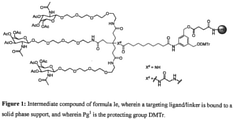
- the invention includes an intermediate compound of formula Ie: or a salt thereof, wherein:
- Pg 1 is TMTr (Trimethoxytrityl), DMTr (Dimethoxytrityl), MMTr (Monomethoxytrityl), or Tr (Trityl).
- the invention also provides a method to prepare a compound of formula (Id) as described herein comprising subjecting a corresponding compound of formula (Ie): wherein:
- the method further comprises removing the compound from the solid support to provide the corresponding compound of formula Id wherein R 3d is H.
- the compound is not a compound formula Id: or a salt thereof, wherein:
- the compound is not a compound formula Ie: or a salt thereof, wherein:
- R 3d is H.
- R 3d is a covalent bond to a solid support.
- R 3d is a bond to a linking group that is bound to a solid support, wherein the linking group is a divalent, branched or unbranched, saturated or unsaturated, hydrocarbon chain, having from 2 to 15 carbon atoms, wherein one or more (e.g. 1, 2, 3, or 4) of the carbon atoms is optionally replaced by (-O-) or (-N(H)-), and wherein the chain is optionally substituted on carbon with one or more (e.g.
- substituents selected from (C 1 -C 6 )alkoxy, (C 3 -C 6 )cycloalkyl, (C 1 -C 6 )alkanoyl, (C 1 -C 6 )alkanoyloxy, (C 1 -C 6 )alkoxycarbonyl, (C 1 -C 6 )alkylthio, azido, cyano, nitro, halo, hydroxy, oxo ( O), carboxy, aryl, aryloxy, heteroaryl, and heteroaryloxy.
- R 3d is a bond to a linking group that is bound to a solid support, wherein the linking group is a divalent, branched or unbranched, saturated or unsaturated, hydrocarbon chain, having from 2 to 10 carbon atoms, wherein one or more (e.g. 1, 2, 3, or 4) of the carbon atoms is optionally replaced by (-O-) or (-N(H)-), and wherein the chain is optionally substituted on carbon with one or more (e.g.
- substituents selected from (C 1 -C 6 )alkoxy, (C 3 -C 6 )cycloalkyl, (C 1 -C 6 )alkanoyl, (C 1 -C 6 )alkanoyloxy, (C 1 -C 6 )alkoxycarbonyl, (C 1 -C 6 )alkylthio, azido, cyano, nitro, halo, hydroxy, oxo ( O), carboxy, aryl, aryloxy, heteroaryl, and heteroaryloxy.
- the invention provides a compound of formula (I): wherein:
- the invention provides a compound of formula (I): wherein:
- the invention provides a compound of formula (Ig): wherein:
- the invention provides a compound selected from the group consisting of: wherein:
- the invention provides a compound selected from the group consisting of: wherein: Q is -L 1 -R 1 ; and salts thereof.
- the invention provides a compound of formula (Ig): wherein:
- the invention provides a compound selected from the group consisting of: wherein:
- R 1 is H or a synthetic activating group derivable from DCC, HOBt, EDC, BOP, PyBOP or HBTU.
- R 2 is H, acetate, triflate, mesylate or succinate.
- R 1 is a synthetic activating group derivable from DCC, HOBt, EDC, BOP, PyBOP or HBTU.
- R 2 is acetate, triflate, mesylate or succinate.
- the invention provides a compound of formula (XX): wherein:
- R 1 comprises 2-8 saccharides.
- R 1 comprises 2-6 saccharides.
- R 1 comprises 2-4 saccharides.
- R 1 comprises 3-8 saccharides.
- R 1 comprises 3-6 saccharides.
- R 1 comprises 3-4 saccharides.
- R 1 comprises 3 saccharides.
- R 1 comprises 4 saccharides.
- R 1 has the following formula: wherein:
- each saccharide is independently selected from: wherein:
- one of T 1 and T 2 is absent.
- both T 1 and T 2 are absent.
- At least one of T 1 and T 2 is glycine
- each of T 1 and T 2 is glycine.
- B 1 is a trivalent group comprising 1 to 15 atoms and is covalently bonded to L 1 , T 1 , and T 2 .
- B 1 is a trivalent group comprising 1 to 10 atoms and is covalently bonded to L 1 , T 1 , and T 2 .
- B 1 comprises a (C 1 -C 6 )alkyl.
- B 1 comprises a C 3-8 cycloalkyl.
- B 1 comprises a silyl group.
- B 1 comprises a D- or L-amino acid.
- B 1 comprises a saccharide
- B 1 comprises a phosphate group.
- B 1 comprises a phosphonate group.
- B 1 comprises an aryl
- B 1 comprises a phenyl ring.
- B 1 is a phenyl ring.
- B 1 is CH.
- B 1 comprises a heteroaryl
- B 1 is selected from the group consisting of:
- B 1 is selected from the group consisting of:
- B 2 is a trivalent group comprising 1 to 15 atoms and is covalently bonded to L 1 , T 1 , and T 2 .
- B 2 is a trivalent group comprising 1 to 10 atoms and is covalently bonded to L 1 , T 1 , and T 2 .
- B 2 comprises a (C 1 -C 6 )alkyl
- B 2 comprises a C 3-8 cycloalkyl.
- B 2 comprises a silyl group.
- B 2 comprises a D- or L-amino acid.
- B 2 comprises a saccharide
- B 2 comprises a phosphate group.
- B 2 comprises a phosphonate group.
- B 2 comprises an aryl
- B 2 comprises a phenyl ring.
- B 2 is a phenyl ring.
- B 2 is CH.
- B 2 comprises a heteroaryl
- B 2 is selected from the group consisting of:
- B 2 is selected from the group consisting of: or a salt thereof.
- B 3 is a trivalent group comprising 1 to 15 atoms and is covalently bonded to L 1 , T 1 , and T 2 .
- B 3 is a trivalent group comprising 1 to 10 atoms and is covalently bonded to L 1 , T 1 , and T 2 .
- B 3 comprises a (C 1 -C 6 )alkyl.
- B 3 comprises a C 3-8 cycloalkyl.
- B 3 comprises a silyl group.
- B 3 comprises a D- or L-amino acid.
- B 3 comprises a saccharide
- B 3 comprises a phosphate group.
- B 3 comprises a phosphonate group.
- B 3 comprises an aryl
- B 3 comprises a phenyl ring.
- B 3 is a phenyl ring.
- B 3 is CH.
- B 3 comprises a heteroaryl
- B 3 is selected from the group consisting of:
- B 3 is selected from the group consisting of: or a salt thereof.
- L 1 is selected from the group consisting of: or a salt thereof.
- L 1 is selected from the group consisting of:
- L 2 is connected to R 2 through -O-.
- L 2 is C 1-4 alkylene-O- that is optionally substituted with hydroxy.
- L 2 is connected to R 2 through -O-.
- L 2 is absent.
- the invention provides a compound or salt selected from the group consisting of: and pharmaceutically acceptable salts thereof, wherein R 2 is a double stranded siRNA molecule selected from the double stranded siRNA molecules of Table 1.
- the invention provides a compound of formula: or a salt thereof wherein R 2 is a nucleic acid.
- the invention provides a compound of formula: or a salt thereof wherein R 2 is a nucleic acid.
- the nucleic acid molecule e.g., siRNA
- the nucleic acid molecule is attached to the reminder of the compound through the oxygen of a phosphate at the 3'-end of the sense strand.
- the compound or salt is administered subcutaneously.
- a compound comprises a group of the following formula: there are four stereoisomers possible on the ring, two cis and two trans. Unless otherwise noted, the compounds of the invention include all four stereoisomers about such a ring.
- the two R' groups are in a cis conformation. In one embodiment, the two R' groups are in a trans conformation.
- nucleic acid-lipid particle comprising:
- oligonucleotide is a double stranded siRNA molecule as described in Table 1.
- the succinate 20 was loaded onto 1000 ⁇ LCAA (long chain aminoalkyl) CPG (control pore glass) using standard amide coupling chemistry.
- a solution of diisopropylcarbodiimide (52.6 ⁇ mol), N-hydroxy succinimide (0.3 mg, 2.6 ⁇ mol) and pyridine (10 ⁇ L) in anhydrous acetonitrile (0.3 mL) was added to 20 (20.6 mg, 8 ⁇ mol) in anhydrous dichloromethane (0.2 mL). This mixture was added to LCAA CPG (183 mg). The suspension was gently mixed overnight at room temperature.
- the reaction mixture was filtered and the CPG was washed with 1 mL of each dichloromethane, acetonitrile, a solution of 5% acetic anhydride / 5% N-methylimidazole / 5% pyridine in THF, then THF, acetonitrile and dichloromethane.
- the CPG was then dried overnight under high vacuum. Loading was determined by standard DMTr assay by UV/Vis (504 nm) to be 25 ⁇ mol/g.
- the resulting GalNAc loaded CPG solid support was employed in automated oligonucleotide synthesis using standard procedures. Nucleotide deprotection followed by removal from the solid support (with concurrent galactosamine acetate deprotection) afforded the GalNAc-oligonucleotide conjugate 1 as a representative example.
- a suspension of lithium aluminum hydride (13.6 g, 358 mmol) in anhydrous tetrahydrofuran (450 mL) was brought to reflux under a nitrogen atmosphere and treated, dropwise, with a solution of dimethyl-5-aminoisophthalte 25 (20 g, 96 mmol) in anhydrous tetrahydrofuran (350 mL). After the addition was complete the mixture was heated to reflux for an additional 2 hours. Upon completion, the solution was cooled to room temperature and quenched by the slow addition of MeOH (27 mL) then water (40 mL).
- Step 9 Preparation of methyl 10-((3-((bis(4-methoxyphenyl)(phenyl)methoxy)methyl)-5-(hydroxymethyl)benzyl)amino)-10-oxodecanoate 30
- the sodium bicarbonate solution was extracted with dichloromethane (3 x 50 mL), washed with brine (50 mL), dried on magnesium sulfate, filtered and concentrated to dryness.
- the crude material was purified by column chromatography on silica gel 60 (gradient: 2% to 5% MeOH-CH 2 Cl 2 ) to afford methyl 10-((3-((bis(4-methoxyphenyl)(phenyl)methoxy)methyl)-5-(hydroxymethyl)benzyl)amino)-10-oxodecanoate 30 as a yellow oil (57 mg, 53%).
- Rf 0.45 (10% MeOH-CH 2 Cl 2 ).
- Compounds 32, 33 and 34 were prepared according to same procedure used to synthesize compounds 19, 20, and 1 respectfully.
- Conjugate 36 was prepared using identical procedures as used to synthesize compound 34 and all corresponding intermediates. The only exception being the synthesis of compound 6 where propanoic anhydride was used in place of acetic anhydride.
- Compounds 40, 41 and 42 were prepared according to the same procedure used to synthesize compounds 19, 20, and 1 respectfully.
- the suspension was left for 2 hours then filtered and rinsed with equal parts tetrahydrofuran (25 mL), acetonitrile (25 mL) and dichloromethane (25 mL).
- the loaded CPG 49 was dried under high vacuum overnight.
- the ligand loading efficiency was determined to be 22 ⁇ mole/g using a standard DMT loading assay (3% trichloroacetic acid in CH 2 Cl 2 , UV-VIS, A 504 ).
- the resulting GalNAc loaded CPG solid support 49 was employed in automated oligonucleotide synthesis using standard procedures. Nucleotide deprotection followed by removal from the solid support (with concurrent galactosamine acetate deprotection) afforded a GalNAc-oligonucleotide conjugate 43.
- Step 3 Preparation of methyl 10-((2-(bis(4-methoxyphenyl)(phenyl)methoxy)ethyl)(2-((tert-butyldimethylsilyl)oxy)ethyl)amino)-10-oxodecanoate 53
- (2R,5R)-5-hydroxypiperidine-2-carboxylic acid 60 (3.5 g, 24.1 mmol) was stirred in MeOH (50 mL). HCl (g) was bubbled through the solution for 2 mins and the reaction stirred at reflux for 1.5 h. The reaction was concentrated in-vacuo to give methyl (2R,5R)-5-hydroxypiperidine-2-carboxylate 61 in quantitative yield which was used without further purification.
- Step 8 Preparation of methyl 12-((2R,5R)-2-((bis(4-methoxyphenyl)(phenyl)-methoxy)methyl)-5-hydroxypiperidin-1-yl)-12-oxododecanoate 68
- Compound 78 was prepared from compounds 9 (2.75 g, 4.3 mmol) and 77 (0.5 g, 0.96 mmol) using an identical procedure to that used for compound 13. Yield: 600 mg.
- Compound 140 was prepared from compound 79 (500 mg, 0.25 mmol) and compound 18 (175 mg, 0.25 mmol) using an identical procedure to that used for compound 19. Yield: 250 mg, 44%.
- Compound 141 was prepared from compound 140 (250 mg, 0.11 mmol) using an identical procedure to that used for compound 20. Yield: 200 mg.
- Conjugate 142 was prepared from compound 141 (200 mg) and 1000A lcaa CPG (1.8 g) using an identical procedure to that used for compound 1. Yield: 1.9 g, 22 ⁇ mol/g CPG loading.
- the resulting GalNAc loaded CPG solid support was employed in automated oligonucleotide synthesis using standard procedures. Nucleotide deprotection followed by removal from the solid support (with concurrent galactosamine acetate deprotection) afforded the GalNAc-oligonucleotide conjugate 142.
- Compound 126 was prepared from compound 125 (1.3 g, 8.2 mmol) and monomethyl sebacate (1.8 g, 8.2 mmol) using an identical procedure to that used for compound 17. Yield: 1.8 g, 61%.
- Compound 127 was prepared from compound 126 (1.8 g, 5.0 mmol) and 4,4'-Dimethoxytrityl chloride (1.7 g, 5.0 mmol) using an identical procedure to that used for compound 18. Yield: 1.4 g, 42%.
- Compound 143 was prepared from compound 128 (270 mg, 0.42 mmol) and compound 14 (800 mg, 0.42 mmol) using an identical procedure to that used for compound 19. Yield: 900 mg, 87%.
- Compound 144 was prepared from compound 143 (500 mg, 0.2 mmol) using an identical procedure to that used for compound 20. Yield: 200 mg.
- Conjugate 145 was prepared from compound 144 (200 mg) and 1000A lcaa CPG (1.8 g) using an identical procedure to that used for compound 1. Yield: 1.9 g, 20 ⁇ mol/g CPG loading.
- the resulting GalNAc loaded CPG solid support was employed in automated oligonucleotide synthesis using standard procedures. Nucleotide deprotection followed by removal from the solid support (with concurrent galactosamine acetate deprotection) afforded the GalNAc-oligonucleotide conjugate 145.
- Compound 146-5 was prepared from 2-amino-4-(hydroxymethyl)cyclopentanol 146-4 and 1-(2,5-dioxopyrrolidin-1-yl) 12-methyl dodecanedioate 146-1, using the same procedure as described in the synthesis of 12-(2-( tert -butoxycarbonylamino)ethylamino)-12-oxododecanoate (3-2). Methyl 12-(2-hydroxy-4-(hydroxymethyl)cyclopentylamino)-12-oxododecanoate 146-5 was obtained in 87.4% yield as an off-white solid.
- Compound 147 was prepared quantitatively from compound 146 (1.4 g, 2.33mmol) using an identical procedure to that used for compound 18.
- Compound 148 was prepared from compound 147 (150mg, 0.23mmol) and compound 14 (431mg, 0.23mmol) using an identical procedure to that used for compound 19. Yield: 460mg, 84%.
- Compound 149 was prepared from compound 148 (460mg, 0.19mmol) using an identical procedure to that used for compound 20. Yield: 436mg, 91%.
- Compound 150 was prepared from compound 149 (436mg) and 1000A lcaa CPG (2.62g) using an identical procedure to that used for compound 1. Yield: 2.7g, 21.3 ⁇ mol/g CPG loading.
- the resulting GalNAc loaded CPG solid support was employed in automated oligonucleotide synthesis using standard procedures. Nucleotide deprotection followed by removal from the solid support (with concurrent galactosamine acetate deprotection) afforded the GalNAc-oligonucleotide conjugate 150.
- AD-mix- ⁇ 47.4 g
- methanesulfonamide 2.89 g, 30.4 mmol
- the mixture was stirred at room temperature for 30 min and was then cooled to 0°C.
- tert-Butyl 3-vinylpyrrolidine-1-carboxylate 164-1 (6.00g, 30.4 mmol) was added.
- the reaction was stirred at room temperature overnight.
- the reaction mixture was cooled to 0°C.
- Sodium thiosulfate pentahydrate (96 g, 387 mmol) was added and the temperature was allowed to warm to room temperature.
- This substance was prepared from methyl 12-(3-(1,2-dihydroxyethyl)pyrrolidin-1-yl)-12-oxododecanoate 164-4 and 4,4-dimethoxytrityl chloride (1 eq) using the same procedure as described in the synthesis of 2-(2-(bis(4-methoxyphenyl)(phenyl)methoxy)ethyl)isoindoline-1,3-dione 138. The product was purified by column chromatography (1.5% methanol/dichloromethane).
- Methyl 12-(3 -(2-(bis(4-methoxyphenyl)(phenyl)methoxy)-1 - hydroxyethyl)pyrrolidin-1-yl)-12-oxododecanoate 164 was obtained in 51% yield as a yellow oil.
- Compound 170-4 was synthesized from (S)-2,2-dimethyl-1,3-dioxolane-4-carboxylic acid 170-3 and N-hydroxysuccinimide in 86% yield, using the same procedure as described in the synthesis of 1-(2,5-dioxopyrrolidin-1-yl) 12-methyl dodecanedioate 146-1.
- (S)-2,5-Dioxopyrrolidin-1-yl 2,2-dimethyl-1,3-dioxolane-4-carboxylate 170-4 was obtained in 86% yield as a white solid.
- Conjugates 153, 158, 163, 168 and 173 were prepared from compound 139, 154, 159, 164 and 169 using an identical procedure to that used for compound 1.
- 12-aminoundecanoic acid (131) (10g, 4.64 mmol) was stirred in MeOH at RT.
- Acetyl chloride (856 ⁇ L, 12 mmol) was added dropwise and the reaction stirred for 1.5 hr.
- the solvent was removed in-vacuo, the residue taken up in MTBE and chilled in the fridge overnight.
- the resultant precipitate was collected by filtration, washed with ice cold MTBE and dried under high vacuum to afford methyl 12-aminododecanoate 132.
- TLC showed two close running spots with identical mass that were assigned as geometric isomers and pooled together to give of Methyl 12-(12-(10-((3R,4S)-3-((bis(4-methoxyphenyl)(phenyl)methoxy)methyl)-4-(hydroxymethyl)-3,4-dimethylpyrrolidin-1-yl)-10-oxodecanamido)dodecanamido)dodecanoate (129) in quantitative fashion.
- Conjugate 176 was prepared from compounds 24 and 130 using an identical procedure to that used for compound 1.
- Compound 81 was prepared from compounds 80 (670 mg, 0.17 mmol) using an identical procedure to that used for compound 14. The compound was used crude in subsequent reactions and the yield taken as quantitative.
- Conjugate 179 was prepared from compounds 18 and 81 using an identical procedure to that used for compound 1.
- Conjugate 182 was prepared from compounds 18 and 94 using an identical procedure to that used for compound 1.
- 14-azido-3,6,9,12-tetraoxatetradecan-1-ol (83) was prepared from 82 (24.6g, 62.7mmol) and sodium azide (7.13g, 110mmol) using an identical procedure to that used for compound 4. Yield: 14.8g, 90%.
- Compound 96 was prepared from compound 95 (11.1 g) using an identical procedure to that used for compound 92. Yield: 6.5 g.
- Compound 97 was prepared from (2-oxo-2-phenyl-1 ⁇ 2 -ethyl)-D-glutamic acid (2g, 7. 1mmol) and 85 (12.1g, 17.8mmol) using an identical procedure to that used for compound 89. Yield: 10g, quantitative.
- Compound 98 was prepared from compound 97 (10g, 7.2mmol) using an identical procedure to that used for compound 90. Yield: 3.5g, 36%.
- Compound 99 was prepared quantitatively from (2-oxo-2-phenyl-1 ⁇ 2 -ethyl)-D-glutamic acid (350 mg, 1.25 mmol) and compound 98 (2.86 mg, 2.5mmol) using an identical procedure to that used for compound 91.
- Compound 100 was prepared quantitatively from compound 99 (3.2 g, 1.25 mmol) using an identical procedure to that used for compound 92.
- Conjugate 185 and 188 were prepared from compounds 18 and 96 or 18 and 100 using an identical procedure to that used for compound 1.
- Compound 87 is prepared from 86 (4.95g, 28.3mmol) and 6 (10g, 25.7mmol) using an identical procedure to that used for compound 84. Yield: 10g, 77%.
- Compound 101 is prepared from (R)-2-((2-oxo-2-phenyl-112-ethyl)amino)hexanedioic acid (2.51g, 8.6 mmol) and 9 (11g, 17.2 mmol) using an identical procedure to that used for compound 89. Yield: 4.2 g, 37%.
- Compound 102 is prepared from compound 101 (4.2g, 3.2 mmol) using an identical procedure to that used for compound 90. Yield: 2.1 g, 47%.
- Compound 103 is prepared from (R)-2-((2-oxo-2-phenyl-112-ethyl)amino)hexanedioic acid (265 mg, 0.9 mmol) and compound 102 (2.1 g, 1.8 mmol) using an identical procedure to that used for compound 91. Yield: (560 mg, 24 %).
- Compound 104 is prepared quantitatively from compound 103 (560 mg) using an identical procedure to that used for compound 92. The compound is used without purification.
- Conjugates 191, 194, and 197 are prepared from compound 128 and 92, 96, and 100 using an identical procedure to that used for compound 1.
- Compound 87a was prepared from 86a (4.95g, 28.3mmol) and 6a (10g, 25.7mmol) using an identical procedure to that used for compound 84. Yield: 10g, 77%.
- Compound 88a was prepared from 87a (10g, 19.8mmol) using an identical procedure to that used for compound 85. Yield: 7.63g, 65%.
- Conjugate 191a was prepared from compound 128 and compound 92a using an identical procedure to that used for compound 1.
- Compound 87a is prepared from 86b (4.95g, 28.3mmol) and 6b (10g, 25.7mmol) using an identical procedure to that used for compound 84. Yield: 10g, 77%.
- Compound 88a is prepared from 87b (10g, 19.8mmol) using an identical procedure to that used for compound 85. Yield: 7.63g, 65%.
- Conjugate 191b is prepared from compound 128 and compound 92b using an identical procedure to that used for compound 1.
- Compound 87c is prepared from 86c (4.95g, 28.3mmol) and 6c (10g, 25.7mmol) using an identical procedure to that used for compound 84. Yield: 10g, 77%.
- Compound 88c is prepared from 87c (10g, 19.8mmol) using an identical procedure to that used for compound 85. Yield: 7.63g, 65%.
- Conjugate 191c is prepared from compound 128 and compound 92c using an identical procedure to that used for compound 1:
- Compound 69b was prepared from (2S,4R)-4-Hydroxypyrrolidine-2-carboxylic acid using an identical procedure to that used for compound 69.
- Conjugates 203 and 206 were prepared from compound 96 and 100 using an identical procedure to that used for compound 1.
- Conjugate 209 was prepared from compound 96 and 160 using an identical procedure to that used for compound 1.
- Conjugate 209a is prepared from compound 96a and 160 using an identical procedure to that used for compound 1.
- Compound 107 was prepared from 5-(2-((2-oxo-2-phenyl-1 ⁇ 2 -ethyl)amino)acetamido)isophthalic acid 106 (200 mg, 0.54 mmol) and 94 (1.7 g, 1.3 mmol) using an identical procedure to that used for compound 95. Yield: 600 mg.
- Compound 108 was prepared from compound 107 (600 mg) using an identical procedure to that used for compound 96. Yield: 650 mg, quantitative.
- Compound 109 was prepared from 5-(2-((2-oxo-2-phenyl-1 ⁇ 2 -ethyl)amino)acetamido)isophthalic acid 106 (180 mg, 0.48 mmol) and 98 (1.5 g, 1.1 mmol) using an identical procedure to that used for compound 99. Yield: 900 mg.
- Compound 110 was prepared from compound 109 (900 mg) using an identical procedure to that used for compound 100. Yield: 920 mg, quantitative.
- Conjugates 212 and 215 were prepared from compound 128 and 108 or 110 using an identical procedure to that used for compound 1.
- Step 1 Preparation of Dimethyl 5-(2-((2-oxo-2-phenyl-1 ⁇ 2 -ethyl)amino)acetamido)-isophthalate 105a
- Compound 107a is prepared from 5-(2-((2-oxo-2-phenyl-1 ⁇ 2 -ethyl)amino)acetamido)isophthalic acid 106a (200 mg, 0.54 mmol) and 94a (1.7 g, 1.3 mmol) using an identical procedure to that used for compound 95. Yield: 600 mg.
- Compound 108a is prepared from compound 107a (600 mg) using an identical procedure to that used for compound 96a. Yield: 650 mg, quantitative.
- Compound 109a is prepared from 5-(2-((2-oxo-2-phenyl-1 ⁇ 2 -ethyl)amino)acetamido)isophthalic acid 106a (180 mg, 0.48 mmol) and 9a8 (1.5 g, 1.1 mmol) using an identical procedure to that used for compound 99. Yield: 900 mg.
- Compound 110a is prepared from compound 109 (900 mg) using an identical procedure to that used for compound 100. Yield: 920 mg, quantitative.
- Conjugates 212a and 21a5 are prepared from compound 128 and 108a or 110a using an identical procedure to that used for compound 1.
- Compound 111 was prepared from 4-(((tert-butoxycarbonyl)amino)methyl)phthalic acid (1.13g, 3.84mmol) and 88 (5g, 8.44mmol) using an identical procedure to that used for compound 89. Yield: 2.21g, 49%.
- Compound 113 was prepared from compound 112 (1.08g, 0.88mmol) and (2-oxo-2-phenyl-1 ⁇ 2 -ethyl)-D-glutamic acid (112mg, 0.39mmol) using an identical procedure to that used for compound 91. Yield: 600mg, 62%.
- Compound 114 was prepared from compound 113 using an identical procedure to that used for compound 92.
- Compound 115 was prepared from 4-(((tert-butoxycarbonyl)amino)methyl)phthalic acid (3.94g, 13.3mmol) and 9 (18.2g, 29.4mmol) using an identical procedure to that used for compound 93. Yield: 9.02g, 53%.
- Compound 116 was prepared from compound 115 (8g, 6.3mmol) using an identical procedure to that used for compound 112. Yield: 3.23g, 39%.
- Compound 117 was prepared from compound 116 (3.23g, 2.45mmol) and (2-oxo-2-phenyl-1 ⁇ 2 -ethyl)-D-glutamic acid (192mg, 1.1mmol) using an identical procedure to that used for compound 95. Yield: 2.22g, 34%.
- Compound 118 was prepared from compound 117 (2.22g, 0.84mmol) using an identical procedure to that used for compound 96. Yield: 2.02g, 91%.
- Conjugates 218 and 221 were prepared from compounds 128 and 114 or 118 using an identical procedure to that used for compound 1.
- Compound 111a is prepared from 4-(((tert-butoxycarbonyl)amino)methyl)phthalic acid (1.13g, 3.84mmol) and 88 (5g, 8.44mmol) using an identical procedure to that used for compound 89. Yield: 2.21g, 49%.
- Compound 113a is prepared from compound 112a (1.08g, 0.88mmol) and (2-oxo-2-phenyl-1 ⁇ 2 -ethyl)-D-glutamic acid (112mg, 0.39mmol) using an identical procedure to that used for compound 91. Yield: 600mg, 62%.
- Compound 114a is prepared from compound 113a using an identical procedure to that used for compound 92.
- Compound 115a is prepared from 4-(((tert-butoxycarbonyl)amino)methyl)phthalic acid (3.94g, 13.3mmol) and 9 (18.2g, 29.4mmol) using an identical procedure to that used for compound 93. Yield: 9.02g, 53%.
- Compound 116a is prepared from compound 115a (8g, 6.3mmol) using an identical procedure to that used for compound 11a. Yield: 3.23g, 39%.
- Compound 117a is prepared from compound 116a (3.23g, 2.45mmol) and (2-oxo-2-phenyl-1 ⁇ 2 -ethyl)glutamic acid (192mg, 1. 1mmol) using an identical procedure to that used for compound 95. Yield: 2.22g, 34%.
- Compound 118a is prepared from compound 117a (2.22g, 0.84mmol) using an identical procedure to that used for compound 96. Yield: 2.02g, 91%.
- Conjugates 218a and 22a1 are prepared from compounds 128 and 114a or 118a using an identical procedure to that used for compound 1.
- Conjugate 224 was prepared from compounds 96 and 130 using an identical procedure to that used for compound 1.
- Conjugate 224b is prepared from compounds 96b and 130 using an identical procedure to that used for compound 1.
- Compound 225 was prepared from 5-(2-aminoacetamido)isophthalic acid 106 (560mg, 1.5mmol) and 9 (2.24g, 3.6mmol) using an identical procedure to that used for 89. Yield 1.6g, 80%.
- Compound 226 was prepared in the same fashion as 14. Yield 1.22g, 78%.
- Compound 229 was prepared from 228 (460mg, 0.17mmol) and 128 (125mg, 0.19mmol) in the same fashion as 89. Yield 365mg, 66%.
- Conjugate 231 was prepared using an identical procedure to that used for compound 1.
- Compound 225a is prepared from 5-(2-aminoacetamido)isophthalic acid 106 (560mg, 1.5mmol) and 9 (2.24g, 3.6mmol) using an identical procedure to that used for 89. Yield 1.6g, 80%.
- Compound 226a is prepared in the same fashion as 14. Yield 1.22g, 78%.
- Compound 227a is prepared in the same fashion as 89, from Z-glutamic acid (108mg, 0.38mmol) and 226a (1.22g, 0.92mmol). Yield 471mg, 45%.
- Compound 228a is prepared in the same fashion as 14. Yield 460mg; Quant.
- Compound 229a is prepared from 228a (460mg, 0.17mmol) and 128 (125mg, 0.19mmol) in the same fashion as 89. Yield 365mg, 66%.
- Conjugate 231a is prepared using an identical procedure to that used for compound 1.
- Compound 225b is prepared from 5-(2-aminoacetamido)isophthalic acid 106 (560mg, 1.5mmol) and 9 (2.24g, 3.6mmol) using an identical procedure to that used for 89. Yield 1.6g, 80%.
- Compound 226b is prepared in the same fashion as 14. Yield 1.22g, 78%.
- Compound 227b is prepared in the same fashion as 89, from Z-glutamic acid (108mg, 0.38mmol) and 226b (1.22g, 0.92mmol). Yield 471mg, 45%.
- Compound 229b is prepared from 228b (460mg, 0.17mmol) and 128 (125mg, 0.19mmol) in the same fashion as 89. Yield 365mg, 66%.
- Conjugate 231b is prepared using an identical procedure to that used for compound 1.
- Compound 232 was prepared from compound 24 (650 mg, 0.33 mmol) and compound 69b (175 mg, 0.33 mmol) using an identical procedure to that used for compound 19. Yield: 380 mg, 47%.
- Compound 233 was prepared from compound 232 using identical procedures to that used for compound 1.
- Example 25 In vivo testing of HBV siRNA conjugates
- HBV siRNA described in Table 1 conjugated to GalNAc ligands were tested for in vivo activity in an established mouse model of HBV infection.
- AAV-HBV1.2 C57BL/6 mouse model stable and persistent HBV expression is achieved after injection of an adeno-associated virus (AAV) vector encoding an over-genomic length sequence of HBV, leading to hepatic expression of HBV RNA and proteins and the secretion of viral and sub-viral particles into the blood.
- AAV adeno-associated virus
- the AAV-HBV1.2 construct used in these studies was based on details provided in Dion, S., et al., Journal of Virology, 2013, 87(10): 5554-5563 . All animal-related procedures were conducted according to written operating procedures, in accordance with Canadian Council on Animal Care (CCAC) Guidelines on Good Animal Practices, and approved by the local Institutional Animal Care and Use Committee (IACUC).
- CCAC Canadian Council on Animal Care
- IACUC Institutional Animal Care and Use Committee
- Each animal was inoculated with 1E11 vector genomes (VG) of AAV-HBV1.2 vector. Prior to treatment, all animals were test bled and serum HBsAg levels determined for individual animals to confirm established HBV expression.
- VG vector genomes
- mice All mice were test bled on Day 0, prior to treatment, and at defined time points after test article administration (for example on study days 7, 14, 21, 28, 35, 42, 49, 56, 63, and 70) to determine maximum reductions in serum HBsAg levels and the duration of pharmacologic activity.
- HBsAg levels in serum samples were determined using the Biorad EIA GS HBsAg 3.0 kit (BioRad, catalog no. 32591) as per the manufacturer's instructions. Pooled serum from each treatment group was used to determine the group mean HBsAg levels at individual time points. Data was analyzed and expressed as HBsAg levels relative to pretreatment baseline (% relative to Day 0).
- Results Results from testing each of the chemically modified HBV siRNA described in Table 1 are presented in Table 2. Values represent % HBsAg levels (relative to Day 0 baseline) on Days 7, 14, 21, 28, 42, 49, 56 and 70 post treatment. Table 1. Chemically Modified HBV siRNA duplexes siRNA Number Sense strand SEQ ID NO Sense strand Antisense strand SEQ ID NO Antisense strand 5'-3' 5'-3' 1 SEQ ID NO:1 csgsugug C a CUU cgcuucaccu SEQ ID NO:2 as G sgug A a GC gaag UgC acacgsgsuUU 2 SEQ ID NO:3 usgs C a CUU cgcuucaccu SEQ ID NO:4 as G sgug A a GC gaa gUgC acascsgU 3 SEQ ID NO:5 usgsca CUU cgcuucaccu SEQ ID NO:6
- HBsAg data expressed as percent of baseline (Day 0) values siRNA Number Ligand Cpd # Day 7 Day 14 Day 21 Day 28 Day 42 Day 49 Day 56 Day 70 Saline 95.7 118.6 101.0 111.4 115.3 112.2 106.5 1 145 3.1 1.0 22.8 1.3 3.2 7.3 2 145 1.3 0.5 0.4 0.7 3.4 6.5 5 235 12.7 7.0 9.6 21.3 59.7 74.6 98.8 5 233 16.6 8.2 11.0 12.6 24.4 32.2 60.3 5 145 4.3 1.2 1.7 2.4 11.9 24.5 6 233 20.1 10.4 10.9 13.5 30.8 46.0 67.5 7 233 20.7 12.4 10.5 13.6 24.9 46.2 77.0 8 233 18.1 10.5 11.5 12.1 26.0 37.6 64.9 9 145 10.0 2.7 2.0 3.6 6.8 17.0 10 145 16.7 16.7 16.0 16.7 74.4 97.3
- Compound 316 was prepared in the same fashion as 314, from Z-glutamic acid (306mg, 1.09mmol) and 315 (3.3g, 2.6mmol). Yield 1.66g, 60%.
- Compound 317 was prepared in the same fashion as 315. Yield 1.65g, Quant.
- the succinate 319 was loaded onto 1000 ⁇ LCAA (long chain aminoalkyl) CPG (control pore glass) using standard amide coupling chemistry.
- a solution of diisopropylcarbodiimide (52.6 ⁇ mol), N-hydroxy succinimide (0.3 mg, 2.6 ⁇ mol) and pyridine (10 ⁇ L) in anhydrous acetonitrile (0.3 mL) was added to 319 (20.6 mg, 8 ⁇ mol) in anhydrous dichloromethane (0.2 mL). This mixture was added to LCAA CPG (183 mg). The suspension was gently mixed overnight at room temperature.
Landscapes
- Health & Medical Sciences (AREA)
- Life Sciences & Earth Sciences (AREA)
- Engineering & Computer Science (AREA)
- Chemical & Material Sciences (AREA)
- Genetics & Genomics (AREA)
- Molecular Biology (AREA)
- Biomedical Technology (AREA)
- Organic Chemistry (AREA)
- Bioinformatics & Cheminformatics (AREA)
- General Health & Medical Sciences (AREA)
- Biotechnology (AREA)
- General Engineering & Computer Science (AREA)
- Zoology (AREA)
- Wood Science & Technology (AREA)
- Biochemistry (AREA)
- Veterinary Medicine (AREA)
- Public Health (AREA)
- Animal Behavior & Ethology (AREA)
- Pharmacology & Pharmacy (AREA)
- Medicinal Chemistry (AREA)
- Virology (AREA)
- Plant Pathology (AREA)
- Microbiology (AREA)
- Biophysics (AREA)
- Physics & Mathematics (AREA)
- Epidemiology (AREA)
- General Chemical & Material Sciences (AREA)
- Chemical Kinetics & Catalysis (AREA)
- Nuclear Medicine, Radiotherapy & Molecular Imaging (AREA)
- Communicable Diseases (AREA)
- Oncology (AREA)
- Gastroenterology & Hepatology (AREA)
- Botany (AREA)
- Immunology (AREA)
- Crystallography & Structural Chemistry (AREA)
- Pharmaceuticals Containing Other Organic And Inorganic Compounds (AREA)
- Medicines That Contain Protein Lipid Enzymes And Other Medicines (AREA)
- Medicinal Preparation (AREA)
- Peptides Or Proteins (AREA)
- Saccharide Compounds (AREA)
Applications Claiming Priority (4)
| Application Number | Priority Date | Filing Date | Title |
|---|---|---|---|
| US201762484247P | 2017-04-11 | 2017-04-11 | |
| US201762525071P | 2017-06-26 | 2017-06-26 | |
| PCT/US2018/026918 WO2018191278A2 (en) | 2017-04-11 | 2018-04-10 | Targeted compositions |
| EP18720744.4A EP3610017A2 (en) | 2017-04-11 | 2018-04-10 | Targeted compositions |
Related Parent Applications (1)
| Application Number | Title | Priority Date | Filing Date |
|---|---|---|---|
| EP18720744.4A Division EP3610017A2 (en) | 2017-04-11 | 2018-04-10 | Targeted compositions |
Publications (1)
| Publication Number | Publication Date |
|---|---|
| EP3950004A1 true EP3950004A1 (en) | 2022-02-09 |
Family
ID=62063656
Family Applications (2)
| Application Number | Title | Priority Date | Filing Date |
|---|---|---|---|
| EP21152689.2A Pending EP3950004A1 (en) | 2017-04-11 | 2018-04-10 | Targeted compositions |
| EP18720744.4A Pending EP3610017A2 (en) | 2017-04-11 | 2018-04-10 | Targeted compositions |
Family Applications After (1)
| Application Number | Title | Priority Date | Filing Date |
|---|---|---|---|
| EP18720744.4A Pending EP3610017A2 (en) | 2017-04-11 | 2018-04-10 | Targeted compositions |
Country Status (15)
| Country | Link |
|---|---|
| US (3) | US11427823B2 (enExample) |
| EP (2) | EP3950004A1 (enExample) |
| JP (3) | JP2020516296A (enExample) |
| KR (3) | KR20250145702A (enExample) |
| CN (2) | CN118460536A (enExample) |
| AU (2) | AU2018250553B2 (enExample) |
| BR (1) | BR112019021359A2 (enExample) |
| CA (1) | CA3059426A1 (enExample) |
| MA (1) | MA52546A (enExample) |
| MX (3) | MX2019012280A (enExample) |
| NZ (1) | NZ757927A (enExample) |
| PH (1) | PH12019502333A1 (enExample) |
| SG (1) | SG11201909433XA (enExample) |
| TW (2) | TWI805577B (enExample) |
| WO (1) | WO2018191278A2 (enExample) |
Families Citing this family (27)
| Publication number | Priority date | Publication date | Assignee | Title |
|---|---|---|---|---|
| MA45478A (fr) | 2016-04-11 | 2019-02-20 | Arbutus Biopharma Corp | Compositions de conjugués d'acides nucléiques ciblés |
| KR20250145702A (ko) | 2017-04-11 | 2025-10-13 | 아뷰터스 바이오파마 코포레이션 | 표적화 조성물 |
| US11414665B2 (en) | 2017-12-01 | 2022-08-16 | Suzhou Ribo Life Science Co., Ltd. | Nucleic acid, composition and conjugate comprising the same, and preparation method and use thereof |
| WO2019105418A1 (zh) | 2017-12-01 | 2019-06-06 | 苏州瑞博生物技术有限公司 | 双链寡核苷酸、含双链寡核苷酸的组合物与缀合物及制备方法和用途 |
| KR102834361B1 (ko) | 2017-12-01 | 2025-07-17 | 쑤저우 리보 라이프 사이언스 컴퍼니, 리미티드 | 핵산, 이를 포함하는 조성물과 컨쥬게이트, 및 그의 제조 방법과 용도 |
| JP7365052B2 (ja) | 2017-12-01 | 2023-10-19 | スーチョウ リボ ライフ サイエンス カンパニー、リミテッド | 核酸、当該核酸を含む組成物及び複合体ならびに調製方法と使用 |
| US11414661B2 (en) | 2017-12-01 | 2022-08-16 | Suzhou Ribo Life Science Co., Ltd. | Nucleic acid, composition and conjugate containing nucleic acid, preparation method therefor and use thereof |
| CA3087106A1 (en) | 2017-12-29 | 2019-07-04 | Suzhou Ribo Life Science Co., Ltd. | Conjugates and preparation and use thereof |
| JP2021533800A (ja) | 2018-08-21 | 2021-12-09 | スーチョウ リボ ライフ サイエンス カンパニー、リミテッドSuzhou Ribo Life Science Co., Ltd. | 核酸、当該核酸を含む薬物組成物及び複合体ならびにその使用 |
| CN111655297A (zh) | 2018-09-30 | 2020-09-11 | 苏州瑞博生物技术有限公司 | 一种siRNA缀合物及其制备方法和用途 |
| WO2020093053A1 (en) * | 2018-11-02 | 2020-05-07 | Arbutus Biopharma Corporation | Bivalent targeted conjugates |
| US20220031847A1 (en) * | 2018-11-02 | 2022-02-03 | Genevant Sciences Gmbh | Therapeutic methods |
| EP3941921A4 (en) * | 2019-03-20 | 2023-05-03 | Arbutus Biopharma Corporation | Therapeutic methods for treating hepatitis b |
| EP3974530A4 (en) * | 2019-05-22 | 2023-07-12 | Suzhou Ribo Life Science Co., Ltd. | NUCLEIC ACID, PHARMACEUTICAL COMPOSITION, CONJUGATE, METHOD FOR PREPARATION AND USE |
| US20220305107A1 (en) | 2019-06-18 | 2022-09-29 | Janssen Sciences Ireland Unlimited Company | COMBINATION OF HEPATITIS B VIRUS (HBV) VACCINES AND HBV-TARGETING RNAi |
| WO2021113820A1 (en) * | 2019-12-06 | 2021-06-10 | Genevant Sciences Gmbh | Conjugates and methods for treating liver fibrosis |
| EP4077473A4 (en) | 2019-12-20 | 2024-05-01 | Arbutus Biopharma Corporation | SYNTHETIC PROCESSES AND INTERMEDIATE PRODUCTS |
| JP2023548295A (ja) * | 2020-11-06 | 2023-11-16 | アルブータス・バイオファーマー・コーポレイション | 修飾されたsiRNAを含む標的化コンジュゲート |
| CN114853829A (zh) * | 2021-02-05 | 2022-08-05 | 上海拓界生物医药科技有限公司 | 一种核酸配体、其缀合物、制备方法及用途 |
| CN118355121A (zh) * | 2021-12-16 | 2024-07-16 | 上海拓界生物医药科技有限公司 | 一种dsRNA、其制备方法及应用 |
| KR20240136985A (ko) * | 2022-01-20 | 2024-09-19 | 청두 신정허 파마슈티컬 테크놀로지 컴퍼니 리미티드 | 표적화 리간드 및 이의 용도 |
| CN116917477B (zh) * | 2022-01-30 | 2024-04-09 | 大睿生物医药科技(上海)有限公司 | 含有n-乙酰半乳糖胺的靶向配体 |
| WO2023178144A2 (en) | 2022-03-16 | 2023-09-21 | Empirico Inc. | Galnac compositions for improving sirna bioavailability |
| WO2024255761A1 (zh) * | 2023-06-12 | 2024-12-19 | 大睿生物 | 包含糖的寡核苷酸递送配体 |
| WO2025007907A1 (zh) * | 2023-07-04 | 2025-01-09 | 大睿生物 | 包含肽的寡核苷酸递送配体 |
| WO2025007274A1 (zh) * | 2023-07-04 | 2025-01-09 | 成都先导药物开发股份有限公司 | 一种缀合物及其中间体化合物和用途 |
| WO2025242321A1 (en) | 2024-05-24 | 2025-11-27 | Glaxosmithkline Intellectual Property (No.3) Limited | Novel use |
Citations (11)
| Publication number | Priority date | Publication date | Assignee | Title |
|---|---|---|---|---|
| US4683195A (en) | 1986-01-30 | 1987-07-28 | Cetus Corporation | Process for amplifying, detecting, and/or-cloning nucleic acid sequences |
| US4683202A (en) | 1985-03-28 | 1987-07-28 | Cetus Corporation | Process for amplifying nucleic acid sequences |
| WO1996034005A1 (en) | 1995-04-28 | 1996-10-31 | Sloan-Kettering Institute For Cancer Research | Synthesis of the breast tumor-associated antigen defined by monoclonal antibody mbr1 and uses thereof |
| WO1997003995A1 (en) | 1995-07-24 | 1997-02-06 | Sloan-Kettering Institute For Cancer Research | Synthesis of glycoconjugates of the lewis y epitope and uses thereof |
| US5885613A (en) | 1994-09-30 | 1999-03-23 | The University Of British Columbia | Bilayer stabilizing components and their use in forming programmable fusogenic liposomes |
| WO2000003683A2 (en) | 1998-07-20 | 2000-01-27 | Inex Pharmaceuticals Corporation | Liposomal encapsulated nucleic acid-complexes |
| US20040142025A1 (en) | 2002-06-28 | 2004-07-22 | Protiva Biotherapeutics Ltd. | Liposomal apparatus and manufacturing methods |
| US20070042031A1 (en) | 2005-07-27 | 2007-02-22 | Protiva Biotherapeutics, Inc. | Systems and methods for manufacturing liposomes |
| WO2010006282A2 (en) | 2008-07-10 | 2010-01-14 | Serina Therapeutics, Inc. | Polyoxazolines with inert terminating groups, polyoxazolines prepared from protected initiating groups and related compounds |
| WO2016077349A1 (en) * | 2014-11-10 | 2016-05-19 | Alnylam Pharmaceuticals, Inc. | HEPATITIS D VIRUS (HDV) iRNA COMPOSITIONS AND METHODS OF USE THEREOF |
| WO2017177326A1 (en) * | 2016-04-11 | 2017-10-19 | Protiva Biotherapeutics, Inc. | Targeted nucleic acid conjugate compositions |
Family Cites Families (30)
| Publication number | Priority date | Publication date | Assignee | Title |
|---|---|---|---|---|
| US7833992B2 (en) | 2001-05-18 | 2010-11-16 | Merck Sharpe & Dohme | Conjugates and compositions for cellular delivery |
| WO2003070918A2 (en) * | 2002-02-20 | 2003-08-28 | Ribozyme Pharmaceuticals, Incorporated | Rna interference by modified short interfering nucleic acid |
| US9657294B2 (en) | 2002-02-20 | 2017-05-23 | Sirna Therapeutics, Inc. | RNA interference mediated inhibition of gene expression using chemically modified short interfering nucleic acid (siNA) |
| US8258288B2 (en) | 2002-02-20 | 2012-09-04 | Sirna Therapeutics, Inc. | RNA interference mediated inhibition of respiratory syncytial virus (RSV) expression using short interfering nucleic acid (siNA) |
| US20080207539A1 (en) * | 2003-09-01 | 2008-08-28 | Patrick Arbuthnot | Self-Processing Rna Expression Cassette |
| WO2005026165A1 (en) | 2003-09-12 | 2005-03-24 | Warner-Lambert Company Llc | Quinolone antibacterial agents |
| CA2688240A1 (en) | 2007-05-24 | 2008-12-04 | The United States Government As Represented By The Department Of Veterans Affairs | Intranuclear protein transduction through a nucleoside salvage pathway |
| EP3705125B1 (en) | 2007-12-04 | 2023-07-05 | Alnylam Pharmaceuticals, Inc. | Carbohydrate conjugates as delivery agents for oligonucleotides |
| AU2008340354B2 (en) | 2007-12-04 | 2014-04-17 | Alnylam Pharmaceuticals, Inc. | Folate-iRNA conjugates |
| US8541388B2 (en) | 2008-05-22 | 2013-09-24 | Isis Pharmaceuticals, Inc. | Methods for modulating expression of RBP4 |
| CN101603042B (zh) * | 2008-06-13 | 2013-05-01 | 厦门大学 | 可用于乙型肝炎病毒感染治疗的rna干扰靶点 |
| JP5723378B2 (ja) | 2009-11-03 | 2015-05-27 | アルナイラム ファーマシューティカルズ, インコーポレイテッドAlnylam Pharmaceuticals, Inc. | トランスサイレチン(ttr)を阻害する脂質製剤化組成物及び方法 |
| ES2562817T3 (es) | 2010-02-24 | 2016-03-08 | Arrowhead Research Corporation | Composiciones para el suministro dirigido de ARNip |
| KR20130132475A (ko) | 2010-12-17 | 2013-12-04 | 애로우헤드 리서치 코오포레이션 | siRNA의 갈락토오스 클러스터-약동학적 조절제 표적 물질 |
| EP2751270B1 (en) | 2011-08-29 | 2018-08-22 | Ionis Pharmaceuticals, Inc. | Oligomer-conjugate complexes and their use |
| MY167390A (en) | 2011-11-18 | 2018-08-16 | Alnylam Pharmaceuticals Inc | Rnai agents, compositions and methods of use thereof for treating transthyretin (ttr) associated diseases |
| KR20250133484A (ko) | 2011-11-18 | 2025-09-05 | 알닐람 파마슈티칼스 인코포레이티드 | 변형된 RNAi 제제 |
| SG11201503821YA (en) | 2012-11-15 | 2015-06-29 | Roche Innovation Ct Copenhagen As | Oligonucleotide conjugates |
| KR102482890B1 (ko) | 2013-05-01 | 2022-12-30 | 아이오니스 파마수티컬즈, 인코포레이티드 | 아포지질단백질 (a) 발현을 조절하는 조성물 및 방법 |
| AU2014284152B2 (en) | 2013-06-21 | 2020-01-23 | Ionis Pharmaceuticals, Inc. | Compositions and methods for modulation of target nucleic acids |
| DK3013959T3 (da) | 2013-06-27 | 2020-02-17 | Roche Innovation Ct Copenhagen As | Antisense-oligomerer og konjugater målrettet pcsk9 |
| AR097738A1 (es) | 2013-09-23 | 2016-04-13 | Alnylam Pharmaceuticals Inc | Métodos para tratar o prevenir enfermedades asociadas con la transtiretina (ttr) |
| CN106232125B (zh) | 2014-05-01 | 2020-10-16 | Ionis制药公司 | 用于调节pkk表达的组合物和方法 |
| JOP20200115A1 (ar) | 2014-10-10 | 2017-06-16 | Alnylam Pharmaceuticals Inc | تركيبات وطرق لتثبيط التعبير الجيني عن hao1 (حمض أوكسيداز هيدروكسيلي 1 (أوكسيداز جليكولات)) |
| KR20170068469A (ko) | 2014-10-10 | 2017-06-19 | 에프. 호프만-라 로슈 아게 | GalNAc 포스포라미다이트, 그의 핵산 컨쥬게이트 및 그의 용도 |
| TWI806034B (zh) | 2015-05-06 | 2023-06-21 | 美商阿尼拉製藥公司 | 第十二因子(哈格曼因子)(F12)、激肽釋放素B、血漿(夫列契因子)1(KLKB1)及激肽原1(KNG1)iRNA組成物及其使用方法 |
| KR20250145702A (ko) | 2017-04-11 | 2025-10-13 | 아뷰터스 바이오파마 코포레이션 | 표적화 조성물 |
| SG11201909572QA (en) * | 2017-04-18 | 2019-11-28 | Alnylam Pharmaceuticals Inc | Methods for the treatment of subjects having a hepatitis b virus (hbv) infection |
| EP3941921A4 (en) | 2019-03-20 | 2023-05-03 | Arbutus Biopharma Corporation | Therapeutic methods for treating hepatitis b |
| US20220305107A1 (en) * | 2019-06-18 | 2022-09-29 | Janssen Sciences Ireland Unlimited Company | COMBINATION OF HEPATITIS B VIRUS (HBV) VACCINES AND HBV-TARGETING RNAi |
-
2018
- 2018-04-10 KR KR1020257032179A patent/KR20250145702A/ko active Pending
- 2018-04-10 BR BR112019021359-7A patent/BR112019021359A2/pt unknown
- 2018-04-10 JP JP2019555936A patent/JP2020516296A/ja active Pending
- 2018-04-10 KR KR1020247011466A patent/KR102866327B1/ko active Active
- 2018-04-10 CN CN202410526906.0A patent/CN118460536A/zh active Pending
- 2018-04-10 KR KR1020197033270A patent/KR102656438B1/ko active Active
- 2018-04-10 WO PCT/US2018/026918 patent/WO2018191278A2/en not_active Ceased
- 2018-04-10 MX MX2019012280A patent/MX2019012280A/es unknown
- 2018-04-10 NZ NZ757927A patent/NZ757927A/en unknown
- 2018-04-10 EP EP21152689.2A patent/EP3950004A1/en active Pending
- 2018-04-10 SG SG11201909433X patent/SG11201909433XA/en unknown
- 2018-04-10 EP EP18720744.4A patent/EP3610017A2/en active Pending
- 2018-04-10 CN CN201880038780.5A patent/CN110741087B/zh active Active
- 2018-04-10 US US16/603,771 patent/US11427823B2/en active Active
- 2018-04-10 CA CA3059426A patent/CA3059426A1/en active Pending
- 2018-04-10 AU AU2018250553A patent/AU2018250553B2/en active Active
- 2018-04-10 MA MA052546A patent/MA52546A/fr unknown
- 2018-04-11 TW TW107112376A patent/TWI805577B/zh active
- 2018-04-11 TW TW112118993A patent/TW202413641A/zh unknown
-
2019
- 2019-10-11 MX MX2024004432A patent/MX2024004432A/es unknown
- 2019-10-11 PH PH12019502333A patent/PH12019502333A1/en unknown
- 2019-10-11 MX MX2024004433A patent/MX2024004433A/es unknown
-
2022
- 2022-06-30 US US17/854,575 patent/US12043833B2/en active Active
- 2022-11-02 JP JP2022176285A patent/JP7564173B2/ja active Active
-
2024
- 2024-06-05 US US18/734,444 patent/US20250179496A1/en active Pending
- 2024-09-26 JP JP2024166900A patent/JP2024174053A/ja active Pending
-
2025
- 2025-02-18 AU AU2025201146A patent/AU2025201146A1/en active Pending
Patent Citations (13)
| Publication number | Priority date | Publication date | Assignee | Title |
|---|---|---|---|---|
| US4683202A (en) | 1985-03-28 | 1987-07-28 | Cetus Corporation | Process for amplifying nucleic acid sequences |
| US4683202B1 (enExample) | 1985-03-28 | 1990-11-27 | Cetus Corp | |
| US4683195A (en) | 1986-01-30 | 1987-07-28 | Cetus Corporation | Process for amplifying, detecting, and/or-cloning nucleic acid sequences |
| US4683195B1 (enExample) | 1986-01-30 | 1990-11-27 | Cetus Corp | |
| US5885613A (en) | 1994-09-30 | 1999-03-23 | The University Of British Columbia | Bilayer stabilizing components and their use in forming programmable fusogenic liposomes |
| WO1996034005A1 (en) | 1995-04-28 | 1996-10-31 | Sloan-Kettering Institute For Cancer Research | Synthesis of the breast tumor-associated antigen defined by monoclonal antibody mbr1 and uses thereof |
| WO1997003995A1 (en) | 1995-07-24 | 1997-02-06 | Sloan-Kettering Institute For Cancer Research | Synthesis of glycoconjugates of the lewis y epitope and uses thereof |
| WO2000003683A2 (en) | 1998-07-20 | 2000-01-27 | Inex Pharmaceuticals Corporation | Liposomal encapsulated nucleic acid-complexes |
| US20040142025A1 (en) | 2002-06-28 | 2004-07-22 | Protiva Biotherapeutics Ltd. | Liposomal apparatus and manufacturing methods |
| US20070042031A1 (en) | 2005-07-27 | 2007-02-22 | Protiva Biotherapeutics, Inc. | Systems and methods for manufacturing liposomes |
| WO2010006282A2 (en) | 2008-07-10 | 2010-01-14 | Serina Therapeutics, Inc. | Polyoxazolines with inert terminating groups, polyoxazolines prepared from protected initiating groups and related compounds |
| WO2016077349A1 (en) * | 2014-11-10 | 2016-05-19 | Alnylam Pharmaceuticals, Inc. | HEPATITIS D VIRUS (HDV) iRNA COMPOSITIONS AND METHODS OF USE THEREOF |
| WO2017177326A1 (en) * | 2016-04-11 | 2017-10-19 | Protiva Biotherapeutics, Inc. | Targeted nucleic acid conjugate compositions |
Non-Patent Citations (18)
| Title |
|---|
| "Current Protocols in Molecular Biology", 1994 |
| BATZER ET AL., NUCLEIC ACID RES., vol. 19, 1991, pages 5081 |
| BYROM ET AL., AMBION TECHNOTES, vol. 10, no. 1, 2003, pages 4 - 6 |
| CALEGARI ET AL., PROC. NATL. ACAD. SCI. USA, vol. 99, 2002, pages 14236 - 9947 |
| DION, S. ET AL., JOURNAL OF VIROLOGY, vol. 87, no. 10, 2013, pages 5554 - 5563 |
| GUBLERHOFFMAN, GENE, vol. 25, 1983, pages 263 - 269 |
| KAWASAKI ET AL., NUCLEIC ACIDS RES., vol. 31, 2003, pages 981 - 987 |
| KNIGHT ET AL., SCIENCE, vol. 293, 2001, pages 2269 - 2271 |
| KRIEGLER, GENE TRANSFER AND EXPRESSION: A LABORATORY MANUAL, 1990 |
| NAIR ET AL., J. AM. CHEM. SOC., vol. 36, no. 49, 2014, pages 16958 - 16961 |
| OHTSUKA ET AL., J. BIOT. CHEM., vol. 260, 1985, pages 2605 - 2608 |
| ROBERTSON ET AL., J. BIOL. CHEM., vol. 243, 1968, pages 82 |
| ROSSOLINI ET AL., MOL. CELL. PROBES, vol. 8, 1994, pages 91 - 98 |
| SAMBROOK ET AL.: "Molecular Cloning, A Laboratory Manual", 1989 |
| SCARINGE ET AL., NUCL. ACIDS RES., vol. 18, 1990, pages 5433 |
| USMAN ET AL., J. AM. CHEM. SOC., vol. 109, 1987, pages 7845 |
| WINCOTT ET AL., METHODSMOL. BIO., vol. 74, 1997, pages 59 |
| WINCOTT ET AL., NUCL. ACIDS RES., vol. 23, 1995, pages 2677 - 2684 |
Also Published As
Similar Documents
| Publication | Publication Date | Title |
|---|---|---|
| US12043833B2 (en) | Targeted compositions | |
| US20240245784A1 (en) | Targeted nucleic acid conjugate compositions | |
| HK40057109A (en) | Targeted compositions | |
| BR112018070956B1 (pt) | Composto, composição farmacêutica e uso de um composto |
Legal Events
| Date | Code | Title | Description |
|---|---|---|---|
| PUAI | Public reference made under article 153(3) epc to a published international application that has entered the european phase |
Free format text: ORIGINAL CODE: 0009012 |
|
| STAA | Information on the status of an ep patent application or granted ep patent |
Free format text: STATUS: THE APPLICATION HAS BEEN PUBLISHED |
|
| AC | Divisional application: reference to earlier application |
Ref document number: 3610017 Country of ref document: EP Kind code of ref document: P |
|
| AK | Designated contracting states |
Kind code of ref document: A1 Designated state(s): AL AT BE BG CH CY CZ DE DK EE ES FI FR GB GR HR HU IE IS IT LI LT LU LV MC MK MT NL NO PL PT RO RS SE SI SK SM TR |
|
| REG | Reference to a national code |
Ref country code: HK Ref legal event code: DE Ref document number: 40057109 Country of ref document: HK |
|
| STAA | Information on the status of an ep patent application or granted ep patent |
Free format text: STATUS: REQUEST FOR EXAMINATION WAS MADE |
|
| 17P | Request for examination filed |
Effective date: 20220808 |
|
| RBV | Designated contracting states (corrected) |
Designated state(s): AL AT BE BG CH CY CZ DE DK EE ES FI FR GB GR HR HU IE IS IT LI LT LU LV MC MK MT NL NO PL PT RO RS SE SI SK SM TR |
|
| P01 | Opt-out of the competence of the unified patent court (upc) registered |
Effective date: 20230522 |
|
| STAA | Information on the status of an ep patent application or granted ep patent |
Free format text: STATUS: EXAMINATION IS IN PROGRESS |
|
| 17Q | First examination report despatched |
Effective date: 20240522 |