EP3860884B1 - Baugruppe aus einem diffusor und einem gasgenerator, gassackmodul und verfahren zur montage einer baugruppe - Google Patents
Baugruppe aus einem diffusor und einem gasgenerator, gassackmodul und verfahren zur montage einer baugruppe Download PDFInfo
- Publication number
- EP3860884B1 EP3860884B1 EP19770003.2A EP19770003A EP3860884B1 EP 3860884 B1 EP3860884 B1 EP 3860884B1 EP 19770003 A EP19770003 A EP 19770003A EP 3860884 B1 EP3860884 B1 EP 3860884B1
- Authority
- EP
- European Patent Office
- Prior art keywords
- assembly
- gas
- diffuser
- diffusor
- gas generator
- Prior art date
- Legal status (The legal status is an assumption and is not a legal conclusion. Google has not performed a legal analysis and makes no representation as to the accuracy of the status listed.)
- Active
Links
Images




Classifications
-
- B—PERFORMING OPERATIONS; TRANSPORTING
- B60—VEHICLES IN GENERAL
- B60R—VEHICLES, VEHICLE FITTINGS, OR VEHICLE PARTS, NOT OTHERWISE PROVIDED FOR
- B60R21/00—Arrangements or fittings on vehicles for protecting or preventing injuries to occupants or pedestrians in case of accidents or other traffic risks
- B60R21/02—Occupant safety arrangements or fittings, e.g. crash pads
- B60R21/16—Inflatable occupant restraints or confinements designed to inflate upon impact or impending impact, e.g. air bags
- B60R21/20—Arrangements for storing inflatable members in their non-use or deflated condition; Arrangement or mounting of air bag modules or components
- B60R21/217—Inflation fluid source retainers, e.g. reaction canisters; Connection of bags, covers, diffusers or inflation fluid sources therewith or together
-
- B—PERFORMING OPERATIONS; TRANSPORTING
- B60—VEHICLES IN GENERAL
- B60R—VEHICLES, VEHICLE FITTINGS, OR VEHICLE PARTS, NOT OTHERWISE PROVIDED FOR
- B60R21/00—Arrangements or fittings on vehicles for protecting or preventing injuries to occupants or pedestrians in case of accidents or other traffic risks
- B60R21/02—Occupant safety arrangements or fittings, e.g. crash pads
- B60R21/16—Inflatable occupant restraints or confinements designed to inflate upon impact or impending impact, e.g. air bags
- B60R21/20—Arrangements for storing inflatable members in their non-use or deflated condition; Arrangement or mounting of air bag modules or components
- B60R21/217—Inflation fluid source retainers, e.g. reaction canisters; Connection of bags, covers, diffusers or inflation fluid sources therewith or together
- B60R21/2171—Inflation fluid source retainers, e.g. reaction canisters; Connection of bags, covers, diffusers or inflation fluid sources therewith or together specially adapted for elongated cylindrical or bottle-like inflators with a symmetry axis perpendicular to the main direction of bag deployment, e.g. extruded reaction canisters
-
- B—PERFORMING OPERATIONS; TRANSPORTING
- B60—VEHICLES IN GENERAL
- B60R—VEHICLES, VEHICLE FITTINGS, OR VEHICLE PARTS, NOT OTHERWISE PROVIDED FOR
- B60R21/00—Arrangements or fittings on vehicles for protecting or preventing injuries to occupants or pedestrians in case of accidents or other traffic risks
- B60R21/02—Occupant safety arrangements or fittings, e.g. crash pads
- B60R21/16—Inflatable occupant restraints or confinements designed to inflate upon impact or impending impact, e.g. air bags
- B60R21/26—Inflatable occupant restraints or confinements designed to inflate upon impact or impending impact, e.g. air bags characterised by the inflation fluid source or means to control inflation fluid flow
- B60R21/261—Inflatable occupant restraints or confinements designed to inflate upon impact or impending impact, e.g. air bags characterised by the inflation fluid source or means to control inflation fluid flow with means other than bag structure to diffuse or guide inflation fluid
-
- B—PERFORMING OPERATIONS; TRANSPORTING
- B60—VEHICLES IN GENERAL
- B60R—VEHICLES, VEHICLE FITTINGS, OR VEHICLE PARTS, NOT OTHERWISE PROVIDED FOR
- B60R21/00—Arrangements or fittings on vehicles for protecting or preventing injuries to occupants or pedestrians in case of accidents or other traffic risks
- B60R21/02—Occupant safety arrangements or fittings, e.g. crash pads
- B60R21/16—Inflatable occupant restraints or confinements designed to inflate upon impact or impending impact, e.g. air bags
- B60R21/26—Inflatable occupant restraints or confinements designed to inflate upon impact or impending impact, e.g. air bags characterised by the inflation fluid source or means to control inflation fluid flow
- B60R21/261—Inflatable occupant restraints or confinements designed to inflate upon impact or impending impact, e.g. air bags characterised by the inflation fluid source or means to control inflation fluid flow with means other than bag structure to diffuse or guide inflation fluid
- B60R21/262—Elongated tubular diffusers, e.g. curtain-type
-
- B—PERFORMING OPERATIONS; TRANSPORTING
- B60—VEHICLES IN GENERAL
- B60R—VEHICLES, VEHICLE FITTINGS, OR VEHICLE PARTS, NOT OTHERWISE PROVIDED FOR
- B60R21/00—Arrangements or fittings on vehicles for protecting or preventing injuries to occupants or pedestrians in case of accidents or other traffic risks
- B60R21/02—Occupant safety arrangements or fittings, e.g. crash pads
- B60R21/16—Inflatable occupant restraints or confinements designed to inflate upon impact or impending impact, e.g. air bags
- B60R21/26—Inflatable occupant restraints or confinements designed to inflate upon impact or impending impact, e.g. air bags characterised by the inflation fluid source or means to control inflation fluid flow
- B60R21/261—Inflatable occupant restraints or confinements designed to inflate upon impact or impending impact, e.g. air bags characterised by the inflation fluid source or means to control inflation fluid flow with means other than bag structure to diffuse or guide inflation fluid
- B60R2021/2612—Gas guiding means, e.g. ducts
Definitions
- the invention relates to an assembly comprising an elongated gas generator and a clamp-shaped diffuser which encloses an outflow region of the gas generator.
- the invention also relates to an airbag module with such an assembly and to a method for assembling such an assembly.
- the outflow area is usually formed by a large number of outflow openings distributed around the circumference of an outer housing of the gas generator.
- the outflow openings are often provided in a filter housing at an axial end of the gas generator. The gas therefore flows out of the gas generator in a radial direction.
- the outflow openings are often evenly distributed around the circumference.
- the gas generator is arranged so that its outflow area is inside the inflatable volume of the gas bag.
- This design can be found, for example, in curtain-like side gas bags or in side gas bags that are installed in the backrest of a vehicle seat.
- the gas bag must be protected from the gas flow escaping from the gas generator.
- An axially directed outflow has the advantage that the gas can be better distributed in the gas bag.
- the object of the invention is to create a possibility to guide the gas flowing out of the gas generator into the gas bag, with small dimensions, good adaptation options to different geometries and low manufacturing costs.
- the assembly according to the invention consists of an elongated gas generator which has an outer housing with outflow openings distributed around the circumference, which define an outflow region and an outflow direction, and of a clamp-shaped diffuser which encloses the outflow region, wherein the diffuser has a central receiving opening into which the outer housing of the gas generator projects, so that the diffuser circumferentially encloses an axial section of the outer housing which comprises the outflow region.
- At least one contact surface and at least one gas guide surface are provided on the inside of the diffuser which delimits the receiving opening, wherein the contact surface lies directly on the outer housing and the gas guide surface is spaced radially from the outer housing to form at least two collection chambers into which gas flowing out of the outflow region flows.
- the collection chambers each open into at least one outlet opening through which gas leaves the diffuser in an outlet direction transverse to the outflow direction from the gas generator.
- the diffuser simultaneously redirects the gas flowing out of the gas generator in one or more desired directions and protects the environment from direct contact with the escaping gas. Since the diffuser immediately surrounds the gas generator's outflow area, it can be manufactured with small dimensions.
- the diffuser can be easily designed so that essentially all of the gas flowing out of the gas generator flows into at least two collection chambers.
- the diffuser is preferably a formed sheet metal ring. It can be made, for example, as a stamped and bent part. This manufacturing process makes it possible to easily design the diffuser for different gas generator and gas bag geometries and, for example, to adapt it to an axial length of the gas generator's outflow area or a gas generator's diameter, as well as to specify the desired number, location, position and/or direction of the outlet openings.
- the diffuser can be made from a tubular element, in particular a steel tube.
- the diffuser In order to reduce the required installation space as much as possible, the diffuser should be designed to be so short in the axial direction that it protrudes only insignificantly beyond the axial end of the gas generator and thus the axial length of the assembly essentially corresponds to the axial length of the gas generator.
- the diffuser can extend completely over the outflow area of the gas generator in the axial direction, so that all of the outflowing gas first reaches the diffuser.
- axial length or "axial direction” is always used with reference to the longitudinal axis of the gas generator.
- the outlet direction from the diffuser preferably runs axially in relation to the longitudinal axis of the gas generator, i.e. parallel to its longitudinal axis.
- the gas flowing out of the outlet area of the gas generator is deflected approximately 90° transversely to its outlet direction.
- At least two outlet openings are provided which are directed in opposite directions.
- the gas leaves the diffuser in two opposite directions, each pointing along the axial direction. This enables a faster distribution of the gas in the gas bag and can keep the gas generator essentially or even completely thrust-neutral.
- the volume of the collection chamber and the area of the outlet openings can be selected in such a way that the excess pressure in the diffuser is essentially not too high compared to the gas escaping from the outlet area.
- the two outlet openings can be opposite each other along the axial direction.
- the area of both outlet openings can be the same or different. In general, the choice of the number, area and position of the outlet openings is at the discretion of the expert.
- two oppositely directed outlet openings can also be provided, for example, which are spaced apart from each other in the circumferential direction.
- both the gas guide surface and the contact surface can be spaced radially from the outer circumference of the gas generator, so that an opening is formed which runs axially through the entire diffuser and is open at both ends, the two open ends defining the outlet openings.
- the collecting chamber(s) can be limited in the axial direction and/or in the circumferential direction via the contact surface(s), whereby a suitable choice of the course of the contact surfaces allows any geometry of one or more collection chambers. Additional guide elements for the escaping gas are not required.
- the contact surfaces can be completely spaced apart from each other or can merge into each other in sections.
- the diffuser is designed such that at least one collecting chamber is provided which does not run continuously in the circumferential direction and which opens into at least one outlet opening at both of its circumferential ends.
- the collecting chamber can, for example, extend over an angular section of approximately 200° to 350° and in particular from 220° to 270°.
- Two or more collecting chambers separated from one another in the circumferential direction can be provided, each of which opens into at least one outlet opening. It is also conceivable that one outlet opening is assigned to several collecting chambers.
- a collection chamber which opens into an outlet opening at one axial end.
- the gas does not have to be guided along the circumferential direction first, but can be diverted directly in the axial direction by the gas guide surface.
- the outlet opening can be formed, for example, by a radial gap between the outer housing and the inside of the diffuser, which simplifies the manufacture of the diffuser.
- the radial expansion of the diffuser can be limited to the radial distance of the gas guide surface from the outer wall of the gas generator.
- the outlet opening between the inside of the gas guide surface and the outer contour of the gas generator can be formed by an axially open slot.
- the diffuser has at least one collecting chamber opening into an outlet opening in the circumferential direction and at least one collecting chamber opening into an outlet opening in the axial direction.
- the at least one contact surface can be used to divide the gas flow exiting the generator into at least two partial flows.
- the course of the contact surface can easily determine the number of gases below
- the gas generator's outlet openings located on the gas guide surface are determined, which in turn determine the proportion of the total filling gas that enters the respective partial flow and is guided to one of the outlet openings via the respective gas guide surface.
- the individual partial flows are guided into different collection chambers and from there to different outlet openings.
- the contact surface runs only in the circumferential direction around the outer housing.
- the contact surface runs spirally around the outer housing.
- a particularly simple form of a contact surface with which partial gas flows with different gas quantities can be generated, provides that, in a contact surface running around the entire circumference of the gas generator, two first sections running only in the circumferential direction and two second sections running at an angle to the circumferential direction and to the axial direction are provided, with the second sections connecting the first sections.
- the contact surface preferably separates two collection chambers separated in the axial direction, each with at least one separate outlet opening. The choice of the length and inclination of the second sections running at an angle to the axial direction determines the number of outlet openings that supply the respective partial gas flow with gas.
- outlet openings can be arranged distributed over the circumference.
- the outlet openings are preferably separated by separating webs, which at least partially form the contact surfaces of the diffuser, which delimit the collection chamber in the axial direction.
- Such outlet openings arranged distributed over the circumference, which interrupt the contact surface distributed over the circumference, are arranged in particular on the front side of the diffuser and thus in the assembled state of the diffuser towards a longitudinal end of the gas generator.
- the diffuser of the assembly can comprise at least one locking element for attachment and fastening to the gas generator.
- the diffuser in such an embodiment comprises two or more locking elements.
- the locking element is designed in such a way that it can engage in a groove to fasten and secure the diffuser on the gas generator.
- the diffuser is fixed to the gas generator via a positive connection.
- the locking elements make it easy to attach the diffuser to the gas generator.
- the locking element is arranged adjacent to a contact surface of the diffuser.
- a diffuser with one or more locking elements can preferably be made from a spring steel, in particular an intermediate-stage tempered spring steel.
- the outflow area is provided at one axial end of the gas generator, so that the diffuser is also arranged at one axial end of the gas generator.
- the outflow region of the gas generator is divided into at least two zones which are separated from one another by a separating region of the outer housing without outflow openings.
- the zones with the outflow openings are preferably designed as axial zones with outflow openings distributed over the circumference.
- a contact surface of the diffuser is positioned in the separation area between the zones.
- the contact surface positioned in the separation area divides the gas that exits from the two zones into two separate partial gas flows.
- the diffuser preferably has two collection chambers that are arranged adjacent to the contact surface positioned in the separation area, and one collection chamber in each case catches the gas that exits from one of the two zones.
- the collection chamber at the rear in the axial direction has, for example, an outlet opening which is formed by an open section in a rear-facing side wall of the diffuser. A partial gas flow can emerge from this in an outlet direction which is directed away from the longitudinal end of the gas generator.
- the front collecting chamber in the axial direction has, for example, a circumferential outlet opening in the form of a radial gap.
- a partial gas flow can exit from this in the opposite direction to the partial gas flow exiting from the rear collecting chamber.
- the zones of the outflow area of the gas generator can have a symmetrical division of the outflow openings. This allows the assembly to be designed to be thrust-neutral with respect to the gas flowing out of the gas generator, so that 50% of the gas exits via the outlet opening of the collecting chamber at the front in the axial direction and the collecting chamber at the rear in the axial direction.
- the zones of the outflow area of the gas generator can also have a non-symmetrical division of the outflow openings, which results in an uneven distribution of the gas flow.
- Such a percentage-uneven division of the gas flow can, for example, achieve an essentially even filling of gas bag chambers of different sizes arranged at the front and rear.
- a major advantage of such an assembly is that the diffuser can be designed as a standard component and the percentage gas distribution can be easily adjusted by adjusting the number of outflow openings assigned to the respective zones in the outflow area of the gas generator.
- the above-mentioned object is also achieved with a gas bag module with a gas bag and an assembly as described above, in which the diffuser is completely arranged in an inflatable inner volume of the gas bag.
- a method according to claim 14 is provided with the following steps.
- a one-piece diffuser is made from a tubular element or from a metal sheet, whereby all contact surfaces and all gas guide surfaces are preformed.
- the diffuser prefabricated in this way is pushed onto the outflow area of the gas generator.
- a contact surface of the diffuser is plastically deformed in the area of a bead of the gas generator, so that the contact surface engages in the bead at least partially or in sections along the circumference and a positive connection is created.
- the plastic deformation of the contact surface in the area of the bead can preferably be produced by a pressing tool.
- a method according to claim 15 with the following steps can be provided for assembling an above-mentioned assembly.
- a one-piece diffuser is made from a closed tubular element or from a metal sheet, with all contact surfaces, all gas guide surfaces and all locking elements being preformed.
- the diffuser is pushed onto the outflow area of the gas generator so that the locking elements engage in the bead of the gas generator at least in sections along the circumference and a positive locking is created.
- the contact surfaces with the locking elements connected to them bend radially outwards.
- the locking elements lock into the beads of the gas generator so that the positive locking/locking of the diffuser on the gas generator can be achieved.
- a direct attachment of the diffuser to the outer wall of the gas generator other than by clamping and/or pressing is not necessary and therefore usually not intended, but is still possible.
- a diffuser according to the invention is independent of the outer contour of the gas generator along its longitudinal axis.
- the preferred material is a steel sheet or a steel tube.
- a spring steel in particular an intermediate-stage tempered spring steel, can also be used.
- Figure 1 shows an elongated gas generator 10 which has an outflow region 16 with a plurality of individual outflow openings 18 distributed over the circumference at a longitudinal end 12 of its outer housing 14.
- the outflow openings 18 are in this case formed in a filter housing of the gas generator 10, which is part of the outer housing 14 of the gas generator 10.
- the outflow openings 18 are evenly distributed along the circumferential direction U. No outflow openings 18 are provided on a cap closing the longitudinal end 12. If the gas generator 10 is activated, all of the gas generated flows out through the outflow openings 18 of the outflow region 16 in an outflow direction R GG running in the radial direction r.
- the outflow region 16 of the gas generator 10 is surrounded by a clamp-shaped diffuser 22 in the circumferential direction U.
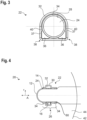
- the diffuser 22 has a central receiving opening 24 (see Figure 3 ), into which the outer casing 14 of the gas generator 10 extends and in the case shown also extends through.
- the diffuser 22 extends only over a section 26 which encompasses the outflow area 16 and which is only slightly wider than the outflow area 16 (see e.g. Figure 4 ).
- a gas guide surface 30 is formed, which extends over a large portion of the circumference of the outflow region 16, here approximately over 225°.
- the gas guide surface 30 is spaced apart in the radial direction r from the outer housing 14 and the outflow openings 18, so that gas escaping from the outflow openings 18 enters the space between the outer housing 14 of the gas generator 10 and the gas guide surface 30 when the gas generator 10 is activated.
- the space between the gas guide surface 30 and the outer housing 14 thus forms a collection chamber 32 for the gas flowing out of the gas generator 10.
- the collection chamber 32 is delimited in the axial direction A by two contact surfaces 34, which lie directly on the outer housing 14 of the gas generator 10.
- both contact surfaces 34 run over the entire circumference of the gas generator 10, so that the collection chamber 32 is closed off in the axial direction A by the two contact surfaces 34.
- the contact surfaces 34 also ensure a connection of the diffuser 22 to the gas generator 10. They rest under mechanical tension on the outer housing 14 of the gas generator 10 and hold the diffuser 22 on the outer housing 14 via a clamping force.
- the diffuser 22 has a plurality of outlet openings 36 which are fluidly connected to the collection chamber 32 and from which the gas flowing out of the gas generator 10 leaves the diffuser 22 and thus the assembly 20.
- the collection chamber 32 opens here at its two circumferential ends 37 into two outlet openings 36 opposite one another in the axial direction A.
- the surface of the outlet openings 36 is perpendicular to the axial direction A, so that the gas leaves the assembly 20 in an outlet direction R D along the axial direction A.
- a total of four outlet openings 36 are provided, two of which are directed in opposite directions, so that the gas flows out along the axial direction A in two opposite outlet directions R D.
- the outflowing gas is diverted by 90° from the radial direction r into the axial direction A relative to the outflow direction R GG .
- the area of all outlet openings 36 is chosen to be the same size.
- the assembly 20 is therefore thrust-neutral with respect to the gas flowing out of the gas generator 10.
- the area of the outlet openings 36 opposite in the axial direction A can also be chosen to be different sizes, so that an uneven gas distribution is achieved (not shown).
- the outlet openings 36 are formed in that the gas guide surface 30 in an outlet region 38 has a greater distance in the radial direction r from the outer housing 14 of the gas generator 10 than in the region of the collection chamber 32.
- a side wall 40 which connects the gas guide surface 30 and the adjacent contact surface 34, is interrupted, so that the outlet opening 36 is formed.
- the outlet openings 36 are arranged symmetrically to each other in both opposite side walls 40.
- Two spatially separated outlet areas 38 are provided here, each with two opposite outlet openings 36, which are spaced apart by approximately 90° along the circumferential direction (see Figures 2 and 3 ).
- a further, small collection chamber 32 is optionally formed, but it is also possible that the gas guide surface 30 there essentially rests on the outer housing 14 of the gas generator 10 and possibly covers some of the outflow openings 18.
- the gas generator 10 When the assembly 20 is installed in a gas bag module, the gas generator 10 is inserted into a gas bag 42 to such an extent that the longitudinal end 12 of the gas generator 10, including the outflow area 16 and the diffuser 22, lies completely in an inflatable inner volume 44 of the gas bag 42. This is in Figure 4 indicated.
- the diffuser 22 is manufactured by forming a sheet metal strip, for example made of a steel sheet, into a diffuser blank in a punching and bending process (not shown). In this work step, all gas guide surfaces 30 and contact surfaces 34 are preformed. In a further forming step, this diffuser blank is bent around the outflow area 16 of the gas generator 10 in the circumferential direction U, whereby the contact surfaces 34 come into contact with the outer housing 14 of the gas generator 10 and the gas guide surface 30 also assumes its final position, so that the desired collection chamber(s) 32 are created between the gas guide surfaces 30 and the outer housing 14.
- sections of the diffuser blank lie on top of one another in the radial direction r and are in contact with one another.
- the diffuser blank is fastened to itself, for example using a suitable welding process such as laser welding.
- the weld seam 48 thus created fixes the finished diffuser 22 to the gas generator 10 by clamping it under mechanical prestress.
- the diffuser blank is only attached to itself by a material bond, but not to the gas generator 10 by a material bond.
- the diffuser 22 can be attached to the gas generator 10 by a suitable joining method, for example crimping.
- the gas generator 10 can have a bead 60 (see Figure 4 ).
- the contact surface 34 of the diffuser is plastically deformed in the area of the bead 60, so that the contact surface engages at least partially along the circumference in the bead 60 and a positive locking 62 is created (see Figure 6 ).
- the diffuser 22 can be completely preformed before being applied to the outflow region 16.
- a diffuser 22 can also be made from a sheet metal strip using a punching and bending process or from a tubular element, for example a steel tube.
- a suitable joining process for example using a pressing tool, as described above.
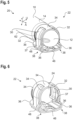
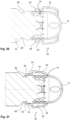
- FIGS. 5 and 6 show an assembly 20 according to a second embodiment. Since the individual elements differ only in their shape and position, but not in their function, the reference symbols already introduced are retained.
- the diffuser 22 is designed such that two collection chambers 32 are formed, which are spaced apart from one another along the circumferential direction U and which each open into its own outlet region 38.
- Each of the outlet regions has two outlet openings 36, which are arranged at opposite axial ends of the diffuser 22 and whose surface is directed in opposite directions along the axial direction A.
- the outlet region 38 is continuous along the axial direction A, and the collection chamber 32 opens centrally into the outlet region 38.
- the contact surface 34 lies directly on the outer housing 14 of the gas generator 10.
- the overlap section 46 runs in the area of the two outlet areas 38, so that in this section the metal sheet from which the diffuser 22 is double-layered and is fixed to one another at a suitable location, indicated here by the weld seam 48.
- the gas emerging in the radial direction r from the outflow region 16 of the gas generator 10 is first diverted by 90° through the gas guide surface 30 into the collection chambers 32, in which it is guided to the outlet regions 38, where it is diverted again by 90° and divided into two partial gas flows, which in the embodiment shown leave the diffuser 22 in opposite directions along the axial direction A with essentially the same strength.
- the gas volume in the individual partial gas flows is determined by the number of outflow openings 18 in the region of the individual collection chambers 32.
- the number, arrangement, shape and size of the individual collection chambers 32, outlet areas 38 and outlet openings 36 are of course at the discretion of the person skilled in the art and can be adapted to the respective gas generator 10 and the respective application.
- the number, arrangement, shape and size of the individual collection chambers 32, outlet areas 38 and outlet openings 36 can also be designed in such a way that an uneven gas distribution occurs.
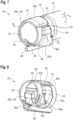
- FIGS. 7 and 8 show a third embodiment of an assembly 20.
- the diffuser blank in the overlap section 46 the diffuser blank is not placed on top of one another in the radial direction r, but two sections of the diffuser blank meet along the circumferential direction U and lie against one another along the axial direction A and along the radial direction r.
- the diffuser blank is fixed to itself in this section, here represented by a weld seam 48.
- FIG. 7 shows the diffuser 22 in a frontal view from the longitudinal end 12 of the gas generator 10, while Figure 8 the diffuser 22 in a rear view.
- Two first collection chambers 32a are spaced apart from one another in the circumferential direction U and are shaped in a mirror image with respect to a diameter of the gas generator 10.
- the gas guide surface 30 is shaped in these two first collection chambers 32a in such a way that a rearward-facing outlet opening 36a is created in each case.
- the third collection chamber 32b is located along the circumferential direction U between the first two described collection chambers 32a. It has a single outlet opening 36b, which is formed by a radial gap 50 between the diffuser 22 and the outer housing 14 of the gas generator 10 and thus also has its surface aligned perpendicular to the axial direction A, so that gas flows out in an outlet direction R D parallel to the axial direction A, but directed forwards and thus opposite to the gas exiting from the outlet openings 36a.
- the outlet opening 36b is located at an axial end 51 of the second collection chamber 32b.
- the areas of the individual outlet openings 36a, 36b, optionally 36, as well as the size of the collection chambers 32a, 32b, optionally 32 are selected such that the assembly 20 is essentially thrust neutral.
- an uneven gas distribution is also possible here by adjusting the surfaces of the individual outlet openings 36a, 36b and the size of the collection chambers 32a, 32b, whereby the size of the collection chambers 32a, 32b can be adjusted in particular by the position of the separating web 33 formed by the contact surface 34.
- Such a percentage-uneven distribution of the gas flow can, for example, achieve an essentially uniform filling of gas bag chambers of different sizes arranged at the front and rear.
- a contact surface 34 runs over the entire circumference of the gas generator 10.
- a contact surface 34 at the front axial end of the diffuser 22 is interrupted in the area of the second collection chamber 32b. This section forms the radial gap 50.
- the longitudinal end 12 is considered to be the front end of the gas generator 10, and expressions such as “front” and “rear” refer to this orientation.
- the Figures 10 and 11 show an assembly 20 according to a fourth embodiment.
- This diffuser geometry can also be manufactured from a strip-shaped sheet metal or a tubular element, for example through a punching and bending process.
- the diffuser can also be manufactured as a spiral-welded, seamlessly drawn or drawn-from-sheet component.
- a gas generator 10 as shown in Figure 9
- the outflow area 16 is divided into two axial zones 52, 54, which are separated from one another by a separating area of the outer housing 14 designed as a strip without outflow openings 18.
- the zones 52 and 54 have a non-symmetrical division of the outflow openings 18.
- the diffuser 22 of this embodiment has a central contact surface 34a which is positioned in the separation area between the two zones 52, 54.
- the central contact surface 34a divides the gas exiting the two zones 52, 54 into two separate partial gas streams.
- the diffuser has two collecting chambers which are arranged along the axial direction A adjacent to the contact surface 34. Based on the embodiment just described, the reference numerals 32a, 32b are used for these collecting chambers.
- Each of the collection chambers 32a, 32b collects the gas escaping from one of the zones 52, 54.
- the rear collection chamber 32a has a single outlet opening 36a, which is formed by an open section of a rear-facing side wall 40 and from which a partial gas flow exits in an outlet direction R D away from the longitudinal end 12 of the gas generator 10.
- the front-side collection chamber 32b has a circumferential outlet opening 36b in the form of a radial gap 50, from which a partial gas flow emerges in the opposite direction.
- This geometry is well suited to Figure 11 to recognize.
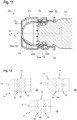
- FIGS. 12 a) to 12 c) each show the outer housing 14 of a gas generator 10, in which the outflow region 16 is divided in the axial direction A into two axial zones 52, 54, which are separated from one another by a separating region 68 of the outer housing 14 designed as a strip without outflow openings 18.
- an outer housing 14 of the gas generator 10 is shown, which is intended for a uniform gas distribution, whereby the zones 52 and 54 have a symmetrical division of the outflow openings 18, so that approximately half of the gas flow exits in zone 52 and in zone 54.
- the expert can also produce other percentage ratios of the gas flow distribution by distributing the outflow openings 18 to the zones 52 and 54 in a manner adapted to the intended use of the assembly 20.
- FIGS. 13 a) to 13 c) each show an assembly according to a fifth embodiment, wherein in the outer housing 14 of the gas generator 10 of the assembly 20 the outflow area 16 is divided in the axial direction A into two axial zones 52, 54, which are separated by a separating area designed as a strip 68 of the outer housing 14 without outflow openings 18 are separated from each other.
- the diffuser 22 of this embodiment has a central contact surface 34a which is positioned in the separation region 68 between the two zones 52, 54.
- the diffuser 22 has two collection chambers 32a and 32b which are arranged along the axial direction A adjacent to the contact surface 34a. Each of the collection chambers 32a, 32b collects the gas emerging from one of the zones 52, 54.
- the central contact surface 34a divides the gas emerging from the two zones 52, 54 into two separate partial gas streams.
- the outflow openings 18 are distributed over the zones 52 and 54 in such a way that in the area of zone 52 approximately two thirds of the gas flow exits into the collection chamber 32b and in zone 54 approximately one third of the gas flow exits into the collection chamber 32a.
- the outflow openings 18 are distributed over the zones 52 and 54 in such a way that in the area of zone 52 about one third of the gas flow exits into the collection chamber 32b and in zone 54 about two thirds of the gas flow exits into the collection chamber 32a.
- the outflow openings 18 are distributed symmetrically/uniformly between the zones 52 and 54, so that approximately half of the gas flow in zone 52 exits into the collection chamber 32b and in zone 54 into the collection chamber 32a.
- the rear collection chamber 32a in this example has a single outlet opening 36a from which a partial gas flow exits in an outlet direction R D directed away from the longitudinal end 12 of the gas generator 10.
- the front collection chamber 32b in this example has an outlet opening 36b in the form of a radial gap 50 from which a partial gas flow exits in the opposite direction.
- the gap 50 is, as can be seen from the Figures 13 a) to 13 c) in the example shown, interrupted in the circumferential direction by the contact surface 34 at the longitudinal end 12.
- This diffuser geometry can also be manufactured from a strip-shaped sheet metal or a tubular element, for example through a punching and bending process.
- this diffuser can also be manufactured as a spiral-welded, seamlessly drawn or drawn-from-sheet component.
- the advantage of such an assembly 20 according to the fifth embodiment is that the diffuser 22 can be designed as a standard component: An adjustment of the percentage gas distribution, which is particularly dependent on the intended use of the assembly 20, can be brought about in a simple and cost-effective manner by adjusting the outer housing 14.
- the adjustment of the outer housing 14 is preferably carried out by adjusting the number of outflow openings 18 assigned to the respective zones 52 and 54 in the outflow area 16 of the outer housing 14 of the gas generator 10.
- Figure 15 shows a sixth embodiment of an assembly 20.
- the central contact surface 34a is helical, so that the axial width of the two collecting chambers 32a, 32b varies along the circumferential direction U.
- the spiral shape of the central contact surface 34 is achieved here by this contact surface 34a having two first sections 56 which run only along the circumferential direction U and are offset from one another along the axial direction A, as well as two second sections 58 which run obliquely to the axial direction A and the circumferential direction U and which connect the first sections 56 to one another.
- This design allows the size of the individual collection chambers 32a, 32b, which determine the strength of the individual partial gas flows, to be determined.
- This geometry can be used with a gas generator according to Figure 1 as well as with a gas generator Figure 9 use.
- the rear collection chamber 32a has a rearward-facing outlet opening 36a
- the front collection chamber 32b has a forward-facing outlet opening 36b which runs around the gas generator 10 in the circumferential direction U in the form of a radial gap at the front axial end 51 of the collection chamber 32b.
- FIGS 16 to 21 show an assembly 20 according to a seventh embodiment.
- Figure 16 shows a gas generator according to Figure 1 on whose longitudinal end 12 a self-locking diffuser 22 is placed. Similar to the first embodiment, the longitudinal end 12 of the gas generator 10, more precisely, its cap without an outlet opening, also extends in this sixth Embodiment in axial direction A a short distance beyond the diffuser 22. This is particularly the case in the Figures 17, 19 and 21 easy to recognize.
- the self-locking diffuser 22 is preferably made of spring steel.
- the gas guide surface 30 extends over the entire circumference.
- the diffuser 22 has several outlet openings 36b, which are evenly distributed over the circumference U.
- the outlet openings 36b are separated by separating webs 33', which also form the front contact surfaces 34 (see Figures 17b and 18 ).
- the diffuser 22 in the embodiment shown has an outlet opening 36a, which is formed by a section-wise opening in the rear area of the gas guide surface 30 (see Figures 17a and 19 ).
- an optional guide element 64 is connected to the contact surface 34, which is arranged in the area of the outlet opening 36a. By means of such a guide element 64, the outlet direction R D of the gas can be diverted into an outlet direction R D (see Figure 19 ).
- the rear contact surface 34 of the diffuser is divided into several sections in the circumferential direction U by separating recesses 66.
- the rear contact surface 64 comprises four sections. Two of these sections of the contact surface 34, which are arranged here adjacent to the section of the contact surface 34 in the region of the outlet opening 36a, are adjoined by locking elements 62 which engage in the bead 60 of the gas generator 10 when the diffuser 22 is in the assembled state.
- FIGS. 20 and 21 show a longitudinal section through the assembly 20 in an xz plane at different times of the assembly of the diffuser 22 and the gas generator 10.
- Figure 20 shows the assembly 20 while the diffuser 20 is being pushed onto the gas generator 22.
- the contact surfaces 34 with the locking elements 62 are bent outwards in the radial direction r when the diffuser 22 is pushed on. This bending of the locking elements 62 is made possible in particular by the separating recesses 66 in the area of the rear contact surface 34.
- Figure 21 shows the assembly 20 after completion of the assembly. It can be clearly seen that the locking elements 62 are inserted into the bead 60 of the gas generator 10 are engaged and the diffuser 22 is thereby locked to the gas generator 10 in a simple manner.
- the separating webs 33' which form the front contact surfaces 34, can also be designed such that they are also bent at least slightly outwards in the radial direction r when the diffuser is assembled. As a result, the separating webs 33' can generate a contact force directed towards the central axis of the gas generator 10 in the area of the front contact surfaces 34 due to the inherent stress of the material in the assembled state.
- the diffuser 22 can also be fixed to the gas generator 10, for example by pressing or welding.
Landscapes
- Engineering & Computer Science (AREA)
- Mechanical Engineering (AREA)
- Physics & Mathematics (AREA)
- Fluid Mechanics (AREA)
- Air Bags (AREA)
- Feeding, Discharge, Calcimining, Fusing, And Gas-Generation Devices (AREA)
Description
- Die Erfindung betrifft eine Baugruppe aus einem langgestreckten Gasgenerator und einem schellenförmigen Diffusor, der einen Ausströmbereich des Gasgenerators umschließt. Außerdem betrifft die Erfindung ein Gassackmodul mit einer derartigen Baugruppe sowie Verfahren zur Montage einer derartigen Baugruppe.
- Bei langgestreckten Gasgeneratoren, die auch als Rohrgasgeneratoren bezeichnet werden, ist in der Regel der Ausströmbereich durch eine Vielzahl von über den Umfang eines Außengehäuses des Gasgenerators verteilten Ausströmöffnungen gebildet. Oft sind die Ausströmöffnungen in einem Filtergehäuse an einem axialen Ende des Gasgenerators vorgesehen. Das Gas strömt daher aus dem Gasgenerator in Radialrichtung ab. Um den Gasgenerator bei dessen Aktivierung schubneutral zu halten, sind die Ausströmöffnungen oft gleichmäßig um den Umfang verteilt.
- Bei vielen Gassackmodulen ist der Gasgenerator so angeordnet, dass sein Ausströmbereich im Inneren des aufblasbaren Volumens des Gassacks liegt. Dieses Design findet sich beispielsweise bei vorhangartigen Seitengassäcken oder auch bei Seitengassäcken, die in einer Rückenlehne eines Fahrzeugsitzes verbaut sind.
- Der Gassack muss vor dem aus dem Gasgenerator austretenden Gasstrom geschützt werden. Hierzu ist es beispielsweise bekannt, eine spezielle Gewebelage vorzusehen, die den Ausströmbereich des Gasgenerators in Umfangsrichtung umgibt und die sowohl das Gassackgewebe schützt als auch den Gasstrom in Axialrichtung umlenkt. Eine axial gerichtete Ausströmung hat den Vorteil, dass das Gas besser im Gassacks verteilt werden kann.
- Es ist außerdem bekannt, eine sogenannte Gaslanze vorzusehen, die als Hauptkomponente ein an beiden Enden offenes Rohrstück aufweist und die axial an einen Gasgenerator angesetzt wird, um das ausströmende Gas über eine Distanz von mehreren Dezimetern zu einem entfernt vom Gasgenerator angeordneten Gassack zu überführen. So lässt sich zwar ein gerichteter Gasstrom in den Gassack erzeugen, jedoch ist es nicht möglich, den Ausströmbereich des Gasgenerators unmittelbar im Gassack anzuordnen, wodurch sich unweigerlich die Abmessung des Gassackmoduls vergrößert.
- Aus dem Dokument
DE 11 2009 004 386 B4 ist ein Baugruppe aus einem Gasgenerator und einem Diffusor bekannt, die den aus dem Gasgenerator austretenden Gasstrom aufteilt. - Aufgabe der Erfindung ist es, eine Möglichkeit zu schaffen, um das aus dem Gasgenerator ausströmende Gas in den Gassack zu leiten, bei kleinem Baumaß, guten Anpassungsmöglichkeiten an unterschiedliche Geometrien und mit geringen Fertigungskosten.
- Diese Aufgabe wird mit einer Baugruppe mit den Merkmalen des Anspruchs 1 gelöst. Die erfindungsgemäße Baugruppe besteht aus einem langgestreckten Gasgenerator, der ein Außengehäuse mit am Umfang verteilten Ausströmöffnungen hat, die einen Ausströmbereich und eine Ausströmrichtung definieren, und aus einem schellenförmigen, den Ausströmbereich umschließenden Diffusor, wobei der Diffusor eine zentrale Aufnahmeöffnung aufweist, in die das Außengehäuse des Gasgenerators hineinragt, sodass der Diffusor einen axialen Abschnitt des Außengehäuses, welcher den Ausströmbereich umfasst, umfangsmäßig umschließt. An der die Aufnahmeöffnung begrenzenden Innenseite des Diffusors sind zumindest eine Anlagefläche und zumindest eine Gasleitfläche vorgesehen, wobei die Anlagefläche direkt am Außengehäuse anliegt und die Gasleitfläche radial vom Außengehäuse unter Bildung zumindest zwei Sammelkammern beabstandet ist, in die aus dem Ausströmbereich ausströmendes Gas einströmt. Die Sammelkammern münden jeweils in wenigstens eine Auslassöffnung, durch die Gas den Diffusor in einer Auslassrichtung quer zur Ausströmrichtung aus dem Gasgenerator verlässt.
- Der Diffusor lenkt gleichzeitig das aus dem Gasgenerator ausströmende Gas in eine oder mehrere gewünschte Richtungen um und schützt die Umgebung vor einem direkten Kontakt mit dem ausströmenden Gas. Da der Diffusor den Ausströmbereich des Gasgenerators unmittelbar umgibt, kann er mit kleinen Abmessungen gefertigt werden.
- Der Diffusor lässt sich einfach so ausbilden, dass im Wesentlichen sämtliches aus dem Gasgenerator ausströmende Gas in zumindest zwei Sammelkammern einströmt.
- Vorzugsweise ist der Diffusor ein umgeformter Blechring. Er kann beispielsweise als Stanz-Biegeteil realisiert sein. Dieses Herstellungsverfahren erlaubt es, den Diffusor auf einfache Weise für verschiedene Gasgenerator- und Gassackgeometrien auszulegen und beispielsweise an eine axiale Länge des Ausströmbereichs des Gasgenerators oder einen Durchmesser des Gasgenerators anzupassen sowie die gewünschte Anzahl, Lage, Position und/oder Richtung der Auslassöffnungen vorzugeben. Alternativ kann der Diffusor aus einem Rohrelement, insbesondere einem Stahlrohr hergestellt werden.
- Um den benötigten Bauraum nach Möglichkeit zu reduzieren, sollte der Diffusor in axialer Richtung so kurz ausgebildet sein, dass er maximal unwesentlich über das axiale Ende des Gasgenerators übersteht und somit die axiale Länge der Baugruppe im Wesentlichen der axialen Länge des Gasgenerators entspricht.
- Der Diffusor kann sich in axialer Richtung vollständig über den Ausströmbereich des Gasgenerators erstrecken, sodass das gesamte ausströmende Gas zunächst in den Diffusor gelangt.
- In dieser Anmeldung wird der Begriff der "axialen Länge" oder der "Axialrichtung" stets mit Bezug auf die Längsachse des Gasgenerators verwendet.
- Die Auslassrichtung aus dem Diffusor verläuft vorzugsweise axial bezogen auf die Längsachse des Gasgenerators, also parallel zu dessen Längsachse. Das aus dem Ausströmbereich des Gasgenerators ausströmende Gas wird dabei in etwa um 90° quer zu seiner Ausströmrichtung umgelenkt.
- Erfindungsgemäß sind zumindest zwei Auslassöffnungen vorgesehen, die entgegengesetzt gerichtet sind. Das Gas verlässt den Diffusor in diesem Fall in zwei entgegengesetzten, aber jeweils entlang der Axialrichtung weisenden Richtungen. Dies ermöglicht eine schnellere Verteilung des Gases im Gassack und kann den Gasgenerator im Wesentlichen oder sogar komplett schubneutral halten.
- Das Volumen der Sammelkammer sowie die Fläche der Auslassöffnungen lassen sich so wählen, dass sich im Wesentlichen gegenüber dem aus dem Ausströmbereich austretenden Gas kein zu hoher Überdruck im Diffusor ausbildet.
- Die beiden Auslassöffnungen können sich entlang der Axialrichtung gegenüberliegen. Die Fläche beider Auslassöffnungen kann gleich groß oder unterschiedlich groß gewählt sein. Generell liegt die Wahl der Anzahl, Fläche, und Position der Auslassöffnungen im Ermessen des Fachmanns.
- Abhängig von der Geometrie des zu befüllenden Gassacks können auch beispielsweise zwei entgegengesetzt gerichtete Auslassöffnungen vorgesehen sein, die in Umfangsrichtung voneinander beabstandet sind.
- Die Auslassöffnungen können auf einfache Weise im Diffusor realisiert werden, indem angrenzend an die Auslassöffnungen die Gasleitfläche radial weiter außen liegt als in der zumindest einen zugeordneten Sammelkammer entfernt von den Auslassöffnungen. Anders betrachtet weitet sich die Sammelkammer beim Übergang in die Auslassöffnung in radialer Richtung auf, sodass insbesondere in einem radialen Schnitt die Auslassöffnung eine größere Fläche einnimmt als die Sammelkammer und das Gas ohne erhöhten Widerstand aus dem Diffusor ausströmen kann.
- Im Bereich der Auslassöffnungen können beispielsweise sowohl die Gasleitfläche als auch die Anlagefläche radial vom Außenumfang des Gasgenerators beabstandet sein, sodass eine in axialer Richtung durchgehende Öffnung durch den gesamten Diffusor gebildet ist, die an beiden Enden offen ist, wobei die beiden offenen Enden die Auslassöffnungen definieren.
- Generell lassen sich über die Anlagenfläche(n) die Sammelkammer(n) in axialer Richtung und/oder in Umfangsrichtung begrenzen, wobei eine geeignete Wahl des Verlaufs der Anlageflächen eine beliebige Geometrie einer oder mehrerer Sammelkammern ermöglicht. Weitere Leitelemente für das ausströmende Gas sind dabei nicht erforderlich. Die Anlageflächen können grundsätzlich komplett voneinander beabstandet sein oder auch abschnittsweise ineinander übergehen.
- In einer möglichen Ausführungsform ist der Diffusor so ausgebildet, dass zumindest eine Sammelkammer vorgesehen ist, die in Umfangsrichtung nicht durchgehend verläuft und die an ihren beiden Umfangsenden in zumindest eine Auslassöffnung mündet. Die Sammelkammer kann sich beispielsweise über einen Winkelabschnitt von etwa 200° bis 350° und insbesondere von 220° bis 270° erstrecken.
- Es können zwei oder mehr in Umfangsrichtung voneinander getrennte Sammelkammern vorgesehen sein, die jeweils in zumindest eine Auslassöffnung münden. Es ist dabei auch denkbar, dass eine Auslassöffnung mehreren Sammelkammern zugeordnet ist.
- In einer anderen möglichen Ausführungsform ist eine Sammelkammer vorgesehen, die an einem axialen Ende in eine Auslassöffnung mündet. In diesem Fall muss das Gas nicht erst entlang der Umfangsrichtung geleitet werden, sondern kann von der Gasleitfläche direkt in Axialrichtung umgelenkt werden.
- Die Auslassöffnung kann beispielsweise durch einen radialen Spalt zwischen dem Außengehäuse und der Innenseite des Diffusors gebildet sein, was die Fertigung des Diffusors vereinfacht. Die radiale Ausdehnung des Diffusors lässt sich bei dieser Ausführung auf den radialen Abstand der Gasleitfläche von der Außenwand des Gasgenerators begrenzen. Insbesondere kann die Auslassöffnung zwischen der Innenseite der Gasleitfläche und der Außenkontur des Gasgenerators durch einen axial geöffneten Schlitz gebildet sein.
- Die beiden gerade beschriebenen Ausführungsformen lassen sich natürlich auch kombinieren, sodass der Diffusor sowohl zumindest eine in Umfangsrichtung in eine Auslassöffnung mündende als auch zumindest eine in Axialrichtung in eine Auslassöffnung mündende Sammelkammer aufweist.
- Die wenigstens eine Anlagefläche lässt sich dazu nutzen, den aus dem Generator austretenden Gasstrom in zumindest zwei Teilströme aufzuteilen. Durch den Verlauf der Anlagefläche kann auf einfache Weise die Anzahl der unterhalb der Gasleitfläche liegenden Ausströmöffnungen des Gasgenerators festgelegt werden, die wiederum den Anteil des gesamten Füllgases bestimmen, der in den jeweiligen Teilstrom gelangt und über die jeweilige Gasleitfläche zu einer der Auslassöffnungen geleitet wird. Vorzugsweise werden die einzelnen Teilströme in unterschiedliche Sammelkammern und von dort zu unterschiedlichen Auslassöffnungen geleitet.
- In einer möglichen Ausführungsform verläuft die Anlagefläche nur in Umfangsrichtung um das Außengehäuse.
- In einer anderen möglichen Ausführungsform verläuft die Anlagefläche wendelförmig um das Außengehäuse.
- Eine besonders einfache auszubildende Form einer Anlagefläche, mit der sich Teilgasströme mit unterschiedlichen Gasmengen erzeugen lassen, sieht vor, das bei einer um den gesamten Umfang des Gasgenerators umlaufenden Anlagefläche zwei nur in Umfangsrichtung verlaufende erste Abschnitte und zwei schräg zu Umfangsrichtung und zur Axialrichtung verlaufende zweite Abschnitte vorgesehen sind, wobei die zweiten Abschnitte die ersten Abschnitte verbinden. Vorzugsweise trennt die Anlagefläche zwei in Axialrichtung getrennte Sammelkammer mit jeweils zumindest einer eigenen Auslassöffnung. Die Wahl der Länge und Neigung der schräg zur Axialrichtung verlaufenden zweiten Abschnitte bestimmt die Anzahl der Ausströmöffnungen, die den jeweiligen Teilgasstrom mit Gas beliefern.
- In einer weiteren Ausführungsform können mehrere Auslassöffnungen über den Umfang verteilt angeordnet sein. Vorzugsweise sind die Auslassöffnungen durch Trennstege getrennt, die zumindest teilweise die Anlageflächen des Diffusors bilden, die die Sammelkammer in axialer Richtung begrenzen. Derartige über den Umfang verteilt angeordnete Auslassöffnungen, die die Anlagefläche über den Umfang verteilt unterbrechen, sind insbesondere vorderseitig am Diffusor und somit im montierten Zustand des Diffusors hin zu einem Längsende des Gasgenerators angeordnet.
- Der Diffusor der Baugruppe kann zur Anbringung und Befestigung an dem Gasgenerator zumindest ein Rastelement umfassen. Vorzugsweise umfasst der Diffusor in einer derartigen Ausführungsform zwei oder mehrere Rastelemente.
- Das Rastelement ist derart ausgebildet, dass es zur Befestigung und Festlegung des Diffusors auf dem Gasgenerator in eine Sicke eingreifen kann. Durch das Verrasten wird der Diffusor über eine formschlüssige Verbindung auf dem Gasgenerator fixiert. Durch die Rastelemente kann der Diffusor an dem Gasgenerator auf einfache Art befestigt werden. Zusätzlich besteht dennoch die Möglichkeit den Diffusor durch Verpressen oder Verschweißen zusätzlich an dem Gasgenerator zu befestigen.
- In einer Ausführungsform ist das Rastelement im Anschluss an eine Anlagefläche des Diffusors angeordnet. Ein derartiger Diffusor mit einem oder mehreren Rastelementen kann vorzugsweise aus einem Federstahl, insbesondere einem zwischenstufenvergüteten Federstahl, hergestellt werden.
- Normalerweise ist der Ausströmbereich an einem axialen Ende des Gasgenerators vorgesehen, sodass auch der Diffusor an einem axialen Ende des Gasgenerators angeordnet ist.
- Erfindungsgemäß ist der Ausströmbereich des Gasgenerators in zumindest zwei Zonen unterteilt, die durch einen Trennbereich des Außengehäuses ohne Ausströmöffnungen voneinander getrennt sind. Die Zonen mit den Ausströmöffnungen sind vorzugsweise als axiale Zonen mit jeweils über den Umfang verteilten Ausströmöffnungen ausgebildet.
- Erfindungsgemäß ist bei der Baugruppe eine Anlagefläche des Diffusors in dem Trennbereich zwischen den Zonen positioniert. Die in dem Trennbereich positionierte Anlagefläche teilt das Gas, das aus den beiden Zonen austritt, in zwei separate Teilgasströme auf. Vorzugsweise weist der Diffusor dabei zwei Sammelkammern auf, die benachbart der in dem Trennbereich positionierten Anlagefläche angeordnet sind und jeweils eine Sammelkammer das aus einer der beiden Zonen austretende Gas auffängt.
- Die in Axialrichtung rückseitige Sammelkammer hat in einer derartigen Ausführungsform beispielweise eine Auslassöffnung, die durch einen offenen Abschnitt in einer rückwärtig weisenden Seitenwand des Diffusors gebildet ist. Aus dieser kann ein Teilgasstrom in einer Auslassrichtung austreten, die vom Längsende des Gasgenerators weg gerichtet ist.
- Die in Axialrichtung vorderseitige Sammelkammer hat in einer derartigen Ausführungsform beispielweise eine umfangsmäßig umlaufende Auslassöffnung in Form eines radialen Spalts. Aus dieser kann ein Teilgasstrom in der entgegengesetzten Richtung gegenüber dem aus der rückseitigen Sammelkammer austretenden Teilgasstrom austreten.
- Die Zonen des Ausströmbereichs des Gasgenerators können eine symmetrische Aufteilung der Ausströmöffnungen aufweisen. Dadurch kann die Baugruppe schubneutral bezüglich des aus dem Gasgenerator ausströmenden Gas ausgebildet werden, sodass jeweils 50% des Gases über die Auslassöffnung der in Axialrichtung vorderseitige und der in Axialrichtung rückseitigen Sammelkammer austreten.
- Alternativ können die Zonen des Ausströmbereichs des Gasgenerators auch eine nicht symmetrische Aufteilung der Ausströmöffnungen aufweisen, wodurch eine ungleichmäßige Verteilung des Gasstroms entsteht. Durch eine derartige prozentual ungleichmäßige Aufteilung des Gasstroms beispielweise eine im Wesentlichen gleichmäßige Befüllung von unterschiedlich großen, vorder- und rückseitig angeordneten Gassackkammern erreicht werden.
- Ein wesentlicher Vorteil einer derartigen Baugruppe ist, dass der Diffusor als ein Standardbauteil ausgelegt werden kann und eine Anpassung der prozentualen Gasverteilung auf einfache Weise durch eine Anpassung der Anzahl, der den jeweiligen Zonen zugeordneten Ausströmöffnungen in dem Ausströmbereich des Gasgenerators angepasst werden kann.
- Die genannte Aufgabe wird auch mit einem Gassackmodul mit einem Gassack und einer oben beschriebenen Baugruppe gelöst, bei der der Diffusor vollständig in einem aufblasbaren Innenvolumen des Gassacks angeordnet ist.
- In diesem Fall ist es nicht notwendig, die Anlageflächen vollständig gegenüber der Außenfläche des Gasgenerators abzudichten, da eventuelle Leckströme innerhalb des Gassacks austreten und somit nicht in die Umgebung gelangen können. Daher kann auf aufwändige Dichtungen verzichtet werden, was die Herstellungskosten weiter senkt.
- Um eine oben genannte Baugruppe zu montieren, ist ein Verfahren nach Anspruch 14 mit den folgenden Schritten vorgesehen. Ein einstückiger Diffusor wird aus einem Rohrelement oder aus einem Metallblech gefertigt, wobei alle Anlageflächen und alle Gasleitflächen vorgeformt werden. Der so vorgefertigte Diffusor wird auf den Ausströmbereich des Gasgenerators geschoben. Zur Befestigung des Diffusors an dem Gasgenerator wird eine Anlagefläche des Diffusors im Bereich einer Sicke des Gasgenerators plastisch verformt, sodass die Anlagefläche zumindest teilweise oder abschnittsweise entlang des Umfangs in die Sicke eingreift und eine formschlüssige Verbindung entsteht. Die plastische Verformung der Anlagefläche im Bereich der Sicke kann vorzugsweise durch ein Presswerkzeug erzeugt werden.
- Alternativ kann zur Montage einer oben genannte Baugruppe ein Verfahren nach Anspruch 15 mit den folgenden Schritten vorgesehen sein. Ein einstückiger Diffusor wird aus einem geschlossenen Rohrelement oder aus einem Metallblech gefertigt, wobei alle Anlageflächen, alle Gasleitflächen und alle Rastelemente vorgeformt werden. Der Diffusor wird auf den Ausströmbereich des Gasgenerators geschoben, sodass die Rastelemente zumindest abschnittsweise entlang des Umfangs in die Sicke des Gasgenerators eingreifen und eine formschlüssige Verrastung entsteht. Beim Aufschieben des Diffusors biegen sich die Anlageflächen mit daran anschließenden Rastelementen radial nach außen. Bei Erreichen der Sicken des Gasgenerators rasten die Rastelemente in die Sicken des Gasgenerators ein, sodass die formschlüssige Verrastung/Verriegelung des Diffusors an dem Gasgenerator erreicht werden kann.
- Eine direkte Befestigung des Diffusors an der Außenwand des Gasgenerators außer durch Klemmen und/oder Aufpressen ist nicht erforderlich und somit in der Regel nicht vorgesehen, aber dennoch möglich.
- Durch diese Art der Fertigung ist die Verwendung eines erfindungsgemäßen Diffusors unabhängig von der Außenkontur des Gasgenerators entlang dessen Längsachse.
- Als Material wird vorzugsweise ein Stahlblech oder ein Stahlrohr eingesetzt. Insbesondere bei einem Diffusor mit einem Rastelement kann zudem ein Federstahl, insbesondere ein zwischenstufenvergüteter Federstahl, eingesetzt werden.
- Die Erfindung wird nachfolgend anhand mehrerer Ausführungsbeispiele und mit Bezug auf die beigefügten Zeichnungen näher beschrieben. In den Zeichnungen zeigen:
-
Figur 1 eine schematische perspektivische Ansicht eines Längsendes eines Gasgenerators einer erfindungsgemäßen Baugruppe; -
Figur 2 eine schematische perspektivische Ansicht einer erfindungsgemäßen Baugruppe aus einem Gasgenerator und einem Diffusor gemäß einer ersten Ausführungsform; -
Figur 3 den Diffusor ausFigur 2 in einer frontalen Ansicht; -
Figur 4 ein erfindungsgemäßes Gassackmodul mit einer Baugruppe ausFigur 2 in einer Längsschnittansicht; -
Figur 5 eine schematische perspektivische Ansicht einer erfindungsgemäßen Baugruppe aus einem Gasgenerator und einem Diffusor gemäß einer zweiten Ausführungsform; -
Figur 6 eine schematische perspektivische Ansicht des Diffusors aus Figur 5; -
Figur 7 eine schematische perspektivische Ansicht einer erfindungsgemäßen Baugruppe aus einem Gasgenerator und einem Diffusor gemäß einer dritten Ausführungsform; -
Figur 8 den Diffusor ausFigur 7 in einer rückseitigen Ansicht; -
Figur 9 eine schematische perspektivische Ansicht eines Längsendes eines Gasgenerators einer erfindungsgemäßen Baugruppe; -
Figur 10 eine schematische perspektivische Ansicht einer erfindungsgemäßen Baugruppe aus einem Gasgenerator und einem Diffusor gemäß einer vierten Ausführungsform; -
Figur 11 eine schematische Längsschnittansicht der Baugruppe ausFigur 10 ; -
Figur 12 a) bis c) schematische Ansichten verschiedener Ausführungsformen eines Längsendes eines Gasgenerators einer erfindungsgemäßen Baugruppe; -
Figur 13 a) bis c) teilweise geschnitten dargestellte Ansichten einer erfindungsgemäßen Baugruppe eines Gasgenerators mit einem Diffusor gemäß einer fünften Ausführungsform; -
Figur 14 eine schematische perspektivische Ansicht des Diffusors aus Figur 13; -
Figur 15 eine schematische perspektivische Ansicht einer erfindungsgemäßen Baugruppe aus einem Gasgenerator und einem Diffusor gemäß einer sechsten Ausführungsform; -
Figur 16 eine schematische perspektivische Ansicht einer erfindungsgemäßen Baugruppe aus einem Gasgenerator und einem Diffusor gemäße einer siebten Ausführungsform; -
Figur 17 a) und b ) vergrößerte Teilansichten auf ein vorderes Längsende des Gasgenerators mit dem Diffusor gemäßFigur 16 in einer perspektivischen a) rückseitigen und b) vorderseitigen Ansicht; -
Figur 18 den Diffusor ausFigur 16 in einer perspektivischen vorderseitigen Ansicht; -
Figur 19 einen ersten schematischen Längsschnitt der Baugruppe aus Figur 16; -
Figur 20 einen zweiten schematischen Längsschnitt der Baugruppe ausFigur 16 während eines Montageschritts des Diffusors; und -
Figur 21 den zweiten schematischen Längsschnitt der Baugruppe aus Figur 16 nach einer Beendigung der Montage des Diffusors. -
Figur 1 zeigt einen langgestreckten Gasgenerator 10, der an einem Längsende 12 seines Außengehäuses 14 einen Ausströmbereich 16 mit einer Vielzahl von einzelnen, über den Umfang verteilten Ausströmöffnungen 18 hat. Die Ausströmöffnungen 18 sind in diesem Fall in einem Filtergehäuse des Gasgenerators 10 gebildet, das Teil des Außengehäuses 14 des Gasgenerators 10 ist. - Die Ausströmöffnungen 18 sind hier gleichmäßig entlang der Umfangsrichtung U verteilt. An einer das Längsende 12 abschließenden Kappe sind keine Ausströmöffnungen 18 vorgesehen. Wird der Gasgenerator 10 aktiviert, so strömt das gesamte erzeugte Gas durch die Ausströmöffnungen 18 des Ausströmbereichs 16 in einer in Radialrichtung r verlaufenden Ausströmrichtung RGG ab.
- In der in
Figur 2 gezeigten ersten Ausführungsform einer Baugruppe 20 ist der Ausströmbereich 16 des Gasgenerators 10 von einem schellenförmigen Diffusor 22 in Umfangsrichtung U umgeben. - Der Diffusor 22 weist eine zentrale Aufnahmeöffnung 24 auf (siehe
Figur 3 ), in die das Außengehäuse 14 des Gasgenerators 10 hineinragt und im gezeigten Fall auch hindurchragt. Das Längsende 12 des Gasgenerators 10, genauer gesagt, dessen ausströmöffnungslose Kappe, erstreckt sich in dieser Ausführungsform in Axialrichtung A (entlang der Längsachse des Gasgenerators 10) ein kurzes Stück über den Diffusor 22 hinaus. Dies ist auch inFigur 4 zu erkennen. - Entlang der Axialrichtung A erstreckt sich der Diffusor 22 lediglich über einen Abschnitt 26, der den Ausströmbereich 16 umfasst und der nur geringfügig breiter ist als der Ausströmbereich 16 (siehe z.B.
Figur 4 ). - An der Innenseite 28 der Aufnahmeöffnung 24 des Diffusors 22 ist eine Gasleitfläche 30 ausgebildet, die über einen großen Anteil des Umfangs des Ausströmbereichs 16 verläuft, hier etwa über 225°.
- Die Gasleitfläche 30 ist in Radialrichtung r vom Außengehäuse 14 und den Ausströmöffnungen 18 beabstandet, sodass aus den Ausströmöffnungen 18 austretendes Gas in den Zwischenraum zwischen dem Außengehäuse 14 des Gasgenerators 10 und der Gasleitfläche 30 gelangt, wenn der Gasgenerator 10 aktiviert wird. Der Raum zwischen der Gasleitfläche 30 und dem Außengehäuse 14 bildet so eine Sammelkammer 32 für das aus dem Gasgenerator 10 ausströmende Gas.
- Die Sammelkammer 32 wird in axialer Richtung A von zwei Anlageflächen 34 begrenzt, die direkt am Außengehäuse 14 des Gasgenerators 10 anliegen. In diesem Beispiel verlaufen beide Anlageflächen 34 über den gesamten Umfang des Gasgenerators 10, sodass die Sammelkammer 32 in Axialrichtung A durch die beiden Anlageflächen 34 abgeschlossen ist.
- Die Anlageflächen 34 sorgen auch für eine Verbindung des Diffusors 22 mit dem Gasgenerator 10. Sie liegen unter mechanischer Spannung am Außengehäuse 14 des Gasgenerators 10 an und halten den Diffusor 22 über eine Klemmkraft am Außengehäuse 14.
- Der Diffusor 22 hat mehrere Auslassöffnungen 36, die strömungsmäßig mit der Sammelkammer 32 verbunden sind und aus denen das aus dem Gasgenerator 10 ausströmende Gas den Diffusor 22 und somit die Baugruppe 20 verlässt.
- Die Sammelkammer 32 mündet hier an ihren beiden Umfangsenden 37 jeweils in zwei in Axialrichtung A gegenüberliegende Auslassöffnungen 36. In den hier dargestellten Beispielen steht die Fläche der Auslassöffnungen 36 jeweils senkrecht zur Axialrichtung A, sodass das Gas die Baugruppe 20 in einer Auslassrichtung RD entlang der axialen Richtung A verlässt.
- In dieser Ausführungsform sind insgesamt vier Auslassöffnungen 36 vorgesehen, von denen jeweils zwei entgegengesetzt gerichtet sind, sodass das Gas entlang der Axialrichtung A in zwei entgegengesetzten Auslassrichtungen RD ausströmt. Gegenüber der Ausströmrichtung RGG wird das ausströmende Gas in diesem Beispiel jeweils um 90° von der Radialrichtung r in die Axialrichtung A umgelenkt.
- In diesem Beispiel ist die Fläche aller Auslassöffnungen 36 gleich groß gewählt. Damit ist die Baugruppe 20 schubneutral bezüglich des aus dem Gasgenerator 10 ausströmenden Gas. Die Fläche der in Axialrichtung A gegenüberliegenden Auslassöffnungen 36 kann alternativ auch unterschiedlich groß gewählt sein, sodass eine ungleichmäßige Gasverteilung erreicht wird (nicht dargestellt).
- Die Auslassöffnungen 36 sind in dieser Ausführungsform dadurch gebildet, dass die Gasleitfläche 30 in einem Auslassbereich 38 einen größeren Abstand in Radialrichtung r vom Außengehäuse 14 des Gasgenerators 10 hat als im Bereich der Sammelkammer 32. Im Auslassbereich 38 ist eine Seitenwand 40, die die Gasleitfläche 30 und die benachbarte Anlagefläche 34 verbindet, unterbrochen, sodass die Auslassöffnung 36 entsteht.
- In dieser Ausführungsform sind die Auslassöffnungen 36 symmetrisch zueinander in beiden gegenüberliegenden Seitenwänden 40 angeordnet.
- Es sind hier zwei räumlich voneinander getrennte Auslassbereiche 38 mit jeweils zwei gegenüberliegende Auslassöffnungen 36 vorgesehen, die entlang der Umfangsrichtung um etwa 90° beabstandet sind (siehe
Figuren 2 und3 ). - Zwischen diesen beiden Auslassbereichen 38 ist optional eine weitere, kleine Sammelkammer 32 gebildet, es ist aber auch möglich, dass dort die Gasleitfläche 30 im Wesentlichen am Außengehäuse 14 des Gasgenerators 10 anliegt und gegebenenfalls einige der Ausströmöffnungen 18 abdeckt.
- Wenn die Baugruppe 20 in einem Gassackmodul verbaut wird, wird der Gasgenerator 10 soweit in einen Gassack 42 eingeschoben, dass das Längsende 12 des Gasgenerators 10 einschließlich des Ausströmbereichs 16 und des Diffusors 22 vollständig in einem aufblasbaren Innenvolumen 44 des Gassacks 42 liegt. Dies ist in
Figur 4 angedeutet. - Es ist daher nicht notwendig, dass die Anlageflächen 34 die Sammelkammer 32 gasdicht nach außen abschließen, da sämtliches aus dem Gasgenerator 10 ausströmendes Gas innerhalb des Gassacks 42 freigesetzt wird. Kleine Leckströme können daher in Kauf genommen werden.
- Der Diffusor 22 wird hergestellt, indem ein Blechstreifen, beispielsweise aus einem Stahlblech, in einem Stanz-Biege-Verfahren zu einem Diffusor-Rohling umgeformt wird (nicht dargestellt). In diesem Arbeitsschritt werden sämtliche Gasleitflächen 30 und Anlageflächen 34 vorgeformt. Dieser Diffusor-Rohling wird in einem weiteren Umformschritt um den Ausströmbereich 16 des Gasgenerators 10 in Umfangsrichtung U herumgebogen, wobei die Anlageflächen 34 in Anlage an das Außengehäuse 14 des Gasgenerators 10 kommen und auch die Gasleitfläche 30 ihre endgültige Position einnehmen, sodass zwischen den Gasleitflächen 30 und dem Außengehäuse 14 die gewünschten Sammelkammer(n) 32 entstehen.
- In einem Überlappungsabschnitt 46 (siehe
Figuren 5 und 6 ) liegen Abschnitte des Diffusor-Rohlings in Radialrichtung r übereinander und sind in Kontakt miteinander. In diesem Überlappungsabschnitt 46 wird der Diffusor-Rohling an sich selbst befestigt, beispielsweise mit einem geeigneten Schweißverfahren wie etwa Laserschweißen. Die so entstandene Schweißnaht 48 fixiert den fertigen Diffusor 22 unter mechanischer Vorspannung klemmend am Gasgenerator 10. Der Diffusor-Rohling wird stoffschlüssig lediglich an sich selbst, nicht aber durch eine stoffschlüssige Verbindung am Gasgenerator 10 befestigt. - Zudem kann der Diffusor 22 durch ein geeignetes Fügeverfahren, beispielweise Crimpen, an dem Gasgenerator 10 befestigt werden. Hierfür kann der Gasgenerator 10 eine Sicke 60 (siehe
Figur 4 ) aufweisen. Zur Verbindung des Diffusors 22 mit dem Gasgenerator 10 wird die Anlagefläche 34 des Diffusors im Bereich der Sicke 60 plastisch verformt, sodass die Anlagefläche zumindest abschnittsweise entlang des Umfangs in die Sicke 60 eingreift und eine formschlüssige Verrastung 62 entsteht (sieheFigur 6 ). - Alternativ kann der Diffusor 22 bereits vor dem Aufbringen auf den Ausströmbereich 16 vollständig vorgeformt sein. Ein derartiger Diffusor 22 kann ebenfalls aus einem Blechstreifen durch ein Stanz-Biege-Verfahren hergestellt sein oder aus einem Rohrelement, beispielsweise einem Stahlrohr. Vorzugsweise wird ein derartiger Diffusor 22, wie zuvor beschrieben über ein geeignetes Fügeverfahren, beispielsweise über ein Presswerkzeug auf dem Gasgenerator 10 befestigt.
- Die
Figuren 5 und 6 zeigen eine Baugruppe 20 gemäß einer zweiten Ausführungsform. Da sich die einzelnen Elemente nur in ihrer Form und Position, nicht aber in ihrer Funktion unterscheiden, werden die bereits eingeführten Bezugszeichen beibehalten. - In der zweiten Ausführungsform ist der Diffusor 22 so ausgebildet, dass zwei Sammelkammern 32 gebildet sind, die entlang der Umfangsrichtung U voneinander beabstandet sind und die jeweils in einen eigenen Auslassbereich 38 münden. Jeder der Auslassbereiche hat zwei Auslassöffnungen 36, die an entgegengesetzten axialen Enden des Diffusors 22 angeordnet sind und deren Fläche entlang der axialen Richtung A entgegengesetzt gerichtet ist. Entlang der Axialrichtung A ist der Auslassbereich 38 durchgängig, und die Sammelkammer 32 mündet mittig in den Auslassbereich 38. In Umfangsrichtung U zwischen den beiden Sammelkammer 32 und zwischen den beiden Auslassbereichen 38 liegt die Anlagefläche 34 direkt am Außengehäuse 14 des Gasgenerators 10 an.
- Der Überlappungsabschnitt 46 verläuft in diesem Beispiel im Bereich der beiden Auslassbereiche 38, sodass in diesem Abschnitt das Metallblech, aus dem der Diffusor 22 besteht, doppellagig ist und an geeigneter Stelle, hier angedeutet durch die Schweißnaht 48, aneinander fixiert ist.
- Auch in dieser Ausführungsform wird das in Radialrichtung r aus dem Ausströmbereich 16 des Gasgenerators 10 austretende Gas zunächst um 90° durch die Gasleitfläche 30 in die Sammelkammern 32 umgeleitet, in diesen zu den Auslassbereichen 38 geführt, wo es erneut um 90° umgeleitet wird und in jeweils zwei Teilgasströme aufgeteilt wird, die in der dargestellten Ausführungsform im Wesentlichen in gleicher Stärke den Diffusor 22 in entgegengesetzten Richtungen entlang der axialen Richtung A verlassen. Das Gasvolumen in den einzelnen Teilgasströmen bestimmt sich aus der Zahl der Ausströmöffnungen 18 in Bereich der einzelnen Sammelkammern 32.
- Die Anzahl, Anordnung, Form und Größe der einzelnen Sammelkammern 32, Auslassbereiche 38 und Auslassöffnungen 36 liegt natürlich im Ermessen des Fachmanns und kann für den jeweiligen Gasgenerator 10 und den jeweiligen Anwendungszweck angepasst sein. Insbesondere kann die Anzahl, Anordnung, Form und Größe der einzelnen Sammelkammern 32, Auslassbereiche 38 und Auslassöffnungen 36 auch derart ausgebildet sein, dass eine ungleichmäßige Gasverteilung erfolgt
- Die
Figuren 7 und 8 zeigen eine dritte Ausführungsform einer Baugruppe 20. Im Unterschied zur gerade beschriebenen Ausführungsform ist im Überlappungsabschnitt 46 der Diffusor-Rohling nicht in Radialrichtung r übereinandergelegt, sondern zwei Abschnitte des Diffusor-Rohlings treffen entlang der Umfangsrichtung U aufeinander und liegen entlang der Axialrichtung A und entlang der Radialrichtung r aneinander an. Wie oben beschrieben, ist der Diffusor-Rohling in diesem Abschnitt an sich selbst fixiert, hier dargestellt durch eine Schweißnaht 48. - Ein weiterer Unterschied zu der gerade beschriebenen Ausführungsform ist, dass insgesamt drei Sammelkammern 32a, 32b vorgesehen sind, die jeweils nur in eine einzige Auslassöffnung 36a, 36b münden.
Figur 7 zeigt den Diffusor 22 in einer frontalen Ansicht vom Längsende 12 des Gasgenerators 10 her, währendFigur 8 den Diffusor 22 in einer rückseitigen Ansicht darstellt. - Zwei erste Sammelkammern 32a sind in Umfangsichtung U voneinander beabstandet und sind spiegelbildlich bezüglich eines Durchmessers des Gasgenerators 10 geformt. Die Gasleitfläche 30 ist in diesen beiden ersten Sammelkammern 32a so geformt, dass jeweils eine rückwärtig gerichtete Auslassöffnung 36a entsteht.
- Die dritte Sammelkammer 32b liegt entlang der Umfangsrichtung U zwischen den beiden ersten beschriebenen Sammelkammern 32a. Sie weist eine einzige Auslassöffnung 36b auf, die durch einen radialen Spalt 50 zwischen dem Diffusor 22 und dem Außengehäuse 14 des Gasgenerators 10 gebildet und somit ebenfalls mit ihrer Fläche senkrecht zur Axialrichtung A ausgerichtet ist, sodass Gas in einer Auslassrichtung RD parallel zur Axialrichtung A ausströmt, allerdings vorwärts gerichtet und somit entgegengesetzt zu dem aus den Auslassöffnungen 36a austretenden Gas.
- Die Auslassöffnung 36b liegt an einem axialen Ende 51 der zweiten Sammelkammer 32b.
- Wie in den anderen Ausführungsformen sind die Flächen der einzelnen Auslassöffnungen 36a, 36b, optional 36, sowie die Größe der Sammelkammern 32a, 32b, optional 32 so gewählt, dass die Baugruppe 20 im Wesentlichen schubneutral ist.
- Alternativ ist auch hier eine ungleichmäßige Gasverteilung durch Anpassung der der Flächen einzelnen Auslassöffnungen 36a, 36b sowie der Größe der Sammelkammern 32a, 32b möglich, wobei die Größe der Sammelkammern 32a, 32b insbesondere durch die Lage des durch die Anlagefläche 34 gebildeten Trennstegs 33 anpassbar ist. Durch eine derartige prozentual ungleichmäßige Aufteilung des Gasstroms kann beispielweise eine im Wesentlichen gleichmäßige Befüllung von unterschiedlich großen, vorder- und rückseitig angeordneten Gassackkammern erreicht werden.
- Am rückseitigen axialen Ende des Diffusors 22 verläuft eine Anlagefläche 34 über den gesamten Umfang des Gasgenerators 10. Eine Anlagefläche 34 am vorderseitigen axialen Ende des Diffusors 22 ist im Bereich der zweiten Sammelkammer 32b unterbrochen. Dieser Abschnitt bildet den radialen Spalt 50.
- Generell wird hier das Längsende 12 als das das vordere Ende des Gasgenerators 10 betrachtet, Ausdrücke wie "vorderseitig" und "rückseitig" beziehen sich auf diese Ausrichtung.
- Die
Figuren 10 und11 zeigen eine Baugruppe 20 gemäß einer vierten Ausführungsform. - Auch diese Diffusor-Geometrie lässt sich aus einem streifenförmigen Blech oder einem Rohrelement, beispielsweise durch einen Stanz-Biege-Prozess herstellen. Alternativ kann der Diffusor auch als ein spiralgeschweißtes, nahtlosgezogenes oder aus dem Blech gezogenes Bauteil herstellen.
- Hier kann insbesondere ein Gasgenerator 10, wie er in
Figur 9 dargestellt ist, zum Einsatz kommen. Der einzige Unterschied zu dem inFigur 1 dargestellten Gasgenerator ist, dass in Axialrichtung A der Ausströmbereich 16 in zwei axiale Zonen 52, 54 unterteilt ist, die durch einen als Streifen ausgebildeten Trennbereich des Außengehäuses 14 ohne Ausströmöffnungen 18 voneinander getrennt sind. Dabei kann, insbesondere für eine ungleichmäßige Gasverteilung, vorgesehen sein, dass die Zonen 52 und 54 eine nicht symmetrische Aufteilung der Ausströmöffnungen 18 aufweisen. - Der Diffusor 22 dieser Ausführungsform weist eine mittlere Anlagefläche 34a auf, die im Trennbereich zwischen den beiden Zonen 52, 54 positioniert ist. Somit teilt die mittlere Anlagefläche 34a das Gas, das aus den beiden Zonen 52, 54 austritt, in zwei separate Teilgasströme auf.
- Der Diffusor weist zwei Sammelkammern auf, die entlang der Axialrichtung A benachbart zur Anlagefläche 34 angeordnet sind. In Anlehnung an die gerade beschriebene Ausführungsform werden für diese Sammelkammern die Bezugszeichen 32a, 32b verwendet.
- Jede der Sammelkammern 32a, 32b fängt das aus einer der Zonen 52, 54 austretende Gas auf.
- Die rückseitige Sammelkammer 32a hat in diesem Beispiel eine einzige Auslassöffnung 36a, die durch einen offenen Abschnitt einer rückwärtig weisenden Seitenwand 40 gebildet ist und aus der ein Teilgasstrom in einer Auslassrichtung RD vom Längsende 12 des Gasgenerators 10 weg gerichtet austritt.
- Die vorderseitige Sammelkammer 32b hat in diesem Beispiel eine umfangsmäßig umlaufende Auslassöffnung 36b in Form eines radialen Spalts 50, aus der ein Teilgasstrom in der entgegengesetzten Richtung austritt. Diese Geometrie ist gut in
Figur 11 zu erkennen. - Die
Figuren 12 a) bis 12 c) zeigen jeweils das Außengehäuse 14 eines Gasgenerator 10, bei dem in Axialrichtung A der Ausströmbereich 16 jeweils in zwei axiale Zonen 52, 54 unterteilt ist, die durch einen als Streifen ausgebildeten Trennbereich 68 des Außengehäuses 14 ohne Ausströmöffnungen 18 voneinander getrennt sind. - In den
Figuren 12 a) und 12 b) ist jeweils ein Außengehäuse 14 des Gasgenerator 10 dargestellt, dass für eine ungleichmäßige Gasverteilung vorgesehen ist, wobei hierfür die Zonen 52 und 54 eine nicht symmetrische Aufteilung der Ausströmöffnungen 18 aufweisen. In derFigur 12 a) sind die Ausströmöffnungen 18 dabei derart auf die Zonen 52 und 54 verteilt, dass im Bereich der Zone 52 in etwa zwei Drittel des Gasstroms und in der Zone 54 etwa ein Drittel des Gasstroms austritt. In derFigur 12 b) sind die Ausströmöffnungen 18 dabei derart auf die Zonen 52 und 54 verteilt, dass im Bereich der Zone 52 etwa ein Drittel des Gasstroms und in der Zone 54 etwa zwei Drittel des Gasstroms austritt. - In der
Figur 12 c) ist ein Außengehäuse 14 des Gasgenerator 10 dargestellt, dass für eine gleichmäßige Gasverteilung vorgesehen ist, wobei hierfür die Zonen 52 und 54 eine symmetrische Aufteilung der Ausströmöffnungen 18 aufweisen, sodass jeweils etwa die Hälfte des Gasstrom in der Zone 52 und in der Zone 54 austritt. - Selbstverständlich kann der Fachmann durch eine auf den vorgesehenen Einsatzzweck der Baugruppe 20 abgestimmte Verteilung der Ausströmöffnungen 18 auf die Zonen 52 und 54 auch andere prozentuale Verhältnisse der Gasstromaufteilung erzeugen.
- Die
Figuren 13 a) bis 13 c) zeigen jeweils eine Baugruppe gemäß einer fünften Ausführungsform, wobei bei dem Außengehäuse 14 des Gasgenerators 10 der Baugruppe 20 der Ausströmbereich 16 in Axialrichtung A jeweils in zwei axiale Zonen 52, 54 unterteilt ist, die durch einen als Streifen ausgebildeten Trennbereich 68 des Außengehäuses 14 ohne Ausströmöffnungen 18 voneinander getrennt sind. - Auch der Diffusor 22 dieser Ausführungsform (siehe
Figur 14 ) weist eine mittlere Anlagefläche 34a auf, die im Trennbereich 68 zwischen den beiden Zonen 52, 54 positioniert ist. Der Diffusor 22 weist zwei Sammelkammern 32a und 32b auf, die entlang der Axialrichtung A benachbart zur Anlagefläche 34a angeordnet sind. Jede der Sammelkammern 32a, 32b fängt das aus einer der Zonen 52, 54 austretende Gas auf. Somit teilt die mittlere Anlagefläche 34a das Gas, das aus den beiden Zonen 52, 54 austritt, in zwei separate Teilgasströme auf. - In der
Figur 13 a) sind die Ausströmöffnungen 18 dabei derart auf die Zonen 52 und 54 verteilt, dass im Bereich der Zone 52 in etwa zwei Drittel des Gasstroms in die Sammelkammer 32b und in der Zone 54 etwa ein Drittel des Gasstroms in die Sammelkammer 32a austritt. In derFigur 13 b) sind die Ausströmöffnungen 18 dabei derart auf die Zonen 52 und 54 verteilt, dass im Bereich der Zone 52 etwa ein Drittel des Gasstroms in die Sammelkammer 32b und in der Zone 54 etwa zwei Drittel des Gasstroms in die Sammelkammer 32a austritt. In derFigur 13 c) sind die Ausströmöffnungen 18 symmetrisch/gleichmäßig auf die Zonen 52 und 54 verteilt, sodass jeweils etwa die Hälfte des Gasstrom in der Zone 52 in die Sammelkammer 32b und in der Zone 54 in die Sammelkammer 32a austritt. - Die rückseitige Sammelkammer 32a hat in diesem Beispiel eine einzige Auslassöffnung 36a, aus der ein Teilgasstrom in einer Auslassrichtung RD vom Längsende 12 des Gasgenerators 10 weg gerichtet austritt. Die vorderseitige Sammelkammer 32b hat in diesem Beispiel eine Auslassöffnung 36b in Form eines radialen Spalts 50, aus der ein Teilgasstrom in der entgegengesetzten Richtung austritt. Der Spalt 50 ist, wie aus den
Figuren 13 a) bis 13 c) hervorgeht, in dem dargestellten Beispiel in der Umfangsrichtung durch die Anlagefläche 34 an dem Längsende 12 unterbrochen. - Auch diese Diffusor-Geometrie lässt sich aus einem streifenförmigen Blech oder einem Rohrelement, beispielsweise durch einen Stanz-Biege-Prozess herstellen. Alternativ kann auch dieser Diffusor als ein spiralgeschweißtes, nahtlosgezogenes oder aus dem Blech gezogenes Bauteil hergestellt sein.
- Der Vorteil einer solchen Baugruppe 20 gemäß der fünften Ausführungsform ist, dass der Diffusor 22 als ein Standardbauteil ausgelegt werden kann: Eine Anpassung der prozentualen Gasverteilung, die insbesondere abhängig vom vorgesehenen Einsatzzweck der Baugruppe 20 ist, kann auf einfache und kostengünstige Weise durch eine Anpassung des Außengehäuses 14 hervorgerufen werden. Die Anpassung des Außengehäuses 14 erfolgt hierbei vorzugsweise durch eine Anpassung der Anzahl, der den jeweiligen Zonen 52 und 54 zugeordneten Ausströmöffnungen 18 in dem Ausströmbereich 16 des Außengehäuses 14 des Gasgenerators 10.
-
Figur 15 zeigt eine sechste Ausführungsform einer Baugruppe 20. Im Unterschied zu gerade beschriebenen Ausführungsform ist die mittlere Anlagefläche 34a wendelförmig ausgebildet, sodass die axiale Breite der beiden Sammelkammern 32a, 32b entlang der Umfangsrichtung U variiert. - Die Wendelform der mittleren Anlagefläche 34 wird hier erreicht, indem diese Anlagefläche 34a zwei nur entlang der Umfangsrichtung U verlaufende erste Abschnitte 56 aufweist, die entlang der Axialrichtung A versetzt zueinander angeordnet sind, sowie zwei zweite Abschnitte 58, die schräg zur Axialrichtung A und zur Umfangsrichtung U verlaufen und die die ersten Abschnitte 56 miteinander verbinden. Durch diese Gestaltung lässt sich die Größe der einzelnen Sammelkammern 32a, 32b, die die Stärke der einzelnen Teilgasströme bestimmen, festlegen. Diese Geometrie lässt sich sowohl mit einem Gasgenerator nach
Figur 1 als auch mit einem Gasgenerator nochFigur 9 verwenden. - Auch bei dieser Ausführungsform weist die rückwärtige Sammelkammer 32a eine rückwärtigen gerichtete Auslassöffnung 36a auf, während die vorderseitige Sammelkammer 32b eine vorwärts gerichtete Auslassöffnung 36b besitzt, die in Form eines radialen Spalts am vorderen axialen Ende 51 der Sammelkammer 32b in Umfangsrichtung U um den Gasgenerator 10 umläuft.
- Die
Figuren 16 bis 21 zeigen eine Baugruppe 20 gemäß einer siebten Ausführungsform.Figur 16 zeigt einen Gasgenerator gemäßFigur 1 auf dessen Längsende 12 ein selbstverrastender Diffusor 22 aufgesetzt ist. Ähnlich zur ersten Ausführungsform erstreckt sich das Längsende 12 des Gasgenerators 10, genauer gesagt, dessen ausströmöffnungslose Kappe, auch in dieser sechsten Ausführungsform in Axialrichtung A ein kurzes Stück über den Diffusor 22 hinaus. Dies ist insbesondere in denFiguren 17, 19 und21 gut zu erkennen. - Der selbstverrastende Diffusor 22 wird vorzugsweise aus einem Federstahl hergestellt. In der dargestellten Ausführungsform erstreckt sich die Gasleitfläche 30 über den gesamten Umfang. Vorderseitig weist der Diffusor 22 mehrere hier gleichmäßig über den Umfang U verteilte Auslassöffnungen 36b auf. Die Auslassöffnungen 36b sind durch Trennstege 33'getrennt, die zudem die vorderseitigen Anlageflächen 34 bilden (siehe
Figuren 17b und 18 ). - Rückseitig weist der Diffusor 22 in der dargestellten Ausführungsform eine Auslassöffnung 36a auf, die durch eine abschnittsweise Öffnung im rückseitigen Bereich der Gasleitfläche 30 gebildet wird (siehe
Figuren 17a und 19 ). An die Anlagefläche 34, die im Bereich der Auslassöffnung 36a angeordnet ist, schließt sich in der dargestellten Ausführungsform ein optionales Leitelement 64 an. Durch ein derartiges Leitelement 64 kann die Auslassrichtung RD des Gases in eine Auslassrichtung RD umgelenkt werden (sieheFigur 19 ). - Die rückseitige Anlagefläche 34 des Diffusors ist in Umfangsrichtung U durch Trennausnehmungen 66 in mehrere Abschnitte unterteilt. In der Ausführungsform gemäß der
Figuren 16 bis 21 umfasst die rückseitige Anlagefläche 64 vier Abschnitte. An zwei dieser Abschnitte der Anlagefläche 34, die hier benachbart zu dem Abschnitt der Anlagefläche 34 im Bereich der Auslassöffnung 36a angeordnet sind, schließen sich Rastelemente 62 an, die in einem montierten Zustand des Diffusors 22 in die Sicke 60 des Gasgenerators 10 eingreifen. - Die
Figuren 20 und 21 zeigen einen Längsschnitt durch die Baugruppe 20 in einer x-z-Ebene in verschiedenen Zeitpunkten der Montage des Diffusors 22 und des Gasgenerators 10. -
Figur 20 zeigt die Baugruppe 20 während der Diffusor 20 auf den Gasgenerator 22 aufgeschoben wird. Die Anlageflächen 34 mit den Rastelementen 62 werden beim Aufschieben des Diffusors 22 in radialer Richtung r nach außen gebogen. Dieses Aufbiegen der Rastelemente 62 wird insbesondere durch die Trennausnehmungen 66 im Bereich der rückseitigen Anlagefläche 34 ermöglicht. -
Figur 21 zeigt die Baugruppe 20 nach Beendigung der Montage. Dabei ist deutlich zu erkennen, dass die Rastelemente 62 in die Sicke 60 des Gasgenerators 10 eingerastet sind und der Diffusor 22 dadurch auf einfache Weise an dem Gasgenerator 10 verriegelt ist. Zur Fixierung des Diffusors 22 an dem Gasgenerator 10 können zudem die Trennstege 33', die die vorderseitige Anlageflächen 34 bilden, derart ausgebildet sein, dass diese bei der Montage des Diffusors ebenfalls in radialer Richtung r zumindest leicht nach außen gebogen werden. Dadurch kann durch die Trennstege 33' aufgrund der Eigenspannung des Materials im montierten Zustand im Bereich der vorderseitigen Anlageflächen 34 eine zur Mittelachse des Gasgenerators 10 gerichtete Anpresskraft erzeugt werden. Selbstverständlich kann der Diffusor 22 neben der Selbstverrastung zusätzlich beispielsweise durch Verpressen oder Verschweißen an dem Gasgenerator 10 fixiert werden. - Sämtliche Merkmale der einzelnen Ausführungsformen lassen sich natürlich im Ermessen des Fachmanns im Rahmen des Schutzumfangs der Patentansprüche miteinander kombinieren oder gegeneinander austauschen, wobei stets der gewünschte Anwendungszweck und die Geometrie des verwendeten Gasgenerators bei der Wahl der Form des Diffusors zu berücksichtigen sind.
Claims (15)
- Baugruppe (20) aus einem langgestreckten Gasgenerator (10), der ein Au-ßengehäuse (14) mit am Umfang (U) verteilten Ausströmöffnungen (18) hat, die einen Ausströmbereich (16) und eine Ausströmrichtung (RGG) definieren, und aus einem schellenförmigen, den Ausströmbereich (16) umschließenden Diffusor (22), insbesondere aus einem umgeformten Blechring oder Rohrelement, wobei der Diffusor (22) eine zentrale Aufnahmeöffnung (24) aufweist, in die das Außengehäuse (14) hineinragt, sodass der Diffusor (22) einen axialen Abschnitt des Außengehäuses (14), welcher den Ausströmbereich (16) umfasst, umfangsmäßig umschließt, wobei an der die Aufnahmeöffnung (24) begrenzenden Innenseite (28) des Diffusors (22) zumindest eine Anlagefläche (34; 34a) und zumindest eine Gasleitfläche (30) vorgesehen sind, wobei die Anlagefläche (34; 34a) direkt am Außengehäuse (14) des Gasgenerators (10) anliegt, wobei der Ausströmbereich (16) des Gasgenerators (10) in zumindest zwei Zonen (52, 54) unterteilt ist, die durch einen Trennbereich (68) des Außengehäuses (14) ohne Ausströmöffnungen (18) voneinander getrennt sind, wobei die Anlagefläche (34a) des Diffusors (22) im Trennbereich (68) zwischen den Zonen (52, 54) positioniert ist und wobei die wenigstens eine Anlagefläche (34a) den aus dem Gasgenerator (10) austretenden Gasstrom in zumindest zwei Teilströme aufteilt, insbesondere wobei die Anlagefläche (34a) wendelförmig um das Außengehäuse (14) oder nur in Umfangsrichtung (U) um das Außengehäuse (14) verläuft, und die Gasleitfläche (30) radial vom Außengehäuse (14) unter Bildung von zumindest zwei Sammelkammern (32; 32a, 32b) beabstandet ist, in die aus dem Ausströmbereich (16) ausströmendes Gas einströmt, wobei die Sammelkammern (32; 32a, 32b) jeweils in wenigstens eine Auslassöffnung (36; 36a, 36b) münden, durch die Gas den Diffusor (22) in einer Auslassrichtung (RD) quer zur Ausströmrichtung (RGG) aus dem Gasgenerator (10) verlässt, wobei die zumindest zwei Auslassöffnungen (36; 36a, 36b) entgegengesetzt gerichtet sind.
- Baugruppe (20) nach Anspruch 1, dadurch gekennzeichnet, dass die Auslassrichtung (RD) axial bezogen auf die Längsachse des Gasgenerators (10) verläuft.
- Baugruppe (20) nach einem der vorhergehenden Ansprüche, dadurch gekennzeichnet, dass angrenzend an die Auslassöffnung (36; 36a) die Gasleitfläche (30) radial weiter außen liegt als in der zumindest einen zugeordneten Sammelkammer (32; 32a) entfernt von der Auslassöffnung (36; 36a).
- Baugruppe (20) nach einem der vorhergehenden Ansprüche, dadurch gekennzeichnet, dass die Anlagefläche(n) (34; 34a) die Sammelkammer(n) (32; 32a; 32b) in axialer Richtung (A) und/oder in Umfangsrichtung (U) begrenzen.
- Baugruppe (20) nach einem der vorhergehenden Ansprüche, dadurch gekennzeichnet, dass zumindest eine Sammelkammer (32; 32a) vorgesehen ist, die in Umfangsrichtung (U) nicht durchgehend verläuft und die an ihren beiden Umfangsenden (37) in zumindest eine Auslassöffnung (36; 36a) mündet.
- Baugruppe (20) nach einem der vorhergehenden Ansprüche, dadurch gekennzeichnet, dass eine Sammelkammer (32b) vorgesehen ist, die an einem axialen Ende (51) in eine Auslassöffnung (36b) mündet.
- Baugruppe (20) nach Anspruch 6, dadurch gekennzeichnet, dass die Auslassöffnung (36b) durch einen radialen Spalt (50) zwischen dem Außengehäuse (14) und der Innenseite des Diffusors (22) gebildet ist.
- Baugruppe (20) nach einem der vorhergehenden Ansprüche, dadurch gekennzeichnet, dass eine um den gesamten Umfang des Gasgenerators (10) umlaufende Anlagefläche (34a) vorgesehen ist, die zwei nur entlang der Umfangsrichtung (U) verlaufende erste Abschnitte (56) und zwei schräg zur Umfangsrichtung (U) und zur axialen Richtung (A) verlaufende zweite Abschnitte (58) aufweist, die die ersten Abschnitte (56) verbinden.
- Baugruppe (20) nach einem der vorhergehenden Ansprüche, dadurch gekennzeichnet, dass der Ausströmbereich (16) an einem Längsende (12) des Gasgenerators (10) vorgesehen ist.
- Baugruppe nach einem der vorherigen Ansprüche, dadurch gekennzeichnet, dass die Auslassöffnungen (36b) über den Umfang (U) verteilt und durch Trennstege (33') getrennt sind, wobei die Trennstege (33') zumindest teilweise die Anlagefläche(n) (34, 34a) bilden, die die Sammelkammer (32) in axialer Richtung (A), insbesondere hin zu einem Längsende (12) des Gasgenerators (10), begrenzen.
- Baugruppe (20) nach einem der vorherigen Ansprüche, dadurch gekennzeichnet, dass der Diffusor (22) zumindest ein Rastelement (62) umfasst, wobei das Rastelement (62) zur Befestigung und der Festlegung des Diffusors (22) auf dem Gasgenerator (10) insbesondere in eine Sicke (60) eingreifen kann.
- Baugruppe nach Anspruch 11, dadurch gekennzeichnet, dass der Diffusor (22) aus Federstahl, insbesondere einem zwischenstufenvergüteten Federstahl, hergestellt ist.
- Gassackmodul mit einem Gassack (42) und einer Baugruppe (20) nach einem der vorhergehenden Ansprüche, dadurch gekennzeichnet, dass der Diffusor (22) vollständig in einem aufblasbaren Innenvolumen (44) des Gassacks (42) angeordnet ist.
- Verfahren zur Montage einer Baugruppe (20) nach einem der Ansprüche 1 bis 13, mit den folgenden Schritten:- ein einstückiger Diffusor (22) wird aus einstückigen geschlossenen Rohrelement oder aus einem Metallblech gefertigt, wobei alle Anlageflächen (34; 34a) und alle Gasleitflächen (30) vorgeformt werden,- der Diffusor (22) wird auf den Ausströmbereich (16) des Gasgenerators geschoben, und eine Anlagefläche (34) des Diffusors (22) wird im Bereich einer Sicke (60) des Gasgenerators plastisch verformt, insbesondere durch ein Presswerkzeug, sodass die Anlagefläche (34) zumindest abschnittsweise entlang des Umfangs (U) in die Sicke (60) eingreift und eine formschlüssige Verrastung (62) entsteht.
- Verfahren zur Montage einer Baugruppe (20) nach einem der Ansprüche 1 bis 13, mit den folgenden Schritten:- ein einstückiger Diffusor (22) wird aus einem geschlossenen Rohrelement oder aus einem Metallblech gefertigt, wobei alle Anlageflächen (34; 34a), alle Gasleitflächen (30) und alle Rastelemente (62) vorgeformt werden,- der Diffusor (22) wird auf den Ausströmbereich (16) des Gasgenerators (10) geschoben, sodass die Rastelemente (62) zumindest abschnittsweise entlang des Umfangs (U) in die Sicke (60) des Gasgenerators (10) eingreifen und eine formschlüssige Verrastung entsteht.
Applications Claiming Priority (3)
| Application Number | Priority Date | Filing Date | Title |
|---|---|---|---|
| DE102018124300 | 2018-10-02 | ||
| DE102019100262.1A DE102019100262A1 (de) | 2018-10-02 | 2019-01-08 | Baugruppe aus einem Diffusor und einem Gasgenerator, Gassackmodul und Verfahren zur Montage einer Baugruppe |
| PCT/EP2019/074079 WO2020069823A1 (de) | 2018-10-02 | 2019-09-10 | Baugruppe aus einem diffusor und einem gasgenerator, gassackmodul und verfahren zur montage einer baugruppe |
Publications (2)
| Publication Number | Publication Date |
|---|---|
| EP3860884A1 EP3860884A1 (de) | 2021-08-11 |
| EP3860884B1 true EP3860884B1 (de) | 2024-12-04 |
Family
ID=69781154
Family Applications (1)
| Application Number | Title | Priority Date | Filing Date |
|---|---|---|---|
| EP19770003.2A Active EP3860884B1 (de) | 2018-10-02 | 2019-09-10 | Baugruppe aus einem diffusor und einem gasgenerator, gassackmodul und verfahren zur montage einer baugruppe |
Country Status (6)
| Country | Link |
|---|---|
| US (2) | US11548466B2 (de) |
| EP (1) | EP3860884B1 (de) |
| JP (1) | JP7324288B2 (de) |
| CN (2) | CN112805189B (de) |
| DE (2) | DE102019100262A1 (de) |
| WO (1) | WO2020069823A1 (de) |
Families Citing this family (10)
| Publication number | Priority date | Publication date | Assignee | Title |
|---|---|---|---|---|
| DE102019100262A1 (de) * | 2018-10-02 | 2020-04-02 | Trw Automotive Gmbh | Baugruppe aus einem Diffusor und einem Gasgenerator, Gassackmodul und Verfahren zur Montage einer Baugruppe |
| DE102019122992A1 (de) * | 2019-08-27 | 2021-03-04 | Zf Airbag Germany Gmbh | Baugruppe aus einer Abdeckkappe eines Rohrgasgenerators und einem Deflektorelement, Rohrgasgenerator und Verfahren zur Herstellung eines Rohrgasgenerators |
| DE102019122987A1 (de) | 2019-08-27 | 2021-03-04 | Zf Airbag Germany Gmbh | Diffusor für einen Gasgenerator, Gasgenerator mit einem solchen Diffusor und Herstellungsverfahren für einen solchen Diffusor |
| DE102019122989A1 (de) * | 2019-08-27 | 2021-03-04 | Zf Airbag Germany Gmbh | Deflektor für einen Diffusor eines Gasgenerators, Diffusor-Deflektor Baugruppe mit einem solchen Deflektor, Gasgenerator mit einer solchen Diffusor-Deflektor Baugruppe, Herstellungsverfahren und Montageverfahren |
| DE102019122990A1 (de) * | 2019-08-27 | 2021-03-04 | Zf Automotive Germany Gmbh | Baugruppe aus einer Abdeckkappe eines Diffusors eines Rohrgasgenerators und einem Deflektorelement, Rohrgasgenerator und Verfahren zur Herstellung eines Rohrgasgenerators |
| DE102019124202A1 (de) | 2019-09-10 | 2021-03-11 | Zf Automotive Germany Gmbh | Gassackmodul und Fahrzeugsitz und Fahrzeuginsassen-Schutzsystem |
| DE102020104986A1 (de) * | 2020-02-26 | 2021-08-26 | Zf Automotive Germany Gmbh | Gassackmodul, Verfahren zum Austausch eines Gasgenerators eines Gassackmoduls sowie Verfahren zur Herstellung eines Gassackmoduls |
| JP7641169B2 (ja) | 2021-04-30 | 2025-03-06 | 株式会社ダイセル | ガス発生器 |
| US12344183B2 (en) * | 2021-11-01 | 2025-07-01 | Autoliv Asp, Inc. | Systems and methods for improved airbag aspiration |
| KR20250171044A (ko) * | 2024-05-29 | 2025-12-08 | 현대모비스 주식회사 | 인플레이터용 프로텍터 |
Citations (3)
| Publication number | Priority date | Publication date | Assignee | Title |
|---|---|---|---|---|
| DE19850448A1 (de) * | 1998-11-02 | 2000-05-04 | Takata Europ Gmbh | Airbag-Anordnung |
| DE102004022732B3 (de) * | 2004-05-07 | 2005-12-29 | Trw Automotive Gmbh | Baugruppe aus einem Gehäuse und einem Gasgenerator für ein Seitengassackmodul |
| DE112004001700T5 (de) * | 2003-09-25 | 2006-08-03 | Autoliv Development Ab | Verbesserungen an oder in Zusammenhang mit einem Gasdeflektor |
Family Cites Families (24)
| Publication number | Priority date | Publication date | Assignee | Title |
|---|---|---|---|---|
| US5186492A (en) * | 1991-08-08 | 1993-02-16 | Trw Vehicle Safety Systems, Inc. | Air bag module |
| WO1993008042A1 (en) * | 1991-10-21 | 1993-04-29 | Trw Vehicle Safety Systems Inc. | Airbag assembly |
| FR2761942B1 (fr) * | 1997-04-11 | 1999-05-07 | Livbag Snc | Generateur pyrotechnique a debit et volume de gaz adaptables pour coussin de protection |
| JP3497763B2 (ja) * | 1999-03-24 | 2004-02-16 | 日本プラスト株式会社 | 自動車のエアバッグ装置 |
| DE29907617U1 (de) * | 1999-04-29 | 1999-09-16 | TRW Occupant Restraint Systems GmbH & Co. KG, 73553 Alfdorf | Gasgenerator und Vorrichtung zum Aufblasen eines Fahrzeuginsassen-Rückhaltesystems |
| WO2002057120A1 (en) * | 2001-01-22 | 2002-07-25 | Toyo Tire & Rubber Co., Ltd. | Airbag |
| JP3835264B2 (ja) | 2001-11-22 | 2006-10-18 | 豊田合成株式会社 | 頭部保護エアバッグ装置 |
| US7343862B2 (en) * | 2004-05-27 | 2008-03-18 | Automotive Systems Laboratory, Inc. | Gas generating system |
| JP4822693B2 (ja) * | 2004-11-16 | 2011-11-24 | タカタ株式会社 | エアバッグ装置 |
| KR20070094856A (ko) * | 2005-02-18 | 2007-09-21 | 키 세이프티 시스템즈 인코포레이티드 | 에어백 모듈 |
| US7320479B2 (en) * | 2005-10-03 | 2008-01-22 | Key Safety Systems, Inc. | Hybrid inflator |
| DE102006048525A1 (de) * | 2005-11-19 | 2007-05-24 | Autoliv Development Ab | Gasgenerator-Einheit und Baugruppe |
| DE102008026795A1 (de) * | 2008-06-02 | 2009-12-10 | Takata-Petri Ag | Airbagmodul |
| DE102008029903A1 (de) * | 2008-06-24 | 2009-12-31 | Bayerische Motoren Werke Aktiengesellschaft | Airbaggenerator |
| US7883108B2 (en) * | 2008-09-04 | 2011-02-08 | Autoliv Asp, Inc. | Inflator for an airbag |
| US8007003B2 (en) * | 2008-12-31 | 2011-08-30 | Key Safety Systems, Inc. | Air bag module with T-diffuser for inflator |
| JP5445083B2 (ja) * | 2009-12-04 | 2014-03-19 | タカタ株式会社 | サイドエアバッグ装置 |
| JP5431137B2 (ja) * | 2009-12-10 | 2014-03-05 | タカタ株式会社 | 側突用エアバッグ装置、車両用シート、インフレータのガス整流器、ガス整流器のインフレータへの組み付け方法 |
| JP5489882B2 (ja) * | 2010-06-29 | 2014-05-14 | タカタ株式会社 | 側突用エアバッグ装置 |
| DE102010039902A1 (de) * | 2010-08-27 | 2012-03-01 | Takata-Petri Ag | Vorrichtungen für Personen-Schutzsysteme eines Fahrzeugs |
| JP5868635B2 (ja) * | 2011-08-24 | 2016-02-24 | 株式会社ダイセル | ガス発生器組立体 |
| DE102014010617B4 (de) * | 2014-07-21 | 2025-05-15 | Zf Airbag Germany Gmbh | Hybridgasgenerator mit einer Berstkappe, Berstkappe, Gassackmodul, Fahrzeugsicherheitssystem und Verfahren zur Herstellung einer Berstkappe |
| DE102019100262A1 (de) * | 2018-10-02 | 2020-04-02 | Trw Automotive Gmbh | Baugruppe aus einem Diffusor und einem Gasgenerator, Gassackmodul und Verfahren zur Montage einer Baugruppe |
| DE102019122989A1 (de) * | 2019-08-27 | 2021-03-04 | Zf Airbag Germany Gmbh | Deflektor für einen Diffusor eines Gasgenerators, Diffusor-Deflektor Baugruppe mit einem solchen Deflektor, Gasgenerator mit einer solchen Diffusor-Deflektor Baugruppe, Herstellungsverfahren und Montageverfahren |
-
2019
- 2019-01-08 DE DE102019100262.1A patent/DE102019100262A1/de not_active Withdrawn
- 2019-09-10 DE DE112019004955.0T patent/DE112019004955A5/de active Pending
- 2019-09-10 US US17/281,282 patent/US11548466B2/en active Active
- 2019-09-10 CN CN201980065728.3A patent/CN112805189B/zh active Active
- 2019-09-10 EP EP19770003.2A patent/EP3860884B1/de active Active
- 2019-09-10 CN CN202311603686.9A patent/CN117601796A/zh active Pending
- 2019-09-10 JP JP2021543561A patent/JP7324288B2/ja active Active
- 2019-09-10 WO PCT/EP2019/074079 patent/WO2020069823A1/de not_active Ceased
-
2023
- 2023-01-10 US US18/095,091 patent/US12071093B2/en active Active
Patent Citations (3)
| Publication number | Priority date | Publication date | Assignee | Title |
|---|---|---|---|---|
| DE19850448A1 (de) * | 1998-11-02 | 2000-05-04 | Takata Europ Gmbh | Airbag-Anordnung |
| DE112004001700T5 (de) * | 2003-09-25 | 2006-08-03 | Autoliv Development Ab | Verbesserungen an oder in Zusammenhang mit einem Gasdeflektor |
| DE102004022732B3 (de) * | 2004-05-07 | 2005-12-29 | Trw Automotive Gmbh | Baugruppe aus einem Gehäuse und einem Gasgenerator für ein Seitengassackmodul |
Also Published As
| Publication number | Publication date |
|---|---|
| JP7324288B2 (ja) | 2023-08-09 |
| US20220001826A1 (en) | 2022-01-06 |
| DE102019100262A1 (de) | 2020-04-02 |
| CN112805189B (zh) | 2024-07-02 |
| EP3860884A1 (de) | 2021-08-11 |
| CN117601796A (zh) | 2024-02-27 |
| CN112805189A (zh) | 2021-05-14 |
| US20230146277A1 (en) | 2023-05-11 |
| WO2020069823A1 (de) | 2020-04-09 |
| US11548466B2 (en) | 2023-01-10 |
| US12071093B2 (en) | 2024-08-27 |
| DE112019004955A5 (de) | 2021-08-12 |
| JP2022508583A (ja) | 2022-01-19 |
Similar Documents
| Publication | Publication Date | Title |
|---|---|---|
| EP3860884B1 (de) | Baugruppe aus einem diffusor und einem gasgenerator, gassackmodul und verfahren zur montage einer baugruppe | |
| EP0496267B1 (de) | Gasgenerator, insbesondere für Airbag | |
| EP2203330B1 (de) | Airbagmodul | |
| EP0931705B1 (de) | Gasgenerator | |
| EP1960731B1 (de) | Pyrotechnische aktuatoreinheit, verfahren zu deren herstellung sowie gassackmodul mit einer solchen aktuatoreinheit | |
| EP0685364B1 (de) | Gassack-Schutzvorrichtung | |
| EP0444252B1 (de) | Gasgenerator | |
| EP1855919B1 (de) | Rohrförmiges gasleitelement, gaserzeugungs- und zuführeinheit und vorhanggassack-einheit | |
| EP2222517B1 (de) | Gassack mit einem einfüllstutzen und gassackanordnung mit einem gassack und einem gasgenerator | |
| EP3356189B1 (de) | Gasgenerator, insbesondere für ein fahrzeuginsassenschutzsystem, feder zur anordnung in einem gasgenerator, gassackmodul und fahrzeuginsassenschutzsystem | |
| EP1954536B1 (de) | Gasstromverteiler für ein gassackmodul | |
| EP4021766B1 (de) | Deflektor für einen diffusor eines gasgenerators, diffusor-deflektor baugruppe mit einem solchen deflektor, gasgenerator mit einer solchen diffusor-deflektor baugruppe, herstellungsverfahren und montageverfahren | |
| WO2022073997A1 (de) | Fahrzeuginsassenschutzsystem und verfahren zur aktivierung eines fahrzeuginsassenschutzsystems | |
| DE4005768A1 (de) | Gasgenerator | |
| DE69522781T2 (de) | Energie-absorbierende Einrichtung für eine Kraftfahrzeuglenksäule | |
| EP4021764B1 (de) | Baugruppe aus einer abdeckkappe eines rohrgasgenerators und einem deflektorelement, rohrgasgenerator und verfahren zur herstellung eines rohrgasgenerators | |
| EP4021765A1 (de) | Diffusor für einen gasgenerator, gasgenerator mit einem solchen diffusor und herstellungsverfahren für einen solchen diffusor | |
| DE29622493U1 (de) | Gassack-Modul | |
| DE102018125081A1 (de) | Hochdruckgasfilter für Airbag-Gasgeneratoren in Fahrzeugen | |
| WO2018077715A1 (de) | Gassackmodul | |
| EP3346219B1 (de) | Wärmetauschergehäuse | |
| WO2020070090A1 (de) | Gassackmodul und verfahren zur montage eines gasgenerators in einem gassack | |
| EP1510418B1 (de) | Gasverteilungseinrichtung eines Luftsackmoduls | |
| EP4417288B1 (de) | Ringfilterelement | |
| DE10360468A1 (de) | Gassackmodul |
Legal Events
| Date | Code | Title | Description |
|---|---|---|---|
| STAA | Information on the status of an ep patent application or granted ep patent |
Free format text: STATUS: UNKNOWN |
|
| STAA | Information on the status of an ep patent application or granted ep patent |
Free format text: STATUS: THE INTERNATIONAL PUBLICATION HAS BEEN MADE |
|
| PUAI | Public reference made under article 153(3) epc to a published international application that has entered the european phase |
Free format text: ORIGINAL CODE: 0009012 |
|
| STAA | Information on the status of an ep patent application or granted ep patent |
Free format text: STATUS: REQUEST FOR EXAMINATION WAS MADE |
|
| 17P | Request for examination filed |
Effective date: 20210503 |
|
| AK | Designated contracting states |
Kind code of ref document: A1 Designated state(s): AL AT BE BG CH CY CZ DE DK EE ES FI FR GB GR HR HU IE IS IT LI LT LU LV MC MK MT NL NO PL PT RO RS SE SI SK SM TR |
|
| DAV | Request for validation of the european patent (deleted) | ||
| DAX | Request for extension of the european patent (deleted) | ||
| STAA | Information on the status of an ep patent application or granted ep patent |
Free format text: STATUS: EXAMINATION IS IN PROGRESS |
|
| 17Q | First examination report despatched |
Effective date: 20230112 |
|
| GRAP | Despatch of communication of intention to grant a patent |
Free format text: ORIGINAL CODE: EPIDOSNIGR1 |
|
| STAA | Information on the status of an ep patent application or granted ep patent |
Free format text: STATUS: GRANT OF PATENT IS INTENDED |
|
| INTG | Intention to grant announced |
Effective date: 20230926 |
|
| GRAS | Grant fee paid |
Free format text: ORIGINAL CODE: EPIDOSNIGR3 |
|
| GRAJ | Information related to disapproval of communication of intention to grant by the applicant or resumption of examination proceedings by the epo deleted |
Free format text: ORIGINAL CODE: EPIDOSDIGR1 |
|
| GRAL | Information related to payment of fee for publishing/printing deleted |
Free format text: ORIGINAL CODE: EPIDOSDIGR3 |
|
| STAA | Information on the status of an ep patent application or granted ep patent |
Free format text: STATUS: EXAMINATION IS IN PROGRESS |
|
| INTC | Intention to grant announced (deleted) | ||
| GRAP | Despatch of communication of intention to grant a patent |
Free format text: ORIGINAL CODE: EPIDOSNIGR1 |
|
| STAA | Information on the status of an ep patent application or granted ep patent |
Free format text: STATUS: GRANT OF PATENT IS INTENDED |
|
| INTG | Intention to grant announced |
Effective date: 20240628 |
|
| GRAS | Grant fee paid |
Free format text: ORIGINAL CODE: EPIDOSNIGR3 |
|
| GRAA | (expected) grant |
Free format text: ORIGINAL CODE: 0009210 |
|
| STAA | Information on the status of an ep patent application or granted ep patent |
Free format text: STATUS: THE PATENT HAS BEEN GRANTED |
|
| AK | Designated contracting states |
Kind code of ref document: B1 Designated state(s): AL AT BE BG CH CY CZ DE DK EE ES FI FR GB GR HR HU IE IS IT LI LT LU LV MC MK MT NL NO PL PT RO RS SE SI SK SM TR |
|
| REG | Reference to a national code |
Ref country code: CH Ref legal event code: EP |
|
| REG | Reference to a national code |
Ref country code: DE Ref legal event code: R096 Ref document number: 502019012609 Country of ref document: DE |
|
| REG | Reference to a national code |
Ref country code: IE Ref legal event code: FG4D Free format text: LANGUAGE OF EP DOCUMENT: GERMAN |
|
| REG | Reference to a national code |
Ref country code: LT Ref legal event code: MG9D |
|
| REG | Reference to a national code |
Ref country code: NL Ref legal event code: MP Effective date: 20241204 |
|
| PG25 | Lapsed in a contracting state [announced via postgrant information from national office to epo] |
Ref country code: HR Free format text: LAPSE BECAUSE OF FAILURE TO SUBMIT A TRANSLATION OF THE DESCRIPTION OR TO PAY THE FEE WITHIN THE PRESCRIBED TIME-LIMIT Effective date: 20241204 |
|
| PG25 | Lapsed in a contracting state [announced via postgrant information from national office to epo] |
Ref country code: FI Free format text: LAPSE BECAUSE OF FAILURE TO SUBMIT A TRANSLATION OF THE DESCRIPTION OR TO PAY THE FEE WITHIN THE PRESCRIBED TIME-LIMIT Effective date: 20241204 |
|
| PG25 | Lapsed in a contracting state [announced via postgrant information from national office to epo] |
Ref country code: BG Free format text: LAPSE BECAUSE OF FAILURE TO SUBMIT A TRANSLATION OF THE DESCRIPTION OR TO PAY THE FEE WITHIN THE PRESCRIBED TIME-LIMIT Effective date: 20241204 |
|
| PG25 | Lapsed in a contracting state [announced via postgrant information from national office to epo] |
Ref country code: ES Free format text: LAPSE BECAUSE OF FAILURE TO SUBMIT A TRANSLATION OF THE DESCRIPTION OR TO PAY THE FEE WITHIN THE PRESCRIBED TIME-LIMIT Effective date: 20241204 |
|
| PG25 | Lapsed in a contracting state [announced via postgrant information from national office to epo] |
Ref country code: NO Free format text: LAPSE BECAUSE OF FAILURE TO SUBMIT A TRANSLATION OF THE DESCRIPTION OR TO PAY THE FEE WITHIN THE PRESCRIBED TIME-LIMIT Effective date: 20250304 |
|
| PG25 | Lapsed in a contracting state [announced via postgrant information from national office to epo] |
Ref country code: GR Free format text: LAPSE BECAUSE OF FAILURE TO SUBMIT A TRANSLATION OF THE DESCRIPTION OR TO PAY THE FEE WITHIN THE PRESCRIBED TIME-LIMIT Effective date: 20250305 Ref country code: LV Free format text: LAPSE BECAUSE OF FAILURE TO SUBMIT A TRANSLATION OF THE DESCRIPTION OR TO PAY THE FEE WITHIN THE PRESCRIBED TIME-LIMIT Effective date: 20241204 |
|
| PG25 | Lapsed in a contracting state [announced via postgrant information from national office to epo] |
Ref country code: RS Free format text: LAPSE BECAUSE OF FAILURE TO SUBMIT A TRANSLATION OF THE DESCRIPTION OR TO PAY THE FEE WITHIN THE PRESCRIBED TIME-LIMIT Effective date: 20250304 |
|
| PG25 | Lapsed in a contracting state [announced via postgrant information from national office to epo] |
Ref country code: NL Free format text: LAPSE BECAUSE OF FAILURE TO SUBMIT A TRANSLATION OF THE DESCRIPTION OR TO PAY THE FEE WITHIN THE PRESCRIBED TIME-LIMIT Effective date: 20241204 |
|
| PG25 | Lapsed in a contracting state [announced via postgrant information from national office to epo] |
Ref country code: SM Free format text: LAPSE BECAUSE OF FAILURE TO SUBMIT A TRANSLATION OF THE DESCRIPTION OR TO PAY THE FEE WITHIN THE PRESCRIBED TIME-LIMIT Effective date: 20241204 |
|
| PG25 | Lapsed in a contracting state [announced via postgrant information from national office to epo] |
Ref country code: PL Free format text: LAPSE BECAUSE OF FAILURE TO SUBMIT A TRANSLATION OF THE DESCRIPTION OR TO PAY THE FEE WITHIN THE PRESCRIBED TIME-LIMIT Effective date: 20241204 |
|
| PG25 | Lapsed in a contracting state [announced via postgrant information from national office to epo] |
Ref country code: IS Free format text: LAPSE BECAUSE OF FAILURE TO SUBMIT A TRANSLATION OF THE DESCRIPTION OR TO PAY THE FEE WITHIN THE PRESCRIBED TIME-LIMIT Effective date: 20250404 |
|
| PG25 | Lapsed in a contracting state [announced via postgrant information from national office to epo] |
Ref country code: PT Free format text: LAPSE BECAUSE OF FAILURE TO SUBMIT A TRANSLATION OF THE DESCRIPTION OR TO PAY THE FEE WITHIN THE PRESCRIBED TIME-LIMIT Effective date: 20250404 |
|
| PG25 | Lapsed in a contracting state [announced via postgrant information from national office to epo] |
Ref country code: EE Free format text: LAPSE BECAUSE OF FAILURE TO SUBMIT A TRANSLATION OF THE DESCRIPTION OR TO PAY THE FEE WITHIN THE PRESCRIBED TIME-LIMIT Effective date: 20241204 |
|
| PG25 | Lapsed in a contracting state [announced via postgrant information from national office to epo] |
Ref country code: RO Free format text: LAPSE BECAUSE OF FAILURE TO SUBMIT A TRANSLATION OF THE DESCRIPTION OR TO PAY THE FEE WITHIN THE PRESCRIBED TIME-LIMIT Effective date: 20241204 |
|
| PG25 | Lapsed in a contracting state [announced via postgrant information from national office to epo] |
Ref country code: SK Free format text: LAPSE BECAUSE OF FAILURE TO SUBMIT A TRANSLATION OF THE DESCRIPTION OR TO PAY THE FEE WITHIN THE PRESCRIBED TIME-LIMIT Effective date: 20241204 |
|
| PG25 | Lapsed in a contracting state [announced via postgrant information from national office to epo] |
Ref country code: CZ Free format text: LAPSE BECAUSE OF FAILURE TO SUBMIT A TRANSLATION OF THE DESCRIPTION OR TO PAY THE FEE WITHIN THE PRESCRIBED TIME-LIMIT Effective date: 20241204 |
|
| PG25 | Lapsed in a contracting state [announced via postgrant information from national office to epo] |
Ref country code: IT Free format text: LAPSE BECAUSE OF FAILURE TO SUBMIT A TRANSLATION OF THE DESCRIPTION OR TO PAY THE FEE WITHIN THE PRESCRIBED TIME-LIMIT Effective date: 20241204 |
|
| REG | Reference to a national code |
Ref country code: DE Ref legal event code: R097 Ref document number: 502019012609 Country of ref document: DE |
|
| PG25 | Lapsed in a contracting state [announced via postgrant information from national office to epo] |
Ref country code: SE Free format text: LAPSE BECAUSE OF FAILURE TO SUBMIT A TRANSLATION OF THE DESCRIPTION OR TO PAY THE FEE WITHIN THE PRESCRIBED TIME-LIMIT Effective date: 20241204 |
|
| PG25 | Lapsed in a contracting state [announced via postgrant information from national office to epo] |
Ref country code: DK Free format text: LAPSE BECAUSE OF FAILURE TO SUBMIT A TRANSLATION OF THE DESCRIPTION OR TO PAY THE FEE WITHIN THE PRESCRIBED TIME-LIMIT Effective date: 20241204 |
|
| PGFP | Annual fee paid to national office [announced via postgrant information from national office to epo] |
Ref country code: DE Payment date: 20250930 Year of fee payment: 7 |
|
| PLBE | No opposition filed within time limit |
Free format text: ORIGINAL CODE: 0009261 |
|
| STAA | Information on the status of an ep patent application or granted ep patent |
Free format text: STATUS: NO OPPOSITION FILED WITHIN TIME LIMIT |
|
| 26N | No opposition filed |
Effective date: 20250905 |
|
| PGFP | Annual fee paid to national office [announced via postgrant information from national office to epo] |
Ref country code: FR Payment date: 20251125 Year of fee payment: 7 |