EP3842399B1 - Verfahren zur herstellung eines alkalischen aggregats - Google Patents
Verfahren zur herstellung eines alkalischen aggregats Download PDFInfo
- Publication number
- EP3842399B1 EP3842399B1 EP20217138.5A EP20217138A EP3842399B1 EP 3842399 B1 EP3842399 B1 EP 3842399B1 EP 20217138 A EP20217138 A EP 20217138A EP 3842399 B1 EP3842399 B1 EP 3842399B1
- Authority
- EP
- European Patent Office
- Prior art keywords
- aqueous medium
- alkaline material
- granular
- antiscalant
- steel
- Prior art date
- Legal status (The legal status is an assumption and is not a legal conclusion. Google has not performed a legal analysis and makes no representation as to the accuracy of the status listed.)
- Active
Links
Images



Classifications
-
- C—CHEMISTRY; METALLURGY
- C04—CEMENTS; CONCRETE; ARTIFICIAL STONE; CERAMICS; REFRACTORIES
- C04B—LIME, MAGNESIA; SLAG; CEMENTS; COMPOSITIONS THEREOF, e.g. MORTARS, CONCRETE OR LIKE BUILDING MATERIALS; ARTIFICIAL STONE; CERAMICS; REFRACTORIES; TREATMENT OF NATURAL STONE
- C04B18/00—Use of agglomerated or waste materials or refuse as fillers for mortars, concrete or artificial stone; Treatment of agglomerated or waste materials or refuse, specially adapted to enhance their filling properties in mortars, concrete or artificial stone
- C04B18/04—Waste materials; Refuse
- C04B18/14—Waste materials; Refuse from metallurgical processes
- C04B18/141—Slags
- C04B18/142—Steelmaking slags, converter slags
-
- C—CHEMISTRY; METALLURGY
- C04—CEMENTS; CONCRETE; ARTIFICIAL STONE; CERAMICS; REFRACTORIES
- C04B—LIME, MAGNESIA; SLAG; CEMENTS; COMPOSITIONS THEREOF, e.g. MORTARS, CONCRETE OR LIKE BUILDING MATERIALS; ARTIFICIAL STONE; CERAMICS; REFRACTORIES; TREATMENT OF NATURAL STONE
- C04B2111/00—Mortars, concrete or artificial stone or mixtures to prepare them, characterised by specific function, property or use
- C04B2111/20—Resistance against chemical, physical or biological attack
- C04B2111/2023—Resistance against alkali-aggregate reaction
-
- C—CHEMISTRY; METALLURGY
- C04—CEMENTS; CONCRETE; ARTIFICIAL STONE; CERAMICS; REFRACTORIES
- C04B—LIME, MAGNESIA; SLAG; CEMENTS; COMPOSITIONS THEREOF, e.g. MORTARS, CONCRETE OR LIKE BUILDING MATERIALS; ARTIFICIAL STONE; CERAMICS; REFRACTORIES; TREATMENT OF NATURAL STONE
- C04B2111/00—Mortars, concrete or artificial stone or mixtures to prepare them, characterised by specific function, property or use
- C04B2111/32—Expansion-inhibited materials
-
- Y—GENERAL TAGGING OF NEW TECHNOLOGICAL DEVELOPMENTS; GENERAL TAGGING OF CROSS-SECTIONAL TECHNOLOGIES SPANNING OVER SEVERAL SECTIONS OF THE IPC; TECHNICAL SUBJECTS COVERED BY FORMER USPC CROSS-REFERENCE ART COLLECTIONS [XRACs] AND DIGESTS
- Y02—TECHNOLOGIES OR APPLICATIONS FOR MITIGATION OR ADAPTATION AGAINST CLIMATE CHANGE
- Y02W—CLIMATE CHANGE MITIGATION TECHNOLOGIES RELATED TO WASTEWATER TREATMENT OR WASTE MANAGEMENT
- Y02W30/00—Technologies for solid waste management
- Y02W30/50—Reuse, recycling or recovery technologies
- Y02W30/91—Use of waste materials as fillers for mortars or concrete
Definitions
- the present invention relates to a method for producing an alkaline aggregate with a swelling percentage smaller than 1.5%, preferably smaller than 1.0%, as determined according to standard NBN EN 1744-1 (2013), article 19.3.
- the method comprises the steps of providing a granular alkaline material which comprises a granular steel-making slag material which is different from a blast furnace slag and which contains free oxides of calcium and/or magnesium and ageing at least a portion of this material by treating it with water to hydrate at least part of said free oxides contained therein to reduce the swelling percentage of the granular alkaline material to a value smaller than 1.5% or even to a value smaller than 1.0%.
- the alkaline material is in particular a by-product.
- the alkaline material may comprise bottom ash, in particular municipal solid waste incineration bottom ash (MSWI bottom ashes), and/or a steel-making slag material, in particular a stainless steel-making slag material. Both bottom ashes and steel-making slag materials contain free oxides which may cause swelling of the material.
- steel-making slags are classified according to the manufacturing process wherein they were obtained.
- the production of carbon steel also known as common steel
- EAF slags electric arc furnace slags
- BOF slags basic oxygen furnace slags
- LM slags ladle metallurgy slags
- the BOF slags include in particular LD slags which are obtained as by-product in the production of steel by the Linz-Donawitz process.
- Stainless steel-making slags are obtained during the production of stainless steel and contain chromium, and optionally also other alloying elements such as nickel.
- Stainless steel making slags include electric arc furnace slags (EAF slags), argon oxygen decarburization slags (AOD slags), vacuum oxygen decarburation slags (VOD slags) and ladle metallurgy slags (LM slags).
- steel-making slags include common steel slags as well as stainless steel slags.
- Common steel slags comprise electric arc furnace slags (EAF slags), basic oxygen furnace slags (BOF slags), LD slags and ladle metallurgy slags (LM slags).
- Stainless steel slags comprise electric arc furnace slags (EAF slags), argon oxygen decarburization slags (AOD slags), vacuum oxygen decarburation slags (VOD slags) and ladle metallurgy slags (LM slags).
- the term "steel-making slag" excludes slags generated during the production of pig iron, such as blast furnace slags.
- the granular alkaline material moreover has to contain free oxides of calcium and/or magnesium and has therefore to swell in the presence of water.
- Slags granulated with water such as granulated blast furnace slags, are mainly amorphous and do not contain in general free oxides, as can be seen from the table on pages 6-7 of EP 0 542 330 B1 , and are therefore not subjected to any swelling. Such slags may however be subjected to caking.
- JP 2006 188381 describes methods for reducing caking of granulated blast furnace slags through the addition of anti-caking agents to said slags. Since the granulated blast furnace slags as such do not swell, this treatment doesn't reduce the swelling percentage thereof.
- the main constituents of steel-making slags are silicon dioxide (SiO 2 ), calcium oxide (CaO) and magnesium oxide (MgO). Most of these components are comprised in amorphous or crystalline silicate phases which are quite stable and which in particular do not react with water. However, a portion of the calcium and the magnesium oxides are present as free oxides. Free oxides are oxides that can react with water (neutral water, at atmospheric pressure and at 20°C) to produce the corresponding hydroxides. Free oxides include in particular free lime (i.e. free calcium oxide or unslaked lime), free magnesia (i.e.
- free magnesium oxide or unslaked magnesia) and free dolime free calcium magnesium oxide containing varying amounts of calcium and magnesium.
- slags different from granulated blast furnace slags, are commonly crushed to produce an aggregate and subsequently treated with water.
- the crushed material is usually stored in the form of heaps which are sprayed with water for several months.
- magnesium hydroxide (Mg(OH) 2 ) and/or calcium/magnesium hydroxides are formed, which are no longer subject to swelling, or only to a limited extent for example due to natural carbonation.
- EP 1 146 022 discloses a method wherein stainless steel slags are used to produce an aggregate.
- the slags are processed in several steps involving crushing the slags into particles, recovering any metal particles or particles having a higher metal content and subsequently treating the remaining slag aggregate with water to reduce its free lime content.
- the swelling of the slag aggregate is thereby reduced so that it can be used to produce concrete and asphalt.
- Several methods to accelerate the decrease in free lime content of steel slags have therefore been developed in the past years.
- FR 2 735 767 discloses for example an accelerated method for preparing an aggregate for use in civil engineering operations starting from LD slags.
- the slags are first crushed, and selected fractions are subsequently treated under an atmosphere enriched with carbon dioxide.
- This process allows for carbonation of the granular material leading to the formation of a waterproofing crust. When this crust remains intact, it may prevent ingress of water into the particles and thus further swelling of the material.
- This method is however costly as it implies transferring the starting material into a confined space and under controlled atmospheric conditions.
- another drawback of the method is the fact that, after carbonation the granular material may not be damaged, as this would disrupt the waterproofing crust at the surface of the material. It can moreover not be assured that when applying the carbonated aggregate material in moist conditions, water may diffuse into the particles still leading to a swelling and cracking of the particles.
- US 2007/0068425 discloses a process for reducing the volumetric expansion of steel slags through a dual action: active aeration and hydration.
- Aeration is achieved by moving heaps of the slag with a plough or a bulldozer thereby mixing the material and causing acceleration of the carbonation of the free magnesium and calcium oxides by increasing the slag's contact with atmospheric air.
- a hydration process is performed through water aspersion, thereby accelerating the hydration of the oxides contained in the slags.
- this process is quite labor-intensive as these procedures need to be done daily in order to obtain an acceleration of the process.
- US 2009/0260542 describes a method for producing an aggregate from steel slags suitable for use in civil engineering applications.
- the method involves reacting steel-making slags (LD or EAF slags) with iron-sulfate additives, thereby reducing the free lime content to acceptable levels.
- LD or EAF slags steel-making slags
- iron-sulfate additives iron-sulfate additives
- An object of the present invention is therefore to provide a new method for producing an alkaline aggregate wherein the ageing process of the alkaline material can be accelerated without requiring additional labor-intensive steps during the ageing of the alkaline material and without requiring the use of large amounts of chemical additives.
- the method according to the present invention is characterized in that at least said portion of the granular alkaline material is treated with an aqueous medium which contains at least one antiscalant to accelerate said ageing of the granular alkaline material.
- the alkaline material has in particular a solution pH of at least 8.3.
- the solution pH of the alkaline material is defined as the pH of demineralised water wherein the granular alkaline material has been immersed for 18 hours in a liquid/solid ratio of 4.5.
- the granular alkaline material comprises a granular stainless steel-making slag material different from a blast furnace slag, in particular a stainless steel-making slag material.
- an antiscalant is a compound added to water that inhibits the precipitation of sparingly soluble inorganic salts. These are in particular calcium carbonate and magnesium carbonate.
- the aqueous medium in particular contains an amount of said at least one antiscalant which is effective to accelerate the reduction of the swelling percentage.
- Ageing involves penetration of water within the granular alkaline material to hydrate the free calcium and/or magnesium oxides contained therein.
- steel-making slag materials depending on the type of the steel-making slag material, and especially on the free lime, dolime or magnesia content thereof, it usually takes several months or even one year, to hydrate steel-making slag particles until their swelling percentage is reduced to less than 1.5% or less than 1%, whatever maximum swelling percentage is allowed.
- Especially the hydration of magnesia is a slow process and takes a lot of time.
- addition of an antiscalant to the aqueous medium which is used to treat the particles of the alkaline material allows to accelerate the ageing process.
- the present inventors consider that the presence of the antiscalant especially in the pores of the granular alkaline material may prevent blocking of the pores thereof. Keeping the pores of the alkaline material more or longer open might be important to obtain the accelerated ageing of the alkaline material.
- the aggregate fraction of steel-making slag material has for example only a small porosity so that water can only slowly penetrate into the slag particles.
- the presence of a small amount of antiscalant, in particular an amount of antiscalant which may delay the onset of crystallization (nucleation phase of crystallization) of carbonates and/or retard the growth of the carbonate crystals, can thus have a substantial effect on the hydration rate of the free oxides in the particles of the granular alkaline material.
- the granular alkaline material may be treated with said aqueous medium during said ageing step, said water being at least partially contained in said aqueous medium.
- the ageing process can be accelerated without having to lower the pH of the water used to hydrate the free oxides.
- the granular alkaline material may be treated with said aqueous medium in a further step wherein at least said portion of the granular alkaline material is immersed and agitated in said aqueous medium, which immersing and agitating step is performed before said ageing step.
- the granular alkaline material is agitated in said aqueous medium for at least 10 seconds, preferably for at least 20 seconds and more preferably for at least 30 seconds.
- the granular alkaline material is agitated in the aqueous medium for at most 20 minutes, preferably for at most 15 minutes, and more preferably for at most 10 minutes.
- the agitation step can be performed in accordance with a batch or a continuous process. It is understood that in case of a continuous process the agitation times described above refer to the average time residence time of the alkaline material in the aqueous medium.
- the immersing and agitating step is performed in a wet jigging apparatus, or a so-called jig, which contains the aqueous medium wherein the granular alkaline material is immersed and agitated.
- the aqueous medium contained therein is preferably agitated therein at a frequency greater than 0.1 Hz, preferably greater than 0.5 Hz and more preferably greater than 0.7 Hz, but smaller than 15 Hz, and preferably smaller than 7 Hz.
- the granular alkaline material is in particular separated in said wet jigging apparatus into at least one lighter fraction and into at least one heavier fraction.
- the heavier fraction has a higher steel content than the lighter fraction.
- the lighter fraction is used to provide said portion of the granular alkaline material which is subjected to said ageing step.
- the lighter fraction may be subjected in its entirety to the ageing step or only one or more fractions thereof which are obtained by sieving the lighter fraction into one or more fractions.
- a fine fraction for example a 0 to 2 mm fraction, may for example be removed by sieving from the lighter fraction.
- the functional features of a wet jigging apparatus are for example described in EP 1 312 415 .
- the wet jigging treatment allows the division or segregation of the high- and low-density materials settling on each other.
- the high-density material having a higher steel content, will form a "heavier fraction", whereas the low-density material will form a "lighter fraction. It is therefore possible in a jig to recover the valuable steel material from the remaining slag fraction.
- the strong agitation therein, in combination with the antiscalant contained in the aqueous medium was found to be sufficient to provide a substantial acceleration of the subsequent ageing process of the aggregate material.
- the granular alkaline material comprises a granular steel-making slag material, preferably a granular stainless steel-making slag material.
- Stainless steel slags have the advantage of generally containing less free oxides than, for example, LD slags, so that the swelling percentage thereof can be reduced more quickly and/or to a lower value.
- Stainless steel-making slag aggregates are therefore safer to use as aggregate in road or building constructions.
- the ageing step is performed by spraying water, preferably the aqueous medium which contains the antiscalant, onto said portion of the granular alkaline material, preferably onto heaps of the granular alkaline material.
- Such ageing procedure has the advantage of requiring minimal labor and less costly infrastructure.
- the antiscalant in the spray water, and preferably also in the aqueous medium wherein the alkaline material is immersed and agitated, a relatively quick hydration of the free oxides can be achieved by simply spraying water onto the heaps of the alkaline material during the (natural) ageing thereof.
- the alkaline material which is treated with said aqueous medium comprises more than 90 wt. % particles having a particle size of between 1 and 50 mm, preferably more than 90 wt. % particles having a particle size of between 1.5 and 30 mm and more preferably more than 90 wt. % particles having a particle size of between 2 and 20 mm.
- the method comprises, after the ageing of the granular alkaline material, the further step of separating the material into at least two different fractions having different particle sizes.
- the pH of said aqueous medium is higher than 9.0, preferably higher than 10.0, more preferably higher than 10.5 and most preferably higher than 11.
- Maintaining a high pH can foster the activity of the antiscalant by reducing the dissolution of calcium hydroxides (Ca(OH) 2 ) and magnesium hydroxides (Mg(OH) 2 ) and thereby the concentration of ionic calcium (Ca 2+ ) and magnesium (Mg 2+ ) in solution in the aqueous medium.
- the immersion and agitation step is performed in a container, which contains the aqueous medium, the aqueous medium contained in the container being recirculated over a buffer reservoir, and the antiscalant being replenished into the aqueous medium which its being supplied from the reservoir to the container (i.e. to the aqueous medium which has already been taken out of the buffer reservoir to be supplied to the container) and/or into the aqueous medium which is contained in the container.
- the ageing step is also performed with the aqueous medium from the buffer reservoir.
- the aqueous medium is then applied onto the granular alkaline material which is being aged and is allowed to percolate through this granular alkaline material.
- the percolated aqueous medium is captured and further recycled to the buffer reservoir.
- a further antiscalant is added to the aqueous medium which is supplied from the buffer reservoir to the portion of the alkaline material which is being aged, in particular to the aqueous medium which is applied onto this portion of the granular alkaline material.
- the aqueous medium used to treat the granular alkaline material contains the at least one antiscalant in a total amount of at least 0.5 ppm, preferably of at least 1.0 ppm and more preferably of at least 2.0 ppm.
- total amount of antiscalant refers either to the amount of antiscalant, i.e. of active ingredient, when the aqueous medium contains only one antiscalant, or to the sum of the amounts of the antiscalants, i.e. of the active ingredients thereof, when the aqueous medium contains more than one antiscalant.
- the antiscalant which is added to the aqueous medium is selected from the group comprising polyphosphates, phosphonic acids, polycarboxylic acids, in particular homopolymers or copolymers derived from ethylenically unsaturated monomers which are comprising at least one carboxylic functional group; homopolymers or copolymers derived from ethylenically unsaturated monomers which are comprising at least one sulfonic, sulfuric, phosphonic, or phosphoric acid functional group, and salts thereof, preferably polyphosphates, phosphonic acids, homopolymers or copolymers derived from ethylenically unsaturated monomers which are comprising at least one carboxylic functional group, and salts thereof.
- ethylenically unsaturated monomers comprising at least one carboxylic functional group
- acrylic acid or methacrylic acid may be favoured.
- ethylenically unsaturated monomers comprising at least one sulfuric or sulfonic functional group
- ethylenically unsaturated monomers comprising at least one phosphonic acid functional group
- Preferred homopolymers derived from ethylenically unsaturated monomers which are comprising at least one carboxylic functional group, and salts thereof are poly (acrylic acid), poly (methacrylic acid), poly (maleic acid) and poly (aspartic acid) and salts thereof.
- Preferred copolymers derived from ethylenically unsaturated monomers which are comprising at least one carboxylic functional group are those in which the ethylenically unsaturated monomers comprising at least one carboxylic functional group are copolymerised with ethylenically unsaturated monomers comprising at least one sulfonic, sulfuric, phosphonic, or phosphoric acid functional group or mixtures thereof.
- the polyphosphates are in particular polyphosphates as identified in NEN-EN 15041 :2014, the phosphonic acids and salts thereof are in particular phosphonic acids and salts thereof as identified in NEN-EN 15040:2014.
- the polycarboxylic acids are in particular homopolymers or copolymers derived from ethylenically unsaturated monomers comprising at least one carboxylic functional group, and salts thereof as identified in NEN-EN 15039:2014.
- the invention is also directed to the use of at least one antiscalant to accelerate hydration of at least part of the free calcium and/or magnesium oxides contained in a granular alkaline material to reduce the swelling percentage thereof to a value which is smaller than 1.5%, preferably smaller than 1%, which swelling percentage is determined according to standard NBN EN 1744-1 (2013), article 19.3.
- the present invention relates in general to a method for producing an alkaline aggregate with a reduced swelling capacity starting from a granular alkaline material having a higher swelling capacity.
- the alkaline material is preferably a by-product, in particular a by-product which has the required mechanical properties to be used as aggregate in concrete, asphalt or other construction materials.
- the by-product may comprise bottom ash and/or a steel-making slag.
- the steel-making slag material may be a slag material produced during the production of carbon steel but is preferably a slag material produced during the production of stainless steel, in particular EAF slag, AOD slag or VOD slag.
- Steel-making slag material is commonly generated during the production of steel, and forms a protective layer on the steel bath, thereby protecting the molten steel against oxidation.
- the slag material also purifies the steel by absorbing oxides and impurities.
- steel-making slags also contain steel particles of different sizes, which can be recycled.
- liquid steel-making slags are first poured in pits to solidify.
- the solidified slags are then broken and further crushed in one or more steps and sieved to produce a granular steel-making slag material 1.
- this granular slag material most of the steel particles are removed therefrom manually and by magnetic separation techniques. Suitable processes to this end are known for the skilled person and are for example described in EP 3 122 909 and EP 1 146 022 .
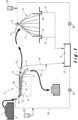
- the granular steel-making slag material 1 can be stored temporarily in a bunker 2. It preferably comprises more than 90 wt. % particles having a particle size of between 1 and 50 mm, preferably between 1.5 and 30 mm and more preferably between 2 and 20 mm.
- the granular steel-making slag material 1 may comprise for example a 2 to 10 mm fraction, or a 2 to 14 mm fraction, of the crushed steel-making slag material.
- the heavier fraction comprises steel particles whereas the lighter fraction comprising slag particles.
- the wet jigging apparatus or jig 5 allows to carry out the separation between these two fractions based on the difference in density (i.e. specific weight) of steel and of slag material.
- the granular steel-making slag material 1 and water 6 used to carry out the density separation step is transported through a gutter-shaped feeder 7 to the inlet of the jig.
- the inlet of the jig consists of an oblique plate 8, on which the mixture of the granular steel-making slag material 1 and the water 6 slide into a container 9 formed by the jig 5.
- the water 6 and slag material 1 contained in the container 9 are subjected to vibrations ("jigged") using a pulsation machine 24.
- This pulsation machine 24 may be a pneumatic pulsation machine and is situated behind a partition wall 13 dividing the container 9 in two compartments. The partition wall 13 does not extend to the bottom of the container 9 so that an opening is formed connecting both compartments.
- the pulsation machine generates a pulsating motion in the water 6 which is illustrated by means of the double arrows 10. Separation of the materials is based on the fact that particles in the bed of slag particles provided on an inclined grid 11 in the upper portion of the jig 5 stratify in pulsating water.
- the upward and downward pulsating currents fluidize and compact the particles in the bed of slag particles into relatively homogeneous layers.
- Low density particles stratify on the surface of the bed of slag particles, while higher density particles settle to the lower level of the bed, on the grid 11.
- the jig 5 has an upper outlet 16, for the lighter fraction 3, and a lower outlet 17 for the heavier steel fraction 4. Both fractions have only been illustrated schematically in Figure 2 . Together with these fractions, water 6 also flows through both outlets 16, 17 out of the jig 5. The water 6 is removed from the lighter and the heavier fractions and is led via pipes 18 to a buffer reservoir 12. The water from this buffer reservoir 12 is recycled to the inlet of the jig 5 via pump 25 and pipe 20.
- the lighter fraction 3 still comprises an amount of slag particles that have a higher steel content. These slag particles are preferably removed magnetically from the lighter fraction 3 before it is stockpiled in the form of heaps 14. Alternatively, the slag particles that have a higher steel content can be removed from the lighter fraction 3 by means of a second jig which can be adjusted to enable the removal of the heavier particles from the lighter fraction 3.
- the lighter fraction 3 is then subjected to a water-treatment in a process commonly referred to as 'ageing'. During this ageing process, water will penetrate within the granular steel-making slag material 1 and hydrate the free oxides of calcium and/or magnesium contained therein.
- Calcium oxide's affinity for water is higher than that of magnesium oxide so that the free calcium oxide may already have been neutralised at least partly in the previous production steps, for example when the slag material is cooled down by spraying water on it and especially also during and after the wet jigging step when the slag material is still wet.
- Magnesium oxide, or mixed oxides of magnesium and calcium take however much more time to hydrate.
- the ageing step is preferably performed by spraying water 3 onto the heaps 14. Spraying of the water can be performed by making use of sprinklers 15 or the like.
- the water 6 contained in the buffer reservoir 12 is used to spray on the heaps 14 of slag material which is being aged, and is therefore recirculated via pump 26 and pipes 21 over the same buffer reservoir 12 as that used to recirculate the water of the jig 5.
- the water 6 which percolated through the heaps 14 is captured through a water collection system 19, and is recycled to the buffer reservoir 12.
- the water 6 can either be sprayed continuously or intermittently onto the heaps 14 to keep the particles of the granular steel-making slag sufficiently wet for the hydration reaction.
- the ageing of the steel-making slag material 3 has to be carried out until the swelling percentage of the slag material 3, as determined according to standard NBN EN 1744-1 (2013), article 19.33, is sufficiently low so that the slag material 3 can be used as slag aggregate for cementitious of bituminous building materials.
- the swelling percentage should be smaller than 1.5%, and preferably smaller than 1%.
- the minimum ageing period to achieve the required reduction of the swelling percentage may comprise several months.
- a drawback of such a long ageing period is not only that the production of the steel-making slag aggregates takes a long time but also that a lot of storage space has to be provided for the large heaps which need to be aged.
- the minimum ageing period can be reduced by the use of an antiscalant during the immersing and agitating step and/or during the ageing step.
- the immersing and agitation step is carried out in the container 9 of the jig 5, the aqueous medium being formed by the water 6 contained in the jig 5.
- the steel-making slag material 1 which is immersed and agitated in the aqueous medium 6 preferably comprises more than 90 wt. % particles having a particle size of between 1 and 50 mm, preferably between 1.5 and 30 mm and more preferably between 2 and 20 mm.
- the steel-making slag material 1 fed to the jig comprises for example a 0 to 10 mm fraction, or a 0 to 14 mm fraction of the crushed steel-making slag material.
- the granular steel-making slag material 1 is preferably agitated in the aqueous medium 6 for at least 10 seconds, preferably for at least 20 seconds and more preferably for at least 30 seconds. It is preferably agitated in the aqueous medium 6 for at most 20 minutes, preferably for at most 15 minutes and more preferably for at most 10 minutes.
- the agitation times are determined by the average residence time of the slag material 1 in the jig 5.
- the antiscalant is a compound added to water that inhibits the crystallization of sparingly soluble inorganic salts, in particular of calcium carbonate and magnesium carbonate, by delaying the onset of the crystallization, i.e. the nucleation, and/or by retarding the crystal growth.
- the aqueous medium in particular contains an amount of said at least one antiscalant which is effective to accelerate the reduction of the swelling percentage.
- the amount of antiscalant is preferably effective to reduce the minimum ageing time required to reduce the average swelling percentage of the alkaline material to 0.75%, in particular to reduce this minimum ageing time with at least 10%, preferably with at least 20%.
- the average swelling percentage is determined by taking each day one sample of the alkaline material, by measuring the swelling percentage thereof in accordance with NBN EN 1744-1 (2013) and by calculating the average value of the swelling percentages over the last seven days.
- the aqueous medium used to treat the granular alkaline material 1 contains preferably the antiscalant or antiscalants in a total amount of at least 0.5 ppm, preferably of at least 1.0 ppm and more preferably of at least 2.0 ppm.
- the total amount of antiscalants in the aqueous medium is preferably smaller than 100 ppm, more preferably smaller than 50 ppm.
- the amount of antiscalant is the total amount of active ingredients, i.e. of the scale inhibitors, contained therein.
- the antiscalant is preferably selected from the group comprising polyphosphates, phosphonic acids, polycarboxylic acids and salts thereof.
- the antiscalant is more preferably selected from the group consisting of:
- the antiscalant is preferably dosed via a dosing apparatus 22 in the pipe 20 feeding the aqueous medium 6 from the buffer reservoir 12 to the jig 5.
- the antiscalant could also be dosed directly into the container 9 of the jig 5.
- the aqueous medium 6 wherein the alkaline material 1 is immersed and agitated has preferably a relatively high pH, in particularly a pH higher than 9, preferably higher than 10, more preferably higher than 10.5 and most preferably higher than 11.
- a relatively high pH in particularly a pH higher than 9, preferably higher than 10, more preferably higher than 10.5 and most preferably higher than 11.
- concentration of calcium ions and magnesium ions is very small in the aqueous medium due to the high concentration of hydroxyl ions.
- Such a low concentration of calcium and magnesium ions in the aqueous medium might the effect of the quite small amounts of antiscalant in the aqueous medium.
- the high pH of the aqueous medium 6 can be achieved automatically in the jig 5 by recirculating the aqueous medium or water 6 via the pipes 18, 20 over the jig 5 and the buffer reservoir 12. Recirculating the aqueous medium or water 6 via the pipes 21 over the heaps 14 also causes an increase of the pH of the aqueous medium 6.
- an antiscalant is also dosed by means of a dosing apparatus 23 in the pipes 21 feeding the water from the buffer reservoir 12 to the sprinklers 15. In this way, further antiscalant is applied onto the granular material 3.
- the antiscalant dosed into the water 6 used for ageing the granular material 3 may be the same of different from the antiscalant which is dosed in the aqueous medium 6 in the jig 5.
- the antiscalant is fed into the water contained in the jig 5.
- the slag material 1 may also be led through a bath which contains the antiscalant and wherein the slag material is stirred or otherwise agitated. Agitating the slag material 1 in the jig 5 is however preferred since no additional treatment step is thus required to treat the slag material 1 with the antiscalant.
- a granular stainless steel-making slag 1 was produced by comminuting slag material originating from a stainless steel factory and by subjecting the comminuted slag material to several crushing and sieving steps, until a stainless steel slag fraction was obtained having a particle size of between 2 and 10 mm.
- This steel slag fraction was separated by means of a jig into a lighter slag fraction and a heavier metal fraction.
- the residence time of the steel slag fraction in the jig was about 0.5 to 1 minute. Heavier particles were removed magnetically from the lighter fraction which left the jig and the remaining lighter fraction was subsequently stockpiled in a large heap, in a box, of 20 to 25000 tons.
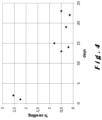
- Figure 3 shows the swelling percentages which are determined as from the fifth week of the ageing period with the antiscalant being added only to the water supplied to the sprinkler. The measurements were done every four days.
- Antiprex ® D (BASF) which contained 40 wt.% of low molecular weight sodium salt of polyacrylic acid as active ingredient.
- the Antiprex ® D was dosed in an amount of 3.3 ml/m 3 of water fed to the sprinkler and in an amount of 5.75 ml/m 3 of water fed to the jig.
- Figures 4 and 5 shows the swelling percentages which are determined as from the day at which the box was filed and spraying with water was started. It can be seen that initially the swelling percentage was higher than 2% but that this swelling percentage dropped quickly, within a number of days, below 1%. After about one month, the swelling percentage was even consistently lower than 0.75%.
- Antiprex ® D was replaced by Depositrol ® BL5600 which contained 2-phosphonobutane-1,2,4-tricarboxylic acid (PBTC).
- Depositrol ® BL5600 also enabled to accelerate the neutralisation of the free oxides in the stainless steel slag aggregate.
Landscapes
- Engineering & Computer Science (AREA)
- Chemical & Material Sciences (AREA)
- Ceramic Engineering (AREA)
- Environmental & Geological Engineering (AREA)
- Civil Engineering (AREA)
- Materials Engineering (AREA)
- Structural Engineering (AREA)
- Organic Chemistry (AREA)
- Curing Cements, Concrete, And Artificial Stone (AREA)
- Treatment Of Steel In Its Molten State (AREA)
- Processing Of Solid Wastes (AREA)
Claims (18)
- Ein Verfahren zur Herstellung eines alkalischen Aggregats (3), wobei dieses Verfahren die folgenden Schritte umfasst:- Bereitstellen eines körnigen alkalischen Materials (1), welches ein körniges Schlackenmaterial (1) aus der Stahlproduktion umfasst, ausgenommen Hochofenschlacken, und welches freie Oxide von Calcium und/oder Magnesium enthält, und- Auslagern von zumindest einem Anteil (3) des körnigen alkalischen Materials (1), wobei dieser Anteil (3) eine vorbestimmte Quellrate wie bestimmt gemäß Norm NBN EN 1744-1 (2013) Artikel 19.3 hat, um diese Quellrate auf einen Wert zu senken, der geringer ist als 1,5 %, bevorzugt geringer als 1,0 %, wobei während dieses Schrittes des Auslagerns der erwähnte Anteil (3) des erwähnten körnigen alkalischen Materials (1) mit Wasser behandelt wird, um zumindest einen Teil der erwähnten freien Oxide zu hydratisieren,dadurch gekennzeichnet, dass
zumindest der erwähnte Anteil (3) des körnigen alkalischen Materials (1) mit einem wässrigen Medium (6) behandelt wird, das mindestens ein Antiscalant enthält, um das erwähnte Auslagern des körnigen alkalischen Materials (1) zu beschleunigen. - Das Verfahren nach Anspruch 1, dadurch gekennzeichnet, dass das körnige alkalische Material (1) ein Schlackenmaterial (1) aus der Edelstahlproduktion umfasst.
- Das Verfahren nach Anspruch 1 oder 2, dadurch gekennzeichnet, dass das körnige alkalische Material (1) während des erwähnten Schrittes des Auslagerns mit dem erwähnten wässrigen Medium (6) behandelt wird, wobei das erwähnte Wasser zumindest teilweise im erwähnten wässrigen Medium (6) enthalten ist.
- Das Verfahren nach irgendeinem der Ansprüche 1 bis 3, dadurch gekennzeichnet, dass das körnige alkalische Material (1) mit dem erwähnten wässrigen Medium (6) in einem weiteren Schritt behandelt wird, in dem zumindest der erwähnte Anteil (3) des körnigen alkalischen Materials in das erwähnte wässrige Medium (6) eingetaucht und dort gerührt wird, wobei dieser Schritt des Eintauchens und Rührens vor dem erwähnten Schritt des Auslagerns durchgeführt wird.
- Das Verfahren nach Anspruch 4, dadurch gekennzeichnet, dass das körnige alkalische Material (1) im erwähnten wässrigen Medium (6) mindestens 10 Sekunden lang, bevorzugt mindestens 20 Sekunden lang und noch besser mindestens 30 Sekunden lang gerührt wird.
- Das Verfahren nach Anspruch 4 oder 5, dadurch gekennzeichnet, dass das körnige alkalische Material (1) im erwähnten wässrigen Medium (6) höchstens 20 Minuten lang, bevorzugt höchstens 15 Minuten lang und noch besser höchstens 10 Minuten lang gerührt wird.
- Das Verfahren nach irgendeinem der Ansprüche 4 bis 6, dadurch gekennzeichnet, dass der erwähnte Schritt des Eintauchens und Rührens in einer Nasssetzvorrichtung (5) durchgeführt wird, die das wässrige Medium (6) enthält, worin das erwähnte körnige alkalische Material (1) eingetaucht und gerührt wird.
- Das Verfahren nach Anspruch 7, dadurch gekennzeichnet, dass das erwähnte körnige alkalische Material (1) in der erwähnten Nasssetzvorrichtung (5) in zumindest eine leichtere Fraktion (3) und eine schwerere Fraktion (4) getrennt wird, wobei die leichtere Fraktion (3) den erwähnten Anteil (3) des körnigen alkalischen Materials bereitstellt, der dem erwähnten Schritt des Auslagerns unterzogen wird.
- Das Verfahren nach irgendeinem der Ansprüche 1 bis 8, dadurch gekennzeichnet, dass der Schritt des Auslagerns durchgeführt wird, indem das erwähnte Wasser auf den erwähnten Anteil (3) des körnigen alkalischen Materials (1) gesprüht wird, bevorzugt auf Haufen (14) des erwähnten körnigen alkalischen Materials.
- Das Verfahren nach irgendeinem der Ansprüche 1 bis 9, dadurch gekennzeichnet, dass der pH-Wert des erwähnten wässrigen Mediums (6) höher ist als 9,0, bevorzugt höher als 10,0, noch besser höher als 10,5 und am besten höher als 11,0.
- Das Verfahren nach Anspruch 10, dadurch gekennzeichnet, dass der erwähnte Schritt des Eintauchens und Rührens in einem Behälter (9) durchgeführt wird, welcher das erwähnte wässrige Medium (6) enthält, wobei das im erwähnten Behälter (9) enthaltene wässrige Medium (6) über einen Puffertank (12) zurückgeführt wird, wobei das erwähnte Antiscalant in das wässrige Medium (6), welches vom erwähnten Puffertank (12) zum erwähnten Behälter (9) geleitet wird, und/oder in das wässrige Medium (6), das im erwähnten Behälter (9) enthalten ist, nachgefüllt wird.
- Das Verfahren nach Anspruch 11, dadurch gekennzeichnet, dass der erwähnte Schritt des Auslagerns mit wässrigem Medium (6) aus dem erwähnten Puffertank (12) durchgeführt wird, wobei das erwähnte wässrige Medium (6) auf den erwähnten Anteil (3) des körnigen alkalischen Materials (1) aufgebracht wird, das ausgelagert wird, und dem ermöglicht wird, durch dieses körnige alkalische Material zu sickern, wobei das durchgesickerte wässrige Medium aufgefangen und in den erwähnten Puffertank (12) zurückgeführt wird.
- Das Verfahren nach Anspruch 12, dadurch gekennzeichnet, dass zumindest ein weiteres Antiscalant dem wässrigen Medium (6) zugesetzt wird, welches aus dem erwähnten Puffertank (12) zum erwähnten Anteil (3) des alkalischen Materials (1), das ausgelagert wird, geleitet wird, insbesondere zum wässrigen Medium (6), welches auf diesen Anteil (3) des körnigen alkalischen Materials (1) aufgebracht wird.
- Das Verfahren nach irgendeinem der Ansprüche 1 bis 13, dadurch gekennzeichnet, dass das erwähnte wässrige Medium (6) das erwähnte zumindest eine Antiscalant in einer Gesamtmenge von mindestens 0,5 ppm, bevorzugt von mindestens 1,0 ppm und noch besser von mindestens 2,0 ppm (jeweils ppm pro Volumen) enthält.
- Das Verfahren nach irgendeinem der Ansprüche 1 bis 14, dadurch gekennzeichnet, dass das alkalische Material (1), das mit dem erwähnten wässrigen Medium (6) behandelt wird, mehr als 90 Gew.-% Partikel mit einer Korngröße von zwischen 1 und 50 mm, bevorzugt zwischen 1,5 und 30 mm und noch besser zwischen 2 und 20 mm umfasst.
- Das Verfahren nach irgendeinem der Ansprüche 1 bis 15, dadurch gekennzeichnet, dass das erwähnte Antiscalant ausgewählt ist aus der Gruppe bestehend aus Polyphosphaten, Phosphonsäuren, Polycarbonsäuren, Homopolymeren oder Copolymeren abgeleitet von ethylenisch ungesättigten Monomeren, die mindestens eine funktionelle Sulfon-, Schwefel-, Phosphon- oder Phosphorsäuregruppe, und Salze davon umfassen.
- Das Verfahren nach irgendeinem der Ansprüche 1 bis 16, dadurch gekennzeichnet, dass das erwähnte Antiscalant eine Poly- (Acrylsäure), Poly- (Methacrylsäure), Poly- (Apfelsäure) und/oder Poly- (Asparaginsäure) oder ein Salz davon umfasst.
- Die Verwendung von mindestens einem Antiscalant, um die Hydratisierung von zumindest einem Teil der freien Calcium- und/oder Magnesiumoxide zu beschleunigen, die in einem körnigen alkalischen Material (1) enthalten sind, welches ein körniges Schlackenmaterial (1) aus der Stahlproduktion, ausgenommen Hochofenschlacken, umfasst, um die Quellrate davon auf einen Wert zu senken, der geringer ist als 1 %, wobei die Quellrate gemäß Norm NBN EN 1744-1 (2013), Artikel 19.3, bestimmt ist.
Applications Claiming Priority (1)
| Application Number | Priority Date | Filing Date | Title |
|---|---|---|---|
| BE20195984A BE1027914B1 (fr) | 2019-12-24 | 2019-12-24 | Procede de production d'un agregat alcalin |
Publications (3)
| Publication Number | Publication Date |
|---|---|
| EP3842399A1 EP3842399A1 (de) | 2021-06-30 |
| EP3842399B1 true EP3842399B1 (de) | 2023-11-15 |
| EP3842399C0 EP3842399C0 (de) | 2023-11-15 |
Family
ID=69902945
Family Applications (1)
| Application Number | Title | Priority Date | Filing Date |
|---|---|---|---|
| EP20217138.5A Active EP3842399B1 (de) | 2019-12-24 | 2020-12-23 | Verfahren zur herstellung eines alkalischen aggregats |
Country Status (4)
| Country | Link |
|---|---|
| EP (1) | EP3842399B1 (de) |
| BE (1) | BE1027914B1 (de) |
| ES (1) | ES2966230T3 (de) |
| PL (1) | PL3842399T3 (de) |
Families Citing this family (2)
| Publication number | Priority date | Publication date | Assignee | Title |
|---|---|---|---|---|
| BE1029161B1 (fr) | 2021-03-04 | 2022-10-03 | Orbix Solutions | Procédé de recyclage de matériaux résiduels générés dans un processus de fabrication d’acier inoxydable dans une aciérie d’acier inoxydable |
| CN114985097B (zh) * | 2022-06-08 | 2023-10-17 | 包头地平线环保科技有限公司 | 一种高效电石渣无废综合利用的工艺 |
Family Cites Families (8)
| Publication number | Priority date | Publication date | Assignee | Title |
|---|---|---|---|---|
| NL9101771A (nl) | 1991-10-23 | 1993-05-17 | Pelt & Hooykaas | Poreuze gegranuleerde staalslaksamenstelling alsmede toepassing van een dergelijke staalslaksamenstelling als vulstof in bouwmaterialen, wegenbouwmaterialen en ophoogmaterialen. |
| FR2735767B1 (fr) | 1995-06-23 | 1997-07-18 | Lorraine Laminage | Procede de preparation de granulats, notamment pour utilisation en genie civil, a partir de laitier d'acierie de conversion a l'oxygene |
| BE1010700A5 (nl) | 1996-10-17 | 1998-12-01 | Trading And Recycling Company | Werkwijze voor het verwerken van roestvaste staalslakken. |
| EP1312415A1 (de) | 2001-11-16 | 2003-05-21 | Trading and Recycling Company Sint Truiden | Verfahren zum Gewinnen von rostfrei Stahl aus rostfreien Stahlschlacken |
| BR0306767A (pt) | 2003-10-16 | 2005-06-07 | Tubarao Siderurgica | Processo de reaproveitamento econÈmico da escória de aciaria através de sua inertização (aeração com umectação) |
| JP4514131B2 (ja) * | 2005-01-05 | 2010-07-28 | Jfeミネラル株式会社 | 高炉水砕スラグ又はその粒度調整物の固結防止剤及び固結防止方法 |
| WO2008017724A2 (de) * | 2006-08-10 | 2008-02-14 | Sachtleben Chemie Gmbh | Aus schlacken gewonnener zuschlag- und füllstoff |
| BE1022642B1 (fr) | 2014-03-28 | 2016-06-23 | Recoval Belgium | Procede pour solidifier des scorier d'acier liquides |
-
2019
- 2019-12-24 BE BE20195984A patent/BE1027914B1/fr active IP Right Grant
-
2020
- 2020-12-23 PL PL20217138.5T patent/PL3842399T3/pl unknown
- 2020-12-23 EP EP20217138.5A patent/EP3842399B1/de active Active
- 2020-12-23 ES ES20217138T patent/ES2966230T3/es active Active
Also Published As
| Publication number | Publication date |
|---|---|
| EP3842399A1 (de) | 2021-06-30 |
| BE1027914A1 (fr) | 2021-07-16 |
| ES2966230T3 (es) | 2024-04-19 |
| BE1027914B1 (fr) | 2021-07-26 |
| PL3842399T3 (pl) | 2024-04-08 |
| EP3842399C0 (de) | 2023-11-15 |
Similar Documents
| Publication | Publication Date | Title |
|---|---|---|
| US20260103425A1 (en) | Carbonation of concrete products | |
| RU2718879C1 (ru) | Способ элюирования кальция из сталеплавильного шлака и способ извлечения кальция из сталеплавильного шлака | |
| TW558567B (en) | Method and apparatus for producing desulfurizing agent for hot-metal | |
| EP3842399B1 (de) | Verfahren zur herstellung eines alkalischen aggregats | |
| HU206300B (en) | Process for chemical stabilizing heavy metal-containing contaminations and precipitations | |
| EP3551704B1 (de) | Handhabungsverfahren für schlackenpfanne oder schlackengefäss und pyrometallurgische geräte | |
| JPWO2001096616A1 (ja) | 溶銑用脱硫剤の製造方法及び装置 | |
| JP2010137141A (ja) | 灰洗浄排水の処理方法及び処理システム | |
| US11221181B2 (en) | Method for handling a slag pot or ladle and pyrometallurgical tools | |
| JP3175694B2 (ja) | 海中沈設用石材及びその製造方法 | |
| CN114014423A (zh) | 被处理水中的磷的回收系统、被处理水中的磷的回收方法、肥料及肥料原料以及黄磷原料 | |
| JP2001026470A (ja) | スラグ成分の溶出制御方法 | |
| KR20190079644A (ko) | 슬래그의 포밍 억제 방법 및 전로 정련 방법 | |
| JP2004089931A (ja) | 脱リン・脱アンモニア方法、アンモニア肥料の製造方法、及び熔融固化体の製造方法 | |
| RU2752914C1 (ru) | Состав и способ стабилизации распадающихся металлургических шлаков | |
| JP6500534B2 (ja) | 水中からのリン除去方法及びその装置 | |
| JP2000143303A (ja) | 水中沈設用石材およびその製造方法 | |
| US3948648A (en) | Method of removing slag incrustations containing calcium oxide | |
| RU2304623C1 (ru) | Способ легирования стали марганцем | |
| KR100674623B1 (ko) | 용출수 피에이치 상승 억제를 위한 칼슘계 재료 처리 방법 | |
| JPH11193516A (ja) | 河川等の淡水系水域沈設用石材及びその製造方法 | |
| JP2007320809A (ja) | 高炉スラグの処理方法 | |
| JP2000233952A (ja) | 高炉水砕スラグの製造方法 | |
| JPS61149291A (ja) | 懸濁水の処理方法 |
Legal Events
| Date | Code | Title | Description |
|---|---|---|---|
| PUAI | Public reference made under article 153(3) epc to a published international application that has entered the european phase |
Free format text: ORIGINAL CODE: 0009012 |
|
| STAA | Information on the status of an ep patent application or granted ep patent |
Free format text: STATUS: THE APPLICATION HAS BEEN PUBLISHED |
|
| AK | Designated contracting states |
Kind code of ref document: A1 Designated state(s): AL AT BE BG CH CY CZ DE DK EE ES FI FR GB GR HR HU IE IS IT LI LT LU LV MC MK MT NL NO PL PT RO RS SE SI SK SM TR |
|
| STAA | Information on the status of an ep patent application or granted ep patent |
Free format text: STATUS: REQUEST FOR EXAMINATION WAS MADE |
|
| 17P | Request for examination filed |
Effective date: 20211207 |
|
| RBV | Designated contracting states (corrected) |
Designated state(s): AL AT BE BG CH CY CZ DE DK EE ES FI FR GB GR HR HU IE IS IT LI LT LU LV MC MK MT NL NO PL PT RO RS SE SI SK SM TR |
|
| GRAP | Despatch of communication of intention to grant a patent |
Free format text: ORIGINAL CODE: EPIDOSNIGR1 |
|
| STAA | Information on the status of an ep patent application or granted ep patent |
Free format text: STATUS: GRANT OF PATENT IS INTENDED |
|
| INTG | Intention to grant announced |
Effective date: 20221208 |
|
| GRAJ | Information related to disapproval of communication of intention to grant by the applicant or resumption of examination proceedings by the epo deleted |
Free format text: ORIGINAL CODE: EPIDOSDIGR1 |
|
| STAA | Information on the status of an ep patent application or granted ep patent |
Free format text: STATUS: REQUEST FOR EXAMINATION WAS MADE |
|
| INTC | Intention to grant announced (deleted) | ||
| GRAP | Despatch of communication of intention to grant a patent |
Free format text: ORIGINAL CODE: EPIDOSNIGR1 |
|
| STAA | Information on the status of an ep patent application or granted ep patent |
Free format text: STATUS: GRANT OF PATENT IS INTENDED |
|
| INTG | Intention to grant announced |
Effective date: 20230602 |
|
| GRAS | Grant fee paid |
Free format text: ORIGINAL CODE: EPIDOSNIGR3 |
|
| GRAA | (expected) grant |
Free format text: ORIGINAL CODE: 0009210 |
|
| STAA | Information on the status of an ep patent application or granted ep patent |
Free format text: STATUS: THE PATENT HAS BEEN GRANTED |
|
| AK | Designated contracting states |
Kind code of ref document: B1 Designated state(s): AL AT BE BG CH CY CZ DE DK EE ES FI FR GB GR HR HU IE IS IT LI LT LU LV MC MK MT NL NO PL PT RO RS SE SI SK SM TR |
|
| REG | Reference to a national code |
Ref country code: CH Ref legal event code: EP Ref country code: GB Ref legal event code: FG4D |
|
| REG | Reference to a national code |
Ref country code: DE Ref legal event code: R096 Ref document number: 602020021037 Country of ref document: DE |
|
| REG | Reference to a national code |
Ref country code: IE Ref legal event code: FG4D |
|
| U01 | Request for unitary effect filed |
Effective date: 20231214 |
|
| U07 | Unitary effect registered |
Designated state(s): AT BE BG DE DK EE FI FR IT LT LU LV MT NL PT SE SI Effective date: 20240105 |
|
| U20 | Renewal fee for the european patent with unitary effect paid |
Year of fee payment: 4 Effective date: 20240122 |
|
| PG25 | Lapsed in a contracting state [announced via postgrant information from national office to epo] |
Ref country code: GR Free format text: LAPSE BECAUSE OF FAILURE TO SUBMIT A TRANSLATION OF THE DESCRIPTION OR TO PAY THE FEE WITHIN THE PRESCRIBED TIME-LIMIT Effective date: 20240216 |
|
| PG25 | Lapsed in a contracting state [announced via postgrant information from national office to epo] |
Ref country code: IS Free format text: LAPSE BECAUSE OF FAILURE TO SUBMIT A TRANSLATION OF THE DESCRIPTION OR TO PAY THE FEE WITHIN THE PRESCRIBED TIME-LIMIT Effective date: 20240315 |
|
| REG | Reference to a national code |
Ref country code: ES Ref legal event code: FG2A Ref document number: 2966230 Country of ref document: ES Kind code of ref document: T3 Effective date: 20240419 |
|
| PG25 | Lapsed in a contracting state [announced via postgrant information from national office to epo] |
Ref country code: IS Free format text: LAPSE BECAUSE OF FAILURE TO SUBMIT A TRANSLATION OF THE DESCRIPTION OR TO PAY THE FEE WITHIN THE PRESCRIBED TIME-LIMIT Effective date: 20240315 Ref country code: GR Free format text: LAPSE BECAUSE OF FAILURE TO SUBMIT A TRANSLATION OF THE DESCRIPTION OR TO PAY THE FEE WITHIN THE PRESCRIBED TIME-LIMIT Effective date: 20240216 |
|
| PG25 | Lapsed in a contracting state [announced via postgrant information from national office to epo] |
Ref country code: RS Free format text: LAPSE BECAUSE OF FAILURE TO SUBMIT A TRANSLATION OF THE DESCRIPTION OR TO PAY THE FEE WITHIN THE PRESCRIBED TIME-LIMIT Effective date: 20231115 Ref country code: NO Free format text: LAPSE BECAUSE OF FAILURE TO SUBMIT A TRANSLATION OF THE DESCRIPTION OR TO PAY THE FEE WITHIN THE PRESCRIBED TIME-LIMIT Effective date: 20240215 Ref country code: HR Free format text: LAPSE BECAUSE OF FAILURE TO SUBMIT A TRANSLATION OF THE DESCRIPTION OR TO PAY THE FEE WITHIN THE PRESCRIBED TIME-LIMIT Effective date: 20231115 |
|
| PG25 | Lapsed in a contracting state [announced via postgrant information from national office to epo] |
Ref country code: CZ Free format text: LAPSE BECAUSE OF FAILURE TO SUBMIT A TRANSLATION OF THE DESCRIPTION OR TO PAY THE FEE WITHIN THE PRESCRIBED TIME-LIMIT Effective date: 20231115 |
|
| PG25 | Lapsed in a contracting state [announced via postgrant information from national office to epo] |
Ref country code: SK Free format text: LAPSE BECAUSE OF FAILURE TO SUBMIT A TRANSLATION OF THE DESCRIPTION OR TO PAY THE FEE WITHIN THE PRESCRIBED TIME-LIMIT Effective date: 20231115 |
|
| PG25 | Lapsed in a contracting state [announced via postgrant information from national office to epo] |
Ref country code: SM Free format text: LAPSE BECAUSE OF FAILURE TO SUBMIT A TRANSLATION OF THE DESCRIPTION OR TO PAY THE FEE WITHIN THE PRESCRIBED TIME-LIMIT Effective date: 20231115 Ref country code: SK Free format text: LAPSE BECAUSE OF FAILURE TO SUBMIT A TRANSLATION OF THE DESCRIPTION OR TO PAY THE FEE WITHIN THE PRESCRIBED TIME-LIMIT Effective date: 20231115 Ref country code: RO Free format text: LAPSE BECAUSE OF FAILURE TO SUBMIT A TRANSLATION OF THE DESCRIPTION OR TO PAY THE FEE WITHIN THE PRESCRIBED TIME-LIMIT Effective date: 20231115 Ref country code: CZ Free format text: LAPSE BECAUSE OF FAILURE TO SUBMIT A TRANSLATION OF THE DESCRIPTION OR TO PAY THE FEE WITHIN THE PRESCRIBED TIME-LIMIT Effective date: 20231115 |
|
| REG | Reference to a national code |
Ref country code: CH Ref legal event code: PL |
|
| REG | Reference to a national code |
Ref country code: DE Ref legal event code: R097 Ref document number: 602020021037 Country of ref document: DE |
|
| PG25 | Lapsed in a contracting state [announced via postgrant information from national office to epo] |
Ref country code: MC Free format text: LAPSE BECAUSE OF FAILURE TO SUBMIT A TRANSLATION OF THE DESCRIPTION OR TO PAY THE FEE WITHIN THE PRESCRIBED TIME-LIMIT Effective date: 20231115 |
|
| PG25 | Lapsed in a contracting state [announced via postgrant information from national office to epo] |
Ref country code: MC Free format text: LAPSE BECAUSE OF FAILURE TO SUBMIT A TRANSLATION OF THE DESCRIPTION OR TO PAY THE FEE WITHIN THE PRESCRIBED TIME-LIMIT Effective date: 20231115 |
|
| PLBE | No opposition filed within time limit |
Free format text: ORIGINAL CODE: 0009261 |
|
| STAA | Information on the status of an ep patent application or granted ep patent |
Free format text: STATUS: NO OPPOSITION FILED WITHIN TIME LIMIT |
|
| REG | Reference to a national code |
Ref country code: IE Ref legal event code: MM4A |
|
| PG25 | Lapsed in a contracting state [announced via postgrant information from national office to epo] |
Ref country code: IE Free format text: LAPSE BECAUSE OF NON-PAYMENT OF DUE FEES Effective date: 20231223 |
|
| PG25 | Lapsed in a contracting state [announced via postgrant information from national office to epo] |
Ref country code: CH Free format text: LAPSE BECAUSE OF NON-PAYMENT OF DUE FEES Effective date: 20231231 |
|
| 26N | No opposition filed |
Effective date: 20240819 |
|
| PG25 | Lapsed in a contracting state [announced via postgrant information from national office to epo] |
Ref country code: IE Free format text: LAPSE BECAUSE OF NON-PAYMENT OF DUE FEES Effective date: 20231223 Ref country code: CH Free format text: LAPSE BECAUSE OF NON-PAYMENT OF DUE FEES Effective date: 20231231 |
|
| U20 | Renewal fee for the european patent with unitary effect paid |
Year of fee payment: 5 Effective date: 20241120 |
|
| PG25 | Lapsed in a contracting state [announced via postgrant information from national office to epo] |
Ref country code: CY Free format text: LAPSE BECAUSE OF FAILURE TO SUBMIT A TRANSLATION OF THE DESCRIPTION OR TO PAY THE FEE WITHIN THE PRESCRIBED TIME-LIMIT; INVALID AB INITIO Effective date: 20201223 |
|
| PG25 | Lapsed in a contracting state [announced via postgrant information from national office to epo] |
Ref country code: HU Free format text: LAPSE BECAUSE OF FAILURE TO SUBMIT A TRANSLATION OF THE DESCRIPTION OR TO PAY THE FEE WITHIN THE PRESCRIBED TIME-LIMIT; INVALID AB INITIO Effective date: 20201223 |
|
| PG25 | Lapsed in a contracting state [announced via postgrant information from national office to epo] |
Ref country code: TR Free format text: LAPSE BECAUSE OF FAILURE TO SUBMIT A TRANSLATION OF THE DESCRIPTION OR TO PAY THE FEE WITHIN THE PRESCRIBED TIME-LIMIT Effective date: 20231115 |
|
| U20 | Renewal fee for the european patent with unitary effect paid |
Year of fee payment: 6 Effective date: 20251112 |
|
| PGFP | Annual fee paid to national office [announced via postgrant information from national office to epo] |
Ref country code: GB Payment date: 20251223 Year of fee payment: 6 |
|
| PGFP | Annual fee paid to national office [announced via postgrant information from national office to epo] |
Ref country code: PL Payment date: 20251127 Year of fee payment: 6 |
|
| PGFP | Annual fee paid to national office [announced via postgrant information from national office to epo] |
Ref country code: ES Payment date: 20260122 Year of fee payment: 6 |