EP3842296B1 - Schwingungstilgerring sowie gassackmodul mit einem solchen schwingungstilgerring - Google Patents
Schwingungstilgerring sowie gassackmodul mit einem solchen schwingungstilgerring Download PDFInfo
- Publication number
- EP3842296B1 EP3842296B1 EP21152910.2A EP21152910A EP3842296B1 EP 3842296 B1 EP3842296 B1 EP 3842296B1 EP 21152910 A EP21152910 A EP 21152910A EP 3842296 B1 EP3842296 B1 EP 3842296B1
- Authority
- EP
- European Patent Office
- Prior art keywords
- ring
- airbag module
- gas bag
- vibration damper
- section
- Prior art date
- Legal status (The legal status is an assumption and is not a legal conclusion. Google has not performed a legal analysis and makes no representation as to the accuracy of the status listed.)
- Active
Links
Images





Classifications
-
- B—PERFORMING OPERATIONS; TRANSPORTING
- B60—VEHICLES IN GENERAL
- B60R—VEHICLES, VEHICLE FITTINGS, OR VEHICLE PARTS, NOT OTHERWISE PROVIDED FOR
- B60R21/00—Arrangements or fittings on vehicles for protecting or preventing injuries to occupants or pedestrians in case of accidents or other traffic risks
- B60R21/02—Occupant safety arrangements or fittings, e.g. crash pads
- B60R21/16—Inflatable occupant restraints or confinements designed to inflate upon impact or impending impact, e.g. air bags
- B60R21/20—Arrangements for storing inflatable members in their non-use or deflated condition; Arrangement or mounting of air bag modules or components
- B60R21/203—Arrangements for storing inflatable members in their non-use or deflated condition; Arrangement or mounting of air bag modules or components in steering wheels or steering columns
- B60R21/2035—Arrangements for storing inflatable members in their non-use or deflated condition; Arrangement or mounting of air bag modules or components in steering wheels or steering columns using modules containing inflator, bag and cover attachable to the steering wheel as a complete sub-unit
-
- B—PERFORMING OPERATIONS; TRANSPORTING
- B60—VEHICLES IN GENERAL
- B60R—VEHICLES, VEHICLE FITTINGS, OR VEHICLE PARTS, NOT OTHERWISE PROVIDED FOR
- B60R21/00—Arrangements or fittings on vehicles for protecting or preventing injuries to occupants or pedestrians in case of accidents or other traffic risks
- B60R21/02—Occupant safety arrangements or fittings, e.g. crash pads
- B60R21/16—Inflatable occupant restraints or confinements designed to inflate upon impact or impending impact, e.g. air bags
- B60R21/20—Arrangements for storing inflatable members in their non-use or deflated condition; Arrangement or mounting of air bag modules or components
- B60R21/217—Inflation fluid source retainers, e.g. reaction canisters; Connection of bags, covers, diffusers or inflation fluid sources therewith or together
-
- B—PERFORMING OPERATIONS; TRANSPORTING
- B62—LAND VEHICLES FOR TRAVELLING OTHERWISE THAN ON RAILS
- B62D—MOTOR VEHICLES; TRAILERS
- B62D7/00—Steering linkage; Stub axles or their mountings
- B62D7/22—Arrangements for reducing or eliminating reaction, e.g. vibration, from parts, e.g. wheels, of the steering system
- B62D7/222—Arrangements for reducing or eliminating reaction, e.g. vibration, from parts, e.g. wheels, of the steering system acting on the steering wheel
-
- B—PERFORMING OPERATIONS; TRANSPORTING
- B60—VEHICLES IN GENERAL
- B60R—VEHICLES, VEHICLE FITTINGS, OR VEHICLE PARTS, NOT OTHERWISE PROVIDED FOR
- B60R21/00—Arrangements or fittings on vehicles for protecting or preventing injuries to occupants or pedestrians in case of accidents or other traffic risks
- B60R21/02—Occupant safety arrangements or fittings, e.g. crash pads
- B60R21/16—Inflatable occupant restraints or confinements designed to inflate upon impact or impending impact, e.g. air bags
- B60R21/20—Arrangements for storing inflatable members in their non-use or deflated condition; Arrangement or mounting of air bag modules or components
- B60R21/217—Inflation fluid source retainers, e.g. reaction canisters; Connection of bags, covers, diffusers or inflation fluid sources therewith or together
- B60R2021/2173—Inflation fluid source retainers, e.g. reaction canisters; Connection of bags, covers, diffusers or inflation fluid sources therewith or together the module or part thereof being movably mounted on the vehicle
-
- B—PERFORMING OPERATIONS; TRANSPORTING
- B60—VEHICLES IN GENERAL
- B60R—VEHICLES, VEHICLE FITTINGS, OR VEHICLE PARTS, NOT OTHERWISE PROVIDED FOR
- B60R21/00—Arrangements or fittings on vehicles for protecting or preventing injuries to occupants or pedestrians in case of accidents or other traffic risks
- B60R21/02—Occupant safety arrangements or fittings, e.g. crash pads
- B60R21/16—Inflatable occupant restraints or confinements designed to inflate upon impact or impending impact, e.g. air bags
- B60R21/20—Arrangements for storing inflatable members in their non-use or deflated condition; Arrangement or mounting of air bag modules or components
- B60R21/217—Inflation fluid source retainers, e.g. reaction canisters; Connection of bags, covers, diffusers or inflation fluid sources therewith or together
- B60R2021/2177—Reaction canisters characterised by material
- B60R2021/2178—Plastic
-
- B—PERFORMING OPERATIONS; TRANSPORTING
- B60—VEHICLES IN GENERAL
- B60R—VEHICLES, VEHICLE FITTINGS, OR VEHICLE PARTS, NOT OTHERWISE PROVIDED FOR
- B60R21/00—Arrangements or fittings on vehicles for protecting or preventing injuries to occupants or pedestrians in case of accidents or other traffic risks
- B60R21/02—Occupant safety arrangements or fittings, e.g. crash pads
- B60R21/16—Inflatable occupant restraints or confinements designed to inflate upon impact or impending impact, e.g. air bags
- B60R21/23—Inflatable members
- B60R21/237—Inflatable members characterised by the way they are folded
-
- B—PERFORMING OPERATIONS; TRANSPORTING
- B60—VEHICLES IN GENERAL
- B60R—VEHICLES, VEHICLE FITTINGS, OR VEHICLE PARTS, NOT OTHERWISE PROVIDED FOR
- B60R21/00—Arrangements or fittings on vehicles for protecting or preventing injuries to occupants or pedestrians in case of accidents or other traffic risks
- B60R21/02—Occupant safety arrangements or fittings, e.g. crash pads
- B60R21/16—Inflatable occupant restraints or confinements designed to inflate upon impact or impending impact, e.g. air bags
- B60R21/26—Inflatable occupant restraints or confinements designed to inflate upon impact or impending impact, e.g. air bags characterised by the inflation fluid source or means to control inflation fluid flow
- B60R21/261—Inflatable occupant restraints or confinements designed to inflate upon impact or impending impact, e.g. air bags characterised by the inflation fluid source or means to control inflation fluid flow with means other than bag structure to diffuse or guide inflation fluid
Definitions
- the invention relates to a gas bag module for mounting on a vehicle steering wheel, having the features in the preamble of claim 1.
- vibration dampers can be used to avoid unwanted steering wheel vibrations in order to adjust the natural frequency of the entire system so that it is in a non-critical range.
- the gas generator of a gas bag module arranged in the steering wheel is used as a counter-vibrating damper mass.
- the gas generator can be attached to the vehicle steering wheel either directly or indirectly via a module carrier of the gas bag module using a vibration damper ring.
- a vibration damper ring is used, for example, in the CN 103 192 788 A shown.
- the gas bag module has a vibration damper ring in accordance with the CN 103 192 788 A an undesirably large installation space requirement.
- the generic DE 10 2007 049 234 A1 discloses a gas bag module with the features in the preamble of claim 1, wherein an annular vibration damper is also provided for damping vibrations.
- the object of the invention is to create a compact gas bag module which has a gas generator mounted in a vibrating manner and a vibration damper ring for the vibrating attachment of the gas generator to a vehicle steering wheel, wherein the gas bag mouth of a gas bag is fixed particularly firmly and reliably to the gas bag module.
- a gas bag module with the features of claim 1, in which the carrier section has a clamping surface for a gas bag and the vibration damper ring is a two-component component with an elastic first component which forms the damping member, and a second component which has a lower elasticity than the first component, wherein the clamping surface of the carrier portion is formed by the first component and/or is nubbed.
- the damping element and the clamping surface can merge into one another in one piece. Consequently, with minimal manufacturing effort during the manufacture of the damping element, the coefficient of friction of the clamping surface to the gas bag can be increased at the same time, thus improving the clamping in the area of the gas bag mouth.
- the carrier section and the damper section are preferably spaced apart from one another in the axial direction.
- the carrier section of the vibration damper ring is arranged axially closer to the free end of the elastic damping element than the damper section of the vibration damper ring.
- the axial height of the damping element required for vibration damping can be achieved in the area of the damper section, whereas the adjacent carrier section is axially "lowered” and thereby frees up additional storage space for the adjacent, folded gas bag package.
- the gas bag module with a gas generator mounted so that it can vibrate therefore requires less installation space than the prior art and is ideally almost as compact as a gas bag module without a vibration damper.
- several support sections and damper sections are provided, in particular arranged alternately in the circumferential direction of the vibration damper ring. This results in a wave-shaped course of the vibration damper ring in the circumferential direction with respect to the ring axis A.
- the elastic damping element can have a hollow cross-section at least in sections in the axial direction between the damper section and the fastening element for the gas generator. In this way, a desired frequency range for the vibration damper can be set with little effort by simply adjusting the damping element cross-section.
- the carrier section of the vibration damper ring preferably has a fastening device, in particular a fastening opening for receiving a connecting means.
- Possible connecting means are, for example, crimp tabs a gas bag retaining plate or screw bolts that fix the vibration damper ring to a gas bag retaining plate and/or to a generator carrier.
- the carrier section has a clamping surface for a gas bag, wherein this clamping surface extends in particular substantially perpendicular to the ring axis.
- the vibration damper ring is a two-component component, in particular a two-component injection-molded part, with an elastic first component that forms the damping element, and a second component that has a lower elasticity than the first component.
- the first component is preferably an elastic plastic material, in particular an elastomer such as rubber, whereas the second component is preferably a comparatively solid plastic material or a metal such as steel.
- the elastic first component of the vibration damper ring preferably forms the clamping surface of the support section for a gas bag.
- a gas bag which is made of fabric for example
- a higher coefficient of friction is achieved with a clamping surface made of elastic material than with a clamping surface made of a hard material. Consequently, for a clamping surface made of the first component, the gas bag advantageously adheres more strongly to the vibration damper ring with the same (axial) clamping force.
- it is also conceivable to structure the clamping surface adjacent to the gas bag for example by roughening it, adding nubs or something similar.
- the increased gas bag adhesion of a structured clamping surface compared to a smooth clamping surface also occurs when the clamping surface is made of the second component.
- a bevel for deflecting a radial gas flow is provided on an axial end face facing away from the damping element, on a radial inner edge of the vibration damper ring. This gas deflection allows the filling of the gas bag to be accelerated and unwanted gas leakage to be minimized.
- a support member can be provided which extends in the axial direction from the damper section and/or from the carrier section to a free support member end.
- the elastic damping member and the support member are arranged in particular on the same axial side of the vibration damper ring.
- the support member is preferably formed from the material of the second component of the vibration damper ring and is, for example, integrally formed onto the carrier section.
- the elastic damping element extends axially from the damper section in the direction of a steering wheel hub of the vehicle steering wheel when the gas bag module is installed. Consequently, the gas generator is suspended from the vibration damper ring when the gas bag module is installed.
- the gas generator is mounted in such a way that the damping element is subjected to tensile stress in the axial direction when the gas bag module is installed.
- the gas pressure additionally loads the damping element and deforms it.
- the gas generator moves in the axial direction and is finally supported on a module component, for example a generator carrier of the gas bag module.
- This axial movement of the gas generator is also referred to as "settling" of the gas generator, which seals the gas bag module and thus reduces gas leakage. It has been found that a damping element designed for vibration damping results in better module sealing if the damping element is subjected to tension rather than compression when the gas generator is triggered.
- the carrier section of the vibration damper ring has a smaller axial distance to the steering wheel hub when the gas bag module is mounted than the damper section of the vibration damper ring. This creates additional storage space in the area of the carrier section for the adjacent, folded gas bag. This additional storage space makes it possible to create a particularly compact gas bag module.
- a wall section is provided in the area of the absorber section radially outside the damping element to minimize gas leakage.
- This wall section can prevent or at least reduce an undesirable flow of generator gas to the outside of the gas bag module when the gas generator is activated.
- a generator support is provided, wherein the wall section is attached to the generator support and extends in the axial direction from the generator support to the support section of the vibration damper ring.
- the Wall section made of a plastic and injection molded onto the generator support, so that the gas leakage can be reduced in this way with particularly low manufacturing and assembly effort.
- the wall section adjoins a support section of the vibration damper ring in the circumferential direction, wherein the support section overlaps with the wall section radially inside and/or radially outside the wall section in the circumferential direction, so that a labyrinth seal is created between the vibration damper ring and the wall section.
- no radially continuous gap is provided between the support section of the vibration damper ring and the wall section, so that a gas flow must change direction at least once. This leads to a particularly low gas loss in the gap area when the gas generator is activated.
- FIGS. 1 to 11 show an embodiment of a vibration damper ring 10 for the oscillating attachment of a gas generator 12 to a vehicle steering wheel 14 as well as a gas bag module 16 with such a vibration damper ring 10.
- the vibration damper ring 10 comprises according to the Figures 1 and 2 a ring axis A, a support section 18 for fastening the vibration damper ring 10 to a holding element fixed to the steering wheel (see also Figure 5 ), a damper section 22 for fastening the gas generator 12 to the vibration damper ring 10 (see also Figure 4 ), wherein an elastic damping member 24 is provided which extends in the axial direction from the damper section 22 to a free end 26 with respect to the ring axis A and has a fastening element 28 for the gas generator 12 between the damper section 22 and the free end 26.
- the holding element for the vibration damper ring 10 which is fixed to the steering wheel is in particular a gas bag holding plate 40 or a generator carrier 42 of the vehicle steering wheel 14 attachable gas bag module 16.
- the holding element is an intermediate plate arranged between the vehicle steering wheel 14 and the gas bag module 16 and attachable to the vehicle steering wheel 14.
- the vibration damper ring 10 is preferably a circumferentially closed, in particular circular ring, through the center or midpoint of which the ring axis A runs, wherein the ring axis A extends parallel to a steering wheel axis of the vehicle steering wheel 14 in the installed state of the gas bag module 16 and is in particular identical thereto.
- the vibration damper ring 10 has in particular a plurality of carrier sections 18 and damper sections 22 arranged alternately in the circumferential direction, whereby in the illustrated embodiment four carrier sections 18 and damper sections 22 are provided. This results in a wave-like course of the vibration damper ring in the circumferential direction with wave crests in the area of the damper sections 22 and wave troughs in the area of the carrier sections 18.
- the fastening element 28 is integrally formed on the damping member 24 and is designed as a damping member section with a thickened outer cross section and a circumferential groove 30 ( Figure 2 ).
- the gas generator 12 has a generator flange 32 with radial flange extensions 34, in each of which an opening is provided for inserting the fastening element 28.
- the free ends 26 of the damping elements 24 are inserted axially into these openings until an opening edge snaps into the groove 30 in the area of the thickened outer cross section, deforming the respective elastic damping element 24, and fastens the gas generator 12 to the vibration damper ring 10 in a way that allows it to vibrate ( Figure 4 ).
- the elastic damping element 24 between the absorber section 22 and the fastening element 28 for the gas generator 12 has a hollow cross-section in the axial direction at least in sections (see also Figure 8 ).
- the carrier section 18 and the absorber section 22 are designed in accordance with Figure 2 in axial Direction spaced from each other, with an axial distance a preferably being at least 3 mm, in particular at least 5 mm.
- all support sections 18 extend in a plane E 1 perpendicular to the ring axis A and the absorber sections 22 extend in a plane E 2 perpendicular to the ring axis A, with the parallel planes E 1 and E 2 having a distance a.
- the carrier section 18 of the vibration damper ring 10 has a fastening opening 36 for receiving a connecting means 38 in order to firmly fix the vibration damper ring 10 to a gas bag retaining plate 40 and/or to a generator carrier 42. Via this fastening to the gas bag retaining plate 40 and/or to the generator carrier 42 and their mounting on the steering wheel, the vibration damper ring 10 is ultimately firmly and immovably connected to the vehicle steering wheel 14.
- Possible connecting means 38 for fastening the vibration damper ring 10 to the support section 18 are, for example, crimp tabs formed on the gas bag retaining plate 40 (see Figures 5 and 7 ) or screw bolts (see Figures 16 and 18 ).
- the vibration damper ring 10 is a two-component component with an elastic first component 44, from which the damping element 24 of the vibration damper ring 10 is formed, and a second component 46, which has a lower elasticity than the first component 44.
- the first component 44 is preferably an elastic plastic material, in particular an elastomer such as rubber or silicone, whereas the second component 46 is preferably a comparatively solid/rigid plastic material, in particular a thermoplastic, or a metal such as steel.
- the vibration damper ring 10 is particularly preferably a two-component injection-molded part made of two plastic components.
- the gas bag retaining plate 40 in the present embodiment is designed as a diffuser cage which surrounds the gas generator 12.
- the Figure 7 shows a section through the gas bag module 16 according to Figure 6 in the region of a fastening opening 36 of the support section 18.
- the connecting means 38 here specifically a crimp tab formed on the gas bag holding plate 40, engages in the fastening opening 36 in order to firmly connect the vibration damper ring 10 to the gas bag holding plate 40.
- the Figure 8 shows a section through the gas bag module 16 according to Figure 6 in the area of an attenuator 24. Compared with Figure 7 It is noticeable that the vibration damper ring 10 has an increased installation space requirement in this area due to the damping element 24, which is also reflected in the corresponding bulges 48 of the gas bag retaining plate 40 designed as a diffuser cage in Figure 6 shows.
- FIGS 9 and 10 show the gas bag module 16 with the folded gas bag 50, which surrounds the diffuser cage and is accommodated together with the diffuser cage in a module cover 52.
- the gas generator 12 extends through a gas bag mouth 54 into the interior of the gas bag 50, wherein the gas bag mouth 54 is arranged according to Figure 10 is clamped between the gas bag retaining plate 40 and the generator carrier 42.
- FIG 11 a sectional detail of the gas bag module 16 in the area of the vibration damper ring 10 is shown. It is clear that on an axial end face facing away from the damping element 24, a bevel 56 for deflecting a radial gas flow is provided on a radial inner edge of the vibration damper ring 10 (according to Figure 11 upwards). Due to this gas diversion towards the interior of the gas bag 50, an undesirable gas leakage when the gas generator 16 is activated is reduced.
- FIGS. 12 to 17 show a further embodiment of the vibration damper ring 10 for the oscillating attachment of a gas generator 12 to a vehicle steering wheel 14 as well as a gas bag module 16 with such a vibration damper ring 10.
- the vibration damper ring 10 shown corresponds largely to the embodiment according to the Figures 1 to 11 , so that general reference is made to the above statements and the following mainly focuses on differences.
- FIG. 12 Analogous to Figure 3 is in Figure 12 a vibration damper ring 10 with a gas generator 12 attached thereto is shown, wherein the vibration damper ring 10 is arranged according to Figure 12 essentially differs from the embodiment according to Figure 3 differs in that the carrier portion 18 has a clamping surface 58 for the gas bag 50, wherein the clamping surface 58 extends substantially perpendicular to the ring axis A.
- the vibration damper ring 10 is a two-component component with an elastic first component 44, from which the damping element 24 of the vibration damper ring 10 is formed, and a second component 46, which has a lower elasticity than the first component 44.
- the Figure 15 shows a section through the gas bag module 16 according to Figure 14 , whereby the folded gas bag 50 and the module cover 52 are shown and a steering wheel hub 60 of the vehicle steering wheel 14 is also indicated schematically.
- the elastic damping element 24 of the vibration damper ring 10 extends from the damper section 22 axially in the direction of the steering wheel hub 60 of the vehicle steering wheel 14, so that the gas generator 12 is installed in the gas bag module 16 in a hanging manner.
- the support section 18 has a smaller axial distance from the steering wheel hub 60 than the damper section 22 of the vibration damper ring 10. This leads to a particularly compact design of the gas bag module 16.
- the Figures 16 and 17 show details of the Figure 15 in the area of a support section 18 or a damper section 22 of the vibration damper ring 10.
- the gas bag mouth 54 of the gas bag 50 is clamped in the area of the support section 18 between the vibration damper ring 10 and the gas bag holding plate 40, wherein the clamping surface 58 of the support section 18 is formed by the elastic first component 44 of the vibration damper ring 10.
- the clamping force is applied by the connecting means 38 designed as a screw bolt and nut, which axially presses the generator carrier 42, the support section 18 of the vibration damper ring 10, the gas bag 50 and the gas bag holding plate 40 together.
- the gas bag mouth 54 is in the area of the absorber section 22 according to Figure 17 is recessed so that the gas bag 50 is not clamped between the vibration damper ring 10 and the gas bag retaining plate.
- the Figures 18 and 19 finally show a further embodiment of the vibration damper ring 10 for the oscillating attachment of a gas generator 12 to a vehicle steering wheel 14 as well as a gas bag module 16 with such a vibration damper ring 10.
- the embodiment of the vibration damper ring 10 shown here differs essentially from the vibration damper ring 10 according to the Figures 12 to 17 that at least one support member 62 is provided, which extends in the axial direction from the carrier section 18 to a free support member end 64 extends, wherein the elastic damping member 24 and the support member 62 are arranged on the same axial side of the vibration damper ring 10.
- the support member 62 is integrally formed on the carrier section 18 and is formed from the essentially rigid second component 46 of the vibration damper ring 10 designed as a two-component component.
- the gas generator 12 When the gas bag module 16 is triggered, the gas generator 12 is subjected to gas pressure axially in the direction of the steering wheel hub 60.
- the fastening of the gas generator 12 to the damping elements 24 also subjects the vibration damper ring 10 to an axial force in the direction of the steering wheel hub 60. If the support sections 18 do not rest on the entire surface (for example on the generator support 42), this axial force can lead to a deformation of the vibration damper ring 10 and thus to an undesirable, reduced gas bag clamping.
- the support member 62 creates an additional axial support point for the vibration damper ring 10, so that deformation of the vibration damper ring 10 is prevented and thus a reliable clamping of the gas bag mouth 54 is maintained when the gas generator 12 is triggered.
- the support member 62 can attach the vibration damper ring 10 in particular to the generator carrier 42 or, as shown in the Figures 18 and 19 shown, axially supported on a press-in bolt 66 of the generator carrier 42.
- the Figure 20 shows a section of the gas bag module 16 according to a further embodiment, in which a wall section 68 is provided in the region of the damper section 22 radially outside the damping member 24 to minimize gas leakage, wherein the wall section 68 adjoins a carrier section 18 of the vibration damper ring 10 in the circumferential direction.
- the carrier section 18 overlaps the wall section 68 radially inside the wall section 68 in the circumferential direction, so that there is no radially continuous gap between the vibration damper ring 10 and the wall section 68, but rather a labyrinth seal is created.
- a certain amount of play is necessary between the vibration damper ring 10 and the wall section 68 in order not to impair the damper function, This way, a good gas seal can be achieved because a Figure 20
- the gas flow 70 indicated by dashed lines must change direction twice in order to leave the gas bag module 16.
- the Figure 21 shows a section of the gas bag module 16 analogous to Figure 20 .
- an additional slot 72 which according to Figure 21 is formed on a radial edge of the support portion 18 and extends circumferentially into the support portion 18. In the radial direction, the slot 72 is positioned such that it is located in the extension of a radial inner side 74 of the wall portion 68.
- the Figure 22 shows a section through a damper section 22 of the fully assembled gas bag module 16 according to Figure 21 It is clear that the wall section 68 is attached to the generator carrier 42 and is arranged in the area of the damper section 22 radially outside the damping element 24. The wall section 68 extends in the axial direction from the generator carrier 42 to the carrier section 18 of the vibration damper ring 10 and reduces gas leakage to the outside of the gas bag module 16 when the gas generator 12 is triggered.
- each damper section 22 of the vibration damper ring 10 is assigned exactly one wall section 68.
- the vibration damper ring 10 has Figure 23 For example, it has four damper sections 22 evenly distributed in the circumferential direction, each of which is assigned a wall section 68.
- the Figure 24 shows one in Figure 23 indicated, tangential detailed section II through a wall section 68.
- the wall section 68 is made of a plastic, in particular an elastic plastic, and is molded onto the generator support 42. Specifically, the plastic of the wall section 68 extends through openings 76 in the generator support 42 and engages behind it at the rear. In terms of production and assembly, this represents a particularly simple way of reliably fastening the wall sections 68 to the generator support 42, although other fastening variants or a one-piece design are of course also conceivable.
- the generator support 42 is made of metal in the embodiment shown, although it would also be possible to manufacture it from a stable plastic.
- the Figure 25 finally shows a partially sectioned, perspective view of the gas bag module 16 according to the Figures 21 to 24 which has a particularly low gas leakage when the gas generator 12 is triggered.
Landscapes
- Engineering & Computer Science (AREA)
- Mechanical Engineering (AREA)
- Chemical & Material Sciences (AREA)
- Combustion & Propulsion (AREA)
- Transportation (AREA)
- Air Bags (AREA)
Description
- Die Erfindung betrifft ein Gassackmodul zur Montage an einem Fahrzeuglenkrad, mit den Merkmalen im Oberbegriff des Anspruchs 1.
- Bei vielen Fahrzeuglenkrädern treten im Leerlauf oder in bestimmten Geschwindigkeitsbereichen des Fahrzeugs Vibrationen auf, die vom Fahrer als störend empfunden werden. Diese Vibrationen sind unter anderem auf die starre Kopplung des Lenkrads mit der Lenksäule zurückzuführen.
- Es ist bekannt, zur Vermeidung der unerwünschten Lenkradschwingungen sogenannte Schwingungstilger einzusetzen, um die Eigenfrequenz des Gesamtsystems so abzustimmen, dass sie in einem unkritischen Bereich liegt. Derzeit wird als gegenschwingende Tilgermasse beispielsweise der Gasgenerator eines im Lenkrad angeordneten Gassackmoduls eingesetzt.
- Der Gasgenerator kann in diesem Fall mittels eines Schwingungstilgerrings schwingfähig entweder direkt oder über einen Modulträger des Gassackmoduls indirekt am Fahrzeuglenkrad befestigt werden. Ein solcher Schwingungstilgerring ist zum Beispiel in der
CN 103 192 788 A gezeigt. - Im Fahrbetrieb auftretende, unerwünschte Lenkradvibrationen werden dadurch in vorteilhafter Weise minimiert. Allerdings weist das Gassackmodul bei der Verwendung eines Schwingungstilgerrings gemäß der
CN 103 192 788 A einen unerwünscht großen Bauraumbedarf auf. - Die gattungsgemäße
DE 10 2007 049 234 A1 offenbart ein Gassackmodul mit den Merkmalen im Oberbegriff des Anspruchs 1, wobei ebenfalls ein ringförmiger Schwingungstilger zum Dämpfen von Schwingungen vorgesehen ist. - Aufgabe der Erfindung ist die Schaffung eines kompakten Gassackmoduls, das einen schwingfähig gelagerten Gasgenerator sowie einen Schwingungstilgerring zur schwingfähigen Befestigung des Gasgenerators an einem Fahrzeuglenkrad aufweist, wobei der Gassackmund eines Gassacks besonders fest und zuverlässig am Gassackmodul fixiert ist.
- Erfindungsgemäß wird diese Aufgabe gelöst durch ein Gassackmodul mit den Merkmalen des Anspruchs 1, bei dem der Trägerabschnitt eine Klemmfläche für einen Gassack aufweist und der Schwingungstilgerring ein Zweikomponenten-Bauteil ist, mit einer elastischen ersten Komponente, die das Dämpfungsglied bildet, sowie einer zweiten Komponente, die eine geringere Elastizität aufweist als die erste Komponente, wobei die Klemmfläche des Trägerabschnitts durch die erste Komponente gebildet wird und/oder genoppt ist.
- Insbesondere können das Dämpfungsglied und die Klemmfläche einstückig ineinander übergehen. Folglich lässt sich mit minimalem fertigungstechnischen Aufwand bei der Herstellung des Dämpfungsglieds gleichzeitig auch der Reibwert der Klemmfläche zum Gassack erhöhen und damit die Klemmung im Bereich des Gassackmunds verbessern.
- Bevorzugt sind der Trägerabschnitt und der Tilgerabschnitt in axialer Richtung voneinander beabstandet. Insbesondere ist dabei der Trägerabschnitt des Schwingungstilgerrings axial näher am freien Ende des elastischen Dämpfungsglieds angeordnet als der Tilgerabschnitt des Schwingungstilgerrings. Auf diese Weise lässt sich im Bereich des Tilgerabschnitts die zur Schwingungstilgung notwendige axiale Höhe des Dämpfungsglieds realisieren, wohingegen der benachbarte Trägerabschnitt axial "abgesenkt" ist und dadurch zusätzlichen Stauraum für das angrenzende, gefaltete Gassackpaket freigibt. Das Gassackmodul mit schwingfähig gelagertem Gasgenerator weist folglich gegenüber dem Stand der Technik einen verringerten Bauraumbedarf auf und baut im Idealfall annähernd so kompakt wie ein Gassackmodul ohne Schwingungstilger.
- In einer Ausführungsform des Gassackmoduls sind mehrere, insbesondere in Umfangsrichtung des Schwingungstilgerrings abwechselnd angeordnete, Trägerabschnitte und Tilgerabschnitte vorgesehen. Somit ergibt sich mit Bezug auf die Ringachse A in Umfangsrichtung ein wellenförmiger Verlauf des Schwingungstilgerrings. Beispielsweise sind jeweils drei oder vier Trägerabschnitte und Tilgerabschnitte vorhanden.
- Das elastische Dämpfungsglied kann zwischen dem Tilgerabschnitt und dem Befestigungselement für den Gasgenerator in axialer Richtung zumindest abschnittsweise einen Hohlquerschnitt aufweisen. Auf diese Weise lässt sich über eine einfache Anpassung des Dämpfungsgliedquerschnitts mit geringem Aufwand ein gewünschter Frequenzbereich für den Schwingungstilger einstellen.
- Der Trägerabschnitt des Schwingungstilgerrings weist bevorzugt eine Befestigungseinrichtung, insbesondere eine Befestigungsöffnung zur Aufnahme eines Verbindungsmittels auf. Mögliche Verbindungsmittel sind beispielsweise Crimp-Laschen eines Gassackhalteblechs oder Schraubbolzen, die den Schwingungstilgerring an einem Gassackhalteblech und/oder an einem Generatorträger fixieren.
- Gemäß einer weiteren Ausführungsform des Gassackmoduls weist der Trägerabschnitt eine Klemmfläche für einen Gassack auf, wobei sich diese Klemmfläche insbesondere im Wesentlichen senkrecht zur Ringachse erstreckt.
- Der Schwingungstilgerring ist erfindungsgemäß ein Zweikomponenten-Bauteil, insbesondere ein Zweikomponenten-Spritzgussteil, mit einer elastischen ersten Komponente, die das Dämpfungsglied bildet, sowie einer zweiten Komponente, die eine geringere Elastizität aufweist als die erste Komponente. Die erste Komponente ist bevorzugt ein elastisches Kunststoffmaterial, insbesondere ein Elastomer wie zum Beispiel Gummi, wohingegen die zweite Komponente bevorzugt ein vergleichsweise festes Kunststoffmaterial oder ein Metall wie zum Beispiel Stahl ist.
- Die elastische erste Komponente des Schwingungstilgerrings bildet vorzugsweise die Klemmfläche des Trägerabschnitts für einen Gassack. Zwischen dem beispielsweise aus Gewebe hergestellten Gassack und der Klemmfläche stellt sich bei einer Klemmfläche aus elastischem Material ein höherer Reibwert ein als bei einer Klemmfläche aus einem harten Material. Folglich ergibt sich in vorteilhafter Weise für eine aus der ersten Komponente gebildeten Klemmfläche bei gleicher (axialer) Klemmkraft eine stärkere Haftung des Gassacks am Schwingungstilgerring. Um die Haftung weiter zu verstärken ist im Übrigen auch denkbar, die an den Gassack angrenzende Klemmfläche zu strukturieren, also beispielsweise aufzurauen, zu noppen oder ähnliches. Die gegenüber einer glatten Klemmfläche erhöhte Gassackhaftung einer strukturierten Klemmfläche stellt sich im Übrigen auch ein, wenn die Klemmfläche aus der zweiten Komponente gebildet ist.
- Gemäß einer weiteren Ausführungsform ist auf einer vom Dämpfungsglied abgewandten axialen Stirnseite, an einem radialen Innenrand des Schwingungstilgerrings eine Fase zur Umlenkung eines radialen Gasstroms vorgesehen. Durch diese Gasumlenkung lässt sich die Befüllung des Gassacks beschleunigen und eine unerwünschte Gasleckage minimieren.
- Ferner kann ein Stützglied vorgesehen sein, welches sich in axialer Richtung vom Tilgerabschnitt und/oder vom Trägerabschnitt zu einem freien Stützgliedende hin erstreckt. Dabei sind das elastische Dämpfungsglied und das Stützglied insbesondere auf derselben axialen Seite des Schwingungstilgerrings angeordnet. Das Stützglied ist vorzugsweise aus dem Material der zweiten Komponente des Schwingungstilgerrings gebildet und beispielsweise einstückig an den Trägerabschnitt angeformt.
- Erfindungsgemäß erstreckt sich das elastische Dämpfungsglied im montierten Zustand des Gassackmoduls vom Tilgerabschnitt axial in Richtung zu einer Lenkradnabe des Fahrzeuglenkrads. Folglich ist der Gasgenerator ist im eingebauten Zustand des Gassackmoduls hängend am Schwingungstilgerring gelagert. Mit anderen Worten ist der Gasgenerator so gelagert, dass das Dämpfungsglied im eingebauten Zustand des Gassackmoduls in axialer Richtung auf Zug belastet wird. Bei einer Auslösung des Gasgenerators wird das Dämpfungsglied durch den Gasdruck zusätzlich auf Zug belastet und verformt. Der Gasgenerator bewegt sich dabei in axialer Richtung und stützt sich schließlich an einem Modulbauteil, beispielsweise einem Generatorträger des Gassackmoduls ab. Diese axiale Bewegung des Gasgenerators wird auch als "Setzen" des Gasgenerators bezeichnet, was zu einer Abdichtung des Gassackmoduls und damit zu einer verringerten Gasleckage führt. Es hat sich herausgestellt, dass sich bei einem auf Schwingungstilgung ausgelegten Dämpfungsglied eine bessere Modulabdichtung ergibt, wenn das Dämpfungsglied bei einer Auslösung des Gasgenerators nicht auf Druck, sondern auf Zug beansprucht wird.
- In einer bevorzugten Ausführungsform des Gassackmoduls weist der Trägerabschnitt des Schwingungstilgerrings im montierten Zustand des Gassackmoduls einen geringeren axialen Abstand zur Lenkradnabe auf als der Tilgerabschnitt des Schwingungstilgerrings. Auf diese Weise entsteht im Bereich des Trägerabschnitts zusätzlicher Stauraum für den angrenzenden, gefalteten Gassack. Durch diesen zusätzlichen Stauraum lässt sich ein besonders kompaktes Gassackmodul realisieren.
- Gemäß der Erfindung ist im montierten Zustand des Gassackmoduls im Bereich des Tilgerabschnitts radial außerhalb des Dämpfungsglieds ein Wandabschnitt zur Minimierung einer Gasleckage vorgesehen. Durch diesen Wandabschnitt lässt sich bei einer Aktivierung des Gasgenerators ein unerwünschtes Abströmen von Generatorgas nach außerhalb des Gassackmoduls verhindern oder zumindest reduzieren.
- Vorzugsweise ist ein Generatorträger vorgesehen, wobei der Wandabschnitt am Generatorträger befestigt ist und sich in axialer Richtung vom Generatorträger bis zum Trägerabschnitt des Schwingungstilgerrings erstreckt. Insbesondere ist der Wandabschnitt aus einem Kunststoff hergestellt und an den Generatorträger angespritzt, sodass sich die Gasleckage auf diese Weise mit besonders geringem Fertigungs- und Montageaufwand reduzieren lässt.
- Besonders bevorzugt grenzt der Wandabschnitt in Umfangsrichtung jeweils an einen Trägerabschnitt des Schwingungstilgerrings an, wobei der Trägerabschnitt radial innerhalb und/oder radial außerhalb des Wandabschnitts in Umfangsrichtung mit dem Wandabschnitt überlappt, sodass zwischen dem Schwingungstilgerring und dem Wandabschnitt eine Labyrinth-Abdichtung entsteht. Mit anderen Worten ist zwischen dem Trägerabschnitt des Schwingungstilgerrings und dem Wandabschnitt kein radial durchgängiger Spalt vorgesehen, sodass eine Gasströmung zumindest einmal die Richtung wechseln muss. Dies führt bei einer Aktivierung des Gasgenerators im Spaltbereich zu einem besonders geringen Gasverlust.
- Weitere Merkmale und Vorteile der Erfindung ergeben sich aus der nachfolgenden Beschreibung bevorzugter Ausführungsformen unter Bezugnahme auf die Zeichnungen. In diesen zeigt:
-
Figur 1 eine perspektivische Ansicht eines erfindungsgemäßen Schwingungstilgerrings gemäß einer Ausführungsform; -
Figur 2 eine Seitenansicht des Schwingungstilgerrings gemäßFigur 1 ; -
Figur 3 eine perspektivische Draufsicht eines erfindungsgemäßen Gassackmoduls mit einem Schwingungstilgerring gemäßFigur 1 und einem eingeknüpften Gasgenerator; -
Figur 4 eine perspektivische Untersicht eines erfindungsgemäßen Gassackmoduls mit einem Schwingungstilgerring gemäßFigur 1 und einem eingeknüpften Gasgenerator; -
Figur 5 eine perspektivische Untersicht eines erfindungsgemäßen Gassackmoduls mit einem Gassackhalteblech und einem daran befestigten Schwingungstilgerring gemäßFigur 1 ; -
Figur 6 eine perspektivische Draufsicht des Gassackmoduls gemäßFigur 5 ; -
Figur 7 einen Schnitt durch das Gassackmodul gemäßFigur 5 ; -
Figur 8 einen weiteren Schnitt durch das Gassackmodul gemäßFigur 5 ; -
Figur 9 eine perspektivische Untersicht des Gassackmoduls gemäßFigur 5 mit einem zusätzlich vorgesehenen gefalteten Gassack und einer Modulabdeckung; -
Figur 10 einen Schnitt durch das Gassackmodul gemäßFigur 9 mit einem zusätzlich vorgesehenen Generatorträger; -
Figur 11 ein Schnittdetail des Gassackmoduls gemäßFigur 9 im Bereich des Schwingungstilgerrings; -
Figur 12 eine perspektivische Draufsicht eines erfindungsgemäßen Gassackmoduls mit einem erfindungsgemäßen Schwingungstilgerring gemäß einer alternativen Ausführungsform und einem eingeknüpften Gasgenerator; -
Figur 13 eine perspektivische Draufsicht des Gassackmoduls gemäßFigur 12 mit einem zusätzlich vorgesehenen Gassackhalteblech; -
Figur 14 eine perspektivische Draufsicht des Gassackmoduls gemäßFigur 13 mit einem zusätzlich vorgesehenen Generatorträger; -
Figur 15 einen Schnitt durch das Gassackmodul gemäßFigur 14 mit einem zusätzlich vorgesehenen gefalteten Gassack und einer Modulabdeckung; -
Figur 16 ein Schnittdetail des Gassackmoduls ausFigur 15 im Bereich eines Trägerabschnitts des Schwingungstilgerrings; -
Figur 17 ein Schnittdetail des Gassackmoduls ausFigur 15 im Bereich eines Tilgerabschnitts des Schwingungstilgerrings; -
Figur 18 eine perspektivische Ansicht eines erfindungsgemäßen Gassackmoduls mit einem erfindungsgemäßen Schwingungstilgerring gemäß einer alternativen Ausführungsform und einem eingeknüpften Gasgenerator; -
Figur 19 ein Schnittdetail des Gassackmoduls ausFigur 18 im Bereich eines Stützglieds des Schwingungstilgerrings; -
Figur 20 einen Detailausschnitt eines erfindungsgemäßen Gassackmoduls im Bereich eines Tilgerabschnitts gemäß einer Ausführungsform; -
Figur 21 einen Detailausschnitt eines erfindungsgemäßen Gassackmoduls im Bereich eines Tilgerabschnitts gemäß einer weiteren Ausführungsform; -
Figur 22 einen Schnitt durch einen Tilgerabschnitt des Gassackmoduls gemäßFigur 21 im montierten Zustand; -
Figur 23 eine Draufsicht auf das Gassackmodul gemäßFigur 21 ; -
Figur 24 einen Detailschnitt I-I gemäßFigur 23 ; und -
Figur 25 eine teilgeschnittene perspektivische Ansicht des Gassackmoduls gemäß denFiguren 21 bis 24 . - Die
Figuren 1 bis 11 zeigen eine Ausführungsform eines Schwingungstilgerrings 10 zur schwingfähigen Befestigung eines Gasgenerators 12 an einem Fahrzeuglenkrad 14 sowie ein Gassackmodul 16 mit einem solchen Schwingungstilgerring 10. - Der Schwingungstilgerring 10 umfasst gemäß den
Figuren 1 und 2 eine Ringachse A, einen Trägerabschnitt 18 zur Befestigung des Schwingungstilgerrings 10 an einem lenkradfesten Halteelement (siehe auchFigur 5 ), einen Tilgerabschnitt 22 zur Befestigung des Gasgenerators 12 am Schwingungstilgerring 10 (siehe auchFigur 4 ), wobei ein elastisches Dämpfungsglied 24 vorgesehen ist, das sich mit Bezug auf die Ringachse A in axialer Richtung vom Tilgerabschnitt 22 zu einem freien Ende 26 hin erstreckt und zwischen dem Tilgerabschnitt 22 und dem freien Ende 26 ein Befestigungselement 28 für den Gasgenerator 12 aufweist. Das lenkradfeste Halteelement für den Schwingungstilgerring 10 ist dabei insbesondere ein Gassackhalteblech 40 oder ein Generatorträger 42 des am Fahrzeuglenkrad 14 befestigbaren Gassackmoduls 16. Alternativ ist auch denkbar, dass das Halteelement eine zwischen dem Fahrzeuglenkrad 14 und dem Gassackmodul 16 angeordnete, am Fahrzeuglenkrad 14 befestigbare Zwischenplatte ist. - Der Schwingungstilgerring 10 ist bevorzugt ein umfangsmäßig geschlossener, insbesondere kreisrunder Ring, durch dessen Zentrum oder Mittelpunkt die Ringachse A verläuft, wobei sich die Ringachse A im eingebauten Zustand des Gassackmoduls 16 parallel zu einer Lenkradachse des Fahrzeuglenkrads 14 erstreckt und insbesondere mit dieser identisch ist.
- Der Schwingungstilgerring 10 weist insbesondere mehrere in Umfangsrichtung abwechselnd angeordnete Trägerabschnitte 18 und Tilgerabschnitte 22 auf, wobei im dargestellten Ausführungsbeispiel jeweils vier Trägerabschnitte 18 und Tilgerabschnitte 22 vorgesehen sind. Somit ergibt sich in Umfangsrichtung ein wellenartiger Verlauf des Schwingungstilgerrings mit Wellenbergen im Bereich der Tilgerabschnitte 22 und Wellentälern im Bereich der Trägerabschnitte 18.
- Das Befestigungselement 28 ist im vorliegenden Ausführungsbeispiel einstückig an das Dämpfungsglied 24 angeformt und als Dämpfungsgliedabschnitt mit verdicktem Außenquerschnitt und einer umlaufenden Nut 30 ausgebildet (
Figur 2 ). Der Gasgenerator 12 weist einen Generatorflansch 32 mit radialen Flanschfortsätzen 34 auf, in denen jeweils eine Öffnung zum Einknüpfen des Befestigungselements 28 vorgesehen ist. Die freien Enden 26 der Dämpfungsglieder 24 werden axial in diese Öffnungen eingeführt, bis ein Öffnungsrand unter Verformung des jeweiligen elastischen Dämpfungsglieds 24 im Bereich des verdickten Außenquerschnitts in die Nut 30 einschnappt und den Gasgenerator 12 schwingfähig am Schwingungstilgerring 10 befestigt (Figur 4 ). - Anhand der
Figur 3 wird deutlich, dass das elastische Dämpfungsglied 24 zwischen dem Tilgerabschnitt 22 und dem Befestigungselement 28 für den Gasgenerator 12 in axialer Richtung zumindest abschnittsweise einen Hohlquerschnitt aufweist (siehe auchFigur 8 ). Über eine Anpassung des Dämpfungsgliedquerschnitts, insbesondere einer Wandstärke des Dämpfungsglied-Hohlquerschnitts zwischen dem Tilgerabschnitt 22 und dem Befestigungselement 28 lässt sich mit geringem Aufwand ein gewünschter Frequenzbereich für den Schwingungstilger einstellen. - Um eine besonders kompakte Bauweise des Gassackmoduls 16 zu realisieren, sind der Trägerabschnitt 18 und der Tilgerabschnitt 22 gemäß
Figur 2 in axialer Richtung voneinander beabstandet, wobei ein axialer Abstand a vorzugsweise wenigstens 3 mm, insbesondere wenigstens 5 mm beträgt. Insbesondere erstrecken sich alle Trägerabschnitte 18 in einer zur Ringachse A senkrechten Ebene E1 und die Tilgerabschnitte 22 in einer zur Ringachse A senkrechten Ebene E2, wobei die parallelen Ebenen E1 und E2 einen Abstand a aufweisen. - Der Trägerabschnitt 18 des Schwingungstilgerrings 10 weist eine Befestigungsöffnung 36 zur Aufnahme eines Verbindungsmittels 38 auf, um den Schwingungstilgerring 10 fest an einem Gassackhalteblech 40 und/oder an einem Generatorträger 42 zu fixieren. Über diese Befestigung am Gassackhalteblech 40 und/oder am Generatorträger 42 sowie deren lenkradfeste Montage ist der Schwingungstilgerring 10 letztlich fest und unverschieblich mit dem Fahrzeuglenkrad 14 verbunden.
- Mögliche Verbindungsmittel 38 zur Befestigung des Schwingungstilgerrings 10 am Trägerabschnitt 18 sind beispielsweise am Gassackhalteblech 40 angeformte Crimp-Laschen (siehe
Figuren 5 und7 ) oder Schraubbolzen (sieheFiguren 16 und18 ). - Der Schwingungstilgerring 10 ist ein Zweikomponenten-Bauteil mit einer elastischen ersten Komponente 44, aus der das Dämpfungsglied 24 des Schwingungstilgerrings 10 geformt ist, sowie einer zweiten Komponente 46, die eine geringere Elastizität aufweist als die erste Komponente 44.
- Die erste Komponente 44 ist bevorzugt ein elastisches Kunststoffmaterial, insbesondere ein Elastomer wie zum Beispiel Gummi oder Silikon, wohingegen die zweite Komponente 46 bevorzugt ein vergleichsweise festes/starres Kunststoffmaterial, insbesondere ein Thermoplast, oder ein Metall wie zum Beispiel Stahl ist. Aus Fertigungs- und Kostengründen ist der Schwingungstilgerring 10 besonders bevorzugt ein Zweikomponenten-Spritzgussteil aus zwei Kunststoffkomponenten.
- Wie bereits oben erwähnt zeigen die
Figuren 3 und4 die schwingfähige Befestigung des Gasgenerators 12 am Tilgerabschnitt 22 des Schwingungstilgerrings 10, während inFigur 5 die feste Verbindung des Gassackhalteblechs 40 am Trägerabschnitt 18 des Schwingungstilgerrings 10 dargestellt ist. - Anhand der
Figur 6 wird deutlich, dass das Gassackhalteblech 40 im vorliegenden Ausführungsbeispiel als Diffusorkäfig ausgebildet ist, der den Gasgenerator 12 umgibt. - Die
Figur 7 zeigt einen Schnitt durch das Gassackmodul 16 gemäßFigur 6 im Bereich einer Befestigungsöffnung 36 des Trägerabschnitts 18. Dabei greift das Verbindungsmittel 38, hier konkret eine am Gassackhalteblech 40 angeformte Crimp-Lasche, in die Befestigungsöffnung 36 ein, um den Schwingungstilgerring 10 fest mit dem Gassackhalteblech 40 zu verbinden. - Die
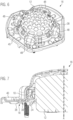
Figur 8 zeigt einen Schnitt durch das Gassackmodul 16 gemäßFigur 6 im Bereich eines Dämpfungsglieds 24. Im Vergleich mitFigur 7 fällt auf, dass der Schwingungstilgerring 10 aufgrund des Dämpfungsglieds 24 in diesem Bereich einen erhöhten Bauraumbedarf aufweist, was sich auch an entsprechenden Ausbuchtungen 48 des als Diffusorkäfig ausgebildeten Gassackhalteblechs 40 inFigur 6 zeigt. - Durch die besondere Konstruktion des Schwingungstilgerrings 10 mit einem axialen Versatz zwischen den Trägerabschnitten 18 und den Tilgerabschnitten 22 wird dieser erhöhte Bauraumbedarf jedoch auf ein Minimum begrenzt. So entsteht gemäß
Figur 6 in Umfangsrichtung zwischen den Ausbuchtungen 48 ein Raum, der insbesondere als Stauraum für einen von außerhalb an den Diffusorkäfig angrenzenden, gefalteten Gassack 50 genutzt werden kann. - Die
Figuren 9 und10 zeigen das Gassackmodul 16 mit dem gefalteten Gassack 50, der den Diffusorkäfig umgibt und zusammen mit dem Diffusorkäfig in einer Modulabdeckung 52 aufgenommen ist. Zum Aufblasen des Gassacks 50 erstreckt sich der Gasgenerator 12 durch einen Gassackmund 54 ins Innere des Gassacks 50, wobei der Gassackmund 54 gemäßFigur 10 zwischen dem Gassackhalteblech 40 und dem Generatorträger 42 geklemmt ist. - In
Figur 11 ist ein Schnittdetail des Gassackmoduls 16 im Bereich des Schwingungstilgerrings 10 dargestellt. Dabei wird deutlich, dass auf einer vom Dämpfungsglied 24 abgewandten axialen Stirnseite an einem radialen Innenrand des Schwingungstilgerrings 10 eine Fase 56 zur Umlenkung eines radialen Gasstroms vorgesehen ist (gemäßFigur 11 nach oben). Aufgrund dieser Gasumlenkung in Richtung zum Inneren des Gassacks 50 wird eine unerwünschte Gasleckage bei der Aktivierung des Gasgenerators 16 reduziert. - Die
Figuren 12 bis 17 zeigen eine weitere Ausführungsform des Schwingungstilgerrings 10 zur schwingfähigen Befestigung eines Gasgenerators 12 an einem Fahrzeuglenkrad 14 sowie ein Gassackmodul 16 mit einem solchen Schwingungstilgerring 10. - Der dargestellte Schwingungstilgerring 10 entspricht dabei weitgehend der Ausführungsform gemäß den
Figuren 1 bis 11 , sodass generell auf die obigen Ausführungen verwiesen und im Folgenden hauptsächlich auf Unterschiede eingegangen wird. - Analog zu
Figur 3 ist inFigur 12 ein Schwingungstilgerring 10 mit daran befestigtem Gasgenerator 12 dargestellt, wobei sich der Schwingungstilgerring 10 gemäßFigur 12 im Wesentlichen dadurch von der Ausführungsform gemäßFigur 3 unterscheidet, dass der Trägerabschnitt 18 eine Klemmfläche 58 für den Gassack 50 aufweist, wobei sich die Klemmfläche 58 im Wesentlichen senkrecht zur Ringachse A erstreckt. - Wie oben beschrieben, ist der Schwingungstilgerring 10 ein Zweikomponenten-Bauteil mit einer elastischen ersten Komponente 44, aus der das Dämpfungsglied 24 des Schwingungstilgerrings 10 geformt ist, sowie einer zweiten Komponente 46, die eine geringere Elastizität aufweist als die erste Komponente 44.
- Eine weitere Besonderheit des in den
Figuren 12 bis 17 dargestellten Schwingungstilgerrings 10 besteht nun darin, dass die elastische erste Komponente 44 des Schwingungstilgerrings 10 auch die Klemmfläche 58 des Trägerabschnitts 18 bildet. Dadurch ergeben sich zwischen dem Gewebe des Gassacks 50 und der Klemmfläche 58 ein besonders hoher Reibwert und damit eine besonders zuverlässige lenkradseitige Befestigung des Gassackmunds 54 bei einer Auslösung des Gasgenerators 12. - Die Idee, eine Klemmung des Gassackmunds 54 am Schwingungstilgerring 10 zu verbessern, indem die Klemmfläche 58 des Trägerabschnitts 18 durch die elastische erste Komponente 44 des als Zweikomponenten-Bauteil gefertigten Schwingungstilgerrings 10 gebildet wird, ist dabei bereits für sich genommen erfinderisch, unabhängig von einem axialen Abstand zwischen dem Trägerabschnitt 18 und dem Tilgerabschnitt 22.
- Ausgehend von
Figur 12 ist inFigur 13 zusätzlich das als Diffusorkäfig ausgebildete Gassackhalteblech 40 und inFigur 14 ferner noch der Generatorträger 42 vorgesehen. - Die
Figur 15 zeigt einen Schnitt durch das Gassackmodul 16 gemäßFigur 14 , wobei außerdem noch der gefaltete Gassack 50 sowie die Modulabdeckung 52 dargestellt sind und im Übrigen auch eine Lenkradnabe 60 des Fahrzeuglenkrads 14 schematisch angedeutet ist. - Das elastische Dämpfungsglied 24 des Schwingungstilgerrings 10 erstreckt sich dabei im montierten Zustand des Gassackmoduls 16 vom Tilgerabschnitt 22 axial in Richtung zur Lenkradnabe 60 des Fahrzeuglenkrads 14, sodass der Gasgenerator 12 mit anderen Worten hängend im Gassackmodul 16 eingebaut ist.
- Ferner weist der Trägerabschnitt 18 im montierten Zustand des Gassackmoduls 16 einen geringeren axialen Abstand zur Lenkradnabe 60 auf als der Tilgerabschnitt 22 des Schwingungstilgerrings 10. Dies führt zu einer besonders kompakten Bauweise des Gassackmoduls 16.
- Die
Figuren 16 und 17 zeigen Details derFigur 15 im Bereich eines Trägerabschnitts 18 bzw. eines Tilgerabschnitts 22 des Schwingungstilgerrings 10. - Anhand der
Figur 16 wird deutlich, dass der Gassackmund 54 des Gassacks 50 im Bereich des Trägerabschnitts 18 zwischen dem Schwingungstilgerring 10 und dem Gassackhalteblech 40 geklemmt ist, wobei die Klemmfläche 58 des Trägerabschnitts 18 von der elastischen ersten Komponente 44 des Schwingungstilgerrings 10 gebildet ist. Die Klemmkraft wird in diesem Fall aufgebracht durch das als Schraubbolzen und Mutter ausgeführte Verbindungsmittel 38, welches den Generatorträger 42, den Trägerabschnitt 18 des Schwingungstilgerrings 10, den Gassack 50 und das Gassackhalteblech 40 axial zusammenpresst. - Im dargestellten Ausführungsbeispiel ist der Gassackmund 54 im Bereich des Tilgerabschnitts 22 gemäß
Figur 17 hingegen ausgespart, sodass der Gassack 50 hier nicht zwischen dem Schwingungstilgerring 10 und dem Gassackhalteblech geklemmt ist. - Die
Figuren 18 und 19 zeigen schließlich noch eine weitere Ausführungsform des Schwingungstilgerrings 10 zur schwingfähigen Befestigung eines Gasgenerators 12 an einem Fahrzeuglenkrad 14 sowie ein Gassackmodul 16 mit einem solchen Schwingungstilgerring 10. - Die hier dargestellte Ausführungsform des Schwingungstilgerrings 10 unterscheidet sich im Wesentlichen dadurch vom Schwingungstilgerring 10 gemäß den
Figuren 12 bis 17 , dass wenigstens ein Stützglied 62 vorgesehen ist, welches sich in axialer Richtung vom Trägerabschnitt 18 zu einem freien Stützgliedende 64 hin erstreckt, wobei das elastische Dämpfungsglied 24 und das Stützglied 62 auf derselben axialen Seite des Schwingungstilgerrings 10 angeordnet sind. - Das Stützglied 62 ist im vorliegenden Ausführungsbeispiel einstückig an den Trägerabschnitt 18 angeformt und aus der im Wesentlichen starren zweiten Komponente 46 des als Zweikomponenten-Bauteil ausgeführten Schwingungstilgerrings 10 gebildet.
- Bei einer Auslösung des Gassackmoduls 16 wird der Gasgenerator 12 durch den Gasdruck axial in Richtung zur Lenkradnabe 60 beaufschlagt. Über die Befestigung des Gasgenerators 12 an den Dämpfungsgliedern 24 wird dabei auch der Schwingungstilgerring 10 durch eine Axialkraft in Richtung zur Lenkradnabe 60 beaufschlagt. Sofern die Trägerabschnitte 18 nicht vollflächig aufliegen (beispielsweise auf dem Generatorträger 42), kann diese Axialkraft zu einer Verformung des Schwingungstilgerrings 10 und damit zu einer unerwünschten, verringerten Gassackklemmung führen.
- Durch das Stützglied 62 wird eine zusätzliche axiale Abstützstelle des Schwingungstilgerrings 10 geschaffen, sodass eine Verformung des Schwingungstilgerrings 10 verhindert wird und damit eine zuverlässige Klemmung des Gassackmunds 54 bei einer Auslösung des Gasgenerators 12 erhalten bleibt.
- Das Stützglied 62 kann den Schwingungstilgerring 10 dabei insbesondere am Generatorträger 42 oder, wie in den
Figuren 18 und 19 dargestellt, an einem Einpressbolzen 66 des Generatorträgers 42 axial abstützen. - Die
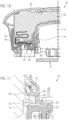
Figur 20 zeigt einen Ausschnitt des Gassackmoduls 16 gemäß einer weiteren Ausführungsform, bei welcher im Bereich des Tilgerabschnitts 22 radial außerhalb des Dämpfungsglieds 24 ein Wandabschnitt 68 zur Minimierung einer Gasleckage vorgesehen ist, wobei der Wandabschnitt 68 in Umfangsrichtung jeweils an einen Trägerabschnitt 18 des Schwingungstilgerrings 10 angrenzt. - Um bei einer Auslösung des Gasgenerators 12 ein Abströmen von Generatorgas nach außerhalb des Gassackmoduls 16 weiter zu reduzieren, überlappt der Trägerabschnitt 18 radial innerhalb des Wandabschnitts 68 in Umfangsrichtung mit dem Wandabschnitt 68, sodass zwischen dem Schwingungstilgerring 10 und dem Wandabschnitt 68 kein radial durchgehender Spalt existiert, sondern eine Labyrinth-Abdichtung entsteht. Obwohl zwischen dem Schwingungstilgerring 10 und dem Wandabschnitt 68 ein gewisses Spiel notwendig ist, um die Tilgerfunktion nicht zu beeinträchtigen, lässt sich auf diese Weise eine gute Gasabdichtung realisieren, weil eine in
Figur 20 gestrichelt angedeutete Gasströmung 70 zweimal die Richtung wechseln muss um das Gassackmodul 16 zu verlassen. - In den
Figuren 21 bis 25 ist noch eine weitere Ausführungsform des Gassackmoduls 16 dargestellt, welche im Wesentlichen der Ausführungsform gemäßFigur 20 entspricht, sodass auf die obige Beschreibung verwiesen wird. - Die
Figur 21 zeigt einen Ausschnitt des Gassackmoduls 16 analog zuFigur 20 . Bei einem Vergleich wird deutlich, dass der einzige Unterschied zwischen den beiden Ausführungsformen in einem zusätzlichen Schlitz 72 besteht, der gemäßFigur 21 an einem radialen Rand des Trägerabschnitts 18 ausgebildet ist und sich in Umfangsrichtung in den Trägerabschnitt 18 erstreckt. In radialer Richtung ist der Schlitz 72 so positioniert, dass er sich in der Verlängerung einer radialen Innenseite 74 des Wandabschnitts 68 befindet. - Analog zu
Figur 20 wird die Gasströmung 70 an der radialen Innenseite 74 im Wesentlichen in eine Tangentialrichtung abgelenkt. Dann allerdings strömt das Gas im Unterschied zuFigur 20 größtenteils in den Schlitz 72 und wird dort verwirbelt. Aufgrund dieser Verwirbelung und den im Vergleich zuFigur 20 weniger klar vorgegebenen Strömungspfad resultiert aus diesem einfachen Schlitz 72 eine bessere Abdichtung zwischen dem Schwingungstilgerring 10 und dem Wandabschnitt 68. Dementsprechend lässt sich eine Gasleckage durch den Schlitz 72 mit geringem Aufwand weiter reduzieren. - Die
Figur 22 zeigt einen Schnitt durch einen Tilgerabschnitt 22 des fertig montierten Gassackmoduls 16 gemäßFigur 21 . Hierbei wird deutlich, dass der Wandabschnitt 68 am Generatorträger 42 befestigt und im Bereich des Tilgerabschnitts 22 radial außerhalb des Dämpfungsglieds 24 angeordnet ist. Der Wandabschnitt 68 erstreckt sich dabei in axialer Richtung vom Generatorträger 42 bis zum Trägerabschnitt 18 des Schwingungstilgerrings 10 und verringert bei einer Auslösung des Gasgenerators 12 eine Gasleckage nach außerhalb des Gassackmoduls 16. - Vorzugsweise ist jedem Tilgerabschnitt 22 des Schwingungstilgerrings 10 genau ein Wandabschnitt 68 zugeordnet. In der dargestellten Ausführungsform des Gassackmoduls 16 weist der Schwingungstilgerring 10 gemäß
Figur 23 beispielsweise vier in Umfangsrichtung gleichmäßig verteilte Tilgerabschnitte 22 auf, denen jeweils ein Wandabschnitt 68 zugeordnet ist. - Die
Figur 24 zeigt einen inFigur 23 angedeuteten, tangentialen Detailschnitt I-I durch einen Wandabschnitt 68. Es ist gut zu erkennen, dass der Wandabschnitt 68 aus einem Kunststoff, insbesondere einem elastischen Kunststoff hergestellt und an den Generatorträger 42 angespritzt ist. Konkret erstreckt sich der Kunststoff des Wandabschnitts 68 durch Öffnungen 76 des Generatorträgers 42 und hintergreift diesen rückseitig. Dies stellt hinsichtlich Fertigung und Montage eine besonders einfache Möglichkeit dar, die Wandabschnitte 68 zuverlässig am Generatorträger 42 zu befestigen, wobei alternativ natürlich auch andere Befestigungsvarianten oder eine einstückige Ausführung denkbar sind. Der Generatorträger 42 ist im dargestellten Ausführungsbeispiel aus Metall gefertigt, wobei allerdings auch eine Herstellung aus einem stabilen Kunststoff möglich wäre. - Die
Figur 25 zeigt schließlich eine teilgeschnittene, perspektivische Ansicht des Gassackmoduls 16 gemäß denFiguren 21 bis 24 , das bei einer Auslösung des Gasgenerators 12 eine besonders geringe Gasleckage aufweist.
Claims (11)
- Gassackmodul zur Montage an einem Fahrzeuglenkrad (14), umfassendeinen Gasgenerator (12) undeinen Schwingungstilgerring zur schwingfähigen Befestigung eines Gasgenerators (12) an einem Fahrzeuglenkrad (14), miteiner Ringachse (A),einem Trägerabschnitt (18) zur Befestigung des Schwingungstilgerrings (10) an einem Halteelement,einem Tilgerabschnitt (22) zur Befestigung des Gasgenerators (12) am Schwingungstilgerring (10),wobei ein elastisches Dämpfungsglied (24) vorgesehen ist, das sich in axialer Richtung vom Tilgerabschnitt (22) zu einem freien Ende (26) hin erstreckt und zwischen dem Tilgerabschnitt (22) und dem freien Ende (26) ein Befestigungselement (28) für den Gasgenerator (12) aufweist,wobei der Trägerabschnitt (18) eine Klemmfläche (58) für einen Gassack (50) aufweist und der Schwingungstilgerring (10) ein Zweikomponenten-Bauteil ist, mit einer elastischen ersten Komponente (44), die das Dämpfungsglied (24) bildet, sowie einer zweiten Komponente (46), die eine geringere Elastizität aufweist als die erste Komponente (44),wobei die Klemmfläche (58) des Trägerabschnitts (18) durch die erste Komponente (44) gebildet wird und/oder genoppt ist,dadurch gekennzeichnet, dass sich das elastische Dämpfungsglied (24) im montierten Zustand des Gassackmoduls (16) vom Tilgerabschnitt (22) axial in Richtung zu einer Lenkradnabe (60) des Fahrzeuglenkrads (14) erstreckt und im Bereich des Tilgerabschnitts (22) radial außerhalb des Dämpfungsglieds (24) ein Wandabschnitt (68) zur Minimierung einer Gasleckage vorgesehen ist.
- Gassackmodul nach Anspruch 1, dadurch gekennzeichnet, dass der Trägerabschnitt (18) und der Tilgerabschnitt (22) in axialer Richtung voneinander beabstandet sind.
- Gassackmodul nach wenigstens einem der vorhergehenden Ansprüche, dadurch gekennzeichnet, dass mehrere Trägerabschnitte (18) und mehrere Tilgerabschnitte (22) vorgesehen sind, insbesondere wobei die Trägerabschnitte (18) und die Tilgerabschnitte (22) in Umfangsrichtung abwechselnd angeordnet sind.
- Gassackmodul nach wenigstens einem der vorhergehenden Ansprüche, dadurch gekennzeichnet, dass das elastische Dämpfungsglied (24) zwischen dem Tilgerabschnitt (22) und dem Befestigungselement (28) für den Gasgenerator (12) in axialer Richtung zumindest abschnittsweise einen Hohlquerschnitt aufweist.
- Gassackmodul nach wenigstens einem der vorhergehenden Ansprüche, dadurch gekennzeichnet, dass der Trägerabschnitt (18) eine Befestigungseinrichtung, insbesondere eine Befestigungsöffnung (36) zur Aufnahme eines Verbindungsmittels (38) aufweist.
- Gassackmodul nach wenigstens einem der vorhergehenden Ansprüche, dadurch gekennzeichnet, dass der Trägerabschnitt (18) eine Klemmfläche (58) für einen Gassack (50) aufweist, insbesondere wobei sich die Klemmfläche (58) im Wesentlichen senkrecht zur Ringachse (A) erstreckt.
- Gassackmodul nach wenigstens einem der vorhergehenden Ansprüche, dadurch gekennzeichnet, dass auf einer vom Dämpfungsglied (24) abgewandten axialen Stirnseite an einem radialen Innenrand des Schwingungstilgerrings (10) eine Fase (56) zur Umlenkung eines radialen Gasstroms vorgesehen ist.
- Gassackmodul nach wenigstens einem der vorhergehenden Ansprüche, dadurch gekennzeichnet, dass wenigstens ein Stützglied (62) vorgesehen ist, welches sich in axialer Richtung vom Trägerabschnitt (18) zu einem freien Stützgliedende (64) hin erstreckt, insbesondere wobei das elastische Dämpfungsglied (24) und das Stützglied (62) auf derselben axialen Seite des Schwingungstilgerrings (10) angeordnet sind.
- Gassackmodul nach wenigstens einem der vorhergehenden Ansprüche, dadurch gekennzeichnet, dass im montierten Zustand des Gassackmoduls (16) der Trägerabschnitt (18) einen geringeren axialen Abstand zur Lenkradnabe (60) aufweist als der Tilgerabschnitt (22) des Schwingungstilgerrings (10).
- Gassackmodul nach wenigstens einem der vorhergehenden Ansprüche, dadurch gekennzeichnet, dass ein Generatorträger (42) vorgesehen ist, wobei der Wandabschnitt (68) am Generatorträger (42) befestigt ist und sich in axialer Richtung vom Generatorträger (42) bis zum Trägerabschnitt (18) des Schwingungstilgerrings (10) erstreckt.
- Gassackmodul nach wenigstens einem der vorhergehenden Ansprüche, dadurch gekennzeichnet, dass der Wandabschnitt (68) in Umfangsrichtung jeweils an einen Trägerabschnitt (18) des Schwingungstilgerrings (10) angrenzt, wobei der Trägerabschnitt (18) radial innerhalb und/oder radial außerhalb des Wandabschnitts (68) in Umfangsrichtung mit dem Wandabschnitt (68) überlappt, sodass zwischen dem Schwingungstilgerring (10) und dem Wandabschnitt (68) eine Labyrinth-Abdichtung entsteht.
Applications Claiming Priority (3)
| Application Number | Priority Date | Filing Date | Title |
|---|---|---|---|
| DE102017114301.7A DE102017114301A1 (de) | 2017-06-28 | 2017-06-28 | Schwingungstilgerring sowie gassackmodul mit einem solchen schwingungstilgerring |
| EP17761216.5A EP3645346B1 (de) | 2017-06-28 | 2017-08-24 | Schwingungstilgerring sowie gassackmodul mit einem solchen schwingungstilgerring |
| PCT/EP2017/071326 WO2019001747A1 (de) | 2017-06-28 | 2017-08-24 | Schwingungstilgerring sowie gassackmodul mit einem solchen schwingungstilgerring |
Related Parent Applications (2)
| Application Number | Title | Priority Date | Filing Date |
|---|---|---|---|
| EP17761216.5A Division EP3645346B1 (de) | 2017-06-28 | 2017-08-24 | Schwingungstilgerring sowie gassackmodul mit einem solchen schwingungstilgerring |
| EP17761216.5A Division-Into EP3645346B1 (de) | 2017-06-28 | 2017-08-24 | Schwingungstilgerring sowie gassackmodul mit einem solchen schwingungstilgerring |
Publications (2)
| Publication Number | Publication Date |
|---|---|
| EP3842296A1 EP3842296A1 (de) | 2021-06-30 |
| EP3842296B1 true EP3842296B1 (de) | 2024-10-09 |
Family
ID=59761939
Family Applications (2)
| Application Number | Title | Priority Date | Filing Date |
|---|---|---|---|
| EP21152910.2A Active EP3842296B1 (de) | 2017-06-28 | 2017-08-24 | Schwingungstilgerring sowie gassackmodul mit einem solchen schwingungstilgerring |
| EP17761216.5A Active EP3645346B1 (de) | 2017-06-28 | 2017-08-24 | Schwingungstilgerring sowie gassackmodul mit einem solchen schwingungstilgerring |
Family Applications After (1)
| Application Number | Title | Priority Date | Filing Date |
|---|---|---|---|
| EP17761216.5A Active EP3645346B1 (de) | 2017-06-28 | 2017-08-24 | Schwingungstilgerring sowie gassackmodul mit einem solchen schwingungstilgerring |
Country Status (5)
| Country | Link |
|---|---|
| US (1) | US11180192B2 (de) |
| EP (2) | EP3842296B1 (de) |
| CN (1) | CN110831821B (de) |
| DE (1) | DE102017114301A1 (de) |
| WO (1) | WO2019001747A1 (de) |
Families Citing this family (5)
| Publication number | Priority date | Publication date | Assignee | Title |
|---|---|---|---|---|
| DE202014008432U1 (de) * | 2014-10-23 | 2016-01-26 | Trw Automotive Safety Systems Gmbh | Vorrichtung zur schwingfähigen Befestigung eines Gasgenerators in einem Airbagmodul |
| DE102017119335A1 (de) * | 2017-08-24 | 2019-02-28 | Trw Automotive Safety Systems Gmbh | Gassackmodul für ein fahrzeuglenkrad |
| EP3904720A1 (de) * | 2020-04-28 | 2021-11-03 | Vibracoustic Forsheda AB | Schwingungsdämpferanordnung, verfahren zum abstimmen einer solchen anordnung und verfahren zur dynamischen schwingungsdämpfung |
| DE102020126207A1 (de) * | 2020-10-07 | 2022-04-07 | ZF Automotive Safety Germany GmbH | Gassackmodulbaugruppe, verfahren zu deren herstellung und qualitätsprüfung sowie fahrzeuglenkrad mit einer solchen gassackmodulbaugruppe |
| CN116448357A (zh) * | 2022-01-06 | 2023-07-18 | 上汽通用汽车有限公司 | 吸振器开发工装 |
Citations (2)
| Publication number | Priority date | Publication date | Assignee | Title |
|---|---|---|---|---|
| EP1020332B1 (de) * | 1998-12-18 | 2004-04-14 | Delphi Technologies, Inc. | Luftsackmodul für Kraftfahrzeuge |
| DE102007049234B4 (de) * | 2007-10-10 | 2014-12-04 | TAKATA Aktiengesellschaft | Airbagmodul für ein Kraftfahrzeug |
Family Cites Families (19)
| Publication number | Priority date | Publication date | Assignee | Title |
|---|---|---|---|---|
| DE19503816B4 (de) * | 1995-02-06 | 2007-03-22 | Volkswagen Ag | Anordnung zur Befestigung eines aus einem Gehäuseboden und einem Gehäusedeckel bestehenden Gehäuses im Lenkrad |
| SE510106C2 (sv) * | 1996-06-07 | 1999-04-19 | Volvo Ab | Anordning för upphängning av en airbagmodul |
| DE19840998B4 (de) * | 1998-09-08 | 2008-01-24 | Takata-Petri Ag | Airbaganordnung bei Fahrzeugen |
| DE19908915B4 (de) * | 1999-03-02 | 2007-04-05 | Carl Freudenberg Kg | Schwingungstilger für ein Lenkrad mit einem Airbag |
| DE10056625A1 (de) * | 2000-11-15 | 2002-06-06 | Freudenberg Carl Kg | Gasgenerator für einen Lenkradairbag eines Kraftfahrzeugs |
| DE10156424B4 (de) * | 2000-11-27 | 2016-11-24 | Autoliv Development Ab | Luftsackmodul für Kraftfahrzeuge |
| DE10132394A1 (de) * | 2001-07-06 | 2003-01-23 | Freudenberg Carl Kg | Gasgenerator für einen Lenkradairbag |
| US20060061068A1 (en) * | 2004-09-20 | 2006-03-23 | Krista Nash | Dab vibration damper |
| JP2006096217A (ja) * | 2004-09-30 | 2006-04-13 | Daicel Chem Ind Ltd | エアバッグモジュール |
| DE202006016948U1 (de) * | 2006-11-06 | 2007-02-01 | Trw Automotive Safety Systems Gmbh | Einstellbare Vorrichtung zur Dämpfung von Schwingungen in einem Lenkrad oder Gassackmodul |
| DE202008013900U1 (de) * | 2008-08-04 | 2009-12-31 | Trw Airbag Systems Gmbh | Gassackmodul |
| JP5797770B2 (ja) * | 2011-11-24 | 2015-10-21 | 本田技研工業株式会社 | ステアリングホイールの振動低減構造 |
| JP5878827B2 (ja) * | 2012-05-28 | 2016-03-08 | タカタ株式会社 | インフレータ用ディフューザ及びエアバッグ装置 |
| CN203126755U (zh) * | 2013-03-22 | 2013-08-14 | 建新赵氏集团有限公司 | 方向盘上气体发生器减震装置 |
| CN103192788B (zh) | 2013-03-22 | 2015-10-21 | 建新赵氏集团有限公司 | 方向盘上气体发生器减震装置 |
| DE202014008432U1 (de) * | 2014-10-23 | 2016-01-26 | Trw Automotive Safety Systems Gmbh | Vorrichtung zur schwingfähigen Befestigung eines Gasgenerators in einem Airbagmodul |
| CN205075781U (zh) * | 2015-10-28 | 2016-03-09 | 宁海建新减震系统有限公司 | 振动阻尼器 |
| DE102015015547A1 (de) * | 2015-12-03 | 2017-06-08 | Trw Automotive Safety Systems Gmbh | Fahrzeugsicherheitssystem, Baugruppe für ein Fahrzeugsicherheitssystem und Verfahren zum Herstellen eines Fahrzeugsicherheitssystems |
| DE102017119335A1 (de) * | 2017-08-24 | 2019-02-28 | Trw Automotive Safety Systems Gmbh | Gassackmodul für ein fahrzeuglenkrad |
-
2017
- 2017-06-28 DE DE102017114301.7A patent/DE102017114301A1/de not_active Withdrawn
- 2017-08-24 WO PCT/EP2017/071326 patent/WO2019001747A1/de not_active Ceased
- 2017-08-24 CN CN201780092346.0A patent/CN110831821B/zh active Active
- 2017-08-24 EP EP21152910.2A patent/EP3842296B1/de active Active
- 2017-08-24 EP EP17761216.5A patent/EP3645346B1/de active Active
- 2017-08-24 US US16/623,471 patent/US11180192B2/en active Active
Patent Citations (2)
| Publication number | Priority date | Publication date | Assignee | Title |
|---|---|---|---|---|
| EP1020332B1 (de) * | 1998-12-18 | 2004-04-14 | Delphi Technologies, Inc. | Luftsackmodul für Kraftfahrzeuge |
| DE102007049234B4 (de) * | 2007-10-10 | 2014-12-04 | TAKATA Aktiengesellschaft | Airbagmodul für ein Kraftfahrzeug |
Also Published As
| Publication number | Publication date |
|---|---|
| CN110831821B (zh) | 2022-05-31 |
| EP3645346A1 (de) | 2020-05-06 |
| CN110831821A (zh) | 2020-02-21 |
| EP3842296A1 (de) | 2021-06-30 |
| US20200189658A1 (en) | 2020-06-18 |
| WO2019001747A1 (de) | 2019-01-03 |
| EP3645346B1 (de) | 2021-04-14 |
| DE102017114301A1 (de) | 2019-01-03 |
| US11180192B2 (en) | 2021-11-23 |
Similar Documents
| Publication | Publication Date | Title |
|---|---|---|
| EP3842296B1 (de) | Schwingungstilgerring sowie gassackmodul mit einem solchen schwingungstilgerring | |
| DE4237248C2 (de) | Halterung zur schwingungsdämpfenden Lagerung von Körpern | |
| DE69617578T2 (de) | Vorrichtung zur Schwingungsisolation | |
| DE112008004188T5 (de) | Grommet | |
| EP2639093B1 (de) | Schwingungslager für eine Abgasanlage in einem Kraftfahrzeug | |
| DE102012002433B4 (de) | Dämpferlager für eine Kolbenstange eines Schwingungsdämpfers sowie Kraftfahrzeug mit einem solchen Dämpferlager | |
| EP3919354B1 (de) | Verschlussstopfen | |
| DE69511647T2 (de) | Mitnehmerscheibe für Kraftfahrzeug | |
| EP3672839B1 (de) | Gassackmodul für ein fahrzeuglenkrad | |
| EP2445761B1 (de) | Baugruppe und gassackmodul | |
| DE102018121219B4 (de) | Lagerbuchse für ein Sackloch und Lenkgetriebeaufhängung für ein Fahrzeug | |
| DE102004047173B4 (de) | Elastisches Motorlager zur Lagerung einer Brennkraftmaschine in einem Kraftfahrzeug und Verfahren zur Dimensionierung eines solchen Lagers | |
| DE29809130U1 (de) | Dichtung, insbesondere für Kraftfahrzeuge | |
| EP0528104B1 (de) | Gehäuseverschlussdeckel | |
| DE102005048593B4 (de) | Kunststoffleitung, insbesondere hydraulische Kupplungsdruck-Übertragungsleitung für ein Kraftfahrzeug | |
| DE102018208196A1 (de) | Pufferelement für eine Frontklappe oder Heckklappe eines Kraftfahrzeuges sowie Anordnung eines solchen Pufferelements an einem Karosserieelement eines Kraftfahrzeuges | |
| EP1724490B1 (de) | Tauchkolben mit Randverstärkung | |
| EP1939056B1 (de) | Entkopplungseinrichtung zur elastischen Verbindung zweier Teile miteinander | |
| DE102021211490B4 (de) | Kraftfahrzeugschwingungsdämpfer mit einem hydraulischen Endanschlag | |
| EP3702631A2 (de) | Lagerbuchse | |
| DE102021004702B4 (de) | Lager und ein Verfahren zur Herstellung eines Lagers | |
| DE102018105103A1 (de) | Gassackmodul für ein Fahrzeuglenkrad | |
| EP3423739B1 (de) | Kolbenvorrichtung | |
| DE102021203901A1 (de) | Unterdruckbremskraftverstärker | |
| EP4399371A1 (de) | Montagevorrichtung für einen sanitärartikel |
Legal Events
| Date | Code | Title | Description |
|---|---|---|---|
| PUAI | Public reference made under article 153(3) epc to a published international application that has entered the european phase |
Free format text: ORIGINAL CODE: 0009012 |
|
| STAA | Information on the status of an ep patent application or granted ep patent |
Free format text: STATUS: THE APPLICATION HAS BEEN PUBLISHED |
|
| AC | Divisional application: reference to earlier application |
Ref document number: 3645346 Country of ref document: EP Kind code of ref document: P |
|
| AK | Designated contracting states |
Kind code of ref document: A1 Designated state(s): AL AT BE BG CH CY CZ DE DK EE ES FI FR GB GR HR HU IE IS IT LI LT LU LV MC MK MT NL NO PL PT RO RS SE SI SK SM TR |
|
| STAA | Information on the status of an ep patent application or granted ep patent |
Free format text: STATUS: REQUEST FOR EXAMINATION WAS MADE |
|
| 17P | Request for examination filed |
Effective date: 20220103 |
|
| RBV | Designated contracting states (corrected) |
Designated state(s): AL AT BE BG CH CY CZ DE DK EE ES FI FR GB GR HR HU IE IS IT LI LT LU LV MC MK MT NL NO PL PT RO RS SE SI SK SM TR |
|
| GRAP | Despatch of communication of intention to grant a patent |
Free format text: ORIGINAL CODE: EPIDOSNIGR1 |
|
| STAA | Information on the status of an ep patent application or granted ep patent |
Free format text: STATUS: GRANT OF PATENT IS INTENDED |
|
| RIC1 | Information provided on ipc code assigned before grant |
Ipc: B62D 7/22 20060101ALI20240502BHEP Ipc: B60R 21/203 20060101AFI20240502BHEP |
|
| INTG | Intention to grant announced |
Effective date: 20240527 |
|
| GRAS | Grant fee paid |
Free format text: ORIGINAL CODE: EPIDOSNIGR3 |
|
| GRAA | (expected) grant |
Free format text: ORIGINAL CODE: 0009210 |
|
| STAA | Information on the status of an ep patent application or granted ep patent |
Free format text: STATUS: THE PATENT HAS BEEN GRANTED |
|
| AC | Divisional application: reference to earlier application |
Ref document number: 3645346 Country of ref document: EP Kind code of ref document: P |
|
| AK | Designated contracting states |
Kind code of ref document: B1 Designated state(s): AL AT BE BG CH CY CZ DE DK EE ES FI FR GB GR HR HU IE IS IT LI LT LU LV MC MK MT NL NO PL PT RO RS SE SI SK SM TR |
|
| REG | Reference to a national code |
Ref country code: CH Ref legal event code: EP |
|
| REG | Reference to a national code |
Ref country code: DE Ref legal event code: R096 Ref document number: 502017016485 Country of ref document: DE |
|
| REG | Reference to a national code |
Ref country code: IE Ref legal event code: FG4D Free format text: LANGUAGE OF EP DOCUMENT: GERMAN |
|
| REG | Reference to a national code |
Ref country code: LT Ref legal event code: MG9D |
|
| REG | Reference to a national code |
Ref country code: NL Ref legal event code: MP Effective date: 20241009 |
|
| PG25 | Lapsed in a contracting state [announced via postgrant information from national office to epo] |
Ref country code: NL Free format text: LAPSE BECAUSE OF FAILURE TO SUBMIT A TRANSLATION OF THE DESCRIPTION OR TO PAY THE FEE WITHIN THE PRESCRIBED TIME-LIMIT Effective date: 20241009 |
|
| PG25 | Lapsed in a contracting state [announced via postgrant information from national office to epo] |
Ref country code: NL Free format text: LAPSE BECAUSE OF FAILURE TO SUBMIT A TRANSLATION OF THE DESCRIPTION OR TO PAY THE FEE WITHIN THE PRESCRIBED TIME-LIMIT Effective date: 20241009 |
|
| PG25 | Lapsed in a contracting state [announced via postgrant information from national office to epo] |
Ref country code: HR Free format text: LAPSE BECAUSE OF FAILURE TO SUBMIT A TRANSLATION OF THE DESCRIPTION OR TO PAY THE FEE WITHIN THE PRESCRIBED TIME-LIMIT Effective date: 20241009 Ref country code: IS Free format text: LAPSE BECAUSE OF FAILURE TO SUBMIT A TRANSLATION OF THE DESCRIPTION OR TO PAY THE FEE WITHIN THE PRESCRIBED TIME-LIMIT Effective date: 20250209 Ref country code: PT Free format text: LAPSE BECAUSE OF FAILURE TO SUBMIT A TRANSLATION OF THE DESCRIPTION OR TO PAY THE FEE WITHIN THE PRESCRIBED TIME-LIMIT Effective date: 20250210 |
|
| PG25 | Lapsed in a contracting state [announced via postgrant information from national office to epo] |
Ref country code: FI Free format text: LAPSE BECAUSE OF FAILURE TO SUBMIT A TRANSLATION OF THE DESCRIPTION OR TO PAY THE FEE WITHIN THE PRESCRIBED TIME-LIMIT Effective date: 20241009 |
|
| PG25 | Lapsed in a contracting state [announced via postgrant information from national office to epo] |
Ref country code: BG Free format text: LAPSE BECAUSE OF FAILURE TO SUBMIT A TRANSLATION OF THE DESCRIPTION OR TO PAY THE FEE WITHIN THE PRESCRIBED TIME-LIMIT Effective date: 20241009 |
|
| PG25 | Lapsed in a contracting state [announced via postgrant information from national office to epo] |
Ref country code: ES Free format text: LAPSE BECAUSE OF FAILURE TO SUBMIT A TRANSLATION OF THE DESCRIPTION OR TO PAY THE FEE WITHIN THE PRESCRIBED TIME-LIMIT Effective date: 20241009 |
|
| PG25 | Lapsed in a contracting state [announced via postgrant information from national office to epo] |
Ref country code: NO Free format text: LAPSE BECAUSE OF FAILURE TO SUBMIT A TRANSLATION OF THE DESCRIPTION OR TO PAY THE FEE WITHIN THE PRESCRIBED TIME-LIMIT Effective date: 20250109 |
|
| PG25 | Lapsed in a contracting state [announced via postgrant information from national office to epo] |
Ref country code: LV Free format text: LAPSE BECAUSE OF FAILURE TO SUBMIT A TRANSLATION OF THE DESCRIPTION OR TO PAY THE FEE WITHIN THE PRESCRIBED TIME-LIMIT Effective date: 20241009 Ref country code: GR Free format text: LAPSE BECAUSE OF FAILURE TO SUBMIT A TRANSLATION OF THE DESCRIPTION OR TO PAY THE FEE WITHIN THE PRESCRIBED TIME-LIMIT Effective date: 20250110 |
|
| PG25 | Lapsed in a contracting state [announced via postgrant information from national office to epo] |
Ref country code: PL Free format text: LAPSE BECAUSE OF FAILURE TO SUBMIT A TRANSLATION OF THE DESCRIPTION OR TO PAY THE FEE WITHIN THE PRESCRIBED TIME-LIMIT Effective date: 20241009 |
|
| PG25 | Lapsed in a contracting state [announced via postgrant information from national office to epo] |
Ref country code: RS Free format text: LAPSE BECAUSE OF FAILURE TO SUBMIT A TRANSLATION OF THE DESCRIPTION OR TO PAY THE FEE WITHIN THE PRESCRIBED TIME-LIMIT Effective date: 20250109 |
|
| PG25 | Lapsed in a contracting state [announced via postgrant information from national office to epo] |
Ref country code: SM Free format text: LAPSE BECAUSE OF FAILURE TO SUBMIT A TRANSLATION OF THE DESCRIPTION OR TO PAY THE FEE WITHIN THE PRESCRIBED TIME-LIMIT Effective date: 20241009 |
|
| PG25 | Lapsed in a contracting state [announced via postgrant information from national office to epo] |
Ref country code: DK Free format text: LAPSE BECAUSE OF FAILURE TO SUBMIT A TRANSLATION OF THE DESCRIPTION OR TO PAY THE FEE WITHIN THE PRESCRIBED TIME-LIMIT Effective date: 20241009 |
|
| REG | Reference to a national code |
Ref country code: DE Ref legal event code: R097 Ref document number: 502017016485 Country of ref document: DE |
|
| PG25 | Lapsed in a contracting state [announced via postgrant information from national office to epo] |
Ref country code: EE Free format text: LAPSE BECAUSE OF FAILURE TO SUBMIT A TRANSLATION OF THE DESCRIPTION OR TO PAY THE FEE WITHIN THE PRESCRIBED TIME-LIMIT Effective date: 20241009 |
|
| PG25 | Lapsed in a contracting state [announced via postgrant information from national office to epo] |
Ref country code: RO Free format text: LAPSE BECAUSE OF FAILURE TO SUBMIT A TRANSLATION OF THE DESCRIPTION OR TO PAY THE FEE WITHIN THE PRESCRIBED TIME-LIMIT Effective date: 20241009 |
|
| PG25 | Lapsed in a contracting state [announced via postgrant information from national office to epo] |
Ref country code: SK Free format text: LAPSE BECAUSE OF FAILURE TO SUBMIT A TRANSLATION OF THE DESCRIPTION OR TO PAY THE FEE WITHIN THE PRESCRIBED TIME-LIMIT Effective date: 20241009 |
|
| PG25 | Lapsed in a contracting state [announced via postgrant information from national office to epo] |
Ref country code: CZ Free format text: LAPSE BECAUSE OF FAILURE TO SUBMIT A TRANSLATION OF THE DESCRIPTION OR TO PAY THE FEE WITHIN THE PRESCRIBED TIME-LIMIT Effective date: 20241009 |
|
| PG25 | Lapsed in a contracting state [announced via postgrant information from national office to epo] |
Ref country code: IT Free format text: LAPSE BECAUSE OF FAILURE TO SUBMIT A TRANSLATION OF THE DESCRIPTION OR TO PAY THE FEE WITHIN THE PRESCRIBED TIME-LIMIT Effective date: 20241009 |
|
| PLBE | No opposition filed within time limit |
Free format text: ORIGINAL CODE: 0009261 |
|
| STAA | Information on the status of an ep patent application or granted ep patent |
Free format text: STATUS: NO OPPOSITION FILED WITHIN TIME LIMIT |
|
| PG25 | Lapsed in a contracting state [announced via postgrant information from national office to epo] |
Ref country code: SE Free format text: LAPSE BECAUSE OF FAILURE TO SUBMIT A TRANSLATION OF THE DESCRIPTION OR TO PAY THE FEE WITHIN THE PRESCRIBED TIME-LIMIT Effective date: 20241009 |
|
| 26N | No opposition filed |
Effective date: 20250710 |
|
| PGFP | Annual fee paid to national office [announced via postgrant information from national office to epo] |
Ref country code: DE Payment date: 20250831 Year of fee payment: 9 |
|
| PGFP | Annual fee paid to national office [announced via postgrant information from national office to epo] |
Ref country code: FR Payment date: 20250703 Year of fee payment: 9 |
|
| REG | Reference to a national code |
Ref country code: CH Ref legal event code: H13 Free format text: ST27 STATUS EVENT CODE: U-0-0-H10-H13 (AS PROVIDED BY THE NATIONAL OFFICE) Effective date: 20260324 |
|
| PG25 | Lapsed in a contracting state [announced via postgrant information from national office to epo] |
Ref country code: MC Free format text: LAPSE BECAUSE OF FAILURE TO SUBMIT A TRANSLATION OF THE DESCRIPTION OR TO PAY THE FEE WITHIN THE PRESCRIBED TIME-LIMIT Effective date: 20241009 |
|
| PG25 | Lapsed in a contracting state [announced via postgrant information from national office to epo] |
Ref country code: LU Free format text: LAPSE BECAUSE OF NON-PAYMENT OF DUE FEES Effective date: 20250824 |
|
| PG25 | Lapsed in a contracting state [announced via postgrant information from national office to epo] |
Ref country code: CH Free format text: LAPSE BECAUSE OF NON-PAYMENT OF DUE FEES Effective date: 20250831 |